
Workout Wear Manufacturer for Multi-SKU and Repeat Supply Programs
MOVEVOX supports established workout, fitness, yoga, and activewear brands that need one manufacturing relationship to coordinate Development & Technical Reference, Seamless and Cut & Sew production, SKU control, quality requirements, and repeat supply. Projects can begin from approved products, Tech Packs, physical samples, images, sketches, or defined concepts and move through controlled approval before commercial production.
For multi-SKU workout wear programs, the priority is not only making each garment. Product versions, materials, colors, manufacturing routes, branding, production allocation, QC, packing, and repeat-order references need to remain connected across the program.
Multi-SKU Program Control · Seamless + Cut & Sew Coordination · Sample to Repeat Supply
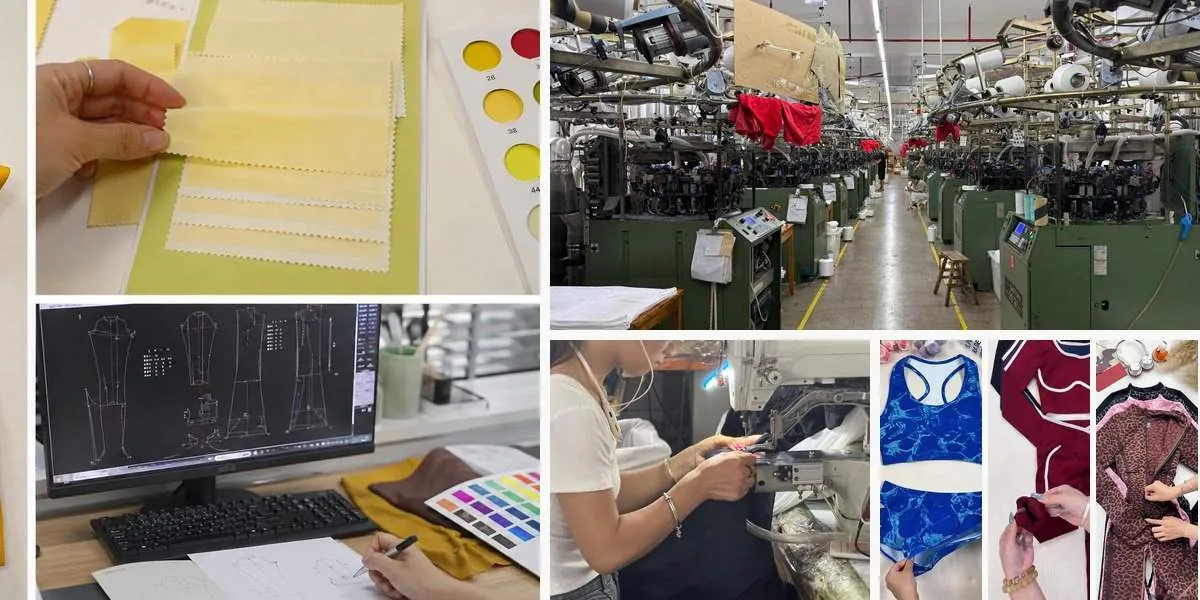
Manufacturing Resources Behind Ongoing Workout Wear Programs
These figures describe the current MOVEVOX manufacturing and managed production resources that can be reviewed when planning multi-SKU, repeat-order, and scale-up workout wear programs.
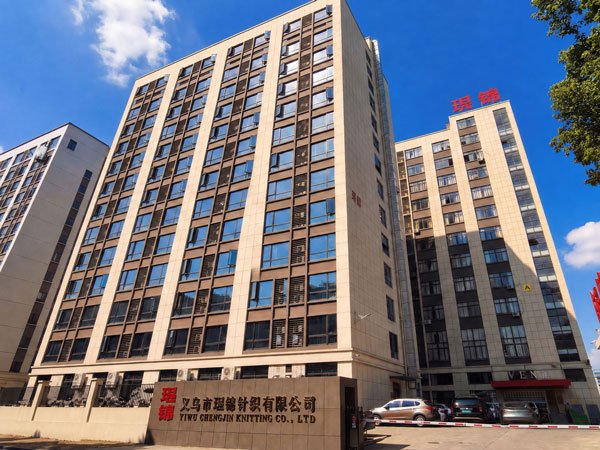
Approx. 6,000 m²
Owned Yiwu core base supporting development, technical control, core production, QC, and program coordination.
28 Italian Santoni Machines
Core seamless knitting equipment supporting suitable workout wear SKUs and repeat production programs.
Approx. 24 Garment-Production Machines
Primary sewing and garment-production equipment supporting core Cut & Sew program requirements.
5–10 Working Days
Standard sample-development reference after required product and program information is confirmed.
Approx. 100 / 150 pcs
Base MOQ references for Seamless and Cut & Sew styles under normal project conditions; effective program minimums can be higher.
150,000–200,000 pcs/month
Current normal combined managed delivery capacity measured as quality-released garments across the production network.
Coordinate Different Workout Wear Categories Without Treating Them as One Product
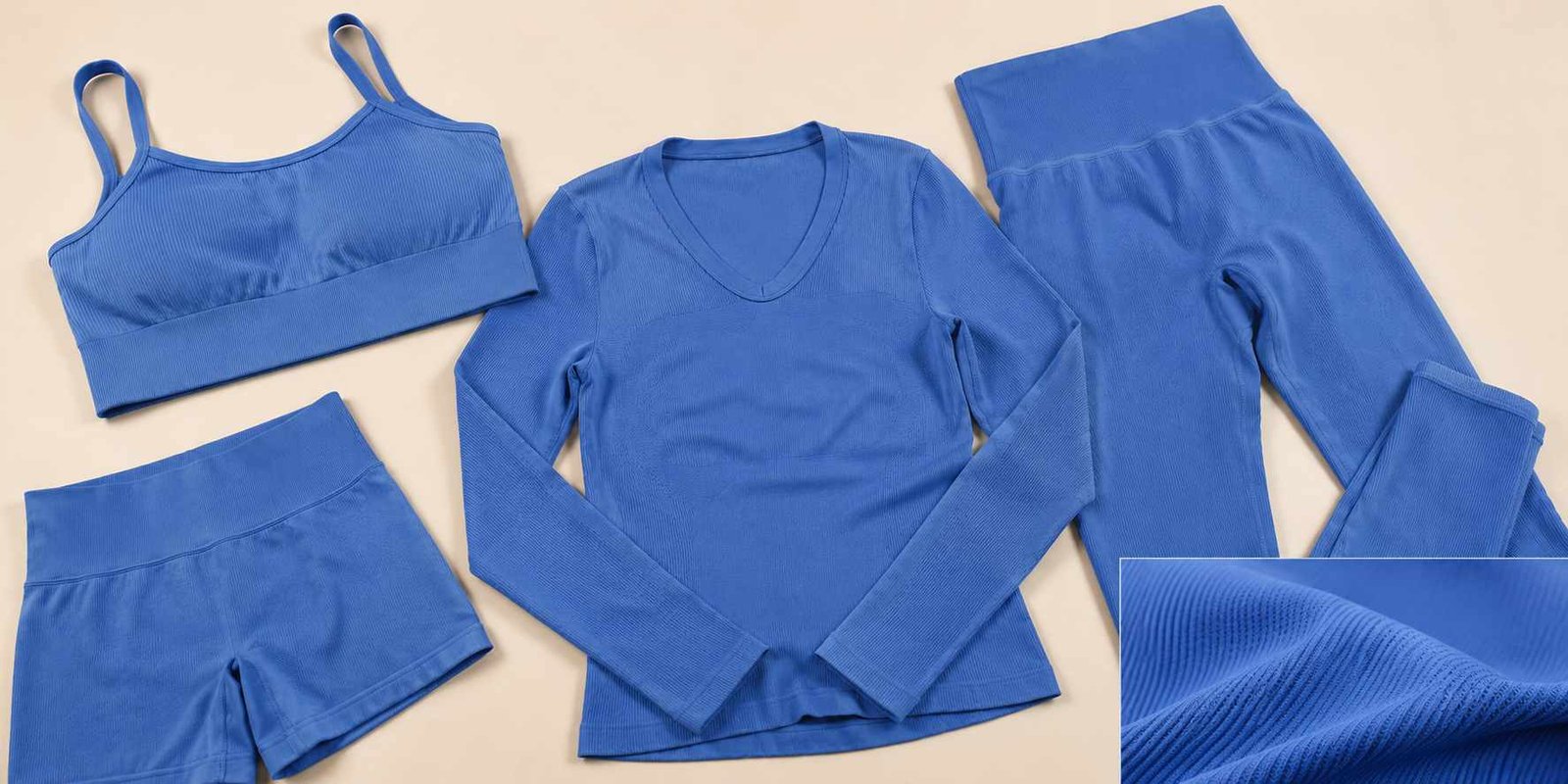
A multi-SKU workout wear program may combine leggings, bras, shorts, tops, and Seamless products. The sourcing challenge is to keep shared brand standards aligned while preserving the product-specific approvals each SKU requires.
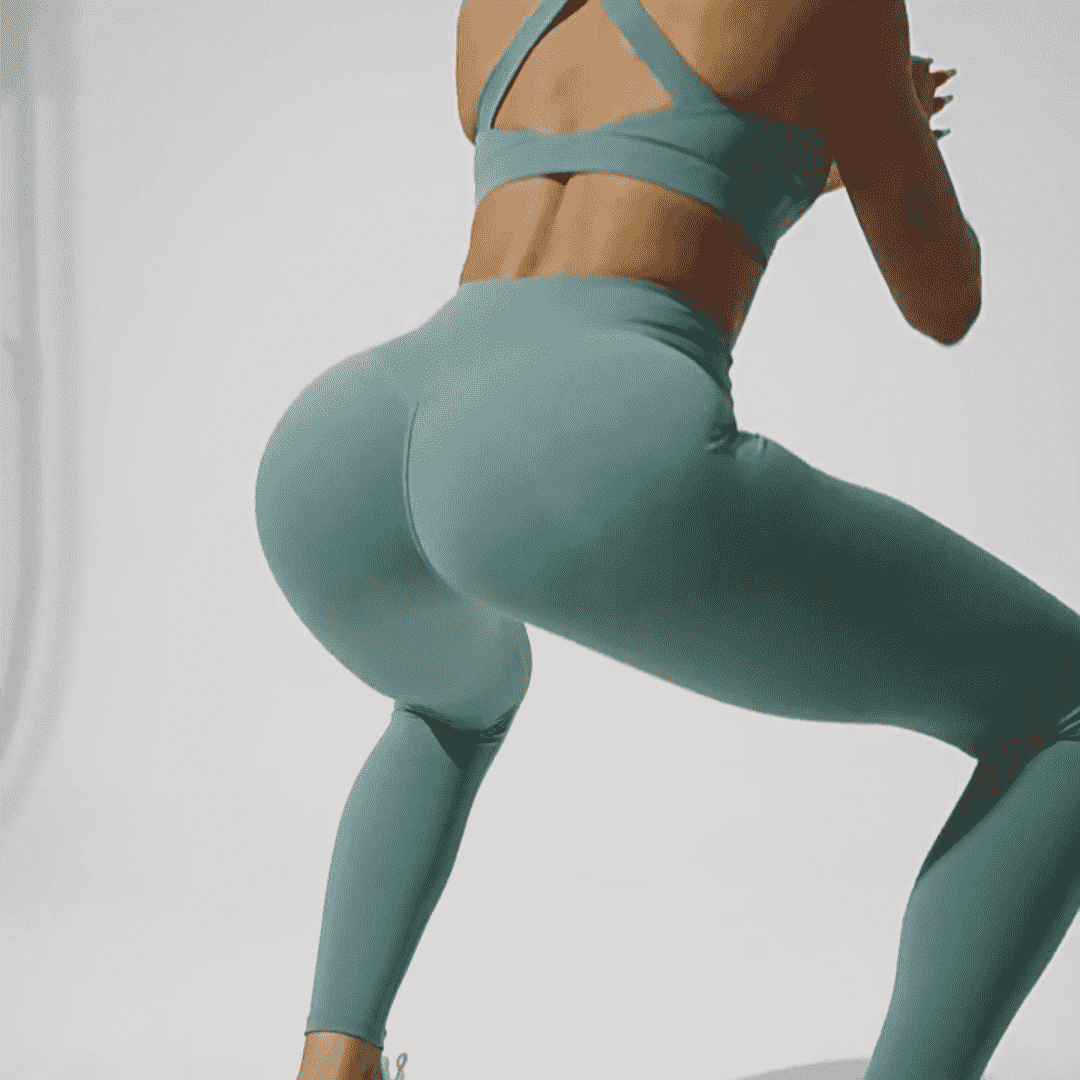
Workout Leggings
Track route, waistband, fit, material, color, branding, size range, and current approved version as a distinct SKU within the wider program.
View Leggings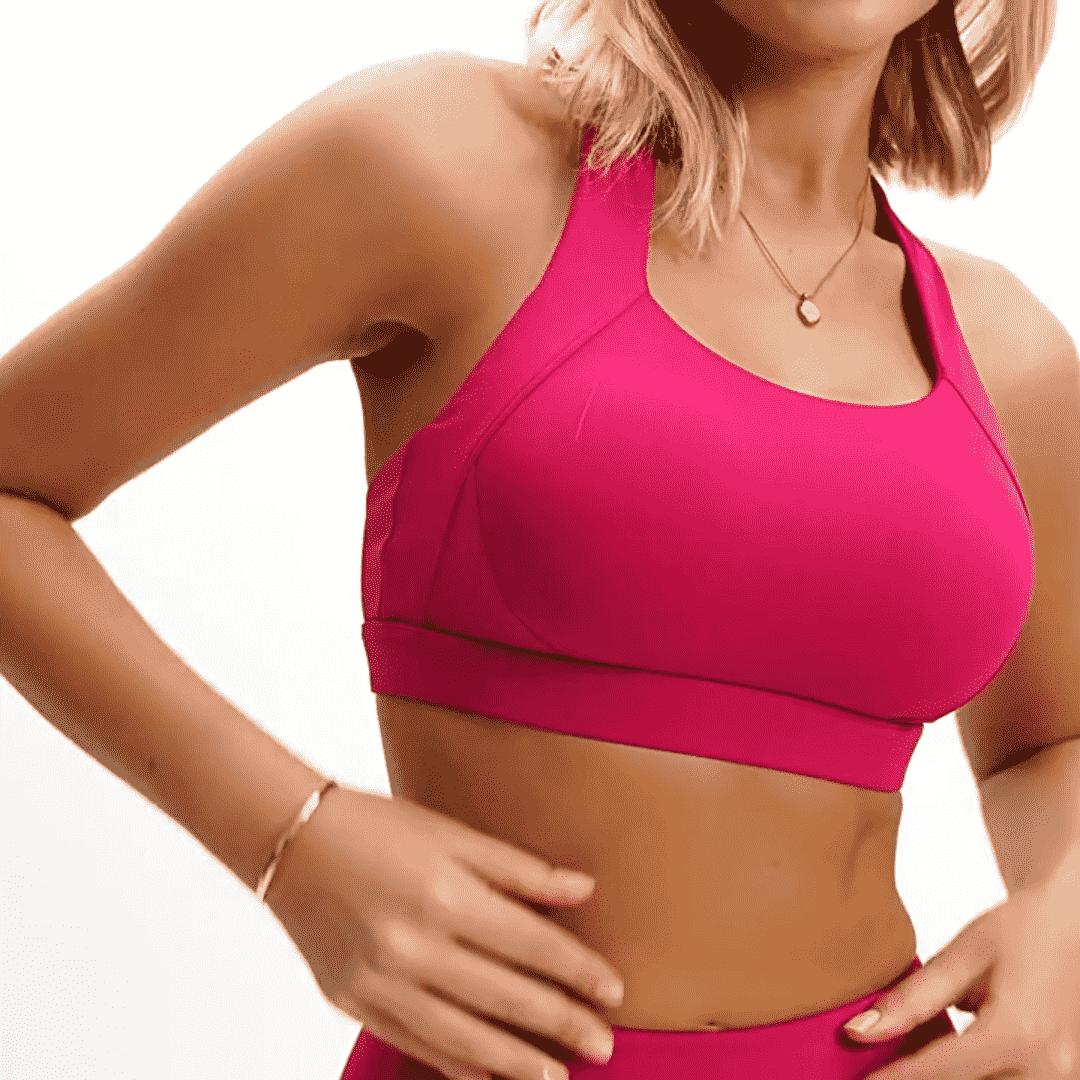
Sports Bras
Control strap, back, support direction, material, sizing, branding, and approved sample independently from coordinated bottoms.
View Sports Bras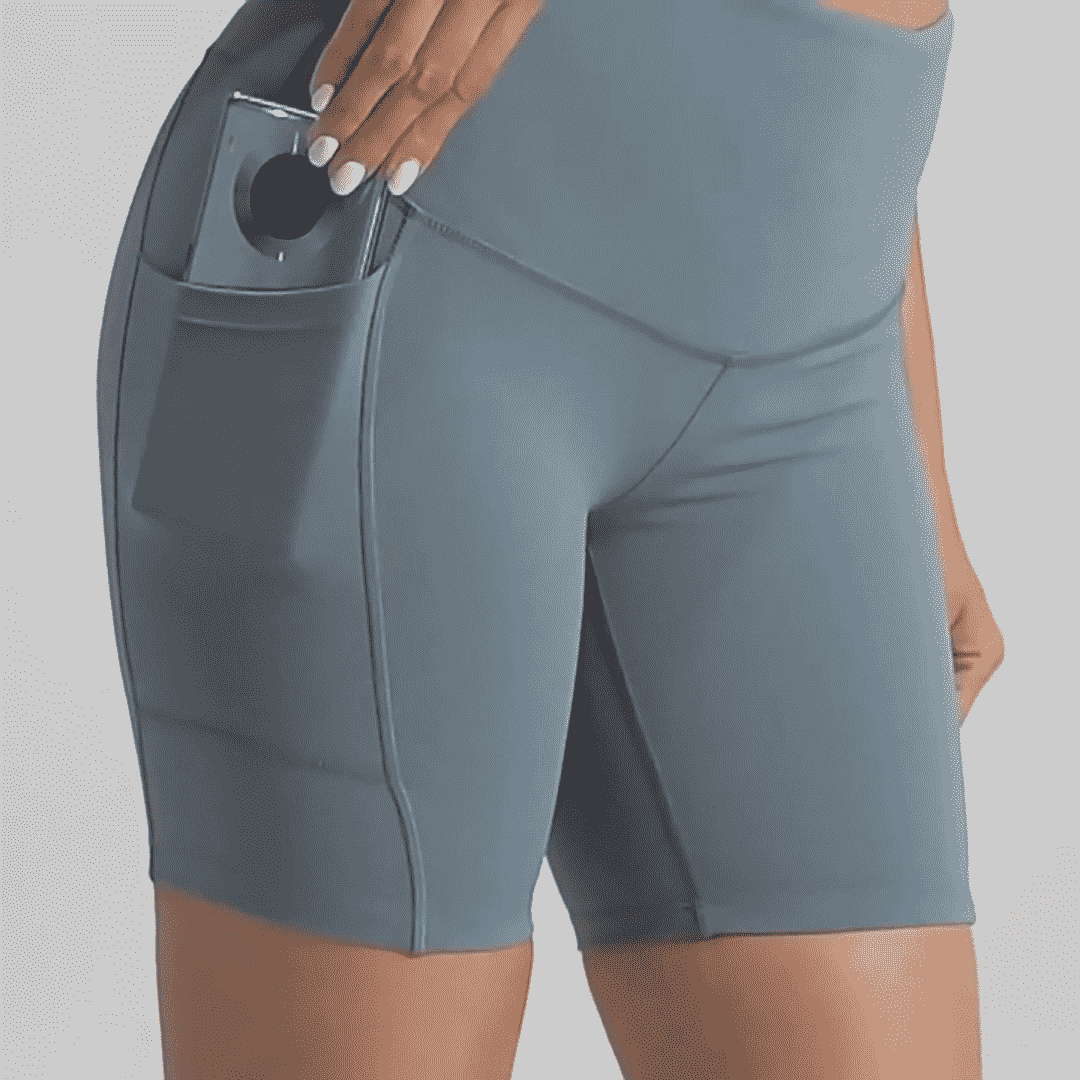
Workout Shorts
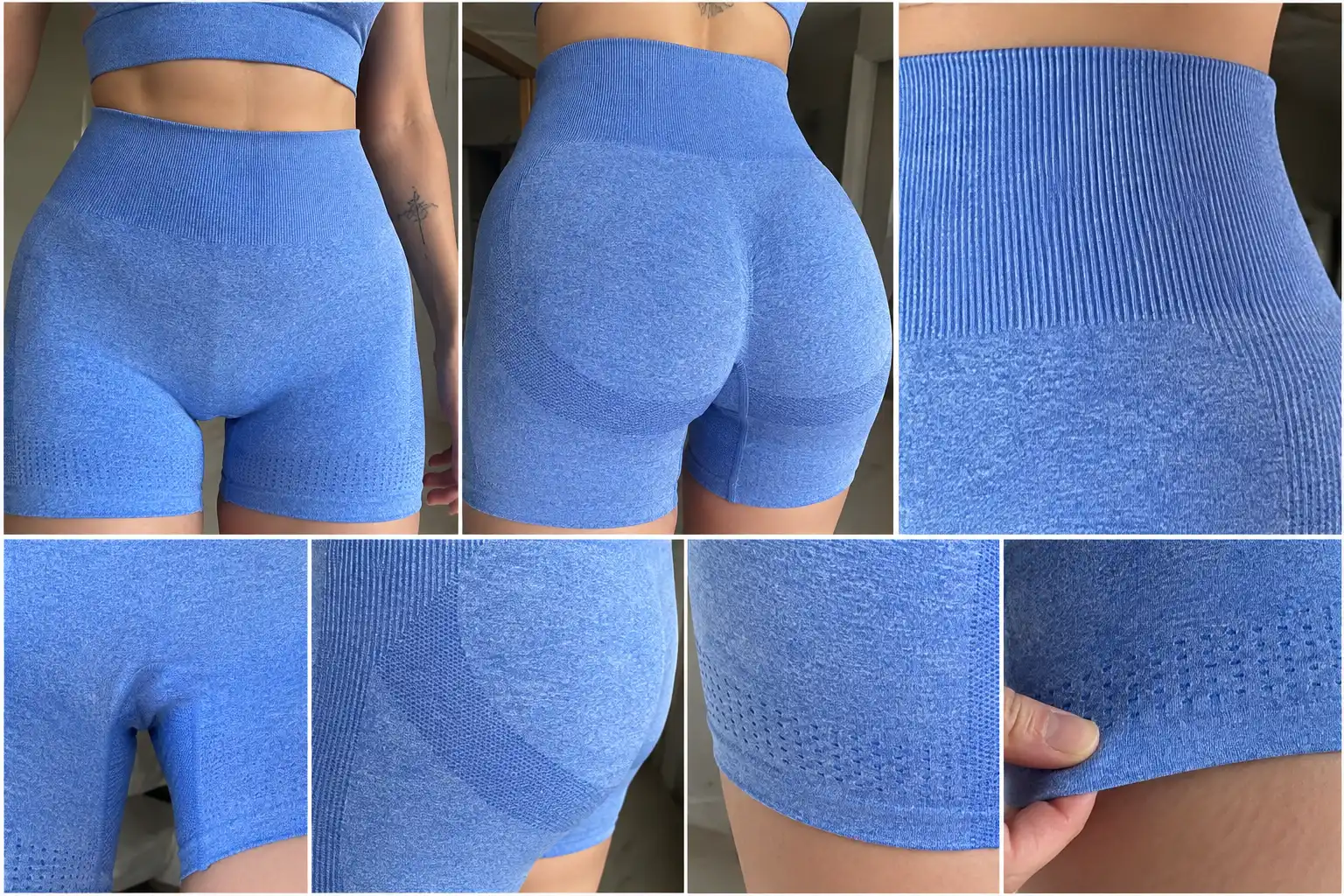
Manage length, waist, gusset or panel details, material, color, and identification while aligning with the collection standard.
View Shorts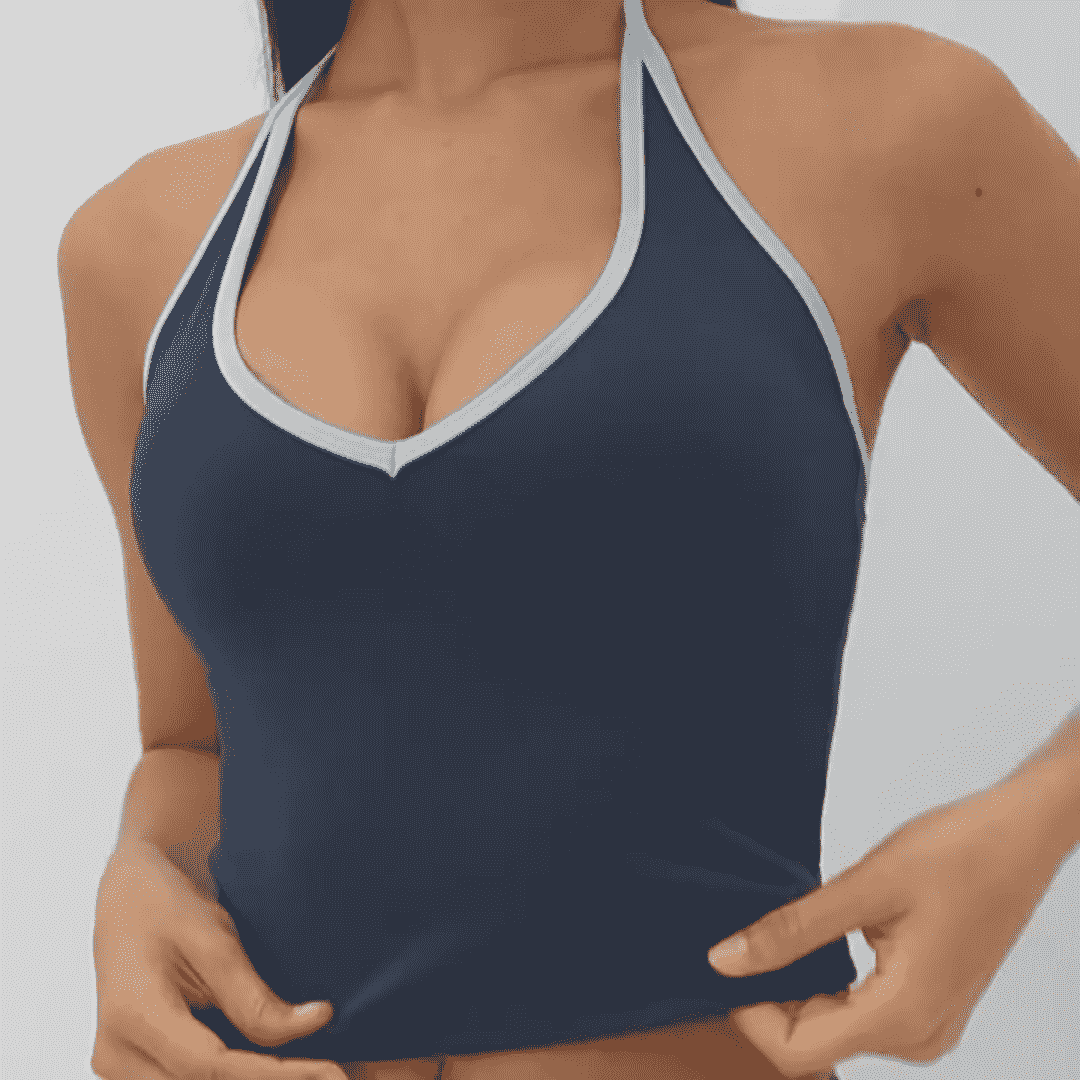
Training Tops
Coordinate fit, fabric, color, branding, and size structure with the program without assuming the same construction as bottoms.
View Tops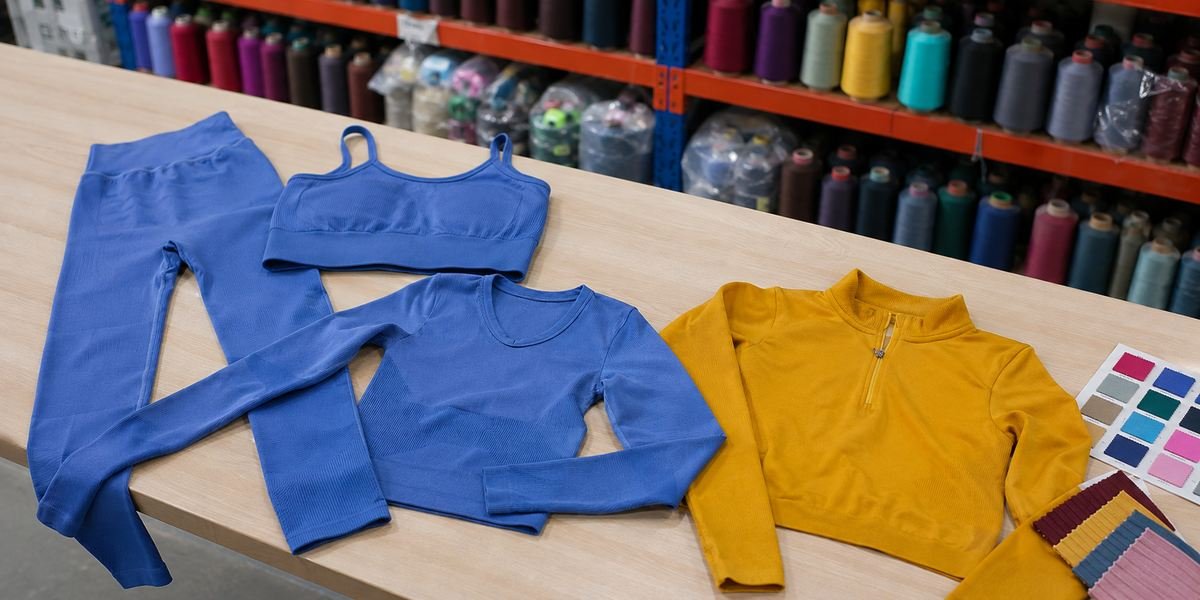
Seamless Workout Wear
Keep yarn, knit program, garment dimensions, finishing, size programming, and approved sample linked to the correct Seamless SKU.
View Seamless ActivewearKeep Seamless Workout Wear Traceable From Yarn to Repeat Production
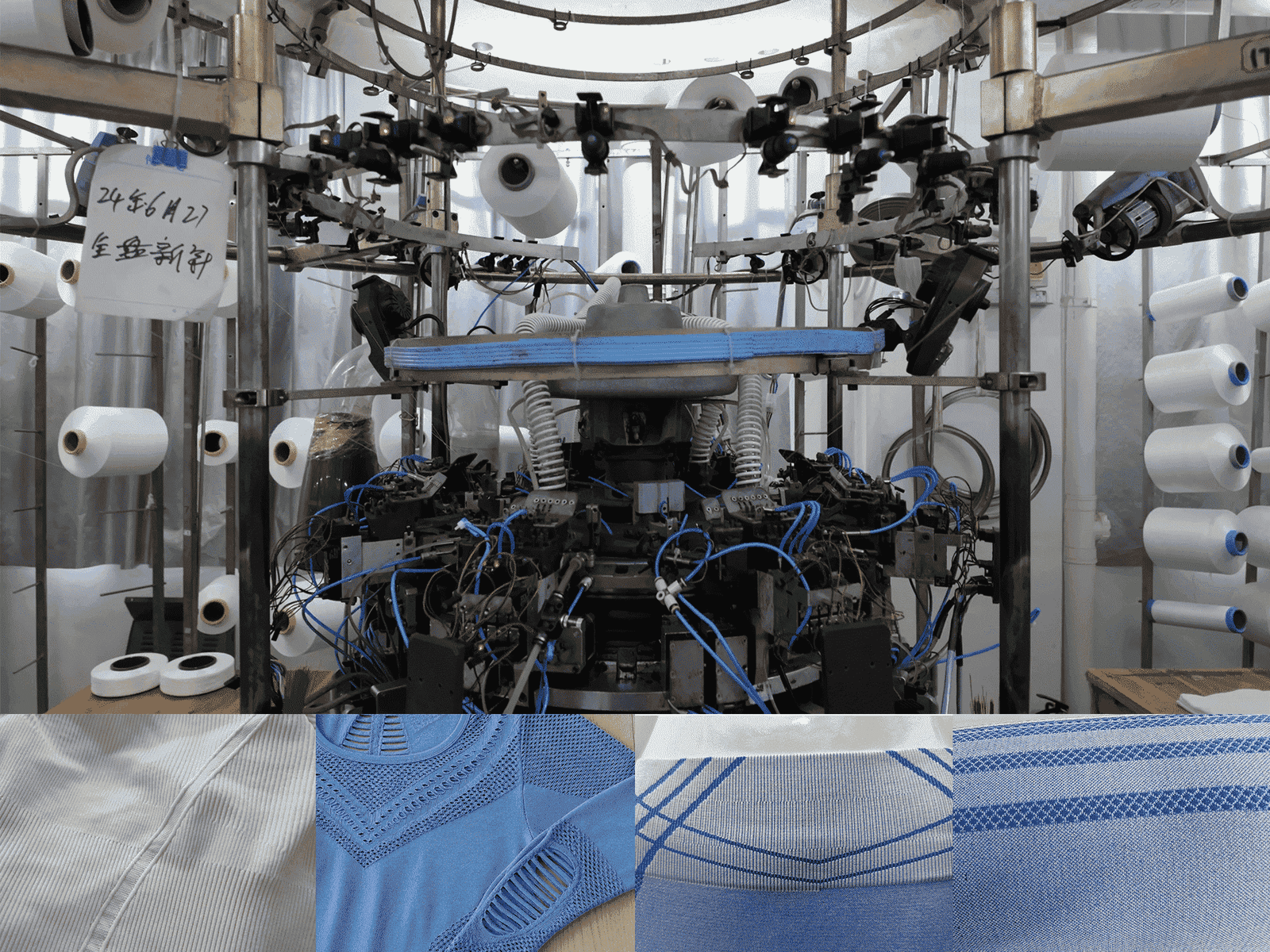
MOVEVOX operates 28 Italian Santoni seamless knitting machines at its Yiwu core manufacturing base. For ongoing workout wear supply, each Seamless SKU should remain linked to its current yarn direction, knitting program, dimensions, finishing route, size logic, and approved physical result.
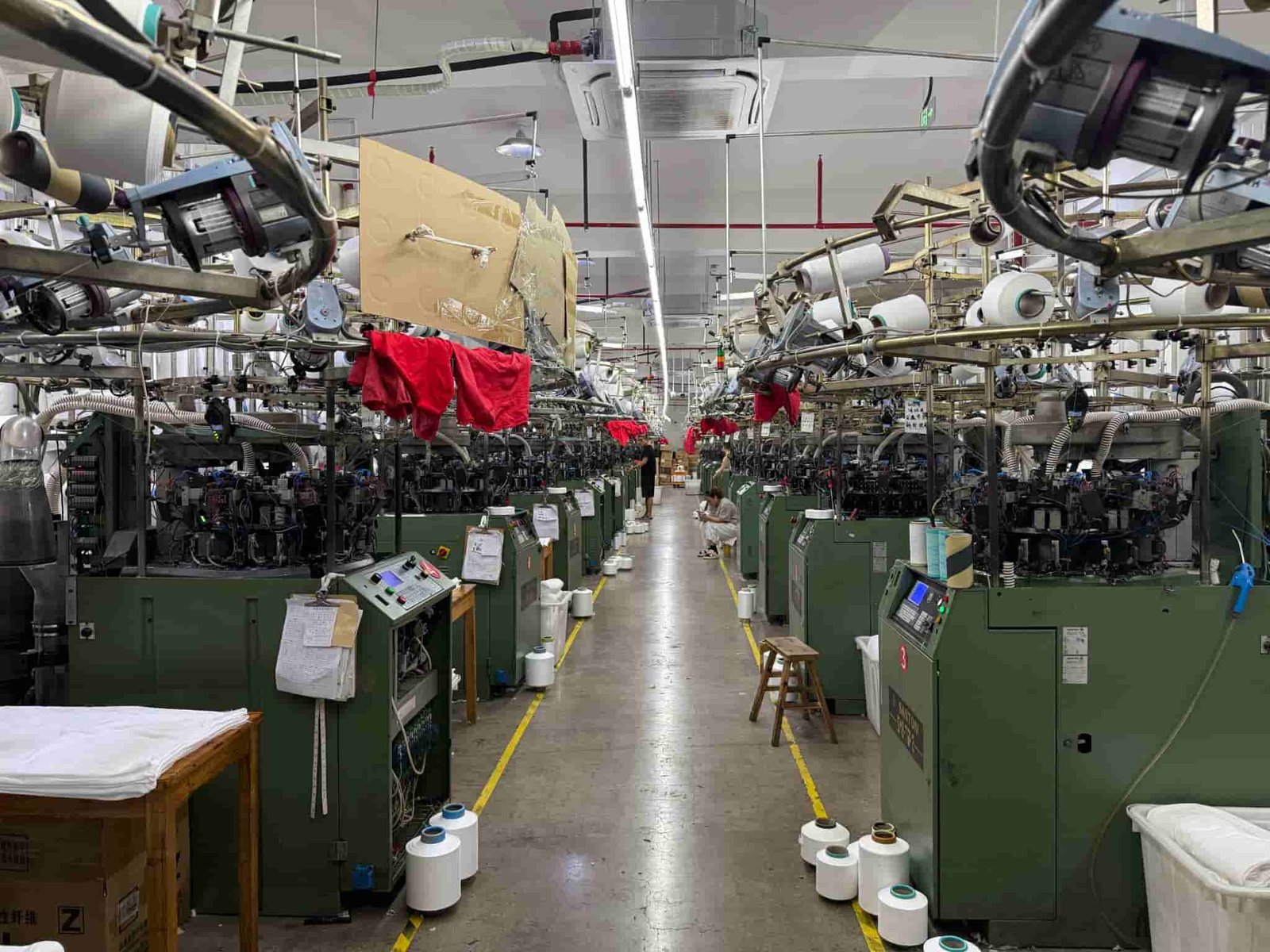
Knitting Program Version
The Santoni equipment supports Seamless development and production for technically suitable workout wear SKUs, including repeat orders and multi-style collections.
Yarn & Lot Alignment
Machine ownership does not replace technical control. Changes in yarn, knitting program, garment dimensions, finishing, or sample approval can change the production baseline.
Size & Dimension Control
Keep the current size logic, garment dimensions, knitting program, and approved sample identifiable for each Seamless SKU so revisions do not become informal production changes.
Repeat-Run Baseline
Where yarn or material conditions change, confirm the effect on appearance, stretch, dimensions, finishing, and the approved garment result before repeat production is released.
Rib & Texture Direction
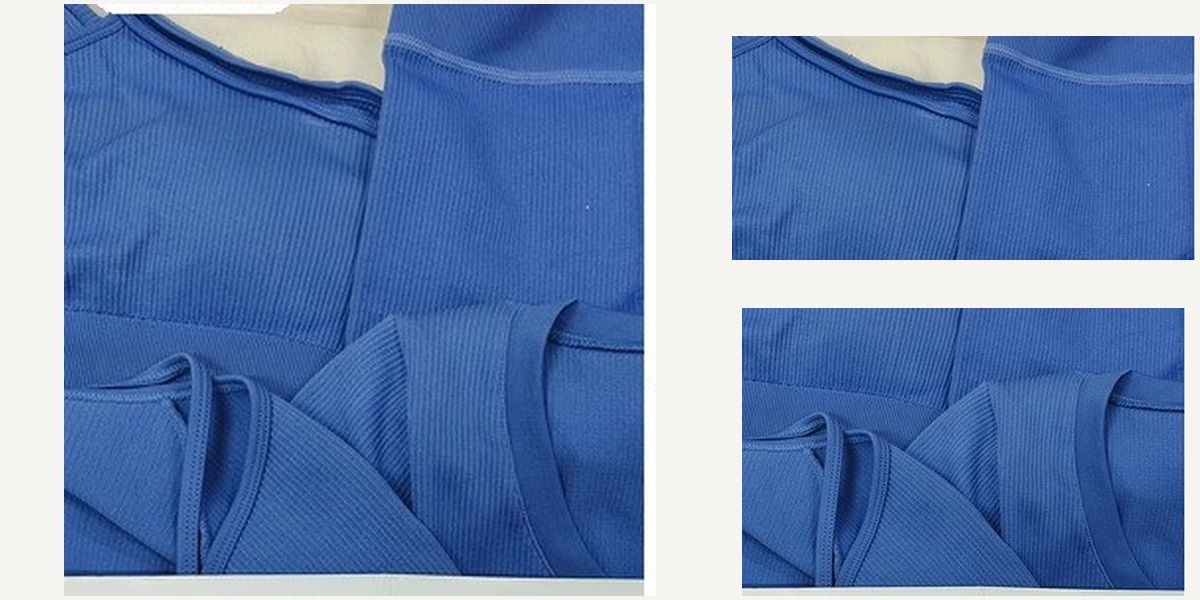
Ribbed or textured areas should remain connected to the applicable yarn, knit structure, machine programming, finishing, and approved visual reference.
Repeat-Order Reference
Repeat orders should reference the current approved yarn direction, knitting version, dimensions, finishing, branding, and physical product standard.
Keep Patterns, Components and Construction Controlled Across Cut & Sew Orders
Cut & Sew workout wear is controlled through the current pattern, construction details, components, materials, and approved physical product—not only through a style name or reference image.
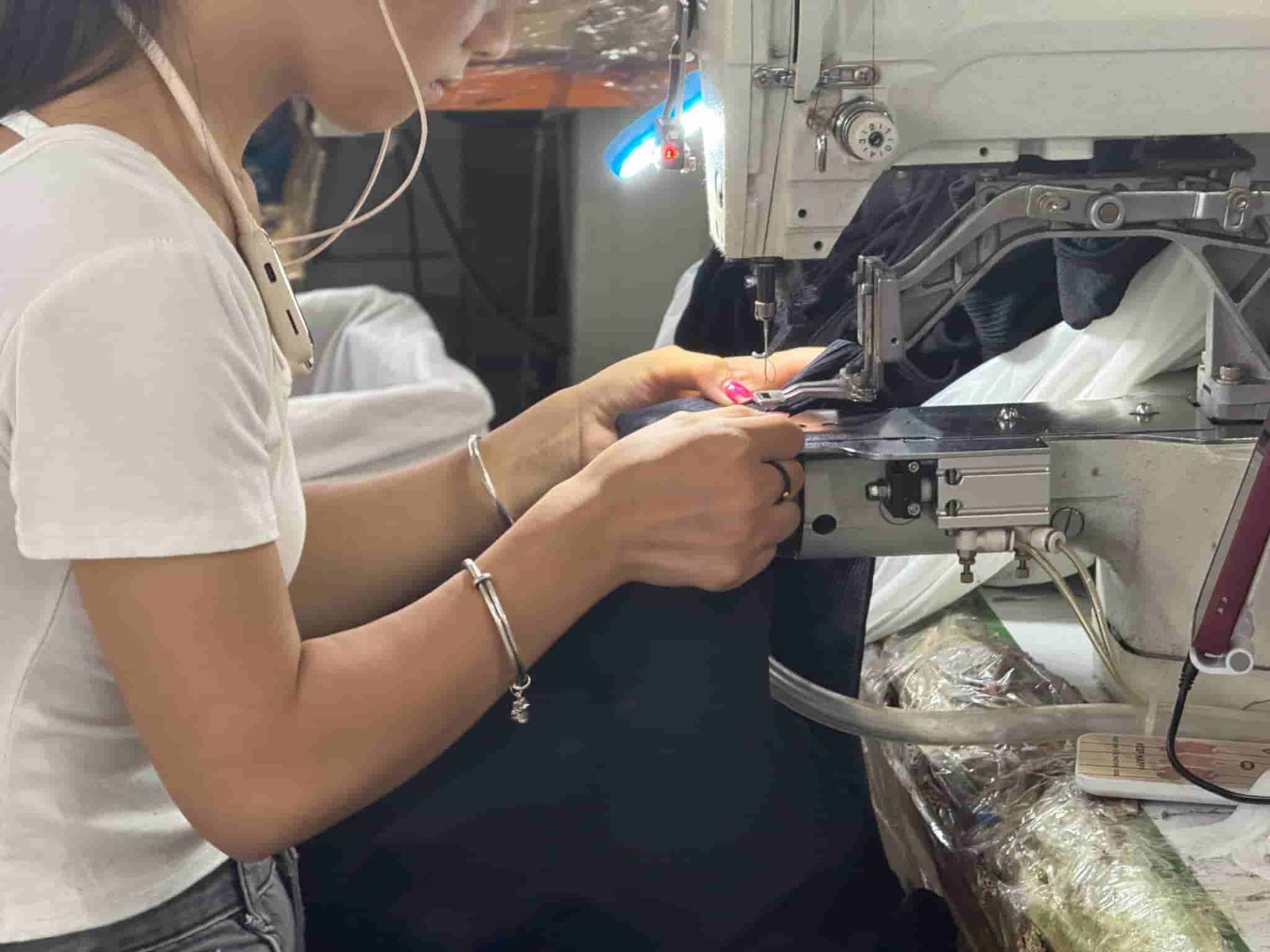
MOVEVOX’s core manufacturing base includes approximately 24 primary sewing and garment-production machines supporting core Cut & Sew operations within managed programs.
Pattern & Panel Version
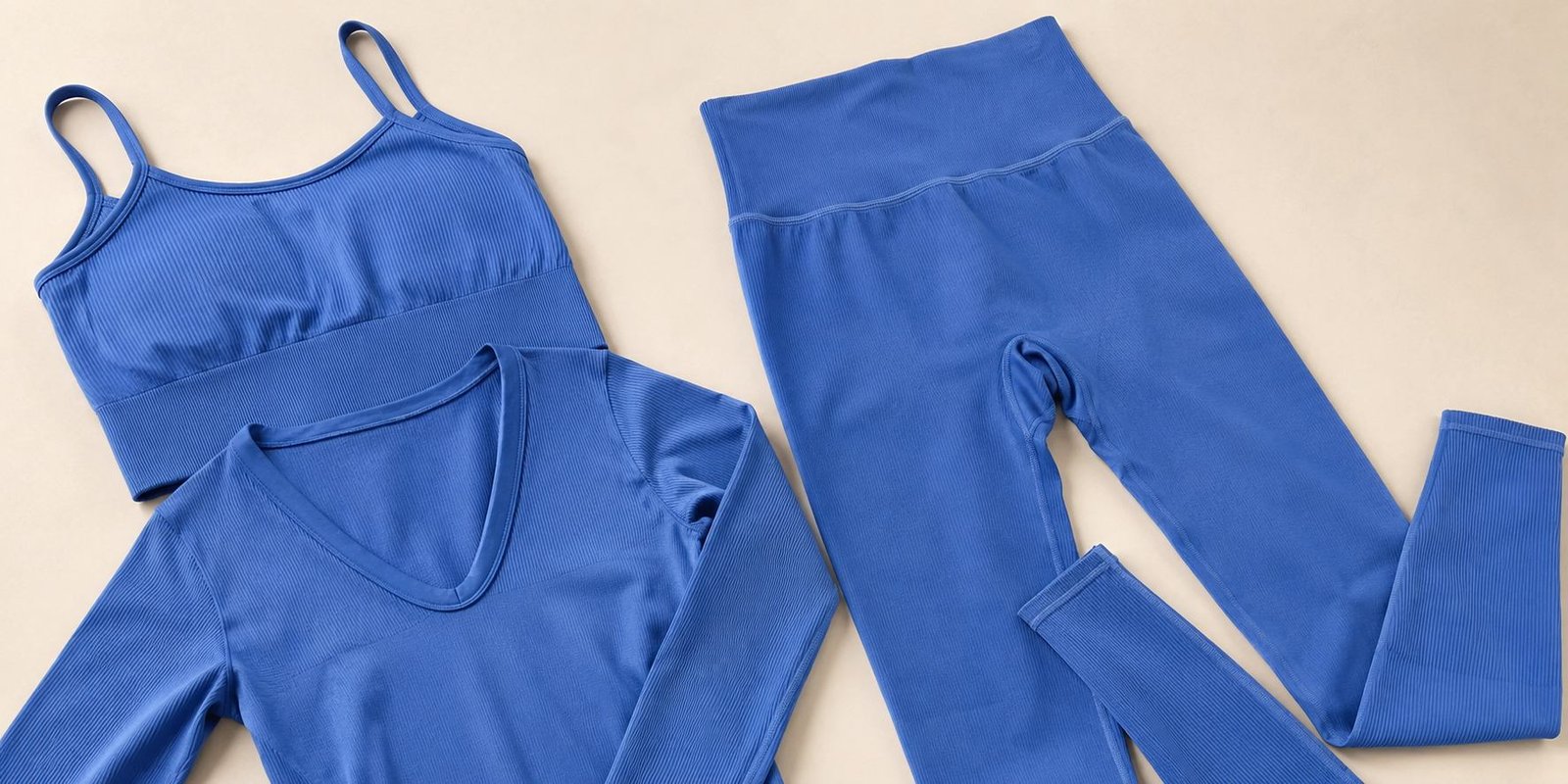
Keep the current pattern pieces, panel dimensions, pocket details, and revision status connected to the approved SKU before bulk and repeat orders.
Gusset, Elastic & Component Control
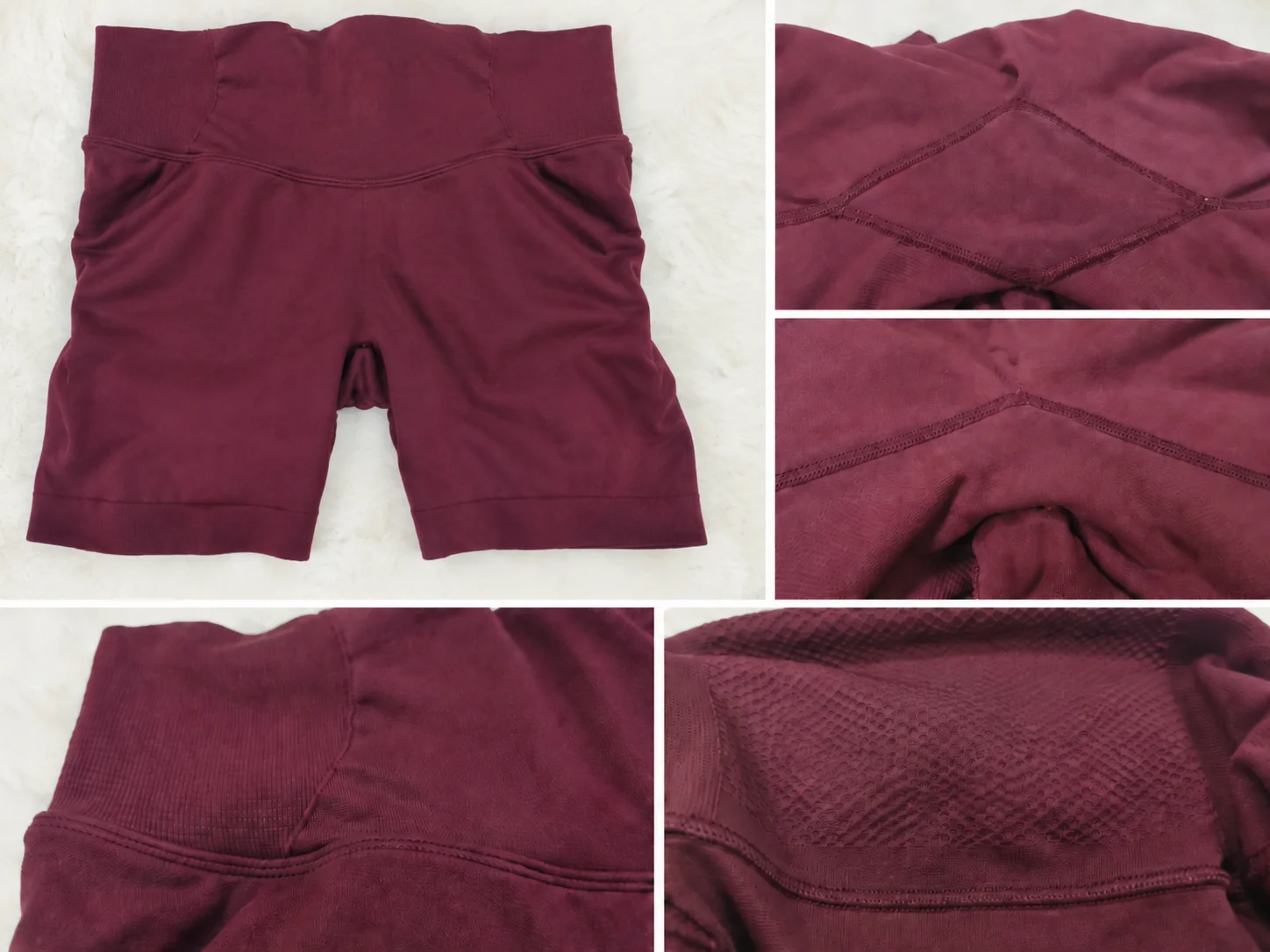
Gussets, elastic components, and related purchased items should remain tied to the current bill of requirements, fit, placement, and approved sample.
Multi-Material & Seam Standard
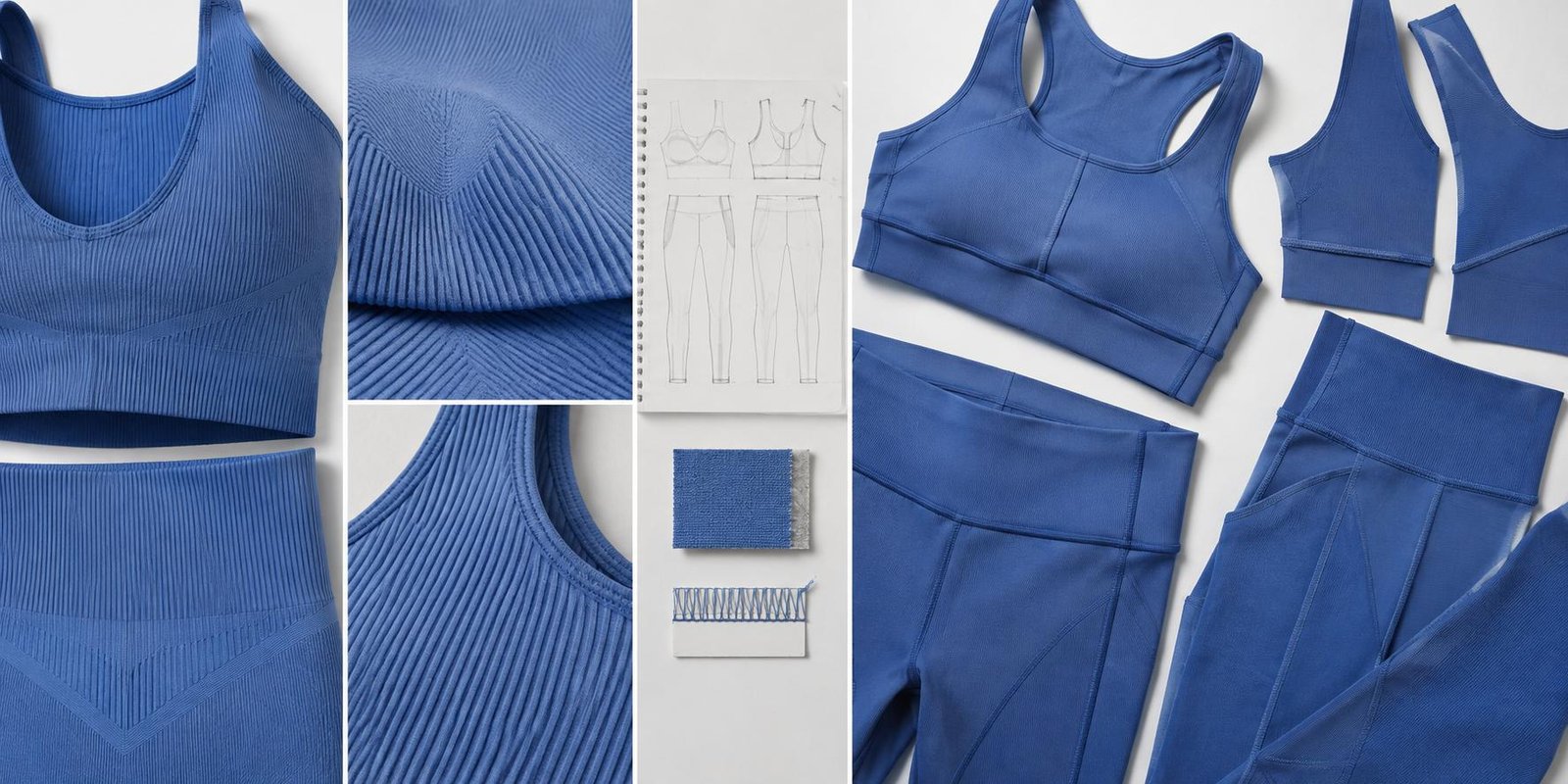
Where several materials or defined seam positions are used, compatibility, construction method, and approved execution should remain part of the production baseline.
Run Multiple Workout Wear SKUs Through One Controlled Program
A workout wear program can combine different garment types, routes, materials, colors, sample versions, branding requirements, quantities, and delivery priorities. Central coordination should make those differences visible rather than flatten them into one generic specification.
| Program Area | What Is Controlled | Output |
|---|---|---|
| Program Brief | Categories, SKU count, target market, quantity, delivery windows, buyer requirements | Program scope |
| SKU Matrix | Route, version, material, color, sizes, branding, quantity, priority | Controlled SKU map |
| Shared Standards | Approved colors, labels, packaging, artwork, materials where appropriate | Program-level standards |
| Approval Status | Current measurements, sample version, open points, buyer release status | SKU gate status |
| Bulk & Repeat Control | Materials, site allocation, QC, packing, delivery and repeat-order baseline | Production release plan |
Move Workout Wear Through Defined Approval Gates Before Bulk Release
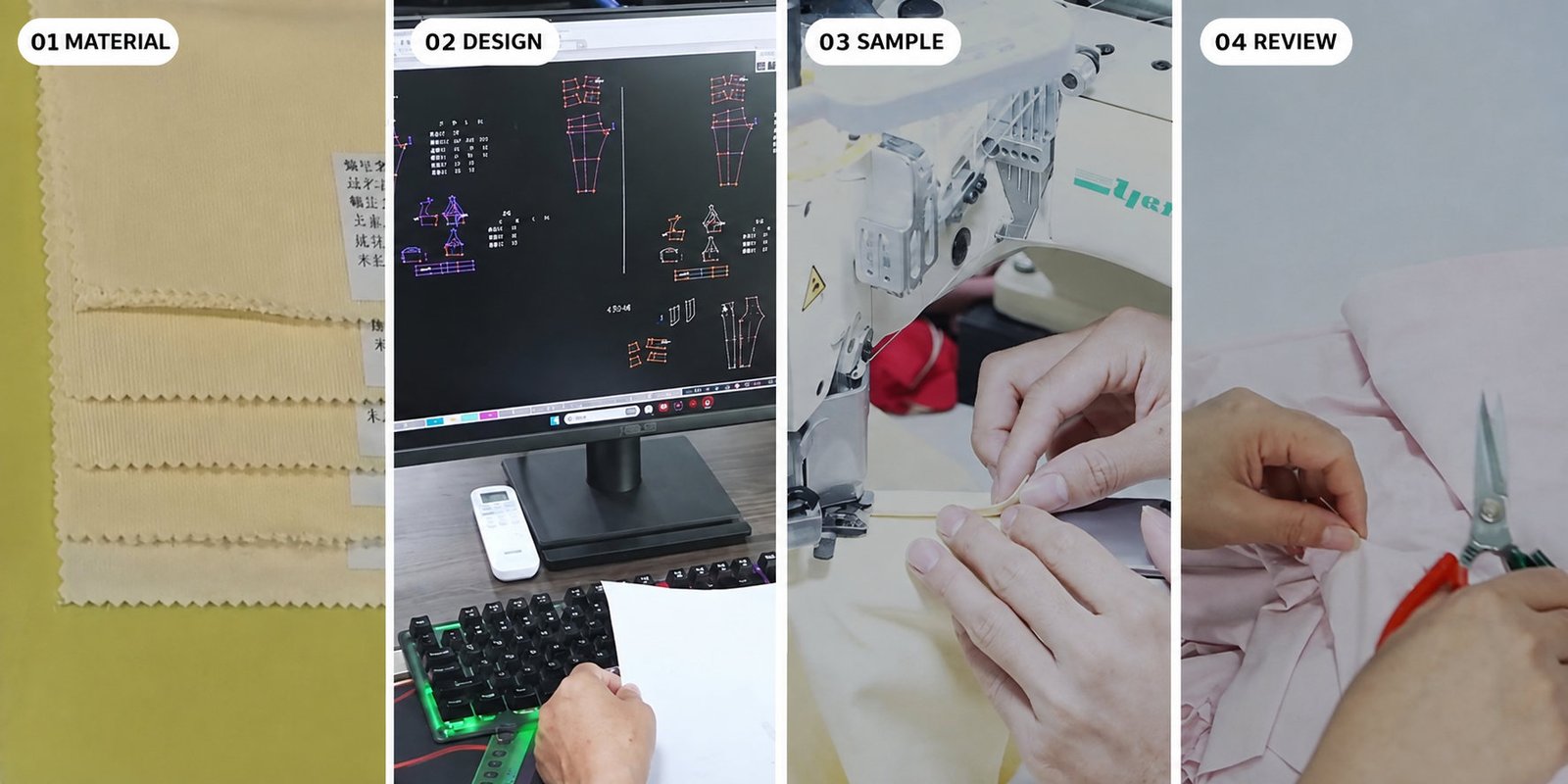
For an ongoing workout wear program, development needs a clear handoff into bulk production. Each gate should show what is current, what remains open, and what the buyer has approved before the next stage proceeds.
01 — Program Intake
Collect the SKU list, current specifications, samples, materials, artwork, commercial requirements, and buyer-specific vendor rules.
02 — Technical Baseline
Identify the current product version, manufacturing route, open questions, material direction, sizing, branding, and test requirements.
03 — Development Version
Prepare the applicable pattern or Seamless program, materials, components, and controlled sample version.
04 — Physical Validation
Produce the physical product that represents the current development information for buyer review.
05 — Buyer Release
Record approval or revision requirements for fit, measurements, material, construction, color, branding, and identification.
06 — Bulk Handoff
Freeze the applicable product references and move approved requirements into materials, production allocation, QC, and packing preparation.
07 — First-Article Gate
Check initial production output against the current approved standard before unrestricted production continues.
08 — Repeat-Order Baseline
For later orders, reconfirm the current product, material, identification, packing, quantity, and timing before release.
Build a Clear Supplier Onboarding Pack for Your Workout Wear Program
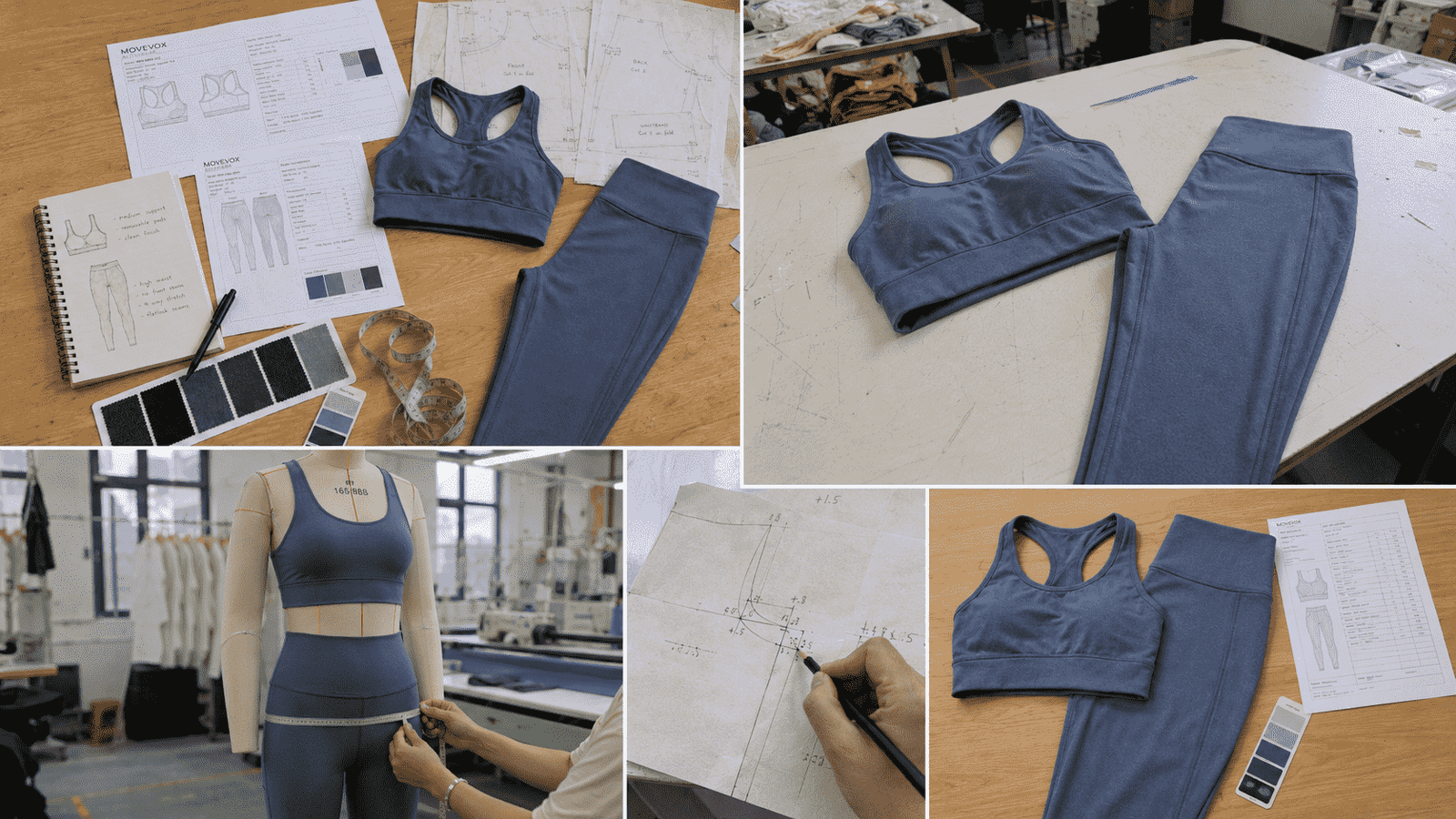
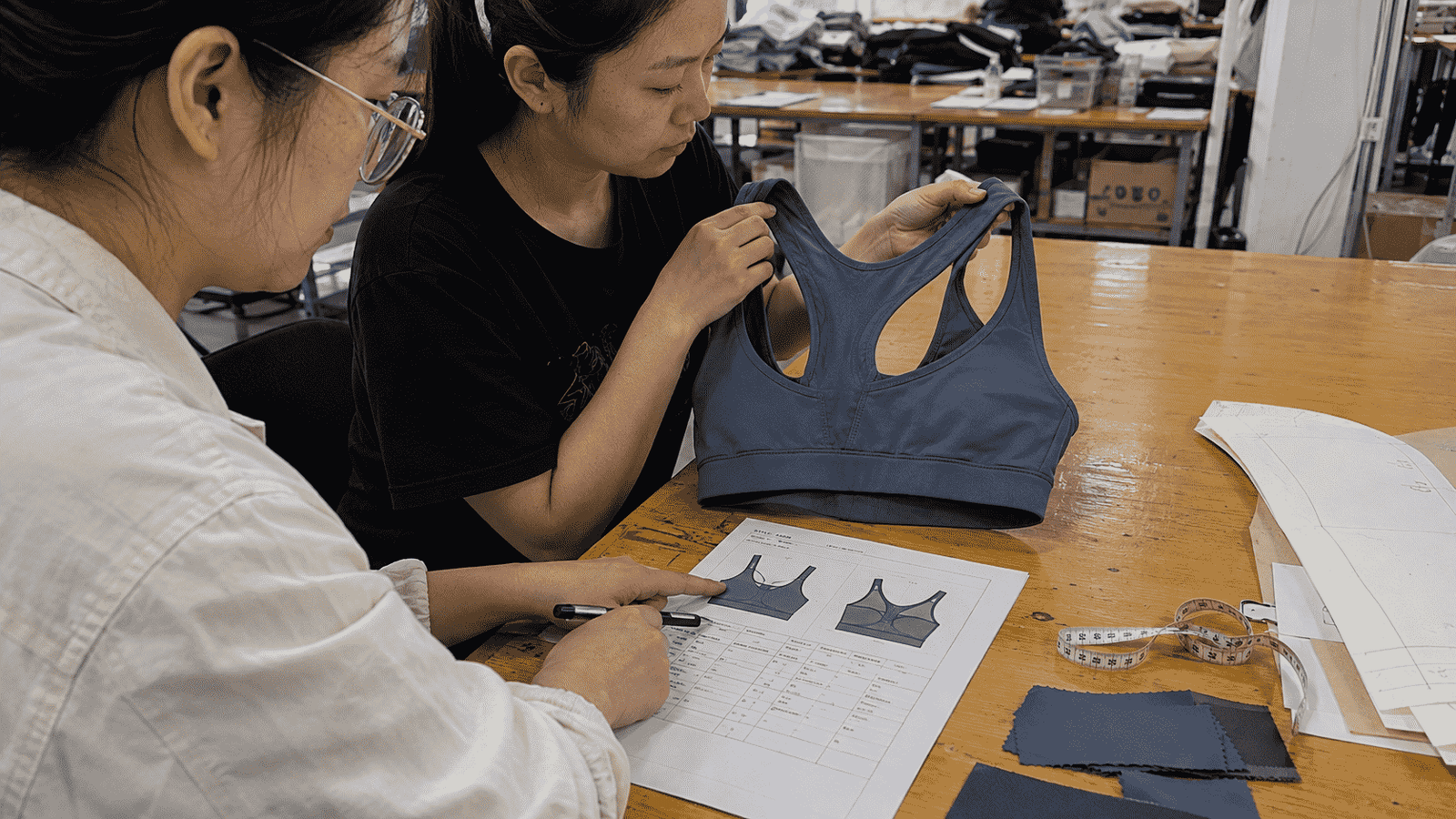
Established brands do not need to compress every product into one document. The priority is to separate current product standards, commercial program data, and supplier-qualification requirements so each can be controlled.
01 — Current Product Standard
Provide the current Tech Pack, measurements, approved physical sample, material direction, construction, artwork, labels, packaging, and known revision status for each applicable SKU.
02 — Commercial Program Data
Provide SKU count, expected quantities, launch or reorder priorities, target delivery windows, shared colors or materials, and any planned scale-up requirements.
03 — Vendor & Compliance Requirements
Provide applicable RSL, testing, inspection, audit, approved-production-site, confidentiality, or supplier-onboarding requirements that affect the program.
Surface Workout Wear Program Risks Before Sampling and Production Allocation
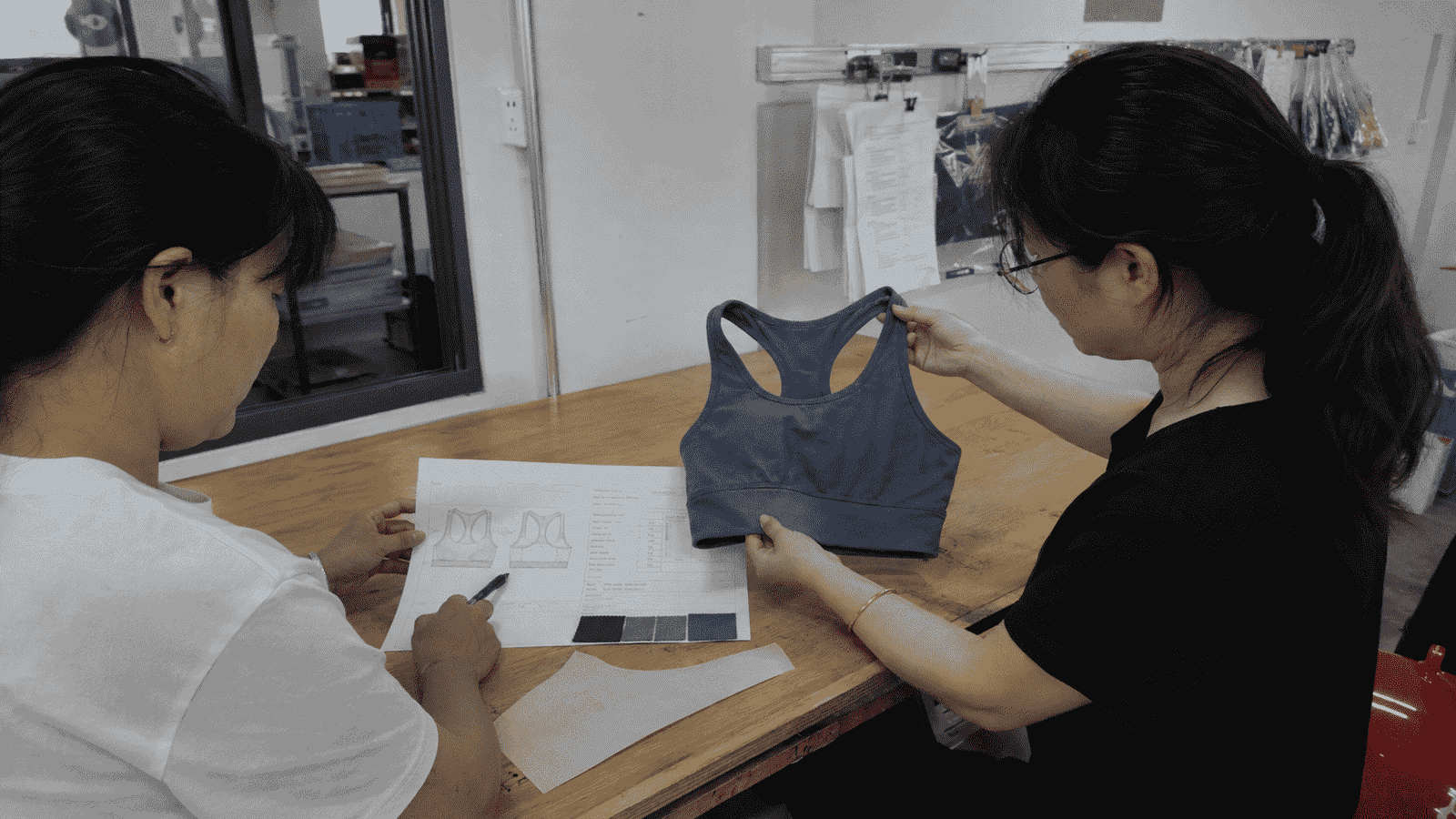
Version Conflict
Confirm which Tech Pack, measurement chart, physical sample, or revision controls the current SKU.
Incomplete SKU Definition
Record missing construction, size, branding, packaging, or approval information before development or transfer.
Shared-Material Mismatch
Confirm whether a proposed shared fabric or yarn direction is actually suitable for each SKU that will use it.
Manufacturing-Route Mismatch
Assign Seamless or Cut & Sew according to the approved product structure and program requirements.
Identification Mismatch
Validate logo, label, barcode or QR, size, color, and packaging information against the correct SKU.
MOQ Fragmentation
Review garment, material, dyeing, label, packaging, and component minimums across the collection rather than one SKU in isolation.
Evidence Gap
Define the test, compliance, audit, or performance evidence required for the actual product or vendor-qualification process.
Build a Material Strategy Across the Workout Wear Program
A multi-SKU program can benefit from shared material families, but material control still needs to follow the actual garment, manufacturing route, approved physical result, and commercial constraints.
Shared Material Opportunities
Identify where several SKUs can reasonably share a fabric or yarn direction without assuming one material fits the whole collection.
SKU-Specific Requirements
Keep product-specific needs visible where fit, support, construction, route, or intended use requires a different material.
Handfeel Family
Define compatible smooth, soft, brushed, firm, or textured directions so the collection can feel coherent without forcing identical materials.
Coverage Risk
Review color, stretch, fabric construction, garment use, and physical approval where visual coverage matters.
Surface & Branding
Confirm how matte, smooth, brushed, ribbed, or textured surfaces interact with logos, labels, and the intended brand execution.
Color Standard
Use an agreed color reference while recognizing that different fabric or yarn systems can produce different physical results.
Commercial Constraints
Review availability, MOQ, custom dyeing, sampling, bulk timing, and repeat-order supply together at program level.
Evidence & Change Control
Keep performance, chemical, recycled-content, or other claims tied to relevant evidence, and record material changes before repeat production.
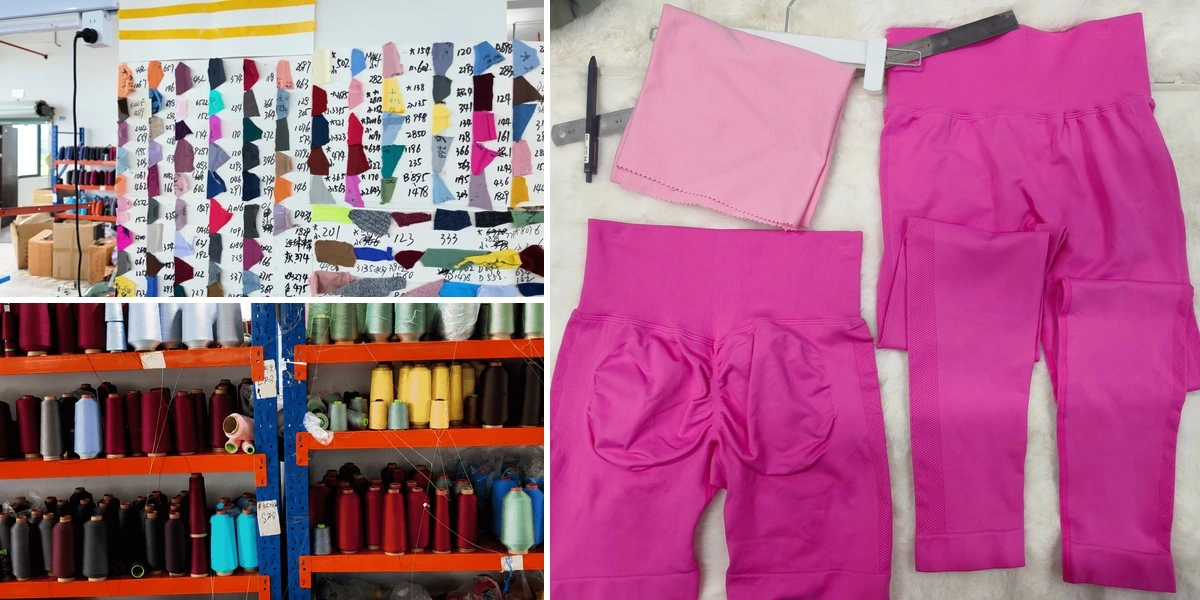
Separate Shared Material Families From SKU-Specific Workout Wear Materials
A workout wear program can use a small number of controlled material families while still allowing product-specific fabrics or yarn systems where fit, construction, support, surface, or manufacturing route requires them.
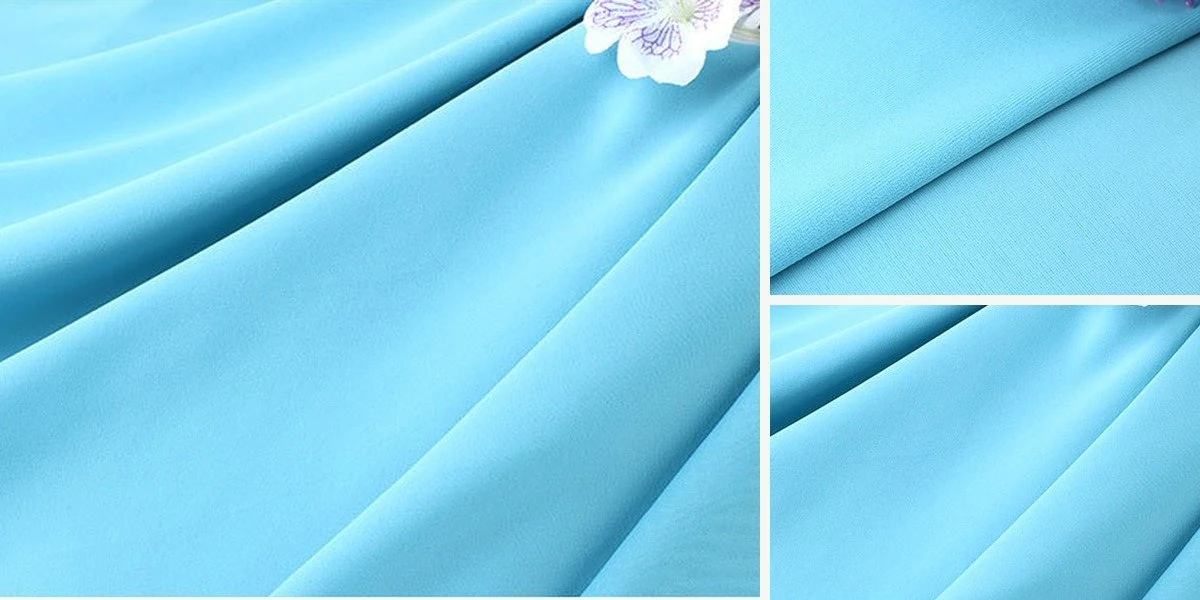
Core Shared Fabric Family
Useful where several Cut & Sew SKUs can share a compatible base fabric and color direction.
Review: physical approval, SKU suitability, color standard, lot consistency, and repeat-order availability.
Soft Studio Family
Useful for products that intentionally share a softer handfeel across yoga, studio, or lower-intensity categories.
Review: actual fabric, finished fit, surface, color, and program approval.
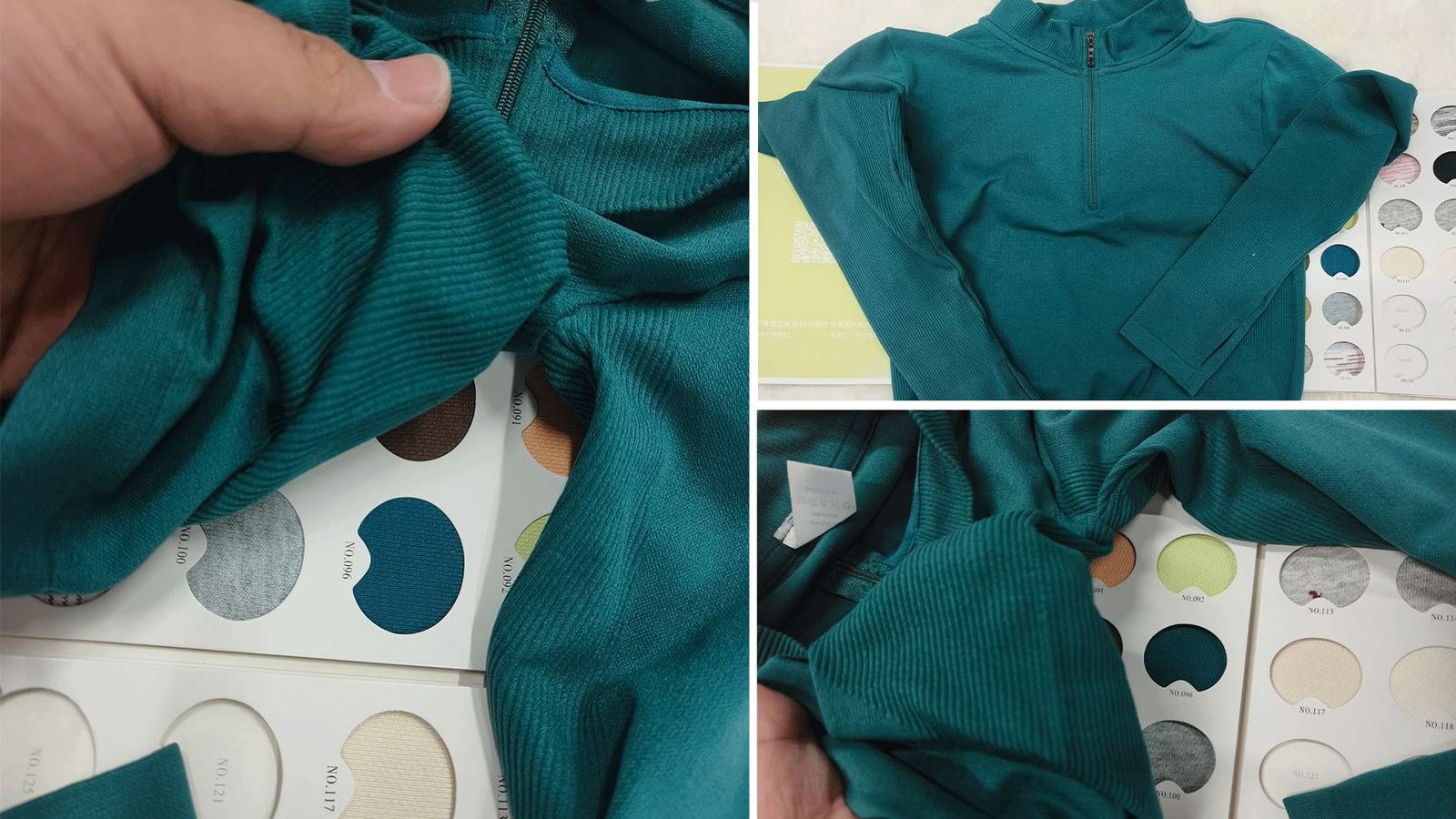
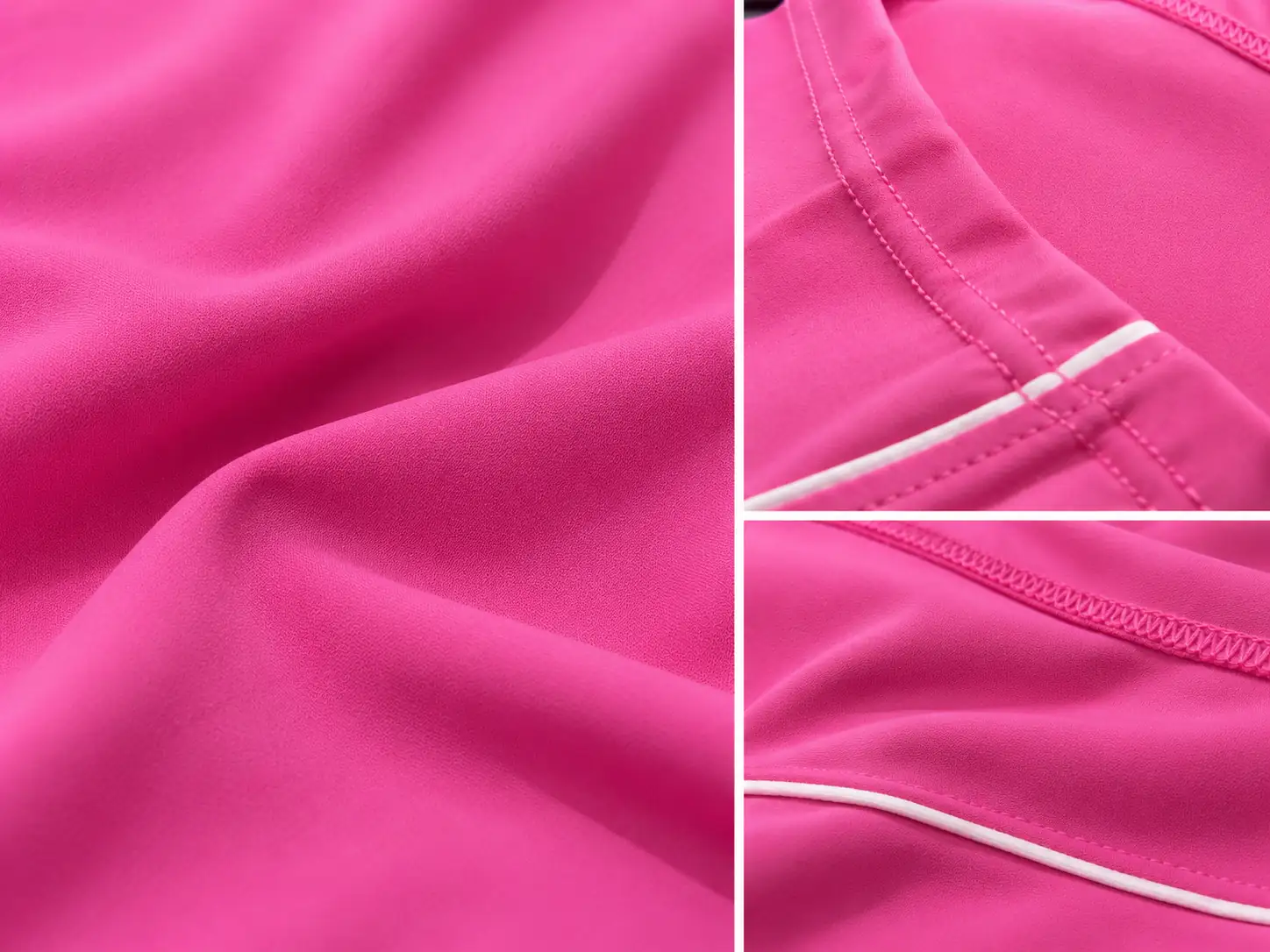
Firm Training Family
Useful where selected training products need a firmer material direction while remaining visually coordinated with the collection.
Review: material behavior, garment result, branding, and approved application by SKU.
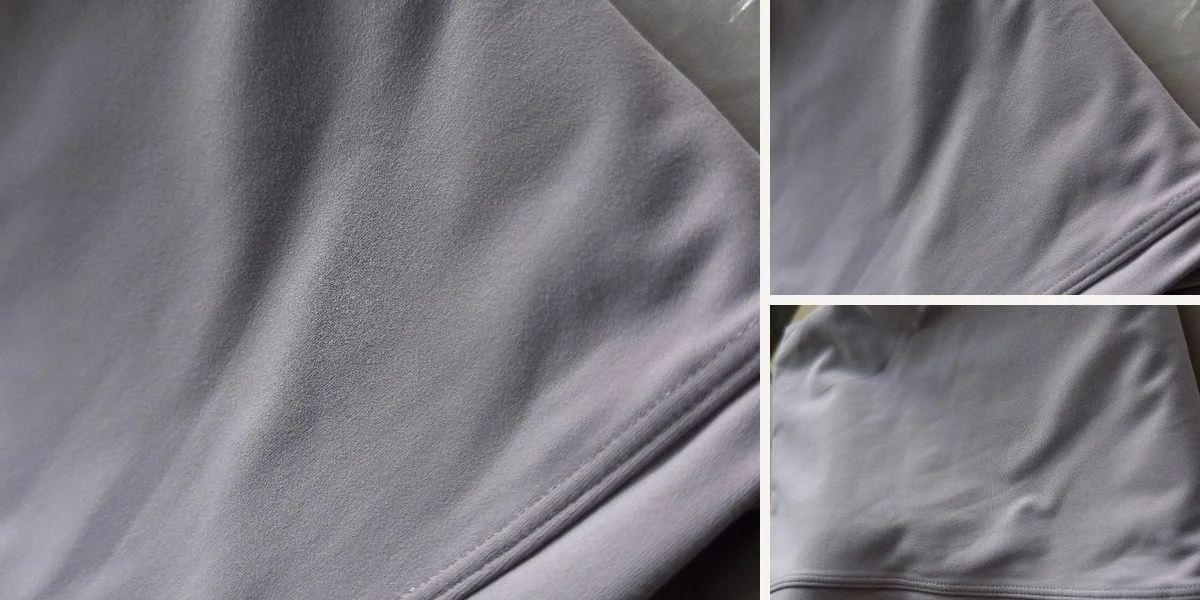
Brushed Capsule Material
Useful for a defined capsule or selected styles rather than assuming brushed fabric should extend across the full program.
Review: surface, color, product use, pilling/appearance expectations where applicable, and approved sample.
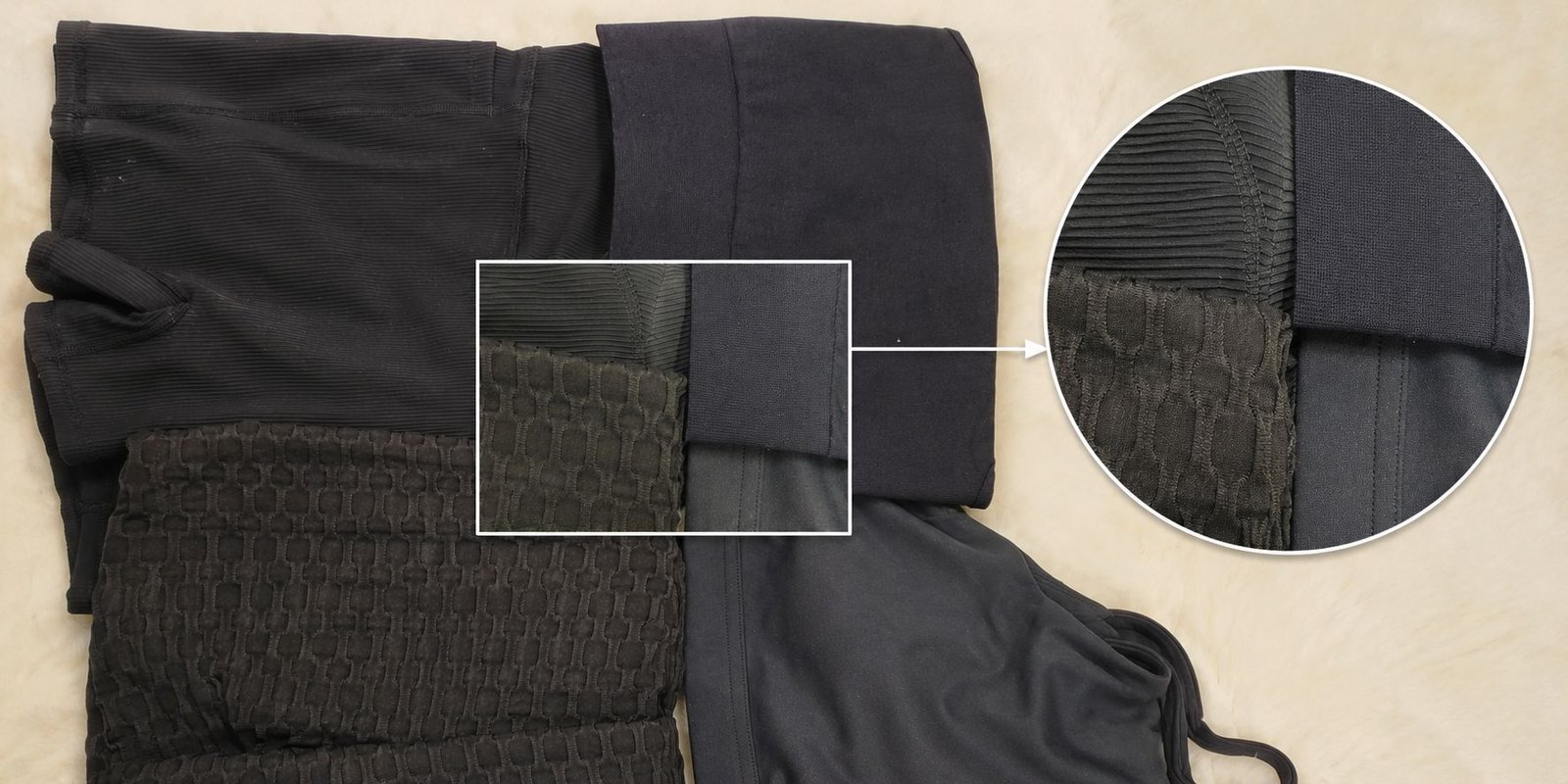
Rib / Textured Capsule
Useful when ribbed or textured appearance is a deliberate collection direction for selected products.
Review: swatch, construction route, branding compatibility, and SKU-specific approval.
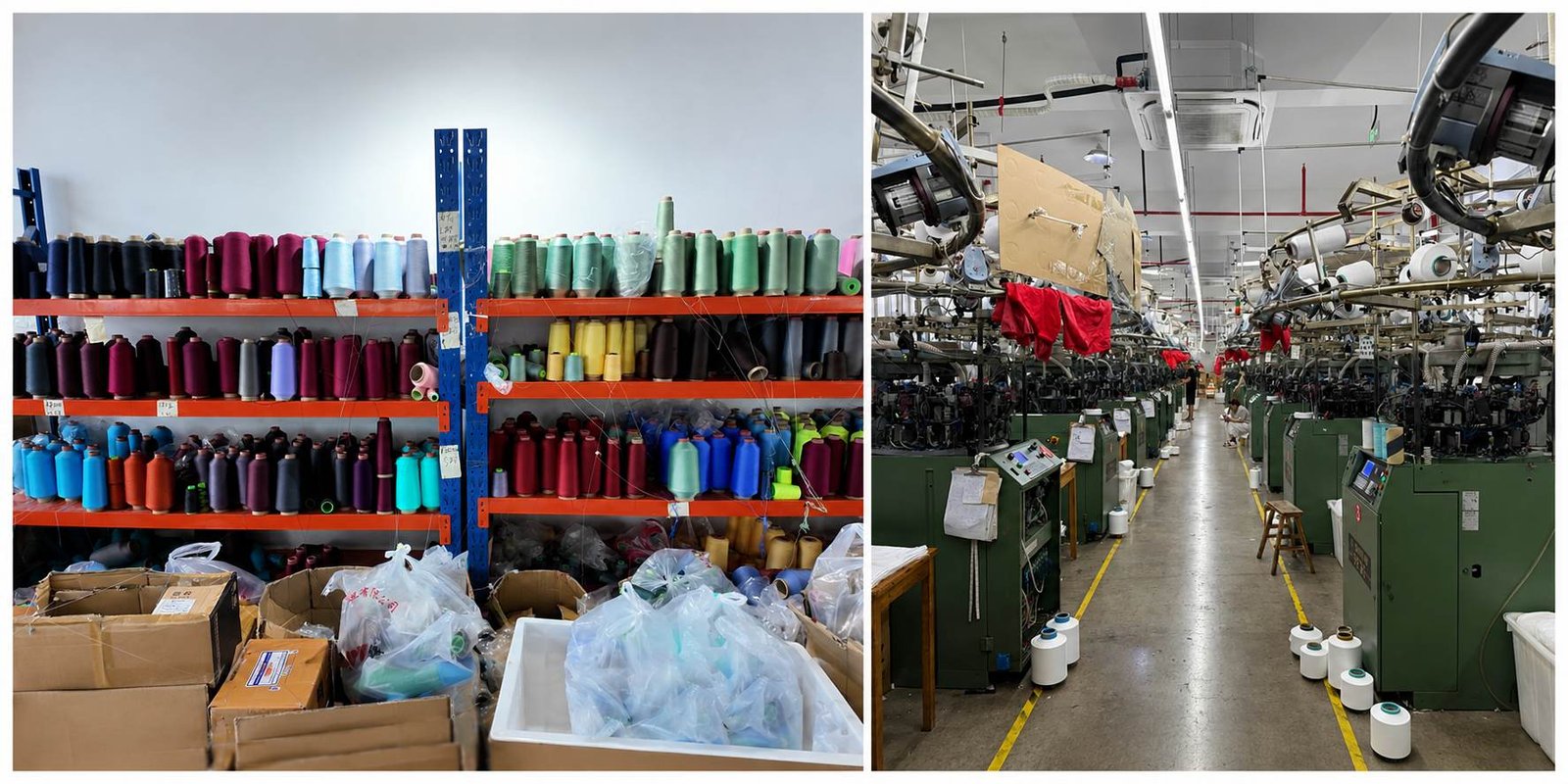
Seamless Yarn System
Seamless SKUs use yarn and knitted structure and therefore need their own program, size, finishing, and repeat-production controls.
Review: yarn, knitting program, garment dimensions, finishing, color, and approved physical sample.
Keep Custom Colors Consistent Across SKUs and Repeat Orders
For multi-SKU workout wear, color planning needs a master reference, material-specific approval, and enough timing to keep different fabrics or yarn systems aligned without assuming they will reproduce color identically.
01 — Color Ownership
Define which colors are shared across the program and which are SKU-specific.
02 — Master Standard
Use the agreed Pantone or physical reference as the program-level color direction.
03 — Material Approval
Approve the applicable lab dip, yarn, fabric, or physical material standard for each route.
04 — Supply Allocation
Prepare fabric or yarn according to actual supplier conditions, minimums, and SKU demand.
05 — Sample-to-Bulk Link
Keep the approved color/material result connected to the sample and current bulk requirement.
06 — Repeat-Order Reference
For repeat orders, confirm the current color standard, material source, and any approved changes before production.
Keep Branding, SKU Identity and Packaging Matched to the Correct Workout Wear Product
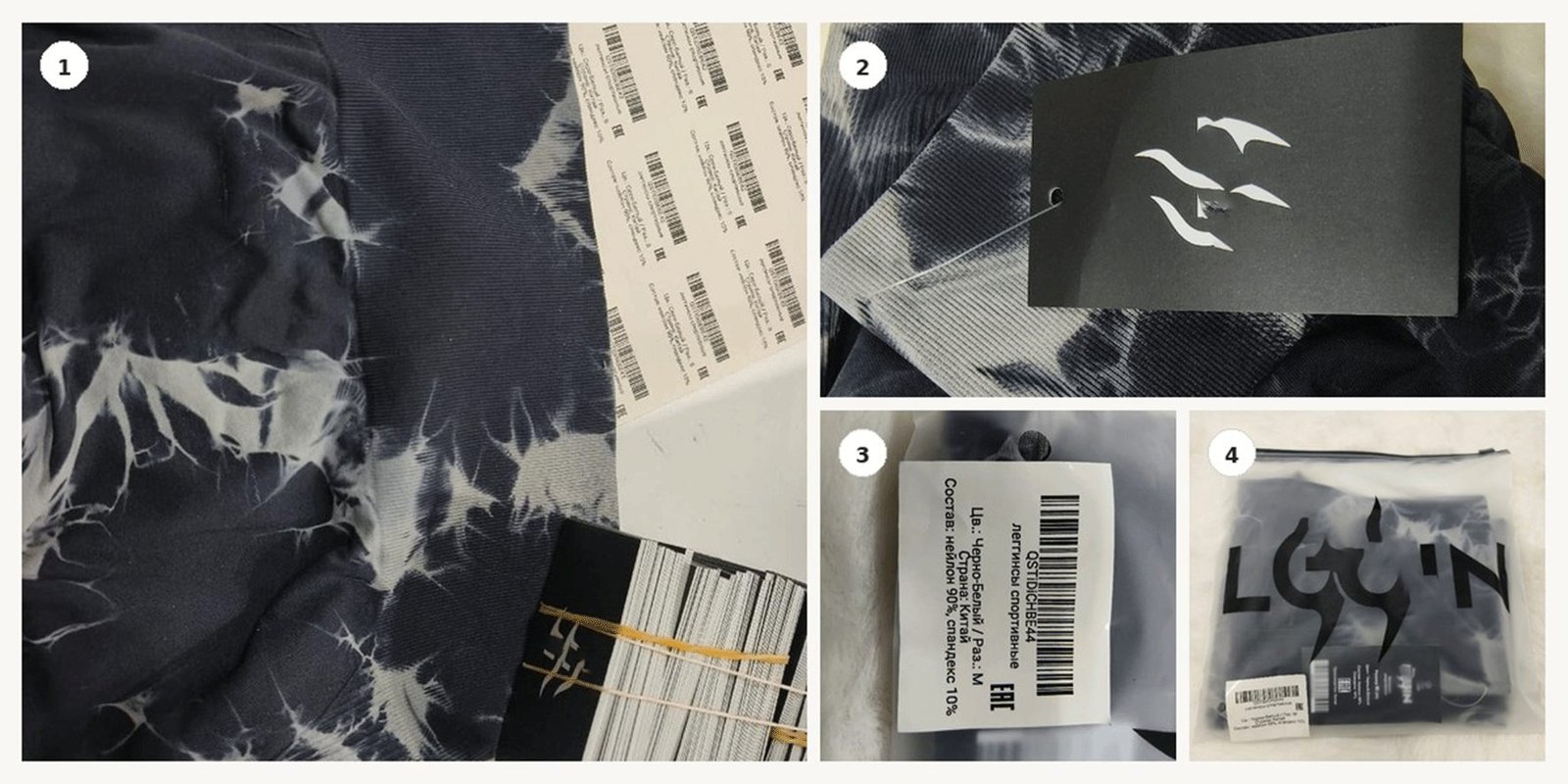
In a multi-SKU program, private-label execution becomes an identification-control task as well as a branding task. The correct artwork, label, size, color, barcode or QR, packaging, and carton information need to stay connected to the correct garment.
Approved SKU
The current approved product and revision remain the base reference for all downstream identification.
↓ Logo & Artwork
Artwork, dimensions, position, color, and approved execution stay linked to the correct SKU and material.
↓ Labels & Hangtags
Buyer-approved care, size, product, and commercial information are matched to the correct product version.
↓ Size / Color Identity
Each size and color combination is identified accurately across the SKU matrix and packing records.
↓ Barcode / QR
Buyer-supplied barcode or QR information is matched to the garment, size, color, and package.
↓ Individual Packaging
Individual packing follows the current product and identification requirements rather than generic brand packaging.
↓ Carton / Order
Final carton and order-level packing remains aligned with the confirmed PO, ratios, quantities, and shipment instructions.
Plan Capacity Around SKU Mix, Production Route and Delivery Windows
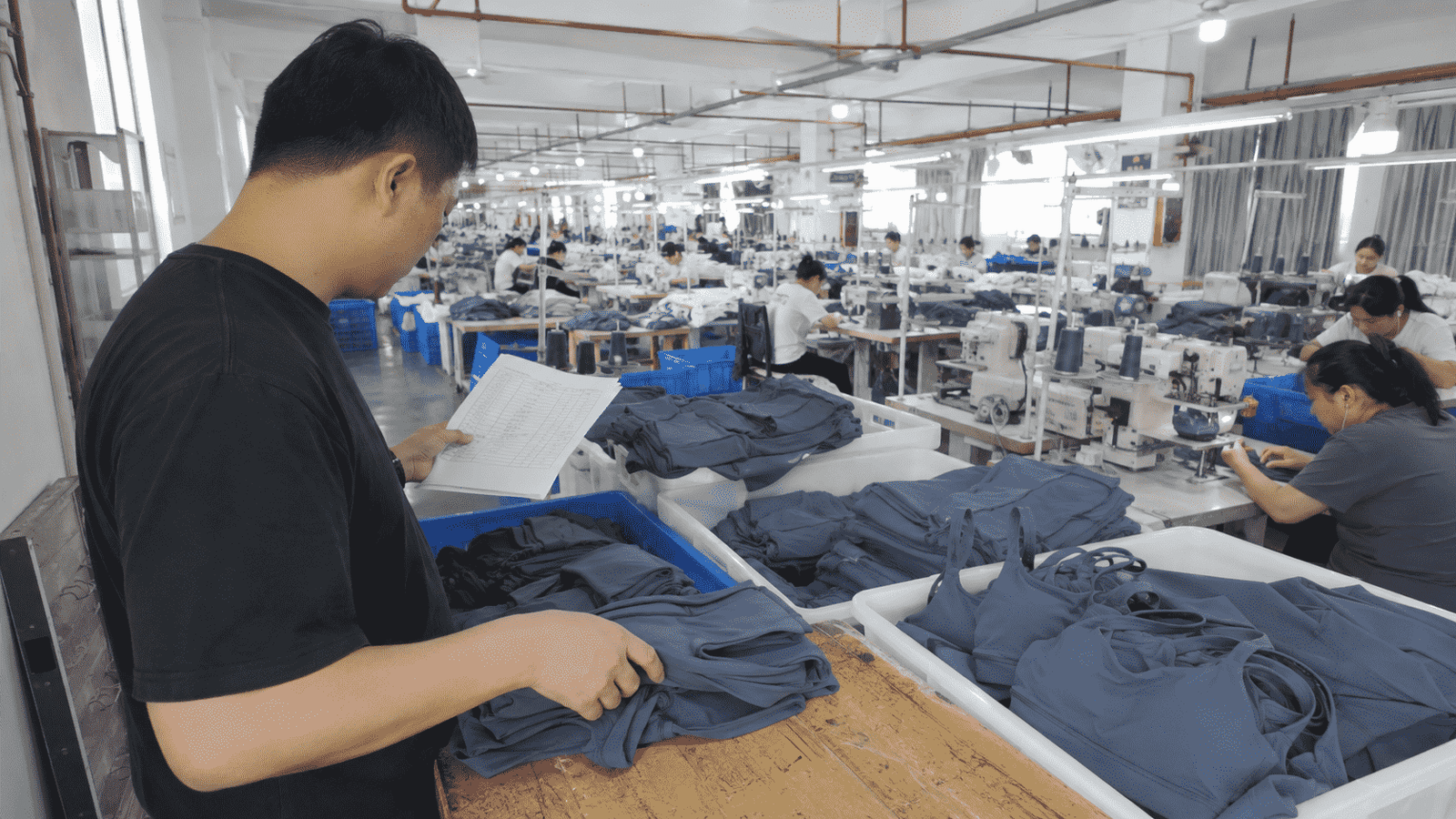
MOVEVOX does not treat theoretical machine output as an automatic customer allocation. Capacity is reviewed against the actual SKU mix, production route, material readiness, QC workload, packing requirements, and requested delivery windows.
150,000–200,000 pcs/month
Current normal combined managed delivery capacity.
50,000+ pcs
Individual projects above this level require separate capacity review.
8 Satellite Factories
Controlled additional production resources where appropriate.
28 Santoni Machines
Core Seamless equipment at the Yiwu manufacturing base.
Approx. 24 Garment-Production Machines
Primary core sewing and garment-production equipment supports Cut & Sew operations at the Yiwu manufacturing base.
What Capacity Review Considers
Capacity planning considers the real order mix and requested delivery window rather than relying on one headline output number.
- Seamless or Cut & Sew route
- Product complexity
- SKU mix
- Material readiness
- Custom color
- Production-site allocation
- QC workload
- Packaging
- Requested timing
How the Yiwu Core Base Supports Workout Wear Supply Control
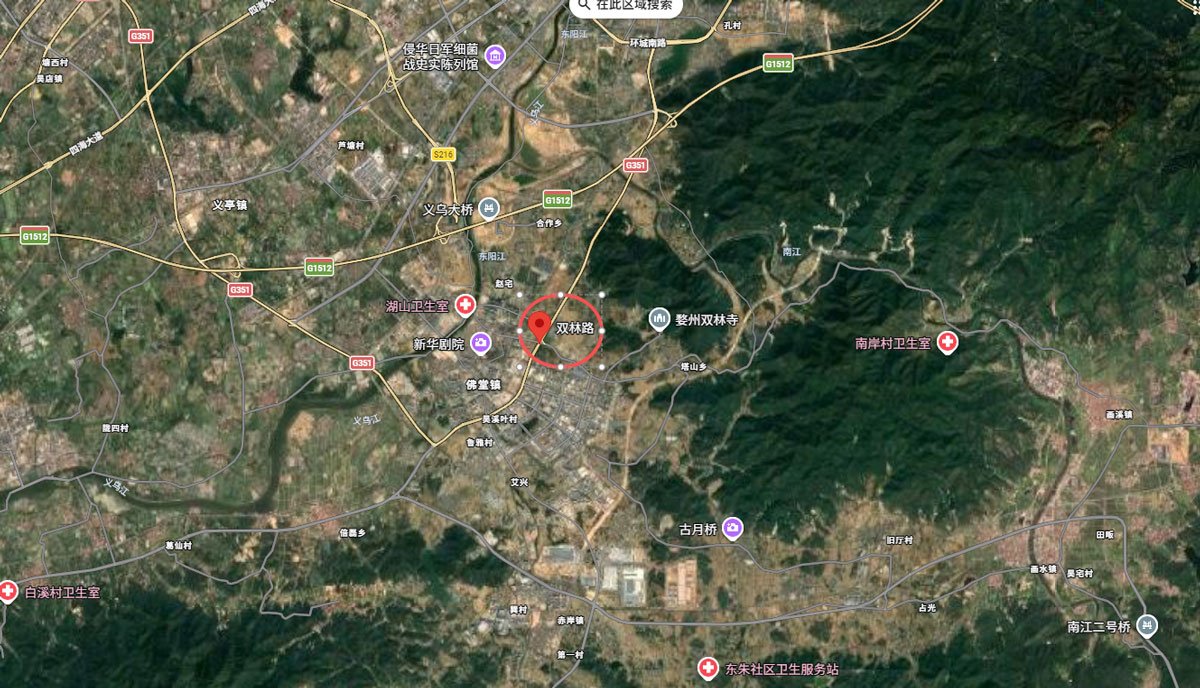
MOVEVOX operates an approximately 6,000 m² core manufacturing base in Yiwu, Zhejiang. Its value is not only machine count; development, technical standards, core production, quality activities, packing, and coordination can remain connected to one accountable manufacturing base.
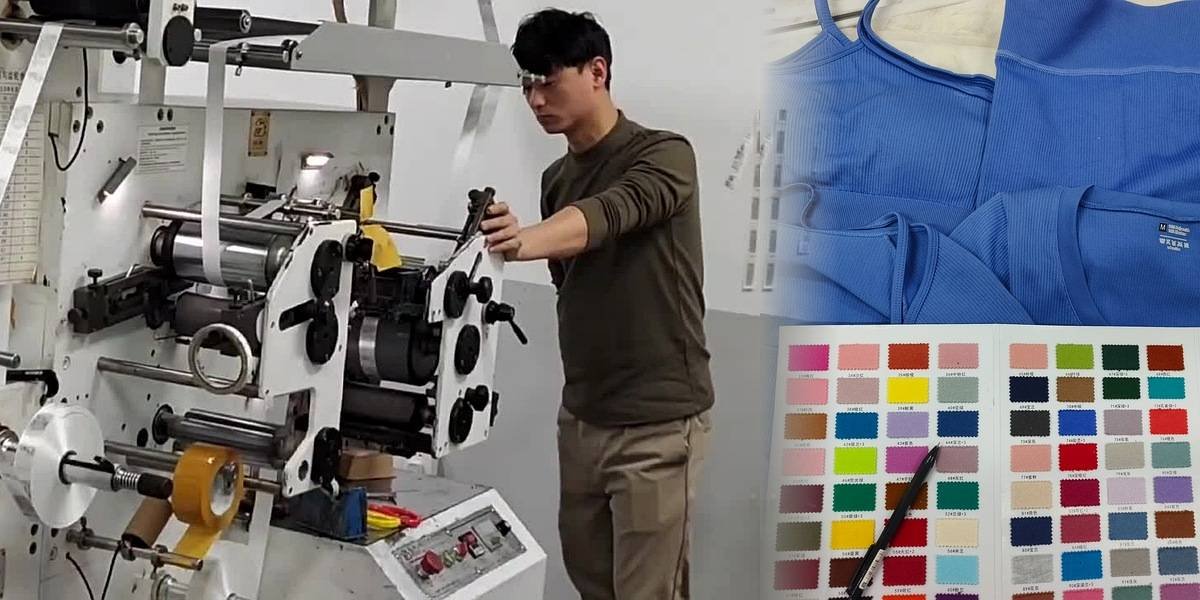
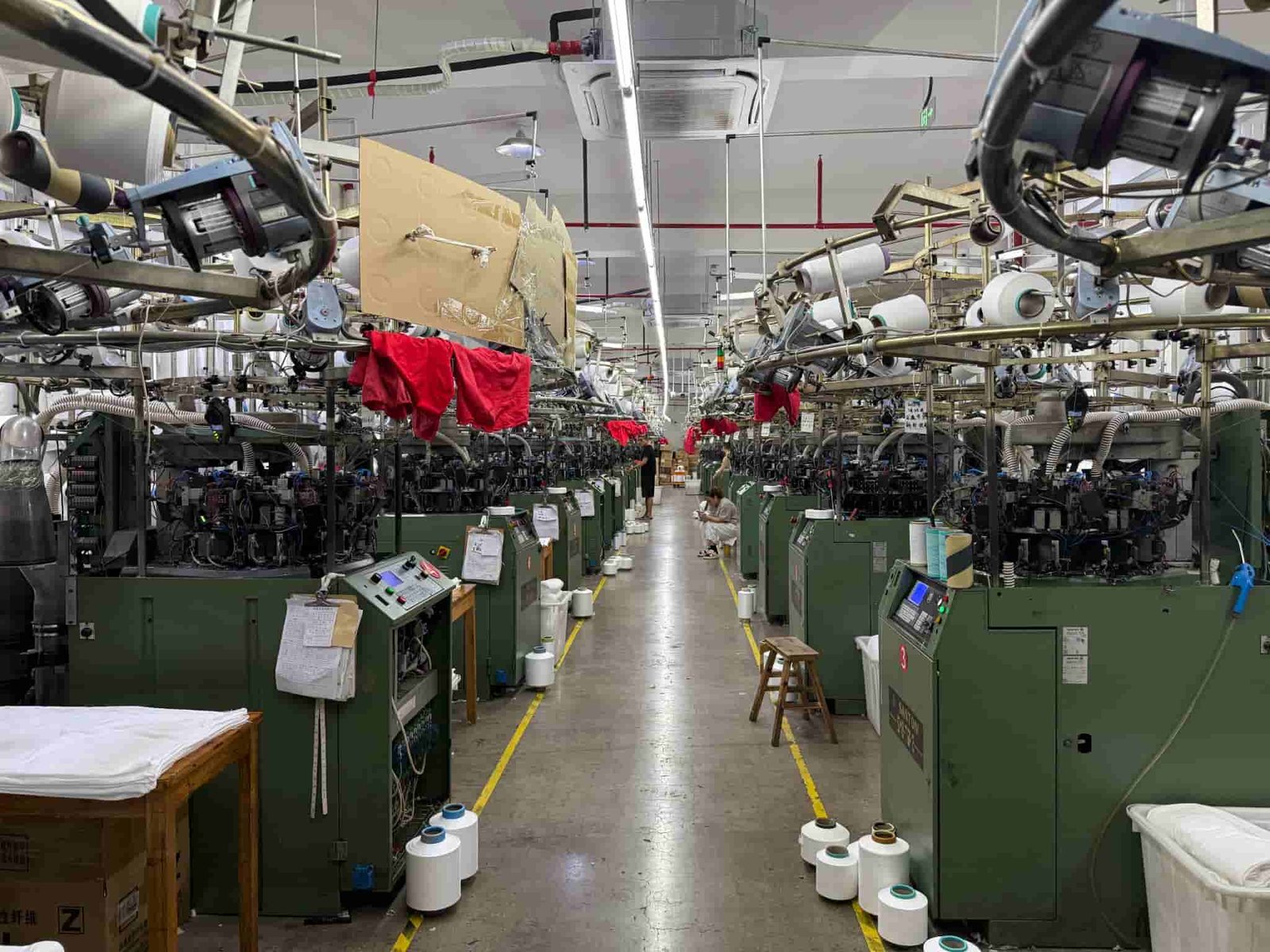
28 Italian Santoni Machines
Supports controlled Seamless development and repeat production for products technically suitable for this manufacturing route.

Approx. 24 Garment-Production Machines
Supports core Cut & Sew production and the controlled handoff from approved product requirements into manufacturing.
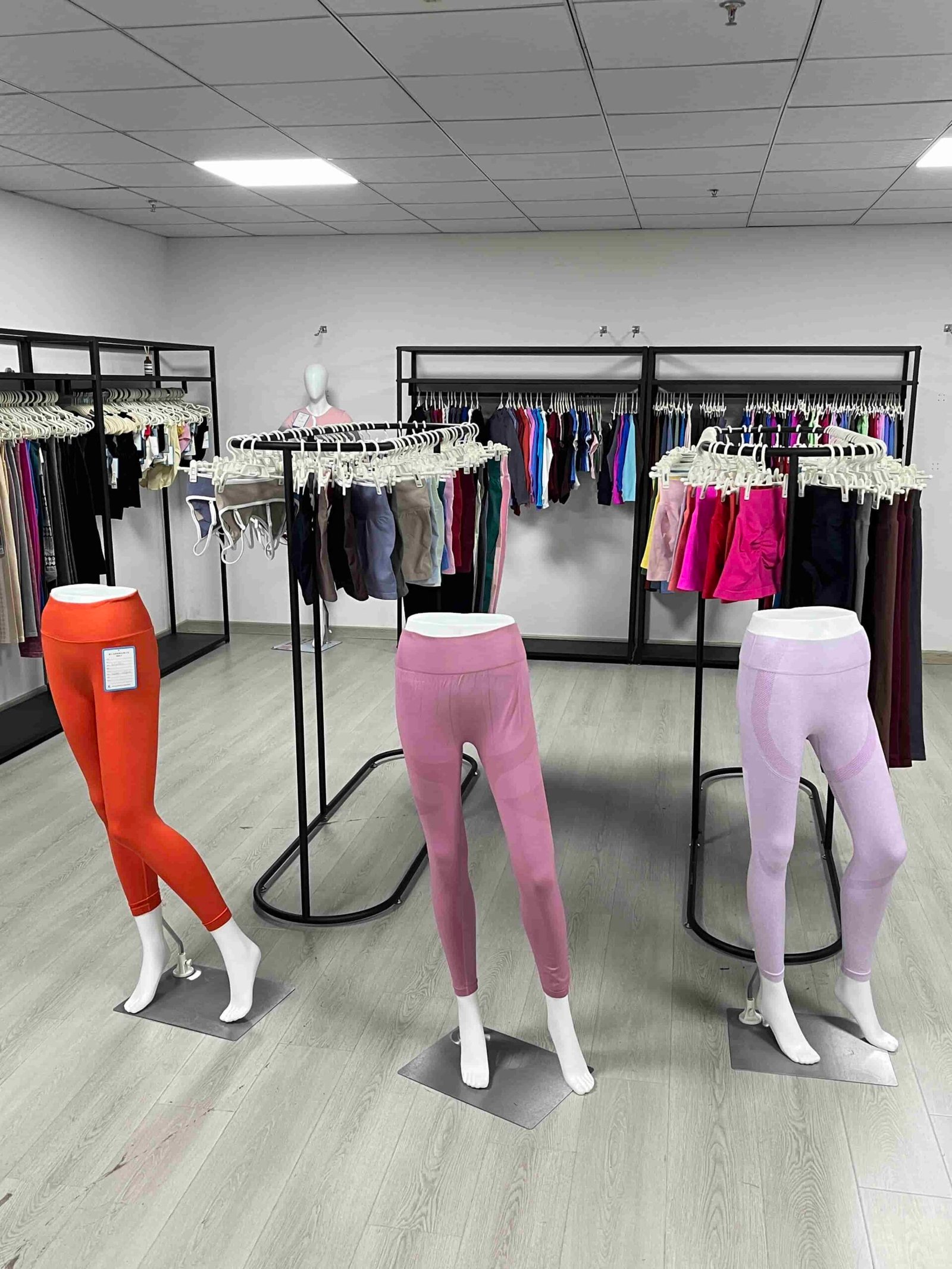
Development & Technical Reference
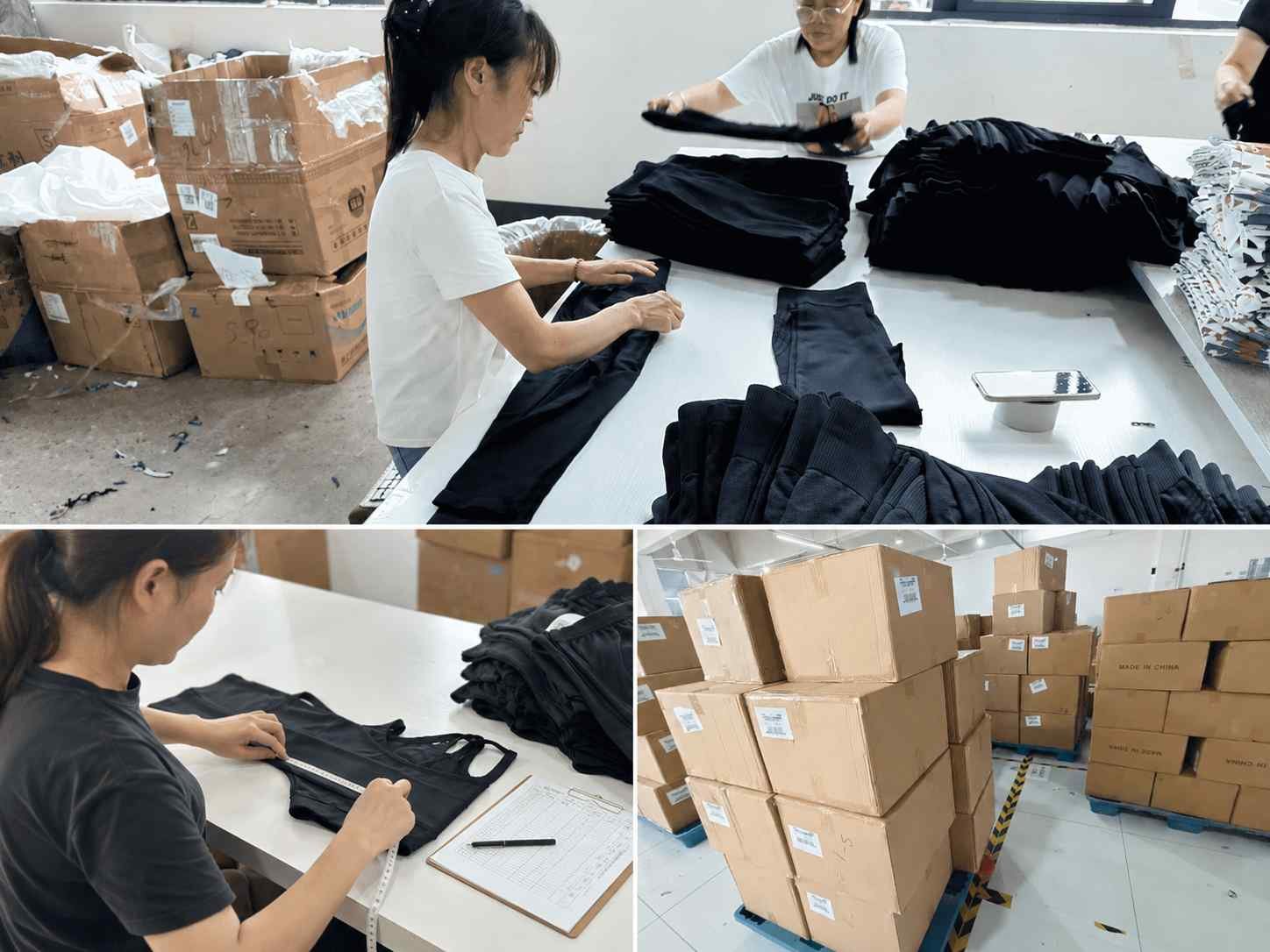
Quality Verification
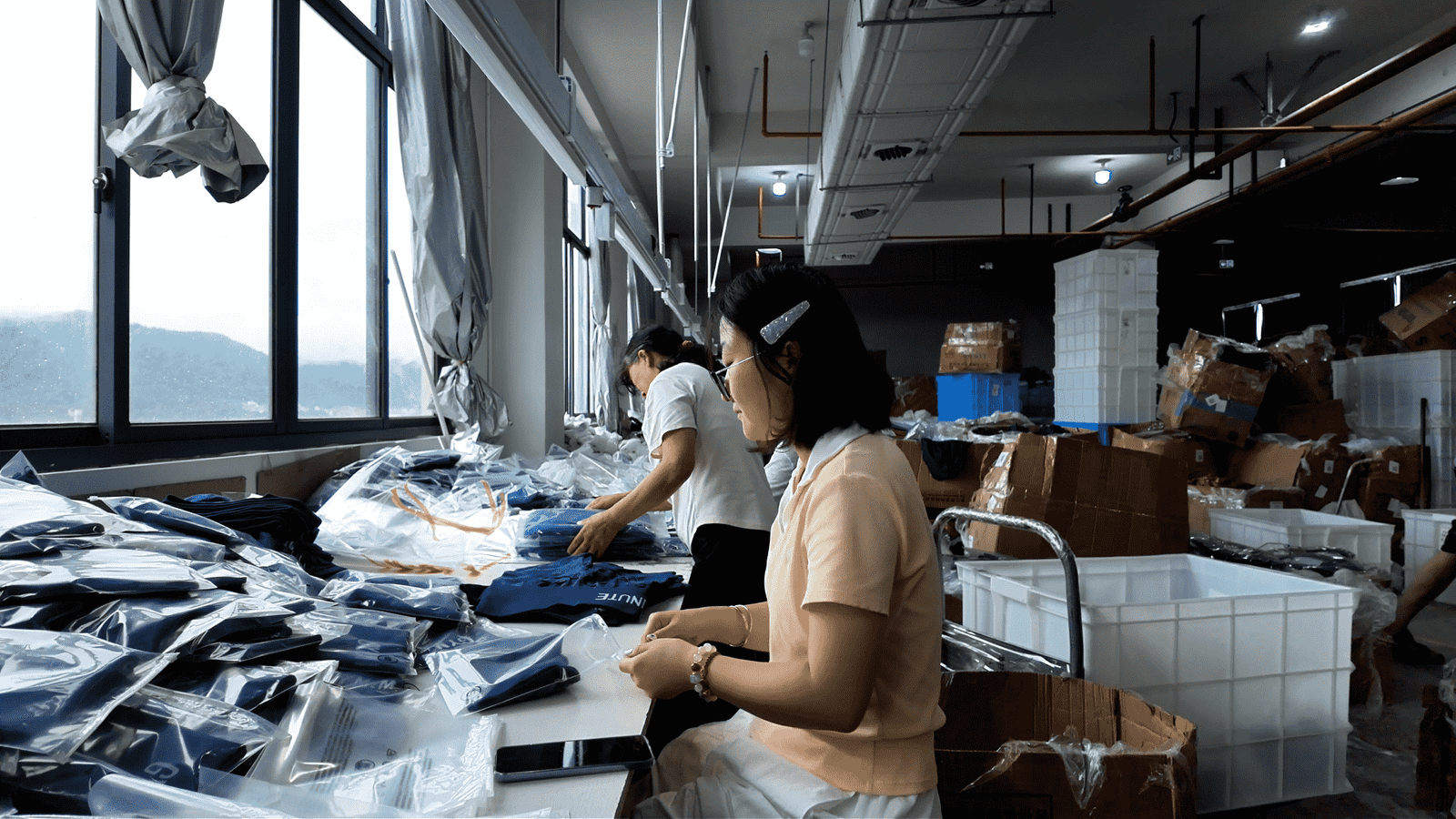
Packing & Order Coordination
Keep Production Allocation Visible Across Core and Satellite Resources
Owned Yiwu Core Base
The approximately 6,000 m² Yiwu core base supports functions that need to stay connected even when additional production resources are used.
- Product development
- Technical standards
- Santoni Seamless manufacturing
- Core Cut & Sew manufacturing
- Quality activities
- Production coordination
8 Long-Term Satellite Factories
6 in Yiwu
2 in Guangzhou
These are controlled external production resources and are not presented as MOVEVOX-owned factories. Allocation should remain transparent wherever buyer requirements apply.
Buyer Production-Site Rules
Where a buyer requires approved-factory production, subcontractor disclosure, site audits, or written approval before production-site changes, allocation should follow those requirements.
One Buyer-Facing Accountability Point
MOVEVOX remains the primary coordination point for applicable product, technical, production, quality, packing, and delivery communication.
Use Quality Gates Across a Multi-SKU Workout Wear Program
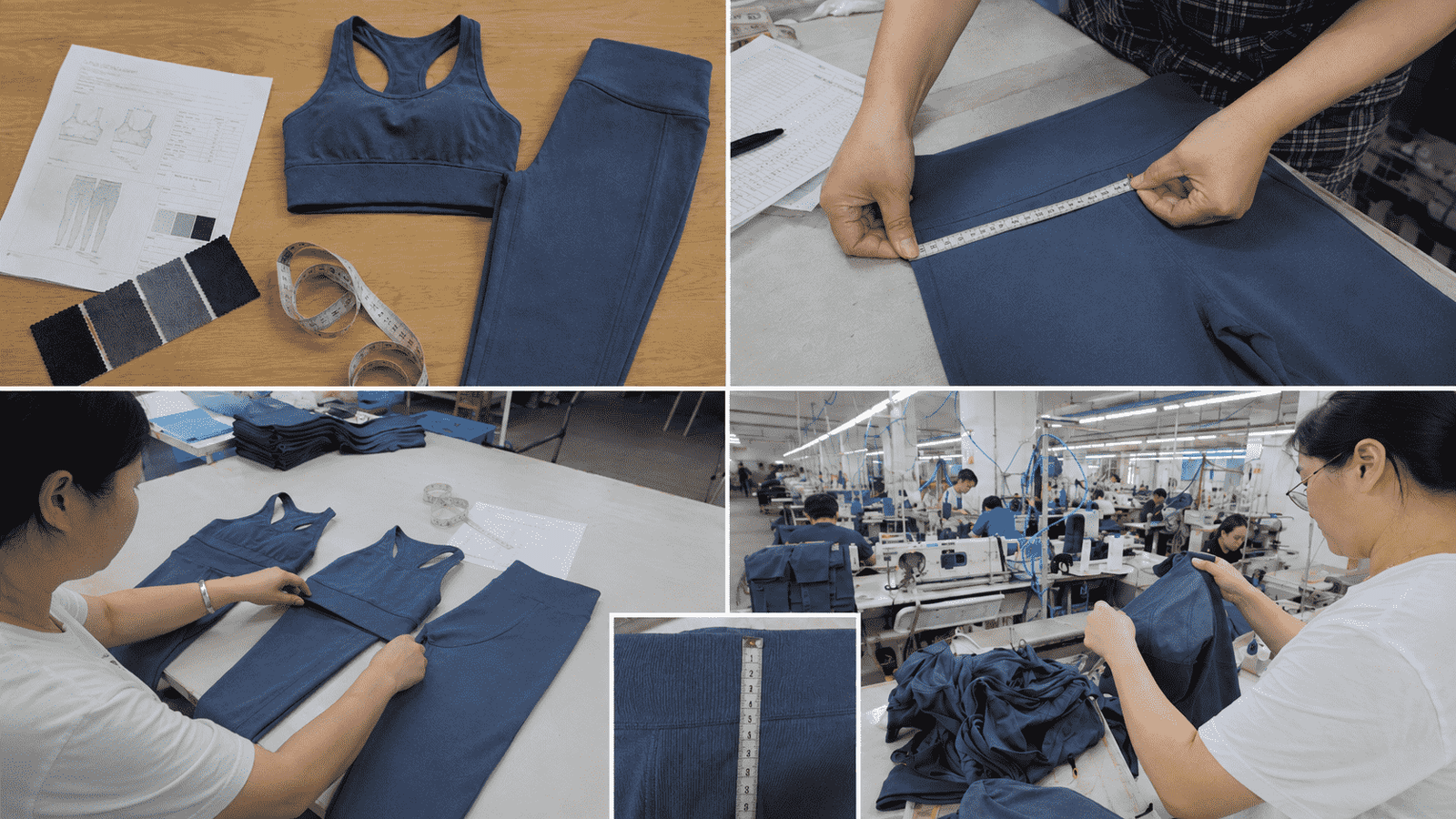
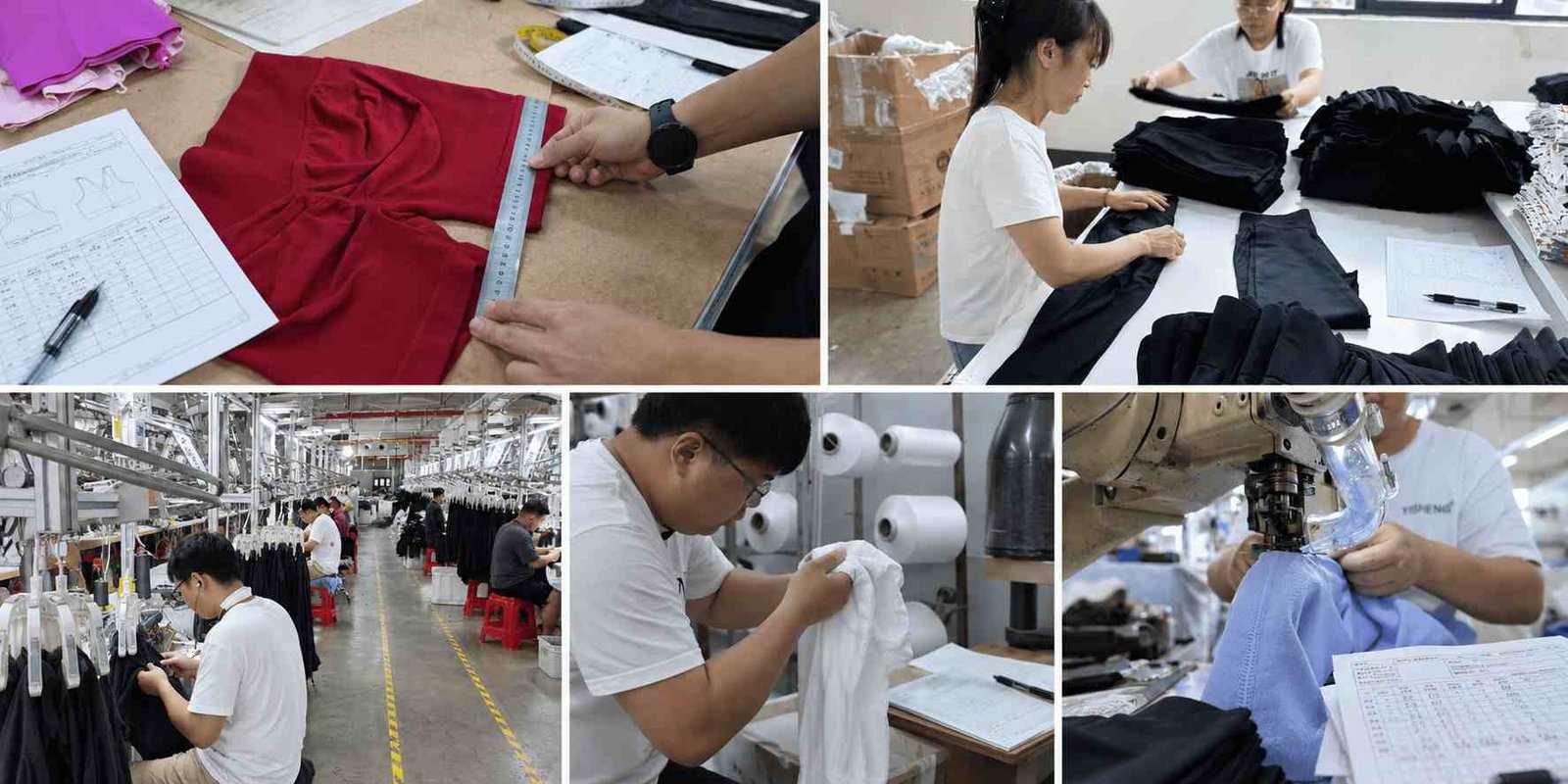
MOVEVOX currently has five QC personnel supporting quality activities. In a multi-SKU program, inspection needs to reference the correct product version, material, measurement, branding, identification, packing, and release status for each SKU.
Incoming Material / Yarn
Relevant materials, yarns, colors, and components are checked against the applicable product and program requirements.
Pre-Production Program Check
Current SKU, material, measurement, branding, identification, packing, and production-site requirements are reviewed before bulk proceeds.
First-Article Release
Initial production output can be checked against the current approved SKU standard before normal production expands.
Inline SKU Control
Quality checks continue during manufacturing with the applicable SKU and production baseline visible.
Finished Garment Review
Finished products are reviewed against the current approved product and applicable commercial requirements.
Measurement & Version Check
Garment dimensions and revision references can be checked against the current measurement and product standard.
Branding & Identification
Logo, labels, size/color identity, barcode or QR information are checked against the correct SKU where applicable.
Packing / SKU Matrix
Packaging, quantities, ratios, identification, and order requirements are checked against the current program matrix.
Nonconforming Product Hold
Goods can be held, corrected through appropriate rework or remake, and re-inspected before release.
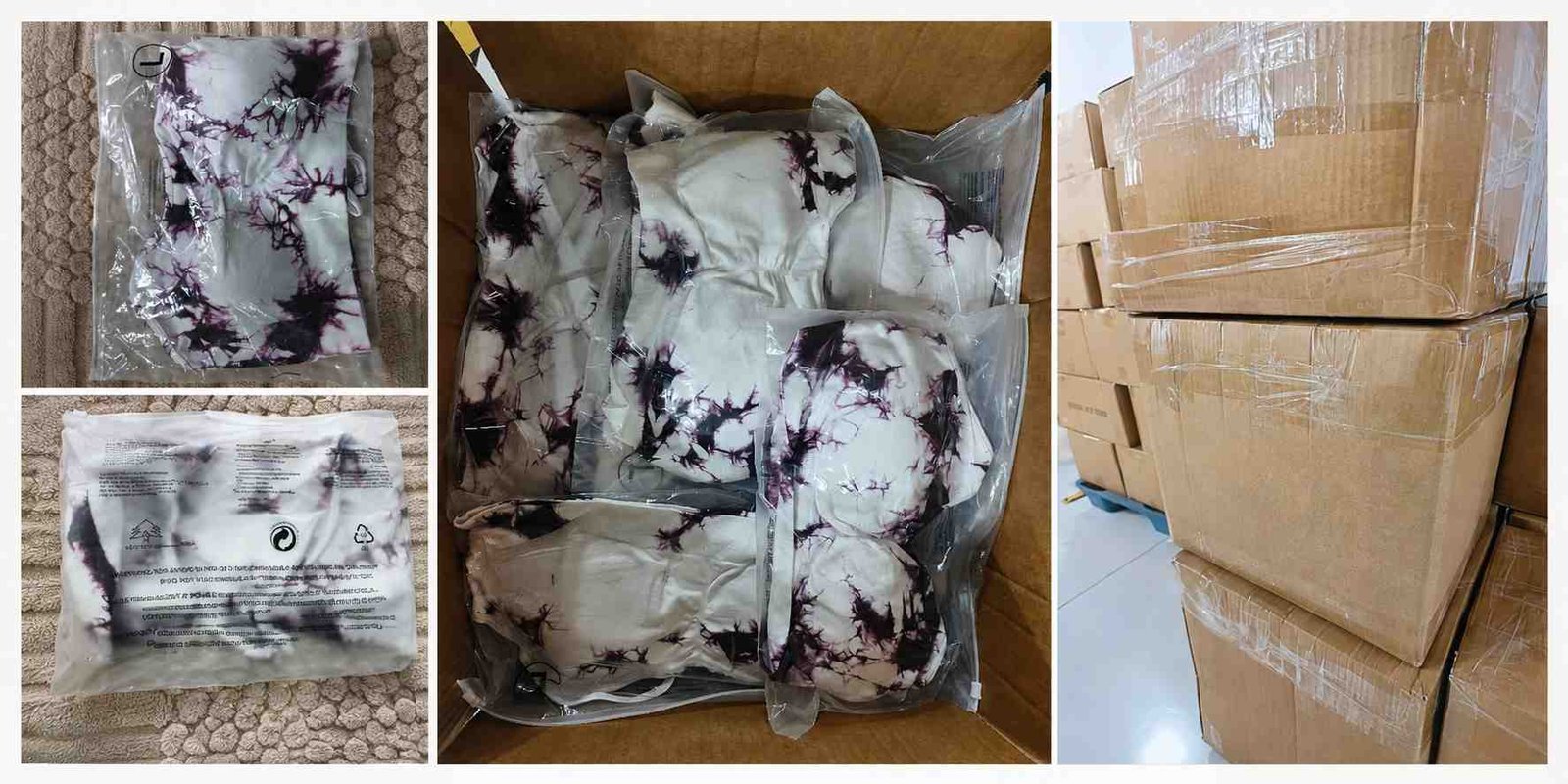
Interpret Workout Wear Test Evidence at the Product and Material Level
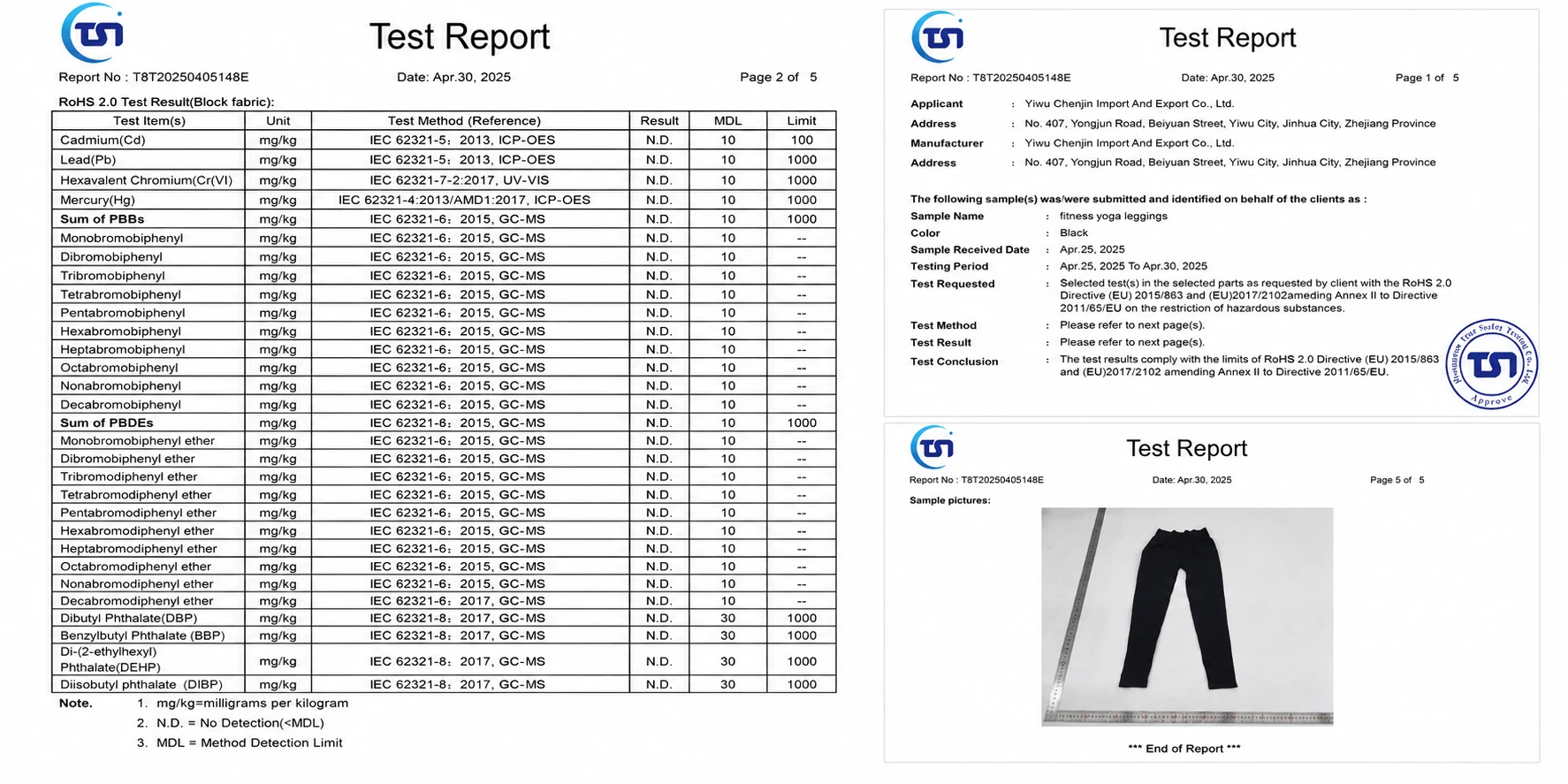
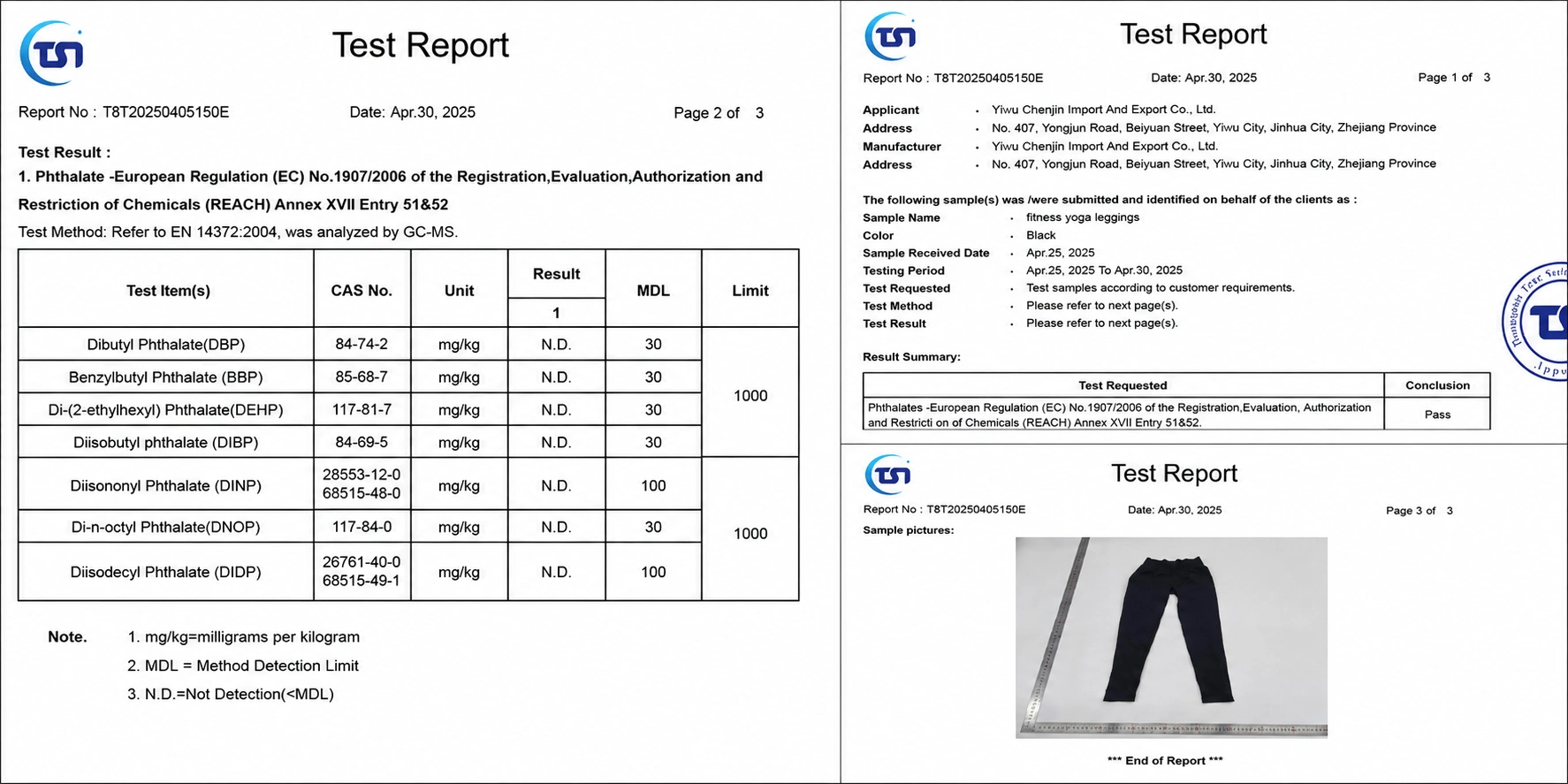
Evidence Currently Available
The 2025 RoHS documentation relates to a submitted sample described as black fitness yoga leggings.
The available 2025 REACH report relates to a submitted black fabric sample tested against the stated Annex XVII Entry 51 and Entry 52 phthalates requirements.
Report date: April 30, 2025
Limits of the Evidence
The available reports should not be extended into blanket certification for every MOVEVOX product, material, color, supplier, or future order.
When Additional Testing Is Needed
Buyer RSL, destination-market, chemical, performance, or other requirements should be reviewed against the actual product, material, color, and order conditions before any claim is extended.
Use Factory Verification to Qualify MOVEVOX for Ongoing Workout Wear Supply
MOVEVOX supports buyer-led onsite and remote supplier verification so factory capability, production controls, quality processes, and buyer-specific requirements can be reviewed during supplier onboarding or later order verification.
| Stage | Qualification Activity |
|---|---|
| 01 | Customer Factory Visit |
| 02 | Technical Audit |
| 03 | Pre-Production Review |
| 04 | Inline Inspection |
| 05 | Pre-Shipment Inspection |
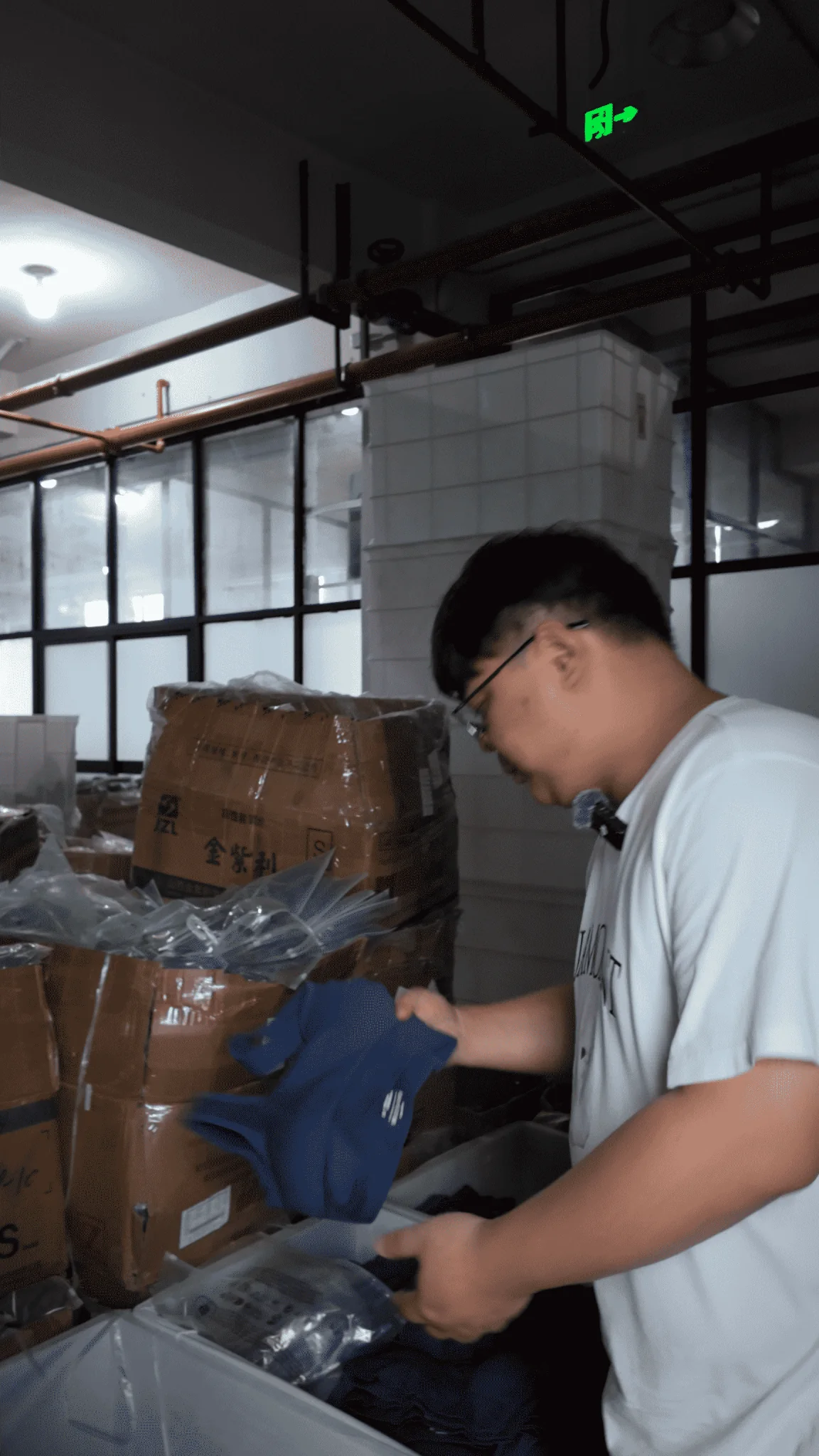
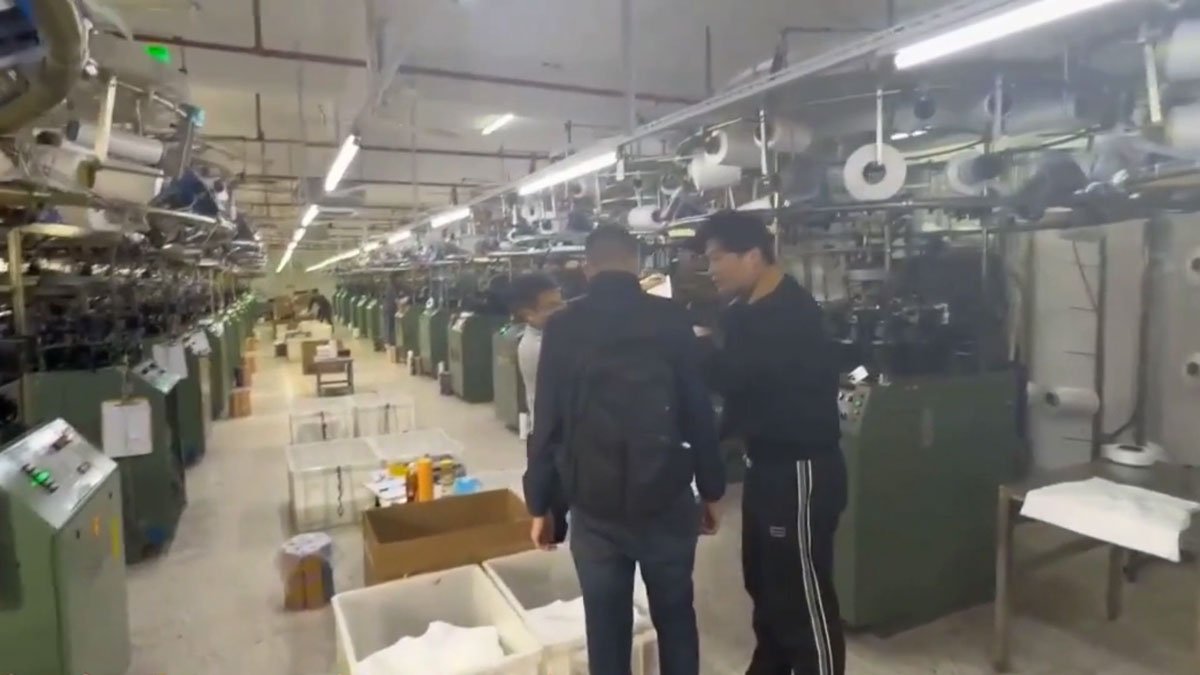
Additional Verification Options
MOVEVOX can support scheduled live video factory tours and cooperate with buyer-appointed third-party inspection providers for initial qualification or later order-specific verification.
A U.S. Fitness Buyer Used Version Gates Before Releasing Bulk Production
An anonymized U.S. female fitness customer began from its own Tech Pack and used multiple controlled physical-development stages before the product was released into recurring commercial production.
Buyer-Controlled Tech Pack
The buyer’s technical input established the starting product baseline rather than relying on a generic factory specification.
↓ V1 Development Gate
MOVEVOX produced the first controlled development version for buyer review and recorded it as a distinct approval stage.
↓ Recorded Revision
The buyer reviewed V1 and requested product changes before any commercial release was assumed.
↓ V2 Development Gate
A second controlled version incorporated the required revisions and became the next validation reference.
5–10 Validation Samples
Approximately 5–10 additional samples were produced so the customer could carry out its own follower or user testing before bulk commitment.
Approx. 2,000 Pieces per Order
After validation, the product moved into recurring commercial orders of approximately 2,000 pieces per order.
Private Label Control
Packaging, instructions, labels, logo, and wash-label requirements were managed as part of the approved commercial product standard.
SKU & QR Identification
Each color used four sizes, so QR identification had to remain matched to the correct garment, color, size, and external information.
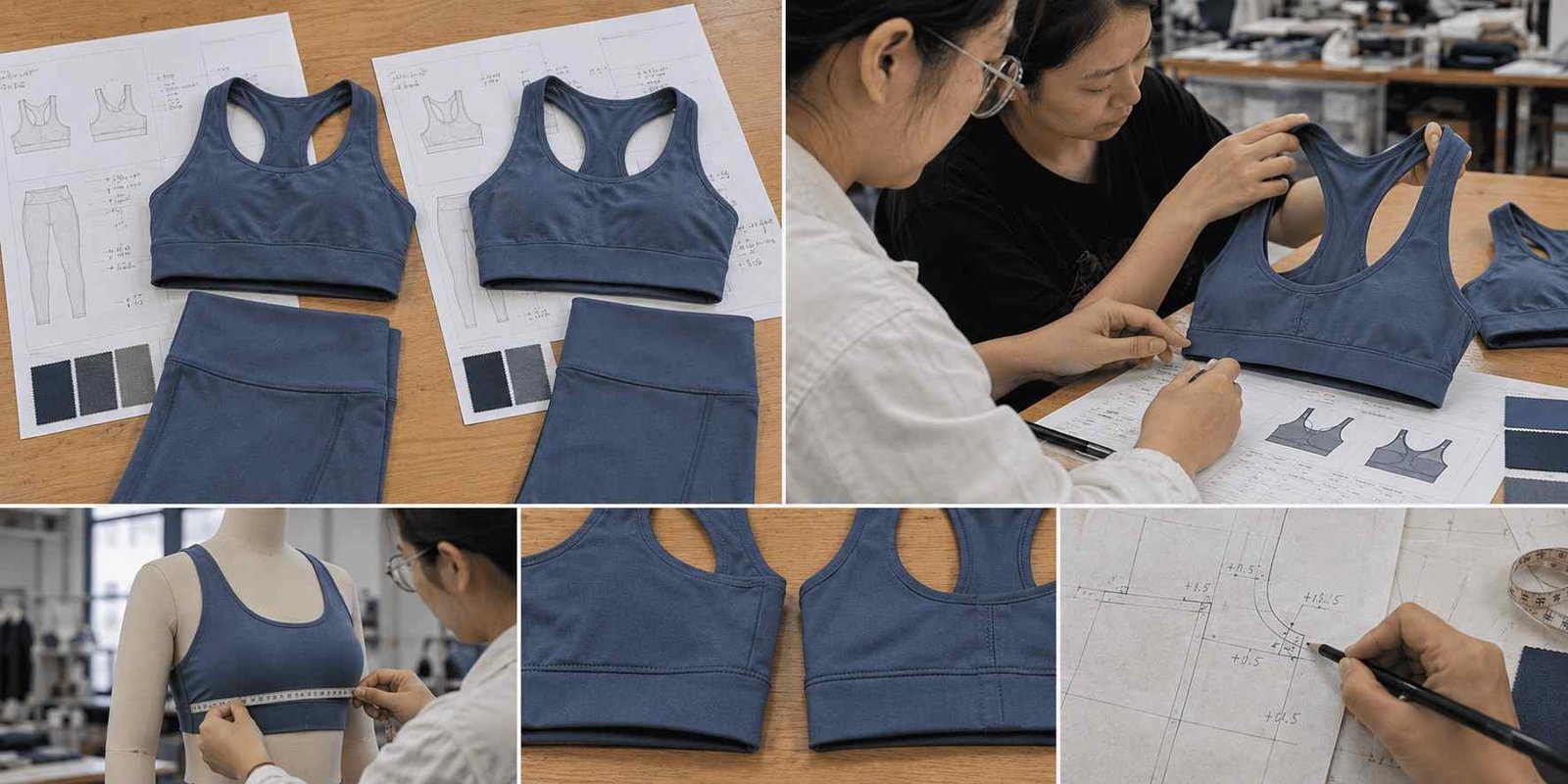
Version Evidence
V1 and V2 evidence demonstrates why a current product version needs to be visible before bulk and repeat orders.
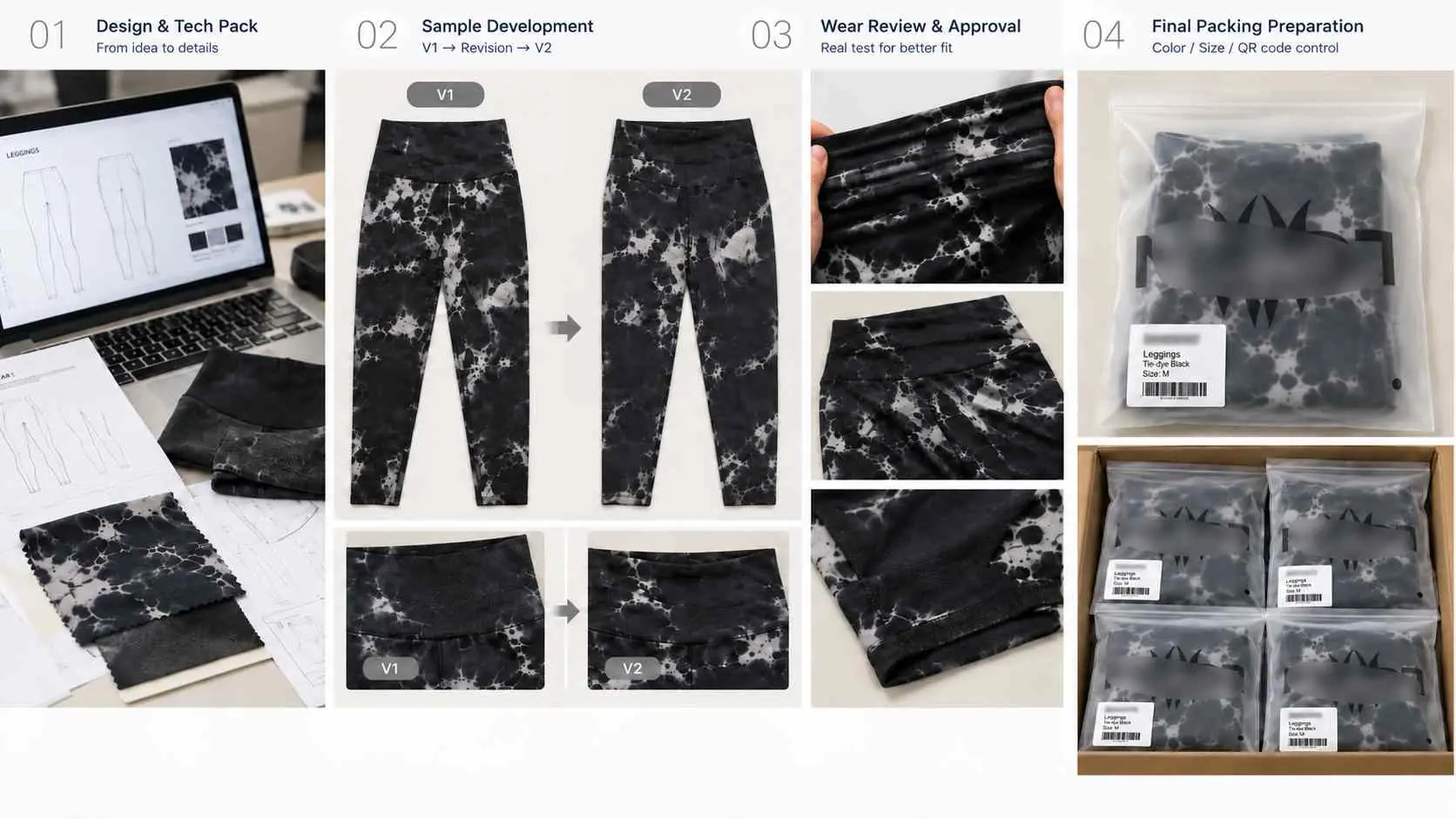
Customer Validation Samples
Additional physical samples supported buyer-side validation before commercial release rather than acting as informal preproduction stock.
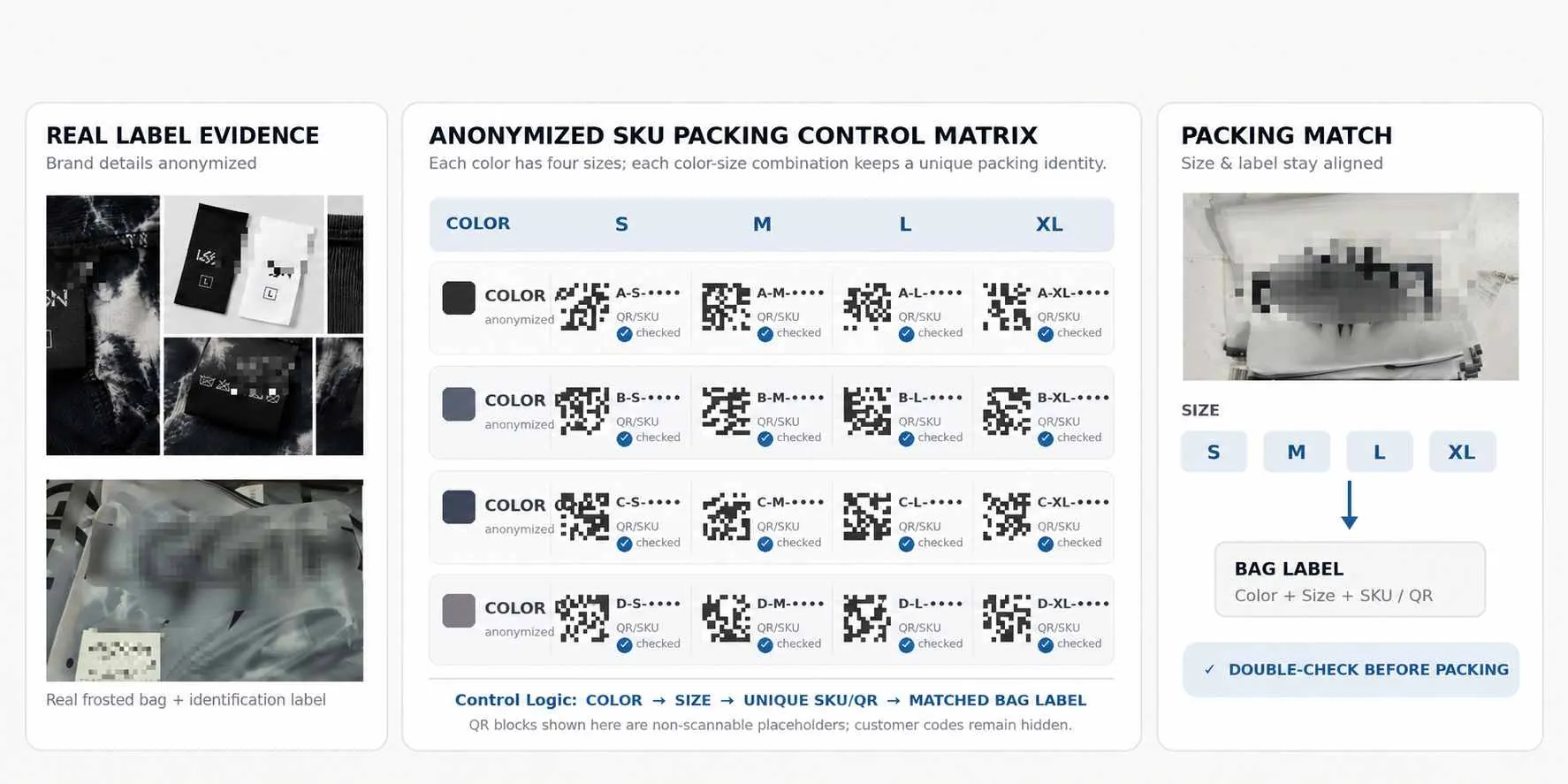
Packing & Identification
QR, size, color, and packaging information required additional identification and checking during packing.
How Early Repeat Demand Changed Capacity and Inventory Planning
An anonymized Spanish customer moved from stock-sample evaluation into customized production and then into recurring purchasing, showing how repeat demand can change production allocation, delivery planning, and inventory decisions.
1,200 pcs
First bulk order
+1,200 pcs
Repeat order placed the following week
≈2 orders/month
Later recurring purchasing pattern
≈3× volume spike
Recorded increase during one May order
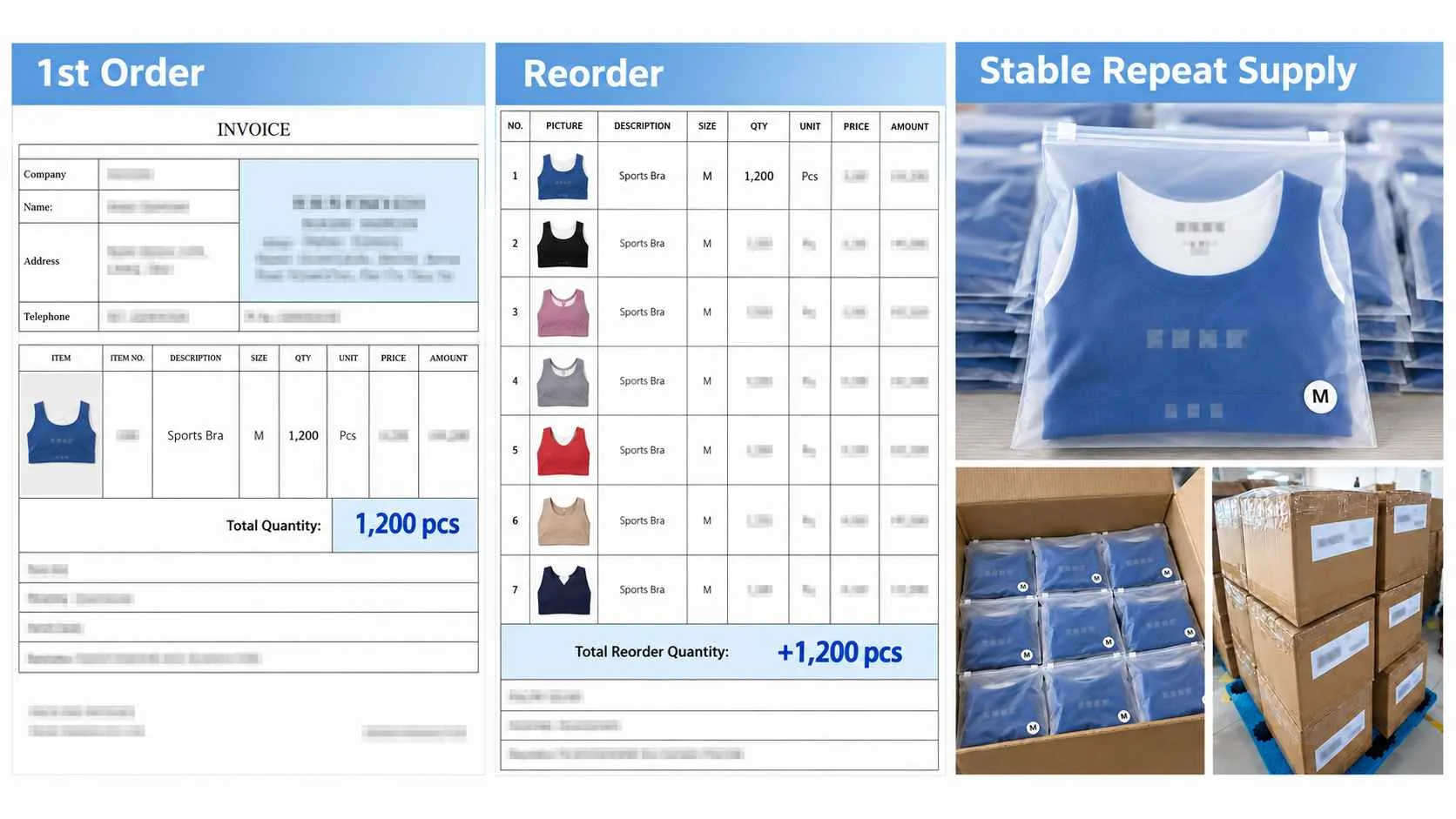
Initial Bulk Baseline
The first commercial order included 1,200 pieces and was recorded as completed within 15 days, establishing the initial supply baseline.
Repeat Demand Before Receipt
Another 1,200-piece order was placed the following week before the customer received the first bulk shipment, creating an early repeat-demand signal.
Capacity Response
During the later demand spike, MOVEVOX added production-line allocation and completed the required order within the project schedule.
Branding & Shipment Control
The order included wash label, hangtag, packaging, and logo customization. The first bulk shipment used a combination of air and sea transport.