Custom Activewear Logo Development From Artwork to Controlled Bulk Application
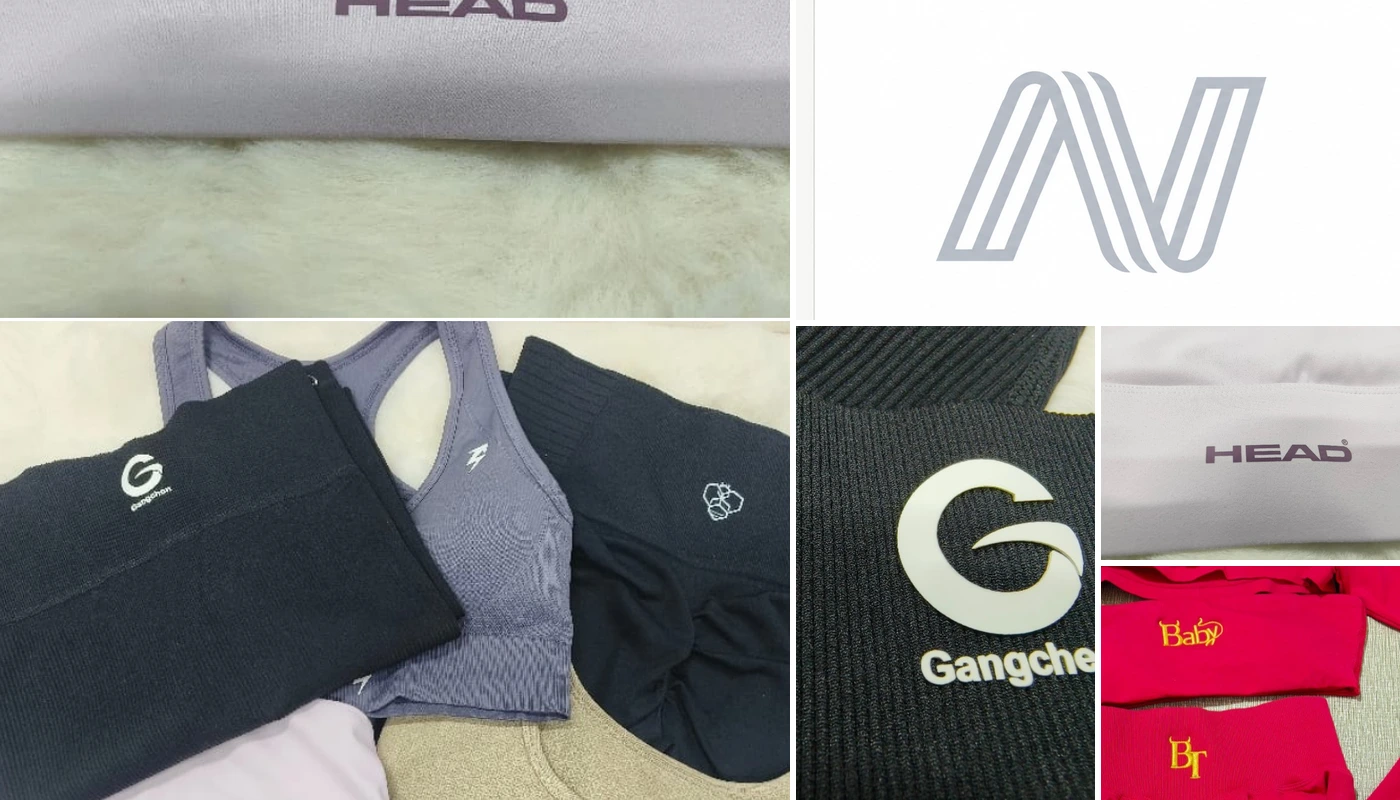
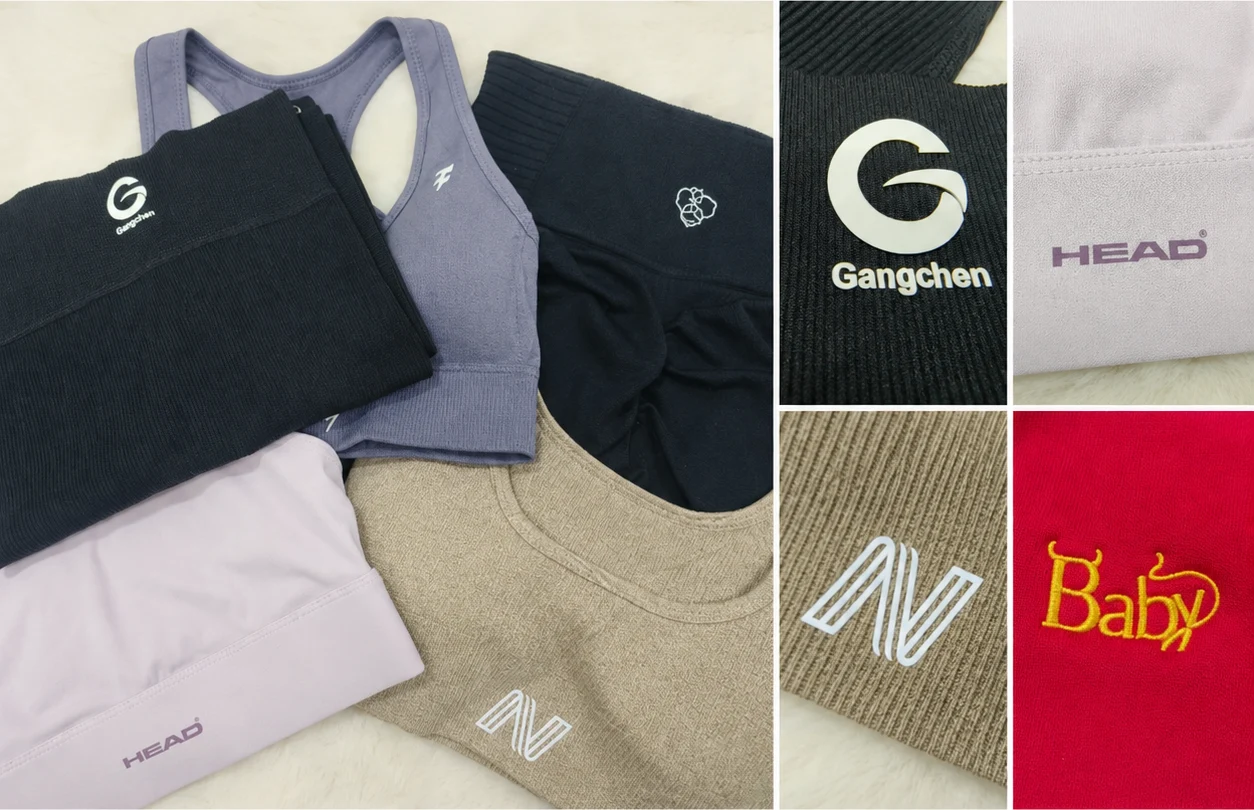
MOVEVOX supports custom logo development for activewear across both Seamless and Cut & Sew manufacturing routes. Depending on the garment, fabric surface, stretch zone and brand requirement, projects can use screen print, heat transfer, silicone, embroidery, Jacquard or other confirmed branding routes.
Logo development is managed as part of the garment program rather than as a detached decoration step. Artwork, method, size, placement, color and fabric compatibility are reviewed through sampling and approval before the approved logo standard moves into bulk production and QC.
A Logo Method Should Be Selected for the Garment, Not Only for the Artwork
A brand logo may look correct in a digital mock-up while creating problems on the actual garment. Activewear fabrics stretch, recover, compress and use different surface finishes, so the logo method needs to work with the product rather than only reproduce the artwork.
The Right Artwork Can Still Use the Wrong Process
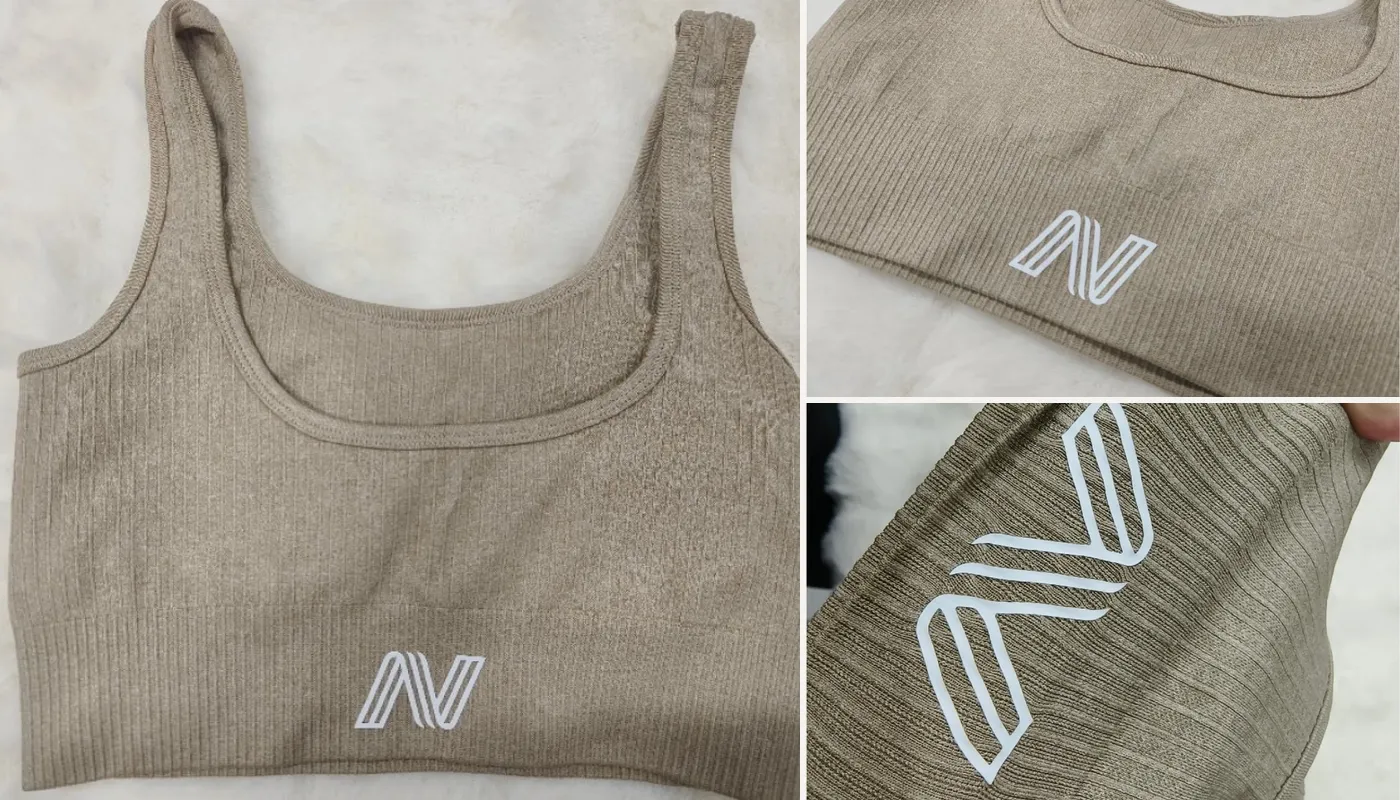
A detailed logo may be technically printable but unsuitable for a high-stretch, brushed or heat-sensitive fabric. Process selection needs to consider surface, stretch and required appearance.
The Right Process Can Be Used in the Wrong Location
A method that performs well on a lower-stretch top may behave differently on a waistband, leg or another high-extension zone.
Flat Appearance Does Not Show Stretch Behavior
Logo approval should consider how the branding looks and behaves under the relevant garment conditions, not only while the sample is lying flat.
Approval Must Continue Into Bulk
Once the Logo Method, Size, Placement and Color are approved, those references need to remain controlled through the production version and QC process.
Select the Logo Method Through Product and Manufacturing Requirements
MOVEVOX does not treat every logo method as interchangeable. The appropriate route depends on the visual objective, garment construction, material surface, stretch, Logo size, placement, color, handfeel, durability requirement and commercial conditions.
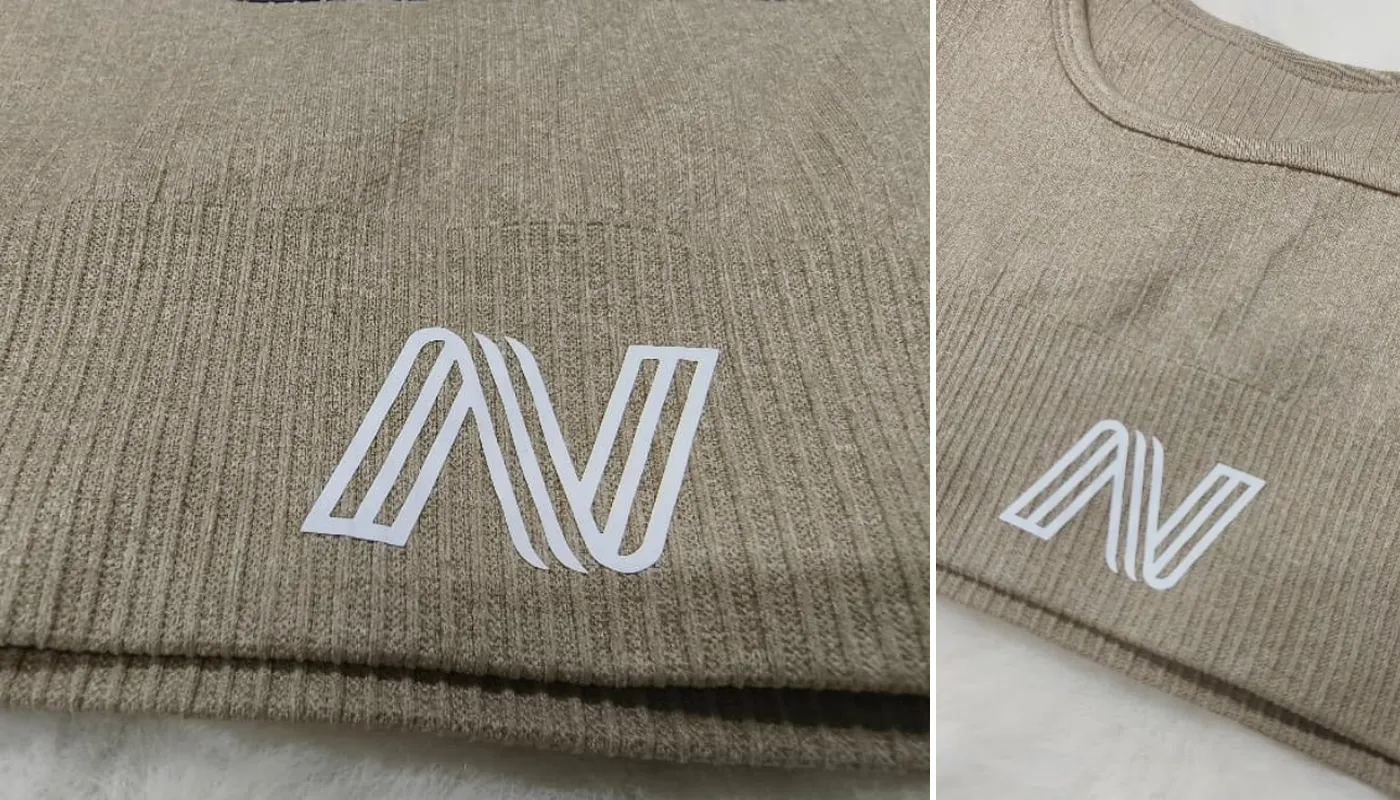
Heat Transfer
Best For: Small to medium branding, detailed artwork and many activewear applications where a suitable transfer material can be matched to the fabric.
Main Considerations: Stretch, heat sensitivity, edge lift, migration and application parameters.
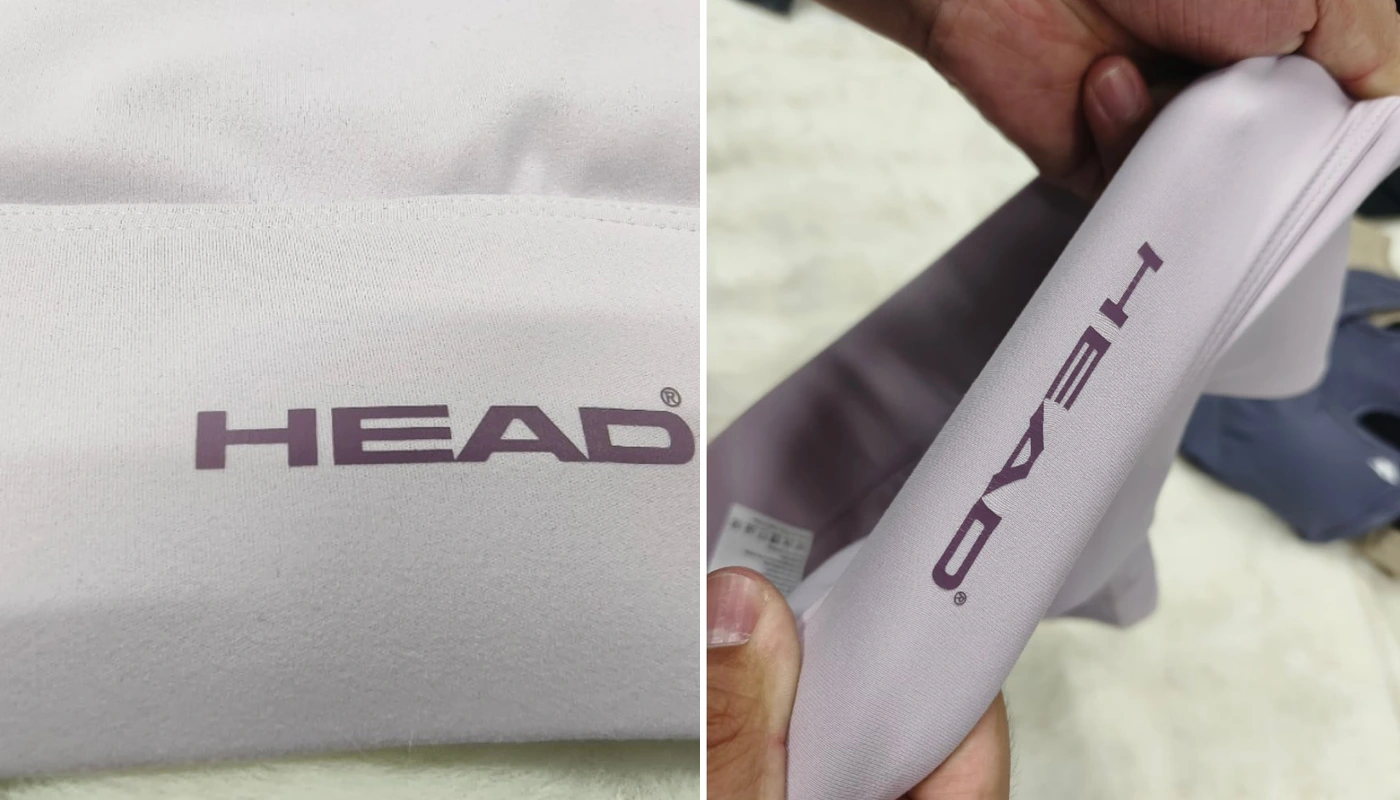
Screen Print
Best For: Many Cut & Sew tops, T-shirts, jackets and medium- or lower-stretch areas.
Main Considerations: Ink/fabric compatibility, cracking under extension, registration and surface treatment.
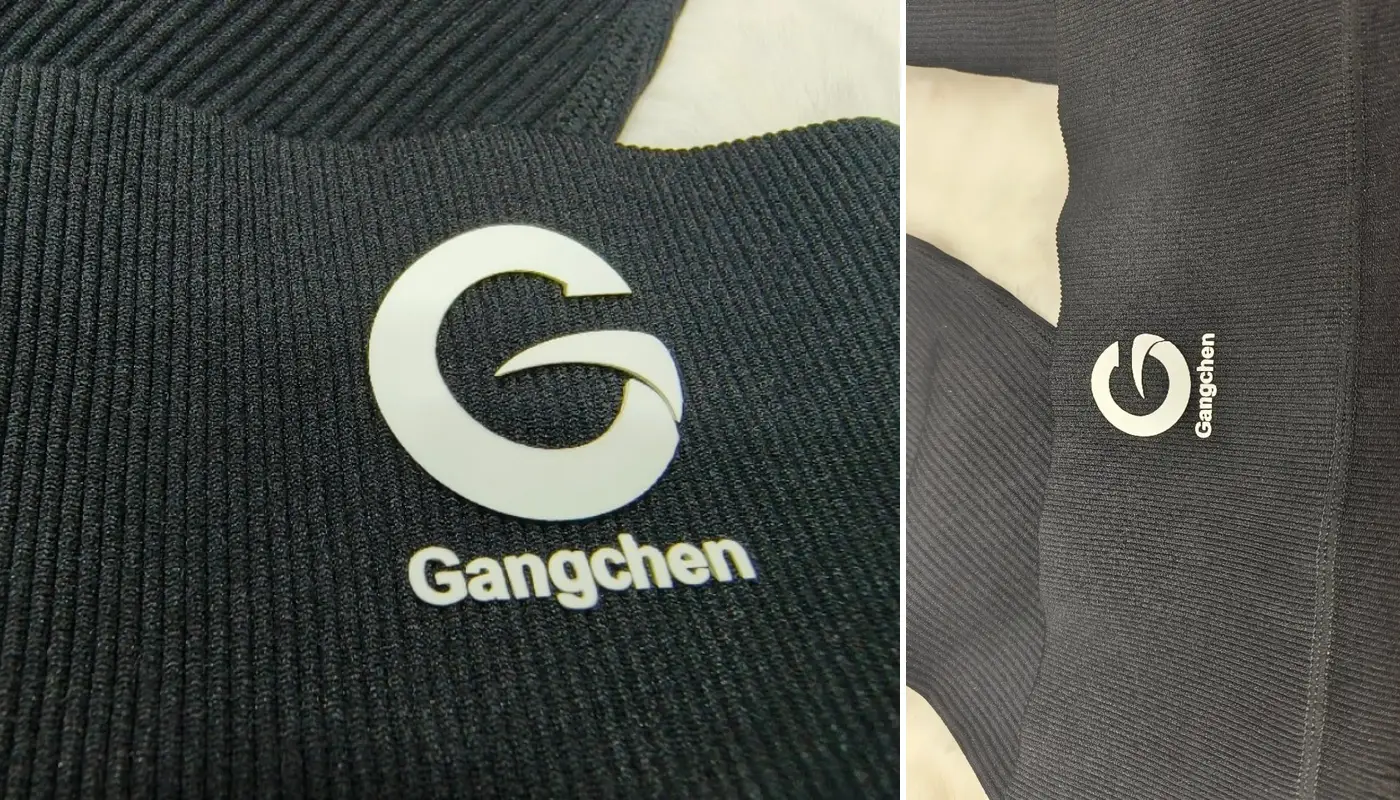
Silicone
Best For: Matte, tactile or raised branding where the selected silicone route is compatible with the garment.
Main Considerations: Thickness, edge control, stretch behavior, color migration and tooling where required.
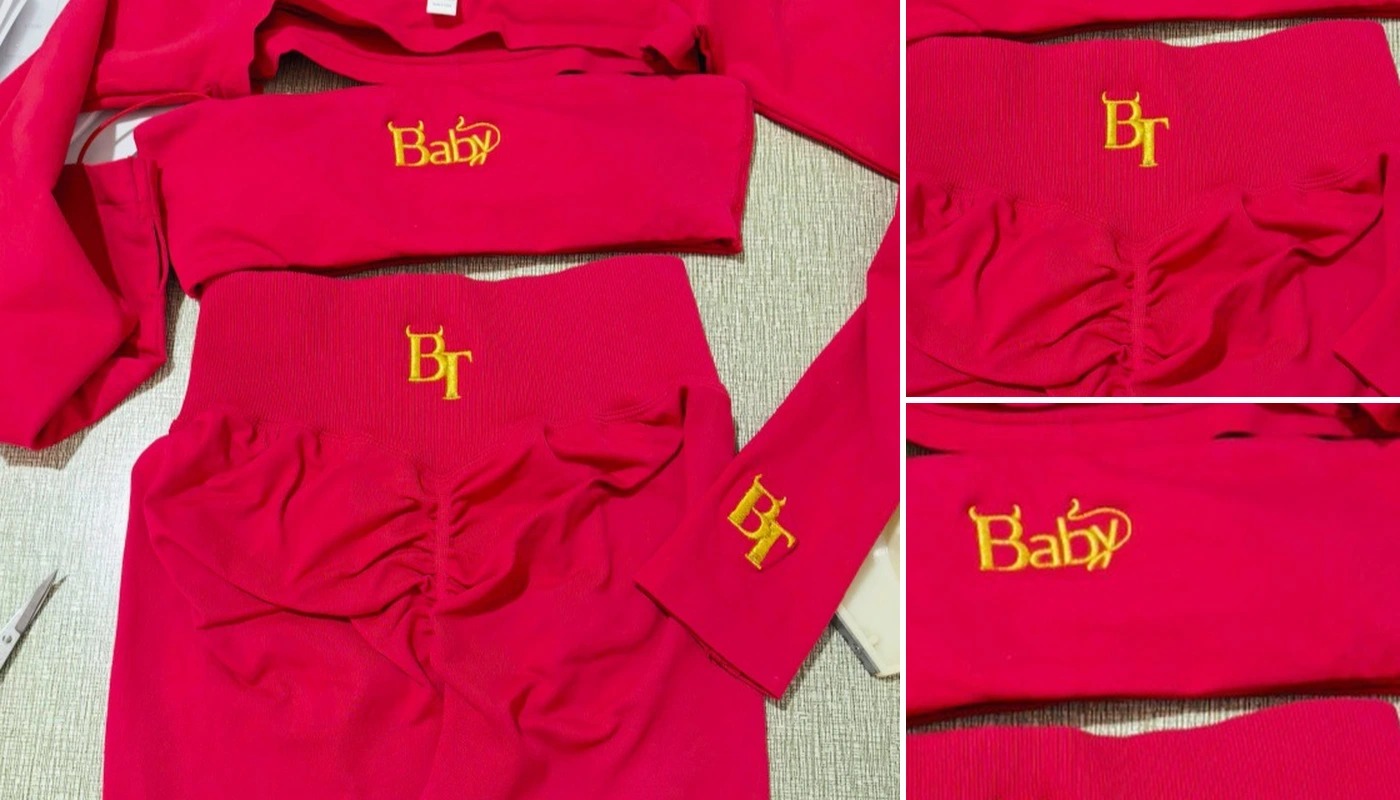
Embroidery
Best For: Tops, jackets, Athleisure and other medium- or lower-stretch applications.
Main Considerations: Fabric stability, stitch density, backing, puckering and backside comfort.
Jacquard
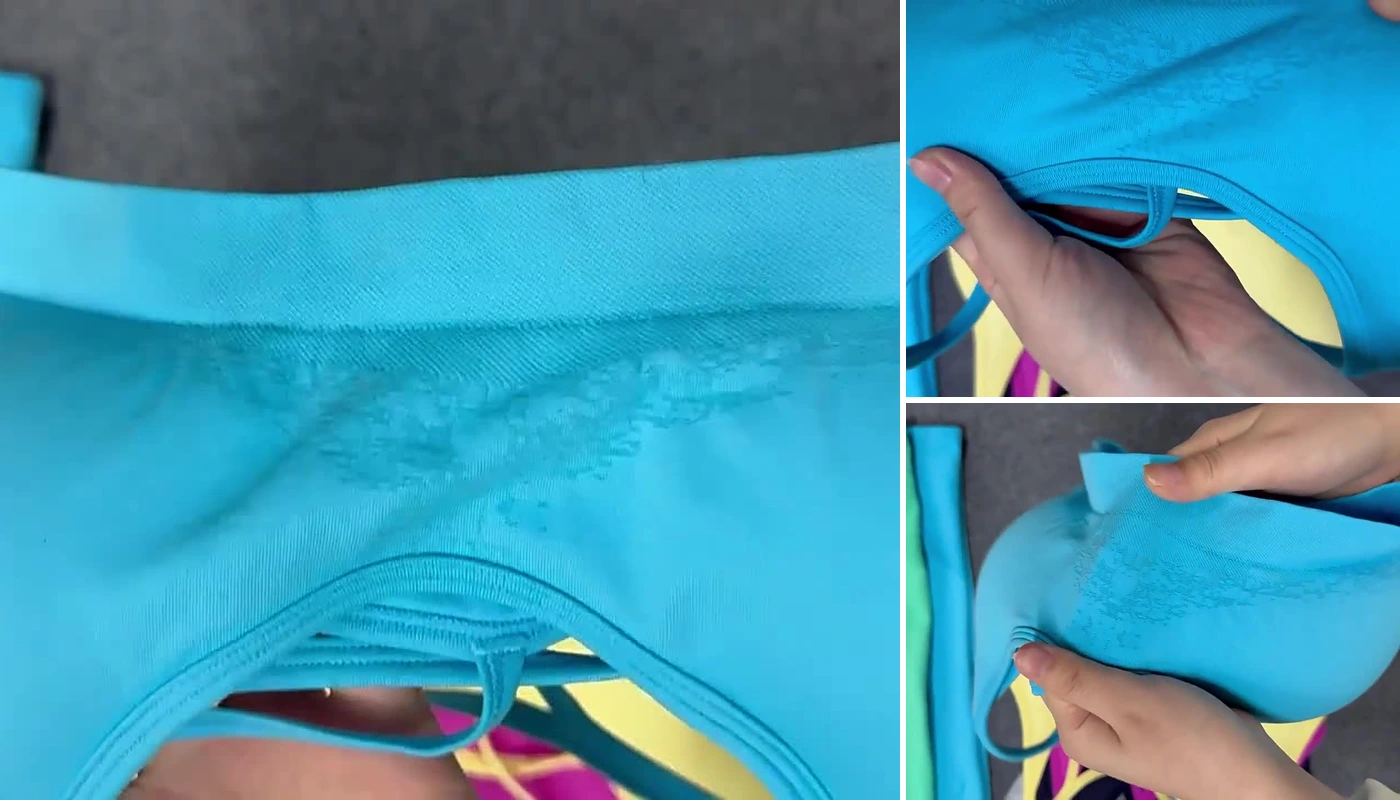
Best For: Seamless products where the Logo or brand element is integrated directly into the knitted structure.
Main Considerations: Yarn, knit density, Logo size, needle/program constraints and appearance under stretch.
Woven Label
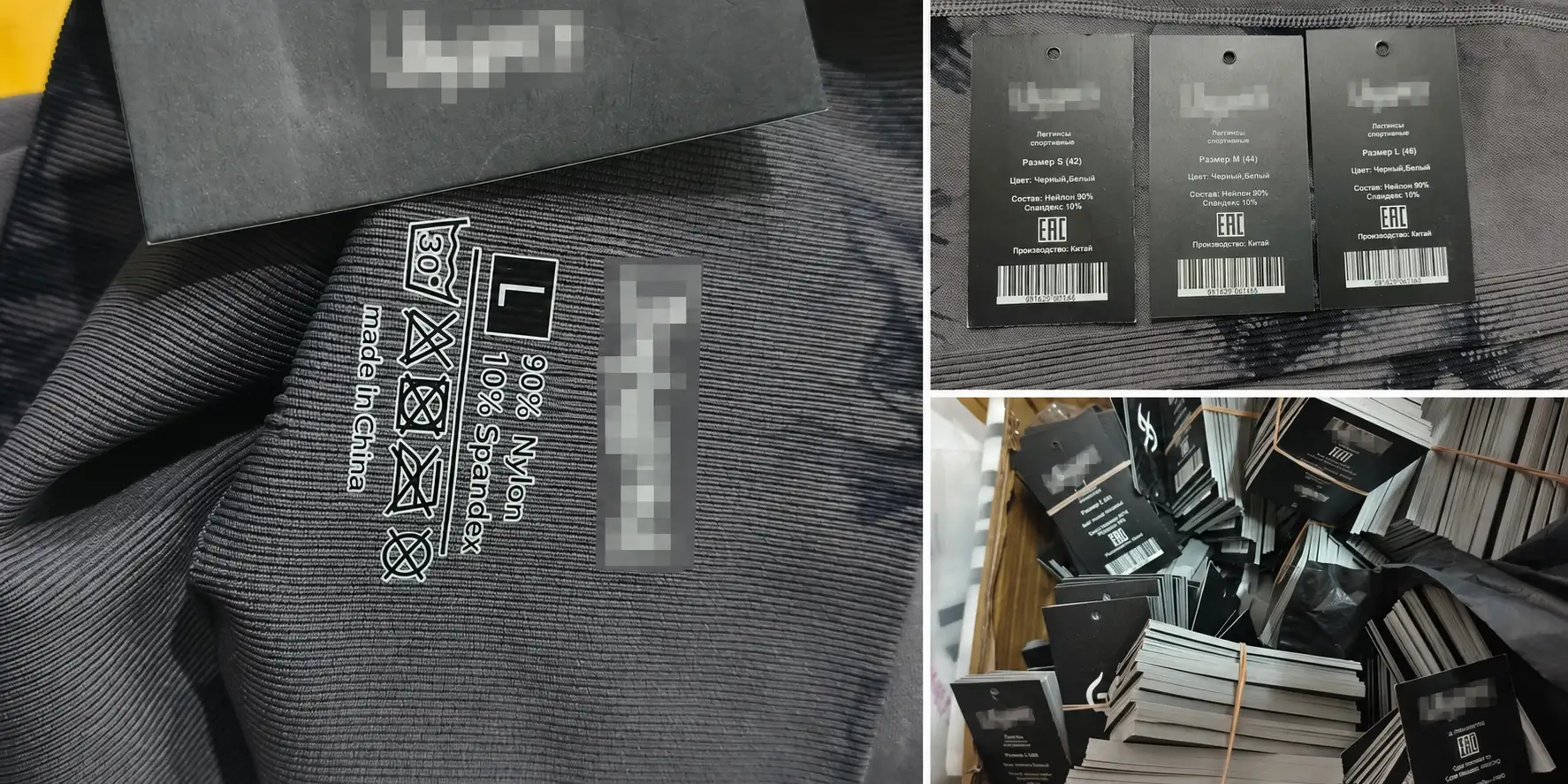
Best For: Separate brand identification such as main labels, side labels or small brand trims.
Main Considerations: Finished size, readability, edge quality, fold method and sewing position.
Reflective Branding
Reflective branding is available as a project-specific option where a suitable reflective material and application route can be confirmed. Specific reflective performance claims require corresponding material and test evidence.
Screen Print Works Best When Ink, Fabric and Stretch Are Evaluated Together
Screen printing can support clear and repeatable branding across many Cut & Sew activewear products, particularly tops, T-shirts, jackets and medium- or lower-stretch areas.
Suitable Applications
Screen print can be considered for T-Shirts, Tank Tops, Training Tops, Active Jackets and other compatible Cut & Sew garments.
High-stretch leggings or shorts require fabric- and placement-specific validation before the process is approved.
Main Manufacturing Risks
Approval Direction
The Logo should be reviewed on the actual material and garment area. Where relevant, checks can include appearance, extension, rubbing or washing according to the project requirement before the production standard is approved.

Heat Transfer Requires the Transfer Material and Heat Parameters to Match the Fabric
Heat Transfer can provide detailed and flexible branding for activewear, but the result depends on the transfer material, garment fabric and the application conditions used during development.
Review the Artwork
Confirm the correct Logo version, size, color structure and production detail.
Select the Transfer Route
The transfer material needs to be appropriate for the fabric surface, composition and stretch condition.
Check Fabric Compatibility
Heat-sensitive, brushed and highly elastic materials can respond differently to temperature and pressure.
Trial Temperature, Pressure and Time
Application parameters are reviewed with the actual material rather than assumed from another garment.
Confirm Size and Placement
The Logo position and dimensions are defined for the garment before approval.
Review the Sample
Checks may include visual appearance, stretch behavior, edge condition and washing where required.
Freeze the Approved Reference
The approved Logo appearance and relevant application conditions become part of the production reference.

Main Risks
Watch for edge lift, bubbling, glue overflow, heat marks, color migration, cracking under stretch or post-wash peeling.
Direct Silicone and Molded Silicone Branding Are Different Production Routes
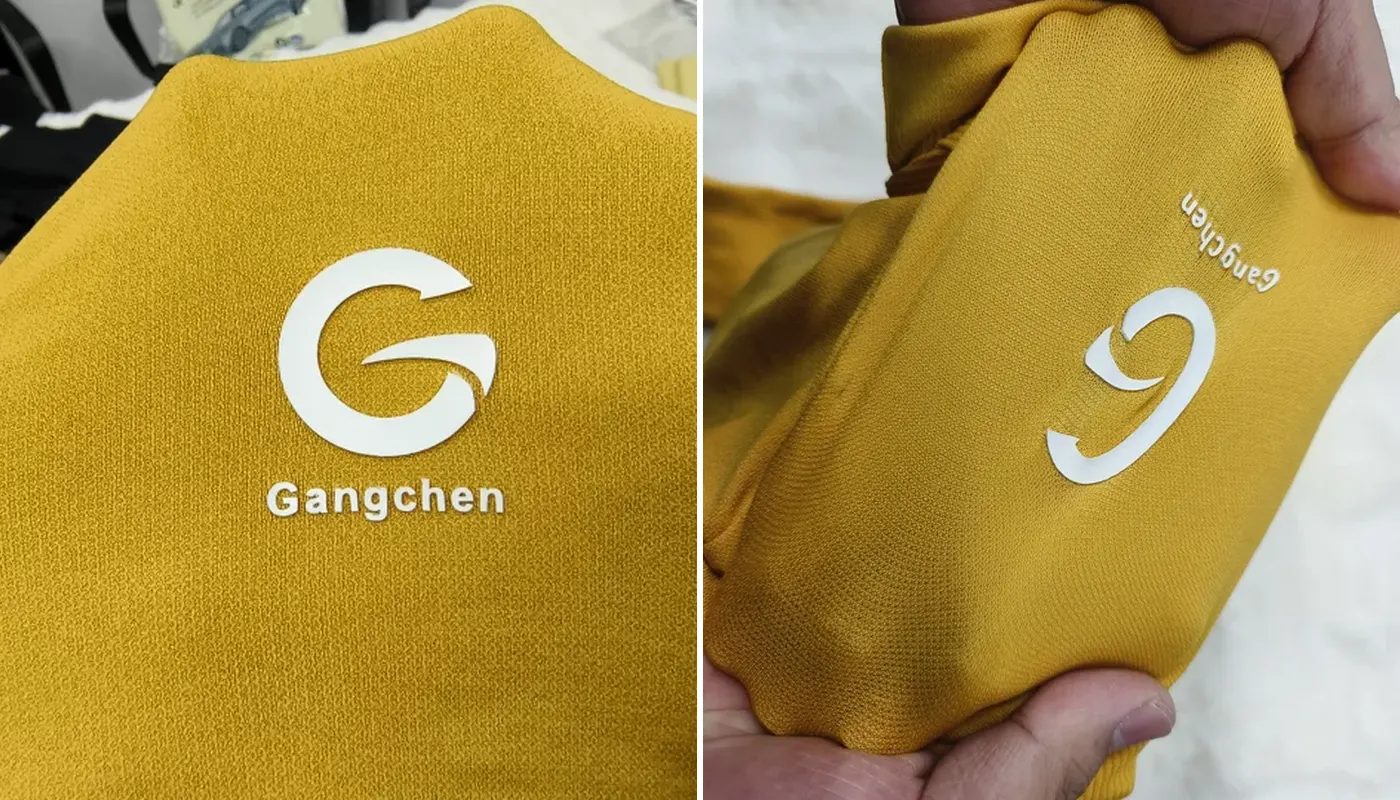
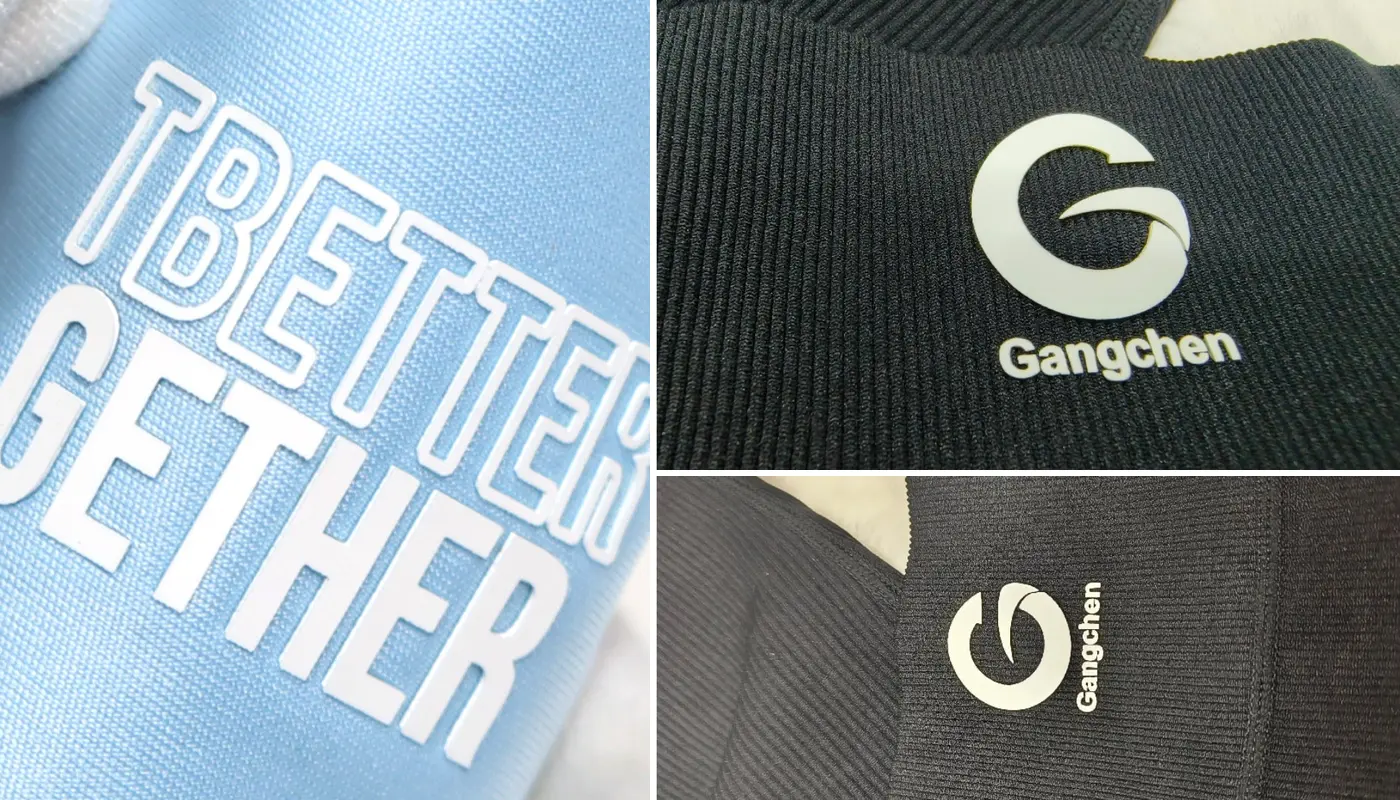
“Silicone Logo” can describe different manufacturing methods. A direct silicone application and a separately produced molded silicone patch do not share the same development, MOQ or tooling logic.
| Route | Typical Objective | Key Controls | Main Risks / Commercial Difference |
|---|---|---|---|
| Direct Silicone Application | Matte, tactile or slightly raised branding applied through the selected process. | Artwork detail, thickness, surface compatibility, stretch behavior and color. | Uneven thickness, edge overflow, cracking, migration or excessive local stiffness. |
| Molded / Pre-Made Silicone Branding | A more structured or raised Logo element produced separately and then applied to the garment. | Artwork geometry, mold/tooling, thickness, finished dimensions, color and attachment route. | Separate tooling, supplier MOQ and additional development timing may apply. |
Stretch State Matters
A Logo that looks acceptable while the garment is flat should still be evaluated in the relevant extended condition where the branding is placed on a high-stretch area.
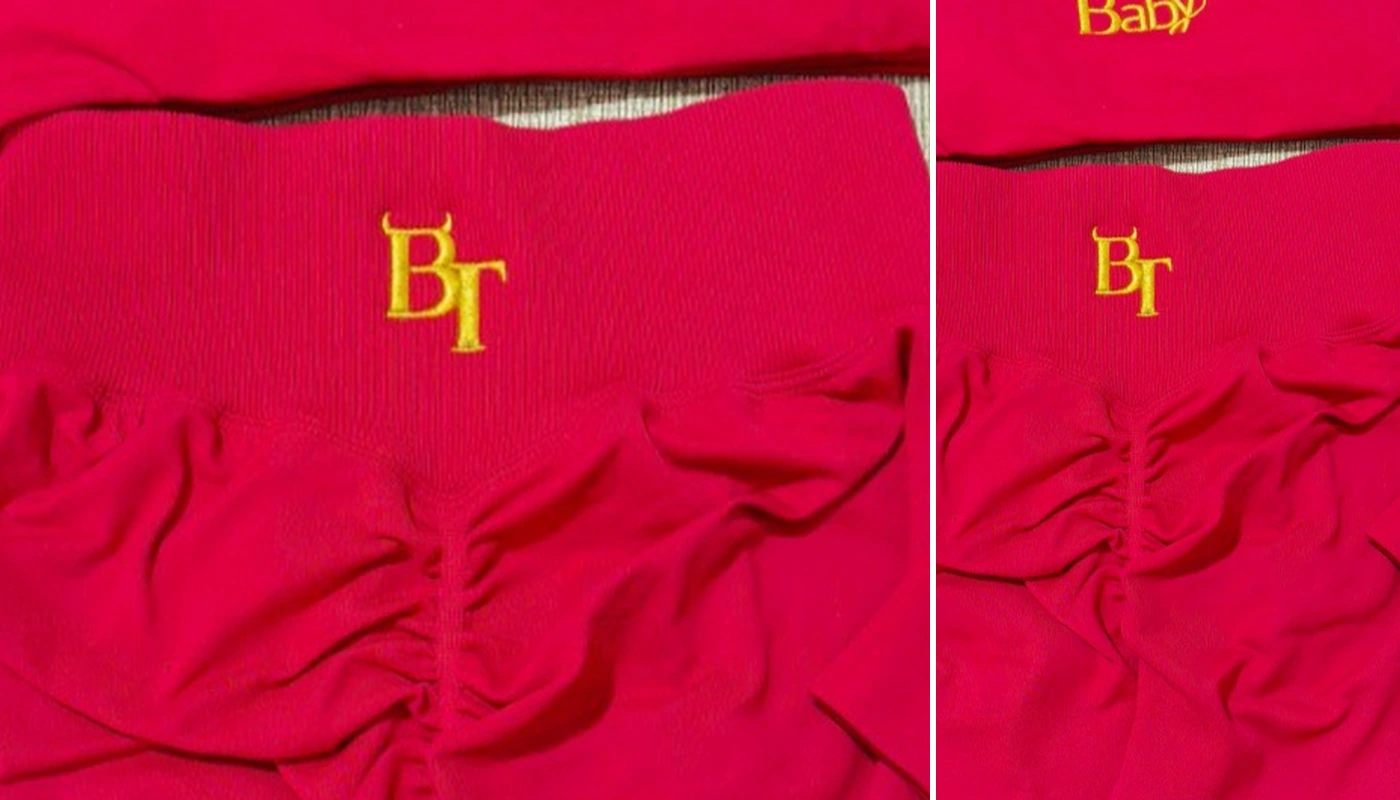
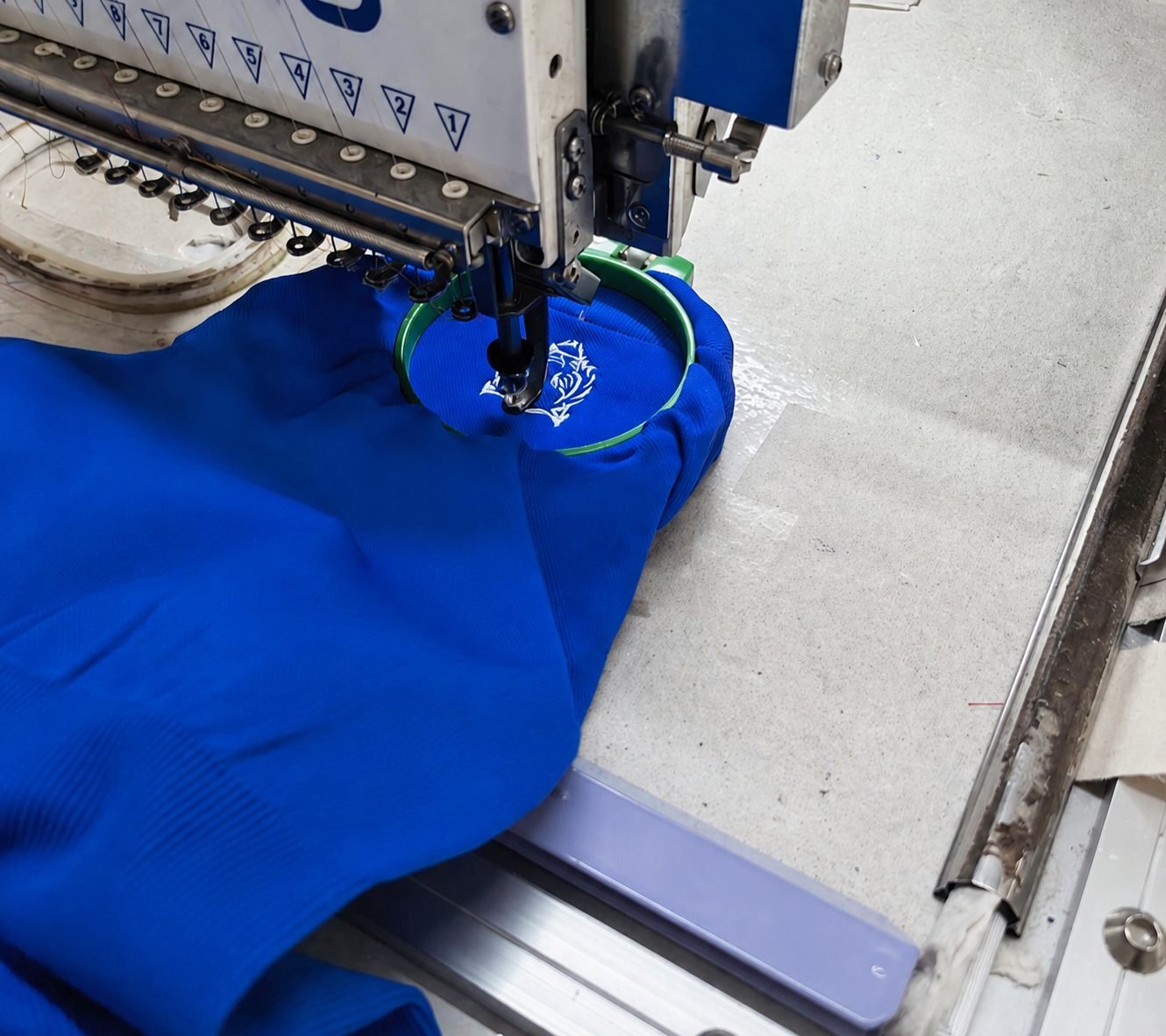
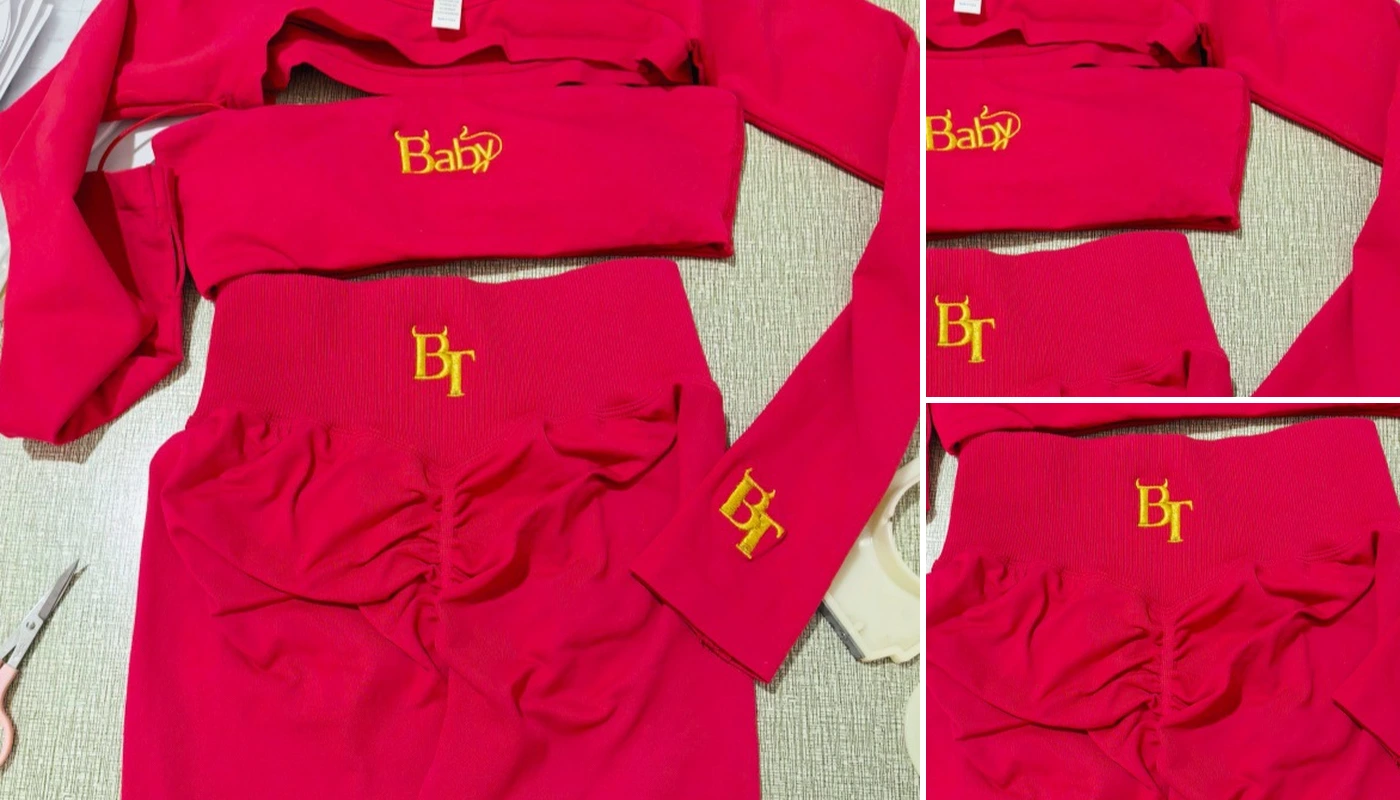
Embroidery Quality Depends on More Than the Thread
Embroidery can create a structured brand expression on suitable activewear and Athleisure products. Its performance depends on the artwork translation, thread, stitch density, backing, garment material and placement.
Best-Fit Applications
Embroidery is more naturally suited to T-Shirts, Tank Tops, Active Jackets, Athleisure pieces and medium- or lower-stretch zones.
Fabric Stability Matters
Thin, highly elastic materials can distort or pucker under dense stitching. Large, high-density embroidery should therefore not be treated as a default solution for close-fitting high-stretch zones.
Production Control Points
Artwork → Digitizing → Thread Color → Backing → Stitch Density → Sample → Appearance / Puckering Review → Approval → Bulk Embroidery
Bulk QC Direction
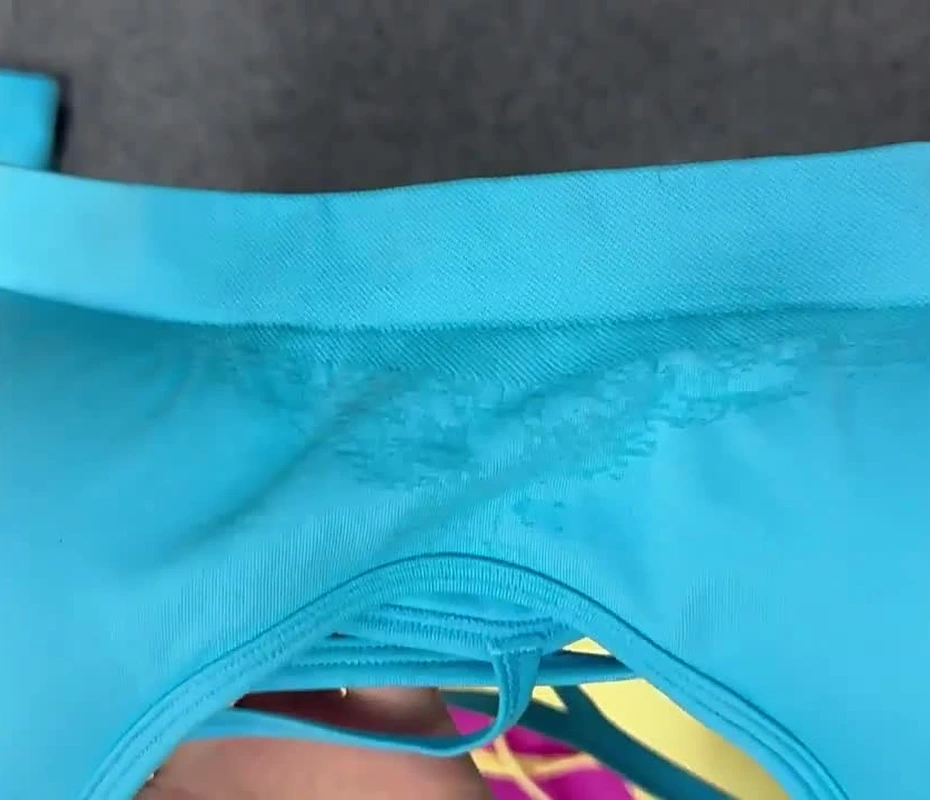
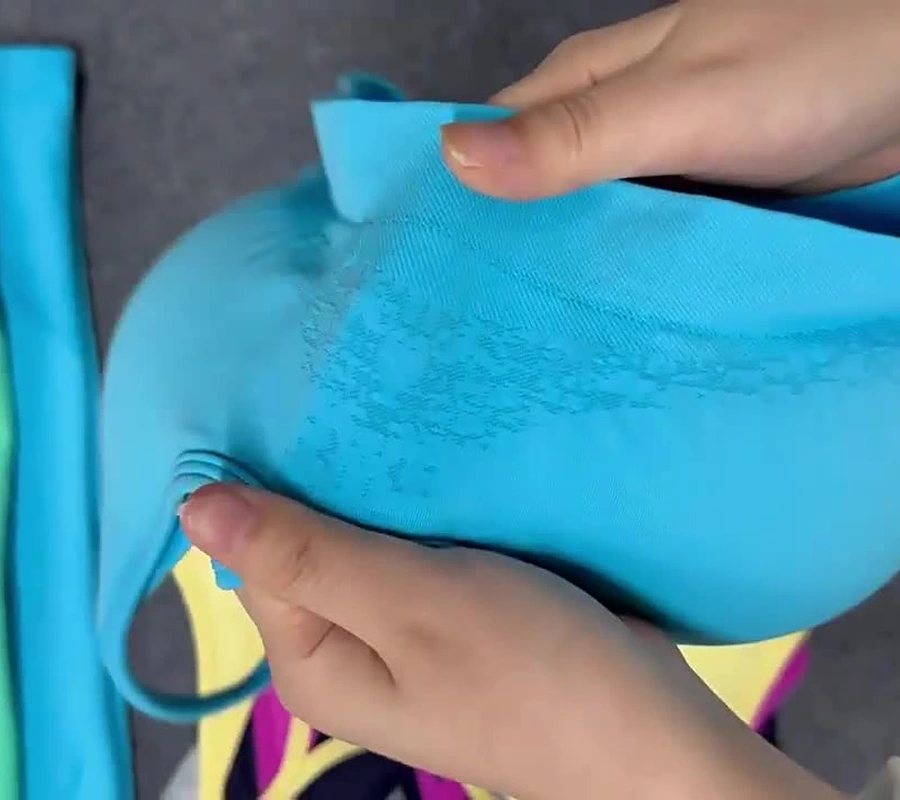
Integrate Branding Into the Seamless Knit Structure
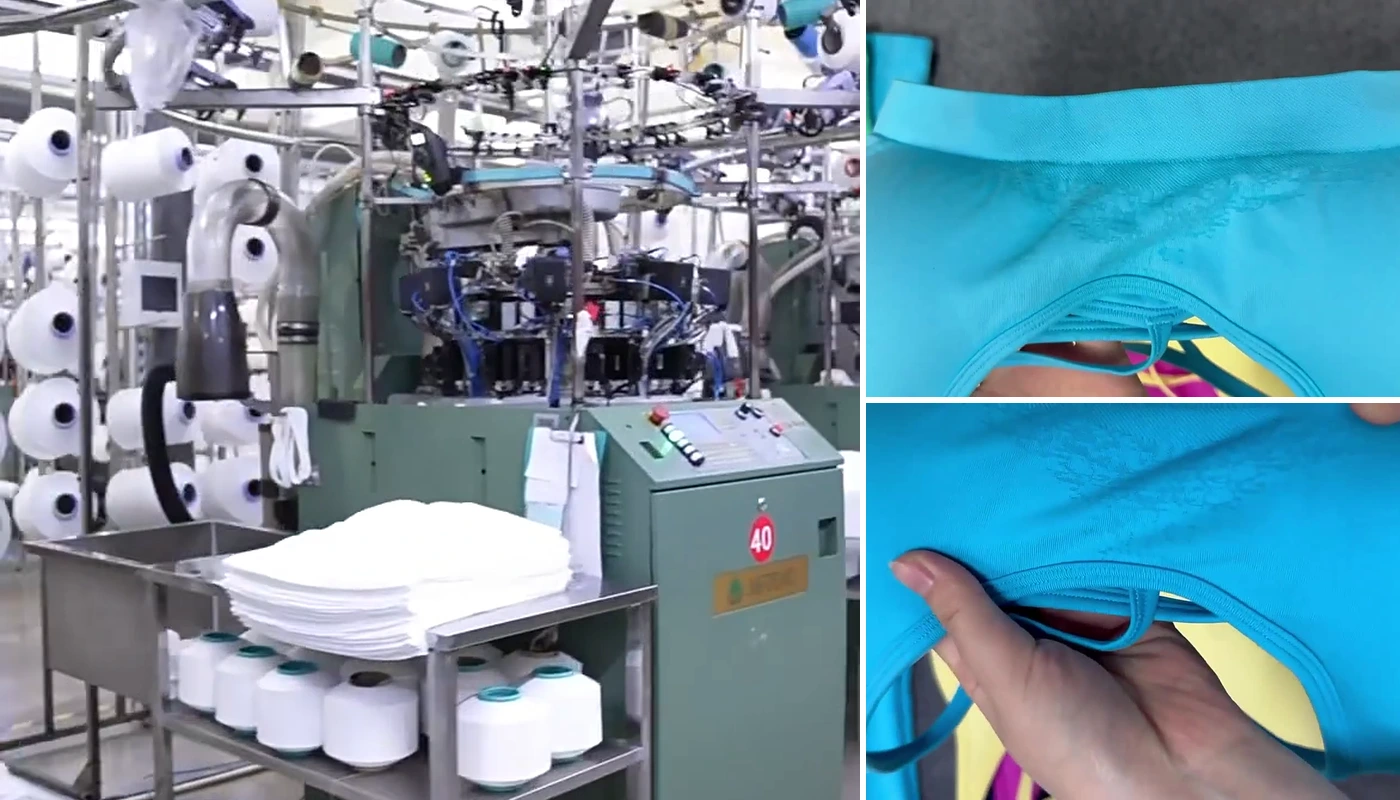
For suitable Seamless products, a Logo, text outline or brand pattern can be translated into the knitted structure itself rather than being applied to the finished garment as a separate surface element.
MOVEVOX operates 28 Italian Santoni seamless knitting machines, providing a practical manufacturing base for Seamless product and Jacquard development.
Artwork Simplification
Fine artwork may need to be translated into a form that can be reproduced through the actual knit structure.
Yarn and Color
The yarn system and selected color direction influence Logo contrast and readability.
Logo Size & Knit Density
Very small text or complex fine lines may not reproduce clearly because of stitch, needle and density constraints.
Program Development
The Logo is translated into the knitting program together with the surrounding garment structure.
Trial Knit
The first knit result is reviewed for scale, clarity, orientation and structural integration.
Actual-Size Stretch Review
A Jacquard Logo should be checked in the actual garment and relevant extended state.
Program Revision & Approval
Where required, the program is adjusted before the approved knit result is locked for production.
Reflective Branding Is a Project-Specific Option, Not a Universal Standard Process
Reflective branding can be considered for selected Running, Training or performance products where the buyer wants a visible reflective detail. The actual route depends on the confirmed material, application process and required performance scope.
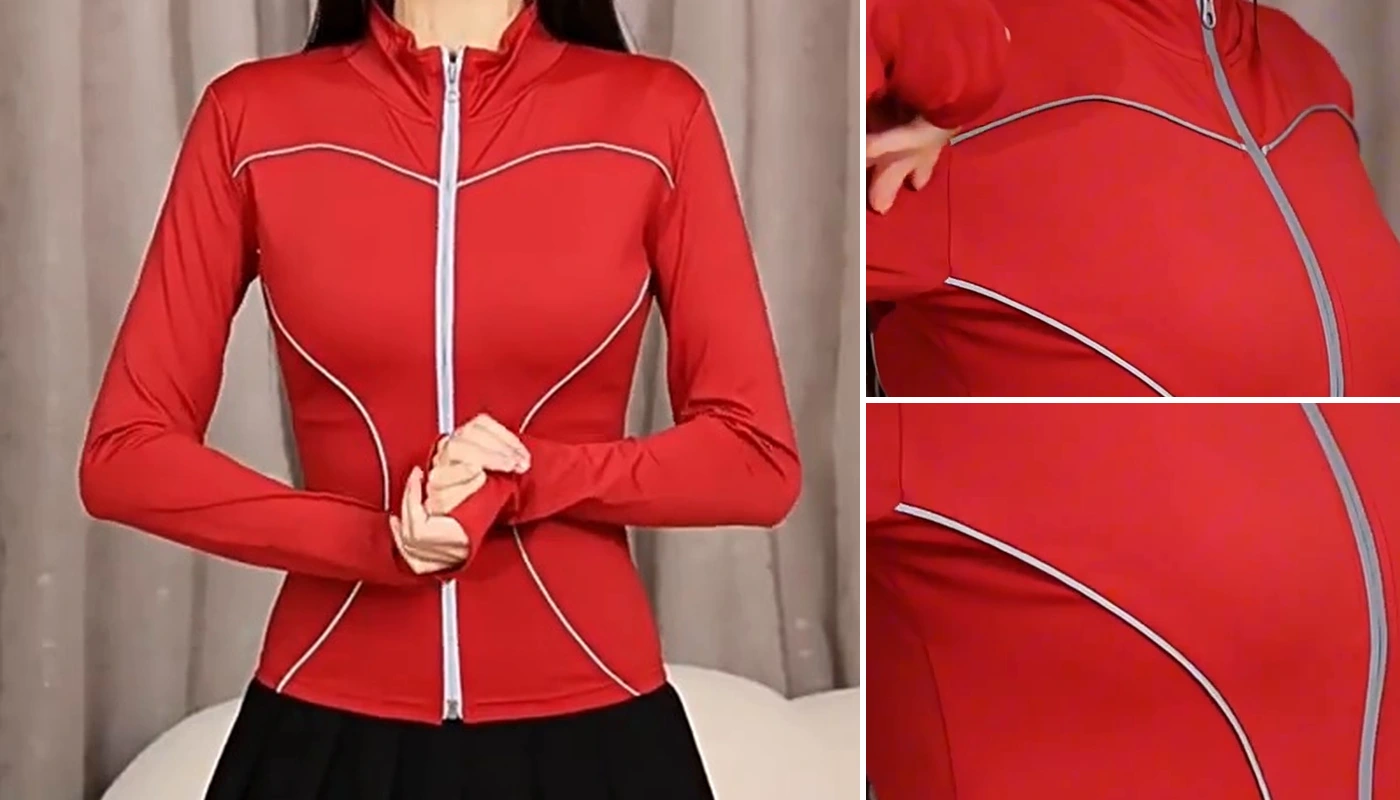
The logo should first be reviewed as part of the normal garment appearance and brand execution.
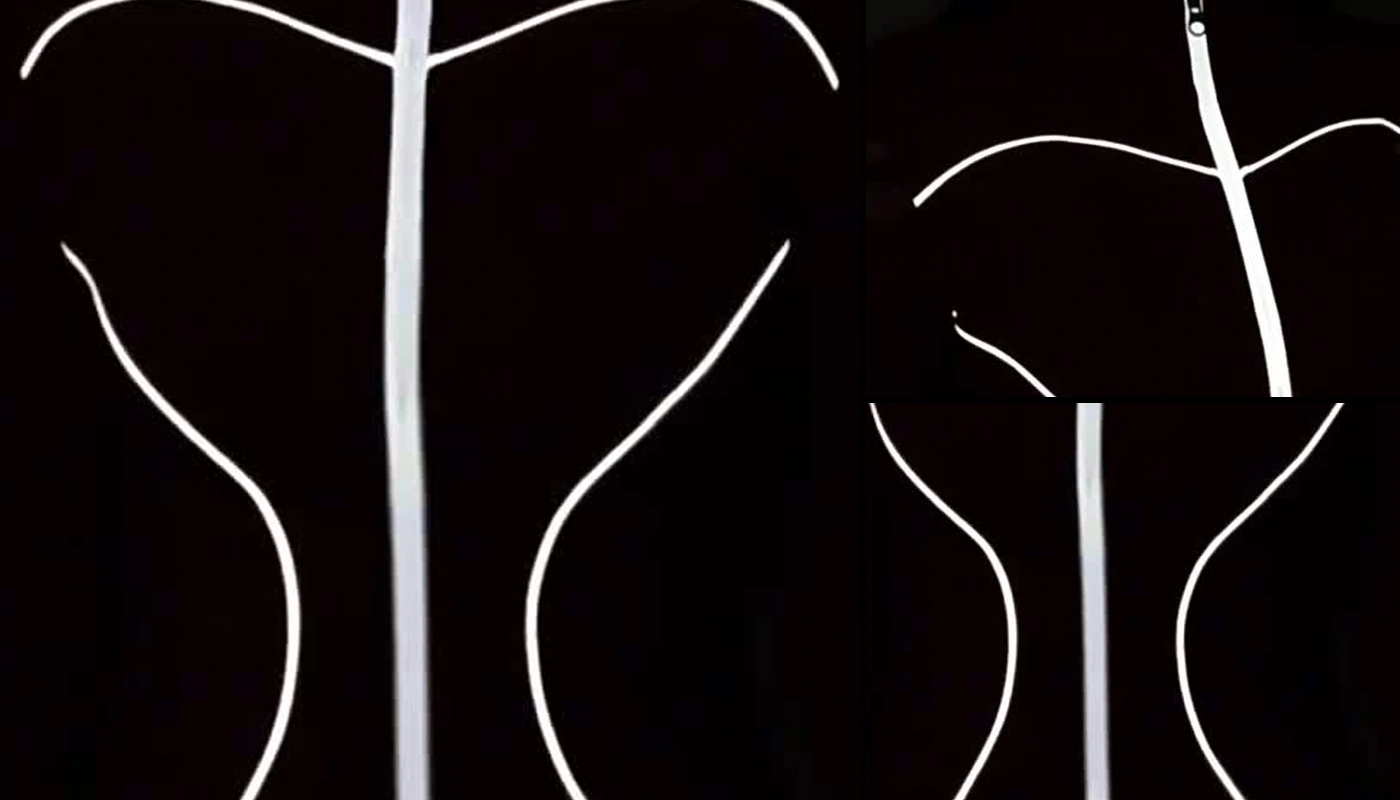
Visible reflection demonstrates the visual effect, but does not by itself establish a tested reflective rating or safety standard.
Available Project Routes
Possible routes can include reflective heat-transfer material, reflective printing material or confirmed reflective trims.
Fabric Compatibility
The selected route still needs to be reviewed against garment fabric, placement, size and application conditions.
Evidence Scope
If a defined reflective performance level is required, the corresponding material and applicable test evidence must be verified for that scope.
Start Logo Development With a Production-Usable Artwork File
A clear artwork file reduces avoidable errors during Logo development. Low-resolution screenshots, incorrect versions, live fonts or unclear color layers can create unnecessary revisions before a sample is even made.
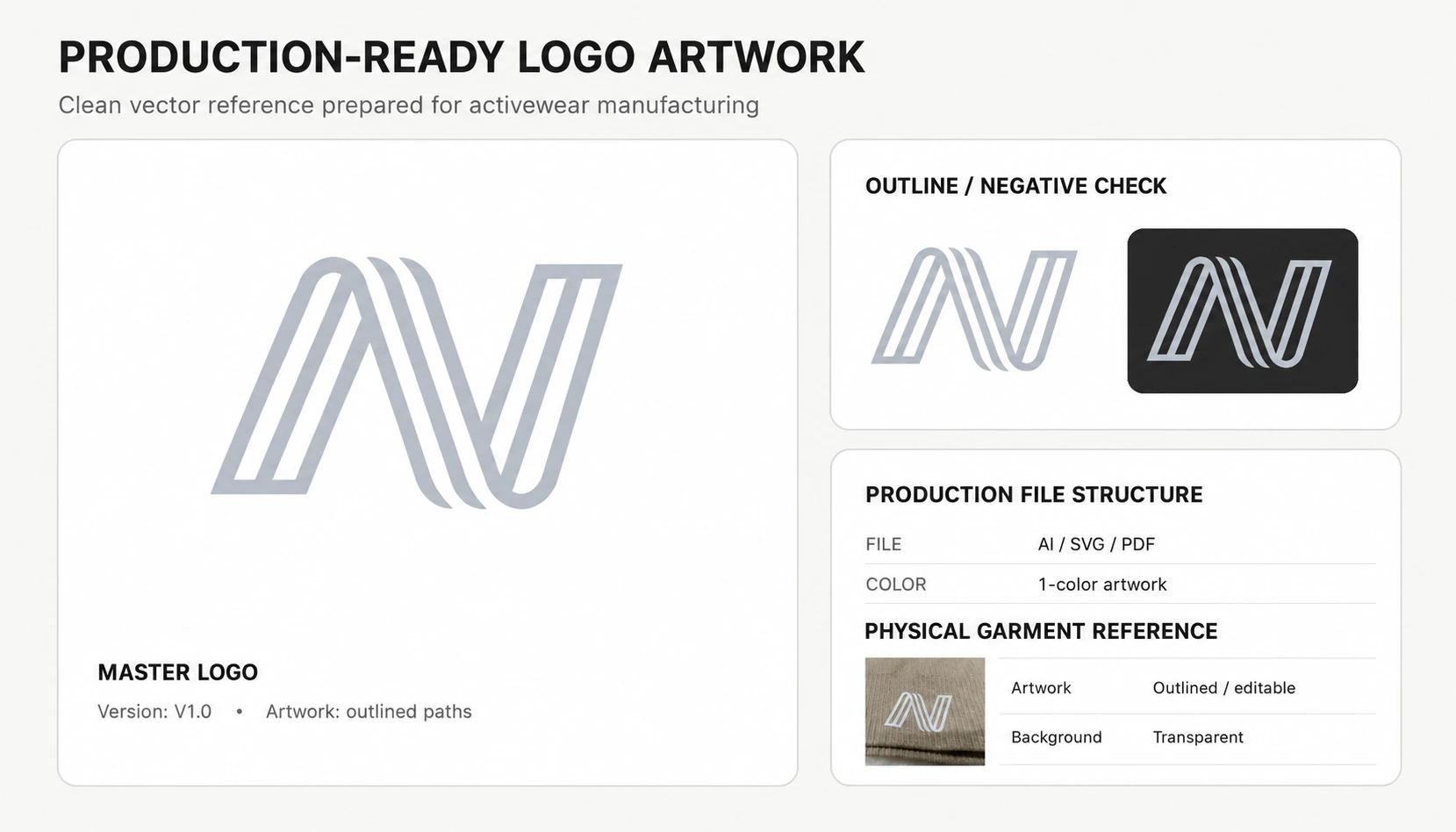
Production-Usable Artwork
SVG or AI vector artwork is preferred. Editable PDF or EPS can also be used where suitable.
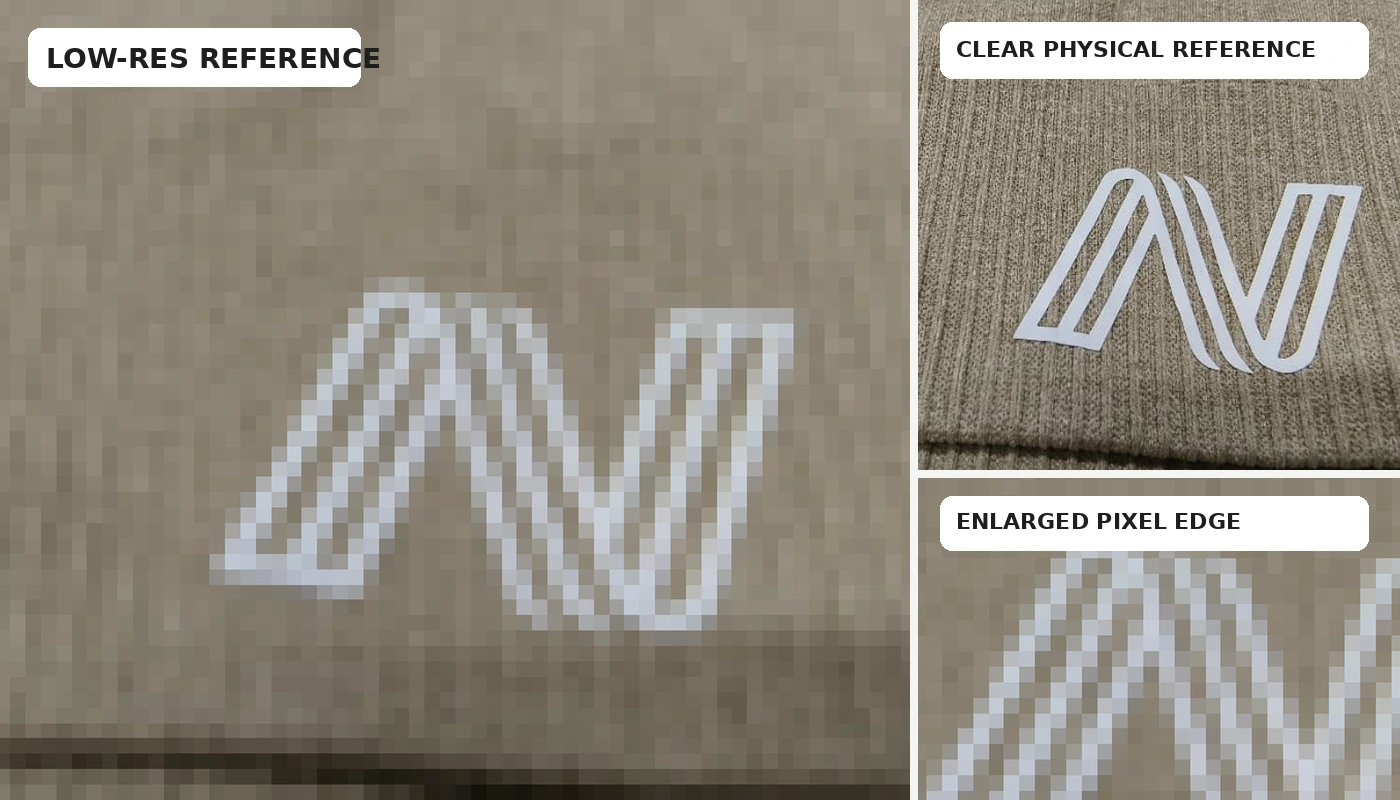
Reference-Only Artwork
PNG or JPG can support initial review where resolution and detail are sufficient, but screenshots or pixelated files should not automatically become the production master.
Manufacturing Translation May Be Required
Embroidery, Jacquard, woven labels and certain other processes may require the original Brand Artwork to be translated into a manufacturing-specific file or interpretation while preserving the approved brand intent.
Convert “Place the Logo Here” Into a Measurable Production Standard
Visual mock-ups are useful for design direction, but bulk production needs measurable Logo dimensions and positioning references.
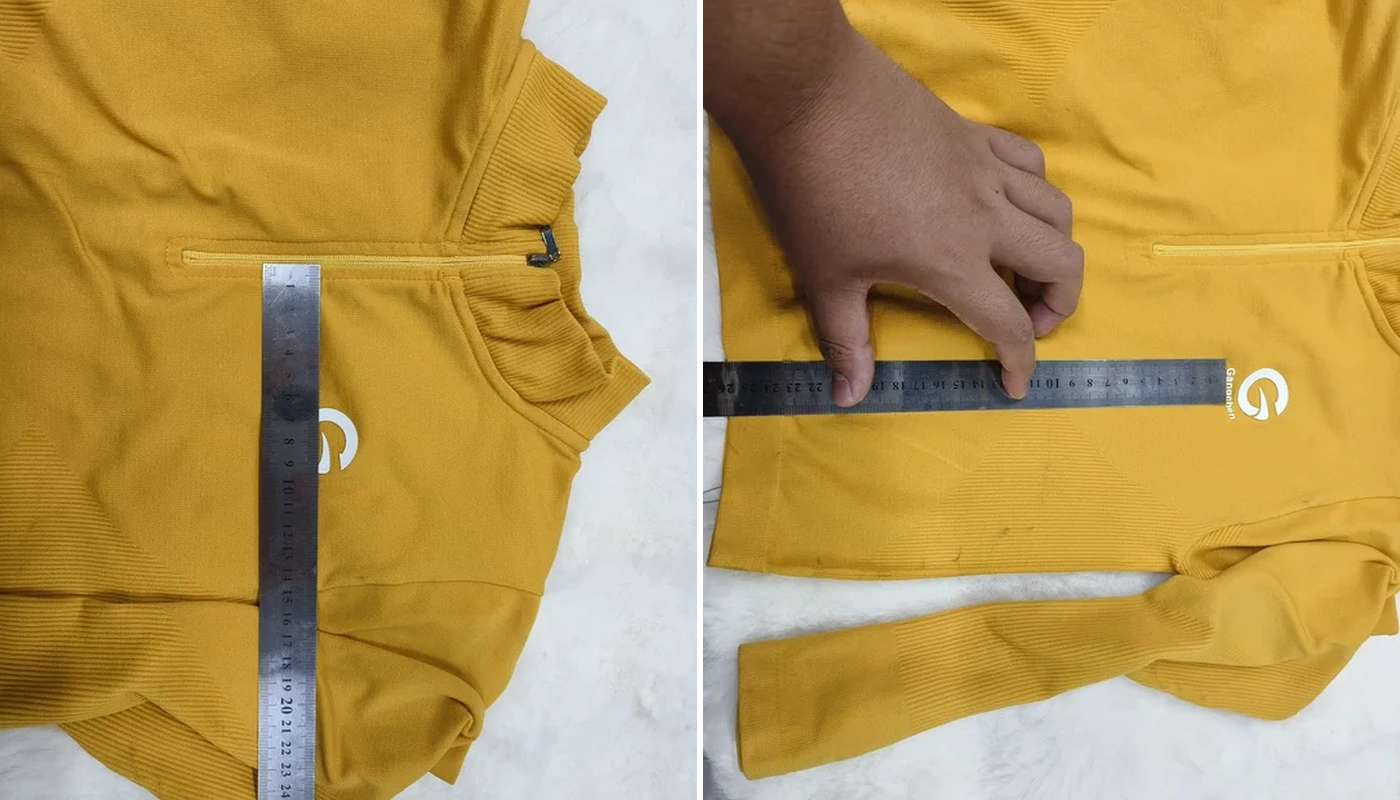
Define the Logo Size
Define the finished Logo in measurable Width × Height terms.
Define the Placement Anchor
Reference a side seam, waist edge, hem, neckline, garment center line or defined POM.
Define X / Y Measurements
Translate the relationship between the Logo and anchor into measurable production coordinates.
Confirm the Multi-Size Rule
Clarify whether the Logo remains one physical size or changes according to an agreed size rule.
Approve the Garment Sample
The approved sample and coordinates together provide the production reference.
Control Bulk Position
Bulk QC can compare placement against the approved measurable standard.
Approve Logo Color Through the Actual Process and Garment Combination
A brand color should not be controlled only through what appears on a monitor. Different Logo processes and garment backgrounds can change how the same target color appears physically.

Heat Transfer
Transfer film and garment background affect the physical appearance.

Silicone
Pigment, surface finish and thickness can change how the target color reads.

Embroidery
Thread color, sheen and stitch structure influence the final appearance.

Jacquard
Yarn, knit structure and surrounding garment color affect contrast.
Approve a Physical Logo Reference
The selected process should be reviewed as a physical Logo on the relevant material or garment before it becomes the production standard.
Lock the Production Version
The approved Logo should remain linked to the relevant Style, Garment Color, Logo Version and Approved Process for bulk and repeat-order reference.
Validate the Main Failure Risks Before the Logo Becomes the Bulk Standard
A Logo that looks acceptable immediately after application may still need further evaluation before bulk production. MOVEVOX uses project-relevant checks to review the main risks associated with the selected process and garment material.
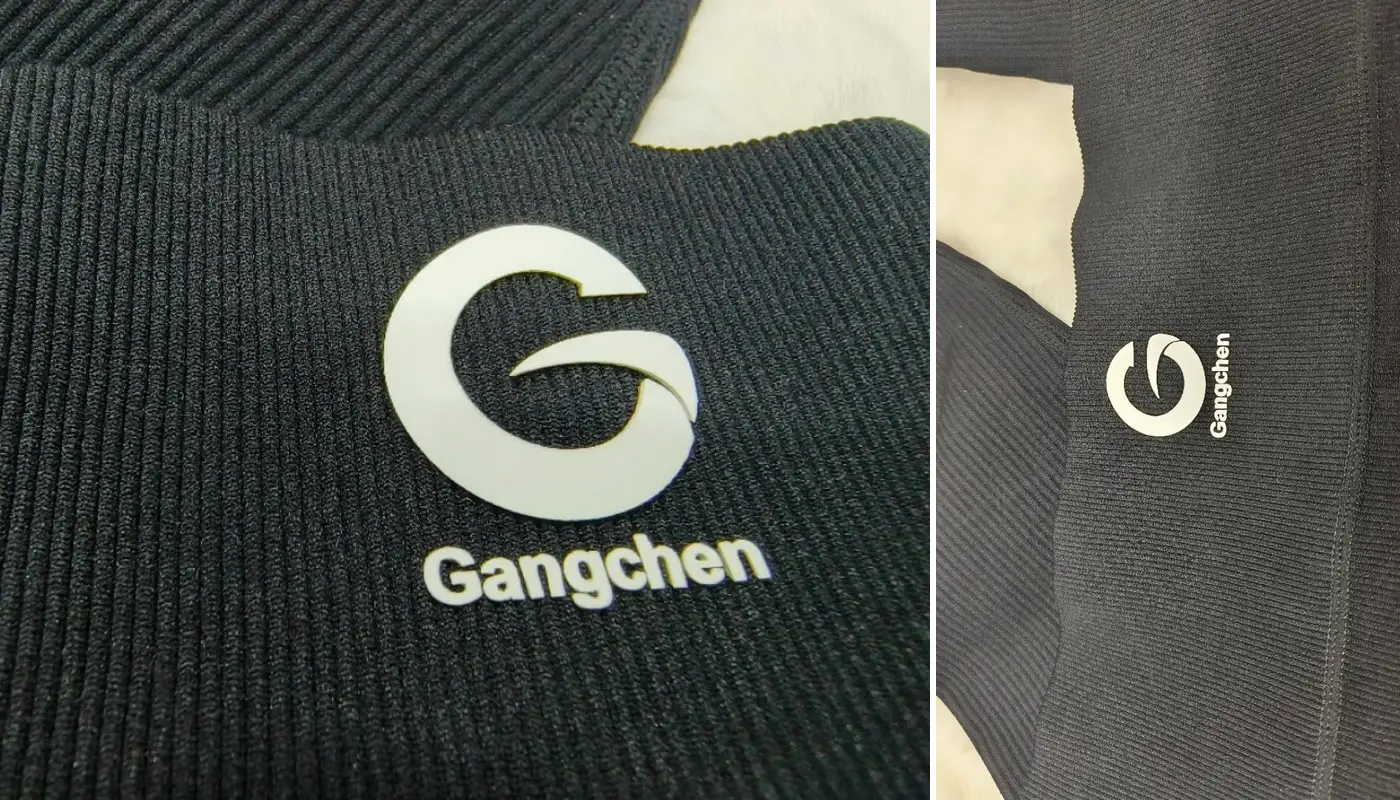 01 — BEFORE
Record the approved initial appearance, edge, surface and color.
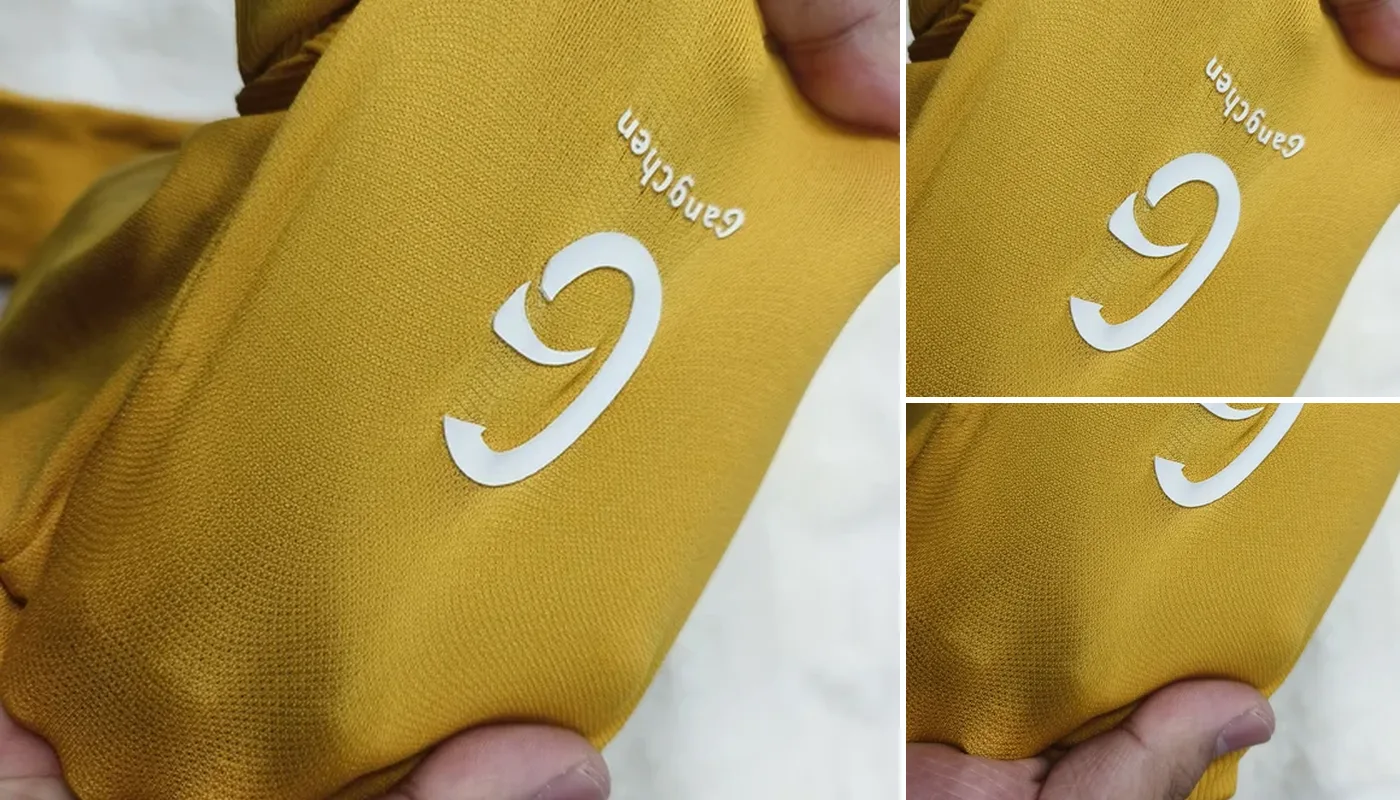 02 — STRETCH
Observe cracking, distortion, separation or other changes under extension.
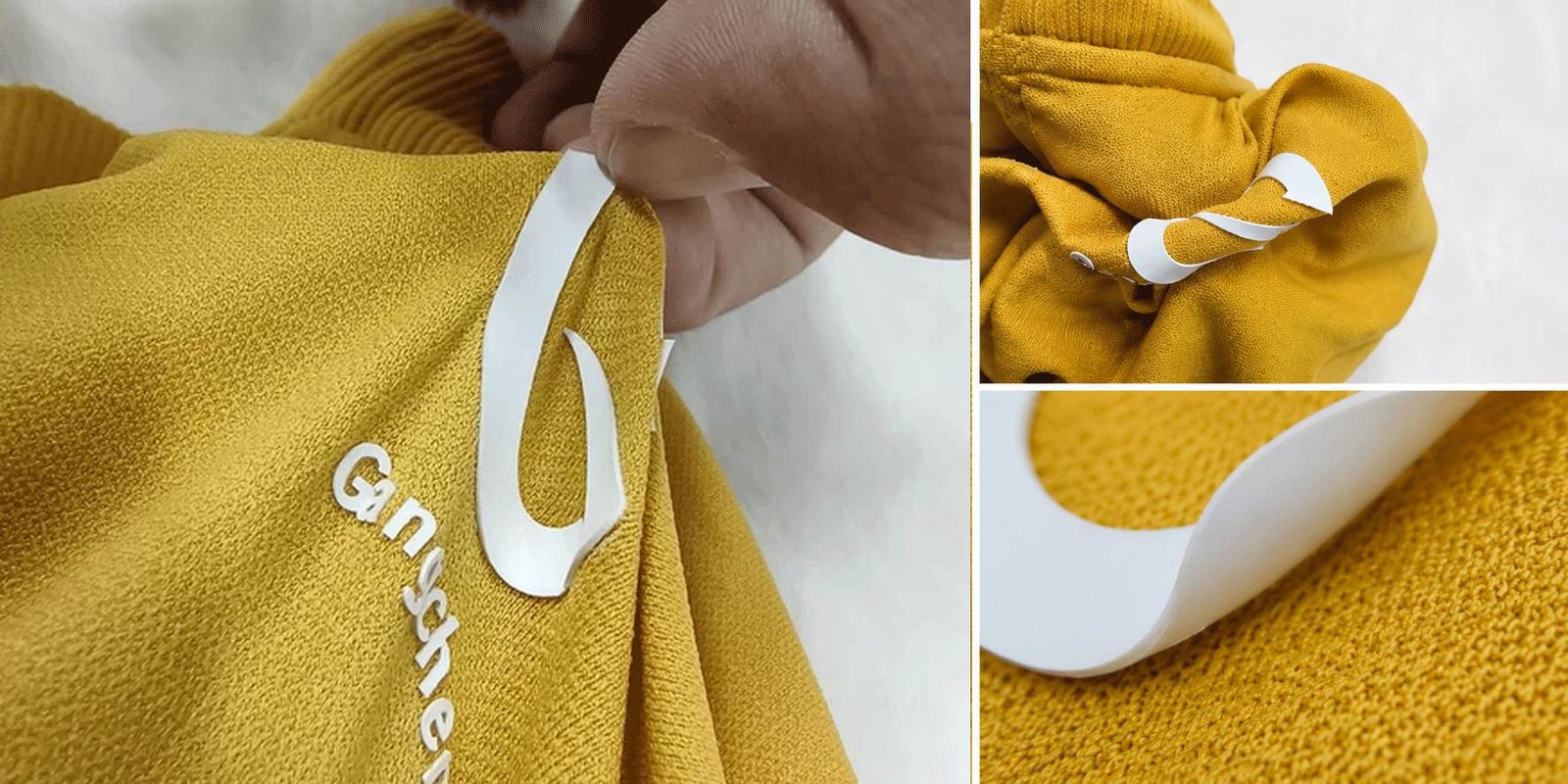 03 — EDGE / RUB
Review edge lift, bonding and relevant surface behavior.
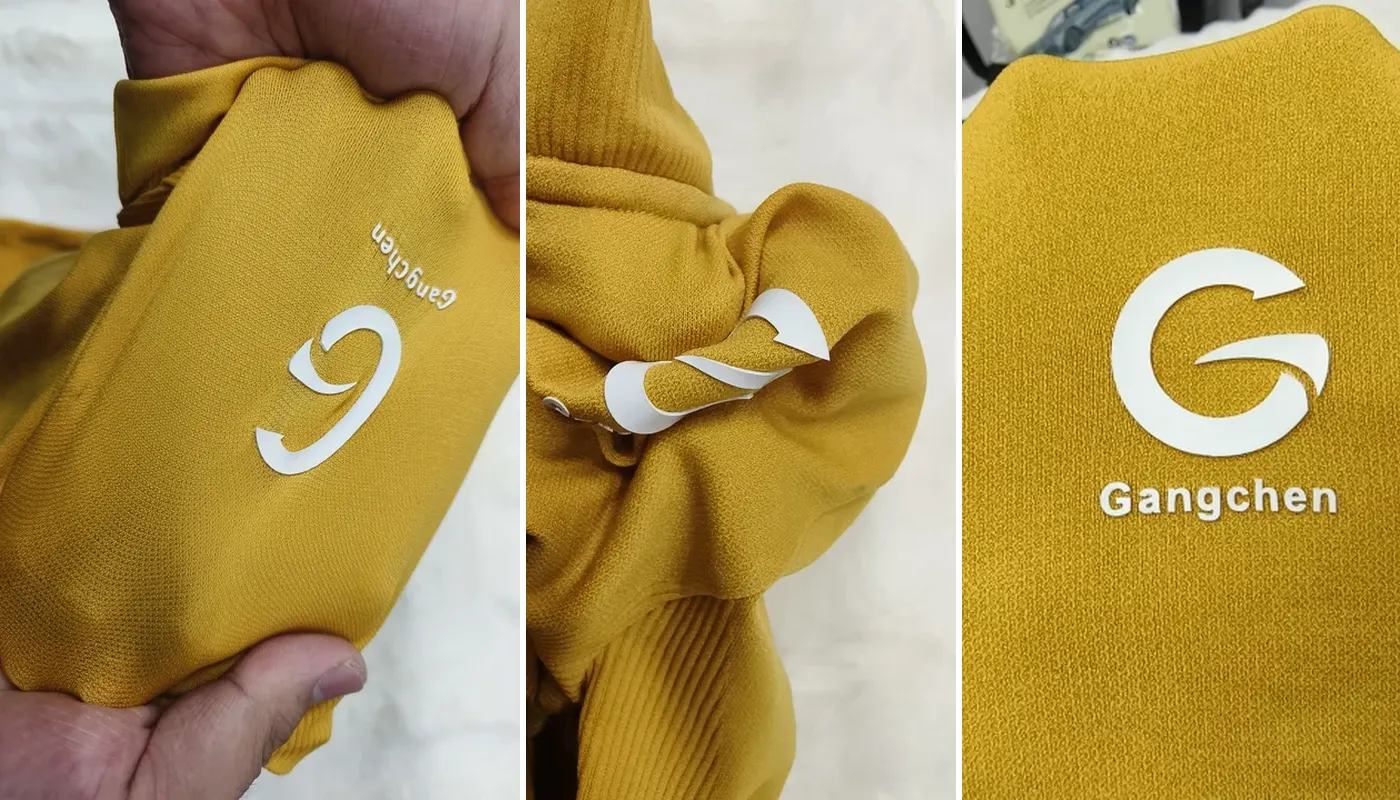 04 — POST-TEST
Where required, record the post-wash or other agreed post-test appearance.
Review the Correct Failure Mode
- Heat Transfer: edge lift, cracking, delamination
- Screen Print / Silicone: cracking, fading, migration
- Embroidery: stitch and attachment integrity
- Jacquard: knit structure integrity
If a buyer specifies an AATCC, ISO, ASTM or brand-internal standard, testing can be performed or arranged according to the applicable project requirement.
Control the Approved Logo Standard During Bulk Production
Sample approval only becomes useful when the same Logo standard can be checked during production. MOVEVOX connects approved artwork and garment references with First Article, inline and finished-garment inspection as applicable to the project.
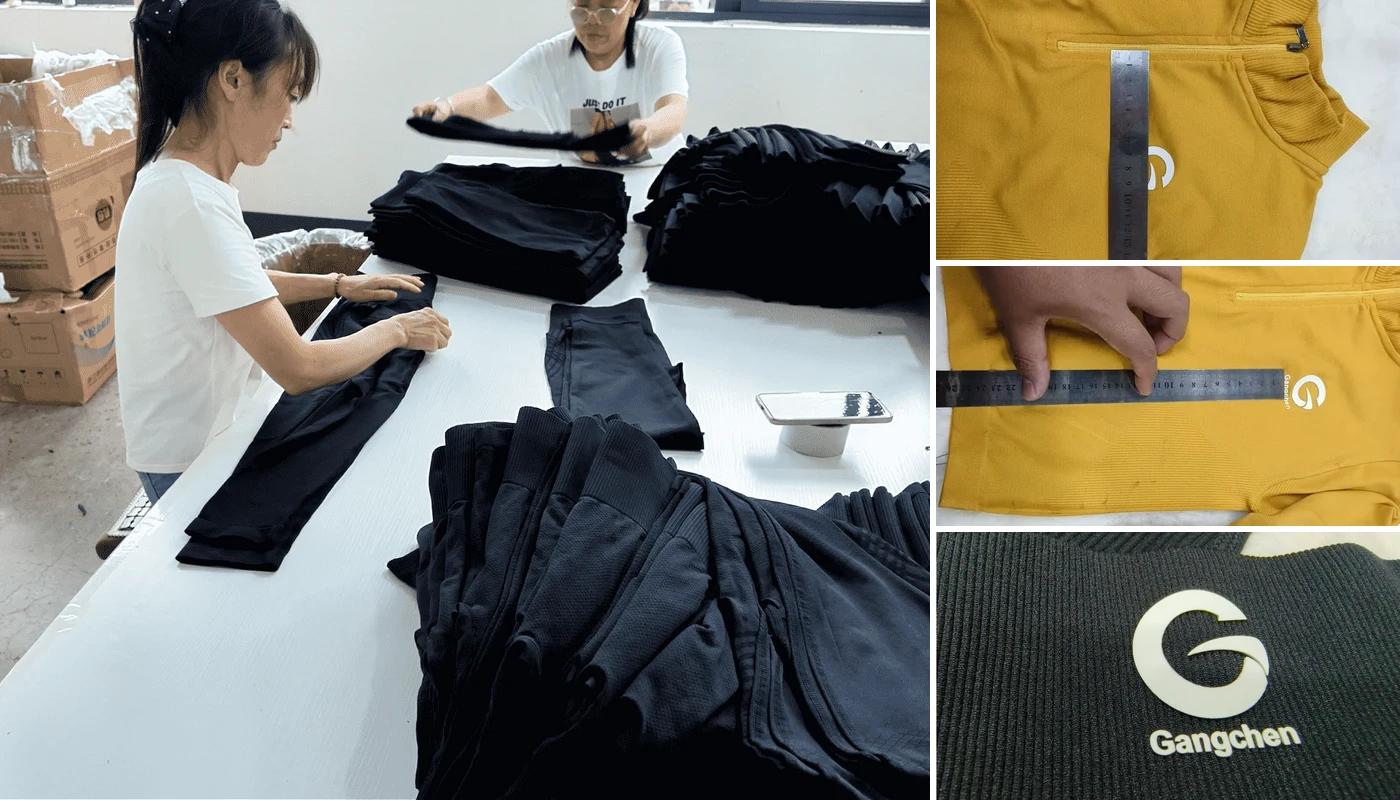
Method
Confirm that the approved Logo process or material is being used.
Position
Check the Logo against the approved measurable location reference.
Size
Verify finished Logo dimensions against the approved standard.
Color
Compare the Logo against the applicable approved physical reference.
Direction & Orientation
Confirm correct artwork direction and garment orientation.
Edge & Surface
Check for lifting, overflow, cracking, blurred edges or process-specific defects.
Fabric Compatibility
Review whether the applied Logo creates an unacceptable garment-surface issue.
Escalate Repeated Problems
Repeated defects trigger batch or process review, correction and reinspection as appropriate.
Buyer QC Manuals, approved samples and project-specific tolerance requirements take priority where provided.
Why MOVEVOX for Custom Logo Activewear
Custom branding is easier to control when the Logo development process remains connected to the garment, material, manufacturing route and QC system rather than being treated as an isolated accessory purchase.
From Artwork to Bulk QC
MOVEVOX supports confirmed branding routes including screen print, heat transfer, silicone, embroidery, Jacquard and woven labels, with special routes evaluated according to the specific project.
Artwork, garment structure, material, Logo method, physical approval and bulk QC remain connected through one managed project workflow.
Where specialist Logo suppliers or controlled partner facilities are involved, MOVEVOX manages the relevant specification, version, project coordination and QC within the agreed manufacturing scope rather than presenting every branding process as an entirely in-house operation.