
Workout Sports Bra Manufacturer for Activity-Specific Development & Validation
MOVEVOX supports activewear brands developing workout sports bras around a defined training use case, then translating that use into a physical sample, review criteria, controlled revisions, and repeatable bulk production.
Development can begin from a Tech Pack, legally usable reference garment, sketch, image, or defined concept. The workout brief should also clarify movement conditions, fit priorities, support direction, known failure risks, wearer feedback method, and any buyer-defined acceptance or testing protocol.
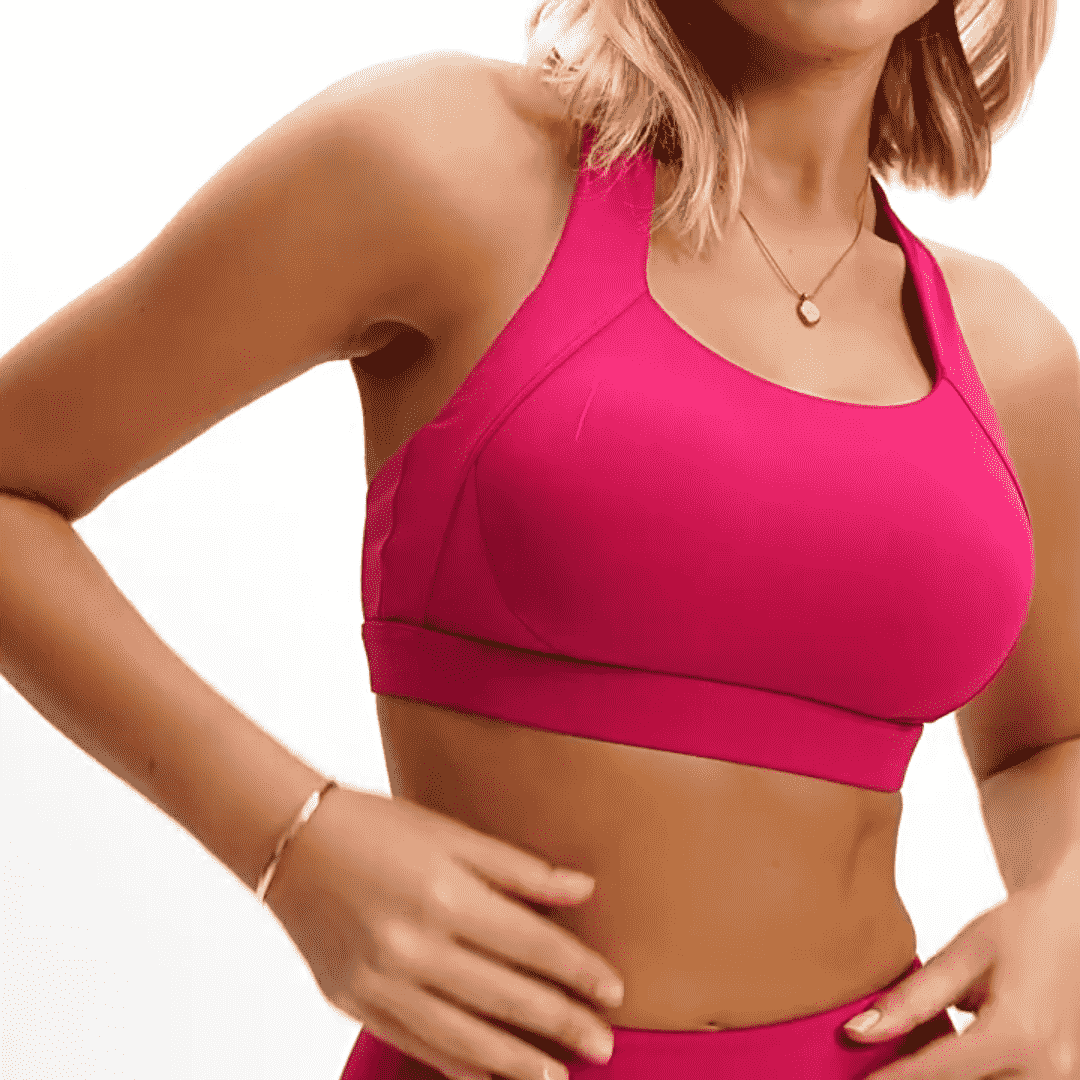
Seamless + Cut & Sew
Two manufacturing routes can be reviewed according to the approved product structure and workout requirement.
5–10 Working Days
Standard sample timing after required product and workout-validation details are confirmed.
Activity-Based Validation
Physical sample review can connect the intended activity with fit, stability, coverage, internal components, and buyer-defined performance criteria.
Where MOVEVOX Fits When the Workout Use Case Matters
MOVEVOX is most relevant when a buyer needs the intended workout condition translated into a physical product standard, rather than only sourcing an existing sports bra silhouette.
New Workout Sports Bra Development
For brands starting from a Tech Pack, lawful reference, sketch, or defined concept and needing the product reviewed against an intended workout use.
Second-Supplier Validation
For established brands qualifying an additional source and checking whether fit, movement behavior, materials, construction, and approval logic can be reproduced.
Workout-Focused Product Programs
For buyers coordinating sports bras with other training apparel while keeping the bra's activity-specific fit and validation requirements visible.
Repeat & Scale After Approval
For approved products that need repeat production without losing the sample, review criteria, material, construction, identification, and release baseline.
Define the Workout Before You Define the Validation Plan
A workout sports bra brief should describe what the wearer will do, what must remain stable, and how the buyer intends to judge the sample. That creates a clearer development target than a generic request for “more support.”
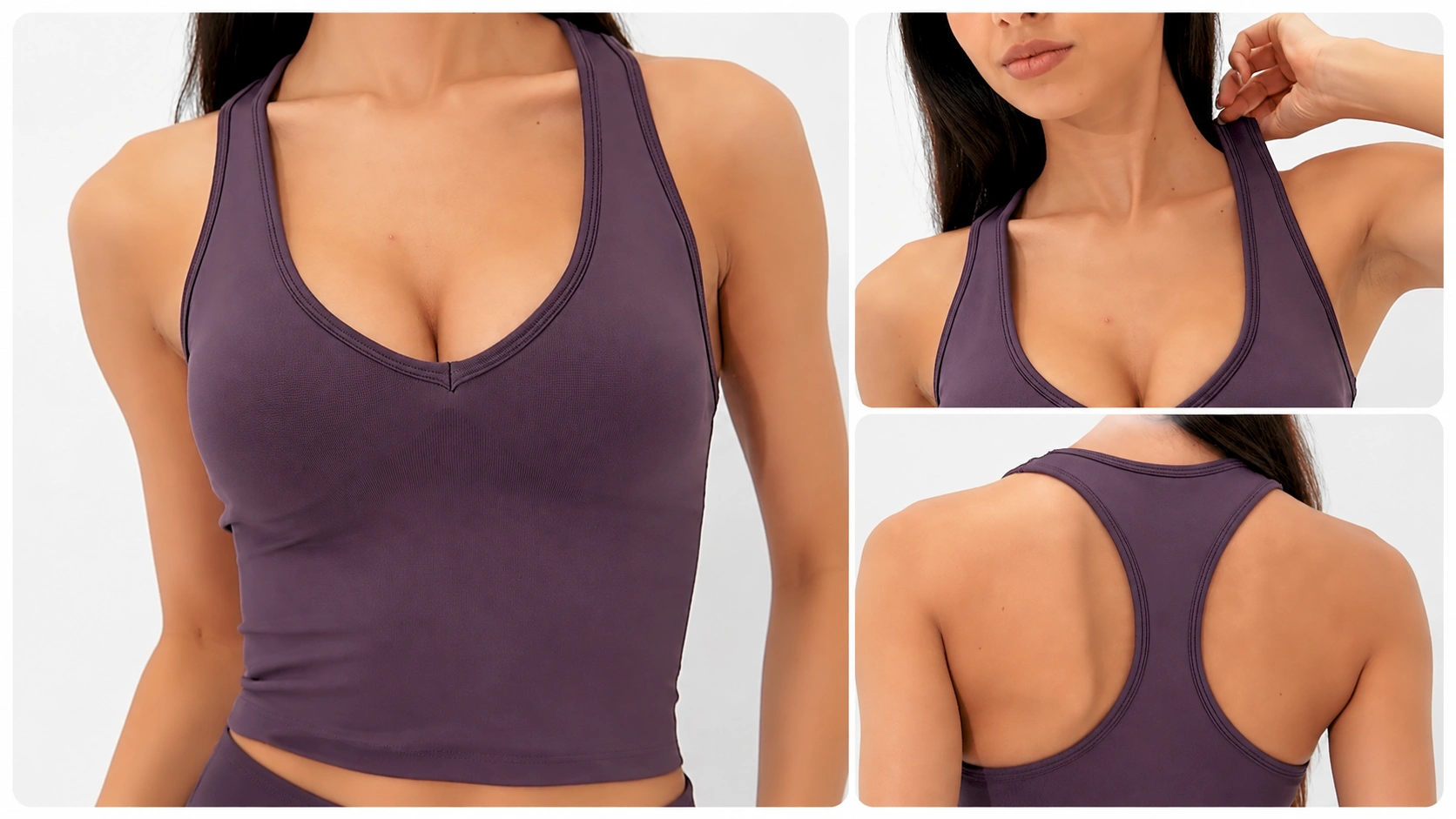
Activity Type
Specify whether the primary use is strength training, HIIT, cardio, studio work, mixed training, or another defined activity.
Movement Pattern
Identify repeated arm elevation, pressing, pulling, bending, rotation, jumping, running, or other motions that materially affect the garment.
Fit Priority
Define the intended relationship among bust capacity, underband position, strap behavior, neckline, armholes, back construction, and overall compression feel.
Coverage Requirement
Clarify the buyer's expected neckline, side-bust, center-front, and armhole coverage under the intended workout condition.
Stability Risk
Record known concerns such as band migration, strap slippage, neckline shift, gaping, pad movement, pressure concentration, or poor recovery after repeated motion.
Internal Components
Where pads, lining, power mesh, elastic, or other internal components are used, define how their position and behavior will be reviewed during wear.
Wearer Feedback
Decide who will wear the sample, which sizes are included, what feedback is recorded, and whether the buyer uses an internal wear-test form or protocol.
Acceptance Basis
Formal low-, medium-, or high-support positioning should follow a buyer-defined acceptance or testing basis rather than one visual or construction feature.
Watch for Failure Modes That Appear During Training, Not Only at Rest
Underband Migration
Track whether the lower band changes position during arm elevation, bending, repeated extension, or higher-movement work.
Strap Migration
Check whether straps slide, dig, twist, or shift as shoulder angle and upper-body motion change.
Pressure Concentration
Record pressure at shoulders, underband, armholes, neckline, or hardware instead of assuming tighter fit will solve instability.
Coverage Shift
Observe neckline, armhole, side-bust, and center-front coverage as torso position and arm position change.
Pad / Lining Movement
Check whether approved pads, lining, or internal layers remain positioned after repeated motion and handling.
Size-Range Drift
A base-size workout review does not prove that band, straps, coverage, and pressure remain acceptable across the commercial size range.
Use Factory Resources as a Validation-to-Production System
Santoni Machines
For Seamless bras, machine count matters only after the approved yarn, knit program, size logic, finishing and activity-critical zones are defined well enough to reproduce.
Cut & Sew Machines
For Cut & Sew bras, sewing capacity becomes useful after strap, underband, binding, lining, pad and seam decisions have been physically validated and released.
Development Team
Approximately eight people support design, pattern, sample and related development work that can turn wearer observations into measurable changes such as strap length, band tension, coverage or pad position.
QC Personnel
Five QC personnel currently support production checks against the released product standard and the activity-critical points identified during development.
Sample Reference
The standard 5–10 working-day reference applies to a normal sample cycle after required development information is confirmed; additional wearer review and revision rounds sit outside that base reference.
Managed Delivery Capacity
Current normal combined managed delivery capacity is approximately 150,000–200,000 finished pieces per month across the controlled network, subject to the actual product mix and released construction.
These figures describe manufacturing resources, not performance evidence. Product validation still depends on the actual bra, wearer review and the buyer's defined acceptance basis.
Evaluate Back and Strap Options by What They Do During the Workout
Racerback, cross-back, wide and adjustable straps are not support ratings by themselves. Review each option through the motions that matter to the intended activity and record the specific behavior that needs approval.
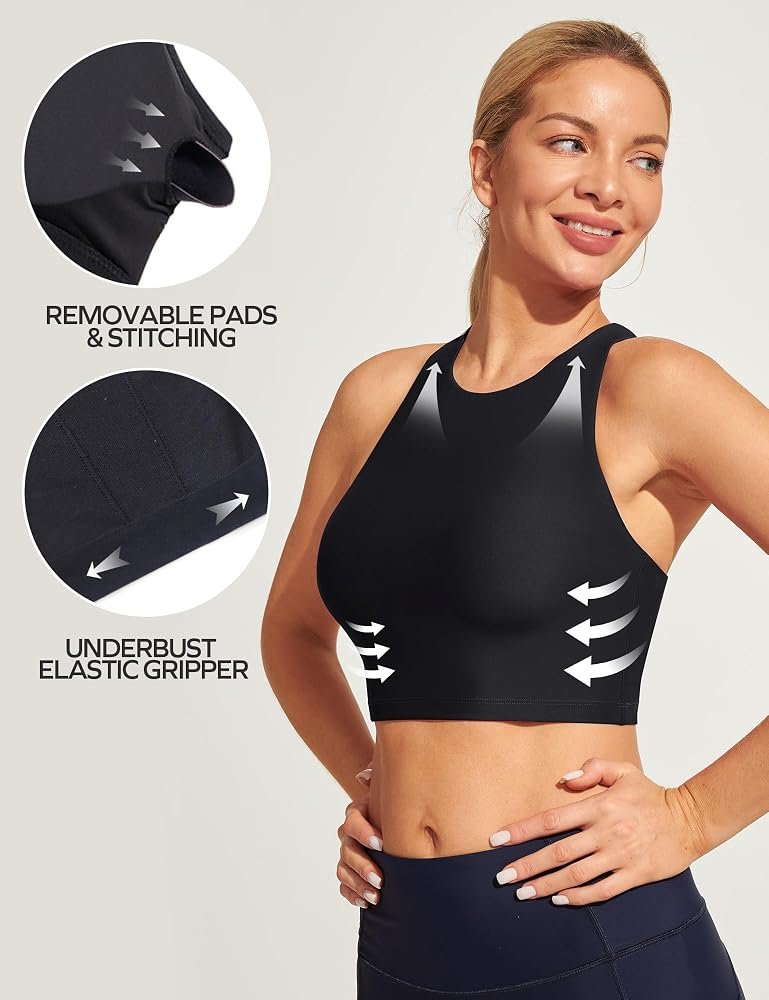
Racerback
Check overhead reach, scapular movement, armhole clearance, neckline position and strap tension during the defined exercise sequence.
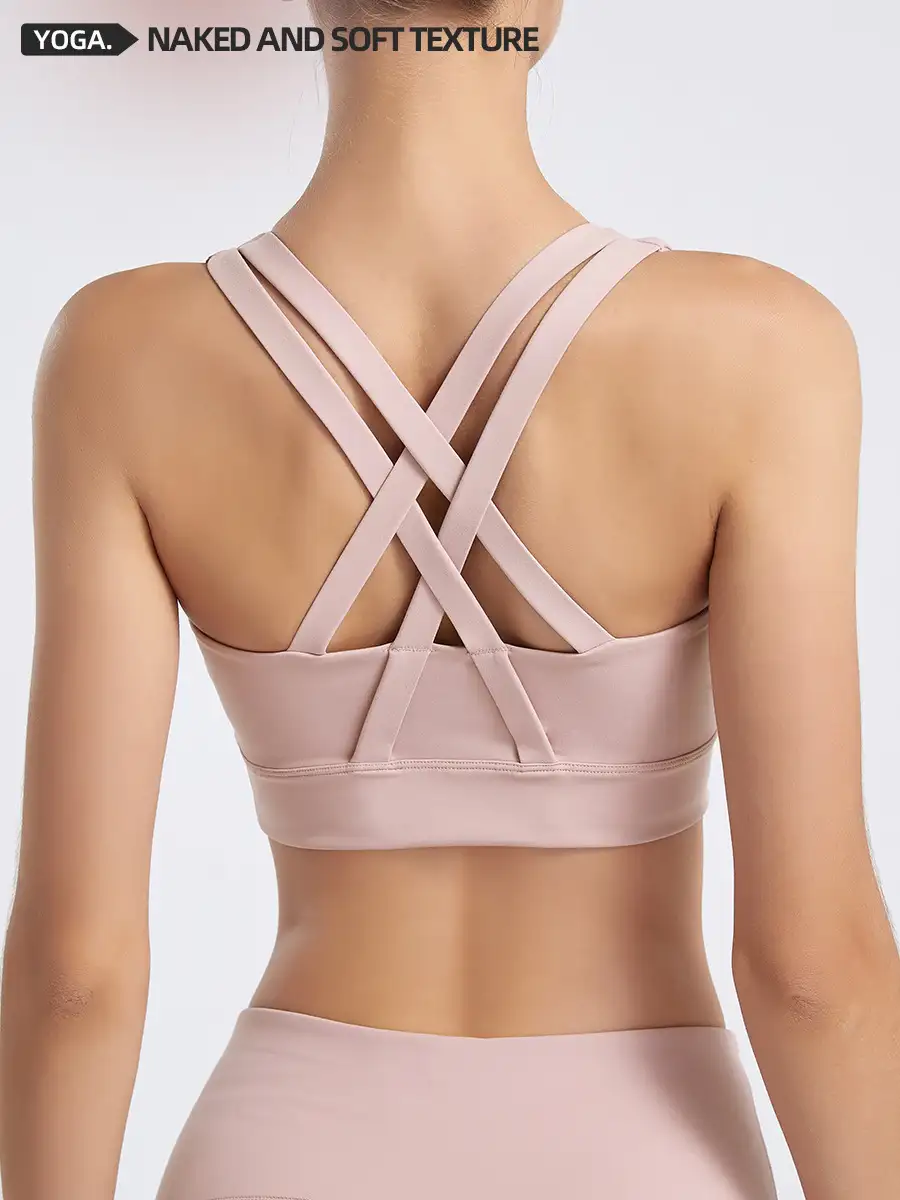
Cross-Back
Check whether the crossing point twists, concentrates pressure, shifts on the back or changes tension during repeated arm elevation and torso rotation.
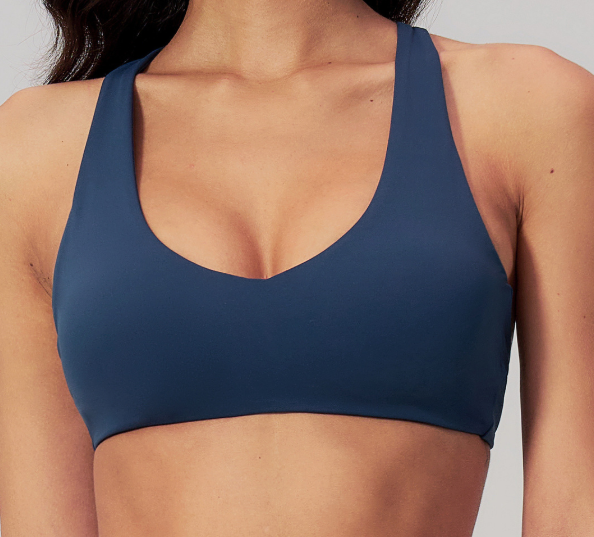
Wide Strap
Use wearer review to see whether the wider contact area improves pressure distribution without creating edge lift, neck loading or restricted shoulder motion.
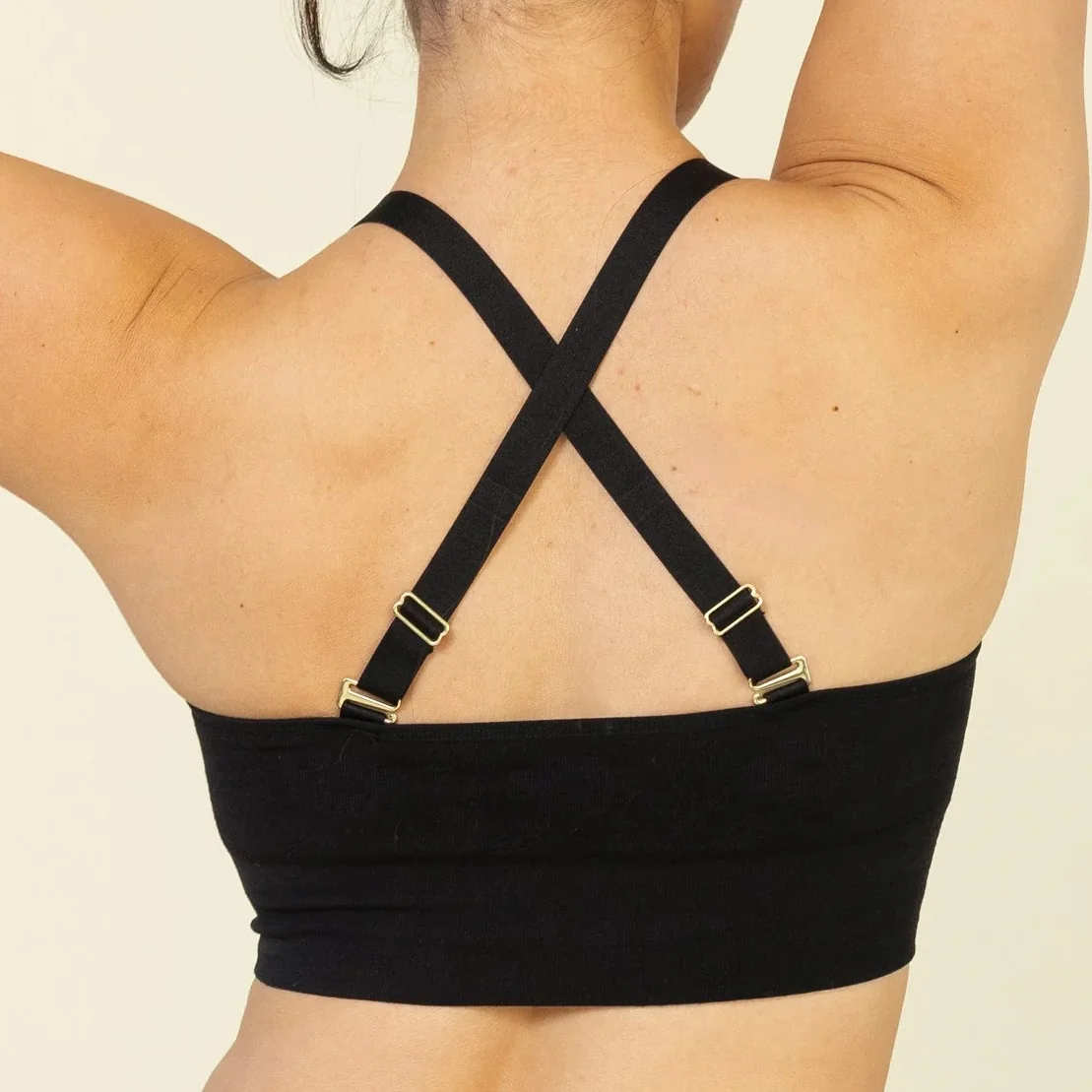
Adjustable Strap
Confirm usable adjustment range, hardware position, skin contact, strap migration and symmetry after the wearer moves rather than judging adjustability only on a flat garment.
Build the Validation Plan Around the Intended Training Condition
Studio / Controlled Movement
Different workouts expose different fit and stability risks. The buyer should define the primary use before deciding what the sample must prove.
Movement Coverage ComfortStrength & Functional Training
Prioritize range of motion, stable coverage, neckline and armhole fit, strap position, comfort, and recovery through controlled flexion and extension.
Band Stability Straps RecoveryHIIT / Higher-Movement Work
Review repeated arm elevation, pressing or pulling positions, torso changes, underband position, strap behavior, side coverage, and pressure during strength or functional movements.
Defined Standard ValidationWhere impact or higher movement is part of the intended use, define the acceptance basis, wearer protocol, support target, and evidence required before making stronger performance claims.
Convert Workout Claims Into Defined Review Criteria
“High Support” Without a Protocol
A support label should be tied to the buyer's intended activity, wearer range, physical review method, and any applicable laboratory or internal protocol.
“No Movement” as an Absolute Claim
Garment and body movement vary by activity, wearer, size, fit, and construction. Use defined acceptance criteria instead of an unconditional “no movement” promise.
“More Compression” Means Better
Greater tightness can increase pressure without solving strap, band, coverage, or fit problems. Compression direction needs to remain compatible with comfort and the product brief.
One Wearer Proves the Size Range
A base-size wear test is only one data point. Selected additional sizes should be reviewed where the brand needs confidence that workout behavior remains acceptable through grading.
Move From Workout Use Case to a Validated Production Standard
Workout Brief
Define the intended activity, wearer, support direction, movement patterns, known risks, target market, quantity, and timing.
Risk Definition
Identify the fit, stability, coverage, pressure, pad, material, or construction risks the sample must resolve.
First Physical Sample
Prepare the applicable pattern or Seamless program and produce the first executable product using the current technical information.
Baseline Fit Review
Check measurements, underband, straps, neckline, armholes, back, internal components, symmetry, and standing fit before activity review.
Workout Review
Review the sample under the buyer-defined workout motions or wearer protocol and record specific observations rather than general comments.
Recorded Revision
Translate feedback into defined pattern, measurement, material, construction, component, or size-set changes.
Revalidation
Confirm whether the revised version actually resolves the targeted issue without introducing a new one.
Production Release
Freeze the approved physical reference, current specification, materials, construction, branding, validation status, and bulk handover requirements.
What to Send Before Activity-Specific Sports Bra Development Begins
A complete Tech Pack is preferred, but a legally usable reference garment, sketch, image, fabric swatch, or clearly defined concept can support initial review when the open technical points are explicit.
Product Files
Provide the Tech Pack, flat sketch, lawful reference, current sample, measurement method, materials, and known construction requirements.
Workout Profile
Describe the intended activity, repeated motions, intensity direction, wear duration if relevant to your protocol, and where the bra must remain stable.
Known Failure Risks
List known issues from previous products or samples such as ride-up, strap migration, neckline shift, pressure, pad movement, chafing, or recovery concerns.
Wearer / Size Plan
Define the target wearer, base size, additional review sizes, and whether the buyer will use internal staff, fit models, users, or another approved evaluation group.
Acceptance Method
Share the buyer's wear-test form, support protocol, internal QA standard, pass/fail criteria, or other acceptance basis where one exists.
Commercial Inputs
Provide quantity, colors, size range, sample date, bulk date, branding, target market, testing requirements, and any supplier-qualification conditions.
Inspect Cut & Sew Details at the Points Most Exposed During Workouts
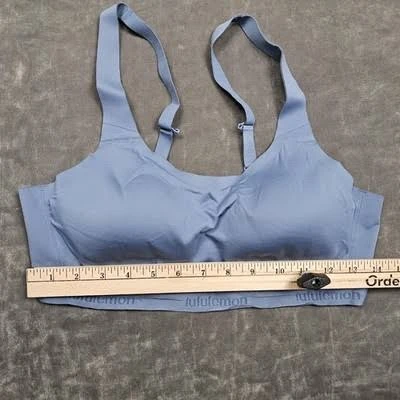
Underband Attachment
Check circumference, elastic handling, alignment, tension, and distortion where the band is repeatedly loaded during torso and arm movement.
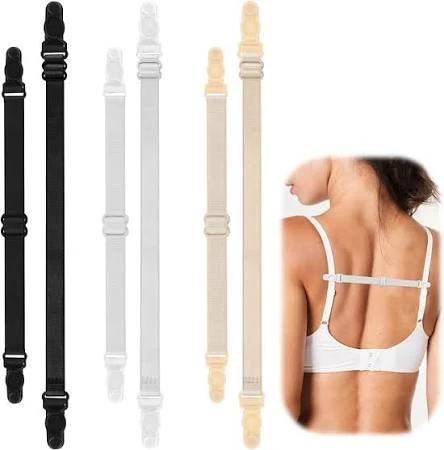
Strap Attachment
Attachment position, reinforcement, symmetry, and stitch quality should remain stable under the strap tension created by the intended workout.
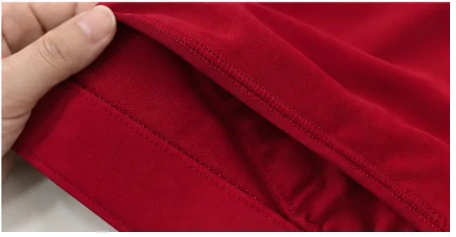
Armhole / Neck Binding
Binding tension should allow the approved range of motion without waviness, edge flipping, excess pressure, or uncontrolled gaping.
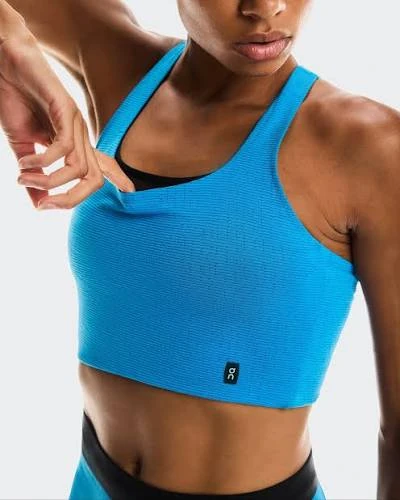
Lining Assembly
Outer and inner layers should remain aligned after repeated extension and should not create twisting or local tension that changes the approved fit.
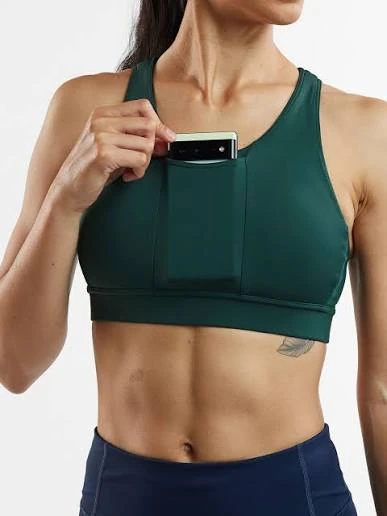
Pad Pocket
Pocket opening, pad dimensions, symmetry, and internal position should be reviewed after repeated movement rather than only when the garment is flat.
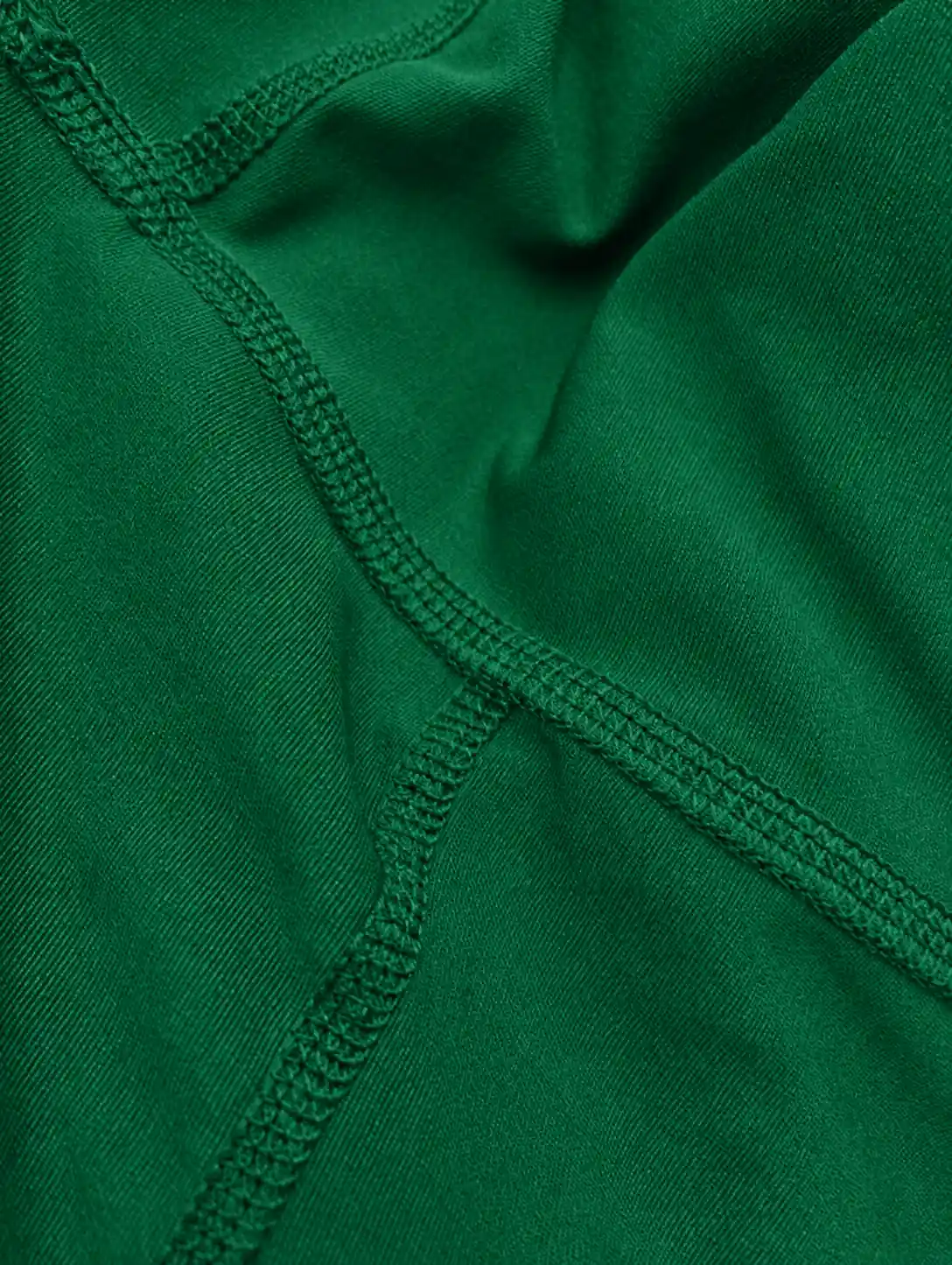
Stretch Seams
Seams should remain compatible with the approved material stretch and workmanship standard at high-motion or high-extension areas.
Treat Seamless Knit Zones as Variables That Must Survive Revalidation
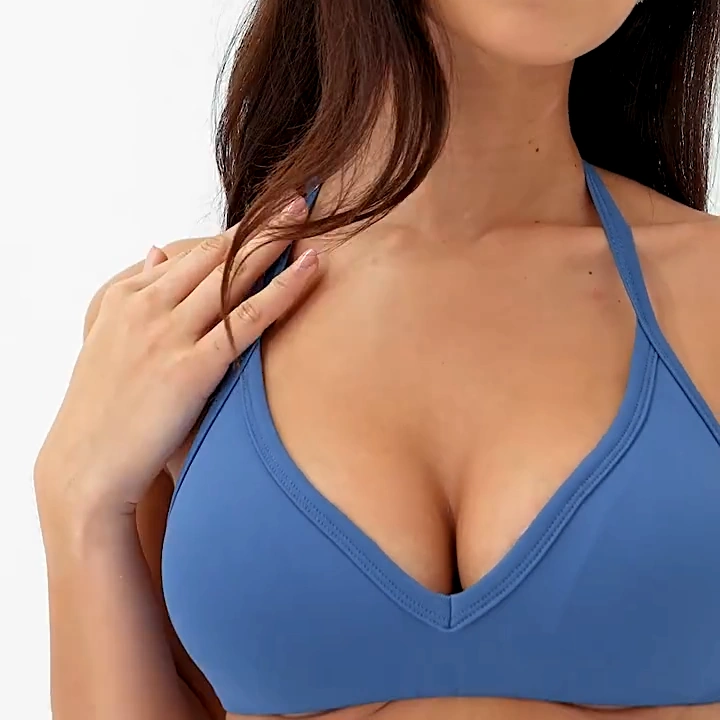
MOVEVOX's core system includes 28 Italian Santoni seamless knitting machines. Engineered zones can change local stretch, pressure, coverage and ventilation, so the finished bra—not the knit map alone—must prove the intended result.
Lower-Band Zone
A denser rib or other approved structure can alter lower-band behavior; verify migration, pressure and recovery on the body after the knit program is set.
Front Coverage Zone
Adjust knit density or texture only with a defined front-coverage objective, then check opacity, contour and garment position in the relevant postures.
Side-Bust Zone
Check side-bust coverage as the torso rotates and the arms elevate; a stable flat sample does not prove stable on-body coverage.
Back Ventilation / Structure
Rib, mesh, texture or knit-direction changes can alter local stretch as well as ventilation, so the back zone should be evaluated within the complete fit.
Integrated Strap Area
Integrated strap zones should be checked for effective length, local tension, edge pressure and migration after repeated arm motion.
Revalidation Trigger
A change in yarn, knit program, size logic, machine setting or finishing can change the finished response. Recheck the affected fit or motion condition before the new version becomes the repeat-production reference.
Use Static Measurements to Control the Risks Seen Under Workout Motion
A measurement chart cannot prove workout performance by itself, but it gives the factory measurable variables to adjust when wear testing identifies band migration, coverage change, strap instability, or other fit issues.
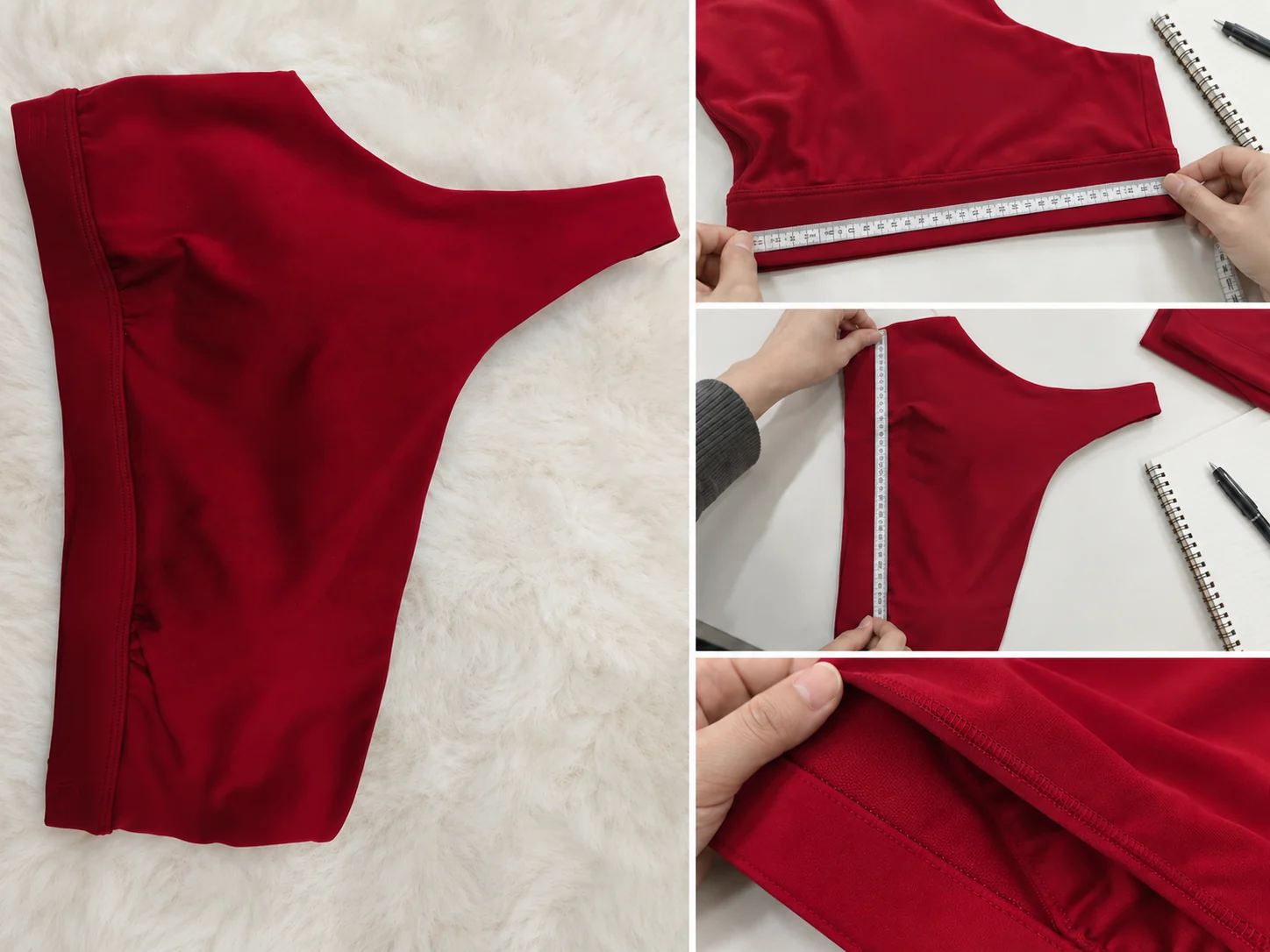
| Measurement Area | Why It Matters During Activity Review |
|---|---|
| Underband | Helps control the lower anchor position and pressure when the torso and arms move. |
| Body Width / Bust POM | Defines garment capacity that can affect compression feel, neckline behavior, and side coverage. |
| Body Length | Influences vertical balance among the band, neckline, armholes, and straps as posture changes. |
| Strap Length | Influences shoulder pressure, neckline tension, back position, and strap migration through arm movement. |
| Neckline | Provides a measurable reference when front coverage changes under bending or higher movement. |
| Armhole | Helps control side coverage, underarm clearance, gaping, and range of motion. |
| Back Width / Opening | Affects strap path and back geometry during pulling, rotation, and arm elevation. |
| Grade Rules | Determine whether the approved dynamic-fit logic is carried into selected commercial sizes. |
Review the Sports Bra Through a Defined Sequence of Positions and Motions
The sample should first establish a controlled standing baseline, then move through the positions and motions that matter for the intended workout. Observations should be recorded against the same product version.
Baseline Fit
Confirm bust capacity, neckline, side coverage, symmetry, and overall tension before dynamic review begins.
Record lower-band position, circumference, pressure, and visible distortion at rest.
Confirm the starting position of straps, back construction, pads or lining, and other internal components.
Workout Motion
Use the buyer-defined motions—such as arm elevation, pressing or pulling positions, bending, rotation, or higher-movement work—to observe migration, gaping, pressure, and coverage change.
Check whether the approved internal components stay positioned while the torso and upper body move.
Record whether the material and garment return toward the approved fit after repeated extension rather than staying permanently distorted.
Recovery & Size Review
Repeat the relevant validation points in selected additional sizes when the buyer needs confidence that the workout fit remains acceptable beyond the base sample.
Physical workout review supports product approval but does not replace a formal performance test when the buyer requires a defined laboratory or internal protocol.
Turn Wear-Test Symptoms Into the Right Technical Revision
A wearer can report one visible symptom even when the controlling cause sits elsewhere. Record when the issue occurs, then review the variables that can realistically change it.
Band Moves During Training
Do not assume:
Do not assume the band only needs to be smaller.
Review:
Review the triggering motion together with band dimensions, torso length, bust capacity, strap balance, back structure, and material recovery.
Straps Shift During Arm Work
Do not assume:
Do not assume shorter straps are the only correction.
Review:
Review strap angle, attachment, elasticity, shoulder position, back construction, garment size, and the exact arm movement that causes the shift.
Coverage Changes in Motion
Do not assume:
Do not assume the neckline or armhole only needs to be reduced.
Review:
Review bust capacity, strap tension, neckline and armhole geometry, material recovery, grading, and the motion that creates the coverage change.
Pad Position Changes
Do not assume:
Do not assume the pad itself is the only issue.
Review:
Review pocket size, opening, pad dimensions, garment stretch, body fit, repeated motion, and wash or handling requirements.
Select Fabric by the Behavior the Workout Sports Bra Needs to Maintain
Material selection should connect the intended workout with extension, recovery, surface feel, heat and moisture expectations, construction, lining, appearance, sourcing conditions, and the finished garment result. Composition or GSM alone cannot prove support.
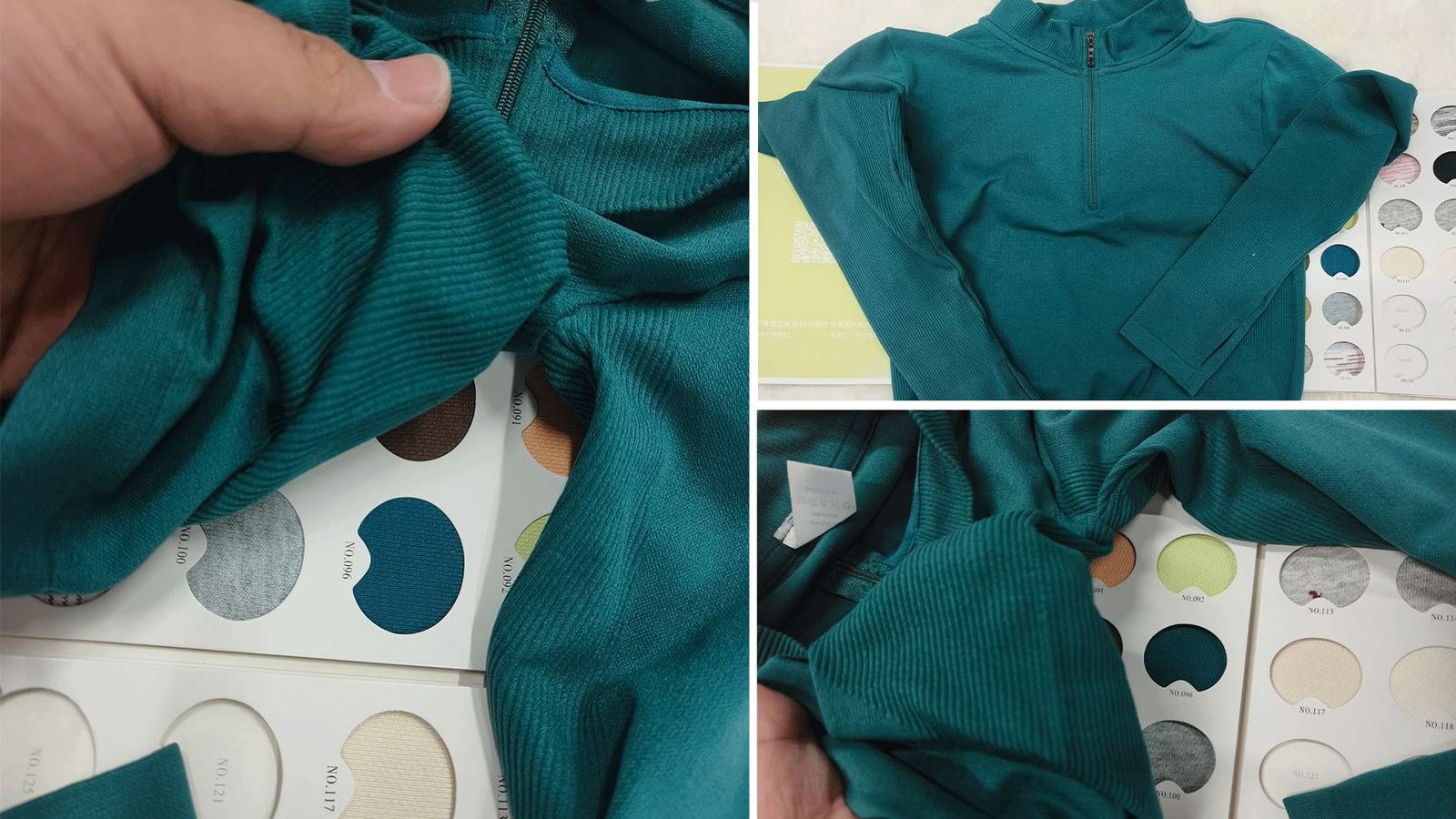
| Material Variable | Workout Risk | What to Validate |
|---|---|---|
| Stretch | Excess or uneven extension can change band, neckline, armhole, and body fit during motion. | Review direction and amount of stretch against the approved garment dimensions and intended movement. |
| Recovery | Poor return after repeated extension can increase migration or change the approved fit. | Check physical sample behavior after repeated movement and any buyer-defined material protocol. |
| GSM / Structure | Fabric body affects handfeel, coverage, sewing behavior, and overall garment response. | Use the finished garment and buyer requirement; do not use GSM alone as proof of support. |
| Surface / Finish | Sweat, repeated rubbing, and body contact can change comfort and perceived pressure. | Review handfeel and surface behavior against the intended workout and buyer acceptance method. |
| Color / Dye Route | Custom color can alter MOQ, timing, shade control, and material availability. | Confirm whether validation uses the intended production material and color route. |
| Lining Combination | Outer and inner layers can stretch or recover differently and change coverage or fit. | Review both layers together in the finished sports bra during the intended movement conditions. |
Build a Repeatable Wear-Test Sequence Around the Intended Activity
Baseline Position
Record the starting underband, straps, neckline, armholes, back, pad position, symmetry, and wearer comments before the workout sequence begins.
Arm Elevation
Observe band position, strap tension, neckline stability, side coverage, and underarm clearance as the arms move overhead or through the required range.
Bend / Hinge
Check front and side coverage, underband position, and internal components as torso angle changes.
Rotation / Pulling Motion
Observe strap path, back construction, side fit, and pressure during the twisting or pulling motions relevant to the use case.
Internal Component Check
Check whether pads, lining, and other approved internal parts remain in the intended position after repeated movement.
Post-Activity Recovery
Record whether the garment and material return toward the approved fit and whether any migration or pressure remains after the sequence.
Each Sample Version Should Close a Defined Workout Risk
Development Sample
Convert the current specification and workout brief into the first executable physical garment.
Baseline + Workout Review
Review static fit first, then run the buyer-defined movement sequence and record specific observations.
Risk-Focused Revision
Confirm that agreed changes address the targeted migration, coverage, pressure, internal-component, or fit issue without creating a new problem.
Selected Size Validation
Check how the approved activity-fit logic translates into selected commercial sizes where required by the buyer.
PP / Production Reference
Establish the final production reference using approved material, construction, measurements, branding, packaging, and the current validation status.
Freeze Both the Product Standard and the Validation Standard Before Bulk
- Final approved garment measurements, tolerances, and measurement method.
- Approved underband construction, dimensions, material or elastic reference, and observed workout behavior.
- Approved strap width, length, position, hardware, attachment, and movement-review status.
- Approved neckline, armhole, back, side-bust, and center-front coverage geometry.
- Approved pad, pad pocket, lining, or other internal structure and its validated position.
- Approved fabric or yarn, color, stretch/recovery reference, and applicable material approval.
- Approved workmanship and seam construction at movement-critical areas.
- Approved logo, labels, hangtags, packaging, and SKU requirements that do not conflict with the product standard.
- Approved physical sample, current technical-document version, workout review record, and buyer release status.
Carry the Approved Workout Standard Into Production, Not Just the Garment Drawing
Approved Product + Workout Record
Keep the approved physical sample and the current workout-review outcome linked to the same released product version.
Current Tech Pack
Release the current measurements, construction, materials, components, branding, and any buyer-defined activity-critical points.
Material & Component Reference
Link bulk fabric or yarn, elastic, pads, trims, color, and other critical components to the approved basis.
First Article
Compare early production against the released product before wider production continues, including workout-critical dimensions and construction points.
Inline Risk Checks
Monitor the features most likely to change the validated fit—such as underband, straps, neckline, armholes, pad position, and stretch-seam execution—while correction remains practical.
Final Release
Confirm quality, identification, packing, and release status against the current approved product and order before shipment.
Ready to Review How Your Sports Bra Should Perform in a Workout?
Send your Tech Pack, lawful reference garment, sketch, image, material specification, current sample, and intended workout brief. MOVEVOX can review the activity, known fit risks, movement conditions, wearer-validation plan, manufacturing route, MOQ factors, sampling requirements, and production considerations.
Treat Branding as Change Control After Functional Fit Approval
Private-label work begins after the product has a known fit baseline. Any branding or identification choice that changes local stiffness, skin contact, stretch or seam behavior should be reviewed as a product change, not treated as decoration.
Material Substitution
If a branded program introduces a different fabric, lining or finish, compare its stretch, recovery and handfeel with the material used for the approved fit.
Custom FabricColor / Dye Route
A new color or dye route should not be assumed neutral when it changes handfeel, recovery, opacity or surface behavior relevant to the approved garment.
Custom Color
Approved Functional Fit
Bust/underbust relationship, neckline, armholes, straps, back, band and grading remain the functional baseline while branding is layered onto the style.
No Silent Construction Changes
A logo, label or packaging request should not trigger an unrecorded seam, binding, elastic or knit-program change.
Logo / Heat-Transfer Zone
Check logo method and placement against high-extension areas, engineered knit zones, seams and body-contact points before commercial release.
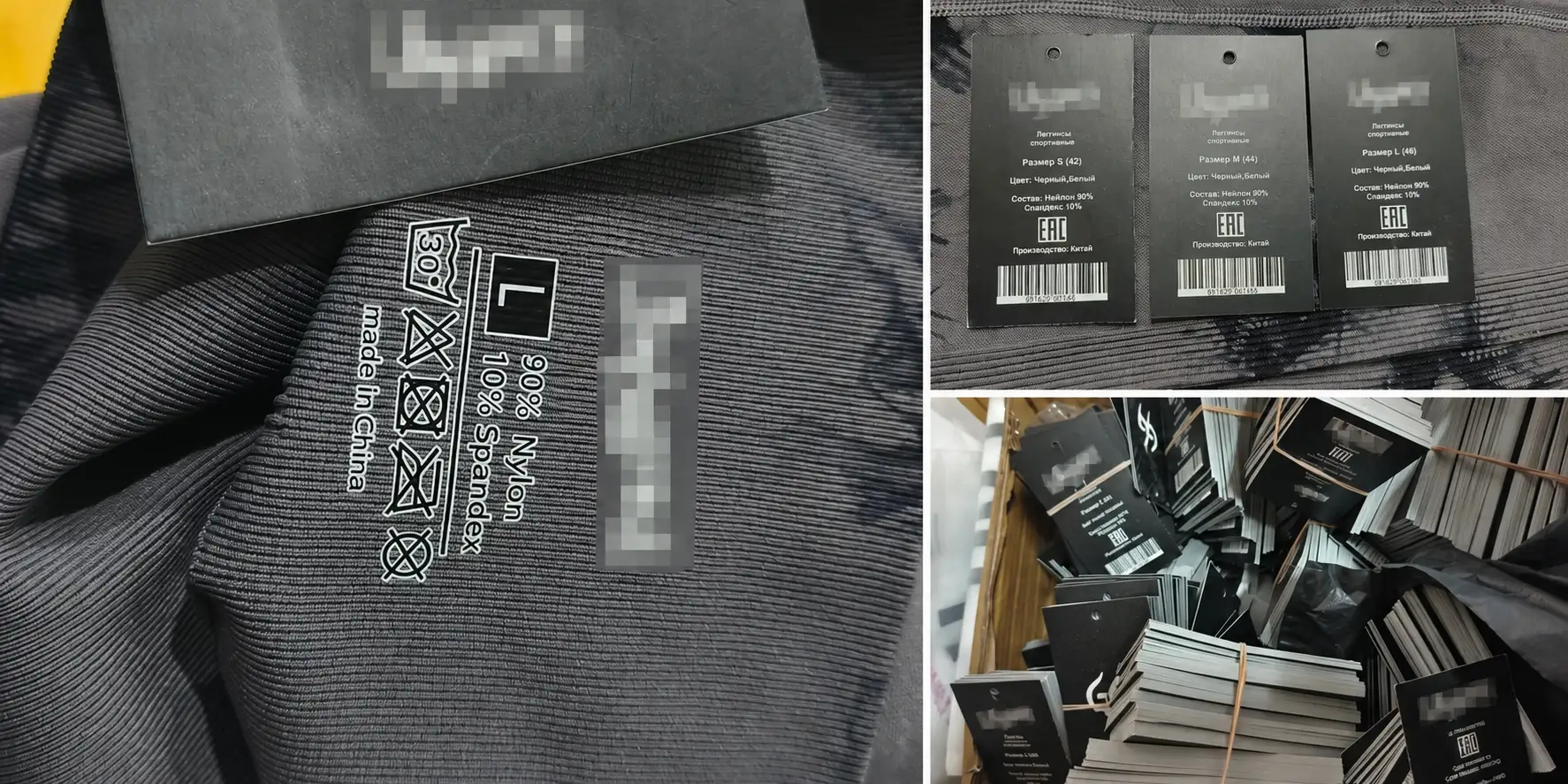
Custom Logo
Body-Contact Labels
Main, care, size or woven labels should be positioned so required identification does not create avoidable bulk, edge pressure or irritation.
Custom LabelsIdentification & Packing
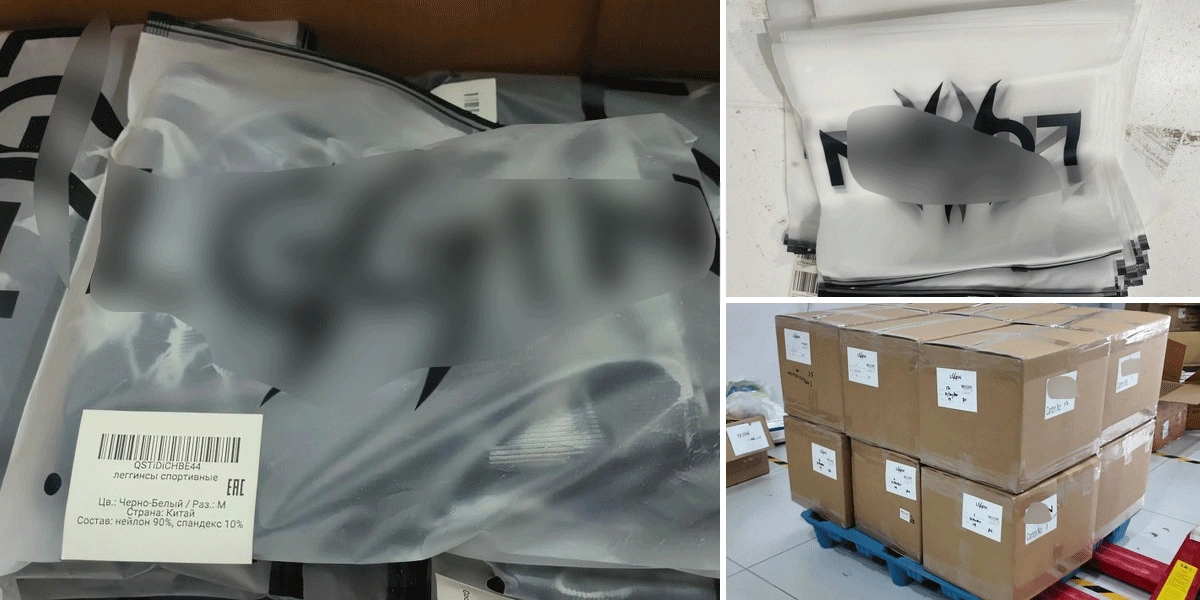
Hangtags, barcode/SKU data, individual bags, cartons and shipping marks should identify the approved style correctly without becoming a reason to alter the garment itself.
Custom PackagingSeparate Bulk MOQ From the Work Required to Reach an Approved Standard
Base garment MOQ comes from the manufacturing route and supply-chain minimums. Extra wearer reviews or revision rounds mainly affect development time and sample work; they should not be presented as if they automatically raise the garment MOQ.
Start With the Garment Route
Current regular custom starting references are approximately 100 pieces per Seamless style and 150 pieces per Cut & Sew style under suitable standard conditions. Material and component suppliers may impose different minimums.
Material MOQ Can Override Garment MOQ
Custom dyeing can create a higher effective material minimum, with current project references sometimes corresponding to roughly 400–600 garment-level volume depending on consumption and supplier conditions. That is a material constraint, not a new universal sports-bra MOQ.
Freeze Components Before Committing Quantity
Pads, elastic, adjusters, hooks, labels, packaging and specialist branding can carry independent minimums. Resolve those items before the buyer commits a quantity based only on the garment-level reference.
Use Each Production Stage to Protect a Specific Validation Decision
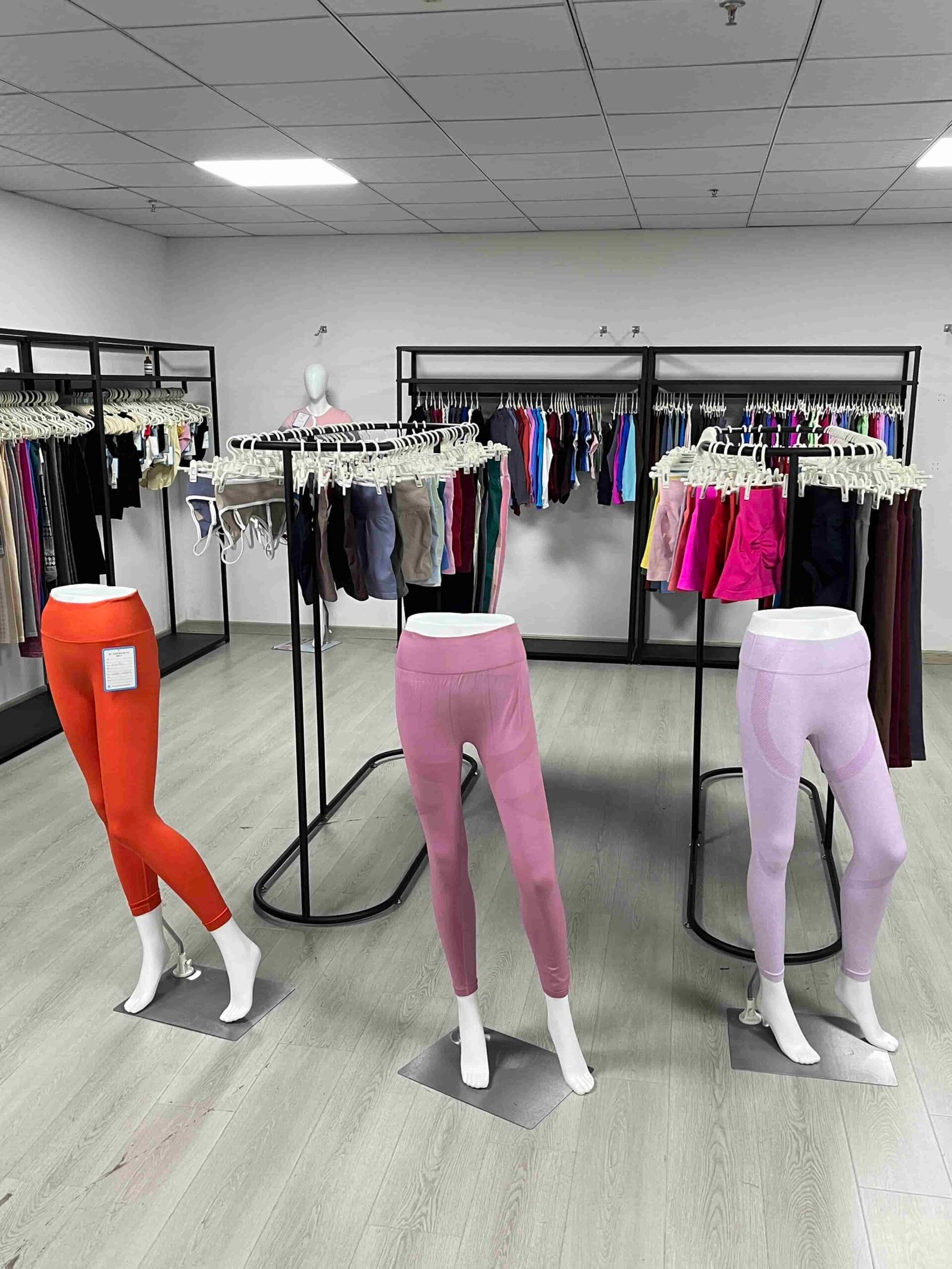
Development & Sampling
Approximately eight people support design, pattern, sample and related development functions that can close recorded fit or activity risks before the style is released.
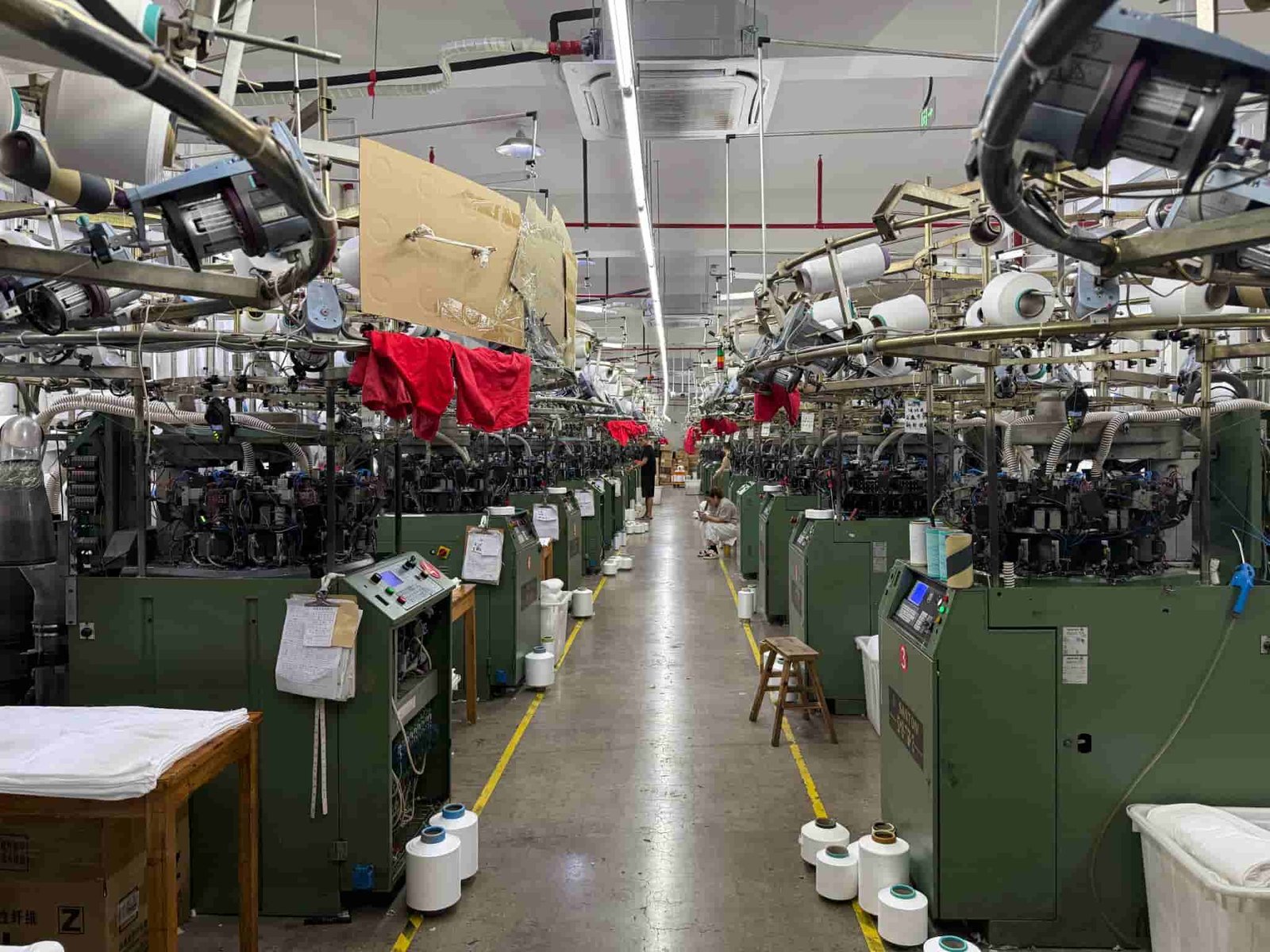
Santoni Seamless
For suitable Seamless bras, the 28 Italian Santoni machines reproduce the released yarn, knit program, size logic, finishing and engineered zones that were physically approved.
Cut & Sew
For Cut & Sew bras, approximately 24 major sewing and garment-production machines reproduce the approved panels, strap and band attachments, binding, lining, pads and seams.
First Article
The First Article is the first production-scale check that the risk points closed during sampling have not reappeared after materials, operators and process conditions change.
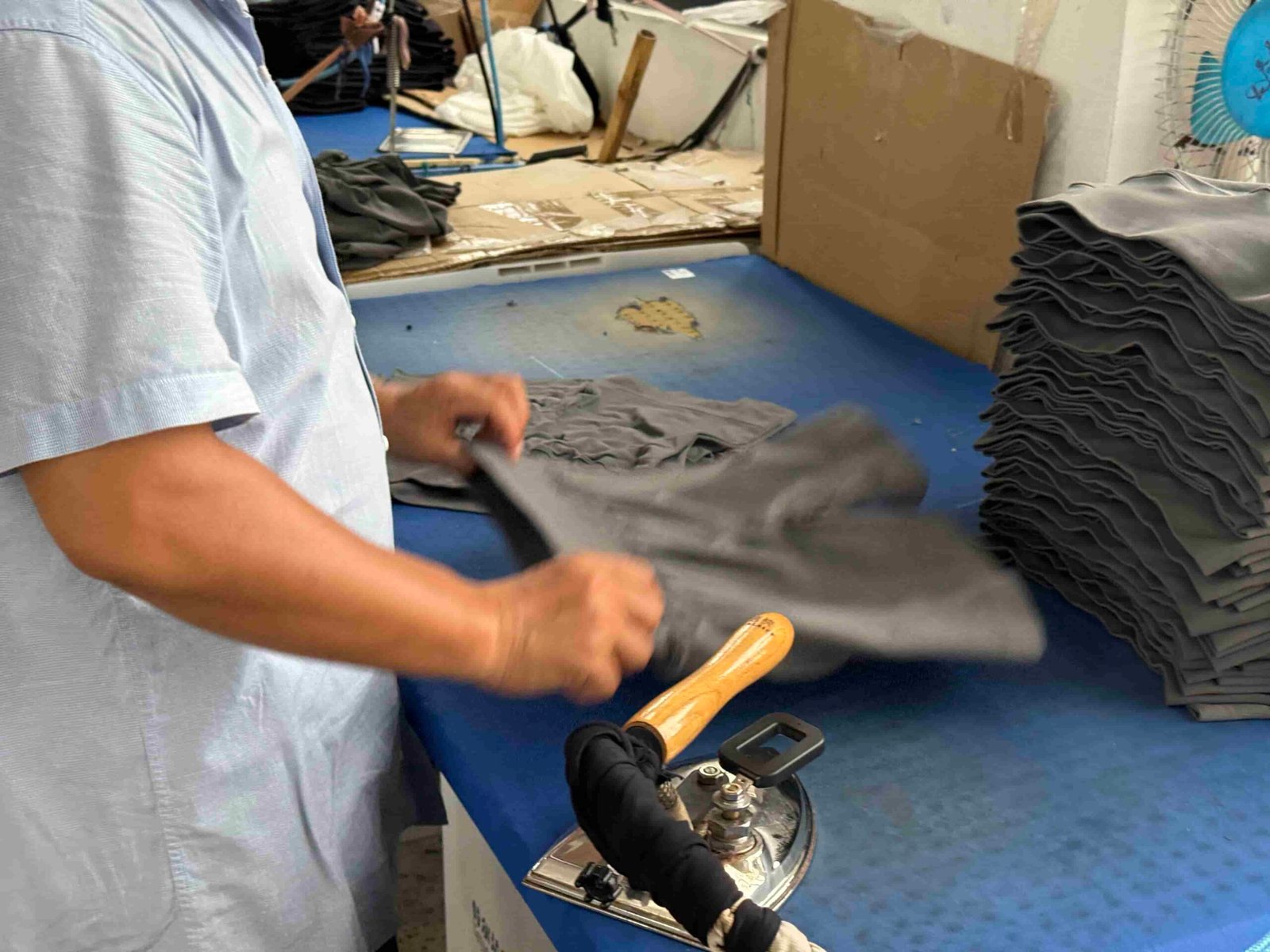
QC
Five QC personnel currently support checks against the released standard, with attention to the dimensions and workmanship points linked to the approved on-body result.

Packing & Release
Product identification and packing follow quality release so the correct approved style, size and color—not merely a similar garment—moves into shipment preparation.
Model Capacity From the Approved Bra Mix, Not From Headline Machine Counts
Network Delivery Reference
Normal combined managed delivery capacity across the controlled manufacturing network.
Seamless Resource
Cut & Sew Resource
Additional Managed Capacity
Order-Level Capacity Review
Capacity for a real order depends on the released route, component readiness, style complexity, size/color mix, QC workload, packing and requested delivery window.
A 10,000-piece order of a simple bra and a 10,000-piece order with complex straps, pads, hardware or engineered knit zones do not consume the same resources. Confirm capacity from the approved product mix, not from theoretical machine speed.
When Production Moves, Transfer the Validation Standard With It
MOVEVOX combines a Yiwu core manufacturing base with long-term managed satellite capacity. A change of production site should not separate the order from the sample, specifications and checkpoints that were used to approve it.
Core Reference Point
Technical development, sample making, core production, QC and selected manufacturing activities at the core system establish the reference package used for later production decisions.
Managed Additional Capacity
The current managed network includes six long-term factories in Yiwu and two in Guangzhou for controlled additional capacity where appropriate and permitted by buyer requirements.
Transfer Package
Current specifications, approved sample, material/component references, activity-critical checkpoints, QC requirements, packing instructions and buyer site rules should move together. Allocation is a controlled transfer, not a fresh interpretation of the product.
Inspect the Construction Points Most Likely to Change the Validated Workout Fit
| Inspection Area | What to Check | Why It Matters to the Workout Standard |
|---|---|---|
| Underband | Dimension, attachment, alignment, elastic reference, tension, distortion. | Band changes can alter the lower anchor position and create migration or pressure different from the approved sample. |
| Straps | Length, position, symmetry, attachment, hardware, elastic or material reference. | Strap drift can change shoulder pressure, neckline stability, and back position during arm movement. |
| Neckline / Armhole | Shape, binding, gaping, waviness, symmetry, dimensions. | These areas influence coverage and underarm clearance as the torso and arms move. |
| Back Construction | Opening, strap paths, joins, symmetry, seam position. | Back geometry influences strap path and garment stability through pulling, rotation, and arm elevation. |
| Pad / Pocket | Position, dimensions, opening, symmetry, internal alignment. | Changes can increase pad movement or alter coverage during repeated training motion. |
| Seams / Binding | Stitch quality, stretch compatibility, broken stitches, distortion. | Movement-critical seams need to reproduce the approved stretch and workmanship without introducing local restriction or instability. |
Record Workout Findings in a Form Production Teams Can Act On
Traceable Product ID
Identify style, PO, size, color, batch, sample or inspection stage and the current product version so the observation can be traced.
Measured Reference
Link actual measurements to defined points of measure, approved tolerance and the relevant fit baseline instead of using a general pass/fail note.
Observed Condition
Record what happened, where it happened, which motion or condition exposed it and whether the same observation repeats across wearers or production pieces.
Technical Action
Translate the observation into a defined action: containment, pattern/program change, component adjustment, rework, screening or another controlled correction.
Verification
Show that the correction was checked again against the relevant static fit or activity condition before the next approval or production release.
Release Status
Record pass, hold, additional verification, re-inspection or release after correction so the disposition is explicit.
If a displayed record comes from another garment category, keep that scope visible. General QC evidence can demonstrate process discipline but cannot be relabeled as sports-bra performance proof.
Do Not Use Compliance Reports as Proof of Workout Performance
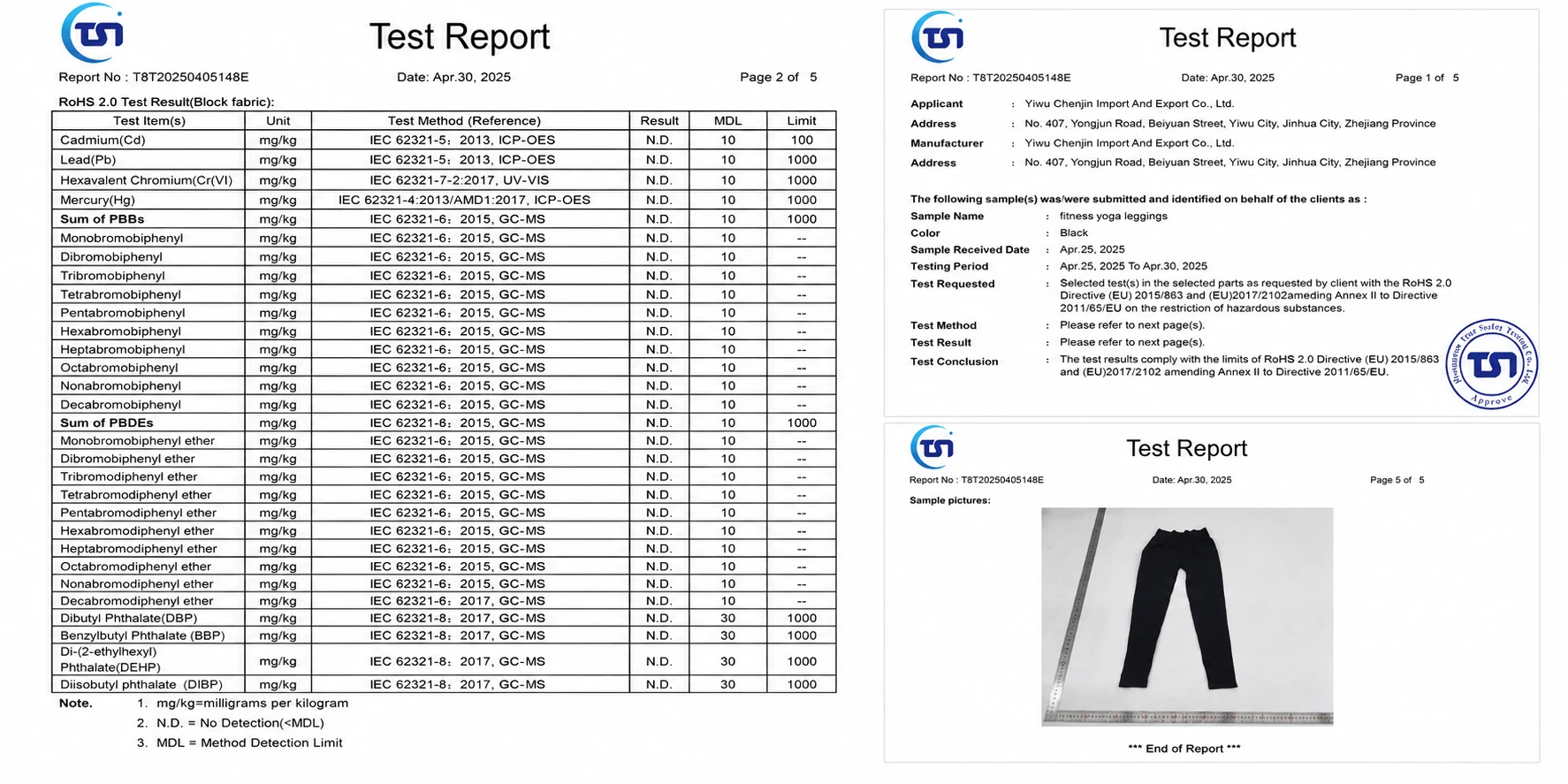
RoHS Sample Evidence
Current documentation applies to a black fitness yoga leggings sample under the stated report scope.
It is not a sports bra test report.
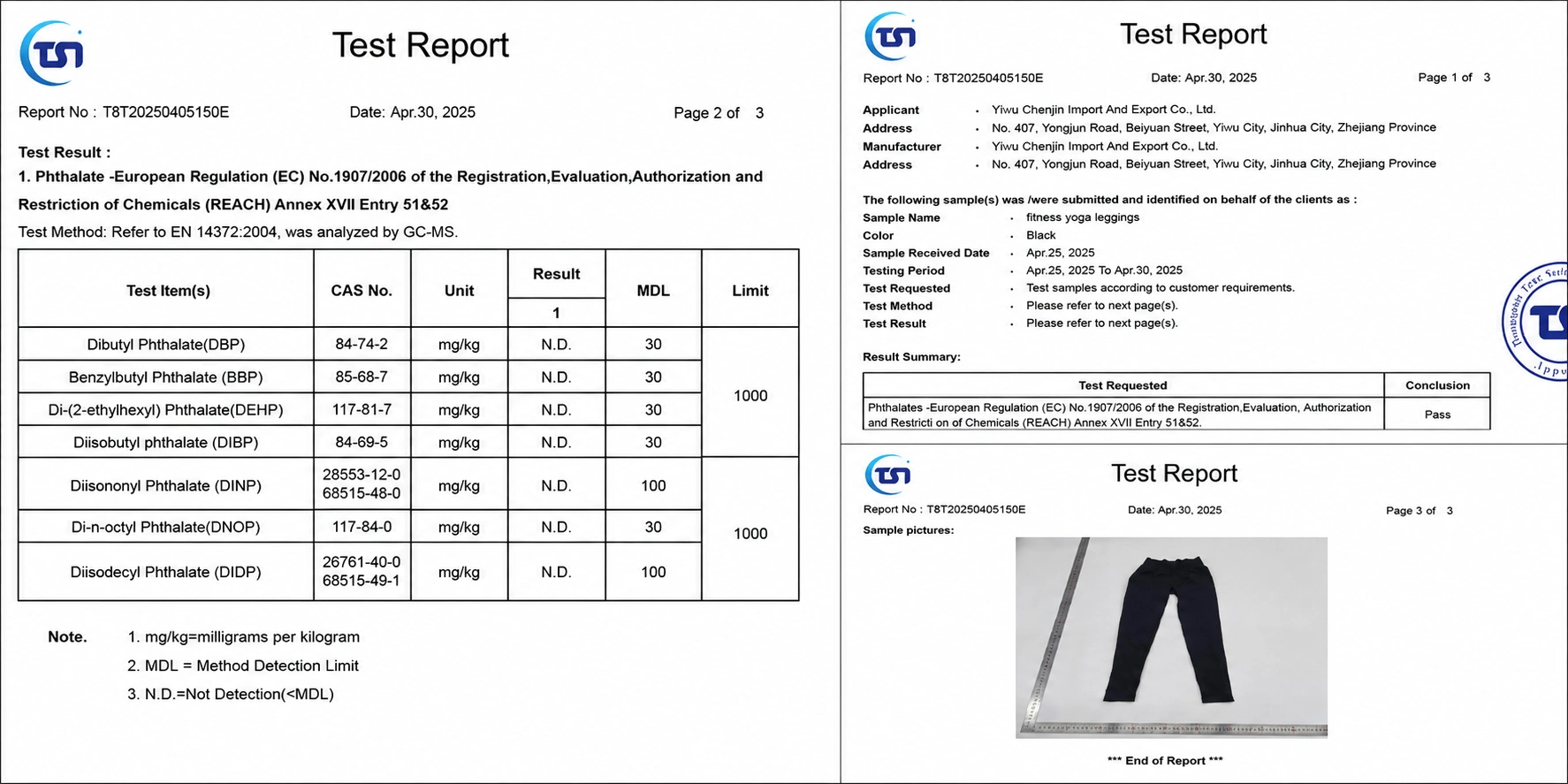
REACH Sample Evidence
Current documentation applies to black fabric from a fitness yoga leggings sample under the stated phthalate test scope.
It is not proof that all MOVEVOX sports bras are REACH tested.
Workout Sports Bra Validation Evidence
Buyer-required sports bra chemical or RSL testing should be defined separately from workout validation. Support, stability, comfort, migration, or other performance claims require their own applicable physical, wearer, material, or laboratory evidence.
The Slowest Approval Loop Often Sets the Real Development Timeline
| Stage | Reference | Main Dependency |
|---|---|---|
| Workout / Technical Brief | Project Specific | Clarity of intended activity, product inputs, known risks, acceptance method, and unresolved technical points. |
| Material & Component Preparation | Project Specific | Fabric or yarn route, color, trims, elastic, pads, hardware, and specialist components. |
| First Development Sample | Approx. 5–10 Working Days | Begins after necessary development details and key workout-validation inputs are confirmed. |
| Workout Review + Revision | Feedback Dependent | Buyer review speed, wearer protocol, number of issues found, and scope of the required technical changes. |
| Bulk Production | Regular Reference Approx. 20–35 Days | Approved product complexity, materials, components, quantity, SKU mix, production allocation, and capacity. |
| Inspection / Cargo Ready | Order Specific | QC status, packing, buyer inspection, documentation, and shipping instructions. |
The relevant schedule is not only sample-building time. It is sample build + buyer wear review + decision + revision + recheck. Custom dyeing, testing, specialist components, packaging and delayed buyer feedback can add further time. Compressing the sewing or knitting step does not remove an unresolved approval loop.
Compare Sports Bra Manufacturers on Their Ability to Validate the Workout Use Case
| Supplier Question | What MOVEVOX Can Show |
|---|---|
| Can the supplier turn an intended workout into a clear development brief? | Structured review of activity, fit risks, product inputs, wearer feedback, and buyer-defined acceptance criteria. |
| Can the supplier build through both Seamless and Cut & Sew routes? | 28 Santoni Seamless machines plus core Cut & Sew manufacturing capability for technically suitable products. |
| Can feedback be converted into measurable revisions? | Sample development, measurement review, pattern or program changes, version control, and physical revalidation. |
| Can the supplier distinguish support claims from evidence? | MOVEVOX does not assign an unconditional support level from styling, GSM, strap width, or one visual feature alone. |
| Can the approved workout standard survive bulk production? | First Article, inline control, measurement/workmanship checks, final inspection, and release against the current approved reference. |
| Does the supplier state the limits of existing evidence? | Sample-specific RoHS and REACH reports are not presented as sports bra performance evidence or blanket certification. |
Why Revision and User Evaluation Matter Before an Activewear Product Scales
The First Version Did Not End Development
A U.S.-based fitness-focused customer worked with MOVEVOX from its own Tech Pack across multiple activewear categories, including sports bras. The first development version did not fully satisfy the intended use requirements, so approval was not treated as automatic.
Revision + User Evaluation
MOVEVOX produced a revised second version. After the revised direction was largely accepted, approximately 5–10 samples were produced for real-user evaluation before the referenced bulk decision.
Private Label + SKU Control
The wider program also required custom packaging, instructions, tags, logos, care labels, individual packing, and QR-code identification by color and size.
Repeat Purchasing After Approval
The source case records approximately three years of cooperation, typical orders of around 2,000 pieces, and approximately two orders per month during the recorded relationship.
Sports bras form part of the wider customer relationship, but the available evidence does not prove that the specific V1/V2 sequence above belonged to one dedicated workout sports bra style. The case is used here to demonstrate the value of revision and user validation before scale, not to claim a sports bra performance result.
Fast Reorders Make the Approved Product Baseline More Important, Not Less
This Spanish customer case is not documented as a sports bra-specific project. It is relevant because rapid repeat demand shows why an approved product, identification, packing, and QC baseline must remain traceable once reorders accelerate.
01 — Initial Product Evaluation
The customer first purchased stock samples to evaluate material, workmanship, style, and product details.
02 — Private Label Setup
Care labels, tags, packaging, and logo execution were developed for the program.
03 — First Bulk Baseline
The first recorded bulk order was approximately 1,200 pieces and was completed in approximately 15 days for that specific order.
04 — Early Reorder
Before receiving the first shipment, the customer placed another order of approximately 1,200 pieces during the second week.
05 — Repeat Purchasing Pattern
The relationship developed into a stated purchasing pattern of approximately two orders per month.
06 — Peak-Demand Response
In one recorded period, demand increased to approximately three times the customer's normal order level.
07 — Forward Stock Support
For selected styles, the source case states that approximately 1,500 pieces per color were later held to support repeat demand.
Workout Sports Bra Checklist Before RFQ or Sampling
Workout Sports Bra Validation FAQ
Can MOVEVOX develop sports bras around a defined workout use case?
Yes. Sports bras fall within MOVEVOX's activewear development and manufacturing scope. A project can begin from a Tech Pack, lawful reference, sketch, image, or defined concept and add an activity brief, movement risks, wearer-review method, and buyer-defined acceptance criteria.
What is needed before a brand uses a specific support claim?
A support claim should be tied to the intended activity and a defined acceptance or testing basis. Appearance, strap width, fabric percentage or one construction feature is not enough on its own.
What workout information should we send with the Tech Pack?
Useful inputs include the intended activity, key movements, known fit failures, target wearer and sizes, support direction, any internal wear-test form, and the product specification or lawful reference already available.
What if we do not yet have a formal wear-test protocol?
MOVEVOX can still review the intended use and identify which fit and movement conditions should be checked physically. If the brand needs a formal performance claim, the acceptance basis should be defined before that claim is made.
Do extra wear-test or revision rounds change the bulk MOQ?
Not automatically. Current regular custom starting references are approximately 100 pieces per Seamless style and 150 pieces per Cut & Sew style under suitable standard conditions. Additional review rounds mainly affect development time and sample work; material, component, color and branding minimums are what can raise the effective bulk minimum.
Can material or color changes affect the approved workout fit?
Yes. A different fabric, yarn, dye route, lining, elastic, pad, or component can change stretch, recovery, pressure, fit, or internal behavior. Material changes should be reviewed against the approved product and validation baseline.
When should a material, component or manufacturing-route change trigger revalidation?
Revalidation is appropriate when a change could alter stretch, recovery, pressure, coverage, strap or band behavior, internal component position or another approved fit condition. The scope should match the risk introduced by the change.
Can we validate straps, underband, coverage and pads through movement?
Yes. Buyer-defined movement review can check band migration, strap behavior, neckline and side coverage, internal component position, comfort, and post-movement recovery. This physical review is not automatically a formal support test.
What does the 5–10 working-day sample reference cover?
It is a standard sample-development reference after the necessary product information is confirmed. Buyer wear review, revisions, extra wearer rounds, testing or custom-material timing can extend the full approval cycle.
Can additional workout-validation rounds extend the timeline?
Yes. Revisions, additional wearer rounds, custom materials, testing, or delayed buyer feedback can extend the timeline because the product should not be released before the identified workout risks are resolved.
Which validation decisions should remain visible in bulk production?
Keep the approved sample, current specification, material/component references and the specific fit or activity checkpoints that justified approval. First Article, inline control and final inspection should use those references rather than recreating the product standard from memory.
Do current MOVEVOX RoHS or REACH reports prove sports bra performance?
No. The currently documented RoHS and REACH materials apply to specific fitness yoga leggings samples. They are not sports bra reports and do not prove support, stability, comfort, or other workout performance.
Can our team audit the factory and review quality records?
Yes. MOVEVOX supports customer visits, real-time video factory review, and agreed third-party inspection arrangements subject to production, confidentiality, and project conditions. Buyers can also review applicable development and quality records.
Send Us an Inquiry
Tell us your needs, and our team will get back to you within 24 hours.