
CUSTOM PERFORMANCE ACTIVEWEAR

Sports T-Shirt Manufacturer for Custom Performance Activewear Brands

MOVEVOX supports established activewear brands developing custom sports T-shirts for training, running and athleisure collections. Our cut-and-sew and seamless manufacturing resources provide different construction options, while technical development begins with the intended fit, fabric, sleeve design and branding requirements. We work from customer specifications, approved samples or clearly defined concepts to review manufacturing feasibility before commercial and production commitments are finalized.

  • Develop performance T-shirts around your intended activity, wearer and brand specifications.
  • Compare suitable fabric, fit, construction and branding options before sample approval.
  • Establish documented product requirements for manufacturing, inspection and repeat-order planning.

Custom performance sports T-shirt showing its athletic silhouette, neckline and sleeve construction
PRODUCT RANGE

Compare Sports T-Shirt Styles by Performance Requirements

Sports T-shirts are not interchangeable products. A fitted training tee, lightweight running tee and relaxed athleisure shirt may require different materials, proportions and manufacturing methods. The appropriate starting point depends on the intended activity, wearer, fit and approved product specifications.
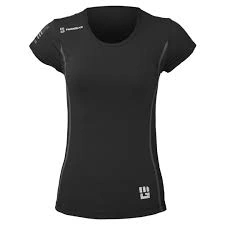
Fitted performance training T-shirt with a close body silhouette and short sleeves
01 / TRAINING

Fitted Training Tees

Fitted training T-shirts use a closer body silhouette and require careful consideration of chest width, shoulder movement, sleeve fit and fabric recovery. A design should accommodate the intended exercise without unwanted pulling or excessive compression. Fabric stretch, seam placement and garment measurements must be evaluated together rather than assuming that a tighter shirt automatically performs better.
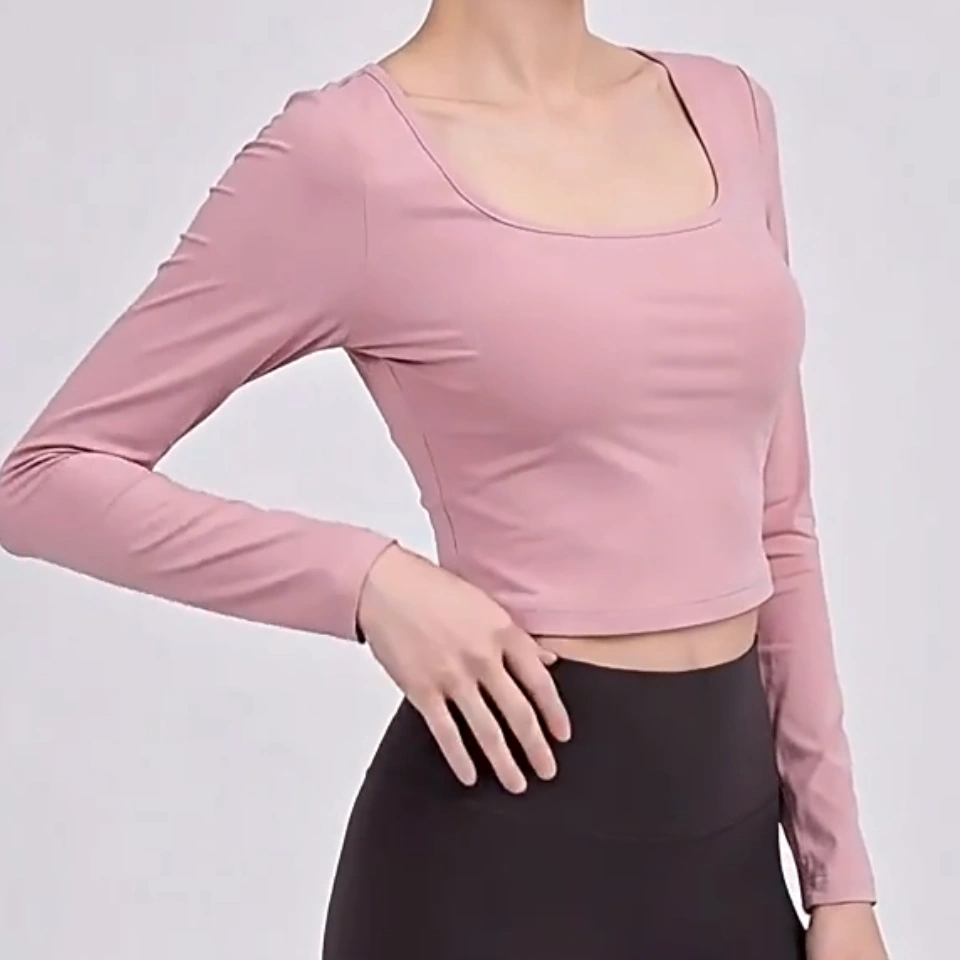
Lightweight running T-shirt with athletic sleeves and a performance-oriented fit
02 / RUNNING

Lightweight Running Tees

Running T-shirts often prioritize low perceived weight, freedom of arm movement and moisture-management requirements. Fabric structure, thickness and coverage should be reviewed alongside the intended climate and wearing conditions. A lightweight material is not automatically breathable or quick drying; those properties require appropriate specifications and, where claimed, supporting evaluation.
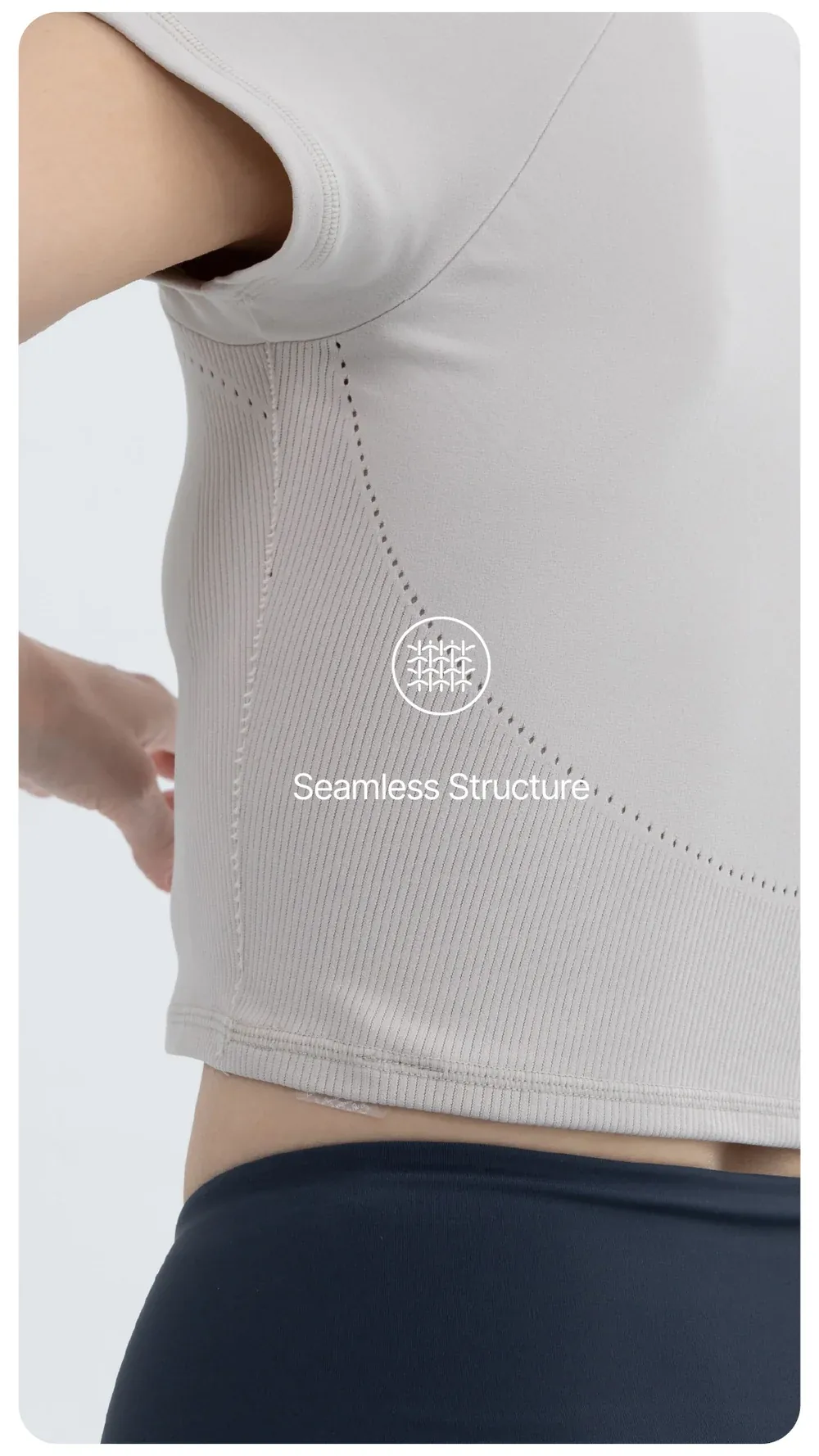
Seamless performance T-shirt showing engineered knitted texture and finished garment structure
03 / SEAMLESS

Seamless Performance Tees

Seamless T-shirts may incorporate engineered knitted structures, local ventilation effects or varied fabric textures, depending on equipment and program feasibility. The garment can still require finishing and joining operations. Yarn selection, knit structure, size development and approved functional requirements determine whether this manufacturing direction is suitable.
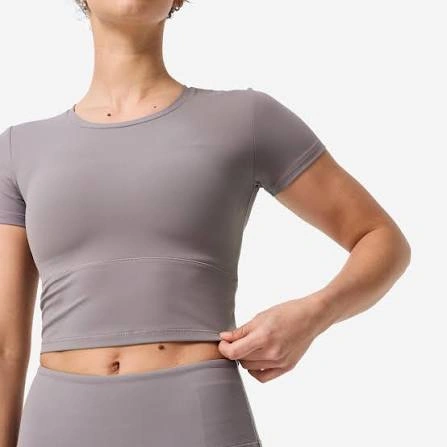
Cropped sports training T-shirt displaying its shorter hem and athletic sleeve proportions
04 / CROPPED

Cropped Training Tees

Cropped performance T-shirts combine a shorter body length with athletic sleeve and neckline construction. Hem position, garment balance and upward movement during exercise require particular attention. Brands should evaluate fit while standing and during intended movement, especially when the product is designed to coordinate with high-waisted leggings or shorts.
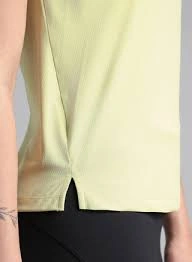
Relaxed athleisure T-shirt showing soft drape, neckline shape and everyday silhouette
05 / ATHLEISURE

Athleisure Essential Tees

Athleisure T-shirts may prioritize drape, softness, a regular or relaxed silhouette and everyday styling. Their requirements differ from close-fitting training garments, even when similar fiber compositions are used. Fabric weight, neck stability, surface appearance and washing behavior remain important to a consistent finished product.

ACTIVITY-BASED PRODUCT DEVELOPMENT

Match Sports T-Shirt Construction to Intended Activities

The intended activity should influence fabric choice, fit, sleeve geometry and finishing requirements. Instead of starting with a generic performance-fabric claim, buyers should define how the garment will move, how it will be worn and which characteristics must be approved.
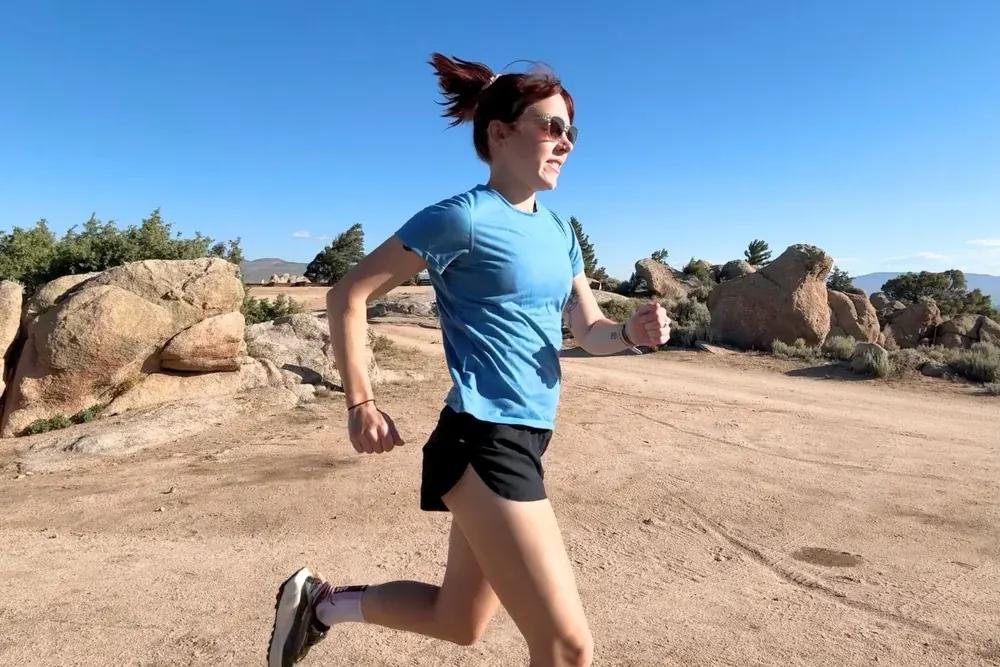
Running performance T-shirt showing sleeve and shoulder movement during activity

Running and Endurance

Running involves repeated arm movement, changing body temperature and sustained fabric contact. A running tee should be developed with attention to shoulder mobility, garment weight, seam positioning and the buyer's moisture-management requirements. The pattern must allow the intended motion without excessive fabric displacement. Material properties and fit should be assessed together under appropriate sample-review conditions.

Product Requirements

  • Evaluate sleeve and armhole geometry during repeated forward and backward arm movement.
  • Define acceptable fabric weight, coverage and moisture-management performance for the intended climate.
  • Review neckline, shoulder and side-seam contact points for comfort during sustained activity.
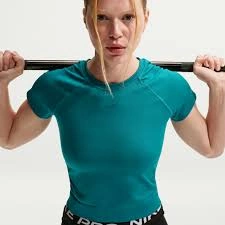
Custom Running Apparel
Athletic gym T-shirt used during upper-body training with shoulder movement visible

Gym and Strength Training

Gym training introduces reaching, pressing, lifting and changes in upper-body posture. A fitted tee may need additional consideration of chest and back balance, sleeve pitch, hem movement and fabric recovery. Heavier or more structured fabric can change the garment's appearance and mobility. Fit approval should reflect the planned exercise environment rather than standing measurements alone.

Product Requirements

  • Check shoulder and sleeve freedom during overhead reaching and pressing movements.
  • Define appropriate fit ease across the chest, upper back and garment body.
  • Assess fabric recovery, seam flexibility and hem position after repeated movement.
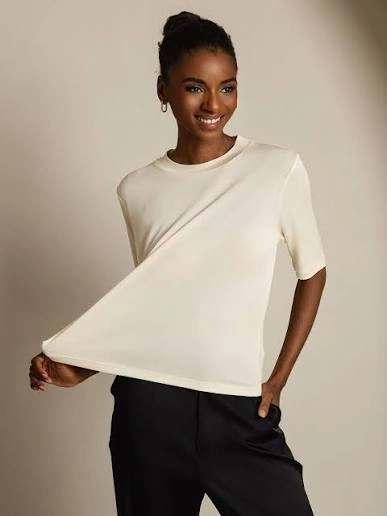
Custom Gym Clothing
Soft studio training T-shirt with relaxed drape and visible neckline and hem proportions

Studio and Light Training

Studio-oriented sports T-shirts may emphasize a softer hand feel, fluid drape and comfortable layering. However, a relaxed appearance does not eliminate requirements for neckline stability, opacity or suitable stretch. The final silhouette should be reviewed with the intended bottoms and any layering garments. Material and pattern decisions should reflect the brand's comfort objectives without implying untested technical performance.

Product Requirements

  • Compare fabric hand feel and drape against the approved studio-wear concept.
  • Review coverage and garment balance during bending, stretching and seated positions.
  • Confirm neckline, hem and sleeve proportions within the intended layered outfit.
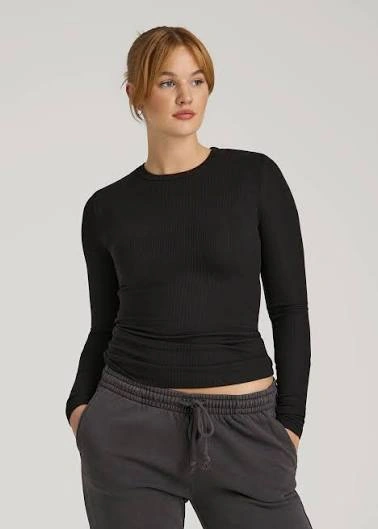
Custom Activewear Tops
Athleisure T-shirt showing relaxed shoulder, sleeve and body silhouette for everyday wear

Athleisure and Everyday Wear

Athleisure T-shirts often cross between casual movement and daily wear, making appearance, dimensional stability and care behavior important. The brand may prefer a relaxed or oversized silhouette, but the actual fit still depends on neckline proportions, shoulder position and garment balance. Logo application and fabric surface should remain compatible with the desired appearance after routine use and washing.

Product Requirements

  • Define the intended silhouette and acceptable shoulder drop or sleeve proportions.
  • Review fabric appearance, dimensional stability and suitability for planned care conditions.
  • Approve branding placement and surface effects without compromising the target garment drape.
Private Label Activewear
SHOULDER & SLEEVE ENGINEERING

Engineer Shoulder Freedom Without Losing the Intended Fit

Shoulder movement depends on more than fabric elasticity. Sleeve construction, armhole geometry, shoulder placement and garment balance determine how a T-shirt behaves during training. These features should be developed and approved against the intended movement requirements.

Choose Sleeve Geometry Around the Intended Movement

A set-in sleeve and a raglan sleeve create different pattern relationships across the shoulder and upper torso. Neither construction is automatically superior. Their suitability depends on the target silhouette, material properties, seam placement and the movements expected during use.

Set-In Sleeve Construction: The sleeve joins the body around a defined armhole. This can support familiar shoulder shaping and a wide range of fitted or relaxed silhouettes. However, incorrect sleeve pitch, armhole depth or upper-sleeve dimensions may cause pulling when the arm moves forward or upward. The development team should examine the position of the sleeve seam relative to the intended shoulder line and check whether the required activity changes the visible fit.

Raglan Sleeve Construction: A raglan design extends the sleeve toward the neckline, changing the location and direction of major upper-body seams. This can create a distinct athletic appearance and redistribute some seam locations, but it does not guarantee unrestricted movement. The pattern must still control the relationship between neckline, sleeve, underarm and chest dimensions.

Movement-Based Evaluation: Static garment measurements establish a repeatable specification, but they do not completely describe fit during exercise. Relevant reviews may include forward reach, overhead reach and upper-body rotation. The required movement set should be agreed with the brand rather than treated as a universal test.

Production Consideration: The approved shoulder and sleeve pattern should be supported by relevant measurement points and construction instructions. A later change in material recovery or seam method can alter fit even when the visible pattern appears unchanged.
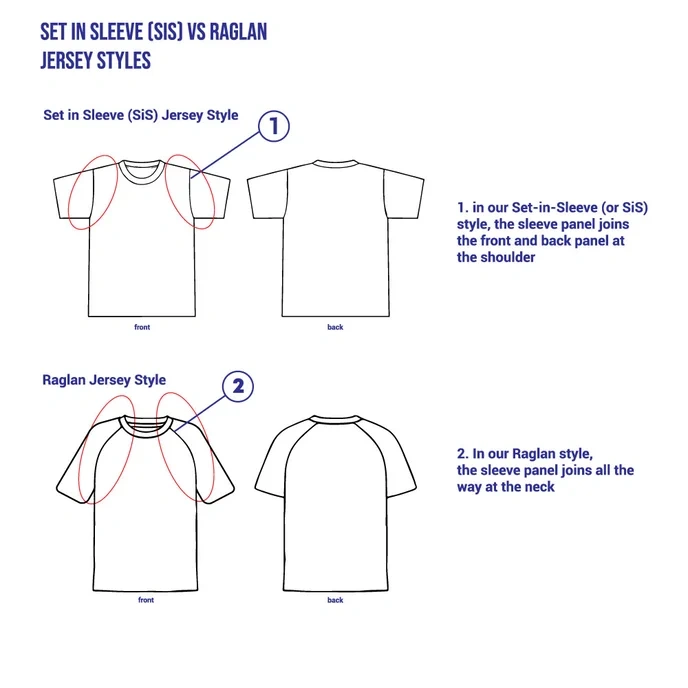
Technical comparison of set-in and raglan sports T-shirt sleeve geometry

Control Armholes, Body Balance and Hem Movement

A sports T-shirt may fit acceptably while standing but pull across the back or rise at the hem during overhead movement. These effects can result from several interacting design factors rather than one isolated measurement.

Armhole Shape: Armhole depth, front-to-back shape and sleeve attachment influence the way fabric travels around the shoulder. A deeper armhole is not necessarily more comfortable: it may introduce excess fabric, restrict particular movements or change how the garment sits beneath the arm. The appropriate shape depends on the intended fit and material behavior.

Chest and Back Balance: The front and back pattern pieces must work together on the intended body shape. An athletic wearer may need different ease distribution from a relaxed everyday T-shirt. The fitting process should identify whether tension is caused by chest width, back width, shoulder geometry or sleeve construction before introducing corrections.

Hem Stability: Raising the arms can lift the garment body. The development objective is not always to eliminate hem movement, but to keep it within the agreed appearance and coverage requirements. Body length, pattern balance and garment stretch all influence the result.

Fit Approval: The brand should record which sizes, movements and garment conditions were reviewed. MOVEVOX's existing product-development and cut-and-sew resources provide a basis for evaluating these requirements. A project-specific result must still be established through appropriate sample approval.
Technical review of sports T-shirt armhole position, upper-body balance and hem movement
FABRIC DECISION TREE

Select Performance Fabrics Through Specific Product Priorities

Fabric selection involves trade-offs between movement, weight, feel, coverage, durability and cost. A material should not be approved solely because its fiber composition or marketing description appears suitable. Start with the intended activity and agree which properties matter most.

What activity will the garment support?

RunningStrength TrainingStudioEveryday Wear

Which fit is intended?

FittedRegularRelaxedOversized

What matters most during movement?

StretchLightnessCoverageSurface Stability

Which hand feel is preferred?

SmoothSoftTexturedStructured

What is the ventilation priority?

HighModerateLocalizedNot Specified

What purchasing constraint applies?

Existing MaterialCustom ColorSpecial FinishTarget Cost

Fabric Directions for Technical Review

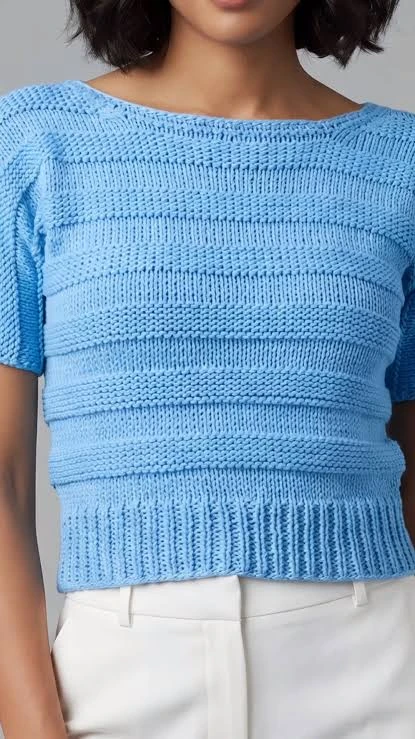
Close-up of lightweight jersey knit fabric suitable for technical activewear evaluation

Lightweight Performance Jersey

Lightweight jersey may be suitable where low fabric mass and flexible drape are important. Fiber composition alone does not establish moisture-management or drying results. Review yarn structure, fabric construction, stretch, opacity and dimensional behavior. Thin materials should also be evaluated under the intended wearing conditions and with the planned logo application.
GSMOpacityDimensional Change
Close-up of structured interlock knit fabric showing surface and thickness

Structured Performance Interlock

Interlock may be considered where the design requires a more stable surface, defined shape or different coverage characteristics. Actual behavior depends on yarn, machine settings, finishing and composition. Compare stretch and recovery against the target fit, and evaluate whether added structure creates unnecessary weight or reduces the intended drape.
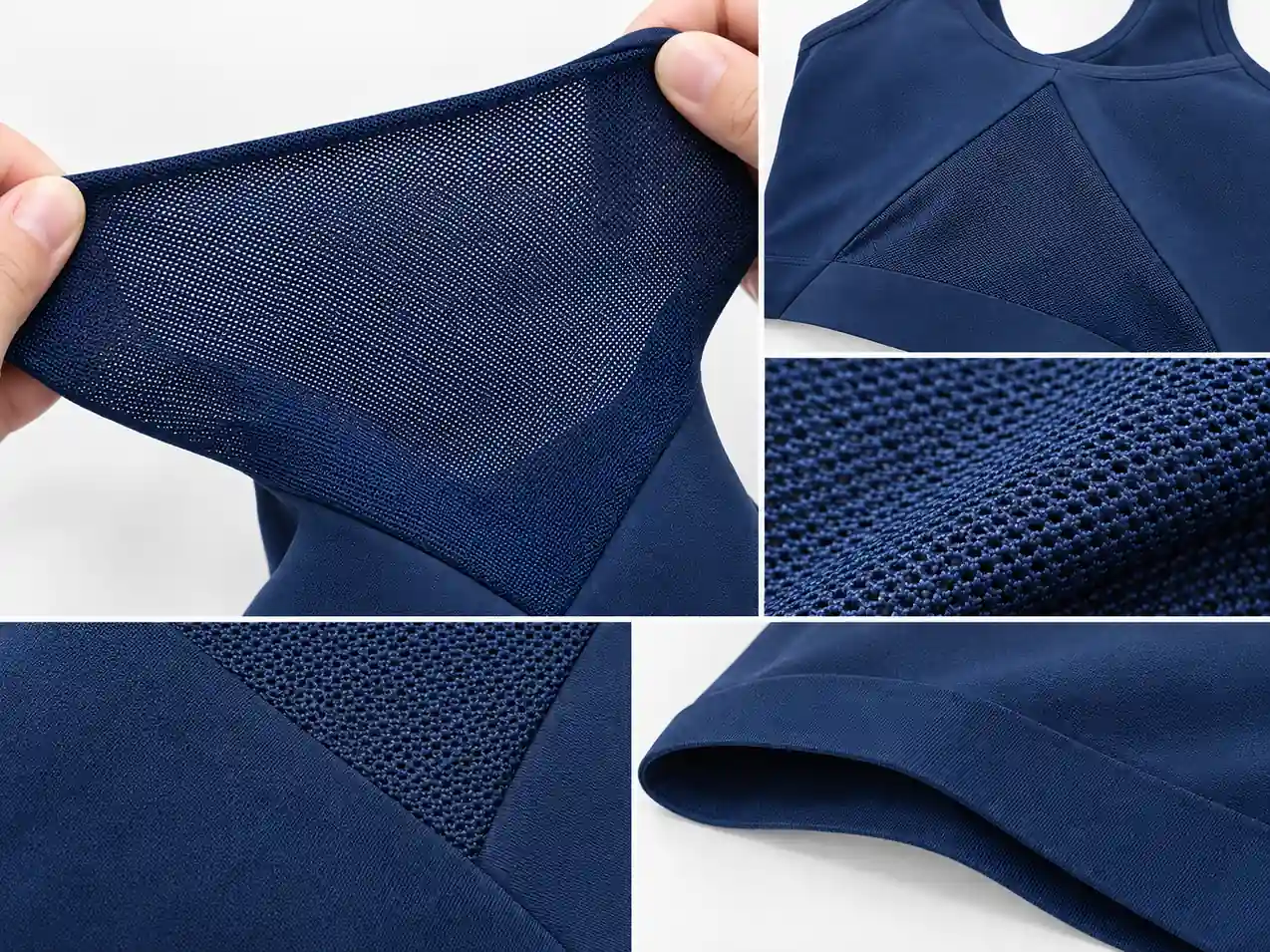
StructureRecoveryHand Feel
Close-up of engineered sportswear mesh knit showing open ventilation structure

Engineered Ventilation Knit

Mesh or other engineered knit structures can be evaluated for localized ventilation or appearance. Open construction does not by itself prove superior overall wearer comfort. Assess air permeability where required, as well as opacity, seam response, strength and compatibility with placement of artwork or reinforcement.
Air PermeabilityOpacityDurability
Close-up of engineered seamless knitted texture from performance sportswear

Seamless Knit Structure

A seamless development route may incorporate engineered textures or areas with different knitting behavior. Its suitability depends on the available machinery, yarn selection, programmed structure, garment dimensions and finishing steps. Sampling should establish whether the required appearance, fit and performance can be reproduced within the proposed manufacturing process.

YarnKnit StructureSize Feasibility
SUPPLIER QUALIFICATION

Identify Sports T-Shirt Sourcing Risks Before Sampling

Common sourcing failures begin when product requirements, materials or approval responsibilities remain unclear. Before shortlisting a manufacturer, mature brands should examine whether the supplier can identify technical risks, document changes and distinguish demonstrated capability from promises that still require verification.

Unverified Fabric Claims

A supplier may describe a fabric as breathable, moisture-wicking or quick drying without defining the intended property, relevant test method or material reference. This makes meaningful comparison difficult and may create unsupported claims in the brand's final product information.

Verification: Request identifiable fabric specifications, applicable test requirements and reports corresponding to the proposed material.

Unclear Fit Approval

A sample may look acceptable on a hanger while concealing shoulder restriction, neckline distortion or inconsistent size grading. If the supplier cannot explain measurement points and fit-review criteria, the buyer may approve appearance without approving functional fit.

Verification: Ask for the proposed measurement chart, sample-review process, size-set requirements and approval responsibilities.

Undocumented Material Substitution

A replacement fabric can have similar composition but different stretch, recovery, thickness or dimensional stability. An unauthorized substitution may affect an already approved pattern, decoration process or garment appearance, creating problems that become visible only after production.

Verification: Require an approved material reference and a documented authorization process for substitutions affecting critical specifications.

Misunderstood Decoration Compatibility

A logo application may appear acceptable on an initial sample but behave differently during stretching or washing. Large print areas can affect surface feel and local fabric behavior. Decoration should therefore be considered part of product engineering.

Verification: Review artwork size, application method, substrate compatibility and relevant durability requirements before production approval.

Incomplete Production Responsibility

Some suppliers combine owned facilities with external manufacturers or specialized processors. This arrangement can be workable, but unclear responsibility for sampling, material control, inspection and corrective actions creates unnecessary procurement risk.

Verification: Identify the responsible legal entity, production locations, outsourced processes and customer approval procedure for changes.

No Repeat-Order Reference

An approved first order does not automatically establish repeatability. If critical material references, patterns, artwork and workmanship standards are not identified and retained, later orders may differ even when the style number remains unchanged.

Verification: Ask how approved specifications, material batches, size charts and production changes are controlled for repeat orders.

MYTHS & FACTS

Separate Sports T-Shirt Claims From Technical Evidence

Performance terms are useful only when buyers understand their meaning and limitations. The following distinctions help brands decide which properties require specifications, physical evaluation or independent testing before they become product claims.

Polyester Always Dries Quickly

Myth: Every polyester sports T-shirt is automatically quick drying.

Fact: Polyester fibers generally absorb relatively little moisture into the fiber itself, but garment drying also depends on yarn, fabric structure, finishing, thickness and environmental conditions. A specified quick-drying claim should be evaluated using an appropriate method and conditions rather than inferred from fiber composition alone.

Evidence Condition: Compare identifiable materials under the same applicable method and agreed acceptance criteria.

Lower GSM Means Better Breathability

Myth: A lighter fabric must be more breathable.

Fact: GSM describes mass per unit area, not air permeability. Knit density, yarn geometry, fabric finishing and structure can produce different airflow behavior at similar weights. A lightweight material may also create opacity or durability trade-offs that matter to the intended design.

Evidence Condition: Review air permeability, coverage and construction together for the actual candidate fabrics.

Stretch Guarantees Fit Recovery

Myth: High stretch automatically produces stable athletic fit.

Fact: Elongation and recovery are different characteristics. A fabric may extend easily yet retain deformation after repeated movement. Directional stretch, recovery, pattern dimensions and seam compatibility should all be considered when developing fitted sports T-shirts, especially around the chest and shoulders.

Evidence Condition: Use comparable extension and recovery conditions linked to the proposed garment construction.

Seamless Means No Sewing Anywhere

Myth: Seamless T-shirts never require stitching or finishing.

Fact: Seamless manufacturing can reduce or relocate some conventional construction seams, but garment openings, sleeves, trims and finishing may still require additional operations. The exact result depends on machine capability, knitting program and the approved garment architecture, not the general manufacturing label.

Evidence Condition: Review the proposed construction and physical sample before describing the finished garment as seamless.

One Sample Proves Every Size

Myth: Approval of the medium-size sample guarantees the entire size range.

Fact: Grading changes garment proportions, and fit behavior can vary with chest width, shoulder geometry, sleeve length and material properties. A base-size approval does not establish every size's suitability. The size-set scope should reflect the intended market and the brand's approval requirements.

Evidence Condition: Review selected size-set samples and document size-specific fit or measurement deviations.

A Certification Covers Every Product

Myth: A supplier's certificate proves all sports T-shirts meet every market requirement.

Fact: Certifications, factory assessments and product test reports have distinct holders, scopes and validity conditions. A material certificate or another garment's test result cannot automatically establish compliance for a newly developed sports T-shirt. Applicable requirements depend on the finished product and target market.

Evidence Condition: Check issuing body, holder, applicable site, material or product scope, and validity.

PROJECT FIT

Match Supplier Capability to Your Sports Tee Program

A manufacturer is suitable when its product knowledge, development resources and production arrangements match the actual order. MOVEVOX's confirmed capabilities provide a starting point, while specialized constructions, materials and performance requirements must still be reviewed for each project.

Manufacturing Foundation

MOVEVOX works with cut-and-sew activewear production and Santoni seamless knitting resources. Its established T-shirt range includes fitted, regular, cropped, seamless and athleisure directions. The relevant route depends on garment structure, material and technical feasibility rather than one preferred method for every style.

  • Cut-and-sew resources support relevant patterned and sewn garment constructions.
  • Twenty-eight Santoni machines support compatible seamless knitting development and production.

Technical Development

Product discussions can begin with a Tech Pack, permitted reference sample or sufficiently defined concept. The next task is to identify material, fit, construction and branding requirements before committing to a sample route. Any performance or special-process requirement remains subject to project-specific review.

  • Development staff review customer specifications, samples, patterns and material requirements.
  • Approved samples and technical documents provide references for subsequent production preparation.

Quality Responsibility

MOVEVOX has an established QC function and a broader system for production coordination. Its general controls cover materials, measurements, workmanship, branding and finished-product review. A sports T-shirt order still requires defined critical points and appropriate acceptance criteria linked to the actual approved product.

  • Five QC personnel form part of the confirmed core organization.
  • Customer-approved specifications remain the basis for project-specific quality decisions.

Long-Term Procurement Fit

MOVEVOX is oriented toward branded activewear production rather than unrestricted product categories or any quantity at any price. Mature buyers should assess material commitments, technical approvals, size and color plans, order volume and the resources assigned to their project before establishing a repeat-order program.

  • Established private-label capabilities cover relevant branding, labeling and packaging requirements.
  • MOQ and production commitments are reviewed against materials, construction and order structure.
FABRIC SPECIFICATION COMPARISON

Compare Performance T-Shirt Fabrics Beyond Fiber Composition

Similar-looking sports T-shirt fabrics can differ significantly in stretch, recovery, stability and surface appearance. Compare candidate materials against the actual product requirements and request identifiable specifications. The following table is an engineering framework, not a database of tested MOVEVOX fabrics.

Parameter Lightweight Jersey Performance Interlock Engineered Mesh Textured Seamless Knit
CompositionConfirm selected blendConfirm selected blendConfirm selected blendConfirm yarn blend
GSMSpecify target rangeSpecify target rangeSpecify target rangeConfirm after finishing
StructureSingle-jersey candidateInterlock candidateOpen-knit candidateProgrammed knit structure
StretchTest both directionsTest both directionsCheck structural limitsEvaluate directional zones
RecoveryVerify after extensionVerify after extensionVerify shape retentionVerify after relaxation
Air PermeabilityMeasure if requiredMeasure if requiredMeasure if requiredAssess different knit zones
OpacityEvaluate during extensionReview intended coverageCheck open areasReview light and stretch
PillingTest approved surfaceTest approved surfaceTest exposed knit areasTest textured surfaces
Dimensional StabilityCompare after careCompare after careCheck mesh deformationCheck relaxation and care
Best-Use DirectionLightweight training or runningStructured training or athleisureSelected ventilation applicationsCompatible engineered seamless styles

How to Use the Comparison

Use the table to prepare a shortlist, not to declare a winning fabric. A material with desirable air permeability may require additional opacity or durability review. A stable interlock may improve shape definition but alter garment weight and drape. Candidate swatches should be compared using consistent conditions, followed by actual garment sampling where fit, decoration and seam performance interact. The approved material specification must identify the selected fabric and relevant acceptance requirements. Unverified numbers should remain open technical inputs rather than appearing as product performance claims.

DIRECT TECHNICAL ANSWER

Does Moisture-Wicking Mean a Sports T-Shirt Dries Faster?

Not necessarily. Moisture-wicking describes the movement or spreading of liquid moisture through a material, while drying describes the removal of moisture over time under defined conditions. Fiber properties, yarn structure, fabric construction, finishes and environmental conditions influence both. A sports T-shirt should not be described as quick drying solely because a fabric supplier calls it moisture-wicking.

Liquid Moisture Transport

Liquid moisture may move through capillary action and fabric structures. The direction, speed and distribution of that movement depend on the actual material. A suitable moisture-management evaluation should reflect the property the brand intends to claim.

Drying Behavior

Drying depends on the amount and location of retained moisture, fabric structure, air movement, temperature and humidity. A material that spreads moisture across a larger area is not automatically the fastest-drying option under every condition.

Moisture Absorption

Absorption into fibers is different from liquid movement along or between yarns. Low fiber moisture absorption does not by itself establish comfort, wicking performance or drying time in a finished garment.

Garment-Level Performance

The finished shirt introduces additional variables, including fit, fabric area, layered regions and decoration. A fabric test may support a material claim but should not automatically be presented as a complete wearer-comfort evaluation.

Why It Matters

Brands need precise performance definitions to compare materials, write realistic technical specifications and prevent unsupported marketing claims.

ATHLETIC PATTERN ENGINEERING

Translate Athletic Fit Into Repeatable T-Shirt Patterns

The pattern establishes how a sports T-shirt sits on the body and moves during activity. Fabric behavior, garment balance and the approved measurements must be evaluated together before the pattern becomes a production standard.

Build the Pattern Around the Target Wearer and Movement

An athletic fit is not defined by a single chest measurement. It reflects the relationship among body shape, garment ease, shoulder position, sleeve construction and fabric behavior. A regular-fit training shirt and a close-fitting performance tee may therefore need different development approaches even when they use a similar base-size chart.

Fit Block: The starting pattern should correspond to the intended wearer and silhouette. The technical team needs to distinguish body dimensions from finished-garment measurements. A brand may define an athletic fit as close to the chest without excessive tension, or it may prioritize additional room for strength-training movements. Either direction requires measurable expectations.

Shoulder and Sleeve Relationships: Shoulder slope, armhole shape and sleeve pitch influence movement and garment balance. A small alteration to one of these areas may change the others. Pattern revisions should be recorded as part of the development process rather than introduced without updating the technical reference.

Fabric Interaction: Two materials with identical nominal composition may stretch and recover differently. If the fabric changes, the previously approved pattern may require reassessment. The relationship between relaxed garment measurements and wearer fit becomes particularly important for fabrics with substantial elasticity.

Fit Review: Sample feedback should describe observable issues, their location and the conditions under which they occur. Comments such as “too tight” are more useful when supported by measurements, photographs and movement observations. This helps separate pattern problems from fabric, construction or sample-execution problems.

Production Readiness: Once the approved pattern is established, relevant revisions, seam allowances, grain or fabric-direction requirements and reference measurements should be controlled through the production documentation.
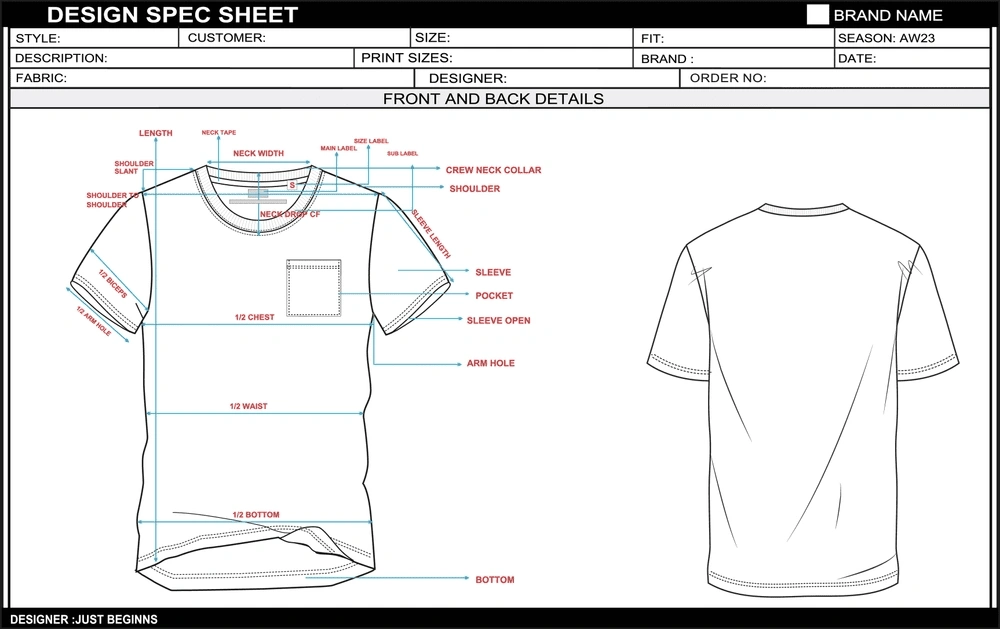
Technical development drawing of a sports T-shirt shoulder and sleeve pattern

Control Neckline, Body Balance and Size Progression

A T-shirt can satisfy its nominal chest-width measurement while still looking unbalanced. The pattern may have an unsuitable neckline shape, inconsistent shoulder placement, excessive fabric at the back or a hem that moves differently from the approved sample.

Neckline Construction: The neckline should be developed with attention to opening size, shape, binding or rib structure, attachment method and recovery. A material that stretches readily but recovers poorly may change how the neckline sits after handling or care. Relevant neckline measurements and workmanship requirements should be included in the approved specification.

Front and Back Balance: The front and back pieces must work together on the intended body shape. Excess pulling across one region should not always be corrected by increasing garment width indiscriminately. The technical review should identify whether the issue originates in shoulder position, chest ease, sleeve construction or pattern balance.

Hem and Body Length: Garment length influences coverage and visual proportion. A fitted running tee, cropped training top and relaxed athleisure shirt may have different acceptable hem positions during movement. Those expectations should be defined before the brand approves a sample.

Size Grading: Changes from one size to another should preserve the intended fit logic. Shoulder width, neckline, sleeve length and body proportions may require separate grading rules. A complete size-set review is especially relevant when the range covers different body types or multiple target markets.

Approval Documentation: MOVEVOX can review customer measurement charts and technical patterns within its established development process. Project-specific fit decisions remain subject to actual sample review, buyer feedback and agreed approval criteria.

Sports T-shirt pattern review showing neckline measurements and front and back body balance
CRITICAL SEAM DETAILS

Review Critical Seam Details Across the Sports Tee

Seam selection should reflect material behavior, garment movement and the required finish. A stitch name alone does not prove strength or comfort. The most useful review considers seam location, construction method, potential stretch restriction and the finished garment.
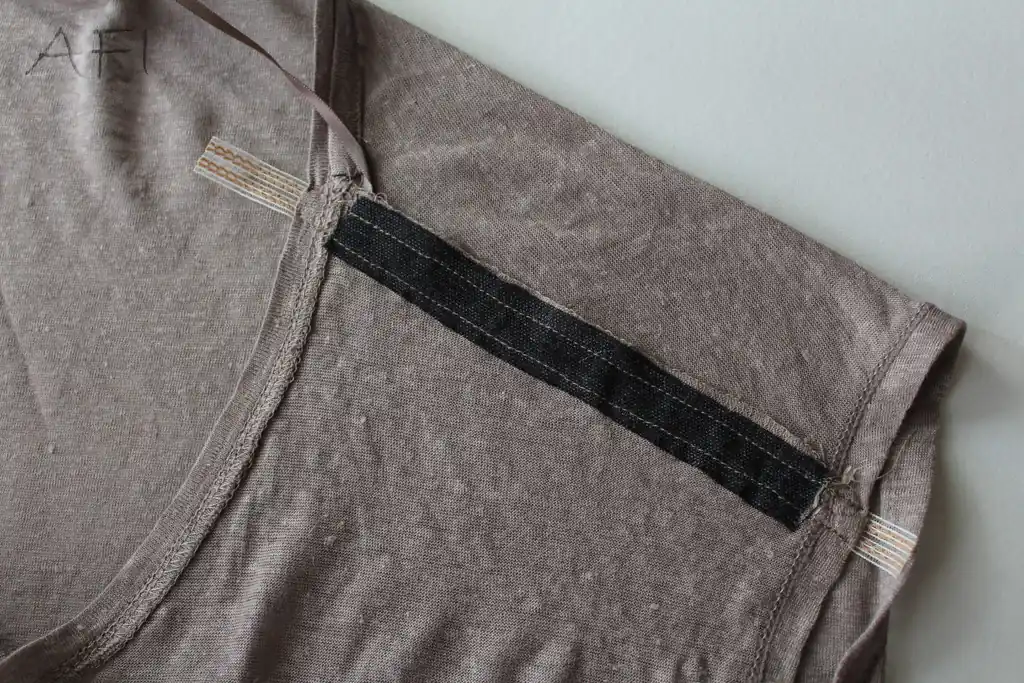
Close-up of shoulder seam assembly on a sports T-shirt

Shoulder Seam Assembly

The shoulder seam connects major upper-body panels and helps maintain garment balance. Its construction should correspond to the approved sleeve and body pattern. Seam bulk, differential feeding, stitch tension and material stretch may influence visible appearance and local movement.

Applicable Area: Shoulder joins on relevant cut-and-sew sports T-shirts and associated reinforcement locations.

Comfort / Durability: Control uneven feeding, excess seam thickness and distortion during normal garment movement.
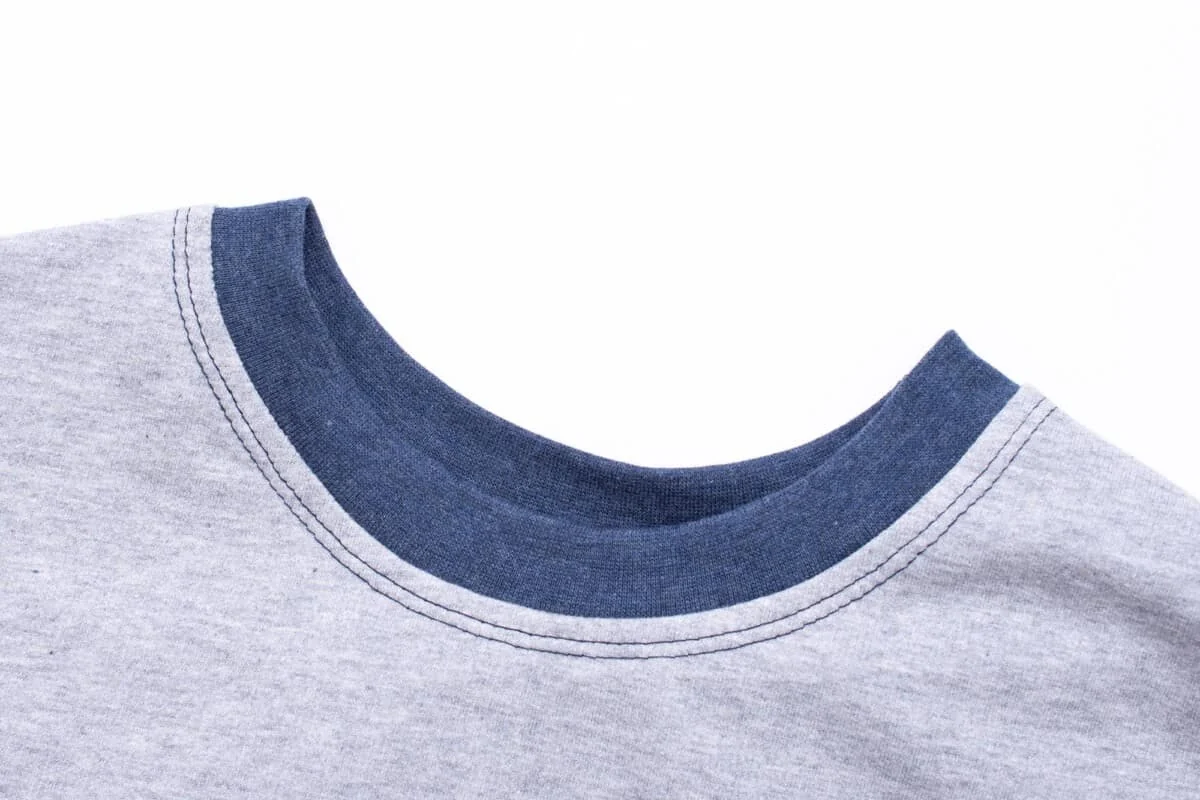
Close-up of sports T-shirt neckline binding or rib attachment showing stitching detail

Neckline Binding

Neckline binding or rib attachment must maintain the intended opening shape without excessive tension or looseness. The binding material, circumference relationship and attachment method should be defined together. A visually neat neckline can still behave poorly after washing if material recovery is unsuitable.

Applicable Area: Crew necks and other approved T-shirt neckline constructions using binding or rib.

Comfort / Durability: Maintain an acceptable neckline shape without creating uncomfortable stiffness or unwanted waviness.
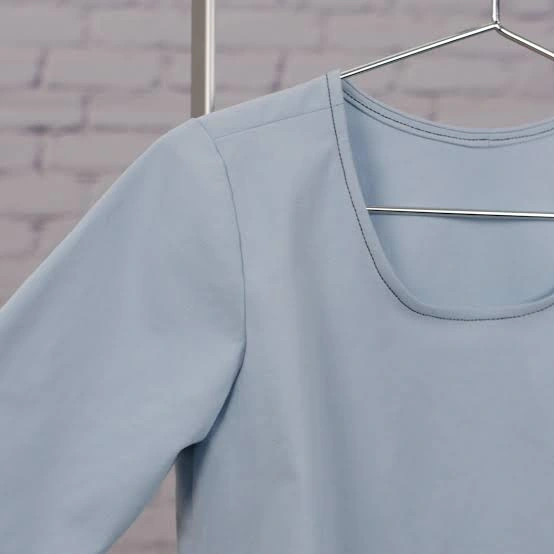
Close-up of set-in or raglan sleeve attachment seam on a performance T-shirt

Sleeve Attachment

The sleeve attachment should accommodate the chosen pattern, fabric stretch and movement requirements. Set-in and raglan designs create different seam paths. An assembly error may produce twisting, tension lines or unequal sleeve positioning even when individual cut pieces appear correct.

Applicable Area: Armhole seams and raglan joins on the approved athletic T-shirt construction.

Comfort / Durability: Preserve the intended arm movement while controlling twisting, seam bulk and irregular stitching.
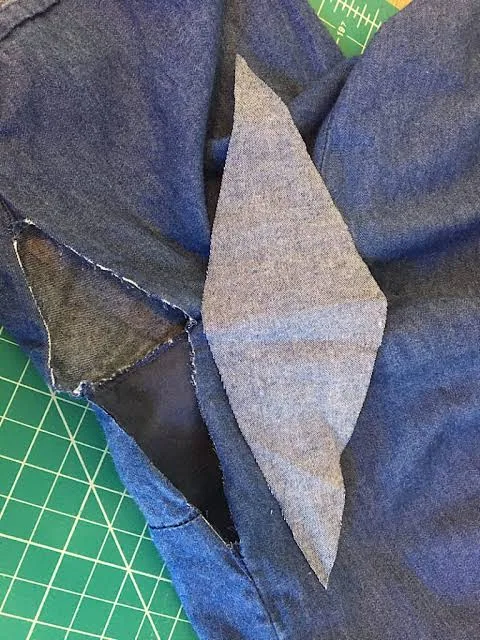
Underarm seam intersection showing stitching and fabric joins inside a sports T-shirt

Underarm Seam Junction

Several seam directions may meet beneath the arm, making the junction sensitive to alignment and excess bulk. The appropriate finishing method depends on the garment material and expected activity. Construction should avoid protruding seam allowances and inconsistent joining at this contact area.

Applicable Area: Underarm intersections, side seams and sleeve joins on relevant cut-and-sew styles.

Comfort / Durability: Minimize localized bulk and reduce potential abrasion during repeated upper-body movement.

Close-up of side seam alignment on a cut-and-sew performance sports T-shirt

Side Seam Control

Side seams influence garment symmetry, body shape and appearance after washing. Twisting may be linked to fabric structure, cutting alignment, relaxation or assembly conditions. The supplier should identify the probable cause before treating visible seam deviation as only a sewing issue.

Applicable Area: Side-body joins in conventional cut-and-sew sports T-shirts where seams are present.

Comfort / Durability: Keep the side seam aligned with the approved construction and acceptable visual tolerance.
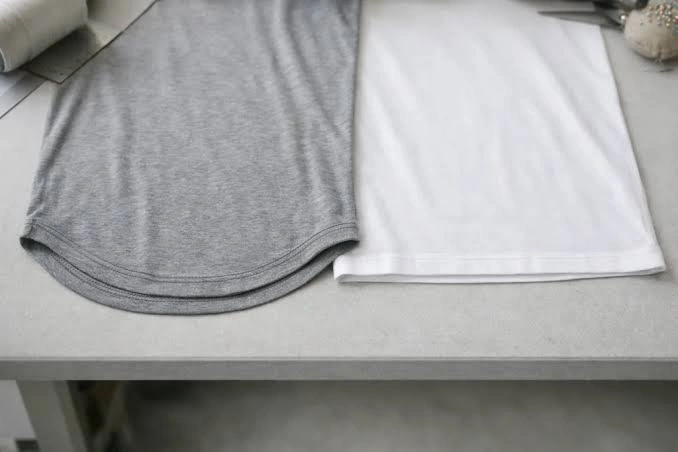
Close-up of stretch-compatible sports T-shirt hem with coverstitch or approved finishing

Stretch-Compatible Hem

A T-shirt hem must correspond to the fabric's extension behavior and the intended appearance. Coverstitch or another approved finishing method may be appropriate depending on the design. Inconsistent feeding or excessive stitch tension can create tunneling, waviness or limited extension.

Applicable Area: Bottom hems and applicable sleeve hems requiring the approved stretch-compatible finish.

Comfort / Durability: Maintain sufficient extension and a stable appearance without creating a rigid hem edge.

PERFORMANCE FABRIC BRANDING

Match Logo Applications With Performance T-Shirt Fabrics

Branding is a technical component of a performance T-shirt. The selected method should be assessed for fabric compatibility, surface feel, stretch, appearance and care behavior. Availability and suitability depend on the project and may require specialist processing.
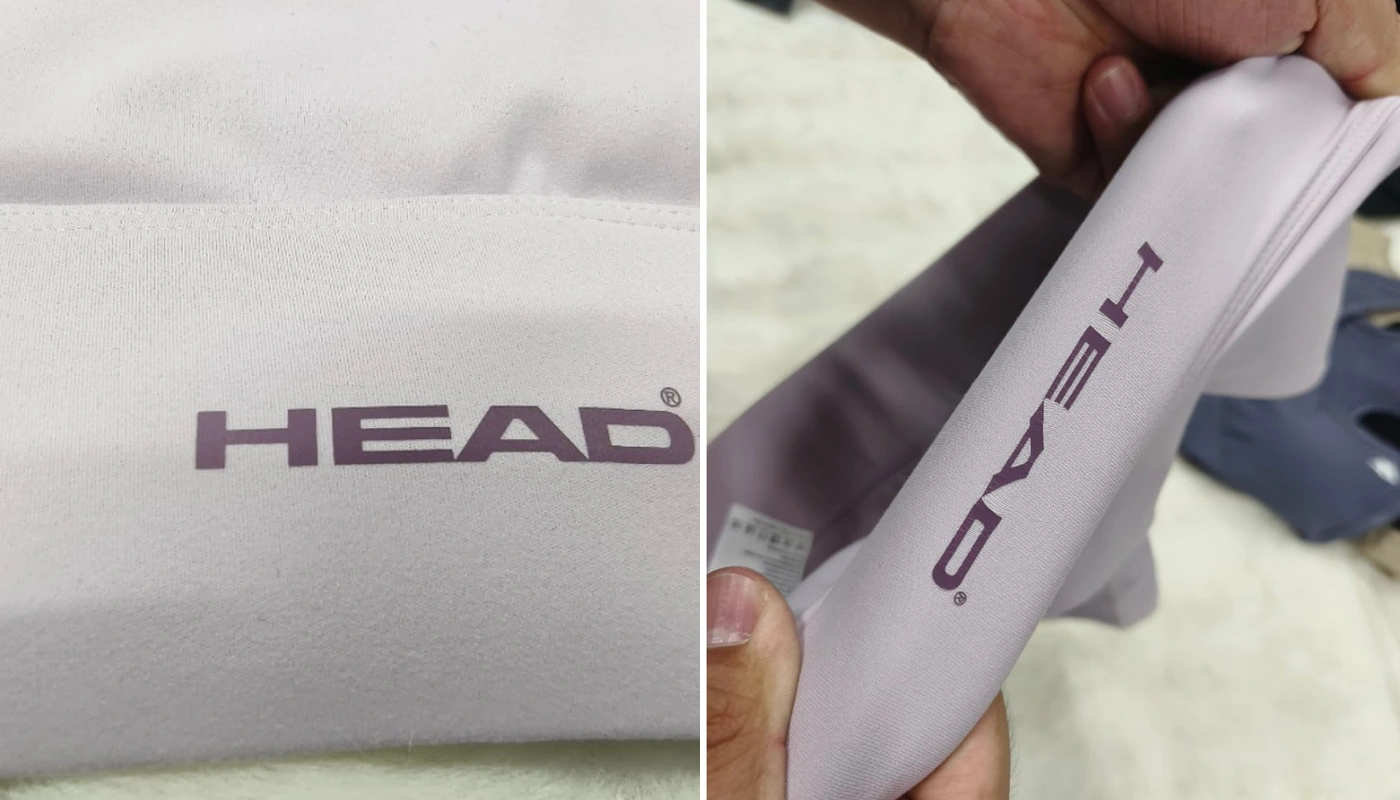
Close-up of screen printed artwork on performance knit fabric

Screen Printing

Screen printing can produce a range of graphic effects, but print deposit, artwork size and fabric properties influence the finished hand feel. Large printed areas may affect local flexibility and airflow behavior. The selected ink system and curing conditions require technical review.

Applicable Use: Brand graphics on approved fabric areas with suitable printing and care requirements.

Limitations: Check stretch compatibility, print feel, wash durability and actual processor capability before approval.
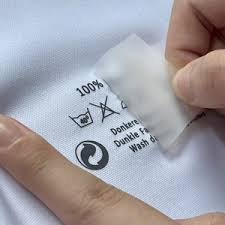
Close-up of heat transfer logo applied to a stretch sports T-shirt fabric

Heat Transfer Logos

Heat transfer can provide defined artwork and controlled placement when compatible transfer materials and application conditions are selected. Temperature, pressure and dwell time must suit the fabric and the transfer system. Performance should be assessed on the actual garment material.

Applicable Use: Small brand marks, care information or approved decorative graphics on suitable performance fabrics.

Limitations: Verify adhesion, stretch, hand feel and care behavior; do not assume universal compatibility.
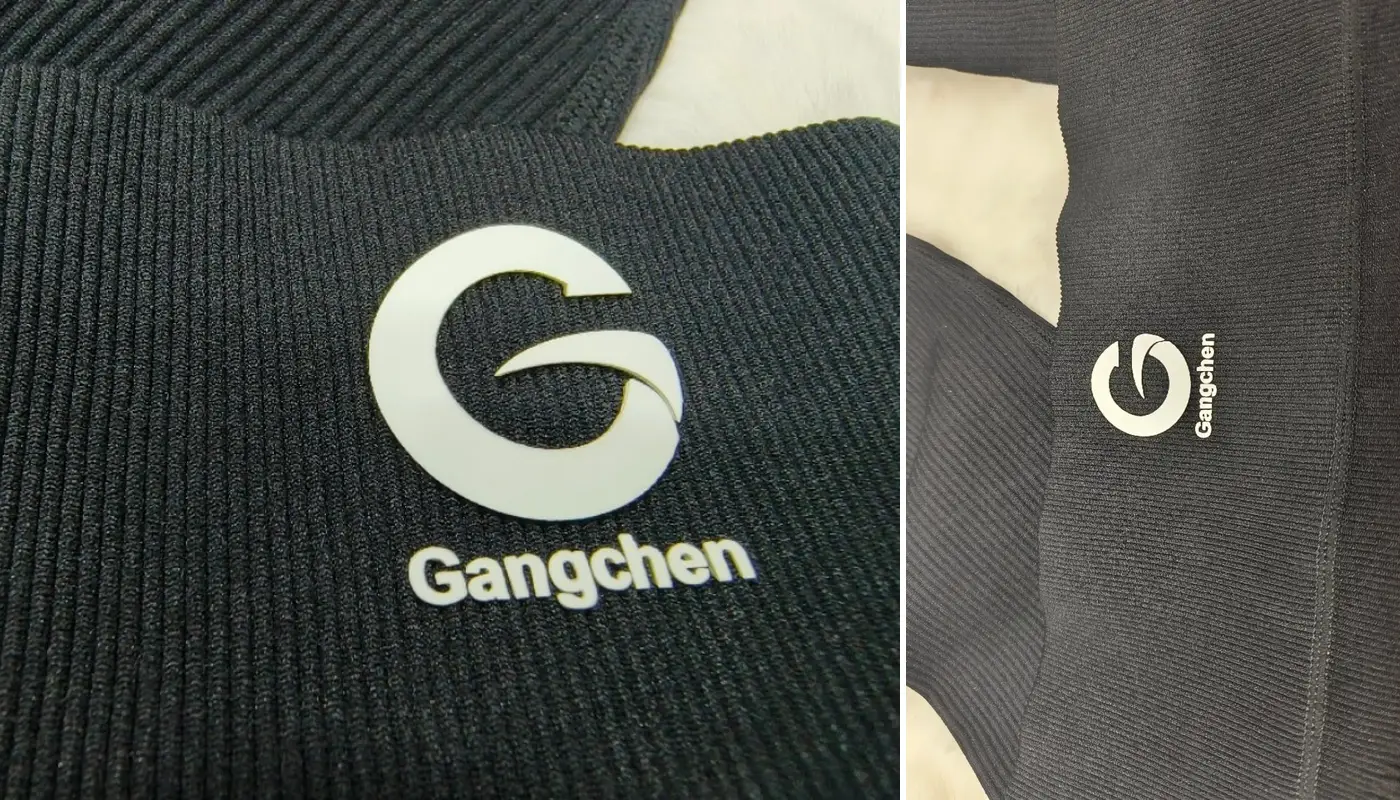
Raised silicone branding application on an activewear fabric surface

Silicone Logo Applications

Silicone-based decorative applications can create a raised or distinctive surface effect. The outcome depends on the product, material and process. Thickness, shape and application position should be reviewed for comfort and movement, especially on close-fitting athletic garments.

Applicable Use: Selected brand marks or decorative features where the product design supports raised applications.

Limitations: Confirm the exact silicone process, substrate compatibility, durability and specialist production availability.
Sublimation graphic sample on compatible polyester-based sportswear fabric

Sublimation Printing

Dye sublimation may suit compatible polyester-based substrates and designated production conditions. Its feasibility cannot be determined solely from a generic garment description. Fiber composition, fabric finish, color, artwork placement and equipment limitations all require review.

Applicable Use: Compatible polyester-rich materials and approved all-over or localized graphic concepts.

Limitations: Unsuitable substrates and certain base colors may restrict color reproduction and final appearance.
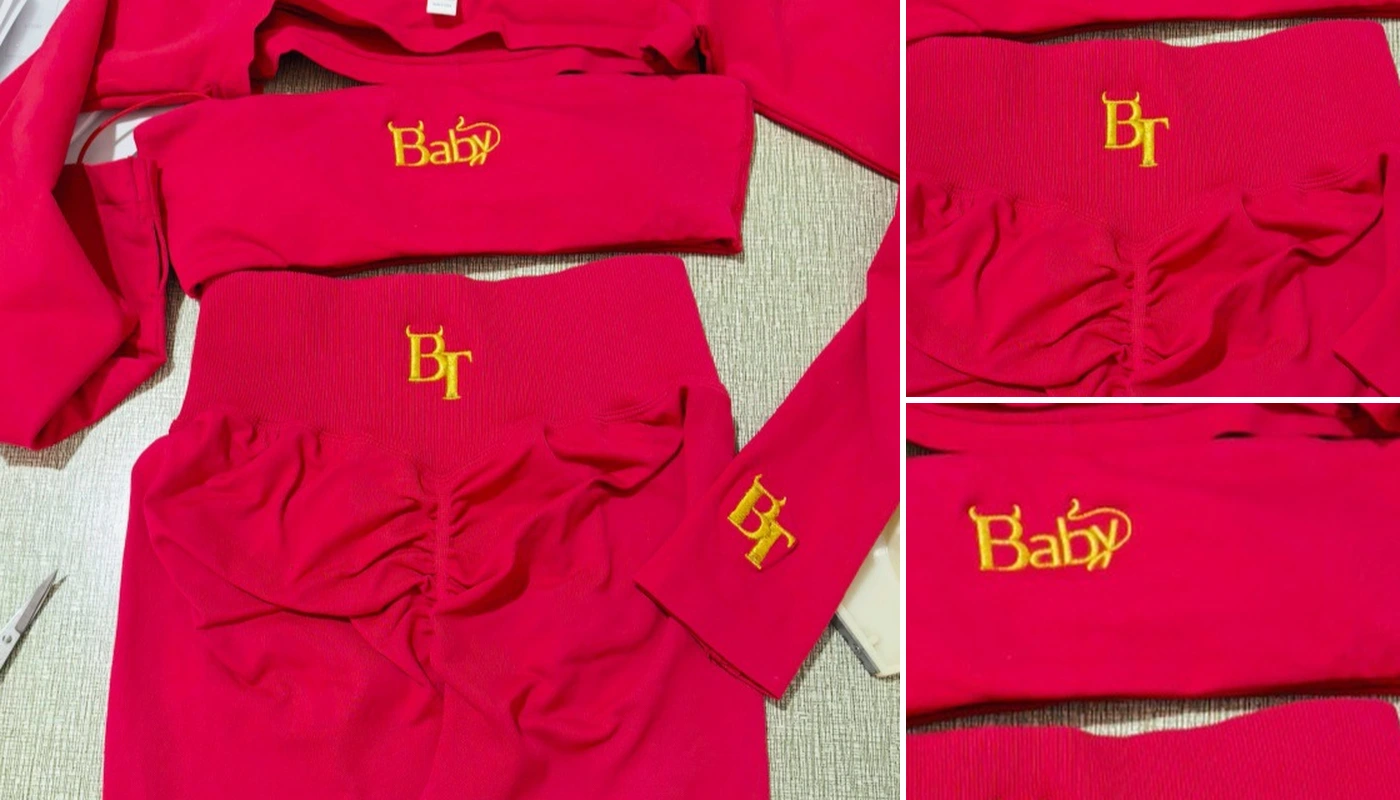
Embroidered logo showing thread and backing detail on suitable sportswear material

Embroidered Branding

Embroidery provides a stitched appearance but adds local thread density and construction weight. Needle penetration, backing and design size can affect thin or stretchy performance materials. An embroidered logo may therefore require stabilization and careful placement.

Applicable Use: Selected structured or suitable-weight sports T-shirts where embroidery is technically acceptable.

Limitations: Review needle damage, distortion, reverse-side feel, stretch restriction and outsourced processing responsibility.
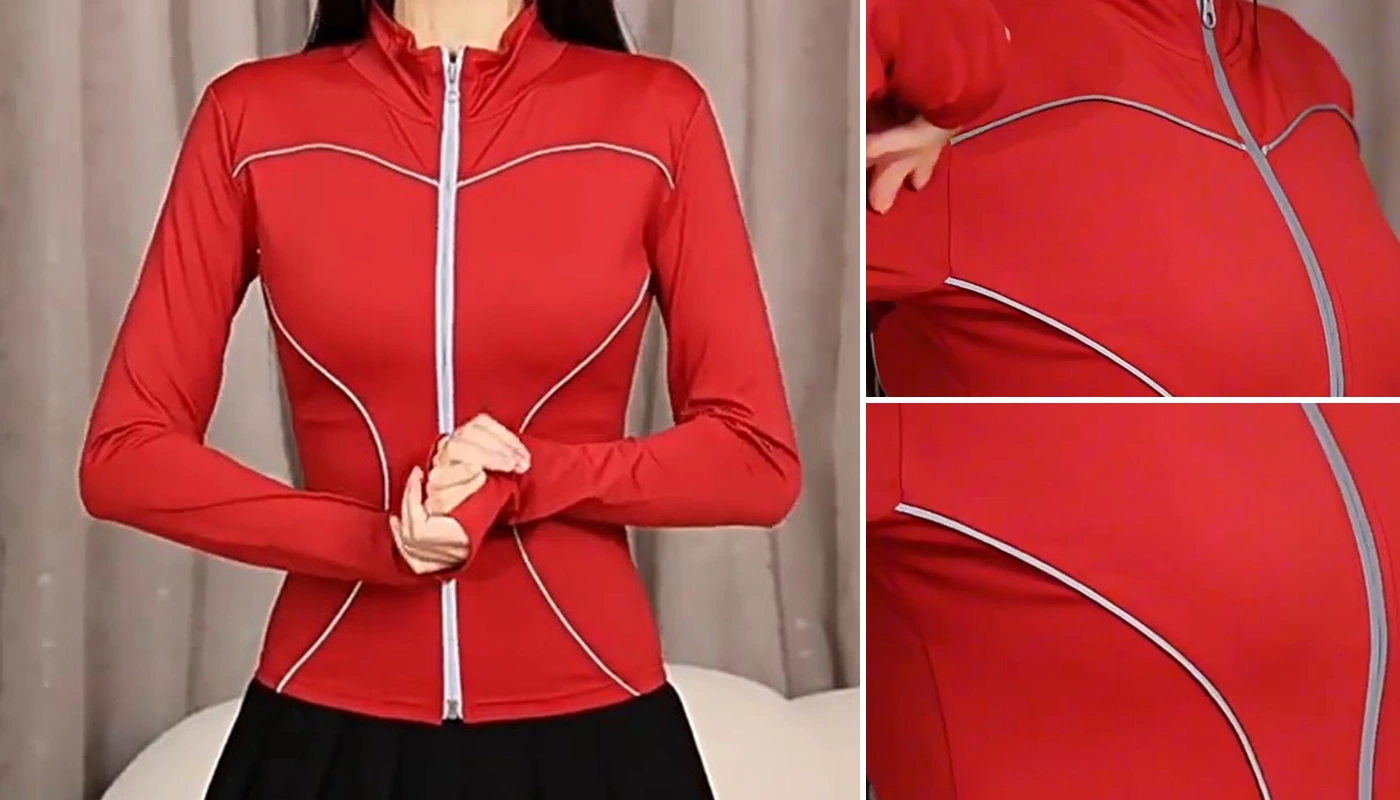
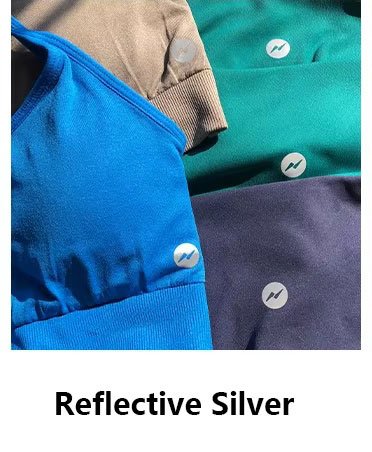
Reflective decorative graphic applied to running apparel fabric

Reflective Graphic Applications

Reflective decoration may be requested for certain running or training collections. The material and application method should be assessed for visibility, stretch, wash behavior and placement. Decorative reflectivity alone does not establish compliance with specialized safety or protective-apparel standards.

Applicable Use: Approved decorative details for relevant sportswear designs and planned wearing conditions.

Limitations: Confirm reflective performance requirements, substrate compatibility and any market-specific claim restrictions.

TECH PACK INPUTS

Define the Measurements Your Sports Tee Manufacturer Needs

A reliable Tech Pack should describe both product appearance and measurable construction requirements. The following inputs help clarify the intended sports T-shirt before sampling and provide a basis for recording revisions, comparing samples and approving the final product.

Technical Flat Sketch Required

Provide front and back views with sleeve type, neckline, hem, seams, panels and decoration positions identified. Include additional detail drawings for uncommon constructions. The sketch should clarify structural intent rather than relying only on a lifestyle photograph or general product name.

Chest and Body Measurements Required

Define chest width, body length and relevant body-shape measurements using unambiguous points of measure. Specify whether measurements are taken on a flat, relaxed garment and describe any special handling requirements. Different measuring methods can produce disagreements even when the garment itself has not changed.

Shoulder and Sleeve Dimensions Required

Document shoulder width where applicable, sleeve length, sleeve opening and relevant armhole dimensions. Raglan and set-in designs may require different measurement approaches. The chosen method should match the pattern and the buyer's fit expectations.

Neckline Specification Required

Specify neck opening, neckline depth, binding or rib construction and relevant finishing details. Indicate any critical limits on neckline appearance or recovery. The development team should understand whether the design prioritizes a close neck opening, relaxed shape or another approved profile.

Fabric and Material Specification Required

Provide the intended composition, fabric structure, weight, stretch, color reference and relevant performance requirements. Where a material has not yet been selected, identify target characteristics rather than inventing a precise specification. Material substitutions should require appropriate technical review.

Size Range and Grading Required

List the intended sizes, measurement increments and any size-specific exceptions. Clarify which sample sizes require fit review. Do not assume that one base-size approval establishes consistent shoulder, sleeve and body proportions across the complete size range.

Stitch and Construction Details Required

Identify seam locations, stitch or finishing requirements, seam allowance expectations and critical workmanship standards. Where technical terms could be interpreted differently, include approved photographs or construction diagrams. Selected methods must remain compatible with the actual fabric.

Logo and Artwork Files Required

Provide authorized artwork, dimensions, color references, placement measurements and the preferred decoration method. Indicate whether alternatives are permitted for technical review. Approval should cover the actual application on the selected fabric, not only a digital artwork proof.

Labels and Packaging Required

Specify brand labels, size identification, care information, hangtags, SKU codes and packaging expectations. Verify material-content and care statements against the final approved product. Special packaging components may introduce their own purchasing requirements.

Testing and Acceptance Criteria Required

Identify the target markets, relevant performance or chemical requirements, applicable methods and agreed pass criteria. Testing should correspond to identifiable materials or garments. If a particular claim is not necessary, avoid adding unnecessary or unsupported specifications.

Reference Sample Optional

A legally usable reference garment can help clarify hand feel, fit or construction expectations. State which elements are references and which are approved product requirements. A reference sample does not replace the need to establish the buyer's own technical standard.

Commercial Project Brief Required

Provide estimated style quantities, color and size breakdown, target delivery window and relevant budget conditions. These details help assess materials procurement, MOQ and development feasibility. An initial estimate should be distinguished from a confirmed purchase order.

When Information Is Incomplete

MOVEVOX can begin discussing an activewear project from a Tech Pack, an authorized reference sample or clearly stated design requirements. Missing dimensions, materials or approval criteria should be recorded as open points. The team can then review which details must be clarified or sampled before pricing and production assumptions are finalized.

TEST METHODS & ACCEPTANCE

Define Relevant Tests Before Approving Performance T-Shirts

Sports T-shirt performance should be evaluated using methods appropriate to the intended material, construction and target market. Each test answers a particular question. The buyer and supplier should agree the applicable method, sample identification and acceptance criteria before relying on results.

Liquid Moisture Management

Purpose: Assess selected liquid-moisture transport and distribution characteristics of the fabric, where those properties are relevant to the brand's performance claims.

Method: Use an applicable fabric moisture-management method under specified conditions. Identify the test specimen and material version, then distinguish measured transport behavior from garment-level wearer comfort.

Acceptance Basis: Buyer-defined requirements and a report linked to the tested material and procedure.

Drying Behavior

Purpose: Assess the material's moisture-loss behavior under controlled conditions where a quick-drying claim is being considered for the product.

Method: Select an appropriate drying evaluation with defined moisture application, environment and endpoint. Compare candidate materials only when their testing conditions are sufficiently comparable.

Acceptance Basis: Agreed drying criteria, identified test conditions and a relevant, traceable report.

Air Permeability

Purpose: Evaluate airflow through a fabric where ventilation is important to the proposed sports T-shirt construction or the brand's specifications.

Method: Test the selected fabric using an appropriate air-permeability procedure. Record sample identity and conditions; do not equate the result automatically with overall thermal comfort.

Acceptance Basis: Approved air-permeability requirement and the corresponding material-specific test record.

Dimensional Stability

Purpose: Determine how laundering and drying may change key garment or material dimensions and affect the approved fit, balance and appearance.

Method: Establish a relevant care procedure and measure specified points before and after exposure. Evaluate fabric or garment results according to the agreed test scope.

Acceptance Basis: Defined dimensional-change limits, measurement methods and documented before-and-after results.

Pilling Resistance

Purpose: Assess surface changes that may result from friction during intended wear and care, particularly in areas of repeated movement.

Method: Select a suitable pilling evaluation for the fabric and intended comparison. Record the test conditions, grading approach and identified sample.

Acceptance Basis: Buyer-approved appearance grade or criteria supported by the applicable test report.

Colorfastness

Purpose: Assess whether approved fabric colors meet relevant resistance requirements for washing, perspiration, rubbing or other specified exposure conditions.

Method: Select the tests that correspond to the expected product use and target market. Evaluate staining and color change according to the selected method.

Acceptance Basis: Agreed colorfastness grades, tested color reference and identifiable laboratory results.

Seam Performance

Purpose: Assess whether selected garment seams can accommodate expected handling or stretching without unacceptable failure or appearance changes.

Method: Review the specific seam, material and construction. Select relevant inspection or test conditions rather than assuming all stitch types behave equally.

Acceptance Basis: Approved workmanship specification and applicable seam-performance criteria or inspection records.

Decoration Durability

Purpose: Evaluate whether printed or applied logos maintain acceptable adhesion, appearance and flexibility under agreed use and care conditions.

Method: Test the actual decoration system on the selected fabric using appropriate conditions. Review visible cracking, peeling, distortion or other buyer-defined defects.

Acceptance Basis: Approved artwork sample, applicable evaluation criteria and corresponding inspection or test record.

TECHNICAL PROJECT REVIEW

Ready to Review Your Performance Tee Specifications?

Share your Sports T-Shirt Tech Pack, approved reference, fabric requirements or development brief with MOVEVOX. We can review the available information, clarify open technical points and discuss an appropriate sampling or manufacturing direction. Material availability, project complexity, order conditions and necessary approvals will determine subsequent commercial commitments.

A defined technical brief helps establish what can be evaluated before sampling, quotation and production approval.

MANUFACTURING ROUTE

Compare Manufacturing Routes for Custom Performance Sports T-Shirts

Cut-and-sew and seamless knitting create garments through different production methods. Neither is the best choice for every sports T-shirt. The relevant decision depends on sleeve geometry, fabric structure, fit, branding, finishing operations and actual manufacturing feasibility.

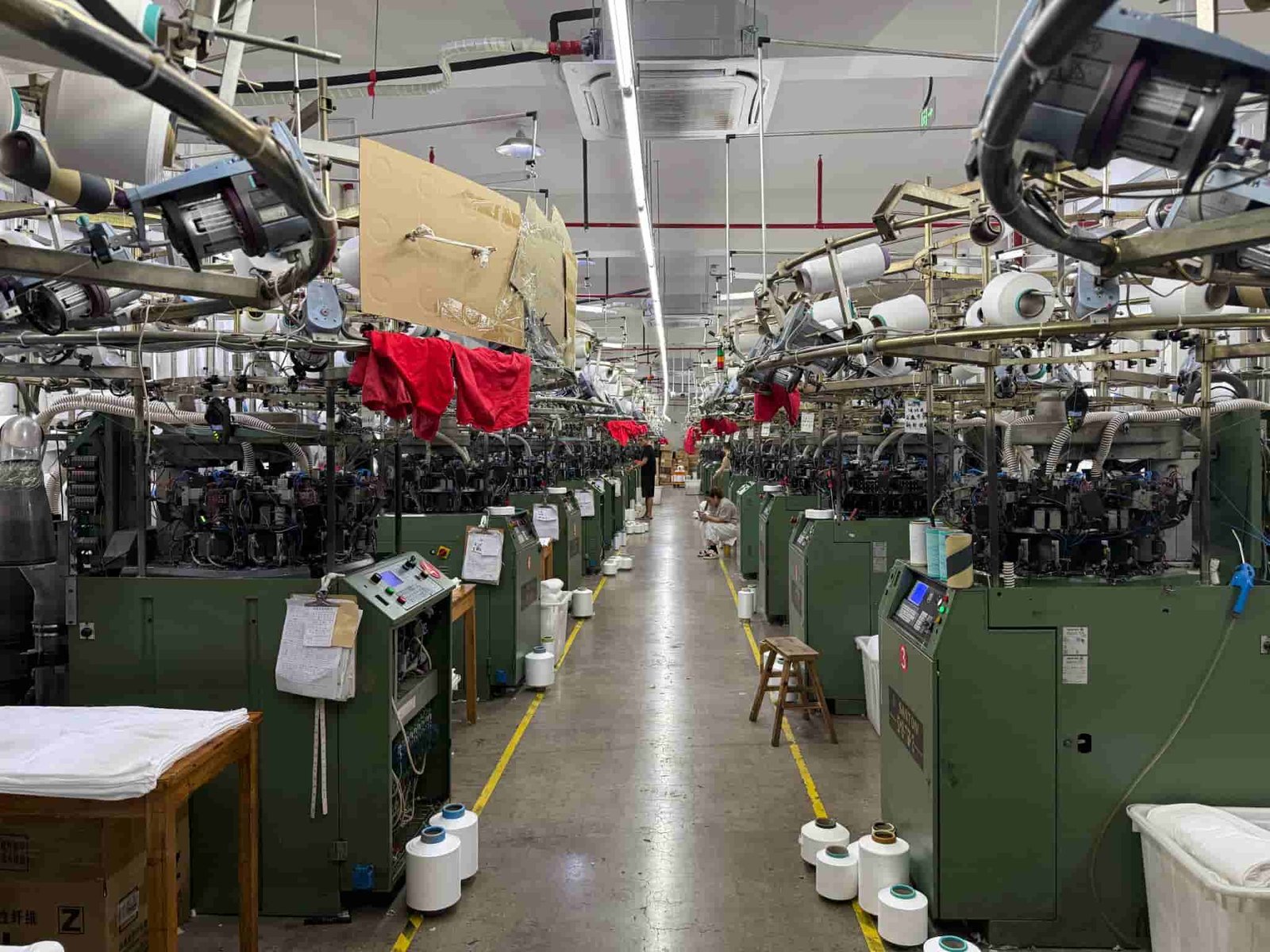
MOVEVOX cut-and-sew activewear production line with garment sewing operations
MOVEVOX Santoni seamless knitting machines at the production facility
Engineering ConsiderationCut-and-Sew T-ShirtSeamless T-Shirt
Main ConstructionCut fabric pieces assembled into the approved patternCompatible programmed knitted structure with required finishing
Sleeve DevelopmentPatterned sleeve and armhole shapesDetermined by knitting capability and construction approach
Fabric OptionsSelected purchased or custom-developed fabricsSuitable yarns and machine-compatible knitted structures
Ventilation AreasSelected mesh panels or compatible fabric placementPotential engineered knit regions subject to program feasibility
Fit RevisionPattern measurements and assembly may be revisedProgram, structure and finishing may require adjustment
Side SeamsPresent or omitted according to the selected constructionDepends on knitted architecture and finished garment design
Logo OptionsSubject to chosen fabric and decoration processSubject to knit surface, application and finishing compatibility
Size DevelopmentPattern grading and size-set evaluationKnitting settings, structures and finished measurements
Main Technical RiskCutting, fit and assembly inconsistenciesProgram feasibility, material behavior and dimensional control
Buyer ApprovalFabric, pattern, construction and finished sampleYarn, knit program, finished structure and approved sample

Manufacturing Recommendation

A conventional cut-and-sew route is appropriate to evaluate when the design requires defined fabric panels, complex sleeve shapes or specific assembly details. Seamless knitting may suit compatible engineered structures where fabric formation and garment architecture support the required fit and appearance.

MOVEVOX has both production capabilities, including 28 Italian Santoni seamless knitting machines. However, the presence of these resources does not establish that every proposed T-shirt is feasible in both methods.

The manufacturing decision should follow a review of the actual design and available production conditions.

DESIGN FOR MANUFACTURING

Prioritize Manufacturing Feasibility Before Releasing Sports Tee Designs

A technically attractive design may still require changes before commercial production. Fabric availability, pattern behavior, seam construction, decoration and quality requirements interact. The proposed review below organizes development priorities from essential product definition to a commercially executable manufacturing plan.

Define Product Requirements

Confirm the intended activity, wearer, silhouette and non-negotiable product characteristics. An unclear target can produce unnecessary sampling revisions because different reviewers may evaluate the garment against different expectations.

Review Evidence: An approved design brief identifying use, fit, construction priorities and decision-makers.

Confirm Material Compatibility

Identify candidate fabrics, availability, stretch, recovery and relevant performance requirements. A material should not be approved solely on composition or appearance if those properties could influence the garment's construction.

Review Evidence: Identifiable material references, specifications and agreed tests where appropriate.

Resolve Construction Feasibility

Review sleeve geometry, neckline, seams and the intended manufacturing route. Difficult or unproven assembly details should be evaluated through physical construction trials rather than accepted as guaranteed capabilities.

Review Evidence: Technical drawings, sample construction and documented design questions requiring buyer approval.

Validate Branding Compatibility

Consider artwork location, size and application method against the selected fabric. A proposed decoration may require modification if it interferes with stretch, creates unacceptable surface effects or fails the agreed care requirements.

Review Evidence: Approved artwork, application trial and relevant durability requirements.

Establish Commercial Readiness

Review material commitments, color and size assortment, target quantity and expected approval dates. A design is not ready for a firm production commitment until its critical sourcing and manufacturing assumptions are sufficiently defined.

Review Evidence: Project-specific quotation assumptions, material availability and confirmed production inputs.

Priority Interpretation

These priorities should be resolved in the order appropriate to the actual project. For example, an existing approved pattern with a new fabric may require material compatibility review before another complete fit-development cycle. A new sleeve construction may require pattern and movement validation first. MOVEVOX can organize a proposed manufacturability review using its confirmed development and manufacturing capabilities, but the outcome must be established for the submitted design.

TECH PACK TO APPROVED SAMPLE

Develop Your Sports T-Shirt From Approved Technical Specifications

A complete Tech Pack reduces ambiguity but does not eliminate the need for feasibility review, sampling and approval. The following proposed sequence distinguishes technical assessment, fit correction, size validation and the final production standard. Actual stages depend on the project.

Review Technical Inputs

The initial review establishes what the brand has specified and which questions remain open. Key items include fabric, pattern, measurements, sleeves, seams, artwork and intended performance requirements. Unconfirmed assumptions should be identified before sample preparation begins.

Customer Inputs

  • Current Tech Pack and approved technical drawings.
  • Target materials, fit expectations and intended activity.
  • Proposed quantity, sizes, colors and launch requirements.

MOVEVOX Outputs

  • Technical feasibility comments and specification clarification requests.
  • Proposed sampling scope and unresolved development requirements.

Approval Standard: The project proceeds when the necessary inputs and outstanding questions are agreed sufficiently to support sample development.

Develop Initial Sample

The development sample translates approved inputs into a physical garment. The review should focus on construction accuracy, material behavior, basic measurements and visible fit, rather than assuming the first sample is already suitable for production.

Customer Inputs

  • Confirmed initial material and construction direction.
  • Authorized reference sample or clarified design details.

MOVEVOX Outputs

  • Development sample prepared under agreed project conditions.
  • Sample measurements and observations requiring technical review.

Approval Standard: Reviewers identify accepted characteristics and specific revisions before the next development decision.

Resolve Fit Corrections

Fit feedback should distinguish pattern issues from material or assembly effects. Comments covering shoulder mobility, neckline, garment balance and hem movement need clear descriptions so proposed corrections can be assessed without altering unrelated specifications.

Customer Inputs

  • Consolidated fit comments with relevant measurements.
  • Photos or movement observations where appropriate.

MOVEVOX Outputs

  • Proposed pattern or construction revisions for confirmation.
  • Updated development references and change descriptions.

Approval Standard: Required revisions are accepted and the relevant fit or construction concerns are closed.

Evaluate Size Set

Once the required base construction is accepted, the agreed size range should be evaluated. Relevant review points include shoulder geometry, sleeves, chest width, neckline, body length and size-specific fit behavior.

Customer Inputs

  • Approved grading rules and selected size-set scope.
  • Fit acceptance criteria for the intended market.

MOVEVOX Outputs

  • Agreed size-set samples or measurements for review.
  • Documented deviations and proposed corrective actions.

Approval Standard: The buyer approves the designated size-set requirements and resolves critical deviations.

Prepare Production Reference

The final development stage connects the approved garment with controlled materials, artwork, measurements and construction information. A PP Sample may then be prepared under agreed pre-production conditions to confirm manufacturing readiness.

Customer Inputs

  • Final material, fit, artwork and construction approvals.
  • Confirmed order specifications and production requirements.

MOVEVOX Outputs

  • Consolidated production-reference information and sample identification.
  • Open-point list or proposed pre-production review documentation.

Approval Standard: Production release requires the agreed technical and commercial approvals, including PP Sample approval where specified.

PP SAMPLE APPROVAL

Lock Six Requirements Into the Approved PP Sample

The Pre-Production Sample should represent the approved combination of materials, fit, construction, decoration and identification intended for bulk production. It is not another unrestricted design experiment. The following six gates define the information that should be checked before release.

Approved Fabric

The PP Sample should use the approved fabric specification and relevant color reference, subject to the agreed sampling arrangements. Material identity matters because changes in weight, stretch, recovery or finishing can affect fit and workmanship. If the production fabric differs from the development material, the consequences must be reviewed before the sample is accepted.

Approval Reference: Material specification, color standard and identified sample.

Final Pattern

The PP Sample should reflect the accepted pattern version and relevant size specifications. Shoulder, sleeve, neckline and body measurements must correspond to the approved product. A final pattern is not established simply because the sample looks similar to an earlier garment; the approved documents and physical reference should agree.

Approval Reference: Pattern revision, measurement chart and fit approval.

Seam Construction

Critical seams and finishing details must follow the selected technical requirements. Relevant checkpoints may include neckline attachment, sleeve joins, underarm construction and hems. The buyer should be able to distinguish an approved workmanship detail from an alternative stitch or assembly method introduced during preparation.

Approval Reference: Construction specification, approved sample and critical workmanship criteria.

Artwork Application

The actual branding method, artwork dimensions, colors and placement must be represented in the approved production reference. A digital artwork confirmation alone does not establish how a transfer, print or other decoration behaves on the chosen fabric. Any modification affecting appearance or suitability should be reviewed.

Approval Reference: Approved artwork, placement requirements and application sample.

Size Identification

The garment's labels, size information and product identification should correspond to the correct version and order requirements. When several similar T-shirt styles share materials or artwork, incorrect SKU identification can create packing and shipment errors even when the garments themselves are manufactured correctly.

Approval Reference: Approved labels, style code, size range and identification requirements.

Release Authorization

The PP Sample should carry a clear approval identity and release decision. Outstanding technical deviations, material substitutions or appearance changes must be addressed before they become part of bulk production. The approved sample must remain linked to the current specification rather than an outdated development version.

Approval Reference: PP Sample approval, specification version and documented release decision.

SIZE CONSISTENCY

Check Critical Sports T-Shirt Measurements During Production

Size consistency requires defined measuring methods, approved tolerances and appropriate production checks. A garment may meet one dimension while differing in shoulder balance, sleeve symmetry or neckline shape. These checkpoints identify what should be controlled for the approved sports T-shirt.

Fabric Relaxation

Fabric condition and relaxation may influence garment measurements before and after cutting or assembly. The inspection plan should recognize material behavior and specify when samples are measured.

  • Use the approved conditioning and garment-measurement procedure.
  • Record relevant variation before changing the accepted standard.

Status: Verify against project specifications.

Chest Width

Chest width helps establish the intended silhouette but should not be considered independently from shoulder, sleeve and body proportions. Measurements should be taken using the agreed relaxed-state method.

  • Confirm the designated point of measure and tolerance.
  • Avoid stretching or compressing garments to meet specifications.

Status: Verify against project specifications.

Shoulder Dimensions

Shoulder placement affects appearance and may influence movement in set-in sleeve designs. The inspection method should match the actual construction and identify differences between left and right sides.

  • Use the approved shoulder measurement where applicable.
  • Compare critical alignment and symmetry with the reference.

Status: Verify against project specifications.

Sleeve Measurements

Sleeve length, opening dimensions and attachment position should correspond to the approved pattern. Variations may create visible asymmetry or affect the intended athletic fit.

  • Confirm the correct measurement method for sleeve type.
  • Review left-right length, opening and relevant positioning.

Status: Verify against project specifications.

Neckline Dimensions

The neckline should maintain its intended opening shape and symmetry after assembly. Material tension, binding dimensions and sewing conditions can influence both flat measurements and visible appearance.

  • Compare opening measurements with approved specifications.
  • Examine neckline waviness, distortion and recovery concerns.

Status: Verify against project specifications.

Body Length

Body length contributes to coverage and silhouette. Its measurement must follow the agreed start and end points, including any specific handling of curved hems or different front-back lengths.

  • Confirm the applicable measurement points and tolerance.
  • Evaluate relevant hem shape and garment balance.

Status: Verify against project specifications.

Garment Symmetry

Visual symmetry provides information beyond individual dimensions. Side seams, shoulder placement, sleeve alignment and hem balance can reveal cutting or assembly differences.

  • Compare paired garment features and relevant seam alignment.
  • Record unacceptable twisting, distortion or visible imbalance.

Status: Verify against project specifications.

Post-Care Dimensions

Where required, garment measurements after specified care conditions help evaluate dimensional stability. The results should correspond to the actual fabric, construction and care procedure.

  • Record before-and-after measurements under the agreed method.
  • Compare dimensional changes with buyer-approved acceptance limits.

Status: Verify against project specifications.

Nonconformity and Correction

Measurement deviations should be recorded against the applicable tolerance, sample identity and inspection conditions. A correction may involve measurement technique, material behavior, cutting or sewing. The cause must be considered before releasing affected units. Changes to the approved pattern, material or acceptance limits require proper authorization; inspectors should not redefine the standard merely to accept a production variation.

VERSION & MATERIAL TRACEABILITY

Trace Approved Sports Tee Standards Through Production Records

Version control prevents outdated technical instructions from re-entering production. For repeatable sports T-shirts, the approved pattern, fabric, artwork and inspection standard should remain identifiable throughout manufacturing. The following traceability pathway is a recommended project framework, not a claim about a completed specific order.

Approved Tech Pack

The current technical version defines the pattern, measurements, construction, artwork and buyer requirements. Superseded documents should be identified so that different manufacturing teams do not interpret earlier development specifications as production instructions.

Document: Tech Pack

Material Reference

The approved material description should connect to the identified supply source, selected fabric and applicable batch records. When material properties affect fit or appearance, substitutions must be assessed against the approved product requirements.

Document: Material Record

Approved PP Sample

The final production reference connects the accepted physical garment with the current technical information. Its identity and authorization should be clear, particularly when several development samples or artwork revisions exist.

Document: PP Approval

Production Allocation

The production order should identify the responsible manufacturing arrangement, quantities, sizes and approved specifications. Allocation to a coordinated production resource does not transfer authority to change the buyer's material or workmanship requirements.

Document: Production Order

Inspection Findings

Relevant inspections should identify the product, version, size or batch, observed deviations and required disposition. Critical findings should remain linked to corrective actions and the applicable release decision.

Document: Inspection Record

Packing Identification

Packing references should correspond to the approved style, color, size and order requirements. Accurate labels and carton records support correct shipment identification and help distinguish different product versions or repeat orders.

Document: Packing List

PRODUCT-SPECIFIC DEFECT CONTROL

Prevent Sports T-Shirt Defects Before Final Inspection

Performance T-shirt defects can originate in fabric behavior, pattern design, cutting, sewing or decoration. An effective quality plan should identify likely causes and appropriate controls before finished garments accumulate unacceptable variation. This matrix is a proposed technical guide, not a record of actual MOVEVOX defect incidents.

DefectLikely CausePreventionInspection PointCorrective Action
Neckline Waviness Binding length, material recovery or sewing tension may create visible waves around the neckline. Approve neckline material, attachment method and finished appearance; check the relationship between binding and body fabric. Examine neckline shape, symmetry and seam appearance against the accepted garment reference. Contain affected garments; investigate attachment conditions and verify any corrected process before further release.
Side-Seam Twisting Fabric orientation, dimensional change or cutting and sewing conditions may contribute to rotation. Control material direction, cutting identification and appropriate fabric preparation; confirm the approved pattern. Inspect side-seam position on representative garments, including after care where required. Determine whether the cause is fabric, cutting or sewing; correct and reassess affected production.
Shoulder Asymmetry Cutting variation, inaccurate joining or uneven feeding can change left-right shoulder appearance. Define shoulder measurements, cutting references and approved seam placement before production. Compare shoulder dimensions, seams and garment balance with approved measurement and workmanship criteria. Identify affected units, correct the responsible operation and reinspect the relevant dimensions.
Hem Tunneling Stitch tension, thread selection or differential feeding may distort the fabric around a hem. Review stitch settings and finishing methods using the actual fabric before approving bulk production. Inspect hem appearance and relevant extension behavior against the approved sample. Adjust the validated sewing method and reassess affected garments for appearance and function.
Logo Cracking An unsuitable application system, processing condition or substrate may reduce decoration durability. Approve artwork and method on the intended fabric, including any required care evaluation. Check application appearance and project-specific durability criteria where defined. Investigate decoration materials and processing; seek approval before changing the specified application system.
Excessive Shrinkage Fabric finishing, material behavior or incompatible care requirements may produce unacceptable dimensional change. Define material stability requirements and test where appropriate before confirming final garment dimensions. Evaluate specified measurement points after the agreed laundering and drying conditions. Review material and process causes; do not revise acceptance limits without buyer authorization.
Sleeve Misalignment Pattern identification, cutting or sleeve insertion errors may create visible imbalance. Control sleeve orientation, matching points and assembly instructions for the approved construction. Review sleeve attachment positions, symmetry and garment appearance during production. Correct the responsible operation, identify affected units and verify the revised assembly result.
Color Variation Material lots, dyeing conditions or inconsistent color approval may produce shade differences. Establish approved color standards and material-lot controls before manufacturing and assembly. Compare relevant lots and finished units under the agreed color-evaluation conditions. Segregate affected materials or garments; seek disposition for deviations outside the approved standard.
INLINE INSPECTION EVIDENCE

Understand Inline Inspection Records for Sports T-Shirt Production

Inline inspection examines relevant product and workmanship characteristics while manufacturing is underway. Its records can support early detection and corrective action, but they are not substitutes for all required laboratory testing or final shipment inspections. The report should reflect the actual order and accepted specification.
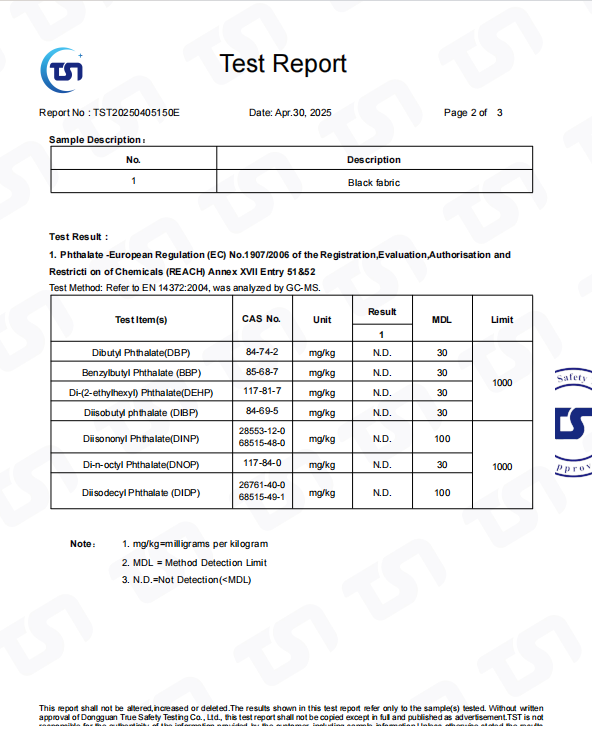
Anonymized real sports T-shirt inline inspection report showing identifiable inspection fields

Report Identification

An inspection record should identify the product style, order or batch, responsible production location, inspection date and relevant technical version. Without reliable identification, findings cannot be confidently linked to affected production.

Inspection Coverage

The report should state which production operations, garment characteristics and quantities were examined. Reviewing a particular sewing operation does not automatically establish the quality of all garments or all subsequent processes.

Measurement Findings

Recorded measurements should refer to approved points of measure, methods and tolerances. The report should identify deviations rather than merely using an unqualified pass or fail statement.

Workmanship Classification

Findings should distinguish relevant visual and structural defects. Criticality and acceptance depend on the agreed inspection criteria; the same visual issue may have different consequences depending on its location and intended use.

Corrective Action

When a material or production issue is found, the record should identify the proposed disposition, responsible action and verification requirements. The purpose is to prevent recurrence, not simply to document an observation.

Release Interpretation

Inline inspection supports process decisions but should not be presented as the sole authorization for shipment. Final release must follow the applicable production, quality and customer requirements.

How Buyers Should Use the Report

Buyers should examine whether inspection records are identifiable, sufficiently specific and linked to corrective decisions. A report showing only “passed” without inspection scope, measurements or accepted criteria provides limited evidence. For a sports T-shirt, particularly useful records may cover neckline attachment, shoulder and sleeve assembly, garment dimensions, seam appearance and decoration placement. If an actual record is unavailable for public display, an educational example may demonstrate how a report should be interpreted, but it must be clearly labeled as an illustration and not as a completed MOVEVOX inspection.

REPEAT-ORDER PLANNING

Plan Repeat Sports T-Shirt Orders Around Approved Specifications

Repeat orders need more than a previous purchase order number. Materials, color standards, size breakdowns, decoration files and production references must remain identifiable. The following planning sequence illustrates how a brand and supplier can organize an ongoing Sports T-Shirt program.

Specification Review

Timing: Project-dependent

Prerequisite: Approved style and current Tech Pack

Buyer Approval: Confirm version and any changes

Material Confirmation

Timing: Material-dependent

Prerequisite: Identified fabric, color and trim requirements

Buyer Approval: Approve substitutions if proposed

SKU Forecast

Timing: Planning-dependent

Prerequisite: Size, color and expected order quantities

Buyer Approval: Confirm purchase requirements

Production Allocation

Timing: Capacity-dependent

Prerequisite: Materials and executable technical specifications

Buyer Approval: Confirm production arrangement

Bulk Manufacturing

Timing: Order-dependent

Prerequisite: Required technical and commercial release

Buyer Approval: Approve any critical changes

Quality Review

Timing: Inspection-dependent

Prerequisite: Defined standards and accessible production records

Buyer Approval: Resolve required quality issues

Packing Preparation

Timing: Order-dependent

Prerequisite: Approved SKU and packaging identification

Buyer Approval: Confirm packing requirements

Shipment Coordination

Timing: Logistics-dependent

Prerequisite: Released goods and shipping instructions

Buyer Approval: Confirm shipment information

What Can Change the Timeline?

Material availability, custom colors, artwork revisions, sample corrections, capacity allocation, inspection requirements and shipment arrangements can all change the order schedule. A repeat style may require less product development when specifications remain valid, but changes to fabric or construction can reopen technical approval.

MOVEVOX's established account management, sourcing, manufacturing coordination and QC functions provide a basis for planning repeat orders. Actual dates and responsibilities must be confirmed against the specific purchase order and current production conditions.

PRODUCT DEVELOPMENT EVIDENCE

Examine the Development Details Behind Performance Sports T-Shirts

A useful product gallery should reveal the construction and approval decisions behind the finished garment. These six evidence categories connect Sports T-Shirt samples with fabric, pattern, stitching, decoration and production preparation instead of displaying unrelated promotional images.
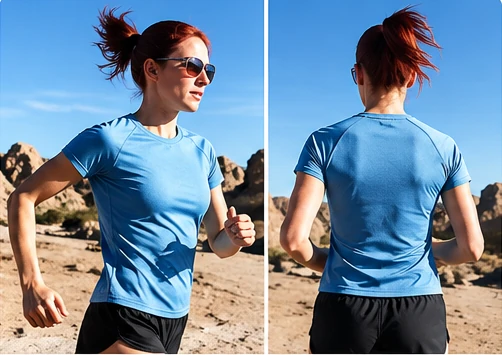
Actual performance sports T-shirt development sample showing its full silhouette, sleeves and neckline

Approved Tee Silhouette

Show a genuine fitted, regular or other approved sports T-shirt sample with its actual neckline, sleeves and proportions clearly visible.
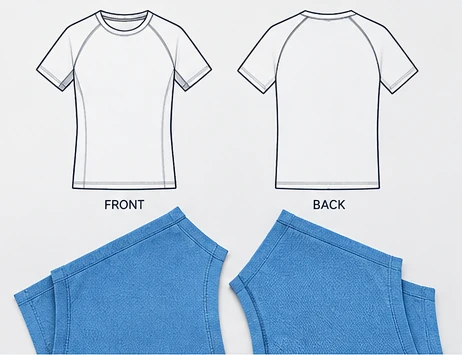
Actual sports T-shirt development pattern or sample showing shoulder geometry and sleeve construction

Shoulder Pattern Detail

Use a real sample or authorized pattern view showing shoulder geometry, sleeve construction and relevant fit-development information.
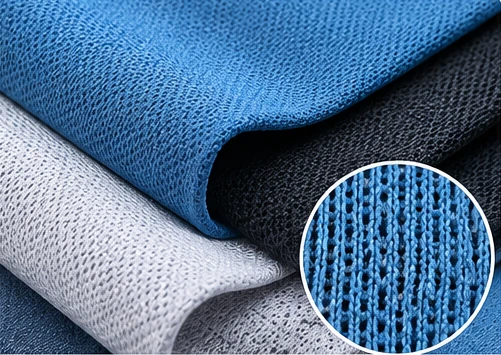
Performance sports T-shirt fabric swatch with visible knitted structure and material reference

Performance Fabric Swatch

Present an identifiable material swatch with confirmed composition, structure and appropriate technical reference information.
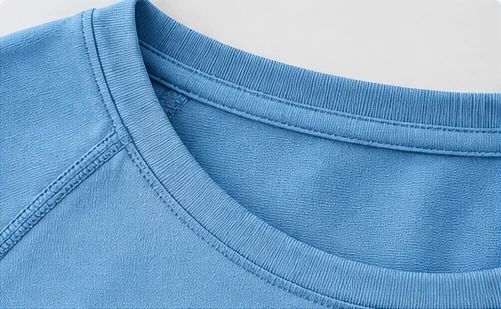
Close-up of actual sports T-shirt neckline attachment and seam finishing

Neckline and Seam Finish

Show actual neckline attachment, sleeve joining or hem construction with sufficient detail to support a workmanship discussion.
Genuine logo application trial or process sample on stretch sportswear fabric

Logo Application Sample

Display a genuine brand-decoration trial or approved process sample on a suitable activewear fabric.
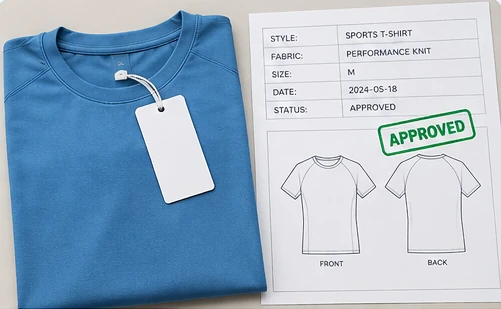
Authorized anonymized sports T-shirt sample review or approval record corresponding to the garment

Sample Approval Reference

Use an authorized sample-review image or anonymized approval record corresponding to the displayed garment.

TOTAL SOURCING COST

Compare the Total Sourcing Cost of Sports Tee Programs

Unit price is only one part of a Sports T-Shirt sourcing decision. Material commitments, pattern revisions, decoration, inspection, inventory and repeat-order stability can create different total costs. Compare the actual requirements of each program before judging one construction as commercially preferable.

Cost FactorStandard Training TeeTechnical Performance TeeSpecial Branding Program
Fabric Procurement Existing materials may simplify sourcing, subject to stock and approval. Technical fabrics may require additional specifications, testing or sourcing commitments. Exclusive color or finish requirements can create separate supplier minimums.
Pattern Development An established fit direction may reduce unresolved technical questions. Specialized athletic geometry may require more detailed movement and fit review. Decoration placement or garment style changes can introduce further pattern considerations.
Sampling Revisions Revisions depend on how complete the original specifications are. Functional or material requirements can create additional approval questions. Artwork and decoration trials may require separate technical iterations.
Decoration Cost Simple approved branding may require fewer preparation steps. Application methods must remain compatible with performance fabrics and their requirements. Special techniques can introduce additional setup, process and testing obligations.
Quality Control Standard dimensions, workmanship and branding still require inspection. More product-specific material and performance criteria may require additional evaluation. Complex artwork may introduce separate positioning and durability inspection requirements.
Production Complexity Conventional assembly may be appropriate for the approved construction. Engineered panels or seam requirements can increase manufacturing coordination. Specialized processes may involve approved external service providers and additional handovers.
Inventory Exposure Material and finished-goods commitments depend on confirmed order structure. Specialized fabric may be difficult to reallocate to unrelated styles. Exclusive branding or components may limit reuse across other SKUs.
Repeat-Order Risk Stable specifications help define the basis for future order comparison. Material performance and construction changes may require renewed approval. Artwork versions and component availability can increase repeat-order control requirements.

Why the Lowest Unit Price May Cost More

A lower quotation does not always represent the lowest cost of delivering an approved product. Additional sampling, material commitments, rework, delays or excess component inventory may offset an initially attractive unit price.

The scenarios above are qualitative purchasing models, not MOVEVOX customer cost results. Actual quotations should identify material, quantity, construction, decoration, packaging and delivery assumptions.

For a mature brand, the more useful comparison is the cost of obtaining and repeating the required product standard—not merely the price of the first manufactured garment.

MOQ BY ORDER STRUCTURE

Confirm Sports T-Shirt MOQ Against Your Order Structure

MOVEVOX's general cut-and-sew customization reference starts at approximately 150 pieces per style, subject to actual product and sourcing conditions. This does not establish a fixed minimum for every color, material or decoration. Buyers should assess the complete order structure before requesting a commercial commitment.

Standard Material Program

An approved cut-and-sew T-shirt design using available material directions may be suitable for evaluation under MOVEVOX's standard customization framework. The general reference MOQ is approximately 150 pieces per style, but project feasibility still depends on the fabric, color, pattern, artwork and planned order.

Size ratios and color splits should be discussed alongside available materials. If a particular color or accessory requires its own purchasing minimum, the practical garment quantity may differ from the general reference.

Quantity: Approximately 150 pieces per style as a conditional reference.

Color / Size Split: Subject to actual material availability and order review.

Price Factors: Fabric, pattern, decoration, preparation and confirmed quantity.

Custom Fabric Program

Exclusive color development, special fabric construction or buyer-specified materials may create purchasing commitments beyond the basic garment MOQ. A dyeing minimum, specialized material supplier or exclusive trim can determine the commercially feasible quantity even when the garment can technically be sewn at a smaller volume.

The buyer should provide the intended material specification, colors and forecast volume. MOQ and pricing can then be evaluated using actual supplier conditions rather than a universal numerical promise.

Quantity: Material and sourcing dependent; confirm by RFQ.

Color / Size Split: Defined after material and color requirements are reviewed.

Price Factors: Dye lots, material commitments, testing and inventory exposure.

Specialized Branding Program

A sports T-shirt using custom artwork, specialty decoration, unusual labels or exclusive packaging may require separate component or process minimums. The garment itself may be straightforward to sew, while artwork preparation and auxiliary materials create additional order constraints.

For an established brand, planning several coordinated SKUs may help clarify shared components and purchasing commitments. However, combined demand does not automatically remove individual material, color or process minimums.

Quantity: Confirm after decoration and component review.

Color / Size Split: Based on the approved SKU and branding structure.

Price Factors: Artwork setup, decoration method, special trims and packaging.

SUPPLIER TYPE COMPARISON

Compare Sports T-Shirt Suppliers by Procurement Requirements

Different supplier models offer different ways to coordinate development and production. The appropriate choice depends on technical complexity, order structure, transparency and commercial needs. This comparison describes typical model characteristics; individual suppliers should be evaluated using their actual evidence.

Buyer Evaluation MOVEVOX Single-Process Factory Trading Company Large Manufacturing Group
Main Model Activewear development with cut-and-sew and seamless resources Specialized around its available production processes Coordinates selected manufacturers and services Operates multiple production or business units
Product Development Tech Pack, sample and construction review capabilities Depends on technical staffing and specialization Depends on internal expertise and manufacturing partners Depends on relevant division and client-access arrangements
Sports Tee Fit Established T-shirt range; project review required May be specialized in a defined T-shirt construction Must demonstrate product-specific technical understanding Must confirm which unit accepts the actual product
Manufacturing Route Cut-and-sew and Santoni seamless options Limited by owned or accessible processes Determined by selected production partners Depends on allocated factories and business units
Production Responsibility Own operations plus disclosed coordinated resources Generally concentrated in its own process scope Requires transparent responsibility across manufacturers Depends on division, plant and subcontracting agreements
MOQ Conditional by garment, material and order structure Depends on production and sourcing economics Depends on chosen manufacturer and service model May require larger commercial commitments
Quality Evidence Customer specifications and established QC organization Request actual inspection and technical records Confirm who performs and authorizes inspections Request site-specific controls and relevant audit documents
Repeat Orders Project and supplier coordination support Depends on capacity and material continuity Depends on manufacturer continuity and document control Depends on allocation, contracts and planning requirements

Interpreting Supplier Suitability

A smaller specialist factory may suit a narrowly defined construction, while a larger group may be appropriate for high-volume programs with substantial compliance requirements. A sourcing company may offer coordination advantages when its manufacturing relationships are transparent.

MOVEVOX should be evaluated on its confirmed activewear capabilities and project-specific execution, not on a claim that every competing supplier model is inferior.

The buyer should verify actual production sites, responsible parties, technical competence, quality records and commercial assumptions before selecting any supplier.

SUPPLY CHAIN TRANSPARENCY

Understand Who Controls Each Sports Tee Supply Chain Step

A stable sourcing relationship requires clear ownership of specifications, materials, production decisions and quality responsibilities. MOVEVOX operates its own manufacturing resources alongside coordinated external capacity. The exact production arrangement for a sports T-shirt order should be disclosed and confirmed during project review.

Customer Specifications

MOVEVOX coordinates customer technical requirements, sample references, specifications, order information and approval questions. The relevant documents should identify the applicable garment version and any buyer-authorized changes before production instructions are issued.

Fabric Sourcing

The sourcing function coordinates fabrics and relevant material requirements, including customer-designated materials where applicable. Material identification, color references, delivery conditions and approved substitutions must remain linked to the customer specifications.

Cut-and-Sew Operations

MOVEVOX has its own cut-and-sew production resources for suitable activewear garments. Cutting, garment assembly and finishing arrangements should be selected according to the approved Sports T-Shirt construction and actual order conditions.

Seamless Knitting

The company's own manufacturing system includes 28 Italian Santoni seamless knitting machines. This capability can be considered for compatible knitted Sports T-Shirt developments after reviewing yarn, construction, sizing, finishing and technical feasibility.

Specialized Decoration

Selected printing, embroidery or other decoration processes may require specialist partners depending on the actual project. Such suppliers should be identified by responsibility and process scope rather than automatically represented as MOVEVOX-owned manufacturing facilities.

Quality Coordination

MOVEVOX has a five-person core QC function and established quality-control responsibilities. Inspection requirements should refer to the customer's approved specifications, relevant materials and production conditions, including work assigned to coordinated manufacturing resources.

Packaging and Shipment

Labels, packaging components, packing requirements and shipment information should correspond to the approved order and SKU structure. The coordination process must maintain consistency between product identification, packing records and final shipment preparation.

Unified Project Management

MOVEVOX coordinates customer requirements, sourcing, sample versions, supplier allocation, production information, inspection and delivery preparation through its established operating structure.

Its external manufacturing relationships are not equivalent to wholly owned factories. Project-specific production responsibility should therefore be clear to buyers.

A proposed Sports T-Shirt program may use different resources according to design, capacity and commercial requirements. Any production assignment or process change affecting agreed standards should be evaluated against the applicable approval arrangements.

TECHNICAL & COMMERCIAL FAQ

Sports T-Shirt Manufacturing Frequently Asked Questions

These answers address common sourcing and development questions from established activewear brands. Manufacturing feasibility, material performance, MOQ, sample requirements and commercial terms must be confirmed for the actual Sports T-Shirt project rather than assumed from a general product description.

Which fabrics are suitable for performance sports T-shirts?

Suitable options depend on the intended activity, fit, comfort and performance requirements. Polyester-based, nylon-based and elastane-blended fabrics may be considered, alongside different knit structures such as jersey, interlock or engineered mesh. Composition alone does not establish the finished garment's performance. Brands should compare fabric weight, stretch, recovery, opacity, dimensional stability, hand feel and relevant test requirements. MOVEVOX can review material directions within its activewear development capabilities, with final selection subject to the specific project.

Can MOVEVOX provide moisture-wicking or quick-drying sports T-shirts?

MOVEVOX can review fabric options intended for moisture-management applications. However, moisture-wicking and drying describe different material behaviors, and neither should be claimed without appropriate support. A buyer requesting a specific performance standard should provide the intended use, test requirements and acceptance criteria. The relevant fabric or garment must then be assessed against those requirements. No universal moisture-management rating or quick-drying result is being claimed for every MOVEVOX Sports T-Shirt product.

Is a lower-GSM fabric always better for running?

No. Lower GSM describes reduced mass per unit area, but it does not automatically establish better ventilation, comfort or moisture management. Yarn structure, fabric density, finishing, fit and the intended wearing environment also affect the result. Very lightweight materials may introduce different opacity or durability concerns. A running T-shirt specification should balance weight with movement, coverage, care and performance expectations. Candidate fabrics should be compared under relevant conditions before a final material is approved.

Can recycled or certified materials be used?

Buyer-specified recycled or certified materials may be considered through sourcing and feasibility review. The availability of a particular material or supply chain depends on the required specification, source, quantity and supporting documentation. Any certification or recycled-content claim must be checked against the actual certificate holder, validity, applicable process and product scope. MOVEVOX does not treat a supplier's material claim or an unrelated report as proof that every finished Sports T-Shirt qualifies for the same declaration.

Send Us an Inquiry

Tell us your needs, and our team will get back to you within 24 hours.

START YOUR PROJECT

Ready to Develop Your Private Label Activewear Line?

Tell us what you want to develop, your estimated quantity and customization needs. We will review the details and suggest the next practical step for sampling, quotation or production.

Helpful details to include:

Request MOQ & Sample Details