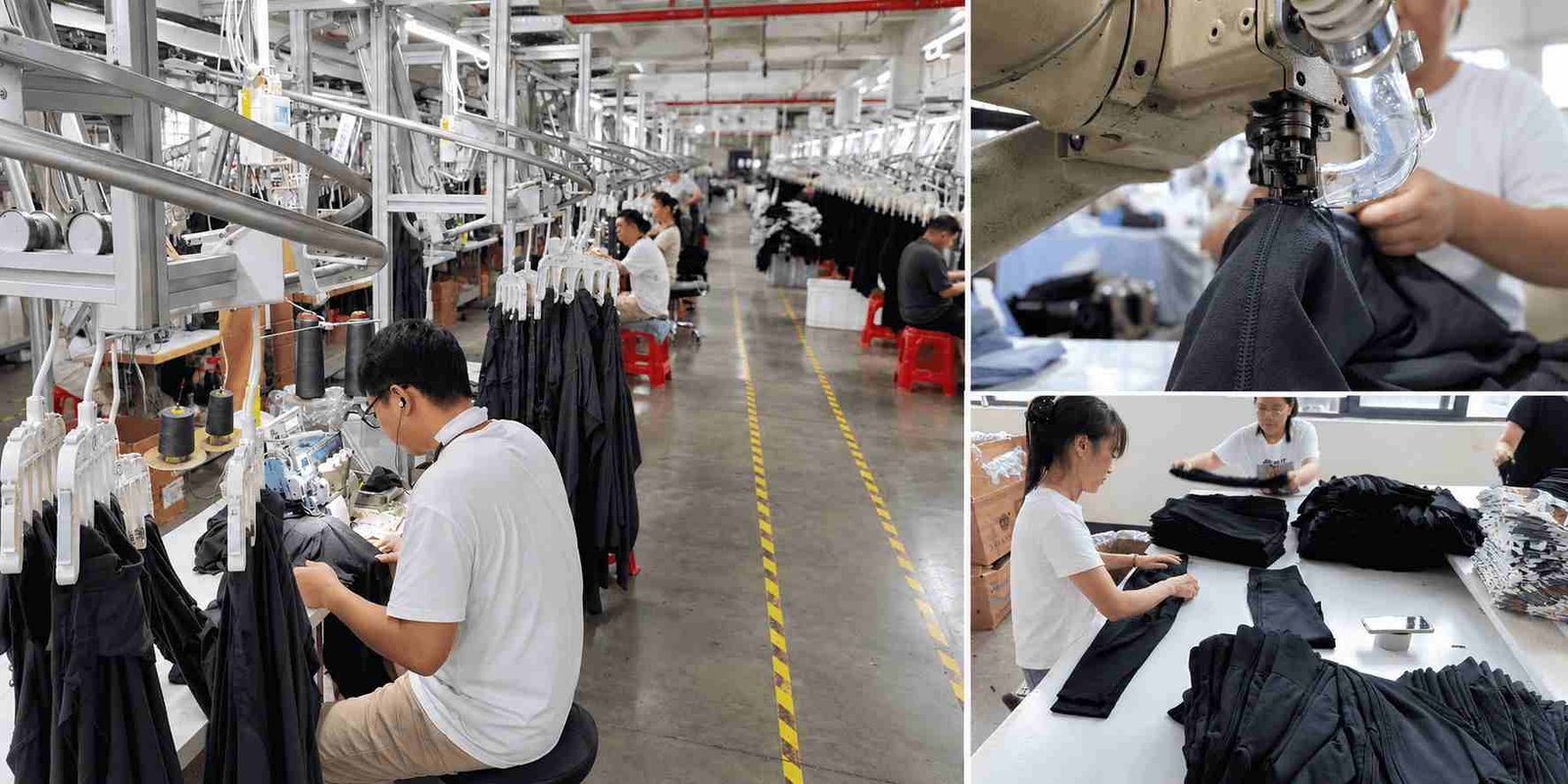
PRIVATE LABEL YOGA LEGGINGS MANUFACTURER

Private Label Yoga Leggings Manufacturer for Activewear Brands

Develop private-label yoga leggings through one accountable manufacturing system covering product development, Seamless and Cut & Sew production, branding, sampling, quality control and scalable bulk execution.

MOVEVOX supports established yoga, activewear and athleisure brands that need more than stock leggings with a Logo. Projects can begin from a Tech Pack, legal reference sample, sketch or defined product direction, then move through material selection, Fit development, sample approval and controlled production.
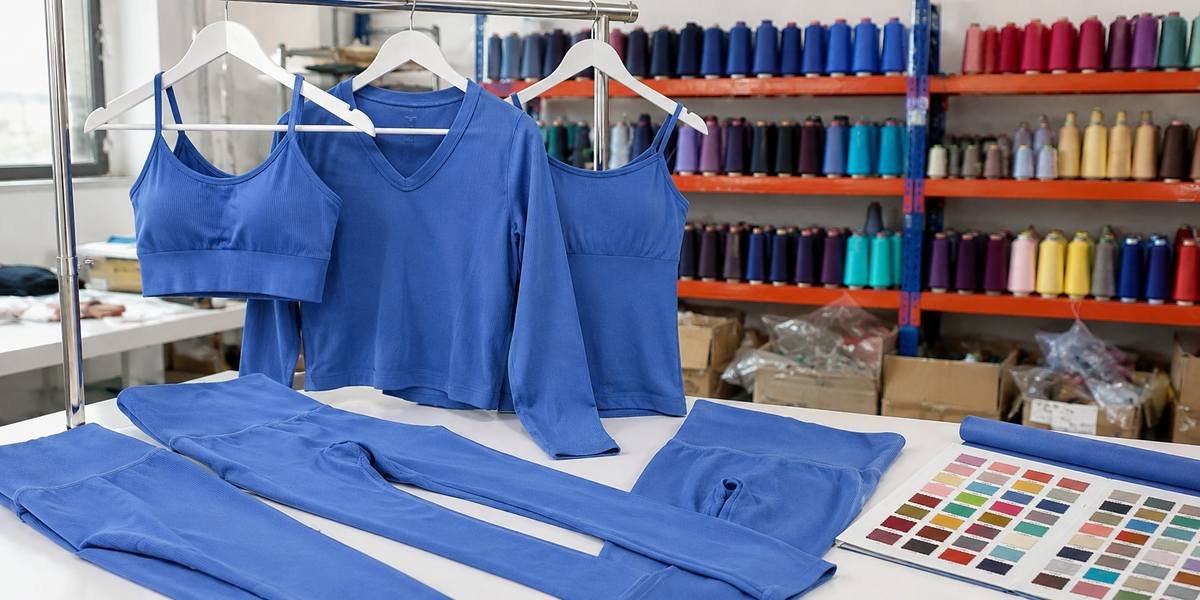
Private label activewear collection developed for branded yoga and fitness programs
28 Santoni Seamless Machines
Seamless + Cut & Sew

Two manufacturing routes under one managed system.

5–10 Working Days

Typical standard sampling after critical inputs are confirmed.

≈100 / 150 pcs

Typical Seamless / Cut & Sew base MOQ.

≈150K–200K pcs/month

Managed stable delivery level across the controlled network.

BUYER FIT

Built for Brands Managing Real Yoga Leggings Programs

MOVEVOX is best aligned with buyers that need repeatable product development and manufacturing control rather than one-off promotional customization.

Established Activewear Brands

You already sell activewear and need approved Fit, material, color, branding and quality standards to remain stable across repeat leggings orders.

Yoga & Pilates Brands

You need leggings development that considers material behavior, Fit, waistband construction, opacity requirements and coordinated private-label execution.

Athleisure & Multi-Category Brands

You need leggings to connect with sports bras, shorts or tops without losing SKU-specific Fit and construction control.

Growing Private-Label Programs

You have validated initial demand and now need stronger sampling, production control, QC and capacity planning as volume increases.

DIRECT ANSWER

A Manufacturing Partner for Branded Yoga Leggings, Not Just Logo Application

MOVEVOX operates as a manufacturing-driven product development and production partner for private-label activewear programs.

Depending on the buyer's technical input, a leggings project can include material direction, pattern or Seamless development, sampling, color, branding, packaging, bulk production and quality management.

Develop

Work from a Tech Pack, legal reference sample, sketch or defined product direction.

Manufacture

Use Seamless or Cut & Sew according to the actual garment construction.

Private Label

Coordinate Logo, labels, Hangtags, packaging and SKU requirements with the garment itself.

VERIFIABLE MANUFACTURING FACTS

Start Supplier Evaluation With Facts, Not Claims

≈6,000 m²

Yiwu Core Base

Six floors with approximately 1,000 m² per floor.

28

Italian Santoni Machines

Core Seamless manufacturing capability.

≈24

Principal Garment Machines

Supporting core Cut & Sew production.

≈8

Development Team

Design, pattern and sample-development personnel.

5

QC Personnel

Supporting applicable development and production checks.

5–10 Days

Standard Sampling

Typical after critical development details are confirmed.

LEGGINGS PROGRAM DEVELOPMENT

Develop Yoga Leggings as a Repeatable Collection, Not an Isolated SKU

Materials, colors, branding and packaging may need to support multiple launches while each garment maintains its own Fit and construction requirements.
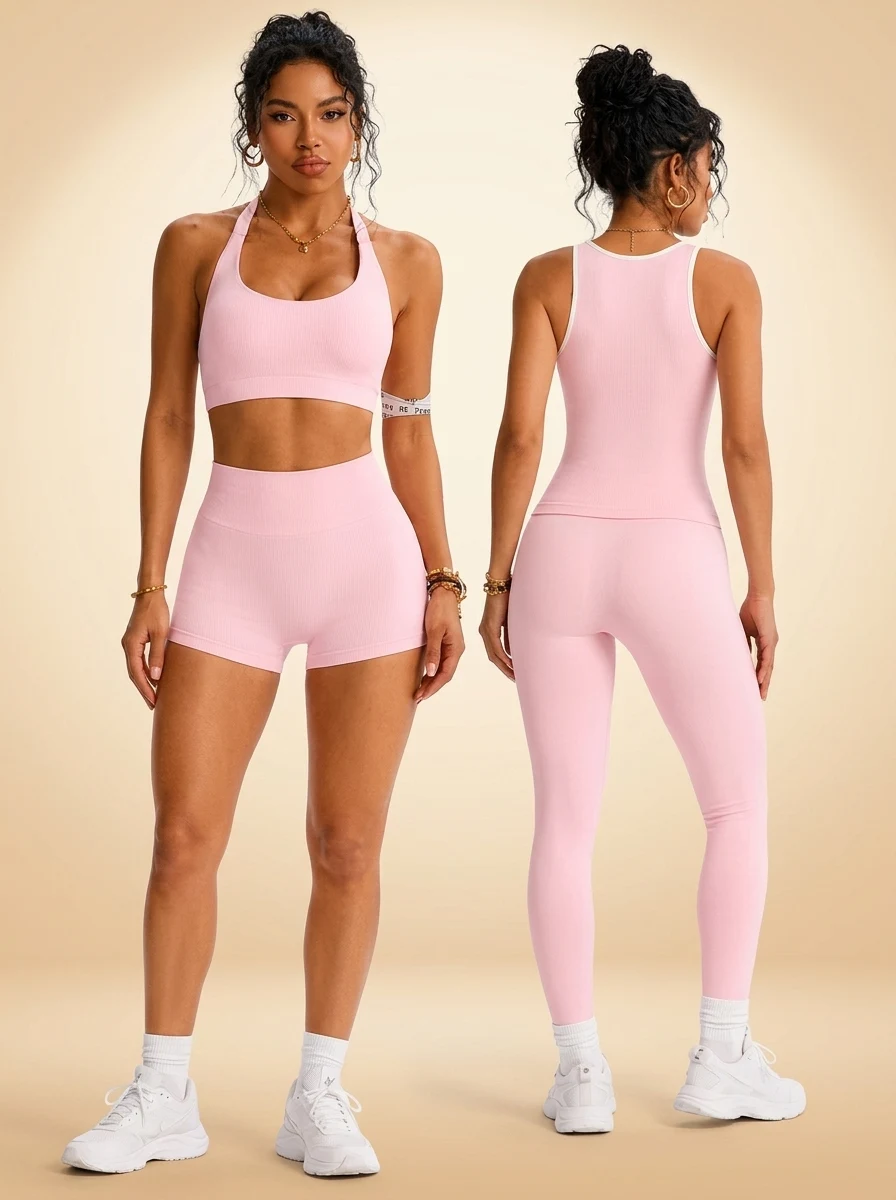
Coordinated seamless activewear products supporting a core leggings program

Core Leggings Program

Establish construction, material direction, Fit intent, waistband and approved production standard first.
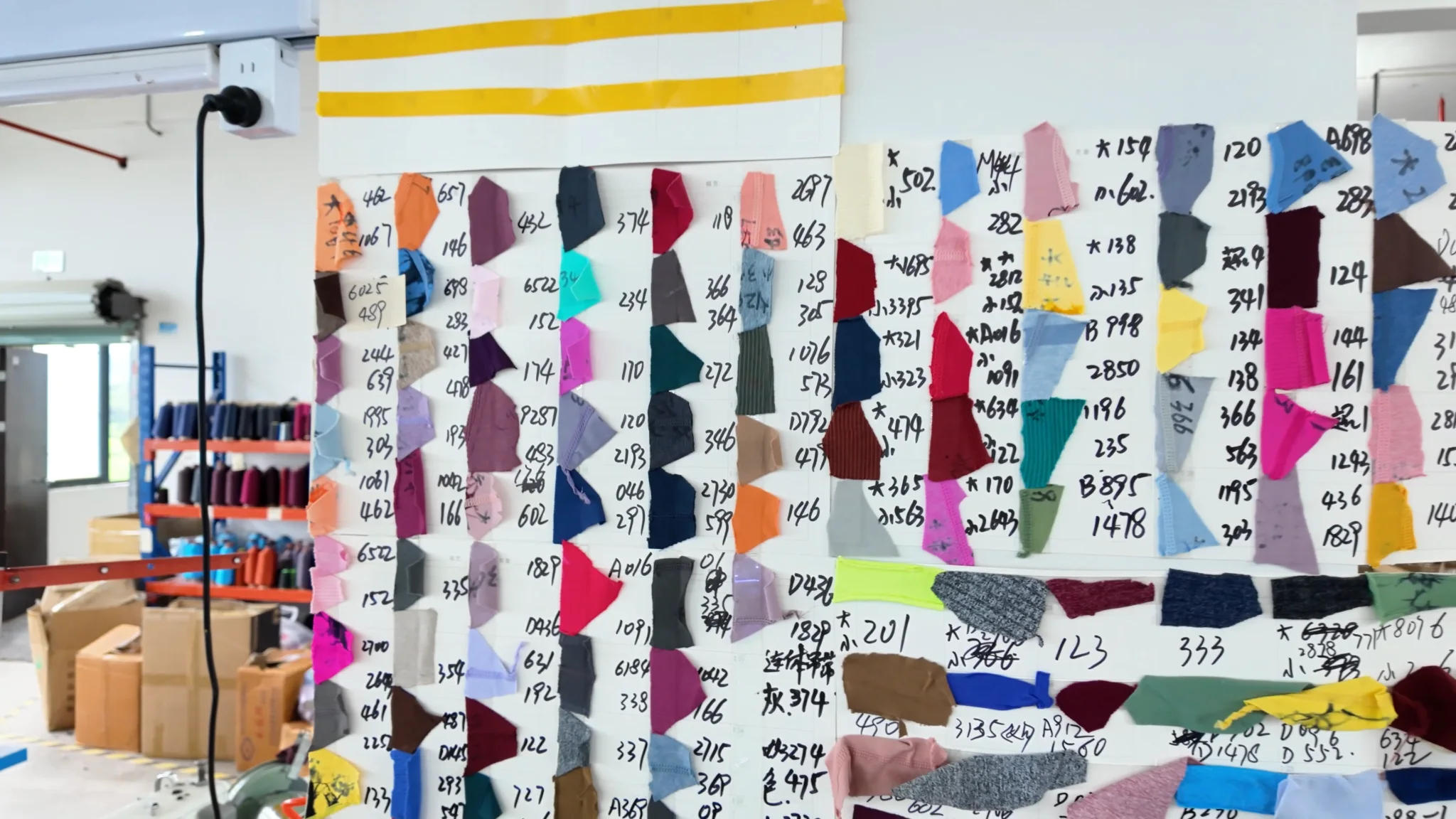
Fabric swatches and approved color references for activewear colorway development

Colorway Extension

Extend an approved product into additional colors while controlling material route, color approval and lot variation.
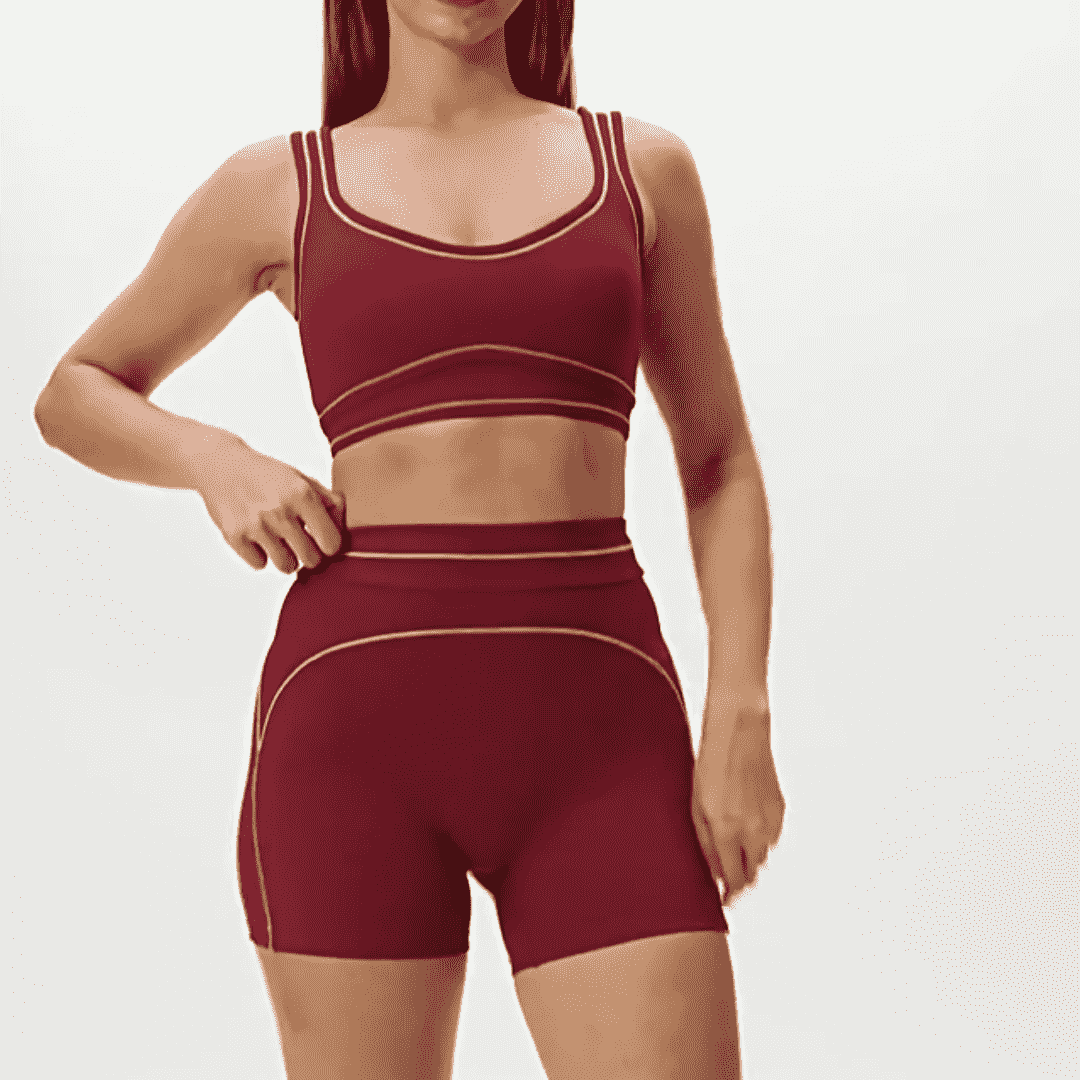
Coordinated activewear leggings and sports bra set

Coordinated Yoga Set

Connect leggings with sports bras or tops through shared color and branding standards while keeping product-specific Fit control.
Coordinated seamless activewear collection for seasonal product expansion

Seasonal Update

Reuse validated foundations where appropriate while treating new fabrics, colors or constructions as controlled revisions.

TECHNICAL ROUTE

Choose the Manufacturing Route Around the Leggings Design

Seamless and Cut & Sew solve different construction requirements. Neither should be treated as universally superior.
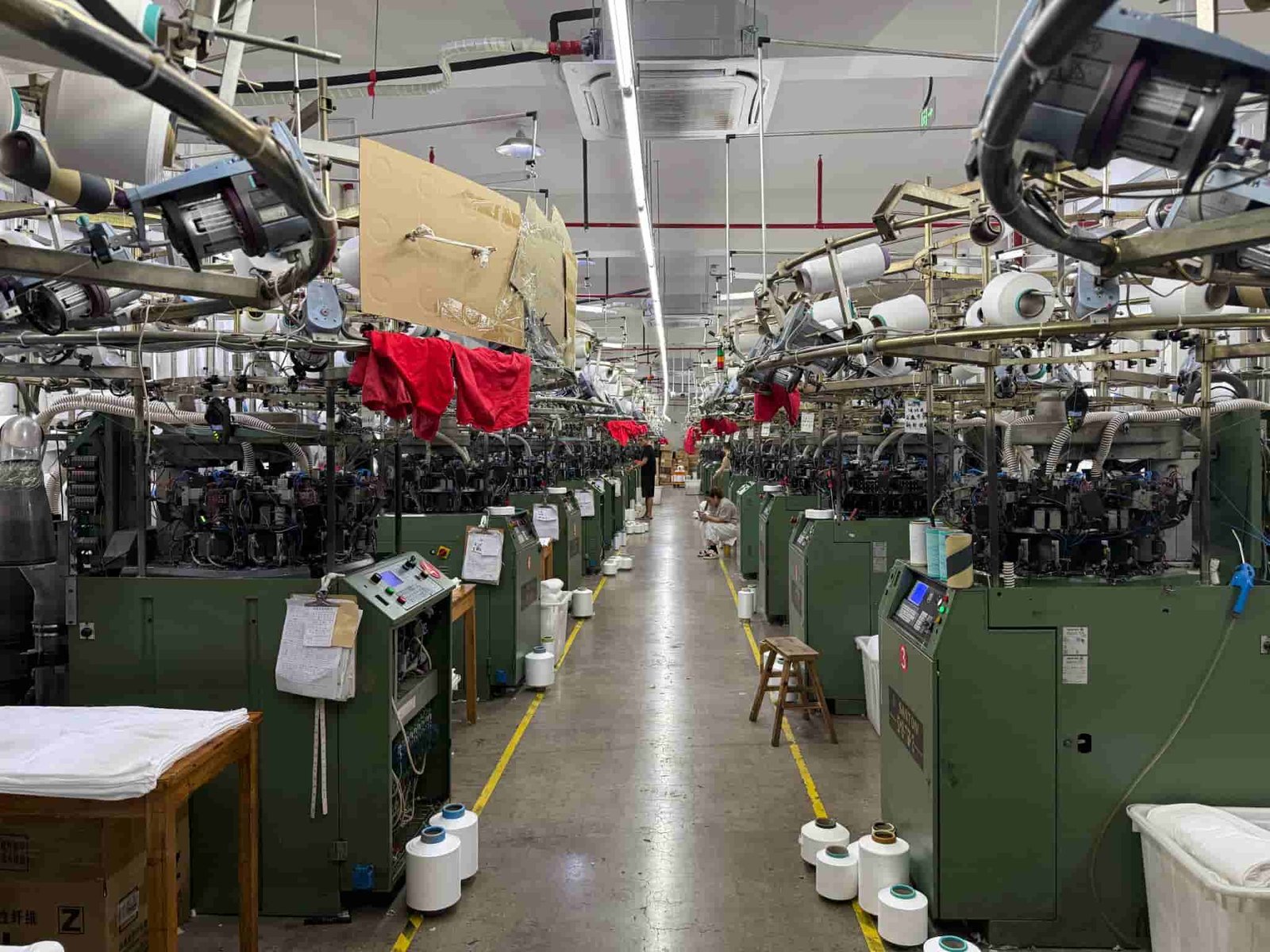
MOVEVOX Santoni seamless knitting production area

Seamless Yoga Leggings

Appropriate when engineered knitted structures, reduced seam construction, rib structures or knitted zones are part of the product design.

MOVEVOX operates 28 Italian Santoni Seamless machines at the Yiwu core base.

MOVEVOX Cut and Sew garment production

Cut & Sew Yoga Leggings

Appropriate when the product relies on selected fabric, cut panels, defined seam placement, pattern engineering or sewn construction details.

MOVEVOX maintains core Cut & Sew capability in Yiwu.

CORE CAPABILITY

Six Capabilities Behind a Private-Label Leggings Program

Product Development

Translate buyer specifications, legal reference samples, sketches or product direction into controlled development requirements and physical samples.

Seamless Manufacturing

Support Seamless yoga leggings and related activewear through the core Santoni manufacturing capability.

Cut & Sew Manufacturing

Support pattern-based leggings and coordinated activewear using conventional fabric cutting and garment assembly.

Private Label

Coordinate applicable Logo, labels, Hangtags, packaging and identification requirements as part of the product program.

Quality Control

Use approved samples, specifications and project requirements as references through material checks, First Article, in-line, finished-garment and packing stages.

Bulk Coordination

Manage production allocation, scheduling, technical standards, changes, QC and final release through one accountable operating system.

PRIMARY VALUE

One Accountability Chain From Development to Repeat Production

The value of a private-label manufacturer is not limited to making the first approved sample. A long-term supplier must keep product definition, production execution and quality control connected as order volume and SKU complexity increase.

Product Development

Clarify technical inputs, materials, Fit and product requirements before production assumptions become embedded in the garment.

Manufacturing

Assign each product to the appropriate Seamless or Cut & Sew production route and maintain the approved technical standard.

Quality Control

Connect approved samples and specifications to First Article, in-line, finished and packing inspections.

Scale & Repeat

Expand production through controlled capacity without allowing production sites to independently redefine materials, construction or quality standards.

PROCUREMENT RISK

Control the Risks That Usually Appear After the First Sample

A successful development sample is only the beginning. Material, Fit, color, capacity and production-control risks usually become more visible when the product moves toward bulk and repeat orders.

01 · Material

Material Risk

A fabric that looks appropriate does not automatically satisfy the required stretch, recovery, handfeel, weight, support or opacity expectation.

Control Direction: Define the material requirement and approve the applicable fabric before bulk release.
02 · Fit

Fit Risk

Measurements alone do not fully control leggings Fit when material behavior, construction or grading changes.

Control Direction: Connect measurements, POM, tolerance, material and approved Fit references.
03 · Color

Color Risk

Pantone references do not eliminate material-specific or dye-lot variation.

Control Direction: Manage the color route through applicable lab dip, approved standard, lot identification and bulk comparison.
04 · Bulk Consistency

Sample-to-Bulk Risk

A successful development sample can still drift during manufacturing if approved decisions are not written back into production standards.

Control Direction: Use an approved reference, First Article and in-line verification.
05 · Capacity

Capacity Risk

Accepting volume without reviewing factory loading, material readiness and production route can create delivery risk.

Control Direction: Complete PO-level capacity review before committing larger programs.
06 · Transparency

Production Transparency Risk

Uncontrolled factory changes can break technical and quality continuity.

Control Direction: MOVEVOX centrally manages production allocation, and buyer approval is required where an Approved Factory Only restriction applies.
PRODUCT DEVELOPMENT

Turn a Yoga Leggings Concept Into an Approved Production Reference

A controlled development process turns incomplete product direction into a physical reference that production and quality teams can actually follow.
MOVEVOX activewear sample development room
01

Review the Input

Start from the buyer's Tech Pack, legal reference sample, sketch, product image or defined product direction.

02

Clarify Technical Gaps

Identify missing measurements, construction details, material requirements, branding inputs and other decisions that affect development.

03

Select the Development Route

Confirm whether the product is better suited to Seamless or Cut & Sew manufacturing.

04

Establish Material Direction

Review the required stretch, recovery, handfeel, weight, appearance and other buyer-defined performance requirements.

05

Build the Development Sample

Create the first physical sample using the current approved development information.

06

Review Fit & Construction

Compare the garment against the buyer's measurements, Fit direction and required technical details.

07

Revise Where Required

Apply consolidated buyer feedback to the next controlled sample version.

08

Confirm the Approved Reference

The final approved product, relevant technical files and applicable branding or packaging decisions become the basis for production handover.

FABRIC SELECTION

Select Fabric Around the Intended Leggings Performance

Fabric selection should begin with the wear requirement, not only with a fiber percentage. Similar fiber compositions can behave differently depending on yarn, knitting or weaving structure, weight, finishing and garment construction.
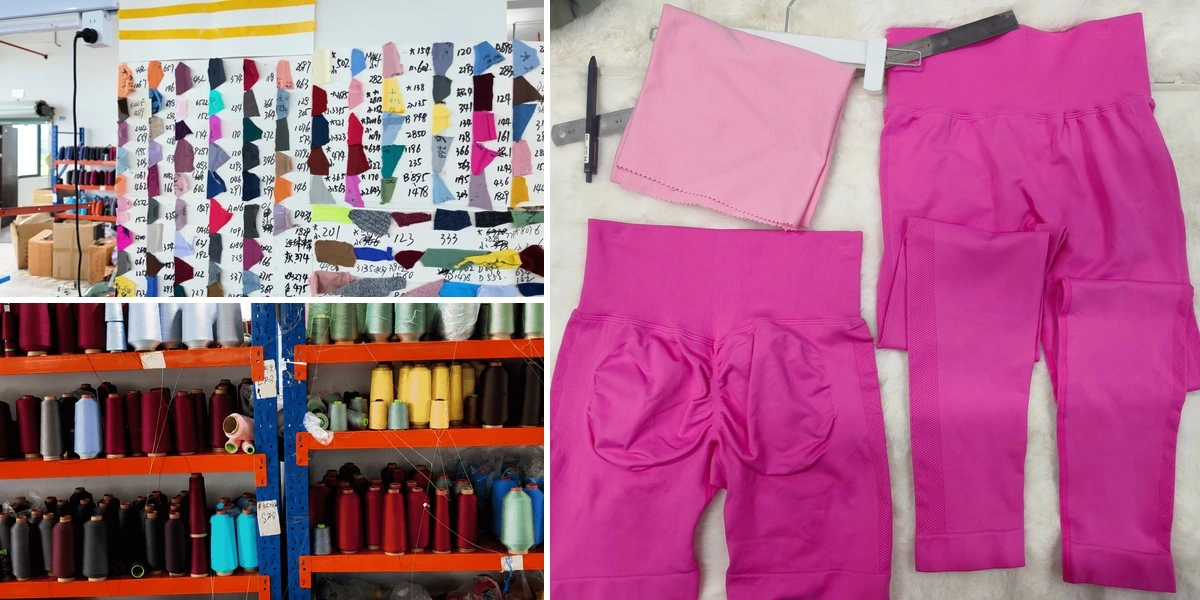
Activewear fabric development using yarn, swatches and finished garment references

Start With the Wear Requirement

Define the intended use, handfeel, stretch direction, recovery, support level, surface appearance and opacity expectation.

Match the Material Route

Review available or custom material options against the product construction, target quantity, color requirements and expected commercial position.

Validate Before Bulk

Approve the applicable material and color reference before bulk production. If the material changes, Fit or other approved characteristics may require renewed evaluation.

Stretch & Recovery

Review how the material extends and returns during wear.

Handfeel & Surface

Define the required softness, smoothness, structure or visual texture.

Weight & Coverage

Review how material weight and construction relate to the buyer's coverage and opacity requirements.

Support

Define the intended garment feel and support requirement against the actual product rather than assuming performance from composition alone.

PERFORMANCE REQUIREMENTS

Translate Performance Expectations Into Approveable Requirements

Terms such as “high compression,” “squat-proof” or “premium stretch” can mean different things to different buyers. For manufacturing, the requirement needs to be connected to a defined material, sample, test method or approval reference wherever appropriate.

Opacity Requirement

The garment should provide the required coverage during the intended movement.

Evidence Direction

Approve the actual fabric and garment, and define additional testing if the buyer requires a formal opacity or stretch-related test.

Support / Compression Intent

The leggings should provide the intended level of hold or support.

Evidence Direction

Evaluate the selected material, construction and Fit on the physical sample. Do not infer compression performance solely from fiber percentage.

Stretch & Recovery

Material should extend appropriately and retain the intended garment shape.

Evidence Direction

Evaluate the actual material and approve project-specific test requirements when quantitative validation is needed.

Handfeel & Surface

The fabric should deliver the intended softness, smoothness, structure or visual appearance.

Evidence Direction

Approve a physical material or garment reference rather than relying only on written adjectives.

FIT & SIZE CONTROL

Control Yoga Leggings Fit From Base Size Through Bulk Production

Size consistency does not come from applying one universal XS–XL chart. Each leggings program needs its own approved measurements, grading logic, material behavior, tolerances and production references.

Fit Control Point What Must Be Controlled Production Reference
Base Size Core garment measurements, proportions and intended Fit. Measurement Chart + Approved Fit Sample
Points of Measurement Where and how critical measurements are taken. POM Specification
Measurement Tolerance Acceptable production variation for relevant garment measurements. Approved Tolerance Standard
Grade Rules How measurements change between sizes according to approved Fit direction. Grading Specification
Size Set Physical validation of graded sizes where required. Size Set Sample
Material & Construction Stretch, recovery and construction effects on Fit. Approved Material + Construction Standard
First Article Initial production checked before normal bulk continues. First Article Inspection
Bulk Measurement Production compared with approved measurements and tolerances. In-Line QC + Final Inspection

Fit Control Principles

  • The same size name does not represent one universal activewear measurement.
  • Approval of a base size does not automatically validate every graded size.
  • Changes in material or construction may require renewed Fit validation.
  • The approved measurement information must remain connected to the correct sample and technical version.
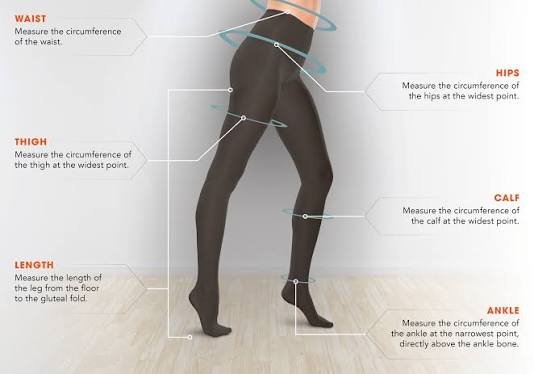
Yoga leggings size specification and physical fit development review
COLLECTION PLATFORM

Build Repeatable Collections Around Shared Product Standards

A product platform can reduce unnecessary redevelopment by separating the elements that should remain common across a collection from the decisions that must stay specific to each SKU.

Material Platform

Use an approved fabric or yarn direction across suitable products where performance, construction and commercial requirements allow.

Fit Platform

Maintain defined Fit principles and measurement logic while recognizing that leggings, sports bras, shorts and tops still require product-specific specifications.

Construction Modules

Reuse validated waistband, seam, edge or other construction concepts where appropriate instead of treating every product as unrelated development.

Color System

Coordinate approved color direction across suitable fabrics and products while controlling material-specific color variation.

Branding System

Align Logo placement, labels and brand identity across the program while maintaining SKU-level artwork control.

Packaging System

Use consistent packaging and identification rules across the collection where commercially appropriate.

Illustrative Collection Example

Leggings + Sports Bra + Shorts + Top

Shared: material direction, color family, Logo system, labels and packaging.

SKU-specific: Fit, measurements, construction, consumption and product approval.

This example is illustrative and does not represent a specific customer order.
Illustrative activewear collection platform including leggings sports bra shorts and tops
COLOR CONTROL

Control Color From Reference to Bulk Production

Color consistency depends on the selected material route, approved reference, lot control and comparison process rather than a Pantone number alone.

Activewear fabric swatches and approved Pantone color references
01

Color Standard

Begin with the buyer's Pantone or other approved color reference.

02

Material Route

Confirm whether the selected material is available in a stock / supply-chain color or requires custom dyeing.

03

Lab Dip or Applicable Approval

For custom color development, review the applicable color sample before normal bulk production.

04

Lot Identification

Keep relevant production lots identifiable so color issues can be traced to the applicable material batch.

05

Incoming Check

Compare incoming material against the current approved color requirement before normal production use.

06

Bulk Comparison

Evaluate the applicable production against the approved color reference and project requirements.

Custom dyeing typically requires approximately 400–600 finished-garment-equivalent pieces per dye lot, depending on material and Style. Stock or supply-chain colors can support different minimum allocations.
PRIVATE LABEL SYSTEM

Build the Private Label Around the Product, Not After It

A branded leggings program includes more than the garment itself. Logo, labels, identification and packaging should be defined early enough to be sampled, costed and controlled with the product.

Product

Confirm the leggings Style, material, Fit, construction, color and current approved sample.

Approved private label activewear production sample

Labels

Support applicable Woven Labels, Care Labels and Size Labels with buyer-approved content and placement.

Hangtags

Coordinate Hangtag artwork, attachment and relevant commercial or product information.

Unit Packaging

Define individual packaging requirements, including applicable Polybag, sticker, SKU or barcode information.
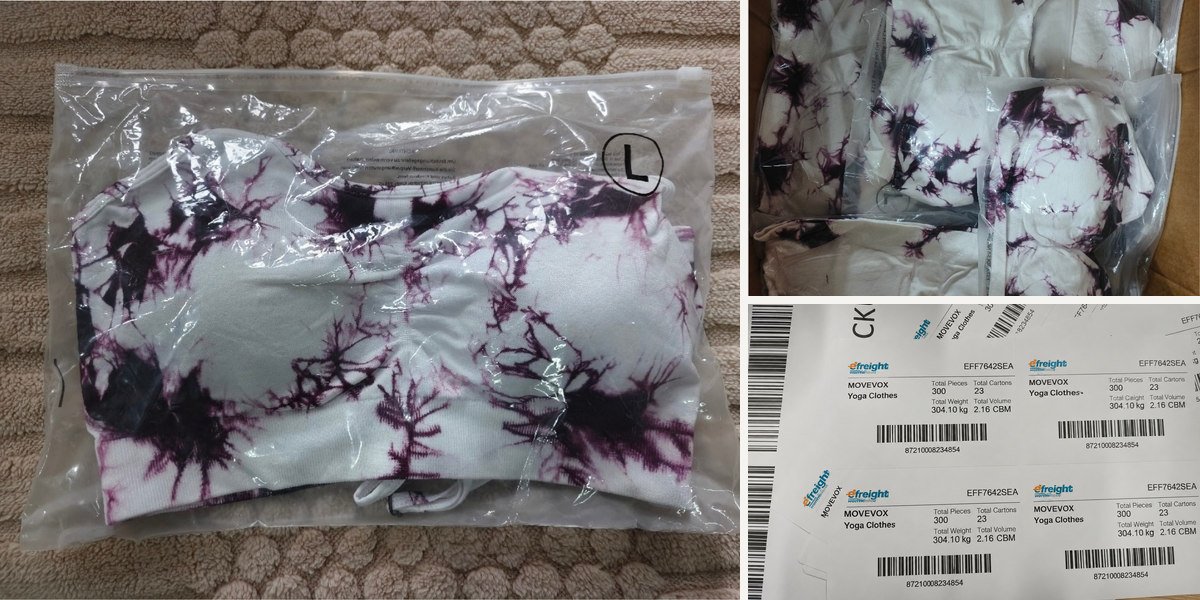
Approved activewear private label unit packaging

Shipment Packaging

Confirm carton, packing arrangement and applicable shipping identification before final release.
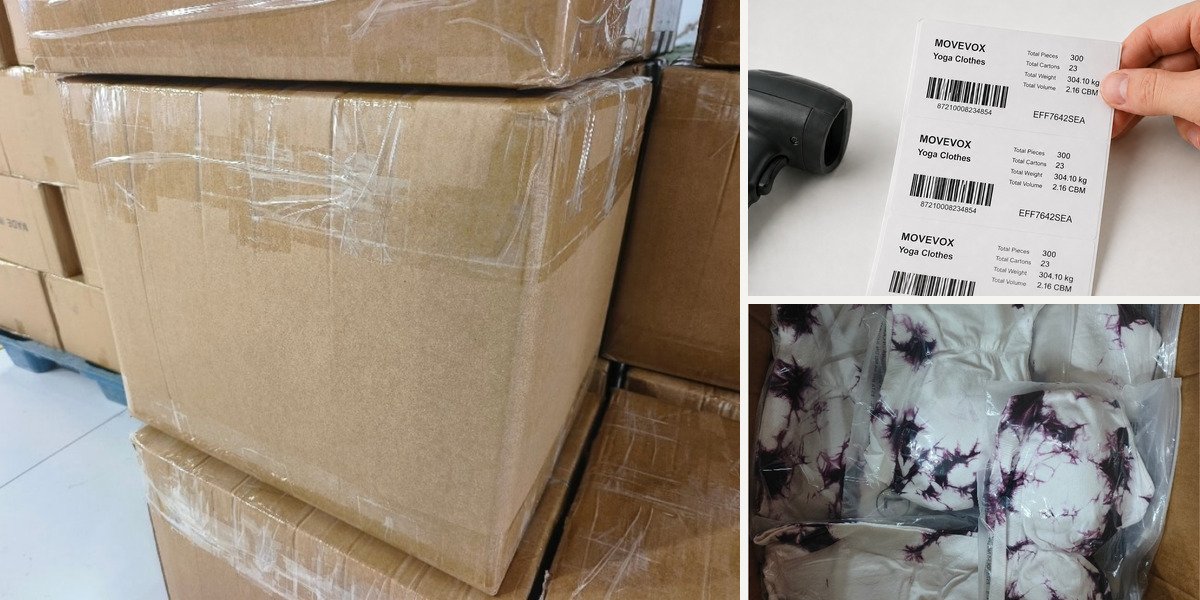
Finished activewear shipment cartons prepared for release
WORKING MODEL

Choose the Development Model That Matches Your Internal Product Capability

Private Label

Existing or Developed Product Foundation

Best aligned when a buyer wants to start from an existing or already-developed product foundation and add its own approved branding, labels and packaging.

Private label can still involve material, color or product adjustments, but the scope should be clearly defined before assuming it is a full new-product development project.

OEM

Buyer-Defined Technical Product

Best aligned when the buyer provides a more complete technical product definition, such as a Tech Pack, measurements, materials, construction and artwork, and expects the manufacturer to execute against that specification.

ODM / Development Support

Manufacturer-Supported Development

Best aligned when the buyer has a product concept or commercial direction but requires more manufacturer involvement in turning incomplete inputs into a sample-ready product.

These models can overlap in practical B2B projects. The correct working model depends on which product decisions are already defined and which still require development.
SAMPLE PROCESS

Use Sample Iterations to Remove Uncertainty Before Bulk

01

Development Input

Confirm the available Tech Pack, measurements, reference, material direction, construction and branding requirements.

02

First Development Sample

Produce the first physical version based on the current confirmed development information.

03

Buyer Review

Review Fit, measurements, material, construction, color direction and applicable branding details.

04

Consolidated Revision

Apply confirmed feedback to the next controlled sample version instead of changing unrelated details without clear version control.

05

Revised Sample

Verify that the requested changes have been translated into the updated product.

06

Formal Approval

Confirm the final sample and relevant technical information before bulk production handover.

Standard samples are typically completed in approximately 5–10 working days after the necessary development information and critical details have been confirmed. More complex development may require additional time or revision rounds.
Yoga leggings sample development sequence from first sample through revision to approved production reference
SAMPLE-TO-BULK

Keep Bulk Production Connected to the Approved Leggings
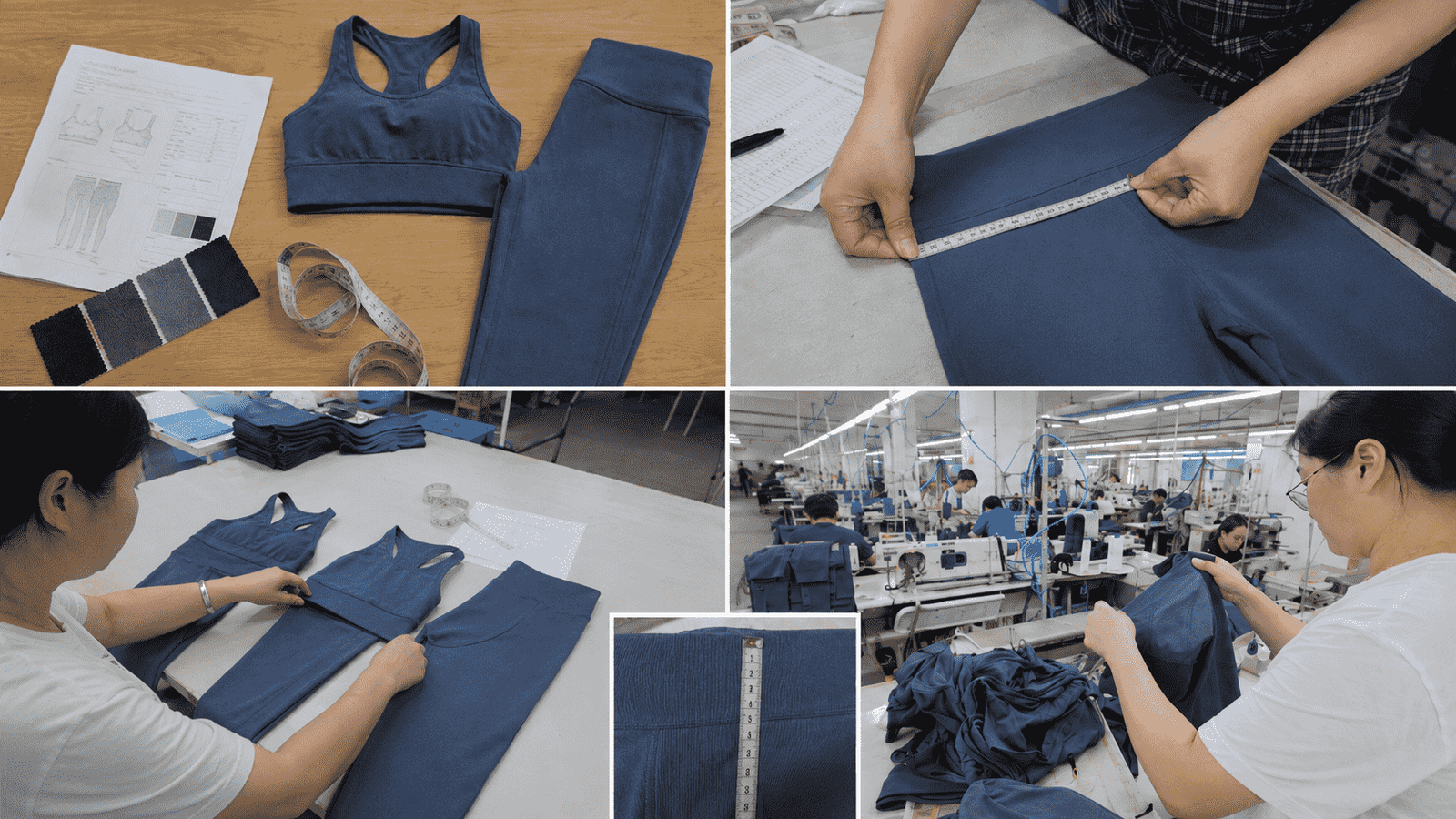
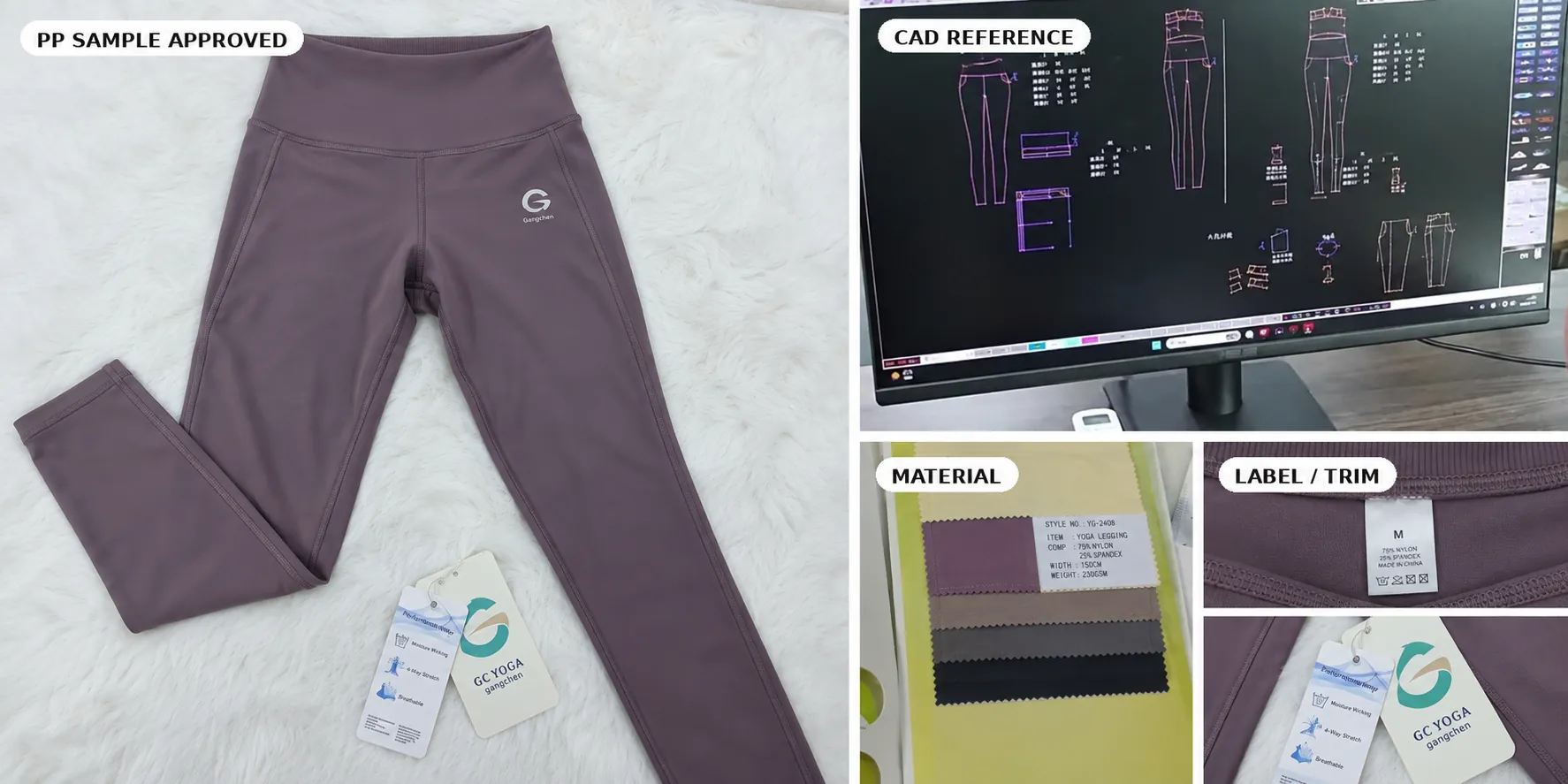
Approved pre-production activewear sample used as production reference
Approved sample measurement First Article and inline quality control comparison

Approved Reference

Approved sample, measurements, material, color, construction, branding and packaging decisions define the applicable production reference.

Production Translation

Approved decisions are transferred into the current technical and production information used by manufacturing and QC teams.

First Article

Initial production garments are checked before normal bulk output continues.

In-Line Control

Measurements, workmanship and project-specific production risks are reviewed while manufacturing is still in progress.

Final Release

Finished garment and packing checks confirm that applicable requirements have been completed before shipment release.

MOQ STRUCTURE

Understand the MOQ Behind the Garment, Color and Custom Components

One single MOQ number can be misleading because garment production, material supply, custom color, Logo processes and packaging may each have different commercial minimums.

≈100 pcs/style

Seamless Base MOQ

Typical standard Seamless MOQ.

≈150 pcs/style

Cut & Sew Base MOQ

Typical standard Cut & Sew MOQ.

≈50 pcs/color

Stock Color Allocation

Standard minimum allocation for stock or supply-chain colors.

20 pcs/size

Seamless Size Allocation

Typical minimum size allocation, subject to total and color MOQ.

10 pcs/size

Cut & Sew Size Allocation

Typical minimum size allocation, subject to total and color MOQ.

Custom fabrics, special trims, Logo methods, labels or packaging can create independent supplier minimums. Final MOQ should therefore be confirmed against the actual project rather than inferred from the garment base MOQ alone.
RFQ PREPARATION

Send the Information That Makes a Leggings Quote More Accurate

A useful RFQ does not need to be perfect, but the more clearly the product and commercial requirements are defined, the easier it is to identify missing information before costing or sampling begins.

Product

  • Leggings Style or reference
  • Seamless or Cut & Sew if already decided
  • Intended use / product direction
  • Number of Styles

Quantity

  • Estimated quantity per Style
  • Color breakdown
  • Size range
  • Expected repeat-order pattern where known

Technical Input

  • Tech Pack if available
  • Measurement chart
  • Legal reference sample
  • Material direction
  • Construction details

Customization

  • Logo method and placement
  • Main / Care / Size Labels
  • Hangtags
  • Barcode or SKU requirements
  • Unit and shipment packaging

Testing / Compliance

  • Destination market
  • Buyer-specific RSL or testing requirements
  • Third-party inspection requirements where applicable

Timing

  • Target sample date
  • Target bulk delivery date
  • Launch or required ship window
BULK PRODUCTION

Move the Approved Leggings Into Controlled Bulk Production
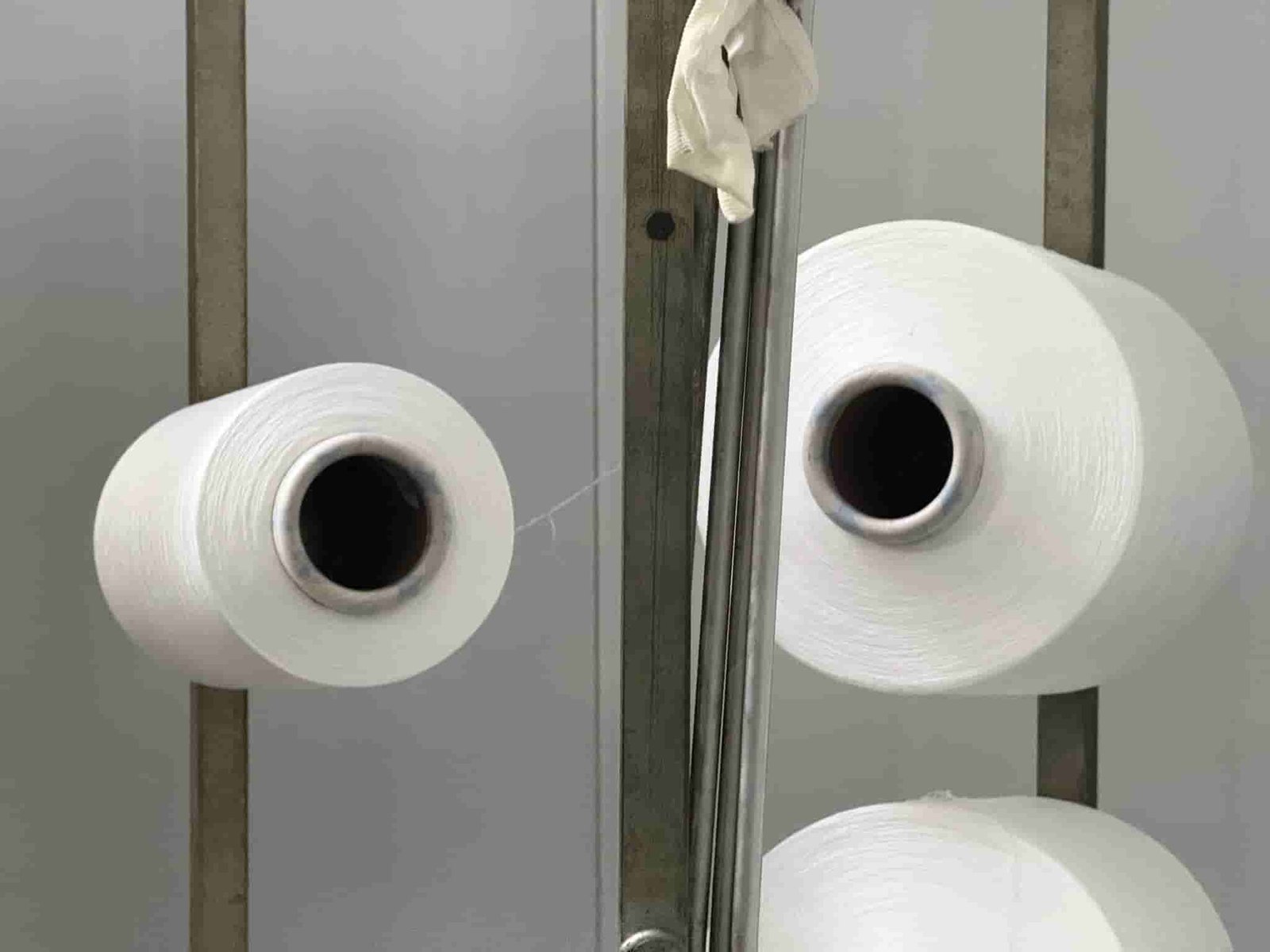
Activewear yarn and material readiness before bulk production
First Article inspection during activewear bulk production
Activewear bulk production with inline quality control
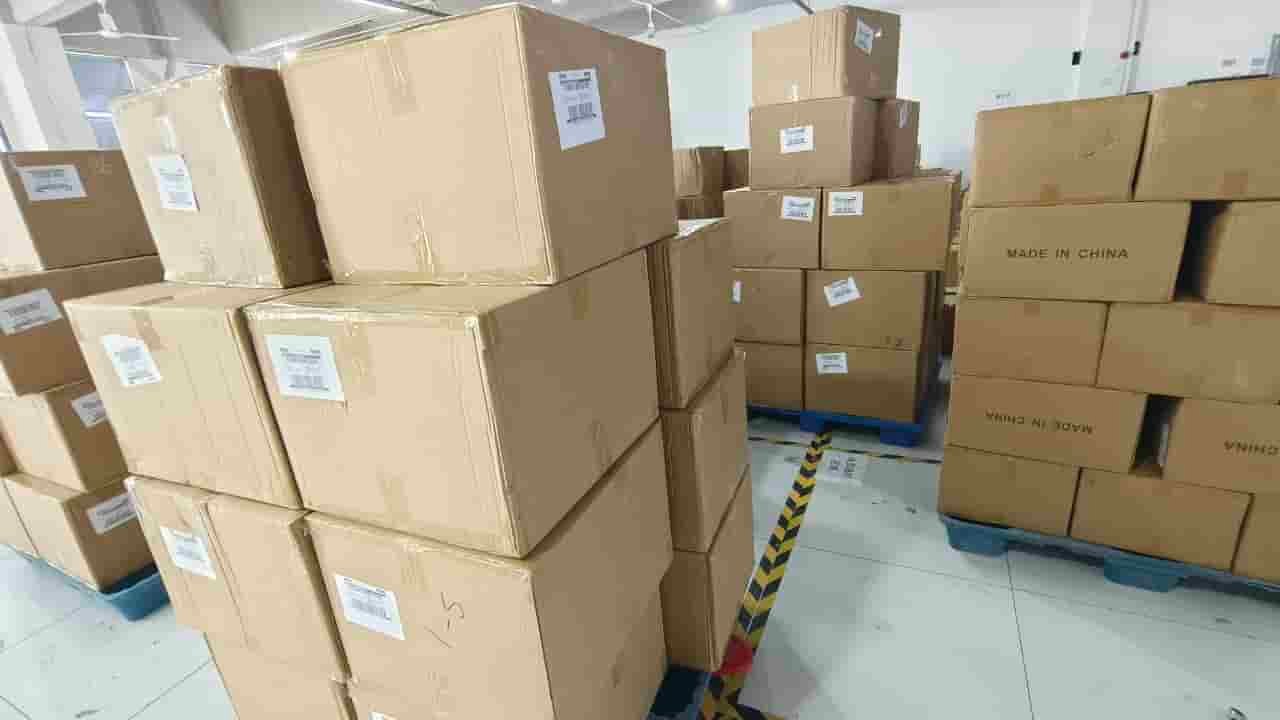
Finished activewear cartons prepared for shipment release
01

Material Readiness

Confirm applicable fabric or yarn, color and critical trims before normal production.

02

Production Standard

Release the current approved sample, technical information, branding and packaging requirements to the responsible teams.

03

Pre-Production Review

Check material readiness, production route, quality points and project-specific risks before normal output.

04

First Article

Inspect initial production garments against the approved product requirements.

05

Bulk Manufacturing

Continue production using the released technical and quality standard.

06

In-Line QC

Review measurements, workmanship and identified production risks while manufacturing remains in progress.

07

Finished Inspection

Check applicable finished-garment requirements before packing release.

08

Packing & Shipment Release

Verify relevant packaging, identification and shipment preparation before final release.

Regular bulk production is typically approximately 20–35 days, depending on Style, material readiness, quantity, customization and current production loading.
SCALE-UP STRATEGY

Scale Proven Yoga Leggings Without Losing the Approved Standard

Scale-up should begin after product, material, Fit, branding and quality requirements are sufficiently stable. MOVEVOX expands capacity through controlled allocation rather than allowing additional production sites to redefine the product independently.

8

Controlled Satellite Factories

Six in Yiwu and two in Guangzhou support standardized bulk and overflow production after applicable standards are established.

≈150,000–200,000 pcs/month

Managed Stable Delivery Capacity

Normal stable managed delivery level across the controlled production network under appropriate operating conditions.

01

Capacity Check

Review Style mix, quantity, material readiness, production route, required delivery and current loading before accepting larger volume.

02

Standard Lock

Confirm the approved technical files, materials, measurements, artwork, packaging requirements and applicable retained samples.

03

Production Allocation

The Yiwu core factory remains the technical and control center. Controlled satellite capacity can support standardized bulk or overflow production where project conditions allow.

04

Unified Execution

Technical information, material standards, scheduling, progress, change control and project coordination remain centrally managed by MOVEVOX.

05

Unified QC

Applicable First Article, in-line, finished and packing checks follow the released requirements regardless of the allocated controlled production site.

06

Final Release

Production is not treated as complete until required quality and packing checks are completed.

Satellite factories do not independently change approved materials, processes or technical standards. Where a contract or sourcing policy requires Approved Factory Only, written buyer approval is required before a production-site change.
QUALITY MANAGEMENT

Use Quality Checkpoints Before Problems Reach Shipment

Quality control is more useful when checkpoints remain connected to the approved product standard throughout material, production, finishing and packing stages.
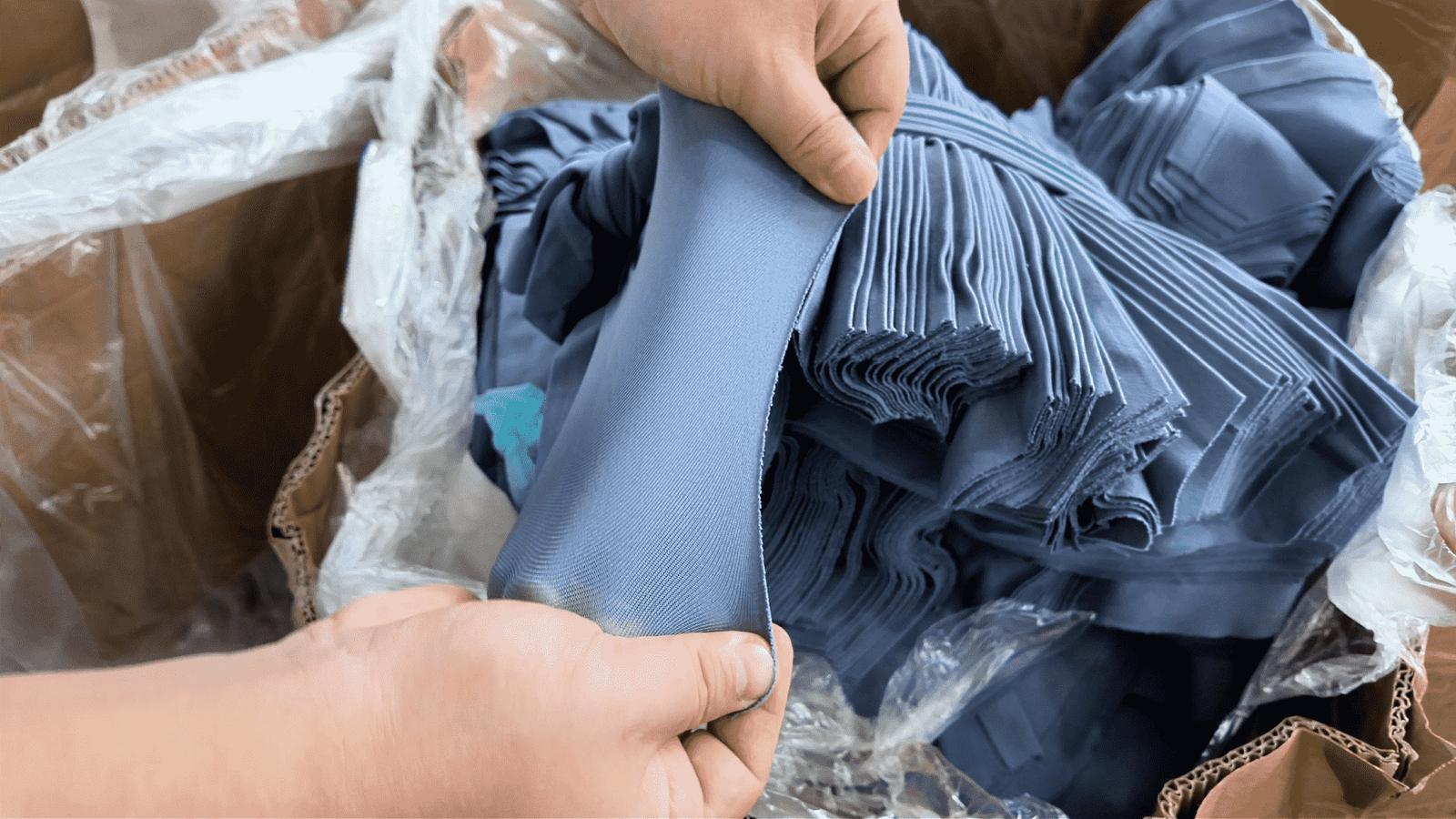
Incoming activewear material inspection evidence
First Article activewear inspection evidence
Activewear inline production quality control
Activewear packing checklist before shipment release
01

Incoming Material

Check applicable yarn, fabric and critical components against the released project requirements before normal production use.

02

Pre-Production

Confirm the current product standard, material, color, measurements, branding and other critical control points with the relevant team.

03

First Article

Inspect initial production garments before normal bulk output continues.

04

In-Line Measurement

Review applicable measurements and tolerances while production remains in progress.

05

Workmanship

Check construction and relevant workmanship requirements during and after production.

06

Branding

Verify applicable Logo, labels, Hangtags, barcode and SKU information against the approved version.

07

Finished Garment

Check applicable finished-product requirements before packing release.

08

Packing & Shipment

Verify individual packaging, quantity, carton and applicable shipment-identification requirements.

09

Corrective Re-Inspection

Where nonconforming goods are identified, affected products should be isolated, corrected where appropriate and re-inspected before release.

SUPPLY CHAIN TRANSPARENCY

Know Where the Product Is Controlled and Who Owns the Standard

01

Buyer-Approved Standard

The current approved sample, technical files, materials, color, branding and packaging requirements form the project reference.

02

MOVEVOX Control Center

MOVEVOX centrally manages requirements, technical versions, BOM-related coordination, suppliers, production allocation, scheduling, change control, QC, packaging, progress, exceptions and final release.

03

Core Manufacturing Base

The Yiwu factory serves as the technical, sample, core production and quality-control center.

04

Controlled Satellite Capacity

Eight long-term satellite factories—six in Yiwu and two in Guangzhou—can support standardized replicated bulk and overflow production after applicable standards are locked.

05

Specialist Partners

Specialized external partners may be used where a project requires a process outside normal in-house capability. The process remains under MOVEVOX project management.

06

Change Control

Controlled sites do not independently redefine materials or technical standards. If the buyer restricts the manufacturing site, the applicable approval must be obtained before changes are made.

COMPLIANCE EVIDENCE

Read Compliance Evidence by Legal Entity, Tested Sample and Scope

Compliance evidence is useful only when the legal holder, tested product and document scope are clear. MOVEVOX does not present one supplier certificate, material document or laboratory sample as universal proof for every product or production lot.

Brand

MOVEVOX

MOVEVOX is the external international B2B manufacturing and supply-chain brand.

Legal Entity

Yiwu Chenjin Import And Export Co., Ltd.

Applicable commercial contracts and legal activities are conducted under this legal entity.
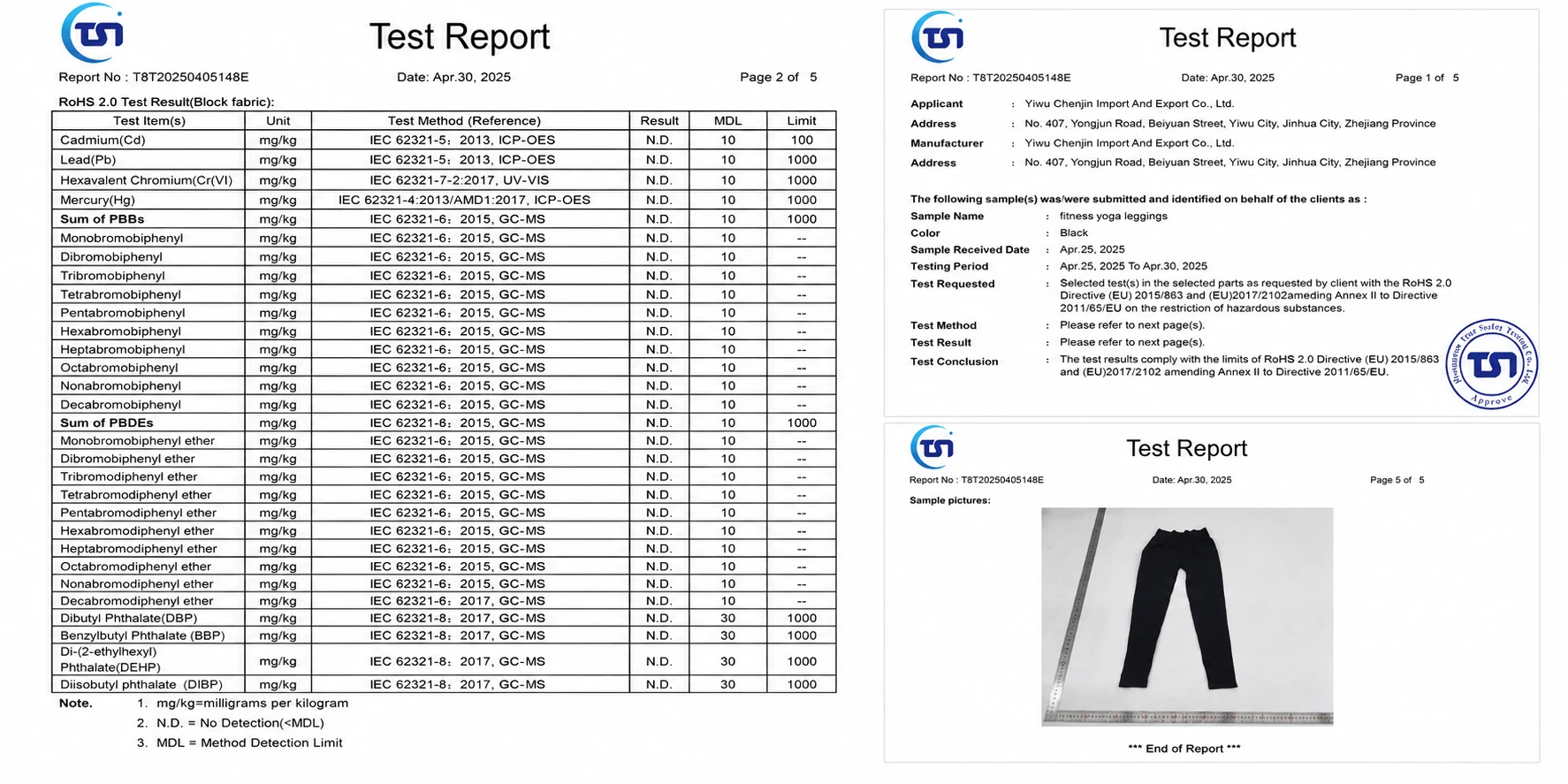
RoHS test report for submitted black fitness yoga leggings sample
Specific Tested Sample

RoHS 2.0 Sample Evidence

Certificate: TST20250405148EC

Test Report: TST20250405148E

Report Date: April 30, 2025

Applicant / Manufacturer: Yiwu Chenjin Import And Export Co., Ltd.

Submitted Sample: Black fitness yoga leggings

The report covers the listed substances under the cited RoHS-related requirements, with the listed results reported within the stated limits.

This evidence applies to the identified tested sample and does not represent assessment of all MOVEVOX products or future production.
Specific Tested Sample

REACH Phthalates Sample Evidence

Test Report: TST20250405150E

Report Date: April 30, 2025

Sample: Black fabric from the submitted fitness yoga leggings

The report covers the cited phthalates under REACH Annex XVII Entry 51 and Entry 52. The listed substances were reported as not detected within the stated method limits, and the report records a Pass conclusion for the submitted sample.
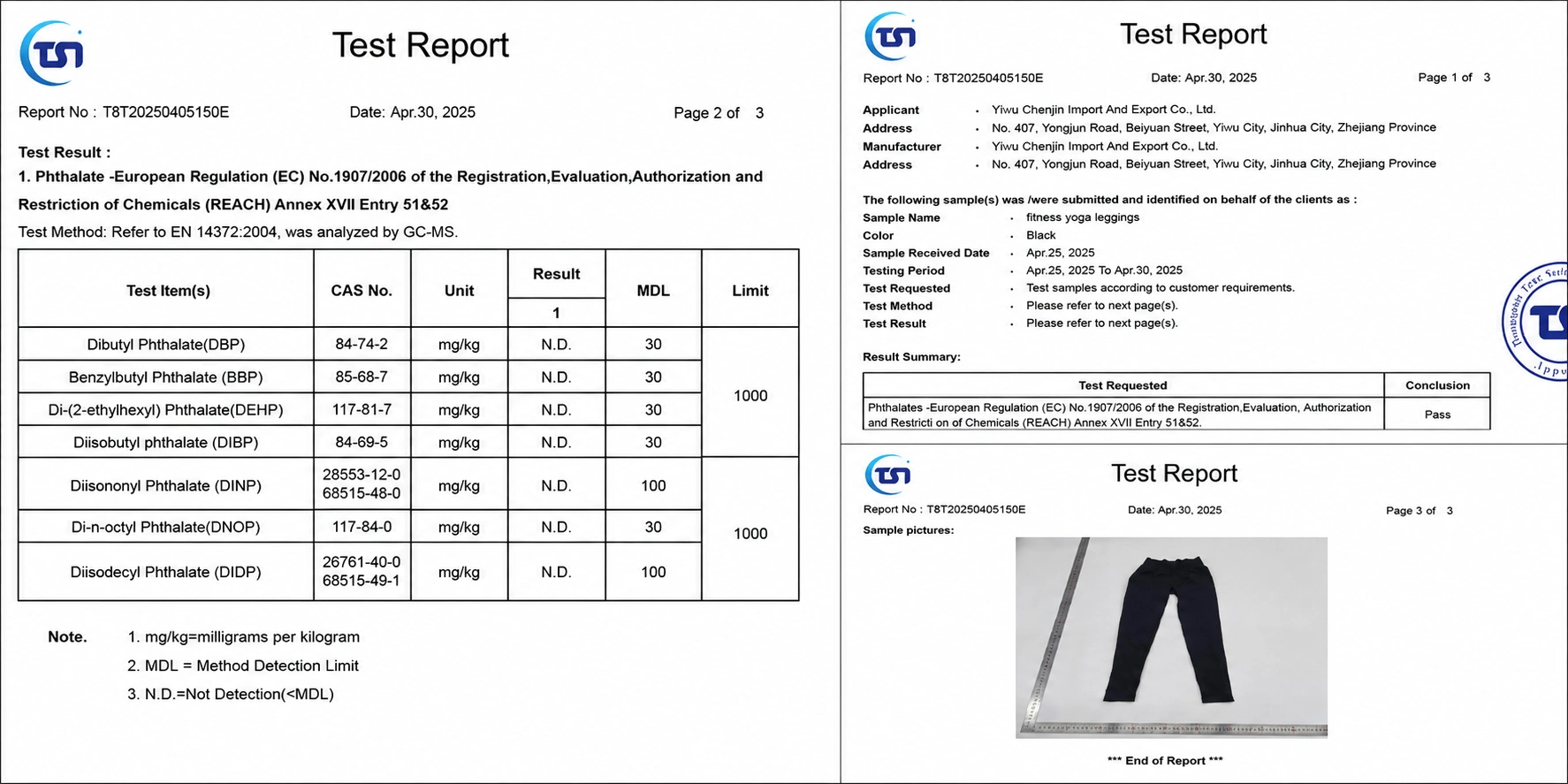
REACH phthalates test report for black fabric from fitness yoga leggings sample
A result for one tested material, color or garment cannot automatically be applied to unrelated fabrics, colors, products or future production lots. Buyer-specific RSL, regulatory or market testing should therefore be reviewed against the actual project requirement.
FACTORY & PROCESS EVIDENCE

Follow the Product Through the Real Manufacturing Process

Factory evidence is most useful when it shows how the product moves through actual development, manufacturing, quality and release stages—not only exterior buildings or staged production photographs.

01

Material / Yarn

Material and yarn form the starting point for applicable activewear development and production.

Activewear production yarn and raw material
02

Sample Room

Product development converts technical input and buyer feedback into controlled physical samples.

MOVEVOX activewear sample development room
03

Seamless Manufacturing

MOVEVOX operates 28 Italian Santoni machines at the Yiwu core manufacturing base.

MOVEVOX Santoni seamless knitting manufacturing area
04

Cut & Sew

Pattern-based garments move through cutting, sewing and garment assembly according to the released product standard.

MOVEVOX activewear Cut and Sew production
05

First Article

Initial production is checked before normal bulk output continues.

First Article activewear inspection
06

In-Line QC

Measurements and workmanship are reviewed while production remains active.

Inline activewear quality control during production
07

Packing

Approved product packaging and order-identification requirements are checked before shipment release.
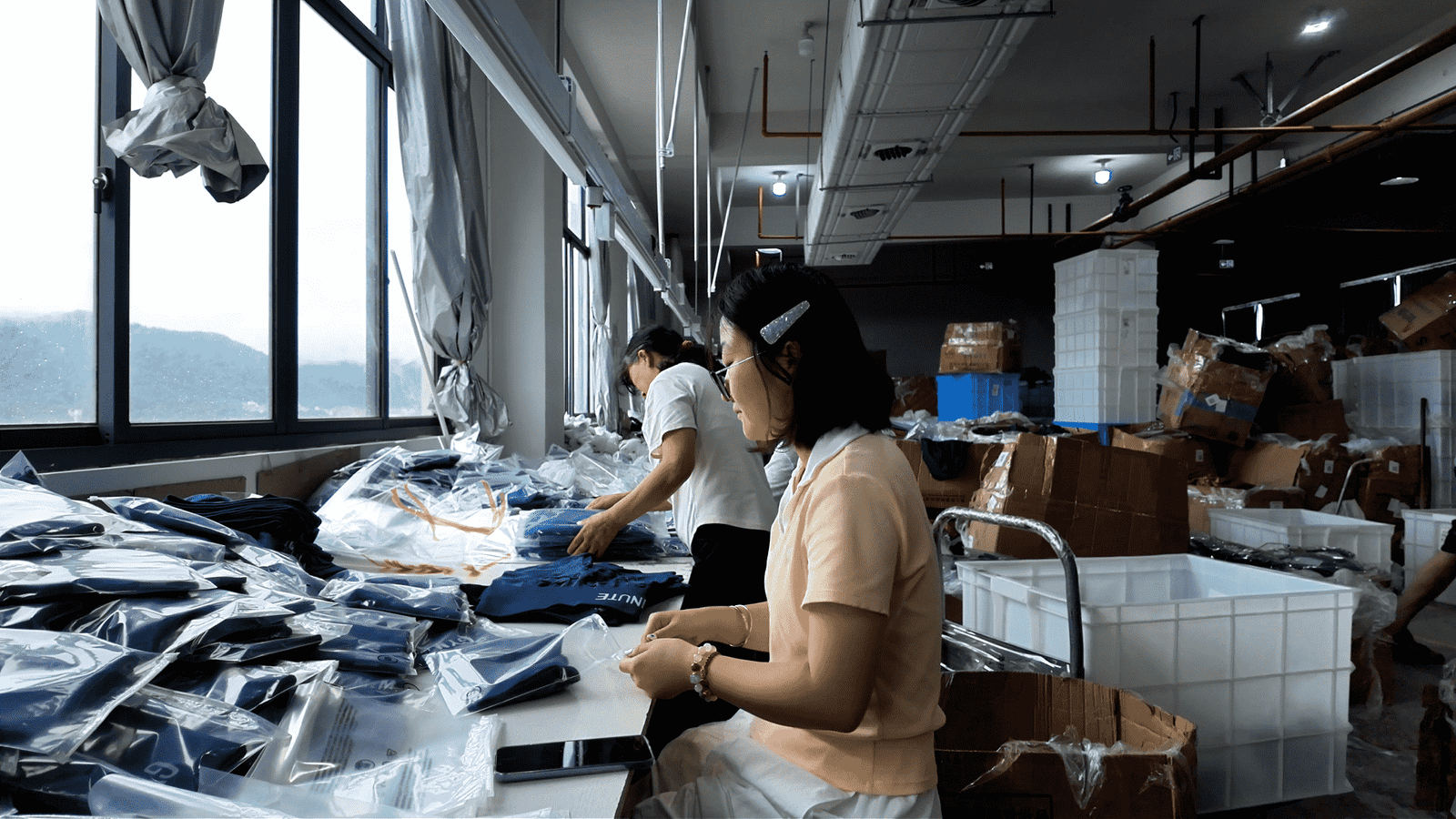
Private label activewear packaging execution
08

Shipment

Completed cartons and shipment-ready goods move into the agreed delivery process.

Finished activewear cartons ready for shipment
VENDOR QUALIFICATION

What Should Buyers Verify Before Approving an Activewear Supplier?

Supplier qualification should go beyond price and product appearance. Buyers should verify whether the development, manufacturing, quality, capacity and commercial systems can support the actual program before awarding larger or repeat production.

01 · Product Development

Can the Supplier Turn Product Direction Into a Controlled Standard?

Tech Pack Review

Can the supplier identify missing technical information before sampling?

Incomplete Input Development

Can it work from a legal reference sample, sketch or product direction when a full Tech Pack does not yet exist?

Version Control

Can development samples, revisions and formal approvals be clearly distinguished?

Multi-SKU Development

Can shared materials, colors and branding be managed without losing SKU-specific Fit and construction control?

02 · Manufacturing Control

Is the Real Manufacturing Route Clear and Controlled?

Manufacturing Route

Is Seamless, Cut & Sew or other production responsibility clearly disclosed?

Dual-Process Capability

Can different construction routes be coordinated within one collection when required?

Production-Site Transparency

Can the supplier explain which production is in-house, satellite or specialist processing?

First Article

Is initial bulk production checked before normal output continues?

03 · Quality Management

Does Quality Control Extend Across the Whole Order?

Incoming Control

Are materials reviewed against the released project requirement?

In-Line Inspection

Are measurements and workmanship checked while production remains active?

Branding & Packing QC

Are labels, Logo, barcode and packaging treated as quality-control items?

Nonconformance Control

Are affected goods isolated, corrected where appropriate and re-inspected before release?

04 · Capacity & Transparency

Can the Supplier Scale Without Losing Control?

Own vs External Capacity

Can the supplier explain how its total delivery capability is structured?

PO-Level Capacity Review

Is capacity checked against the actual Style mix, material readiness and required delivery?

Unified Standard

Are technical and quality requirements centrally controlled across production sites?

Buyer Verification

Can the supplier support factory visits, video review, technical audits or third-party inspection?

05 · Commercial Execution

Can the Supplier Support Repeat Business, Not Just the First Order?

MOQ Transparency

Are garment, material, color, Logo and packaging minimums explained separately?

Private-Label Planning

Are branding and packaging requirements included before bulk release?

Project Ownership

Is one accountable contact responsible for coordinating the project?

Repeat Orders

Can the approved product standard be maintained as the program scales?

ANONYMOUS BRAND CASE STUDY

From Supplier Qualification to Repeat European Brand Orders

This anonymized case illustrates how an established Netherlands apparel brand moved from cautious supplier evaluation into repeat yoga-wear orders and broader category cooperation.

Results below describe this specific documented customer relationship and should not be interpreted as typical outcomes for every customer.

Buyer Context

Established Netherlands Apparel Brand

The customer is a larger Netherlands apparel brand with both online and offline sales channels.

The relationship began with approximately 10 development samples rather than an immediate bulk commitment.
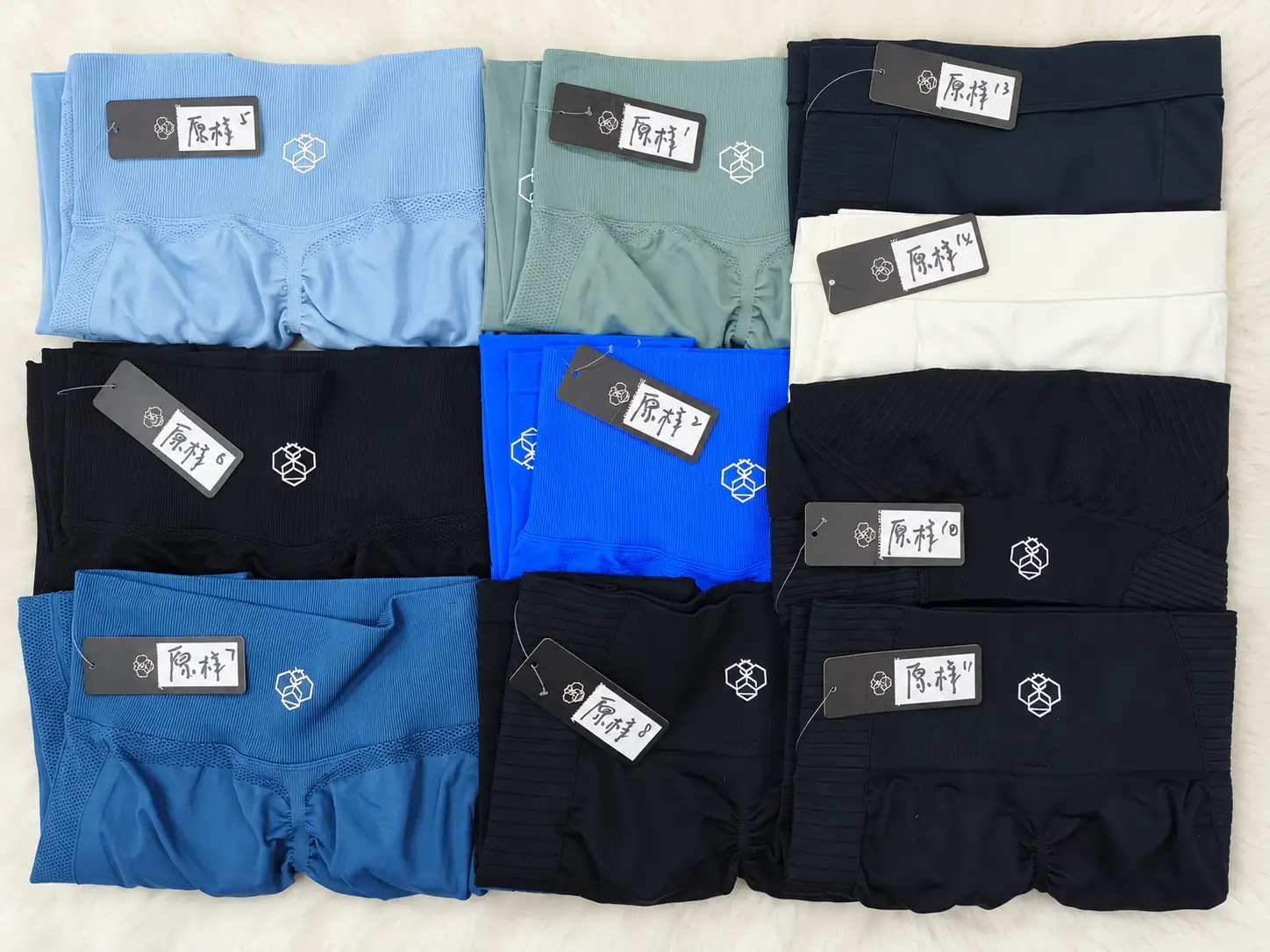
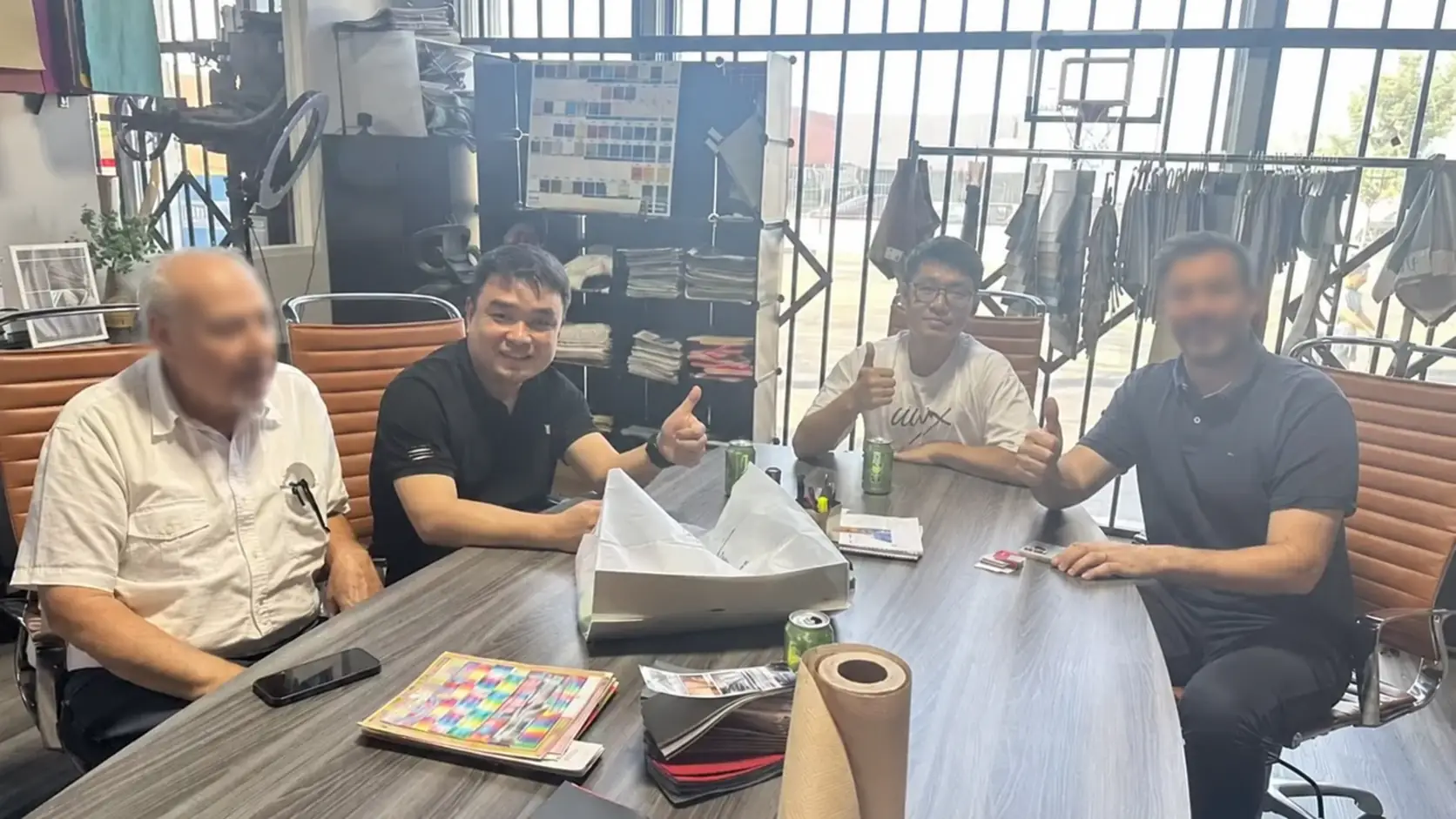
Anonymized yoga wear development samples from a Netherlands apparel brand project
Anonymized customer factory qualification visit for a European apparel brand project
Qualification Challenge

Trust Had to Be Earned Before Scale

Trust was initially a major issue. The customer's overseas team subsequently visited the manufacturing operation to review the supplier and production environment directly.

Approximately 5 of the original 10 samples progressed into commercial cooperation.

Private-Label Execution

The project included product development together with Logo and packaging customization.

After product and cooperation procedures were validated, the relationship moved into repeat yoga-wear production.

Commercial Relationship

Documented yoga-wear orders developed to approximately USD 30,000–50,000 per order, with repeat ordering approximately every two to three months.

Documented annual cooperation was approximately USD 200,000–250,000.

Operational Flexibility

On one order, the buyer requested approximately one-third of the goods to ship earlier than originally planned. The production and shipment schedule was reorganized, adding approximately one week to accommodate the split requirement.

Commercial Decision

At one stage, another supplier offered a quoted price approximately USD 0.50 lower per piece. After the commercial and production differences were explained, the customer continued the existing cooperation.
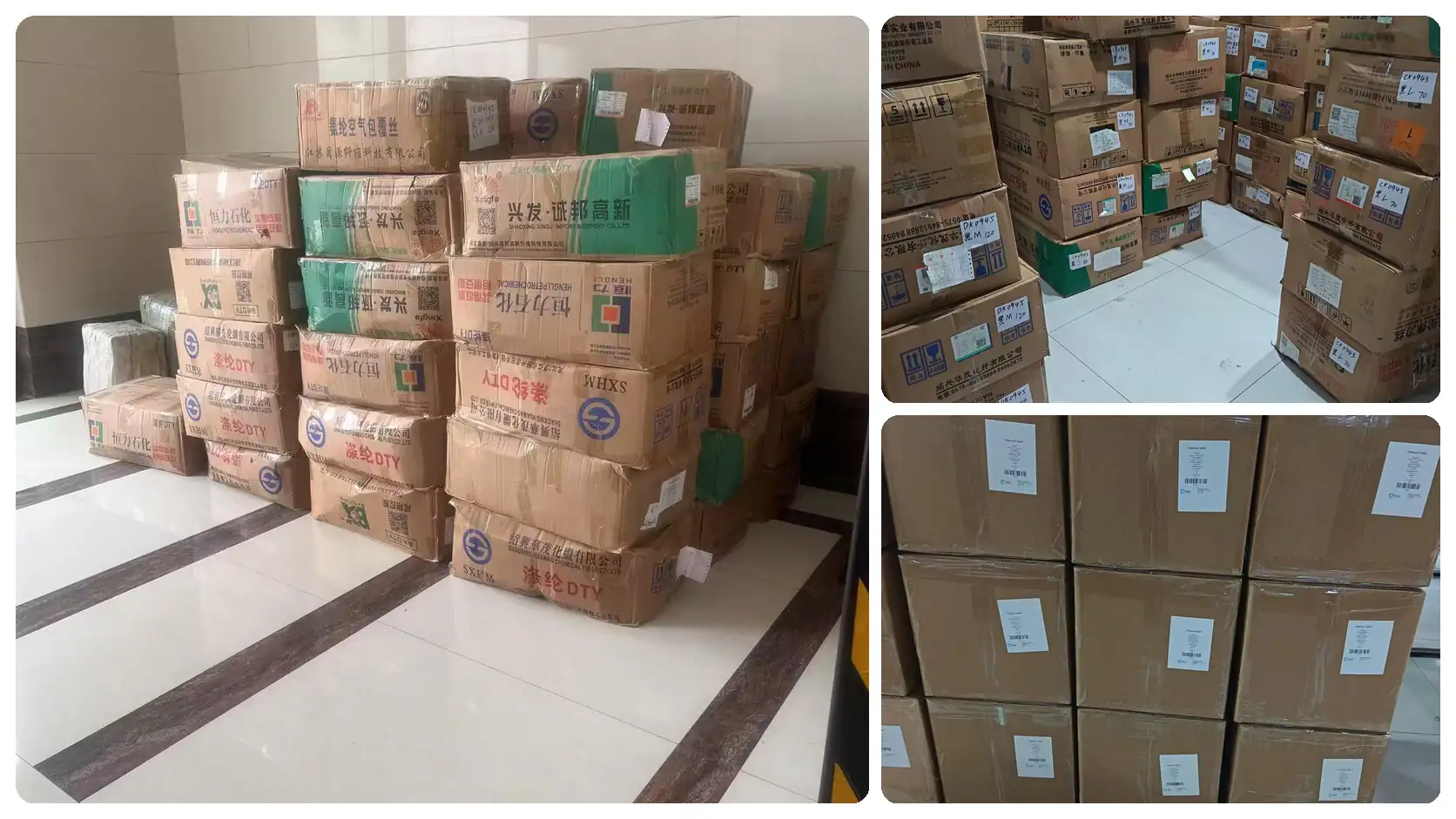
Anonymized repeat yoga wear bulk production and packing for a European apparel brand
10 Samples

Initial supplier-evaluation and development stage.

≈5 Styles

Approximately five original samples progressed into cooperation.

USD 30K–50K

Approximate documented value per yoga-wear order.

Every 2–3 Months

Documented repeat-order rhythm.

USD 200K–250K / Year

Approximate documented annual cooperation.

Customer identity is intentionally withheld. These figures describe this specific documented customer relationship and should not be interpreted as typical results for every MOVEVOX customer.
SUPPLIER TYPE COMPARISON

Different Supplier Models Solve Different Procurement Problems

The right supplier structure depends on the buyer's product complexity, internal development resources, order scale, flexibility requirements and risk-control expectations.

Supplier Type Typical Strength Typical Trade-Off Best Alignment
Ordinary Trader Broad sourcing access and commercial coordination. Manufacturing ownership and technical control may depend heavily on third-party factories. Buyers prioritizing broad sourcing access over direct production control.
Small Factory Direct communication, focused production and flexibility within its own process. Development breadth, process range or scaling options can be limited by its own equipment and organization. Focused programs that fit the factory's established process.
Pure Process Factory Deep expertise in one specific manufacturing process. Buyer may need additional suppliers for development, materials, branding or other production stages. Buyers with strong internal supply-chain coordination.
Large Traditional Manufacturing Group Extensive capacity, systems and large-program execution. Smaller development programs or frequent product changes may not always fit the operating model. Large stable programs with significant volume and established systems.
MOVEVOX Own Yiwu core factory, Seamless + Cut & Sew capability, development support and controlled satellite network. Best used where the buyer values development flexibility, controlled manufacturing and managed scale rather than only maximum volume or only the lowest quoted price. Brands requiring more direct manufacturing control than a trading model and broader coordination than a small single-process factory.
BUYER FAQ

Frequently Asked Questions About Private Label Yoga Leggings Manufacturing

What is the MOQ for private-label yoga leggings?

Typical standard MOQ is approximately 100 pcs per style for Seamless and approximately 150 pcs per style for Cut & Sew. These figures do not automatically cover custom dyeing, custom materials, specialist trims, Logo processes or packaging with independent supplier minimums.

Can we start with a smaller trial program?

This depends on the product, material, color, size allocation and customization requirements. MOVEVOX reviews trial programs against actual production conditions rather than promising one universal low MOQ for every project.

Do custom colors have a different MOQ?

Yes. Custom dyeing typically requires approximately 400–600 finished-garment-equivalent pieces per dye lot, depending on material and Style. Stock / supply-chain colors can support different allocations.

Do custom labels and packaging have separate minimums?

They can. Woven Labels, Hangtags, printed packaging and other components are produced through different suppliers and processes, so independent minimums may apply.

How long does standard sample development take?

Standard samples are typically approximately 5–10 working days after the required development information and critical details have been confirmed. Complex material development, special trims or multiple revision rounds can extend the total timeline.

Can you work from an incomplete Tech Pack?

Yes, when enough information exists to establish a controlled development direction. MOVEVOX can begin from a Tech Pack, legal reference sample, sketch, image or clearly defined product concept, then identify missing technical inputs before sampling.

Can one collection include both Seamless and Cut & Sew?

Yes. MOVEVOX supports both manufacturing routes. Each SKU should use the process appropriate to its own material and construction requirements.

How are sample revisions controlled?

Buyer feedback is consolidated into a defined revision. Updated measurements, material, construction, artwork or packaging decisions are linked to the applicable sample version before formal approval.

How do you control sample-to-bulk consistency?

Approved samples and relevant technical requirements are transferred into production standards. First Article, in-line inspection, finished-garment checks and packing verification are then used at applicable stages.

Can we arrange third-party inspection?

Yes. MOVEVOX supports reasonable third-party inspection arrangements when the scope, timing and responsibility are agreed as part of the project.

What if our sourcing policy requires Approved Factory Only?

The restriction should be documented before production allocation. MOVEVOX does not treat satellite capacity as permission to move restricted production without approval. Written buyer approval is required where the project restricts manufacturing-site changes.

Do all MOVEVOX products have RoHS or REACH reports?

No. Existing RoHS and REACH evidence applies only to the specific tested samples identified in the corresponding reports. It cannot automatically be extended to unrelated products, materials, colors or future lots.

Can we use our nominated freight forwarder?

Yes. Shipment handover can be coordinated with a buyer-nominated forwarder according to the agreed commercial responsibilities and shipping requirements.

How are confidential Tech Packs and designs handled?

Project files and commercially sensitive product information should be used only for the applicable development and production work. Where a buyer requires a formal NDA or specific confidentiality procedure, this should be agreed during project setup.

Can our team visit or review production remotely?

Yes. MOVEVOX supports scheduled factory visits, online meetings, video audits, technical audits and appropriate third-party inspection arrangements.

What information should we send first?

Useful starting information includes the product or Style list, available Tech Pack or legal reference, estimated quantity, colors, size range, material direction, branding, packaging and target date. Every detail does not need to be finalized before the first project discussion.

BUYING RESOURCES

Continue Your Supplier Evaluation With Practical Buying Guides
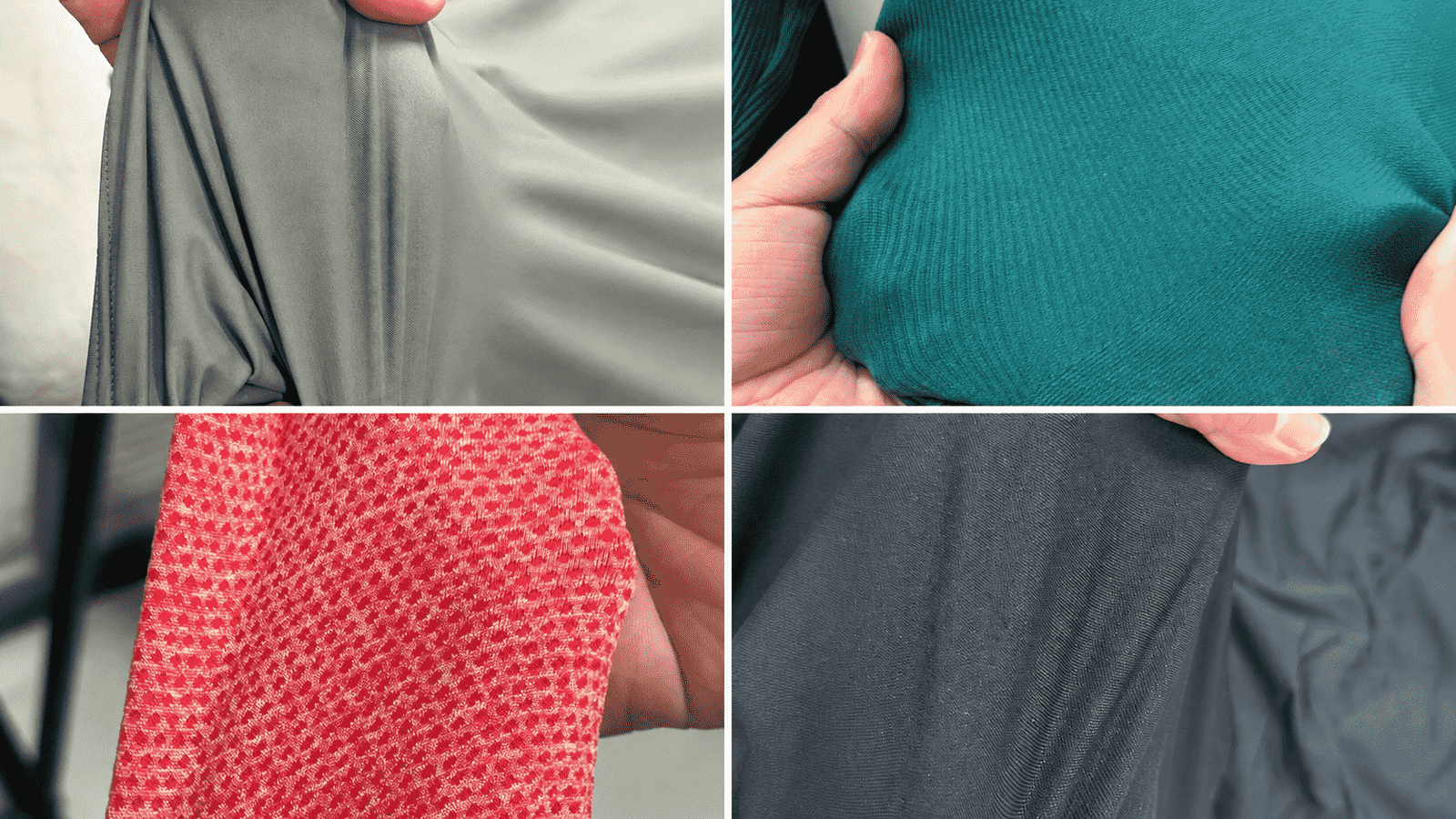
MOVEVOX activewear fabric sourcing guide

Fabric Guides

Understand activewear material selection, stretch, recovery, construction and product-fit considerations.

Explore Fabric Guides
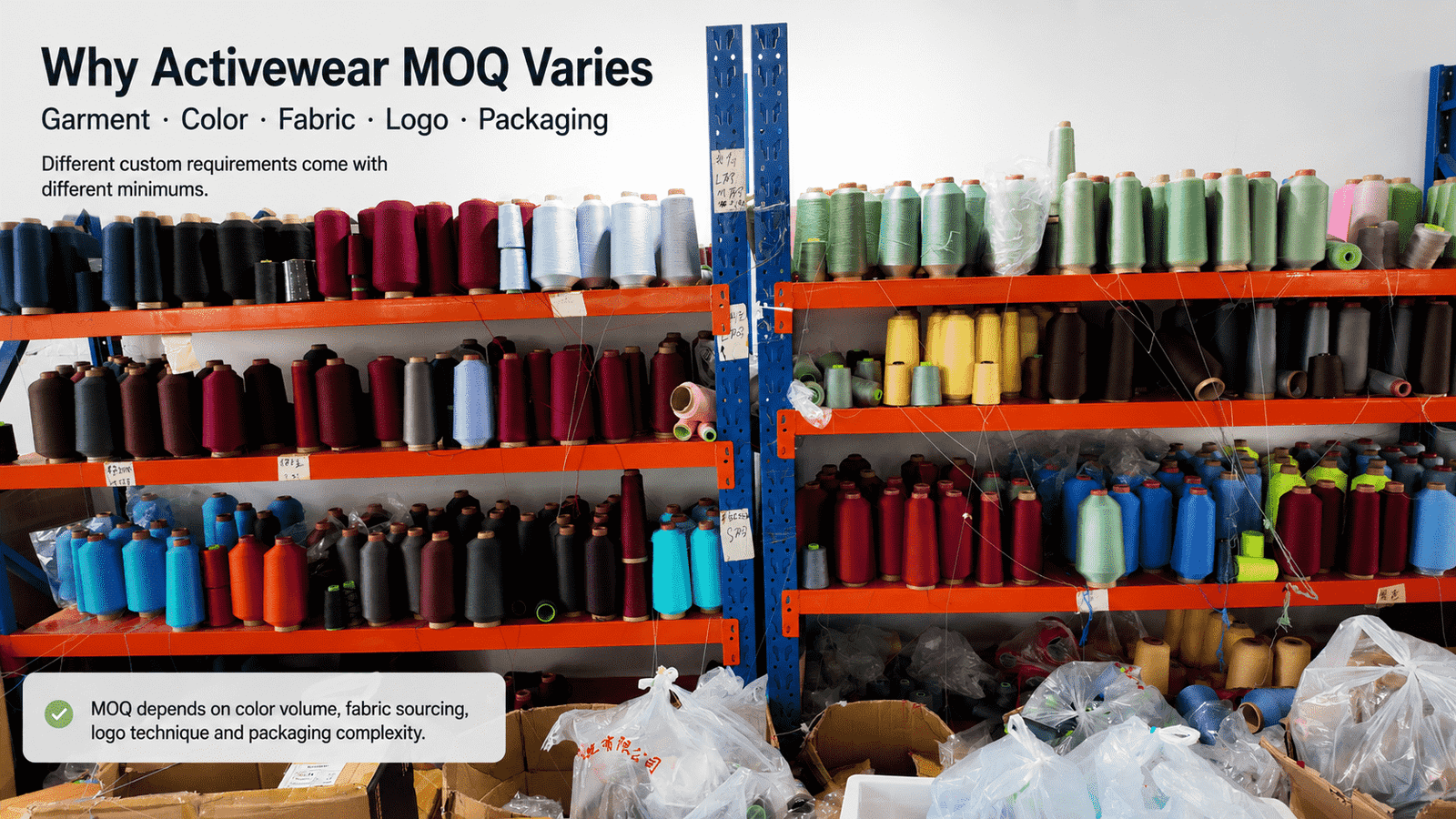
MOVEVOX activewear MOQ and cost guide

MOQ & Cost Guides

Understand how garment MOQ, custom materials, custom dyeing and private-label components affect commercial minimums.

Explore MOQ & Cost Guides
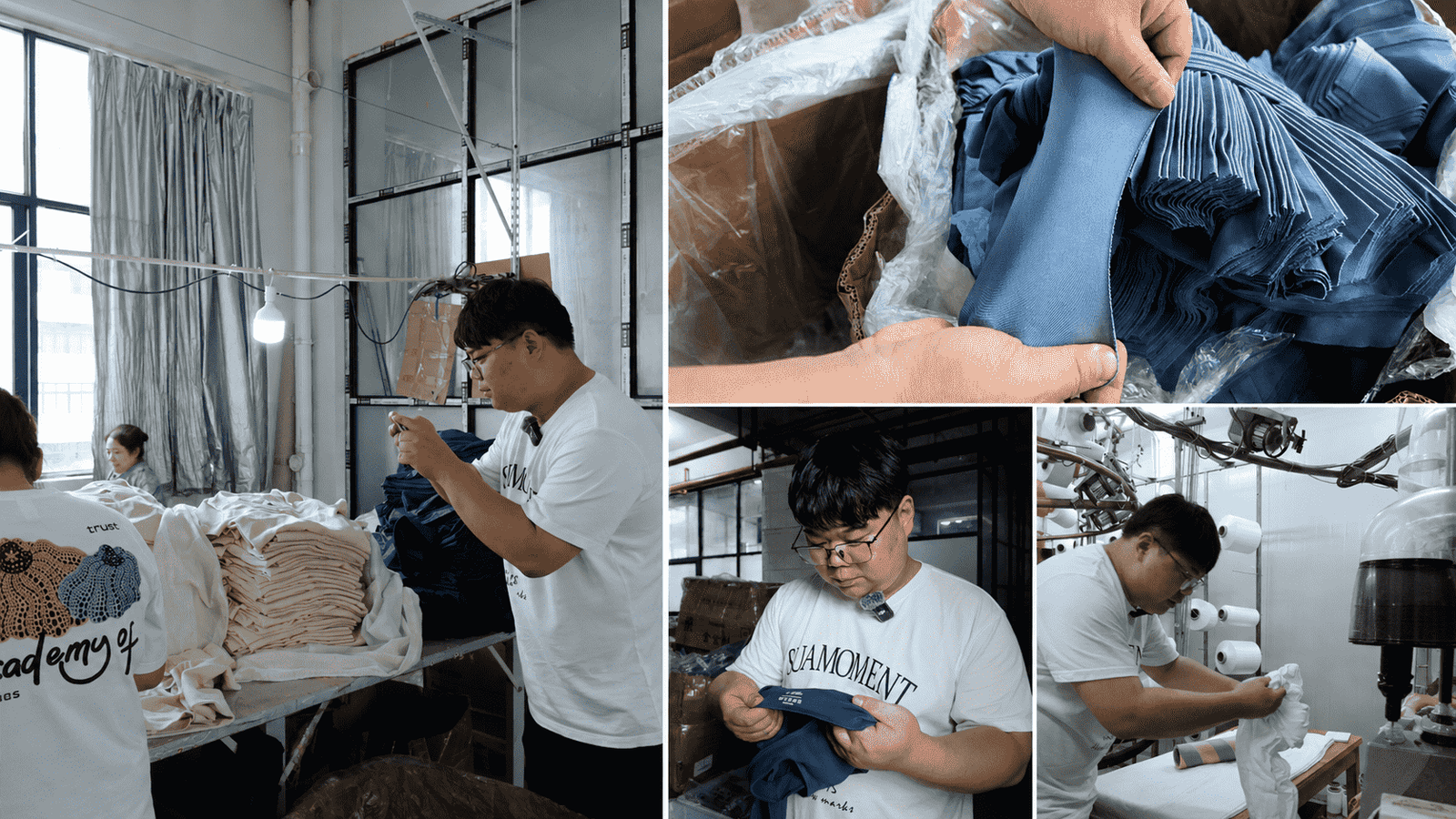
MOVEVOX activewear quality control guide

Quality Guides

Review sample approval, First Article, in-line inspection and sample-to-bulk control concepts.

Explore Quality Guides
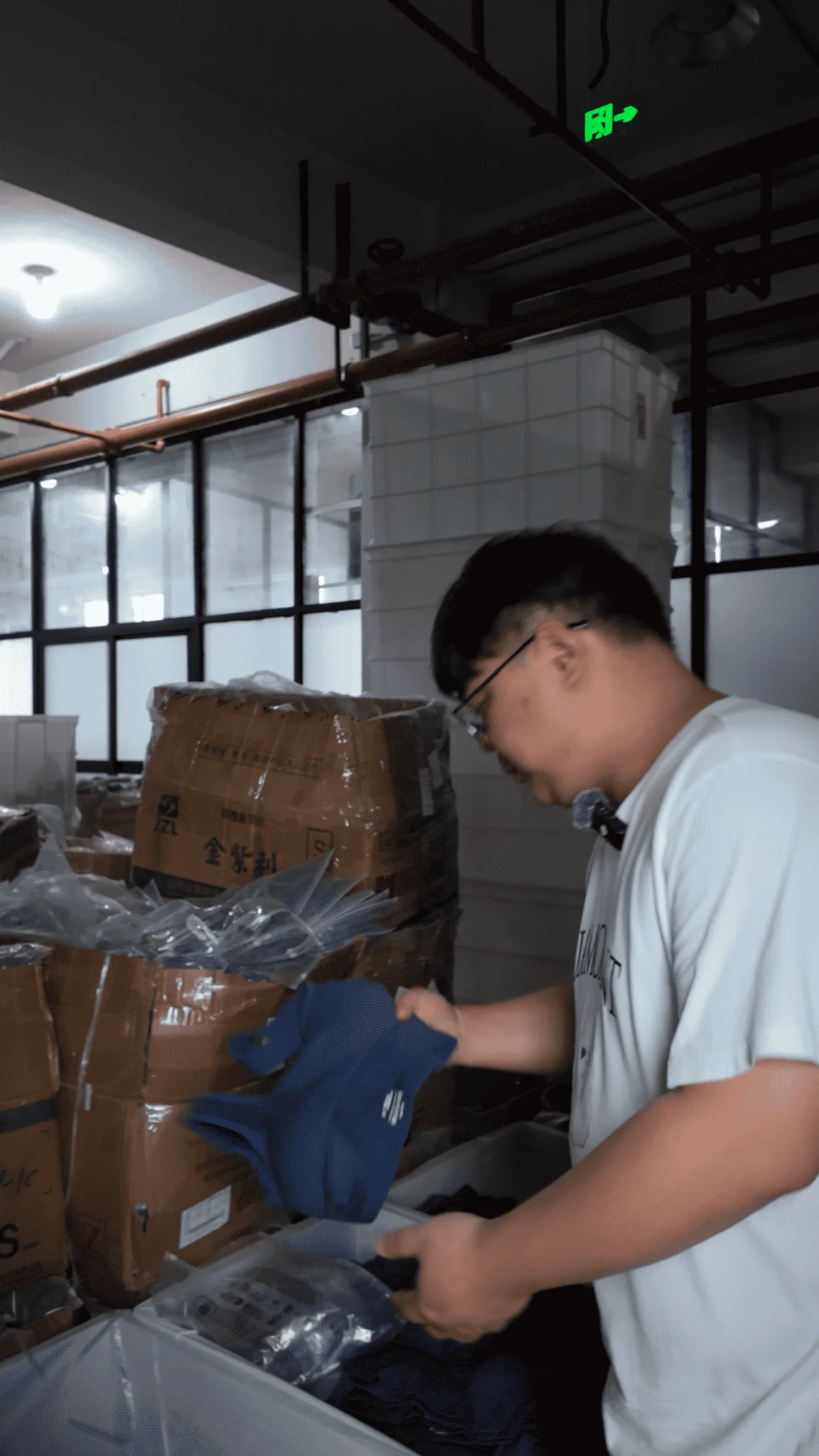
MOVEVOX supplier qualification and factory audit sourcing guide

Sourcing Guides

Review supplier qualification, sourcing-risk and vendor-management topics before awarding production.

Explore Sourcing Guides
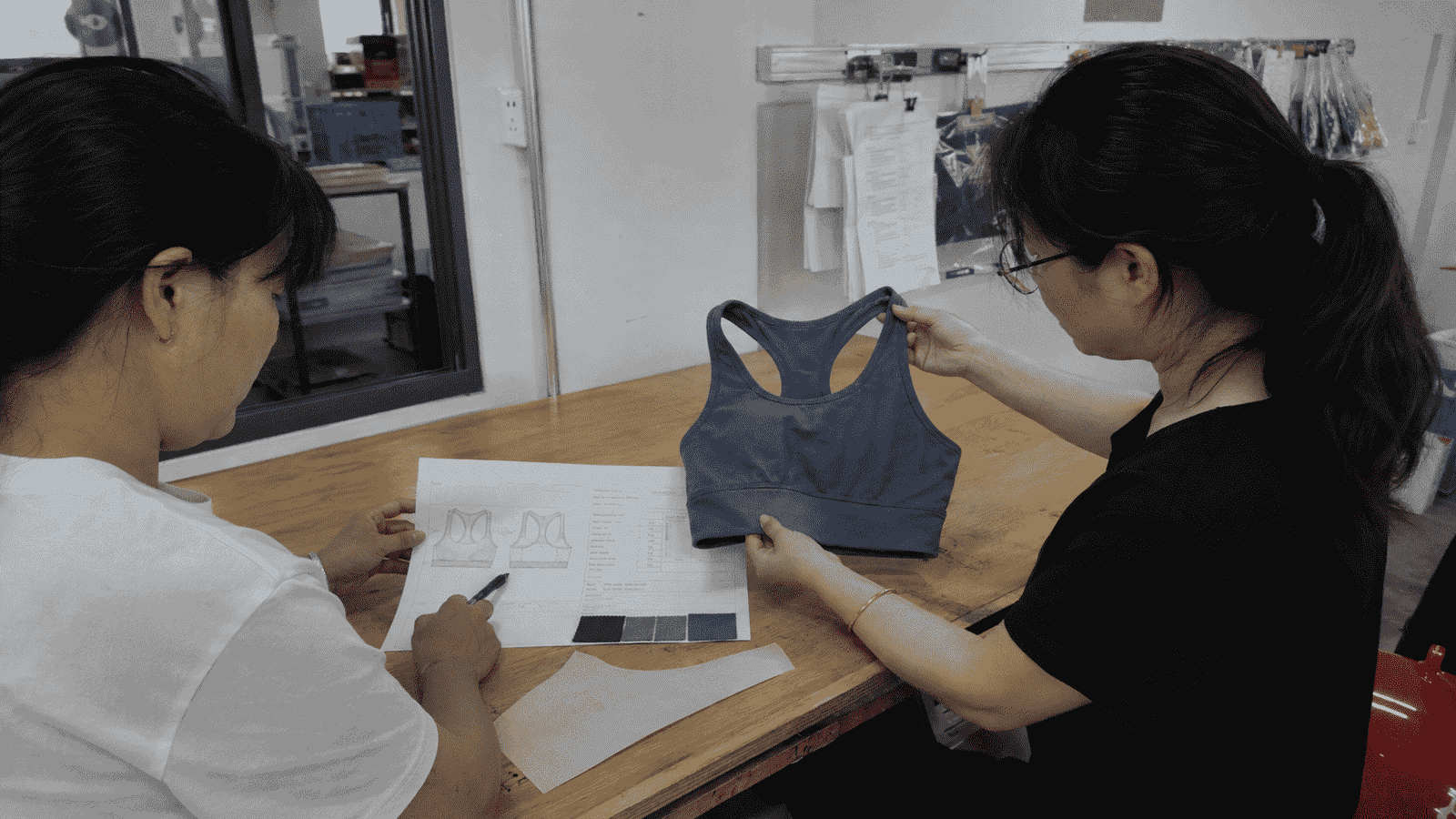
Send Us an Inquiry

Tell us your needs, and our team will get back to you within 24 hours.

START YOUR PROJECT

Ready to Develop Your Private Label Activewear Line?

Tell us what you want to develop, your estimated quantity and customization needs. We will review the details and suggest the next practical step for sampling, quotation or production.

Helpful details to include:

Request MOQ & Sample Details