
Flare Leggings Manufacturer for Private Label Activewear Brands
MOVEVOX develops cut-and-sew flare leggings from buyer-defined fit, measurements, fabric and brand requirements. Projects can begin from a Tech Pack, lawful reference garment, sketch, image or clearly defined concept, then progress through pattern development, physical sampling, fit approval and controlled private-label bulk production.
Measurable Fit
Translate the intended silhouette into measurements, pattern and approved samples.
Full Garment
Review waist, hip, thigh, rise, inseam and lower-leg shape together.
Approved Standard
Carry controlled specifications, First Article and QC into bulk production.
Rise, inseam, thigh fit, lower-leg proportion and fabric behavior are reviewed as one connected silhouette.
Silhouette Drift
A wider hem alone does not define an approved flare proportion.
Length Changes Shape
Rise, inseam and total length affect the full garment silhouette.
Bulk Fit Variation
An approved sample only matters when its standards reach production.
Why Flare Leggings Need a Fit System
A professional flare-legging program depends on more than lower-leg width. MOVEVOX connects manufacturing, pattern engineering, sample approval and quality control so the brand can define and reproduce one approved silhouette.
Manufacturing Foundation
Flare leggings are primarily developed through MOVEVOX's cut-and-sew system, where fabric, pattern pieces, cutting, stretch direction, seams and finished measurements work together. The Yiwu core base includes approximately 24 principal sewing and garment-production machines supporting cut-and-sew activewear.
- Cut-and-sew manufacturing inside the Yiwu core system.
- Pattern, sampling, production and QC under one project.
Fit Engineering
The intended shape is converted into measurable relationships across waist, hip, rise, thigh, inseam and the lower leg. MOVEVOX can work from buyer-approved measurement charts and fit requirements instead of applying one generic leggings sizing standard to every brand.
- Buyer measurement charts can define production POMs.
- Physical samples validate the full silhouette.
Approval Control
Fit approval should be connected to the applicable sample version, material, measurements and pattern rather than treated as a general visual sign-off. Material or structural changes after approval can require additional review before the project moves into bulk production.
- Sample revisions remain controlled development versions.
- Final production information follows approved direction.
Repeatable Brand Standard
The long-term objective is not to make one attractive development sample. It is to preserve the approved product standard through First Article, inline measurement, finished-garment inspection and future repeat orders while controlling changes that could affect fit.
- First Article checks real production conditions.
- Repeat orders reuse standards unless variables change.

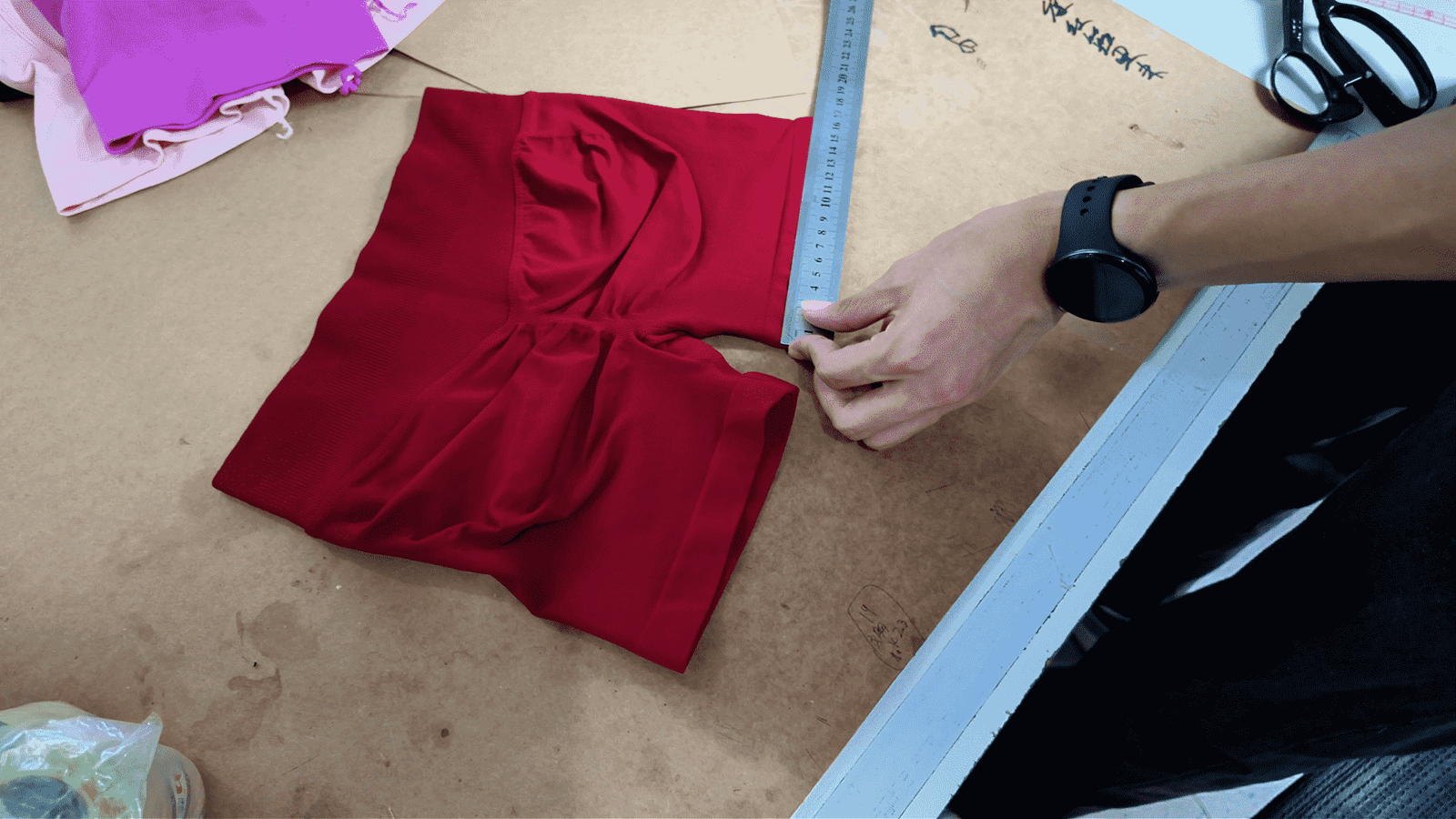
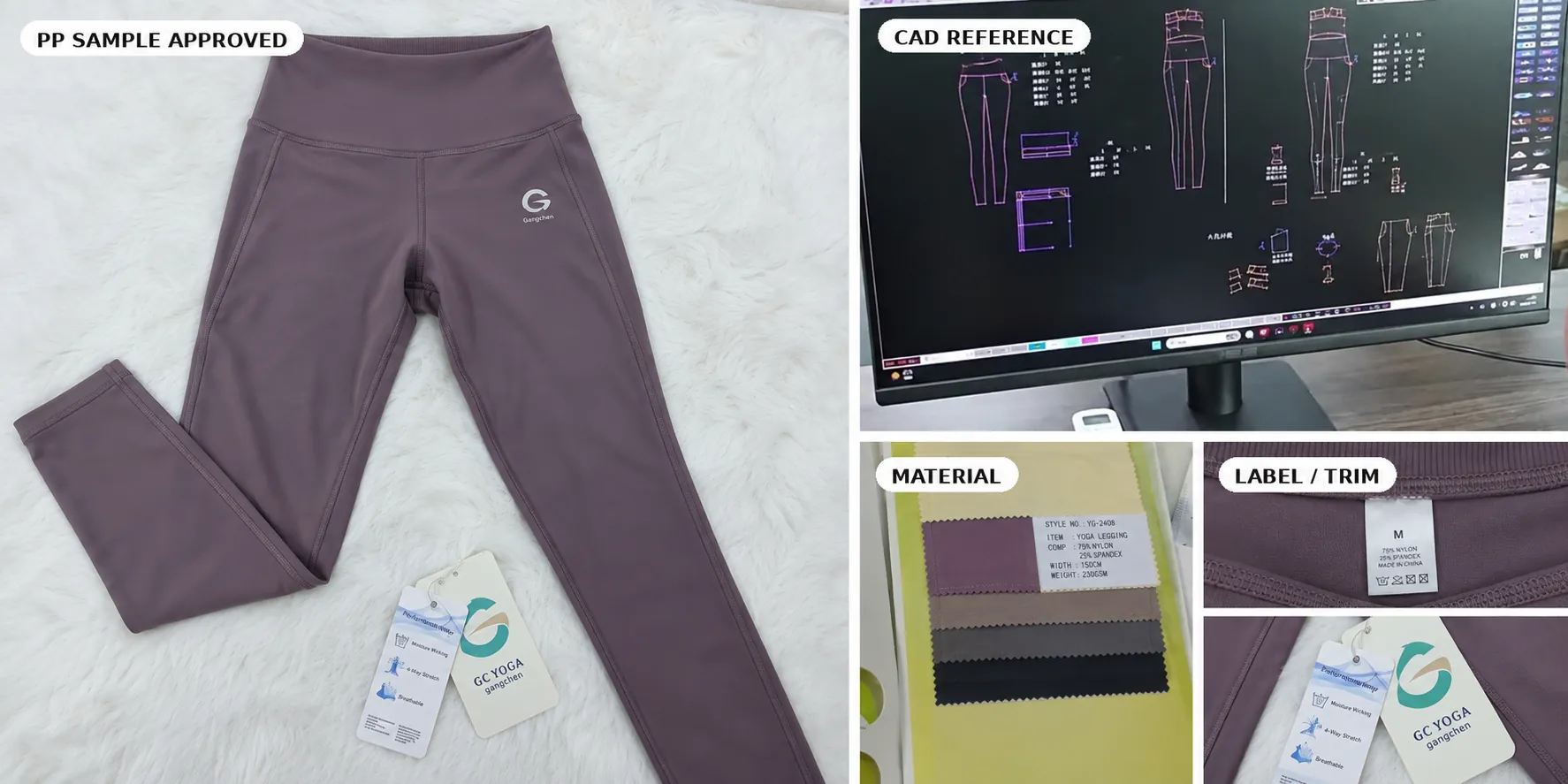
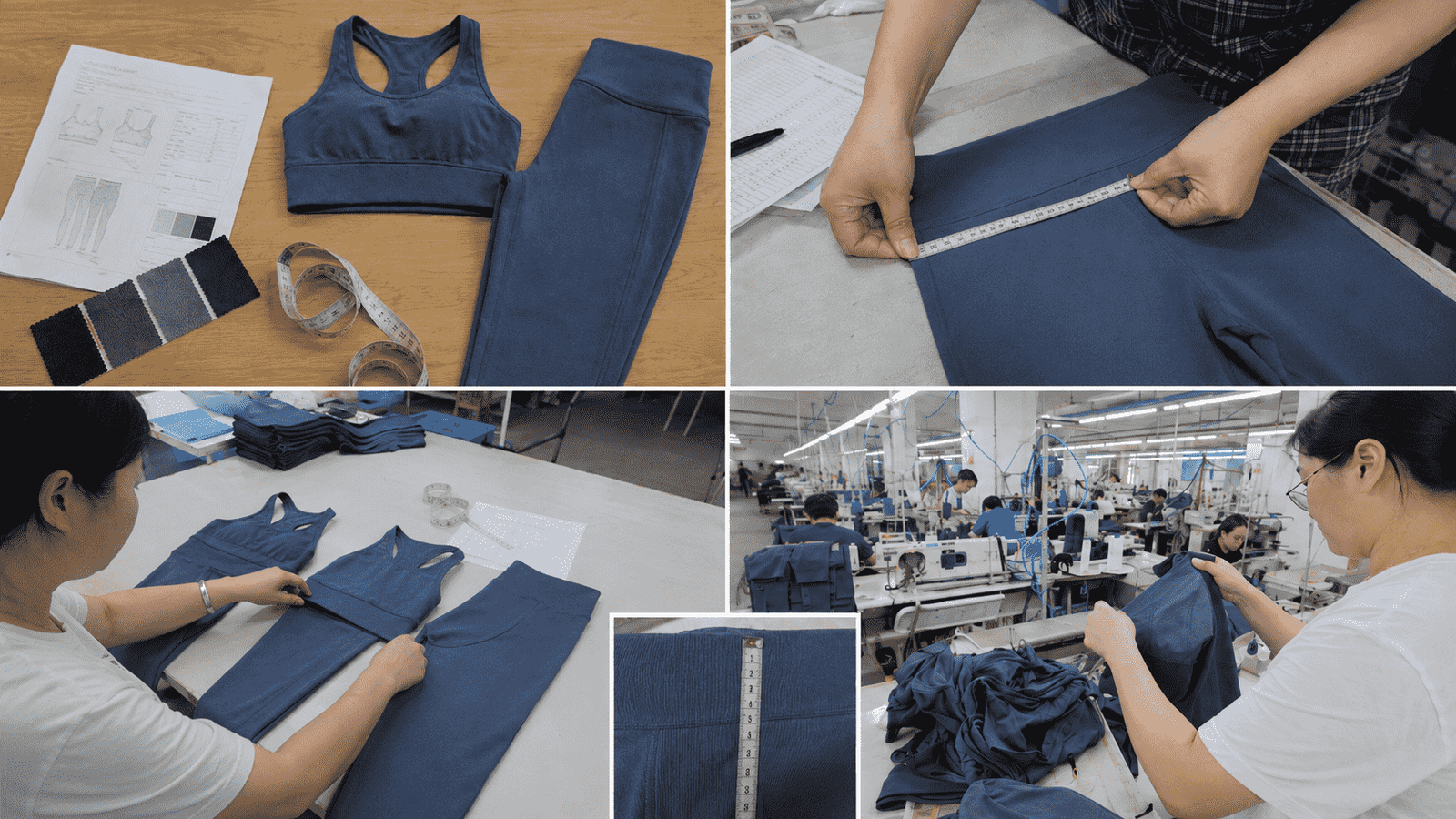
Where Flare Leggings Programs Usually Lose Control
Most flare-legging problems begin before final inspection. The key sourcing question is whether the intended silhouette has been translated into measurable standards that material, sampling, production and QC teams can all follow.
| Problem | Procurement Impact | MOVEVOX Control Direction |
|---|---|---|
| Undefined Flare Shape | Instructions such as “make it wider” leave too much interpretation to pattern and production teams, increasing revision risk and visual inconsistency. | Convert the visual direction into approved measurements, pattern information and a physical sample that becomes part of the production reference. |
| Incorrect Length Relationship | Rise, inseam or overall length changes can alter where the lower-leg shape appears and how the garment sits relative to the wearer. | Review rise, inseam and full garment proportion together instead of changing hem or leg length in isolation. |
| Material Changes Silhouette | A replacement fabric can change stretch, recovery, surface, opacity and how the garment hangs even when the paper pattern remains unchanged. | Approve the applicable fabric during development and review significant material substitutions before commercial production. |
| Grading Distorts Proportion | A balanced base-size flare may become too narrow, too wide or visually misplaced when every POM is graded using inappropriate increments. | Define Grade Rules by relevant POM and use Size Set review where required to verify proportion across the size range. |
| Sample-to-Bulk Drift | Older specifications, material changes or uncontrolled production transfers can make bulk garments differ from the buyer-approved sample. | Use current documents, approved sample references, First Article verification and production-stage measurement controls. |
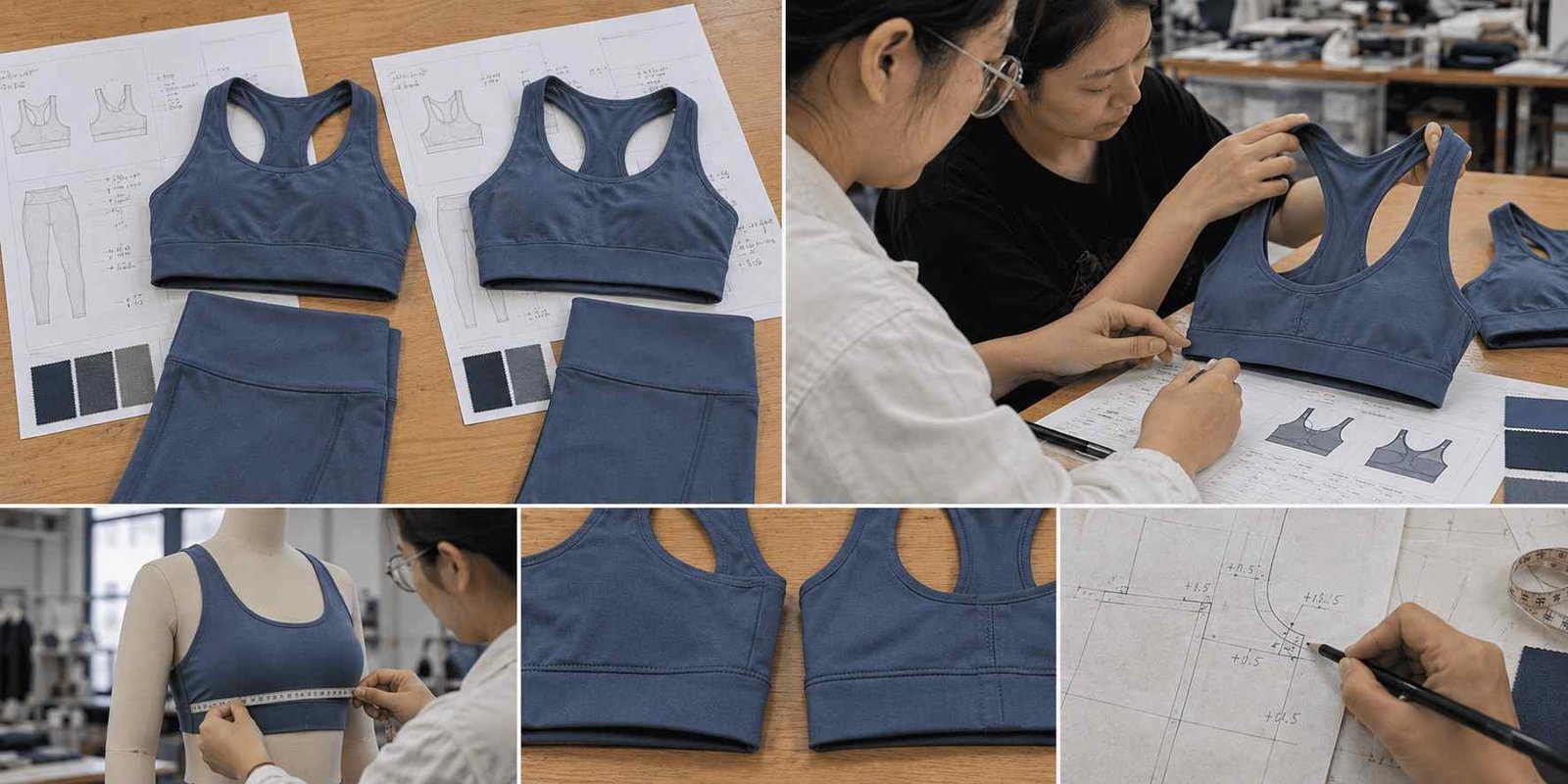
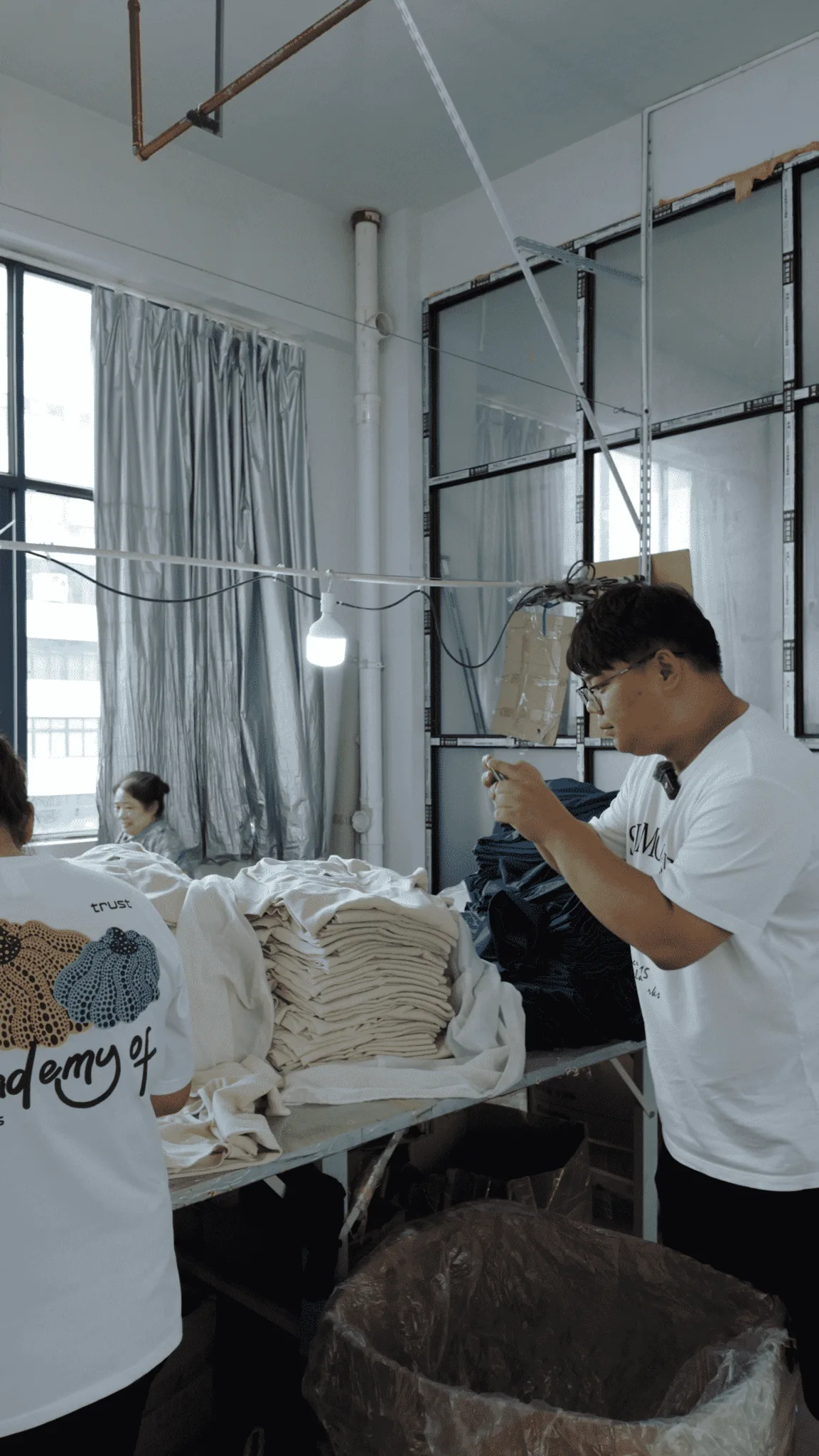
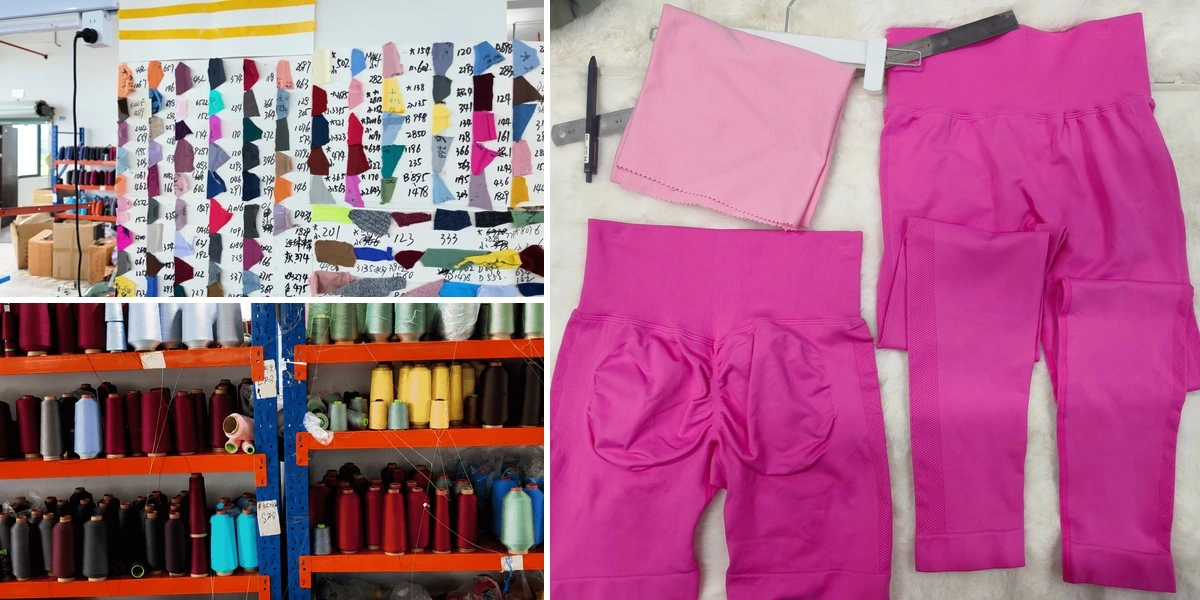
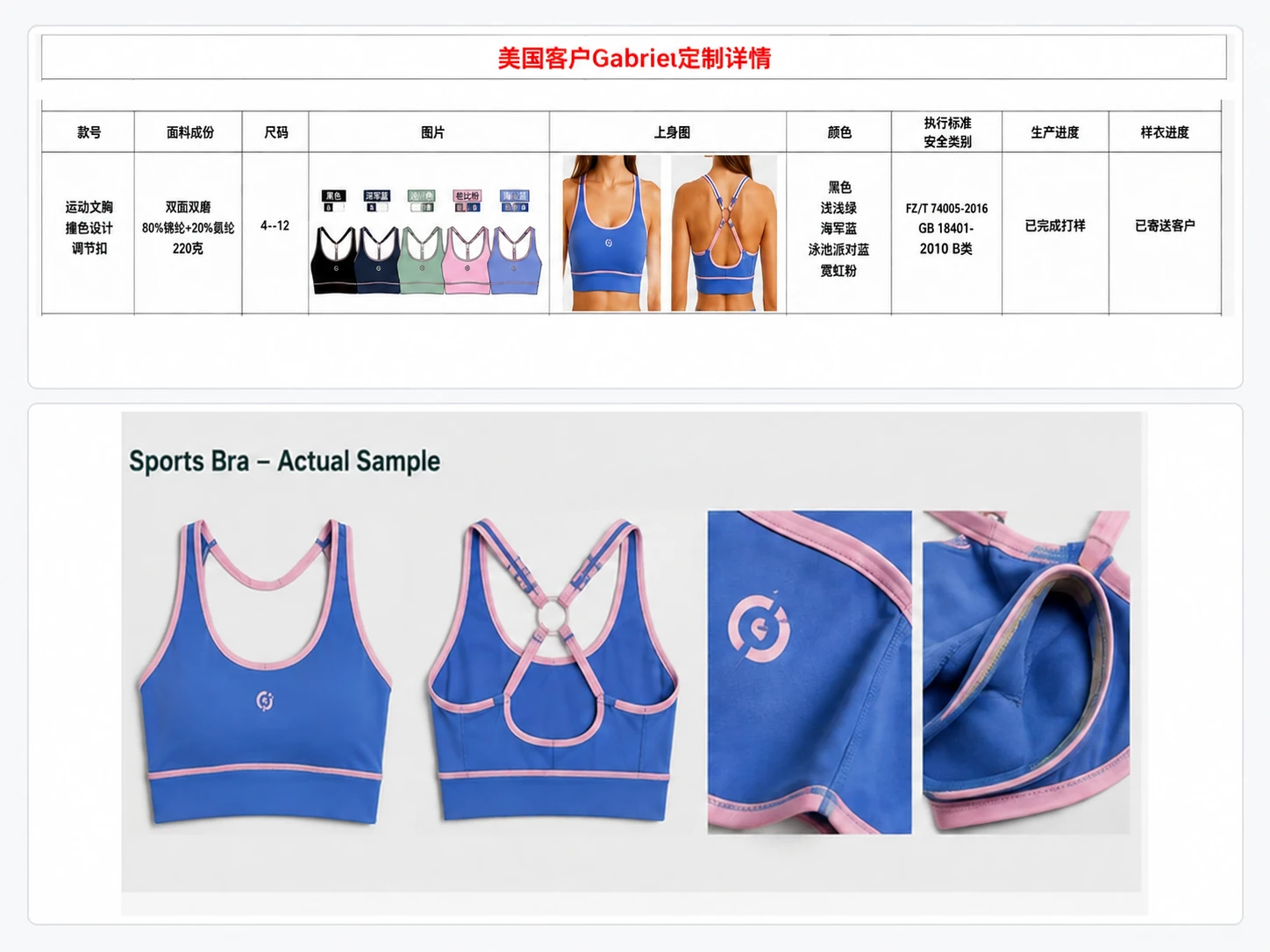
Length Changes the Entire Flare Leggings Silhouette
The same lower-leg pattern can look different when garment length changes. MOVEVOX therefore treats length as a measurable fit variable connected to rise, inseam, target wearer and the approved full-garment proportion.
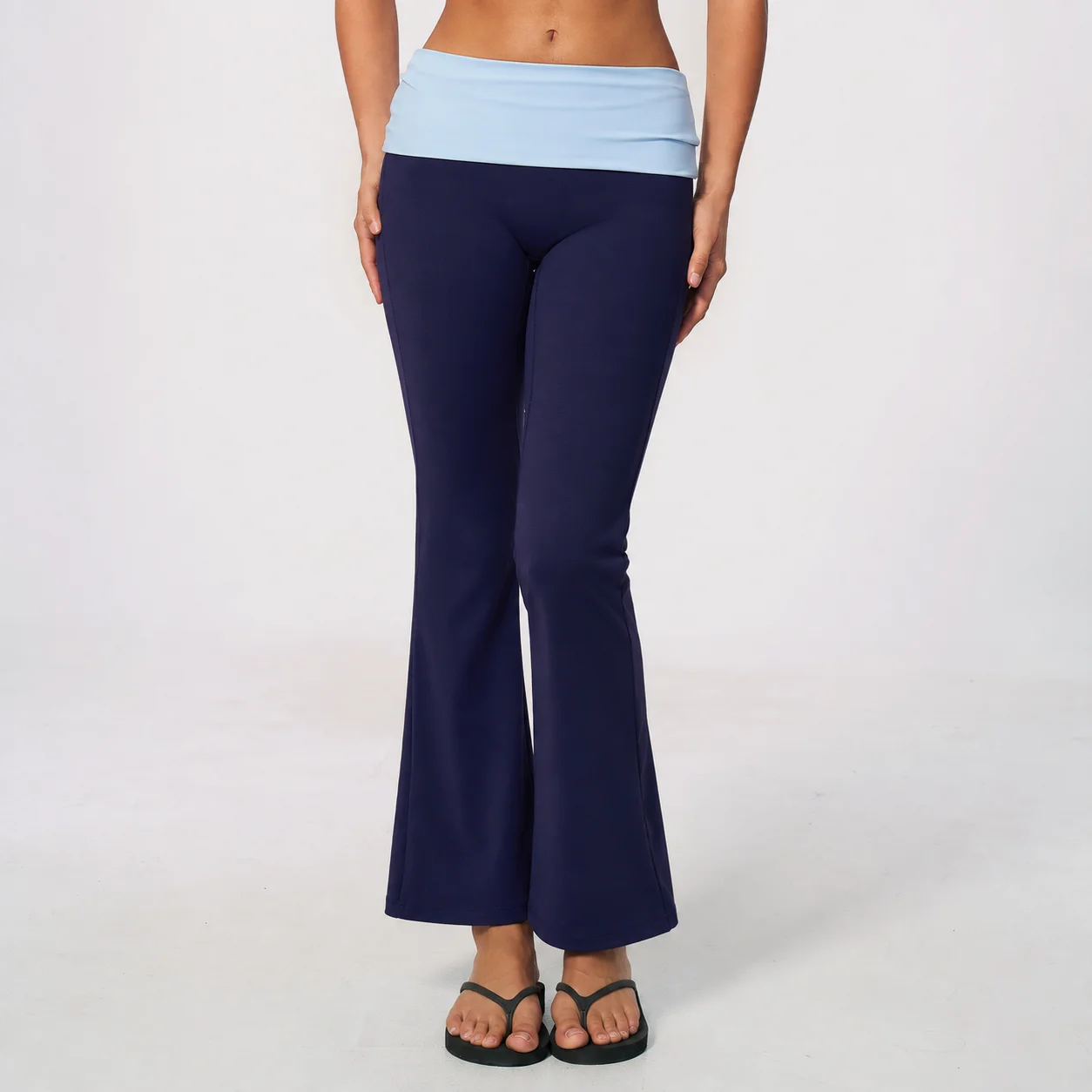
Shorter Length
A shorter-length direction should not be created by simply removing fabric from the bottom after the rest of the pattern is finalized. The buyer should review how the revised inseam affects lower-leg proportion, hem position and overall silhouette.
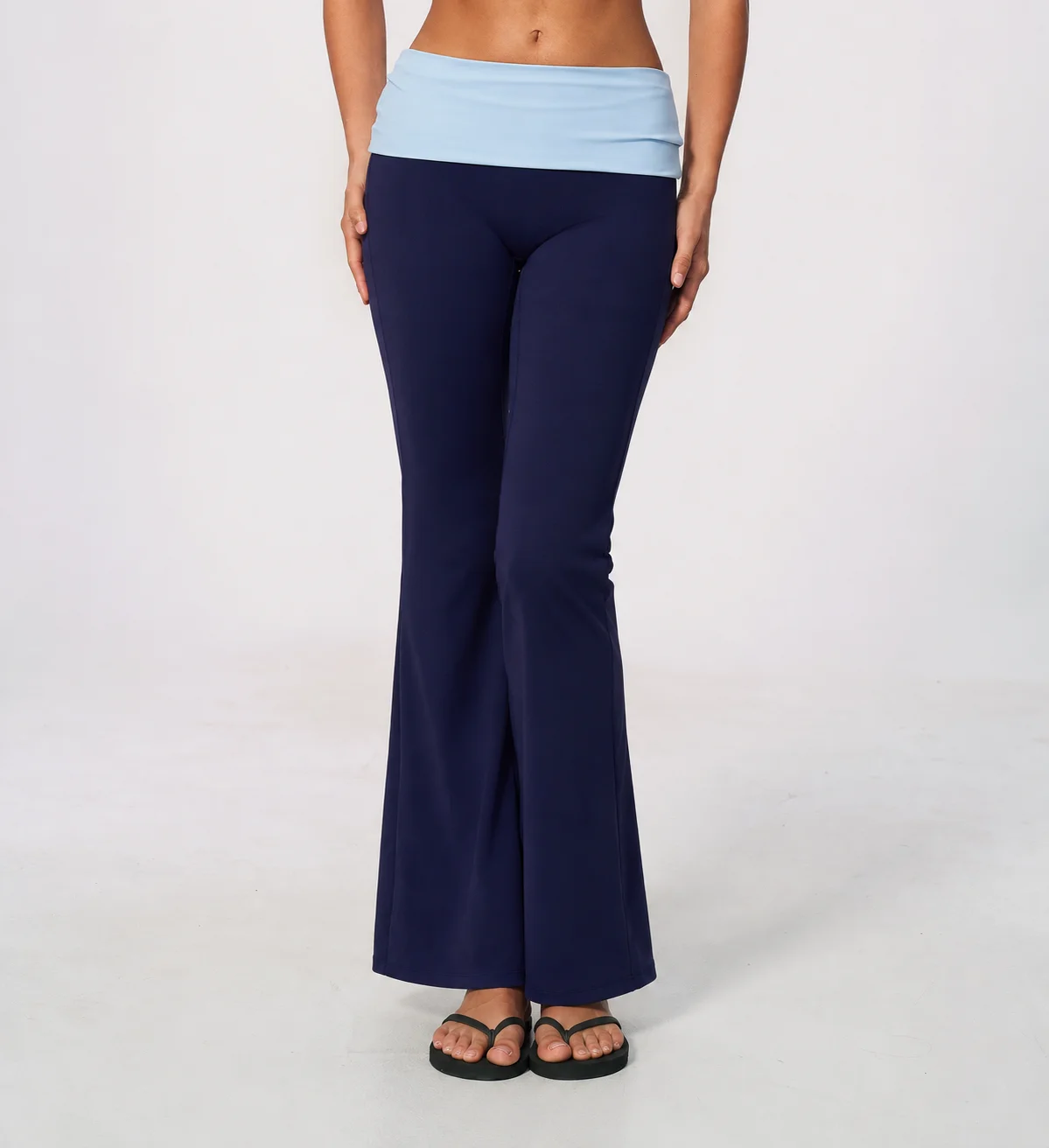
Core Length
The core length normally becomes the main development reference for reviewing waist position, rise, thigh fit, inseam and the approved lower-leg shape before additional length options are evaluated.
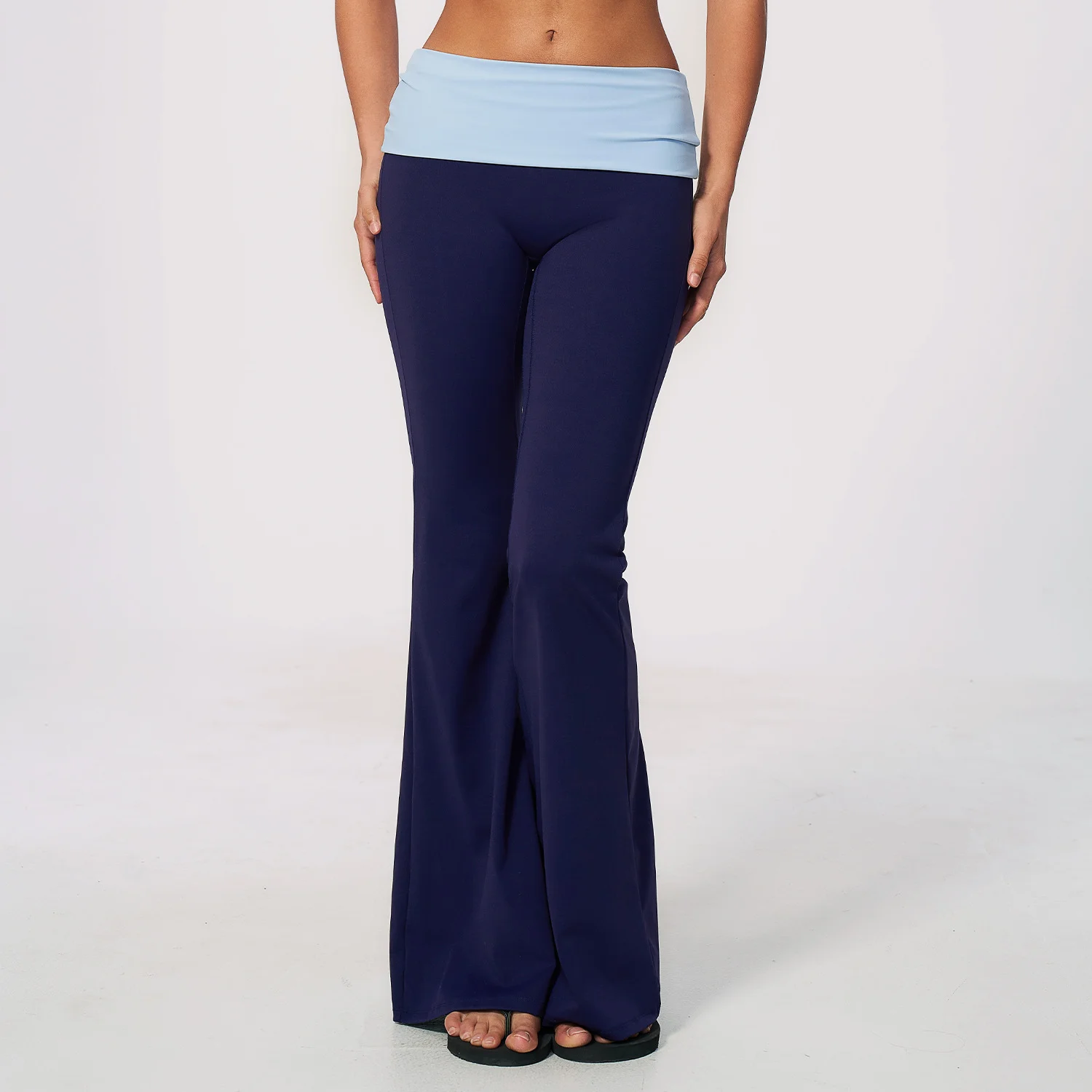
Longer Length
A longer inseam can change where the lower-leg line reaches the ankle, footwear or floor. The pattern and visual proportion should therefore be reviewed as a complete garment rather than extending only the hem.
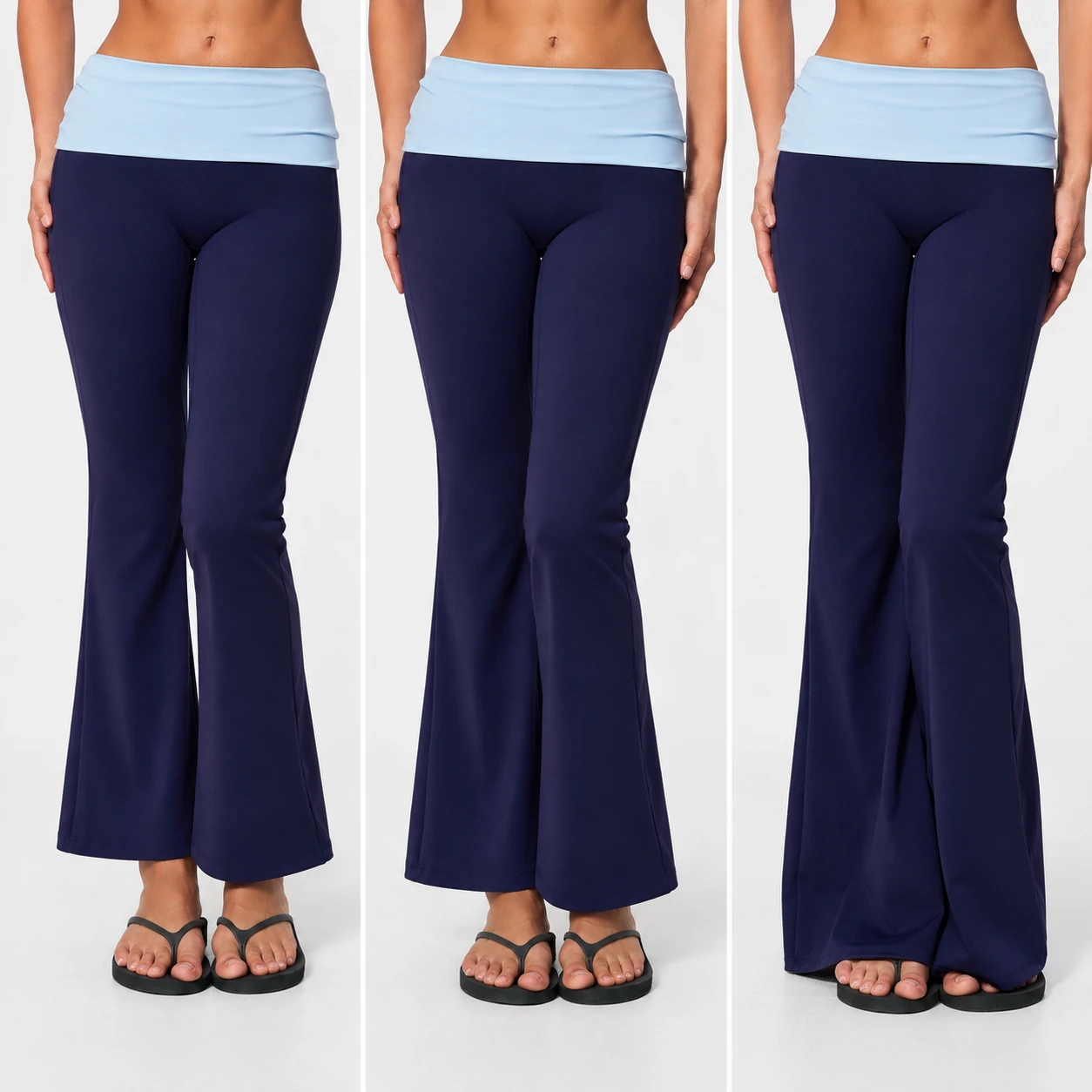
Multi-Length Program
Brands serving several height profiles can define more than one length option. Each option should remain connected to the buyer's measurement chart, fit objective and grading rules.
Combination Logic
MOVEVOX does not apply one universal flare-legging inseam to every brand or market. The correct length depends on target body profile, rise, styling direction and approved fit.
Rise and Inseam Shape More Than Garment Length
Front rise, back rise and inseam determine where the garment sits, how much room the upper body receives and how the lower-leg shape appears. They should be developed together rather than adjusted as independent numbers.
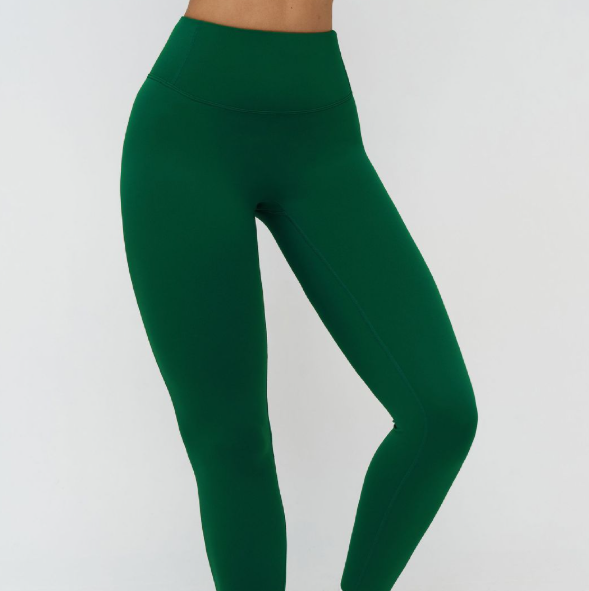
Front Rise
Front rise helps define the intended waistband position and front-crotch relationship. If it is insufficient for the target fit, the garment can create pulling or an unintended waist position even when waist and inseam measurements look correct.
MOVEVOX reviews rise together with waistband height, hip fit, crotch construction, material stretch and the approved physical sample.
Back Rise
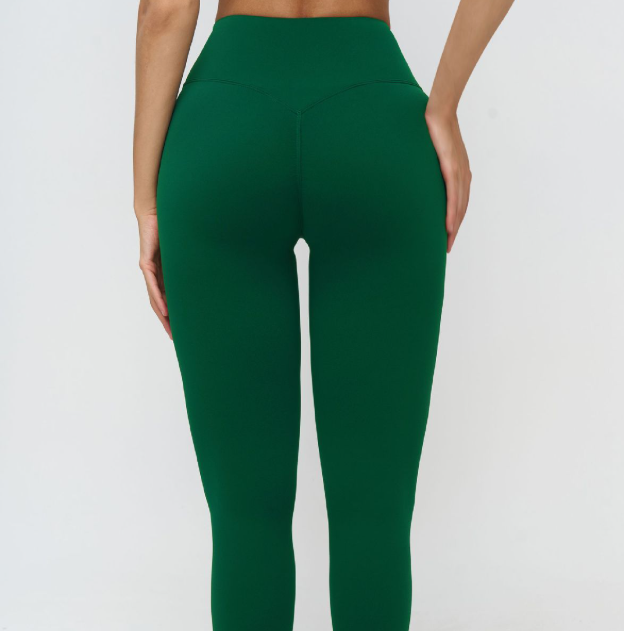
Back rise contributes to seat capacity, rear-waist position and how the garment remains positioned through the hip. An incorrect relationship can shift the upper body and change the apparent full silhouette.
MOVEVOX can review front and back rise as one fit system using the buyer's measurement chart and sample feedback.
Inseam
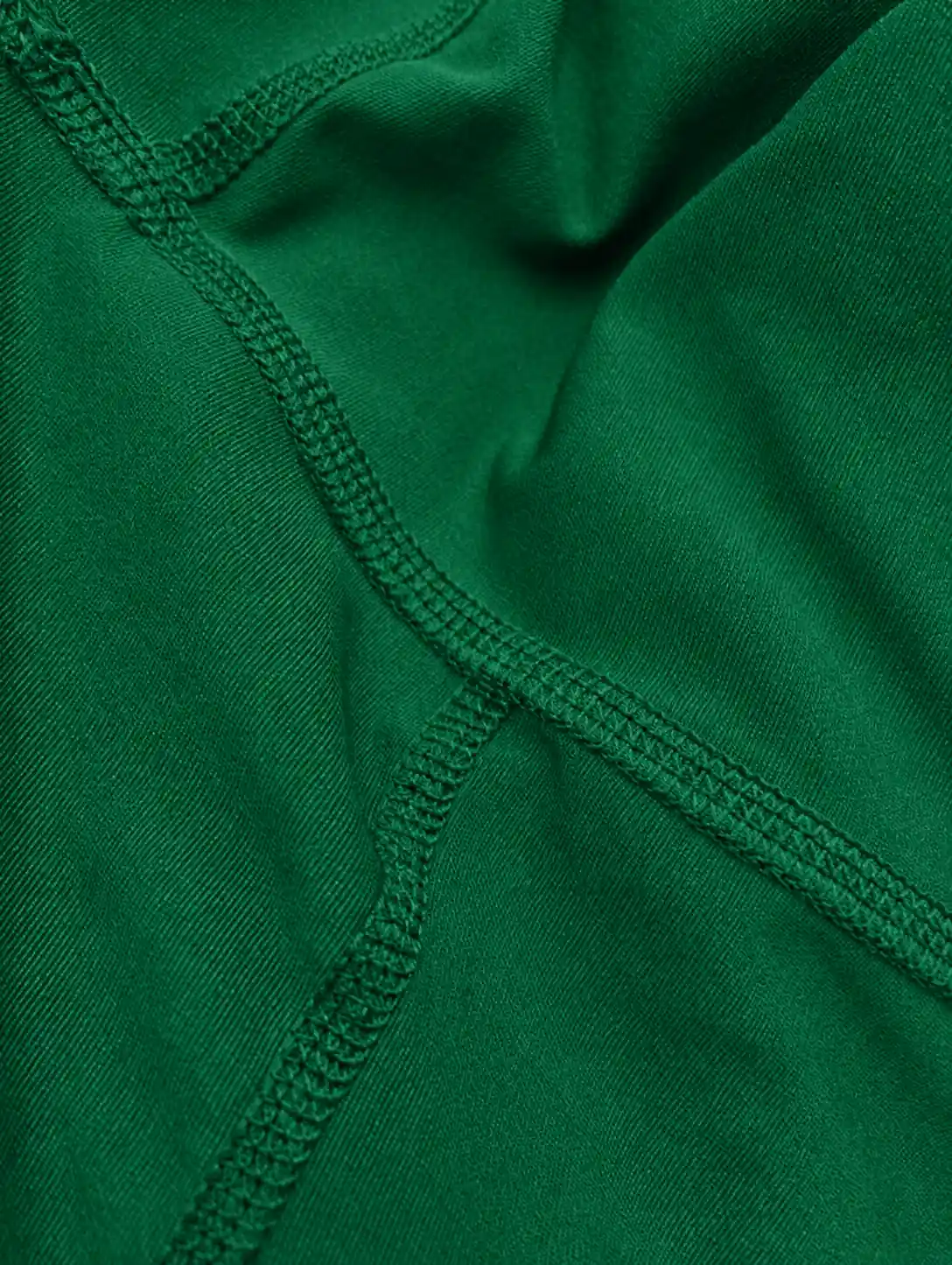
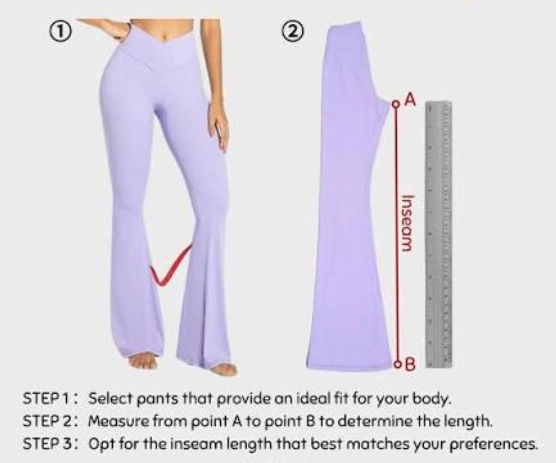
Inseam influences where the lower leg reaches the wearer and therefore how the complete flare proportion is perceived. It should be considered together with rise, total garment length and the approved lower-leg pattern.
Multiple length options should be specified and validated, not created by an uncontrolled production-floor adjustment.
Pattern Making Converts Flare Concepts Into Production Standards
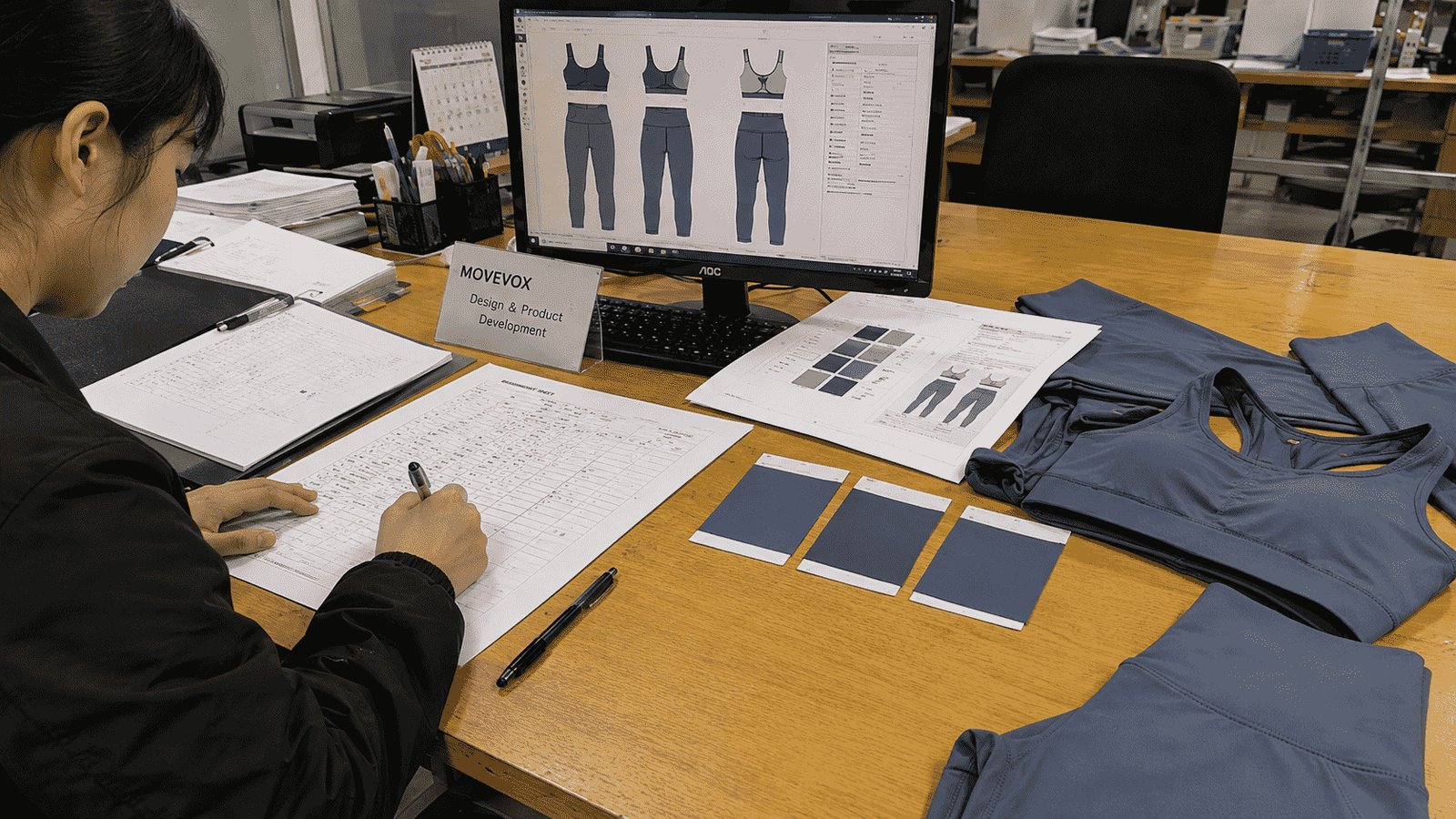
MOVEVOX uses pattern development to translate buyer measurements, visual direction, fabric behavior and fit requirements into a controllable cut-and-sew product before the style moves toward size grading and bulk production.
Review the Inputs
Pattern work begins with the strongest available project information: Tech Pack, measurement chart, lawful reference garment, sketch, image or clearly defined concept. The technical team reviews intended fit, waistband, rise, inseam, lower-leg direction and material information before treating the design as an executable production pattern.
Build the Pattern
The paper pattern converts the approved dimensions and shape into physical garment pieces. For stretch activewear, the pattern cannot be separated from fabric behavior, stretch direction, seam allowance and the selected construction.
Revise Through Fit
The first pattern is a development version, not automatically the production version. Once a Fit Sample is measured and reviewed, buyer comments can identify proportion, rise, leg-shape or other areas requiring change.
Lock Production Pattern
After applicable fit comments are closed and the required sample has been approved, the relevant pattern version becomes part of the production standard. Later size grading, First Article and bulk measurement controls stay connected to that approved version.
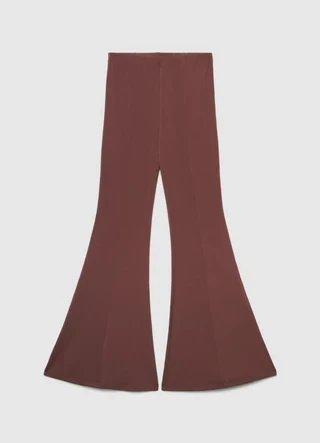
Cut-and-Sew Pattern Engineering Controls the Finished Flare Silhouette
For flare leggings, paper pattern, fabric direction, seam allowance and sewing construction work as one system. A technically correct finished garment cannot be defined by flat dimensions or a reference image alone.
Pattern Pieces
Each garment panel should reflect the current approved style, size and fit direction. Long leg panels carry much of the visible silhouette, while waistband and crotch pieces affect how those panels sit on the body.
Stretch Direction
Stretch activewear fabric behaves differently along different directions. Pattern placement should respect the approved material and intended fabric orientation so the garment develops the expected fit and recovery.
Seam Allowance
A paper pattern and finished garment are not dimensionally identical. Seam allowance, stitch type, elastic and assembly method can change the finished measurement.
Construction Method
Overlock, flatlock, coverstitch and other applicable activewear processes interact differently with seam allowance, fabric thickness and stretch. Final use follows the approved technical construction.
Prototype Validation
A physical prototype allows the pattern and construction to be checked as a real garment. Measurements, appearance, symmetry and fit provide information that cannot be confirmed from technical drawings alone.
Production Pattern
The approved production pattern should correspond to final specifications and sample decisions. Material, factory or critical construction changes may require the pattern to be reviewed again.
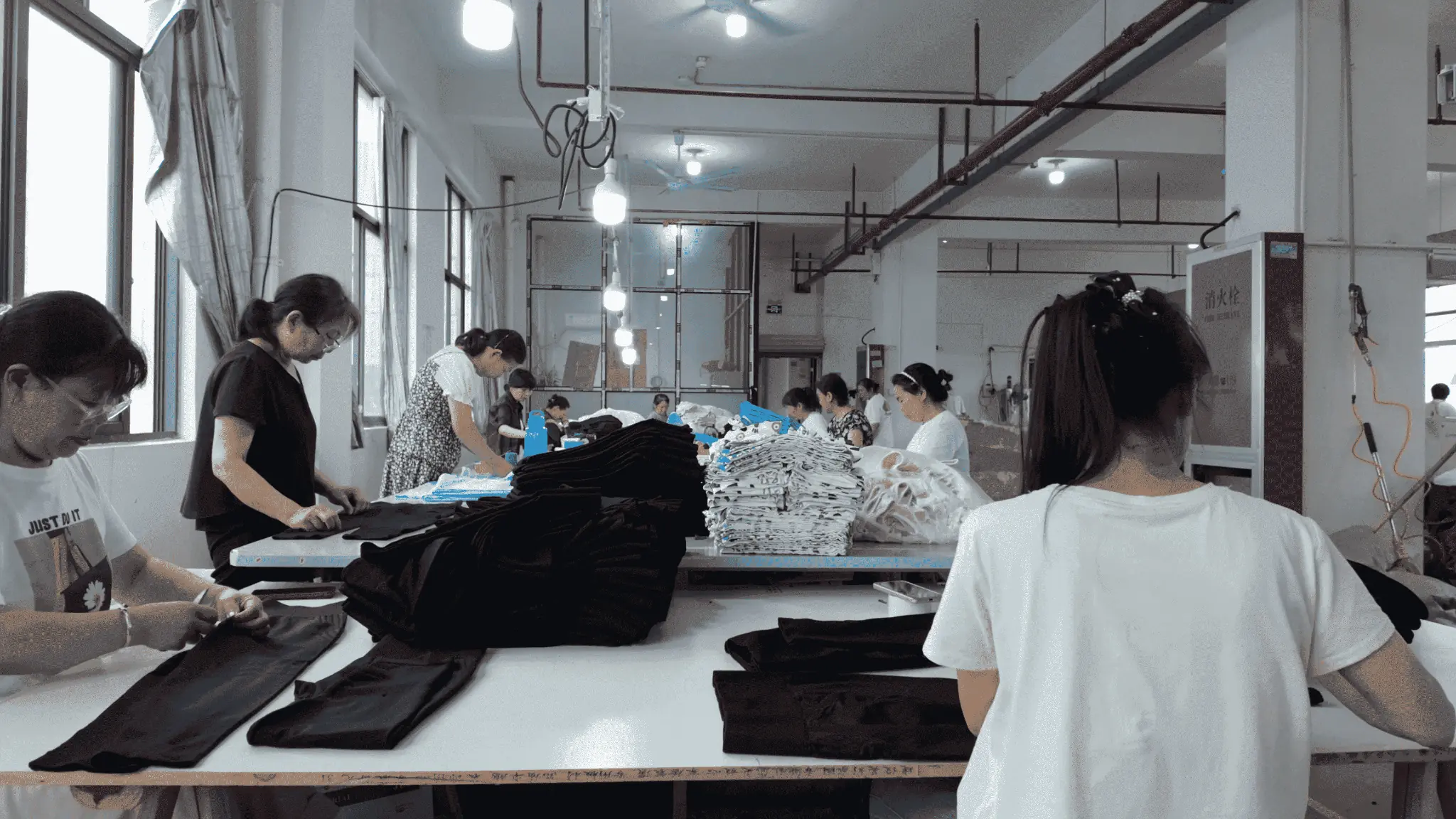
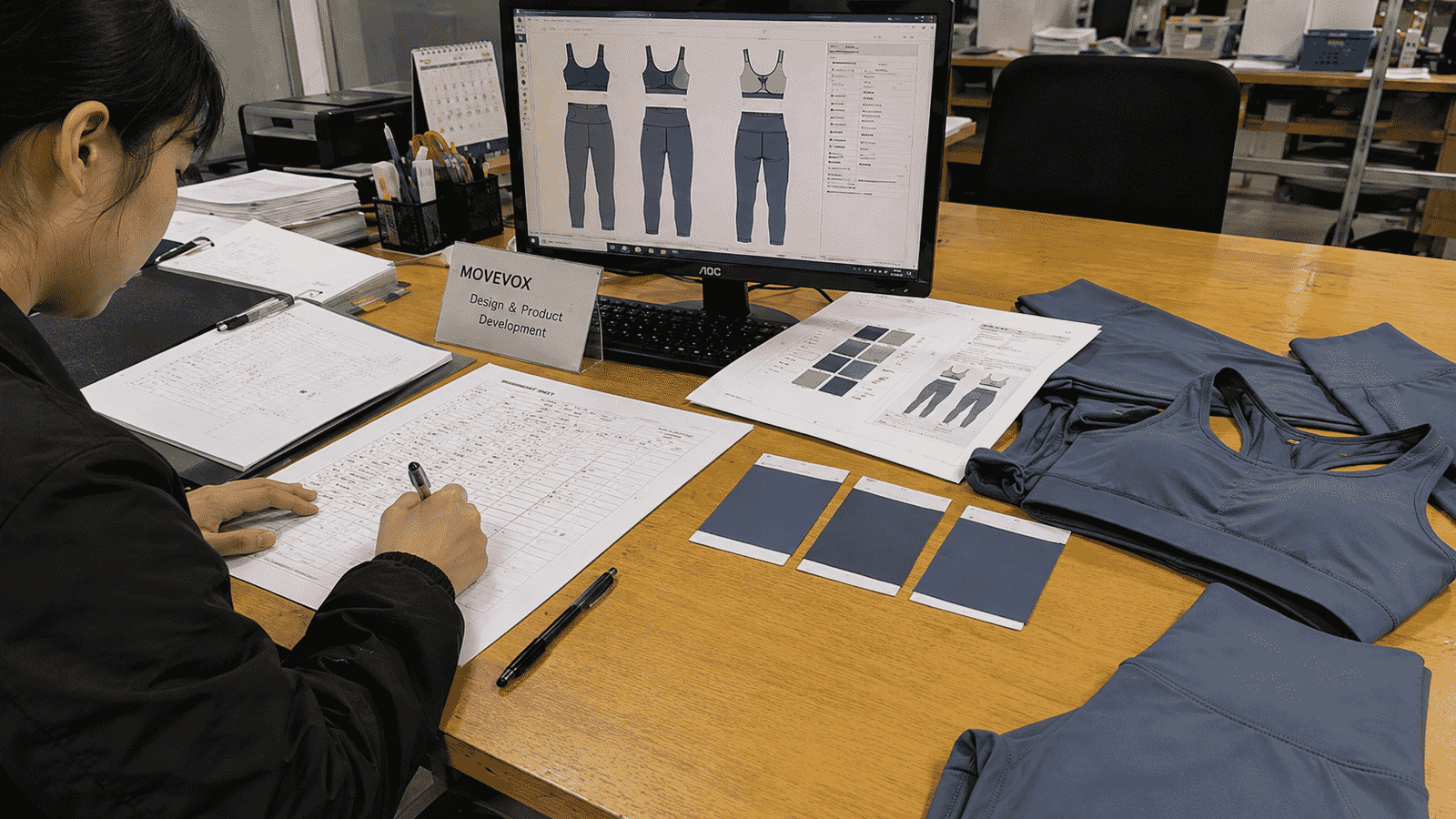
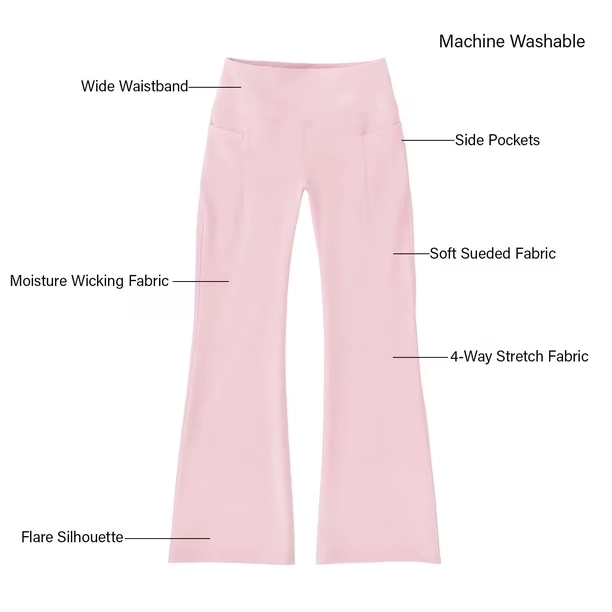
Common Flare Fit Problems Point to Different Root Causes
A visible fit problem does not automatically mean the sewing operator made an error. Measurements, pattern proportion, material behavior, construction and grading can all affect the finished flare silhouette.
Flare Starts Incorrectly
Problem: The transition into the lower leg appears too high or too low, changing the balance between fitted thigh and flare silhouette.
Response: Review current pattern, approved sample and relevant leg measurements before modifying the lower-leg shape.
Inseam Looks Wrong
Problem: The garment may technically match a hem width while still appearing too short or too long.
Response: Check rise, inseam, total-length relationship and measurement method together.
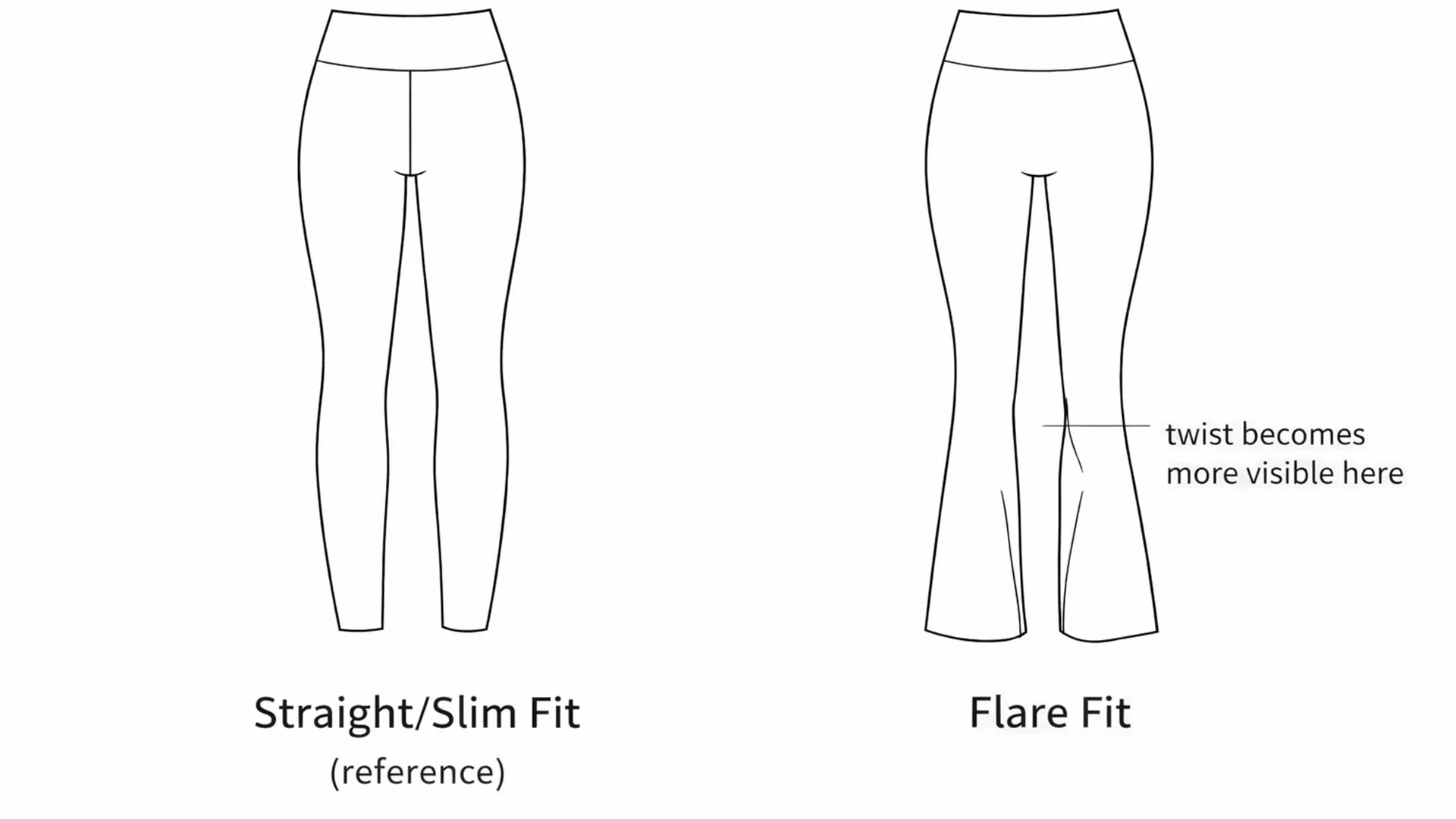
Side Seam Twists
Problem: Visible twisting through a long leg can weaken symmetry and distort the flare line.
Response: Review pattern alignment, fabric condition, cutting direction, sewing and finished appearance.
Waistband Shifts
Problem: A waistband that slips, rolls or sits at the wrong height alters the apparent rise and vertical proportion.
Response: Review waist-to-hip relationship, rise, waistband construction and material recovery together.
Size Proportion Drifts
Problem: A silhouette approved in the base size can look noticeably different in smaller or larger sizes.
Response: Define Grade Rules by measurement area and use Size Set review when required.
Fabric Changes Shape
Problem: A new material can change stretch, recovery and garment appearance without any paper-pattern change.
Response: Treat significant material changes as controlled project changes and validate the garment again where required.
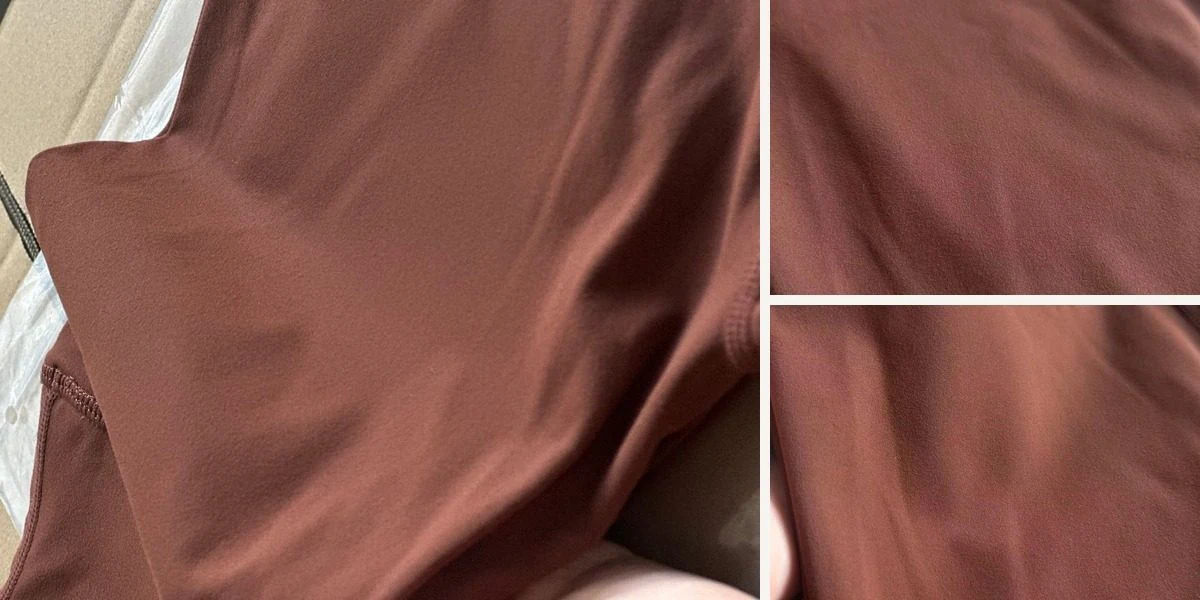
Fabric Selection Can Change the Approved Flare Silhouette
Composition alone does not tell a buyer how a flare legging will fit or hang. Material selection should consider the garment, target fit, color, stretch, recovery, surface and approved physical sample.
| Material Variable | Flare-Legging Risk | MOVEVOX Control Direction |
|---|---|---|
| Stretch | Excess or insufficient stretch can change upper-body and thigh fit. | Review the selected fabric in the actual garment rather than composition alone. |
| Recovery | Material may affect waistband stability, knee areas and long-term fit. | Evaluate recovery according to buyer requirements or an agreed project method. |
| GSM / Density | Weight and density influence hand feel, coverage and lower-leg appearance. | Confirm the applicable fabric specification and approved material reference. |
| Surface / Handfeel | Brushed, smooth or other surfaces change visual and tactile character. | Approve the intended surface on the actual material and garment. |
| Opacity | Coverage can change with color, stretch and garment fit. | Review relevant colors under applicable wearing or test conditions. |
| Shrinkage / Stability | Dimensional change can affect inseam, length and other controlled POMs. | Follow buyer-defined testing or project validation where required. |
| Custom Color | Custom dyeing can add material MOQ, development time and batch-control requirements. | Confirm the material route and commercial conditions before commitment. |

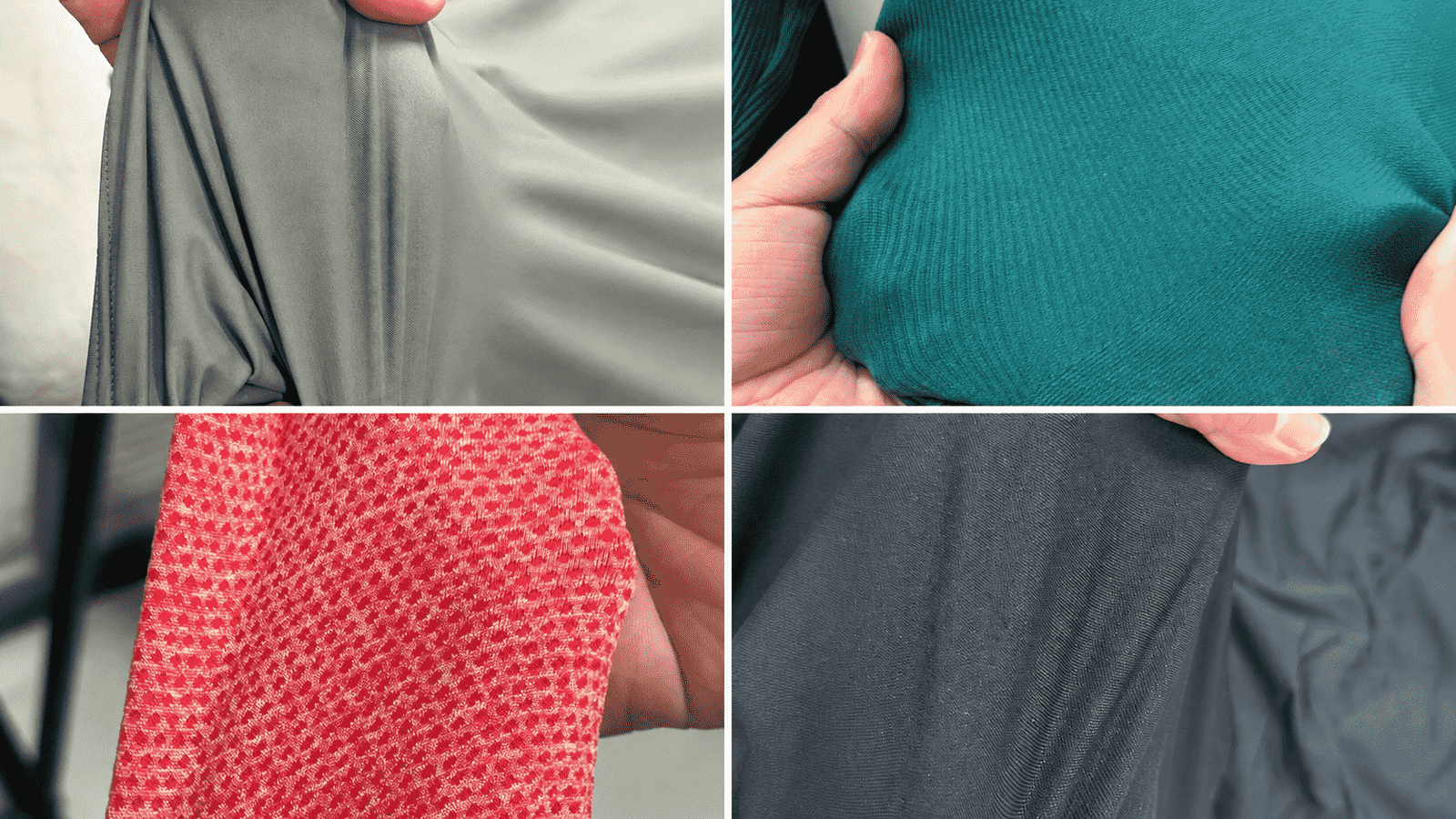
Recovery Affects Fit Above and Below the Knee
Recovery describes how a stretched material returns after extension. For flare leggings, its effect should be considered together with pattern and fit rather than treated as one universal performance number for an entire fabric family.
Waist and Hip Recovery
The fitted upper section depends on the material returning after it is stretched around the waist, hip and seat. Insufficient recovery may contribute to loss of fit stability, while an overly firm material can create a different pressure and wearing result from the approved sample.
Thigh and Knee Behavior
The thigh and knee sit near the transition between fitted and more open lower-leg areas. Material behavior here can affect whether the garment keeps the approved appearance during wear. Project requirements, fabric lot and fit remain relevant to the final result.
Lower-Leg Appearance
The lower leg is not required to behave like a compression zone, but the selected fabric still influences how the flare hangs, moves and returns. A fitted-legging material should not automatically be assumed to create the same visual result in a flare pattern.
MOVEVOX does not publish one universal numerical recovery result for all flare-legging fabrics without a defined test method and supporting evidence. Buyer-specified protocols take priority.
Eight Checks Before a Flare Measurement Chart Is Frozen
A mature measurement chart should define more than numbers. MOVEVOX reviews POM logic, measurement method and fit relationships before development so avoidable specification conflicts can be raised before sampling.
POM Completeness
Key product areas need enough information to define the intended fit and silhouette. Missing waist, rise, inseam, length or lower-leg requirements can leave the pattern team dependent on assumptions.
Measurement Method
A number is only useful when buyer and factory measure it the same way. POM, garment position and start/end locations should be sufficiently clear before becoming acceptance criteria.
Waist-Hip Logic
Waist and hip measurements should align with intended fit, material stretch and sample direction rather than being read as isolated dimensions.
Rise Relationship
Front and back rise should be reviewed together with waistband position and target seat capacity.
Inseam Logic
Inseam should be consistent with intended garment length and flare direction. Multiple lengths should be specifically controlled.
Lower-Leg Definition
The lower-leg silhouette needs measurable technical direction, using relevant widths, hem opening, technical drawings or an approved physical sample.
Grade Increments
Adjacent sizes should be checked for unexpected jumps or inconsistent relationships. Different POMs can use different grade increments.
Tolerance and Query
Customer tolerances take priority when supplied. Conflicting specifications should trigger a technical query rather than an unapproved factory change.
Use the Fit Sample to Validate the Full Silhouette
The Fit Sample should confirm whether measurements, pattern, material and physical wearing result work together. It is not simply a visual sample and should not automatically be treated as final PP approval.
Input Lock
Measurements, flare direction, construction and selected development material need sufficient clarity for the current sample version.
Pattern Build
The development pattern converts confirmed inputs into cuttable garment pieces while connecting rise, inseam, fit, lower-leg shape and material stretch.
Sample Build
The garment is produced using the current development pattern and selected sample material to create the first physical fit reference.
Internal Check
Measurements, appearance and workmanship can be checked before buyer review so execution problems are separated from true fit comments.
Buyer Review
The buyer reviews waistband position, waist, hip, rise, thigh, length, lower-leg proportion, fabric behavior and overall silhouette.
Revision Decision
The project is either approved for the next stage or returned for controlled revision. Approval scope should be clearly defined.

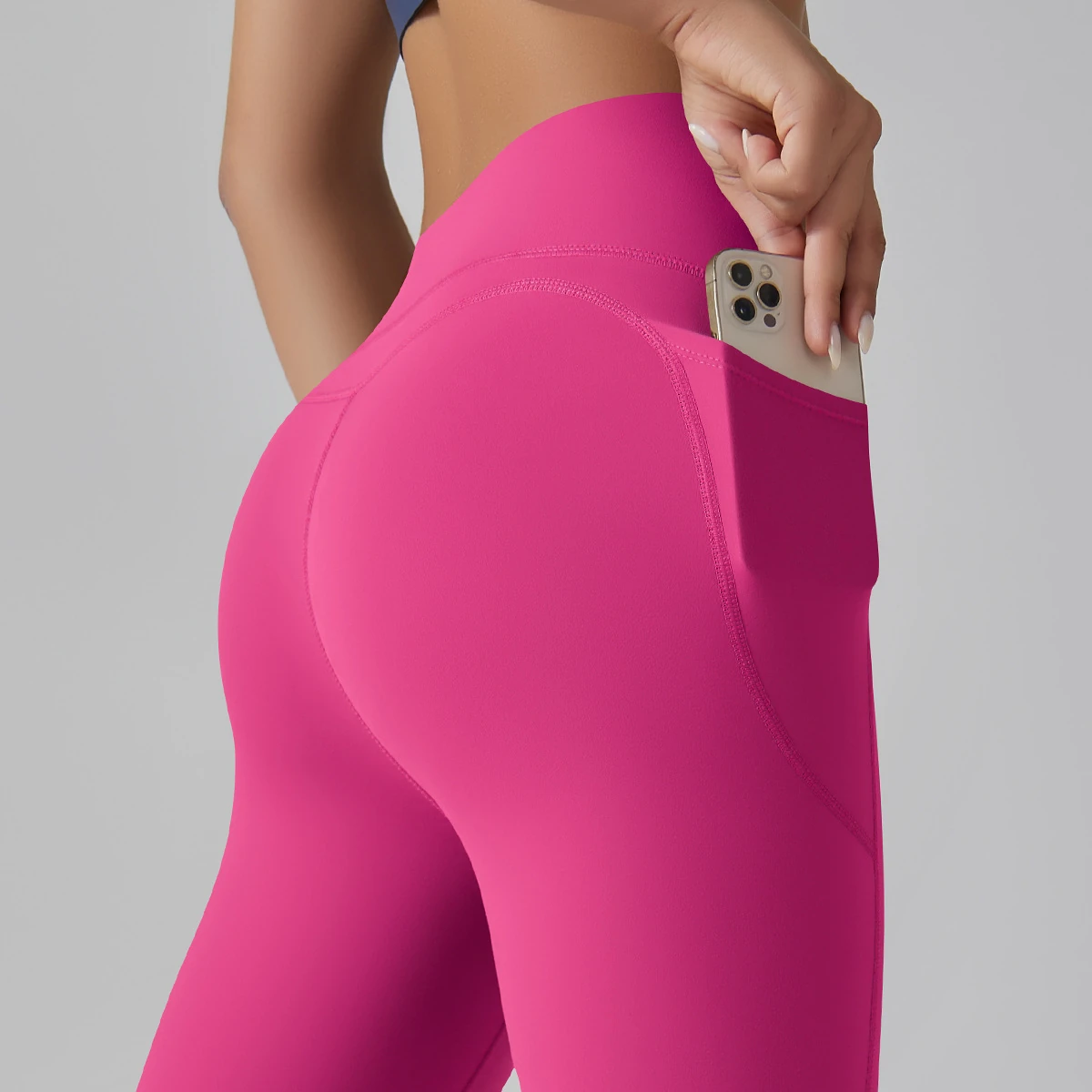
MOVEVOX's normal sample-development reference is approximately 5–10 working days after required development details are confirmed. Special materials, custom color, complex construction, unresolved feedback and international sample delivery can change the actual timeline.
Flare Leggings Grading Must Preserve Proportion Across Sizes
Grading should not enlarge or reduce every POM by one fixed percentage. Relevant garment areas may require different increments so function, fit and visual proportion remain coherent through the intended size range.
| Area | Grading Question | Control Direction | Verification |
|---|---|---|---|
| Waist | How should circumference change while preserving intended stability? | Define buyer-approved increments instead of one universal percentage. | Size specification / Size Set |
| Hip | Does added body capacity remain compatible with waist and rise? | Review hip growth as part of the upper-body fit system. | Measurement + fit review |
| Rise | Does crotch and waistband position remain appropriate across sizes? | Grade front and back rise according to approved size strategy. | POM review |
| Inseam | Does length change by size or stay within one length program? | Follow buyer-defined size and length logic. | Measurement chart |
| Lower Leg | Does flare retain visual balance as thigh dimensions change? | Grade relevant leg measurements according to product proportion. | Size Set / technical review |
| Hem Opening | Does the opening remain appropriate relative to the graded leg shape? | Treat hem as part of the lower-leg system. | Sample / finished measurement |
MOVEVOX follows buyer-approved Grade Rules where supplied. Base-size approval alone does not automatically confirm the complete size range, especially for extended sizing or multi-length programs.
Approved Fit Key Takeaways
Identify the Approval Scope
An approved flare fit should identify the applicable style, version, size, material and construction rather than treating one sample as universal approval for every future variation.
Use a Complete Standard
The production standard should combine the approved physical sample with current measurements, measurement methods, pattern version and applicable fit comments.
Separate Base Size From Size Range
Base-size approval does not automatically prove every size is approved; Grade Rules and Size Set review may still be needed.
Keep Material Inside the Approval
A significant change in stretch, recovery, GSM or construction can require additional validation before the old fit approval is extended.
Give Production the Same Standard
Production and QC need access to the same current information so sampling decisions are not separated from First Article and bulk inspection.
Reuse Standards With Change Control
Repeat orders can reuse approved fit information when relevant variables remain unchanged. New materials, colors, sizes or production conditions can trigger renewed checks.
Develop Flare Leggings Inside a Coordinated Activewear Collection
Mature activewear brands can reduce unnecessary development complexity by sharing suitable materials, colors, branding and packaging across related SKUs while keeping each product's fit, pattern and construction independently controlled.
Yoga Bottoms Platform
Combine classic fitted leggings, flare leggings and yoga shorts around a coordinated material and color direction where technically appropriate, while keeping each SKU's fit and pattern independently specified.
- Classic Leggings
- Flare Leggings
- Yoga Shorts
- Coordinated Bra
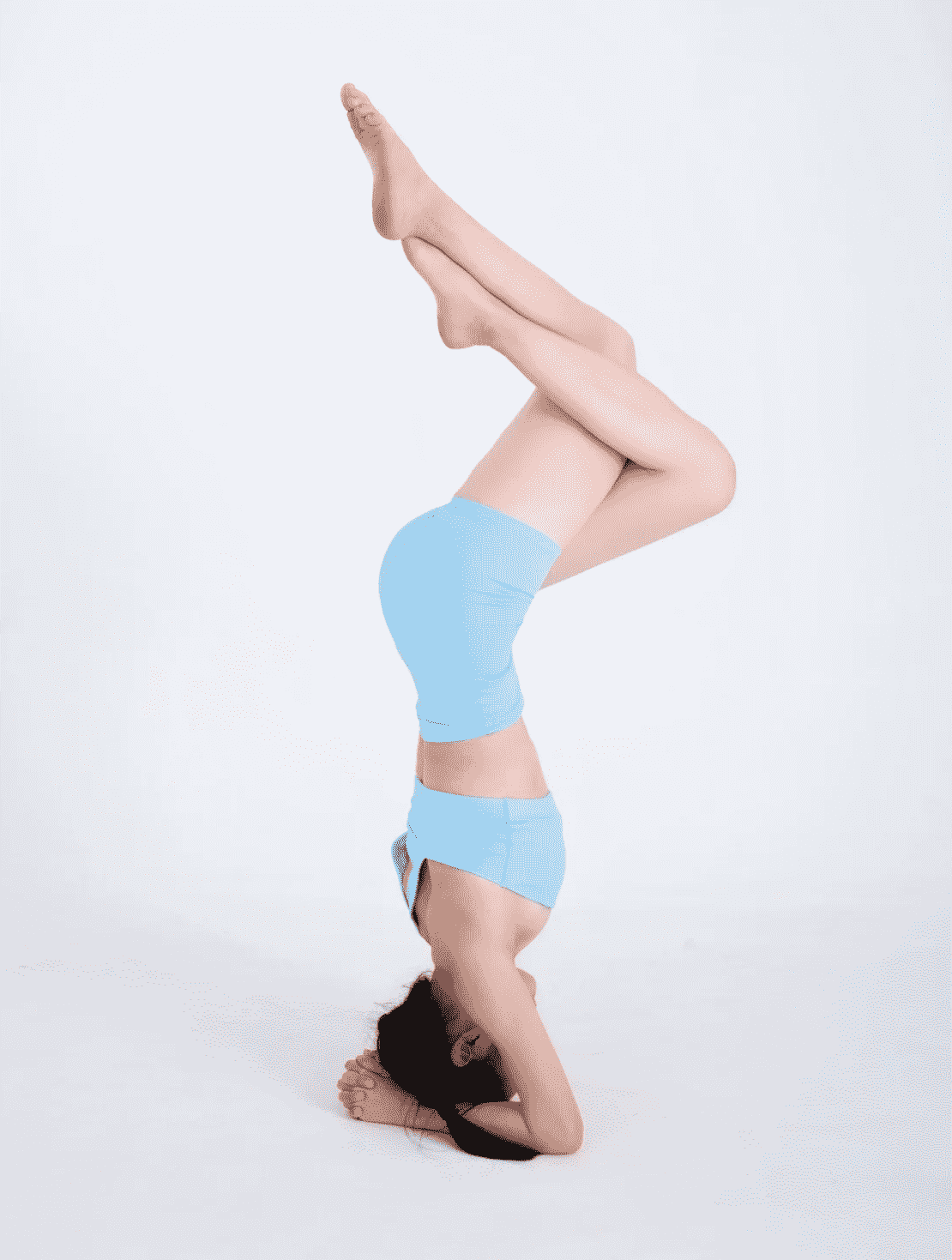
Pilates Studio Set
Connect flare bottoms with bras, tanks or fitted tops through shared colors, logo scale and packaging presentation while each product keeps its own measurement chart and sample.
- Flare Leggings
- Sports Bra
- Tank Top
- Fitted Top
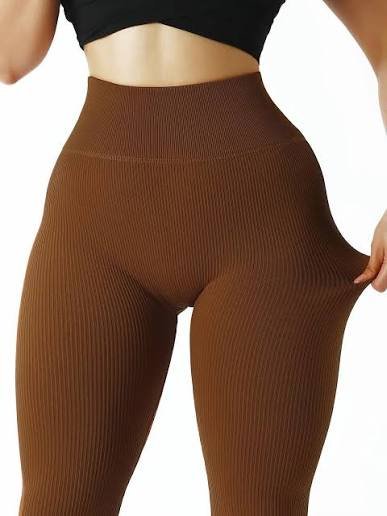
Seasonal Activewear Range
A wider program can combine hero flare styles with core leggings, shorts and tops while standardizing suitable materials, colors, labels, barcode logic and packaging.
- Hero Flare
- Core Leggings
- Training Shorts
- Seasonal Tops
How an Approved Flare Pattern Moves Into Bulk Production
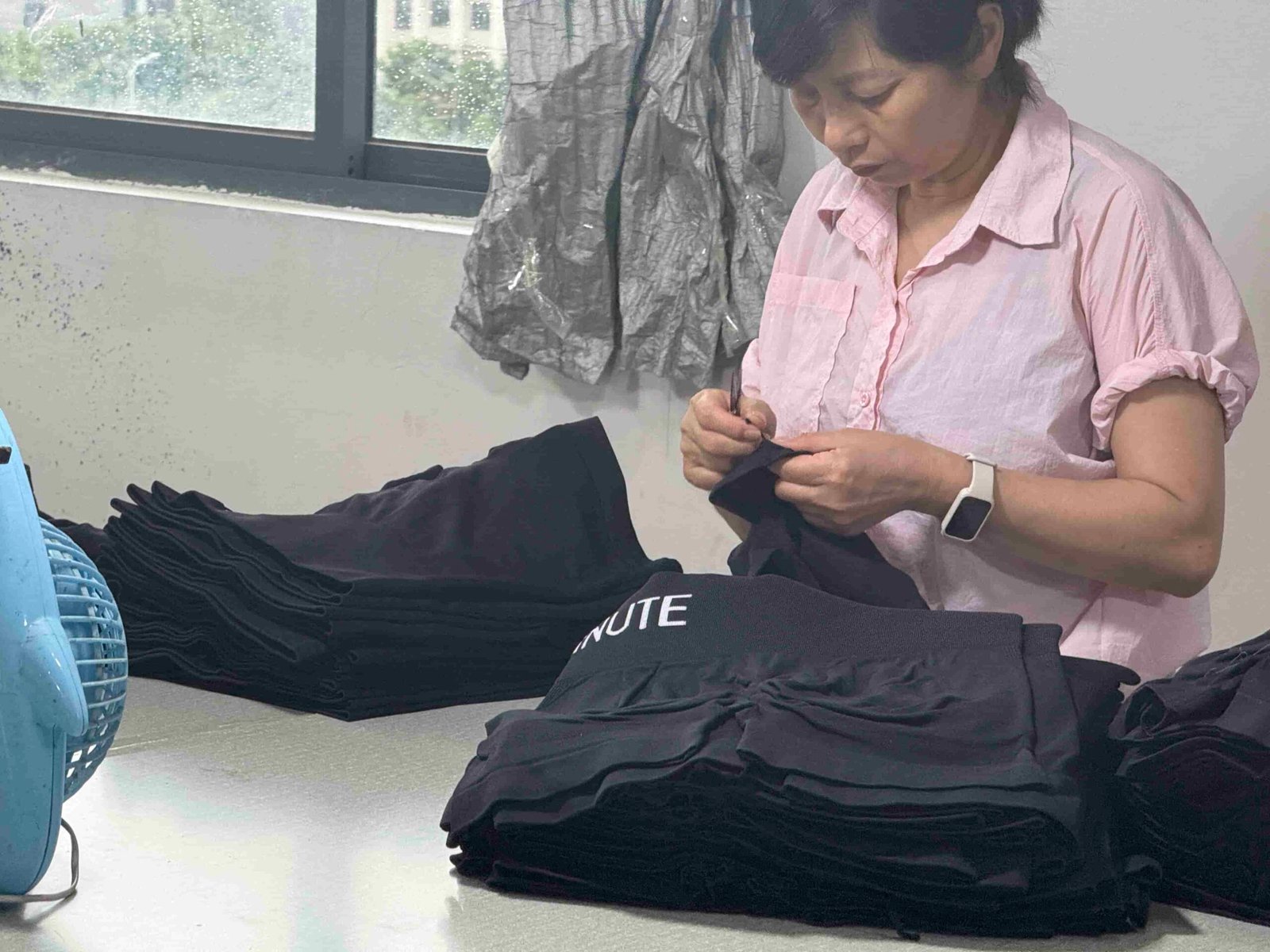
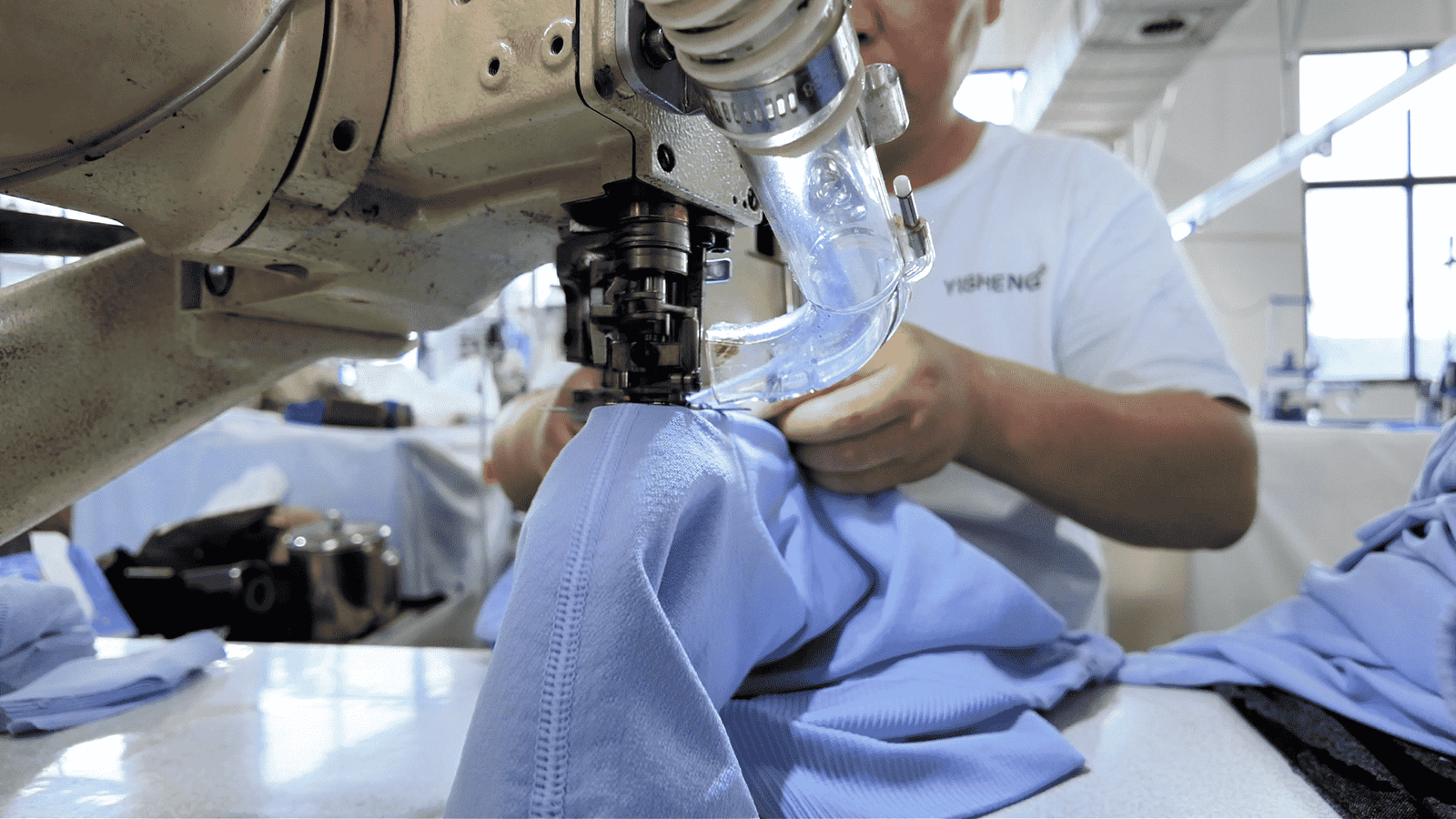
Cut-and-sew bulk manufacturing should preserve the released fabric, pattern, construction and measurements established during development. Each production stage can either protect or distort the approved flare silhouette.
Released Standard
Bulk begins from the current applicable Tech Pack, measurement chart, pattern, material and approved sample references.
Fabric Control
Production fabric is received and checked against applicable project requirements before cutting.
Cutting Control
The released production pattern is used for cutting while size, color and material-lot identity remain controlled.
Bundle Control
Cut pieces are organized by style, color, size and applicable lot or production assignment before sewing.
First Article
Representative initial production is made using actual bulk conditions before unrestricted continuation.
Sewing Line
Garments are assembled through the approved construction route using current technical standards.
Inline Control
QC reviews measurements, workmanship and style-specific risks while production is still in progress.
Finished Release
Completed garments pass through applicable measurement, appearance, branding, packing and final-release requirements.
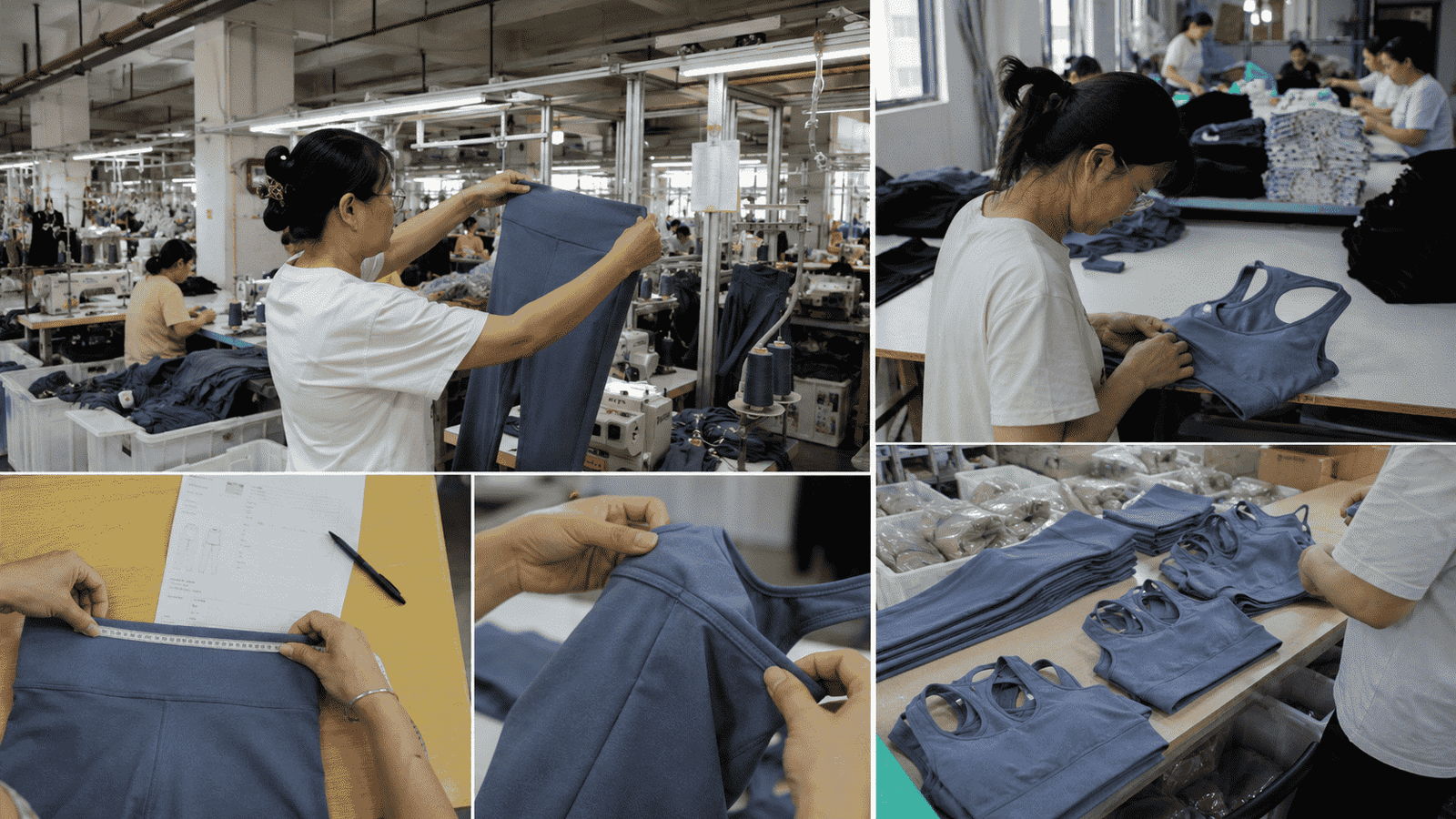
First Article Proves the Approved Flare Can Enter Production
A First Article is not another sample-room development garment. It should use actual bulk conditions to confirm that the released specification can be reproduced by assigned production resources before unrestricted volume continues.
Build Under Bulk Conditions
For a cut-and-sew flare legging, the First Article should connect the current released specification with the actual bulk material, production pattern, assigned facility or sewing line and approved construction.
Its purpose is to reveal any difference between the development environment and real production conditions before that difference is repeated through the order.
Review Before Scale
The representative garment still needs to enter applicable measurement, workmanship and quality review. If fit-related measurements, lower-leg proportion or construction fall outside the approved standard, production can be held for correction and re-verification.
This separates “we produced the first piece” from “the first piece is approved for scale.”

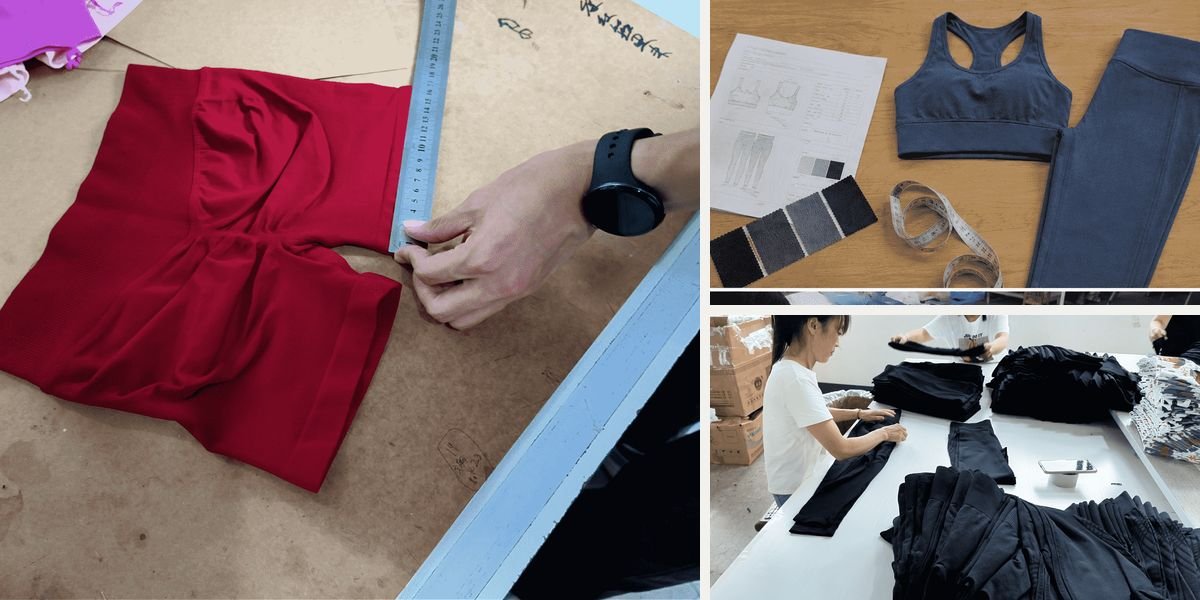
WIP Control Shows Where the Flare Order Actually Stands
A statement such as “production is 70% complete” does not explain where garments are, what is on hold or whether the target cargo date remains realistic. MOVEVOX uses WIP tracking to manage production status and risk.
PO and SKU
The production plan begins from order quantities by style, color and size, creating a baseline for comparing planned quantities with actual production and packing.
Material Readiness
Missing fabric, trims or packaging can become the real bottleneck even when sewing capacity is available.
Production Stage
Started, in-process and completed quantities can be tracked by stage rather than combined into one progress percentage.
QC Hold
Units held for quality review, correction or reinspection remain visible rather than being counted as normal completed production.
Packed Balance
Packed quantity, unpacked completed goods and remaining order balance give a more accurate picture of cargo readiness.
Risk and Owner
A useful WIP record identifies delay or quality risks and assigns responsibility for the next action.
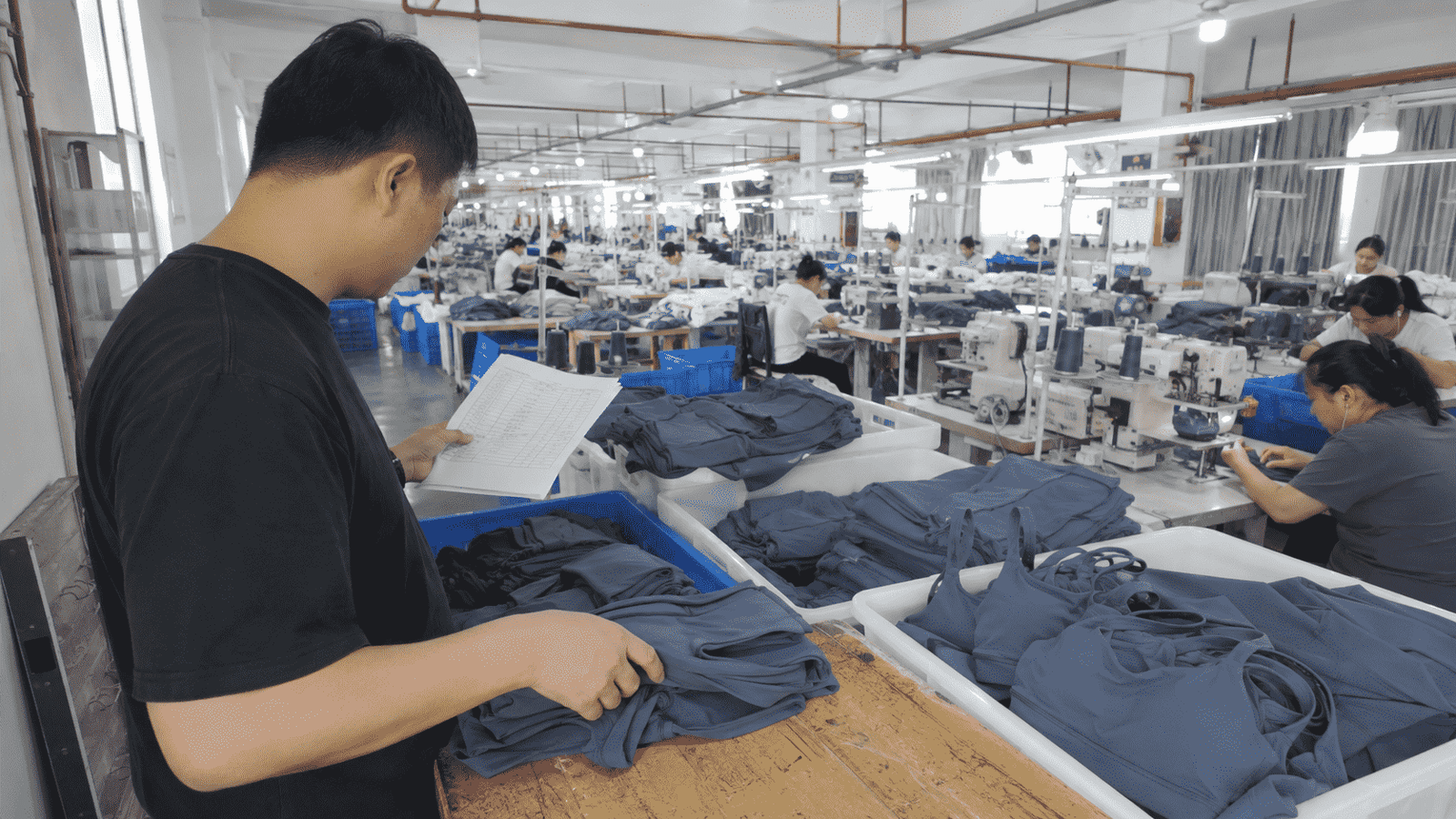
Capacity Should Be Checked Before the Delivery Date Is Promised
MOVEVOX evaluates capacity against the specific style, material route, SKU structure, production assignment, QC load and required delivery window. Company-wide capacity is useful context, but it does not replace a project-specific production check.
Garment Machines
Approximately 24 principal sewing and garment-production machines support the core cut-and-sew manufacturing system at the Yiwu base.
Satellite Facilities
Eight long-term controlled satellite facilities provide additional production flexibility, including six in Yiwu and two in Guangzhou.
QC Personnel
The core quality team currently includes five QC personnel supporting incoming, production, finished-garment, packing and pre-shipment quality activities.
Managed Capacity
Normal combined managed delivery capacity is approximately 150,000–200,000 pieces per month across the controlled production system, subject to product mix and quality release.
Bulk Production Days
Normal bulk-production reference is approximately 20–35 days when required materials, approvals and project conditions are ready.
Core Production Space
MOVEVOX's self-operated Yiwu core manufacturing base uses approximately 6,000 m² of operational space across development, production, QC, packing and management functions.
Capacity Is Reviewed Against the Actual Project
A large purchase order should not be confirmed only because the overall production network has available monthly capacity. MOVEVOX reviews the actual flare-legging style, number of colors, size range, fabric route, construction complexity, requested delivery date and available QC resources before confirming the production window.
This is particularly important when the project includes custom dyeing, multiple inseam options, extended sizing, special labels, testing requirements or a large number of SKUs.
Three Responsible Outcomes
The requested quantity and delivery window can be supported under the current material, production and quality conditions.
The program can proceed if defined prerequisites such as material readiness, approval timing or production allocation are met.
The requested delivery date should be adjusted rather than protected through an unrealistic capacity commitment or uncontrolled production transfer.
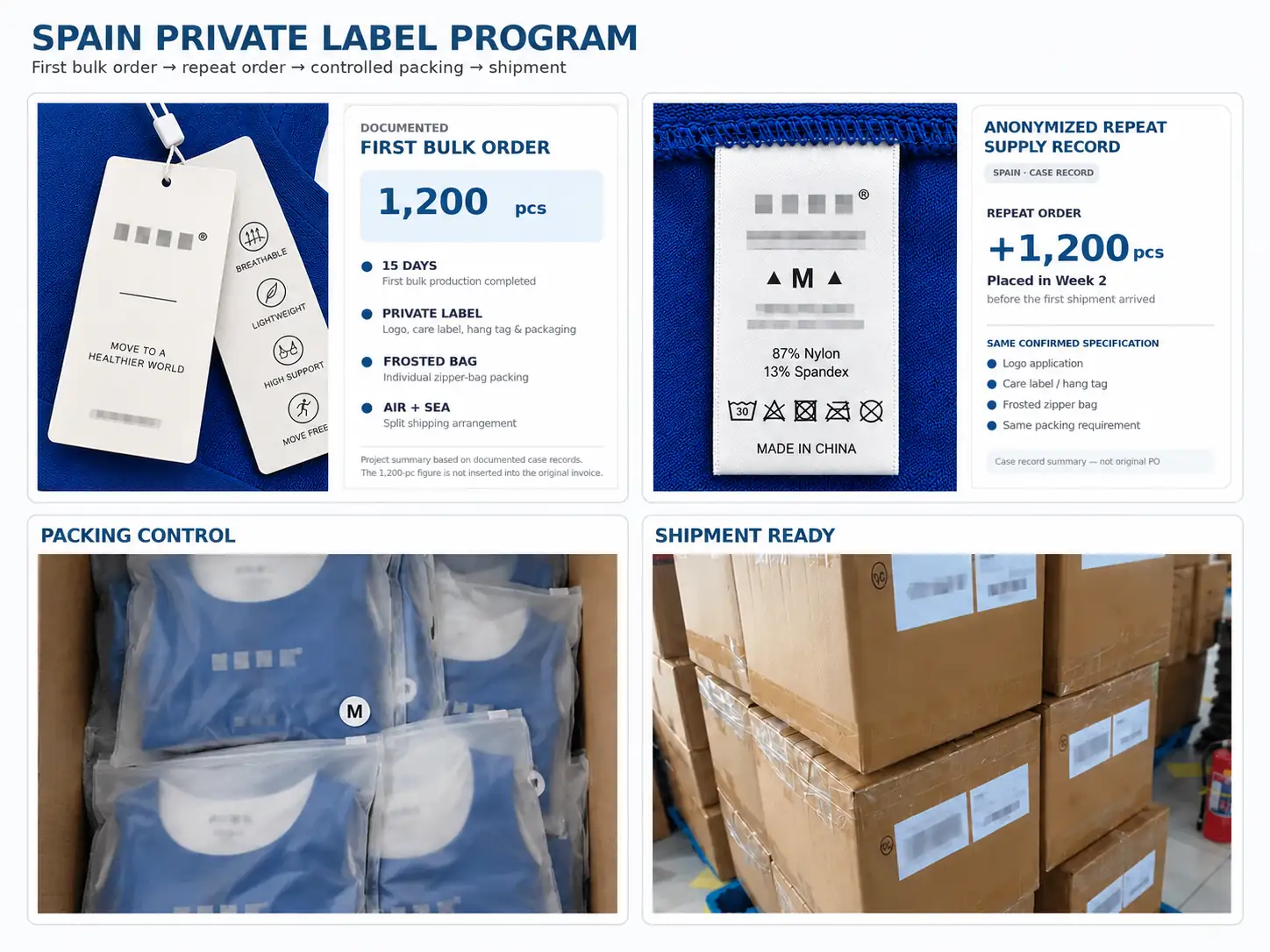
Capacity Scope
These figures describe MOVEVOX's overall controlled production system. They are not a guaranteed monthly flare-legging output, reserved capacity for one buyer or a fixed delivery commitment for every project. Final capacity is confirmed only after the actual style, material, SKU structure, facility assignment and required delivery window are reviewed.
Equipment Matters When It Supports a Controlled Production Standard
The Yiwu core base acts as MOVEVOX's technical, development, manufacturing and quality-control center. Equipment should therefore be evaluated by its role in product development and production, not only by machine count.
Cut-and-Sew Equipment
Approximately 24 principal sewing and garment-production machines support cut-and-sew activewear production including leggings and related categories.
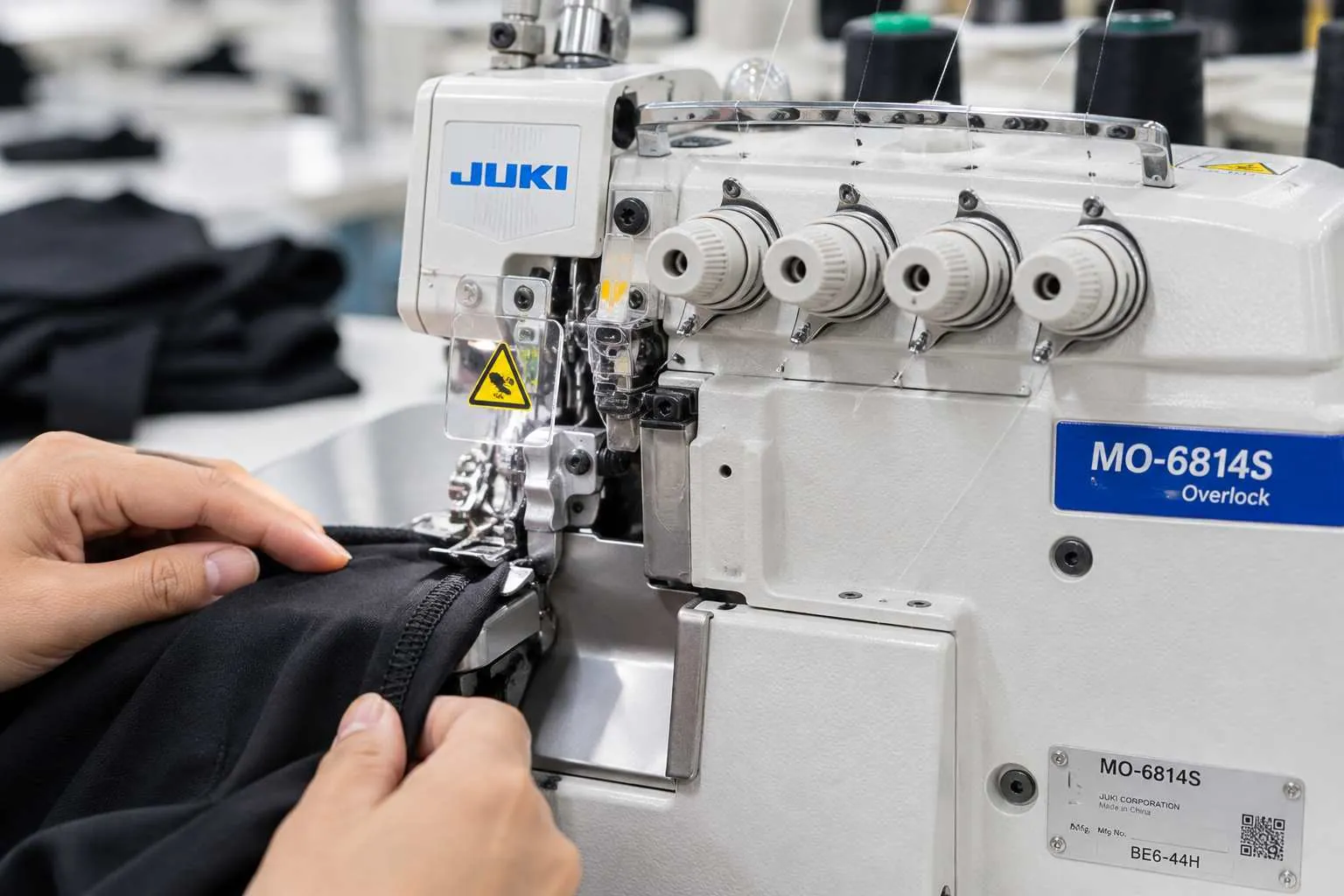
Overlock Capability
Overlock processes support stretch-garment assembly where specified. Stitch selection depends on material, seam position and approved garment construction.
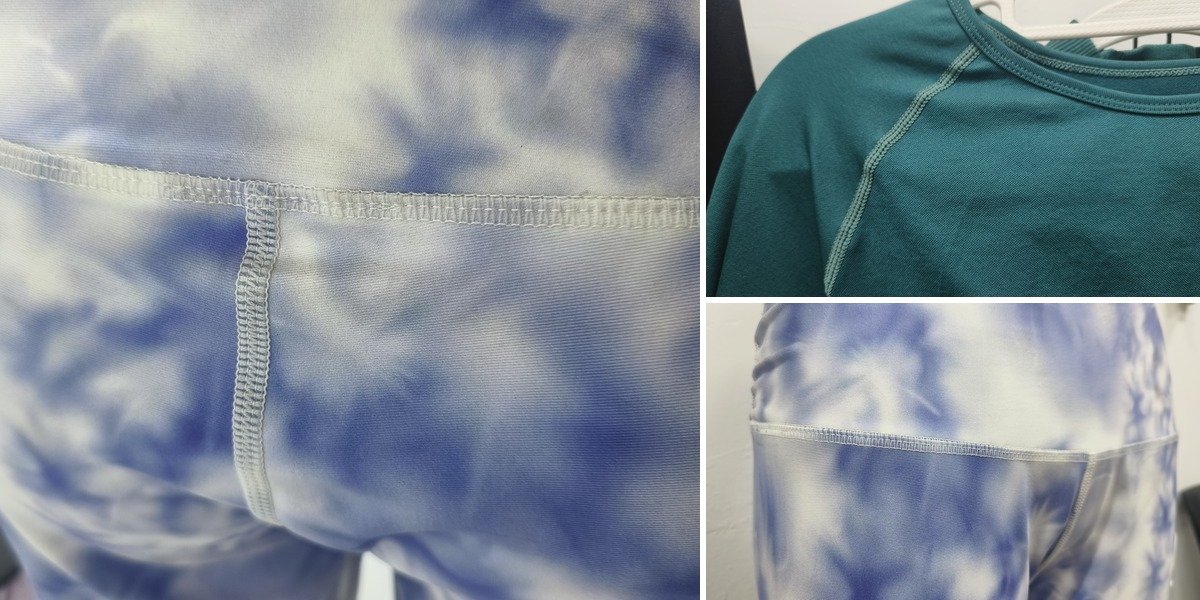
Flatlock Capability
Flatlock can be used for applicable activewear constructions to manage seam profile and stretch, but final use depends on product design and buyer specification.
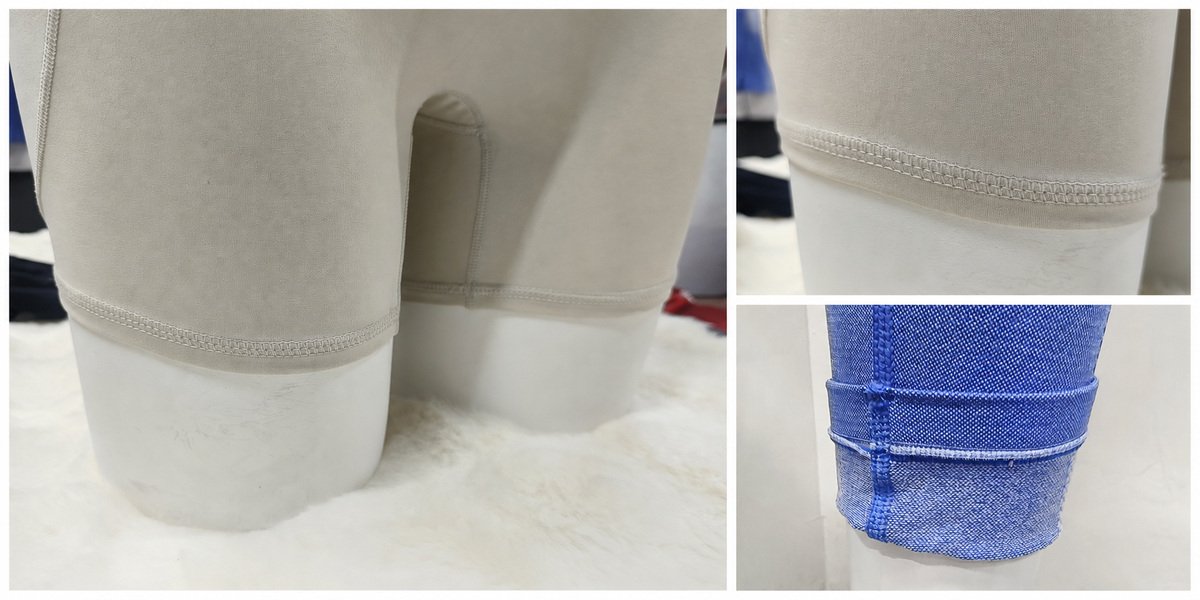
Coverstitch Capability
Coverstitch processes can support hems and other applicable stretch-garment areas according to the approved technical construction.
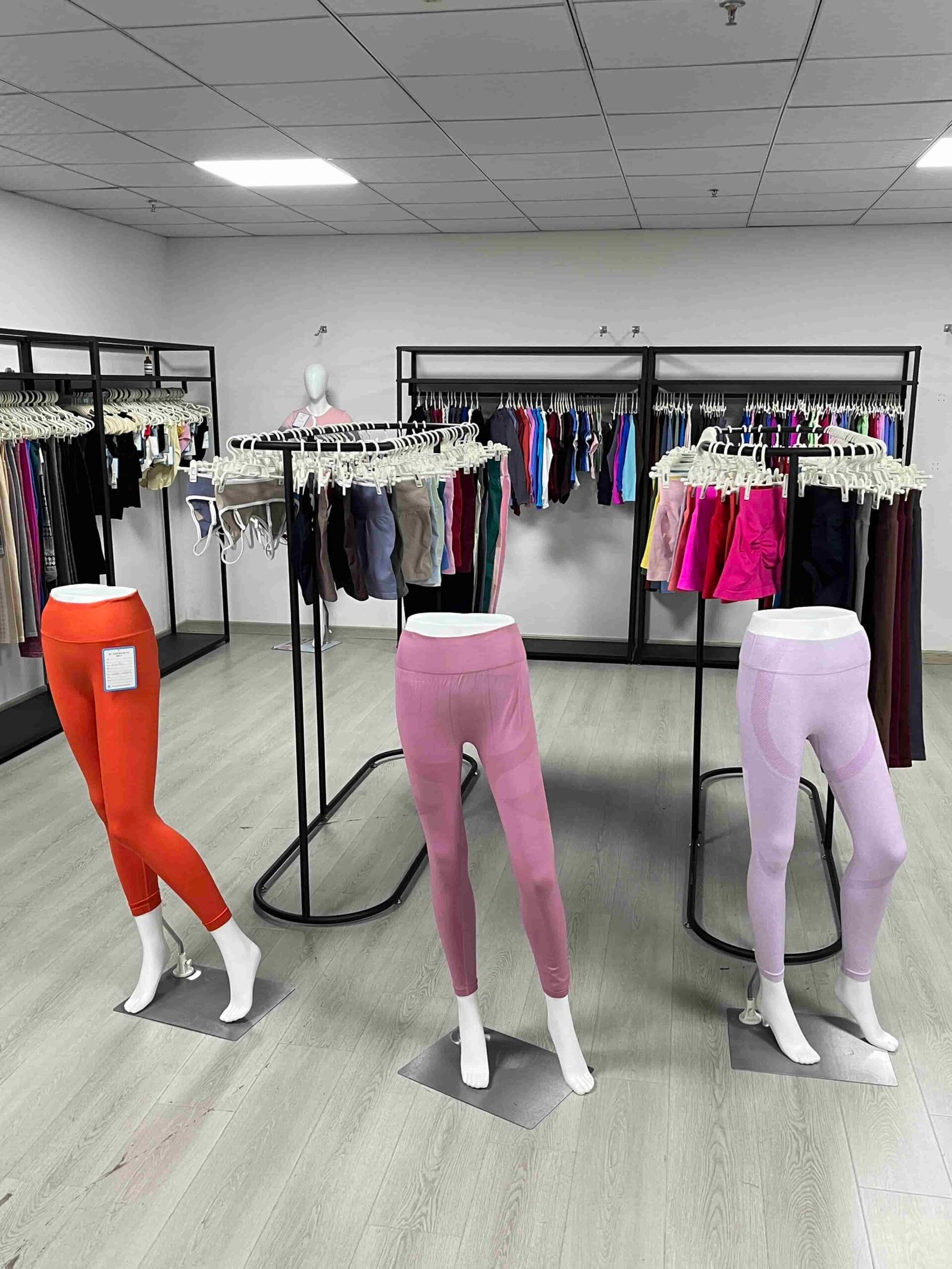
Cutting Area
Fabric preparation and cutting convert the released pattern into production pieces. This step is critical for long flare-leg panels and size identification.
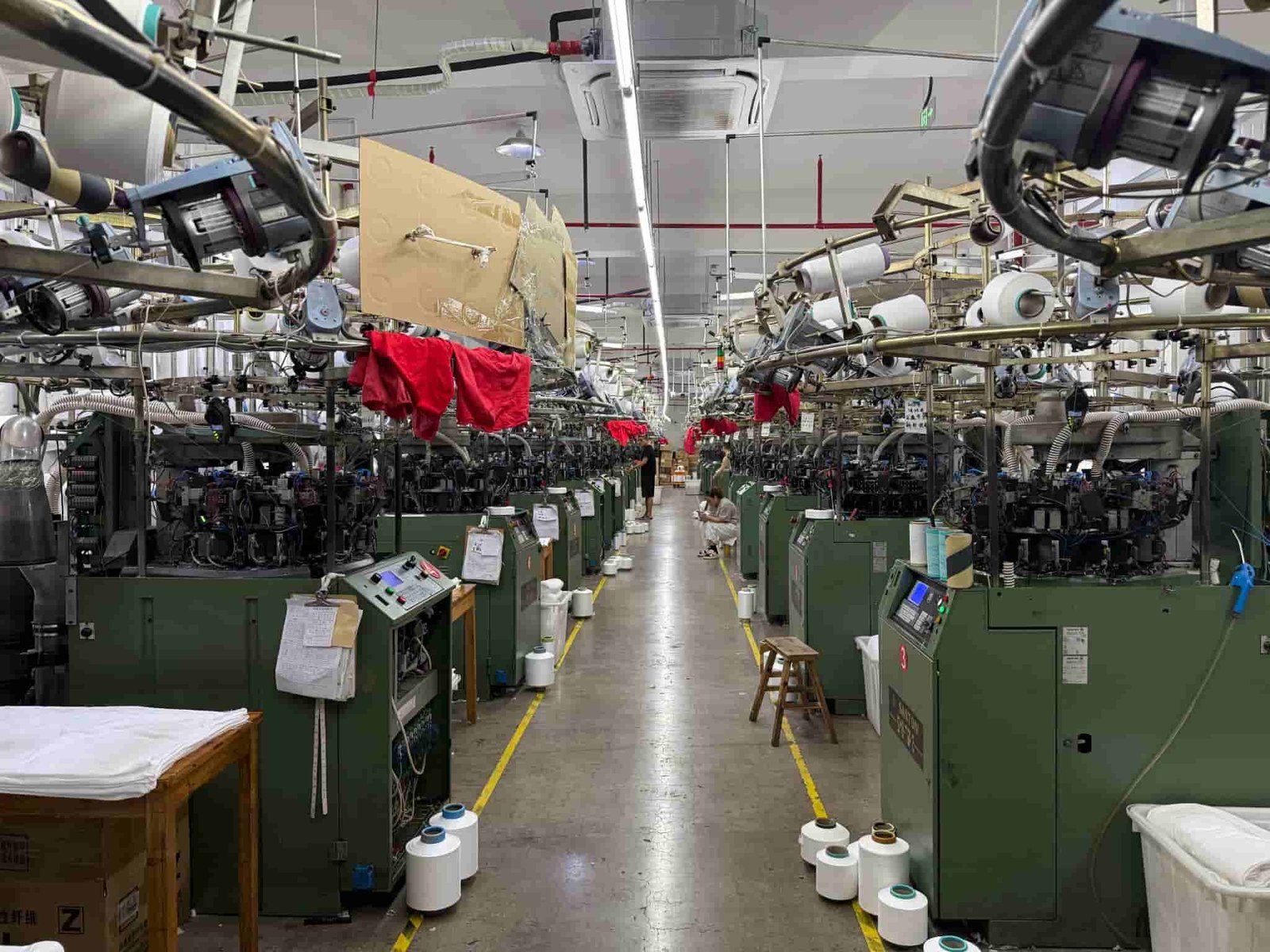
Santoni Seamless Area
The core base also operates 28 Italian Santoni seamless machines for separate seamless activewear programs within the wider MOVEVOX manufacturing system.
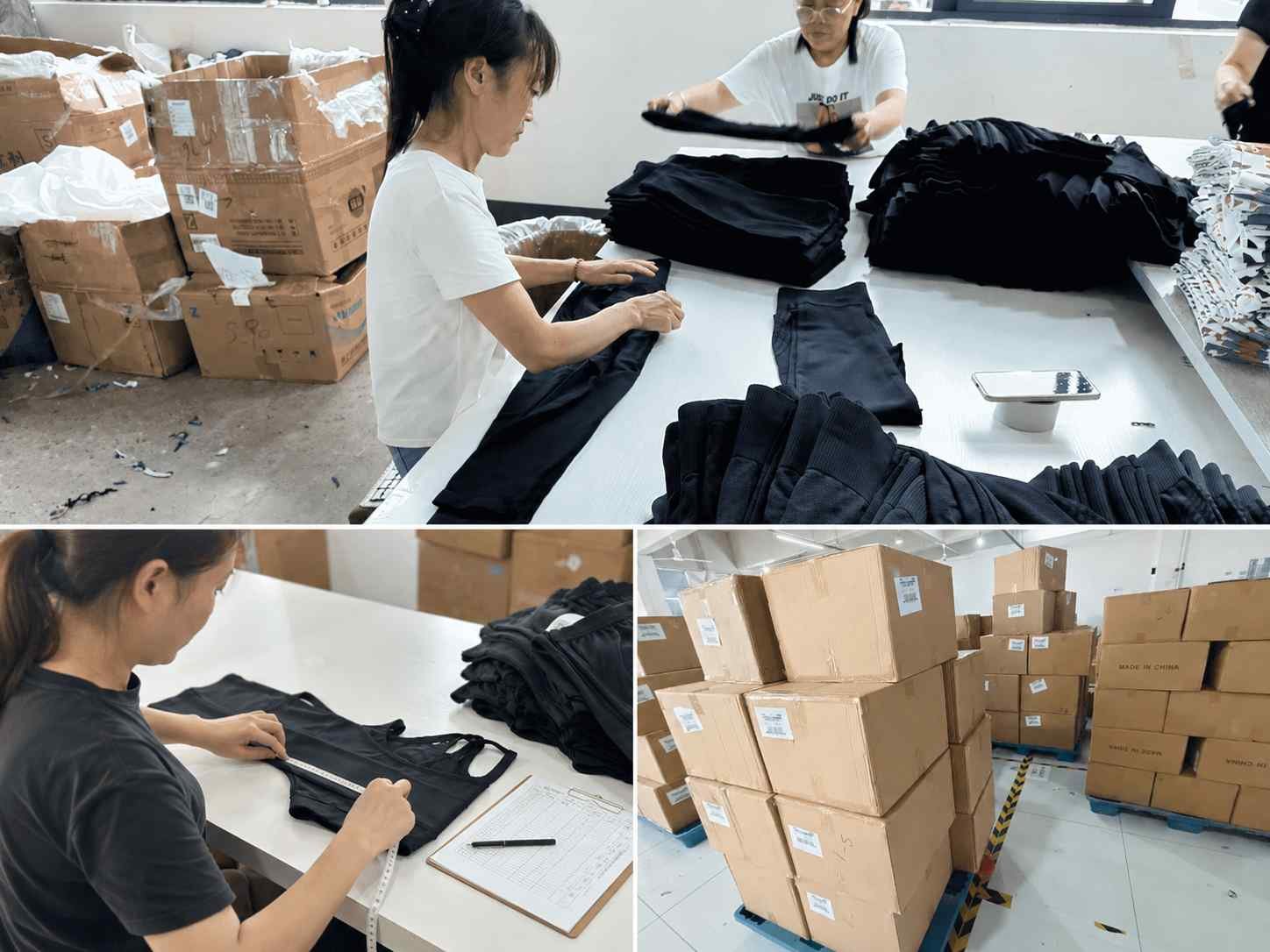
Development Area
Pattern making and sample development support new products, fit revisions and pre-production technical work separately from routine bulk manufacturing.
QC and Packing Area
Finished-garment inspection, packing and shipment preparation provide the final control stage before an order is released.
Scale Should Not Hide Where the Flare Order Is Produced
MOVEVOX combines its Yiwu core factory with controlled satellite capacity. Mature buyers should understand how production is allocated and what happens when their contract restricts production to approved facilities.
Core Factory Control
The self-operated Yiwu core base is MOVEVOX's center for product development, technical standards, key manufacturing, quality and final order responsibility. Complex, first-order or higher-risk work can use the core site to establish the product standard before additional controlled capacity is considered.
Satellite factories should not be represented as owned core-factory assets simply to make the manufacturing footprint appear larger.
Controlled Satellite Capacity
MOVEVOX maintains eight long-term controlled satellite facilities, including six in Yiwu and two in Guangzhou. Their role is to add managed production flexibility under assigned specifications, materials, First Article, WIP and QC requirements.
The buyer continues to work through one MOVEVOX project interface rather than being transferred into independent supplier relationships with every production site.
Buyer Approval Rules
Where a buyer requires Approved Factory Only, a specified production site or restrictions on subcontracting, MOVEVOX should follow the agreed requirement and obtain written approval before changing production location.
The correct promise is transparent controlled capacity, not a false claim that every process in every order is physically completed only inside the core building.

What a Flare Measurement Inspection Record Should Show
Measurement inspection should produce reviewable data based on the approved POM, measurement method and buyer tolerance. For flare leggings, fit-related dimensions should remain traceable from First Article through production and final release.
A real anonymized Flare Leggings measurement inspection record should replace this placeholder before publication.
Style Identity
The record should identify the correct style, version, color and inspected size so measurement data cannot be confused with another product or superseded revision.
Approved POM
Every measured point should correspond to the current measurement specification and use the agreed start, end and garment-position method.
Actual Result
The inspector records the physical garment result rather than forcing or stretching the garment to make a measurement appear inside tolerance.
Rise and Length
Applicable front rise, back rise, inseam and garment length should be checked because these measurements influence the complete flare silhouette.
Lower Leg
Relevant lower-leg and hem-opening POMs can be recorded when they form part of the approved flare specification.
Tolerance Status
Buyer-defined tolerances take priority where provided. Any out-of-tolerance result should remain visible rather than being removed from the final record.
Corrective Action
If a measurement trend requires screening, hold or rework, the record should identify the affected status and subsequent reinspection before release.
MOVEVOX internal reference tolerances should not be presented as universal buyer specifications. The approved Tech Pack, measurement method, tolerance and sample standard define the project. For new or higher-risk styles, measurement coverage can be increased when trends require additional screening.
Quality Records Turn Inspection Activity Into Reviewable Evidence
For a mature B2B buyer, inspection only creates supplier confidence when the result can be linked to the order, product, stage and required corrective action. MOVEVOX uses quality records across the production lifecycle.

Incoming Material
Incoming checks can record material identity, color, batch and relevant project requirements before the fabric or trims are released into production.
First Article
The initial production garment can be connected to the actual bulk material, production assignment, current technical version and inspection status.

Inline QC
Production-stage findings can record measurements, workmanship, photos, affected quantities and required action while the order remains in manufacturing.
Measurement
Measurement records connect actual garment values with the current POM and project tolerance so fit-related production trends can be reviewed.
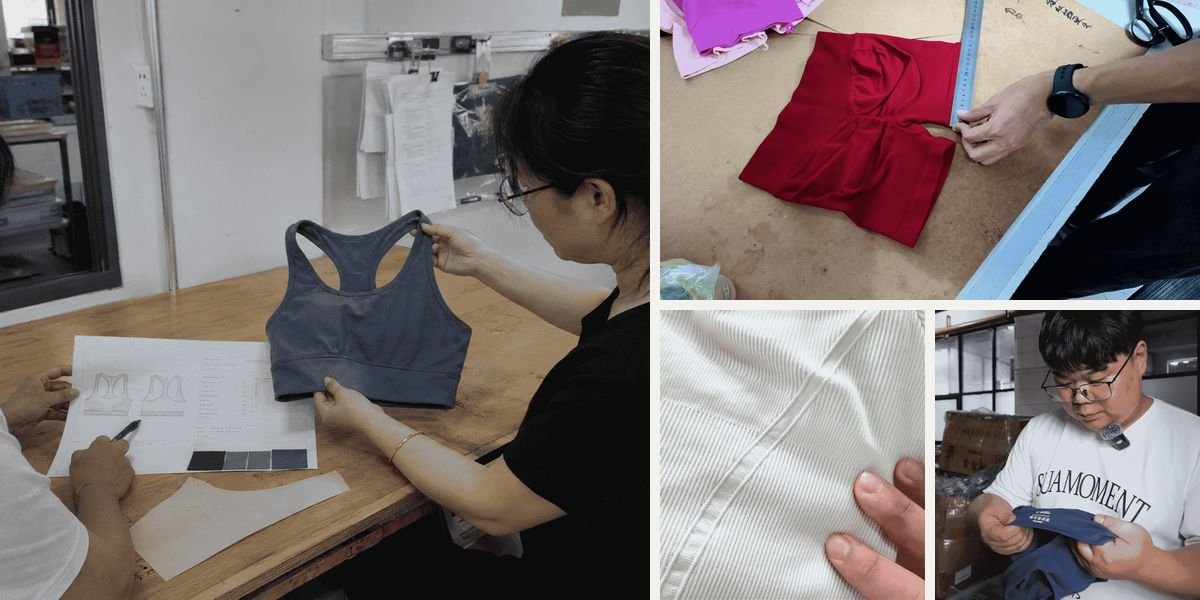
Final QC
Finished-garment quality records document applicable appearance, measurements, workmanship, branding and final acceptance information before normal release.
Rework
Nonconforming units can be identified, segregated and corrected. Reinspection records show whether affected product returned to an acceptable status.
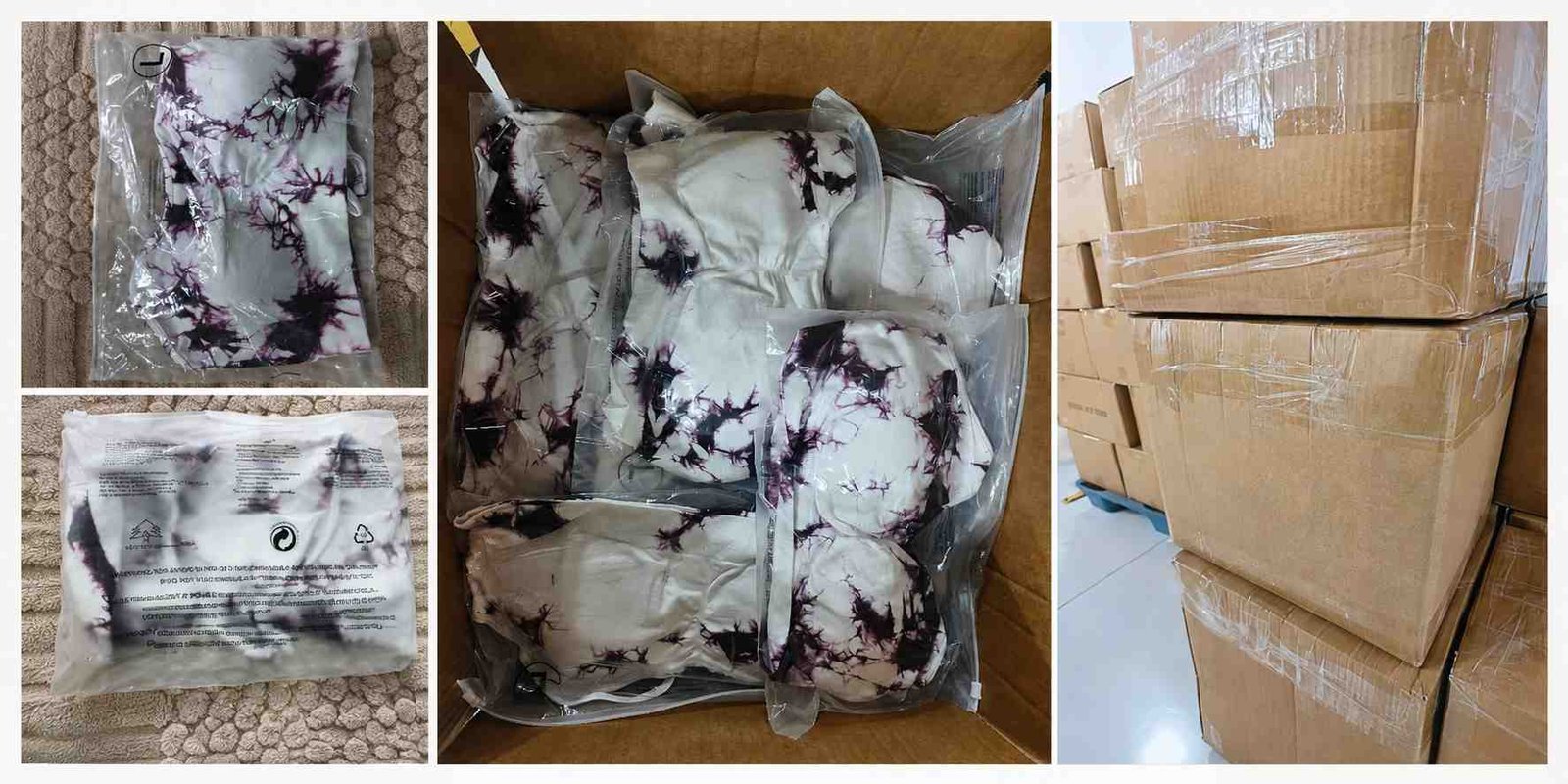
Packing Release
SKU, labels, barcode, polybag and carton checks support the final connection between approved garments and the correct packing requirement.
Corrective Action
Significant or repeated issues can enter CAPA or another documented corrective process so the root cause and subsequent effectiveness can be reviewed.
The strongest public proof is a set of anonymized real records linked to actual production stages—not only a statement that MOVEVOX employs five QC personnel.
Testing Support Must Follow the Product and Evidence Scope
MOVEVOX can coordinate project-specific testing with buyer-nominated or project-qualified laboratories. Existing reports only support the sample and scope written in those documents and must not be generalized to every flare legging.
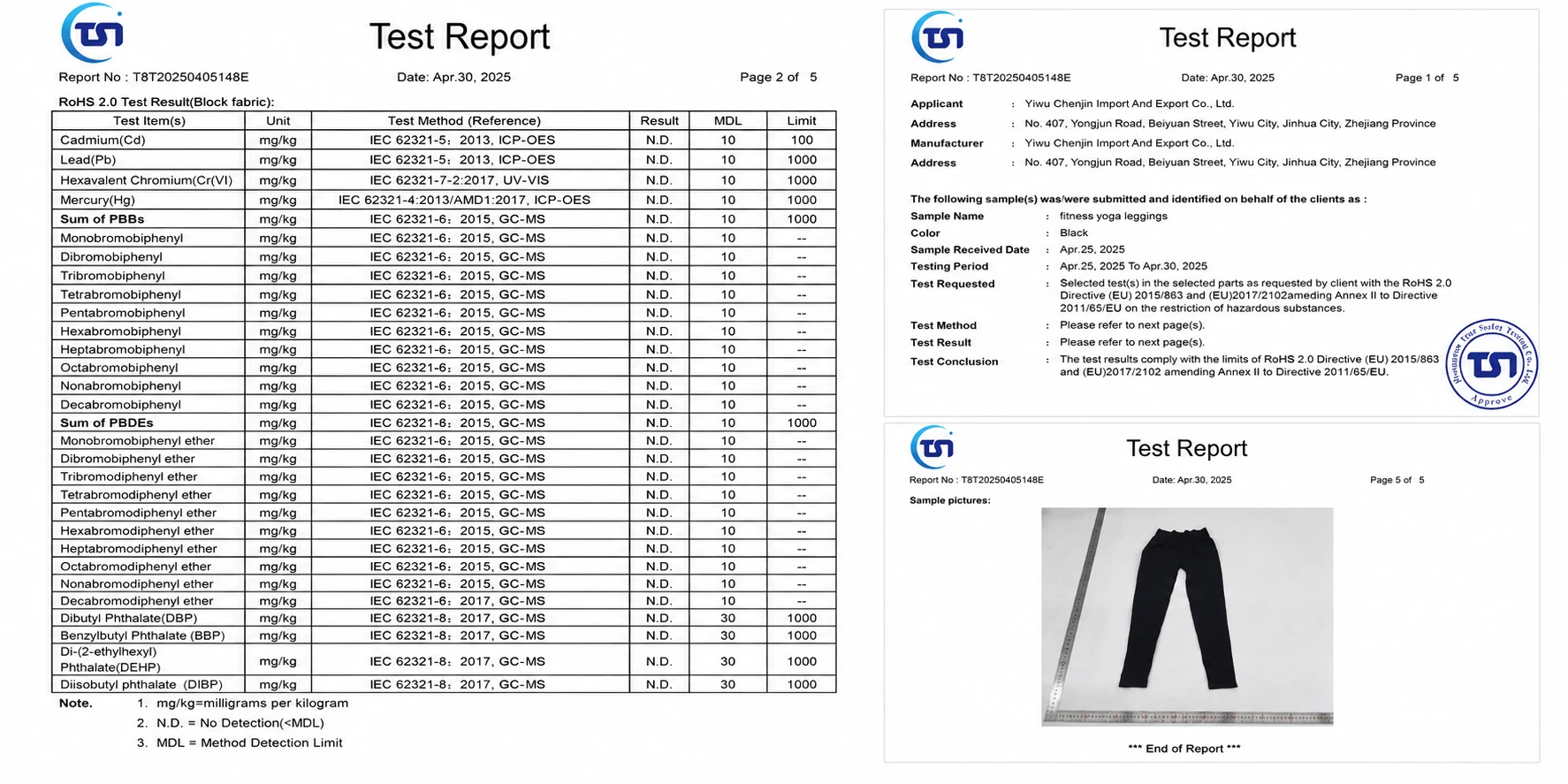
RoHS 2.0 Report
Purpose: Existing evidence demonstrates restricted-substance testing for a submitted black fitness yoga leggings / black fabric sample under Yiwu Chenjin Import And Export Co., Ltd.
Method: The report references applicable IEC 62321 methods for the listed restricted substances. The result applies to the sample identified in the document rather than every future MOVEVOX garment.
Status: TST20250405148E, dated April 30, 2025; tested sample only.
RoHS Certificate
Purpose: The available certificate provides a compliance statement connected to the same tested fitness yoga leggings sample and associated report.
Method: Its evidentiary value depends on the linked report, sample identification and stated scope; it does not replace project-specific material or market review.
Status: TST20250405148EC; not a whole-factory or all-product certification.
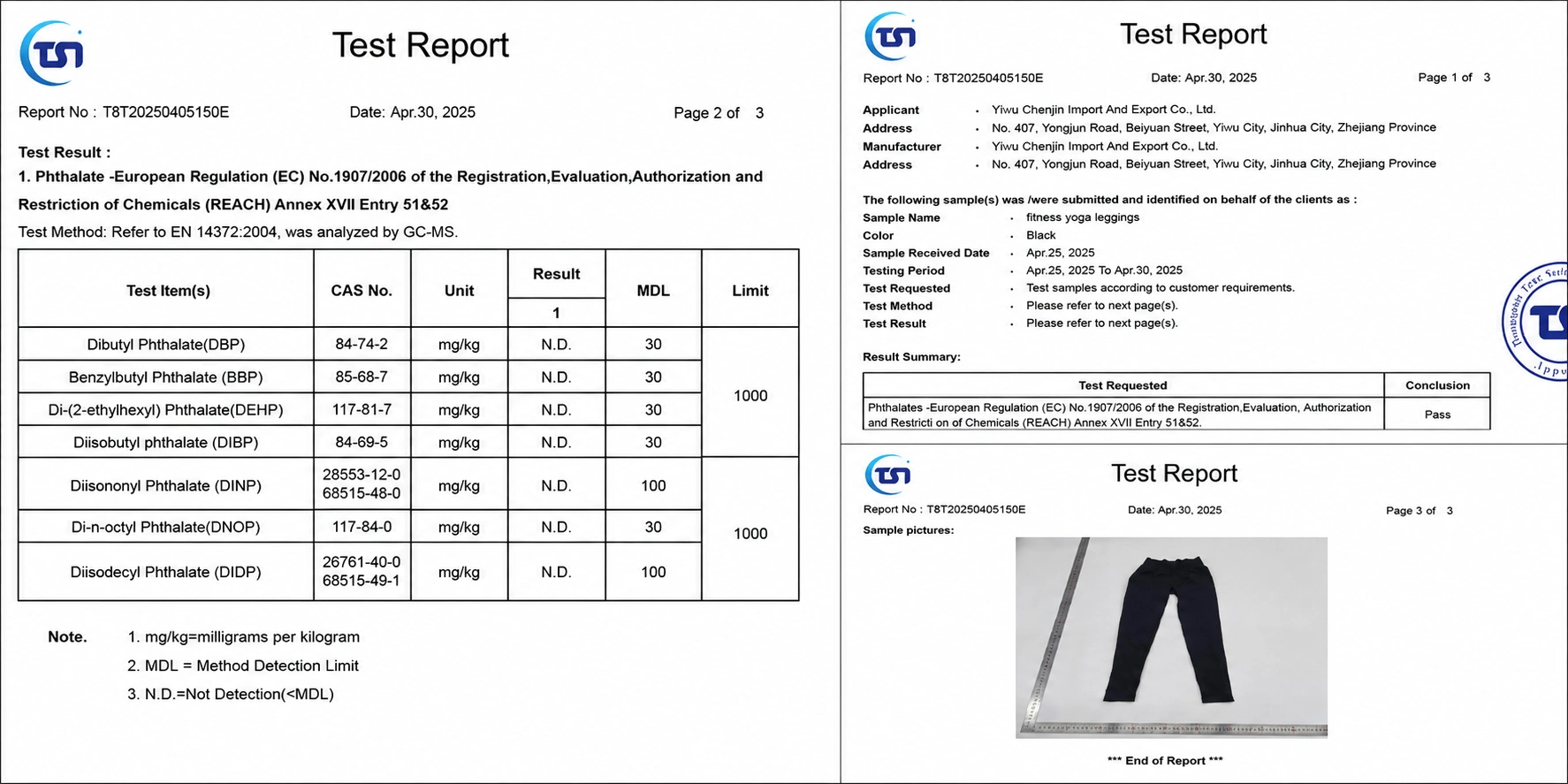
REACH Phthalates
Purpose: Existing testing covers listed phthalates for a black fabric sample according to the referenced European requirement.
Method: The document references EN 14372:2004 and GC-MS analysis for the listed substances and applies only to the sample submitted for testing.
Status: TST20250405150E, April 30, 2025; sample-specific result.
Stretch Recovery
Purpose: Stretch and recovery testing can support material development where the buyer needs measurable evidence for fit or product-performance decisions.
Method: MOVEVOX can follow the buyer's specified method or coordinate an agreed qualified test. Acceptance limits should be defined before testing where possible.
Status: Project-specific; no universal flare-legging recovery result currently claimed.
Opacity
Purpose: Opacity review helps evaluate coverage under relevant color, stretch and garment-fit conditions, particularly through the seat, hip and thigh.
Method: Internal review or third-party testing can follow a buyer-defined protocol where required; conditions and sample scope need to be recorded.
Status: No universal “squat-proof” result should be claimed without supporting evidence.
Dimensional Stability
Purpose: Shrinkage and dimensional-stability testing can identify changes that may affect inseam, overall length and other controlled garment measurements after care.
Method: Testing should follow the buyer's QC Manual, agreed method or qualified third-party procedure when required by the program.
Status: Project-specific; no Flare Leggings-specific report currently supplied.
Existing RoHS and REACH evidence applies only to the tested black fitness-yoga-legging / fabric samples identified in those documents. It must not be presented as certification of all MOVEVOX flare leggings or the entire manufacturing system.
Questions a Technical Audit Should Be Able to Answer
A technical audit should test whether product-development decisions remain controlled through bulk production. The following questions focus on process evidence a mature activewear brand can verify before formal supplier approval.
Does MOVEVOX control Tech Pack versions?
MOVEVOX's project system should work from one current effective production version. When buyer feedback changes measurements, material, artwork, construction or packaging, the applicable technical information needs to be updated before execution.
A technical audit can review how superseded documents are separated from current files and how production teams receive the released version rather than depending on verbal instructions or uncontrolled message histories.
How are pattern revisions documented?
Pattern changes should follow identifiable development versions connected to fit comments, measurement decisions and buyer approval. A technical audit can review whether a pattern was changed for a documented reason and whether affected technical files were updated.
The objective is to prevent V1, V2 and final production references from remaining active at the same time.
How are materials approved?
Material approval should connect the selected fabric with the applicable composition, color, project requirements and approved garment. A supplier should also have a defined response when a material is unavailable or must change.
MOVEVOX should not treat an unapproved substitute as equivalent simply because it has a similar fiber composition.
How does sample approval reach production?
The approved physical sample is only one part of the production standard. Measurement charts, material, pattern version, construction, branding and unresolved comments also need to be transferred.
A technical audit can verify how the approved sample is identified and how production and QC teams know which current standards apply.
How is First Article controlled?
For relevant new or higher-risk cut-and-sew styles, the First Article should use actual bulk material, current pattern and assigned production resources.
Audit evidence can include identification, First Article inspection data, approval or hold status and any required corrective action.
How are measurements controlled in bulk?
Measurement inspection should follow the approved POM, method and buyer tolerance rather than an informal factory measurement habit. A technical audit can review First Article, inline and finished-garment measurement records.
Buyer specifications take priority over internal reference tolerances.
What happens if the production site changes?
MOVEVOX uses a self-operated core base plus controlled satellite capacity. Where a buyer requires an approved production site or restricts subcontracting, a production-site change should follow the agreed approval requirement.
Technical review can verify how specifications, materials, First Article, WIP and QC remain controlled when additional capacity participates.
How are recurring problems closed?
Repeated or significant nonconformities should not be considered solved simply because one shipment was reworked. MOVEVOX can use corrective-action and CAPA logic to identify the issue, contain affected goods, determine root cause and verify effectiveness.
Technical audits can review anonymized evidence connecting the original finding with subsequent corrective controls.
Understand What Actually Sits Inside the Lead Time
MOVEVOX's timing references are useful only when the starting point and project conditions are clear. Sampling, material readiness, production, QC and international transport should not be combined into one unsupported delivery promise.
| Stage | Timing Reference | Prerequisite | Buyer Gate |
|---|---|---|---|
| Input Lock | Project-specific | Required development information sufficiently confirmed | Technical open points |
| Material | Project-specific | Fabric / color / trim route available | Material or color approval |
| Sample | About 5–10 working days | Development details confirmed | Sample review / revision |
| Pre-Production | Approval-dependent | Required production references closed | PP / production approval |
| Bulk | Normal overall bulk reference about 20–35 days | Material and production release | Change decisions closed |
| QC & Packing | According to actual production plan | Finished units available | Inspection / rework status |
| Cargo Ready | Project-specific | QC and packing release completed | Forwarder / shipping requirement |
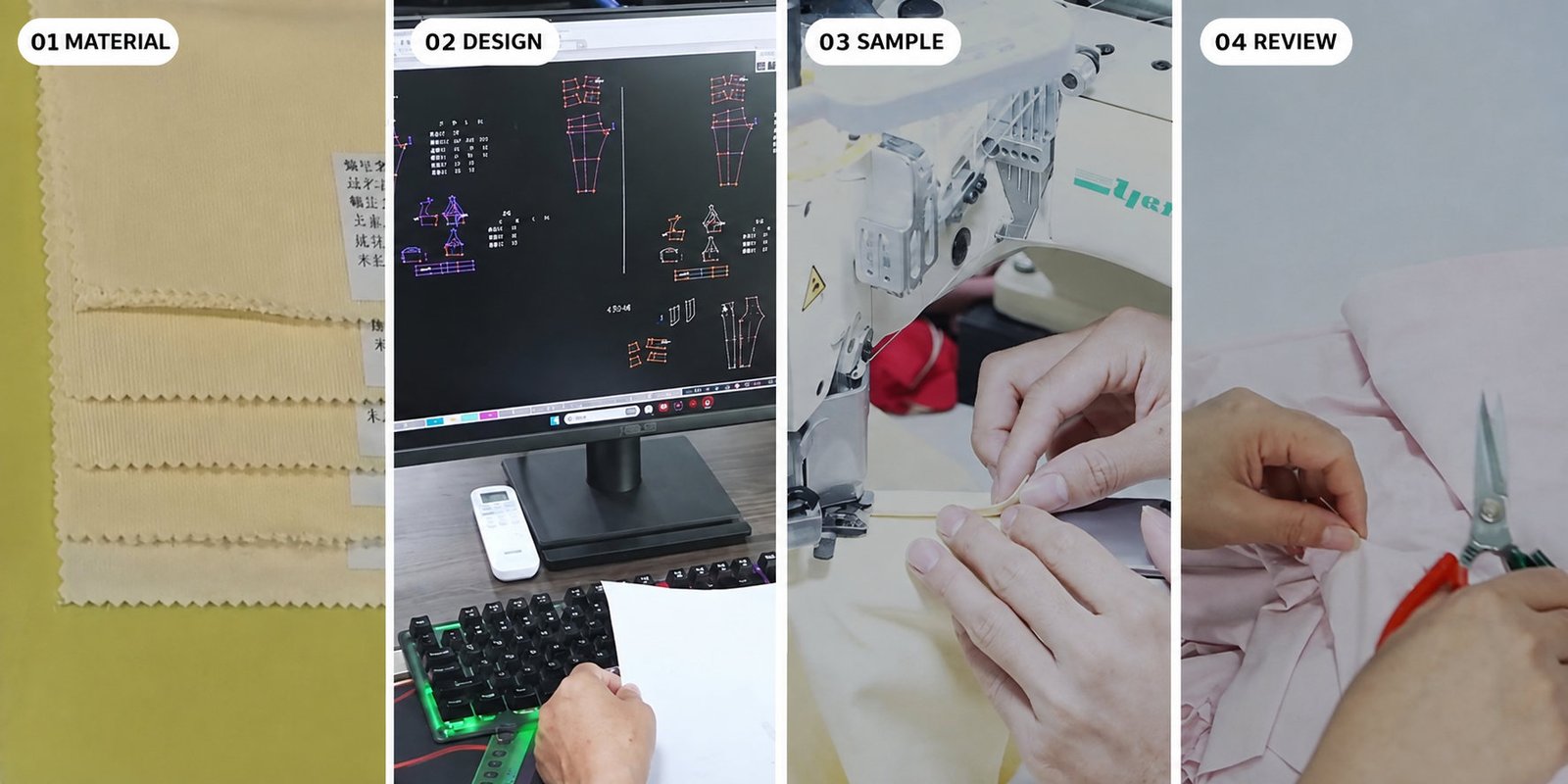
The normal 20–35 day bulk-production reference is not a universal fixed promise for every project. Custom dyeing, special fabric, complex branding, testing, multi-SKU orders, late buyer approvals, rework or capacity conditions can change the critical path. International transit is separate from factory production lead time.
Repeat an Approved Flare Without Rebuilding It From Zero
Repeat orders can reuse the standards established during development while still checking whether materials, colors, quantities, production conditions or other variables have changed since the previous approved order.
Repeat Trigger
A new purchase requirement begins from the previously approved style rather than automatically reopening the entire development process. Quantity, colors, sizes and requested delivery date are compared with the prior program.
Change Check
MOVEVOX identifies what has changed since the last approved order. New fabric, color, logo, size, packaging or production-site conditions can require a different level of reconfirmation.
Material Check
The team reviews material availability, lot conditions and applicable supply-chain minimums. A repeat style does not make every future fabric or color automatically equivalent to the previous order.
Capacity Window
Quantity and requested cargo date are reviewed against the available production and QC window. A larger repeat order may need different capacity planning from the initial commercial run.
Production Reconfirm
Where appropriate, the current approved specification and sample remain the basis for production. Material, facility or other significant changes can trigger First Article or additional verification before unrestricted bulk continuation.
Bulk and QC
Repeat production continues through the applicable measurement, workmanship and final-release controls. “Repeat order” should reduce unnecessary redevelopment, not remove quality checks.
Record Update
Material, inspection, packing, shipment and applicable change records from the new order are connected to the continuing style history for future reorders and issue review.
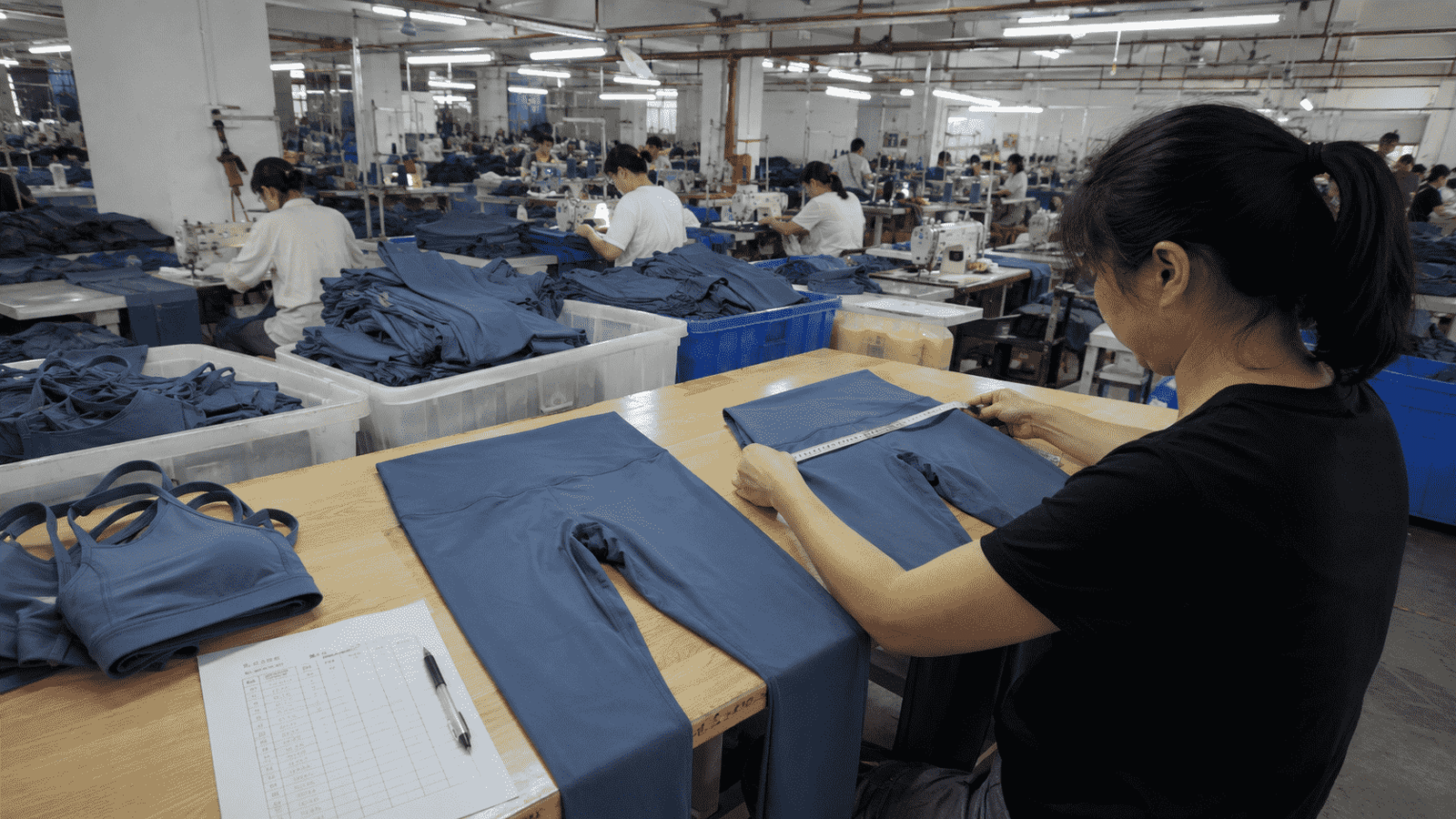
The value of repeat business is not skipping technical discipline. It is reducing duplicated development because the approved fit, pattern, material direction and brand standards already exist. When meaningful variables change, the corresponding approval control is triggered again.