Cut and Sew Activewear Manufacturer for Custom Brand Production
MOVEVOX supports activewear brands that need more than stock garments and logo application.
From buyer Tech Packs, measurement charts, approved patterns or lawful reference samples, our team develops and controls fabric, pattern, fit, cutting, sewing construction and sample approval before transferring the same standards into bulk production.
- Pattern & Fit Development — two professional pattern-making roles support Cut & Sew development.
- Approx. 24 Core Garment Machines — principal sewing and garment-production equipment.
- Approx. 150 pcs/style Base MOQ — subject to fabric, color, trims and construction.
- 5–10 Working Day Standard Samples — after key development details are confirmed.
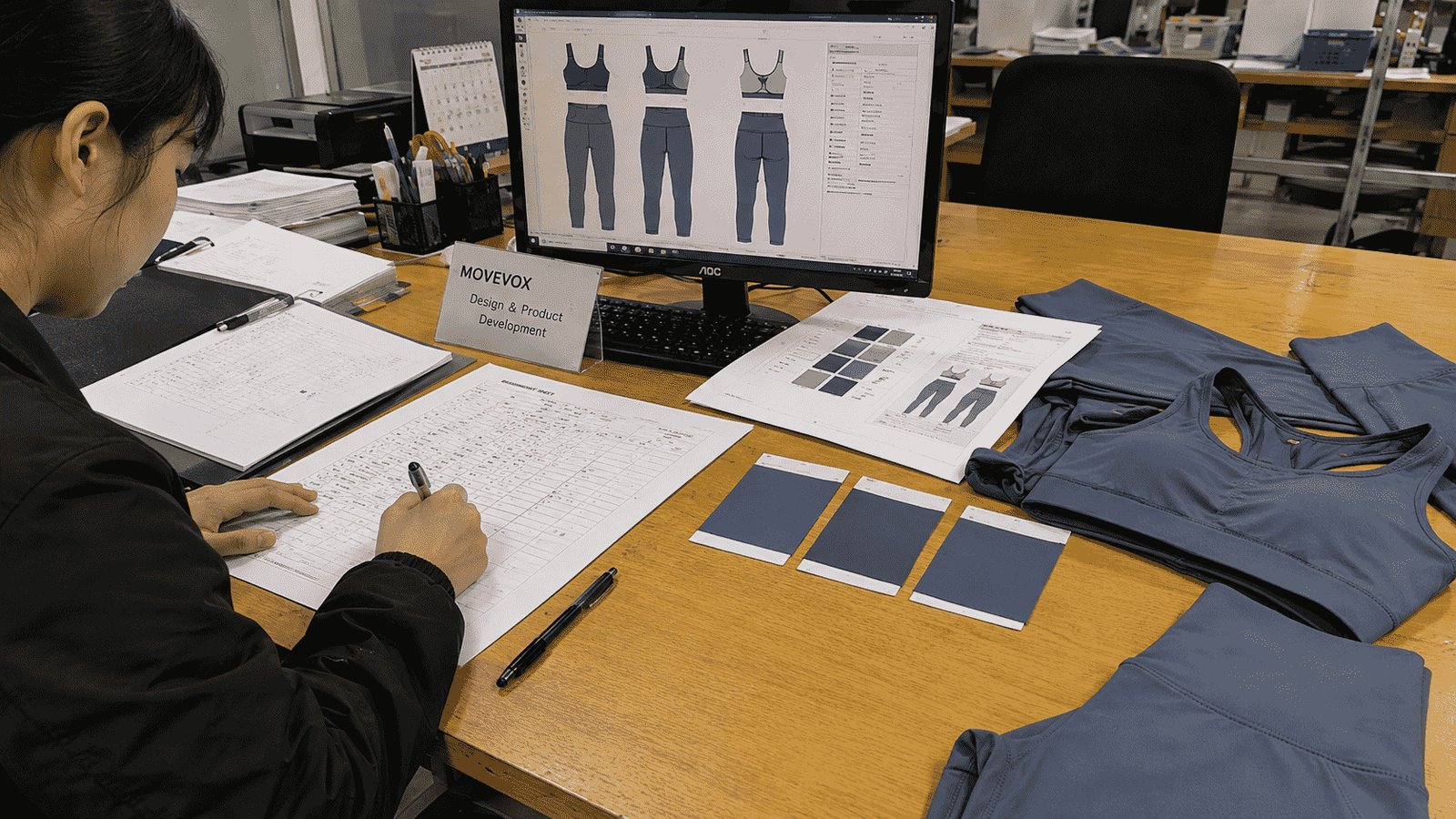
Technical review, fit validation and controlled production in one manufacturing system.
Cut & Sew Is a Complete Product-Control System
MOVEVOX treats Cut & Sew as a connected engineering and manufacturing process. Pattern, fabric, cutting, sewing, fit and quality control must all refer back to the same buyer-approved product standard.
Product Specification
The buyer’s Tech Pack, measurement chart, approved sample or confirmed development brief defines the product direction. Open technical conflicts are reviewed before they become production assumptions.
- Tech Pack and measurement review
- Buyer-approved specifications remain the primary reference
Pattern & Fit
Patterns translate the buyer’s dimensions and design into manufacturable shapes. Stretch direction, seam placement, negative ease, grade rules and material behavior must be considered together.
- Two professional pattern-making roles
- Pattern development and revision supported internally
Cutting & Sewing
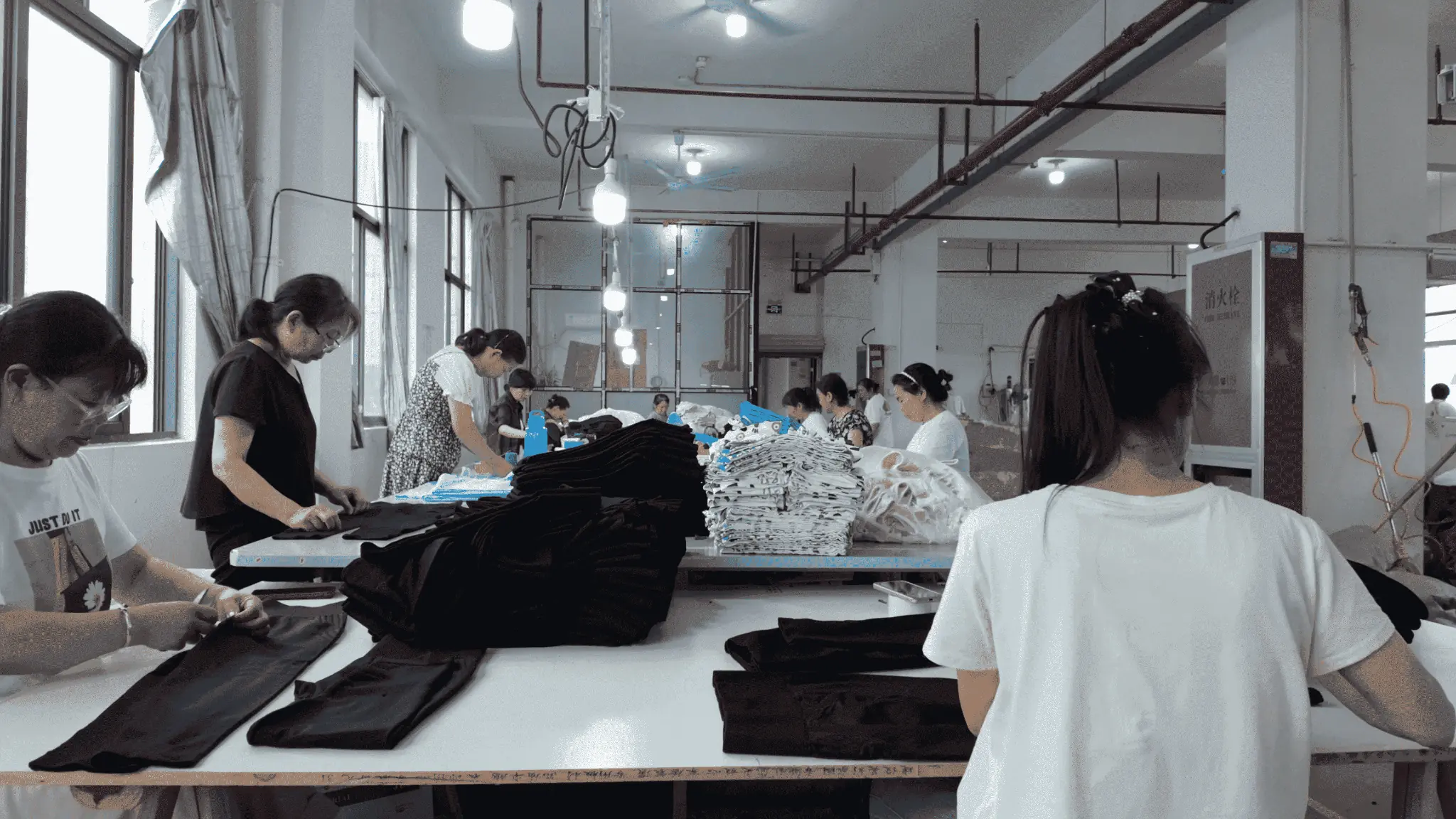
Approved patterns and fabric lots move into spreading, cutting, bundle identification and sewing. The route can include single-needle, overlock, coverstitch, flatlock and supporting garment operations according to product structure.
- Approximately 24 principal garment machines
- Cut & Sew is a core MOVEVOX manufacturing route
Controlled Bulk
Production is reviewed through first-article, inline, finished-garment and shipment-release controls. MOVEVOX currently has five QC personnel supporting its broader quality-management system.
- First-article and inline quality controls
- Buyer standards override internal references when applicable
Cut & Sew Activewear Across Core and Extended Categories
MOVEVOX supports fully customized Cut & Sew products where pattern, fabric, panels, trims or functional structures need to be controlled independently.
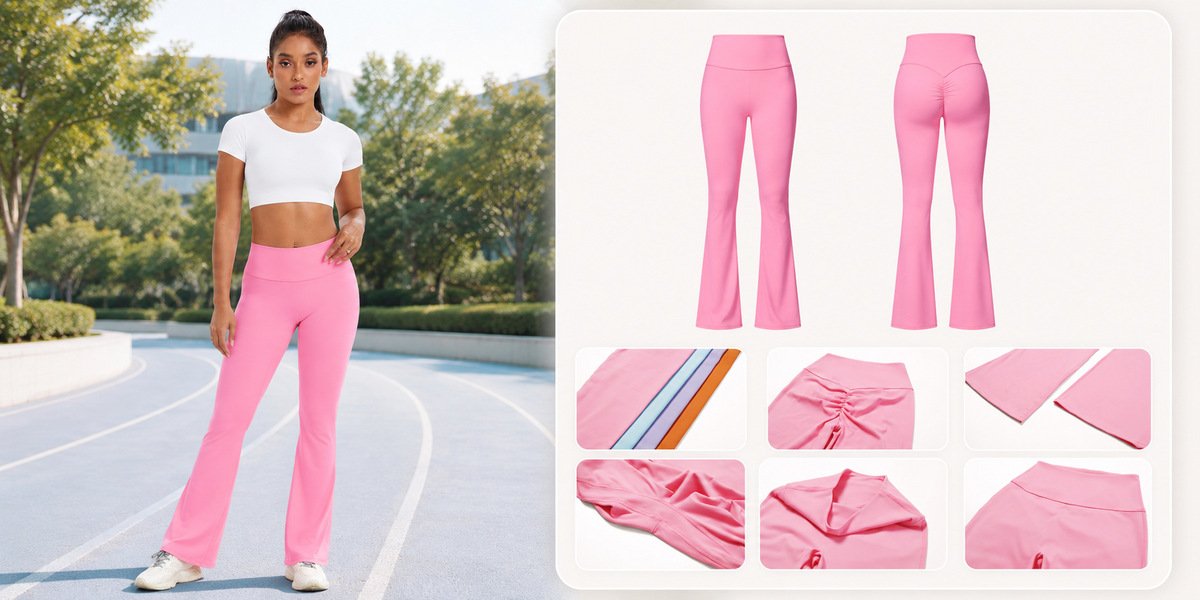
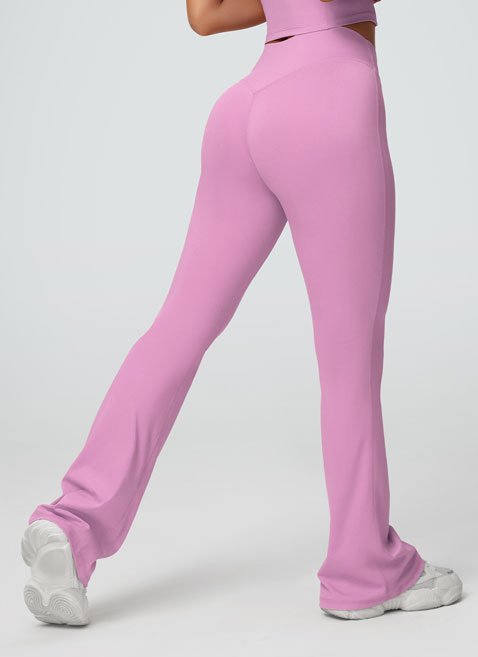
Yoga Leggings
Custom patterns can support different rises, waistbands, seams, pockets, gussets, flare shapes and fabric constructions.
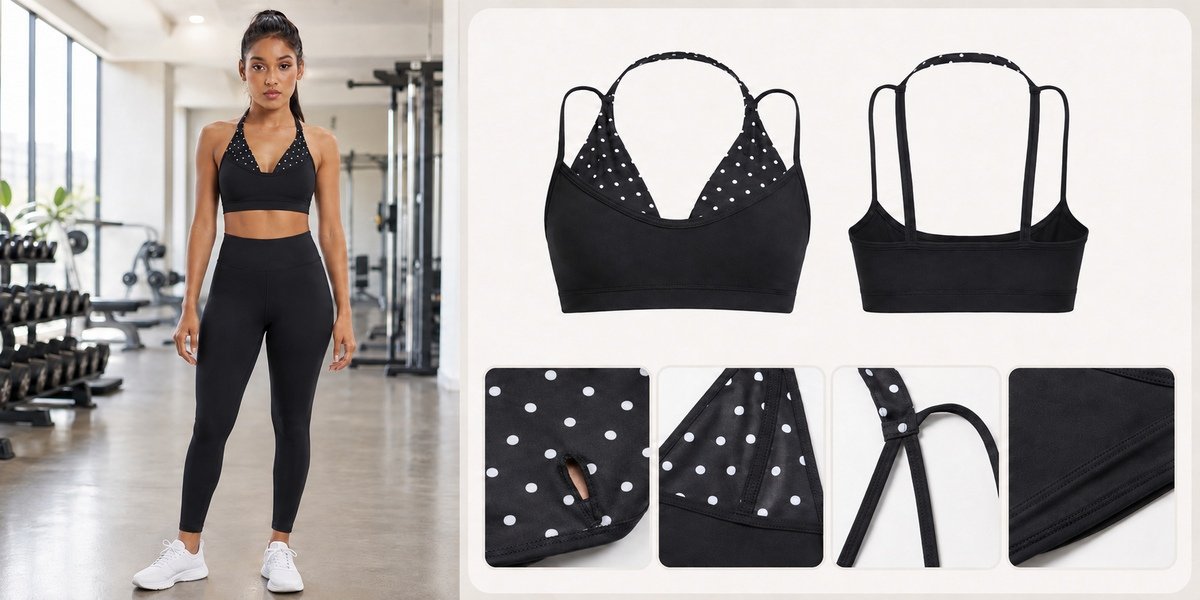
Sports Bras
Cut & Sew bras can combine outer fabric, lining, elastics, removable pads, bindings, straps and structured support details.
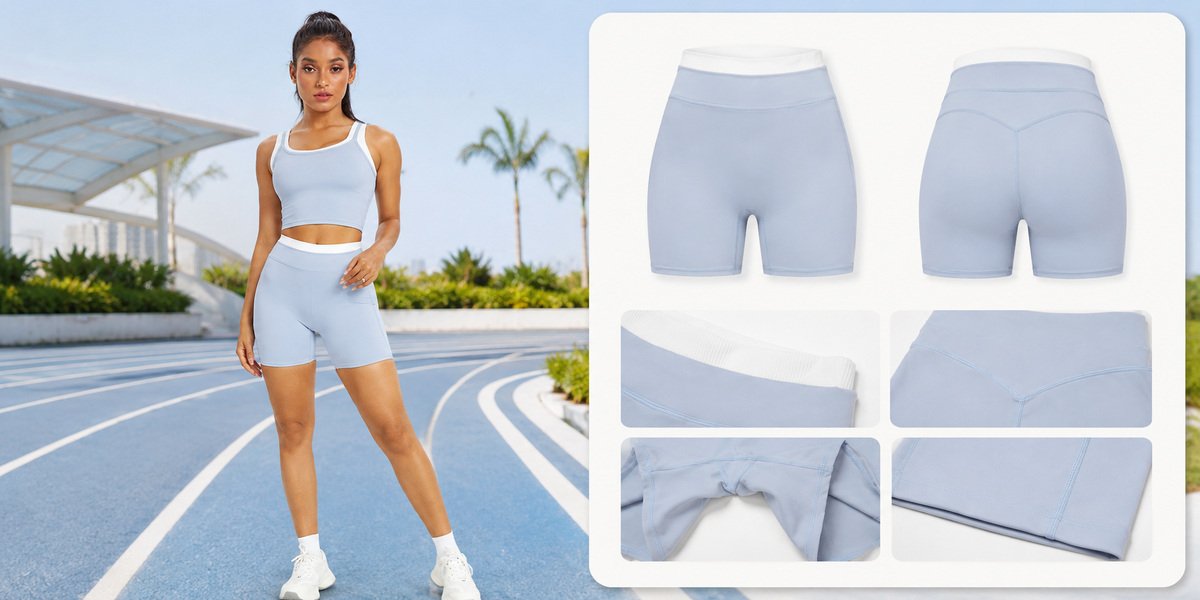
Yoga Shorts
Biker and yoga shorts can use custom inseams, waistband heights, pockets, gussets and coordinated collection fabrics.
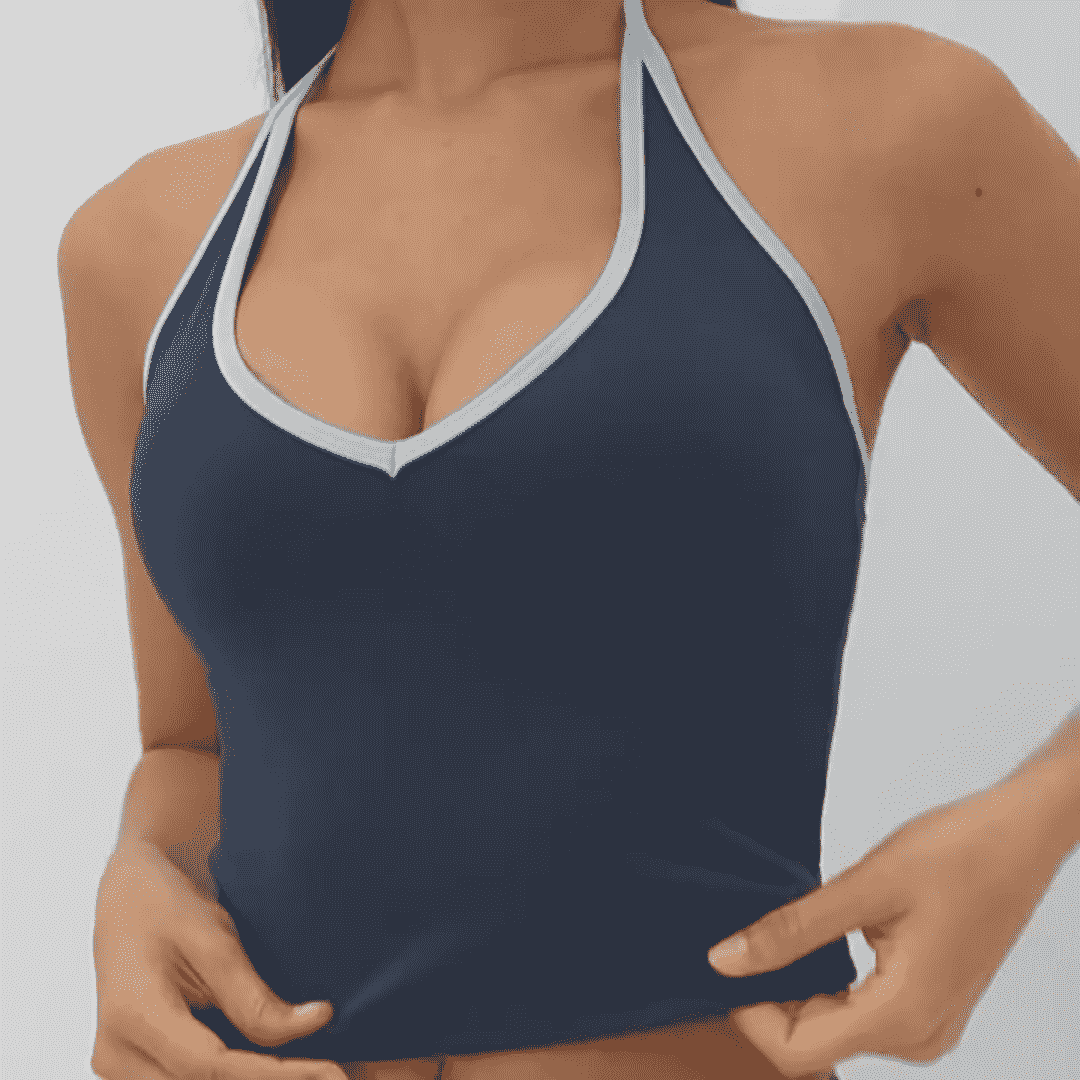
Tanks
Fitted or relaxed tanks can be developed around neckline, armhole, binding, panel, bra-insert or layered construction requirements.
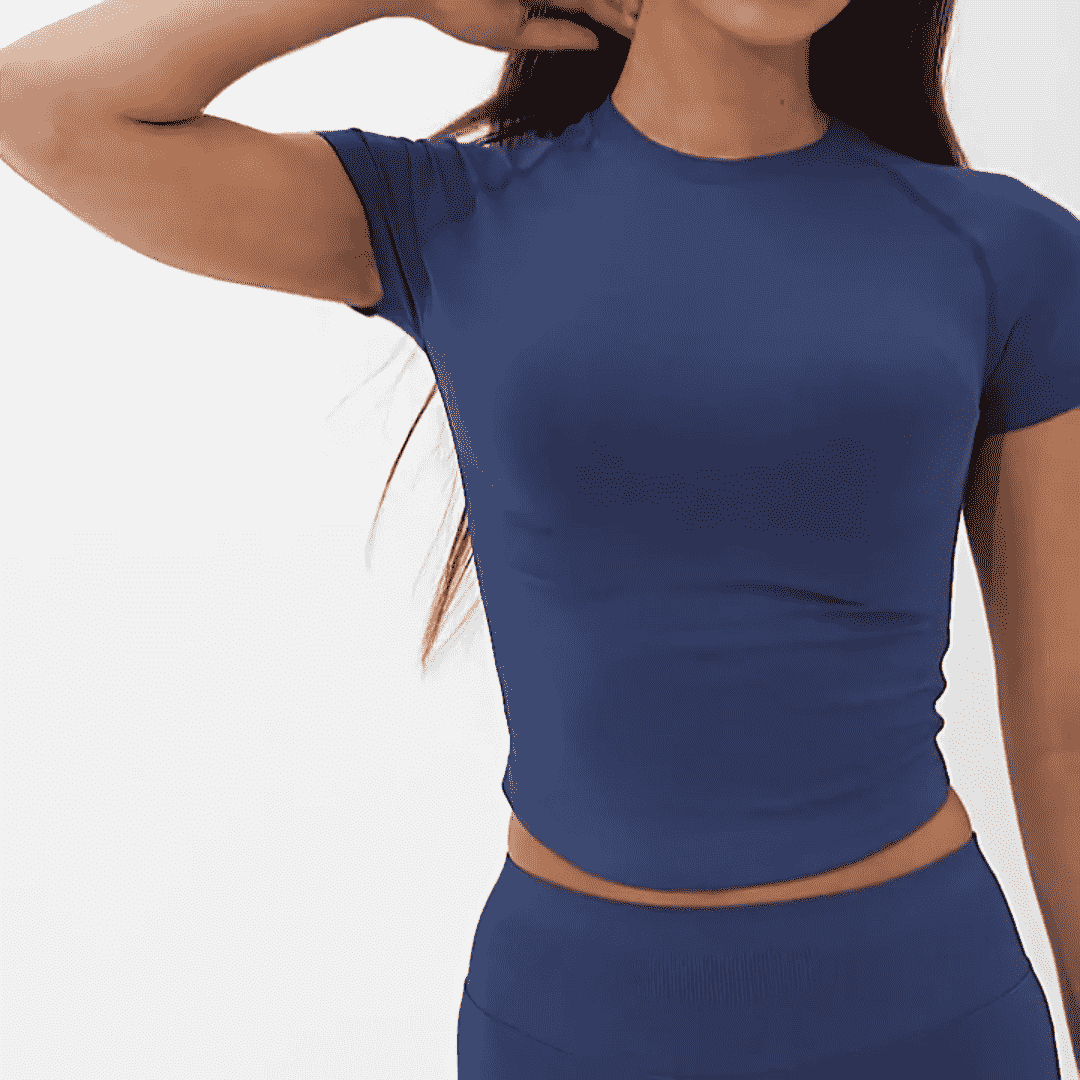
T-Shirts
Performance T-shirts can use stretch knits, custom patterns, different sleeve constructions, hems, neck finishes and branding.
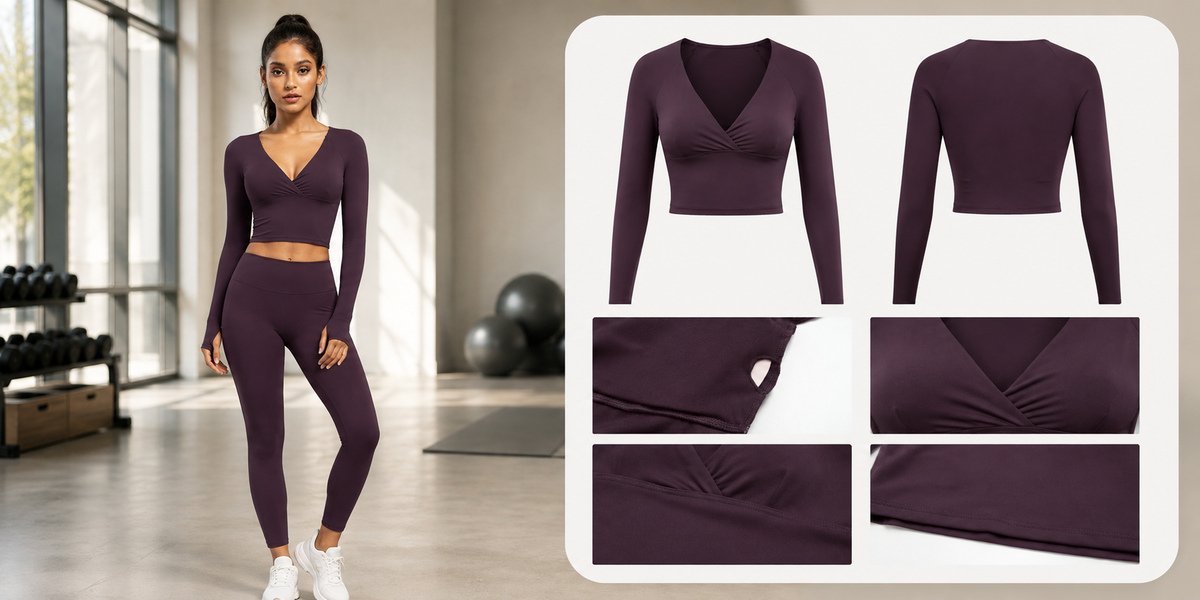
Long Sleeves
Long-sleeve activewear can incorporate fitted or relaxed patterns, thumbholes, panels, mesh and technical seam placement.
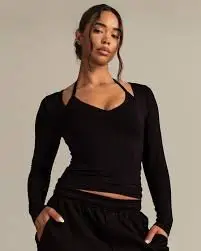
Yoga Sets
Leggings, shorts, bras and tops can be developed as coordinated sets while each SKU retains its own technical and fit standard.
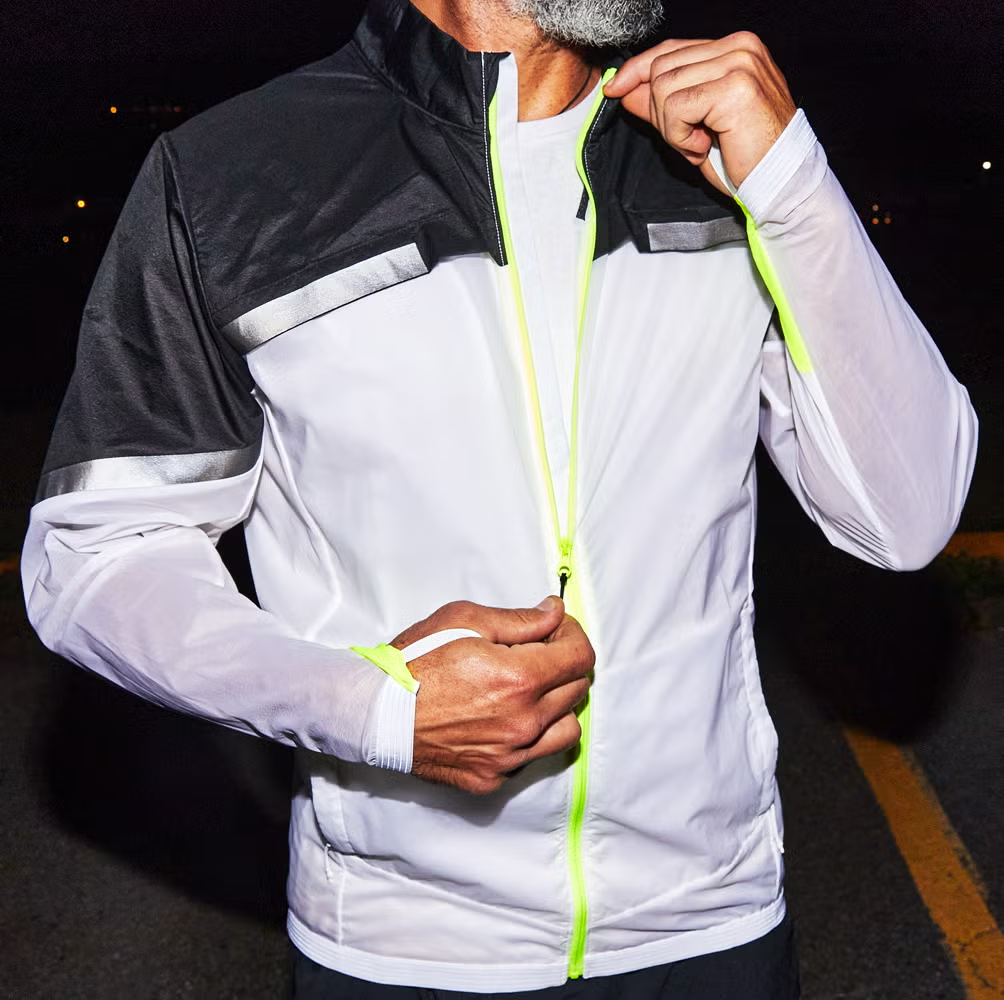
Jackets & Layers
Cut & Sew is suitable for products involving zippers, pockets, structured panels, mixed fabrics and more complex outer-layer construction.
Cut & Sew and Seamless Solve Different Product Problems
MOVEVOX operates both manufacturing routes. The correct choice depends on product architecture, not on which process sounds more premium.
Cut & Sew is only for basic garments.
Fact: Cut & Sew is often the stronger route for complex panels, pockets, zippers, linings, structured bras and multi-material products.
The correct route depends on actual garment architecture.Seamless is always more comfortable.
Fact: Comfort depends on yarn, fabric, fit, seam placement, garment pressure and intended use. A well-engineered Cut & Sew product can provide controlled comfort and support.
Comfort is a product-system result, not a process label.Seamless always means fewer fit problems.
Fact: Seamless fit depends on yarn, machine program, structure and finishing. Cut & Sew fit depends more heavily on pattern, grading and fabric behavior. Both require validation.
Each route has different fit-control variables.Pockets should always stay seamless.
Fact: Conventional storage pockets, zippers and structured components are often easier to engineer and control through Cut & Sew construction.
Functional details may determine the manufacturing route.Cut & Sew cannot create body shaping.
Fact: Panels, seam placement, material contrast, mesh, binding and construction geometry can create strong visual and functional differentiation.
Shaping can come from pattern geometry as well as knitting zones.A brand must choose only one route.
Fact: One collection can combine Seamless leggings or bras with Cut & Sew jackets, pocketed bottoms or structured tops when each route fits the product.
Mixed manufacturing routes can coexist within one controlled collection.What MOVEVOX Reviews in a Cut & Sew Tech Pack
A complete Tech Pack reduces interpretation risk, but it still requires technical review before a production pattern or sample is released.
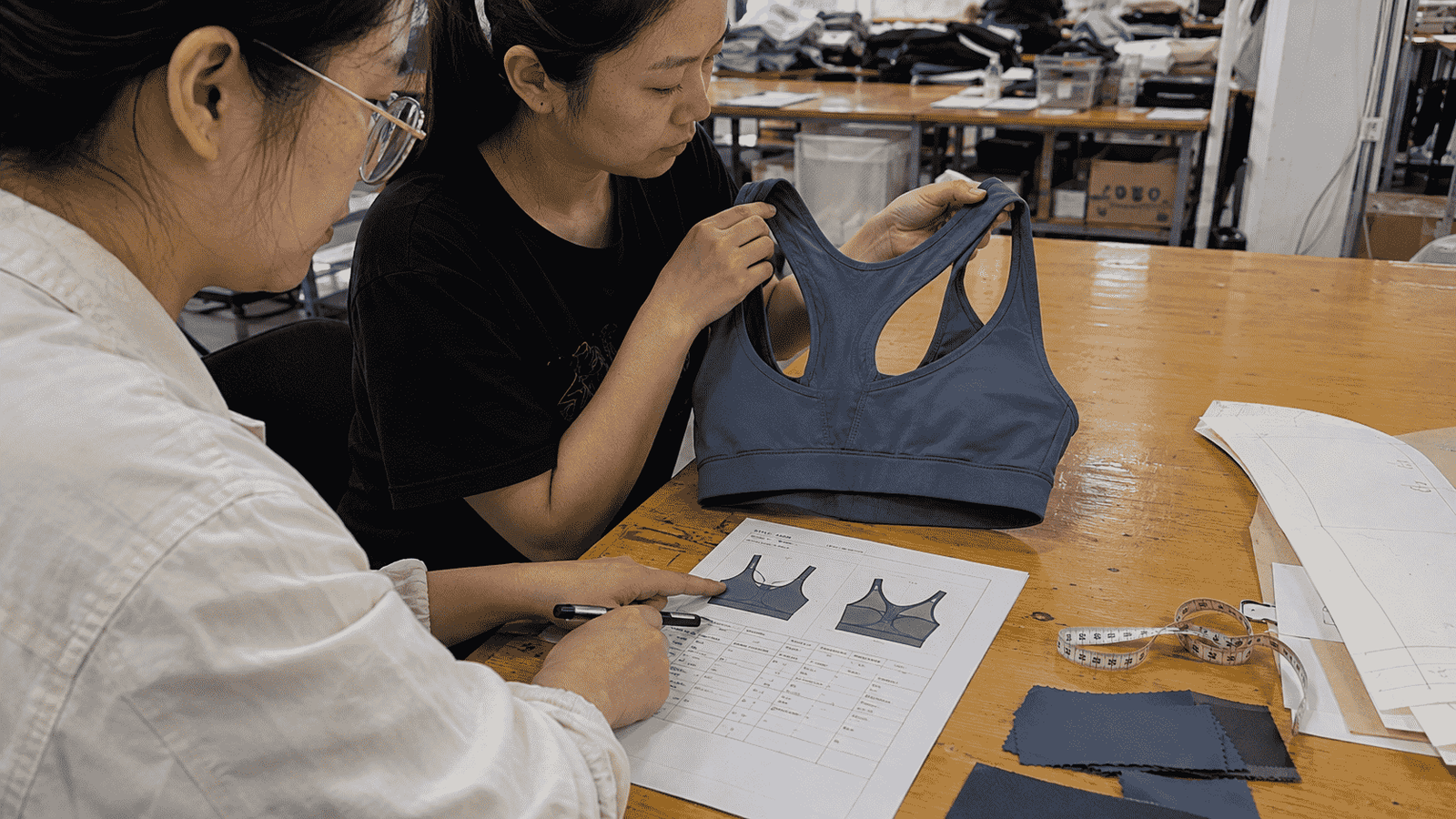
Flat Sketch
Front, back and detail drawings should clearly identify silhouette, panels, pockets and construction features.
Measurement Chart
Provide POM definitions, target measurements, measurement method, size range and applicable tolerances.
Fabric Specification
Identify composition, GSM, stretch, recovery, surface or nominated supplier requirements where defined.
Construction Details
Specify seams, stitch requirements, panels, gussets, elastics, lining, pads, bindings, pockets and zippers where relevant.
Grade Rules
Provide approved increments or existing brand grading rules where available for multi-size production.
Artwork
Logo file, size, color, location and application process should be defined where applicable.
Labels & Trims
Main labels, care labels, size labels, zippers, elastics, pads and other commercial components should be specified.
Packaging
Provide barcode, sticker, polybag, folding and carton requirements when already defined.
Testing Requirements
Buyer RSL, QC manual, testing method or nominated laboratory requirements should be shared early.
Pattern Development Connects Brand Fit With Manufacturing
MOVEVOX uses pattern development to translate product dimensions, stretch behavior and construction into controlled shapes that can be sampled, revised, graded and released for production.
Technical Input
Patterns begin from controlled information.
Inputs can include a Tech Pack, measurement chart, lawful reference sample, approved drawing or confirmed development brief.
Buyer file and product-development review.
Base Pattern
The first pattern converts measurements into manufacturable geometry.
Pattern personnel consider proportions, material stretch, seam locations, negative ease and construction.
Pattern file / paper pattern.
Sample Validation
A pattern is not approved only because it exists digitally.
The pattern must be tested through a physical sample and measurement review.
Development or Fit Sample.
Pattern Revision
Fit feedback should change the correct pattern area.
Buyer comments are connected with POM values and pattern adjustments rather than informal visual changes.
V1 / V2 revision history.
Grade Development
Each size requires controlled grade logic.
Different POMs can require different increments rather than uniform scaling.
Grade chart / Size Set.
Production Pattern
Bulk must use the final approved version.
Obsolete development patterns should not remain active once the current production pattern is released.
Approved pattern version.
Measurement Charts Need Technical Review Before Pattern Release
A size chart can contain missing definitions, conflicting POMs or grade jumps that create fit problems later. MOVEVOX reviews measurement information before turning it into an active production pattern.

POM Definition
A measurement value is only useful when the exact measurement location and method are clear.
Base Size
The development base size should be identified so fit comments and pattern revisions refer to the same product size.
Front / Back Relationship
Rise, neckline, armhole or panel dimensions may depend on front-and-back relationships that cannot be reviewed as isolated numbers.
Stretch State
Stretch garments require a consistent measurement condition. Relaxed, stretched or post-conditioning dimensions should not be mixed.
Grade Jump
An unusual increment between adjacent sizes may indicate a real design decision or an input error that needs confirmation.
Tolerance
MOVEVOX’s normal Cut & Sew dimensional reference is generally within approximately ±1.5 cm, but the buyer-approved specification takes priority where it is stricter or more specific.
Technical Query
If a measurement conflict could materially affect Fit, the issue should be raised before the corresponding pattern is released.
Choose Cut & Sew Fabric by Product Function and Fit
MOVEVOX evaluates material direction together with pattern, product use, stretch, recovery, opacity, hand feel, GSM, commercial MOQ and required validation.
What activity is the product designed for?
What fit should the pattern create?
What surface is required?
What coverage risk exists?
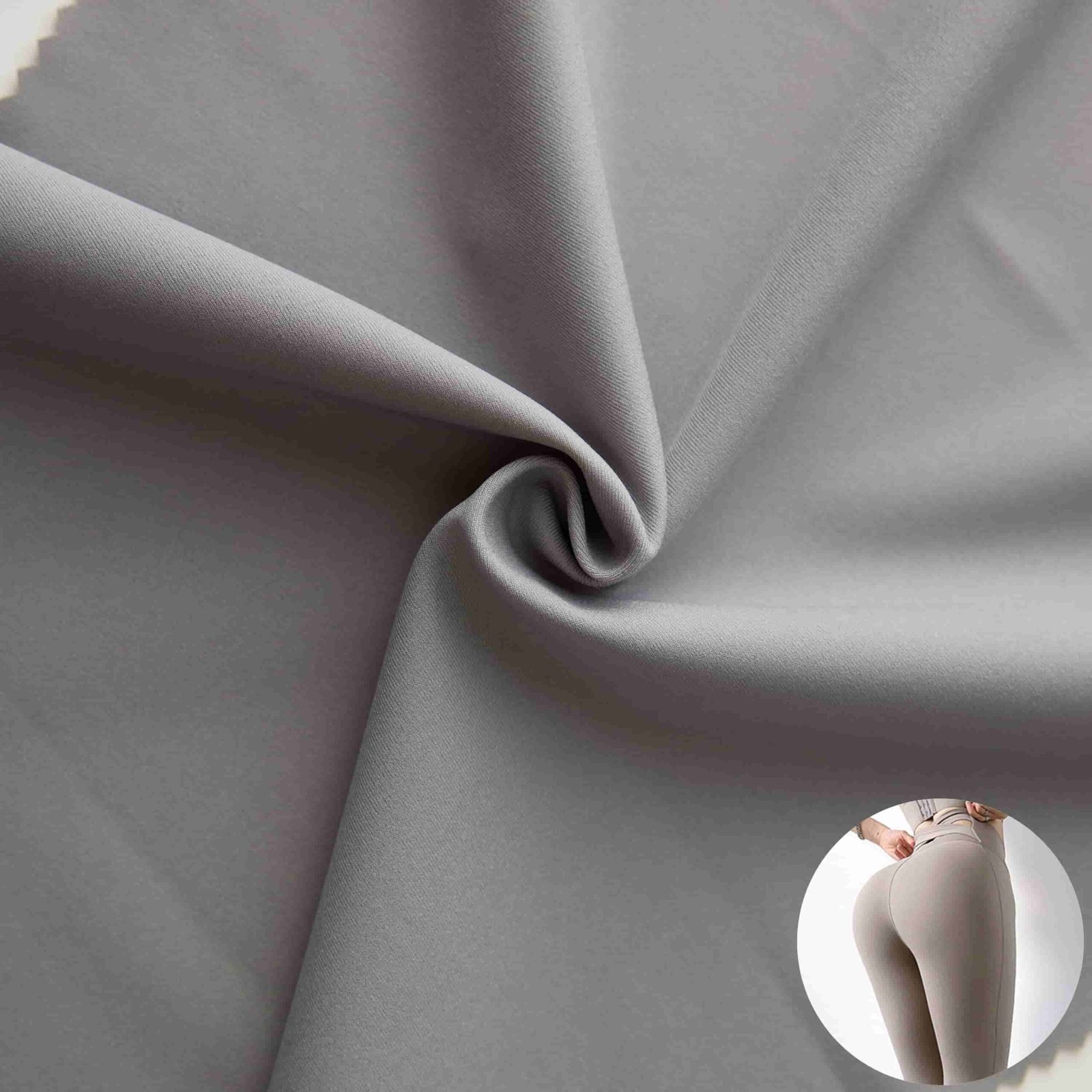
Nylon + Spandex
Often suitable for leggings, bras, shorts and fitted activewear where soft hand feel, stretch and recovery are important.
Polyester + Spandex
Useful across training, running, tops and selected bottoms depending on finish, weight and performance requirements.

Naked-Feel Direction
Fine Nylon + Spandex routes can support softer yoga and Pilates products, but opacity, recovery and pilling still require physical validation.

Brushed Direction
Brushed or peach finishes can provide a softer seasonal feel but need additional attention to surface durability and pilling risk.
Fabric Changes Can Change the Fit of the Same Pattern
The same production pattern can behave differently when material GSM, stretch, recovery, finish or dye lot changes. MOVEVOX therefore treats fabric consistency as part of Fit control.

| Parameter | Nylon + Spandex | Polyester + Spandex | Naked Feel | Brushed / Peach | Compression |
|---|---|---|---|---|---|
| Typical GSM | 190–280 | 160–250 | 200–240 | 190–270 | 230–320 |
| Stretch | High four-way | Medium-high to high | High four-way | Medium-high | High |
| Recovery | Project validated | Project validated | Project validated | Project validated | Higher-recovery direction |
| Opacity | Color/GSM dependent | Color/GSM dependent | Light colors require review | Project validation | Density supports coverage; validate |
| Surface | Smooth / soft | Varies | Fine / soft / matte | Brushed / peach | Firm |
| Main Risk | Lot/color variation | Hand-feel variation | Pilling / opacity balance | Surface pilling | Comfort / pressure |
| Fit Impact | Recovery affects negative ease | Stretch can change dimensions | Softness may reduce support | Finish may alter hand feel | Higher tension affects size fit |
Review Activewear Construction Before It Reaches the Sewing Line
Every structural detail changes manufacturing, fit, cost or QC requirements. MOVEVOX reviews the intended function before selecting the construction route.

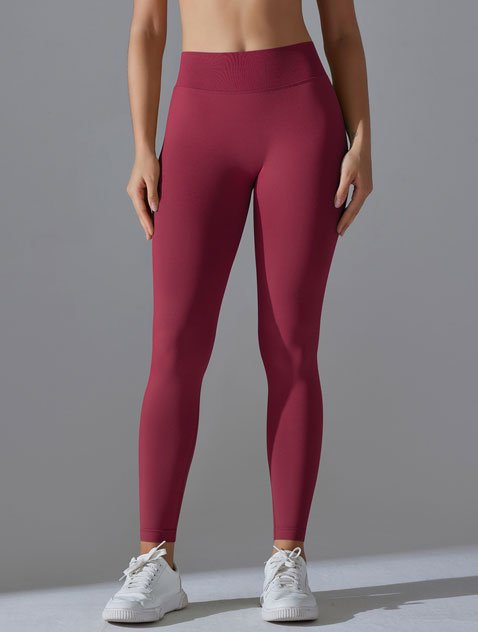
Gusset
Adds pattern pieces and seam intersections.
Poor geometry can affect mobility and seam stress.
Review shape, inseam relationship and movement.
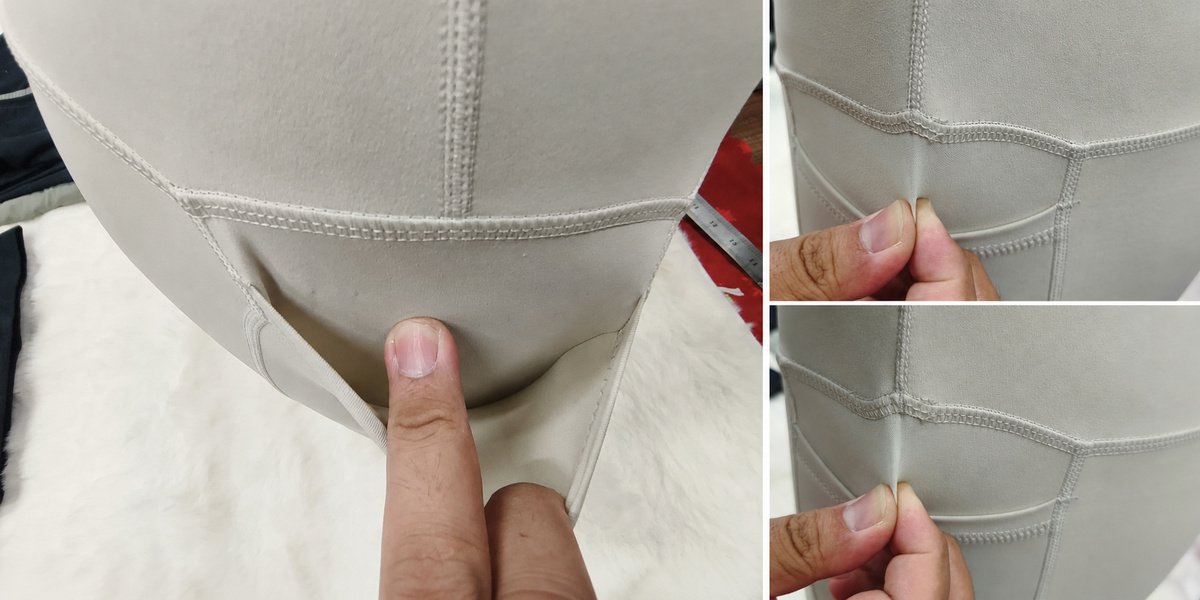
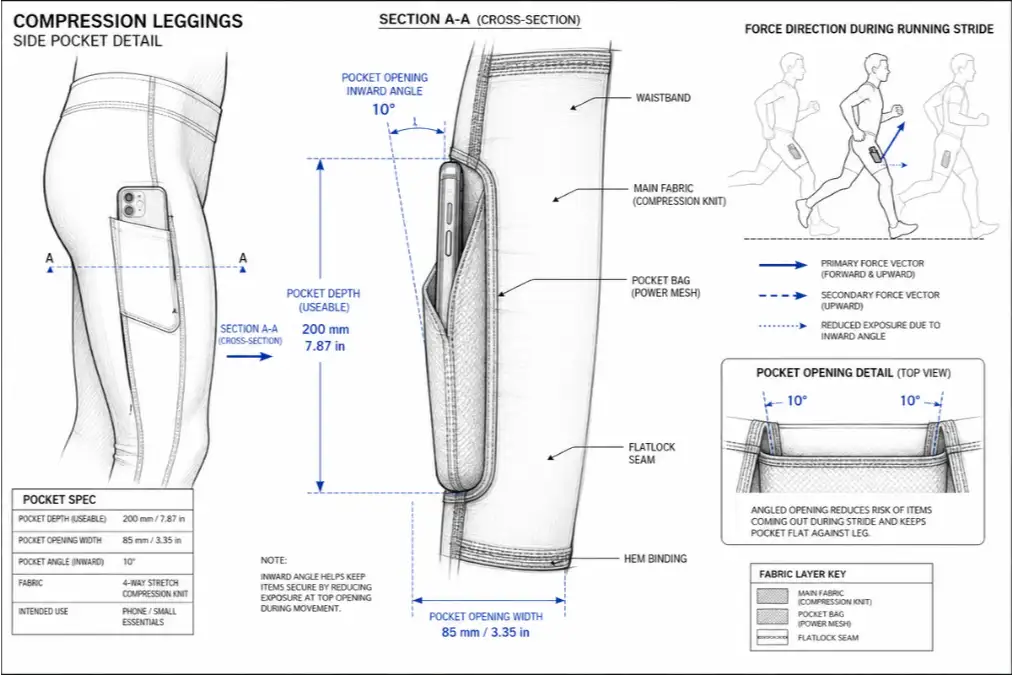
Side Pocket
Adds pocket bag, opening and panel integration.
Opening can gap or distort under stretch.
Validate position, depth and stretch behavior.
V Waistband
Requires controlled waistband geometry.
Shape can collapse or create uneven tension.
Review pattern, material recovery and symmetry.
Bra Lining
Adds second material layer and seam relationships.
Different stretch between layers can distort Fit.
Validate material compatibility and body support.
Removable Pad
Requires pocket and insertion structure.
Pads may migrate or distort during movement.
Review pocket dimensions and pad placement.
Binding
Requires controlled stretch application.
Excess or insufficient tension changes fit.
Validate finish, elasticity and appearance.
Zipper
Adds non-stretch component to stretch garment.
Weight or stiffness can distort surrounding fabric.
Review reinforcement and panel support.
Mixed Fabrics
Requires different stretch materials to join.
Recovery mismatch may twist or pull seams.
Test material interaction before bulk.
A Sample Can Look Good and Still Be Difficult to Scale
MOVEVOX reviews whether a Cut & Sew concept can remain stable across normal production quantity, multiple operators, material lots and sizes.
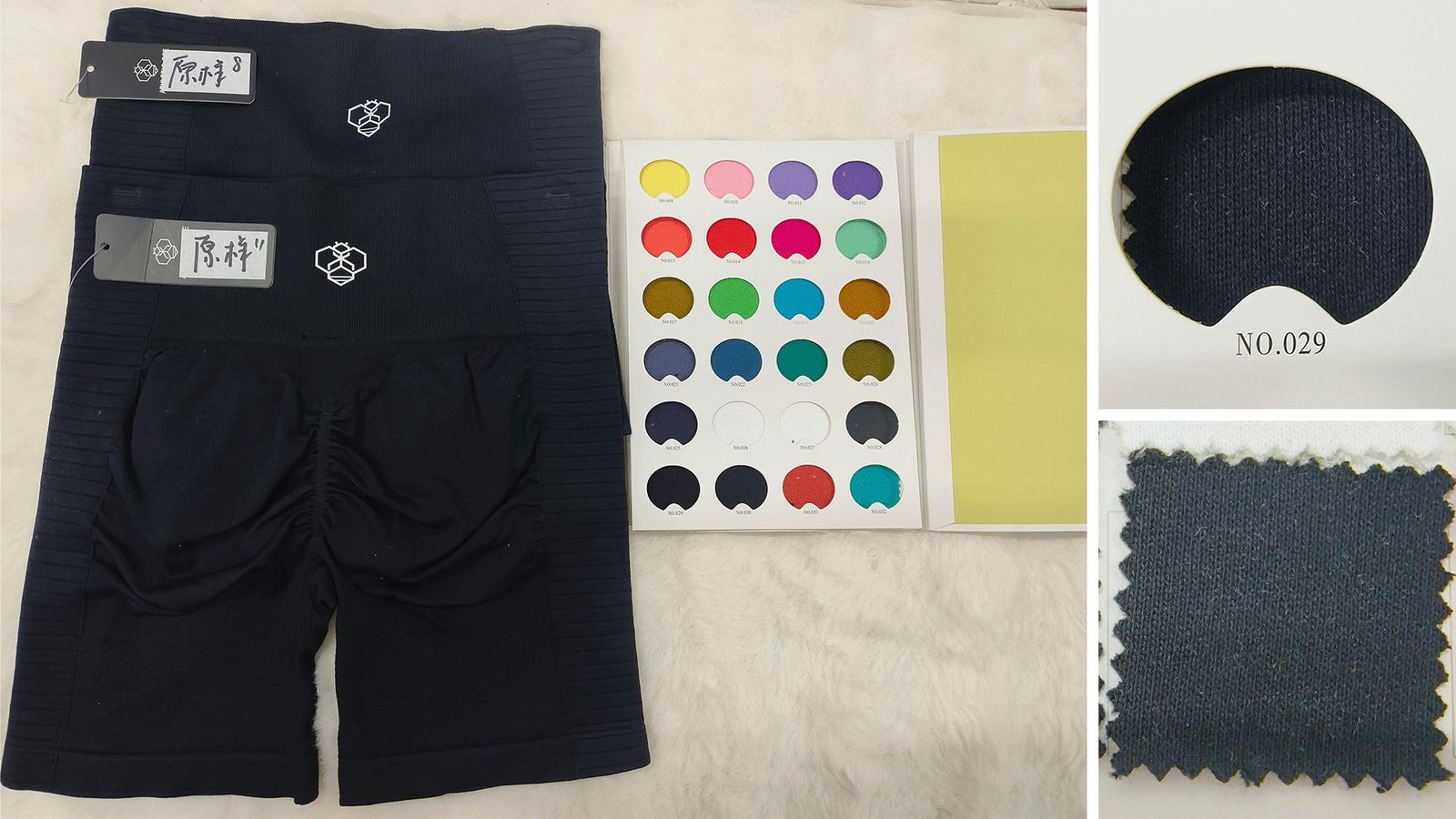
Green: Production-Ready Direction
The design uses available materials, established sewing methods and measurable construction. Normal sampling can proceed without a major known industrialization risk.
Yellow: Validation Required
The product is technically feasible but requires additional sample or process validation before bulk. Examples include unusual stretch combinations, light-color opacity, complex logos or difficult pocket structures.
Red: High Bulk Risk
The product can potentially be made once, but current materials, construction or tolerance make stable repeat production unreliable.
Material Risk
A fabric may look suitable but have inconsistent stretch, recovery or supplier availability.
Construction Risk
Too many special operations can create variation between operators and lines.
Measurement Risk
A visually acceptable garment may still fail the buyer’s POM tolerance.
Cutting Locks Pattern Geometry Into Fabric
Once fabric is cut, pattern, material lot, orientation and bundle identification must remain controlled. Errors at this stage can affect every downstream sewing operation.
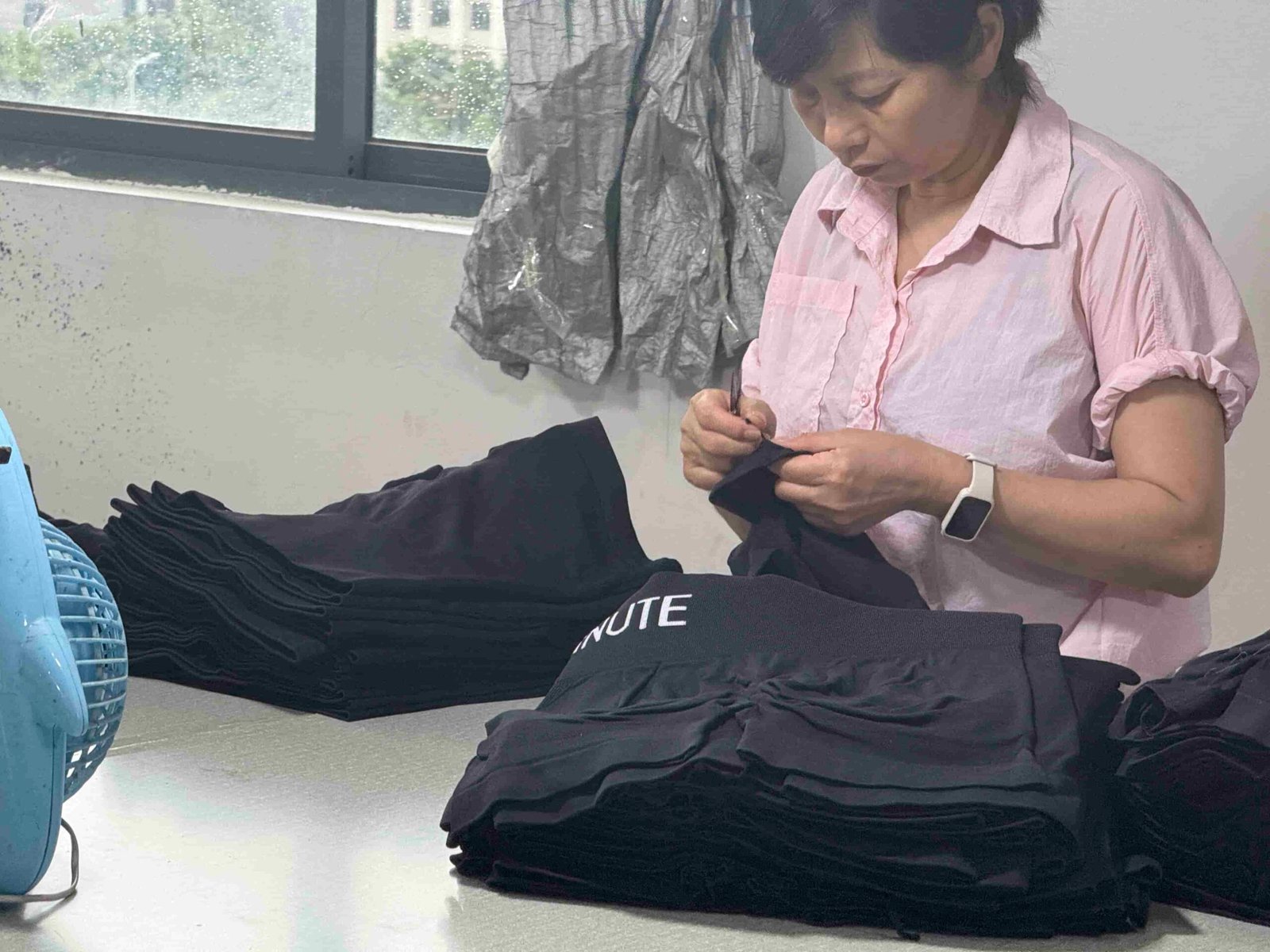
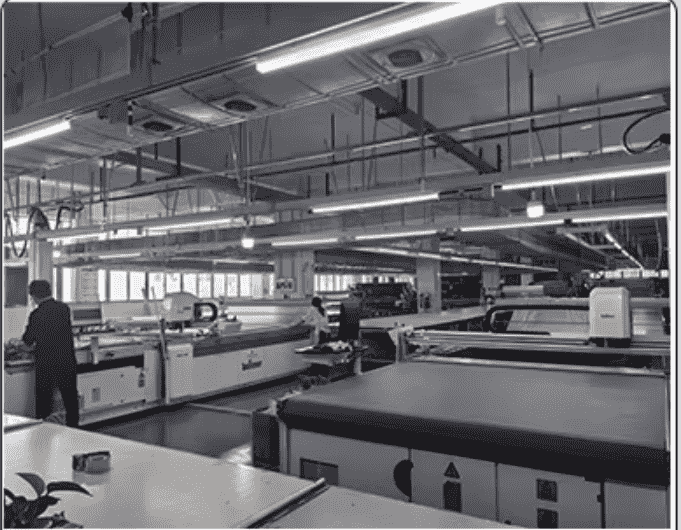
Fabric Lot Check
Confirm the released fabric and color correspond to the approved project requirement before spreading begins.
Fabric Preparation
Stretch fabrics may require appropriate handling or conditioning before cutting according to material behavior and production requirement.
Current Pattern
Only the approved production pattern should control the marker and cutting stage.
Marker / Layout
Pattern pieces are arranged to control fabric use, direction and required matching relationships.
Spreading
Fabric layers are prepared to avoid uncontrolled tension, wrinkles or shifting that could distort final cut dimensions.
Cutting
Pattern geometry is transferred into the material with the required precision for later sewing and assembly.
Critical Piece Check
Selected curves, matching areas and dimensional points are reviewed before the full bundle moves forward.
Bundle Identification
Cut panels are grouped and identified by the correct style, size, color and applicable lot.
Sewing Release
Only prepared bundles with the correct production reference should move into the designated sewing process.
Sewing Methods Must Match Stretch, Function and Product Structure
Cut & Sew activewear often combines several stitch and finishing methods within one garment. Each operation has a functional purpose and different quality risks.
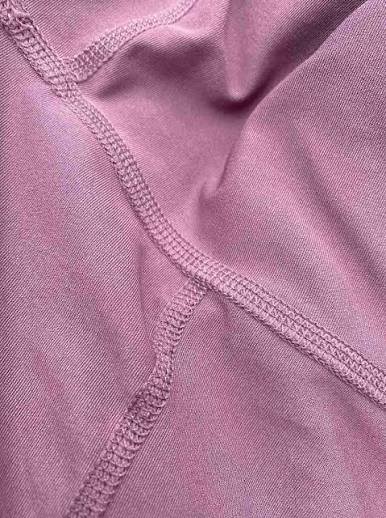
Four-Needle Flatlock
Used where a flatter, stretch-compatible activewear seam is required.
Main risk: incorrect tension, seam exposure or uneven appearance.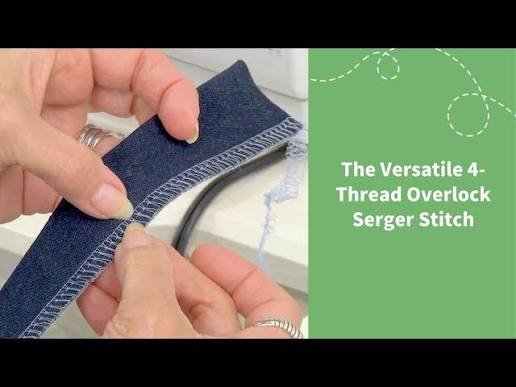
Differential Overlock
Joins and finishes knit edges while managing fabric feed and stretch.
Main risk: waviness, seam opening or uneven trimming.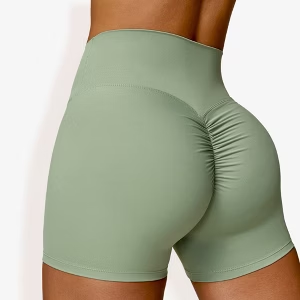
Flexible Coverstitch
Supports stretch hems and clean edge finishing on activewear.
Main risk: skipped stitches, tunneling or insufficient stretch.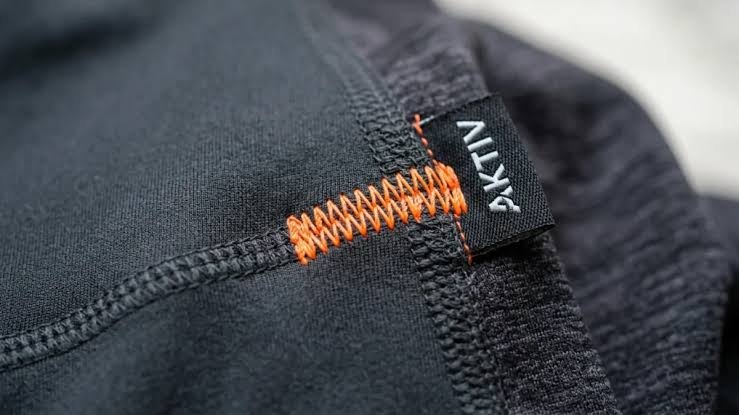
Bartack Reinforcement
Reinforces selected stress points such as pocket corners when the construction requires it.
Main risk: excessive density can damage stretch fabric.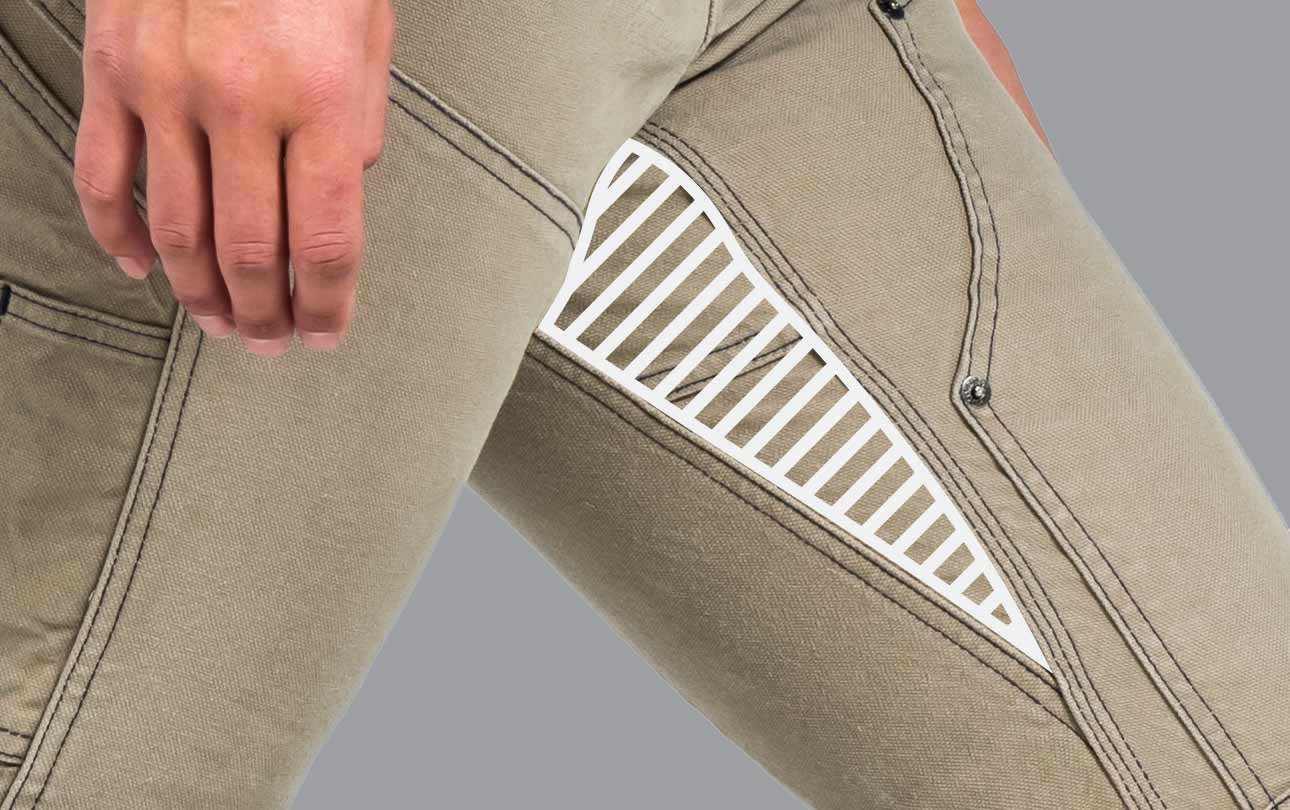
Gusset Assembly
Multiple seam intersections require accurate matching and controlled bulk.
Main risk: distortion, misalignment or restricted movement.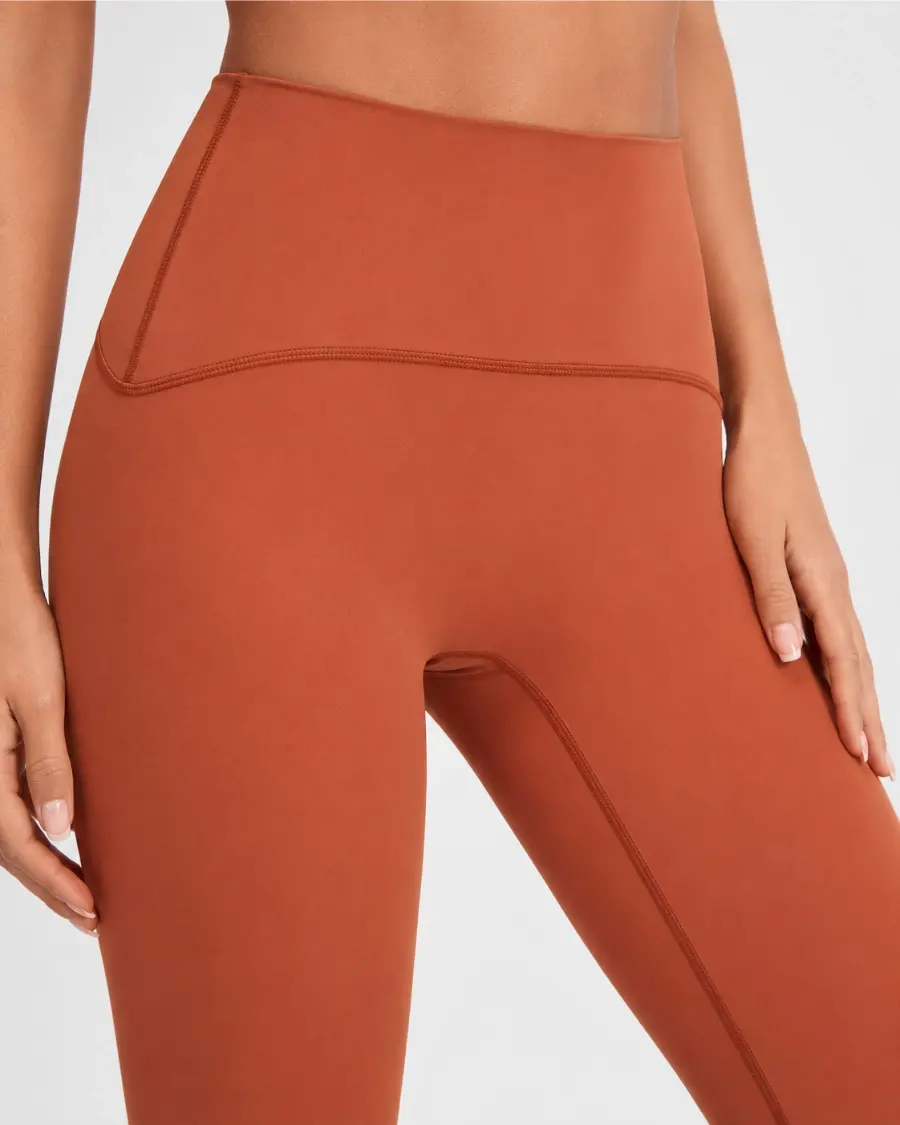
Multi-Panel Flat Seam
Connects shaped panels where seam profile, alignment and stretch must remain consistent.
Main risk: panel drift or uneven seam geometry.Critical Workmanship Checks Differ by Product Type
MOVEVOX defines inspection points according to product structure rather than applying one generic sewing checklist to every activewear SKU.


| Critical Zone | Typical Failure | Prevention | Inspection Point | Corrective Action |
|---|---|---|---|---|
| Legging Inseam | Seam opening / uneven stitch | Correct stitch and tension | First article / inline | Repair or isolate affected units |
| Gusset | Misalignment / excessive bulk | Accurate matching points | Sewing / finished garment | Rework if construction allows |
| Waistband | Twisting / uneven tension | Controlled pattern and assembly | First article / measurement | Correct process and reinspect |
| Gaping / asymmetry | Pattern and opening validation | Sample / inline | Adjust pattern or sewing | |
| Bra Strap | Uneven length | Controlled elastic and measurement | First article / final | Rework and remeasure |
| Underband | Incorrect tension | Pattern + elastic specification | Fit / inline | Correct construction |
| Neck / Armhole | Wavy binding | Binding tension control | First article / inline | Adjust application |
| Zipper Area | Distortion | Reinforcement and stable panel | Sample / inline | Correct supporting construction |
Fit Samples Validate Pattern, Fabric and Body Relationship Together
MOVEVOX uses Fit Samples to convert technical measurements into real wearing results before grading and bulk production.

Specification Review
The current measurement chart, product direction and material are confirmed before the Fit Sample is evaluated.
Pattern Preparation
The base pattern is developed or adjusted using the buyer’s measurements and intended stretch relationship.
Physical Sample
The garment is produced using the current fabric and construction direction.
Measurement Check
Key POMs are measured against the buyer-approved chart before subjective fit comments are evaluated.
Static Fit Review
Waist, hip, rise, bust, underbust, neckline, armhole and visual proportion are reviewed according to product type.
Movement Review
Leggings can be reviewed for squat movement, waistband stability and opacity; bras can be reviewed for coverage, strap position and movement.
Buyer Comments
Buyer feedback is consolidated into defined technical changes rather than isolated descriptive messages.
Revision or Approval
The current pattern is either revised for another sample or approved to move into the next validation stage.
Convert Fit Feedback Into Measurable Pattern Changes
MOVEVOX links subjective wearing comments with POM values, material behavior and the affected pattern area before creating a revised sample.
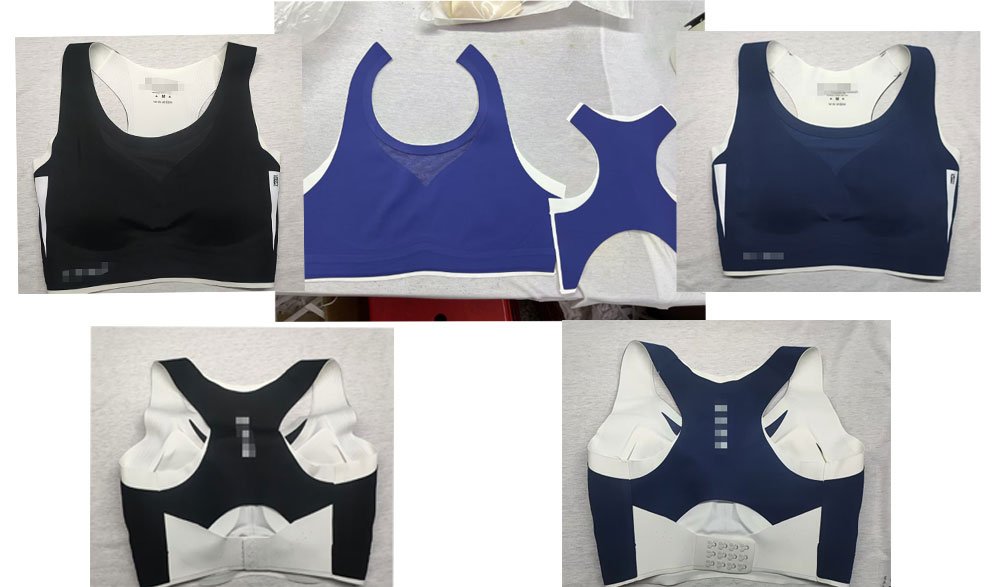
Before Revision
A fit issue such as a loose waistband, tight front rise or moving underband is documented against the current sample rather than treated as a general request to “make it tighter.”

After Revision
The relevant POM, pattern area, material behavior and construction are reviewed, then the revised sample is measured and wear-tested again before the new version can be approved.
Waist Feels Loose
Review waist POM, waistband pattern length, fabric recovery and internal elastic structure. Adjust the affected relationship rather than reducing the whole garment uniformly.
Front Rise Feels Tight
Review front rise, crotch curve, gusset geometry, inseam intersection and fabric stretch. Modify the relevant front-body geometry while protecting approved dimensions elsewhere.
Underband Moves
Review underbust measurement, band pattern, elastic tension and material recovery. Adjust the band or construction, then validate support, comfort and movement again.
Pattern Revisions Need Version Control and Clear Approval
Pattern changes should show what changed, why it changed and which version became the new execution standard.
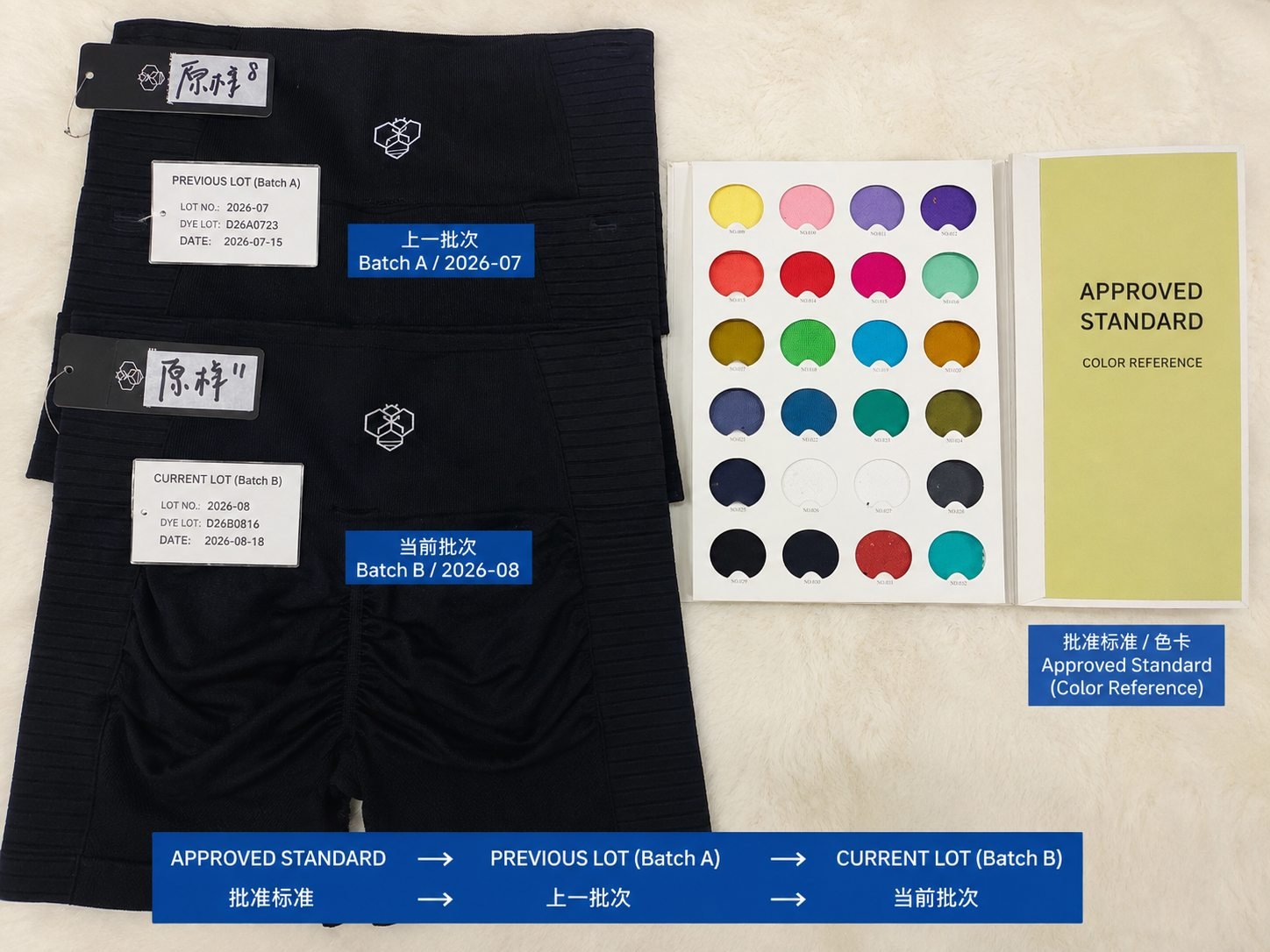
V1 Pattern
Initial pattern reflects current buyer information and selected material.
Fit Comment
Buyer and internal review identify measurable or structural issues.
POM Change
Affected measurement or relationship is confirmed where dimensions change.
V2 Pattern
New pattern contains the approved change while unrelated areas remain controlled.
Sample V2
Revised pattern is translated into a new physical sample.
Re-Measurement
Sample is checked against the updated measurement reference.
Buyer Approval
Buyer confirms whether current fit and structure can move forward.
Production Pattern
Final approved pattern becomes the version released to cutting.
Size Grading Is Not Uniform Scaling
Different measurements require different increments to maintain intended fit and proportion across a size range. MOVEVOX follows buyer-approved grade rules or develops project-specific grading for confirmation.
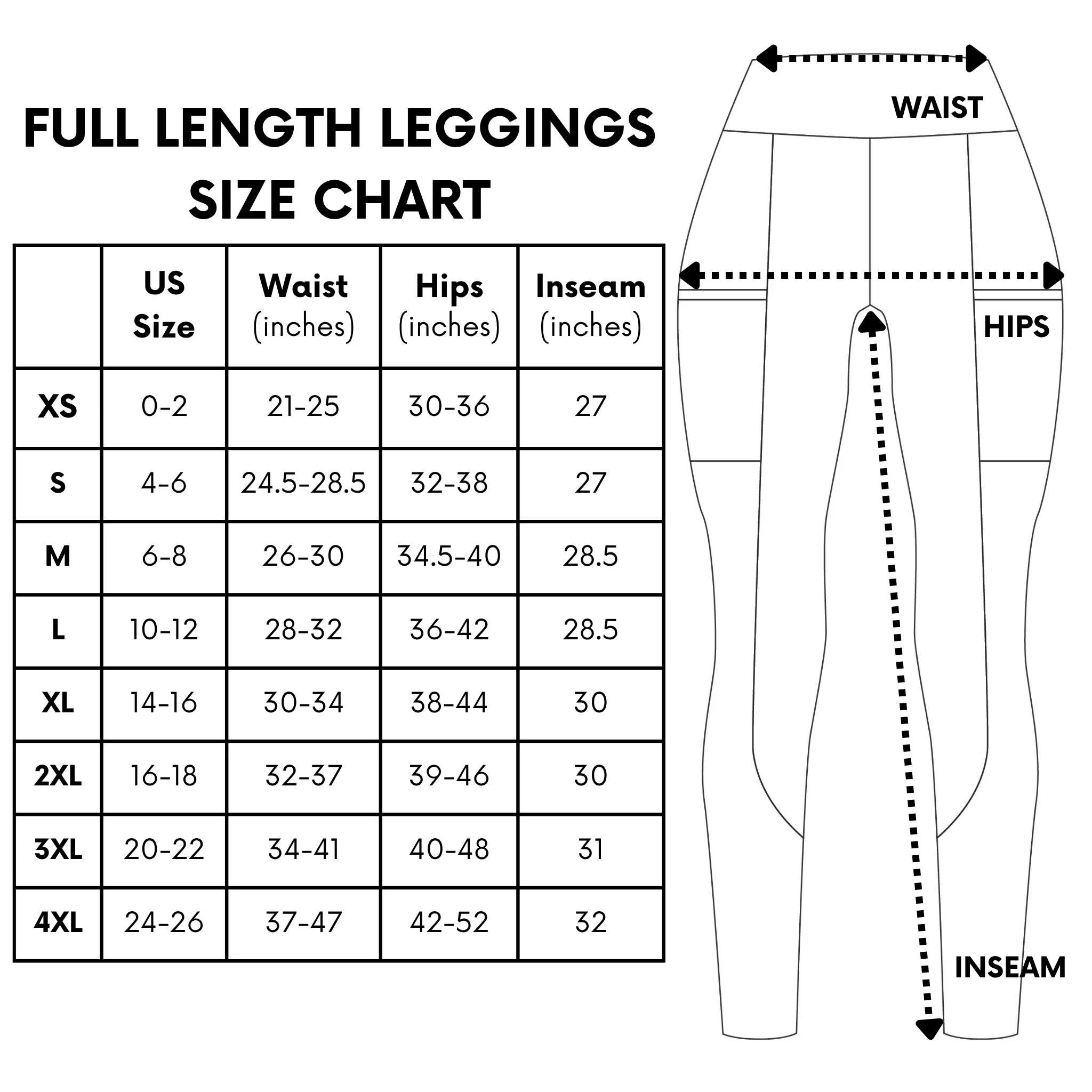
| POM | XS→S | S→M | M→L | L→XL | Review Focus |
|---|---|---|---|---|---|
| Waist | Buyer rule | Buyer rule | Buyer rule | Buyer rule | Negative ease and recovery |
| Hip | Buyer rule | Buyer rule | Buyer rule | Buyer rule | Body proportion |
| Front Rise | Buyer rule | Buyer rule | Buyer rule | Buyer rule | Front-body comfort |
| Back Rise | Buyer rule | Buyer rule | Buyer rule | Buyer rule | Coverage and movement |
| Inseam | Buyer rule | Buyer rule | Buyer rule | Buyer rule | Length strategy |
| Bust | Buyer rule | Buyer rule | Buyer rule | Buyer rule | Bra / top fit |
| Underbust | Buyer rule | Buyer rule | Buyer rule | Buyer rule | Support and tension |
| Strap Length | Buyer rule | Buyer rule | Buyer rule | Buyer rule | Bra proportion |
Validate the Size Range Before Commercial Production
A base-size approval does not automatically prove that every graded size will fit correctly. Size Set sampling checks key relationships across selected sizes before bulk.
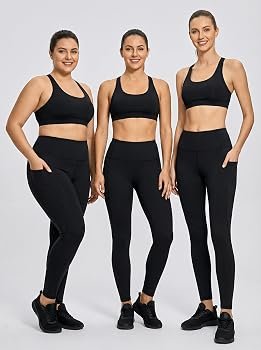
Small Size
Verify that graded dimensions do not create excessive compression or proportion distortion.
Core Size
Use a representative middle size to confirm the approved fit language and key product relationships.
Adjacent Size
Review whether planned grade increments translate correctly into the physical garment.
Large Size
Check coverage, rise, armhole, strap, waistband or other areas where body proportion can change differently.
Risk Size
For extended-size, high-compression or support-sensitive products, select an additional size where technical risk is higher.
The PP Sample Confirms the Production-Ready Combination
A Pre-Production Sample should represent the current approved combination of fabric, pattern, construction, branding and relevant commercial details before normal bulk release.
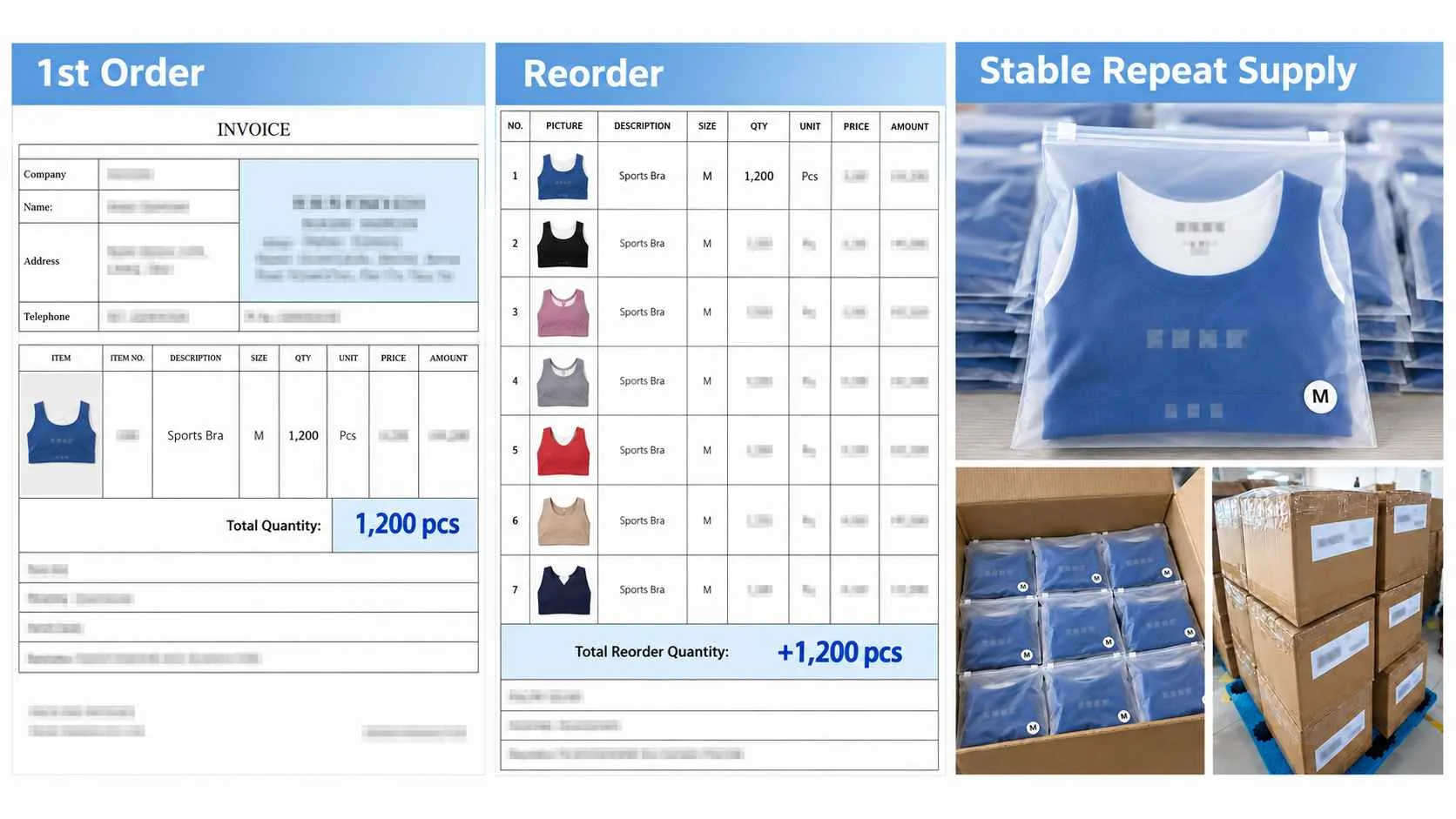
- Final Pattern: The PP Sample should use the production-ready pattern or approved current version.
- Final Fabric: Material route, color and applicable supplier information should reflect the intended bulk standard.
- Final Construction: Seams, panels, gusset, pockets, lining, pads and other relevant details should match approved requirements.
- Final Branding: Logo artwork, size, placement and application method should be confirmed.
- Final Trims: Elastics, labels, zippers, pads and other components should use approved production direction.
- Relevant Packaging: Where required by the buyer, applicable packaging and labeling should be included or separately confirmed.
- Production Reference: The PP Sample becomes a physical reference used together with current technical documents.
Keep Bulk Production Aligned With the Approved Cut & Sew Sample
The sample room and bulk line must work from the same current standard. MOVEVOX transfers approved patterns, measurements, materials, construction and branding into production and QC.
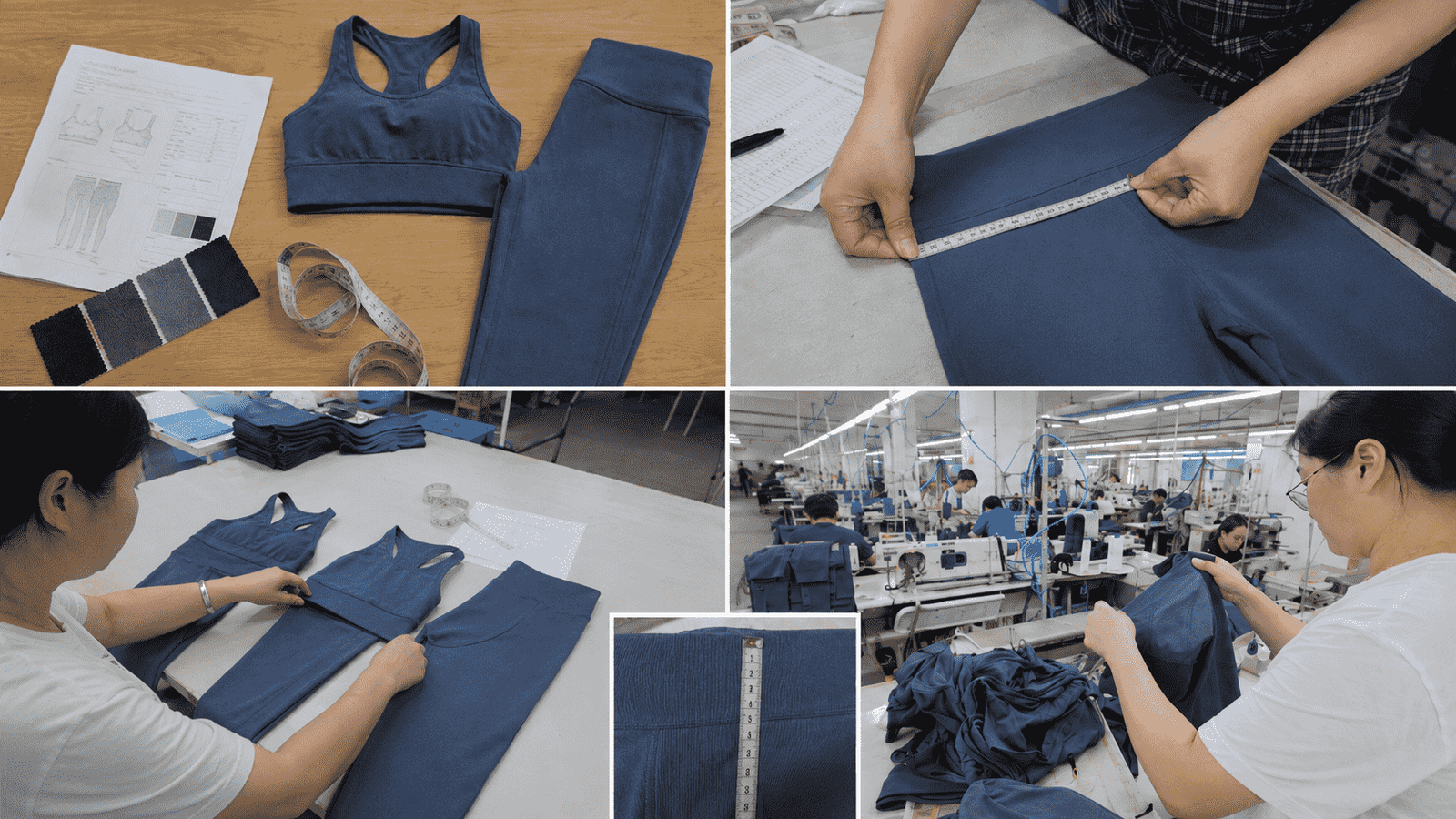
Pattern
Bulk cutting must use the current approved production pattern, not an earlier sample-development version.
Measurements
POM values, measurement method and buyer-approved tolerance control first article and bulk checks.
Fabric
Approved material, color and relevant lot information connect development with incoming material control.
Construction
Sewing methods, seam placements, panels, gussets and functional details follow the released technical version.
Branding
Logo artwork, placement and application are checked against the buyer-approved standard.
Trims
Labels, elastics, pads, zippers and other components should match the released BOM or applicable approval.
Packaging
SKU, labels, barcode and packaging requirements remain connected to the correct commercial order.
From Approved Pattern to Finished Activewear
MOVEVOX’s Cut & Sew manufacturing process connects technical approval with material, cutting, sewing, quality control and shipment release.

Production Standard
Confirm the current technical version, Approved/PP Sample, material and PO information before manufacturing begins.
Deliverable: Released Pattern & Tech PackMaterial Release
Verify material source, color and applicable lot before cutting.
Deliverable: Approved Fabric LotMarker & Spreading
Prepare fabric according to pattern orientation, layer and handling requirements.
Deliverable: Cutting LayoutCutting
Transfer approved production-pattern geometry into the actual fabric.
Deliverable: Cut PanelsBundle Control
Keep style, size, color and applicable lot information connected to cut components.
Deliverable: Identified Panel BundleSewing
Execute approved seam, panel, waistband, pocket, bra and other construction processes.
Deliverable: Assembled GarmentFirst Article
Confirm dimensions, construction, fabric, branding and workmanship before normal volume continues.
Deliverable: Initial Production CheckInline QC
Identify repeated defects and process drift while production is still running.
Deliverable: WIP InspectionFinishing
Complete threads, applicable finishing, labels and garment preparation.
Deliverable: Finished GarmentFinal Release
Finish final quality and packing checks before shipment approval.
Deliverable: Shipment-Ready LotCut & Sew Quality Is Controlled Before, During and After Sewing
MOVEVOX currently has five QC personnel supporting material, production, finished-garment and shipment-release checks. Buyer-specific specifications take priority over MOVEVOX internal references.



Buyer Standard
Current Tech Pack, pattern, measurements, Approved Sample, QC manual and packaging requirement form the inspection basis.
Incoming Fabric
Fabric, color and relevant project properties are reviewed before material is released.
Specification Freeze
Production teams confirm the current pattern, material, artwork and construction version.
Pre-Production
Critical requirements and known risks are reviewed before normal output begins.
First Article
Initial garments are checked for key measurements, construction, stitch execution, logo and appearance.
Inline Sewing QC
Production is inspected while sewing continues to identify repeated workmanship or dimensional problems.
Measurement Control
Cut & Sew internal dimensional reference is generally within approximately ±1.5 cm unless the buyer-approved standard defines otherwise.
Finished Garment
Appearance, workmanship, construction, branding and applicable function are reviewed after assembly.
Final Inspection
Buyer AQL or quality manual takes priority where provided. Failed or significant issues require correction and reinspection.
Packing Release
Correct size, labels, barcode, SKU, polybag, carton and packing information are verified before shipment release.
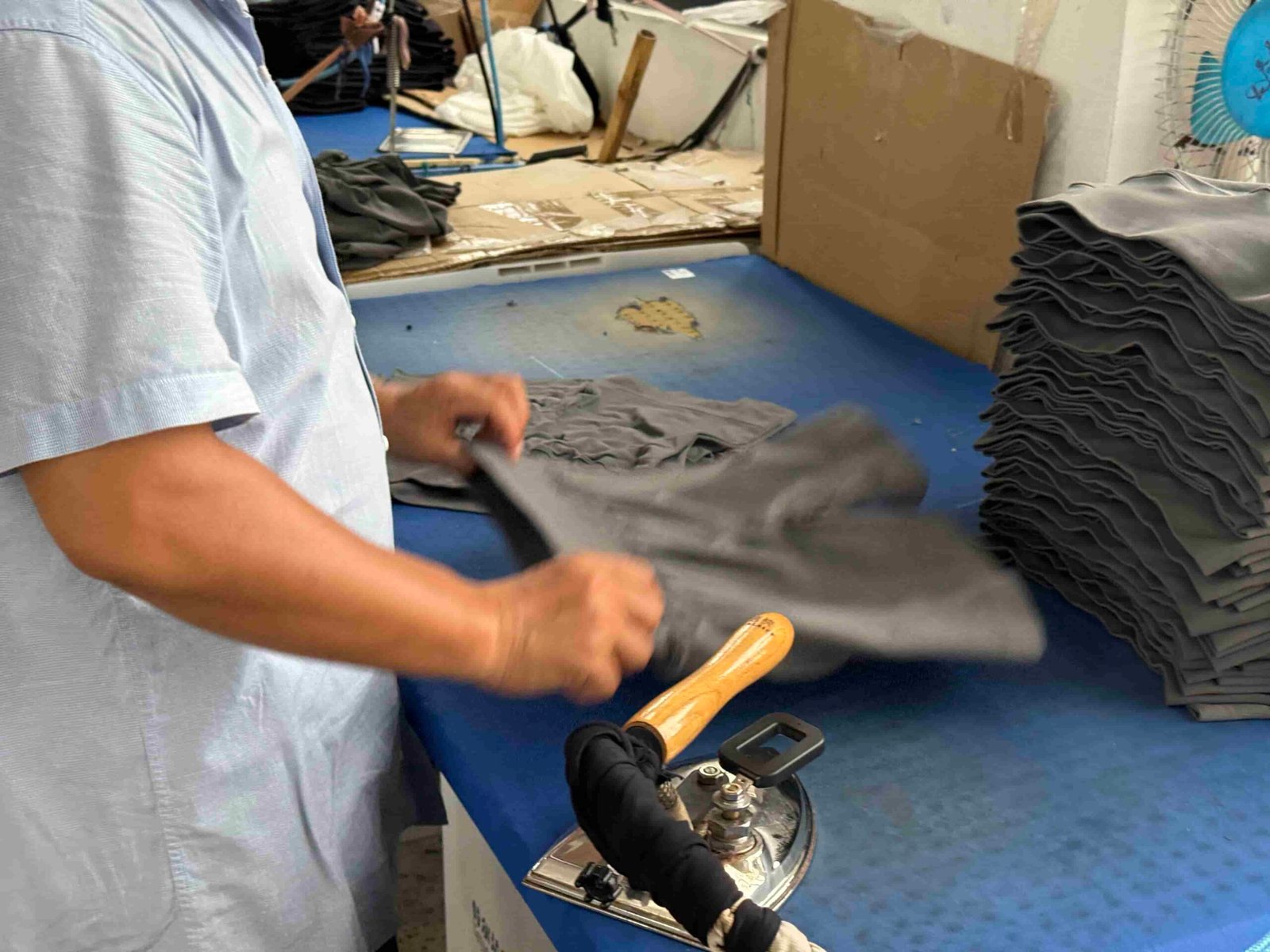
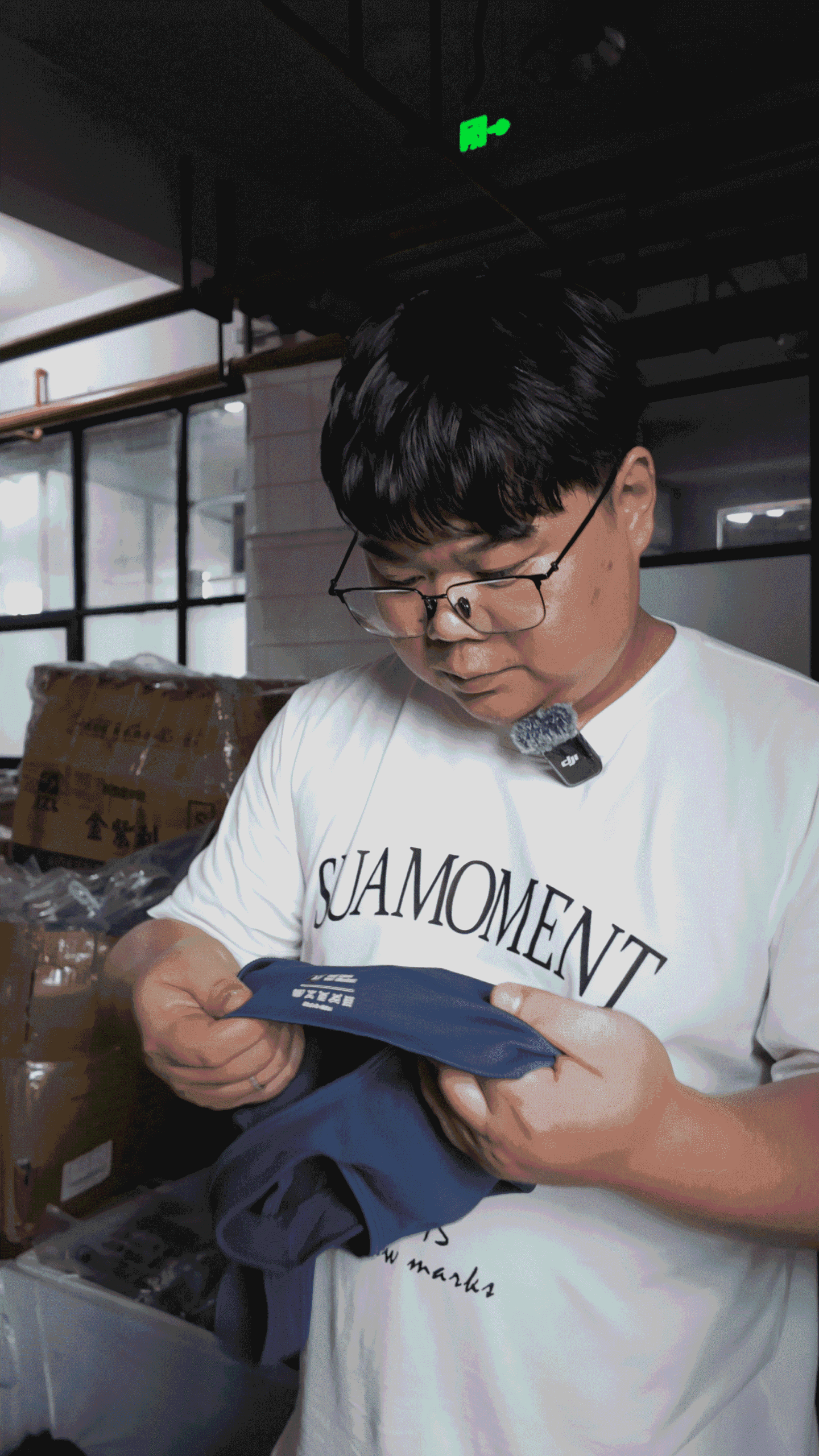
Trace Cut & Sew Materials From Fabric Lot to Shipment
Traceability helps identify which garments used a particular fabric lot, which bundles entered production and which shipment contained the affected product.
Supplier
Approved material source enters the purchasing record.
Purchase Lot
Purchased material is connected with delivery and order information.
Fabric / Dye Lot
Relevant fabric or dye lot is identified where batch tracking is required.
PO / SKU
Fabric requirement is linked to the correct style, color and size program.
Cutting Bundle
Cut panels are grouped by style, size, color and relevant lot before sewing.
Production Lot
Bundle moves into the designated production line or facility.
Inspection
Quality findings connect back to the appropriate style, lot or production group.
Packing
Finished product identity is linked with carton, SKU and quantity information.
Shipment
Final commercial documents complete the traceability chain.
Testing Should Validate the Actual Fabric and Garment Requirement
MOVEVOX can coordinate project-specific material or garment testing where required. Results remain tied to the tested sample, method and scope.
Shrinkage
Purpose: Evaluate dimensional change that could affect Fit and repeat production.
Method: Buyer-specified or qualified laboratory method.
Decision: Acceptance follows the project requirement.Colorfastness
Purpose: Assess color transfer or change under relevant use or care conditions.
Method: Buyer or laboratory protocol.
Decision: Applies only to tested color and conditions.Stretch / Recovery
Purpose: Evaluate elastic behavior affecting Fit and support.
Method: Project-qualified test route.
Decision: Changed material requires new review.Opacity
Purpose: Assess transparency risk in stretched leggings or shorts.
Method: Physical stretch-state and buyer-required evaluation.
Decision: No universal “100% squat-proof” claim.Pilling
Purpose: Evaluate surface durability risk.
Method: Buyer-specified or laboratory procedure.
Decision: Applies to tested fabric and conditions.Seam / Stretch Stability
Purpose: Evaluate whether sewn construction remains stable under intended stretch and movement.
Method: Appropriate buyer or laboratory protocol depending on seam and product requirement.
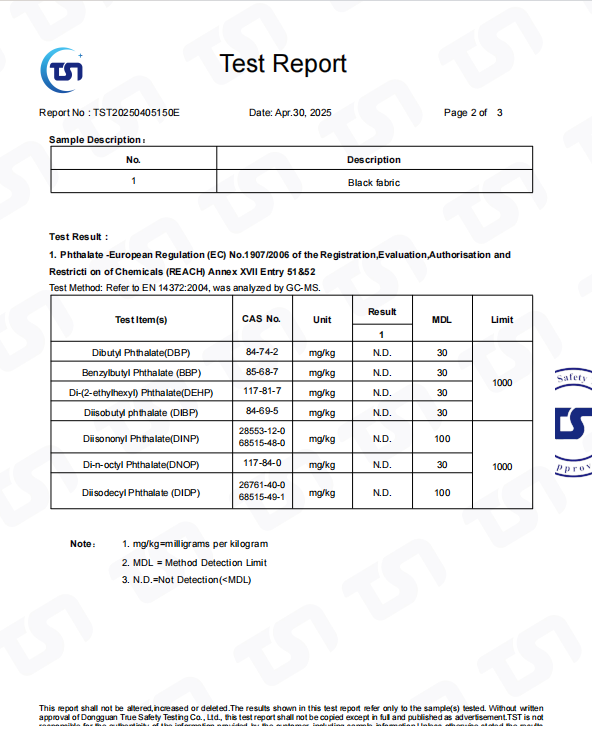
Decision: Construction changes may require revalidation.RoHS Sample Evidence
Purpose: Existing third-party evidence for one submitted black fitness yoga leggings sample.
Method: Report TST20250405148E uses the methods stated by the laboratory.
Decision: Conclusion applies only to the tested sample.REACH Phthalates Evidence
Purpose: Existing third-party evidence for black fabric from the submitted fitness yoga leggings sample.
Method: Report TST20250405150E covers the stated REACH Annex XVII phthalates scope.
Decision: Reported Pass applies only to the tested sample.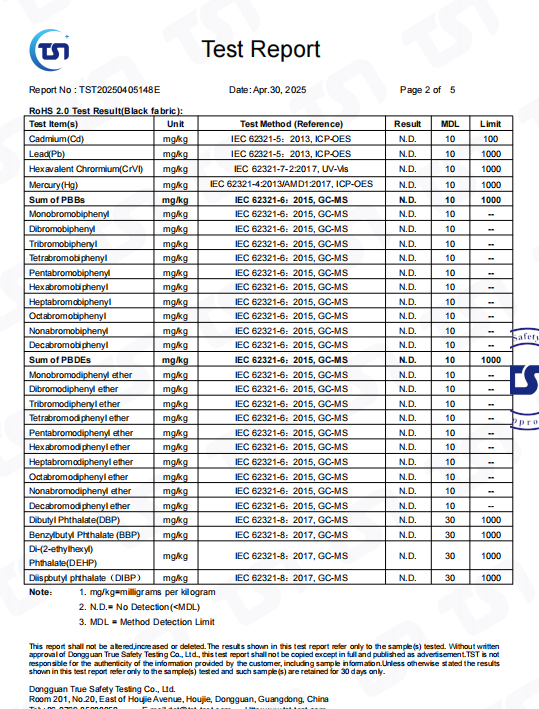
Capacity Must Remain Connected to Product Complexity and Quality Release
MOVEVOX separates normal managed capacity from theoretical machine maximums. Cut & Sew capacity changes with product complexity, sewing operations, SKU count, material and required delivery window.

Principal core sewing and garment-production equipment supporting Cut & Sew development and manufacturing.
Internal Cut & Sew stable-capacity reference under a suitable product mix and normal operating conditions.
Current normal combined managed monthly delivery capacity across MOVEVOX Seamless, Cut & Sew and controlled collaborative resources.
Six long-term collaborative facilities in Yiwu and two in Guangzhou support controlled capacity expansion.
Current quality-control resources support material, production and final release activities.
Core Yiwu operating area supporting production, development, quality, packing, storage and related functions.
Core Pattern Control With Managed Production Expansion
MOVEVOX uses its core factory and development functions to establish product standards, while controlled satellite facilities can support additional capacity for suitable approved programs.

Pattern & Sample Center
Core product-development and pattern personnel establish the technical basis before production is distributed.
Material Coordination
Fabric and critical components remain linked to the approved specification rather than being independently substituted by each facility.
Core Cut & Sew
The Yiwu core system supports Cut & Sew development, technical validation and production.
Satellite Capacity
MOVEVOX currently manages eight long-term collaborative facilities—six in Yiwu and two in Guangzhou.
Controlled Information
Production facilities receive the relevant released Tech Pack, pattern, Approved Sample and quality requirements for their assigned work.
Production Coordination
PMC and project-management functions monitor facility allocation, WIP and delivery progress.
QC Oversight
MOVEVOX retains quality responsibility rather than transferring final acceptance authority to independent factories.
One Customer Interface
The buyer works through one MOVEVOX responsibility window for development, production, QC and delivery.
Cut & Sew Programs Require Cross-Functional Ownership
MOVEVOX coordinates pattern, development, materials, production and quality through defined responsibilities rather than relying on one sales contact to make every technical decision.

Primary Order Manager
Customer and project coordination
The Primary Order Manager connects buyer decisions with development, material, production, QC, packing and shipment activities. Important accounts also use internal backup support.
Account / WIP / Coordination
Pattern & Development
Pattern, Fit and sample engineering
MOVEVOX’s development organization includes approximately two professional pattern-making roles within a broader product-development structure. They support pattern preparation, fit correction and production-version development.
Pattern / Fit / Sampling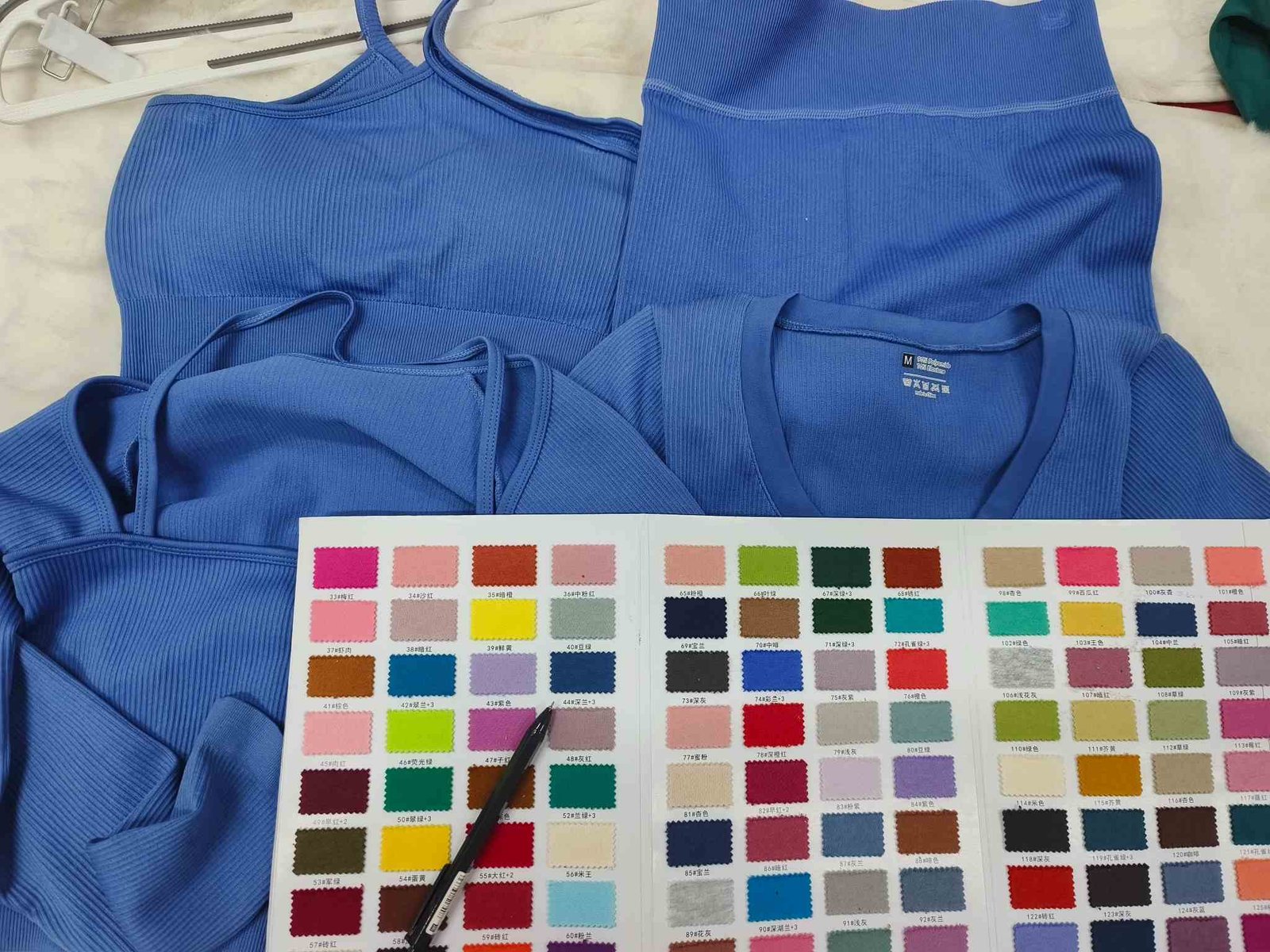
Material & Purchasing
Fabric and component execution
Purchasing personnel coordinate approved fabrics, trims, branding and supplier timing against the current project requirements.
Material / Supplier / ETA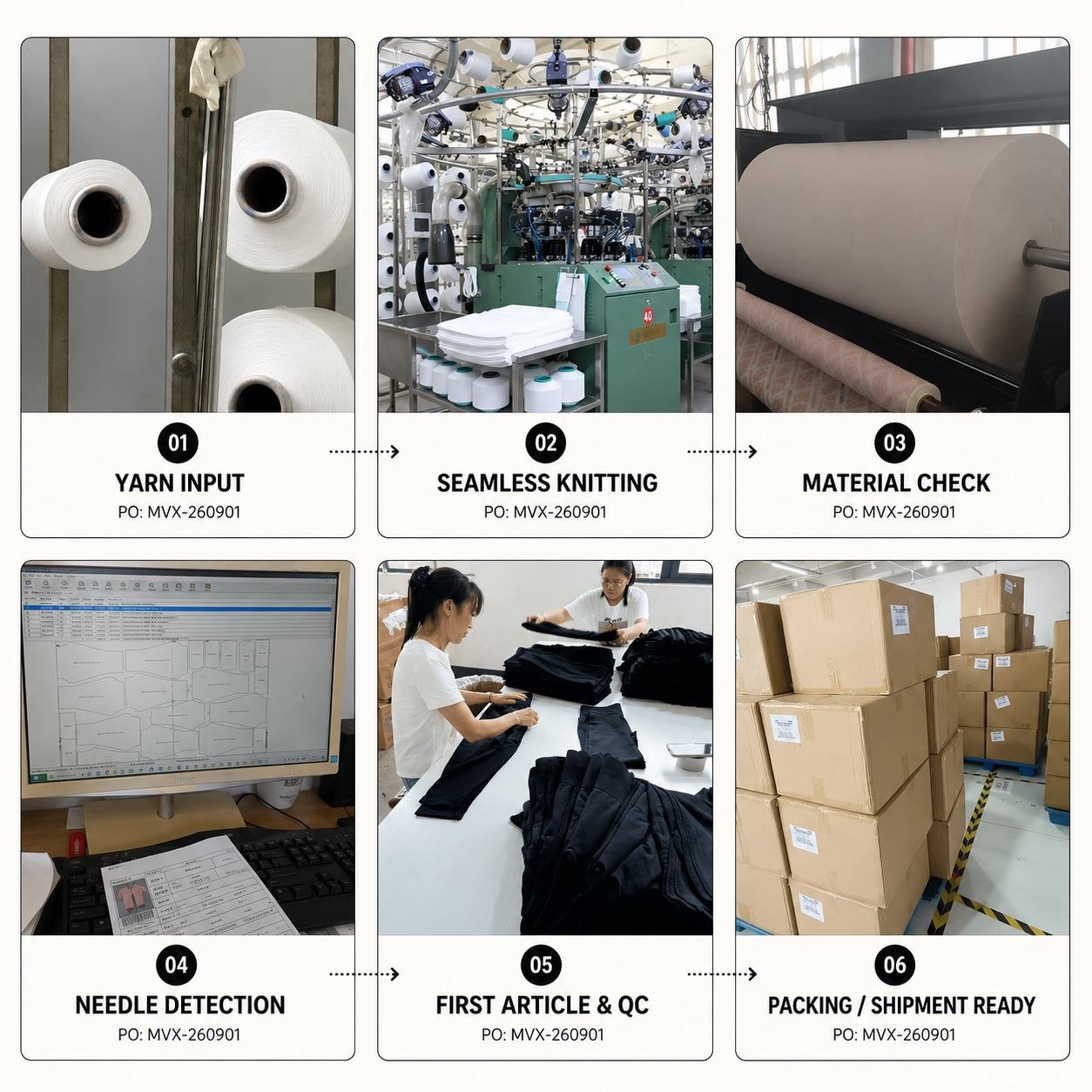
PMC & Production
Production planning and facility allocation
PMC connects order quantity, product complexity, material availability, capacity and required shipment window.
Planning / Capacity / WIP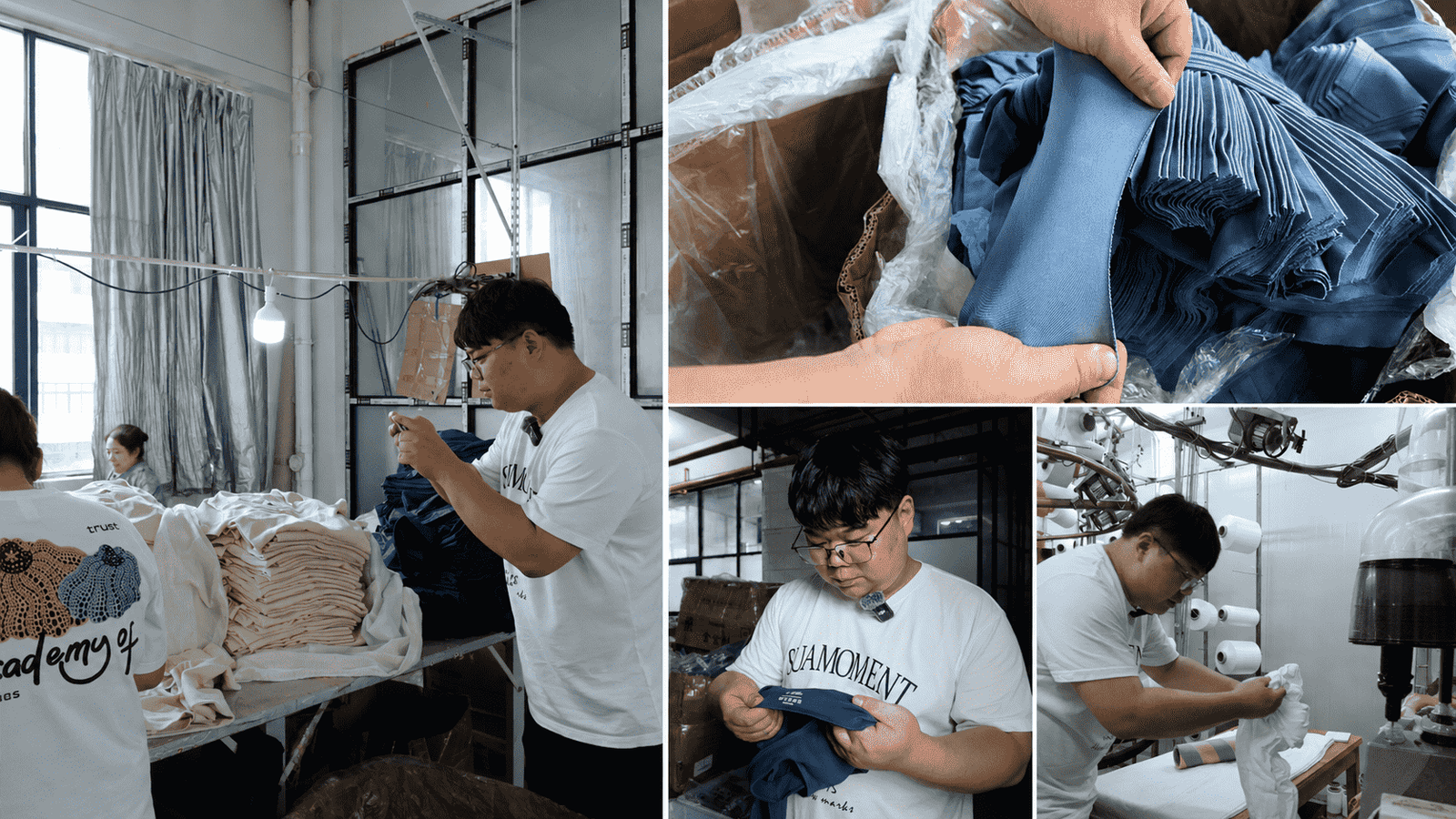
QA / QC
Inspection and release control
MOVEVOX currently has five QC personnel supporting incoming, production, finished-garment and shipment-quality activities.
Measurement / Workmanship / ReleaseVerify the Cut & Sew Process at the Manufacturing Site
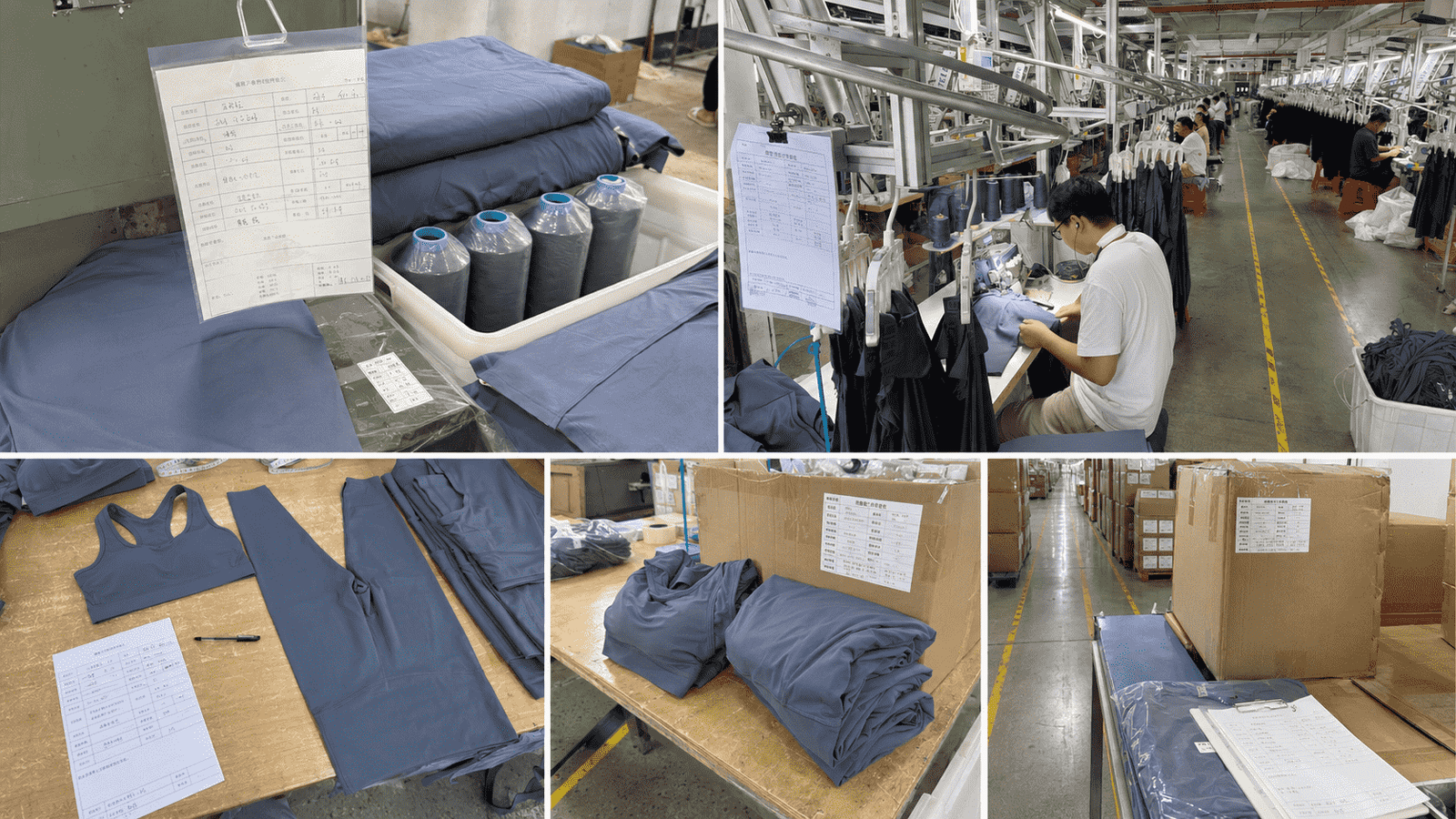
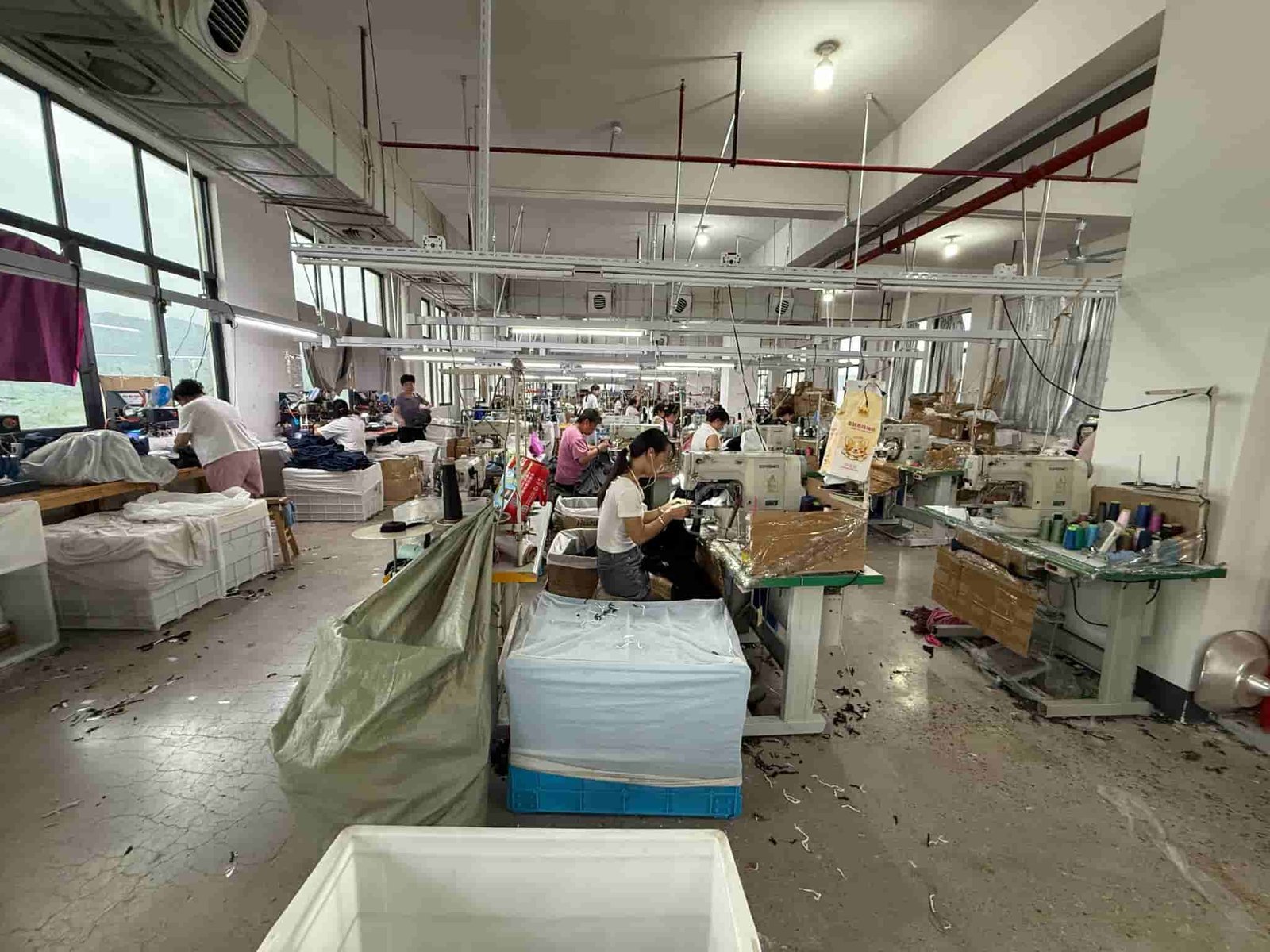
MOVEVOX supports on-site factory visits, live video review, technical audits, pre-production visits and production inspections so buyers can verify real processes rather than relying only on website descriptions.
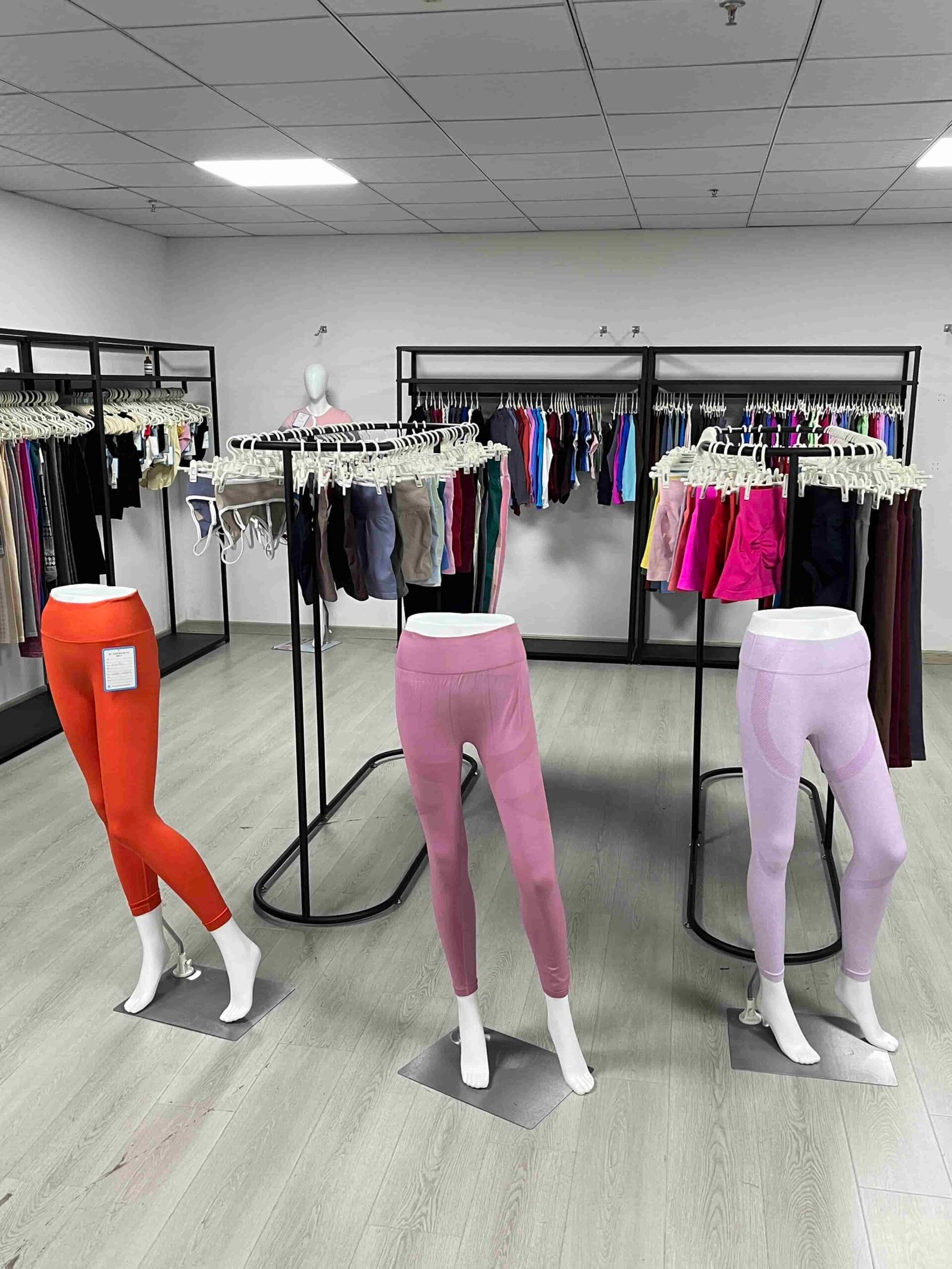
Pattern & Sample Area
Buyers can review where technical inputs become patterns, samples and revised development versions.
MOVEVOX pattern and activewear sample-development operations.

Fabric Preparation
Material storage and pre-production handling demonstrate how released fabrics and colors are separated before cutting.
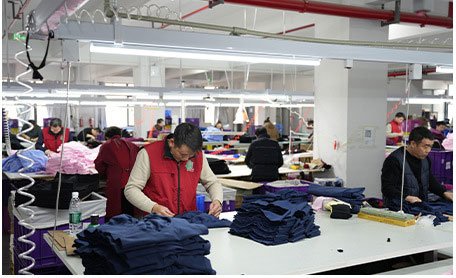
Approved Cut & Sew materials prepared for active production.
Cutting
Marker, spreading, cutting and bundle processes demonstrate how Pattern geometry enters bulk manufacturing.
Real activewear fabric cutting and bundle preparation.
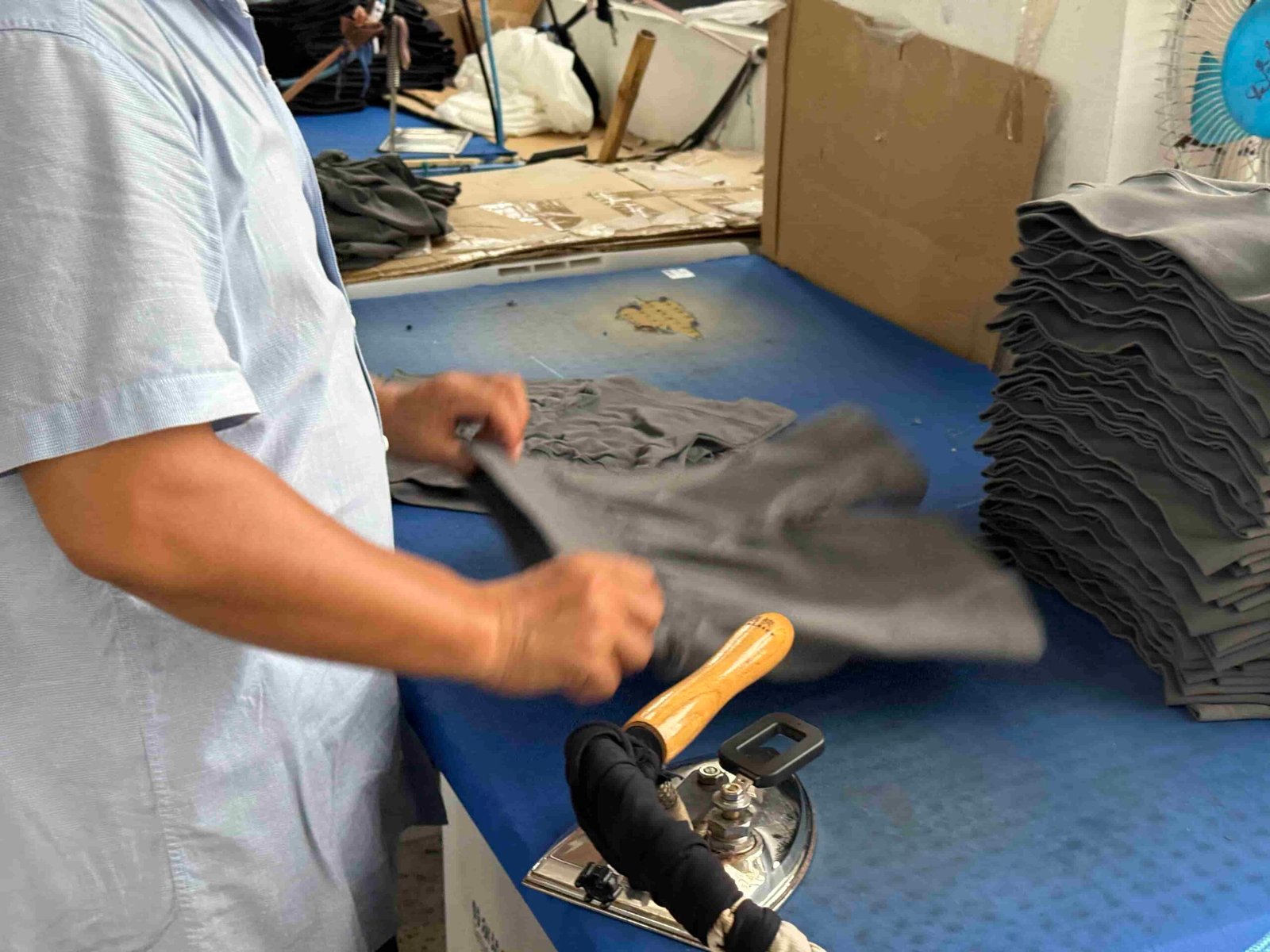
Sewing
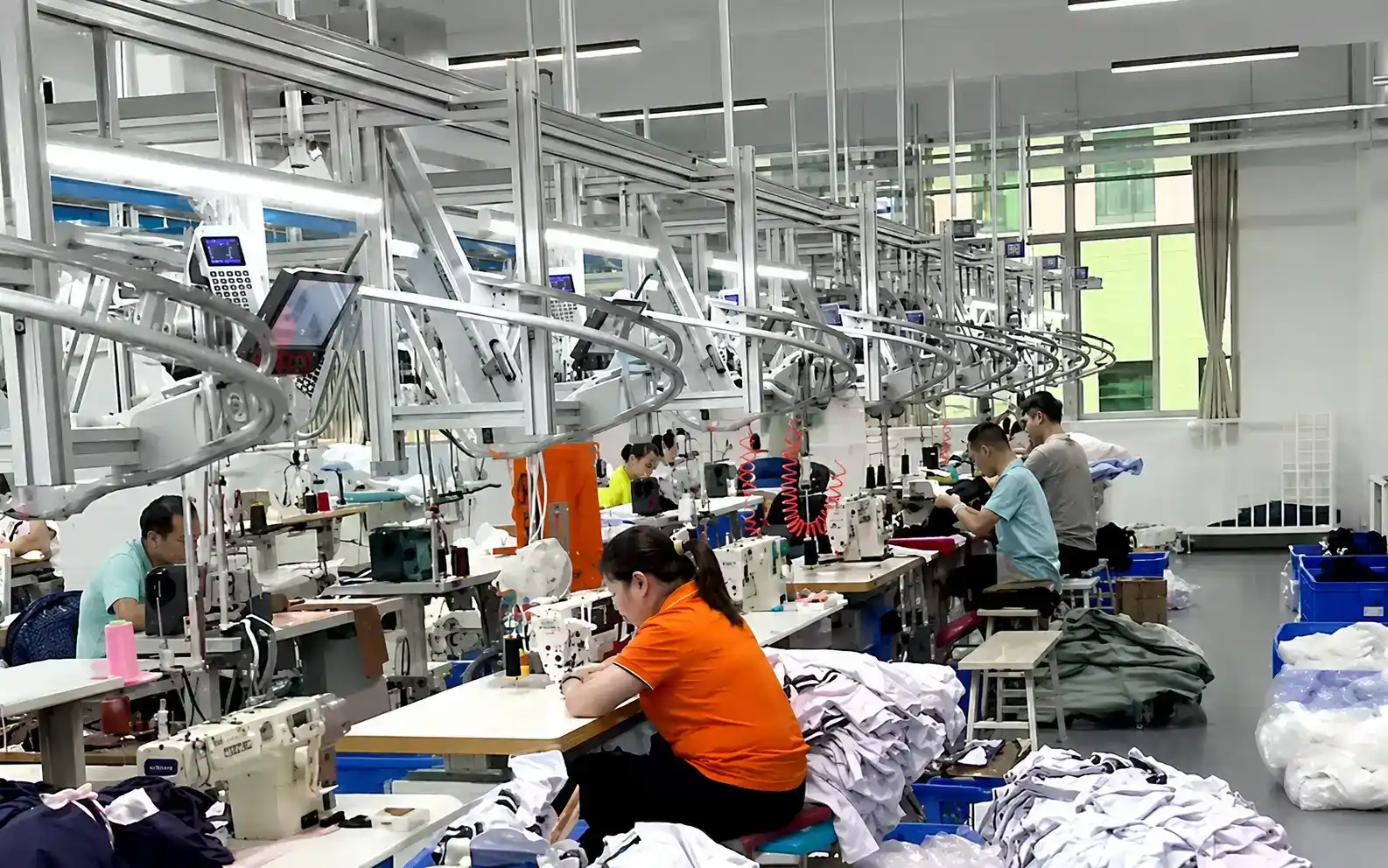
The production area demonstrates activewear assembly using the relevant sewing and garment equipment.
Cut & Sew activewear assembly under released technical requirements.

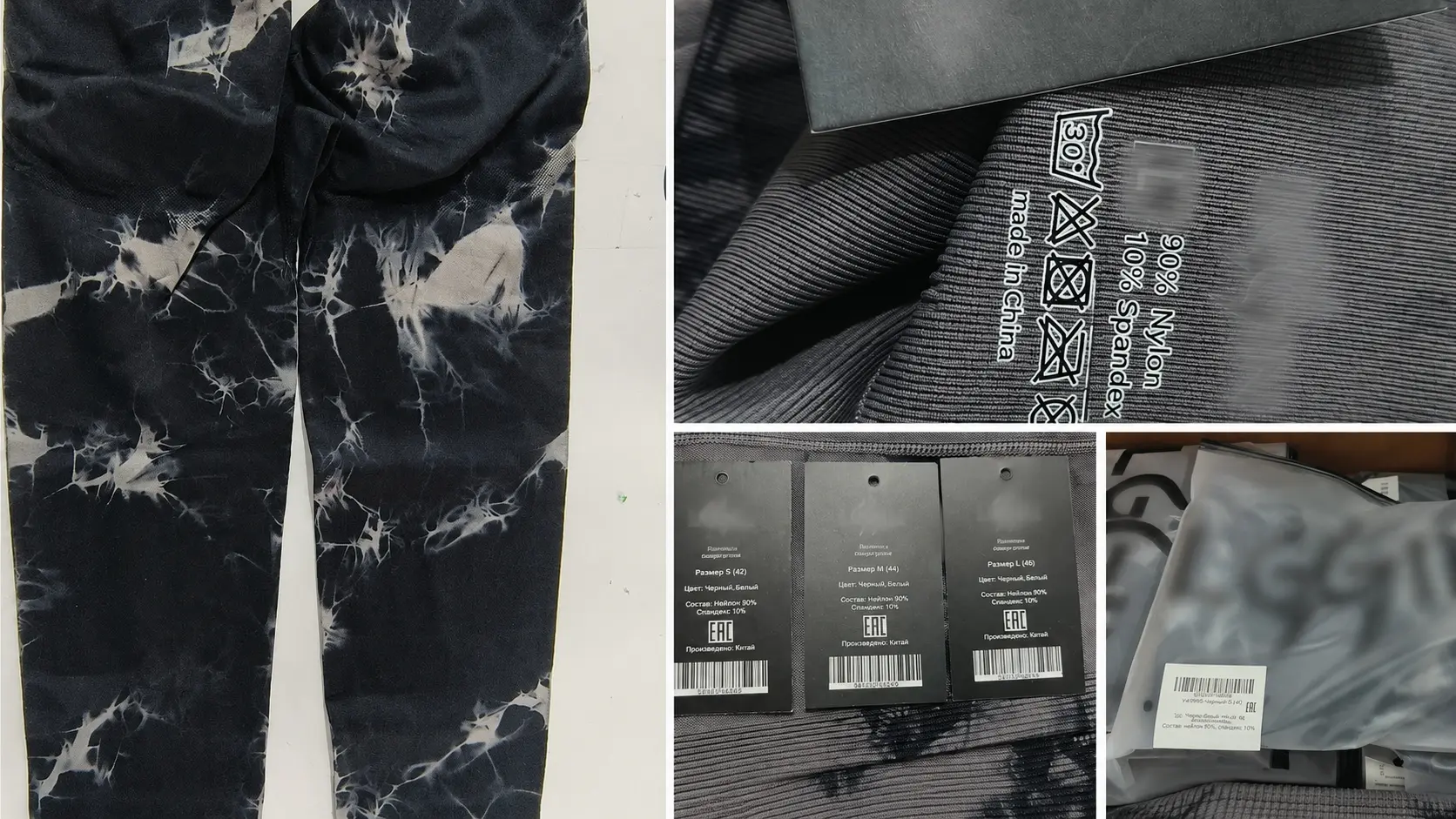
Stitching Processes
Overlock, coverstitch, flatlock and supporting operations can be reviewed where relevant to the product being audited.
Technical stitch execution on stretch activewear.
QC
Quality personnel inspect measurements, construction, workmanship and other project requirements.
MOVEVOX activewear quality inspection.
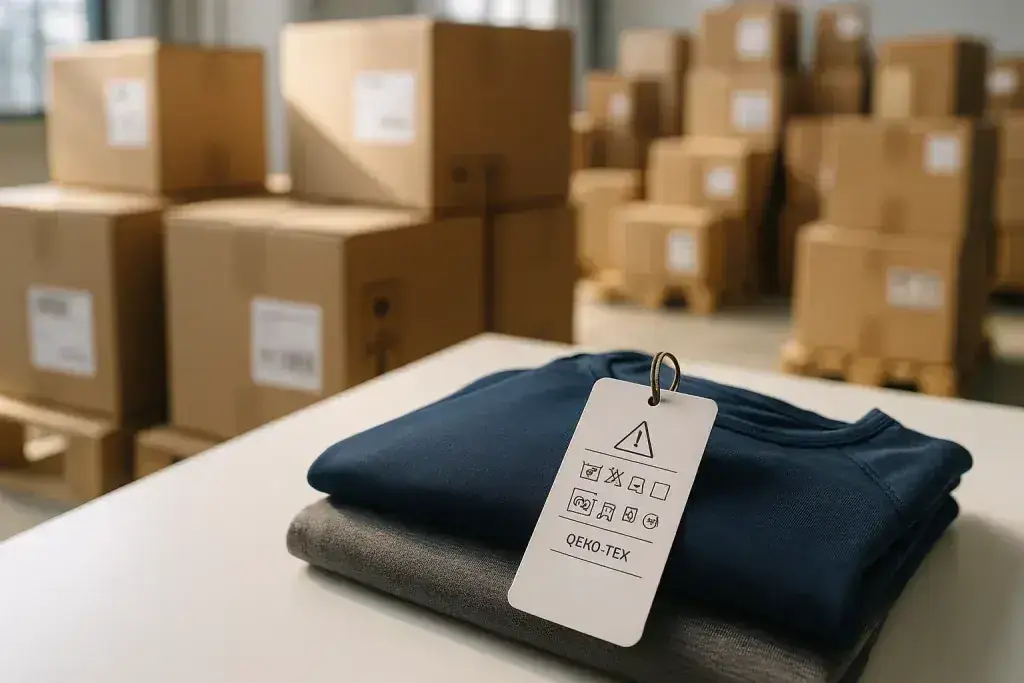
Finishing & Packing
The final stages connect garment identity with labels, barcodes, packaging, cartons and shipment information.
Finished Cut & Sew activewear prepared for shipment.
A Real Tech-Pack-Led Development and Repeat Production Project
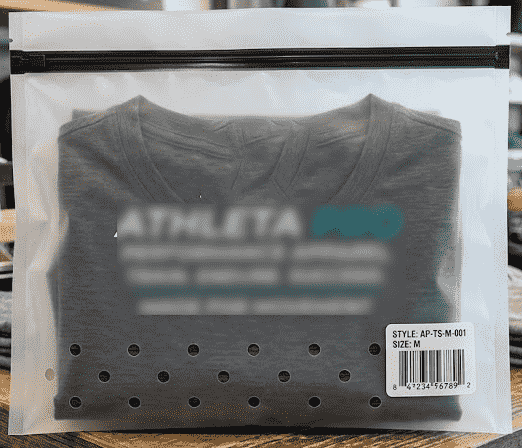
This anonymized U.S. activewear case demonstrates MOVEVOX’s development, revision, testing-sample, packaging and repeat-production discipline. The available case evidence does not confirm that every style in the project used Cut & Sew, so it should not be presented as a pure Cut & Sew case.
Customer Background
The customer is a U.S.-based fitness content creator with an established audience and activewear business. Her range includes leggings, shorts, sports bras, tank tops, sets and one-piece fitness products.
Initial Development
The buyer supplied her own Tech Pack. MOVEVOX reviewed the product requirements and prepared the first sample.
Sample Revision
After physical review, the customer identified details that did not fully meet the intended wearing experience. MOVEVOX incorporated the requested changes into a second sample version.
Practical Validation
After the second version was substantially accepted, approximately 5–10 additional samples were produced for practical use testing before the commercial bulk decision.
Commercial Handover
The project moved into bulk production together with customized logos, care information, labels, packaging and product-identification requirements.
Packing Control
Different colors and sizes used different QR information. The packaging stage therefore required additional confirmation to reduce mismatching between garment and identification.
Approximate cooperation period recorded when the source case was documented.
Typical documented order quantity.
Recorded repeat-purchase rhythm.
Additional samples were used before bulk commitment.
Customer quote: 需要真实素材替换 — no verified publishable direct English testimonial is currently available.