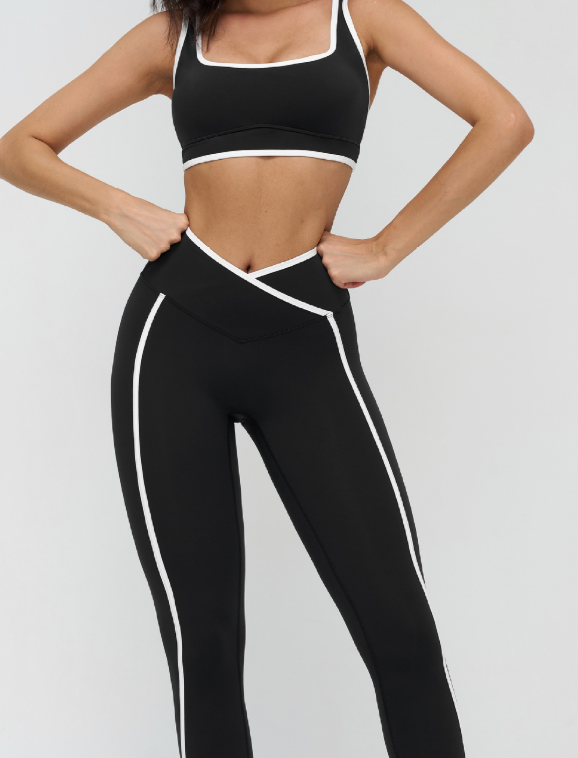
Crossover Waist Leggings Manufacturer for Private Label Activewear Brands
MOVEVOX supports established activewear brands developing crossover-waist leggings through controlled product development, seamless and cut-and-sew manufacturing, fit validation, private-label execution, and bulk quality management. Projects can start from a complete Tech Pack, a legally usable reference sample, or a clearly defined concept, with approved requirements converted into repeatable production standards.
- Seamless and cut-and-sew routes reviewed against your product structure.
- Standard samples typically take 5–10 working days after details are confirmed.
- Approved specifications remain the reference from development through bulk quality control.
Explore the broader MOVEVOX leggings manufacturing capability.
Built for Established Activewear Sourcing Programs
MOVEVOX supports different procurement structures, with the strongest fit among buyers that need formal development, repeatable quality standards, controlled production, and a path from initial validation to repeat orders.
Established Activewear Brands
Brands with established leggings, yoga, gym, Pilates, or athleisure programs normally evaluate a supplier across product development, fit, quality, production capacity, compliance evidence, delivery, and supplier transparency. MOVEVOX can work from formal Tech Packs and approved standards, develop samples, maintain controlled versions, and manage both seamless and cut-and-sew production.
- Formal Tech Pack review before sampling and commercial commitment.
- Approved sample standards carried into controlled bulk production.
- Repeat-order capability across colors, sizes, and multiple SKUs.
- Factory, quality, production-site, and testing information that can be verified.
Growing DTC Brands
Growing DTC activewear brands often understand their consumer and product direction but need stronger manufacturing discipline as order volumes and SKU counts increase. MOVEVOX can support development from a Tech Pack, physical reference, sketch, image, or defined concept, then move through sampling, revision, approval, production, quality control, branding, and packaging.
- Development support without losing control of brand direction.
- Flexible entry combined with a credible scale-up production path.
- Private-label details coordinated with garment development.
- Clear communication when fit, material, or specifications require revision.
Retail Programs
Retailers and private-label programs frequently need a supplier to execute an already defined commercial assortment rather than create an independent consumer concept. Product consistency, SKU mapping, labeling, packaging, barcode accuracy, production scheduling, and delivery discipline therefore become major evaluation points.
- Consistent product specifications across commercial order quantities.
- Accurate label, barcode, packaging, and SKU execution.
- Defined production scheduling and quality-release responsibilities.
- Ability to support repeat orders after market validation.
Importers and Distributors
Importers and distributors may require a wider assortment, multiple product structures, and a supplier capable of coordinating different manufacturing routes without creating multiple independent sourcing interfaces. MOVEVOX combines seamless and cut-and-sew capabilities and can coordinate materials, branding, quality, packaging, and shipment execution.
- Multiple activewear structures under one managed supplier interface.
- Clear MOQ, material, customization, and production-site boundaries.
- Repeat-order support across different products and commercial markets.
- Documented responsibility for quality, packing, and shipment release.
How Crossover Waistband Structure Is Engineered
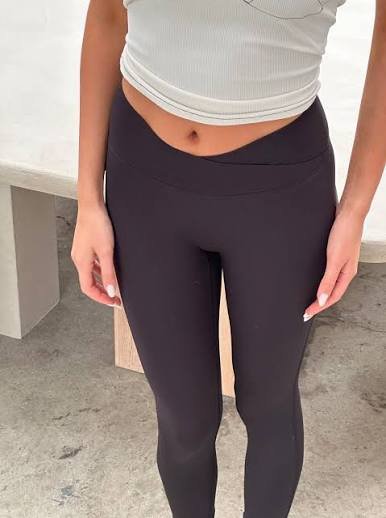
A crossover waistband is not defined only by the visible V shape. Its performance depends on waistband height, circumference, rise, waist-to-hip relationship, fabric recovery, symmetry, and construction.
Do Not Treat the V Shape as an Isolated Detail
The crossover shape should not be adjusted independently. Changes to depth, angle, height, or overlap can also affect waistband pressure, rise, symmetry, hip transition, and movement fit.
This is why MOVEVOX reviews the waistband together with measurements, material behavior, construction, and sample fit.
Structure Comes Before Process Selection
MOVEVOX reviews crossover-waist development as a combined fit and manufacturing problem.
Engineered knitting zones can be used where the required waistband geometry and structure are technically suitable.
Shaped panels, layered waistbands, or structural joins can provide greater freedom for pattern-driven construction.
The final route depends on the Tech Pack, fit target, material, size range, and sample validation rather than waistband appearance alone.
Crossover Shape & Symmetry
The front overlap defines the visible crossover shape, but its depth and angle must be coordinated with waist measurements, front rise, material stretch, and intended waistband pressure.
Crossover geometry should remain visually balanced. Pattern, sewing, knitting structure, measurement control, and production handling all influence final symmetry.
Height, Upper Edge & Lower Transition
Increasing waistband height alone does not guarantee stability. Height must work with rise, waist-to-hip proportion, recovery, and intended location.
Upper circumference affects pressure, gaping, rolling, and stability. Excessive reduction can create marks, while insufficient hold can contribute to slippage.
The lower transition connects waist control with the hip area and should distribute stretch smoothly rather than create an unstable pressure change.
Front and Back Rise Must Work Together
Front rise influences crossover position, crotch placement, and front tension. It cannot be adjusted independently without checking overall fit and waistband location.
Back rise helps provide hip coverage and supports the rear waistband position. Insufficient capacity can pull the waistband downward during movement.
Fabric Recovery Supports Waistband Stability
High-stretch material must also recover after extension. Low recovery can contribute to waistband loosening, knee deformation, or dimensional change after repeated wear.
Where Crossover Waist Fit Can Fail
Fit failures often result from several variables acting together. The supplier therefore needs to control pattern, measurements, material behavior, sample approval, grading, and bulk inspection as one connected system.
| Problem | Commercial Impact | MOVEVOX Control Direction |
|---|---|---|
| Waistband Rolling The waistband folds or rolls during standing, sitting, squatting, or repeated movement. |
Rolling changes the intended silhouette and can create inconsistent consumer feedback even when nominal measurements appear acceptable. | Review waistband height, circumference, rise, fabric recovery, negative ease, and construction together during fit sampling. |
| Waist Slippage The waistband moves downward during activity and changes the designed waist position. |
Slippage can undermine functional confidence and create inconsistent feedback across different body types or sizes. | Check waist-to-hip relationship, rise, waistband circumference, material recovery, garment stretch, and dynamic fit before approval. |
| Uneven Crossover The crossover lines become unbalanced or the V point moves away from center. |
Small asymmetry is highly visible on a simple leggings front and may be interpreted as uncontrolled workmanship. | Lock the approved pattern or knitting structure, define measurable reference points, and inspect crossover alignment in production. |
| Excess Waist Pressure The waistband holds but creates excessive pressure, visible marks, or local folding. |
The garment may meet nominal measurements while still failing the intended fit experience across the commercial size range. | Review waist reduction, material extension and recovery, waistband layers or knit density, hip capacity, rise, and movement results. |
| Size Grade Drift The base size fits correctly but larger or smaller sizes change crossover proportion or pressure. |
A successful base-size sample can still lead to inconsistent commercial sizing and increased returns after launch. | Separate base-size approval from grading validation and confirm size-set measurements before releasing the complete range. |
Relevant MOVEVOX Facts for Leggings Programs
These figures describe the current MOVEVOX manufacturing and development baseline most relevant to crossover-waist leggings sourcing. They are operating facts, not theoretical maximum claims.
Santoni Machines
Twenty-eight Italian Santoni seamless knitting machines operate within the core MOVEVOX manufacturing system for relevant seamless activewear programs.
Cut-and-Sew Machines
The core manufacturing system includes approximately twenty-four major sewing and garment-production machines supporting cut-and-sew activewear production.
Development Team
The regular product-development system includes approximately eight people covering design, pattern development, sample making, and development support.
QC Team
MOVEVOX currently has five QC personnel supporting production inspection, garment checks, and the quality-control process.
Working Days
Standard sample development normally takes approximately five to ten working days after all necessary development details are confirmed.
Managed Monthly Capacity
Current normal combined managed delivery capacity is approximately 150,000–200,000 finished pieces per month across the controlled manufacturing network.
Figures reflect current operating baselines and defined management scope, not theoretical maximum machine output.
Crossover Leggings Options for Different Brand Briefs
Crossover waist is one design direction within a larger leggings development system. MOVEVOX can evaluate waistband, front construction, pockets, surface, compression, length, and manufacturing route together.
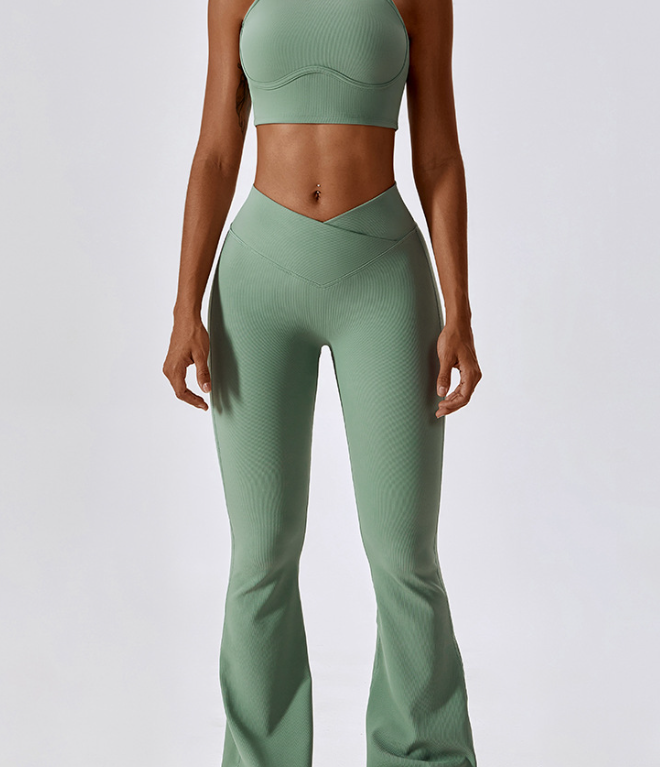
Crossover Waist
A V-shaped overlapping waistband can be developed through cut-and-sew construction or an appropriate engineered seamless route, with fit and geometry validated through sampling.
V Waist Fit Custom

High Waist
High-waisted leggings can use different waistband heights and structures. Stability depends on waist-to-hip proportion, rise, material recovery, and the final approved fit.
High Waist Support Fit
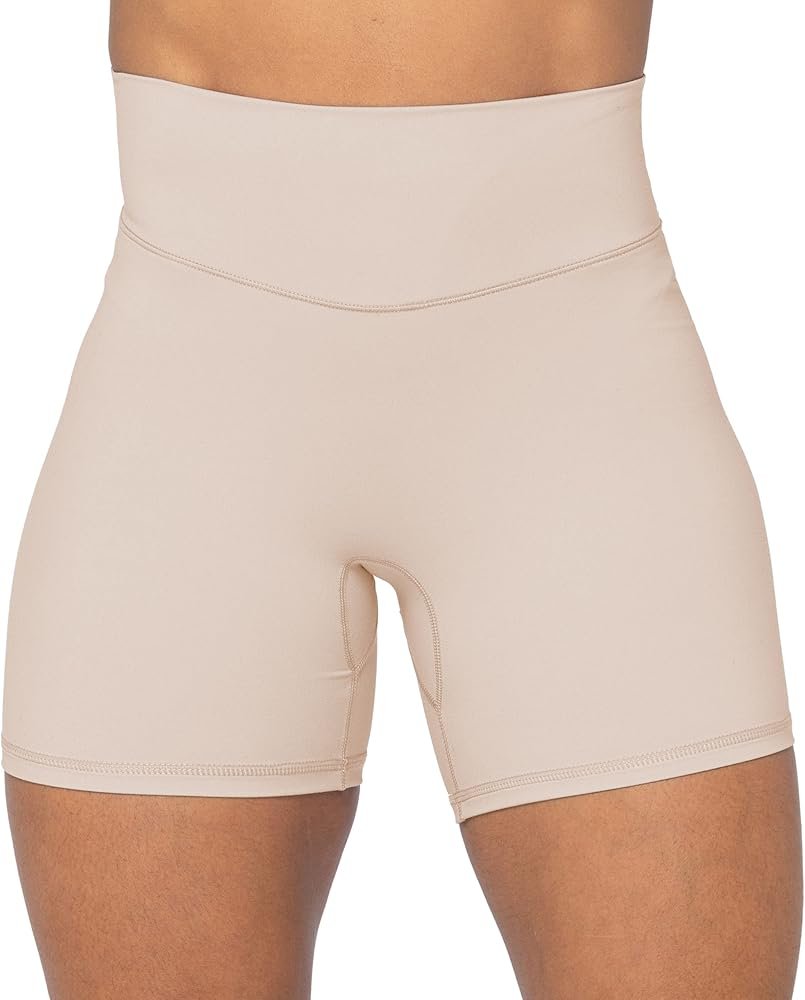
No Front Seam
No-front-seam structures remove the conventional front seam but still require careful crotch capacity, rise, stretch, opacity, and pattern or knitting engineering.
Clean Front Fit Structure
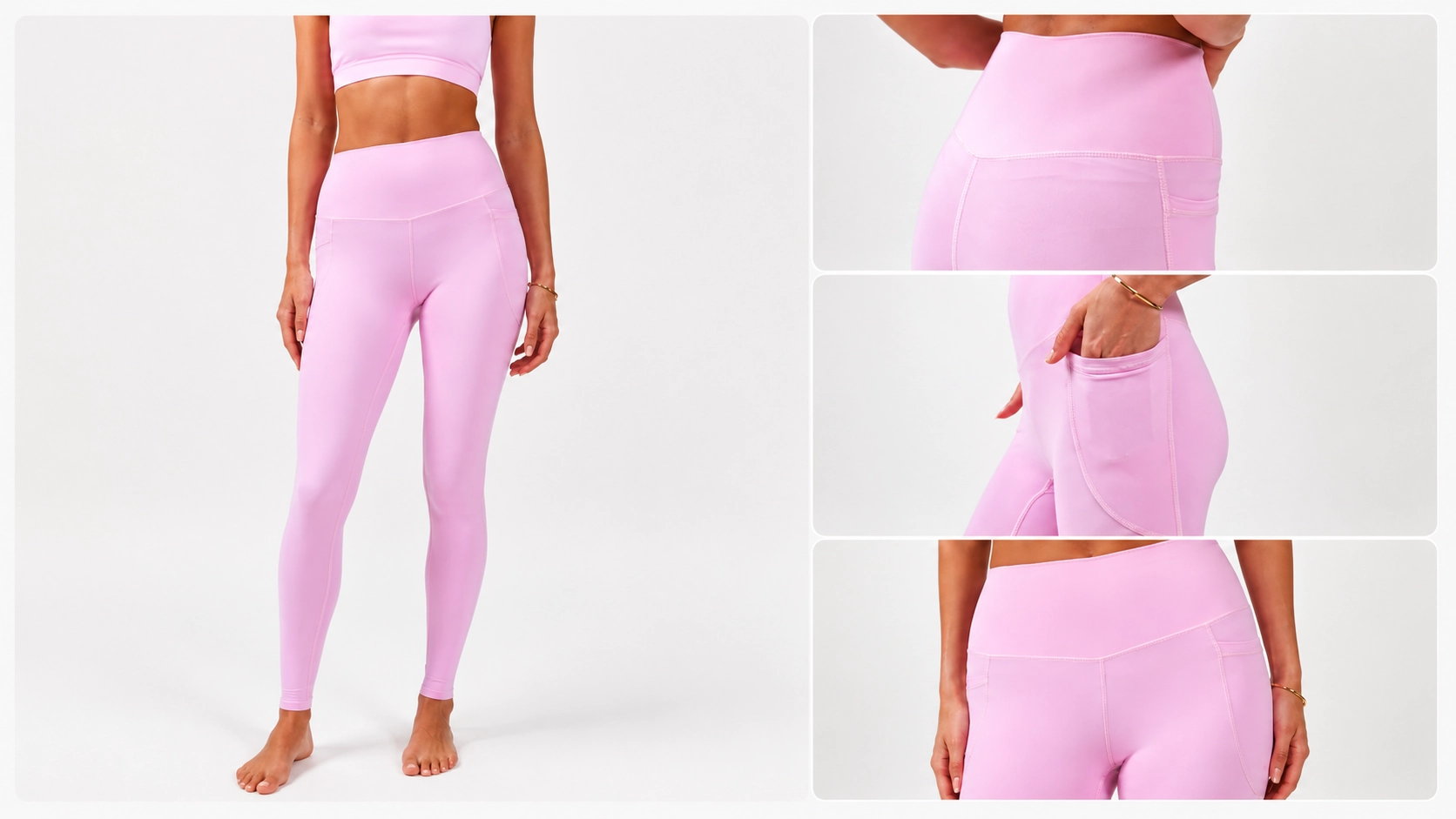
Glute Contour
Glute-shaping directions can be created through pattern lines, seam placement, knit structure, or other approved design elements depending on the target appearance.
Contour Pattern Seamless
Side Pocket
Side-pocket leggings are generally suited to cut-and-sew development where pocket size, opening, panel placement, seam strength, and movement stability can be engineered.
Pocket Cut-Sew Utility
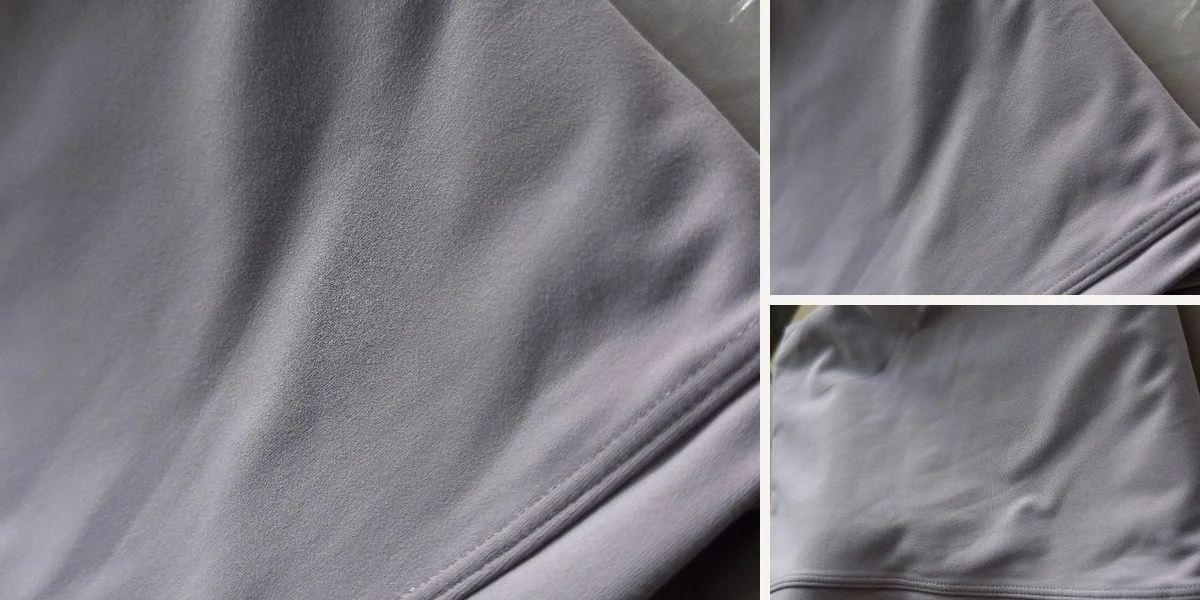
Brushed Surface
Brushed materials can provide a softer and warmer hand feel, but surface finishing, pilling risk, recovery, opacity, and wash behavior should be reviewed.
Brushed Soft Fabric
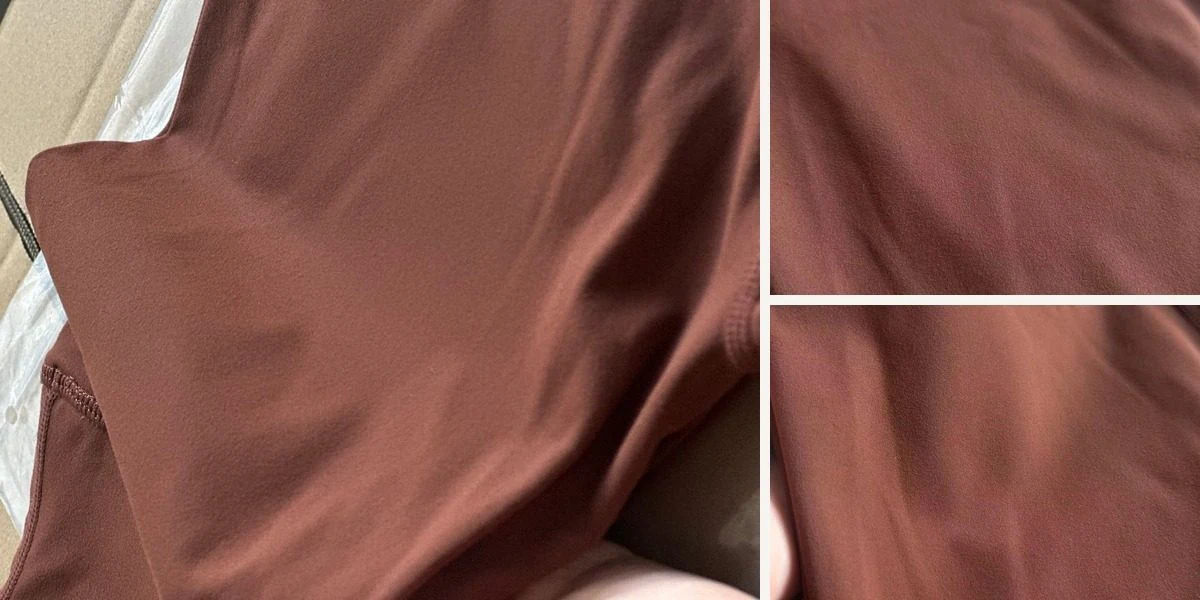
Naked Feel
Naked-feel directions normally prioritize a smooth, light, close-to-body wearing experience while still balancing stretch, recovery, opacity, GSM, and intended training intensity.
Smooth Light Stretch
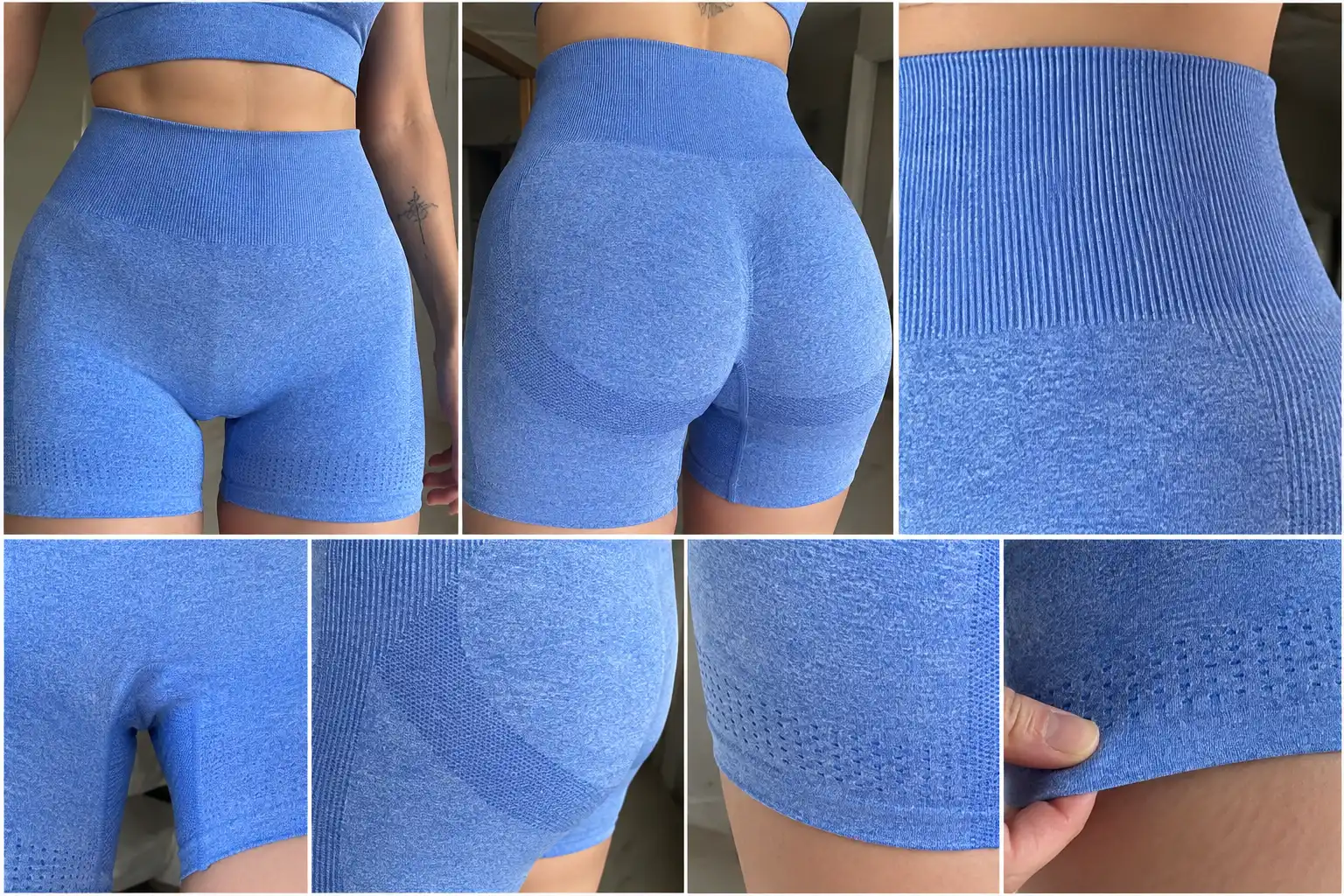
Seamless Texture
Santoni seamless knitting can support rib, texture, mesh, jacquard, and localized structure where technically suitable and validated through development.
Santoni Texture SeamlessFrom Product Brief to Bulk-Ready Specification
MOVEVOX treats development as a controlled conversion from customer intent into manufacturing specifications. Each stage should reduce uncertainty, create an approved output, and prepare the next step.
Project Brief
Review product, market, fit direction, customization scope, quantity, timing, and available technical inputs before development starts.
Technical Review
Review structure, measurements, material, construction, logo, labels, packaging, MOQ, timing, and known development risks.
Material Direction
Review fabric or yarn, color, stretch, recovery, GSM, hand feel, opacity, and manufacturing-route requirements.
Pattern / Program
Cut-and-sew projects move into pattern preparation, while seamless projects require the appropriate knitting program and structure.
Development Sample
The first physical version is reviewed for measurements, structure, material, appearance, and basic fit before formal approval.
Fit Revision
Customer comments and fit findings are converted into defined pattern, measurement, fabric, program, or construction changes.
Approval Freeze
Final measurements, material, construction, color, branding, labels, packaging, and sample status are written back into the production reference set.
Bulk Handover
Production receives the current approved files and sample references, followed by pre-production review and first-article verification.
*Standard sample timing begins after the required development information and key details are confirmed.
Information That Makes Technical Review More Accurate
A complete Tech Pack gives the clearest starting point, but MOVEVOX can also review legally usable reference samples, sketches, images, or defined concepts. These inputs reduce assumptions and improve fit, cost, MOQ, timing, and manufacturing decisions.
Flat Sketch
Show front, back, and relevant detail views. For crossover leggings, include intended waistband geometry, seam or panel lines, pocket placement, and other visible construction details.
Measurement Chart
Provide POM definitions, base-size measurements, tolerances where available, and grading requirements, especially waist, hip, rise, inseam, total length, and waist height.
Waistband Detail
Show crossover depth, angle, waistband height, intended overlap, internal construction, elastic requirements where applicable, and desired front and back appearance.
Fabric Specification
Provide composition, GSM, stretch direction, recovery expectations, hand feel, finish, color, supplier information, or physical swatch where already defined.
Color Standard
Pantone references or an approved physical standard should be supplied where color matching is required. Material and dye-lot conditions may influence MOQ and timing.
Logo Artwork
Provide vector artwork, dimensions, location, color, and intended process. High-stretch areas should be reviewed for process compatibility before production.
Label Details
Define main label, care label, size label, woven label, country-of-origin information, placement, and buyer-specific compliance language.
Packaging Specification
Define bags, barcode or SKU labels, hangtags, stickers, carton marks, carton quantities, and any special retail preparation requirements.
Testing Requirements
Provide market-specific, brand-specific, chemical, physical, material, or performance testing requirements early enough for sample and timing review.
Quantity and Launch
Provide target quantity, expected color and size breakdown, intended launch or cargo-ready date, and whether the order is a pilot or repeat program.
If the input package is incomplete, MOVEVOX can identify missing items during initial review. Missing technical information is not silently assumed where it could materially affect fit, cost, MOQ, quality, or timing.
Choosing Seamless or Cut-and-Sew for Crossover Leggings
Neither manufacturing route is automatically better. MOVEVOX reviews product structure, fit, materials, body-mapped zones, panels, pockets, size range, MOQ, and sample results before confirming the production method.
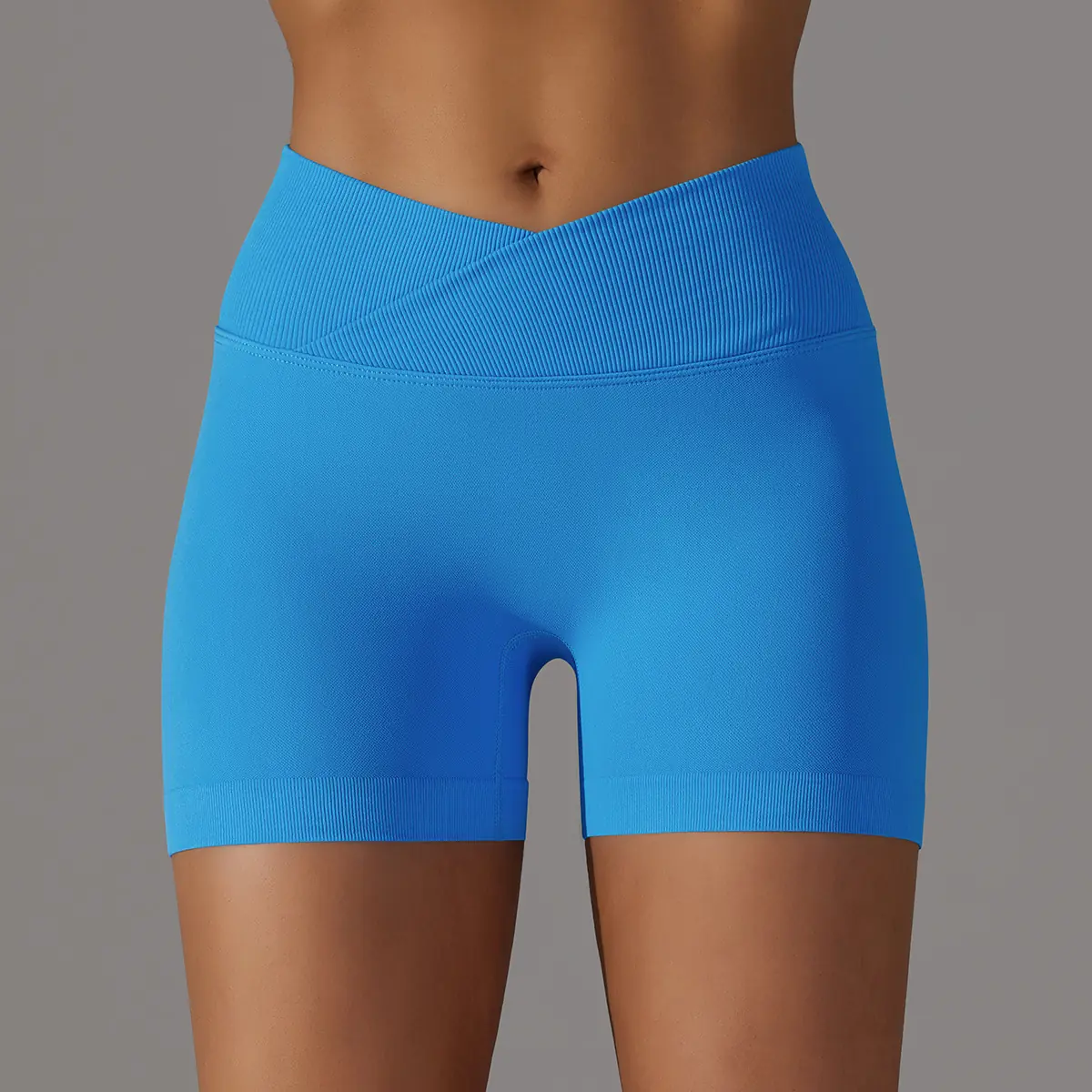
| Decision Area | Seamless Route | Cut-and-Sew Route | Buyer Consideration |
|---|---|---|---|
| Waistband structure | Engineered knit structure can integrate rib, density, texture, and localized support. | Patterned waistband panels can use layered or structural sewn construction. | Select according to required crossover geometry and fit behavior. |
| Body mapping | Suitable for engineered rib, mesh, jacquard, texture, and localized knit zones. | Functional shape comes primarily from pattern, fabric, seams, panels, and trims. | Determine whether zoning or shaped pattern construction drives the design. |
| Panels and pockets | More limited where complex additional components interrupt the knitted body. | Better suited to complex pockets, shaped panels, zippers, and mixed constructions. | Review the actual Tech Pack instead of choosing from appearance alone. |
| Material system | Yarn, elastane, knit density, machine settings, and finishing work together. | Fabric specification, direction, stretch, recovery, cutting, and sewing work together. | Material performance must be validated with the chosen route. |
| Fit engineering | Cylinder, knit structure, program version, yarn behavior, and size affect fit. | Pattern, grading, POM, negative ease, rise, and seam placement affect fit. | Both routes require physical sampling and approval. |
| Base custom MOQ | Current regular seamless custom MOQ is approximately 100 pieces per style. | Current regular cut-and-sew custom MOQ is approximately 150 pieces per style. | Custom color, fabric, logo, and packaging may create higher effective MOQs. |
| Scale-up | Bulk follows locked yarn, program, size, approved sample, and QC conditions. | Bulk follows approved pattern, BOM, fabric lot, Tech Pack, and sample references. | The production standard matters more than the route label. |
Cut-and-Sew Details That Control Waistband Execution
For cut-and-sew crossover leggings, the visible waistband depends on accurate patterns, fabric orientation, sewing construction, symmetry, and controlled assembly.

Waistband Panel Join
The crossover shape is created through approved panel geometry and assembly. Alignment, seam allowance, fabric tension, and left-right positioning must remain consistent with the approved pattern and sample.
Application: Front crossover waistband and waist-to-body assembly.
Control: Balanced tension, symmetry, and stable fit.
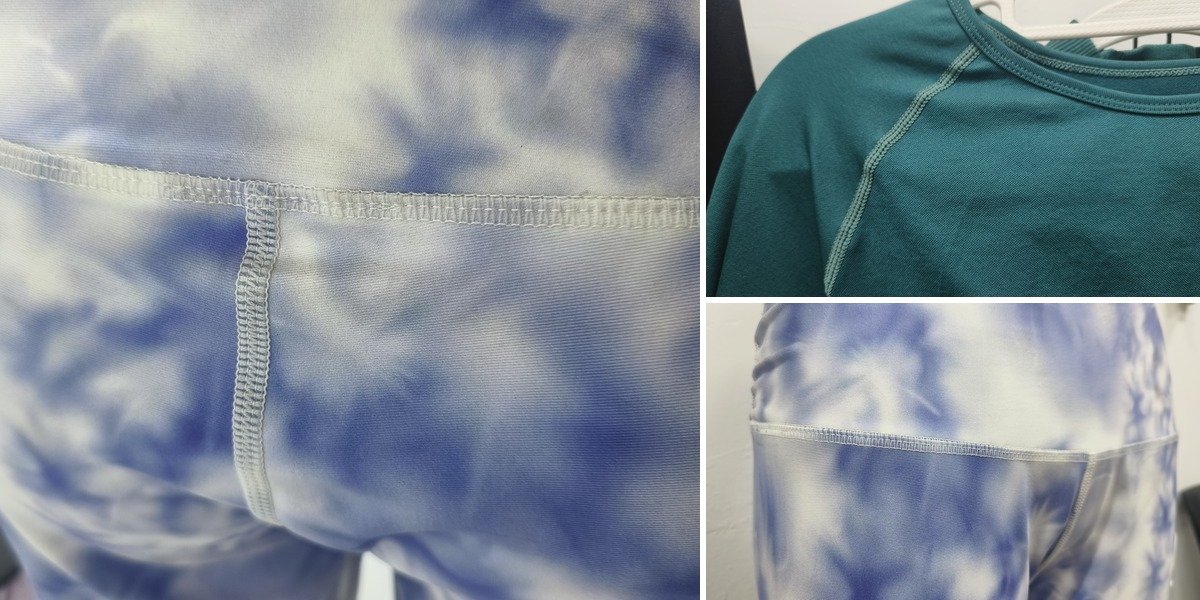
Flatlock Construction
Flatlock can be used in appropriate activewear seams where a flatter joining structure is required. Stitch condition, thread tension, alignment, and seam stretch should match the approved workmanship standard.
Application: Selected leggings seams requiring controlled stretch.
Control: Reduced bulk with consistent stitch formation.
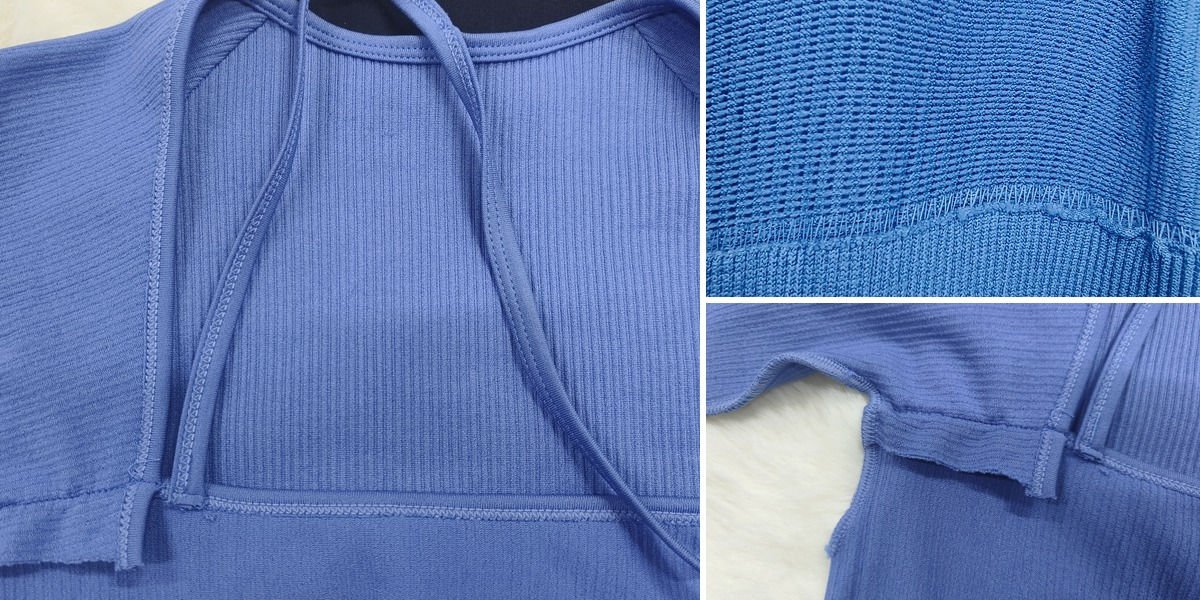
Overlock Seam
Overlock construction can join stretch fabric panels while controlling raw edges. Stitch density, thread condition, tension, seam allowance, and fabric handling affect the final seam appearance and strength.
Application: Internal joins and stretch-panel assembly.
Control: Secure edge control without puckering or skipped stitches.
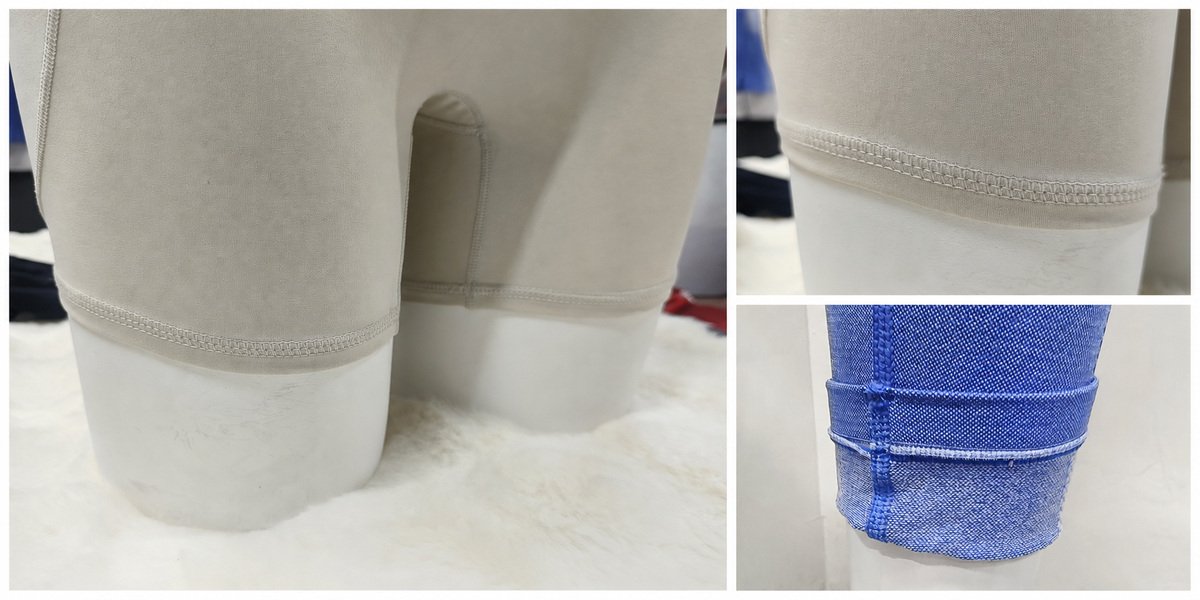
Coverstitch Finish
Coverstitch may be used where a stretch-compatible finished edge or top-finished construction is required. The result should maintain consistent spacing and avoid excessive waviness.
Application: Selected hems and finished stretch edges.
Control: Stable appearance and consistent stitch formation.
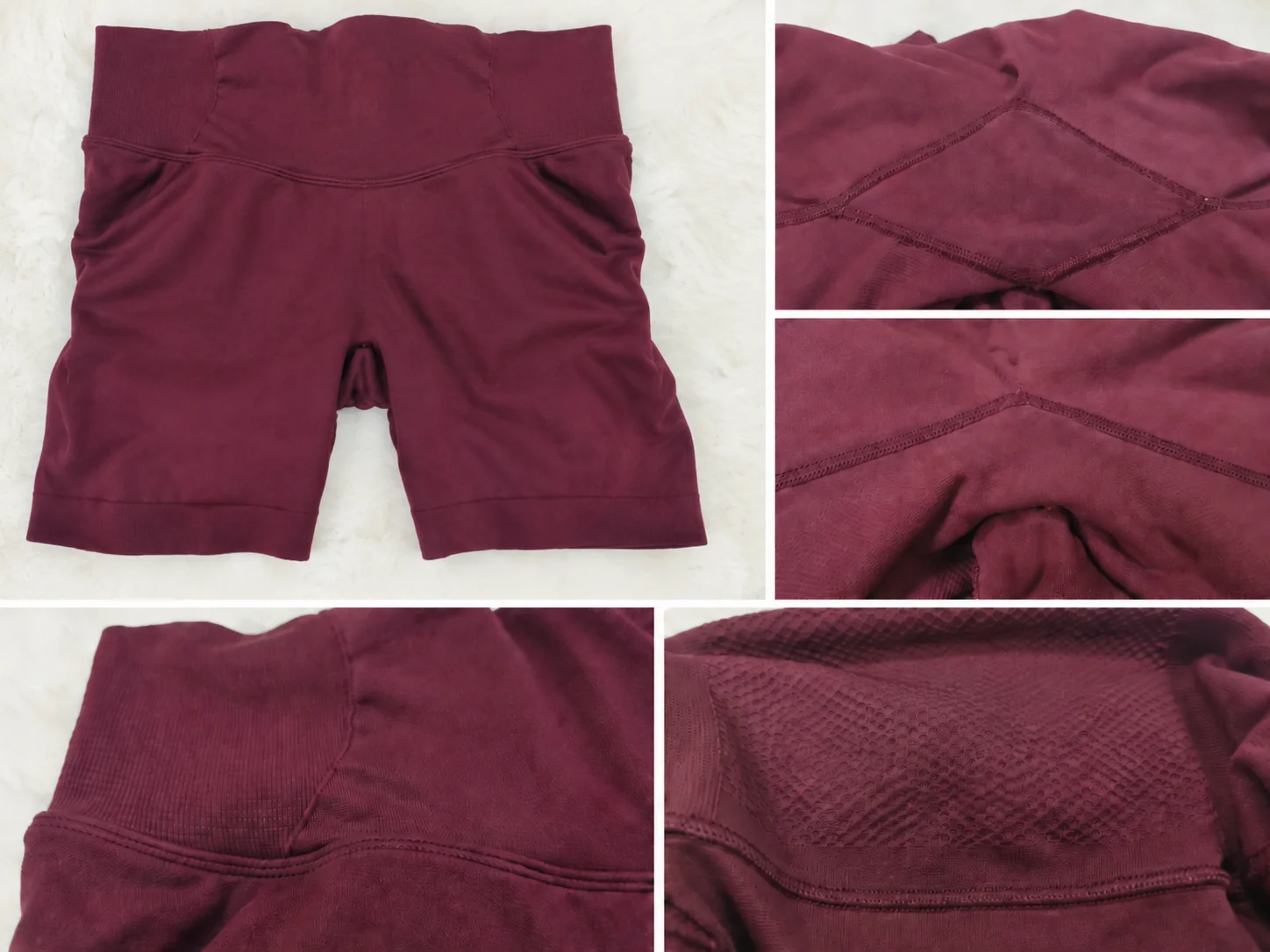
Gusset Assembly
Where a design uses a gusset, its geometry and assembly influence crotch capacity, movement, seam placement, and comfort. Alignment should remain consistent across production.
Application: Leggings crotch construction with a separate gusset.
Control: Accurate alignment and movement capacity.
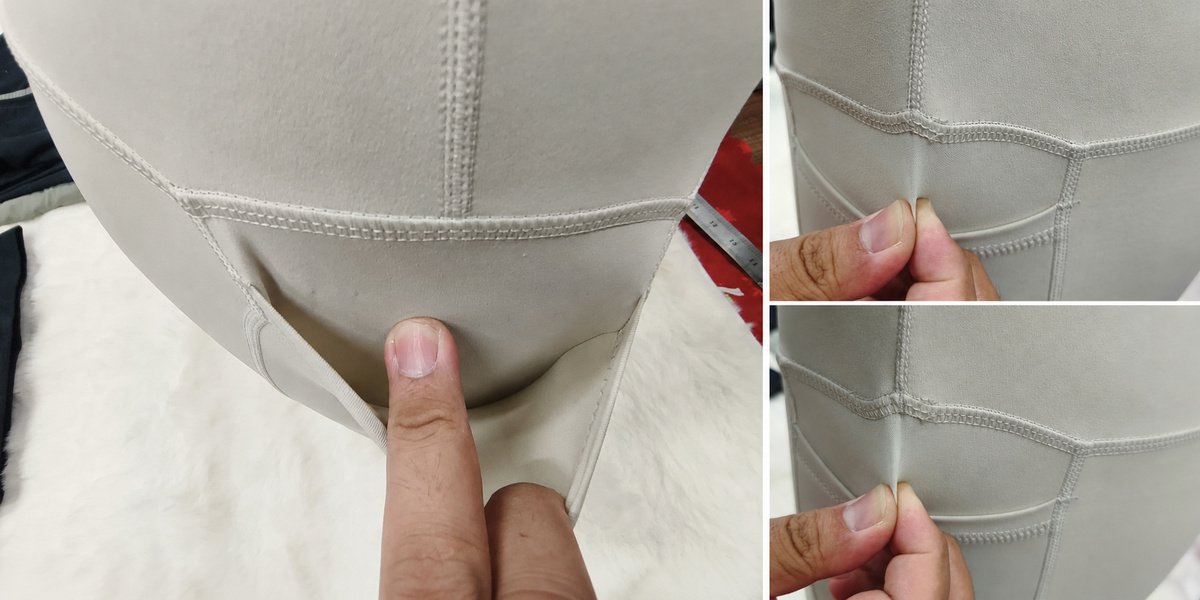
Structural Reinforcement
High-stress areas may require appropriate reinforcement based on the approved construction. The exact solution depends on style, fabric, seam type, and defined performance requirements.
Application: Selected stress points identified during development.
Control: Support durability without excessive stiffness or distortion.
Seamless Zones for Engineered Waistband Performance
Where a crossover or V-waist design is technically suitable for seamless production, waistband and body behavior can be engineered through yarn, knit structure, density, localized stretch, program settings, and finishing.
Seamless performance does not come from one yarn percentage or machine setting. Main yarn, elastane, knit structure, stitch density, machine tension, cylinder suitability, program version, finishing, and size interact.
MOVEVOX therefore uses trial knitting, measurement, structure review, fit checks, and an approved sample before bulk parameters are locked. The current core system includes 28 Italian Santoni seamless knitting machines.
Upper Waist Rib
A denser or rib-based upper-waist structure can contribute to hold and recovery. Final pressure still depends on yarn, elastane, body measurements, size, and program settings.
Front Waist Zone
The visual front-waist direction can be engineered only where the design is compatible with seamless construction. Trial knitting and fit validation determine practicality.
Lower Waist Support
The transition below the waistband should distribute stretch into the upper hip area without creating excessive density change, discomfort, or measurement instability.
Hip Transition
Knitting structure can change between waist and hip zones to manage expansion and body contour while maintaining approved dimensions after finishing.
Glute Zone
Texture, knit density, jacquard, or local structural variation can be introduced where specified, with each change assessed for stretch, appearance, fit, and repeatability.
Leg Structure
Leg zones can use different densities or visual structures where required, while the program must maintain size consistency, recovery, appearance, and construction compatibility.
Waist-to-Hip Fit Is a System, Not One Measurement
The waistband cannot be engineered independently from the hips, rise, material, and negative ease. MOVEVOX reviews these variables together because correcting one dimension can change pressure, coverage, or movement elsewhere.
Why Waist and Hip Measurements Must Be Reviewed Together
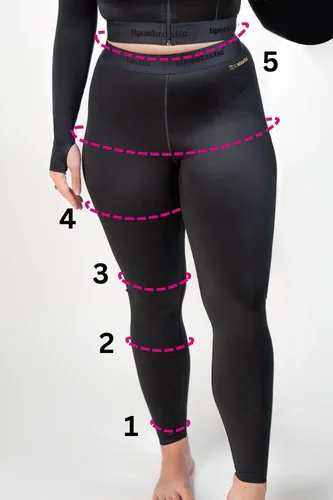
A crossover waistband can measure correctly on a table and still perform poorly on the body if the waist-to-hip relationship is not appropriate for the intended fit. Leggings are stretch garments, so garment measurements work together with target body measurements, fabric extension, fabric recovery, negative ease, front rise, back rise, and waistband construction.
A waist reduced too aggressively may create excessive pressure, visible marks, rolling, or a strong change in tension between waistband and hip. Insufficient hold may allow the waistband to move downward. Insufficient hip capacity can also pull the garment downward even when the waist itself appears correct.
- Target body waist and hip relationship.
- Garment waist, hip, rise, and waist-height POM.
- Material extension and recovery.
- Waistband construction and negative ease.
- Movement during squat, lunge, and leg raise.
Fit Approval Combines Measurements with Movement Testing
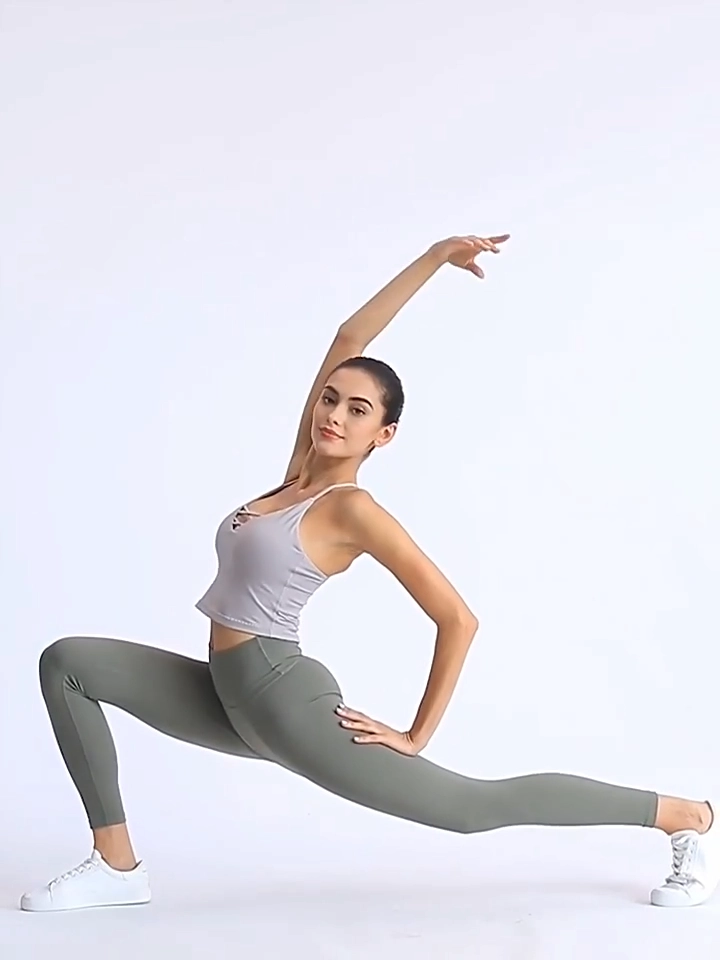
The first objective of fit sampling is to determine whether the approved base size works as a complete garment. MOVEVOX can review waist position, crossover point, hip coverage, crotch position, leg fit, opacity under stretch, and waistband behavior during movement.
Fit comments should then be converted into measurable changes rather than instructions such as “make it tighter.” Waistband slippage may relate to circumference, waist-to-hip difference, rise, fabric recovery, or construction. Back-waist gaping may relate to rear rise or shaping. Excess pressure may require a material or structural adjustment rather than another size reduction.
After the base size is approved, grading remains a separate control stage. Base-size approval does not automatically prove that crossover proportion and pressure will remain correct across the complete commercial size range.
Rise and Inseam Control More Than Garment Length
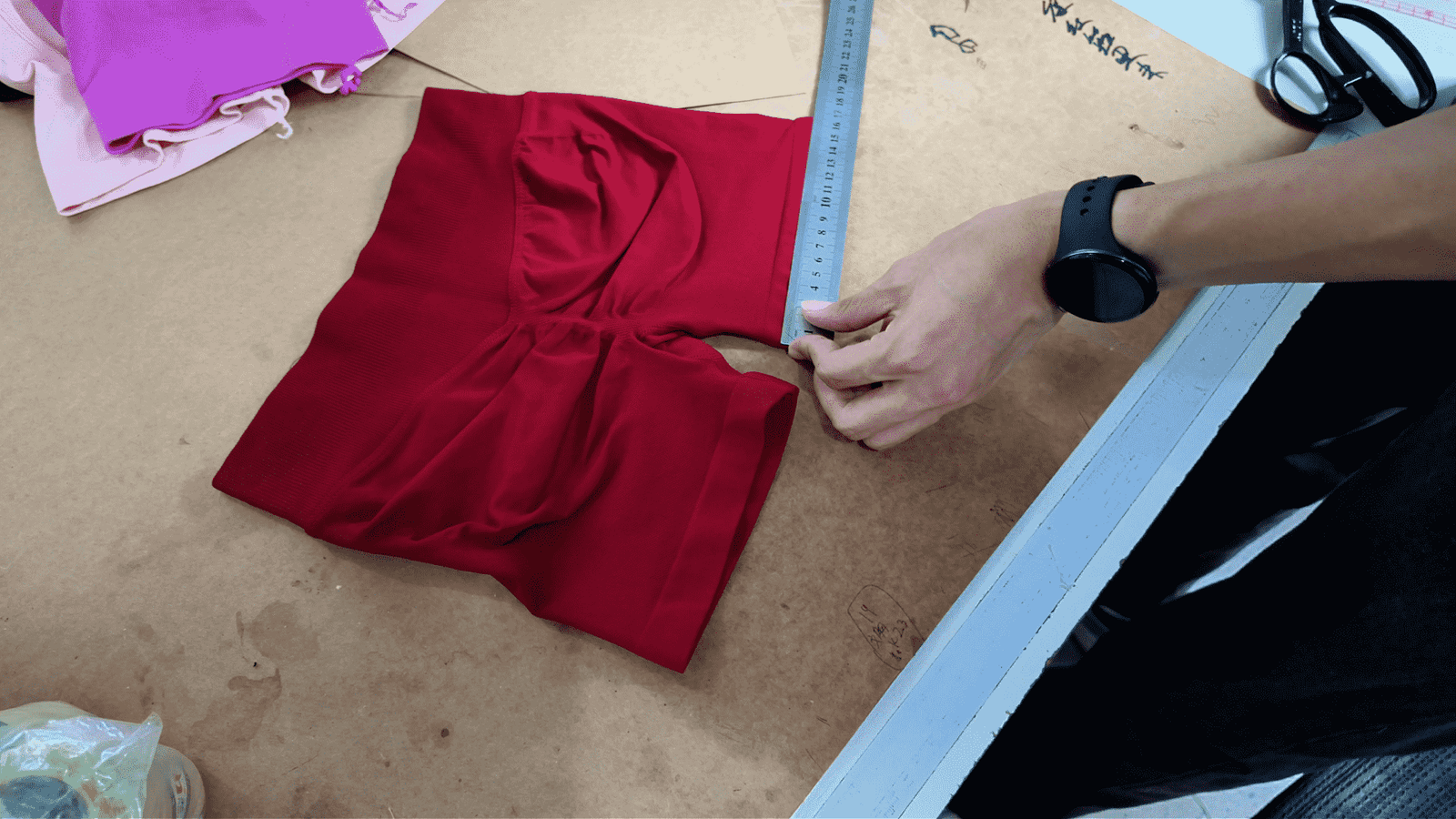
Front rise, back rise, crotch position, and inseam work together with waistband height and hip capacity. Changing one dimension can alter crossover position, coverage, comfort, and movement.
Front and Back Rise Control Where the Waistband Sits
Front and back rise are structural fit measurements rather than simple descriptions of whether a garment is “high waist.” In close-fitting leggings, rise determines the relationship among crotch, hips, waist, and the visible position of the crossover waistband.
If front rise is insufficient, the front body can experience excess tension or an uncomfortable crotch position. If back rise does not provide adequate capacity, the waistband can be pulled lower at the rear and hip coverage may change during squat or lunge.
- Check POM definitions before sampling.
- Compare actual sample measurements with approved specifications.
- Review hip coverage and waistband position from multiple views.
- Assess crotch placement during static fit and movement.
- Convert fit comments into measurable revisions.
Inseam Must Be Evaluated with Crotch Position
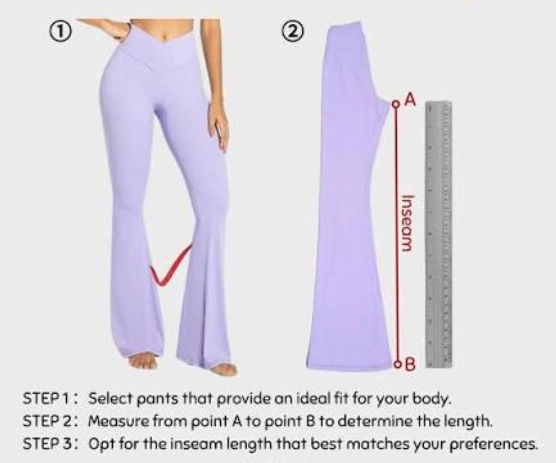
Inseam is often treated as the main length dimension for leggings, but its perceived result depends on where the crotch is positioned. Two garments can share the same nominal inseam while fitting differently because rise, crotch curve, hip capacity, or total length differs.
For crossover-waist leggings, a crotch position pulled downward can change both leg length and waistband stability. Pulling the garment upward to correct leg position may in turn alter intended waist placement.
MOVEVOX can review inseam together with front and back rise, crotch or gusset construction, total length, hip and upper-thigh measurements, target body structure, fit-model feedback, and movement results.
Common Fit Defects and How We Control Them
Fit-related failures may originate from measurements, pattern proportions, material elasticity, construction, grading, or production variation. The objective is to identify likely causes before applying corrective action.
| Defect | Likely Cause | Prevention | Inspection Point | Corrective Action |
|---|---|---|---|---|
| Waistband rolling | Waistband pressure, height, rise, recovery, or layer structure may not be balanced. | Review waist-to-hip fit, material behavior, structure, and movement during sampling. | Fit sample, movement review, approved POM, finished-garment visual check. | Identify the controlling variable, revise it, and resample before approval. |
| Waist slippage | Insufficient hold may result from waist circumference, rise, recovery, hip relationship, or construction. | Validate static and dynamic fit and confirm material recovery before approval. | Squat, lunge, walking, movement, and waistband measurement. | Correct the identified root cause rather than reducing waist blindly. |
| Back waist gap | Back rise, waist shaping, hip capacity, or grading can create excessive space. | Evaluate rear fit from side and back using target-body and garment measurements. | Fit review, rear rise, waist-to-hip relationship, size-set check. | Correct the relevant pattern or grading relationship and resample. |
| Uneven crossover | Pattern alignment, sewing handling, knit structure, or left-right measurement difference. | Define approved geometry and measurable alignment points before production release. | First article, in-line symmetry, finished visual inspection, measurement review. | Correct process setup, isolate affected pieces, and re-inspect. |
| Crotch pulling | Rise, crotch curve, gusset, hip capacity, stretch, or garment size can create excess tension. | Review rise, hip, crotch construction, material stretch, and movement together. | Static fit, squat, lunge, leg raise, POM comparison. | Revise the identified dimensional or structural cause and verify again. |
| Size-grade drift | Grade rules can change crossover position, waistband pressure, hip capacity, or rise. | Validate the base size separately from size-set grading before bulk. | Size-set measurements, fit checks, production measurement records. | Correct the grading rule or affected pattern sizes before production. |
| Leg twisting | Fabric direction, cutting, pattern, sewing balance, or panel handling can affect alignment. | Control fabric direction, pattern layout, cutting bundles, seam alignment, and first article. | First article, in-line workmanship, flat-garment inspection. | Investigate fabric, cutting, or sewing origin and segregate affected production. |
Selecting Fabric for Crossover Waist Leggings
Material selection should begin with the intended fit and use case, then balance hand feel, support, stretch, recovery, opacity, GSM, finish, color, MOQ, and lead time.
What wearing feel is required?
Soft Smooth Structured CompressiveHow much support is required?
Light Medium HighIs opacity a priority?
Standard High PriorityWhat surface is preferred?
Smooth Brushed Ribbed TexturedIs custom color required?
Stock Color Custom Color
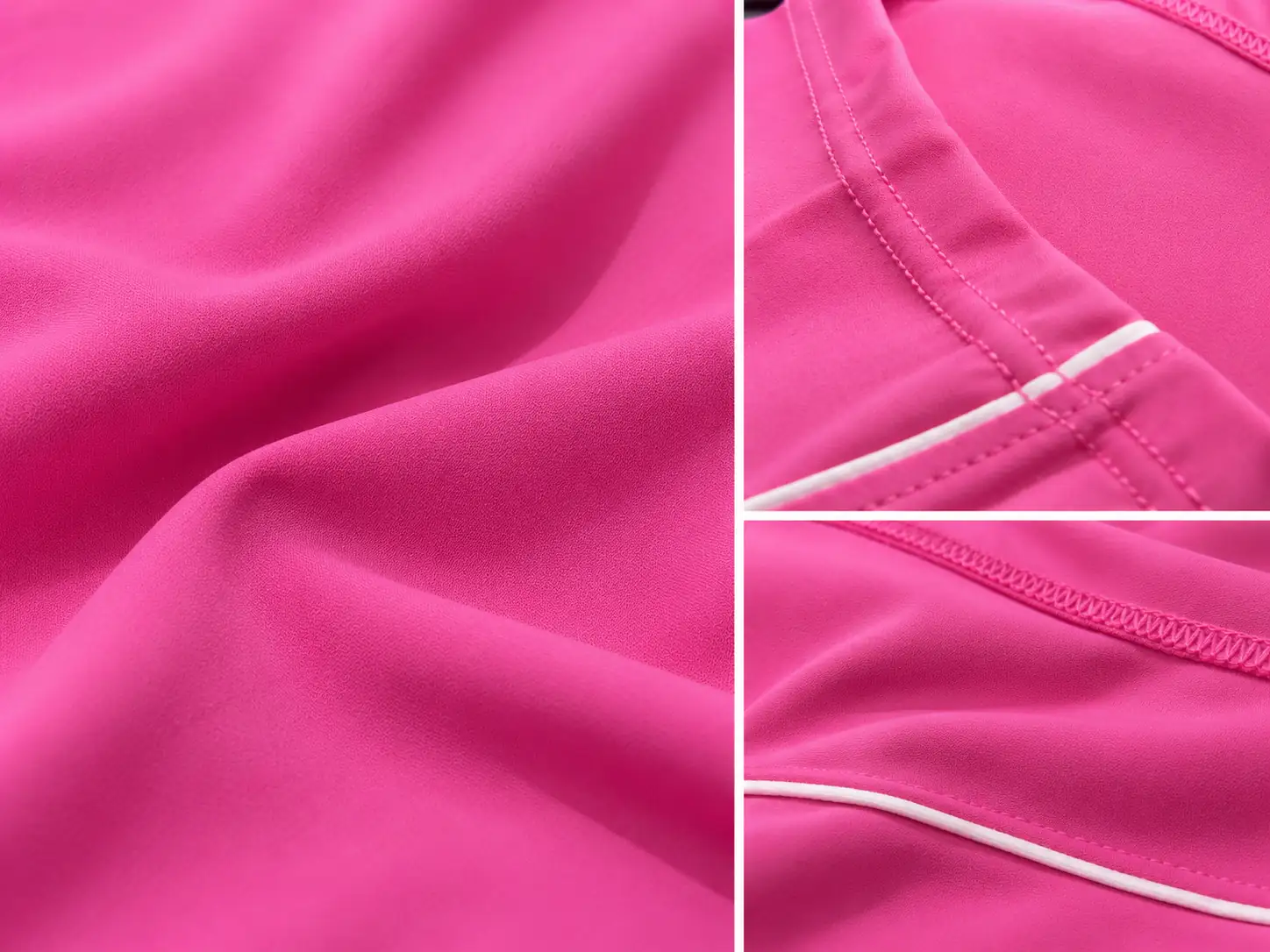
Nylon + Spandex
MOVEVOX's common development range is approximately 70–82% nylon with 18–30% spandex, generally around 190–280 GSM. Final selection should follow support, opacity, compression, color, finish, and sample performance.
70–82% Nylon 18–30% Spandex 190–280 GSM
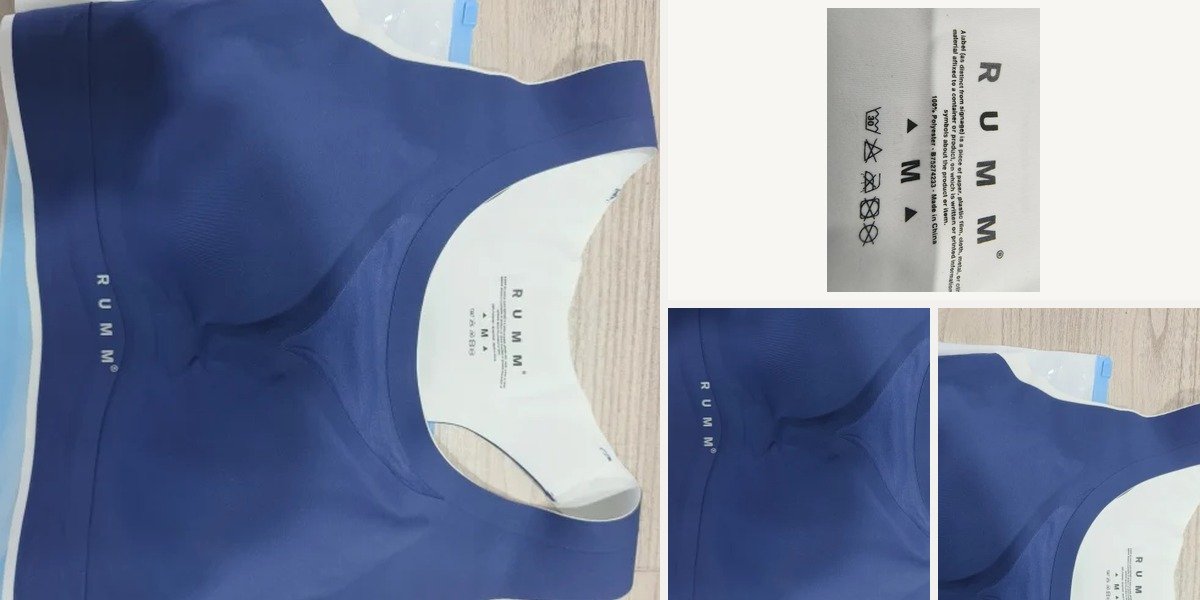
Polyester + Spandex
A current company-level development range is approximately 75–90% polyester with 10–25% spandex, commonly around 160–250 GSM. Final choice depends on hand feel, stretch, recovery, opacity, use, price, and sample performance.
75–90% Polyester 10–25% Spandex 160–250 GSM
Brushed Stretch Fabric
Current brushed-material references are approximately 75–82% nylon or polyester with 18–25% spandex, generally around 210–270 GSM. Surface abrasion, pilling, recovery, opacity, fit, and wash appearance require review.
Brushed Surface 210–270 GSM Recovery Review
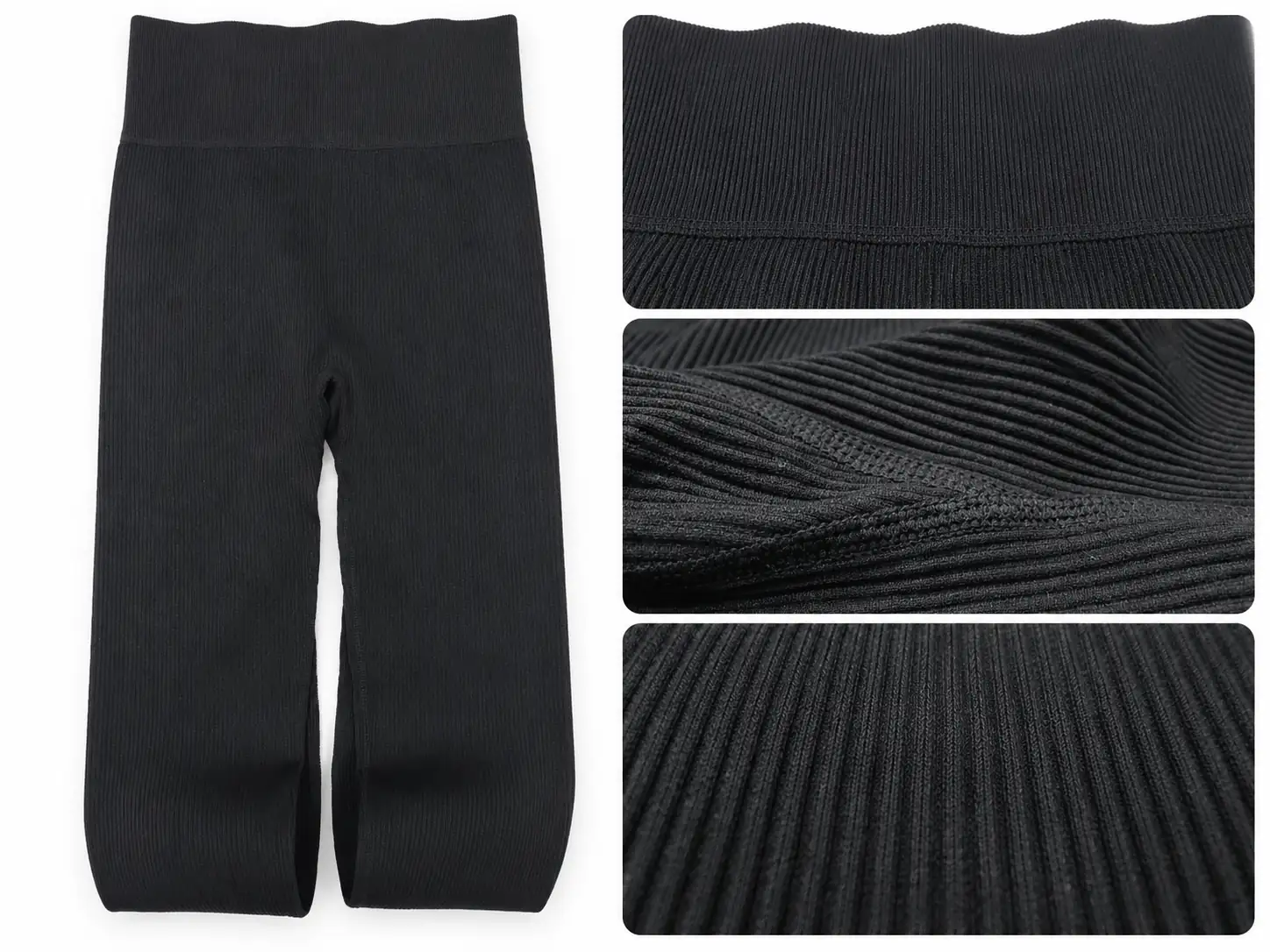
Ribbed Stretch Fabric
Current ribbed references are approximately 75–90% nylon or polyester with 10–25% spandex and around 220–320 GSM. Structure, recovery, waistband pressure, appearance, and size stability require physical approval.
Rib Structure 220–320 GSM Project FitStretch and Recovery Protect Waistband Fit
Stretch determines how far material extends; recovery determines how well it returns. Both affect waistband stability, knee shape, fit retention, and repeat wear.
Waistband Stability
Claim: Recovery supports consistent waistband hold after repeated extension.
Evidence
MOVEVOX uses approximately 90–95% and above recovery as an internal engineering reference for many high-stretch activewear materials. Buyer-specified methods and limits take priority.
Knee Shape Retention
Claim: Low recovery can contribute to visible deformation after wear.
Evidence
Repeated extension, recovery comparison, approved fabric references, and bulk-lot material control can be used to evaluate shape retention.
Movement Fit
Claim: Dynamic fit depends on recovery as well as initial measurements.
Evidence
Fit sampling, movement review, POM checks, material behavior, and approved sample comparison help determine whether the garment returns toward intended fit.
Seamless Structure
Claim: Seamless elasticity depends on yarn, structure, and machine parameters together.
Evidence
Yarn lot, knitting program, trial knit, measurement, fit review, density, finishing, and approved structure all contribute to seamless response.
Bulk Consistency
Claim: Approved recovery expectations should remain part of production control.
Evidence
Approved fabric or yarn, incoming-material controls, project testing, and sample-to-bulk comparison provide the relevant production evidence.
How We Evaluate Opacity Under Stretch
MOVEVOX does not treat “squat proof” as an unconditional marketing promise. Opacity changes with color, GSM, density, stretch level, fit, size, moisture, and lighting.
Material Density Review
Purpose: Review whether color, GSM, knit density, and construction provide an appropriate starting point.
Method: Compare approved material information and physical swatches under extension and in relaxed condition.
Decision: Move forward only after project-specific opacity risks are considered.
Relaxed Opacity Check
Purpose: Establish a visual baseline before additional stretch stress is applied.
Method: Inspect relevant garment areas under a consistent light condition and note obvious transparency risk.
Decision: Relaxed appearance should be acceptable before demanding stretch evaluation.
Controlled Stretch Check
Purpose: Determine whether opacity changes materially as the fabric extends.
Method: Compare material or garment appearance under controlled extension with its relaxed state.
Decision: Use the approved buyer or project acceptance standard.
Squat and Lunge
Purpose: Evaluate coverage during movements that increase stretch across hips, glutes, and thighs.
Method: Use the approved fit size for squat and lunge checks while reviewing opacity and tension.
Decision: No universal “100% squat-proof” claim is made without a defined acceptance method.
Light Blocking Test
Purpose: Supplement garment-level assessment when an objective light-blocking reference is required.
Method: AATCC TM203 may be considered when relevant to the buyer's test protocol.
Decision: Do not present the method as a universal squat-proof certification.
Bulk Verification
Purpose: Confirm production remains consistent with the approved development basis.
Method: Control material lot, color, garment measurements, fit, and relevant quality checks.
Decision: Evaluate bulk against approved project standards rather than a general marketing statement.
Sample Iterations for Controlled Fit Approval
Different samples solve different risks. MOVEVOX separates development, fit, revision, size-set, and pre-production approvals so one successful sample is not treated as approval for every production condition.
Development Sample
Convert the current product information into the first physical version for structure, proportion, material direction, workmanship, and basic measurement review.
Customer Inputs: Tech Pack, sketch, reference, or defined concept; confirmed material and construction information.
MOVEVOX Outputs: First executable sample version and development observations.
Pass Criterion: Direction is sufficiently clear to enter formal fit evaluation or revision.
Fit Sample
Validate the base-size relationship among waistband, waist, hips, crotch, rise, legs, material stretch, and movement, with special attention to crossover geometry and stability.
Customer Inputs: Base-size comments, fit-model information, images, measurements, and movement feedback.
MOVEVOX Outputs: Fit sample with actual measurements and identified development adjustments.
Pass Criterion: Base size reaches the customer's agreed fit direction.
Revised Sample
Confirm that agreed corrections have been implemented without introducing new issues elsewhere. Changes should respond to a defined revision list.
Customer Inputs: Consolidated written comments and any updated design decisions.
MOVEVOX Outputs: Revised sample and updated measurements or technical information.
Pass Criterion: Relevant revision items are accepted or remaining points are documented.
Size Set
Verify that grading carries approved base-size logic into the required commercial size range, including crossover position, rise, pressure, hip capacity, and key lengths.
Customer Inputs: Approved grade rules or complete size chart and size priorities.
MOVEVOX Outputs: Size-set samples or agreed measurement evidence.
Pass Criterion: Defined size range meets approved grading and measurement requirements.
PP Sample
Establish the production reference using the approved combination of material, construction, measurements, color, branding, labels, and packaging.
Customer Inputs: Final approvals, artwork, labels, packaging, and relevant test requirements.
MOVEVOX Outputs: PP sample and final production-reference information.
Pass Criterion: Agreed production-release conditions are met and later changes are formally controlled.
Four Fit Checks for Crossover Waist Leggings
A fit sample should be reviewed through both measurements and wearing behavior. These four areas help convert subjective fit feedback into actionable product-development decisions before bulk production.
Waistband Position
Check whether intended waistband height remains stable from front, side, and back when worn. Compare actual measurements with the approved specification and observe rolling, gaping, pressure, or downward movement together with hip capacity, rise, and material recovery.
Crossover Alignment
Review crossover point, left and right angles, overlap, height, and visible symmetry. Evaluation should include both flat measurement and on-body appearance because material tension can change visible geometry.
Hip and Crotch
Assess hip coverage, crotch location, front and back rise, gusset where applicable, and visible tension across glute and upper-leg areas. Problems here can pull the waistband away from its intended position.
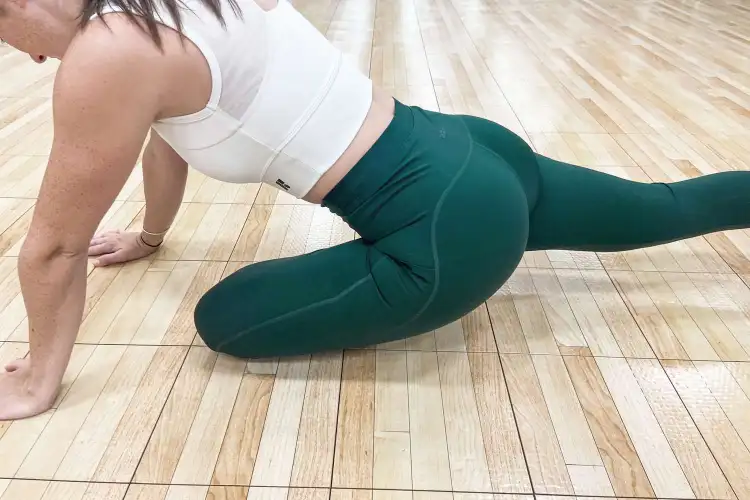
Movement Stability
Use squat, lunge, leg raise, walking, or other project-relevant movement to observe waistband movement, crotch comfort, opacity, leg stability, and recovery after extension. Static fit approval alone is not sufficient.
Turning Approved Samples into Bulk Production Standards
An approved sample is useful only when approved decisions are written back into production specifications. MOVEVOX uses released technical information, first-article checks, in-line control, and final comparison to reduce sample-to-bulk drift.
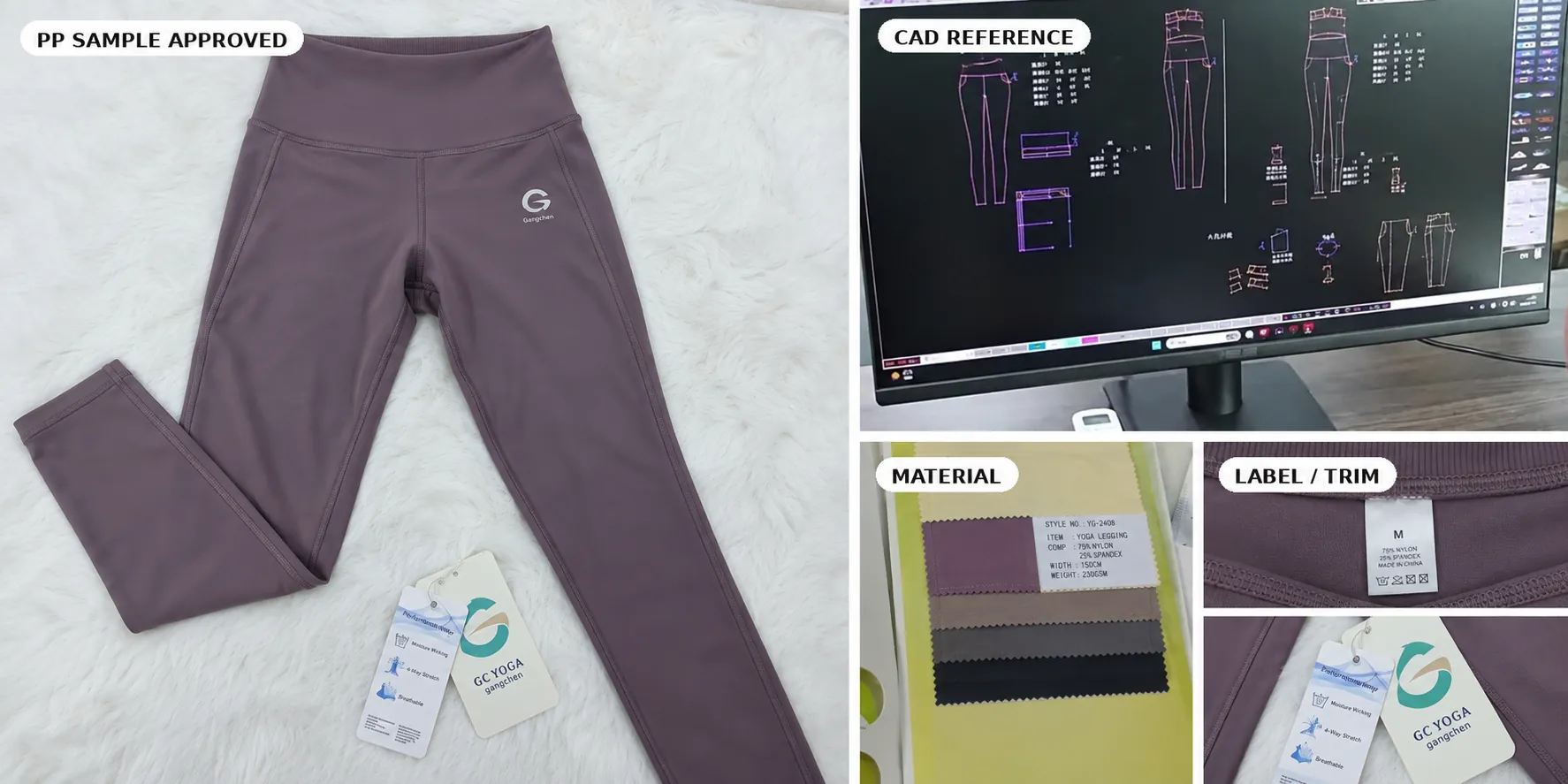
Approved Sample
Final approved measurements, waistband structure, fabric, color, construction, branding, labels, and packing decisions form the development reference.
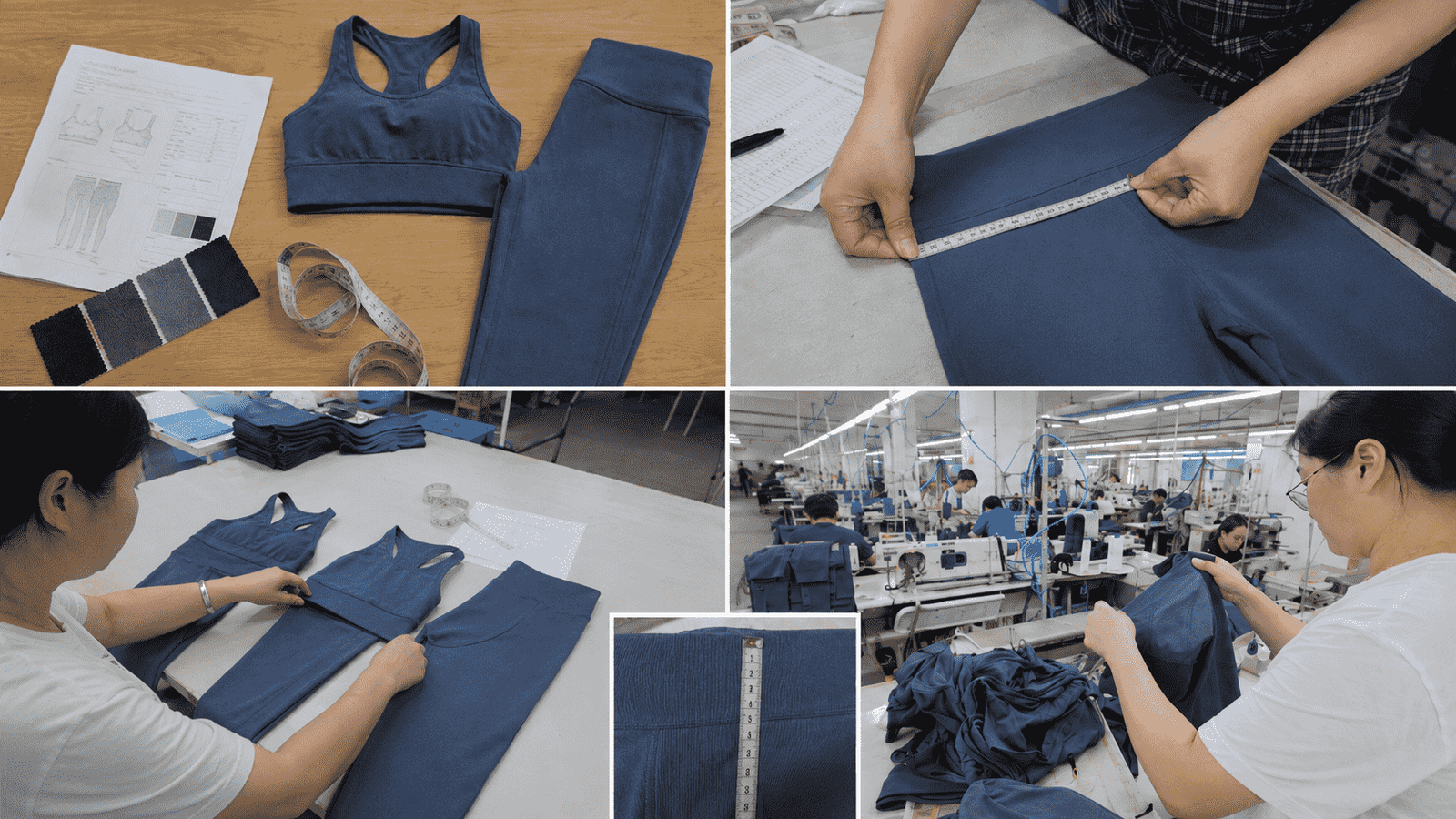
Bulk Production
First article, in-line inspection, finished-garment checks, measurements, and final release verify whether production continues to follow the approved standard.
Measurements
Bulk measurements are checked against the final approved measurement specification and tolerance rather than an earlier development version.
Waistband Shape
Crossover geometry, waist height, symmetry, construction, and relevant POM should remain aligned with the approved product standard.
Material and Color
Bulk material and color should follow the approved material or color reference under the agreed lot, test, and customer requirements.
Construction
Approved seam, knitting, panel, gusset, waistband, pocket, and other construction decisions become production inspection reference points.
Branding
Logo process, size, color, location, labels, and other brand details should follow current approved artwork and placement specifications.
Packaging
Individual packaging, SKU or barcode information, hangtags, stickers, cartons, and packing sequence should follow released requirements.
Before bulk release, final specifications and approved information should be frozen into the current production package. Major changes after approval should be recorded and reassessed rather than introduced informally during production.
Ready to Review Your Crossover Leggings Project
Send your Tech Pack, legally usable reference sample, sketch, image, or current product brief. MOVEVOX can review the intended crossover waistband, fit, manufacturing route, material, customization scope, MOQ factors, sample requirements, and production considerations before formal development.
Projects can also begin from a legal reference garment, sketch, image, or clearly defined concept.Build a Complete Private Label Leggings Program
Private label execution extends beyond adding a logo. MOVEVOX can coordinate product specifications, material, color, fit, construction, branding, labels, and packaging under one controlled project.
Fabric
Fabric selection can begin from a customer-specified material, physical swatch, MOVEVOX sourcing option, or performance brief. Composition, GSM, hand feel, stretch, recovery, opacity, surface, color, and intended use should be reviewed together.
- Customer-specified fabric with approved information.
- Nylon/spandex or polyester/spandex development.
- Brushed, ribbed, textured, or other approved directions.
- Buyer-defined testing where formally required.
Color
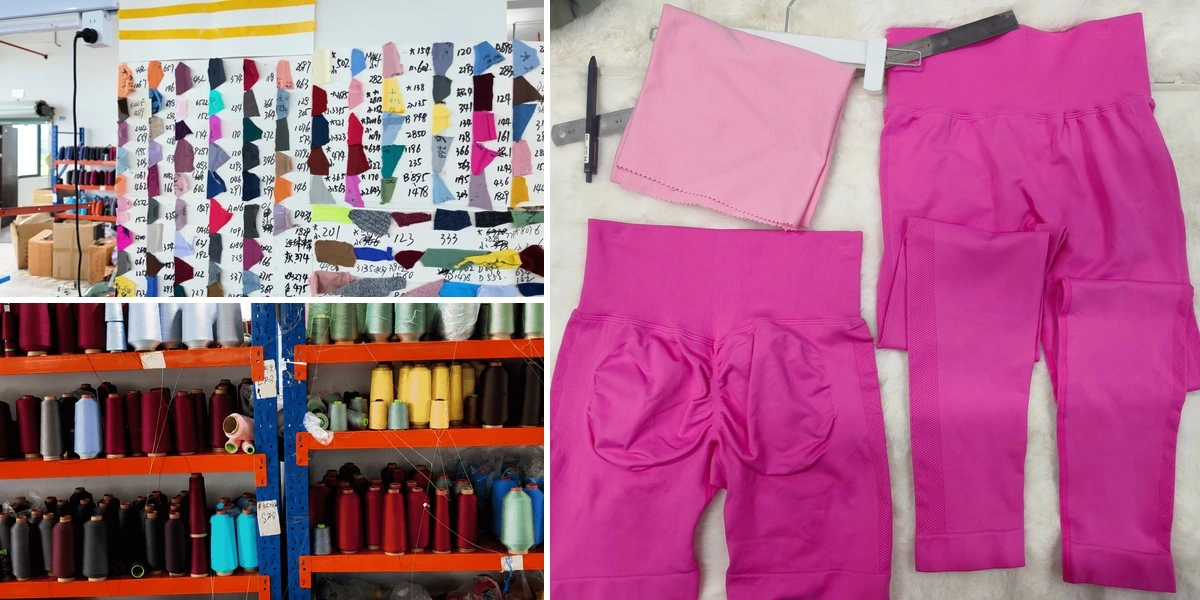
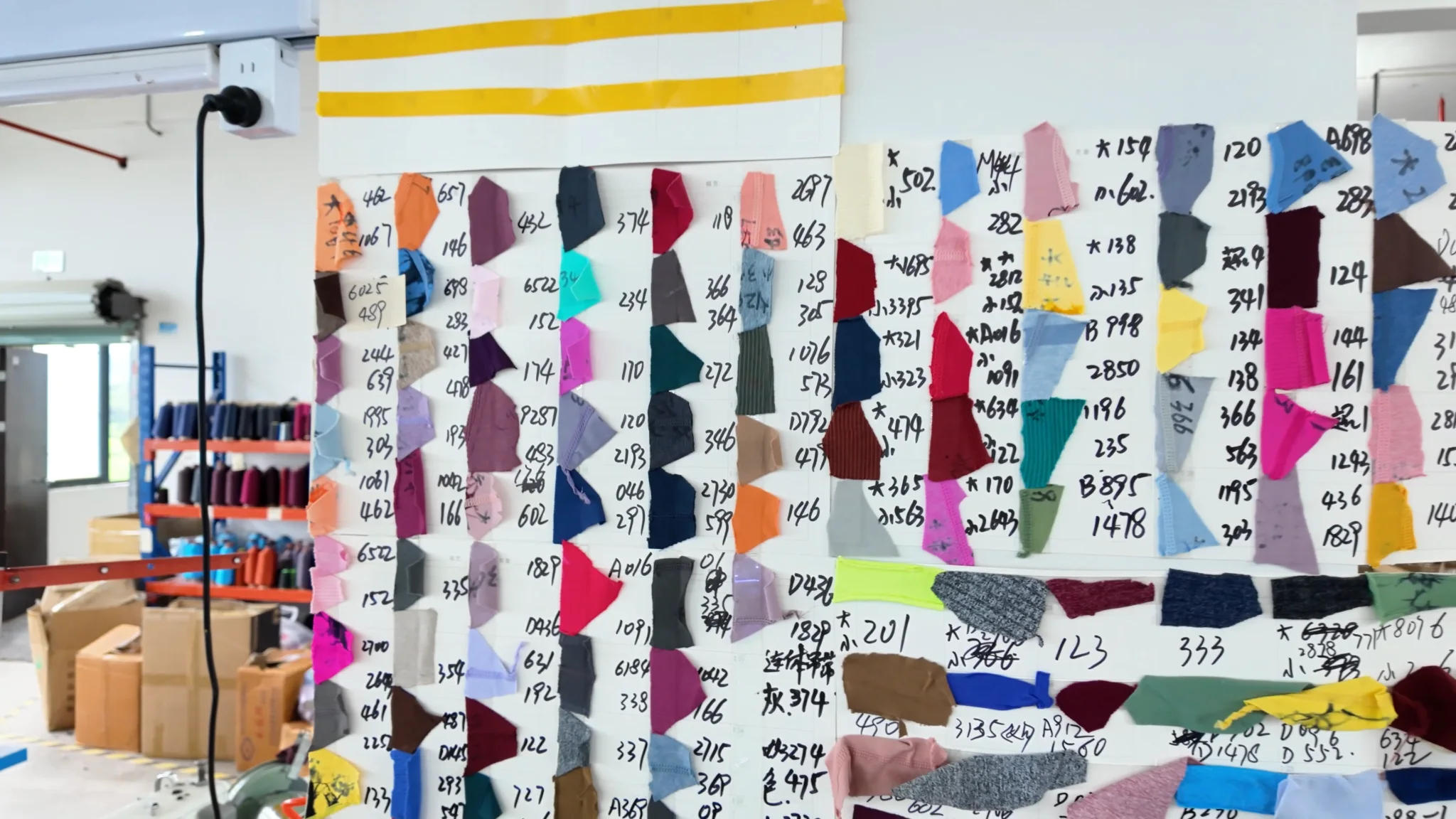
Stock or existing material colors generally provide a different sourcing structure from custom-dyed colors. MOVEVOX can work from Pantone or an approved physical color standard. Custom colors are influenced by dye-lot requirements and may correspond to approximately 400–600 garments depending on style consumption and material conditions.
- Existing supplier colors where available.
- Pantone-based custom color development.
- Physical color reference supplied by buyer.
- Project-specific color approval conditions.
Fit
Fit customization can cover measurements, waistband height, crossover geometry, waist-to-hip relationship, rise, inseam, hip capacity, and grading. A customer size chart or Tech Pack is preferred, while physical sampling remains necessary before bulk specifications are locked.
- Customer measurement chart and grade rules.
- Base-size fit development and revision.
- Size-set verification.
- Customer-specific tolerances.
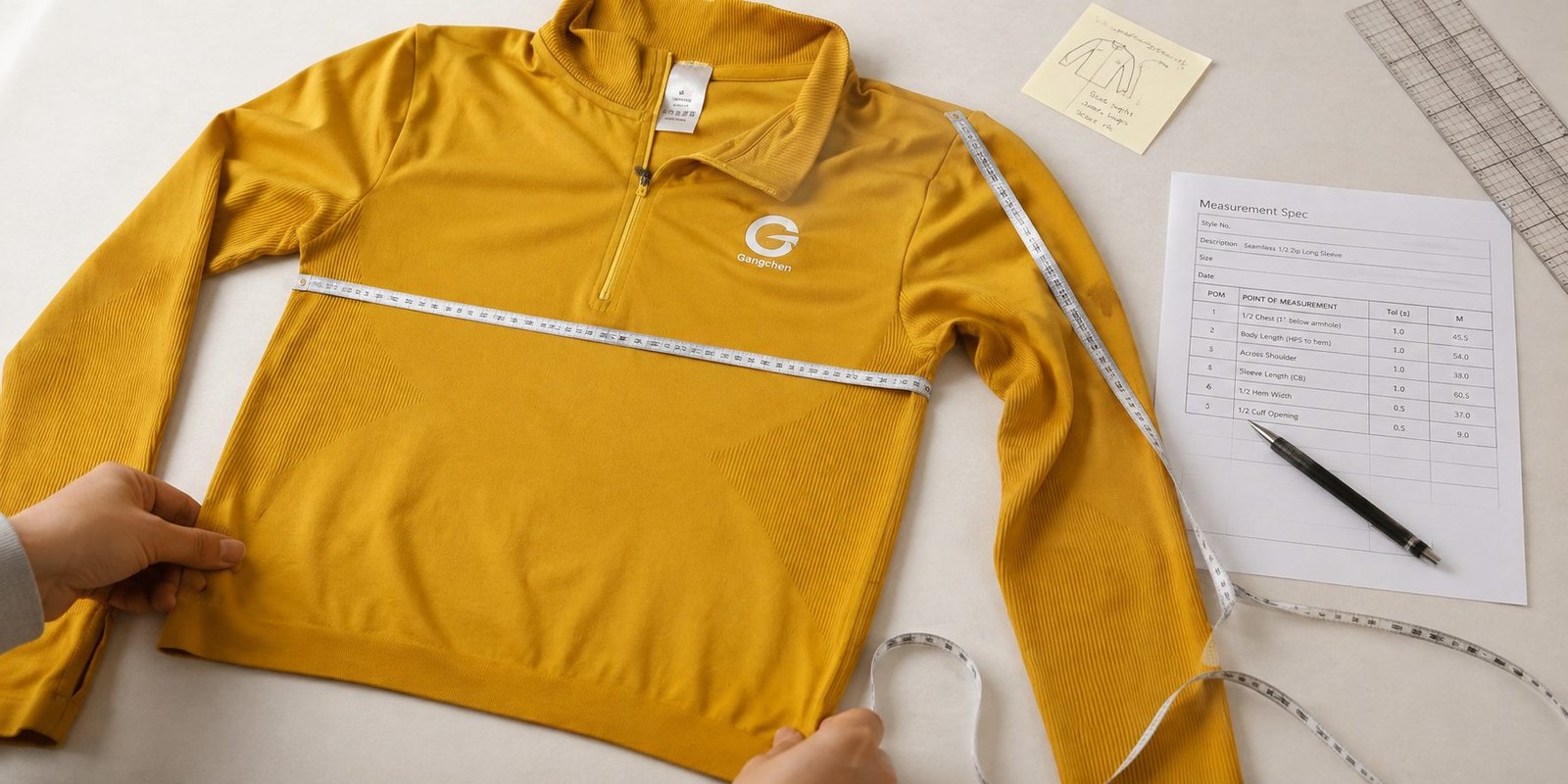
Construction
MOVEVOX operates both seamless and cut-and-sew manufacturing. Crossover leggings may use a shaped sewn waistband, engineered seamless structure, or another technically approved route based on complexity, pockets, panels, material, size range, MOQ, and sample results.
- Cut-and-sew crossover waistband construction.
- Seamless engineering where technically appropriate.
- No-front-seam structures subject to fit review.
- Pockets, gussets, rib, mesh, or texture.
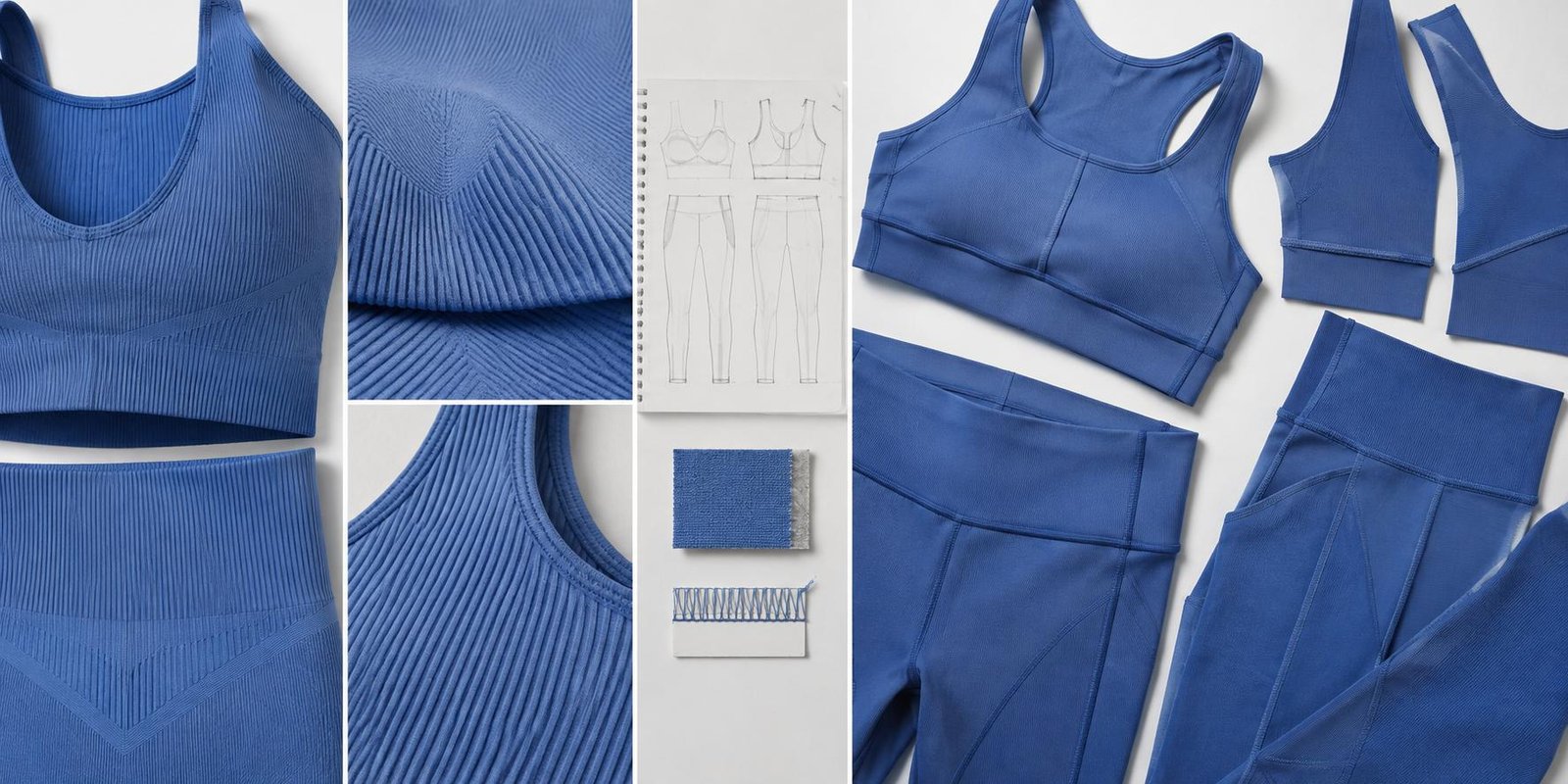
Logo
MOVEVOX can support screen printing, heat transfer, silicone printing, jacquard, embroidery, and woven labels where appropriate. High-stretch positions require compatibility review, and special molds or processes may create separate MOQ, sampling, or cost requirements.
- Screen printing or heat transfer.
- Silicone logo where suitable.
- Jacquard branding in knitted structures.
- Embroidery or woven-label solutions.
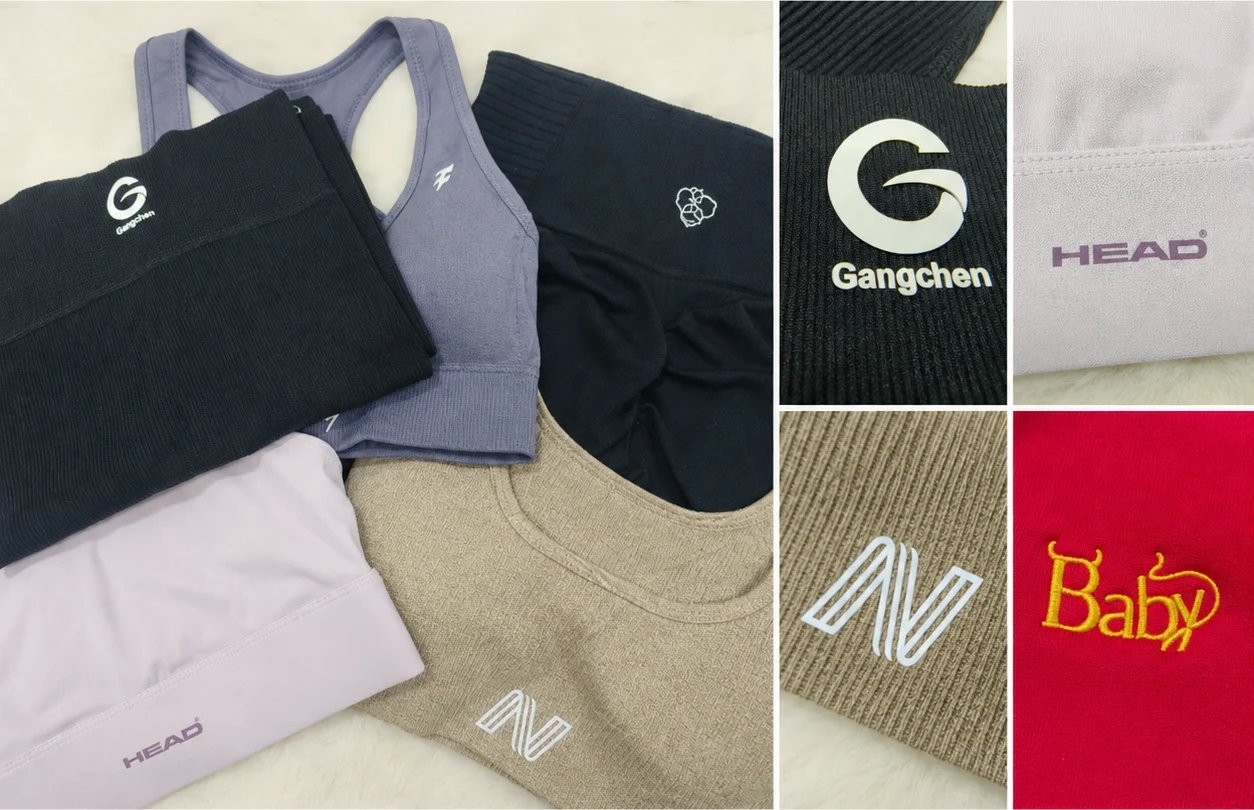
Labels
Private-label programs can include main labels, care labels, size labels, and woven labels. Artwork, content, placement, material, country or market requirements, and SKU mapping should be approved before production.
- Main brand and size labels.
- Care-content labels.
- Woven or printed label options.
- SKU-specific identification.
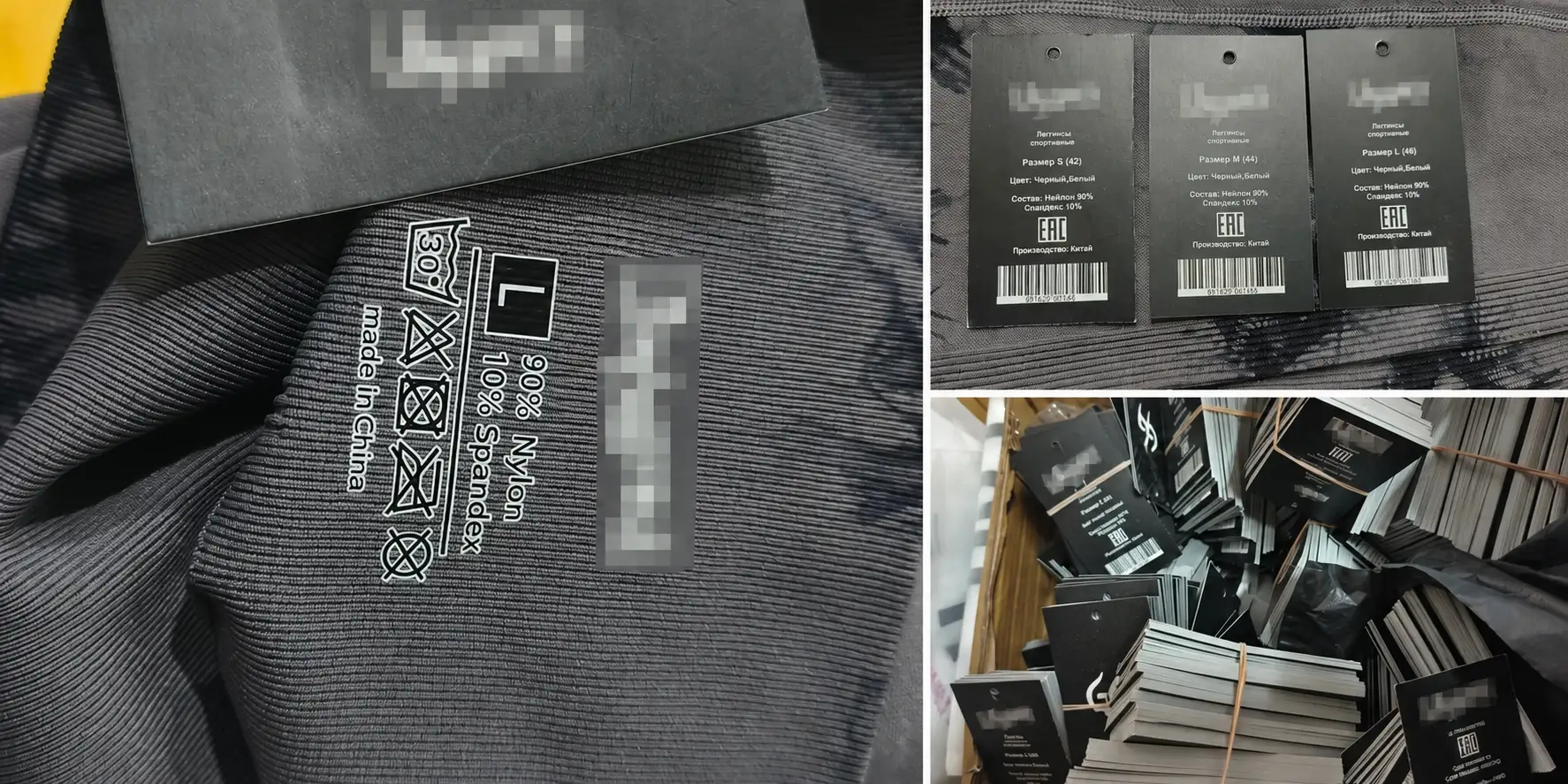
Packaging
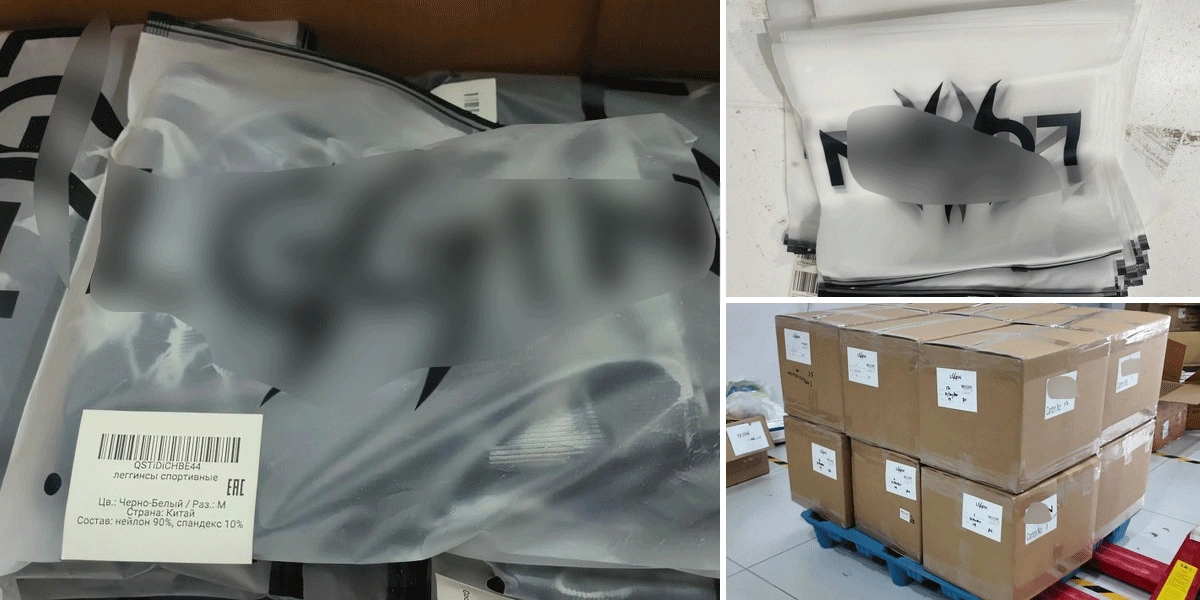
MOVEVOX can coordinate individual packaging, polybags, stickers, barcodes, hangtags, cartons, and shipping marks. Packaging should be linked to the correct style, color, size, and SKU, and custom suppliers may have separate MOQ or lead-time requirements.
- Standard individual packaging.
- Custom branded packaging where approved.
- Barcode and SKU labels.
- Hangtags and carton marks.
MOQ Depends on the Full Order Structure
The garment MOQ is only the first commercial threshold. Effective MOQ can increase when custom dye lots, exclusive materials, special logo processes, custom labels, or packaging suppliers have independent minimums.
Pilot Order
The current regular custom starting point is approximately 100 pieces per seamless style and approximately 150 pieces per cut-and-sew style when suitable standard materials and normal processes are available.
Quantity: From applicable base MOQ, subject to project review.
Color / Size: Confirm against material, color, and size minimums.
Price Factors: Quantity, fabric, complexity, branding, packaging, and development.
Core Program
Repeat programs can be planned after product, fit, material, construction, and brand execution have been validated. Appropriate quantity still depends on style, fabric consumption, color plan, production route, and timing.
Quantity: Project-specific repeat-order quantity.
Color / Size: Based on confirmed SKU structure and material supply.
Price Factors: Volume, efficiency, material lot, SKU fragmentation, and packing.
Scale Program
Larger programs require a formal capacity check rather than simply multiplying the pilot-order setup. Production-site allocation, materials, QC capacity, timing, SKU complexity, and shipment requirements must be confirmed.
Quantity: Capacity-reviewed commercial quantity.
Color / Size: Planned by SKU, material, facility, and timing.
Price Factors: Scale efficiency, materials, complexity, QC, packing, and delivery.
Custom color commonly depends on a dye lot corresponding to approximately 400–600 garments, depending on product consumption and material conditions. A 100- or 150-piece garment MOQ therefore does not automatically apply to every Pantone custom color.
Inside the Core Factory Behind Product Approval
The Yiwu core production base acts as MOVEVOX's technical, sample, core manufacturing, process-validation, quality-control, and order-management center.
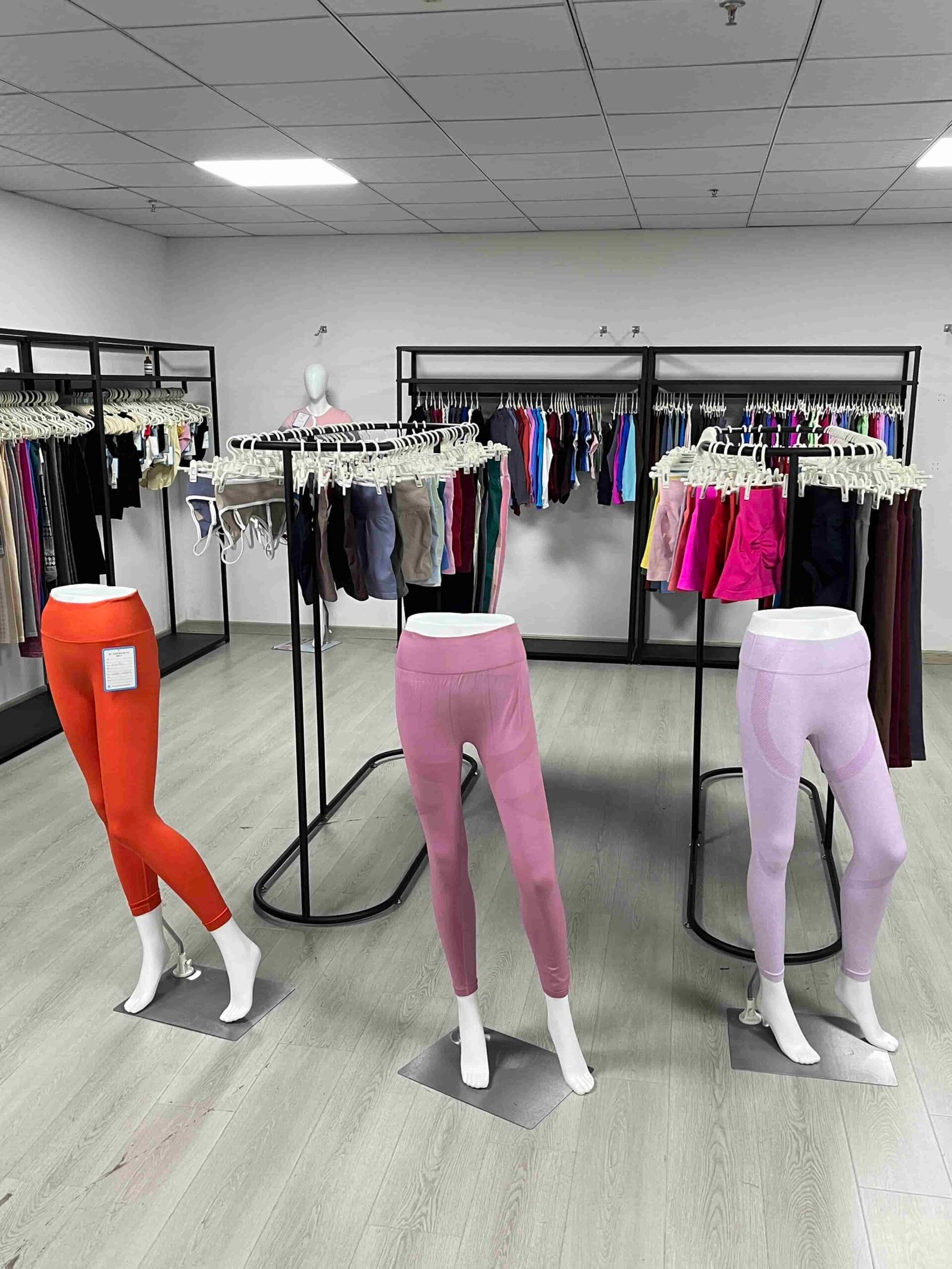
Product Development
The regular development system includes approximately eight people across design, pattern development, sample making, and related functions. Tech Packs, physical samples, sketches, images, or defined concepts can enter review before pattern or seamless-program preparation.
Caption: Product development converts customer inputs into measurable, manufacturable standards.
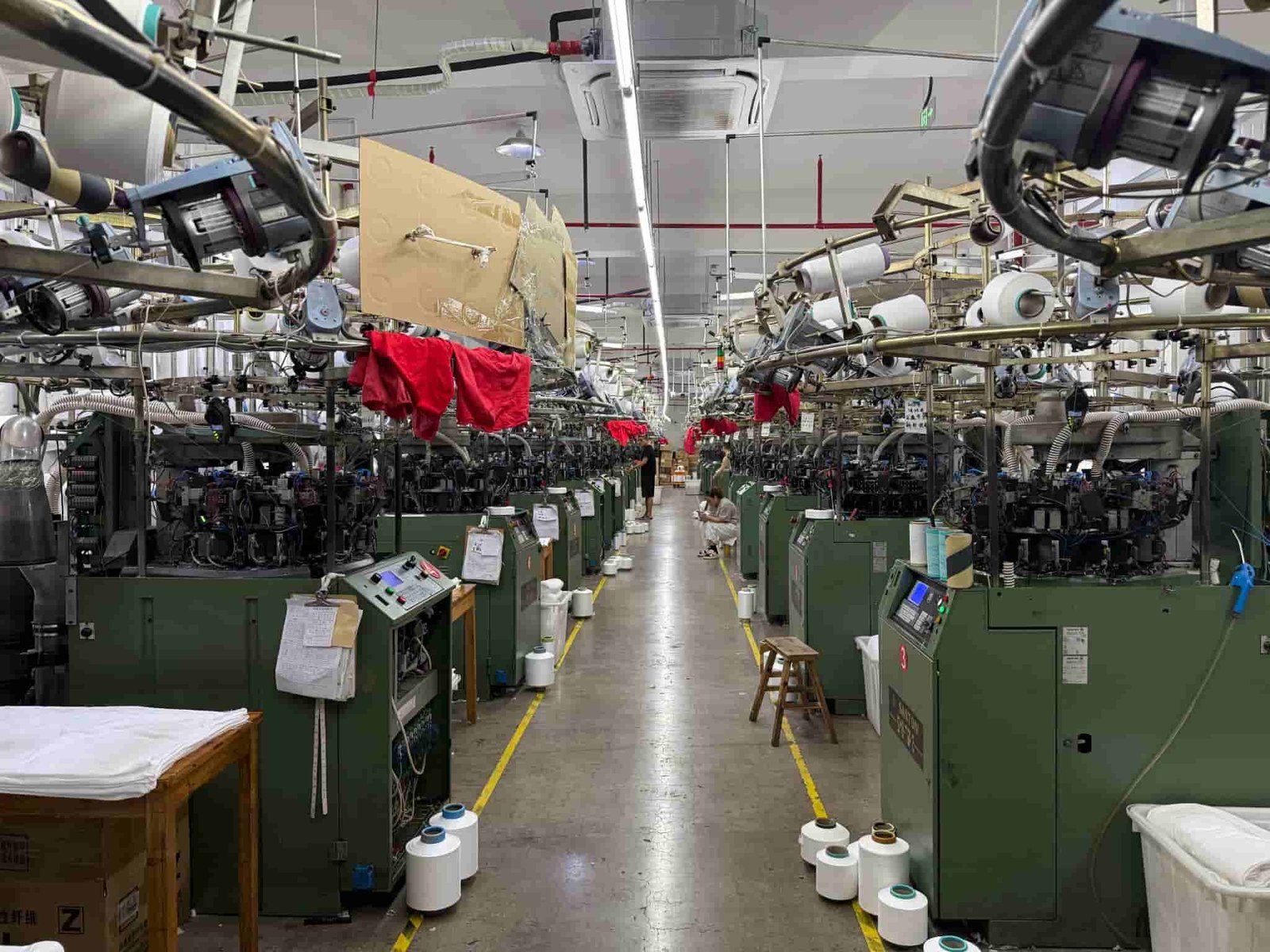
Santoni Production
MOVEVOX's core manufacturing system includes 28 Italian Santoni seamless knitting machines. Seamless projects are managed according to product, size, yarn lot, knitting program, and structure, with trial knitting and approved parameters used before bulk production.
Caption: Santoni production supports engineered seamless structures under controlled program and yarn conditions.
Cut-and-Sew Production
The core system includes approximately 24 major sewing and garment-production machines supporting cut-and-sew activewear. The production route can include pattern preparation, spreading, cutting, bundle identification, sewing, finishing, inspection, and packing.
Caption: Cut-and-sew capability supports pattern-driven leggings, panels, pockets, and related structures.
First Article
An early production reference is compared with current approved specifications, sample, material, measurements, branding, construction, and workmanship so deviations can be identified before they repeat across larger quantities.
Caption: First-article review verifies whether production follows the current approved standard.
Quality Inspection
MOVEVOX currently has five QC personnel, with inspection covering material, measurements, construction, workmanship, branding, labels, packing, and other project requirements according to customer specifications.
Caption: Quality checks follow buyer-approved specifications rather than generic quality claims.

Packing and Release
Finished garments move through packing and final release after required production and quality steps. Private-label projects can include individual packaging, SKU information, barcodes, hangtags, cartons, and shipping marks.
Caption: Packing accuracy is controlled as part of product and shipment execution.
Capacity Means Quality-Released, Shippable Garments
MOVEVOX separates stable managed capacity from theoretical machine output. Formal capacity review considers manufacturing route, style complexity, SKU count, materials, approved sites, QC resources, packing, and delivery window.
Managed Stable Capacity
Current normal combined managed monthly delivery capacity across seamless and cut-and-sew production.
Santoni Machines
Italian Santoni seamless knitting machines within the Yiwu core manufacturing system.
Cut-Sew Equipment
Major sewing and garment-production machines supporting core cut-and-sew manufacturing.
Core Team
Current fixed core organization across manufacturing and operating functions.
Satellite Factories
Long-term collaborative satellite factories, including six in Yiwu and two in Guangzhou.
Regular Bulk Lead
Current regular bulk-production reference, subject to product complexity, materials, approvals, quantity, and production planning.
Figures are current operating references and include defined managed-network scope; they are not theoretical maximum machine-output claims.
How Production Sites Stay Controlled and Traceable
MOVEVOX uses a core factory plus controlled satellite-capacity model. Where a buyer requires an approved production site, the order should not be moved to an unknown site without the required approval.
Facility Scope
Establish the production sites technically and commercially approved for the relevant product, process, quality, and buyer conditions.
Facility RecordPO Assignment
Production allocation is linked to the applicable purchase order, product, quantity, and approved facility scope.
Production AssignmentMaterial Batch
Relevant yarn, fabric, color, trims, logos, labels, and packaging are connected to current project requirements.
Batch RecordProduction Release
Approved Tech Pack, BOM, measurements, sample reference, workmanship, artwork, and packaging instructions form released information.
Release PackChange Control
If a location change is required, technical capability, timing, quality, buyer conditions, and approval requirements are reviewed before transfer.
Change RecordFirst Article
A changed production condition should be verified through first-article and process checks before the new setup continues at scale.
First ArticleQC Records
In-line and finished-garment inspections connect manufactured goods with specifications, production source, measurements, workmanship, and corrective action.
Inspection RecordShipment Release
Packing, quantity, inspection status, and shipment information complete the traceability chain before goods are released.
Packing ListSupplier-control principle: no hidden subcontracting, controlled production allocation, and disclosed production sites when required by the buyer or contract.
Quality Gates from Materials to Shipment Release
MOVEVOX quality control starts before finished-garment inspection. Customer specifications, approved samples, materials, first article, in-line inspection, measurement control, packing verification, and final release form a connected process.
Incoming Material
Materials are checked against applicable order requirements before production.
- Confirm current approved material information.
- Identify visible material or color abnormalities.
- Follow buyer-defined testing where specified.
Pre-Production Review
Current technical information, materials, sample status, branding, packaging, quality points, and open risks are reviewed.
- Use current approved Tech Pack.
- Confirm material, color, branding, packaging.
- Close open questions before bulk release.
First Article
An early production garment determines whether the production setup follows the approved standard.
- Compare key measurements.
- Check crossover shape and symmetry.
- Review workmanship and branding.
Inline Inspection
Production checks identify trends while corrective action is still practical.
- Monitor measurements and workmanship.
- Escalate repeated nonconformities.
- Increase checking where risk requires.
Measurement Control
Leggings measurements are checked using defined POM and methods.
- Waist, hip, rise, inseam, and length.
- Apply customer-defined tolerance.
- Escalate abnormal measurement trends.
Workmanship Check
Finished construction is reviewed for visual and structural issues relevant to the approved product.
- Compare construction with approved sample.
- Review symmetry and structural lines.
- Separate nonconforming garments.
Packing Verification
The correct garment must match the correct size, color, label, barcode, hangtag, and packaging.
- Verify SKU before carton closure.
- Check garment-to-barcode relationship.
- Follow approved packing instructions.
Final Release
Final inspection and order review determine whether finished goods can be released.
- Review finished-garment quality.
- Confirm packing and quantity status.
- Hold unresolved nonconformity.
Nonconformance Process
When product or process does not meet the applicable standard, affected goods should be identified and isolated rather than mixed with accepted production. Corrective action is implemented and the relevant items or process are rechecked before release.
How to Read a Garment Inspection Report
A useful inspection record should show what was inspected, against which specification, how measurements or defects were assessed, what failed, what corrective action followed, and whether goods were released.
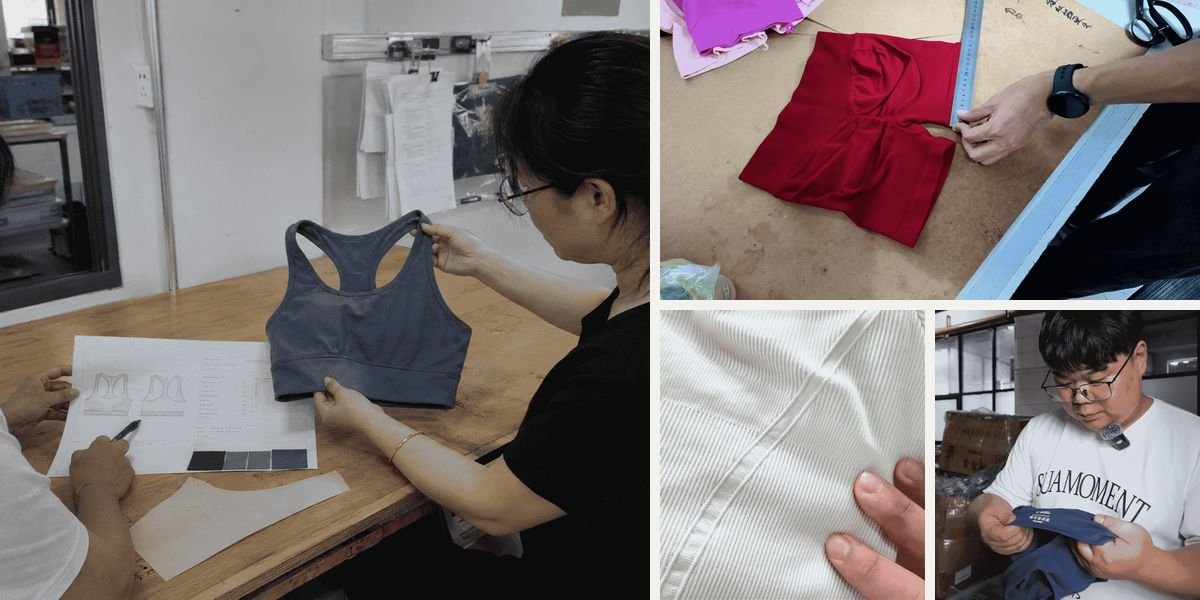
For leggings, dimensional variation can alter waistband pressure, crossover position, rise, hip coverage, and leg fit. MOVEVOX uses the customer's POM and approved tolerance when provided.
Identity & Scope
First confirm which order, style, size, production batch, and inspection stage the document represents.
Measured Evidence
Then check actual measurements, tolerances, defect findings, and the sampling scope rather than relying on a simple “Passed” statement.
Disposition & Release
Finally confirm what happened when a deviation was found and whether the goods were held, corrected, re-inspected, or released.
Six Checks a Buyer Should Be Able to Verify
Product Identification
The report should connect inspection to the correct style, PO, batch, color, size, and inspection stage so records from different orders cannot be confused.
Sampling Scope
The inspection record should state how garments were selected or how many were checked. Customer-defined inspection instructions take priority where applicable.
POM and Tolerance
Measurement records should use clearly defined points of measure and approved tolerance, with actual data rather than replacing measurement evidence with a simple pass statement.
Defect Classification
Workmanship findings should identify the actual defect and location. Repeated defects or abnormal trends require more attention than isolated cosmetic observations.
Corrective Action
When an issue exceeds the applicable limit or presents a production trend, the record should show containment, rework, process adjustment, or increased screening.
Release Conclusion
The report should make clear whether goods passed, required re-inspection, remained on hold, or were released after corrective action.
A Report Is Useful Only When It Supports a Release Decision
Measurement data alone is not the end of quality control. When a result falls outside the approved specification, the inspection record should show what happened next.
The stronger evidence chain is: specification → actual result → deviation → corrective action → recheck → release status.
What MOVEVOX Test Reports Actually Prove
Compliance evidence is useful only when its holder, tested sample, method, report number, date, and scope are correctly described. A single tested sample should not be expanded into a claim covering every product or future order.
RoHS Sample Test
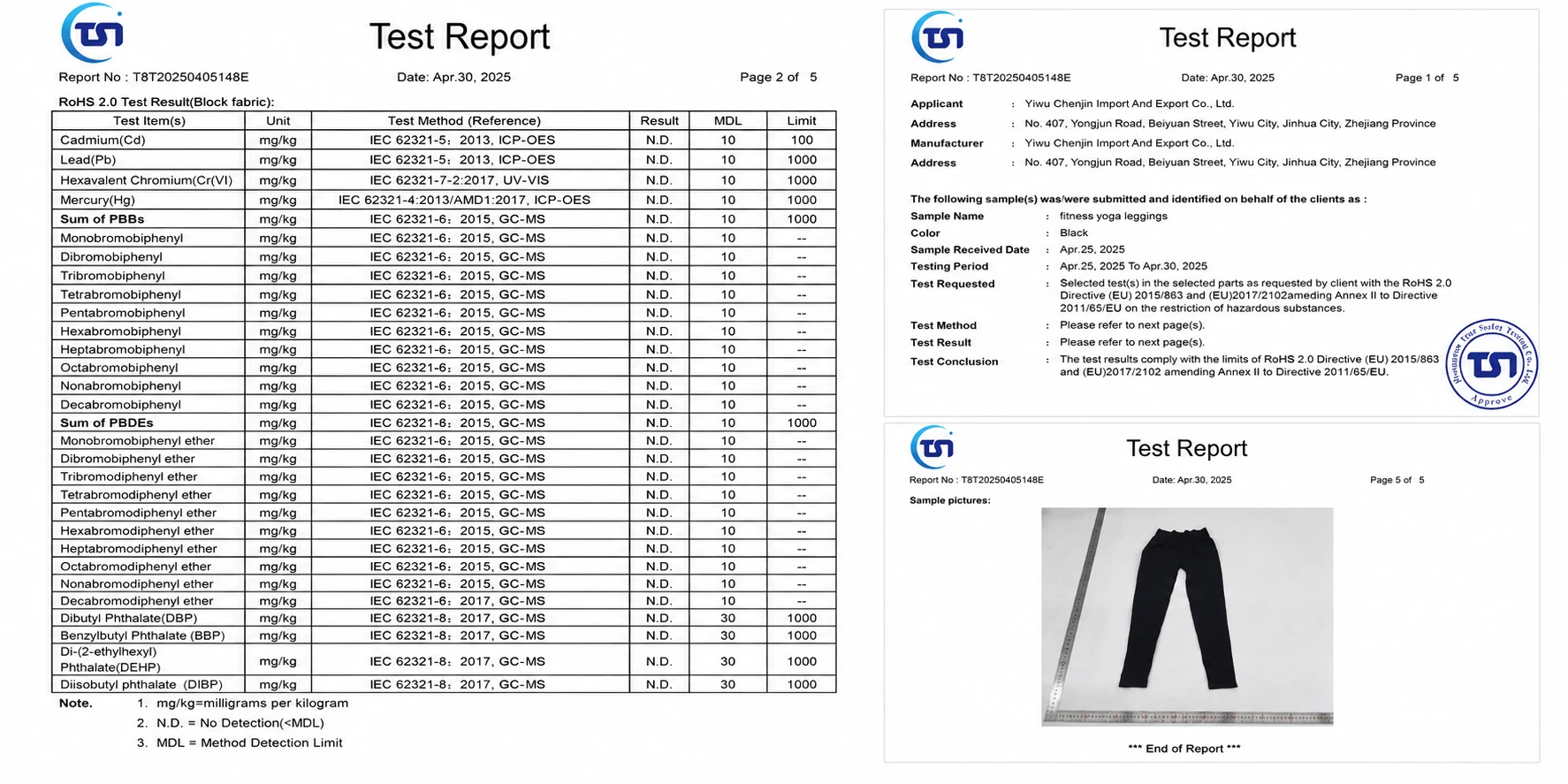
A black sample identified as fitness yoga leggings was submitted by Yiwu Chenjin Import And Export Co., Ltd. The April 30, 2025 report states that the tested sample complied with the referenced RoHS 2.0 limits under the listed IEC 62321 methods.
Applicable Scope: The specific sample identified in report TST20250405148E and related certificate.
MOVEVOX Response: Reference the report only for its stated sample and scope.
REACH Phthalates Test
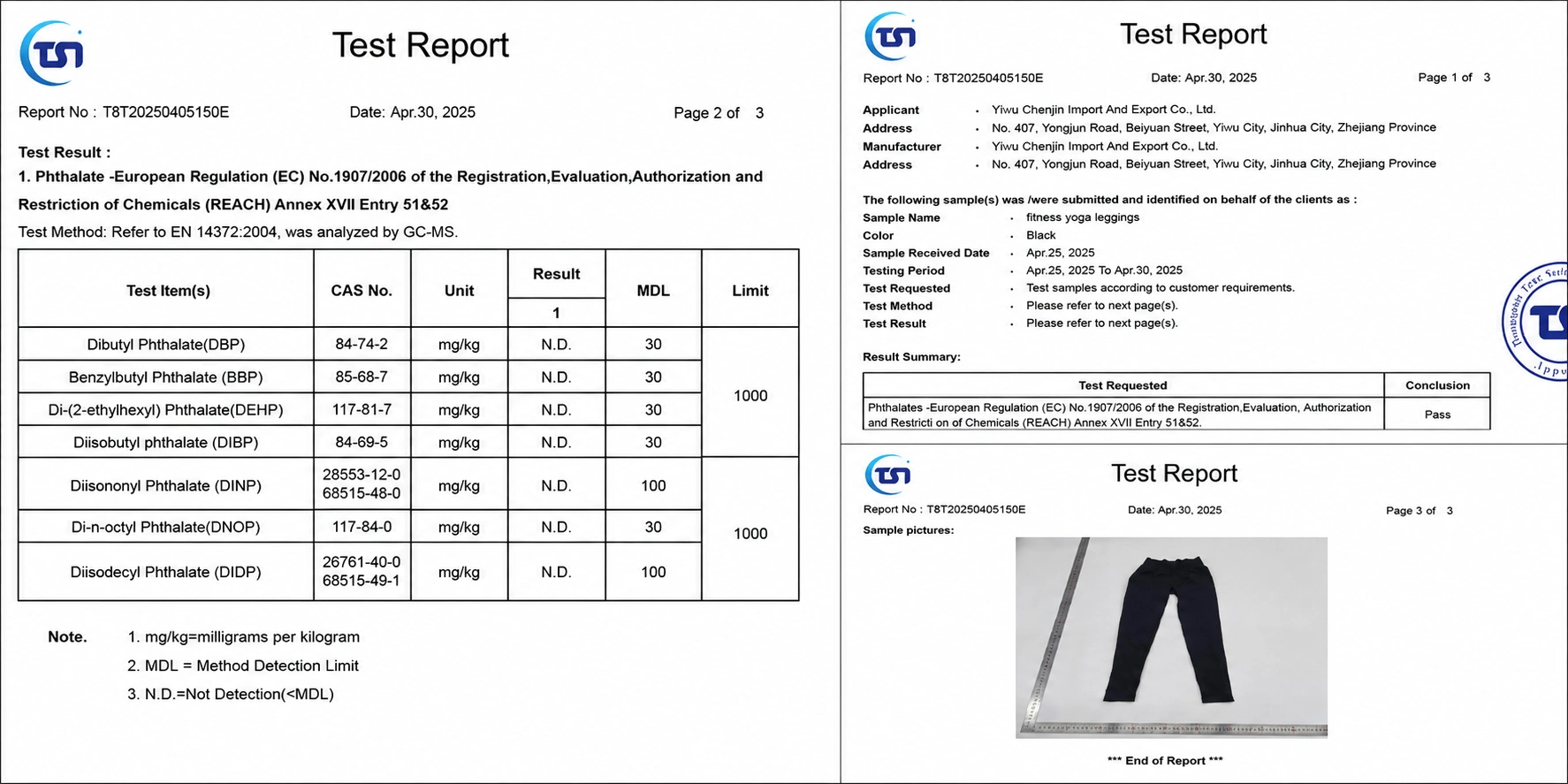
A separate April 30, 2025 report identifies black fabric from a fitness yoga leggings sample and reports a Pass conclusion for requested phthalate testing under REACH Annex XVII Entry 51 & 52.
Applicable Scope: The black fabric sample identified within report TST20250405150E and its requested tests.
MOVEVOX Response: Use the result as sample-specific evidence and arrange project-specific testing where required.
Holder and Scope
A certificate or report should be read by checking applicant or holder, manufacturer or site where stated, sample description, standard, method, report number, date, issuer, and limitation language.
Applicable Scope: Any compliance evidence used during qualification or material approval.
MOVEVOX Response: Keep published statements aligned with the exact document and disclosed sample.
Project-Specific Testing
Global brands may impose their own RSL, chemical, physical, performance, material, or finished-product testing requirements. Existing reports do not replace a buyer's own compliance program.
Applicable Scope: Buyer-defined market, material, product, or PO requirements.
MOVEVOX Response: Review protocols early and arrange evidence without claiming unverified company-wide certification.
- TST Certificate No. TST20250405148EC — April 30, 2025.
- Test Report TST20250405148E — April 30, 2025.
- Test Report TST20250405150E — April 30, 2025.
A Practical Time and Action Plan
A delivery date is useful only when its dependencies are visible. MOVEVOX can organize projects from specification freeze and materials through sampling, approvals, production, inspection, packing, and cargo readiness.
| Stage | Timing | Prerequisite | Buyer Gate |
|---|---|---|---|
| Spec Freeze | Project-specific | Development requirements and technical open points are resolved. | Confirm measurements, construction, fabric, colors, branding, and required testing. |
| Materials | Project-specific | Approved material direction and commercial quantities. | Confirm custom color, special fabric, trims, and nominated suppliers. |
| Sampling | Approx. 5–10 working days | Required development details are confirmed. | Review sample, measurements, fit, structure, and open points. |
| Approval | Feedback-dependent | Samples and revisions reach buyer approval level. | Provide written approval and close outstanding changes. |
| Bulk | Regular reference approx. 20–35 days | Release, materials, PO conditions, approvals, and capacity are ready. | Respond to formal change or critical production decisions. |
| Inspection | Within production plan | Production reaches the relevant inspection stage. | Customer or third-party inspection where required. |
| Cargo Ready | Order-specific | Final release, packing completion, and shipping information confirmed. | Forwarder, documentation, shipping method, and handover requirements. |
Lead time changes when specifications remain open, materials require additional sourcing, colors require new dye lots, samples are revised, approvals are delayed, quantities change, testing is added, or production capacity must be reallocated.
Key Takeaways for Supplier Review
- MOVEVOX identifies yoga leggings as a core product category and supports crossover, V-waist, high-waist, no-front-seam, pocket, textured, brushed, compression, and related structures.
- The manufacturing system combines 28 Italian Santoni seamless knitting machines with approximately 24 major cut-and-sew machines rather than forcing every leggings design into one process.
- Development can begin from a Tech Pack, legal physical sample, sketch, image, or defined concept, with standard samples usually taking 5–10 working days after details are confirmed.
- Five QC personnel support quality execution, while leggings inspection focuses on measurements, waistband stability, rise, symmetry, construction, material, branding, and packing.
- Regular custom MOQ references are approximately 100 pieces per seamless style and 150 pieces per cut-and-sew style, while custom inputs may create higher effective minimums.
- Current normal combined managed delivery capacity is approximately 150,000–200,000 finished pieces per month, subject to product, material, SKU, facility, quality, and scheduling review.
U.S. Activewear Development from Tech Pack to Bulk
A U.S. fitness-focused activewear customer used its own Tech Pack to develop multiple yoga and training products through sampling, revision, user validation, private-label execution, bulk production, and controlled SKU-specific packaging.
Customer Background
The customer is a U.S.-based fitness content creator with an Instagram following above 30,000 and a product focus on fitness and yoga apparel. Cooperation has included bodysuits, activewear sets, leggings, shorts, sports bras, and tank tops. Common material compositions across the program have included nylon/spandex combinations such as 88/12, 75/25, and 78/22.
Challenge
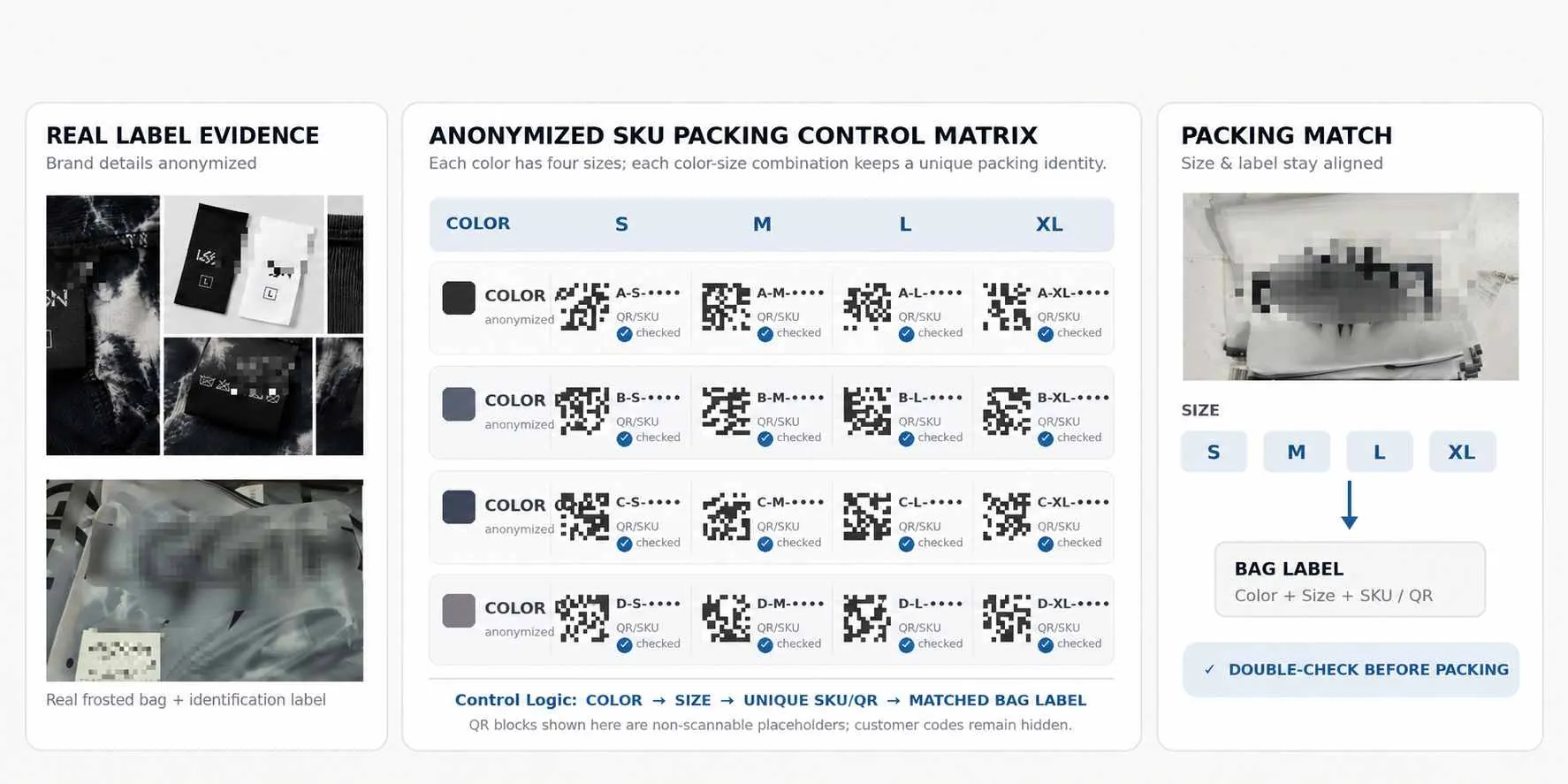
The project required more than reproducing a first sample. The customer had its own Tech Pack and needed the initial product adjusted after physical evaluation because some design details did not fully meet the intended use scenario. The eventual bulk program also included custom packaging, instructions, labels, logos, care labels, and individual packaging with QR-code identification that differed by color and size.
Solution
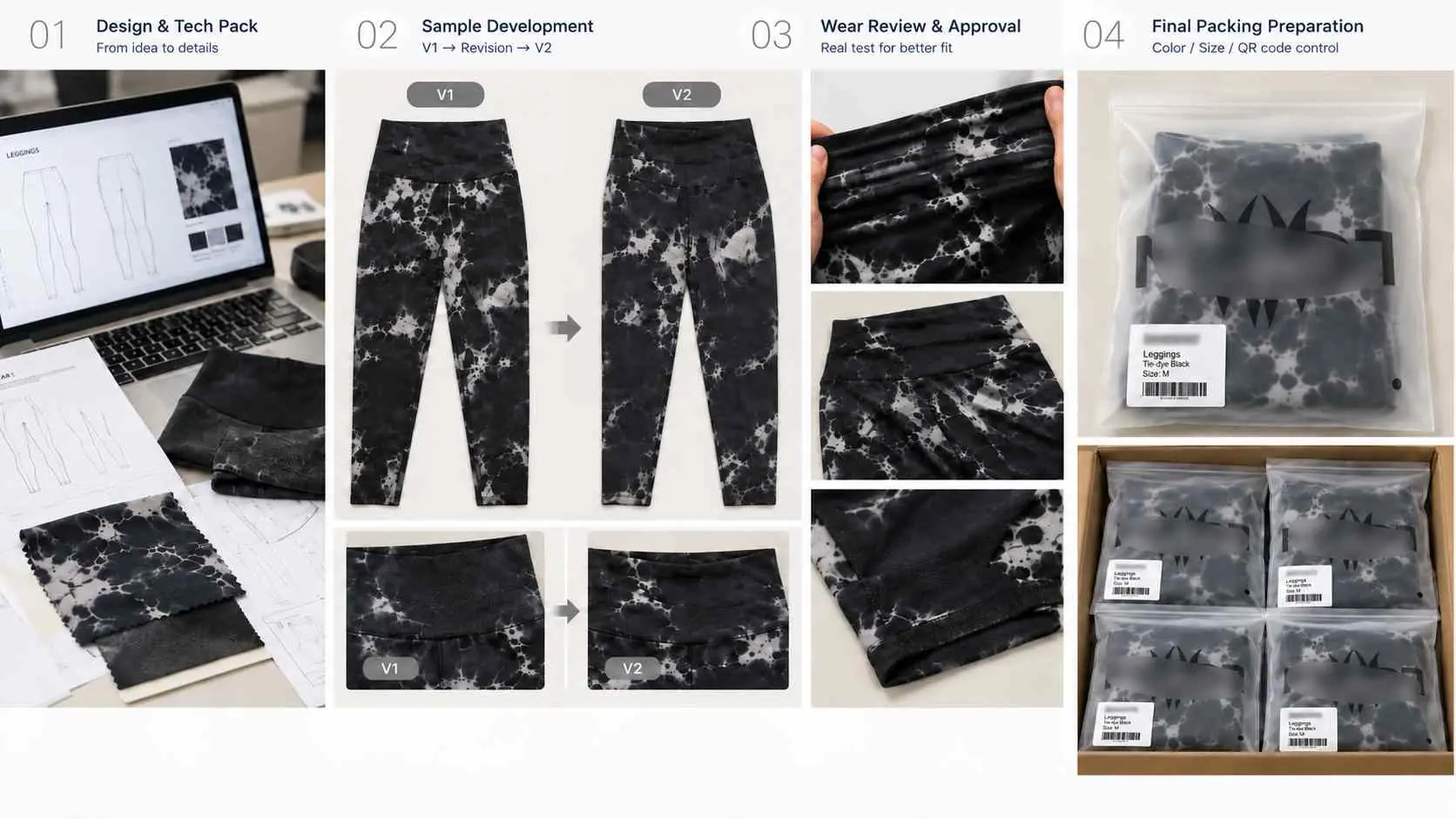
MOVEVOX first reviewed the customer's Tech Pack and produced an initial development sample. After design areas were adjusted, a second sample was made. Once the revised direction was largely accepted, approximately 5–10 samples were produced for real user testing. After validation, the customer moved into bulk production with customized branding, packaging, instructions, labels, care labels, and QR-coded bag identification.
Execution Process
Tech Pack Review
The customer's existing Tech Pack provided the product-development basis before the first sample.
Initial Sample
The first version was produced and sent for customer review and practical evaluation.
Revised Sample
A second version incorporated the agreed revisions and became the basis for further validation.
User Validation
Approximately 5–10 samples were prepared for real fitness-use feedback before the bulk decision.
Bulk and Packing
Bulk production included customized branding and additional QR-code packing controls.
This case demonstrates controlled development and packaging execution. It should not be represented as evidence that this customer purchased a crossover-waist style unless that product is separately verified.
From First Sample to Long-Term Repeat Orders
A Spanish customer case shows how initial product evaluation developed into repeat production, coordinated shipping, and a later response to unusually high demand. The case demonstrates scale-up execution rather than a universal service promise.
Supplier Evaluation
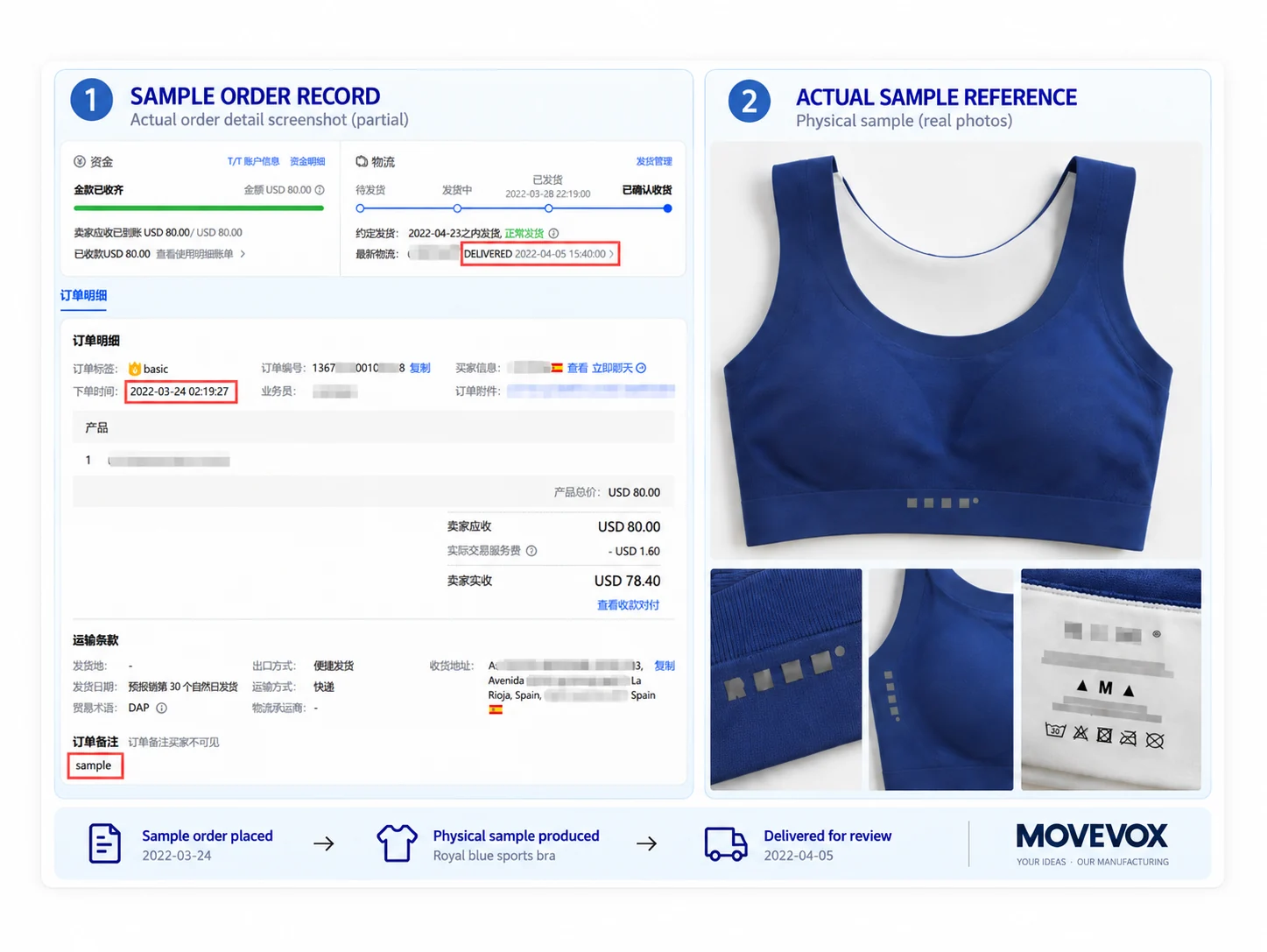
The customer found MOVEVOX through the website and first purchased stock samples to assess material, workmanship, styles, and product details.
Private Label Setup
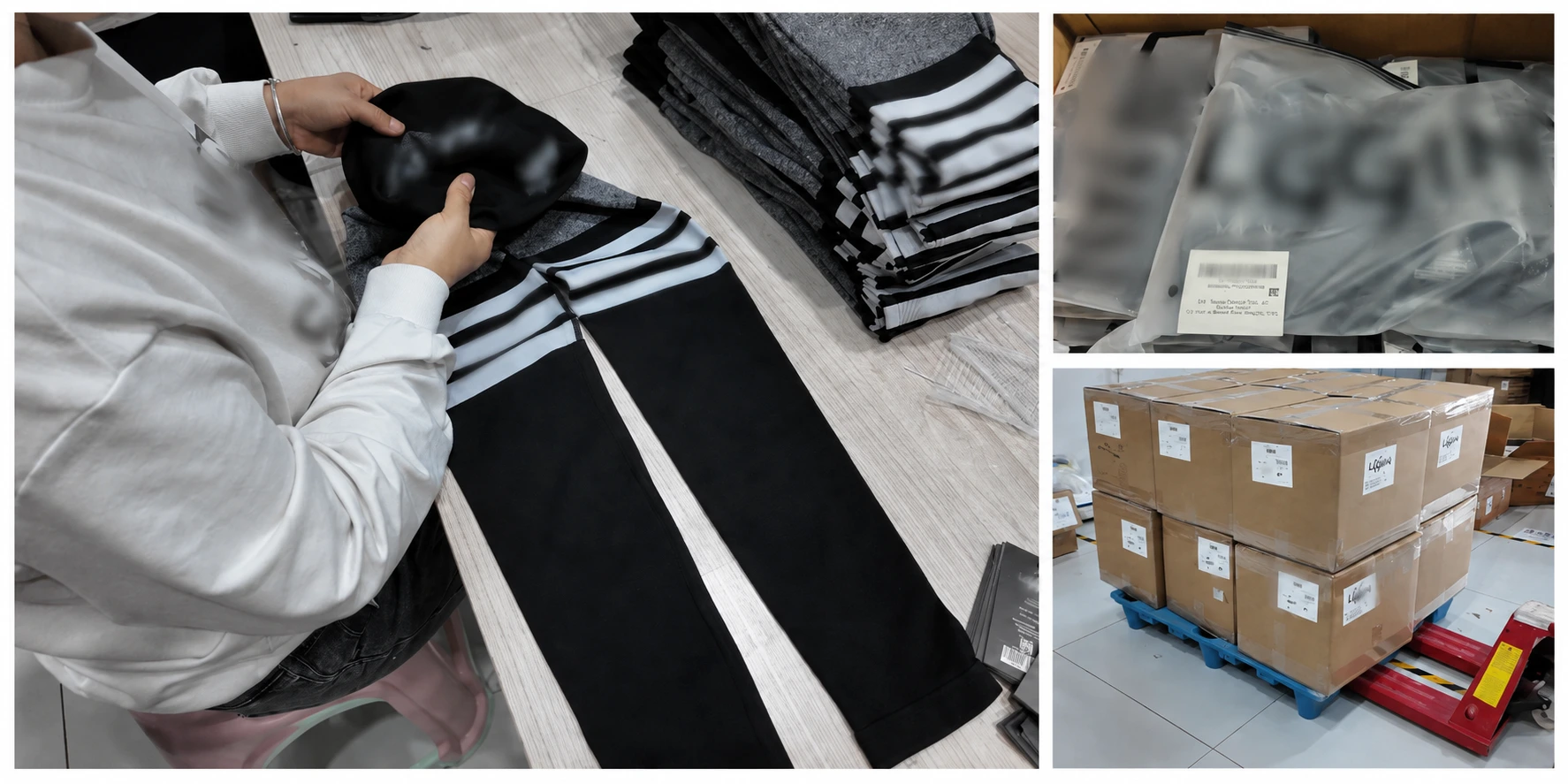
After evaluating samples, the customer requested customized care labels, tags, packaging, and logo execution. MOVEVOX recommended silicone-logo and matte zipper-bag directions.
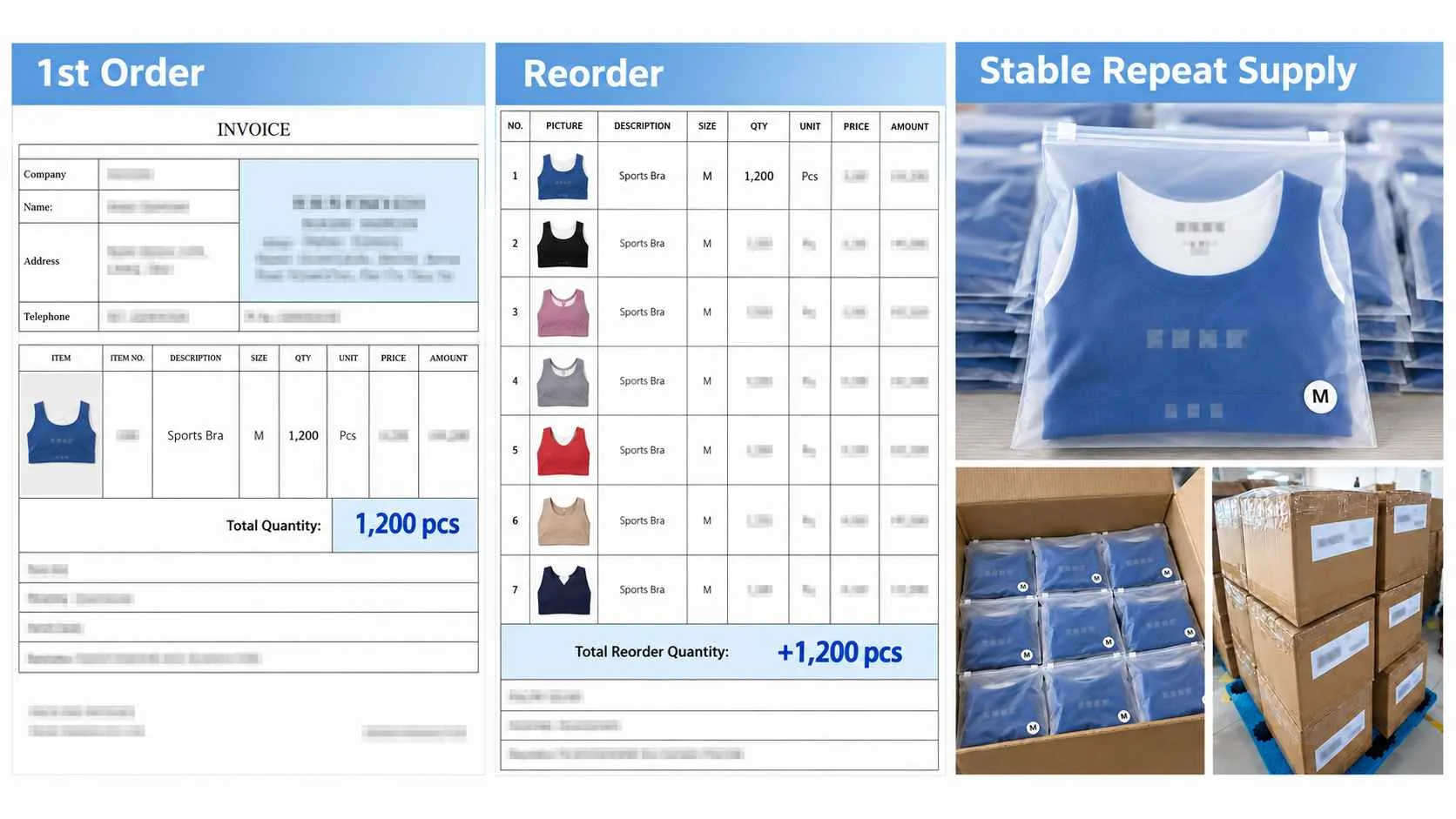
Initial Production
The first bulk order was approximately 1,200 pieces. The source record states that this order was completed within 15 days and used a combination of air and sea transportation.
Early Reorder
Before receiving the first shipment, the customer placed an additional repeat order for approximately 1,200 pieces using the same processing and packaging requirements.
Repeat Program
The relationship developed into a stated pattern of approximately two orders per month, with ongoing new-product recommendations during the cooperation.
Capacity Response
In one high-demand period, the customer's quantity increased to approximately three times the usual level. MOVEVOX states that additional production-line capacity was organized.
Stock Support
The case record states that selected customer styles were later kept in inventory, with approximately 1,500 pieces per color held to support unusual repeat-order requirements.
The value of this case is the progression from product validation to customized branding, repeat orders, changed demand, capacity response, and forward inventory planning. Materials, SKU complexity, production timing, and commercial requirements differ by customer.
Crossover Leggings Supplier Evaluation Checklist for Brand Teams
Use this supplier-neutral checklist to compare manufacturers on the factors that influence crossover-waist leggings development, quality control, commercial feasibility, and repeat production.
A strong supplier does not need the largest number or broadest claim. Higher-quality evidence is specific, current, internally consistent, and linked to the actual product. Pay attention to suppliers that openly define limitations, approval conditions, production locations, test scope, and effective MOQ.
Crossover Waist Leggings Manufacturing: Frequently Asked Questions
These questions address development, customization, MOQ, manufacturing, quality, capacity, testing, and project-planning issues buyers commonly resolve before starting a crossover-waist leggings program.
Can MOVEVOX manufacture crossover waist leggings?
Yes. Crossover and V-shaped waist structures are included within MOVEVOX's current leggings development capability. The exact manufacturing solution depends on geometry, fabric, fit, size range, pockets or panels, and other construction requirements. A cut-and-sew waistband can use shaped panels and sewn construction, while a seamless project may use engineered knitting where technically suitable. The route is confirmed through technical review and physical sampling.
Can you develop from my existing Tech Pack?
Yes. A complete Tech Pack is the preferred input for established brand programs because it gives the clearest basis for measurements, materials, construction, artwork, labels, packaging, tolerances, and testing requirements. MOVEVOX reviews technical and commercial open points before sampling. Approved development decisions then become part of the reference package used for later sample and bulk-production stages.
What if we do not have a complete Tech Pack?
Projects can also begin from a legally usable physical reference sample, sketch, image, incomplete Tech Pack, fabric swatch, or clearly defined concept. MOVEVOX can help identify missing development information and convert confirmed requirements into a more executable brief. More incomplete projects can require additional clarification or sample iterations, so sample timing should be confirmed only after relevant details are sufficiently defined.
How do you evaluate crossover waistband fit?
Fit is reviewed as a system rather than only a waist measurement. Relevant variables include waist and hip relationship, waistband height, upper and lower circumference, crossover geometry, front and back rise, crotch position, fabric stretch and recovery, symmetry, and size grading. A fit sample should be checked through actual measurements plus static and movement evaluation.
What is the MOQ for custom crossover leggings?
The current regular custom starting point is approximately 100 pieces per style for seamless production and approximately 150 pieces per style for cut-and-sew production when suitable standard materials and normal processes are used. These are base garment MOQ references, not guaranteed effective MOQs for every project. Custom-dyed material, exclusive fabrics, logos, labels, packaging, or supplier-specific components can have separate minimums.
Can we order a custom Pantone color?
Yes, custom color can be developed using an approved Pantone reference or physical color standard, subject to material and dyeing conditions. Current company facts indicate that a custom dye lot commonly corresponds to approximately 400–600 finished garments depending on material consumption and supplier conditions. The actual color MOQ should therefore be confirmed against the selected fabric or yarn.
What private-label elements can MOVEVOX customize?
MOVEVOX can support garment construction, fabric, color, logo, main labels, care labels, size labels, woven labels, hangtags, individual packaging, SKU or barcode stickers, cartons, and shipping marks according to the approved project. Logo processes can include screen printing, heat transfer, silicone printing, jacquard, embroidery, and woven-label solutions where suitable.
Can we customize the waistband on an existing style?
Potentially, but the change should be treated as product development rather than a cosmetic adjustment. Changing crossover depth, waistband height, overlap, circumference, rise, fabric, or construction can affect fit and may require pattern or seamless-program changes and a new fit sample. The revised version should be physically approved before it becomes the basis for commercial bulk production.
Do you offer both seamless and cut-and-sew manufacturing?
Yes. MOVEVOX operates both routes. The current core system includes 28 Italian Santoni seamless knitting machines and approximately 24 major sewing and garment-production machines. Seamless can support engineered knit structures, while cut-and-sew provides greater freedom for shaped panels, pockets, multi-material construction, and pattern-driven structures. The decision is based on the actual product requirement.
How is an approved sample transferred into bulk production?
Approved decisions are written back into current production specifications rather than relying only on visual memory of the sample. The handover can include final Tech Pack information, measurements, material or yarn, colors, construction, artwork, labels, packaging, and the approved or PP sample reference. Pre-production review and first-article checking then verify whether the bulk setup follows the released standard.
How do you control bulk measurements?
MOVEVOX uses the customer's final measurement specification and POM when provided. For leggings, relevant measurements can include waist, hip, waist height, front rise, back rise, inseam, total length, leg opening, and structural symmetry. Measurement methods should be aligned before production so factory and buyer are measuring the same point in the same way.
What is MOVEVOX's current production capacity?
The current normal combined managed delivery-capacity reference is approximately 150,000–200,000 finished pieces per month across the controlled seamless and cut-and-sew manufacturing network. This is a stable managed-capacity concept rather than a theoretical machine-output maximum. A specific program still requires capacity review against quantity, SKUs, materials, production sites, QC, packing, and delivery date.
Does MOVEVOX have product testing for leggings?
MOVEVOX currently has third-party reports for a black sample identified as fitness yoga leggings. One report covers requested RoHS 2.0 testing under the stated IEC methods, and another covers requested REACH Annex XVII Entry 51 & 52 phthalate testing for black fabric. These results apply only to the tested samples described in the reports and should not be represented as company-wide certification.
Can you follow our brand testing requirements?
Yes, buyer-specific testing requirements can be reviewed during development. The customer should provide the applicable market, protocol, test item, acceptance limit, material or finished-product scope, and nominated laboratory requirement where relevant. Existing MOVEVOX reports demonstrate sample-specific testing history but do not replace a brand's own RSL, material, performance, or finished-product requirements.
What is the usual sample and bulk lead time?
Standard samples normally require approximately 5–10 working days after necessary development information and key details are confirmed. Current regular bulk-production guidance is approximately 20–35 days. These are planning references rather than unconditional guarantees. Custom materials, dye lots, trims, revisions, delayed approvals, larger quantities, testing, packaging development, or changed production conditions can extend the schedule.
Can our team audit or inspect the factory?
Yes. MOVEVOX supports customer factory visits and real-time video factory review, subject to production scheduling and confidentiality requirements around other customer projects. The company can also cooperate with third-party inspection where agreed. For buyers requiring an approved production site, MOVEVOX manages production-site assignment transparently rather than moving orders to unknown facilities without the required approval.
Send Us an Inquiry
Tell us your needs, and our team will get back to you within 24 hours.