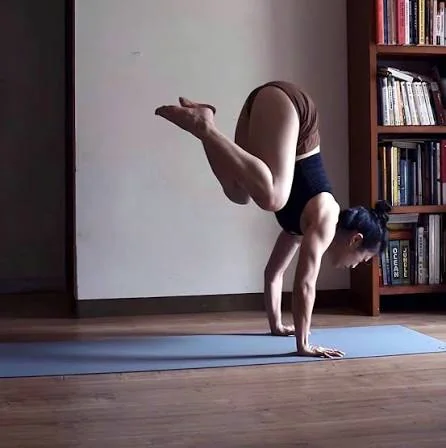
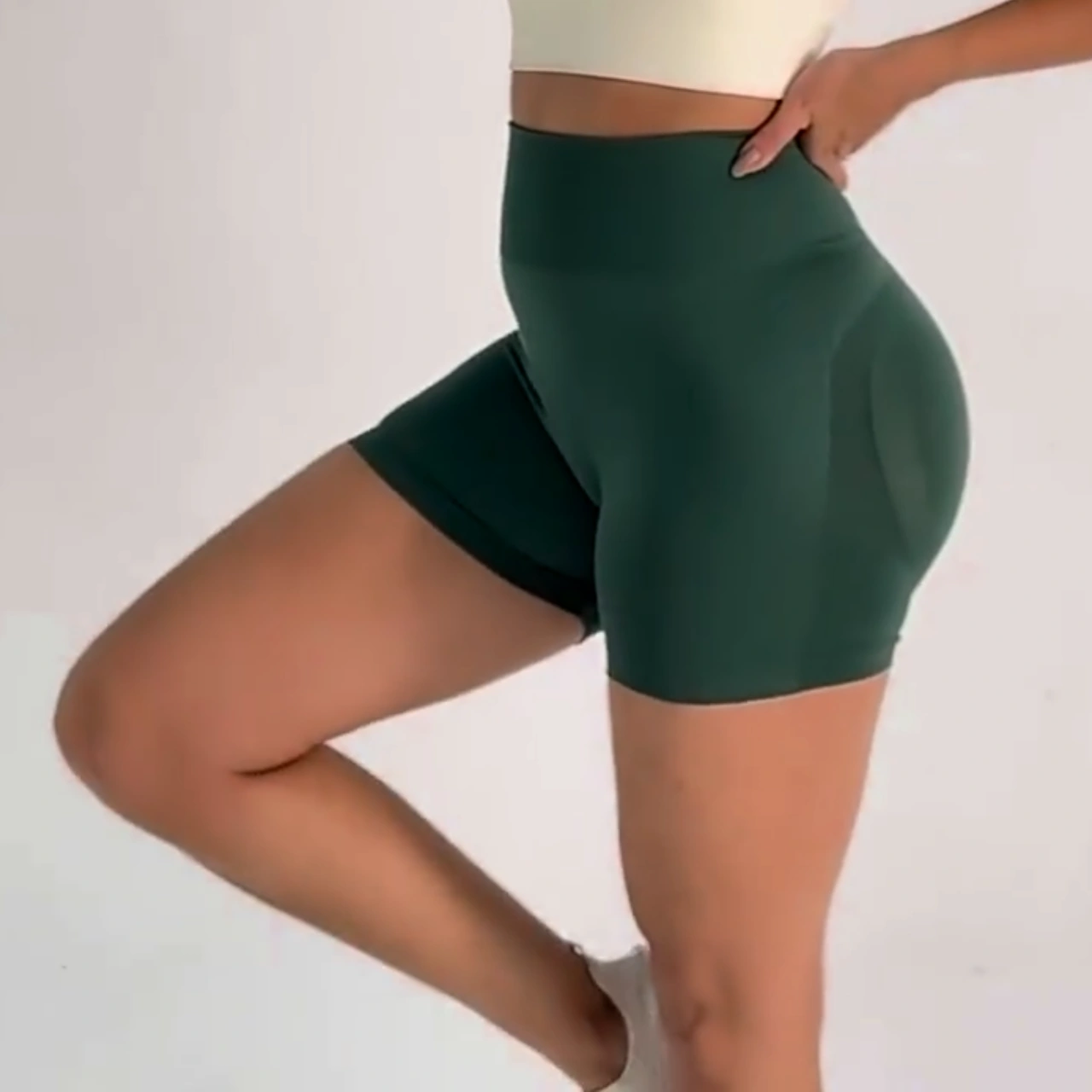
Yoga Shorts Manufacturer for Activewear Brands and Private Labels
MOVEVOX develops and manufactures custom yoga shorts for established activewear, yoga, Pilates and fitness brands.
Projects can follow Cut & Sew or Santoni Seamless manufacturing routes according to the required fit, waistband, inseam, crotch construction, material and product design.
Development can start from a Tech Pack, legally usable reference garment, approved sample, sketch or sufficiently defined product brief.
From Development to Commercial Production
Develop shorts through the appropriate manufacturing route, approve the physical product, then transfer the released standard into controlled private-label bulk production.
Custom Yoga Shorts
Develop waistband, rise, inseam, crotch construction, leg opening and material around the brand's approved specification.
Seamless Yoga Shorts
Use Santoni knitting capability for suitable seamless waistband, texture, knit-zone and reduced-seam product directions.
Private Label Shorts
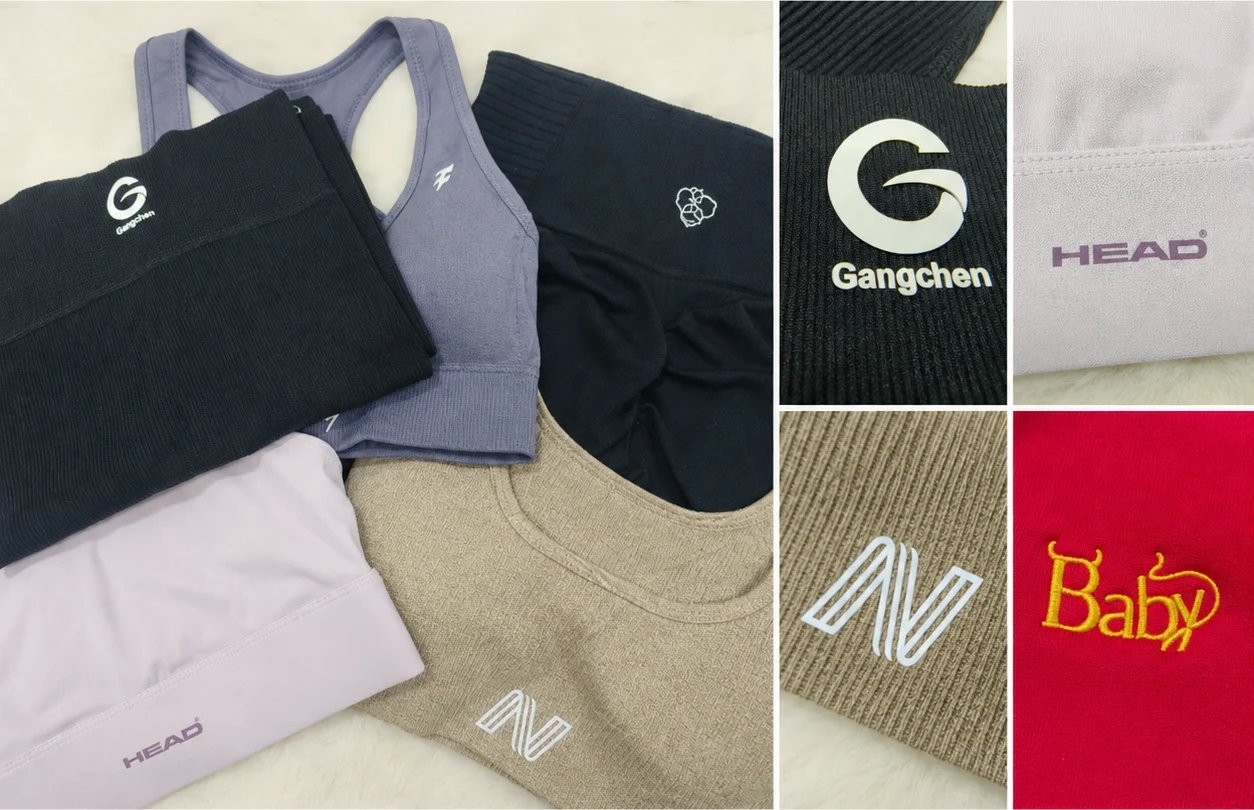
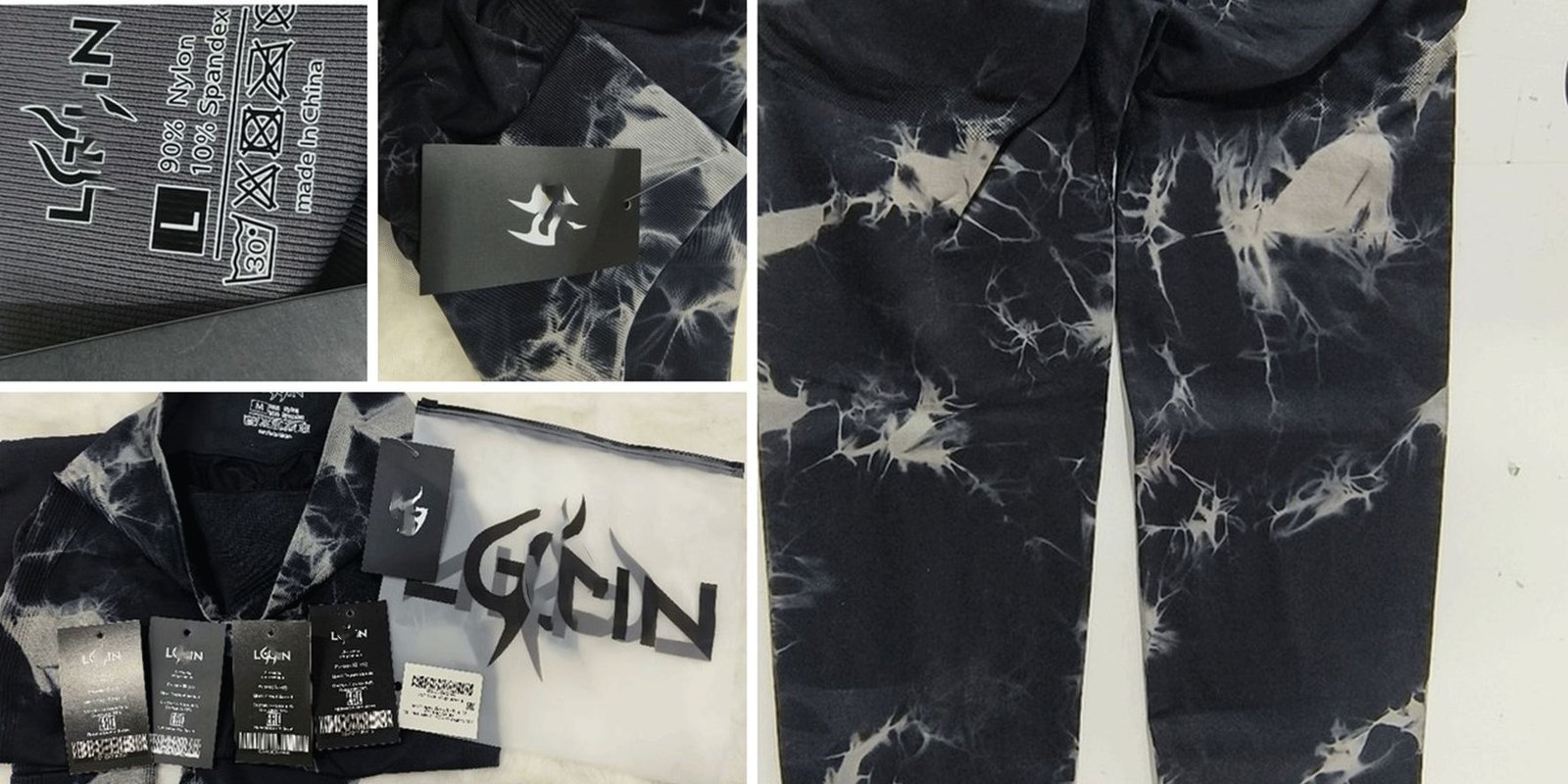
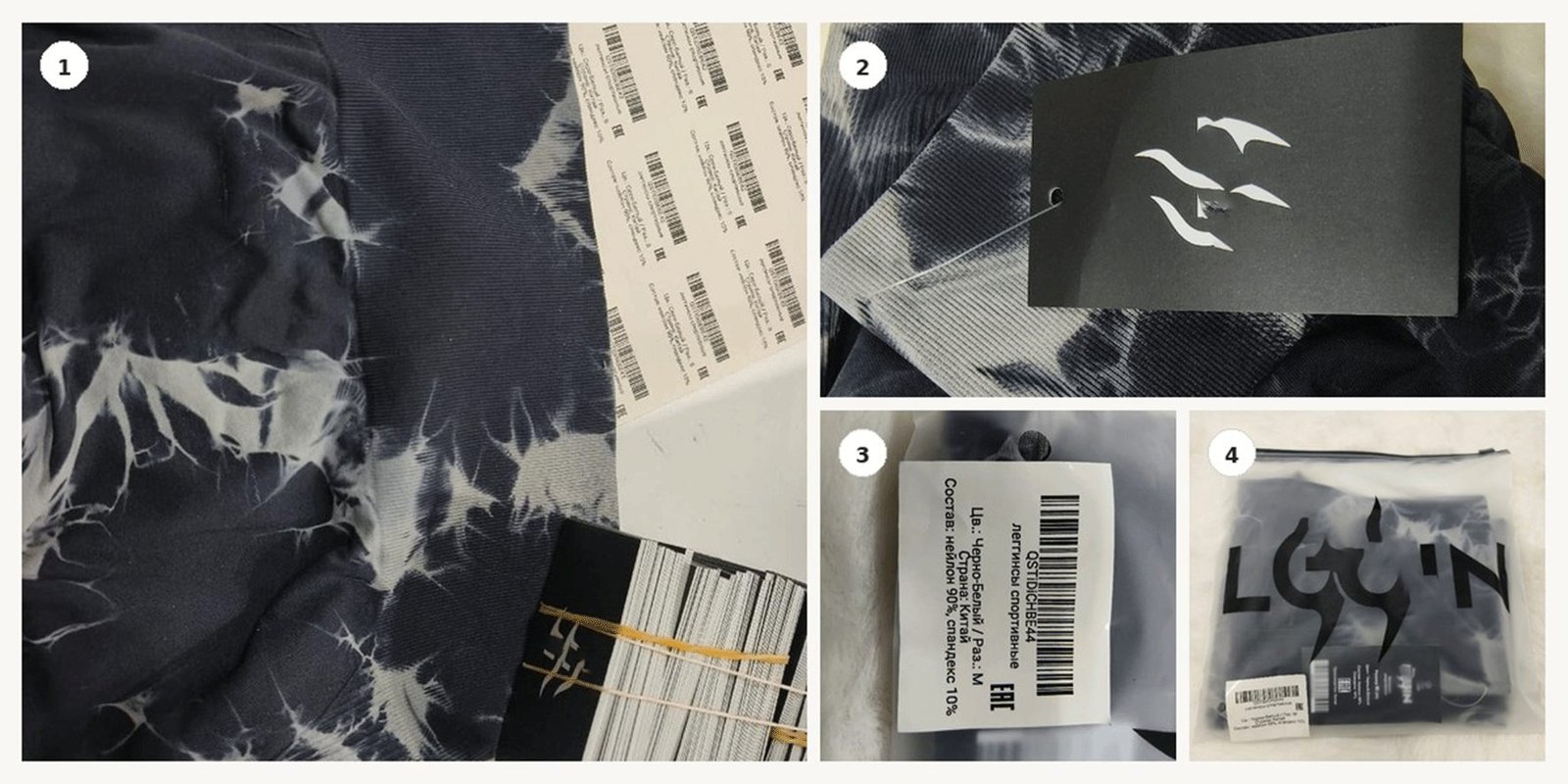
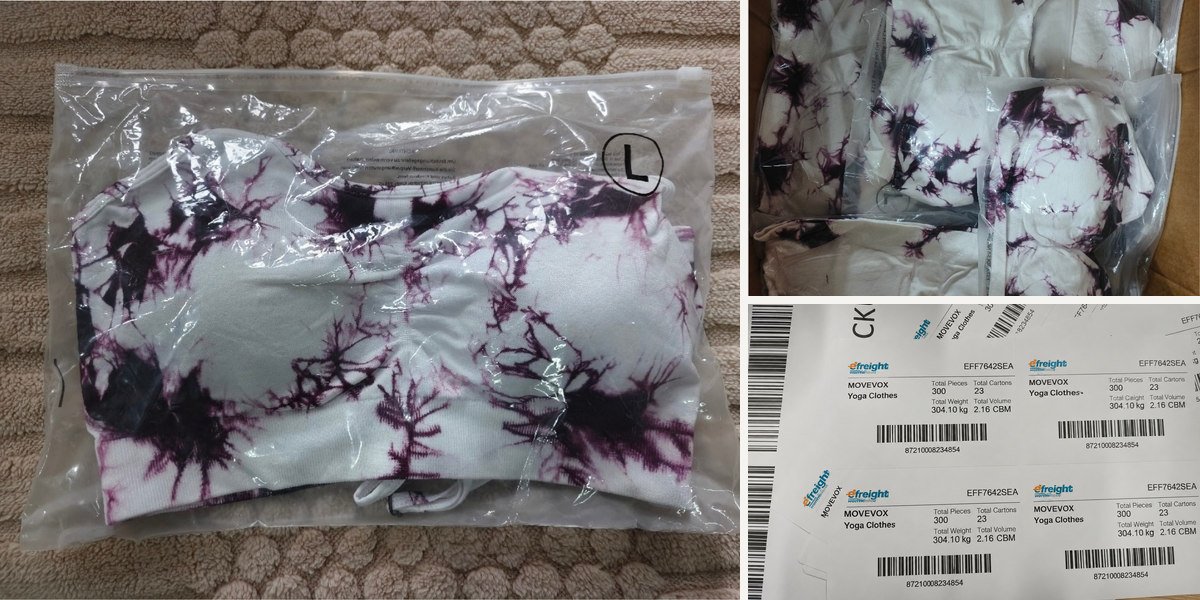
Coordinate finished garments with approved logos, labels, hangtags, SKU information, packaging and carton requirements.
Why Are Yoga Shorts More Than Short Leggings?
Yoga shorts share some engineering principles with leggings, but reducing garment length changes inseam, leg-opening position, coverage, crotch relationships and movement behavior.
Just Reduce the Length
A legging block can appear to provide an easy starting point by simply shortening the lower leg.
Recheck the Inseam
Changing the inseam moves the garment finish to a different part of the thigh, changing coverage, visual proportion and the location where leg-opening pressure has to be evaluated.
Hip Fit Stays the Same
Waist and hip measurements may look unchanged when the lower leg is removed.
Add Leg-Opening Control
Yoga shorts create a new leg opening. Circumference, fabric recovery, hem construction and thigh position can affect rolling, pressure and upward movement during use.
Crotch Needs No Change
The original rise and crotch can appear acceptable when viewed only on a flat garment.
Review Body Proportion
Front rise, back rise, crotch curve or gusset and hip capacity still determine how the garment sits. Shortening the leg does not automatically resolve those relationships.
Static Fit Is Enough
A garment may look balanced while the wearer is standing in a neutral position.
Review Movement
Squat, lunge, leg raise and flexion can reveal changes in waist position, crotch tension, coverage and leg-opening movement that are not visible during a static review.
What Yoga Brands Need From a Shorts Supplier
A professional Yoga Shorts program has to balance product experience with manufacturing control and commercial repeatability.
Fit Stability
Waistband, waist-to-hip relationship, rise, crotch and leg opening should be reviewed as a connected system.
Evidence: Fit Sample + measurement chart.Movement Comfort
Product development should check whether pattern, material and construction remain appropriate through relevant yoga and studio movements.
Evidence: Physical movement review.Material Behavior
Hand feel, stretch, recovery, opacity, surface and garment structure need to be reviewed together.
Evidence: Approved material + garment.Repeatability
Approved measurements, material, workmanship, branding and packaging need to remain connected to the commercial production standard.
Evidence: PP + First Article + QC.Scalability
MOQ, material minimums, colors, sizes, branding and packaging should be reviewed before a product direction is treated as commercially ready.
Evidence: Project commercial review.What Should Buyers Verify Before Supplier Shortlisting?
Product photos alone do not establish whether a manufacturer is ready for a structured Yoga Shorts brand program.
Generic Product Knowledge
A supplier may show many Shorts images while providing little explanation of waistband, rise, inseam, crotch, leg opening or physical Fit.
Verify:Ask how key Shorts measurements and construction points enter the sample standard.
Unclear Manufacturing Route
Seamless and Cut & Sew products follow different engineering systems. Treating them as interchangeable can hide the supplier's actual control.
Verify:Request route-specific equipment and production evidence.
Weak Sample Approval
A supplier may call any attractive sample “approved” without defining whether Fit, size range, material, branding or packaging is actually closed.
Verify:Request sample purpose, version and approval scope.
Hidden Production Sites
Buyers may approve one site and later discover that commercial bulk was assigned elsewhere without the required visibility.
Verify:Ask where the order will be produced and how site changes are approved.
Unsupported Performance Claims
Terms such as squat-proof, compression or guaranteed recovery can be presented without defined material, size, color or test conditions.
Verify:Ask what physical or test evidence supports each claim.
Vague Capacity Claims
Theoretical machine output, peak capacity and stable quality-released delivery are not the same.
Verify:Request a project-specific capacity check before PO placement.
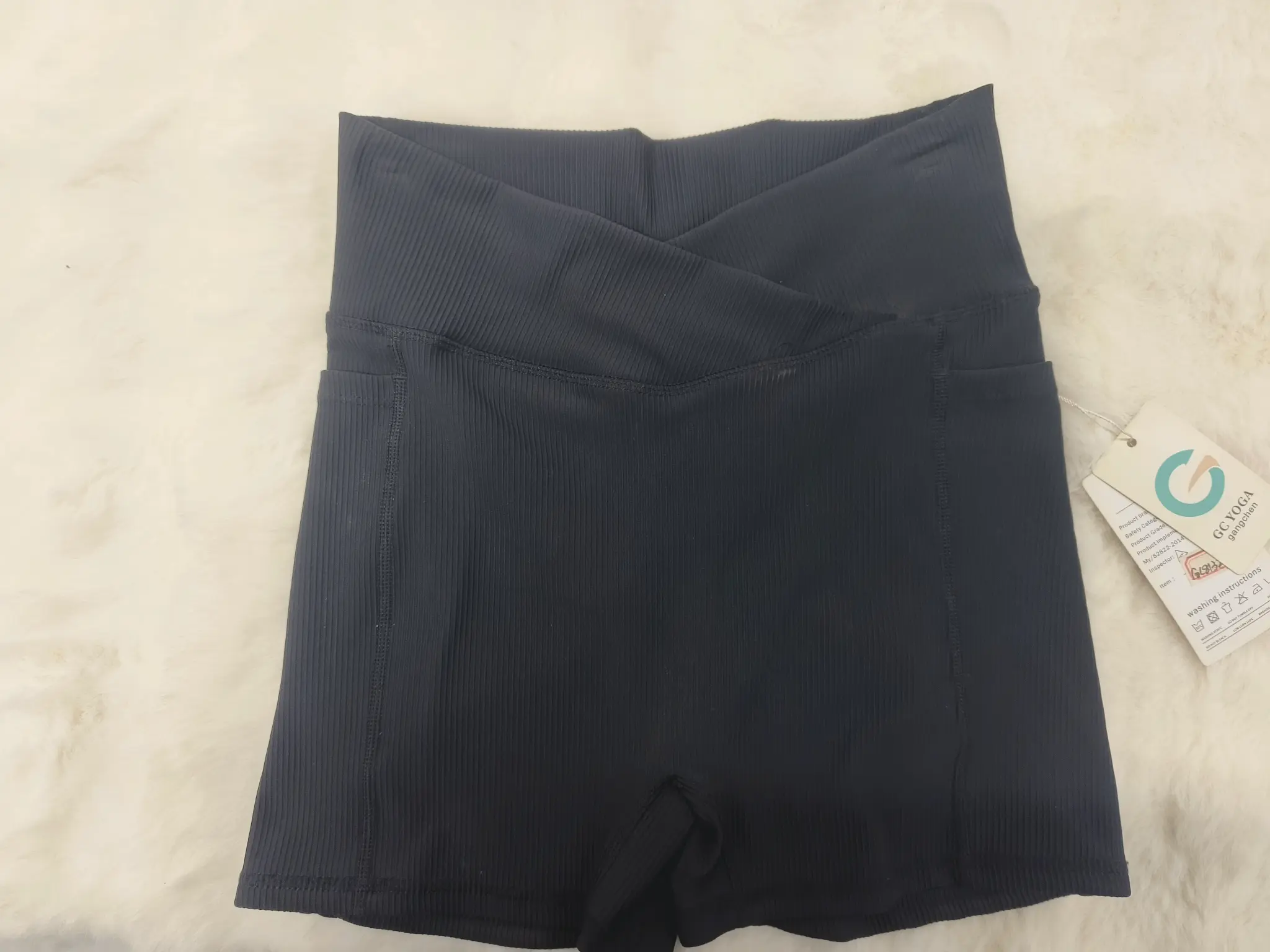
Engineer the Yoga Shorts Waistband as a System
Waistband height, circumference, hip relationship, material recovery and rise work together to influence garment position and physical Fit.
Waist Height
Define the finished waistband height as a measurable POM rather than only calling the product high waist or super high waist.
Upper Waist
Review circumference with material stretch, recovery and the intended wearing position.
Lower Waist
Evaluate how the lower waistband transitions into the hip and body of the Shorts.
Waist + Hip + Rise
The waistband should be approved as part of the complete physical Shorts rather than as an isolated piece of construction.
Waist-Hip
Waist and hip should be reviewed together because tightening only the waist cannot resolve every Fit problem.
Front / Back Rise
Rise influences where the waistband sits relative to the crotch and hip coverage.
Construction Route
Seamless and Cut & Sew waistbands use different product-engineering methods and should follow the approved design requirement.
Prevent Waist-to-Hip Fit Problems Before Bulk
Waist and hip problems rarely come from one measurement alone. Review the symptom, likely variables, physical sample and corrective action before production.
| Defect | Likely Cause | Prevention | Inspection Point | Corrective Action |
|---|---|---|---|---|
| Waist Slippage | Waist circumference, insufficient waist-to-hip difference, back rise or material recovery. | Review waist, hip, rise and recovery together in physical fitting. | Check waistband before and after relevant movement. | Identify the controlling Fit or material variable before approval. |
| Back Waist Gap | Waist-to-hip proportion or rear-rise geometry. | Review target body profile, waist, hip and rear rise. | Inspect standing, bending and squat positions. | Correct the relevant POM or pattern relationship. |
| Waist Rolling | Waist height, local tightness, recovery or construction. | Evaluate waistband structure during relevant movement. | Review after repeated bending and seated flexion. | Revise height, circumference, material or structure as required. |
| Hip White-Out | Excess extension, light color, low coverage or insufficient hip capacity. | Review material, color, size and negative ease together. | Inspect under agreed stretched and movement conditions. | Adjust material or Fit rather than relying only on GSM. |
| Crotch Pull | Rise, hip capacity, crotch curve or gusset relationship. | Review the complete crotch and hip system. | Check squat, lunge, leg raise and recovery. | Correct rise, crotch, gusset or hip specification. |
| Waist Pressure | Small waist specification or high-recovery material. | Balance stability against the buyer's intended wearing experience. | Review physical pressure and garment movement. | Revise the controlling variable and recheck stability. |
Engineer Rise, Crotch and Inseam Together
Front rise, back rise and inseam should not be developed as isolated numbers. Together with hip capacity and crotch structure, they determine how the Shorts sit and move.
| Problem | Buyer Impact | Development Response |
|---|---|---|
| Front Rise Too Short | Can create front-body tension or downward pull during movement. | Review front rise, crotch curve, waistband position and material extension. |
| Back Rise Too Short | Can reduce rear capacity and alter waistband position. | Review rear rise against hip depth and target body profile. |
| Crotch Geometry Mismatch | May create pulling, bunching or unstable garment position. | Evaluate crotch shape, gusset, seam route and material together. |
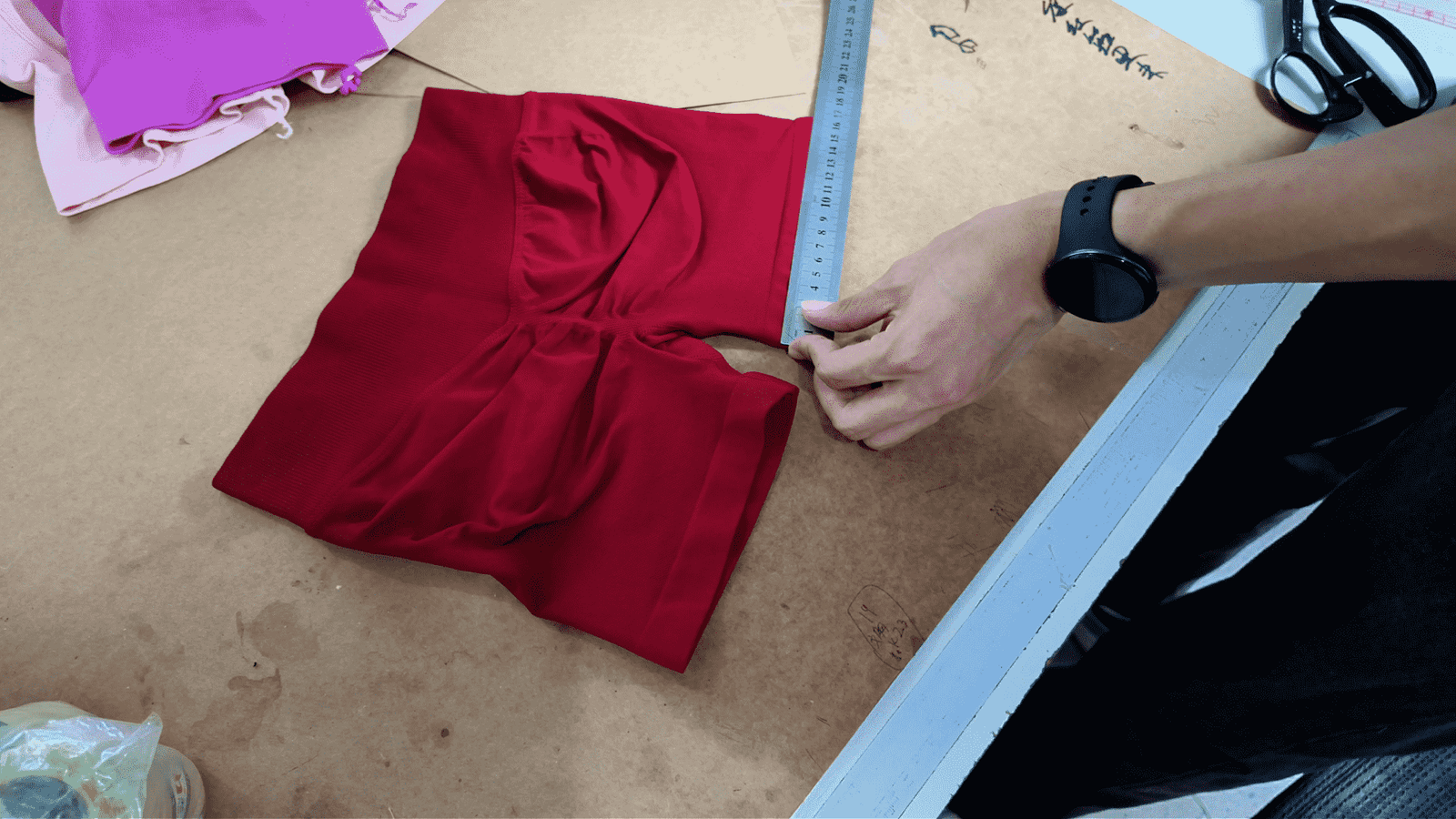
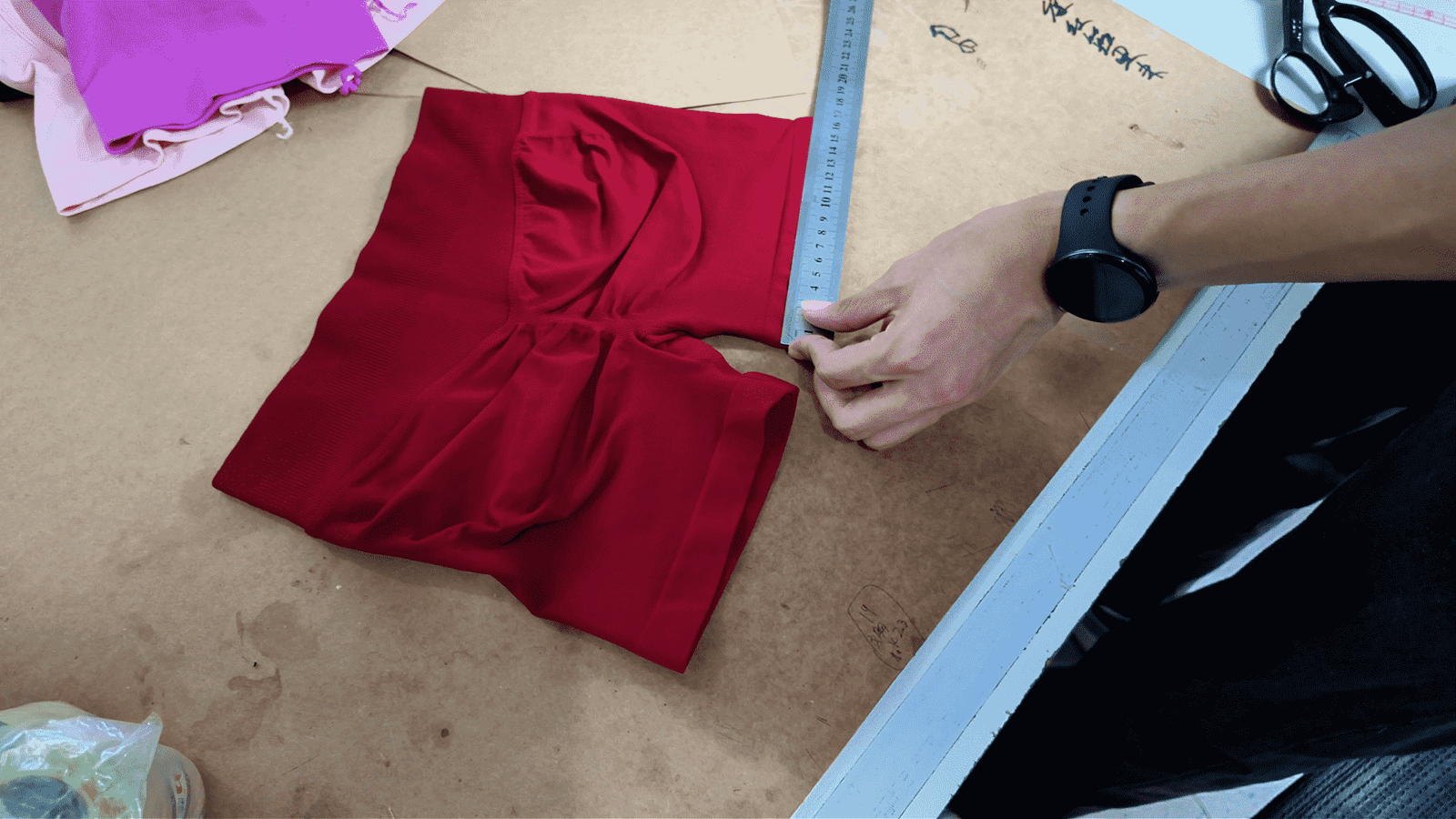
| Inseam Misjudged | Changes coverage and final leg-opening position. | Use one consistent measurement method and Fit Model review. |
| Leg Opening Shift | Can change thigh pressure and ride-up behavior. | Review hem position and circumference after core proportions are approved. |
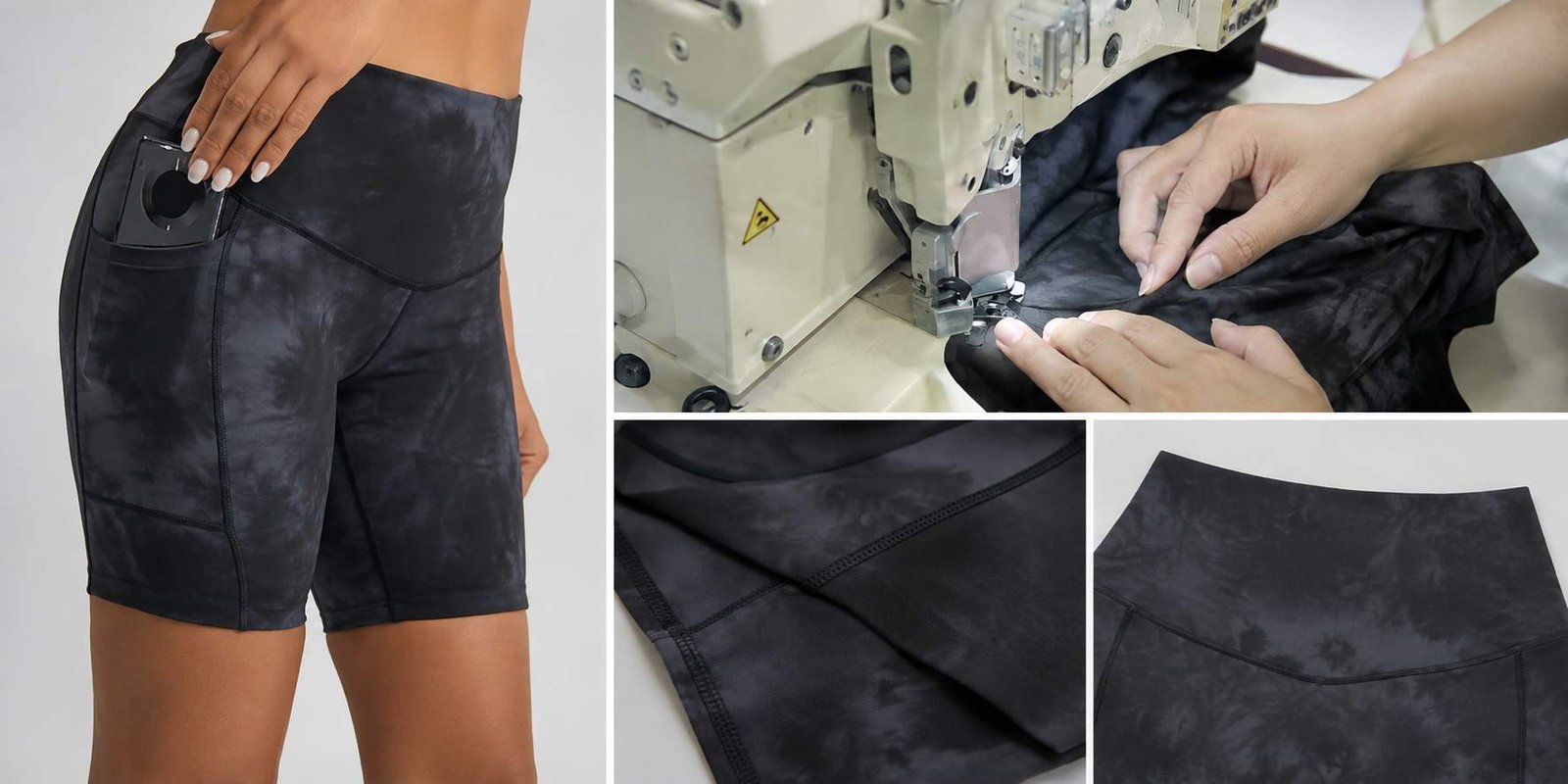
Convert Fit Comments Into Measurable Variables
POM, pattern or seamless-program changes should remain connected to physical Fit review rather than relying only on subjective comments.
No Front Seam Is Not a Fit Guarantee
Removing a visible front seam changes one part of the construction, but it does not remove the engineering work around rise, crotch space, hip Fit, material and movement.
No Seam Solves Everything
Fact: Front appearance is also influenced by rise, crotch geometry, gusset or body structure, hip capacity and material extension.
Physical Fit Sample and movement review remain necessary.No Crotch Engineering Needed
Fact: No-front-seam and Seamless products still need appropriate crotch volume, rise, garment positioning and physical review.
Review measurable POM and actual garment behavior.One Pattern Fits All Materials
Fact: Material changes can alter extension, recovery, thickness, friction and the amount of negative ease in the garment.
Approval applies to the actual material and version.Seamless Means No Sewing
Fact: Seamless reduces or relocates conventional seams, but selected joining or finishing operations may remain depending on design.
Verify the real garment and manufacturing route.Cleaner Means Better Movement
Fact: Visual simplicity does not prove waistband, crotch, hip, coverage or leg-opening stability during movement.
Movement evidence should support the approved sample.Guaranteed Problem-Free Front
Fact: MOVEVOX does not use an absolute “camel-toe free” promise because body profile, size, material and movement affect results.
Use product-specific physical validation.Choose Pockets Around the Actual Shorts Use
Pocket development starts with the object being carried and the intended activity. Position, dimensions, opening and added load can influence the primary garment Fit.
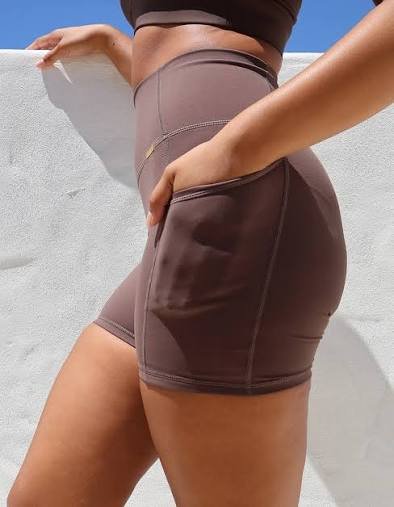
Side Phone Pocket
Review phone dimensions, opening, depth, stretch and loaded appearance.
Hidden Waist Pocket
Small-item storage with minimal outer visual impact, coordinated with waistband construction and access.
Rear Waist Pocket
Position and opening should remain accessible without disrupting waistband Fit, branding or rear appearance.
Internal Pocket
Internal storage can hold smaller items with less outer visual change, subject to access and construction requirements.
Clean No-Pocket
Suitable where a simplified Yoga or Pilates aesthetic is more important than storage function.
Dual Side Pockets
Symmetrical storage requires review of added layers, seam lines and loaded behavior across commercial sizes.
Integrated Seam Pocket
Can be coordinated with an existing seam or panel where the pattern and material support the required opening.
Custom Pocket Brief
Start from target item, dimensions, access direction, retention and visual preference.
Resolve Shorts-Specific Fit Problems Before Bulk Production
Yoga Shorts expose several Fit risks that longer leggings can hide or move elsewhere on the garment.
Leg Ride-Up
Impact: Coverage and visual proportion can change during use.
Response: Review inseam, hem position, thigh circumference and recovery together.
Hem Rolling
Impact: Finished length and local pressure can change during movement.
Response: Review leg-opening construction, circumference and material behavior.
Crotch Pull
Impact: Can affect comfort, front appearance and waistband position.
Response: Check rise, hip space, crotch geometry, gusset and material extension.
Waist Slippage
Impact: Changes intended waist height and can shift crotch and leg opening.
Response: Evaluate waist-to-hip proportion, rise, waistband and recovery.
Back Waist Gap
Impact: Can indicate mismatch between body proportion, rear rise and waistband.
Response: Convert the visual issue into measurable Fit revisions.
Opacity Risk
Impact: Coverage can change over the hip or during high extension.
Response: Review actual material, color, size and movement condition.
Leg Twist
Impact: Can create asymmetry and shift seam or panel placement.
Response: Review material direction, pattern, cutting and finished symmetry.
Validate Yoga Shorts Through Their Intended Movements
Static measurements establish the product standard, while physical movement helps reveal whether waist, crotch, coverage and leg-opening behavior remain appropriate during the intended use.
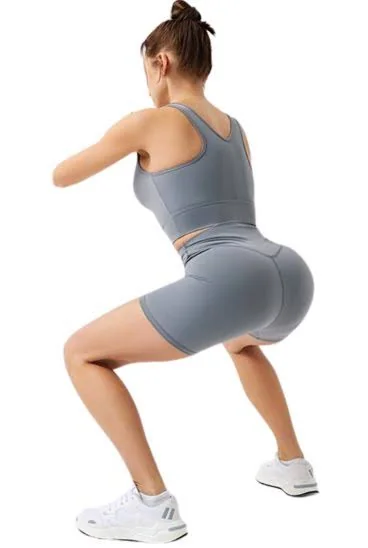
Deep Squat
A deep squat can reveal waistband movement, rear coverage, hip extension, crotch tension, leg-opening movement and opacity changes that may not appear in a standing Fit review.
Check: Waist · Hip · Crotch · Coverage
Forward Flexion
Forward flexion changes the relationship between waist, hip and back rise. Review rear waistband contact, material extension and whether the garment returns to the intended wearing position afterward.
Check: Back Rise · Recovery · Coverage
Lunge
A lunge creates different loading between the two legs and can reveal asymmetric crotch tension, gusset restriction or leg-opening behavior that is difficult to detect during symmetrical standing.
Check: Gusset · Crotch · Left / Right
Leg Raise
Raising the leg helps review whether inseam, crotch depth, hip capacity and leg-opening geometry allow the intended movement without excessive upward pull or waistband displacement.
Check: Inseam · Ride-Up · Waist Position
Twist
Rotation can expose garment displacement or local twisting. Review waistband position, side-body alignment and whether the Yoga Shorts return to an acceptable position when movement ends.
Check: Waist · Side Body · Recovery
Treat Opacity as a Product Condition, Not Label
Opacity is created by material, color, extension, size and finished garment construction rather than by one universal “squat-proof” claim.
Material Structure
Material construction affects coverage.Composition and GSM are useful, but the actual knit or fabric structure changes how material opens under extension.
APPROVED MATERIALColor
Color can change visual opacity.A dark approved sample does not establish the result for every lighter color.
COLOR-SPECIFIC EVIDENCEStretch
Relaxed opacity is not enough.Material can appear covered when relaxed and change significantly when stretched over the hip or during deep flexion.
MOVEMENT REVIEWGarment Size
Fit changes extension.Excess negative ease or an undersized garment can increase local extension and therefore opacity risk.
APPROVED FITConstruction
The complete garment matters.Gussets, seams, pockets, layers or seamless zones can change local extension and coverage.
FINISHED PRODUCTApproval Scope
“Squat-proof” is not universal.Approval should identify the relevant style, material, color, size and agreed physical condition.
PROJECT-SPECIFICSelect Fabric Around the Yoga Shorts Objective
Material selection should start from the intended product experience, not from one composition number.
What is the target use?
Yoga · Pilates · Training · Athleisure
What hand feel matters?
Smooth · Soft · Brushed · Structured
What fit direction?
Gentle · Close · Supportive
What coverage risk?
Dark Color · Light Color · High Stretch
Which route fits?
Cut & Sew · Seamless · Review

Approve the Real Material
Hand feel, stretch, recovery, opacity, surface, color and commercial requirements should be reviewed on the actual material or garment.
Nylon Stretch
Review composition, GSM, surface, recovery and opacity rather than inferring the final result from fiber names alone.
Polyester Stretch
Can suit selected surface, print, durability or commercial directions, subject to physical product approval.
Brushed Direction
Review actual hand feel, surface, color behavior, pilling risk and bulk repeatability.
Seamless Yarn
Yarn, elastane, knit structure, machine settings and program work together in the final Seamless garment.
Evaluate Stretch and Recovery as One Material System
Stretch describes extension. Recovery describes what happens after the load is released. Yoga Shorts need both to be reviewed together.
Direction Check
Confirm how the material extends in relevant directions and how those directions sit in the finished garment.
MATERIAL ORIENTATIONExtension Review
Review whether the material reaches the required development range without abnormal structural or visual behavior.
PROJECT METHODRelease Review
Compare the condition before extension with the material after the load is released.
RECOVERYRepeated Cycles
Where required, repeated extension can identify residual deformation that a single hand-pull does not reveal.
REPEAT REVIEWGarment Review
Confirm that acceptable material behavior still creates an acceptable waistband, hip and leg opening once built into the Shorts.
PHYSICAL SAMPLEBulk Verification
Incoming or production material should remain connected to the approved project reference and buyer requirements.
BATCH CONTROLBuild Cut-and-Sew Yoga Shorts Through Controlled Construction
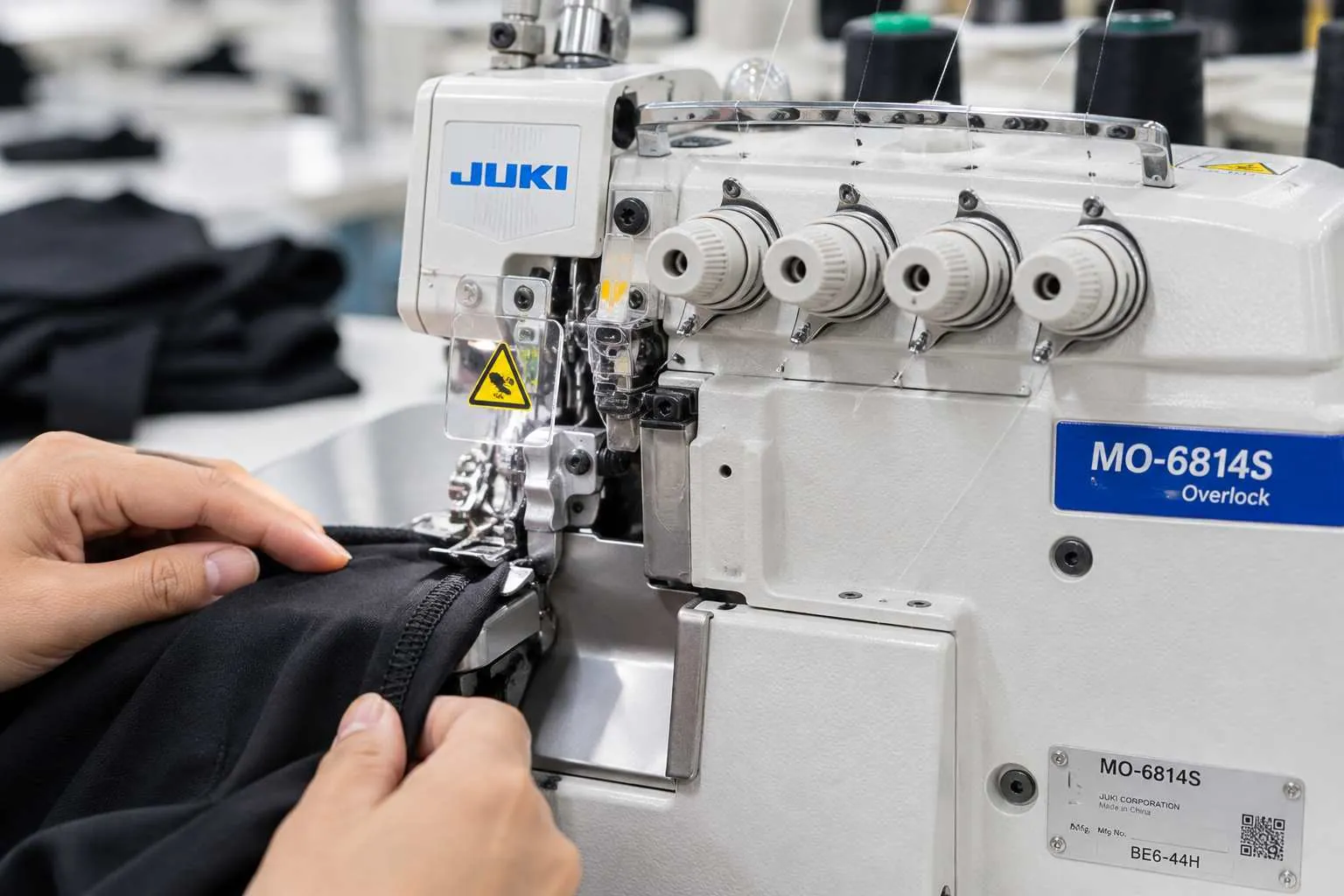
Cut & Sew Yoga Shorts are developed through fabric, pattern, cutting, sewing and finishing decisions that remain connected to the approved Fit.
Pattern Engineering
Translate waist, hip, rise, inseam, crotch and leg-opening requirements into released pattern geometry.
Fabric Direction
Stretch direction and cutting orientation should follow the approved material and pattern requirement.
Overlock Construction
Use where the approved stretch-seam route requires it, with workmanship checked on the actual material.
Flatlock Construction
Apply where the product requires a flatter joining method, without making unsupported universal comfort claims.
Coverstitch Finish
Review stitch width, elasticity, alignment and finished appearance on the approved product.
Gusset Assembly
Gusset shape, seam route and attachment should remain connected to the approved crotch Fit.
Engineer Seamless Yoga Shorts Through Santoni Knitting
Seamless Yoga Shorts are developed through yarn, knitted structure, machine parameters and program control rather than conventional cut fabric panels alone.
Core Seamless Capability
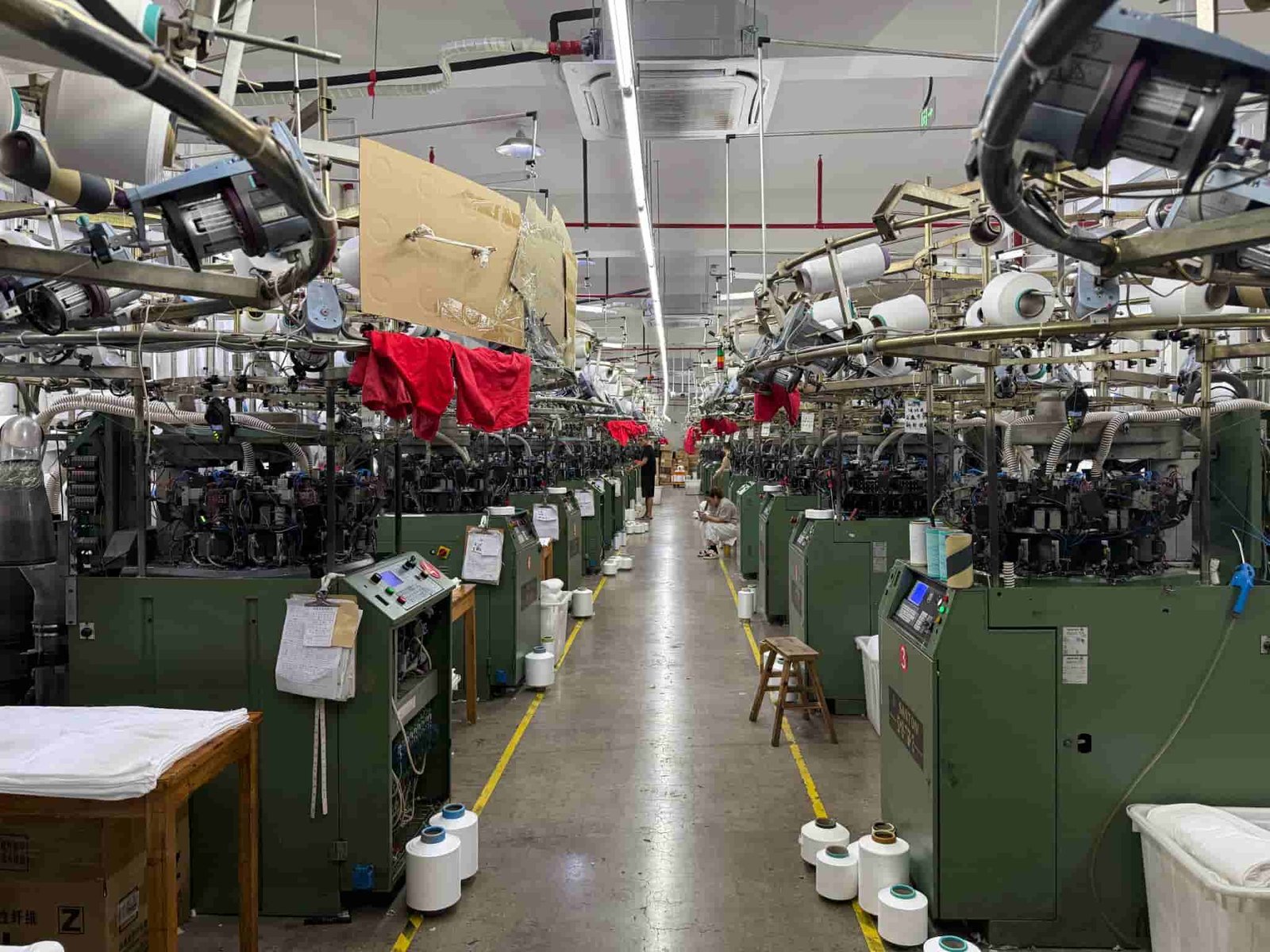
MOVEVOX operates 28 Italian Santoni machines supporting suitable Seamless activewear development and production.
Waist Zone
Integrated height, circumference, density and transition.
Front Body
Engineered knit structure subject to physical Fit approval.
Rear Body
Review hip Fit, structure placement and finished appearance.
Crotch Zone
Space, structure and finishing still require physical review.
Texture Zone
Rib or textured knit directions must remain tied to the approved sample.
Mesh Zone
Placement and opening should be validated before performance claims.
Leg Opening
Review circumference, pressure, rolling and movement at the lower edge.
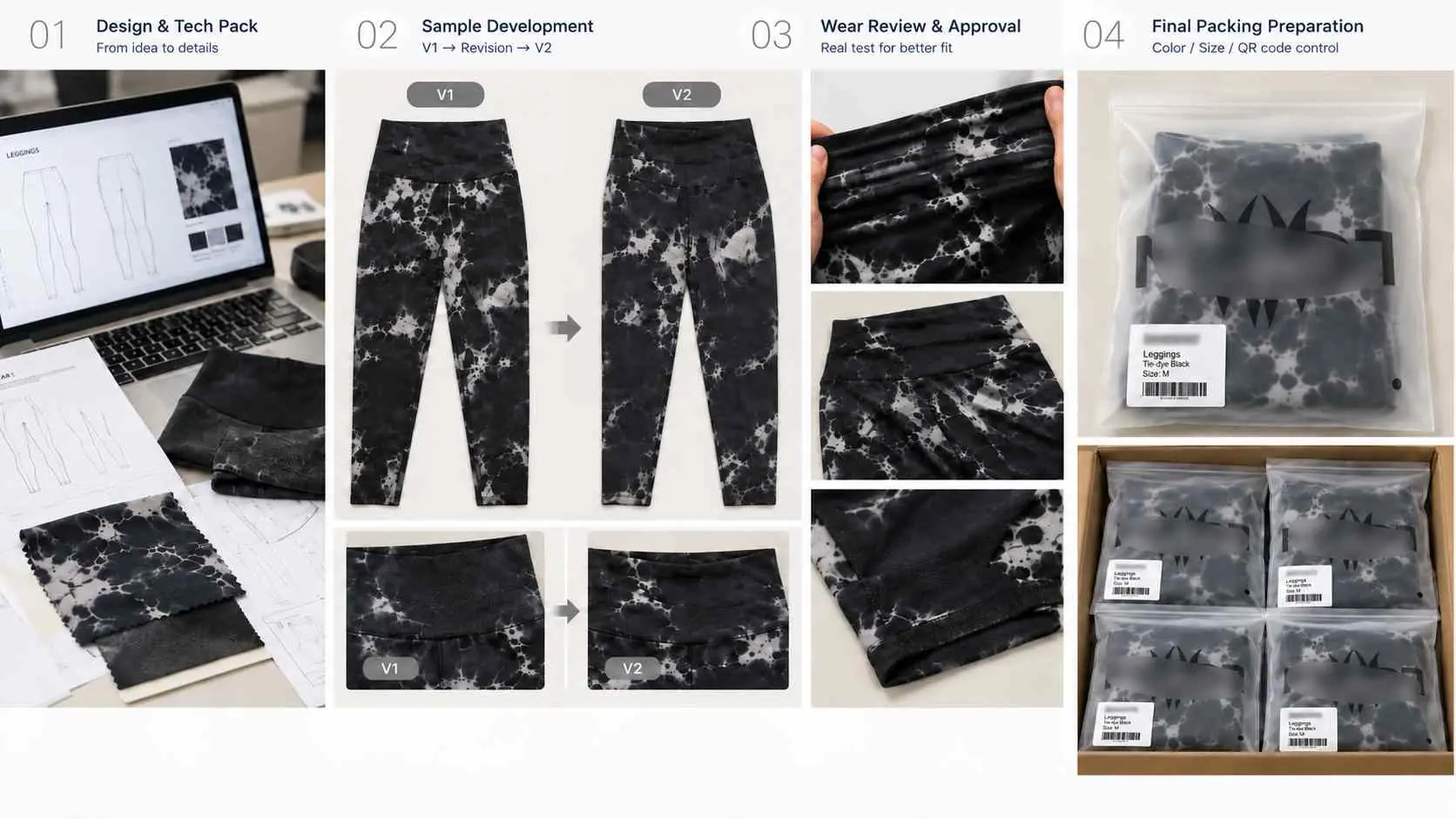
Build Yoga Shorts Through a Controlled Sample Process
Each sample stage should answer a different technical question before the approved product is transferred toward commercial production.
Development Sample
Convert the confirmed product brief into the first physical Yoga Shorts sample for structure, proportions, material and manufacturability review.
Buyer Inputs: Tech Pack or reference · Material · Development size
Output: Physical sample · Measurements · Open points
Fit Review
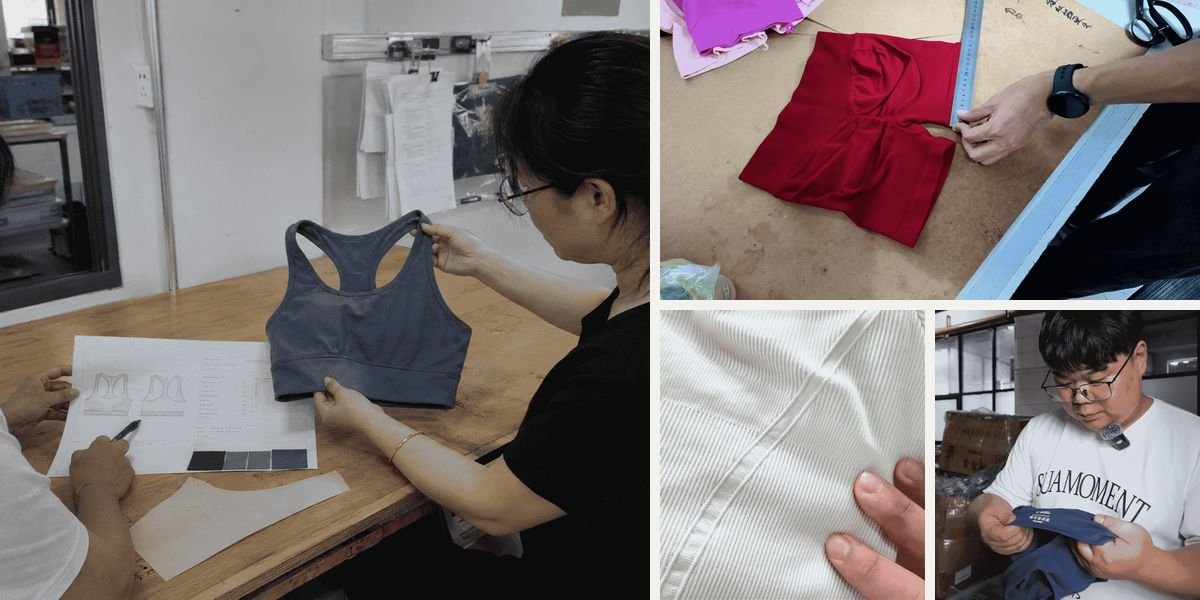
Review waist, hip, rise, crotch, inseam, leg opening and relevant movement on the development size.
Buyer Inputs: Fit comments · Fit Model context
Output: Measurement review · Revision list
Revised Sample
Confirm that agreed corrections have been executed without creating new problems elsewhere in the Shorts.
Buyer Inputs: Confirmed revision comments
Output: Revised sample · Version identification
Size Set
Review whether approved base-size logic remains appropriate through the required commercial size range.
Buyer Inputs: Grade rule · Size chart
Output: Size samples · Measurement records
PP Sample
Lock the production-ready combination of material, color, measurements, workmanship, branding and relevant packaging.
Buyer Inputs: Final approvals and artwork
Output: Production reference
Yoga Shorts Fit Sample Key Takeaways
Fit Is More Than Appearance
Measurements, pattern or program, actual material and the physical garment should remain connected during Fit approval.
A Fit Sample validates the relationship between measurements, pattern or seamless program, material and the intended target body.
Waistband, waist-to-hip proportion, rise, crotch, inseam and leg opening should be reviewed as a connected system.
Static measurements should be combined with relevant movement review before Fit approval.
Fit approval applies to the defined style, version, material and development size rather than automatically to every later size.
Buyer feedback should be converted into measurable specification, pattern, construction, material or program changes.
Size Set validation follows base-size Fit approval to check grading across the commercial range.
Validate Yoga Shorts Across the Commercial Size Range
An approved base size does not automatically prove that every graded size will preserve the same proportion and functional positions.
| Review Item | Smaller Size | Base Size | Larger Size |
|---|---|---|---|
| Waist | Buyer specification | Approved reference | Buyer specification |
| Hip | Buyer specification | Approved reference | Buyer specification |
| Front Rise | Measure & review | Approved reference | Measure & review |
| Back Rise | Measure & review | Approved reference | Measure & review |
| Inseam | Defined POM | Defined POM | Defined POM |
| Leg Opening | Check proportion | Approved reference | Check proportion |
| Crotch / Gusset | Review position | Approved reference | Review position |
| Movement Fit | Risk review | Full Fit review | Risk review |
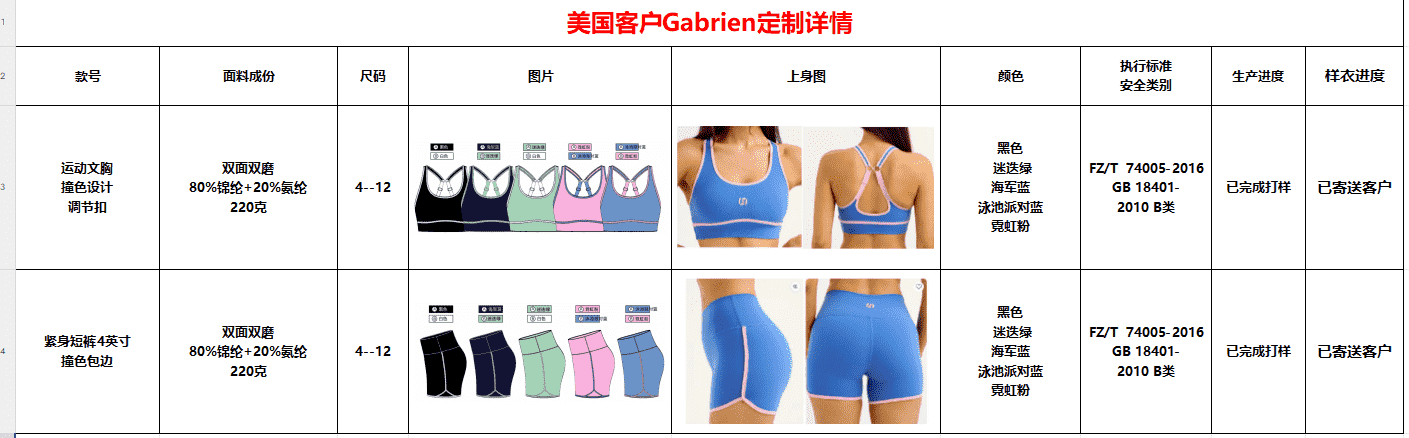
Base Size Is Only the Starting Point
Representative lower, base and upper sizes can be reviewed according to the buyer's Size Set requirement and risk profile.
Freeze the Yoga Shorts Standard Before Bulk
The PP Sample should represent the production-ready product rather than another exploratory sample.
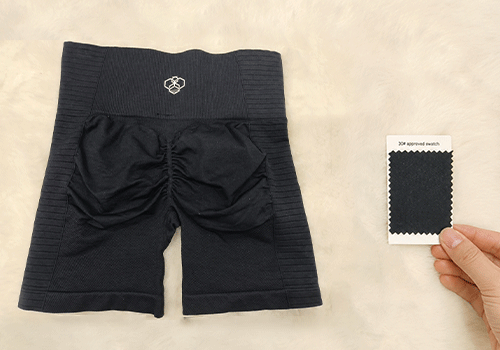
One Production Standard
Bulk teams should work from one identifiable approved physical and documentary reference.
Final Inputs
Confirm specification, material, color, measurements and pattern or program version.
PP Production
Produce the sample using the intended production configuration.
Measurement Review
Compare actual POM with the released buyer specification.
Fit Confirmation
Confirm Fit where critical variables changed after earlier approval.
Brand Details
Check Logo, labels, hangtags and SKU requirements.
Pack Reference
Confirm applicable individual packaging and product data.
Buyer Approval
Record which Style, version, size, material and color are approved.
Bulk Release
Transfer the approved standard into First Article, production and QC.
Send the Information You Already Have
A complete Tech Pack is preferred for detailed Yoga Shorts development, but an initial review can also begin from a legally usable reference garment, approved sample, measurement chart, sketch, image or clearly defined product brief.
MOVEVOX can use the available information to review the likely manufacturing route, waistband, measurements, material direction, branding requirements, estimated quantity and next development step.
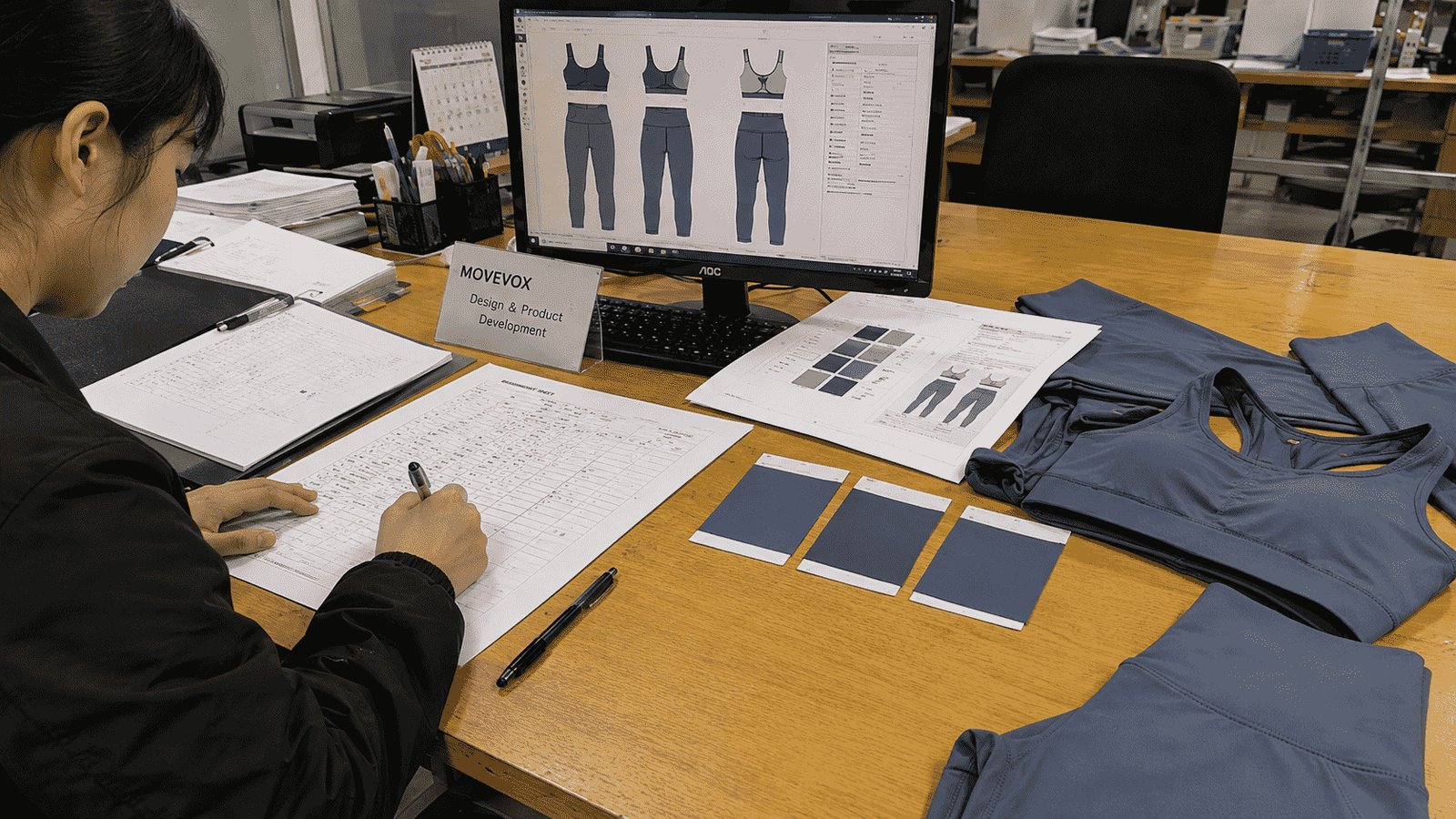
Tech Pack or Reference Files
Tech Pack · Measurement Chart · Fabric Reference · Product Photos · Logo Artwork · Packaging Information
Attach the available files when opening the MOVEVOX inquiry form.Understand the Real MOQ Behind Yoga Shorts
Garment MOQ is only one part of the commercial starting point. Material, colors, sizes, branding and packaging can create separate minimums.
Seamless Program
MOVEVOX's current regular custom Seamless starting reference is approximately 100 pieces per style under suitable conditions. Custom yarn, color, branding or packaging can increase the effective minimum.
Quantity: Approx. 100 pcs/style starting reference
Price Factors: Yarn · Color · Program · Branding
Cut & Sew
MOVEVOX's current regular Cut & Sew starting reference is approximately 150 pieces per style under suitable conditions. Fabric, color, construction or components can change the effective minimum.
Quantity: Approx. 150 pcs/style starting reference
Price Factors: Fabric · Construction · Components
Custom Program
A custom Yoga Shorts project may be controlled by material, dye, branding, trim or packaging minimums rather than the base garment MOQ.
Quantity: Project-specific
Price Factors: Material · Dye · Trims · Packaging
Custom Color Can Change the Effective Shorts MOQ
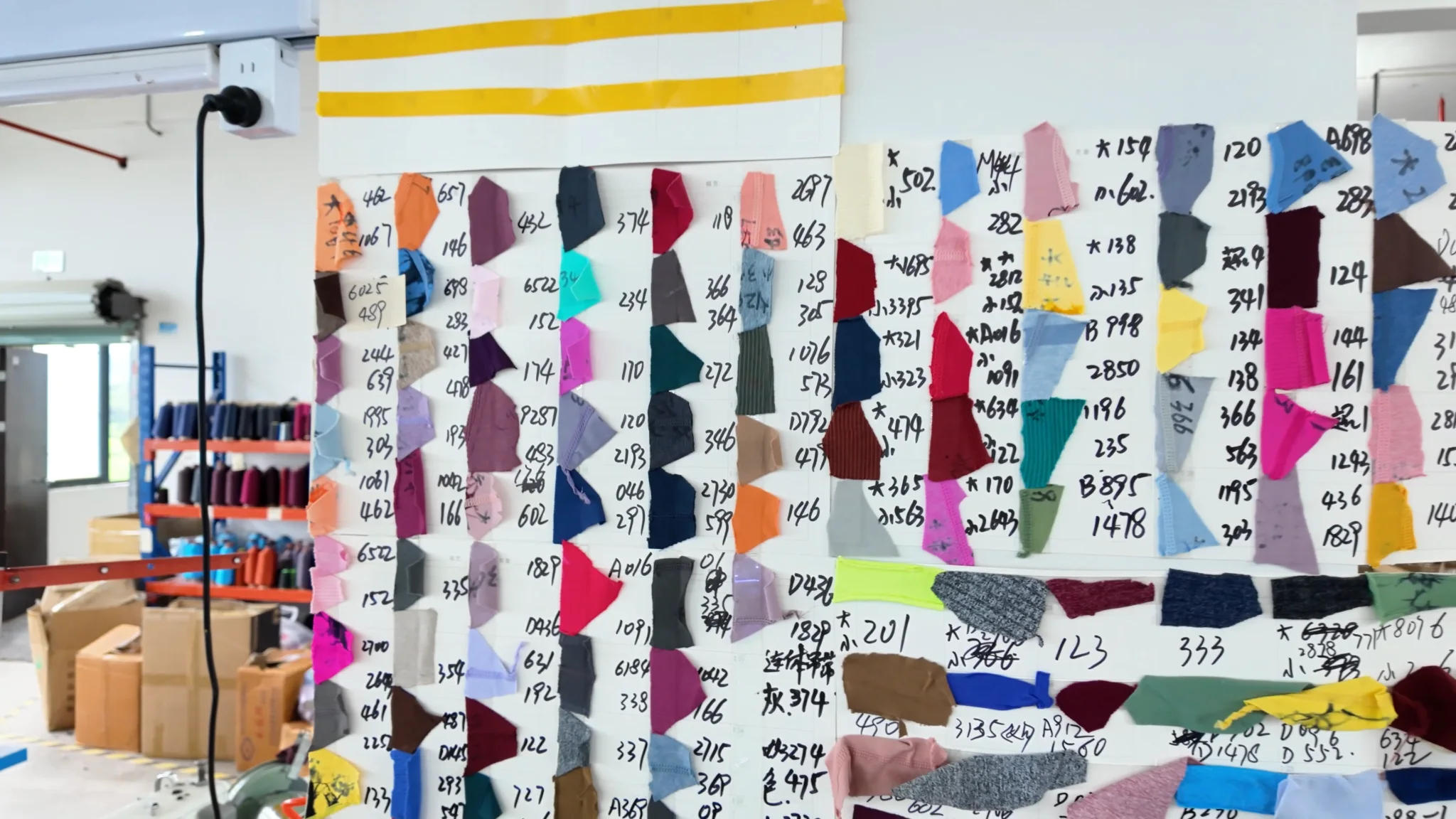
Pantone development connects color approval with material route, supplier batch minimum and actual garment consumption.
Color Reference
Start from Pantone, physical standard or another agreed color reference.
Material Route
Confirm whether fabric, yarn or another process creates the controlling minimum.
Lab Dip
Review the physical shade where Lab Dip approval applies.
Batch Minimum
Identify the actual upstream material or dye quantity.
Garment Conversion
Convert supplier minimums using the Shorts' actual material consumption.
Color Approval
Record the material and color reference accepted for production.
Bulk Shade
Compare production material with the approved project standard.
Build Yoga Shorts as a Complete Private Label SKU
Private label execution should connect the approved Yoga Shorts product with branding, identification and retail packaging rather than treating each element as an unrelated decoration.
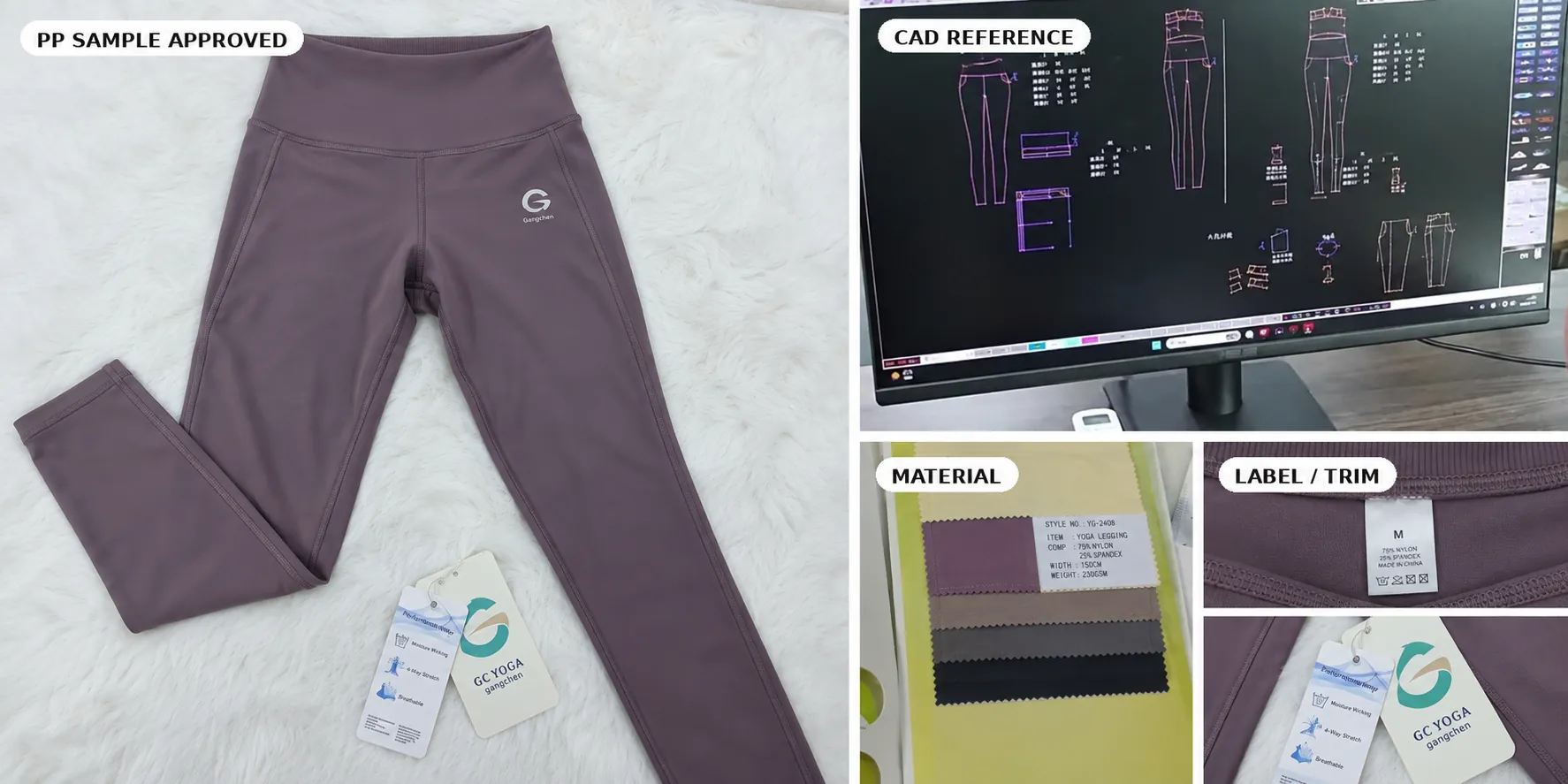
Product Standard
Fit, material, measurements, construction and the approved physical product should be locked before branding details are treated as production-ready.
Control: Keep branding tied to the correct sample version.
Logo System
Logo method should be reviewed against artwork, placement, size, color, material surface and stretch area. Available processes can include screen print, heat transfer, silicone, embroidery, jacquard and woven branding where appropriate.
Control: Artwork, placement and process approval.
Label System
Main, care and size labels should follow the buyer's approved artwork and remain mapped to the correct Style, Color and Size instead of being managed separately from production information.
Control: Version and SKU mapping.
SKU Data
Hangtags, barcode information and SKU labels should be connected to the correct color and size. Data mistakes can create warehouse and retail problems even when garment construction is acceptable.
Control: Barcode and SKU double-check.
Individual Packaging
Polybag, insert and product-identification requirements should follow the approved project specification. Packaging can introduce its own supplier MOQ, development time and data requirements.
Control: Correct product inside the correct pack.
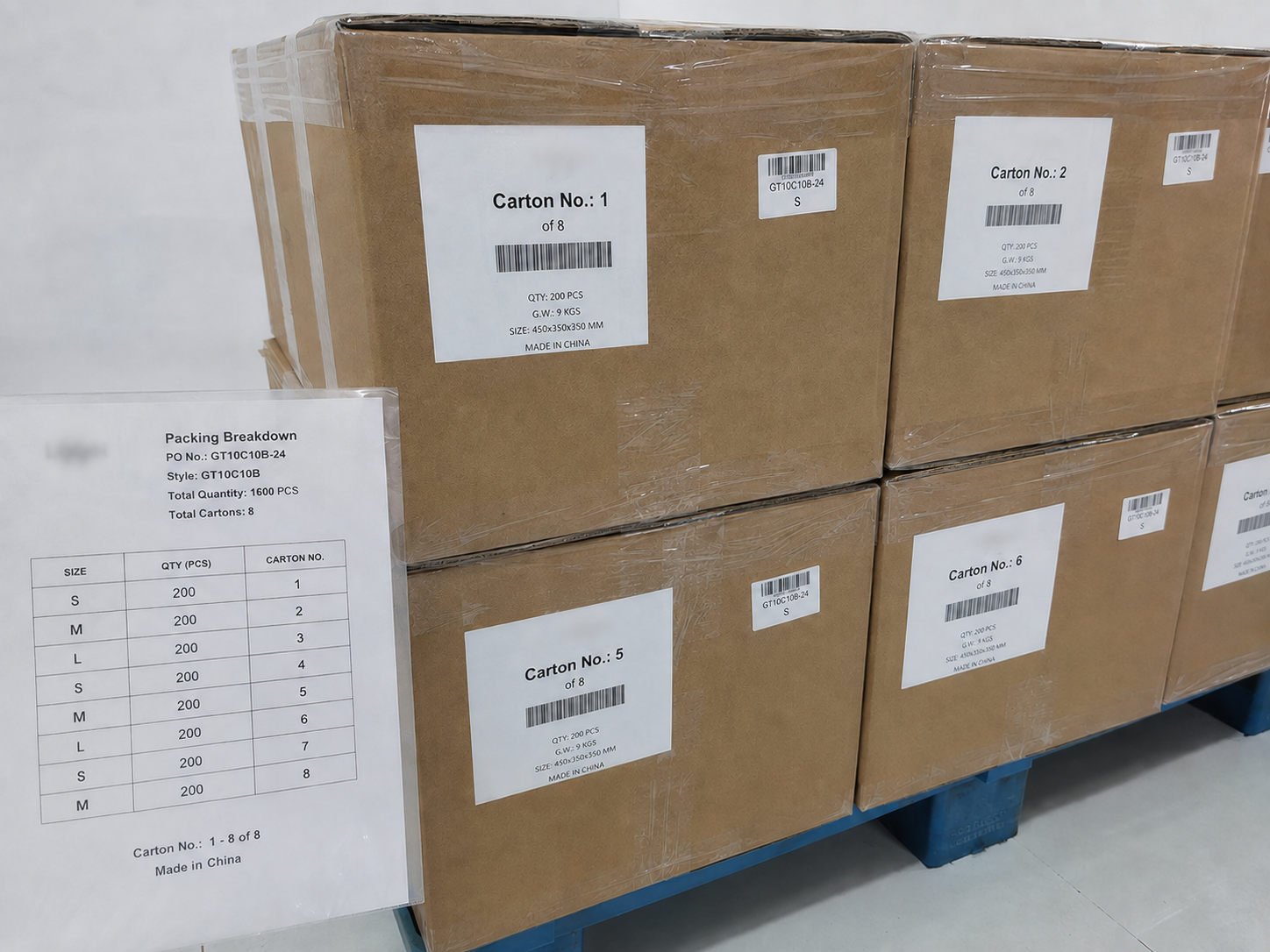
Carton Control
Outer carton marks and quantity breakdown should remain aligned with PO and SKU requirements so correctly manufactured Yoga Shorts do not become a shipment or warehouse exception during final execution.
Control: PO, quantity and carton-mark verification.
Extend Yoga Shorts Into a Coordinated Collection
A collection can share selected materials, colors, branding and packaging without forcing every SKU into the same Fit or construction.
Yoga Core
Build Shorts and Leggings around a related material and color direction while keeping separate measurements and Fit standards.
Products: Shorts · Leggings · Sports Bra · Tank
Seamless Direction
Use a related yarn and color platform where appropriate, while each SKU keeps its own program, measurements and physical approval.
Products: Shorts · Leggings · Bra · Tank
Private Label Range
Coordinate Logo, care information, hangtags, SKU logic and packaging across multiple products.
Products: Shorts · Leggings · Tops · Packaging
One Platform, Separate Product Standards
Shared materials, colors and brand systems can improve collection consistency while every SKU retains its own controlled development and approval path.
Understand Where Yoga Shorts Lead Time Comes From
Lead time is a sequence of technical and commercial dependencies rather than one unconditional factory number.
Development
Define the product and close the technical inputs required before commercial production can be scheduled.
Define the Project
Confirm enough technical information to define the manufacturing, material and development direction.
Project-dependentBuild the Sample
Standard sampling is normally planned after the necessary development information and key product details have been confirmed.
Approx. 5–10 working daysClose Buyer Decisions
Buyer Fit comments, Size Set, color or PP approval can become the critical path when product decisions remain unresolved.
Buyer-dependentRelease Inputs
Fabric, yarn, custom dye, labels, Logo components and packaging can each have separate upstream lead times.
Project-dependentT&A / Milestone Plan
Replace with real sampling, production planning and quality-release evidence when suitable project material is available.
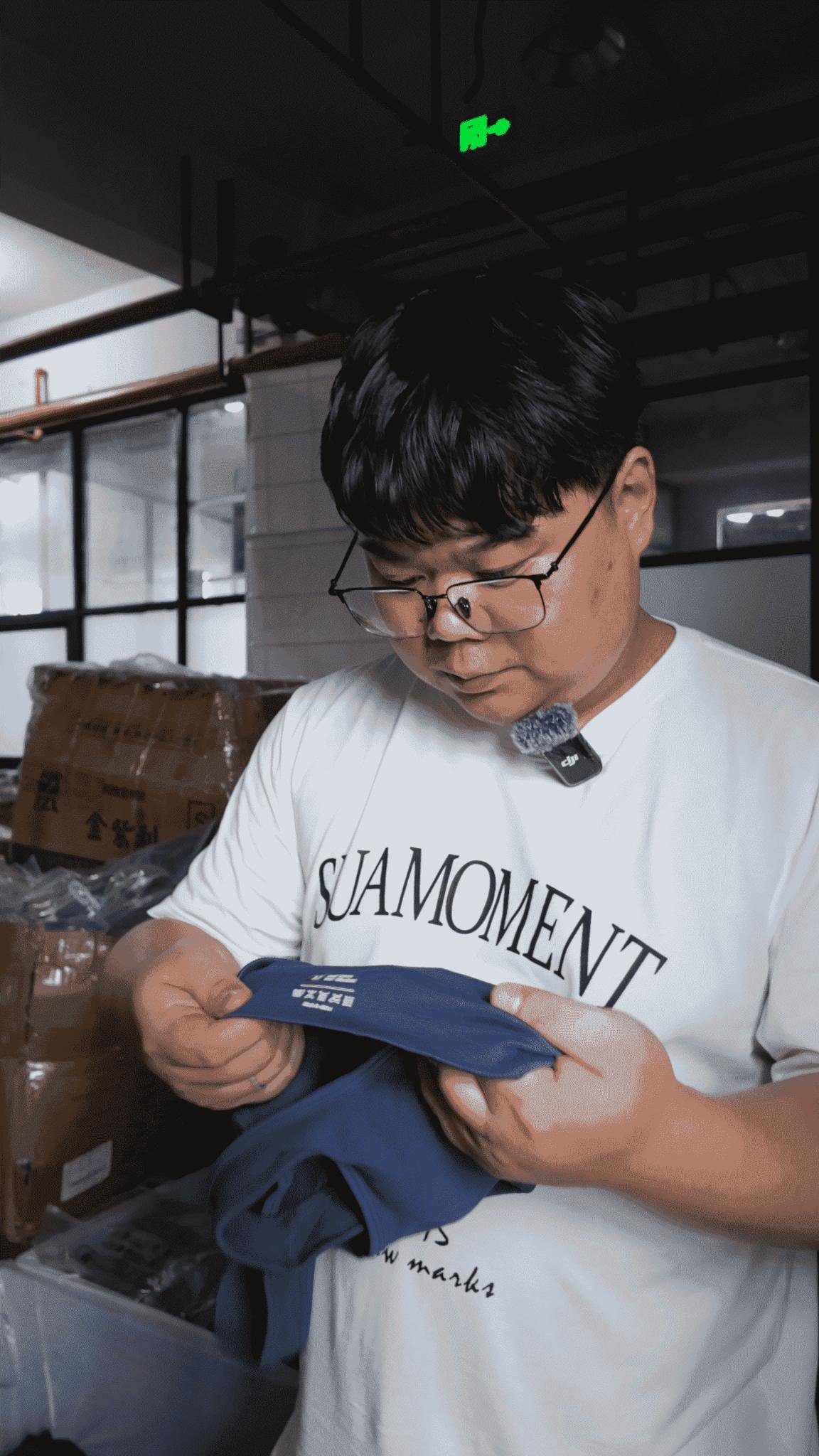
Sampling & Approval
Development sample, Fit review and approval milestones.
Production Planning
Material readiness, allocation and bulk-production progress.
QC & Packing
Inspection, packing and final Cargo Ready preparation.
Production
Convert the approved product into commercial bulk, inspect the order and prepare the released shipment.
Commercial Production
Regular bulk-production timing depends on quantity, manufacturing route, material readiness, complexity and production allocation.
Approx. 20–35 daysInspect & Close
Inline control, final inspection, correction and any required re-inspection remain part of Cargo Ready timing.
Project-dependentPrepare Cargo Ready
Product identity, labels, SKU information, individual packaging and carton instructions must be ready before shipment release.
Project-dependentConvert Approved Yoga Shorts Into Controlled Bulk Production
Commercial production should begin from the approved physical and documentary standard rather than from memory or informal chat history.
Readiness
Confirm product version, material, measurements, branding, packing and production allocation.
INPUT REVIEWMaterial Control
Confirm material, yarn, color and relevant components before uncontrolled consumption.
MATERIAL RELEASEFirst Article
Compare the initial production article with the released standard.
RELEASE GATEBulk Production
Execute the approved Cut & Sew or Seamless manufacturing route.
PRODUCTIONInline QC
Inspect measurements, workmanship and project-specific risks during production.
INLINE CHECKFinished Inspection
Check finished garment measurements, workmanship and product identity.
FINAL QCPacking
Pack the correct Style, Color and Size with approved SKU and packaging information.
PACKING CHECKShipment Release
Release after required production and quality conditions have been closed.
FINAL RELEASE
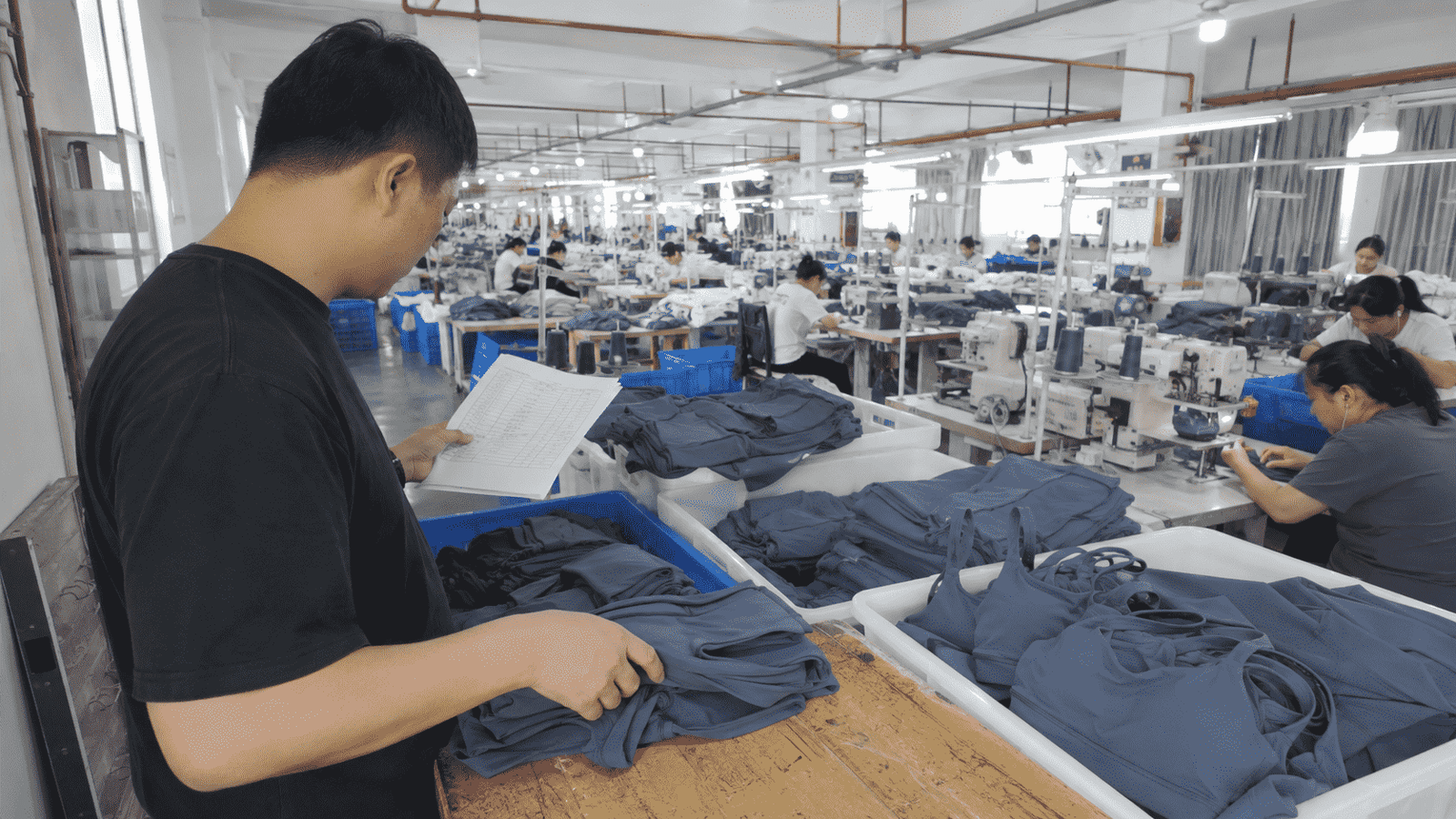
Control Yoga Shorts Fit From Sample to Bulk
Production is controlled against the approved physical and documentary standard rather than by promising that every garment will be physically identical to one sample.
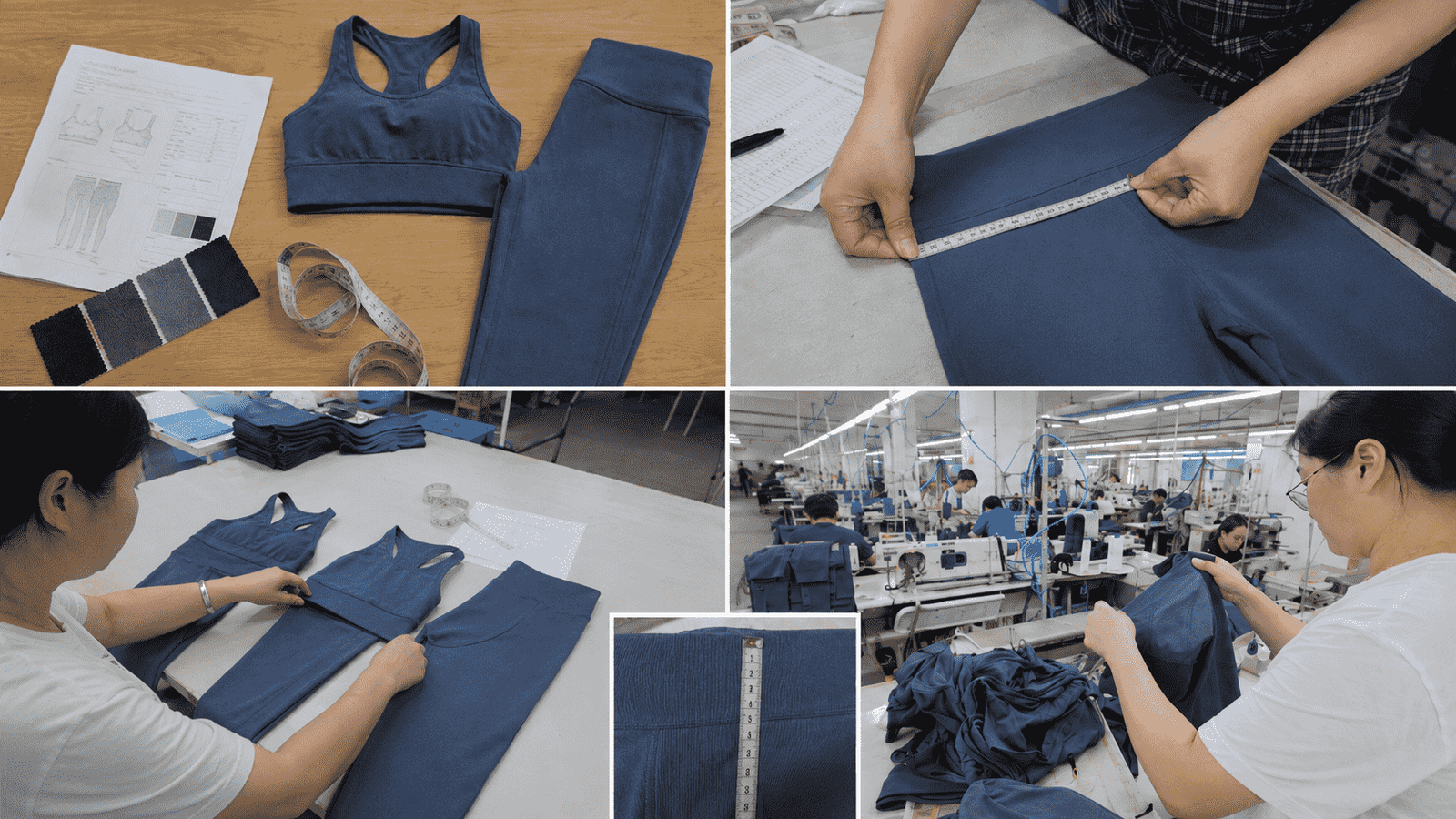
Release the Standard
The approved garment establishes the physical reference together with final POM, material, construction, workmanship, branding and other released project information.
Reproduce Within Control
First Article, inline measurement and finished inspection provide evidence that commercial production remains within the applicable specification and project tolerances.
Waist and hip establish the approved Fit relationship for the released size.
Production measurements are compared with final POM and the agreed measurement method.
Front rise, back rise and crotch define the approved body position and coverage.
Production uses the released dimensions so crotch position does not drift uncontrolled.
Inseam and leg opening establish the intended finished length and thigh position.
Measurement and symmetry are checked against the current approved product specification.
Material and color are connected to the buyer-approved physical reference.
Production material should remain connected to the released material and color requirement.
Waistband, gusset, seams and finishing establish the workmanship reference.
First Article and inspection compare production workmanship with the released standard.
Logo, labels, SKU data and packaging define the final commercial configuration.
Packing control verifies that correct garments receive the correct brand and SKU execution.
Read the Measurement Evidence Behind Yoga Shorts Quality
Measurement control depends on defined POM, one measurement method, released specifications, applicable tolerances and traceable actual production results.
Style Reference
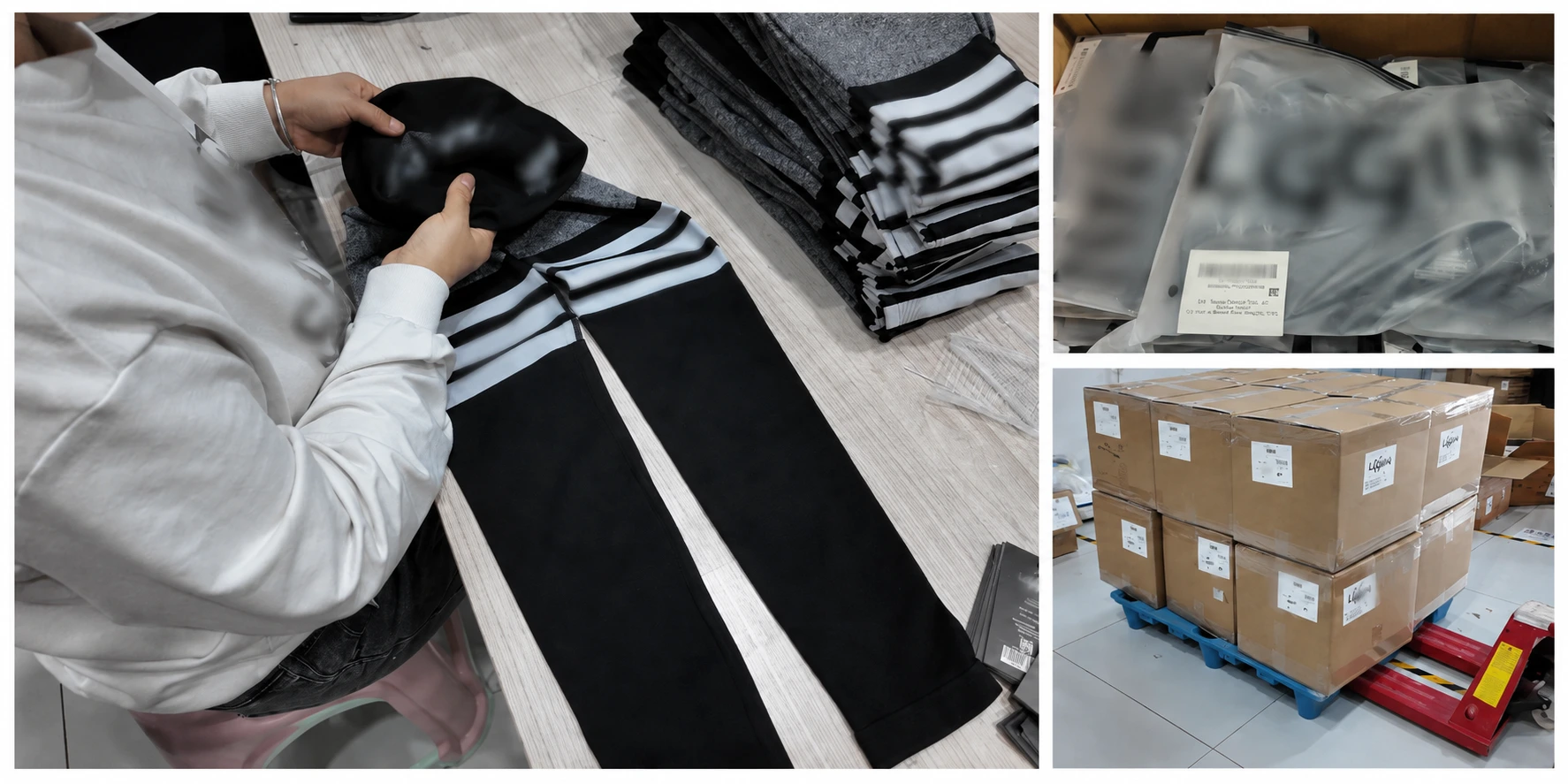
Inspection evidence should identify the relevant style, production version, size and project context so one record is not accidentally interpreted as evidence for another garment.
POM Definition
Each Point of Measure should use defined start and end positions. Measurement results have limited value if production and QC teams are measuring different garment locations.
Measurement Method
Stretch garments should be measured with the agreed positioning and handling method rather than deliberately stretched or manipulated until the result falls inside tolerance.
Target Value
The nominal measurement should come from the released buyer specification or approved project standard rather than from an earlier or obsolete sample revision.
Tolerance
Acceptance limits should follow the customer's approved measurement or quality requirements where supplied. Internal references should not override a stricter buyer standard.
Actual Result
Recorded production values make it possible to identify isolated outliers or measurement trends instead of relying only on visual judgments during bulk manufacturing.
Exception Action
Out-of-range findings should connect with containment, additional checking, correction or re-inspection according to the project rather than disappearing from the production record.
Release Status
Measurement evidence supports the quality decision together with applicable workmanship, material, branding, packing and other buyer-defined release requirements.
Confirm Capacity Against the Actual Yoga Shorts Program
Capacity should be read through equipment, people, controlled network resources and stable quality-released delivery rather than one isolated headline number.
Seamless Manufacturing
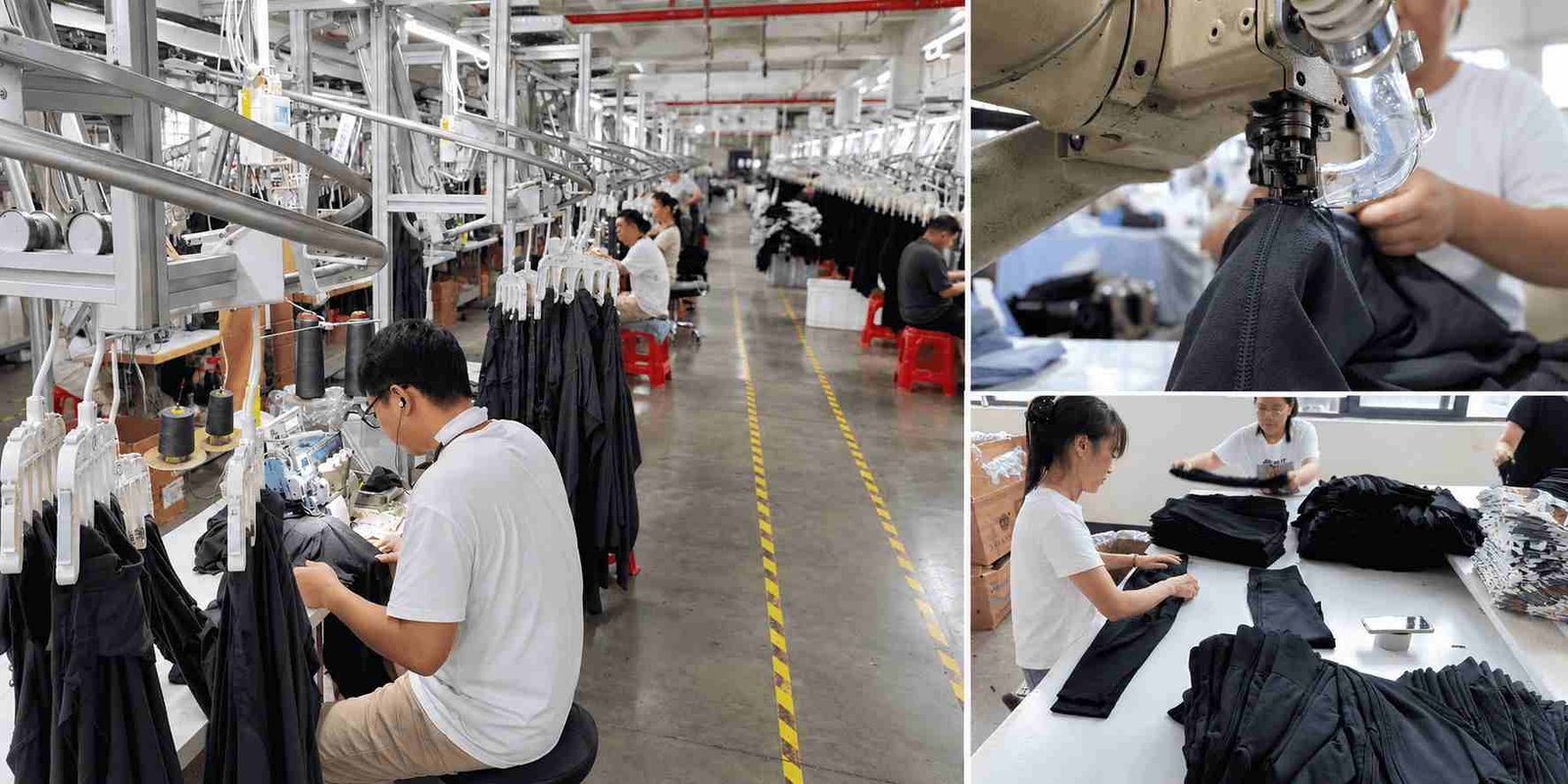
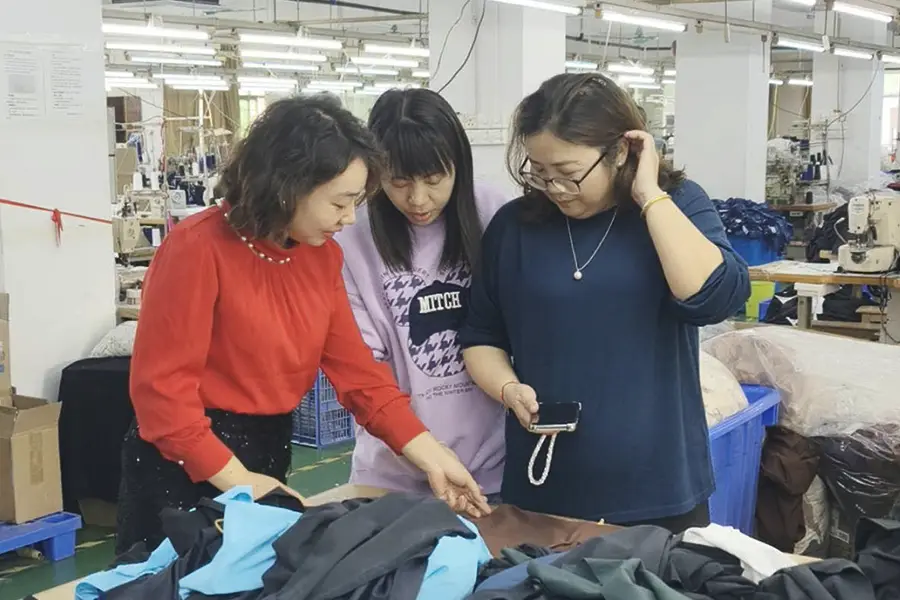
MOVEVOX's core operation includes 28 Italian Santoni seamless knitting machines. For suitable Yoga Shorts projects, the equipment supports direct seamless development and production, but actual available capacity still depends on program complexity, yarn readiness, size mix and live production scheduling.
Cut & Sew Core
The core operation includes approximately 24 principal sewing and garment-production machines. These resources support Cut & Sew development and selected production, with pattern, cutting, construction and Fit controlled as a separate manufacturing system from Seamless knitting.
Quality & Development
MOVEVOX currently has five QC personnel and an approximately eight-person development organization across design, pattern and sample roles. Equipment capacity therefore remains connected to product development and quality-control resources rather than being treated as machine output alone.
Managed Delivery Capacity
Stable managed monthly delivery capability across the controlled production network is approximately 150,000–200,000 garments. The network includes eight long-term satellite facilities, but this figure is not a guaranteed Yoga Shorts-specific allocation and still requires project-level capacity confirmation.
Know Where Your Yoga Shorts Are Actually Produced
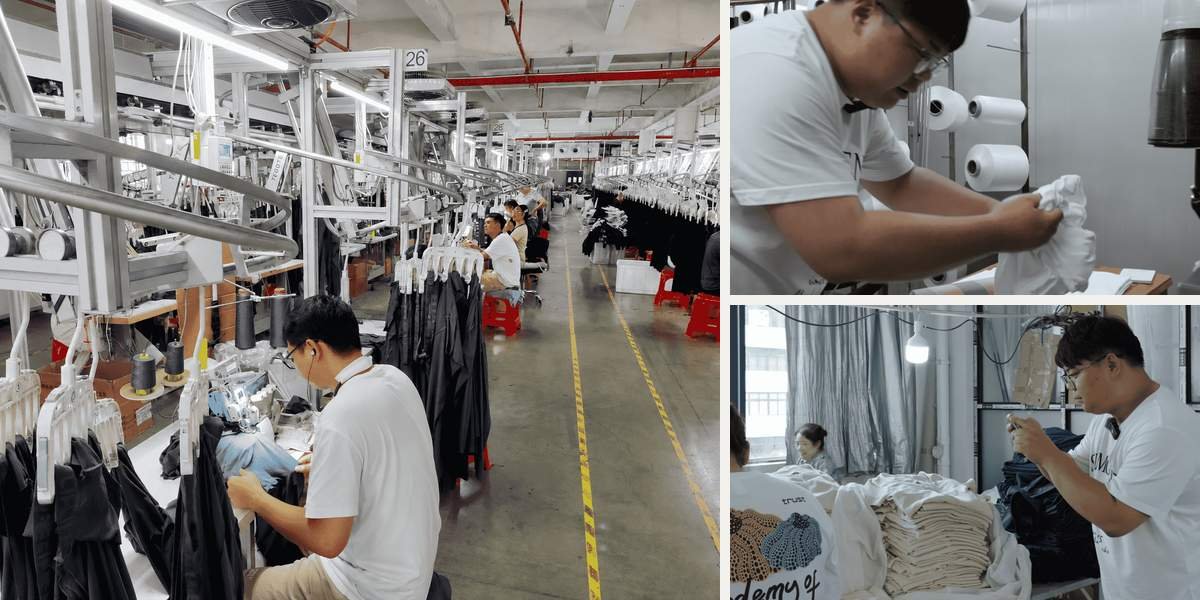
MOVEVOX combines its Yiwu core operation with controlled long-term production resources rather than presenting every process as if it occurs inside one single building.
Yiwu Technical Center
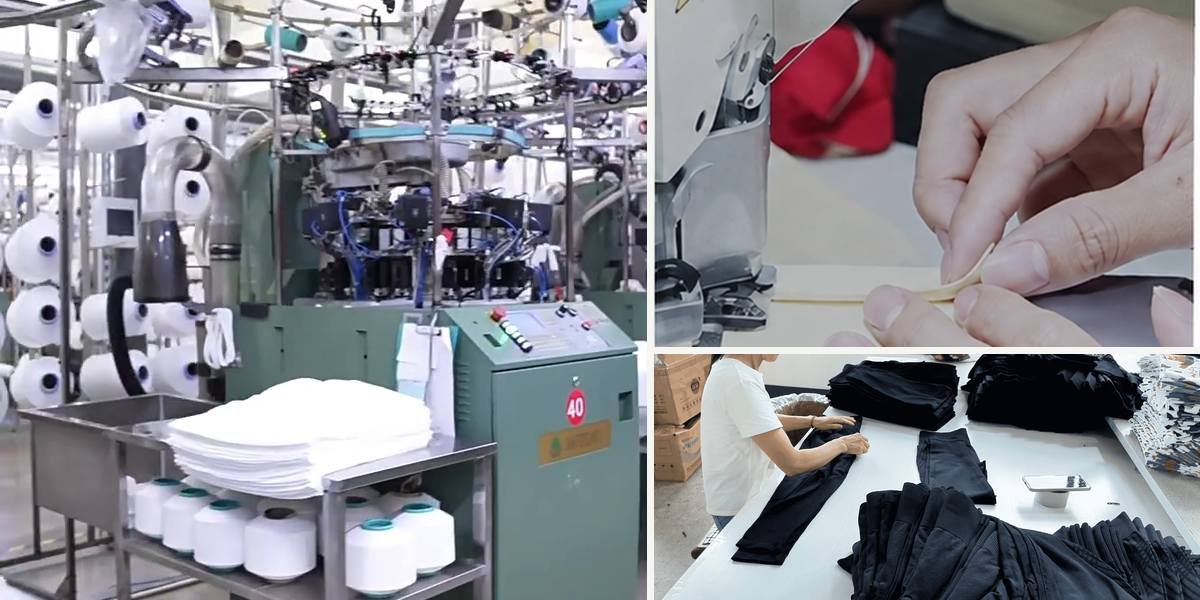
The Yiwu core operation supports product development, sampling, Seamless and Cut & Sew capability, quality control and the establishment of technical standards used to manage suitable production resources.
28 Santoni: Core Seamless capability
~24 Machines: Core garment-production equipment
Development + QC: Product and quality control center
Controlled Capacity Resources
Eight long-term satellite facilities support managed capacity when appropriate, including six in Yiwu and two in Guangzhou. MOVEVOX does not present those facilities as company-owned when they are not owned by MOVEVOX.
8 Facilities: Long-term satellite resources
PMC: Production scheduling and allocation
Unified QC: Common approved project standards
Materials
Fabric, yarn, dyeing and components are coordinated to the approved project.
Branding
Logo, labels, tags and packaging specialists can support approved requirements.
Quality
Approved samples and specifications remain connected to the production location.
Site Control
Approved Factory Only or nominated-site requirements should remain transparent.
Development to Repeat Activewear Production in the U.S.
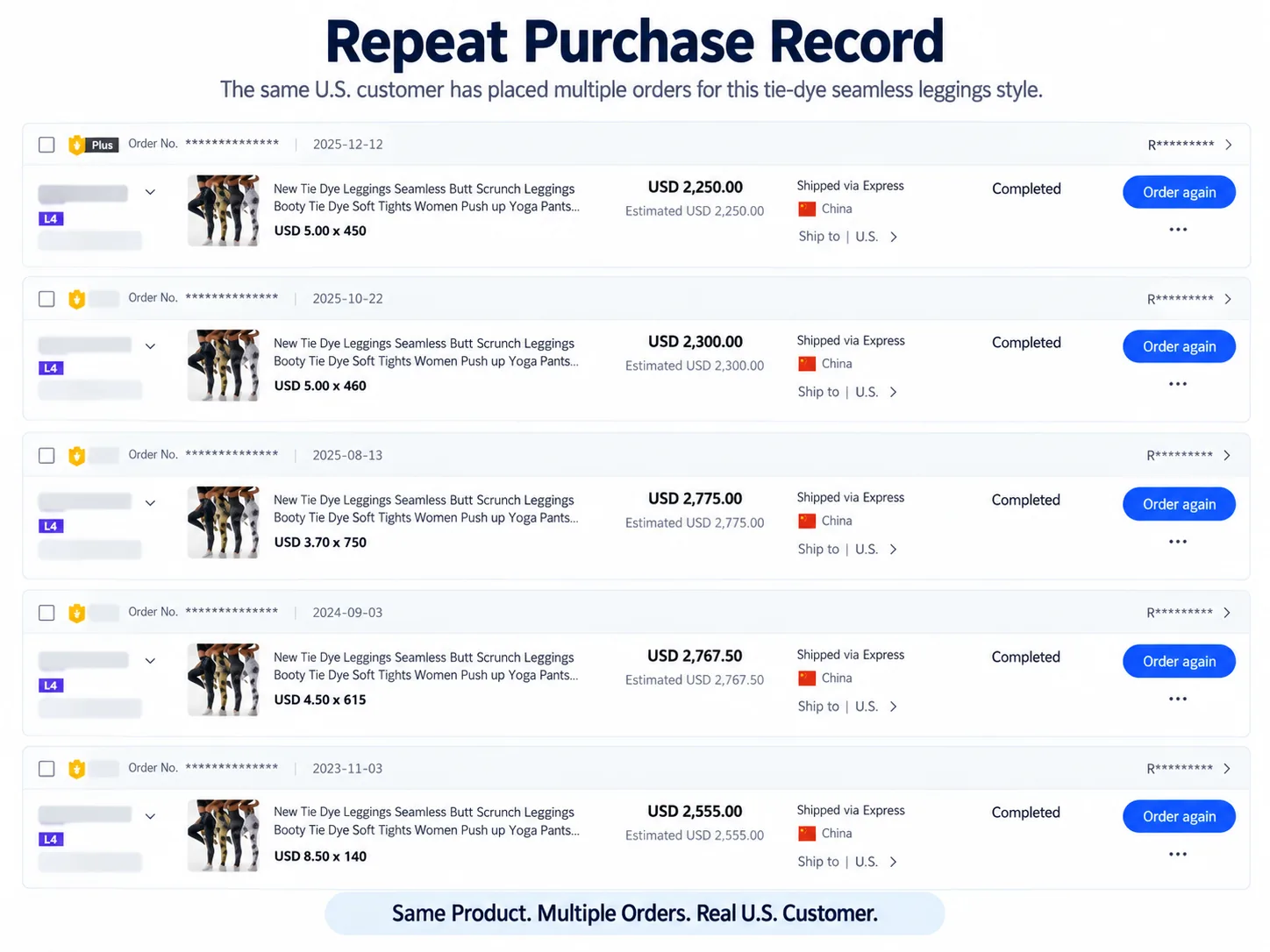
This documented relationship covers a broader U.S. activewear program that included Shorts. The available evidence is not presented as proof that every disclosed quantity or revision belonged to one Yoga Shorts SKU.
Customer Background
The customer is a U.S. female fitness creator with more than 30,000 followers. The cooperation developed into a broader activewear program covering multiple categories, including bodysuits, sets, leggings, Shorts, Sports Bras and tanks, with repeated product-development and production activity over approximately three years.
Development Challenge
The program involved multiple nylon/spandex material directions, different activewear silhouettes, wearer testing and repeated sample decisions. In addition to garment development, the customer required custom packaging, instruction materials, tags, Logos and care labels. Later orders also introduced QR identification by color and size, adding another layer of data accuracy and packing risk.
Define the Product
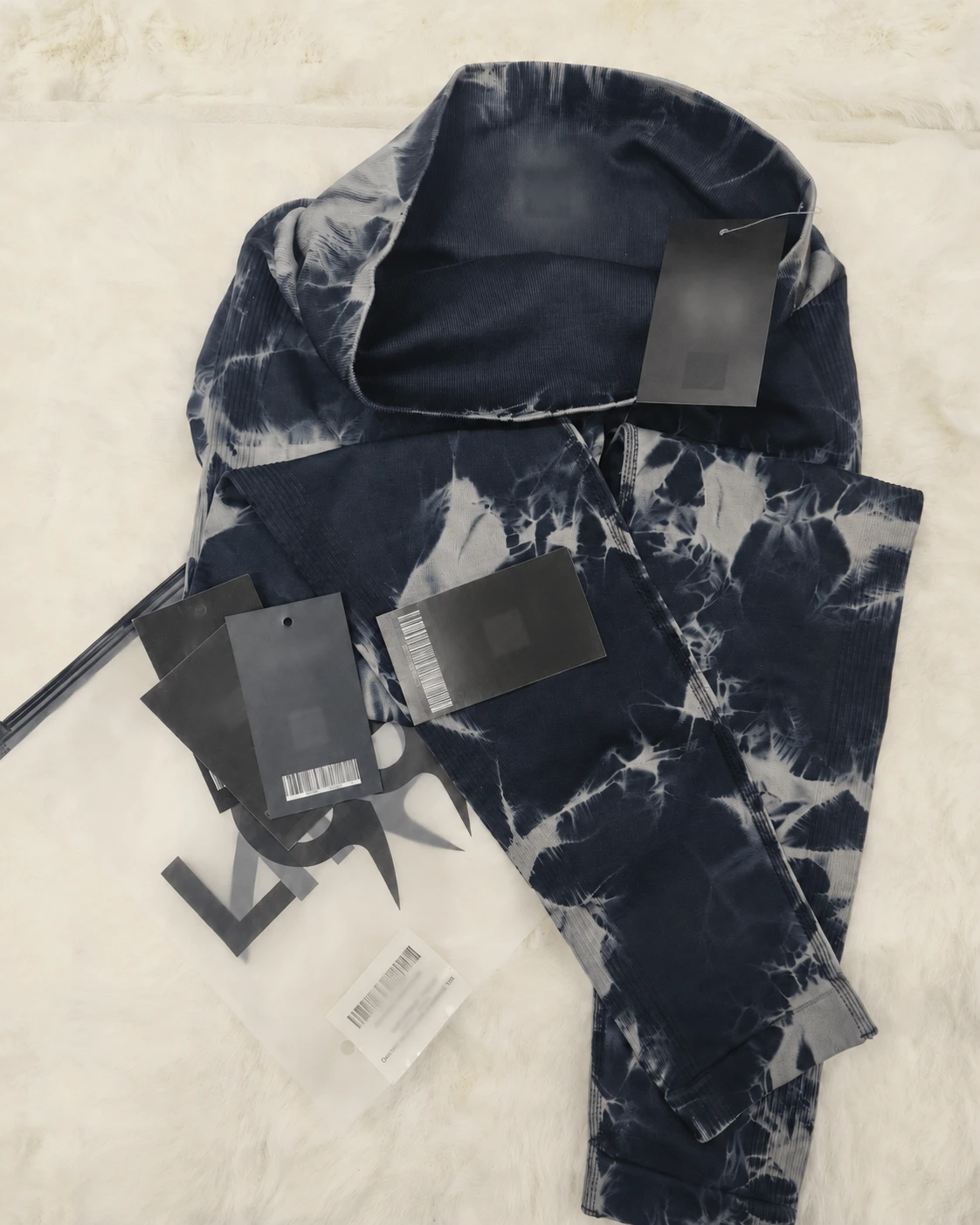
Product direction was developed through Tech Pack information, material requirements and physical sample execution rather than relying only on a catalogue garment.
Revise Through Testing
Development included sample revision and approximately five to ten samples for follower or wearer evaluation before selected product directions moved into repeated purchasing.
Control Repeat Orders
QR identification by color and size required additional checking. Data were double-confirmed, and the QC and packing workload was higher than a normal order because SKU accuracy became a critical requirement.
What the Case Demonstrates
The disclosed evidence supports multi-category activewear development, controlled sample revision, private-label execution, SKU-sensitive packing and repeat production. It demonstrates how MOVEVOX can manage an evolving brand relationship, but it does not establish that every result or commercial figure came from one particular Yoga Shorts style.
Audit the System Behind Yoga Shorts Manufacturing
Supplier qualification becomes more useful when buyers can follow the product standard through documents, physical samples, manufacturing, inspection and change control rather than seeing machinery alone.
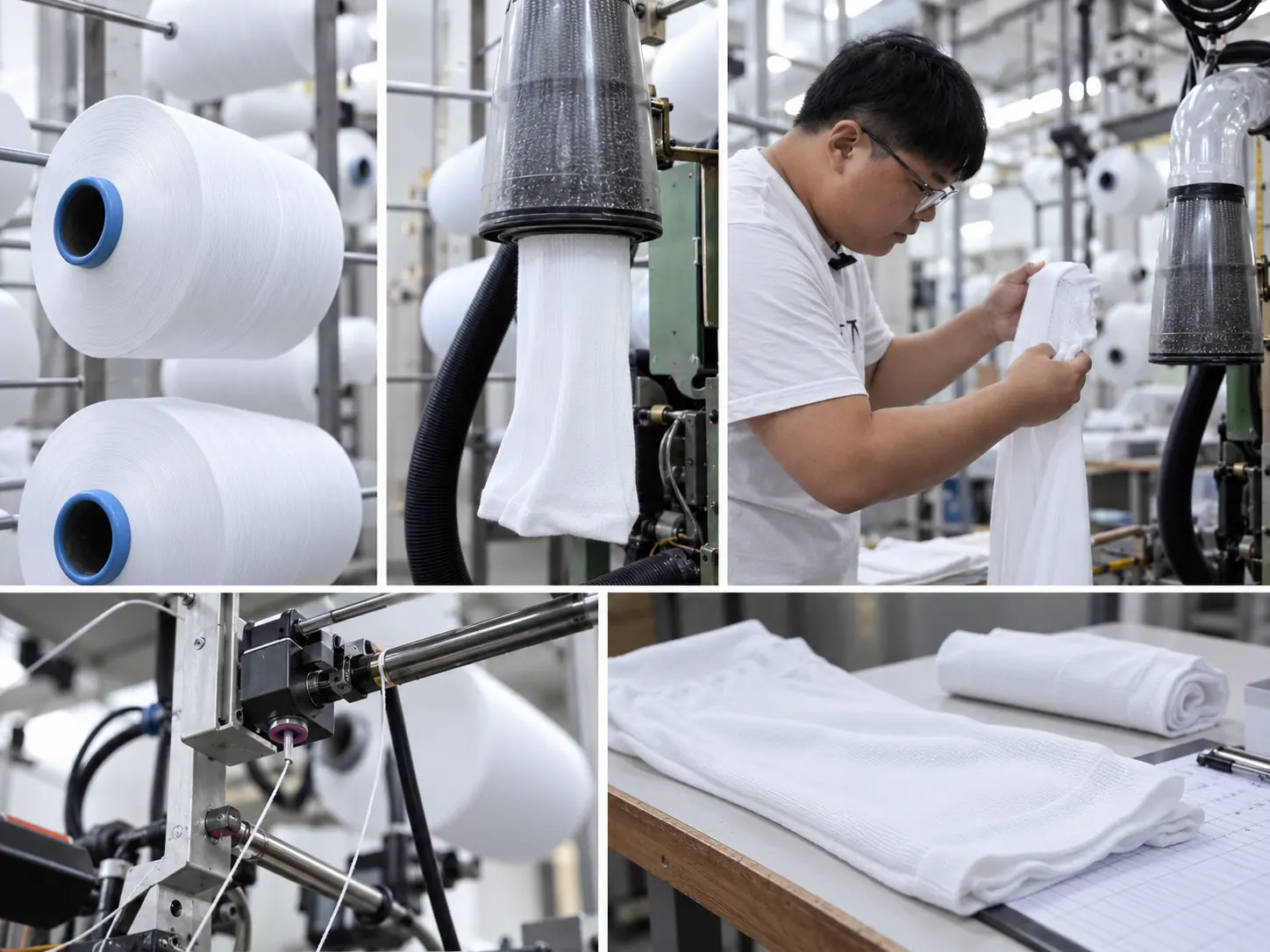
Development Input
Verify how the Tech Pack, reference garment, sketch or defined brief enters the project. A useful audit should show the current product requirement and how unresolved technical questions are identified before the first sample is treated as complete.
Product Version
Pattern or Seamless program, measurements and sample revision should identify which technical version is currently valid. This helps prevent an obsolete development version from becoming an accidental bulk-production reference.
Material Approval
Fabric or yarn should be connected to the approved product direction, color and relevant material information. An audit should clarify which material is current rather than relying only on generic composition wording or an unrelated swatch.
Sample Approval
Development, Fit, Size Set and PP samples answer different questions. Audit evidence should make clear which version was approved, for what purpose, and whether remaining issues were closed before production release.
First Article
The first production article provides an early opportunity to verify whether the actual production conditions can reproduce the released sample, measurements, material and workmanship before broad bulk manufacturing proceeds.
Production Control
PO, Style, SKU, production location and relevant material information should remain connected to the actual manufacturing execution. This lets sourcing teams verify that the approved product standard is being used at the real production site.
Quality Evidence
Measurement and workmanship records should show what was inspected, which specification applied and how abnormal findings were handled. Quality evidence is more useful when it can be traced to the relevant production batch and product version.
Change Control
Critical changes to material, pattern, Seamless program, production site or other approved requirements should remain visible where buyer approval is required. Production should not silently replace the approved configuration.
Live Verification
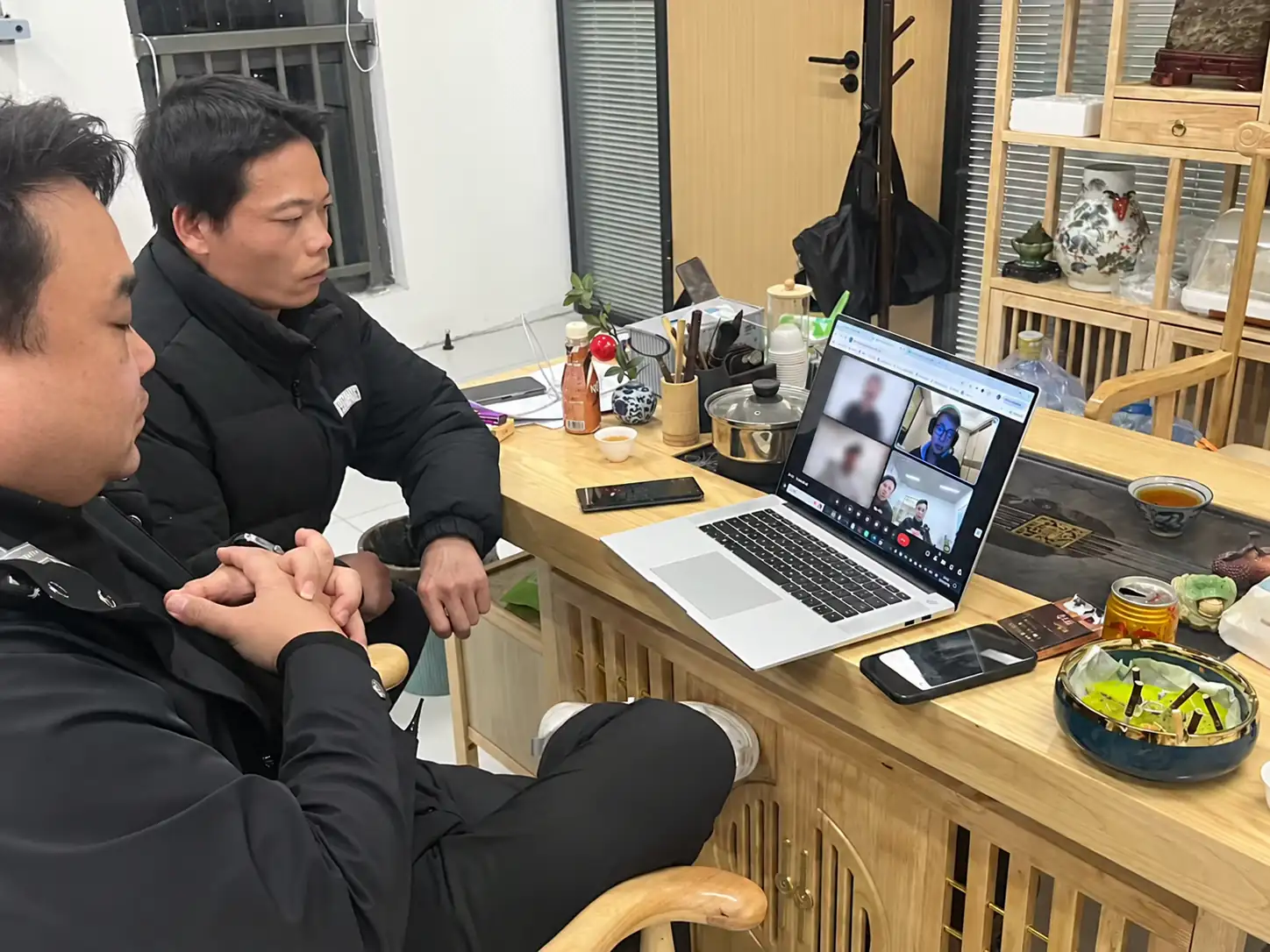
Buyers can connect documentation with actual manufacturing areas, equipment and relevant production conditions through an in-person factory visit, live video review or agreed third-party verification where appropriate to the sourcing program.
Yoga Shorts Manufacturer Qualification Checklist for B2B Buyers
Use the checklist to compare suppliers on product engineering, development, manufacturing, quality and commercial execution.
Product Engineering
□ Understands waistband, rise, inseam, crotch and leg-opening risks
□ Distinguishes Yoga Shorts from shortened leggings
□ Reviews both static and movement Fit
Development
□ Can work from Tech Pack or lawful reference
□ Uses identifiable sample versions
□ Separates Fit, Size Set and PP approval
□ Converts feedback into measurable revisions
Manufacturing
□ Actual Cut & Sew or Seamless route is clear
□ Can provide real equipment and production evidence
□ Production sites are transparent
□ Capacity is checked before commitment
Quality
□ Uses final POM and measurement method
□ Has First Article and inline QC controls
□ Can contain and recheck nonconforming work
□ Connects approved sample to bulk inspection
Commercial
□ Separates garment MOQ from material MOQ
□ Reviews color, Logo and packaging minimums
□ Explains lead time by project stage
□ Reviews quantity and SKU structure before quotation
Yoga Shorts Manufacturer Frequently Asked Questions
These answers cover common development, MOQ, production, quality and supplier-qualification questions.
Can MOVEVOX develop Yoga Shorts from our Tech Pack?
Yes. A complete Tech Pack is preferred for detailed development because it can define construction, measurements, material, colors, Logo, labels, packaging and testing requirements. Development can also begin from a legally usable reference garment, approved sample, sketch, image or sufficiently defined product concept.
Can you develop both Seamless and Cut & Sew Yoga Shorts?
Yes. MOVEVOX's core operation includes 28 Italian Santoni seamless knitting machines and approximately 24 principal sewing and garment-production machines. The correct route depends on the actual product architecture and buyer requirements.
What do you check in a Yoga Shorts Fit Sample?
Fit review can cover waistband position, waist-to-hip relationship, front and back rise, crotch or gusset, inseam, leg opening, coverage, appearance and relevant movement. Approval applies to the defined style, material, version and development size.
Can you make no-front-seam Yoga Shorts?
Suitable no-front-seam directions can be developed through Seamless or applicable Cut & Sew engineering. MOVEVOX does not use an absolute “camel-toe free” guarantee because material, size, body profile and movement can affect the finished result.
Can you customize the fabric and hand feel?
Yes. Material development can review composition, GSM, stretch, recovery, hand feel, surface, opacity, color and the appropriate manufacturing route. Final approval should use a physical swatch or garment rather than composition wording alone.
Can MOVEVOX match a custom Pantone color?
Custom color development can use Pantone, physical standards or an agreed Lab Dip process depending on the material route. Custom dyeing commonly creates a separate material minimum that can translate to approximately 400–600 garment-equivalent pieces depending on the actual material and garment consumption.
Can you add our Logo, labels and packaging?
Yes. MOVEVOX supports private-label execution including applicable Logo methods, main/care/size labels, hangtags, SKU or barcode information, individual packaging and carton requirements.
Can you make Yoga Shorts with pockets?
Yes, where the approved product construction supports the required pocket. Pocket development should define the target item, dimensions, access direction, retention and expected impact on garment Fit.
What is the MOQ for custom Yoga Shorts?
Under suitable normal conditions, current starting references are approximately 100 pieces per style for Seamless and approximately 150 pieces per style for Cut & Sew. Custom material, color, branding or packaging can create higher effective minimums.
How long does Yoga Shorts sampling normally take?
Standard sampling is normally planned at approximately 5–10 working days after necessary development details have been confirmed. Materials, custom processes, revisions or testing can extend the schedule.
What is the normal bulk-production lead time?
Regular bulk production is normally referenced at approximately 20–35 days under suitable conditions. Material readiness, quantity, complexity, approvals, QC and packaging can change the actual timing.
Can MOVEVOX support larger repeat orders?
Current stable managed monthly delivery capability across the controlled production network is approximately 150,000–200,000 pieces. This is not guaranteed Yoga Shorts-specific available capacity; large orders still require project-specific planning.
How do you control Yoga Shorts measurements in bulk?
Bulk measurement follows the released POM, measurement method and buyer-defined tolerance. MOVEVOX connects the approved sample and final specification to First Article, inline and finished-garment inspection.
How do you evaluate squat-proof or opacity requirements?
MOVEVOX treats opacity as a product condition influenced by material structure, GSM, color, stretch, garment size and construction. It should be reviewed on the actual product under the agreed physical or movement condition rather than claimed universally.
Can our team audit or inspect the factory?
Yes. MOVEVOX supports customer factory visits, real-time video review and agreed third-party inspection. Production-site requirements can be managed transparently where the buyer uses Approved Factory Only or nominated-site conditions.
Do existing MOVEVOX test reports cover Yoga Shorts?
No. Current documented RoHS and REACH-related evidence relates to a specific black fitness-yoga-legging sample or fabric described in those reports. Their scope should not be expanded to claim that Yoga Shorts or every MOVEVOX product are covered.
Send Us an Inquiry
Tell us your needs, and our team will get back to you within 24 hours.