
Leggings With Pockets Manufacturer for Private Label Activewear Brands
MOVEVOX develops and manufactures custom leggings with functional pocket structures for activewear, yoga, fitness and training brands. Projects can start from a Tech Pack, approved reference garment or defined product requirement, then move through pocket engineering, fabric and fit review, sampling, private-label execution and controlled bulk production.
- Side, waistband, hidden and selected zip-pocket structures for activewear.
- Cut-and-sew development from technical review through approved production sample.
- Private-label logos, labels, hangtags, barcodes and customized packaging.
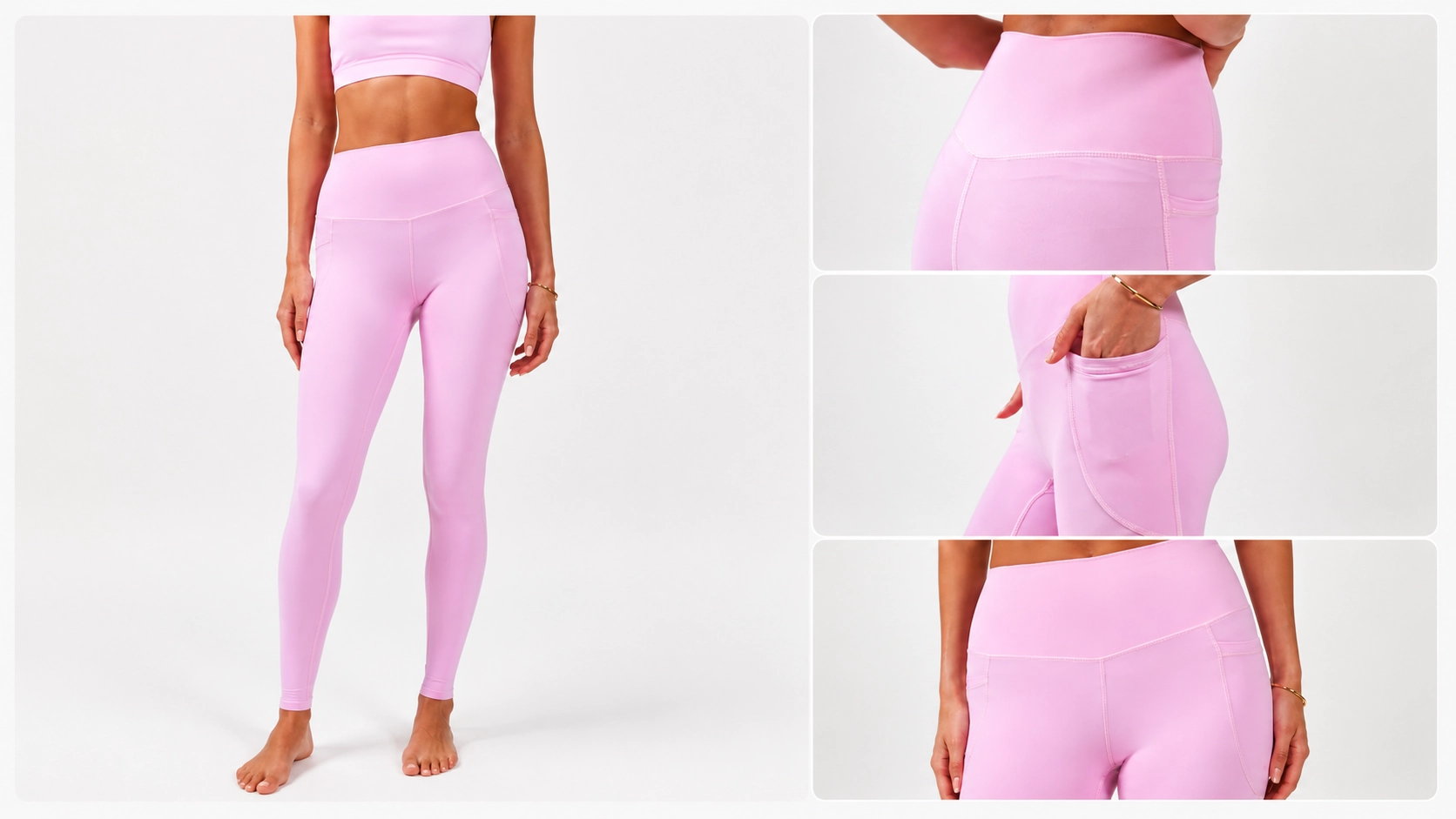
Built for Brands Managing Real Leggings Programs
Pocket leggings become a sourcing project when fit, material, pocket function, branding and repeat production must work together. MOVEVOX is positioned for B2B buyers that require structured development and formal sample approval.
Established Brands
Your team may already have a Technical Designer, Product Developer or Sourcing Manager and expect the factory to work from defined specifications rather than reinterpret the design independently. MOVEVOX can review Tech Packs, measurement charts, pocket dimensions, construction details, materials, artwork and packaging requirements before sampling. Questions or manufacturing conflicts can be clarified before specifications are frozen for production.
- Formal Tech Pack and measurement-chart execution
- Pocket placement linked to approved garment measurements
- Sample revision before bulk production approval
- Consistent branding, packaging and SKU execution
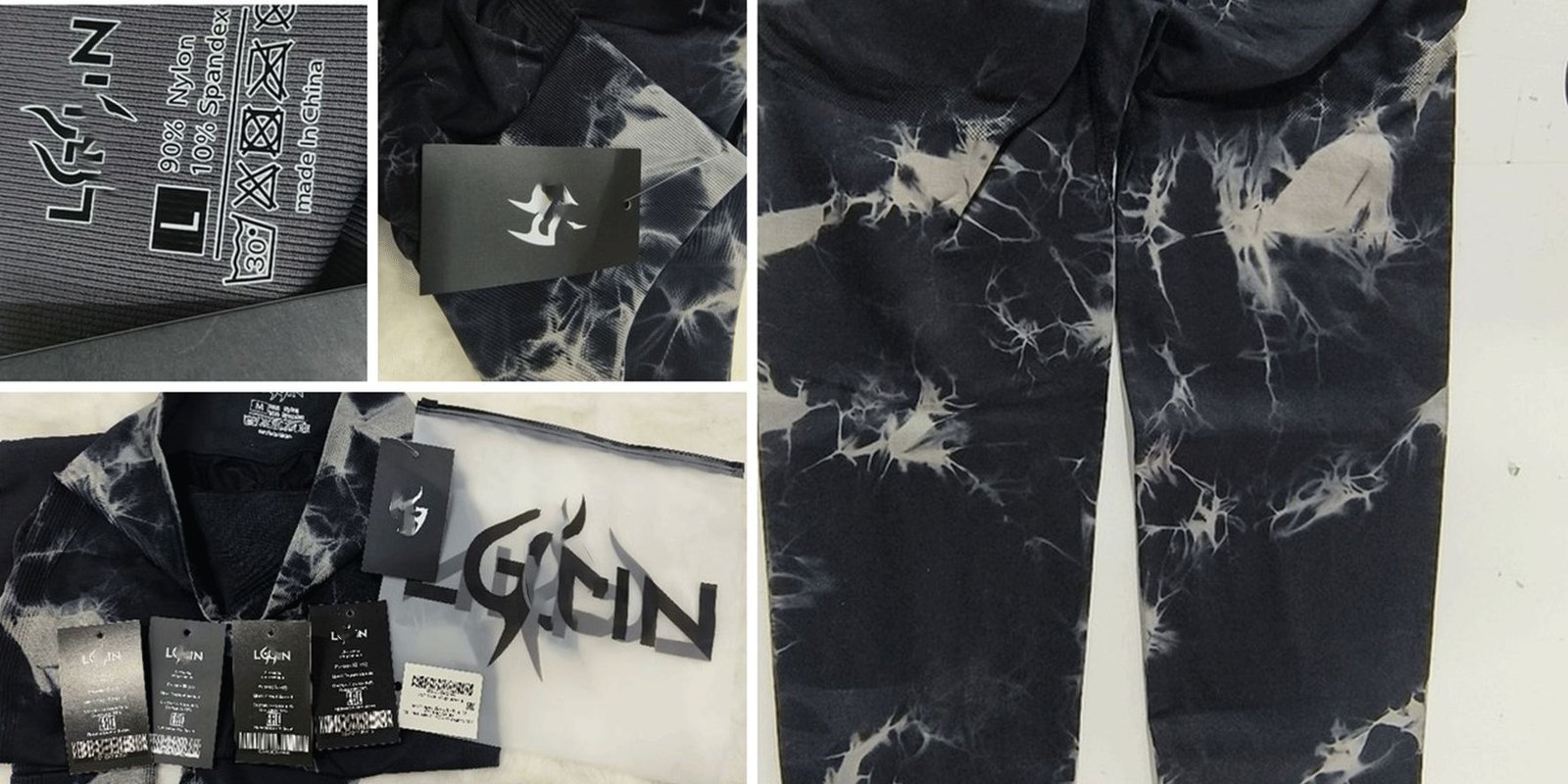
Growing DTC Brands
Growing activewear brands often need greater development support while still requiring a production system that can scale after a successful launch. MOVEVOX can work from a complete or incomplete Tech Pack, lawful reference sample, sketch, image or clearly defined concept, then establish the material, construction, pocket and fit requirements that must be approved before bulk production.
- Development support without losing brand approval control
- Flexible entry before larger repeat orders
- Custom colors, logos, labels and packaging
- A defined route from sample to repeat production
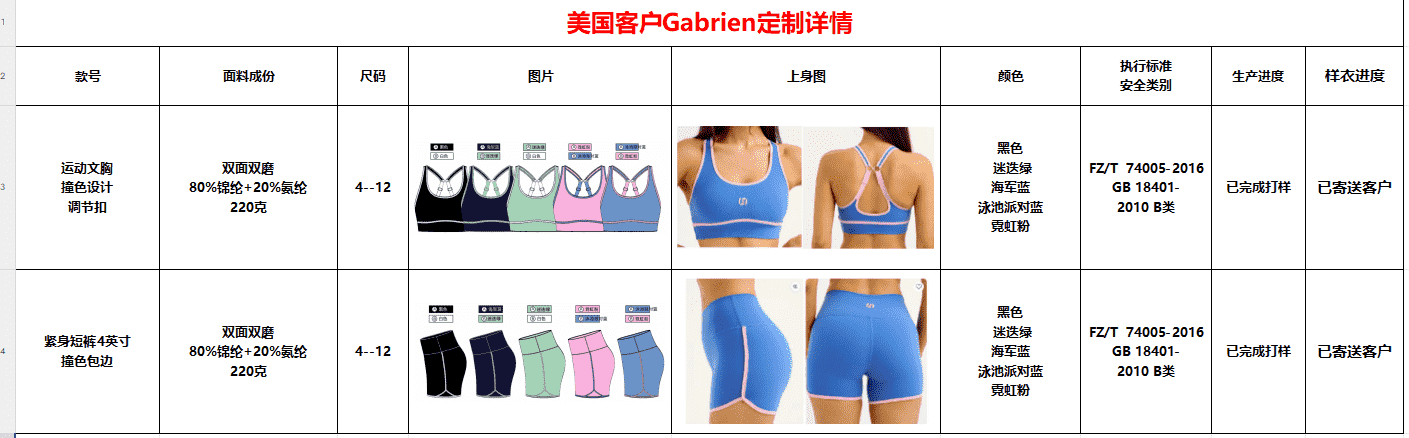
Importers & Retail
Importers and retail-oriented buyers often manage more colors, sizes, labels, barcodes and packaging variables than a single-style startup order. The key requirement is not only making the garment but keeping each SKU aligned with the correct specification, branding and packaging version. MOVEVOX manages these elements through one project and production coordination system.
- Multiple size and color combinations
- Barcode and SKU packing accuracy
- Consistent specifications across repeat orders
- Centralized production and quality communication
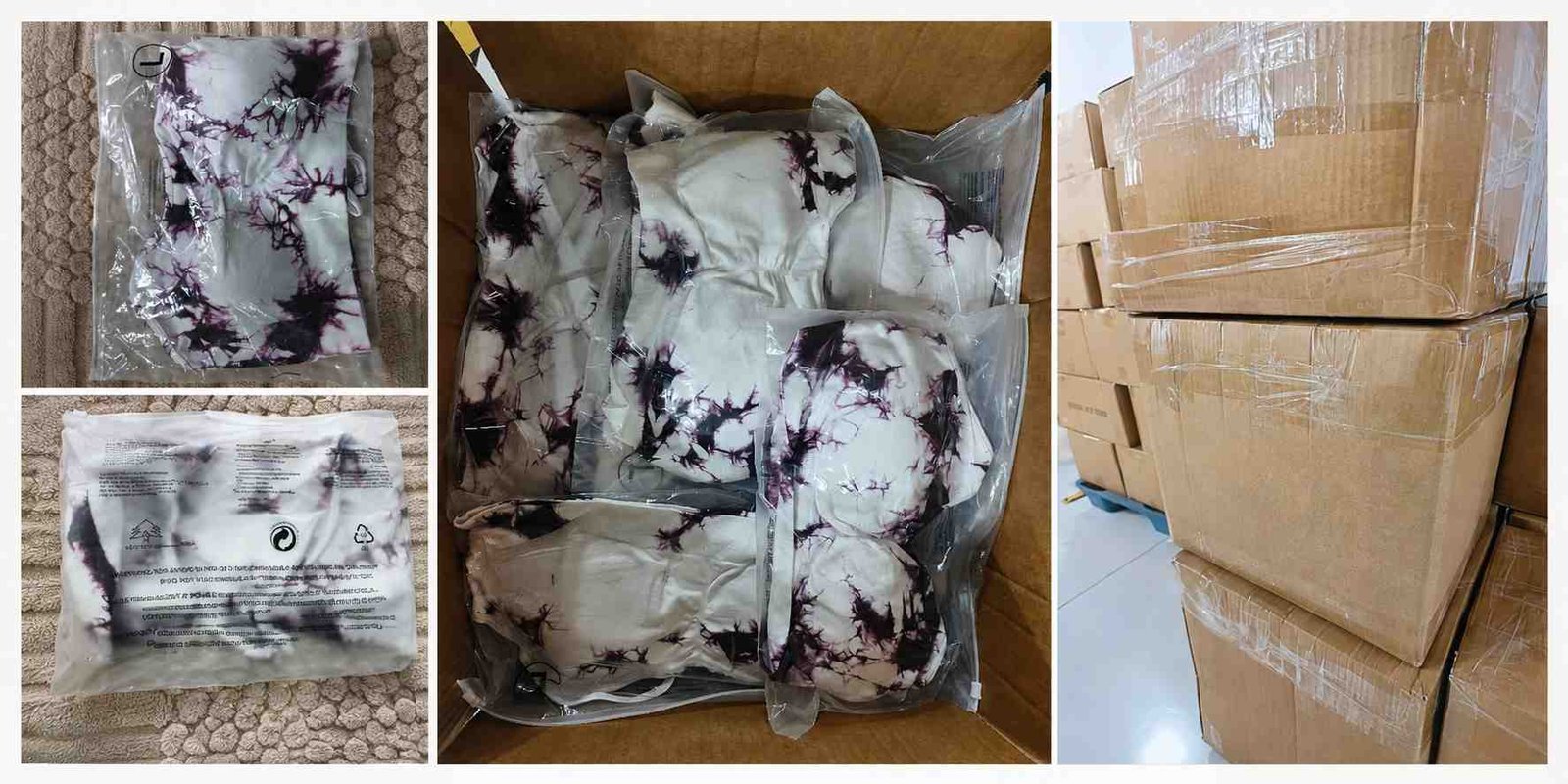
Pocket Structures for Different Activewear Programs
MOVEVOX supports several pocket structures for leggings and training bottoms. Pocket selection should start with what the user carries, how the garment is used and how the added structure affects stretch, fit and appearance.
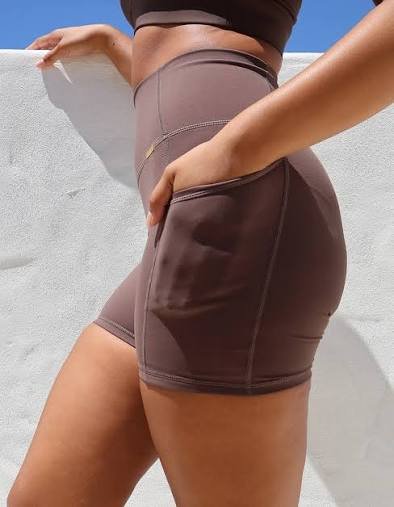
Side Pocket
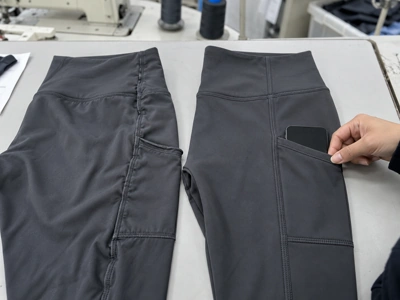
A side pocket can hold a phone or other small item while keeping access relatively direct. Its depth, opening, panel position and side-seam interaction require sample confirmation.
Patch Pocket
A patch pocket creates a clearly defined external storage area. Fabric stretch, edge stability, top opening and appearance under load should be reviewed during development.
Waistband Pocket
A waistband pocket can provide compact storage without a large external pocket panel. Pocket thickness, waistband construction and carried item can change waist comfort and local bulk.
Rear Waist Pocket
A rear-waist pocket can support small-item storage for running or training. Placement should be evaluated with waistband height, back rise and movement during wear.
Hidden Pocket
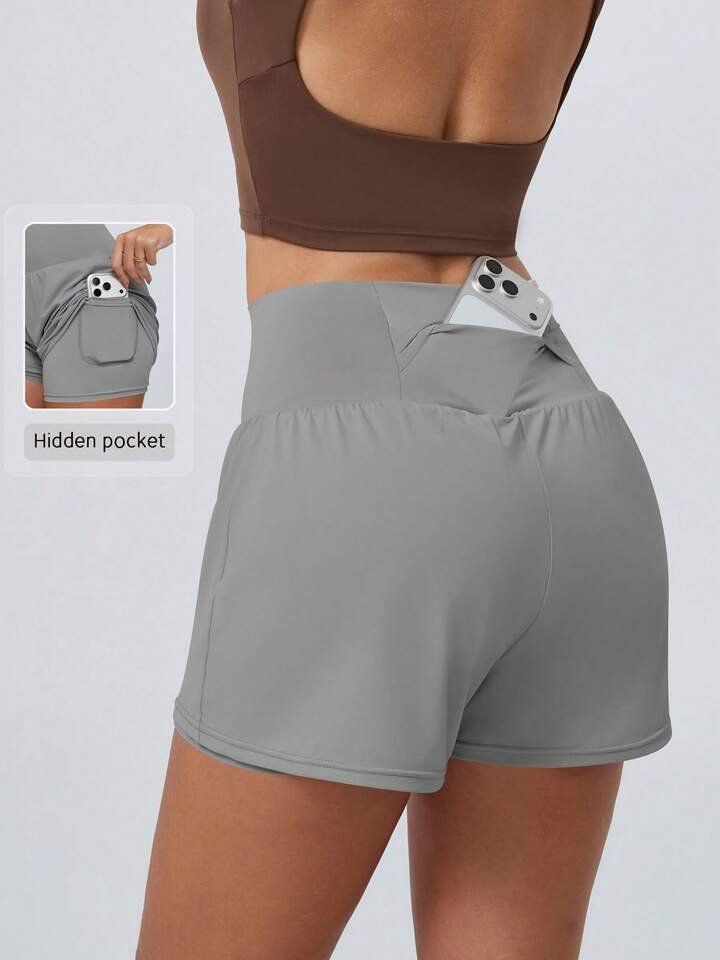
MOVEVOX can develop internal waistband, rear-waist or seam-hidden pockets. Hidden describes lower visual presence; a thick phone or large item may still create a visible outline.
Internal Pocket
An internal pocket can be considered where external appearance should remain cleaner. Opening accessibility, lining construction and the effect on high-stretch zones must be evaluated.
Zip Pocket
Selected cut-and-sew bottoms can use zippered pockets. Zipper specification, pocket reinforcement and skin contact require review; waterproof claims require supporting test evidence.
Overall Design Logic: Pocket engineering begins with the intended item, garment activity and required accessibility. MOVEVOX then reviews pocket dimensions, opening direction, load, fabric stretch and fit impact before sample approval. Bulk QC can check opening size, position, exposed pocket bags, sagging after loading, open seams and seam allowance.
How Pocket Leggings Move Through Cut-and-Sew Production
Pocket leggings require coordinated control across fabric, pattern, cutting, pocket assembly and garment construction. The chain below shows where specifications become physical components and where checkpoints prevent errors from moving downstream.
Fabric Release
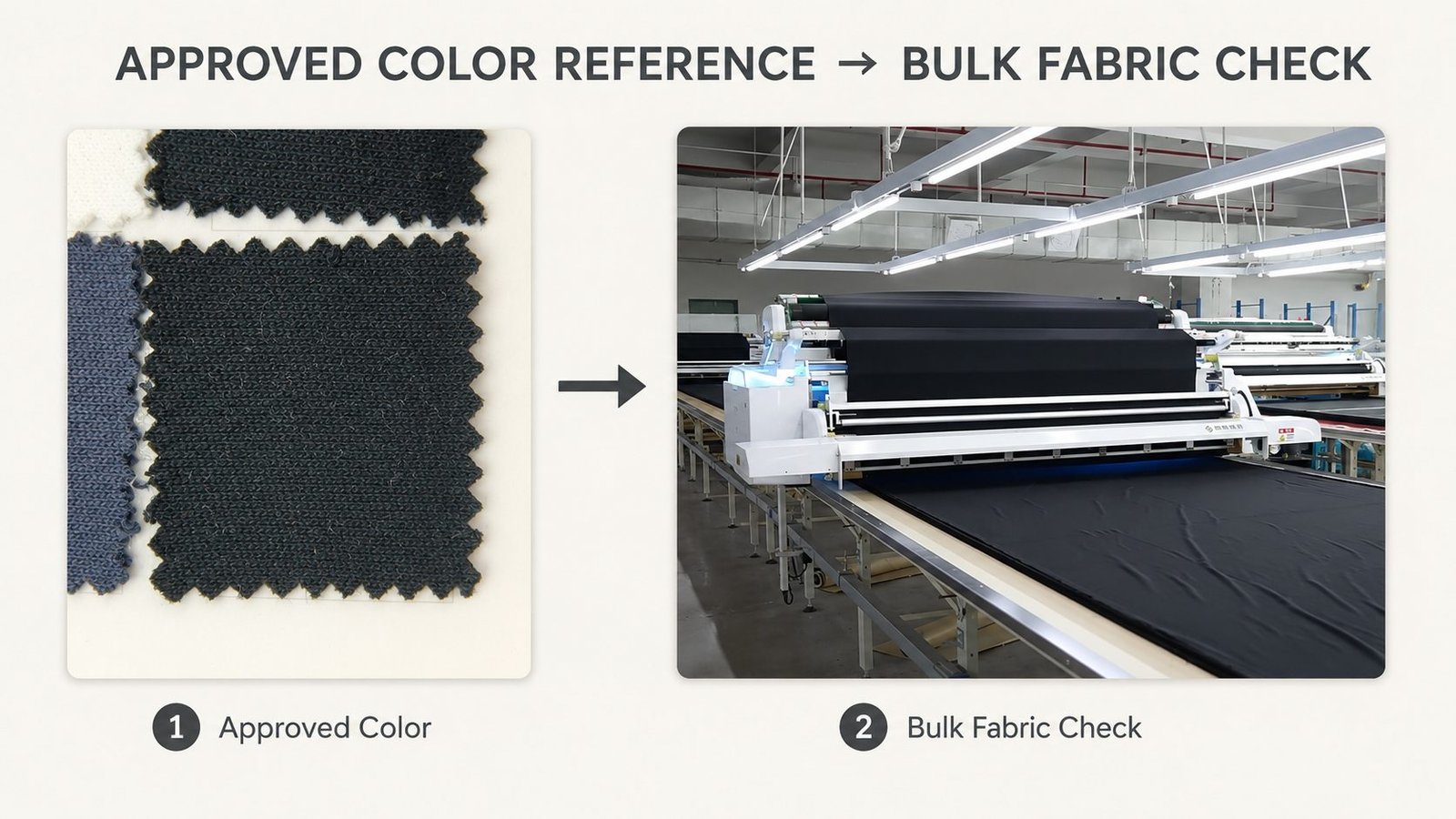
Approved fabric is received and identified by project, color and batch. Required incoming checks can include color, GSM, shrinkage, elasticity and opacity before the material is released for cutting.
Pattern Release
Production uses the current approved pattern and measurement version, including pocket shape and placement references. Superseded pattern revisions should not remain active for new cutting.
Cutting
Fabric is laid and cut according to the current pattern and project instructions. Style, color, size and fabric lots are identified separately to reduce mixing during downstream sewing.
Pocket Preparation
Pocket pieces, pocket bags, openings and related components are prepared according to the approved construction. Approved zipper or trim versions follow the project specification where used.
Pocket Assembly
The pocket is assembled into the relevant panel, side seam or waistband structure. Position, opening direction and local seam execution are controlled against approved references.
Garment Assembly
Main garment panels, waistband, gusset and pocket-containing sections are assembled. Stitch type, seam allowance and tension follow the approved technical standard for the selected fabric and construction.
Finished Inspection
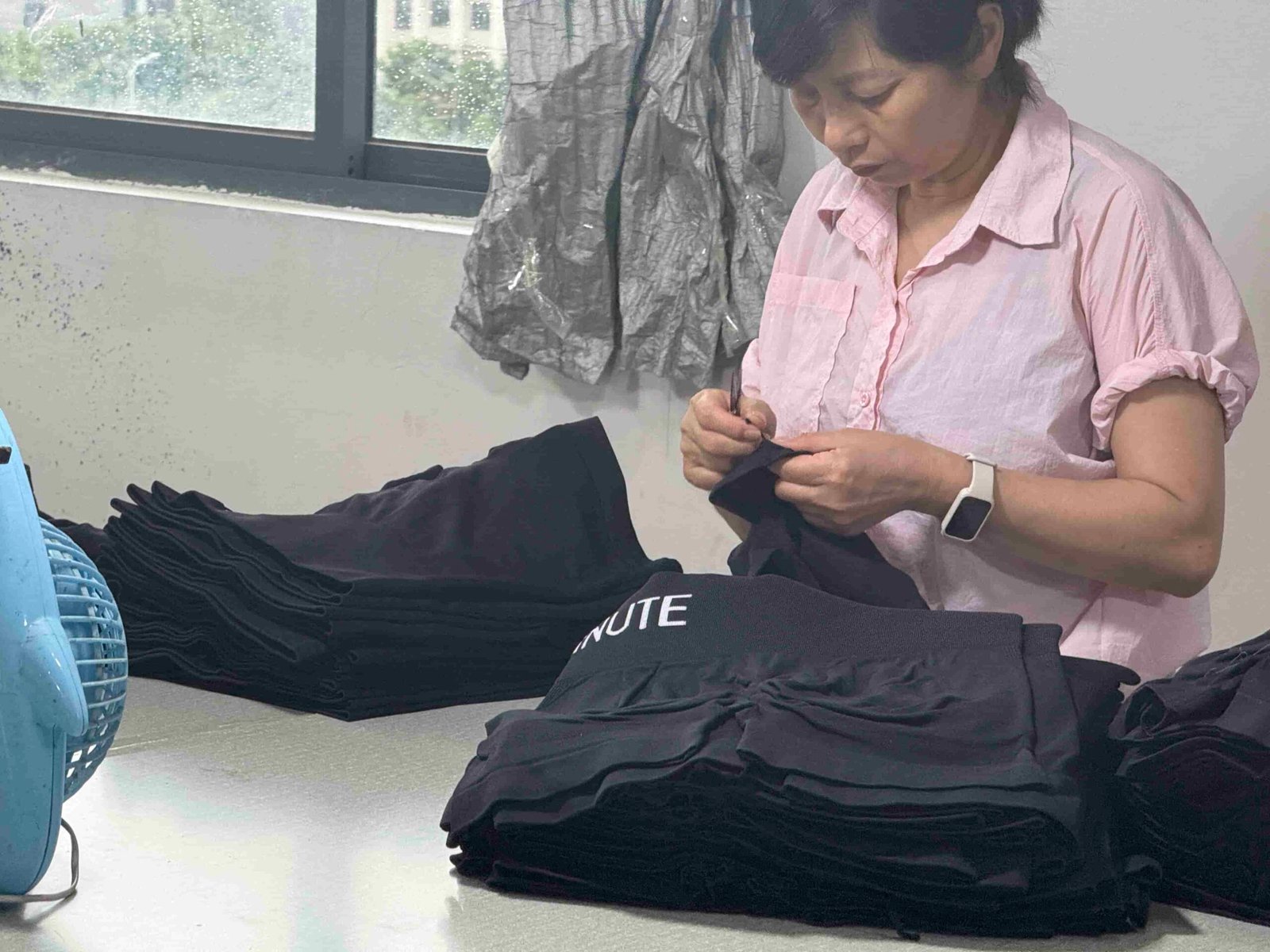
Completed garments are reviewed for appearance, measurements, workmanship, symmetry, function and approved brand elements. Pocket-specific checks include location, opening, exposed bag material and structural condition.
Packing Release
Only garments meeting applicable requirements proceed into approved labels, packaging and carton preparation. SKU, size, color and packing information are checked before shipment release.

Sewing Details That Shape Pocket Leggings Performance
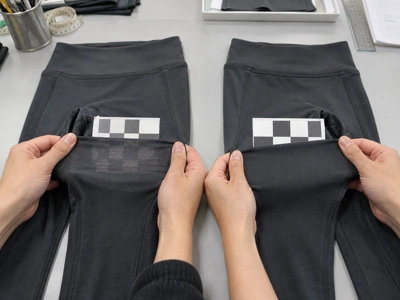
Pocket leggings combine high stretch with localized seams, openings and added layers. MOVEVOX selects sewing construction according to fabric, stress location, comfort and approved appearance.
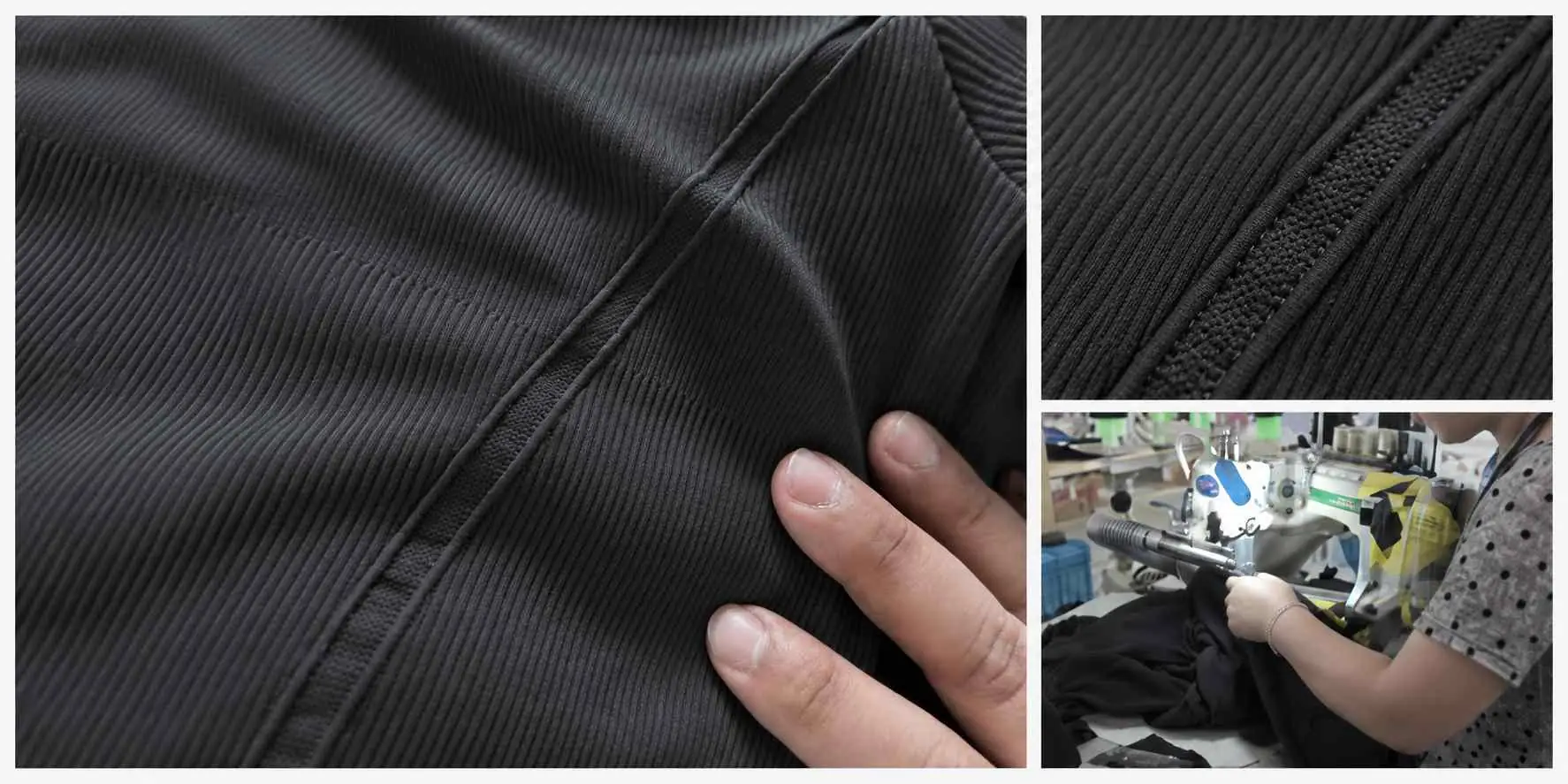
Pocket Opening
The pocket opening must remain accessible without creating unnecessary bulk or losing its intended shape. Construction depends on fabric stretch, pocket type and the approved edge treatment.
Applicable area: Side, patch and selected hidden pocket openings.
Comfort/strength: Balance edge stability with flexibility required by high-stretch fabric.
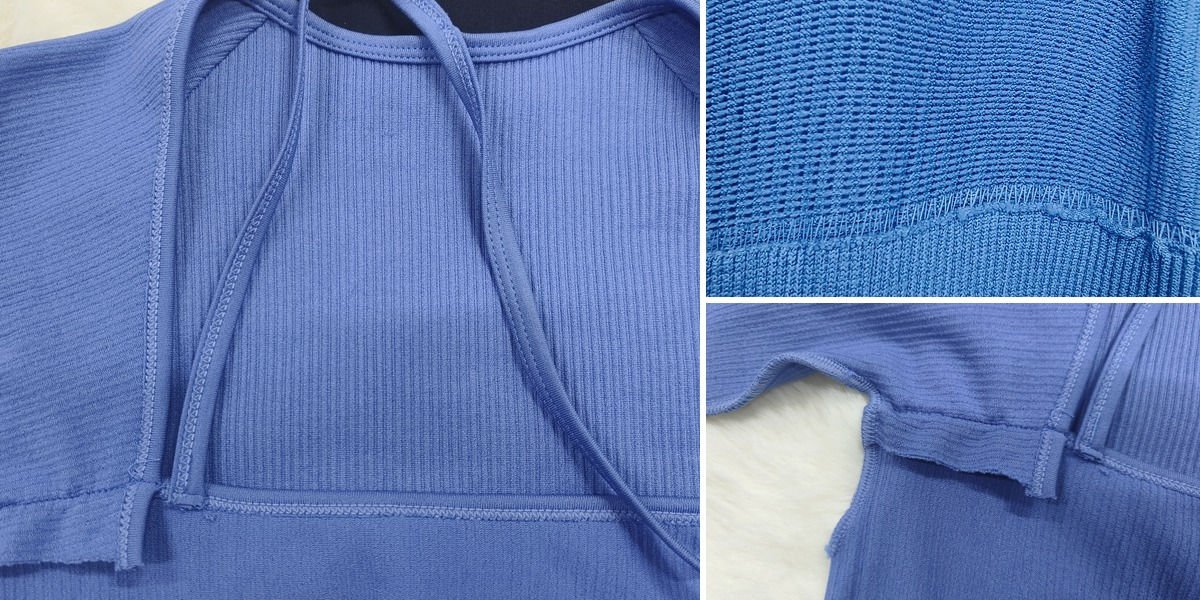
Side Seam
Side seams may also carry pocket panels and therefore require control of panel alignment, seam allowance, stitch integrity and local stretch during assembly.
Applicable area: Cut-and-sew leggings with side or panel-integrated pockets.
Comfort/strength: Stable assembly should not unnecessarily restrict lateral garment stretch.
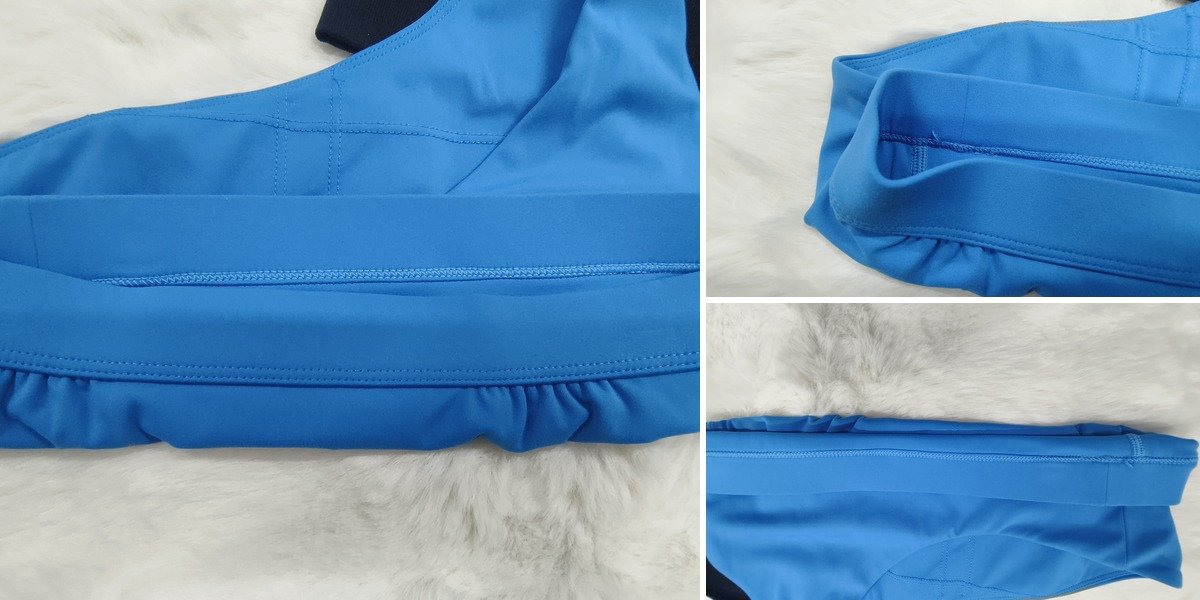
Waistband Join
Waistband construction affects garment stability and any hidden or rear pocket integrated into the waist. Extra layers must be considered during sample review.
Applicable area: High-waist leggings and waistband-pocket styles.
Comfort/strength: Support approved fit without creating excessive local thickness.
Overlock Seam
Overlock construction is part of MOVEVOX cut-and-sew production and can join appropriate stretch garment sections according to the approved specification.
Applicable area: Main panel joining and selected internal garment construction.
Comfort/strength: Thread tension and seam execution require skipped-stitch control.
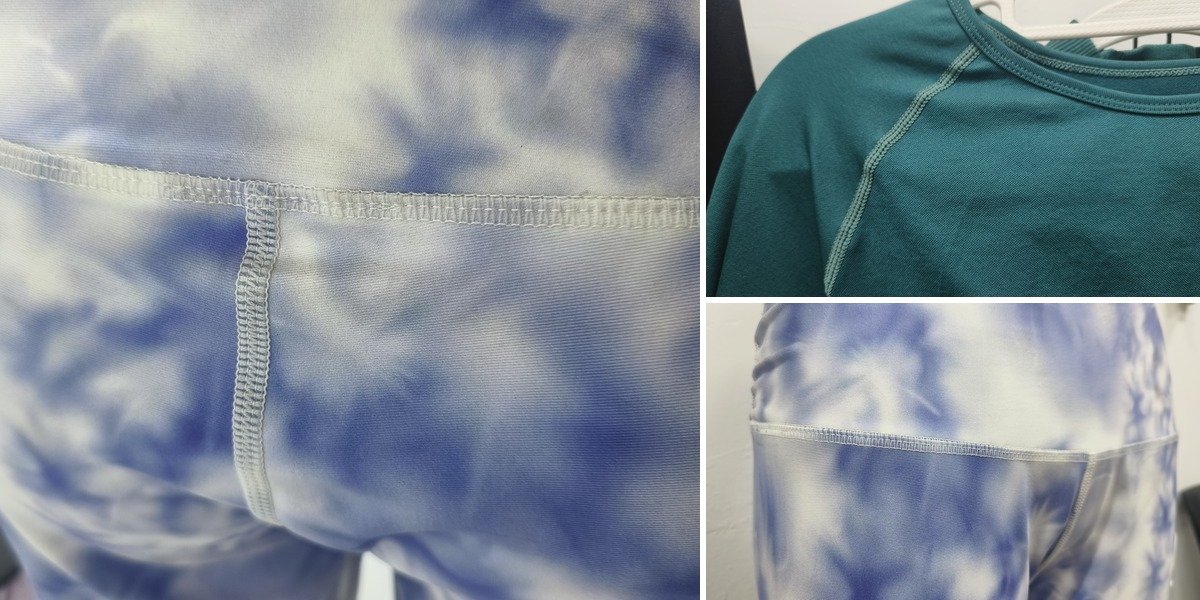
Flatlock Seam
Flatlock can be used where reduced seam bulk and a flatter contact surface are required. Parameters depend on material and stress level.
Applicable area: Selected leggings, running and training garment seams.
Comfort/strength: Helps reduce seam bulk while requiring stretch verification.
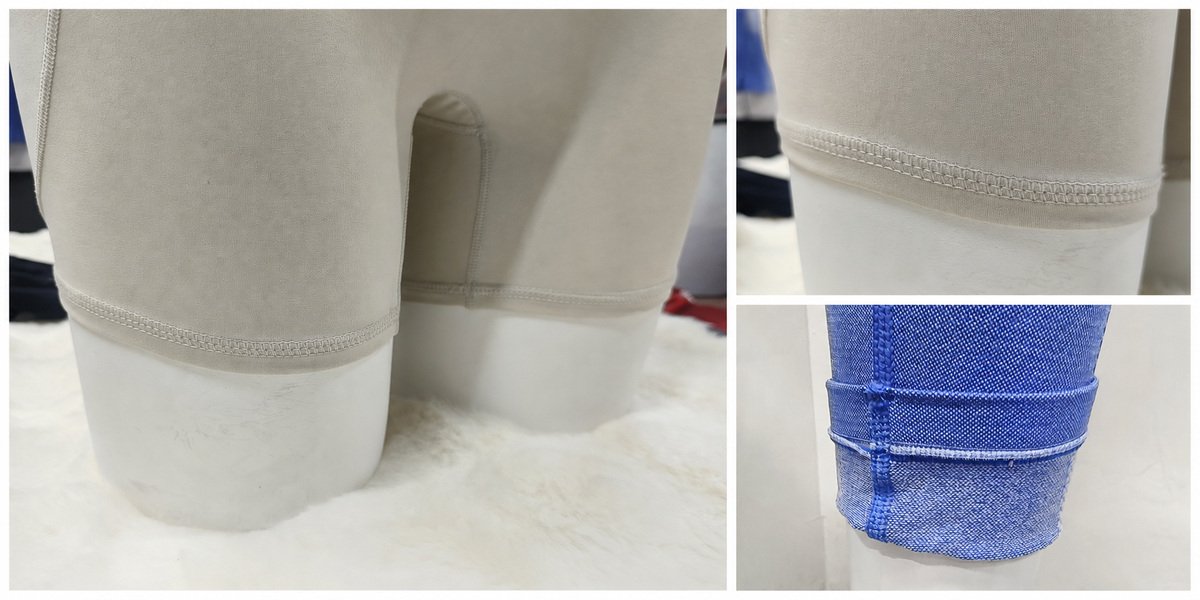
Coverstitch
Coverstitch can support elastic hems and selected finishing applications. Feeding, tension and fold width need to match the high-stretch material being used.
Applicable area: Selected garment edges and stretch finishing locations.
Comfort/strength: Stitch should remain stable after normal garment stretch and wear.
Reinforcement Where Pocket Leggings Actually Carry Load
Reinforcement should follow real load points rather than adding more stitching everywhere. Pocket openings, seam intersections and selected hardware locations require different solutions depending on fabric stretch, construction and expected load.
Pocket Opening
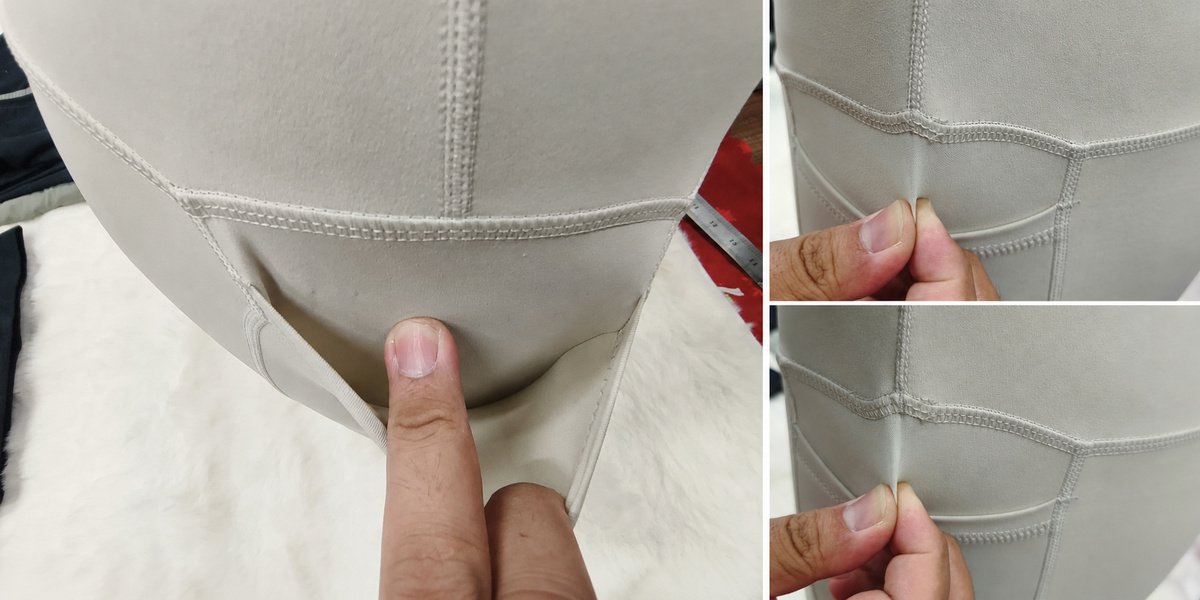
Reinforcement should follow the actual load direction.A phone or other carried item can place repeated stress around the pocket opening. The approved construction should consider opening geometry, fabric stretch and where force transfers into the garment.
Pocket Corners
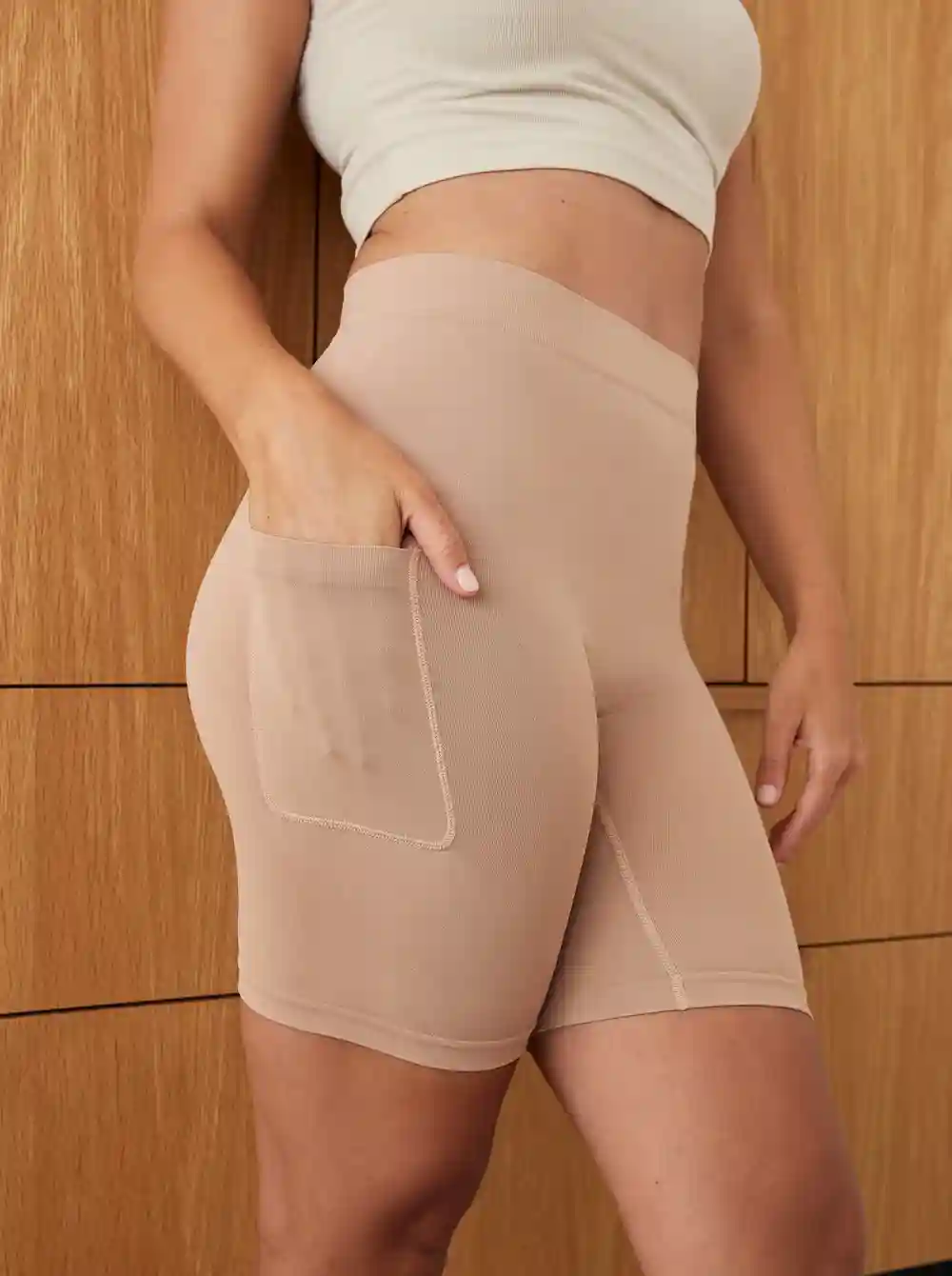
Corner stress can require additional structural control.Corners and seam intersections can concentrate force during loading, removal and active movement. Depending on garment structure, reinforcement can use suitable stitching, local layering or another sample-approved method.

Zipper Ends
Hardware endpoints require both strength and comfort review.Selected zip-pocket leggings introduce local stiffness and concentrated stress around zipper ends. Reinforcement must be considered together with skin contact, fabric flexibility and hardware position.
Waistband Pocket
More reinforcement is not always better.An internal waistband pocket may need structural stability, but excessive layers or stitching can create a hard or bulky area. Development should balance pocket retention, waistband stretch and wearer comfort.
Waistband Engineering Around Pocket Leggings Design
Pocket leggings combine a high-stretch waistband with storage requirements. Waistband height, waist-to-hip ratio, fabric recovery, back rise and pocket structure must be developed as one system.
Build the Waistband Before Adding the Pocket
For pocket leggings, the waistband determines more than how high the garment sits. It influences how the leggings remain in position during movement, how compression is distributed and whether a hidden or rear pocket can be integrated without creating excessive bulk.
MOVEVOX can develop seamless knitted waistbands and cut-and-sew waistband structures. For cut-and-sew leggings, the waistband may use layered fabric or structured panel construction. For seamless garments, waistband stability can be developed through knitting structure, density and local elasticity.
A hidden waistband pocket adds another structural variable. The designer and manufacturer need to consider the item to be stored, pocket-bag thickness, opening direction and the amount of stretching expected around the waist. A pocket that is acceptable when empty can behave differently when loaded.
Waistband approval should therefore review more than a flat waist measurement. Relevant variables include waistband height, upper and lower circumference, front and back rise, waist-to-hip relationship, fabric recovery and the finished pocket configuration.
MOVEVOX does not treat terms such as “high waist” as complete production specifications. The approved garment still requires measurable POMs, pattern or knitting information and fit confirmation. A taller waistband alone does not guarantee better stability.
Match Pocket Location to Waistband Function and Fit
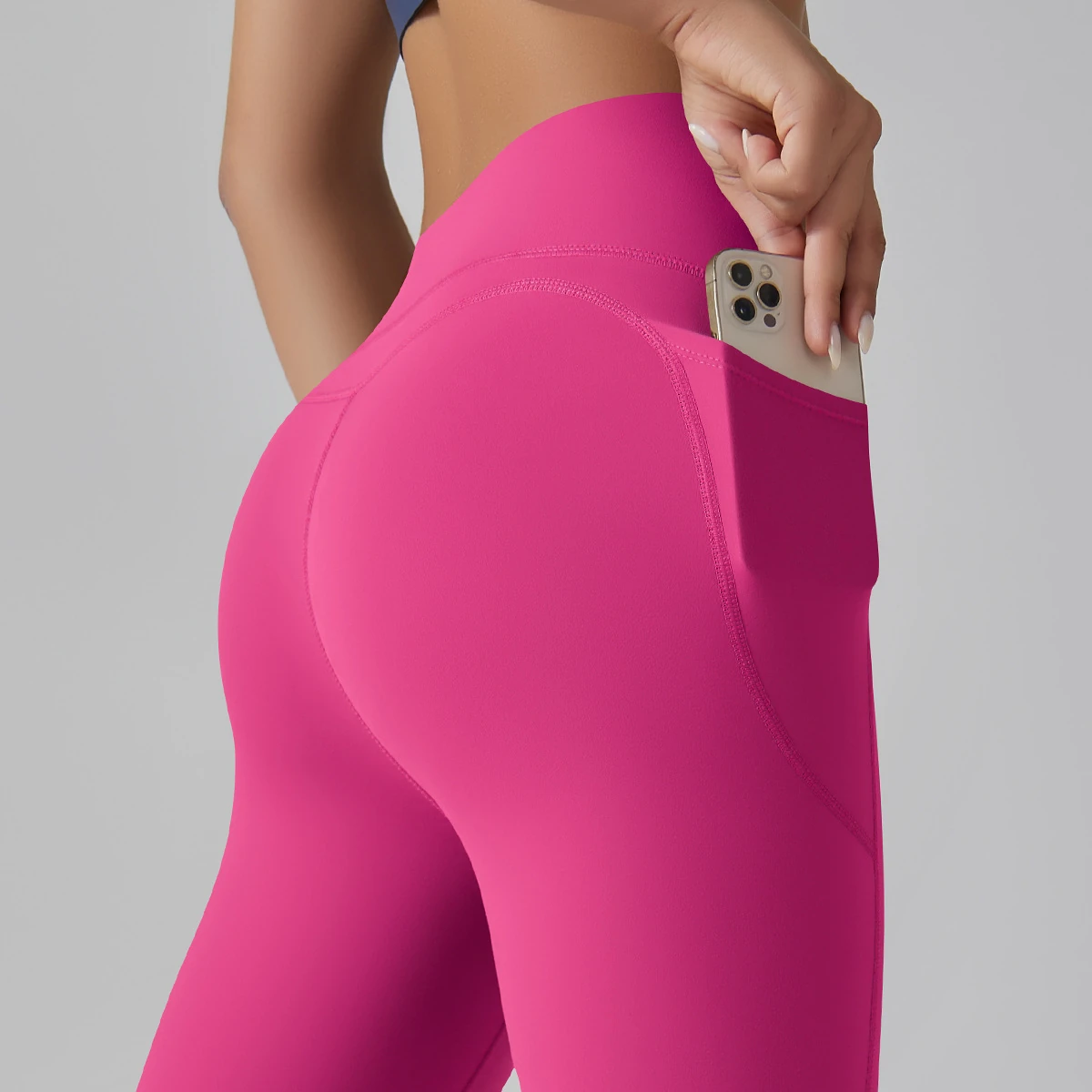
Pocket position should reflect the purpose of the product. An internal front or side waistband pocket may suit compact storage, while a rear-waist pocket may be considered for running or training programs. Each option changes local thickness and can influence how the waistband sits on the body.
MOVEVOX supports internal waistband pockets, rear-waist hidden pockets and other approved pocket structures for leggings and training bottoms. Development begins by defining the intended stored item and then reviewing how the pocket interacts with the garment.
A large item can create a visible outline even when the pocket is described as hidden. For this reason, “hidden” should be treated as a lower-visibility construction rather than a claim that the contents become completely invisible. The sample should be reviewed with the actual or representative item the buyer expects the end user to carry.
Fit also remains critical. Waist circumference, hip circumference, front rise, back rise, waistband height and fabric recovery influence whether the garment stays in place. Adding a pocket must not be assessed independently from these variables.
For bulk production, the approved pocket dimensions and location should become measurable references. QC can then inspect pocket position, symmetry, bag exposure, seam condition and the overall waistband appearance against the approved standard.
Waist-to-Hip Fit Before Pocket Placement Is Frozen
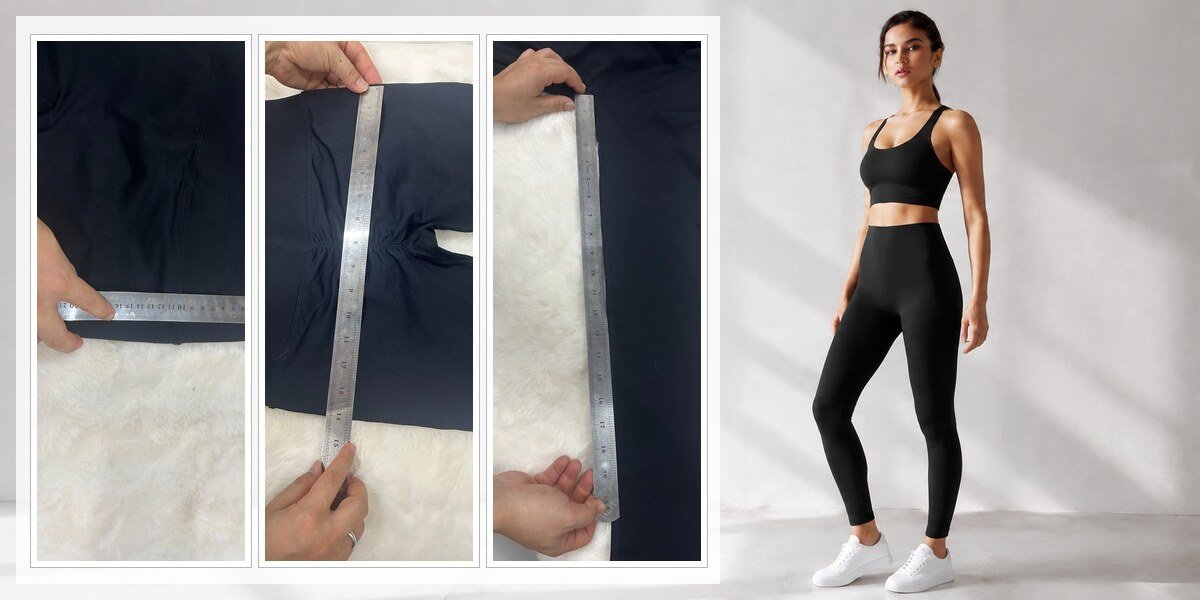
Pocket position cannot be separated from the base leggings fit. Waist, hip, rise, inseam and fabric recovery determine how the garment stretches; the pocket must remain correctly positioned across the approved size range.
Fit as a System
MOVEVOX does not apply one generic leggings measurement table to every brand. Production measurements are established from the buyer's approved chart, product fit and sample. Waist, hip, rise and inseam are reviewed together because changes in one area can influence garment tension and pocket position.
Controlled Pocket Grading
Pocket placement follows the corresponding grading logic and approved garment landmarks so the functional location does not unintentionally shift as waist, hip, rise and leg dimensions change across sizes. Pocket dimensions and position should remain tied to the approved specification.
Recheck After Changes
When fabric, construction, waistband or pocket structure changes, the fit should be reviewed again before the revised product is released as the production standard. A pocket that works correctly in one material or sample version should not automatically be assumed to behave the same after structural changes.
Measurement and Pocket Position Reference
A buyer-approved measurement chart or anonymized technical specification can be used to verify waist, hip, rise, inseam and pocket-placement points before grading and bulk production.
Choose Fabric Around Use, Fit and Pocket Function
A pocket leggings material should be selected around the full product requirement - not composition alone. MOVEVOX reviews hand feel, GSM, stretch, recovery, opacity, surface, color and construction before approval.
Nylon-Spandex Direction
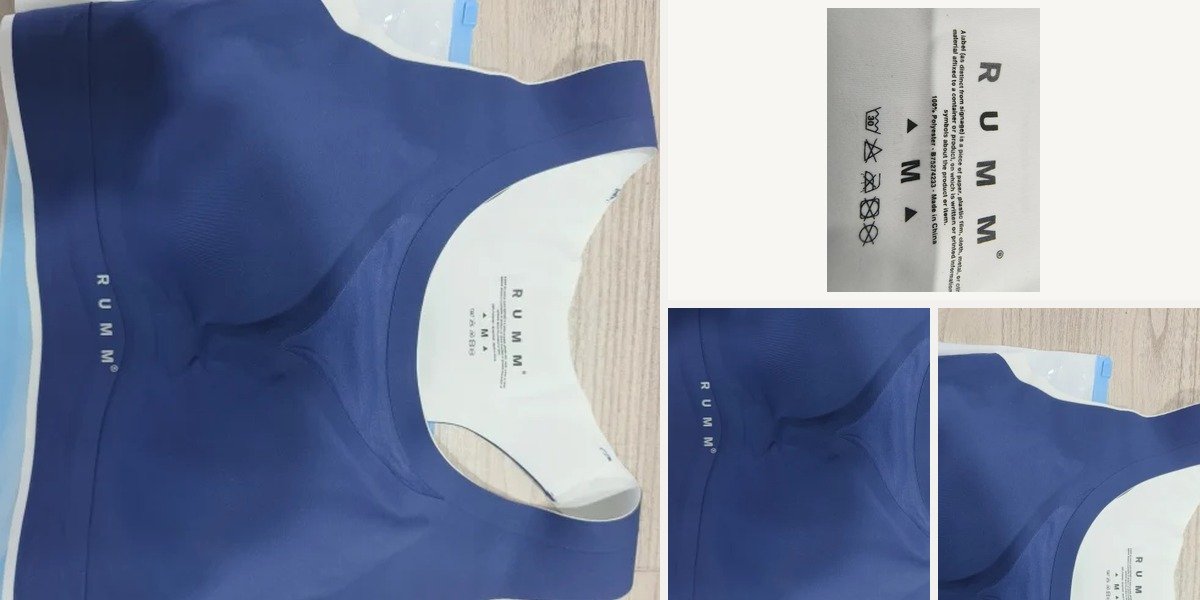
Nylon/polyamide and spandex combinations are part of MOVEVOX's established activewear material system. Final material should still be selected by GSM, surface, stretch, recovery, opacity and approved hand feel, especially when a loaded side pocket adds local stretch.
Polyester-Spandex Direction
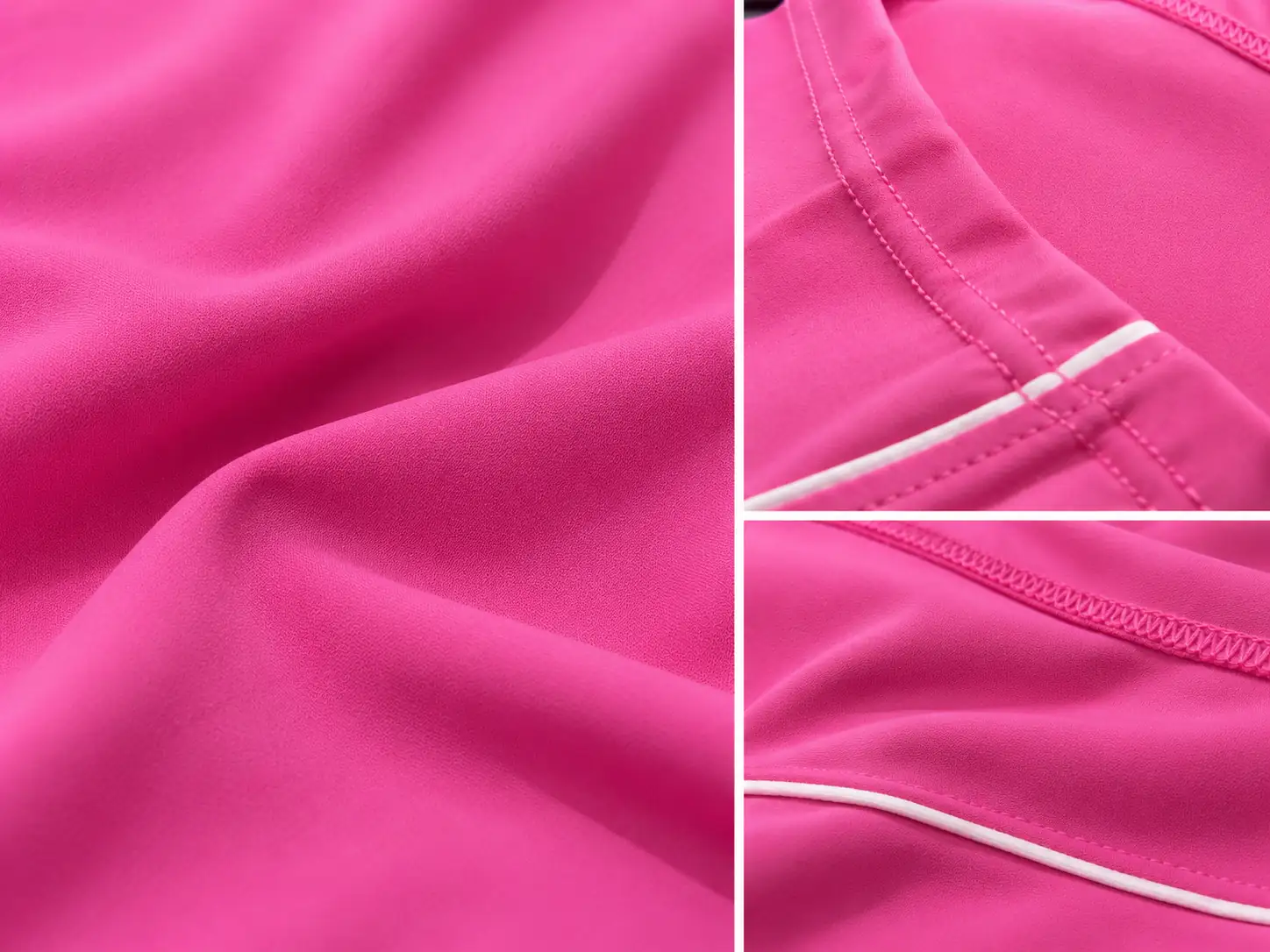
Polyester and spandex materials are also within MOVEVOX's normal activewear sourcing range. Selection should follow the buyer's surface, stretch, recovery, color and functional requirements. No moisture-management or quick-dry claim is made without documentation or testing.
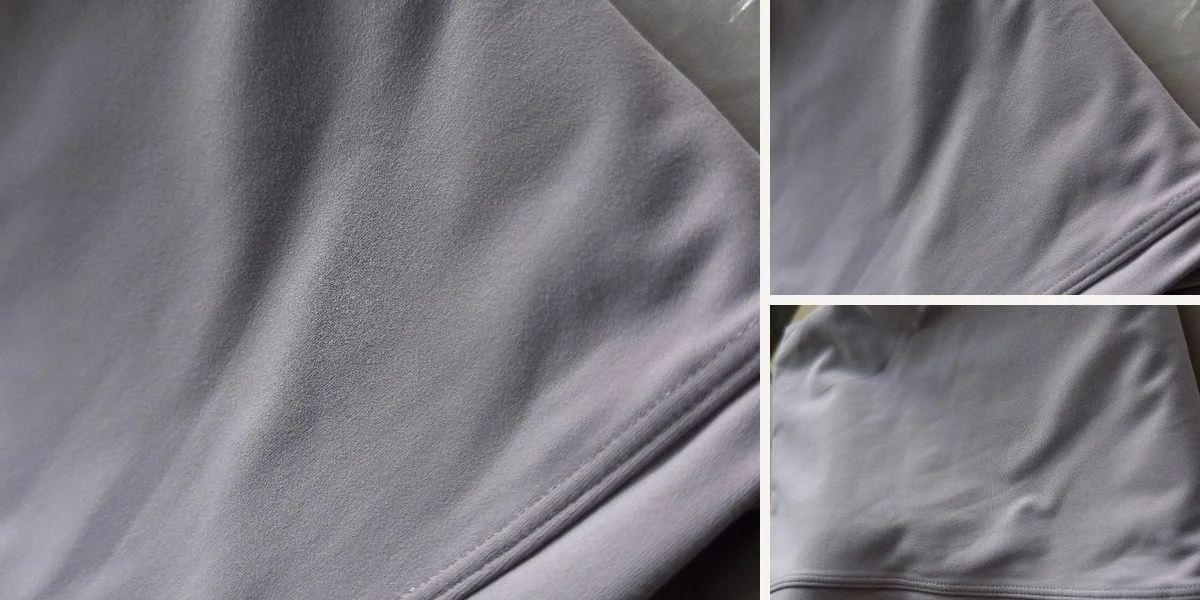
Brushed Material Direction
Brushed, peach-skin and soft naked-feel materials are available development directions within the existing material system. Surface treatment can influence hand feel and visual appearance around seams and pockets, so the selected lot should be reviewed in an actual garment sample.
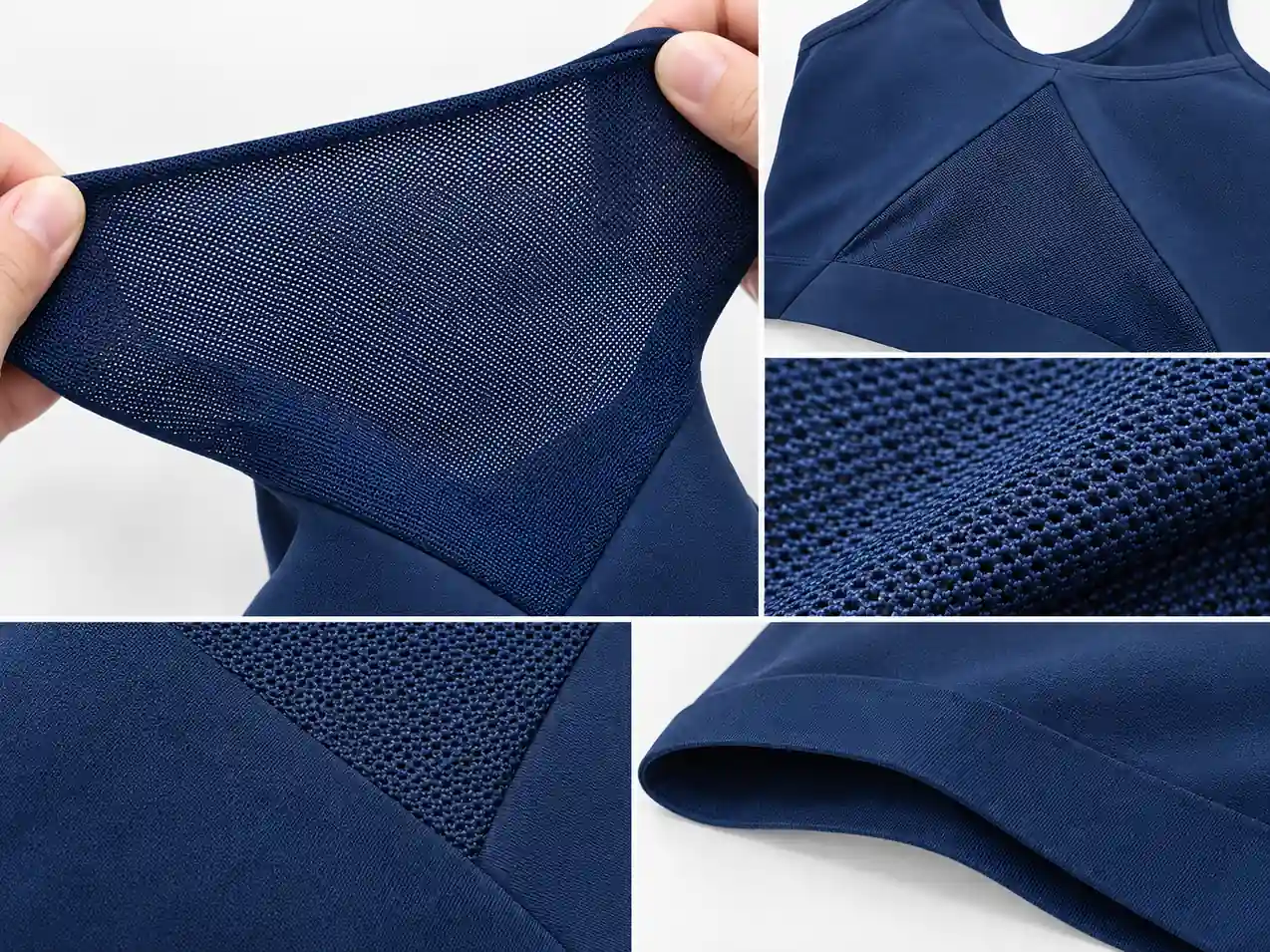
Seamless Knit Direction
For leggings designed around seamless engineering rather than complex sewn pocket panels, MOVEVOX can use Santoni-based seamless capability. Structure, yarn, density and program affect stretch and fit, and not every cut-and-sew pocket architecture transfers directly into a seamless product.
Stretch and Recovery Must Be Evaluated Together
High stretch alone does not define a suitable leggings fabric. Recovery matters because repeated extension can affect waistband stability, knee appearance, garment dimensions and the local area around a loaded pocket.
| Parameter | Nylon/Spandex Knit | Polyester/Spandex Knit | Brushed Activewear Knit | Seamless Knit Structure |
|---|---|---|---|---|
| Composition | Confirm selected blend | Confirm selected blend | Confirm selected blend | Confirm yarn combination |
| GSM | Lot-specific | Lot-specific | Lot-specific | Structure-specific |
| Stretch Direction | Test selected fabric | Test selected fabric | Test selected fabric | Depends on knit program |
| Recovery | Verify before approval | Verify before approval | Verify before approval | Verify yarn and structure |
| Surface | Project selected | Project selected | Brushed/soft direction | Knit structure dependent |
| Opacity | Verify under stretch | Verify under stretch | Verify under stretch | Verify under stretch |
| Pocket Compatibility | Sample required | Sample required | Sample required | Structure review required |
| Best Use | Based on buyer brief | Based on buyer brief | Based on buyer brief | Seamless-oriented designs |
MOVEVOX evaluates elasticity and recovery as part of material and garment development. Recovery performance cannot be inferred from spandex percentage alone; yarn, knit structure, finishing and garment fit all affect the result.
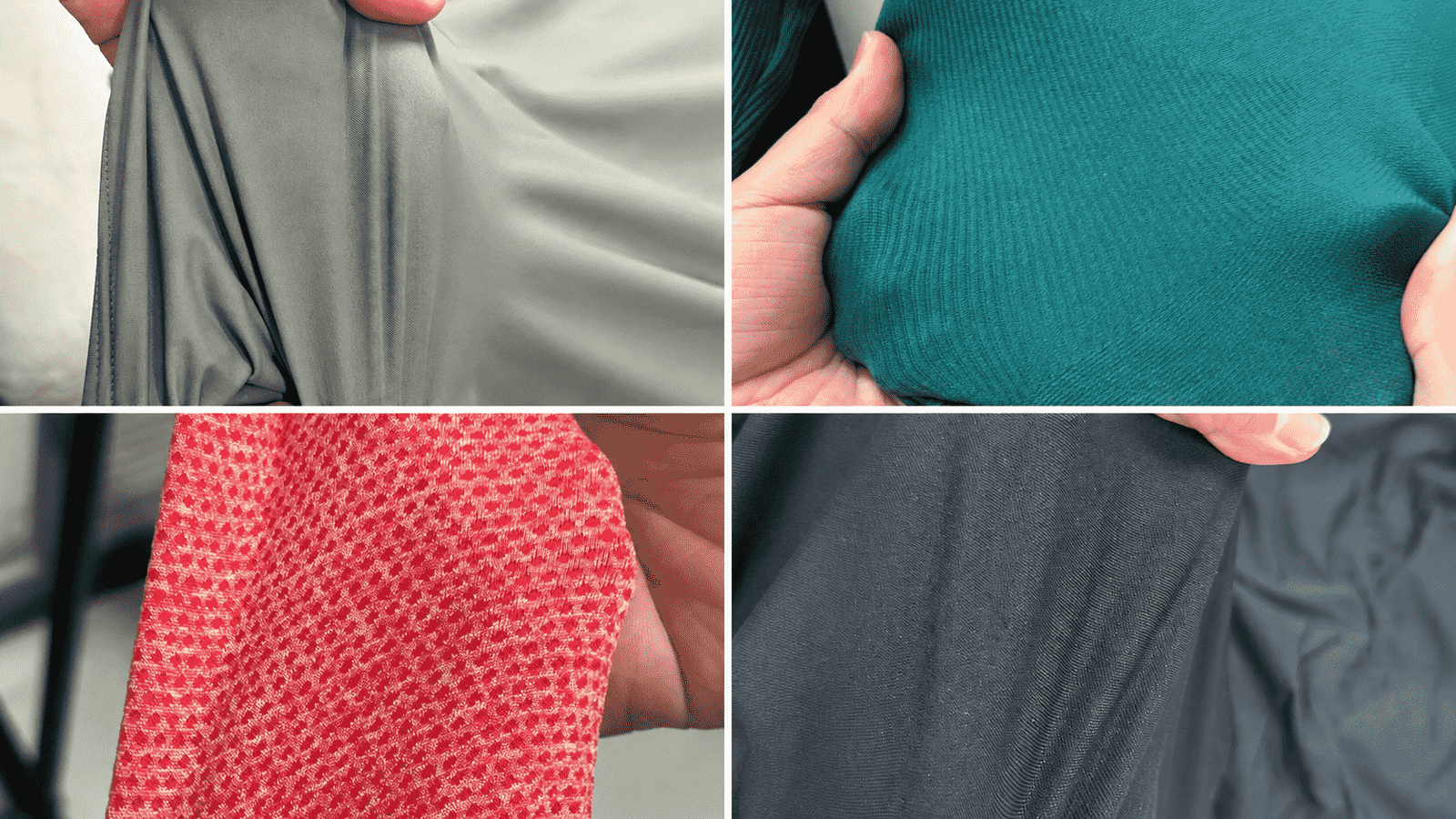
Opacity Must Be Verified in the Actual Product
MOVEVOX includes opacity within leggings material and garment review, but does not treat “squat-proof” as an automatic fabric claim. Color, GSM, knit density, stretch, sizing and wearing condition can all change coverage.
Stretch Changes Coverage
Opacity must be checked under relevant stretch.A fabric that appears opaque while relaxed can show different coverage once stretched on the body. Leggings evaluation therefore needs to consider the selected fabric together with approved garment size and fit.
Color Changes Risk
One color result does not validate every color.Dark and light shades can behave differently even when the base material construction is similar. MOVEVOX does not extend an opacity result automatically across every color without appropriate review.
Fit Affects Opacity
Undersizing can increase visible stretch and coverage risk.Waist-to-hip fit, rise and local garment tension influence how far the fabric stretches during squatting and movement. Material selection and pattern fit should therefore be considered together.
Evidence Defines Claims
Performance language should follow available evidence.Where a buyer requires a defined opacity or light-blocking method, MOVEVOX can support project-specific testing. Without documentation, wear validation or test evidence, absolute never-see-through claims are avoided.
From Product Requirement to Bulk-Ready Pocket Leggings
MOVEVOX turns a brand's product input into a controlled manufacturing specification through technical review, material and construction decisions, sampling, approval and production release.
Define and Engineer the Product
Project Brief
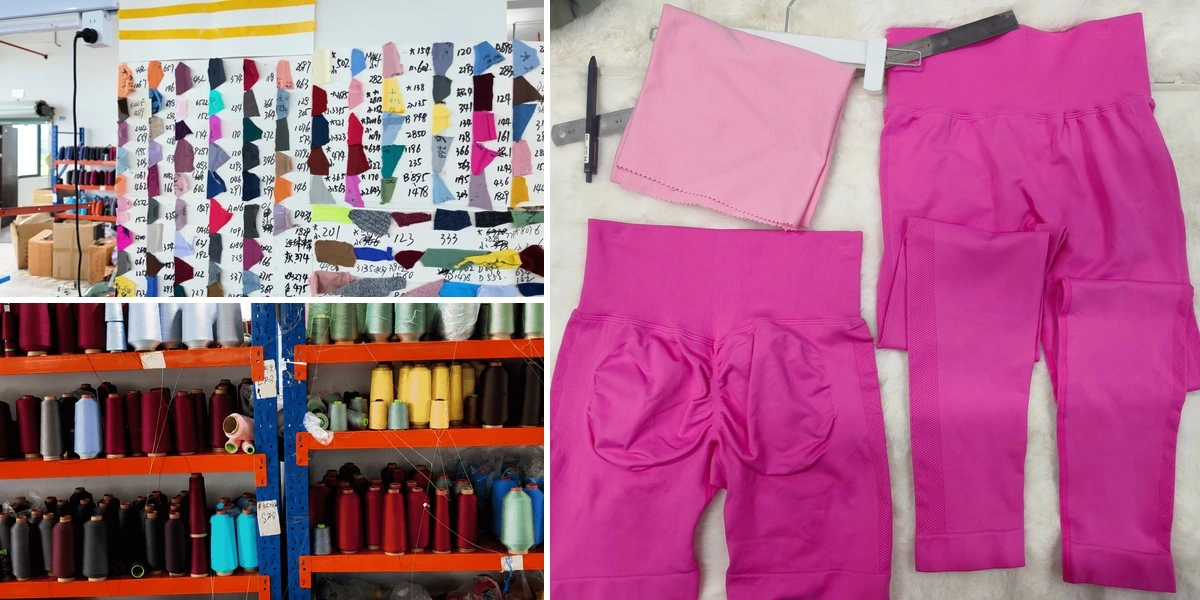
The project starts with the buyer's product direction, intended market, construction, quantity and available technical information. MOVEVOX identifies the development input and any major information gaps before physical sample work begins.
Technical Review
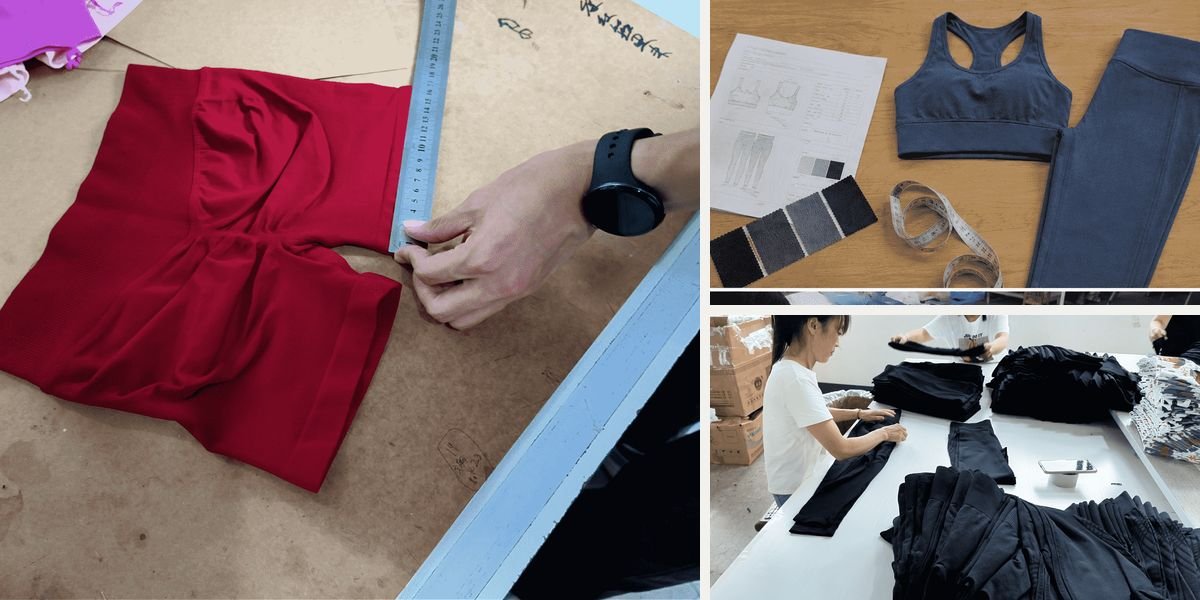
Measurements, pocket type, construction, fabric, color, branding and expected use are reviewed for manufacturability. Open technical questions are identified rather than silently replaced by factory defaults.
Material Route
Available fabrics, yarns or project-specific sourcing directions are reviewed against hand feel, GSM, stretch, recovery, opacity, pocket construction and commercial constraints such as color or material MOQ.
Pattern
For cut-and-sew pocket leggings, the pattern and construction translate approved dimensions, pocket location, waistband, rise, inseam and garment shape into executable production information.
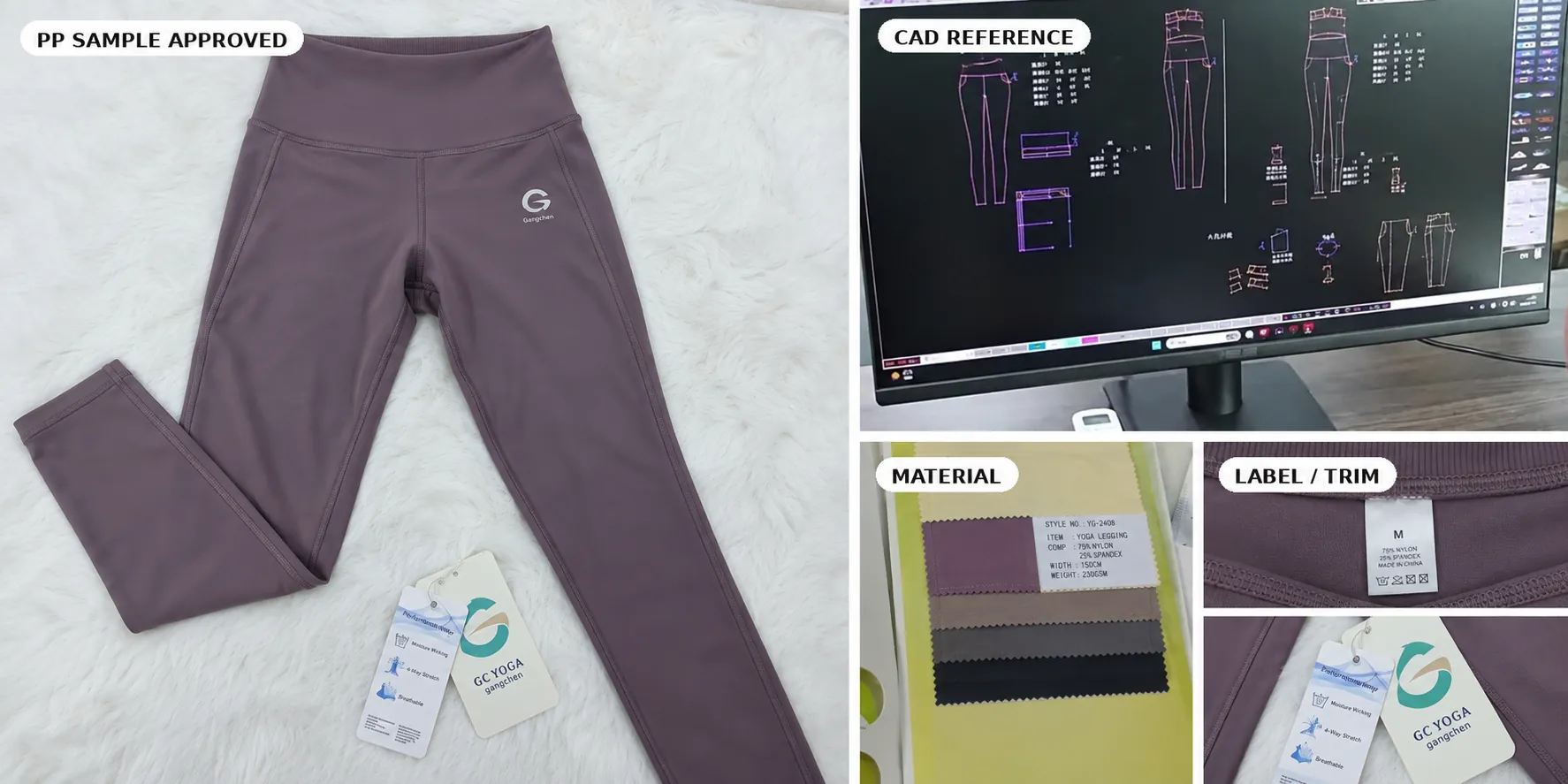

Validate, Revise and Release
Sample
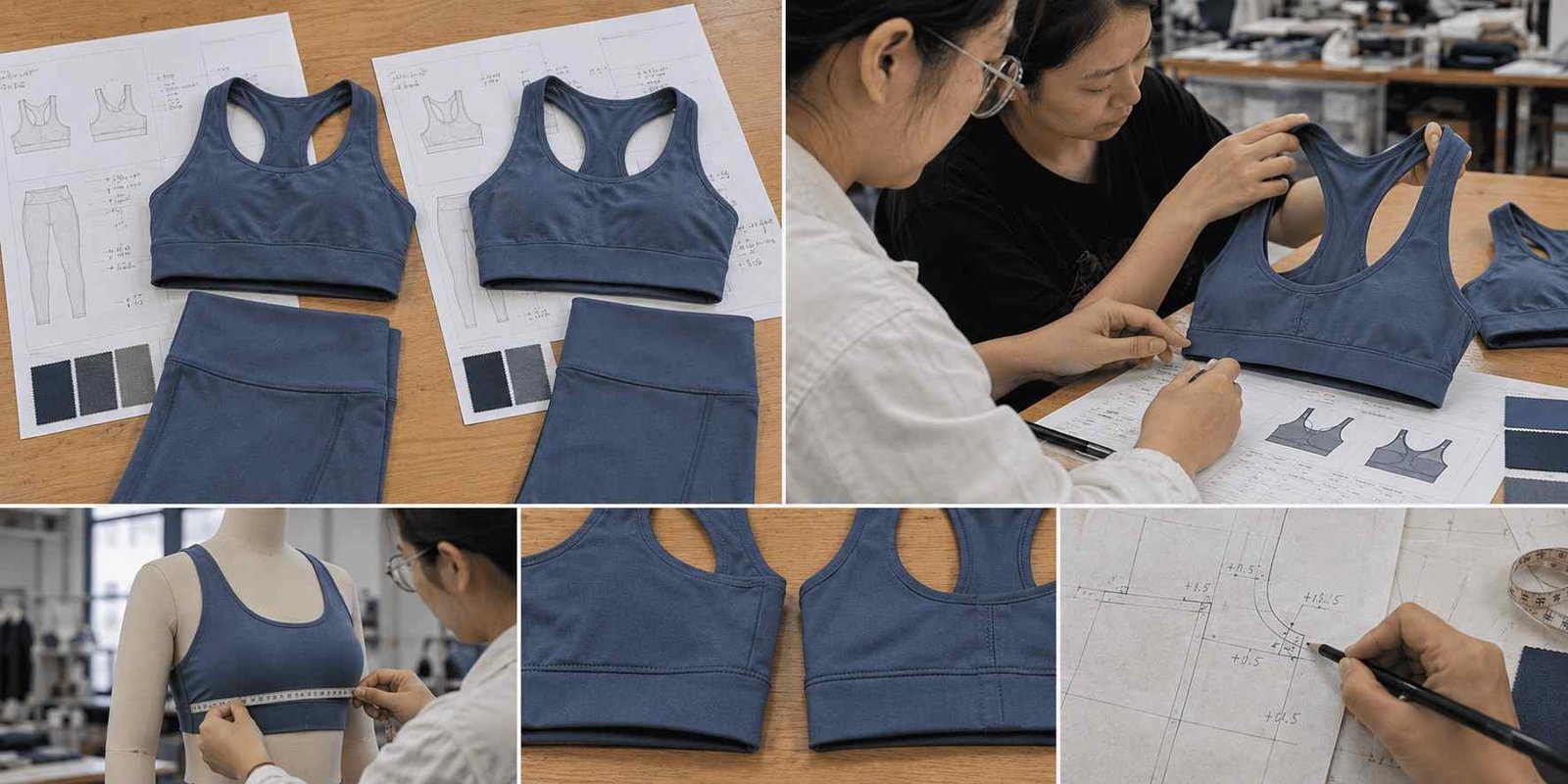
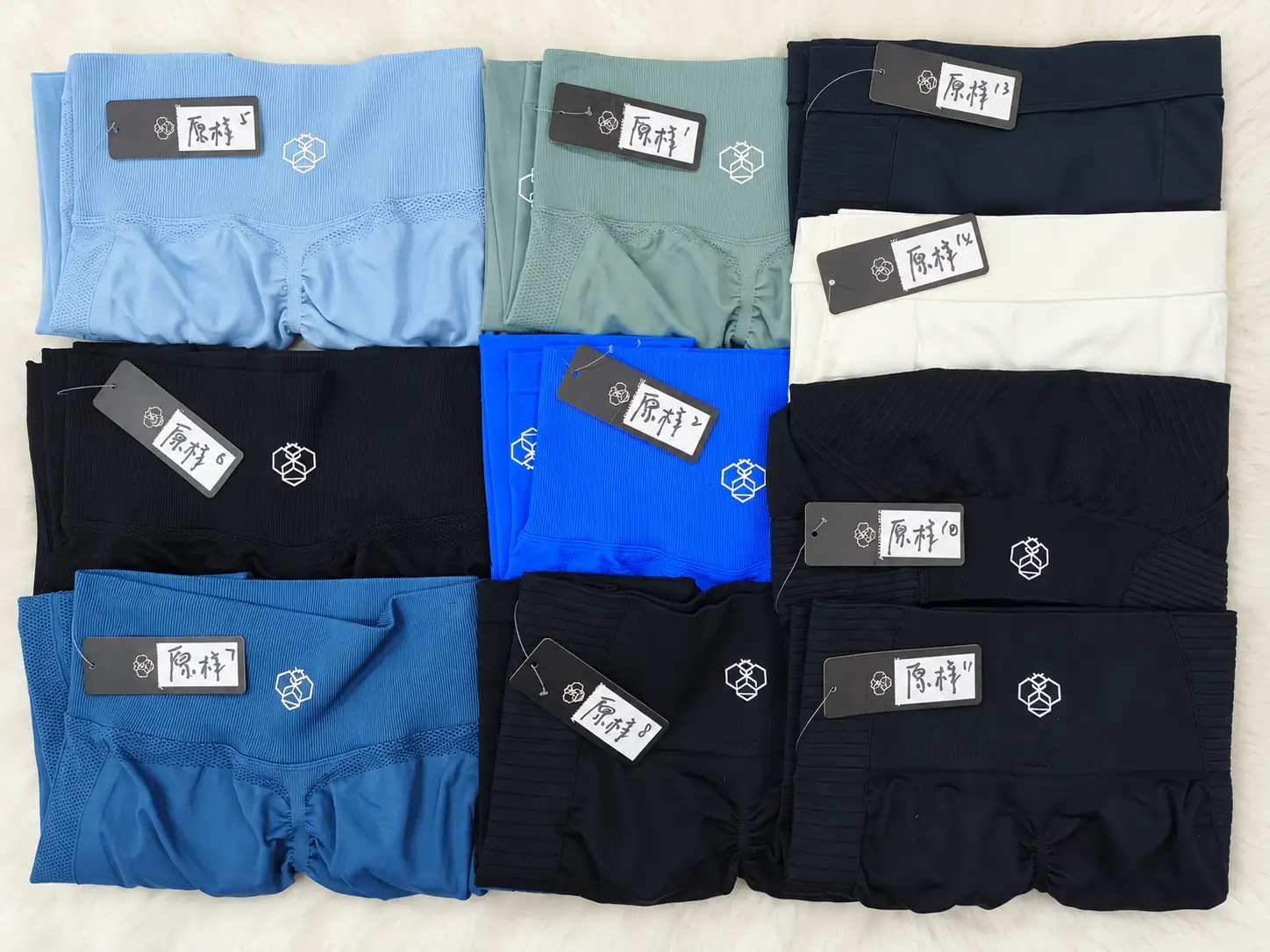
The first physical sample reviews overall construction, proportion, fabric direction, pocket function and other key requirements. It is not automatically the final production approval sample.
Revision
Buyer feedback is consolidated into a controlled revision. Changes affecting fit, pocket structure, material, logo, labels or workmanship are updated before the next approval stage.
Production Release
After final specifications and required sample approvals are confirmed, approved information is transferred into the bulk production standard and pre-production control process.
What We Review in a Pocket Leggings Tech Pack
A complete Tech Pack gives MOVEVOX a controlled starting point, but it is still reviewed for manufacturability and internal consistency. Conflicts or missing details should be resolved before sampling or bulk release.
Flat Sketch
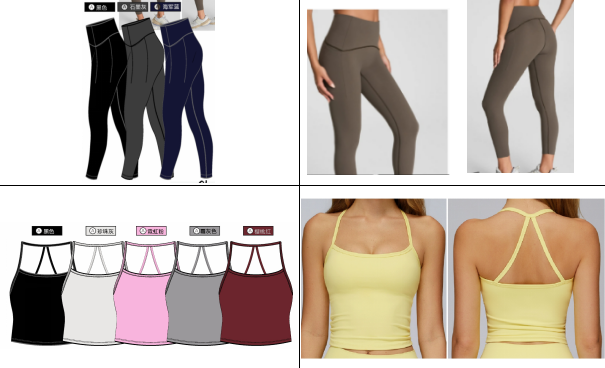
Front, back and relevant detail views should identify garment construction, waistband direction, pocket type and major panel lines so the intended appearance can be translated into the production pattern.
Measurement Chart
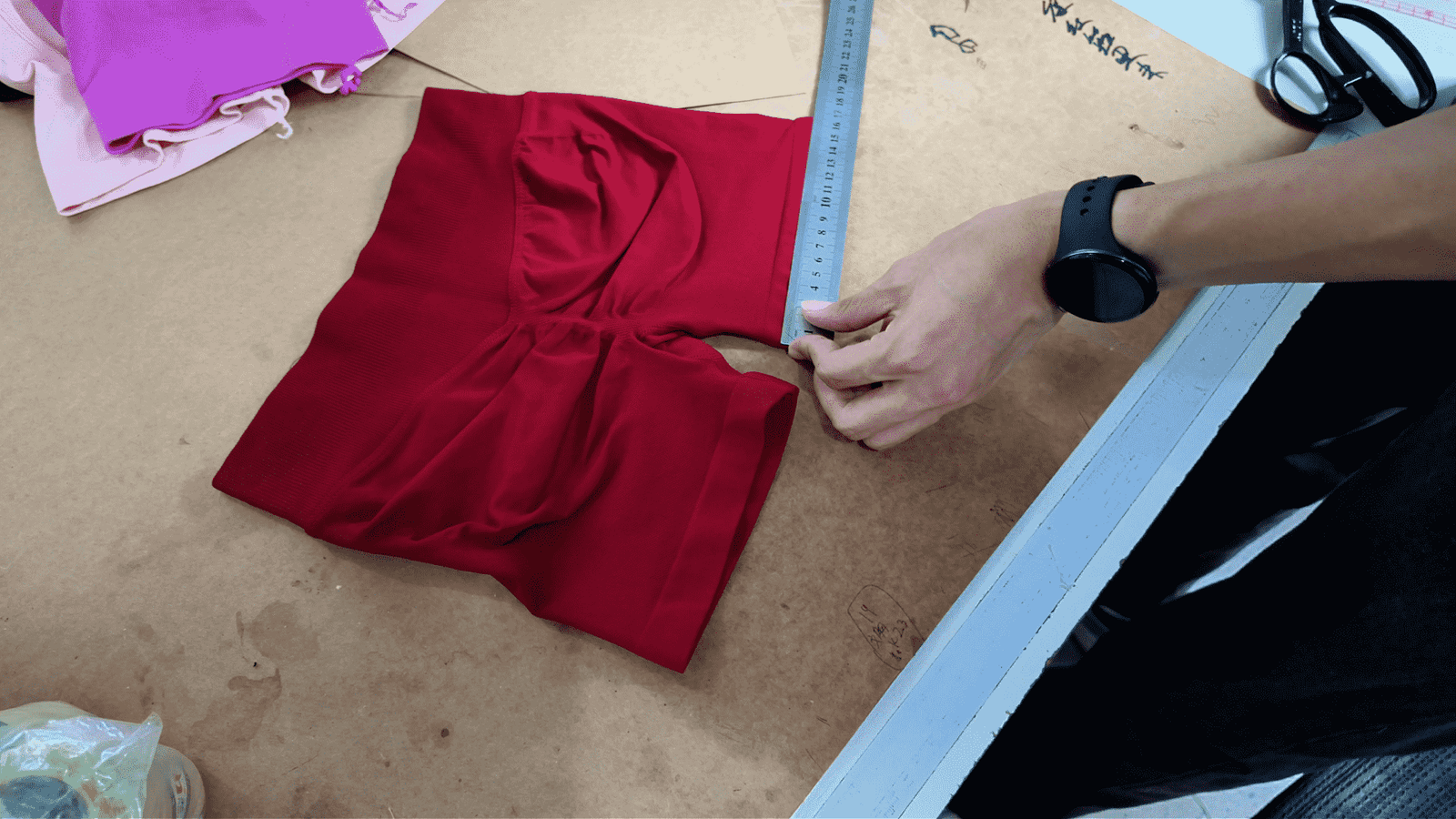
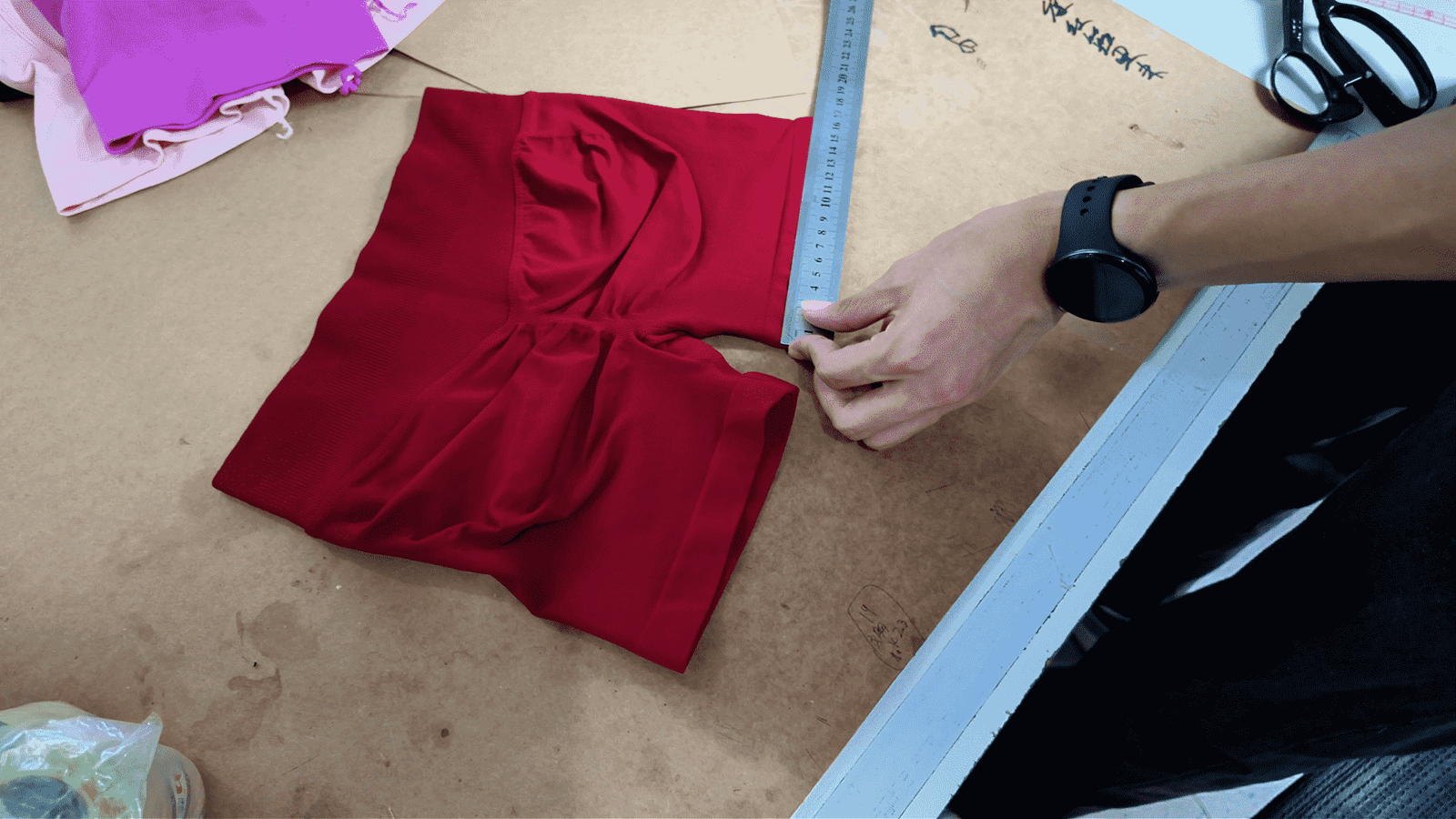
Key POMs should define waist, hip, rise, inseam, garment length and other required measurements. Pocket position or dimensions should also be measurable where they affect fit or appearance.
Pocket Specification
Define pocket type, intended item, dimensions, opening direction, placement and any closure or reinforcement requirement. Ambiguous phone-pocket instructions should be clarified before production.
Fabric Specification
Provide composition, target GSM, stretch direction, hand feel, surface or reference material information where available. Final material approval should be tied to an actual swatch or garment standard.
Color Standard
Pantone information can support development, but the final bulk color should follow the approved physical standard and agreed light-source conditions rather than a phone or monitor display.
Branding Artwork
Logo artwork should identify size, position, color and intended process where already specified. High-stretch locations require compatibility review before final process approval.
Label Details
Main labels, care labels, size labels and other brand information can be developed or applied according to approved buyer artwork and market requirements.
Packaging Requirements
Provide polybag, barcode, sticker, hangtag, folding and carton requirements where available so packaging variables can be approved before production release.
If a Tech Pack is incomplete, MOVEVOX can identify gaps and propose manufacturable options for review. Requirements affecting appearance, fit, function, MOQ or cost should still be approved by the buyer rather than silently completed with a default.
Sample Approval Is a Controlled Development Process
Different samples answer different questions. MOVEVOX separates development, revision, fit and pre-production approval so buyers can identify exactly what is approved before bulk production.
Development Sample
The first sample translates the current technical input into a physical garment. It is primarily used to evaluate structure, proportion, material direction, pocket implementation and whether the product concept is manufacturable as intended.
Buyer inputs
- Current Tech Pack or product requirement
- Target fabric and pocket specification
MOVEVOX outputs
- First physical development sample
- Initial measurement and workmanship review
Pass standard: Product direction is defined enough for focused fit and construction revision.
Fit Review
Fit review evaluates the garment against the buyer's measurement chart and target wearing result. For pocket leggings, waist-to-hip relationship, rise, pocket position and the local effect of added structure should be included.
Buyer inputs
- Fit model or brand fit feedback
- Measurement comments and fit priorities
MOVEVOX outputs
- Measurement findings and fit notes
- Proposed pattern or construction revision
Pass standard: Core fit and measurement direction is formally approved or revised.
Revised Sample
A revised sample should close specific issues identified during the previous review. Feedback is consolidated so that fit, pocket, fabric, color or workmanship changes remain tied to one controlled revision.
Buyer inputs
- Consolidated revision comments
- Approval or rejection of proposed changes
MOVEVOX outputs
- Updated sample version
- Updated revision record
Pass standard: Previously identified critical changes are confirmed before later approval stages.

Size Set Review
Where required, representative or full size-set samples allow grading and measurement logic to be evaluated beyond the base size. Pocket position should remain aligned with the approved grading concept.
Buyer inputs
- Final size range requirements
- Approved or revised measurement chart
MOVEVOX outputs
- Size-set samples where agreed
- Size measurement review
Pass standard: Approved sizes meet applicable specification and defined fit expectations.
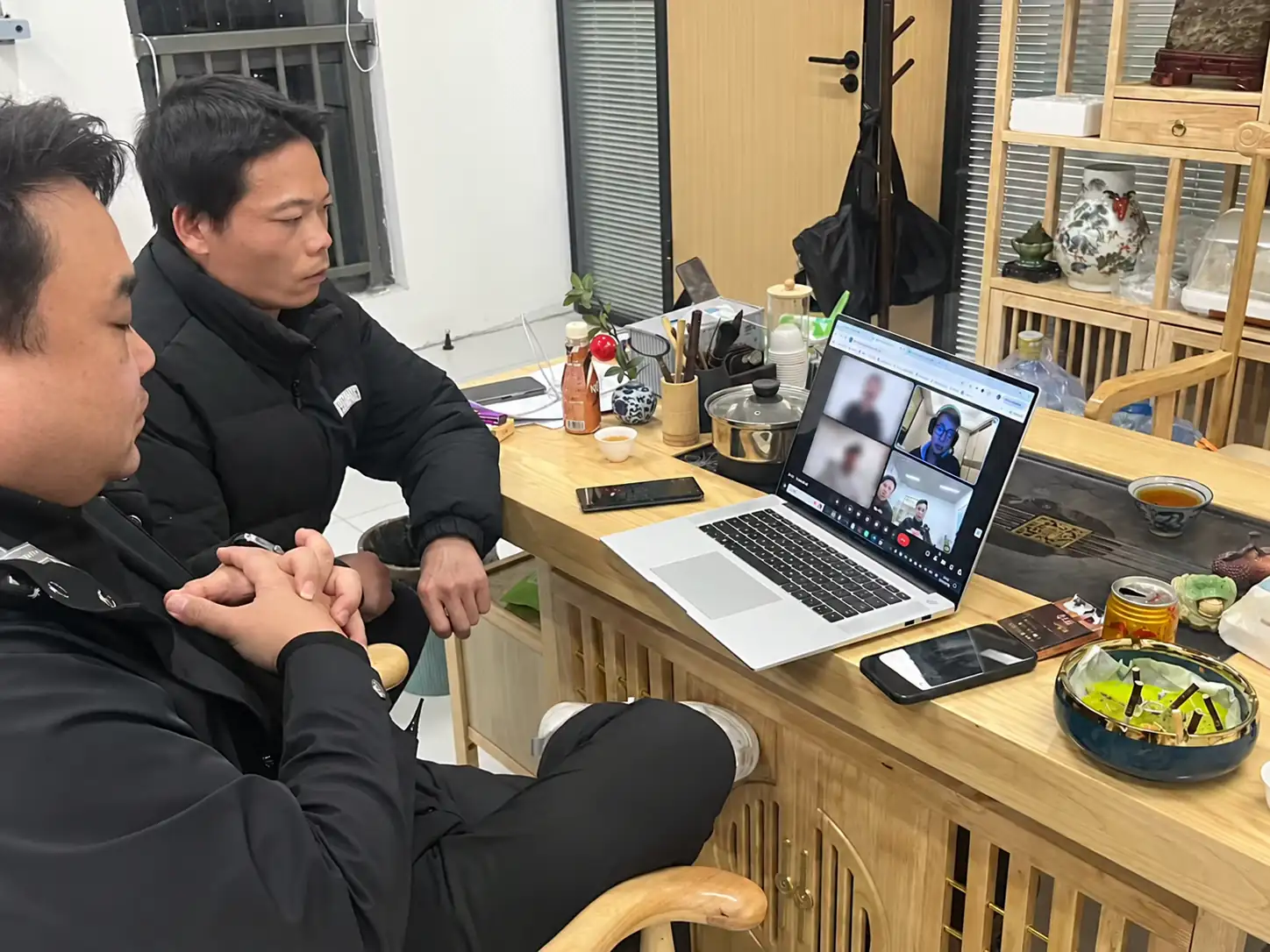
PP Approval
The pre-production sample represents the final production direction and should reflect approved material, measurements, construction, pocket, branding and relevant packaging requirements defined for bulk production.
Buyer inputs
- Final outstanding approvals
- Confirmed production specification
MOVEVOX outputs
- PP or approved production sample
- Frozen production references
Pass standard: Defined approval gates are closed and the project is ready for bulk handover.
Keep Bulk Production Aligned With the Approved Sample
Sample approval only becomes valuable when approved decisions are transferred into production documents, materials and quality checkpoints. MOVEVOX uses final specifications and retained approval references as the basis for production and inspection.
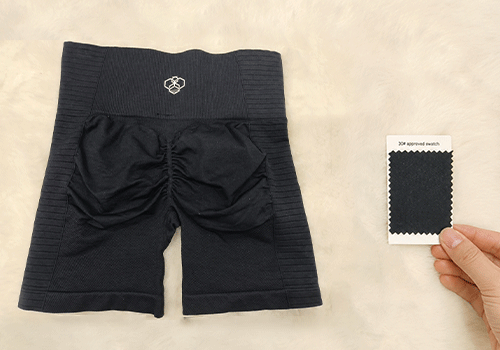
Approved Sample
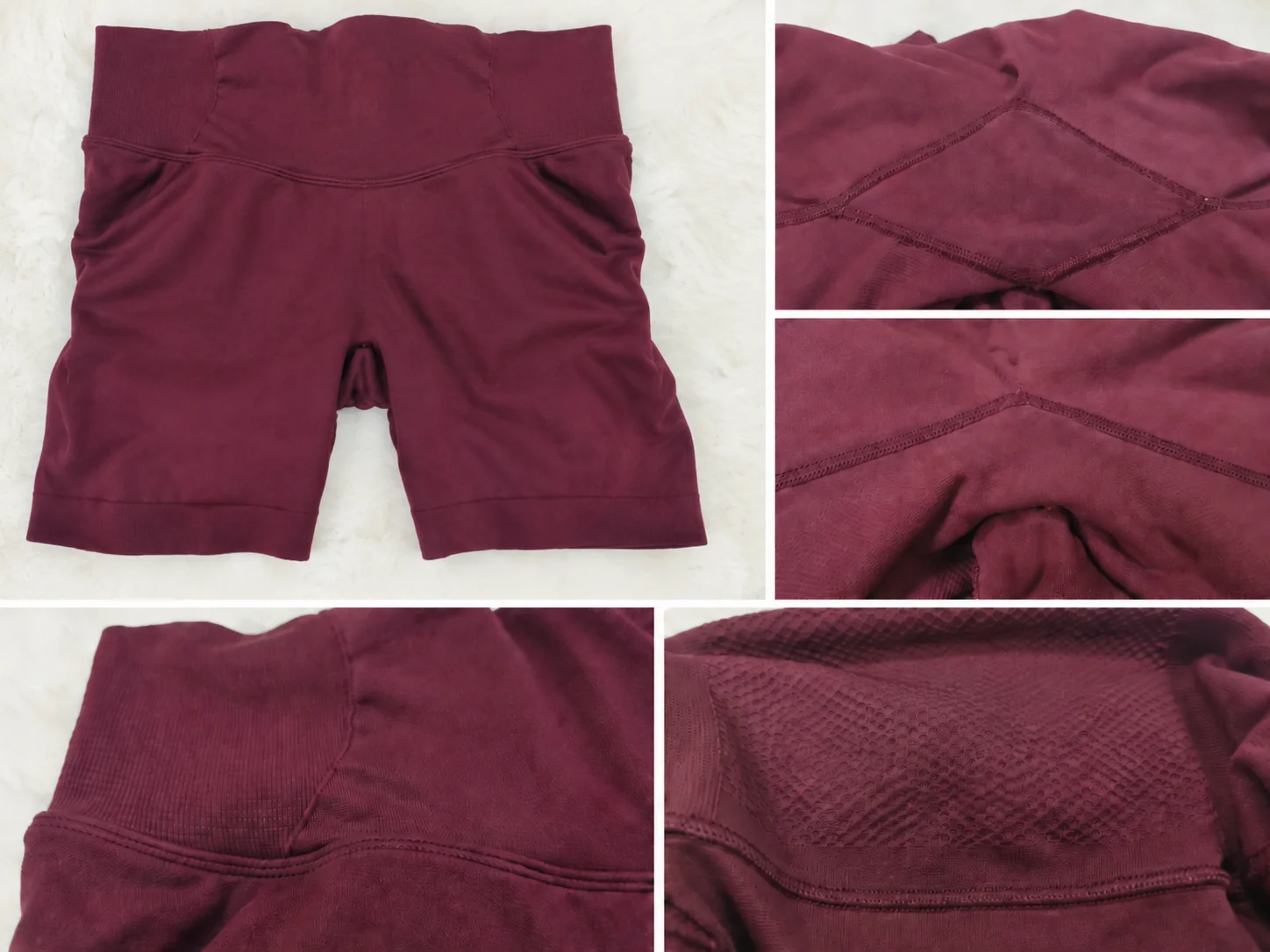
Bulk Production
Measurements
Bulk garments are checked against the final approved measurement specification and applicable project tolerances rather than an outdated development version.
Pocket Position
Pocket location, dimensions and opening direction follow the approved pattern and measurable reference established before bulk production begins.
Fabric Standard
Bulk material corresponds to the approved fabric direction, including relevant composition, color, GSM, hand feel and project-specific test requirements.
Construction
Production sewing follows the approved structure, seam requirements and workmanship standard rather than informal changes made after sample approval.
Branding
Logo, labels, hangtags and other branding elements use the current approved size, position, artwork and version.
Packaging
Approved folding, barcode, polybag, label and carton requirements become part of the final bulk execution standard.
The approved garment alone does not replace the complete production standard. Final Tech Pack, measurements, material information, artwork, packaging specification and approved or PP sample should work together. Major changes after approval require impact review.
Build the Product and Brand System Together
Private label execution covers more than adding a logo. MOVEVOX can coordinate garment specifications, color, brand marks, labels, hangtags, barcode information and packaging across the correct style, color and size.
Fabric
Fabric selection is tied to target hand feel, GSM, stretch, recovery, opacity, color and pocket construction. Buyers may start with an existing MOVEVOX sourcing direction or specify a required fabric. Custom materials can create separate supplier MOQ and development lead-time requirements.
- Nylon or polyamide with spandex
- Polyester with spandex
- Brushed or peach-skin directions
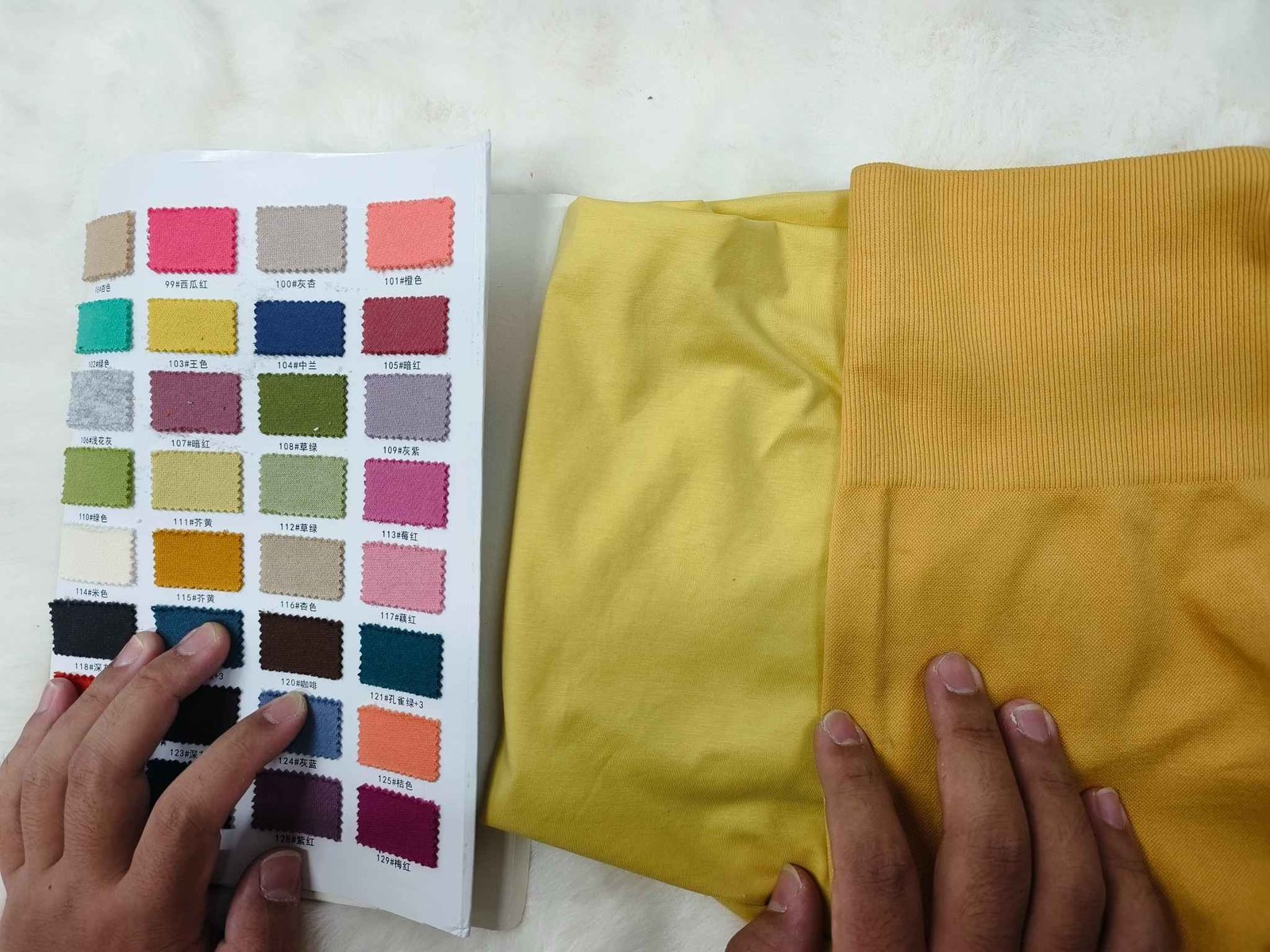
Color
MOVEVOX supports existing supply-chain colors and custom color development. Pantone references can guide development, but physical approval remains important because screen display does not define final textile color. Custom dyeing is subject to material supplier minimum dye-lot conditions.
- Existing supply-chain colors
- Pantone-guided custom color
- Physical color-reference matching
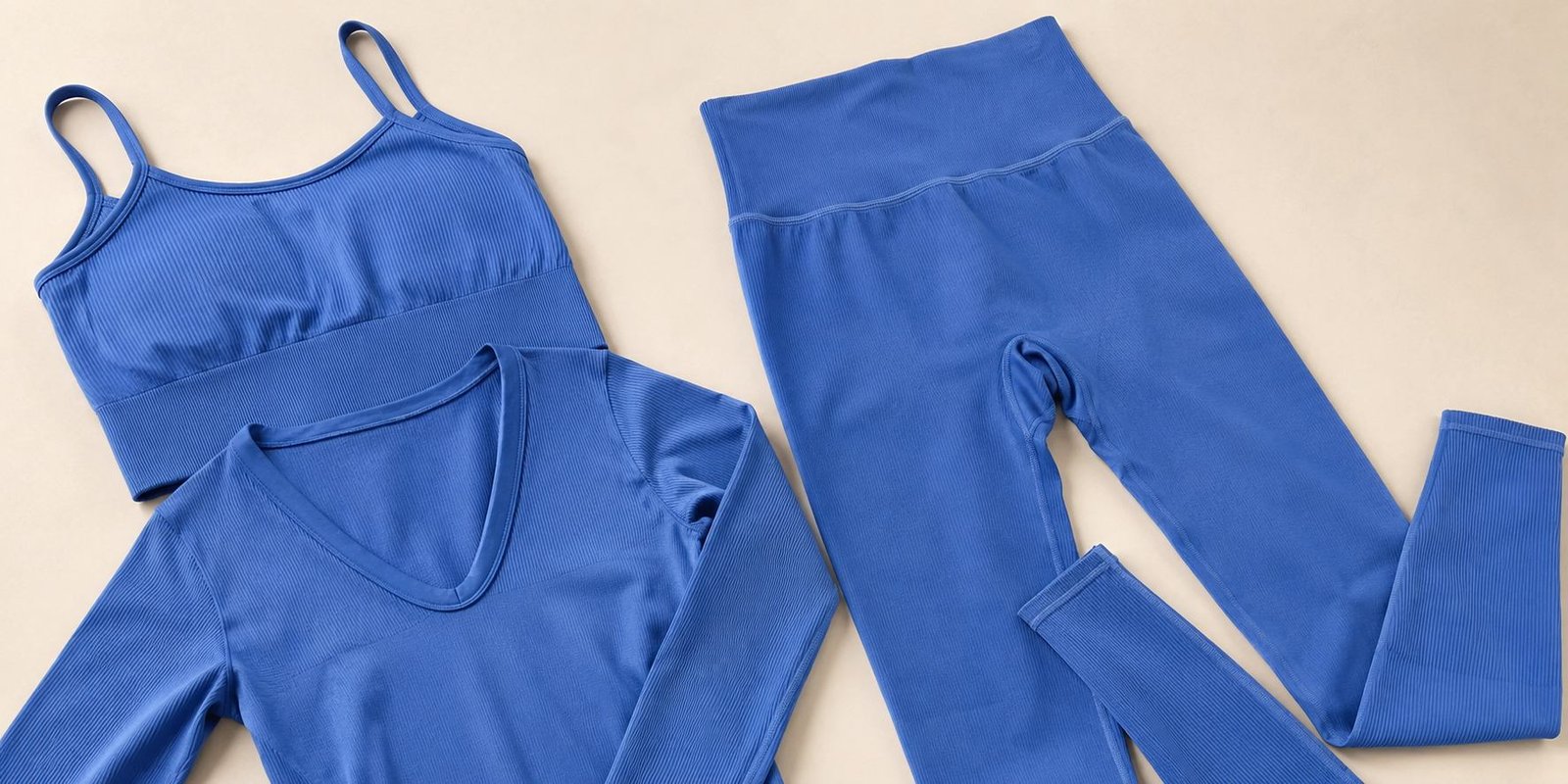
Construction
Pocket type, waistband, gusset, panel layout, seam structure and other product details can be developed from buyer specifications. Construction changes should be approved at sample stage because they affect fit, material consumption and production execution.
- Side or patch pockets
- Hidden or rear-waist pockets
- Selected zip-pocket construction
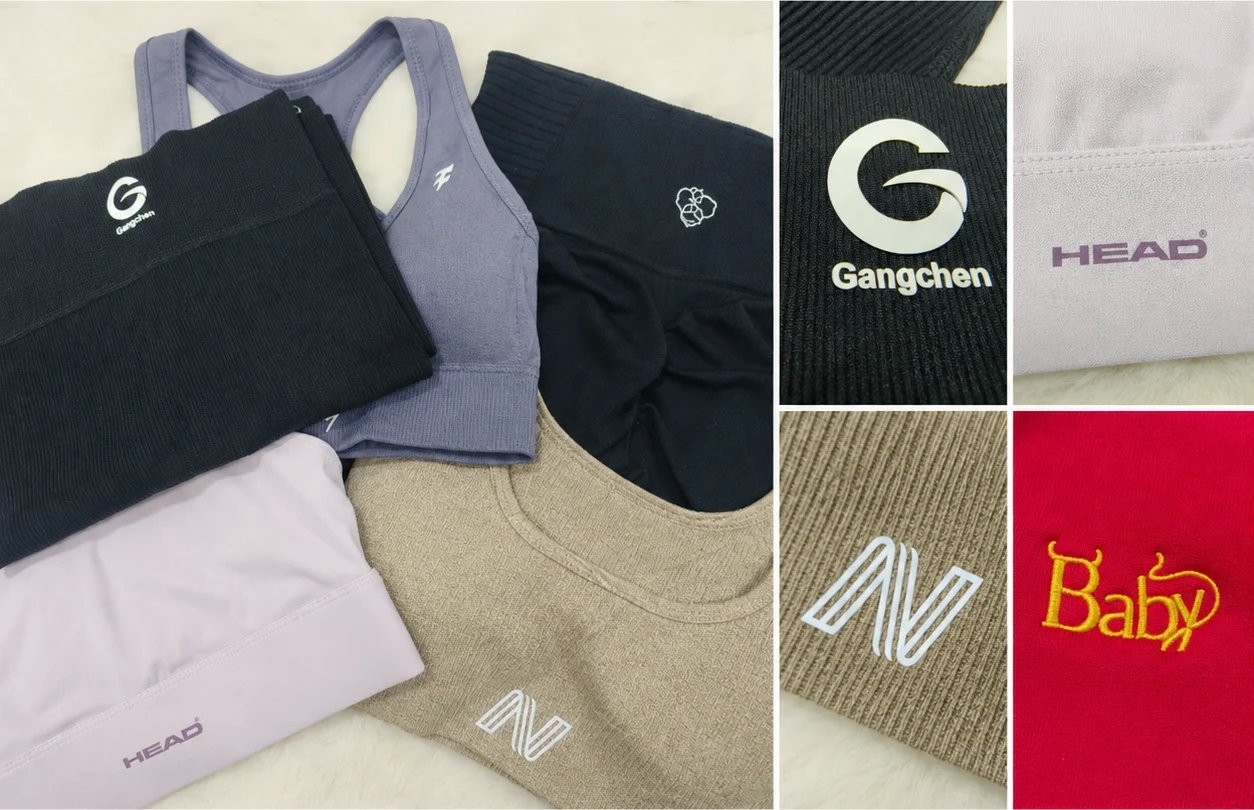
Logo
MOVEVOX can support screen print, heat transfer, silicone print, jacquard, embroidery and woven-label branding. The suitable process depends on fabric surface, garment stretch, logo position and required appearance. Special molds or components may create separate MOQ or development conditions.
- Heat-transfer brand marks
- Silicone-print brand details
- Embroidery or woven branding
Labels
Main labels, care labels, size labels and related brand identification can be produced from approved buyer artwork. Label information, location and version should be tied to the corresponding style and market requirements.
- Main brand labels
- Care and content labels
- Size identification labels

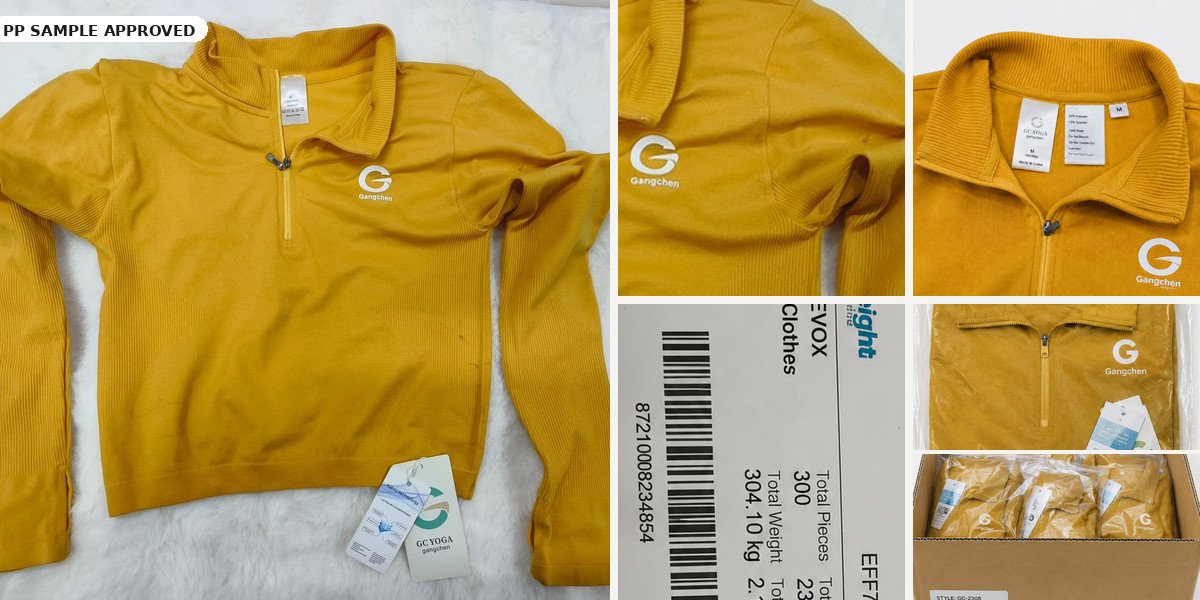
Packaging
MOVEVOX can coordinate polybags, stickers, barcodes, hangtags, cartons and customized packaging requirements. Different SKU, color and size combinations must remain linked to the correct packaging data, especially where retail barcodes are used.
- Customized polybag and sticker
- Barcode and SKU identification
- Hangtag and carton marking
How Approved Pocket Leggings Enter Controlled Bulk Production
Bulk production begins after approved requirements have been transferred into current specifications, materials and production references. MOVEVOX separates readiness, material release, First Article, inline control and final release.
Readiness
PO information, final specifications, approved sample status, material requirements, branding, packaging and major open points are reviewed before the order is released into production.
Material Control
Fabric, trims, labels and other project materials are received against the applicable approved requirements. Relevant incoming checks are completed before affected material is released.
First Article
Initial production garments are checked against the approved standard before full-volume manufacturing continues. This helps identify construction, measurement or workmanship drift early.
Bulk Production
Production follows the current approved pattern, technical documents, material version and production assignment. Pocket construction remains part of the controlled garment specification.
Inline QC
QC checks production while work is in progress. Measurements, workmanship, pocket placement, sewing, brand details and identified risk points can be reviewed before the full quantity is completed.
Final Inspection
Finished garments are inspected against applicable project requirements before normal shipment release. Failed or segregated items require correction and reinspection as appropriate.
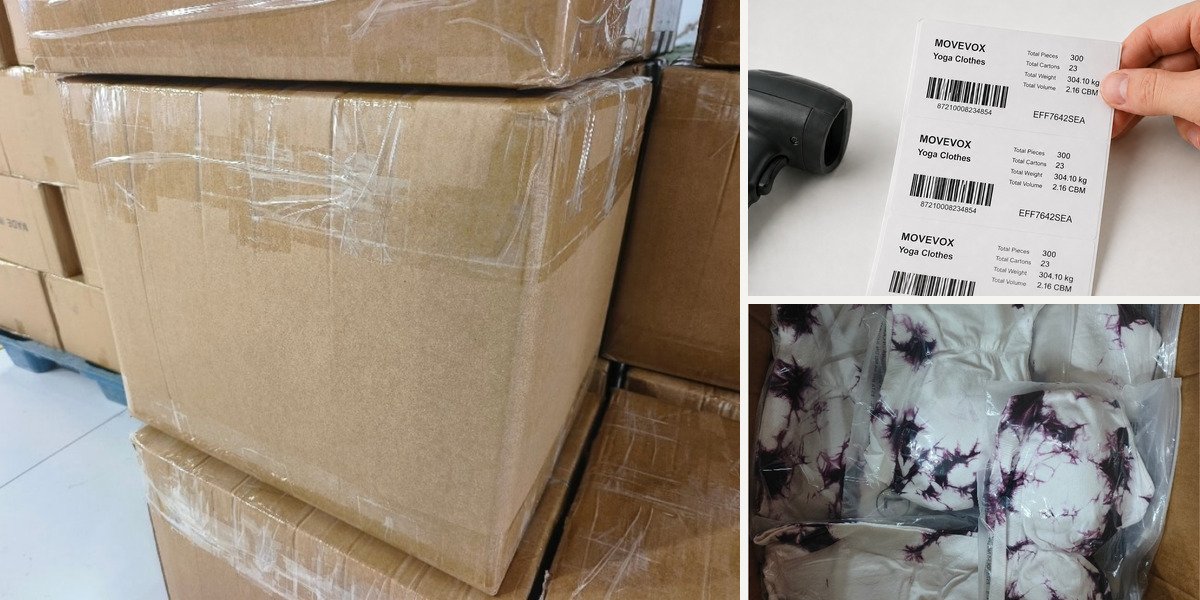
Packing
Approved garments enter final label, barcode, polybag, folding and carton execution. Style, color, size and packaging information must stay correctly matched.
Shipment Release
Final release follows applicable inspection and order requirements. Normal bulk-production reference is approximately 20-35 days, subject to material readiness, complexity, approvals and inspection.



Capacity Means Quality-Released Garments, Not Machine Output
MOVEVOX distinguishes core equipment, controlled network resources and managed delivery capacity. Pocket leggings commitments still require project-specific review because complexity, material, SKU count and QC workload affect actual output.
Santoni Machines
Italian Santoni seamless knitting machines at the Yiwu core base support seamless activewear development and production.
Garment Machines
Approximately 24 principal sewing and garment-production machines support core cut-and-sew activewear production.
Satellite Facilities
Eight long-term controlled satellite facilities include six in Yiwu and two in Guangzhou; they are not counted as core-factory assets.
Managed Capacity
Normal combined managed delivery capacity per month across the controlled manufacturing system, subject to product mix and quality release.

Figures describe MOVEVOX's overall controlled production system, not a guaranteed monthly pocket-leggings output. Final capacity is confirmed after style, material, SKU, facility and delivery requirements are reviewed.
Tour the MOVEVOX Yiwu Core Manufacturing Base
The approximately 6,000 m² Yiwu core base is organized across six functional floors for material flow, cut-and-sew, seamless knitting, product development, QC, packing, order management and customer review.
Material and Cutting
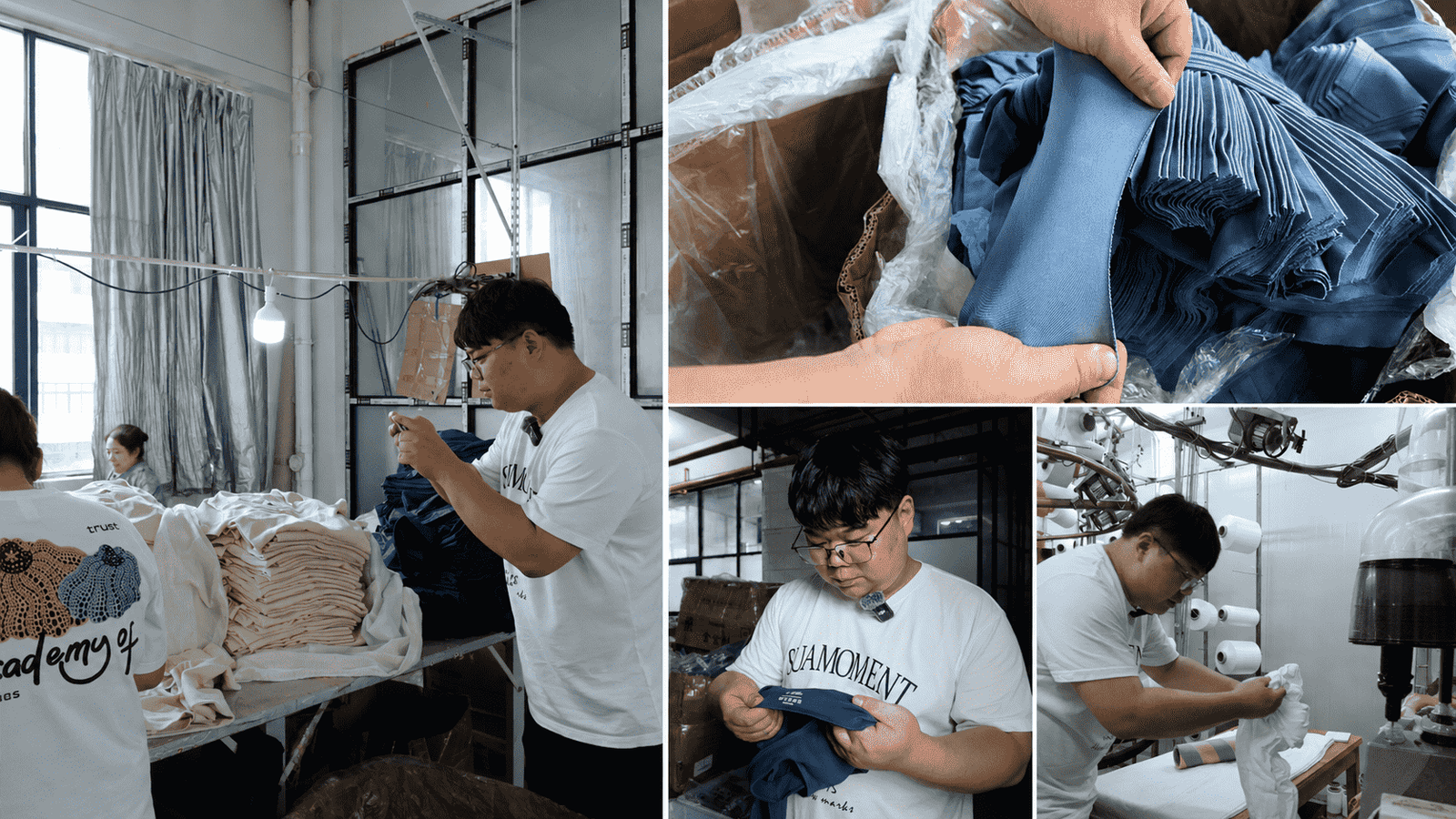
The first-floor area supports material receiving, fabric and trim storage, cutting preparation and shipment handling. Materials are identified by relevant order, style, color, supplier and batch information before moving into production. Cut components are separated by style, color, size and material lot to reduce mixing risk.
Actual material, cutting and batch-identification area at the Yiwu base.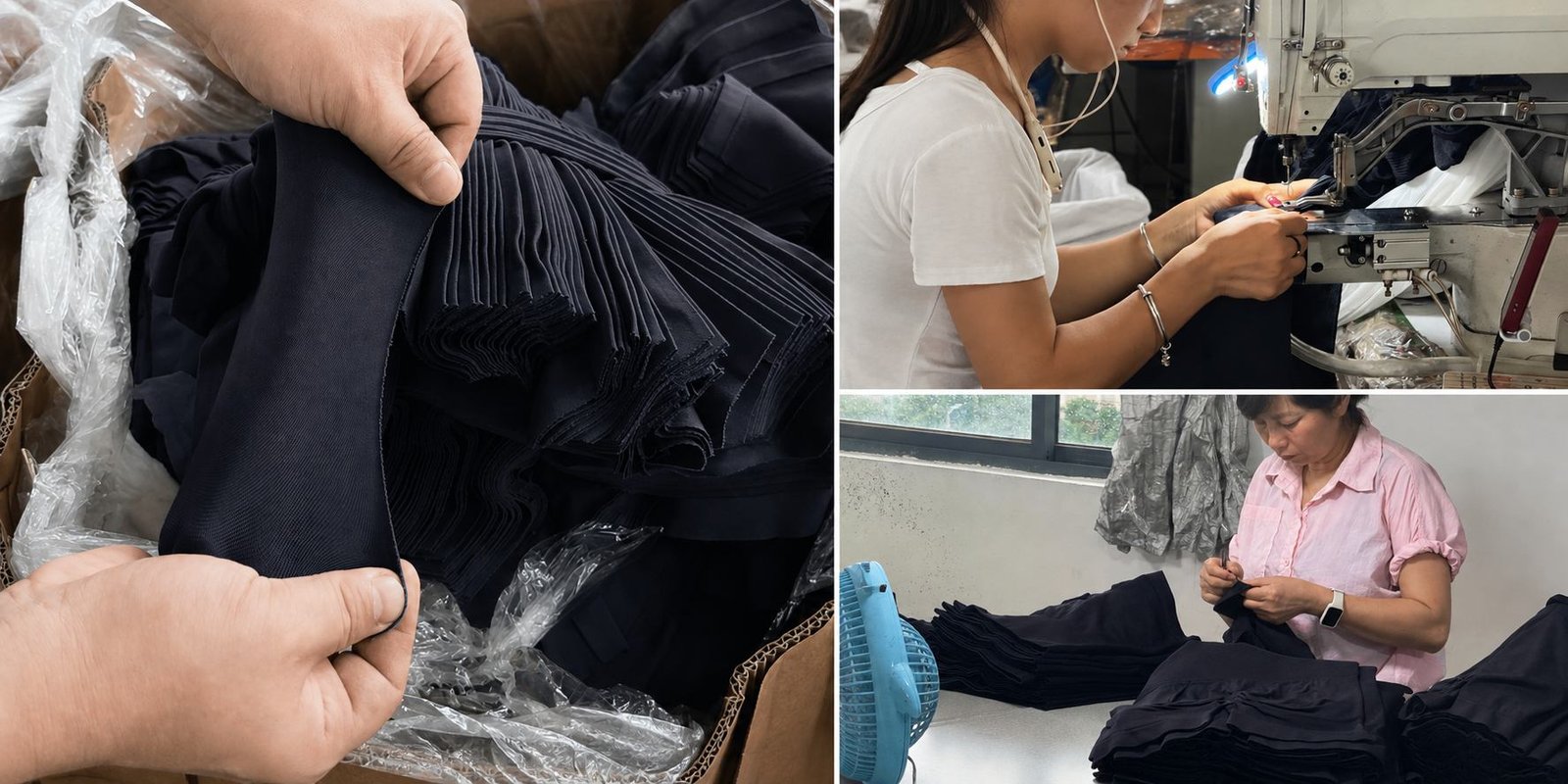
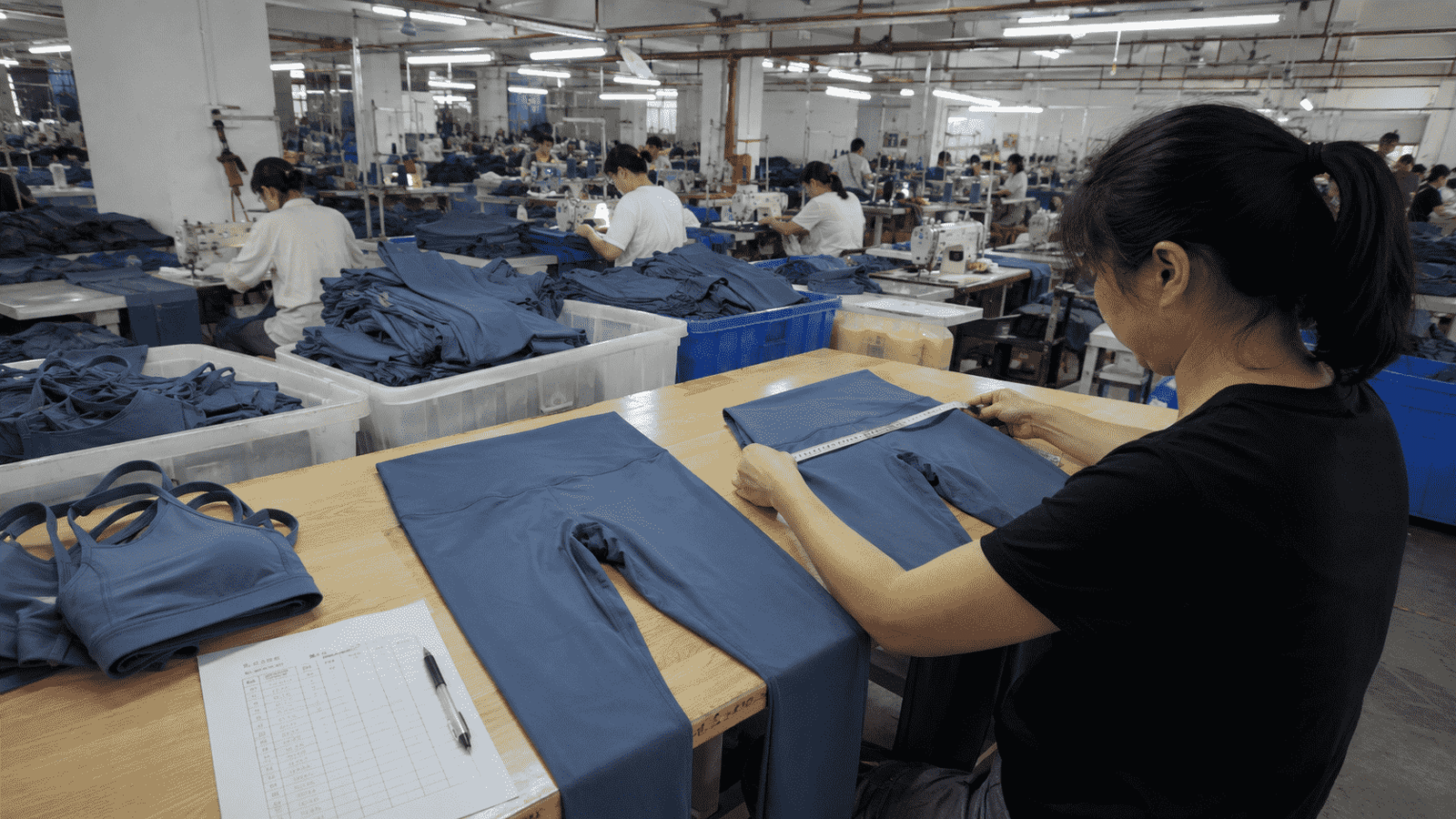
Cut-and-Sew Floor
The second floor is primarily used for cut-and-sew garment manufacturing and work-in-progress handling. Approximately 24 garment-production machines support common activewear sewing processes used for leggings, sports bras, tops, shorts, jackets and related products. Pocket leggings are handled within this cut-and-sew system.
MOVEVOX cut-and-sew production area for activewear bulk manufacturing.
Seamless Floor
The third floor houses 28 Italian Santoni seamless knitting machines and associated technical and WIP functions. Seamless production is organized around approved style, color, size, yarn and program versions. This capability supports seamless leggings alongside the separate cut-and-sew system.
Italian Santoni seamless equipment operating inside the core factory.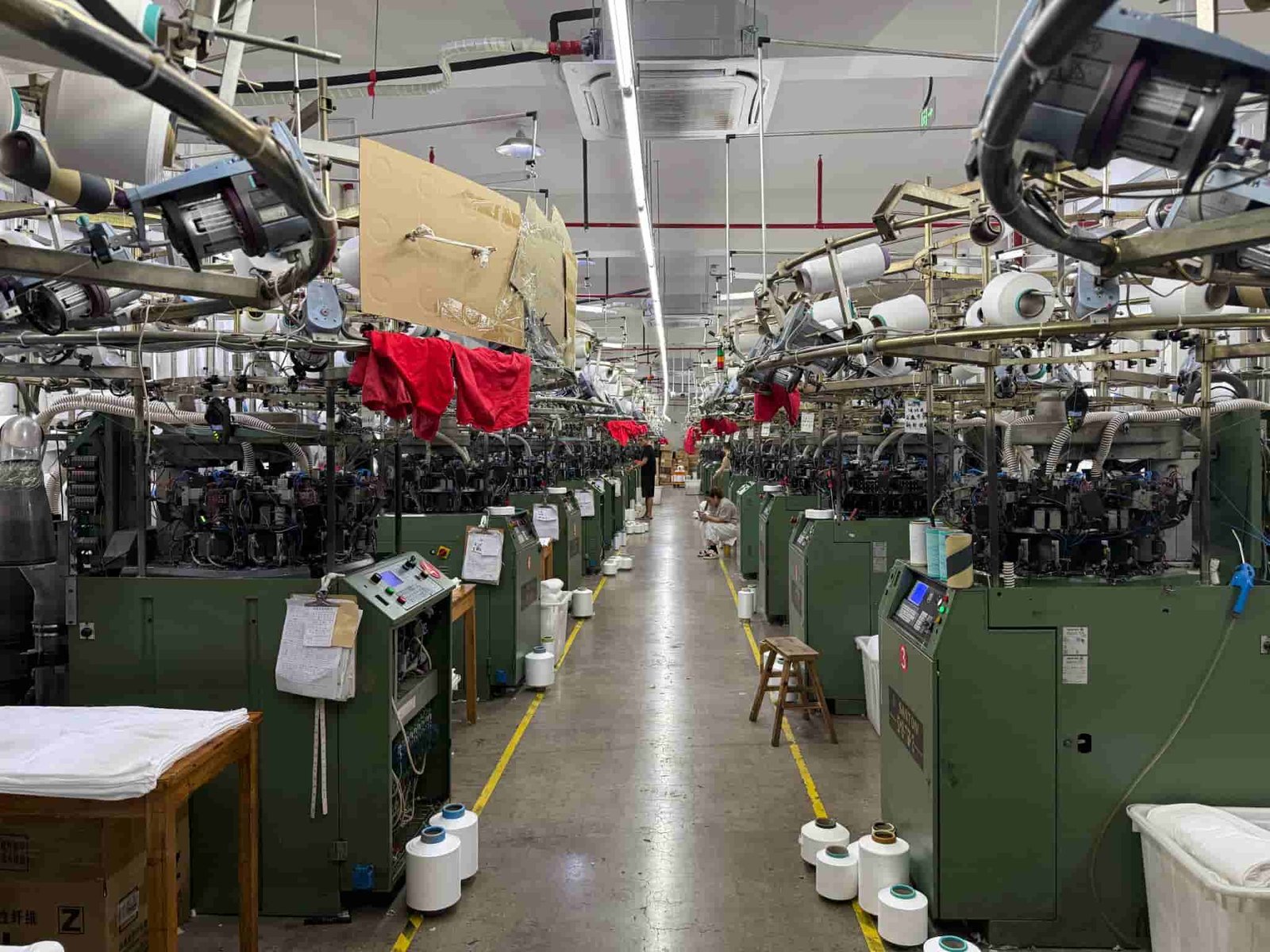
Development Floor
The fourth floor supports pattern making, sampling, development, small-run trials and sample management. Development and bulk production use separate scheduling logic so fit, revision, size-set and PP samples can be managed as defined project stages.
Pattern, sampling and technical-development area for activewear projects.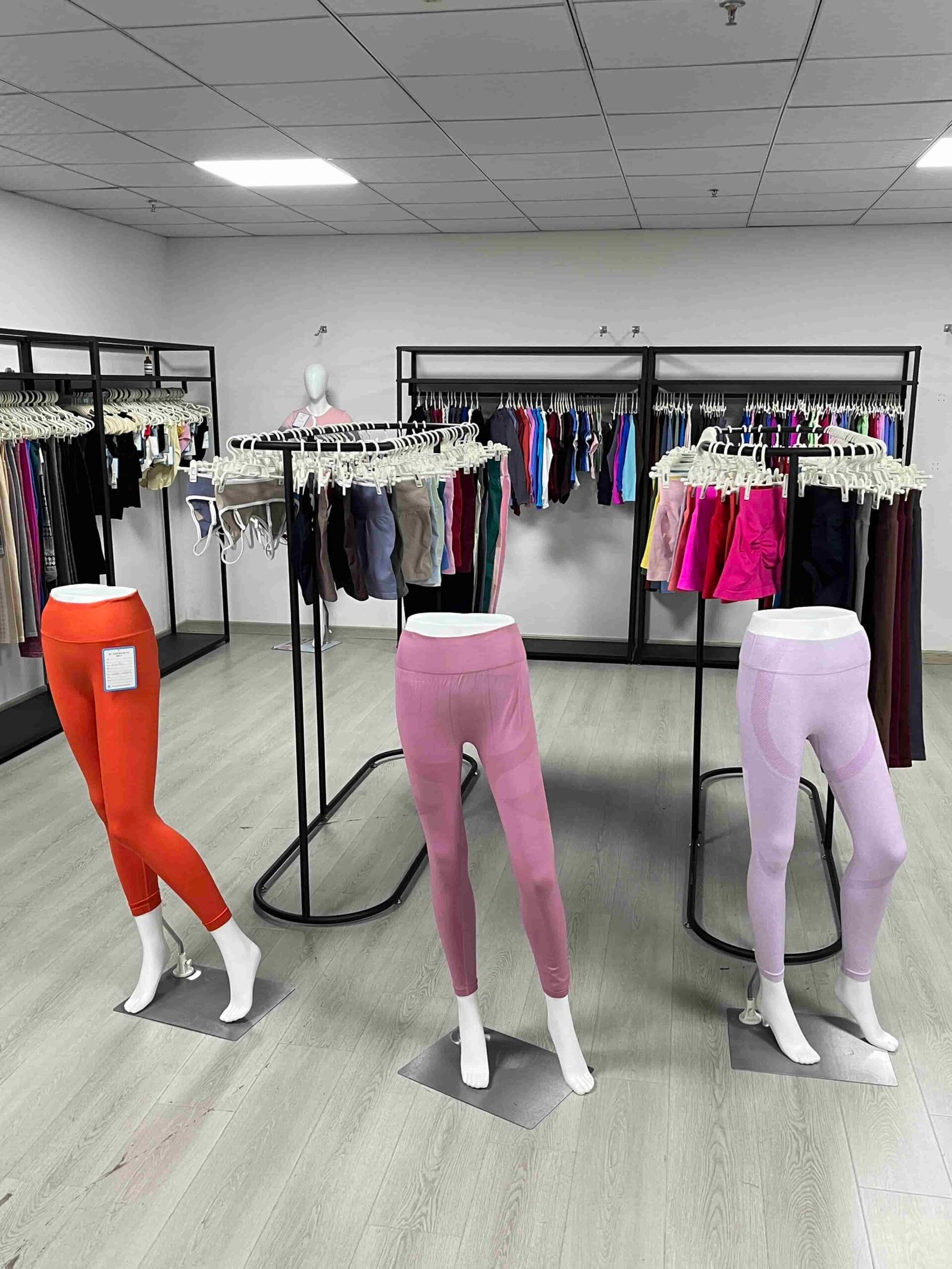
QC and Packing
The fifth floor integrates finished-garment QC, garment organization, packing and finished-goods staging. This allows final appearance, measurement, branding and packaging checks close to the final delivery flow before shipment release.
Final garment inspection, packing and pre-shipment control area.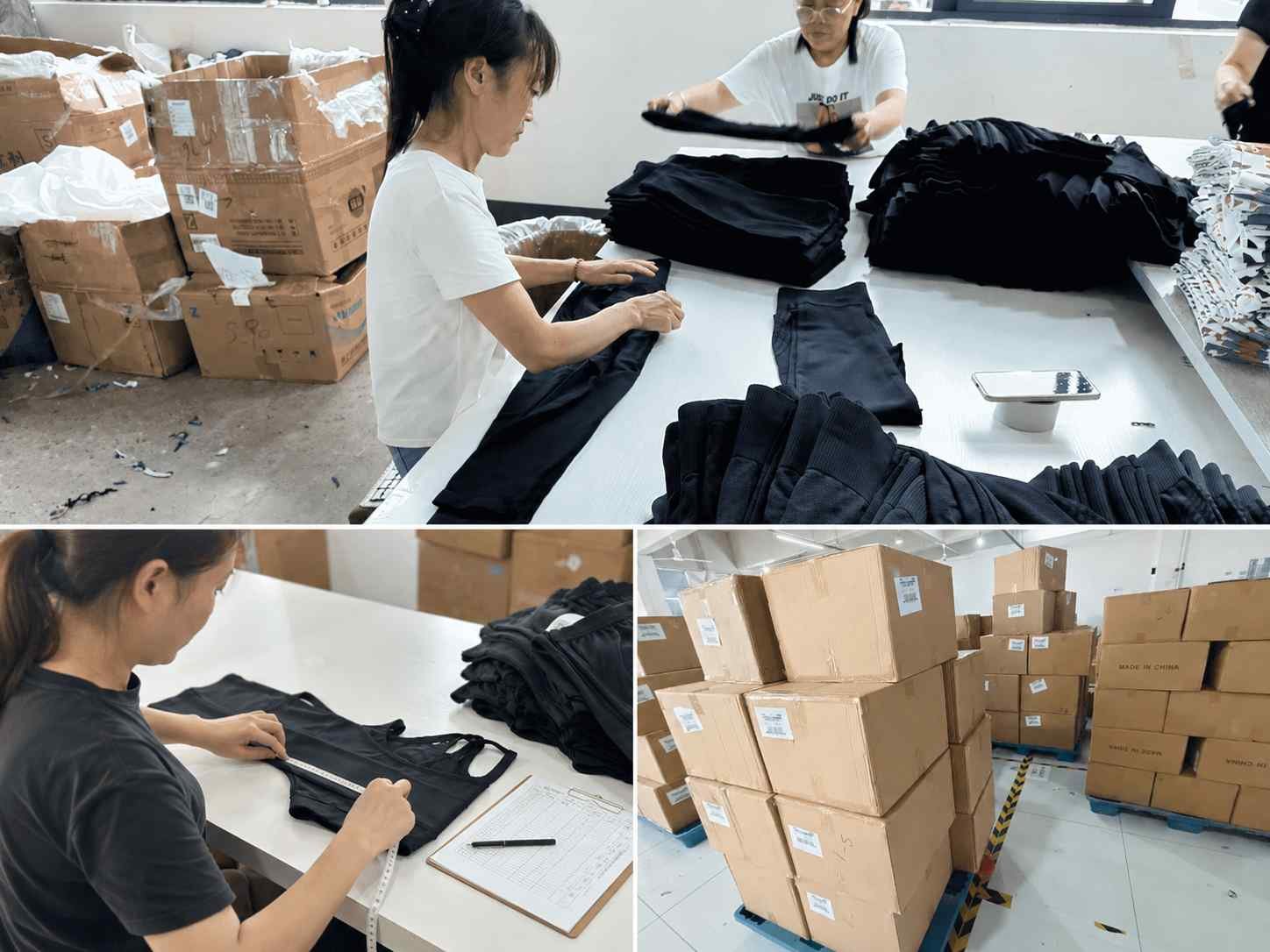
Order Management
The sixth floor supports project and order management, customer meetings, sample review, management functions and factory-audit communication. This separates commercial coordination from production while keeping the customer project connected to manufacturing.
Order-management and customer-review area at the Yiwu base.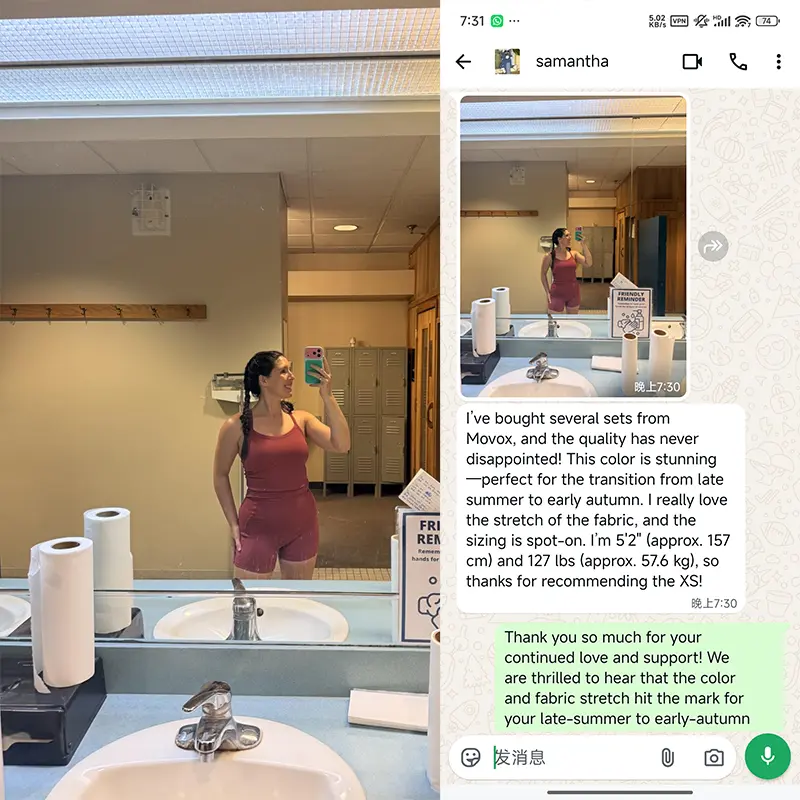
One Accountable System Across Controlled Production Capacity
MOVEVOX uses its Yiwu core base as the technical and control center while eight long-term satellite facilities provide additional production capacity. Facilities remain separately identified rather than being presented as one fully owned factory network.
MOVEVOX Core
The Yiwu core base establishes development standards, key samples, production references, quality requirements and final project coordination before suitable work is scaled through the wider network.
Yiwu Network
Six long-term satellite facilities in Yiwu provide controlled production support with relatively frequent onsite follow-up, First Article review, WIP checking and rework coordination.
Guangzhou Network
Two controlled satellite facilities in Guangzhou support complex development, fast-response work and selected cut-and-sew production according to assigned capability.
Material Control
Core materials and project requirements are managed through MOVEVOX purchasing and project systems rather than allowing independent critical substitutions without approval.
Document Control
Tech Packs, approved samples, current versions and production requirements are issued under one project-management system so satellite capacity does not create separate buyer standards.
Quality Release
Satellite production remains subject to MOVEVOX quality requirements, project follow-up and final order responsibility rather than becoming an independent supplier relationship for the buyer.

The purpose of the satellite network is controlled scalability, not hidden subcontracting. Buyers work through one MOVEVOX project and responsibility window while production locations remain managed by facility role, current specification, assigned material, First Article, WIP and quality requirements.
Production-Site Transparency Matters to Global Brand Buyers
A flexible manufacturing network only creates value when production locations remain controlled. Hidden factory changes can break audit, quality, traceability and approval assumptions. MOVEVOX distinguishes controlled allocation from unauthorized subcontracting.
Unknown Production Site
The buyer audits one facility, but production is later transferred to an unreviewed site without visibility, making the approved manufacturing scope unreliable.
How to verifyRequest the assigned production facility and confirm any site-change approval requirement before bulk production.
Uncontrolled Version Use
A new facility receives an outdated pattern, Tech Pack or sample reference, creating sample-to-bulk drift even when the physical factory itself is capable.
How to verifyConfirm current revision, approved sample reference and production file before transfer or First Article.
Material Substitution
A production facility independently replaces fabric, trim or other materials to solve a supply problem, changing fit, performance, color or compliance assumptions.
How to verifyRequire documented material approval and change authorization before any critical substitution is used.
No First Article
Moving a style to another facility without rechecking initial production can allow equipment, operator or process differences to continue through a larger quantity.
How to verifyConfirm whether First Article or equivalent validation is required after production-site change.
Split Responsibility
When several factories communicate independently, the buyer may have difficulty determining who controls specifications, quality findings, delivery and corrective action.
How to verifyDefine one accountable project owner and clear manufacturing-site responsibilities before production begins.
Hidden Reallocation
Capacity pressure during peak periods can tempt suppliers to move orders to unknown subcontractors in order to protect an unrealistic delivery promise.
How to verifyRequest capacity review, approved facility scope and disclosure rules before peak-season production is committed.
Production Allocation Should Remain Traceable
The objective of additional capacity is not to hide where an order is made. Production allocation should remain connected to approved facilities, current specifications, First Article verification and MOVEVOX quality responsibility.
Quality Control Starts Before Final Inspection
MOVEVOX uses quality checkpoints from incoming material through production, finished-garment inspection, packing and final release. Buyer Tech Packs, approved samples and defined project standards take priority over internal default references.
Incoming Material
Fabric and critical materials are checked before production release. Relevant controls can include composition consistency, color, GSM, shrinkage, elasticity, opacity and project-specific material requirements.
- Match approved material direction
- Confirm color and batch identity
- Review required physical checks
Pre-Production
Final specifications, approved references, material, branding, packaging and outstanding risks are reviewed before production begins so different teams work from the same current standard.
- Current production documents
- Approved sample reference
- Open points formally closed
First Article
Early production garments are checked before full-scale continuation. This provides an opportunity to identify measurement, construction, pocket or workmanship deviation at the beginning of the run.
- Measurement against specification
- Pocket construction and position
- Workmanship against approved sample
Inline Inspection
QC reviews production while units are being made rather than waiting until the full quantity is complete. Findings can therefore be corrected closer to the process where they occur.
- Dimensions and garment shape
- Sewing and pocket workmanship
- Branding and visual appearance
Finished Garment
Completed garments are reviewed for appearance, measurements, workmanship, symmetry, functional components, fabric/color condition and required brand elements before final packing.
- Garment appearance and symmetry
- Functional construction
- Approved branding details
Packing Check
The correct garment must remain connected to its size, color, labels, barcode, polybag and carton requirements. Packing is therefore part of product-quality execution.
- Correct SKU identification
- Correct label and barcode
- Approved folding and packaging
Final Inspection
Shipment release follows applicable final-inspection requirements. Where a buyer has its own QC Manual or inspection standard, the project-approved buyer requirement takes priority.
- Buyer standard when provided
- Final quantity and packing review
- Release status documented
Rework and Recheck
Nonconforming items are not treated as normal released units. Depending on the issue, affected goods can be segregated, corrected and reinspected before the order proceeds.
- Affected quantity identified
- Corrective action completed
- Reinspection before release
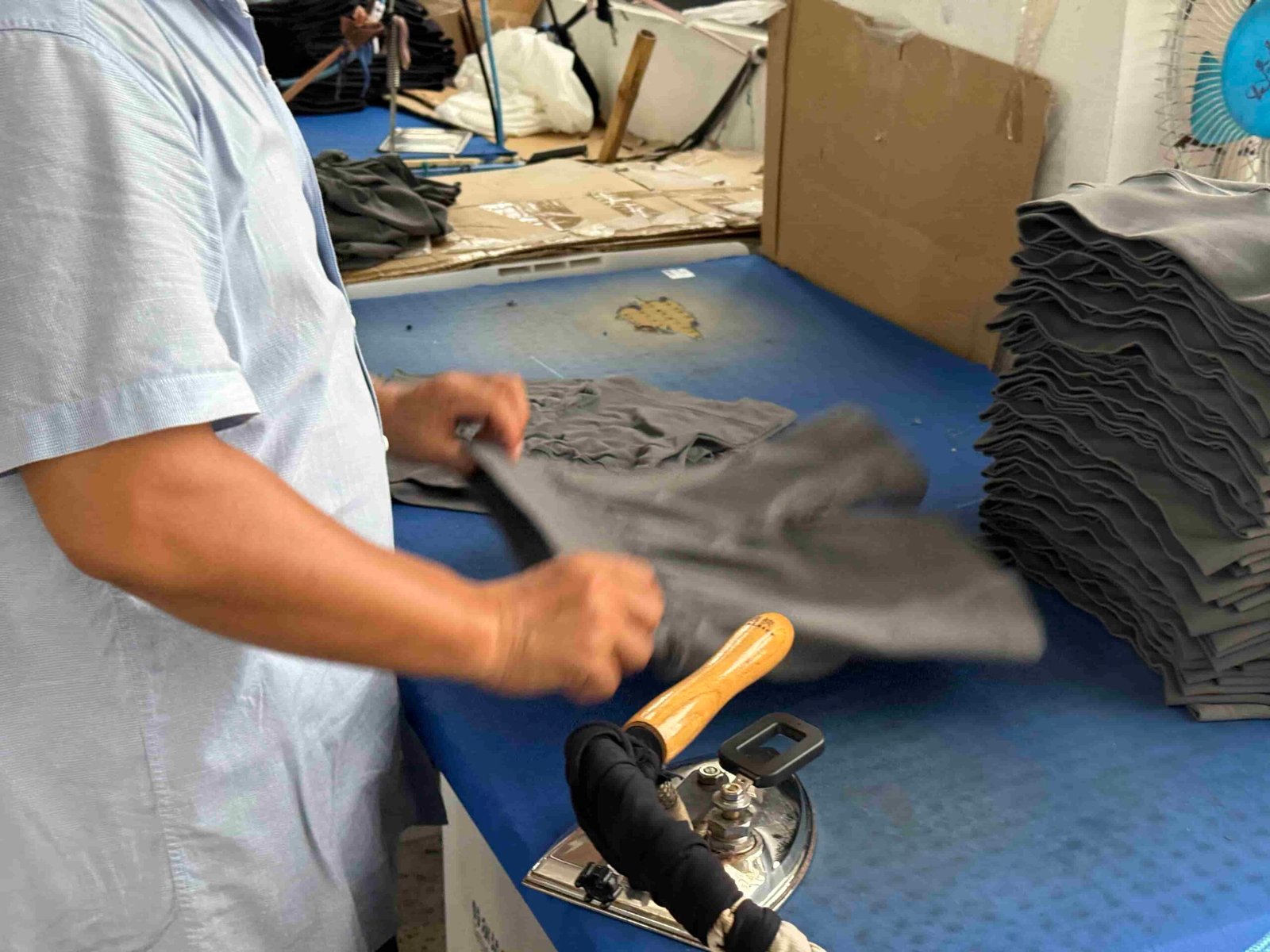
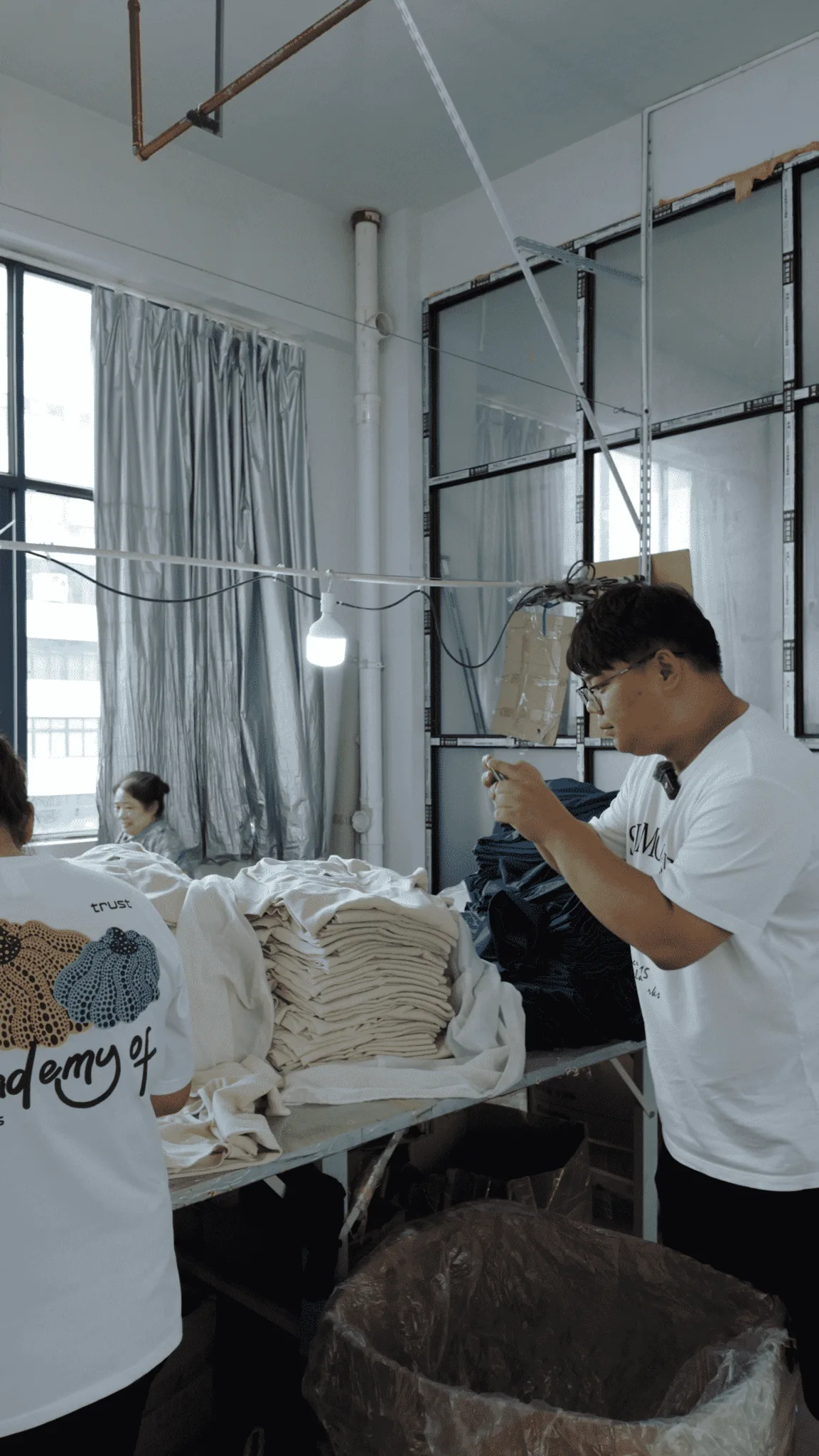
Significant findings can trigger Stop, Segregation, Rework, Corrective Action and Re-inspection. The core factory currently has five QC personnel, with quality responsibilities covering incoming, production, finished garment, packing and pre-shipment stages.
What a Pocket Leggings Inspection Record Should Show
An inspection record should make product acceptance traceable rather than simply state “passed.” For pocket leggings, the report should connect measurements, pocket workmanship, defect findings and corrective status to the approved specification.
A real anonymized Pocket Leggings inspection report should replace this placeholder before publication.
Style and Version
The report should identify the applicable style, color, size range and current production specification so inspection findings cannot be confused with another revision.
Measurement Review
Waist, hip, rise, inseam and other defined POMs should be recorded against the approved measurement specification and applicable project tolerance.
Pocket Position
Pocket opening size, left/right position, symmetry and visible pocket-bag condition can be included as style-specific workmanship checkpoints.
Seam Integrity
Inspectors should record relevant skipped stitches, broken stitches, open seams or other workmanship findings affecting pocket and garment construction.
Functional Check
Where required, zipper function or a defined pocket loading condition can be reviewed so functional components are not evaluated only by appearance.
Corrective Status
A finding should show whether affected pieces were segregated, reworked or reinspected rather than disappearing from the report after detection.
The inspection report should be read together with the Tech Pack, approved sample and project QC requirements. MOVEVOX internal controls cannot replace a buyer's stricter approved standard.
Use a Structured Checklist Before Approving a Manufacturer
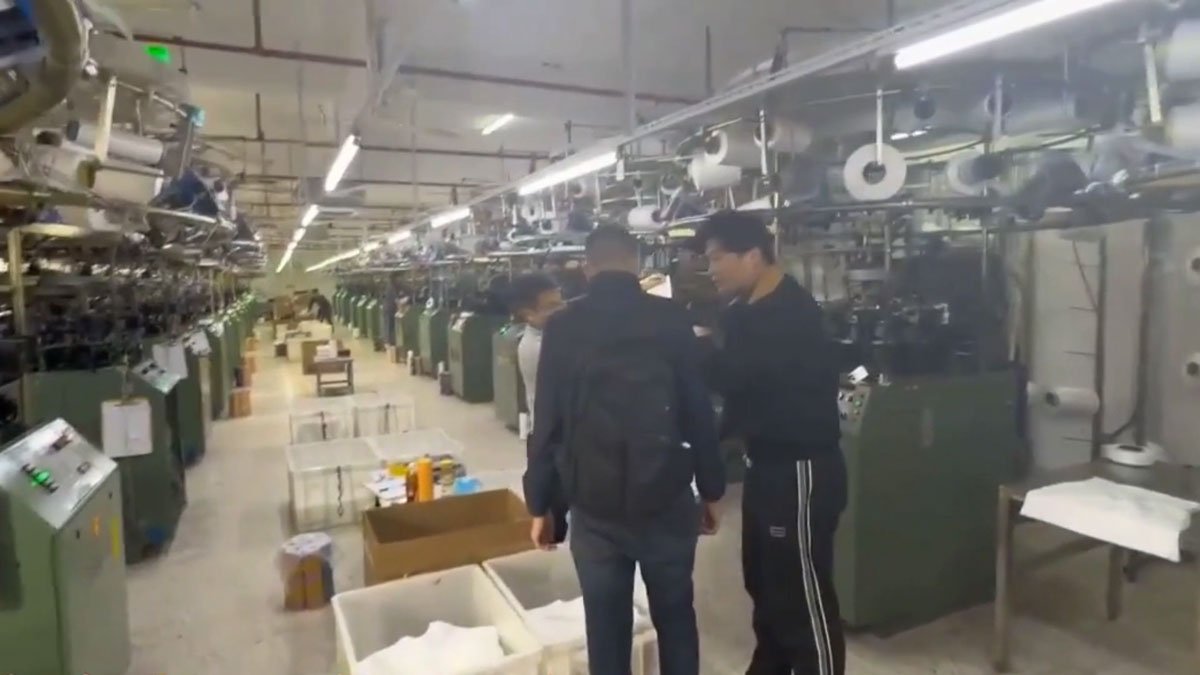
MOVEVOX supports buyer factory visits, technical audits, pre-production visits, inline inspections and pre-shipment inspections. The framework below highlights areas a mature buyer can verify rather than treating website claims as final qualification.
Factory Reality
Verify that the manufacturing entity and physical production environment match the supplier information presented during sourcing and onboarding.
- Legal entity matches commercial and factory documentation.
- Core manufacturing address can be physically verified.
- Cut-and-sew production areas are available for audit.
- Satellite facilities remain separately identified from core assets.
Product Development
Evaluate whether product requirements are translated into controlled technical information before the project enters bulk manufacturing.
- Tech Pack review is part of project intake.
- Pattern and sample revisions use controlled versions.
- Approved sample references are retained for bulk.
- Pocket specifications can be translated into measurable standards.
Quality and Traceability
Confirm that quality control is connected to current specifications, production stages and identifiable order information rather than relying only on final inspection.
- Incoming, First Article and inline controls are defined.
- Finished garments receive quality checks before packing.
- Material and production batches can be linked to orders.
- Nonconforming goods require correction and reinspection.
Production-Site Control
Review how production capacity is allocated when several facilities participate in the wider manufacturing network.
- Production facilities are assigned rather than randomly selected.
- Approved-site restrictions can be followed when required.
- Material substitutions require controlled review.
- Facility changes do not bypass quality validation.
Verify Evidence Before Supplier Approval
A positive website presentation should not replace a buyer's own supplier-onboarding process. MOVEVOX can support onsite or live-video factory verification, technical review and production inspection.
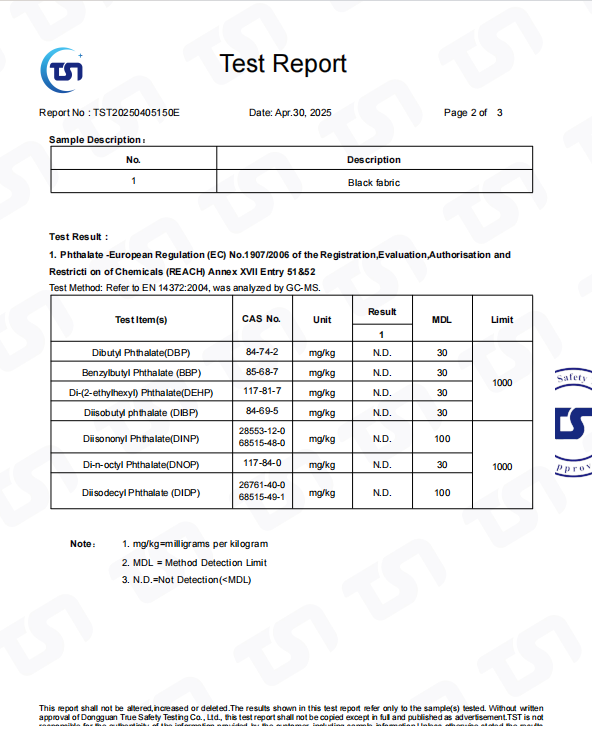
Audit status, certifications and compliance requirements should only be stated after the relevant documents have been checked for holder, facility, scope and validity.
Manage the Critical Path Before Delivery Risk Appears
A production timeline becomes useful when each stage shows its prerequisite and buyer approval point. MOVEVOX connects specification, material, production, quality, packing and cargo readiness rather than providing one unexplained delivery date.
Specification
Condition: Final product requirements reviewed.
Buyer gate: Technical and commercial open points approved.
Material
Condition: Approved material direction and supplier availability.
Buyer gate: Custom color or special material approval where required.
Pre-Production
Condition: Required sample and production references available.
Buyer gate: PP or defined production approval completed.
Bulk
Condition: Materials released and production site confirmed.
Buyer gate: Changes requiring approval resolved before continuation.
Inspection
Condition: Production reaches applicable QC and final-inspection stages.
Buyer gate: Third-party inspection requirements scheduled where applicable.
Shipment
Condition: Packing completed and order receives release status.
Buyer gate: Shipping documents or nominated-forwarder requirements confirmed.
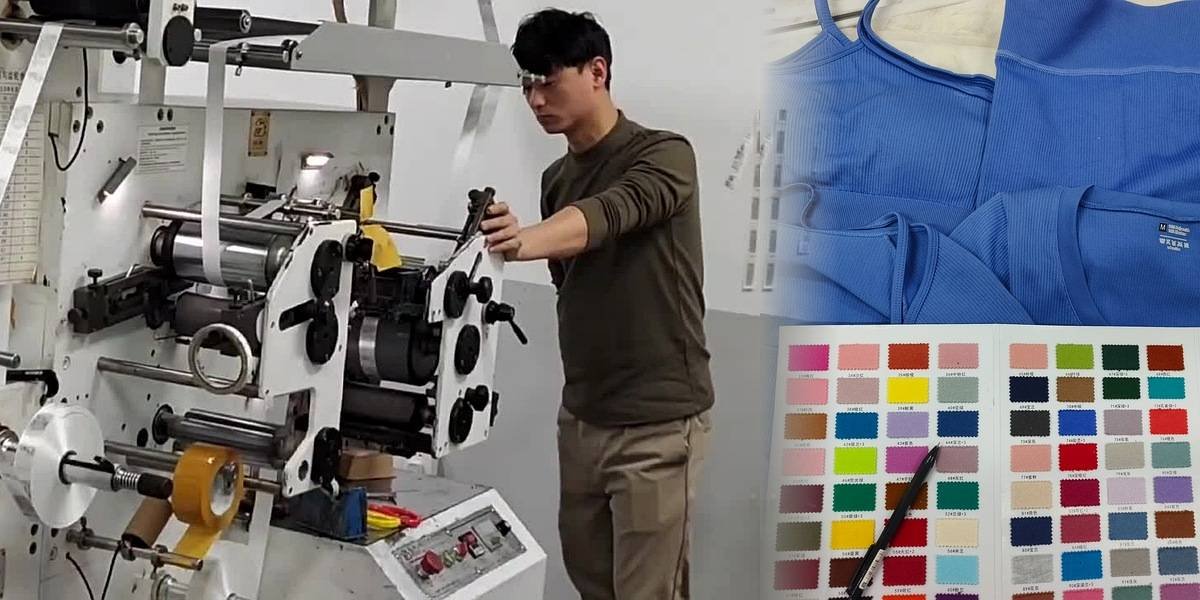
MOVEVOX's normal bulk-production reference is approximately 20-35 days, but the actual critical path changes with material sourcing, custom dyeing, complexity, sample approval, testing, buyer decisions and inspection requirements.
A U.S.-Market Activewear Development and Repeat-Order Program
Client Profile
The buyer was a U.S.-market fitness creator-led activewear customer with an established audience and recurring demand for fitness and yoga apparel. The program covered leggings, shorts, sports bras, tank tops, sets and bodysuits using several nylon-and-spandex material directions.
Challenge
The customer required high stretch, support, softness, coverage and extended sizing. Development also involved detailed private-label packing. Different colors and sizes used different QR-code labels, creating significant mismatch risk between garment and outer package. The customer also required real wearer testing before larger production decisions.
MOVEVOX Solution
MOVEVOX reviewed the customer's technical information and produced an initial sample. After feedback, a second sample version was developed. The project then moved into a small group of testing units before bulk production. MOVEVOX coordinated logo, labels, care labels, packaging and printed material, with double confirmation of QR-code matching by style and color group.
Execution Priorities
- Technical input translated into development samples
- Sample revision before commercial production
- Wearer testing before bulk-order decision
- Multiple private-label packaging components
- Color and size QR-code matching
- Additional QC time for packing accuracy
General Results
Continuing cooperation
Repeat purchases
Activewear program
QR-code packing control
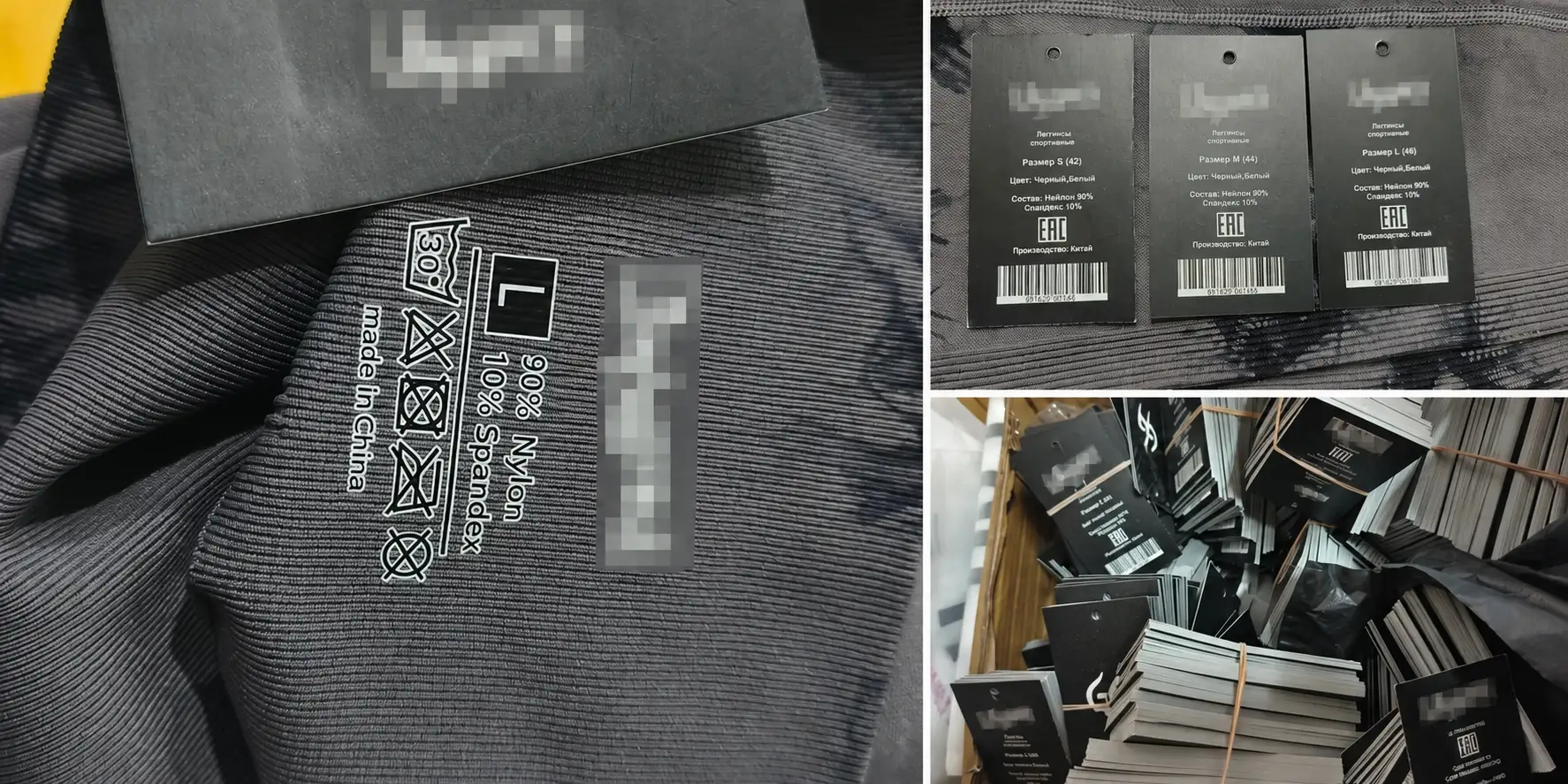
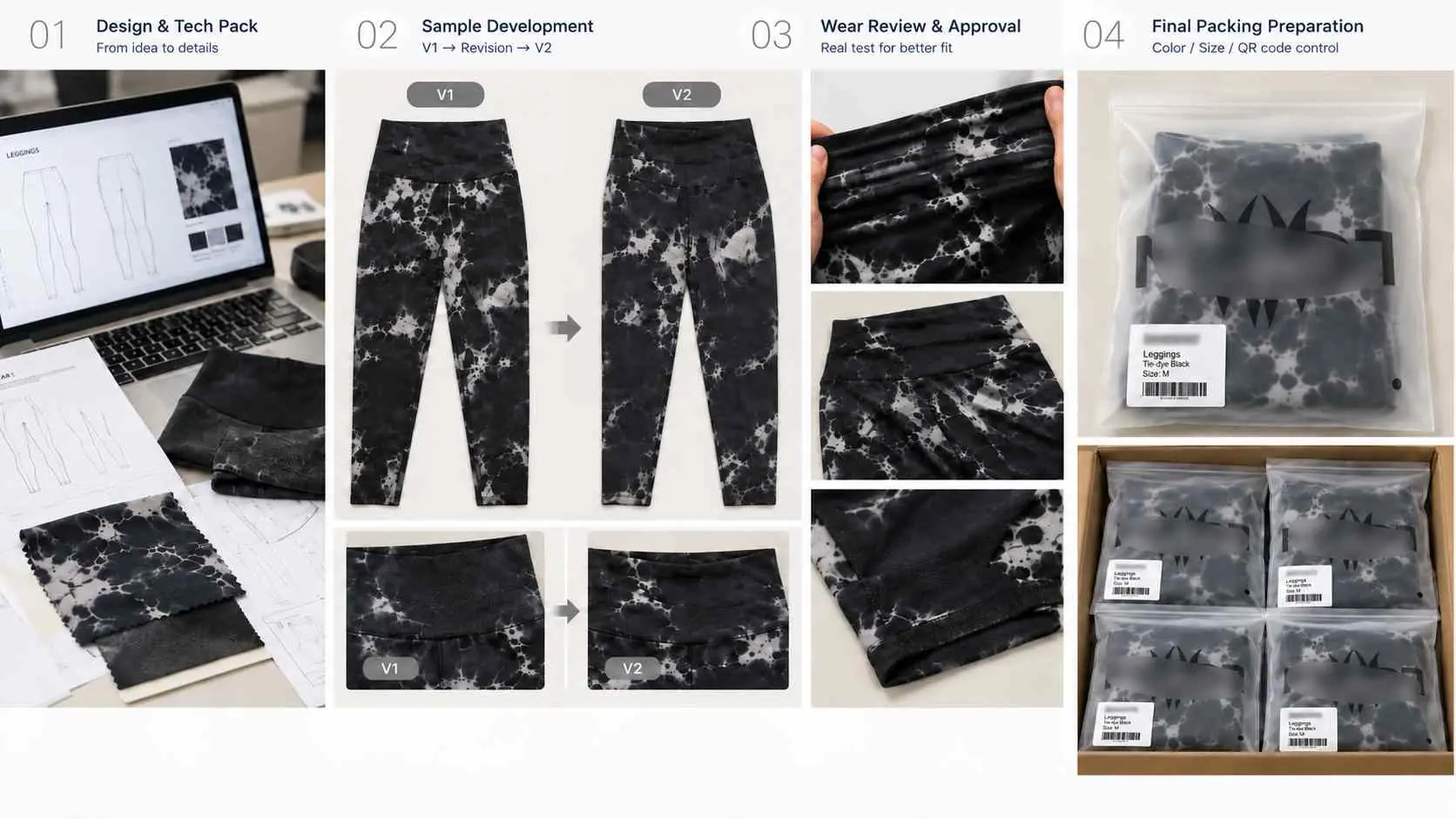
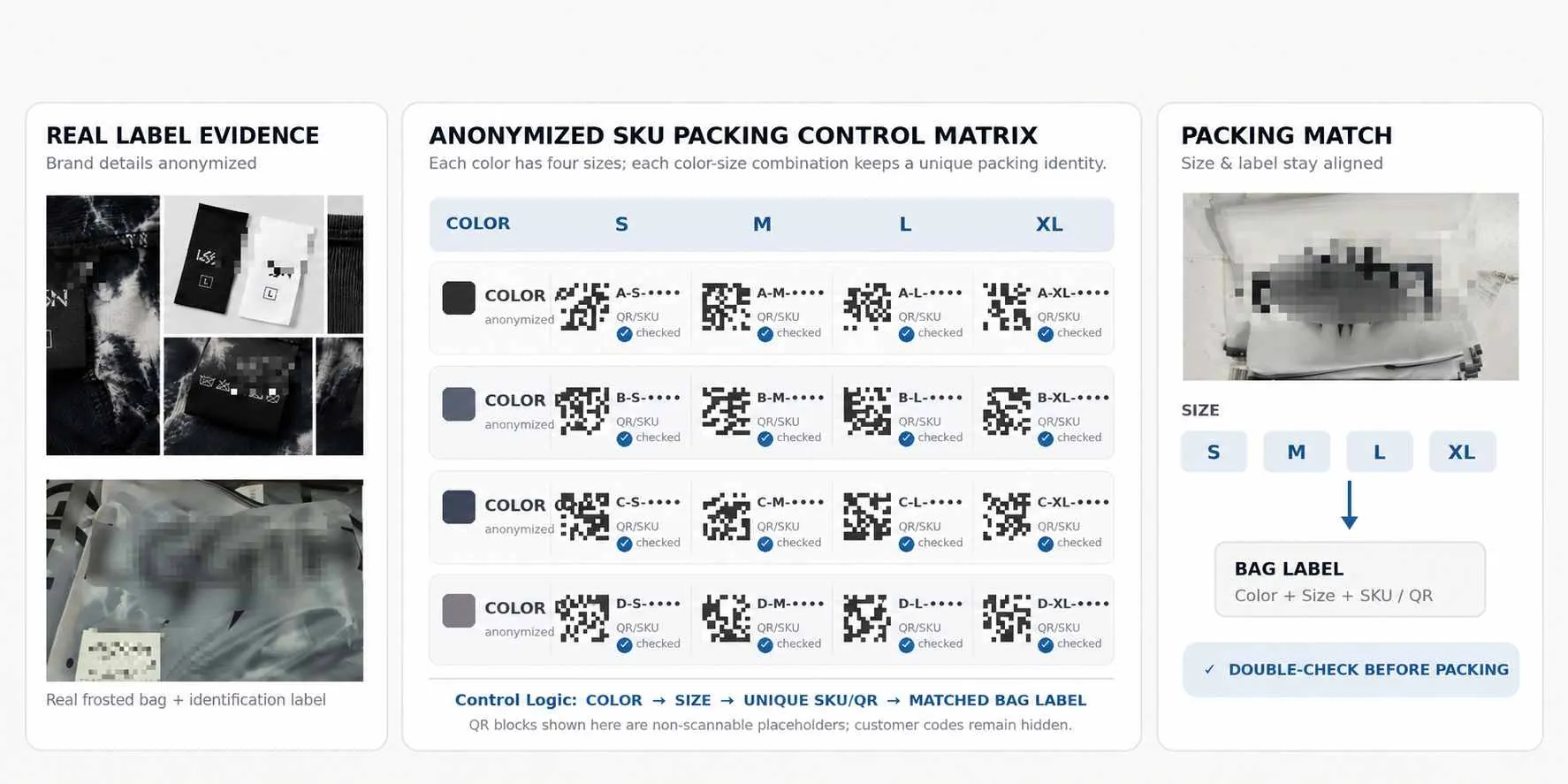
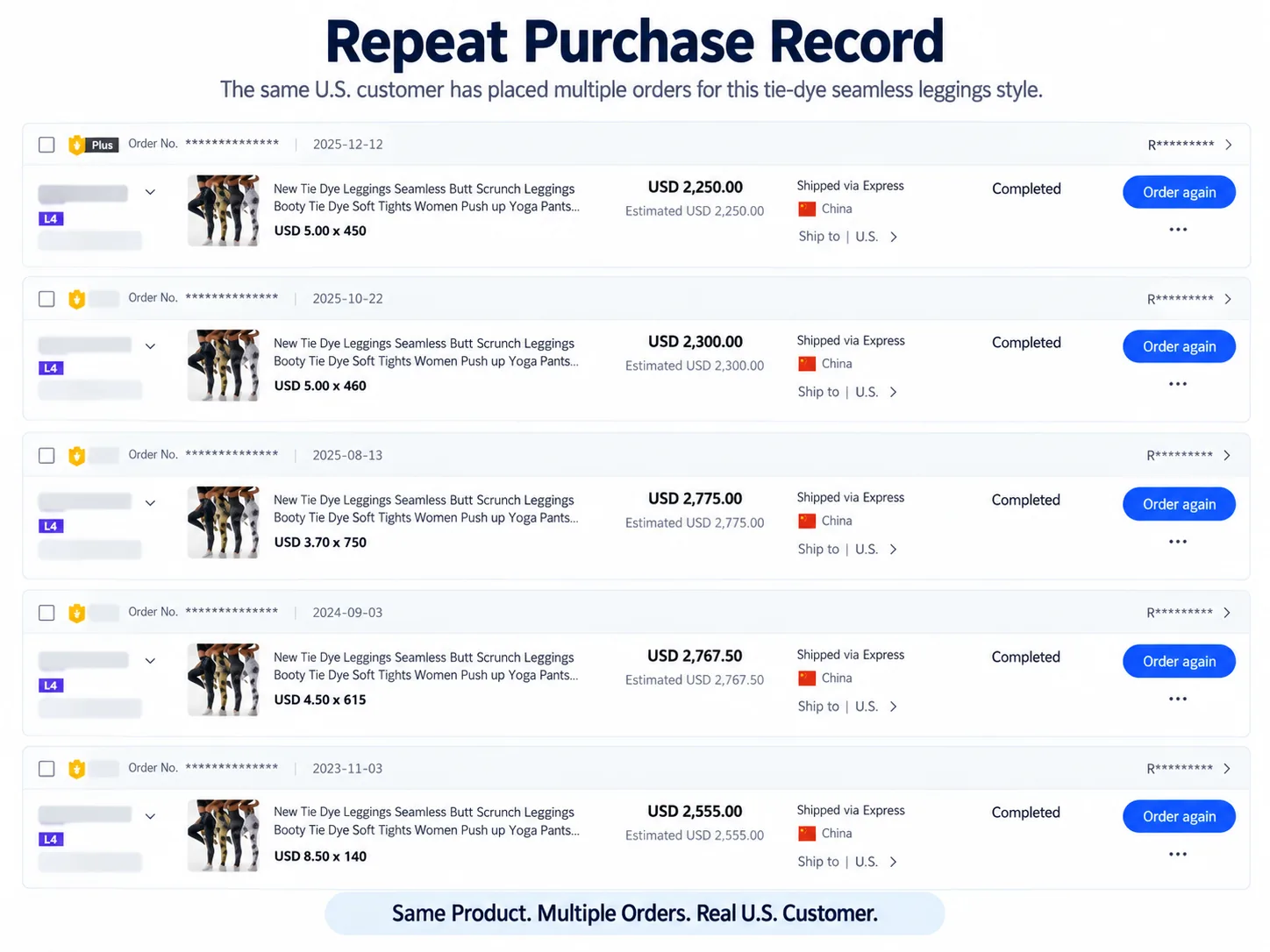
Client identity and commercially sensitive records remain withheld. This case demonstrates activewear execution and repeat-order management; it must not be presented as a verified pocket-leggings customer case.