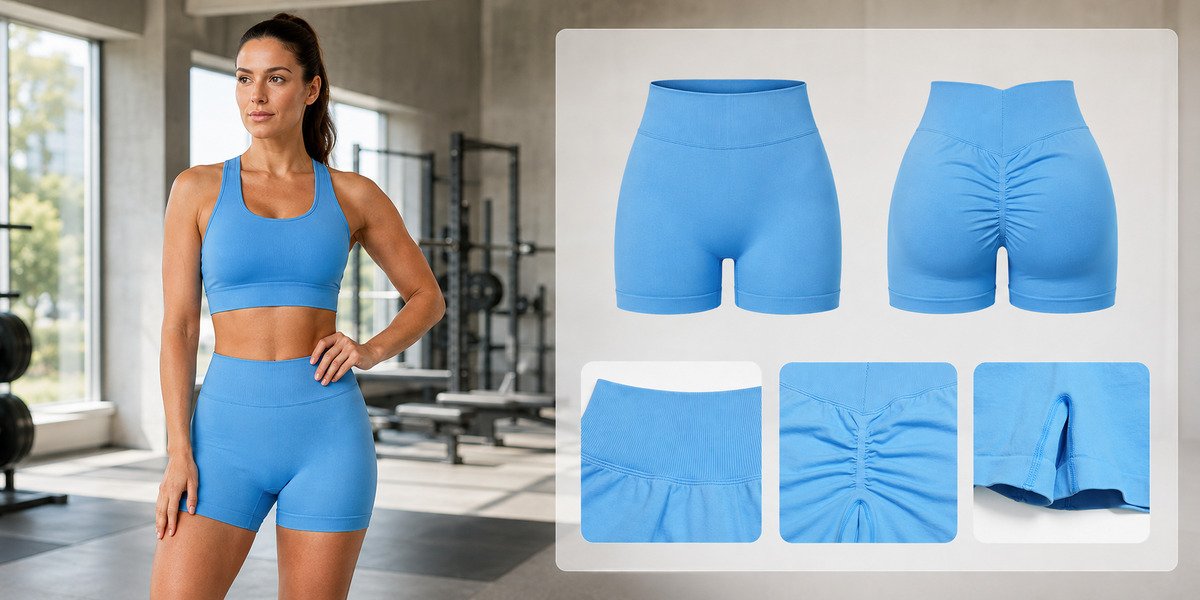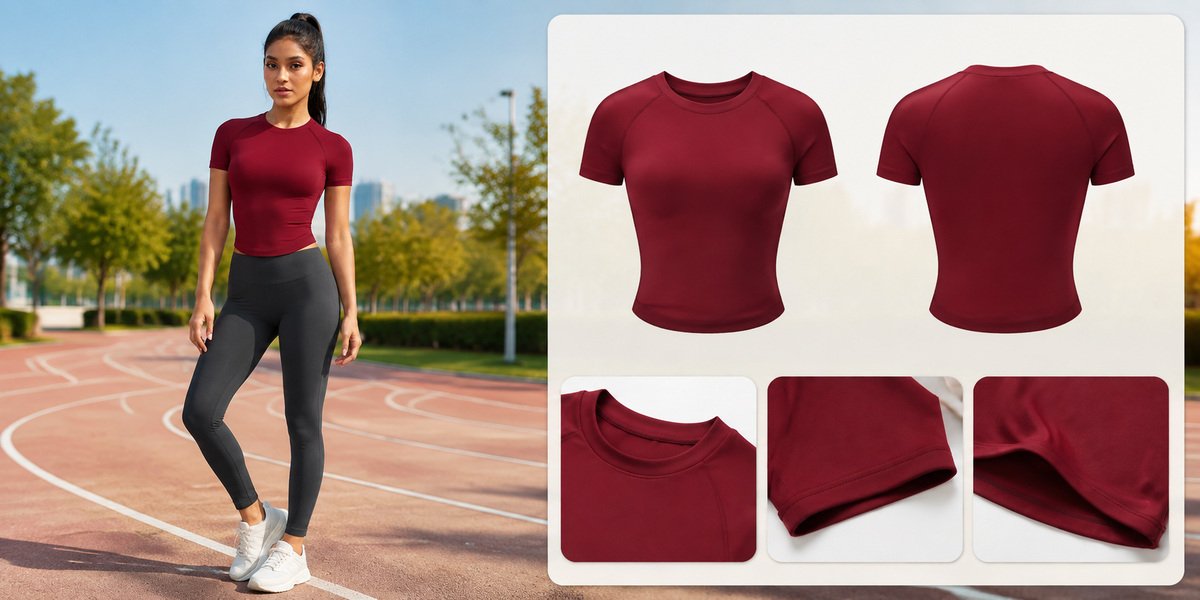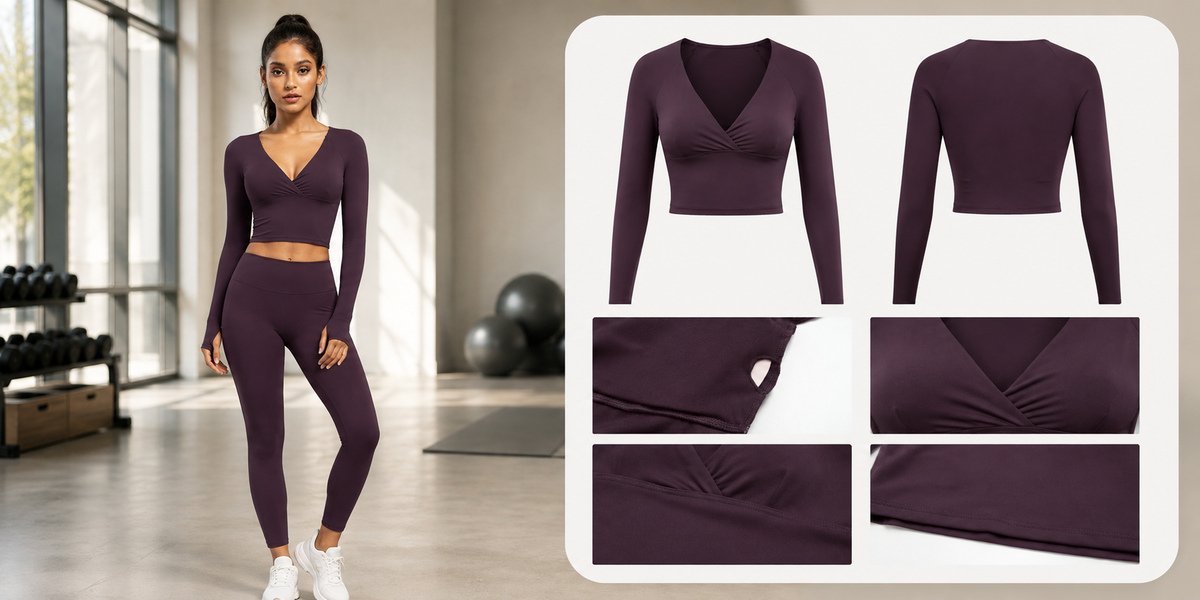
CUSTOM ACTIVEWEAR SETS

Custom Activewear Sets for Growing and Established Performance Brands

MOVEVOX helps activewear, yoga, Pilates and training brands develop coordinated sets from Tech Packs, authorized samples or defined product concepts.

We combine seamless and cut-and-sew manufacturing with product development, private-label execution, quality control and managed production capacity, allowing bras, tops, leggings, shorts and layering pieces to be developed under one accountable supplier system.

Seamless + Cut & Sew 5–10 Day Standard Sampling Multi-SKU Production Support
CATEGORY DEFINITION

What Does Custom Activewear Sets Actually Mean?

Direct answer: Custom activewear sets are coordinated branded products developed as a group rather than unrelated garments placed together. For a B2B brand, customization can involve product combination, material, color, fit, construction, logo, labels, packaging and sample approval, with each SKU controlled individually while the collection follows shared visual and manufacturing standards.

More Than Matching Colors

A set may share one color direction, but different yarns, fabrics, finishes and garment structures can produce different visual results. Physical approval remains necessary.

Each SKU Stays Controlled

A bra, legging and top may belong to one collection, but each requires its own measurements, construction, sample version and production specification.

One Collection Language

Shared material platforms, color standards, branding proportions, labels and packaging can create continuity without forcing every garment into identical construction.

Built Beyond First Launch

For established brands, the objective is not only to approve one set, but to create repeatable standards that can support additional colors, SKUs and reorders.

Why it matters: A supplier should be judged on whether it can coordinate several products under one collection standard—not simply whether it can manufacture each garment separately.
BUYER RELEVANCE

Who This Collection Program Is Designed For

MOVEVOX is best aligned with brands and B2B buyers that need structured product development, multiple coordinated SKUs, formal sample approval and a supplier capable of supporting repeat orders beyond the first collection.

Established Activewear Brands

You may already manage mature size charts, approved materials, seasonal color systems and formal Tech Packs. Your challenge is often not finding a factory that can sew one garment, but finding a partner that can coordinate several styles without losing material, fit, color or branding consistency.

  • Manage multiple product structures through one supplier responsibility window
  • Keep approved specifications identifiable across styles and production cycles
  • Coordinate materials, colors, branding and packaging across related SKUs
  • Support factory review and formal buyer quality requirements
SUPPLY-CHAIN COORDINATION

Reduce Interfaces Without Hiding the Supply Chain

An activewear collection can involve different factories, materials, logo processes, labels, packaging and inspections. MOVEVOX’s role is to reduce customer-facing fragmentation while keeping actual production responsibility and facility allocation transparent.

Manufacturing Routes

Fragmented Model

The buyer separately manages a seamless factory and cut-and-sew factory, creating two technical discussions, timelines and production responsibility chains.

MOVEVOX Managed Model

MOVEVOX reviews each SKU and assigns the suitable manufacturing route while customer requirements, development information, order coordination and quality expectations remain under one project interface.

Dual Manufacturing

Material Coordination

Fragmented Model

Different production facilities can source similar-looking materials independently, increasing the risk of inconsistent hand feel, color, weight or approved specification.

MOVEVOX Managed Model

Major project materials are coordinated through MOVEVOX's material sourcing function, with composition, weight, color development, supplier information and material-lot records managed against project requirements.

Material Control

Branding

Fragmented Model

Logos, labels and packaging may be ordered separately by each factory, creating differences in artwork version, dimensions, placement or component supplier.

MOVEVOX Managed Model

Approved logo, label, hangtag, barcode and packaging requirements enter a centralized purchasing and version-control process instead of being reinterpreted independently by each production facility.

Brand Control

Production Planning

Fragmented Model

Each factory can give its own schedule, making it difficult to understand whether all pieces in a coordinated launch will become cargo-ready together.

MOVEVOX Managed Model

MOVEVOX PMC connects material readiness, production-site allocation, WIP, quality milestones, packing and shipment planning under one consolidated delivery-management process.

Unified PMC

Quality Responsibility

Fragmented Model

When problems occur across multiple suppliers, responsibility can become divided between material vendors, factories, branding suppliers and the buyer's own team.

MOVEVOX Managed Model

MOVEVOX remains the customer-facing responsibility window for approved specifications, production coordination and QC even when controlled satellite capacity supports an authorized production stage.

Single Accountability
Supplier consolidation should not hide the supply chain. Mature coordination requires transparent production allocation, approved standards, controlled material and document transfer, and a clear escalation owner. MOVEVOX uses its own factory as the technical and quality-control center while managing suitable long-term satellite capacity when projects require additional scale.
SET ARCHITECTURE

Build Sets Around a Clear Product Architecture

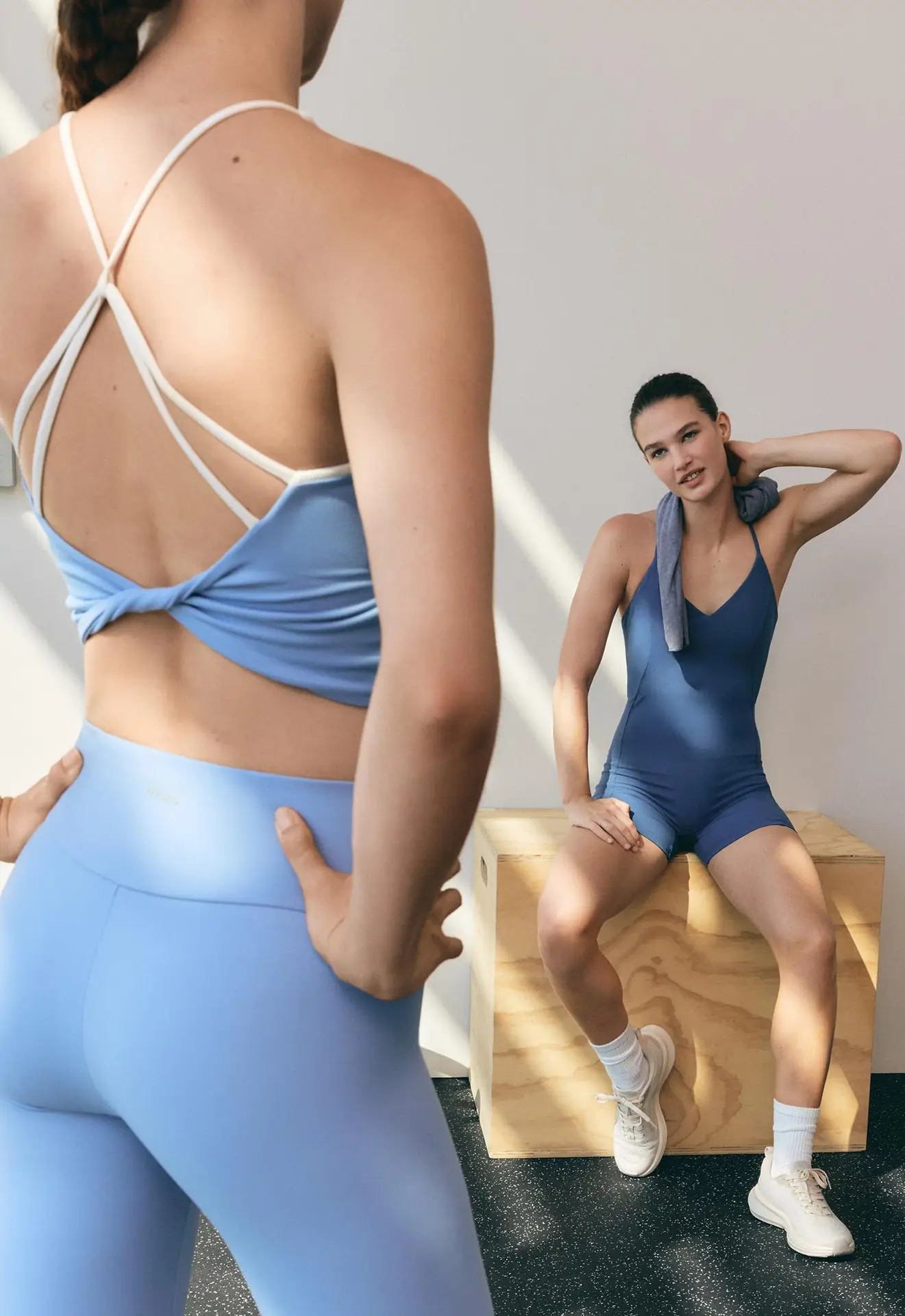
Matching sets work best when product combinations are planned around target activity, fabric, color, fit and brand language. MOVEVOX can develop two-piece and multi-piece combinations while keeping each SKU technically independent.

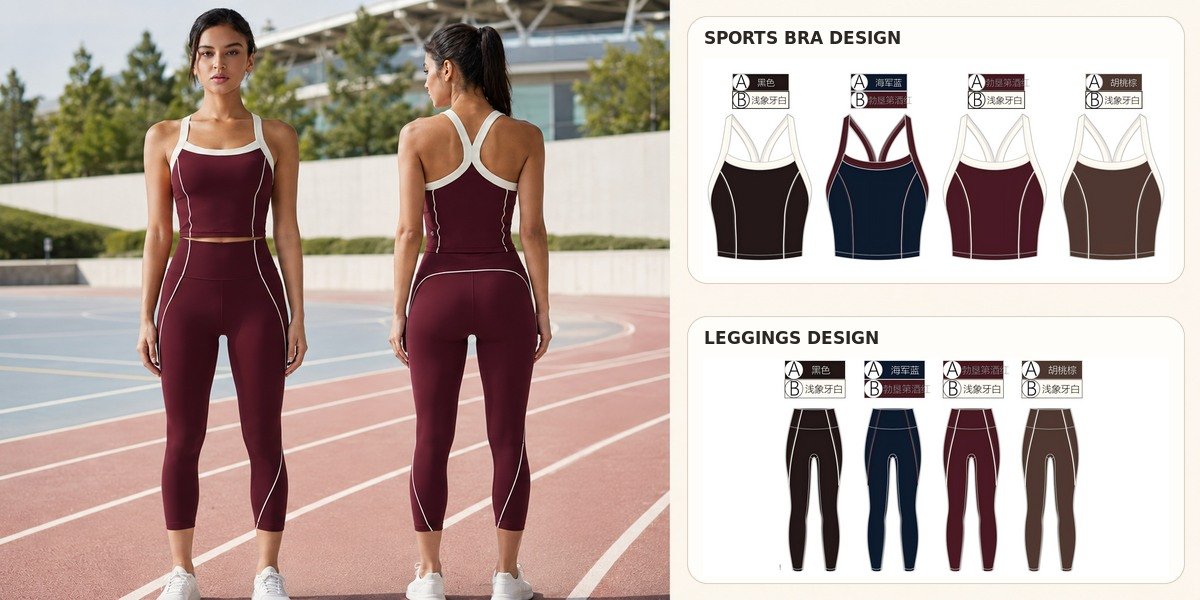
MOVEVOX bra + leggings core activewear product combination

Bra + Leggings Core

This is a practical foundation for yoga, Pilates, gym and general activewear collections. The two products can share material direction, color and branding while the bra requires separate support, strap and bust-fit development and the legging requires independent waist, hip, rise and inseam control.

Sports BraFull-Length LeggingsShared Color SystemCoordinated Branding
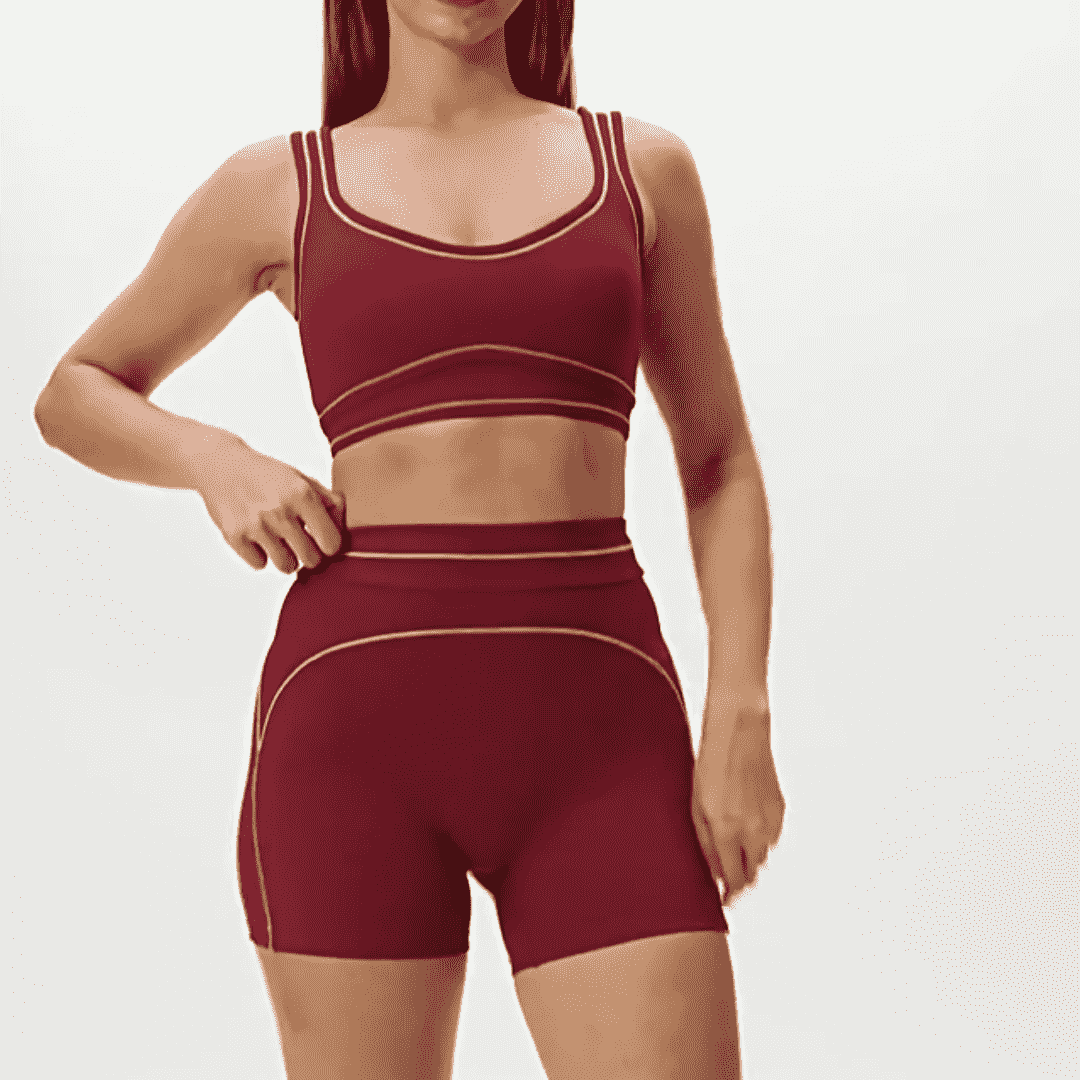
MOVEVOX bra + shorts set activewear product combination

Bra + Shorts Set

A bra and shorts combination can support studio, gym or warmer-season collections. The visual language can remain coordinated while the shorts need independent inseam, leg-opening, waistband and ride-up assessment.
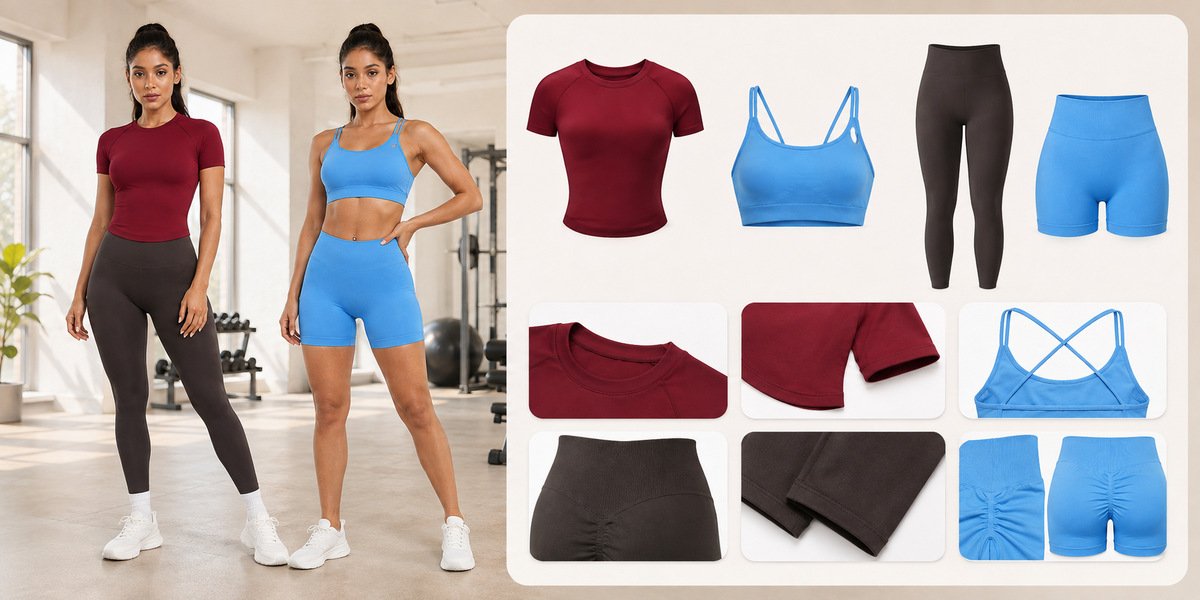
Sports BraYoga ShortsShared Fabric DirectionShared Logo System
MOVEVOX tank + leggings set activewear product combination

Tank + Leggings Set

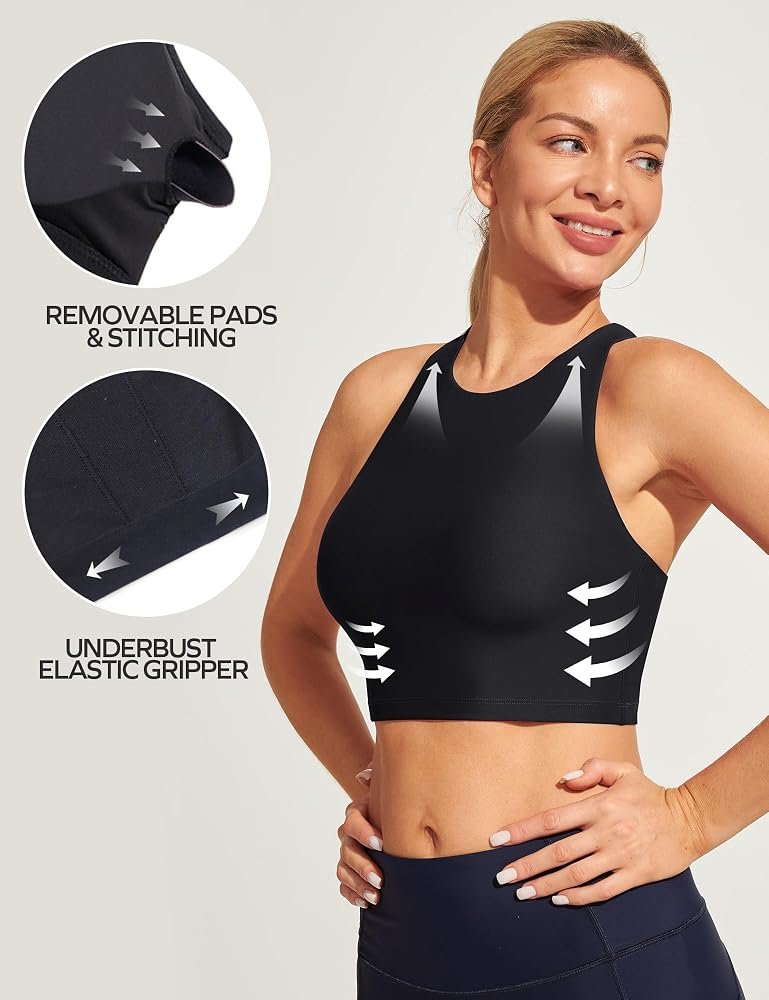
This combination is suitable when the brand wants more coverage or a layering-friendly collection. Tank construction, shoulder movement and garment length are developed separately from legging fit, while shared color, fabric family, logo proportions and packaging can connect the products commercially.

Tank TopLeggingsCoordinated ColorShared Brand Trims
MOVEVOX long sleeve set activewear product combination

Long Sleeve Set

Long-sleeve tops paired with leggings can extend a yoga or athleisure collection into transitional or cooler-season use. Sleeve fit, shoulder mobility and top length must be independently developed, while the collection can still share color references and materials where appropriate.
Long SleeveLeggingsSeasonal ColorwayCoordinated Packaging
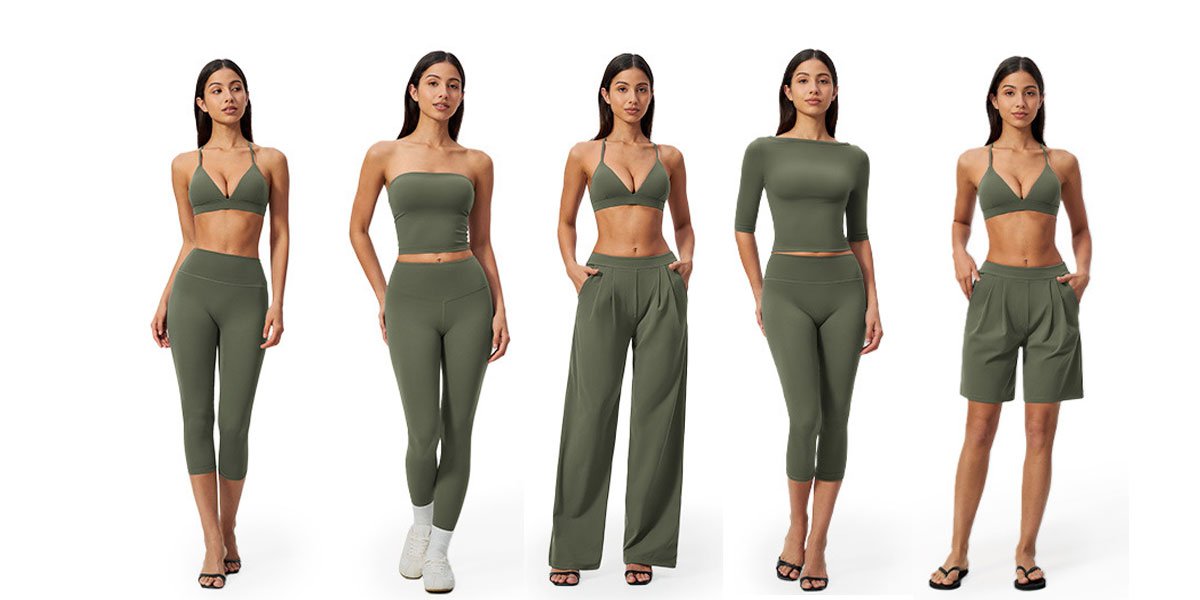
MOVEVOX three-piece capsule activewear product combination

Three-Piece Capsule

A sports bra, bottom and layering top can create a broader capsule without requiring three disconnected development programs. The collection can share a common material or color architecture, while each garment maintains its own pattern, measurement, construction and sample approval.

Sports BraLeggings or ShortsTank or Long SleeveShared Branding Platform
COLLECTION DEVELOPMENT

From Separate Styles to One Controlled Collection

A scalable collection is built in layers. Manufacturing capability supports development; development creates repeatable product standards; shared standards create collection consistency; and controlled production makes repeat orders and future expansion practical.

Manufacturing Foundation

MOVEVOX combines seamless knitting and cut-and-sew manufacturing so a brand can allocate different SKUs according to actual product structure instead of separating its collection solely because factories use different production methods.

28 Italian Santoni machines · ≈24 principal garment-production machines

Development Control

Product requirements are converted into samples, measurements, material references, construction details and approved versions. Each style remains individually controlled even when several products share collection-level materials, colors or branding.

≈8-person development system · standard samples typically 5–10 working days after confirmation

Collection Consistency

Shared material platforms, color systems, logo approaches, labels and packaging can reduce unnecessary variation while product-specific fit and technical requirements remain separate.

Central material coordination · controlled branding and packaging versions

Repeatable Scale

Once the collection standard is approved, production planning, quality checkpoints and controlled satellite capacity can support repeat orders and larger programs while the customer continues working through one MOVEVOX responsibility window.

8 long-term satellite facilities · ≈150K–200K pcs/month managed stable delivery capability
PRODUCT RANGE

Build Your Collection Across Core Activewear Categories

MOVEVOX's strongest range centers on women's yoga and activewear, with additional categories available for broader capsules. Product selection should reflect actual brand strategy rather than forcing every possible garment into one collection.
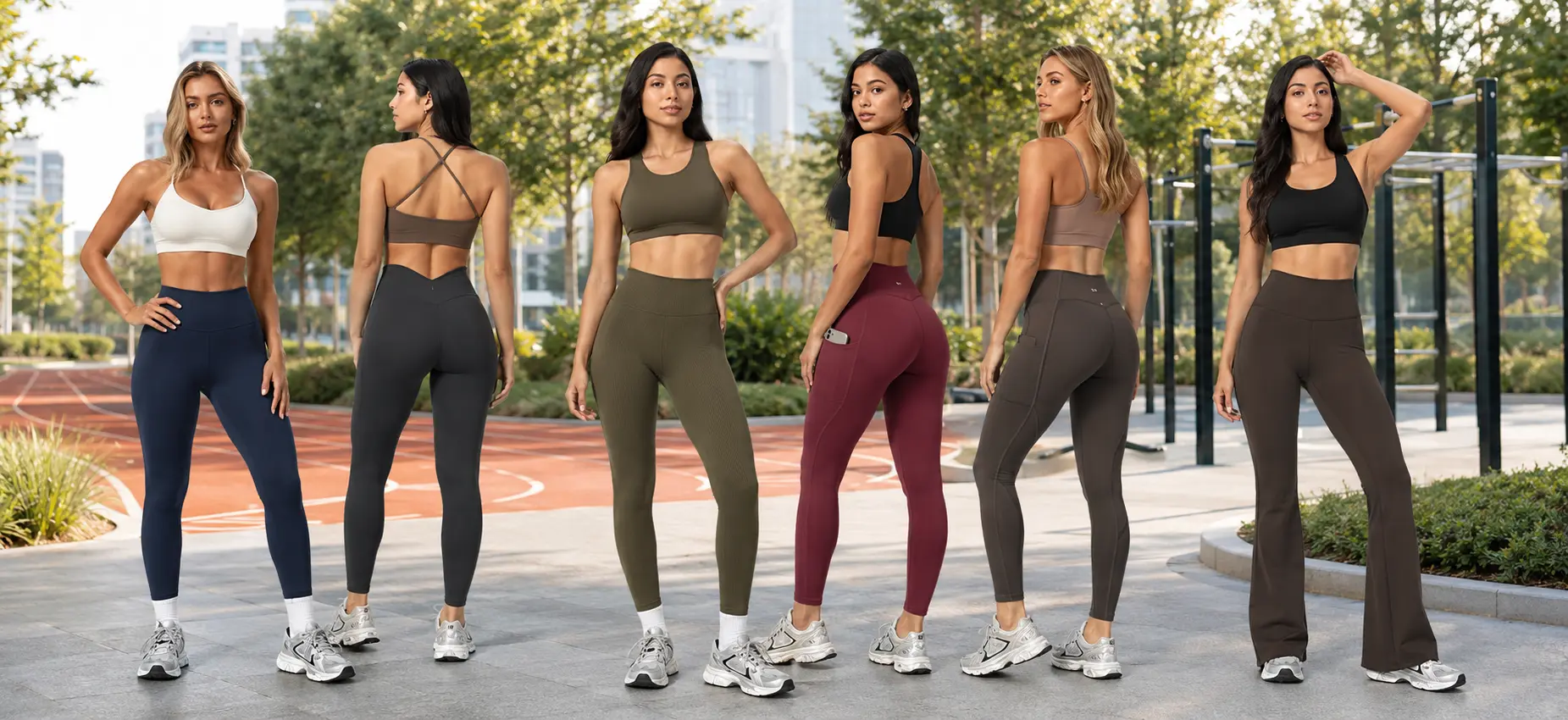
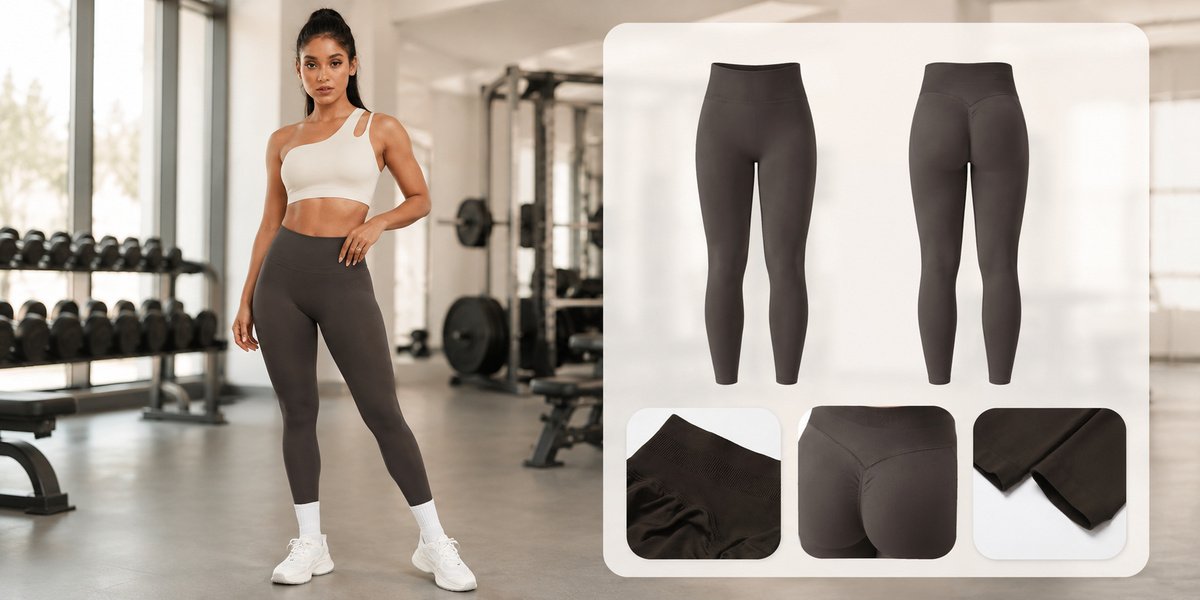
MOVEVOX yoga leggings activewear product

Yoga Leggings

A core MOVEVOX category available through seamless or cut-and-sew development, depending on waistband, pockets, paneling, knitted structure, fabric and fit requirements.

Core · Bottom · Both Routes
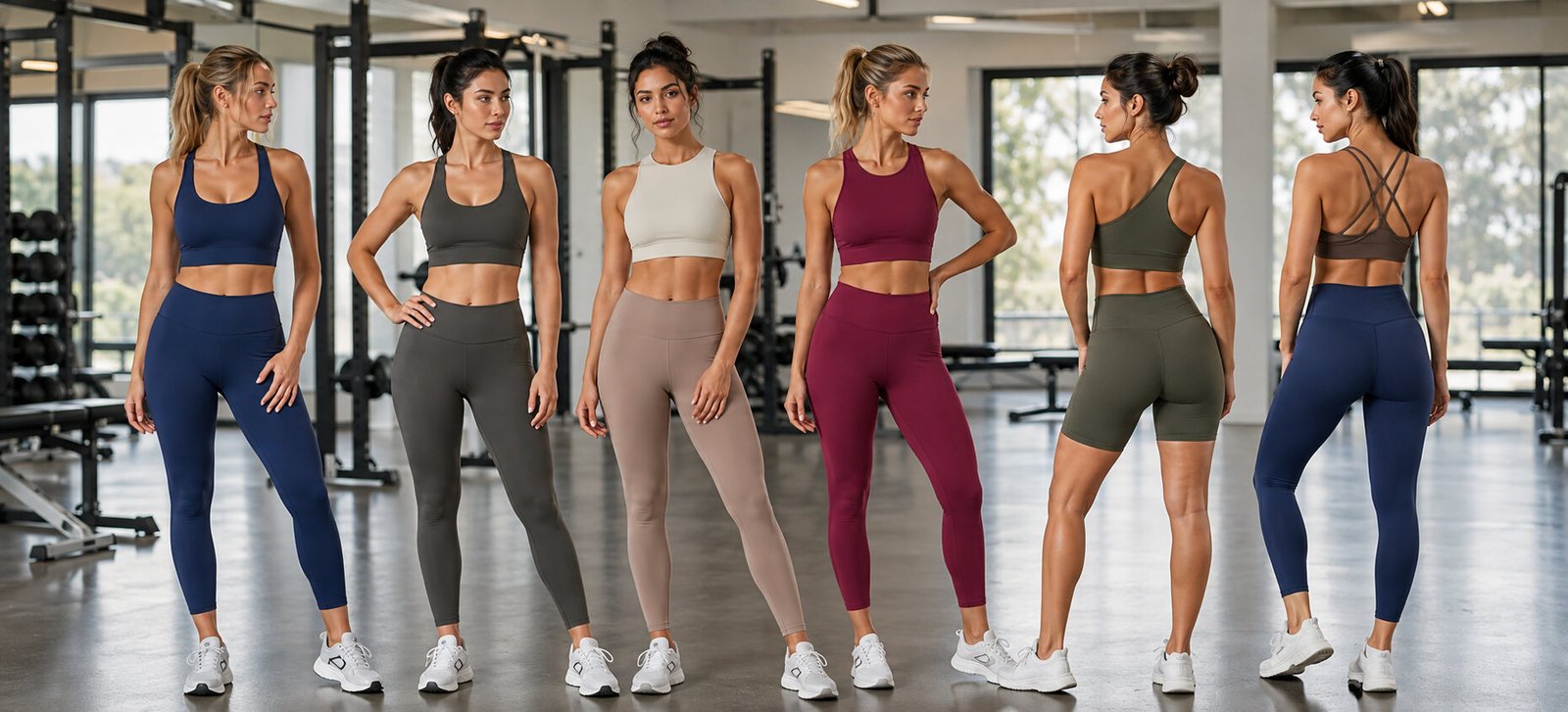
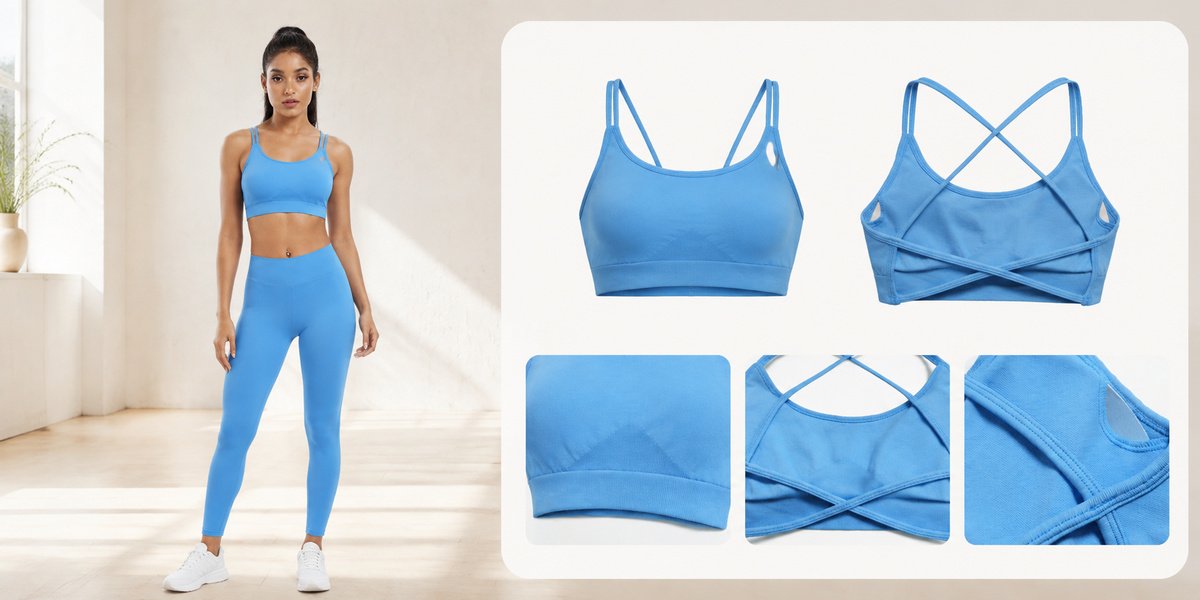
MOVEVOX sports bras activewear product

Sports Bras

Developed around support direction, straps, coverage, band construction, padding, material and fit. Seamless and cut-and-sew routes can support different bra structures.

Core · Top · Both Routes
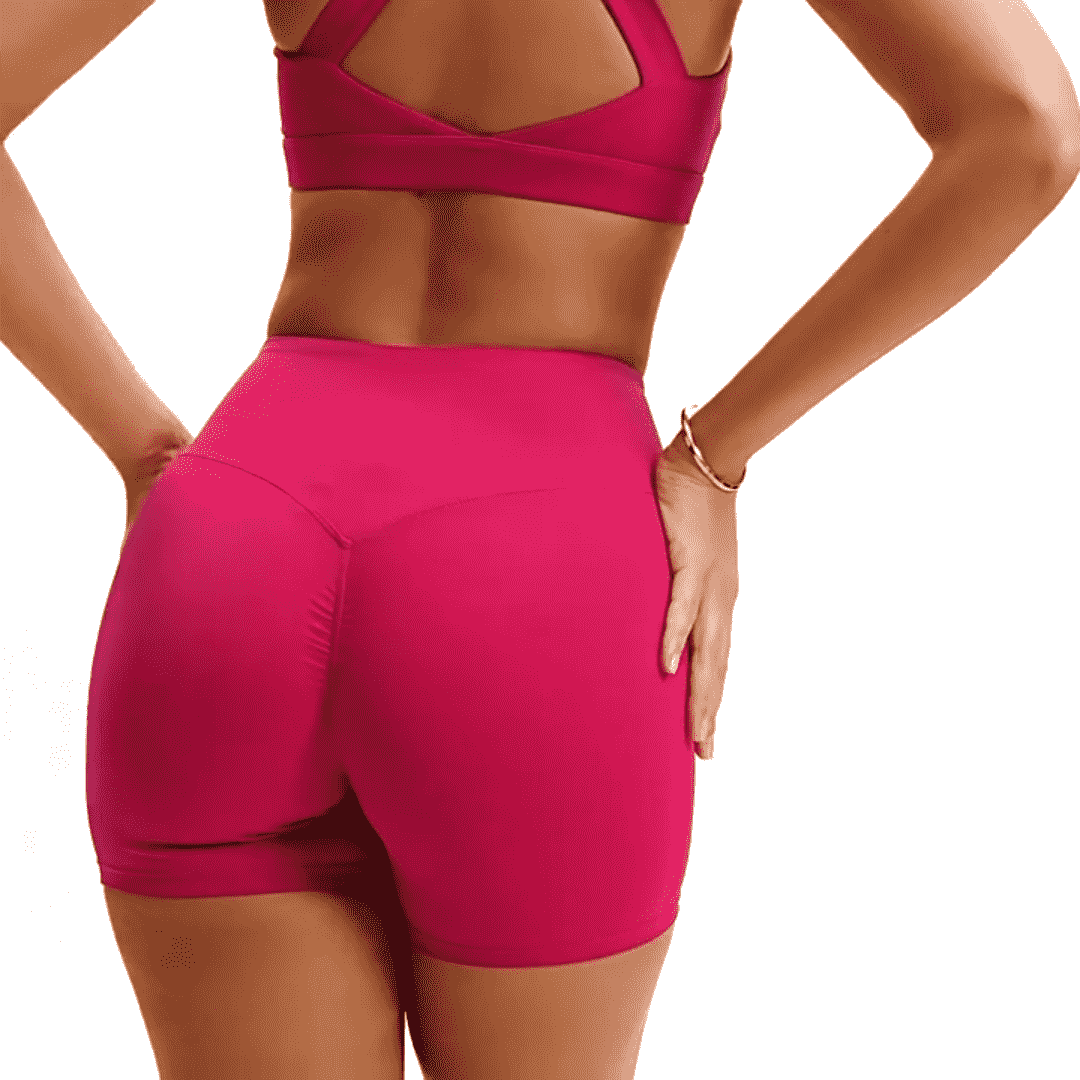
MOVEVOX yoga shorts activewear product

Yoga Shorts

Suitable for coordinated studio and training collections, with independent control of waistband, inseam, leg opening, fit, opacity and construction.

Core · Bottom · Both Routes
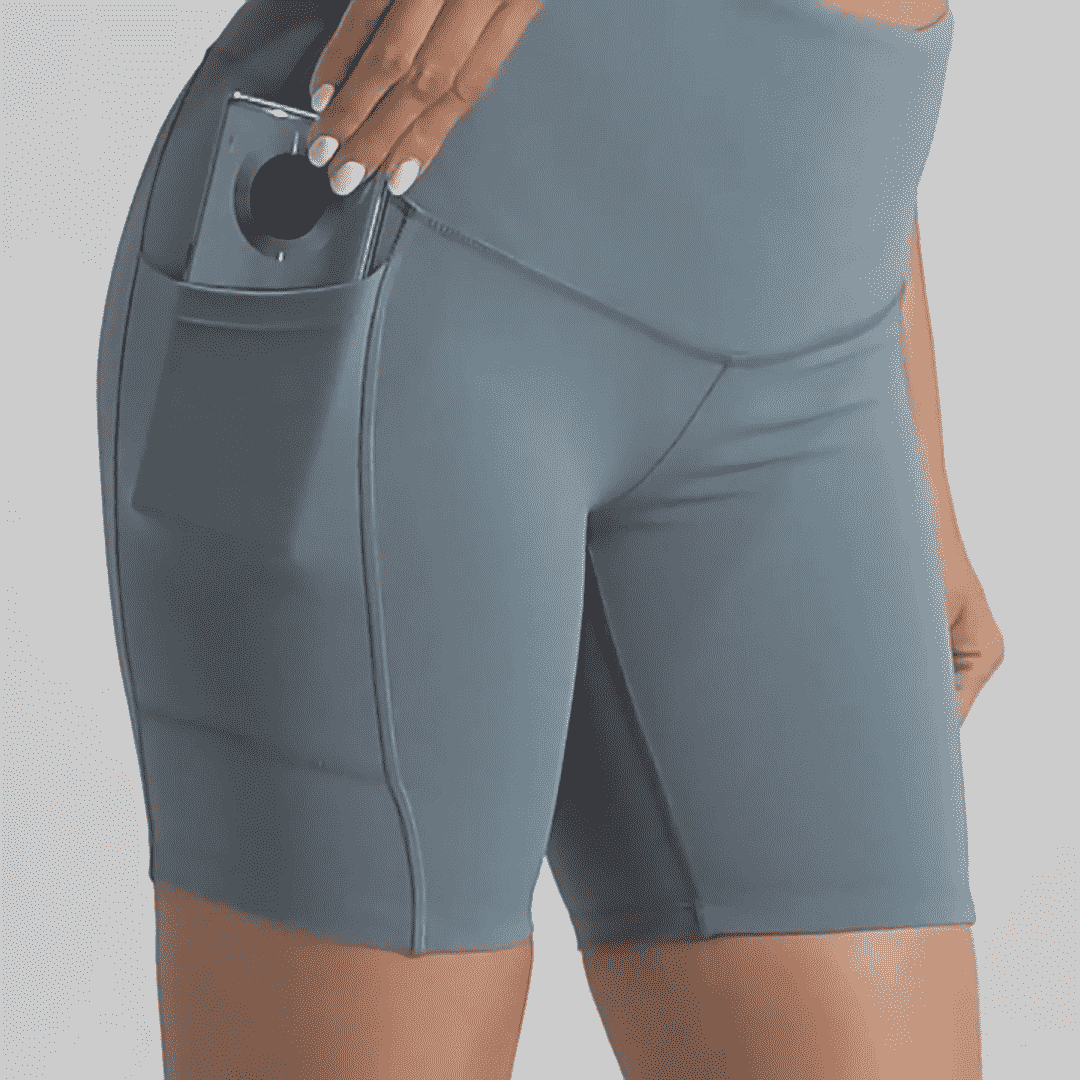
MOVEVOX biker shorts activewear product

Biker Shorts

A stable activewear category suitable for yoga, gym and athleisure programs, with options for different inseams, pockets, waist structures and surface directions.

Regular · Bottom · Both Routes
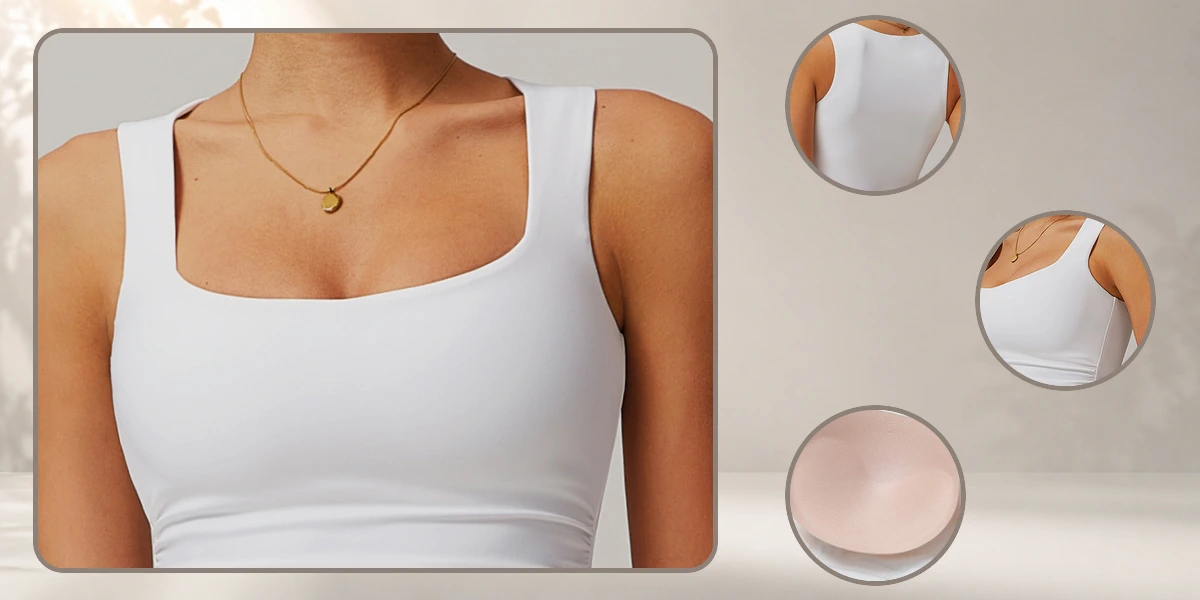
MOVEVOX tank tops activewear product

Tank Tops

Useful as a coordinated top layer for yoga, Pilates, gym and athleisure sets. Fit, neckline, straps and body length remain product-specific.

Regular · Top · Both Routes
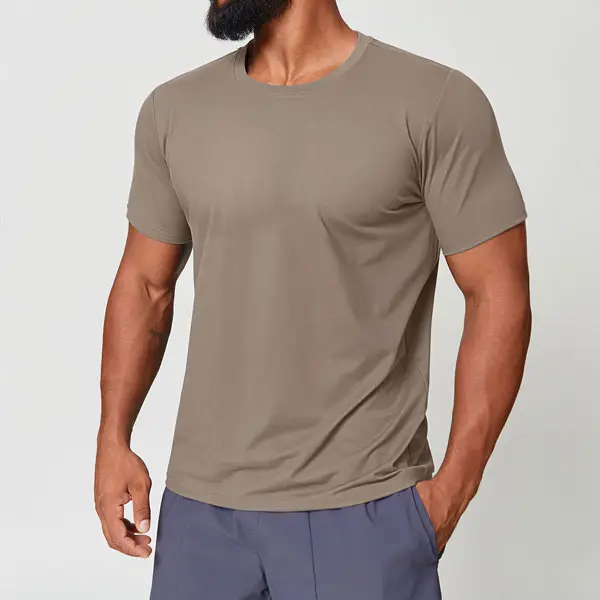
MOVEVOX t-shirts activewear product

T-Shirts

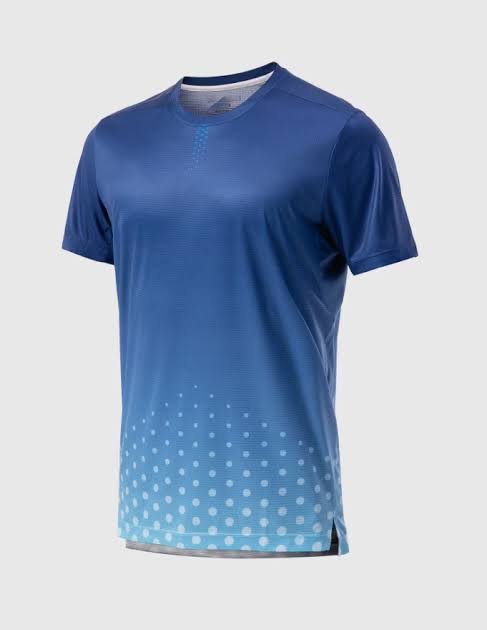
Suitable for training and athleisure capsules requiring looser or more conventional top silhouettes alongside fitted core activewear products.

Regular · Top · Cut & Sew
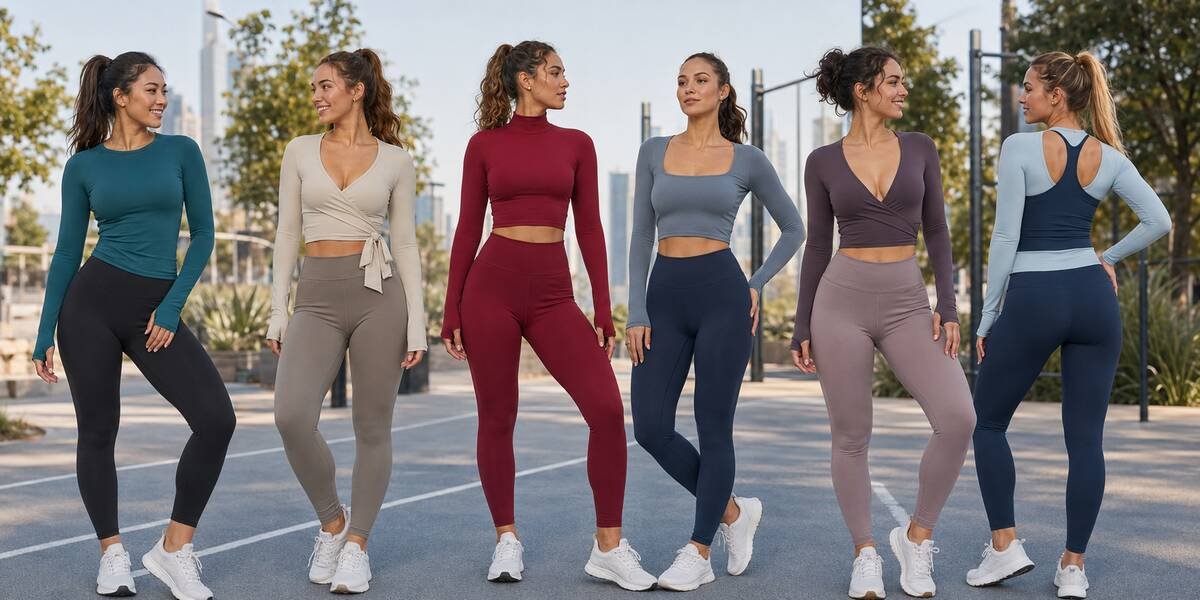
MOVEVOX long sleeves activewear product

Long Sleeves

Long-sleeve active tops can extend core collections seasonally while maintaining coordinated materials, colors and branding with leggings or shorts.

Regular · Top · Both Routes
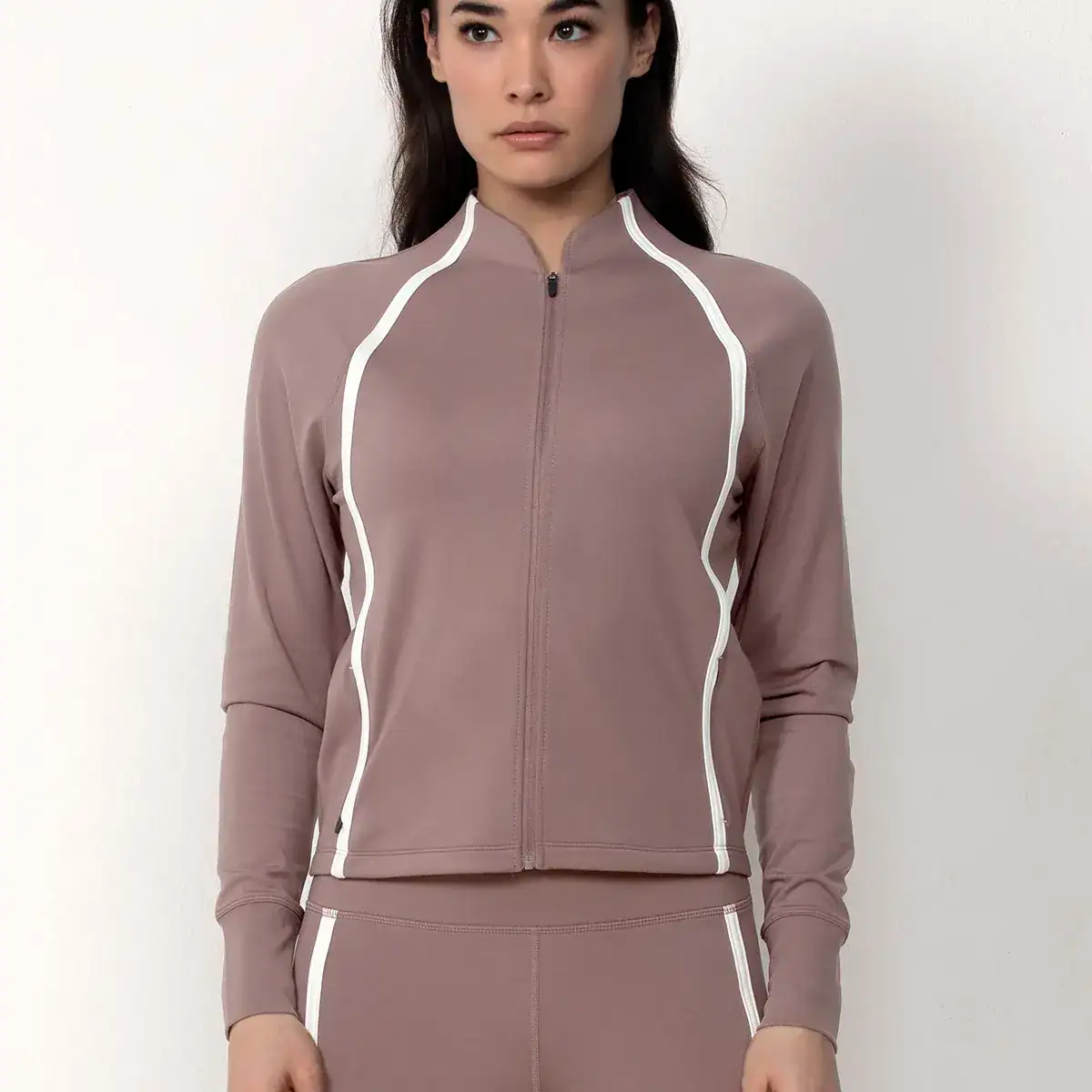
MOVEVOX yoga sets activewear product

Yoga Sets

Two-piece or multi-piece combinations developed through shared collection standards while each garment retains its own measurement, fit and approval requirements.

Core · Collection · Multi-SKU
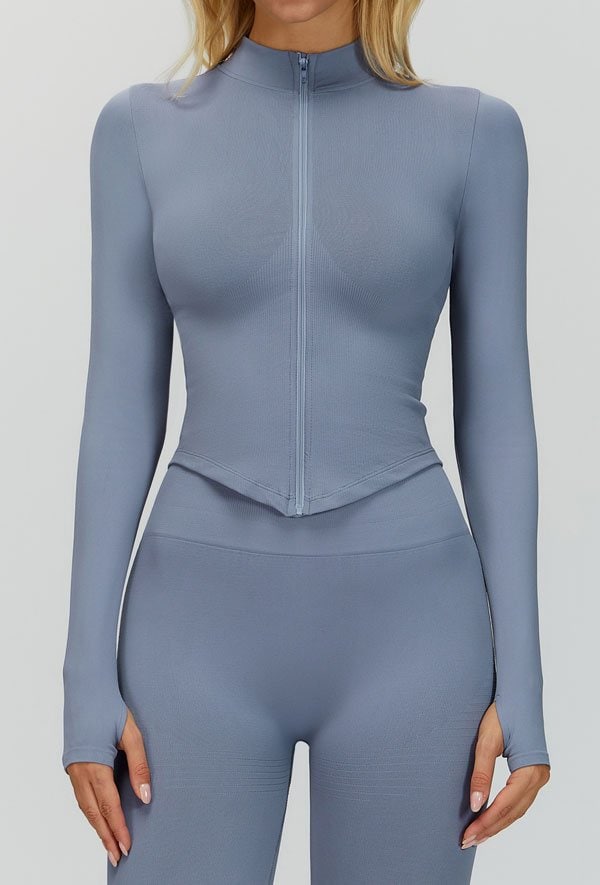
MOVEVOX light jackets activewear product

Light Jackets

An extended product direction for brands requiring layering pieces. More complex panels, zippers and construction generally favor cut-and-sew development and project-specific review.

Extended · Layer · Cut & Sew
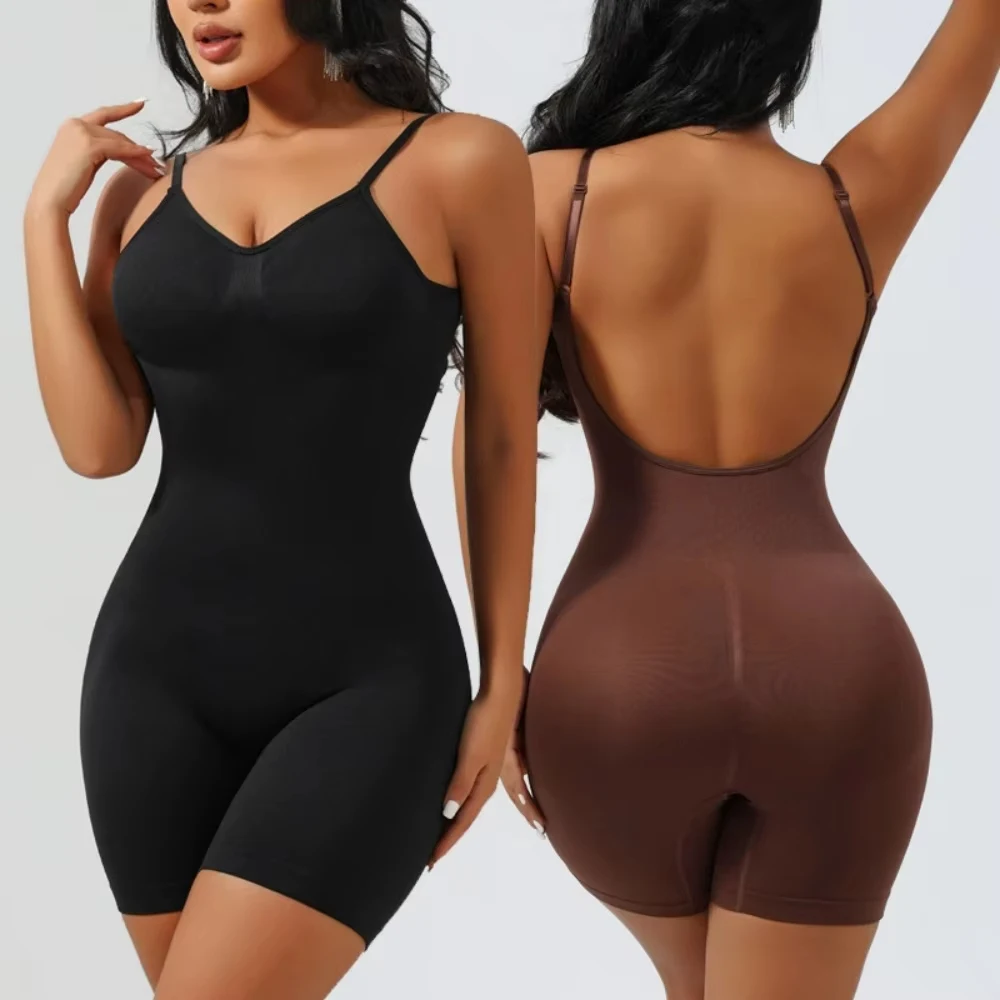
MOVEVOX bodysuits activewear product

Bodysuits

Available as a project-development category where body length, torso fit, leg opening, support, closure and material behavior require specific sample validation.

Extended · One-Piece · Development
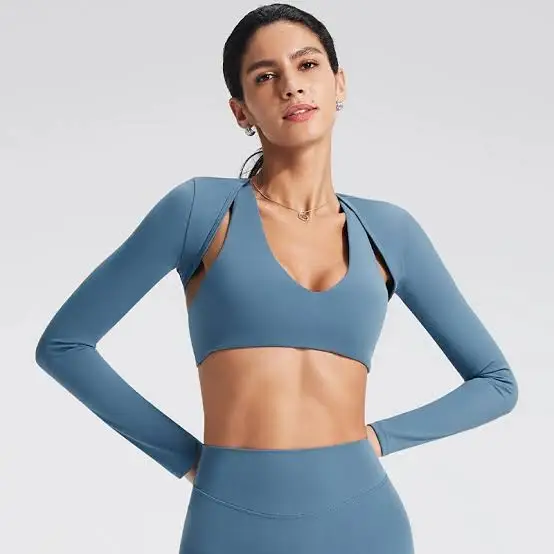
MOVEVOX running wear activewear product

Running Wear

MOVEVOX can develop standard running leggings, shorts, bras, tops and lightweight layers, with specialist performance claims subject to actual material and testing evidence.

Regular · Performance · Collection
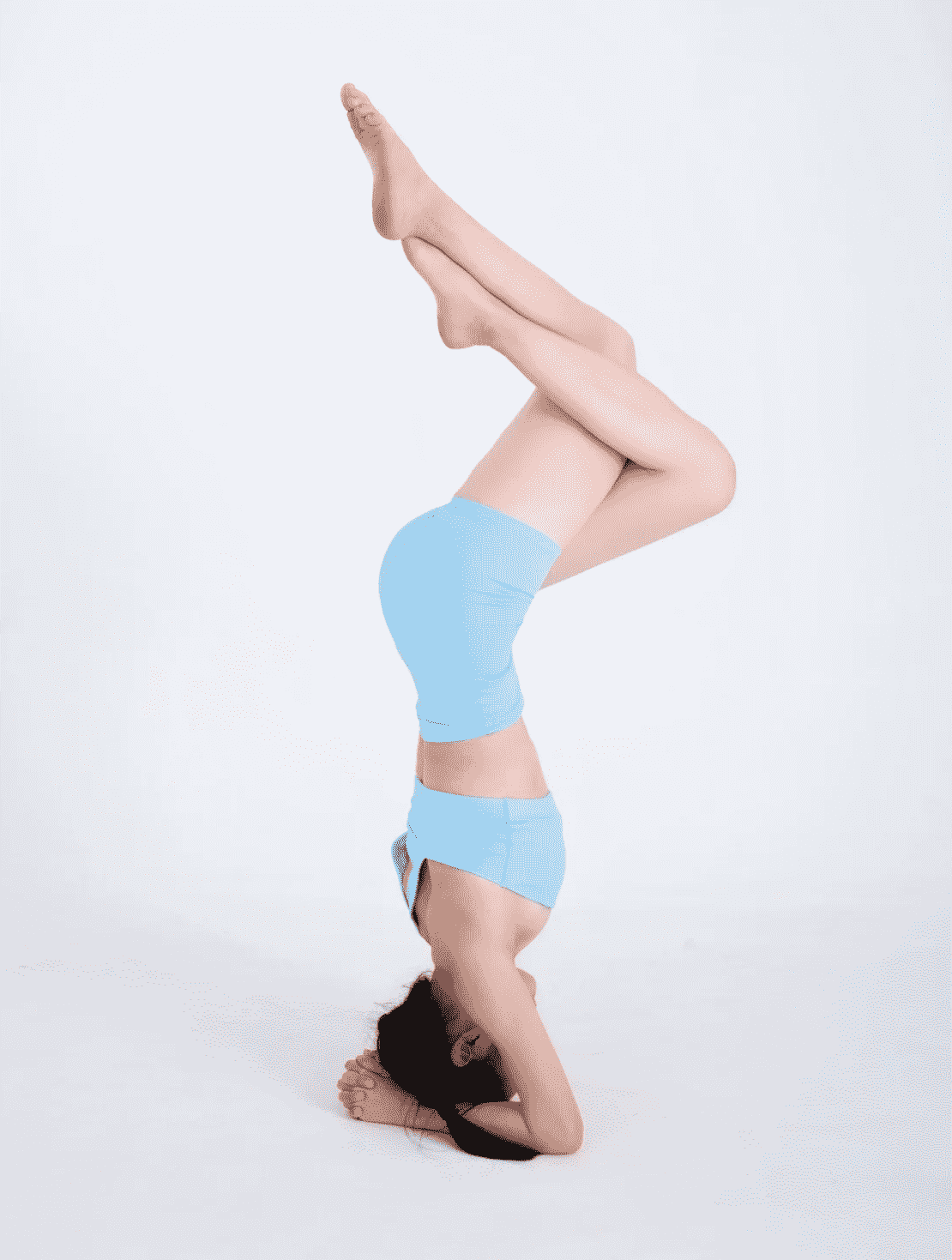
MOVEVOX pilates wear activewear product

Pilates Wear

A core strategic category using soft, high-stretch leggings, bras, tanks, fitted tops, shorts and coordinated studio sets with project-specific fit and material development.

Core · Studio · Collection
MULTI-SKU DEVELOPMENT

Develop Multi-SKU Collections in Controlled Waves

Developing every SKU simultaneously can create unnecessary revision pressure. MOVEVOX can organize collection development in waves so shared decisions are confirmed first and then reused where appropriate across supporting products.

Wave 1

Lock Hero Products

Begin with the collection's most important products, such as the core legging or bra. These styles establish the main material, color, fit and visual direction before related SKUs inherit approved collection-level decisions.

Wave 2

Add Supporting SKUs

Develop shorts, tanks, tops or other supporting products after key shared variables are clearer. Each new SKU still requires its own measurements, construction review, sample version and approval record.

Wave 3

Confirm Colorways

Once key products and materials are sufficiently stable, seasonal colors can be developed against approved references. Different fabrics or yarn structures may require separate color confirmation even within one named colorway.

Wave 4

Validate Size Range

Base fit approval does not automatically validate the full sales size range. Grade rules and representative sizes should be checked according to product risk and buyer requirements before production standards are finalized.

Wave 5

Release Collection

Final product versions, material references, colors, branding, labels and packaging are consolidated for production. Each SKU retains an identifiable current version while the collection follows common launch and order-management milestones.

Collection logic: MOVEVOX's ideal customer profile includes projects of roughly 5–30 SKUs, with approximately 8–20 SKUs representing the core collection sweet spot. For complex programs, controlled development waves can reduce version confusion.
COLLECTION PLATFORM

Build One Collection From Shared Product Platforms

A collection becomes easier to manage when selected variables are shared intentionally. The goal is not to make every garment identical, but to standardize the elements that benefit from consistency.

Platform VariableSports BraLeggingsShortsTank
Material PlatformShared where suitableShared where suitableRelated or sharedRelated or shared
Color SystemCommon approved standardCommon approved standardCommon approved standardCommon approved standard
Fit LanguageBra-specificBottom-specificBottom-specificTop-specific
Base SizesBuyer size systemBuyer size systemBuyer size systemBuyer size system
ConstructionIndependentIndependentIndependentIndependent
Logo SystemCoordinated scaleCoordinated scaleCoordinated scaleCoordinated scale
LabelsCommon brand systemCommon brand systemCommon brand systemCommon brand system
PackagingShared visual rulesSKU-specific dataSKU-specific dataSKU-specific data
ApprovalIndividual SKUIndividual SKUIndividual SKUIndividual SKU
Repeat ControlVersion-basedVersion-basedVersion-basedVersion-based
Selection guidance: A shared platform is most valuable when it reduces unnecessary material, color or branding fragmentation without overriding product-specific engineering. If a top requires another material, visual color matching should be reviewed physically rather than assuming one Pantone reference will render identically.
MANUFACTURING ROUTES

Choose Manufacturing Routes SKU by SKU

A mixed collection does not need one manufacturing method. MOVEVOX can review each style and choose seamless or cut-and-sew according to product structure, material, fit and construction requirements.

Decision AreaSeamlessCut-and-Sew
Primary EngineeringYarn, knit structure and machine programFabric, pattern, cutting and construction
TextureRib, mesh, jacquard and engineered zonesSurface mainly determined by selected fabric
PanelsLimited by knitted constructionHigh freedom for shaped panels
PocketsStructure-dependentFlexible pocket construction options
ZippersLimited and project-specificMore suitable for zipper structures
CompressionDensity and engineered knit zonesFabric recovery, negative ease and panels
Material MixingMore constrainedGreater multi-material flexibility
Typical ProductsLeggings, bras, shorts, tanks, seamless setsLeggings, bras, tops, jackets, complex garments
Base MOQAround 100 piecesAround 150 pieces
Core MOVEVOX Proof28 Italian Santoni machinesApprox. 24 garment-production machines
SEAMLESS ENGINEERING

Engineer Seamless Zones Around the Product Function

MOVEVOX's 28 Italian Santoni machines support seamless leggings, bras, shorts, tanks, long sleeves and sets where knitted structure is suitable. Actual zones are developed by project rather than applied as fixed templates.
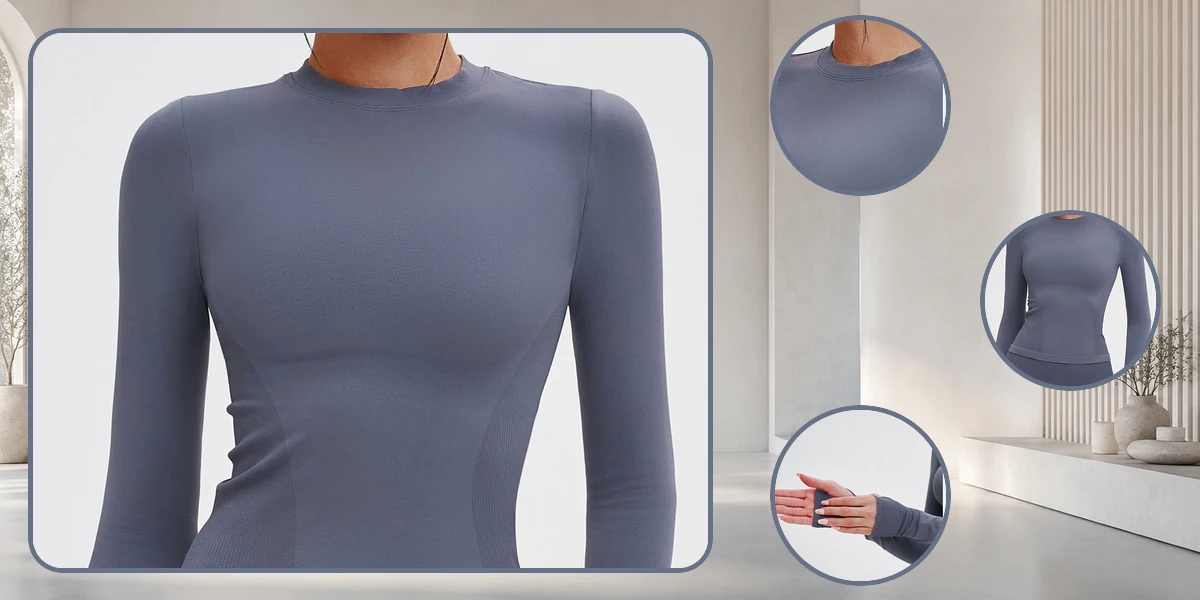
MOVEVOX seamless activewear showing engineered knitted zones
Technical explanation: Seamless performance is created by the interaction of yarn composition, elastane content, knitted structure, stitch density, machine parameters, garment dimensions and finishing. A rib or mesh zone cannot be evaluated in isolation from the rest of the product. Sample development therefore checks appearance, measurements, elasticity and fit before the approved program becomes a bulk production reference. “Seamless” also does not mean every finished garment contains absolutely no seams.
CUT-AND-SEW ENGINEERING

Use Cut-and-Sew Where Structure Needs More Freedom

MOVEVOX’s cut-and-sew system supports product structures requiring patterns, panels, pockets, bindings, bra components, mixed materials or zippers. Construction is selected against the actual Tech Pack and sample standard.
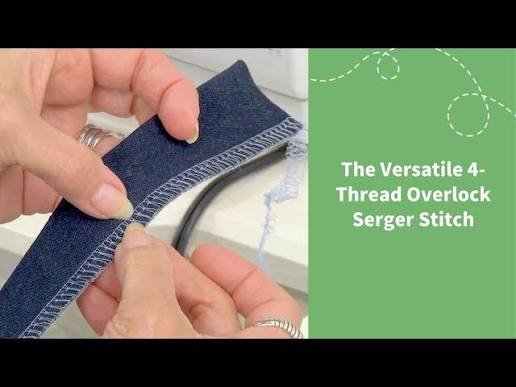
MOVEVOX overlock construction detail on activewear

Overlock Construction

Overlock is used for joining stretch garment panels and finishing raw edges in appropriate activewear constructions. Needle, thread, tension, seam allowance and material behavior must be aligned before the process is repeated in bulk.

Typical use: Internal panel joining on stretch activewear garments and selected garment edges.

Control focus: Seam extension, stitch consistency and secure edge finishing during repeated stretch.
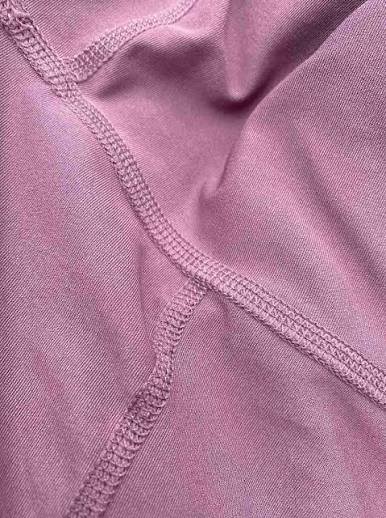
MOVEVOX flatlock seams detail on activewear

Flatlock Seams

MOVEVOX's core equipment includes approximately six Flatlock or four-needle/six-thread class machines. Flat seams are relevant to fitted activewear where reduced seam bulk and controlled stretch are important.

Typical use: Leggings, sports bras and training garments requiring flatter stretch seams.

Control focus: Seam width, thread tension, coverage consistency and opening under extension.
MOVEVOX coverstitch finish detail on activewear

Coverstitch Finish

Coverstitch equipment is used for activewear hems, sleeve openings, waist openings, binding and elastic structures. Settings are validated on new products before repeated bulk operation.

Typical use: Hems, openings and stretch edges on tops, bras and bottoms.

Control focus: Straight appearance, stretch extension, recovery and reduced edge waviness.
MOVEVOX binding construction detail on activewear

Binding Construction

Binding can be used around selected necklines, armholes and edges where the design requires a clean enclosed finish. Material compatibility and tension influence both visual quality and wearer comfort.

Typical use: Bra, tank and top edges requiring enclosed stretch finishing.

Control focus: Even width, controlled tension, smooth curves and stable stretch recovery.
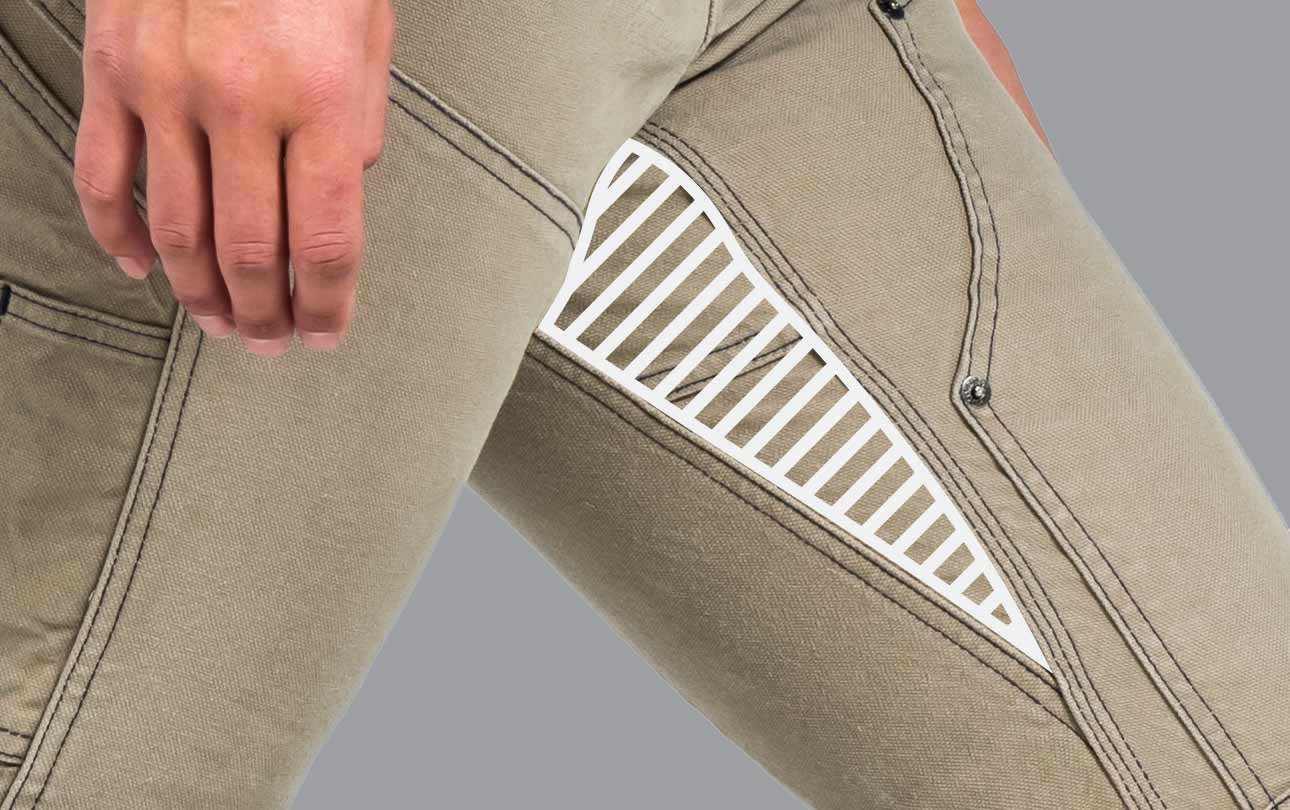
MOVEVOX panel construction detail on activewear

Panel Construction

Cut-and-sew allows shaped panels to create design lines, color blocking, contour positioning or functional zones. Pattern alignment and seam placement must remain consistent through grading and production.

Typical use: Leggings, bras, tops and garments using visual or functional panel layouts.

Control focus: Symmetry, pattern accuracy, seam alignment and repeatable panel positioning.
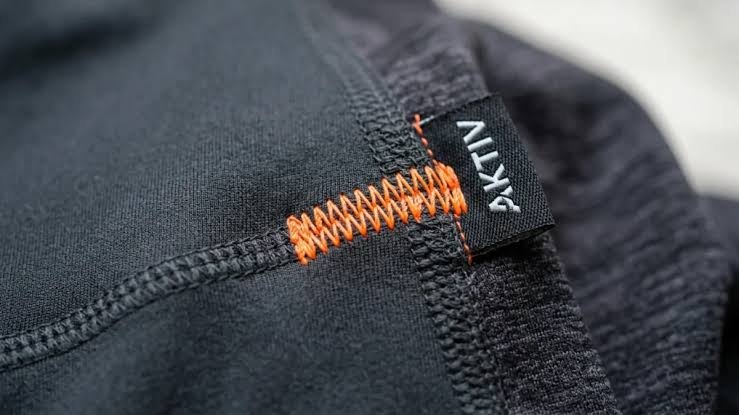
MOVEVOX pocket construction detail on activewear

Pocket Construction

Side, waistband or integrated pockets require sufficient dimensions, opening stability and secure attachment without distorting surrounding high-stretch fabric. Pocket placement is confirmed during development rather than added after fit approval.

Typical use: Leggings, biker shorts and training bottoms requiring storage functions.

Control focus: Placement, opening recovery, symmetry and security during body movement.

MATERIAL TRACEABILITY

Trace Materials Across Every Collection SKU

Material consistency depends on approved specifications, supplier information, production lots and incoming inspection. MOVEVOX coordinates major project materials centrally so individual production sites do not independently choose substitute sources.

MOVEVOX activewear fabric reference swatch with nylon and spandex composition and GSM information

Trace the Material Before You Trace the Garment

Shared fabrics can support several collection SKUs, but actual production still needs identifiable material specifications and lots. Traceability is most useful when a buyer can connect the approved material to the relevant product, PO, inspection and shipment.

Custom Fabric Capability
Material Spec

Material Approval

The project identifies the approved composition, GSM, surface, color reference, stretch direction and other relevant requirements before the material becomes a production input.

Material PO

Supplier Order

MOVEVOX material sourcing coordinates purchasing against the approved requirement, including relevant fabric or seamless-yarn supplier information, quantity, color and expected material timing.

Lot Record

Dye Lot

Custom-dyed materials are linked to identifiable production or dyeing lots where applicable, helping distinguish one material batch from another during collection execution.

Inspection

Incoming Check

Material inspection can include project-relevant checks such as color, GSM, shrinkage, elasticity and appearance before material is released to garment production.

SKU Record

SKU Allocation

Material lots are assigned to relevant product styles and production orders so affected SKUs can be identified if a material issue appears later.

Production Record

Production Use

Assigned facilities work from MOVEVOX-issued material requirements rather than independently changing material source or specification to solve local production convenience.

Packing List

Shipment Link

PO, packing and shipment information allows production outputs to remain connected with the relevant order for later investigation or repeat-order review.

Anonymous batch example: A real anonymous Material Lot → Styles → PO → Inspection → Shipment record would significantly strengthen this evidence chain.
COLOR CONSISTENCY

Control Collection Color With Physical Approval Standards

One Pantone reference does not guarantee identical visual color across different yarns, fabrics, finishes or dye lots. Collection color therefore needs physical development, approval and lot-level comparison.

MOVEVOX color reference evidence for activewear color development

1. Color Reference

The project begins from a Pantone reference, physical swatch or another customer-approved color standard. Each intended material route is identified before development proceeds.

MOVEVOX material route evidence for activewear color development

2. Material Route

Fabric fiber, surface, knit structure and finishing can change how a target color appears. Different collection materials may therefore require separate physical color development.

MOVEVOX lab dip evidence for activewear color development

3. Lab Dip

For custom dyeing where applicable, a Lab Dip or similar physical sample establishes a reviewable reference instead of relying only on a digital screen value.

MOVEVOX light review evidence for activewear color development

4. Light Review

Color is compared under agreed viewing conditions. Different substrates can react differently to lighting, so visual matching should consider the actual collection pieces.
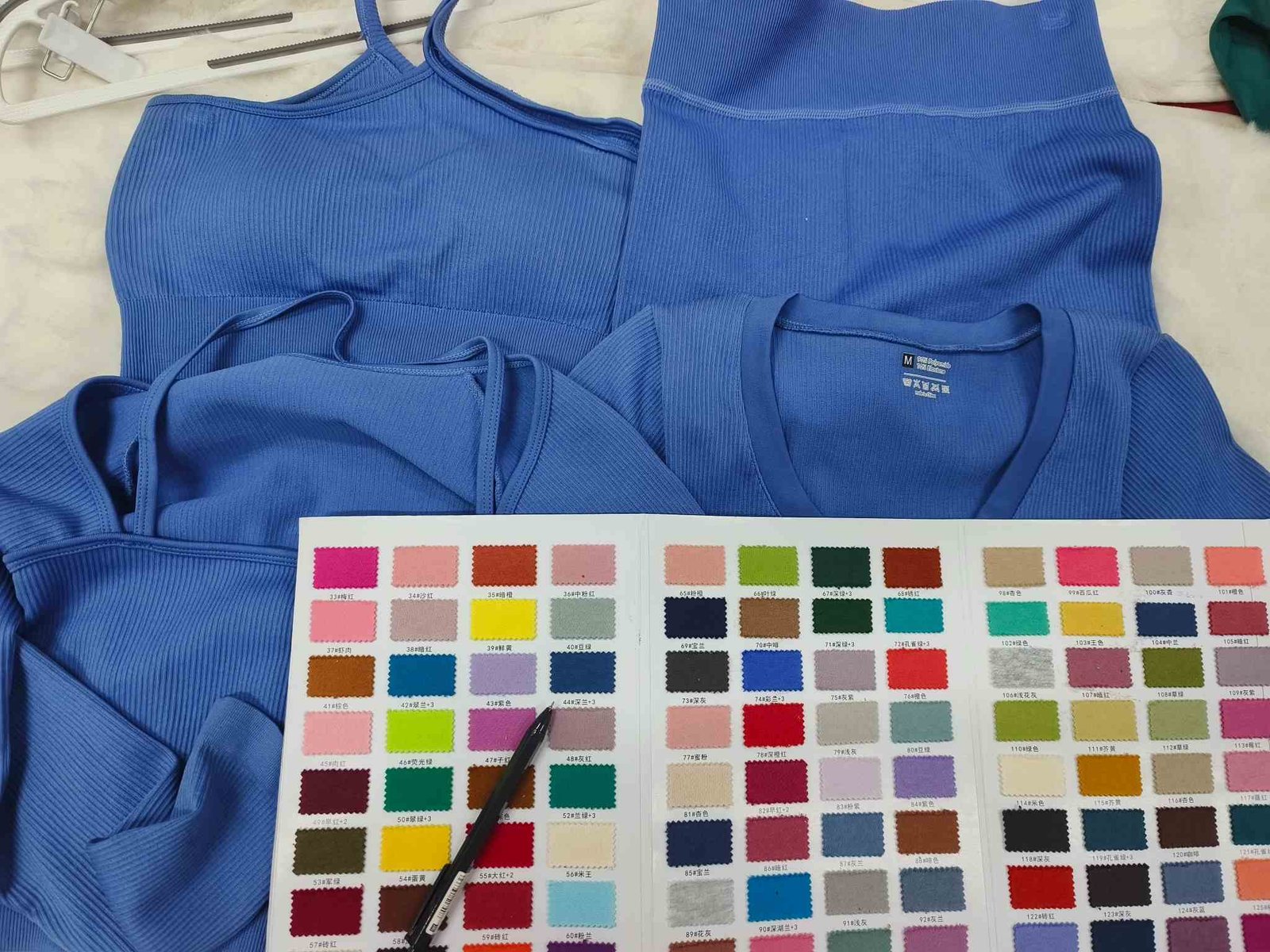
MOVEVOX color approval evidence for activewear color development

5. Color Approval

The approved swatch or physical reference becomes part of the relevant material and product standard. Approval remains tied to the specified substrate and project.
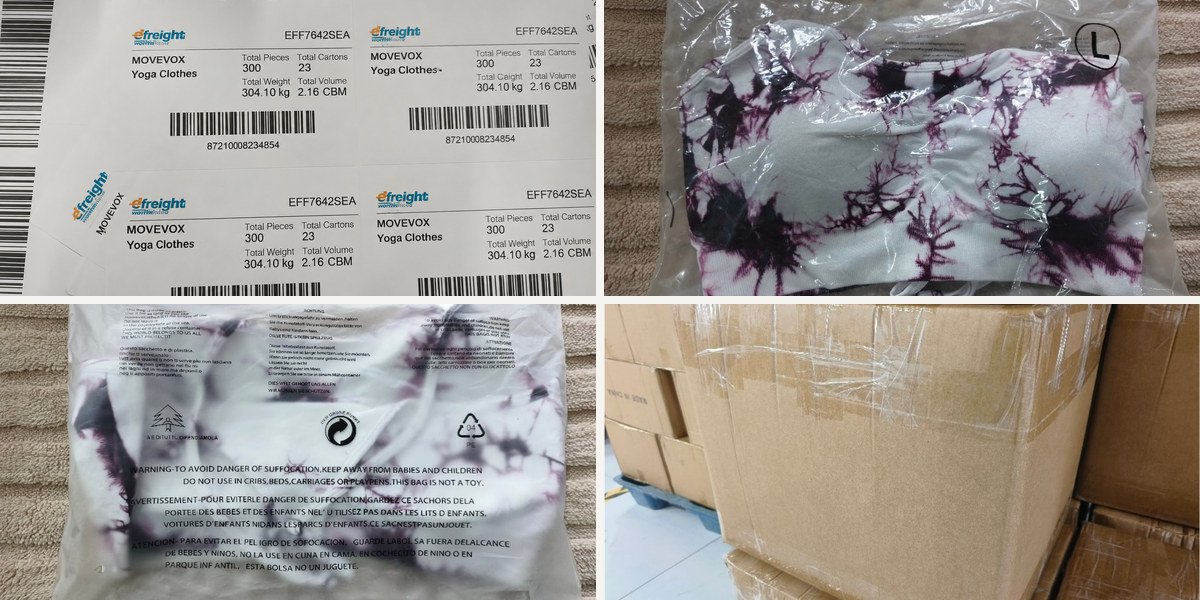
MOVEVOX bulk shade evidence for activewear color development

6. Bulk Shade

Production material or garment shade is compared against the approved reference, while individual dye lots remain identifiable for quality and repeat-order review.

Color-control note: For an activewear set using different fabrics—for example, a heavier bottom and a lighter top—the objective is controlled visual coordination, not an unsupported promise of mathematically identical color. Buyer tolerance, physical approval references and production-lot comparison should define acceptance.
FIT CONSISTENCY

Build One Brand Size Language Across the Collection

A shared size label does not mean every garment should have the same dimensions. Collection fit comes from one brand size architecture combined with product-specific measurements, grading and sample approval.

Brand SizeSports BraTank / TopLeggingsShortsValidation
XSBuyer specificationBuyer specificationBuyer specificationBuyer specificationProject plan
SBuyer specificationBuyer specificationBuyer specificationBuyer specificationProject plan
MBuyer specificationBuyer specificationBuyer specificationBuyer specificationProject plan
LBuyer specificationBuyer specificationBuyer specificationBuyer specificationProject plan
XLBuyer specificationBuyer specificationBuyer specificationBuyer specificationProject plan

Fit and Grading Logic

MOVEVOX does not apply one universal measurement chart across bras, tops and bottoms. The customer's size architecture provides the commercial labels, while each SKU requires its own POM, base pattern or seamless program, grade rule and fit approval.

  • Fit approval on one garment does not approve another SKU.
  • Customer measurement tolerances take priority over internal factory references.
  • Representative size validation may be required before full collection release.
BRAND CONSISTENCY

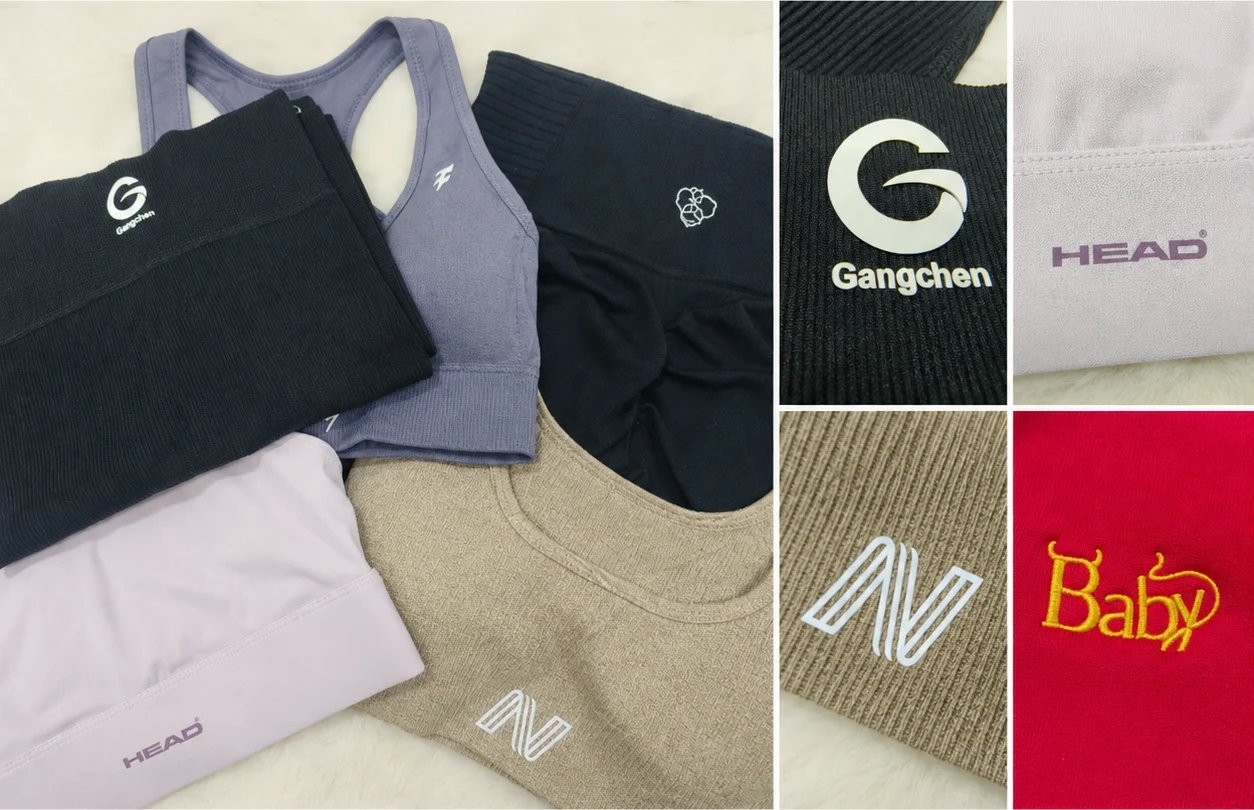
Coordinate Branding Without Copying One Logo Treatment Everywhere

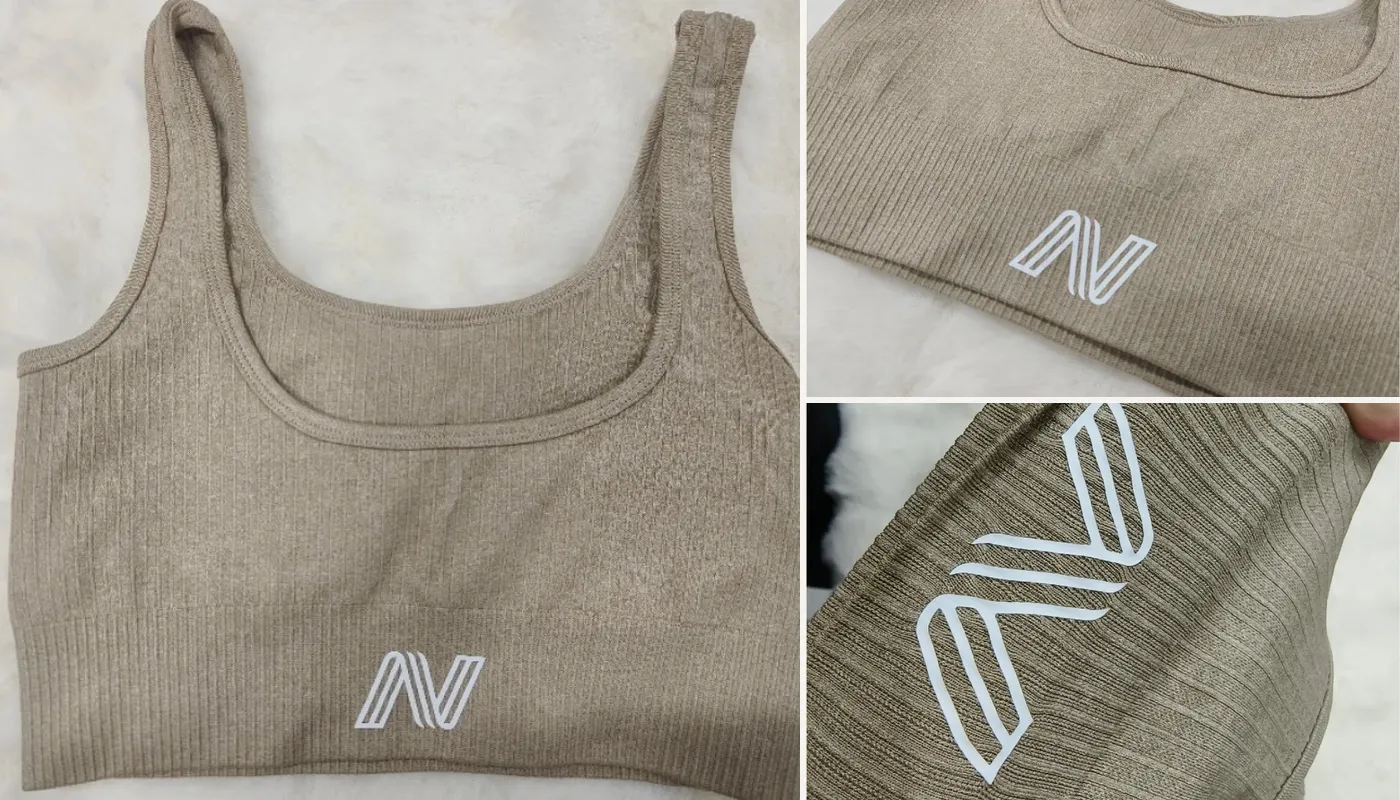
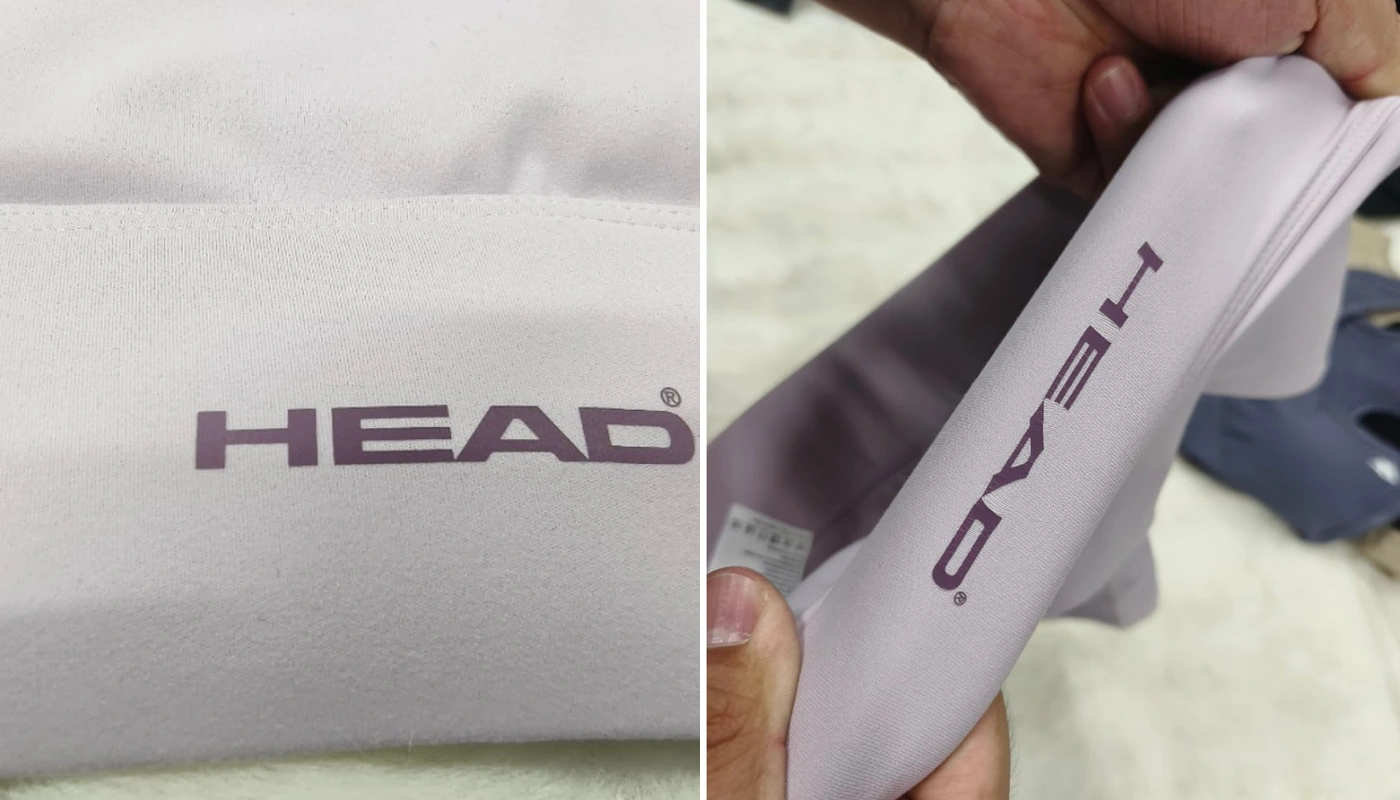
Logo method, size and placement should follow garment material, stretch, position and visual hierarchy. A coordinated collection can share brand language without forcing identical execution on every SKU.
PRIVATE LABEL SYSTEM

Build the Entire Set Under One Brand System

Private label execution covers more than the garment logo. MOVEVOX can coordinate product, material, color, fit, branding, labels and packaging while keeping the buyer responsible for brand direction and final approvals.

Product

A private-label collection begins with the product architecture: which bras, leggings, shorts, tanks, long sleeves or other pieces belong together, and which are core versus supporting SKUs. MOVEVOX can work from complete Tech Packs, authorized samples or a defined product concept. Each garment is developed independently enough to protect fit and construction while shared collection decisions are used where they improve consistency.

  • Two-piece matching activewear set development
  • Three-piece capsule or layered collection development
  • Mixed seamless and cut-and-sew product programs

Explore MOVEVOX product capability

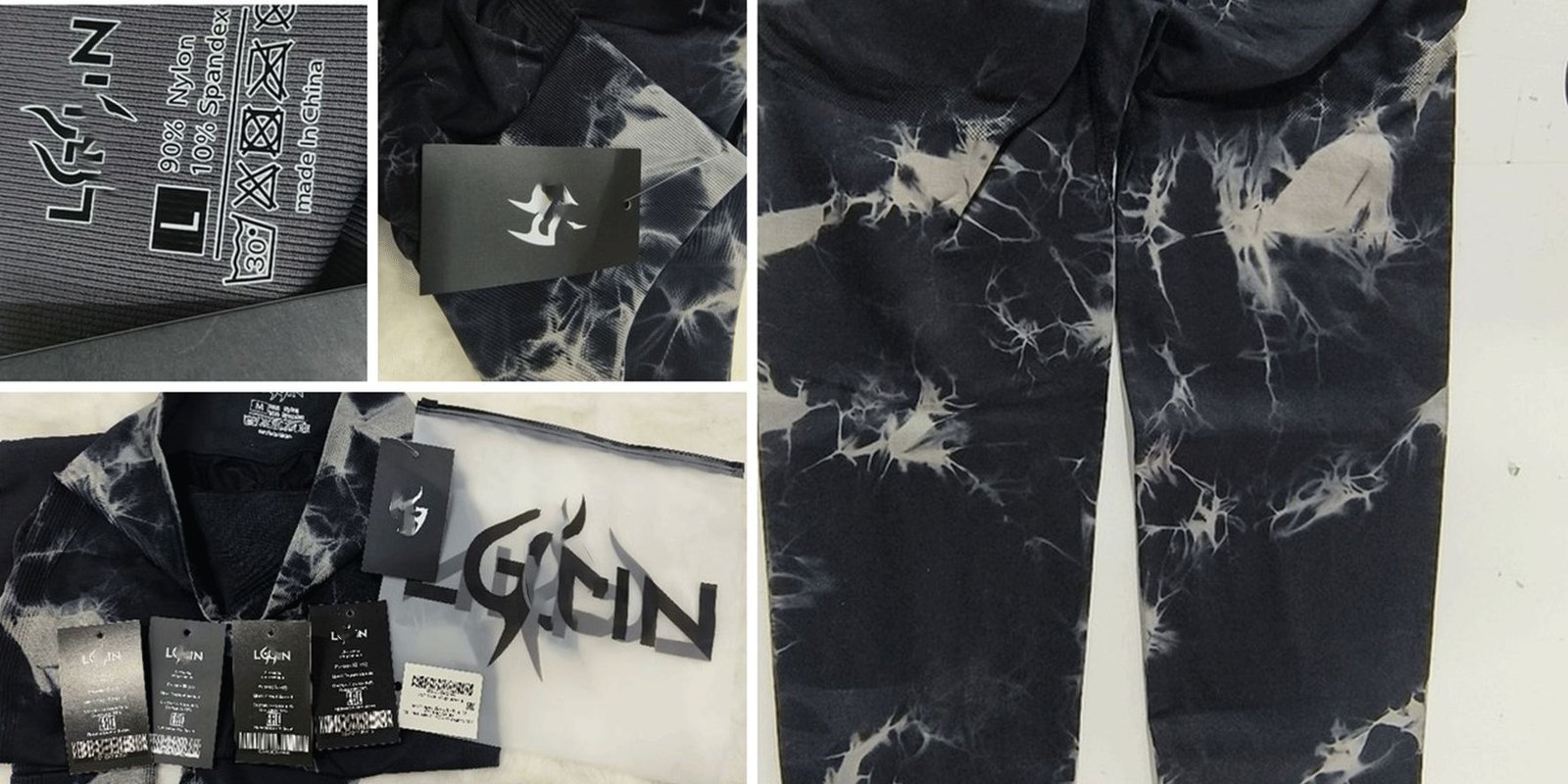
MOVEVOX custom garment labels for private label activewear
Custom labels and SKU information.
MOVEVOX custom hangtag for private label activewear
Brand hangtag execution.
MOVEVOX export carton used for activewear order packing
Order-level packaging and shipment preparation.
OEM / ODM / PRIVATE LABEL

Choose the Right Development Path for Your Collection

OEM, development-led ODM and private label describe different starting conditions. The correct route depends on how much product definition the buyer already owns and what still requires development.

Decision AreaOEMDevelopment-Led ODMPrivate Label
Design InputBuyer provides detailed Tech Packs and specificationsBuyer provides concept, sketch, image or directionBuyer selects or adapts an established product direction
Product DirectionPrimarily buyer-definedDeveloped jointly from buyer brand directionExisting basis customized to buyer brand
Technical ReviewMOVEVOX checks manufacturability and open pointsMOVEVOX translates concept into development questionsMOVEVOX confirms applicable customization limits
Material WorkExecute or source against buyer requirementRecommend and sample suitable material directionsSelect available or suitable material options
Fit WorkFollow buyer chart, then sample and reviseDevelop fit through sample and buyer feedbackAdjust within the selected product-development scope
BrandingBuyer artwork and placement approval requiredBuyer brand direction and approvals requiredLogo, labels and packaging are core execution steps
MOQDepends on style, material, color and customizationDepends on development route and material sourcingDepends on selected product and branding requirements
Best ForMature brands with developed technical standardsBrands requiring manufacturing translation and developmentBrands prioritizing faster brand execution from an existing basis
Selection guidance: Choose OEM when your product specification is mature and you need disciplined execution. Choose development-led ODM when your brand owns the product direction but needs support converting it into materials, pattern or seamless structures and samples. Choose private label when you want to build branded products from an existing development base.
MOQ OPTIMIZATION

Reduce Collection Complexity Before Negotiating Lower MOQ

MOQ efficiency comes from product architecture, not simply asking a factory to ignore material and supplier minimums. Shared platforms can reduce duplicated sourcing events while preserving the real requirements of each SKU.

Cost / Complexity FactorFragmented CollectionShared Collection Platform
FabricEvery style uses an independent fabric, creating more supplier minimums and separate approvals.Compatible SKUs share selected material platforms where performance and construction requirements allow.
ColorEach SKU launches unrelated custom colors, multiplying dye lots and approval activity.A controlled core and seasonal color system is reused across related collection pieces.
SamplingSimilar decisions are repeatedly reviewed from the beginning for every single SKU.Shared approved decisions can reduce repeated questions while each product still receives its own sample approval.
LogoMultiple logo methods and artwork variations create more setup, approval and component complexity.A coordinated brand system uses a limited number of appropriate methods across the collection.
LabelsIndependent label designs increase purchasing, version and application complexity unnecessarily.Common brand label systems are reused while product, size and care data remain SKU-specific.
PackagingDifferent bag, sticker and insert formats create many small supply batches and packing instructions.A common packaging architecture uses SKU-specific identifiers within one brand presentation system.
ProductionMany small unrelated runs make capacity allocation and material readiness harder to coordinate.Related styles can be planned as a collection while retaining individual production requirements.
Repeat OrdersReorders restart sourcing decisions because little was standardized during the first order.Approved materials, trims and product versions provide a clearer basis for repeat-order review.
TCO guidance: The lowest garment unit price does not necessarily create the lowest sourcing cost when a collection contains many separate materials, small dye lots, duplicate sample rounds, multiple logo setups and fragmented packaging suppliers. MOVEVOX does not claim a universal percentage saving from platform development.
MOQ STRUCTURE

Understand MOQ at SKU and Material Level

A set may contain several production styles, so MOQ cannot always be expressed as one number per “set.” Garment, fabric, color, logo and packaging minimums should be reviewed separately.

Pilot Collection

A regular starting reference is approximately 100 pieces per seamless style and 150 pieces per cut-and-sew style when material and process conditions support those quantities. A two-piece set therefore needs SKU-level review rather than automatically being interpreted as “100 complete sets.”

Quantity: ≈100 seamless / ≈150 cut-and-sew baseline

Color / Size Logic: Review per style and requested assortment

Price Factors: Material, process, colors, branding, packing

Scale Program

For repeat or larger collection programs, MOVEVOX reviews material booking, facility allocation, QC workload, SKU complexity and target delivery before capacity is confirmed. Controlled satellite facilities can supplement production where appropriate.

Quantity: Confirmed through project-specific capacity review

Color / Size Logic: Based on actual replenishment and sales plan

Price Factors: Volume, material booking, capacity, delivery structure

MOQ note: Custom dyeing can require approximately 400–600 finished pieces per color depending on material, dye-lot and product structure. Garment MOQ and material MOQ are therefore not necessarily the same.
PRODUCT DEVELOPMENT

From Collection Brief to Bulk-Ready Product Standards

MOVEVOX converts customer product direction into individual SKU specifications, approved samples and collection-level standards. Each step creates a defined output and buyer decision before the program moves toward bulk.

Development Is a Controlled Translation Process

The collection brief and Tech Packs define what the brand wants; material, pattern, seamless program and sample work translate those requirements into manufacturing standards. Each stage should leave a traceable output rather than relying on memory.

Product Development Capability
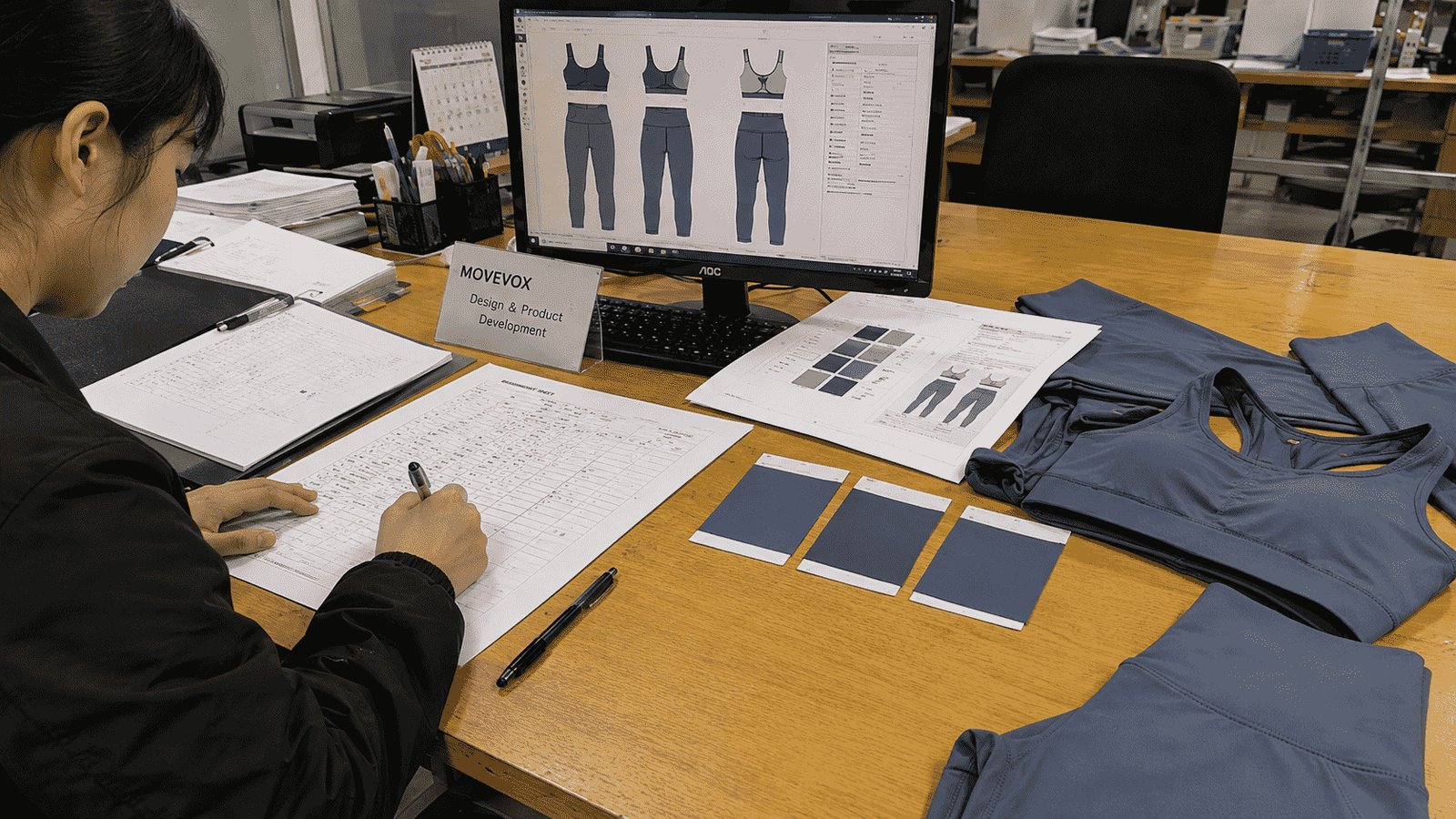
MOVEVOX Tech Pack review with patterns, fabric swatches and multiple activewear samples
01

Collection Brief

The project begins with intended products, target use, launch timing, quantity, color plan and available technical inputs. Shared and product-specific requirements are separated early.

Deliverable: Project Brief

Time: Project-specific

02

Tech Review

MOVEVOX reviews Tech Packs, sketches, authorized samples, size information, materials and branding. Missing information or manufacturability conflicts become open questions rather than undocumented factory assumptions.

Deliverable: Open Points

Time: Project-specific

03

Platform Plan

The team identifies which materials, colors, trims or brand components can be shared and which must remain SKU-specific because of product structure or performance needs.

Deliverable: Platform Plan

Time: Project-specific

04

Product Engineering

Cut-and-sew styles move through pattern development while seamless products require knitting-program and structural development. Each product retains its own technical version.

Deliverable: Development Version

Time: Project-specific

05

Samples

Physical samples are made and internally reviewed for structure, measurements, workmanship and visible issues. Standard sample development is typically around 5–10 working days after details are confirmed.

Deliverable: Sample Set

Time: 5–10 days

06

Revision Approval

Buyer comments are consolidated into controlled revision actions. Fit, material, construction, color and collection coordination are reviewed before the relevant sample becomes approved.

Deliverable: Approved Samples

Time: Feedback-dependent

07

Production Standard

Final Tech Packs, measurements, material references, colors, branding, labels, packaging and approved or PP samples are consolidated into the applicable bulk standard.

Deliverable: Bulk Standard

Time: Project-specific

08

Bulk Release

Production proceeds through material control, first article, in-line QC, finished-garment inspection and final release. Regular bulk production is typically around 20–35 days under normal conditions.

Deliverable: Released Bulk

Time: 20–35 days

DEVELOPMENT INPUTS

Prepare the Inputs for a Multi-SKU Collection Review

A complete package accelerates development, but not every brand starts with the same level of technical detail. MOVEVOX can identify missing items and separate required decisions from information that can be refined later.
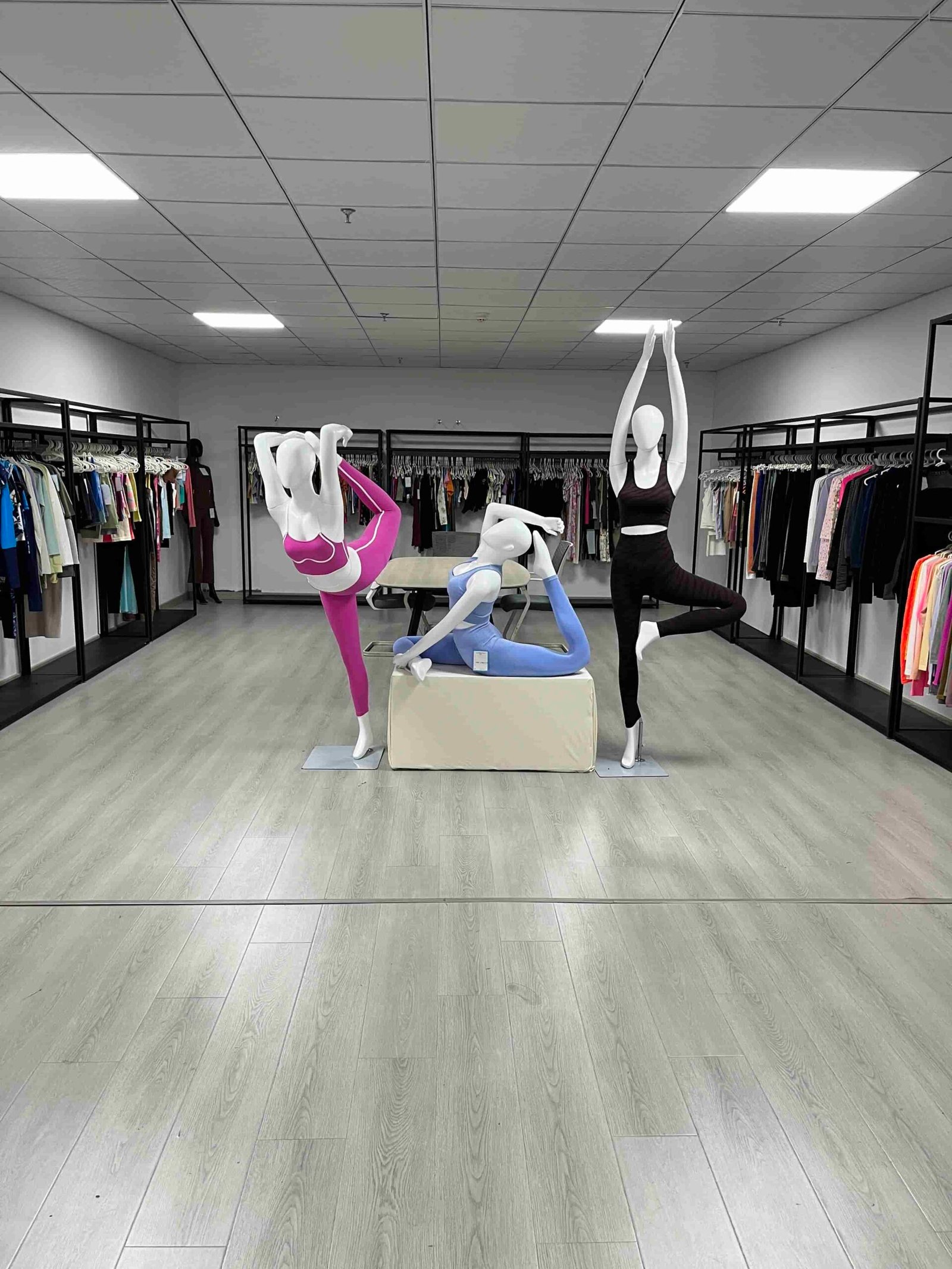
MOVEVOX sample room with activewear development garments and technical review work

Start With the Information You Actually Have

MOVEVOX can review a complete Tech Pack package or a less complete collection brief. The purpose of the first review is to identify which decisions are already defined and which need buyer confirmation before sampling can proceed.

Product Development
Required

SKU List

List every intended product, such as bra, legging, short, tank or long sleeve, and identify which pieces form sets or supporting collection items.

Recommended

Tech Packs

Provide technical drawings, construction details, BOM information, measurements and tolerances where available. Each SKU should remain identifiable rather than combining all products into one ambiguous brief.

Recommended

Measurement System

Share your size architecture, base size, measurement chart and grading requirements. If incomplete, indicate which fit references and market assumptions should guide development discussions.

Recommended

Fabric Plan

Identify whether products should share one fabric platform or use separate materials. Include composition, GSM, hand feel, stretch, recovery and other relevant expectations where known.

Recommended

Color Plan

Provide core colors, seasonal colors, Pantone references or physical standards and indicate which colors must coordinate across the entire collection.

Required

Artwork

Provide authorized logo artwork together with intended size, position and color. Indicate whether branding should remain consistent or vary by garment.

Recommended

Label Details

Share main-label, size-label, care-label and hangtag artwork or content requirements. Market-specific legal information remains the buyer's applicable compliance responsibility.

Recommended

Packaging Plan

Define whether products are individually packed, bundled, barcode-labeled or prepared for a specific retail or fulfillment system. Identify SKU-specific information clearly.

Required

Quantity Plan

Provide estimated units by SKU, color and size. This is necessary to evaluate garment MOQ, material MOQ, production allocation and collection economics.

Required

Launch Date

Share the intended market launch or cargo-ready requirement so development, material, production and inspection dependencies can be planned backward realistically.

If documentation is incomplete, MOVEVOX can perform a development gap review and identify which missing decisions must be resolved before sampling. Decisions affecting brand appearance, fit, function, cost or MOQ remain subject to buyer confirmation rather than being silently replaced with factory defaults.
SAMPLING SYSTEM

Approve the Collection Through Defined Sample Stages

Sampling should answer different questions at different stages. A complete set also needs collection-level review for color, proportion and branding after individual products meet their own technical requirements.

Samples Are Approval Gates

One sample should not be expected to prove fit, grading, final production readiness and collection consistency at the same time. The required stages depend on project risk and the buyer's approval system.
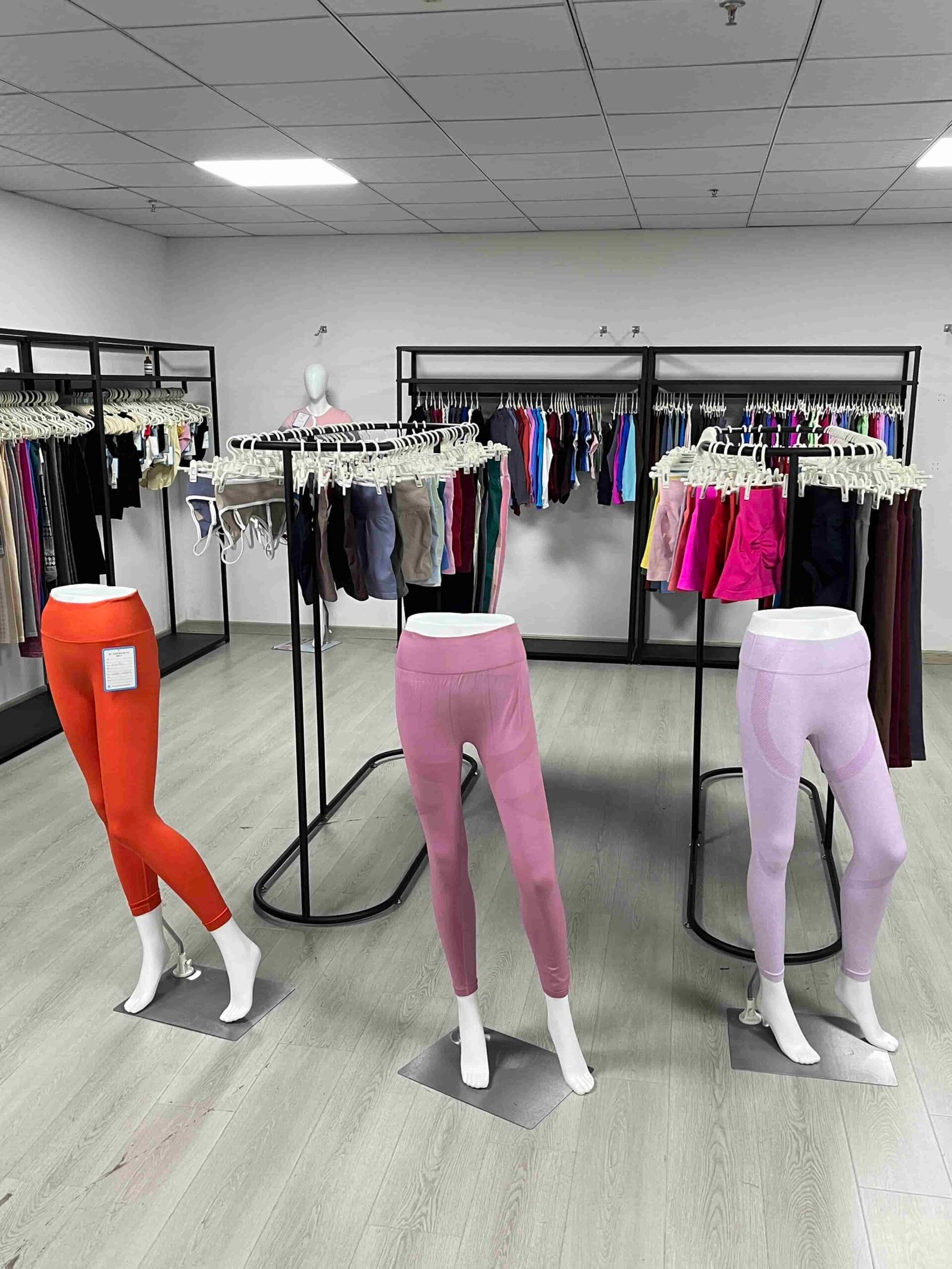
MOVEVOX activewear sample room used for development, revision and pre-production review
01

Development Sample

The first physical version checks whether design input can become a manufacturable garment. It reveals structure, proportion, material and open technical issues before the buyer treats the product as finalized.

Buyer Inputs
  • Confirmed development brief and critical product requirements
  • Initial material and color direction
MOVEVOX Outputs
  • First sample version for each selected SKU
  • Internal measurement and workmanship review

Pass Criterion: Major product structure is viable and unresolved issues are clearly documented.

02

Fit Sample

Fit Samples evaluate base-size proportions, coverage, support, body length, waist or hip relationship and movement using actual or representative material conditions.

Buyer Inputs
  • Consolidated fit comments from the intended review process
  • Target support, compression or wearing-direction feedback
MOVEVOX Outputs
  • Updated pattern or seamless-program version
  • Revised measurement and fit reference

Pass Criterion: Base fit meets the buyer's defined target before final grading or approval.

03

Revised Sample

Buyer comments are converted into controlled changes rather than informal factory adjustments. Each revision should identify what changed and which previous issue it is intended to resolve.

Buyer Inputs
  • Consolidated revision list with priorities
  • Approval of proposed technical solutions where required
MOVEVOX Outputs
  • New controlled product version
  • Revised physical sample for confirmation

Pass Criterion: Required corrections are resolved without introducing a new critical issue.

04

Size Set

Selected sizes verify whether approved base-fit logic remains reasonable across the commercial range. This is especially relevant where the collection contains different product types or extended size requirements.

Buyer Inputs
  • Approved grade logic and critical sizes
  • Product-specific sizing priorities
MOVEVOX Outputs
  • Representative or full size-set samples
  • Measurement and proportion review

Pass Criterion: Size progression remains consistent with the approved product and brand size architecture.

05

PP Collection

Pre-production samples establish final bulk references for the required SKUs. At collection level, color, material relationship, logo scale, labels, packaging and overall presentation can be reviewed together before release.

Buyer Inputs
  • Final unresolved approvals and production requirements
  • Final branding and packaging documents
MOVEVOX Outputs
  • Production references by SKU
  • Collection-level readiness review

Pass Criterion: Individual products and required collection-level variables are ready for controlled bulk production.

APPROVAL GATE

Collection Approval Key Takeaways

  • Approval remains SKU-specific. A legging approval does not automatically approve a matching bra, short or top simply because they share color or fabric.
  • Shared colors still need physical confirmation. Different fabrics, yarns and finishes can render the same color reference differently across a coordinated collection.
  • Fit must follow one brand language, not one measurement chart. Bras, tops and bottoms need independent POM and grading within the same commercial size system.
  • Material approval must identify the actual substrate. Composition alone does not define GSM, hand feel, stretch, recovery, opacity or surface appearance.
  • Branding should be coordinated but product-appropriate. Logo method, size and placement may vary by garment while still following one approved brand system.
  • Packaging approval includes SKU accuracy. Color, size, barcode, sticker and carton information must match the correct garment before the collection is released.
SAMPLE-TO-BULK

Carry Approved Collection Standards Into Bulk Production

Consistency requires converting collection approval into controlled production inputs. MOVEVOX uses current technical files and physical references rather than asking separate production teams to reproduce samples from memory.

Approved Collection

Approved samples and current technical files define what the buyer has accepted before production.

  • Current Tech Pack
  • Approved / PP samples
  • Material and color references
  • Brand and packing approvals

Bulk Production Standard

Production uses the approved references as measurable inputs for first article, inline and final quality controls.

  • Production-ready specification
  • Facility and material allocation
  • QC checkpoints
  • Shipment release criteria

Material

Production materials are reviewed against the relevant approved material requirements and linked to the SKUs authorized to use them.

Color

Bulk material or garments are compared against approved physical references, with dye-lot identification maintained where applicable.

Measurements

Each SKU follows its current approved measurement specification and customer tolerance rather than a generic collection-wide dimension table.

Construction

Pattern, knitted structure, seams, pockets, waistbands, straps and other product details return to the approved style specification.

Branding

Logo process, size, position and orientation are checked against the approved garment-specific artwork and placement reference.

Labels

Main labels, size labels, care labels and hangtags remain linked to the correct product and size requirements.

Packaging

SKU, size, color, barcode, sticker and carton instructions are checked against the final approved packing requirement.

Before bulk, MOVEVOX consolidates the current Tech Pack, measurements, approved or PP samples, material and color references, branding, labels and packaging instructions for the applicable SKUs. The objective is controlled consistency within approved specifications and tolerances, not an unrealistic promise of zero variation.
PROJECT REVIEW

Ready to Review Your Activewear Collection?

Send your SKU plan, Tech Packs, reference samples or product concept together with intended quantities, colors and launch timing. MOVEVOX can review manufacturing routes, shared material opportunities, development gaps, likely MOQ constraints and the practical next step before you commit the collection to sampling or bulk production.

BULK PRODUCTION

Move Multi-SKU Collections Through Defined Release Gates

Bulk production is managed as a controlled execution chain. Each stage has required inputs, quality conditions and responsibility so different SKUs can progress without losing the approved collection standard.

01

Production Ready

Current specifications, approved references, materials, colors, branding, packaging, quantities and production assignments are reviewed before individual styles are authorized for bulk execution.

Owner: Order Team
QC Gate: Readiness Review

02

Material Control

Materials are received and checked against relevant project requirements before release. Different collection SKUs remain linked to their approved material and lot information.

Owner: Purchasing / QC
QC Gate: Material Release

03

First Article

Initial production output confirms that the selected facility is reproducing measurements, construction, workmanship, branding and other critical requirements before full-volume continuation.

Owner: Production / QC
QC Gate: First Article

04

Bulk Production

Seamless and cut-and-sew SKUs follow their respective manufacturing processes using the current approved files, samples and production instructions issued for each style.

Owner: Production
QC Gate: Approved Standard

05

Inline Control

QC reviews production while quantities are still in process, allowing measurement, workmanship or repeated execution issues to be corrected before they spread across more units.

Owner: QC Team
QC Gate: Inline Check

06

Finished Garment

Completed garments are reviewed for applicable dimensions, appearance, construction, logo, labels and product details before final packing and release preparation.

Owner: QC Team
QC Gate: Garment Check

07

Final Inspection

Final inspection follows customer requirements where defined, including buyer QC manuals or AQL standards. Failed conditions require corrective action and re-inspection before release.

Owner: Quality Team
QC Gate: Final Release

08

Pack and Ship

Approved garments are packed according to confirmed SKU, label, barcode, carton and shipment requirements before cargo is released to the logistics stage.

Owner: Order / Logistics
QC Gate: Shipment Release

TIME & ACTION

Plan Every SKU Backward From the Launch Requirement

Collection production planning connects material readiness, sample approval, facility allocation, QC and packing rather than assigning one generic delivery date to every product in the program.

Stage
P1
P2
P3
P4
P5
P6
P7
P8
Material
Material
Sampling
Sampling
Approval
Approval
Bulk
Bulk
Inspection
Inspection
Packing
Packing
Cargo Ready
Cargo Ready
StageTimingMain PreconditionBuyer Confirmation
MaterialProject-specificMaterial/color direction approvedMaterial or color approval
SamplingTypically 5–10 working daysDevelopment details sufficiently confirmedFit / sample comments
ApprovalBuyer-dependentRequired samples completedWritten product approval
BulkTypically 20–35 daysMaterials, approvals and capacity readyNo unresolved critical changes
InspectionProject-specificProduction quantity availableBuyer/third-party review if required
PackingProject-specificGarments released and packing readyFinal packing instructions
Cargo ReadyProject-specificQC and packing completeShipping instruction
A multi-SKU collection rarely moves as one uninterrupted block. One late shared fabric can affect several styles, while an independently sourced top may remain on schedule. MOVEVOX PMC therefore plans by PO, SKU, material status, approved-sample status, facility and capacity window, then tracks WIP against agreed milestones.
CAPACITY PLANNING

Capacity Means Quality-Released Garments, Not Machine Output

MOVEVOX uses stable managed delivery capability as the practical capacity reference. Actual collection capacity still depends on SKU complexity, manufacturing route, materials, color breakdown, QC workload and delivery timing.

28

Santoni Machines

MOVEVOX's core seamless system includes 28 Italian Santoni machines supporting seamless product development and production for suitable activewear structures.

≈24

Garment Machines

The own-factory cut-and-sew system includes approximately 24 principal sewing and garment-production machines covering major activewear construction processes.

8

Satellite Facilities

Six long-term satellite facilities in Yiwu and two in Guangzhou add controlled capacity for suitable products, programs and production requirements.

≈6,000 m²

Core Base

The Yiwu production base has approximately 6,000 square meters of actual operating space across manufacturing and supporting functions.

150K–200K

Monthly

Normal combined managed stable delivery capability is approximately 150,000–200,000 pieces per month across own and controlled production resources.

The monthly figure includes controlled network resources and describes normal managed stable delivery capability—not the mathematical sum of theoretical machine maximums.
CONTROLLED PRODUCTION NETWORK

One Responsibility Chain Across Multiple Production Resources

MOVEVOX's core factory establishes development and quality standards, while long-term satellite facilities can provide suitable capacity. Materials, technical documents, PMC and customer-facing responsibility remain centrally coordinated.

Controlled Capacity Is Different From Hidden Subcontracting

Customers work through one MOVEVOX responsibility chain rather than separately controlling every participating facility. Technical documents, approved samples, materials, production assignment, PMC, QC requirements, packing and delivery coordination remain under MOVEVOX management.

Sourcing Guides
MOVEVOX production facility allocation and supplier control documentation

Core Factory

The Yiwu core factory supports development, samples, key production, technical standards, first-article work, QC and problem closure before suitable production is expanded elsewhere.

Yiwu Satellites

Six long-term Yiwu satellite facilities provide additional capacity with practical access for WIP follow-up, first-article confirmation, inspection, rework coordination and urgent production support.

Guangzhou Satellites

Two long-term Guangzhou facilities supplement selected cut-and-sew, complex development or production requirements according to actual style, process, schedule and capability fit.

Yarn & Fabric

MOVEVOX material sourcing coordinates major yarn and fabric requirements against approved specifications so separate production facilities do not independently redefine the customer's material standard.

Color & Dyeing

Color cards, Lab Dip coordination, dye-lot follow-up and material color records are managed with the relevant material supplier according to project requirements.

Branding & Trims

Logo, labels, hangtags, elastic, zippers, bra pads and other approved brand components are coordinated through MOVEVOX purchasing and project version control.

Packaging

Polybag, sticker, barcode, carton and other confirmed packaging requirements are managed as part of the same order rather than treated as unrelated post-production procurement.

Logistics

Shipment planning, packing information and customer-appointed forwarder coordination are handled through MOVEVOX's order and logistics functions according to the confirmed commercial arrangement.

Unified management: Satellite facilities do not independently change customer materials, versions, processes or subcontract production where buyer approval is required.
QUALITY MANAGEMENT

Control Collection Quality From Standard to Final Release

MOVEVOX uses buyer specifications and approved samples to create production and inspection standards. Quality control covers prevention, incoming materials, production, garments, packing and release rather than relying only on final inspection.

MOVEVOX quality control staff inspecting activewear during production
MOVEVOX activewear inspection evidence and quality record

Specification Freeze

The project confirms the current Tech Packs, measurements, material, colors, branding and packaging before production. Old versions should not remain active after authorized changes.

  • Current approved documents clearly identified
  • Open critical points closed before release

Incoming Material

Materials are reviewed against applicable project requirements before use, including relevant color, GSM, elasticity, shrinkage or other specified checks.

  • Material corresponds with approved project requirement
  • Abnormal lots remain on hold for review

Pre-Production Review

Development, purchasing, PMC, production and quality teams align key requirements before bulk starts, especially for complex or multi-SKU projects.

  • Manufacturing instructions match approved standards
  • High-risk collection variables identified before start

First Article

Initial production output is compared with approved specifications before the process is repeated at larger quantity.

  • Critical measurements meet current requirements
  • Construction and branding follow approved reference

Inline Inspection

QC checks products during manufacturing so repeated measurement, workmanship or process issues can be corrected before they affect larger quantities.

  • Production trends reviewed before completion
  • Repeated deviations trigger corrective action

Measurement Control

Each product is checked against its own POM and customer tolerance. Different collection SKUs do not share one generic measurement standard.

  • Correct measurement method used consistently
  • Out-of-tolerance trends escalated for action

Finished Garment

Completed products are reviewed for applicable dimensions, workmanship, construction, appearance, branding and trims before packing.

  • Garment follows approved visual standard
  • Brand details match the correct SKU

Packing Control

Size, color, SKU, barcode, sticker and carton information are checked against confirmed packing requirements before shipment.

  • Product and packaging identifiers correspond correctly
  • Carton information matches packing plan

Final Release

Final inspection follows customer-defined standards where provided. Failed or unresolved critical conditions are not bypassed solely because a shipment date is approaching.

  • Applicable final inspection completed
  • Hold and re-inspection closed before release
Nonconformance process: When a deviation is found, affected materials or garments can be identified, held and reviewed before release. Depending on the issue, the response may include process correction, rework, additional screening, re-inspection or CAPA. MOVEVOX currently has five QC personnel within its quality-control organization.
PACKAGING CONTROL

Prevent SKU Errors Before the Collection Leaves the Factory

A commercially correct garment can still become unusable if size, color, barcode, label or packaging information is wrong. Multi-SKU collections require packaging control as part of quality.
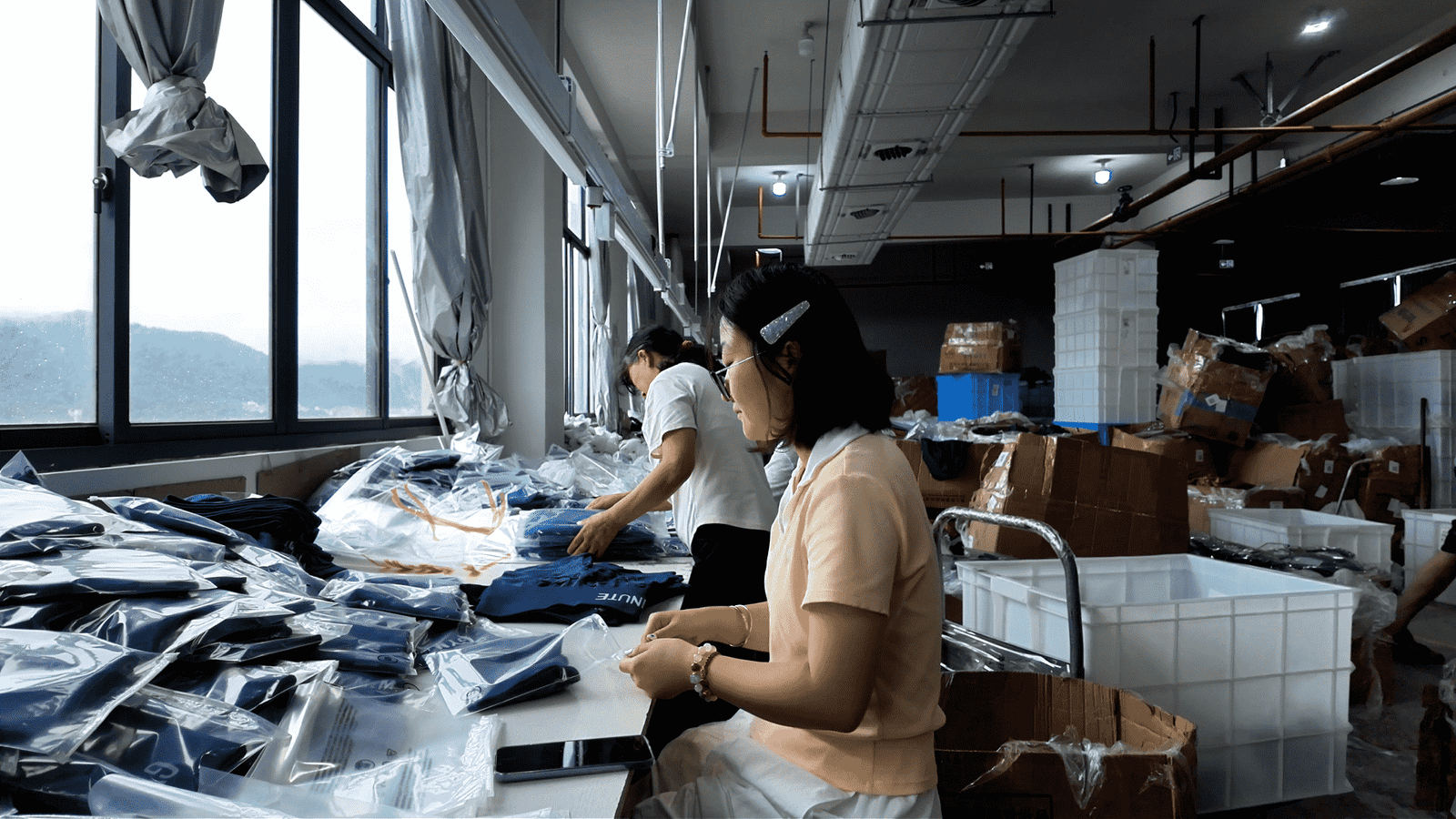
MOVEVOX activewear packing line with SKU identification and individual packaging

Packaging Is a Product-Control Stage

The available U.S. customer case includes color- and size-specific QR-code controls, illustrating why SKU identification is treated as part of quality rather than only a logistics task.

Custom Packaging
DefectLikely CausePreventionInspection PointCorrective Action
Wrong size labelGarment size and label bundle become mixed during finishing or handoff between packing stages.Separate size batches, identify work bundles clearly and verify label information against current packing requirements before application.Check garment size, sewn label and package identifier together during packing and final review.Hold affected quantity, correct the batch and re-inspect before release.
Color mismatchGarment is placed into packaging or a set group belonging to another colorway with similar visual appearance.Maintain clear SKU/color identification and avoid mixing unverified color batches at the packing workstation.Compare garment, SKU sticker and packing instruction before sealing the individual package.Segregate affected packages, reconcile the correct color codes and repeat the relevant packing inspection.
Barcode mismatchBarcode files, stickers or SKU lists contain an outdated version or are applied to the wrong size/color.Freeze current barcode data and distribute controlled files to the packing team before production begins.Scan or visually reconcile barcode, style, color and size against the approved packing information.Hold the affected batch, replace incorrect barcodes and perform expanded re-checking before shipment.
Wrong set pairingTop and bottom sizes are paired incorrectly when the buyer requires products to be bundled as complete sets.Define pairing rules before packing and use SKU-level instructions for every allowed size combination.Verify both garment identifiers before the combined package is sealed or cartonized.Open and correct affected sets, reconcile the complete batch and re-inspect the bundle configuration.
Missing hangtagTagging step is skipped or the hangtag supplier quantity does not match the production requirement.Reconcile trim quantities before packing and use an approved visual packing reference at the workstation.Inspect hangtag presence, artwork and attachment position during finished-garment and packing checks.Hold incomplete products, apply the correct approved hangtag and re-check before packing release.
Carton errorCarton mark, ratio or quantity is copied from another PO, style or size assortment.Issue current carton breakdown and carton-mark documents linked to the applicable PO and SKU plan.Confirm carton quantity, ratio, marks and packing list information before cargo release.Reopen or relabel affected cartons, correct documentation and repeat carton-level quantity verification before shipment.
FACTORY AUDIT READINESS

Verify the Manufacturing System Behind Your Collection

MOVEVOX supports customer factory audits, technical audits, live video tours, pre-production visits, inline inspection and pre-shipment inspection. Buyers can review actual operating areas rather than relying only on website claims.

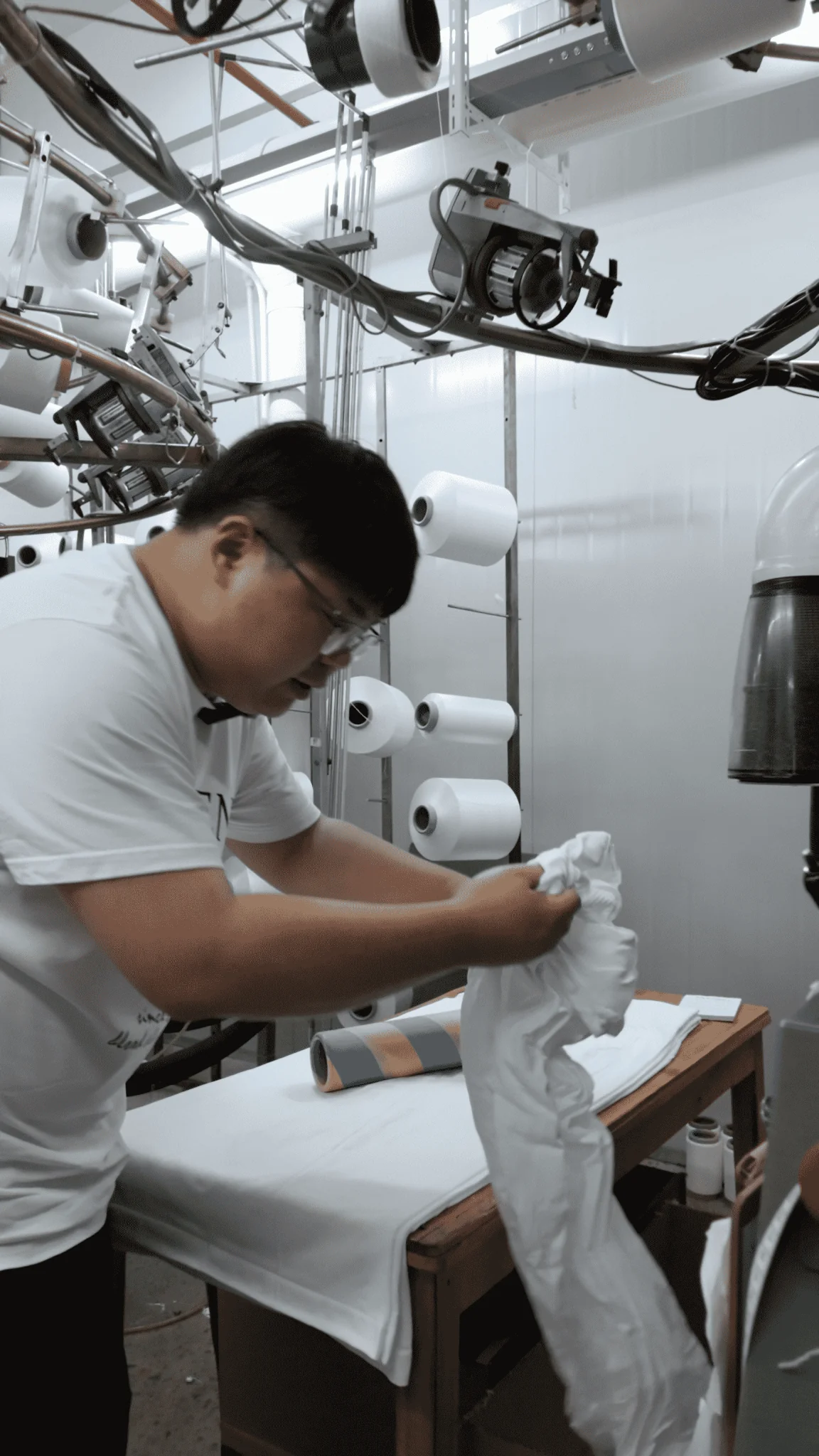
Development and Sample Room

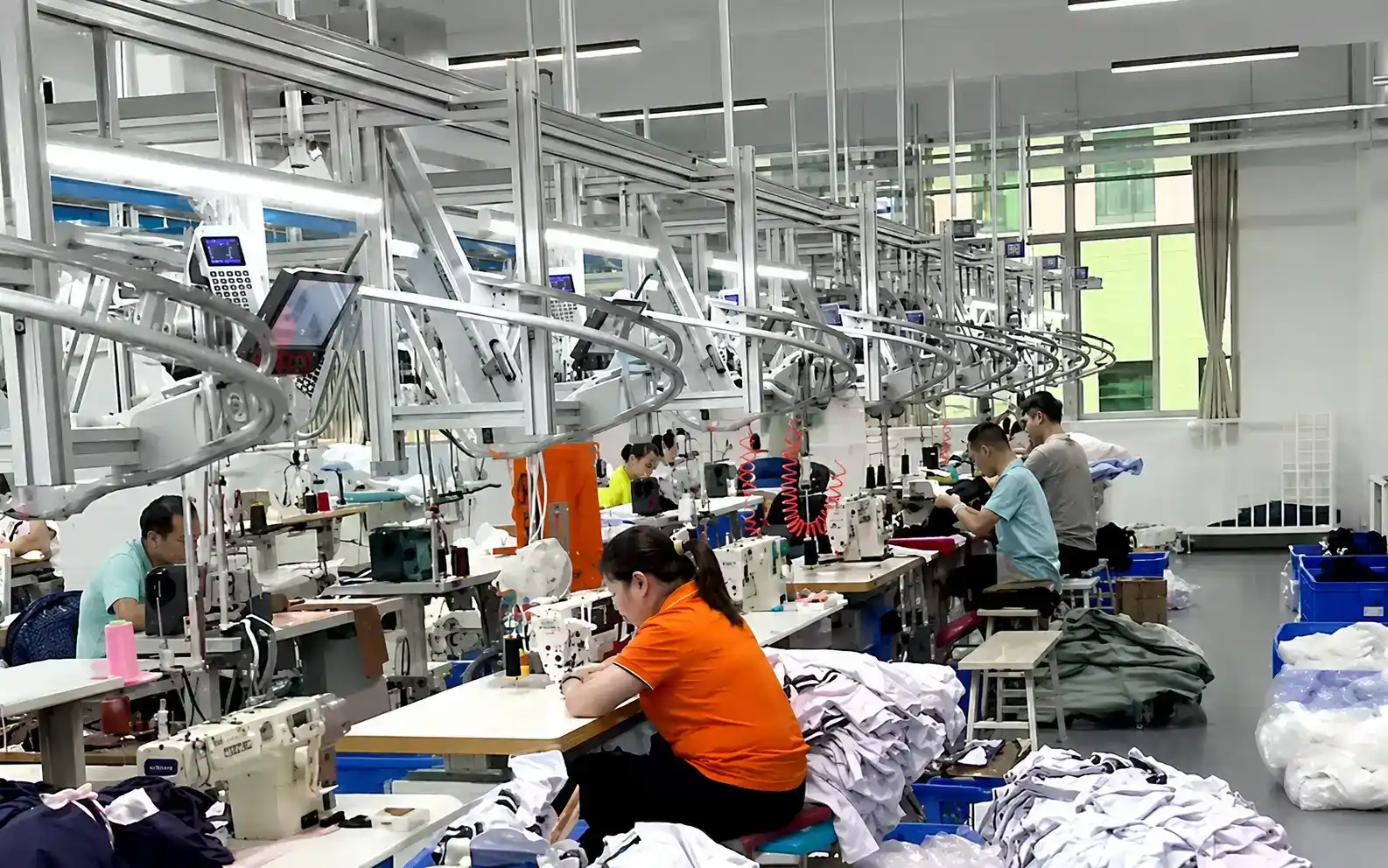
MOVEVOX's product development system is normally staffed by approximately eight people across design, pattern and sample-making functions. The team translates Tech Packs, authorized samples, sketches, images or concepts into development specifications and physical samples. For collection projects, this area should demonstrate how individual SKU versions, measurements, sample comments and shared material or color decisions are managed before bulk.

Actual MOVEVOX product development work associated with the Yiwu production system.
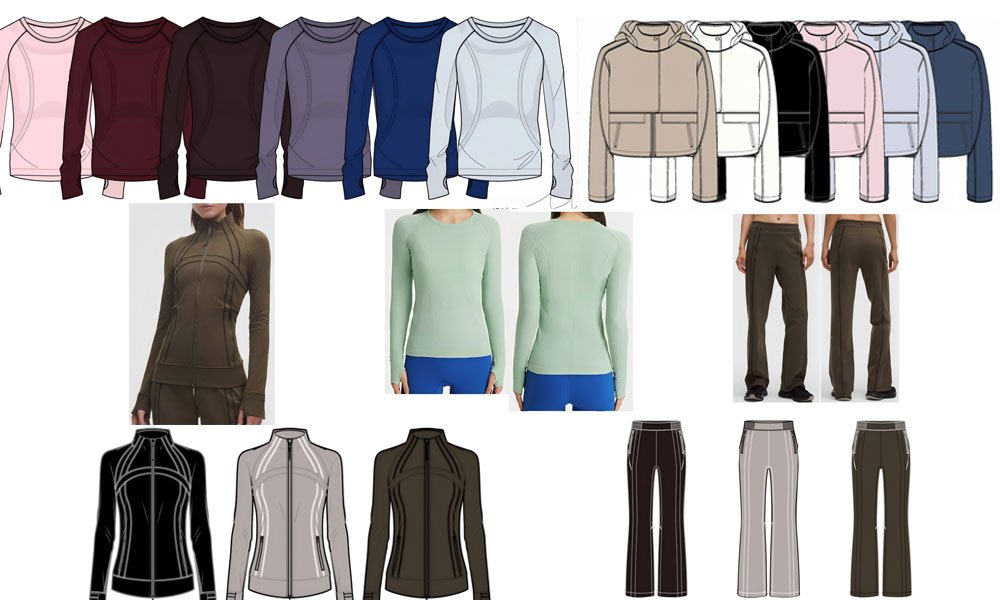
Actual MOVEVOX product development work associated with the Yiwu production system.

Seamless Production Area

The core seamless system includes 28 Italian Santoni machines. This area supports suitable leggings, sports bras, shorts, tanks, long sleeves and coordinated seamless products. A technical audit should look beyond machine count and review how yarn, programs, knitted structures, approved samples and production identification connect to the current order.

Italian Santoni seamless knitting equipment operating within MOVEVOX's core Yiwu manufacturing system.
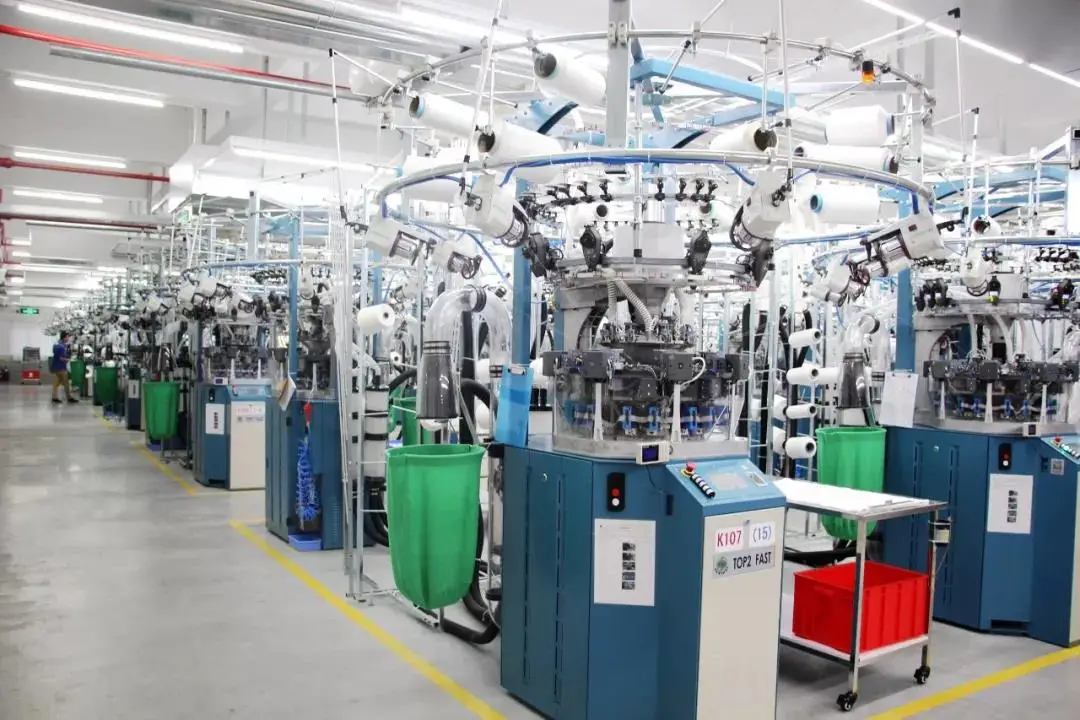
Italian Santoni seamless knitting equipment operating within MOVEVOX's core Yiwu manufacturing system.

Cut-and-Sew Area

MOVEVOX's own cut-and-sew system includes approximately 24 principal sewing and garment-production machines, including equipment for overlock, coverstitch and Flatlock operations. This route supports pattern-based activewear requiring panels, pockets, bindings, zippers and other structures.

Actual cut-and-sew activewear production and construction work inside MOVEVOX's core factory.

Actual cut-and-sew activewear production and construction work inside MOVEVOX's core factory.

Quality Inspection Area

MOVEVOX currently has five QC personnel and a separate QA function. Quality work covers incoming materials, pre-production checks, first article, inline inspection, measurements, finished garments, branding, packaging and pre-shipment inspection.

Actual MOVEVOX finished-garment inspection activity.
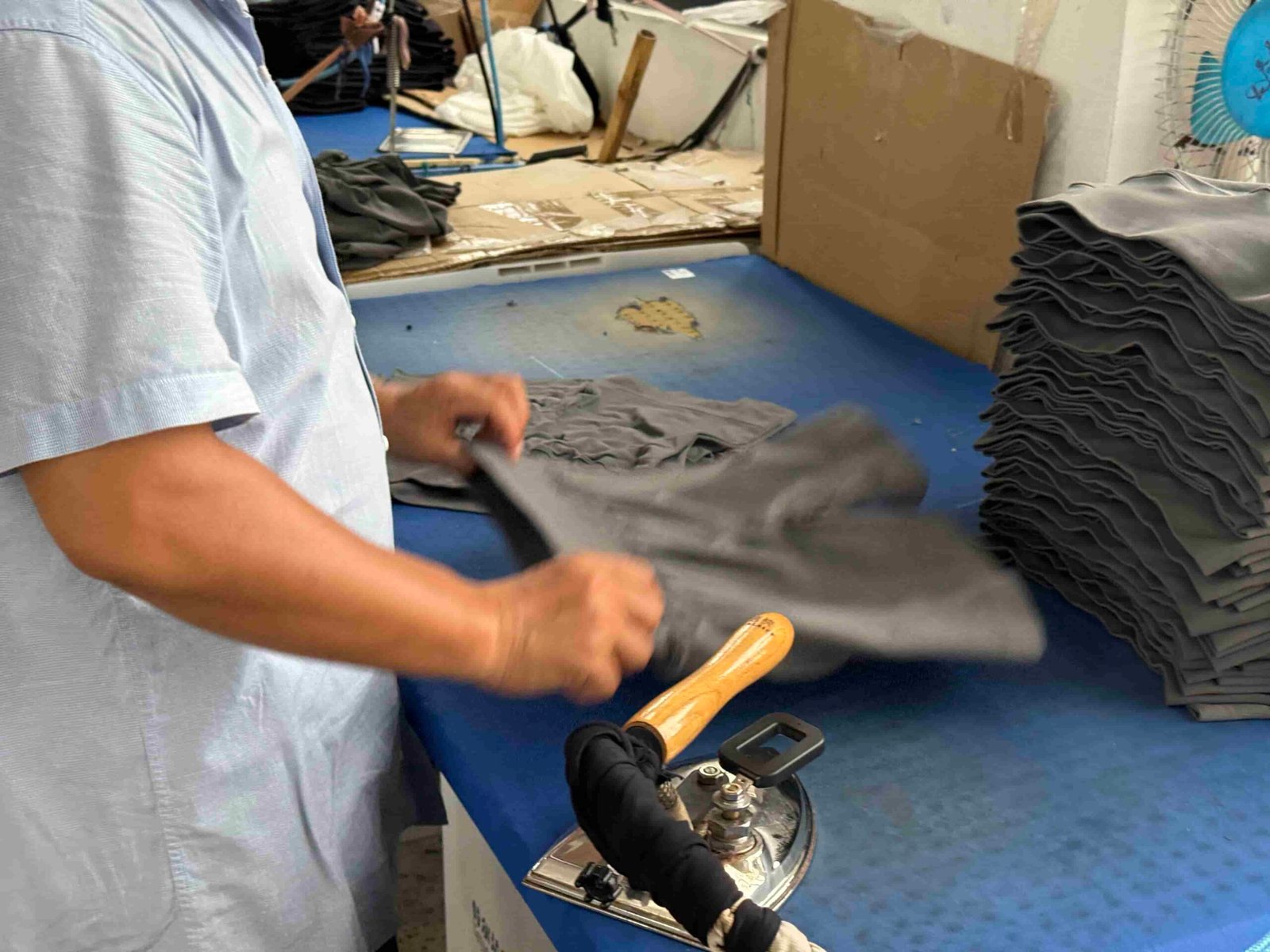
Actual MOVEVOX finished-garment inspection activity.

Packing and Identification

The packing function handles folding, hangtags, stickers, barcodes, polybags, SKU confirmation, size ratios, cartons and carton marks according to approved order requirements. For activewear sets, accurate color, size and product identification is especially important.

Actual MOVEVOX packing and carton preparation evidence.
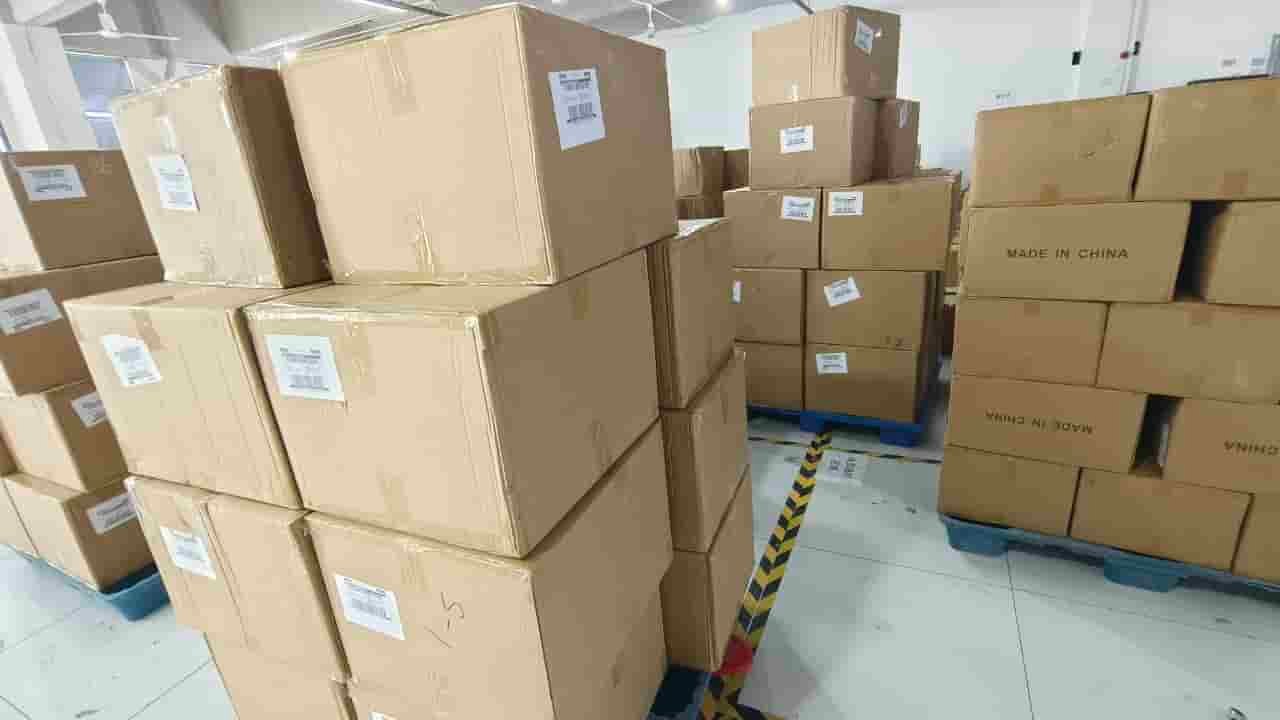
Actual MOVEVOX packing and carton preparation evidence.

Warehouse and Staging

Order staging connects finished production, QC release, packing information and shipment planning. Materials and finished products should remain identifiable so the team can distinguish styles, colors, sizes and PO requirements before cargo handover.

Actual MOVEVOX warehouse and order-staging area.
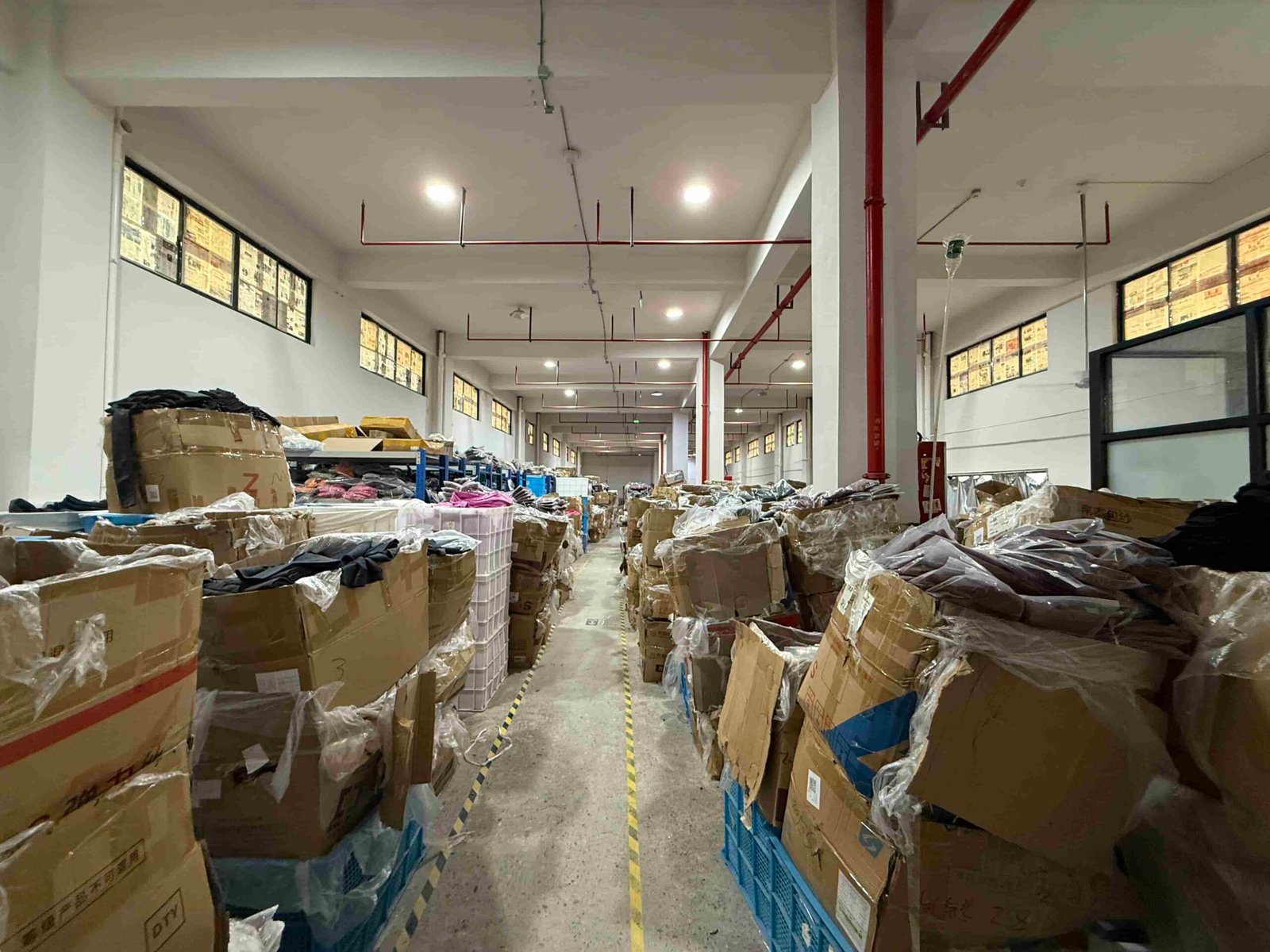
Actual MOVEVOX warehouse and order-staging area.
TESTING EVIDENCE

Read Testing and Compliance Evidence by Its Actual Scope

MOVEVOX uses a scope-first evidence principle. A report should be read by holder, sample, test method, date and applicability. One tested product or material does not automatically certify every style, color, collection or future production lot.

RoHS Sample Evidence

A third-party report dated April 30, 2025 identifies Yiwu Chenjin Import And Export Co., Ltd. as applicant and manufacturer and describes the submitted sample as black “fitness yoga leggings.” The report states that the tested sample results comply with the referenced RoHS 2.0 limits.

Applicable scope: Black fitness yoga leggings sample identified in Test Report TST20250405148E.

MOVEVOX response: Use this report only where its tested sample and test scope are relevant to the project claim.

Phthalates Test Evidence

A separate report dated April 30, 2025 identifies black fabric from the submitted fitness yoga leggings and tests it against the referenced European REACH Annex XVII Entry 51 and 52 phthalate requirements. The result summary records a Pass.

Applicable scope: Black fabric sample identified in Test Report TST20250405150E.

MOVEVOX response: Match any compliance statement to the actual material, sample, report method and applicable production configuration.

Certificate Scope Matters

Certificate TST20250405148EC is linked to the corresponding RoHS test report. The certificate explicitly states that it applies only to the tested sample and does not imply an assessment of the whole production.

Applicable scope: The specific tested sample and associated report identified on the certificate.

MOVEVOX response: Do not rewrite sample-level compliance evidence into a factory-wide certification.

Buyer-Specific Standards

Global brands can require their own RSL, chemical, physical-performance, labeling or finished-garment testing. MOVEVOX can support project-specific testing and third-party inspection according to buyer requirements.

Applicable scope: Individual customer program and the actual sample or material submitted for the specified assessment.

MOVEVOX response: Review buyer standards, identify required evidence and preserve Holder, Scope, Validity and sample applicability.
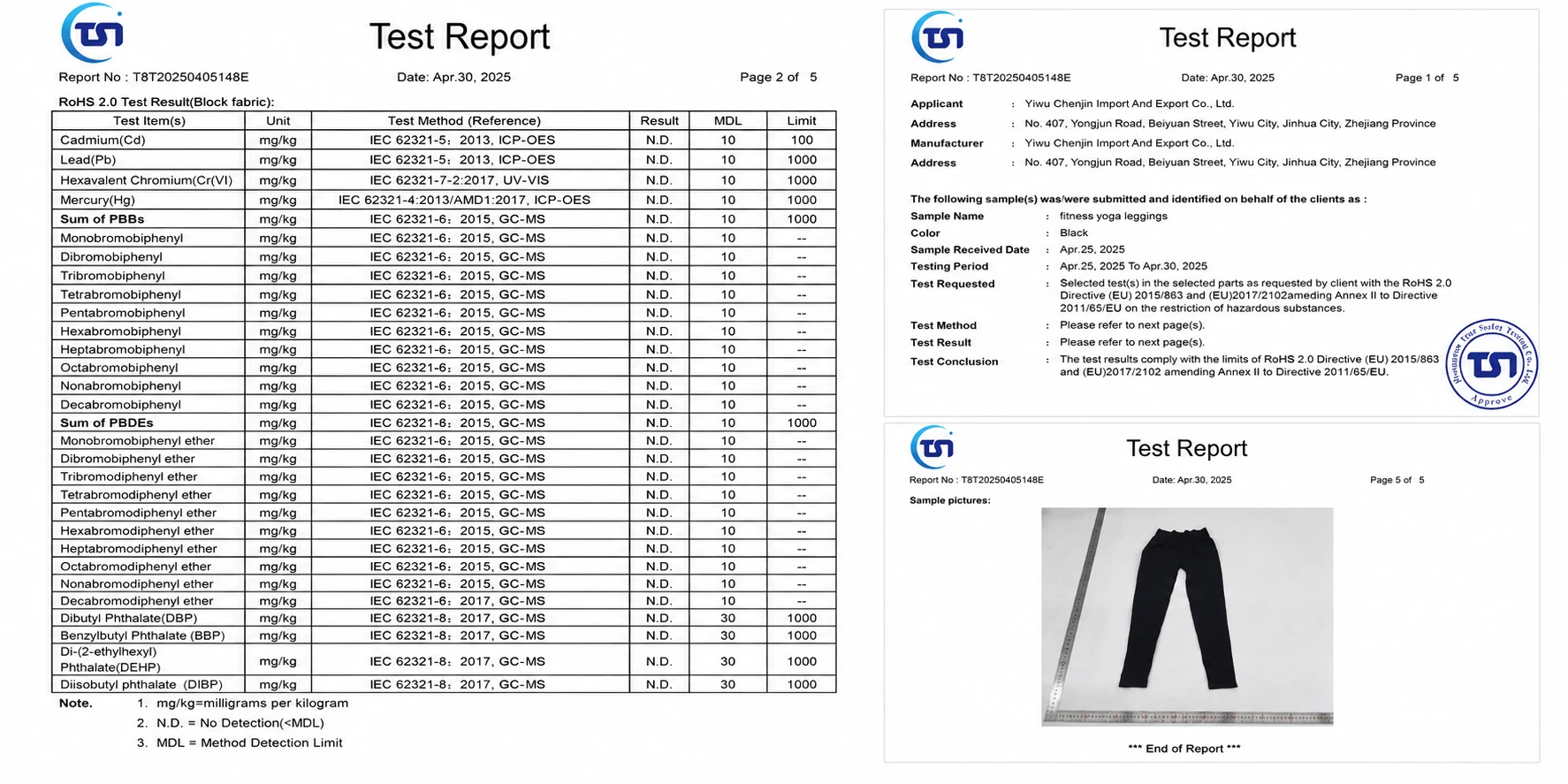
MOVEVOX third-party RoHS 2.0 test evidence for a tested black fitness yoga leggings sample
Third-party evidence should remain tied to the tested sample and stated report scope.
Available document references: TST20250405148E — RoHS 2.0 Test Report; TST20250405150E — Phthalates / REACH Annex XVII Test Report; TST20250405148EC — Certificate of Compliance. All are dated April 30, 2025.
REAL PROJECT CASE

U.S. Multi-Product Program From Tech Pack to Bulk

Customer Background

The customer is a U.S.-based fitness creator operating an activewear business and purchasing multiple women's fitness categories. Her recurring product range includes fitness sets, leggings, shorts, sports bras, tank tops and one-piece garments. The program required strong stretch, support, opacity, soft hand feel, extended sizing considerations, regular new-product development and branded packaging rather than simple stock-product purchasing.

Development Challenge

The customer provided her own Tech Pack, but the first physical sample revealed details that did not fully meet her actual training-use requirements. The project therefore needed controlled product revision before bulk. Later commercial orders introduced custom packaging, inserts, labels, logos, care labels and different QR-code information by color and size.

MOVEVOX Solution

MOVEVOX reviewed the technical package and produced the initial sample. After customer testing and comments, a second version was developed. Once the product direction was substantially accepted, approximately 5–10 additional samples were produced for practical user testing before bulk commitment.

Execution

  1. Tech Pack Review: technical input became the first physical version.
  2. First Revision: customer feedback was converted into a controlled second sample.
  3. User Testing: approximately 5–10 samples supported practical evaluation.
  4. Bulk Standard: approved product direction was combined with labels, logo, care label, packaging and inserts.
  5. Packing Control: different QR codes by color and size were checked against the correct product.
Customer quotation: The available case record states that the customer was satisfied with the service, but it does not contain a verifiable direct English customer quotation suitable for publication.
REPEAT & SCALE CASE

Spain Case From First Order to Repeat Support

A Spanish customer relationship progressed from product evaluation into custom branding, repeat purchasing and higher-volume demand. The case illustrates how an approved program can evolve after market validation.

Initial Stage

Sample Qualification

The customer first purchased existing samples and evaluated material, workmanship, product details and overall quality before deciding to move into a customized commercial program with MOVEVOX.

Sample Review
Development Stage

Private Label Setup

After sample acceptance, the customer requested customized care labels, tags, packaging and logo. MOVEVOX recommended a silicone-logo approach and matte zipper-bag packaging for this specific program.

Brand Setup
First Order

1,200-Piece Launch

The first commercial order was 1,200 pieces. The case record states that MOVEVOX completed this first batch within 15 days, with part shipped by air and the remainder by sea.

1,200 Pieces
Second Week

Early Reorder

Before receiving the first bulk shipment, the customer placed another order for 1,200 pieces using the same processes and packaging requirements as the initial production.

+1,200 Pieces
Ongoing

Recurring Orders

The relationship developed into approximately two orders per month according to the available case record, supported by continued product recommendations and repeat production.

Repeat Program
Demand Spike

Higher Volume Response

During one May order, required quantity increased to roughly three times the customer's normal volume. MOVEVOX added production-line resources and completed the order according to the case record.

≈3× Demand
Later Support

Inventory Planning

After the unusual volume increase, MOVEVOX began holding inventory for selected styles for this specific customer, with the source case stating approximately 1,500 pieces per color.

Stock Support
This case should not be interpreted as a universal promise of 15-day bulk production, automatic stockholding or identical production conditions for every buyer. Its value is the progression from qualification to customized production, repeat orders and customer-specific scale planning.
BUYER SCORECARD

Score Any Custom Activewear Set Supplier Before Shortlisting

Use the same framework when evaluating MOVEVOX or another manufacturer. Strong supplier decisions depend on verifiable collection development, manufacturing, quality and governance—not on broad claims alone.

Collection Development

Can the supplier manage several SKUs under one controlled development program?

VerifiedNeeds EvidenceNot Applicable

Collection Development

Can it distinguish shared collection standards from SKU-specific technical requirements?

VerifiedNeeds EvidenceNot Applicable

Collection Development

Can seamless and cut-and-sew products coexist within one supplier program?

VerifiedNeeds EvidenceNot Applicable

Collection Development

Are sample revisions, approvals and current versions identifiable for every style?

VerifiedNeeds EvidenceNot Applicable

Consistency Control

Are material lots identifiable across products using shared fabric platforms?

VerifiedNeeds EvidenceNot Applicable

Consistency Control

Are different fabrics physically checked for coordinated collection color appearance?

VerifiedNeeds EvidenceNot Applicable

Consistency Control

Does each product maintain its own fit and grading specification?

VerifiedNeeds EvidenceNot Applicable

Consistency Control

Are logo scale, labels and packaging controlled through approved versions?

VerifiedNeeds EvidenceNot Applicable

Production & Quality

Can the supplier show real equipment, production areas and capacity resources?

VerifiedNeeds EvidenceNot Applicable

Production & Quality

Is stable managed capacity separated from theoretical machine output?

VerifiedNeeds EvidenceNot Applicable

Production & Quality

Are first article, inline, finished-garment and packing checks defined?

VerifiedNeeds EvidenceNot Applicable

Production & Quality

Can production-site changes and satellite capacity be disclosed and controlled?

VerifiedNeeds EvidenceNot Applicable

Evidence & Commercial Fit

Are testing and certificates presented only within their actual applicable scope?

VerifiedNeeds EvidenceNot Applicable

Evidence & Commercial Fit

Can buyers conduct factory audits or arrange third-party inspection?

VerifiedNeeds EvidenceNot Applicable

Evidence & Commercial Fit

Are garment, material, color and packaging MOQ distinguished clearly?

VerifiedNeeds EvidenceNot Applicable

Evidence & Commercial Fit

Is one accountable project owner responsible for cross-functional order coordination?

VerifiedNeeds EvidenceNot Applicable
Result interpretation: A high score should mean the supplier can show how each answer is supported—not simply respond “yes.” Before approving a manufacturer, request evidence for real factory capability, multi-SKU development control, material and color records, sample approvals, QC documents, production-site transparency and testing scope.
FAQ

Custom Activewear Sets Frequently Asked Questions

These answers address the collection-development, MOQ, production and quality questions brands commonly need to resolve before starting a coordinated activewear program with MOVEVOX.

What activewear pieces can MOVEVOX combine into sets?

MOVEVOX's core women's range includes yoga leggings, sports bras, yoga shorts, biker shorts, tanks, T-shirts, long sleeves and yoga sets. Extended programs can also include selected jackets, bodysuits, running, gym, Pilates and athleisure products. A collection does not need every product to use the same construction. MOVEVOX can allocate seamless and cut-and-sew routes by SKU while shared materials, colors, logos, labels or packaging are coordinated where technically appropriate.

Can one collection use both seamless and cut-and-sew products?

Yes. MOVEVOX's own system includes 28 Italian Santoni seamless machines and approximately 24 principal cut-and-sew garment machines. A seamless legging or bra can therefore exist in the same commercial collection as a cut-and-sew tank, top or jacket. Each product follows its correct manufacturing route while product files, materials, branding, order management and QC remain coordinated through one MOVEVOX project system.

Can MOVEVOX develop a full collection from Tech Packs?

Yes. MOVEVOX can receive individual Tech Packs for multiple SKUs and review drawings, measurements, fabrics, construction, colors, logos, labels, packaging and other relevant requirements. For large collections, development can be organized in controlled waves rather than forcing every style through sampling simultaneously. Final product standards remain SKU-specific, while shared collection variables can be coordinated after approval.

Can you develop from concepts instead of complete Tech Packs?

Yes, when the buyer has a sufficiently clear product direction. MOVEVOX can work from sketches, product images, authorized physical samples or structured concepts and help translate them into materials, patterns or seamless structures, measurements and physical samples. The customer remains responsible for brand direction and final approvals.

Is MOQ calculated per style or per complete set?

MOVEVOX's regular starting reference is approximately 100 pieces per seamless style and 150 pieces per cut-and-sew style under suitable material and process conditions. A two-piece set should therefore be reviewed at SKU level rather than automatically interpreted as “100 complete sets.” Fabric, custom color, specialized logo, label and packaging suppliers can also have independent minimums.

Can we mix colors and sizes within the MOQ?

Size and color splitting is possible within practical production conditions, but the headline MOQ should not be interpreted as unlimited fragmentation. A small order divided across many colors and sizes can create very small production quantities and may conflict with fabric or dyeing minimums. MOVEVOX reviews the proposed SKU architecture before confirmation.

How does custom color change the collection MOQ?

Custom color is normally constrained by the fabric or yarn supplier's dye-lot requirement rather than garment sewing alone. MOVEVOX's current reference is that custom dyeing commonly requires evaluation around approximately 400–600 finished pieces per color, depending on material and product structure. Actual feasibility is reviewed project by project.

Does sharing fabric lower every MOQ automatically?

No. A shared fabric platform can reduce duplicated material sourcing and make collection planning more efficient, but it does not remove minimum requirements for garment production, dye lots, logo components or packaging. It also only works when the same material is technically suitable for all selected products.

How long does activewear set sampling normally take?

Standard sample development typically takes about 5–10 working days after the necessary development details are sufficiently confirmed. A collection with several SKUs may be developed in waves, so total calendar time depends on the number of styles, materials, custom colors, revisions and buyer feedback.

What is the normal bulk-production lead time?

MOVEVOX's regular bulk-production reference is approximately 20–35 days under normal conditions. Actual collection timing depends on material readiness, number of SKUs, seamless versus cut-and-sew allocation, custom color, branding, packaging, buyer approval, inspection and capacity. Multi-SKU projects should use a project-specific Time & Action plan.

Does MOVEVOX use satellite factories?

Yes. MOVEVOX currently coordinates eight long-term satellite facilities—six in Yiwu and two in Guangzhou—in addition to its own core factory. The core factory remains the development, technical, key-production and quality-control center, while suitable bulk work can use controlled satellite capacity.

How do you manage many SKUs at the same time?

MOVEVOX uses centralized order management and PMC to connect PO quantities, SKU information, material requirements, sample status, facility allocation, production schedules, WIP, QC and shipment planning. Individual styles retain their own current Tech Pack, approved sample and production information, while shared collection variables are coordinated at project level.

How do you control matching colors across different pieces?

MOVEVOX starts from an approved Pantone, physical swatch or other defined color standard and coordinates color development with the actual material or yarn route. Different fabrics may render the same target differently, so color should be physically reviewed rather than assumed identical because the Pantone number matches.

How is sizing coordinated across tops and bottoms?

A collection can follow one brand size architecture, but MOVEVOX does not use one garment measurement chart for every product category. Sports bras, tanks, leggings and shorts each require their own POM, base fit and grading logic. Customer Tech Packs and measurement standards take priority.

How do you control packaging accuracy for activewear sets?

Packing requirements enter the same project-control system as the garments. MOVEVOX's packing function checks items such as hangtags, stickers, barcodes, polybags, size ratios, SKU identification, carton marks and quantities according to approved instructions. If a buyer requires top and bottom products to be bundled together, the permitted pairing must be clearly defined.

Can we audit the factory and inspect production?

Yes. MOVEVOX supports customer Factory Audits, Technical Audits, pre-production visits, inline inspections, pre-shipment inspections and live video factory tours, subject to production scheduling and confidentiality requirements around other customers. Third-party inspection can also be coordinated according to buyer requirements.

STRUCTURED RFQ

Start Your Activewear Collection Project

Share the key details of your collection so MOVEVOX can review development status, manufacturing routes, MOQ constraints, materials and the practical next step before sampling or quotation.

Step 1 — Company

Prepare the buyer and company information needed for project ownership and follow-up.

NameWork EmailCompanyMarketRole

Step 2 — Collection

Identify the planned product scope and whether manufacturing routes are already defined.

Number of SKUsProduct TypesSeamless / Cut-and-SewDevelopment StageIntended Market

Step 3 — Customization

Outline the material, color, branding and construction areas that affect development and quotation.

Fabric DirectionColor PlanLogo MethodLabelsPackagingSpecial Construction

Step 4 — Order Plan

Commercial structure helps MOVEVOX review MOQ, material sourcing, capacity and timing.

Quantity per SKUColor CountSize RangeTarget LaunchDestinationRepeat Potential

Step 5 — Files & Timing

Tech Packs, SKU plans, measurement charts and artwork help the manufacturing review move faster.

Tech Pack UploadSKU PlanMeasurement ChartArtwork / ReferenceProject MessageTarget Date
Project summary prompt: Confirm your collection scope, product inputs, estimated quantities and target timing before submitting the project for review.

Your files are used for project review and manufacturing communication before the next quotation, sampling or supplier-qualification step.

Send Us an Inquiry

Tell us your needs, and our team will get back to you within 24 hours.

START YOUR PROJECT

Ready to Develop Your Private Label Activewear Line?

Tell us what you want to develop, your estimated quantity and customization needs. We will review the details and suggest the next practical step for sampling, quotation or production.

Helpful details to include:

Request MOQ & Sample Details