CUSTOM COLOR ACTIVEWEAR

Custom Activewear Color Development From Pantone to Controlled Bulk Production

MOVEVOX supports custom color development for activewear across both Seamless and Cut & Sew manufacturing routes. Start with a Pantone reference, physical color sample or approved material standard, then develop the color against the actual yarn or fabric base before it moves into bulk production.

Our color workflow connects physical color approval with material selection, custom dyeing or yarn development, dye-lot identification, incoming inspection and garment-level verification. Custom-color MOQ and timing are evaluated according to the material system, dyeing batch requirements and garment consumption.
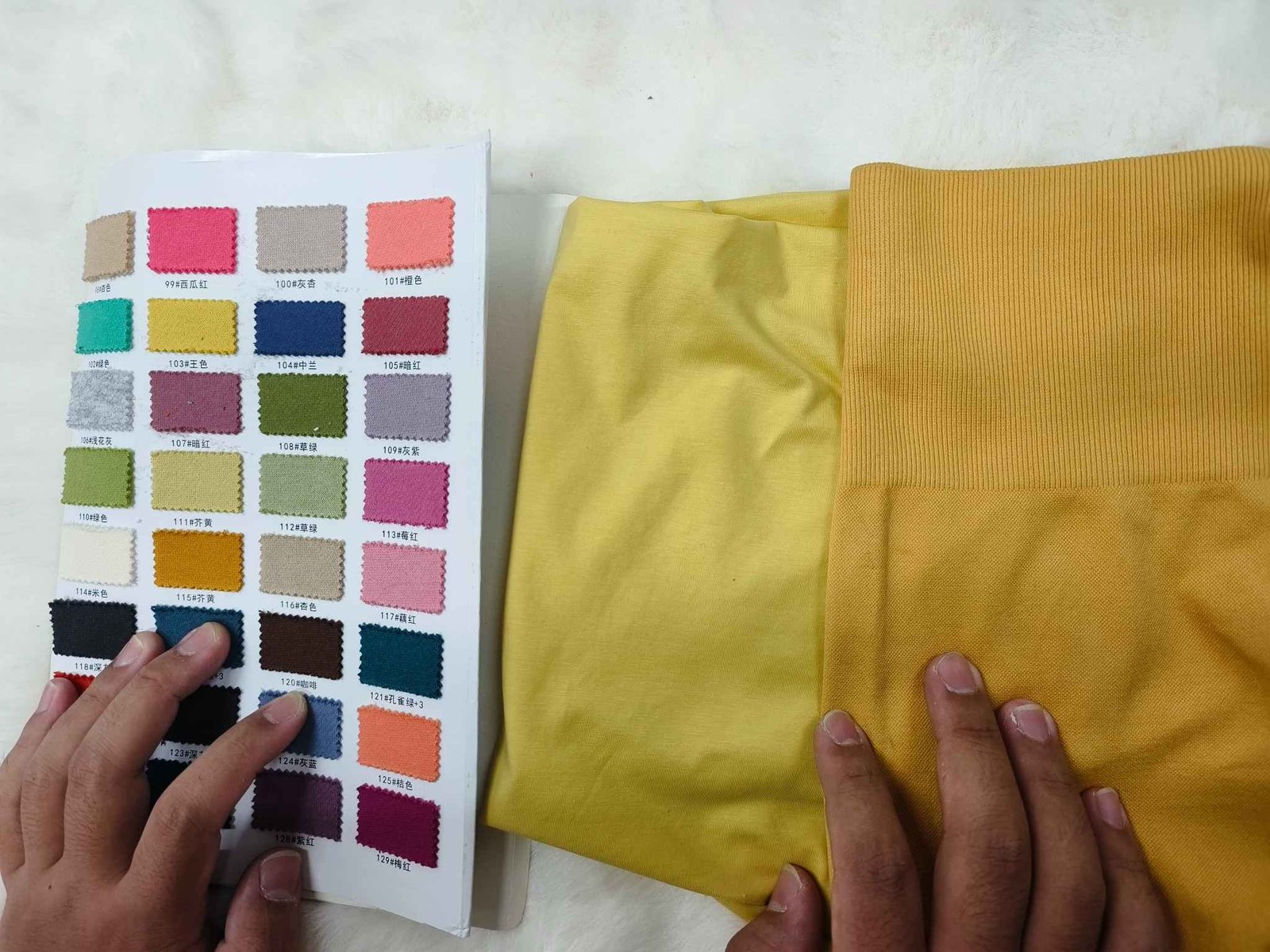
Pantone and physical color references supported
Seamless yarn and Cut & Sew fabric color development
Approved physical color standard used for bulk control
Custom-color MOQ evaluated by material and dye-lot requirements
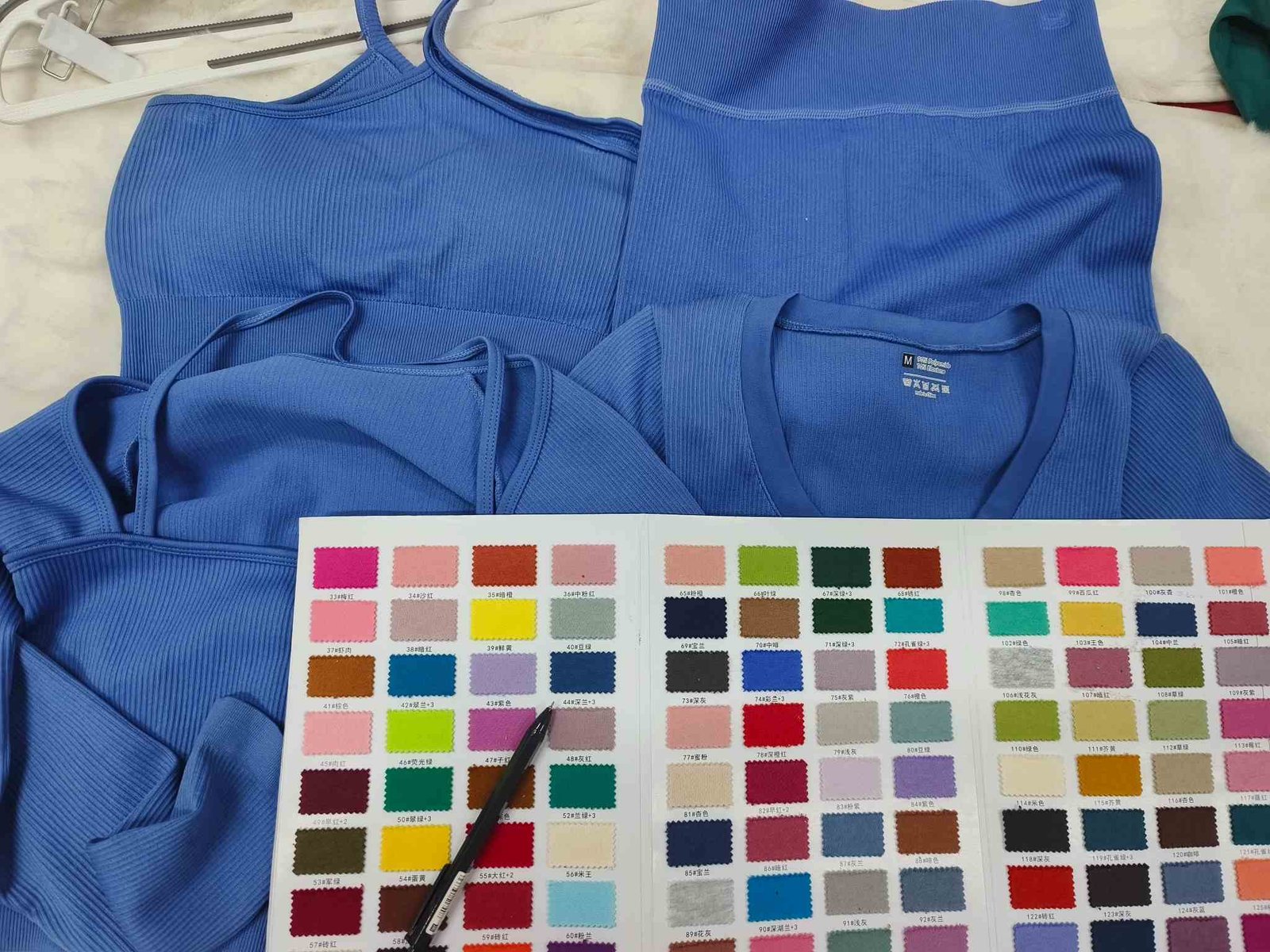
MOVEVOX custom activewear color development with Pantone references fabric swatches yarn and garments
COLOR PROCUREMENT REALITY

A Pantone Number Is the Starting Point, Not the Complete Color Standard

Custom color development becomes a procurement issue when the same target color must move through material selection, sampling, dyeing, bulk production and future repeat orders.

A digital value or Pantone reference can define the direction, but physical appearance still depends on the actual fiber, yarn, knit structure, surface finish and production batch.

Digital Reference Color direction and communication input
Approved Physical Sample Production control reference for the confirmed material scope

Screen Color Is Not a Bulk Standard

RGB, HEX values, website screenshots and uncalibrated digital images can be used to communicate direction, but they should not be treated as the final physical production standard.

One Pantone Can Appear Different on Different Materials

Nylon, polyester, brushed surfaces, rib structures, mesh and Seamless knit zones can reflect and absorb light differently. Separate material bases may therefore require separate physical approval.

Sample Approval Does Not Remove Dye-Lot Risk

After a color is approved, bulk material still needs lot identification and comparison against the approved reference. An approved Lab Dip is a control standard, not a promise that physical production can never vary.

Repeat Orders Need a Reference Chain

Repeat production should refer back to the approved physical standard, previous material information and retained project records rather than relying only on a Pantone number from the original order.

COLOR APPROVAL STANDARD

Build the Physical Color Standard Before Bulk Dyeing

A controlled color program starts by defining exactly what the target color is, what material or yarn it applies to, and which physical sample will become the approved production reference.

01

Confirm the Color Input

MOVEVOX can start from a Pantone reference, physical fabric swatch, garment, yarn sample, paper color card or another agreed physical reference. When several references are supplied, the final controlling reference must be clarified before bulk production.

02

Lock the Material or Yarn Base

A Lab Dip is linked to a specific fabric or yarn specification. If the composition, GSM, supplier, dyeing route, surface treatment or another relevant material condition changes, the previous color approval does not automatically transfer to the new material.

03

Develop the Lab Dip or Yarn Color

The selected supplier develops the color against the confirmed material or yarn base. Some colors may be approved in an early round; others may require revisions. MOVEVOX does not treat first-round approval as a guaranteed outcome.

04

Review the Physical Color

Physical samples can be compared under agreed lighting conditions. Color comments and revisions should remain linked to the corresponding Lab Dip or sample version rather than being communicated only through photographs or chat messages.

05

Confirm the Buyer-Approved Standard

Once the buyer approves the physical color, that approved sample becomes the Master Color Standard for the relevant material and project scope.

06

Release the Color for Bulk

Bulk dyeing or yarn production proceeds against the approved standard. The approval then continues into material-lot identification, incoming inspection and bulk comparison rather than ending at the Lab Dip stage.
Activewear custom color development from Lab Dip to approved physical color standard
COLOR & MATERIAL

The Same Target Color Can Behave Differently Across Material Systems

Color cannot be separated from the material carrying it. Fiber type, yarn structure, surface texture, knit density, gloss and finishing can all affect the final visual result. This becomes especially important when one collection uses several fabric or construction systems.

Fiber Base Changes Color Appearance

Nylon/Spandex and Polyester/Spandex materials do not necessarily reproduce the same target color with the same visual result. Material selection and color development should therefore be reviewed together.

Surface and Structure Affect Light Reflection

Brushed, soft-touch, ribbed, textured, mesh and Seamless structures may visually shift the same color direction because of surface reflection, density and construction.

Multi-Material Garments Need Overall Color Review

When a garment combines main fabric, lining, mesh, rib, thread, elastic or other visible components, matching the Pantone number alone is not sufficient. The final garment should also be reviewed as a complete visual system.

Material Changes Require Color Reconfirmation

Changing the approved material base can affect the established color standard. A new material should therefore be assessed before the previous color approval is reused.
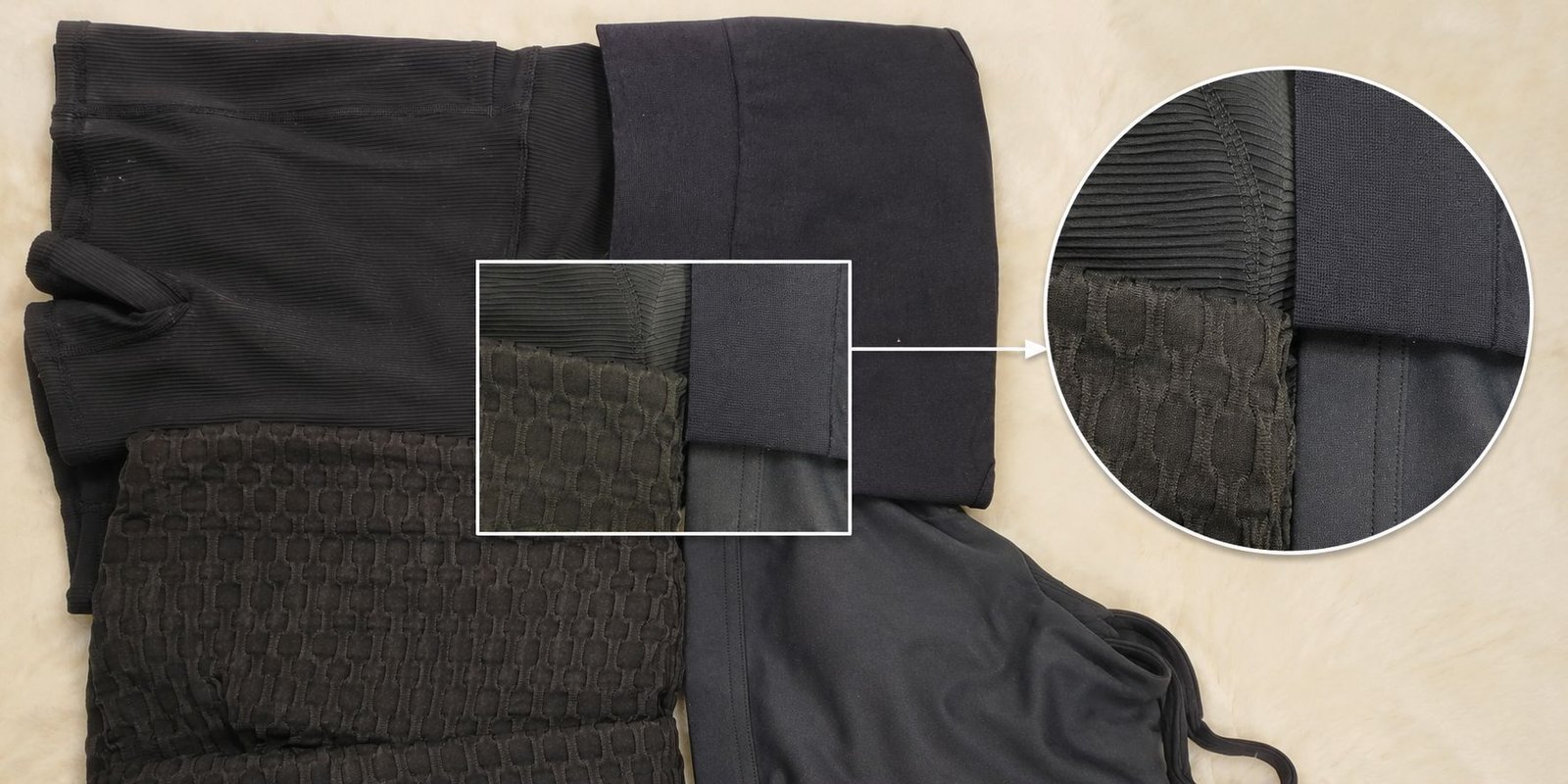
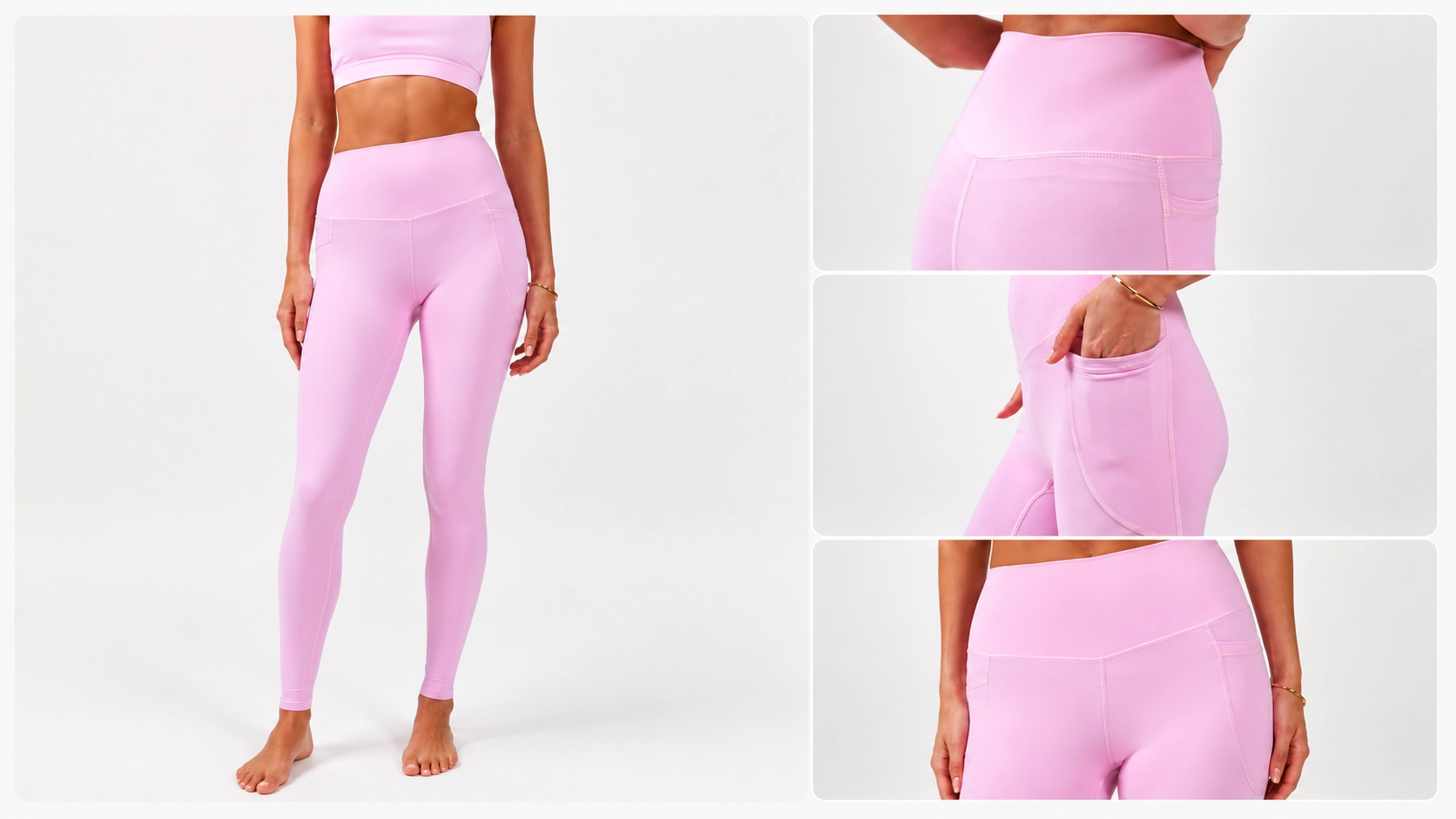
Custom activewear color appearance across smooth brushed ribbed textured and seamless materials
TWO COLOR DEVELOPMENT ROUTES

Seamless and Cut & Sew Use Different Color Development Routes

MOVEVOX manages both Seamless and Cut & Sew activewear, but the material unit and color-development path are different. A shared collection color therefore needs to be managed through the correct route for each product structure.

Seamless Color Starts With Yarn

For Seamless products, color development begins with the yarn specification. Yarn composition, color, knitting structure, machine program and local knit density all contribute to the final garment appearance.

Typical route:
Color Reference → Yarn Specification → Stock or Custom Yarn Color → Knitting → Garment Evaluation → Approved Production Standard

MOVEVOX operates 28 Italian Santoni seamless knitting machines, allowing Seamless color development to be reviewed together with actual knit structure and garment execution.

Cut & Sew Color Starts With Fabric

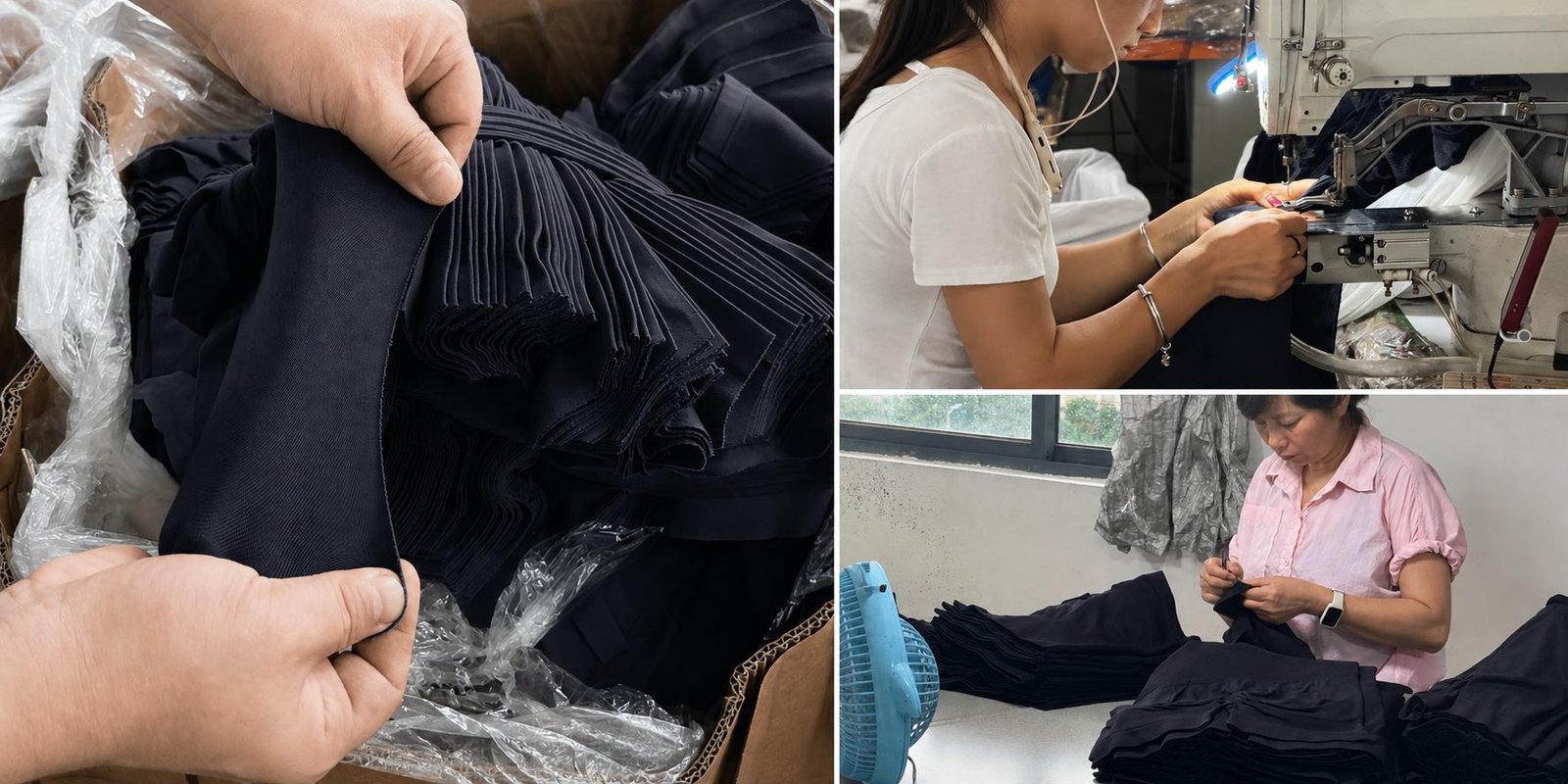
For Cut & Sew products, the route is based on the selected fabric.

Typical route:
Color Reference → Fabric Specification → Lab Dip → Fabric Dyeing → Fabric Approval → Cutting & Sewing → Garment Evaluation

One Collection May Need Two Approved Routes

A Seamless legging and a Cut & Sew top can share the same brand color direction without using the same physical production route. Each relevant material base should be approved according to its own appearance and production conditions.
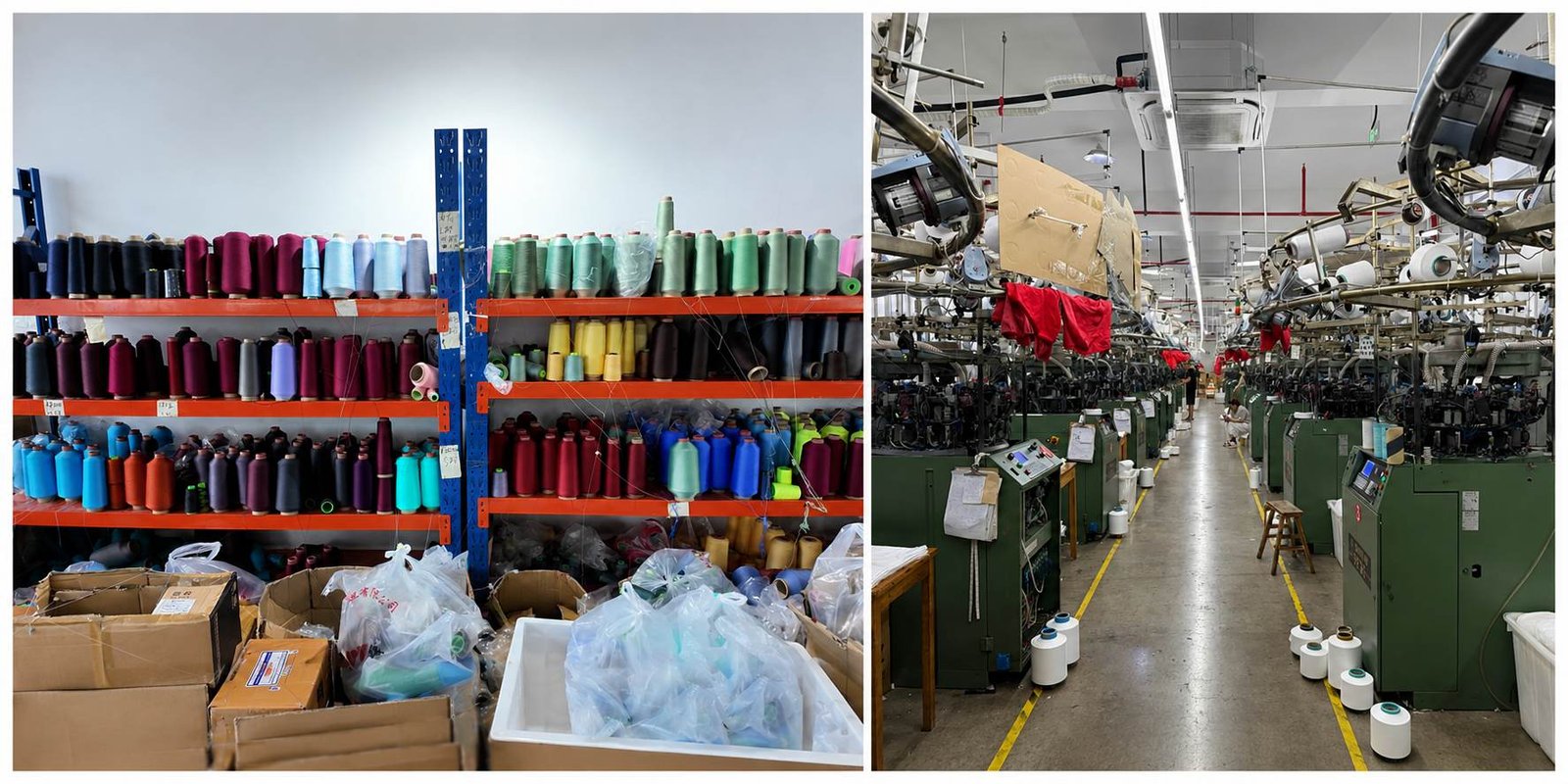
MOVEVOX Seamless activewear yarn color development and Santoni knitting
Cut and sew activewear custom fabric color development from Lab Dip to garment
CUSTOM COLOR MOQ

Custom Color MOQ Is Driven by the Material Batch, Not Only the Garment MOQ

MOVEVOX separates garment MOQ from custom material and dyeing MOQ. A style may meet the normal garment-production threshold while a dedicated color still requires a larger yarn or fabric batch.

≈100 PCS / STYLE

Seamless Baseline MOQ

Typical baseline for normal Seamless garment-order conditions.

≈150 PCS / STYLE

Cut & Sew Baseline MOQ

Typical baseline for normal Cut & Sew garment-order conditions.

≈400–600 EQUIVALENT GARMENTS

Custom Color Material Batch

Common equivalent quantity per color/material for typical activewear structures. This is an indicative range, not a fixed garment MOQ.

Stock or Shared Supply-Chain Colors

Where a suitable material and regular color already exist within the supply chain, color allocation can often follow the normal garment MOQ structure more closely.

Custom Dyed Fabric or Yarn

A dedicated color may be controlled by the minimum dyeing batch of the fabric or yarn supplier rather than by the number of finished garments ordered.

Why 400–600 Is an Equivalent Garment Quantity

Leggings, bras, shorts and tops consume different quantities of material. The final garment equivalent therefore needs to be calculated against the actual material batch and garment consumption for the project.

If the required dyeing batch exceeds the material consumption of the first garment order, the remaining same-lot material can be discussed as part of the commercial plan, including possible use for an agreed repeat order or other agreed handling.

COLLECTION COLOR PLANNING

Plan the Collection Before Creating Too Many Independent Color Batches

MOQ optimization does not mean bypassing a yarn mill or dye-house minimum. The practical approach is to reduce unnecessary material and color fragmentation while keeping the collection commercially and technically executable.

01

Every SKU Uses an Independent Material and Color

When each style requires its own fabric, yarn specification and custom color, each combination can create a separate material MOQ, color approval path and production batch.

Result: more independent approvals, more material commitments and greater coordination complexity.

02

Related SKUs Share a Material and Color Platform

Where product requirements allow it, leggings, bras, shorts or tops can be planned around shared material or yarn platforms and coordinated color directions.

Result: fewer independent material/color routes and a simpler approval structure.

03

Build Repeat Use Into the Material Plan

For colors and materials intended for repeat orders, the initial project can consider material-lot records, retained standards and how remaining approved material may be managed.

Result: color MOQ becomes part of collection and replenishment planning rather than an isolated purchasing problem.
Activewear collection planning with shared material and custom color platforms
COLOR DEVELOPMENT TIMING

Color Lead Time Depends on the Material Route

Custom color timing should be planned before the collection launch date is fixed. The relevant timeline depends on whether the project uses an available material/color, regular custom fabric dyeing, a more specialized material route or custom-color Seamless yarn.

Material / Color Route Typical Reference Timing Planning Note
Available / stock material route Approx. 3–7 working days Subject to actual material availability and required specification.
Regular custom fabric dyeing Approx. 15–25 days Starts after material specification and color requirements are sufficiently confirmed.
Special recycled / functional / textured material route Approx. 20–35 days Supplier, specification and processing requirements may extend the material path.
Seamless custom-color yarn Approx. 15–30 days Subject to yarn specification, dyeing batch and supplier schedule.

Color Approval Can Add Revision Time

Lab Dip or yarn color development may require one or several approval rounds. MOVEVOX does not promise that the first submission will always be approved.

Material Timing Is Not the Entire Garment Lead Time

After relevant development details are confirmed, standard sample development is typically approximately 5–10 working days. Typical bulk-production timing is approximately 20–35 days, depending on the project.

Material/color development and garment production should therefore be planned as connected but separate stages.

COLOR PERFORMANCE

Color Approval and Colorfastness Are Different Decisions

A color can visually match the approved standard and still require performance validation for its intended market and use. Colorfastness should therefore be treated as a project-specific testing question, not as a single universal “pass” statement.

Rubbing Risk

Dry and wet rubbing can create different color-transfer risks, particularly where dark or strongly colored material is used next to lighter components.

Washing Risk

Wash colorfastness evaluates how the material and adjacent components behave under the selected test conditions. One material/color result should not automatically be generalized to every color or production lot.

Perspiration and Water Exposure

Depending on product use and buyer requirements, perspiration or water-related colorfastness may also need to be evaluated.

Fabric and Logo Risks Are Not the Same

Fabric colorfastness should be distinguished from print or Logo adhesion, cracking, migration and other branding-related performance issues.

Buyer Requirements Define the Test Scope

MOVEVOX can support project-specific testing and third-party inspection arrangements. Test method, sample level, acceptance criteria and applicable color/material scope should be confirmed according to the buyer's requirement rather than presented as a universal factory certification.
Activewear colorfastness testing support and project-specific textile test evidence
COLOR RISK MATRIX

Identify Color Risk Before It Reaches Bulk Production

Custom color risk depends on the reference quality, material structure, light source, dye lot and final application. MOVEVOX treats these as separate control questions rather than reducing color approval to a single Pantone comparison.

Risk Area Typical Trigger Procurement Risk Control Direction
Reference Risk Screen image, uncalibrated RGB/HEX value or conflicting references Buyer and supplier may be judging different physical targets. Confirm a Pantone system, physical sample or final Master Color Standard.
Material & Structure Risk Same color direction across different fibers, surfaces or knit structures Visual appearance changes because of absorption, density, gloss or reflection. Review each relevant material base and final garment combination.
Metamerism Risk Color appears acceptable under one light source but shifts under another Red/blue cast or light/dark difference becomes visible in another environment. Compare under agreed lighting conditions and retain the physical approval standard.
Dye-Lot Risk New yarn or fabric dyeing batch Lot-to-lot physical variation. Identify the Dye Lot, compare against the approved standard and link the lot to the production batch.
Colorfastness & Transfer Risk Strong colors, material use or buyer-specific performance requirements Color transfer, staining or color change under relevant conditions. Apply the appropriate project-specific validation and acceptance standard.
MATERIAL READINESS

An Approved Color Still Needs Material Readiness Before Bulk Starts

Color approval is one production gate. Bulk should also confirm that the correct material or yarn has been booked, received, identified and released for the relevant order.

Approved Color

The buyer-approved physical color reference and relevant material specification are linked to the project before the bulk material route proceeds.

Material Booking

The required fabric, yarn and color route are booked against the confirmed project requirements and required-in-house timing.

Lot Identification

Received bulk fabric or yarn retains the appropriate supplier, material-lot and relevant Dye Lot information.

Incoming Review

Material is checked against the applicable project requirements before it is released into bulk production.

Release / Hold

Acceptable material can be released. A material, documentation or color concern can trigger Hold and further evaluation.

Production Ready

Bulk starts from approved and released project inputs rather than from an unverified substitute material.
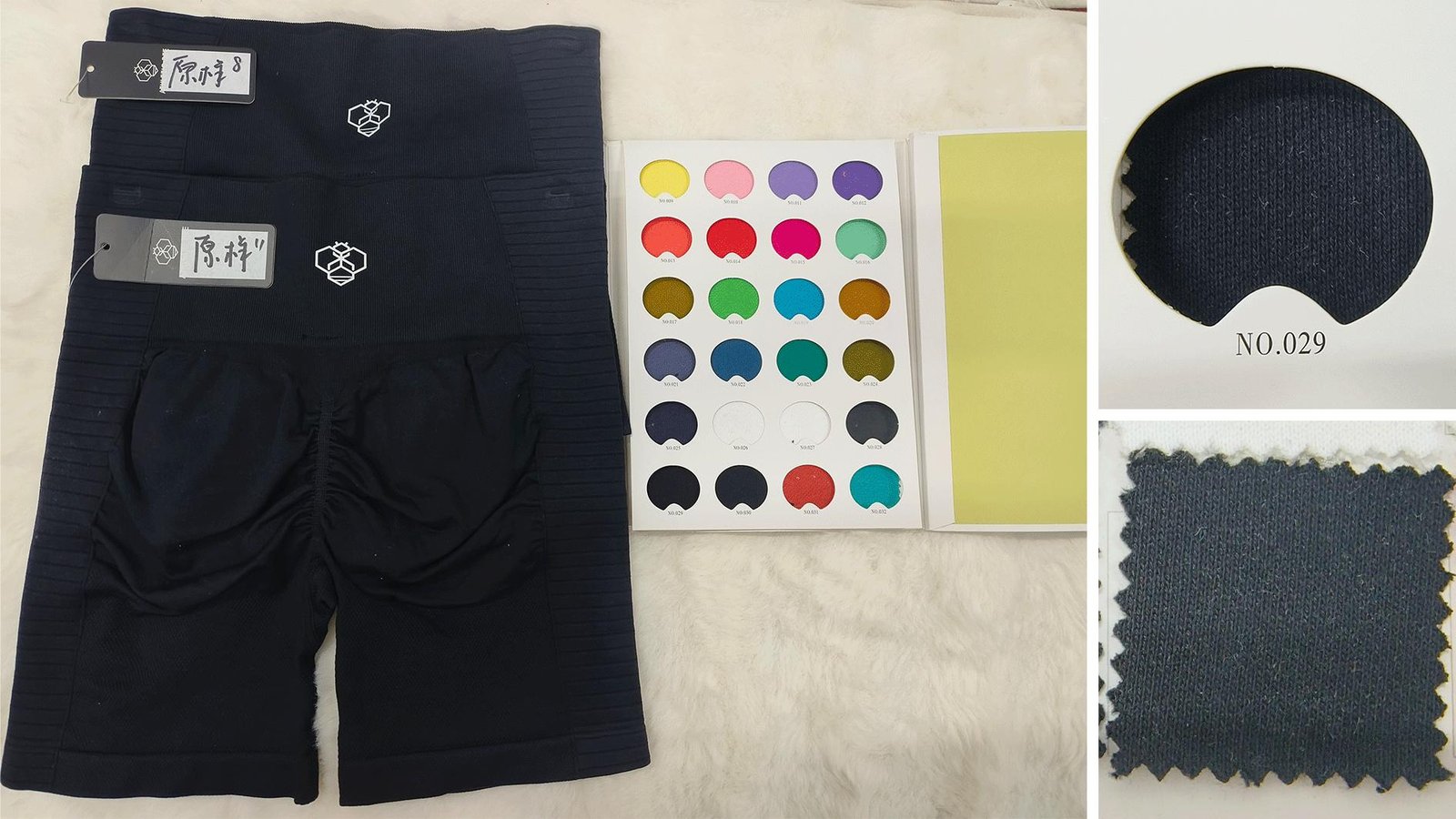
Custom color activewear material readiness and dye lot control before bulk production
INCOMING COLOR CONTROL

Check the Bulk Material Before the Color Enters Production

Incoming inspection connects the approved development standard to the actual material that will be used in production. The inspection scope depends on the product, material and buyer requirements.
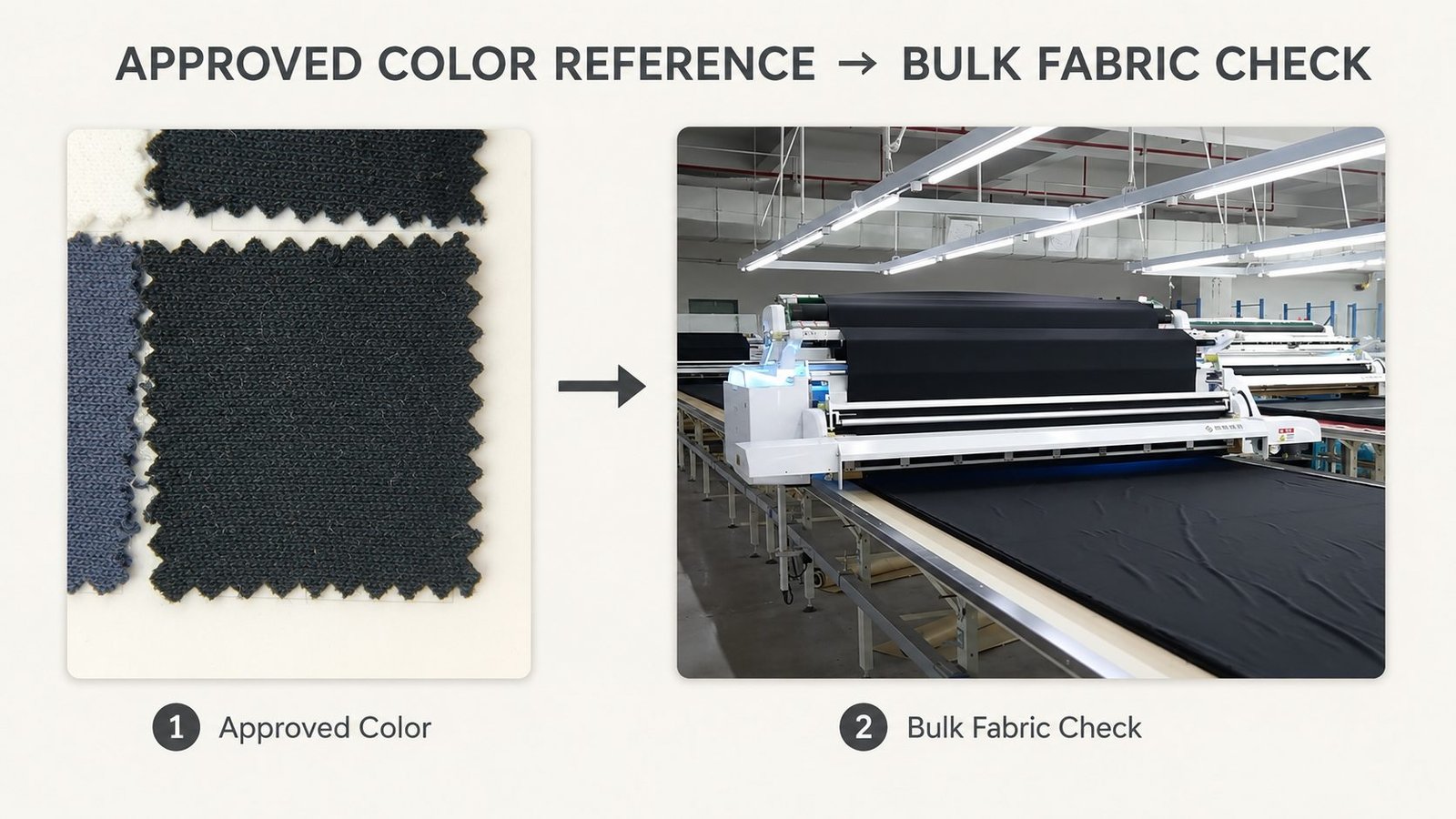
MOVEVOX approved color reference compared with bulk activewear fabric
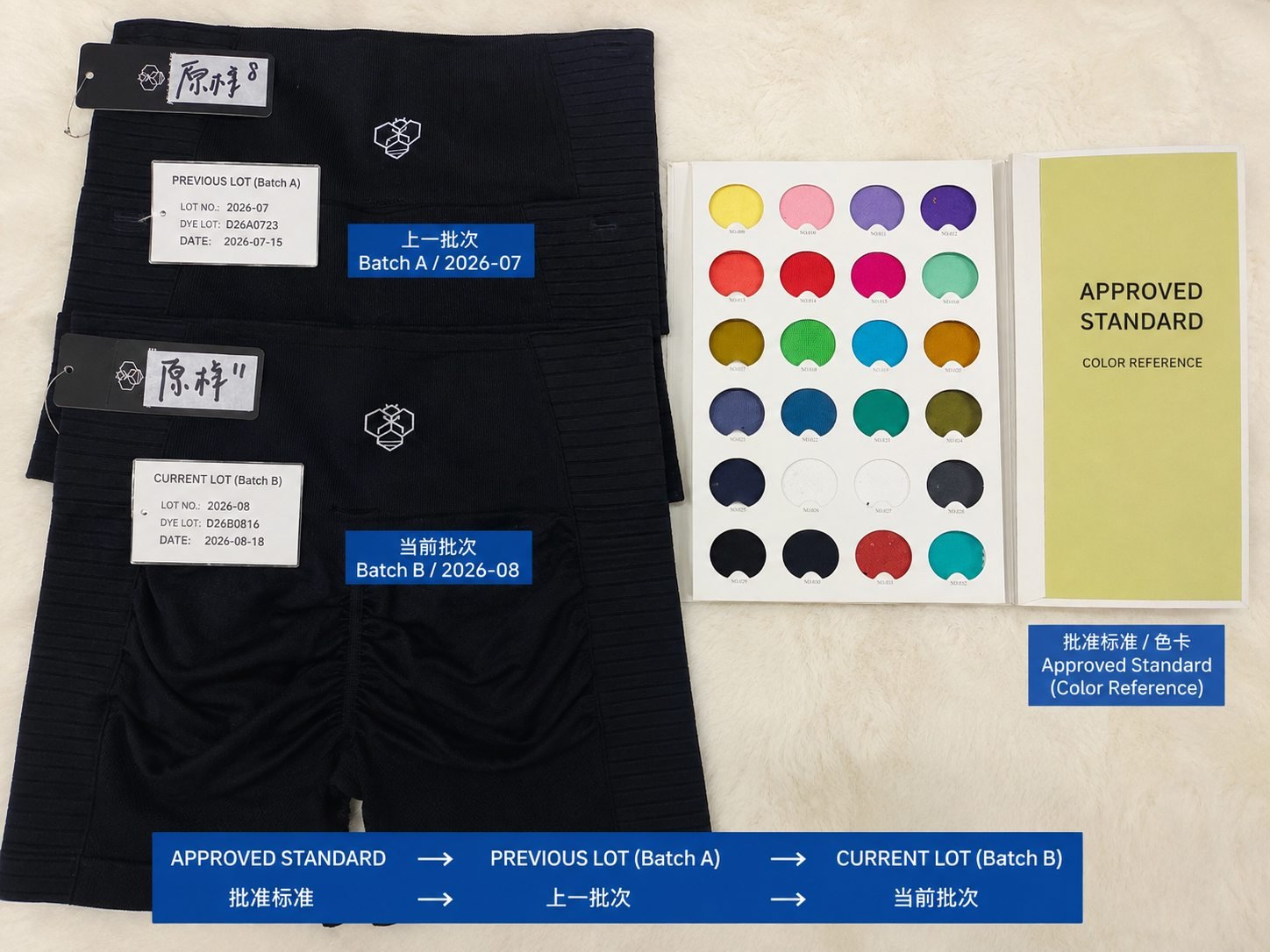
MOVEVOX activewear dye lot traceability and batch identification
BATCH CONTROL

Dye Lot Identification

MOVEVOX activewear material surface and texture comparison
MATERIAL REVIEW

Surface & Appearance

01

Material Identity

Confirm that the received fabric or yarn corresponds to the approved project specification and source.

02

Dye Lot Identification

Record the relevant material and Dye Lot so the batch can remain linked to the PO, Style or production lot.

03

Color Comparison

Compare the incoming material against the approved physical color reference under the agreed evaluation conditions.

04

Surface & Appearance

Review relevant visual conditions such as texture, finish, obvious defects and consistency with the approved material direction.

05

Supporting Material Checks

Where applicable, incoming material control can also include GSM, shrinkage, stretch/recovery or other requirements relevant to the product.

06

Release, Hold or Further Review

Material is released based on the applicable acceptance standard. A concern can trigger Hold, further review, correction or reinspection before use.

Buyer Tech Packs, QC Manuals, approved samples and project-specific acceptance criteria take priority over generic internal references.

FIRST ARTICLE VERIFICATION

Verify the Color Again on the First Bulk Garment

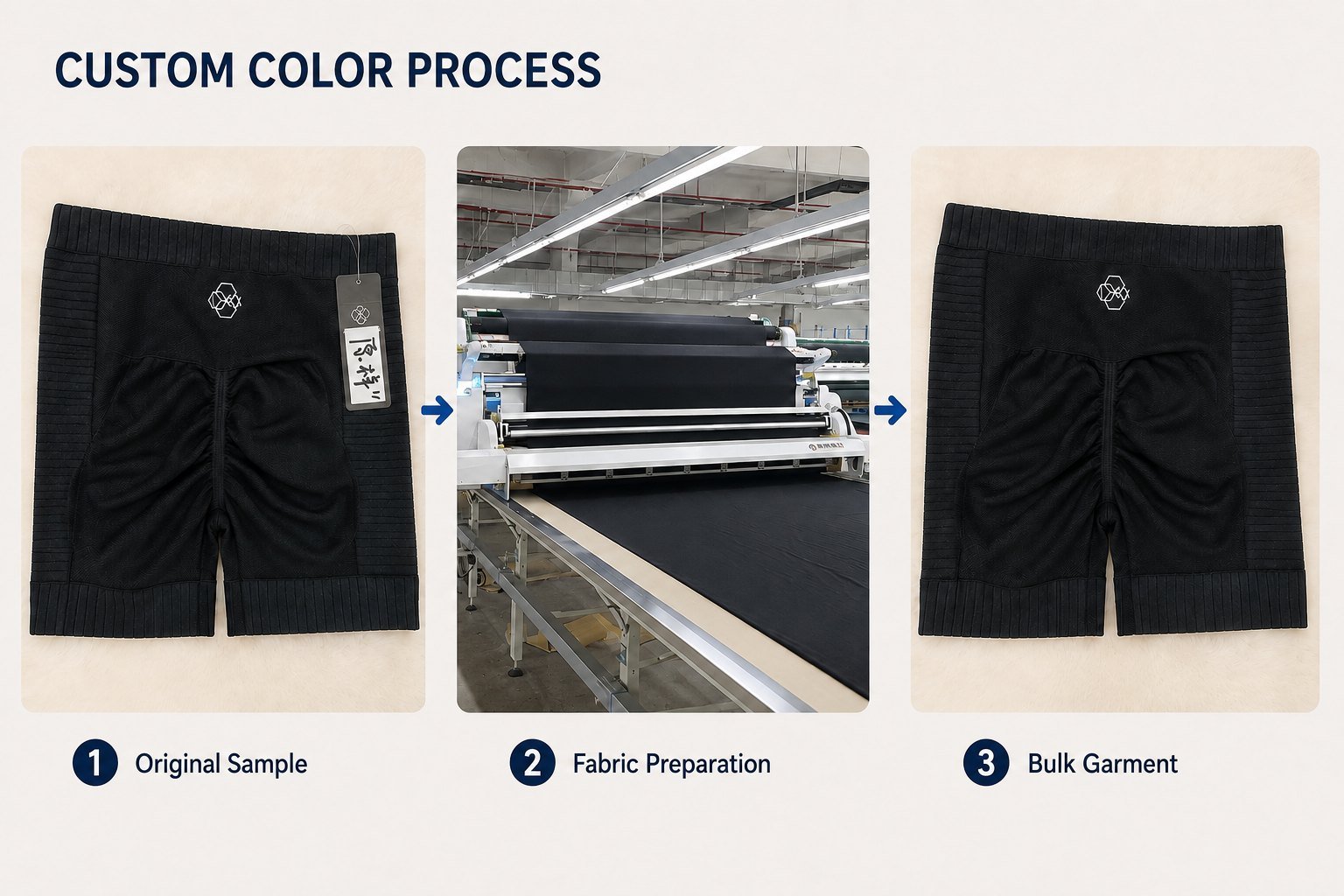
A bulk fabric or yarn can meet its incoming requirement while the finished garment still needs an overall review. First Article checking verifies whether the approved standard has been correctly translated through actual bulk materials, equipment, structure and garment assembly.
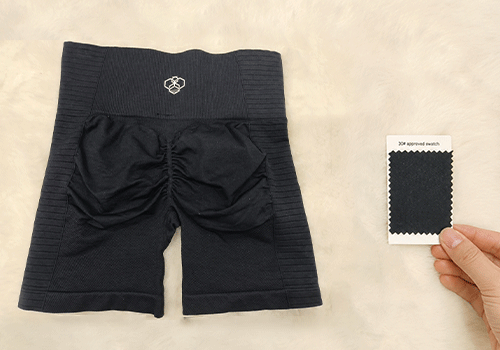
First article activewear garment color verification against approved physical standard
01

Actual Bulk Inputs

Use the real production fabric or yarn, approved trims, production machine/program or pattern, and other required bulk inputs.

02

Main Material Color

Compare the garment's main visible color against the approved project standard.

03

Cross-Material Appearance

Review visible combinations such as main fabric, lining, rib, mesh, thread, elastic or other relevant material components.

04

Logo, Label & Trim Appearance

Where branding or visible trims interact with the garment color, check their size, position, appearance and approved color relationship as applicable.

05

Overall Garment Review

Assess the complete garment rather than judging isolated swatches only. The objective is to confirm that the production combination reflects the approved requirement.

06

Release Decision

If a First Article fails a relevant requirement, production expansion should stop until correction and a new acceptable First Article are completed, or an authorized written deviation is obtained.

DYE LOT TRACEABILITY

Keep the Color Connected to the Material Lot and Production Record

Traceability supports faster investigation when a color concern appears and provides a more reliable reference for future repeat orders. The objective is to identify the actual affected scope rather than relying on assumptions.

SUPPLIER
PURCHASE / DELIVERY BATCH
FABRIC / YARN
DYE LOT
PO
STYLE / SKU
PRODUCTION BATCH
INSPECTION
SHIPMENT

Backward Traceability

If a finished-garment issue is identified, records can be used to trace the relevant product back toward the material or production lot associated with it.

Repeat Order Reference

Repeat production can compare the new material or yarn lot against the previously approved physical standard and available project records.

A repeat order is not presented as a promise of physical zero color difference between independent dyeing batches. The control objective is to identify, compare, evaluate and approve the new production lot against the relevant standard.

Activewear dye lot material traceability and repeat color comparison records
WHY MOVEVOX

Why MOVEVOX for Custom Color Activewear

Custom color requires more than access to a dye house. The color has to move through product development, material selection, manufacturing, quality control and final release without losing the approved project standard.

28 Italian Santoni Seamless Knitting Machines
2 Manufacturing Routes — Seamless + Cut & Sew
≈8 Development Team
5 QC Personnel
ONE MANAGED SYSTEM

Material-to-Release Project Control

Materials, order coordination, PMC, QC and final control are managed through one MOVEVOX project structure.

Where controlled partner facilities or specialist suppliers are involved, MOVEVOX retains project coordination and quality responsibility within the agreed production scope.

This allows yarn color, fabric color, garment development and final production requirements to remain connected to the same project approval path.
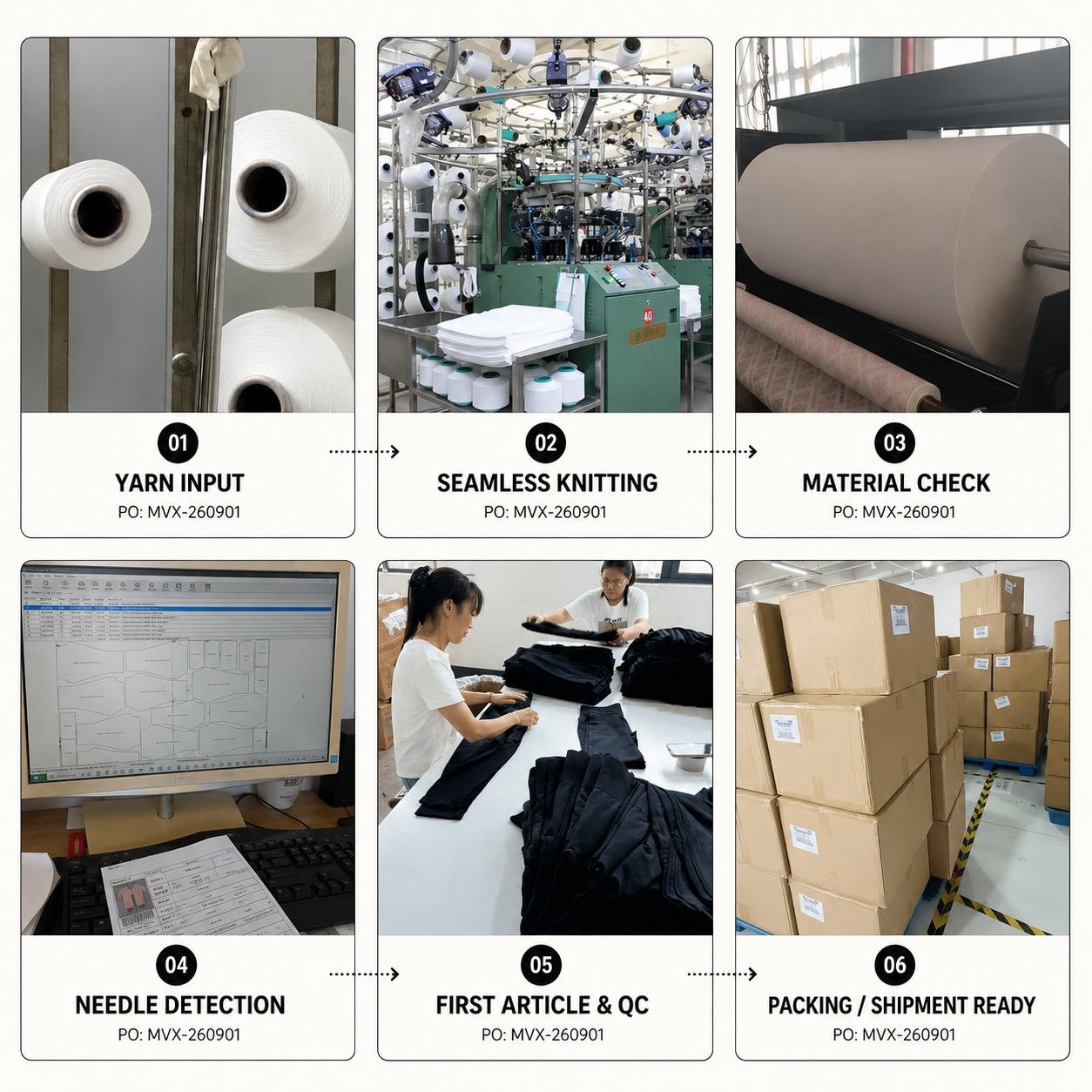
MOVEVOX custom color activewear development manufacturing and quality control capability
START WITH YOUR COLOR REFERENCE

Have a Color Direction Ready? Start With the Reference.

Send your Pantone reference or physical color direction together with the product type, material requirement, estimated quantity, number of colors and target timing.

MOVEVOX will review the appropriate fabric or yarn color route, the likely commercial MOQ, development requirements and the next practical step for Lab Dip, material approval or garment sampling.

CUSTOM COLOR FAQ

Custom Color Activewear FAQ

Can MOVEVOX develop activewear colors from a Pantone reference?

Yes. MOVEVOX can use a buyer-provided Pantone reference as the target for fabric Lab Dip or Seamless yarn color development. The Pantone system or physical reference should be clearly identified, and the final bulk standard is based on the approved physical color sample rather than the digital value alone.

Can you match a physical fabric or garment sample?

Yes. Physical fabric, garments, yarn, paper color cards or other agreed physical references can be used for color development. The reference condition, material and approved area should be clear so that the project has one defined Master Color Standard.

Can I approve the final color from a phone image, RGB or HEX value?

Not as the only bulk-production standard. Digital references can communicate color direction, but screen calibration, lighting and device differences prevent them from replacing physical color approval.

What is the MOQ for a custom activewear color?

Custom-color MOQ depends on the yarn or fabric dyeing batch and the garment's material consumption. A typical custom-color batch commonly converts to approximately 400–600 equivalent garments per color/material, but this is not a fixed MOQ for every product.

Why can custom-color MOQ be higher than the garment MOQ?

The garment production threshold and the material supplier's dyeing minimum are two different commercial constraints. MOVEVOX's typical baseline is approximately 100 pcs/style for Seamless and 150 pcs/style for Cut & Sew, while a dedicated fabric or yarn color can require a larger material batch.

Can the same Pantone be used across several fabrics or SKUs?

It can be used as a shared color direction, but different fiber, surface and construction systems may produce different physical appearances. Separate material bases may therefore require their own Lab Dip, yarn color or physical approval.

For deeper material planning, review our Fabric Guides.

How does custom color work for Seamless activewear?

Seamless color starts from the yarn specification rather than from a finished fabric roll. Yarn color, knit structure, program and density all affect the finished appearance, so the garment should be evaluated as part of the Seamless development route.

How many Lab Dip rounds are required?

There is no fixed number. A color may be approved in an early submission or may require further adjustment. Bulk color production proceeds after the relevant physical color standard has been approved.

How does MOVEVOX manage color variation in repeat orders?

Repeat orders can reference the original approved physical standard, available retained project records and the new material or Dye Lot. The new lot is evaluated against the relevant standard; MOVEVOX does not promise physical zero color difference between independent dyeing batches.

Does MOVEVOX support colorfastness testing?

Yes, testing support can be arranged according to the project, market and buyer requirements. The relevant test method, material/color scope, sample level and acceptance criteria should be confirmed for the specific project. Testing support does not mean that every color or material automatically carries the same test result.

CUSTOM COLOR PROJECT INQUIRY

Start Your Custom Color Project

Share the color direction and the key commercial information behind your project. MOVEVOX will first review the material and color route, then identify the practical next step for MOQ evaluation, Lab Dip, sampling or manufacturing.

What to Send

  • Product type or product reference
  • Pantone number or physical color reference
  • Fabric / yarn / material direction
  • Number of planned colors
  • Estimated order quantity
  • Target timing
  • Tech Pack, reference images or other project files if available

What Happens Next

Requirement Review

We review the product, material and color inputs and identify any information that needs clarification.

Material & Color Route

We determine whether the project should follow an available color, custom fabric dyeing or Seamless yarn color route.

MOQ & Timing Review

Material batch requirements, garment consumption and relevant development timing are evaluated for the project.

Development Next Step

The project can then proceed to the appropriate Lab Dip, material approval, garment sampling or manufacturing discussion.

START YOUR PROJECT

Ready to Develop Your Private Label Activewear Line?

Tell us what you want to develop, your estimated quantity and customization needs. We will review the details and suggest the next practical step for sampling, quotation or production.

Helpful details to include:

Request MOQ & Sample Details