Custom Activewear Fabric Development From Product Goal to Bulk Control
MOVEVOX helps established activewear brands translate a target handfeel, reference swatch, or material direction into a controlled development path. We review materials in the context of the finished garment, connect fabric or yarn decisions with Seamless and Cut & Sew development, validate choices through sampling, and define approval references before bulk material enters production under one managed manufacturing system.
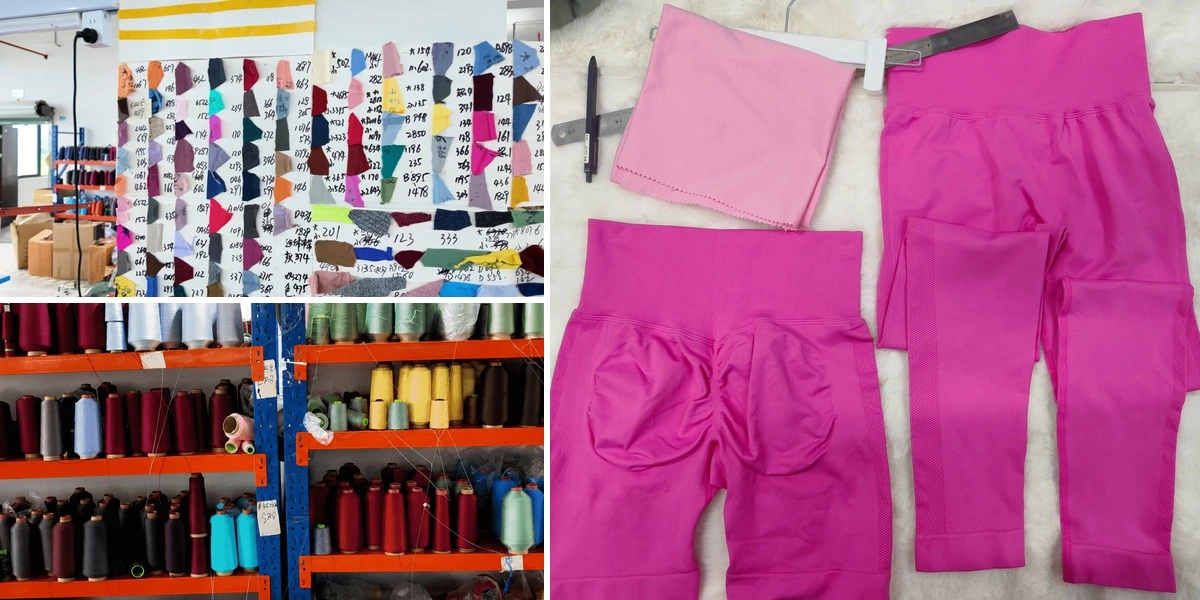
Four Material Risks That Disrupt Bulk Consistency
Custom fabric projects can fail even when the first sample looks acceptable. Mature procurement teams need to control specification, lot consistency, material minimums, and evidence scope before a fabric direction is treated as bulk-ready.
Same Composition, Different Result
Business ImpactTwo fabrics can show the same fiber percentages while differing in yarn, knit structure, weight, finish, handfeel, stretch, recovery, or opacity. Composition alone is not a performance conclusion.
MOVEVOX ResponseMOVEVOX reviews the material as a combined specification and validates the selected route through swatches or garment samples before an approval reference is released for bulk use.
Evidence: Approval StandardSample-to-Bulk Material Drift
Business ImpactA development sample can look correct while later bulk lots vary in shade, GSM, shrinkage, recovery, surface, or handfeel. Uncontrolled changes can alter fit, appearance, and repeat-order consistency.
MOVEVOX ResponseThe approved material reference is carried into incoming control. Relevant bulk lots are identified and checked against the released standard before material is cleared for production.
Evidence: Lot ControlHidden Material MOQ
Business ImpactA garment may meet MOVEVOX's baseline order quantity while a custom dye, special yarn, dedicated fabric, or finishing route requires a larger supplier production batch than the garment order itself.
MOVEVOX ResponseMOVEVOX separates garment MOQ from effective material MOQ, reviews supplier minimums and garment consumption, and explains the commercial effect before the material route is locked.
Evidence: MOQ ReviewUnsupported Performance Claims
Business ImpactTerms such as quick-dry, squat-proof, compression, recycled, or antibacterial require project-specific evidence. A fiber name, supplier statement, or visual impression does not automatically support a finished-product claim.
MOVEVOX ResponseMOVEVOX separates material description from verified performance or certification claims. Where testing or certificate evidence is required, the applicable sample, lot, holder, scope, and report must be confirmed.
Evidence: Evidence ScopeSelect Fabric From Product Requirements, Not Fiber Names
Material selection should begin with the product, wearing experience, and commercial constraints. MOVEVOX uses those inputs to narrow suitable fabric or yarn routes, then validates the direction through swatches, sampling, approval, and bulk-lot control.
What Product Are You Developing?
Leggings · Sports Bras · Shorts · Tops · Seamless Sets
What Wearing Experience Matters Most?
Smooth · Soft · Supportive · Textured · Lightweight
How Much Support Is Required?
Light · Balanced · Firm Feel · Garment Validation
What Surface Direction Fits the Product?
Smooth · Brushed · Ribbed · Textured · Mesh
What Commercial Limits Matter?
Shared Material · Custom Color · Custom Route · MOQ Review · Lead-Time Review
Nylon-Spandex Route
Often considered for activewear where the project calls for smooth handfeel, stretch, recovery, and close-to-body fit. The final choice still depends on yarn, knit structure, GSM, finish, color, and garment design. MOVEVOX compares actual material options and validates the selected route in the intended garment rather than approving by fiber percentage alone.
Cut & Sew · Sample Validation · Project SpecificPolyester-Spandex Route
A practical route for selected training, running, tops, shorts, and other activewear programs where polyester-based materials fit the product brief. Surface, weight, stretch, recovery, color behavior, and finish remain project-specific. Performance descriptions such as quick-dry or pilling resistance are only used when supported by the applicable material and evidence before approval.
Activewear · Material Review · Project SpecificSeamless Yarn Route
For seamless products, material development starts with yarn and knitted structure rather than a roll of finished fabric. MOVEVOX evaluates yarn direction together with machine program, elastic allocation, target fit, color, and sample performance. The approved route is then tied to the relevant bulk yarn lot and production specification for release.
Seamless · Yarn Route · Sample ValidationSurface-Developed Route
When the product direction depends on brushed, ribbed, textured, soft, or other surface characteristics, MOVEVOX compares the actual handfeel and structure instead of treating the finish name as a complete specification. A reference swatch or approved garment should become the practical comparison standard for later bulk material and repeat orders.
Handfeel · Surface · Physical ApprovalDevelop a New Product From Your Fabric Swatch
If you already have a fabric swatch or legally usable material reference, MOVEVOX can use it as a development input. The objective is to define a manufacturable material direction, not to promise an unverified exact copy.
Swatch Intake
We record the reference and clarify what the buyer wants to preserve: handfeel, appearance, stretch behavior, weight direction, surface, color, or product suitability. Any known supplier specification or prior test information can be reviewed with the physical swatch.
Physical Review
The reference is assessed for relevant characteristics such as handfeel, GSM, stretch, recovery, surface structure, opacity, color, and available composition information. The review separates observable characteristics from claims that would require supplier documentation or laboratory evidence.
Material Matching
MOVEVOX searches suitable material routes through the managed supply chain and compares candidates against the reference. Matching is treated as a controlled comparison, not an automatic guarantee of identical chemistry, finish, performance, or future supplier availability.
Product Suitability
A material that feels attractive in hand may not suit every garment. MOVEVOX considers the intended leggings, bra, shorts, top, set, or seamless structure together with fit, construction, stretch, recovery, opacity, and finishing requirements during development.
Candidate Options
When the original material source is unavailable, alternative routes can be presented with the relevant differences made visible. Depending on the project, the comparison can cover handfeel, material specification, color route, supplier MOQ, lead time, and expected cost impact.
Garment Validation
The selected candidate moves into garment sampling or other agreed validation before bulk approval. Buyer comments, the approved swatch or garment, and the released material specification become the working reference for subsequent material booking and incoming bulk control.
Composition Is One Layer of Material Performance
Fiber percentage is useful for identification and labeling, but it does not define the complete material result. MOVEVOX reviews composition together with yarn, structure, weight, finish, and physical approval references before bulk release.
Fiber Type
Nylon or polyamide, polyester, recycled material options, and elastane or spandex each form part of the material definition. The actual route remains project- and supplier-specific.
Fiber Share
Percentage helps describe composition, but changing the proportion alone does not reliably predict softness, support, opacity, drying behavior, pilling, or recovery in the finished garment.
Yarn Construction
Yarn specification and fineness influence the way a knitted material forms and feels. Two materials with similar percentages can therefore behave differently in the same garment.
Knit Structure
Construction affects surface, density, stretch direction, recovery, ventilation, and visual appearance. In seamless products, the knitted structure is also linked directly to the machine program.
Fabric Weight
GSM helps define fabric mass and influences thickness, drape, coverage, support, warmth, and consumption. It should be assessed together with fiber, structure, and garment use.
Finish & Surface
Brushing, softening, texturing, and other finishing or surface treatments can materially change handfeel and appearance. These characteristics need an actual reference and project-specific approval.
Composition should therefore be treated as one layer of an approved material specification. A percentage such as nylon plus spandex cannot, by itself, prove naked feel, quick drying, opacity, compression, pilling resistance, or any other performance claim. MOVEVOX uses the applicable supplier specification, actual swatch or garment approval, and required testing evidence to define what can be stated and controlled for bulk.
Seamless Material Starts With Yarn and Structure
Seamless activewear is not developed by selecting a finished fabric roll alone. The material result is created through yarn selection, knitted structure, elastic allocation, machine program, target size, and fit validation working together.
Waistband Zone
The waistband may use a denser or differently structured knit and elastic allocation to support the intended fit. Comfort, recovery, height, and size behavior must be verified in samples.
Body Zone
The main body combines base yarn, elastane allocation, stitch structure, and programmed dimensions. Handfeel, stretch, opacity, and recovery are evaluated as a garment result rather than from yarn content alone.
Hip Zone
Local knit structure can be adjusted for visual shaping, texture, coverage, or fit objectives. Any shaping effect must be confirmed on the actual style and approved size range.
Thigh Zone
The thigh area can use continuous or changing structures according to the product design. Stretch, recovery, surface stability, and movement need to remain compatible with the intended garment fit.
Ventilation Zone
Mesh-like or more open knitted structures can be placed where the design calls for ventilation or visual contrast. Placement, transparency, strength, and fit effects require sample validation.
Hem Zone
The lower edge needs enough stability to hold its intended shape without creating unwanted tightness or distortion. Yarn, structure, elastic allocation, and finished dimensions are reviewed together.
Seamless Development Principle
MOVEVOX develops seamless products through yarn and structure decisions that are translated into a machine program and evaluated in the finished sample. The core manufacturing system includes 28 Italian Santoni seamless knitting machines. Bulk release still depends on the approved product specification, the relevant yarn and color route, sample fit and recovery, and material readiness. If yarn source, lot, structure, size, or other critical inputs change, the effect must be reviewed rather than assumed equivalent.
Turn Subjective Handfeel Into an Approval Standard
Handfeel is one of the easiest material attributes to describe subjectively and one of the hardest to repeat without a reference. MOVEVOX turns descriptive language into a comparison process using actual swatches, garments, and approved standards.
Naked / Smooth
For a light, smooth, close-to-skin direction, the evaluation should compare the actual surface, drape, stretch feel, recovery, and appearance. The term describes a target experience, not a guaranteed performance category or fixed composition.
Soft
A general request for softness is translated into a physical comparison against a reference swatch or garment. Fiber, yarn, knit structure, GSM, finish, and supplier batch can all change the perceived result.
Brushed
Brushed materials are reviewed for the degree and uniformity of surface treatment, touch, visual appearance, stretch behavior, and compatibility with the intended garment. The finish name alone does not define the final feel.
Ribbed
Ribbed materials combine tactile structure with visible surface direction. MOVEVOX reviews the actual rib scale, weight, stretch, recovery, and garment application rather than treating all rib constructions as interchangeable.
Textured
Texture can be created through knit structure or surface treatment and may affect appearance, stretch, recovery, thickness, and fit. A buyer-approved physical reference provides a clearer standard than a texture name alone.
Mesh-Light
Light or mesh-like material directions are considered together with transparency, strength, stretch, surface, and product placement. A material suitable for a top panel may not be appropriate for a high-coverage garment area.
Supportive / Compact
A firmer or more compact handfeel can be developed for products seeking greater perceived support. Actual support still depends on material structure, stretch and recovery, garment dimensions, construction, and fit validation.
Reference Match
When repeatability matters most, MOVEVOX can compare a new or bulk material against an approved master swatch or garment. Supplier, lot, finish, and color changes should be rechecked rather than assumed to feel identical.
Handfeel directions shown here are development categories, not a published fabric database. Final composition, GSM, finish, performance, supplier, certification scope, and availability remain material- and project-specific.
Use GSM as a Specification, Not a Quality Score
GSM is a useful specification for activewear materials, but it is not a standalone quality score. MOVEVOX considers fabric weight together with fiber, structure, handfeel, coverage, stretch, recovery, garment use, and material consumption.
Lightweight Top Direction
For tops or selected lightweight applications, a lower fabric-weight direction may support reduced bulk and a lighter wearing feel. The final material must still be checked for structure, transparency, stretch, recovery, surface, and suitability for the intended construction.
Balanced Legging Direction
Leggings typically require a balance between coverage, movement, handfeel, recovery, and fit. GSM contributes to that balance, but the same weight can perform differently when fiber, knit structure, finish, color, and garment dimensions change during development.
Supportive Bra / Short
Sports bras and shorts may require a more supportive or stable material direction depending on design and fit. GSM is reviewed with stretch, recovery, construction, lining or layer requirements, and the actual sample rather than used as a single selection rule.
Structured Rib Direction
Ribbed or visibly structured materials can feel heavier or more supportive because of their knit construction as well as their measured weight. MOVEVOX compares the actual structure, stretch, recovery, handfeel, and garment result before approval.
Comparison Basis
Any comparative chart should use identified fabric samples, measured GSM, and defined assessment conditions. MOVEVOX does not convert subjective impressions into unsupported numerical performance scores.
Evaluate Stretch Together With Recovery and Garment Fit
Stretch shows how far a material extends; recovery shows what happens after that extension is released. For activewear, MOVEVOX evaluates the two together and connects material behavior with fit, opacity, seams, branding, movement, and repeatability.
Directional Stretch
PurposeConfirm how the material behaves in the directions that matter for the garment pattern, body movement, and intended fit rather than relying on a single hand-pull demonstration.
MethodExtend the identified sample in the relevant direction using the agreed project method. Record the sample identity, direction, extension condition, and any visible change in surface, color, or structure.
AcceptanceAccept against the buyer protocol, approved reference, or project-defined criteria.
Recovery After Release
PurposeCheck whether the material returns toward its original dimension after extension, because poor recovery can contribute to looseness, bagging, or reduced support in use.
MethodMeasure or compare the sample before extension, at the agreed extension condition, and after release. Where required, use the buyer's specified recovery method and conditioning time.
AcceptanceAcceptance follows the agreed test method and documented product requirement.
Repeated Extension
PurposeEvaluate behavior after repeated movement rather than only the first stretch. This helps identify potential loss of recovery, localized deformation, surface change, or progressive instability.
MethodCycle the identified material or garment through the agreed repeated-extension method, then compare dimensions, appearance, and recovery with the starting condition and approved reference after conditioning.
AcceptanceUse buyer-defined cycle conditions and documented acceptance limits when specified.
Opacity Under Stretch
PurposeReview whether stretching changes coverage or creates visible white-out, especially in leggings, shorts, and other close-fitting products where color and structure may affect the result.
MethodAssess the actual material or garment at the relevant extension and color condition. The method should reflect the intended product use and any buyer-defined opacity or appearance protocol.
AcceptanceApprove only against the agreed visual or test standard for the project.
Seam / Logo Compatibility
PurposeConfirm that material extension does not create unacceptable stress, cracking, lifting, seam failure, or distortion in the selected construction and branding process.
MethodApply the intended seam or logo process to the actual material, then evaluate it under the agreed stretch and movement conditions. Recheck when material, finish, logo method, or construction changes.
AcceptanceAcceptance follows approved appearance, workmanship, and documented project requirements for release.
Garment Movement Validation
PurposeVerify the combined material, pattern, construction, and fit in the finished product, because acceptable fabric-level stretch does not automatically guarantee stable garment performance.
MethodUse the development or approval sample for movement and fit review. Observe key areas such as waistband, knee, hip, bust, seam locations, and localized seamless structures as applicable.
AcceptanceFinal release follows buyer approval and the applicable product standard.
Understand Fabric MOQ Before Locking the Garment Order Quantity
Custom fabric projects often carry material minimums that are separate from the garment order quantity. MOVEVOX reviews the supplier production batch, color route, yarn or fabric consumption, and development requirements before confirming the effective material MOQ.
| Material Route | Main MOQ Driver | Color Route | Main Lead-Time Driver | Typical Use |
|---|---|---|---|---|
| Existing / Shared Material | Available supplier material and project consumption | Existing or available colors | Material availability and booking | Lower-complexity development |
| Custom Color | Dye or yarn minimum production batch | Pantone, customer reference or approved physical standard | Lab dip / yarn color approval and supplier schedule | Controlled brand color |
| Custom Material / Finish | Supplier production minimum and development requirement | Project-specific | Development, swatch approval and supplier production | Differentiated material direction |
| Seamless Yarn Route | Yarn batch, color and project consumption | Existing or custom yarn color | Yarn procurement, program development and sample approval | Seamless activewear |
Commercial Note
MOVEVOX's baseline garment MOQ is approximately 100 pieces per style for Seamless and 150 pieces per style for Cut & Sew. These garment quantities do not override the actual supplier minimum for a custom fabric, special yarn, dedicated dye lot, or finishing process.
For custom color, the material or yarn minimum can commonly correspond to approximately 400–600 equivalent garment pieces, depending on material consumption and the actual dye or yarn batch requirement. This is a planning reference, not a fixed MOQ for every product or color.
Identify Material Risk Before It Becomes Bulk Rework
A material can be technically available and still create bulk risk. MOVEVOX reviews the conditions most likely to affect appearance, fit, repeatability, claims, or delivery, then defines the required control or validation before release.
Shade / Dye-Lot Variation
ProblemColor can shift between dye or yarn lots even when the nominal color reference is unchanged. Different lots should not be treated as visually identical without comparison.
ImpactUncontrolled shade variation can create visible differences within one style, set, or repeat order and may force sorting, rework, replacement, or buyer approval discussions.
ControlKeep lot identity visible, compare against the approved color standard, and separate materially different lots. Custom colors should follow the agreed physical reference, lab dip, or yarn swatch.
Shrinkage Mismatch
ProblemDifferent materials, colors, finishes, or lots may respond differently after washing or processing. Shrinkage that is not understood can alter garment measurements, seam behavior, and fit.
ImpactA mismatch can cause dimensional drift, uneven panels, twisted or distorted garments, or inconsistency between sample and bulk, especially where multiple materials are combined.
ControlCheck relevant shrinkage against the approved material and product requirements before release. Pattern, construction, or material decisions may need adjustment when the measured behavior changes.
Low Recovery
ProblemA material may stretch easily but return poorly after release or repeated movement. This risk cannot be judged from spandex percentage or a single manual stretch alone.
ImpactPoor recovery can contribute to knee bagging, waistband looseness, reduced bust support, localized deformation, or fit drift during wear and after washing.
ControlEvaluate stretch and recovery together using the agreed method and garment application. Higher-risk zones should be validated in the actual sample, not only at material level.
Opacity / White-Out
ProblemCoverage can change when a material is stretched, especially across lighter colors, open structures, or close-fitting garments. Higher GSM alone does not guarantee adequate opacity.
ImpactInsufficient coverage or visible whitening under extension can create buyer rejection, color inconsistency, or product-use problems that may not appear when the fabric lies flat.
ControlReview the actual color and material under relevant extension, then confirm the result in the intended garment. Use buyer-specific opacity or appearance methods when provided.
Handfeel Drift
ProblemHandfeel can change by supplier, yarn, finish, color, or lot even when composition and GSM look similar on paper. Descriptive words alone are difficult to reproduce.
ImpactA softer, rougher, drier, or firmer bulk lot than the approved sample can create repeat-order complaints and may change how buyers perceive the product.
ControlUse an approved swatch or garment as the physical comparison standard. Recheck material when the supplier, finish, color route, or other critical input changes before release.
Evidence Scope Gap
ProblemA supplier certificate, test report, or recycled claim may apply only to a specific holder, material, color, lot, sample, or validity period rather than every product.
ImpactOverextending the evidence can create compliance, labeling, customer-approval, or reputational risk even when the underlying material is commercially available and otherwise suitable.
ControlConfirm holder, site, material or product scope, report sample, validity, and project applicability before publishing or relying on a claim. Retest or obtain updated evidence when required.
Check Bulk Fabric Against the Approved Material Standard
Bulk material is checked against the released project standard before it is allowed into production. MOVEVOX uses lot identification and incoming inspection to separate approval evidence, material condition, and any laboratory requirements that apply to the order.
Approved Standard
Incoming control begins with the current released reference: applicable material specification, approved swatch or garment, approved color, Tech Pack or BOM, and buyer requirements.
- Current released material specification
- Approved physical color or swatch
- Buyer standards control acceptance
Lot Registration
Received fabric or yarn is identified by available purchase, delivery, supplier, dye, yarn, or material lot information so separate lots remain distinguishable.
- Supplier and delivery source recorded
- Dye or yarn lots remain identifiable
- Production use can link back to material
Composition & Spec
MOVEVOX checks available supplier specification and material identity against the released requirement. Laboratory composition verification is treated separately where required.
- Supplier specification matches requirement
- Composition evidence uses required method
- Document scope matches actual material
Color
Incoming color is compared with the applicable approved physical standard and lot information. Different dye or yarn lots remain separately identifiable.
- Compare against approved color reference
- Identify different lots separately
- Do not mix obvious shade differences without approval
GSM
Fabric weight is checked where GSM is part of the released material specification. GSM remains one specification rather than a standalone quality score.
- Measure against released GSM requirement
- Record lot and result
- Escalate out-of-tolerance material
Shrinkage
Shrinkage is reviewed where relevant because dimensional change can affect pattern, measurement, panel compatibility, and finished fit.
- Use agreed buyer or project method
- Compare with released requirement
- Review fit impact when behavior changes
Stretch & Recovery
Stretch and recovery are reviewed together when critical to the product, using the agreed material or buyer method.
- Check extension and recovery
- Use buyer method where specified
- Escalate differences from approved reference
Opacity & Surface
Incoming material can be compared for opacity, transparency, surface appearance, handfeel, width, visible defects, skew, or twist where relevant.
- Review relevant product condition
- Compare with approved physical reference
- Add project-specific checks where required
Release Decision
Material meeting applicable requirements can be released. Material with unresolved differences remains on hold or is rejected pending review, supplier action, replacement, re-inspection, or authorized concession.
- Released material may enter production
- Held material stays outside normal flow
- Nonconformance requires documented disposition
Nonconformance Handling
A nonconforming or uncertain lot is not treated as acceptable simply because production is waiting. Depending on the issue, the response can include hold, re-inspection, supplier correction, replacement, additional testing, or an explicitly authorized concession. Buyer standards, the released specification, and approved references take priority over generic factory assumptions. Unreleased material does not enter normal bulk production.
Testing Support Follows Project Requirements and Evidence Scope
Testing is used when the product, market, buyer standard, material change, or risk profile requires evidence beyond normal factory checks. MOVEVOX supports the test process while keeping the report, sample, holder, and applicable scope clearly identified.
Requirement & Scope
The starting point is the buyer requirement, target-market need, material risk, or previous issue. The test item and acceptance basis should be defined before a sample is submitted.
Sample Identity
The submitted sample must be linked to the relevant material, color, style, supplier, or batch information available for the project so the resulting report has a defined application.
Lab Selection
MOVEVOX can work with a customer-nominated laboratory or a project-qualified third-party laboratory. The buyer's approved-lab requirement takes priority when one is specified.
Test Request
MOVEVOX can support preparation of the test request, sample, BOM or material information, and required test items so the laboratory receives the intended project scope.
Result Review
The report is reviewed against the specified requirement as pass, fail, or requiring clarification. A failure can trigger containment, supplier follow-up, correction, replacement, or retesting.
Bulk Mapping
A passing report is not automatically extended to unrelated materials or products. The tested sample, supplier, lot, color, process, and any later changes are considered before bulk reliance.
How Testing Is Used
Testing support does not mean that every MOVEVOX material or finished garment has already passed every possible standard. New markets, new material suppliers, custom dye routes, new coatings or logo processes, buyer RSL updates, previous failures, or explicit buyer manuals can trigger additional testing. MOVEVOX can coordinate sample preparation, material information, report collection, and failure follow-up. If the tested material, process, or relevant scope changes, the need for review or retesting should be assessed again.
Trace Material Lots Forward and Back Through Production
Material traceability helps define the affected scope when a quality or compliance issue occurs. MOVEVOX links available supplier and batch information with the PO, style, SKU, production, inspection, and shipment records used for the actual order.
Supplier Source
The material or process source is recorded so the actual fabric mill, yarn, dyeing, trim, logo, packaging, or special-process supplier can be identified where applicable.
Purchase Batch
Purchase and delivery information provides the first transactional link between the supplier source and the material received for a specific project or production period.
Material Lot
Fabric, yarn, or dye-lot identifiers are retained where available so material used in production can be distinguished by actual batch rather than by material name alone.
PO / Style / SKU
Material use is connected to the relevant purchase order, style, color, or SKU so an issue can be traced to the products that actually used the identified batch.
Production Batch
The production site, line or machine route, and production batch can be linked with the released material and order records according to the project structure.
Inspection Record
Incoming, process, or final inspection records provide evidence of what was checked, when it was checked, and which identified material or production batch the result covered.
Shipment Link
Packing and shipment records connect the finished order with carton and shipment information, supporting forward tracing from a material lot and backward tracing from a delivered product.
Traceability depth follows the actual records and identifiers available for each project; it does not justify assumptions beyond the documented scope.
Why MOVEVOX for Custom Fabric Development
Custom fabric development is most useful when material decisions remain connected to product development, manufacturing, incoming control, and buyer approval. MOVEVOX combines these functions within one managed activewear supply system.
Two designers, two pattern roles, and four sample-making roles support product and material translation through development, sampling, revision, and approval.
The core manufacturing system includes 28 Italian Santoni seamless knitting machines, connecting yarn and structure decisions with actual seamless product development.
MOVEVOX manages both Seamless and Cut & Sew activewear manufacturing, allowing material decisions to be evaluated within the construction route used by the product.
Five QC personnel support the quality-control chain, including incoming material checks and later production inspection stages under the applicable project standard.
The Yiwu core manufacturing base operates across six floors and approximately 6,000 square meters, including production, development, warehousing, QC, packaging, and support areas.
Figures describe MOVEVOX's current core organization and facilities; material availability, MOQ, timing, and project capacity remain project-specific.
Have a Fabric Swatch or Material Direction?
Send your fabric swatch, existing specification, product type, target handfeel, color, estimated quantity, target timing, and testing requirements if available. MOVEVOX will review the material route, identify missing inputs, and outline the practical sampling, MOQ, color, lead-time, and validation considerations for the project.
Your material reference remains subject to project review, buyer approval, and evidence-scope requirements.
Custom Fabric Frequently Asked Questions
These answers cover the most common development, MOQ, testing, and bulk-control questions for activewear material projects. Final requirements remain project-specific and follow the buyer's approved standards, material route, and evidence scope.
Can MOVEVOX develop from a fabric swatch?
Yes. A physical swatch can be used as a development input. MOVEVOX reviews relevant characteristics such as handfeel, GSM, stretch, recovery, surface, opacity, color, and available composition information, then searches suitable material routes and validates the selected candidate through sampling or other agreed checks. An exact copy is not promised when the original source or process is unavailable.
Do I need a complete fabric specification?
No. You can start with a fabric swatch, Tech Pack, physical sample, sketch, image, product concept, or a partial material direction. More complete information improves accuracy, but missing details can be identified during review. Before bulk release, the applicable material specification, color, approval reference, and buyer requirements still need to be sufficiently defined.
Which activewear material families can MOVEVOX support?
MOVEVOX regularly works with Nylon or Polyamide plus Spandex, Polyester plus Spandex, Seamless knit routes, recycled sports-fabric options, brushed or soft material directions, and ribbed or textured materials. The exact composition, GSM, finish, performance, certification, MOQ, and availability are supplier- and project-specific and should be confirmed against the actual material selected.
Is seamless yarn development the same as fabric sourcing?
No. Seamless development begins with yarn, knitted structure, elastic allocation, machine program, target size, and fit rather than a finished fabric roll alone. MOVEVOX's core system includes 28 Italian Santoni seamless knitting machines. The yarn and structure route is validated in the garment sample before the relevant bulk yarn lot is released for production.
Does garment MOQ equal custom fabric MOQ?
No. MOVEVOX's baseline garment MOQ is approximately 100 pieces per style for Seamless and 150 pieces per style for Cut & Sew, but a custom fabric, custom dye, special yarn, or finish may have a higher supplier production minimum. Effective material MOQ depends on the material route, batch requirement, garment consumption, color, and supplier terms.
Can MOVEVOX support custom Pantone colors?
Yes, subject to the material and supplier route. Custom color can be developed from Pantone, a customer color reference, or an approved physical standard. A common custom-color minimum can correspond to roughly 400–600 equivalent garment pieces, depending on material consumption and dye or yarn batch requirements. This is not a fixed MOQ for every product.
How is fabric handfeel controlled?
MOVEVOX treats handfeel as an approval attribute rather than a composition claim. Descriptive targets such as smooth, soft, brushed, ribbed, textured, or compact are compared against an actual swatch or approved garment. Because supplier, yarn, knit structure, GSM, finish, color, and lot can change the result, material changes should be rechecked against the approved reference.
What is checked before bulk material is released?
Depending on the project, incoming fabric checks can include material specification or composition information, color, GSM, shrinkage, stretch and recovery, opacity, surface or handfeel, and lot identity. Additional width, defect, skew, twist, document, or test-status checks can be added where relevant. Buyer standards and the released project specification control the acceptance decision.
Can MOVEVOX support third-party testing?
Yes. MOVEVOX can support testing through a customer-nominated or project-qualified third-party laboratory, including test-request preparation, sample preparation, BOM or material information, report collection, and failure follow-up. Testing support does not mean that every material or product has already passed every standard. The actual report sample, scope, holder, validity, and project applicability must be confirmed.
How are material lots traced through production?
MOVEVOX retains available source and batch information and links it with the relevant PO, style, SKU, production batch, inspection, and shipment records. This supports forward tracing from a material lot to affected production and backward tracing from a finished order to its material source. The depth of traceability follows the identifiers and records available for the actual project.
Send Your Custom Fabric Project for Material Review
You do not need a complete material specification to begin a Custom Fabric review. MOVEVOX can start from a physical swatch, existing supplier specification, Tech Pack, reference garment, product image, sketch, or written product direction.
What to Send
For the first review, share the product category, target handfeel or surface direction, known composition or GSM if available, color or Pantone reference, estimated order quantity, target market, target timing, and any testing, RSL, certification, or buyer-manual requirements that already apply.
If your material is intended for Seamless production, include the relevant product and size direction so yarn and knitted-structure requirements can be reviewed in the correct manufacturing context.
Upload project files where possible. Useful files can include a fabric specification, swatch photos, Tech Pack, test report, reference-garment images, color standard, buyer RSL, or other material requirements.
What Happens Next
After submission, MOVEVOX reviews the available inputs, identifies open technical or commercial questions, and determines the practical next step.
That may include candidate material sourcing, swatch comparison, custom color review, effective material MOQ, supplier lead-time review, garment sampling, testing support, or approval-standard preparation.
The selected path remains subject to actual material availability, supplier minimums, buyer approval, and any required evidence scope. More complete inputs improve review accuracy, but they are not a requirement for making initial contact.