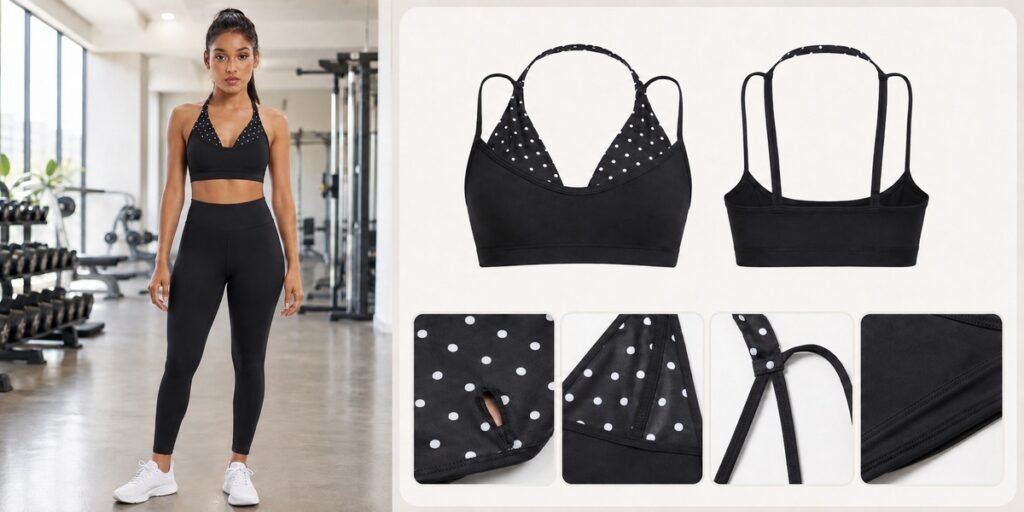
OEM Activewear Manufacturing From Tech Pack to Controlled Bulk Production
MOVEVOX supports established activewear brands that already have a Tech Pack, specification or defined product direction and need a manufacturing partner to convert those inputs into approved samples and controlled bulk production. Our Yiwu-based system combines Seamless and Cut & Sew manufacturing, technical review, sampling, specification control, quality inspection and managed production capacity under one accountable project interface.
- Seamless and Cut & Sew production under one managed manufacturing system.
- Technical review, sampling, specification freeze and bulk handover before scale.
- 28 Santoni seamless machines, managed production capacity and 5 QC personnel.
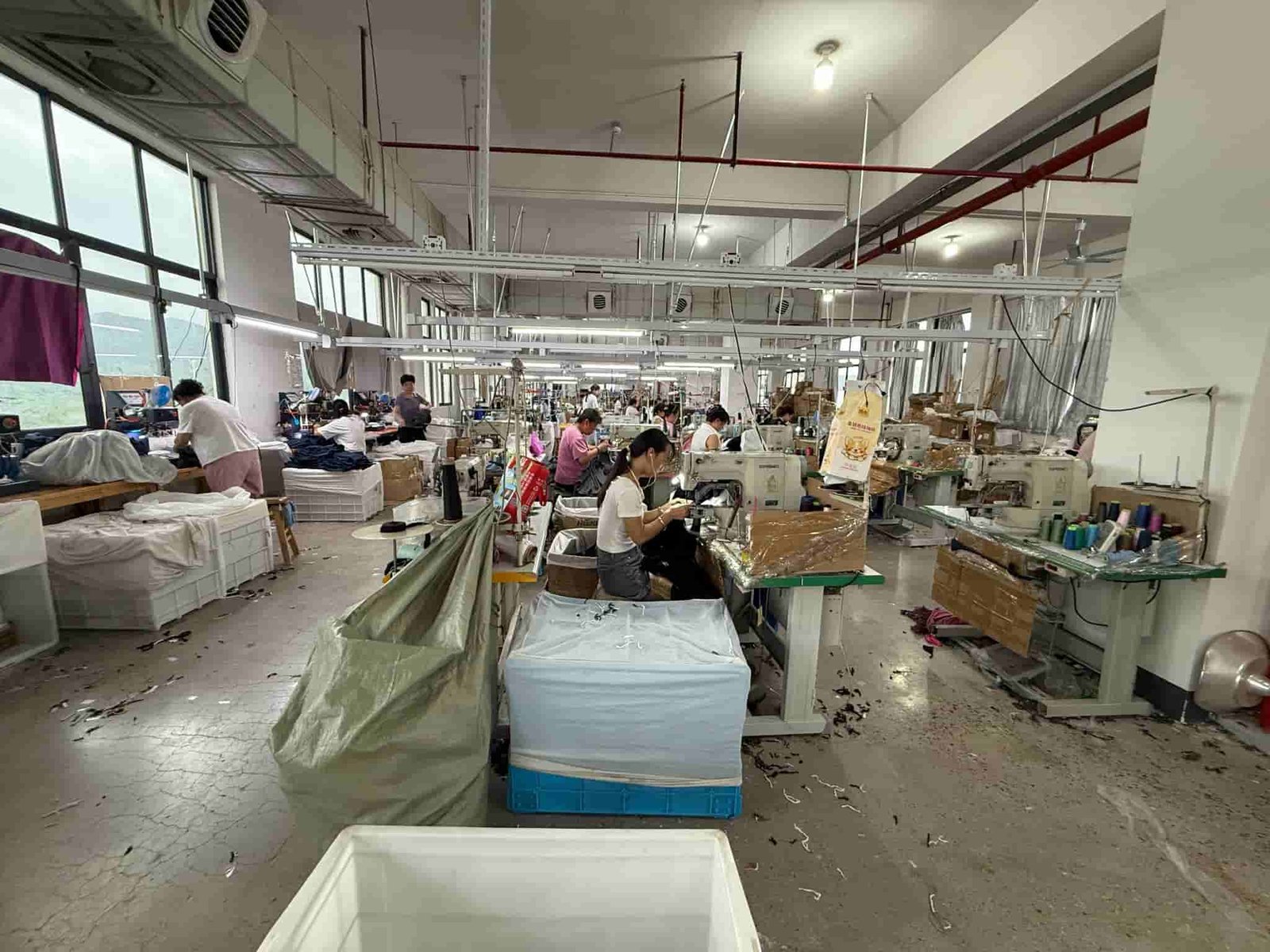
28 Santoni seamless machines plus Cut & Sew capability in our core production system.
Choose the Right Activewear Development Route
OEM, development-led ODM and Private Label can start from different levels of product readiness. For brands with a complete Tech Pack or controlled specification, the OEM route keeps customer-approved requirements at the center of development and production.
| Decision Point | OEM | Development-Led ODM | Private Label |
|---|---|---|---|
| Best Starting Point | Complete Tech Pack, measurements, materials and product specifications already controlled by your team. | Defined concept or partial specification requiring structured development before bulk manufacturing can begin. | Existing product platform selected for brand, color, label or packaging customization. |
| Buyer Provides | Released design direction, specifications, measurements, BOM, artwork and approval decisions for key requirements. | Brand direction, target customer, functional goals, references, target cost and approval feedback. | Product selection, branding artwork, color direction, label information and packaging requirements. |
| MOVEVOX Handles | Technical review, manufacturability questions, sampling, production engineering, controlled bulk execution and quality checks. | Material, structure and sample-development support that converts the concept into production-ready specifications. | Customization execution across approved product, logo, labels, color options and packaging scope. |
| Design Control | Customer specifications remain the governing basis; key design intent is not changed without approval. | Development decisions are proposed collaboratively and require customer review before specification release. | Core product platform remains established while approved branding and presentation elements are customized. |
| Sample Purpose | Verify the Tech Pack, fit, materials, construction, branding and production standard before bulk release. | Turn concept decisions into physical samples, revisions and an approved manufacturing specification. | Confirm selected product, branding details, labels, colors and packaging before order release. |
| Approval Responsibility | Customer approves product, revisions and final production standard before MOVEVOX proceeds to bulk. | Customer approves development direction, sample revisions and the final specification before bulk. | Customer approves selected product and all customized brand-facing elements before production. |
| Best Suited For | Established brands with internal product development, sourcing or technical teams managing defined specifications. | Brands with clear commercial direction but incomplete engineering information for production. | Buyers prioritizing faster brand execution from an existing product development base. |
Choose OEM when your team already controls the product specification and expects the manufacturer to review manufacturability, build samples, resolve technical questions and reproduce the released standard in bulk. Choose development-led ODM when the product direction still needs engineering support before a production-ready specification exists. Private Label is more suitable when the starting point is an existing product platform with brand, color, label or packaging customization. In every route, customer approval remains the release point for major product decisions.
What Established Buyers Need From an OEM Supplier
Mature buyers evaluate an OEM supplier against execution risk, not presentation alone. The following issues typically determine whether a factory can move from sample approval into repeatable production and remain manageable as SKU count or order volume increases.
Product Fit
An OEM supplier must understand whether each style belongs in a Seamless or Cut & Sew route and what product risks follow from that structure.
Choosing the wrong manufacturing route can create avoidable fit, construction, material and consistency problems before development has properly started.
MOVEVOX supports both manufacturing systems and reviews product structure, materials, measurements and functional requirements before selecting the appropriate development and production route for each OEM style.
Development Fit
Tech Packs still require manufacturability review because measurements, construction, materials, artwork or commercial conditions can conflict even when the file set appears complete.
Unresolved technical questions can surface late as sample failure, repeated revisions, unexpected MOQ changes or inconsistent instructions between development and production.
MOVEVOX reviews technical inputs before sampling, separates executable items from customer or supplier confirmations and risks, then records key decisions in the current project version before sample execution.
Production & Delivery
A supplier must be able to convert the approved standard into actual production while controlling materials, facility allocation, WIP, inspection and shipment-readiness conditions.
Capacity without release controls can produce late surprises when order volume, SKU complexity, material readiness or quality issues change the original production plan.
MOVEVOX uses its Yiwu core base and managed satellite network under unified materials, PMC and QC coordination, with project-specific capacity review before delivery commitments are confirmed.
Quality & Compliance
Mature buyers need quality standards, inspection evidence, traceability and audit access that can be reviewed against their Tech Pack, QC manual or project requirements.
Generic quality claims do not help sourcing or QA teams verify sample-to-bulk control, investigate deviations, support onboarding or demonstrate how failed checks are handled.
MOVEVOX supports specification freeze, approved samples, first-article, inline, measurement, finished-garment and final checks, plus customer audits, third-party inspection and CAPA where these controls apply to the project.
Long-Term Scale
A long-term OEM partner must support repeat orders and changing order size without allowing production standards, materials, facilities or responsibility to fragment as the program grows.
Frequent supplier switching or unmanaged outsourcing can increase version errors, communication interfaces, inconsistent quality expectations and difficulty assigning responsibility when problems occur.
MOVEVOX keeps one accountable project interface while using the core production base and controlled satellite capacity to support approved manufacturing allocation as volume, SKU count and repeat requirements scale.
One Managed System Across Activewear Manufacturing
For OEM activewear, capability is valuable only when development, manufacturing, materials, quality and capacity operate against the same approved information. MOVEVOX uses its Yiwu core production system and managed supply network to keep these responsibilities connected.
Product Development
Technical review converts customer Tech Packs, measurements, BOM, artwork and product requirements into executable development decisions, sample versions and released production references before bulk manufacturing begins.
Seamless Manufacturing
The core production system includes 28 Italian Santoni seamless knitting machines for products requiring engineered yarn, knitting structures, compression zones, rib, mesh, texture and seamless construction.
Cut & Sew
MOVEVOX also maintains Cut & Sew capability, with approximately 24 main sewing and garment-production machines in the core system for pattern-based activewear construction, assembly, workmanship control and finishing.
Materials & Branding
Material sourcing, colors, logos, labels, trims and packaging are coordinated against approved project requirements so production teams do not independently substitute key customer-defined components during execution.
Quality Control
Five QC personnel support incoming, pre-production, first-article, inline, measurement, finished-garment, branding, packaging and final inspection activities, with customer standards and approved tolerances taking priority where specified.
Scalable Production
The Yiwu core base establishes technical and quality standards, while eight major managed satellite facilities in Yiwu and Guangzhou can support approved production allocation under unified PMC and QC control.
Unified Management
The operating principle is one accountable MOVEVOX interface rather than a collection of independent factories making separate decisions. The core base handles development, key manufacturing, standard setting and quality control; managed satellite capacity is used when suitable for standardized production and scale. Tech Pack versions, materials, production allocation, PMC, inspection requirements and final release remain under MOVEVOX coordination. Production routing is therefore transparent and project-dependent rather than presented as if every process happens in one building.
OEM Activewear Categories You Can Develop With MOVEVOX
Explore the activewear categories MOVEVOX supports for OEM development and manufacturing. Each style may follow a Seamless, Cut & Sew or mixed development route depending on product structure, material, fit requirements, branding and the released technical specification.

Yoga Leggings
Develop high-stretch yoga leggings around buyer-defined fit, waistband structure, measurements, opacity, fabric or seamless organization, performance requirements and approved branding details.
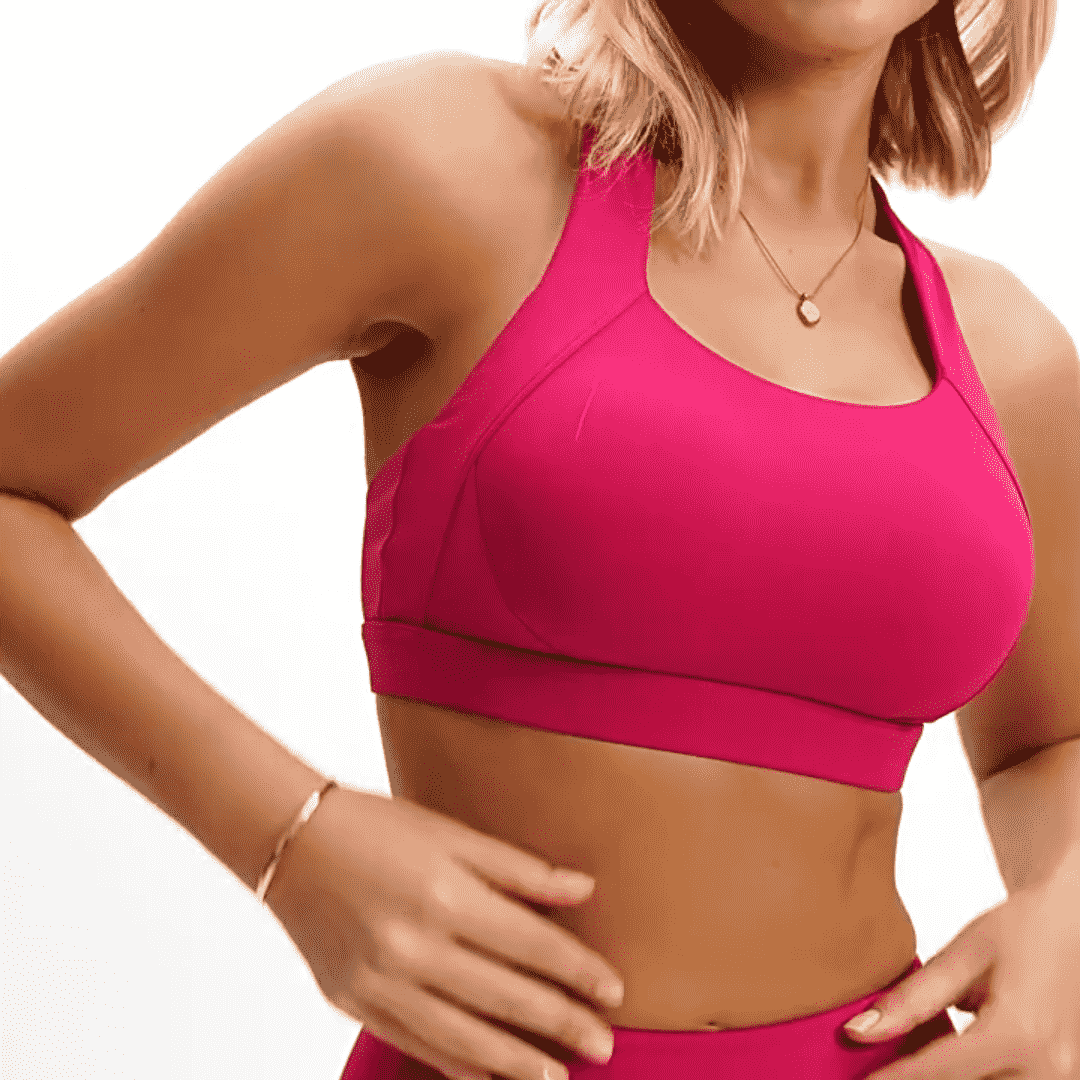
Sports Bras
Develop sports bras around target support, fit, straps, underband, cups or padding, stretch materials, construction details and buyer-approved measurements.
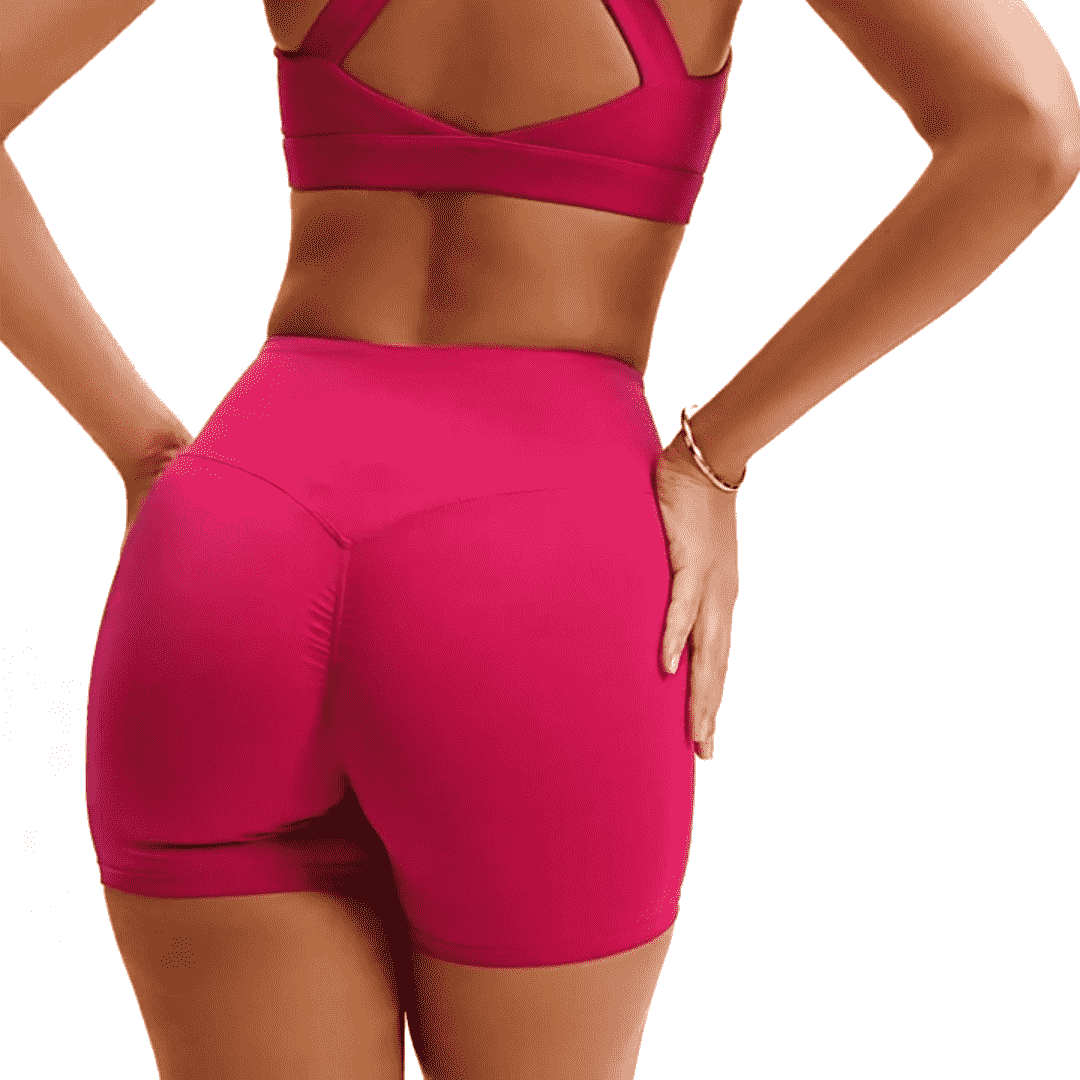
Yoga Shorts
Develop yoga shorts using approved fit, rise, waistband, inseam, stretch requirements, construction and branding specifications for the intended training or studio use.
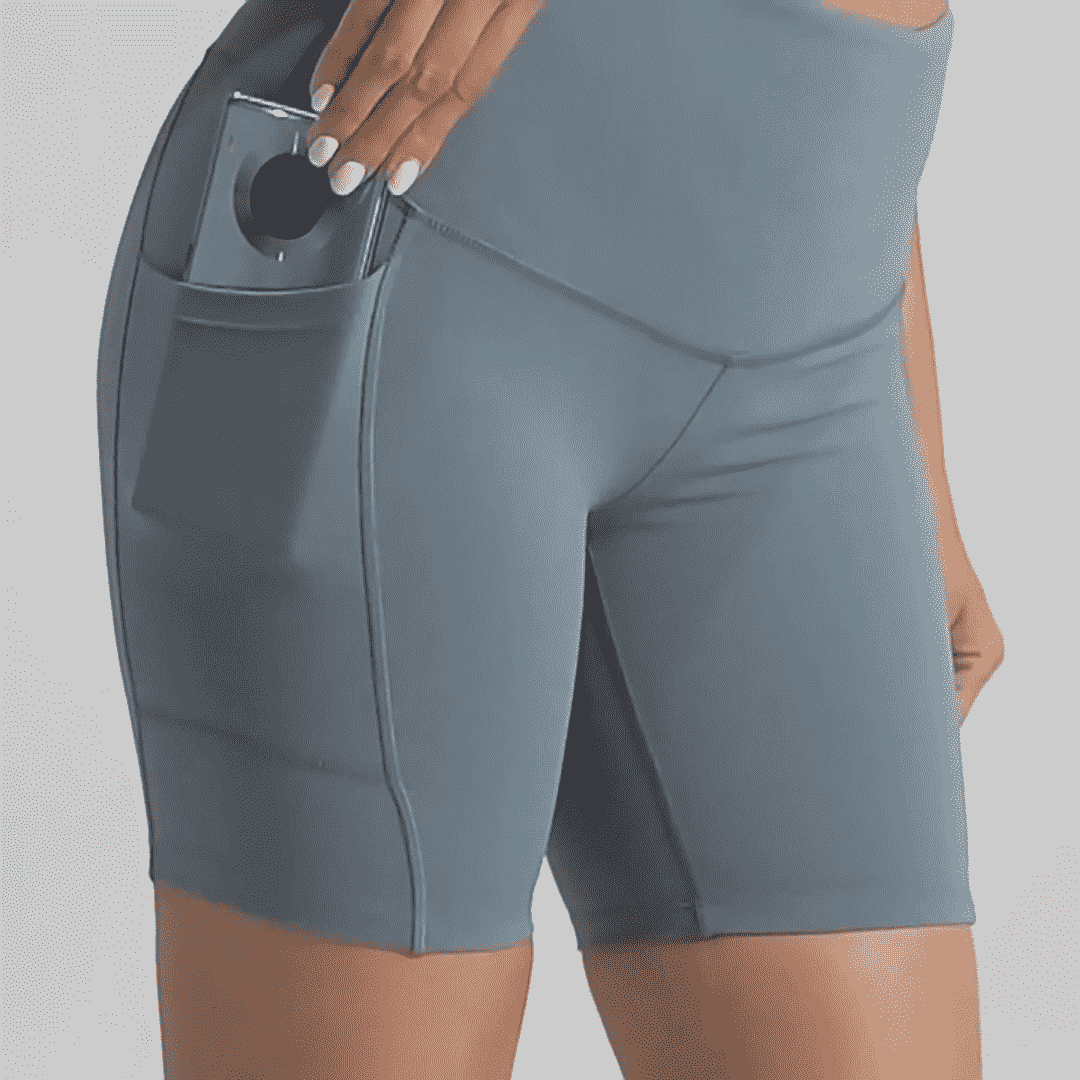
Biker Shorts
Develop fitted biker shorts with controlled inseam, compression or stretch direction, waistband stability, measurements, branding details and product-specific workmanship requirements.
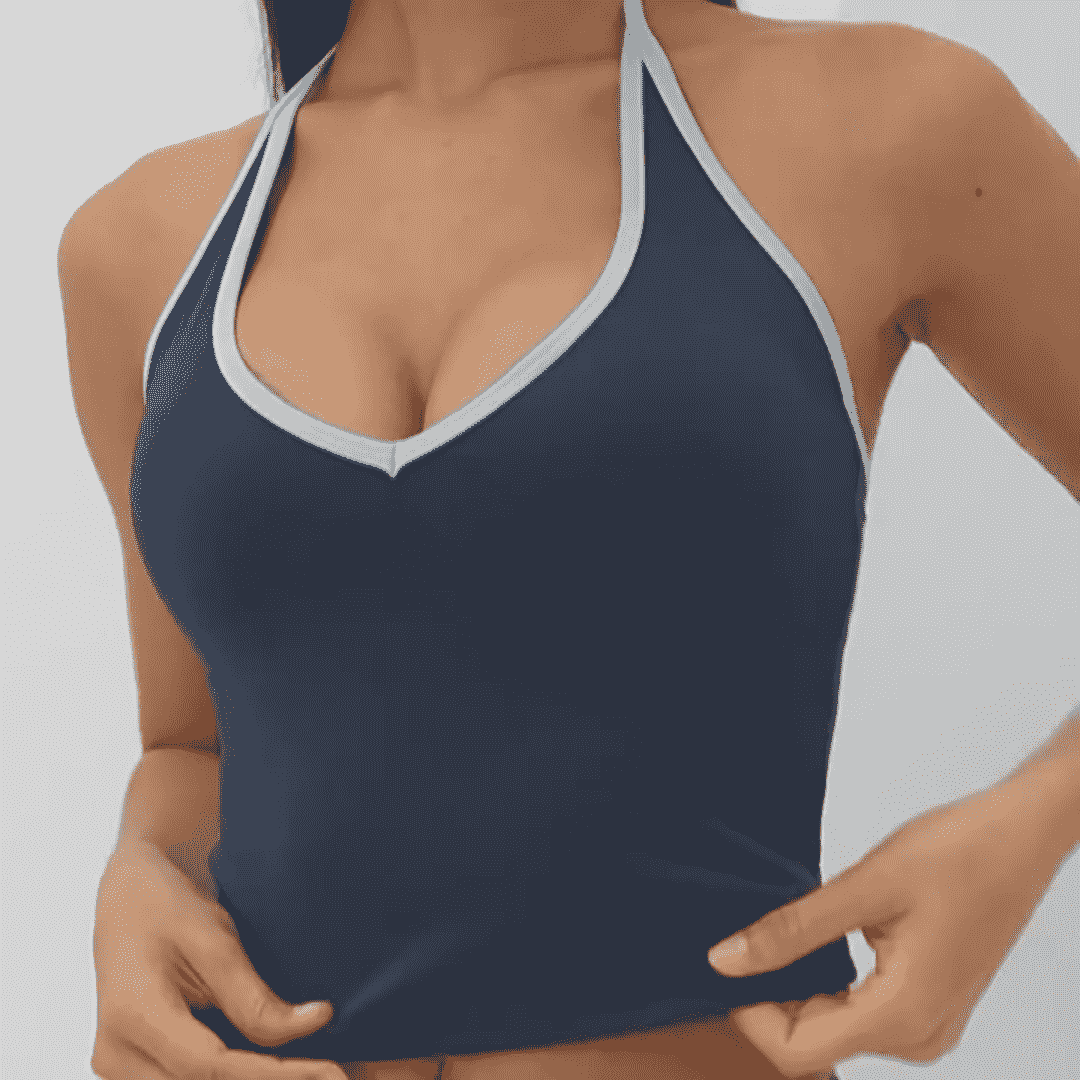
Tank Tops
Develop fitted or relaxed activewear tank tops from buyer specifications, with controlled neckline, armhole, length, fabric, seam construction, logo and label placement.

T-Shirts
Develop activewear T-shirts around fit, fabric weight, stretch, neckline, sleeve construction, workmanship, branding and label requirements defined in the project specification.
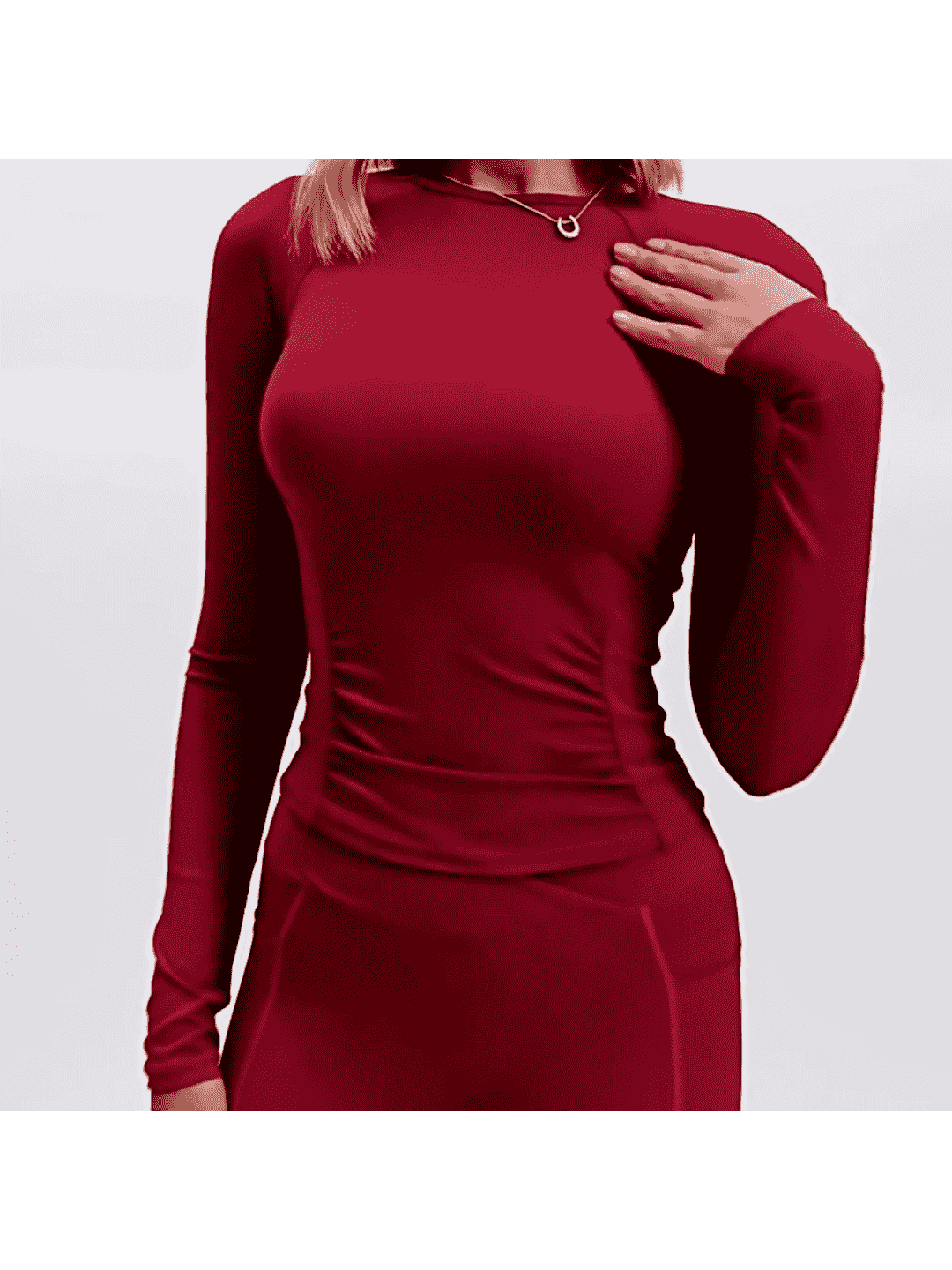
Long Sleeve Tops
Develop long-sleeve active tops with attention to fit, sleeve mobility, fabric stretch, seam placement, neckline, hem construction and brand execution.
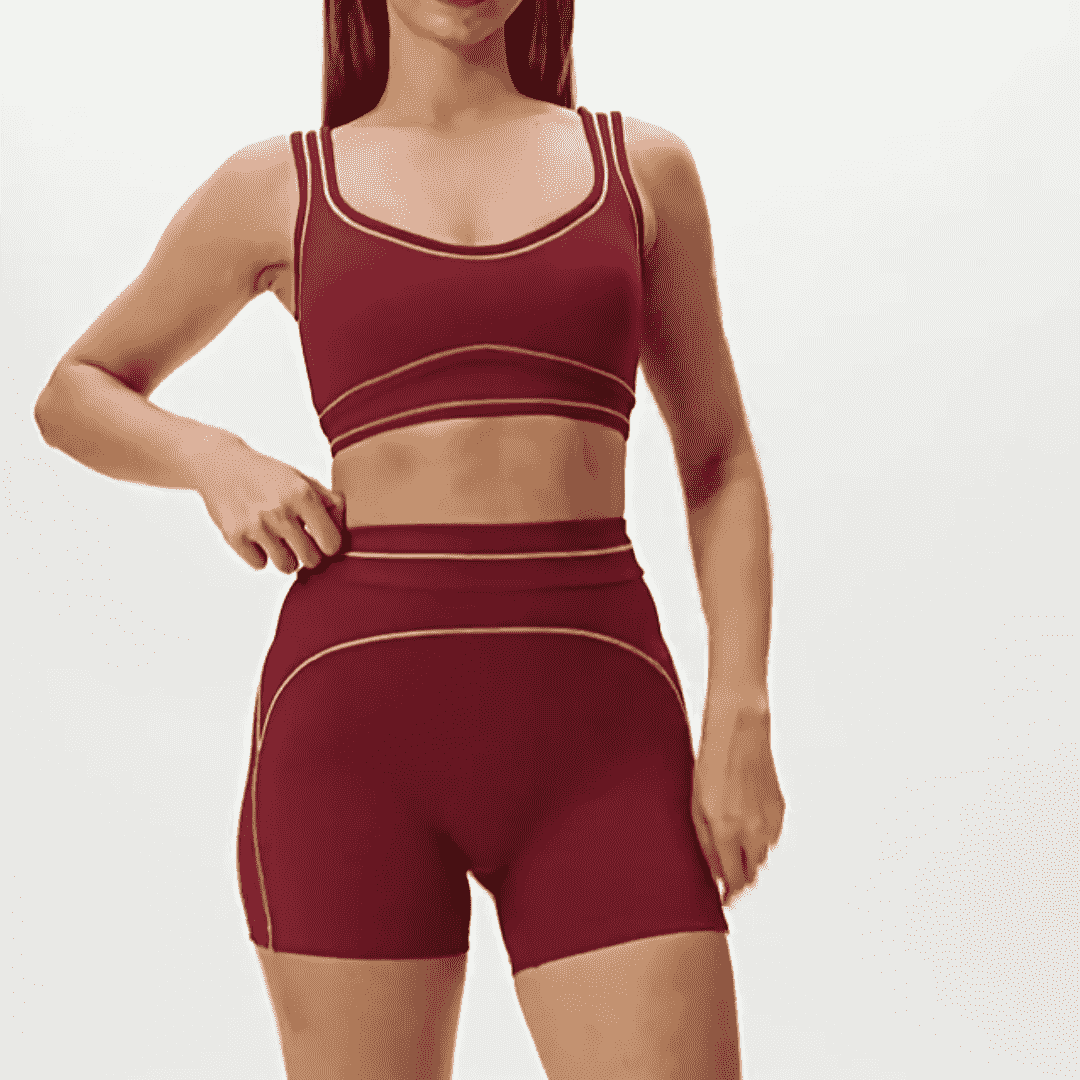
Yoga Sets
Coordinate leggings, shorts, bras or tops as one OEM set, aligning color, fabric direction, fit language, branding and packaging across related SKUs.
From Complete Tech Pack to Bulk-Ready Production
When your team already has a complete Tech Pack, MOVEVOX enters through controlled technical review rather than redesigning the product. The objective is to resolve manufacturing questions, validate the sample and release one approved standard into bulk production.
File Intake
We receive the released Tech Pack and available BOM, measurements, tolerances, materials, artwork, labels, packaging and testing requirements. The project is identified by style and version so later questions can be tied to the correct file set.
Technical Review
Before sampling, MOVEVOX checks structure, materials, measurements, construction, logo, trims, MOQ, cost, timing and quality risks. Conflicts or missing decisions are separated from items that are already executable and recorded for follow-up.
Open Points
Questions that can affect appearance, fit, manufacturability or commercial terms are documented for confirmation. MOVEVOX does not silently change key design intent when a technical issue requires a customer decision.
Material Confirmation
Approved or specified materials, colors, trims and brand components are checked against sourcing availability and project requirements. Material alternatives, where necessary, are proposed for customer confirmation before becoming part of the sample standard.
Pattern or Program
Cut & Sew styles move into pattern and construction preparation; Seamless styles move into knitting-program and yarn-structure preparation. Both routes use released technical decisions rather than informal verbal instructions during sample execution.
Sample Build
The development sample is produced against the confirmed project information and checked internally for relevant measurements, appearance, workmanship and construction before it is sent for buyer review and formal comments.
Customer Approval
Buyer comments are consolidated into the current revision path. Changes affecting fit, material, color, construction, branding or other released requirements are verified through the appropriate revised, fit, size-set or PP sample stage.
Bulk Release
Final approved decisions are written back into the production files and linked to the Approved or PP Sample. Pre-production review and first-article control then confirm that actual bulk conditions can reproduce the released standard.
Technical Review Before We Start Sampling
Technical review is the first risk gate in an OEM project. Before sample production, MOVEVOX checks whether the released inputs can be manufactured, sourced, measured, costed and inspected consistently, and identifies issues that require customer confirmation.
Product Structure
We review how the product is intended to be built, including key panels or seamless zones, load-bearing areas, functional components and assembly logic. Structural conflicts are raised before they become sample defects or bulk-production assumptions.
Measurements & Tolerances
Key points of measurement, grading information and tolerances are checked for completeness and internal consistency. Missing or conflicting critical dimensions are treated as open points because they directly affect fit, sample evaluation and later QC.
Fabric Specification
Composition, weight, stretch, recovery, handfeel, finish and any buyer-specified material requirements are reviewed against product use and sourcing feasibility. Where the exact material is unavailable, any proposed alternative requires customer confirmation.
Color Standard
Pantone references, physical swatches, lab dips or other approved color standards are identified before execution. Screen color alone is not treated as the sole production standard for customized fabric, yarn or branding components.
Construction Details
Seam type, stitch, bonding or finishing requirements, waistband, pocket, cup, zipper, binding and other construction details are reviewed for manufacturability. Any requested method that cannot be reproduced reliably is raised for technical resolution.
Artwork & Logo
Logo artwork, size, color, placement and intended application method are checked against the garment material and stretch area. Branding requirements are reviewed before sampling so the approved method can be carried into bulk.
Trims & Components
Elastic, bra pads, zippers, drawcords, buckles and other components are checked where the style uses them. Source, specification, color and functional compatibility must be confirmed before they become part of the released BOM.
Labels & Packaging
Main labels, care labels, size labels, hangtags, polybags, stickers, barcodes and other packing requirements are reviewed where applicable. The purpose is to prevent brand-facing details from being treated as an afterthought after garment approval.
MOQ & Cost Fit
The requested specification is reviewed against garment MOQ, material minimums, branding or packaging minimums, and target commercial conditions. If product complexity or customization conflicts materially with the target cost, the issue is raised before sampling.
Testing & Compliance
Where the buyer or target market requires testing, restricted-substance controls, labeling rules or third-party verification, the requirement should be identified early. Testing scope and evidence are handled according to the actual product, material and requested standard.
A review can begin even when some supporting information is incomplete, but missing critical inputs may need resolution before sampling. MOVEVOX separates executable items, buyer-confirmation items, supplier-confirmation items and risks so the project does not progress on hidden assumptions. For complex engineering work, scope and responsibility are confirmed project by project.
A Controlled Sample Approval Process Before Bulk
Sampling is managed as an approval system, not a single prototype event. Each sample should answer a defined question, carry a current version and produce decisions that can be written back into the production standard.
Development Sample
The first development sample tests whether the confirmed Tech Pack, pattern or seamless program, materials and construction can be translated into a physical garment. It is used to expose major technical, proportion, workmanship or material issues before the product moves into more detailed fit and approval work.
Customer Inputs
- Released project brief and current Tech Pack
- Confirmed material and construction direction for sampling
MOVEVOX Outputs
- First physical sample for structured review
- Initial measurement and workmanship observations for review
Pass Criterion: The sample is ready to progress when major construction assumptions are executable and open issues are clearly recorded.
Fit & Revision
Buyer fit comments and technical observations are consolidated into one current revision path. MOVEVOX reviews whether each requested change affects measurements, pattern or seamless structure, materials, construction, branding or other variables so revisions are applied deliberately rather than as isolated sample-room changes.
Customer Inputs
- Consolidated buyer comments with clear references
- Updated measurements or fit priorities where needed
MOVEVOX Outputs
- Current revision list with clearly defined actions
- Revised technical decisions for sample execution
Pass Criterion: The revision can progress when requested changes are unambiguous, technically reviewed and linked to the current project version.
Revised Sample
The revised sample verifies that approved corrections were applied and that one change has not introduced a new conflict elsewhere in the garment. Depending on the issue, review may focus on fit, fabric, color, logo, workmanship or a combination of controlled changes.
Customer Inputs
- Approved revision list and latest specifications
- Buyer-confirmed corrections and priority issue scope
MOVEVOX Outputs
- Revised sample against current approved changes
- Updated measurement or issue verification record for review
Pass Criterion: The sample passes this stage when the defined revision scope is verified and remaining comments are formally identified.
Size Set
Where the project requires size-set validation, representative or full sizes are checked to confirm grading, measurements, fit progression and construction behavior across the intended size range. This step is project-dependent and is not automatically required for every OEM style or every repeat order.
Customer Inputs
- Approved base-size standard and grading rules
- Required representative or full size range
MOVEVOX Outputs
- Size-set samples for buyer or internal review
- Measurement findings across all checked sample sizes
Pass Criterion: The size set is released when required sizes meet the approved measurement and fit criteria within agreed tolerances.
PP / Approved Sample
The PP or final approved sample becomes a key physical reference for bulk preparation together with the released Tech Pack, measurement specification, BOM, color, artwork and packaging requirements. Approval scope must be explicit because one approved sample does not automatically approve every uncontrolled variable.
Customer Inputs
- Final released files and approved materials
- Closed revisions and agreed approval scope
MOVEVOX Outputs
- Identified PP or approved sample reference
- Final approval record for bulk handover
Pass Criterion: Bulk handover begins only after the defined approval scope and supporting production requirements have been formally released.
How Approved Samples Become Bulk Production Standards
Sample approval becomes useful only when approved decisions are converted into controlled production information. MOVEVOX links buyer approval, released files, the Approved or PP Sample, pre-production review and first article so bulk production can be checked against one current standard.
Approval & File Write-Back
Buyer approval identifies the accepted sample version and the actual approval scope. Approved changes are then written back into the current Tech Pack, measurement specification, BOM, artwork, color, labels or packaging records as applicable. Unresolved items remain open instead of being treated as approved by assumption.
Specification Freeze & PP Reference
The released specification becomes the governing production reference, while superseded versions are removed from active use. The Approved or PP Sample is identified as a physical reference where applicable and linked to the current documentation and defined approval scope.
Pre-Production Review
Before bulk release, relevant teams review the PO, current specification, Approved or PP Sample, materials, color, branding, labels, packaging, quality requirements, delivery conditions and remaining risks. Critical open items are resolved before production is expanded.
First Article
A representative first article is produced using actual bulk materials and assigned production conditions. It is checked against the frozen specification and approved physical reference before wider production is released. Failed checks require correction and verification first.
Bulk Release
Bulk production proceeds after the required technical, material, approval and quality gates are ready. Inline and final inspections then compare production against the released specification, Approved or PP Sample and applicable customer tolerances throughout execution.
Timing depends on release conditions. These are production-release milestones rather than fixed calendar days. Timing can change with product complexity, material readiness, buyer feedback, sample approval, testing or inspection requirements and production allocation.
See the Manufacturing System Behind Your OEM Project
MOVEVOX operates a Yiwu-based core production system that connects product development, Seamless and Cut & Sew manufacturing, quality control, packing and shipment preparation. Buyers can verify these capabilities through the production areas involved in actual OEM execution.
Yiwu Production Base
MOVEVOX’s core production base is located in Yiwu, Zhejiang, China, with approximately 6,000 square meters of actual production space across about six floors. The site functions as the technical, sample, core-production and quality-control center of the manufacturing system. Buyers can arrange an on-site visit or live video verification, subject to production scheduling and the confidentiality of other customer projects.
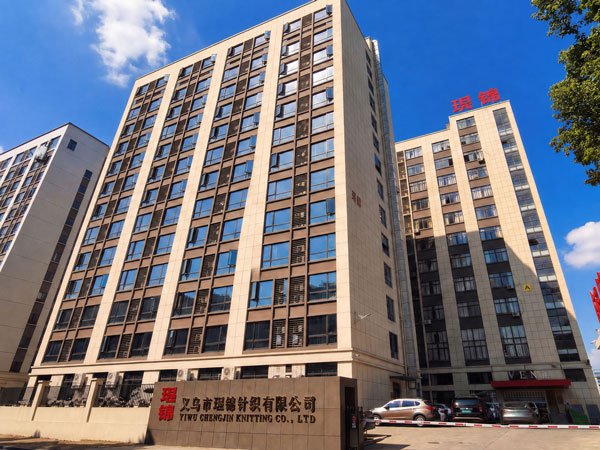
MOVEVOX core production base in Yiwu, Zhejiang.
Santoni Seamless Area
The core Seamless system includes 28 Italian Santoni seamless knitting machines. This manufacturing route supports activewear products whose performance depends on yarn selection, knitting programs, structure, rib, mesh, compression zones, texture and controlled sizing rather than conventional cut-panel assembly.
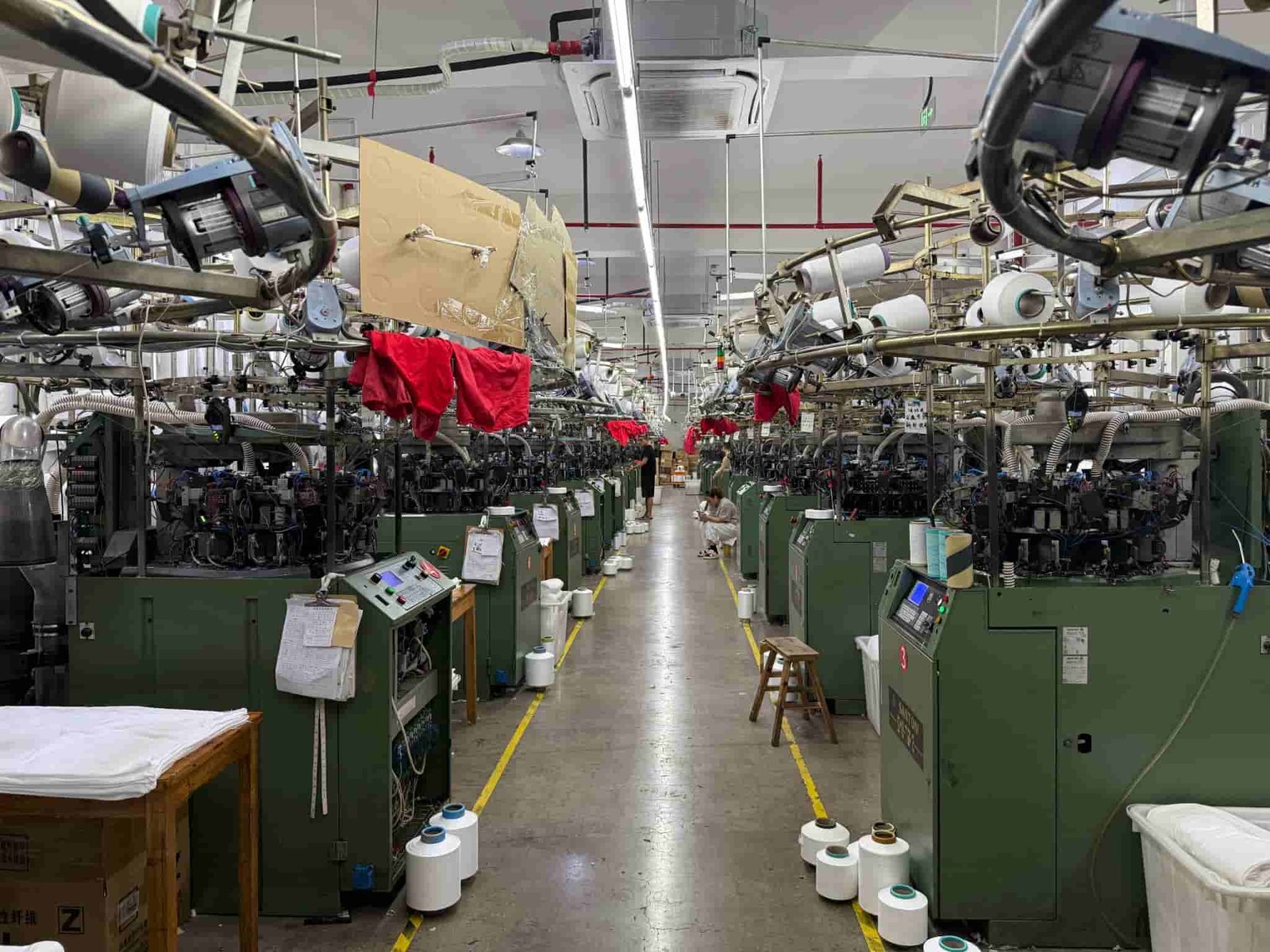
Santoni seamless knitting capability within the MOVEVOX core production system.
Cut & Sew Area
MOVEVOX also maintains Cut & Sew manufacturing capability, with approximately 24 main sewing and garment-production machines in the core system. This route supports pattern-based activewear construction, assembly, workmanship control and finishing for styles that are more suitable for conventional garment construction.
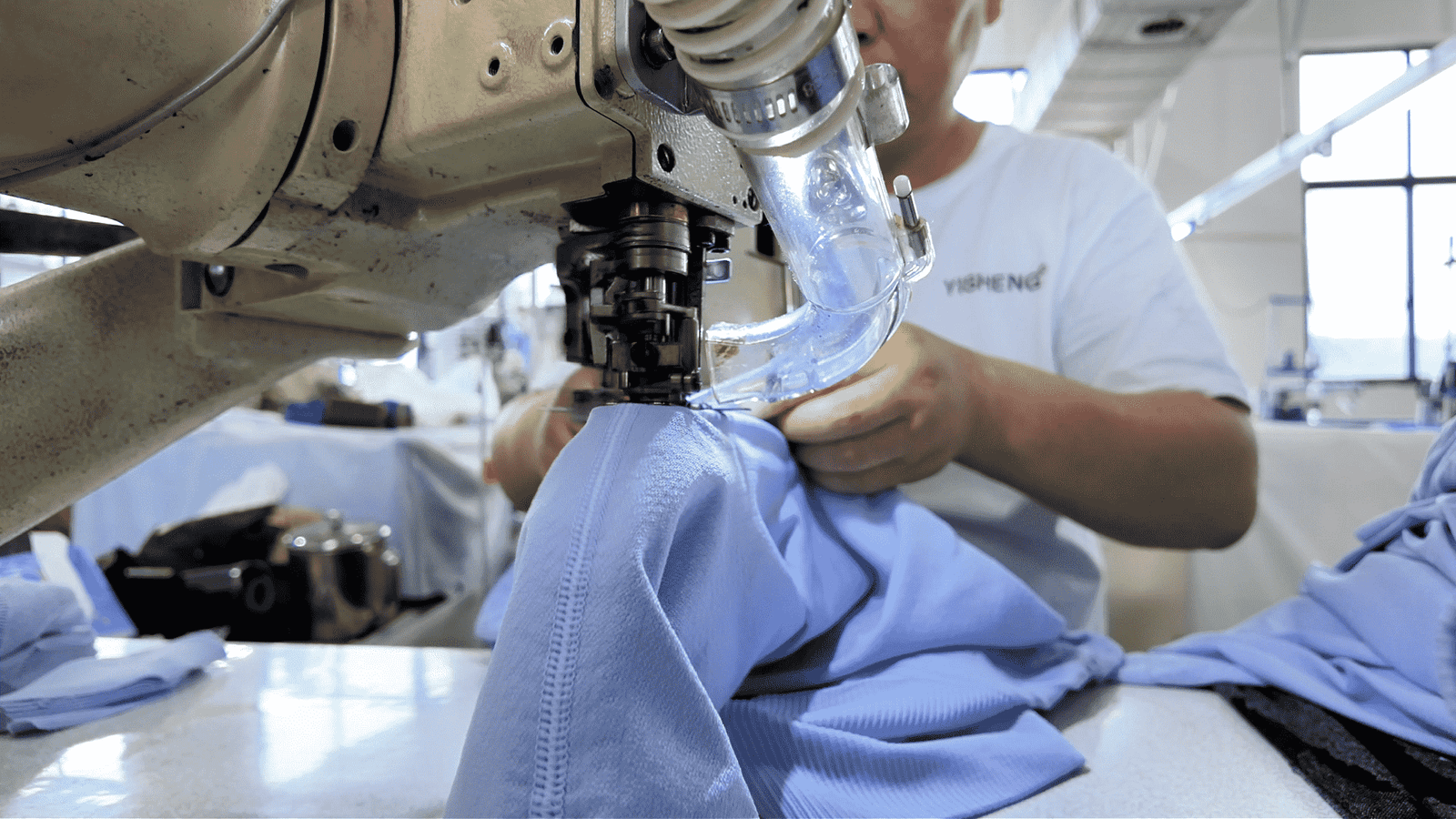
Cut & Sew activewear construction at the MOVEVOX core production base.
Sample Development
The development area converts approved Tech Packs and product requirements into patterns or seamless programs, development samples, revisions and production references. Technical review, sample construction, measurement and revision control are completed before the project moves toward approved bulk standards.
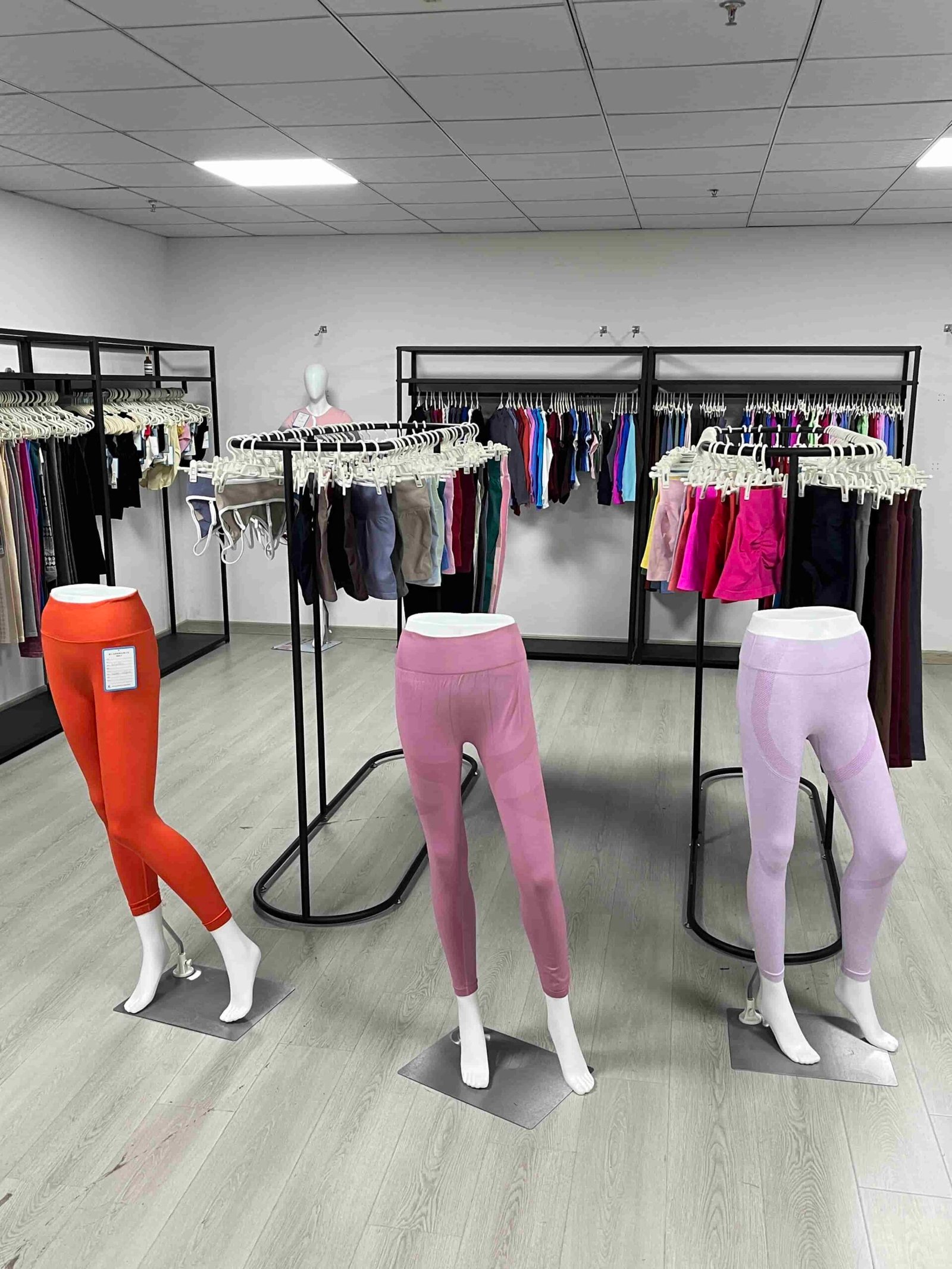
Product development, sampling and measurement before bulk release.
QC Inspection
Five QC personnel support the MOVEVOX quality-control chain. Relevant inspection stages can include material checks, first-article review, inline inspection, measurement, workmanship, logo and label verification, packaging checks and final inspection according to the requirements of each project.
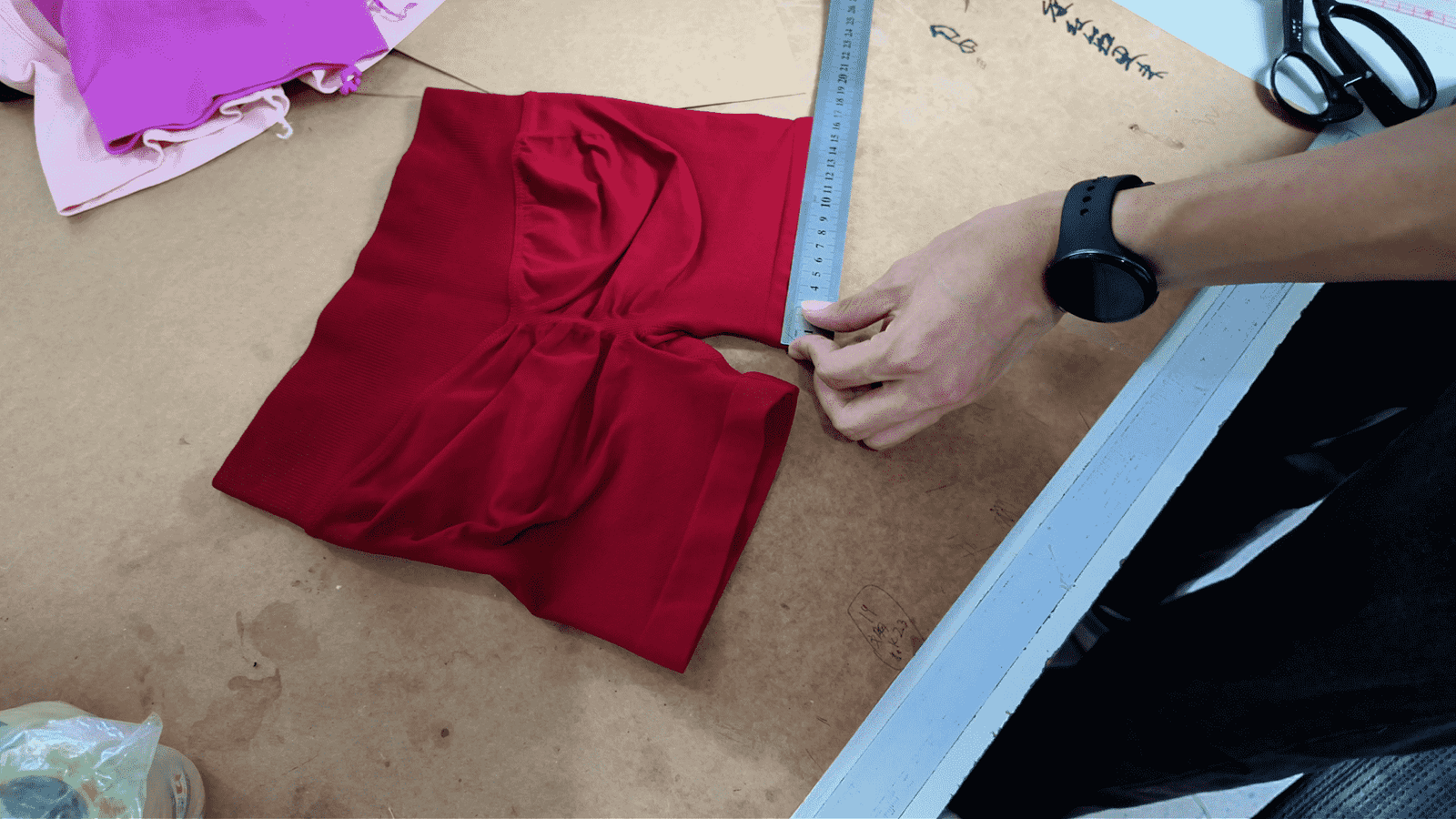
Product measurement and quality inspection against approved requirements.
Packing & Warehouse
After finished-garment and final checks, approved products move into the packing and shipment-preparation process. Labels, individual packaging, SKU separation, carton information and order requirements are checked before cargo is released for shipment.
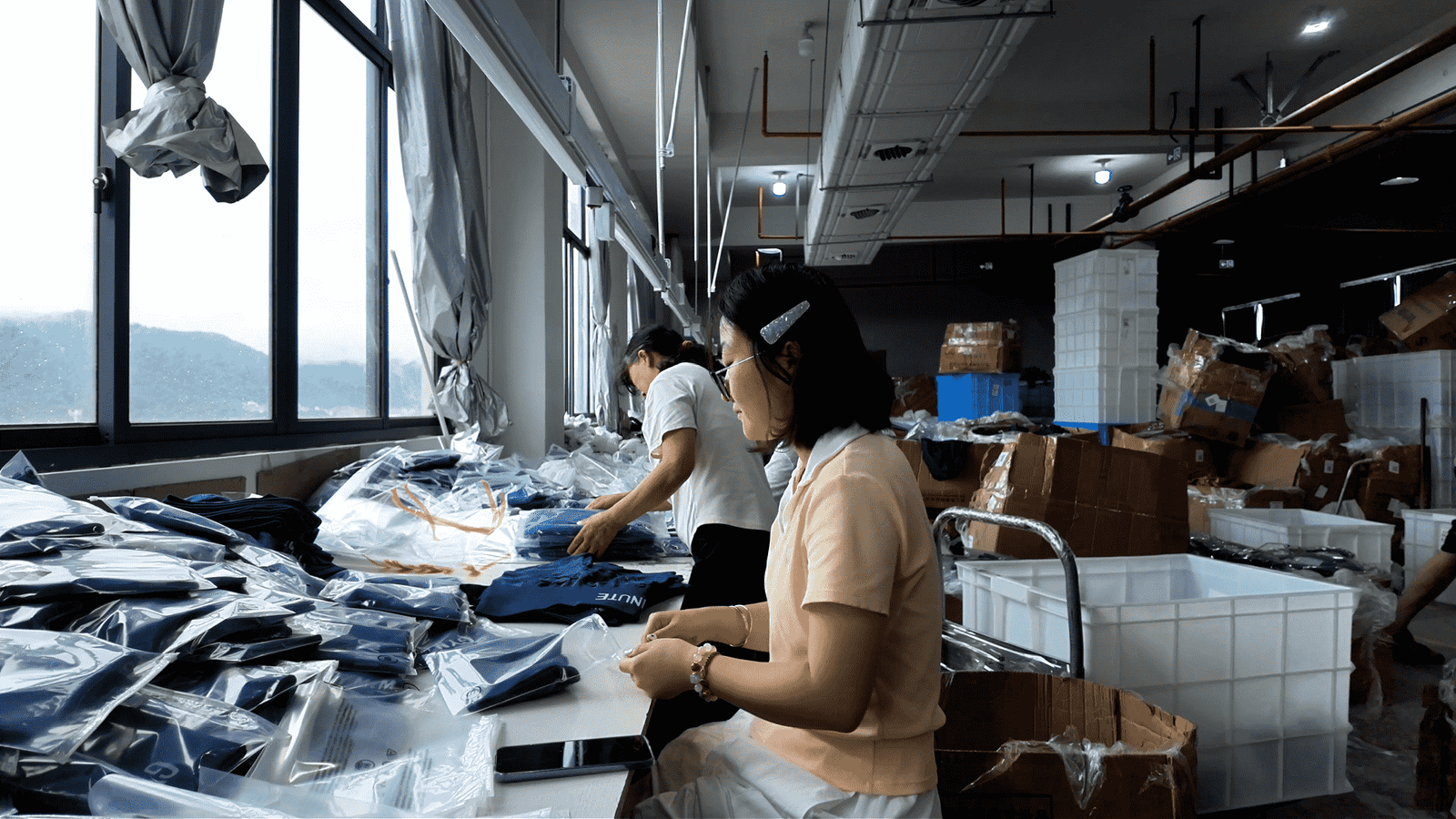
Packing, SKU control and carton preparation before shipment.
Bulk Production Follows Controlled Release Points
Bulk production starts after approved information is released, not simply after a PO arrives. MOVEVOX uses defined readiness, material, first-article, process-inspection and final-release points so production can be stopped or corrected when a critical requirement remains open.
Order Release
The PO, style and SKU quantities, released technical files, approved sample status, commercial terms and required delivery conditions are identified before the project moves into production preparation. Critical open information remains visible rather than being assumed complete.
Production Readiness
PMC coordinates the production plan, facility allocation, material timing, quality requirements, packaging needs and critical milestones. The objective is to confirm that the approved order can enter the planned production route under controlled conditions.
Material Control
Fabric, yarn, trims, branding components and packaging materials are tracked to the required production date and checked as applicable before use. Unreleased substitutions or unresolved material deviations should not enter bulk production.
First Article
A representative first article is produced using actual bulk materials and the assigned production conditions. It is checked against the frozen specification and Approved or PP Sample before wider production is released.
Bulk Production
After first-article approval, the released style enters Seamless or Cut & Sew bulk production according to the assigned facility, program or pattern, materials and process requirements. Production changes remain subject to controlled review.
In-line QC
QC checks work in progress against relevant measurements, workmanship, construction, color, seamless structure, branding or other defined control points. Negative trends can trigger expanded inspection, hold, correction or rework before the issue spreads.
Final Inspection
Finished garments are reviewed against the applicable approved standards before shipment release. The inspection scope can include measurements, appearance, workmanship, function, branding, labels and packaging, with customer requirements taking priority where defined.
Packing & Shipment
Approved products are packed according to the released packing requirements, separated by the required SKU or carton information, and prepared for cargo release. Shipment proceeds after the relevant quality and order-release conditions are satisfied.
Capacity Is Defined by Quality-Released Output
Capacity information should represent quality-released garments that can be managed and shipped, not the theoretical sum of machine outputs. MOVEVOX therefore separates core equipment, managed network resources and normal combined delivery capacity from the project-specific capacity check required before commitment.
28 Santoni Machines
MOVEVOX’s core production system includes 28 Italian Santoni seamless knitting machines supporting controlled seamless development and production for applicable activewear styles.
~24 Garment Machines
The core system also includes approximately 24 main sewing and garment-production machines supporting Cut & Sew activewear construction, assembly and finishing.
8 Managed Satellites
Eight major managed satellite facilities, mainly in Yiwu and Guangzhou, can extend approved production capacity while MOVEVOX coordinates standards, materials, PMC and QC.
~6,000 m²
The Yiwu core production base uses approximately 6,000 square meters and acts as the technical, sampling, core-production and quality-control center of the network.
150K–200K pcs/month
MOVEVOX’s current combined normal managed monthly delivery capacity is approximately 150,000–200,000 pieces, subject to style, SKU, materials, facility allocation and quality-release requirements.
Approx. 300–50,000 pcs/order
Typical individual order quantities can range from approximately 300 to 50,000 pieces. Actual production planning depends on style, SKU structure, materials, manufacturing route, required delivery timing and available capacity at the time of order review.
Capacity scope: The combined monthly figure includes controlled network capacity. It is not a simple sum of theoretical Seamless and Cut & Sew machine output. Project-specific capacity must be reviewed before a delivery commitment is confirmed.
Quality Control From Material Release to Shipment
MOVEVOX currently has five QC personnel within its manufacturing system. For OEM activewear, quality control is organized around released specifications, Approved or PP Samples, defined inspection points and records rather than a single final check or a general “strict QC” claim.
Incoming Materials
Fabric, yarn and relevant components are checked against the project’s approved requirements before use. Depending on the material and project, this can include composition information, color, GSM, shrinkage, stretch or other required incoming controls.
- Check against approved material and color requirements
- Hold unapproved or visibly nonconforming materials
Pre-Production Review
Before bulk starts, the team reviews the released Tech Pack, measurements, Approved or PP Sample, materials, color, logo, labels, packaging, quality requirements and open risks.
- Use only the current released project version
- Close critical open items before bulk release
First Article
A representative first article is made under actual bulk conditions and checked before wider production. Review can cover measurements, construction or seamless structure, workmanship, color, branding, function and appearance.
- Compare against frozen production references
- Correct failures before wider production release
Inline Inspection
During production, QC reviews work in progress for relevant product risks and trend changes. Repeated measurement drift, workmanship defects, seamless irregularities or branding errors can trigger expanded checks, correction or rework.
- Check product-specific risks during production
- Escalate repeated trends before defects spread
Measurement Control
Measurements are checked using the released measurement specification and agreed points of measurement. Buyer-defined tolerances take priority during product evaluation.
- Measure against released POM and tolerances
- Record out-of-tolerance findings for corrective action
Finished Garment
Finished garments are checked for appearance, dimensions, workmanship, symmetry or fit-related concerns, functional components, branding details and material condition as relevant to the style.
- Review workmanship and functional product details
- Use checkpoints from approved project requirements
Branding & Packing
Logo execution, main labels, care and size labels, hangtags, barcodes and packaging are checked where included in the project. Approved branding and packing files remain part of the order standard.
- Verify branding against released artwork
- Match packing details to approved requirements
Final Release
Before shipment, final inspection confirms the relevant finished-product and packaging requirements against the approved standard. Buyer or third-party inspection can also be supported when agreed for the project.
- Release shipment after required checks pass
- Support buyer or third-party inspection when agreed
Nonconformance & CAPA
When a nonconformance is identified, affected material or work in progress can be held and isolated. The response can include correction, rework, re-inspection, cause investigation and CAPA according to the scope and severity of the issue.
- Hold and isolate affected product where required
- Verify correction before final release
Trace Every OEM Order From PO to Shipment
For multi-SKU OEM programs, traceability should connect customer requirements with the material, production, inspection, packing and shipment records used to execute the order. MOVEVOX’s document-control logic supports both forward tracing and investigation back from a shipment or affected batch.
Customer Order
The customer and internal project identity establishes the commercial and technical context for later records. Confidential business information remains controlled and is not intended for public disclosure.
Order FilePurchase Order
The PO links ordered styles, quantities, delivery requirements and other confirmed commercial information to the production project. It provides the formal order reference used across internal planning and execution.
PO RecordStyle & SKU
Style, color, size and SKU identifiers separate different product combinations within the same order. This level helps production, QC and packing teams avoid treating a multi-SKU PO as one undifferentiated batch.
SKU MatrixMaterial Lot
Fabric, yarn and relevant supplier-sourced components can be linked to material or batch information where applicable, supporting investigation of color, composition, performance or other material-related deviations.
Lot RecordProduction Site
The assigned core or managed satellite production location is identified for the applicable work. Facility changes remain subject to project control rather than becoming an undocumented subcontracting decision.
Facility RecordInspection Record
Relevant first-article, inline, measurement, finished-garment or final inspection records can be associated with the style, SKU, batch or production stage needed to support quality review and corrective action.
QC RecordCarton Record
For complex or multi-SKU shipments, carton numbers and carton breakdown information help connect packed goods with the order, SKU and shipment structure while supporting checking before cargo release.
Carton ListShipment ID
The shipment reference closes the chain by linking released cartons and shipment information back to the relevant PO, styles, production and QC records. It also supports later investigation if a problem is reported.
Shipment FilePrepare MOVEVOX for Your Supplier Audit Process
MOVEVOX supports supplier verification through factory visits, live video review, technical discussion, quality documentation and project-based inspection access. Buyers can evaluate the legal entity, production base, manufacturing capability, quality controls, traceability and managed supply-chain practices as part of their own supplier onboarding process.
Supplier Review Scope
Available supplier-review evidence can be organized around the areas normally required for operational and technical qualification. The documents or records available for a specific review depend on the buyer’s requirements, project status and confidentiality boundaries.
- Legal entity and business identity
- Yiwu core production base
- Seamless and Cut & Sew capabilities
- Product-development and production processes
- Quality-control and inspection records
- Traceability evidence where applicable
- Corrective-action records where applicable
Legal Identity
MOVEVOX is the international B2B brand operated by Yiwu Chenjin Import And Export Co., Ltd., which is the legal contracting entity for the business.
Factory Verification
Buyers can verify the Yiwu production base, core Seamless and Cut & Sew capabilities, development areas, QC activities and relevant manufacturing conditions.
Audit Access
MOVEVOX supports buyer-arranged Factory Audits, Technical Audits, pre-production visits, inline inspections and pre-shipment inspections, subject to project scheduling and confidentiality controls.
Quality Records
Supplier review can include relevant approved-sample, measurement, inspection, traceability and corrective-action records where they exist and can be shared without violating customer confidentiality.
Third-Party Inspection
Buyer-nominated or third-party inspection can be coordinated for relevant production stages, including inline and pre-shipment inspection, according to the requirements of the project.
CAPA Closure
Where an audit or project review identifies a gap, corrective action can be tracked through the finding, responsible owner, action, supporting evidence and closure verification.
Certification, audit and testing documents are reviewed according to their actual holder, production location, scope, date and validity. Customer audit requirements can therefore be assessed against the specific qualification standard used by your organization.
From Tech Pack to Repeat Bulk Production
This project shows how a buyer-defined activewear specification moved through sample revision, practical product testing, bulk production and detailed SKU-level packing control.
Customer Profile
A U.S.-based fitness-focused buyer had its own product Tech Pack and was developing a multi-style activewear range including leggings, shorts, sports bras, tank tops, sets and bodysuits. The project required development from the buyer’s technical input, practical wear testing, customized branding and detailed retail-ready packing controls.
Development Challenge
The first sample was evaluated against the buyer’s actual fitness-use scenario and required further adjustment. The later bulk order also included custom packaging, inserts, labels, care labels, logos and QR-coded bag labels. Each color had four sizes, while the QR code varied by color and size, creating an additional SKU-matching requirement during QC and packing.
MOVEVOX Execution
MOVEVOX reviewed the buyer’s Tech Pack, produced the first sample and then developed a second version after receiving the buyer’s product-use and fit comments. After the revised direction was accepted, approximately 5–10 samples were prepared for further practical testing before bulk production.
During production and packing, the QR-code and size/color matching requirements were treated as dedicated control points. Products were checked by style and color with double confirmation to reduce mismatches between garment, size, color and external label information. The added control requirements meant QC and packing required approximately twice the time of a more standard order.
Tech Pack Start
Development began from the buyer’s own technical package rather than from an existing stock garment.
Two Sample Versions
A second sample was produced after the buyer requested adjustments based on the intended fitness-use scenario.
Practical Test Samples
Approximately 5–10 samples were prepared for further practical product testing before the buyer proceeded to bulk production.
SKU Packing Control
Four sizes per color and different QR labels required detailed matching during final QC and packing.
Have a Tech Pack Ready for Review?
If your team already has a Tech Pack, measurement table, BOM or clear activewear specification, send the available files for manufacturing review. MOVEVOX can identify technical questions, sampling requirements, likely manufacturing route, effective MOQ considerations and the information still needed before a production decision.
Confidential Tech Packs and unreleased product information can be handled under NDA for project review.
Understand the Commercial Starting Point Before You Request a Quote
MOVEVOX treats MOQ as a project condition rather than a single fixed number. The effective starting quantity can change with manufacturing route, color split, size allocation, material minimums, branding processes and packaging requirements.
| Order Element | Standard Starting Point | What Can Change It | Buyer Note |
|---|---|---|---|
| Seamless Garments | Approx. 100 pcs/style | Custom yarn, color, knitting-program complexity, logo tooling or packaging can increase the effective MOQ. | Use the 100-piece figure as a standard starting point rather than a universal minimum for every product specification. |
| Cut & Sew Garments | Approx. 150 pcs/style | Custom fabric, special finishing, complex trims, branding processes or packaging can increase the effective MOQ. | Use the 150-piece figure as a standard starting point under normal material and construction conditions. |
| Standard Color Split | 50 pcs/color for standard or shared supply-chain colors | Available standard or regularly sourced colors are easier to split than independently dyed custom colors. | Color allocation still needs to fit the style, total order quantity and applicable material supply route. |
| Standard Size Split |
Seamless ≥20 pcs/size; Cut & Sew ≥10 pcs/size |
Size architecture, total order quantity and product structure affect whether the requested size ratio is workable. | Share the planned size ratio early so commercial and production feasibility can be reviewed together. |
| Custom Color | Often equivalent to ~400–600 garments | Minimum dye or yarn batches, garment consumption, material composition and finishing can change the equivalent garment quantity. | This is an estimated project range rather than a fixed MOQ for every Pantone color, yarn or fabric specification. |
| Logo, Labels & Packaging | Project / supplier specific | Molded logos, custom labels, specialty trims or printed packaging may carry independent supplier minimums. | Branding-component MOQs should be confirmed separately based on the selected process and applicable supplier requirements. |
OEM Activewear Manufacturing Questions From B2B Buyers
These questions address the practical issues sourcing, product-development and QA teams commonly need to clarify before moving an OEM activewear project into technical review, sampling, supplier qualification or commercial evaluation with MOVEVOX.
1. What does OEM activewear mean at MOVEVOX?
OEM is the best fit when your team already controls the product specification, Tech Pack or other defined technical requirements. MOVEVOX reviews manufacturability, materials, measurements, construction, branding, MOQ, timing and quality risks; develops samples; records approved changes; and prepares the released standard for bulk production. Major design decisions remain subject to customer approval.
2. Can MOVEVOX manufacture from a complete Tech Pack?
Yes. A complete Tech Pack can include style drawings, BOM, materials and trims, measurements and tolerances, construction, colors, logos, labels, packaging and testing requirements. MOVEVOX first performs technical review, raises conflicts or missing decisions through a controlled query process, then moves into pattern or seamless-program preparation, sampling, approval and version freeze.
3. Can one OEM project include Seamless and Cut & Sew?
Yes, where the product structures require both routes. MOVEVOX’s core system includes 28 Italian Santoni seamless knitting machines and Cut & Sew production capability. Different styles are assigned according to their engineering needs, while project information, material coordination, PMC and QC remain under a unified MOVEVOX management process.
4. What is the normal sampling lead time?
For standard development projects, sampling is typically about 5–10 working days after the relevant development details are confirmed. The actual timing can change with product complexity, custom materials or colors, special branding processes, revisions and buyer feedback. The sampling clock should therefore be understood from the point at which the required development inputs are sufficiently confirmed.
5. What are MOVEVOX’s standard OEM MOQs?
The current standard starting point is approximately 100 pieces per style for Seamless and 150 pieces per style for Cut & Sew under normal material and process conditions. Effective MOQ can be higher when custom colors, dedicated materials, logo tooling, labels or packaging have their own supplier minimums. Project MOQ should be reviewed against the actual specification.
6. Can custom colors, logos, labels or packaging change MOQ?
Yes. Garment MOQ is only one layer of the commercial starting point. Custom dye lots, dedicated yarn or fabric, molded or specialty logo processes, labels and custom packaging can each have independent supplier minimums. For custom colors, a typical dye-lot requirement may translate to roughly 400–600 garments, but the actual equivalent depends on material and garment consumption.
7. How is sample-to-bulk consistency controlled?
MOVEVOX writes approved changes back into the current production files, freezes the released specification and links it to the Approved or PP Sample. Before scale, the project goes through pre-production review and first-article control. Bulk is then checked through inline and final inspection against approved standards and tolerances. The goal is controlled repeatability, not an unrealistic promise of absolute identity.
8. Can buyers audit the factory or arrange third-party inspection?
Yes. MOVEVOX supports customer factory visits, live video verification, Factory Audits, Technical Audits, pre-production visits, inline inspections and pre-shipment inspections. Buyer or third-party inspection can be coordinated by project. MOVEVOX does not claim audit certifications or third-party audit results unless the actual document, holder, scope, date and validity can be verified.
9. Can MOVEVOX support RSL, REACH or third-party testing requirements?
MOVEVOX can support buyer-defined material or chemical testing requirements and coordinate third-party testing by project. Applicable requirements should be confirmed from the target market, product, material and buyer manual. Any test report applies only to its actual tested sample and scope; testing support or a sample-specific report should not be represented as a factory-wide certification.
10. How are Tech Packs and unreleased product information protected?
MOVEVOX supports NDA-based confidentiality for customer technical and commercial information. Unreleased products, Tech Packs, logos and sensitive project records should be controlled and are not published without authorization. Customer-provided references must also be owned or legally usable by the customer; projects with obvious third-party intellectual- property risk require clarification before development proceeds.
Send Your OEM Activewear Project for Manufacturing Review
What to Send
If you are evaluating MOVEVOX for an OEM activewear program, send the information your team already controls rather than reducing the project to a price request. A complete Tech Pack is ideal, but the initial review can also begin with the released drawings, measurement table, BOM, material specification, artwork, reference files and the commercial information currently available.
Please identify your company, target market, product type, estimated quantity, customization scope and intended launch or cargo-ready timing. If the project includes Seamless and Cut & Sew styles, multiple SKUs, custom colors, special fabric, logos, labels, packaging, testing requirements or buyer-specific quality standards, include those points in the project note. Uploading the current Tech Pack or reference files helps the team review the same version your product and sourcing teams are using.
What Happens Next
After submission, MOVEVOX reviews the requirement to identify the manufacturing route, technical open points, material or construction questions, sample requirements, effective MOQ considerations and other information needed for costing or supplier evaluation. If critical dimensions, materials, construction methods or commercial assumptions are unresolved, those issues are clarified before the project is treated as ready for sampling or bulk planning.
The next step depends on project maturity. It may be a technical clarification, sample-development plan, material confirmation, MOQ and quotation review, capacity discussion, factory-verification step or supplier-onboarding discussion. Customer approval remains required for major product decisions. Confidential Tech Packs, unreleased products and commercial information can be handled under NDA and should be used only within the project-review process.