Private Label Leggings Manufacturing
for Established Activewear Brands
MOVEVOX develops private label leggings through both Seamless and Cut & Sew manufacturing routes, supporting brands from technical review and fit development through material approval, sampling, branding, bulk production and quality control.
The manufacturing route is selected around the product structure rather than forcing every leggings program into one process. Yoga leggings are one of MOVEVOX’s first-tier product strengths.
Built for Leggings Programs That Need More Than a Basic Garment Supplier
Established activewear brands usually evaluate leggings suppliers across more than product appearance. Fit, manufacturing route, material behavior, sample approval, branding, quality control and repeat production all need to remain connected as the style moves from development into bulk.
Established Activewear Brands
You already have a defined brand position, product architecture or technical standard and need a supplier capable of turning those requirements into controlled leggings samples and repeatable bulk production.
Technical interpretation without uncontrolled changes to fit, material, construction or brand execution.
Tech Packs, measurements, materials, construction, branding and quality requirements can be reviewed before development and connected to sampling and bulk controls.
Multi-SKU Product Teams
Your collection may include different leggings structures, colors, materials and related activewear products that require coordinated technical decisions across several SKUs.
One supplier framework without forcing every style into the same construction route.
Seamless and Cut & Sew routes can be coordinated with relevant material, fit, branding, sampling and quality requirements across the wider activewear program.
Brands Evaluating a Second Supplier
A second-source project often requires the new supplier to understand an existing product standard without introducing uncontrolled changes.
Existing specifications and approved references need to be understood before supplier transfer or re-development.
Existing Tech Packs, legitimate physical samples, measurement charts and approved product information can be reviewed to identify technical gaps before a new development sample is prepared.
Repeat-Order Programs
Repeat purchasing requires the correct approved version, material, measurements, branding and packing information to remain identifiable.
Repeat production should not depend on operator memory or an unversioned garment.
Controlled product information and approval references support sample-to-bulk and repeat-order consistency.
Leggings Product Directions MOVEVOX Can Develop
Leggings should be defined through more than color and silhouette. Waistband, front construction, glute treatment, pockets, material, compression direction and manufacturing route all influence fit, appearance and bulk-production requirements.
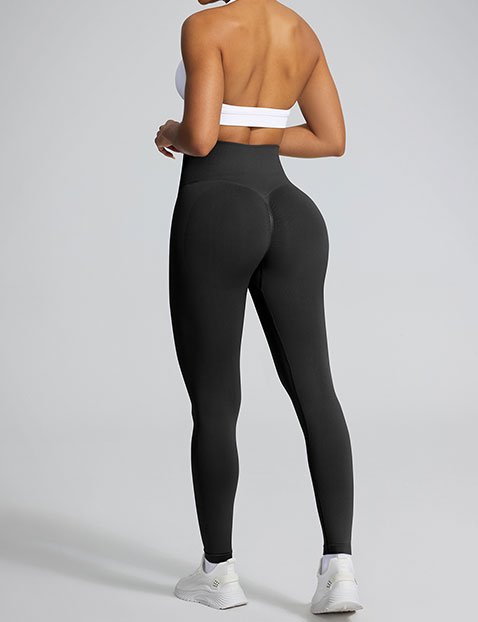
High-Waist Leggings
High-waist and ultra-high-waist directions can be developed through Seamless or Cut & Sew construction. Waist height alone does not guarantee stability: waist-to-hip proportion, rise, material recovery and waistband structure need to work together.
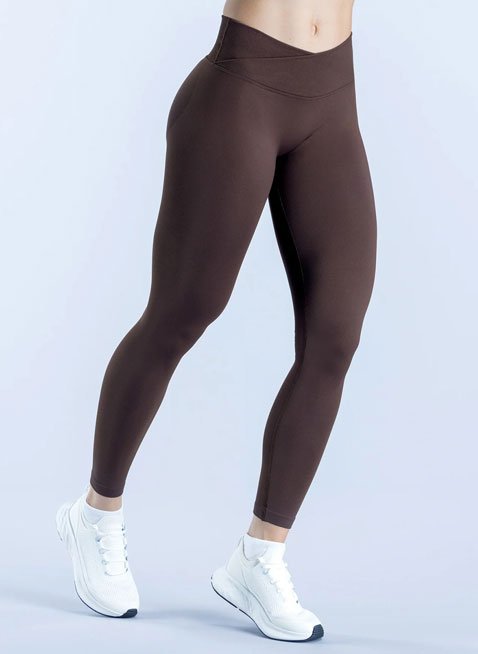
V-Waist and Cross-Waist
V-shaped or cross-waist constructions create a different waistline and require control of front geometry, symmetry and waistband tension. Complex overlapping or shaped structures are treated as construction details rather than simple styling additions.
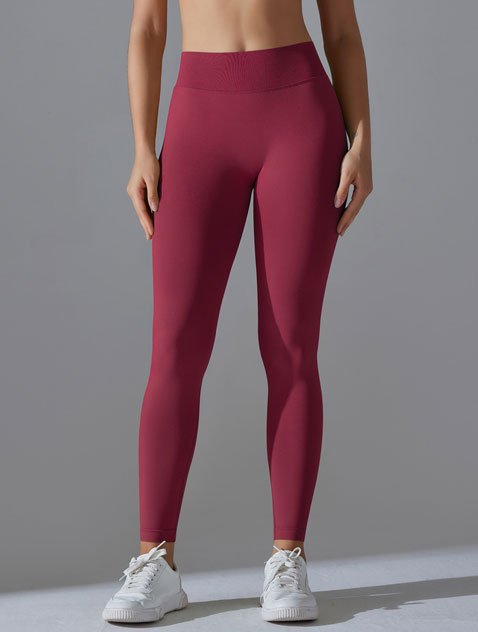
No-Front-Seam Leggings
No-front-seam leggings can be developed through Seamless or Cut & Sew routes. Removing the visible front seam changes how the front rise, crotch area, material stretch and garment geometry need to be handled.
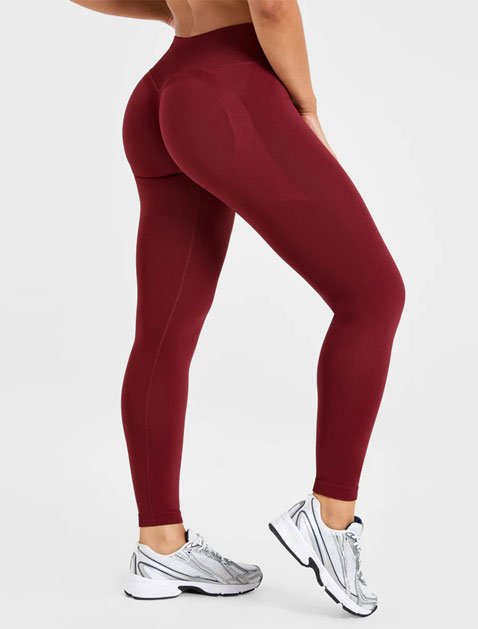
Contour and Glute Detail
Contour, scrunch or engineered glute-detail directions can be evaluated by manufacturing route. Seamless styles may use knitted zones or structures, while Cut & Sew styles may use seam, panel or construction solutions.
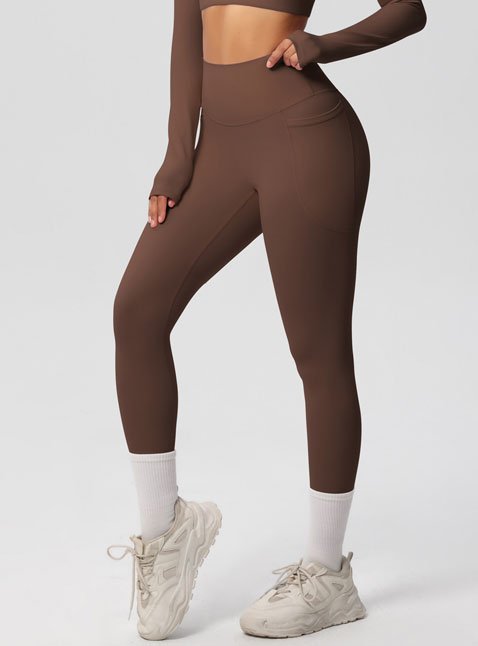
Pocket Leggings
Side pockets, waistband pockets and selected panel-pocket structures can be developed where construction allows. Pocket size, entry position, material stretch and reinforcement should be evaluated together.

Soft and Brushed Leggings
Soft-handfeel, brushed or related surface directions can be considered using suitable project materials. The actual fabric reference, garment sample, stretch, recovery, opacity and finished feel should be evaluated together.
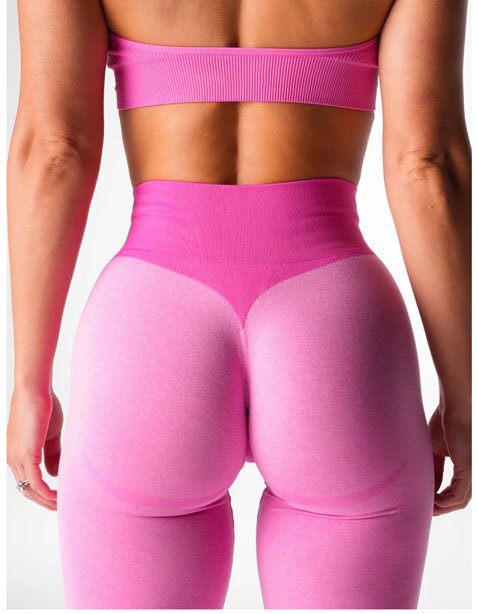
Compression-Direction Leggings
Compression-oriented leggings require coordinated decisions around material or knitted structure, negative ease, size and construction. A higher spandex percentage or tighter sample alone does not establish a controlled compression level.
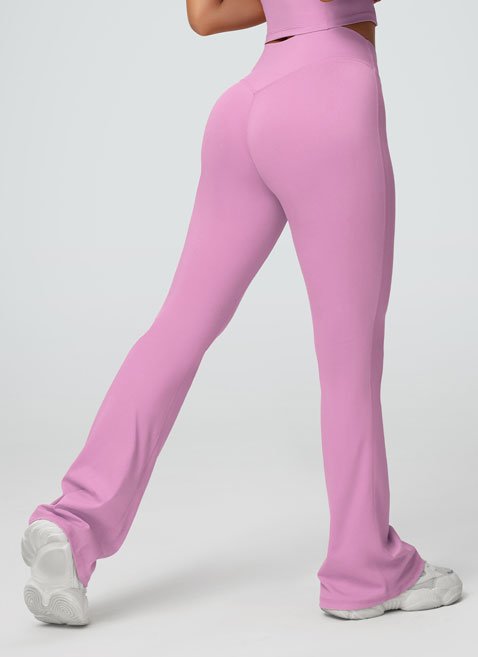
Seamless or Cut & Sew
Engineered rib, mesh, texture or knitted zones may favor Seamless, while pockets, complex panel geometry and multi-material construction may favor Cut & Sew. Final route selection follows technical review.
Choose the Manufacturing Route Around the Legging Structure
Seamless and Cut & Sew are different product-engineering routes rather than competing labels. MOVEVOX can evaluate both within one supplier relationship and select the route according to the required structure, fit, material, visual language and commercial conditions.
Seamless Leggings
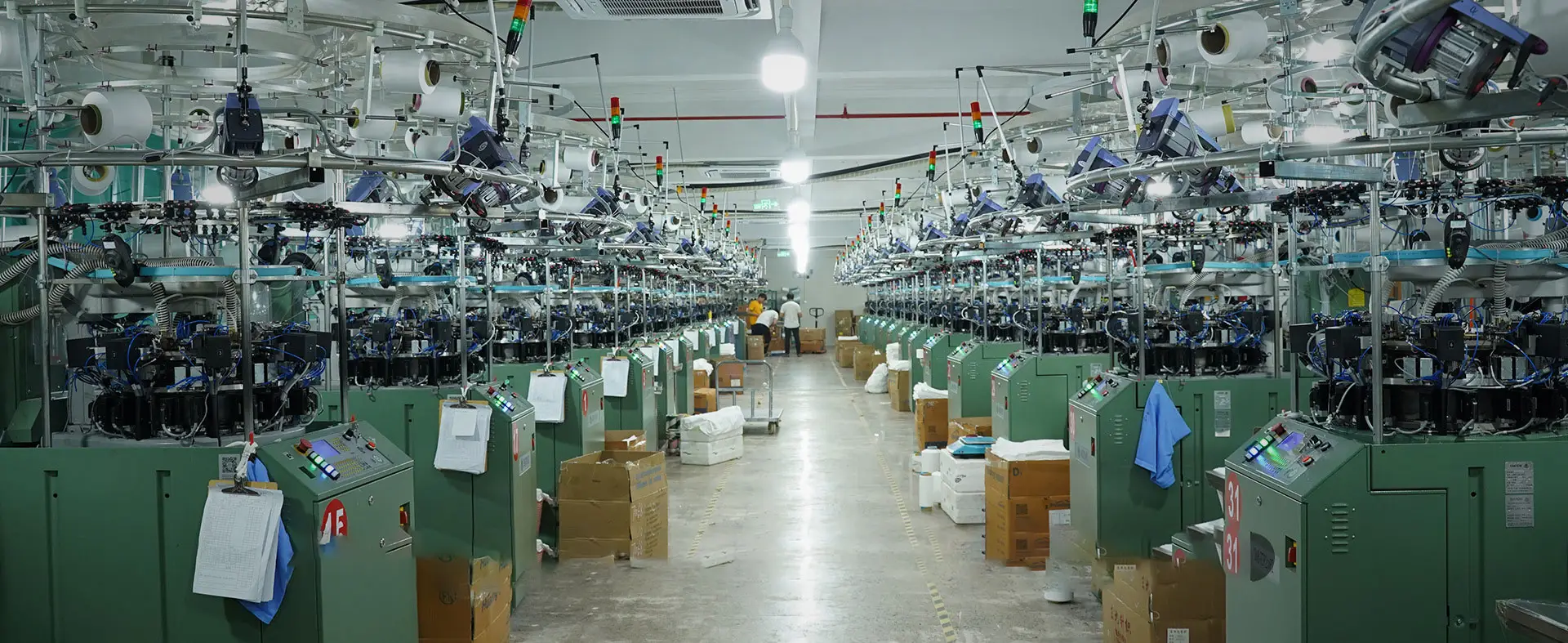
MOVEVOX's owned core manufacturing base includes 28 Italian Santoni Seamless knitting machines. This route is particularly relevant when the product depends on yarn, knitted structure, engineered rib, mesh, texture, density variation or localized design zones.
Seamless construction still requires controlled sizing, crotch treatment, finishing and sample approval. A Seamless garment may also require sewing at selected finishing areas depending on the product architecture.

Cut & Sew Leggings
MOVEVOX's core manufacturing base also supports Cut & Sew production with approximately 24 principal sewing and garment-production machines. This route provides greater freedom for pattern lines, pockets, shaped waistbands, panels, gussets and multi-material construction.
The final result depends on pattern engineering, fabric behavior, construction method, measurements and workmanship being approved together.
One Technical and Quality Interface
The two routes do not require the buyer to manage unrelated supplier systems. MOVEVOX can coordinate product development, material requirements, specifications, production planning and quality control through one project interface while each style follows its appropriate manufacturing process.
Engineer the Waistband Around Fit, Structure and Material Recovery
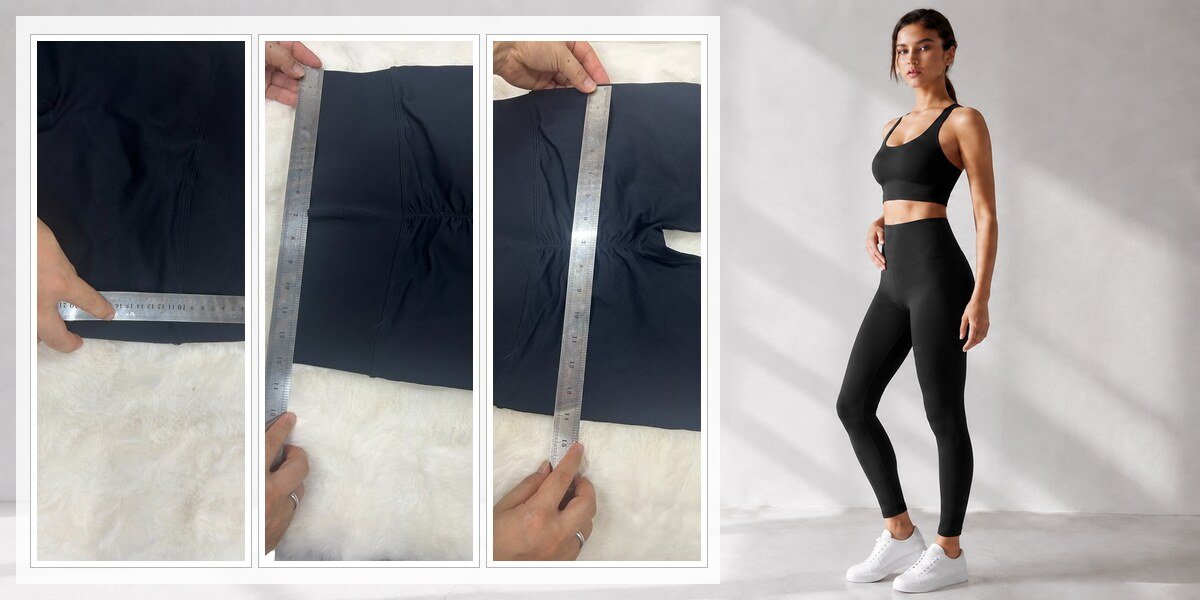
A waistband affects both the visual identity and functional fit of leggings. Height, shape, tension, rise, waist-to-hip proportion and material recovery should be reviewed as one system rather than as an isolated styling detail.
High & Ultra-High Waist
Higher waistlines change coverage and silhouette, but height alone does not prevent rolling or downward movement. Rise, waist-to-hip proportion and material recovery must remain balanced.
V-Shaped Waist
V-shaped constructions require controlled front geometry, symmetry and tension. Pattern or knitting structure must be reviewed together with front rise and the intended fit.
Cross-Waist Construction
Cross-waist designs introduce overlap, angle and alignment requirements. Construction feasibility should be confirmed from the actual design rather than assumed from reference imagery.
Straight Structured Waist
Stability depends on waistband height, material recovery, attachment method and body proportion rather than simply making the waist opening smaller.
Seamless Engineered Waist
Seamless leggings can use engineered rib or density changes at the waistband where technically appropriate. Stronger knit density still requires comfort and movement validation.
Fit Verification
MOVEVOX reviews waist height, opening, shape, symmetry, rolling, twisting and recovery against the applicable product specification and approved sample.
No-Front-Seam Leggings Require More Than Removing One Seam
A clean front appearance can be developed through different manufacturing routes, but removing the visible front seam changes how front rise, crotch space, stretch, opacity and movement need to be controlled.
Conventional Front-Seam Structure
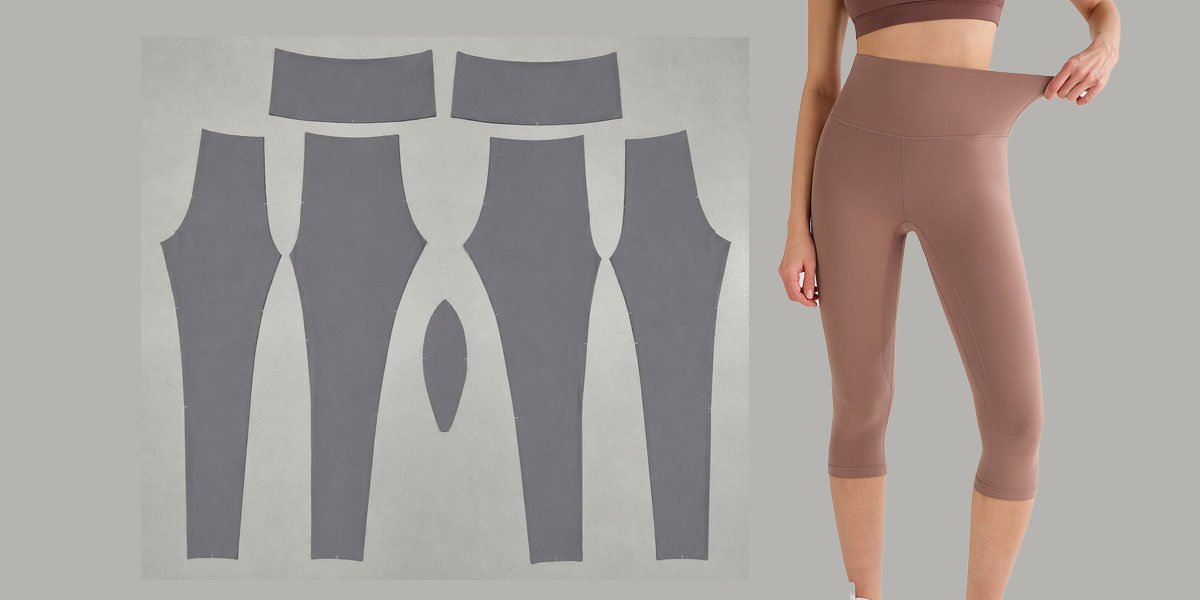
A conventional center-front seam provides one way to shape the front rise and crotch. Its position, seam construction and tension need to match the material and intended fit so the seam does not create unwanted pulling, puckering or discomfort.

Cut-and-Sew No-Front-Seam Development
Cut & Sew leggings can remove the center-front seam by changing the pattern and crotch construction rather than simply deleting stitching from an existing pattern. Front rise, gusset direction, hip capacity, material stretch and inseam geometry must then be reviewed together.
Seamless No-Front-Seam Development
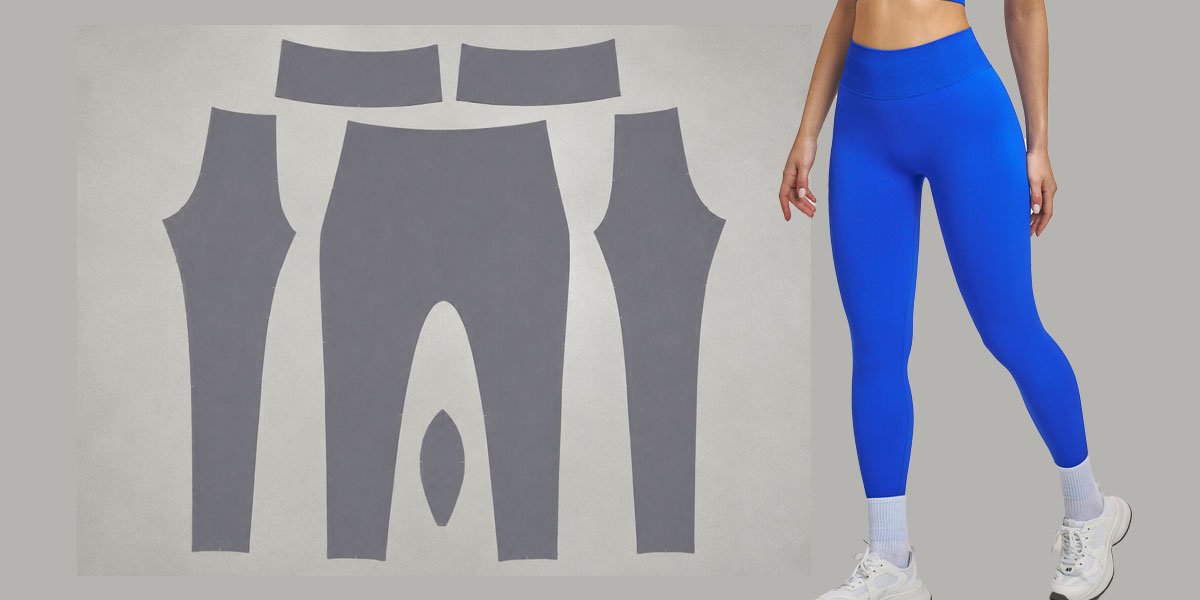
Seamless knitting provides another route for creating a cleaner front panel. The product still requires an engineered knitting program, correct dimensions and appropriate crotch or finishing treatment. Seamless should not be interpreted as a finished garment with no sewing anywhere.
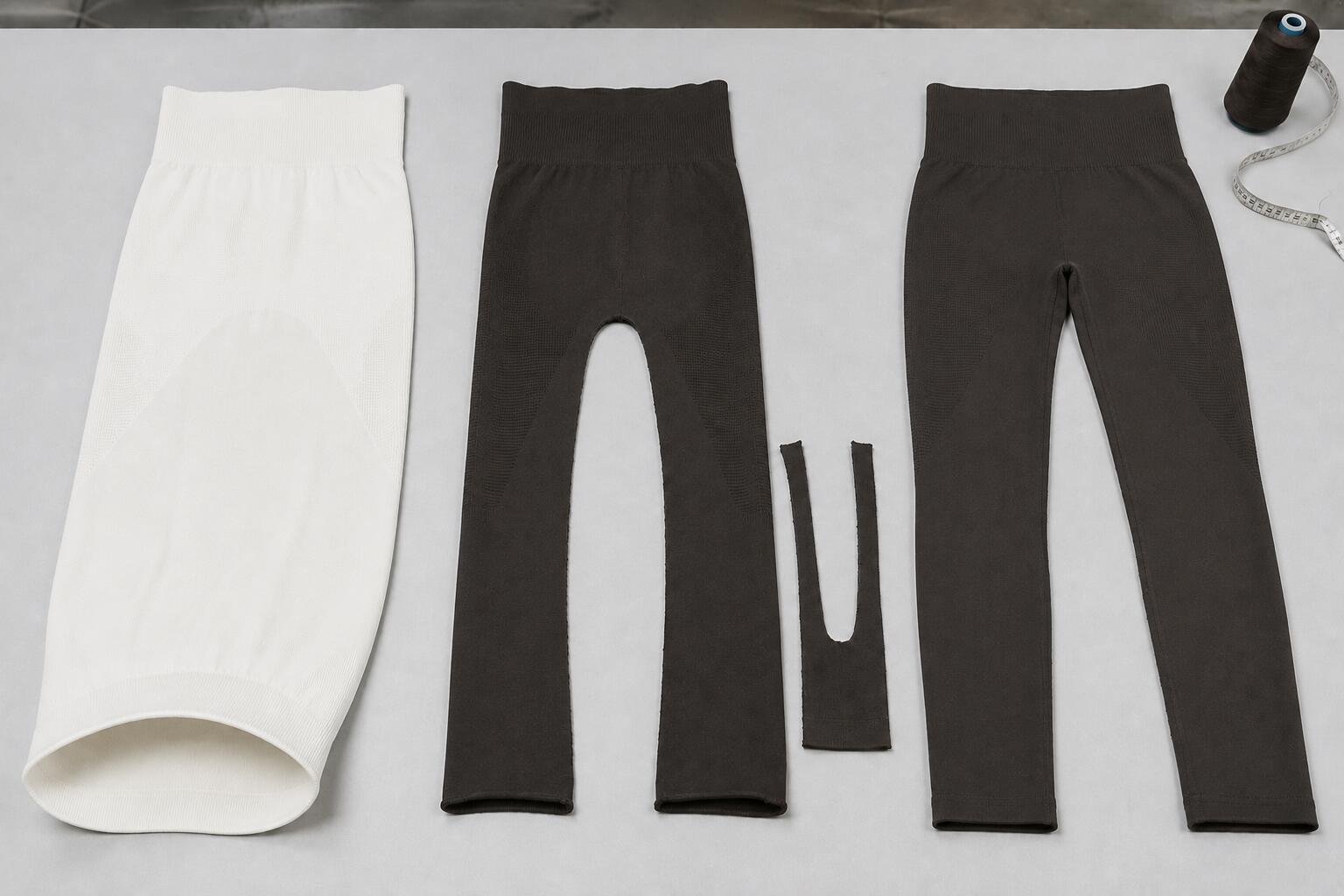
Fit and Opacity Verification
The front crotch area is influenced by product size, front and back rise, garment stretch, material opacity and body movement. MOVEVOX treats no-front-seam development as a fit and construction problem rather than a purely visual styling request.
Treat Opacity as a Product System, Not a Marketing Label
Whether leggings remain sufficiently opaque under stretch depends on several interacting variables. MOVEVOX does not treat fabric GSM, composition or dark color alone as proof that every size and color will perform identically.
“Higher GSM Means Squat-Proof”
Evidence standard: GSM influences weight, coverage and fabric structure, but it cannot establish opacity alone. Fiber, knit construction, finishing, color, stretch and garment fit can change how much a fabric opens when worn or stretched.
“One Fabric Performs the Same in Every Color”
Evidence standard: Light and dark colors can present different visual opacity risks even when they use the same nominal base material. Custom colors should therefore be reviewed through the applicable fabric or garment reference.
“More Stretch Solves the Problem”
Evidence standard: A fabric that stretches further may also open more under load. Opacity needs to be considered together with recovery, garment negative ease, size selection and the amount of stretch occurring at the hip, thigh and squat position.
“The Fabric Test Alone Is Enough”
Evidence standard: The finished garment is the final product. Material review should be supported by actual garment sampling and relevant wear or movement evaluation where opacity is a buyer requirement.
Verification Note
MOVEVOX can evaluate opacity risk through actual material and garment development, but a public “100% squat-proof” claim should only be used where the exact material, color, size, fit and applicable validation evidence support it.
Website performance evidence should be replaced with real project-specific material, color, garment and test records before publishing quantified claims.
From Leggings Concept to Controlled Production Specification
MOVEVOX can begin leggings development from complete or incomplete technical information. The objective is to convert the available buyer input into a specification that can be sampled, reviewed, approved and transferred into bulk without relying on undocumented assumptions.
Requirement Input
Development can begin from a Tech Pack, physical sample, product image, sketch, written concept or relevant fabric reference. MOVEVOX first reviews what is known and identifies missing information affecting construction, measurements, materials, branding or commercial feasibility.
Technical Review
Leggings structure is reviewed around manufacturing route, waistband, rise, crotch, inseam, material, fit and relevant branding requirements. Open technical questions are raised before development so critical details are confirmed by the buyer rather than silently decided by production.
Manufacturing Route and Specification
The style is organized into an appropriate Seamless or Cut & Sew route. Measurements, material direction, construction details, colors, branding and other key requirements are progressively documented so the sample team works against a controlled requirement set.
Development Sample
The first physical sample is used to evaluate how the current technical decisions translate into a real garment. Measurements, fit, construction, surface, material and relevant branding details can then be reviewed against the defined product requirement.
Revision and Fit Control
Buyer comments are converted into specific changes to POM, pattern, Seamless program, material or construction. Revised information should remain linked to the current sample version so new changes do not reintroduce previously resolved issues.
Approval and Bulk Handover
The approved sample and current technical information become references for production preparation. Formal bulk release still depends on the relevant PO, material, commercial and quality requirements being confirmed rather than sample approval acting as automatic production authorization.
Control Waist-to-Hip Fit as One Leggings System
Waist and hip dimensions cannot be optimized independently in close-fitting leggings. Waist tension, hip capacity, rise, waistband structure, fabric recovery and negative ease influence whether the garment stays in position or creates gaping, rolling, excessive pressure or crotch tension.
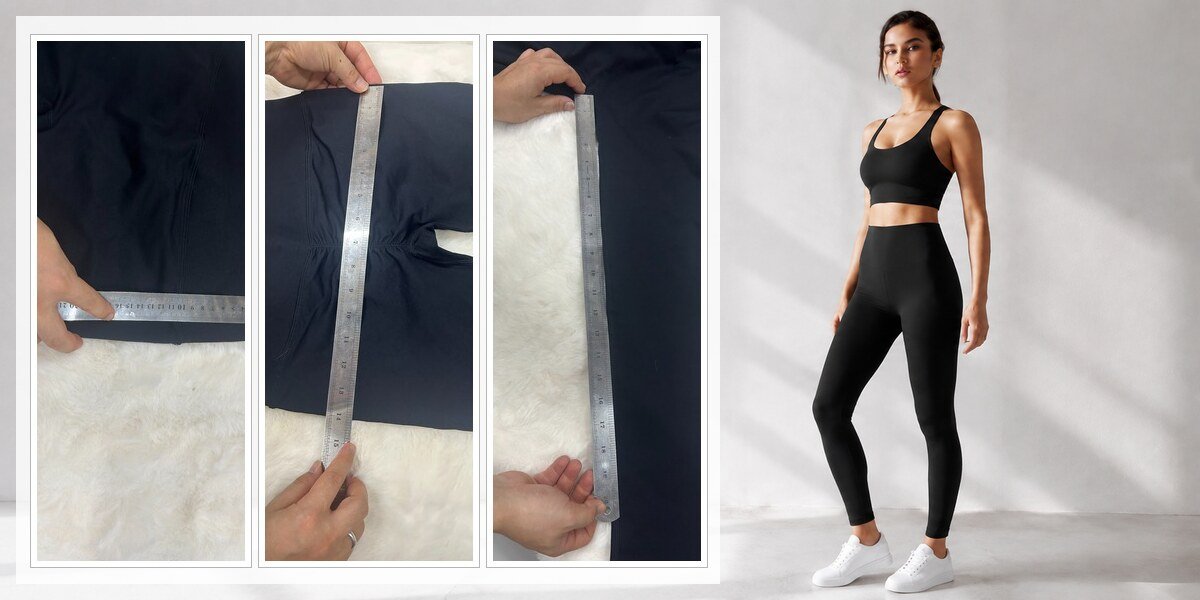
Target Body & Garment Measurements
The starting point is the buyer’s target consumer or approved measurement standard. Garment waist and hip POM should reflect the intended fit and material stretch rather than copying body measurements directly.
Negative Ease & Material Recovery
Leggings rely on stretch and negative ease. The appropriate amount depends on the selected material or knitted structure and its ability to recover after extension—not simply on maximum stretch distance.
Waistband & Rise Relationship
A tighter waistband cannot correct every fit problem. Insufficient hip capacity or incorrect rise can pull the waist downward, create rear-waist gaping or increase crotch tension.
Fit Sample & Movement Review
Measurement data is reviewed together with the physical sample. Relevant movement evaluation can expose waistband movement, crotch tension, excessive fabric extension or other fit issues that static measurements alone may not reveal.
A Waist Measurement Can Be Correct While the Legging Still Fits Incorrectly
Waist, hip, rise and material behavior need to be reviewed together. When one variable changes, the load distribution across the garment can also change.
Rise and Inseam Define More Than Leggings Length
Front rise, back rise and inseam work together to position the crotch, waistband, hip volume and leg length. Changing one measurement without reviewing the others can alter the overall fit even when nominal waist and hip dimensions remain unchanged.
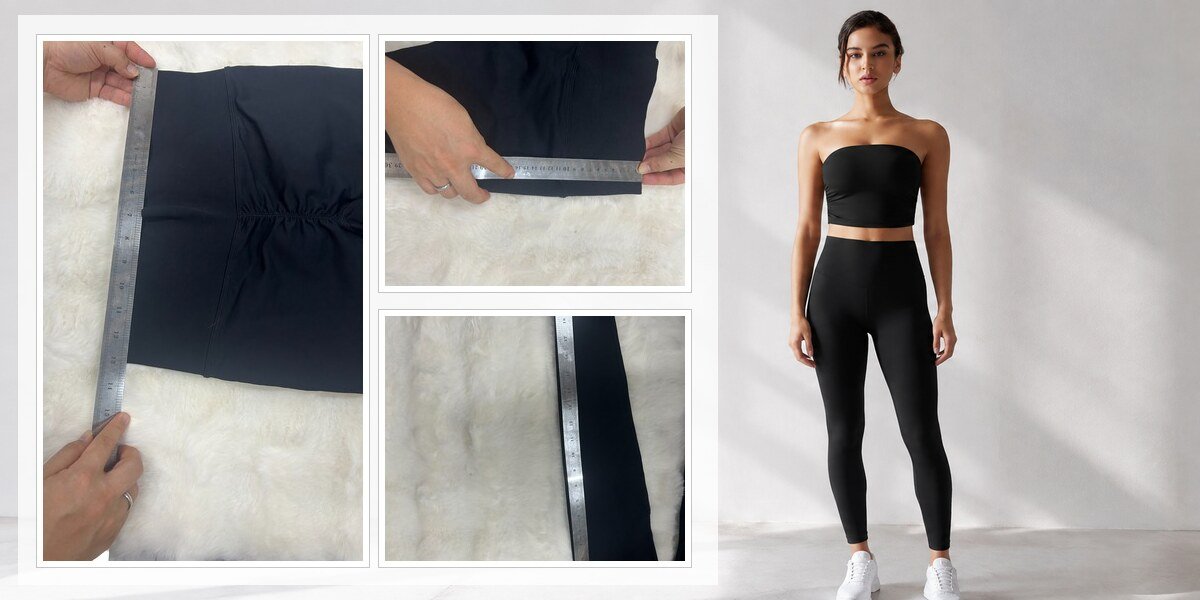
Front Rise
Front rise influences where the waistband sits and how the garment shapes the front crotch area. In no-front-seam leggings, it becomes especially important because the required front geometry must be achieved without relying on a conventional center-front seam.
The measurement should use a defined POM and method so sample comments and bulk inspection refer to the same points.
Back Rise
Back rise helps provide hip and seat capacity and influences how the waistband stays positioned during movement. Too little back rise can pull the waist downward or increase crotch tension, while excessive dimensions can create unwanted looseness.
It should therefore be reviewed together with hip measurements, waistband structure and material behavior.
Inseam & Product Length
Inseam defines more than whether the legging is full length or 7/8 length. It interacts with crotch position and overall leg proportion, and different target markets may require different length directions.
Product length should therefore be defined through the applicable measurement specification rather than visual naming alone.
One POM Change Can Affect the Entire Fit Relationship
Front rise, back rise, inseam, waist and hip should be reviewed as connected dimensions before a revised sample becomes the approved production reference.
Select Leggings Materials From the Required Product Outcome
MOVEVOX evaluates leggings materials through their actual specification and product application. Composition alone cannot establish softness, opacity, compression, recovery or durability, so public material claims should remain tied to the specific fabric or yarn program used in the approved product.

Soft / Naked-Feel Direction
Composition: Project-specific
GSM: Project-specific
A soft or naked-feel direction may be considered for yoga-focused leggings where handfeel is important. Because the term is subjective, the buyer should approve an actual swatch or garment reference together with stretch, recovery, opacity and fit.

Brushed Direction
Composition: Project-specific
GSM: Project-specific
Brushed materials can be evaluated where a softer or warmer surface direction is required. The brushing process should be reviewed together with base fabric structure, stretch, recovery, finished handfeel and garment behavior.

Compression Material Direction
Composition: Project-specific
GSM: Project-specific
A compression-oriented product may require a material with suitable stretch and recovery together with controlled negative ease and fit. Fiber percentage alone cannot define compression level, and quantified claims require project-specific validation.

High-Stretch Material Direction
Composition: Project-specific
GSM: Project-specific
High stretch can support movement and close-fitting structures, but stretch distance alone is not sufficient for leggings. Recovery, opacity under extension, surface behavior, fit and shape retention also need review.

Rib and Textured Direction
Composition: Project-specific
GSM: Project-specific
Rib and textured leggings can be developed through suitable Cut & Sew fabrics or engineered Seamless structures. Texture can change stretch, surface appearance and localized fit, so the actual route and physical sample should define the approved standard.

Seamless Yarn and Knit Direction
Composition: Project-specific
GSM: Finished program dependent
For Seamless leggings, yarn and knitted structure need to be evaluated together. Rib, mesh, texture, density and engineered zones are determined by the complete knitting program, so the final product should not be described using an unrelated generic fabric specification.
Material Approval Note
Where the buyer requires specific performance, certification or testing, the applicable evidence must correspond to the actual material, color, production scope and validity. Material certification from an unrelated fabric should not be used to describe every MOVEVOX leggings program.
Stretch Defines Extension. Recovery Helps Define What Happens Afterward.
Leggings materials need to be evaluated not only by how far they stretch, but also by how they return after extension and how that behavior works with garment fit, negative ease and construction.
Project-Specific Test Evidence
Where numerical stretch or recovery values are required, MOVEVOX should use the actual Fabric ID, test method, original dimension, stretched dimension, recovery result and test conditions. Generic website numbers should not be substituted for project evidence.
Stretch Is Only One Variable
A material may provide substantial extension while still behaving differently in the finished garment depending on knit structure, GSM, finish and stretch direction. More stretch is not automatically better for every leggings category or fit direction.
Recovery Supports Shape Retention
Recovery describes the material's ability to return toward its original state after being stretched. Poor recovery can contribute to unwanted relaxation at areas such as the waist, knee or seat.
Fit Changes Material Load
The same material can behave differently in two garments if size, negative ease, waistband construction or hip dimensions change. Excessive tightness can increase extension and may also increase opacity or fit risks.
Approve the Material in the Garment
MOVEVOX connects material review with the physical leggings sample. Where numerical requirements are specified, the applicable test method and approved result should become part of the project evidence rather than being inferred from composition.
Turn an Approved Legging Into a Controlled Private Label Product
Private label execution includes more than placing a logo on the garment. Product, brand components and variable data need to remain connected to the correct style, color, size and approved version throughout production and packing.
Garment Specification
The legging remains the technical foundation. Style, measurement, material, color and construction should be confirmed before brand components are treated as final.
Logo
MOVEVOX supports relevant branding methods including screen printing, heat transfer, silicone logo, embroidery, jacquard and woven branding where appropriate. Artwork, size, color, placement and compatibility should be approved before bulk execution.
Explore Custom Logo →Main Label
Main-label material, dimensions, position and attachment method should follow the approved brand specification and correspond to the intended product version.
Care Label
Care-label content should be provided or approved according to the actual product and destination requirements. Fiber, care, origin or regulatory information should not be invented independently.
Explore Custom Labels →Size Label
Size labels must map to the actual SKU and approved size system. The displayed size should remain connected to the applicable measurement specification.
Hangtag, SKU and Barcode
Hangtags and variable data should follow buyer-approved information and map to the correct style, color and size combination.
Individual Packaging
Frosted zipper bags, polybags or other approved individual packaging can be coordinated according to project requirements and applicable supplier minimums. Packing information should correspond to the correct garment SKU.
Explore Custom Packaging →Carton and Shipping Marks
Carton quantity, assortment and external marks should follow the confirmed packing instruction and shipment requirements so receiving information remains consistent with the actual product.
Approve the Legging Before You Scale the Order
MOVEVOX treats sampling as a controlled approval process. A typical development sample takes approximately 5–10 working days after the required project details are confirmed, while custom materials, complex structures, revisions, buyer feedback and courier time can extend the overall approval schedule.
Development Sample
The development sample converts the current technical information into a physical legging for initial evaluation. It is used to review construction, material direction, key measurements and workmanship rather than being treated automatically as the final bulk reference.
Fit Review
The sample is measured and reviewed against the target fit and applicable POM. Relevant wear evaluation can include waistband position, crotch comfort, hip fit, leg opening and movement, with problems translated into measurable revision requirements.
Revised Sample
Where corrections are required, the applicable POM, pattern, Seamless program, material or workmanship information is revised and linked to the next sample version. The revision should address documented feedback rather than create unrelated changes.
Size Set Verification
Where the program requires Size Set approval, selected or full sizes are reviewed to verify that the approved base-size logic has translated appropriately across the intended size range. Base-size Fit approval alone does not automatically approve every size.
PP / Approved Sample
The applicable final technical sample and current specifications become references for bulk preparation once required approvals are complete. Approval should be linked to an identifiable sample version rather than an informal message that an earlier garment “looks fine.”
Timing Note
The 5–10 working-day reference is a typical standard-development period after sufficient details are confirmed. It does not include an unlimited number of revisions or guarantee the complete development-to-approval cycle within the same window.
Understand the Effective MOQ Before Building Your Leggings Program
The base garment MOQ is only the first commercial threshold. Material, color, size distribution, logo method, labels and packaging can create additional minimums, so the effective project MOQ should be confirmed after the product structure is reviewed.
Typical Base Entry: Approx. 100 pcs/style
Under suitable standard-material and available-color conditions, a 100-piece style may be divided at approximately 50 pieces per color, with standard size allocation generally requiring around 20 pieces per size.
Actual feasibility remains dependent on yarn, knitting program, colors, branding and the confirmed product requirement.
Typical Base Entry: Approx. 150 pcs/style
Where suitable stock-color materials and standard conditions apply, a 150-piece style may be divided at approximately 50 pieces per color, with standard size allocation generally requiring around 10 pieces per size.
Pattern complexity, fabric, trims, workmanship, branding and packing can change the final commercial requirement.
Effective MOQ Can Be Higher
A custom Pantone color may introduce an independent material or dye-lot minimum. Depending on the material and dyeing conditions, custom colors commonly involve approximately 400–600 garments per batch.
Special materials, logo processes, labels and packaging can also introduce separate supplier minimums.
Commercial Note
The figures above are standard starting references, not fixed commitments for every legging. Final MOQ is confirmed after style, material, color, size, branding and packaging requirements are reviewed.
Measure Leggings Against Defined POM, Not Visual Judgment
Measurement inspection uses the approved measurement specification, defined POM and consistent measurement methods. For close-fitting leggings, reliable measurement data is a central part of maintaining fit from sample approval through production.
POM and Measurement Method
Teams need to use the same measurement points and starting positions. New styles should align measurement methods during pre-production and first-article review rather than allowing each inspector to interpret the specification differently.
Control focus: approved POM / consistent method / current specification
Waist Measurement
The waistband should be measured according to the approved method without artificially stretching the garment into tolerance. Waist measurement is reviewed together with waistband height, shape and approved construction.
Control focus: waist opening / waistband height / measurement method
Hip Measurement
Hip POM helps confirm whether the bulk garment follows the approved fit architecture. Meaningful deviation can affect fit, opacity under extension, waistband position and crotch behavior.
Control focus: hip POM / fit trend / tolerance
Rise Measurement
Front and back rise should follow the approved measurement method and reference points. Because rise affects waist position and crotch fit, trend changes should be investigated rather than treated as isolated numbers.
Control focus: front rise / back rise / crotch relationship
Inseam and Length
Inseam and applicable length measurements are checked against the approved specification and product size. Left-right differences and incorrect crotch starting points can create misleading results.
Control focus: inseam / side length / symmetry
Trend Escalation
Measurement sampling is adjusted according to buyer requirements and production risk. When a meaningful out-of-tolerance trend appears, inspection can be expanded, including 100% screening of affected key dimensions where required.
Control focus: trend detection / expanded inspection / corrective action
Inspect Leggings Workmanship Around High-Stress Product Areas
Workmanship inspection goes beyond loose-thread removal. Stretch garments place repeated load on seams, crotch structures, waistbands and other construction points, so defects need to be judged according to their effect on appearance, function and product reliability.
Seam Integrity
Cut & Sew leggings require appropriate stitching and seam execution for the approved product. Inspection looks for skipped stitches, broken threads, uneven sewing or seam distortion that can affect appearance or structural reliability.
Crotch and Gusset
The crotch area experiences high extension during wear and movement. Gusset, inseam and crotch construction should follow the approved sample and be checked for sewing integrity, symmetry, puckering and other relevant defects.
Waistband Construction
Waistband seams, joins and attachment points need to remain consistent with the approved construction. Twisting, uneven joining or distorted stitching can affect both appearance and functional fit.
Symmetry and Panel Alignment
Leggings with panels, shaped seams, contours or pockets require left-right symmetry and correct alignment. A garment may meet measurements while still appearing incorrect if construction lines or pocket positions are inconsistent.
Surface Condition
Inspection also covers stains, holes, snags, marks, wrinkles, heat damage or other visible issues. Seamless and Cut & Sew products may present different surface risks and should be checked according to their actual material and construction.
Branding and Functional Attachments
Where logos, pockets, elastic components or other attachments apply, workmanship review includes their position and secure execution against the approved product standard.
Reconfirm the Complete Legging Against the Frozen Standard
Finished-garment inspection brings together the standards that were previously controlled separately. The garment is reviewed against the applicable frozen specification, Approved or PP Sample and buyer quality requirements before it enters the final packing and shipment-release process.

Appearance and Material Condition
The finished legging is checked for visual defects, surface damage, fabric or knitted-structure issues and relevant color condition. The actual standard follows the approved product and buyer requirement rather than an inspector's personal preference.
Measurements and Symmetry
Key POM are checked according to the approved specification and measurement method. Waistband, panels, pockets, seams and other bilateral details are also reviewed for the symmetry required by the style.
Workmanship and Function
Sewing, crotch construction, waistband, pockets and any relevant functional components are reviewed against the approved product for defects that can affect appearance, use or reliability.
Logo, Labels and Product Identity
Applicable logo, care label, size label and other branding components are checked against the approved version so the correct garment is associated with the correct private-label information.
Pre-Packing Verification
Before packing, the finished product can be checked against the relevant SKU and packing requirement. If the current specification and physical reference conflict, the issue should be held and clarified rather than resolved through inspector assumption.
Evidence Scope
MOVEVOX can maintain inspection records as part of quality control, but any report displayed publicly should be a genuine anonymized record linked to an actual production project.
Keep the Approved Legging Connected to the Version Used for Bulk
The purpose of an approved sample is not simply to keep one finished garment in a sample room. It should remain identifiable and connected to the technical, material, branding and production references that define what the buyer actually approved.
Sample ID
Formal approval samples should carry an identifiable reference so comments and decisions can be attached to the correct physical garment rather than an unnumbered sample or photograph.
Sample Type and Version
Development, revised, Fit, Size Set or PP samples should not be treated as interchangeable. Version and date information help distinguish the currently valid reference from earlier development stages.
Approval Status
The record should identify whether the sample is under review, rejected, approved with changes or approved for the applicable next stage. An unapproved working sample should not become the production standard accidentally.
Linked Technical Version
The relevant Tech Pack or technical specification should correspond to the approved product version. Revised documents need to supersede earlier information so production does not mix instructions from separate development rounds.
Measurement Version
The applicable measurement chart and tolerance requirements should remain linked to the current approval. Fit revisions need to be incorporated into the controlled version used by production and inspection.
Fabric and Color Reference
The approved legging should identify the applicable material or yarn and color reference. A color or Lab Dip should remain connected to its actual material because a material change can alter the resulting shade.
Logo, Labels and Packing
Branding and packing specifications should correspond to the same product version. Artwork or label changes must remain identifiable rather than being updated independently of the approved style.
Bulk Release Reference
The approved sample becomes one important reference for bulk preparation together with the current order, technical, material, commercial and quality requirements.
See How a Leggings Program Moves From Material to Packed Product
MOVEVOX's owned Yiwu core manufacturing base is approximately 6,000 m² and supports both Seamless and Cut & Sew activewear production. The manufacturing route changes by legging structure, while material control, technical information, quality review and production release remain connected through the project process.
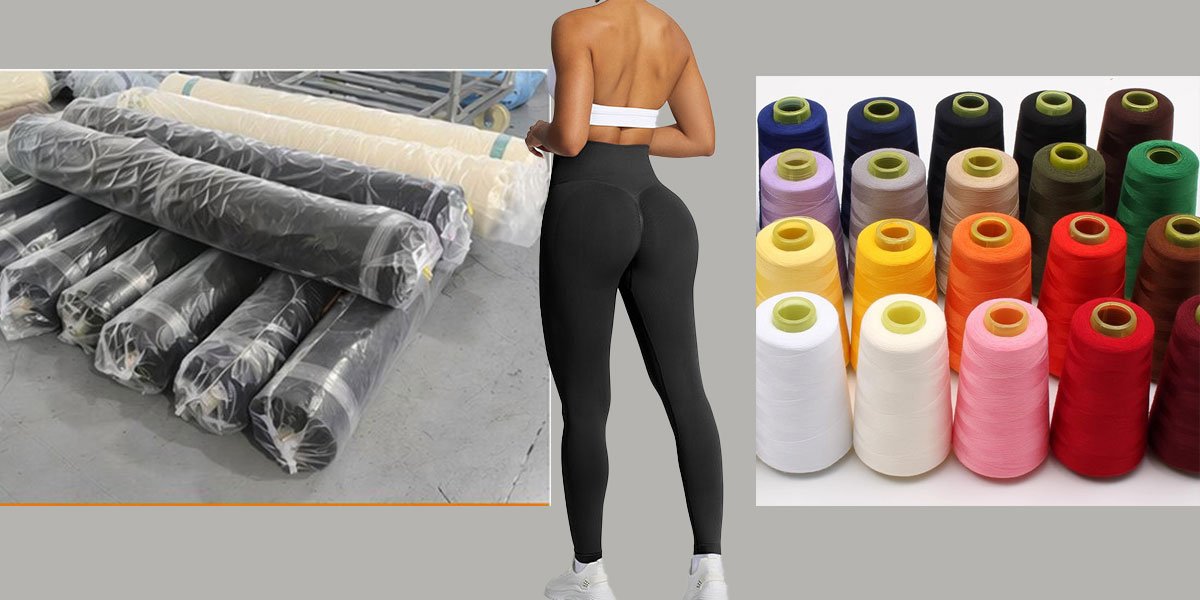
Material or Yarn Preparation
Cut & Sew programs begin from the approved fabric and related material requirements, while Seamless programs begin from applicable yarn and knitting specifications.
Control point: material / yarn identity and applicable approval

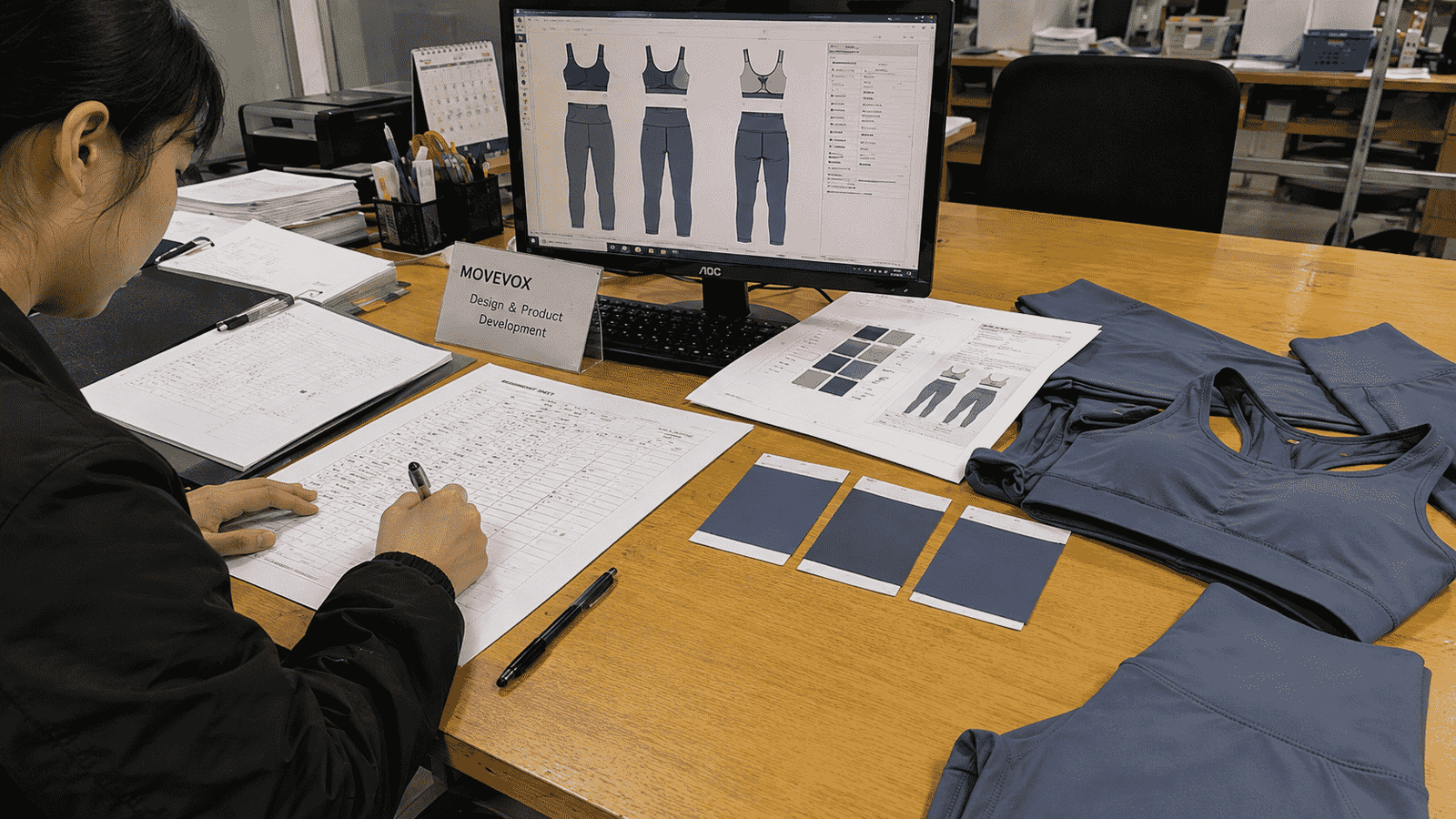
Pre-Production Review
Current specifications, approved references, materials, branding and relevant quality requirements are reviewed so production teams work from the released version.
Control point: production information alignment
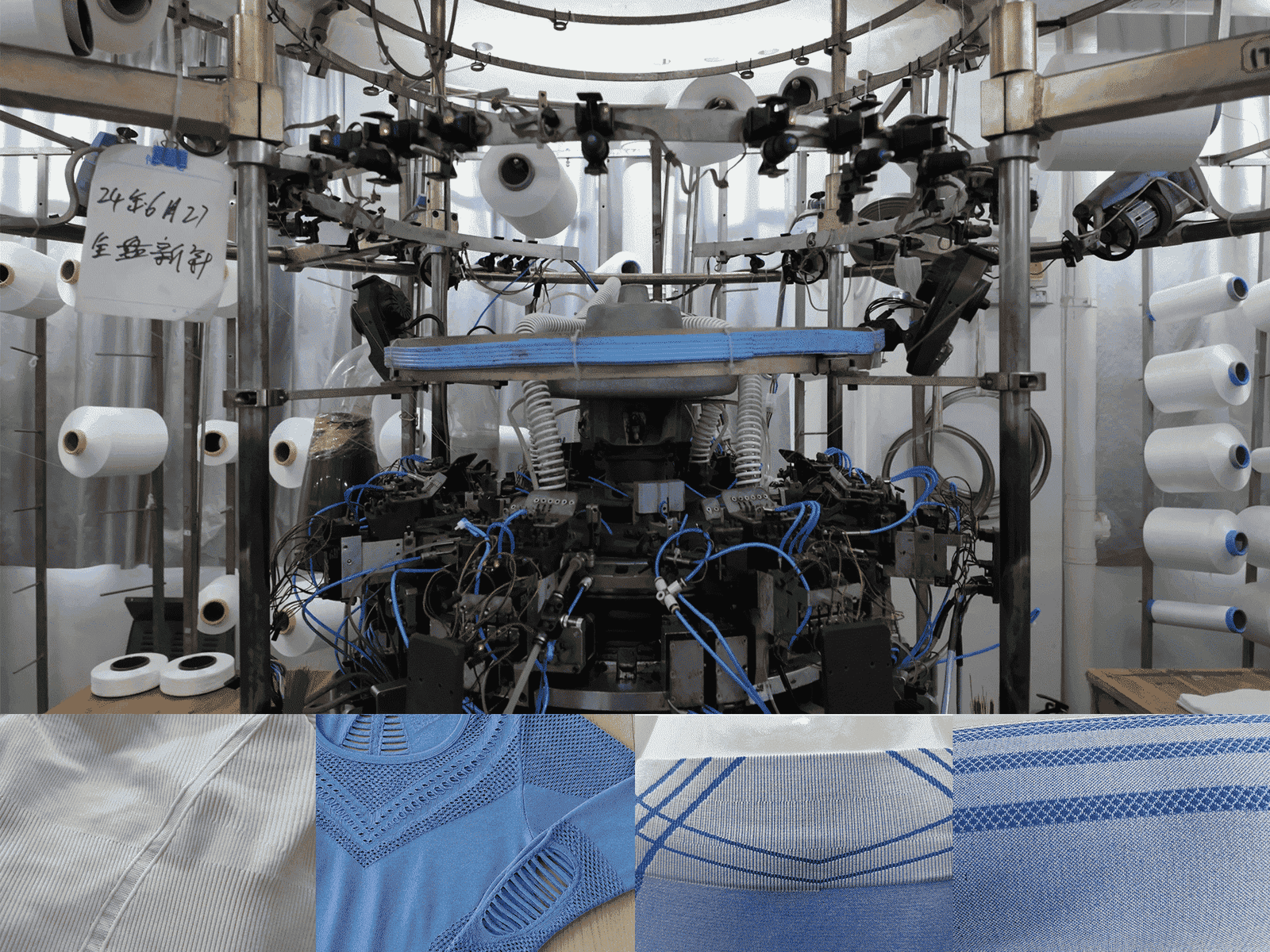
Seamless Knitting or Cut Preparation
Seamless leggings use the applicable Santoni knitting program, while Cut & Sew leggings follow approved pattern and cutting information.
Control point: program or pattern accuracy
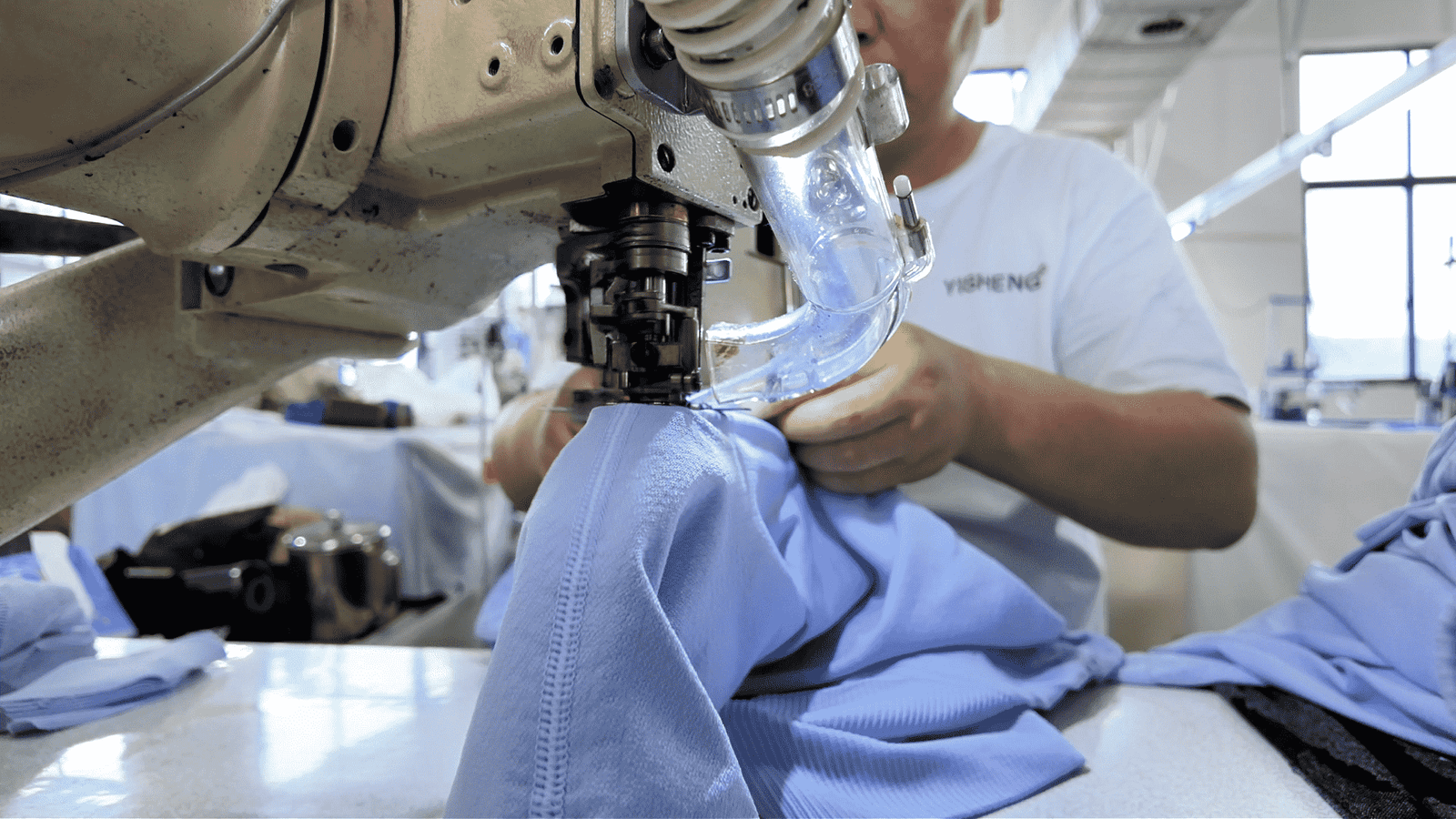
Sewing and Assembly
Cut & Sew leggings move through relevant sewing and assembly operations. Seamless products may also require sewing or finishing at areas such as the crotch, labels or other product-specific details.
Control point: workmanship and construction standard
Logo and Brand Components
Approved logos and relevant brand trims are executed according to the applicable artwork, position, process and product version.
Control point: artwork and SKU mapping

First Article and Inline Control
Early output and production-in-process can be checked against approved product requirements to identify measurement, workmanship or process drift before the full order is completed.
Control point: trend detection and corrective action
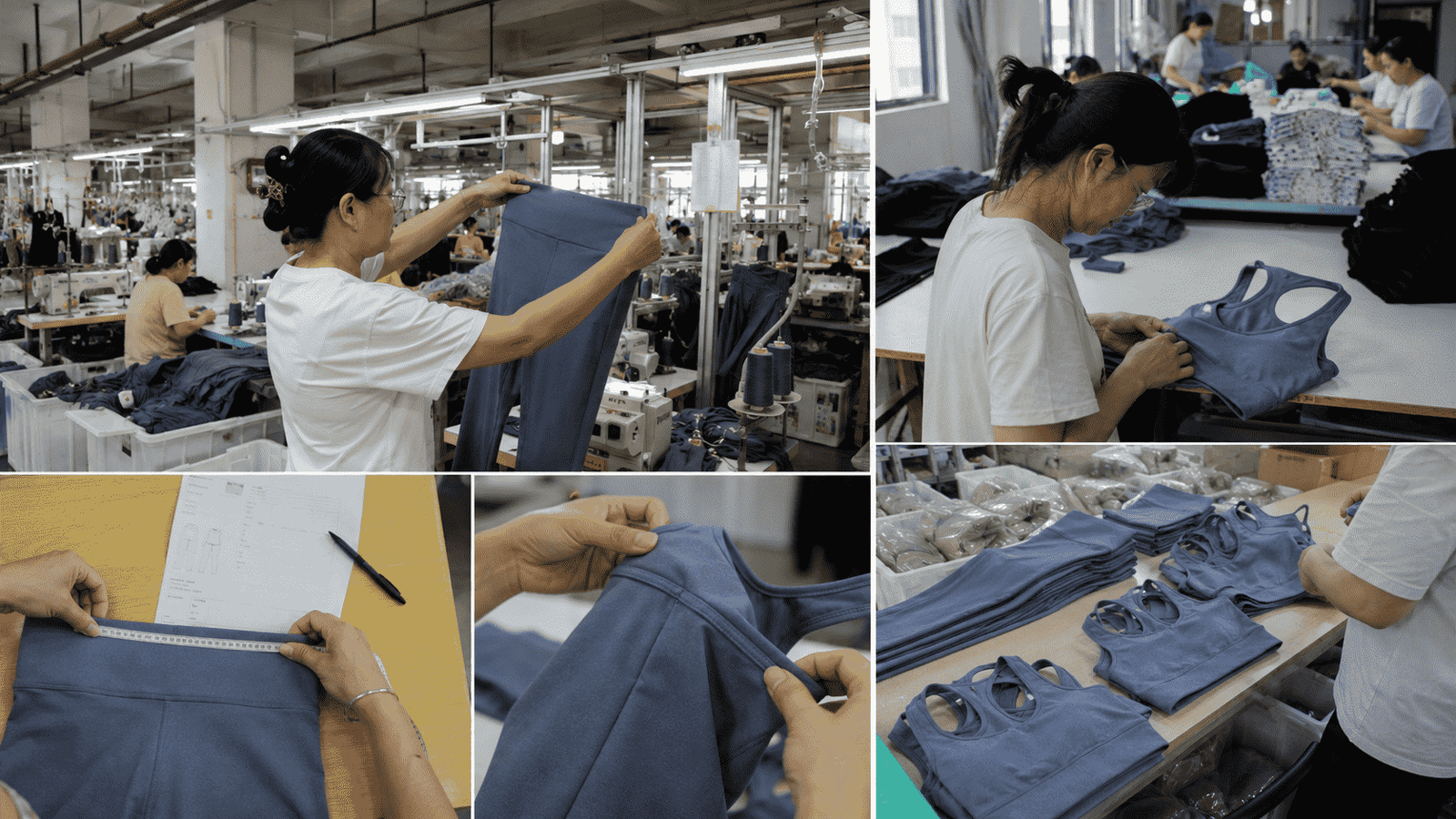
Finishing
Finished leggings move through the applicable trimming, surface review and preparation steps before formal finished-garment inspection.
Control point: garment condition before final QC
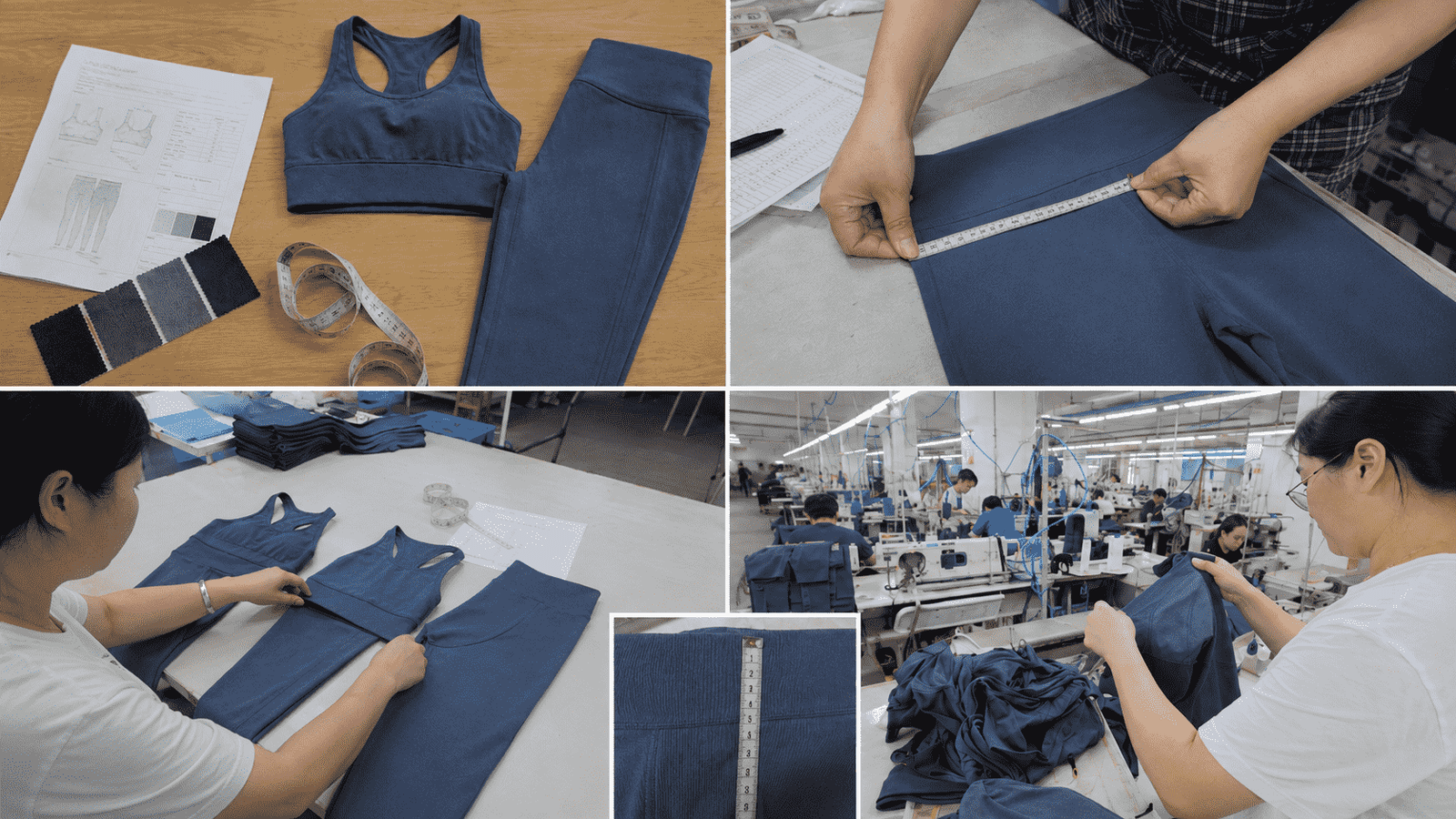
Finished Product Quality Review
Measurement, appearance, workmanship, product identity and other applicable standards are reconfirmed before packing and final release.
Control point: conformity with current approved standard
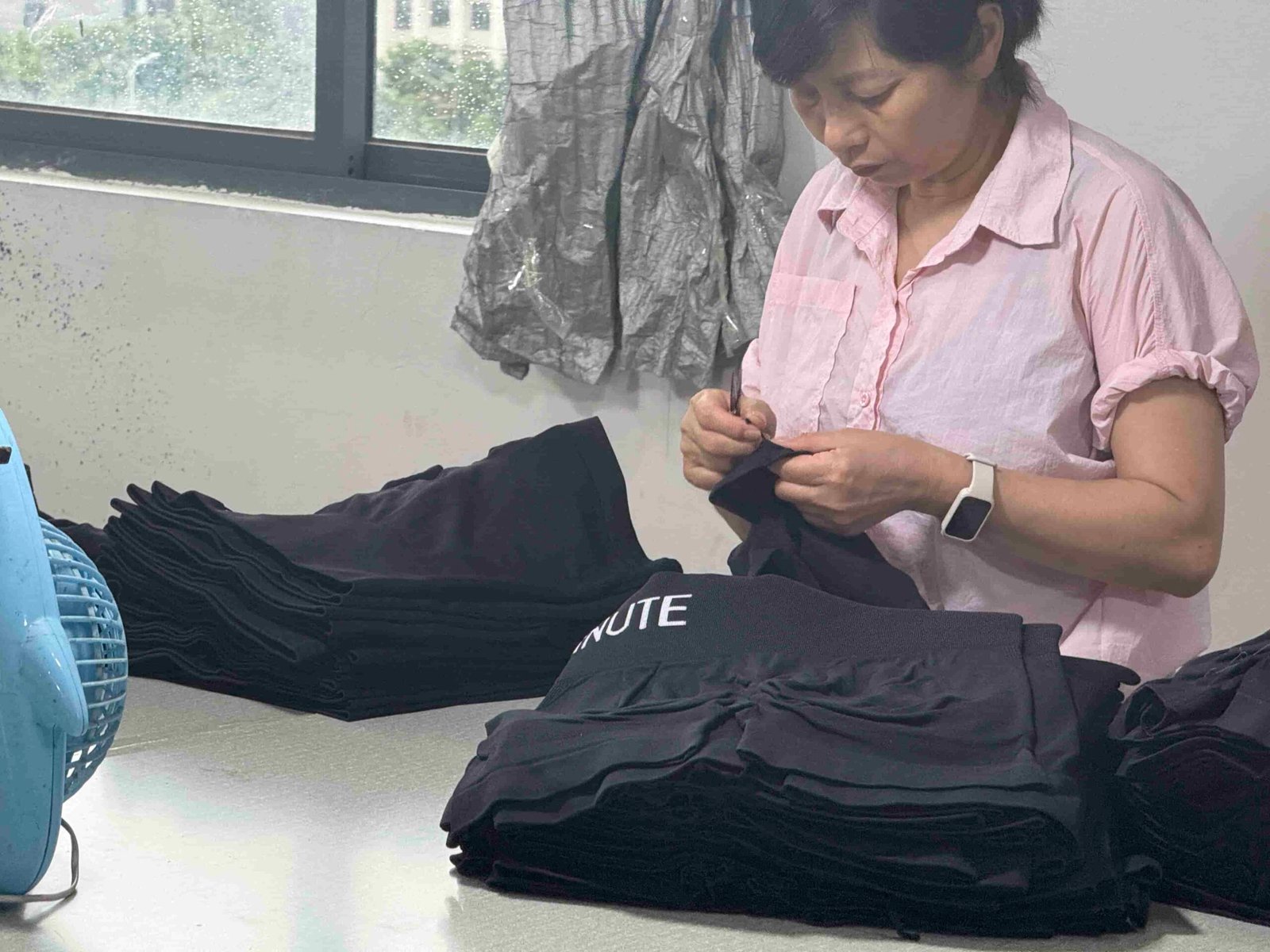
Packing
Approved packing method, SKU information and carton requirements are applied to the finished product before shipment preparation.
Control point: correct product-to-packing relationship
A Repeat U.S. Activewear Program Built Around Fit, Newness and Wear Evaluation
A U.S. creator-led fitness brand has worked with MOVEVOX for approximately three years across leggings and other activewear categories, combining frequent product updates, fit and fabric review, wear-testing samples and recurring private-label production.
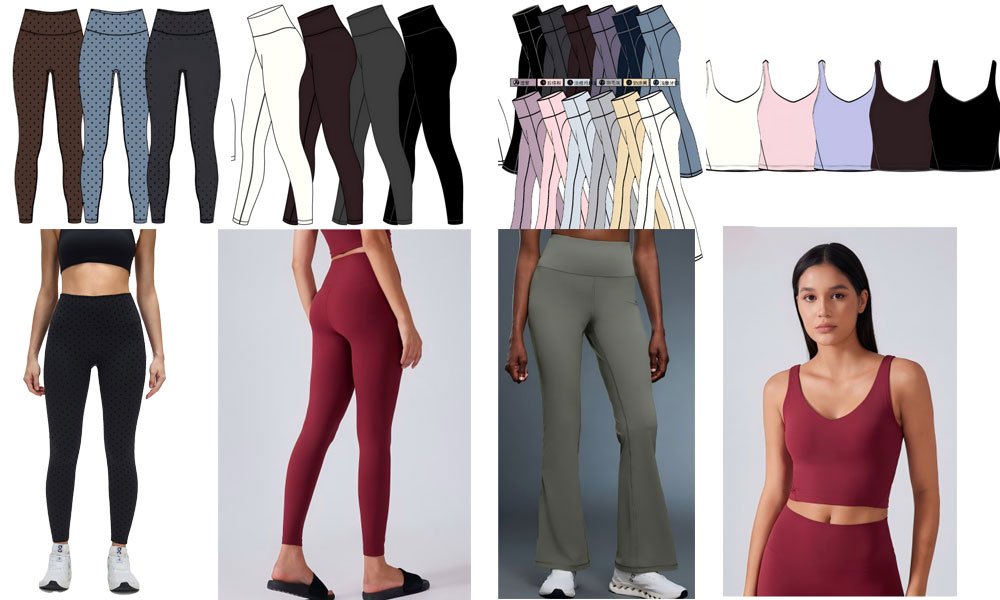
Creator-Led U.S. Fitness Brand
The client operates a creator-led fitness business in the United States with an established social-media audience and a product range focused on yoga and fitness apparel. The ongoing program includes leggings, yoga shorts, sports bras, tanks, bodysuits and coordinated fitness sets, with repeated demand for new product directions.
The Challenge
The program requires more than repeating one fixed style. Product-development needs include high stretch, supportive garment direction, opacity review, soft handfeel, extended sizing, selected brushed winter versions and frequent newness. Because these requirements interact with material, fit and construction, each new direction needs to be assessed through the actual sample rather than assuming that a previous fabric or style will automatically perform the same way.
MOVEVOX Solution
MOVEVOX supports the program through continuing product recommendations, sample development and wear evaluation before larger purchasing decisions. Leggings and related garments can be reviewed around material direction, fit, stretch, opacity and product construction, while selected samples are provided for actual fitness and wearing evaluation.
As new styles are introduced, the technical direction is reviewed against the intended product rather than simply copying parameters from earlier orders. MOVEVOX also supports selected product presentation materials, including high-resolution product imagery and model videos where applicable to the project.
The relationship has developed into an ongoing repeat activewear program rather than a single-order transaction.
Product Direction
New leggings and related activewear ideas are selected according to the brand's current collection needs, customer fit direction and requirement for frequent product refreshes.
Material and Sample Review
Suitable materials and product structures are developed into samples so the buyer can review handfeel, stretch, fit, opacity and overall wearing experience before larger purchasing decisions.
Wear Evaluation
Selected samples are used in actual fitness and wear conditions, allowing product feedback to be based on the intended user experience rather than product photography alone.
Revision and Approval
Where the sample needs adjustment, product, fit or material direction can be revised before the relevant style proceeds toward the approved production requirement.
Repeat Supply
Approved activewear products move into recurring purchasing, while continued new-style development supports future collection updates alongside repeat production.
Have a Leggings Project Ready for Technical Review?
Share the information you already have—Tech Pack, reference sample, measurement chart, product image, material direction or written concept. MOVEVOX can review the intended leggings structure, manufacturing route, fit inputs, material requirements, branding, quantity and sample needs before defining the next development step.
A complete Tech Pack is useful but not required to begin the first technical discussion.
Continue Your Leggings Supplier Evaluation
A leggings sourcing decision often connects to broader questions about manufacturing route, materials, product development, private label execution, quality and collection planning. These related MOVEVOX pages provide the next level of detail.
Seamless Activewear
Understand how engineered knitting, yarn and Seamless structures can be used across leggings and related activewear products.
Explore Seamless Activewear →Product Development
Review how MOVEVOX moves technical inputs from initial project information through sample development, revision and approved production specifications.
Explore Product Development →Custom Fabric
Go deeper into material development and how fabric requirements should be connected to the intended product, construction and approval standard.
Explore Custom Fabric →Private Label Activewear
Review broader private-label development across product, logos, labels, packaging and brand-execution requirements.
Explore Private Label →Quality & Compliance
See how quality requirements, inspection, buyer standards, evidence and applicable compliance expectations are handled within MOVEVOX's supplier system.
Explore Quality & Compliance →MOQ & Cost Guides
Review how MOQ, material requirements, customization and SKU complexity influence the effective commercial entry point of an activewear project.
Explore MOQ & Cost Guides →Private Label Leggings Manufacturing Frequently Asked Questions
These questions cover the main technical and commercial points activewear sourcing teams usually need before moving from supplier evaluation into sample development.
What types of leggings can MOVEVOX develop?
MOVEVOX develops leggings including high-waist, ultra-high-waist, V or cross-waist, no-front-seam, contour, pocket, brushed, soft-handfeel and compression-direction products. Both Seamless and Cut & Sew manufacturing routes are available. The final route and construction depend on the Tech Pack, material, fit, product structure and manufacturability review rather than the style name alone.
Can MOVEVOX make both Seamless and Cut & Sew leggings?
Yes. MOVEVOX's owned core production capability includes 28 Italian Santoni Seamless knitting machines and approximately 24 principal sewing and garment-production machines. Seamless is suited to relevant engineered-knit structures, while Cut & Sew offers more freedom for patterns, pockets, panels and material combinations. The product requirement determines which route is more appropriate.
Can you develop leggings from our Tech Pack?
Yes. MOVEVOX can review a complete or incomplete Tech Pack and identify open technical points before sampling. Development can also begin from a legitimate physical sample, product image, sketch, written concept or material reference. Critical measurements, construction, material, color and branding requirements should be clarified before the product becomes a controlled production specification.
Can you develop leggings without a complete Tech Pack?
Yes. A complete Tech Pack is not required for the first discussion. MOVEVOX can start from available product information and progressively clarify missing measurements, materials, construction, fit, branding and commercial requirements. Unresolved critical requirements should not remain as production assumptions when the style moves toward formal approval and bulk release.
What materials can be used for private label leggings?
MOVEVOX can evaluate nylon-spandex, polyester-spandex and other relevant activewear fabric or yarn directions, including soft, brushed, rib, textured and compression-oriented options. Suitability depends on the actual material specification, stretch, recovery, GSM, handfeel, opacity, construction and target fit. Composition alone does not establish product performance.
How does MOVEVOX control leggings fit?
Fit control connects target measurements, POM, waistband, waist-to-hip relationship, front and back rise, inseam, material behavior and the selected manufacturing route. Development can include Fit Sample, measurement review, movement evaluation, revisions and Size Set or PP approval where required. Bulk measurement follows the applicable approved specification and buyer standards.
Can MOVEVOX guarantee every legging is squat-proof?
MOVEVOX should not make an unconditional squat-proof guarantee across every material, color, size and fit. Opacity depends on fabric structure, GSM, color, stretch, recovery, garment size and construction. Where opacity is a buyer requirement, the actual material and finished sample should be evaluated, and any quantified claim should be supported by applicable project-specific evidence.
Can logos, labels and packaging be customized?
Yes. MOVEVOX supports project-specific logo applications, main labels, care labels, size labels, hangtags, SKU or barcode information and packaging. Available logo processes include options such as heat transfer, silicone, screen printing, embroidery and other appropriate methods. Final feasibility, MOQ and process selection depend on the actual garment material and branding requirements.
How long does a leggings sample usually take?
A typical development sample takes approximately 5–10 working days after the required project details are confirmed. This is a standard reference rather than a guaranteed complete approval cycle. Custom fabric or yarn, complex structures, logo processes, repeated revisions, buyer feedback speed and international courier transit can extend the total development schedule.
What is the typical MOQ for custom leggings?
A typical Seamless custom-development MOQ starts around 100 pieces per style, while Cut & Sew typically starts around 150 pieces per style. Actual effective MOQ can increase because of custom colors, fabric or yarn minimums, size distribution, logo processes, labels and packaging. Custom colors commonly involve approximately 400–600 garments per dye batch depending on material and dyeing conditions.
Start Your Leggings Project With the Information You Already Have
Whether the project begins from a complete Tech Pack, existing product, sketch or early collection concept, MOVEVOX can first review the product structure, target market, estimated quantity, fit information, material direction and branding requirements. The first review is used to identify the development path and the information still required before sample, MOQ, costing or production conditions are formally confirmed.
I Have a Tech Pack
Send the current Tech Pack, measurement chart, artwork and relevant material, branding or packaging requirements. MOVEVOX can review the style for manufacturing feasibility and identify technical questions before sampling.
I Have a Reference Legging
Provide a legitimate physical sample, product image or technical reference together with your target market, intended changes and approximate quantity. MOVEVOX can use the information as the starting point for a structured development review.
I Am Planning a Leggings Collection
Share your intended styles, colors, size range, manufacturing direction and approximate SKU or quantity plan. MOVEVOX can review whether Seamless, Cut & Sew or a combination of routes is more appropriate before individual styles enter detailed development.
Request MOQ & Sample Details
START YOUR PROJECT
Ready to Develop Your Private Label Activewear Line?
Tell us what you want to develop, your estimated quantity and customization needs. We will review the details and suggest the next practical step for sampling, quotation or production.
Helpful details to include:
- Product type or reference image
- Estimated quantity
- Logo, label or packaging needs
- Target market or size range
- Expected timeline