Yoga Flare Leggings Manufacturer for Brand-Level Fit and Scale
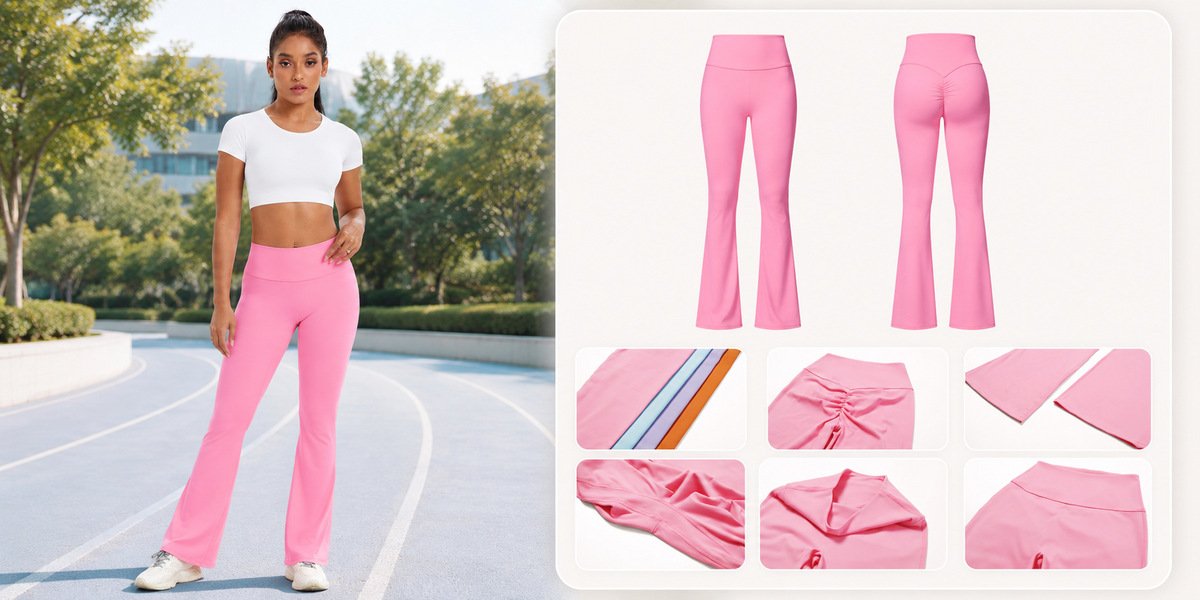
Developing a commercial yoga flare legging requires more than changing the lower-leg silhouette. Waist-to-hip fit, rise, inseam, leg opening, fabric elasticity, recovery and size grading must work together under one approved specification. MOVEVOX supports cut-and-sew flare projects through technical review, pattern development, sampling, fit revision, size-set confirmation and controlled bulk production.
- Pattern development linked to customer measurements and approved fit standards.
- Fit Sample, Size Set and PP Sample support controlled approval.
- Bulk measurements are checked against specifications, tolerances and approved samples.
Flare Development
Translate the approved product concept into measurable pattern, fit and construction requirements before bulk production.
Choose the Right Flare Development Starting Point
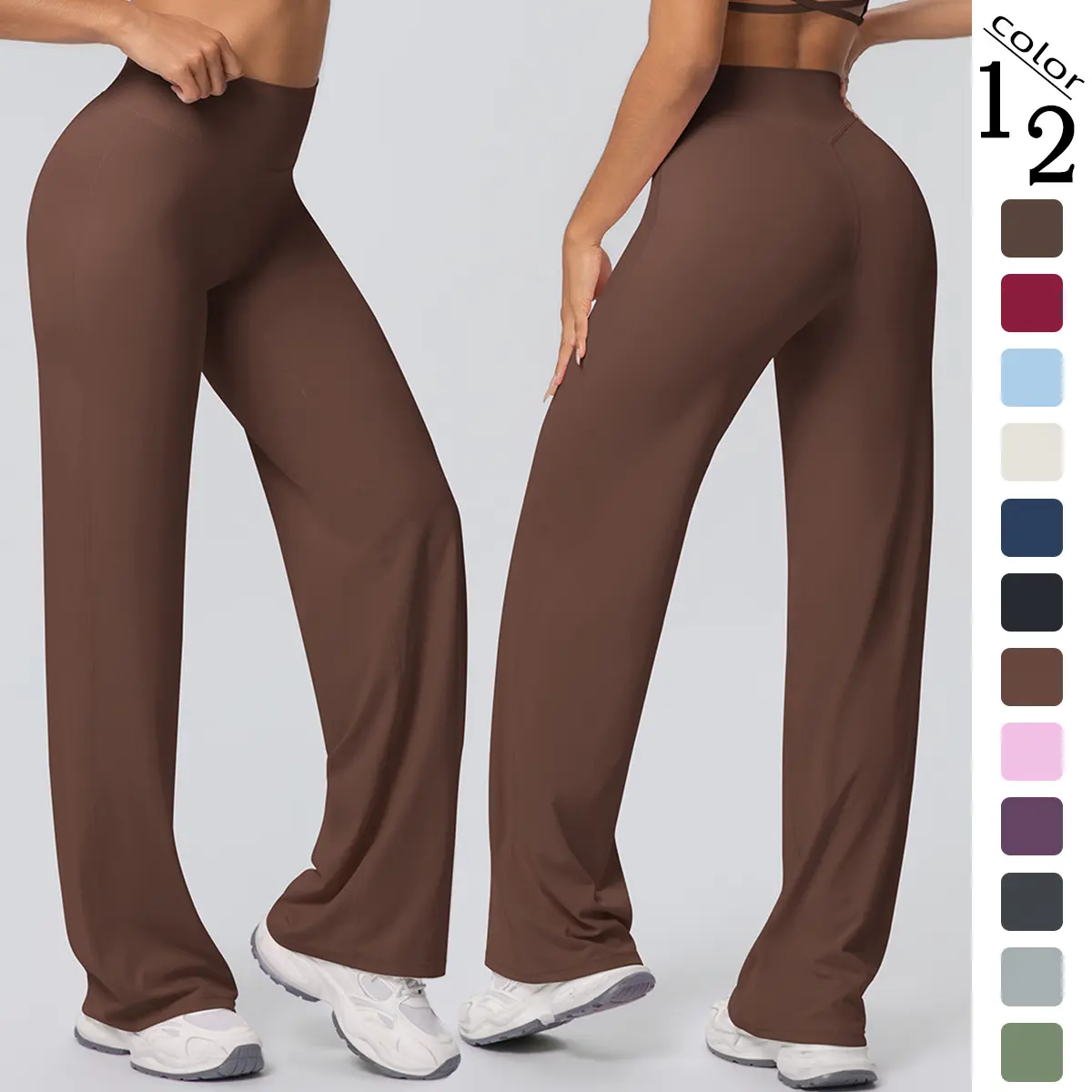
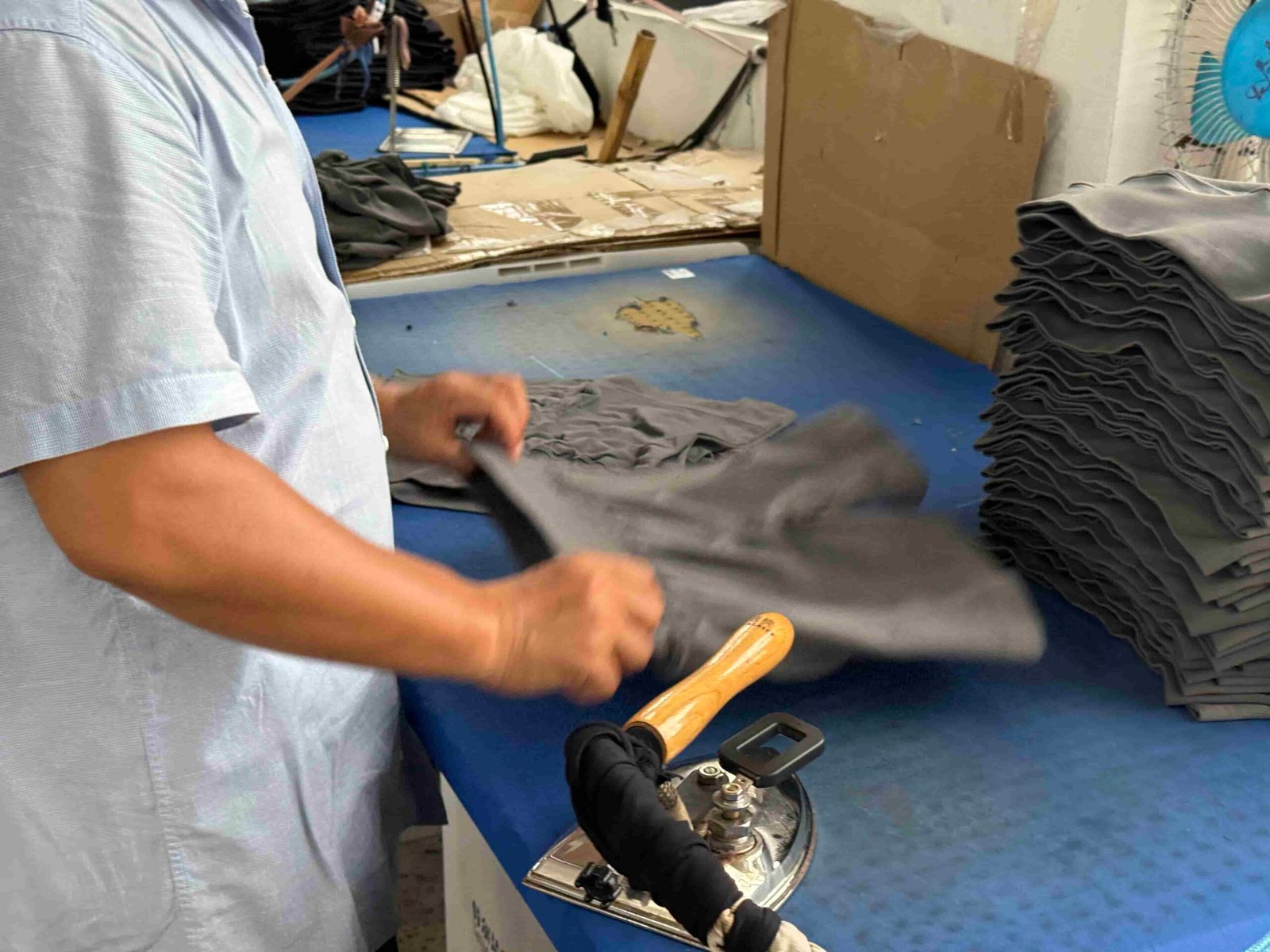
MOVEVOX can enter a project from different levels of customer preparation. The working route depends on whether pattern, measurements, material, construction and branding are already defined or still require development.
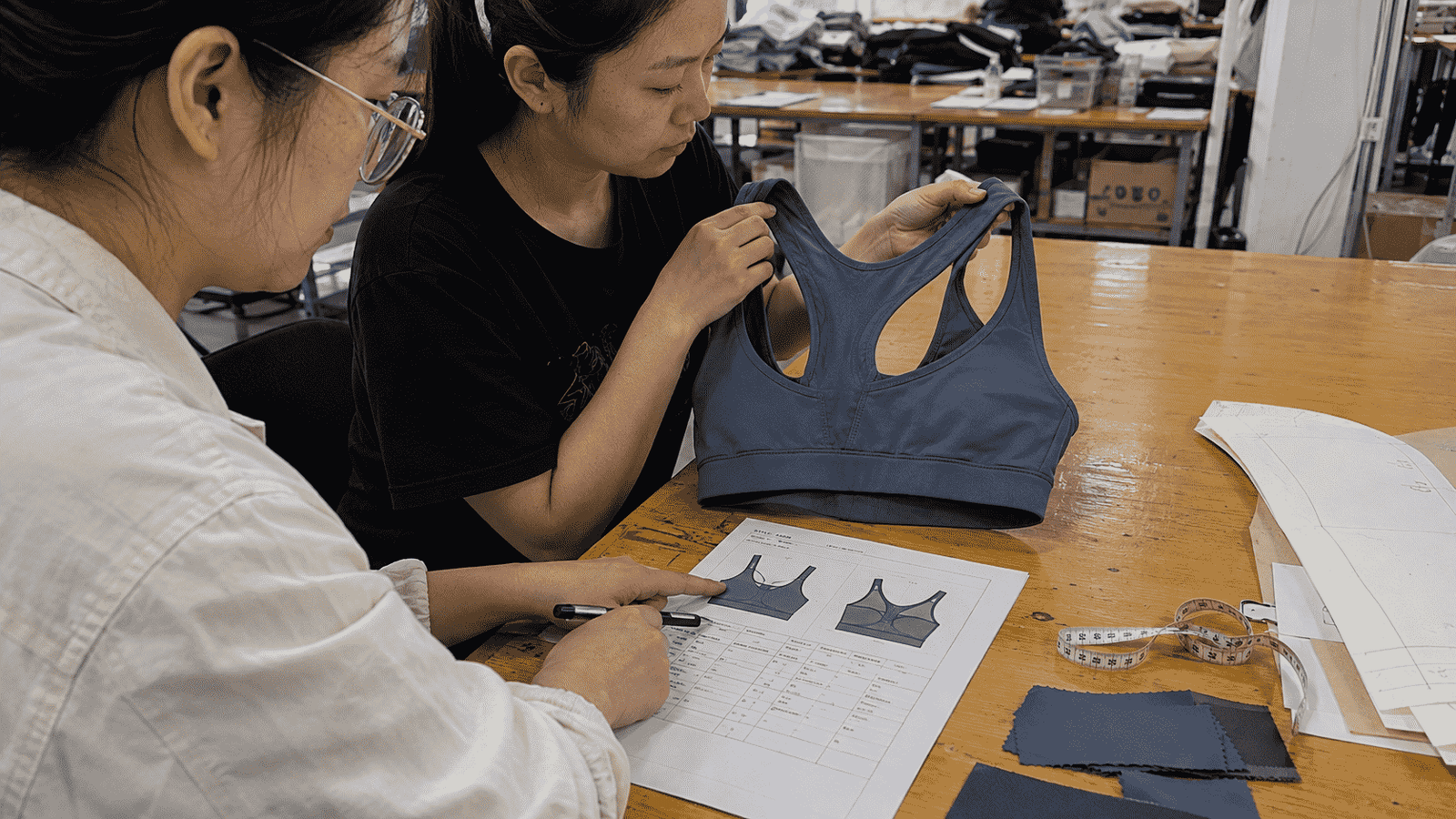
Full Tech Pack OEM
When the buyer already controls the product specification, MOVEVOX reviews the Tech Pack, measurement chart, material requirements, construction, artwork and packaging before development. Pattern, sampling and production then follow the approved customer specification and controlled revision history rather than an independently created factory standard.
- Current Tech Pack and measurement chart already available
- Customer controls fit and final product approval
- Production must follow defined technical versions
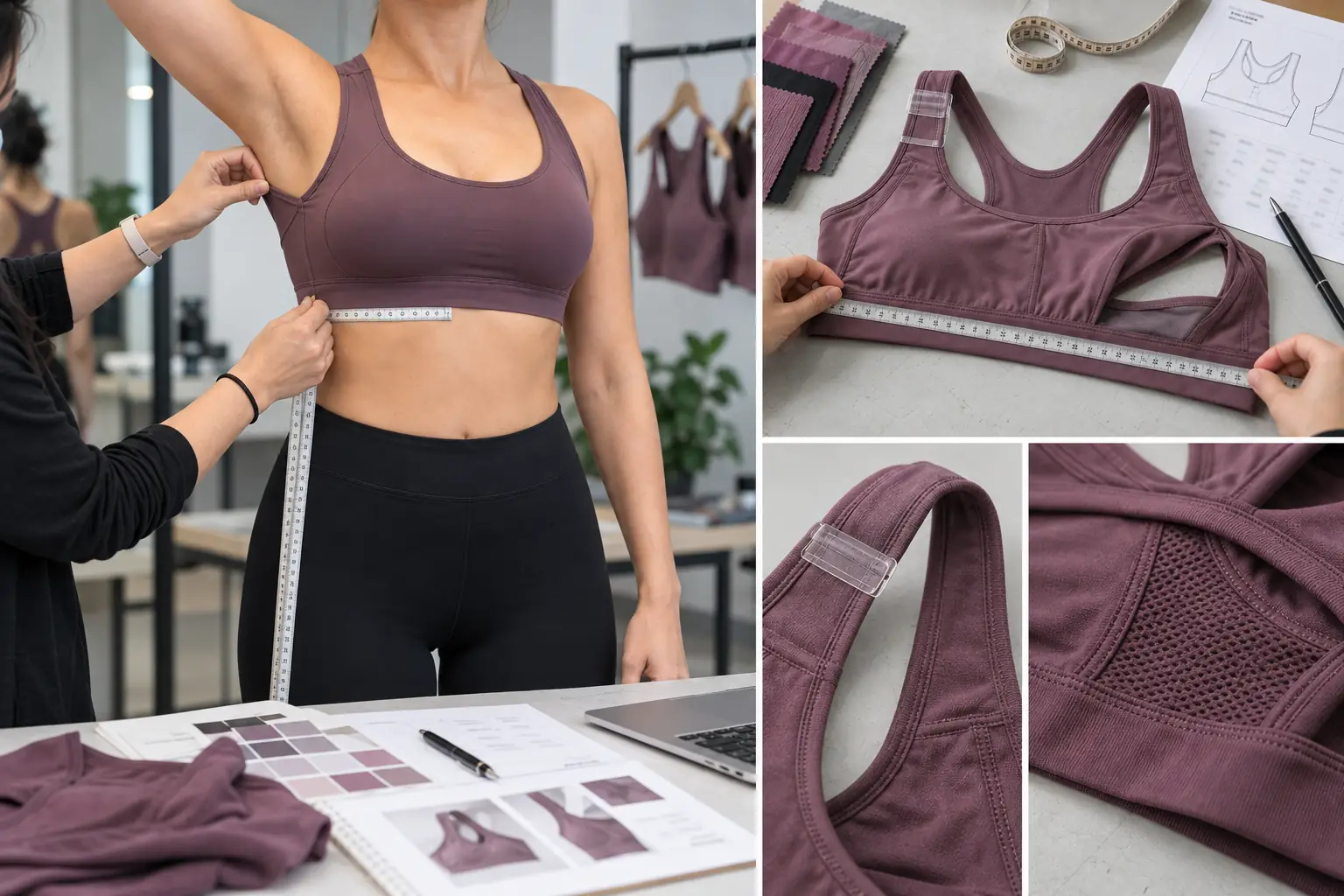
Reference Sample Development
A legitimate physical sample can be measured and studied to understand silhouette, construction, proportions, material direction and workmanship. MOVEVOX then develops its own controlled pattern and sample version. The approved MOVEVOX development sample becomes the production reference rather than assuming every characteristic of the original can be reproduced identically.
- Customer has lawful physical product references available
- Exact technical files are incomplete or unavailable
- New sample approval remains part of development
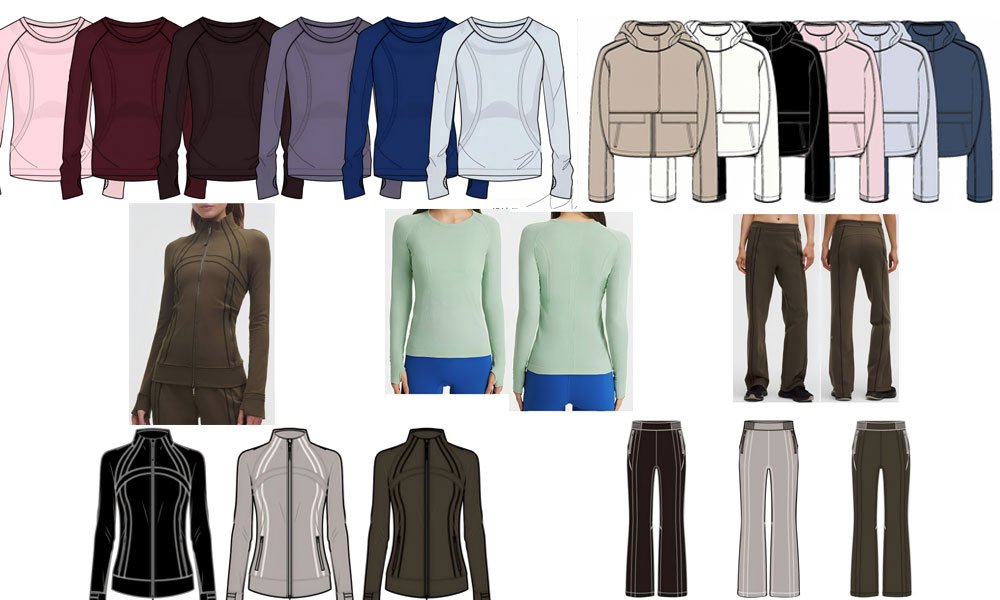
Development-Led ODM
When the buyer has a defined flare concept but incomplete technical specifications, MOVEVOX can support design translation, material direction, pattern development, sample making and revision. The customer remains responsible for brand direction and final approval, while manufacturing feasibility is resolved through the development process.
- Product direction is clear but specifications remain incomplete
- Material or pattern development still requires supplier input
- Customer can review and consolidate sample feedback
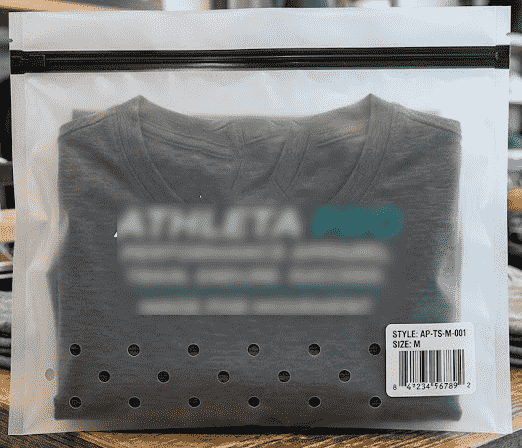
Private Label Program
Where an existing or mature product base can satisfy the intended market, customization may concentrate on colors, logo application, labels, hangtags, packaging and other approved brand elements. Any requested change that materially affects fit, pattern, fabric or construction moves the project back into formal product-development review.
- Underlying product direction requires limited structural change
- Main requirements concern brand identity and packaging
- Buyer accepts physical sample approval before production
Where Projects Are Managed and Manufactured
MOVEVOX operates from Yiwu, Zhejiang, with customer-project coordination and an owned production base supporting development, cut-and-sew manufacturing, seamless production, QC, packing and supplier-management functions.

Yiwu Project Coordination
MOVEVOX's business location is Yiwu, Zhejiang, China. Customer communication, RFQ and quotation management, development information, PO control, purchasing coordination, production follow-up, version control, logistics and after-sales activities are managed through the Yiwu operation. For formal visits, documents or courier needs, the appropriate contact address is provided according to the project rather than publishing an unrelated administrative location.
- International B2B customer communication is managed from Yiwu.
- Each formal customer has a Primary Account Owner.
- Project information is connected to internal development and production teams.

Yiwu Manufacturing Base
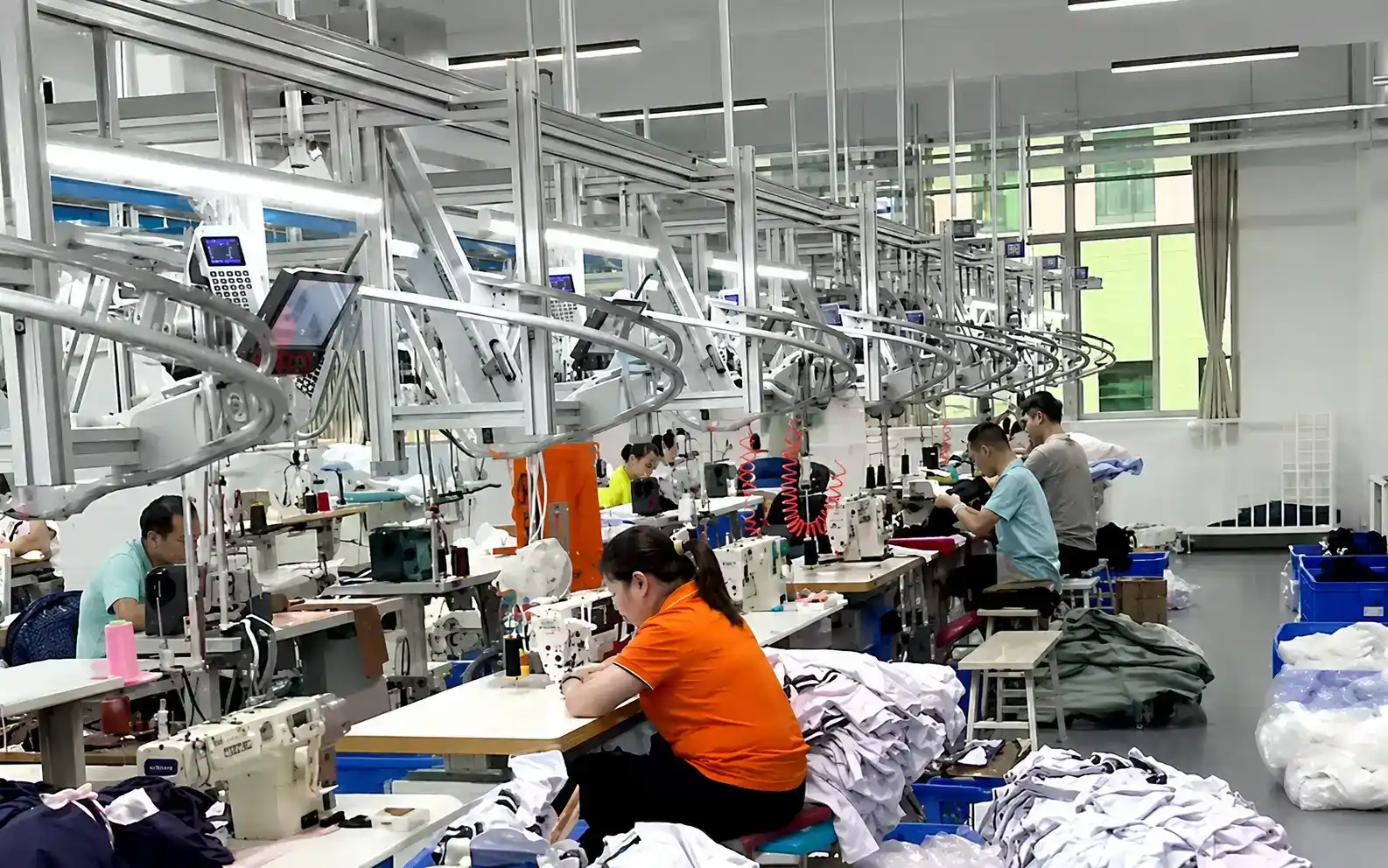
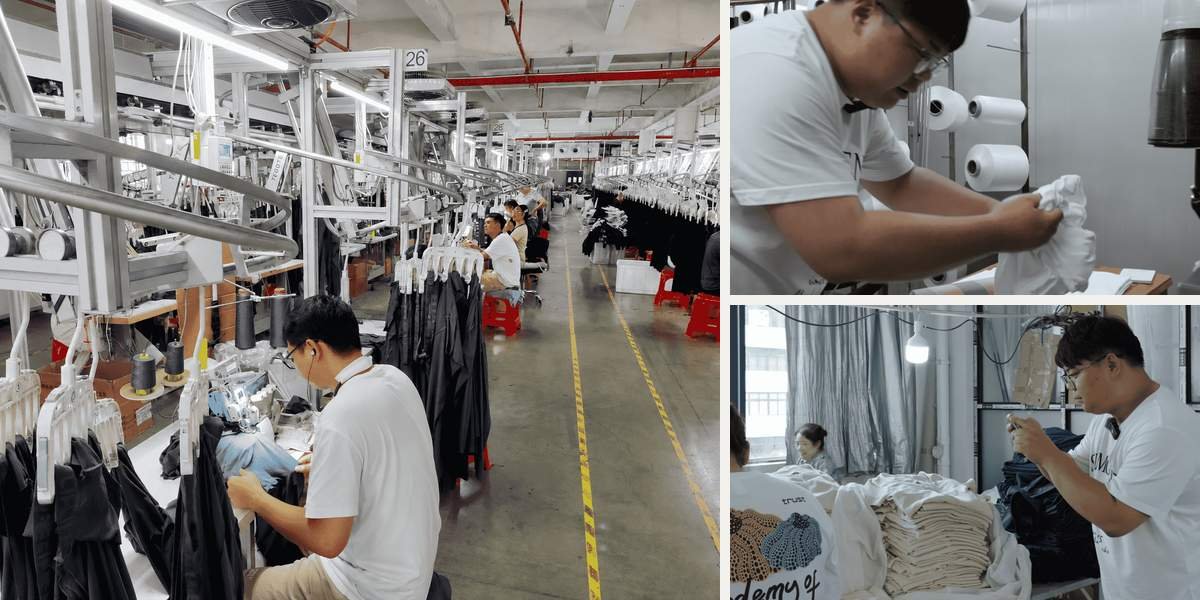
The owned manufacturing base is located at No. 97, Xiazhang Village, Fotang Town, Yiwu, Zhejiang, China. The approximately 6,000 m² operating site includes manufacturing, warehousing, QC, packing, development and office functions. It supports both cut-and-sew and seamless activewear operations and serves as MOVEVOX's core production and technical-control location.
- Approx. 6,000 m² actual operating space.
- Approx. 24 main sewing and garment machines.
- 28 Italian Santoni seamless knitting machines.
The Team Behind Fit and Production Control
Flare development crosses product, pattern, sample, quality and supply-chain functions. MOVEVOX's existing organization assigns these responsibilities to defined roles instead of relying on one salesperson to interpret every technical decision.
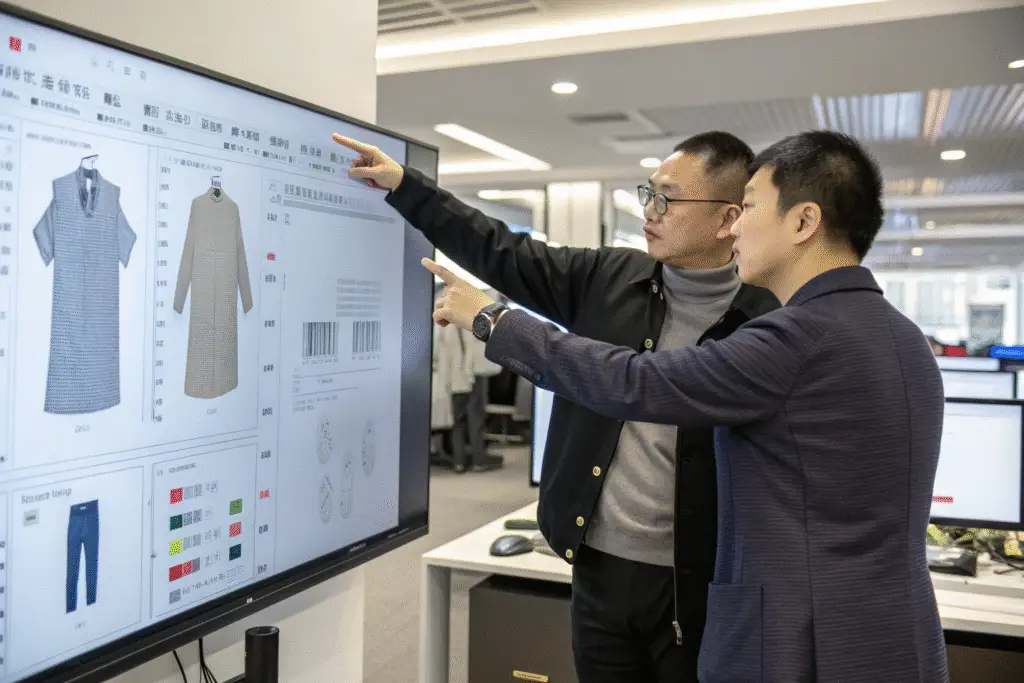
Product Development Lead
Coordinates product requirements, development routing and cross-functional technical decisions for activewear projects.
The Product Development Manager is part of MOVEVOX's five-person core management structure and participates directly in important customer projects. The role coordinates customer requirements with design, pattern, sampling, material, QC and production functions, helping convert a Tech Pack, legitimate sample, sketch or product concept into an executable development route and controlled approval process.

Pattern Technical Team
Two specialists manage measurements, patterns, fit adjustment, grading and production-version consistency.
MOVEVOX maintains two professional pattern and technical-fit positions. Their work covers Tech Pack measurement analysis, physical-sample measurement, paper or digital pattern creation, base-size establishment, fit adjustment, Grade Rules, sample revision and final bulk-pattern locking. Their core responsibility is maintaining technical consistency between the approved sample, measurement chart and current production pattern.

Sample Making Team
Four sample makers support development, Fit Samples, revisions, Size Sets and PP Samples.
The four-person sample team is dedicated to development-stage work and supports Development Samples, Fit Samples, Revised Samples, Size Set Samples, PP Samples, Sales Samples and retained factory references. The team turns the current pattern, material and technical information into physical garments so customer comments can be evaluated and converted into controlled revisions before bulk manufacturing begins.
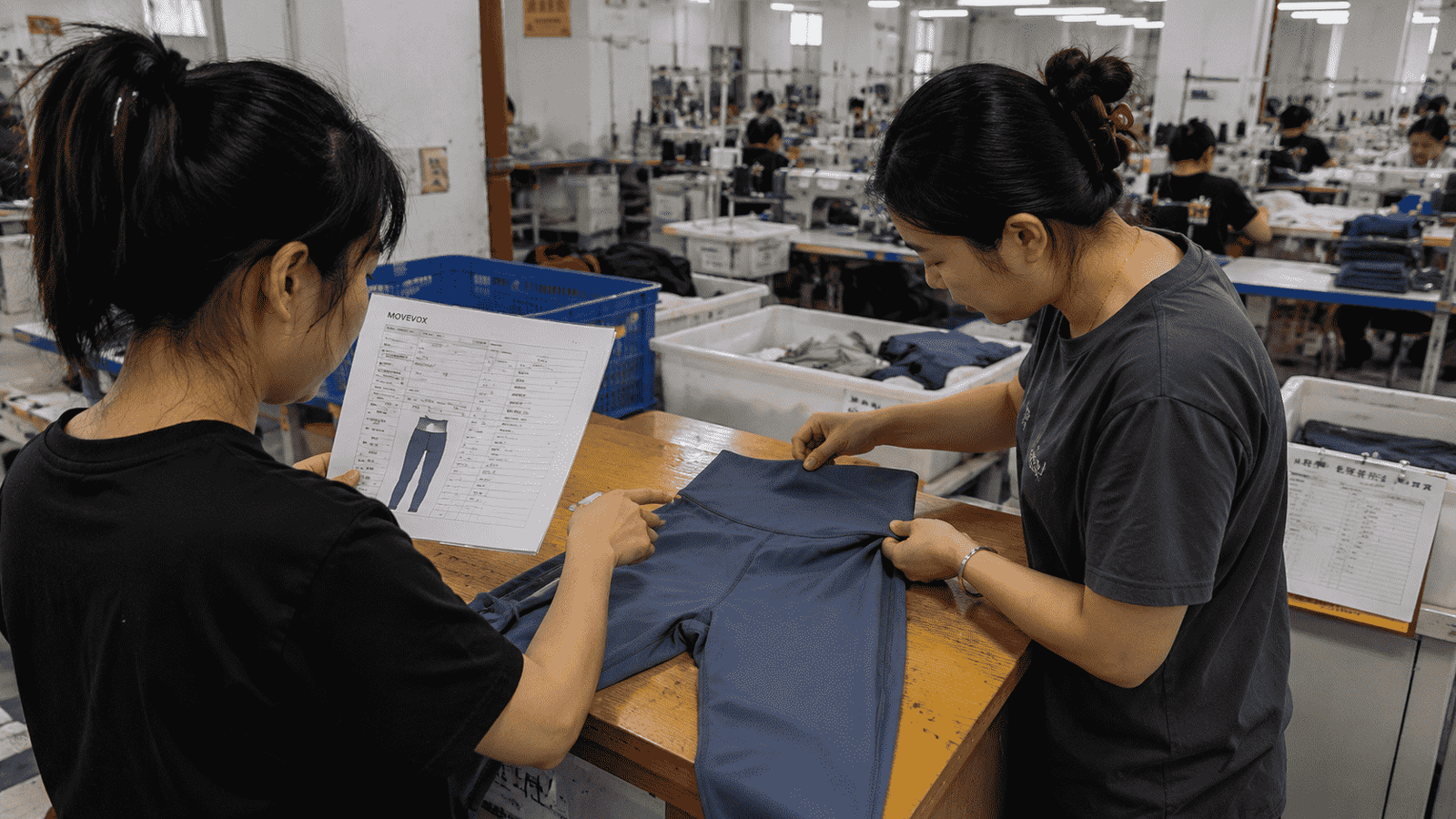
Quality Team
Quality management combines a Quality Manager with five QC personnel across production checkpoints.
MOVEVOX's current quality structure includes five QC personnel, while the Quality Manager is part of the core management team. Inspection covers materials, first-piece confirmation, inline production, finished garments, packing and shipment-related control. For leggings, measurement, symmetry, waistband stability, workmanship, material condition and approved-specification consistency are included in the quality-control scope.
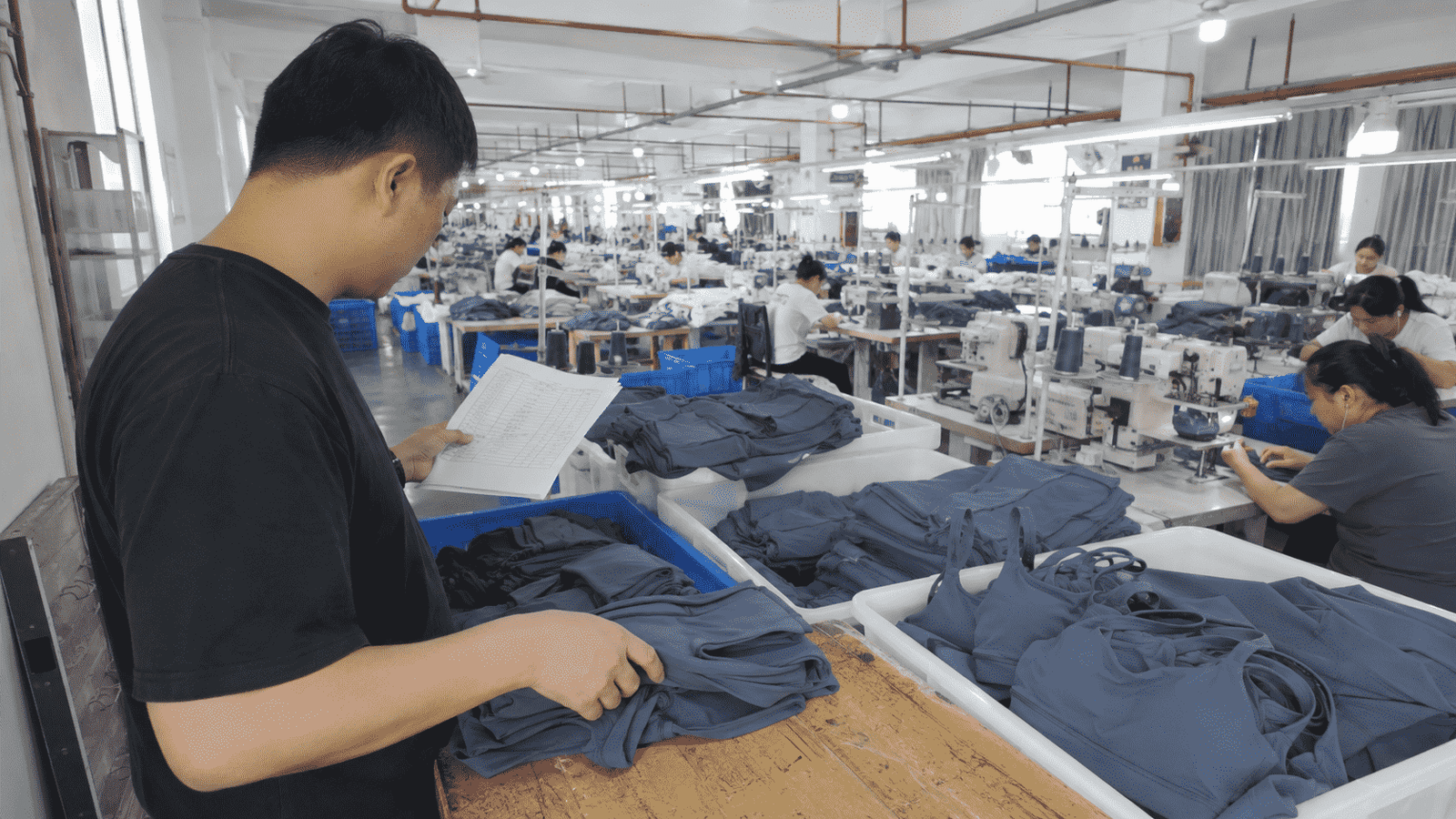
Supply Chain PMC
Coordinates material readiness, production allocation, satellite capacity and delivery-risk management.
The Supply Chain & PMC Manager is part of MOVEVOX's five-person core management team. This function coordinates fabrics, trims, material timing, production scheduling, satellite-factory allocation and delivery risk. For repeat or growing flare programs, the role helps keep material readiness and production capacity aligned with the approved specification and confirmed customer schedule.
How Flare Patterns Become Controlled Production Specifications
Pattern development at MOVEVOX connects customer inputs, physical sampling, measured revisions and grading into a controlled technical version. A flare silhouette therefore becomes a production specification through approval, not through visual interpretation alone.
Build the Pattern From Controlled Customer Inputs
A flare development project begins by identifying the current valid customer inputs. MOVEVOX can work from a Tech Pack, measurement chart, lawful physical sample, image, sketch or defined concept. When a customer already has established dimensions and measurement methods, those requirements take priority over any generic factory size system.
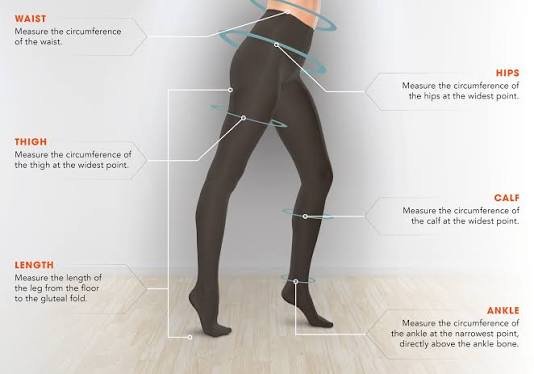
Measurement definition: MOVEVOX's confirmed POM framework for bottoms includes waist, hip, inseam, side length, total length, leg opening, waist height and rise-related dimensions. Additional product-specific POMs can be added when required by the structure.
Pattern development: The pattern team converts the current measurements and construction information into controlled Cut & Sew pattern pieces, including seam allowance, matching points and production considerations. Professional garment CAD is used for base patterns, Fit Revision, grading and marker management.
Material relationship: Fit development is not separated from material behavior. MOVEVOX's factory facts state that elastic activewear fit depends on fabric stretch and recovery; a Fit Sample should therefore use the target bulk fabric or a sufficiently comparable material whenever possible.
Version control: The pattern is identified by the current style and revision rather than treated as an informal workshop file. When measurements or fit comments change, the revision is updated and the previous pattern version is no longer intended for new cutting.
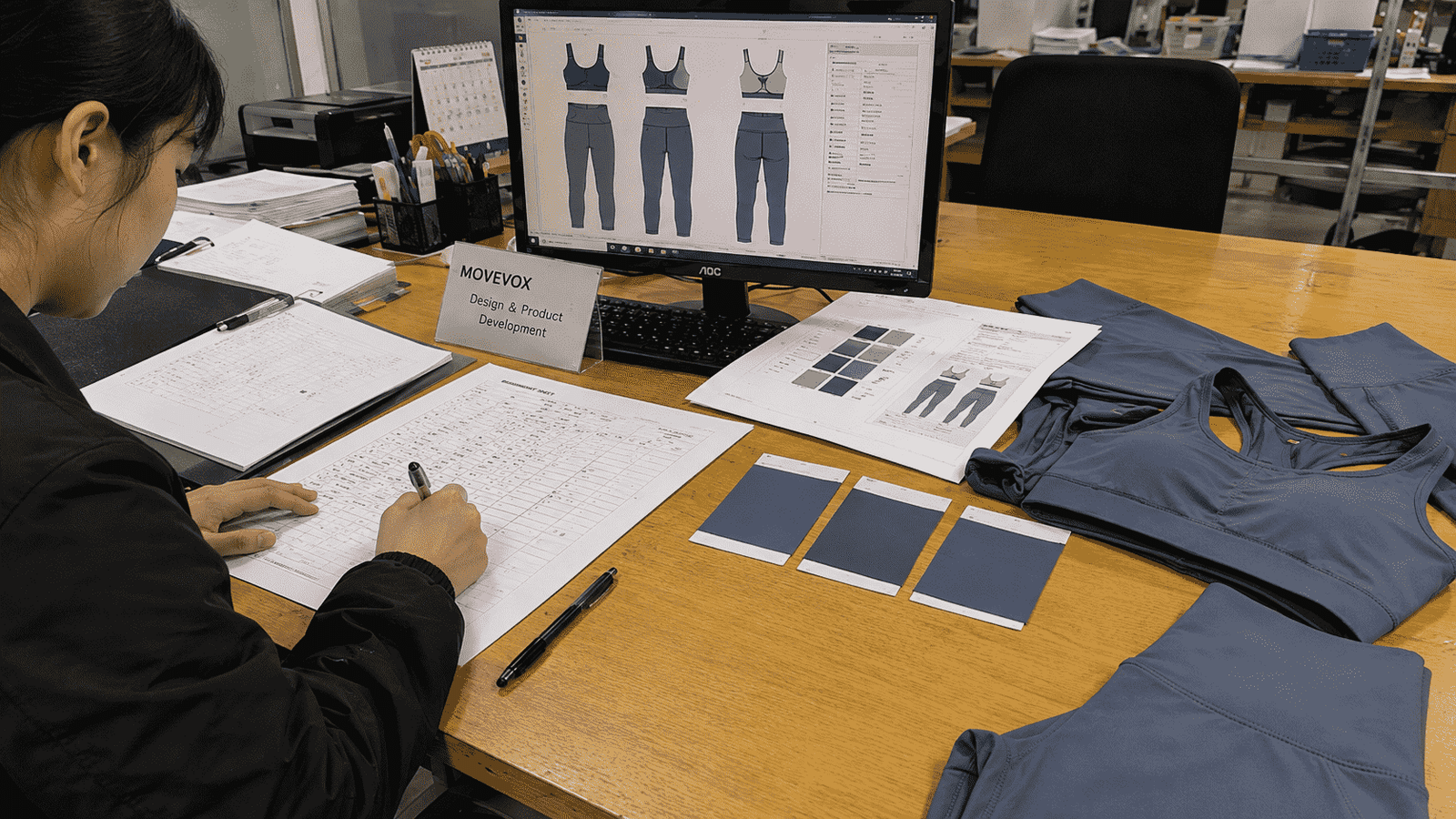
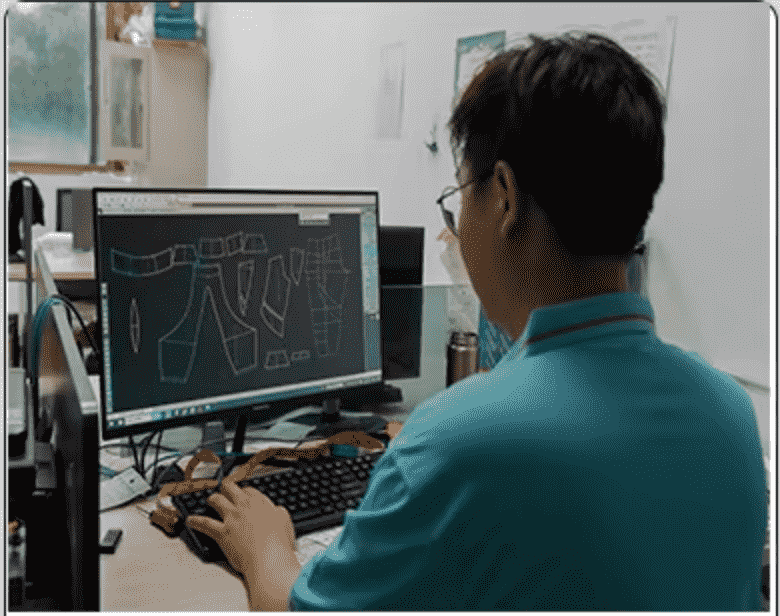
Turn Fit Feedback Into Measured Pattern Revisions
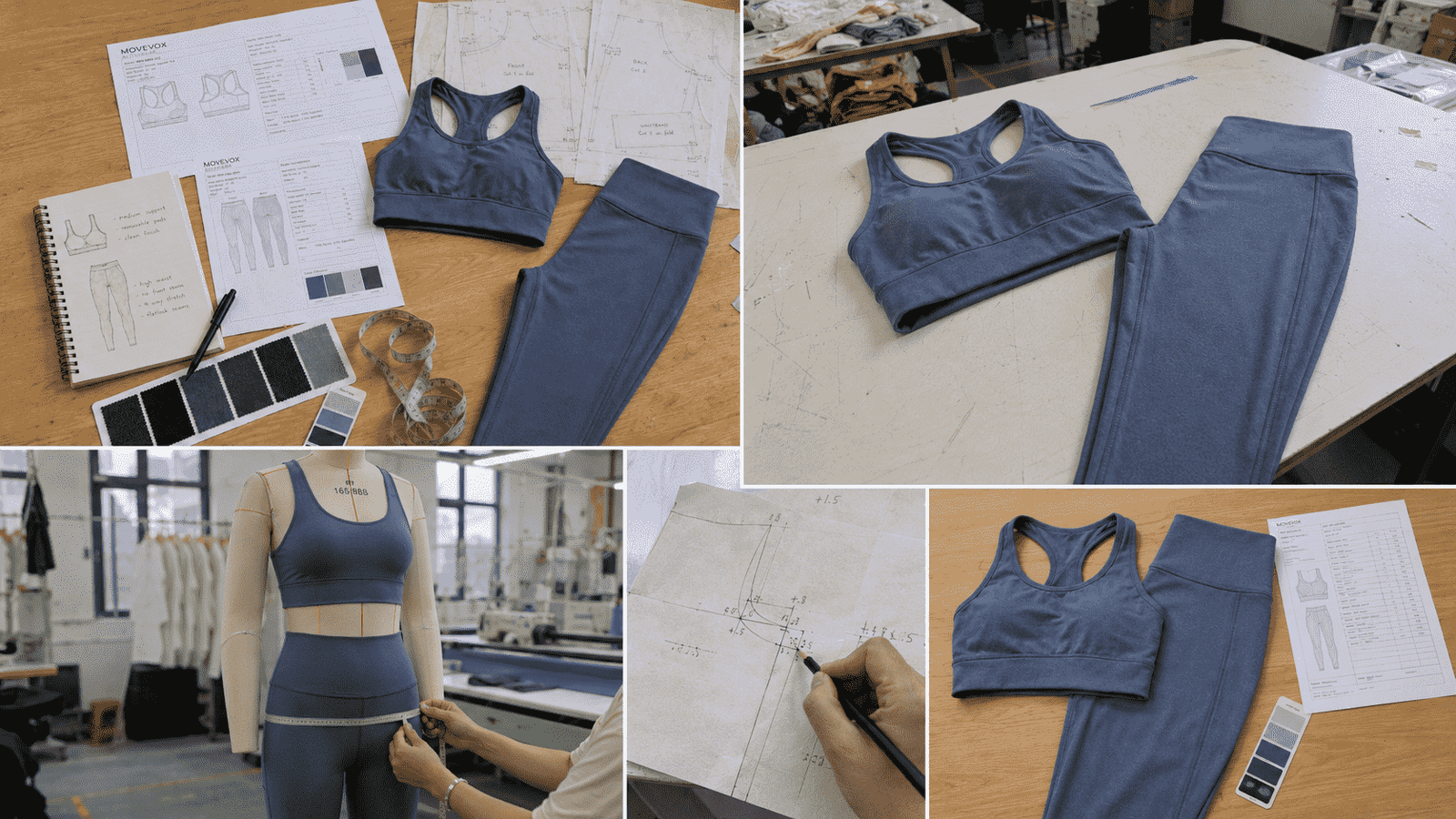
A first physical sample is not automatically the production standard. MOVEVOX uses Fit Sample review to check whether pattern, measurements, material and actual wearing fit work together. The process links physical measurement with customer comments so revisions can be executed against one current version.
Fit Sample review: The garment is measured against the active POM specification and then evaluated on a suitable Fit Model. For leggings and related bottoms, MOVEVOX's fit facts identify waistband position, crotch, hip coverage, leg opening, opacity and movement as relevant areas.
Movement review: Depending on product use, the try-on process may include actions such as squatting, lunging, leg lifting or twisting. Observations are translated into measurable POM, pattern, material or construction actions instead of being left as vague comments such as “too tight” or “too loose.”
Revision classification: MOVEVOX's sample-revision system distinguishes silhouette/proportion, negative ease, structural balance, grading, measurement, material and workmanship issues. This allows the technical team to correct the root category rather than changing unrelated areas of the product.
Single revision list: Formal sample comments are consolidated into a current Revision List or equivalent written record. Telephone or video decisions affecting measurements, materials, workmanship or cost are converted into written confirmation before execution.
Grade, Verify and Freeze the Production Pattern
Base-size approval does not automatically prove that every selling size has been approved. MOVEVOX's size-development system separates base Fit Approval from Size Set and final grading control so proportion and critical structure can be checked beyond a single garment.
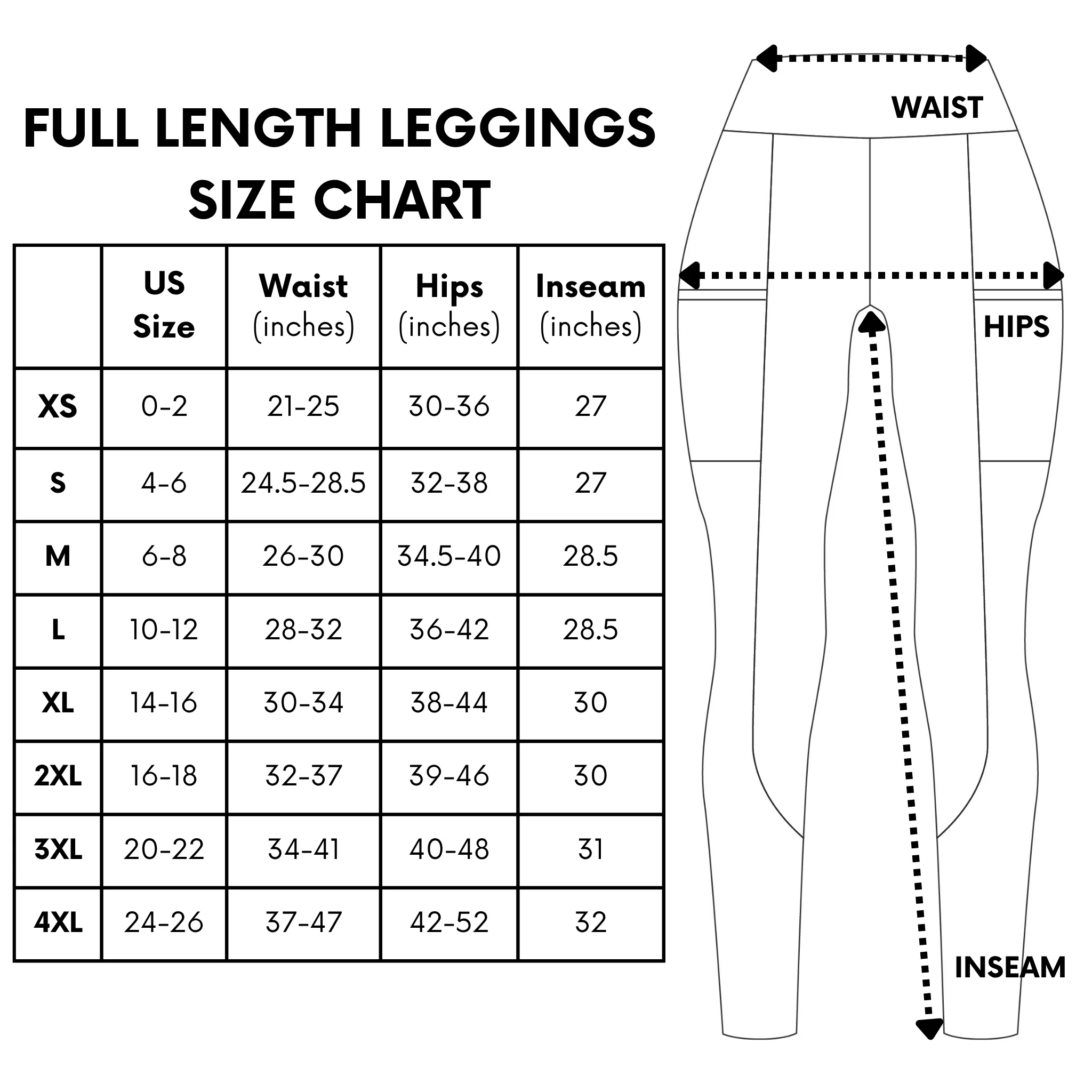
Grade Rules: The pattern team establishes or follows customer-approved Grade Rules for the required size system. MOVEVOX does not treat global market labels such as US, EU, UK or Asia as the actual production measurement standard; the final product must return to measurable POMs, tolerances, measurement methods and approved fit data.
Size Set: A Size Set can include all selling sizes or selected Small / Base / Large representatives according to customer and risk requirements. Internal review focuses on key POMs, left-right symmetry, length progression, circumference progression and critical structural positions.
Different body targets: MOVEVOX can develop Athletic, Curvy, Petite, Tall, Long Torso, Short Torso and Plus Size programs when the customer provides target-population data or a defined Fit Model. These are not created by proportionally scaling one universal pattern.
Production freeze: Once the required size and fit approvals are completed, the final grading table and current pattern version enter bulk specification freeze. PP Sample and Approved Sample then combine with the final Tech Pack, material and other production information to form the manufacturing reference.
Measurements That Control a Flare Legging Fit
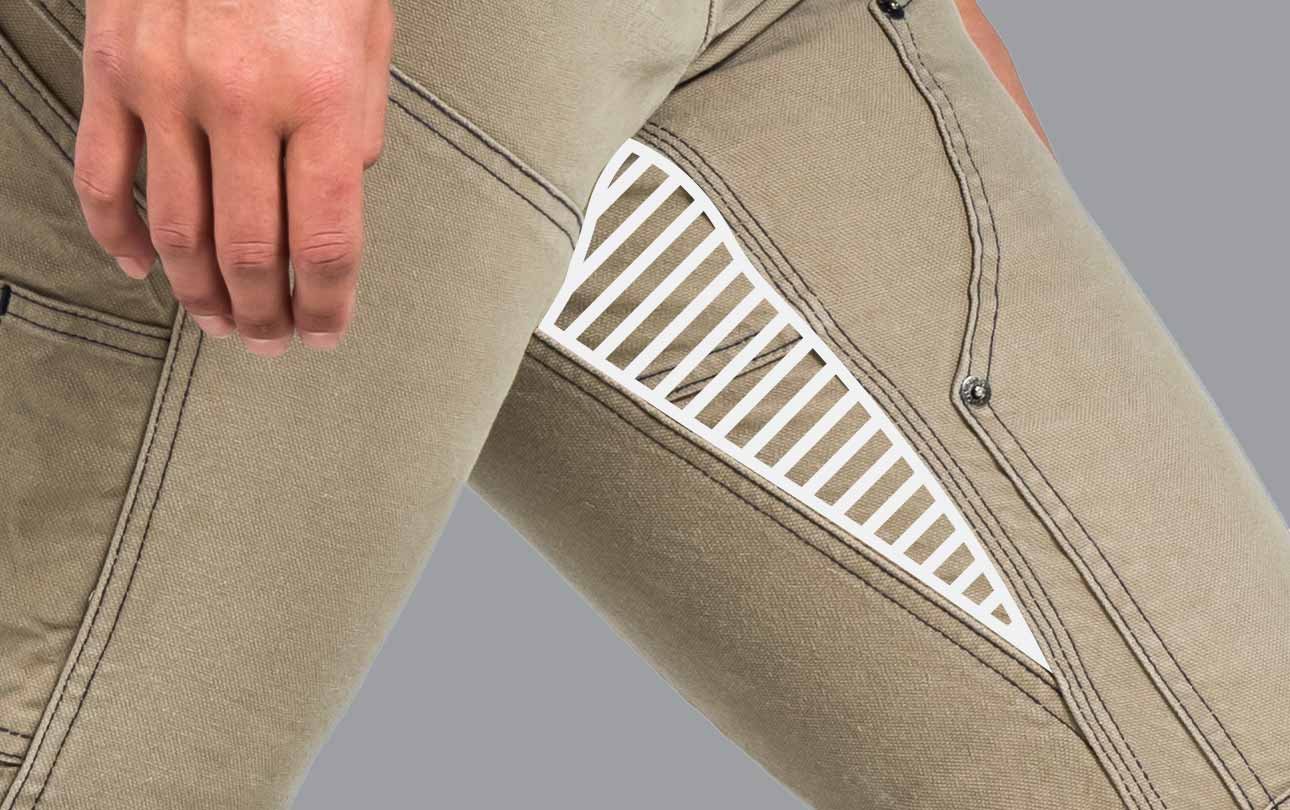
A flare style must ultimately be controlled through measurable POMs and approved methods. MOVEVOX uses the customer's current specification, measurement method, tolerance and approved sample rather than relying only on size names.
| POM | MOVEVOX Control Basis | Why It Matters in Approval | Verification |
|---|---|---|---|
| Waist | Customer measurement chart and tolerance | Establishes the approved waist dimension and relationship with waistband construction | Flat garment measurement |
| Hip | Customer measurement chart and approved Fit Sample | Influences garment extension and the waist-to-hip fit relationship | Measurement + fit review |
| Rise | Project specification and approved fit | Supports crotch position, body coverage and waistband placement | POM measurement + try-on |
| Inseam | Confirmed specification by size | Controls approved inside-leg length and can vary by customer size program | Flat garment measurement |
| Side Length | Current POM specification | Provides another length reference for the finished bottom | Measurement control |
| Total Length | Customer-defined method | Controls overall approved garment length where the Tech Pack uses this POM | Measurement control |
| Leg Width | Project-specific POM when required | Helps control the approved leg proportion through selected garment positions | Defined measuring point |
| Leg Opening | Confirmed POM and size specification | Controls the finished opening instead of relying on visual judgment alone | Flat garment measurement |
| Flare Reference Point | Added when defined by customer Tech Pack | Allows a project-specific silhouette location to become measurable rather than subjective | Customer-defined method |
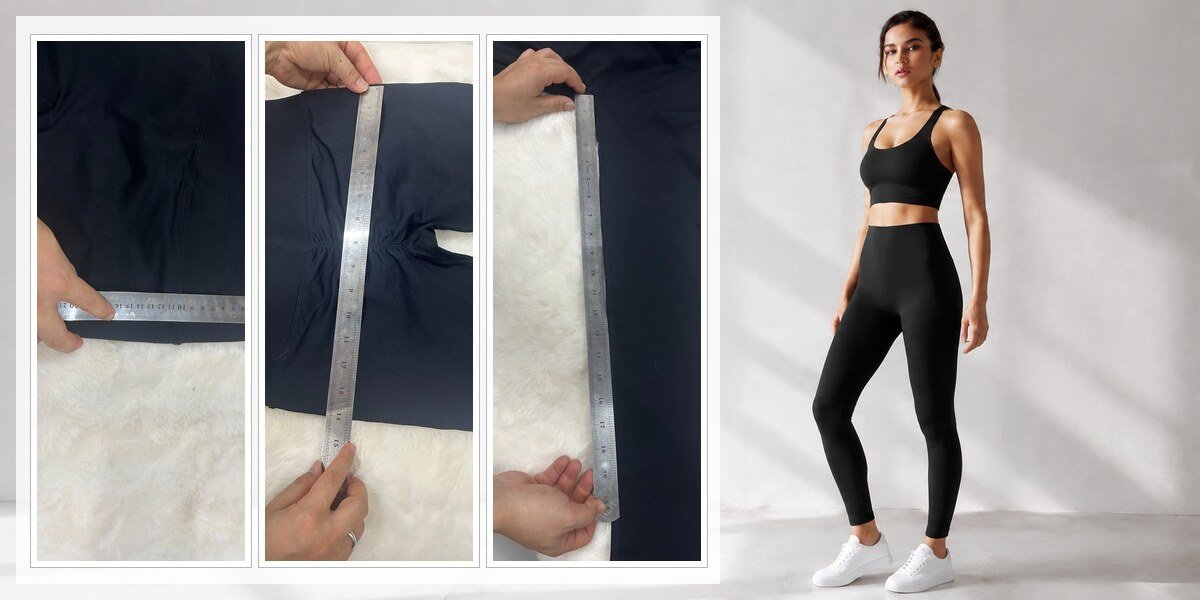
Measurement control note: MOVEVOX measures finished garments in a flat, naturally relaxed condition according to the customer's defined POM path. Elastic areas are not artificially stretched to reach a target value. Where relaxed and stretched measurements are both required, they should be defined separately. The same measuring method, POM definition, current specification and tolerance must remain consistent from sample approval into bulk QC.
Fit Programs Can Follow Different Body Targets
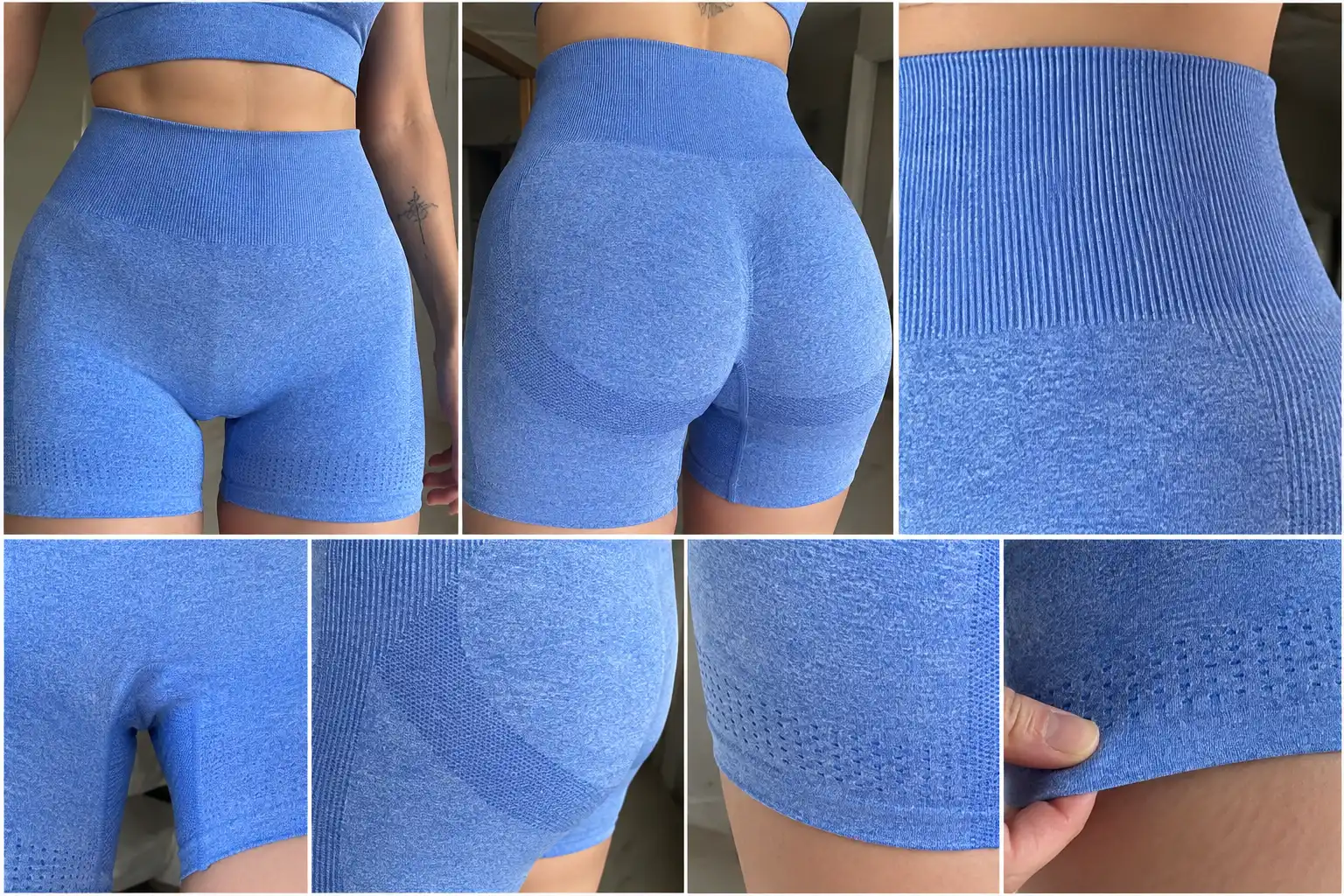
MOVEVOX can adjust pattern proportions for different target body profiles when the buyer supplies population information or both parties establish suitable Fit Model measurements before product approval.
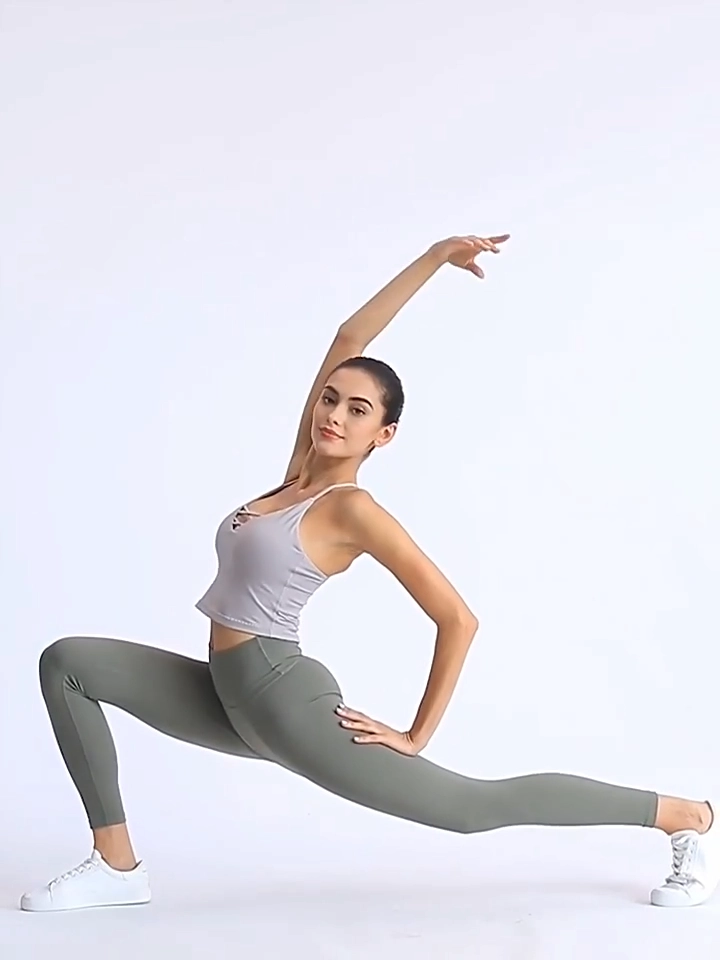
Athletic
Develop the pattern around the brand's defined athletic body measurements instead of assuming one universal factory block.
Curvy
Waist-to-hip relationships can be developed from customer body data and validated through an appropriate Fit Model.
Petite
Shorter target proportions require project data for height, torso and leg length rather than simple size-label conversion.
Tall
Longer body or leg targets can use a separately approved fit version linked to measurable project specifications.
Long Torso
MOVEVOX can adjust proportions when the buyer defines a longer torso target and related garment measurements.

Short Torso
Short-torso development follows target body data and project Fit approval rather than a generic market assumption.
Plus Size
Extended sizes require independent fit validation instead of proportional enlargement from the standard base-size pattern.
Regional Version
The same style can maintain separate regional size versions when customer specifications and SKU control require them.
Fit Priorities Change With the Wearing Context
MOVEVOX develops Yoga, Pilates, Studio and Athleisure products within its activewear scope. The approved flare specification should therefore reflect the buyer's intended use rather than treating every stretch bottom as one identical fit program.
Yoga
Yoga leggings and related bottoms require the material, waistband, crotch, hip fit and garment measurements to remain stable through movement. MOVEVOX's fitting process can include movement checks such as squatting, lunging, leg lifting and twisting. For a flare style, the customer-approved length and lower-leg silhouette should remain part of the same Fit Sample and measurement review.
- Waistband remains aligned with approved fit during movement
- Fabric stretch and recovery suit the product specification
- Length and leg opening follow customer-approved measurements
Pilates
Pilates is one of MOVEVOX's strategic lifestyle product directions. The existing product facts identify soft handfeel, naked-feel direction, high stretch, fitted proportions and low-to-medium intensity comfort as common concerns. Flared Leggings are explicitly included in the Pilates product range and can be developed through Cut & Sew based on the buyer's approved specifications.
- Soft stretch material aligned with intended compression level
- Pattern proportion validated against the target Fit Model
- Flare measurements remain controlled through size development
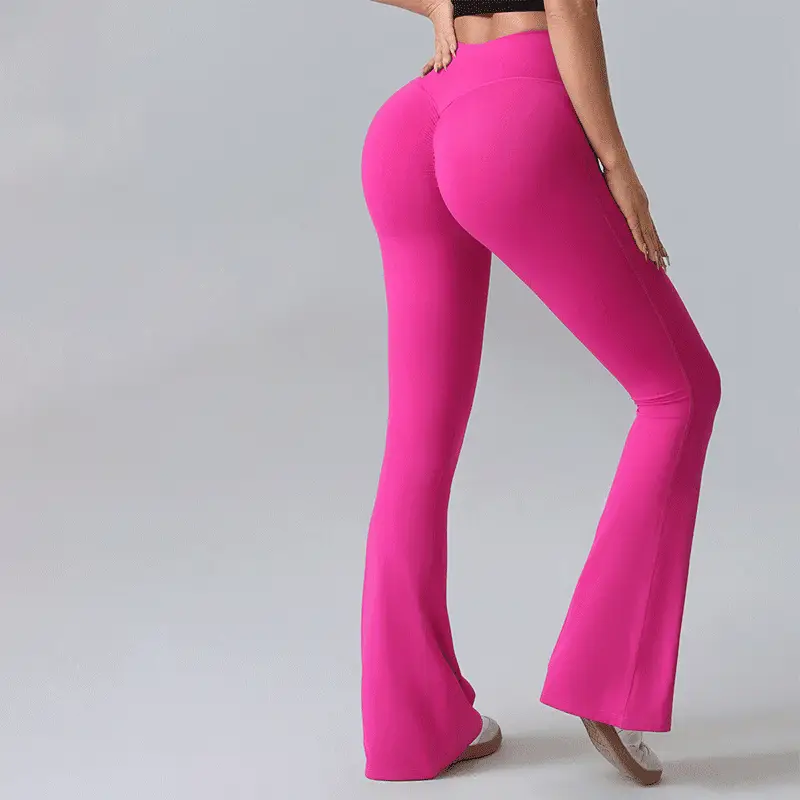
Studio Wear
MOVEVOX supports Studio Wear within its Yoga and Pilates-related product system. Development can combine a defined waistband, fit, leg length, material and coordinated branding while maintaining the customer's size and measurement standards. The product should still pass the same formal sample and approval process as performance-focused leggings rather than being treated only as a fashion silhouette.
- Product specification links styling with measurable POMs
- Approved sample controls visual and construction requirements
- Branding and packaging remain tied to current SKU data
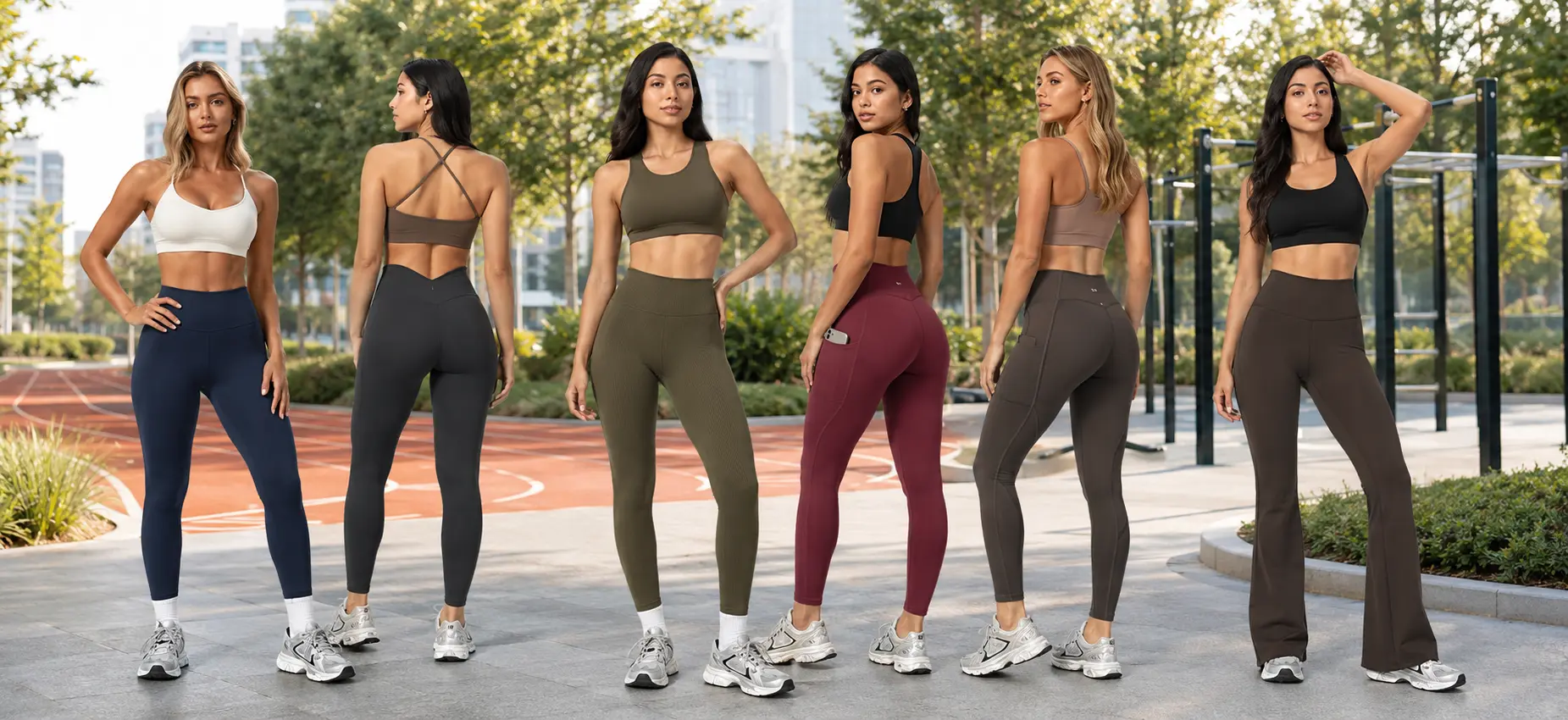
Athleisure
MOVEVOX can develop Athleisure products using its high-stretch Cut & Sew material and pattern capabilities. Where a flare legging is intended for both studio and everyday wear, product decisions remain customer-specific: material handfeel, compression, length, waistband and silhouette are confirmed through sample approval rather than through one universal athleisure specification.
- Material selected for the brand's intended wearing experience
- Fit approved against target consumer and size system
- Bulk production follows the same approved technical version
Fabric Directions for Custom Yoga Flare Leggings
MOVEVOX supports several high-stretch activewear material families. For flare development, material choice should be validated together with the approved pattern, compression target, surface feel, opacity and finished silhouette.

Naked-Feel Nylon
MOVEVOX defines naked-feel fabric as a soft, fine, low-friction, close-to-skin and generally matte material direction rather than one fixed formula. A typical company development range is approximately 75–82% nylon with 18–25% spandex at 200–240 GSM. It is widely applicable to yoga products with lower-to-medium compression. For a flare project, the final fabric still requires physical Fit and opacity approval on the customer-approved garment.

Brushed Stretch
MOVEVOX can use single- or double-brushed high-stretch fabrics for yoga and soft training products. A typical management range is approximately 75–82% nylon or polyester with 18–25% spandex at 210–270 GSM. Brushing depth affects warmth, surface appearance and friction. Batch handfeel, brushing direction, pilling, shedding, snagging and logo compatibility therefore remain part of the material and product-development risk review.
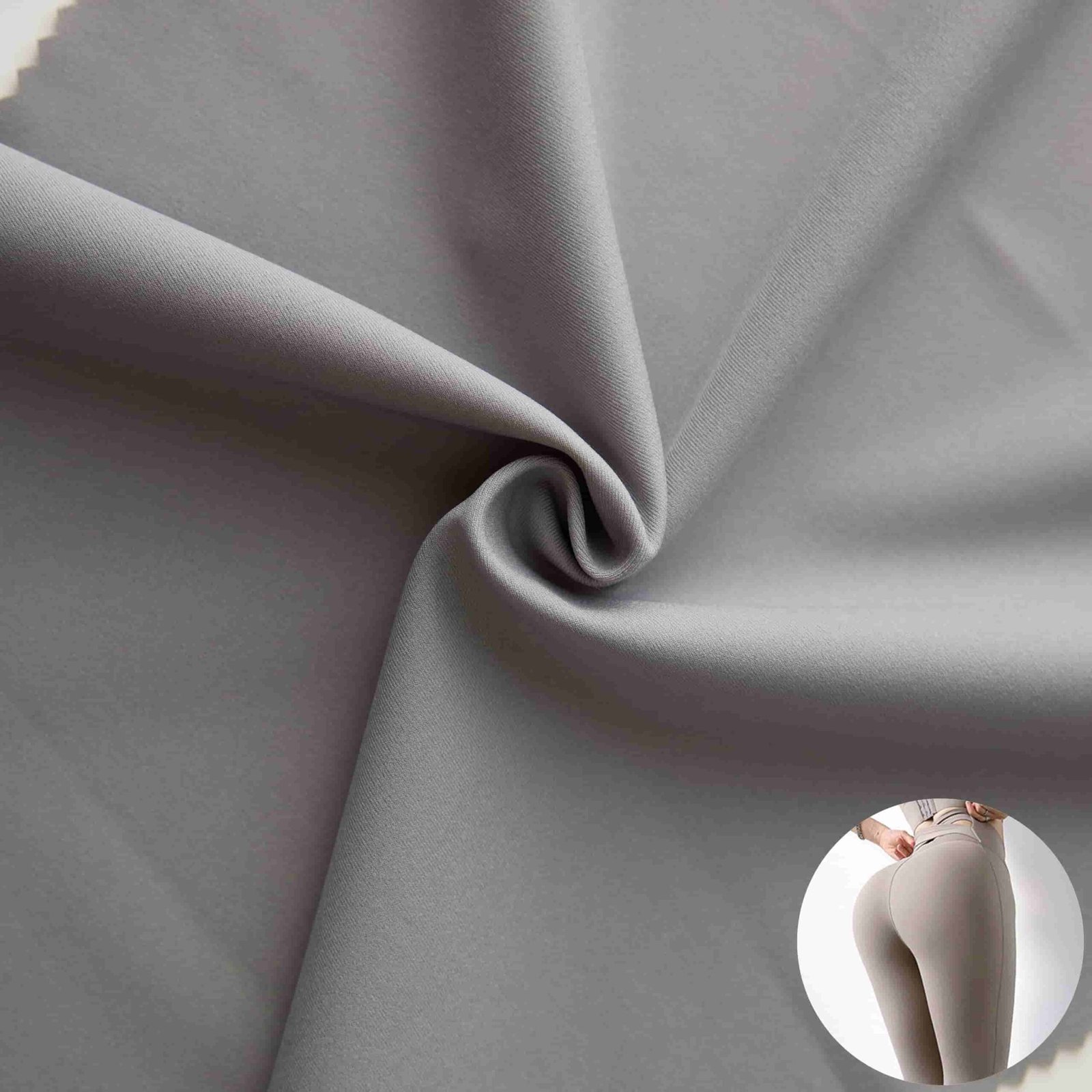
High-Stretch Nylon
Nylon/Spandex is one of MOVEVOX's core yoga and stretch-activewear material systems. The regular company development range is approximately 70–82% nylon with 18–30% spandex at 190–280 GSM. Four-way stretch and recovery can support movement, but “high stretch” is not treated as unlimited extension. The final usable range depends on yarn, knit construction, heat setting, garment dimensions and the approved fit.

Supportive Dense Fabric
MOVEVOX can also develop higher-recovery, denser non-medical compression-oriented fabrics where the product requires more support. The company's common cut-and-sew compression range is approximately 65–78% nylon or polyester with 22–35% spandex at 230–320 GSM. This route may provide a firmer wearing result than a naked-feel direction, so the customer must confirm whether the material matches the intended flare product experience through sample approval.
Three Fabric Behaviors to Validate With the Fit
Stretch-fabric performance cannot be separated from the finished pattern. MOVEVOX evaluates material elasticity and recovery together with measurements, Fit Sample results and the intended activewear use before the product becomes a bulk standard.
Stretch
MOVEVOX's high-stretch material capability is based on Nylon/Spandex, Polyester/Spandex, seamless yarn systems and related activewear constructions. The company does not apply one universal elongation figure to every product. Stretch must be evaluated for the actual fabric and garment dimensions because excessive extension can change fit, opacity, seam loading and the visual appearance of the approved flare silhouette.
Recovery
Recovery is a defined MOVEVOX material-performance consideration for high-stretch activewear. Insufficient recovery can contribute to looseness, dimensional change or deformation in areas such as the waist or knee after repeated stretch. MOVEVOX therefore combines material assessment with garment Fit, sample review and, where required, project-specific testing rather than relying only on the percentage of spandex shown on a fabric specification.
Garment Silhouette
MOVEVOX does not publish a universal laboratory “drape” standard for flare leggings. Instead, the finished silhouette is approved through the selected material, pattern, garment measurements and physical Fit Sample. If a fabric change alters how the garment falls, stretches or returns, that change must be evaluated against the approved sample and project specification before it can become part of the production standard.
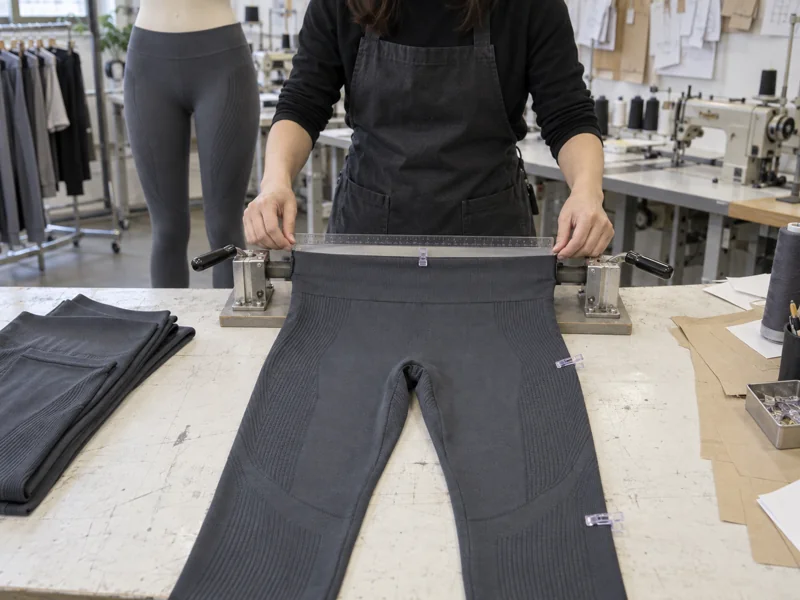
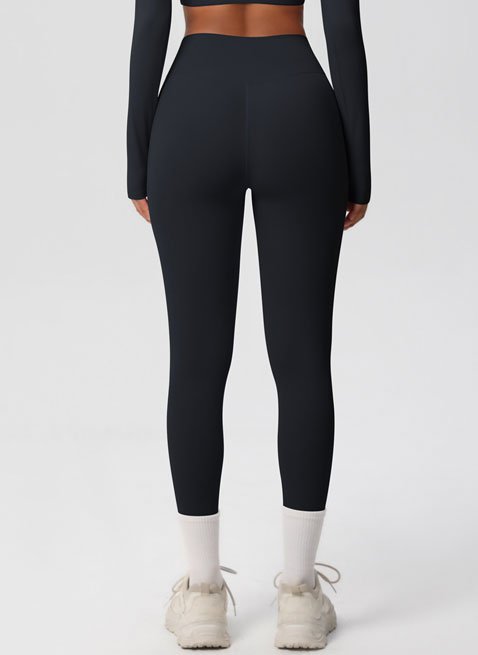
Control Color From Reference to Bulk Material
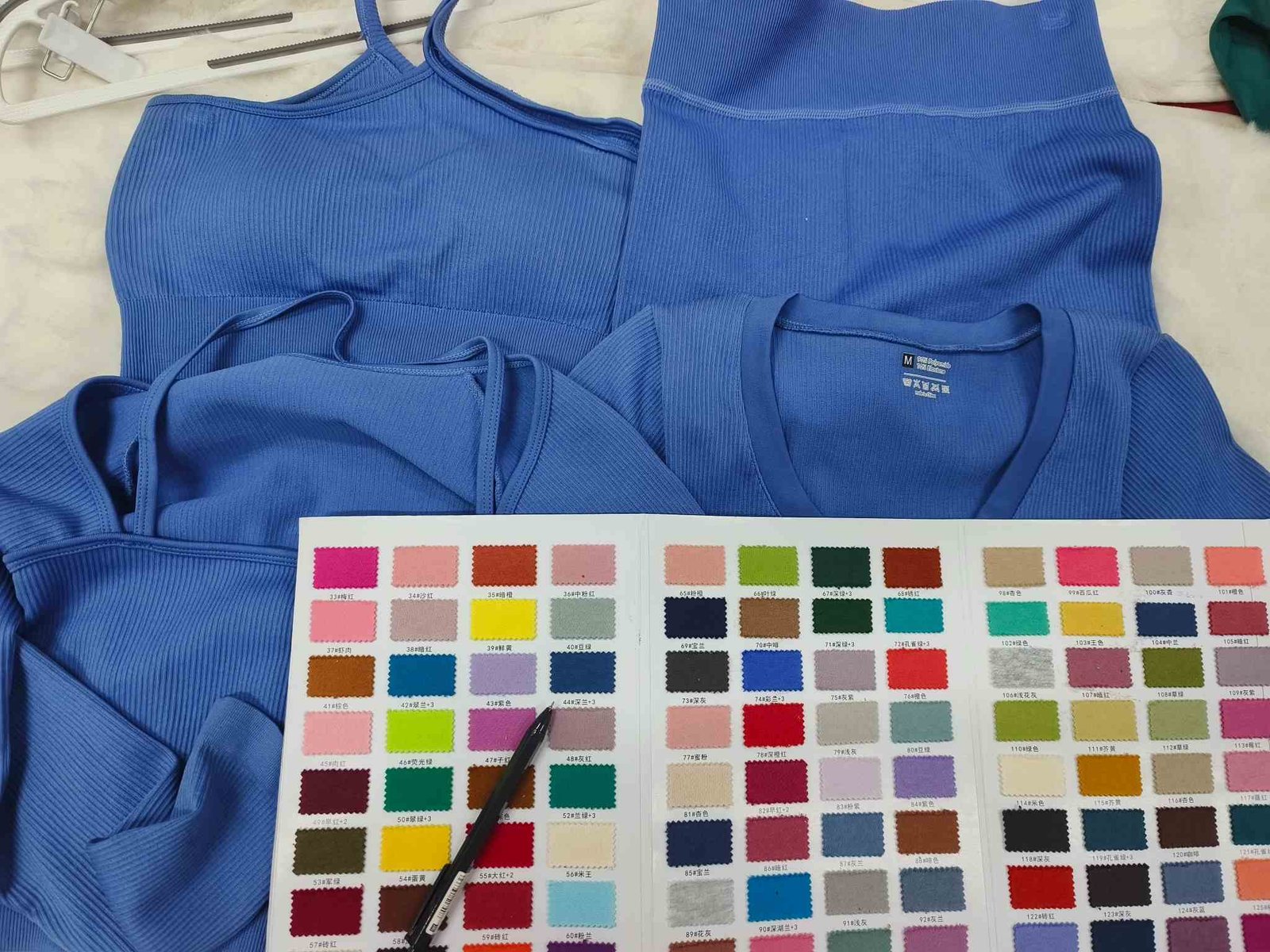
MOVEVOX uses physical or agreed color standards instead of producing from vague descriptions such as “dark blue” or “coffee.” Custom color approval follows the material and project conditions of the actual order.
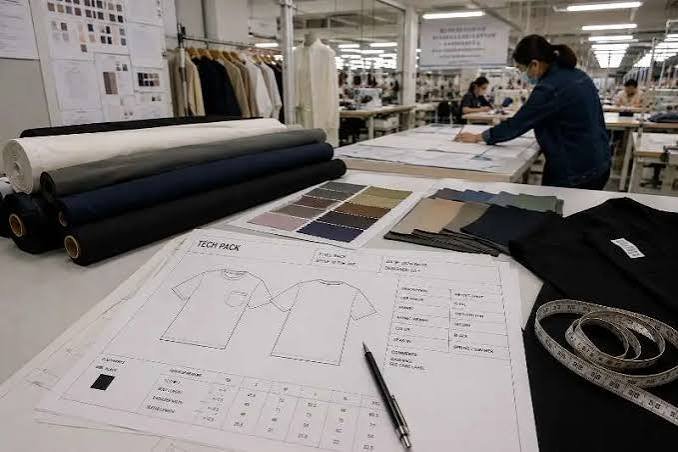
Color Reference
The buyer provides a Pantone reference, physical color sample or another agreed standard. MOVEVOX records the requirement together with the relevant fabric because one color reference can appear different across fiber types and surface finishes.
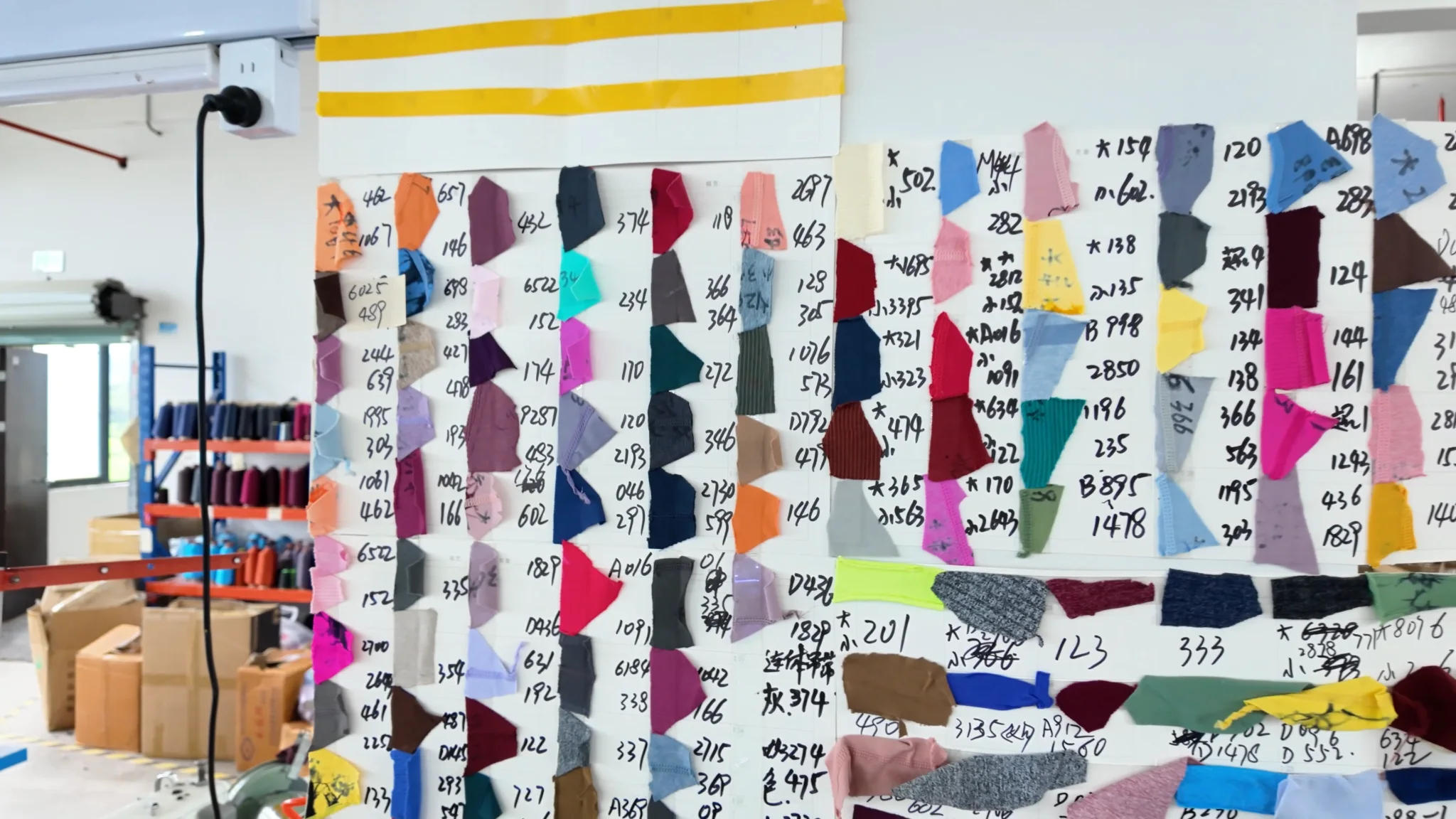
Material Context
Nylon, polyester, recycled fibers, brushed surfaces, rib structures and other materials can display color differently. The development team therefore connects the color requirement to the actual material rather than assuming a Pantone number will look identical on every construction.
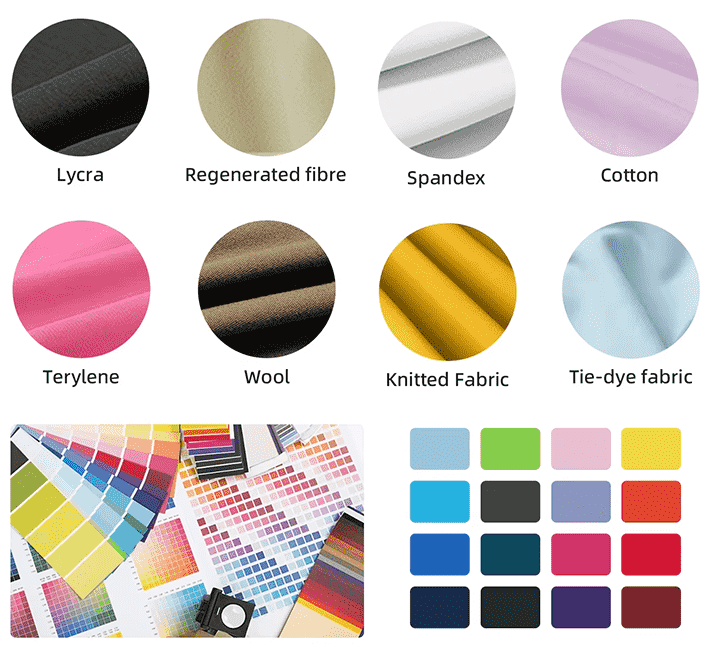
Lab Dip
For custom dyeing, a Lab Dip or equivalent material color sample can be prepared before bulk. The sample allows the customer and supplier to review the actual shade on the intended fabric rather than relying only on screen color.
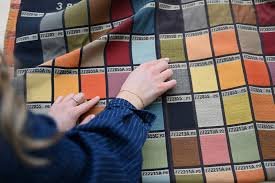
Color Approval
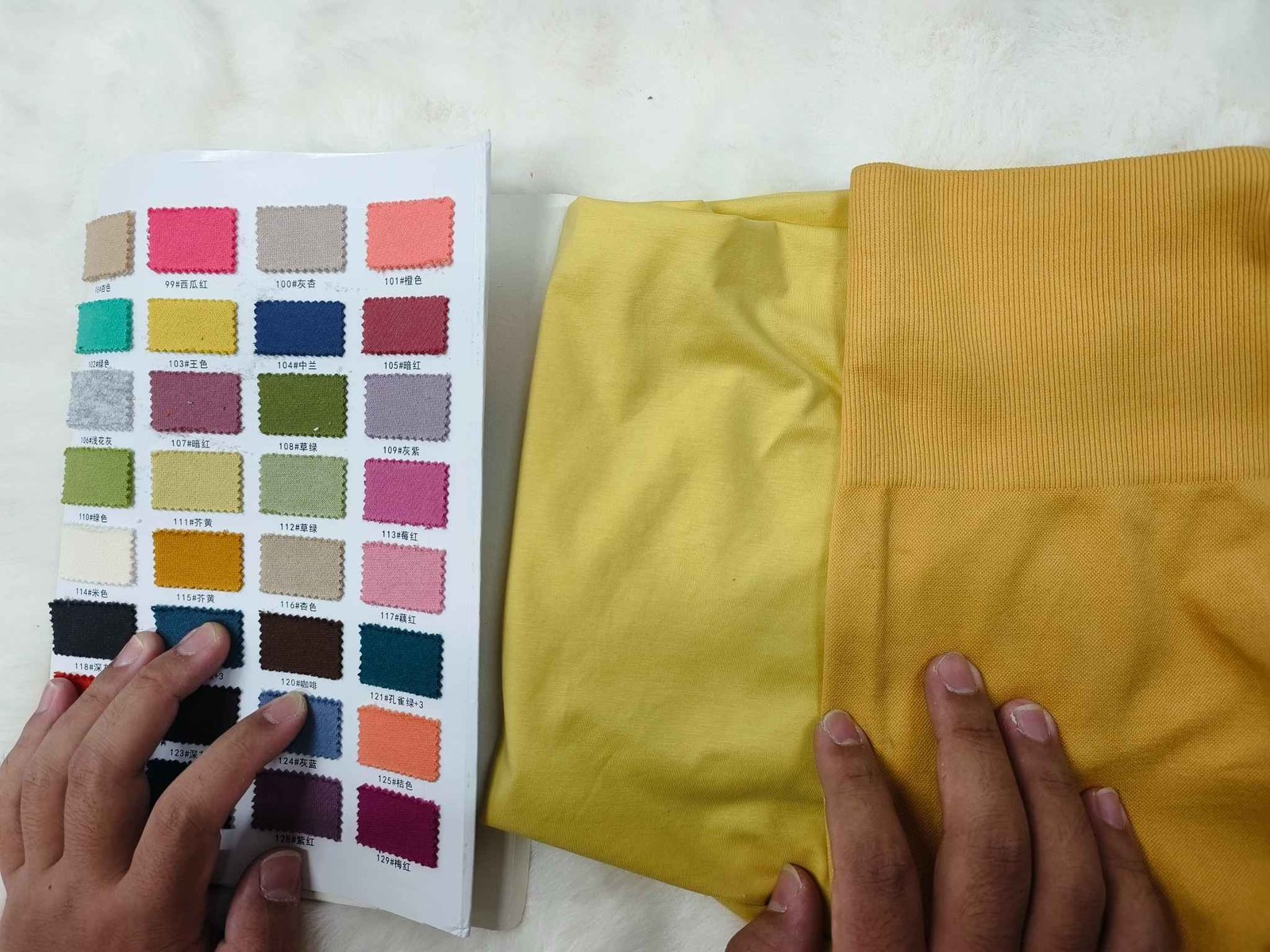
The preferred hierarchy is a customer-approved physical color sample or swatch, followed by an agreed Pantone standard and approved material reference. Once approved, that color becomes part of the current project specification.
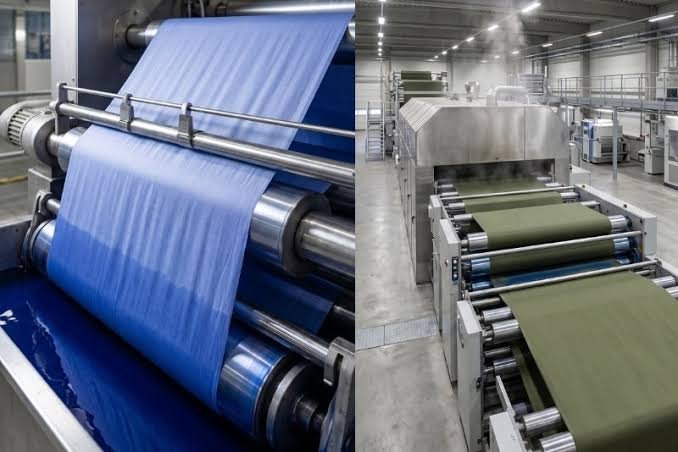
Production Lot
Bulk material is dyed or supplied against the approved requirement. Dye-lot variation remains a real production risk, so materially different lots should not be mixed without review when visible shade consistency is important.
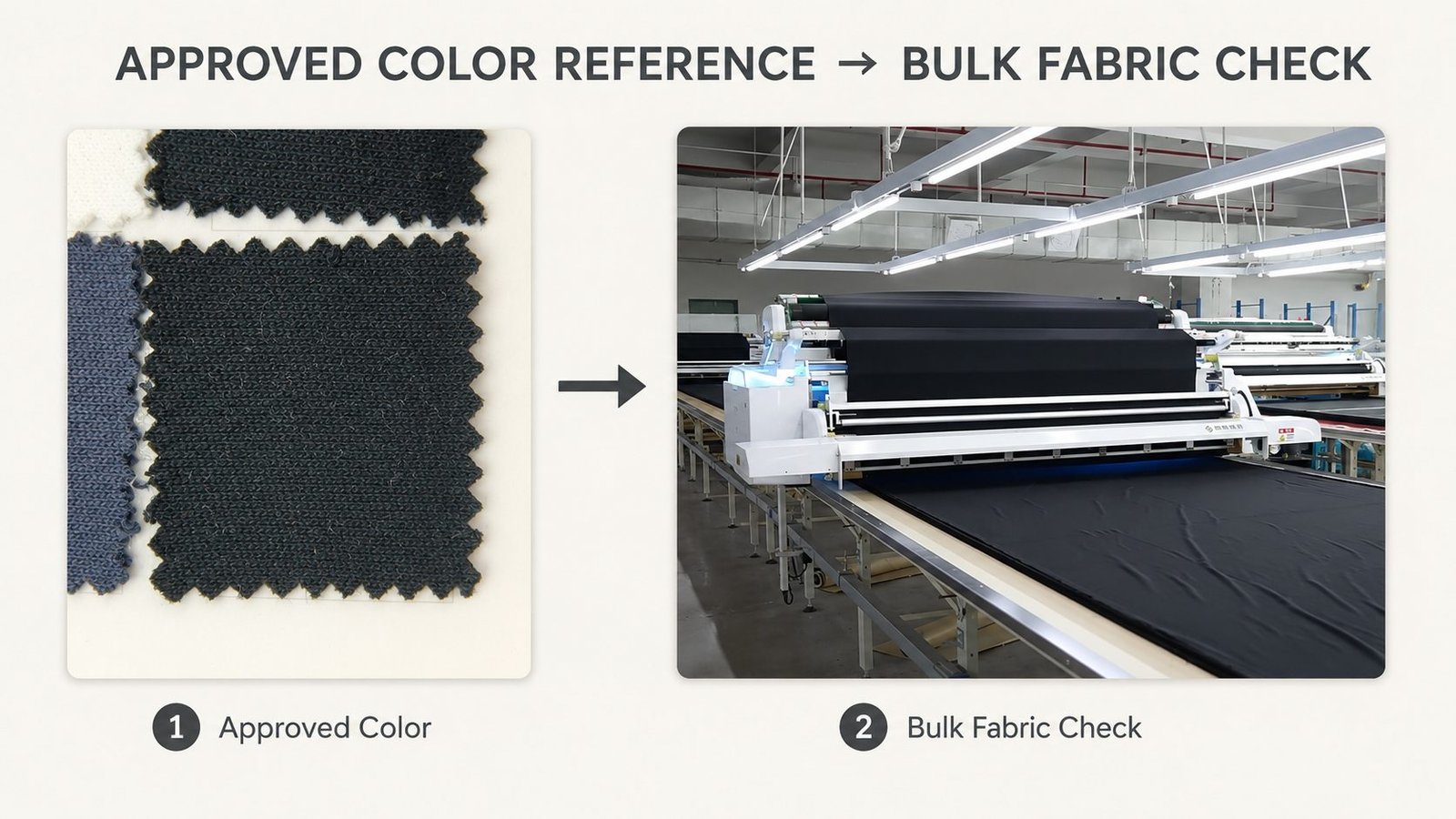
Incoming Review
MOVEVOX checks incoming color against the approved standard and reviews obvious light-dark or hue differences before normal production. Batch appearance is considered together with surface direction or finish where the material can change visual shade.
Color note: Screen displays and ordinary office lighting are not treated as the sole color-acceptance standard. Final evaluation should follow the agreed physical reference and viewing conditions where specified. Same-color sets using different fabrics also require separate material confirmation because identical Pantone references do not guarantee identical visual results.
Choose Branding Processes That Match Stretch Fabrics
MOVEVOX supports several activewear branding methods. The correct process depends on fabric elasticity, surface finish, logo size, placement, color requirement and the physical validation completed before bulk production.
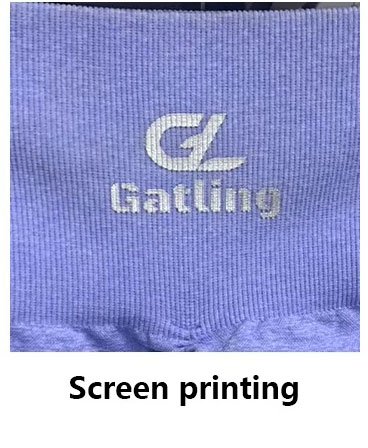
Screen Print
Screen printing is a confirmed MOVEVOX branding route for logos, text and suitable graphic areas. Ink system, color, logo dimensions and position should be locked before bulk. High-stretch or specially finished materials require compatibility review because excessive film stiffness, cracking, migration or surface changes can occur.
Best for: Logos or graphic areas on compatible Cut & Sew fabric.
Watch for: Stretch cracking, color migration and excessive surface hand.
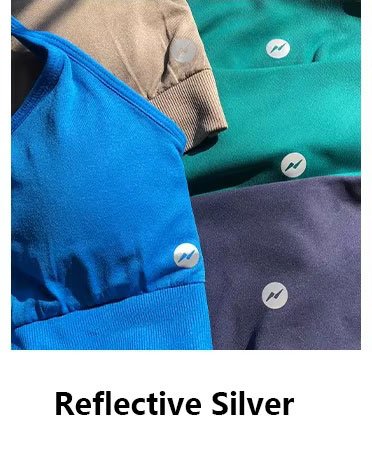
Heat Transfer
Heat transfer is a regular MOVEVOX logo process using controlled temperature, pressure and time. Transfer material must suit the fiber content, surface finish and garment stretch. High-elasticity products benefit from transfer systems designed for corresponding extension rather than applying the same film to every fabric.
Best for: Clean brand marks on compatible activewear surfaces.
Watch for: Heat marks, lifting, migration and stretch incompatibility.
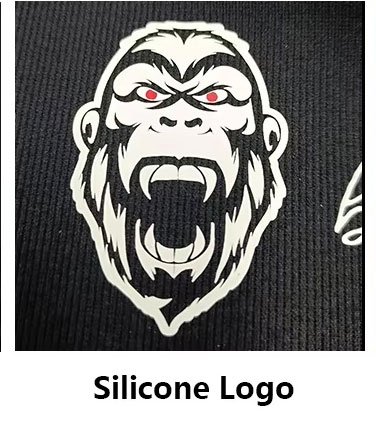
Silicone Print
MOVEVOX can use silicone print or related silicone logo methods where material and construction are suitable. Development checks logo dimensions, position, color, surface appearance and how the application behaves after stretching. Complex silicone production may involve long-term specialist suppliers under MOVEVOX quality control.
Best for: Dimensional or tactile logos on validated materials.
Watch for: Edge overflow, hardness and cracking under stretch.
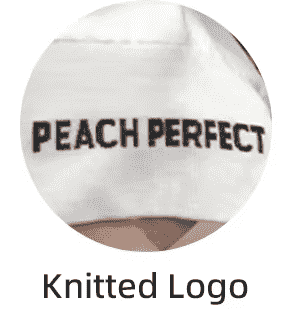
Jacquard
Jacquard branding is supported within MOVEVOX's branding system, particularly where the product construction and manufacturing route allow a knitted or woven brand element. Because jacquard requirements differ between seamless structures and separate trims, the final method must be confirmed against the actual flare product design.
Best for: Integrated or trim-based brand identification where technically suitable.
Watch for: Structure, MOQ and method depend on product construction.
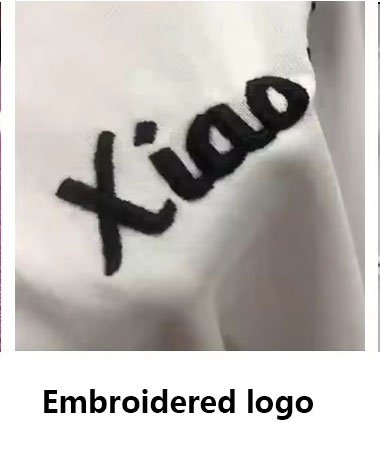
Embroidery
Embroidery can be used where the fabric, location and design allow sufficient stability. MOVEVOX controls thread, backing, stitch density and placement according to the material. Large, dense embroidery is not the default solution for thin or highly elastic close-fitting zones because it may create stiffness or distortion.
Best for: Stable garment areas that can support stitched branding.
Watch for: Puckering, stiffness and restricted local fabric stretch.
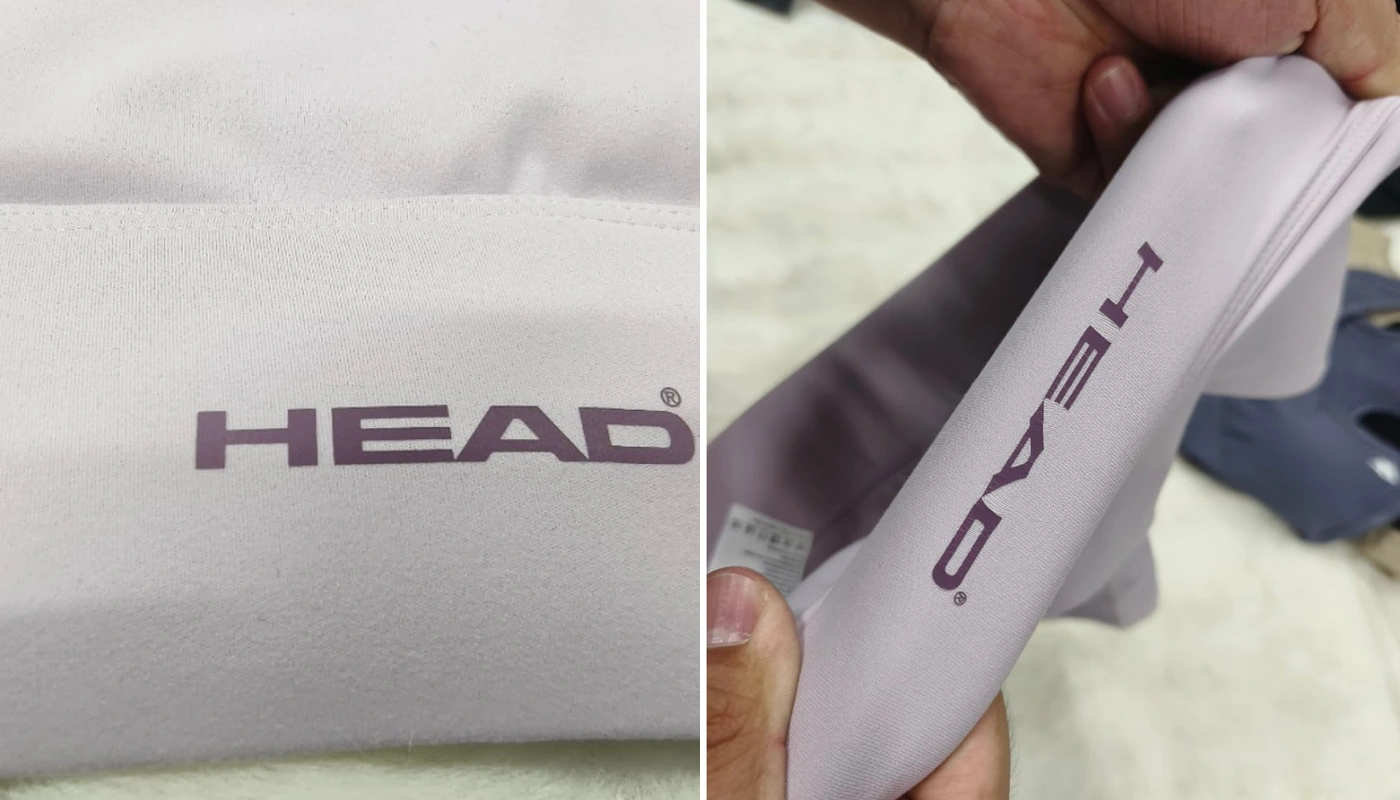
Woven Label
Woven labels are part of MOVEVOX's supported private-label system and can be used for brand identification when an applied label is appropriate. Label size, location, fold and attachment method must follow the approved product specification and should not create unwanted bulk or skin-contact discomfort.
Best for: Main-brand identification and approved garment labeling.
Watch for: Placement, seam bulk and comfort in close-fit products.
Private Label Extends Beyond the Garment Logo
MOVEVOX can coordinate labels, hangtags, polybags, SKU information, barcodes and cartons around the approved product. Each element must remain connected to the correct style, color, size and order information.
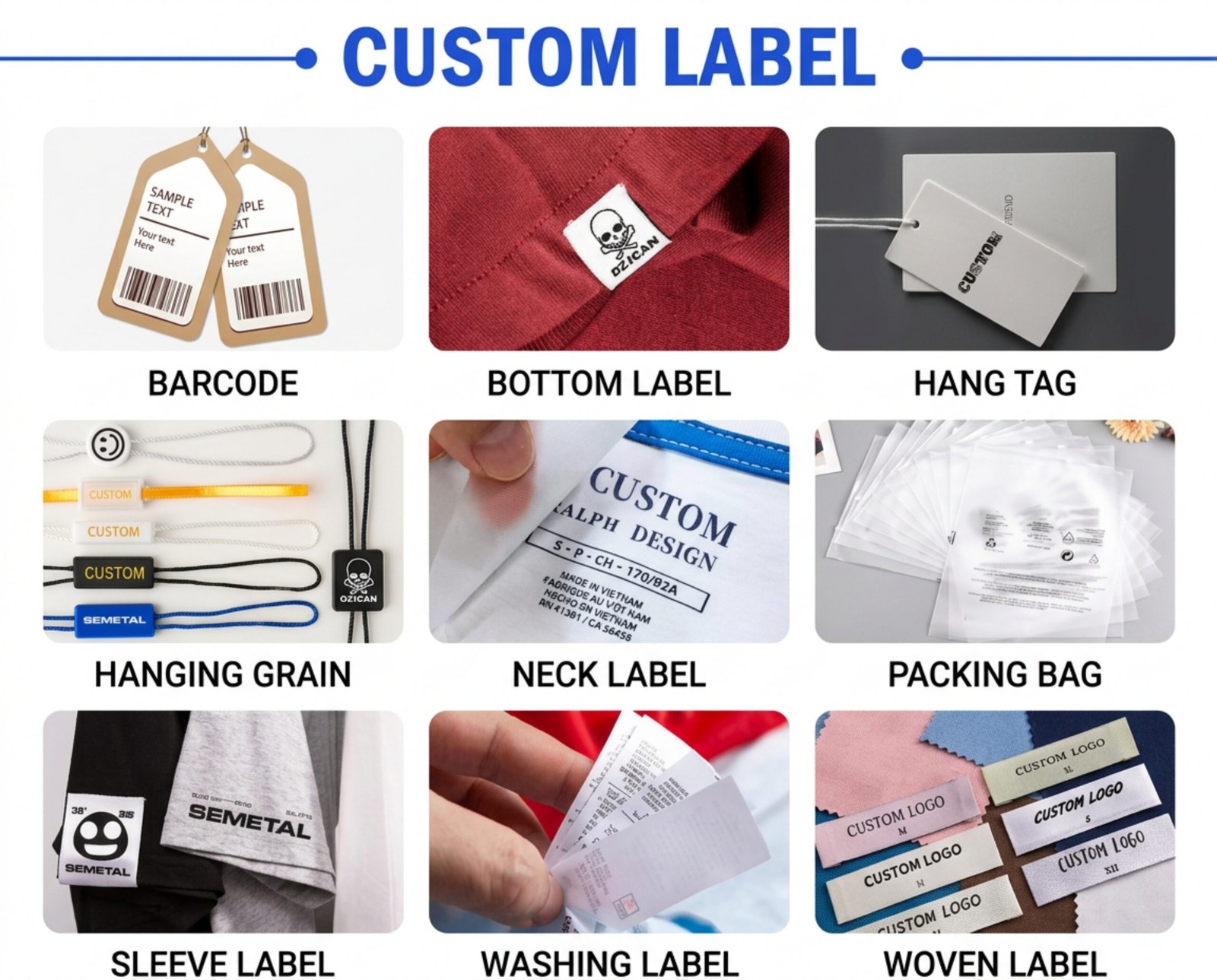
Main Label
Brand-label requirements are confirmed before bulk so the correct identity is applied to the approved garment. Label type, size, artwork and placement should match the project specification and the physical construction of the flare product.
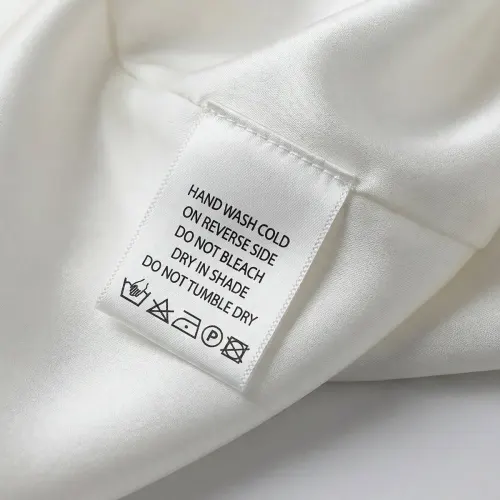
Care Label
Care labels can be customized according to the customer's required product and market information. Final wording remains the customer's responsibility where regulatory or brand-specific instructions apply, while MOVEVOX coordinates production and garment application against the approved file.
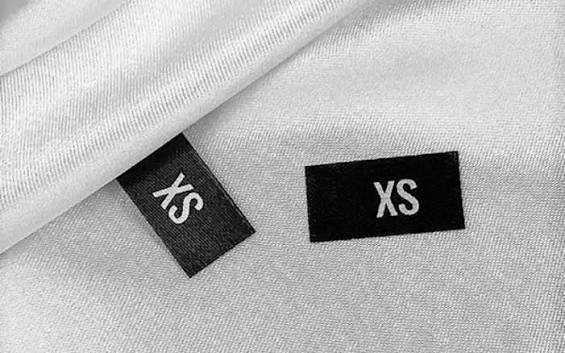
Size Label
MOVEVOX supports separate size labels, combined main-label sizing, heat-transfer size marks or woven size solutions depending on project structure. Size identification must correspond with the actual garment and SKU data used for packing.
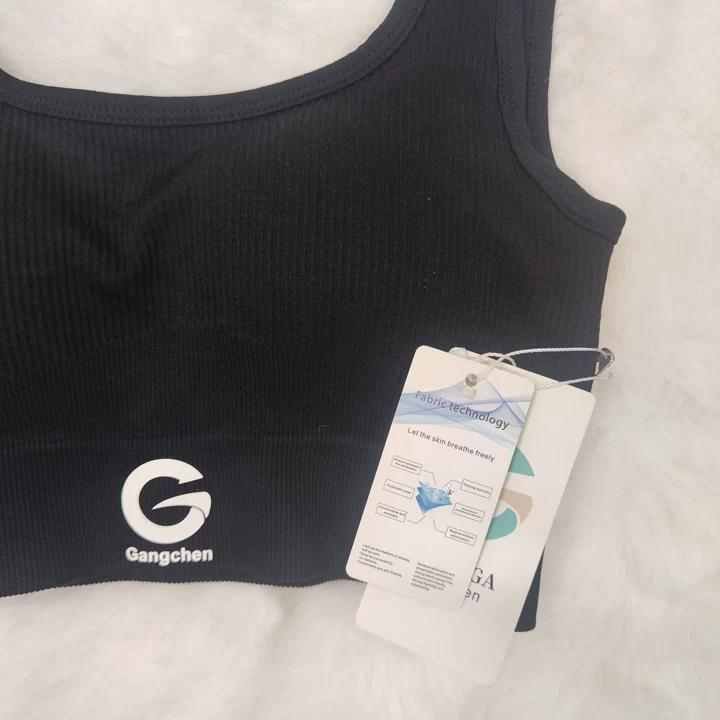
Hangtag
Hangtags can be developed with the customer's approved artwork, dimensions, attachment method and product information. They form part of the final packing specification and are checked against the relevant style, color and size requirements.
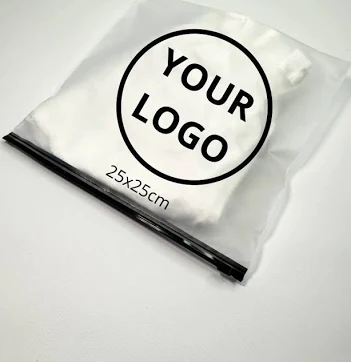
Polybag
Individual polybags can use standard or customer-defined specifications, including size stickers, SKU information, warnings and brand requirements where applicable. Packing instructions should be approved before bulk packing rather than being added after finished goods are complete.
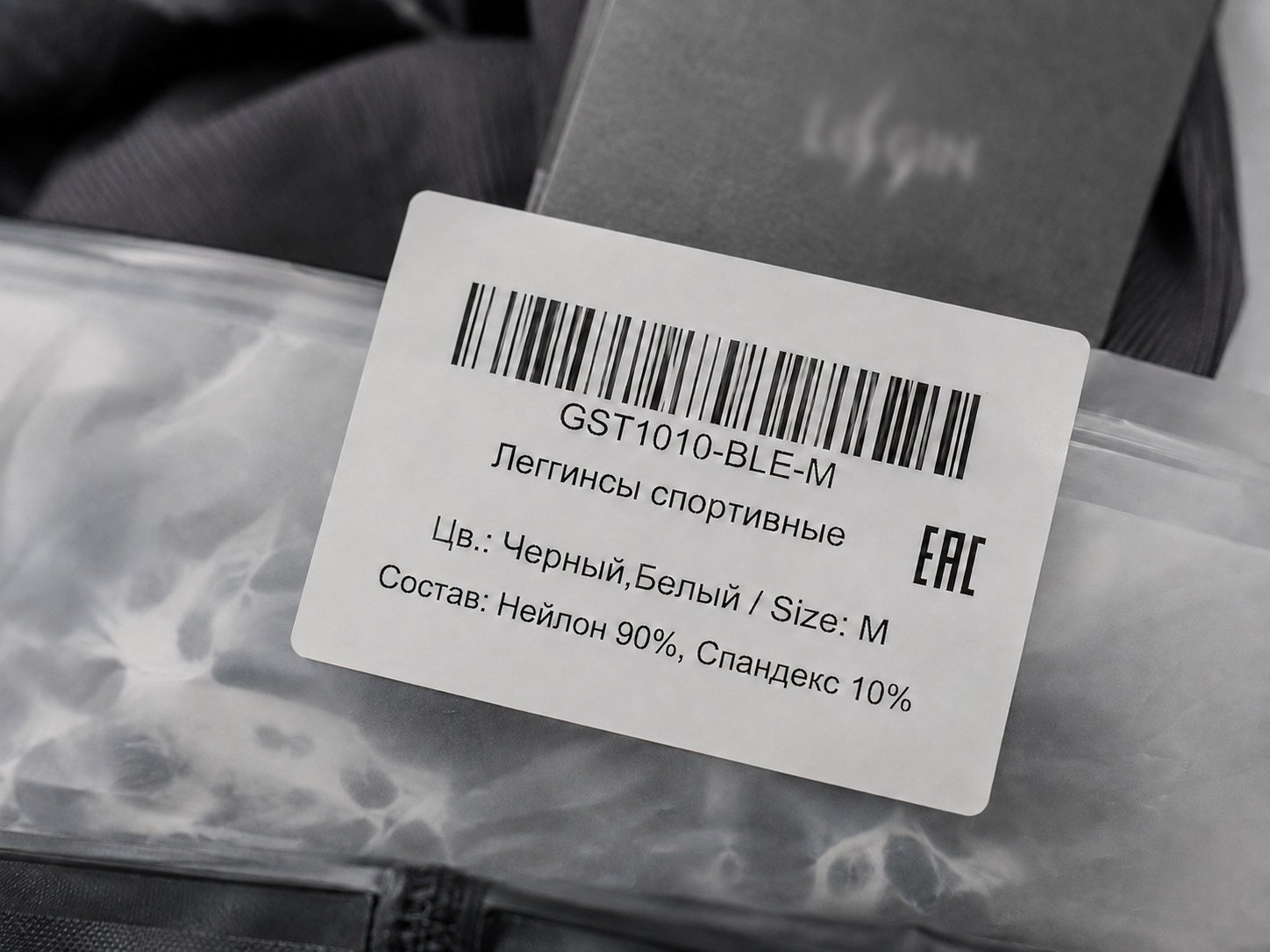
Barcode System
MOVEVOX can execute customer barcode and SKU files as part of retail-ready packing. Barcode control must connect the correct garment style, color and size to the correct label or sticker because a technically correct garment with the wrong SKU can still create a serious delivery failure.
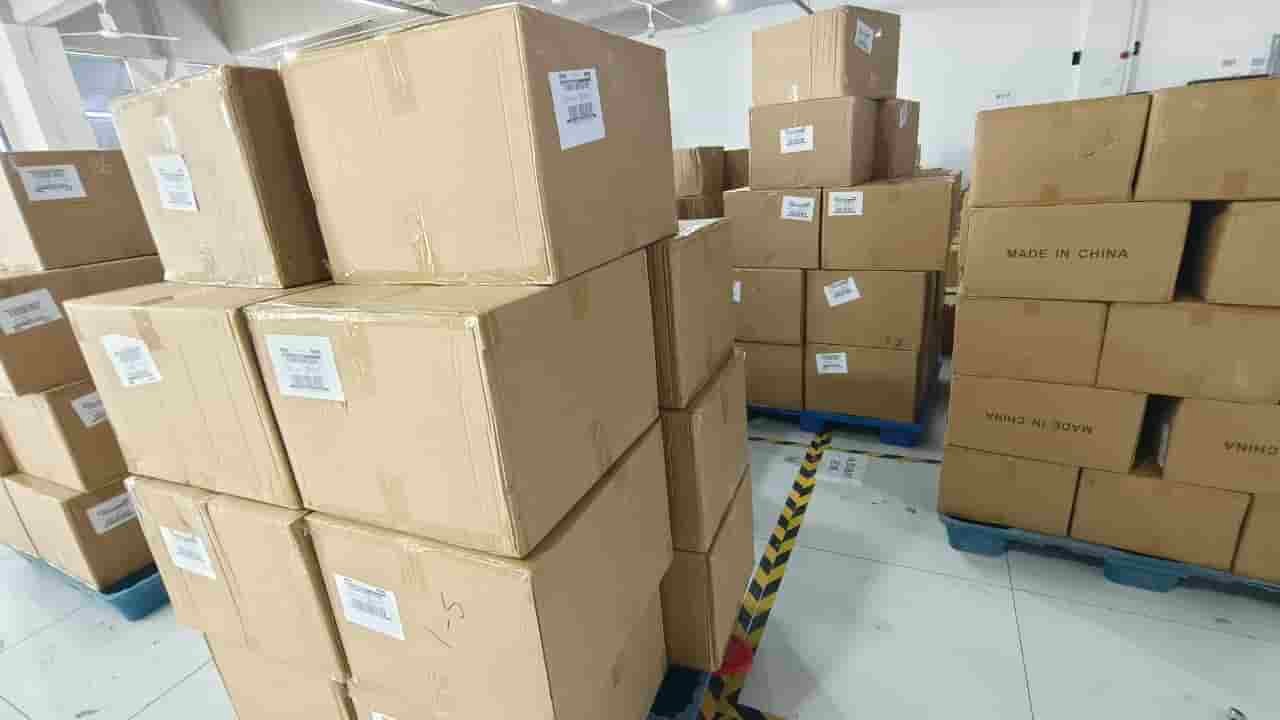
Export Carton
Carton quantity, carton size, carton marks, PO information and shipment-related labeling can be managed according to the approved packing instruction. Final carton data should reconcile with Packing List and Carton Breakdown before shipment release.
Packaging control note: Packaging approval covers more than visual branding. MOVEVOX's packing-control facts include polybag specification, warnings, size stickers, SKU labels, barcodes, hangtags, tissue paper, folding method, carton quantity and carton marks. A large multi-size flare program should therefore lock the packaging file together with product and SKU information before normal bulk packing begins.
From Customer Tech Pack to Controlled Development Output
A mature brand can keep ownership of its design and technical standard while MOVEVOX converts the current documents into pattern, material, sample and production instructions that can be reviewed and approved.
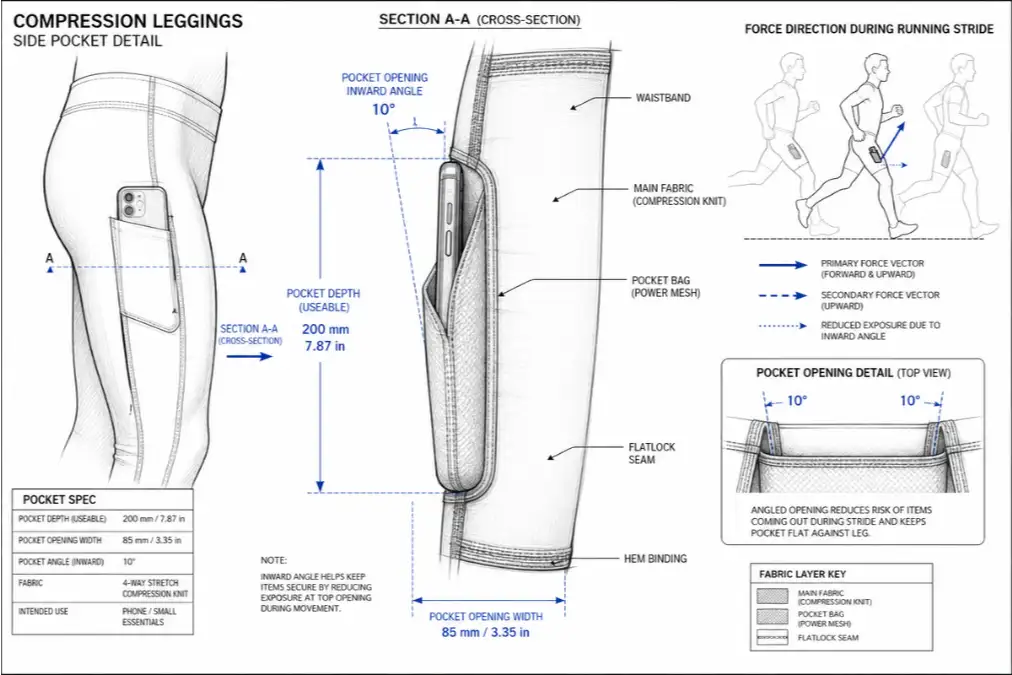
Tech Pack Intake
MOVEVOX can receive customer Tech Packs, PDF measurement drawings, measurement charts and compatible pattern-exchange information. The development team reviews product structure, POMs, measurements, fabric, construction, logo, labels and other required inputs before pattern or sample work proceeds. If diagrams, POM names, numerical values or Fit objectives conflict, the issue is treated as a specification conflict and must be clarified into one current technical version before execution.
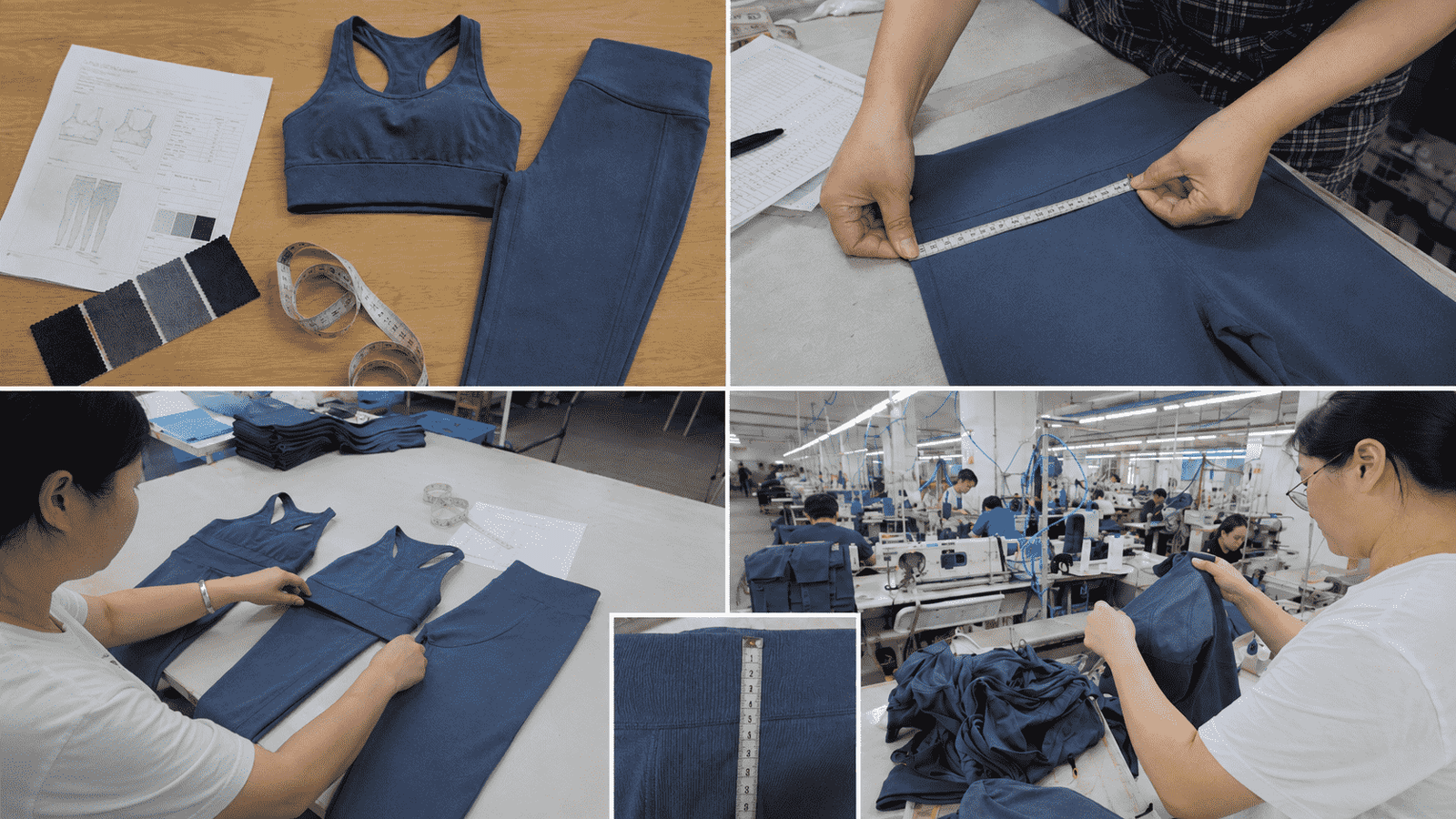
Technical Output
After review, MOVEVOX converts the approved input into controlled development outputs such as current patterns, sample instructions, material requirements and revision records. Customer comments from Fit review are incorporated into a defined Revision rather than scattered across multiple chats. Once Fit, Size Set and PP requirements are approved, the relevant pattern, measurements, material and production information become the basis for bulk manufacturing and QC instead of being reinterpreted by the production line.
Turn a Lawful Reference Into a Controlled Sample
MOVEVOX can develop from a customer-provided physical reference when it is legally usable. The objective is to understand measurable product requirements and create an approved MOVEVOX development standard, not promise an unauthorized identical copy.
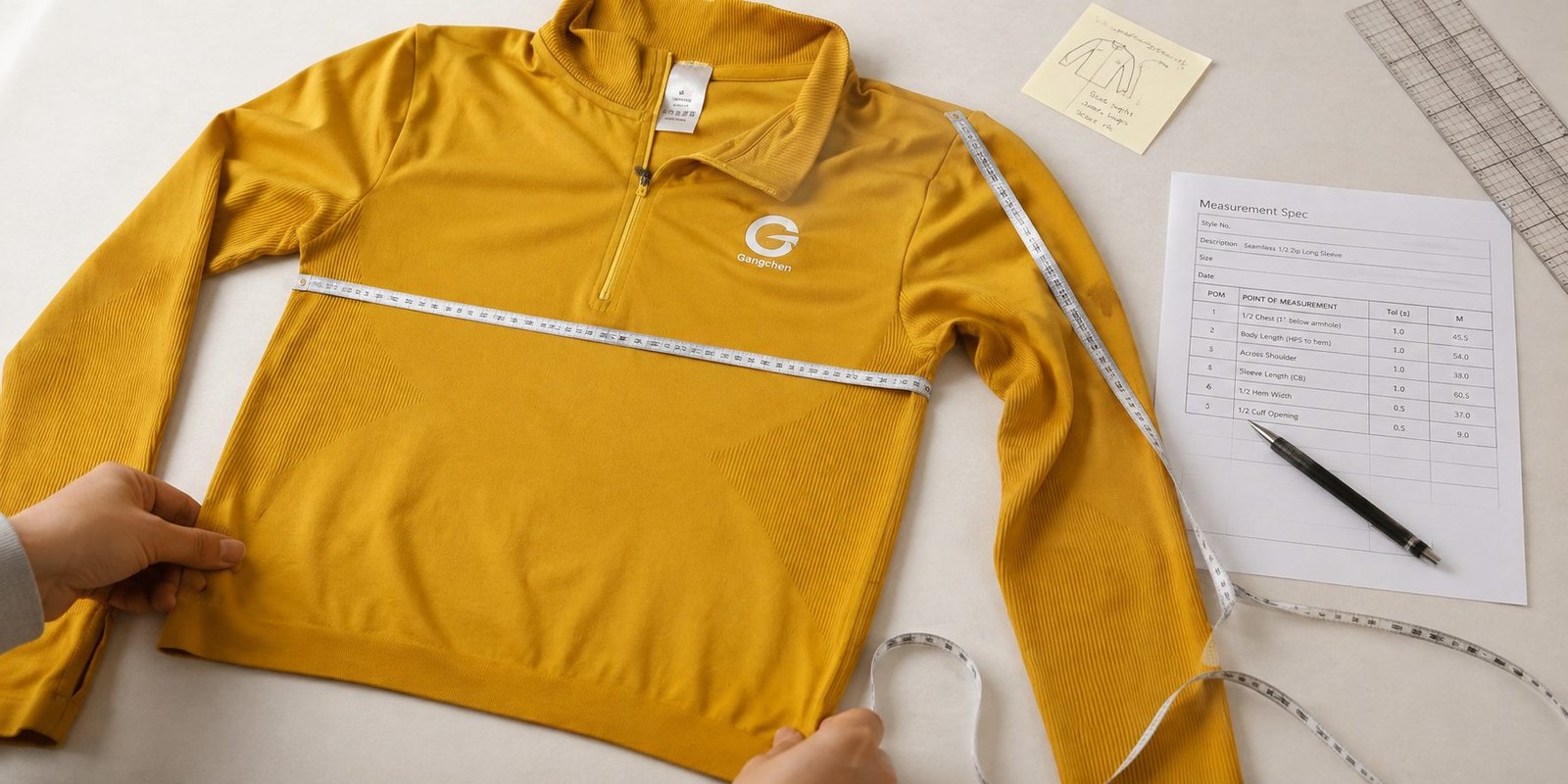
Measurements
The physical garment provides measurable waist, hip, rise, length, leg opening and other relevant dimensions but may not reveal the original tolerance or grading logic.
Measurements
MOVEVOX records the measured information, aligns it with the customer's target size requirements and creates a controlled measurement and pattern version for new sample approval.
Pattern
The existing garment shows the finished silhouette but does not automatically provide the original factory's paper pattern, seam allowances, grading system or internal construction files.
Pattern
MOVEVOX creates its own Cut & Sew pattern structure based on measured information, customer direction and manufacturing review, then validates the result through physical sampling.
Material
A reference garment can show handfeel, stretch and appearance, but the original material source or exact construction may not be commercially available to MOVEVOX.
Material
MOVEVOX identifies a suitable material route and clearly treats the new fabric as a development choice that requires customer approval before it becomes the production standard.
Fit
A reference sample may fit its original wearer, but it does not define the buyer's intended Fit Model, regional size system or full selling-size requirements.
Fit
The new sample is checked against the customer's target measurements and Fit criteria; any required pattern changes are recorded before Fit and Size Set approval.
Production Version
One physical sample does not contain a controlled revision history, current Tech Pack, approved Grade Rules or production-change records for the new customer program.
Production Version
MOVEVOX builds a new version-controlled development record connecting the sample, pattern, measurements, revisions and final approval to the later production standard.
Development boundary: Reference development does not mean every physical or commercial characteristic can be reproduced exactly. Material sourcing, construction method, branding, intellectual-property rights and the customer's own fit target can require changes. The final production obligation is therefore tied to the customer-approved MOVEVOX sample, current technical specification and confirmed project requirements rather than to an assumed one-to-one copy of the original garment.
Pattern Revisions Should Create a Clear Version Trail
MOVEVOX converts sample feedback into defined revision versions so the buyer, pattern team, sample room and later production team are working from the same current standard rather than separate conversations.
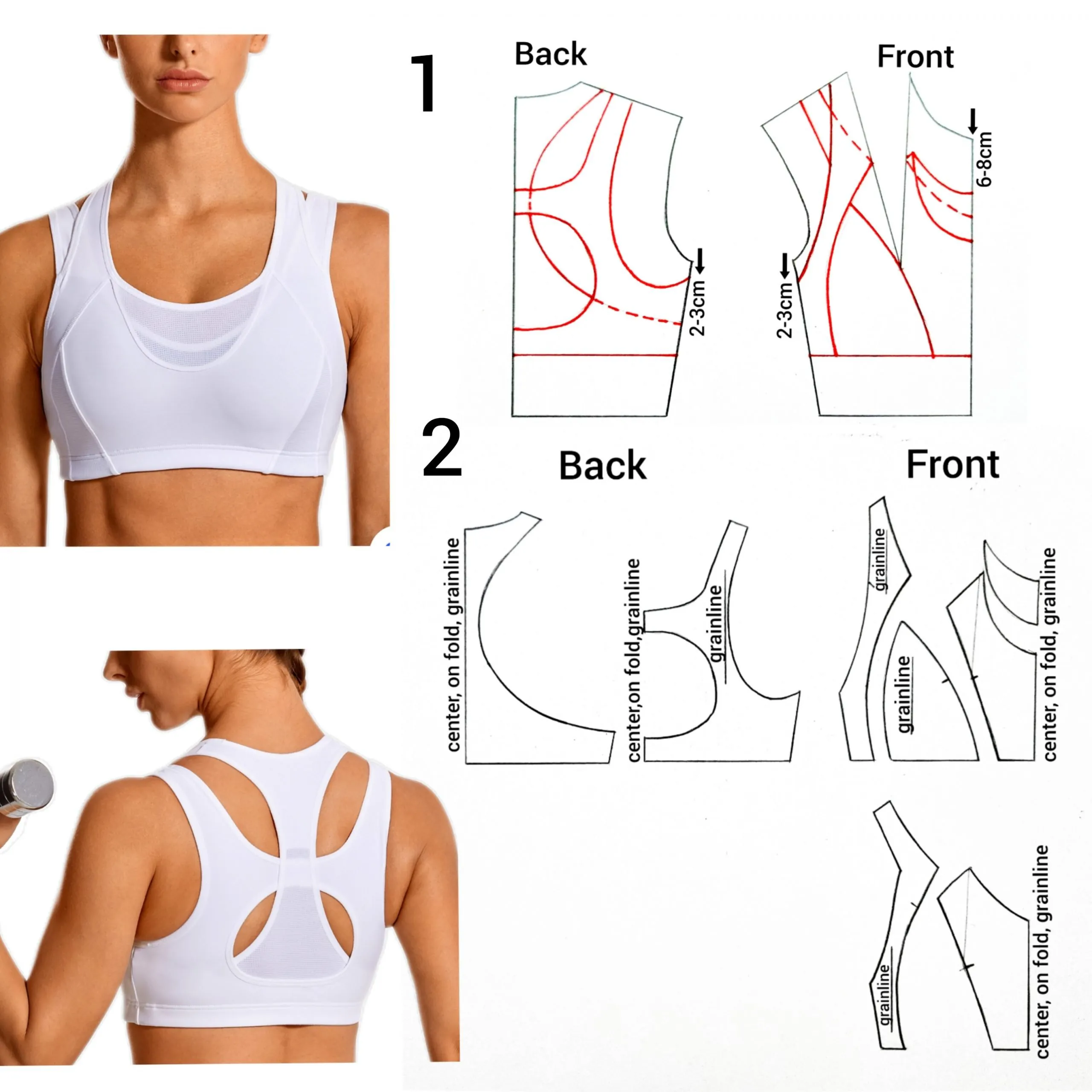
Version One
The first development version tests how the current Tech Pack, pattern, material and construction translate into a physical garment. MOVEVOX measures the sample against the active POM specification and records Fit observations. If silhouette, proportion, measurements, structural balance, material behavior or workmanship do not meet the target, those issues are classified before changes are made. V1 is a development reference, not automatic bulk approval.
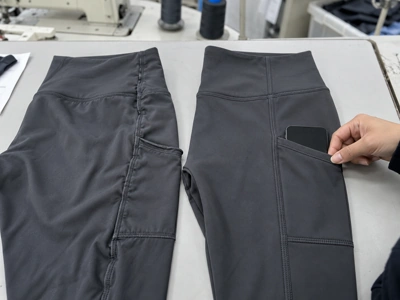
Revised Version
Customer feedback is consolidated into one active Revision List or written technical record. The pattern team updates the affected measurements, pattern lines or construction details and creates a revised sample where required. Changes are identified by version rather than replacing the prior history. MOVEVOX also checks whether the requested adjustment creates secondary effects in fit, material stretch, symmetry or other approved areas before the revision moves forward.
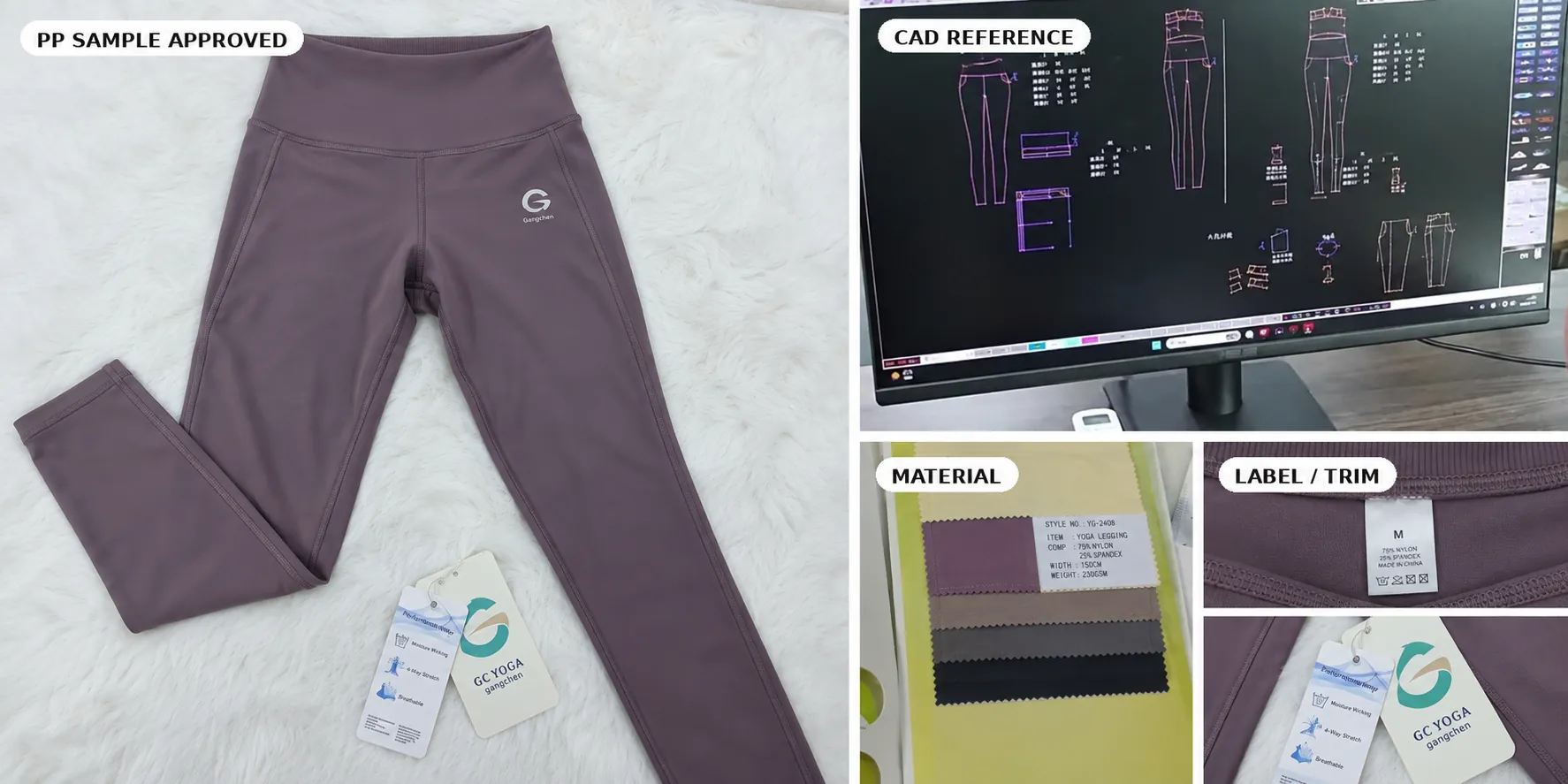
Approved Version
Once the required Fit and technical conditions are accepted, the approved sample and current specification become the reference for the next development stage. Depending on the program, this can lead to Size Set and PP Sample confirmation before bulk. The final production pattern must remain aligned with the approved sample, measurement table and current technical version; unapproved production-line pattern changes are not part of MOVEVOX's standard control process.
What Forms an Approved Flare Production Standard
A single attractive sample is not enough for controlled bulk production. MOVEVOX connects physical samples with measurements, grading, material and current technical files so manufacturing and QC can reference one approved version.
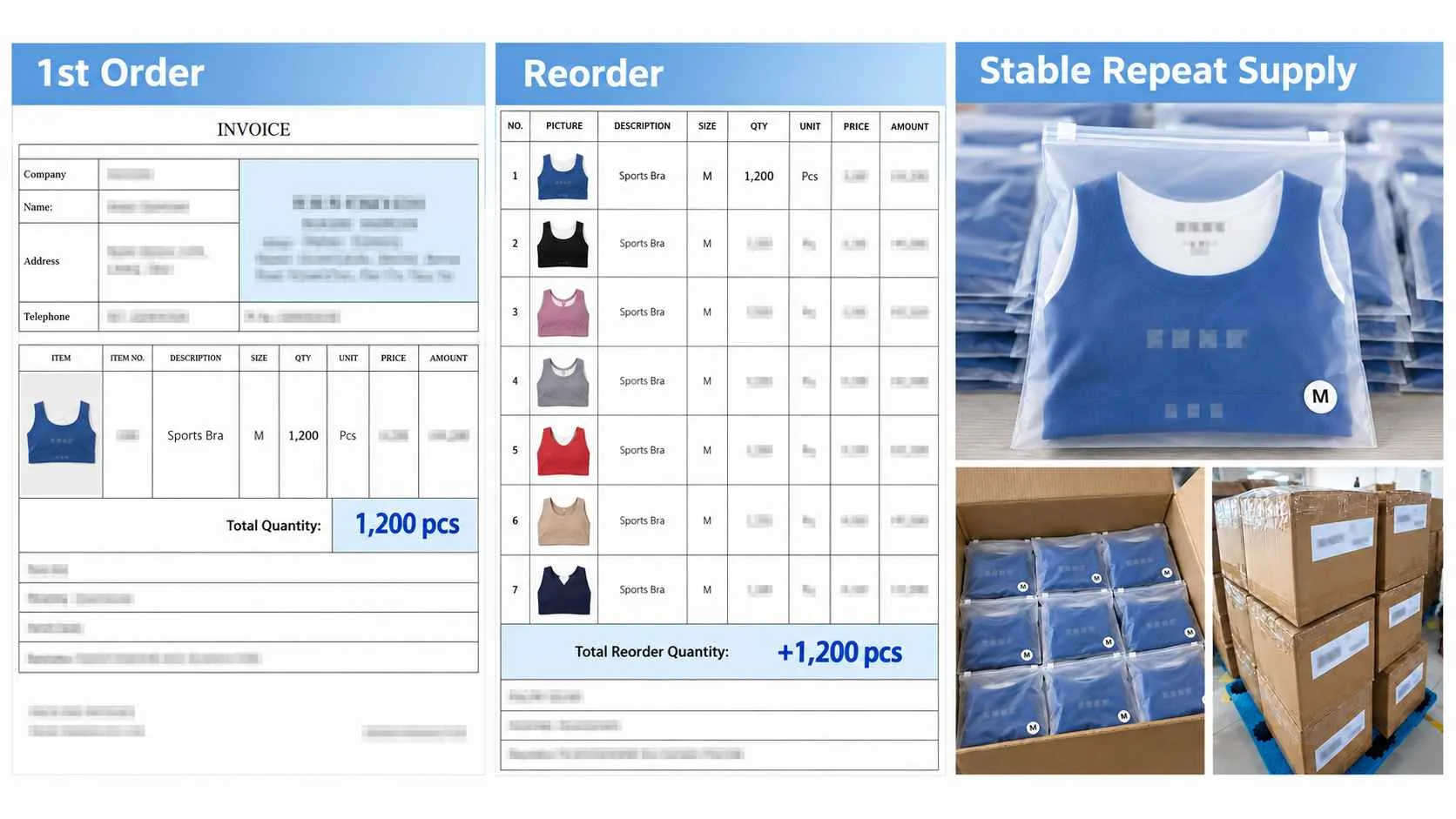
Approved Sample
The Approved Sample demonstrates the accepted physical relationship between material, silhouette, measurements, construction and workmanship. It should be identified by the relevant project version and retained as a comparison reference. Approval does not authorize later unrecorded changes to material, pattern, color or construction without review.

Measurement Specification
The measurement specification defines the approved numerical standard and how each relevant POM is measured. MOVEVOX's control principle requires consistent POM definition, measuring method and tolerance so sampling, Size Set, first-piece checks and bulk measurement do not use conflicting interpretations.
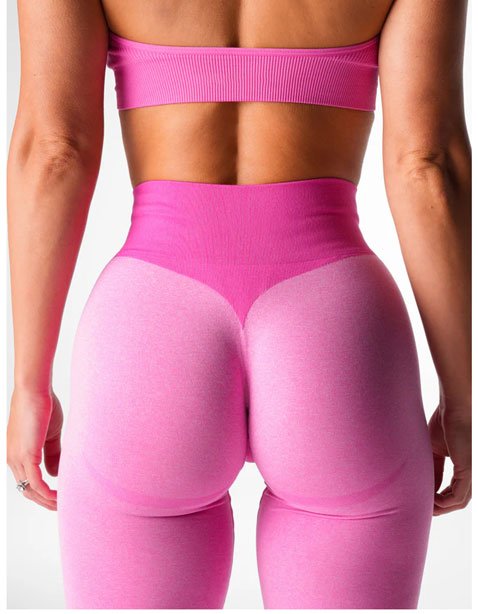
Grading and Size Set
Grade Rules define the numerical transition between sizes, while Size Set review provides physical evidence that selected sales sizes retain the intended proportion and Fit. The evidence should clearly distinguish which sizes were physically reviewed from those produced only according to the approved grading rule.
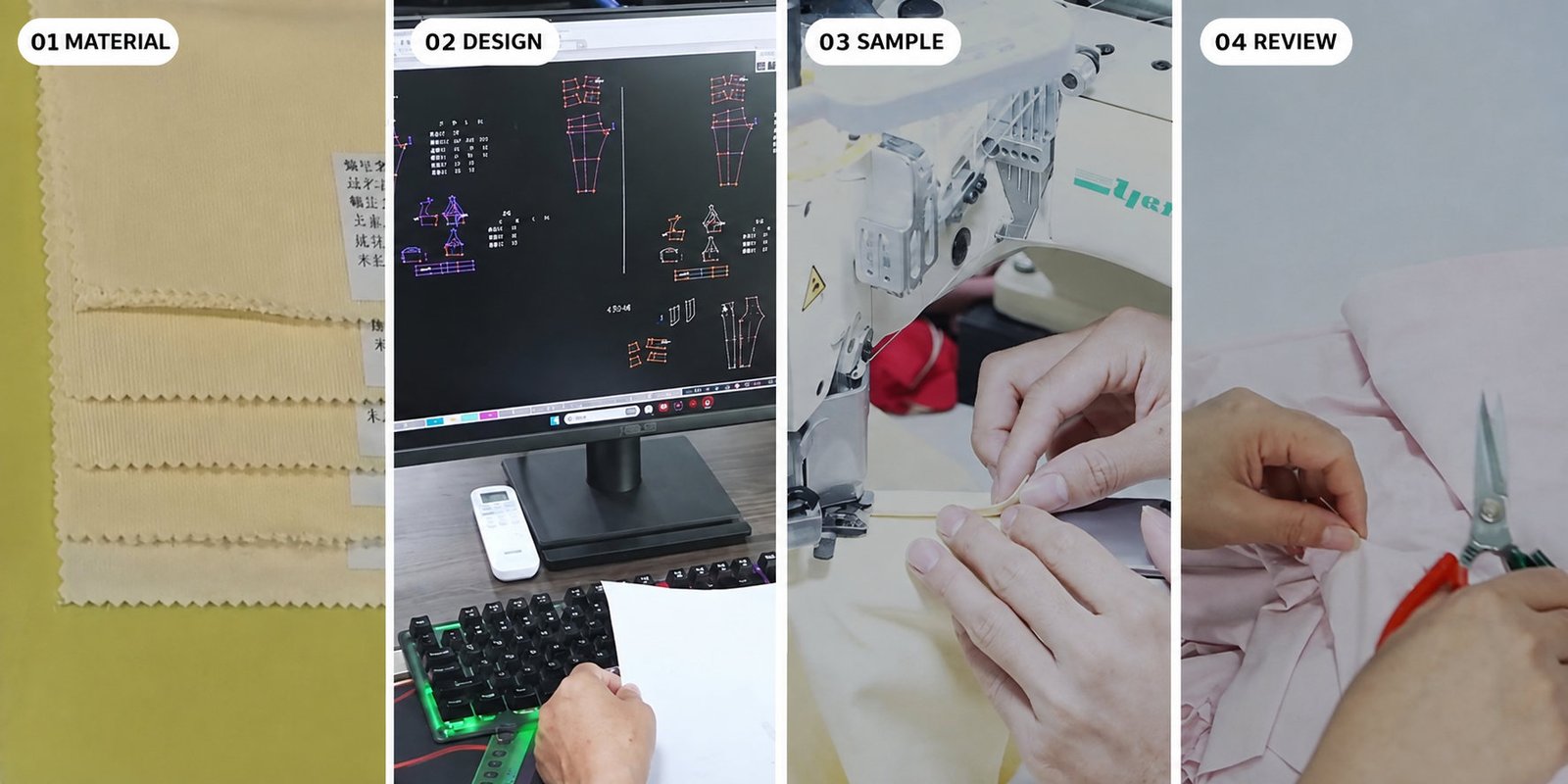
PP Sample Package
The PP Sample should use final or approved production materials, pattern, workmanship, branding, trims and relevant packaging wherever possible. Once approved with the final Tech Pack, BOM, color standard and other required files, it forms the pre-production reference for the actual manufacturing process.
Cut-and-Sew Capability for Approved Flare Leggings Production
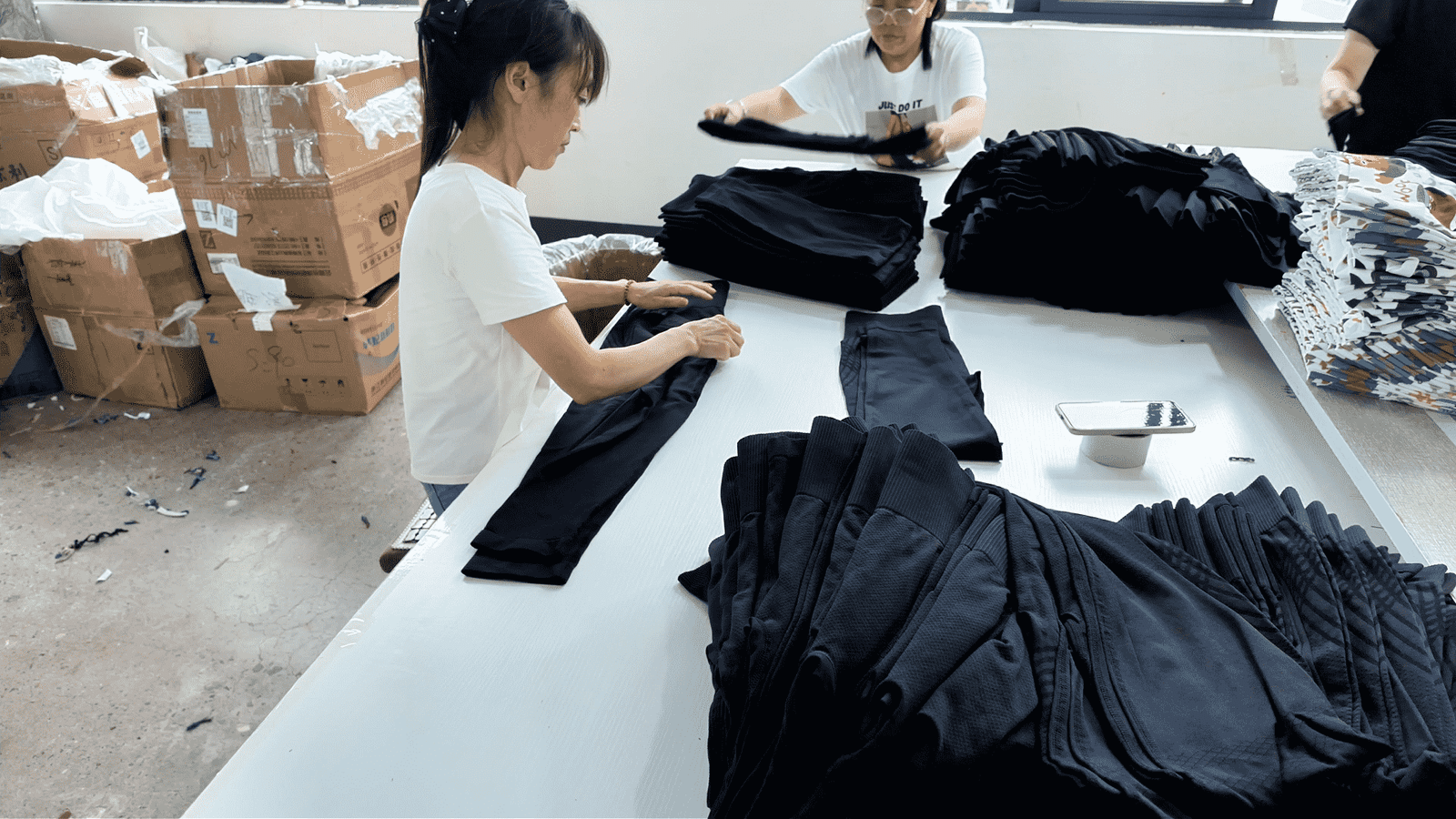
MOVEVOX's core Yiwu production base includes approximately 24 main garment-making machines and the equipment required to move an approved Cut & Sew pattern through cutting, stretch sewing, first-piece control and finished-garment QC.
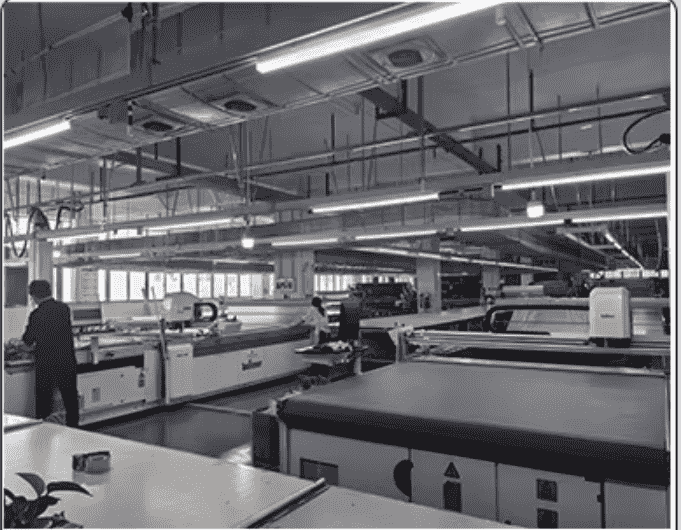
Pattern and Cutting
MOVEVOX uses professional garment CAD for base patterns, Fit Revision, grading and marker work. Current pattern versions are transferred to cutting with Style, Color, Size and bundle identification. Cutting equipment includes industrial cutting tables, straight-knife machines and precision cutting tools. High-stretch fabric is handled with attention to direction, relaxation and avoiding unnecessary stretching before cutting.
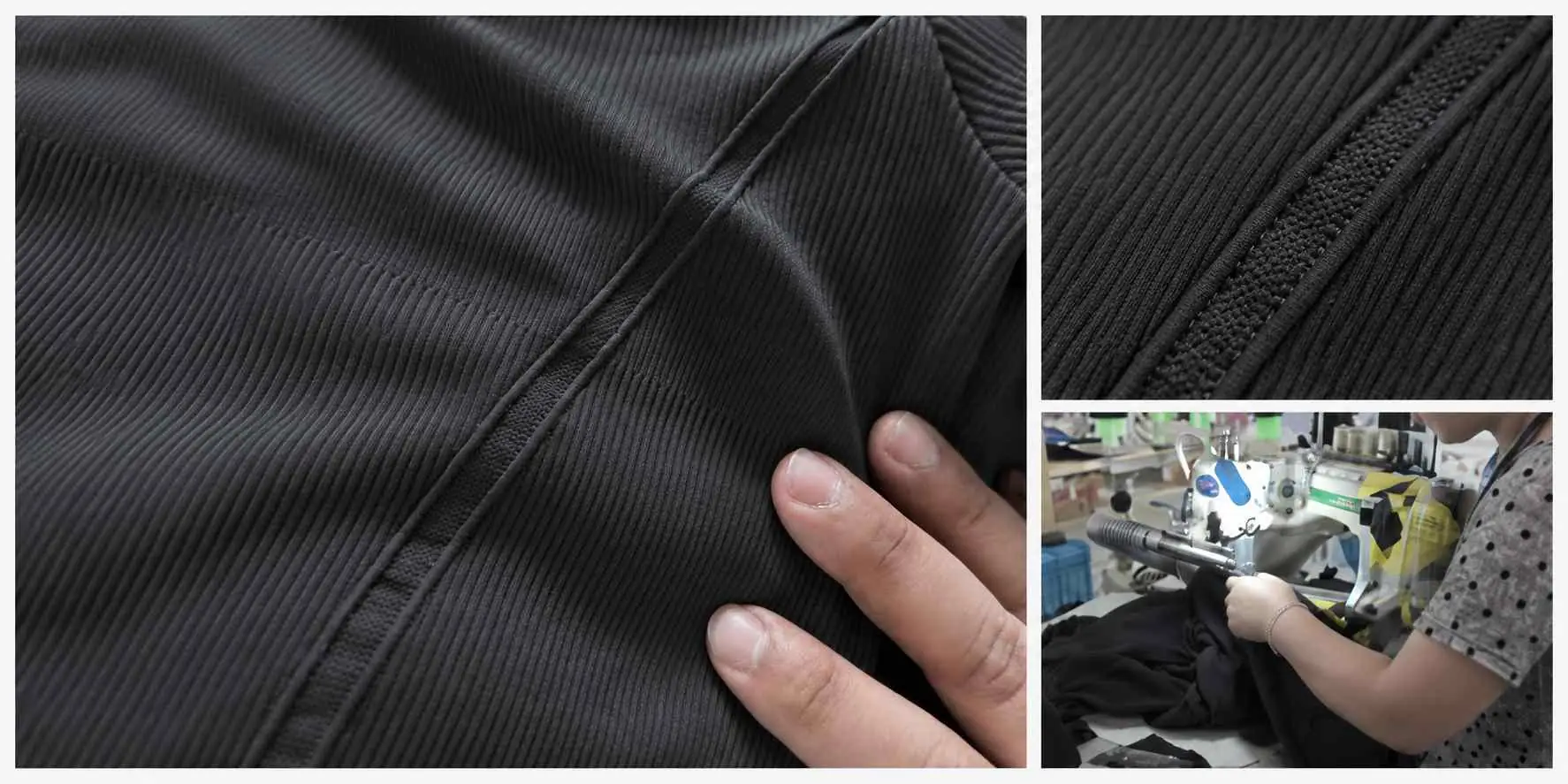
Straight Stitch
The core Cut & Sew area includes approximately five industrial straight-stitch machines. They support selected structural seams, topstitching, trim attachment and operations requiring accurate placement. MOVEVOX does not rely on ordinary straight stitch alone for highly elastic body seams. Needle, thread, presser-foot pressure and stitch length are adjusted according to the material and confirmed through first-piece review.
Overlock
Approximately six industrial overlock machines support stretch-fabric seam joining and edge control. They are used for high-elasticity panel seams, raw-edge coverage and internal structures. Process control focuses on trimming width, differential feed, stitch length, thread tension and seam recovery to reduce broken stitching, waviness, rolling or inconsistent seam allowance.
Coverstitch and Flatlock
MOVEVOX operates approximately five coverstitch machines and six Flatlock / four-needle-six-thread type machines within its garment equipment group. Coverstitch supports stretchable hems, edges and surface stitching, while Flatlock reduces seam bulk and can improve comfort in close-fitting activewear. Both require fabric-specific thread tension and stretch verification before bulk replication.
First Article
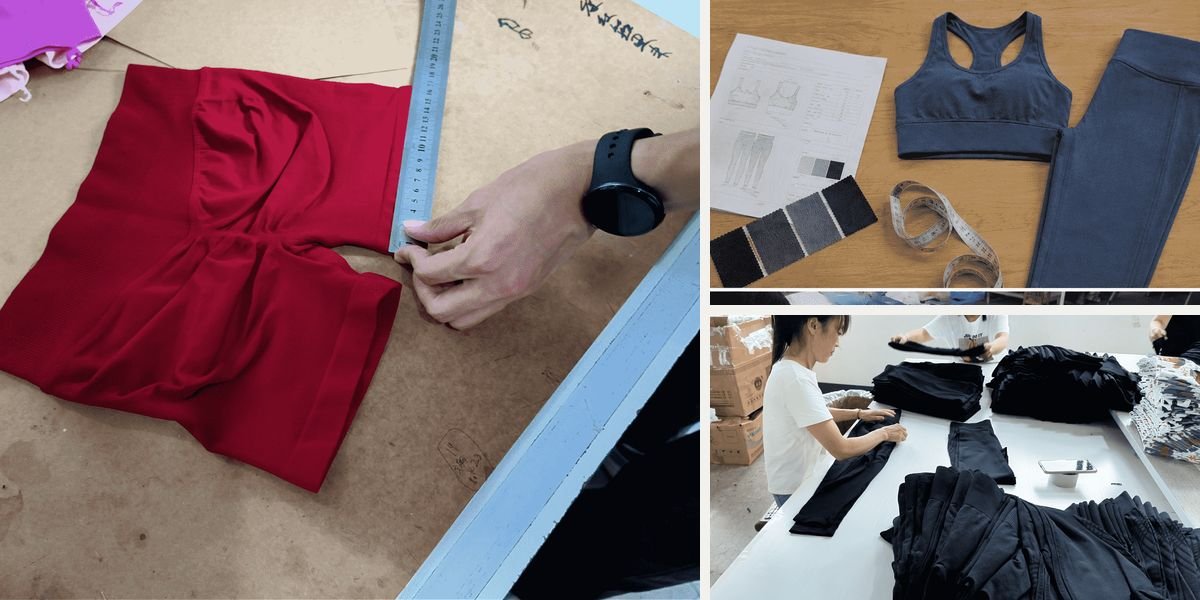
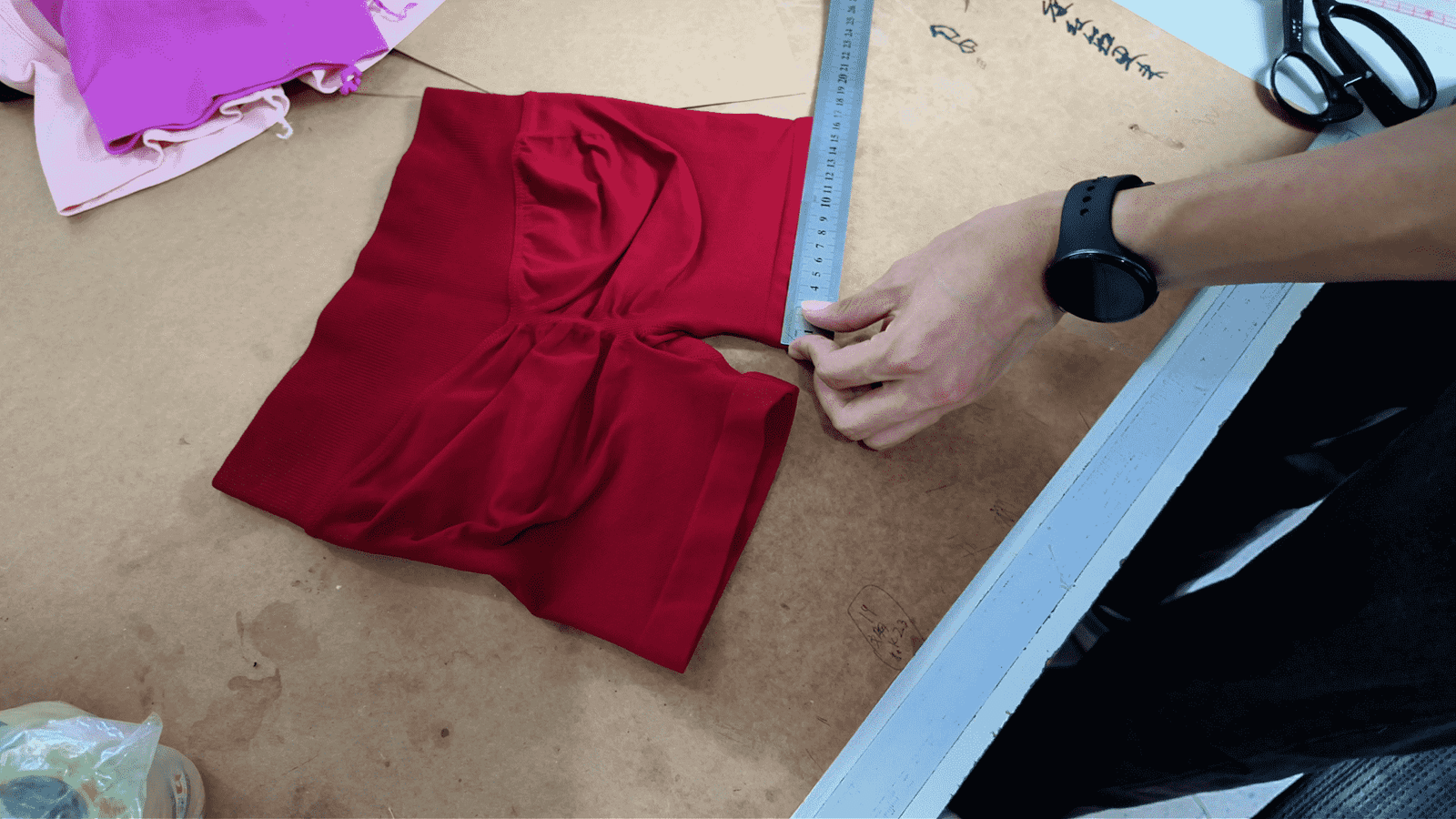
Before unrestricted bulk production, MOVEVOX uses first-piece review to compare the initial production result with the Approved Sample, current measurements, construction and workmanship requirements. This is a control gate between sample-room approval and normal line production, allowing incorrect pattern versions, sewing settings or product details to be identified before larger quantities are completed.
Finishing and QC
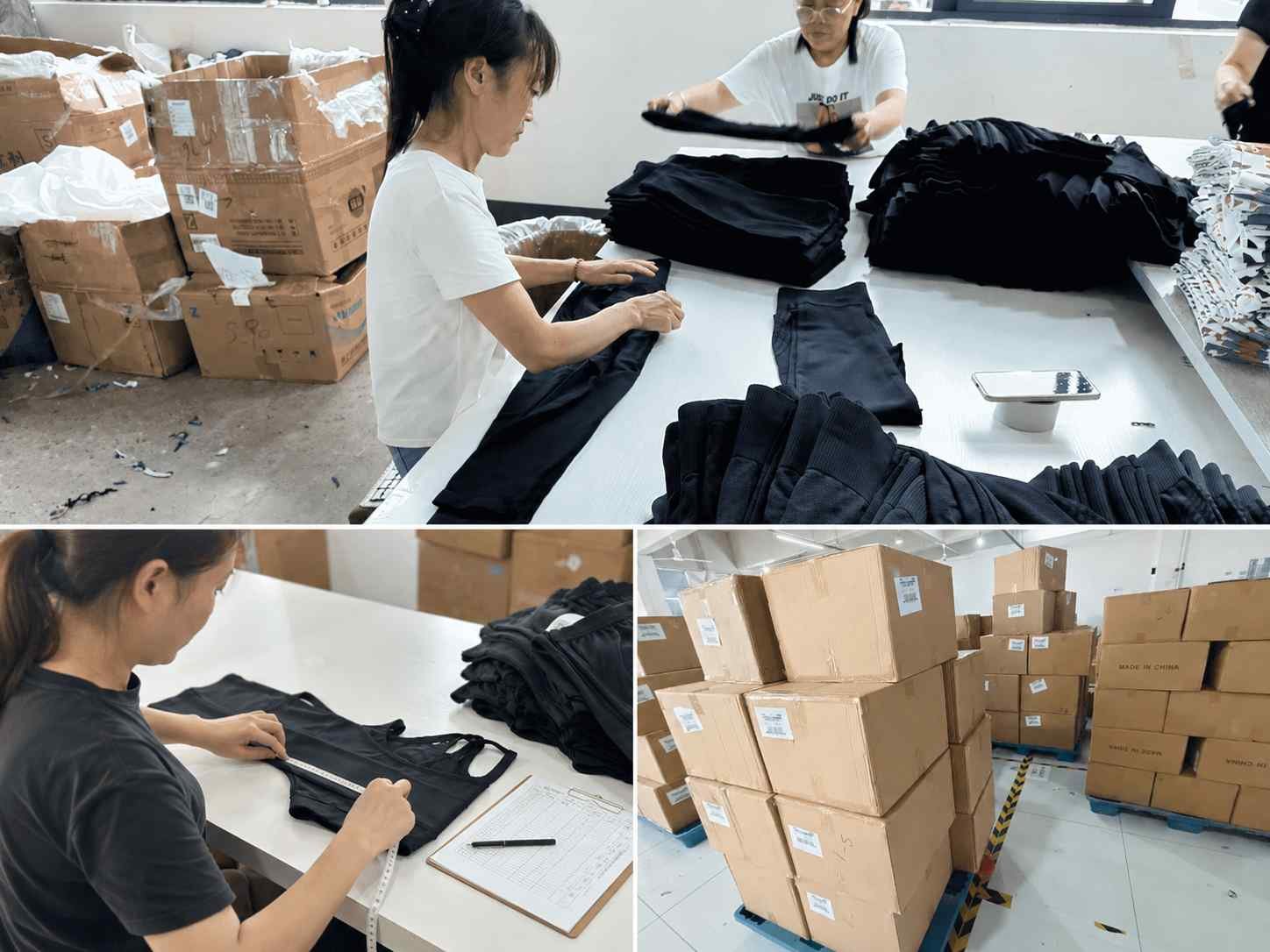
Finished activewear moves through garment finishing, measurement, workmanship and packing-related quality checks before release. MOVEVOX has five QC personnel supporting the current inspection system. Elastic fabrics are measured after suitable natural recovery, avoiding artificial stretching to force dimensions into tolerance. Heat-sensitive fabrics, logos or special surfaces also require appropriate finishing conditions.
Nine Controls From Material to Flare Shipment Release
MOVEVOX uses multiple quality gates because measurement or pattern errors should be identified before final inspection. The approved technical version remains the reference across material, production, packing and release.
Material Intake
Incoming material is checked against the applicable approved requirement before unrestricted use. MOVEVOX's material-control scope includes documentation and checks related to composition, color, GSM, shrinkage, elasticity, opacity and other relevant project criteria. A materially different fabric lot or unapproved substitution should not enter normal cutting only because its nominal fiber percentages appear similar.
Specification Freeze
Before bulk, MOVEVOX confirms the current Tech Pack, measurements, material, color, logo, labels, packaging and Approved Sample or PP Sample according to the project. Specification Freeze gives production one current reference and reduces the risk that purchasing, sample room, cutting and QC are working from different versions.
Pattern Version
Cut & Sew production uses the current controlled pattern version. When Fit or measurement revisions are made, the CAD and pattern Revision is updated and the older version should no longer be used for new cutting. This protects the approved silhouette from informal production-line pattern modifications.
First Article
An initial production garment or first article is reviewed before the full order continues normally. Measurements, workmanship, construction, branding and other applicable requirements are compared with the production standard. If the result reveals an incorrect setup, the cause can be corrected before the same problem expands through a larger quantity.
Inline Measurement
MOVEVOX uses inline quality checks while garments are still in production. Measurement-control coverage can increase according to project risk, first-order status, key sizes and customer requirements. The same POM method and current tolerance should be used so inline results can be compared directly with sample and final measurements.
Workmanship Control
QC reviews seam condition, stitch quality, symmetry, panel position, waistband construction, crotch structure, leg opening, logo and other product-specific workmanship. Stretch activewear requires particular attention to waviness, broken stitching, seam distortion and mismatched elasticity between sewing operations and the underlying material.
Finished Measurement
Finished garments are measured after appropriate natural relaxation rather than being manually stretched to hit target values. MOVEVOX compares key POMs with the customer's current Measurement Chart, Tolerance and Approved Sample. Out-of-tolerance findings require investigation and appropriate corrective handling rather than being accepted solely on appearance.
Packing Control
Product quality includes correct labels, size identification, SKU, barcode, individual polybag and carton information. MOVEVOX's packing system verifies these elements against the approved order information because a correct garment packed with the wrong size or barcode can still create a serious buyer-side receiving problem.
Shipment Release
Final release depends on the applicable inspection, packing, order and shipment conditions being satisfied. MOVEVOX supports customer or nominated third-party inspection where required. Major or critical issues must be closed according to the applicable decision before goods move into normal shipment release rather than being hidden at the packing stage.

Scale a Flare Style Into a Collection Program
MOVEVOX can manage multi-SKU activewear development using shared material, color, fit or branding platforms while retaining independent style, version, BOM, sample and approval records for each SKU.
Core Flare Program
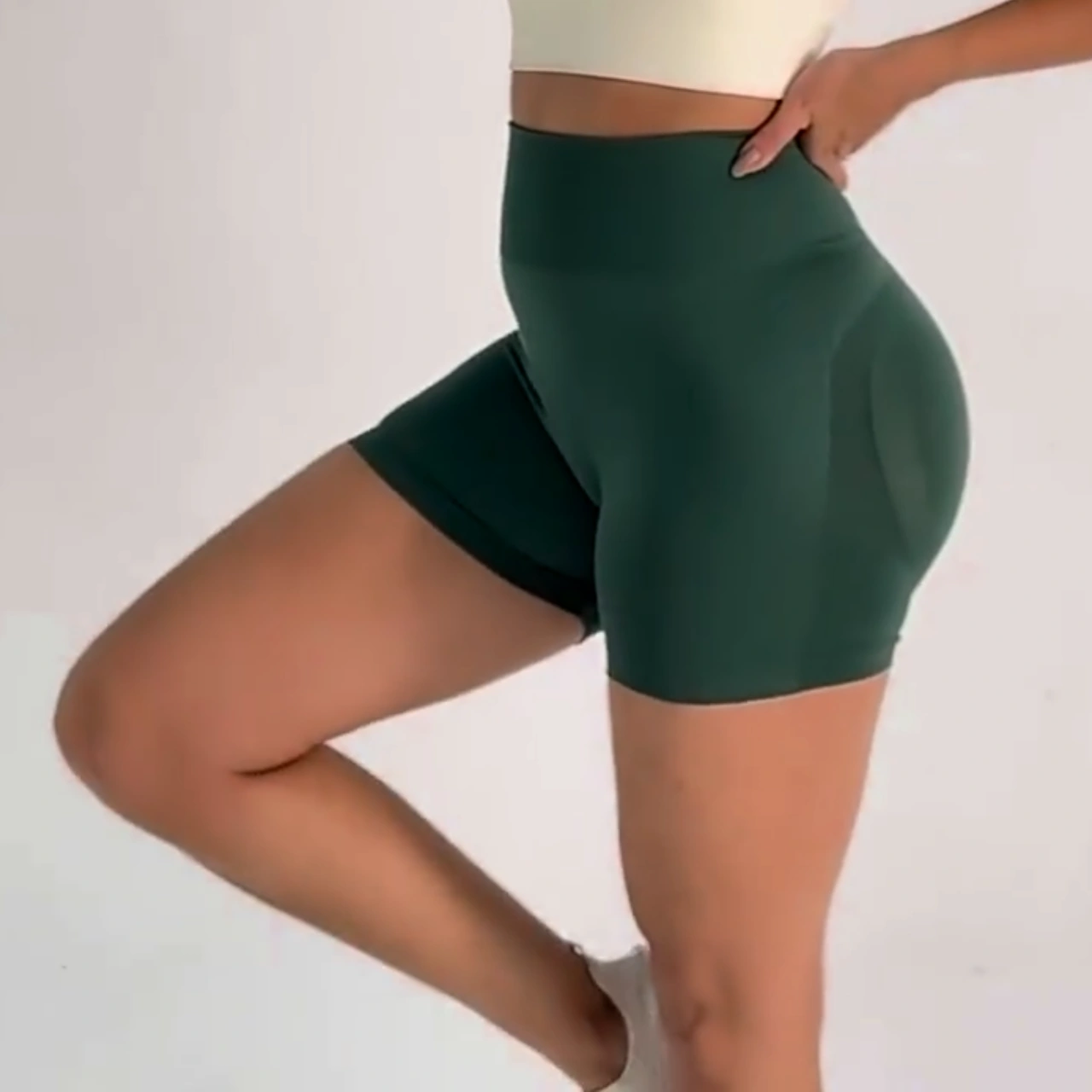
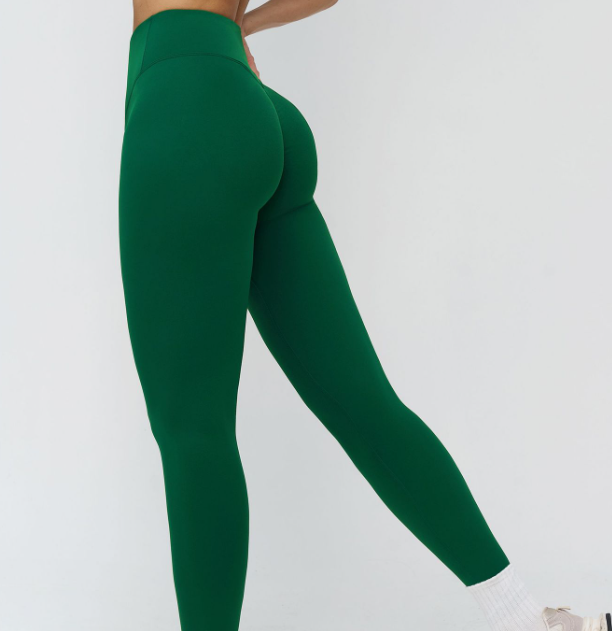
Begin with the approved flare legging as the controlled core SKU. The product has its own style number, material, measurements, pattern version, sample status, branding and packing information. Once the Fit and production standard are stable, repeat orders can use the retained technical and approval records instead of restarting the entire development logic without reason.
Length and Color Expansion
A successful core product can expand through additional customer-approved lengths, colors or other defined variants. MOVEVOX can use shared materials and branding systems where technically suitable, while keeping each SKU or version separately controlled. Custom colors still follow actual dye-lot MOQ and color-approval requirements rather than assuming every added color can be produced at the garment base MOQ.
Coordinated Studio Collection
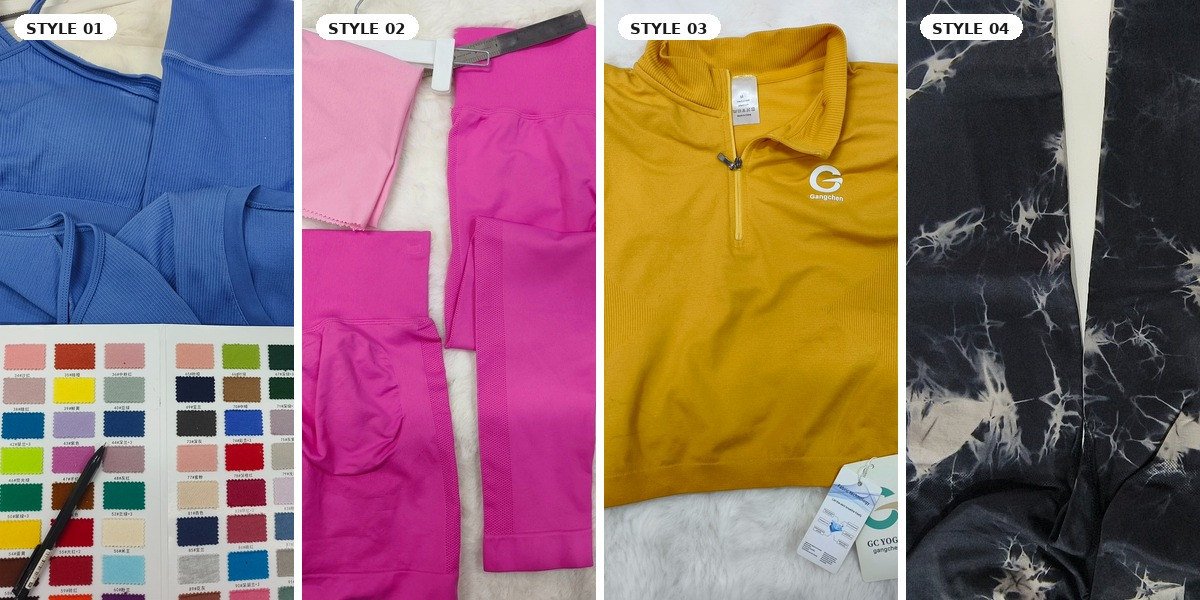
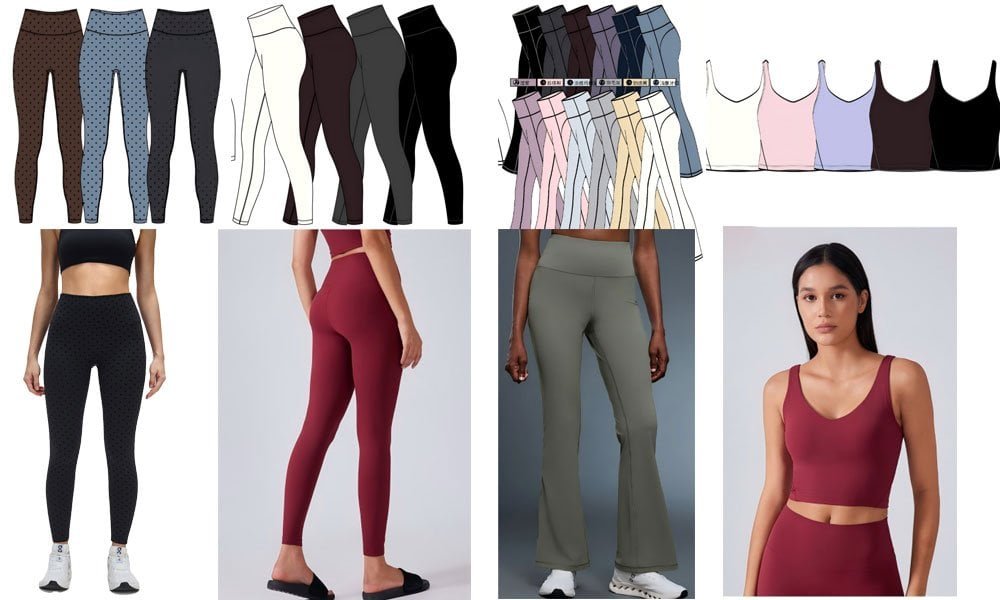
MOVEVOX can develop multiple activewear SKUs under a shared collection platform. Existing capability covers Flared Leggings, standard Leggings, Sports Bras, Tank Tops, fitted tops, Shorts and Studio Sets. Shared fabric, color and brand elements can improve development efficiency, but each product retains its own pattern, measurement, sample, BOM and approval record before bulk production.
Equipment Buyers Can Verify at the Yiwu Factory
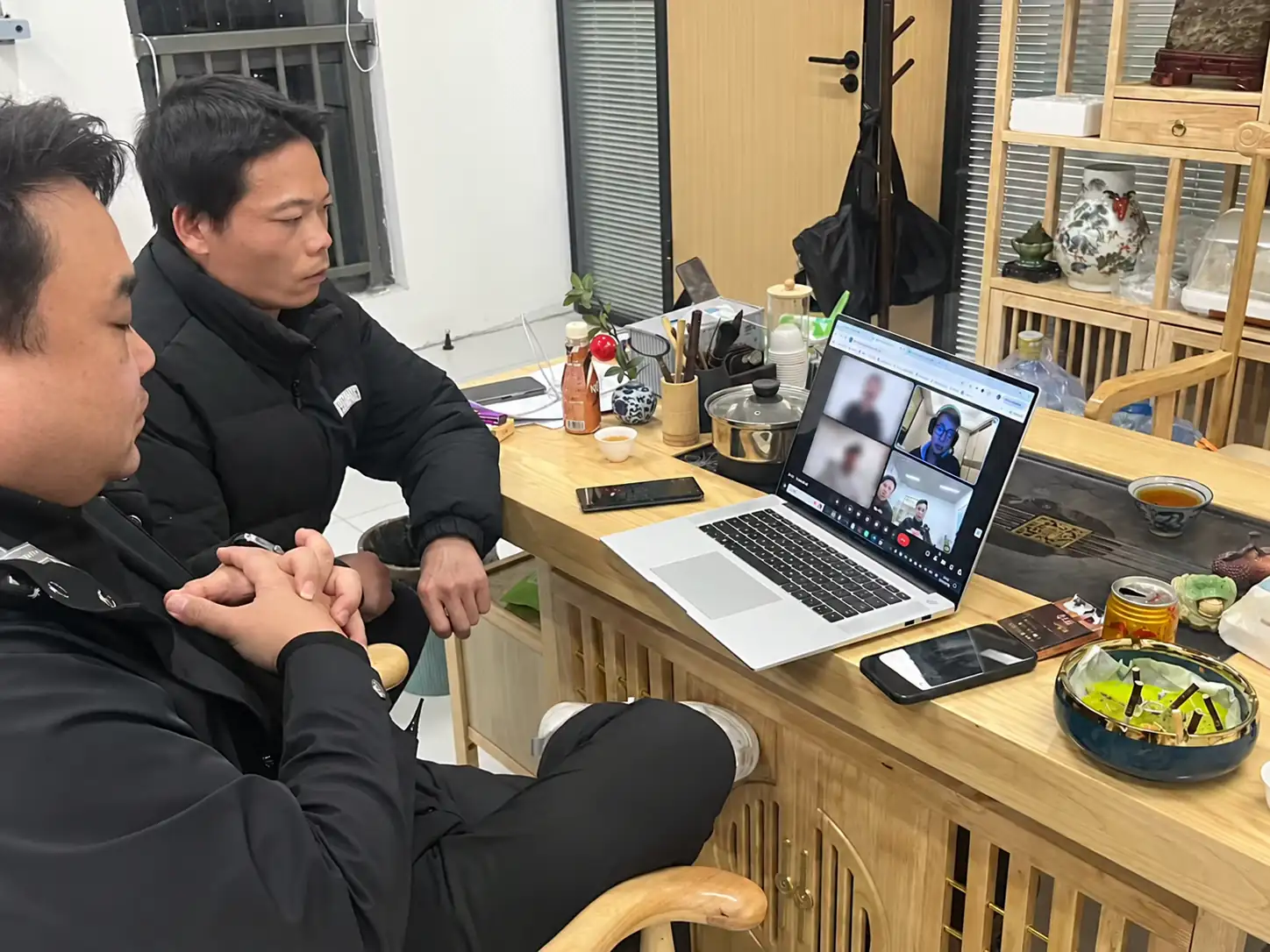
MOVEVOX supports factory visits, technical audits and live video verification. The equipment below represents actual owned-factory functions relevant to development, cut-and-sew activewear, quality checking and the wider production system.
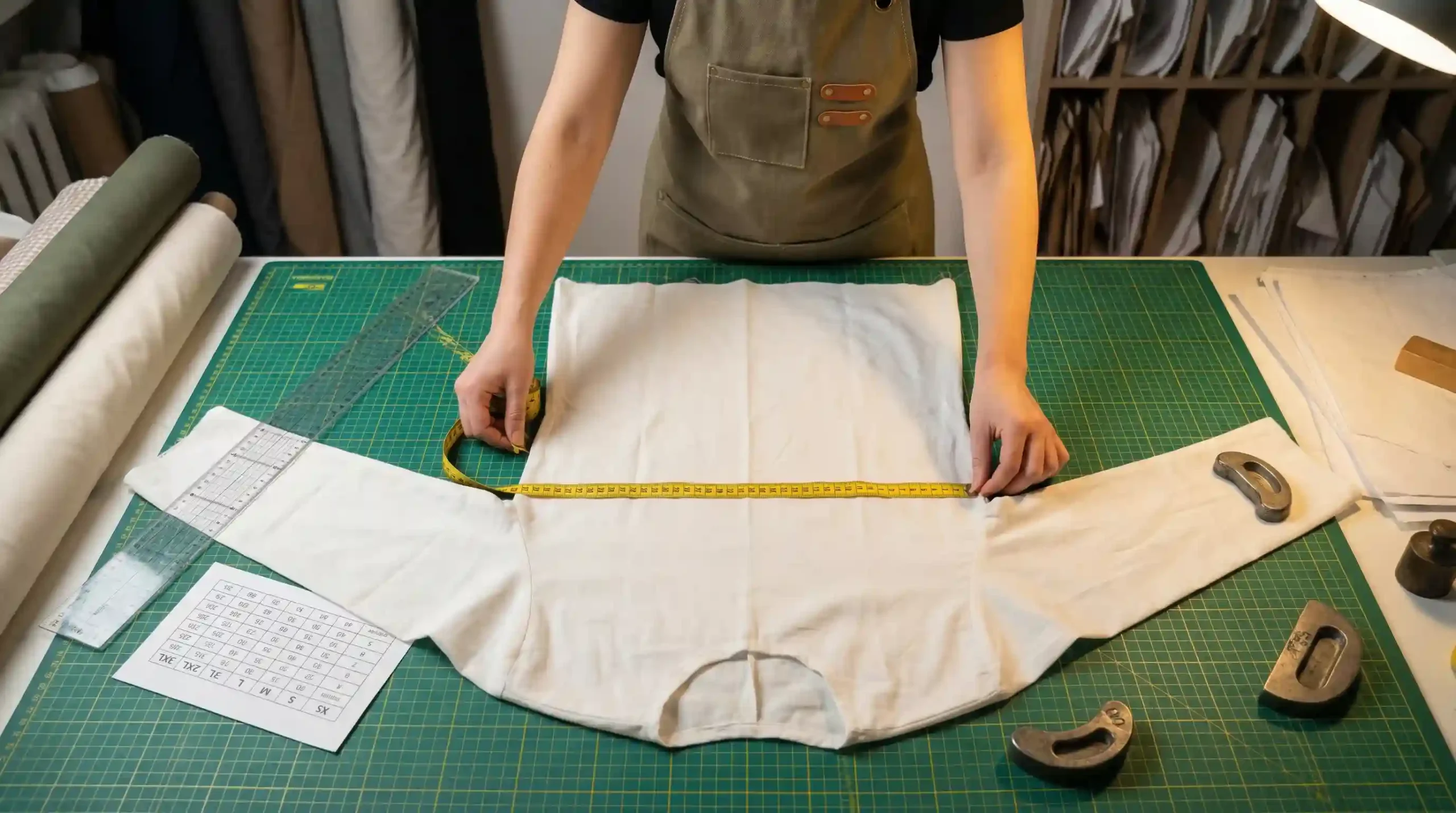
Pattern CAD
MOVEVOX uses professional garment CAD, with Richpeace as the current internal workflow, for base patterns, Fit Revision, grading, markers and controlled pattern numbering. Customer source files and internal revisions are kept separately.
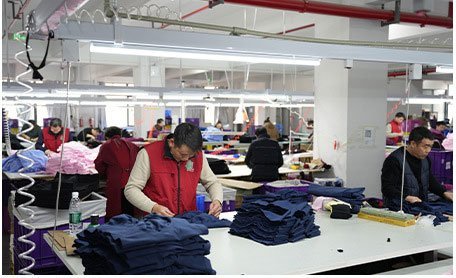
Cutting Equipment
The Cut & Sew area includes industrial cutting tables, approximately two straight-knife cutting machines, one band-knife or precision cutting unit and auxiliary cutting tools for stretch-knit activewear.
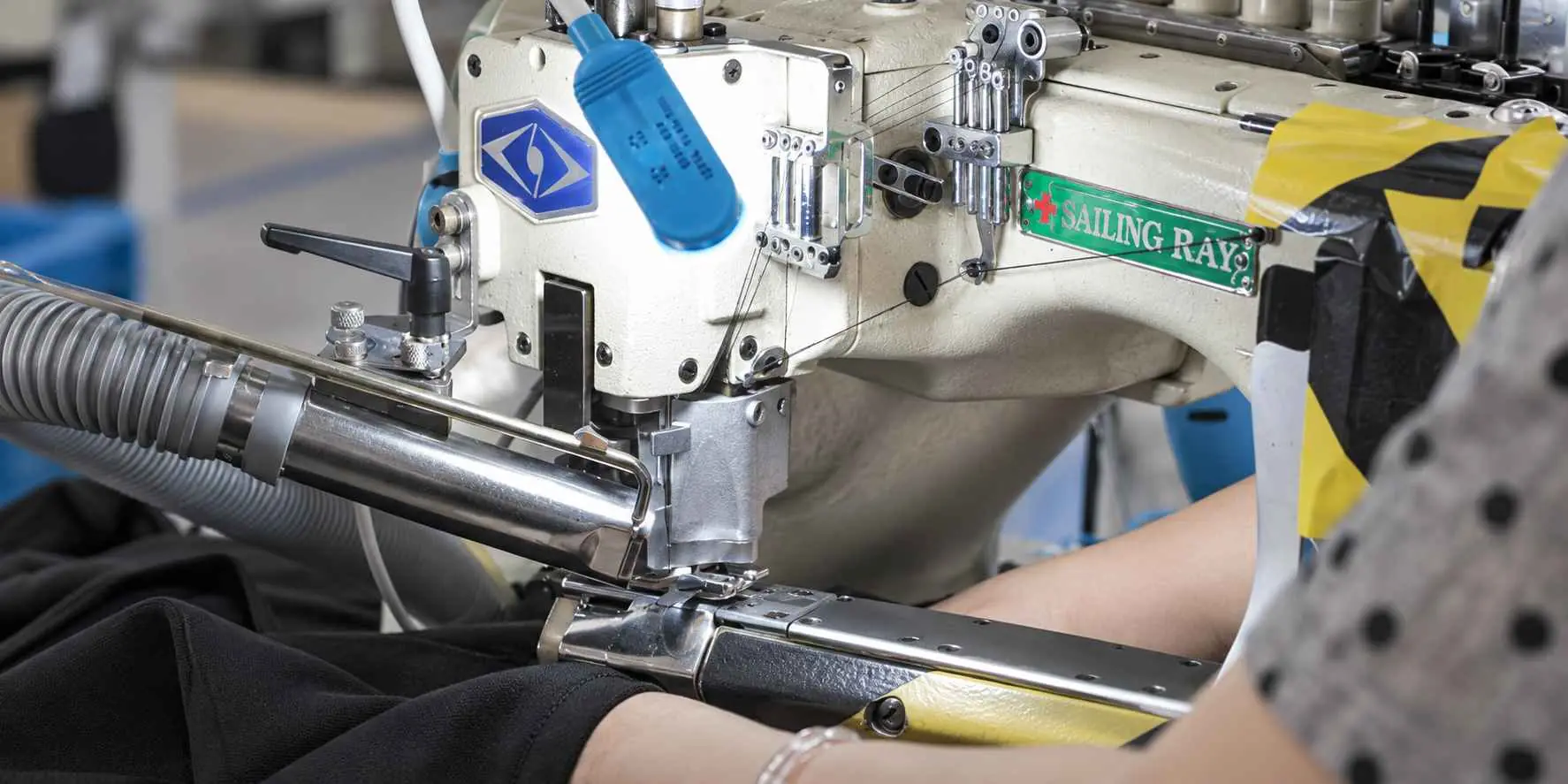
Straight Stitch
Approximately five industrial straight-stitch machines support accurate structural seams, topstitching, trim attachment and selected operations where high extension is not the sole seam requirement.
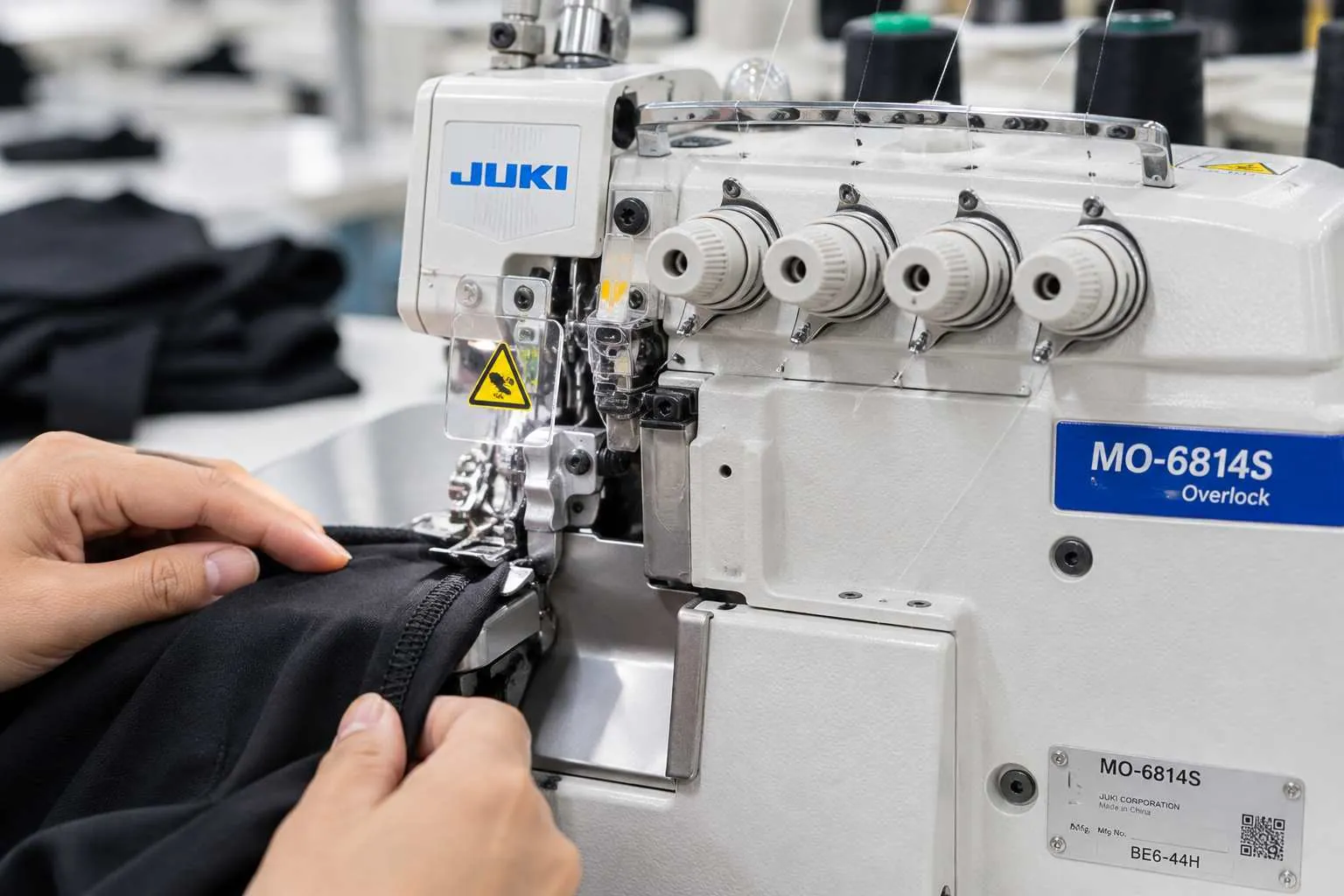
Overlock
Approximately six industrial overlock machines handle stretch-fabric joining, raw-edge coverage and internal seams. Differential feed and thread tension are adjusted to the actual activewear material.
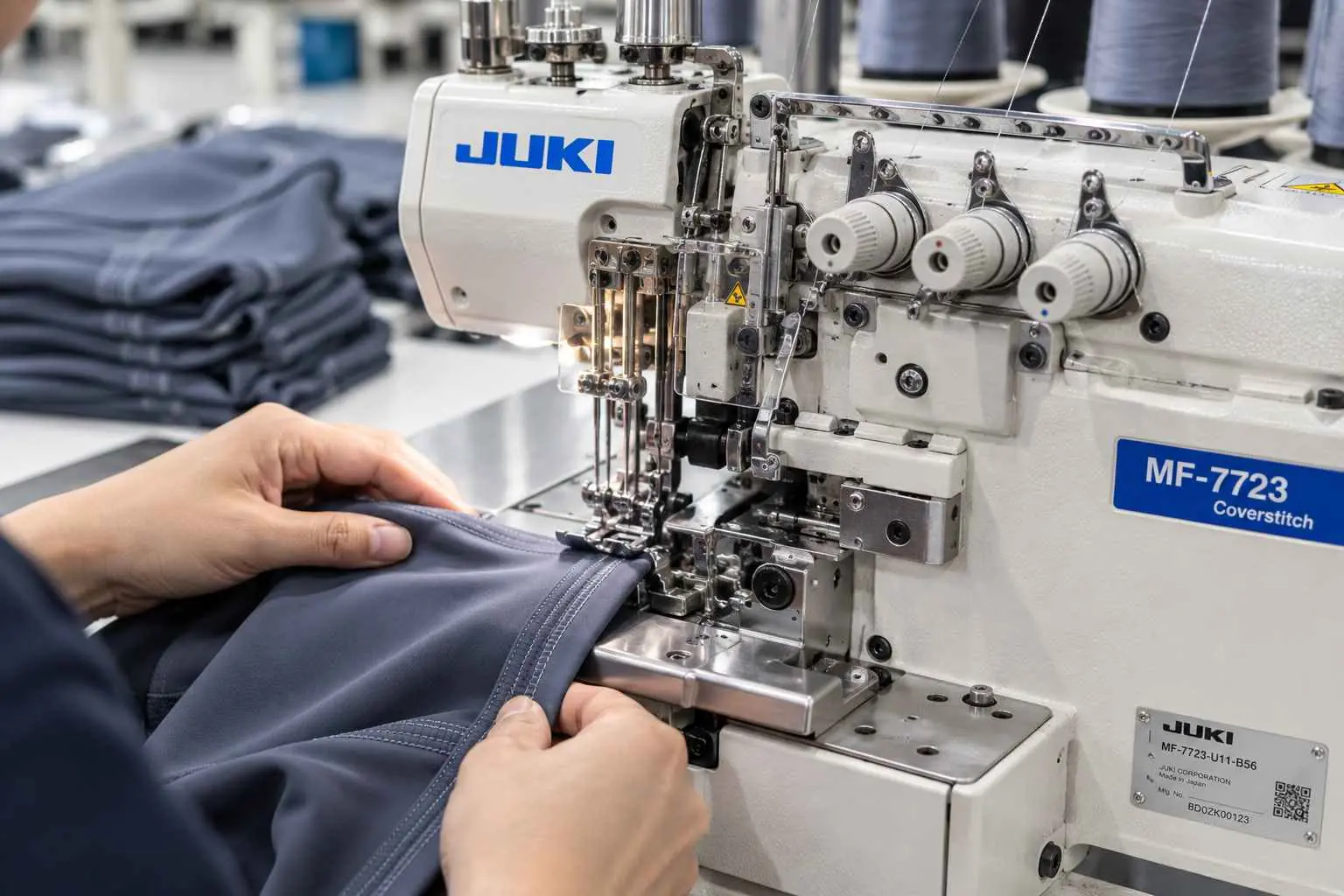
Coverstitch
Approximately five coverstitch machines are used for stretchable hems, edges, waistband-related operations and surface stitching requiring extension and a relatively flat finished appearance.
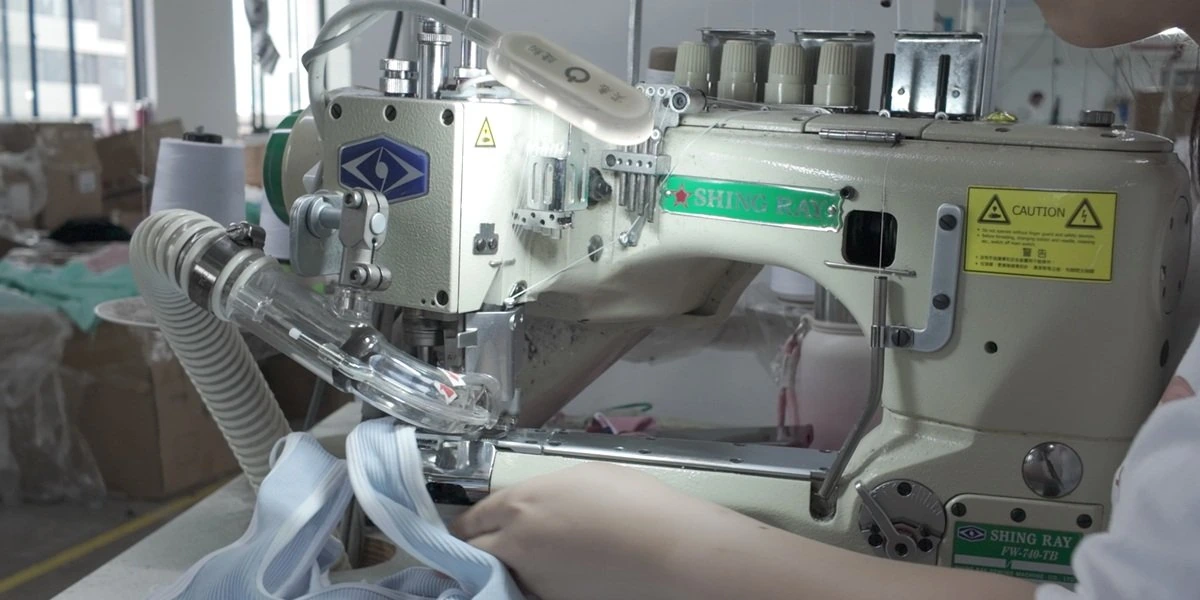
Flatlock
Approximately six Flatlock or four-needle-six-thread type machines support flatter high-stretch seams used in Leggings, Sports Bras and other close-fitting training garments.
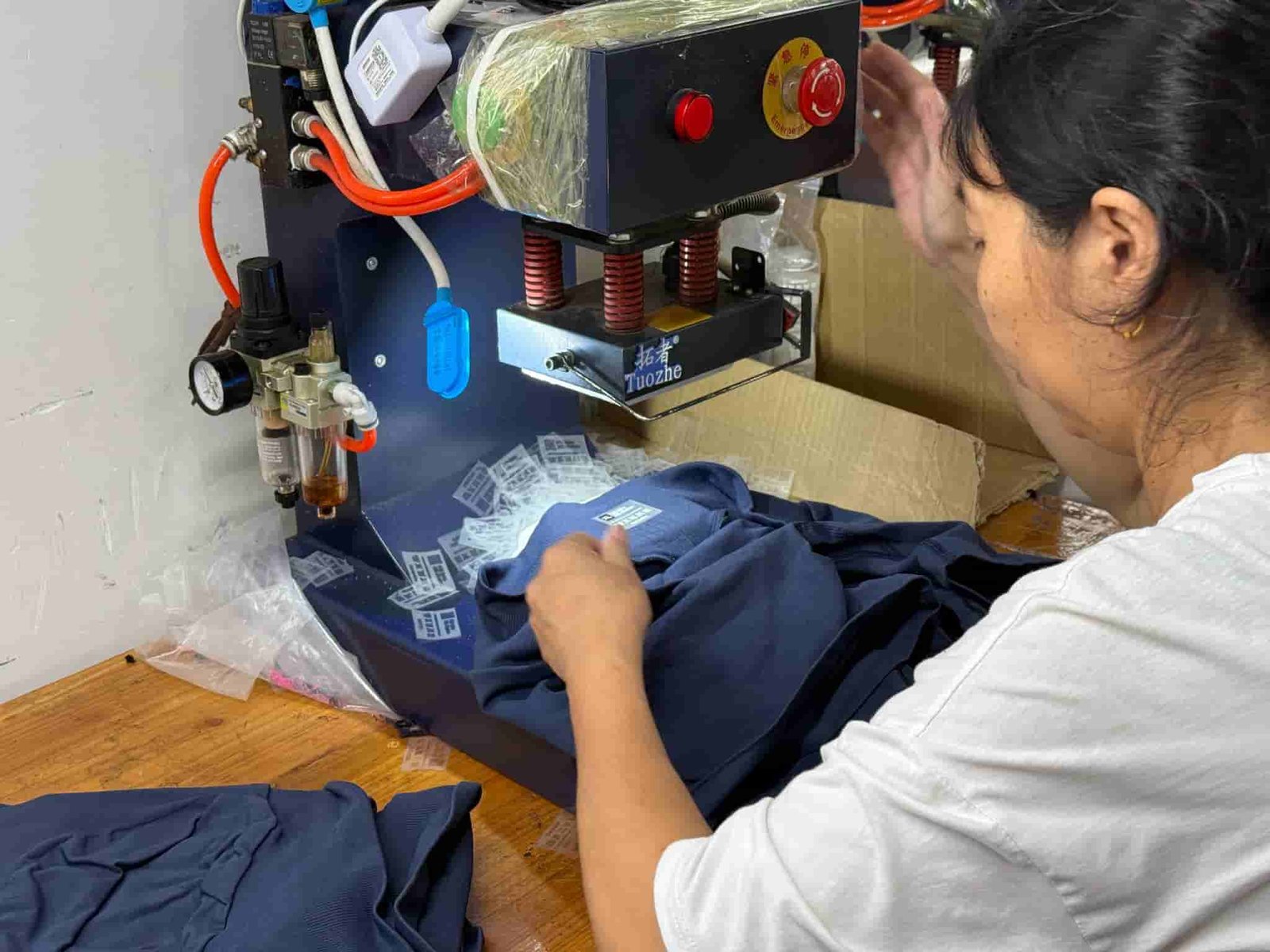
Heat Press
MOVEVOX's factory has approximately four heat-press or transfer workstations for development and application of suitable heat-transfer and selected logo processes under controlled temperature and pressure.

Fabric Inspection Tools
Incoming and development inspection equipment includes fabric inspection capability, GSM sampling and weighing tools, shrinkage measuring tools, elasticity/recovery tools and conditions for opacity or visual review.
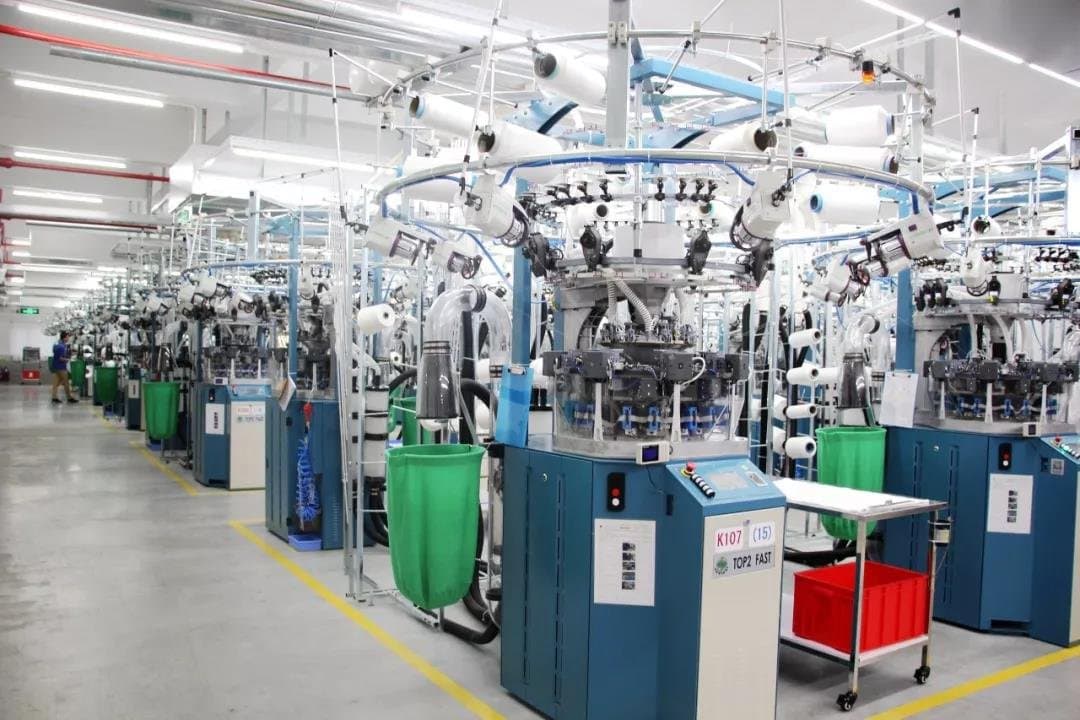
Santoni Machines
MOVEVOX's owned manufacturing system also includes 28 Italian Santoni seamless knitting machines. They are part of the wider activewear capability, although a typical fabric-based flare legging is handled through Cut & Sew.
Evidence Must Match the Product and Production Scope
MOVEVOX separates sample-specific test reports, material-supplier documents, factory information and customer-nominated testing. A document is only used for the entity, material, site or tested sample that its actual scope supports.
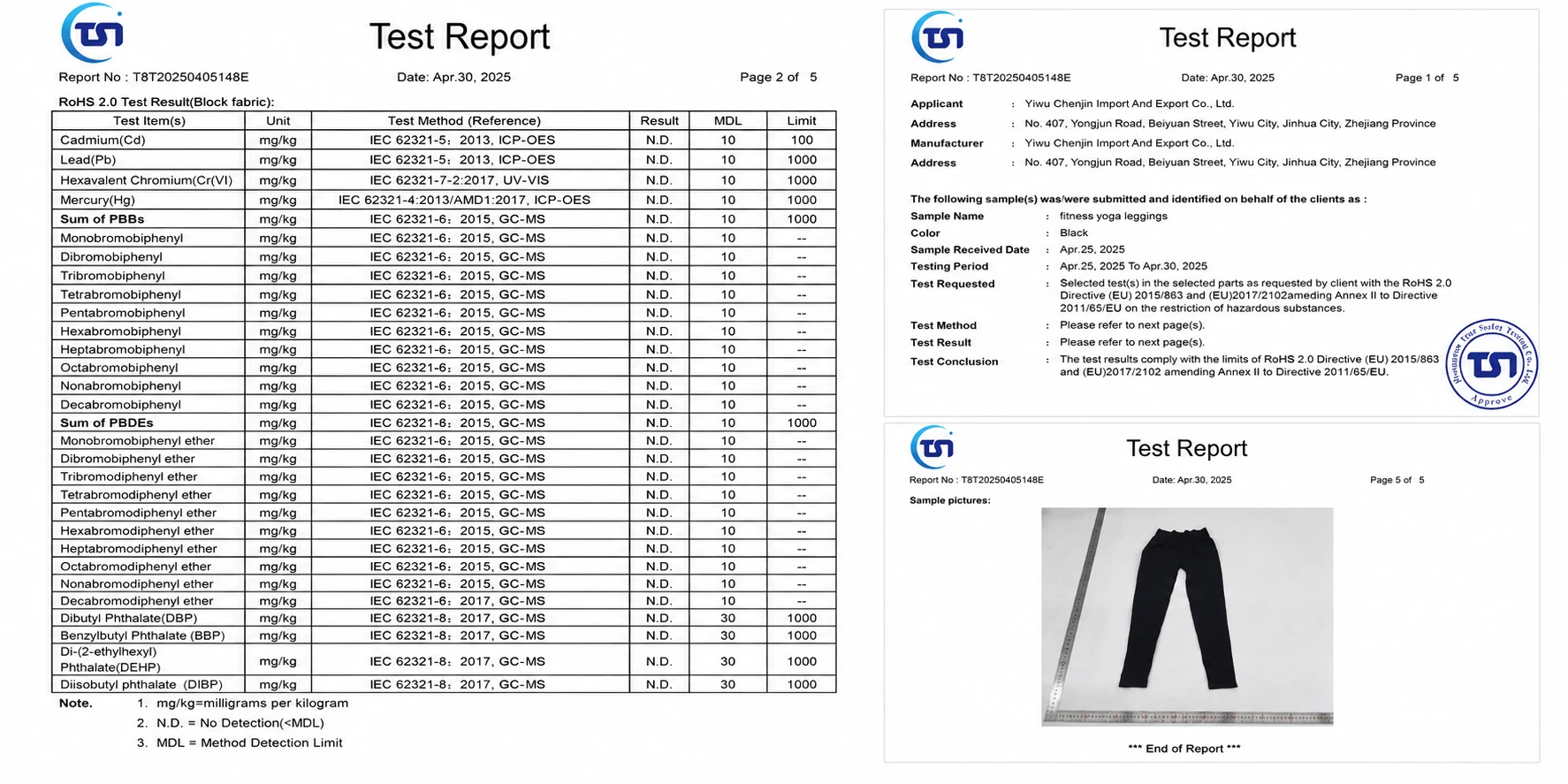
RoHS Sample Report
MOVEVOX has a real April 2025 RoHS 2.0 test report for a specified black fitness yoga leggings sample. The report applies only to the tested sample and listed test scope. It must not be used as evidence that every future flare legging, material, color or production lot automatically has the same tested status.
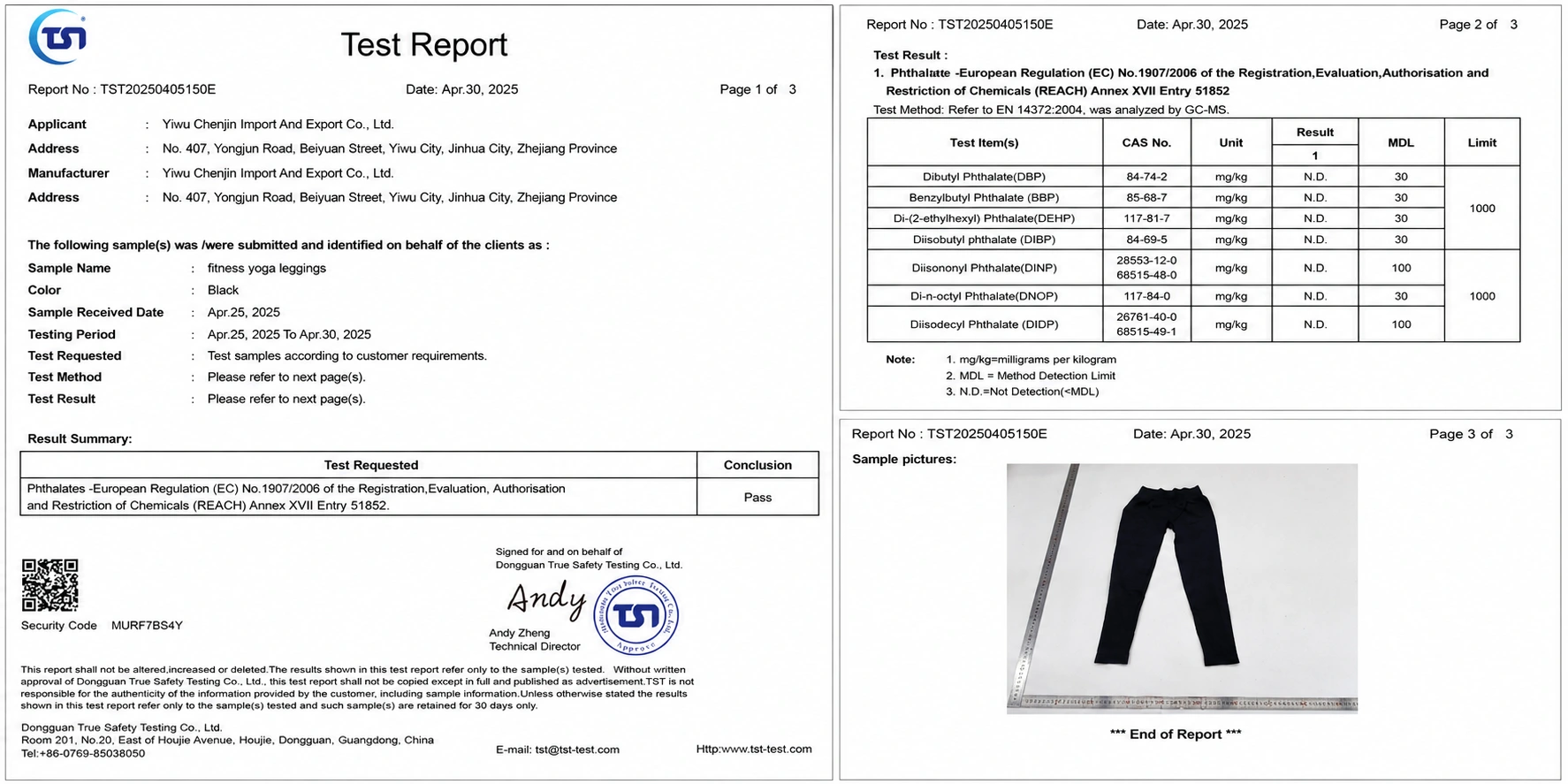
RoHS Certificate
The related Certificate of Compliance references the same tested black fitness yoga leggings and associated report. The certificate itself states that it applies to the tested sample and does not imply assessment of the entire production system. MOVEVOX therefore does not present it as a whole-factory RoHS certification.
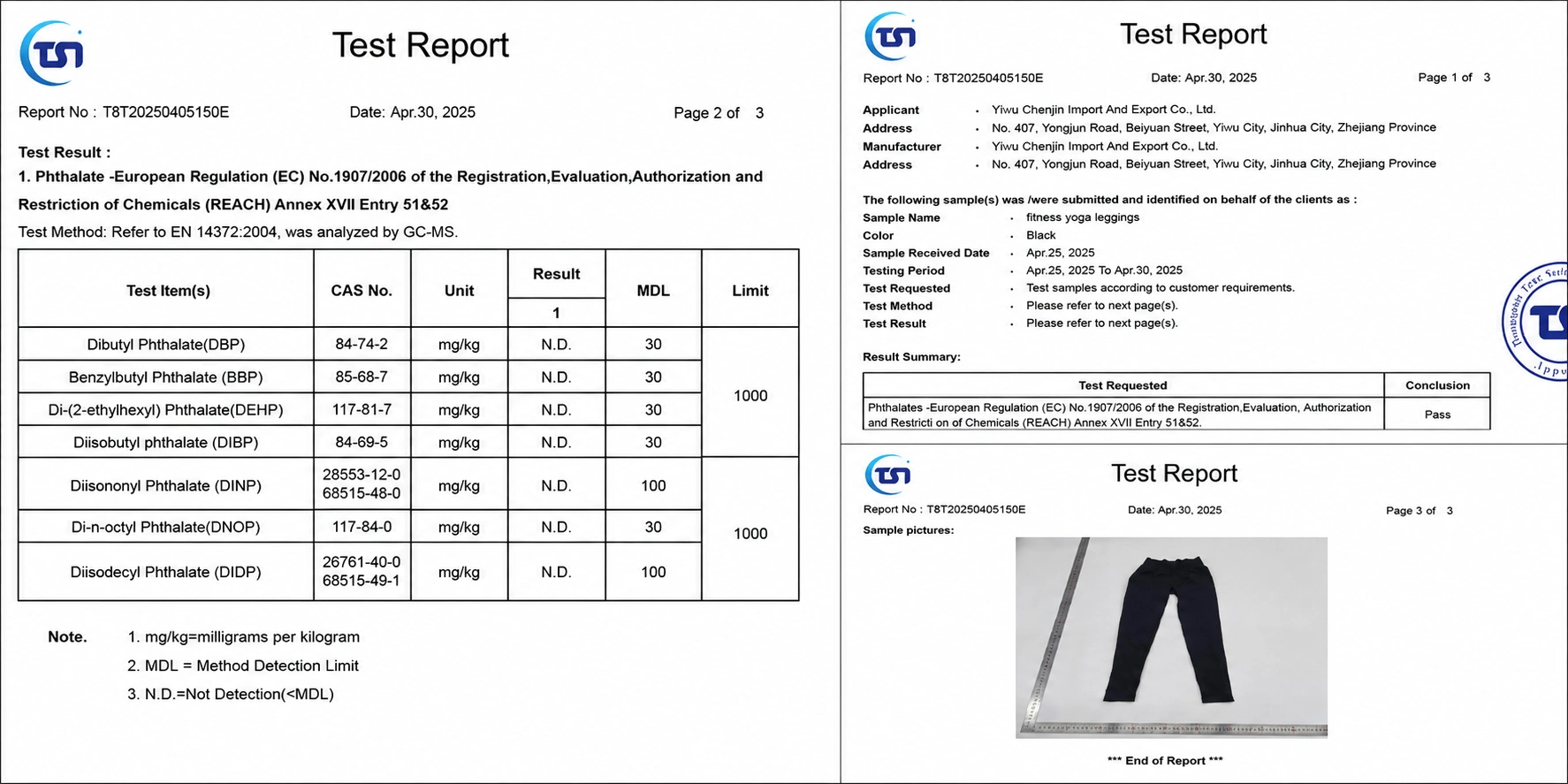
REACH Phthalates
A separate April 2025 report covers specified REACH Annex XVII phthalate testing on black fabric from a fitness yoga leggings sample. The evidence belongs to that submitted sample, material and test scope. A new flare fabric, color or customer requirement may therefore need separate project-specific testing.
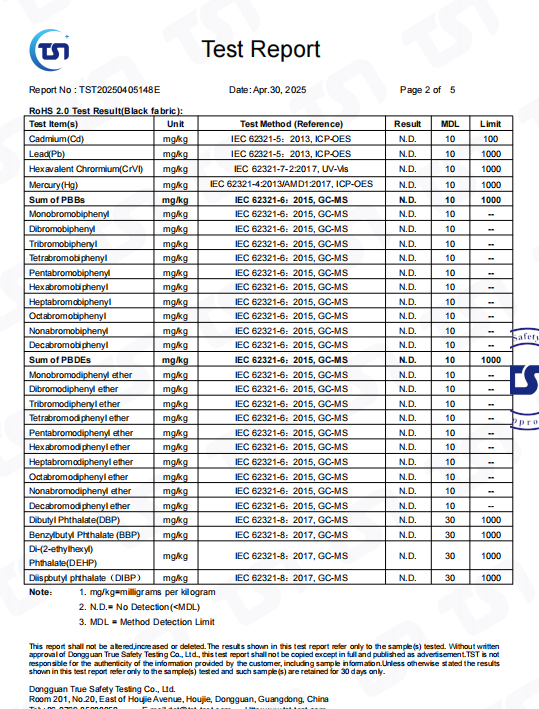
Customer Testing
MOVEVOX supports customer-nominated laboratories and third-party inspection or testing when required. The customer can define the test protocol, market requirement and acceptance criteria. A resulting report remains tied to the submitted sample and stated test scope rather than becoming an unrestricted marketing claim across unrelated products.
A U.S. Activewear Development and Repeat-Order Case
This documented U.S. client project shows MOVEVOX working from a Tech Pack through sample revision, practical product testing, bulk customization and recurring orders. The source case is not documented as a flare-legging project.
Customer Background
The client is a U.S.-based fitness content creator with more than 30,000 followers who developed an activewear business around products for a curvier customer profile. The cooperation included leggings, shorts, sports bras, tanks, bodysuits and sets and continued for approximately three years according to the supplied historical case record.
Challenge
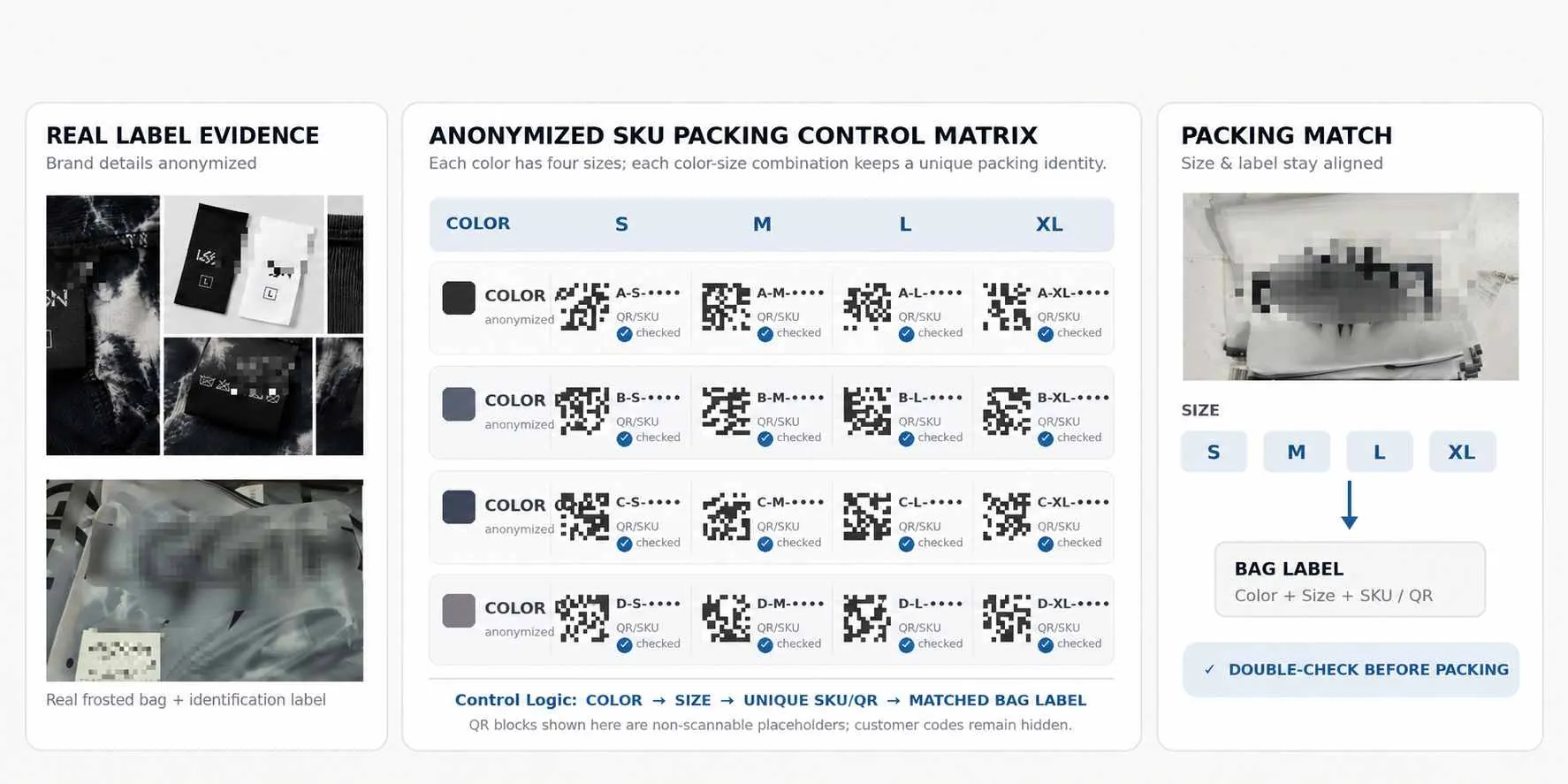
The project required more than producing garments from a Tech Pack. The client needed high stretch, support, opacity, softness, plus-size considerations and seasonal material options. Product approval also depended on real audience testing rather than internal factory judgment alone. Later bulk orders added a complex brand-delivery layer: packaging, instruction materials, multiple labels, logos, care information and QR-code identification had to remain correctly matched by color and size. A garment could therefore pass physical QC but still create a serious fulfillment problem if the wrong QR code or packaging information was applied.
Solution
MOVEVOX used the client's Tech Pack as the development starting point and produced a first physical sample. After the client reviewed that version, some product details were revised and a second development sample was made. Following further approval, approximately five to ten samples were prepared for practical testing by the client's audience before bulk production.
For production, the product and brand requirements were treated as one execution system rather than separate tasks. Garments, size/color information, logo, care information, custom packaging and the QR-code structure were checked together. Because the packaging and information-matching requirement was more complex than a normal activewear order, the case record states that QC and packing required approximately twice the normal effort. The project subsequently developed into recurring orders.
Tech Pack Review
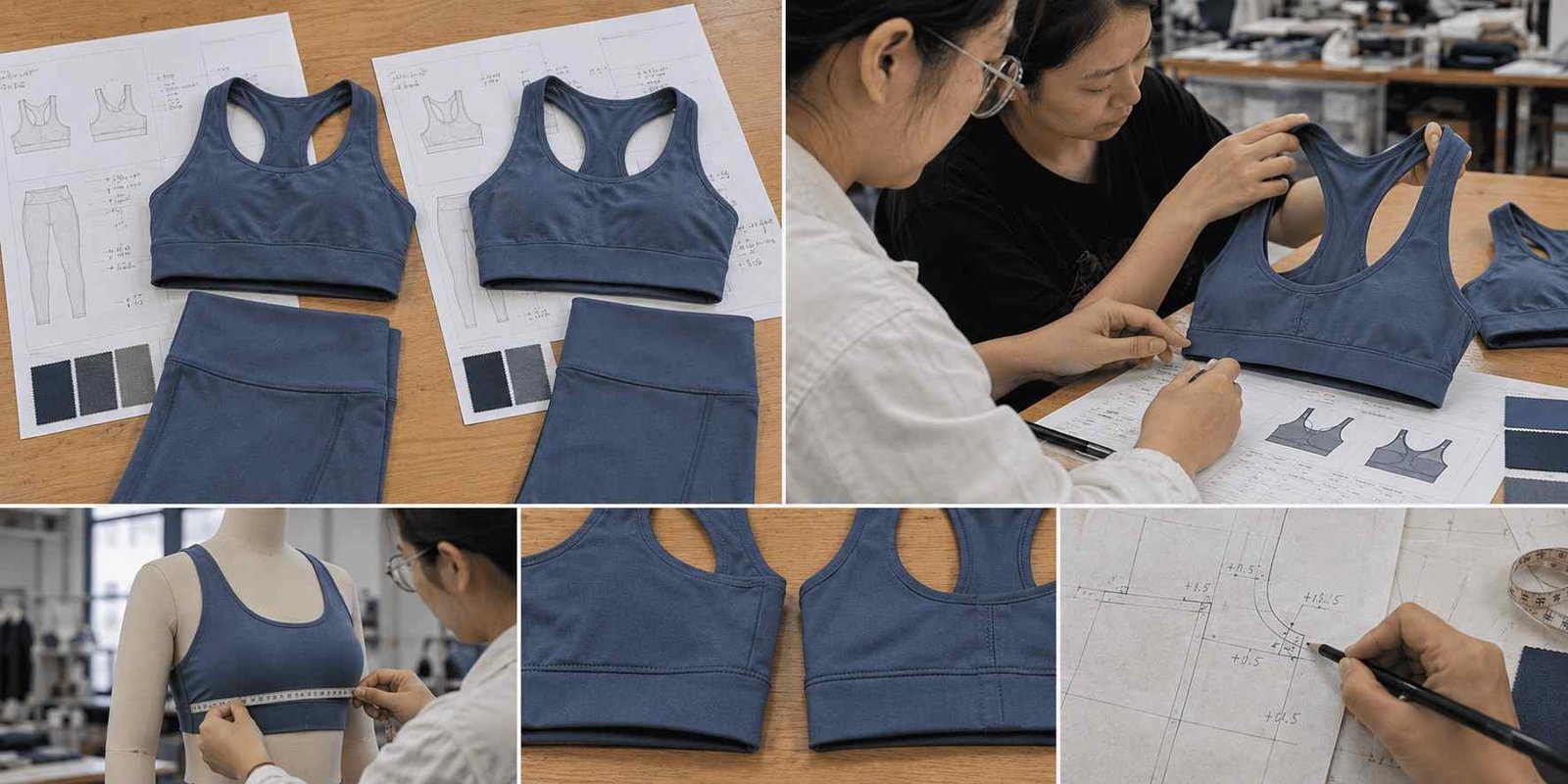
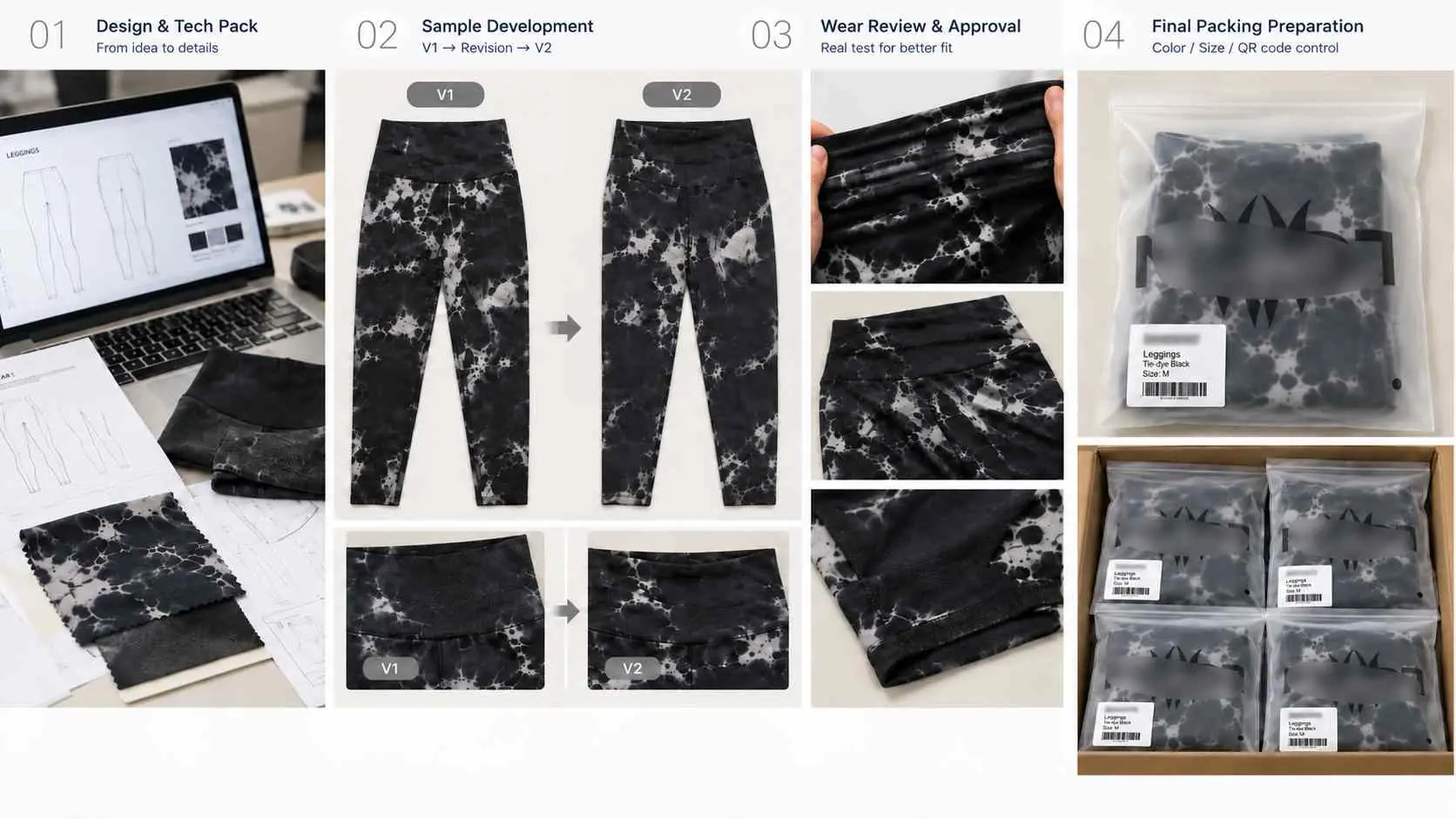
The customer supplied technical product information, which MOVEVOX used as the base for sample development rather than replacing the customer's intended specifications with a generic factory style.
First Sample
MOVEVOX created the initial physical sample so fit, construction, material and product details could be evaluated before the client committed the style to production.
Revision Sample
Customer feedback identified details that required modification. MOVEVOX revised the sample and produced a second version instead of proceeding directly into bulk from the first attempt.
Wear Testing
After further approval, approximately five to ten samples were prepared for practical testing by the client's audience, providing another validation stage before bulk production.
Bulk and Packing
Bulk execution included custom packaging, instruction material, labels, logo, care information and color-size-specific QR codes, requiring additional packing and QC verification.
Repeat Cooperation
The historical case record describes typical orders of approximately 2,000 pieces, about twice-monthly ordering during the established relationship and approximately three years of cooperation.
Typical order size recorded in this client case.
Approximate purchase frequency during established cooperation.
Used for practical audience testing before bulk approval.
Cooperation period stated in the supplied case history.
Customer quote: Requires a verified verbatim testimonial before publication. The supplied case file does not contain one suitable for use.
Data scope: All quantities and frequencies above describe this specific historical customer case. They are not MOVEVOX guarantees for every order, product, timeline or customer. The case is evidence of a development-and-repeat-order workflow, not proof of a completed yoga flare leggings project.