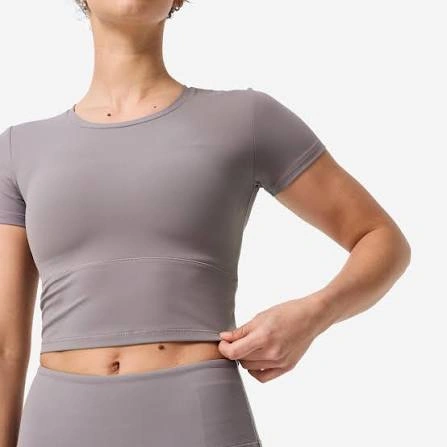
Seamless Yoga Sets Manufacturer for Coordinated Studio Collections

Custom Seamless Manufacturing for Yoga Brands

MOVEVOX supports private-label seamless yoga set development through its Santoni knitting equipment, product development resources and quality management organization. For coordinated sports bras, leggings, shorts and tops, brands can define garment-specific knit structures, fit, coverage and stretch requirements while reviewing how separate pieces should perform together during selected yoga movements. Final suitability depends on approved materials, physical samples and project-specific acceptance criteria.

Three Buyer Priorities

  • Develop separate knit-zone specifications for coordinated bras, leggings and tops.
  • Define coverage, movement fit and waistband requirements for intended yoga activities.
  • Connect approved garment references with set-level purchasing and production decisions.
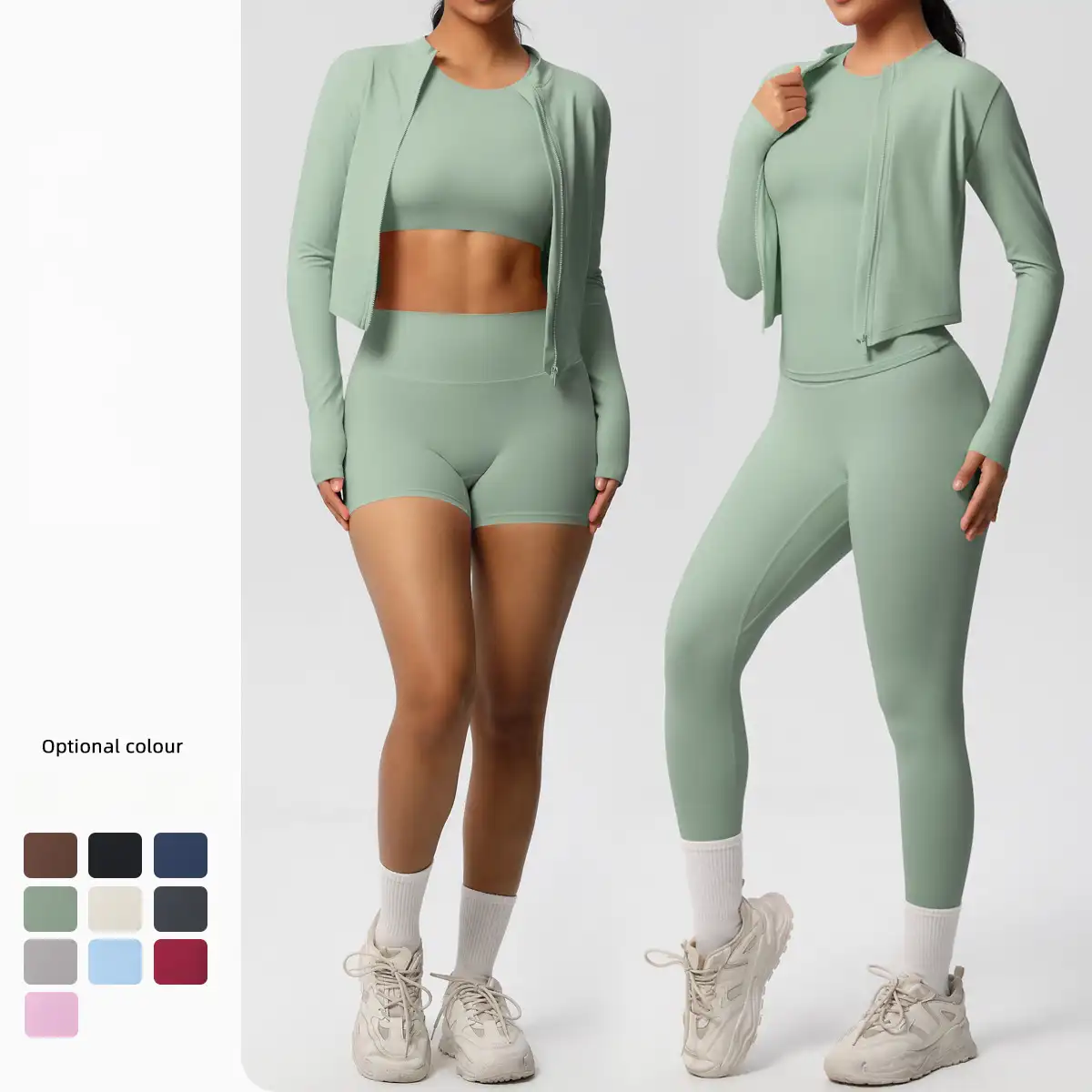
What Makes a Seamless Yoga Set Technically Suitable?

A technically suitable seamless yoga set requires more than matching color and texture. Each garment must satisfy its own fit, coverage and construction requirements, while the combination should be evaluated against the brand's intended wearing conditions. Product approval therefore needs to distinguish individual garment performance, selected yoga movements, paired-wear compatibility and commercial set specifications.

Garment-Level Requirements

A sports bra and leggings serve different body regions. Their knit zones, measurement points, extension behavior and coverage requirements should be specified independently before the garments are judged as a matching collection.

Yoga Movement Requirements

The buyer should select representative movements that reflect the intended product use. Forward folds, seated twists and transitions may produce different observations, so acceptance cannot rely on one universal yoga pose.

Paired-Wear Requirements

Wearing both garments together may reveal coverage relationships, garment-position changes or fit interactions that are not apparent from separate flat measurements. Any additional set-level requirement should be defined before evaluation.

Commercial Set Requirements

A visually coordinated pair may still involve separate garment sizes, knit programs, material purchasing conditions and replenishment quantities. Technical approval and the quantity of saleable complete sets are distinct decisions.

Why It Matters

MOVEVOX has actual seamless knitting and product development resources. Proposed movement and paired-wear assessments remain project-specific recommendations until supported by relevant samples and approved evaluation records.

Evaluate Both Garments During Selected Yoga Movements

Yoga-set approval should consider what happens to the bra or top and the leggings or shorts during the same defined movement. The following four scenarios provide a proposed buyer evaluation framework, not a claim that MOVEVOX has already conducted standardized yoga-movement testing.

Actual coordinated yoga set in defined forward fold position

Forward-Fold Coverage

Forward folding can change the position of a sports bra neckline, expose different regions of a top and stretch fabric across the hips and legs. A paired assessment should observe upper-body coverage and bottom opacity separately, then determine whether the complete outfit meets the brand's intended coverage requirements. The evaluation should specify garment size, color, wearer or fitting reference, movement position and acceptable findings. A product described as squat-proof cannot automatically be considered approved for every forward-fold condition.

Product Requirements

  • Review bra neckline and upper-body coverage at the defined fold position.
  • Evaluate leggings opacity under the relevant garment extension and color conditions.
  • Record whether the complete outfit meets the brand's paired-coverage expectations.

Related Product: Seamless Yoga Wear Manufacturer

Actual coordinated yoga set in defined seated twist position

Seated-Twist Stability

A seated twist may change fabric tension around the torso and waistband while placing the bra underband and leggings waist in different body positions. The technical review should distinguish temporary fabric movement from unacceptable garment displacement according to the intended use. Buyers may need to assess whether the bra stays appropriately positioned, whether the waistband twists or rolls, and how the complete set looks after the movement. The sample size, garment construction and selected posture should be recorded to make the observations meaningful.

Product Requirements

  • Observe sports bra underband, strap and neckline positions during rotation.
  • Review waistband position and local fabric tension in the seated posture.
  • Assess paired garment stability against the agreed studio-use requirements.

Related Product: Custom Yoga Sets
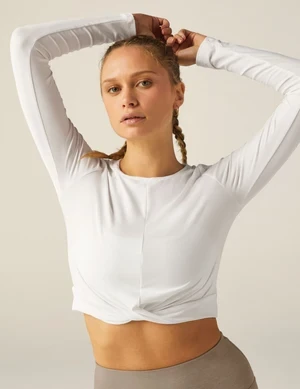
Actual coordinated yoga set in standing reach position

Standing-Reach Movement

Reaching upward can change the relative positions of a crop top, longline bra and leggings waistband. For some designs, this relationship affects the intended visual proportion or body coverage even when both garments individually meet their measurements. Buyers should therefore assess upper-body movement, garment length and waistband behavior within a defined reach condition. The decision should be based on the brand's design target, not on a universal requirement that every yoga set must prevent all garment movement.

Product Requirements

  • Check shoulder freedom and garment-hem position during the selected reach.
  • Record waistband position and the intended relationship between the two garments.
  • Review the overall coverage and appearance of the worn set.

Related Product: Activewear Crop Top Manufacturer

Engineering Distinct Knit Zones Within One Yoga Set

A coordinated seamless collection can share yarn, color and design language without using identical knit structures throughout every garment. Sports bras and leggings serve different body areas, requiring separate consideration of coverage, support intent, extension, recovery and garment stability.
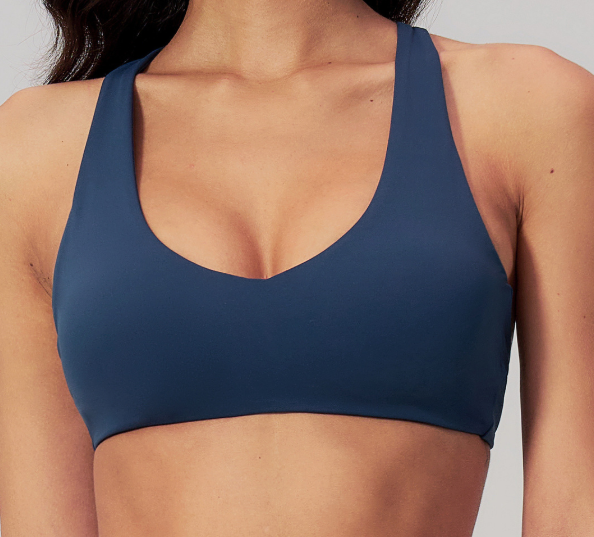
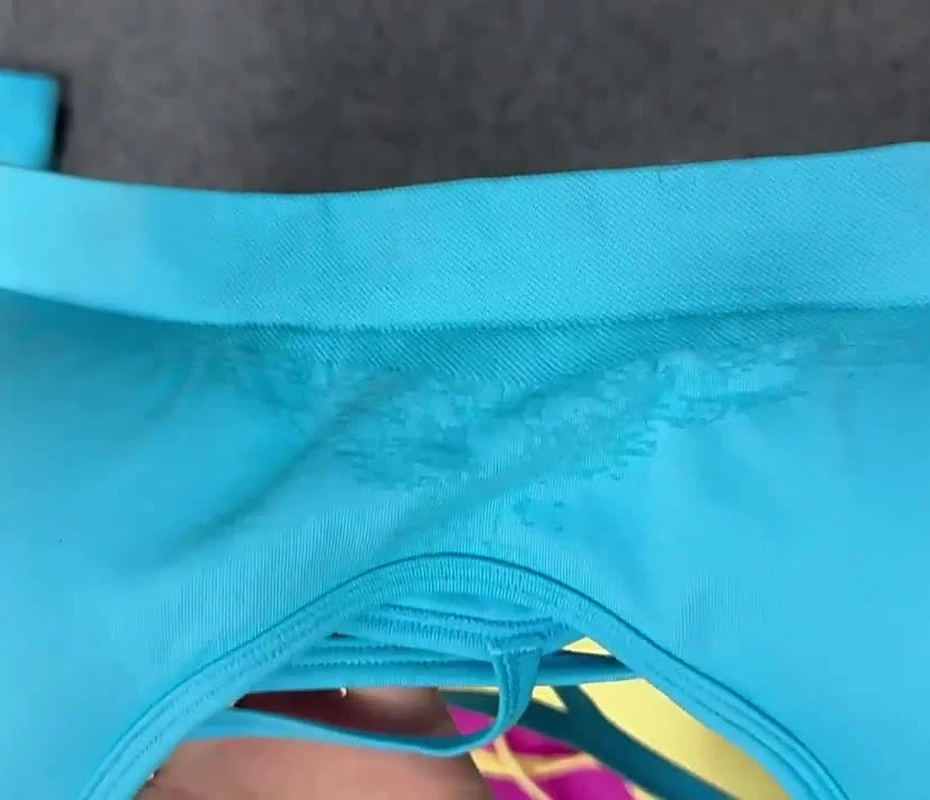
Actual seamless sports bra showing distinct engineered knit zones
Actual seamless yoga leggings showing waistband hip thigh and gusset knit zones

Bra Neckline

The neckline zone affects the bra's intended coverage and the behavior of its upper edge during movement. Knit construction and finished dimensions must be evaluated against the approved garment design.

Underband Knit

An underband can help define the sports bra's fit and position. Rib geometry, elastic yarn and finished dimensions should follow the intended support and wearing requirements rather than match the leggings waistband mechanically.

Chest Coverage

Chest-zone knit structures influence fabric coverage, appearance and garment behavior. The buyer should approve the selected construction using relevant physical samples and avoid inferring support performance from texture alone.

Back Knit

Back panels may use different structures to satisfy design and fit objectives. Mesh-like appearance does not automatically establish quantified breathability, and localized extension still requires suitable construction evaluation.

Leggings Waistband

The waistband defines a separate fit region around the torso. Its structure should consider intended height, garment position and movement conditions, without assuming it requires the same mechanical response as a bra underband.

Hip Knit

The hip region may undergo considerable fabric extension in selected yoga positions. The buyer should consider garment fit, relevant opacity and visual appearance when approving the chosen knit structure.

Thigh Knit

Thigh-zone design may influence local extension, hand feel and the visible relationship between adjacent knit regions. Construction requirements should be based on the intended leggings or shorts design.

Gusset Area

The gusset region requires attention to garment geometry, relevant movement and the actual joining or finishing operations. Seamless knitting does not imply that every finished garment eliminates all assembly seams.

Coordinated Knit Architecture

Knitting parameters, yarn selection and regional structure should be considered together. An underband and waistband may share visual rib styling while requiring different extension and fit targets. Different knit densities can also influence appearance and physical behavior under garment stretch. MOVEVOX's Santoni equipment provides a real seamless manufacturing foundation, but specific knit programs, yarn arrangements and finished performance must be established for the actual style. Laundering-related dimensional stability should be reviewed where applicable rather than assumed from machine type or yarn composition.

Understanding Leggings Opacity Under Relevant Yoga Conditions

Opacity should be assessed against the intended garment, color, size and wearing position. A fabric that appears sufficiently opaque when relaxed may present differently after extension, but the result depends on knit construction, material, garment fit and observation conditions.

Diagram A — Relaxed Knit State

Technical knit structure or actual yoga leggings fabric in relaxed state

Yarn Arrangement

The yarn arrangement contributes to the initial coverage and surface appearance. Fiber composition alone cannot determine whether a finished legging will meet the buyer's opacity requirements under garment stretch.

Loop Structure

Knitted loops form a structure that can change visually when tension is applied. The relaxed state provides one reference, but does not represent every movement or wearer condition.

Fabric Color

Lighter and darker colorways may produce different visible coverage effects. Each critical color should be evaluated using the relevant physical material or garment instead of an unsupported general rule.

Initial Coverage

A flat, unstretched sample can establish baseline appearance under defined lighting. The buyer must still specify whether additional extension or worn-garment observations are needed for approval.

Diagram B — Defined Extension State
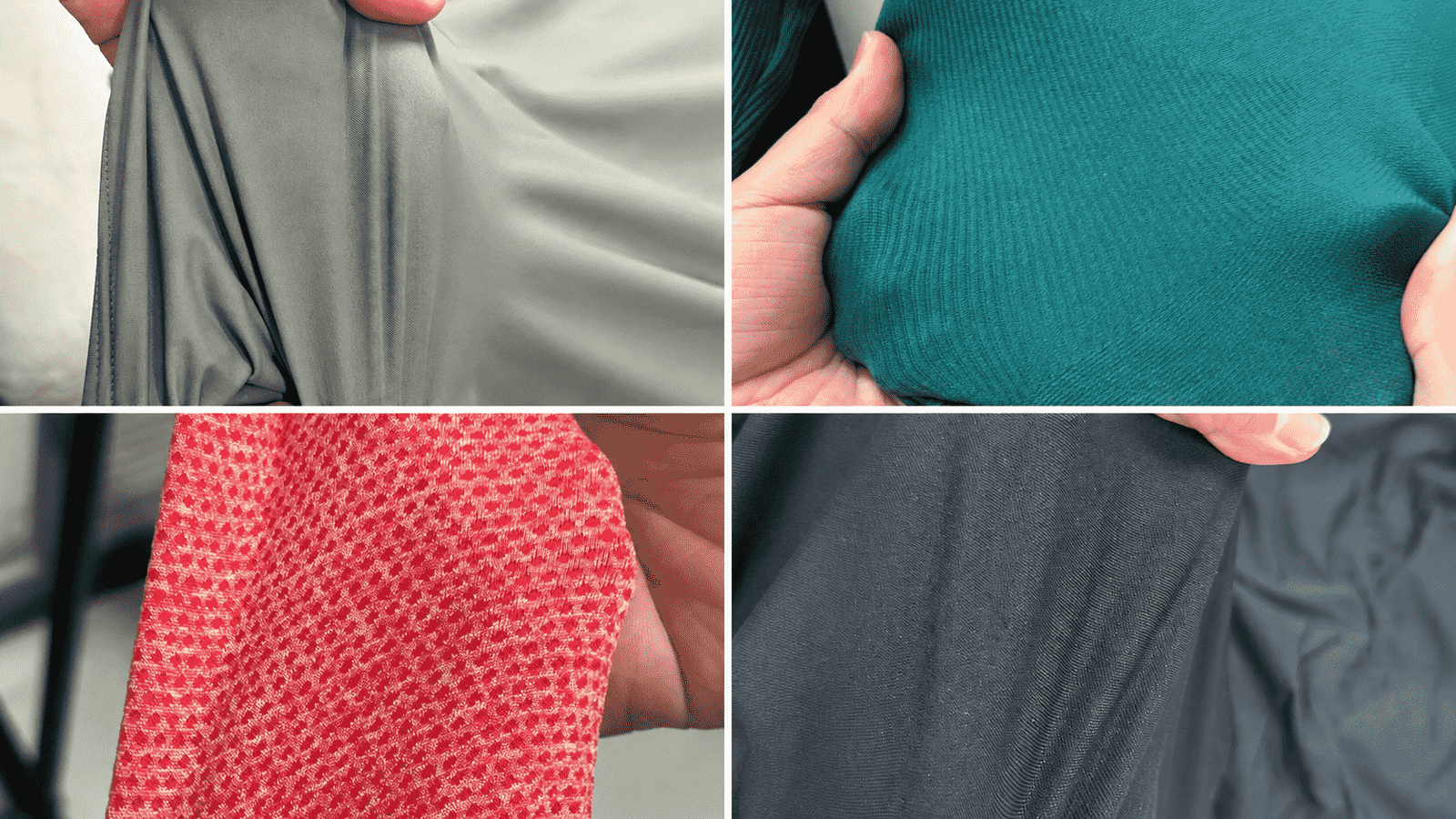
Technical knit structure or actual fabric under specified extension

Extension Direction

Fabric appearance can change according to the direction and amount of extension. Relevant evaluation should reflect the garment area and intended movement rather than an arbitrary pull test.

Knit Geometry

Loop spacing and yarn arrangement may change during extension. Their visual effect should be examined on an appropriate sample without treating increased stretch as automatic evidence of transparency.

Color Appearance

The appearance of a stretched fabric can differ from its relaxed state. This observation should not be confused with a measured color difference between two garment components.

Assessment Condition

Lighting, background, sample preparation and extension state can affect the result. Buyer and supplier should agree on these conditions before comparing samples or making acceptance decisions.

Diagram C — Garment-on-Body State
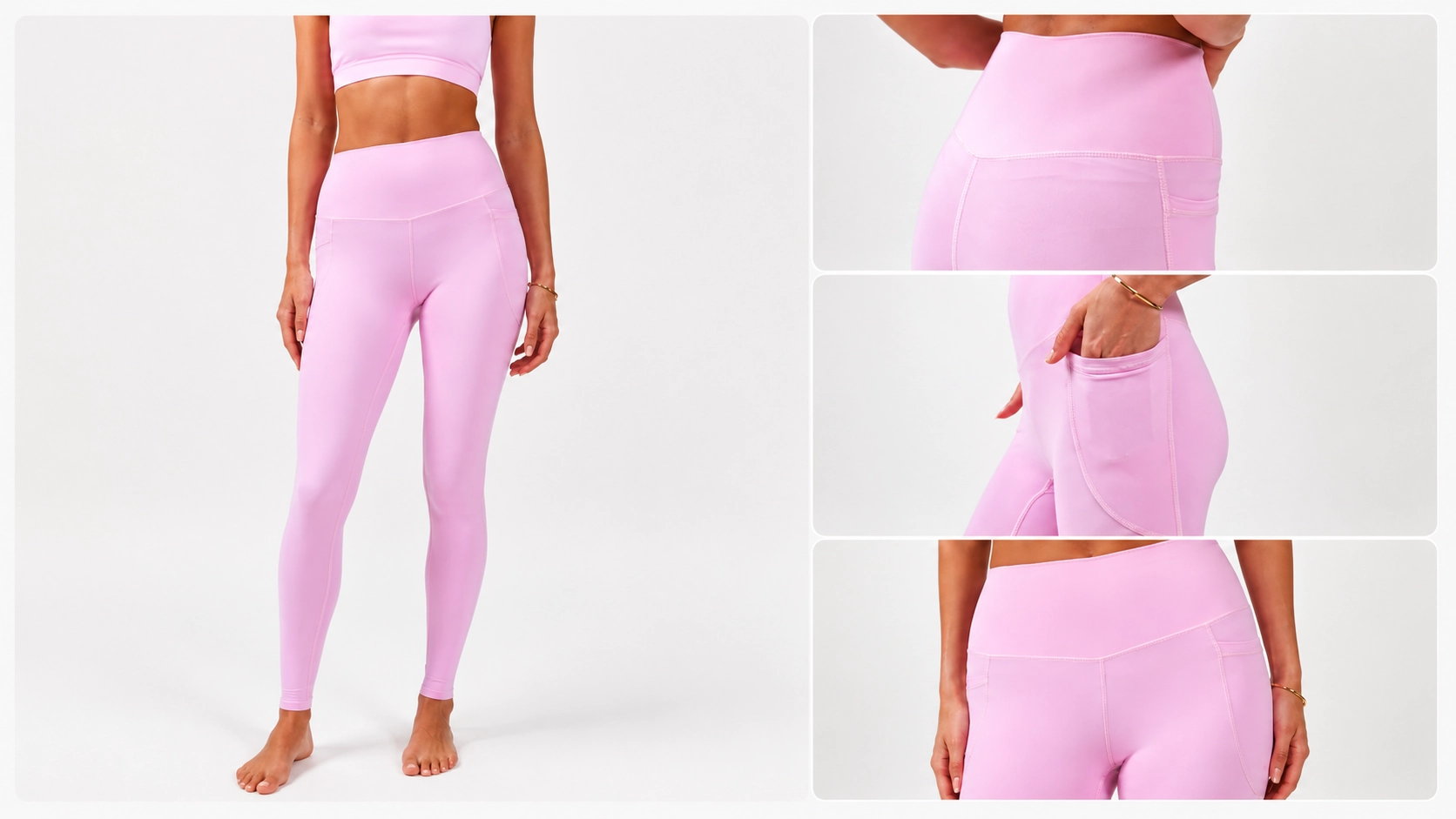
Actual yoga leggings in defined wearer movement and opacity condition

Garment Size

The selected size affects how the leggings fit and how the fabric stretches on a particular body reference. The same material may therefore require examination across relevant sizes.

Movement Position

Forward folds and other positions may change extension around the hips and legs. The selected movement should reflect the product's intended use and be recorded consistently.

Waist and Hip Fit

Pattern dimensions and waistband behavior influence how the garment sits during activity. Opacity observations should be interpreted alongside fit, rather than used as a substitute for fit evaluation.

Accepted Appearance

The buyer should define what constitutes acceptable coverage under the chosen conditions. Generic claims such as squat-proof or non-see-through should not replace a specified evaluation and approval reference.

Why These States Matter

Relaxed fabric, defined extension and worn-garment observations provide different information. Yarn, loop construction, color, garment dimensions and the assessment environment may influence the visual result. No single GSM value or static photograph can establish suitability for every yoga position. A defensible purchasing decision identifies the sample, color, size, relevant movement and agreed coverage criteria. Such a framework may be proposed for MOVEVOX projects, but it must not be described as an already validated company-specific opacity standard.

Defining Yoga Bra Coverage and Fit Requirements

A seamless yoga bra should be approved for its own design and intended movement conditions before paired-set evaluation. Neckline, underband, straps and back construction may affect coverage and garment position differently, even when they share a coordinated appearance with the leggings.

Neckline Coverage

Functional Objective: Define acceptable upper-body coverage for the intended yoga activities.

Evidence Explanation: A bra neckline may change position during forward folding, reaching or seated movement. Its suitability depends on garment size, neckline geometry, fabric behavior and intended coverage. The brand should identify which conditions require evaluation and determine whether the actual sample meets its design objectives without assuming universal coverage.

Evidence Basis: Approved neckline specifications, fit sample and defined movement observations.

Underband Fit

Functional Objective: Establish suitable fit and position around the lower bra body.

Evidence Explanation: The underband has a different role from the leggings waistband, even when both use rib structures. Its knit construction, finished dimensions and intended fit should be reviewed on the actual garment. Appropriate requirements may vary across sizes and product designs, so no universal pressure or support result is implied.

Evidence Basis: Underband POM, knit reference, physical sample and relevant fitting results.

Strap Position

Functional Objective: Review strap stability without restricting intended shoulder movement.

Evidence Explanation: Strap width, placement, construction and body fit can influence how the garment sits during reaching, folding and rotation. A strap that appears correctly positioned in a static photograph may behave differently during activity. Evaluate the proposed bra using the garment size and movement conditions appropriate to the product.

Evidence Basis: Actual bra construction, strap dimensions and movement-specific fit observations.

Chest Knit Structure

Functional Objective: Align knit-zone construction with intended coverage and fit.

Evidence Explanation: Chest-zone rib, jersey or other knitted structures can influence appearance and local extension. The selected structure must follow the product's design requirements. Knit texture alone cannot establish quantified support, compression or wearer comfort, and any specific performance claim requires suitable evidence.

Evidence Basis: Identified knit-zone sample, yarn specification and approved garment reference.

Back Movement

Functional Objective: Maintain the intended relationship between the back construction and wearer movement.

Evidence Explanation: Back-knit geometry, strap arrangement and garment dimensions affect the bra's design and fit. A relevant review may include torso rotation and arm movement, with observations recorded against the approved product brief. A visually open back does not automatically prove enhanced breathability or unrestricted movement.

Evidence Basis: Back-construction photograph, pattern or knit reference and fitting notes.

Position Recovery

Functional Objective: Assess garment-position changes following selected activity transitions.

Evidence Explanation: The bra may shift temporarily during movement, while fabric recovery and garment-position recovery are different properties. Buyers should decide what post-movement position is acceptable. Laboratory stretch-recovery results cannot, by themselves, establish that the bra will stay in one position on every wearer.

Evidence Basis: Defined movement sequence, approved sample and documented wearing observations.

Prioritizing Technical Decisions Before Yoga Set Approval

Approving a seamless yoga collection requires several decisions with different evidence needs. A suggested priority structure can help buyers separate basic product identity, individual garment fit, movement observations, complete-set suitability and the production references needed after approval.

Intended Product Use

Procurement Objective: Establish which yoga or studio activities the proposed set is designed to support.

Evidence Requirement: Product brief, garment category, intended fit and relevant wearing conditions.

Decision Boundary: A broad yoga label does not define every movement or performance requirement.

Individual Garment Fit

Procurement Objective: Confirm the bra and bottoms separately meet their approved dimensions, coverage and construction requirements.

Evidence Requirement: Individual Tech Packs, physical samples, size references and fit comments.

Decision Boundary: One approved garment cannot substitute for evidence about its matching component.

Movement Stability

Procurement Objective: Determine what garment-position changes and coverage outcomes are acceptable during defined activity.

Evidence Requirement: Specified movement conditions, identified garments and documented observations.

Decision Boundary: Static photography does not establish performance in every relevant movement.

Paired-Wear Compatibility

Procurement Objective: Review any requirements that arise when the two garments are worn together.

Evidence Requirement: Complete-set fitting references, relevant color and sizing combinations, and buyer-defined acceptance conditions.

Decision Boundary: Visual matching alone does not prove complete-set functional approval.

Manufacturing Reference

Procurement Objective: Translate accepted garment and paired-wear decisions into identifiable specifications for commercial manufacturing.

Evidence Requirement: Approved samples, material references, knit programs where applicable, measurement requirements and open issue status.

Decision Boundary: Proposed inspection methods must remain distinct from previously implemented MOVEVOX quality procedures.

Selecting Yoga Bra Construction for Intended Studio Use

Low-impact yoga does not automatically dictate one support level, neckline or underband structure. Buyers should consider intended movement, coverage, fit preference and material behavior before approving a bra construction. The following decision tree helps identify development directions, not certified support classifications.

Proposed Decision Tree

Question 01: What studio activity is intended?
Options: Gentle Yoga / Dynamic Yoga / Pilates Crossover

Question 02: What coverage is required?
Options: Open Neckline / Moderate Coverage / Extended Coverage

Question 03: What fit character is intended?
Options: Light Contact / Fitted Feel / Structured Fit

Question 04: Which construction limits apply?
Options: Seamless Knit / Hybrid Construction / To Be Reviewed

Question 05: Which evidence is available?
Options: Approved Sample / Technical Brief / Concept Only

Lightweight Studio Bra

A lightweight studio bra direction may suit products prioritizing flexible movement and a less structured wearing feel. The final construction should still reflect the target wearer, neckline coverage, underband and required support intention. Brands should evaluate physical samples rather than assume the lightest fabric automatically provides the best comfort. Any quantified support designation requires an appropriate assessment method and product-specific evidence.

Parameter Tags: Flexible Fit / Defined Coverage / Sample Review

Coverage-Focused Bra

A coverage-focused design may use a different neckline or garment proportion to meet the brand's intended yoga activities. The buyer should evaluate how the upper garment behaves during bending and reaching, while also confirming that the underband and straps match the approved fit. Greater fabric coverage does not automatically imply stronger support or better movement stability.

Parameter Tags: Neckline Design / Activity Review / Size Fit

Longline Studio Top

A longline bra or studio top extends farther down the torso and can change the visual relationship with leggings. The longer body may introduce additional considerations around hem position, local extension and movement. Buyers should define whether the garment is expected to overlap the waistband, sit above it or maintain another approved proportion during selected activity.

Parameter Tags: Torso Length / Hem Position / Paired Fit

Yoga/Pilates Crossover

A crossover product may target several studio activities, but the requirements should be evaluated for each intended use. Shoulder movement, torso positions, coverage and garment stability can vary according to class type and customer expectation. The brand should identify the common requirements and any additional checks instead of assuming that approval for yoga automatically establishes Pilates suitability.

Parameter Tags: Multi-Activity Use / Fit Conditions / Approval Scope

Comparing Stretch Requirements Across Yoga Set Knit Zones

Coordinated seamless garments do not require identical extension or recovery in every region. The appropriate values depend on the actual knit, yarn, finished dimensions and garment use. This matrix identifies specification questions without inventing measurements for MOVEVOX materials.

Knit-Zone Engineering Comparison

Parameter Bra Body Knit Underband Rib Leggings Body Knit Waistband Rib Shorts Opening
Composition Supplier specification Supplier specification Supplier specification Supplier specification Supplier specification
Knit Construction Body-zone knit Engineered rib Body-zone knit Engineered waist rib Opening-zone knit
GSM / Weight Verify actual material Confirm local construction Verify actual material Confirm local construction Verify actual material
Extension Direction Fit-dependent Circumferential priority may apply Activity-dependent Waist fit-dependent Leg opening-dependent
Elongation Project-specific test Project-specific test Project-specific test Project-specific test Project-specific test
Recovery Needs validation Needs validation Needs validation Needs validation Needs validation
Residual Growth Define if required Define if required Define if required Define if required Define if required
Opacity / Coverage Chest coverage review Fit and coverage context Stretch-state opacity review Waist appearance Leg opening context
Hand Feel Buyer-approved Contact and thickness Buyer-approved Contact and thickness Contact and finish
Critical Fit Upper body Underband position Hip and leg Waist position Leg opening
Best Use Approved bra design Bra anchoring zone Yoga bottom body Waist fit zone Shorts hem design

Material Selection Guidance

A shared yarn or visual texture does not prove that two knit zones have identical mechanical behavior. Brands should approve relevant properties using the actual material and finished garment specifications. Elongation and recovery values need clearly defined methods, specimen direction and conditioning where applicable. A laboratory material result cannot directly replace evaluation of bra fit or leggings waistband stability on a wearer. MOVEVOX's seamless development resources support discussion of these requirements, but no project-specific performance values should be asserted before testing or buyer approval.

Seven Common Myths About Seamless Yoga Set Performance

Terms such as seamless, soft, supportive and squat-proof can describe useful product objectives, but they are not complete engineering specifications. Brands should distinguish the intended claim from the physical evidence and project conditions needed to substantiate it.

Seamless Means No Seams

Myth: A seamless yoga set contains no sewing or garment assembly.

Fact: Circular knitting can create tubular or engineered knit regions that reduce certain conventional seams. A finished sports bra or leggings may still require joining, finishing, trims or other assembly operations. The actual construction should be verified for each product rather than inferred from the term seamless.

Evidence Boundary: Confirm knitting method, actual garment assembly and inside construction on verified samples.

Low Impact Means Low Support

Myth: Every yoga bra should use the lowest possible support.

Fact: Low-impact activities do not establish one universal support requirement. A brand's fit, coverage and product positioning may differ across styles and intended wearers. The underband, straps, garment dimensions and relevant activity conditions should be considered together. Support claims require suitable evidence and clearly defined scope.

Evidence Boundary: Use project-specific design criteria and actual fitting or applicable performance evaluation.

More Stretch Means Better Fit

Myth: The stretchiest seamless knit always provides the best yoga fit.

Fact: Extension is only one material property. Recovery, garment dimensions, knit structure, local support and the selected activity all influence fit. Excessive or unsuitable extension may not meet the intended garment-position requirements. The appropriate balance should be established through relevant material and physical garment assessment rather than a single stretch claim.

Evidence Boundary: Compare approved material properties, garment geometry and relevant movement observations.

Same Yarn Ensures Matching Shade

Myth: Using the same yarn guarantees identical color across bra and leggings.

Fact: Different knit structures, densities, finishes and extension conditions can change the visible appearance of fabrics made from related materials. Buyer approval should consider the actual physical products under agreed viewing conditions. A shared yarn specification is useful but cannot replace garment-to-garment appearance evaluation or justify a zero-color-difference promise.

Evidence Boundary: Review real color standards, knit samples, garment colors and measurement applicability.

Squat-Proof Means Yoga-Approved

Myth: A squat-proof label proves leggings will provide suitable yoga coverage.

Fact: A claimed squat-proof result may refer to a particular garment, color, wearer or test condition. Yoga use can involve other body positions and extension states. Brands should specify relevant coverage requirements, examine actual samples and avoid treating a marketing label as a universal opacity or fit certification.

Evidence Boundary: Identify garment size, color, extension or wearing position, and approved coverage criteria.

High Waist Prevents Movement

Myth: A high-waist legging never rolls, slips or changes position.

Fact: Waist height alone cannot determine waistband behavior. Knit construction, garment dimensions, body fit and activity conditions influence how the waistband sits during movement. The buyer should define acceptable position changes and observe relevant samples, rather than promising that every high-rise design stays completely fixed throughout all studio exercises.

Evidence Boundary: Evaluate real waist construction and defined garment-position changes across selected movements.

Individual Approval Guarantees Set Approval

Myth: Two approved garments automatically create a fully approved yoga set.

Fact: Independent approval establishes important garment-level requirements, but a brand may also need to review matching appearance, selected paired-wear coverage, sizing relationships or commercial bundle rules. Additional assessment depends on the actual product and sales model. Complete-set qualification should not be represented as a universal requirement or an already implemented MOVEVOX certification.

Evidence Boundary: Compare individual approved references with specifically defined set-level acceptance requirements.

Pairing Yoga Top and Bottom Sizes for Approved Fit

A matching yoga collection can contain garments with different fit and grading rules. The brand should approve bra and bottom specifications separately, then define which size combinations are acceptable for its product and selling model. No universal paired-size measurements are assumed here.

Proposed Yoga Set Size Matrix

Size Bra Fit Reference Bottom Fit Reference Key POM Movement Review Fixed Set Rule Mix-and-Match Rule
XS Approved bra chart Approved bottom chart To confirm As required Buyer-defined Buyer-defined
S Approved bra chart Approved bottom chart To confirm As required Buyer-defined Buyer-defined
M Approved bra chart Approved bottom chart To confirm As required Buyer-defined Buyer-defined
L Approved bra chart Approved bottom chart To confirm As required Buyer-defined Buyer-defined
XL Approved bra chart Approved bottom chart To confirm As required Buyer-defined Buyer-defined
XXL Approved bra chart Approved bottom chart To confirm As required Buyer-defined Buyer-defined

Measurement Units: cm / in — use the approved system.

Grading and Tolerance Guidance

Bra grading and leggings grading may follow different product objectives because body coverage, underband fit, waist position and material extension are not identical. The buyer should approve relevant POMs and tolerances for each garment rather than copying one size progression across the collection. If complete-set movement evaluation is required, identify which size pairings should be reviewed and why. A fixed S+S retail bundle and a customer-selected S bra with M leggings create different sales and inventory arrangements even when the underlying garment specifications are unchanged.

Three Important Considerations

  • Define garment-specific grading and avoid assuming matching labels ensure matching fit.
  • Record which mixed-size combinations require additional product or paired-wear review.
  • Separate available garment inventory from the number of commercially saleable sets.

Moving Separate Garment Samples Toward Paired-Wear Approval

Bra and bottom development may advance at different speeds. A useful review process should preserve independent specifications while identifying the additional conditions, if any, that the brand expects the coordinated yoga set to satisfy.

Technical Brief

The initial technical brief should identify the intended yoga or studio activities, product combination and requirements for each garment. It should distinguish confirmed specifications from areas still requiring investigation. Relevant material properties, knit zones, garment sizes and coverage objectives should be provided where available. The buyer should also indicate whether the collection uses fixed-size bundles or independent sizing. MOVEVOX can discuss the development scope using its existing resources, but specific joint movement evaluation should be proposed and agreed before being treated as part of the project.

Buyer Inputs

  • Provide separate bra and bottom sketches or Tech Packs.
  • Define intended yoga movements and relevant coverage objectives.
  • Identify target sizes, colorways and planned selling combinations.

Proposed MOVEVOX Outputs

  • Clarify separate product construction and material development questions.
  • Identify missing technical inputs and required physical references.
  • Discuss feasible sampling scope under confirmed project conditions.

Review Your Seamless Yoga Set Before Confirming Production

Share your bra and bottom specifications, planned yoga use, knit structures, fit requirements, colors and estimated quantities. MOVEVOX can discuss sample development and manufacturing feasibility using its existing seamless production and development resources. Any proposed paired-movement or coverage evaluation must be defined for your actual project before it becomes an approved requirement.

Primary CTA: Start Set Review
Secondary CTA: Send Both Tech Packs

Trust Note: Relevant samples and specifications can support an initial discussion; production terms depend on confirmed project requirements.

Selecting Evidence for Seamless Yoga Set Approval

Material testing, finished-garment inspection and wearer evaluation answer different technical questions. Buyers should define the property, sample, method and acceptance criteria before requesting evidence. The following methods are evaluation categories, not a declaration that MOVEVOX has completed seven proprietary yoga-set tests.

Fabric Elongation

Purpose: Determine relevant extension behavior of the selected knit material under a defined method. This may inform garment development but does not directly establish full-body fit or support.

Method: Identify specimen construction, test direction, conditioning and the selected applicable method. Compare results only when procedures and material references are compatible with the intended project.

Acceptance / Report: Approved specimen, method, test direction and buyer-specific requirement.

Elastic Recovery

Purpose: Assess how an identified material recovers following defined extension. Material recovery is distinct from whether a worn waistband or bra returns to the desired position.

Method: Apply an appropriate extension and recovery procedure to representative knit samples. Record specimen identity, test conditions and actual results, with clear limitations on garment-level interpretation.

Acceptance / Report: Relevant recovery values, conditions and project-specific material acceptance criteria.

Residual Growth

Purpose: Evaluate permanent or remaining deformation after an applicable loading or extension procedure. The result may be useful where garment dimension or fit stability is a priority.

Method: Select a method appropriate to the actual knit and required deformation behavior. Specify specimen direction, conditioning, applied loading and measurement timing before comparing results.

Acceptance / Report: Agreed residual growth method and recorded results for identified materials.

Defined-State Opacity

Purpose: Evaluate the visual coverage of leggings under buyer-defined material or worn-garment conditions. Results depend on the relevant color, construction, extension and observation environment.

Method: Establish the sample, size, lighting, background and extension or body-position reference. Use an agreed observable or instrument-based approach where applicable, without substituting unrelated test results.

Acceptance / Report: Defined coverage condition, actual sample and approved visual criteria.

Garment Measurements

Purpose: Confirm that the finished bra and bottoms meet relevant dimensions and garment-specific tolerances. Correct dimensions do not independently prove activity-related fit or comfort.

Method: Measure conditioned garments using approved POMs and preparation procedures. Keep bra measurements separate from leggings measurements and record size-specific results appropriately.

Acceptance / Report: Approved size chart, measurement method, tolerances and specimen identification.

Movement-Based Fit

Purpose: Observe garment behavior during selected yoga activities, including coverage and changes in garment position. Wearer observations cannot be inferred entirely from isolated material tests.

Method: Define sample sizes, activity conditions, evaluation positions and relevant observations. Record garment-level findings and any additional paired-wear requirements for explicit buyer review.

Acceptance / Report: Specified movement conditions and documented product or paired-set evaluation findings.

Cross-Knit Appearance

Purpose: Assess the visual relationship between garments made with different knit regions or constructions. Visual matching should not be confused with elasticity, opacity or colorfastness.

Method: Compare authentic garments under approved viewing conditions, including relevant extension states where required. Use instrumental measurements only where the method and materials support their interpretation.

Acceptance / Report: Approved color reference, garment condition and traceable appearance decision.

Evidence Required Before Approving a Seamless Yoga Set

An approved seamless yoga set should be supported by identifiable garment, material and buyer acceptance references. This checklist can guide a project review, but it is not a declaration that every listed document already exists within MOVEVOX's internal records.

Individual Tech Packs

Status: Required

Provide technical drawings or equivalent approved specifications for the bra and bottoms separately. Each should identify construction, measurements, relevant materials and the garment's intended use. The documents should be clearly versioned so shared collection details do not conceal product-specific requirements.

Knit Zone References

Status: Recommended

Identify relevant knit regions and the design function of each zone. Bra underbands, chest regions, leggings waistbands and body areas may require different technical treatment. Physical knit references or appropriately annotated diagrams help the buyer evaluate whether the proposed constructions match the approved intent.

Yarn Specifications

Status: Recommended

Provide known yarn composition, supplier or approved material references and any important performance conditions. Matching yarn names alone cannot establish identical finished appearance or mechanical behavior. Where information is incomplete, confirm which material attributes require sourcing review or suitable sample testing.

Bra Fit Requirements

Status: Required

Define the bra's intended fit, neckline coverage, underband behavior and other essential requirements. Include suitable size references and any relevant activity conditions. This information allows the buyer to separate garment-level acceptance from assumptions about the performance of the complete two-piece set.

Bottom Fit Requirements

Status: Required

Identify waistband placement, relevant hip and leg dimensions, garment extension priorities and fit targets. Leggings and shorts may need different observations. Approved bottom requirements should not be replaced with the sports bra's material or size standards simply because the products belong to one collection.

Opacity Conditions

Status: Project-Dependent

Specify if the leggings or shorts require coverage assessment under selected extension or wearing conditions. Identify relevant colors, sizes, positions and acceptance criteria. A vague squat-proof label should not be used as the complete technical standard for all intended yoga activities.

Movement Conditions

Status: Project-Dependent

List the activities or positions relevant to the approved product. Forward folds, seated rotations, reaches or transitions should be included only where they serve the actual design. State which observations apply to the bra, bottoms or full set, and identify responsible approvers.

Color References

Status: Required

Supply the collection color standard and the relevant bra and bottom physical references where available. If different knit structures are involved, specify how appearance will be judged and whether any additional extension-state review is required for the planned colorways.

Size Set References

Status: Recommended

Provide approved size charts, critical POMs and grading requirements for each garment. Identify which sizes need physical review under the project's fit conditions. A single shared size label does not eliminate the need for garment-specific measurements or fit approval.

Size Pairing Rules

Status: Project-Dependent

Define whether the collection uses fixed bra-and-bottom combinations, flexible size pairing or separately sold matching pieces. The choice influences SKU planning and the quantity of saleable sets. It does not automatically determine the garment manufacturing MOQ.

Sample Versions

Status: Required

Identify development samples, approved revisions and any open technical exceptions. A clear version reference reduces the risk of treating an unapproved material or construction change as part of the accepted garment. Physical sample identity should correspond to the relevant written specifications.

Final Acceptance

Status: Required

Record which individual garment requirements have been accepted and whether any additional set-level conditions apply. Identify the authorized decision and related physical or documentary references. Approval must not imply that unperformed tests, unsupported performance claims or unrelated certifications have been completed.

When Evidence Is Incomplete

MOVEVOX can discuss development from a Tech Pack, lawful physical reference sample or sufficiently clear product brief. Missing requirements should be identified before sample, testing or production commitments are confirmed. A proposed movement or opacity review may help clarify the project, but its method, responsibility and acceptance conditions must be agreed before the results can support buyer approval.

Investigating Unresolved Seamless Yoga Set Qualification Problems

Paired-wear findings should be investigated through relevant product and material evidence rather than treated as automatic manufacturing failures. The following examples illustrate possible review questions; they are not documented MOVEVOX customer complaints or proven corrective-action outcomes.

Bra Coverage Changes

Business Impact: Unexpected coverage changes during selected movements can delay brand approval and require another development sample. The buyer may also need to reconsider neckline geometry, garment size or intended activity conditions before accepting the design.

Proposed MOVEVOX Response: Review the actual bra sample, approved coverage objective and fitting observations. Discuss relevant knit, pattern or sizing differences and identify which proposed revisions require another physical evaluation or explicit buyer authorization.

Waistband Position Changes

Business Impact: Rolling, shifting or unwanted waistband movement may affect the intended fit of the yoga bottoms. A problem observed in one posture should be interpreted against the project's requirements rather than generalized to all wearers.

Proposed MOVEVOX Response: Examine waist construction, garment dimensions, material behavior and the specified movement sequence. Clarify whether pattern, knit-zone or sizing adjustments should be considered, then compare any revision with the approved reference.

Opacity Under Extension

Business Impact: Insufficient coverage under an agreed wearing condition can prevent approval of a color or garment specification. The commercial impact may increase if the issue affects a planned matching colorway or multiple sizes.

Proposed MOVEVOX Response: Confirm the sample, color, size, extension state and viewing conditions. Review material and garment construction before proposing an alternative. Any conclusion should rely on appropriate physical comparison or defined evidence.

Unbalanced Recovery

Business Impact: Different recovery behavior across garment regions may conflict with the approved fit or position requirements. However, material test differences do not automatically mean a complete set will perform poorly during yoga activities.

Proposed MOVEVOX Response: Distinguish material recovery measurements from garment-position observations. Review knit specifications and the buyer's relevant fit criteria, then identify whether material selection, construction or physical sample reassessment is needed.

Knit Appearance Differences

Business Impact: A coordinated collection may appear inconsistent when different knit regions respond to color, finishing or extension. This can affect merchandising approval even when both garments individually meet other technical requirements.

Proposed MOVEVOX Response: Compare identified physical bra and bottom samples under approved viewing conditions. Review actual knit, yarn and color references, and determine whether the difference warrants material revision or buyer acceptance.

Size-Pairing Conflict

Business Impact: Separately approved garments may not create the expected commercial size combinations. Incorrect assumptions about paired fit or inventory can complicate set packaging, forecasting and customer size selection.

Proposed MOVEVOX Response: Recheck independent garment charts, accepted size pairings and planned SKU quantities. Clarify which combinations require physical fitting and which decisions concern merchandising rather than garment manufacturing quality.

Connecting Approved Yoga Set References With Bulk Production

Once the buyer approves relevant samples and specifications, production should work from identifiable material, construction and garment references. MOVEVOX has an established general quality management process; the checkpoints below describe a proposed yoga-set-specific handover, not a confirmed existing specialized SOP.

Approved Garment Samples

Confirm which physical bra and bottom samples represent the accepted design. Individual product approval and any separate paired-wear requirements should remain clearly identifiable rather than combined into a vague single sample reference.

Inspection Standards

  • Match actual garments to the buyer-approved sample references.
  • Record approved sample identity for each garment SKU.

Yarn Material References

Identify the yarn and applicable material specifications used for the accepted products. Changes in supplier, yarn construction or material conditions may affect color, knit behavior or other approved attributes.

Inspection Standards

  • Match yarn and material references to released specifications.
  • Flag substitutions requiring buyer or technical approval.

Knit Program Versions

Identify relevant seamless knit constructions and the programs or instructions governing each garment. The bra and leggings may require different knitting arrangements even where their visual textures are related.

Inspection Standards

  • Confirm applicable knit references for each garment.
  • Review unauthorized changes affecting the intended knit regions.

Critical Garment Dimensions

Measure important POMs for the actual products and sizes according to approved procedures. Factory dimensional checks support workmanship acceptance but do not replace relevant physical fit or movement evaluation.

Inspection Standards

  • Check product-specific POMs using approved measurement conditions.
  • Compare results with actual size-dependent buyer tolerances.

Garment Workmanship

Review relevant finishing, joining, edges, labels and other visible construction details. The inspection should correspond to actual seamless garment manufacturing operations rather than assume that seamless products contain no sewing.

Inspection Standards

  • Compare finished workmanship with the accepted construction reference.
  • Identify relevant product defects before commercial release.

First Article

Compare the initial commercial output against released specifications before proceeding under the agreed production process. A first article can confirm important manufacturing attributes but cannot establish every wearer-comfort conclusion.

Inspection Standards

  • Identify first-production garment and corresponding approved reference.
  • Escalate unresolved critical differences before further release.

Appearance Review

Review applicable color, knit texture and garment appearance requirements under the agreed factory inspection conditions. If the project requires special stretched-state or paired-wear evaluation, it should not be silently replaced by routine visual checks.

Inspection Standards

  • Compare actual colorway and knit appearance with approved references.
  • Keep specialized wear-state assessments under their defined conditions.

Production Release

Confirm that applicable material, garment and quality requirements have been addressed before bulk release. Outstanding exceptions should be documented and resolved according to the buyer's authority and project arrangements.

Inspection Standards

  • Confirm the approved production requirements and relevant inspection decisions.
  • Record unresolved exceptions requiring authorization or additional evidence.

Handling Nonconforming Production References

If an initial production garment differs from the approved references, the affected material or process should be examined before the deviation becomes widespread. Depending on the issue, appropriate actions may include segregation, rechecking measurements, reviewing knit instructions, examining material identity or obtaining buyer clarification. A change to garment construction can also affect previously approved fit or appearance conditions. The response must be determined by the actual finding, not by an invented universal yoga-set defect tolerance.

Rechecking Yoga Set Specifications Before Partial Reorders

A repeat order may require only one component of a yoga collection. The buyer should determine whether new materials, colors, sizes or construction changes affect an existing individual approval or any previously defined paired-wear requirements.

Approved Reference

Identify the previously accepted garment, material, color and relevant technical specifications. If the order concerns only leggings, confirm which leggings requirements remain valid and whether the existing bra reference creates any additional appearance or use-related conditions.

Buyer Inputs

  • Provide the accepted garment and corresponding approval references.
  • Identify the component and quantity requested for replenishment.

Proposed MOVEVOX Outputs

  • Review available approved specifications and material sourcing conditions.
  • Clarify whether the reorder follows an unchanged product reference.

Pass Criterion: The buyer and manufacturer identify the applicable previous approval and any documented exceptions.

Material Color Check

Determine whether the new order uses the same confirmed yarn, color and relevant knit construction. Differences in supplier, dye lot, finish or material availability may warrant separate review, but not every change automatically alters garment function.

Buyer Inputs

  • Confirm required yarn, color and material continuity.
  • Identify new colorways or authorized material alternatives.

Proposed MOVEVOX Outputs

  • Review relevant material and color reference availability.
  • Identify changes requiring physical comparison or supplier clarification.

Pass Criterion: Material references are identified and any necessary new approval conditions are agreed.

Garment Recheck

Review the affected bra, leggings, shorts or top against its approved product requirements. Focus on relevant fit, dimensions, workmanship or other attributes impacted by the changed inputs, rather than repeating unrelated assessments without reason.

Buyer Inputs

  • Specify affected garments, sizes and critical attributes.
  • Identify complaints, modifications or changed product requirements, if any.

Proposed MOVEVOX Outputs

  • Clarify proposed sample or construction review for affected specifications.
  • Discuss evidence needed before accepting revised garment references.

Pass Criterion: Relevant garment-level changes are reviewed and dispositioned according to the project's approval requirements.

Paired-Use Impact

Assess whether a change to one garment affects any specifically approved complete-set condition. For example, a colorway change may require appearance review, while a changed waistband construction could warrant relevant fit reassessment.

Buyer Inputs

  • Identify remaining stock and intended new garment combinations.
  • Confirm which paired-wear requirements apply to the reorder.

Proposed MOVEVOX Outputs

  • Review the potential effect on existing coordinated-set requirements.
  • Clarify whether renewed combined sample evaluation is appropriate.

Pass Criterion: The buyer determines which paired conditions remain valid and which require further assessment.

Reorder Release

Confirm the accepted component references, quantities and commercial conditions for the new order. Material availability and production scheduling may differ from the first order even where the garment design appears unchanged.

Buyer Inputs

  • Confirm final replenishment quantities, colors and size allocation.
  • Approve necessary changes and the relevant commercial schedule.

Proposed MOVEVOX Outputs

  • Discuss confirmed manufacturing and material readiness for the reorder.
  • Clarify inspection references and applicable final approval conditions.

Pass Criterion: The reordered garment specifications and commercial release conditions are identified and authorized.

Understanding MOQ for Coordinated Seamless Yoga Set Orders

MOQ must be discussed using clear units. MOVEVOX's ordinary seamless customization reference can begin around 100 garment pieces under suitable conditions. Complete sets, individual styles, colors and special yarn or dyeing requirements may produce different purchasing quantities.

Two-Piece Yoga Set

A two-piece program normally contains at least one upper and one lower garment SKU. The buyer should state quantities for the bra and leggings separately, even if they will be sold as a fixed set. One hundred garment pieces do not automatically mean one hundred complete two-piece sets. The actual commercial minimum depends on style, color, yarn, production conditions and approved manufacturing requirements.

Quantity Basis: Approximately 100 seamless garment pieces as a conditional starting reference, not a guaranteed set minimum.

Color / Size Split: Confirm bra and bottom quantity, color and size allocations separately.

Price Impact: Garment structure, materials, color arrangements, development and packing conditions.

Multi-SKU Studio Capsule

A studio collection containing bras, tops, leggings and shorts can involve multiple knit programs and different material requirements. A combined collection total may not satisfy individual style or customized-color purchasing conditions. The buyer should define each SKU, intended quantity, size range and selling model. MOVEVOX can assess the proposed order using its seamless manufacturing and coordinated supply resources, subject to actual material and production feasibility.

Quantity Basis: Project-specific minimums for each relevant style and material program.

Color / Size Split: Identify quantities by garment SKU, color and size.

Price Impact: Different knit constructions, material lots, processing and production allocation.

Partial Component Reorder

A repeat order may require only leggings, sports bras or one matching color. The buyer should identify existing inventory and the new component quantities before calculating available complete sets. Reordering one SKU can introduce separate minimums or color-continuity questions even if the original collection was approved. The appropriate quote should reflect actual yarn availability, any changed references and the current production arrangement.

Quantity Basis: Confirm new garment quantities and relevant material or color conditions.

Color / Size Split: Consider existing inventory and authorized pairing rules.

Price Impact: Smaller material lots, color continuity, setup and new approval needs.

Actual Manufacturing Resources Behind MOVEVOX Seamless Yoga Development

MOVEVOX combines a Yiwu manufacturing base with product development, quality management and coordinated supply resources. The following functions explain the relevant manufacturing responsibilities; not every stage should be interpreted as an exclusively owned or fully integrated in-house operation.

Santoni Knitting

MOVEVOX has 28 Italian Santoni seamless knitting machines as part of its manufacturing resources. They provide a real foundation for evaluating suitable seamless garment constructions, although each knit program and project allocation requires confirmation.

Product Development

The organization includes approximately eight product development personnel across design, patternmaking and sampling functions. This supports product and sample coordination but does not mean eight specialists are dedicated exclusively to yoga movement testing.

Material Sourcing

MOVEVOX coordinates material selection and relevant supply arrangements for customization projects. Actual yarn availability, dyeing, material characteristics and color conditions must be confirmed for the proposed garments and order volume.

Quality Management

MOVEVOX has five QC personnel and an existing garment quality management process. These resources do not automatically establish a completed proprietary paired-yoga-movement test or verified performance results for every product.

Coordinated Production

MOVEVOX combines its own manufacturing activities with controlled collaborative production resources. The actual responsibility and location for each project operation should be clarified during supplier qualification and commercial planning.

Packing and Shipment

MOVEVOX coordinates the commercial order through relevant garment, labeling, packaging and shipping requirements. Complete-set packing depends on approved garment combinations, actual quantities and the buyer's distribution or sales model.

Unified Project Responsibility

The manufacturing assessment should connect each function with the actual product and responsible operation. Santoni knitting resources, development personnel and QC organization support supplier evaluation, but they do not prove every requested fabric, knit zone or performance outcome has already been validated. Projects may involve multiple garment SKUs, materials and production arrangements; scheduling and capability need confirmation before a final commercial commitment. Brands should request genuine product evidence and suitable manufacturing details rather than rely only on facility totals or generalized capacity statements.

Preparing a Technical RFQ for Seamless Yoga Sets

An effective quotation starts with garment specifications and the product's intended use. A coordinated yoga set may require different bra and bottom constructions, sizes and performance conditions. The following six input categories help clarify what is known and what must be reviewed.

Garment Specifications

Garment Identity

Submit separate sketches, Tech Packs or appropriately authorized reference samples for every requested garment. Identify whether the collection includes a sports bra, longline bra, crop top, leggings, shorts or other studio component. Clarify garment lengths, neckline, waistband, intended fit and relevant finishing requirements. A shared collection name does not replace separate construction references. MOVEVOX can discuss development feasibility, but component details and physical sample requirements need confirmation before commercial manufacturing assumptions are treated as final.

Buyer Options

  • Bra and bottom drawings with separate approved construction details.
  • Actual reference samples identifying each proposed garment and size.
  • Product descriptions distinguishing finalized specifications from development concepts.

Technical Supplier Qualification Checklist for Seamless Yoga Sets

A mature sourcing team should verify manufacturing responsibility and the evidence available for the proposed garments. This checklist supports technical review, not an assigned MOVEVOX audit result, certification or automated claim that the supplier has already passed qualification.

A — Manufacturing Evidence

  • Verify the actual Santoni knitting equipment and its relevant manufacturing location.
  • Confirm the responsible legal and operating entities for proposed production.
  • Match physical yoga-set samples with the stated knitting and finishing operations.
  • Identify externally coordinated processes and their quality responsibilities clearly.

B — Technical Product Fit

  • Review separate bra and bottom knit specifications and critical functional zones.
  • Verify the intended coverage, fit and relevant activity requirements.
  • Define appropriate leggings opacity conditions, samples and acceptance criteria.
  • Check whether additional paired-wear observations are required for approval.

C — Quality and Approval

  • Review actual quality inspection responsibilities and approved sample references.
  • Confirm test report scope, tested product, method and applicable validity.
  • Identify unresolved garment fit, color appearance or material specification issues.
  • Clarify the buyer authority for technical approval and changes.

D — Commercial Execution

  • Distinguish garment-piece MOQ from complete-set and customized-color minimums.
  • Review yarn readiness, product quantities, development scope and proposed schedule.
  • Confirm how separate garment sizes and retail set combinations are managed.
  • Identify material and construction changes that may require renewed approval.

Interpreting the Supplier Review

Suggested Response: Yes / No / Further Evidence Required

A simple count of positive answers should not determine whether a supplier is qualified. Different evidence gaps have different consequences: an unverified factory location, an unresolved product performance question and a missing packing detail are not equivalent risks. Buyers should prioritize critical manufacturing, product and approval conditions according to their actual purchase program. Any certification should be checked against the issuing organization, holder, site, scope and current status. MOVEVOX's disclosed resources are a starting point for verification, not a completed buyer audit.

Frequently Asked Questions About Seamless Yoga Set Manufacturing

These answers distinguish genuine manufacturing capabilities from garment performance assumptions and recommended technical evaluations. The appropriate specifications depend on the intended collection, selected materials and buyer-approved requirements.

1. What makes seamless yoga sets different from general activewear sets?

Both can include coordinated bras, leggings, shorts or tops, but a yoga-specific development brief may emphasize defined studio activities, garment coverage, waistband position and fit across selected movements. These requirements are not universal performance claims. The brand should establish which garment-level and paired-wear conditions are relevant to its customers. MOVEVOX can discuss product development using its seamless manufacturing resources, while any specialized movement evaluation requires project-specific methods, samples and acceptance criteria.

2. Can the bra and leggings use different knit structures?

Yes. A coordinated appearance does not require identical knit programs or mechanical properties. A sports bra underband, chest zone, leggings waistband and hip region can serve different technical purposes. Knit selection should reflect the actual design, yarn, fit and desired performance. The garments may share a related color or texture while requiring independent specifications. MOVEVOX has Santoni seamless manufacturing equipment, but the suitability of a particular knitting arrangement must be evaluated for the actual product.

3. How should yoga movements be included in sample approval?

The brand should select movements that are relevant to the proposed garment and identify the observations required for each product. For example, a forward fold may be useful when evaluating bra coverage and leggings opacity, while a seated twist may reveal waistband positioning concerns. Sample sizes, colors and evaluation conditions should be recorded. A suggested movement review must not be confused with an existing MOVEVOX-certified yoga testing procedure or interpreted as proof of universal wearing comfort.

4. How can legging opacity be evaluated under stretch?

Opacity evaluation should identify the actual leggings, color, size, relevant extension or wearing position, lighting and approved coverage criteria. A static flat-lay photograph or material GSM does not establish the garment's appearance in every yoga posture. Depending on the product, brands may request physical sample comparison or an appropriately defined method. Any claim that a style is completely non-see-through requires evidence relevant to the stated conditions and should not be generalized to every wearer or colorway.

5. Does low-impact yoga always require low bra support?

No. Low-impact describes a broad use context, not a fixed technical support classification for every sports bra. The brand's intended wearer, neckline coverage, underband structure, fit, garment design and selected activities influence the requirements. A product may prioritize different attributes across yoga and Pilates applications. Support-related claims should have a suitable evaluation basis rather than being inferred from fabric softness, knit texture or product category alone. MOVEVOX's development resources do not establish untested support ratings.

6. How should bra and waistband fit be approved separately?

The sports bra and leggings should have their own relevant dimensions, physical samples and fit acceptance criteria. Bra assessment may address neckline, underband, straps and coverage; leggings assessment may focus on waist fit, hip dimensions, extension and garment position. Their appearance can then be reviewed together if the brand has additional set-level requirements. A suitable stretch-recovery test may support material specification decisions but cannot directly replace physical garment fitting or wearer observations.

7. Can customers select different sizes for tops and bottoms?

That depends on the brand's selling model and the approved product range. A fixed-size bundle uses predetermined combinations, while mix-and-match or separately sold garments allow independent bra and leggings size choices. Production still requires garment-specific quantities and size specifications. If the brand expects particular mixed-size combinations to satisfy defined paired-wear requirements, those combinations may need suitable review. Commercial size pairing should be distinguished from the technical approval of each garment's pattern and fit.

8. How is MOQ calculated for a two-piece seamless set?

MOVEVOX's normal seamless customization reference can begin around 100 garment pieces under suitable project conditions. That does not mean 100 complete two-piece sets are always available as a guaranteed minimum. A set requires the relevant quantities of each garment, while yarn, custom colors, knit programs and material sourcing may introduce separate conditions. Buyers should state quantities by garment SKU, color and size so the actual MOQ and commercial feasibility can be evaluated accurately.

9. What happens when only the leggings are reordered?

A partial reorder should begin with the approved leggings reference and the new quantity, material and color requirements. If yarn, knit structure, colorway or garment specifications differ, the buyer may need further sample or appearance review. Any impact on the existing matching bra should be assessed only where relevant to the brand's defined set requirements. A repeat order is not automatically exempt from material or commercial minimums, and it does not necessarily require every previous assessment to be repeated.

10. What should a brand submit for a yoga-set technical RFQ?

Submit separate garment Tech Packs or lawful reference samples, intended yoga use, fit and coverage requirements, yarn or material directions, color standards, size charts and planned quantities. Clarify whether the products will be sold as fixed-size sets or independent matching pieces. Include any tests, movement observations or buyer approval conditions already defined. MOVEVOX can begin with incomplete development information, but the commercial offer, sample scope and production conditions require sufficiently clear project specifications.

Send Us an Inquiry

Tell us your needs, and our team will get back to you within 24 hours.

START YOUR PROJECT

Ready to Develop Your Private Label Activewear Line?

Tell us what you want to develop, your estimated quantity and customization needs. We will review the details and suggest the next practical step for sampling, quotation or production.

Helpful details to include:

Request MOQ & Sample Details