
Seamless T-Shirt Manufacturer for Custom Performance Apparel Brands
MOVEVOX supports activewear brands developing custom seamless training T-shirts through technical design review, yarn and knit-structure evaluation, sampling, and manufacturing coordination. Our Yiwu production system includes 28 Italian Santoni seamless knitting machines, supported by product development and garment finishing capabilities. We help brands assess whether their desired fit, engineered zones, neckline, sleeves, and sizing can become an approved manufacturing specification before bulk commitments are confirmed.
- Review knitting feasibility against the garment structure, yarn, and required size range.
- Develop specifications covering torso fit, neckline, sleeves, and engineered knit zones.
- Connect approved technical requirements with production planning and quality-control expectations.

Actual design compatibility depends on machine specifications and project requirements.
What Seamless T-Shirt Manufacturing Really Means for Brands
The word seamless describes different garment structures and manufacturing routes. Before comparing suppliers, buyers should establish what is knitted, what requires assembly, and which technical characteristics must be demonstrated through actual samples.
Seamless Means No Sewing
Myth: A seamless T-shirt contains no sewn components.
Fact: A seamless-knitted body may reduce or eliminate selected conventional joining seams, but garment assembly can still require sleeve attachments, neckline finishing, shoulder connections, or other operations. The exact construction depends on the knitting method and product design. Buyers should request a clear explanation of which areas are knitted and which are assembled after knitting.
Technical Basis: Circular-knit construction and finished garment assembly are separate manufacturing considerations that require independent verification.
Every Tubular Tee Is Engineered
Myth: Any T-shirt without side seams uses engineered seamless knitting.
Fact: A conventional tubular fabric body and a garment with programmed rib, mesh, or jacquard zones are not necessarily produced through equivalent methods. Tubular construction describes the absence of a conventional side seam, while engineered knitting may involve controlled changes in stitch structure across the garment. Supplier claims should identify the actual process and its design limitations.
Technical Basis: Manufacturing route, knit-program complexity, and final construction must be assessed together, not inferred from appearance.
One Machine Fits Every Size
Myth: One seamless knitting configuration supports every garment size.
Fact: Machine cylinder characteristics, yarn properties, knit structure, and program settings influence the size range a particular production configuration can accommodate. A garment that fits its base size may need different program settings or production arrangements for other sizes. Finished measurements and wearer fit still require approval even when the programmed dimensions appear correct.
Technical Basis: Machine compatibility and dimensional approval must be established for the specific garment and requested size group.
Mesh Guarantees Breathability
Myth: Visible mesh zones automatically prove superior breathability.
Fact: An open knitted structure may be selected to support ventilation, but actual performance also depends on yarn characteristics, garment fit, fabric thickness, and testing conditions. Larger openings do not automatically produce a better garment: coverage, durability, local strength, and wearer comfort may change. Performance claims require suitable, product-relevant evidence.
Technical Basis: Mesh geometry demonstrates structural design; quantified ventilation or moisture-performance claims require appropriate evaluation.
Stretch Guarantees Recovery
Myth: A highly stretchable knit always retains its original shape.
Fact: Stretch describes extension under a defined condition, while recovery concerns the material's return after loading. A comfortable garment can still experience dimensional change, hem distortion, or loss of its intended fit. The required recovery behavior should therefore be evaluated with the yarn, knitted structure, finishing process, and intended wearing conditions.
Technical Basis: Extension, elastic recovery, and post-care dimensional stability are related but distinct material-performance properties.
Low MOQ Applies to Every Design
Myth: A supplier's published seamless MOQ applies to all custom programs.
Fact: A baseline minimum quantity does not automatically cover custom yarn, exclusive colors, new knit programming, multiple size configurations, or specialised finishing. MOVEVOX's documented standard seamless starting quantity is approximately 100 pieces, subject to project conditions. A meaningful commercial review must separate garment volume from additional sourcing and setup requirements.
Technical Basis: Yarn availability, dye-lot requirements, machine setup, and size allocation can establish separate commercial constraints.
Choose the Right Seamless T-Shirt for Your Collection
Different seamless T-shirt programs require different body proportions, knitted structures, and approval priorities. Brands should first identify the intended wearer and activity, then assess the most suitable garment concept against available manufacturing resources.
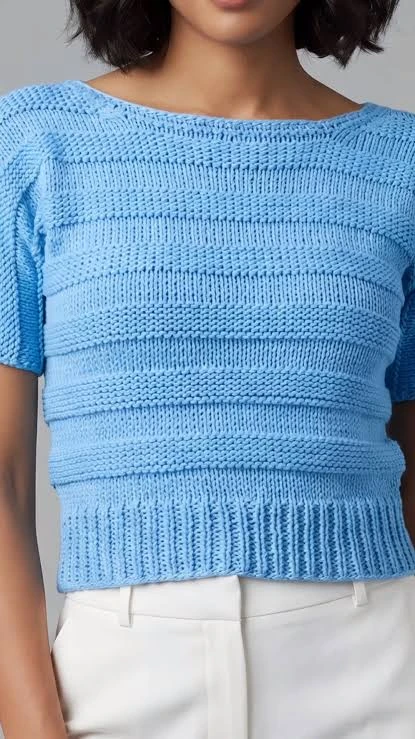
Fitted Training Tee
A fitted training T-shirt places greater emphasis on torso extension, hem stability, shoulder mobility, and knit recovery. The intended closeness to the body should be defined through approved garment measurements and wear evaluation. Any proposed knit zones must remain compatible with the design and production configuration.
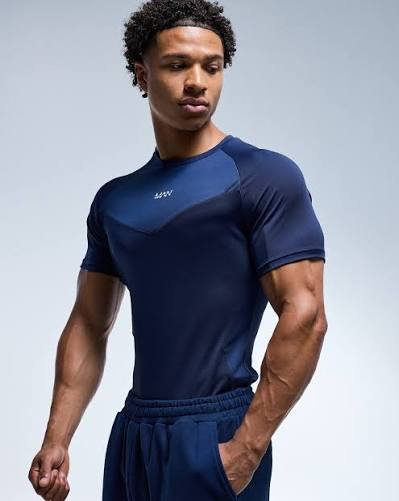
Men's Performance Tee
Men's performance T-shirt development may require additional attention to upper-chest proportions, shoulder width, armhole geometry, and sleeve positioning. The approved size range should reflect the brand's target wearer rather than an assumption that a generic knit program can be enlarged without further fit evaluation.

Women's Athletic Tee
Women's athletic T-shirts can involve different bust, shoulder, waist, and body-length relationships. Brands should determine the intended fit and coverage before finalising knitted dimensions. Material extension and neckline behavior should be reviewed alongside the approved grading and garment proportions.
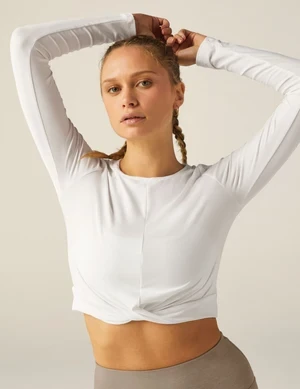
Seamless Long Sleeve
Long-sleeve designs introduce additional requirements for sleeve length, cuff recovery, arm movement, and the relationship between the sleeve and torso. A suitable production review should clarify whether sleeves require separate knitted components and how their attachment will affect comfort and finished measurements.
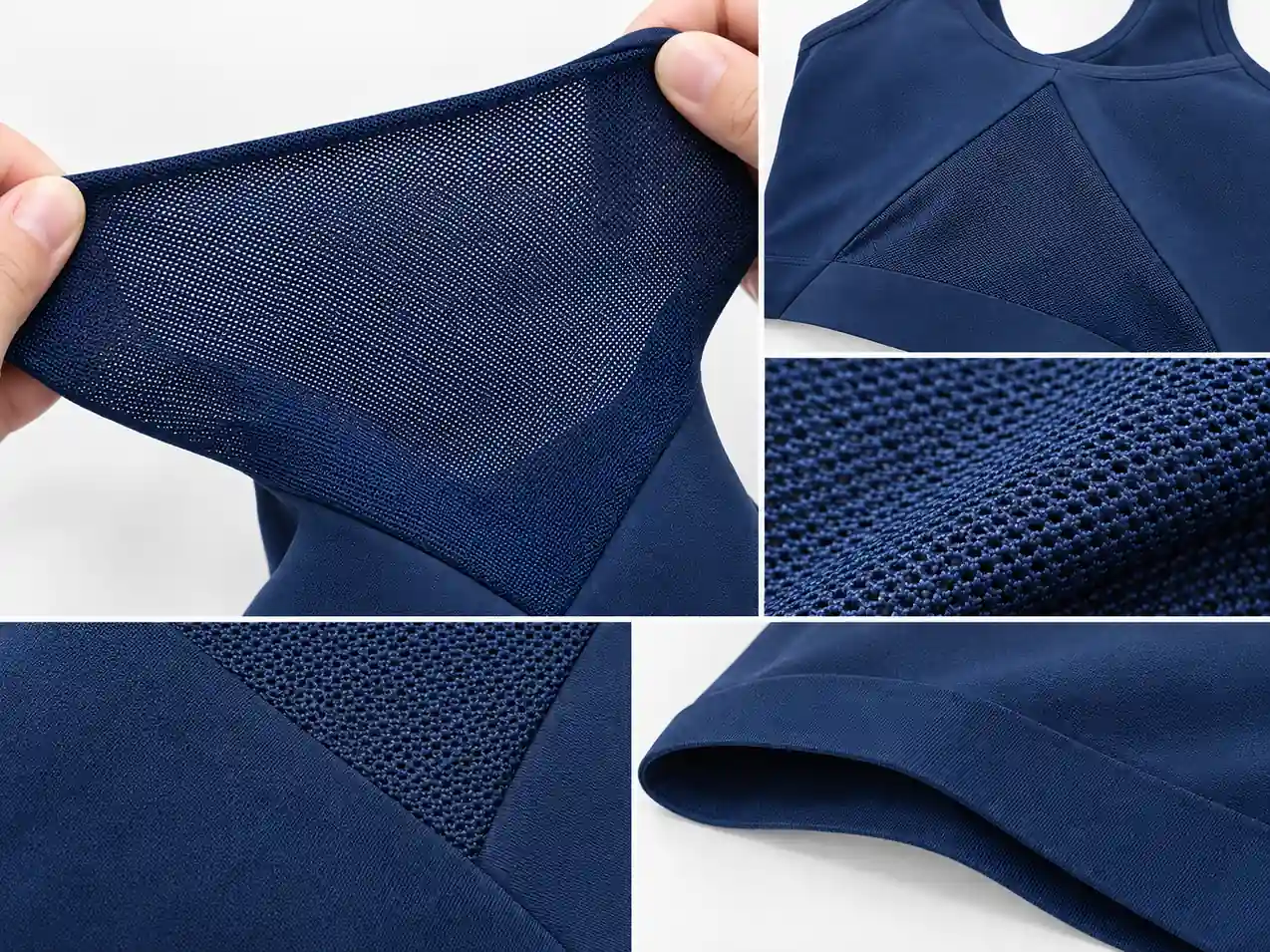
Engineered Mesh Tee
An engineered mesh T-shirt may combine ground-knit structures with selected open-knit areas. The locations should follow intended use, coverage, and construction feasibility. The presence of visible mesh does not establish a measurable ventilation benefit unless relevant evaluation supports the claim.
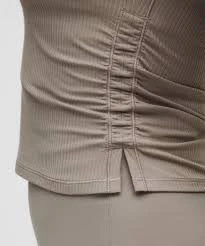
Seamless Base Layer
A close-fitting base-layer T-shirt should be evaluated for contact comfort, extension, recovery, seam placement, and intended layering conditions. Local pressure must be controlled against brand-defined fit requirements. Medical compression or quantified support performance should never be inferred from appearance alone.
Compare Manufacturing Structures Before Finalising Your T-Shirt Design
Products described as seamless can involve different manufacturing methods. This comparison helps buyers identify relevant construction requirements before requesting samples, equipment assessments, and project-specific quotations.
| Decision Factor | Engineered Circular Seamless | Conventional Tubular Tee | Cut & Sew T-Shirt |
|---|---|---|---|
| Primary Structure | Knitted body with programmed structures | Tubular fabric body | Cut fabric panels assembled by sewing |
| Side Seam | May be reduced or absent | Commonly absent | Usually present unless designed otherwise |
| Engineered Knit Zones | Possible within equipment and program limits | Not inherent to tubular construction | Normally achieved through material or panel choices |
| Yarn / Fabric Input | Yarn, machine configuration, knit program | Tubular fabric specification | Fabric specification and cutting pattern |
| Neckline | Requires construction and finishing review | Requires neckline finishing | Sewn neckline construction |
| Sleeves | Separate attachment may be required | Sleeve attachment usually required | Patterned and sewn sleeves |
| Sizing | Machine, yarn, programming, finishing, and fit | Fabric width, pattern, and finished fit | Pattern grading and material behavior |
| Logo | Knit-integrated or applied, if compatible | Usually applied or sewn | Applied or sewn using suitable methods |
| MOQ Drivers | Yarn, program, machine setup, colors, and sizes | Fabric supply, color, cutting, and assembly | Fabric sourcing, cutting, sewing, and trim complexity |
| Approval Priority | Knit zones, dimensions, fit, and finishing | Tubular alignment, fit, seams, and finish | Pattern fit, seam quality, and dimensions |
| Procurement Risk | Unverified program feasibility or size compatibility | Side-seam-free claim mistaken for engineered knitting | Unapproved pattern or sewing variation |
Decision Note
No route is universally superior. The appropriate manufacturing method depends on the actual design, expected performance, required appearance, size range, order quantity, and available evidence.
Identify Seamless T-Shirt Manufacturing Risks Before Sampling
Technical feasibility should be evaluated before design details become commercial commitments. The following warning signs help a sourcing team identify unresolved knitting, fit, material, and finishing issues that may otherwise emerge during sample approval or bulk production.
Unverified Machine Compatibility
Risk: A proposed T-shirt may include dimensions, knitted structures, or garment proportions that have not been evaluated against the selected production equipment. Producing one visually similar sample does not confirm whether the complete approved size range can be manufactured consistently.
Verification: Request a style-specific machine suitability review covering the target size group, knitted structure, and finishing conditions.
Incomplete Yarn Specification
Risk: Material descriptions such as soft, breathable, or high stretch do not identify the yarn specifications needed for technical production review. Changes in yarn composition, count, elasticity, or supply source can affect dimensions, hand feel, and programming decisions.
Verification: Define material composition, yarn characteristics, approved references, availability, and relevant acceptance requirements before technical release.
Unresolved Sleeve Construction
Risk: A seamless body does not automatically establish how sleeves, shoulders, and armholes will be formed or joined. Inadequate construction planning can introduce discomfort, restricted movement, mismatched appearance, or dimensional differences between the original design and finished sample.
Verification: Review actual attachment methods, seam appearance, stretch requirements, and garment fit using a representative sample.
Unsupported Knit Mapping
Risk: Digital designs may show mesh, rib, or jacquard zones that have not been verified for the required yarn, machine configuration, and garment dimensions. A structurally possible texture can still create unwanted pressure, appearance variation, or local weakness.
Verification: Confirm zone feasibility through knitting review and physical sampling before approving any functional or aesthetic specification.
Uncontrolled Size Groups
Risk: A proposed size range may require different knitting parameters or machine arrangements, particularly when body proportions change substantially. Assuming automatic grading can produce inaccurate garment length, chest dimensions, or local zone placement at the range extremes.
Verification: Define point-of-measure instructions, proposed size groups, and the approval process for representative garment sizes.
Unapproved Finishing Conditions
Risk: The dimensions of a freshly knitted component may differ from those of the finished garment after relaxation, washing, or other specified finishing. If those conditions are missing from the specification, sample measurements and production inspection results can become difficult to compare.
Verification: Agree on garment conditioning, finishing sequence, measurement stage, and dimensional acceptance criteria before approval.
Misaligned Commercial Assumptions
Risk: A preliminary quotation may assume standard yarn, available colors, or limited size programming while the actual design needs custom components or additional technical preparation. Such differences can change project MOQ, sample requirements, cost, and scheduling after supplier selection.
Verification: Separate standard configuration assumptions from custom development requirements in the initial technical and commercial review.
Understand the Knitted Structure Behind Your Performance T-Shirt
The finished garment results from the interaction of yarn, stitch geometry, programmed regions, and finishing. Reviewing these construction elements together helps buyers define manufacturable product specifications rather than relying on visual texture alone.
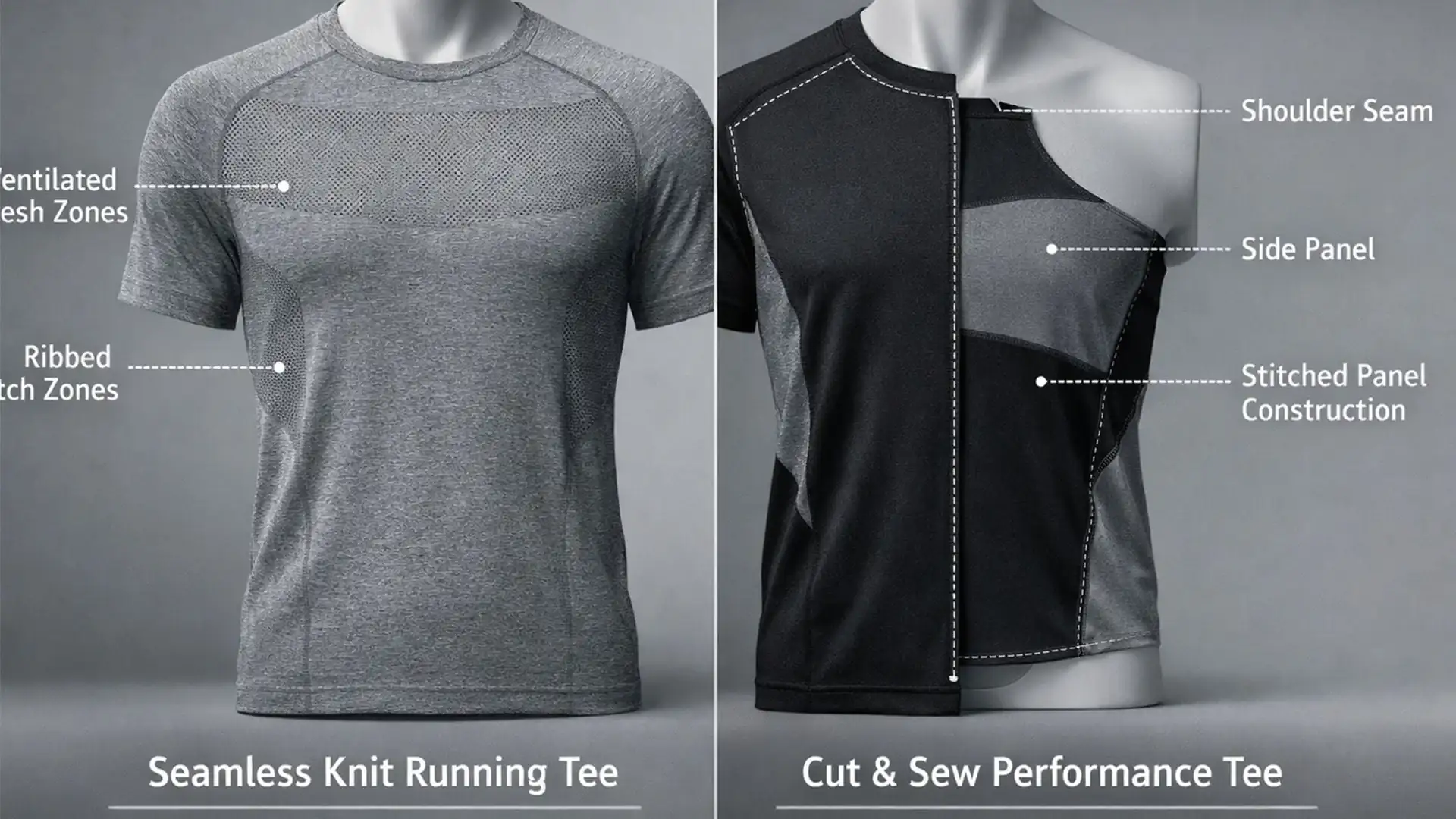
Base Yarn
The primary yarn establishes much of the garment's composition and surface character. Its suitability depends on the requested knit structure, material specifications, and confirmed machine compatibility.
Elastic Yarn
Where suitable elastic yarn is used, its interaction with the ground structure influences garment extension and recovery. Required behavior must be evaluated under defined material and wearing conditions.
Ground Knit
The primary knitted structure contributes to garment dimensions, coverage, and appearance. Changes in stitch formation can affect extension, material usage, and the finished surface.
Rib Structure
Ribbed regions may influence local elasticity, texture, and the way a garment conforms to the body. Their dimensions and placement require physical sample approval.
Mesh Openings
Open-knit regions can be designed into selected areas. Hole geometry and material behavior should be evaluated for coverage, local strength, appearance, and any specified ventilation requirements.
Finishing Response
Relaxation and subsequent finishing can change the dimensions and hand feel of knitted components. Measurements must be associated with a defined finishing and conditioning state.
Overall Engineering Explanation
Yarn characteristics, knitting density, programmed structures, and finishing conditions form an interconnected production system. Altering one factor may change finished dimensions, extension, appearance, or comfort. MOVEVOX has an established Santoni-based manufacturing resource, but actual knitting specifications and performance outcomes depend on each approved design. The manufacturing review should establish the appropriate machine configuration, yarn inputs, structural requirements, and garment evaluation conditions before a proposed design becomes a production reference.
Review Neckline and Sleeve Engineering in Seamless T-Shirts
Seamless knitting does not eliminate every garment assembly requirement. The location, stitch configuration, and elasticity of remaining connections can influence fit, comfort, and workmanship quality.
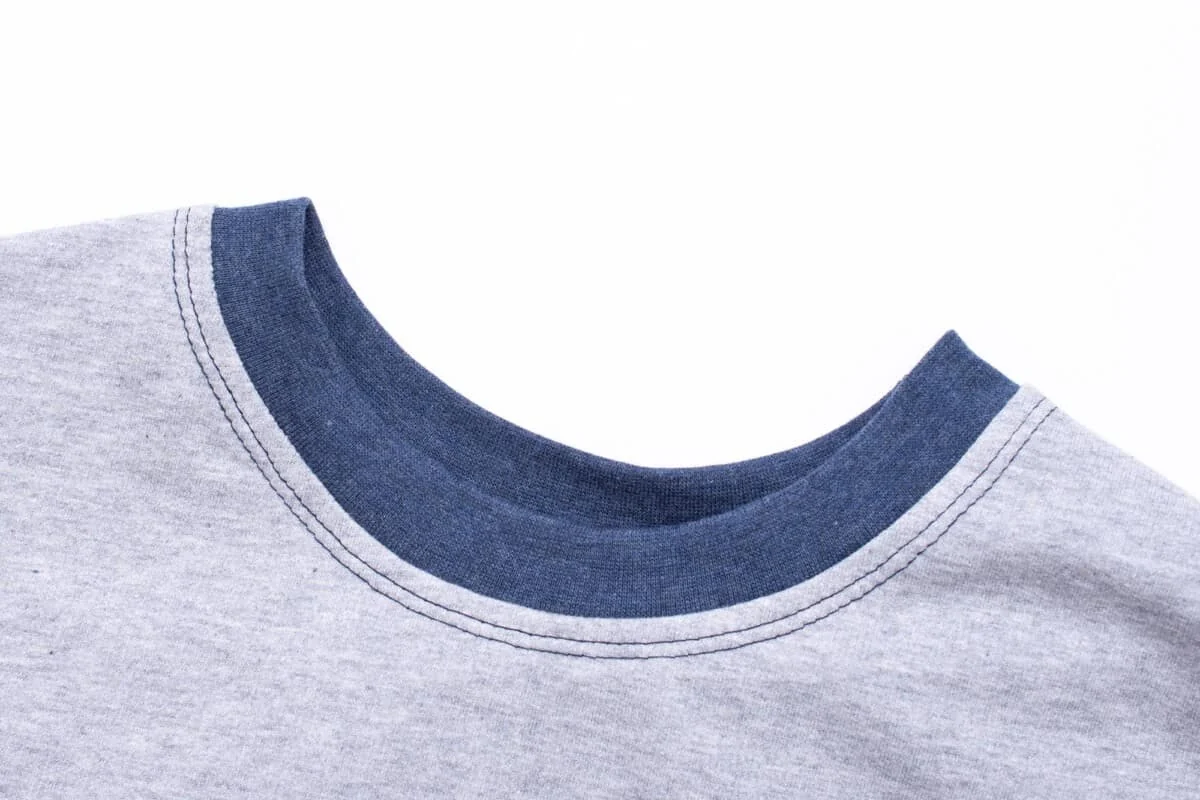
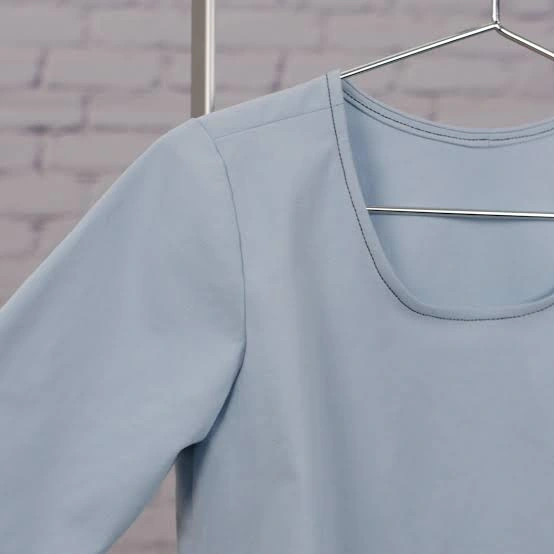
Neckline Binding
Construction: A neckline may require binding, reinforcement, or another approved finishing construction. Its dimensions and extension must suit the knitted body, and the final opening should be evaluated for distortion, gaping, or unwanted pressure.
Applicable Areas: Crew necklines and other compatible openings requiring stable edge finishing on knitted garments.
Comfort / Strength: Check edge recovery, local tension, and visible appearance after relevant garment movement.
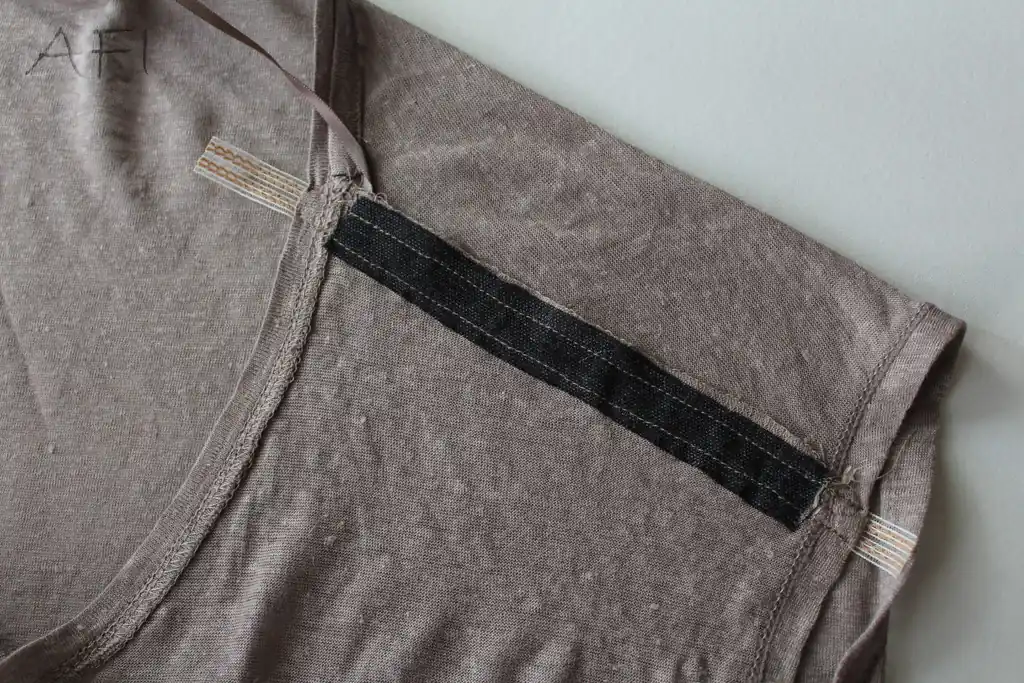
Shoulder Connection
Construction: Depending on the knitted garment configuration, shoulder regions may require joining or specialised finishing. The construction should preserve the intended garment position while avoiding unnecessary bulk, seam restriction, or imbalance between the front and back body.
Applicable Areas: Shoulder joining locations defined by the approved garment structure and knitting arrangement.
Comfort / Strength: Assess shoulder mobility, seam elasticity, and stability against the approved fit reference.
Sleeve Attachment
Construction: Sleeves may be produced separately and connected through an approved assembly method. The sleeve-body relationship influences upper-arm comfort and can affect how the torso shifts during movement, particularly on fitted performance styles.
Applicable Areas: Armholes and sleeve joining points on compatible short-sleeve and long-sleeve seamless tops.
Comfort / Strength: Evaluate joining flexibility and whether arm movement pulls the torso outside expected fit.
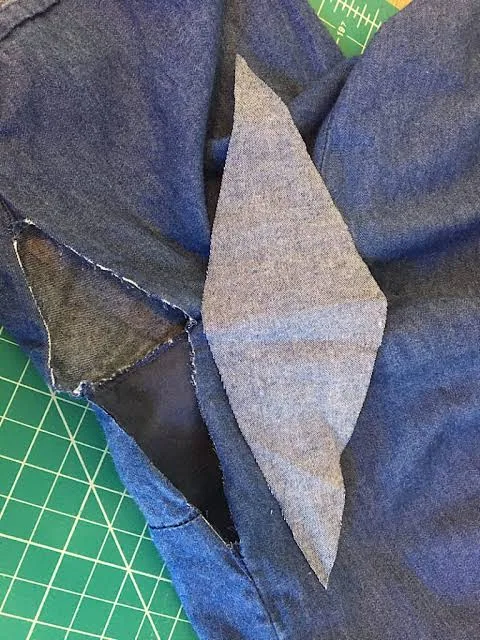
Underarm Joining
Construction: Underarm regions experience repeated bending and friction during activity. A joining method should account for the relevant stretch direction, seam bulk, and intended wearing conditions. Appropriate construction depends on the actual garment design.
Applicable Areas: Underarm seam intersections and related joining areas of assembled seamless T-shirt structures.
Comfort / Strength: Review seam pressure, extension, and the risk of discomfort during repetitive arm movement.
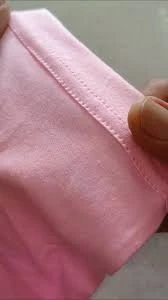
Sleeve Hem Finish
Construction: The sleeve opening can use a compatible knitted edge or an additional finishing method. The selected construction should balance appearance, extension, and recovery without creating unnecessary restriction around the upper arm or wrist.
Applicable Areas: Short-sleeve openings and long-sleeve cuffs where finishing is required by design.
Comfort / Strength: Confirm opening dimensions, recovery, and absence of unacceptable local pressure during wear.

Bottom Hem Finish
Construction: The lower body edge can influence garment length consistency, appearance, and position during movement. The proposed finish should account for knit structure, edge stability, and the intended torso fit. Additional finishing may change the final dimension.
Applicable Areas: Bottom edges of fitted or relaxed seamless T-shirt designs requiring controlled finishing.
Comfort / Strength: Assess finished hem dimensions, rolling tendency, and movement-related garment displacement.
Map Knitted Zones Across the Seamless T-Shirt
Engineered knitting can place different structures within a garment, subject to machine and yarn compatibility. The design should specify what each zone is intended to accomplish, how it affects fit, and what requires physical verification.
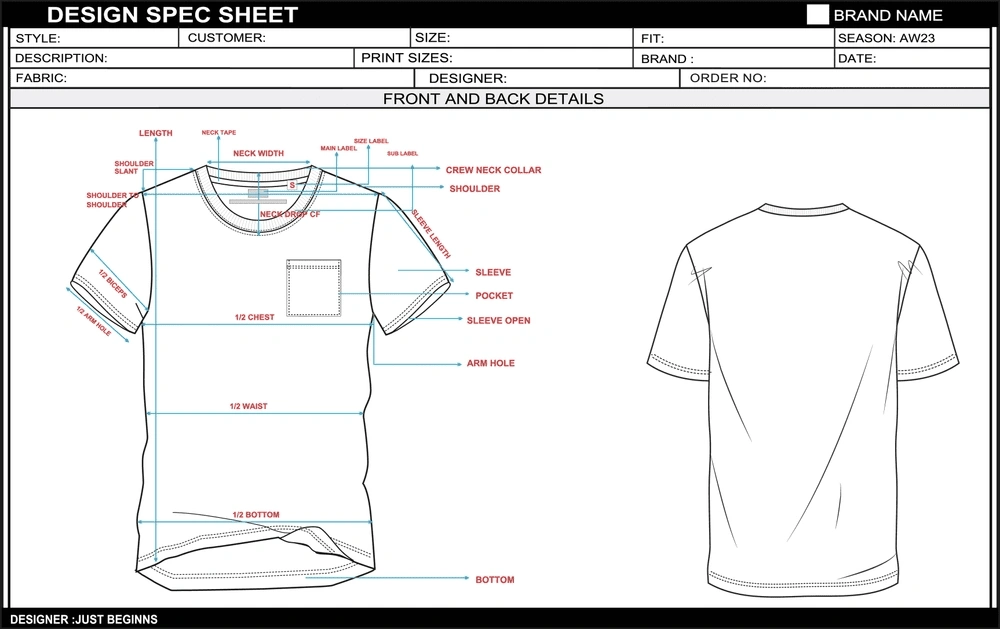
Upper Chest
The chest area should maintain the intended body fit and surface appearance. Proposed changes in stitch structure require evaluation for extension, coverage, and local tension.
Upper Back
A back-panel structure may be designed for a particular surface or ventilation concept. Actual performance depends on the material, knitted geometry, and approved evaluation method.
Underarm Zone
An open or flexible underarm structure may support the intended movement concept. Coverage, abrasion resistance, and connection to adjacent garment regions also require review.
Side Torso
Side-torso zones can affect visual shaping and local extension. Their placement should remain proportional across sizes and avoid unexpected pressure or distortion during movement.
Shoulder Transition
The shoulder region connects garment structures subject to upper-body movement. Any knitted transition should be assessed together with the actual shoulder and sleeve construction.
Lower Hem
A bottom knit zone may contribute to edge appearance and local tension. It should be assessed for curling, garment displacement, and recovery under intended wearing conditions.
Sleeve Zone
Where the proposed construction supports engineered sleeves, changes in knitted texture or elasticity should reflect the approved design and arm movement requirements, not an assumed performance benefit.
Knitting and Dimensional Control
A knit-zone map is a design specification, not a laboratory performance certificate. Yarn properties, knitting structure, machine configuration, and garment finishing all influence the final shape and behavior of each region. A proposed mesh or rib area should first be assessed for manufacturing feasibility, then reviewed on physical samples for positioning, appearance, extension, and comfort. Changes to the yarn or knitting program may require renewed measurement and performance evaluation before the design can be approved for bulk production.
Prepare Technical Inputs for Your Seamless T-Shirt Program
A reliable development review begins with defined product information. The following checklist helps sourcing and technical teams separate confirmed requirements from decisions still requiring yarn, knitting, fit, or commercial feasibility assessment.
Technical Sketch
Provide front and back drawings identifying the garment silhouette, neckline, shoulder, sleeves, body length, hem, and proposed knitted regions. Distinguish mandatory appearance requirements from elements open to technical adjustment during development.
Fit Reference
Describe the intended wearer, body fit, and training application. Identify whether the T-shirt should fit closely, follow a relaxed silhouette, or serve as a base layer. Include suitable reference garments or photographs where legally available.
Measurement Chart
Define the base size, required size range, critical measurement points, proposed grading, and any established tolerances. Include measuring instructions so technical development and finished garment inspection can reference consistent conditions.
Yarn Specification
Provide intended material composition, yarn characteristics, hand feel, and relevant performance requirements. If the final yarn has not been chosen, supply a reference sample and identify the properties requiring supplier review.
Knit Zone Map
Identify proposed rib, mesh, jacquard, or other engineered regions on technical drawings. Specify the intended appearance and functional purpose of each area, together with any placement or coverage requirements that must be preserved.
Construction Details
Define neckline finishing, shoulder construction, sleeve attachment, sleeve openings, and bottom hem treatment. Identify areas that must use a particular method and those for which the supplier may suggest compatible alternatives.
Color Standards
Provide existing color references, physical swatches, or approved color specifications. State whether the T-shirt must coordinate with other collection pieces and whether custom material colors are essential to the project.
Branding Artwork
Supply logo artwork, target dimensions, placement, and preferred application methods. Branding should be evaluated against knitted texture, garment extension, finishing conditions, and the available surface area for a reliable application.
Performance Requirements
Identify required assessments for stretch recovery, dimensional stability, colorfastness, pilling, or other relevant properties. Define any mandatory test method or buyer acceptance threshold where established, rather than relying on general performance terminology.
Order Assortment
State expected quantity by style and color, size distribution, destination markets, and intended launch timing. These details help determine whether the proposed yarn, knitting configuration, minimum quantity, and production resources suit the program.
Packaging Specification
Describe main labels, care and size labels, hangtags, individual packaging, SKU identification, and carton requirements. Include any market-specific information the brand expects the supplier to review before production approval.
Approval Responsibility
Identify the people authorised to approve technical specifications, material references, fit samples, color, branding, and the final production standard. Record the version to which each approval relates and any unresolved issues.
Incomplete Briefs
A completed Tech Pack is preferable for detailed review, but a legally usable reference garment or clearly described concept can support an initial discussion. MOVEVOX can review the available information and identify missing technical decisions. The buyer and supplier should then confirm the required development inputs, responsibilities, and approval conditions before committing to production assumptions.
Compare Yarn Systems for Seamless Performance T-Shirt Development
Yarn selection affects knitting feasibility, hand feel, extension, and the resulting garment appearance. The options below are material-development directions, not a list of pre-approved MOVEVOX yarn specifications or guaranteed performance levels.
| Evaluation Parameter | Nylon-Based | Polyester-Based | Nylon/Polyester Blend | Elastic-Rich Blend | Recycled-Content Candidate |
|---|---|---|---|---|---|
| Composition | Buyer-defined polyamide blend | Buyer-defined polyester blend | Specified PA/PES combination | Base yarn with elastane | Verified recycled fibre blend |
| Yarn Count | Confirm with mill | Confirm with mill | Confirm with mill | Confirm with mill | Confirm with mill |
| Stretch Direction | Structure-dependent | Structure-dependent | Structure-dependent | Yarn and structure-dependent | Structure-dependent |
| Recovery | Requires evaluation | Requires evaluation | Requires evaluation | Requires evaluation | Requires evaluation |
| Hand Feel | Sample-dependent | Sample-dependent | Sample-dependent | Sample-dependent | Sample-dependent |
| Knit Compatibility | Machine review required | Machine review required | Machine review required | Program review required | Machine review required |
| Knit Zone Feasibility | Program-specific | Program-specific | Program-specific | Tension-sensitive | Program-specific |
| Dimensional Stability | Test as specified | Test as specified | Test as specified | Test as specified | Test as specified |
| Color Availability | Supplier-dependent | Supplier-dependent | Supplier-dependent | Supplier-dependent | Supplier-dependent |
| Performance Evidence | Test when required | Test when required | Test when required | Test when required | Chain-of-custody and tests |
| Typical Evaluation | Fitted training | Lightweight training | Multi-fibre development | Close-fit structures | Documented sourcing program |
Material Selection Recommendation
The correct material cannot be determined from fibre names alone. A nylon-based yarn and a polyester-based yarn may produce different garments when knitting density, elasticity, and finishing conditions change. Buyers should first establish target fit, use, care, and performance requirements. Candidate yarns can then be reviewed for supply availability, machine compatibility, sample behavior, and appropriate verification. Recycled-content claims require valid evidence for the actual material and supply-chain scope.
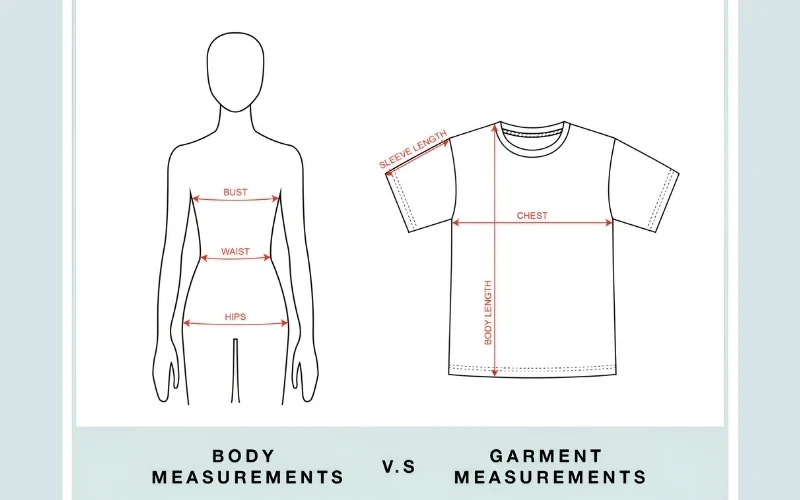
Define Garment Measurements Before Approving Seamless Size Groups
Seamless sizing depends on more than conventional pattern grading. Finished dimensions result from the knitting structure, yarn, program, machine compatibility, and garment finishing. The brand's approved size and fit standards must govern the review.
Brand Measurement Matrix
| Size | Chest Width | Body Length | Neck Opening | Sleeve Length | Hem Width | Fit Status |
|---|---|---|---|---|---|---|
| XS | Buyer-defined | Buyer-defined | Buyer-defined | Style-specific | Buyer-defined | Review required |
| S | Buyer-defined | Buyer-defined | Buyer-defined | Style-specific | Buyer-defined | Review required |
| M | Buyer-defined | Buyer-defined | Buyer-defined | Style-specific | Buyer-defined | Review required |
| L | Buyer-defined | Buyer-defined | Buyer-defined | Style-specific | Buyer-defined | Review required |
| XL | Buyer-defined | Buyer-defined | Buyer-defined | Style-specific | Buyer-defined | Review required |
| XXL | Buyer-defined | Buyer-defined | Buyer-defined | Style-specific | Buyer-defined | Review required |
Unit Reference: cm / in
Grading and Tolerance Review
A seamless size specification should identify the relaxed garment condition, critical measuring points, intended fit, and size-group relationships. Programmed dimensions are not the same as approved finished measurements. Yarn behavior, knitting structure, and finishing can influence both garment size and local knit-zone position. Tolerances should follow the agreed design, available process capability, and customer acceptance standard, not a universal table copied from another product.
Three Approval Notes
- Measurement Method: Define the reference points and garment condition for chest, length, neckline, and sleeve dimensions.
- Machine Compatibility: Confirm whether every requested size can use the proposed knitting configuration.
- Fit Confirmation: Check representative sizes for garment proportions, sleeve movement, and knit-zone alignment.
Translate a Seamless T-Shirt Design into Manufacturing Specifications
A repeatable seamless T-shirt begins with controlled technical decisions. This proposed development sequence connects the brand's product brief with knitting feasibility, physical samples, approved construction, and production reference documents.
Design Interpretation
Review the supplied drawings, intended fit, material requirements, size range, and engineered knit zones. Identify incomplete specifications and distinguish fixed brand requirements from features open to technical adjustment.
Deliverable: Technical Review
Timing: Project-specific
Machine Feasibility
Assess the proposed garment dimensions and structural requirements against compatible knitting resources. Review any potential restrictions involving cylinder configuration, knitted width, size groups, or separately assembled garment areas before progressing to development.
Deliverable: Feasibility Notes
Timing: Project-specific
Yarn Confirmation
Evaluate available yarn options against composition, structure, color, and performance requirements. Identify materials requiring special sourcing or additional verification, and confirm the selected direction with the buyer before further sample assumptions become fixed.
Deliverable: Yarn Reference
Timing: Supply-dependent
Knit Programming
Translate approved structure and zone requirements into a proposed knitting program. Review density, texture, transitions, dimensions, and other relevant settings against the garment brief. Keep program revisions traceable to the technical changes being evaluated.
Deliverable: Program Version
Timing: Design-dependent
Prototype Review
Evaluate the first physical garment for structure, dimensions, finishing, and visible defects. Compare the output with the agreed development brief and identify changes requiring further technical work or customer approval.
Deliverable: Prototype Record
Timing: Scope-dependent
Finishing Assessment
Review how any required garment joining, edge finishing, relaxation, and specified treatment affect the prototype. Measure the sample under the agreed condition so its dimensions can be compared consistently with later revisions.
Deliverable: Finishing Review
Timing: Process-dependent
Fit Approval
Evaluate representative sizes against the intended body fit, sleeve mobility, garment length, and knit-zone placement. Consolidate buyer comments and confirm which issues require changes before establishing a production reference.
Deliverable: Fit Decision
Timing: Feedback-dependent
Specification Release
Connect the accepted garment with its current yarn, knitting, measurements, finishing, color, and branding requirements. Identify outstanding deviations before recommending the specifications for production preparation and customer approval.
Deliverable: Production Reference
Timing: Approval-dependent
Timing Note
MOVEVOX's normal sample-development benchmark is 5–10 working days after relevant details are confirmed for standard projects. New yarn, complex knit programming, multiple sample revisions, or additional testing can require further review. No stage above represents a fixed completion guarantee.
Evaluate Seamless T-Shirt Fit During Intended Training Movements
A T-shirt that fits correctly when stationary may behave differently during training. Movement review should focus on the wearer's intended activity, garment construction, knitted extension, and acceptable changes in coverage or comfort.
Overhead Strength Training
Overhead lifting places additional demands on shoulder mobility, sleeve attachment, and the relationship between the upper body and lower hem. A fitted seamless T-shirt may shift upward when the arms are raised. During product development, the brand should define acceptable garment movement and review whether shoulder construction, knit extension, or body length requires adjustment.
Product Requirements- Maintain the intended shoulder mobility through repeated overhead arm extension movements.
- Evaluate changes in hem position against the approved coverage requirement.
- Confirm sleeve attachment comfort without assuming universal compression or support performance.
Running Arm Movement
Running introduces repeated forward and backward arm movement, sustained fabric contact, and potential friction around the underarm and shoulder. The technical review should consider how the neckline, sleeve opening, and body fit behave through the expected range of motion. A lightweight structure may provide the desired wearing feel, but material performance requires appropriate evaluation.
Product Requirements- Check underarm construction during repetitive forward and backward arm movement.
- Review body movement and visible garment twisting in representative running conditions.
- Evaluate local comfort where knitted edges or joining seams contact skin.

Upper-Body Rotation
Rotational training can expose differences between garment dimensions, knit-zone placement, and actual wearer movement. A T-shirt may appear balanced at rest but develop local tension or shift around the torso during twisting exercises. The approved fit process should identify which observations are acceptable and which require changes to construction or sizing.
Product Requirements- Review torso extension and knitted-zone positioning during controlled body rotation movements.
- Compare neckline and sleeve behavior at both ends of the rotation.
- Identify any local pulling that changes the approved garment fit appearance.
Close-Fit Layering
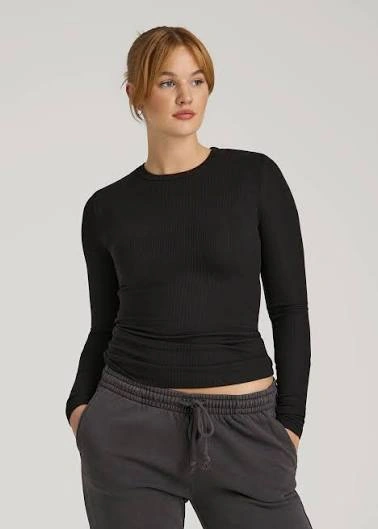
A close-fitting seamless base layer may be worn beneath another garment or used independently, depending on the brand's product concept. Development should account for garment thickness, seam bulk, local stretch, and contact comfort. A snug appearance alone does not prove measured compression performance. The design should be assessed for its intended use and wearing conditions.
Product Requirements- Confirm garment extension and recovery against approved close-fit wearing requirements.
- Review contact pressure at neckline, sleeves, underarms, and bottom hem locations.
- Evaluate material and seam comfort under the intended layering and movement conditions.
Examine the Manufacturing Stages Behind Seamless T-Shirt Production
A factory review should connect equipment and operations to the actual garment specification. These six stages provide a framework for examining the relevant manufacturing resources, responsible parties, and technical evidence required for a seamless T-shirt program.

Yarn and Material Preparation
The material preparation review should confirm the identity, composition, color, and sourcing status of the yarn specified for the project. Depending on the supply arrangement, some preparation or verification activities may occur with external material suppliers rather than within the garment factory itself. Buyers should establish who is responsible for each input, how substitutions are controlled, and what evidence demonstrates that the materials used are consistent with the approved specification. Material readiness should be confirmed before manufacturing resources are committed to the order.
Santoni Seamless Knitting
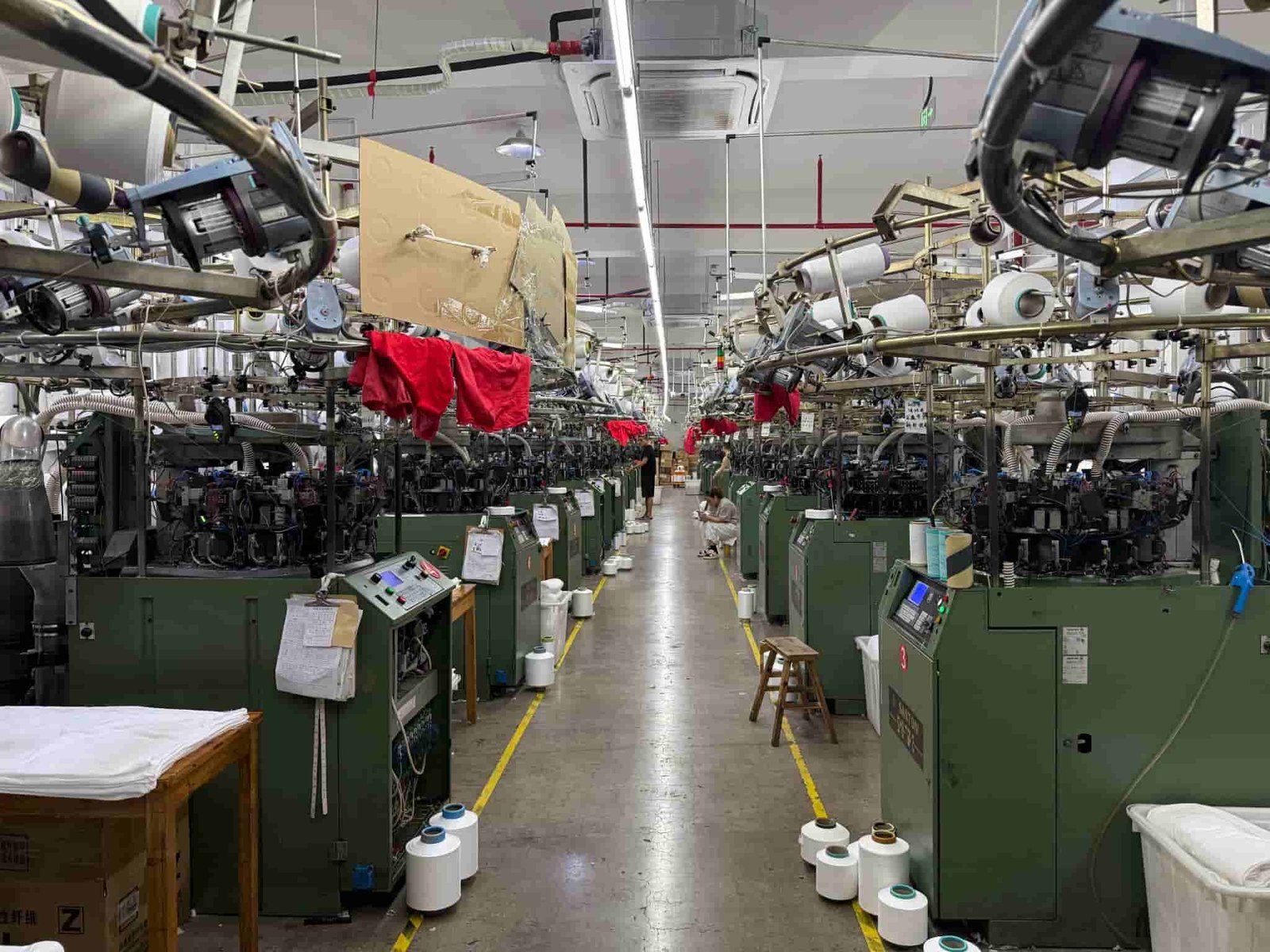
MOVEVOX's documented in-house manufacturing resources include 28 Italian Santoni seamless knitting machines. For a specific T-shirt design, the relevant evidence is not simply the number of machines but the suitability of the selected equipment, knitting configuration, and yarn for the proposed structure. Buyers should examine the actual manufacturing method and identify which programmed characteristics need approval. The available machine base provides a genuine starting point for evaluation, while the feasibility of each particular garment and size range remains subject to technical confirmation.
Knitted Component Inspection
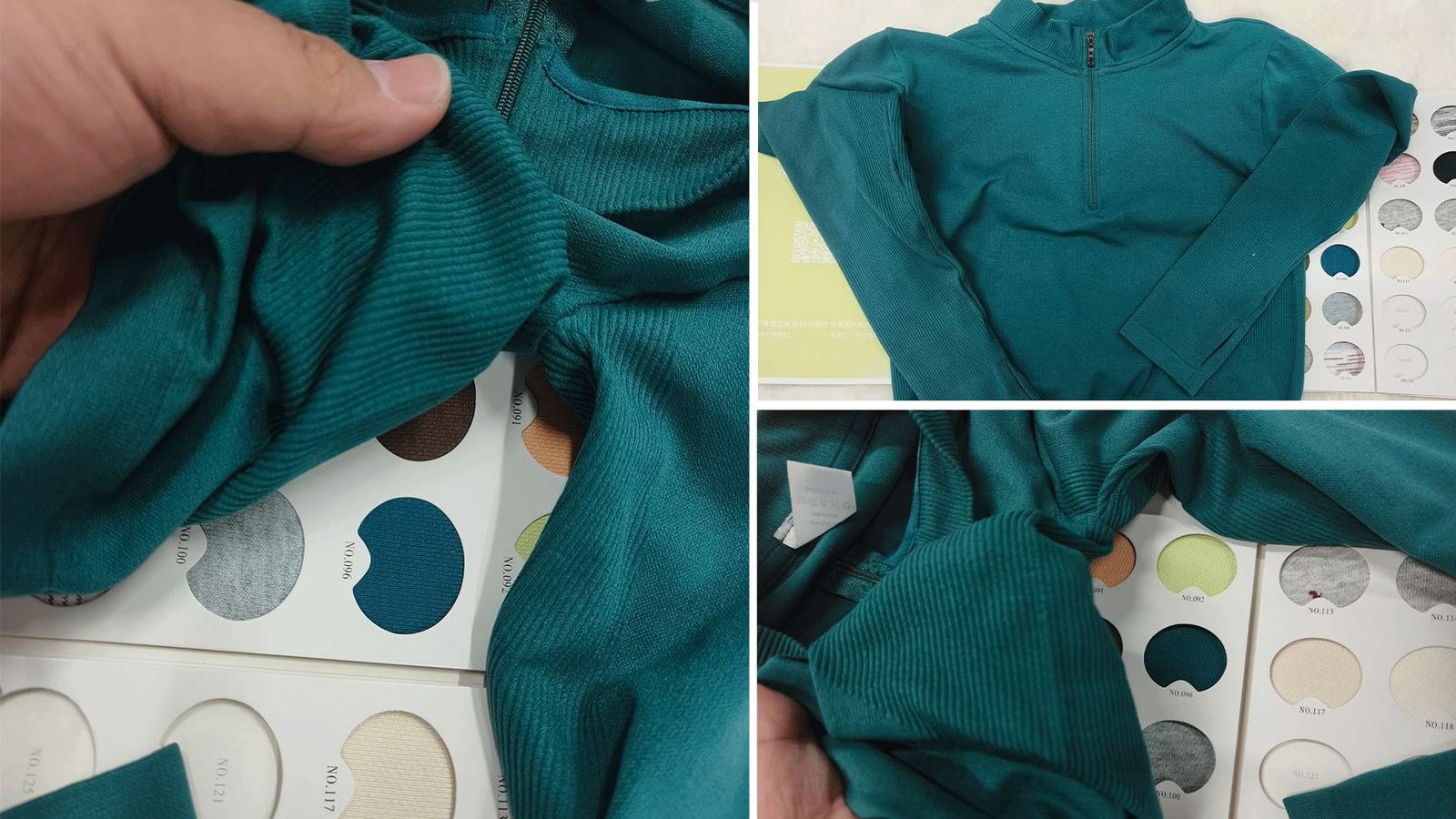
Inspection of knitted output should focus on the attributes defined for the program, including visible structure, knit-zone placement, defects, and relevant dimensional conditions. Checks should distinguish problems created during knitting from changes introduced later by finishing or garment assembly. The required inspection points should be selected for the actual product rather than transferred without adjustment from leggings or sports bras. Any findings outside agreed limits need a documented decision before further processing. The buyer should request representative inspection evidence instead of relying on generic quality statements.
Garment Joining and Assembly
The required joining operations depend on the chosen seamless construction. A finished T-shirt may need sleeve attachment, neckline finishing, shoulder joining, or other approved operations even when its main body is knitted without conventional side seams. MOVEVOX has both Seamless and Cut & Sew manufacturing capabilities, allowing relevant assembly requirements to be reviewed. The buyer should confirm where each operation will take place, which construction standard applies, and how the finished garment will be evaluated for comfort, appearance, and workmanship.
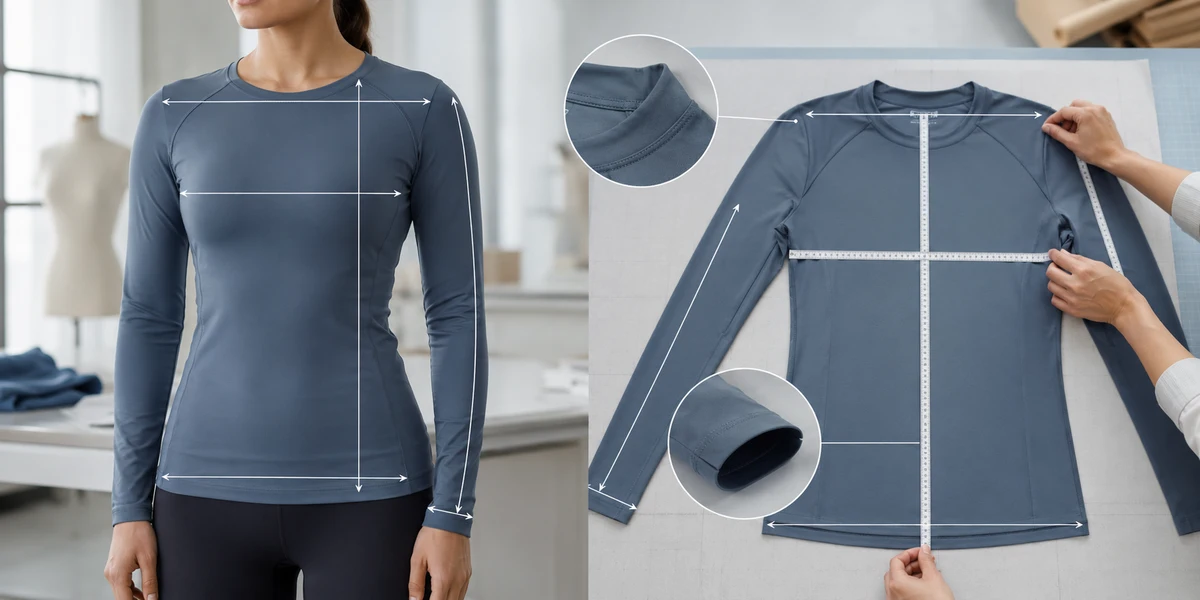
Finishing and Measurement Review
Finished garment dimensions can be influenced by relaxation, care-related treatment, joining, and other specified finishing conditions. A meaningful measurement review should therefore identify the garment's condition and the approved method for assessing chest width, length, sleeves, neckline, and other critical dimensions. This is particularly important when different sizes use different knitting settings or when materials have been changed between samples. Measurements should be compared with the customer's approved specification, with deviations reviewed before the garments proceed to final release.
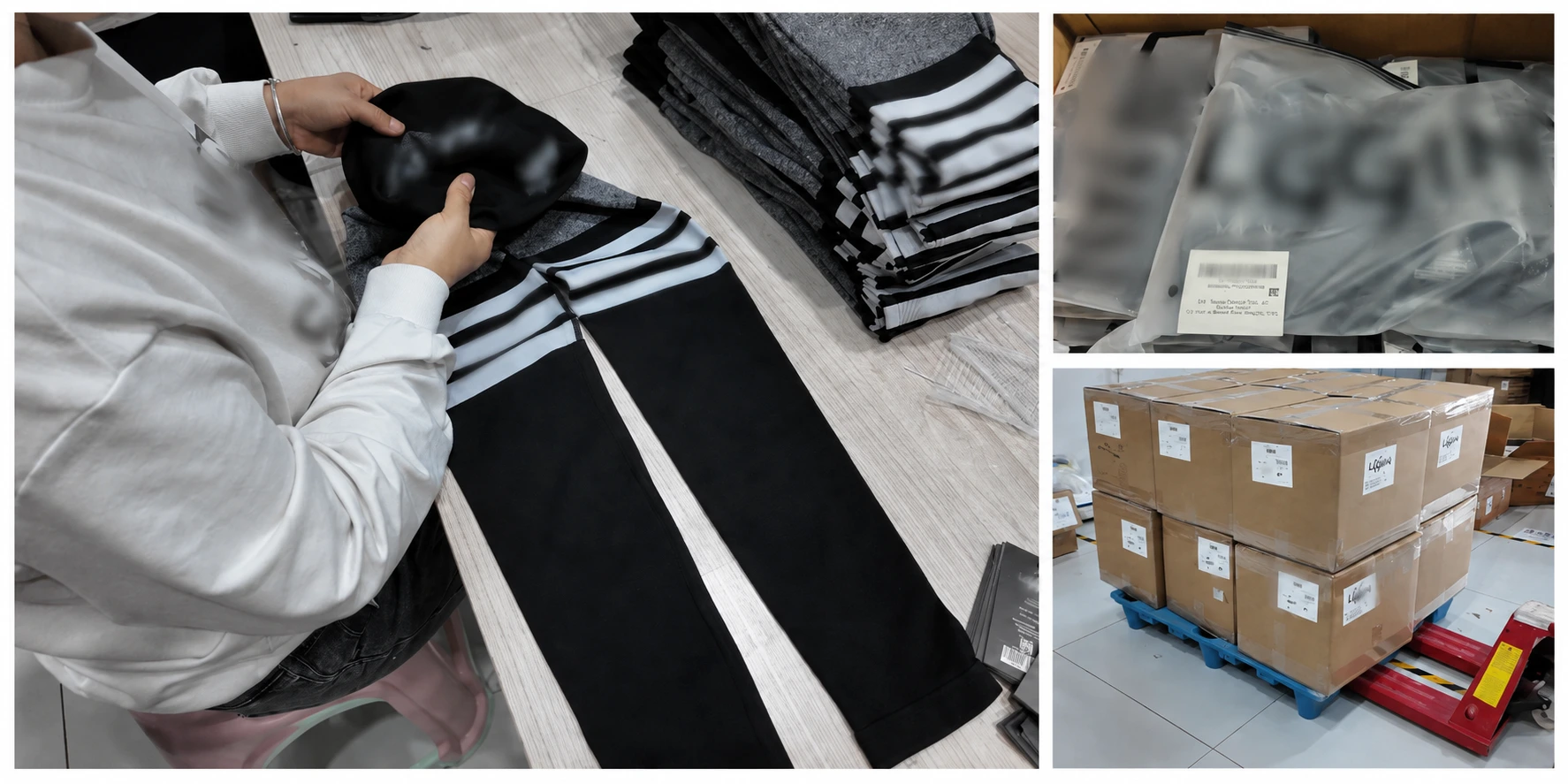
Quality and Packing Release
MOVEVOX's documented operating structure includes a five-person QC team and established inspection stages. For a seamless T-shirt program, the finished garment should be evaluated against agreed knitting, workmanship, dimensional, branding, and packaging requirements. The packing process should preserve product identity across style, color, and size variations. Where external production resources participate, responsibility for checking and releasing the goods should be clear. A documented release decision provides stronger supplier evidence than a photograph of completed cartons without any identifiable inspection basis.
Control Common Failure Points in Seamless T-Shirt Development
Fit, knitting, construction, and finishing issues can interact throughout product development. The following risks help brands define technical controls before bulk production rather than relying on finished-garment inspection to reveal every problem.
Neckline Distortion
Problem / Business Impact: A distorted neckline can change the intended appearance and create inconsistent fit across sizes. If the issue originates in binding dimensions, knitted structure, or finishing, it may require further development rather than simple garment rework.
Proposed MOVEVOX Response: Review the approved neckline dimensions and construction against the selected material and sample. Establish suitable appearance and measurement criteria before production release, using the existing development and quality organisation to coordinate any required changes.
Neckline ReferenceSleeve Pulling
Problem / Business Impact: Incorrect sleeve geometry or joining tension may restrict arm movement and displace the garment body during training. A sample that looks acceptable on a hanger may therefore fail to meet the brand's intended wearer experience.
Proposed MOVEVOX Response: Assess shoulder, armhole, sleeve, and torso fit together. Record movement-related issues during sample review and obtain customer approval for any required knitting or construction revisions before the relevant specifications become fixed.
Fit SampleGarment Twisting
Problem / Business Impact: Visible twisting can result from yarn characteristics, knitted structure, finishing conditions, or assembly imbalance. The problem may affect garment symmetry and appearance, particularly after washing or repeated use, creating uncertainty around finished quality.
Proposed MOVEVOX Response: Review the affected production stage and appropriate material or construction factors. Define comparable measurement and visual assessment conditions, then evaluate whether a change in yarn, knitting, or finishing requires renewed sample approval.
Stability ReviewDimensional Drift
Problem / Business Impact: Finished chest width, sleeve measurements, or garment length may change between samples, sizes, and bulk output. Without controlled measuring conditions and tolerances, buyer and factory can reach different conclusions about whether garments conform.
Proposed MOVEVOX Response: Establish approved POM instructions, finished-garment conditioning, grading requirements, and dimensional tolerances. Link production measurements to the current reference garment and investigate deviations using the appropriate inspection and corrective-action process.
Measurement RecordKnitting Defects
Problem / Business Impact: Holes, dropped stitches, yarn inconsistencies, or unintended structural changes can affect the garment's appearance and integrity. Their significance depends on location, defect severity, and the customer's approved workmanship standard.
Proposed MOVEVOX Response: Identify critical knit regions and agree on defect criteria before production. Use relevant inspection checkpoints to detect visible deviations, distinguish acceptable structural variation from defects, and document disposition when output does not meet agreed requirements.
Knit InspectionZone Misalignment
Problem / Business Impact: An engineered knit zone positioned incorrectly can create visible design inconsistency or alter the intended local fit. A manufacturing issue may remain unnoticed if inspection checks only overall garment dimensions and not programmed region placement.
Proposed MOVEVOX Response: Include relevant knitted-zone locations within the approved technical reference. Review representative samples for positioning, proportions, and size consistency, then identify any necessary programming or manufacturing corrections before wider production.
Zone SpecificationSeparate Seamless T-Shirt Performance Claims from Verified Evidence
Functional language should correspond to the actual material, garment structure, and testing scope. For a seamless T-shirt program, technical design intent is useful, but quantified or comparative performance claims require appropriate verification.
Ventilation
Claim: Engineered openings can support a defined ventilation-oriented design.
Evidence Explanation: Mesh or other open-knit structures can be incorporated into suitable garments, depending on programming and equipment feasibility. Their appearance confirms a construction feature, not a measured ventilation advantage. Any comparison involving airflow, cooling, or breathability needs a relevant testing method and an identifiable garment or material sample.
Required Basis: Knit specification, tested sample identity, agreed method, and applicable performance acceptance criteria.
Moisture Management
Claim: Moisture-management properties require material-specific evaluation.
Evidence Explanation: Moisture movement depends on fibre characteristics, yarn construction, fabric geometry, and finishing. A polyester-containing yarn or open-knit zone does not automatically establish fast-drying or moisture-wicking performance. Brands should define the specific property they require, select an appropriate evaluation method, and avoid unsupported comparative marketing language.
Required Basis: Material composition, relevant test conditions, recorded outcomes, and approved marketing claim scope.
Stretch Recovery
Claim: Garment recovery should meet the intended fit requirements.
Evidence Explanation: A knitted garment may extend comfortably yet show undesirable changes after repeated stretching. Recovery assessment should specify the relevant garment direction, extension conditions, conditioning, and acceptance basis. Results from a different material or product cannot automatically substantiate claims about the proposed seamless T-shirt.
Required Basis: Representative yarn or garment sample, defined recovery evaluation, and customer-approved requirements.
Dimensional Stability
Claim: Garment dimensions remain acceptable after specified care conditions.
Evidence Explanation: Knitting and finishing can influence body length, width, sleeve dimensions, and neckline behavior. Stability should be assessed using defined measuring points and the applicable care procedure. One approved initial measurement cannot establish post-care consistency without further evidence.
Required Basis: Pre-care and post-care measurement records, test conditions, and approved dimensional-change limits.
Colorfastness
Claim: Color performance meets the specified use and care requirements.
Evidence Explanation: Colorfastness should be evaluated for the selected material and relevant color under appropriate exposure conditions. Washing, rubbing, and perspiration may represent different assessment needs. Results should be tied to the tested sample, method, and grade rather than presented as universal performance across every color or garment.
Required Basis: Relevant material and color identification, test method, results, and acceptance criteria.
Select the Right Development Model for Your Brand
OEM, ODM, and private-label programs differ in technical input, decision responsibility, and commercial structure. For seamless T-shirts, the cooperation model should be agreed before development and quotation assumptions become fixed.
| Decision Factor | OEM Manufacturing | ODM Development | Private Label |
|---|---|---|---|
| Design Input | Brand-provided approved specifications and technical drawings | Brand concept, defined requirements, and agreed development references | Existing or established garment direction with branding requirements |
| Development Scope | Technical feasibility and production preparation based on brand design | Development work to establish a manufacturable specification | Product selection and agreed brand application changes |
| Knit Program | Evaluated against brand specification | Developed or modified subject to project scope | Existing compatible program may be considered |
| Fit Responsibility | Brand approves garment fit and dimensions | Brand and development team establish and approve fit | Brand confirms fit of selected garment and modifications |
| Material Decision | Brand specification subject to sourcing feasibility | Candidate yarns evaluated through development | Available materials assessed against brand requirements |
| Logo and Labels | According to approved brand artwork | Integrated into agreed development requirements | Central part of the branding program |
| MOQ | Depends on approved design and material conditions | May reflect additional program and yarn development requirements | Depends on selected garment, branding, and available materials |
| Timing | Depends on readiness and required approvals | May require extra development and revision stages | Depends on stock or production configuration and customization |
| IP Responsibility | Defined through the brand's contract and design rights | Development rights and ownership require written agreement | Branding rights remain subject to applicable agreement |
| Best Fit | Mature brands with completed technical packages | Brands requiring further product engineering | Brands using suitable established garment structures |
Select by Technical Readiness
A completed Tech Pack may support an OEM review. A concept with unresolved knitting, yarn, or fit decisions may require an ODM development discussion. A brand seeking only logo and label changes should determine whether a suitable existing garment is available before assuming that new knit programming is necessary. MOVEVOX supports product development and private-label coordination, but the precise responsibilities, intellectual-property terms, MOQ, and approval stages must be agreed for each project.
Establish Approval Milestones for Seamless T-Shirt Sample Development
Sampling should resolve defined technical questions and document the decisions made at each revision. The following milestones are proposed review gates, not fixed completion dates for every custom seamless T-shirt design.
Technical Brief
Confirm design references, intended fit, size range, target materials, knitted zones, and unresolved requirements. Identify the information needed before sample development can proceed with clear technical assumptions.
Feasibility Confirmation
Assess yarn availability, machine suitability, program requirements, and finishing complexity. Clarify whether the proposed design can proceed using an established configuration or requires further development and customer approval.
First Knit Sample
Prepare the initial physical sample under the agreed development conditions. Review knitted structure, appearance, dimensions, and any immediate construction issues before requesting consolidated buyer feedback.
Fit Review
Evaluate garment fit against the approved reference and intended activity. Record issues involving chest dimensions, shoulders, sleeves, neckline, body length, and knit-zone positioning where applicable.
Revision Confirmation
Apply approved technical changes and identify which original requirements remain unaffected. Each revision should be linked to a defined sample version and an updated list of open or closed issues.
Production Reference
Confirm whether the revised sample, corresponding specification, material reference, and required workmanship meet the agreed approval scope. Unresolved deviations should be documented before a production release decision.
Timing Conditions
MOVEVOX normally develops standard samples within 5–10 working days after details are confirmed. New yarn, special programming, additional sizes, revisions, testing, buyer response time, and international shipping can extend the overall approval process. A project-specific schedule is required before commitment.
Choose the Next Step for Your T-Shirt Project
The appropriate next step depends on how much technical information your brand has already approved. Choose the review path matching your project's readiness rather than requesting a quotation based on incomplete manufacturing assumptions.
Develop a New Knit
A new seamless T-shirt concept may require evaluation of garment structure, yarn, engineered knit zones, and machine compatibility before a sample program can be defined. The initial discussion should identify the intended design, target wearer, size range, and unresolved technical decisions. Development responsibilities and approval conditions can then be discussed.
Suitable Conditions- A new knitted construction or texture is required.
- Key yarn or machine suitability decisions remain open.
- The brand can approve technical development requirements and samples.
Manufacture an Approved Design
A brand with an existing Tech Pack and approved fit direction can begin a more focused manufacturing assessment. The supplier should review whether the requested knit program, yarn, dimensions, construction, and quantity can be supported. A completed design does not remove the need for machine feasibility and material confirmation.
Suitable Conditions- Current Tech Pack and measurement specifications are available.
- Material, color, and construction requirements are substantially defined.
- Estimated quantity and required delivery window can be provided.
Qualify a New Supplier
An established brand evaluating alternative manufacturing partners may need factory information, verified equipment details, product-relevant samples, and quality documentation before discussing an initial order. The review should separate confirmed MOVEVOX resources from project-specific capabilities still requiring evaluation, including production allocation and any participating partners.
- Existing supplier qualification standards are already established internally.
- Expected product range and purchasing volumes are reasonably defined.
- The sourcing team can specify required technical evidence documents.
Approve the Seamless T-Shirt Before Bulk Production Release
Sample approval should cover product identity, knitting, dimensions, construction, fit, and appearance. The checklist below supports a proposed approval review; it does not indicate that any particular garment or customer project has already passed.
Product Identity
Knitting Structure
Measurements and Fit
Finishing and Branding
Production Readiness
Approval Interpretation
A Yes response should be supported by the applicable sample or document. A No response identifies a requirement that has not been met. Pending means evidence or a customer decision is still required. These statuses are not a numerical supplier-quality score. Critical issues affecting mandatory requirements, garment fit, or safety must be resolved under the agreed approval process rather than offset by unrelated positive findings.
Connect Approved Seamless T-Shirt Specifications to Bulk Production
A reliable production reference should connect the customer's accepted garment with the correct materials, knitting configuration, inspection criteria, and order information. The following traceability path is a proposed control framework for project planning.
Approved Style
Record Label: Approved Tech Pack
The released specification should identify the style, version, critical measurements, construction, color, and approved product reference. Any later modification needs a documented review so production personnel can distinguish current requirements from obsolete instructions.
Yarn Lot
Record Label: Material Record
Material records should connect the yarn used in production with its approved reference and relevant lot information. Where composition, color, or sourcing changes, the implications for knitting and garment performance should be assessed.
Knit Program
Record Label: Program Version
The applicable knitting program should be associated with the approved garment structure, size group, and relevant machine configuration. Adjustments that influence dimensions or engineered zones should be evaluated before replacing the accepted production reference.
Machine Allocation
Record Label: Production Plan
Production planning should identify the resources assigned to the order and any necessary setup or changeover requirements. The selected allocation must be compatible with the garment specification, current loading, and agreed commercial schedule.
First Article
Record Label: First Article Check
Initial production output should be assessed against the approved sample and agreed critical characteristics before wider execution proceeds. Findings, necessary corrections, and the relevant release decision should be recorded for the actual order.
Inline Inspection
Record Label: Inspection Record
Production checks should address specified knitting, dimensional, joining, and workmanship risks. Results should remain associated with the relevant lot or production stage, with nonconforming output identified and managed according to agreed procedures.
Finished Garment
Record Label: Finished Goods Check
Finished garments should be reviewed for approved appearance, measurements, branding, labels, and relevant quality requirements. The inspection record should identify the applicable standard and any disposition needed before release.
Shipment Release
Record Label: Packing List
Shipment preparation should connect released goods to the order's approved style, color, size, quantity, and packaging instructions. Unresolved quality findings or documentation discrepancies should be addressed before final shipment authorisation.
Select Branding Methods Compatible with Knitted T-Shirt Structures
Logo application should be reviewed alongside yarn, knitted texture, placement, and expected garment extension. The following branding methods require separate assessment rather than an assumption that one technique suits every seamless T-shirt.
Jacquard Logo
A knit-integrated logo may be considered when the design, yarn, and manufacturing configuration permit an appropriate jacquard structure. The artwork can affect local knit density, appearance, and dimensions, so placement and technical feasibility should be reviewed before programming.
Suitable Use: Branding designed into a technically compatible knitted area with approved visual and structural requirements.
Limitation: Minimum artwork detail, machine feasibility, yarn selection, and development quantities require project-specific confirmation.
Heat Transfer
Heat-transfer graphics can be evaluated for placement on suitable knitted garment surfaces. Adhesion, hand feel, garment extension, and the response to specified care conditions should be considered. A transfer that looks acceptable before wearing may require further evaluation after stretching.
Suitable Use: Approved logos or graphics applied to compatible garment surfaces outside unsuitable construction areas.
Limitation: Adhesion, cracking, stretch compatibility, and care performance must be verified for the actual materials.
Silicone Application
A silicone-based logo may provide a raised surface effect where the selected application process is appropriate. Thickness, placement, garment extension, and wearer contact should be evaluated. Application suitability depends on the actual material and decoration system.
Suitable Use: Defined brand marks on suitable knitted regions where tactile surface effects are desired.
Limitation: Application thickness, extension behavior, adhesion, and minimum production requirements depend on process selection.
Screen Printing
Screen printing can be considered for compatible T-shirt materials where the design, ink system, and production quantities support the required application. Knit texture and extension can influence the final artwork appearance and the printed surface.
Suitable Use: Brand graphics with approved dimensions, colors, placement, and an appropriate material printing system.
Limitation: Fine detail, stretch, wash durability, and color consistency require method-specific sample evaluation.
Embroidery
Embroidery may be suitable for selected garment zones but can introduce local stiffness, fabric distortion, and additional weight. On highly elastic structures, the stitch density, stabilisation, and placement must be reviewed particularly carefully.
Suitable Use: Small brand marks positioned on areas capable of supporting the chosen embroidered construction.
Limitation: Dense embroidery may restrict extension or distort lightweight and highly textured knitted surfaces.
Brand Labels
Main labels, size labels, care labels, and approved product identification help complete a private-label program. Their placement should account for wearer comfort, product structure, and destination-market information requirements. Different label techniques may require separate sourcing decisions.
Suitable Use: Product identification and care information confirmed for the garment and relevant sales market.
Limitation: Fibre declarations, care content, language, origin, and responsible-party requirements must be independently confirmed.
Define Quality Checkpoints for Seamless T-Shirt Bulk Production
Inspection requirements should reflect the selected yarn, knitting structure, garment construction, and approved product standard. The following proposed checkpoints help buyers evaluate whether technical risks have been translated into practical production controls.
Yarn Identity
Confirm that the yarn used for the relevant production batch corresponds to the approved material reference. Material substitutions or changes in composition, appearance, or supply source may require further technical review.
Inspection Criteria- Material identification agrees with the approved order specification.
- Applicable yarn lot information is recorded and traceable.
- Unapproved material substitutions are identified before production use.
Knit Structure
Review whether the visible knitted structure matches the approved product reference, including relevant rib, mesh, jacquard, or base-knit details. The inspection scope should distinguish programmed features from actual defects.
Inspection Criteria- Knit structures correspond to the approved garment reference.
- Programmed texture and region transitions remain visually consistent.
- Relevant deviations are assessed against agreed workmanship limits.
Knit Zone Position
Compare engineered zones with their intended garment locations and proportions. Positioning should remain acceptable across relevant sizes, with attention to how finishing and garment assembly may influence the final appearance.
Inspection Criteria- Zone placement agrees with approved drawings or samples.
- Differences between sizes follow the accepted design requirements.
- Unintended zone displacement is recorded for technical review.
Visible Knit Defects
Inspect for holes, dropped stitches, unintended loops, yarn inconsistencies, and other relevant visible defects. Classification should follow the approved workmanship criteria, with particular attention to areas that affect the garment's integrity.
Inspection Criteria- Visible defects are evaluated against agreed acceptance definitions.
- Findings are associated with the relevant inspected production output.
- Unacceptable garments are identified for disposition and investigation.
Neckline and Sleeves
Check neckline shape, sleeve attachment, opening dimensions, and relevant stitch or finishing appearance. These areas require assessment because local construction differences can influence both wearer comfort and garment proportions.
Inspection Criteria- Neckline and sleeve construction match the approved reference.
- Opening dimensions are checked under defined measuring conditions.
- Relevant joining seams meet agreed workmanship and extension requirements.
Finished Measurements
Measure critical garment dimensions according to the accepted point-of-measure instructions and garment condition. Results should be compared with the correct size specification rather than a general factory tolerance table.
Inspection Criteria- Chest, length, sleeve, and hem measurements use approved methods.
- Actual deviations are compared with customer-agreed tolerances.
- Nonconforming results are recorded and escalated as required.
Twisting and Stability
Review garment alignment and dimensional behavior where twisting, skew, or relaxation effects are relevant. Any performance conclusion should correspond to the actual evaluation conditions rather than a visual check alone.
Inspection Criteria- Garment alignment is compared under defined inspection conditions.
- Relevant post-care requirements follow the approved test method.
- Changes outside agreed limits trigger a documented review.
Branding and Packing
Confirm logo appearance, label accuracy, size identification, and packaging consistency against the order documents. Product identification requires particular attention where similar styles have different knitted zones or material specifications.
Inspection Criteria- Artwork and labels correspond to approved product requirements.
- Color and size identification match the intended assortment.
- Packing details correspond to the released purchase order.
Nonconforming Output
Output failing an agreed requirement should be identified and, where appropriate, segregated pending technical or commercial disposition. Corrective action should address the actual cause and establish whether additional verification is necessary. A failed measurement or visible defect does not automatically justify unauthorised rework. Customer approval may be required when the proposed action changes material, fit, construction, or an accepted specification.
Evaluate Seamless T-Shirt MOQ Against Your Actual Program
A published minimum quantity is only a starting point for commercial review. Yarn sourcing, knitting configuration, color requirements, size allocation, and brand applications can change the feasible minimum for a specific seamless T-shirt.
Standard Configuration
An order based on available suitable yarn, established colors, and a compatible garment structure may offer a simpler starting point for production evaluation. MOVEVOX's documented standard seamless MOQ begins at approximately 100 pieces under applicable project conditions. This figure does not establish the minimum for every style-color combination or size program. The buyer should provide its actual assortment so material availability and production setup can be reviewed.
Quantity Basis: Approximately 100 pieces as a conditional baseline; project confirmation required.
Color / Size Split: Subject to available yarn, program compatibility, and the requested assortment.
Price Factors: Existing material availability, setup requirements, finishing, and order distribution.
Custom Knit Development
A new T-shirt requiring different knitted zones, garment dimensions, or program development may involve more technical preparation than a standard configuration. The minimum feasible quantity should therefore be evaluated against the proposed design, yarn, machine setup, and size group. A small initial order does not remove the need for an approved sample and production reference. Development work, sample revisions, and material commitments may be considered separately from garment unit pricing.
Quantity Basis: Project-specific; the standard baseline is not an automatic offer.
Color / Size Split: Defined after program and material suitability review.
Price Factors: Knit programming, development revisions, setup, yarn requirements, and order complexity.
Special Yarn Program
Special yarn, exclusive colors, unusual finishing, or additional branding components can introduce sourcing minimums that differ from garment production MOQ. A buyer may be able to order an otherwise compatible T-shirt design at the standard production quantity while still facing higher material commitments for custom color or yarn development. The supplier should identify these dependencies before quotation approval, together with any implications for sample timing, size allocation, and future repeat orders.
Quantity Basis: Subject to the actual material and processing minimums.
Color / Size Split: Dependent on yarn availability and applicable dyeing or preparation conditions.
Price Factors: Custom sourcing, color development, accessories, material waste, and production preparation.
Verify Production Readiness Before Confirming Your Purchase Order
Bulk scheduling should follow technical approval and actual resource readiness. A suitable production plan considers yarn availability, knitting configuration, finishing requirements, inspection capacity, and the buyer's confirmed delivery conditions.
| Stage | Timing Reference | Prerequisite | Buyer Confirmation |
|---|---|---|---|
| Technical Approval | Project-specific | Current specification and sample requirements reviewed | Approve technical direction |
| Yarn Availability | Supply-dependent | Suitable yarn and color requirements confirmed | Approve materials and substitutions |
| Program Readiness | Design-dependent | Relevant knit settings and garment structure defined | Accept development reference |
| Machine Allocation | Loading-dependent | Suitable equipment and production window available | Confirm quantity and schedule |
| Bulk Knitting | Confirmed order plan | Approved reference and materials ready | Approve material changes |
| Finishing and Assembly | Process-dependent | Knitted output and finishing requirements available | Approve critical deviations |
| Inspection and Shipment | Actual release plan | Applicable goods, documents, and inspection conditions ready | Confirm release and delivery |
Scheduling Conditions
MOVEVOX's documented normal bulk-production benchmark is approximately 20–35 days under applicable confirmed project conditions. It is not a guaranteed seamless T-shirt lead time. New knitting programs, special yarn, multiple sizes or colors, changing specifications, supplier loading, and additional tests can alter the critical path. Capacity for a particular garment must be confirmed against available equipment and the actual production schedule, not inferred from the company's overall managed delivery figures.
Explore Related Manufacturing Resources for Your Activewear Collection
A seamless T-shirt program may form part of a broader activewear assortment. These related MOVEVOX resources address neighbouring sourcing tasks without replacing the product-specific manufacturing assessment on this page.
Seamless Activewear Manufacturing
The broader Seamless Activewear resource introduces MOVEVOX's seamless manufacturing system, materials, knitted structures, and product categories. It is relevant to buyers evaluating seamless leggings, sports bras, shorts, tops, or coordinated collections. This T-shirt page has a narrower purpose: assessing the manufacturability of engineered-knit T-shirts, including torso structure, sleeve and neckline construction, size compatibility, knit-zone placement, and production-reference requirements. Buyers planning multiple seamless product categories can use the broader resource to understand how their T-shirt program relates to the wider manufacturing system.
Activewear Tops Manufacturing
The Activewear Tops resource covers a wider range of upper-body garments, including training tanks, conventional T-shirts, long sleeves, cropped styles, and different manufacturing routes. It is appropriate for brands considering several top silhouettes or comparing Seamless with Cut & Sew product development. The present page addresses the more specific technical questions raised by seamless T-shirts: knitting configuration, programmed zones, construction openings, yarn compatibility, garment dimensions, and sample-to-bulk approval. These procurement tasks warrant their own review rather than being treated as interchangeable with ordinary tops sourcing.
Men's Activewear Manufacturing
The Men's Activewear resource is useful when a buyer's sourcing requirements extend across men's training garments, including tops, shorts, leggings, and coordinated sportswear. It addresses product assortment and relevant male fit considerations more broadly. This Seamless T-Shirt page focuses instead on a defined knitting and construction method for performance tees that may include both men's and women's designs. Brands developing men's seamless T-shirts should review chest and shoulder proportions, sleeve mobility, size groups, and manufacturing feasibility within their own approved product specifications.
Seamless T-Shirt Manufacturing Frequently Asked Questions
These answers address technical and commercial questions commonly raised during supplier evaluation. Final feasibility, pricing, product performance, and production commitments remain dependent on the approved design and project conditions.
1. What makes an engineered seamless T-shirt different from a tubular T-shirt?
An engineered seamless T-shirt may incorporate programmed knitting structures or zones within the garment body. A tubular T-shirt describes a side-seam-free body construction but does not necessarily include comparable engineered knitting features. Buyers should verify the actual manufacturing route, knitted structure, and remaining garment assembly operations before treating the two as equivalent.
2. Does MOVEVOX use Santoni equipment for seamless manufacturing?
Yes. MOVEVOX's documented in-house manufacturing resources include 28 Italian Santoni seamless knitting machines. The suitability of these resources for a particular T-shirt depends on machine configuration, yarn, size range, knitted structure, and finishing requirements. A specific design should undergo technical feasibility review before manufacturing capability is confirmed.
3. Are seamless T-shirts manufactured entirely without sewing?
Not necessarily. Depending on the construction, a seamless-knitted body may still require sleeve attachment, shoulder joining, neckline finishing, labels, or other assembly operations. The supplier should identify which areas are produced through knitting and which require additional finishing or sewing. The final garment structure must be agreed during development.
4. Can MOVEVOX develop from our existing Tech Pack?
Yes. MOVEVOX supports development discussions based on Tech Packs, legally usable reference garments, or clearly described product concepts. A seamless T-shirt review should establish yarn requirements, knit structure, garment measurements, manufacturing compatibility, and open technical decisions. Detailed quotation and sample preparation depend on the completeness and feasibility of the supplied information.
5. Can our T-shirt include engineered mesh and rib zones?
Such features can be evaluated where the selected yarn, knitted structure, programming, and equipment allow. Their appearance and positioning should be approved on physical samples. Proposed mesh or rib structures do not automatically establish quantified ventilation, recovery, or support performance. Relevant claims require appropriate verification.
6. How are sizes controlled in seamless T-shirt production?
Size control involves the intended garment dimensions, yarn behavior, knitting configuration, program settings, finishing conditions, and actual fit approval. Brands should provide a measurement chart with defined POM instructions and target size range. Representative physical samples should be reviewed before finalising the production standard.
7. Can we customize logos, labels, and packaging?
MOVEVOX has documented customization capabilities covering printing, transfers, silicone applications, jacquard, embroidery, labels, and packaging. Actual suitability depends on the T-shirt material and structure. Branding artwork, placement, extension behavior, durability requirements, and commercial minimums should be reviewed before the chosen method is approved.
8. What is the MOQ for a custom seamless T-shirt?
MOVEVOX's documented standard seamless custom MOQ starts at approximately 100 pieces under suitable project conditions. A new knitting program, exclusive yarn, custom color, additional size configurations, or special branding may require different minimums. A confirmed quotation must be based on the actual design and order assortment.
9. How should a seamless T-shirt sample be approved?
Approval should connect the accepted physical garment with the current technical specification, yarn reference, dimensions, knit-zone requirements, construction, and branding details. Remaining deviations should be resolved or documented through agreed customer decisions. A sample's visual appearance alone is not sufficient proof of manufacturing readiness.
10. Can MOVEVOX support repeat seamless T-shirt orders?
MOVEVOX combines in-house manufacturing resources with a coordinated supply-chain structure and established quality-control capabilities. Repeat-order feasibility depends on the approved product standard, material continuity, actual production allocation, and requested schedule. Forecasts, size distribution, program revisions, and replenishment timing should be reviewed before accepting specific delivery commitments.
Send Us an Inquiry
Tell us your needs, and our team will get back to you within 24 hours.