
Seamless Knit Activewear Manufacturer for Engineered Fit and Consistent Production
MOVEVOX supports activewear brands developing custom seamless knit garments through Santoni manufacturing, product development and quality-controlled production. We help buyers examine yarn specifications, knit architecture, engineered zones, dimensional requirements and sample approval before progressing toward bulk orders. Our Yiwu manufacturing base provides a practical foundation for technical discussions, production planning and supplier qualification.
What Buyers Face
- Attractive seamless samples may not establish reliable stretch, recovery or dimensional performance in production.
- Knit-zone placement can change across sizes, yarn specifications and finishing conditions.
- Unclear measurement criteria make sample approval and bulk inspection difficult to reconcile.
How We Respond
- Review technical requirements against available seamless manufacturing and product development capabilities.
- Discuss structure, yarn, fit and verification requirements before confirming the production approach.
- Connect approved specifications with MOVEVOX's existing sampling, production and quality management processes.
Technical acceptance starts with defining what a garment must do, how its structure can be manufactured and which results require buyer approval. MOVEVOX combines 28 Italian Santoni seamless knitting machines with product development and QC resources. Specific machine compatibility, testing requirements, tolerances and production allocation are evaluated according to the proposed style.
What Qualifies a Seamless Knit Activewear Manufacturer for Brands?
A qualified seamless knit activewear manufacturer should demonstrate more than access to tubular knitting machines. Brand-level evaluation considers whether yarn specifications, knitting structures, engineered zones, garment dimensions and approved samples can be translated into controllable manufacturing requirements. Supplier qualification also involves production transparency, inspection responsibilities and the ability to explain technical limitations before accepting a commercial order.
Actual Knitting Resources
Buyers should establish which machines and production activities belong to the supplier, which operations involve external partners and who remains responsible for technical and quality decisions.
Product Engineering Capability
A manufacturer should be able to discuss stitch structures, yarn compatibility, size development, functional zones and post-knitting construction without treating every design requirement as automatically achievable.
Measurable Approval Standards
Stretch, recovery, garment dimensions and appearance should be evaluated against defined methods and approved requirements. General descriptions such as supportive or high-stretch are not sufficient acceptance criteria.
Controlled Production Transfer
A technically acceptable sample must be supported by relevant specifications, material references and production instructions. The buyer should understand which changes require renewed technical evaluation.
Why It Matters
MOVEVOX operates Santoni seamless knitting equipment in Yiwu and supports development, sampling and quality management. These capabilities provide a basis for evaluation, while project-specific technical performance remains subject to confirmation.
MOVEVOX Seamless Knit Production Control Standards
A seamless activewear product is not controlled only by the final appearance. MOVEVOX focuses on connecting yarn specifications, knit structures, sample approval, production references and quality checkpoints into a clearer manufacturing process.
Yarn Specification Control
Seamless knit performance begins with clear material information. Yarn characteristics, supplier references and approved material requirements should be identified before development moves forward.
MOVEVOX Control Point: Review available yarn information and confirm whether any material change requires renewed sample evaluation.
Knit Structure Control
Different knit structures influence appearance, stretch behavior, coverage and garment function. A successful seamless program requires the intended construction to be clearly defined.
MOVEVOX Control Point: Align knit structure requirements, functional zones and approved physical samples before production confirmation.
Development Revision Control
Changes during seamless development may influence dimensions, elasticity and zone placement. Maintaining clear revision references helps prevent misunderstanding between sample stages.
MOVEVOX Control Point: Connect development changes with updated sample references and confirmed technical requirements.
Performance Requirement Control
Terms such as support, compression or shaping describe product expectations but require clear definitions before approval.
MOVEVOX Control Point: Separate visual design objectives, garment fit requirements and measurable performance expectations during development discussion.
Measurement Standard Control
Elastic garments require consistent measurement conditions because stretching, handling and garment positioning can influence results.
MOVEVOX Control Point: Confirm measurement points, garment condition and acceptance requirements before production inspection.
Knit Defect Classification Control
Seamless knit products require clear understanding of appearance and construction requirements. Different issues may require different inspection and corrective approaches.
MOVEVOX Control Point: Evaluate identified knit concerns against approved product requirements and inspection expectations.
Material Change Control
Even materials with similar fiber composition may behave differently in knitting, finishing and garment performance.
MOVEVOX Control Point: Review material alternatives against approved product requirements before accepting production changes.
Sample-to-Bulk Transfer Control
An approved sample needs supporting technical information to guide commercial production. Material references, construction details and inspection requirements should remain connected.
MOVEVOX Control Point: Use approved samples and confirmed production requirements as references before bulk manufacturing.
How Different Knit Structures Influence Activewear Performance
Seamless fabric performance depends on more than fiber composition. Stitch construction, yarn arrangement and finishing influence extension, recovery, appearance, permeability and dimensional stability. The following comparison describes common engineering tendencies rather than certified performance results.
Comparative Knit Structure Matrix
| Engineering Parameter | Jersey | Rib | Mesh | Jacquard | Textured Knit |
|---|---|---|---|---|---|
| Main construction | Basic knitted surface | Alternating knit structures | Open or engineered loops | Programmed stitch pattern | Relief or surface variation |
| Typical application | Base garment areas | Waistbands and cuffs | Ventilation panels | Branding and contour details | Surface design and tactile zones |
| Stretch behavior | Depends on yarn and loop geometry | Often high transverse extension | Structure-dependent | Pattern-dependent | Varies with texture geometry |
| Recovery consideration | Elastic yarn and finishing | Loop recovery and elastane | Risk of local deformation | Pattern distortion under load | Relief retention after stretching |
| Coverage consideration | Density and color dependent | Can vary when extended | More open areas | Pattern may alter coverage | Raised areas affect appearance |
| Zone design role | Main fabric platform | Structured support areas | Selected ventilation zones | Decorative or engineered placement | Surface differentiation |
| Manufacturing risk | Density variation | Excessive tension or uneven width | Snagging or loss of coverage | Misregistration or distortion | Irregular surface consistency |
| Size grading concern | Overall garment dimensions | Band circumference and force | Position and area proportion | Pattern scale and placement | Texture consistency by size |
| Inspection priority | Surface and dimensions | Recovery and appearance | Hole integrity and symmetry | Pattern position and clarity | Surface uniformity |
Engineering Selection Guidance
No knit structure should be selected solely because it appears softer, denser or more technical. A rib zone that increases mechanical resistance may also affect perceived comfort. An open mesh may support ventilation objectives while creating coverage or snagging considerations. Jacquard artwork must remain recognizable under realistic garment extension.
For each candidate construction, the brand should identify its intended function, critical placement, inspection requirements and performance claims. MOVEVOX can evaluate proposed constructions against its actual seamless manufacturing capabilities. Quantified results require project-specific samples and testing rather than assumptions based on stitch names.
Turning Knit Specifications into Controllable Manufacturing Instructions
A seamless knitting program should be treated as part of a product specification rather than an isolated machine setting. Each proposed structural feature needs a defined purpose, suitable manufacturing route and validation method before commercial approval.
Machine Compatibility
Engineering Claim: Product geometry must match available machine capabilities.
Machine suitability is influenced by machine configuration, cylinder characteristics, yarn handling and the intended garment structure. A supplier should review these conditions before confirming that a design can be produced economically and consistently. MOVEVOX's Santoni equipment provides a real manufacturing base, but individual technical compatibility requires style-specific review.
Evidence Basis: Confirmed equipment information, trial knitting and the resulting sample.
Structure Programming
Engineering Claim: Design zones require identifiable construction instructions.
Rib, mesh, jacquard and other structures may require different stitch arrangements or yarn configurations. Changes should be considered in relation to dimensions, extension, appearance and neighboring zones rather than judged only from the program screen. A physical trial remains important for understanding the resulting fabric behavior.
Evidence Basis: Approved construction requirements, trial-knit comparison and relevant program references.
Size-Specific Requirements
Engineering Claim: Grading may require more than dimensional scaling.
A functional area that aligns with the intended body position in one size may shift or behave differently in another. Technical review should therefore consider size-specific placement, circumference, length and the interaction between garment extension and knit-zone geometry.
Evidence Basis: Size-set specifications, measurement records and approved fit observations.
Program Revision Control
Engineering Claim: Technical changes should be tied to approval decisions.
A revised program may produce a visually similar garment while changing stretch, fit or local knit density. Brands should agree on what information identifies the approved development state and which later changes require renewed sampling, inspection or written approval.
Evidence Basis: Revision log, approved sample reference and change authorization.

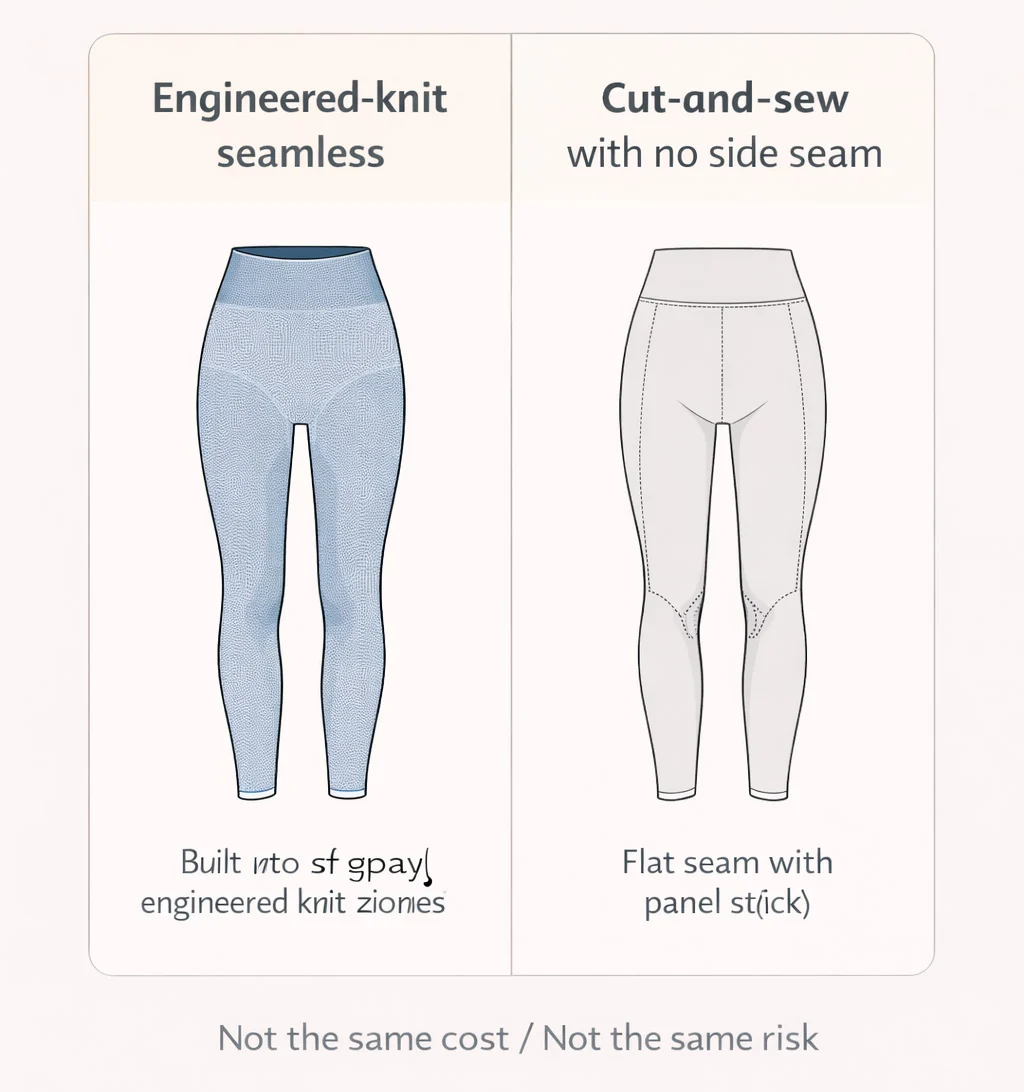
Engineering Seamless Knit Zones Across Different Body Areas
Engineered zones can combine different stitch structures within a garment to create changes in appearance, mechanical resistance or openness. Their effectiveness depends on placement, yarn behavior, transition geometry and fit—not merely on the presence of visible body-mapping lines.
Waistband Zone
A ribbed or otherwise engineered waistband must be assessed for circumference, extension, recovery and rolling behavior. Increased structural resistance does not automatically guarantee improved fit.
Front Hip Zone
The front hip region requires careful evaluation of coverage and extension under body movement. Changes in structure may affect opacity, contour appearance and local fit.
Glute Zone
Decorative contour knitting and functional support should be distinguished. A visual contour pattern does not establish a measurable lifting or compression effect without appropriate product-specific evidence.
Thigh Zone
Local construction changes can influence garment resistance and surface appearance. Buyers should check whether zone placement and stretch remain appropriate across multiple sizes.
Knee Transition
Transitions between different stitch structures may influence the appearance and movement of fitted leggings. The transition should be evaluated in both relaxed and worn conditions.
Underbust Zone
For seamless sports bras, underbust construction affects the relationship between band fit, comfort and support. Overall bra performance also depends on garment geometry and other structural components.
Ventilation Zone
Open structures can be considered for selected body areas where ventilation is a priority. Their placement must also account for coverage, durability and possible local distortion.
Technical Relationship Between Zones
Yarn type, stitch construction and programmed geometry influence how each region behaves under load. Adjacent zones may not extend equally, creating changes in appearance or relative positioning as the garment is worn. Finishing and dimensional changes can further affect the intended layout.
For this reason, a zone map should identify the functional purpose of each region, its relationship to garment measurements and the conditions under which it will be assessed. Product drawings are useful development inputs, but approved physical samples and size-specific evaluation remain necessary before making performance claims.
How Should Seamless Knit Performance Be Verified?
Stretch and support are not interchangeable measurements. Brands should distinguish how far a knitted material extends, how it responds to an applied load, how much residual deformation remains and whether any garment-pressure claim requires a separate method of assessment.
Fabric Elongation
Purpose: Identify the extension of a material in a specified direction and under defined conditions. Elongation results can support material comparison but do not independently establish garment comfort.
Method: Select an appropriate textile test procedure, sample orientation, specimen configuration, loading condition and reporting unit. ISO 20932-1 is one potential reference for strip-based elasticity assessment where applicable.
Acceptance: Buyer-approved limits by fabric direction, product and test condition.
Elastic Recovery
Purpose: Determine the extent to which the tested fabric returns toward its original dimensions after extension. Recovery is especially relevant for fitted waistbands and repeated garment use.
Method: Define the extension procedure, dwell time, recovery interval and measurement conditions. Compare candidates using the same method and note whether the results represent fabric specimens or finished garments.
Acceptance: Agreed recovery criteria linked to the approved material and product requirement.
Residual Fabric Growth
Purpose: Identify persistent dimensional increase following a defined loading and recovery procedure. Residual growth may help explain garment bagging or changes in fit.
Method: Measure the original specimen, apply the agreed extension cycle and determine the remaining dimensional change after the defined recovery period. Relevant test standards must match the material and loading conditions.
Acceptance: Maximum permitted residual growth under the specified procedure.
Stretch Force Assessment
Purpose: Understand the force required to produce a given extension. Two fabrics with similar maximum elongation may feel different because their resistance to stretching differs.
Method: Evaluate the force-extension response using a suitable testing arrangement. Define specimen direction, extension level and units so comparisons reflect the intended garment application.
Acceptance: Agreed force or modulus-related criteria at specified extension levels.
Dimensional Change
Purpose: Assess whether laundering, drying or finishing changes fabric or garment dimensions in ways that could alter fit and zone placement.
Method: Use a suitable washing and drying procedure with an appropriate dimensional-change method, such as ISO 5077 where applicable. Record the specimen, treatment, measurement conditions and direction.
Acceptance: Buyer-approved dimensional-change limits for the tested article.
Garment Pressure Assessment
Purpose: Determine whether a specific compression or pressure claim is supported by direct measurement. Fabric extension alone cannot establish contact pressure on a body.
Method: Where required, agree on a garment-pressure assessment method, measuring locations, size or body-form conditions and reporting requirements before arranging a qualified evaluation.
Acceptance: Only report verified results for the tested garment, size and conditions.
Evidence Notice
These are recommended technical verification categories, not declarations that MOVEVOX has completed all six tests for its seamless products.
Four Feasibility Gates Before Developing Custom Seamless Knitwear
A feasible seamless design must satisfy technical, material, dimensional and commercial requirements together. Before sampling, brands should distinguish design objectives from confirmed manufacturing parameters so that later revisions address identifiable risks rather than undefined expectations.
| Engineering Problem | Procurement Impact | Recommended Review |
|---|---|---|
| Structure and machine mismatch. An intended knit pattern, placement or garment configuration may exceed the practical capabilities of an available machine setup or create unacceptable production complexity. | Development may require substantial redesign, additional trials or an alternative manufacturing route. An attractive concept can become commercially unsuitable even when a partial prototype is technically possible. | Review the critical geometry, structural requirements and available machinery. Separate essential brand features from adjustable details, identify constraints and agree on an appropriate trial before promising final construction. |
| Yarn specification uncertainty. The material request may identify only nominal fiber composition while omitting yarn count, construction, elasticity or relevant finishing requirements needed for evaluation. | Samples produced with different yarn specifications may show changes in fit, surface appearance or mechanical behavior. Material availability may also affect quotation accuracy, timing and minimum order conditions. | Establish a provisional yarn specification, confirm sourcing feasibility and compare any substitutes against the intended performance and appearance. Obtain buyer approval before treating an alternative as equivalent. |
| Undefined performance and measurement criteria. Buyers may request firm support, controlled stretch or close dimensional accuracy without specifying how the outcome should be observed or measured. | Supplier and buyer may disagree during approval or final inspection. Repeated development can occur because the acceptance requirements change after a sample has already been reviewed. | Separate visual preferences, fabric measurements, garment fit and any validated pressure claim. Select appropriate verification methods, define measurement states and obtain written acceptance criteria where the requirement is commercially critical. |
| Unresolved size and zone placement. Knit structures that appear correctly positioned on one sample size may not maintain their intended relationship to body proportions across the complete size range. | Incomplete size validation may create inconsistent customer experiences, additional sample rounds or difficult bulk acceptance decisions. A single approved base size may not represent all production requirements. | Identify critical body and garment measurements, review zone locations across the intended size range and determine which sizes need physical confirmation before approving production grading. |
Understanding Yarn Construction Before Seamless Knit Development
Two yarns with similar fiber percentages can behave differently during circular knitting and subsequent garment use. Buyers should evaluate the structure of the yarn, the role of elastane and the consistency of the supplied material rather than relying exclusively on composition labels.
Diagram A — Yarn Construction
Base Filaments
Polyamide or polyester filaments may form part of the primary yarn system. Filament specification and yarn construction can influence surface appearance, hand feel and manufacturing behavior.
Elastane Component
Elastane contributes extensibility but does not independently determine complete garment recovery or support. Its relationship to the surrounding yarn and stitch structure requires evaluation.
Covering Configuration
Covered or combined yarn constructions can influence the interaction between elastic and non-elastic components. Different covering arrangements should not be assumed technically interchangeable.
Yarn Count
Yarn count and related dimensional characteristics influence material selection and knitting compatibility. Changes can affect fabric mass, appearance and the feasibility of a proposed structure.
Diagram B — Yarn-to-Knit Interaction
Loop Geometry
The knitted loop connects yarn characteristics with fabric structure. Variations in loop formation and stitch arrangement may influence extension, openness and dimensional behavior.
Elastic Allocation
The use and distribution of elastic yarn can change the mechanical response of different areas. Functional objectives need suitable construction and validation.
Surface Coverage
Coverage depends on construction, extension, yarn properties and color. A material appearing opaque in a relaxed condition may behave differently when stretched.
Material Lot
Different yarn lots may require additional consideration for shade, appearance and physical consistency. Any substitution should be evaluated against the approved product requirements.
Overall Engineering Relationship
Material composition is one input into seamless product development, not a complete specification. The interaction between yarn construction, stitch geometry, machine compatibility and finishing determines the resulting garment behavior. When brands approve a material, they should identify which characteristics must remain consistent in subsequent procurement.
MOVEVOX supports material selection and seamless product development. Final compatibility and performance must be evaluated for the actual product rather than inferred from a generic nylon/spandex ratio.
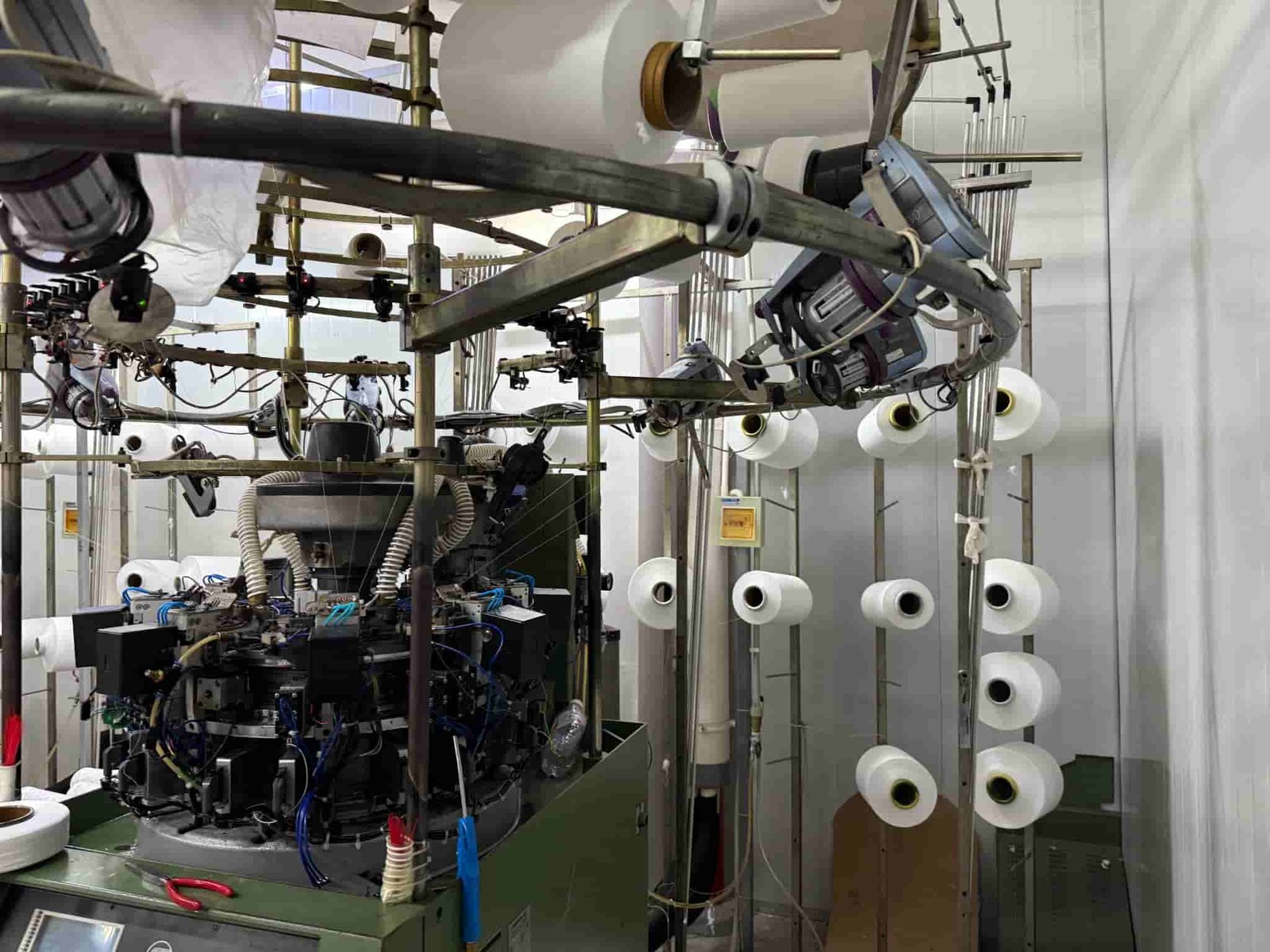
Physical yarn specifications and yarn cone samples for seamless knit development

Verified close-up comparison of yarn and resulting seamless knit structure
Balancing Knit Performance Without Compromising Product Intent
Seamless knit engineering is a process of prioritization. Increasing one desirable property may introduce new limitations in comfort, coverage, production consistency or cost. Brands should decide which properties are essential before selecting and approving a construction.
| Performance Trade-Off | Technical Consideration | Buyer Decision | Suggested Validation |
|---|---|---|---|
| Softness vs Structural Support | A soft hand feel does not establish resistance to extension or garment support. | Define comfort and support separately. | Handle assessment, stretch-force evaluation and fit review. |
| Ventilation vs Coverage | More open construction may alter transparency and snagging behavior. | Specify zone location and required coverage. | Opacity observation under defined extension and appearance inspection. |
| High Extension vs Recovery | Greater extension does not guarantee low residual growth. | Agree on both extension and recovery requirements. | Suitable cyclic or recovery-related assessment. |
| Rib Resistance vs Comfort | Stronger local resistance may change perceived pressure or rolling behavior. | Approve the intended waistband fit. | Size-specific fit review and relevant mechanical measurements. |
| Jacquard Detail vs Distortion | Artwork can change appearance under stretch and across sizes. | Define acceptable pattern appearance in use. | Relaxed and worn-state comparison. |
| Texture Depth vs Consistency | Pronounced surface structures may be more visibly sensitive to production variation. | Set appearance standards and reference samples. | Structured visual inspection of trial and bulk samples. |
Decision Note
The most appropriate construction is not necessarily the one with the highest density, greatest elongation or strongest perceived compression. The correct choice depends on product purpose and approved performance priorities.
Why Seamless Garments Need Defined Measurement Conditions
Elastic garments respond to handling, loading and their surrounding conditions. Reliable dimensional evaluation therefore depends on consistent preparation, clearly identified points of measurement and a distinction between relaxed and stretched states.
Establishing Repeatable Measurement Methods for Elastic Knit Garments
A seamless legging should not be measured as though it were a rigid, non-stretch garment. Its circumference and length may change when the fabric is pulled, compressed, smoothed or positioned differently. Consequently, an agreed nominal measurement does not have a clear operational meaning unless the garment state and measuring technique are also defined.
Measurement state: A buyer may require relaxed-state dimensions, dimensions under a defined extension or both. These measurements must be treated as different data sets. A stretched dimension should never replace a relaxed-state value without an explicit technical agreement.
Point identification: The measurement chart should specify start and end points. For example, waistband width, hip width, rise, inseam and leg opening may require different positioning instructions. Whether a measurement includes a folded edge, elastic band or curve should be made unambiguous.
Sample handling: A garment should not be pulled into the target number. The relevant conditioning, resting or preparation requirements should be agreed according to the product and applicable test or inspection method. A fixed resting period should not be presented as a universal rule without a supporting specification.
Repeated observations: Where variation is likely, repeated measurements or confirmation by a second operator may help identify a disputed result. The brand should decide how results are recorded and compared against approved tolerances.
Technical interpretation: A product can satisfy its relaxed dimensions while displaying an unacceptable fit under realistic extension. Conversely, a minor flat-measurement difference may not always represent an equally significant difference in wear. These observations require product-specific assessment rather than assumptions.
MOVEVOX's existing QC organization supports garment measurement and inspection against confirmed specifications. The precise preparation and acceptance methods for a new seamless knit program should be established with the buyer before sample approval.
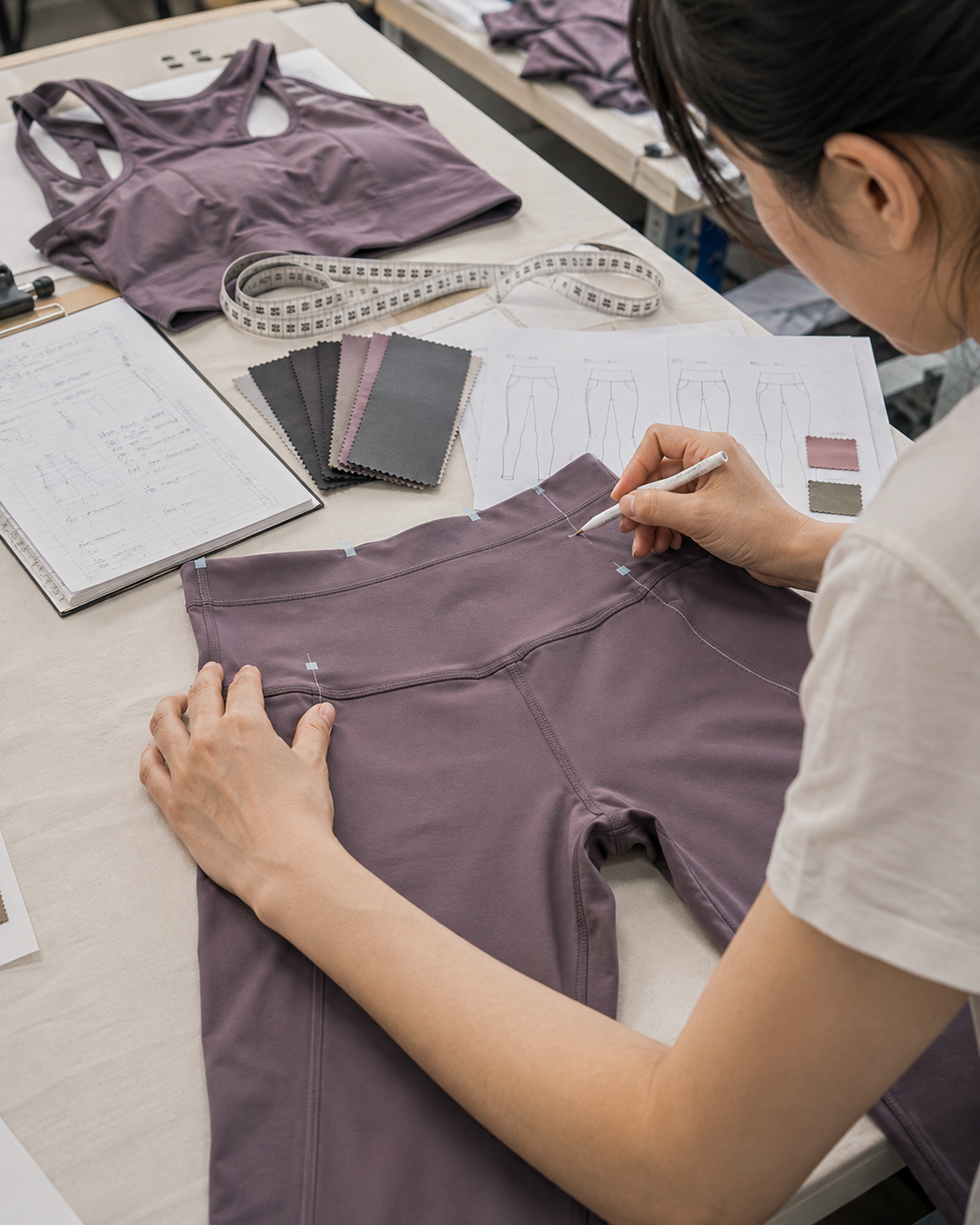
Defining Practical Dimensional Tolerances for Seamless Knit Garments
A tolerance is a negotiated acceptance limit, not a universal guarantee. For seamless garments, different product areas may need different measurement conditions and acceptance criteria depending on fit, construction and end use.
Proposed Measurement Acceptance Matrix
| Measurement Item | Measurement State | Approval Reference | Tolerance Basis | Out-of-Tolerance Response |
|---|---|---|---|---|
| Waistband width | Defined relaxed state | Approved POM | Buyer-approved value | Recheck measurement and investigate |
| Hip width | Defined relaxed state | Approved size sample | Product-specific | Review grading and construction |
| Garment length | Defined relaxed state | Approved specification | Size-specific | Verify preparation and production variables |
| Inseam | Defined relaxed state | Approved reference | Buyer-approved | Evaluate affected lot |
| Leg opening | Relaxed or defined stretch | Approved sample | Structure-dependent | Review edge construction |
| Underbust width | Defined garment state | Approved bra specification | Support-related | Check construction and fit |
| Knit-zone position | Defined reference position | Approved zone map | Position-specific | Review alignment and size |
| Post-care dimensions | Agreed treatment condition | Approved test requirement | Method-specific | Evaluate dimensional change |
Acceptance Principles
Tolerances should be established after the product's measurement state, critical areas and intended fit have been reviewed. Not all garment dimensions have equal functional importance. A buyer may therefore assign different limits to a waistband, a garment length and the placement of a decorative panel.
Numerical examples must not be presented as existing MOVEVOX standards without supporting company documentation or customer approval.
Controlling Knit-Zone Placement Across a Seamless Size Range
Seamless grading involves more than increasing circumference and garment length. The location of engineered areas must remain appropriate for the intended body proportions, product function and extension of the material across different sizes.
Size Development Review Matrix
| Size | Waist / Hip Specification | Garment Length | Zone Position | Physical Fit Review |
|---|---|---|---|---|
| XS | Buyer-approved | Buyer-approved | Compare against XS zone map | Required as agreed |
| S | Buyer-approved | Buyer-approved | Compare against S zone map | Required as agreed |
| M | Buyer-approved | Buyer-approved | Base or reference size if designated | Required as agreed |
| L | Buyer-approved | Buyer-approved | Compare against L zone map | Required as agreed |
| XL | Buyer-approved | Buyer-approved | Compare against XL zone map | Required as agreed |
Fit and Grading Note
This matrix is a specification framework, not an existing MOVEVOX finished size chart. Actual body measurements, garment measurements and tolerances must be supplied or approved for the product. A design based on one sample size should not be assumed to maintain the same visual contour or mechanical behavior in all sizes. Critical zone locations and garment extension should be evaluated against the intended wearer and product use.
Three Important Considerations
- Size increments may alter the relationship between visual pattern placement and body proportions.
- Different knit structures may not respond identically when dimensions are changed.
- A complete size range may require more than one physical sample or fit assessment.
How Post-Knitting Processes Affect Seamless Garment Consistency
The knitted tube is not necessarily the finished garment. Relevant downstream operations may change dimensions, surface appearance and structural behavior. The following is a recommended assessment path; actual processing and responsibility depend on the approved product route.
01 — Knit-Off Review
Inspect the knitted component for obvious structural or surface issues before subsequent processing. Establish whether trial dimensions and visual features provide a suitable reference for the next operation.
Responsible: Knitting Team
QC Point: Preliminary Structure Check
02 — Material Lot Confirmation
Check that the material reference and production instructions remain consistent with the approved requirements. Where multiple yarn lots are involved, identify any necessary comparison or additional approval before further processing.
Responsible: Material / Production
QC Point: Material Reference Review
03 — Fabric Relaxation
Evaluate whether the product needs a defined handling or relaxation condition before dimensional assessment. Preparation conditions should be based on the product and approved technical method, not an unverified universal time requirement.
Responsible: Production Team
QC Point: Condition Confirmation
04 — Dyeing or Treatment
Where garment dyeing or another treatment forms part of the selected route, confirm the responsible facility and the approved process requirements. Temperature, treatment history and material behavior may influence subsequent dimensions.
Responsible: Assigned Processor
QC Point: Process Scope Review
05 — Drying and Setting
If drying or setting is required, evaluate whether the treatment could affect dimensional stability, hand feel or surface appearance. Avoid assuming that one processing condition is suitable for every elastic-yarn construction.
Responsible: Assigned Processor
QC Point: Dimensional Recheck
06 — Post-Knit Assembly
Complete any necessary sewing, binding, gusset construction or finishing operations according to the approved design. Seamless knitting reduces selected seams but does not eliminate all garment assembly requirements.
Responsible: Assembly Team
QC Point: Construction Inspection
07 — Measurement Verification
Check critical dimensions and relevant appearance requirements using the agreed measurement state and inspection criteria. A dimensional difference should be assessed against documented tolerances rather than an informal visual judgment.
Responsible: QC Team
QC Point: POM Acceptance Review
08 — Final Garment Release
Verify the finished garment against the approved product, workmanship, labeling and packaging requirements. Any deviations requiring correction, replacement or buyer authorization should be resolved before the applicable release decision.
Responsible: Quality / Project
QC Point: Final Approval
Review Your Seamless Knit Requirements Before Committing to Bulk
A technical discussion is most useful before materials, knit structures and acceptance conditions become fixed. Share your product concept, Tech Pack or approved sample, together with the required fit, functional zones, quantities and launch plan. MOVEVOX can review the available information and discuss an appropriate development or production route.
Supporting Note: Technical feasibility, material availability, testing scope, sample costs and timing remain subject to project confirmation.
Recognizing Knit Defects Before They Affect Bulk Quality
Not all knit defects share the same cause or commercial severity. Brands should establish defect terminology, likely contributing variables, inspection locations and corrective options before relying on finished-garment inspection alone.
Knit Defect Prevention and Inspection Matrix
| Defect | Possible Cause | Prevention Consideration | Inspection Point | Corrective Assessment |
|---|---|---|---|---|
| Needle Lines | Needle condition or repeated stitch formation variation may produce visible vertical marks in the knitted surface. | Review machine condition and trial-knit appearance when recurring marks appear in the same position. | Compare fabric appearance in critical garment areas under agreed lighting and viewing conditions. | Isolate affected pieces where necessary; investigate machine-related patterns before allowing continued production. |
| Dropped Stitches | Yarn feeding issues, needle problems or stitch formation irregularities can create missing loops or local fabric damage. | Monitor relevant knitting conditions and inspect early production output for repeating structural failures. | Examine the knitted structure, especially in zones where openings are not part of the approved design. | Assess severity, segregate defective articles and determine whether repair or replacement is appropriate. |
| Barré Appearance | Yarn lot differences, tension variation or processing conditions may create unintended horizontal shade or texture bands. | Compare approved yarn references and assess the surface appearance of early knitted production. | Review appearance across garment panels under consistent light and positioning. | Investigate lot and process variables; assess affected material against agreed appearance acceptance criteria. |
| Zone Misalignment | Program settings, size changes or garment distortion may shift the intended placement of engineered areas. | Review reference zone maps and sample dimensions before production release. | Compare the zone position against agreed garment landmarks and approved reference samples. | Determine whether the issue is isolated, size-related or systematic before deciding corrective action. |
| Surface Snagging | Open structures, yarn vulnerability or handling contact may produce pulled loops or damaged surface areas. | Evaluate material and construction suitability, particularly around open-mesh or textured regions. | Inspect areas exposed to handling and garment assembly operations. | Classify the damage, identify handling risks and decide whether affected garments remain acceptable. |
| Dimensional Variation | Differences in knitting, material properties, preparation or finishing may contribute to inconsistent garment measurements. | Define measurement conditions and compare relevant production observations against the approved specification. | Check critical POMs at the agreed stage and according to the documented method. | Recheck disputed measurements, investigate relevant variables and evaluate any affected production lot. |
Engineering Note
A defect matrix is only useful when it is linked to the actual product, reference sample and buyer-approved acceptance criteria. A suspected cause should be investigated rather than treated as a proven diagnosis.
Establishing Clear Inspection Decisions for Seamless Knit Production
Quality inspection should connect observable garment conditions with documented acceptance decisions. The following seven checkpoints describe a suitable buyer-review framework. Specific sampling levels, defect classes and release authority must be confirmed for each project.
01 — Material Reference Check
Compare material identification and available specifications against the approved product requirements. Where yarn properties or lots differ, determine whether the variation requires additional evaluation before knitting.
Check Standards: Material reference consistency; approved substitution status.
02 — Trial Knit Review
Examine trial output for relevant construction, appearance and dimensional concerns. A satisfactory visual pattern alone should not replace assessment of the garment's intended fit or elastic behavior.
Check Standards: Approved structure appearance; critical zone placement.
03 — First Article Confirmation
Review initial production garments against the approved sample and relevant technical requirements. Pay particular attention to features that could indicate systematic production differences rather than isolated workmanship defects.
Check Standards: POM conformity; construction and appearance reference.
04 — In-Line Inspection
Observe production for recurring defects and deviations from the approved reference. Inspection frequency and response requirements should reflect project conditions and the buyer's agreed quality framework.
Check Standards: Defect identification; process variation reporting.
05 — Finished Garment Check
Verify the completed product after required assembly and finishing. Relevant checks may include dimensions, knit surface, seams, labels, appearance and construction details.
Check Standards: Finished workmanship; approved garment measurements.
06 — Exception Classification
Classify observed deviations according to their agreed severity and the potential effect on function, safety, appearance or customer acceptance. Any AQL-based decision must use a specified plan and inspection level.
Check Standards: Buyer defect definitions; agreed disposition authority.
07 — Release Verification
Before the applicable shipment release, confirm that outstanding issues have been addressed and required records are available. Buyer approval or third-party inspection may be required depending on the purchase agreement.
Check Standards: Inspection completion; documented release decision.
Nonconforming Product Handling
When defects are detected, the relevant production should be evaluated against the approved criteria. Potential actions include segregation, further inspection, correction, replacement or escalation to the buyer. The appropriate response depends on severity, recurrence and contractual acceptance requirements.
MOVEVOX has an existing QC team and documented general inspection stages. This expanded seven-gate presentation should be treated as a recommended technical framework until each detailed procedure and record format has been confirmed internally.
Managing Seamless Knit Revisions Without Losing Technical Control
Seamless sample revisions can change dimensions, structure and material response simultaneously. Buyers should distinguish the original development objective from each approved change so that the final sample represents a clearly identifiable production reference.
Step 01 — Define Requirements
Establish the intended garment, critical measurements, yarn objectives, knit-zone layout and performance requirements. Mark uncertain or exploratory specifications instead of treating every initial preference as an approved production requirement.
Buyer Inputs
- Provide the product concept, technical pack or lawful reference sample.
- Identify critical fit, structural and functional requirements.
Proposed MOVEVOX Outputs
- Initial review of available manufacturing and development inputs.
- Clarification of information required for a meaningful sample.
Pass Criterion: Both parties agree which requirements can proceed to development and which remain subject to further evaluation.
Step 02 — Evaluate Trial Sample
Compare the trial garment with the agreed priorities, including visual knit construction, garment measurements, zone placement and intended fit. Any performance claims requiring laboratory or specialist testing should remain open until the necessary evidence exists.
Buyer Inputs
- Review comments and relevant fitting observations.
- Approval priorities for structure and garment appearance.
Proposed MOVEVOX Outputs
- Discussion of observed differences and feasible revision options.
- Updated sample requirements based on buyer feedback.
Pass Criterion: The buyer identifies which features are accepted, rejected or require a further trial before production consideration.
Step 03 — Control Revisions
Record the requested changes to structure, material, dimensions or other critical specifications. A revision may require additional review even when the garment retains a similar visual design.
Buyer Inputs
- Written confirmation of requested specification changes.
- Acceptance of any revised development assumptions.
Proposed MOVEVOX Outputs
- Updated sample instructions and relevant reference information.
- Clarification of changes affecting production feasibility.
Pass Criterion: Revised technical requirements are clearly identified and the next sample can be compared against the previous approved state.
Step 04 — Approve Production Reference
Confirm the final sample and the specifications required to support bulk manufacturing. Any open technical issues should be resolved, excluded by agreement or subjected to a defined follow-up approval.
Buyer Inputs
- Final approved sample and specification confirmation.
- Order quantities, size breakdown and commercial approval.
Proposed MOVEVOX Outputs
- Confirmed production reference and relevant project instructions.
- Review of material, timing and quality requirements before production.
Pass Criterion: Bulk production may proceed only under the agreed approval and commercial conditions.
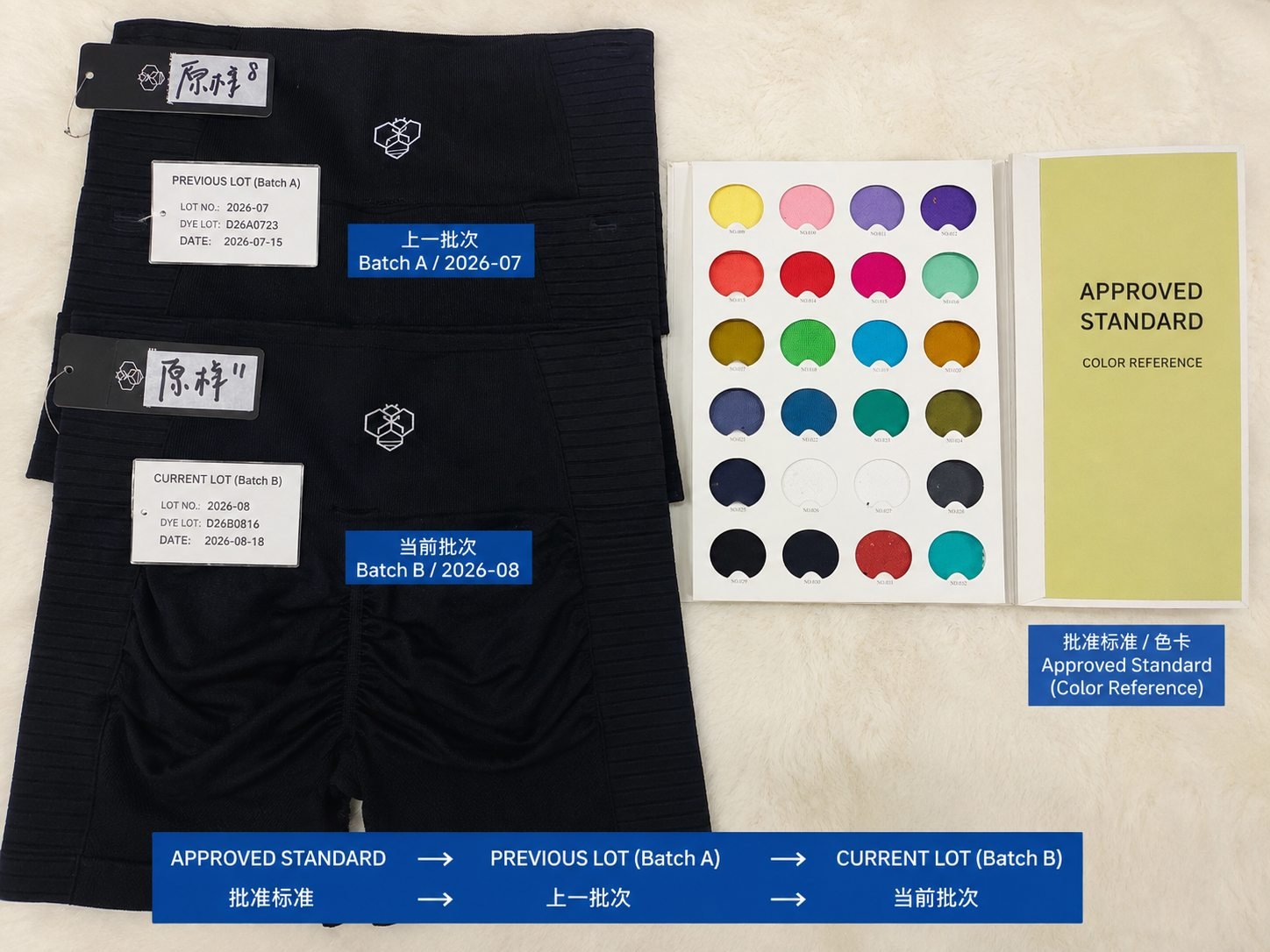
Connecting Approved Knit Specifications with Repeatable Bulk Manufacturing
A seamless garment's approved appearance is only one part of its production reference. Material identity, construction instructions, measurements and inspection requirements must also remain understandable when development work moves into commercial production.
01 — Yarn Reference
Identify the approved yarn characteristics, supplier information and relevant material references. Any later substitution should be reviewed against critical product requirements rather than accepted based only on nominal composition.
Document: Yarn Specification
02 — Knit Requirements
Record the approved structure, functional zones and important construction features. These references help distinguish an intentional knit effect from a manufacturing deviation.
Document: Knit Specification
03 — Program Reference
Where relevant and available, associate the accepted development state with an identifiable knitting program or technical instruction reference. Program information may remain confidential but should be controlled appropriately.
Document: Version Reference
04 — Approved Sample
Maintain a clearly identified sample or agreed physical reference representing accepted appearance, dimensions and workmanship. A sample should not replace written conditions that cannot be evaluated visually.
Document: Approved Sample
05 — Production Confirmation
Review relevant production inputs before commercial knitting begins. Machine allocation, yarn availability and outstanding technical exceptions should be considered in relation to the confirmed order.
Document: Production Instruction
06 — First Article
Compare initial production against the approved reference and critical requirements. Any significant systematic variation should be evaluated before the affected production continues.
Document: First Article Record
07 — Quality Inspection
Check identified attributes at appropriate production stages. The exact sampling method, defect categories and release criteria should follow the agreed inspection requirements.
Document: Inspection Record
08 — Shipment Reference
Connect final accepted quantities, relevant SKU identification and packing information with the confirmed purchase order. Required deviations or approvals should remain traceable.
Document: Packing List
Important Clarification
This is a recommended traceability model built around relevant MOVEVOX development and QC capabilities. It must not be presented as an already deployed digital traceability system or a completed customer-specific audit trail without supporting records.
Verify the Manufacturing Resources Behind Our Seamless Knit Capability
MOVEVOX operates a manufacturing base in Yiwu with 28 Italian Santoni seamless knitting machines and complementary garment production capabilities. The following evidence categories help technical buyers connect physical resources with development, production and quality responsibilities.
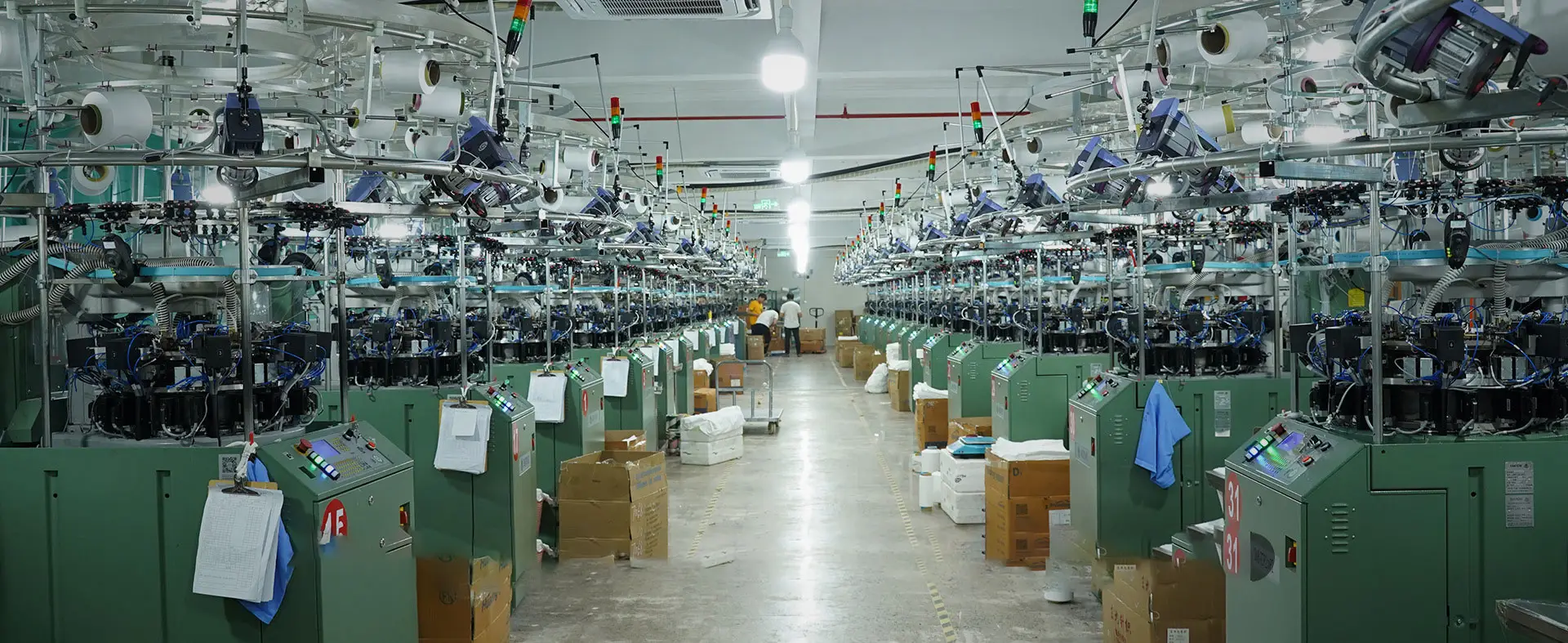
Santoni Knitting Equipment
The 28 Santoni seamless knitting machines are a confirmed element of MOVEVOX's manufacturing base. Buyers evaluating particular knit structures should still request relevant machine suitability information because equipment count alone does not establish compatibility with every design.
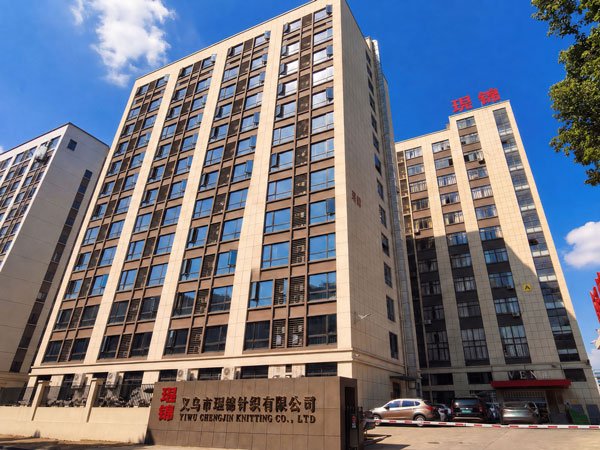
Seamless Production Area
Actual production-area images can help buyers examine the physical environment associated with seamless manufacturing. A photograph supports location and equipment visibility but does not independently demonstrate machine utilization, output quality or current available capacity.

Product Development Workspace
MOVEVOX's product development organization supports technical communication, fit and sample development. Real workspace images should help buyers identify the activities and resources available, without implying that every team member specializes in knitting-program engineering.
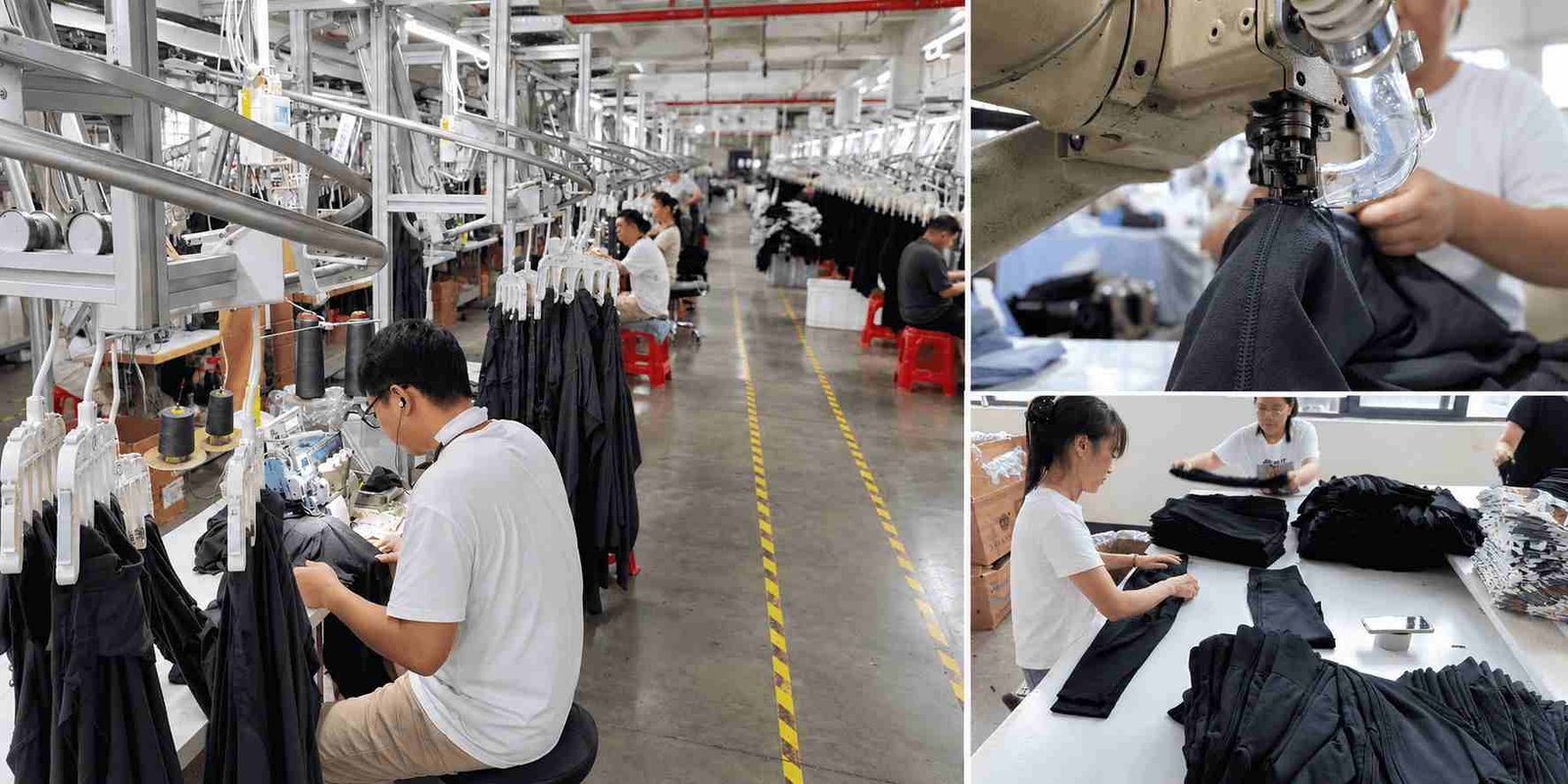
Garment Assembly Equipment
Complementary cut-and-sew equipment supports products and construction details that require assembly after knitting. Buyers should review the appropriate route for their design instead of assuming every seamless garment exits the knitting machine fully finished.
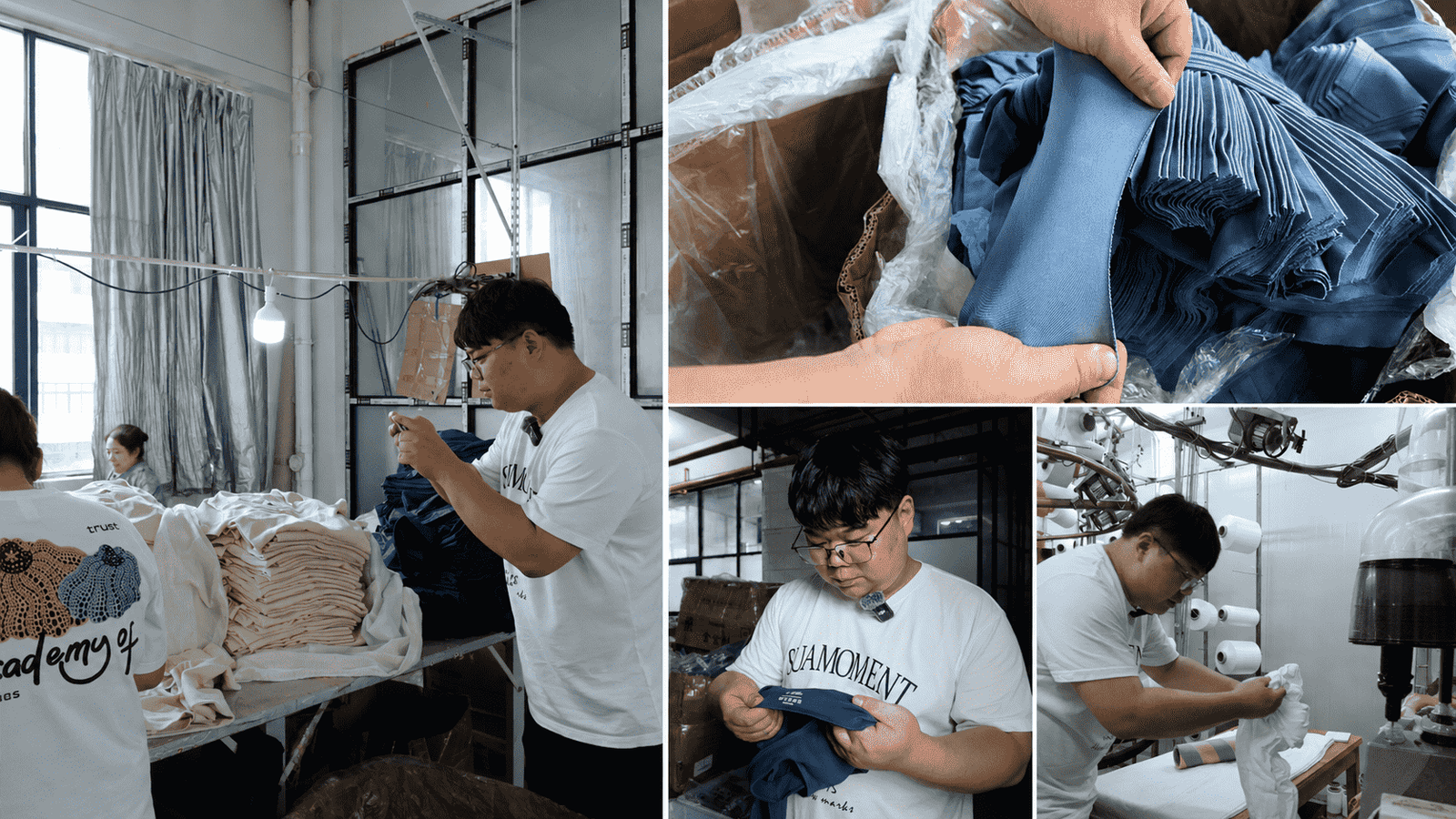
Quality Inspection Resources
MOVEVOX has five QC personnel within its existing quality organization. Actual inspection images can show measurement and workmanship checking, provided that the represented procedures correspond to real current operations.

Packing and Dispatch Area
Packing and shipment preparation form part of commercial garment execution. Real facility images can support operational transparency, while final packing details should still follow the buyer's approved SKU, label, carton and shipping requirements.
A Practical Technical Audit Checklist for Seamless Manufacturing Suppliers
Before approving a seamless manufacturing partner, sourcing and technical teams can use a documented evaluation checklist. The following assessment is a buyer resource, not a certification score or claim that MOVEVOX has passed an external brand audit.
A — Manufacturing Resources
- Actual seamless knitting machines can be identified and their manufacturing location verified.
- Product-specific machine compatibility can be discussed using credible technical information.
- Internal and externally coordinated production activities are clearly distinguished.
- Factory or technical audit arrangements can be discussed with responsible personnel.
B — Knit Engineering
- Yarn requirements extend beyond nominal fiber composition when the product demands additional detail.
- Critical knit structures and functional zones have clear specification or sample references.
- Important size and zone-placement requirements can be reviewed against the development plan.
- Changes to material or knitting instructions have a defined approval requirement.
C — Quality and Repeatability
- Garment measurement conditions and points of measurement can be clearly agreed.
- Stretch or recovery claims are linked to suitable methods and evidence.
- Knit-specific defects can be described using agreed acceptance criteria.
- Approved samples can be connected with applicable bulk inspection requirements.
D — Commercial Qualification
- MOQ assumptions reflect yarn, color, structure, size and production complexity.
- Sample timing is confirmed only after the necessary development information is available.
- Production allocation is reviewed against actual order requirements and material readiness.
- Testing reports and certificates are checked for holder, sample, validity and scope.
Interpreting the Evaluation
Use Yes/No or a 1–5 internal rating for each item. A low score may indicate missing evidence rather than confirmed manufacturing failure. High-risk items, including unknown manufacturing responsibility, unapproved material changes and unsupported performance claims, should receive additional review regardless of the total score.
Buyers should establish their own weighting and approval thresholds. This checklist is intended to improve RFI and technical-audit consistency, not substitute for an on-site audit or product testing.
Understanding Material Compliance and Testing Evidence for Export Markets
European and North American buyers may request chemical, labeling and performance documentation for seamless activewear. These requirements should be evaluated separately because chemical restrictions, fiber labeling, mechanical performance and voluntary certification have different purposes and evidence scopes.
EU REACH Restrictions
REACH Annex XVII contains restrictions on specified substances in relevant articles, including certain clothing and textile applications. The applicable entry, material, concentration limit and market requirements should be checked against the actual product. One limited-substance test cannot demonstrate unrestricted compliance with every REACH provision.
Applicable Scope: Relevant substances, materials and articles placed on the EU market.
Buyer / Supplier Response: Identify the required restricted-substance scope, choose suitable material or product testing and review laboratory reports for sample identity, test method and covered substances.
Buyer Restricted Substance Lists
Many apparel brands maintain their own restricted substance lists or testing protocols. These may contain requirements beyond a single regulatory test report. The requested scope can vary according to product category, materials, finishes and intended market.
Applicable Scope: Requirements specified by the purchasing brand for the relevant merchandise.
Buyer / Supplier Response: Confirm the current buyer RSL, sampling plan, reporting format and responsibility for testing before claiming that a particular material or finished product meets the requirements.
United States Textile Labeling
For covered textile products, U.S. Federal Trade Commission requirements address fiber content, country-of-origin disclosure and identification of the responsible manufacturer, importer or dealer. Other product-specific requirements may also apply depending on the article and how it is sold.
Applicable Scope: Covered textile products marketed in the United States.
Buyer / Supplier Response: Review the final product label with the importer or brand, using correct fiber information, applicable origin details and the required business identification.
Canadian Textile Labeling
Canada's textile labeling rules include fiber information and responsible dealer identification. Applicable bilingual disclosure requirements and product-specific presentation rules should be checked before production, particularly where multiple fiber components or material sections are present.
Applicable Scope: Consumer textile articles offered in Canada under the relevant legislation.
Buyer / Supplier Response: Confirm fiber terminology, percentage declarations, dealer identification and language requirements using the applicable current regulatory guidance and approved artwork.
Test Reports and RoHS Scope
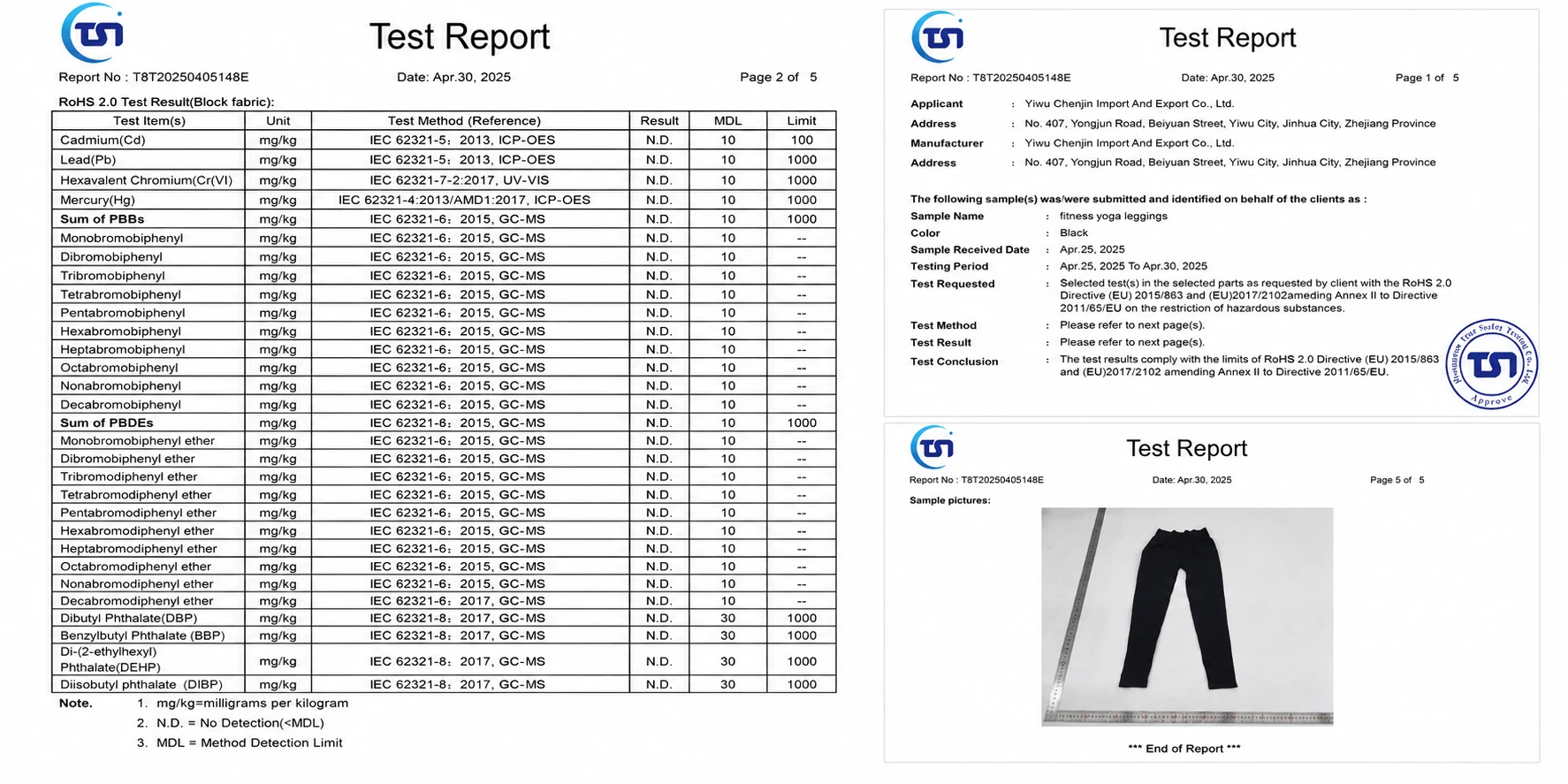
MOVEVOX has a 2025 RoHS-related report and certificate for a tested black fitness yoga leggings sample, together with a separate REACH Annex XVII phthalates report for the tested sample. These documents do not establish conformity for all seamless products, colors, yarns or production batches.
The RoHS Directive primarily addresses electrical and electronic equipment. A RoHS-related laboratory result for garment material must not be represented as a general legal certification for ordinary activewear.
Applicable Scope: The identified tested specimen and the explicitly listed test items.
Buyer / Supplier Response: Share complete relevant reports for review, clarify their limits and arrange additional testing when a new product or buyer specification requires different evidence.
Source References for Verification
- ECHA — REACH Annex XVII restrictions and applicable entries.
- FTC — U.S. textile and wool labeling guidance.
- Competition Bureau Canada — textile labeling requirements.
- TST20250405148E — April 30, 2025.
- TST20250405148EC — April 30, 2025.
- TST20250405150E — April 30, 2025.
How Knit Complexity Affects Production Allocation and Lead Times
Seamless production timing depends on more than the quantity of garments ordered. Yarn availability, development complexity, sample approval, machine scheduling and inspection requirements influence when a particular program can enter and complete commercial production.
Proposed Production Timeline
| Phase | Timing Basis | Prerequisite | Buyer Confirmation |
|---|---|---|---|
| Material Review | Project-specific | Yarn and specification inputs | Approve material direction |
| Knit Feasibility | Project-specific | Critical structure and size requirements | Confirm development assumptions |
| Sample Development | Usually 5–10 working days for standard samples after details are confirmed | Agreed development details | Review sample |
| Technical Approval | Buyer-dependent | Sample and required evidence | Approve or request revision |
| Bulk Allocation | Schedule-dependent | PO, materials and production approval | Confirm delivery plan |
| Bulk Production | Commonly around 20–35 days for standard orders, subject to conditions | Confirmed production release | Review agreed progress points |
| Final Inspection / Handover | Order-specific | Finished products and required documents | Accept applicable shipment arrangements |
Factors That Can Change the Schedule
Customized yarns, additional trial knitting, new structures, numerous colors, size-set revisions or external testing may alter the timetable. The 5–10 working-day reference describes normal sample development after details are confirmed, not every complex knitting program.
MOVEVOX's normal managed combined monthly delivery capability is approximately 150,000–200,000 pieces across its manufacturing and controlled supply network. This is not a statement of available seamless knitting capacity for an individual order. Actual allocation must be reviewed against live production requirements.
Understanding Seamless Knit MOQ by Product and Program Complexity
MOQ should reflect the complete manufacturing arrangement rather than a single number applied to every product. Existing materials, new yarn requirements, knitting changes, colors, sizes and production quantity can create different purchasing and development conditions.
Standard Structure Programs
For a project using suitable existing materials and a manageable established construction, MOVEVOX's normal seamless customization entry point can begin around the 100-piece level, subject to product and order conditions. The number should not be interpreted as a guaranteed MOQ for every style, color or size combination.
The brand should confirm garment quantities, available colors, labeling needs and whether development modifications are necessary before expecting a final commercial quotation.
Quantity: Approximately 100 pieces as a conditional starting reference.
Color / Size Split: Subject to confirmation.
Cost Consideration: Material availability, quantities and customization.
Modified Knit Programs
Programs requiring new knit zones, revised pattern placement, additional size development or structural modifications may need separate development review. The production MOQ and sampling conditions can differ from those of an existing construction, even when the finished product appears similar.
The sourcing team should provide the intended modifications, critical design priorities, approximate quantity and target timing. Cost implications should be discussed after the required knitting and approval work is understood.
Quantity: Project-specific; no fixed universal threshold.
Color / Size Split: Based on program complexity.
Cost Consideration: Development, trial knitting and production setup.
Custom Yarn Programs
Custom yarn specifications, dedicated colors or special material requirements may introduce purchasing minimums distinct from the garment MOQ. Additional planning may be necessary when multiple SKU designs share material requirements or when the supplier must source a specific yarn construction.
Brands should distinguish initial development quantities, yarn purchasing conditions and subsequent bulk order quantities rather than assuming one MOQ covers every component.
Quantity: Subject to yarn and order assessment.
Color / Size Split: Dependent on material and production conditions.
Cost Consideration: Yarn procurement, material development and order distribution.
Preparing Technical Information for an Accurate Seamless Knit RFQ
A useful RFQ should identify the product, required manufacturing outcome and commercial assumptions. Incomplete information can still support an initial discussion, but critical unknowns should be highlighted before a detailed production quotation is treated as final.
Product Sketch
Required where available. Provide clear front, back and relevant detail views. Drawings should distinguish decorative lines from intentional knit structures and identify construction details that may affect the manufacturing route.
Product Description
Required. Specify whether the project concerns leggings, sports bras, shorts, tops or coordinated sets. Include the intended activity and important product requirements without relying solely on broad descriptions such as premium or supportive.
Measurement Specification
Recommended. Supply size charts, critical POMs and relevant fit references. If dimensions are preliminary, identify which measurements need development support and which are already approved for production.
Yarn Requirements
Recommended. Include fiber composition, preferred yarn characteristics and any existing material reference. Where a specific yarn specification is mandatory, provide sufficient information to evaluate sourcing and machine compatibility.
Knit-Zone Layout
Recommended for engineered designs. Identify rib, mesh, jacquard, texture or other functional areas, including approximate location and intended role. Mark performance requirements separately from visual preferences.
Performance Requirements
Project-dependent. Describe stretch, recovery, dimensional stability, opacity, support or other relevant objectives. Include existing test methods and acceptance criteria if available rather than relying only on descriptive claims.
Branding Artwork
Required if applicable. Provide approved logo artwork and its intended position or integration method. Knitted jacquard artwork may require different evaluation from printed, transferred or sewn-on branding.
Color Standards
Recommended. Supply Pantone references, approved samples or other suitable color information. Clarify whether existing material colors are acceptable or whether new color development will be required.
Order Breakdown
Required for a commercial quotation. Provide estimated total quantities, styles, colors and sizes, including initial order expectations and any planned repeat quantities if known.
Target Schedule
Recommended. Identify the intended sample approval date, bulk delivery requirement and any external testing or brand qualification stages that could affect the development and production calendar.
When Information Is Incomplete
MOVEVOX can begin a discussion using a Tech Pack, a lawful physical reference sample or clear product requirements. Missing details should be resolved through technical review before firm production commitments are made. Sampling, material sourcing, quantity and timing remain subject to confirmation.
Seamless Knit Engineering Glossary for Activewear Sourcing Teams
A shared technical vocabulary helps brand designers, sourcing managers and manufacturers distinguish fabric construction, measurable performance and approval criteria. These definitions are general industry explanations; project-specific terminology should be clarified during development.
Circular Knitting
A method of producing knitted tubular structures using circular knitting equipment. In seamless apparel, circular knitting can integrate selected structural zones and reduce certain assembly seams, although additional sewing or finishing may still be required.
Machine Gauge
A designation related to needle density on knitting equipment. Gauge influences the range of potential stitch constructions, but it does not independently determine finished garment quality or prove compatibility with every yarn or product design.
Stitch Density
The concentration or arrangement of knitted loops within a defined area. It may affect coverage, dimensions, surface appearance and mechanical behavior, but its effects depend on yarn characteristics and the complete fabric structure.
Rib Structure
A knitted arrangement characterized by alternating knit formations that produce a recognizable ribbed surface. Rib constructions can offer different extension and recovery characteristics depending on stitch configuration, yarn selection and finishing.
Mesh Structure
A knitted construction containing relatively open areas or engineered openings. Mesh can be used to create ventilation-oriented zones, but openness may also influence coverage, snagging resistance and local strength.
Jacquard Knitting
A knitting technique capable of creating programmed patterns or structural effects within the fabric. Jacquard elements may change their apparent proportions when a garment stretches, making placement and size evaluation important.
Engineered Zone
A defined garment area constructed differently to support a specific visual, mechanical or ventilation objective. The presence of an engineered zone does not establish a quantified compression, lifting or physiological effect without appropriate validation.
Fabric Elongation
The dimensional extension of a textile specimen under specified conditions. Elongation must be associated with a direction, test method and loading condition before results from different materials can be meaningfully compared.
Elastic Recovery
The extent to which a stretched fabric returns toward its original dimensions after load removal. Recovery is influenced by fabric construction and test conditions and should not be inferred solely from fiber content.
Fabric Growth
Residual dimensional increase after a defined loading and recovery procedure. Growth can be relevant when evaluating bagging or changes in garment shape, especially in fitted products subjected to repeated extension.
POM
Point of Measurement. A defined location or measuring route used to evaluate garment dimensions. Reliable POM assessment requires a consistent garment state, measuring technique, reference size and approved tolerance.
Dimensional Tolerance
An allowed difference between a specified garment measurement and an observed result. Tolerances should be approved for relevant POMs and measuring conditions rather than automatically applied as one value across all garment components.
Frequently Asked Questions About Seamless Knit Manufacturing and Quality
These answers address technical and commercial questions commonly raised during supplier screening, sample development and bulk-production planning. Product-specific conditions should be confirmed during the relevant technical review.
1. Can MOVEVOX manufacture custom seamless knit activewear?
MOVEVOX operates 28 Italian Santoni seamless knitting machines and supports private-label activewear development. The manufacturing suitability of a particular structure, yarn, size range or garment configuration must be reviewed against the actual project requirements. Not every requested design can be assumed feasible without technical assessment.
2. Can different knit structures be combined within one garment?
Circular knitting can support different structures within suitable garment designs. Rib, mesh, jacquard and other knit effects may be considered depending on equipment, yarn and product requirements. Their suitability should be evaluated through technical development and physical samples.
3. How are engineered knit zones evaluated?
The evaluation should identify each zone's intended role, position, construction and critical dimensions. Visual alignment, garment fit and relevant performance requirements may need separate approval. A body-mapped appearance alone does not demonstrate a measured pressure or support benefit.
4. How can stretch and recovery be tested?
Brands should first define the relevant property and select an appropriate method. Testing should specify direction, specimen, loading conditions and acceptance criteria. MOVEVOX can discuss buyer-required testing arrangements, but no product-wide stretch or recovery results should be assumed without actual reports.
5. How should seamless garment tolerances be determined?
The buyer and manufacturer should agree on critical POMs, garment measurement state, size-specific requirements and acceptable variation. Different parts of a seamless garment may require different acceptance criteria. A single universal tolerance should not be assumed for every style.
6. Can knitted zone locations change between sizes?
Yes. Differences in garment geometry, construction and worn extension may change the relationship between a knitted zone and the wearer's body. Important functional or visual zones should therefore be evaluated during size development rather than assumed identical across all sizes.
7. What defects should be checked during seamless production?
Relevant concerns may include needle-related marks, dropped stitches, unwanted barré, surface damage, zone misalignment, dimensional variation and irregular workmanship. Defect significance depends on the intended product, approved sample and agreed acceptance criteria.
8. How does sample approval support bulk consistency?
An approved sample should be connected with specifications for materials, construction, measurements and relevant inspection criteria. MOVEVOX uses approved samples and quality management processes as part of production execution. Any additional traceability format should be established for the specific buyer program.
9. What is MOVEVOX's seamless MOQ?
MOVEVOX's normal seamless customization starting point can be around 100 pieces, subject to project conditions. Custom yarn, special colors, structure development and SKU distribution may affect the applicable minimums. A confirmed MOQ requires a review of the proposed order.
10. What should we submit for technical review or quotation?
Provide your product concept or Tech Pack, available size requirements, material preferences, knit-zone information, intended quantities and target delivery schedule. Existing samples, test criteria and artwork may also be useful. MOVEVOX can discuss missing information before a detailed development or manufacturing commitment.
Send Us an Inquiry
Tell us your needs, and our team will get back to you within 24 hours.