
Private Label Activewear Manufacturer
Develop, manufacture and scale private-label activewear through one accountable MOVEVOX supplier relationship covering Seamless and Cut & Sew production.
MOVEVOX supports established activewear, yoga, Pilates, gym and athleisure brands from technical review and sampling through branding, bulk production, quality control and shipment execution. Projects can start from a Tech Pack, a lawful reference sample, or a clearly defined product requirement.
Italian Santoni seamless knitting equipment in the owned production system.
Typical standard sample-development window after development details are confirmed.
Seamless / Cut & Sew base garment starting points; effective MOQ depends on customization.
Current stable managed delivery range for quality-released finished garments across the controlled network.
Capacity, MOQ and lead-time figures are project-dependent and are confirmed against style, materials, colors, branding, facility allocation and quality-release requirements.
Built for Brands Managing Real Supply Chains
This page is intended for buyers who need repeatable private-label development and production, not a one-off logo application or consumer-style product catalog.
Established Activewear Brands
You already manage recurring collections, approved specifications and repeat orders. You need a manufacturer that can translate product standards into controlled bulk execution, maintain version discipline and support both product development and ongoing production without forcing every SKU into one manufacturing method.
Large Private Label Buyers
You manage multiple styles, colors, sizes and commercial deadlines rather than one isolated garment. MOVEVOX is structured to coordinate product development, materials, production allocation, QC, packaging and shipment through one accountable project window while keeping production-site requirements visible.
Growing Multi-SKU Brands
Your first priority may be controlled product validation, but your supplier must also have a credible path to repeat orders and larger volumes. MOVEVOX combines relatively flexible base MOQs with a controlled capacity network so the sourcing relationship does not need to be rebuilt after demand grows.
Supplier Qualification Starts With Verifiable Controls
A mature sourcing decision should test legal identity, manufacturing reality, development, quality, capacity, production-site governance, audit readiness and confidentiality before price alone.
MOVEVOX brand operated by Yiwu Chenjin Import And Export Co., Ltd.
Yiwu owned production base with Seamless and Cut & Sew manufacturing capability.
Tech Pack, lawful reference sample and defined concept inputs can enter development review.
Customer standards, approved samples and controlled inspection gates guide bulk release.
Capacity is checked by style, SKU, material, facility allocation and quality-release requirements.
Customer factory visits, video factory review and third-party inspection can be supported.
Customer approved-factory-only or written site restrictions take precedence.
NDA and need-to-know handling can support unreleased brand development.
The Sample-to-Bulk Gap Buyers Need Controlled
A strong sample is not enough. The supplier must convert approvals into current production standards so materials, fit, branding and workmanship remain controlled during bulk execution.
Material Drift
A sample can be approved with one material condition while bulk uses a different batch, shade or performance profile.
Lock approved material requirements, track batches and route material changes back through written review.
Version Drift
Old Tech Pack, artwork or measurement revisions can stay active in production and create inconsistent execution.
Maintain a current production version and update bulk documents after approved revisions.
Fit & Measurement Drift
A visually similar garment may still move outside approved POM tolerances across sizes or batches.
Use approved measurements, defined measuring methods, first-article checks and in-process measurement control.
Branding Drift
Logo size, position, color, label or packaging can change between sample approval and bulk.
Freeze artwork, placement and packaging references before release and verify them during production and final inspection.
Six Capabilities Behind One Supplier Relationship
The value is not a long capability list. Each capability answers a buyer question about development, manufacturing route, brand execution, quality ownership and scale.
Seamless Manufacturing
MOVEVOX operates 28 Italian Santoni seamless knitting machines in its owned production system. Seamless projects are managed through yarn selection, knitting structure, size and stretch requirements, sample approval and bulk controls rather than being treated as ordinary cut garments with fewer seams.
Cut & Sew Manufacturing
The owned production system also includes approximately 24 primary sewing and garment-production machines. Cut & Sew projects are developed through fabric, pattern, cutting, seam construction, fit, branding and garment QC, allowing the manufacturing route to follow product structure instead of forcing one process onto every SKU.
Product Development
Projects can begin with a Tech Pack, lawful reference sample or clearly defined product requirement. The development objective is not merely to make one attractive sample, but to establish material, measurement, fit, construction and branding standards that can be carried into bulk production.
Brand Execution
Private-label support can cover product specifications, color, logo methods, main labels, care labels, size labels, hangtags and packaging. Each element is confirmed against its own MOQ, lead-time and technical constraints rather than being presented as an unlimited one-click customization package.
Quality Control
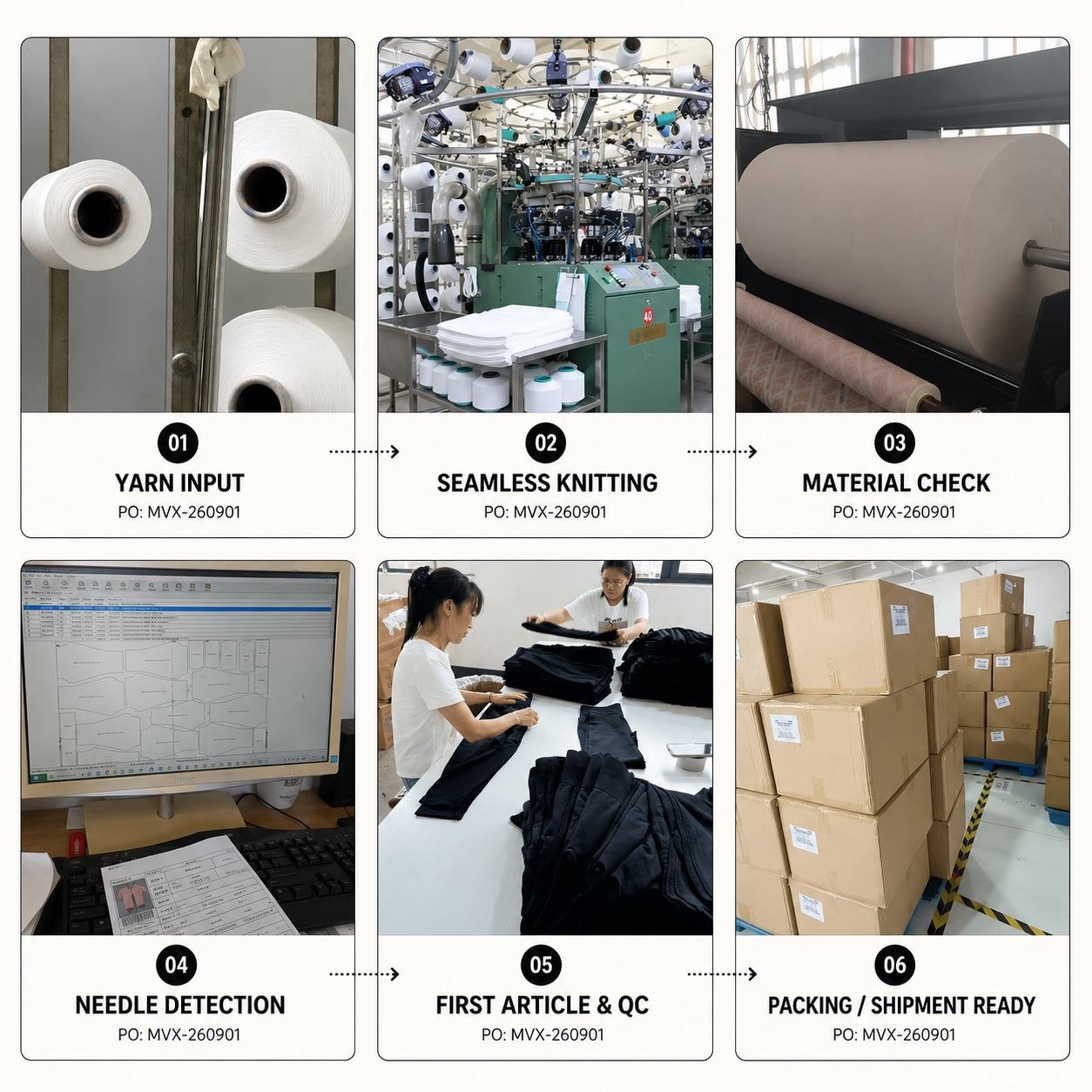
Customer Tech Packs, QC manuals, approved samples and written requirements take priority. Quality control is organized around incoming materials, pre-production review, first article, inline inspection, finished-garment checks, packaging verification, rework/re-inspection and final release.
Scalable Production
MOVEVOX uses an owned core facility plus a controlled satellite-factory network for capacity expansion. Standards, materials, WIP, QC and release remain under MOVEVOX management, while customer restrictions on approved production sites are followed through written project controls.
See the Manufacturing System Behind the Claims
Real factory evidence should answer what is owned, what happens on site, how development and QC connect to production, and where finished orders are prepared for release.
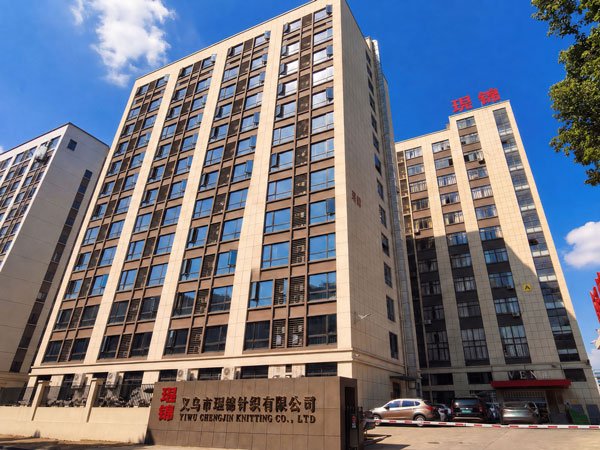
Yiwu Production Base
Owned production base in Yiwu, Zhejiang, China. Use a current wide-angle facility image that clearly identifies the actual MOVEVOX production environment without showing unrelated customer information.
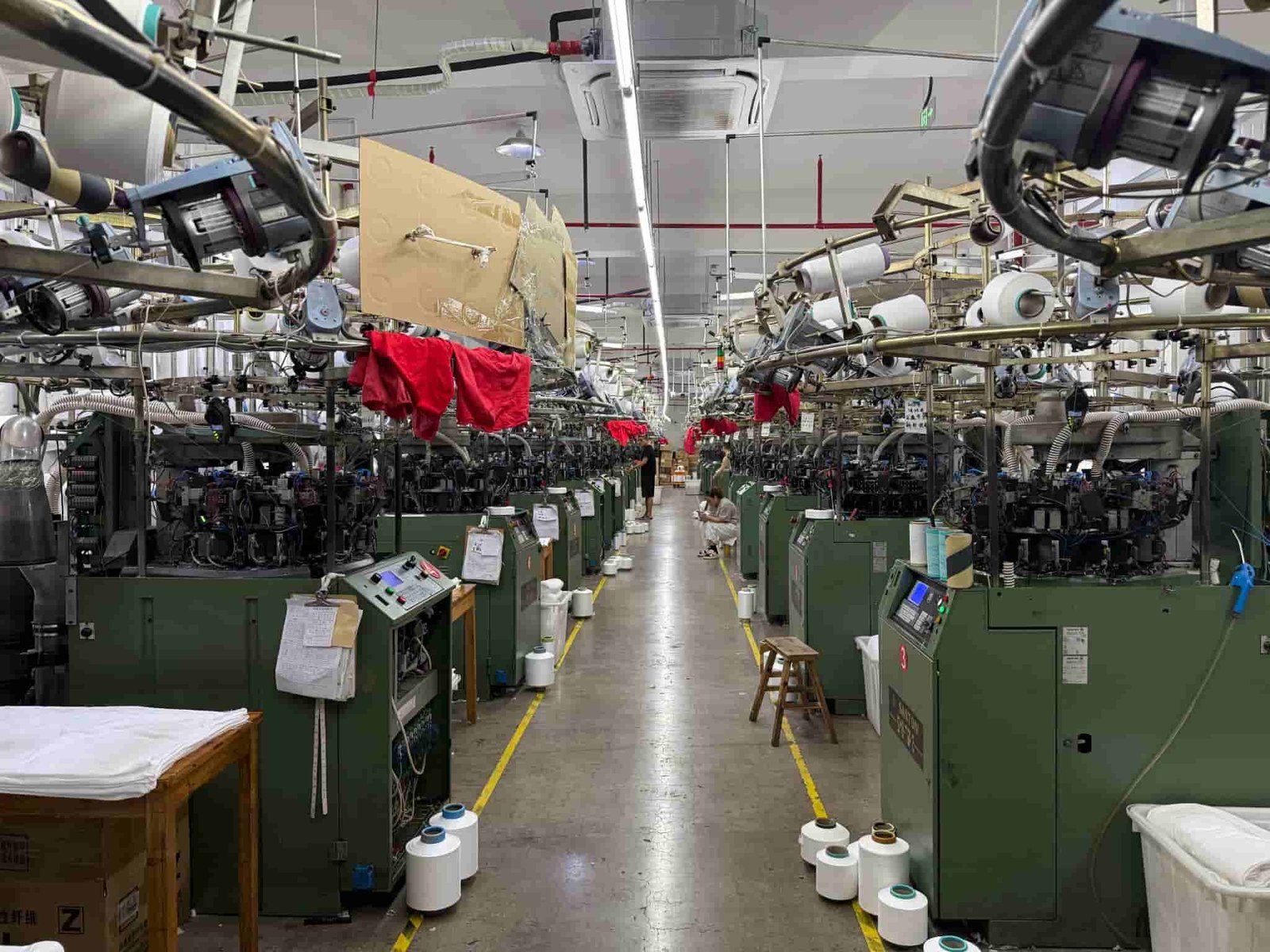
Santoni Seamless Area
Show MOVEVOX-owned Santoni seamless knitting equipment in actual operation. The image should demonstrate real machine access and the production environment rather than a supplier catalog photo.
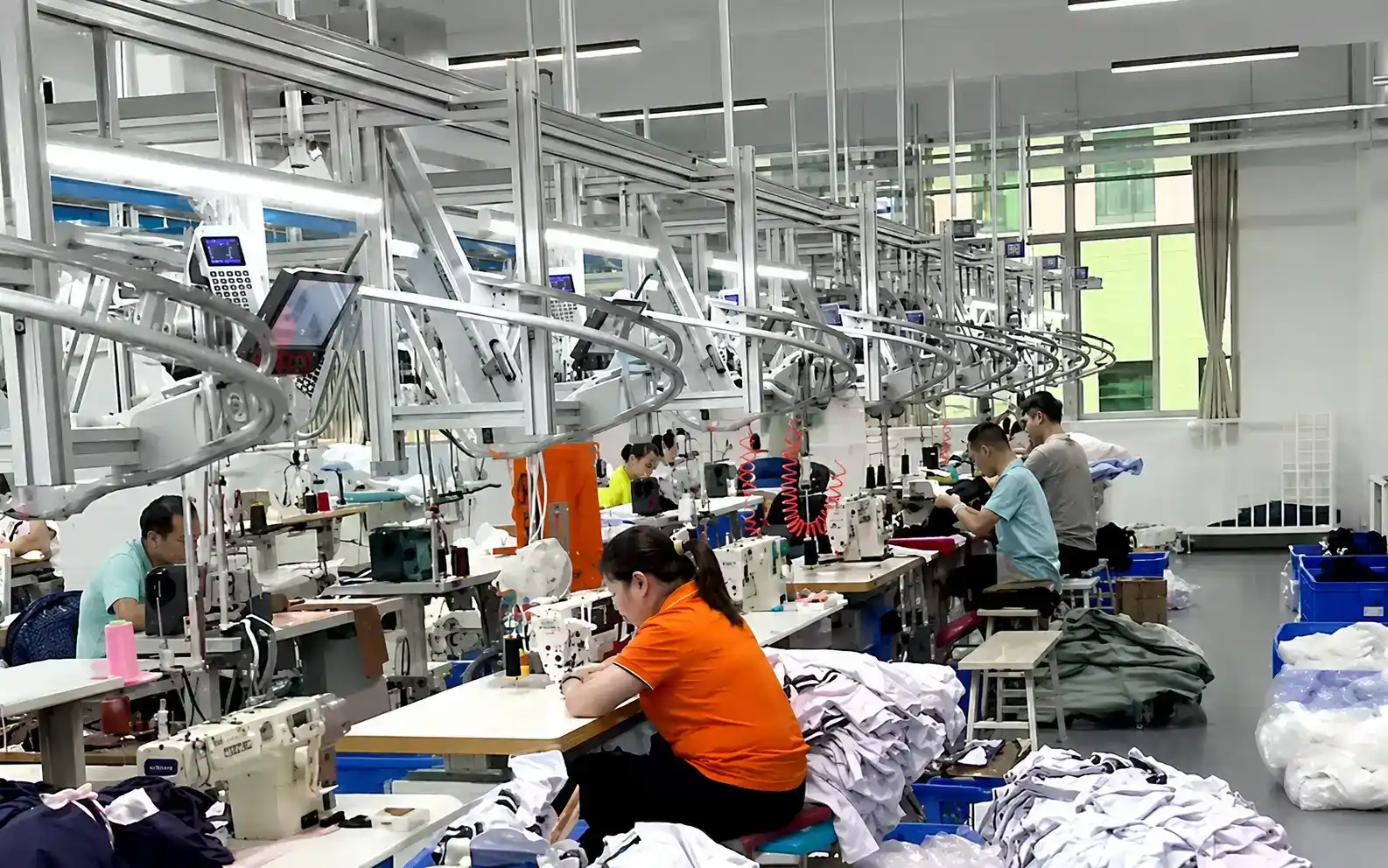
Cut & Sew Area
Show the actual cutting, sewing or garment-construction area used for Cut & Sew activewear. Avoid staged consumer product photography; the goal is manufacturing proof.
Sample Development
Show pattern, sample, technical review or sample-making work that proves development happens as a controlled manufacturing activity. Remove visible customer brand names and confidential Tech Packs.
QC Inspection
Show measurement, workmanship, first-article or finished-garment inspection in progress, with customer names and style identifiers removed when required.
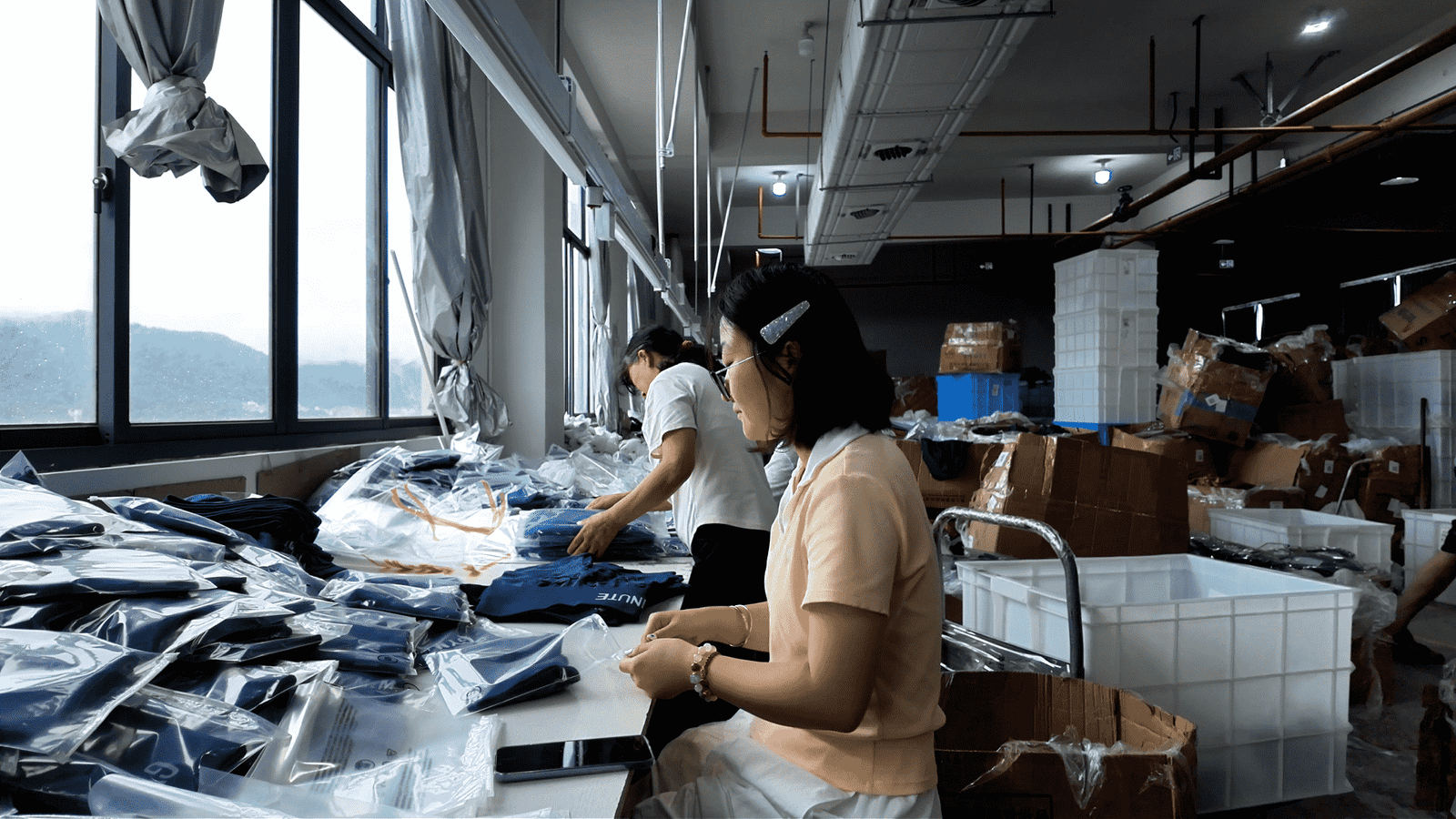
Packing & Release
Show finished-garment packing, carton verification or pre-shipment preparation after quality release. The image should document real order execution without exposing client-sensitive labels.
Private Label Is a Brand Execution System
Private label can extend from the garment itself to color, fit, construction, branding, labels, packaging and project-specific testing, with separate technical and MOQ constraints.
Fabric
Fabric selection is tied to product use, handfeel, stretch, recovery, weight and construction. Buyers may provide a specified fabric or performance target, or review available development directions. Material claims must remain tied to the exact tested fabric, color, batch and method. Custom material choices can change sourcing lead time and effective MOQ.
- Existing material options
- Customer-specified materials
- Performance-target development
- Batch and shade control

Color
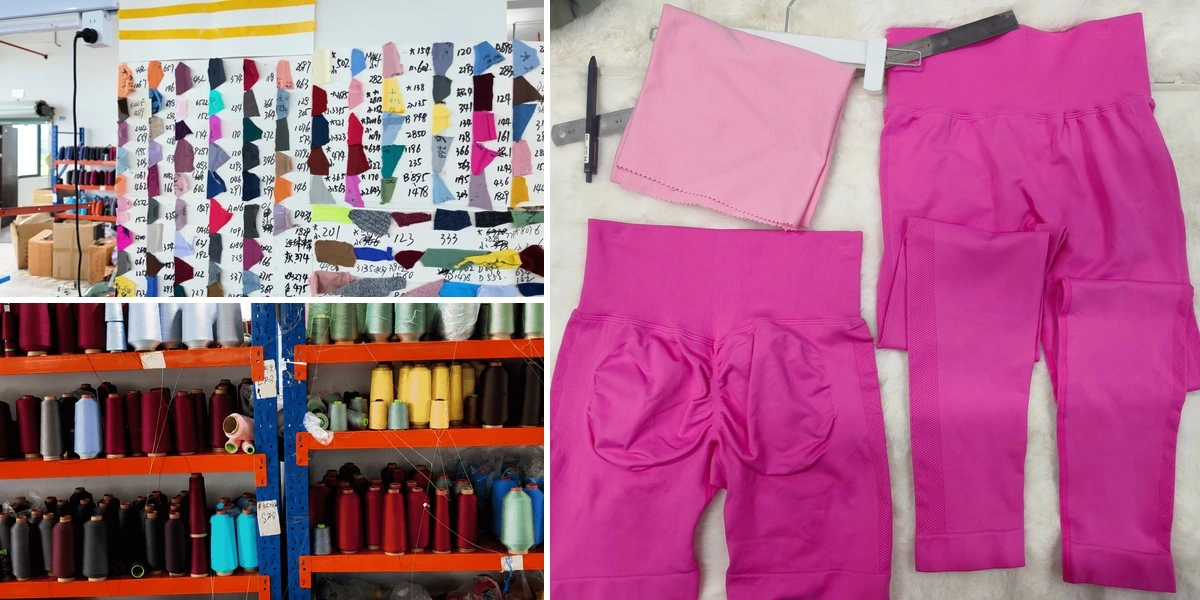
Color can be developed from approved standards such as Pantone references or physical color samples. The approval process should define the selected material, color standard and acceptable visual result. Custom dyeing can create separate material minimums and lead-time requirements, so color planning is reviewed together with style quantity and material sourcing.
- Pantone-based development
- Physical swatch matching
- Existing color selection
- Batch shade review
Fit
Fit is treated as a measurable product standard, not only a visual preference. Development can incorporate buyer size charts, POM requirements, fit comments and approved reference samples. Seamless and Cut & Sew products require different engineering approaches, and changes to fabric, compression or construction may affect final measurements and wearing behavior.
- Buyer size chart
- POM measurements
- Fit comments
- Approved reference fit
Construction
Construction is selected according to product structure and intended use. Seamless programs require yarn, knitting-structure and machine-parameter control; Cut & Sew programs require pattern, fabric direction, cutting and seam-construction control. Complex bonding, special trims or non-standard structures are evaluated before commercial commitment.
- Seamless knitting
- Cut & Sew construction
- Seam selection
- DFM review
Logo
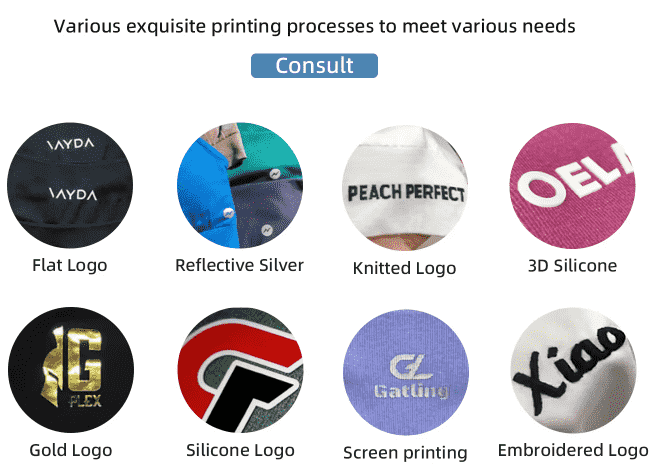
MOVEVOX can support logo methods such as screen printing, heat transfer, silicone applications, embroidery, jacquard and woven branding where technically suitable. Artwork, size, color and placement must be approved before bulk. Some logo methods require molds, supplier minimums or separate sampling, which can affect effective MOQ and development time.
- Screen printing
- Heat transfer
- Silicone logo
- Embroidery or jacquard
Labels
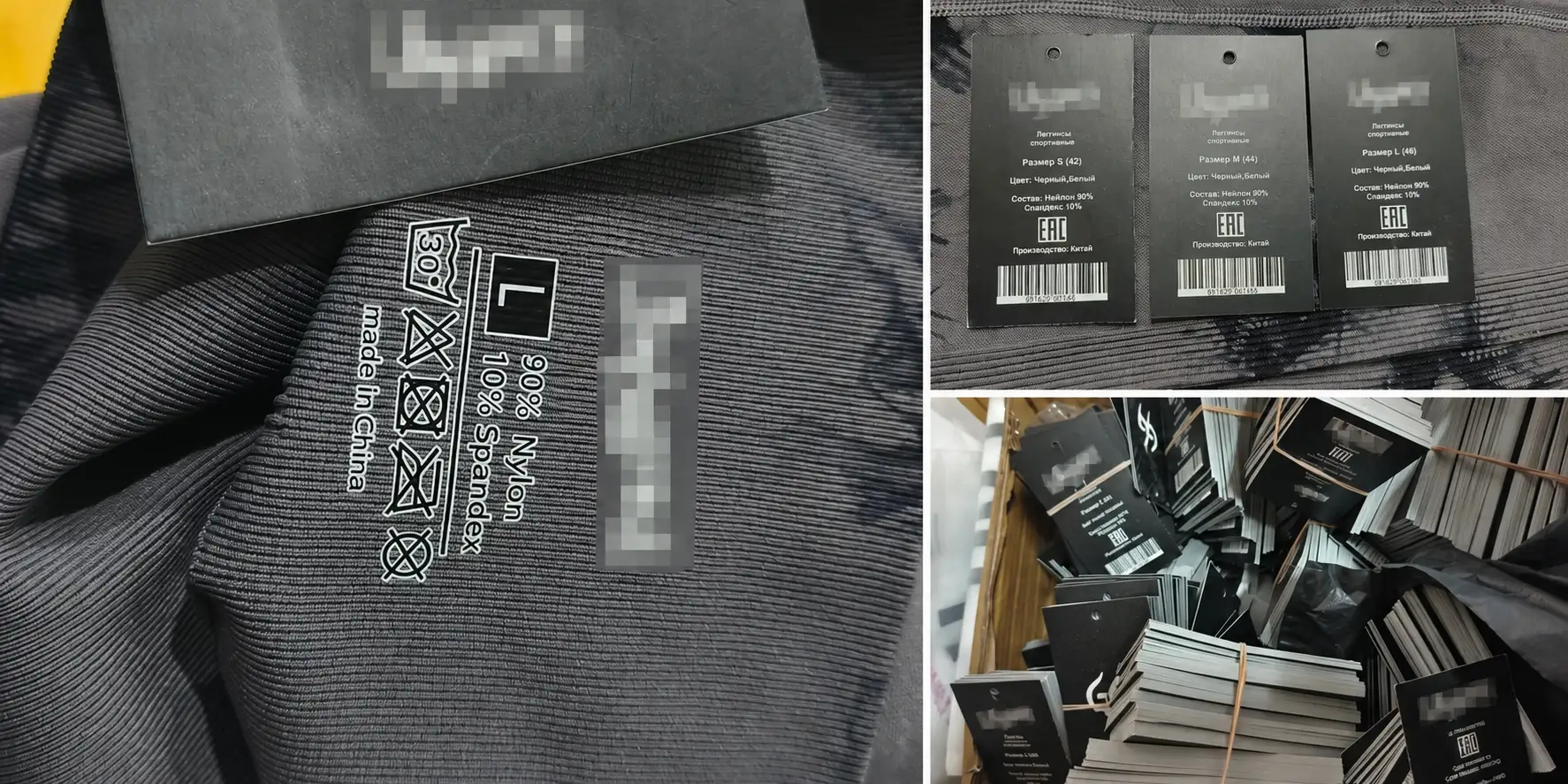
Private-label execution can include main labels, care labels, size labels and woven labels. Content, dimensions, artwork and placement should be approved against target-market requirements and buyer standards. Label supplier minimums may differ from garment MOQ, so label planning is handled as a separate commercial input rather than being assumed to match garment quantity.
- Main label
- Care label
- Size label
- Woven label
Packaging
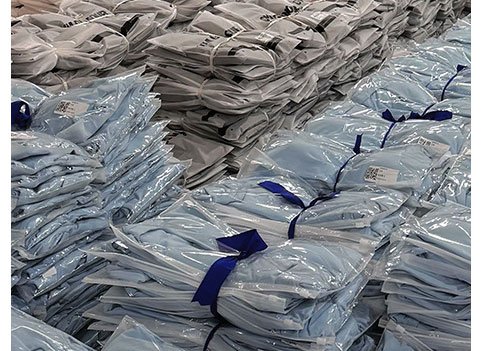
Packaging can include polybags, stickers, barcodes, hangtags, cartons and buyer-specific packing instructions. The final packing standard is linked to SKU, size, quantity and shipment requirements. Custom packaging may have supplier MOQs that exceed garment MOQ, so buyers should confirm the packaging system before final costing and bulk release.
- Hangtags
- Polybags
- Barcode stickers
- Carton requirements
Testing
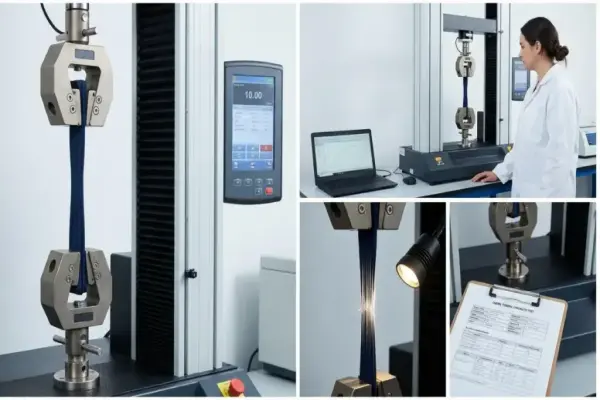
Testing requirements depend on the product, material, target market and buyer manual. MOVEVOX can coordinate project-relevant testing, but a report only proves the specific material or garment, color, batch, standard and test date stated in that report. Test scope is never automatically expanded to other products or future batches.
- Material tests
- Garment tests
- Buyer-specific standards
- Third-party reports
Choose the Right Development Path
OEM, development-led ODM and Private Label describe different project inputs and responsibilities. MOVEVOX uses the buyer’s approved direction as the authority for product and brand decisions.
| Decision Area | OEM | Development-Led ODM | Private Label |
|---|---|---|---|
| Typical Input | Detailed Tech Pack / specification | Concept, sketch or product direction | Existing or developed product plus brand requirements |
| MOVEVOX Role | Technical review, sample execution and production | Manufacturing translation, material / fit / construction development | Product, branding, labels and packaging execution |
| Buyer Approval | Specification, sample and all changes | Brand direction, sample, materials and final product | Product choice, colors, branding and packaging |
| Best Fit | Brands with mature technical packages | Brands needing development support before bulk | Brands building a branded activewear range |
| Commercial Effect | Depends on spec complexity and materials | Development work can add sample time and cost | Branding and packaging can create separate MOQs |
| IP Boundary | Buyer owns and authorizes supplied design inputs | No copying of protected third-party designs | Brand assets must be buyer-owned or authorized |
Manage the Collection, Not Just One SKU
Established brands need consistent product language across styles, colors, fit and branding while still using the manufacturing route best suited to each product structure.
One Collection, Two Manufacturing Routes
A mature activewear collection may include seamless leggings or bras alongside Cut & Sew tops, shorts, jackets or other structures. MOVEVOX evaluates each SKU by construction instead of forcing the entire collection into one route, while maintaining one commercial and quality-management interface.
Shared Brand & Material Platforms
Collection-level planning can reduce complexity when multiple SKUs share approved colors, materials, logos, labels or packaging. The objective is not to make every style identical; it is to identify which elements should be standardized and which require separate development and commercial treatment.
Built for Repeat Development
For recurring collections, approved standards, revision history and product learnings can inform future styles and repeat orders. New colors, sizes, materials or constructions are still reviewed as changes rather than silently assumed to match previous approvals.
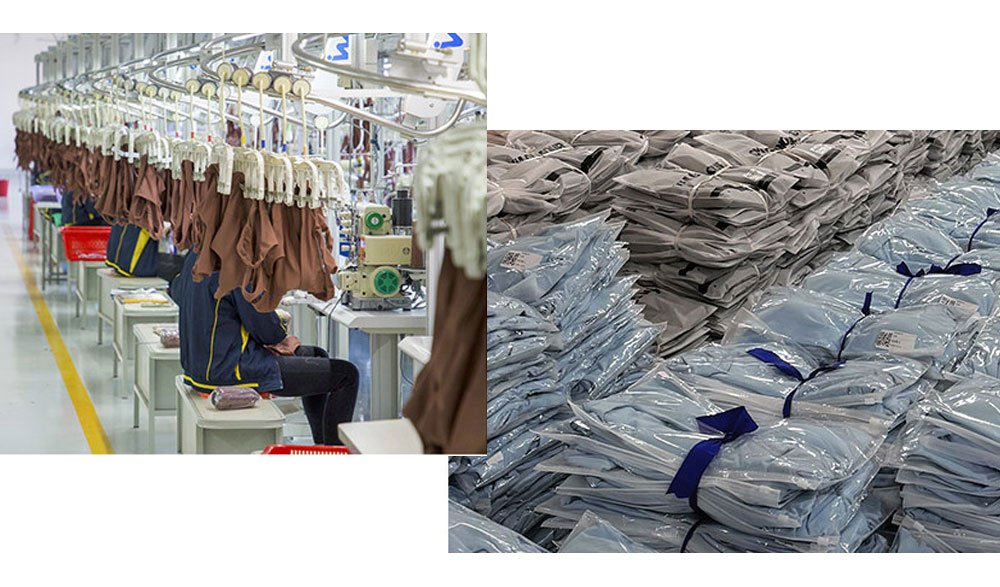
From Product Input to Production Standard
MOVEVOX product development translates buyer intent into materials, fit, construction, branding and approval records that can be used by production and QC rather than ending with one sample.
Brief
Review product goal, reference inputs, target use, key measurements, branding and commercial constraints.
Input ReviewProjectTech Review
Check specification completeness, manufacturability, risks and information that requires buyer clarification.
Review Notes1–2 daysMaterial
Confirm or develop material direction, color approach and any buyer-specified sourcing requirements.
Material PlanProjectPattern / Knit
Develop Cut & Sew pattern logic or Seamless knitting structure based on the product route.
Build StandardProjectSample
Produce the development sample after key details are confirmed. Standard samples are typically developed in about 5–10 working days.
Sample5–10 daysFit & Revise
Measure, fit-review and consolidate buyer feedback into the current revision list.
RevisionFeedbackApproval
Lock approved sample, measurements, materials, branding and production references for bulk handover.
Approval SetBuyerBulk Release
Complete pre-production review, first article and project-specific release gates before full production.
Bulk StandardProjectSampling Is a Controlled Approval System
Different sample stages answer different risks. MOVEVOX uses version discipline and approval boundaries so one sample decision is not silently expanded to unrelated product conditions.
Development Sample
Validates the initial interpretation of design, material, construction and branding. It is a development checkpoint, not automatic approval of all bulk requirements.
Fit Sample
Focuses on measurements, wearing balance, shape and fit comments against the buyer’s size and POM requirements.
Revised Sample
Incorporates consolidated buyer comments and records what changed, why it changed and which version is current.
Size Set / PP Sample
When required, confirms broader size execution or the pre-production standard before full bulk release.
Approved Standard
The approved result is linked back to final specifications, materials, artwork and production instructions.
Bulk Handover
Sample learnings become mandatory production and QC checkpoints rather than remaining in email comments only.
Turn Sample Approval Into Bulk Controls
The handover stage converts approved development results into current production records, first-article checks and QC checkpoints so the bulk team is working from the same standard.
Approved Sample
Physical reference and written approval scope.
ApprovalFinal Tech Pack
Current measurements, construction and approved revision.
Tech PackBOM & Materials
Confirmed material, color and approved component requirements.
BOMBranding Files
Current logo, label, artwork and placement references.
ArtworkPP Review
Pre-production review of readiness and unresolved risks.
PP ReviewFirst Article
Initial production output checked before uncontrolled scale-up.
FA RecordInline QC
Production measurements, workmanship and key risk points verified.
InspectionFinal Release
Finished goods, packing and project requirements checked before shipment.
Final QCUnderstand Base MOQ Versus Effective MOQ
MOQ is the result of garment economics, material supply, color allocation, branding and packaging. The correct number is confirmed against the complete project rather than one universal website promise.
| MOQ Layer | MOVEVOX Starting Point | What Can Change It |
|---|---|---|
| Seamless base garment MOQ | From 100 pcs/style | Base starting point; color, yarn, custom dyeing and special processes can raise effective MOQ. |
| Cut & Sew base garment MOQ | From 150 pcs/style | Base starting point; fabric, color, trims, construction and branding can change effective MOQ. |
| Custom color | Project evaluation | Custom dyeing or material supplier minimums may be higher than garment MOQ. |
| Logo / trims | Supplier-dependent | Molds, special materials, embroidery, jacquard or custom trims can carry separate minimums. |
| Labels / packaging | Supplier-dependent | Main labels, hangtags, custom bags and cartons can have separate minimums and setup costs. |
| Below-base trial | Requires evaluation | Feasibility depends on existing materials, setup burden, development stage and the commercial structure of the project. |
Capacity Means Quality-Released Garments
Large buyers need sustainable, project-specific capacity rather than the sum of machine peak outputs. MOVEVOX separates stable managed delivery from theoretical or surge figures.
Stable Managed Monthly Delivery
Current combined normal managed range for quality-released finished garments across the controlled network.
Controlled Facility Network
One owned core production base plus eight long-term controlled satellite facilities.
Santoni Seamless Machines
Italian Santoni seamless knitting equipment in the owned production system.
Capacity Check
Formal delivery commitments are checked by style, SKU, material, facility allocation, packing and quality-release requirements.
Peak vs Stable
Theoretical machine output, surge capacity and historical shipments are not presented as the same metric.
Capacity Definition
MOVEVOX treats capacity as shippable, quality-released garments rather than raw machine output.
Scope note: managed capacity includes controlled network output; satellite-factory assets are not represented as MOVEVOX-owned equipment or floor area.
Controlled Capacity Without Hidden Responsibility
MOVEVOX uses the owned factory as the control center and long-term satellite capacity as a managed extension. The customer retains one accountable supplier interface.
MOVEVOX Core
Owned Yiwu facility: development, core production, technical standards, first-article control and quality governance.
Yiwu Satellites
Six long-term controlled facilities used for capacity or process allocation after standards are established.
Guangzhou Satellites
Two long-term controlled facilities used within the managed production network where project needs fit.
Materials
Core materials and key branding components are centrally sourced or source-controlled to protect consistency.
PMC / WIP
Production allocation, progress, quantity and exceptions are tracked through MOVEVOX project management.
QC & Release
Production sites follow MOVEVOX-issued standards; inspection and release remain within the same quality responsibility chain.
Buyer Restrictions
Approved-factory-only, audit, disclosure or written site restrictions take precedence over normal internal allocation.
No Unauthorized Subcontracting by Design
Large brands need to know where production happens and who controls changes. MOVEVOX distinguishes normal controlled network allocation from projects that require customer-approved production sites.
Production-site changes are controlled
MOVEVOX does not change production sites in violation of customer contracts, approved-factory restrictions or written project requirements.
Approved Factory Only comes first
If a customer requires an approved site, audit or written restriction, production-location changes require the applicable customer approval before execution.
Satellite factories are not presented as owned assets
The controlled network is disclosed as a managed capacity model. Satellite equipment, employees and floor area are not counted as MOVEVOX-owned factory assets.
One accountability chain remains
Even when controlled external capacity is used, MOVEVOX remains the customer’s first responsibility window for standards, progress, quality and issue closure.
Quality Is Managed Through Defined Gates
MOVEVOX combines QA prevention, production self-checks, QC verification and final release. Customer standards take priority over internal defaults when the buyer has defined requirements.
Customer Standard
Tech Pack, QC Manual, approved sample and written buyer requirements define the primary acceptance basis.
Incoming Materials
Fabric, yarn and key trims are checked against project requirements before uncontrolled use.
Pre-Production
Critical specifications, materials, artwork, packaging and production readiness are reviewed before bulk.
First Article
Initial production output is checked before volume is allowed to expand.
Inline Inspection
Production is reviewed during manufacturing so deviations can be contained before final inspection.
Finished Garment
Completed garments are checked for measurement, appearance, workmanship, branding and project requirements.
Packing Check
Labels, barcodes, folding, polybags, assortments and carton information are verified against the order standard.
Rework & Recheck
Nonconforming goods are isolated, corrected where appropriate and re-inspected before release.
Final Release
Shipment proceeds only after the applicable inspection and order-release conditions are met.
Quality Claims Need Reviewable Evidence
Replace every image placeholder below with real, current and anonymized MOVEVOX evidence. A photograph should show the control being performed; a record should show the decision trail.
Measurement Record
Use a real anonymized measurement sheet or measurement-in-progress image showing POM control without customer names or confidential style IDs.
Incoming Material Check
Show actual material inspection, shade comparison, fabric identification or relevant incoming-control evidence.
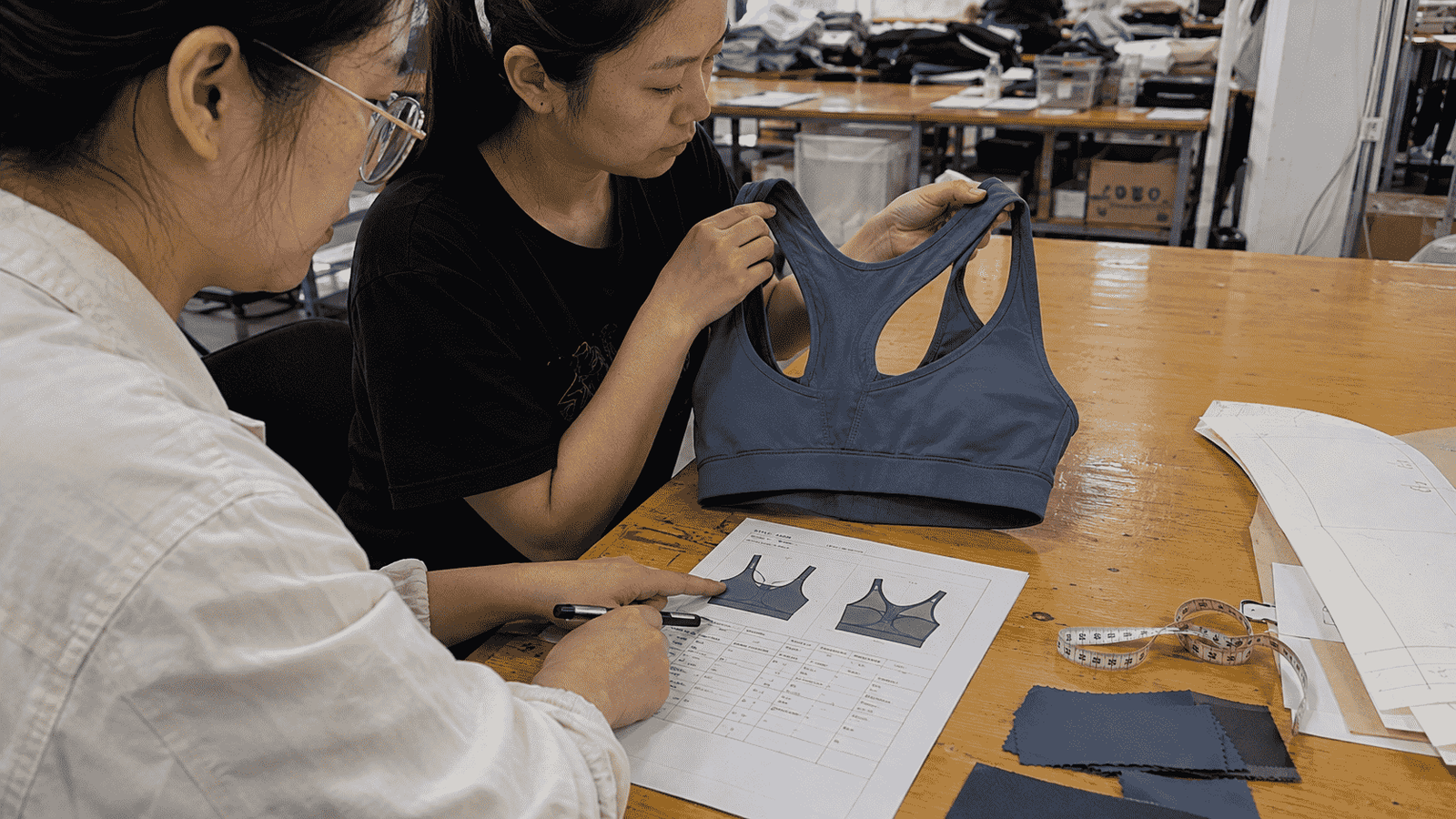
First Article Check
Show the first production output being compared with approved standards before bulk scale-up.
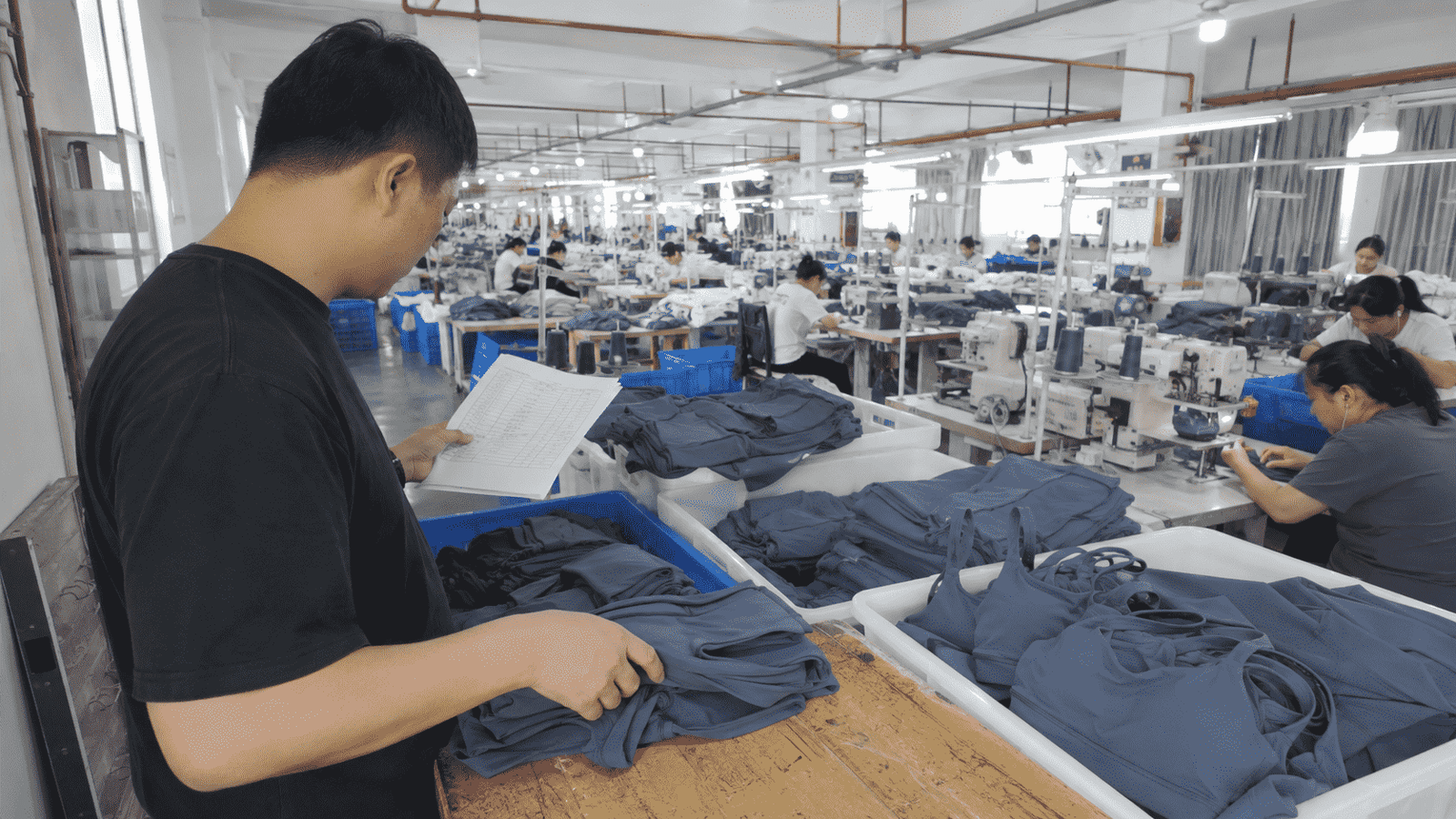
Inline Inspection
Show QC inside the production process reviewing measurements, workmanship or critical product points.
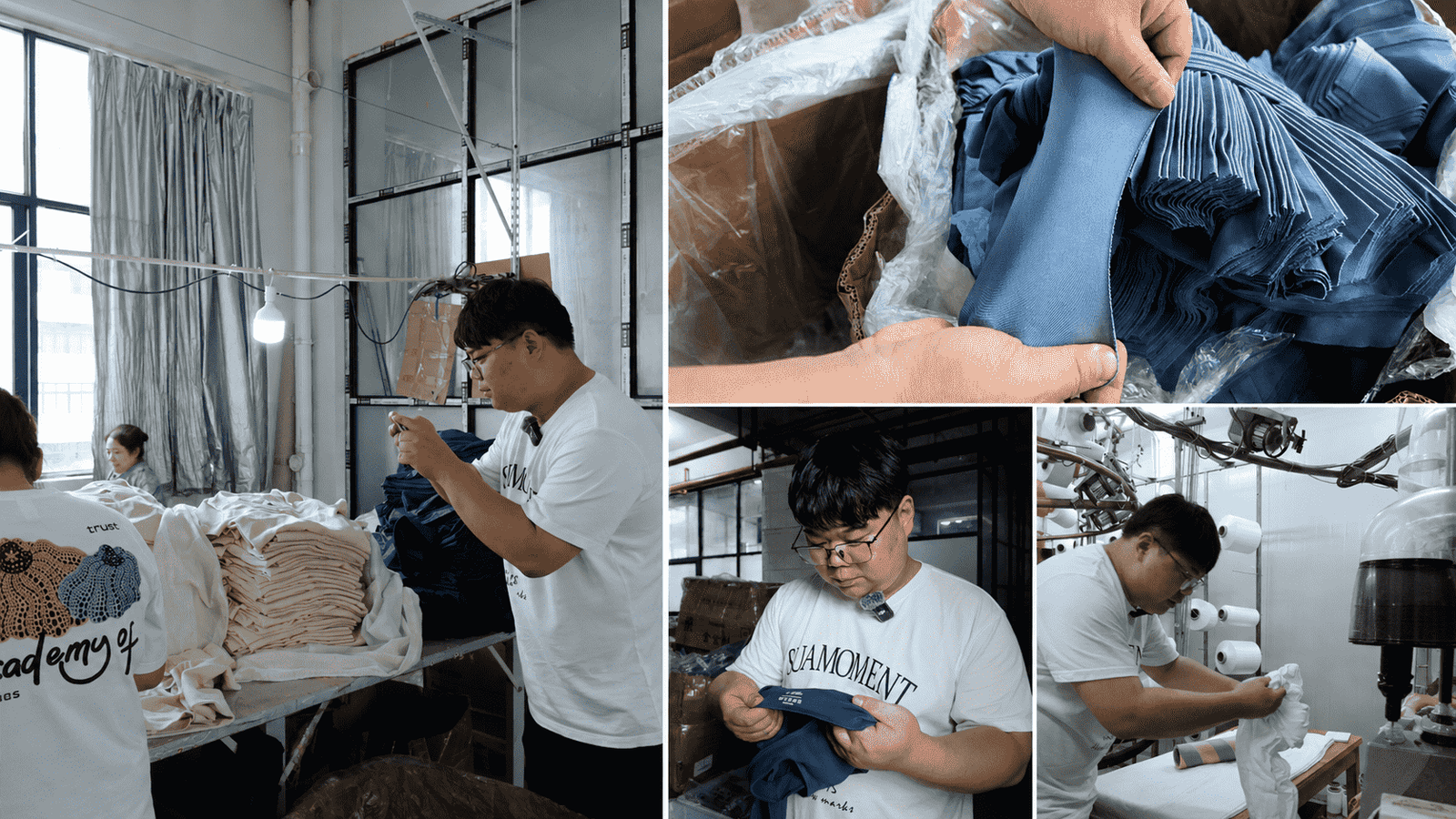
Workmanship Review
Show an actual seam, knitting or garment workmanship check with a clear inspection purpose.
Logo & Label Check
Show branding placement, logo application or label verification against approved references.
Packing Verification
Show packing-list, label, barcode or carton verification with sensitive buyer data removed.
CAPA / Recheck
Use a real anonymized corrective-action, defect or re-inspection record demonstrating closure rather than a staged QC photo.
Built to Support Formal Vendor Qualification
Factory qualification should verify legal identity, production reality, technical controls, quality records and production-site transparency. MOVEVOX supports customer review subject to confidentiality and project scope.
Legal & Supplier Identity
MOVEVOX is the commercial brand operated by Yiwu Chenjin Import And Export Co., Ltd. Formal contracting and legal commercial activity use the legal entity rather than treating MOVEVOX as a separate company.
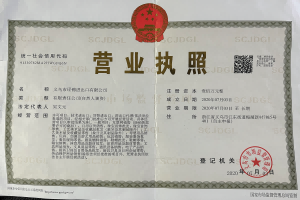
Production-Site Verification
Customers can arrange on-site factory visits or live video review of relevant production areas. Audit scope can include Seamless, Cut & Sew, sample development, QC, packing and storage while protecting other customers’ confidential projects.
Technical & Quality Review
Vendor qualification can review equipment, product-development workflow, approved-sample controls, inspection records, traceability and issue-closure mechanisms. Evidence scope should match the actual facility and project.
Third-Party Inspection
MOVEVOX can cooperate with customer-appointed third-party inspection or pre-shipment inspection where required. Inspection requirements are aligned with the buyer standard and current order scope.
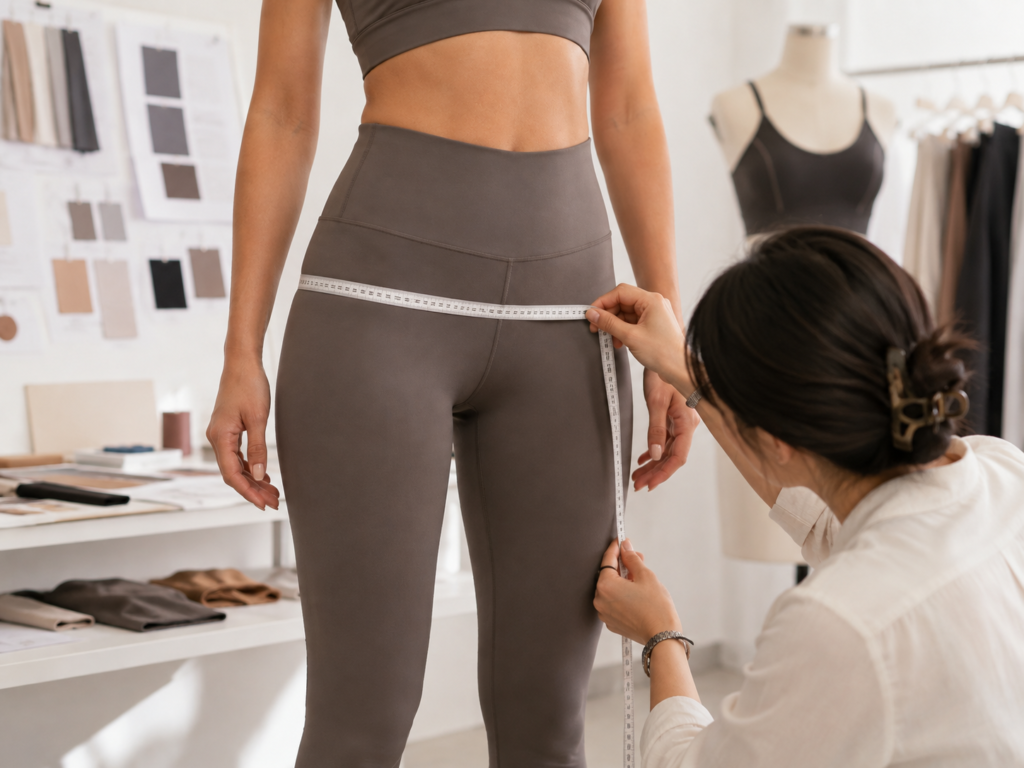
Protect the Product Before It Reaches Market
Large brands need suppliers that can prove capability without exposing other customers. Confidentiality is therefore part of supplier risk control, not a marketing afterthought.
Unreleased Product Exposure
RiskEarly designs, Tech Packs, samples and launch plans can be commercially sensitive before a collection reaches market.
MOVEVOX ResponseMOVEVOX can work under NDA and apply need-to-know handling to project information.
NDAUnauthorized Brand Use
RiskA real production relationship does not automatically grant marketing rights to use a customer logo or publicize the project.
MOVEVOX ResponseCustomer names, logos and project evidence should only be used publicly with explicit, traceable authorization.
Logo ControlReference Sample Risk
RiskReference garments can create IP risk if a supplier simply copies protected third-party products.
MOVEVOX ResponseMOVEVOX requires buyer-owned or lawfully usable references and does not position obvious infringement as ODM development.
IP BoundaryCross-Customer Disclosure
RiskFactory photos or audits can accidentally expose another customer’s design, PO, artwork or production information.
MOVEVOX ResponseFactory visits, videos and public evidence should exclude unrelated confidential projects and sensitive identifiers.
Need to KnowReady to Evaluate MOVEVOX?
If your team has a Tech Pack, collection brief, target quantity or current supplier problem, send the project context. MOVEVOX can review manufacturing route, development readiness, MOQ drivers, capacity fit and the next qualification step.
NDA support and file upload can be handled through the inquiry workflow.
Prepare a More Accurate Activewear RFQ
You do not need a perfect Tech Pack to start. More complete inputs simply allow MOVEVOX to evaluate cost, MOQ, development risk, capacity and timing with fewer assumptions.
Minimum to Start
- Company and target market
- Product or style type
- Estimated quantity
- Customization requirement
- Tech Pack / sample / sketch / reference
- Target date
- Commercial range if available
Use this level when you need an initial capability and project-fit discussion.
Best for Accurate Costing
- Color and size breakdown
- Fabric composition / performance target
- Logo, label and packaging files
- Target cost or retail positioning
- Incoterm and destination
- Testing / RSL / compliance requirements
- Inspection requirement
- Approved production-site or audit requirement
For established brands and formal RFQs, these inputs reduce later re-costing and clarify vendor-qualification requirements.
Replace {RFQ_CHECKLIST_URL} with the final MOVEVOX RFQ checklist file URL after the resource is published.
Private Label Activewear Frequently Asked Questions
These answers focus on supplier qualification: sampling, MOQ, production routes, factory allocation, quality, audits, third-party inspection, confidentiality and capacity confirmation.
Can you develop from our Tech Pack?
Yes. MOVEVOX can start from a buyer Tech Pack and review measurements, materials, construction, branding and manufacturability before sampling. Projects may also start from a lawful reference sample, sketch or clearly defined concept when the specification is not yet complete. The buyer remains responsible for brand direction and approvals, while MOVEVOX translates the approved direction into manufacturing inputs and sample standards.
How long does standard sampling take?
For a standard development sample, the current MOVEVOX base fact is typically about 5–10 working days after the required development details are confirmed. This is not a universal promise for every project. Custom yarn or fabric, special colors, complex construction, new logo processes, buyer feedback cycles or additional testing can extend the development timeline. The project timing is confirmed after technical review.
What is your private label MOQ?
Current base garment starting points are from 100 pieces per style for Seamless projects and from 150 pieces per style for Cut & Sew projects. These are base garment MOQs, not universal effective MOQs. Custom dyeing, dedicated fabrics, molded logos, specialty trims, custom labels or packaging can create higher supplier minimums. MOVEVOX therefore confirms effective MOQ after the complete customization scope is known.
Can we place a trial order first?
Trial-order feasibility is evaluated against the product route, available materials, color requirements, branding setup and commercial structure. MOVEVOX supports relatively flexible entry compared with large traditional manufacturing groups, but it does not promise every style or every custom material below the established base MOQ. The goal is to create a workable validation path without creating an unstable production standard that cannot scale later.
Do you manufacture both Seamless and Cut & Sew?
Yes. MOVEVOX has both Seamless and Cut & Sew capability. The owned production system includes 28 Italian Santoni seamless knitting machines as well as an owned Cut & Sew garment-production capability. Product structure determines the recommended route. A multi-SKU collection can therefore include both manufacturing methods while the buyer still works through one MOVEVOX project-management and quality responsibility interface.
Do you use satellite factories?
Yes, as part of a controlled capacity model. MOVEVOX operates one owned core production base and works with eight long-term controlled satellite facilities. Satellite assets are not presented as MOVEVOX-owned assets. MOVEVOX manages project information, production allocation, materials or approved sources, WIP and QC. If a customer requires Approved Factory Only, an audit-approved site or written production-site restrictions, those customer requirements take precedence.
How do you control sample-to-bulk consistency?
MOVEVOX treats the approved sample as part of a larger production standard rather than the only reference. Final specifications, material and color requirements, branding files, packaging instructions and approved revisions are written into the current bulk package. Pre-production review, first-article checks, inline QC and final inspection then use those current references. Material or specification changes that affect the approval basis require review before becoming current bulk instructions.
Who defines the quality standard?
When the buyer provides a Tech Pack, QC Manual, approved sample, measurement method or written inspection standard, those customer requirements take priority. MOVEVOX internal standards are used to manage items the customer has not separately defined. This avoids presenting one internal tolerance or sampling rule as a fixed standard for every global brand. Project-specific quality criteria can be reviewed during development and vendor qualification.
Can our team audit the factory?
Yes. MOVEVOX supports customer factory visits, technical audits, pre-production visits, inline inspections and pre-shipment inspections by appointment. Live video factory review can also be arranged. Audit scope can show production areas, Seamless equipment, Cut & Sew activity, sample development, QC, packing and storage while excluding unrelated customer-confidential projects. Specific production-site or audit documentation is handled according to project scope.
Can third-party inspectors check our order?
Yes. MOVEVOX can cooperate with customer-appointed third-party inspection when required. The inspection scope, sampling method, acceptance criteria and timing should be aligned with the buyer’s current order standard. A third-party inspection does not replace the internal responsibility to control production, but it can provide an additional independent verification layer before shipment when the customer requires it.
How do you protect confidential designs?
MOVEVOX can support NDA-based development and applies confidentiality boundaries to customer Tech Packs, samples, artwork and unreleased product information. A production relationship does not automatically grant public marketing rights to use a customer name or logo. Factory photos, audits and evidence should also avoid exposing unrelated customer projects, PO details or protected designs. Buyers should clearly identify any additional confidentiality or access-control requirements during onboarding.
How is capacity confirmed before a PO?
MOVEVOX does not treat theoretical machine output as a universal delivery promise. Current normal managed monthly delivery across the controlled network is about 150,000–200,000 quality-released finished garments, but formal capacity is checked by style, SKU count, material readiness, manufacturing route, facility allocation, packing requirements and quality-release capacity. Large or time-critical programs should complete a project-specific capacity check before final delivery commitment.
Start Your Private Label Activewear Project
Tell MOVEVOX what you are developing, your estimated quantity, target market, customization level and target timing. Upload a Tech Pack when available, or begin with a lawful reference sample, sketch or clear product requirement. The team can then review manufacturing route, development readiness, effective MOQ, capacity fit and the appropriate next step.
For established brands, include any factory-audit, testing, RSL, inspection, approved-production-site, confidentiality or compliance requirements that should be considered before sampling or bulk commitment.