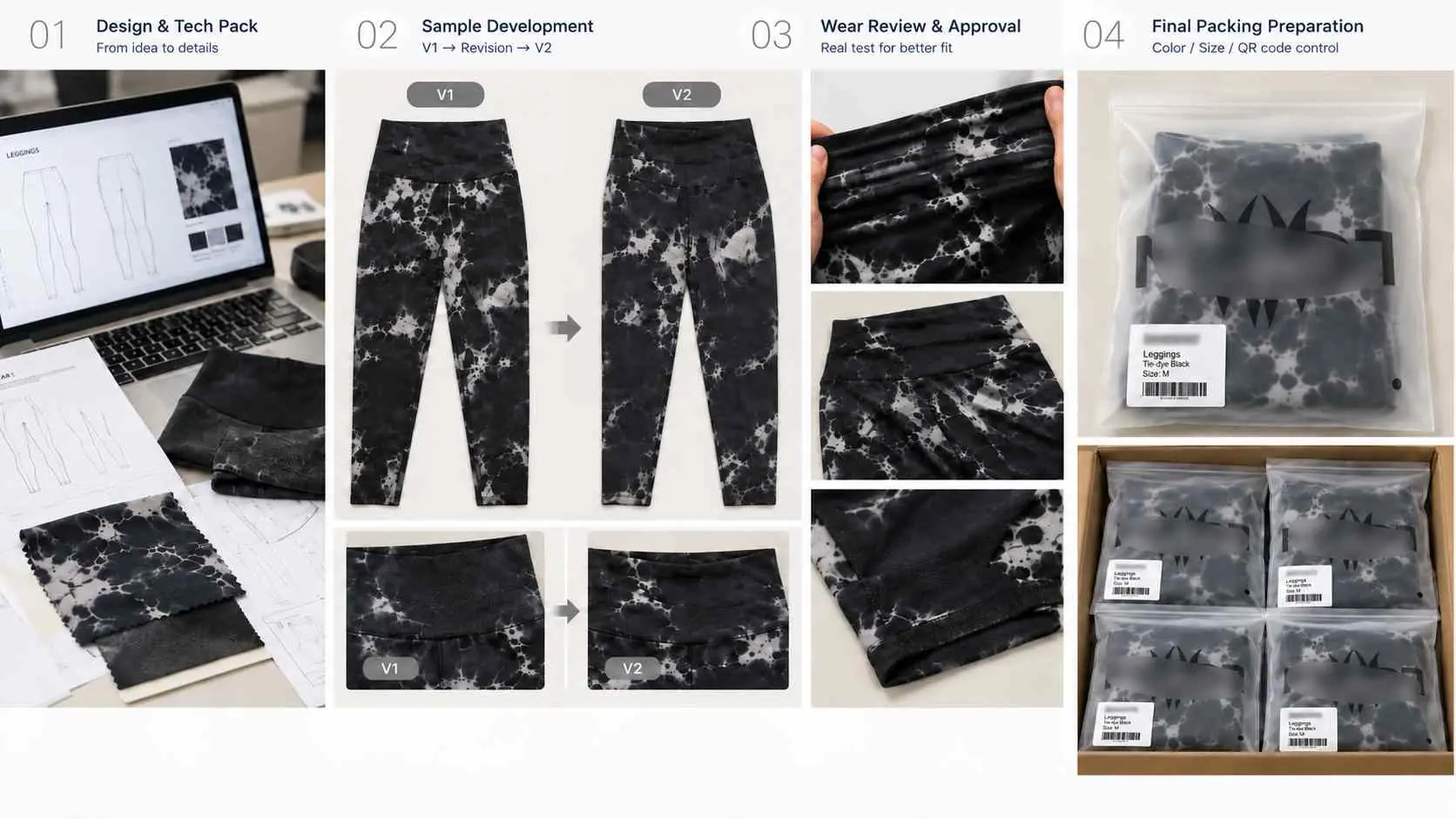
Naked Feel Leggings Manufacturer for Custom Activewear Programs
Translate a target second-skin experience into approved fabric, fit, support, opacity, and controlled commercial production for branded activewear programs.
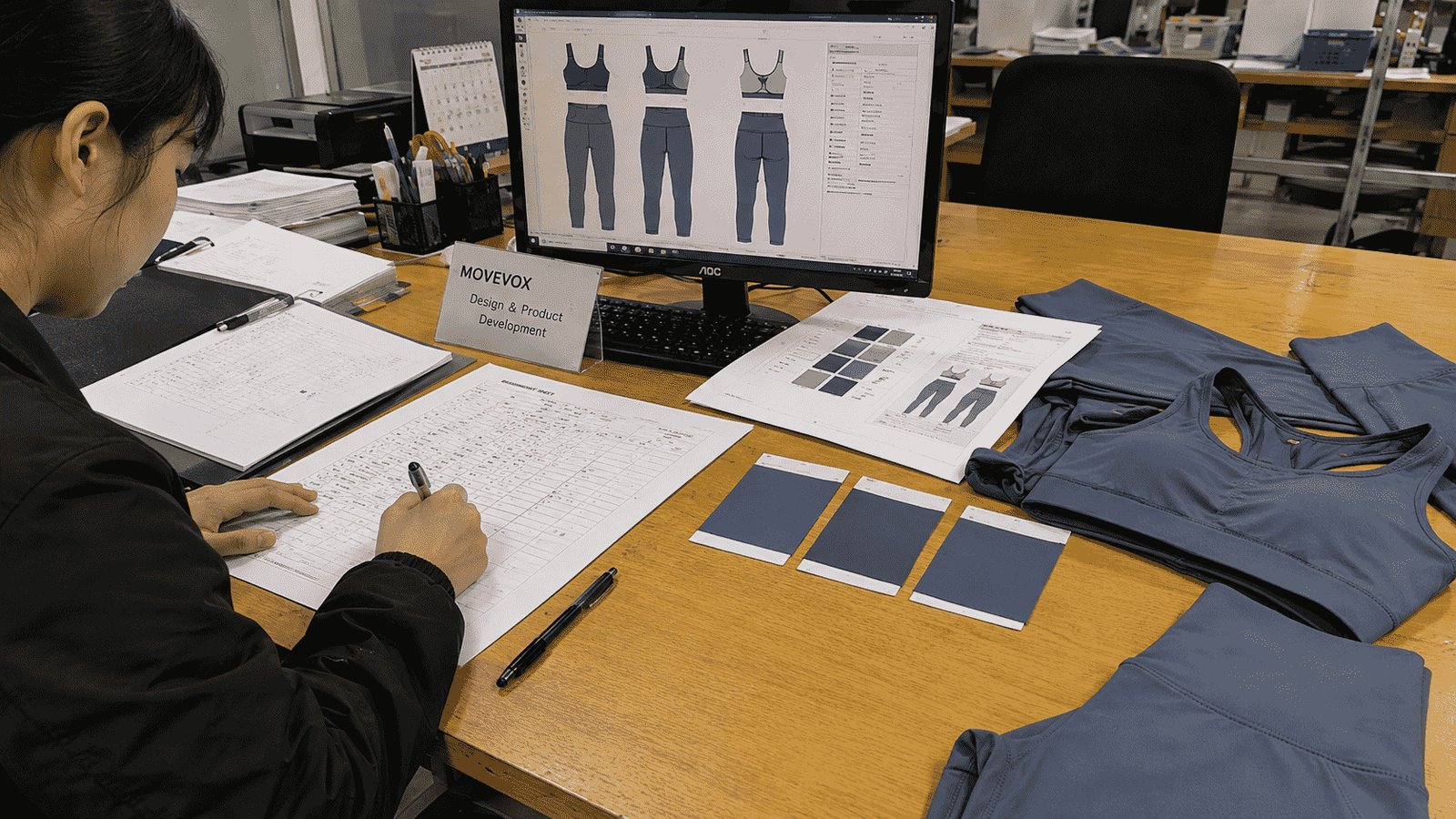
MOVEVOX develops naked-feel leggings from Tech Packs, physical garments, fabric swatches, measurement charts, or defined product concepts. Development connects handfeel, surface friction, stretch, recovery, compression direction, opacity, waistband behavior, construction, and fit before an approved physical garment becomes the reference for controlled bulk production and repeat orders.

Built for Structured Naked-Feel Leggings Programs
MOVEVOX is most relevant when a brand needs to define, develop, second-source, or repeatedly manufacture a specific second-skin product experience rather than select a generic soft legging from an open catalogue.
Existing Bestsellers
Brands already selling naked-feel leggings normally have more than a fabric composition to protect. Their commercial reference can include surface feel, friction, waistband pressure, opacity, measurements, negative ease, construction, and customer expectations built around an existing product. MOVEVOX can review a legal physical garment, fabric swatch, Tech Pack, measurement chart, colors, branding, quantities, and testing requirements before proposing a development route. Any replacement material should be physically compared rather than assumed equivalent because its fiber percentages appear similar.
- Use the approved garment as a complete product reference.
- Compare material feel before changing an established fabric source.
- Revalidate fit when material stretch or recovery changes.
- Preserve approved technical versions through repeat commercial orders.
New Studio Lines
Brands moving into Yoga, Pilates, or softer studio products may know the consumer experience they want without having selected an exact material. MOVEVOX can review whether the concept points toward fine-denier Nylon/Spandex, Peach Skin, brushed-soft, or another suitable high-stretch direction. The development decision should balance softness and low friction with recovery, compression feel, opacity, fit, waistband behavior, surface durability, and commercial material availability rather than optimizing handfeel alone.
- Define the target experience before selecting one fabric.
- Approve softness together with recovery and garment fit.
- Check lighter colors under actual wearing extension.
- Match construction to the intended support direction.
Second-Source Programs
A second-source project requires controlled comparison, not visual imitation. MOVEVOX can start from a buyer-approved fabric, legal reference garment, Tech Pack, measurements, or physical sample and identify which characteristics need to remain equivalent and which can accept controlled adjustment. Where an original supplier article is unavailable, differences in handfeel, GSM, stretch, recovery, opacity, surface, or fit should be made visible during development rather than hidden behind a nominally similar composition.
- Establish a physical reference before candidate-material selection.
- Record differences instead of calling approximations identical.
- Approve candidate fabric inside the finished garment.
- Connect the accepted version to production and QC.
Scaling Collections
Growing brands need repeatability across colors, sizes, related products, and future replenishment. MOVEVOX can coordinate material sourcing, product development, private labeling, own production, controlled satellite capacity, QC, packing, and shipment around one released specification. Scale planning still depends on actual material availability, custom colors, style complexity, size splits, production loading, and buyer approvals, so managed delivery capacity should be confirmed against the real program rather than treated as a universal style-level guarantee.
- Plan material continuity before a bestseller reaches scale.
- Keep material lots and production versions identifiable.
- Separate custom color minimums from garment-making minimums.
- Reconfirm capacity against actual style and launch timing.
What Does Naked Feel Actually Mean?
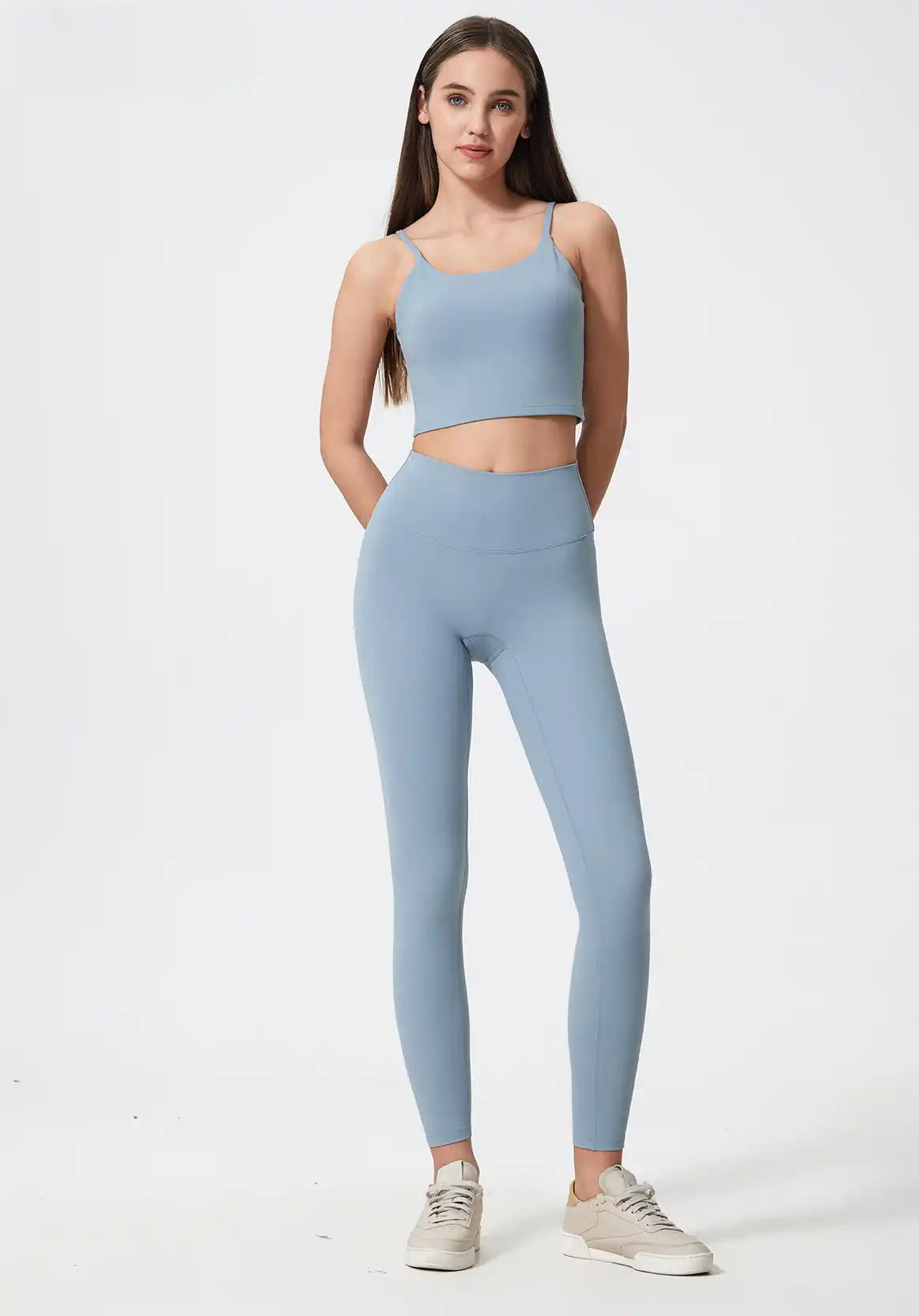
Naked feel is a target wearing experience rather than one fixed fabric specification. Within MOVEVOX's development framework, it describes a soft, fine, low-friction, close-to-skin direction influenced by fiber, yarn fineness, GSM, surface finishing, stretch, recovery, compression, garment dimensions, and individual tactile preference.
Not One Composition
A typical MOVEVOX development direction may use approximately 75%–82% Nylon with 18%–25% Spandex, but identical fiber percentages can produce substantially different finished experiences.
Not Always Brushed
Naked-feel products can use fine high-stretch materials, Peach Skin, brushed-soft surfaces, or other suitable structures. Brushing is one possible technical route, not the definition itself.
Not Zero Support
A second-skin product can still use controlled negative ease, elastic recovery, waistband engineering, or suitable Seamless structure. Naked feel should not be interpreted as zero garment support.
Approved in Garment
The final experience should be judged in a physical finished garment because waistband tension, seams, dimensions, opacity, compression, and movement can change how the same fabric feels on body.

Where Naked-Feel Programs Lose Product Consistency
Naked-feel leggings combine subjective handfeel with measurable garment behavior. Problems often appear when softness is approved separately from recovery, opacity, compression, fit, size grading, or repeat-material control.
| Problem | Business Impact | MOVEVOX Control Direction |
|---|---|---|
| Sample Feels Softer A development sample can feel softer than bulk when fabric source, finishing, GSM, material lot, brushing, or production conditions change after initial approval. | Customers receive a product that feels different from the reviewed sample, weakening product consistency and making previous buyer approval less meaningful. | Link the approved fabric and garment to the released specification, compare relevant incoming material against physical references, and review significant material changes before commercial use. |
| Compression Feels Wrong A soft material can still feel excessively tight or insufficiently supportive when negative ease, recovery, waistband dimensions, or garment measurements are not calibrated together. | The product may lose the intended second-skin positioning despite using an acceptable fabric, creating fit complaints, size confusion, or unnecessary sample revisions. | Review fabric stretch and recovery together with pattern, measurements, waistband, Fit Sample, and buyer-approved support direction before releasing the commercial size system. |
| Opacity Drops in Wear A fabric that looks covered while relaxed can open under high hip or thigh extension, particularly in lighter colors or overly tight garment dimensions. | Unexpected transparency can create customer complaints, returns, product-review risk, and late-stage redevelopment after colors or sizes have already been committed. | Evaluate the actual color, material, size, and garment extension using buyer-defined opacity criteria rather than assuming softness, GSM, or dark-color results apply universally. |
| Waistband Dominates Comfort The main body fabric may feel soft while an overly small, unstable, rolling, or locally stiff waistband creates most of the garment pressure. | The wearer perceives the complete product as uncomfortable even though the material itself meets the original tactile target. | Develop waist height, circumference, recovery, construction, and transition into the body together with the intended support level and physical Fit Sample. |
| Sizes Feel Different Grading that changes material extension disproportionately can make one size feel light and another significantly more compressive or more transparent. | The brand may deliver inconsistent product experience across its commercial size range even when measurements technically follow a grade rule. | Use buyer measurement charts, controlled grade rules, representative Size Sets, and physical review where experience consistency across sizes is commercially important. |
| Soft Surface Wears Early Fine, brushed, or Peach-like surfaces can respond differently to pilling, snagging, abrasion, laundering, or heat application depending on the exact material. | The approved new-product handfeel or appearance may change faster than the brand expects, creating quality concerns that were not visible during initial sampling. | Identify surface risks during material selection and coordinate buyer-defined pilling, abrasion, wash, or other verification when measurable durability performance is required. |

Map the Target Naked-Feel Wearing Experience
Naked feel should be discussed as a multi-variable experience rather than a single softness score. MOVEVOX can compare development directions qualitatively before physical swatches and garments establish the final buyer-approved standard.
Smooth Naked
A fine, smooth Nylon/Spandex direction can prioritize low surface drag, refined handfeel, high stretch, and close body contact for Yoga or Pilates products. Recovery, garment measurements, color, and opacity still require physical confirmation because a light tactile experience does not establish complete product performance.
Peach Soft
A Peach Skin direction introduces a fine micro-raised surface where the project needs a softer tactile character without necessarily using a more pronounced brushed effect. The product should still be evaluated for pressure sensitivity, surface change, recovery, opacity, Logo compatibility, and wash behavior.
Brushed Soft
A brushed-soft route can move the sensory direction toward a softer, more raised surface. It may also change friction, visual finish, perceived warmth, and surface-durability risk, so the buyer should approve the actual brush depth together with garment fit and intended use.
Supportive Naked
A naked-feel product can retain a refined soft hand while using greater recovery, negative ease, or supportive garment construction. The appropriate balance depends on the brand's product brief; naked feel should not be interpreted as a requirement for universally minimal support.
What Creates a Naked-Feel Activewear Fabric?
MOVEVOX's common naked-feel direction uses fine, high-stretch Nylon/Spandex materials, but the final experience results from several interacting material variables rather than one composition or weight specification.
Fine Yarn
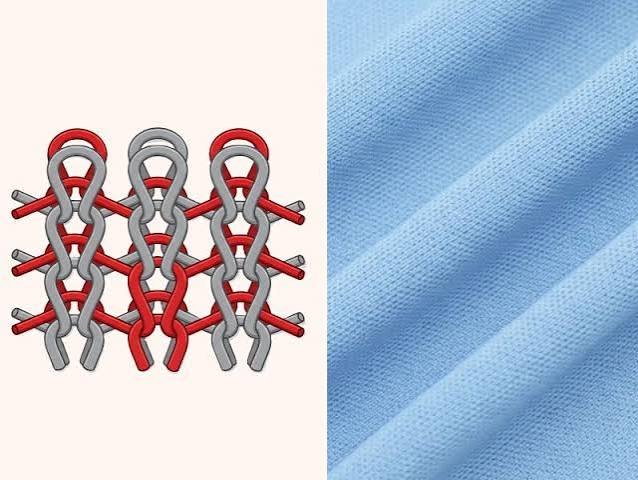
Finer yarn systems can contribute to a smoother and more refined surface, but yarn fineness alone does not determine recovery, opacity, compression, durability, or finished garment feel.
Fiber Blend
MOVEVOX's company-level naked-feel development reference is approximately 75%–82% Nylon with 18%–25% Spandex. Final production uses the actual supplier specification.
Knit Structure
Fabric construction influences density, extension, recovery, opacity, drape, and support. Similar compositions can therefore behave differently when their knitting structure or density changes.
Surface Finish
Smooth finishing, Peach Skin, brushing, or another suitable treatment can modify friction and tactile character. The surface route should follow the target experience and durability requirement.
Fabric Weight
MOVEVOX's company-level naked-feel management range is approximately 200–240 GSM. The correct commercial weight still depends on material, color, fit, opacity, and support.
Elastic Recovery
Spandex percentage is only one recovery variable. Yarn, knit structure, heat setting, garment extension, dimensions, and repeated use can change how the finished legging returns after stretch.
A naked-feel fabric should be approved as a complete material system: composition, yarn direction, knit structure, GSM, surface, stretch, recovery, color, opacity, and handfeel. These variables then interact with pattern, negative ease, waistband, seams, and size. MOVEVOX therefore uses physical fabric and finished-garment approval rather than defining Naked Feel through one fiber percentage or marketing adjective.
Choose Fabric From the Target Wearing Experience
MOVEVOX reviews activity, tactile target, support, opacity, surface preference, and durability risk before selecting a naked-feel material direction for physical sampling and garment development.
How should the surface feel?
How much support is needed?
What is the primary activity?
How important is lightweight feel?
What is the coverage priority?
Smooth Naked Feel
Choose this direction when the brand prioritizes a fine, low-friction, refined surface and close-to-skin feel for Yoga, Pilates, or studio applications. The final candidate still needs physical verification of stretch, recovery, opacity, waistband behavior, and fit because a smooth light hand does not automatically establish commercial product stability.
Peach Soft Feel
A Peach Skin route can suit products requiring a fine micro-soft surface and matte tactile direction. MOVEVOX can evaluate this alongside garment fit, pressure-sensitive Logo processes, color, recovery, wash response, and surface durability before the fabric becomes a production reference.
Brushed Naked Feel
A lightly or more clearly brushed route can support brands seeking greater surface softness while retaining a naked-feel positioning. Brushing depth should remain a controlled variable because it can change friction, visual appearance, perceived warmth, pilling risk, and Logo compatibility.
Supportive Naked Feel
This direction suits programs that want a refined soft hand but still require more structured recovery or support. Material, negative ease, waistband construction, opacity, and Fit Sample should be approved together rather than increasing compression through garment dimensions alone.
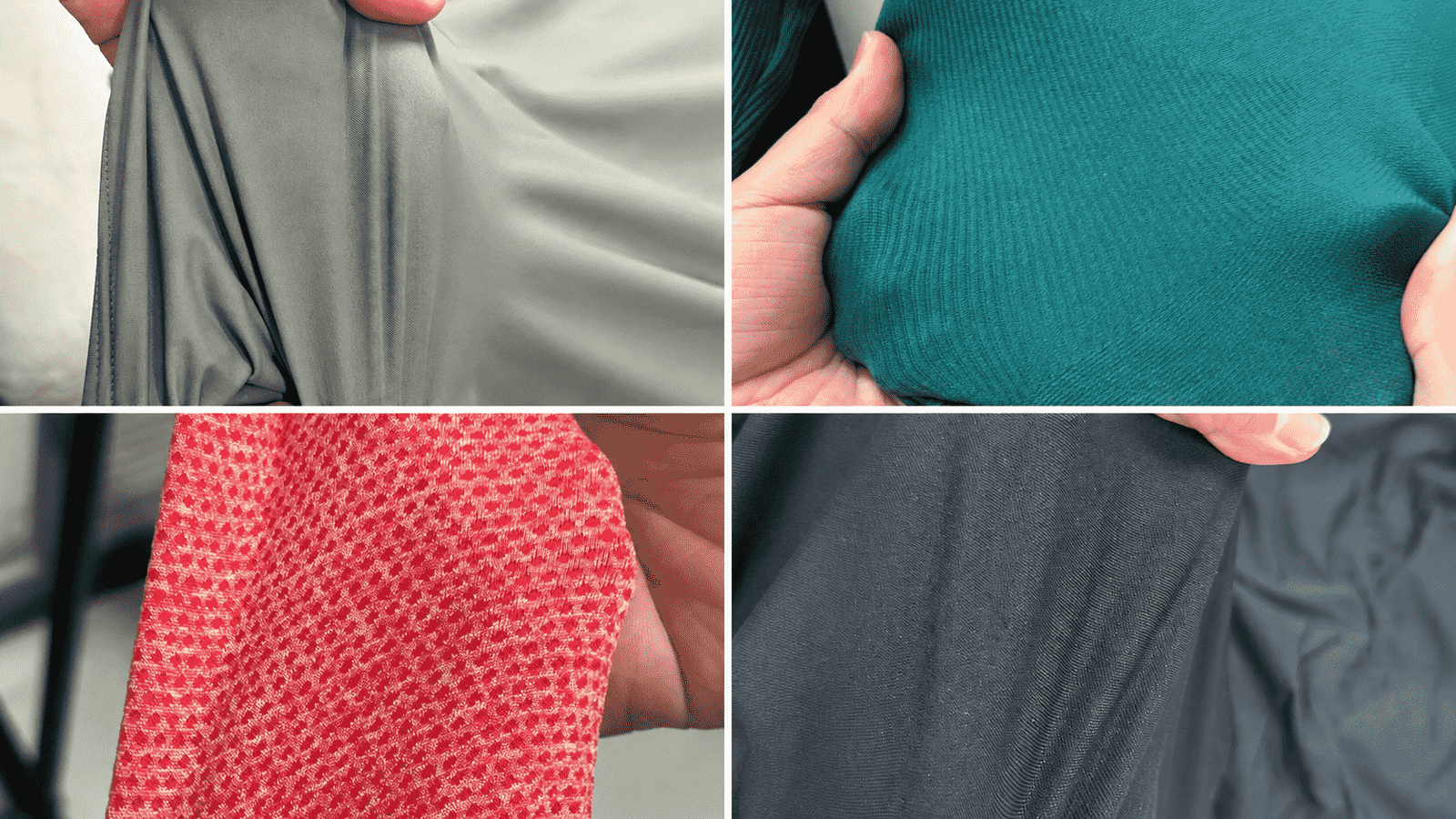
Composition Alone Does Not Create Naked Feel
Fiber percentages are useful sourcing information, but finished wearing experience also depends on yarn fineness, knit construction, GSM, surface finishing, stretch, recovery, color, garment dimensions, and physical fit.
| Parameter | Naked Nylon | Peach Direction | Brushed Direction | Polyester Blend |
|---|---|---|---|---|
| Main Fiber | Nylon/Polyamide | Nylon or Polyester | Nylon or Polyester | Polyester |
| Spandex | 18–25% reference | 15–25% reference | 18–25% reference | Project specific |
| Main Fiber Range | 75–82% Nylon | 75–85% main fiber | 75–82% main fiber | Project specific |
| GSM Direction | 200–240 | 190–240 | 210–270 | Project specific |
| Surface | Smooth / refined | Fine micro-raised | Brushed | Smooth or finished |
| Stretch | High direction | Project specific | Medium-high direction | Project specific |
| Recovery | Must verify | Must verify | Must verify | Must verify |
| Opacity | Color dependent | Stretch dependent | Stretch dependent | Material dependent |
| Surface Risk | Snag / pilling review | Surface review | Pilling / abrasion | Project dependent |
| Best Use | Yoga / Pilates | Studio / lifestyle | Soft seasonal use | Activewear by project |
These figures are MOVEVOX company-level development ranges, not specifications for one numbered fabric. A commercial fabric should be identified by its actual supplier specification and physical swatch before production. Similar compositions can differ substantially in softness, friction, recovery, opacity, durability, and garment fit. Buyers should therefore approve the material and finished garment together instead of using fiber percentages as a substitute for product qualification.

Use GSM as One Product Variable
MOVEVOX's naked-feel development range is commonly around 200–240 GSM, but individual fabric cards should only publish exact composition and weight after a real Material ID and supplier specification are confirmed.
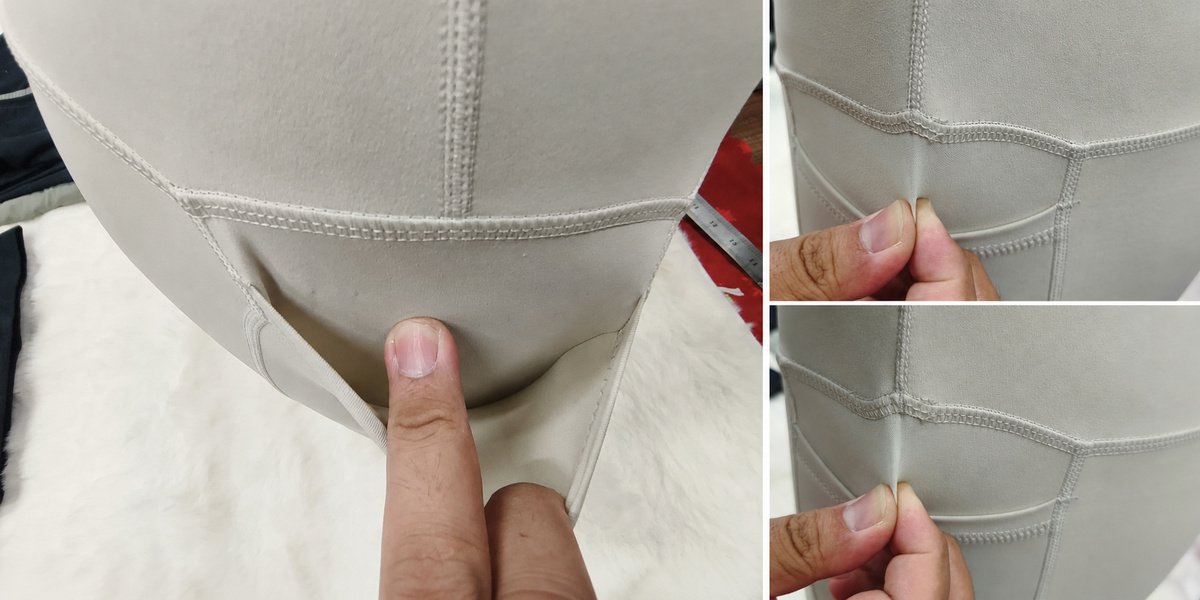
Light Smooth Nylon
- Material ID
- 需要真实素材替换
- Composition
- Confirm against Material ID
- GSM
- Confirm against Material ID
A lighter smooth Nylon/Spandex direction can support low-friction studio products where the brand prioritizes a minimal wearing sensation. The actual fabric should still be checked for opacity in intended colors, recovery after extension, snagging risk, waistband compatibility, and size-specific fit.

Balanced Naked Nylon
- Material ID
- 需要真实素材替换
- Composition
- Confirm against Material ID
- GSM
- Confirm against Material ID
This direction targets a balance between soft handfeel, coverage, recovery, and moderate support. Rather than selecting a nominal middle GSM alone, MOVEVOX should compare physical candidates and build Fit Samples because knit density and finishing can make similarly weighted fabrics perform differently.
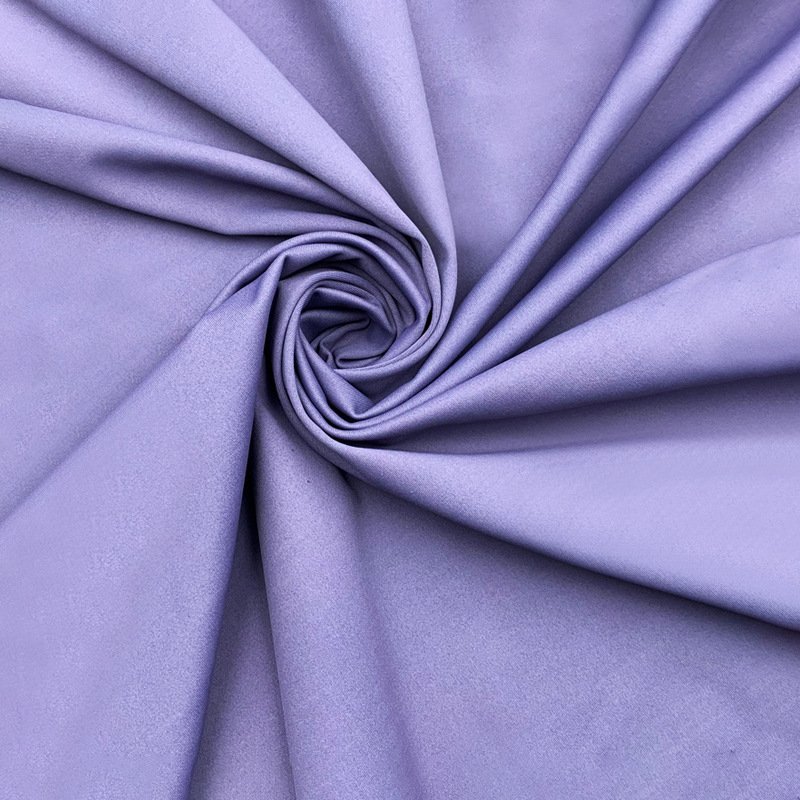
Supportive Naked Nylon
- Material ID
- 需要真实素材替换
- Composition
- Confirm against Material ID
- GSM
- Confirm against Material ID
A more supportive naked-feel direction uses material recovery and garment engineering together. The target should be approved through physical compression feel, waistband stability, opacity, and movement rather than assuming a heavier fabric automatically provides better support.

Peach Soft Nylon
- Material ID
- 需要真实素材替换
- Composition
- Confirm against Material ID
- GSM
- Confirm against Material ID
Peach Skin can provide a fine micro-raised tactile effect for Yoga, Pilates, or lifestyle products. The actual material should be reviewed for color, pressure marks, Logo compatibility, recovery, pilling, wash changes, and commercial availability before becoming a production standard.
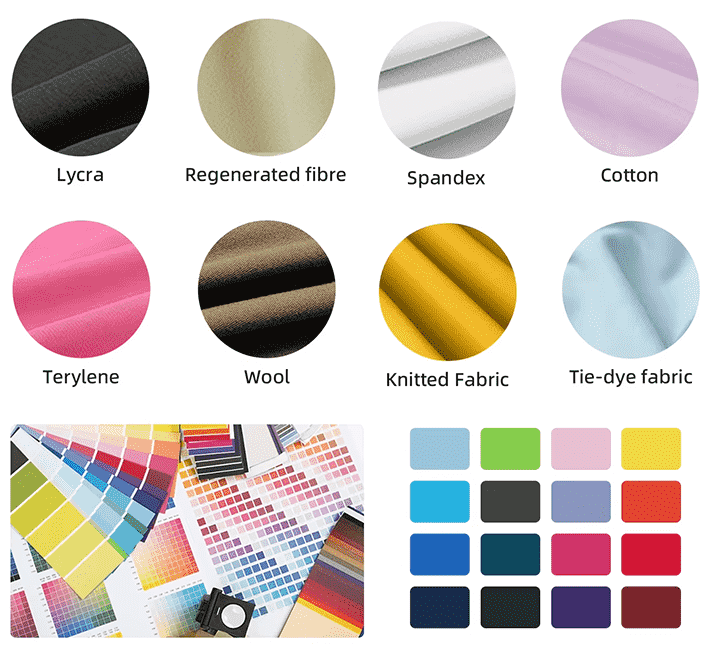
Peach Soft Poly
- Material ID
- 需要真实素材替换
- Composition
- Confirm against Material ID
- GSM
- Confirm against Material ID
A Polyester/Spandex Peach direction may suit projects where its price, color behavior, sourcing availability, and tactile result meet the brief. Physical approval remains necessary because fiber family alone cannot predict the final low-friction or second-skin experience.
Light Brushed Soft
- Material ID
- 需要真实素材替换
- Composition
- Confirm against Material ID
- GSM
- Confirm against Material ID
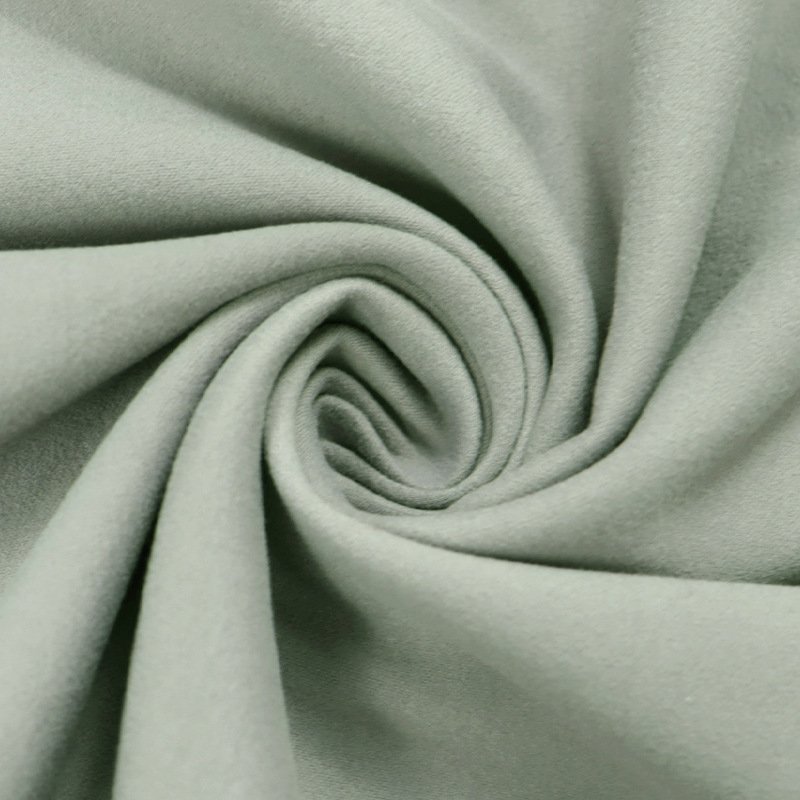
A lightly brushed surface can contribute additional softness while retaining a relatively refined activewear direction. Brush depth, visual nap, friction, surface durability, and heat sensitivity should be evaluated with the actual fabric rather than assumed from the word “brushed.”

Double Brushed Soft
- Material ID
- 需要真实素材替换
- Composition
- Confirm against Material ID
- GSM
- Confirm against Material ID
Double brushing can create a soft raised surface on both sides where appropriate. Because it may also influence perceived warmth, friction, pilling risk, and surface appearance, the brand should approve the exact material and finished garment before commercial use.
Smooth Polyester Blend
- Material ID
- 需要真实素材替换
- Composition
- Confirm against Material ID
- GSM
- Confirm against Material ID
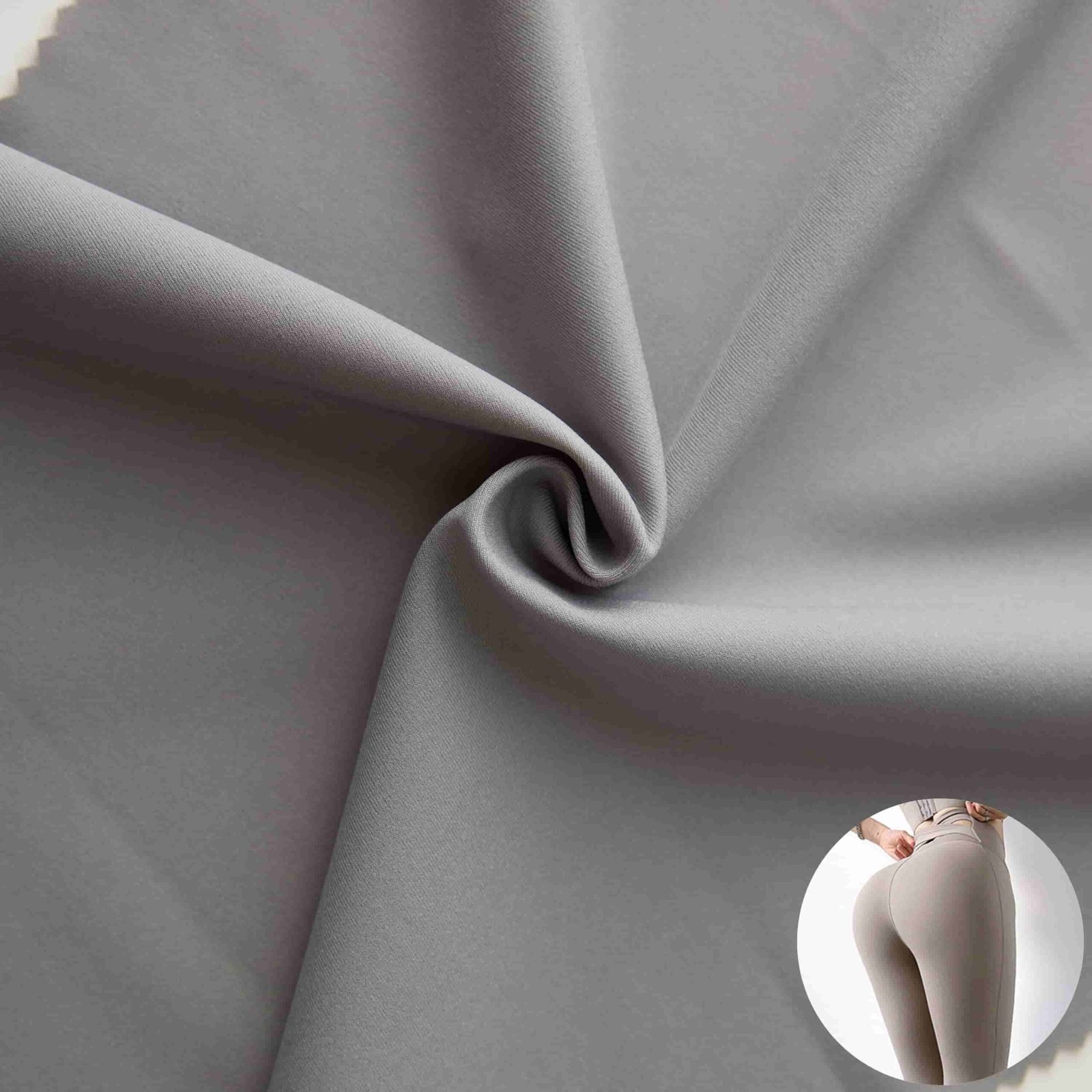
Polyester/Spandex can be considered when its actual handfeel, stretch, recovery, opacity, color, price, and functional direction match the product brief. MOVEVOX does not define the material as Naked Feel solely because it is high-stretch and soft.
Turn Naked Feel Into an Approval Standard
Words such as buttery, second-skin, smooth, or naked feel help communicate direction, but commercial repeatability requires physical reference standards linked to the approved fabric and finished garment.
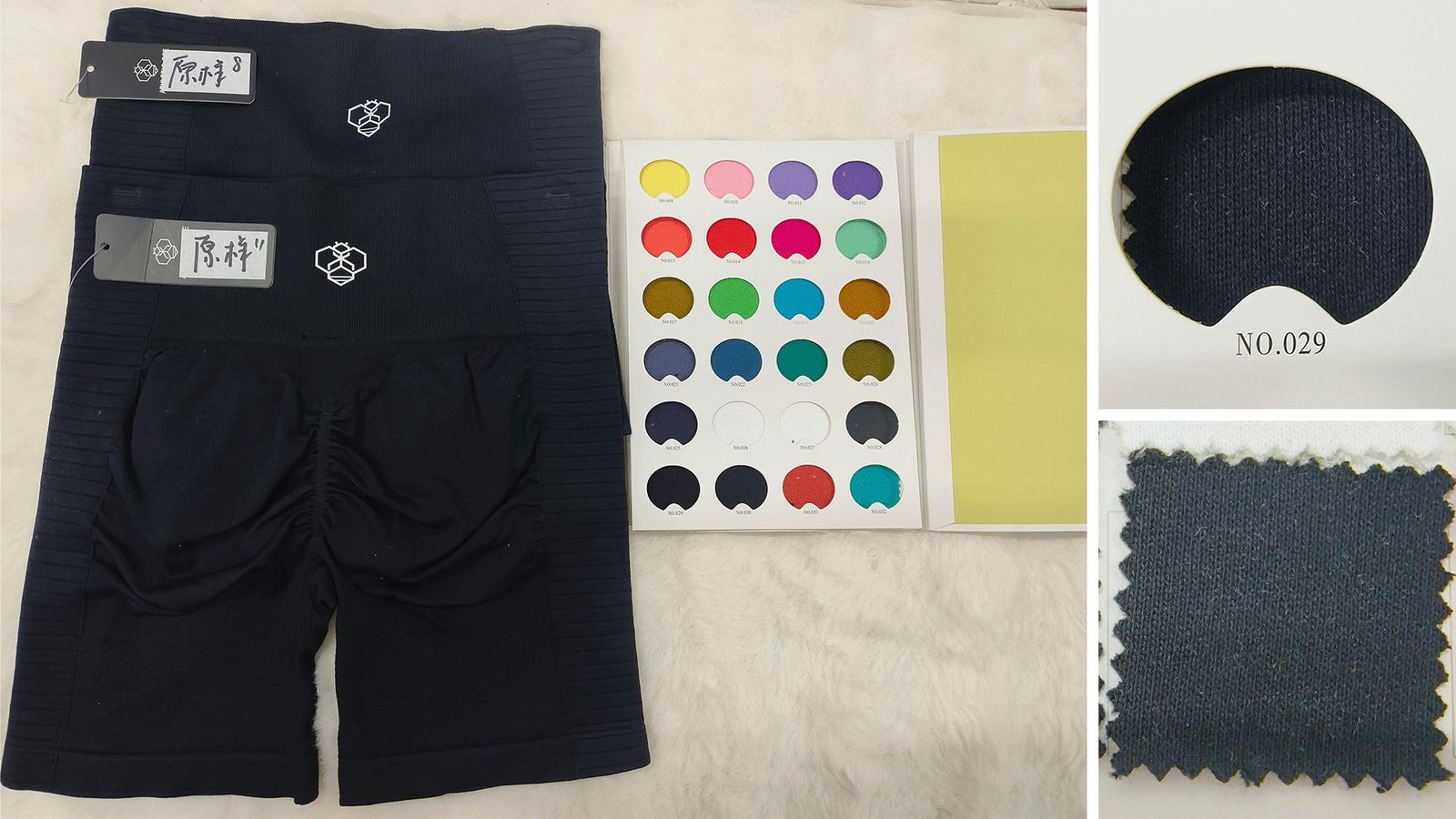
Reference Swatch
Claim: Establish the tactile benchmark physically.
A buyer-provided or MOVEVOX-approved fabric swatch gives development, sourcing, and QC teams a common reference for surface, softness, friction, and general material direction. Composition and GSM can support identification, but they should not replace physical comparison when handfeel is commercially critical.
Evidence Basis: Identified approved fabric swatch with project reference and date.
Approved Garment
Claim: Confirm feel in the finished product.
Fabric experience can change after cutting, sewing, knitting, heat application, finishing, pressing, packaging, and body extension. The Approved Sample therefore connects the material reference with the actual waistband, seams, dimensions, compression, opacity, and complete legging construction.
Evidence Basis: Buyer-approved physical garment and current product specification.
Surface Language
Claim: Use one shared descriptive vocabulary.
MOVEVOX can record agreed terms such as smooth, low-friction, Peach-like, lightly brushed, matte, or supportive to improve communication among product, material, sourcing, and QC teams. These descriptors organize review but do not become substitutes for the physical reference.
Evidence Basis: Material approval card linked to the physical swatch.
Fit Experience
Claim: Judge handfeel under actual garment extension.
A fabric may feel different when stretched across the waist, hip, thigh, or knee. Physical Fit Samples allow the buyer to judge whether softness, support, surface drag, waistband pressure, and opacity remain aligned with the target wearing experience.
Evidence Basis: Approved Fit Sample and consolidated buyer fit comments.
Wash Comparison
Claim: Review post-care feel where commercially required.
When wash-related surface change is important, MOVEVOX can coordinate buyer-defined wash evaluation or testing and compare the result against the approved garment. Any conclusion remains specific to the actual material, color, care method, cycles, and sample condition evaluated.
Evidence Basis: Project wash record or applicable third-party report.
Repeat Lot Check
Claim: Recompare important replenishment material.
The same nominal specification can vary when supplier, dyeing, finishing, or material lot changes. Incoming comparison against the approved reference helps identify meaningful differences before repeat material is converted into finished inventory.
Evidence Basis: Material lot record plus applicable incoming inspection evidence.
Validate Stretch and Recovery Before Bulk Production
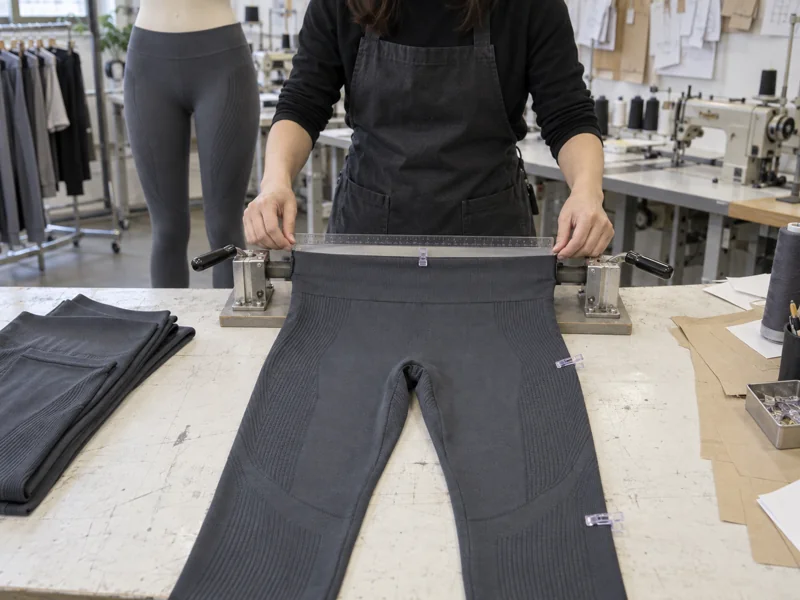
High stretch helps create a close-to-skin product, but recovery determines whether the garment maintains intended fit. MOVEVOX can coordinate project-specific evaluation using buyer requirements and applicable test methods.
Fabric Stretch
Purpose: Determine how the selected material extends in relevant directions and whether its extensibility suits the intended pattern, movement, and product category.
Method: Test the actual fabric using the buyer's defined extension method, direction, load, conditioning, and calculation, or another agreed laboratory protocol.
Acceptance: Record method, fabric ID, direction, result, and buyer-approved requirement.
Stretch Recovery
Purpose: Evaluate residual growth after extension and whether the material returns sufficiently for the intended waist, hip, seat, knee, and leg fit.
Method: Apply defined extension, hold, release, and recovery conditions to the actual material or garment according to buyer or laboratory procedure.
Acceptance: Compare recovery result with the project-specific acceptance criterion.
Waist Recovery
Purpose: Confirm that the waistband can expand for dressing and movement while returning sufficiently to the intended circumference and support direction.
Method: Evaluate the actual waistband construction, material, dimensions, extension, and repeated-use condition through buyer-defined garment testing or Fit Sample review.
Acceptance: Buyer-approved waist fit, recovery, and dimensional requirement.
Knee Growth
Purpose: Identify whether repeated bending leaves excessive local garment growth or visible bagging around the knee after movement and relaxation.
Method: Use a buyer-defined wear or garment-extension protocol and compare relevant dimensions and appearance before and after the specified activity cycle.
Acceptance: No unacceptable residual growth under the agreed evaluation method.
Seat Recovery
Purpose: Review whether the fabric and pattern recover after higher extension around the hip and seat, where naked-feel leggings can experience substantial negative ease.
Method: Evaluate representative garment size, approved measurements, actual material, and buyer-defined movement or extension conditions before comparing post-use appearance and dimensions.
Acceptance: Buyer-approved fit and appearance after the defined condition.
Opacity Under Stretch
Purpose: Confirm that required coverage remains acceptable while the material is operating at realistic garment extension rather than only in a relaxed fabric state.
Method: Review actual material, color, garment dimensions, representative size, and buyer-defined movement or laboratory condition.
Acceptance: Customer-approved visual or quantitative coverage criterion.
Wash Recovery
Purpose: Determine whether applicable washing changes elasticity, residual dimensions, waistband behavior, or complete fit enough to affect the approved product experience.
Method: Apply the agreed wash and dry protocol, recondition the sample, then repeat relevant measurement or recovery evaluation as required.
Acceptance: Project-specific dimensional and recovery requirement for the tested sample.
Calibrate Support Without Losing Naked-Feel Comfort
Naked feel does not require zero support. MOVEVOX reviews fabric recovery, negative ease, waistband, garment dimensions, and physical fit together so the required support level does not contradict the intended second-skin experience.
Skin Contact
The starting requirement is stable close-to-skin contact without relying on excessive garment tightness. Material, pattern, and body measurements should establish the intended relationship before support is increased through smaller dimensions.
Execution: Review physical material with the base Fit Sample.
Light Support
A light-support Yoga or Pilates direction can prioritize flexible movement and low perceived pressure while retaining sufficient recovery to keep the garment positioned during normal use.
Execution: Approve support through the actual Fit Sample and waistband.
Stable Waist
Waistband height, circumference, construction, and material recovery can create more local pressure than the body fabric. They should therefore be calibrated independently rather than using overall garment tightness to prevent movement.
Execution: Check waist fit, movement, recovery, and rolling behavior physically.
Moderate Support
Where the brand wants additional support, MOVEVOX can use appropriate material recovery, negative ease, pattern, or suitable Seamless structure while continuing to review comfort, opacity, and mobility.
Execution: Confirm support direction through buyer-approved garment testing.
Commercial Consistency
The approved support experience should be connected to material, measurements, grade rules, and current technical version so a repeat order does not become meaningfully tighter or looser because one variable changed.
Execution: Link Approved Sample, measurements, material, and First Article.
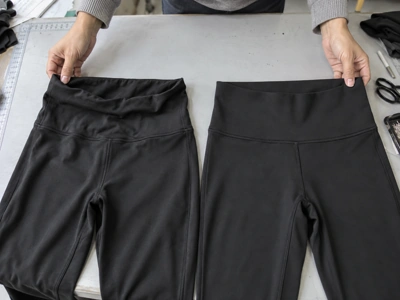
Control Opacity in the Actual Wearing State
Naked-feel materials can be fine, soft, and highly extensible. Coverage should therefore be reviewed in the actual color, size, garment dimensions, and movement condition rather than assumed from fabric weight alone.
Light Color Risk
Impact: Pale or bright colors can reveal more visual openness under extension than black or another dark sample using the same nominal material specification.
Response: MOVEVOX can review important commercial colors separately and apply the buyer's physical or laboratory opacity requirement to the actual material and garment.
Evidence: Color Sample
Excessive Extension
Impact: A pattern that stretches the fabric beyond the approved fit can reduce coverage even when the original material passed relaxed or lower-extension review.
Response: Link opacity with approved measurements, negative ease, garment size, Fit Sample, and the actual wearing condition instead of treating it only as a fabric characteristic.
Evidence: Fit Sample
Size Variation
Impact: Different commercial sizes can place different extension demands on the fabric if grading or target fit is not calibrated consistently across the range.
Response: Review representative sizes where needed and confirm that grading, waistband, hip fit, and coverage remain consistent with the buyer's intended product experience.
Evidence: Size Set
Material Lot Change
Impact: Changes in fabric density, GSM, finishing, or supplier conditions can affect coverage even when composition and color name remain nominally unchanged.
Response: Maintain approved material references and incoming controls, then re-evaluate meaningful changes before treating replacement material as commercially equivalent.
Evidence: Lot Record
Movement Extension
Impact: Standing appearance cannot represent high-extension positions such as bending, lunging, or squatting, where the hip and thigh can place substantially more strain on the material.
Response: Apply the buyer's actual-use visual protocol or defined test condition to the representative garment instead of relying exclusively on relaxed inspection.
Evidence: Wear Review
Universal Claims
Impact: Calling every color and size universally “100% squat-proof” creates a broader promise than one fabric, sample, light condition, or test result can support.
Response: Limit coverage statements to the applicable material, color, size, condition, and evidence, and use buyer-defined acceptance criteria where available.
Evidence: Test Scope

Common Myths About Naked-Feel Product Performance
Naked feel is created by balancing tactile experience with commercial garment requirements. Maximizing softness, stretch, support, opacity, and durability simultaneously is not a realistic substitute for physical product development.
Myth: One composition creates naked feel.
Fact: MOVEVOX commonly uses approximately 75%–82% Nylon with 18%–25% Spandex for its naked-feel development direction, but yarn fineness, GSM, knit structure, finishing, recovery, pattern, and fit can make materials with similar percentages feel substantially different.
Basis: Final material approval remains physical and project specific.
Myth: Naked feel must be brushed.
Fact: Brushing can create a softer raised surface, but Naked Feel is a broader wearing-experience category. MOVEVOX can also use fine high-stretch Nylon/Spandex, Peach Skin, or another technically suitable surface depending on the target.
Basis: Surface treatment and wearing experience are separate development variables.
Myth: Less compression is always better.
Fact: Too much pressure can undermine second-skin comfort, but insufficient recovery or an overly loose fit can create slipping, bagging, or poor waistband stability. The correct support direction depends on the brand's activity, fit, and customer target.
Basis: Support is approved through material plus physical garment fit.
Myth: Lighter fabric guarantees better feel.
Fact: Lower GSM can reduce weight but may also change opacity, support, surface stability, or recovery. A heavier material can still feel refined if its yarn, knitting, and finishing support the intended tactile direction.
Basis: GSM is one variable rather than a complete quality score.
Myth: Soft fabric cannot be durable.
Fact: Softness alone does not establish either weak or strong durability. Pilling, snagging, abrasion, and wash behavior depend on fiber, yarn, construction, finishing, friction, and actual use, so they should be evaluated separately.
Basis: Durable-performance claims require applicable project evidence.
Myth: One approved size proves all sizes.
Fact: Commercial sizes can create different material extension, waistband pressure, opacity, and compression if grading does not preserve the intended relationship between garment and body measurements. Representative Size Set review can therefore be important for larger programs.
Basis: Fit and size experience remain garment-specific approval items.
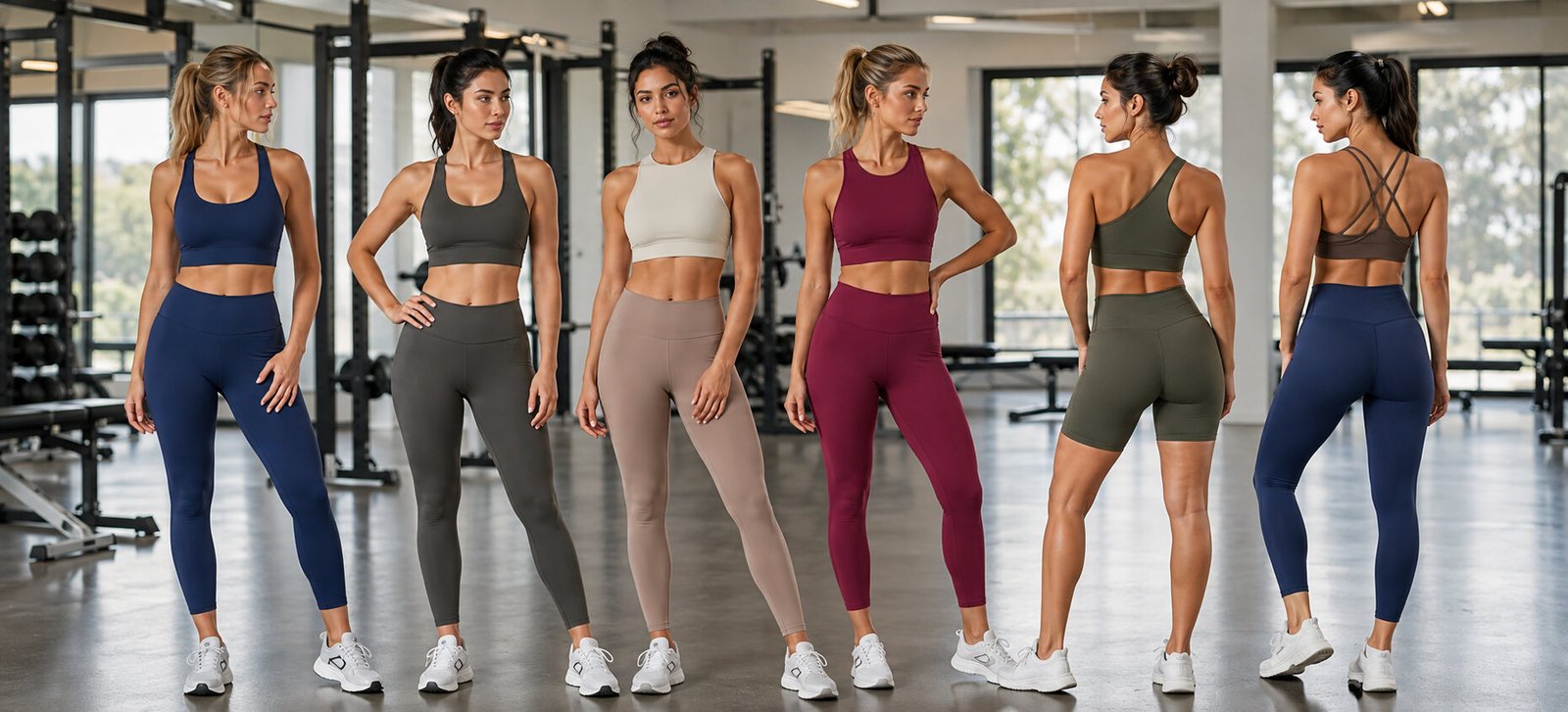
Engineer Waistbands Around the Intended Wearing Experience
The waistband often creates more perceived pressure than the legging body. MOVEVOX reviews waist height, circumference, construction, recovery, body transition, and physical fit with the selected material rather than treating waist design as a visual detail only.

High Waist
A high-waist construction can provide greater torso coverage and a larger contact area, but comfort depends on the actual circumference, fabric recovery, height, rise, and transition into the body. MOVEVOX can develop high and ultra-high waist directions through suitable Cut & Sew or Seamless routes. The final result should be approved on the intended wearer and size system rather than described automatically as supportive or non-rolling.
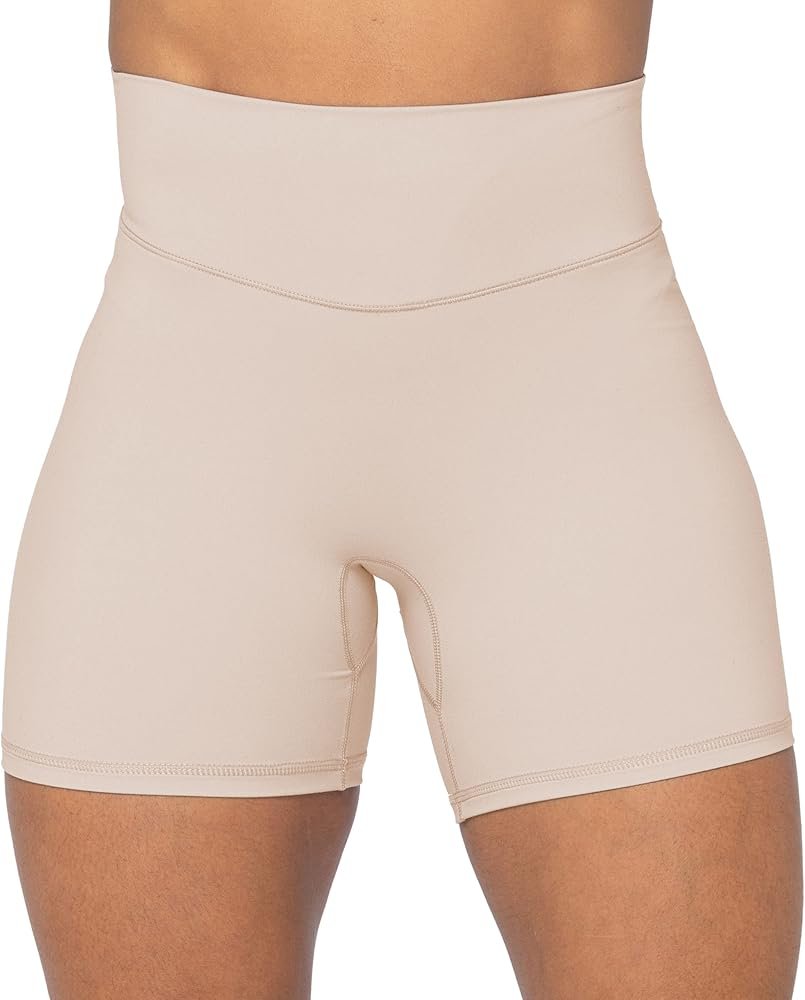
Straight Waist
A straight upper-waist direction provides a clean visual line and can be developed with appropriate piece fabric or Seamless structure. Its success still depends on top-edge dimensions, recovery, body shape, rise, and garment extension. If the waist is too small, pressure can dominate the naked-feel experience; if too loose, the garment may move during activity.
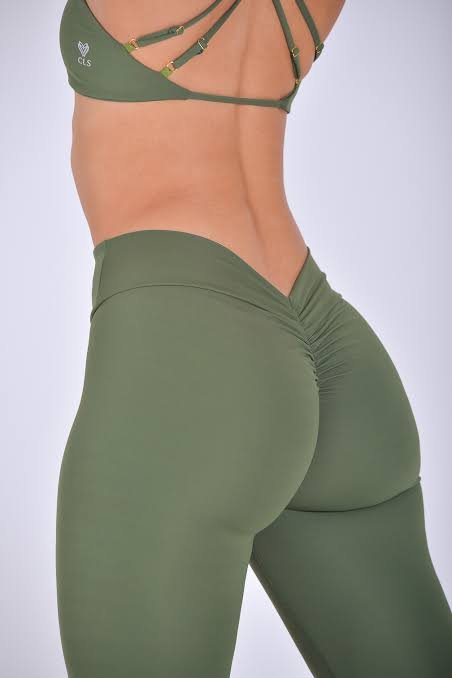
V Waist
MOVEVOX can develop V-waist directions where the material and construction support the intended pattern. Symmetry, center position, stretch, recovery, front rise, and visual shape should be confirmed through physical samples. A V shape does not independently determine comfort, so the waist circumference and complete fit still need to follow the buyer-approved product specification.
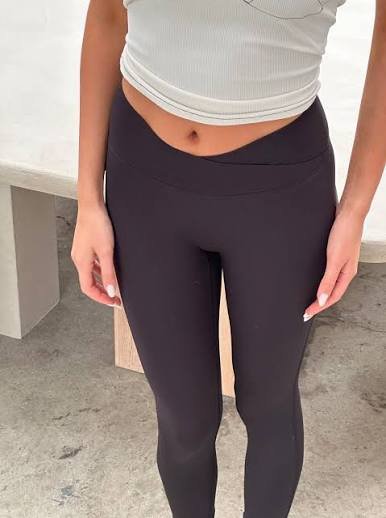
Cross Waist
Cross-waist or overlapping directions can be developed through suitable Cut & Sew construction. The overlap, edge stability, stretch direction, seam placement, rise, and front-body fit require technical review because visual styling can introduce local pressure or instability. MOVEVOX uses physical sampling to confirm whether the selected material and pattern produce the intended appearance and wearing experience.
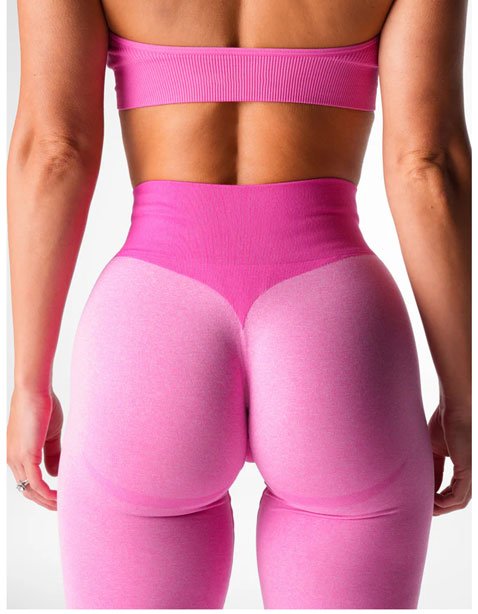
Elastic Support
Cut & Sew leggings can use selected elastic constructions where the product needs additional localized waist control. Elastic type, width, attachment, stretch, recovery, and garment circumference should be approved together because excessive elastic tension can conflict with a low-pressure Naked Feel target. The use of elastic is therefore a project decision rather than a default method for keeping every waistband in place.

Seamless Waistband
MOVEVOX's own Seamless core uses 28 Italian Santoni machines and can create waistband areas through suitable knitted organization and density. The waistband remains part of the total garment program, so height, circumference, recovery, structure transition, size, and actual Fit Sample need approval. Seamless construction can reduce certain cut seams, but it does not automatically guarantee zero pressure or zero rolling.
Choose Front Construction Around Comfort and Product Architecture
Reducing front-seam awareness can support a cleaner second-skin product direction, but Cut & Sew no-front-seam and Seamless construction achieve that result through different technical routes and should not be described as the same process.
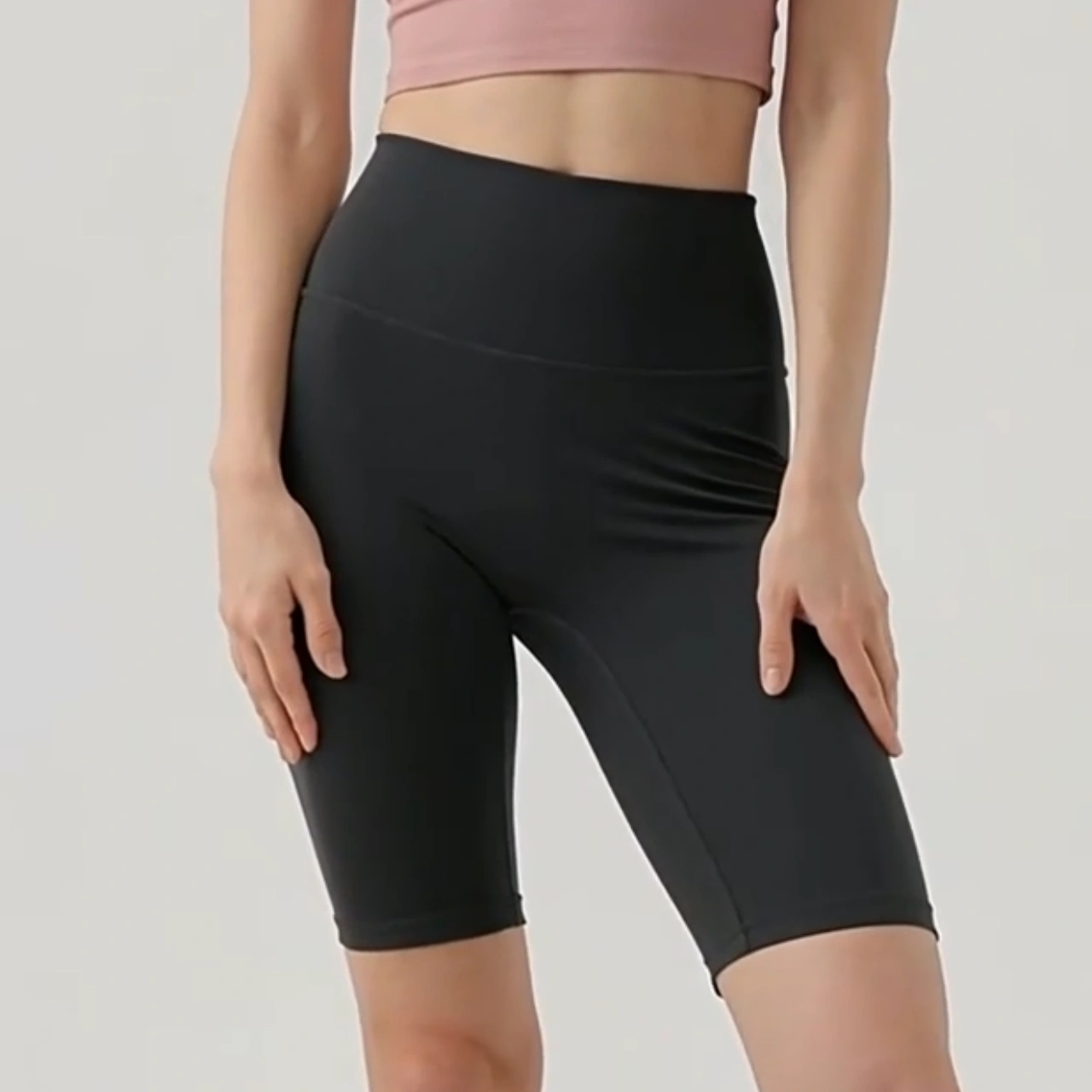
Cut & Sew No Front Seam
MOVEVOX can develop Cut & Sew leggings without a conventional front-center seam when the pattern, rise, crotch shape, material stretch, recovery, opacity, and garment fit support the design. This route still uses cut fabric panels and sewn garment construction elsewhere. Removing one seam does not automatically eliminate all front-fit or appearance issues; the complete pattern and physical Fit Sample remain necessary to confirm comfort, coverage, movement, and commercial grading.
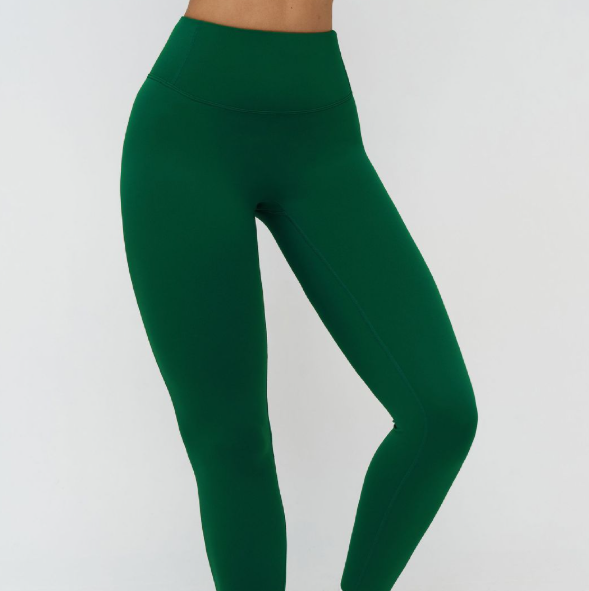
Seamless Front Construction
MOVEVOX can also develop suitable leggings through its Santoni Seamless route, where garment form and structural zones are created through circular knitting rather than conventional Cut & Sew panel assembly. This can reduce selected seam lines, but the product still requires program development, yarn selection, waistband engineering, dimensions, structure transitions, fit, and size confirmation. Seamless should therefore be selected because it suits the product architecture, not because “Naked Feel” automatically requires Seamless manufacturing.
Control Naked Feel Across the Size Range
MOVEVOX develops fit from buyer measurements, pattern work, physical samples, fabric behavior, and grading. One universal public size chart should not replace the customer's approved measurements for a custom branded program.
| Size | Waist | Hip | Inseam | Extension | Fit Status |
|---|---|---|---|---|---|
| XS | Buyer chart | Buyer chart | Buyer chart | Project specific | Sample review |
| S | Buyer chart | Buyer chart | Buyer chart | Project specific | Sample review |
| M | Buyer chart | Buyer chart | Buyer chart | Project specific | Base fit |
| L | Buyer chart | Buyer chart | Buyer chart | Project specific | Grade review |
| XL | Buyer chart | Buyer chart | Buyer chart | Project specific | Grade review |
| XXL | Buyer chart | Buyer chart | Buyer chart | Project specific | Size-set review |
Fit and Grading Note
Negative ease is the relationship between body dimensions, garment dimensions, and fabric extension. MOVEVOX does not use one permanent negative-ease percentage for every naked-feel fabric because recovery, compression direction, opacity, waist construction, and body target can differ. The buyer's measurement chart, selected material, base Fit Sample, grade rules, representative Size Set, and agreed tolerances should establish the applicable commercial size system.
- Material changes can alter fit even when the pattern file remains unchanged.
- Opacity and compression should be reviewed together with garment extension.
- Larger size ranges may require representative physical Size Set approval.
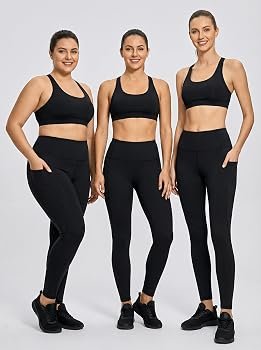
Define Surface Durability With Applicable Test Standards
Soft, fine, Peach-like, or brushed surfaces may require closer evaluation of pilling and abrasion. MOVEVOX can arrange applicable testing, but any published grade or durability statement must remain tied to the tested material, method, cycles, and buyer requirement.
ASTM Pilling Method
ASTM D4970/D4970M is one recognized pilling method that can be specified for relevant activewear fabrics. MOVEVOX can coordinate testing when a buyer requires a defined pilling result, with cycle conditions and acceptance rating agreed for the actual material. A result from one fabric, finish, or color should not be converted into a permanent claim covering every naked-feel fabric offered by the company.
Applicability: Project-specific fabric where the buyer requires formal pilling evidence.
MOVEVOX Response: Record method, sample identity, cycles, result, and buyer acceptance requirement with the applicable report.
ISO Pilling Method
ISO 12945-2 provides another recognized route for evaluating fabric pilling through a modified Martindale approach. Where a buyer's quality manual specifies this method, MOVEVOX can submit the correct material for testing and use the resulting grade as project evidence. The method, edition, conditioning, cycles, rating, and acceptance threshold should follow the buyer or laboratory-approved plan rather than being inferred from supplier marketing descriptions.
Applicability: Buyer programs using ISO-oriented textile performance standards.
MOVEVOX Response: Follow the customer-approved test plan and keep the result limited to the tested material.
ASTM Abrasion Method
ASTM D4966 can be used for Martindale abrasion evaluation where the brand requires quantified wear evidence. Abrasion differs from pilling: it focuses on material wear under repeated rubbing rather than only pill formation. Results depend on fabric thickness, surface, load, cycles, end point, and intended use, so a laboratory result should always be interpreted within its defined conditions.
Applicability: Higher-friction products or buyer programs with specified abrasion criteria.
MOVEVOX Response: Coordinate the agreed method and report cycles, end point, sample identity, and acceptance rule.
ISO Abrasion Method
ISO 12947-2 is another recognized Martindale abrasion route that buyers may specify. For naked-feel leggings, formal testing can support material selection when softness must be balanced with active-use wear exposure. MOVEVOX does not use one abrasion result to guarantee every garment zone or user condition because friction around the seat, inner thigh, equipment contact, and accessories can differ substantially.
Applicability: Programs requiring formal abrasion comparison under an ISO-based system.
MOVEVOX Response: Use project-specific sample testing together with garment-zone risk review.
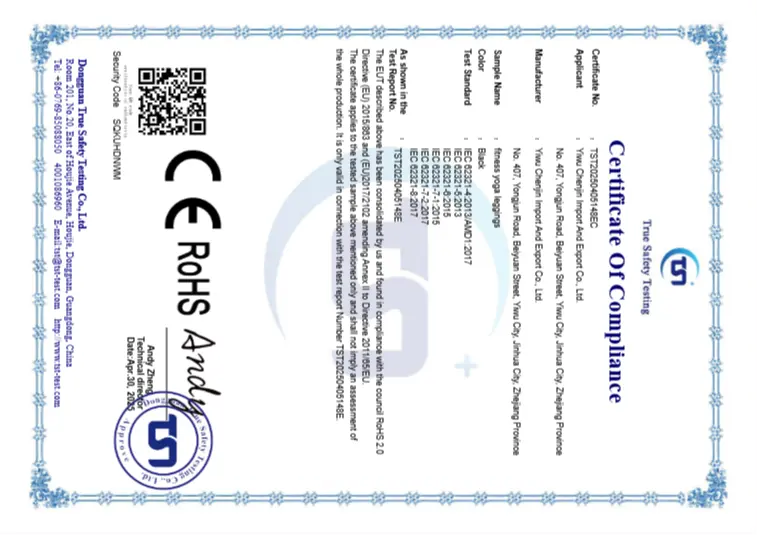
Match Branding Methods to Soft Stretch Fabrics
Fine, soft, or low-friction surfaces can respond differently to heat, pressure, adhesives, stitching, and repeated stretch. MOVEVOX therefore reviews branding on the actual production material before bulk application.
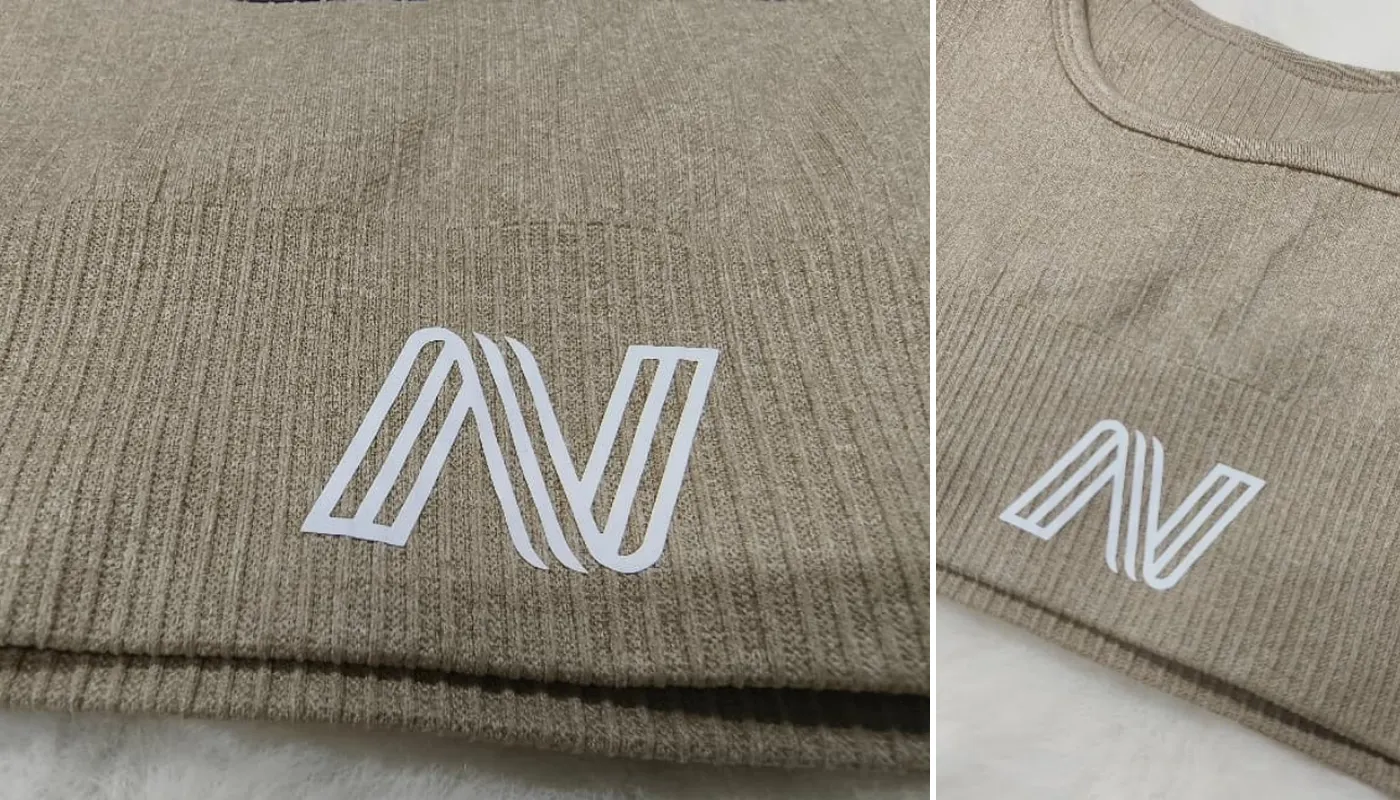
Heat Transfer
Heat transfer can provide clean branding on suitable activewear materials and is part of MOVEVOX's normal Logo capability. Fine or pressure-sensitive surfaces may show flattening, shine, or local handfeel change, so temperature, pressure, time, artwork, placement, and material recovery should be physically sampled.
Best use: Suitable flat zones after actual-material Logo approval.
Limit: Heat or pressure can mark sensitive soft surfaces.
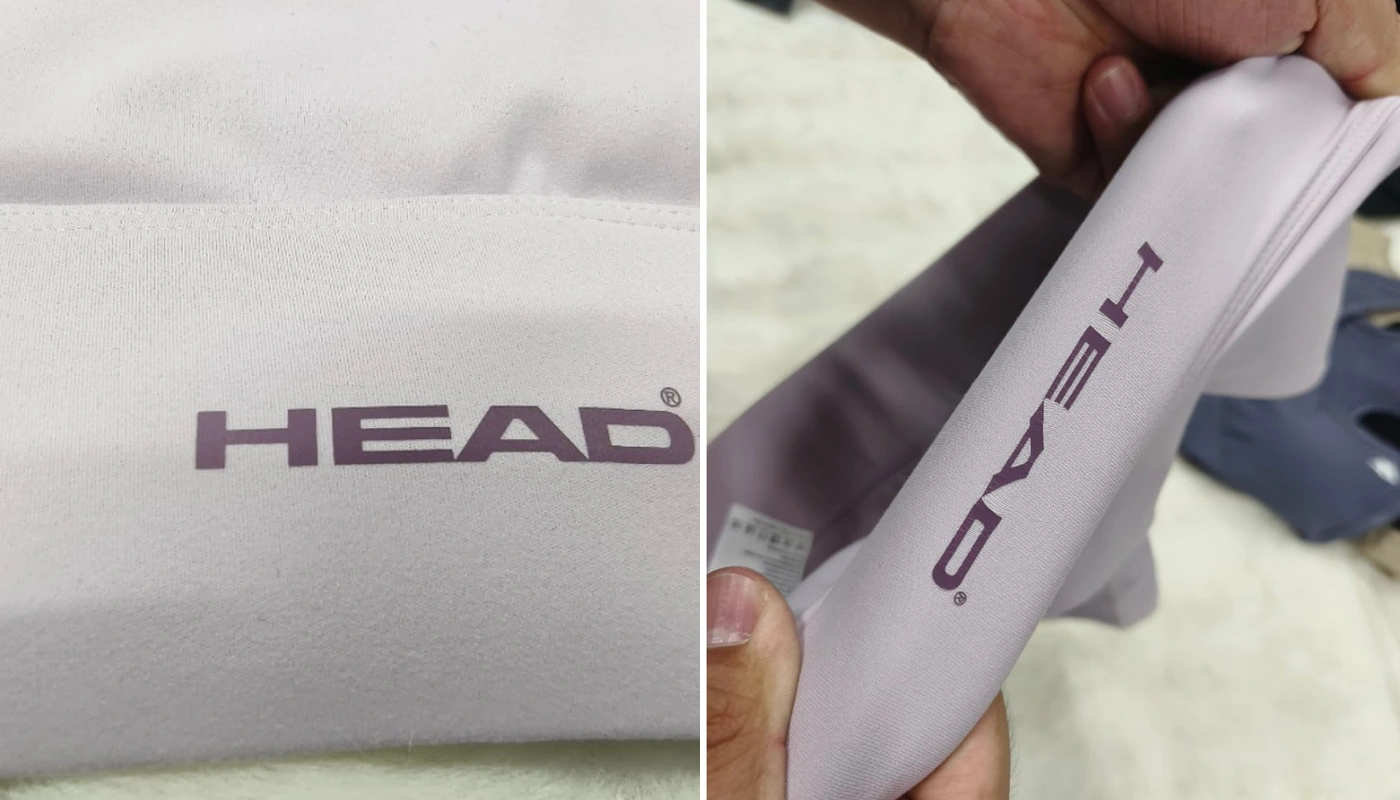
Screen Print
Screen printing can be used on suitable stretch materials when artwork, ink system, surface, placement, and garment extension are compatible. A very smooth, brushed, or Peach-like surface can influence print contact and appearance, so final execution should be approved on the actual fabric rather than transferred from another product.
Best use: Approved printable zones with stable surface presentation.
Limit: Stretch and finish can affect coverage or edge definition.
Silicone Print
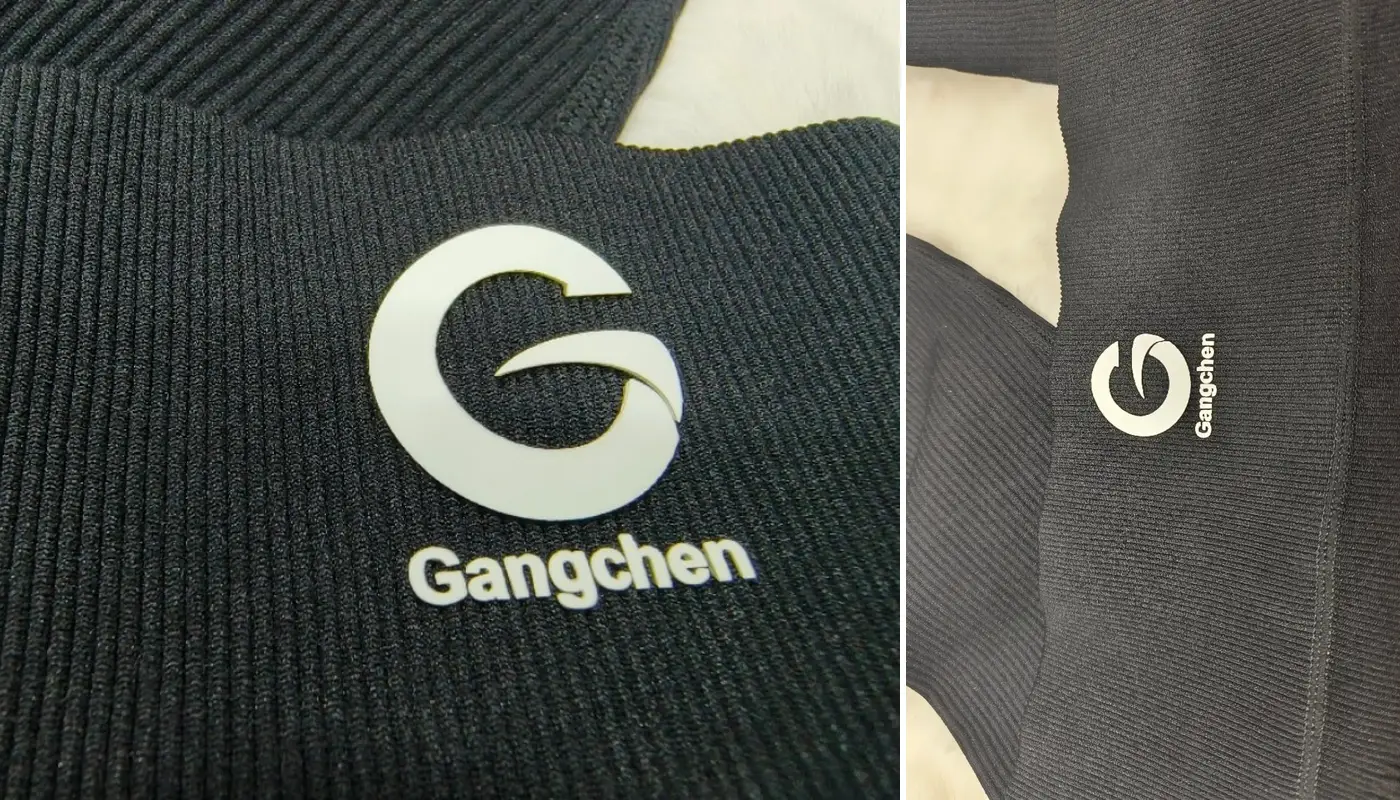
Silicone print is another MOVEVOX-supported branding route and can provide a tactile Logo on technically compatible sportswear. Adhesion, heat, pressure, thickness, stretching, and wash behavior still need review because the substrate under the Logo may be fine, elastic, or surface-finished.
Best use: Selected activewear branding requiring tactile detail.
Limit: Adhesion and local surface response need physical approval.
Embroidery
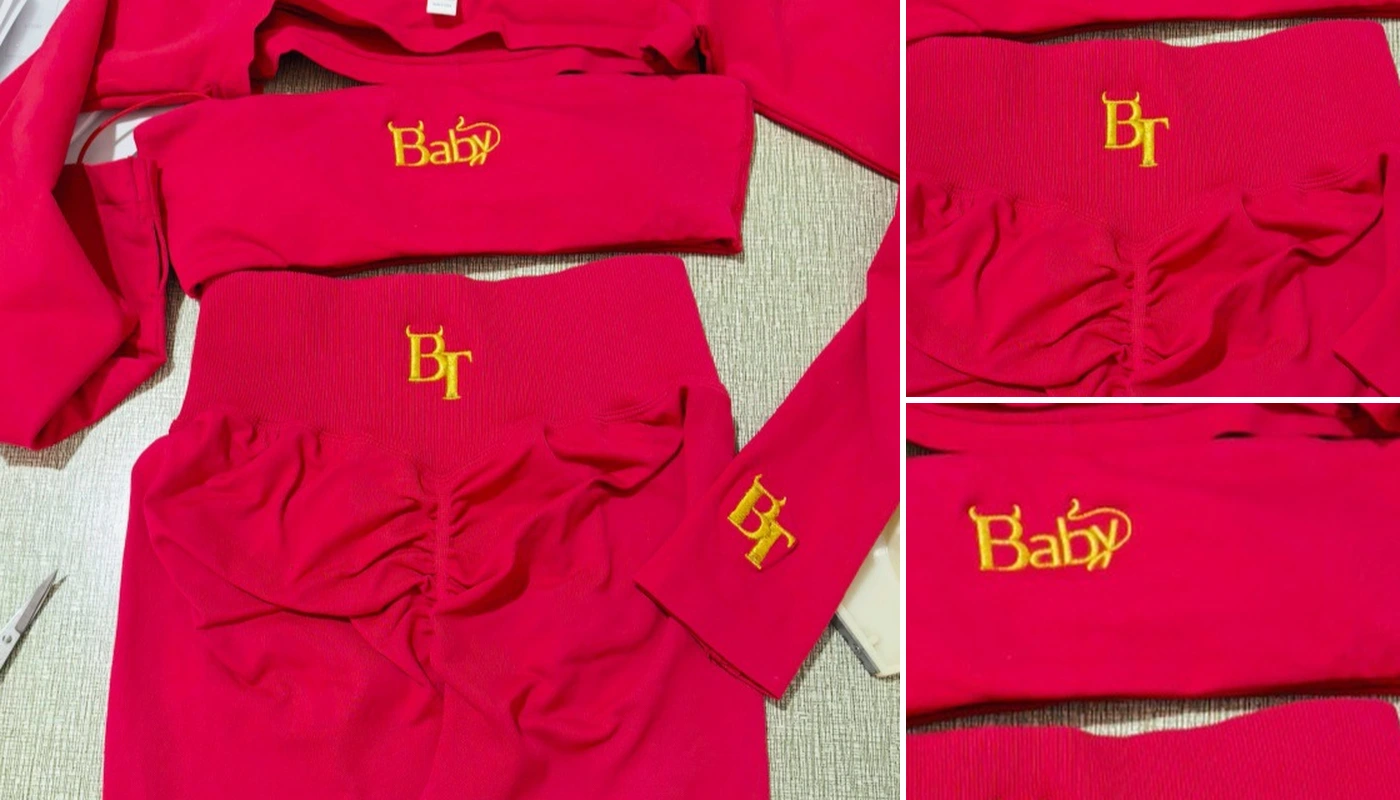
Embroidery can work in suitable garment zones where fabric stretch, backing, artwork, Logo size, and placement support the process. Highly elastic naked-feel areas can become locally stiff or puckered if embroidery is poorly matched to the material.
Best use: Stable areas where stitched branding suits the design.
Limit: High-stretch areas can lose softness or distort locally.
Jacquard Branding
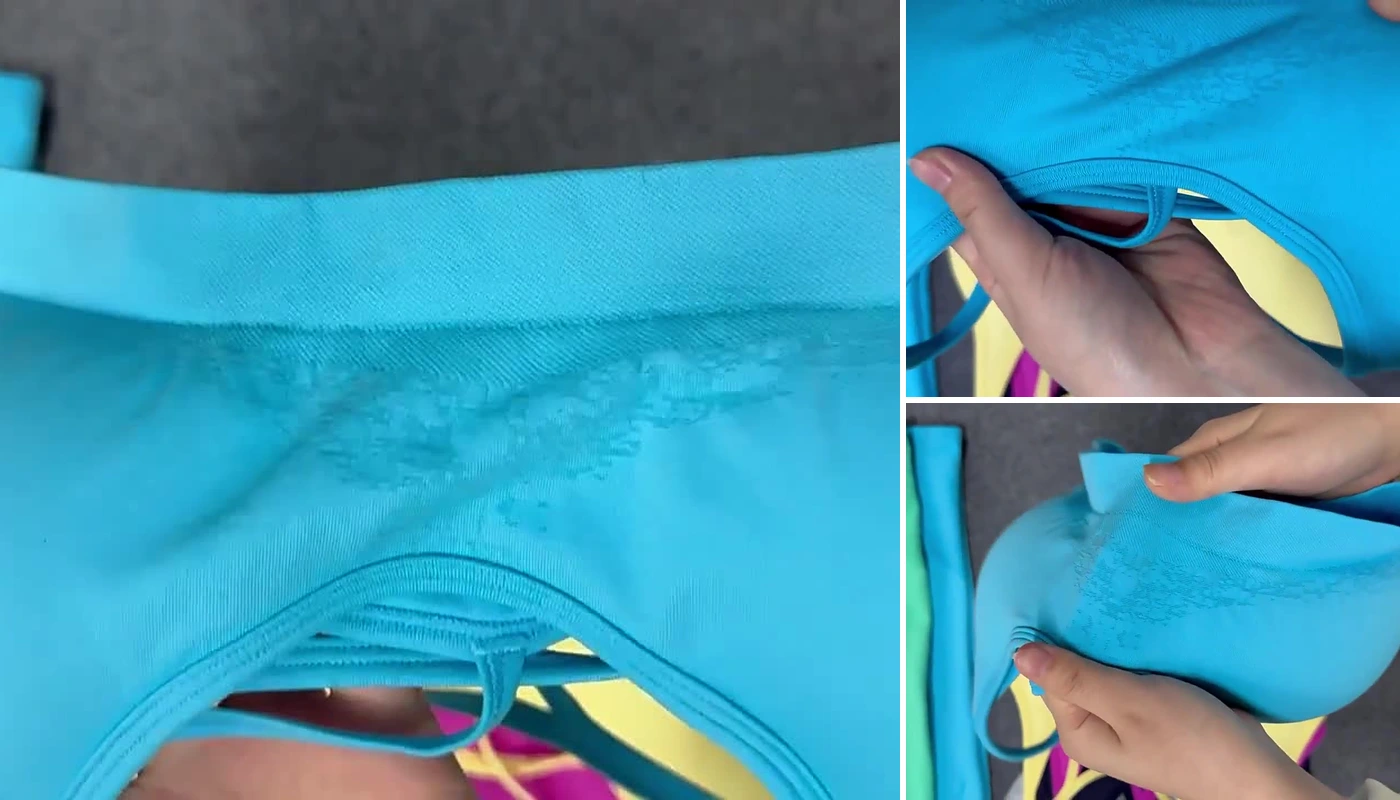
Jacquard is applicable where the product uses a suitable Seamless knitted structure and the Logo can be engineered into the knitting program. It should not be represented as a direct surface application onto ordinary Cut & Sew naked-feel fabric.
Best use: Knit-in branding on technically appropriate Seamless products.
Limit: Requires compatible structure, program, and yarn planning.
Woven Label
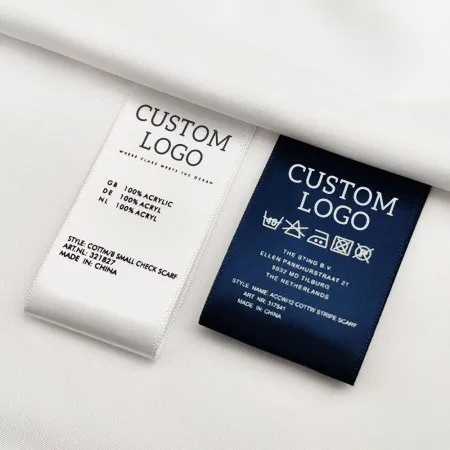
Woven labels can communicate brand identity without applying the primary artwork directly onto a sensitive body fabric. Label position, attachment, seam, edge feel, and garment construction still require review so the label does not undermine the low-friction product experience.
Best use: Brand identification independent of main fabric surface.
Limit: Placement and attachment must preserve wearer comfort.
Develop Naked-Feel Leggings Around Brand Fit Requirements
MOVEVOX can translate an approved soft, low-friction material direction into different Cut & Sew or Seamless leggings architectures according to product fit, waistband, construction, size, branding, and intended use.
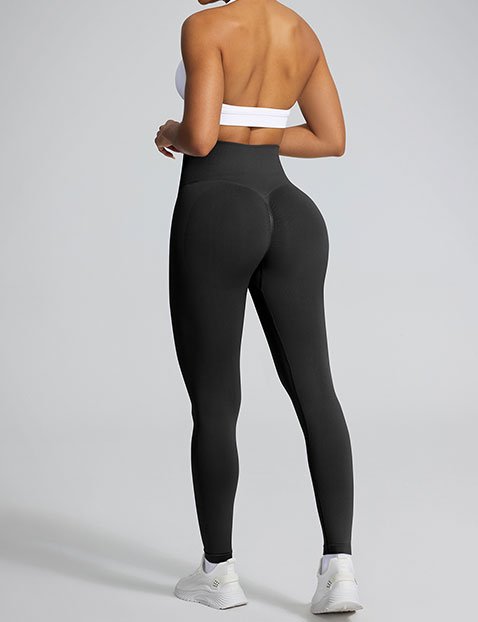
High Waist Naked
High-waist leggings can combine an approved naked-feel material with buyer-defined rise, waist dimensions, recovery, and hip fit. The complete physical sample determines comfort.
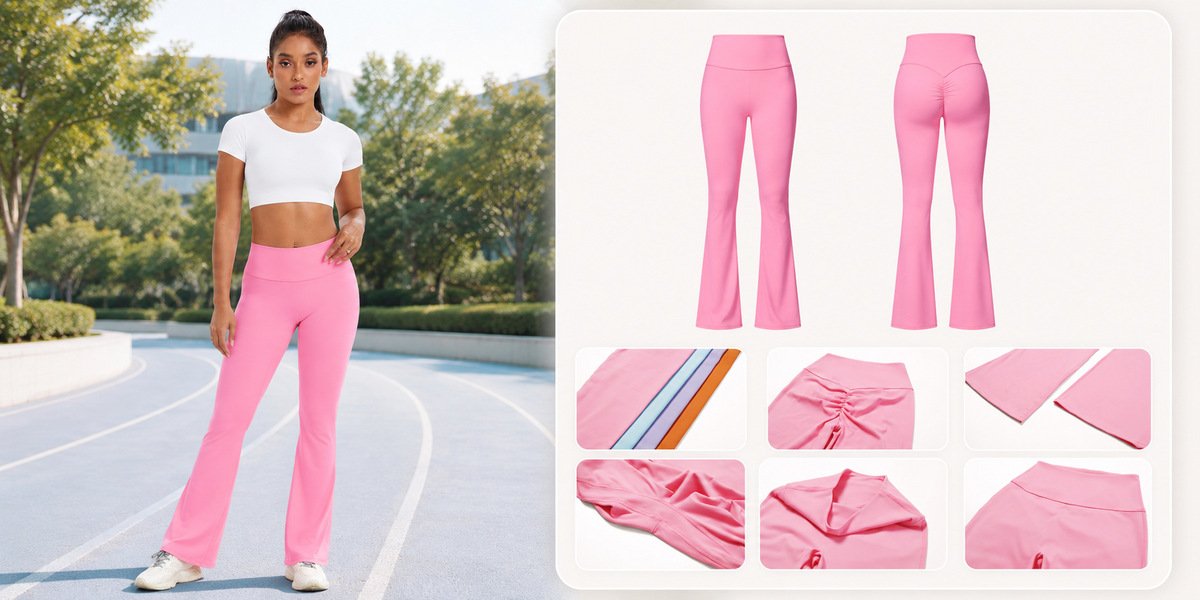
V Waist Naked
A V-waist Cut & Sew direction can be developed when pattern, material stretch, symmetry, rise, and recovery support the intended silhouette and fit.

No Front Seam
Cut & Sew no-front-seam leggings can reduce a conventional center-front seam where material, crotch pattern, rise, opacity, and fit make the construction technically suitable.
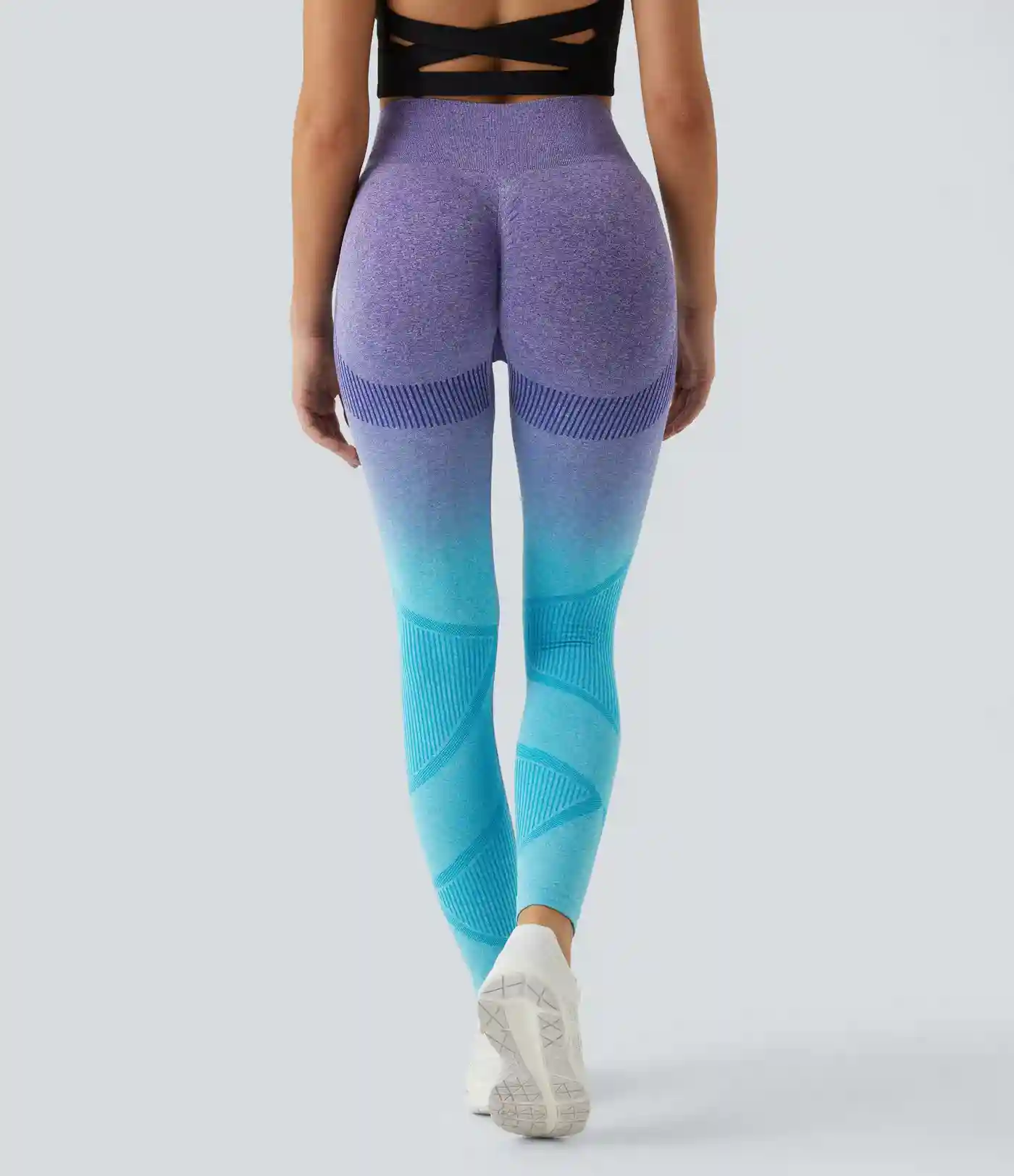
Seamless Naked
A suitable Seamless program can combine refined yarn and structure with engineered waistband or body zones. Final feel depends on program, yarn, dimensions, structure, and fit.
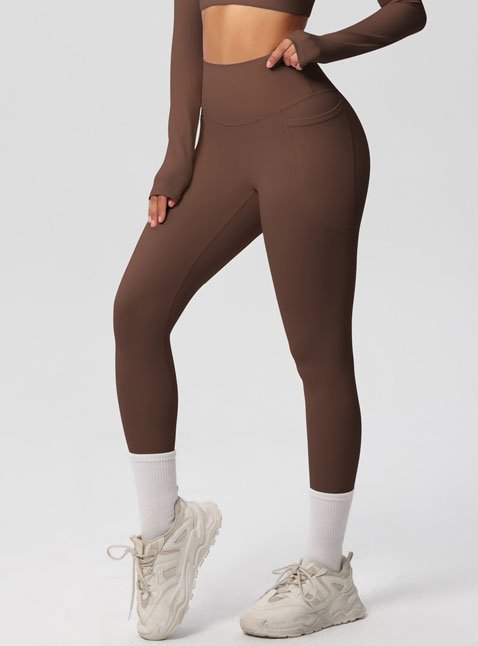
Pocket Naked
Side or waistband pockets can be added where pocket architecture, material recovery, garment extension, and intended storage remain compatible with the soft product direction.
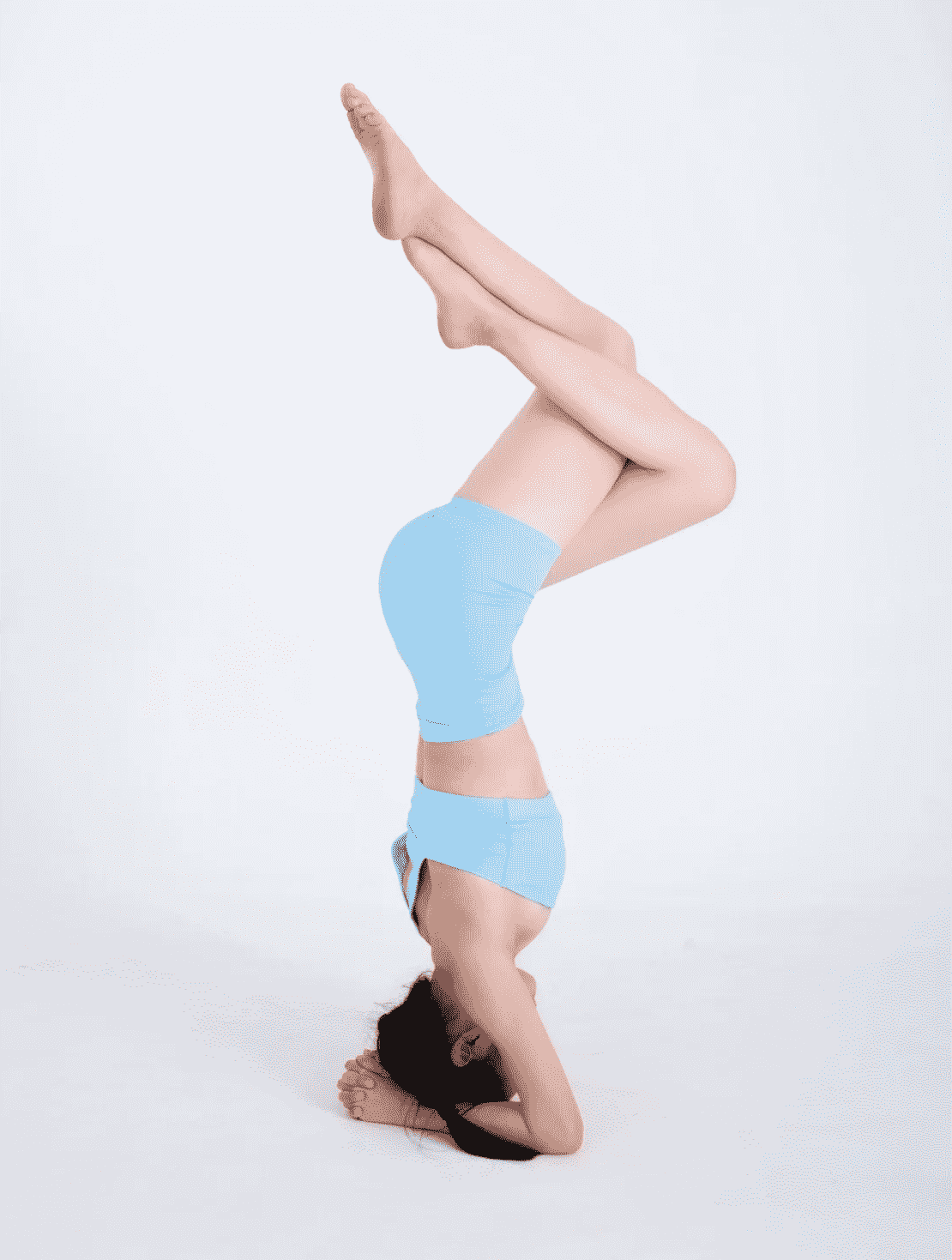
7/8 Studio
A 7/8 Yoga or Pilates direction can use approved naked-feel material together with buyer-specific rise, inseam, grading, waistband, and low-to-moderate support targets.
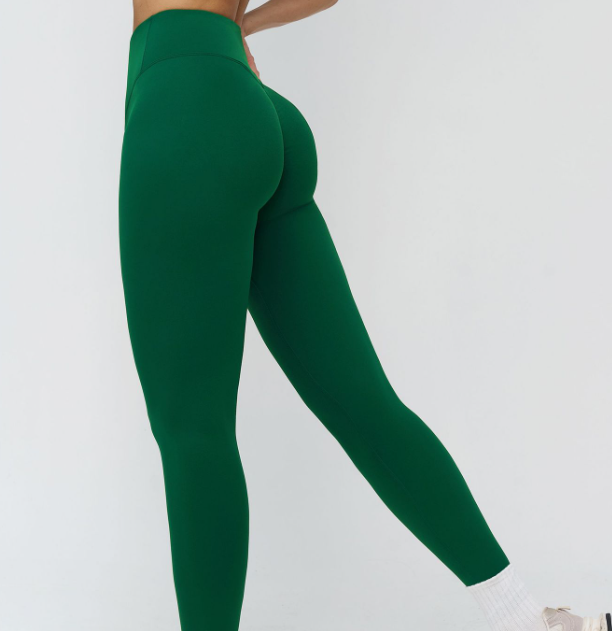
Full Length
Full-length naked-feel leggings can be developed to the buyer's measurement chart, intended size range, colors, construction, and Fit Sample rather than one generic length specification.
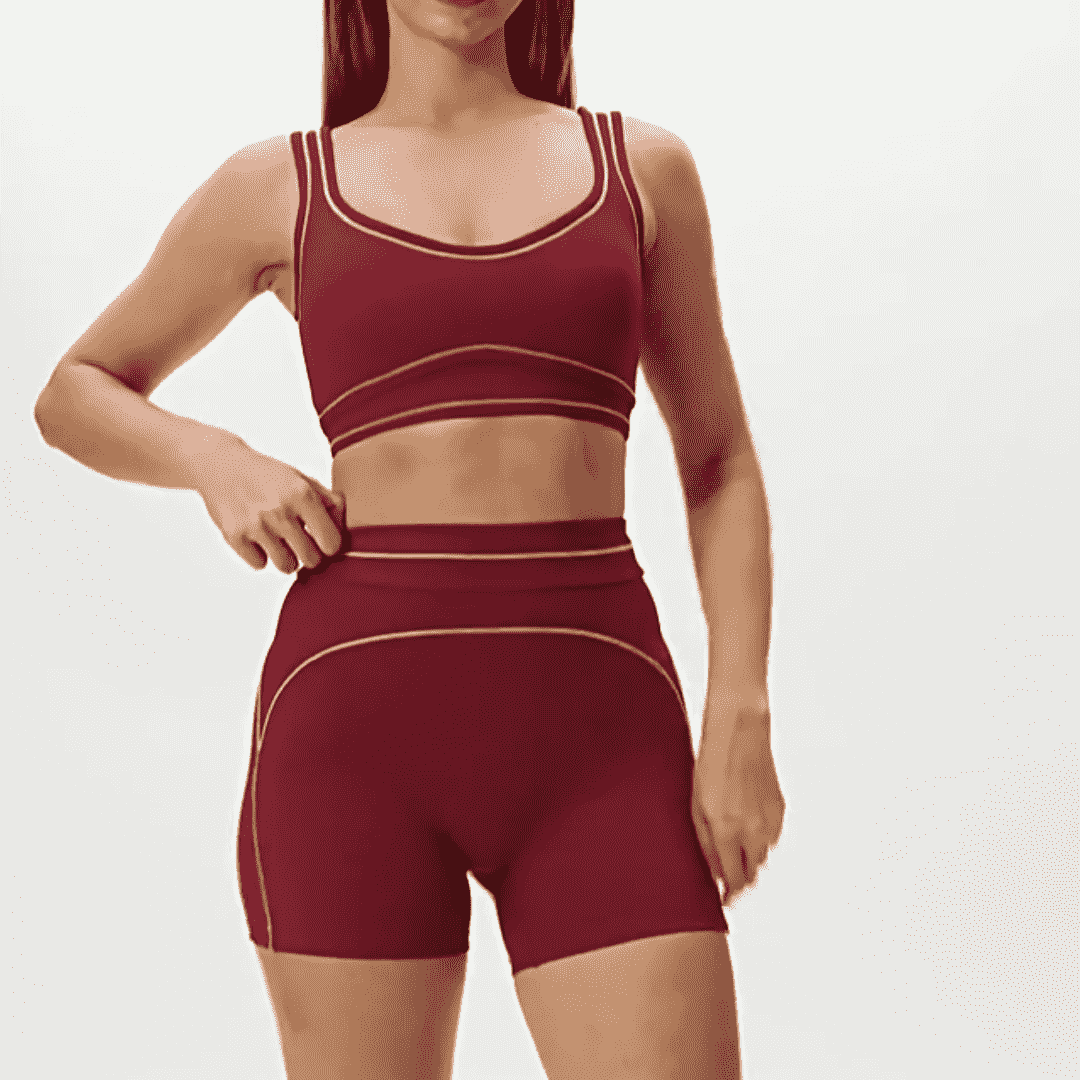
Matching Soft Set
Where the selected material suits the construction, the same soft-touch direction can extend into shorts, sports bras, tanks, tops, or coordinated activewear sets.
Start Naked-Feel Development From a Physical Reference
For second-source or experience-led programs, a physical swatch or legal garment gives MOVEVOX a stronger starting point than adjectives alone. Timing begins after the relevant material and technical information becomes executable.
Reference Intake
The buyer provides a physical fabric swatch, legal garment, Tech Pack, measurement chart, or clear product reference together with target quantity, color direction, size range, and intended activity.
Technical Review
MOVEVOX reviews material feel, product construction, measurements, support target, opacity risk, Logo, manufacturing route, MOQ, and technical feasibility before selecting the next development action.
Candidate Material
Available or project-specific candidates can be compared against the target for surface, handfeel, GSM direction, stretch, recovery, color, and commercial availability. Custom sourcing can extend timing.
Pattern Setup
Pattern or Seamless technical development is prepared around the actual material route, buyer measurements, waistband, construction, negative ease, size system, and product-use requirement.
Sample Build
Once executable material, measurements, Logo, construction, and development details are confirmed, MOVEVOX normally prepares the standard physical sample within approximately five to ten working days.
Buyer Review
The buyer physically reviews handfeel, fit, support, opacity, waistband, measurements, Logo, construction, and appearance. Required changes become the next controlled revision rather than an informal production instruction.
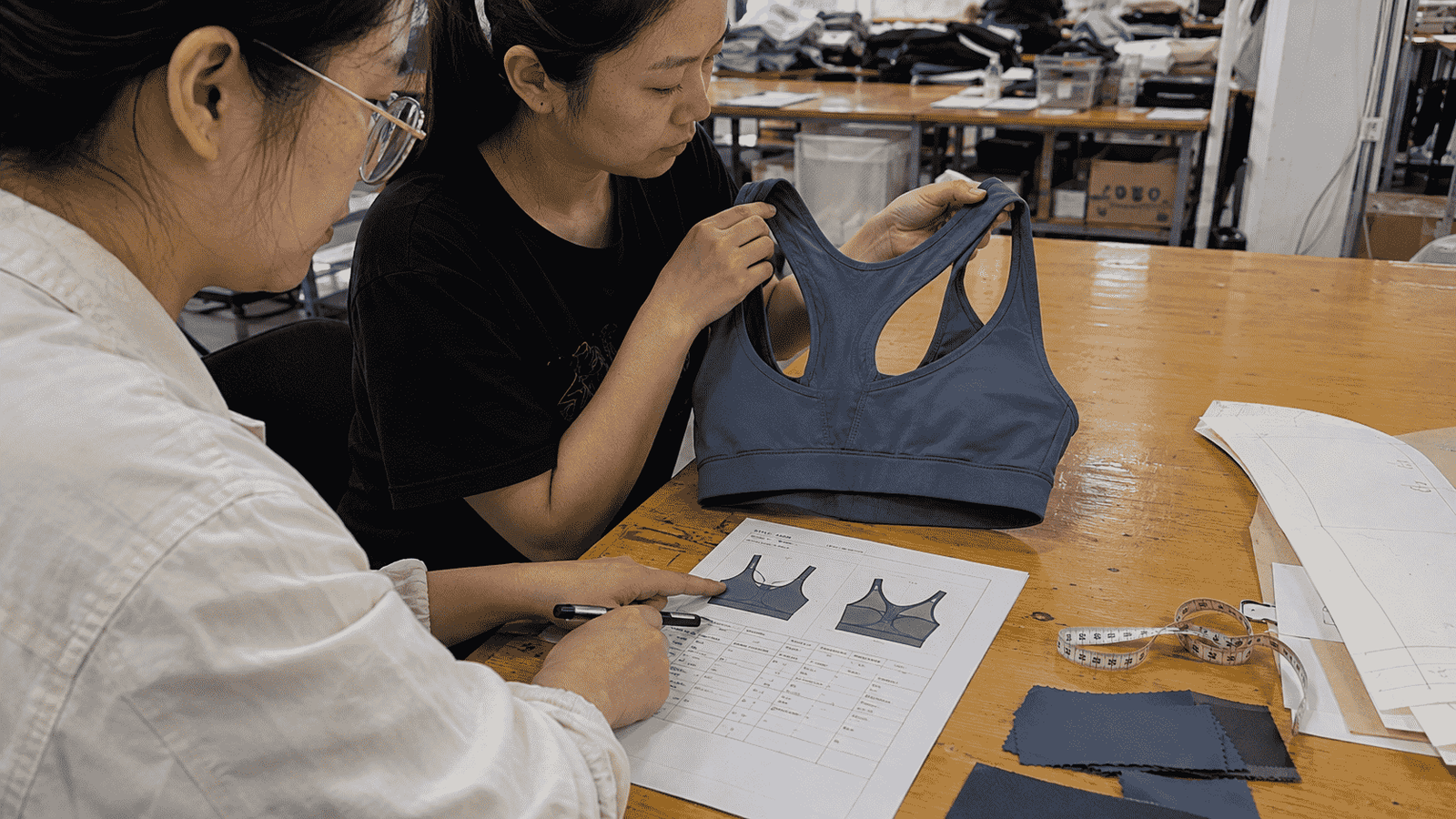
Develop Naked Feel From Brief to Bulk
MOVEVOX links target experience, material, pattern or Seamless structure, physical sampling, Fit approval, pre-production control, and manufacturing so the commercial product is defined before volume production begins.
1. Product Brief
Review product category, consumer use, target feel, support direction, reference garment or fabric, size range, colors, quantity, Logo, testing, and commercial timing before technical work begins.
Deliverable: Development Brief
Timing: Project specific
2. Material Review
Evaluate suitable Naked Feel, Peach Skin, brushed-soft, Nylon/Spandex, Polyester/Spandex, or Seamless directions according to handfeel, GSM, stretch, recovery, opacity, availability, price, and upstream minimums.
Deliverable: Material Direction
Timing: Project specific
3. Technical Route
Confirm whether Cut & Sew or Seamless better suits the intended construction, waistband, front architecture, fit, size system, Logo, and commercial requirement before physical sampling.
Deliverable: Technical Route
Timing: Review dependent
4. Pattern Setup
Develop or adjust pattern and measurements around the selected material, negative ease, waist-to-hip relationship, rise, inseam, pockets, and buyer-approved Fit requirement.
Deliverable: Pattern Version
Timing: Before sample
5. First Sample
Produce the physical garment after executable details are confirmed so material handfeel, compression, waistband, opacity, Logo, dimensions, workmanship, and appearance can be evaluated together.
Deliverable: First Sample
Timing: 5–10 days*
6. Fit Revision
Consolidate buyer feedback into controlled updates covering material, dimensions, pattern, support, construction, Logo, color, or other approved changes requiring another development version.
Deliverable: Revision Sample
Timing: Feedback dependent
7. PP Approval
Align current Tech Pack, material, pattern or program, measurements, color, branding, labels, packaging, and Approved Sample before normal commercial production receives release.
Deliverable: Approved Standard
Timing: Approval dependent
8. Bulk Production
Move the released standard into material purchasing, PMC, manufacturing, First Article, in-process inspection, finished-garment QC, packing, Final Inspection, and shipment preparation.
Deliverable: Bulk Order
Timing: Approx. 20–35 days**
* Standard sample production after executable details are confirmed. ** Regular bulk-production reference; actual order complexity, material readiness, approvals, and loading apply.

Send the Inputs That Define Your Product
A complete Tech Pack improves development efficiency, but MOVEVOX can also start from a physical garment, fabric swatch, measurement chart, sketch, image, or defined product concept and identify missing information.
Reference Garment
RecommendedProvide a legal physical garment where the brand wants to benchmark complete wearing experience. It can help communicate surface, waistband, dimensions, seam architecture, negative ease, compression, opacity, and construction more effectively than product photographs alone.
Fabric Swatch
RecommendedSend the approved fabric or closest tactile reference where handfeel is commercially important. MOVEVOX can compare candidate directions for surface, GSM, stretch, recovery, composition, and feel while clearly identifying any material differences.
Tech Pack
RecommendedShare flats, construction, POM, tolerances, BOM, Logo, labels, packaging, and other applicable technical requirements. The current buyer file should ultimately become part of the released production standard.
Measurement Chart
RequiredProvide buyer measurements where available, especially waist, hip, rise, inseam, length, thigh, leg opening, and defined POM. Material stretch and negative ease should be developed against these dimensions.
Feel Target
RecommendedDescribe the intended experience using consistent language such as smooth, low-friction, soft, Peach-like, brushed-soft, light-support, or moderate-support. Physical references remain preferable to adjectives alone.
Color Standard
RecommendedProvide Pantone, physical standard, Lab Dip requirement, or current approved color. Material surface and fiber can affect visual color, while dedicated dyeing can introduce separate minimums and lead times.
Logo Artwork
OptionalProvide vector artwork, dimensions, position, colors, and preferred Logo process. Fine stretch materials can react differently to heat, pressure, inks, silicone, or stitching and require physical sampling.
Testing Standard
OptionalShare applicable pilling, abrasion, shrinkage, colorfastness, recovery, opacity, chemical, Logo-durability, inspection, or buyer quality requirements before material and product approval.
Size and Quantity
RequiredDefine commercial size range, quantity by style or color, expected color split, and repeat forecast. These inputs affect material planning, MOQ, grading, cutting, Seamless programming, production allocation, and capacity.
Launch Timing
RecommendedProvide required sample, approval, production, inspection, and delivery windows. Material sourcing, custom dyeing, testing, buyer revision, production complexity, and shipping can affect the complete schedule.
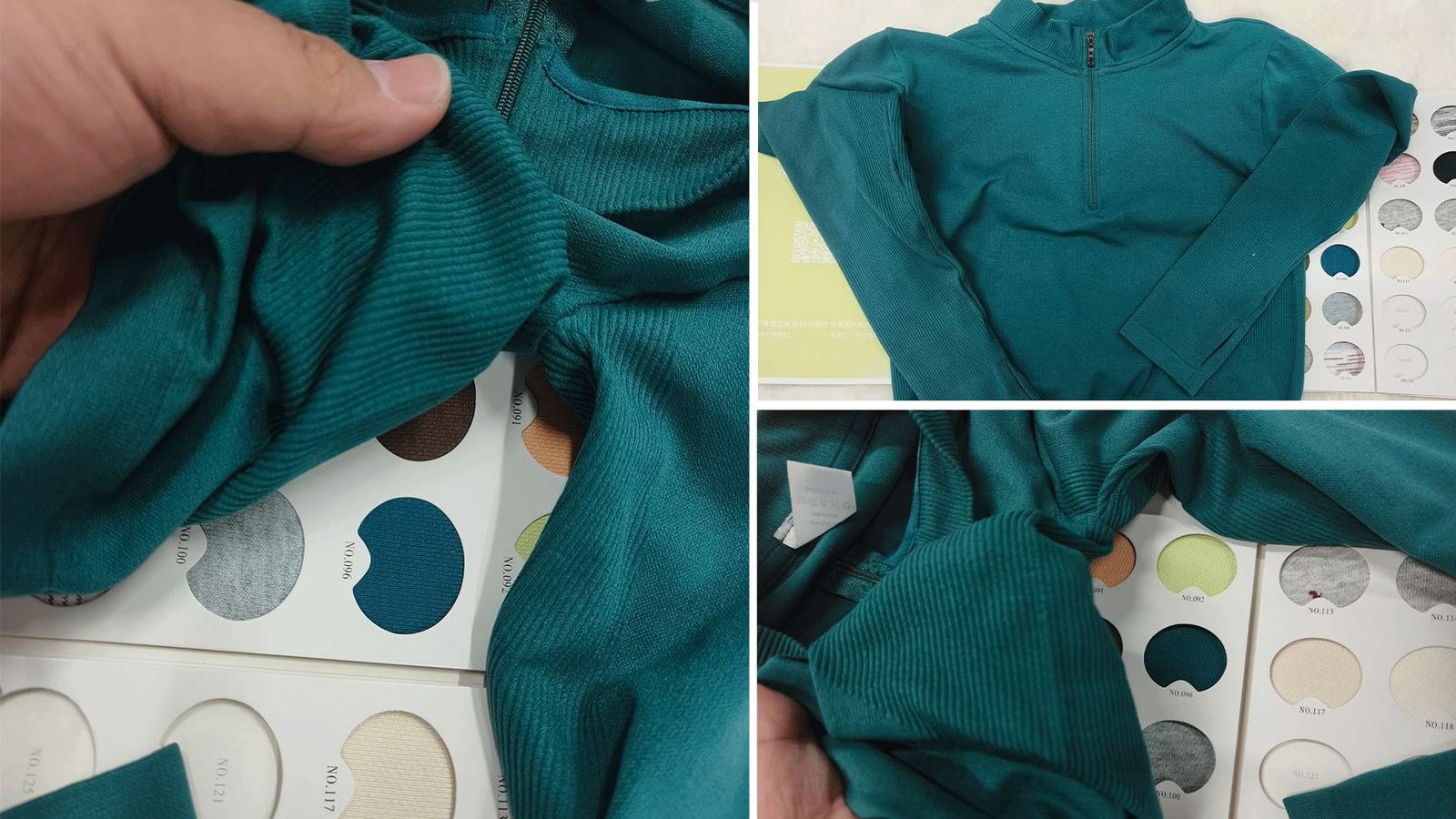
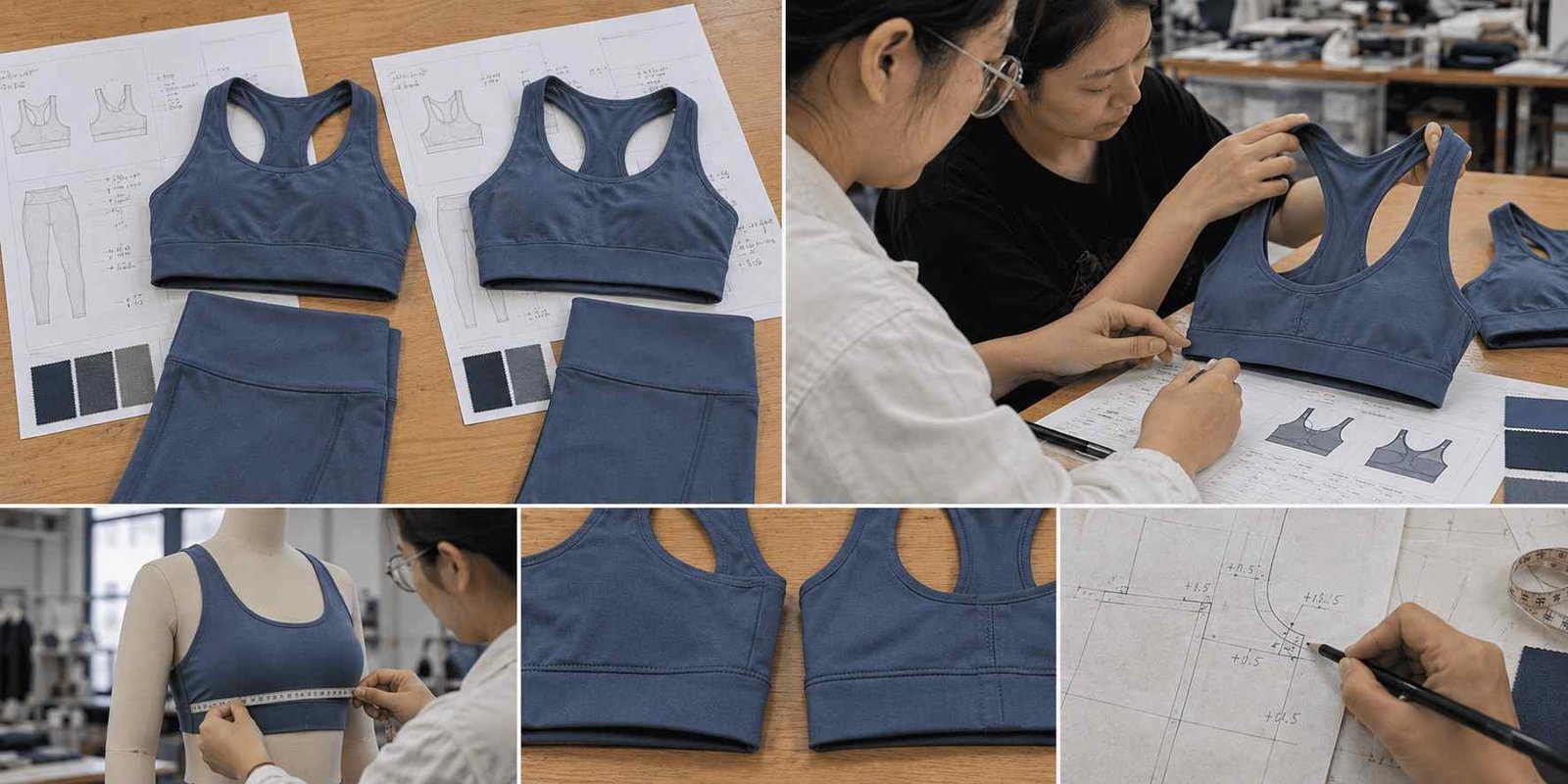
Approve Naked Feel in the Finished Garment
Fabric handfeel is only one part of Naked Feel. Physical garment stages allow the buyer to approve compression, waistband, opacity, measurements, seams, fit, surface, Logo, and complete wearing experience before bulk.
Material Direction
The initial material stage identifies a candidate fabric against the target softness, friction, GSM direction, stretch, recovery, opacity risk, commercial availability, and relevant durability requirement.
- Physical swatch or garment reference
- Target tactile and support direction
- Candidate material direction
- Technical observations and open questions
Pass Criterion: {esc(pc)}
First Sample
The first garment combines the selected material with real pattern or Seamless structure, waistband, measurements, construction, Logo, and size so product experience can be judged physically.
- Current Tech Pack or product specification
- Approved material and measurement direction
- Physical development sample
- Internal QC before sample release
Pass Criterion: {esc(pc)}
Fit Review
The buyer evaluates material feel, compression, waist pressure, rise, hip, inseam, opacity, movement, measurements, front construction, surface, and Logo in the actual garment.
- Consolidated physical fit comments
- Updated measurements where necessary
- Controlled revision list
- Pattern, program, or material adjustment
Pass Criterion: {esc(pc)}
Revision Sample
MOVEVOX produces the next controlled version using confirmed changes rather than mixing informal updates. Material, measurements, waistband, Logo, or construction changes remain traceable to the current development version.
- Consolidated revision approval
- Updated files where applicable
- Revised physical sample
- Current technical version
Pass Criterion: {esc(pc)}
PP Approval
The PP or final approved sample becomes the commercial physical reference for fabric, handfeel, fit, compression, measurements, color, Logo, labels, workmanship, and applicable packaging before production release.
- Formal physical sample approval
- Final commercial requirements
- Production reference sample
- Bulk-ready specification
Pass Criterion: {esc(pc)}
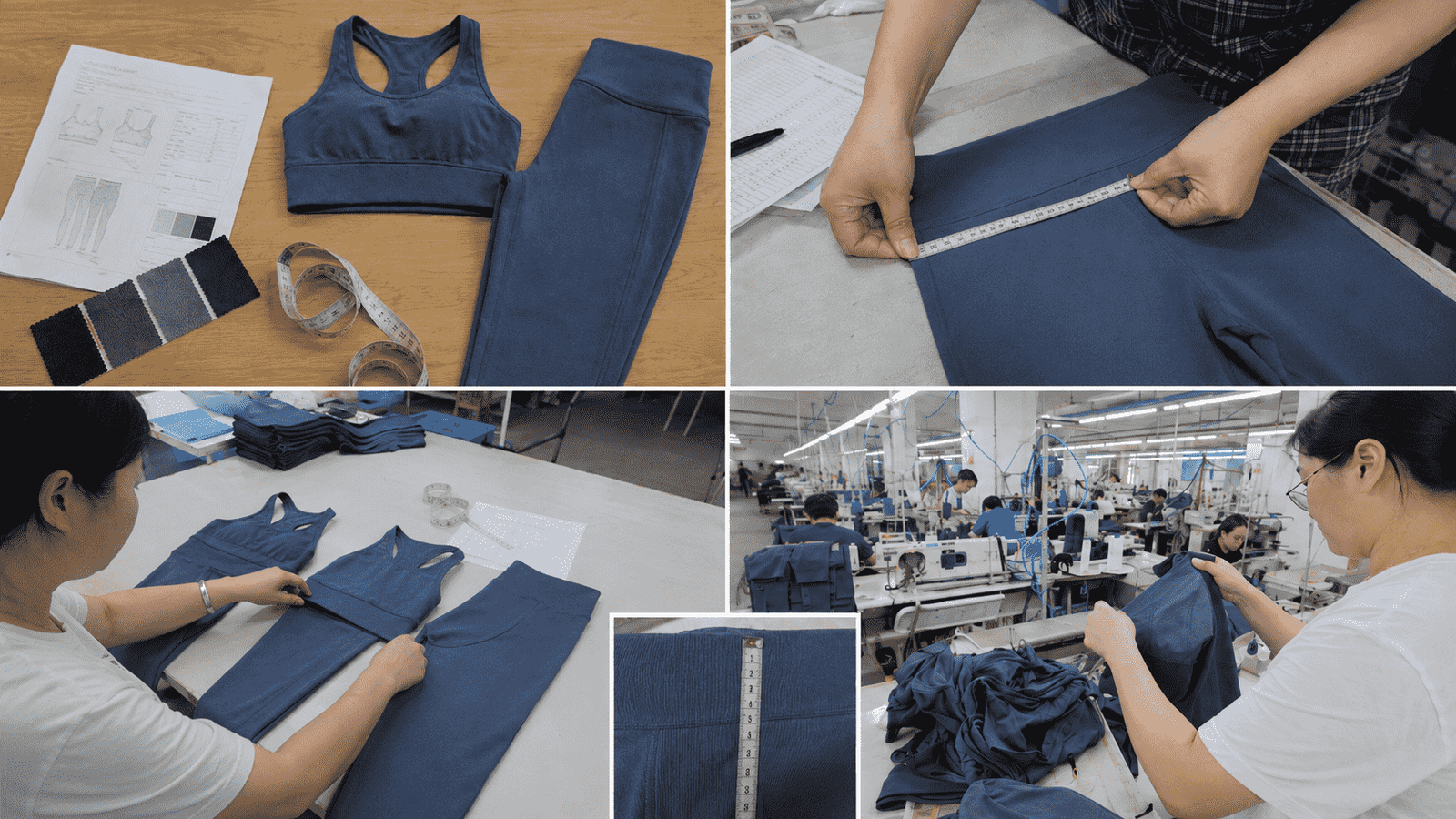
Carry Approved Naked Feel Into Bulk Production
The Approved Sample should become a working production reference. MOVEVOX aligns material, handfeel, measurements, support, surface, color, construction, branding, and packaging before First Article and normal production proceed.
Fabric Reference
Commercial material should follow the approved fabric or an explicitly approved alternative rather than a substitution chosen only because nominal composition appears similar.
Handfeel
Where tactile experience is commercially important, incoming and production material should be compared against the approved physical swatch or garment reference.
GSM
Applicable incoming GSM checks help identify material differences that may influence weight, opacity, support, consumption, surface feel, or finished garment behavior.
Measurements
Bulk follows buyer-approved measurements and tolerances so unintended garment extension does not materially alter compression, opacity, waistband pressure, or fit.
Support Feel
The approved support direction is carried through the selected material, pattern or program, waistband, measurements, and representative production garment rather than judged by fabric alone.
Color & Surface
Bulk material and finished garments are reviewed against the approved physical color and surface direction, with meaningful lot or finishing changes controlled.
Branding
Logo method, position, labels, and packing follow the current approved standard so heat, pressure, stitching, or execution changes do not unnecessarily alter soft surfaces.
Before normal bulk production, MOVEVOX aligns the current Tech Pack, approved material, Approved Sample, pattern or Seamless program, measurements, color, Logo, labels, and packaging. Pre-production review and First Article checking verify whether actual production reflects the released standard. In-process and finished-garment inspection then monitor relevant deviations before Final Inspection and shipment release.
Trace Product Experience From Material to Shipment
Long-term Naked Feel consistency requires identifiable material, technical versions, production batches, QC, and shipment records. MOVEVOX uses centralized project management so significant changes can be traced instead of relying on verbal memory.
Purchase Order
The PO records confirmed style, colors, sizes, quantities, and commercial requirements that guide material planning, manufacturing, inspection, packing, and shipment coordination.
POMaterial Record
The material record identifies the approved fabric direction, supplier information where applicable, color, physical reference, relevant specifications, and current project status.
Material RecordMaterial Lot
Relevant lot or batch information connects incoming material with the production group so a future handfeel, color, surface, or performance issue can be isolated more precisely.
Lot RecordTech Pack
The current technical file controls dimensions, construction, Logo, labels, packaging, and buyer-specific requirements rather than allowing outdated development versions to remain active.
Tech PackApproved Sample
The physical approved garment preserves the commercial reference for material, handfeel, fit, support, color, surface, workmanship, branding, and visible finished-product appearance.
Approved SampleProduction Batch
PMC and order-management records connect the released material and technical standard with the actual authorized manufacturing group, including controlled supplementary capacity when applicable.
Batch RecordQC Record
Inspection records document applicable material, dimensions, surface, appearance, workmanship, Logo, labeling, packaging, and buyer-defined quality points against the released order standard.
QC RecordShipment Record
Packing Lists and shipment documents connect released goods with quantities, cartons, SKU information, shipping instructions, and the final commercial handover.
Packing List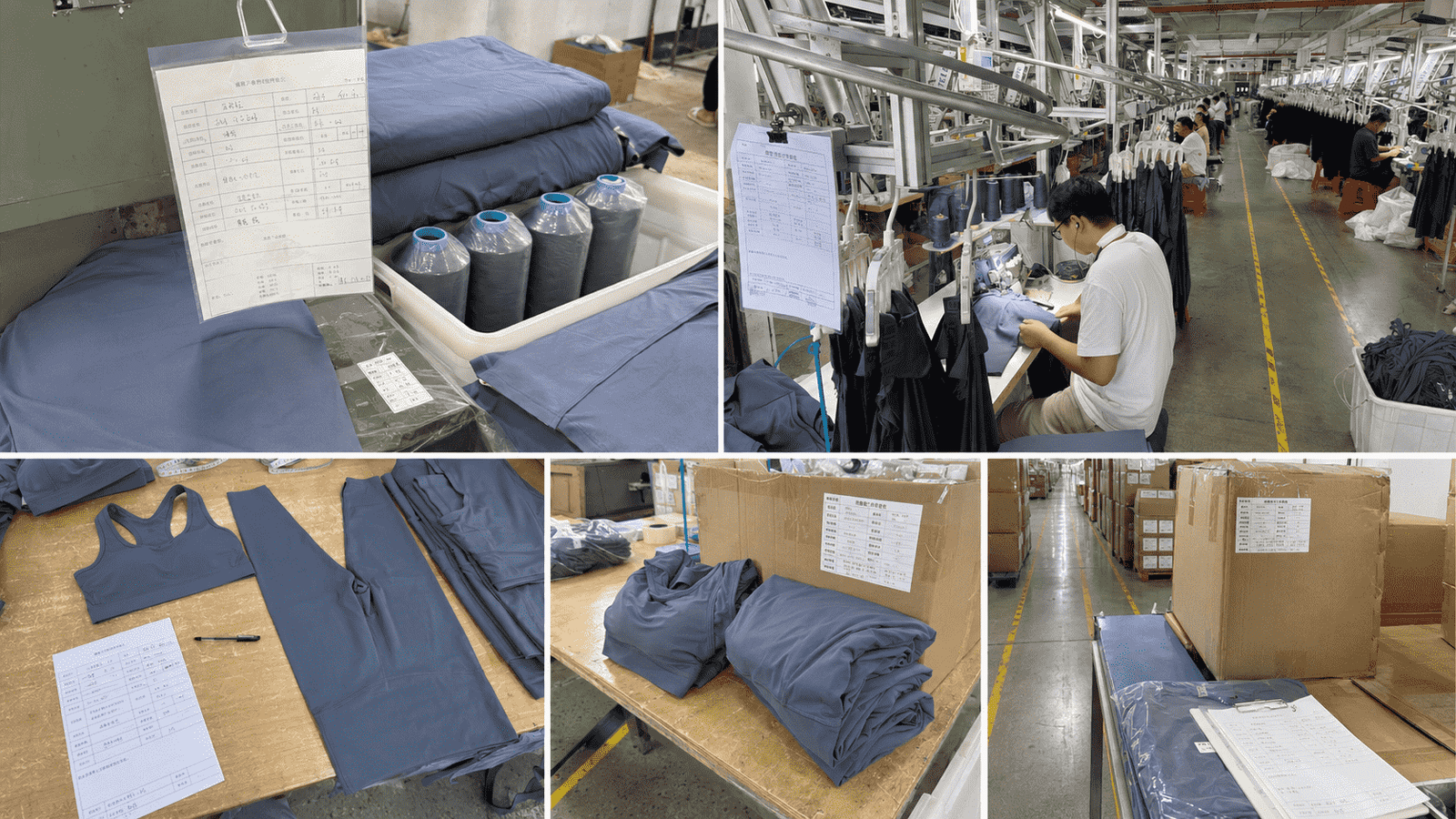
Build a Complete Private Label Naked-Feel Product
MOVEVOX coordinates material, fit, construction, color, branding, labeling, packaging, and testing around one approved product so private label means more than applying a Logo to a stock garment.
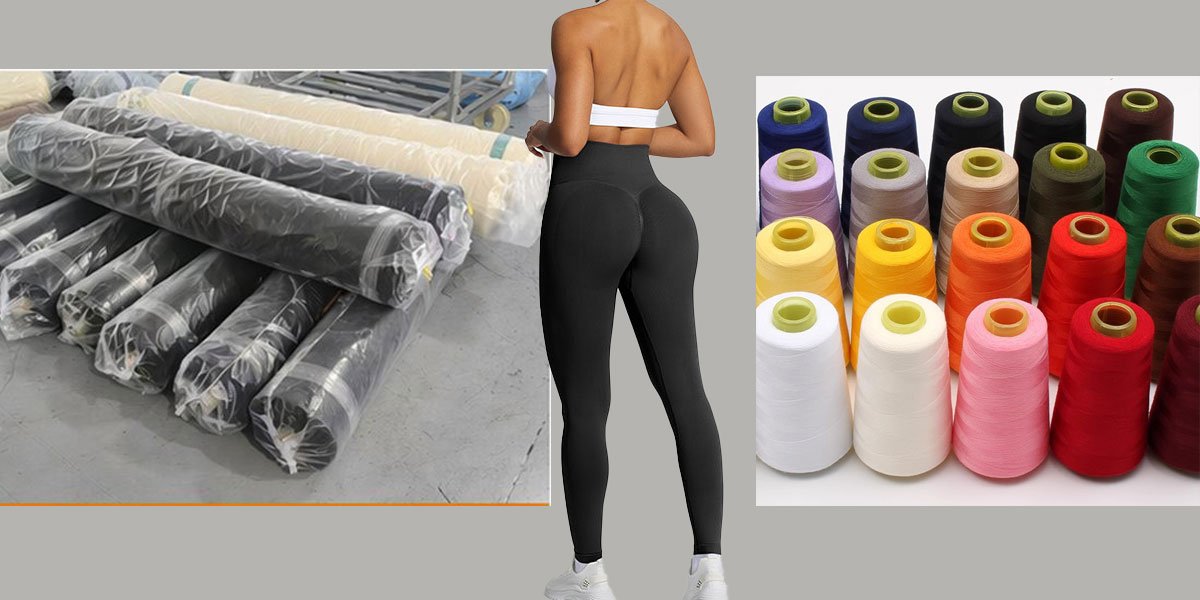
Fabric
MOVEVOX can develop Nylon/Spandex, Polyester/Spandex, Naked Feel, Peach Skin, brushed-soft, Seamless, ribbed, textured, and other suitable activewear material directions within verified capability. For Naked Feel projects, buyers can begin from a physical swatch, legal garment, supplier specification, or tactile brief. Final composition, GSM, surface, stretch, recovery, opacity, color, MOQ, and lead time remain specific to the selected material and should be physically approved before normal production.
- Fine Nylon/Spandex material directions
- Soft Naked Feel or Peach Skin
- Brushed-soft materials where appropriate
- Buyer-designated fabric supplier review
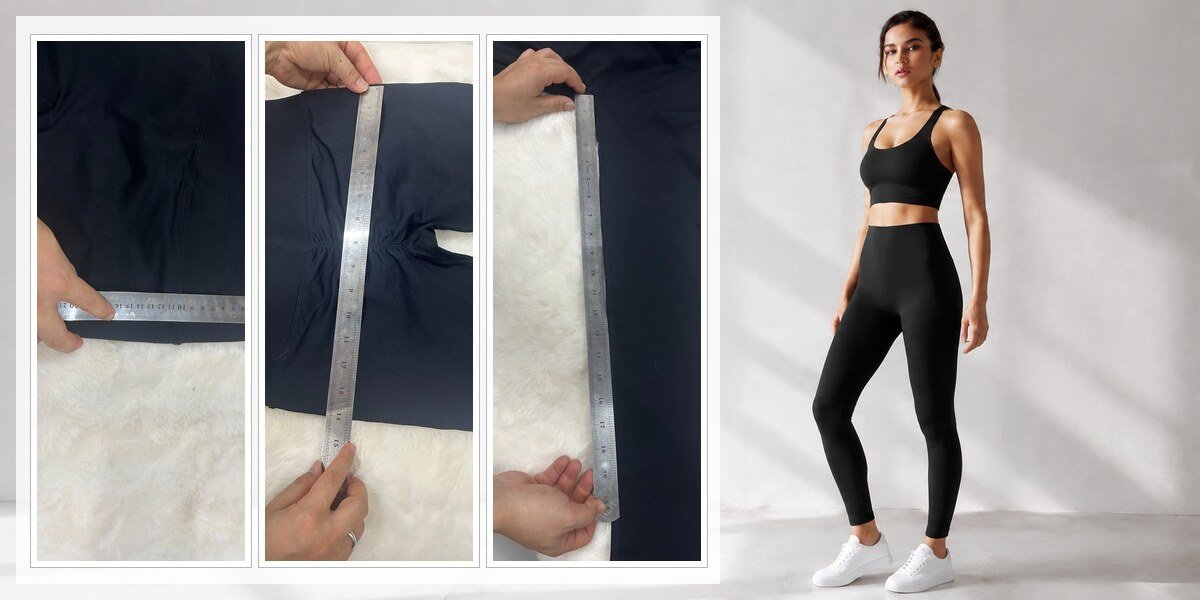
Fit
MOVEVOX supports pattern and fit development from buyer Tech Packs, measurement charts, legal physical samples, and target Fit. Material changes are reviewed together with negative ease, waistband, rise, hip, inseam, compression, opacity, and grading because one pattern should not automatically be assumed equivalent across different stretch materials. Representative Size Set review can be added when the buyer's size range or quality standard requires broader physical confirmation.
- Buyer Measurement Chart
- Pattern and Fit Sample
- Size grading review
- Representative Size Set
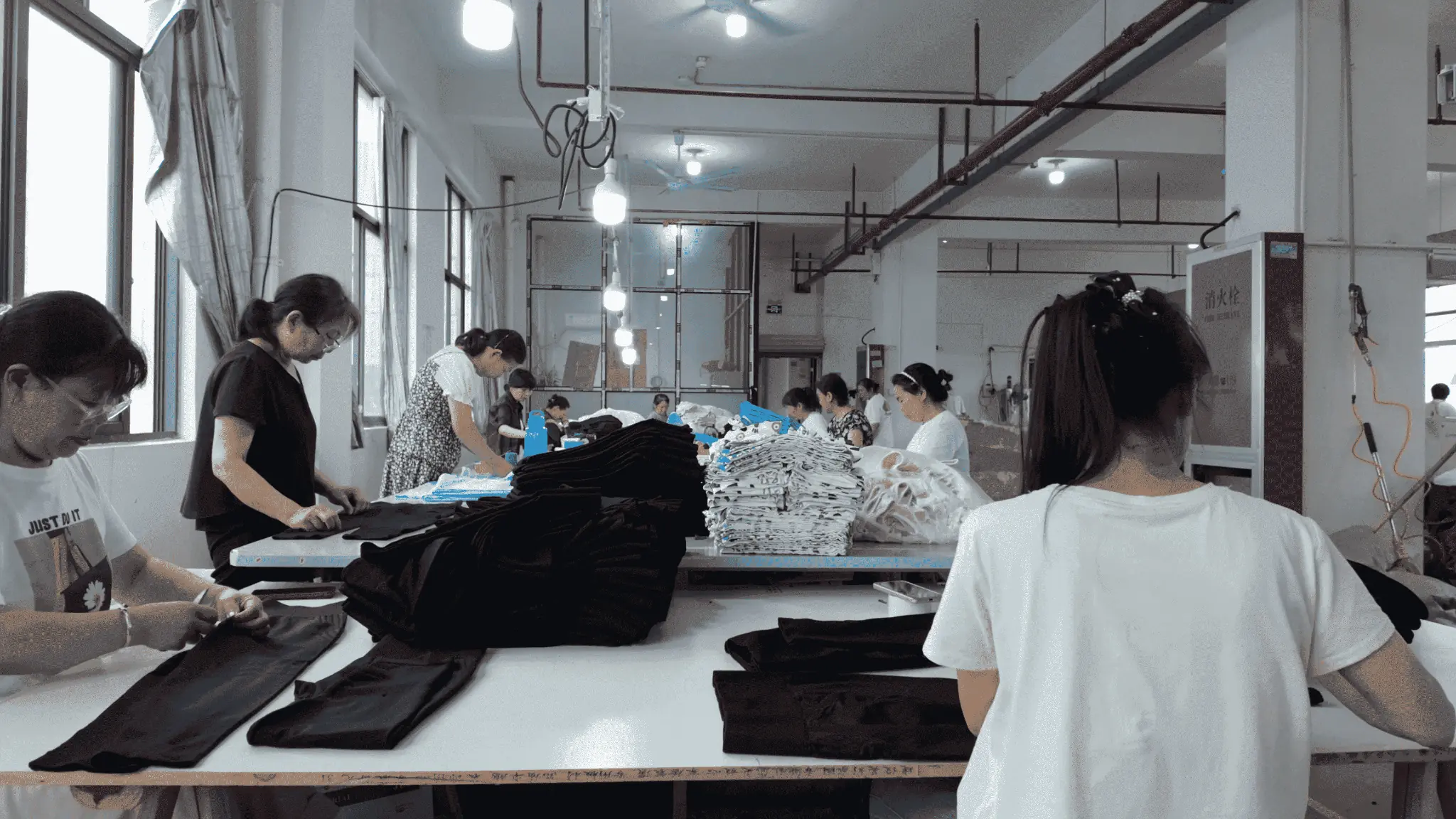
Construction
Projects can use Cut & Sew or technically appropriate Seamless construction. MOVEVOX supports high waist, ultra-high waist, V or cross-waist, no-front-seam directions, pockets, panels, selected flatlock or coverstitch processes, and Seamless structures such as rib, mesh, Jacquard, or localized density where suitable. Final architecture should follow product use, material, fit, MOQ, and technical feasibility rather than being selected only for visual similarity.
- Cut & Sew construction
- Seamless Santoni route
- No-front-seam development
- Pocket and panel structures
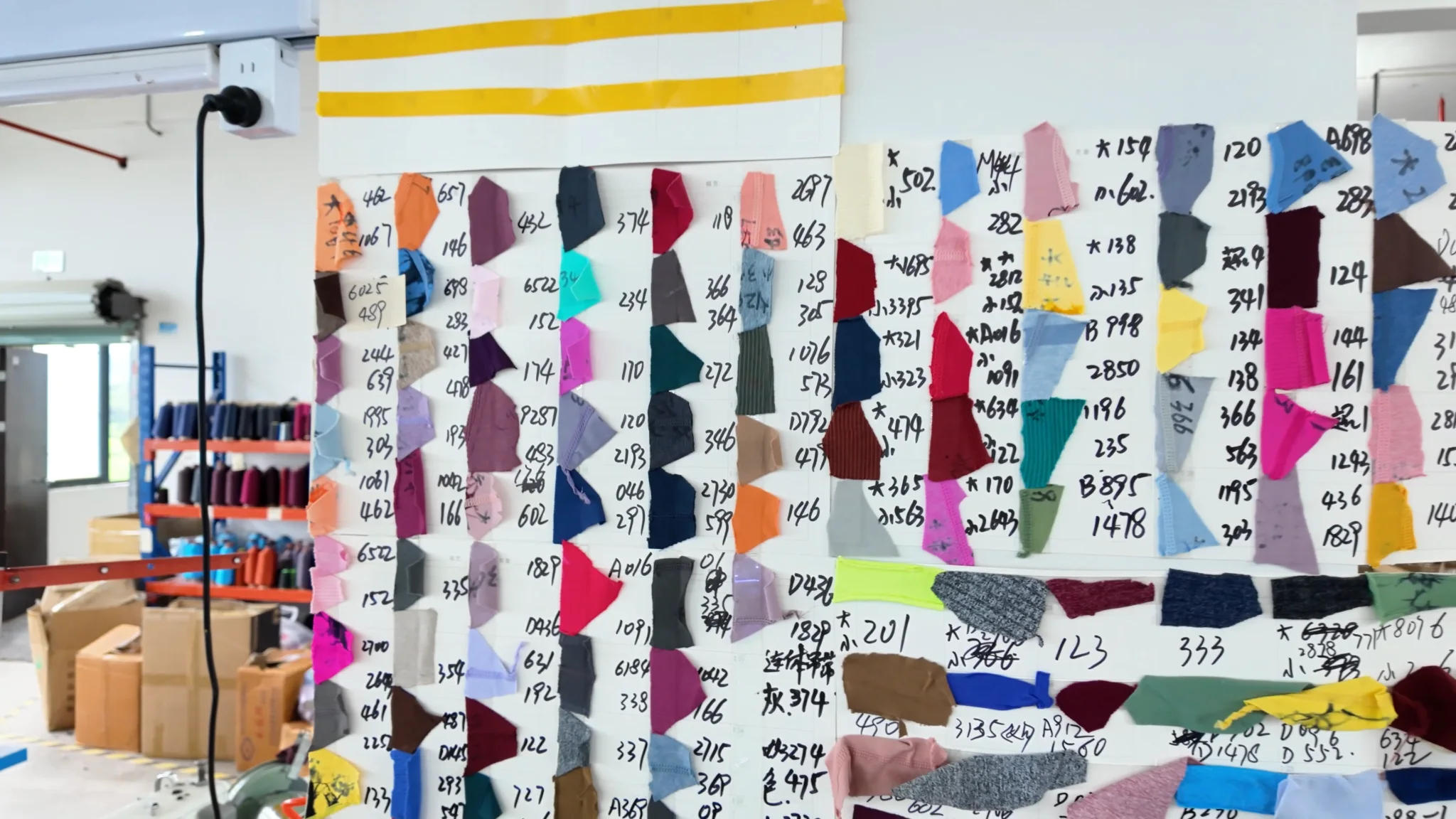
Color
MOVEVOX can work from standing colors, Pantone references, buyer physical samples, Lab Dips, and dedicated custom colors. The existing yarn and fabric supply system includes more than twenty standing color resources in total, although exact availability varies by material. Dedicated dyeing can create higher upstream minimums than garment production and commonly requires project-level planning around approximately 400–600 finished-garment-equivalent pieces.
- Standing color selection
- Pantone-based development
- Physical color approval
- Custom dye-lot planning
Branding
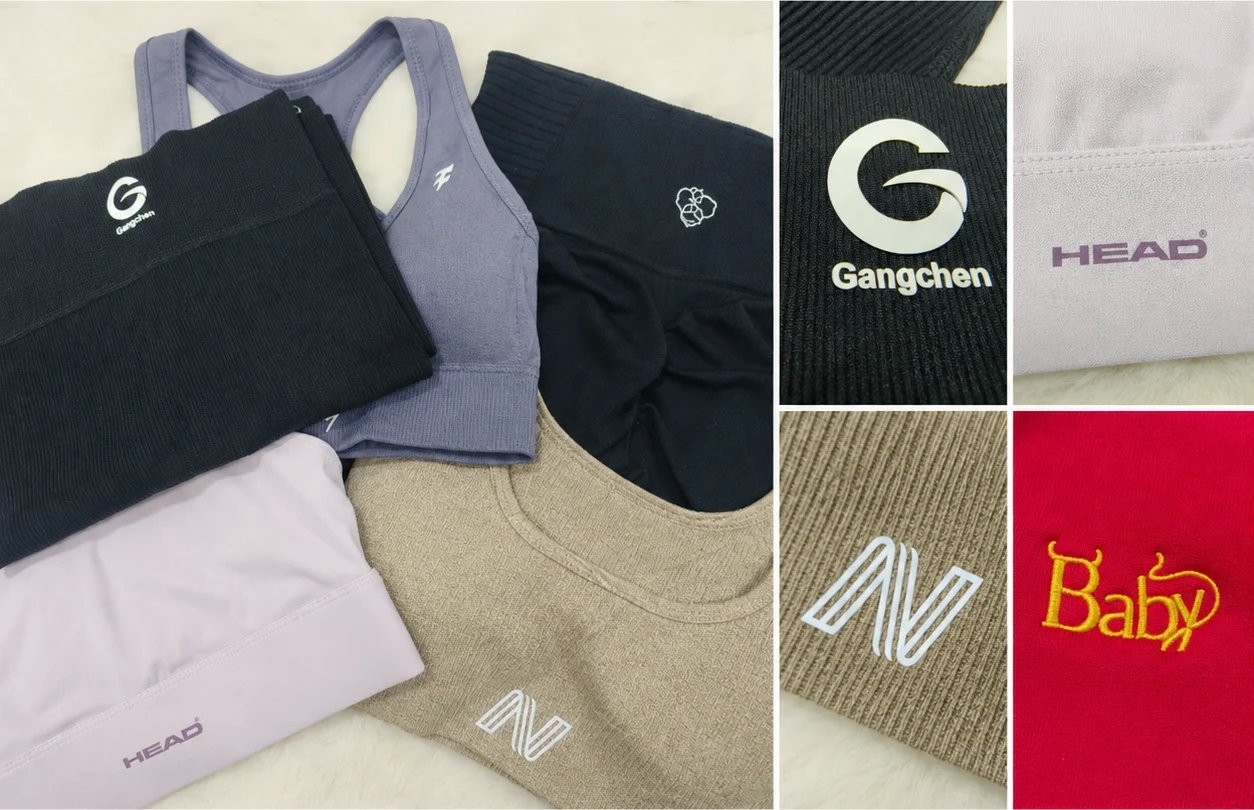
MOVEVOX supports screen print, heat transfer, silicone print, Jacquard where structurally appropriate, embroidery, woven labels, and related branding processes. Fine, smooth, Peach-like, or brushed-soft materials can react differently to heat, pressure, adhesives, or stitching, so Logo method, size, location, and artwork should be physically sampled on the actual material before bulk application.
- Heat-transfer Logo
- Screen or silicone print
- Embroidery where suitable
- Knit-in Jacquard where applicable
Labels
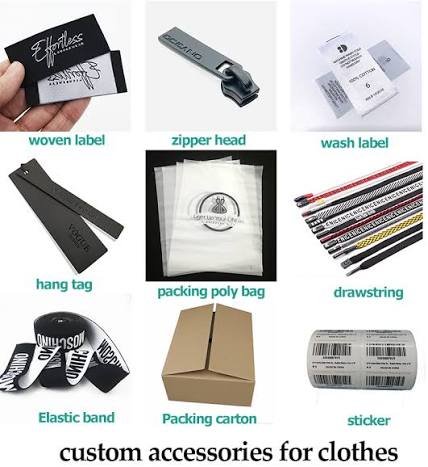
Private-label execution can include Main Label, Size Label, Care Label, Woven Label, Hangtag, Sticker, Barcode, and related buyer-required information. Composition and care content should match the actual production material and garment. SKU, size, and color information should remain connected to the order and packaging standard, especially when the program includes multiple colors and commercial sizes.
- Main and Size Labels
- Care Label
- Hangtag and Sticker
- Barcode / SKU identification
Packaging
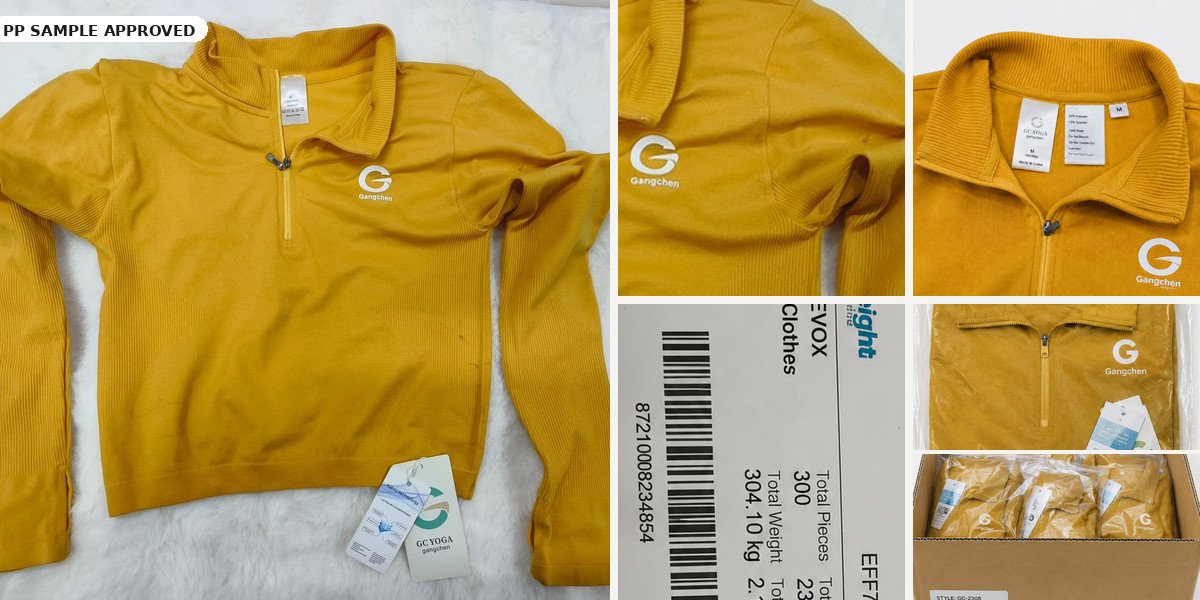
MOVEVOX can coordinate polybags, printed bags, stickers, barcodes, QR Codes, custom packaging, inserts, and Carton Marks according to buyer requirements. Packaging suppliers can maintain their own MOQ and development conditions. Final packing should be controlled against style, color, size, SKU, labels, and approved artwork rather than treated as a separate last-minute task after garment completion.
- Standard or custom polybags
- Barcode / QR packaging
- Printed packaging
- Carton Mark requirements
Testing
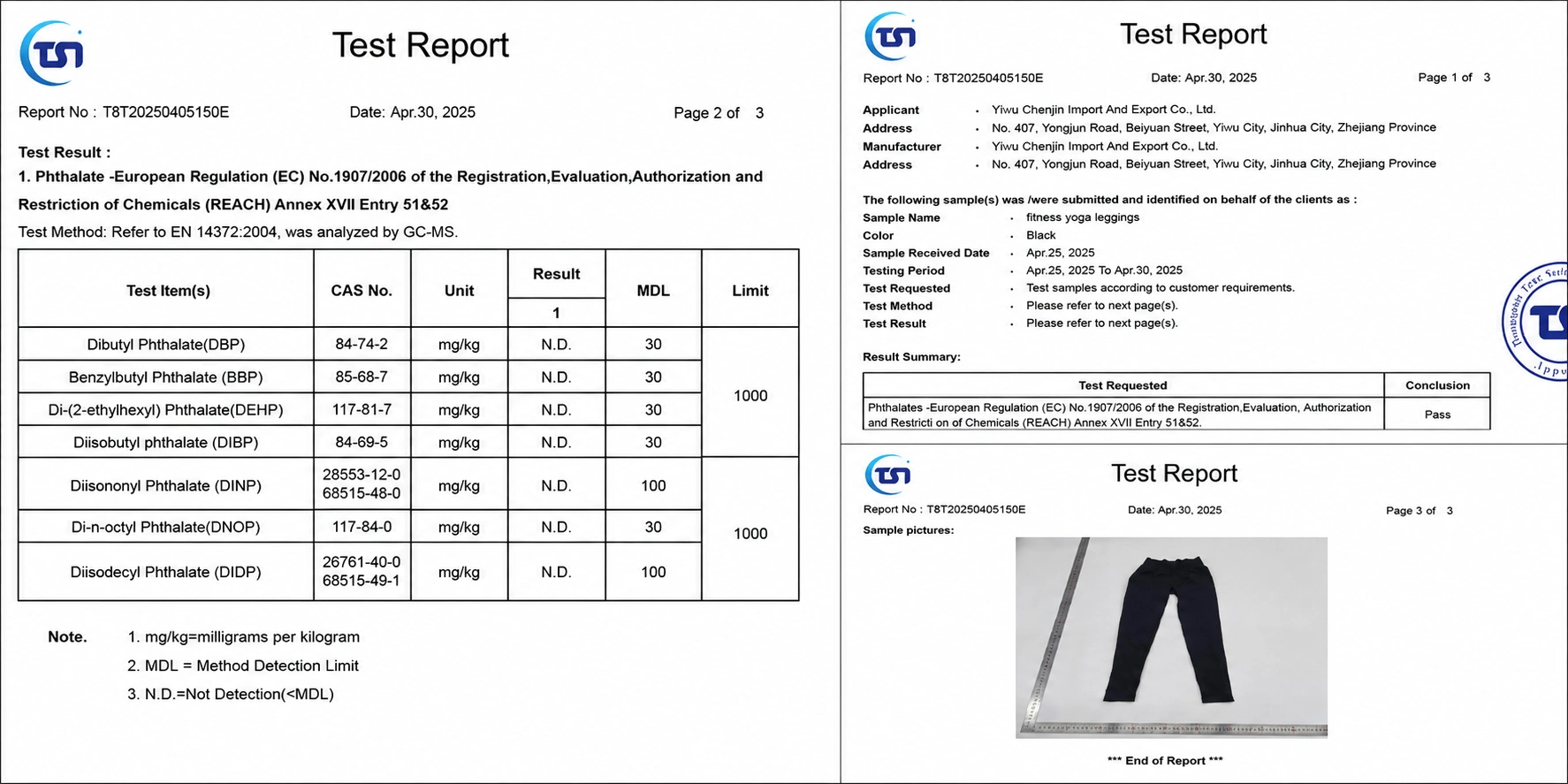
Testing can be selected according to buyer standards, material risk, destination market, and product claim. MOVEVOX can coordinate composition, GSM, shrinkage, stretch/recovery, pilling, abrasion, colorfastness, opacity, wash, chemical, Logo, and other relevant evaluation. No result should be expanded beyond the actual tested sample, method, condition, and report scope.
- Material physical testing
- Surface durability testing
- Restricted-substance testing
- Buyer-specific quality plans
Ready to Review Your Naked-Feel Reference?
Send your existing garment, fabric swatch, Tech Pack, target handfeel, support direction, measurements, colors, size range, quantity, and required timing. MOVEVOX can review the likely material route, fit-development needs, manufacturing method, MOQ, sampling path, technical risks, and commercial next step.
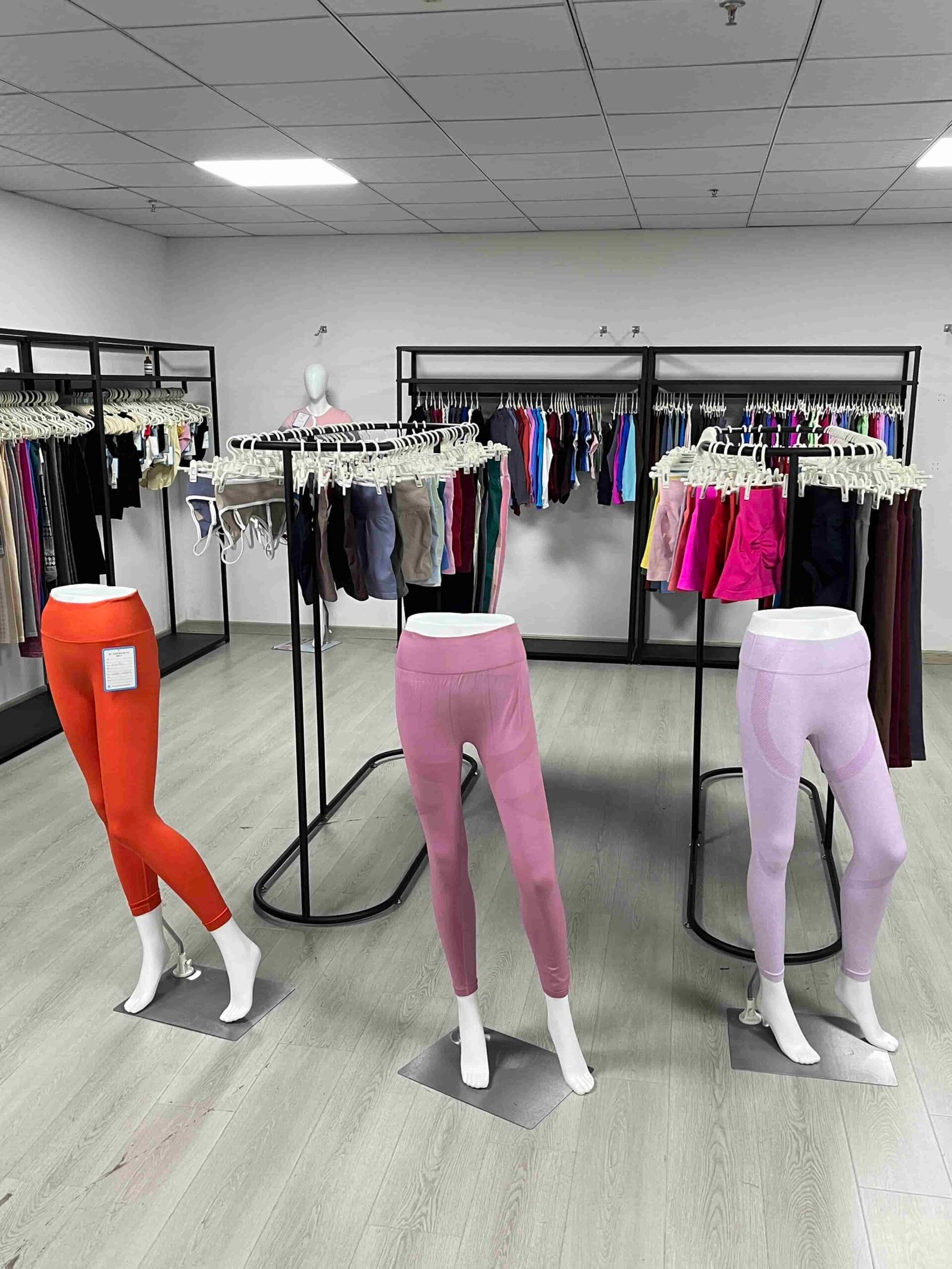
NDA support is available before confidential Tech Packs, material references, pricing, or unreleased product information are shared.
Walk Through the MOVEVOX Manufacturing System
MOVEVOX's Yiwu core combines product development, material control, Seamless knitting, Cut & Sew manufacturing, QC, packing, and PMC. Naked Feel projects use the route that best fits the approved material and product architecture.

Product Development
MOVEVOX's current product-development organization includes approximately eight people: two design roles, two pattern/technical roles, and four sample-making roles. The team can begin from a Tech Pack, legal physical garment, fabric swatch, measurement chart, sketch, image, or product concept. For Naked Feel projects, development connects material, fit, support, opacity, waistband, front construction, size, Logo, and buyer comments before an Approved Sample becomes the commercial reference.

Material Control
Incoming material management can include composition confirmation, color checking, GSM comparison, shrinkage, fading or colorfastness-related evaluation, elasticity, and opacity. Additional recovery, pilling, abrasion, wash, or other testing can be coordinated according to buyer requirements. For naked-feel fabrics, physical comparison of surface and handfeel becomes especially relevant when the brand's commercial positioning depends on a specific tactile experience.
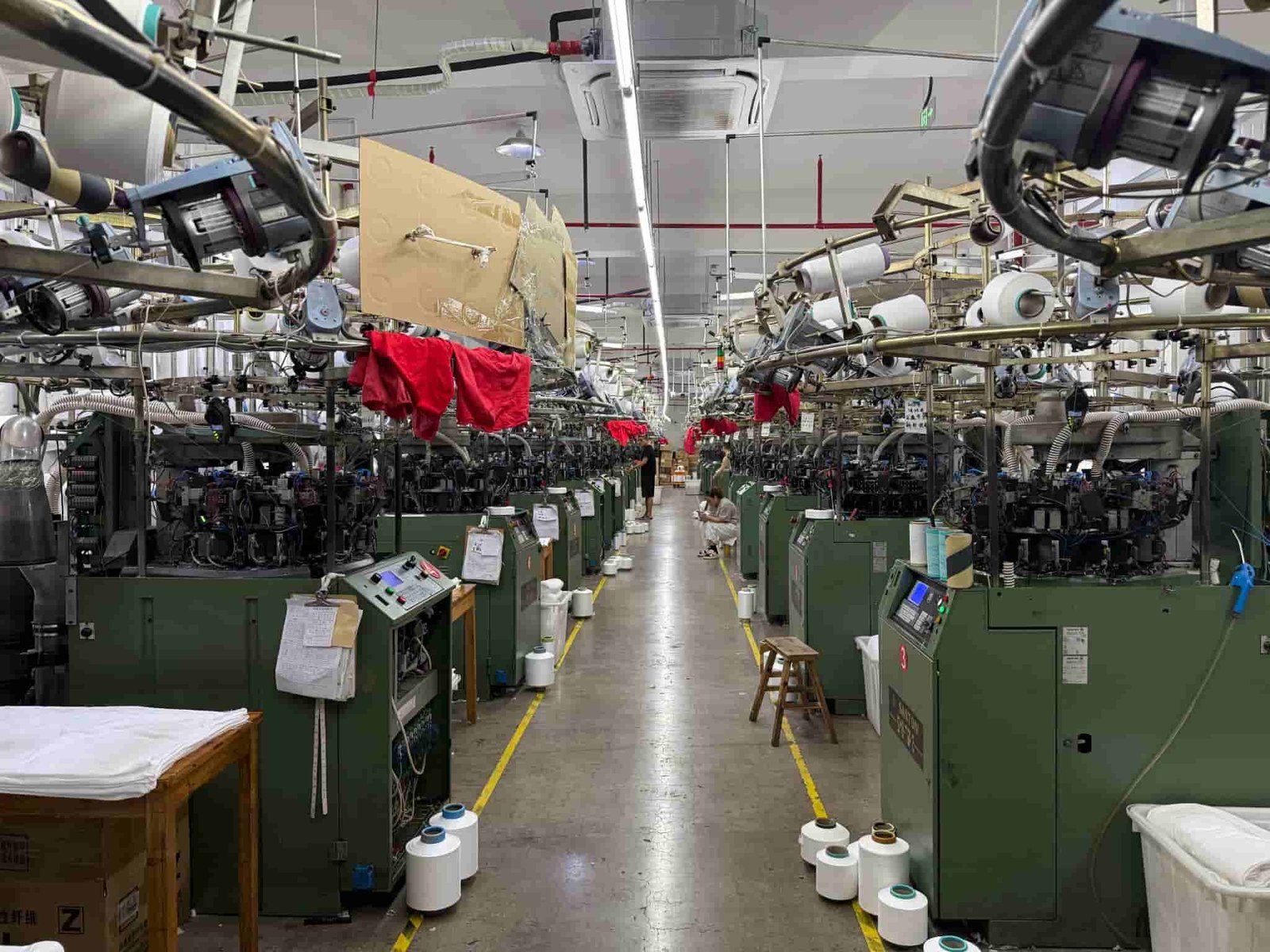
Santoni Seamless
MOVEVOX's own manufacturing core includes 28 Italian Santoni seamless knitting machines. The Seamless route can support suitable leggings, bras, shorts, tops, rib, mesh, Jacquard, texture, different organization density, and localized structure. Naked Feel is not automatically a Seamless construction; Seamless is selected when the required yarn, product architecture, program, dimensions, structure, MOQ, and fit make it the technically appropriate route.
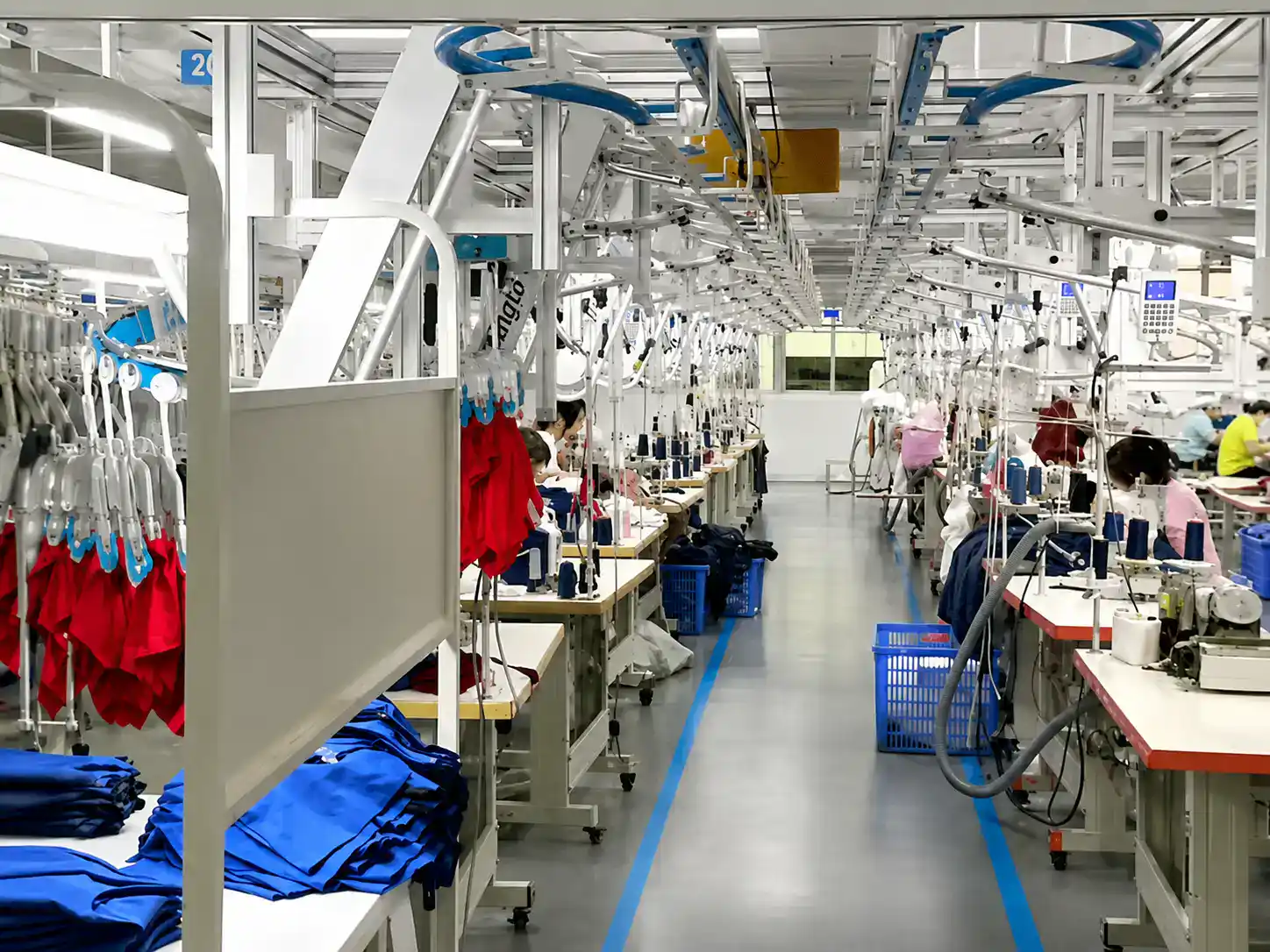
Cut & Sew
MOVEVOX's own Cut & Sew core includes approximately 24 principal sewing and garment-production machines supporting activewear manufacturing. Available garment processes include cutting, overlock, coverstitch, flatlock, selected elastic and trim applications, pockets, panels, and other suitable construction. Fine naked-feel piece fabrics move through this system using the approved pattern, material direction, measurements, Logo, workmanship, and current technical version.
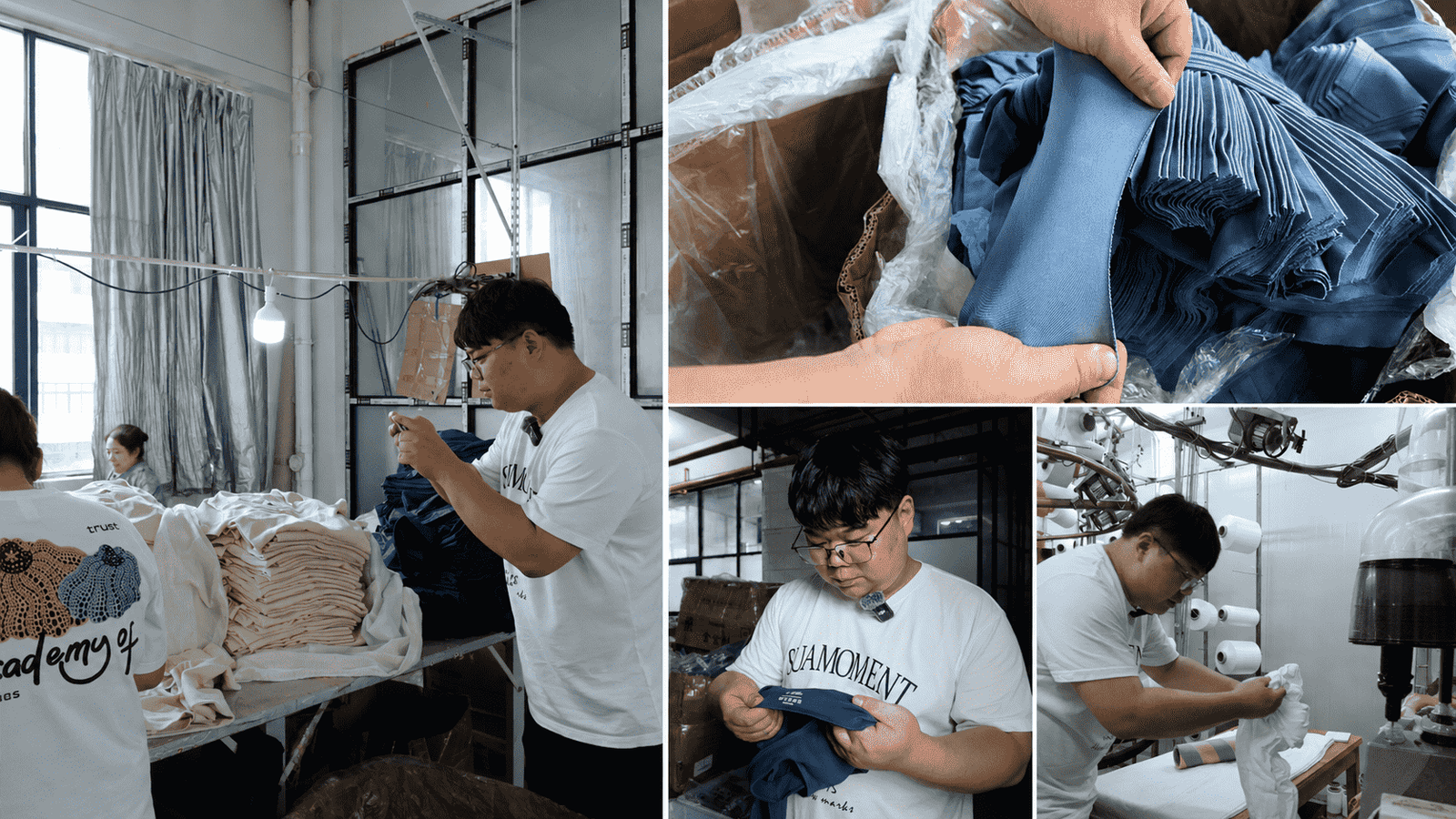
Quality Control
MOVEVOX currently has five QC personnel, led by a Quality Manager with approximately eight years of garment inspection and quality-management experience. Quality checkpoints can cover incoming material, Specification Freeze, Approved Sample, pre-production review, First Article, inline inspection, measurements, appearance, Logo, labels, packaging, and Final Inspection. Buyer quality manuals or third-party inspection can also be incorporated where required.

Packing & SKU
Packing and finishing resources coordinate labels, care information, polybags, printed packaging, barcodes, QR Codes, SKU data, Carton Marks, and buyer-specific packing instructions. Multi-size and multi-color orders require correct correspondence between the garment and packaging information. Existing customer-case records demonstrate that MOVEVOX has used grouped color/style handling and double confirmation where QR Code accuracy created additional packaging risk.
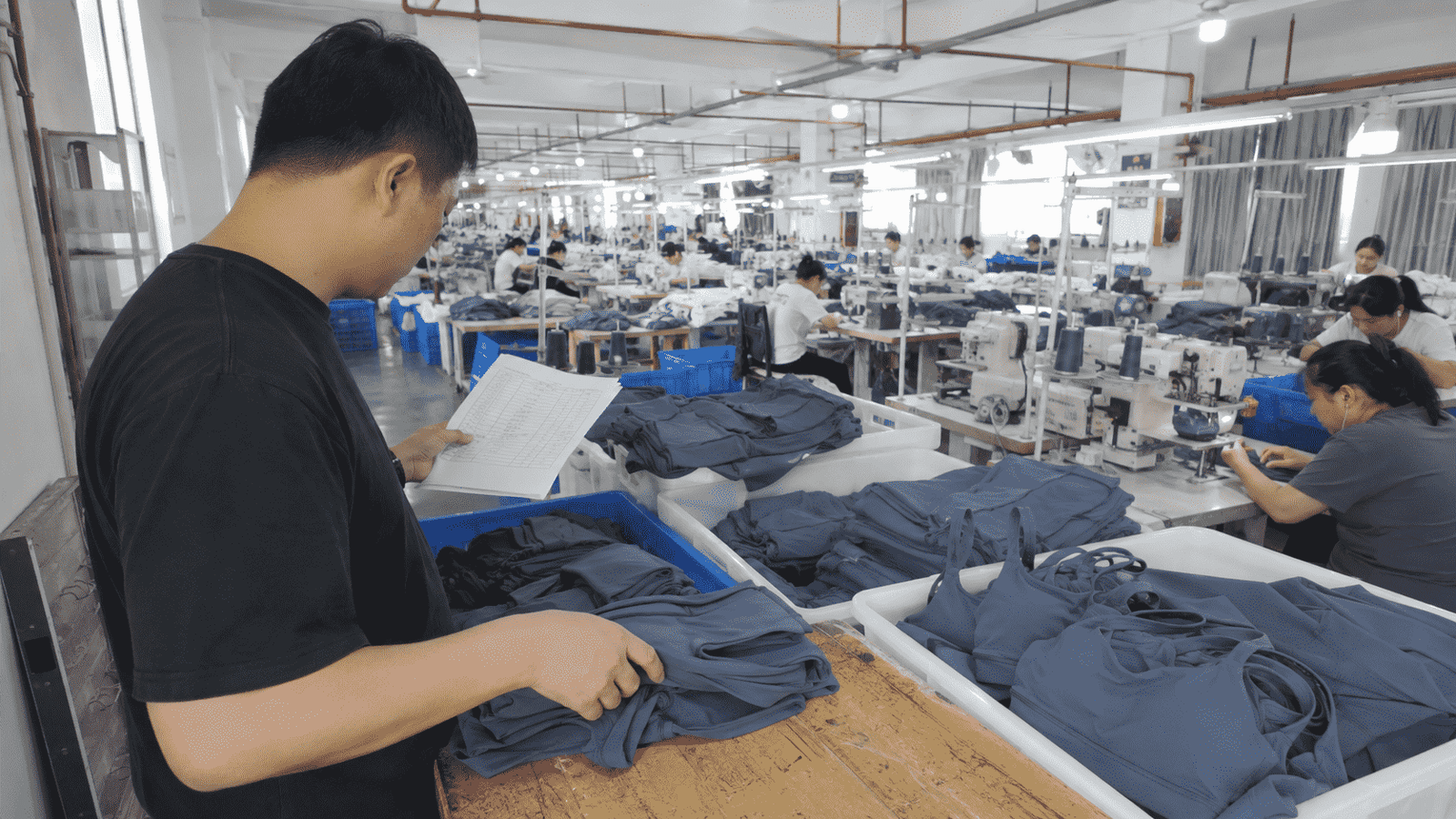
PMC & Delivery
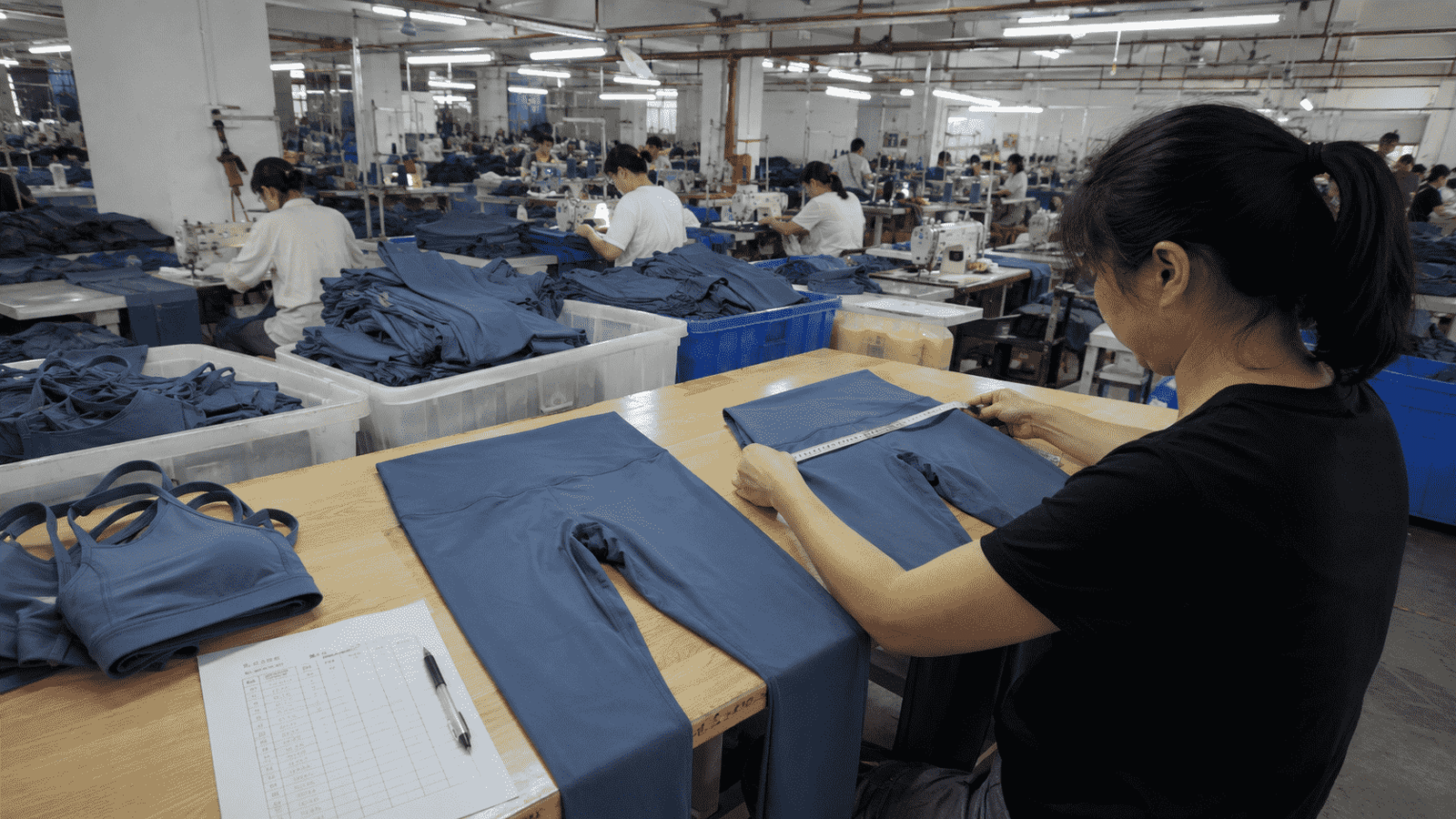
MOVEVOX's Supply Chain and PMC function coordinates material timing, own production, controlled satellite capacity, customer changes, WIP, QC status, and target delivery. The company works with eight long-term satellite factories—six in Yiwu and two in Guangzhou—when approved supplementary capacity or specialist processes are required. MOVEVOX maintains centralized material, order, PMC, QC, and customer responsibility rather than allowing satellites to redefine standards independently.
Scale Approved Naked-Feel Programs With Controlled Capacity
MOVEVOX separates equipment facts from managed delivery capability. Actual Naked Feel capacity depends on manufacturing route, fabric availability, colors, sizes, technical complexity, production loading, approvals, QC, and required shipment timing.
Santoni Seamless
Twenty-eight Italian Santoni Seamless knitting machines operate in MOVEVOX's own core and support suitable programmed activewear structures.
Cut & Sew Core
Approximately twenty-four principal sewing and garment-production machines support suitable leggings, bras, shorts, tops, sets, and related activewear.
Own Production Space
MOVEVOX's current own production system uses approximately six thousand square meters of manufacturing and related operating space in Yiwu.
Own Core Team
The core organization includes approximately sixty people across production, development, quality, packing, planning, order management, and related functions.
Satellite Network
Eight long-term satellite factories—six in Yiwu and two in Guangzhou—support approved supplementary capacity or specialist product requirements.
Managed Delivery
Normal comprehensive managed monthly delivery capability combines MOVEVOX's own core manufacturing with controlled network resources across managed activewear programs.
Control Naked Feel From Material to Final Inspection
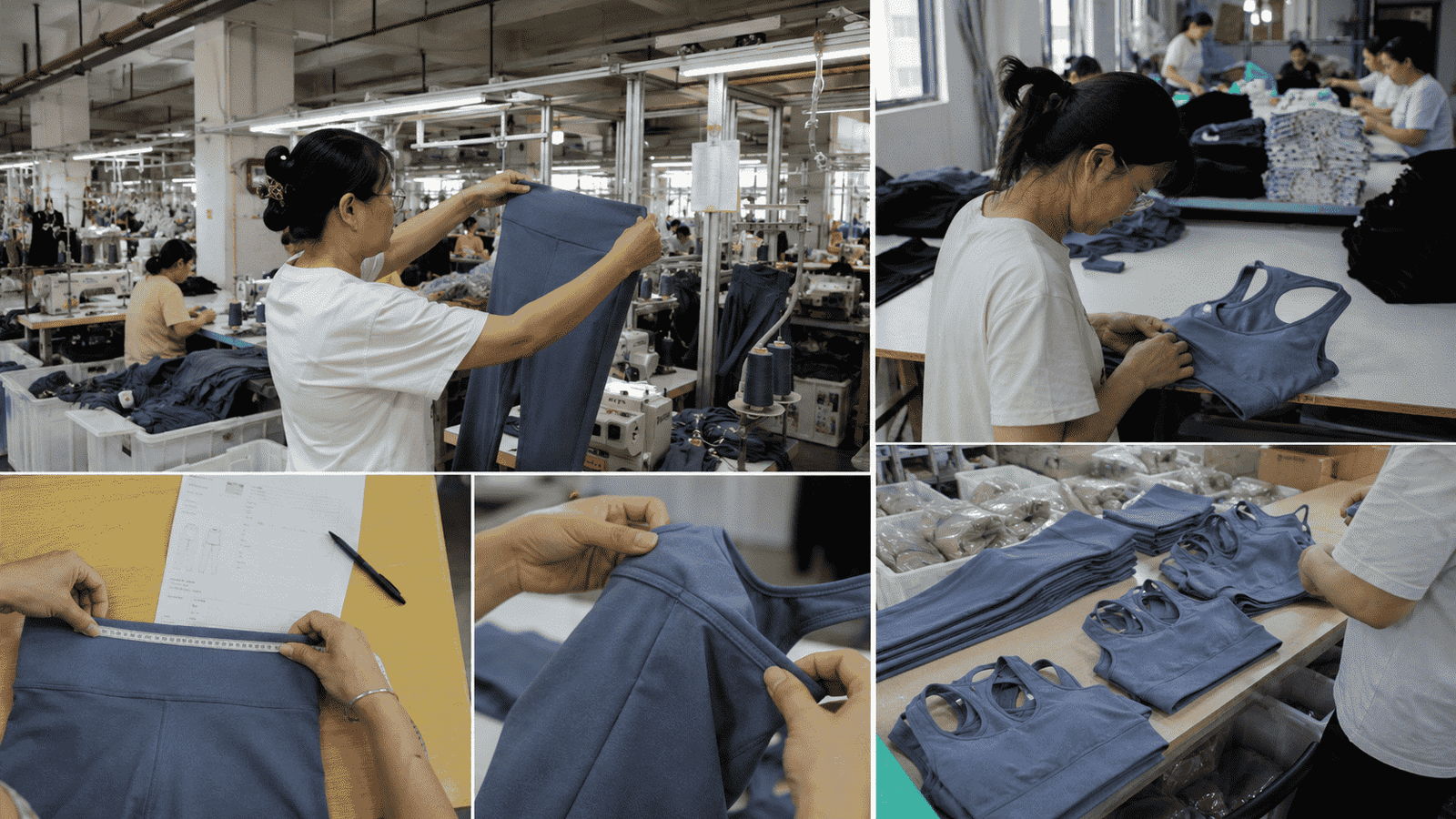
MOVEVOX links material, Approved Sample, measurements, production checkpoints, surface appearance, branding, packaging, and buyer standards so tactile experience and fit are not left to end-of-line inspection alone.
Incoming Material
Incoming material is checked against the applicable project direction before normal production. Relevant items can include composition information, color, GSM, shrinkage, elasticity, opacity, and physical surface or handfeel comparison.
- Approved material direction
- Color and lot identity
- GSM and elasticity
- Surface and handfeel reference
Specification Freeze
The current Tech Pack, material, pattern or program, measurements, Logo, labels, packaging, and Approved Sample are aligned before normal commercial production begins.
- Current technical version
- Approved physical material
- Approved garment sample
- Final branding information
Pre-Production Review
Development, production, PMC, and quality requirements are reviewed before volume manufacturing so open material, construction, measurement, Logo, packaging, or timing issues are identified before becoming repeated defects.
- Material readiness
- Construction requirements
- Critical measurements
- Special quality points
First Article
Initial production output is compared against the released standard before normal volume proceeds, helping confirm that real manufacturing reflects the approved material, measurements, support direction, appearance, and workmanship.
- Critical POM
- Material and surface
- Waistband / construction
- Logo and workmanship
Inline Inspection
Production is reviewed while work remains in progress so material direction, sewing, visible defects, measurements, Logo, or surface damage can be corrected before the complete order is finished.
- Surface appearance
- Sewing quality
- Visible defects
- Buyer critical points
Measurement Check
Finished garments are measured using buyer-defined POM and agreed tolerances where provided. This helps prevent unapproved dimension changes from altering compression, opacity, waistband pressure, rise, or overall fit.
- Buyer POM
- Agreed tolerance
- Garment condition
- Representative sizes
Final Appearance
Finished products are checked for applicable surface, workmanship, Logo, label, color, and visible appearance requirements against the current Approved Sample and order specification.
- Surface consistency
- Garment appearance
- Logo / labels
- Visible workmanship
Packing & Final
Packaging, SKU information, labels, quantities, Carton Marks, and final product status are reviewed before shipment release. Buyer AQL or third-party inspection can be used when formally specified.
- Correct size / color
- Barcode / SKU
- Packaging requirement
- Final inspection status
Prevent Naked-Feel Failures Before Final Inspection
The most expensive Naked Feel problems often begin with material or fit decisions made before bulk. MOVEVOX uses development, pre-production, First Article, inline, and final controls to reduce repeat defects.
| Defect | Likely Cause | Prevention | Inspection Point | Corrective Action |
|---|---|---|---|---|
| Too Tight | Excessive negative ease, stronger material recovery, smaller garment dimensions, or waistband tension creates more pressure than the approved support direction. | Approve fabric and garment together; calibrate measurements, pattern, support target, and waistband through physical Fit Samples before release. | Fit Sample, Approved Sample, First Article, and representative finished measurements against buyer POM. | Hold affected production, verify measurements and material, identify source of increased pressure, then rework or reproduce where technically possible. |
| Waist Dig-In | Waist circumference, elastic tension, structure density, edge construction, or local recovery creates concentrated pressure around the top body. | Review waist dimensions separately from main-body fit and approve height, circumference, recovery, construction, and edge behavior physically. | Fit review, First Article, measurement check, and production comparison against Approved Sample. | Confirm dimensional or construction deviation, correct setup where possible, and remake affected units when comfort cannot be restored by approved rework. |
| Opacity Loss | Light color, lower density, excessive garment extension, wrong size, material variation, or unexpected fit increases visible fabric openness. | Evaluate actual commercial colors and representative sizes under buyer-defined wearing or stretch conditions before full production. | Material review, Fit Sample, Size Set where required, First Article, and buyer opacity protocol. | Segregate affected material or garments, reassess fit and material cause, and obtain buyer approval before any specification change. |
| Knee Bagging | Insufficient recovery, excessive local extension, wrong material, loose pattern balance, or dimensional change causes residual growth after movement. | Review recovery with actual fabric and negative ease; use physical wear or extension evaluation where knee retention is commercially important. | Material testing, Fit Sample, movement review, and post-use or post-wash garment comparison. | Identify whether material or pattern caused the growth, adjust the responsible variable, then resample before repeating production. |
| Surface Pilling | Fiber, yarn, brushing or Peach finishing, knit construction, friction, washing, or application conditions create unacceptable pill formation. | Select material according to intended use and coordinate buyer-defined pilling testing where a measurable grade is required. | Material qualification, applicable lab report, incoming material, and finished-garment surface inspection. | Isolate affected lot, verify report and material identity, investigate source or finishing change, then replace or reapprove material as required. |
| Press Marks | Excessive heat, pressure, dwell time, or unsuitable Logo method flattens or changes a sensitive soft or finished surface. | Sample Logo on the real production fabric and approve process parameters before applying branding across the full order. | Logo development sample, First Article, inline Logo inspection, and final appearance review. | Stop application, adjust approved process parameters, determine recoverability, and replace affected panels or garments where marks remain unacceptable. |
| Size Feel Drift | Grade rules change extension disproportionately, causing different commercial sizes to experience different support, opacity, waistband pressure, or movement. | Develop grading from buyer measurements, material behavior, base fit, and representative physical sizes rather than scaling dimensions mechanically. | Grade review, Size Set where required, representative production measurements, and buyer fit feedback. | Reassess affected grade points, revise pattern or program, resample representative sizes, and update the released technical version before production resumes. |
| Bulk Feel Mismatch | Material supplier, lot, GSM, finishing, surface, garment dimensions, or production version differs from the approved development sample. | Keep Approved Sample and material reference active; identify incoming material and control specification or source changes before cutting or knitting. | Incoming material, Specification Freeze, First Article, inline comparison, and Final Inspection against current references. | Hold affected production, trace material and technical version, compare against approved reference, then obtain buyer approval or replace nonconforming material. |
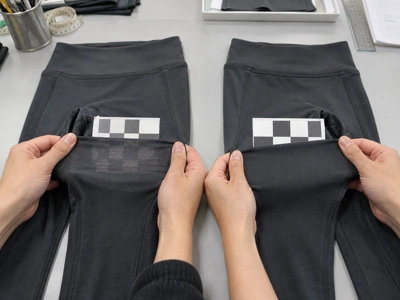
Know Who Controls Each Supply Chain Stage
MOVEVOX operates an own manufacturing core with controlled external resources. The company centralizes project specifications, material coordination, PMC, QC, and customer responsibility instead of representing every upstream or satellite process as wholly owned.
Yarn
For Seamless projects, yarn selection, composition, elasticity, color, and availability must support the intended program and product. Custom yarn colors can have upstream dyeing minimums.
Fabric
For Cut & Sew Naked Feel projects, MOVEVOX coordinates suitable fabric sourcing around composition, GSM, handfeel, stretch, recovery, color, surface, opacity, MOQ, and buyer requirements.
Dyeing
Standing colors and custom colors follow different commercial routes. Dedicated dyeing can require a larger material commitment than the garment production MOQ and needs buyer color approval.
Seamless
MOVEVOX's own Yiwu core operates 28 Italian Santoni machines for technically appropriate Seamless products, programs, structural zones, and related activewear development.
Cut & Sew
MOVEVOX's own Cut & Sew core uses approximately 24 principal sewing and garment-production machines for suitable leggings and related branded activewear products.
Satellite Capacity
Eight long-term satellite factories—six in Yiwu and two in Guangzhou—can provide approved supplementary or specialist capacity. They are not represented as MOVEVOX-owned factories.
Packaging & Logistics
MOVEVOX coordinates labels, packaging, barcodes, Carton Marks, Packing Lists, and logistics according to the agreed order and trade terms, including buyer-nominated forwarders where applicable.
MOVEVOX centralizes Tech Packs, material requirements, order management, PMC, QC, packing, and final project responsibility across its own manufacturing core and controlled network. Satellite factories cannot independently redefine the buyer's product standard, material, process, or approved version. When a buyer requires a specific approved factory, audit location, or vendor-registration restriction, the actual manufacturing site should be disclosed and changes should not occur without buyer approval.

What Buyers Can Verify Before Vendor Approval
MOVEVOX supports onsite, video, technical, and third-party review so a buyer can verify the legal entity, actual manufacturing resources, quality organization, supply-chain model, and applicable production site before approval.
What legal entity signs the contract?
MOVEVOX is the outward commercial brand and international B2B operating system. The legal contracting entity is Yiwu Chenjin Import And Export Co., Ltd. / 义乌市珵锦进出口有限公司. Formal commercial contracts and legal business activities are handled through the legal entity rather than treating the MOVEVOX brand name as a substitute for corporate identity. Relevant company documentation can be reviewed during vendor onboarding according to the buyer's information requirements.
Legal Entity ReviewCan we audit the Yiwu factory?
Yes. Global brands and B2B buyers can arrange Factory Audit, Technical Audit, Pre-production Visit, Inline Inspection, or Pre-shipment Inspection at the Yiwu production base, subject to appointment, active production conditions, and confidentiality restrictions protecting other customers. MOVEVOX can show relevant production areas, development resources, Santoni equipment, Cut & Sew operations, QC, packing, and warehouse functions that are available and appropriate for the scheduled audit.
Book Factory AuditCan we conduct a live video audit?
Yes. MOVEVOX supports live video review for international buyers that cannot immediately visit Yiwu. Depending on confidentiality and production status, the review can cover manufacturing areas, Seamless equipment, sewing, sample development, QC checks, packing, warehousing, and other relevant operational functions. Video review can support early supplier qualification, although a buyer may still require an onsite or third-party audit under its own vendor-approval policy.
Request Video AuditAre satellite factories MOVEVOX-owned?
No. MOVEVOX's eight long-term satellite factories are controlled network resources, not represented as company-owned sites. Six are located in Yiwu and two in Guangzhou. MOVEVOX retains centralized material, order, PMC, QC, and customer responsibility when approved supplementary production is used. Where the buyer requires production only at a named approved factory, site restrictions should be confirmed in writing and should not be changed without customer approval.
Review Supply ChainCan third-party inspection be used?
Yes. MOVEVOX supports third-party inspection where required by the buyer. The external report can become part of shipment-release decision making together with the buyer's quality standard, inspection stage, sampling plan, defects, measurements, packaging, and commercial requirements. The chosen inspection organization and applicable standard should be agreed for the actual order rather than assumed from a generic internal QC procedure.
Review Inspection PlanCan we verify manufacturing capacity?
Yes, but capacity should be reviewed in its correct scope. MOVEVOX's own core includes 28 Santoni Seamless machines, approximately 24 principal sewing and garment-production machines, and approximately 6,000 m² of own production space. Normal comprehensive managed monthly delivery capability is approximately 150,000–200,000 pieces using own and controlled resources. Actual available capacity must still be checked against the specific style, material, timing, and current loading.
Request Capacity CheckHow are approved-factory restrictions handled?
If a buyer's vendor-registration, audit, compliance, or quality program requires production at a designated approved site, MOVEVOX should record that requirement as part of project execution. Satellite capacity or another site should not be substituted against such a restriction without written buyer approval. This allows the actual manufacturing location, applicable audit status, material control, QC responsibility, and commercial release process to remain aligned with the buyer's vendor-governance requirements.
Confirm Production Site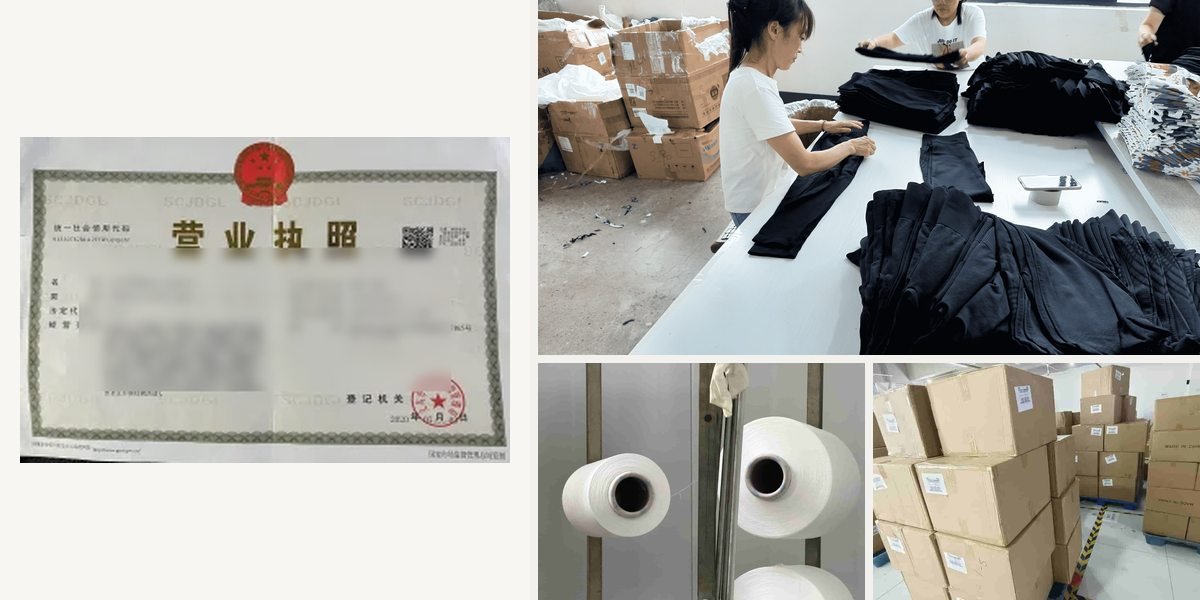
Read Test Evidence Within Its Actual Scope
MOVEVOX can coordinate material and garment testing according to buyer requirements. Existing chemical reports are sample-specific evidence and should not be expanded into blanket performance or certification claims for all Naked Feel products.
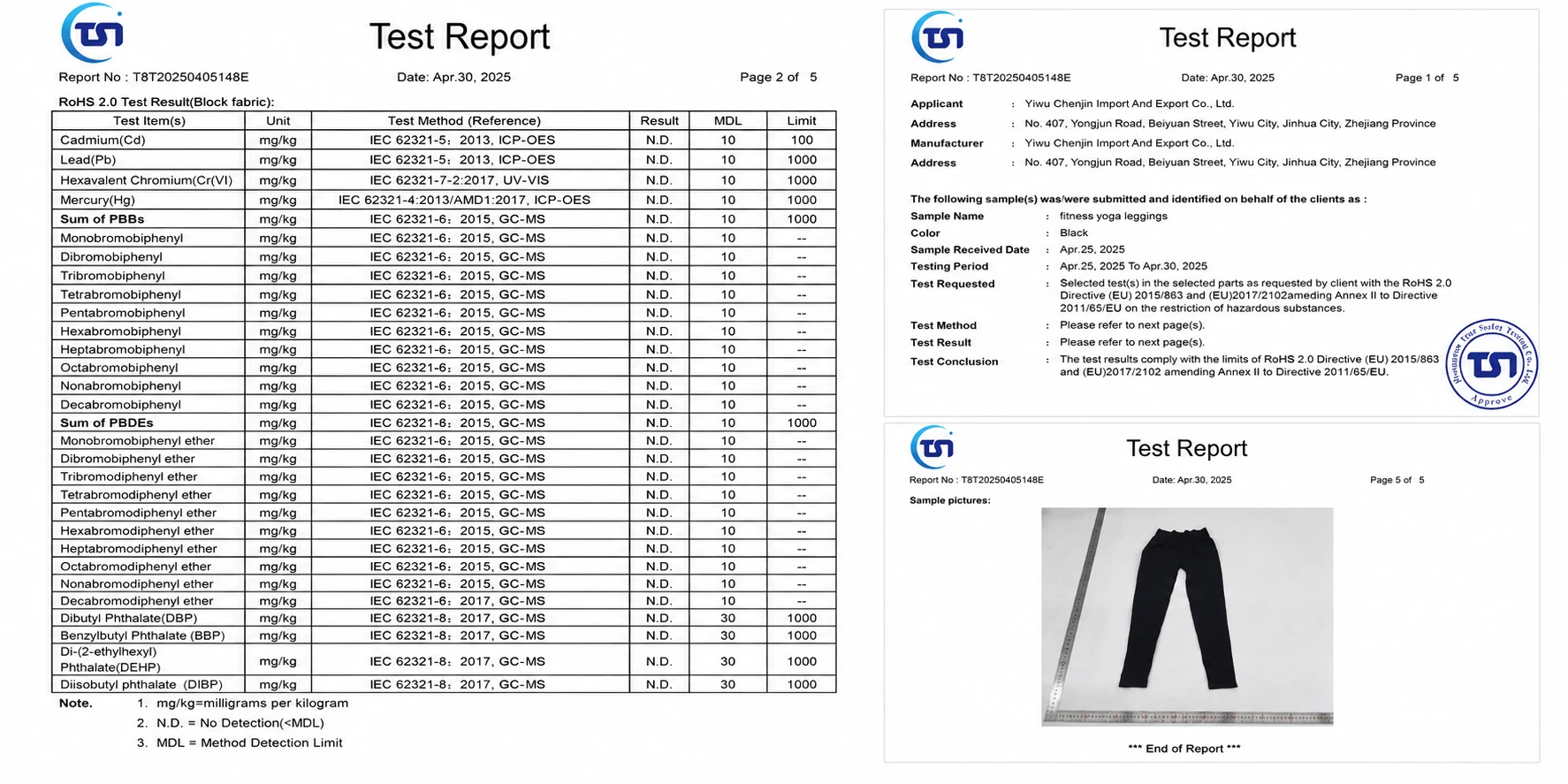
Sample Identity
A valid report should identify the submitted material or garment so the buyer can determine exactly what was tested. Evidence should not be transferred automatically to unrelated fabrics.
Test Method
Performance claims such as pilling, abrasion, recovery, opacity, shrinkage, or colorfastness should name the applicable method and conditions instead of relying on generic “tested quality” wording.
Acceptance Criteria
Buyer requirements, rating thresholds, cycles, tolerances, or other pass criteria should be defined before test conclusions are used to approve a material for a commercial program.
Result Scope
A test result belongs to the actual sample, color, material, condition, and method tested. It does not prove that every similar-looking Naked Feel fabric performs identically.
Existing RoHS Evidence
Report TST20250405148E, dated April 30, 2025, covers a submitted black fitness/yoga leggings sample that complied with the cited RoHS 2.0 requirements.
Existing Phthalate Evidence
Report TST20250405150E covers a submitted black fabric / fitness-yoga leggings sample and reports compliance with the cited REACH Annex XVII Entry 51 and 52 requirements.
Production Limitation
Certificate TST20250405148EC explicitly applies only to the tested sample. It should not be presented as a certification covering all MOVEVOX production or every Naked Feel product.
The existing RoHS and phthalate evidence is useful for demonstrating that MOVEVOX has worked with third-party chemical testing, but those reports are not Naked Feel performance reports and do not establish pilling, abrasion, recovery, opacity, compression, or wash performance. When a buyer needs such evidence, the applicable production material or garment should be tested according to the agreed method and acceptance requirement.
A Relevant U.S. Activewear Development Case
This U.S. fitness customer case demonstrates Tech Pack development, sample revision, wearer testing, multi-size order control, private-label packaging, and repeat commercial production. Existing evidence does not establish that the customer's leggings were specifically a Naked Feel product.
Customer Background
The customer is a U.S.-market fitness content creator operating an activewear business. The recorded product mix includes bodysuits, workout or Yoga sets, leggings, shorts, sports bras, and tank tops. The existing case record describes approximately three years of cooperation and recurring customized activewear orders, with requirements including high stretch, support, softness, opacity, larger sizes, seasonal material directions, and continued product updates.
The Challenge
The customer's products had to perform for real fitness use rather than only resemble reference images. Development needed to coordinate Tech Pack requirements, stretch, support, opacity, soft handfeel, fit, larger-size needs, materials, and product structure. After initial development, the customer also required multiple physical samples for actual wearer testing before committing to bulk. Later orders added private-label packaging, QR Code accuracy, multiple colors and sizes, and repeat-order coordination, creating both product and operational control requirements.
MOVEVOX Approach
MOVEVOX began from the customer's Tech Pack and completed a manufacturability review before producing the first sample. The customer tested and reviewed that version under real fitness conditions and provided adjustments. MOVEVOX then prepared a second version. Once the second sample was broadly aligned, the project record shows approximately five to ten additional pieces were made for wider wear testing by the customer and members of the customer's audience. Bulk production proceeded after that testing stage. Later commercial orders combined garment manufacturing with Logo, labels, care information, custom packaging, and QR Code / SKU controls.
1. Tech Pack Review
MOVEVOX reviewed the buyer's technical product requirements and evaluated whether the requested structure, material direction, dimensions, and active-use expectations were manufacturable before the first physical sample proceeded.
2. First Sample
The initial development garment was produced from the reviewed project information, giving the customer a physical basis to assess fit, stretch, support, opacity, softness, and real workout use.
3. Revision Sample
Buyer feedback from the first physical review was consolidated into the second sample rather than being treated as informal bulk instructions, creating another controlled development version.
4. Wear-Test Samples
After the second version was broadly acceptable, the case record shows approximately five to ten additional samples were produced so the customer could conduct wider real-use testing.
5. Bulk & Packaging
Following physical testing, the project moved into customized bulk production including branding, labels, care information, packaging, multi-size / multi-color control, and QR Code accuracy requirements.
需要真实素材替换 — No authorized customer quotation is currently evidenced for public use; add only after written publication approval.