
Gym Compression Leggings Manufacturer for Performance Activewear Brands
MOVEVOX develops non-medical gym compression leggings around the support feel your brand wants to achieve. Material recovery, garment dimensions, waistband structure, pattern or Seamless knit zones, physical fitting and sample approval are reviewed together before the product becomes a commercial production standard.
What Buyers Face
- Compression feels firm in samples but inconsistent across sizes.
- Waistbands lose stability after repeated stretch and movement.
- High-support fits create unwanted restriction or coverage problems.
How We Solve
- Match material recovery with finished garment dimensions and fit.
- Develop support through Cut & Sew or Seamless structures.
- Validate measurements, movement and coverage before bulk release.
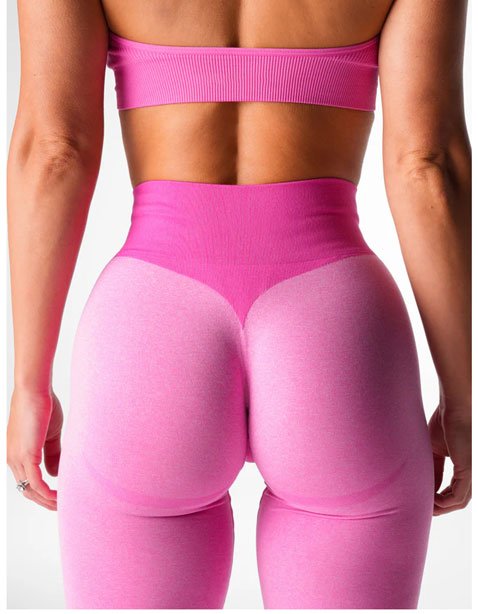
What Performance Buyers Need From Compression Leggings
Compression-oriented gym leggings need more than a tight fit. Brands must balance support, recovery, movement, coverage and repeat-production control without turning sportswear claims into unsupported medical statements.
Support Stability
The product should provide the intended close-to-body support while remaining compatible with the buyer’s fit and training-use requirements.
Execution Evidence: Material, garment measurements and physical fitting are reviewed together.
Stretch Recovery
High stretch helps movement, but recovery determines whether the garment returns toward its intended dimensions after extension.
Execution Evidence: Recovery is treated separately from Spandex percentage and stretch.
Movement Control
Waistband, crotch, hip and thigh fit should remain acceptable through relevant gym movements rather than only in a standing pose.
Execution Evidence: Physical samples can be reviewed under defined movement positions.
Coverage
Seat and thigh coverage can change as compression-oriented garments extend over the body, especially in lighter colors.
Execution Evidence: Coverage is evaluated on the finished garment rather than GSM alone.
Bulk Repeatability
The approved material, measurements and technical version need to remain connected to commercial production.
Execution Evidence: First-article and QC controls support sample-to-bulk handover.
The strongest compression program is not necessarily the tightest product. It is the product that maintains the buyer-approved balance between support, comfort, movement, coverage and size consistency under the selected material and manufacturing route.
Six Compression Claims Buyers Should Challenge
Sports compression describes a close, supportive activewear fit. It should not automatically be interpreted as clinically measured pressure or a medical treatment claim.
More Spandex Means More Compression
Fact: Spandex percentage affects elasticity, but finished support also depends on fabric structure, GSM, recovery, garment dimensions, pattern or knit architecture and how far the material extends when worn.
Condition: Composition is one development input, not a complete compression specification.
Higher GSM Means Higher Compression
Fact: A heavier material may feel more substantial, but GSM alone does not define support. Two fabrics at similar weight can behave differently because yarn, knit structure, Spandex content, finishing and recovery are different.
Condition: Evaluate the actual material and finished garment together.
Smaller Sizing Creates Better Support
Fact: Reducing garment dimensions can increase extension, but excessive negative ease can create discomfort, coverage risk, crotch imbalance or unwanted pressure instead of a properly engineered sports-support fit.
Condition: Fit should follow buyer measurements and physical sample approval.
Gym Compression Is Medical Compression
Fact: MOVEVOX develops non-medical sports compression and supportive activewear. Specific mmHg values, medical-device positioning, therapeutic circulation claims or rehabilitation benefits require a separate medical compliance and testing framework.
Condition: Standard activewear development does not establish medical efficacy.
Seamless Zones Have Defined Pressure Values
Fact: Seamless rib, density and body-mapped structures can create differentiated support direction, but they do not automatically represent a measured pressure level unless a suitable pressure-testing protocol has been performed.
Condition: Knit architecture is not a substitute for pressure-test evidence.
Firmer Always Means Better Performance
Fact: A firmer garment can suit some training directions, but excessive restriction may reduce comfort or movement quality. The intended product role should determine the appropriate support level.
Condition: The buyer-approved physical sample remains the practical reference.
Twenty Checks for Compression Leggings Supplier Qualification
Use these questions to determine whether a supplier can define, develop, validate and reproduce sports compression rather than simply applying a “high compression” label to a tight pair of leggings.
Exact Product Proof
Can the supplier show real gym or compression-oriented leggings rather than generic yoga products?
Front and Back
Can you evaluate waistband, hip, rise, seat and leg architecture from multiple views?
Material Identification
Can the supplier connect the product to an actual material or yarn direction?
Use Positioning
Can the supplier explain whether the product targets yoga, general gym or firmer training support?
Support Mechanism
Can the supplier explain how material, dimensions and construction create the support feel?
Recovery Control
Does the supplier distinguish recovery from simple stretch?
Route Choice
Can it explain Cut & Sew versus Seamless compression development?
Waistband Engineering
Is waistband stability treated as a technical variable rather than a marketing feature?
Buyer Size Chart
Can development follow your own measurement and grade standard?
Negative Ease
Can the supplier explain how finished dimensions affect garment pressure and fit?
Size Set
Is more than one size reviewed when the buyer’s quality process requires it?
Extended Sizing
Are larger sizes developed deliberately rather than uniformly enlarged?
Physical Sample
Does the supplier require sample approval before commercial bulk?
Movement Review
Can waistband, crotch, hip and coverage be reviewed in training positions?
Performance Scope
Does the supplier distinguish internal checks from formal laboratory testing?
Evidence Boundary
Does it avoid medical or pressure claims without supporting tests?
First Article
Is commercial first output checked against approved production references?
QC System
Are material, measurements, construction and final packing controlled?
Scoped Capacity
Are manufacturing capacity figures clearly defined rather than theoretical?
Verification Access
Can buyers visit, audit or arrange third-party inspection?
Six Numbers for Initial Supplier Qualification
These operating references help sourcing teams understand MOVEVOX’s current manufacturing and development base before moving into detailed product, commercial and compliance review.
Santoni Machines
Owned Italian Santoni equipment supporting Seamless activewear development and production.
Garment Machines
Principal owned Cut & Sew machines supporting pattern-led activewear manufacturing.
Development Staff
Approximate normal product-development function across design, technical development and sampling.
QC Personnel
Current quality-control team supporting production inspection and release activities.
Working Days
Normal standard-sample reference after required development details are sufficiently confirmed.
Base MOQ
Approximate Seamless / Cut & Sew garment-level MOQ per style respectively.
Material, color, complexity, testing and commercial prerequisites can change project feasibility and timing.
Six Compression Leggings Directions for Gym Programs
Different training products require different support, construction and commercial priorities. These directions are development starting points rather than fixed stock specifications.
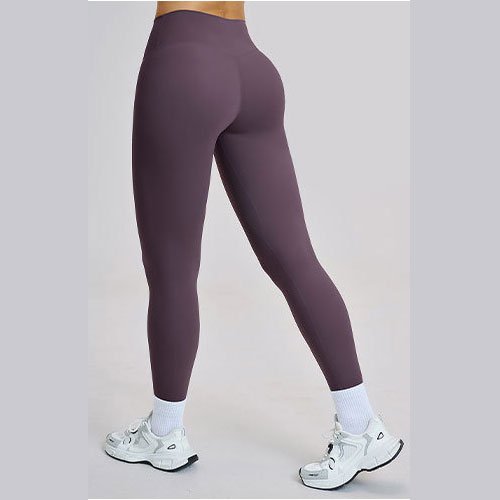
Firmer Training Leggings
Built around a closer support direction for general gym or strength-training use. Material recovery, negative ease, waistband stability and seat coverage need to be reviewed together rather than maximizing tightness alone.
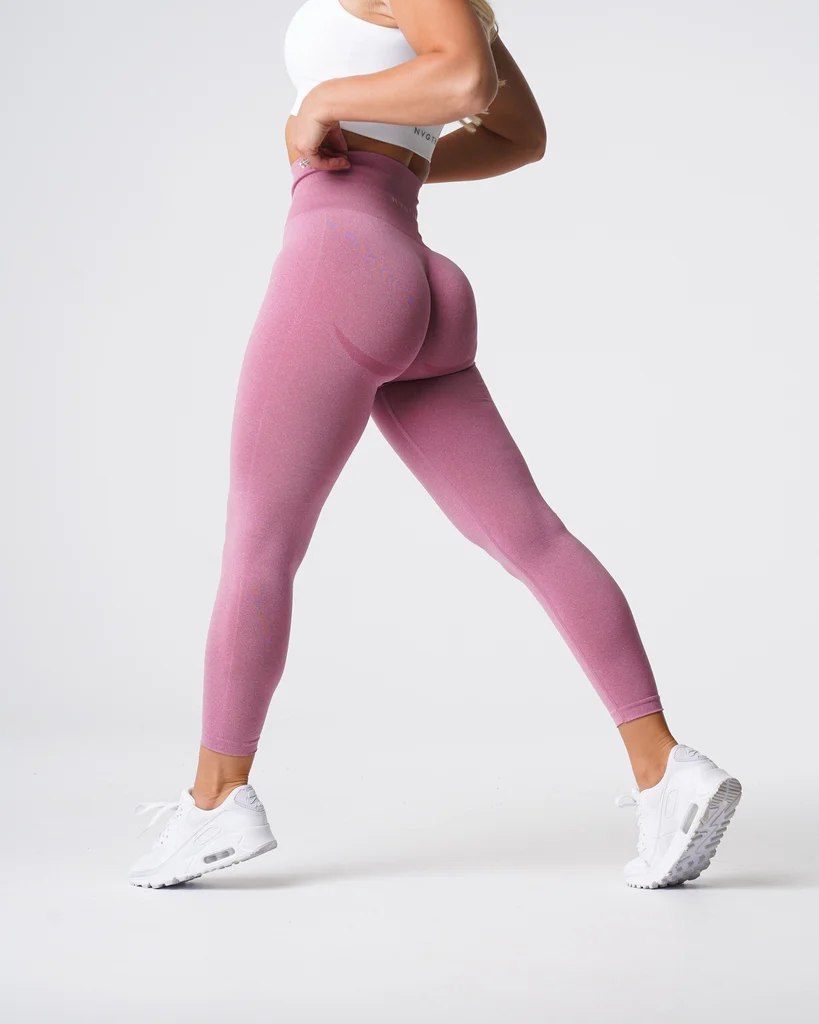
Seamless Zoned Leggings
Uses Seamless rib, texture or localized knit density where technically appropriate to create differentiated support through the garment body.
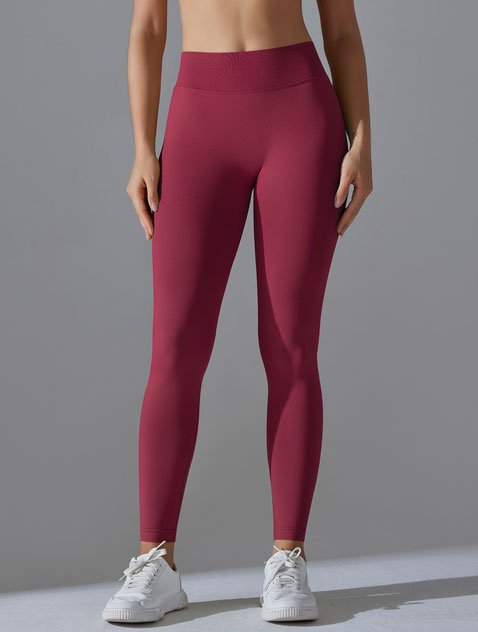
High-Waist Support Leggings
Prioritizes waistband height, stability and waist-to-hip transition together with training-oriented body fit.
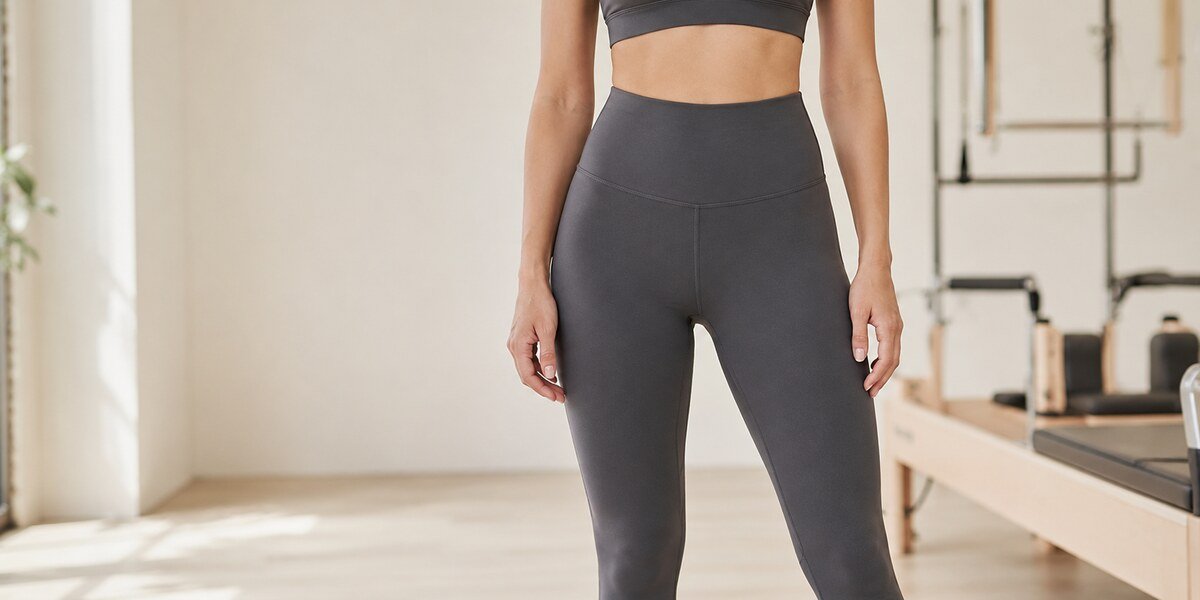
Panel Training Leggings
Uses Cut & Sew pattern geometry, seams or panels to control product structure while allowing pocket or construction flexibility.
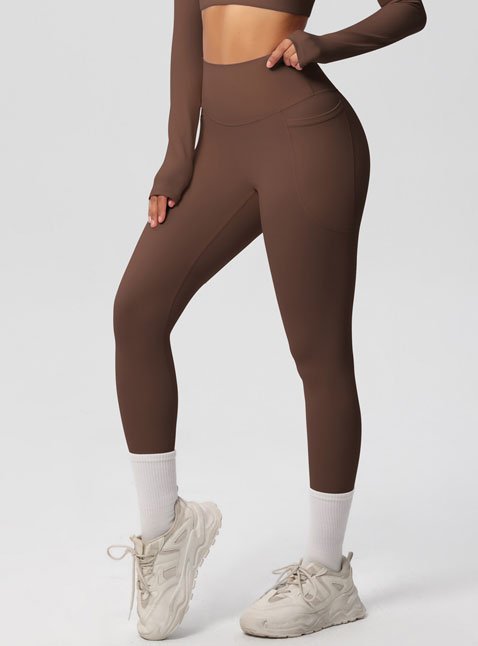
Pocket Compression Leggings
Combines closer training fit with practical storage, requiring pocket placement to remain compatible with local stretch and support.
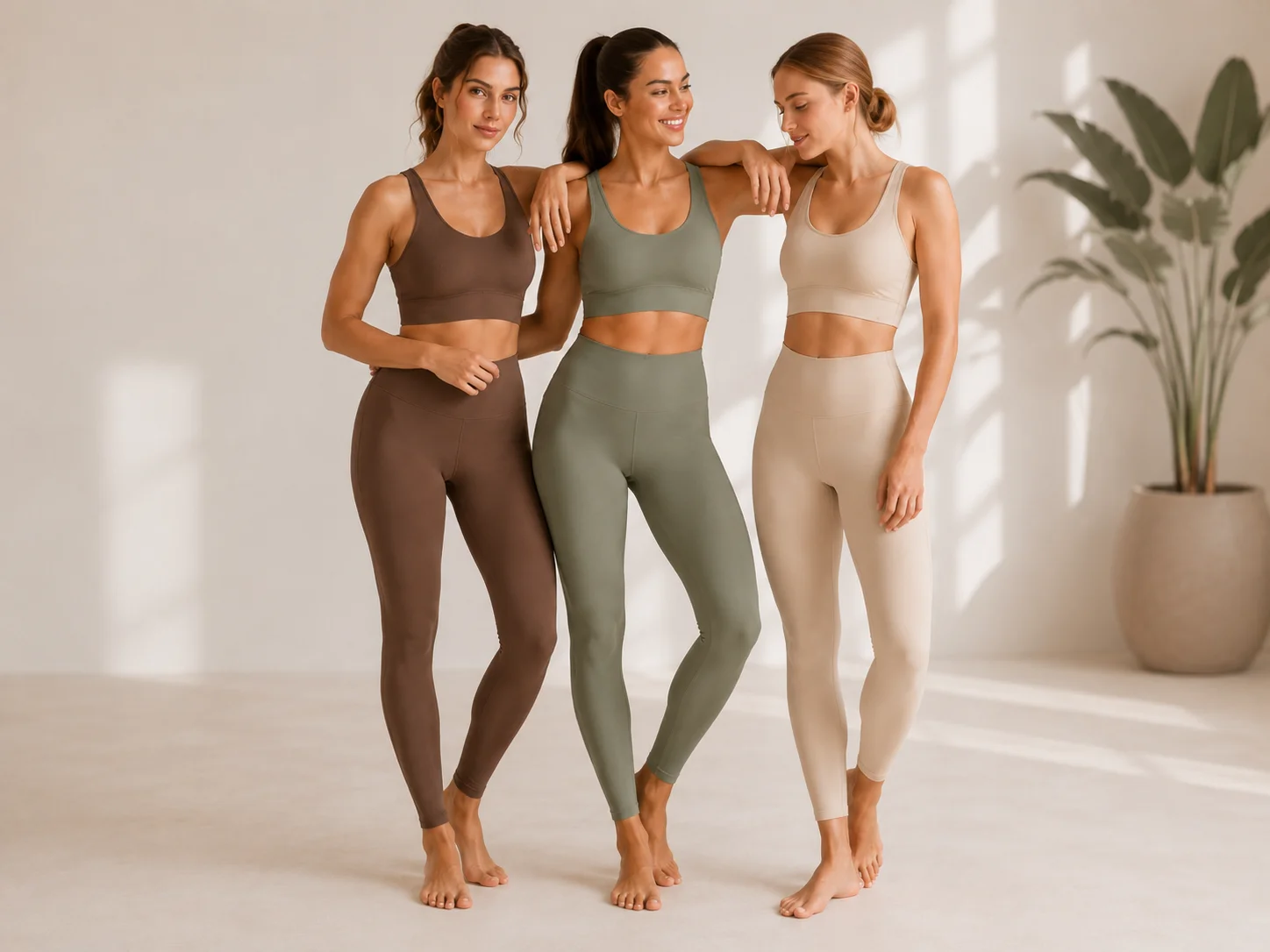
Compression Gym Set
Coordinates leggings with sports bras, shorts or tops using aligned material, color and branding directions for a broader performance collection.
Choose the Right Compression Manufacturing Route
MOVEVOX supports both owned Seamless and Cut & Sew production. Compression can be created through different technical systems, so the product architecture should determine the manufacturing route.
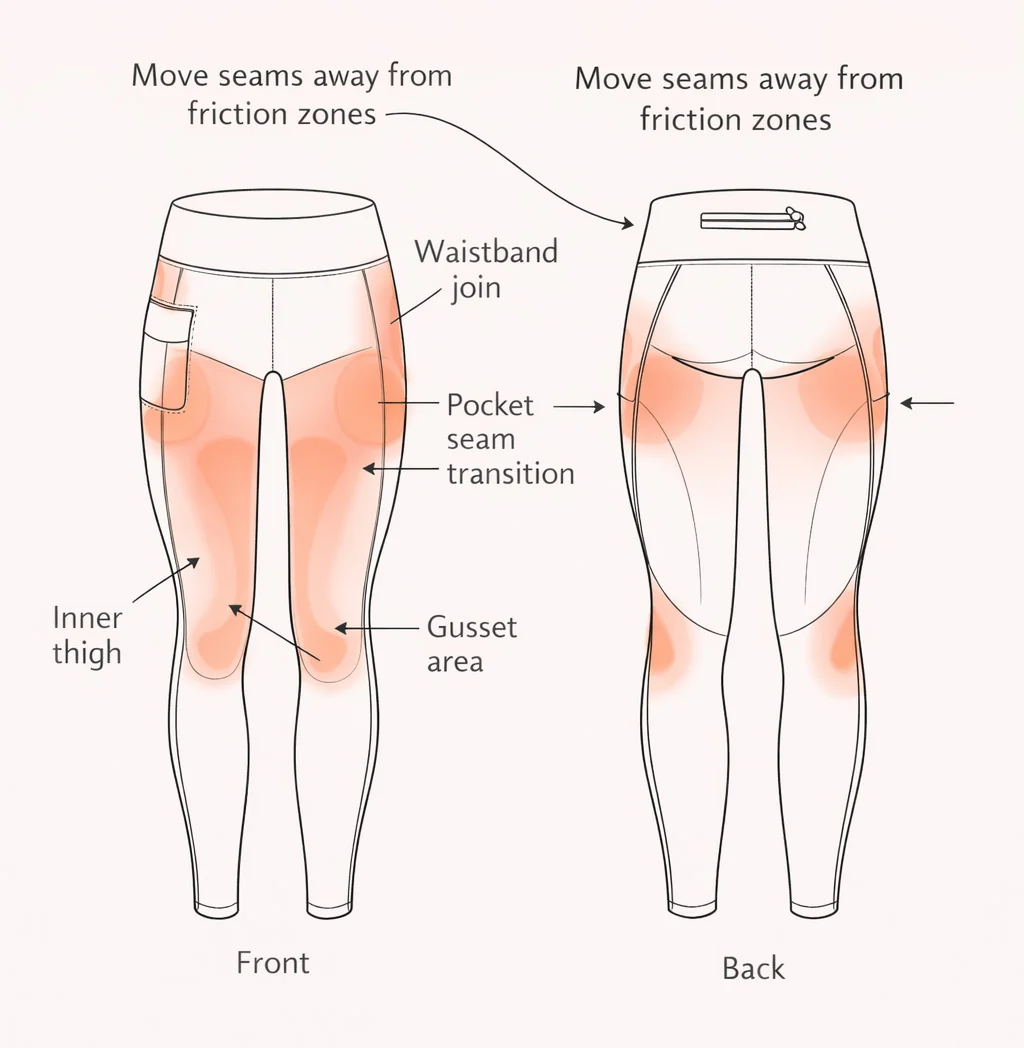
Seamless Compression
Seamless development starts with yarn, knitted structure, local density and finished dimensions. Rib, texture or engineered zones can create differentiated support where compatible with the product. MOVEVOX’s owned system includes 28 Italian Santoni machines. Seamless should be selected when integrated knitted structure supports the intended design; it should not be presented as automatically stronger or more technical than Cut & Sew.
Cut & Sew Compression
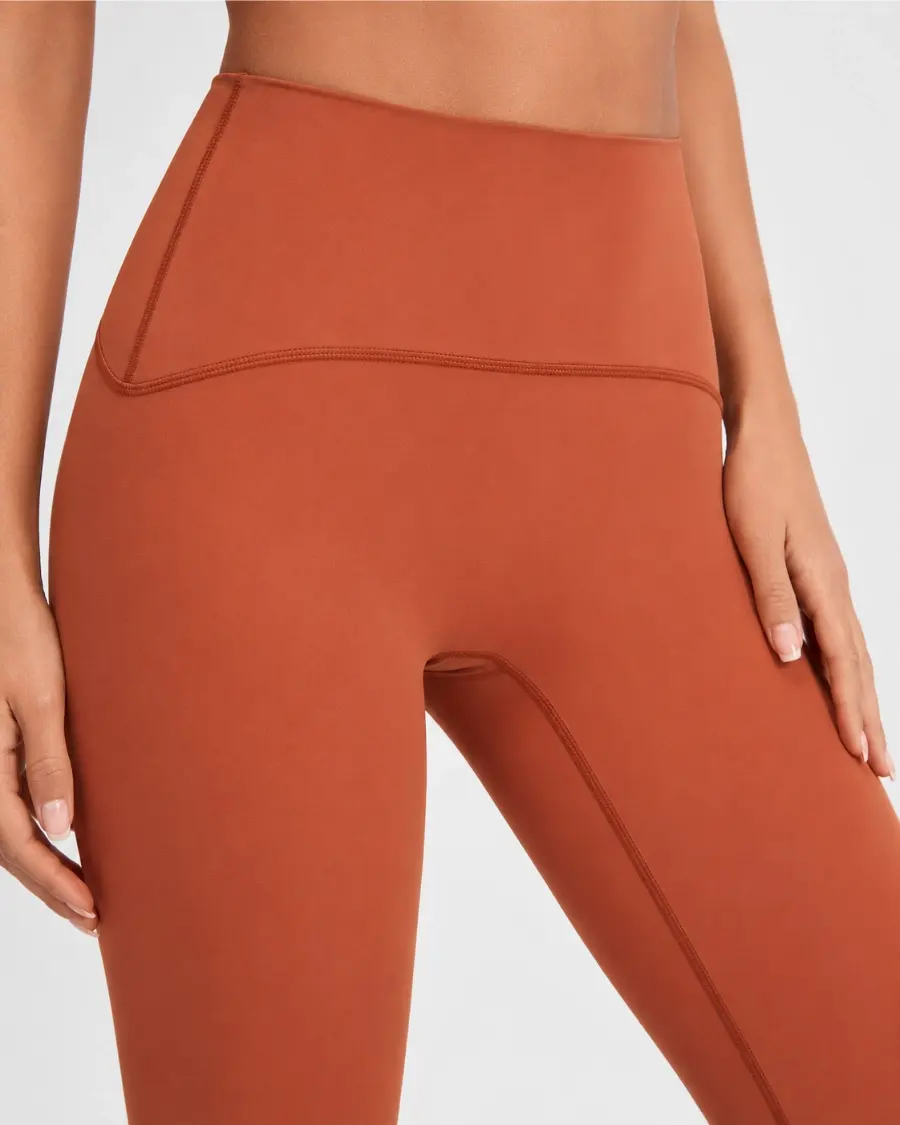
Cut & Sew development starts with performance fabric, pattern dimensions, negative ease, waistband architecture and any approved panel or seam construction. MOVEVOX’s owned Cut & Sew system includes approximately 24 principal garment machines. This route provides more flexibility for conventional pockets, panel geometry and piece-goods materials while still allowing a firm sports-support direction.
Compression Support Does Not Need Uniform Tightness
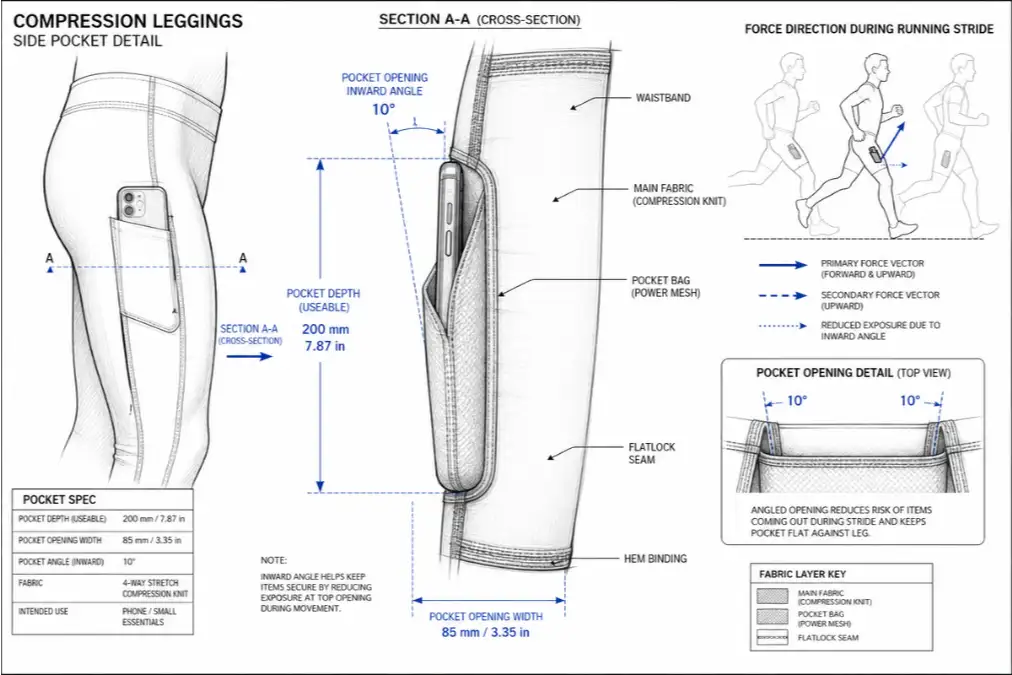
Different areas of gym leggings perform different jobs. Support direction can therefore be developed by zone rather than making the entire garment equally firm.
Waist
Waistband height, circumference, density or material construction influences stability and how the garment remains positioned during movement.
Abdomen
This area may use a balanced support direction, but comfort should be reviewed rather than maximizing local firmness.
High Hip
The transition between waist and fuller hip affects how support is distributed through the upper garment.
Glute
Rear fit should accommodate seat volume while maintaining the intended material extension and coverage.
Upper Thigh
Higher local extension can influence support feel and opacity, particularly in deep flexion or squat positions.
Lower Thigh
Leg fit can remain closer or more flexible depending on training use, material and buyer fit targets.
Compression-oriented leggings perform as one connected system. Increasing firmness in one zone can change movement, local material extension and fit elsewhere. MOVEVOX therefore develops support zones within the context of material, measurements, size range and the approved physical sample rather than treating each area as an isolated feature.
Waistband Structure Shapes Compression Fit Stability
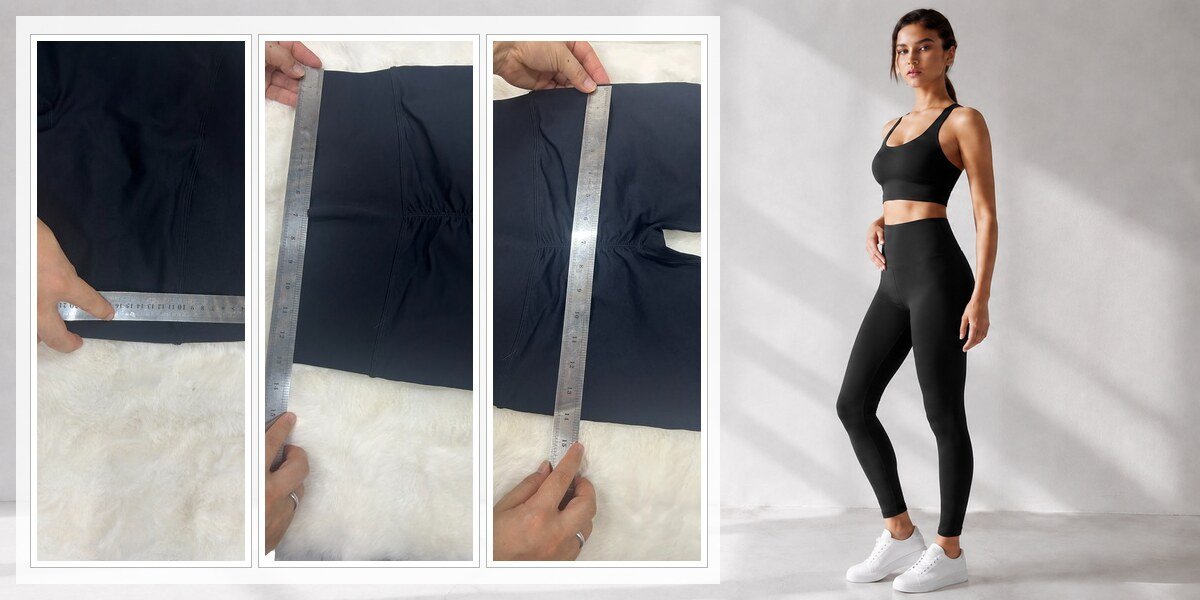
A compression-oriented waistband has to balance local support, extension, recovery and comfort. Its performance depends on several connected layers rather than waistband height alone.
Waistband Structure
Top Opening
The upper opening affects entry, local tension and how the waistband sits against the torso. It should not be made unnecessarily small simply to create a firmer impression.
Band Height
A taller waistband increases the area interacting with the torso, but height alone does not define stability or comfort.
Local Structure
Cut & Sew layers or Seamless rib and density can change extension and recovery across the waistband.
Lower Transition
The transition into the high hip influences whether the waistband remains balanced instead of concentrating tension at one edge.
Fit Relationship
Front Rise
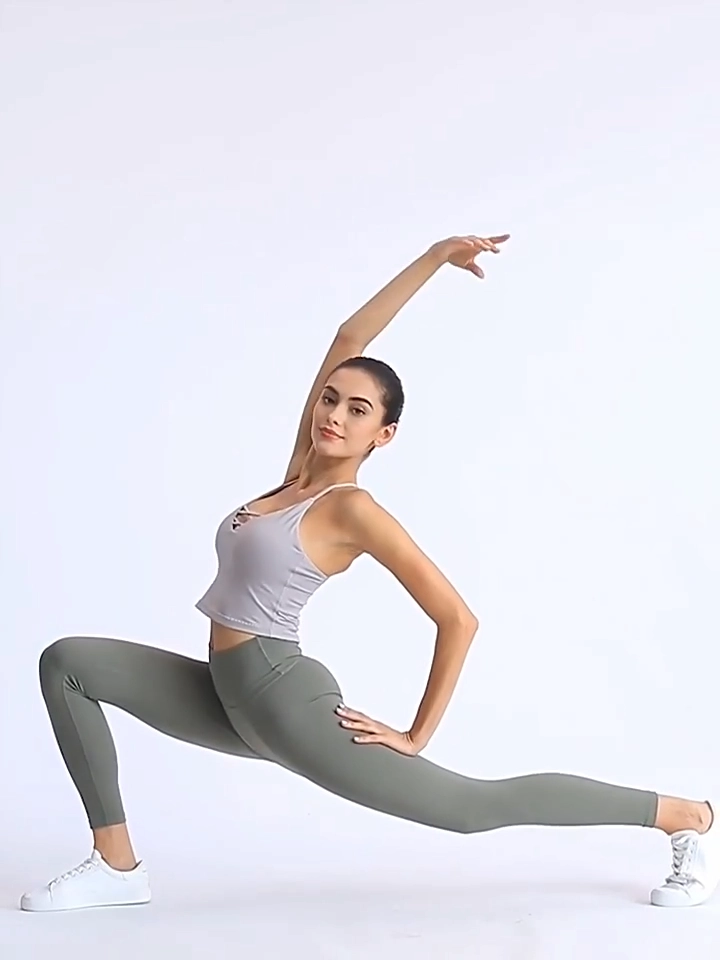
Front rise affects abdominal coverage and waistband behavior during flexion.
Back Rise
Back rise influences rear coverage and waistband position during squat and bending movements.
Waist-to-Hip
The relationship between waist and hip dimensions affects how much local extension the waistband carries.
A firmer waistband is not automatically a better waistband. MOVEVOX evaluates height, circumference, material or knit structure, recovery, front/back rise and hip dimensions together. The correct standard is the buyer-approved fit under the intended material and size—not a universal claim that one construction can never roll or shift.
Compare Compression Materials by Engineering Variables
MOVEVOX treats compression fabric as a high-stretch, higher-recovery, high-coverage non-medical sportswear material system. The ranges below are company-level development references, not fixed formulas.
| Parameter | Softer Support | Balanced Support | Firmer Compression | Seamless Direction |
|---|---|---|---|---|
| Composition | Project-specific Nylon/Poly + Spandex | Project-specific Nylon/Poly + Spandex | Approx. 65–78% Nylon/Poly + 22–35% Spandex reference | Yarn-system specific |
| GSM | Project-specific | Project-specific | Approx. 230–320 GSM reference | Not directly equivalent to piece-goods GSM |
| Stretch | High | High | High | Controlled by yarn and knit |
| Recovery | Must be verified | Higher recovery direction | Higher recovery direction | Structure-dependent |
| Handfeel | Softer | Balanced | Firmer | Program-dependent |
| Coverage | Fit/color dependent | Fit/color dependent | Higher-coverage direction | Zone-dependent |
| Best Use | Lower-support gym | General training | Firmer training | Zoned compression |
| Validation | Physical sample | Physical sample | Physical sample + required testing | Program + sample |
Fiber percentage and GSM are useful screening inputs, but neither can independently establish compression performance. MOVEVOX connects material selection with finished dimensions, waistband structure, movement fit and physical-sample review.
Material Directions for Different Compression Product Roles
These material cards organize development by intended product behavior. Exact composition, GSM, availability and testing must be tied to the actual material reference selected for the project.

Softer Training
Composition: Project-specific Nylon/Polyester + Spandex
Weight: Project-specific
Designed for brands seeking closer activewear fit without maximizing firmness. Material still needs sufficient recovery and coverage for the approved garment dimensions.

Balanced Support
Composition: Nylon/Polyester + Spandex direction
Weight: Project-specific
Balances training support with practical movement and comfort. The final result depends on material structure and negative ease.

Firmer Compression
Composition: Approx. 65–78% Nylon/Polyester + 22–35% Spandex reference
Weight: Approx. 230–320 GSM reference
MOVEVOX company-level compression-material development range for non-medical sports support. Final specification remains project-specific.

Higher Coverage
Composition: Project-specific
Weight: Often selected toward denser product directions
Useful when opacity risk is a major concern, particularly around the seat or in lighter colors. Coverage still requires finished-garment validation.

Structured Rib
Composition: Project-specific
Weight: Structure-dependent
Can provide localized structure for waistbands or selected garment areas where product architecture supports it.
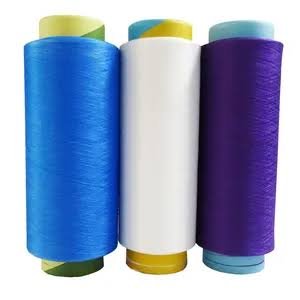
Seamless Yarn
Composition: Main fiber + Spandex system
Weight: Program-dependent
Used for Seamless products where compression direction comes from yarn, density and knitted zones rather than piece-goods fabric alone.

Light Color
Composition: Project-specific
Weight: Coverage-sensitive
Candidate materials for lighter shades should be reviewed under actual garment extension because relaxed material appearance is insufficient.
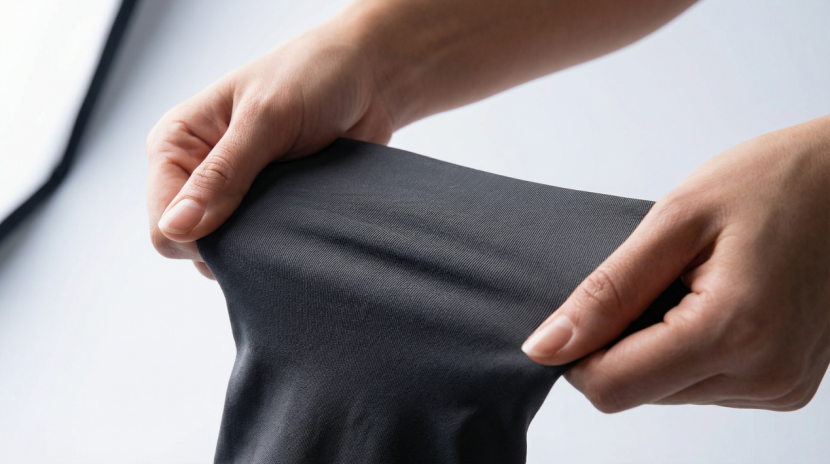
Higher Recovery
Composition: Project-specific
Weight: Project-specific
Selected where repeat extension, waistband stability or close-to-body support makes recovery a priority.
Why Stretch Alone Cannot Define Compression Performance
Stretch describes how far a material can extend. Recovery describes how it behaves after extension. Compression-oriented activewear needs both properties to be reviewed against the finished garment.
Stretch Capacity
A material may stretch substantially enough for dressing and movement without providing the intended recovery after repeated extension.
Source: MOVEVOX material-development framework
Date: Current internal development reference
Recovery Requirement
Compression-oriented materials are selected toward higher-recovery directions, but the acceptable result depends on the buyer’s target support and testing requirement.
Source: MOVEVOX material-development framework
Date: Current internal development reference
Garment Dimensions
The same fabric can feel materially different when finished waist, hip or thigh dimensions change.
Source: MOVEVOX fit-development framework
Date: Current development basis
Knit Structure
In Seamless products, yarn, stitch structure and local density can change both extension and perceived support.
Source: MOVEVOX Seamless framework
Date: Current manufacturing basis
Repeated Extension
Repeated extension can expose relaxation or dimensional change that is not visible in one manual stretch demonstration.
Source: MOVEVOX QC framework
Date: Current quality basis
MOVEVOX does not publish one universal recovery percentage for all compression fabrics. Project-specific numerical claims require a defined test method, tested material or garment and documented result.
Negative Ease Controls More Than Garment Tightness
Finished garment dimensions determine how much a stretch material extends on the body. Too little or too much negative ease can both undermine a compression-oriented product.
Too Loose
Waist, hip or thigh dimensions create insufficient material extension for the intended close-support fit.
The garment may feel less supportive, shift during movement or fail to match the buyer-approved product direction.
Review finished measurements together with material stretch, recovery and physical fit before locking the pattern or knit program.
Balanced
The target is not maximum tightness but a controlled relationship between body measurements, material behavior and product role.
A balanced fit can maintain support while preserving practical movement, coverage and waistband comfort.
Use the buyer’s measurement standard and approved sample as the working compression-fit reference.
Too Tight
Excessively small dimensions can overextend the material or create localized pressure.
Potential consequences include comfort problems, opacity risk, crotch imbalance and excessive waistband restriction.
Revise measurements, material or construction rather than assuming a tighter pattern automatically creates a higher-quality compression product.
Wrong Distribution
The total garment may fit, but support is concentrated in the wrong areas.
Waist, hip or thigh tension can become unbalanced and change movement or product appearance.
Review waist-to-hip relationships, panels or Seamless zones together with material recovery.
Six Grading Controls for Compression Leggings Programs
A compression fit approved in one base size does not automatically produce the same support experience throughout a wider size range. Grade rules need to protect fit, movement and coverage.
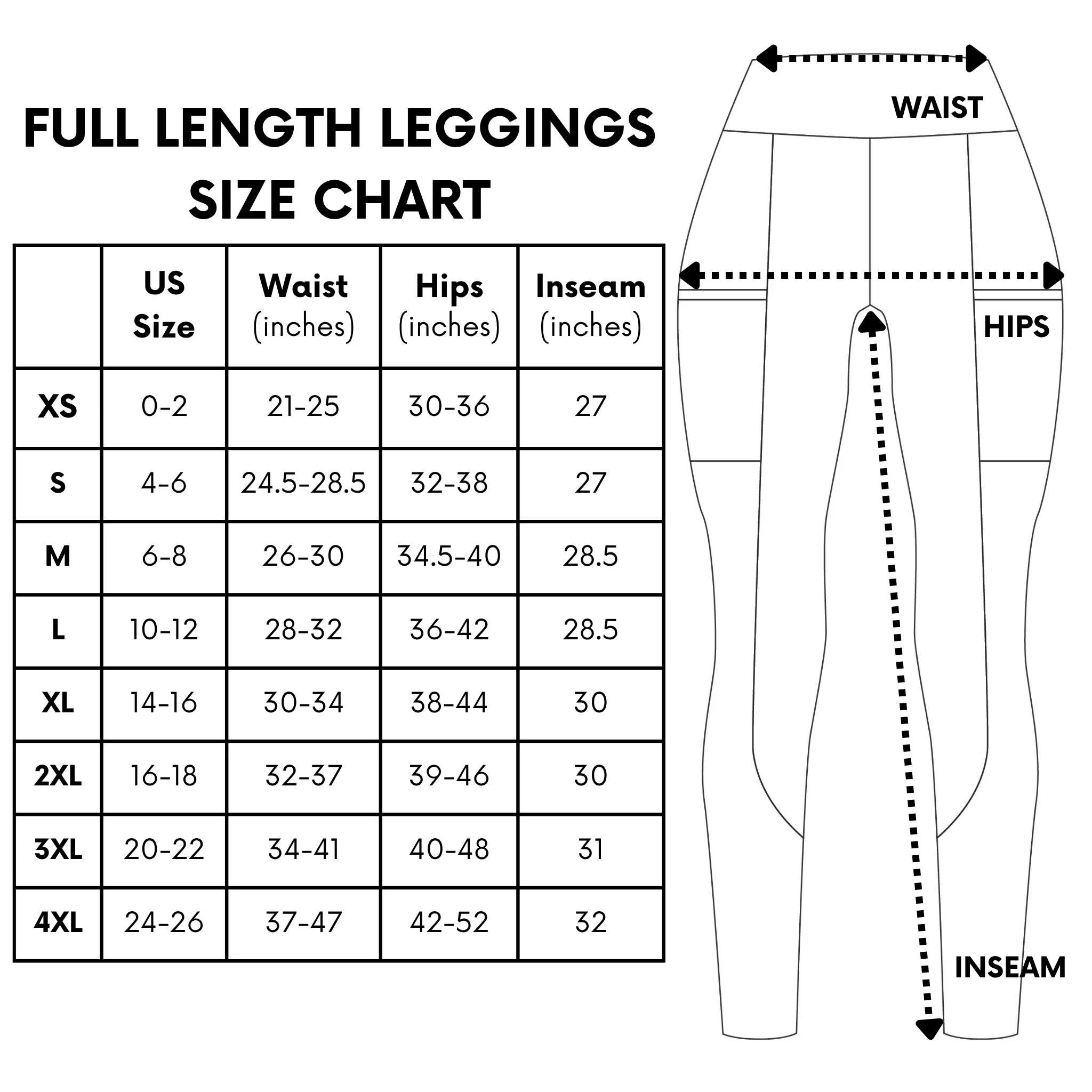
Base Size
Establish one approved development size using a buyer-defined Measurement Chart, target fit and selected material. This base garment becomes the technical starting point for grading, not proof that every additional size is already validated.
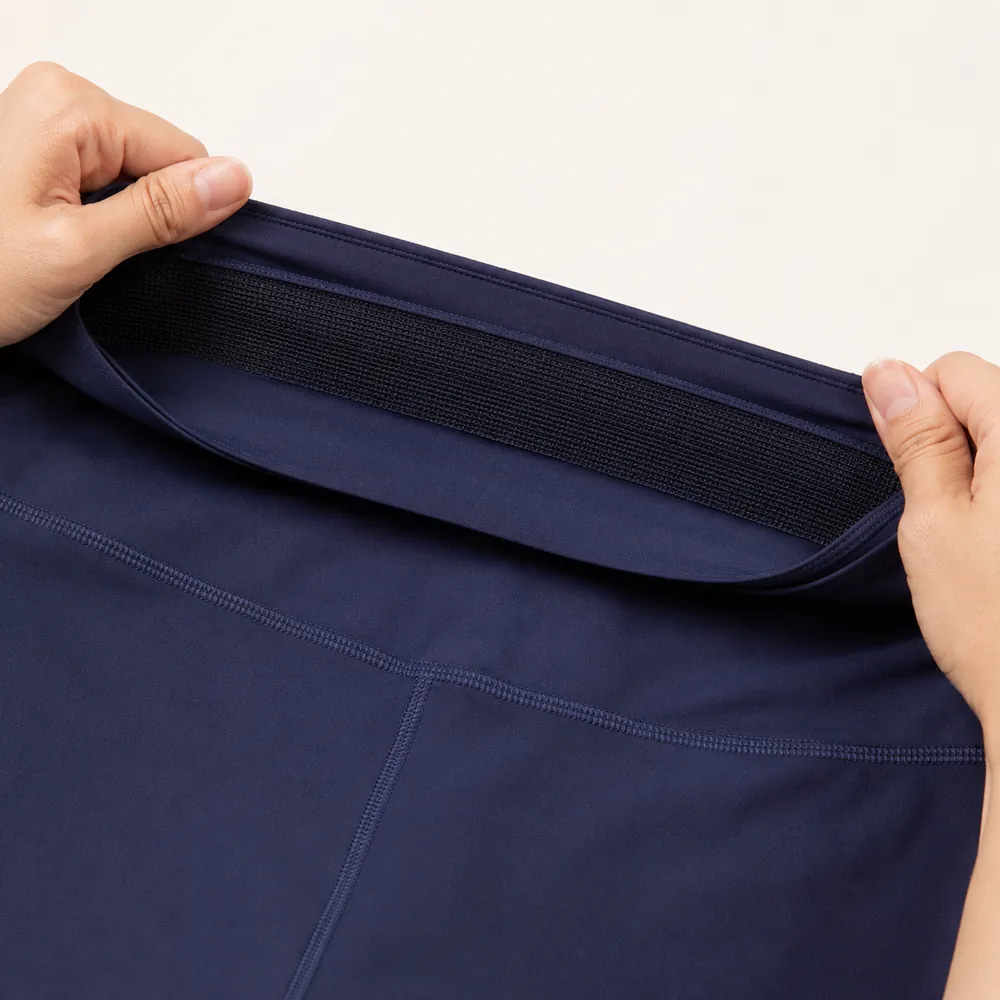
Waist
Waist grade changes need to account for waistband construction, local material extension and the buyer’s intended support direction. A fixed percentage increase may not preserve the same feel across the range.
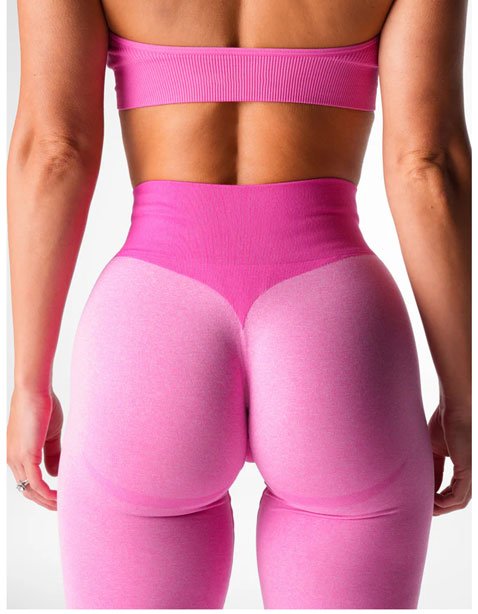
Hip
Hip dimensions affect seat extension, rear coverage and the way support is distributed through the garment. Larger sizes should not simply recreate the base-size negative ease without considering actual fit requirements.
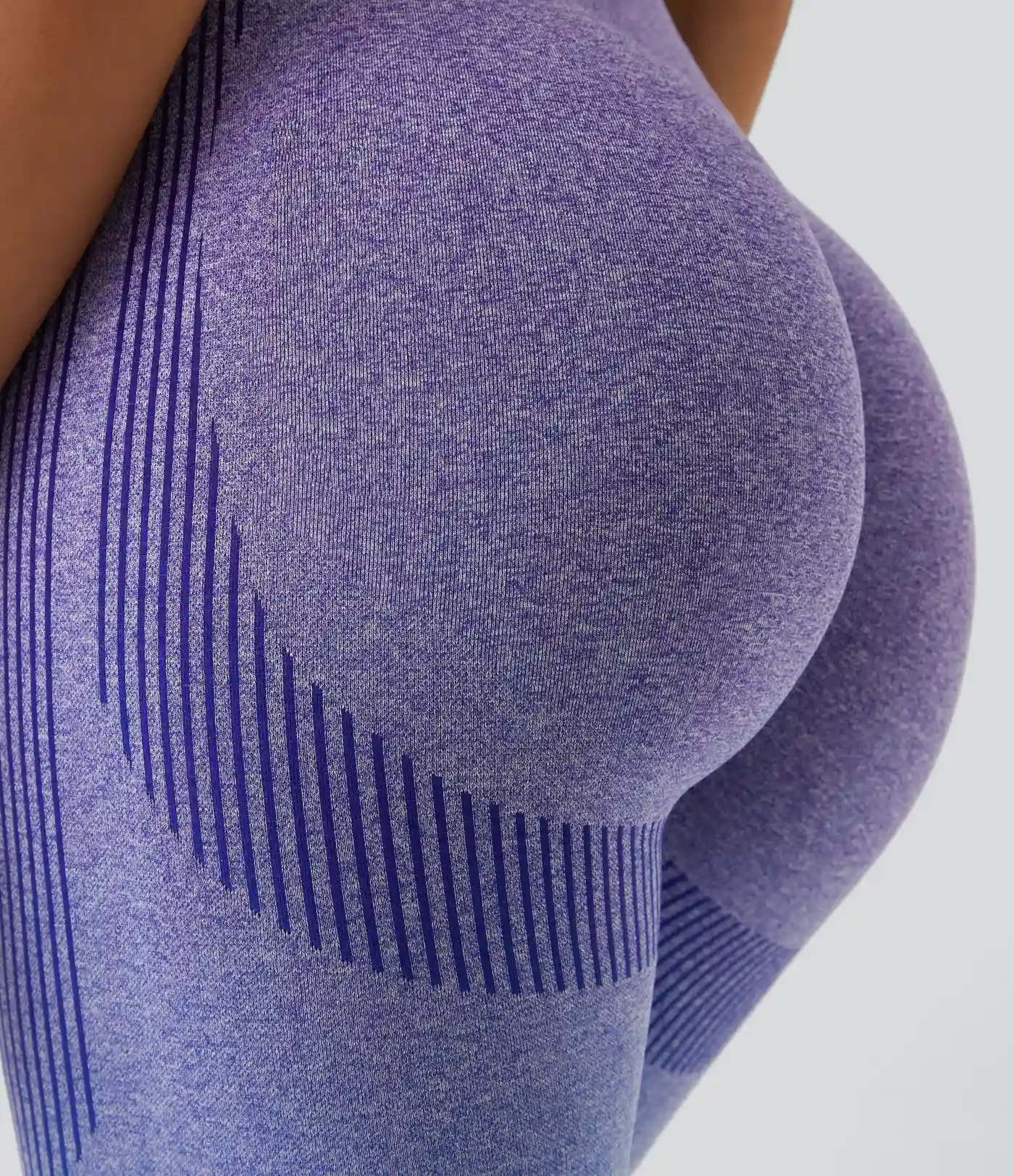
Thigh
Thigh grading changes local material extension and perceived firmness. An incorrect grade can make one size noticeably more restrictive or loose even when waist and hip dimensions appear acceptable.
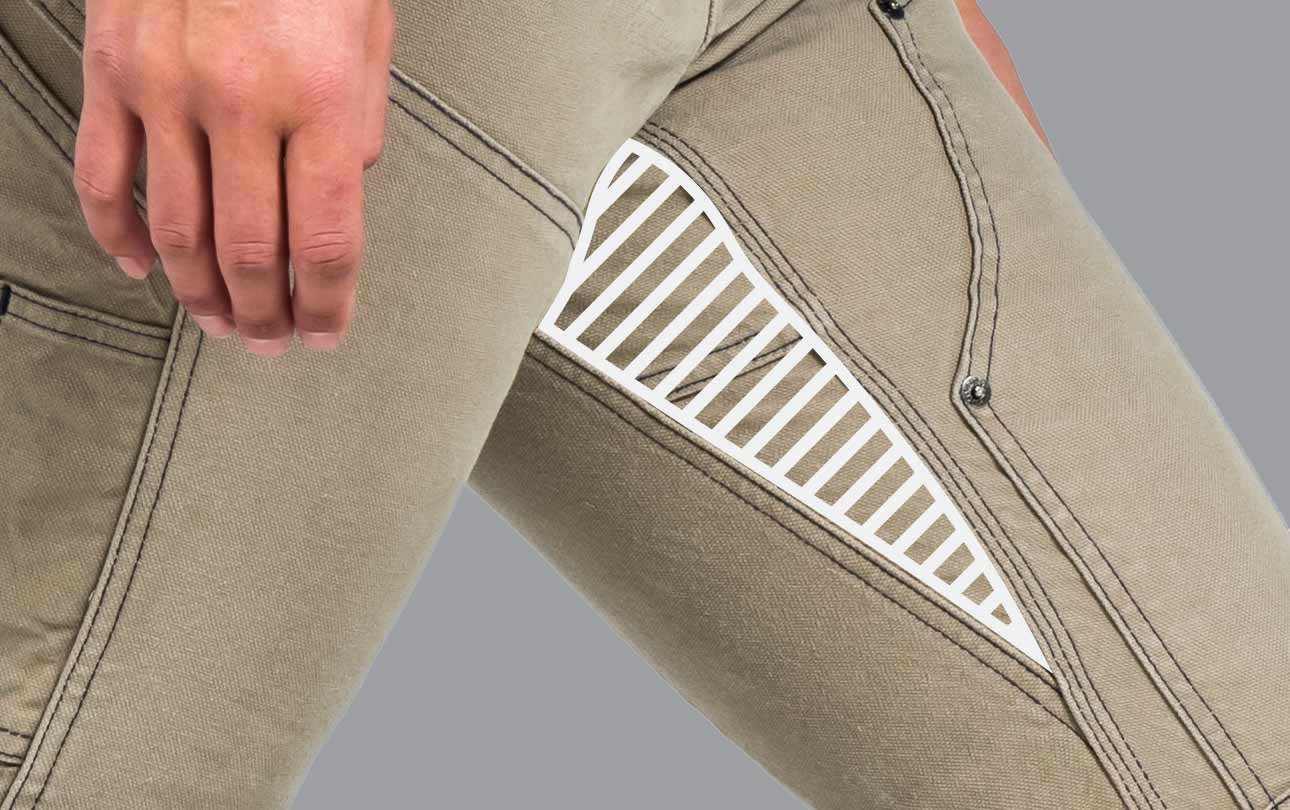
Rise & Crotch
Front rise, back rise and crotch geometry maintain balance between the torso and leg sections. These dimensions need separate rules rather than being treated as secondary consequences of waist scaling.
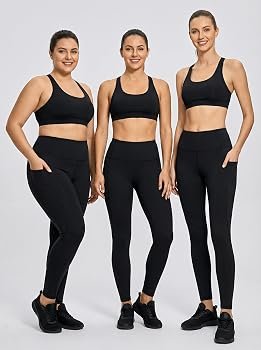
Size Set
Where the buyer requires size-set approval, physical measurements and samples can be reviewed before the complete commercial size range enters bulk. Exact sample-size requirements remain project-specific.
Build Compression Claims From Evidence, Not Labels
Compression language becomes more credible when each claim is matched to the level of evidence actually available. MOVEVOX separates product direction, garment evidence, measured performance and regulated medical claims.
Product Direction
Terms such as softer support, balanced support or firmer training support can describe the intended activewear direction without claiming quantified pressure.
- Defined buyer target and product use
- Material and fit direction documented before sampling
Garment Evidence
A physical sample can show how material, waistband, garment dimensions and construction behave together during fitting and movement.
- Approved measurements and physical sample
- Movement, recovery and coverage review where required
Measured Performance
Numerical recovery, seam strength, opacity or pressure claims require an appropriate test method and result tied to the relevant sample.
- Defined protocol and acceptance criterion
- Traceable sample-specific test result
Regulated Claim
Medical compression values, therapeutic effects or medical-device positioning require a separate regulatory and evidence framework beyond ordinary activewear manufacturing.
- Medical-grade pressure validation if applicable
- Required regulatory status for target market
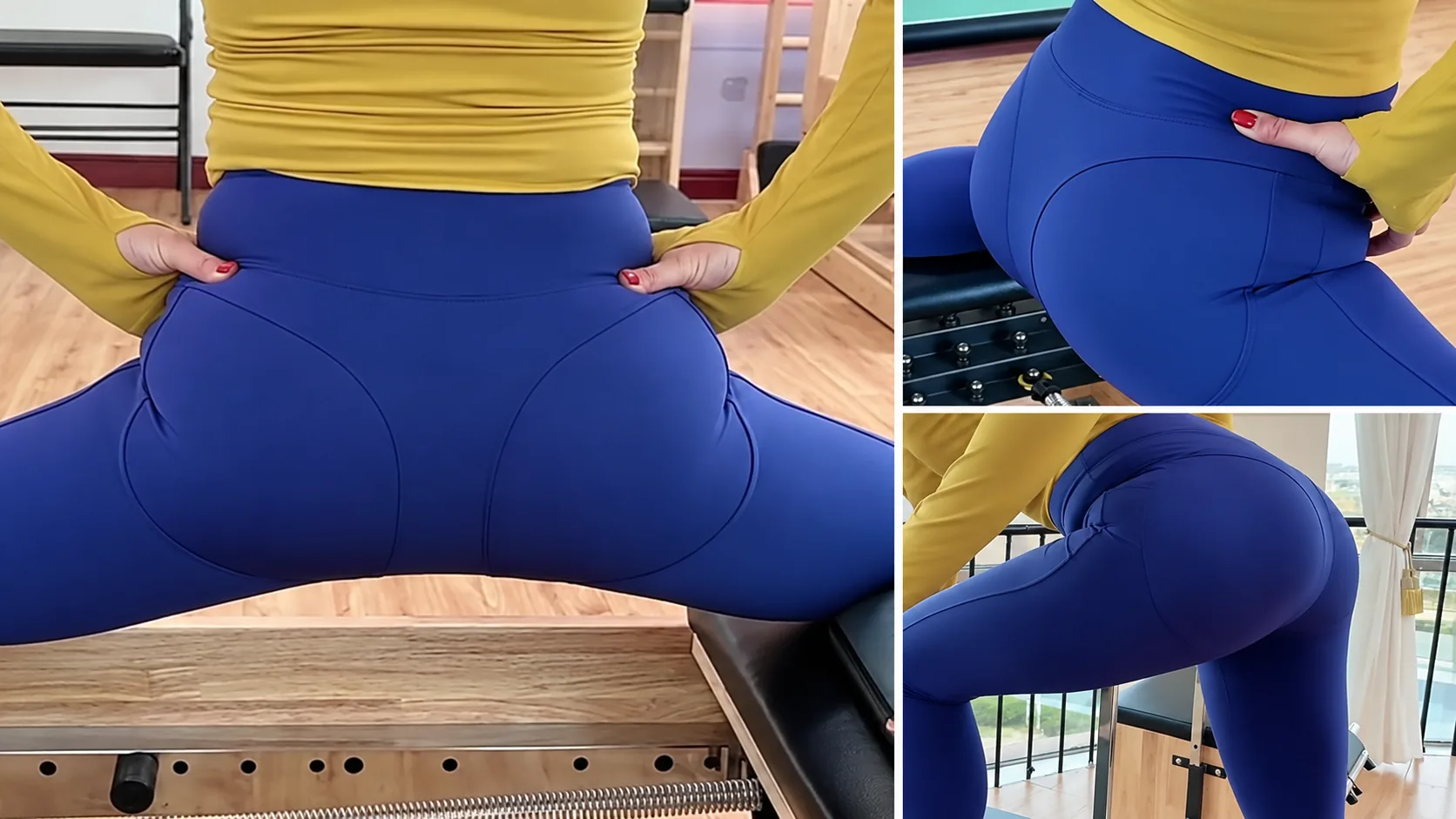
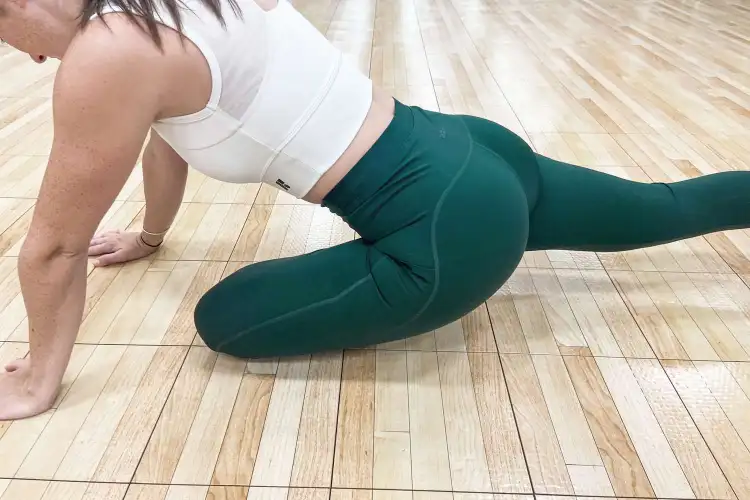
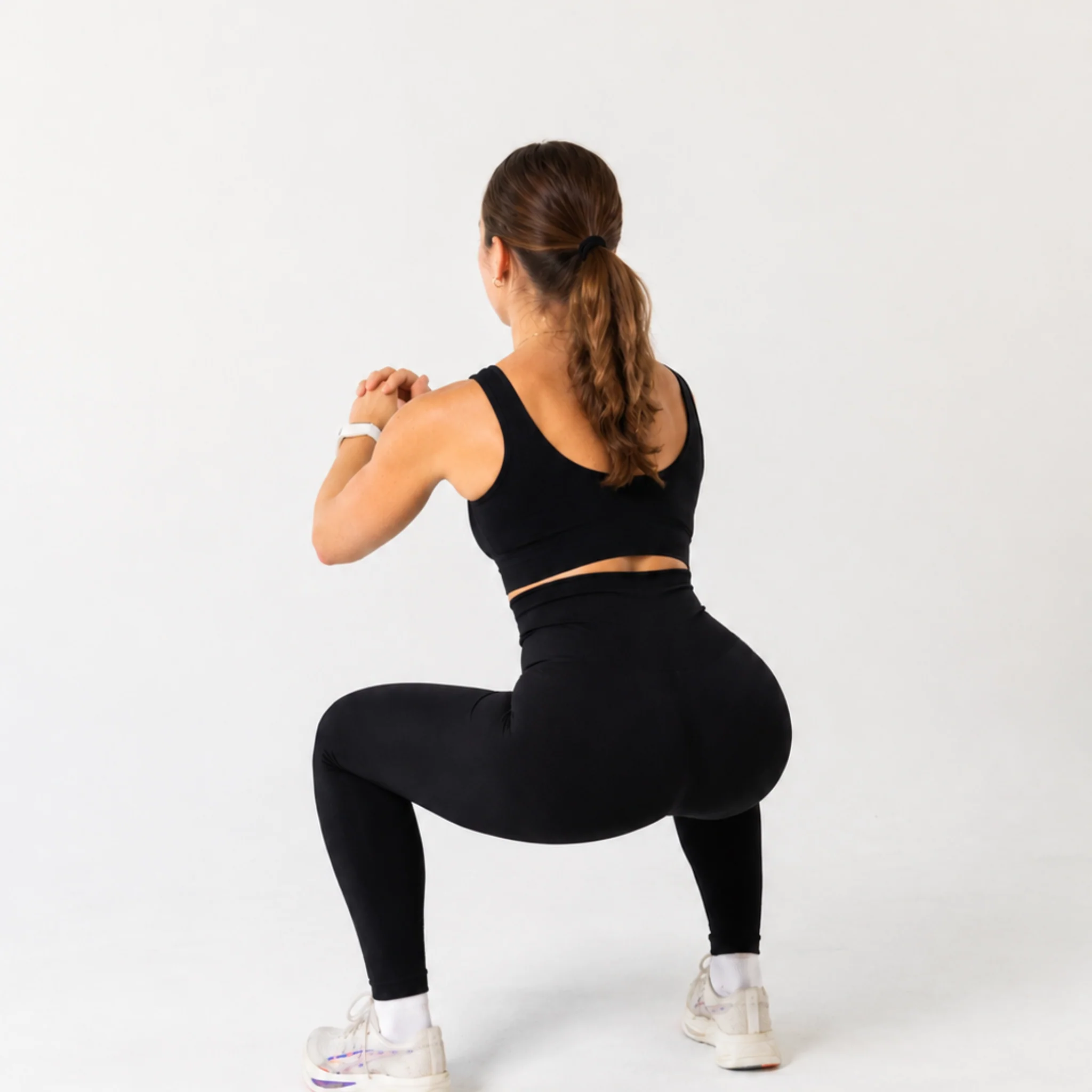
Review Compression Fit Through Training Movement
Static fitting establishes baseline measurements, but movement can reveal waistband, crotch, hip, thigh and coverage issues that are not visible while standing.
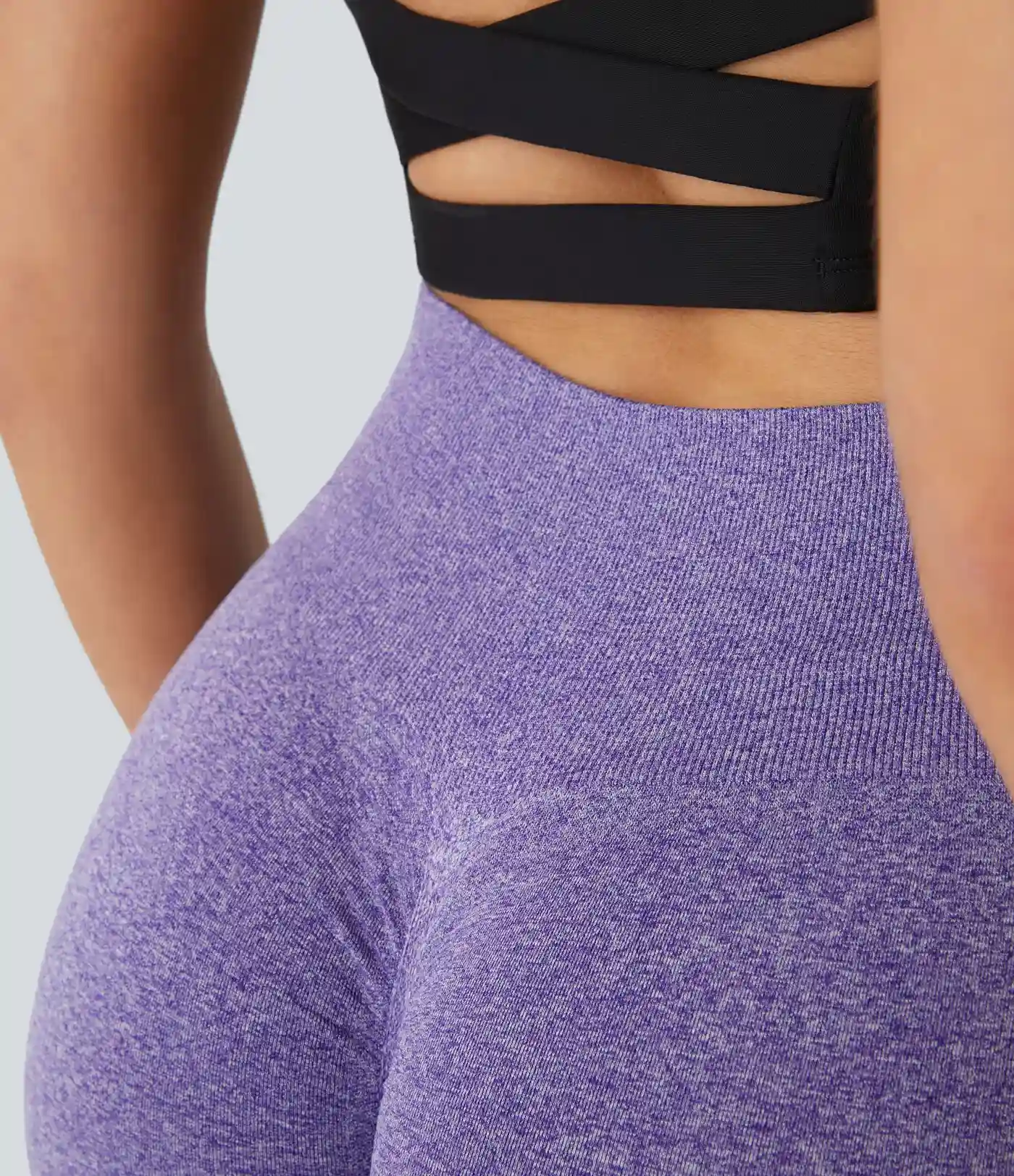
Waistband
Check initial position, top edge and visible balance before movement.

Crotch
Confirm the garment sits correctly without visible front-to-back imbalance.

Hip & Thigh
Observe material extension and whether support appears evenly distributed.
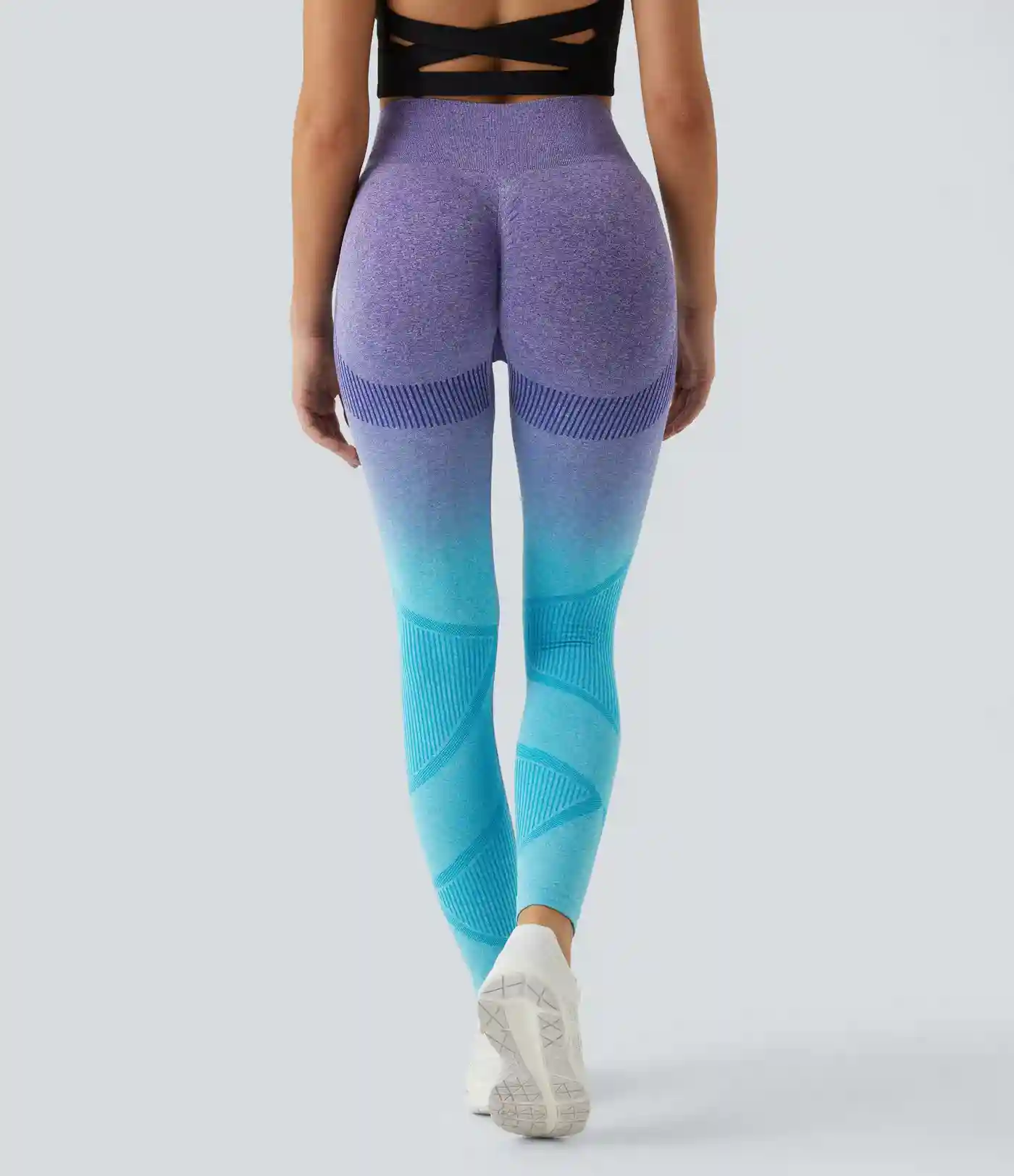
Coverage
Establish the baseline appearance of the material and color.

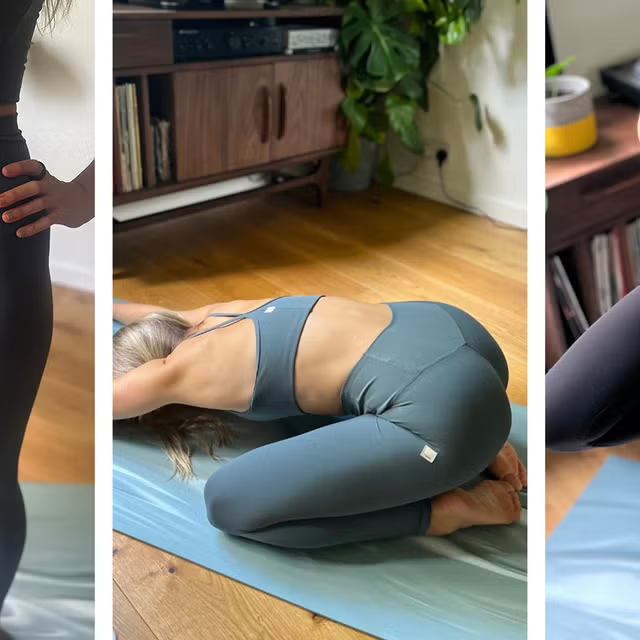
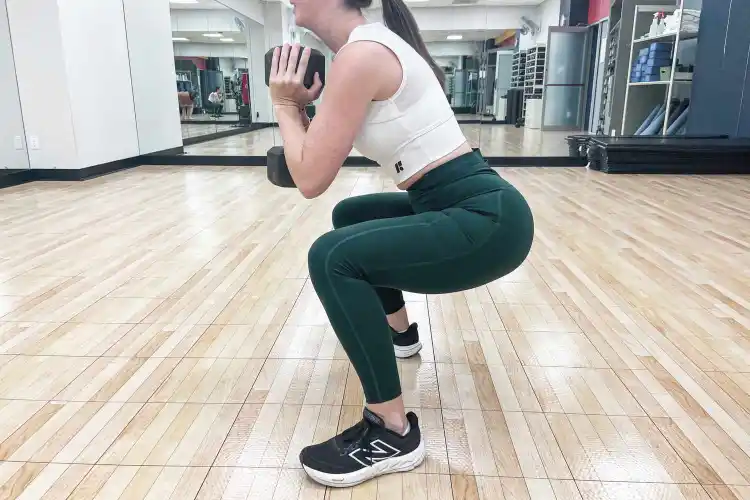
Waistband
Review whether the rear waistband shifts excessively under deeper flexion.

Crotch
Check whether additional hip flexion creates unwanted pulling or imbalance.

Hip & Thigh
Observe high-extension zones around the seat and upper thigh.
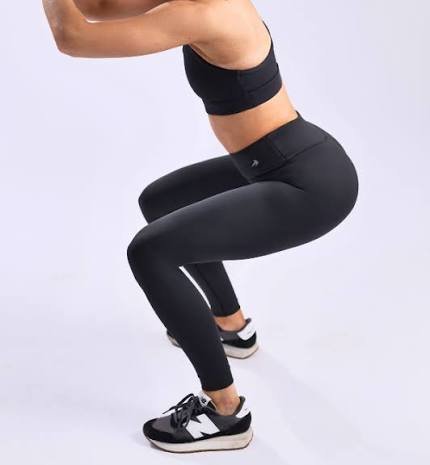
Coverage
Review opacity where material extension becomes greatest.
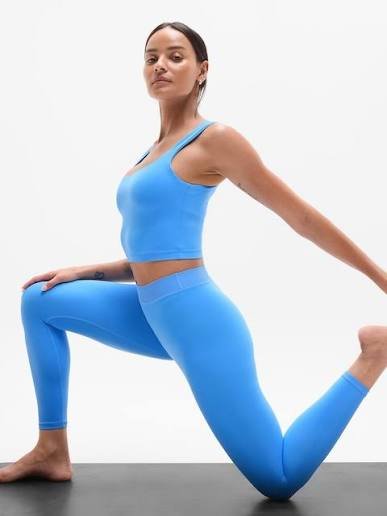
Waistband
Confirm position remains acceptable with asymmetrical lower-body movement.
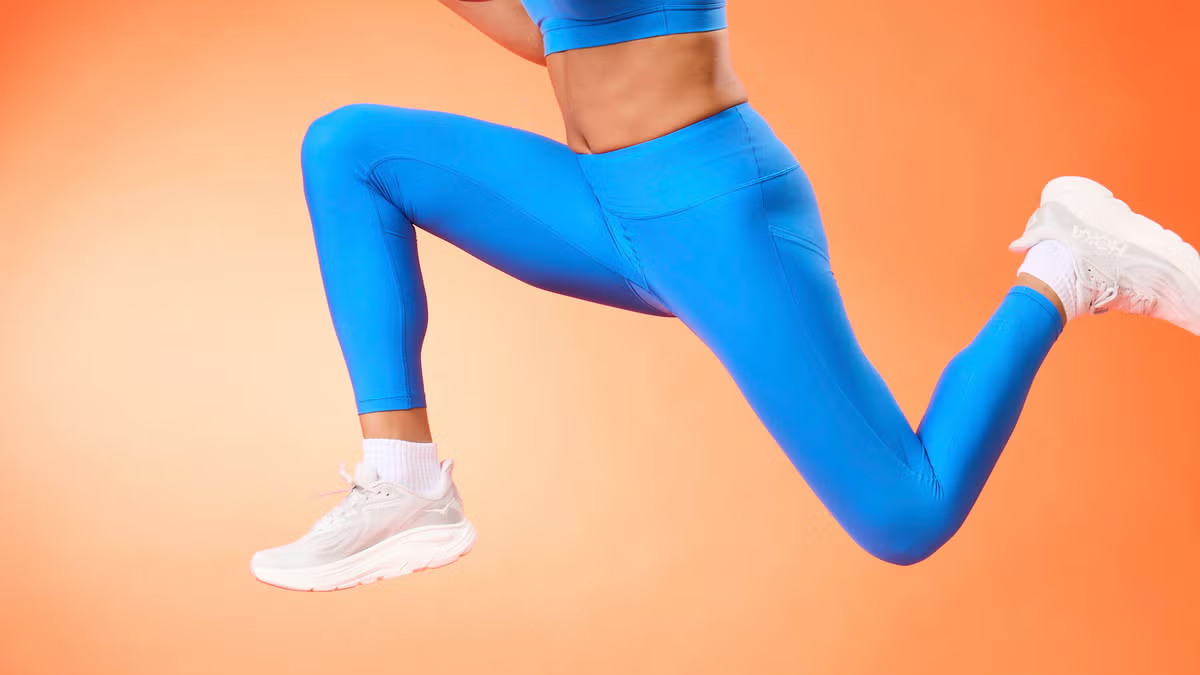
Crotch
Review mobility and tension between front and rear garment sections.
Hip & Thigh
Compare extension between the forward and rear legs.
Coverage
Check that local stretch does not create unexpected visual opening.
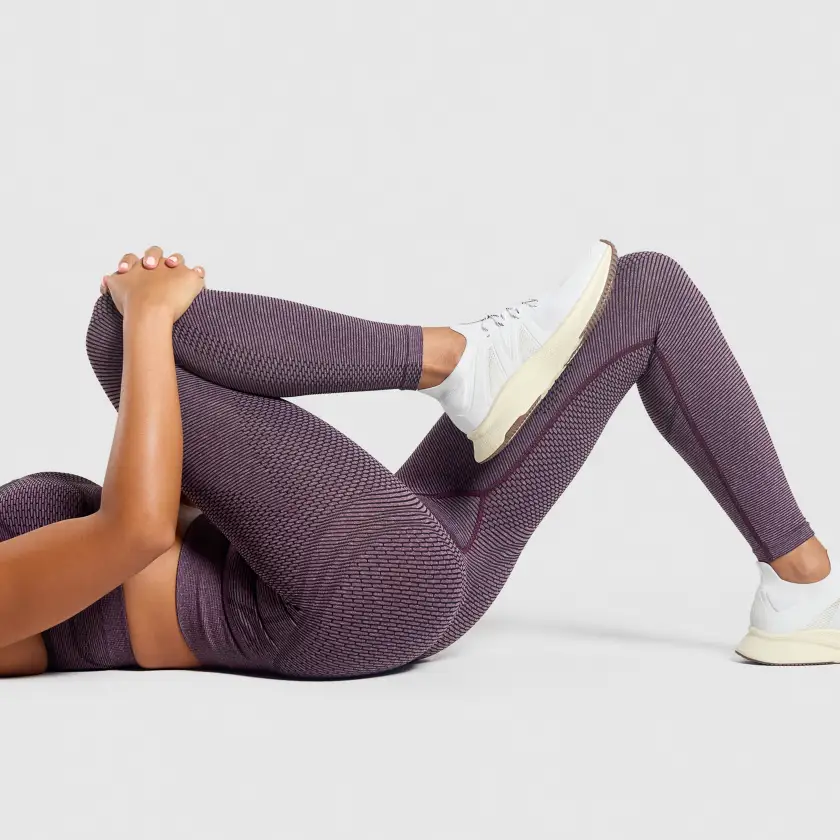
Waistband
Observe front waistband comfort and potential folding.
Crotch
Review fit when hip angle increases substantially.
Hip & Thigh
Check material recovery after returning to standing.
Coverage
Confirm stretched appearance remains acceptable for the approved product.
Six Opacity Risks in Compression Leggings Development
Compression-oriented fits can increase material extension around the seat and thigh. Coverage should therefore be reviewed through the complete garment rather than inferred from fabric weight alone.
Light Color
Business Risk: Light shades can reveal contrast more easily than dark colors, especially under extension.
MOVEVOX Response: Review the selected color on the actual finished sample before commercial approval.
Color SampleHigh Negative Ease
Business Risk: Excessive stretch can open the fabric structure and reduce apparent coverage.
MOVEVOX Response: Adjust garment dimensions, material direction or fit rather than relying on GSM alone.
Fit ReviewLow Density
Business Risk: A lighter or more open structure may not provide the target coverage under high extension.
MOVEVOX Response: Compare material density and finished-garment behavior against the product requirement.
Material CheckSeat Extension
Business Risk: The seat can experience greater extension than a flat fabric swatch suggests.
MOVEVOX Response: Review physical squat or deep-flexion positions where relevant to buyer approval.
Movement SampleIncorrect Size
Business Risk: A garment that is too small can create higher material extension and apparent transparency.
MOVEVOX Response: Check measurements and grading before treating the issue solely as a fabric defect.
POM CheckMaterial Lot
Business Risk: Changes in material construction or lot can alter appearance relative to the approved sample.
MOVEVOX Response: Keep approved material information connected to production and incoming control.
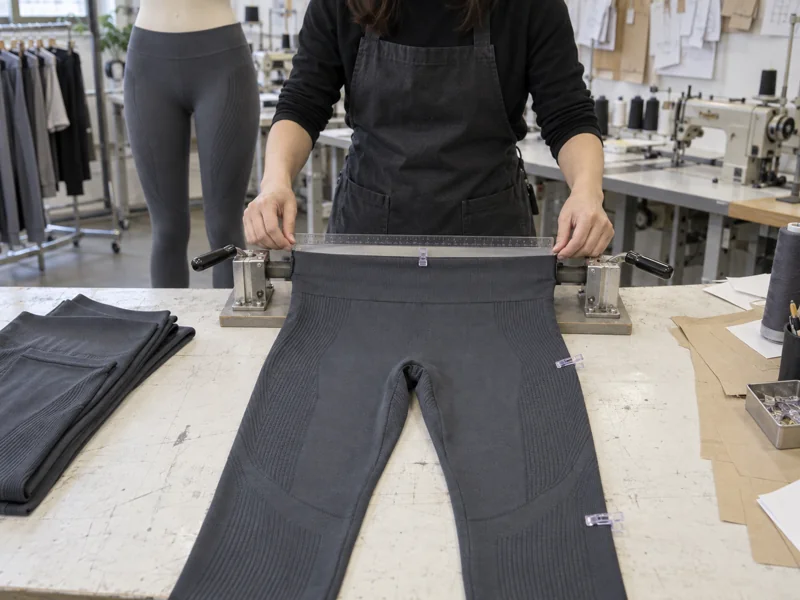
Lot ControlTen Tests Relevant to Compression Leggings Development
The correct test plan depends on the buyer’s product claim, target market and risk profile. Internal checks support development, while formal claims require the appropriate documented method.

Stretch
Evaluate extension under a defined method where the buyer requires quantified material behavior.
Recovery
Measure dimensional return after extension using an agreed test protocol when numerical recovery evidence is needed.
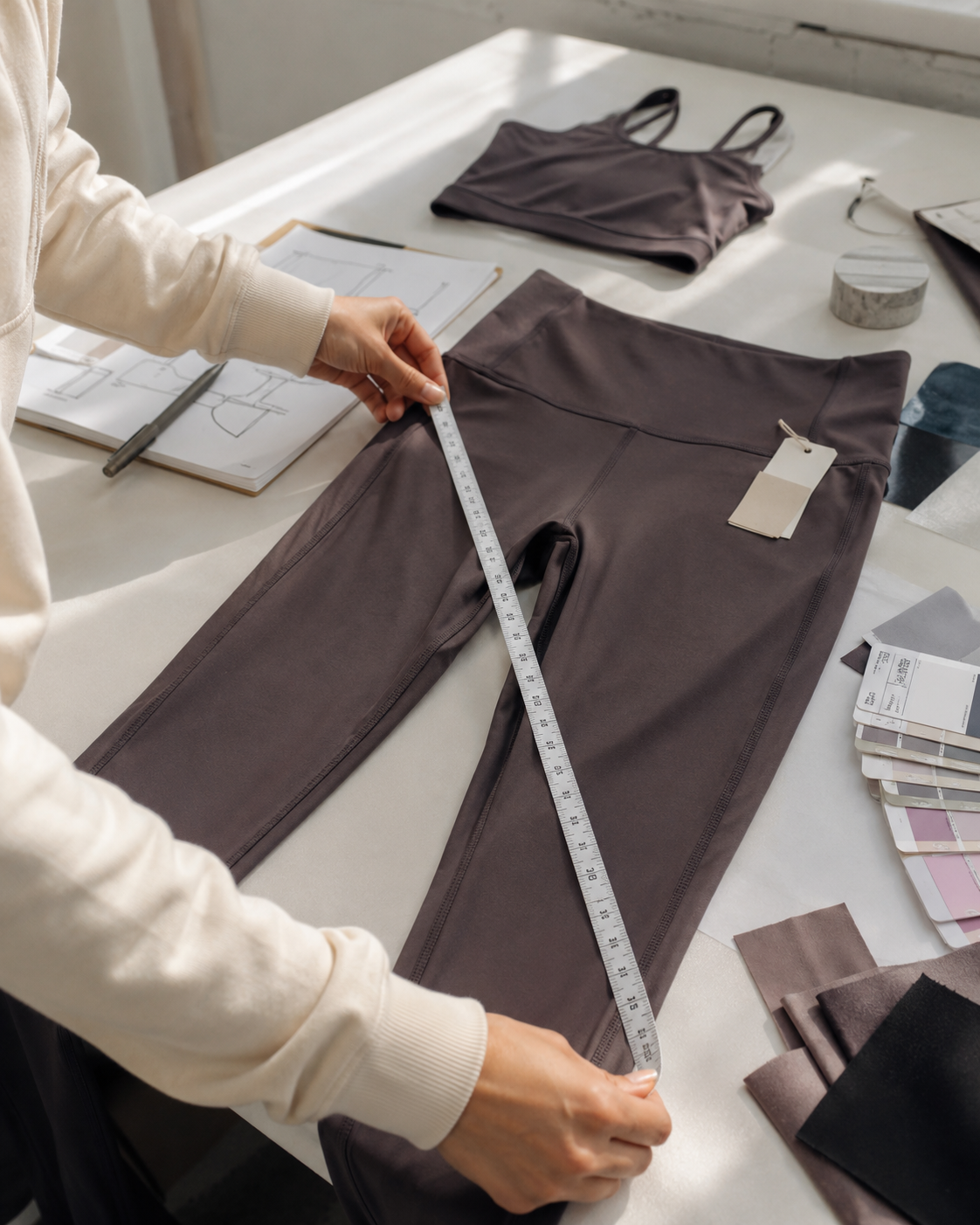
Measurements
Verify finished waist, hip, rise, thigh, inseam and other POMs against the approved specification.
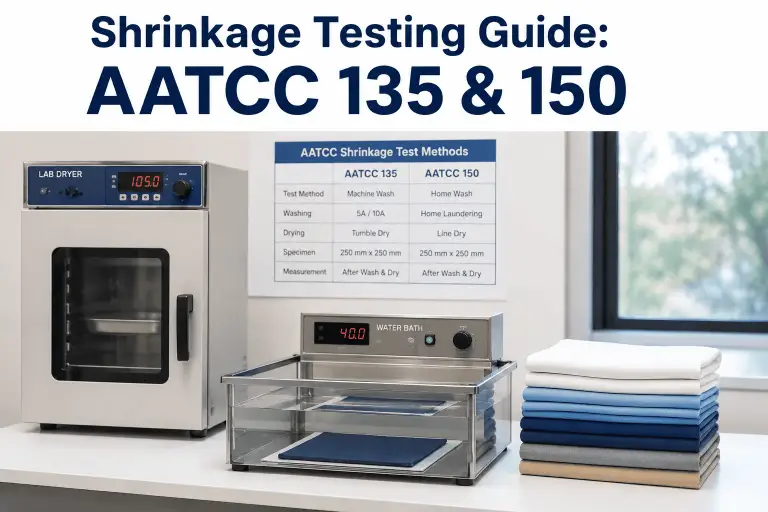
Shrinkage
Check dimensional change after the required wash or conditioning method where relevant.
Colorfastness
Evaluate color performance according to material, market and buyer requirements.
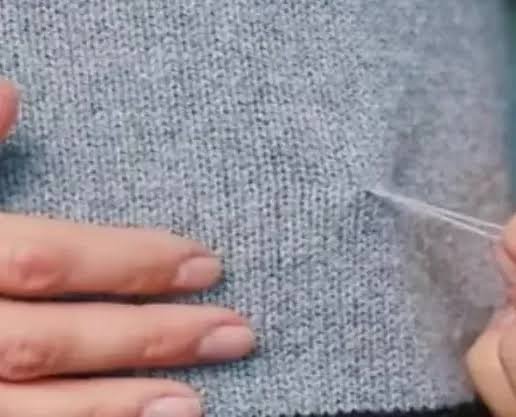
Pilling
Assess surface durability for materials where repeated abrasion may affect appearance.
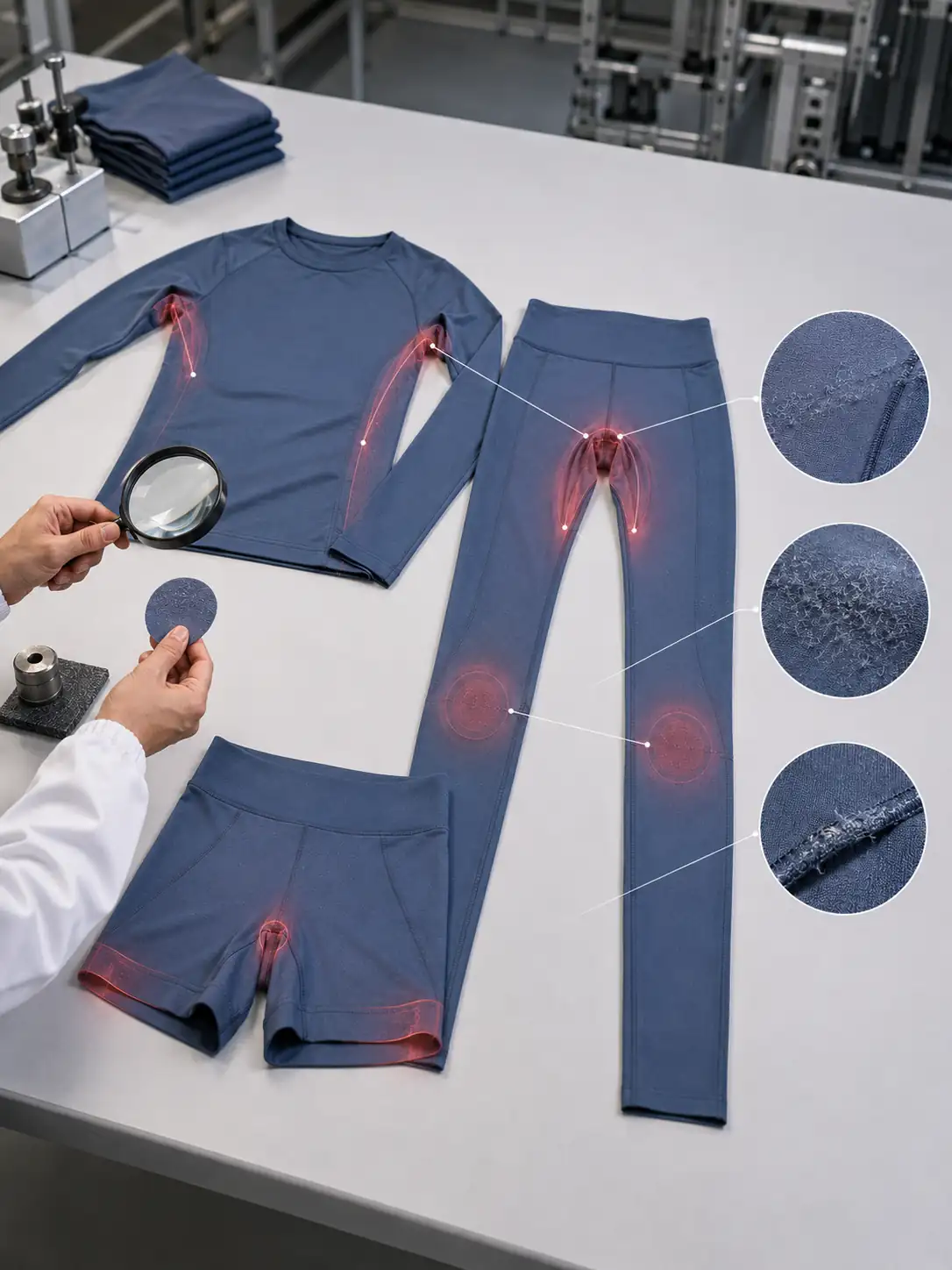
Abrasion
Where training use creates higher surface contact, an appropriate abrasion test may be specified.
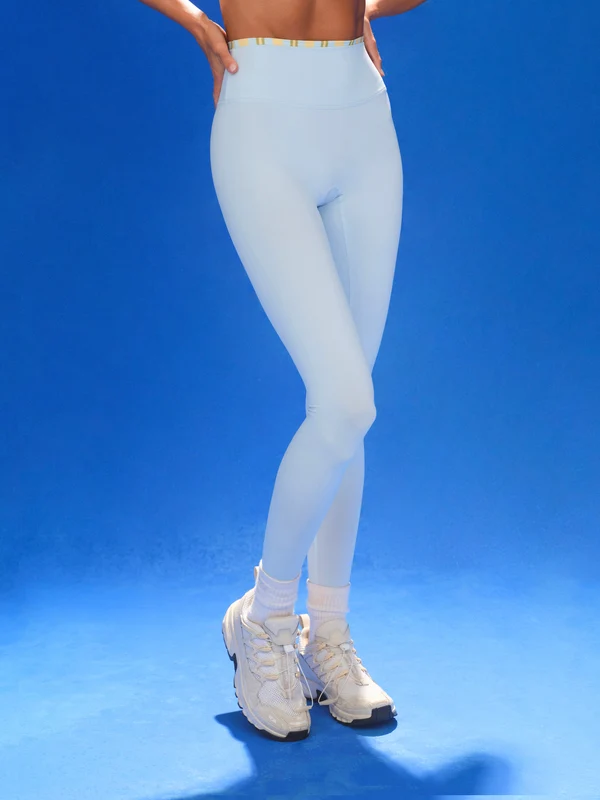
Opacity
Coverage can be assessed using an agreed garment or material method where formal evidence is required.
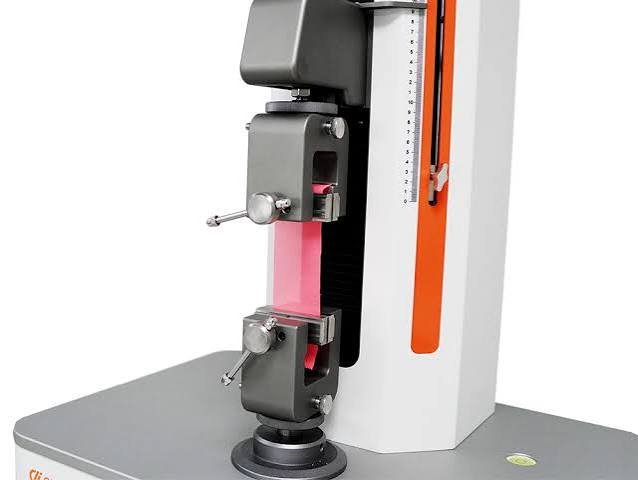
Seam / Burst
Construction strength can be tested when buyer requirements specify a method and acceptance criterion.
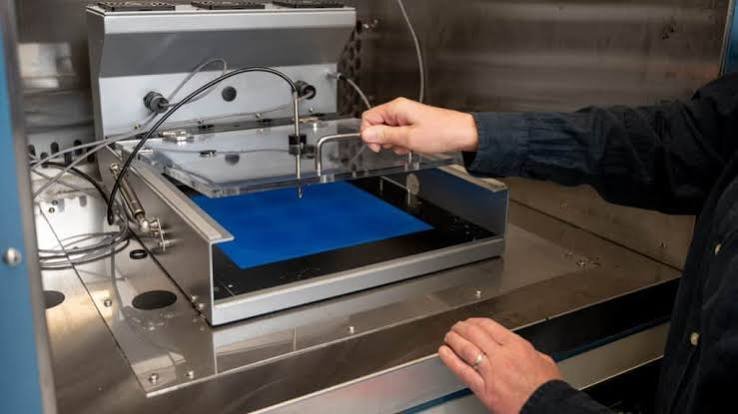
Pressure Testing
Only required where a buyer seeks quantified pressure. Standard MOVEVOX activewear development does not automatically establish mmHg.
A test result is valid for the identified sample, material, method and conditions stated in the corresponding report. MOVEVOX does not apply one passing result universally across unrelated future products.
Nine Inputs for an Executable Compression Development Brief
A clear development brief allows MOVEVOX to separate confirmed requirements from assumptions before material sourcing, pattern work or Seamless programming begins.
Training Use
Explain whether the leggings are intended for strength training, general gym, HIIT or another activewear context. Product use affects the intended balance among support, mobility, coverage and durability.
Support Target
Describe the desired sports-support direction using practical language such as softer, balanced or firmer training support. Do not use medical pressure terminology unless a quantified pressure program is explicitly required.
Manufacturing Route
Indicate Seamless or Cut & Sew if already determined. If not, MOVEVOX can compare the design against both manufacturing systems before development begins.
Measurement Chart
Provide base-size POMs and grade rules where available. Waist, hip, rise, crotch and thigh dimensions are particularly important to compression fit.
Material Direction
Provide any composition, GSM, handfeel, recovery or existing fabric requirement. If material is open, MOVEVOX can review suitable development directions.
Waistband
Specify height, general structure and support expectation. A visual high-waist reference alone does not establish finished dimensions or recovery requirements.
Size Range
Define commercial sizes and any extended-size requirements. The range affects grading, fit validation and possible size-set review.
Color & Branding
Provide colors, logo process, placement, labels and packaging requirements so upstream minimums can be considered early.
Quantity & Launch
Share estimated volume, color split and target timing. These factors affect material procurement, custom color, capacity and realistic production planning.
Four Reviews Before Compression Sampling Begins
Technical review is the point where conflicting expectations can be identified before the project commits material, pattern work, knitting time or testing cost.

Support Target
Confirm whether the buyer wants softer, balanced or firmer non-medical sports support. Review which body areas matter most and whether the desired feel comes primarily from material, fit, waistband, panels or Seamless zones.
Material & Recovery
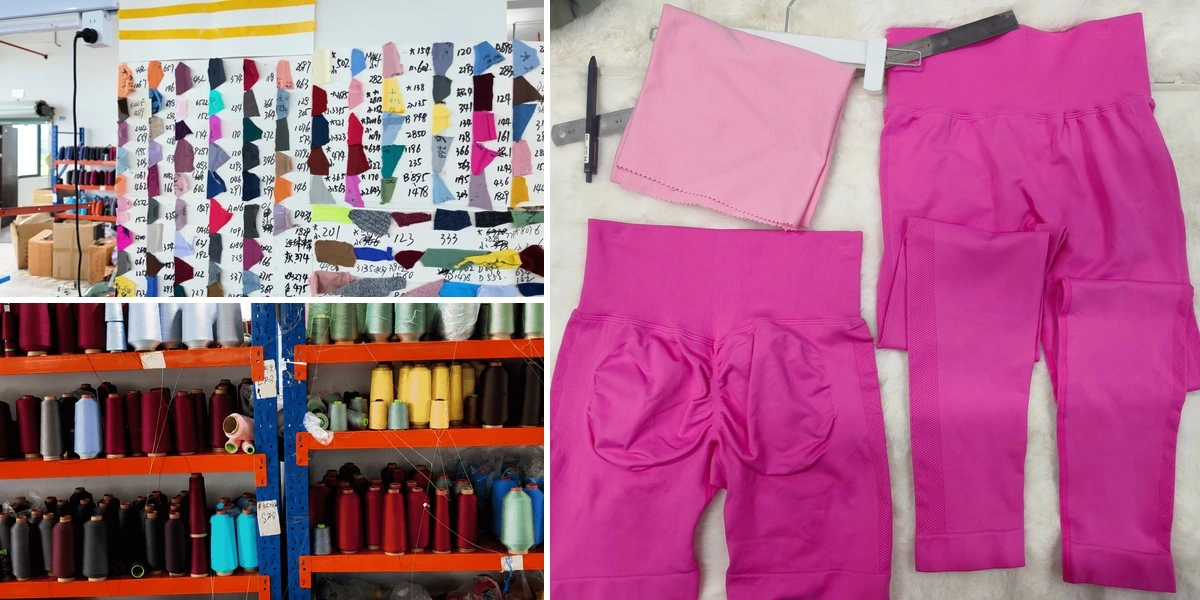
Review composition, GSM, handfeel, stretch, recovery, color and opacity requirements together. A soft, lightweight material may not behave like a dense, firmer-support reference even when the Spandex percentage appears similar.
Fit & Grading
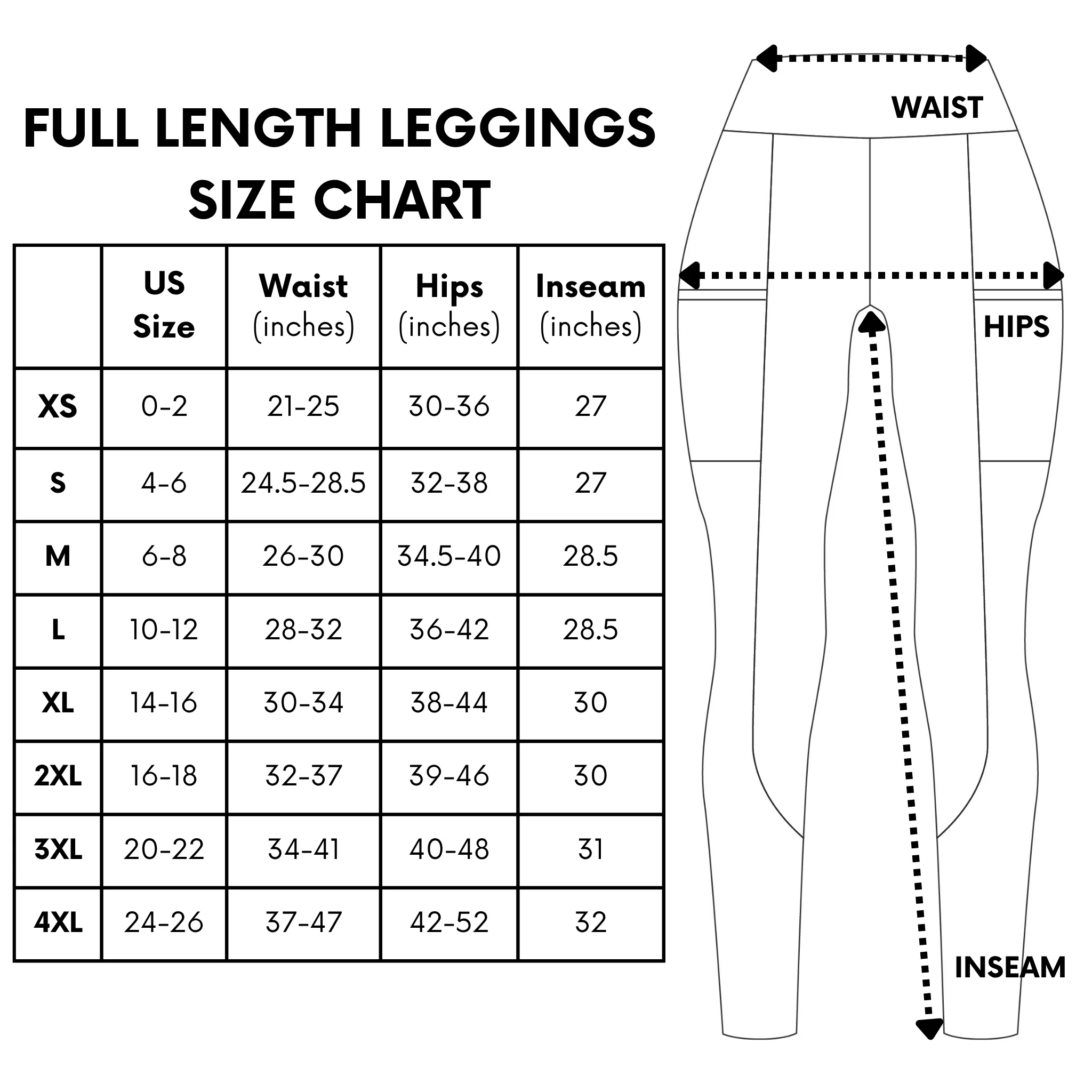
Review waist, hip, rise, crotch, thigh and size-range rules. Compression experience can change when negative ease or grade relationships shift across sizes.
Commercial & Testing
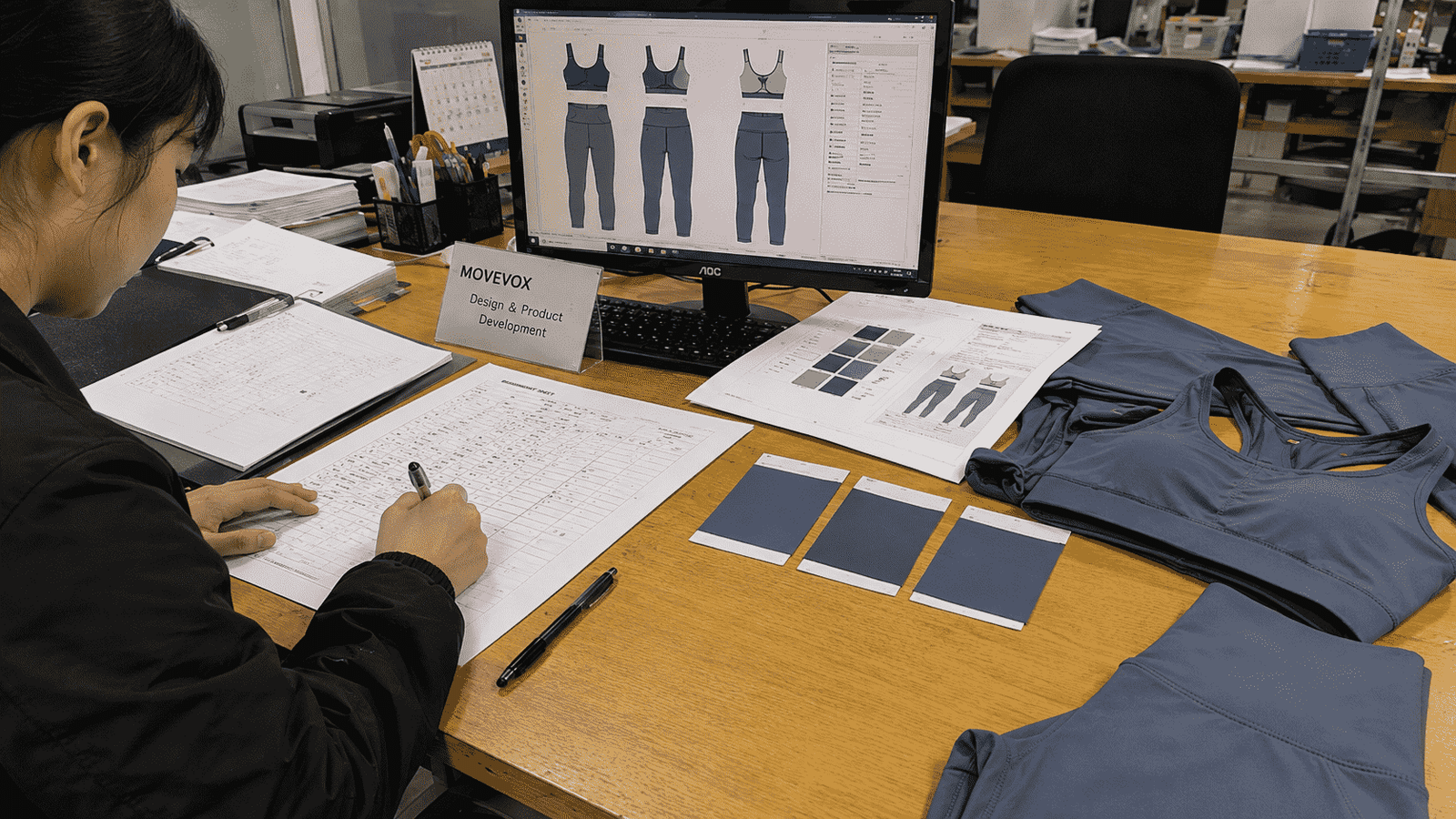
Review MOQ, dedicated color, testing, launch date and quantity before development begins. Special tests or custom materials may change both cost and timeline.
Compression Leggings Sample Development Milestones Before Approval
Once required project details are confirmed, MOVEVOX moves the compression-legging sample through a controlled sequence covering material direction, pattern or Seamless programming, physical sample making and internal review before the buyer receives the development garment for evaluation.
Brief Review
Product use, target support, size range, measurements, material, waistband, colors, branding and quantity are reviewed so open technical points are identified before sampling work begins.
Material Direction
Available fabric or yarn directions are checked against support, recovery, coverage, color and MOQ requirements. Dedicated custom material or color may extend the base sample schedule.
Pattern / Program
Cut & Sew projects move into pattern preparation, while Seamless projects move into Santoni knitting-program development. Waist, hip, rise, thigh and support-zone requirements remain tied to the confirmed brief.
Sample Making
The sample team produces the physical garment using the current material, pattern or knitting program, construction and branding direction. This remains a development sample, not yet a bulk-production standard.
Internal Review
Before shipment, MOVEVOX checks the sample against available measurements, workmanship, waistband, visible fit-related construction and other project-specific requirements. Buyer feedback or revision starts the next approval cycle.
The 5-10 working-day reference applies to a standard sample after required details are sufficiently confirmed. Custom materials, complex construction, revision requests, buyer feedback speed and international courier transit can extend the overall approval calendar.
Convert the Approved Sample Into a Production Standard
Bulk consistency depends on keeping the approved garment connected to its technical inputs. The objective is controlled reproduction, not an unrealistic claim that every finished piece is perfectly identical.

Development Sample
- Material or yarn direction may still change
- Waist and hip dimensions may still change
- Pattern or knitting program may still change
- Waistband structure may still change
- Size grading, color and branding may still change
Production Standard
- Approved material direction identified
- Measurements and tolerances confirmed
- Current pattern or knit-program version identified
- Waistband and construction approved
- Grade, color and branding references connected
What Changes at Handover?
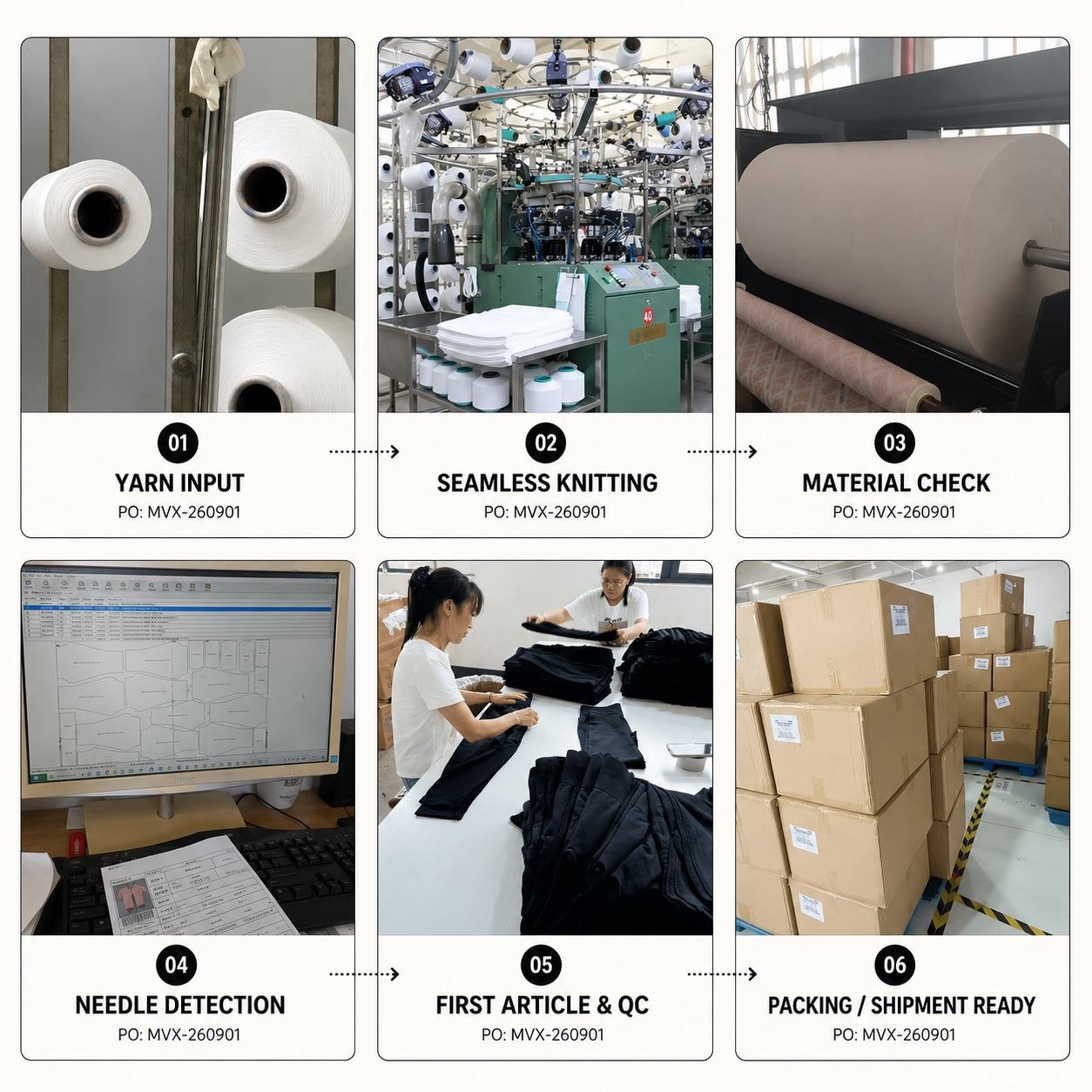
A successful sample is no longer treated as a standalone garment. It becomes one part of a controlled technical package that production, QC and order coordination can use consistently. If a later change affects material, measurements or construction, that change should be reviewed before replacing the approved version.
Five Gates Before Full Compression Bulk Production
Sample approval and bulk release are different decisions. First commercial output should be checked under real production conditions before production volume increases.
Released Spec
Confirm that measurements, current construction or knitting version, material, colors and branding files are clearly identified as the active commercial version.
Bulk Material
Commercial material or yarn should correspond to the approved direction and purchase requirement.
Assigned Route
Confirm whether the order is entering the owned Seamless system, owned Cut & Sew production or approved managed capacity according to the production plan.
First Article
Review representative early production output against the approved sample and specification before larger-volume release.
Release / Hold
If the first article aligns with the current standard, production can proceed according to the quality plan. Material or technical deviations should be resolved before broader release.
Understand Compression MOQ Beyond Finished Garment Quantity
A workable compression program must account for garment production, material, custom color, testing and SKU structure. The lowest unit price or lowest garment MOQ does not represent total project complexity.
Standard Material
Commercial Condition: Approximately 100 pcs/style Seamless or 150 pcs/style Cut & Sew.
- Existing suitable material availability
- Normal size and color structure
- Standard branding requirements
- No unusual test package
Dedicated Color
Commercial Condition: Dedicated custom dyeing commonly enters evaluation around 400–600 garment-equivalent quantity.
- Dye-lot requirement
- Material consumption
- Number of colors
- Color-approval cycle
Special Compression
Commercial Condition: Project-specific.
- Special material development
- Wider size set
- Performance testing
- Multiple construction revisions
Cost Factors
Sampling Rework
Unclear specifications can increase revisions.
Material MOQ
Upstream supply can exceed garment minimum.
Testing
Formal protocols add cost and time.
SKU Complexity
More sizes/colors increase production coordination.
Delays
Incomplete approval can affect material booking.
Inventory
Overly large dye lots can create excess stock.
Freight
Shipment mode affects landed cost.
Returns
Poor fit or inconsistent production can increase downstream risk.
The lowest quoted unit price is not necessarily the lowest total development and supply risk. A more useful comparison includes material feasibility, sample revisions, quality controls, lead time and the probability that the approved product can be reproduced without avoidable rework.
Build Compression Leggings Into a Retail-Ready SKU
Private label execution connects the technical garment with the correct brand, size, color and retail data. Each element should remain aligned with the approved product and target market.
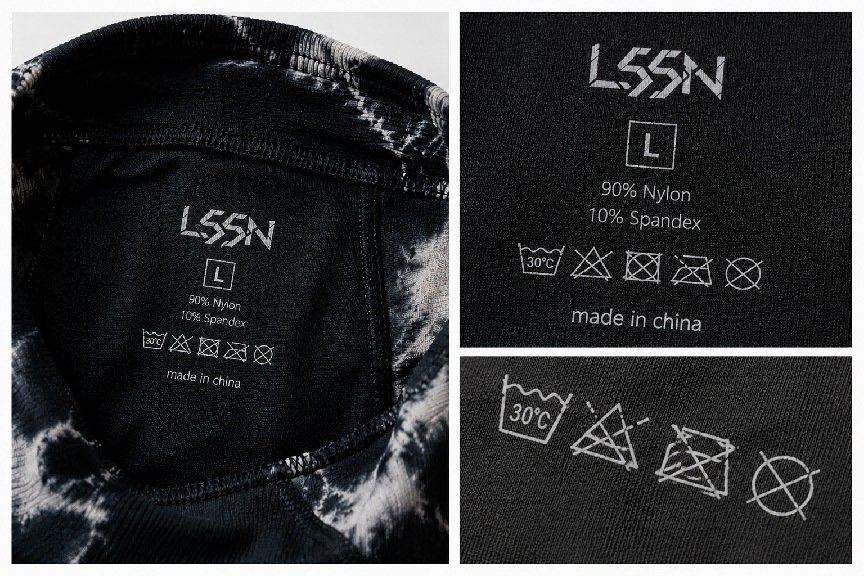
Main Label
Brand identity, label material, dimensions and attachment method should be approved for the garment construction.
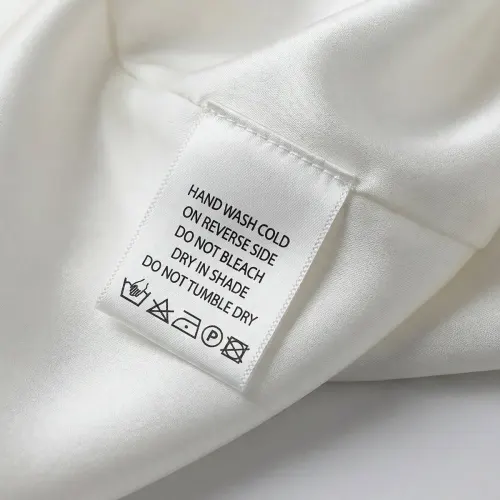
Care Label
Fiber, care and applicable market information should reflect the approved material and buyer requirements.
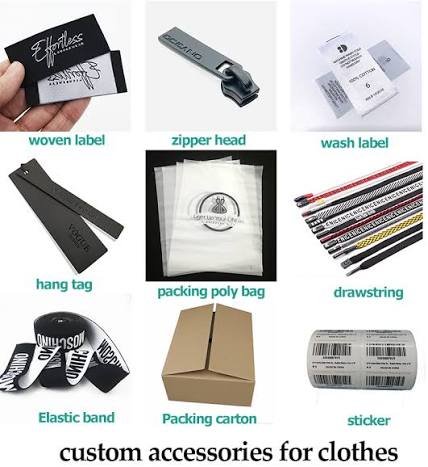
Size Label
Size identification must remain consistent with the buyer’s approved commercial size system.

Logo
Heat transfer, silicone, print, jacquard or other approved methods should be matched to local material stretch and texture.
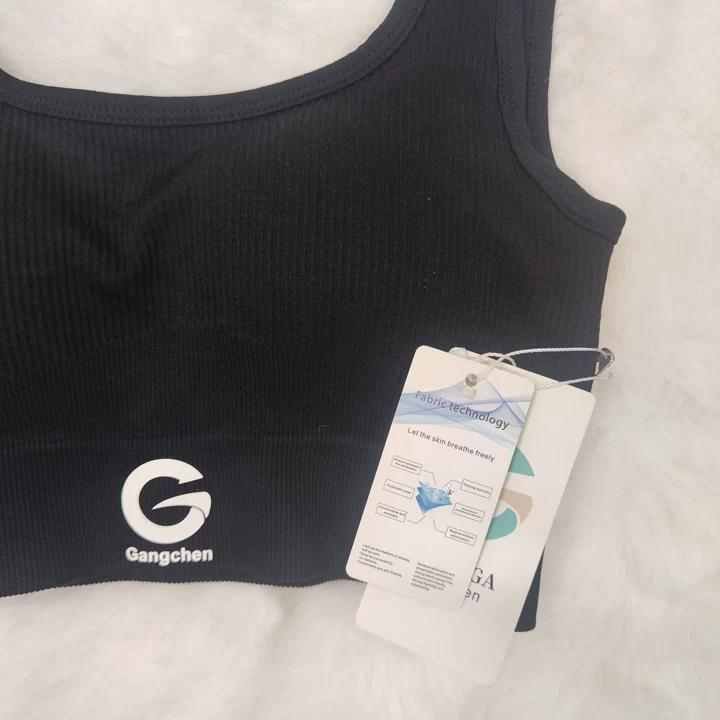
Hangtag
Brand, product or retail information should match the corresponding style and SKU.
Barcode / QR
Codes must remain connected to the correct style, color and size.
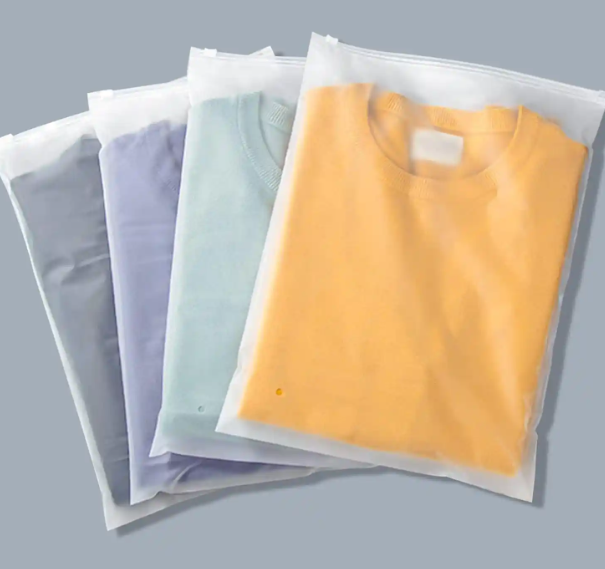
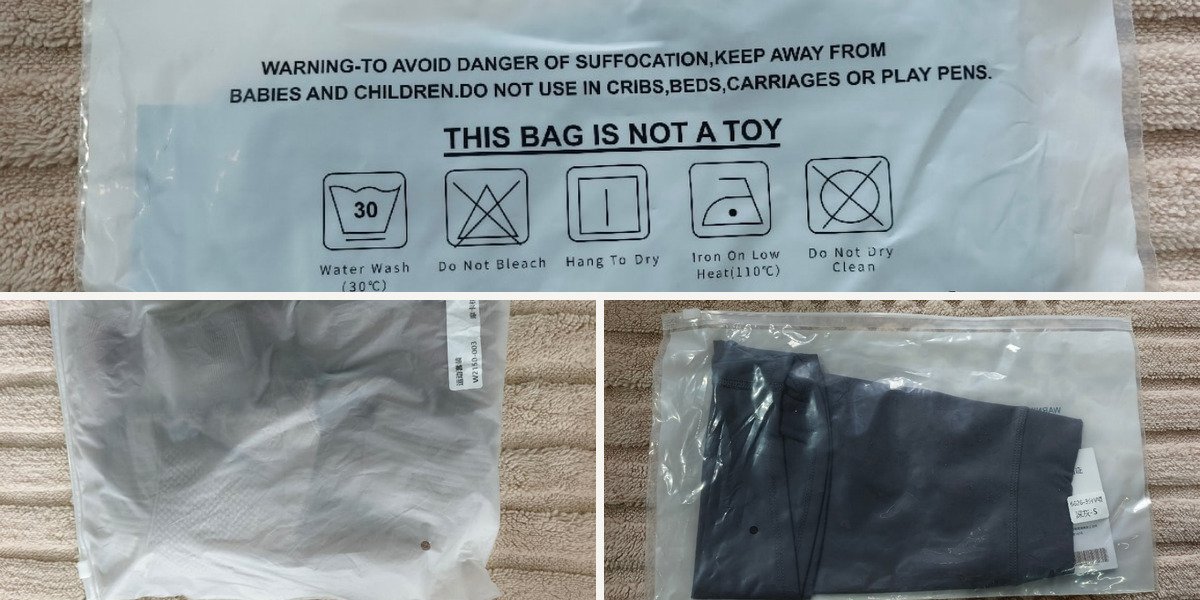
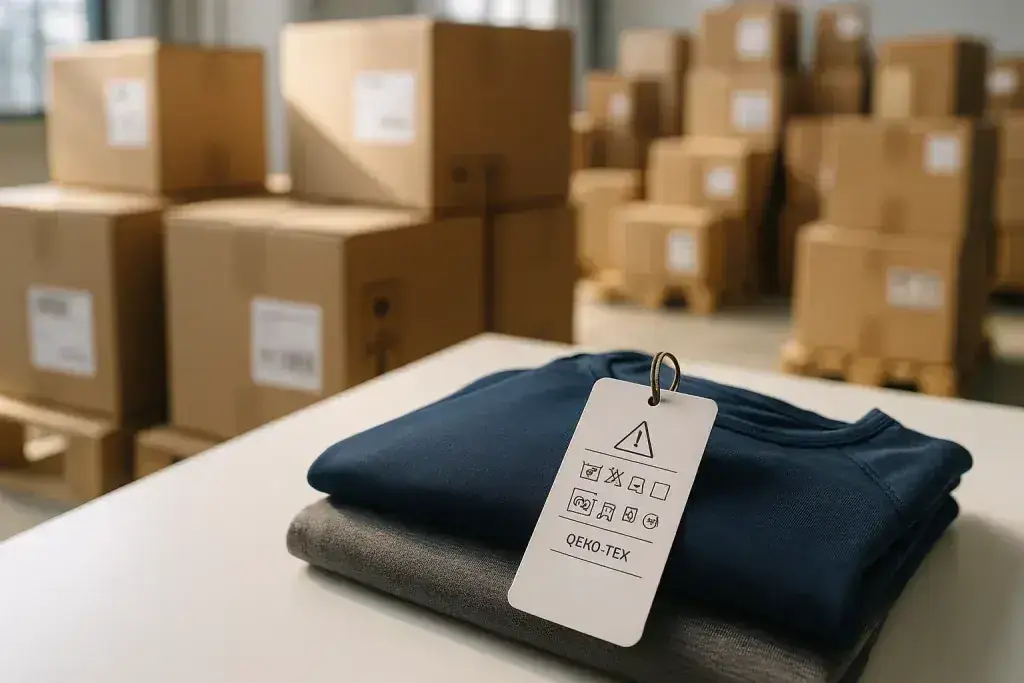
Polybag
Individual packing follows buyer-approved material, warning, label and SKU requirements.
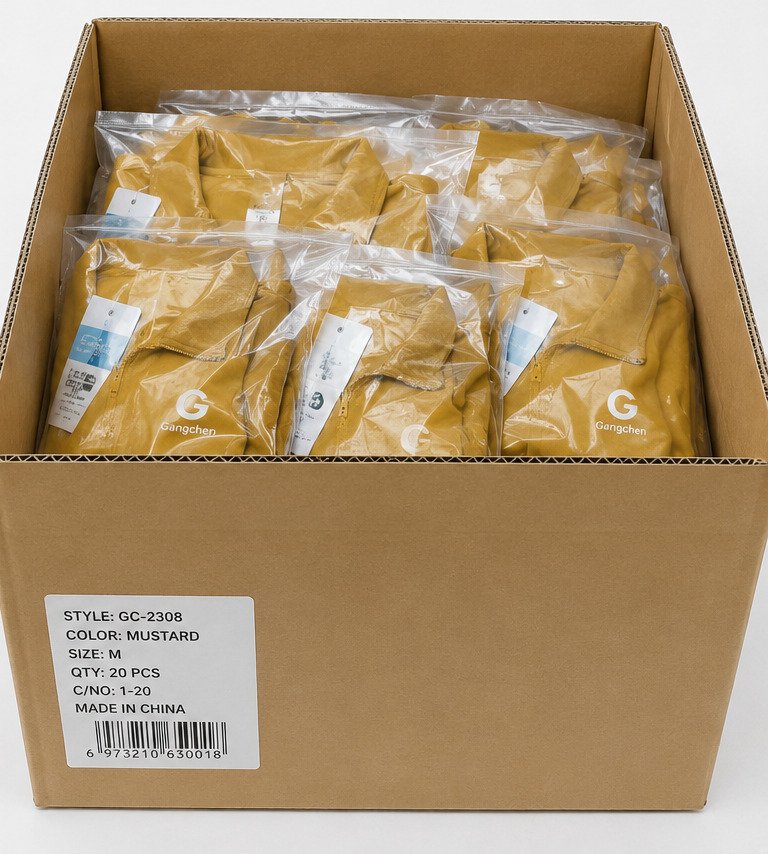
Carton
Carton quantity, marks and product mix should align with the final packing instruction.
Private-label components can have supplier minimums separate from garment MOQ. Compliance text, barcodes and packaging information should be finalized before commercial packing begins so technically approved garments do not become incorrect retail SKUs.
Twenty Quality Controls for Compression Leggings Production
MOVEVOX’s five-person QC function can connect material, fit, construction, performance-related checks and final release requirements to the buyer-approved production standard.
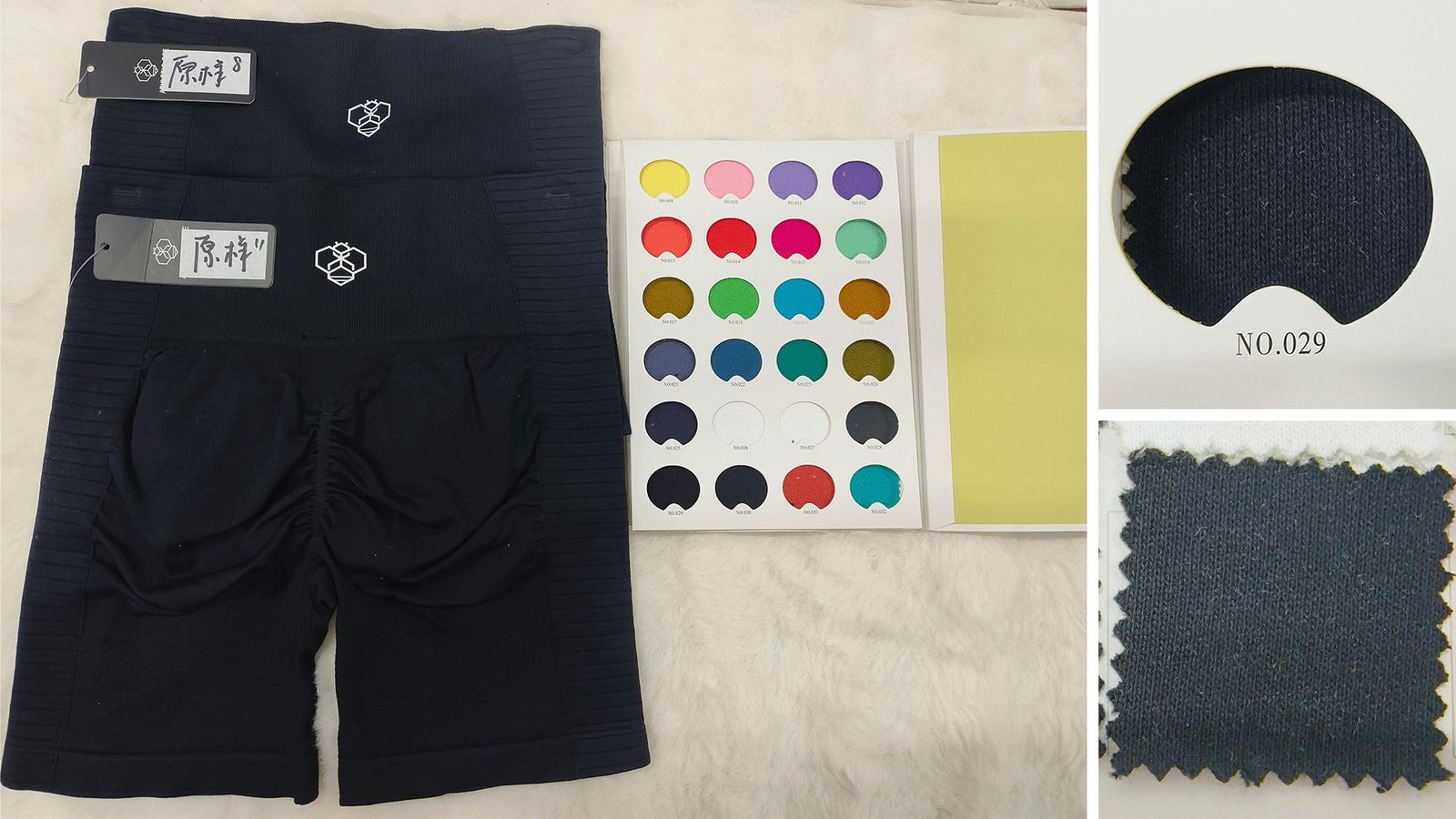
Material Lot
Confirm approved material information and relevant production lot linkage before commercial use.

GSM
Where project specifications define weight, check material against the agreed GSM requirement and method.
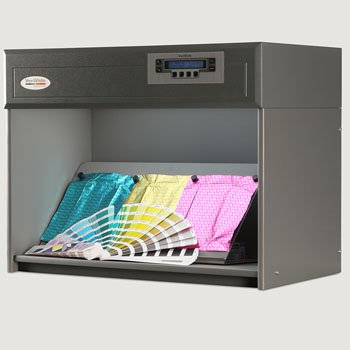
Color
Compare production material with the applicable approved color standard.
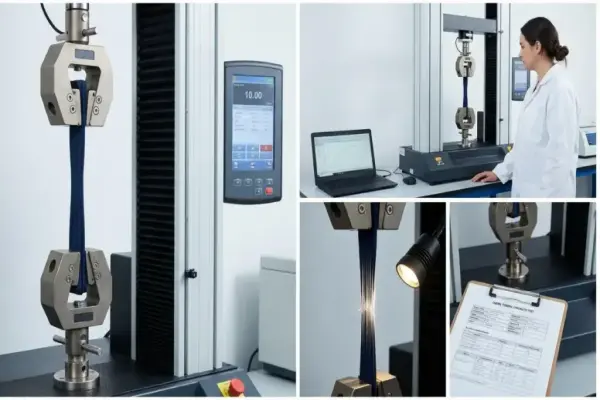
Recovery
Review project-defined recovery evidence where the buyer has established an acceptance method.
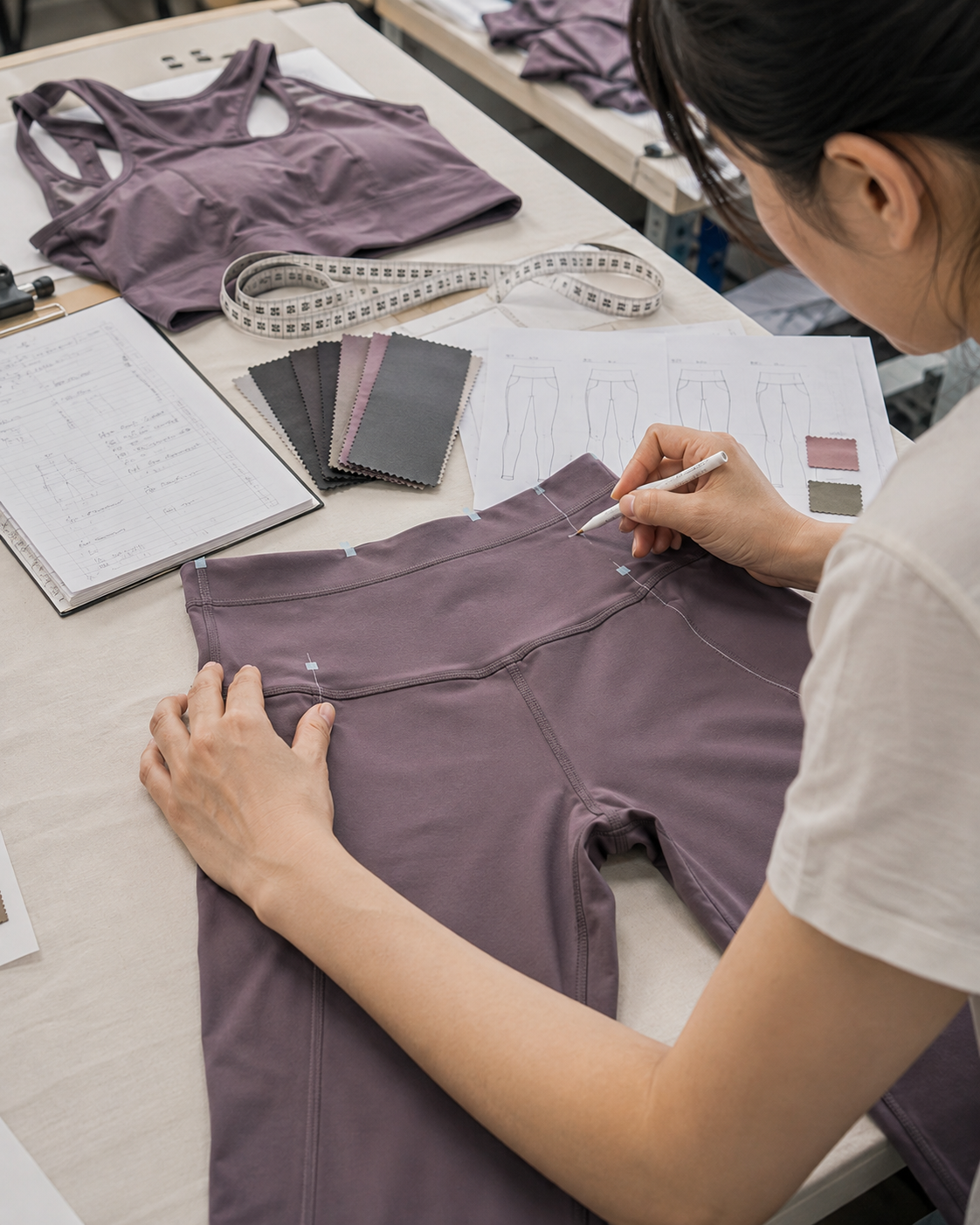
Waist
Measure finished waist against the approved POM and tolerance.
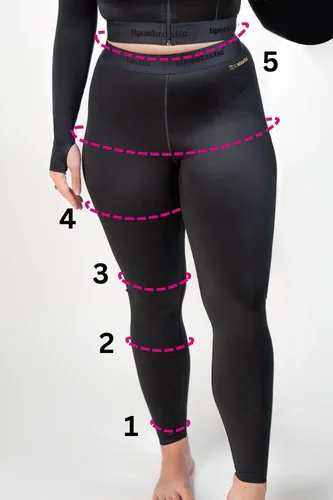
Hip
Check full-hip dimensions because they strongly influence compression fit and seat extension.
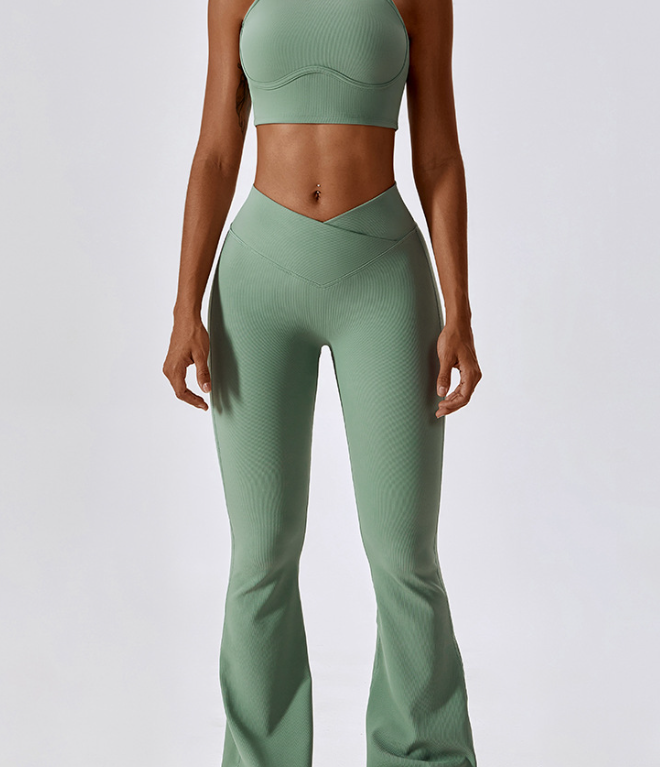
Rise
Control front and back rise to maintain torso coverage and garment balance.
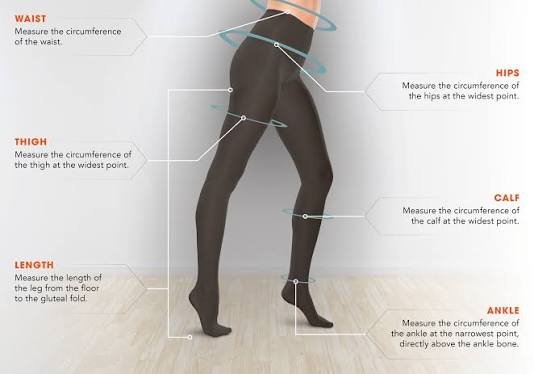
Thigh
Verify thigh dimensions because local fit directly changes perceived support.
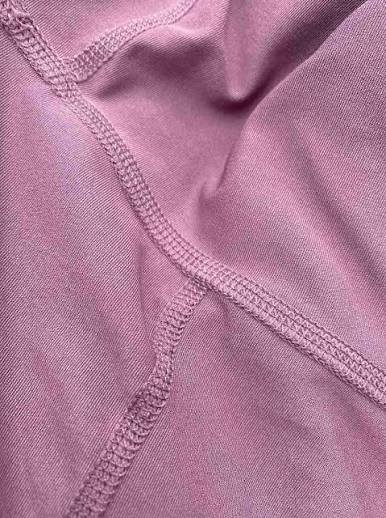
Seams
Inspect approved Cut & Sew seam appearance and workmanship.
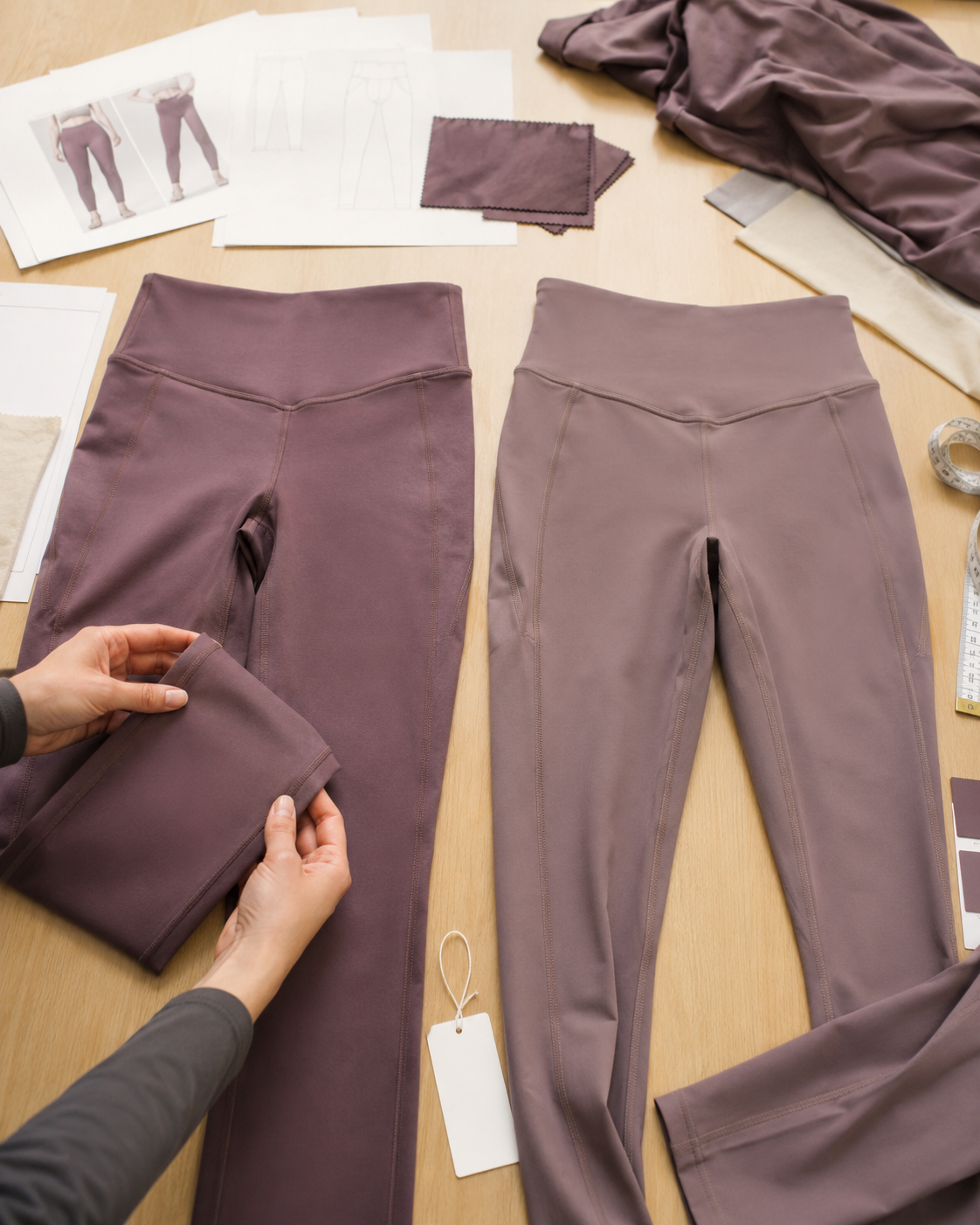
Knit Zones
Compare Seamless rib, density or structural zones with the approved program and sample.
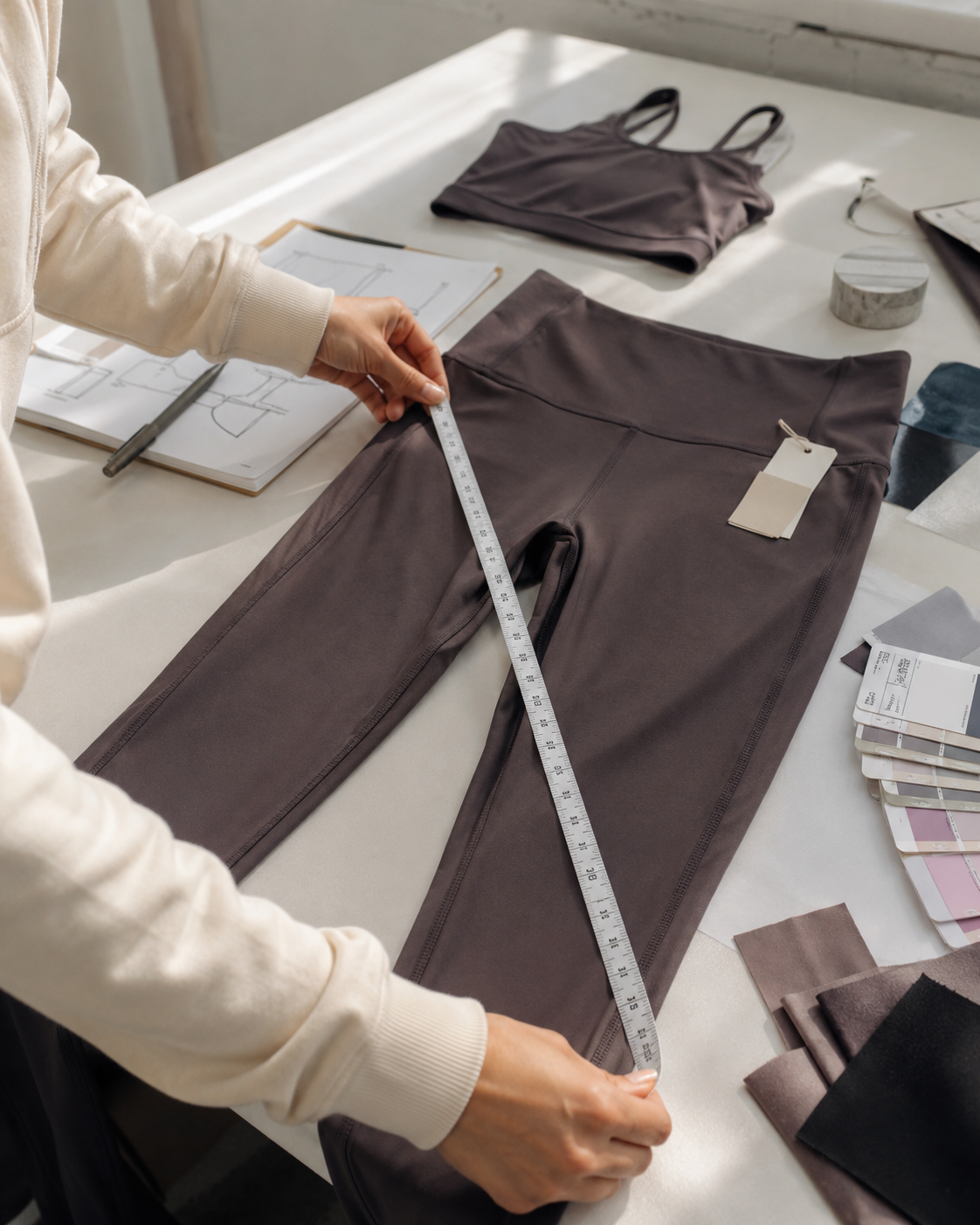
Symmetry
Check relevant left-right garment balance and aligned construction.
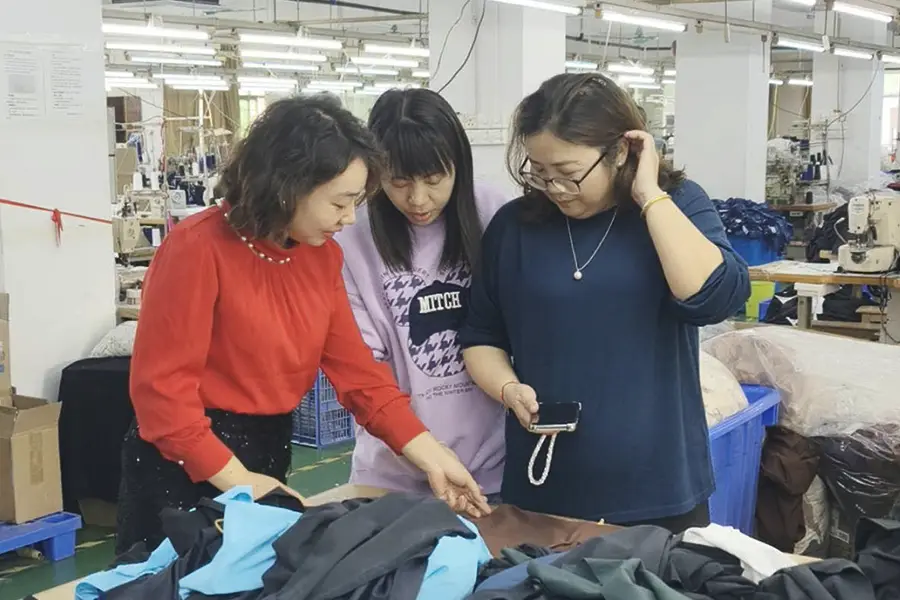
Workmanship
Inspect visible defects, loose threads and general finishing against buyer standards.
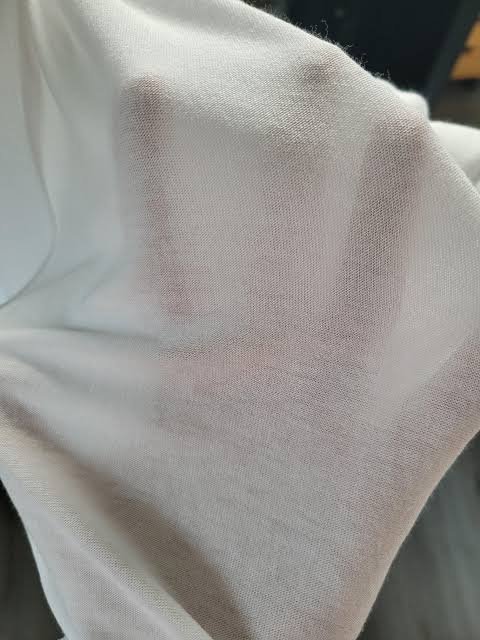
Coverage
Review agreed coverage or opacity checkpoints for relevant colors and fit.
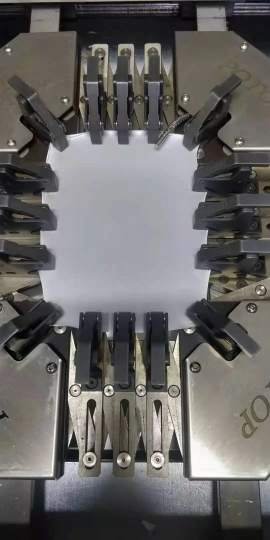
Stretch
Confirm material or garment stretch requirements where specifically defined.
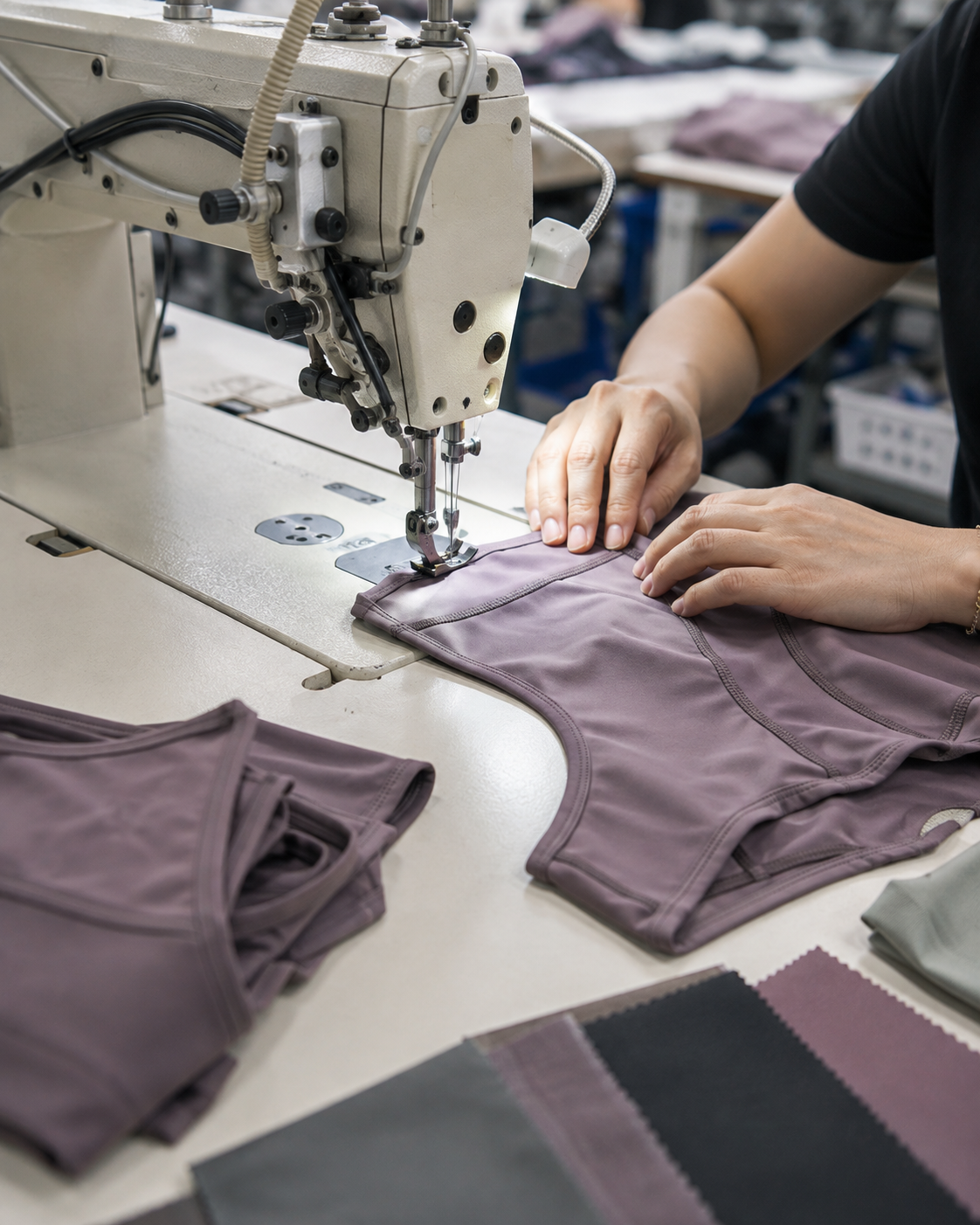
Size Set
Support project-required measurement or sample validation across selected sizes.
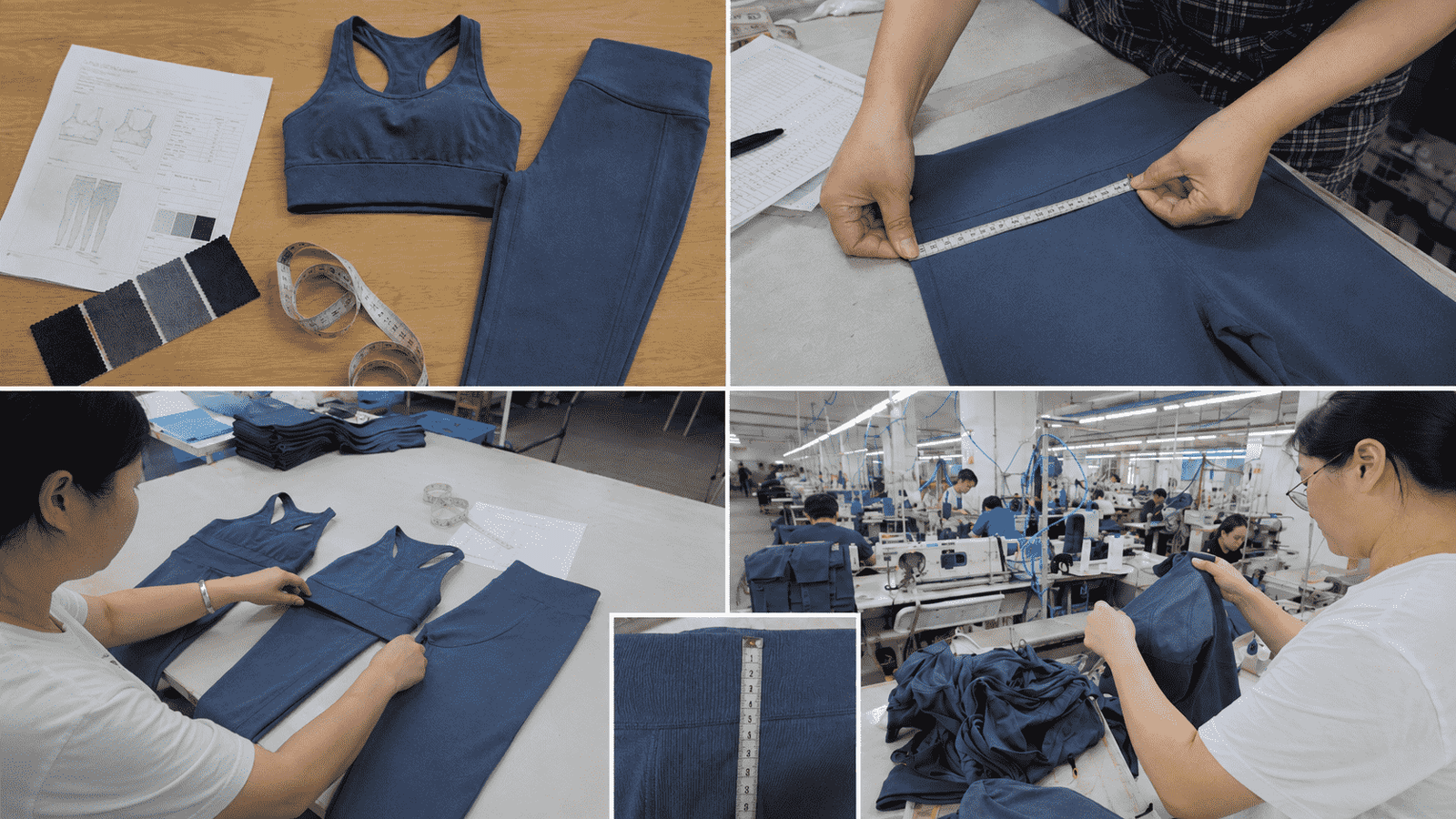
First Article
Compare early commercial output with the approved production reference.
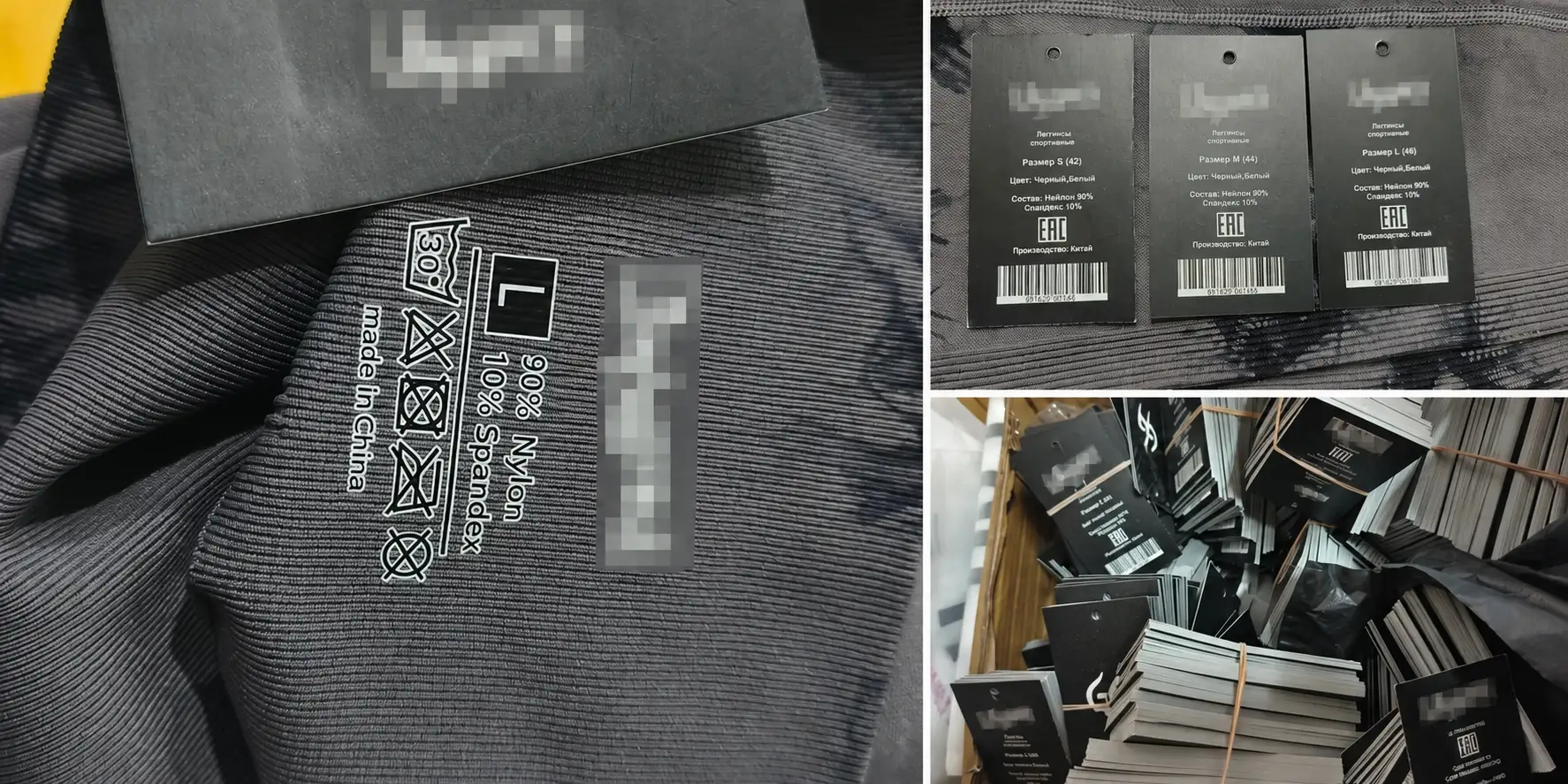
Logo
Confirm approved method, artwork, dimensions and placement.
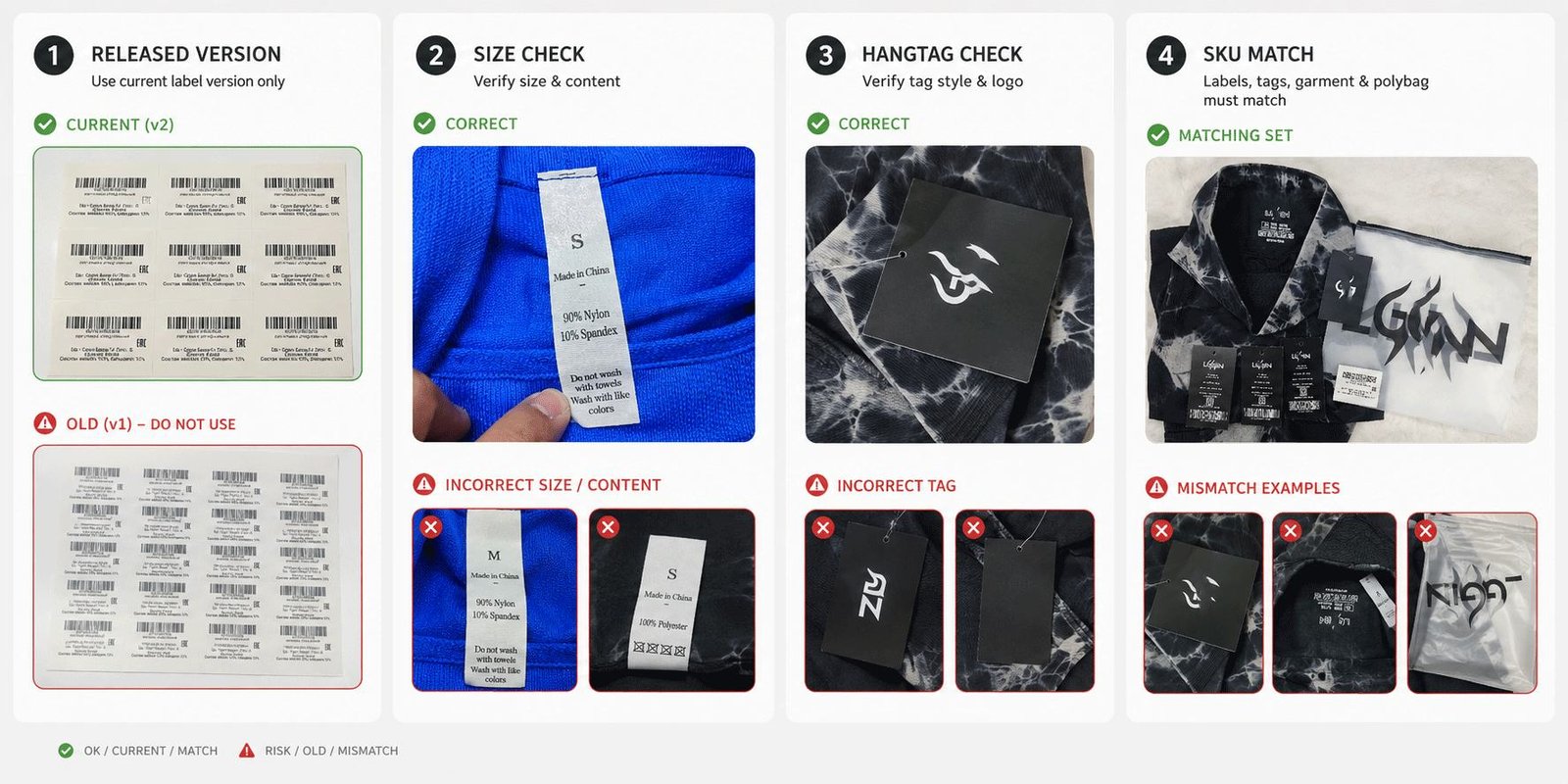
SKU
Check style, color, size, barcode or QR information against the corresponding garment.
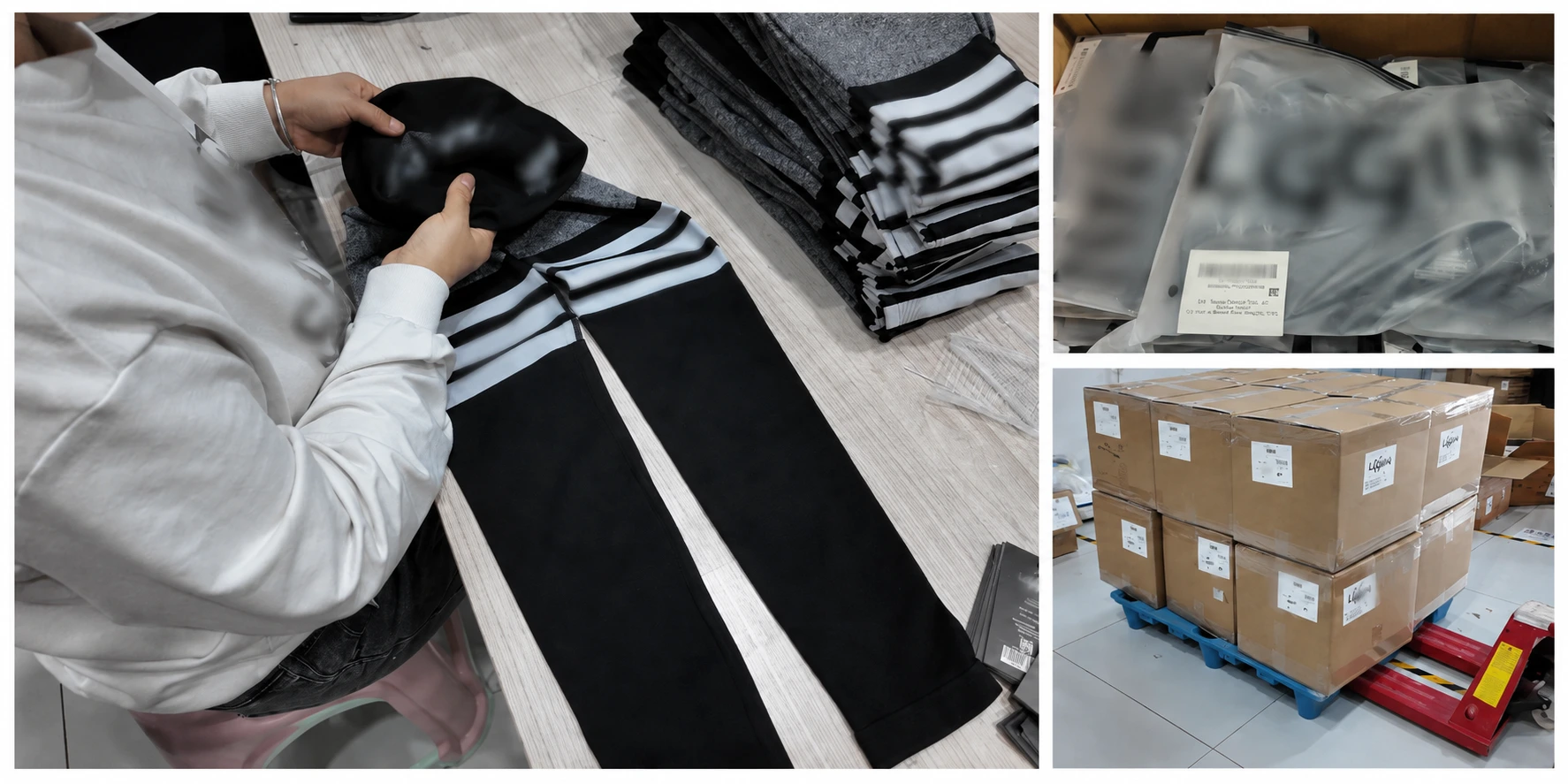
Packing
Verify polybag, carton and packing requirements.
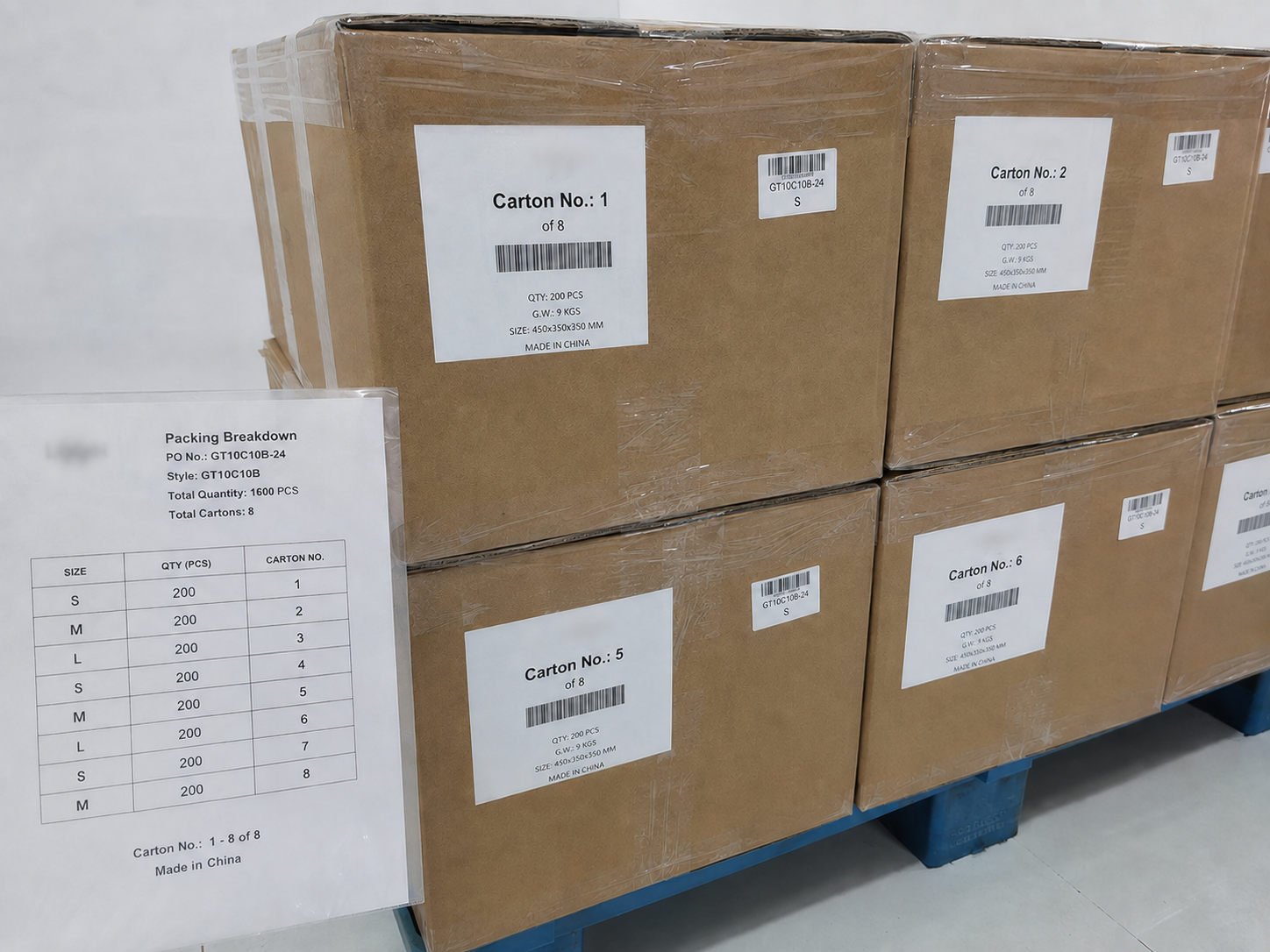
Final Release
Complete final inspection and any required buyer or third-party pre-shipment review before release.
Manufacturing Capacity With Clear Ownership and Scope
MOVEVOX separates the owned production core from long-term managed satellite resources. Capacity figures describe the controlled supply system rather than theoretical machine maximums.
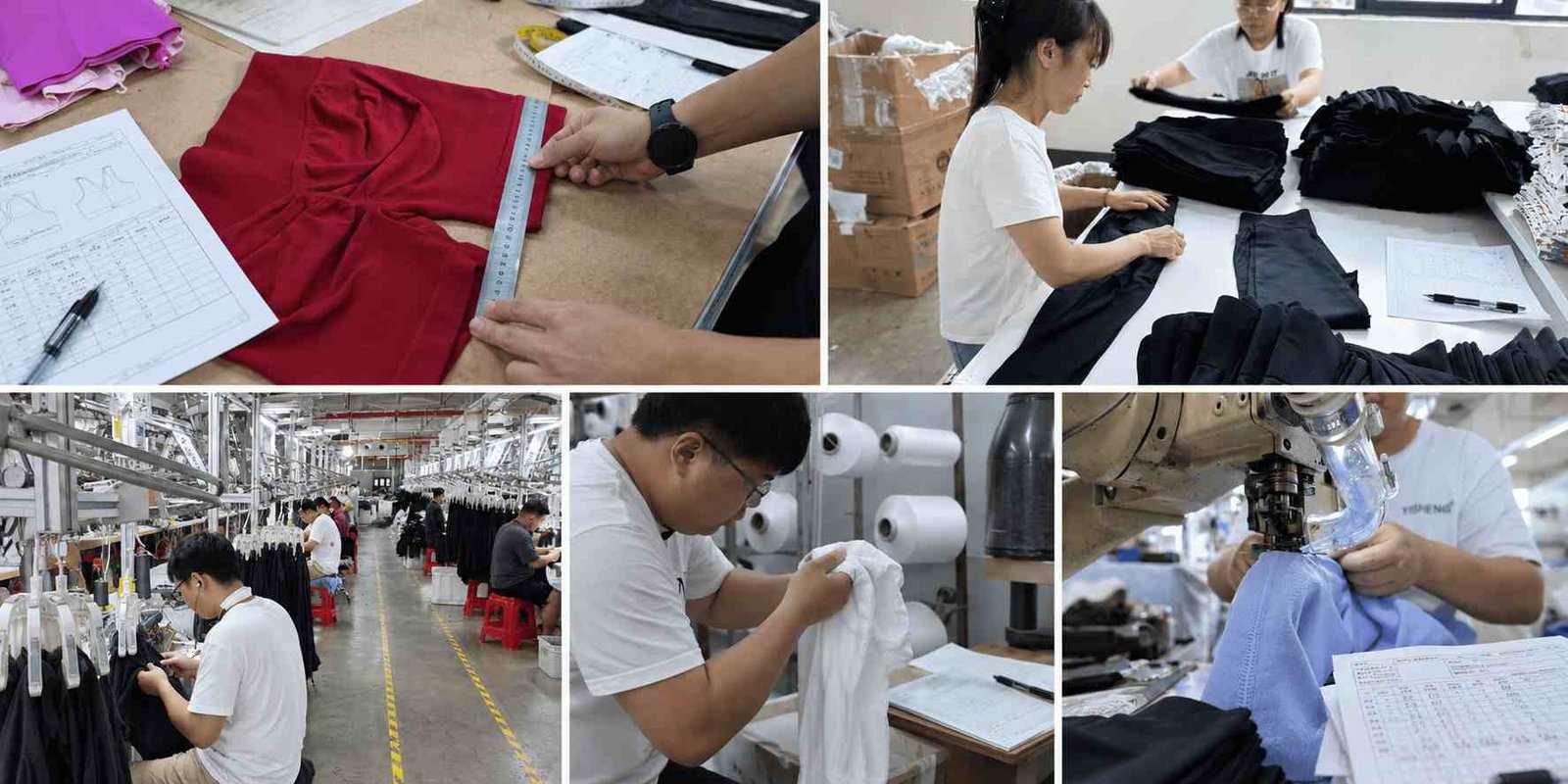
Yiwu Owned Core
The owned factory in Fotang Town, Yiwu, Zhejiang, China provides approximately 6,000 square meters of actual production space. It supports Seamless and Cut & Sew manufacturing, development and QC.
28 Santoni / ~24 principal garment machines / Owned
Yiwu Network
Six principal long-term satellite factories provide managed additional production resources where appropriate.
6 partners / Yiwu / Not owned
Guangzhou Network
Two principal long-term satellite factories provide complementary managed resources for applicable project requirements.
2 partners / Guangzhou / Not owned
Normal Order Range
Approximately 300–50,000 pieces per order.
Stable Managed Release
Approximately 150,000–200,000 finished pieces per month across Seamless and Cut & Sew.
Bulk Reference
Normally around 20–35 days after specifications, key materials and agreed commercial prerequisites are locked.
The managed monthly release figure is not the theoretical output of the 28 Santoni machines alone. Larger, unusually concentrated, multi-SKU or time-sensitive programs require separate capacity review.
Plan International Handover After Production Is Approved
MOVEVOX’s manufacturing role includes preparing finished goods and commercial documentation for handover according to the buyer’s agreed logistics arrangement. International transit itself depends on destination, forwarder, service and customs conditions.
Courier
Suitable for samples, urgent small consignments or selected project materials where speed matters more than unit freight cost.
Transit Range: Confirmed case by case with the selected courier.
Documents: Commercial Invoice / Packing Details
Risk: Higher cost per unit; destination customs can affect final delivery.

Air Freight
Useful where commercial goods need shorter transit than sea freight and quantity or urgency justifies air cargo.
Transit Range: Confirmed with the nominated forwarder and route.
Documents: Invoice / Packing List / Required shipping documents
Risk: Freight rate and space availability can change.

Sea Freight
Common for larger commercial shipments where cost efficiency is more important than the fastest transit.
Transit Range: Route- and destination-specific.
Documents: Invoice / Packing List / Shipping documentation
Risk: Port congestion, sailing schedules and customs can affect timing.
Buyer Forwarder
The buyer can nominate its own freight forwarder or logistics partner for collection and international transport.
Transit Range: Controlled by the buyer’s selected logistics arrangement.
Documents: Commercial and packing information agreed for handover.
Risk: Responsibilities and pickup instructions should be clarified before cargo readiness.
MOVEVOX should not promise a universal door-to-door international lead time because freight, customs and final-mile conditions are outside garment production alone. The manufacturing schedule and international transit schedule should therefore be planned as separate but connected parts of the launch calendar.
Verify MOVEVOX Before Formal Supplier Approval
Buyers can verify the manufacturing system through remote or on-site review rather than relying only on website descriptions. MOVEVOX supports factory visits, technical discussions and quality review according to project needs.
Video Review
Best for early supplier qualification when sourcing teams want to verify factory areas, equipment and development capability remotely.
Factory Visit
Best for procurement teams completing formal supplier qualification at the owned Yiwu manufacturing base.
Technical Review
Best for Product Development teams reviewing Santoni capability, Cut & Sew construction, material and sample workflow.
QA Review
Best for QA teams reviewing measurements, QC checkpoints, packing and shipment-release controls.
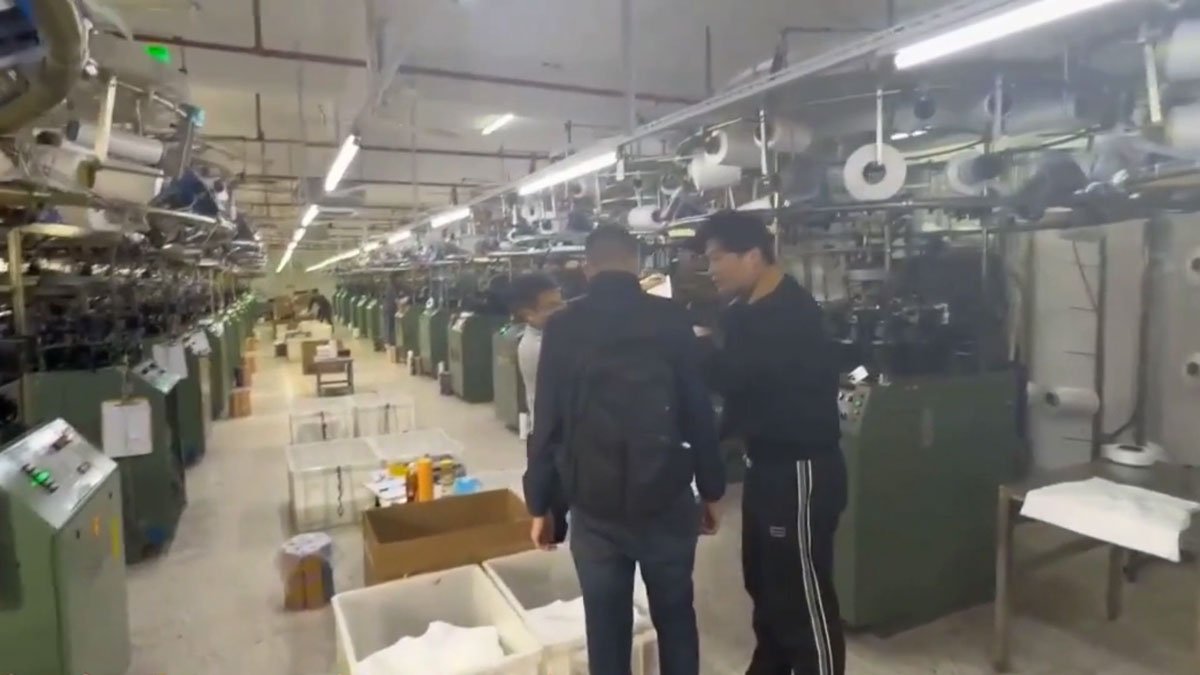
Before the meeting, share the review objective, project type and priority questions. Factory access should be scheduled in advance because products belonging to other customers may require confidentiality protection. Audit support or site access should not be described as a passed audit unless a corresponding formal report exists.
Align Compression Production With Buyer Compliance Requirements
MOVEVOX works from the buyer’s actual market, product and quality requirements. Support for testing or audits does not mean a certificate automatically applies to every material, style or future order.
Quality Manual
Global brands may provide their own measurement methods, workmanship standards, defect classification, sampling rules and shipment-release criteria. MOVEVOX can review applicable requirements and incorporate them into development and production. Where the buyer’s standard conflicts with an existing factory method, the project team should resolve the difference before commercial production rather than relying on assumption.
Chemical Management
MOVEVOX can coordinate project requirements relating to RSL/MRSL, REACH and other applicable chemical restrictions. Existing laboratory reports remain sample-specific. Material or finished-garment testing should be arranged against the actual project where the buyer requires evidence for a particular composition, color or target market.
Product Testing
Stretch, recovery, shrinkage, colorfastness, pilling, opacity, seam or other physical tests can be discussed according to the buyer’s product specification. The correct method and acceptance threshold must be defined before a result becomes a commercial claim.
Factory Review
MOVEVOX supports customer factory visits, technical audits and third-party inspection. Supporting an audit means providing access and relevant information; it does not mean MOVEVOX should claim BSCI, SMETA, WRAP or another certificate unless the actual valid evidence exists for the relevant legal entity and facility.
Confidentiality
Tech Packs, unreleased product concepts and customer-developed specifications should remain within the agreed project and production boundary. Customer files should not be used as public evidence without permission.

Review Existing Test Evidence Before Project Testing
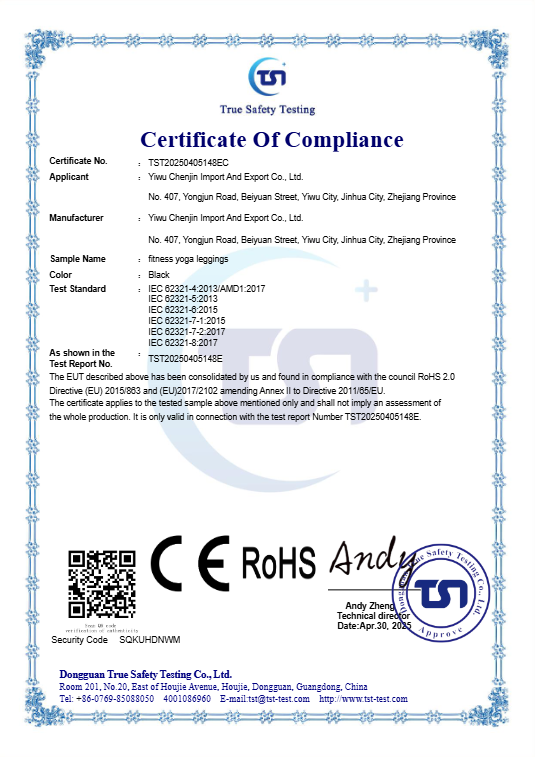
MOVEVOX currently holds sample-specific third-party evidence that can support supplier review. These documents are useful only within their actual report scope and should not be represented as universal Compression Leggings certification.
What the Pack Includes
- RoHS 2.0 report TST20250405148E, dated April 30, 2025.
- Related Certificate of Compliance TST20250405148EC.
- REACH phthalates report TST20250405150E, dated April 30, 2025.
- Scope notes explaining which tested sample each document actually covers.
These documents do not establish a quantified compression pressure, medical classification, universal opacity, recovery value or durability result for future Gym Compression Leggings. Where a buyer requires product-specific physical or chemical evidence, MOVEVOX can coordinate testing of the relevant sample using the agreed method.
Requested Information
Contact information should be used only for relevant supplier and project communication under the agreed commercial relationship.
U.S. Activewear Development and Repeat-Supply Program
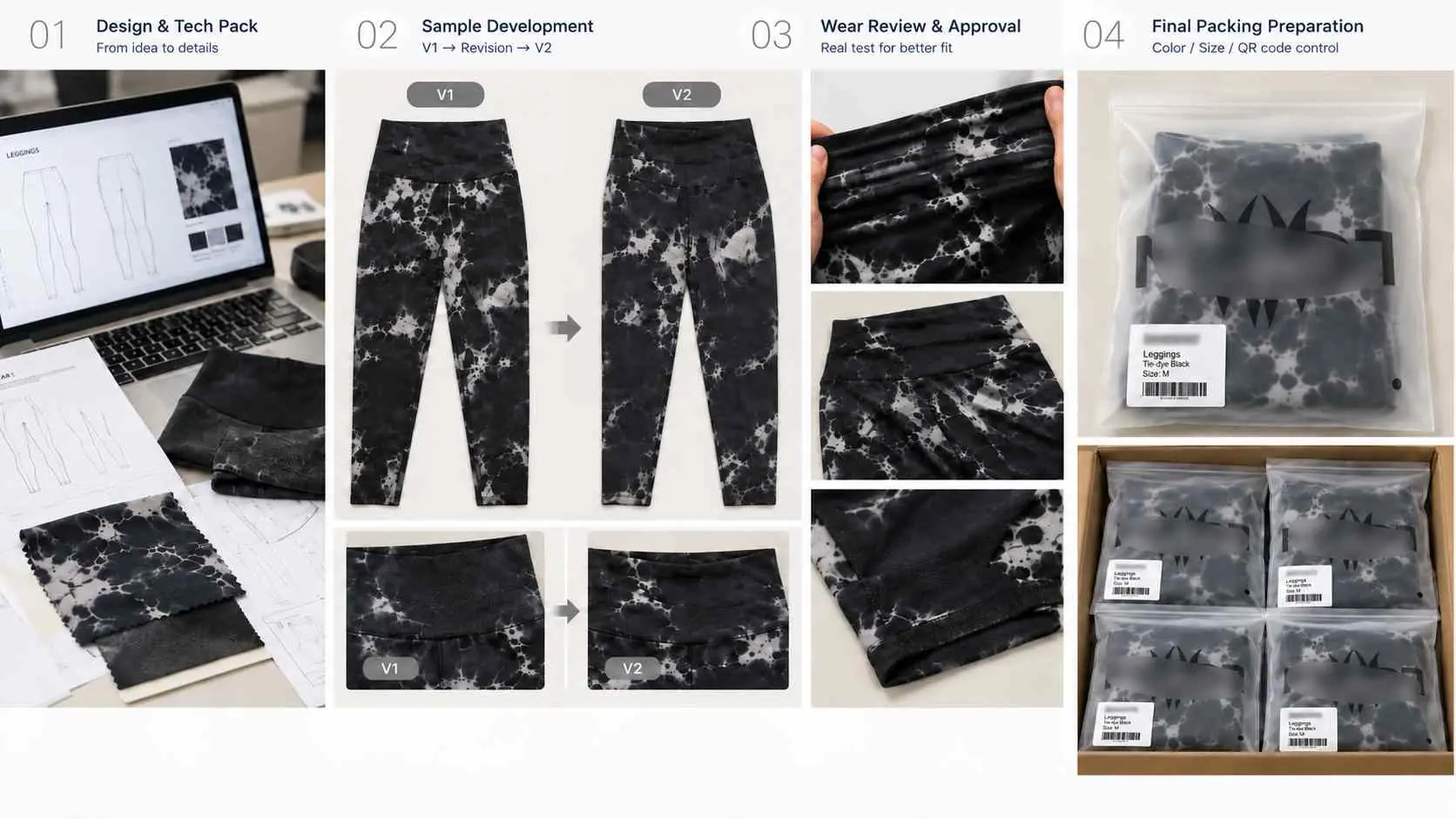
An anonymized U.S. fitness creator-led customer worked with MOVEVOX on a multi-product activewear program covering development, sample testing, branded packaging and repeat purchasing. The documented program included leggings but was not a Compression-Leggings-only project.
Documented ongoing customer cooperation and activewear development.
Additional samples ordered for practical testing before the described commercial production stage.
Approximate account-level order reference across the multi-product activewear program.
Approximate purchasing frequency during the documented relationship.
Development & Execution
MOVEVOX worked from the customer’s technical product information and prepared an initial development sample. After practical review, feedback was translated into a revised version rather than treating the first sample as production-ready. The customer then ordered approximately five to ten additional samples for further testing. Commercial execution also included customized labels, logos, instructions and packaging. QR information varied by color and size, making SKU control important during packing. Over approximately three years, the relationship continued across leggings, shorts, sports bras, tank tops, sets and bodysuits.
The order volume and frequency figures are account-level references for a multi-product activewear program. They do not represent Compression Leggings-only volume, one fixed SKU or a guaranteed future purchasing pattern.
Compare Compression Manufacturers Using Verifiable Evidence
Supplier comparison is more useful when broad claims are replaced with mechanisms, tests and controls that Product Development, Procurement and QA teams can actually verify.
High Compression Claim
The supplier describes a legging as “high compression” without explaining material, fit or construction.
Support direction is connected to material recovery, finished dimensions, waistband and pattern or knit structure.
Spandex Percentage
High Spandex content is presented as direct proof of compression quality.
Composition is reviewed together with GSM, structure, recovery, negative ease and physical sample behavior.
One Base Sample
One approved sample is treated as proof that every size will feel the same.
Grade rules, buyer size standards and size-set validation can be incorporated where required.
Static Fit
The sample is approved only from standing appearance.
Relevant movement positions can be used to review waistband, crotch, hip, thigh and coverage.
Squat-Proof Claim
Universal opacity is promised across every material, color, size and wearer.
Coverage is reviewed against actual material, garment dimensions, color and stretch conditions.
Good Sample
A successful sample is expected to control bulk by itself.
Approved material, specifications, technical version, first article and QC remain connected to production.
Changing or qualifying a supplier should normally begin with specification review, sample comparison and controlled validation before broader production allocation. MOVEVOX does not recommend treating website claims or one low quotation as sufficient evidence for a performance product that depends on material, fit and repeatability.
Gym Compression Leggings Manufacturer FAQ
These questions address the technical and commercial issues most likely to arise before a brand moves from supplier research into physical compression-legging development.
What Does Compression Mean at MOVEVOX?
MOVEVOX uses compression in the non-medical sportswear sense: a close-support garment developed through high-stretch materials, higher recovery, tighter garment dimensions and, where appropriate, Seamless engineered knit zones. The exact support feel is project-specific rather than one universal company pressure level.
Do You Make Medical Compression Leggings?
No standard MOVEVOX activewear project should be represented as medical compression. If a buyer requires quantified mmHg pressure, medical-device registration, therapeutic or rehabilitation claims, the project requires a separate medical compliance and validation framework beyond ordinary Gym Compression Leggings manufacturing.
What Compression Materials Can You Develop?
MOVEVOX’s company-level compression piece-goods reference is approximately 65–78% Nylon/Polyester + 22–35% Spandex and 230–320 GSM. Seamless compression depends on yarn, knitted structure and localized zones. These are development references, not mandatory formulas for every project.
Should We Use Seamless or Cut & Sew?
Both routes can support compression-oriented gym products. Seamless uses yarn, knit structure, density and zones; Cut & Sew uses performance fabric, pattern dimensions, negative ease and panel or seam architecture. The correct route depends on the buyer’s design and commercial requirements.
What Is the MOQ?
The current base garment-level reference is approximately 100 pieces per Seamless style and 150 pieces per Cut & Sew style. Custom material, color, labels and other components can have separate minimums. Dedicated custom dyeing commonly enters evaluation around 400–600 garment-equivalent quantity.
How Long Does Sampling Take?
Standard sample development is generally around 5–10 working days after required details are sufficiently confirmed. Custom material preparation, special colors, multiple revisions or project-specific testing can extend the full approval cycle.
How Do You Evaluate Recovery?
MOVEVOX treats recovery separately from stretch. Material and finished-garment behavior can be reviewed during development, while numerical recovery claims require a defined method and actual test result. Spandex percentage alone is not used as proof of recovery performance.
How Do You Control Waistband Stability?
Waistband performance is developed through height, finished circumference, material or knit structure, recovery and its relationship with front/back rise and hip measurements. MOVEVOX does not use a universal “never rolls” guarantee because wearer fit, material and product design all matter.
Can You Work With Our Size Chart?
Yes. MOVEVOX can work from a buyer-defined Measurement Chart and grade requirements. Larger or extended sizes should not be developed through simple uniform percentage enlargement. Size-set validation can be incorporated according to the buyer’s quality process.
Can You Guarantee Squat-Proof Opacity?
MOVEVOX does not issue a universal squat-proof guarantee for every color, material, size and wearer. Coverage depends on material density, color, structure, garment dimensions and extension. The finished sample should be evaluated under relevant stretch conditions.
What Testing Can You Support?
Project testing can include material, physical or chemical requirements defined by the buyer, such as stretch, recovery, shrinkage, colorfastness, pilling, opacity or seam performance. Existing RoHS and REACH documents remain limited to their specific tested samples and methods.
What Capacity and Inspection Options Are Available?
MOVEVOX’s stable managed supply-chain release capability is approximately 150,000–200,000 finished pieces per month across Seamless and Cut & Sew, with a normal single-order range around 300–50,000 pieces. Buyers can arrange factory visits, video reviews or third-party inspections.
Choose the Best Contact Route for Your Project
Use the communication route that matches your current sourcing stage. Technical files, urgent clarification, supplier qualification and factory visits each benefit from different types of communication.
Best for Tech Packs, Measurement Charts, testing requirements, quotations and compliance documents that need a structured written record.
Expected Response: Handled during the next applicable MOVEVOX service period.
Best for short project questions, sample coordination and clarification of open sourcing or development points.
Expected Response: Handled during normal international service hours when available.
Video Review
Best for Product Development or Sourcing teams that want to review technical questions or verify relevant factory capabilities remotely.
Expected Response: Meeting time confirmed according to mutual availability.
Remote technical or supplier-qualification meeting
Factory Visit
Best for procurement, technical and QA teams completing formal supplier qualification at the owned Yiwu manufacturing base.
Expected Response: Visit schedule confirmed before arrival.
No. 97 Xiazhang Village, Fotang Town, Yiwu, Zhejiang, China
MOVEVOX’s normal international service hours are 07:00–24:00 China Standard Time, daily. Messages received outside the service period remain pending until service resumes.
Send Us an Inquiry
Tell us your needs, and our team will get back to you within 24 hours.
