
Built for Brands Managing Serious Sports Bra Programs
MOVEVOX is best suited to B2B buyers managing structured product development, formal sample approval, repeat orders and scalable activewear programs rather than one-time purchases based only on the lowest unit price.
Established Fitness Brands
Established fitness and activewear brands usually arrive with a defined consumer, target support direction, measurement language, fabric preference and collection plan. They may already have a complete Tech Pack or may need manufacturing support to translate the product direction into pattern, materials and physical samples.
MOVEVOX supports both Seamless and Cut & Sew routes, allowing sports bras to be developed together with leggings, shorts and tops while keeping technical versions, branding requirements, QC and production responsibility under one supplier-management system.
Multi-SKU Private Label
Private-label buyers often manage more than one sports bra silhouette, several colors, multiple sizes and matching bottoms within the same launch. MOVEVOX can coordinate garment development together with custom colors, logo processes, Main Labels, Care Labels, Size Labels, hangtags, barcodes and packaging.
The objective is not to add a logo after the garment is complete, but to establish an approved product-and-brand specification that can be repeated through future purchase orders and additional SKUs.
Scale-Up Buyers
Brands adding a second supplier or increasing allocation need more than flexible first-order quantities. They need a manufacturer that can retain approved specifications while production volume increases.
MOVEVOX combines a Yiwu core factory with controlled satellite capacity and unified technical, material, PMC and QC management. This model is intended to let a buyer validate a product through samples and initial orders, then expand repeat quantities without rebuilding the entire supply chain when a successful SKU begins to scale.
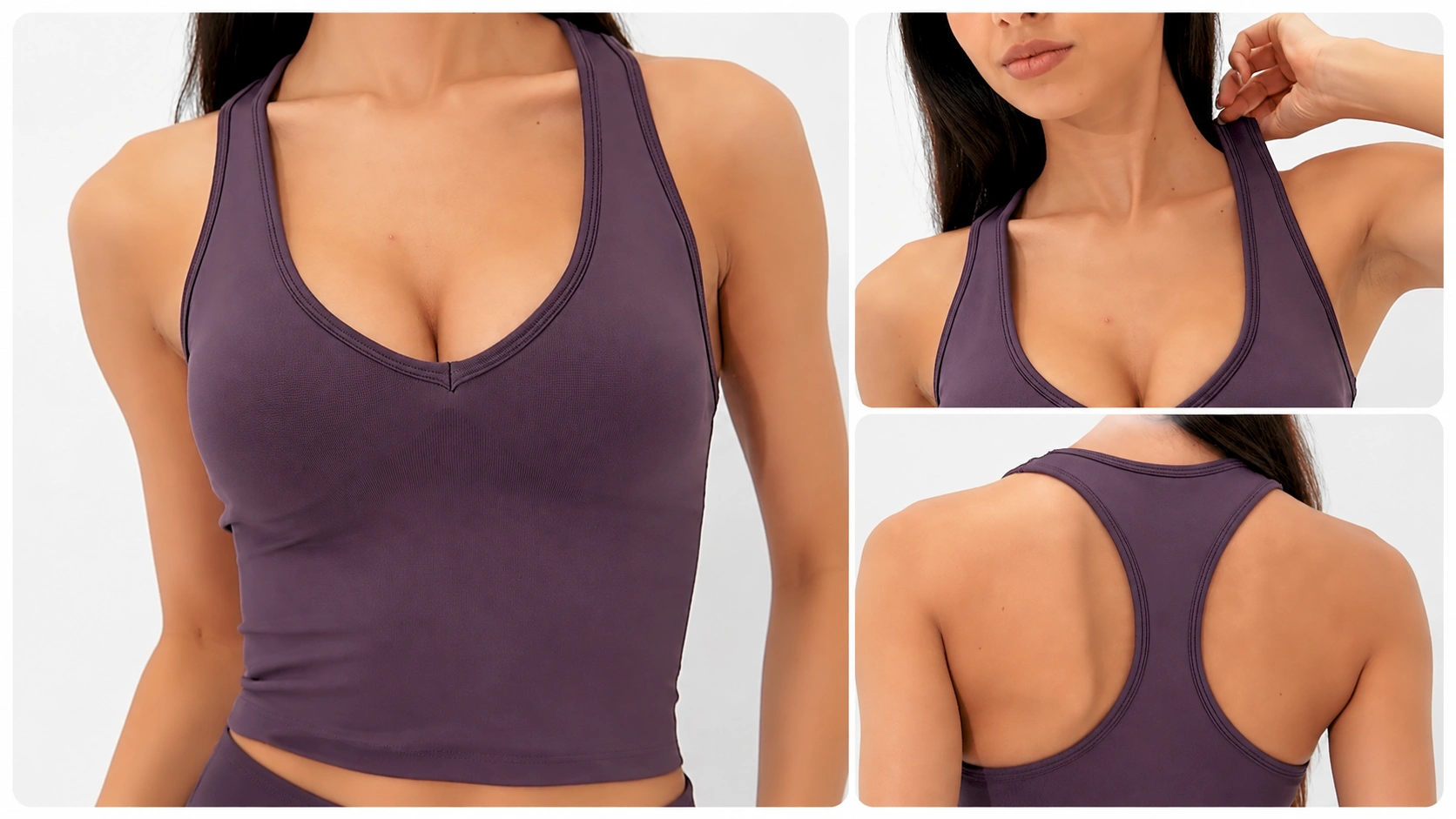
Configure Sports Bras Around Real Product Requirements
MOVEVOX can develop sports bras across different support directions, back structures, strap systems, lengths, padding options and manufacturing routes. Final performance remains dependent on the approved material, construction and Fit.

Low Support
Designed around lighter support direction, softer materials and comfort-focused Fit. Final positioning still depends on the actual underband, strap, coverage and wear result.
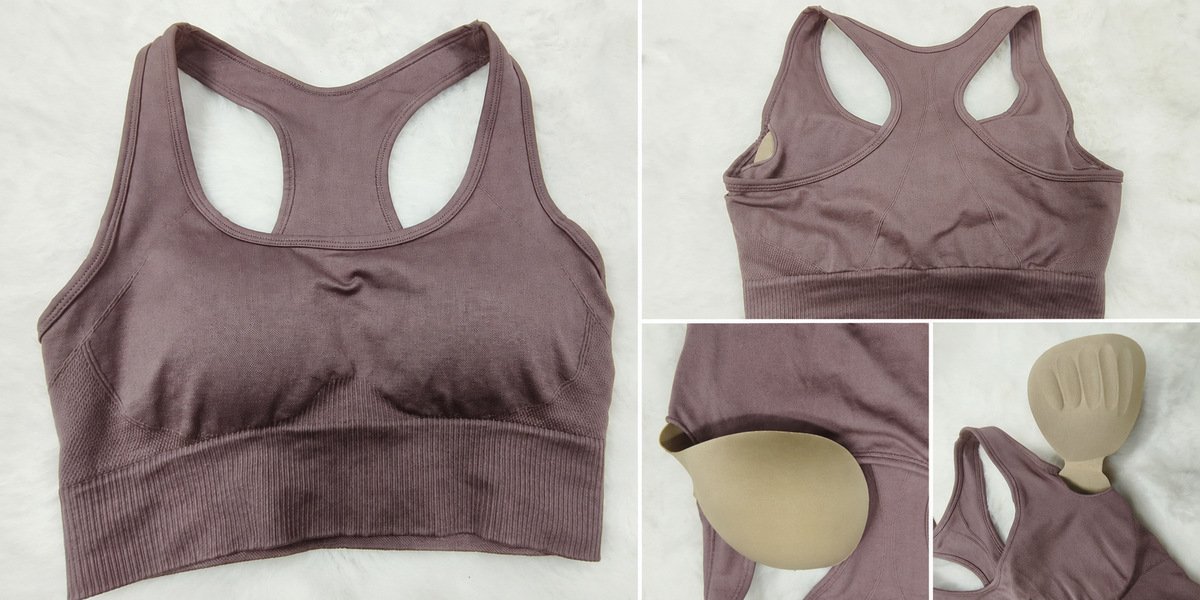
Medium Support
Suitable as a development direction for general fitness, studio and training products where the brand wants greater stability without using the highest compression construction.

High Support
High-support projects require deeper technical review because pressure distribution, material recovery, underband, straps, coverage and construction all become more sensitive.

Racerback
A racerback can centralize the rear strap path and create a stable training silhouette. Strap width, neckline, armhole and back tension still require Fit approval.

Cross-Back
Cross-back structures can distribute strap placement differently across the back and create a distinctive brand look. Strap intersection and tension must remain symmetrical.
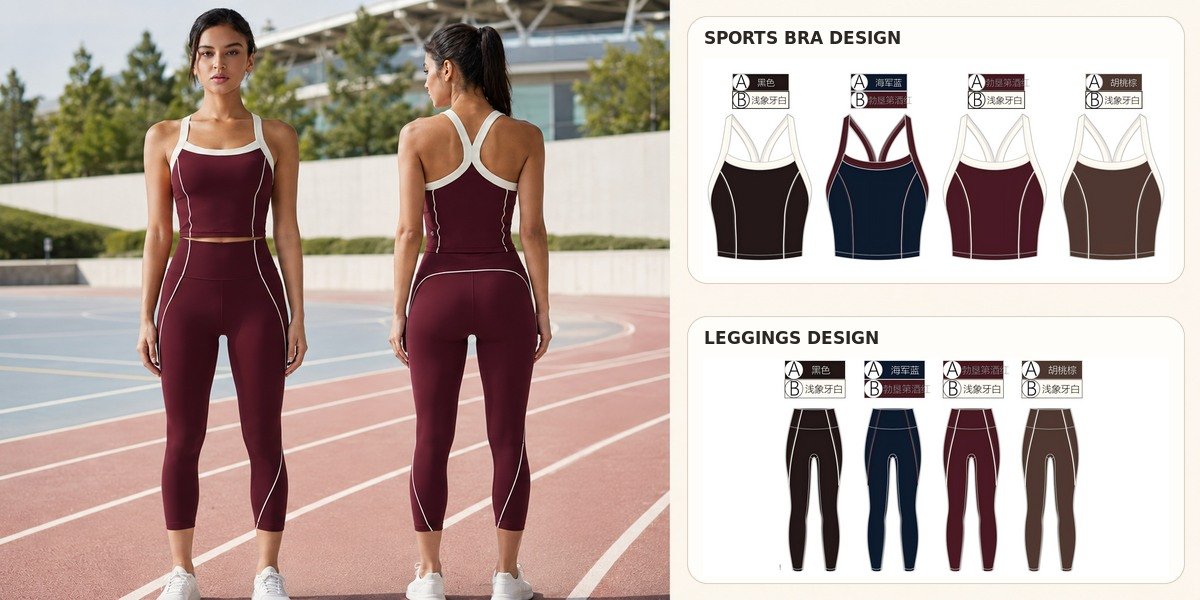
Adjustable Strap
Adjustable straps can use sliders, O-rings or other approved hardware. Component material, edge quality, sliding stability and wash behavior require project-level confirmation.
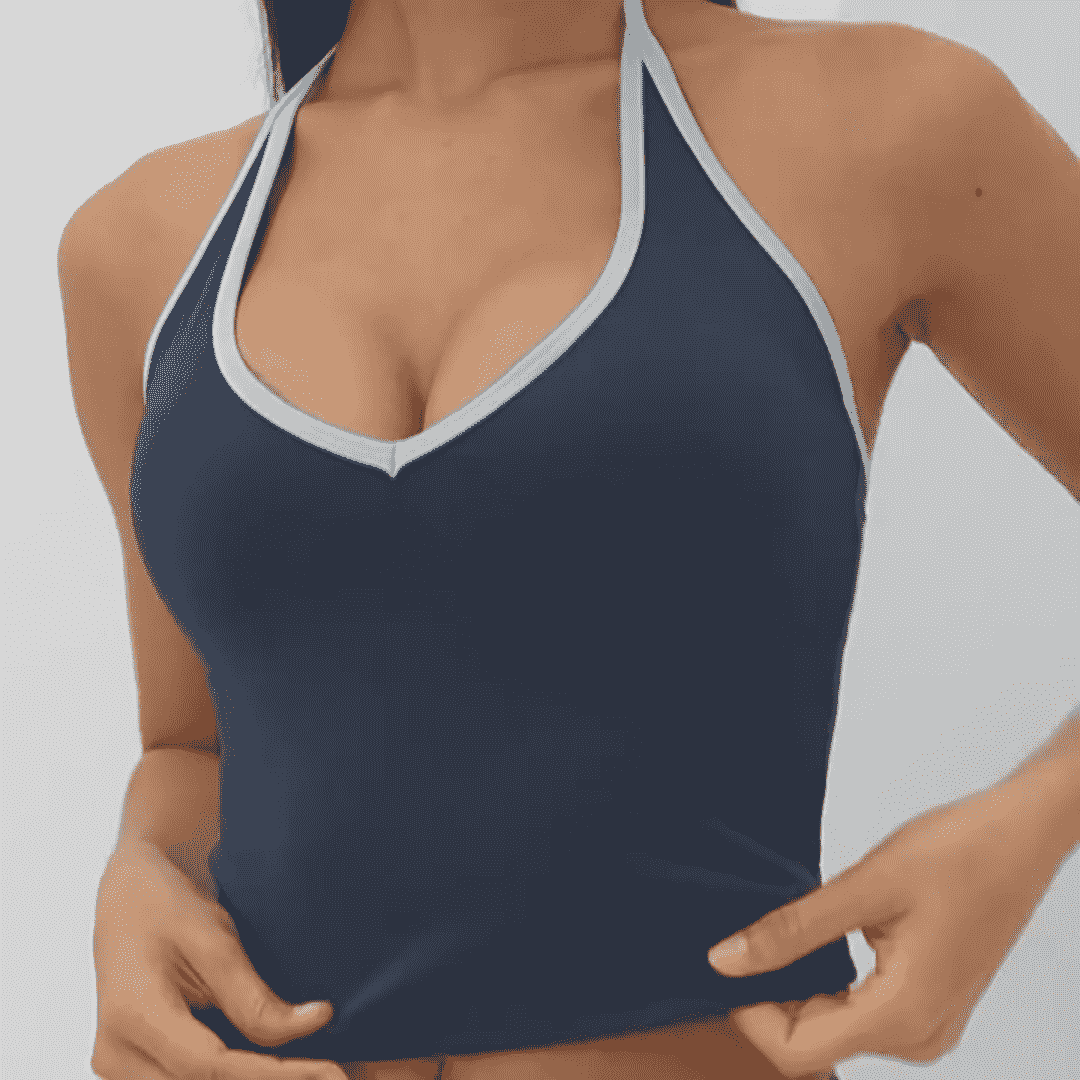
Longline
Longline sports bras extend the body below the bust and may use wider bands or larger fabric areas. Body length and rolling behavior require sample verification.
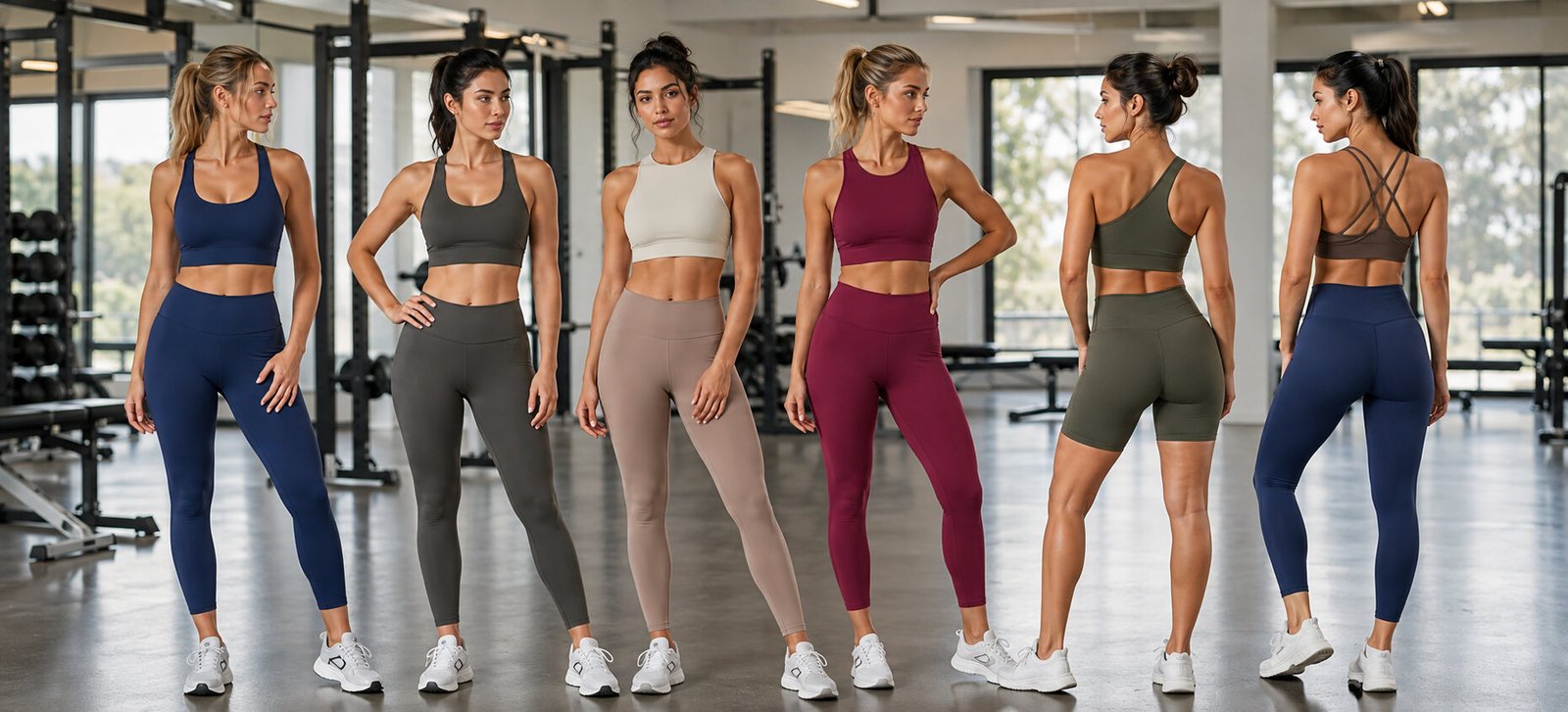
Cropped
Shorter cropped structures can combine bra support with an activewear-top appearance. Coverage and lower-edge stability depend on the intended Fit and material recovery.

Removable Pad
MOVEVOX can develop internal pad pockets and removable pads, with pocket opening, pad size, movement space and symmetry confirmed through sampling.

Fixed Pad
Fixed pads can be secured by sewing, internal positioning or validated attachment methods. Complex molded cup projects require separate technical evaluation.
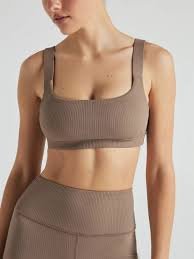
Ribbed Structure
Ribbed sports bras can be developed through Cut & Sew rib fabric or Seamless knit structures. Stretch opening, recovery and surface alignment need verification.
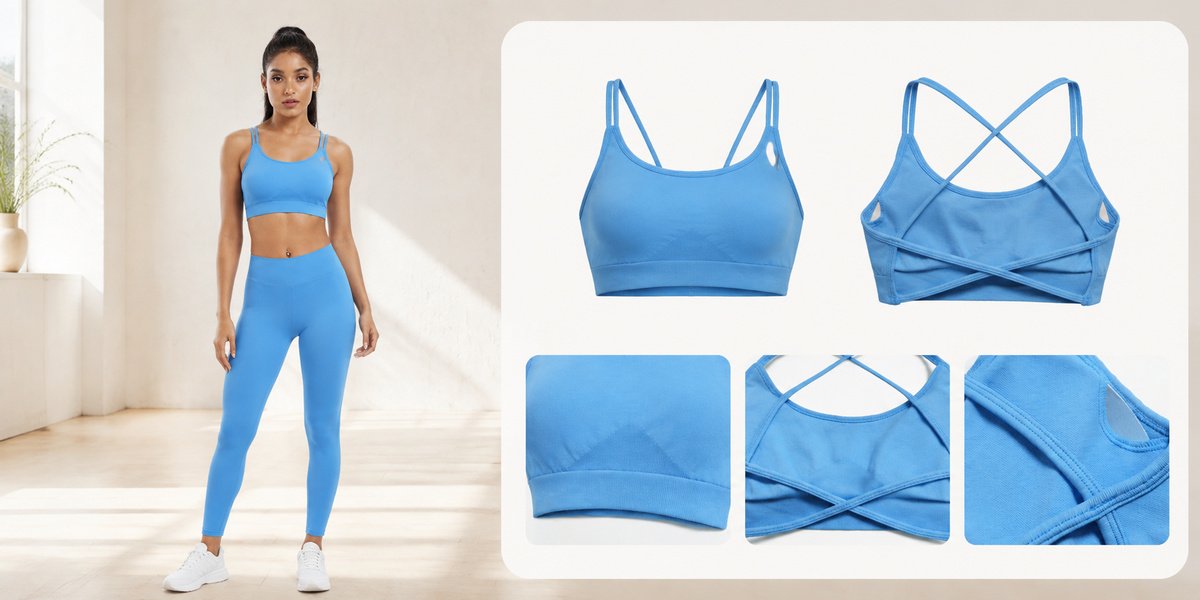
Seamless Bra
Seamless sports bras can use engineered knit structures, rib, mesh, jacquard or localized density changes, while selected openings and components may still require sewing.
Six Elements That Work Together to Create Support
Sports bra support is developed from the interaction of material, dimensions and structure. MOVEVOX does not assign a final support level from one isolated feature before the finished garment is evaluated.
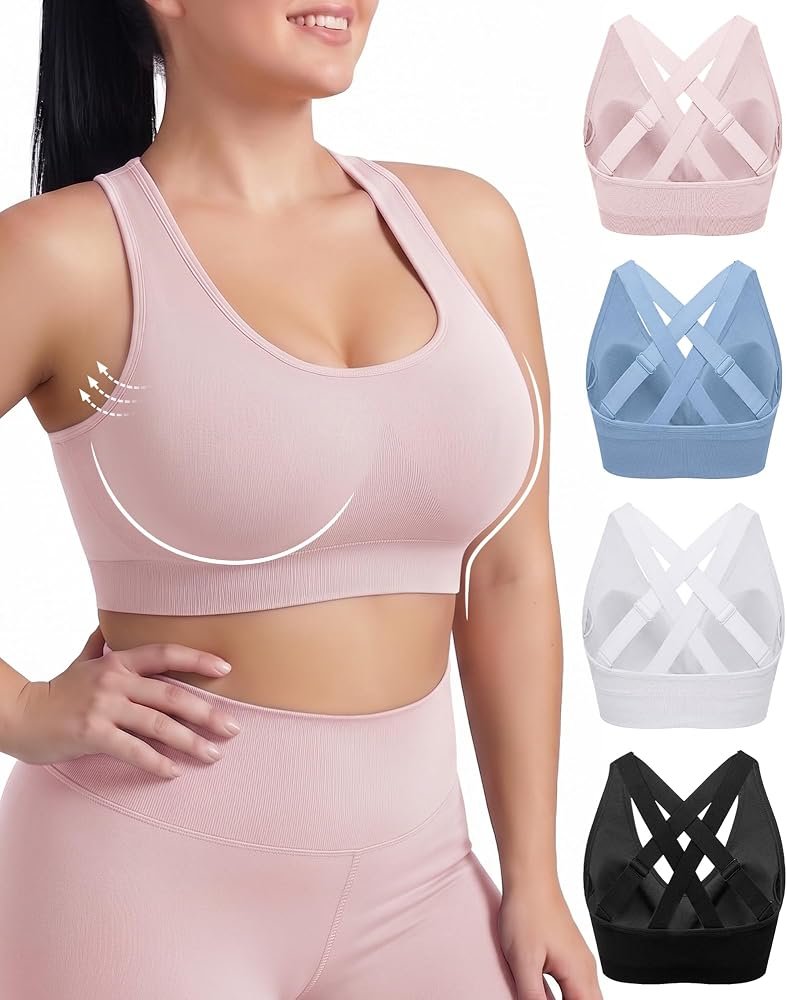
Underband System
The underband is one of the key support areas because it connects underbust dimensions, negative ease, elastic recovery and body fit. MOVEVOX can develop elastic or fabric-based underband structures and verify width, tension, recovery, joint quality and position through physical samples. High-support direction cannot be created simply by making the band tighter; comfort, movement and pressure distribution also have to remain acceptable.
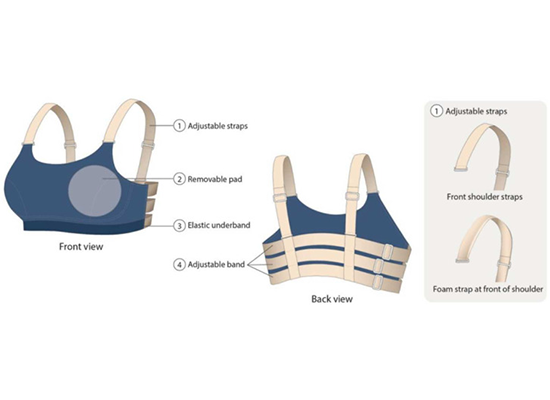
Strap System
MOVEVOX supports fixed, wide, narrow, cross-back, racerback, multi-strap and adjustable sports bra structures. Strap length, width, stretch and recovery interact with bust, underbust and neckline dimensions. Excessive strap tension can cause pressure or distortion, while insufficient control can reduce stability. Strap development is therefore reviewed as part of the complete bra Fit rather than independently.
Coverage
Front coverage, neckline, side coverage and back structure influence how the sports bra contains and stabilizes the body during movement. MOVEVOX can develop different coverage directions according to the customer’s Tech Pack and target use. Final coverage is confirmed through the buyer’s Fit requirements and physical samples, because the same flat dimensions can behave differently when fabric stretch, bust shape and strap tension change.
Material Recovery
Supportive feel depends partly on how the selected fabric stretches and returns after loading. MOVEVOX evaluates material composition, GSM, elasticity, recovery and surface together with the target product. High-stretch material is not automatically high support. The same sports bra pattern can behave differently in naked-feel, compression, ribbed or Seamless knit systems, so the approved fabric becomes part of the final production standard.
Layering and Pads
Sports bras may use double front layers, lining, pad pockets, removable pads, fixed pads or more complex molded components. These elements can affect coverage and localized structure, but they do not replace underband and Fit engineering. Sample review should confirm pad thickness, position, movement space, symmetry and compatibility with the selected body material before the final structure is released for bulk production.
Back Construction
Racerback, cross-back, wide-back and multi-strap structures distribute tension differently and change both appearance and Fit. MOVEVOX can develop these structures through Seamless or Cut & Sew routes according to product requirements. Back construction should be evaluated together with strap placement, neckline, armhole and underband position so the visual design does not create unexpected pressure, asymmetry or movement limitation.
Review Sports Bra Fit From Multiple Functional Angles
Sports bra Fit should be evaluated through the complete garment. Front appearance alone cannot show underband stability, coverage, strap balance, pad position or movement behavior.
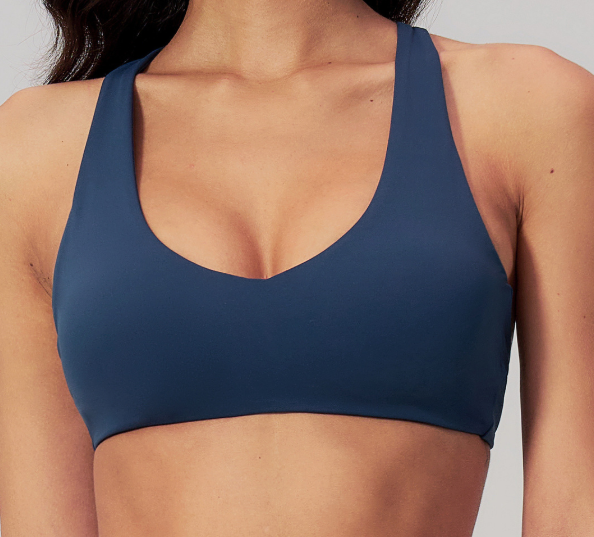
Front Fit
Review neckline, front coverage, bust position and visual symmetry against the buyer’s intended Fit and measurement requirements.
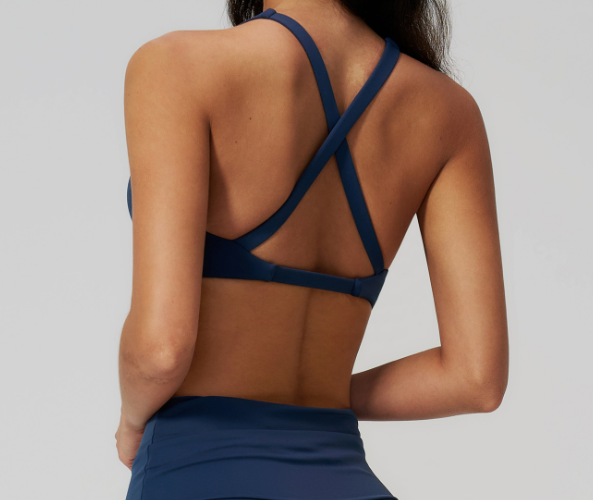
Side Coverage
The side view helps evaluate armhole position, side coverage, underband height and whether the front and back remain balanced around the torso.
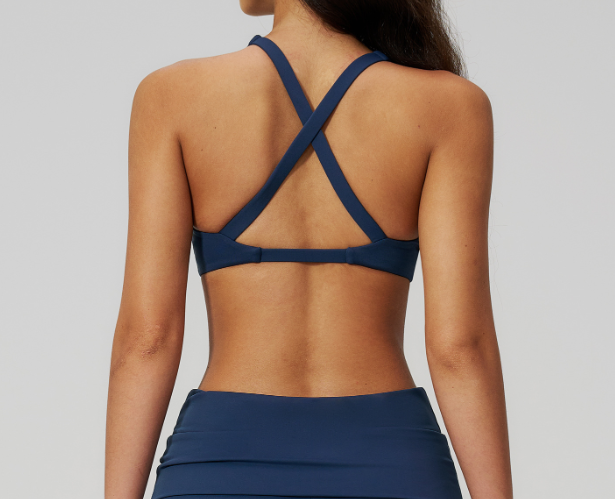
Back Balance
Racerback, cross-back and other structures should remain centered and symmetrical, with strap paths matching the approved product direction.

Underband Fit
The underband should be reviewed for position, pressure, recovery and movement rather than approved from a flat circumference number alone.
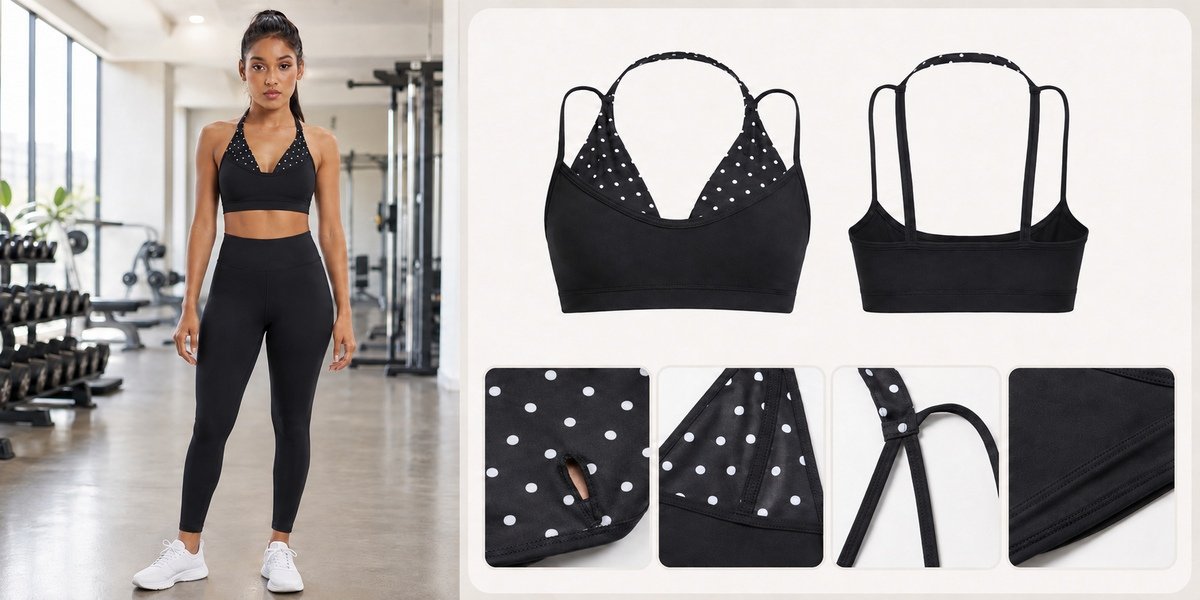
Strap Fit
Strap length and tension need to support the intended garment position without creating excessive pressure, sliding or visible distortion.

Movement Review
A movement check evaluates whether the approved Fit remains acceptable when the wearer raises the arms, bends, stretches or performs the intended training movement.
Choose Back Construction by Fit and Brand Direction
Back design changes strap routing, coverage, movement and visual identity. MOVEVOX can develop several structures, but each needs to be evaluated together with front Fit, underband and material behavior.
Racerback
Racerback sports bras route the shoulder structure toward the center back and can provide a compact training-oriented silhouette. The back opening, strap width, armhole and upper-back tension should remain balanced so the garment does not pull excessively toward the neck or distort the front neckline. MOVEVOX can develop racerback structures through Seamless knit engineering or Cut & Sew pattern construction depending on the approved product design.
Cross-Back
Cross-back straps create a more visibly engineered rear structure and can distribute the strap path differently from a conventional racerback. Development needs to control strap intersection, length, twist, symmetry and attachment points. If the structure uses separate elastic straps or hardware, MOVEVOX also checks component compatibility and assembly. The final cross-back position should be approved on the body rather than only from a flat pattern.

Wide Strap Back
Wide straps can distribute contact over a broader area and create a more covered activewear appearance. Width alone does not establish support, however. The strap must still work with the underband, fabric recovery and front structure. MOVEVOX can review strap width, stretch and back geometry during sample development, with the final configuration locked through the Approved Sample and relevant measurement points.

Thin Strap Back
Thin straps create a lighter visual profile and can suit selected low-to-medium support directions. Their width and tension require careful control because smaller contact areas can increase perceived pressure or reveal asymmetry more easily. MOVEVOX can develop fixed or multi-strap thin structures, but the final product must be evaluated against actual material stretch, body Fit and the customer’s intended use.
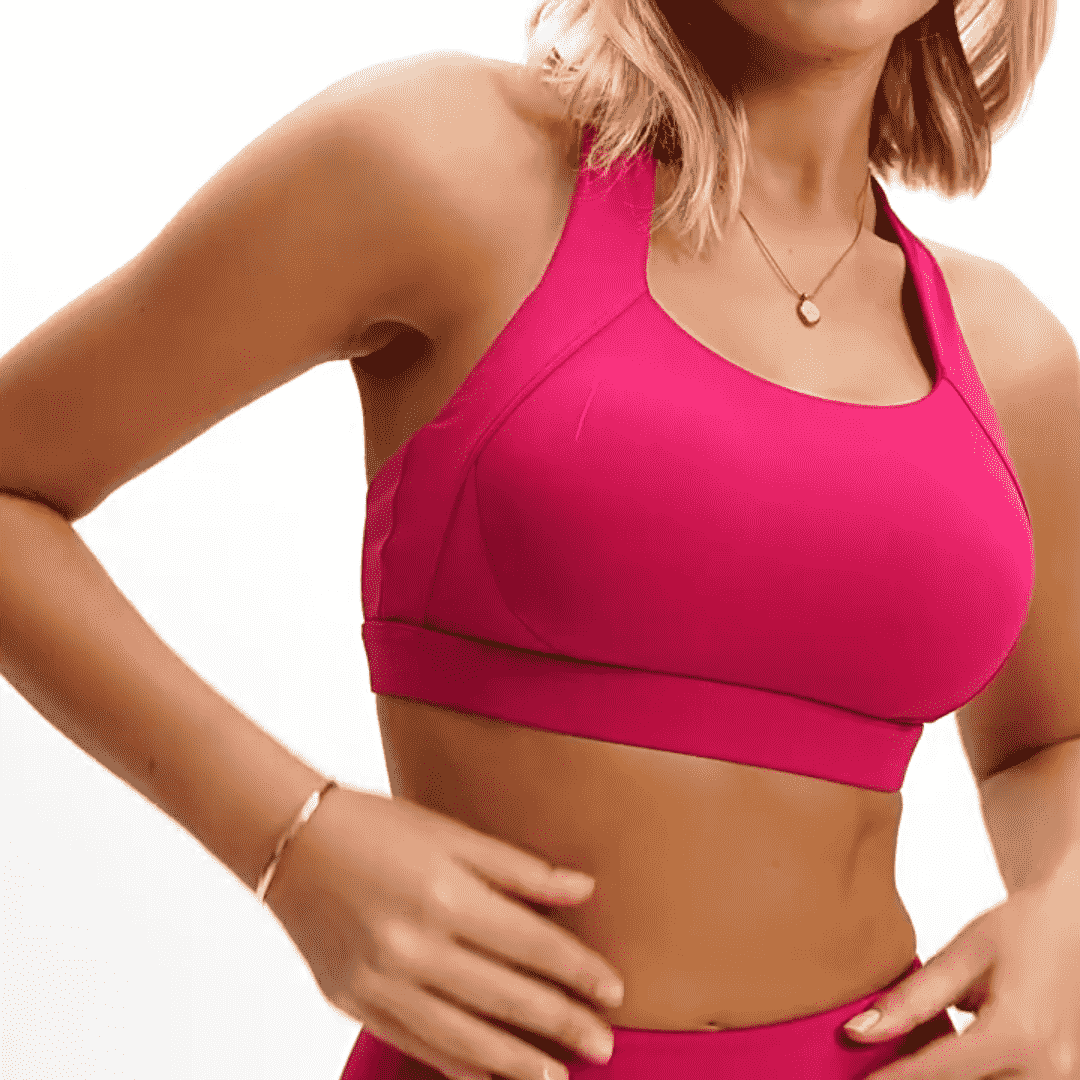
Adjustable Back
Adjustable strap systems can use sliders, O-rings or approved hardware to give a defined adjustment range. MOVEVOX can coordinate strap elastic, hardware color and material, but functional components require checks for smooth adjustment, direction, sharp edges, sliding under load and wash stability. Any target-market chemical or hardware requirement remains project-specific and should be supported by the appropriate supplier or test evidence.

Multi-Strap Back
Multi-strap designs create strong visual differentiation but introduce more attachment points, tolerance relationships and symmetry risks. The pattern and assembly process need to control strap sequence, length and spacing. MOVEVOX can develop multi-strap structures where technically suitable, with First Article and finished-garment inspection checking whether the approved arrangement remains consistent through bulk production.
Understand How Padding Changes Sports Bra Construction
Padding affects coverage, shape, lining structure and QC. MOVEVOX supports removable and fixed pad systems, but final pad performance depends on the complete garment rather than the pad alone.
Removable Pad System

Outer Shell: The visible body fabric interacts with the pad underneath; stretch, color and thickness can affect edge visibility.
Inner Lining: The lining separates the pad system from the outer shell and should remain stretch-compatible with the main body.
Pad Pocket: The pocket must allow placement and recovery while preventing excessive rotation or folding.
Pocket Opening: Opening position should allow removal without creating obvious external exposure or high-friction edges.
Removable Pad: Pad thickness, shape, coverage and color are selected by project; QC checks quantity, direction, symmetry and insertion.
Fixed Pad System
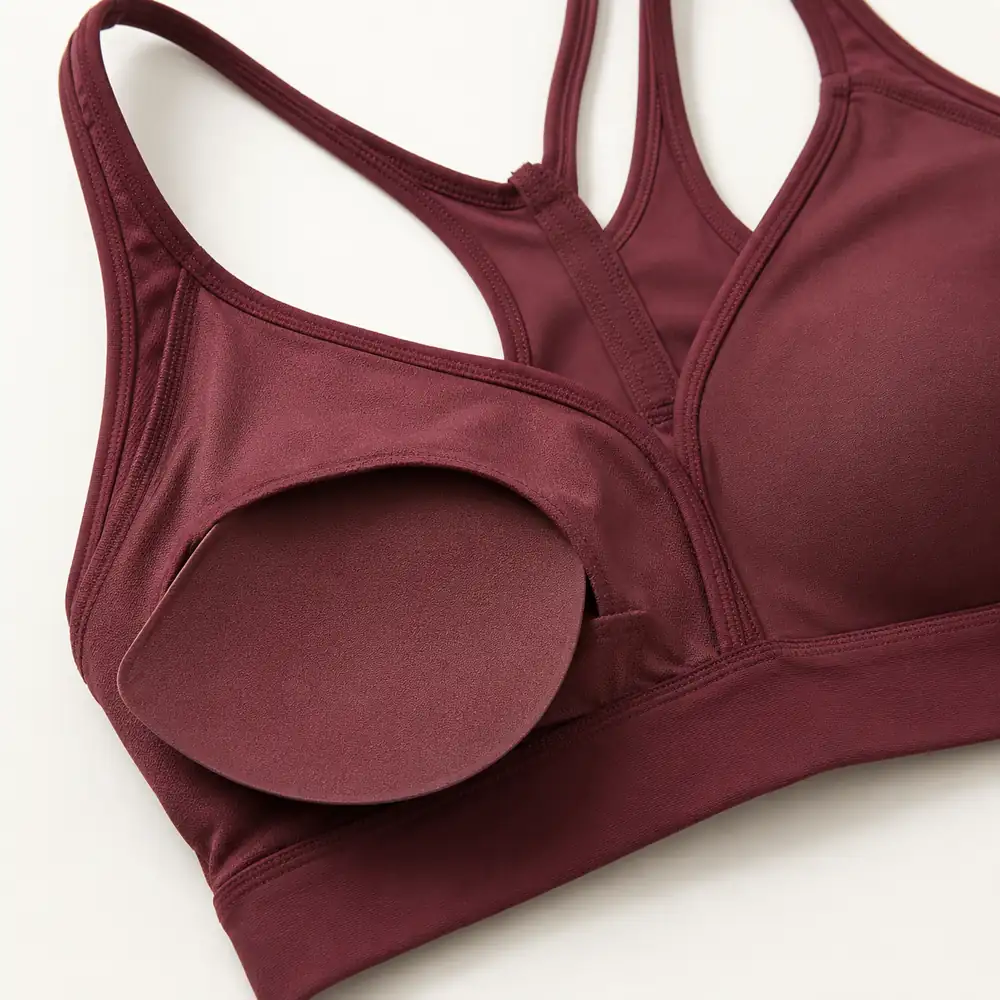
Body Fabric: The main body fabric establishes the stretch environment around the fixed cup.
Supporting Layer: A lining or supporting layer can help locate and stabilize the pad relative to approved bust and cup position.
Fixed Pad: Fixed pads may be secured by sewing, internal positioning or another validated attachment method.
Attachment Point: Left and right pads must remain aligned without unwanted hard spots or uneven height.
Underband Link: Pad location, band position, coverage and straps must work together within the complete Fit.
Control Elastic Components as Functional Construction Materials
Elastic used in underbands or straps must be selected and checked for width, recovery, attachment and compatibility with the body fabric. It is not only a decorative trim.
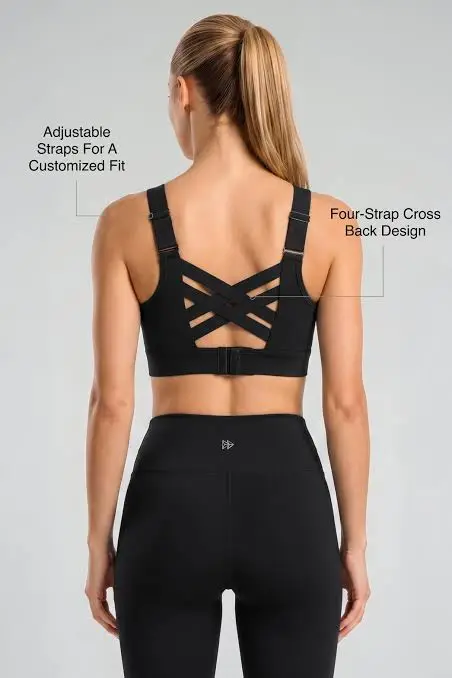
Underband Elastic
Underband elastic can provide a controlled recovery element around the lower bust. MOVEVOX reviews width, thickness, extension, recovery, surface and connection method before production.
Applied area: Underbust and lower sports bra edge.
Comfort / strength: Must balance stability with acceptable pressure during wear.

Strap Elastic
Elastic straps can be used in fixed, adjustable or multi-strap structures. Their elongation and recovery should remain compatible with the approved Fit and hardware.
Applied area: Shoulder straps and selected back structures.
Comfort / strength: Excessive tension can create pressure; insufficient recovery can reduce stability.
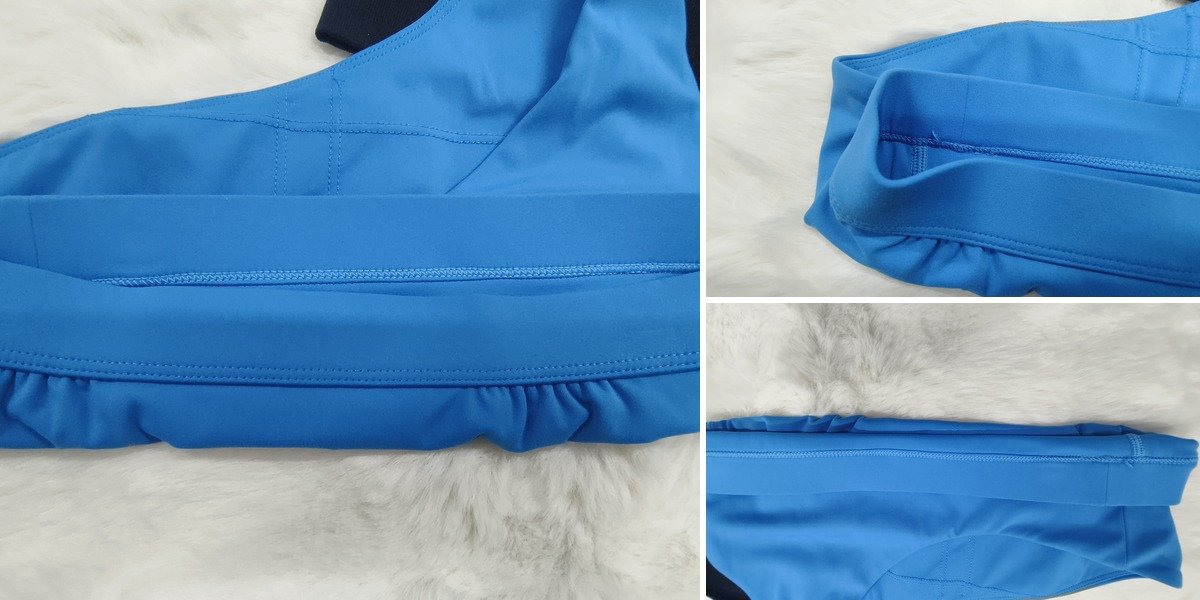
Elastic Join
Underband and strap elastic usually require a joint or termination point. Stitching and overlap should remain flat enough for the selected product and secure through stretch.
Applied area: Band joins, strap joins and component transitions.
Comfort / strength: Joint quality influences both durability and localized bulk against the skin.
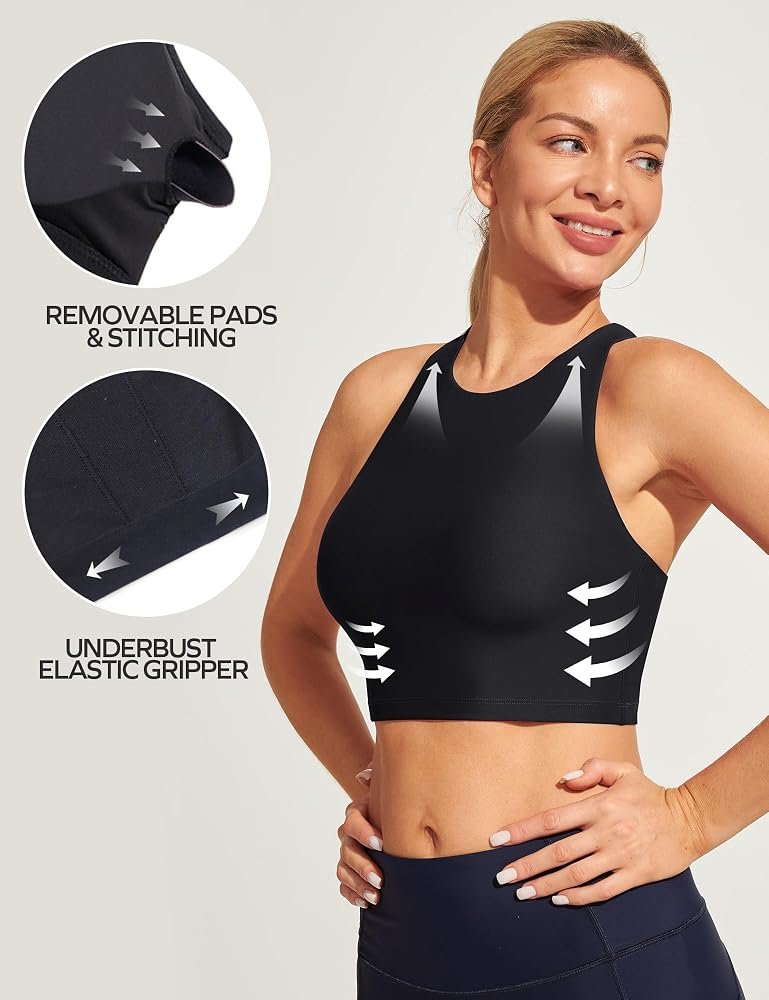
Binding Elastic
Elastic binding can finish necklines, armholes or internal openings while maintaining stretch. Feed ratio and recovery need to match the main fabric.
Applied area: Neckline, armhole and internal pad-pocket edges.
Comfort / strength: Incorrect tension can create waves, tight edges or garment distortion.

Adjustable Strap Hardware
Adjustable elastic can work with sliders, O-rings or other approved components. MOVEVOX checks direction, movement, compatibility and visible finish.
Applied area: Adjustable shoulder straps and selected closures.
Comfort / strength: Hardware must operate smoothly and remain free from obvious sharp edges.
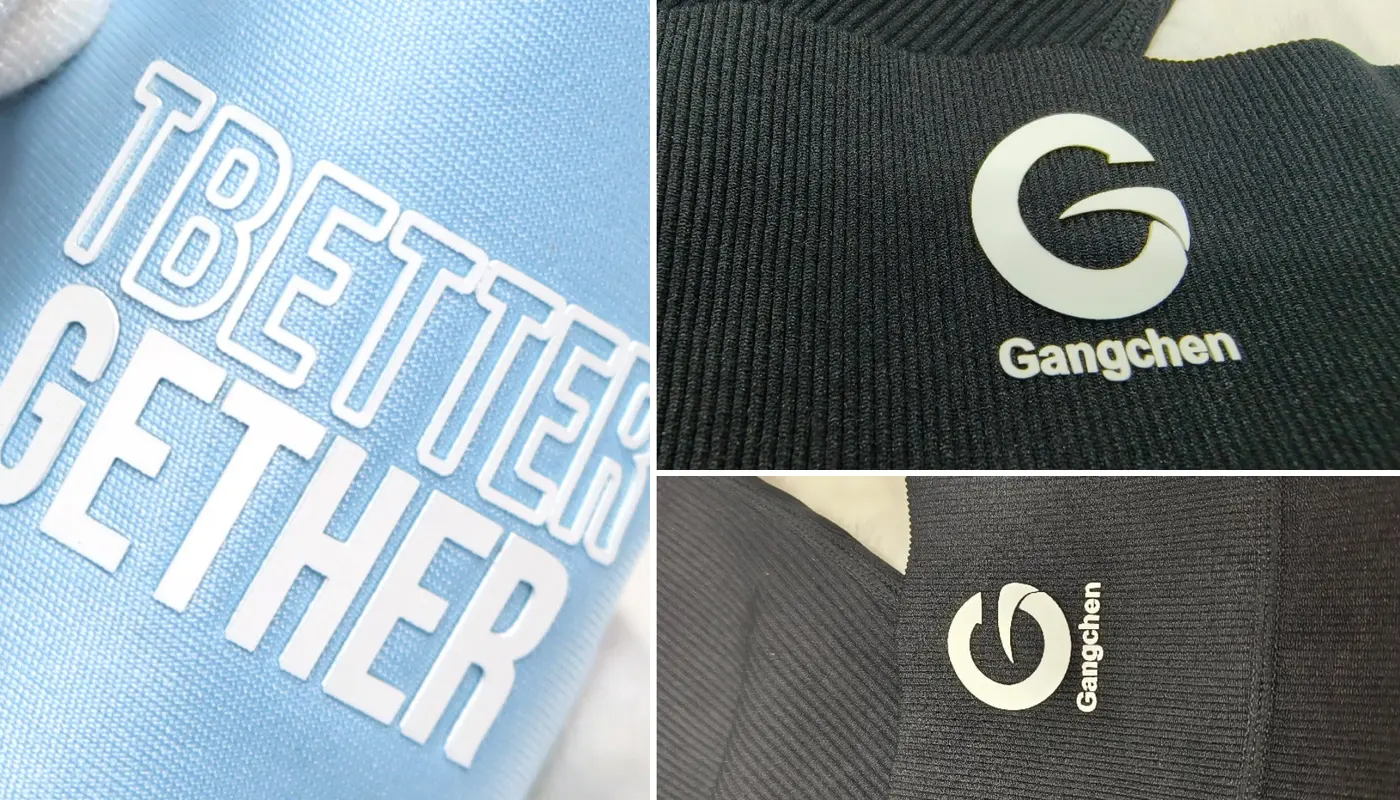
Branded Elastic
Custom-color or jacquard elastic can add brand identity to the underband or straps. Supplier MOQ and development timing can exceed the garment MOQ.
Applied area: Visible bands, straps and branded support structures.
Comfort / strength: Branding must not compromise stretch, recovery or the approved product Fit.
Use Zoned Support Where the Product Structure Requires It
MOVEVOX can create localized support through material layering, pattern negative ease or Seamless knit-density changes. Zoned support is an engineering direction, not a medical compression claim.

Underbust
The lower-bust zone can use elastic, fabric structure or engineered knitting to provide more controlled recovery than adjacent body areas. Final pressure remains Fit-dependent.
Side Wing
Side areas can use material, pattern or layering changes to increase containment and shape control while still allowing acceptable movement around the torso.
Front Cup
The front region may use double layers, pad pockets or knit-density changes to support coverage and garment structure according to the approved design.
Center Front
Center-front construction can influence separation, neckline stability and the way front panels or Seamless zones interact under stretch.
Upper Back
Back structures can use different knit or pattern relationships to balance the strap system and distribute garment tension across the intended area.
Strap Transition
The point where straps connect to the front or back body is a functional transition area. Reinforcement, knit structure or sewing construction must remain symmetrical.
Grade Sports Bras by Function, Not Proportion Alone
Size expansion should preserve the buyer’s intended coverage, stability and comfort. MOVEVOX can review critical sports bra functions through Grade Rules and representative Size Set Samples.
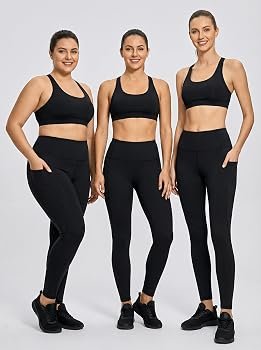
Bust and Underbust
Increasing bust and underbust dimensions by one uniform percentage can change the Fit relationship and the pressure created by the garment.
Bust and Underbust
Bust and underbust Grade Rules can be reviewed separately, with the physical relationship confirmed through representative Size Set Samples.
Evidence: Measurement Chart
Strap Width
Leaving the same strap geometry across all sizes may not reflect the buyer’s intended pressure distribution or visual balance.
Strap Width
The buyer can define strap-width and length logic by size, with MOVEVOX translating approved requirements into patterns and production specs.
Evidence: Grade Rule
Coverage
A simple enlargement may alter neckline, side coverage or armhole relationships even if overall garment dimensions technically increase.
Coverage
Coverage is reviewed as a body-fit requirement and can be checked on selected sizes before the full range enters production.
Evidence: Size Set
Underband
Scaling the entire body without separately considering band recovery can create a different stability or pressure experience across the range.
Underband
Underband dimensions and material behavior are reviewed together with the buyer’s Fit language and approved garment sample.
Evidence: Fit Review
Pad Position
Cup or pad locations can become visually or functionally misaligned when the garment grows without controlled reference points.
Pad Position
Pad position, cup height and pocket dimensions can be tied to POMs and reviewed for representative sizes before bulk release.
Evidence: Pad Check
Turn the Base Size Into a Controlled Size Range
The base size is only the beginning. MOVEVOX can apply customer Grade Rules, prepare Size Set Samples and review critical functional areas before all sizes enter bulk production.
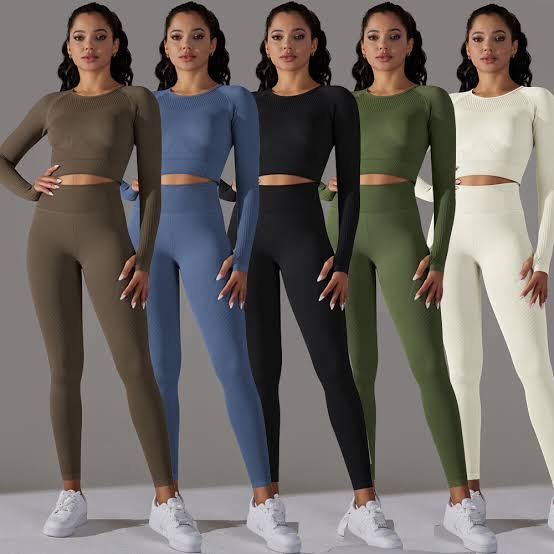
Base Size
The approved base-size sample establishes the main Fit relationship between the buyer’s Measurement Chart, selected material and physical garment. It becomes the starting reference for grading, but does not automatically prove additional sizes.
POM Definition
Points of Measurement must be defined clearly enough for pattern, sample and QC teams to use the same measurement method. Sports bras can include upper bust, underbust, cup height, strap length, body length and other buyer-defined POMs.
Grade Rules
The customer’s Grade Rules determine how each measurement changes across sizes. MOVEVOX uses the approved rules rather than applying one universal percentage to every body and functional area.
Risk Sizes
Selected smaller or larger sizes may require additional attention where coverage, strap position, underband pressure or pad location could change more noticeably from the base-size relationship.
Size Set
Representative sizes can be produced and measured to show how the Grade Rules translate into physical garments. Fit comments can then be converted into a revised controlled version if required.
Approved Grade
Once the buyer accepts the Size Set logic, the final measurement and pattern versions become the reference for bulk production and measurement inspection.
Eight Sports Bra Failure Points to Control Early
Sports bra quality depends on Fit, components, construction and bulk consistency. Identifying likely failure points during development gives the project team more opportunities to correct them before shipment.
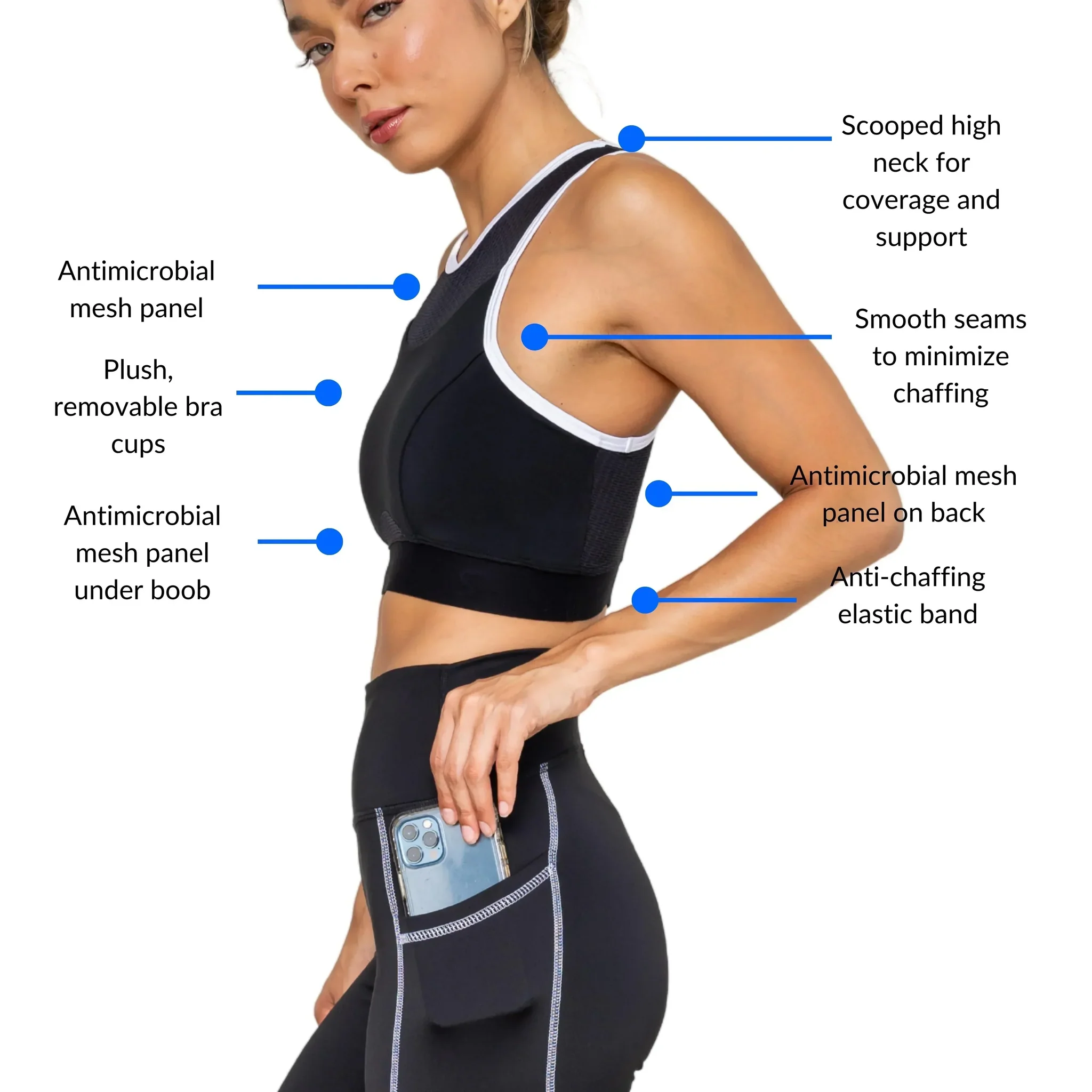
Band Ride-Up
A band that moves upward during activity can indicate a mismatch between underbust dimensions, elastic recovery, body fabric or overall Fit. MOVEVOX reviews underband position during sampling and checks relevant dimensions and elastic execution again during production.
Strap Slip
Straps can slide when length, angle, attachment or material recovery do not match the approved Fit. Fixed and adjustable systems therefore need physical wear review, symmetry checks and production control rather than only a flat strap-length measurement.
Strap Pressure
Excessive tension or very narrow straps can create localized pressure even if the garment appears visually stable. High-support direction cannot be achieved simply by shortening straps; the underband and body structure must work together.
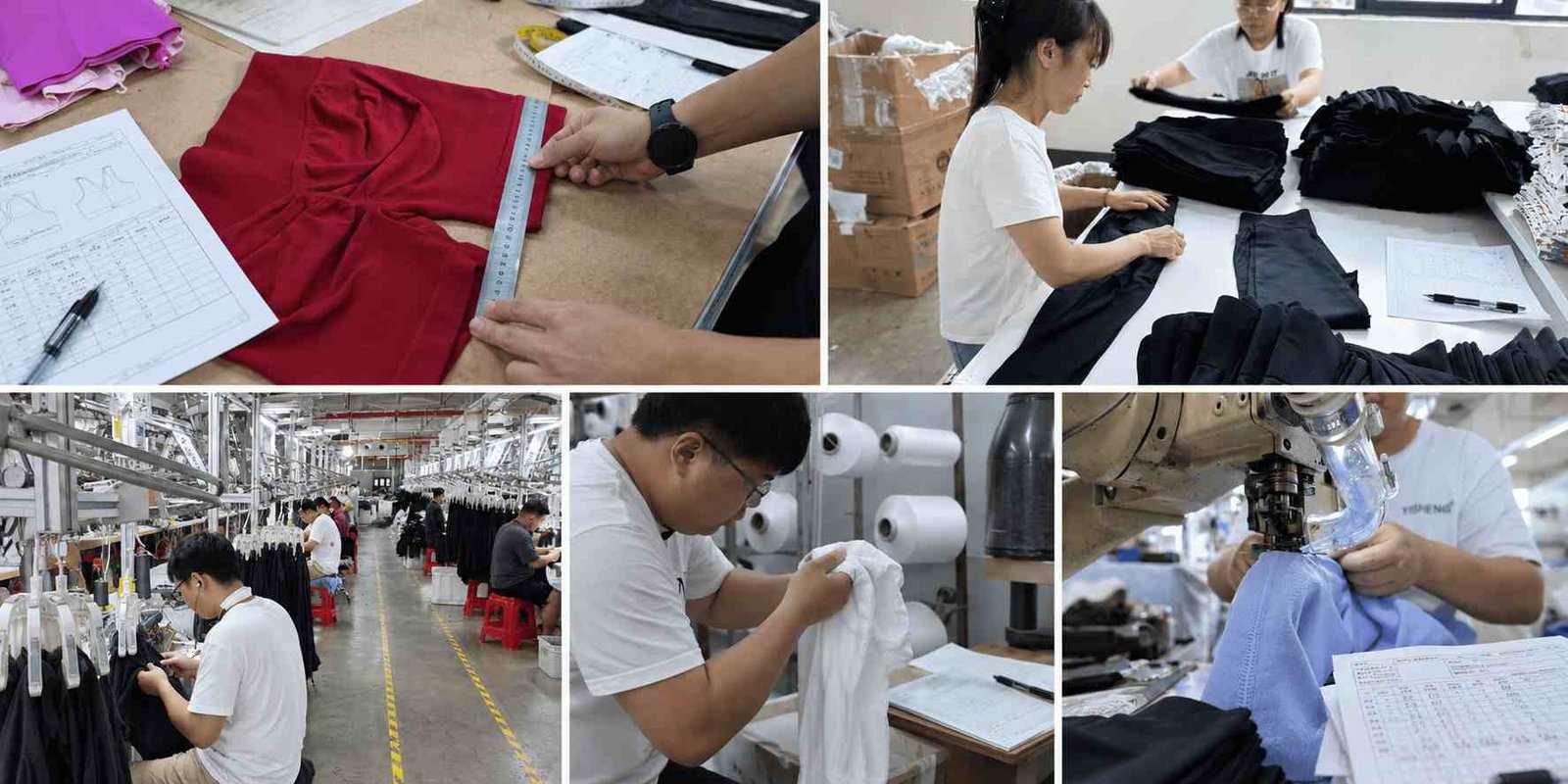
Pad Shift
Removable pads can rotate, fold or become asymmetric when the pocket is too large or the opening and pad dimensions are not balanced. QC checks pad quantity, position, symmetry and insertion before packing.
Pad Show-Through
Pad edges can become visible when pad shape, thickness, outer-fabric stretch or color creates surface pressure. Sample approval should evaluate the pad together with the actual approved material and garment Fit.
Coverage Drift
Neckline, side coverage or armhole relationships can change after sample revision or grading. Final patterns and measurements should remain linked to the buyer’s latest approved sample rather than old development versions.
Asymmetry
Sports bras contain many paired structures: straps, armholes, pad positions and seam lines. Differences between left and right sides can affect appearance and Fit, so symmetry is checked during sampling and finished-garment inspection.
Measurement Drift
Bulk garments can move outside approved tolerance through material behavior, cutting, sewing, knitting or finishing. First Article, in-line and finished measurements help identify dimensional drift before shipment release.
Build Sports Bra Fabric Around the Product Requirement
MOVEVOX works with several activewear material families. Composition and GSM ranges below are engineering references; final bulk approval follows the specific material code, supplier documentation and physical sample.
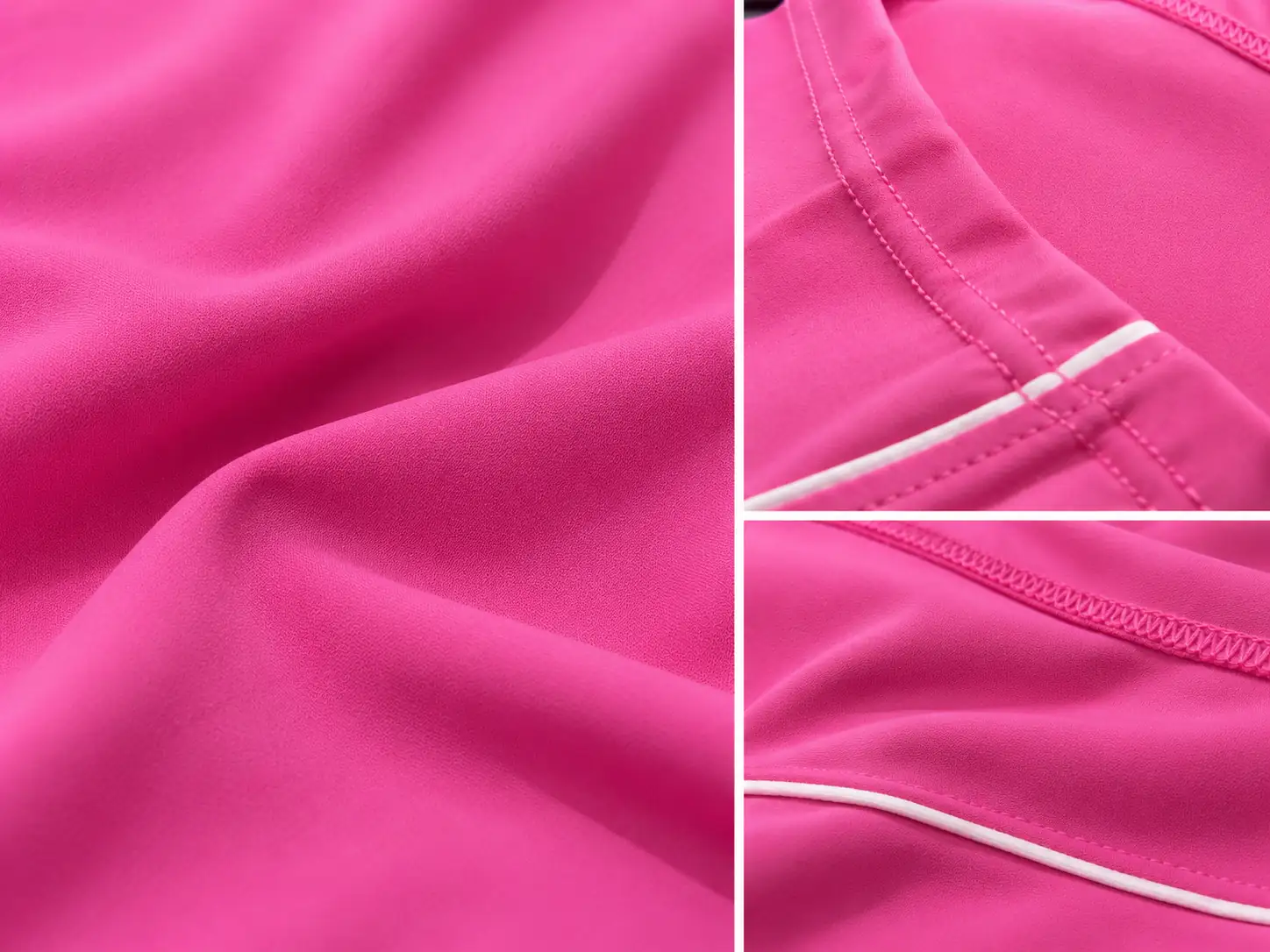
Nylon Stretch
Composition: Approx. 70–82% Nylon / 18–30% Spandex
Weight: Approx. 190–280 GSM
A core MOVEVOX activewear material family suitable for sports bras, leggings, shorts and selected compression products. Final handfeel and support depend on construction, weight, elastane content and garment Fit.
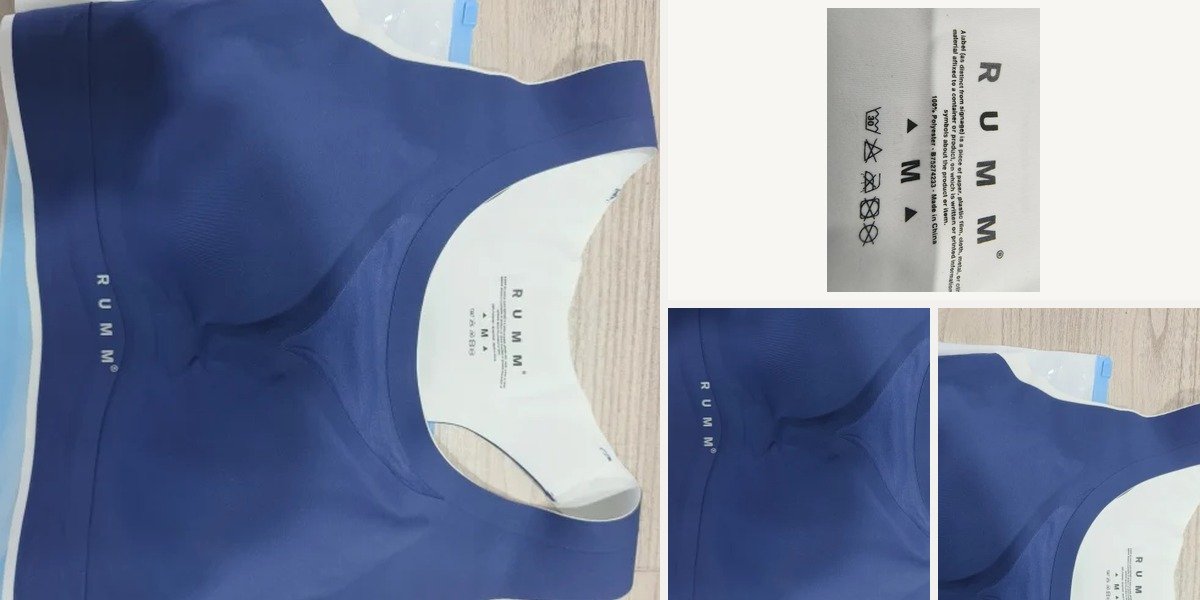
Polyester Stretch
Composition: Approx. 75–90% Polyester / 10–25% Spandex
Weight: Approx. 160–250 GSM
A stable training-material route with good process flexibility. For close-to-skin premium bra projects, handfeel, surface, static behavior and recovery should be confirmed before approval.

Recycled Nylon
Composition: Approx. 70–82% Recycled Nylon / 18–30% Spandex
Weight: Approx. 190–270 GSM
Suitable where a buyer has a recycled-material requirement. Recycled claims are used only when the actual supplier certificate, scope and traceability documents can be verified.
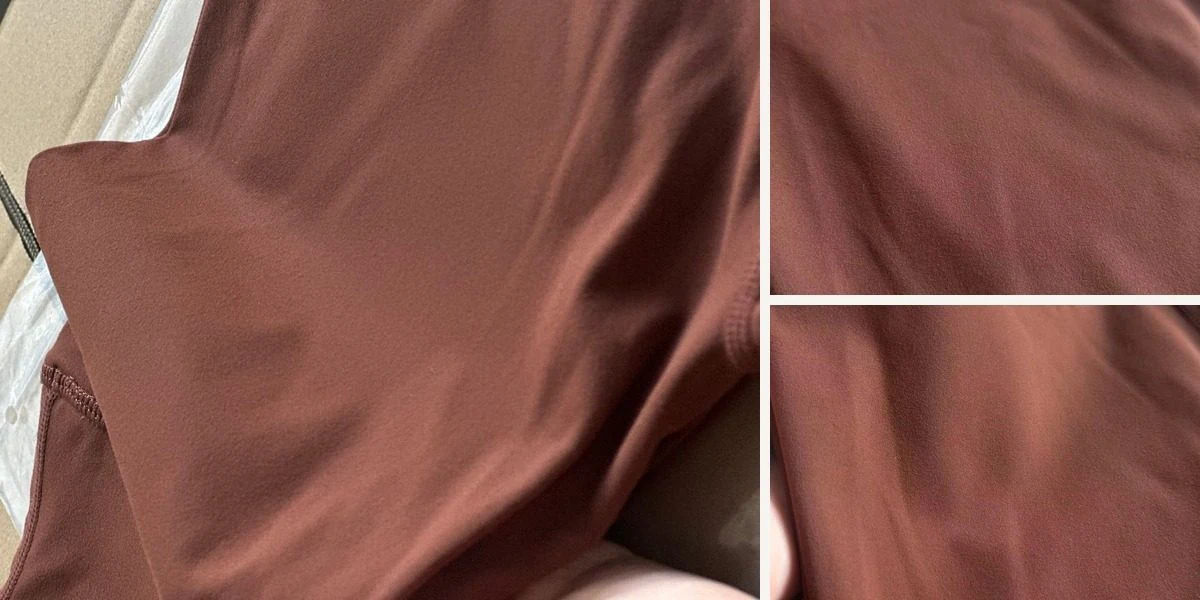
Naked Feel
Composition: Typically approx. 75–82% Nylon / 18–25% Spandex
Weight: Approx. 200–240 GSM
A soft, low-friction direction suitable for Yoga and selected low-to-medium support sports bras. It should not be treated as the default route for high structural support.
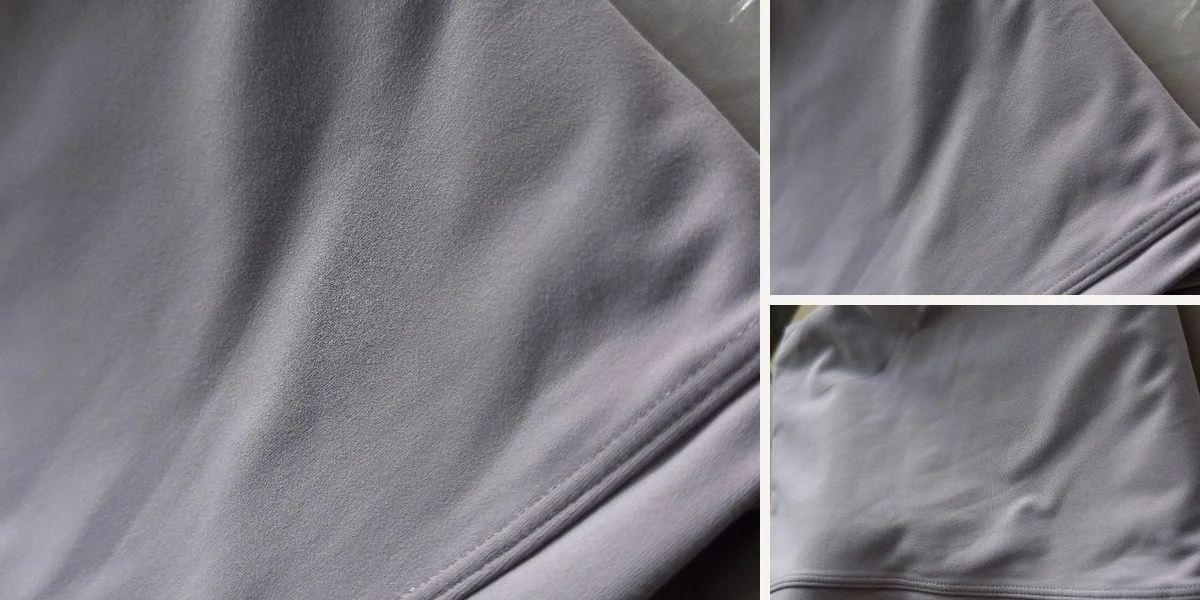
Brushed Stretch
Composition: Typically approx. 75–82% Nylon/Polyester / 18–25% Spandex
Weight: Approx. 210–270 GSM
Brushed stretch material can suit softer training and seasonal activewear. Pilling, surface direction, color stability, logo compatibility and batch handfeel require particular attention.

Ribbed Stretch
Composition: Approx. 75–90% Nylon/Polyester / 10–25% Spandex
Weight: Approx. 220–320 GSM
Ribbed materials provide visible structure and body coverage but require checks for direction, recovery and opening under stretch. They can be used in both Cut & Sew and Seamless development routes.

Compression Fabric
Composition: Approx. 65–78% Nylon/Polyester / 22–35% Spandex
Weight: Approx. 230–320 GSM
A stronger activewear material direction for compression-oriented garments and support bras. MOVEVOX does not describe this material as medical compression without the required specialized evidence.
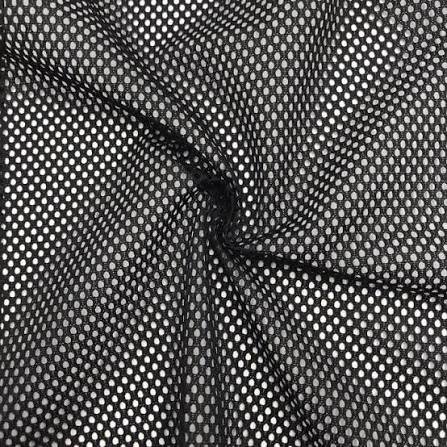
Mesh
Composition: Polyester/Nylon + Spandex, project-specific
Weight: Approx. 90–180 GSM
Mesh can be used for backs, side panels, lining or localized visual structures. Lightweight mesh is not treated as the main support material where strong coverage or high compression is required.
Compare Real Fabric Candidates Before Approving Bra Fit
Composition alone cannot predict final Fit. MOVEVOX compares actual material candidates through stretch, recovery, handfeel, weight and intended support direction before the approved fabric is locked.

Soft Nylon
A standard Nylon/Spandex activewear route can balance softness, stretch and recovery across several sports bra structures. The exact composition and GSM should follow the selected supplier material code.
MOQ note: Standard or available colors may support the garment baseline MOQ.

Naked Feel
A fine, soft and generally matte Nylon/Spandex direction suitable for lower-to-medium support concepts where comfort and close-to-skin handfeel are important.
MOQ note: Custom color can be higher than garment MOQ.

Compression
A denser, higher-recovery material direction can support more structured training concepts. Fit and comfort should still be evaluated through actual samples rather than GSM alone.
MOQ note: Material and custom-color conditions apply.

Ribbed
Rib structure creates stronger visual texture and changes stretch behavior compared with smooth fabric. Direction and recovery need to be approved on the actual sports bra.
MOQ note: Supplier availability and structure affect MOQ.
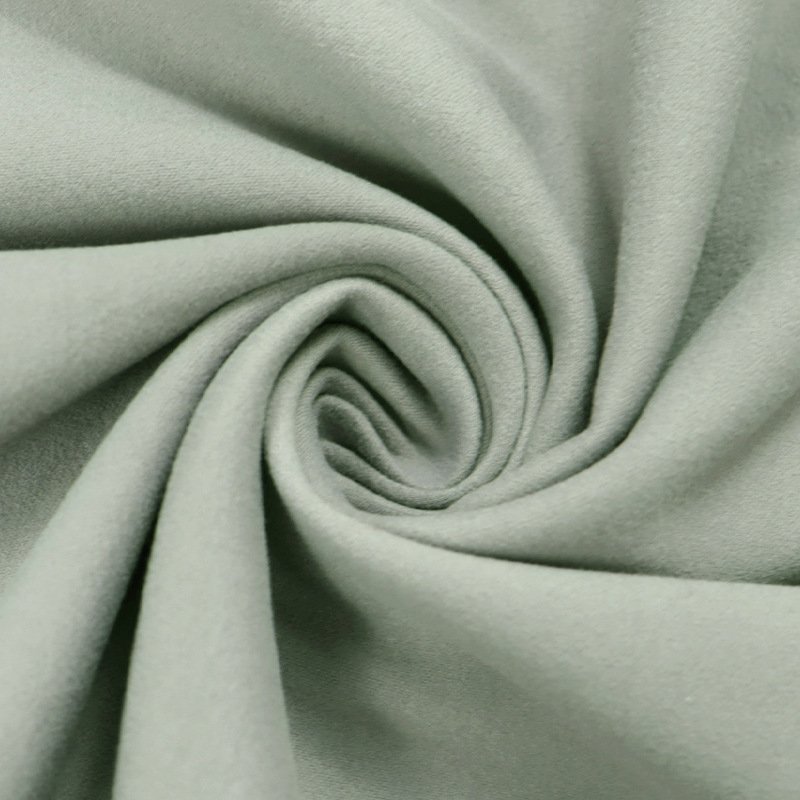
Brushed
Brushed stretch materials provide a softer surface and seasonal feel. Surface durability, pilling and branding compatibility should be considered during sampling.
MOQ note: Custom finish or color may increase minimums.
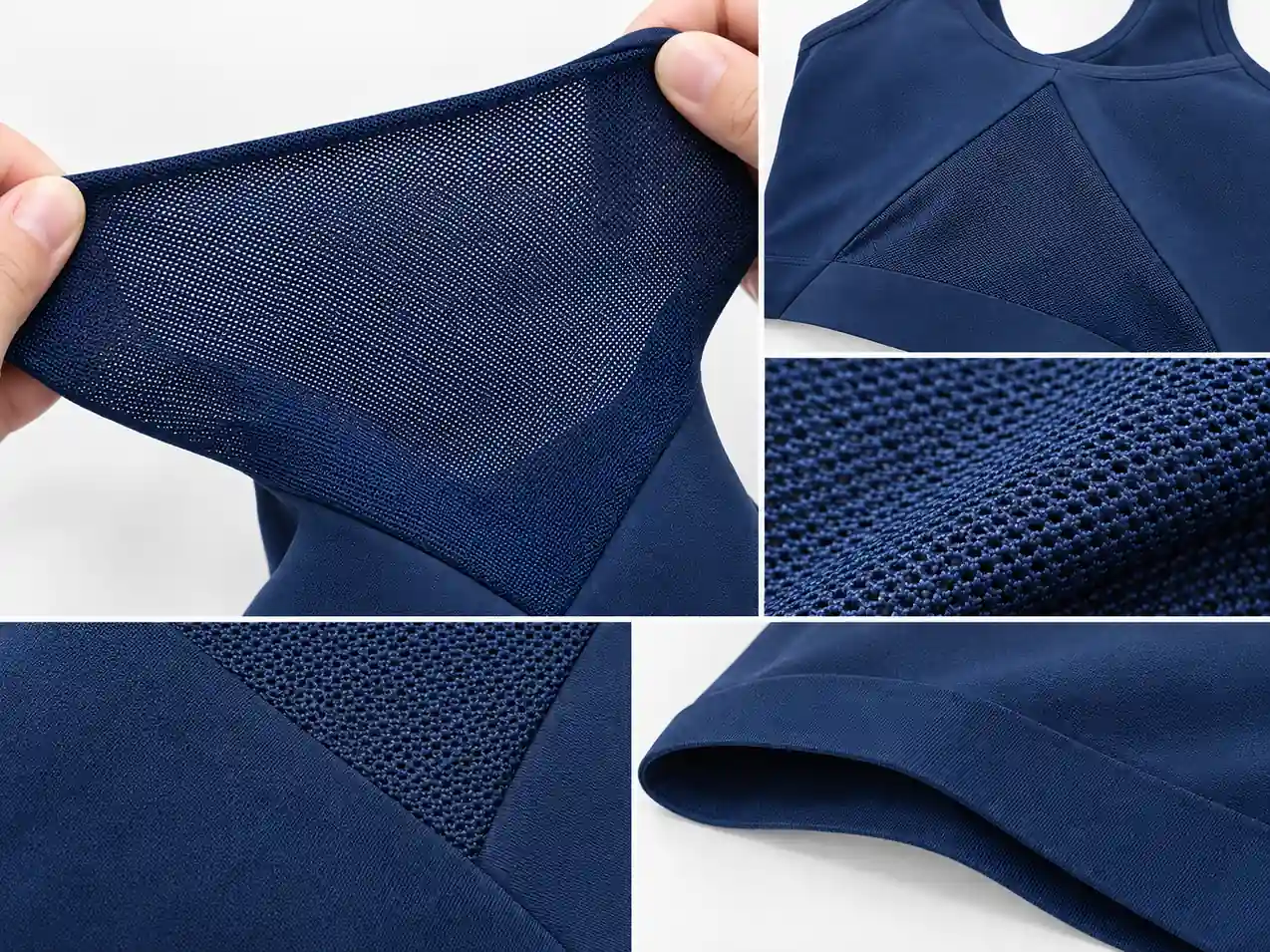
Mesh
Mesh is better used as a localized ventilation, lining or aesthetic structure than as an automatic high-support body material. Hole stability and transparency require review.
MOQ note: Specific mesh structure confirmed by supplier.

Seamless Yarn
Seamless sports bras are built from yarn, program, knit organization and regional density rather than a cut fabric roll. Yarn specification must match the selected machine and size.
MOQ note: Custom-dyed yarn usually has separate minimums.

Recycled Nylon
Recycled Nylon/Spandex can be evaluated for brands with material goals. Certification and recycled-content claims depend on the actual supplier, material and transaction documentation.
MOQ note: Often higher than standard available materials.
Match Every Performance Claim to the Right Evidence
MOVEVOX separates structural facts, internal validation, supplier documentation and third-party testing. A stronger claim requires stronger and more directly traceable evidence.
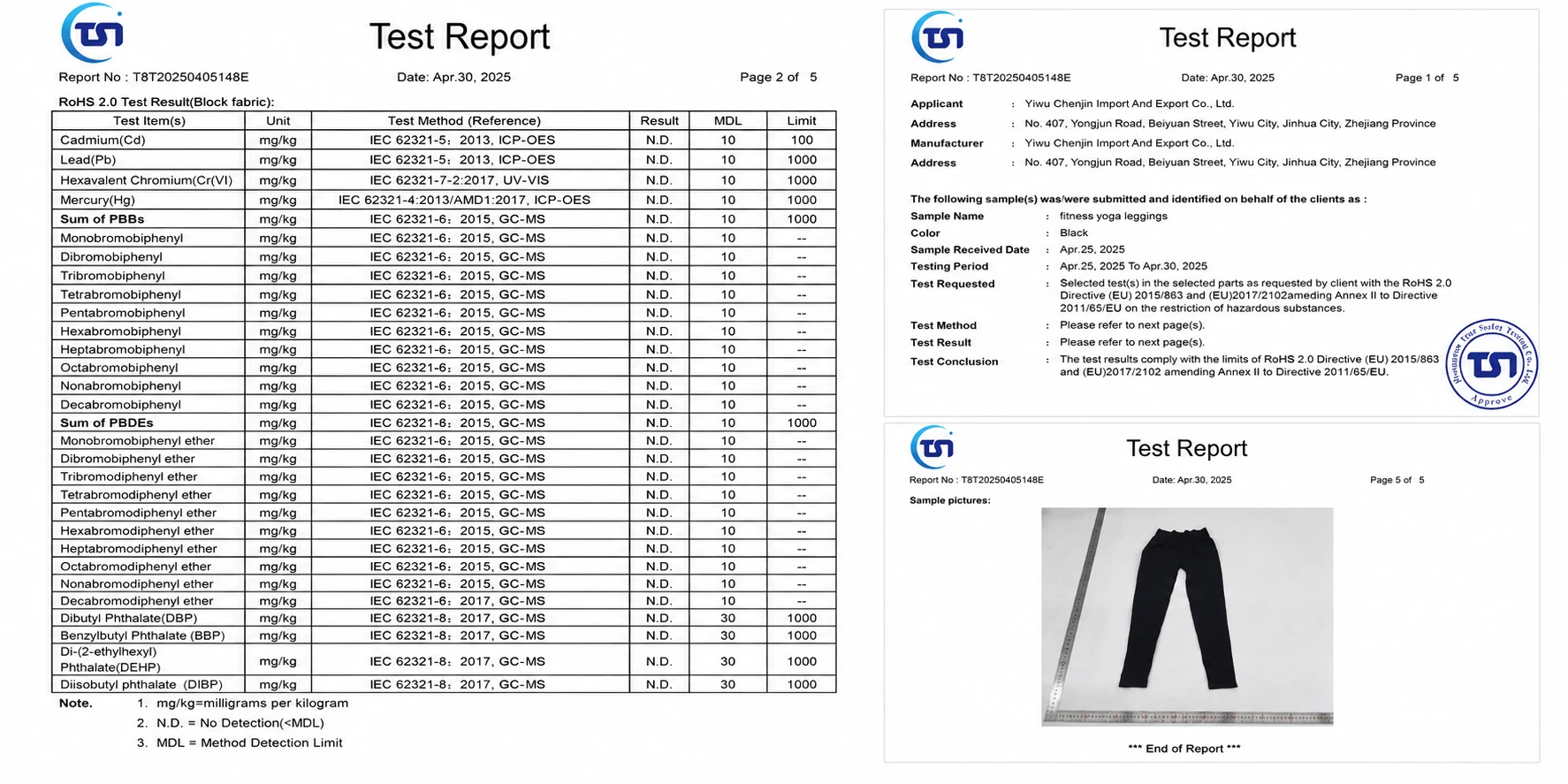
Third-Party Report
Source / validity: Qualified laboratory; report-specific date and scope.
Specific numerical or regulatory claims should be supported by a report that identifies the actual material or sample. Evidence does not automatically extend to another color, finish, fabric or garment structure.
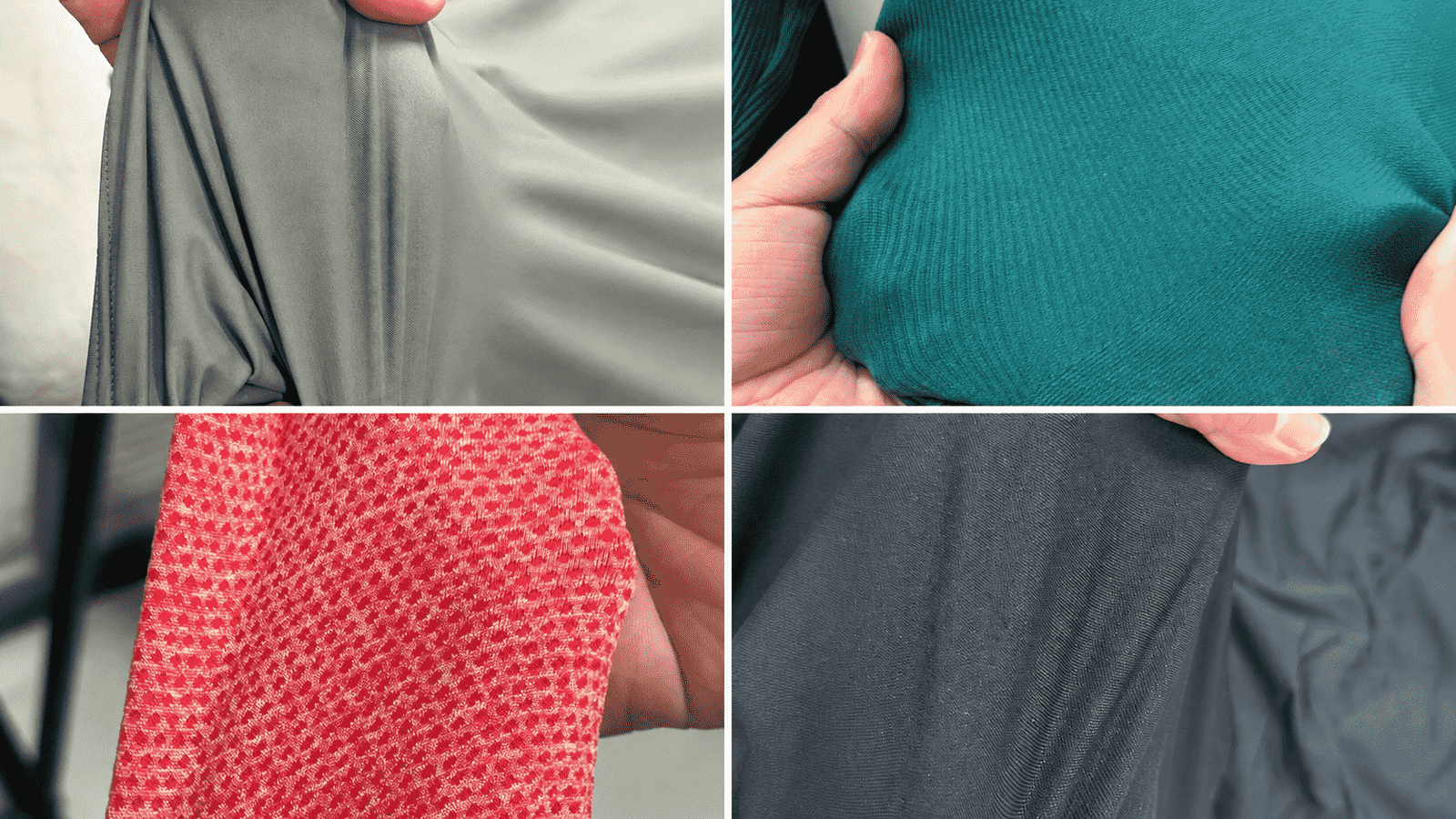
Supplier Test File
Source / validity: Material supplier; material-code and batch dependent.
Supplier technical files can support material characteristics when the approved production material remains traceable to the documented specification. A supplier file does not automatically prove finished-garment performance.
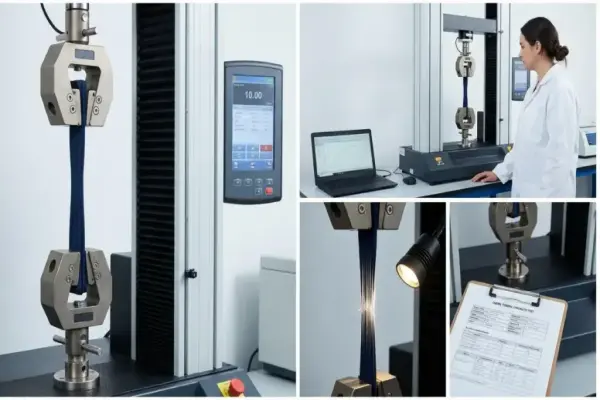
Internal Test Record
Source / validity: MOVEVOX internal project record; style/version specific.
Internal stretch, wash, Fit or product observations can support project-level decisions when the sample, material and version remain identifiable. They should not be presented as independent laboratory certification.
Approved Sample
Source / validity: Buyer-approved physical reference; project specific.
The Approved or PP Sample provides strong evidence for construction, appearance and Fit reference. It does not itself establish an independent numerical laboratory value.
Structural Evidence
Source / validity: Physical construction or documented technical structure.
Statements such as “double-layer front,” “removable pad pocket,” “engineered mesh zone” or “28 Santoni machines” can be supported by direct structural or factory evidence.
Buyer Validation
Source / validity: Customer-approved project requirement or evaluation.
Where a brand defines its own wear, Fit or testing process, approval can be used within the project scope. It should not be converted into a universal claim for unrelated customers.
Choose the Manufacturing Route From Bra Structure
MOVEVOX operates both Seamless and Cut & Sew systems. Sports bra route selection should follow the actual structure, material, padding, pattern and branding requirements.
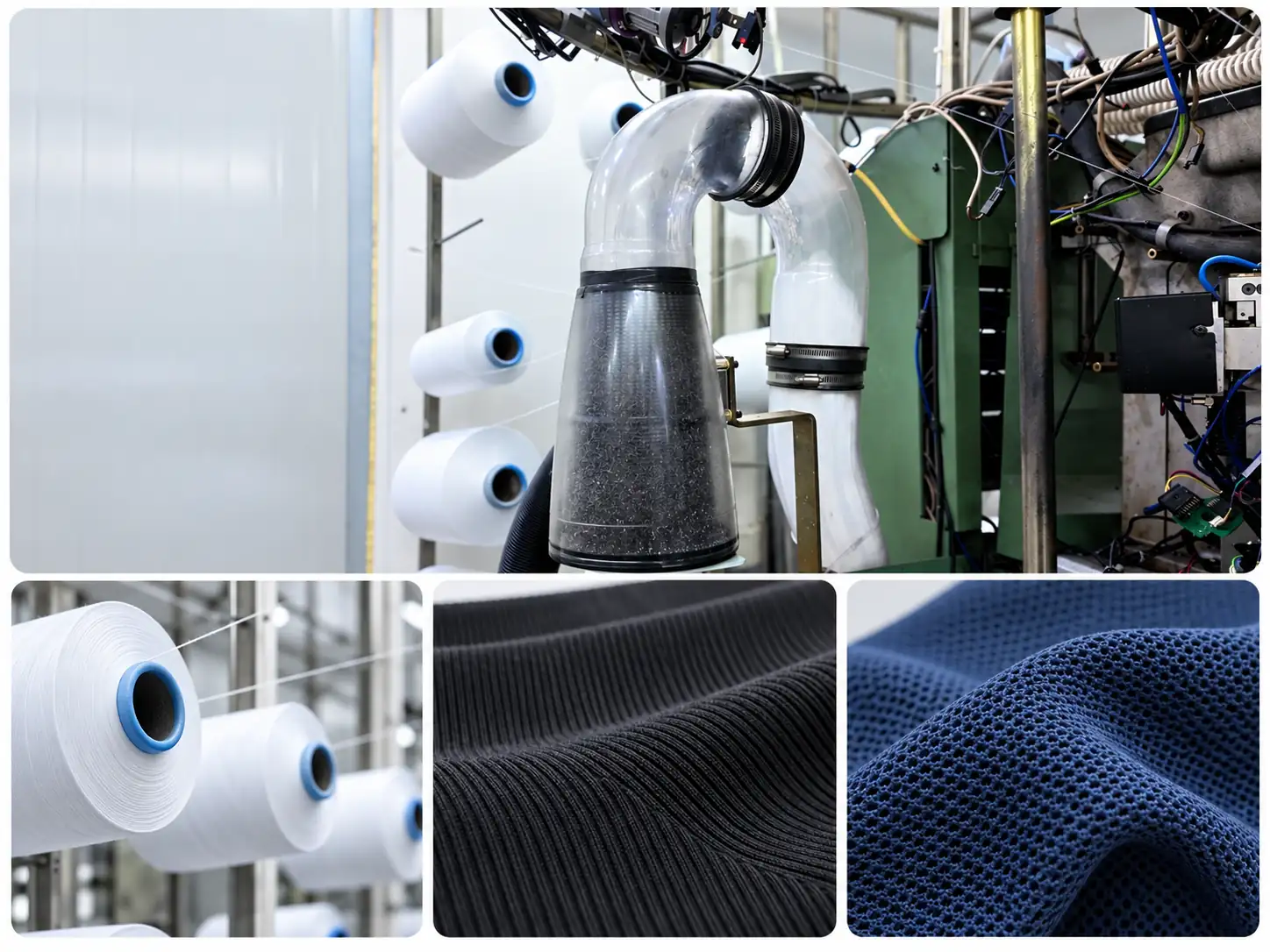
Seamless Route
Seamless sports bras are engineered through yarn, circular knitting programs, density, rib, mesh, jacquard and regional structure rather than conventional cut-piece construction. MOVEVOX’s Yiwu core base has 28 Italian Santoni seamless knitting machines.
This route is particularly relevant when the design depends on integrated knit zones, reduced traditional seam lines or engineered texture. Seamless does not mean the garment has absolutely no sewing; necklines, shoulder areas, pad openings, labels or other parts may still require post-knitting assembly and finishing.
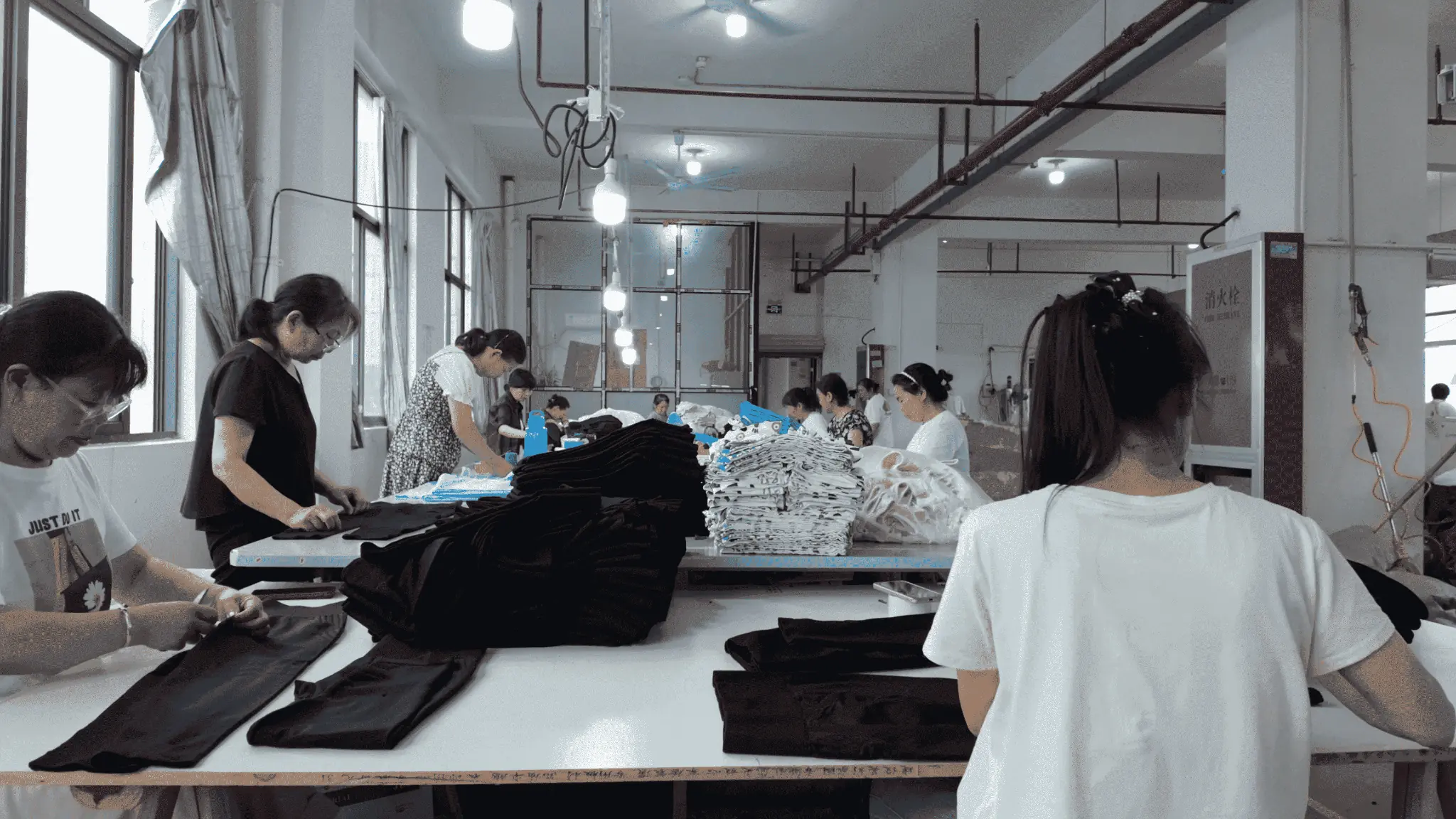
Cut & Sew Route
Cut & Sew sports bras begin with finished fabric, a production pattern and separate cut pieces. The route gives greater freedom for complex panel shapes, multiple materials, binding, pad or cup structures, elastic, hardware and specific seam placement.
MOVEVOX’s core system includes approximately 24 garment-production machines, including lockstitch, overlock, coverstitch and Flatlock equipment. Complex high-support, molded-cup or multi-material projects may require additional specialist supply-chain resources and technical evaluation before the final route is approved.
The Equipment Behind MOVEVOX Seamless Sports Bra Production
The Yiwu core base combines Santoni knitting with downstream sewing and finishing equipment. Equipment is presented as manufacturing evidence, not as proof of a specific support rating.
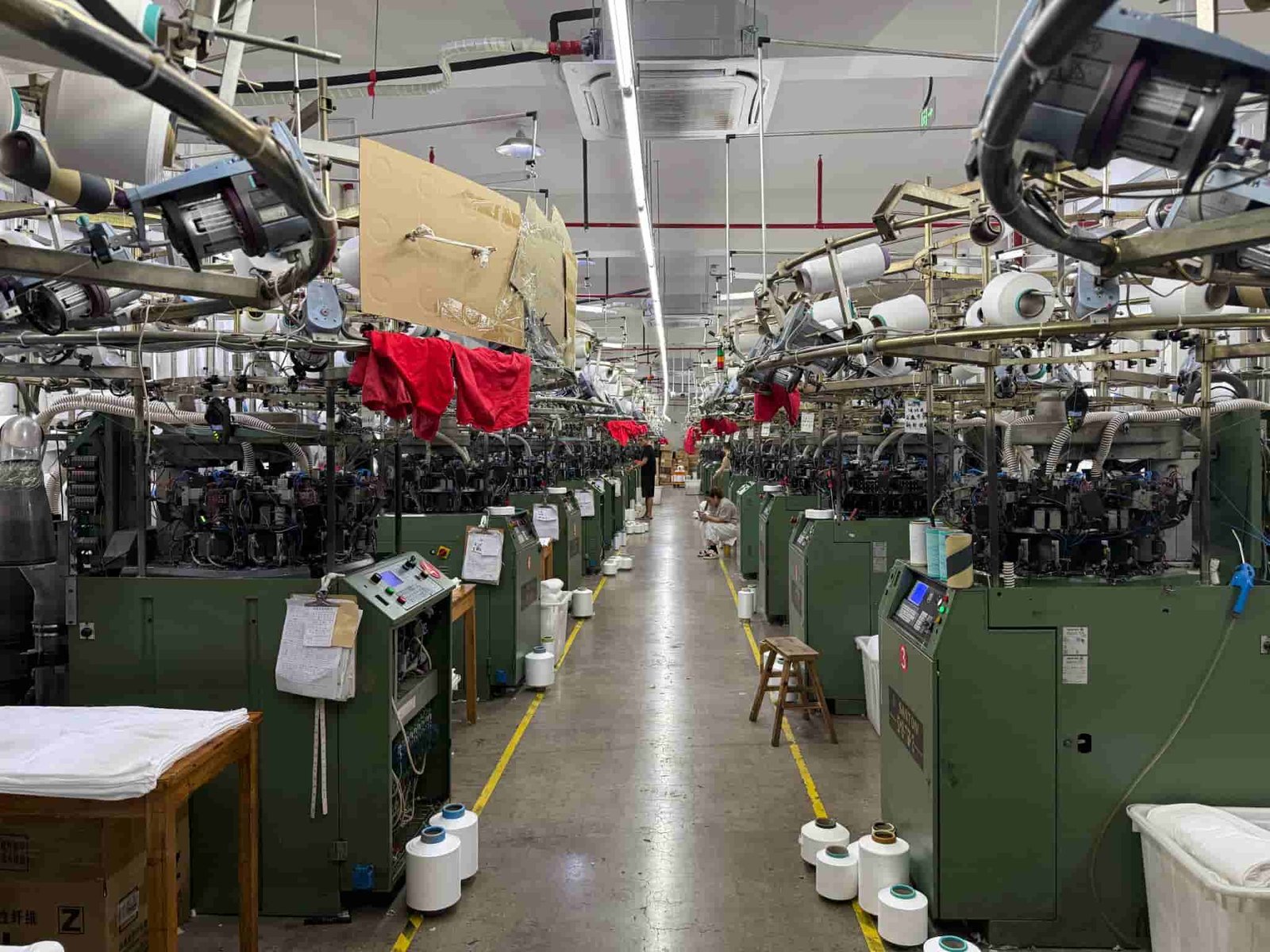
Santoni SM8 Platform
Twenty-eight Italian Santoni seamless knitting machines form the core Seamless production unit. They are used for sports bras, leggings, shorts, tops and other fitted activewear.
Equipment fact: 28 machines at Yiwu core base.
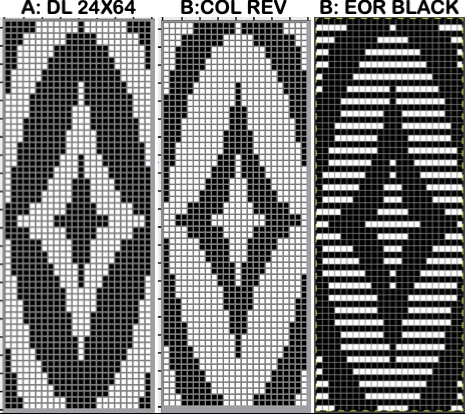
Knit Program Control
Seamless production uses Style, Size, Yarn Lot and Program Version as production references. Program control influences structure, density, mesh, rib and localized support zones.
Equipment fact: Program matched to style and machine.
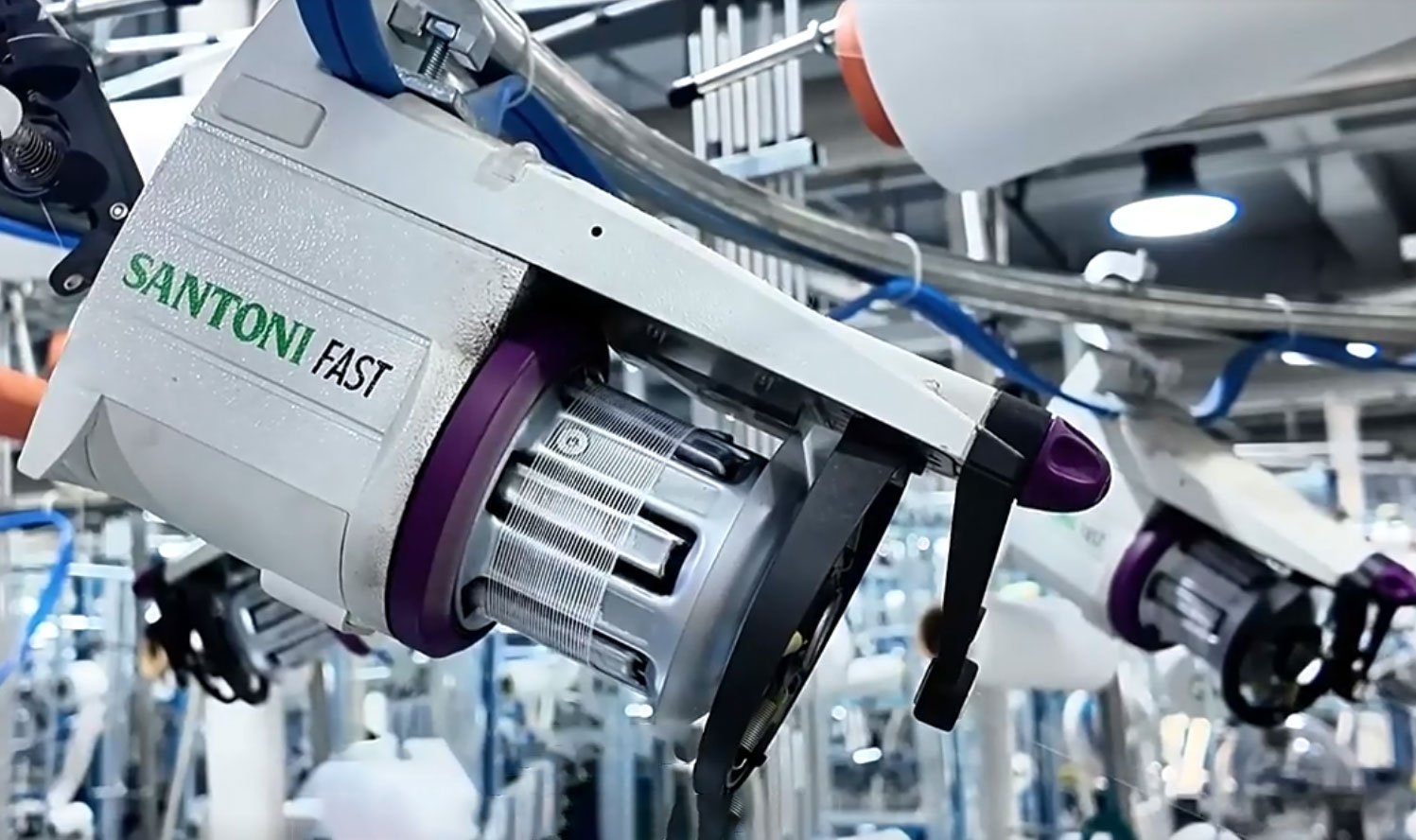
Multiple Cylinder Sizes
The existing machine group includes different cylinder configurations to support common seamless activewear sizes and structures rather than treating all 28 machines as identical.
Equipment fact: Mainly approx. 13–17 inch cylinders.
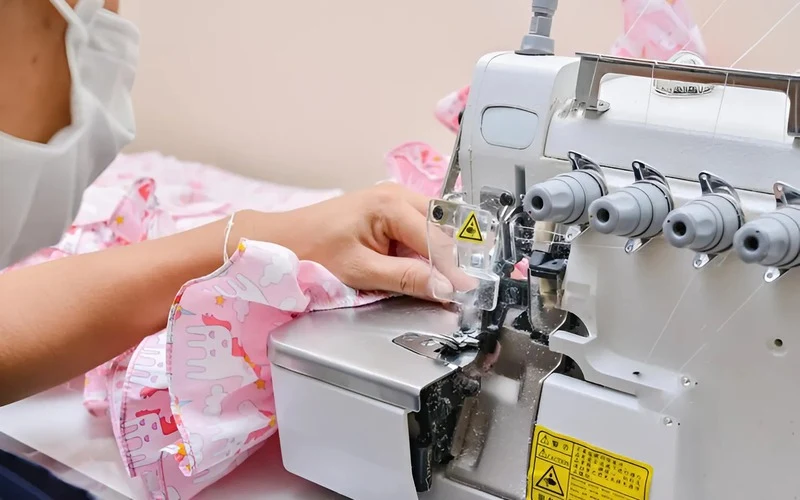
Overlock Equipment
Core production includes approximately six industrial overlock machines used for high-stretch garment assembly and finishing where elastic seam extension is required.
Equipment fact: Approx. 6 overlock machines.
Coverstitch Equipment
Approximately five coverstitch machines support stretch edges, hems and elastic-fabric finishing where surface appearance and extension need to remain controlled.
Equipment fact: Approx. 5 coverstitch machines.
Flatlock Equipment
Approximately six Flatlock / four-needle-six-thread machines are used for fitted activewear including sports bras, helping create flatter high-stretch seams where required.
Equipment fact: Approx. 6 Flatlock machines.
Lockstitch Equipment
Approximately five industrial lockstitch machines support positioning, straight sewing, selected component attachment and other operations not handled by high-stretch seam equipment.
Equipment fact: Approx. 5 lockstitch machines.
Cutting Equipment
Cut & Sew support areas include industrial cutting tables, straight-knife cutting and precision cutting tools for fabric-based sports bra components and related activewear.
Equipment fact: Core cutting equipment supports small and bulk work.
How Cut and Sew Builds More Structured Sports Bras
Cut & Sew gives brands greater freedom over pattern geometry, layered construction, elastics, cups, straps and multiple materials. MOVEVOX combines development, core garment equipment and controlled specialist resources.
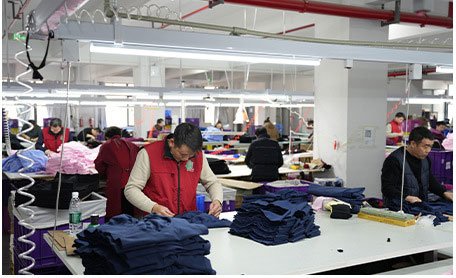
Pattern and Cutting
Cut & Sew starts from the buyer’s approved Measurements, Fit and construction requirements. MOVEVOX’s pattern team translates these inputs into production pattern pieces, with front, back, lining, strap, binding, underband and pad-related structures defined before bulk cutting. Fabric direction, stretch behavior and paired-component symmetry require attention because a visually small pattern error can become more obvious once high-stretch material is worn on the body.

Bra Construction
Sports bra sewing can combine overlock, coverstitch, Flatlock, lockstitch, binding, elastic, pad pockets and layered front or back structures. The chosen construction depends on material and the brand’s approved product. MOVEVOX does not apply one seam type to every bra. High-stretch edges, strap attachments and underbands are reviewed for extension and recovery, while complex pads or specialist components are assessed before bulk.
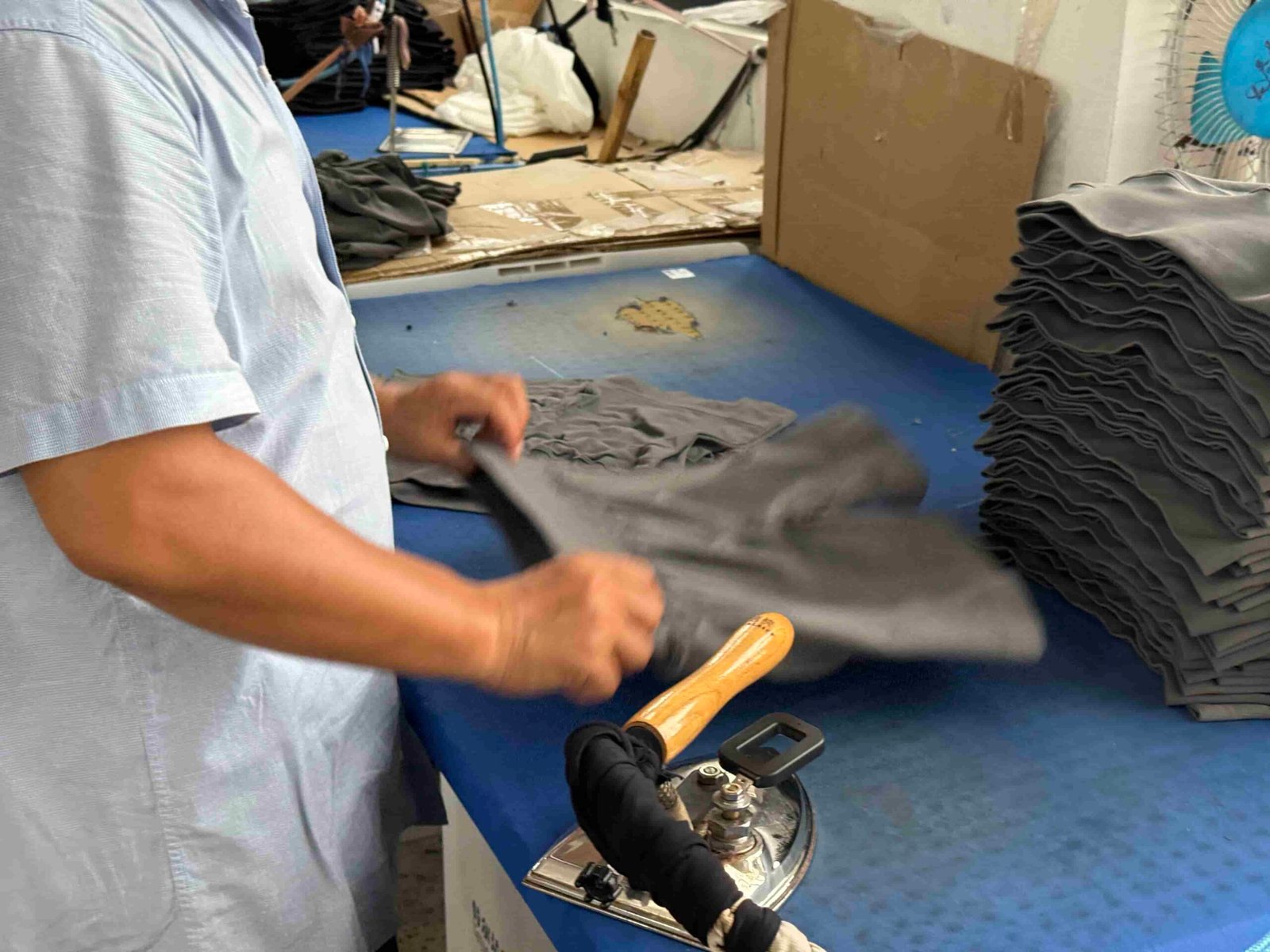
Finishing and QC
After main construction, finished sports bras are checked for measurements, symmetry, strap position, pad configuration, seams, branding, labels and overall appearance. MOVEVOX’s QC scope also includes functional components such as elastics and pads. The goal is to keep the final garment aligned with the Approved Sample and buyer requirements before packing rather than treating sewing completion as automatic quality release.
Enter the Development Process at the Right Stage
Brands can enter MOVEVOX with different levels of product maturity. The work changes by stage, but buyer approval remains necessary before a sports bra becomes a bulk-production standard.
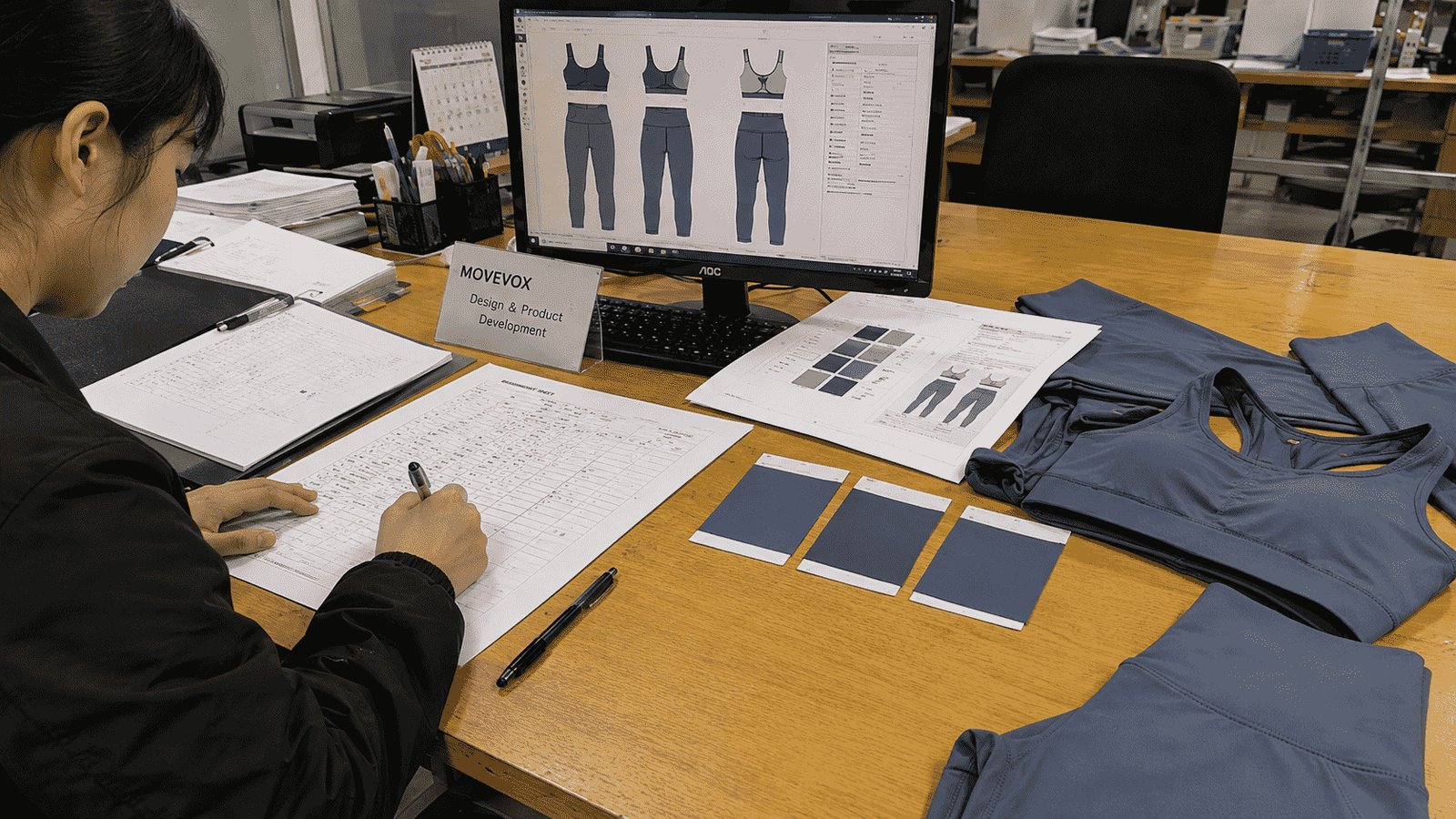
Concept
A concept-led project starts with a sketch, image, legal physical reference or clear description of the intended sports bra. MOVEVOX helps translate the direction into material, dimensions, structure and sample requirements. Support direction is treated as a design target that still requires physical validation.
- Target consumer and activity direction
- Product concept or legal reference
- Expected quantity and launch timing
- Technical gap review
- Material and route recommendations
- Development brief for sampling
Sampling
Sampling converts the technical direction into a physical product. Sports bra review can include bust, underbust, strap, cup height, coverage, pad position, material recovery and movement stability. Changes are recorded into a revised sample version.
- Consolidated Fit comments
- Measurement and approval feedback
- Branding requirements where applicable
- Physical development sample
- Revised technical version
- Updated Fit and component specifications
Pilot
A pilot or initial bulk order lets the buyer validate the production standard before increasing allocation. MOVEVOX uses approved product data, material and components to establish First Article and production QC requirements.
- Final PO and quantity
- Approved production standard
- Final labels and packaging files
- Production-ready specification
- First Article and QC control
- Finished and packed order
Bulk
A larger bulk allocation requires material readiness, capacity planning, production-site control and quality checkpoints. MOVEVOX coordinates these functions under one order-management system rather than asking the buyer to manage individual factories separately.
- Locked SKU plan
- Delivery requirement
- Buyer QC or audit requirements
- Capacity and production plan
- In-line and final inspection
- Shipment-ready packing and documents
Reorder
Repeat orders can reuse approved patterns and standards where nothing has changed, but old approval does not eliminate material, version or production checks. Changes in color, supplier, fabric or components need review before release.
- Repeat quantity and SKU changes
- Required delivery window
- Any updated brand specification
- Previous-version verification
- Material and capacity confirmation
- Repeat bulk execution and QC
Show How Fit Changes From Version to Version
A meaningful Before / After should document a real technical change. Without a verified same-project sports bra revision, MOVEVOX should not create a visual improvement story from unrelated product images.
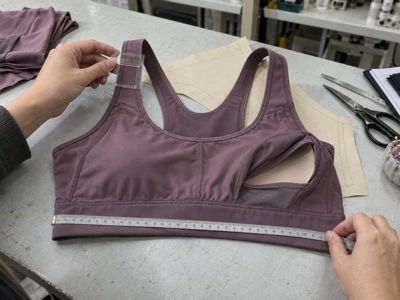
Version 1
Real same-project sports bra evidence required before the image URL is replaced.
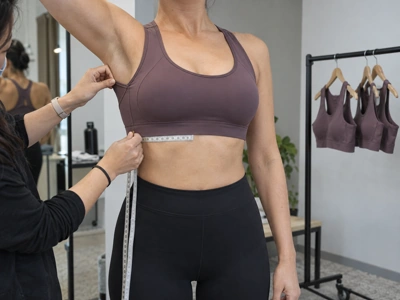
Version 2
Real same-project sports bra evidence required before the image URL is replaced.
Underband
Before: Initial sample underband position or pressure does not fully match the customer’s Fit feedback.
After: Measurement, pattern, elastic or construction is revised and a new sample is produced for buyer review.
Strap Length
Before: The first version may show strap length or tension that does not produce the intended position during wear.
After: Strap length, attachment or material is revised based on measured comments and physical Fit review.
Coverage
Before: Neckline, side coverage or front containment may not match the buyer’s intended consumer or activity.
After: The relevant pattern and measurements are updated while keeping the approved overall design language.
Pad Position
Before: Pad height, pocket position or visible outline may require adjustment after the first physical sample.
After: Pad dimensions, pocket and alignment are corrected and reviewed in the next sample version.
Back Structure
Before: Racerback, cross-back or multi-strap placement may appear visually off-center or create uneven tension.
After: Pattern, attachment and strap lengths are updated and checked for symmetry in the next physical sample.
Choose Branding That Works With Stretch Sports Bra Materials
MOVEVOX supports multiple branding methods, but the final process must remain compatible with stretch, surface finish, placement and the approved visual standard of the sports bra.
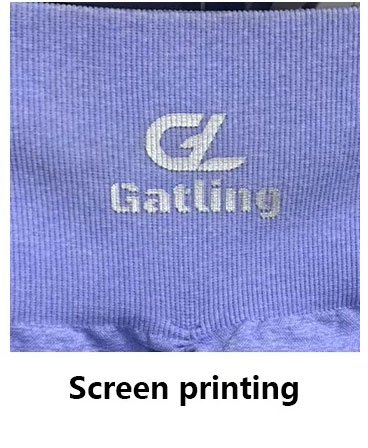
Screen Print
Screen printing can be used on suitable smooth sportswear surfaces for defined graphic and logo applications. Ink system, stretch and surface compatibility need sample confirmation.
Best use: Smooth areas with stable print placement.
Limit: High-stretch or heavily textured surfaces require additional validation.
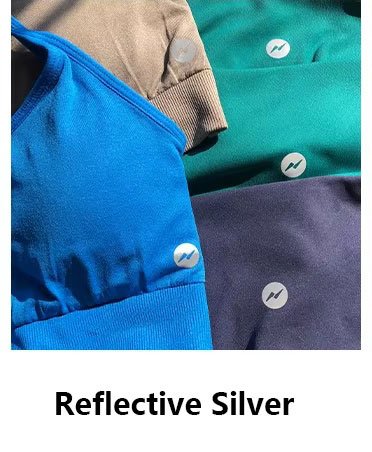
Heat Transfer
Heat-transfer branding can create clean graphic or logo applications on suitable materials. Temperature, pressure and finish must be matched to the actual fabric.
Best use: Defined logos and small brand marks.
Limit: Brushed or peach surfaces can show heat-pressure effects.
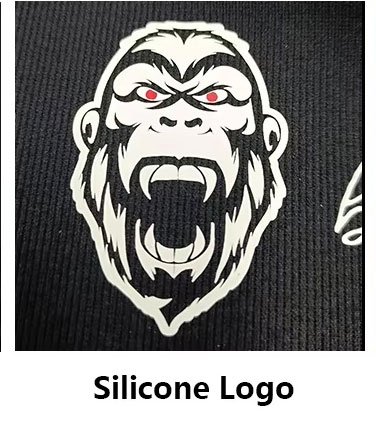
Silicone Print
Silicone branding can create a raised tactile or visual logo. Process and mold conditions should be reviewed with the selected sports bra fabric.
Best use: Premium tactile logo details.
Limit: Special molds or components may carry separate MOQ and lead time.
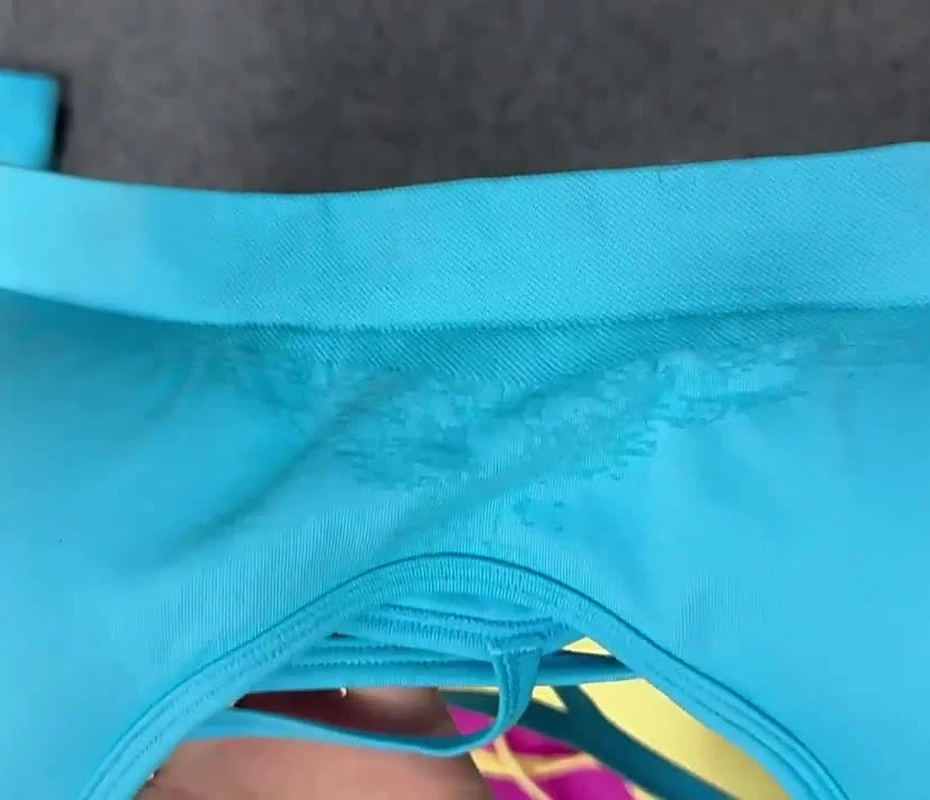
Jacquard
Jacquard branding can be integrated into selected Seamless knit or branded elastic structures when the product and equipment route support it.
Best use: Knit-in branding and selected elastic components.
Limit: Structure and supplier MOQ can be higher than standard printing.
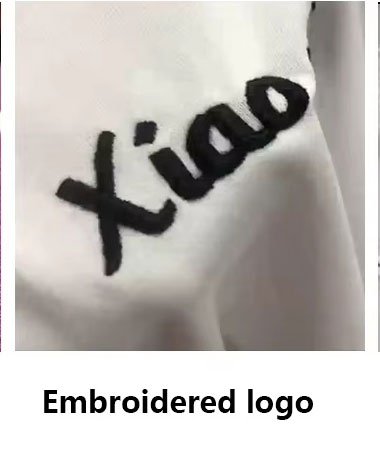
Embroidery
Embroidery can be used on technically suitable sportswear areas where stitch density and backing do not create unacceptable stiffness or distortion.
Best use: Selected stable panels or brand applications.
Limit: Very stretchy or thin body fabric requires careful evaluation.
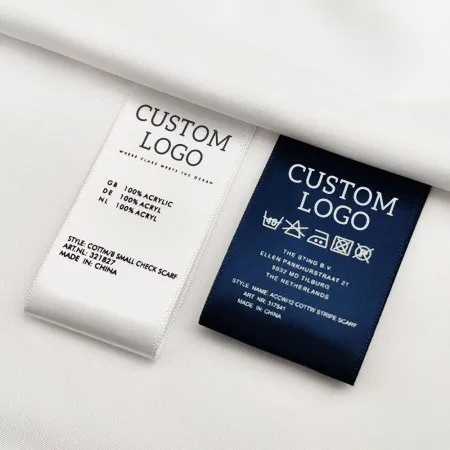
Woven Label
Woven brand elements can be sewn into approved positions or used within the broader private-label system alongside Care and Size Labels.
Best use: Brand identity and internal label systems.
Limit: Label edge, placement and skin contact should be reviewed.
Build the Full Private Label Sports Bra System
Private label covers more than the garment logo. MOVEVOX can coordinate brand labels, barcodes, retail packaging and carton information as controlled project elements before bulk packing begins.
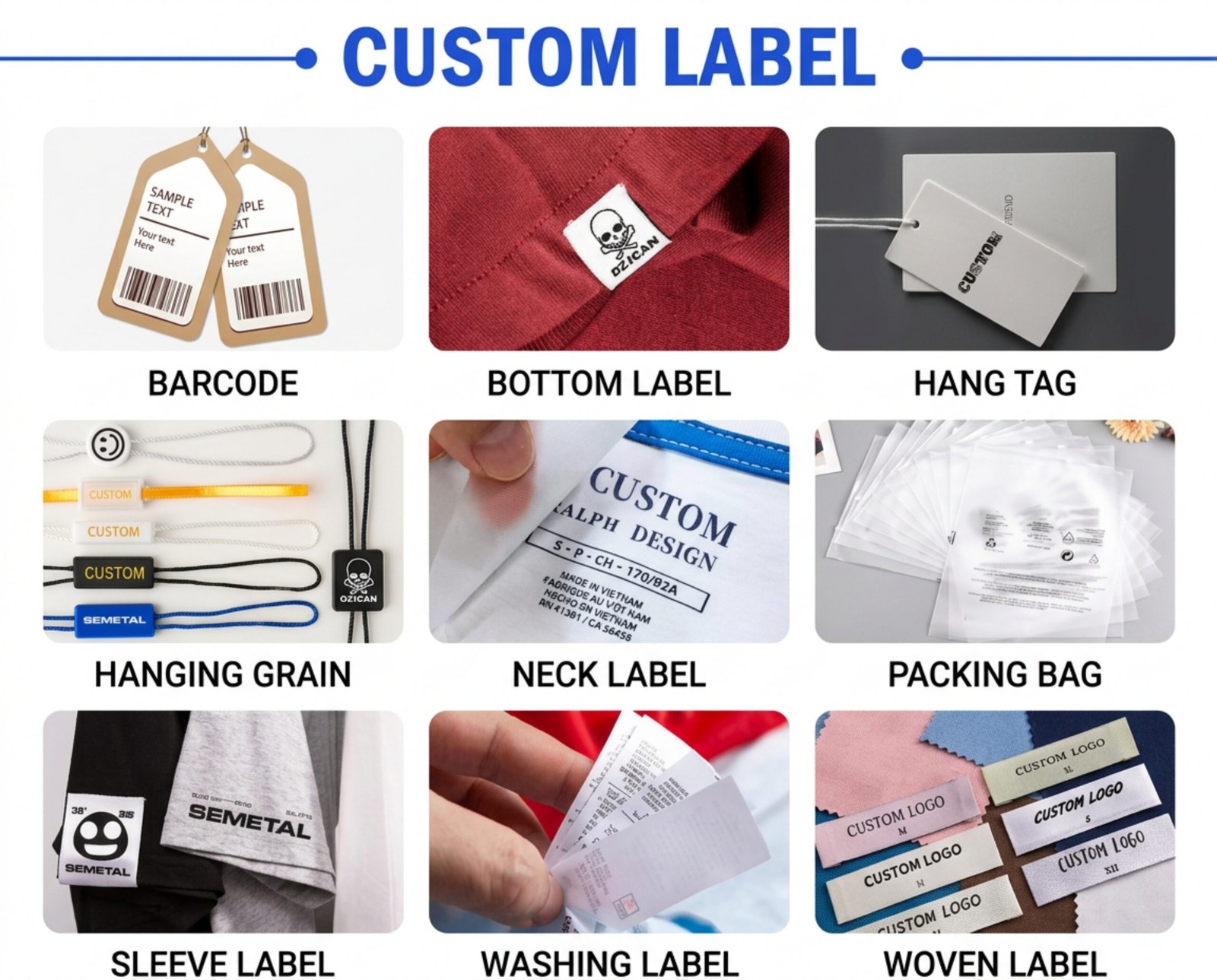
Main Label
A Main Label can carry the buyer’s approved brand identity and be positioned according to the garment construction and comfort requirement.
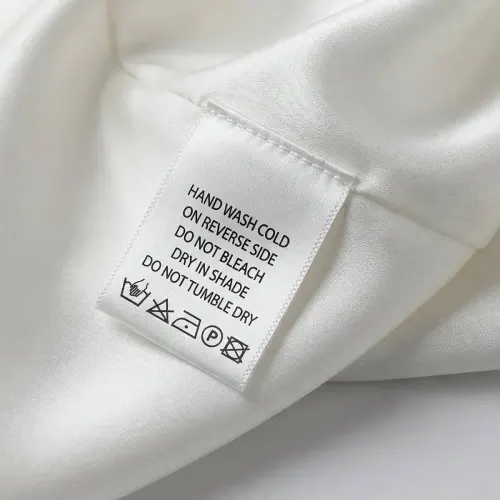
Care Label
Care Labels can carry approved fiber, care and buyer-required information. Content should follow the customer’s market and compliance instructions.
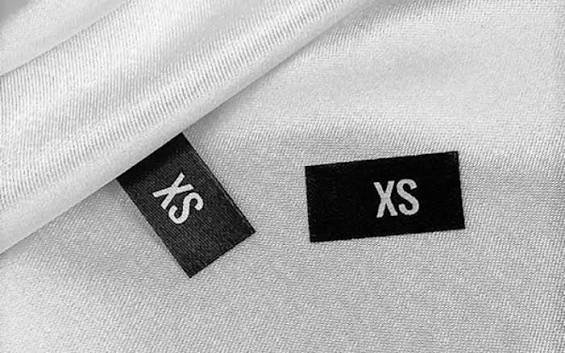
Size Label
Size information can follow the buyer’s alphabetic, numeric, EU, US, UK or custom system where required by the project.
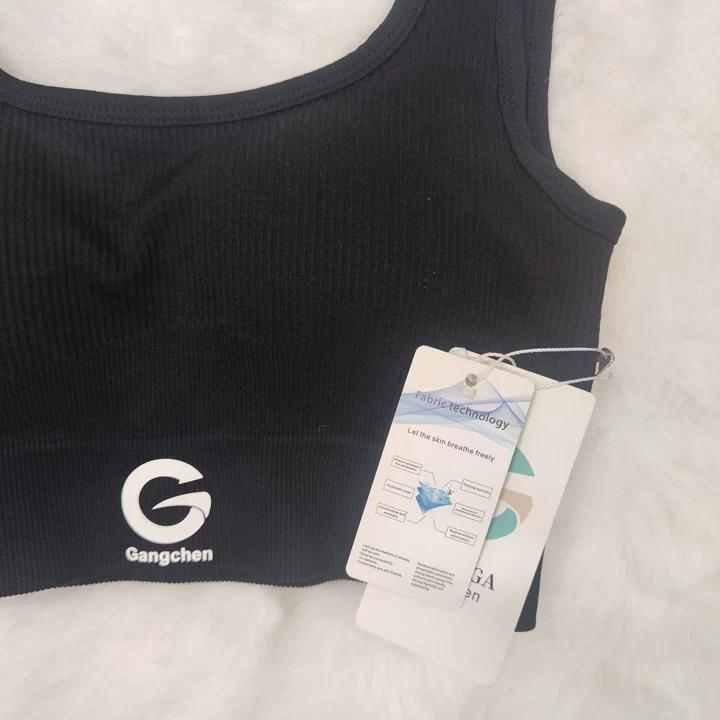
Hangtag
Hangtags can be customized to the buyer’s brand requirements and coordinated with garment SKU, barcode and retail presentation.
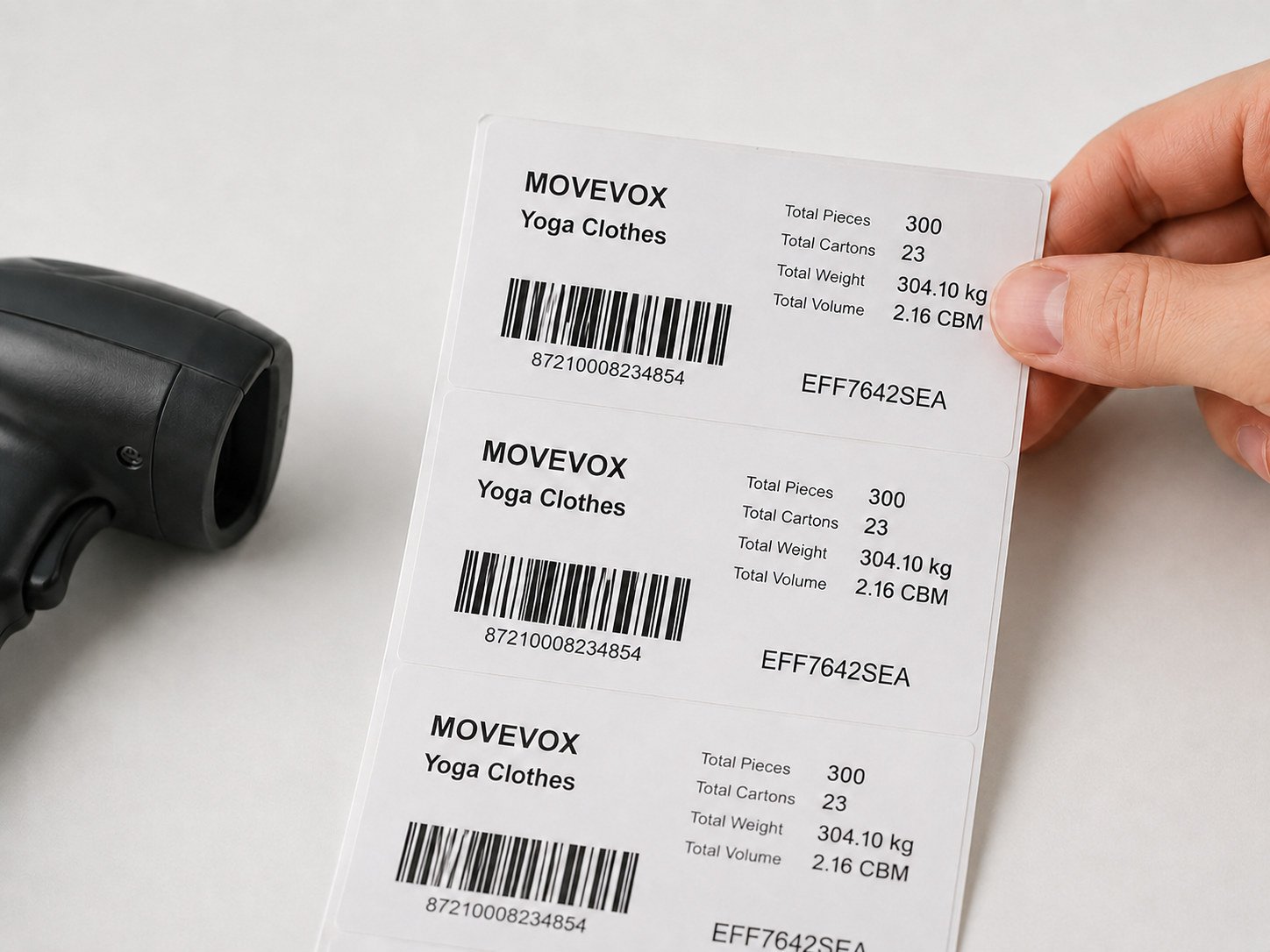
Barcode
MOVEVOX supports UPC, EAN, Code 128 and buyer-defined barcode execution where final data are supplied or approved.
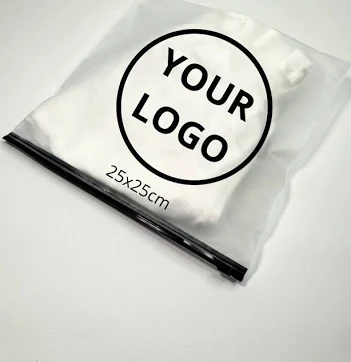
Polybag
Individual polybags can use approved size stickers, warnings, brand print or other project-specific information.
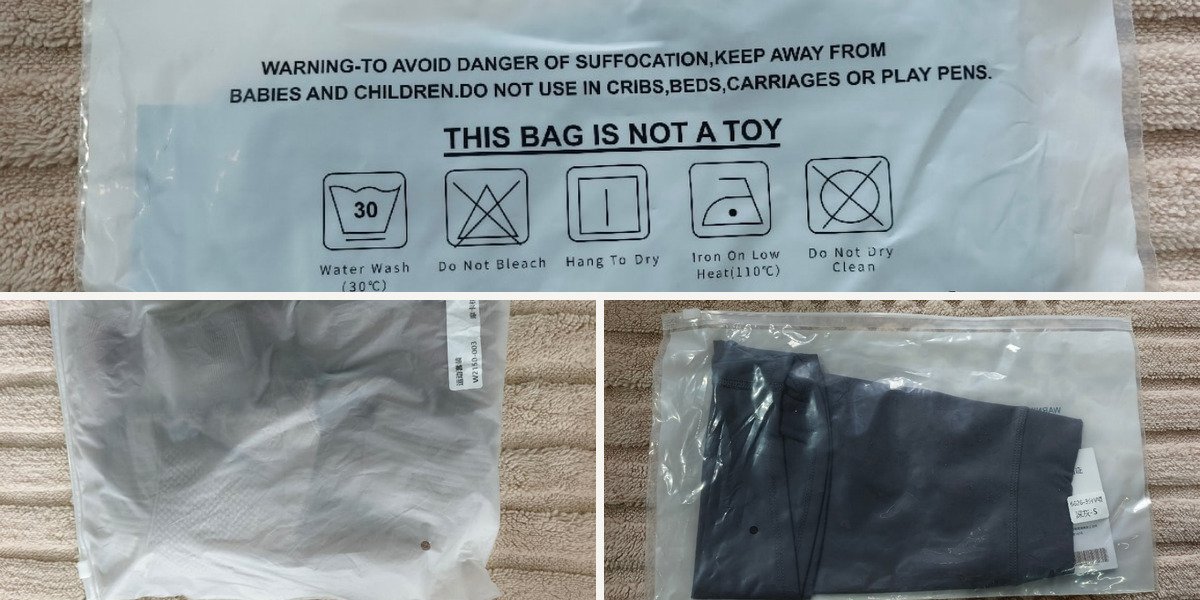
Sticker
SKU, size, barcode or brand stickers can be produced and applied according to the final Packing Instruction.
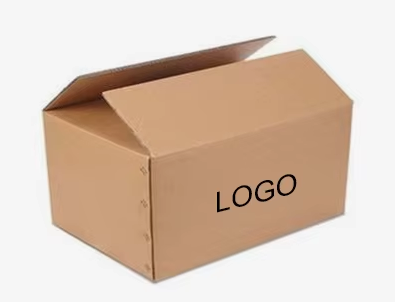
Carton
Carton marks, carton quantities and PO information are checked against the buyer’s final shipment requirement before release.
See the Evidence That Connects Sample to Bulk
Each project image in this gallery should represent a real control point: approved product, final specification, material, First Article, production, QC or packaging. Decorative imagery should not replace production evidence.
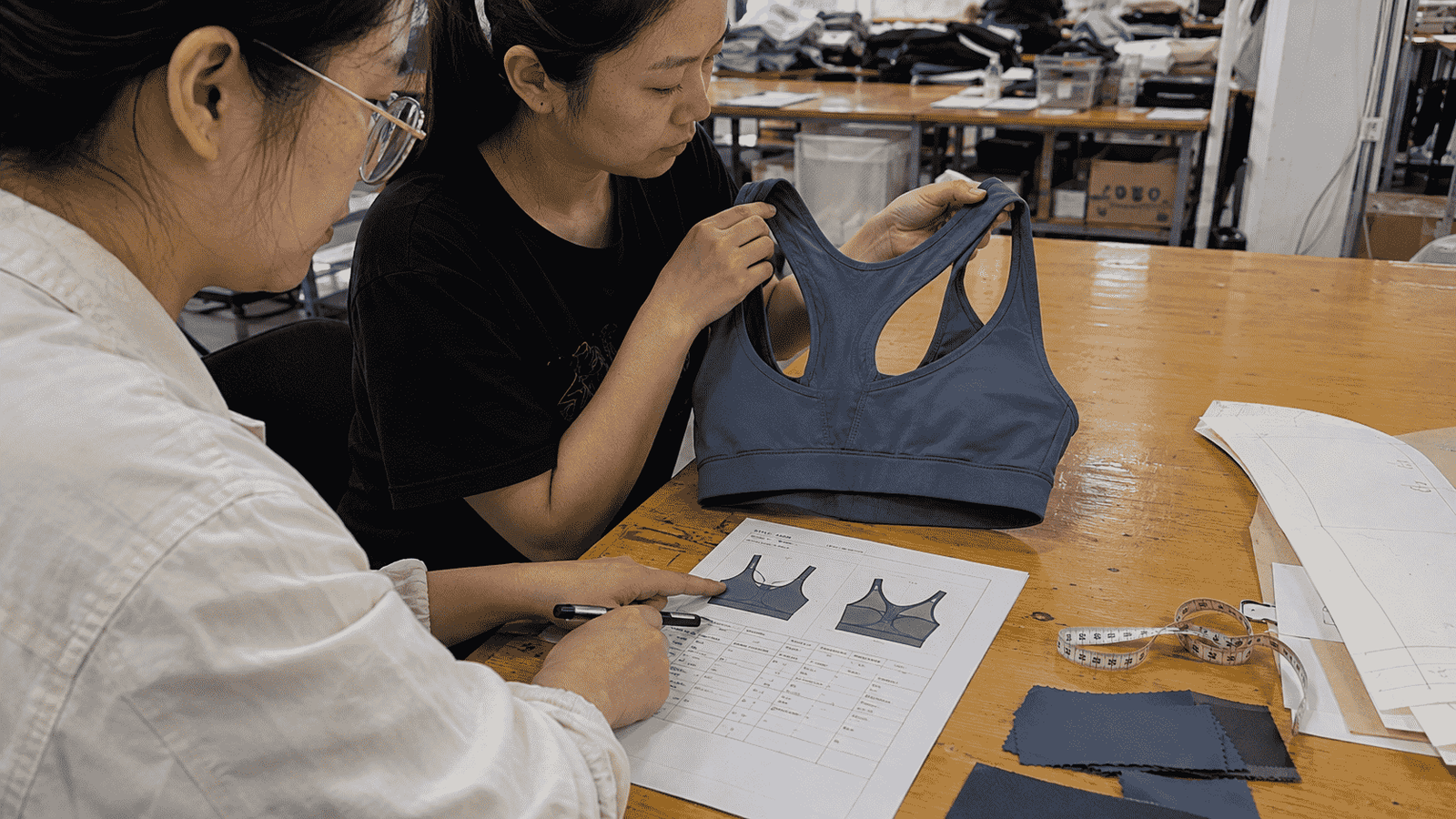
Final Tech Pack
An anonymized final technical version showing the actual specification used for the approved product.
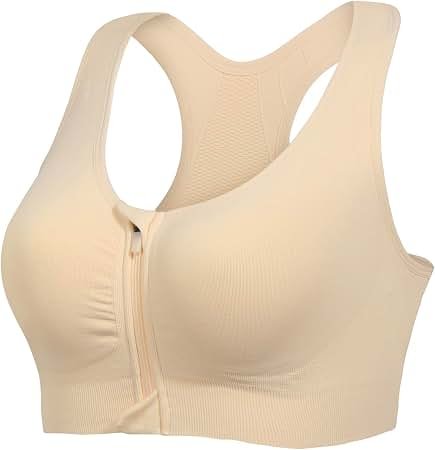
Approved Sample
The physical sports bra sample retained as a reference for bulk construction, appearance and Fit.
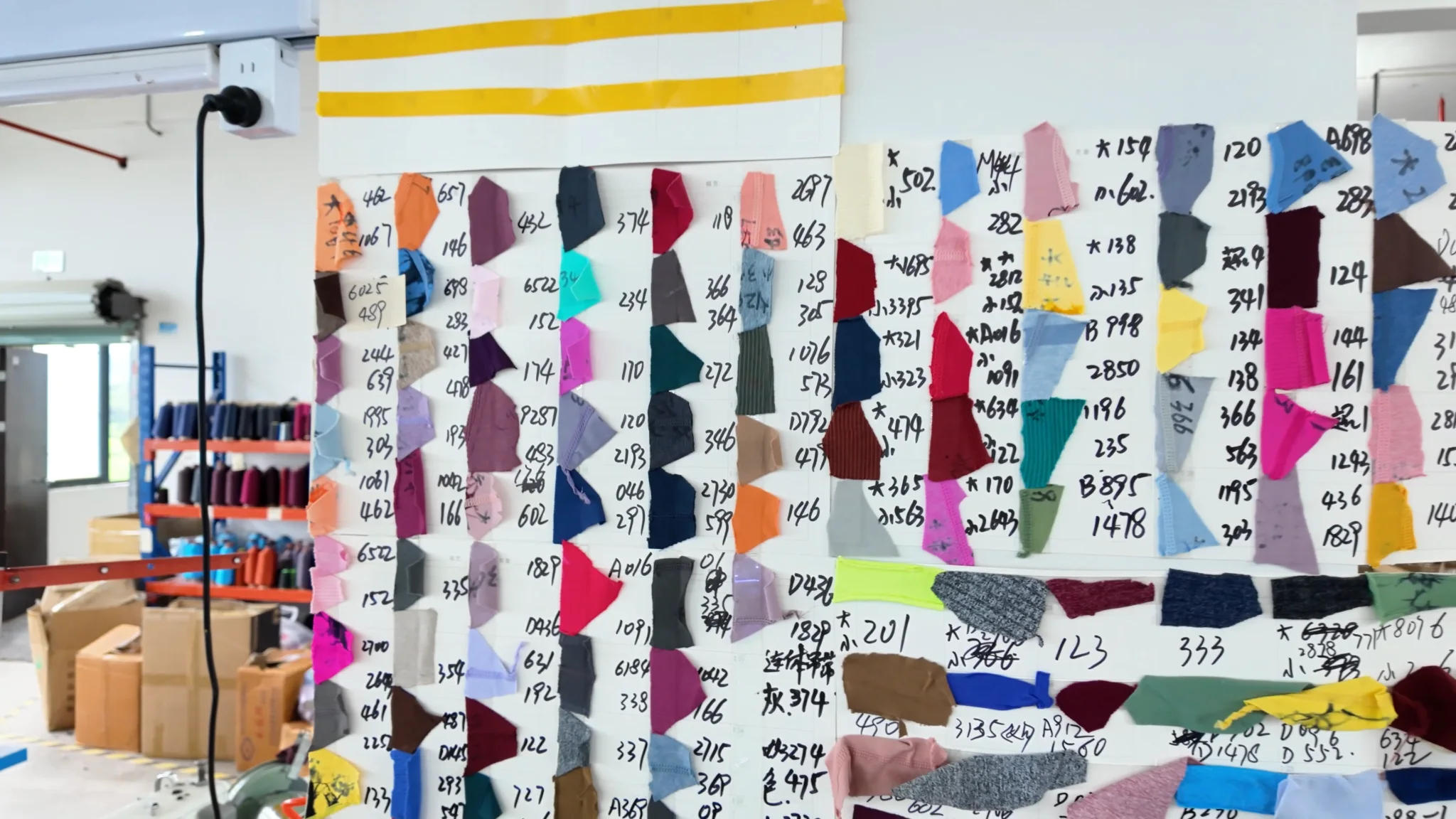
Approved Material
The actual fabric, yarn or component reference connected to the production order.

First Article
Representative initial production units made under bulk conditions and checked before scale production proceeds.
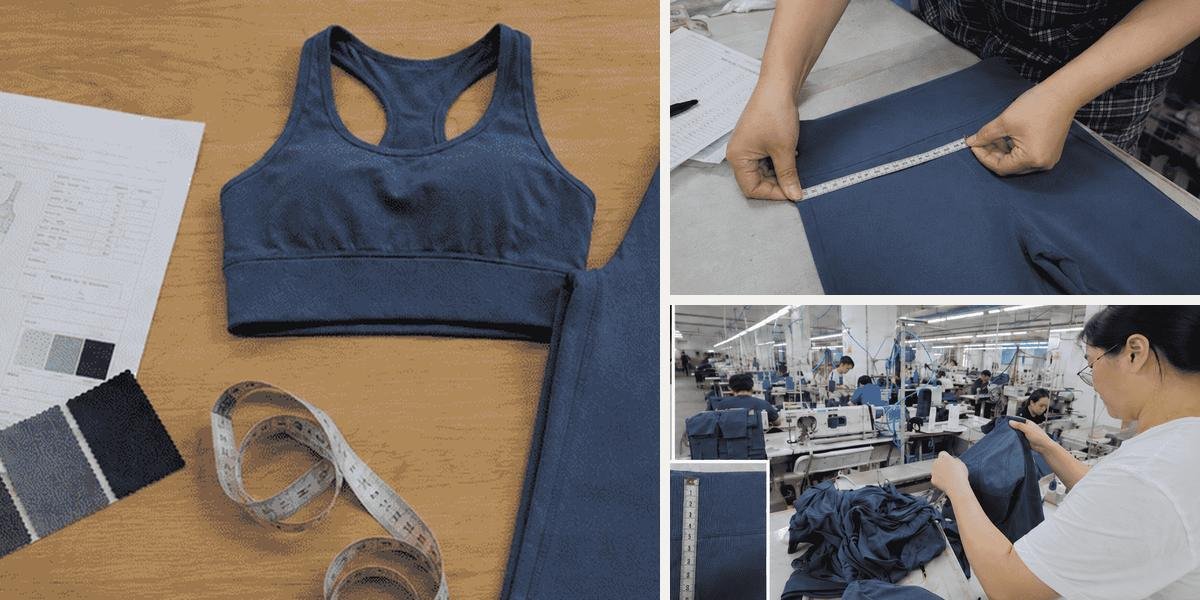
Measurement Check
QC measurement activity comparing actual production with the approved specification and tolerance.

In-Line Inspection
A real production-stage inspection showing workmanship, symmetry, components or other style-specific checks.
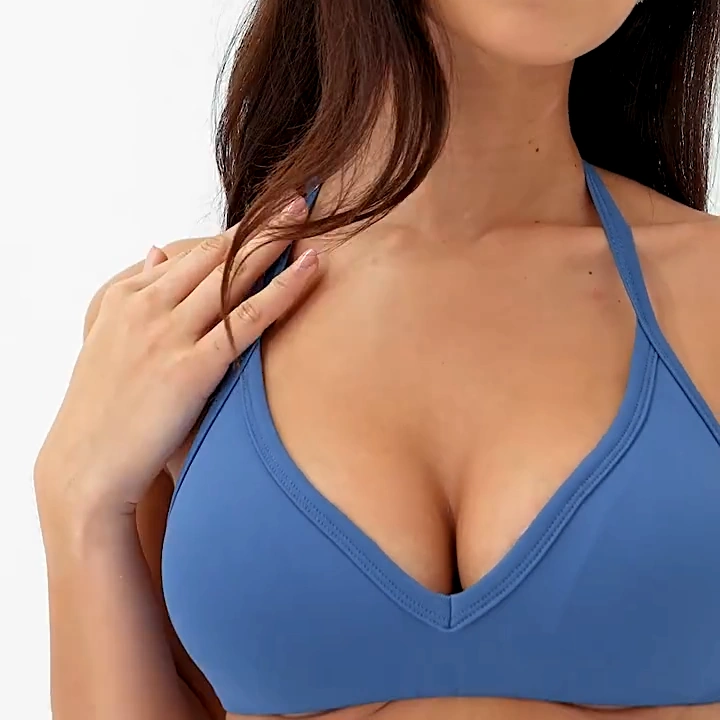
Finished Sports Bra
Completed garment inspected for measurements, construction, branding, pads, straps and overall appearance.
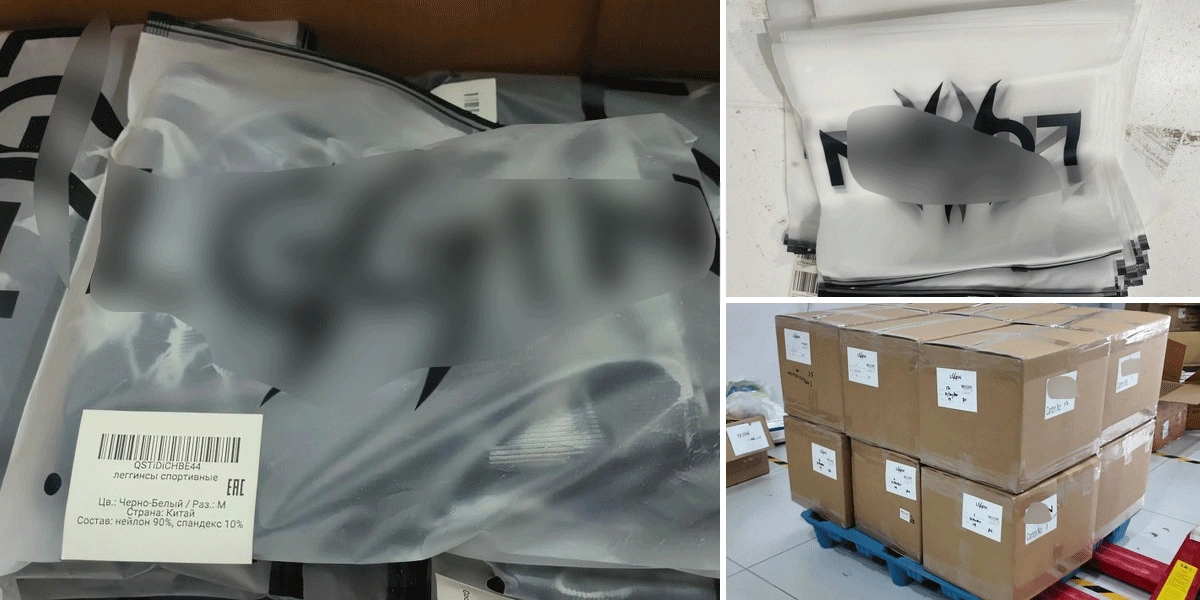
Packaging
Approved labels, barcode, polybag and carton execution linked to the correct SKU and purchase order.
Control the Sports Bra Variables Most Likely to Drift
Sports bra bulk quality can change through material, dimensions, elastic, straps, padding, branding or packaging. MOVEVOX distributes control across incoming, pre-production, First Article, in-line and final stages.
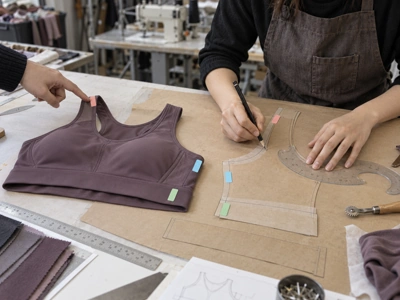
What Buyers Face
- Underband dimensions or elastic recovery change after the approved sample.
- Straps, pads or coverage shift as the style enters larger production quantities.
- An old specification, artwork or packaging version remains active on the line.
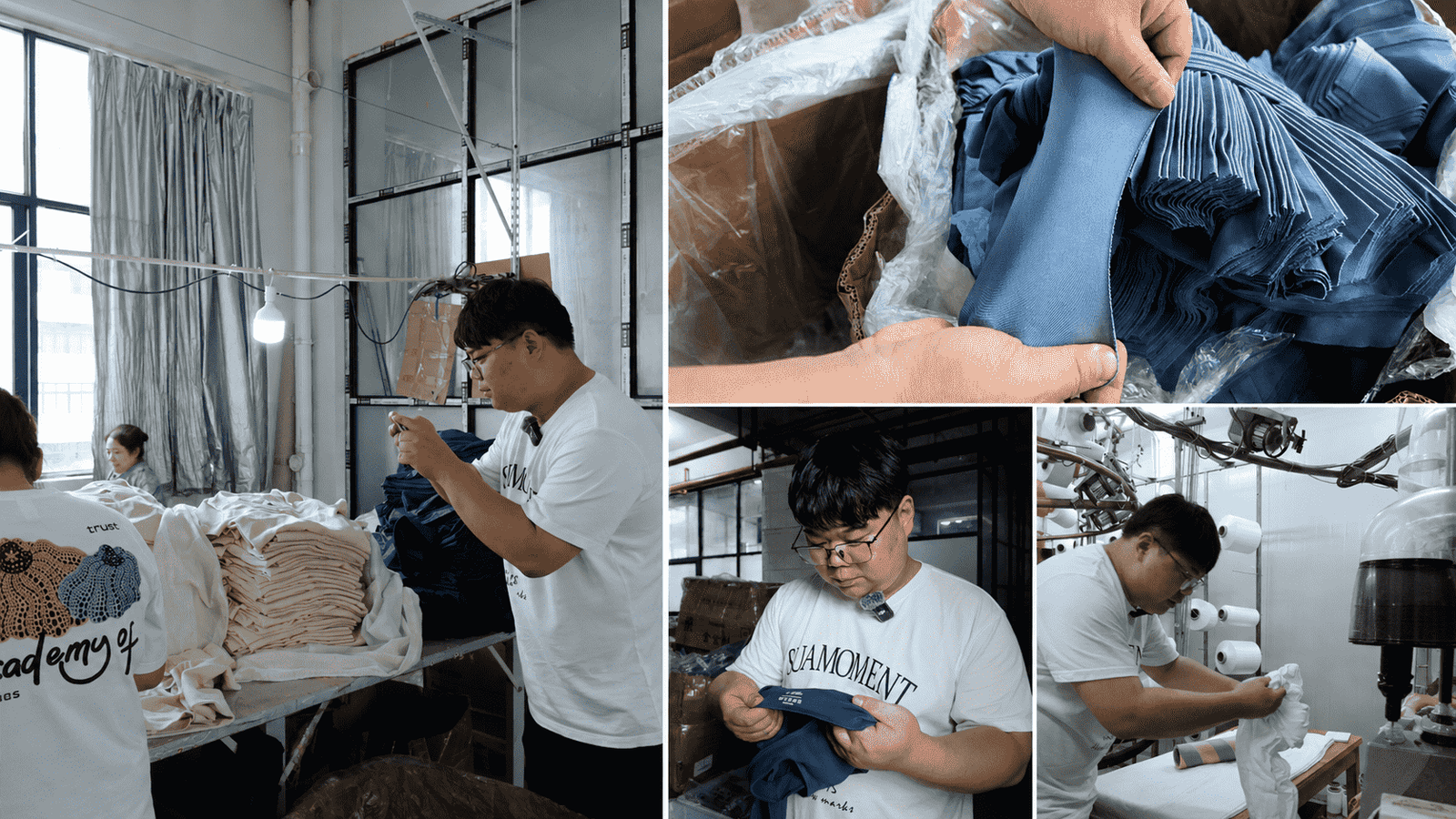
How MOVEVOX Controls
- Approved specifications, materials and sample references are confirmed before production release.
- First Article and in-line QC check measurements, components, workmanship and recurring deviation.
- Final inspection and packaging checks use the latest buyer-approved product and SKU requirements.
Incoming
Material and component requirements are checked before production release.
First Article
Initial production units are checked before scale work proceeds.
In-Line
QC checks recurring risks while the order is still in production.
Final Release
Finished garments and packaging are checked against the approved standard.
Read the Records Behind MOVEVOX Sports Bra Quality Control
This section should use a real anonymized inspection document. The text below defines the fields buyers should be able to verify; it does not invent a completed historical Sports Bra report.

Style / Version
The inspection record should identify the applicable style and technical version so the result can be linked to the correct Approved Sample and production specification.
Inspection Stage
The document should identify whether the check is Incoming, First Article, In-Line, Finished Garment, Measurement or Pre-Shipment.
POM / Requirement
Measurements or workmanship items should refer to the actual buyer requirement, POM or agreed inspection criterion rather than a generic website standard.
Actual Result
The inspector records the observed or measured result and determines whether corrective action, segregation, rework or additional checking is required.
Corrective Action
When an issue is identified, the record should show what was corrected and whether the affected production required re-inspection before release.
Capacity Facts Defined by Scope, Not Marketing Maximums
MOVEVOX separates core equipment facts from combined managed delivery capability. A specific sports bra allocation still requires project-level review of complexity, materials, colors, sizes and QC requirements.
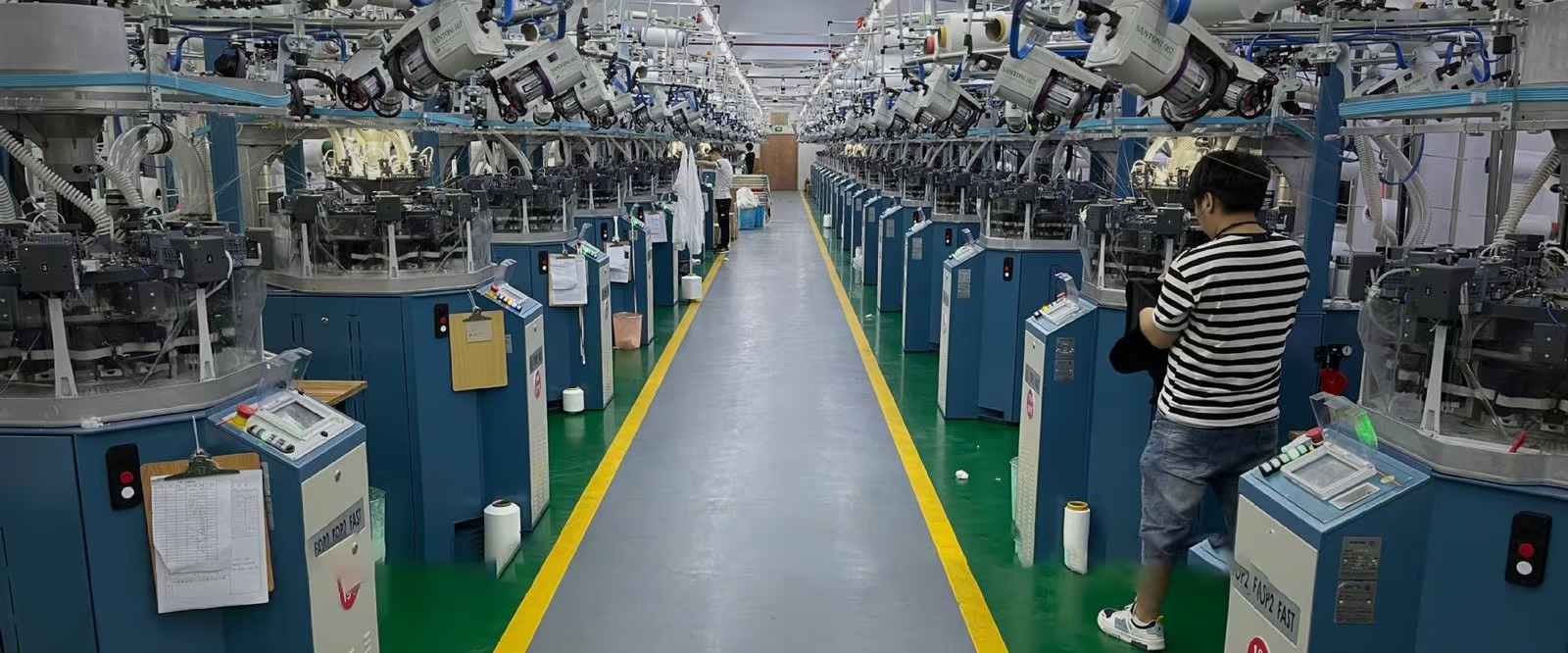
Santoni Machines
Twenty-eight Italian Santoni seamless knitting machines are located at the Yiwu core production base and support sports bras and other Seamless activewear.
Garment Machines
Approximately twenty-four core garment-production machines support Cut & Sew activewear and post-knitting assembly work.
Satellite Factories
Eight major long-term satellite factories supplement controlled capacity, with six documented in Yiwu and two in Guangzhou.
Managed Monthly Delivery
Normal combined managed finished-garment delivery capability is approximately 150,000–200,000 pieces per month across the controlled network.
QC Personnel
Five QC personnel currently support incoming, production, finished-garment and shipment inspection activities.
Know What MOVEVOX Owns and What It Manages
MOVEVOX is an integrated manufacturing and supply-chain company, not a claim that every operation occurs inside one room. Core production and controlled satellite capacity have different responsibilities.

Yiwu Core Factory
The Yiwu core factory acts as the technical, sample, core-production and quality-control center. It houses the company’s 28 Santoni Seamless machines and approximately 24 main garment-production machines. New product feasibility, sample and PP development, First Article, key production, complex styles and quality-control work can remain close to the core team.
- Core factory in Yiwu, Zhejiang, China
- 28 Santoni + approx. 24 garment machines
- Development and QC managed through MOVEVOX

Managed Satellite Network
MOVEVOX currently coordinates eight major long-term satellite factories, documented as six in Yiwu and two in Guangzhou. These facilities provide elastic production capacity or specialist execution for approved work. They do not independently redefine buyer standards.
- Eight major long-term satellite factories
- Production follows MOVEVOX technical and QC standards
- Customer production-site rules override internal allocation flexibility
What Global Buyers Can Verify During Supplier Qualification
MOVEVOX supports factory visits, Technical Audits, video verification and third-party inspection. Audit readiness means presenting actual legal, manufacturing and quality facts without expanding certificates beyond their real holder or scope.
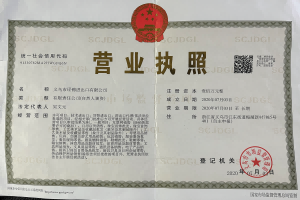
Legal Identity
MOVEVOX is the commercial brand operated by Yiwu Chenjin Import And Export Co., Ltd. The current legal entity was established in 2020, while the manufacturing and supply-chain operation is described as operating since 2019. Contracts and formal legal commercial activities are handled through the legal entity.
Evidence: Business license and legal-company information.
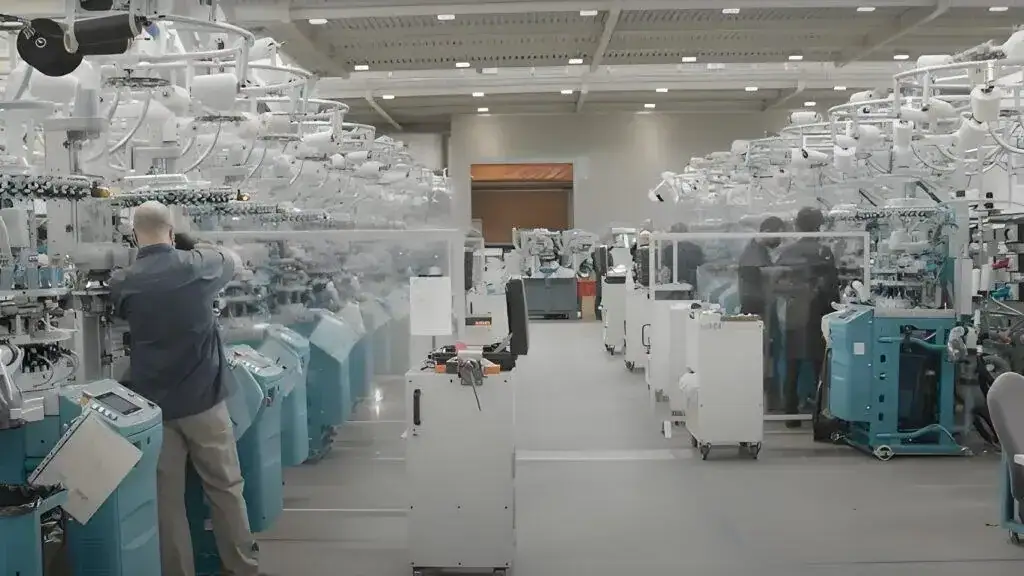
Factory Reality
The self-operated production base is located in Fotang Town, Yiwu, Zhejiang. Buyers can verify actual production areas, Santoni equipment, Cut & Sew equipment, sampling, QC, packing and storage subject to confidentiality around other customer projects.
Evidence: Site visit, video verification and real factory images.

Product Capability
Sports bras can be developed through both Seamless and Cut & Sew manufacturing routes. Audit discussion can cover yarn or fabric, pattern, sampling, padding, elastics, sewing, QC and product-specific technical controls.
Evidence: Equipment, samples, technical files and production records.
Quality System
MOVEVOX currently has five QC personnel and a separate QA function. Audit review can cover incoming inspection, Pre-production, First Article, in-line, finished garments, measurements, components and packing.
Evidence: QC records, Measurement Reports and Corrective Action evidence.
Traceability
MOVEVOX’s management direction connects PO, Style, SKU, material, production batch, QC, carton and shipment. Actual traceability depth can be aligned with the customer’s vendor requirements.
Evidence: Anonymized production, QC and packing documents.
Audit Access
Customers can arrange Factory Audit, Technical Audit, Pre-production Visit, Inline Inspection or Pre-shipment Inspection. Video verification is also supported where on-site travel is not practical.
Evidence: Audit arrangement and actual site access.
Testing Requirements Must Match the Actual Product and Scope
Sports bra compliance and performance evidence depends on the destination market, buyer RSL, material, components and intended claim. MOVEVOX can support third-party testing but does not treat one historical report as a universal certification.
Buyer RSL
Large brands may maintain their own Restricted Substance List in addition to general market requirements. The latest buyer standard should be mapped to the actual BOM, fabric, dyeing, printing, coating, pads, elastic, hardware and other relevant components. A supplier cannot assume an old requirement remains valid indefinitely.
Scope: Buyer-specific materials, components and chemical processes.
MOVEVOX response: Confirm the latest buyer requirement, flow relevant limits to suppliers and arrange risk testing when the project requires it.
REACH Requirements
For EU-related projects, REACH restrictions can apply to substances present in materials or components. The applicable test item depends on the product and material risk. MOVEVOX can coordinate sample selection and third-party laboratory work, but the report only supports the submitted sample and stated test scope.
Scope: EU projects and applicable material/component risk.
MOVEVOX response: Map the project materials to the required test request and maintain the report with the corresponding material or sample identity.
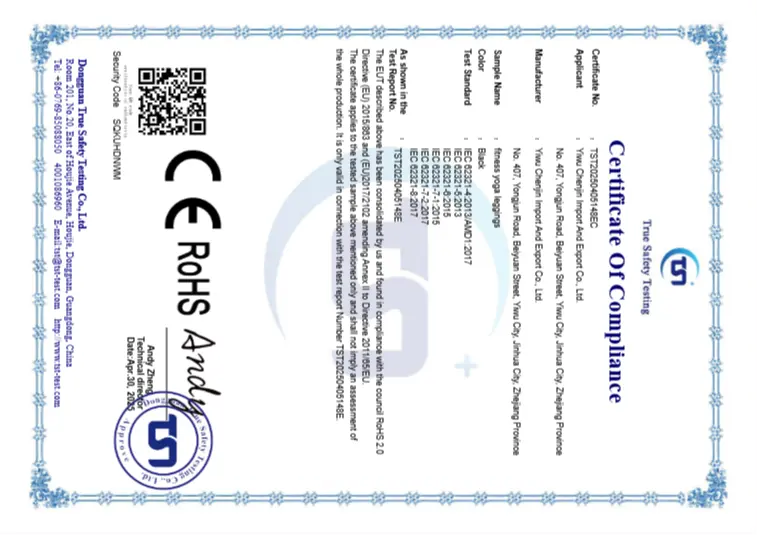
RoHS Sample Evidence
MOVEVOX currently has a 2025 RoHS 2.0 report for a submitted black fitness yoga leggings sample. The associated Certificate of Compliance explicitly states that it applies only to the tested sample and does not imply assessment of the whole production. It is therefore testing-support evidence, not Sports Bra certification.
Scope: Tested black fitness yoga leggings sample only.
MOVEVOX response: Do not transfer the result to Sports Bras; arrange product- or material-specific testing when a Sports Bra project requires it.
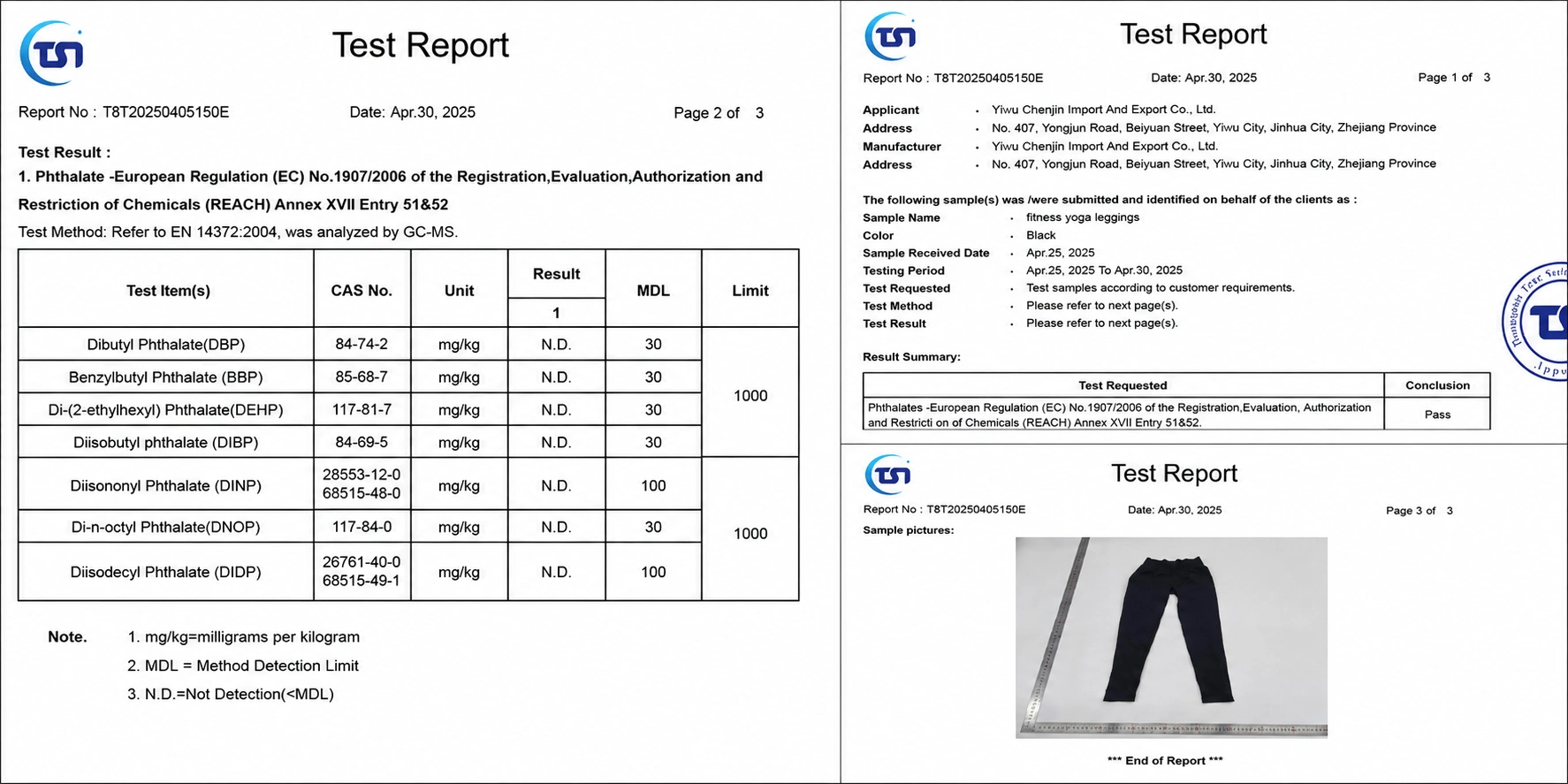
REACH Phthalates Sample
MOVEVOX also has a 2025 phthalate test report under REACH Annex XVII Entry 51 & 52 for black fabric from the submitted fitness yoga leggings sample. The reported result was Pass for that tested sample scope; it is not a blanket approval covering future sports bra materials.
Scope: Tested black fabric from the submitted leggings sample.
MOVEVOX response: Use the historical file only as evidence that testing can be coordinated; new product scope requires matching evidence.
Brand Test Methods
Customers may specify ISO, AATCC, ASTM or internal brand methods for colorfastness, dimensional stability, stretch, recovery, pilling, moisture or other product requirements. MOVEVOX can coordinate project testing through a customer-nominated or qualified third-party laboratory. No numerical performance grade should be published before the actual test data exist.
Scope: Project-specific buyer test plan.
MOVEVOX response: Confirm method, sample, acceptance level, laboratory and report mapping before using the result in production or marketing claims.
An Anonymous U.S. Activewear Development and Repeat Program
Client identity is withheld. This case is based on an actual multi-category U.S. activewear cooperation and is not presented as a Sports Bra-only project.
Client Profile
The documented customer was a U.S. fitness creator-led activewear buyer with an established audience and a multi-product range covering leggings, shorts, sports bras, tank tops, sets and one-piece fitness apparel. The buyer used its own Tech Pack and required high-stretch materials, support, opacity, larger sizes, soft handfeel, new-product development and customized packaging. Cooperation was recorded as an ongoing repeat-order relationship.
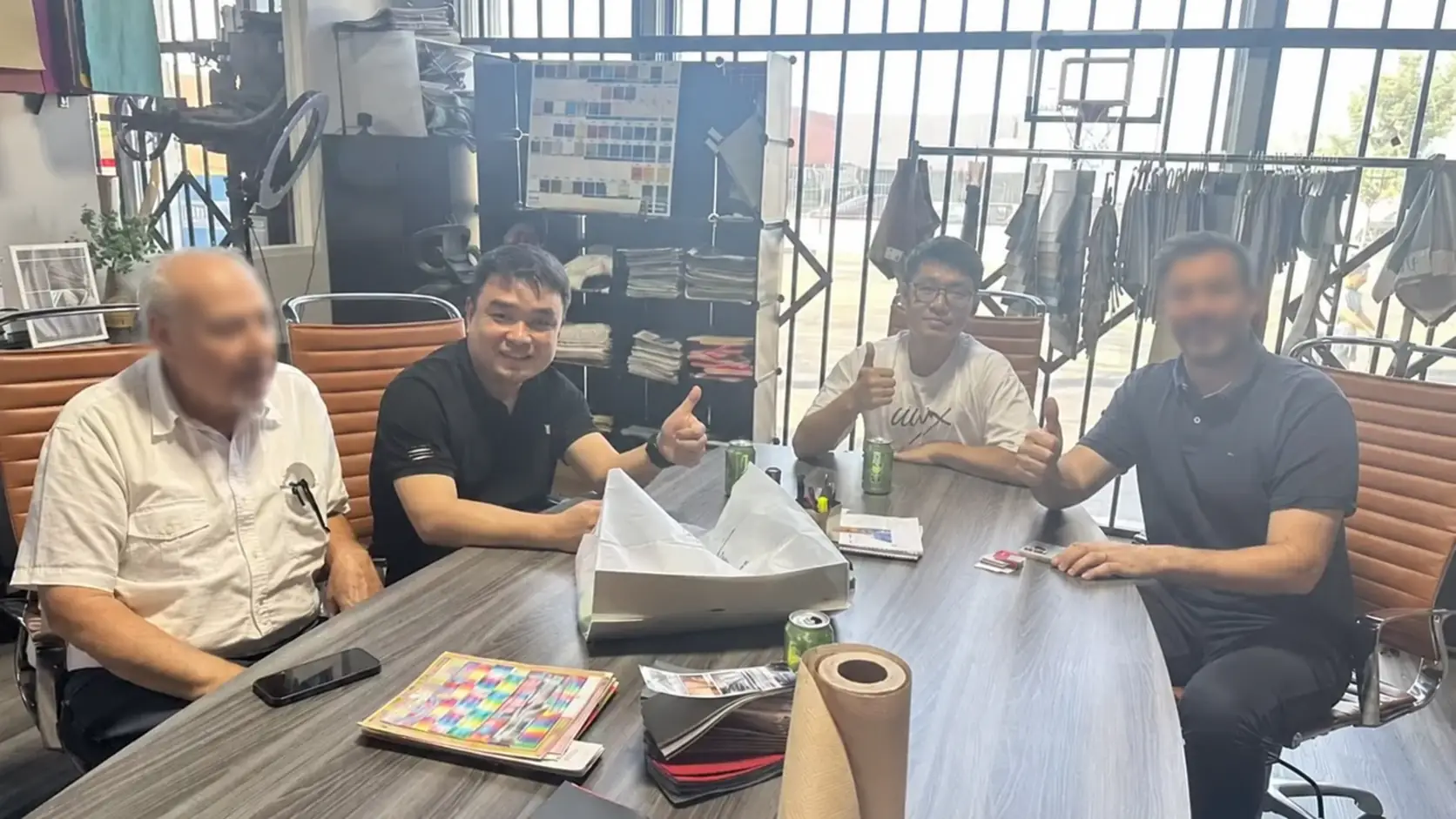
Challenge
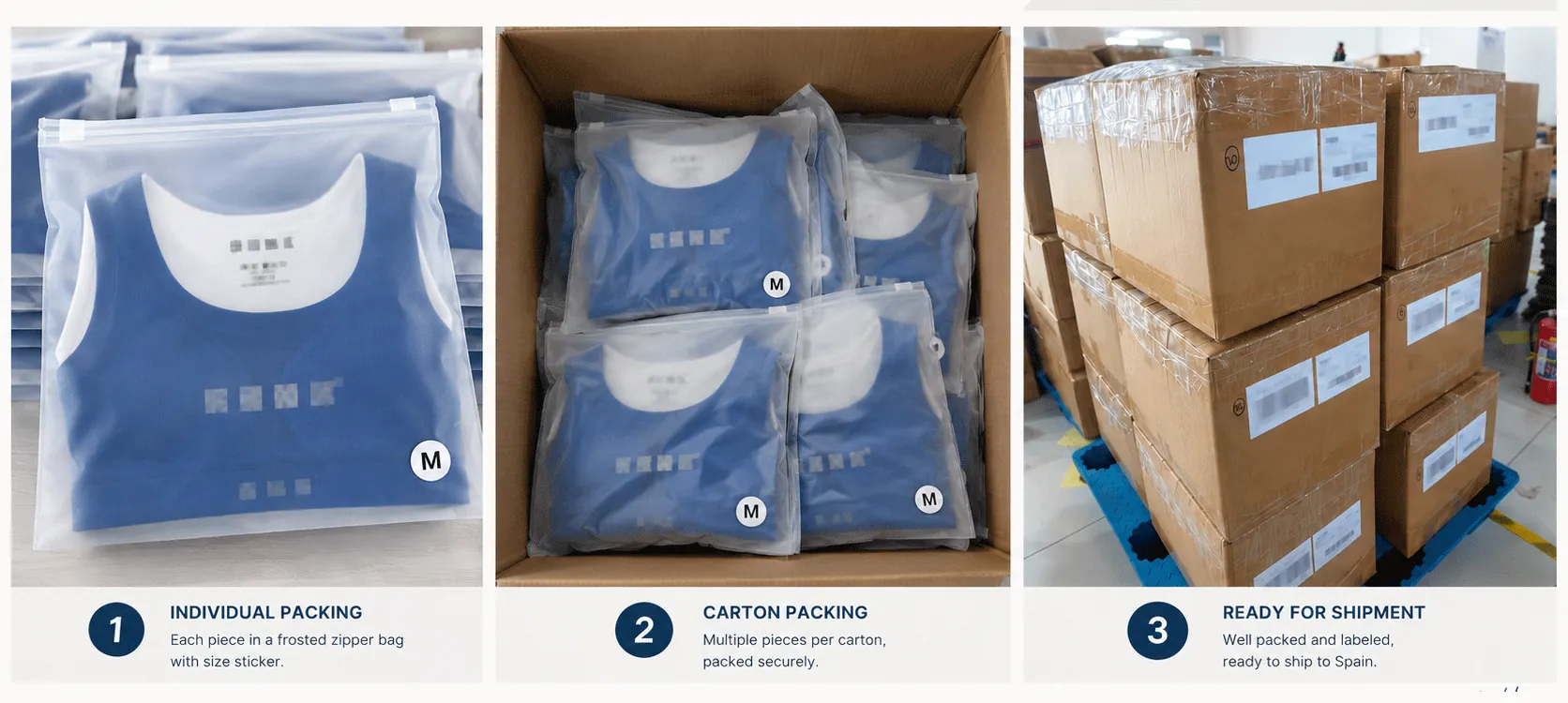
The first development sample did not fully match the buyer’s intended use in several design details. The project therefore required a second physical version rather than moving directly into bulk. After the Fit revision, the buyer also wanted additional samples for practical testing before making the production decision. Bulk execution added another layer of complexity because the program included custom logo, labels, care labels, instruction material, packaging and SKU-specific QR information that had to match the correct garment color and size.
Solution
MOVEVOX reviewed the customer Tech Pack, developed the first pattern and physical sample, received consolidated feedback and produced a revised second version. After the second version was largely accepted, approximately five to ten additional samples were produced for buyer-side testing. Once the product direction was approved, the project moved into bulk. Packing required style, color, size and QR information to remain accurately linked. The documented case states that additional QC and packing time was used because the identification process was more complex than a standard order.
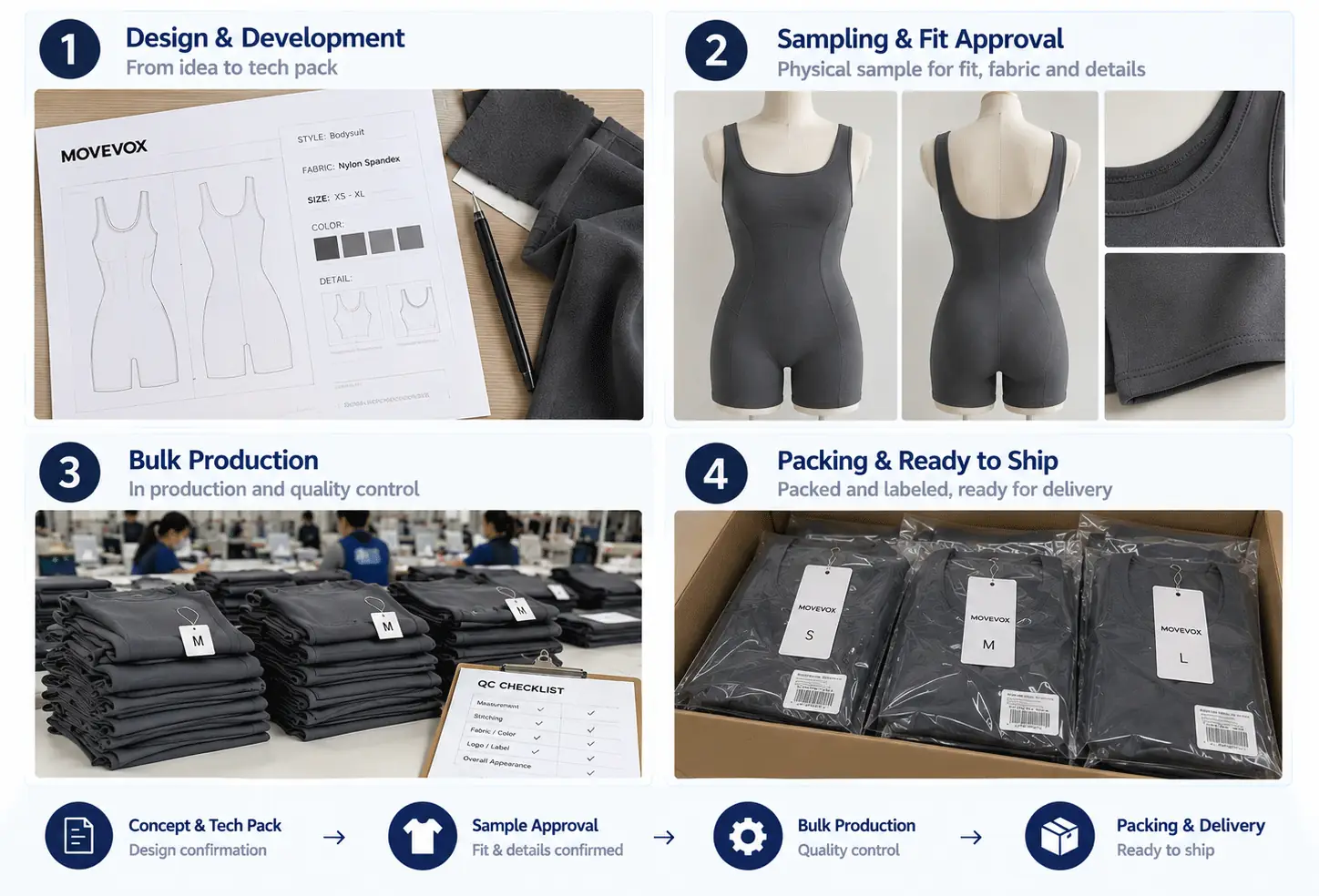
Tech Pack
Development began from the customer’s existing technical package rather than a generic catalog specification.
Sample Revision
V1 feedback was converted into a second physical sample before bulk approval.
User Testing
Approximately five to ten samples were prepared for practical buyer-side testing.
Private Label
Logo, labels, care label, instructions and packaging formed part of the production requirement.
SKU Control
Color and size combinations used different QR information, requiring stronger packing verification.
Documented Results
- 2 sample versions before the final testing stage.
- 5–10 test samples prepared for buyer-side evaluation.
- Approx. 2,000 pieces/order recorded as a typical bulk scale in the source case.
- Approx. 2 orders/month recorded during the documented cooperation period.
- 3-year cooperation recorded when the source case was prepared.
Build the Sports Bra Into a Complete Gym Collection
MOVEVOX can develop sports bras together with leggings, shorts, tanks and training tops so brands can coordinate material, color, branding, Fit language and packaging across multiple SKUs.
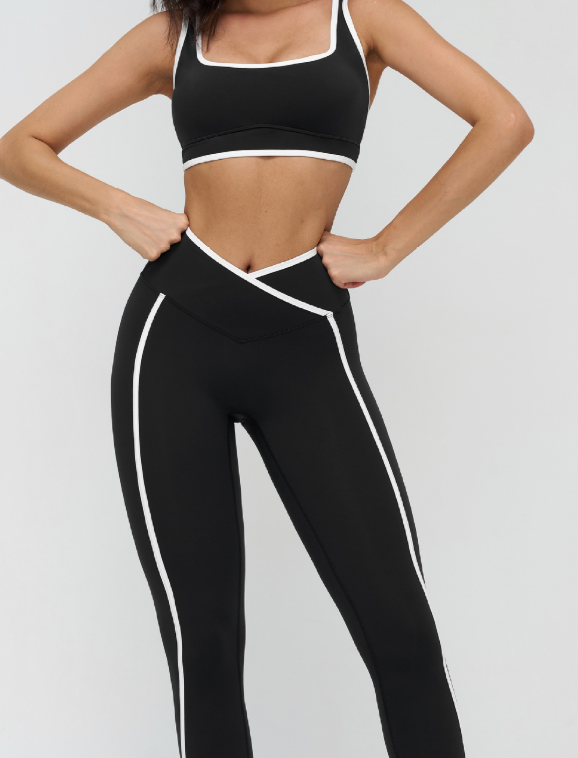
Bra + Leggings
A sports bra and leggings set can share a coordinated color story, logo scale, surface treatment and packaging system. Seamless or Cut & Sew routes can be allocated according to the actual product structures rather than forcing both pieces into one process.

Bra + Shorts
Sports bras can be paired with Yoga Shorts, Biker Shorts or training shorts to create a warm-weather or higher-intensity set. The collection can reuse selected material and colors where technically suitable while keeping separate Fit and QC controls for the top and bottom.
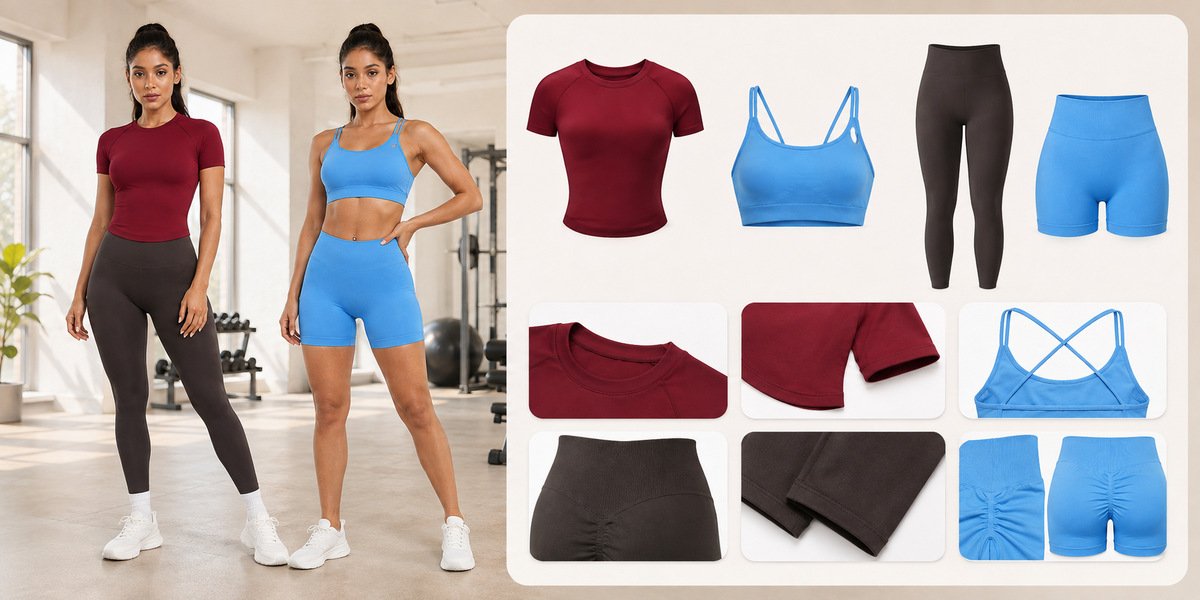
Bra + Tank Layer
A fitted Sports Bra can be developed with a complementary Tank Top or light training layer. Shared branding, coordinated colors and related fabric handfeel can create a stronger collection language without requiring both products to use identical construction.

Training Set
A broader gym program can combine Sports Bras, leggings, shorts, tops and selected lightweight outer layers. MOVEVOX’s Seamless and Cut & Sew capabilities allow different construction routes within one collection while centralizing development, sourcing, QC and private-label execution.
Coordinate Delivery Around the Buyer’s Market and Logistics Plan
MOVEVOX supports international courier, air, sea and buyer-nominated forwarder arrangements. Final method, Incoterm, cost and transit timing depend on destination, shipment size, route and buyer responsibility.
International Courier
Courier is commonly used for samples, small trial quantities, urgent replacement items and documents. MOVEVOX can coordinate services such as DHL, FedEx or UPS according to the actual shipment requirement.
Transit timing: Carrier and destination dependent; confirmed when booked.
- Commercial shipment information
- Packing or courier details
- Buyer delivery information
Risk note: Courier cost increases quickly with shipment weight and volume.
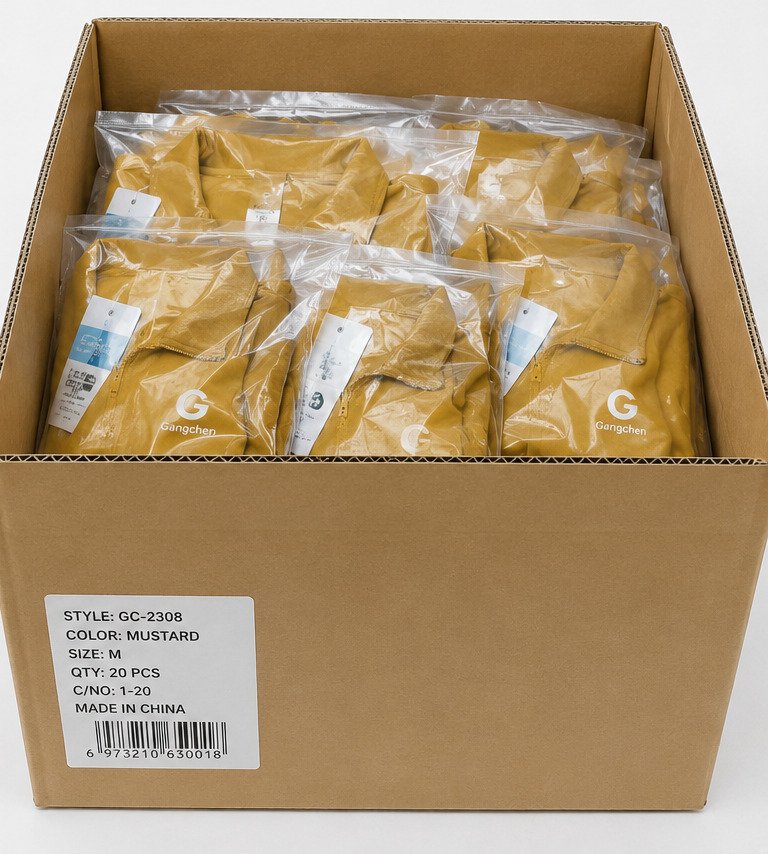
Air Freight
Air freight can suit medium-size orders, launch-sensitive shipments, partial replenishment or other projects where time is more important than the lowest freight cost.
Transit timing: Route and booking dependent; confirmed by forwarder.
- Commercial Invoice
- Packing List
- Air-freight / forwarder instructions
Risk note: Cost and capacity can change by season, airport and cargo conditions.
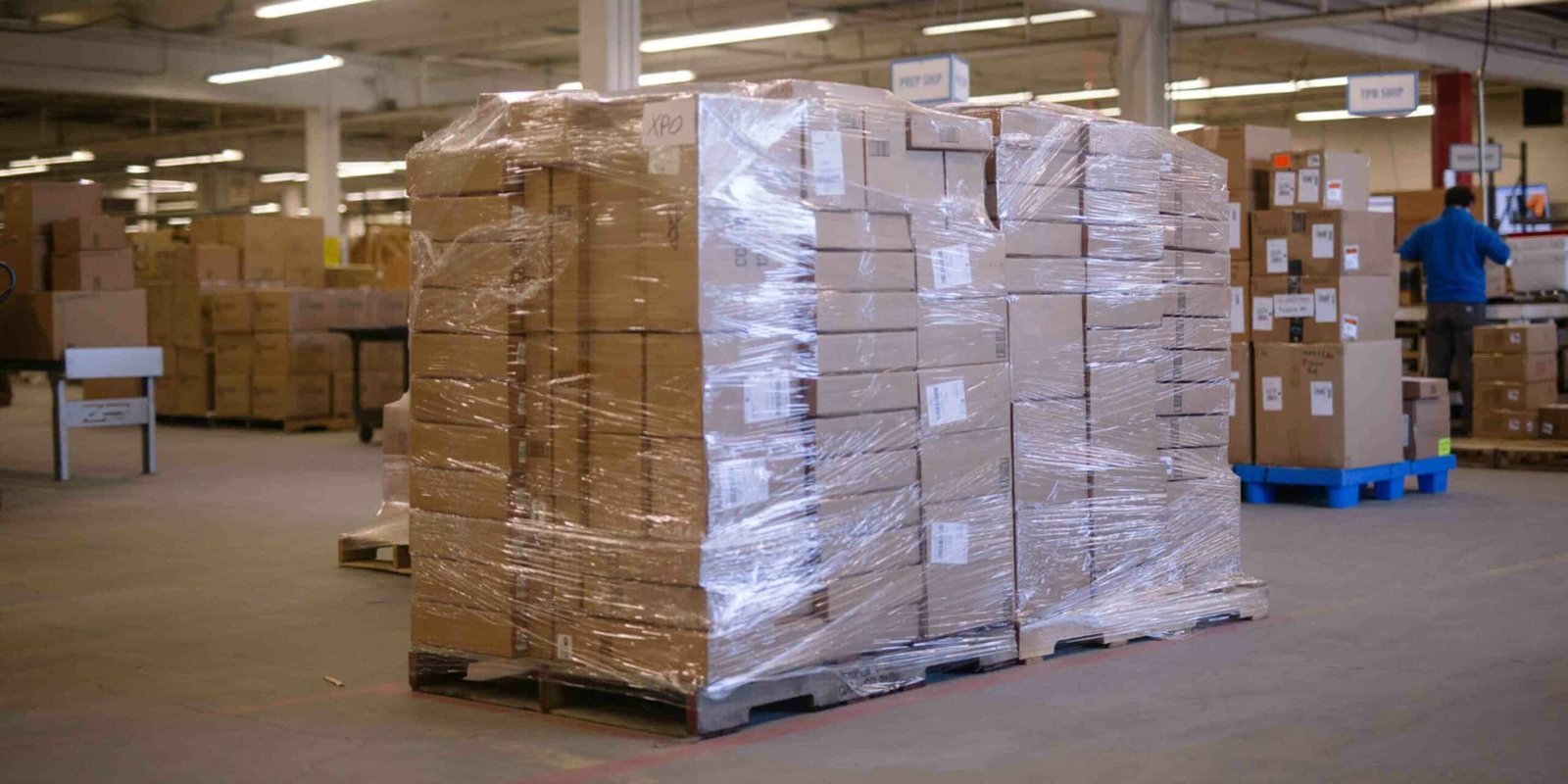
Sea Freight
Sea freight is generally more suitable for medium-to-large bulk orders, stable repeat programs and volume-sensitive shipments where freight economy matters.
Transit timing: Port, sailing schedule and destination dependent.
- Commercial Invoice
- Packing List
- Shipping / booking instructions
Risk note: Sailing, port congestion and customs conditions can affect actual transit.
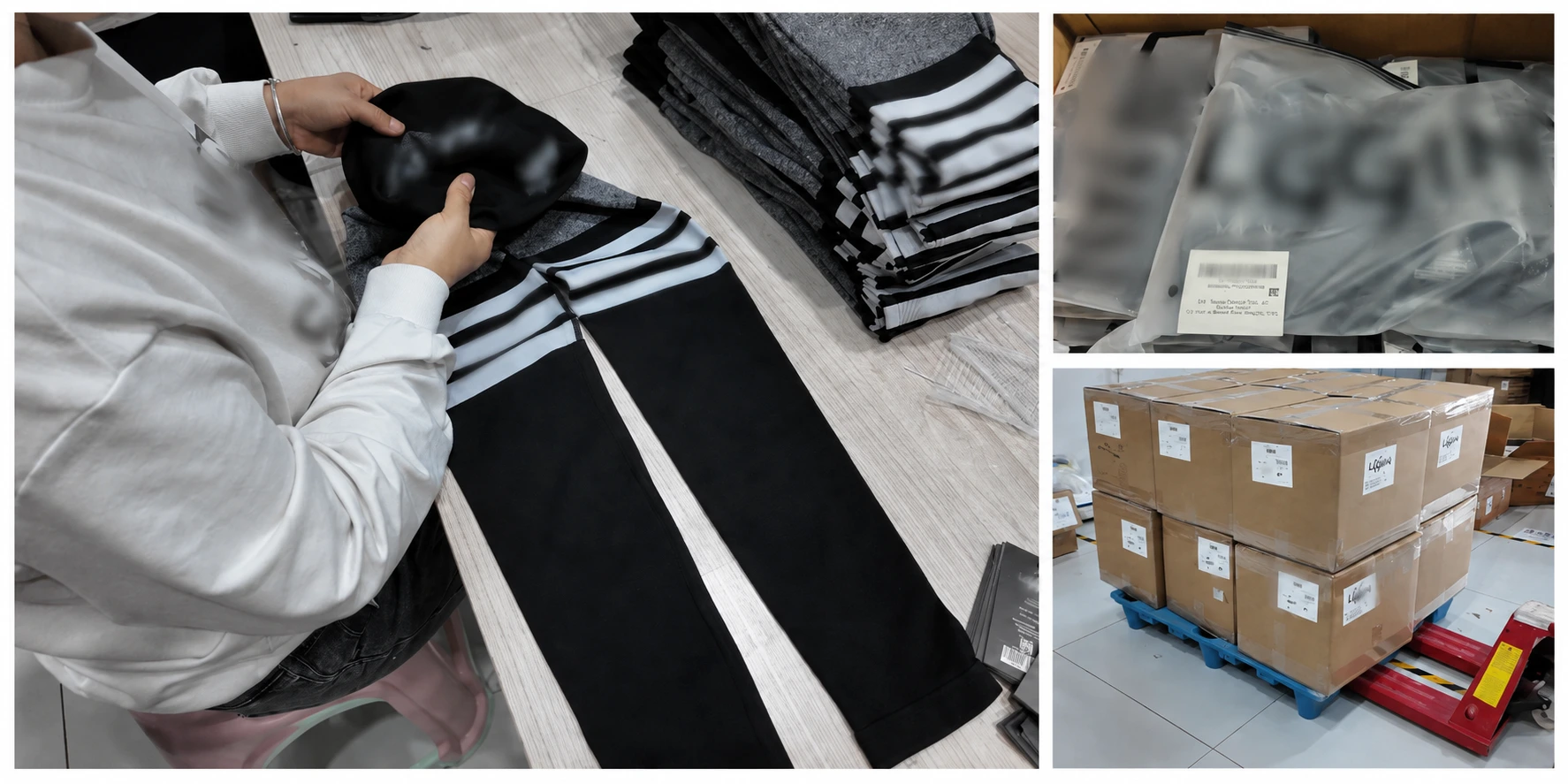
Buyer-Nominated Forwarder
Mature brands and importers often nominate their own China forwarder and provide Shipping Instructions. MOVEVOX coordinates cargo-ready information, packing list, carton data, delivery booking and physical handover.
Transit timing: Controlled by the buyer’s selected logistics arrangement.
- Shipping Instruction
- Packing List / carton breakdown
- Forwarder handover information
Risk note: Clear cut-off dates and booking instructions are required to avoid missed handover windows.