
CUSTOM PERFORMANCE APPAREL DEVELOPMENT

Custom Sports T-Shirt Manufacturer for Performance Apparel Brands

MOVEVOX supports established sportswear brands and B2B sourcing teams developing custom athletic T-shirts through product specification review, material and decoration selection, sampling, and controlled garment manufacturing. Its seamless and cut-and-sew capabilities provide different construction options, subject to project feasibility. Buyers can start with an approved Tech Pack or request a development review before defining production commitments.

OEM / EXISTING SPECIFICATION

Manufacture From Your Tech Pack

For brands with established specifications, MOVEVOX can review the approved design, measurements, materials, decoration artwork and commercial requirements. Technical questions should be resolved before samples or production commitments are finalized.

Project Requirements
  • Current technical drawings, measurement chart and approved grading requirements.
  • Identified fabrics, colors, artwork dimensions and decoration placement specifications.
  • Target order quantities, destination markets and required delivery conditions.
DEVELOPMENT / PRODUCT CONCEPT

Develop Your Sports T-Shirt

For brands with a clear product concept but incomplete technical documents, MOVEVOX can support manufacturing-oriented development. Fabric, fit, pattern construction and logo compatibility remain subject to sampling and customer approval.

Project Requirements
  • Intended sport, target wearer, silhouette and desired garment performance.
  • Available reference garments, sketches, materials or legally usable design information.
  • Initial SKU plan, target quantities and expected development milestones.
MANUFACTURING SCOPE

What Does Custom Sports T-Shirt Manufacturing Actually Include?

Custom sports T-shirt manufacturing extends beyond applying artwork to an existing blank garment. A brand may need a defined athletic silhouette, suitable fabric, controlled construction, approved decoration and repeatable production specifications. MOVEVOX supports private-label and OEM/ODM activewear development, with project requirements reviewed against available manufacturing resources before commitments are confirmed.

Complete Garment Development

A manufacturer must evaluate the T-shirt as a complete product, including garment dimensions, neckline, sleeves, fabric construction and expected movement. Printing alone does not resolve problems with fit, fabric behavior or seam performance.

Brand-Specific Decoration

Artwork requires decisions about decoration method, actual dimensions, location, color and compatibility with the approved fabric. A successful logo sample must represent the proposed garment material and relevant production conditions.

Technical Approval Responsibilities

The buyer should approve product direction, measurements, color standards and commercially important details. The supplier should identify manufacturing limitations, unresolved requirements and any necessary development trials before production release.

Controlled Bulk Execution

Production should follow the agreed sample, current specifications, material references and inspection requirements. Any relevant change in materials, construction, decoration or manufacturing responsibility may require renewed technical evaluation and customer approval.

Why It Matters

A mature sportswear brand is purchasing a repeatable product specification, not simply a T-shirt with its logo attached.

PRODUCT RISK REVIEW

Identify Sports T-Shirt Risks Before Supplier Approval

A finished sports T-shirt may appear acceptable while important fit, decoration and durability risks remain unresolved. Experienced buyers should identify likely failure mechanisms before approving materials or production. The following warning signs provide a technical review framework rather than a record of defects found in MOVEVOX orders.

Restricted Shoulder Movement

Risk Explanation: A T-shirt can meet a static chest measurement yet restrict reaching, lifting or repeated arm movement. Sleeve shape, armhole depth, shoulder position and material extension interact with the wearer's movement. Static photographs cannot establish the suitability of an athletic pattern.

Verification: Assess relevant garment measurements, compare approved sleeve constructions and observe fit using movement conditions agreed with the buyer.

Neckline Deformation

Risk Explanation: Neck rib, binding tension, fabric recovery and sewing operations can influence whether an opening maintains its intended shape. A neckline that appears symmetrical immediately after manufacturing may change during wear or laundering. Construction approval should consider material behavior and finished-garment appearance.

Verification: Review neckline dimensions, compatible binding materials, sewing conditions and finished samples after the required care evaluation.

Print Cracking or Peeling

Risk Explanation: Decoration performance depends on transfer material or ink selection, substrate compatibility, processing conditions and the stretching or laundering applied to the garment. A logo that looks correct immediately after application does not demonstrate satisfactory performance under the buyer's intended conditions.

Verification: Approve the actual decoration sample and define suitable extension, washing and appearance assessments before accepting durability claims.

Color Variation Between Lots

Risk Explanation: Fabric shades, decoration colors and material batches may vary even when they originate from the same digital artwork. Different substrates can also change the visual appearance of a selected brand color. Buyers need identifiable physical references and agreed color evaluation conditions.

Verification: Link approved garment and decoration colors to identifiable samples, relevant light conditions and agreed lot acceptance criteria.

Sample-to-Bulk Specification Drift

Risk Explanation: Fit samples, artwork files, material references and production documents may not always represent the same development revision. If production starts from inconsistent references, finished garments can differ in dimensions, workmanship, color or logo placement even when individual operations appear acceptable.

Verification: Confirm the current approved sample, technical revision, material references, artwork version and documented production release conditions.

PROJECT QUALIFICATION

Match Your Sports T-Shirt Project to Manufacturing Requirements

Different sourcing projects require different development inputs and manufacturing decisions. MOVEVOX can review established technical packages, legally usable reference garments and sufficiently defined product concepts. Each project must still be evaluated against material availability, decoration complexity, order structure and feasible production arrangements before specific commercial commitments are issued.

Transfer an Existing Product

Brands replacing or adding a supplier should provide the current technical specification, approved garment reference, material requirements and identified production problems. The review should separate features that must remain unchanged from proposed improvements requiring formal approval.

Suitable Conditions
  • Current style specification and legally usable reference garment are available.
  • Required fit, artwork and material characteristics are adequately defined.
  • Expected quantities and destination markets can support commercial evaluation.

Develop a New Performance Tee

For a new T-shirt concept, the first review should establish intended activity, silhouette, materials and decoration requirements. Technical development may involve pattern creation, fabric sourcing, trial decoration and sample evaluation before a production specification becomes executable.

Suitable Conditions
  • Target sport, wearer profile and desired silhouette are clearly described.
  • Essential design references and branding requirements can be provided.
  • The buyer can participate in fit reviews and development approvals.

Scale a Multi-SKU Program

A brand planning multiple colors, sizes or related T-shirt styles should clarify the SKU matrix and identify opportunities to share fabrics or decoration specifications. Common materials may simplify sourcing, but distinct fits and approved artwork still require individual technical control.

Suitable Conditions
  • Estimated volume is available for each style and color.
  • Shared materials or manufacturing processes have been identified for review.
  • Buyer approval responsibilities and intended delivery windows are understood.
ATHLETIC FIT ENGINEERING

Develop Sports T-Shirt Fit Around Actual Movement Requirements

A sports T-shirt should be developed for its intended activities and wearer profile rather than selected solely by appearance. Different movements can expose limitations in shoulder mobility, sleeve construction, garment length and fabric extension. The following application scenarios define review priorities, not independently verified performance results.

Running Performance Tees

Running apparel may require attention to repetitive arm movement, garment weight, underarm contact and hem behavior. A relaxed or fitted silhouette can be suitable depending on the buyer's intended use, material and audience. Pattern evaluation should consider how shoulder and sleeve geometry interact with fabric movement. Moisture-management or quick-drying claims require separate material evidence.

Product Requirements
  • Review shoulder and sleeve clearance throughout repeated forward-and-back arm movement.
  • Evaluate underarm seam contact and friction during the intended wearing activity.
  • Confirm garment length, material weight and care requirements against brand specifications.

Related Product: Running T-Shirts
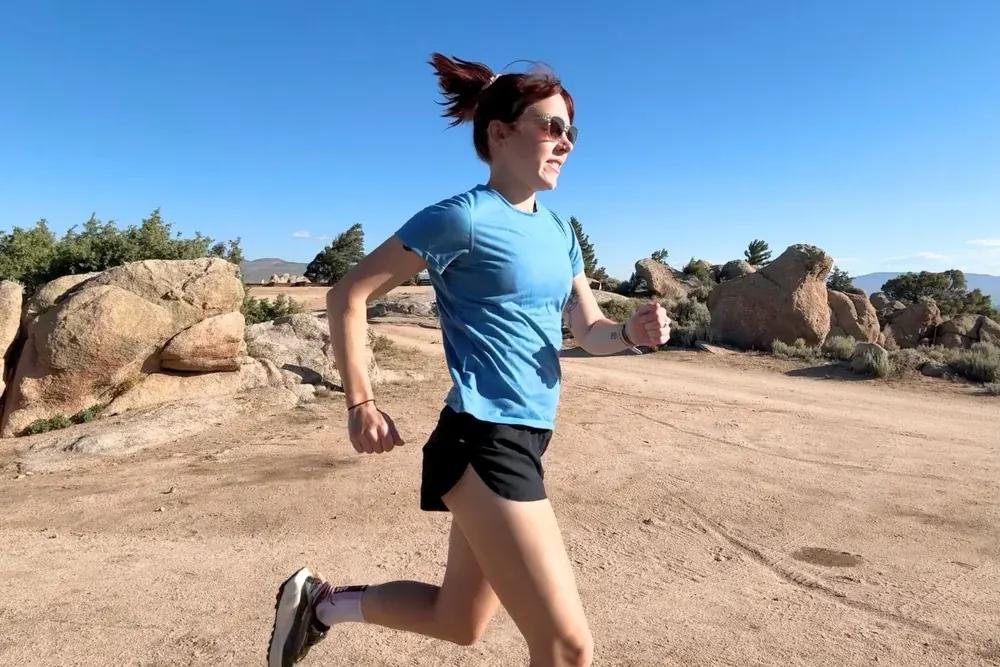
Running performance T-shirt showing its sleeves, shoulders and body silhouette

Gym Training Tees

Gym apparel may be exposed to overhead reaching, lifting, stretching and repeated changes in body posture. Chest ease, armhole geometry and garment length should be assessed together rather than independently. A tightly fitted training shirt may require different extension characteristics from a relaxed gym T-shirt. The accepted pattern should reflect the buyer's defined movement and coverage requirements.

Product Requirements
  • Verify overhead reach without unacceptable shoulder restriction or neckline displacement.
  • Review chest ease, underarm construction and fabric extension under movement.
  • Assess hem movement and torso coverage against agreed training conditions.

Related Product: Gym & Training T-Shirts
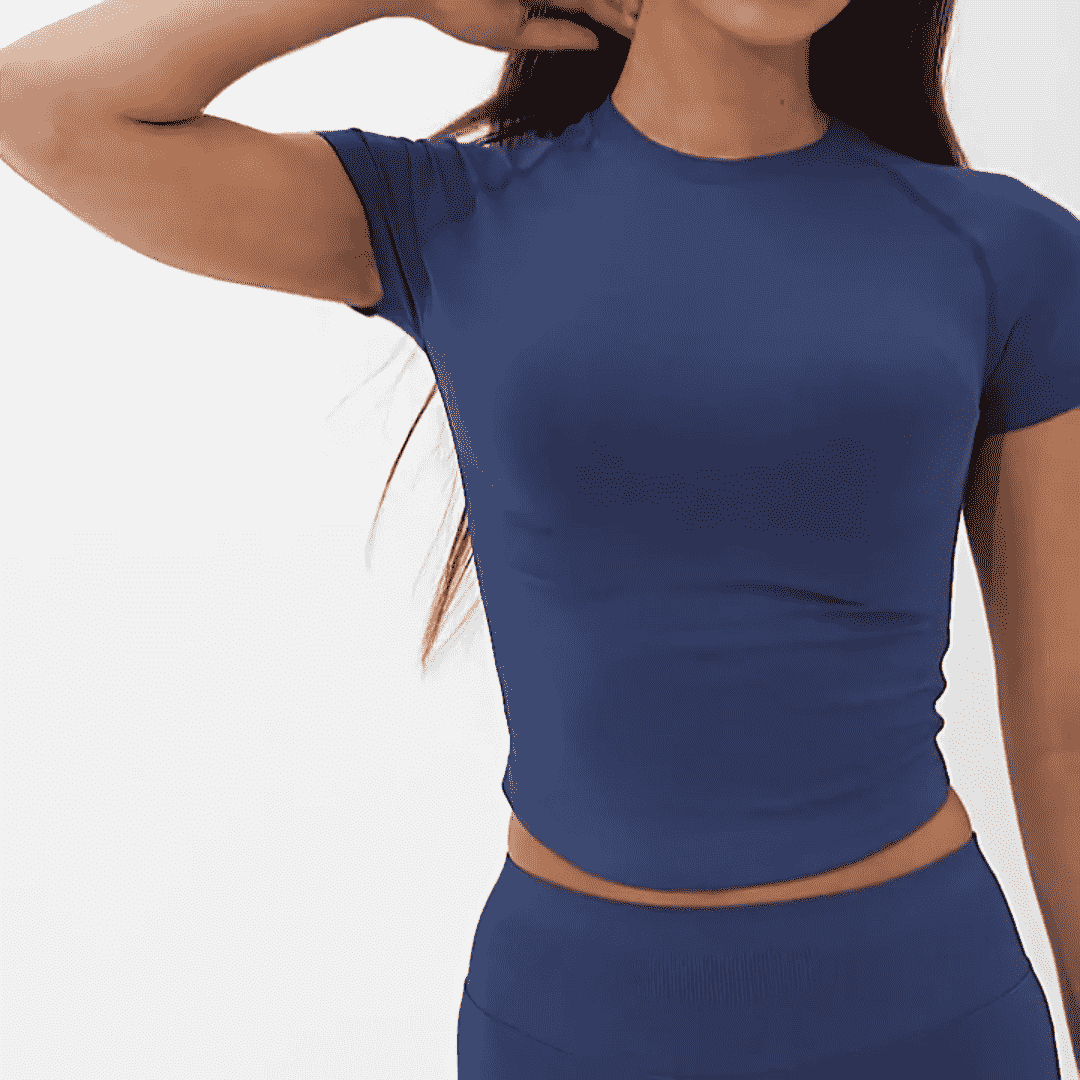
Gym training T-shirt with visible sleeve and underarm construction details

General Fitness Tees

A general fitness T-shirt may need to accommodate several exercise activities without specializing in one movement. The buyer should prioritize essential fit requirements instead of assuming that one pattern performs identically across every sport. Fabric surface, sleeve design, ease allowance and garment length should be considered against the intended consumer group, production cost and care conditions.

Product Requirements
  • Establish a defined wearer profile and primary garment silhouette before sampling.
  • Compare pattern ease and movement behavior across selected reference activities.
  • Approve materials, measurements and decoration as one coordinated product specification.

Related Product: Fitness T-Shirts

General fitness T-shirt displaying a regular training silhouette and sleeve profile

Studio and Athleisure Tees

Studio and athleisure garments may place greater emphasis on hand feel, visual drape, relaxed movement and compatibility with other collection products. These preferences should not be interpreted as universal comfort requirements. Development should examine whether fabric weight, pattern ease, neckline construction and decoration maintain the intended appearance in relevant postures and after specified care.

Product Requirements
  • Review fabric drape and surface contact using the intended finished garment.
  • Confirm neckline, sleeve and hem proportions with the collection's approved silhouette.
  • Check decoration compatibility without assuming a soft fabric guarantees durable printing.

Related Product: Studio & Athleisure Tops
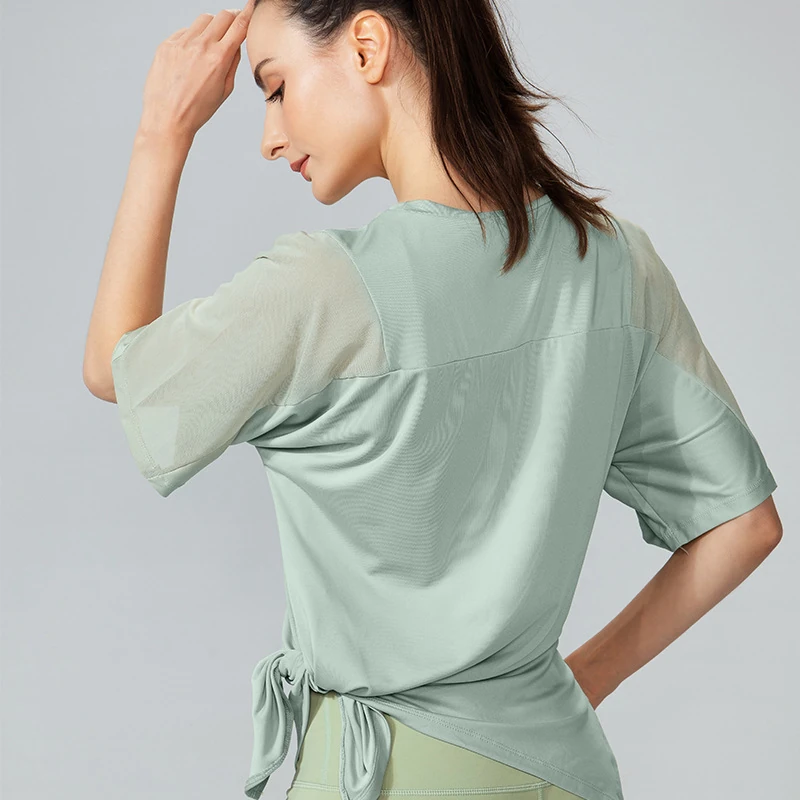
Relaxed athleisure T-shirt showing fabric drape, neckline and hem construction
CUT-AND-SEW ENGINEERING

Review Sports T-Shirt Patterns and Critical Construction Details

Athletic T-shirt performance depends on the relationship between pattern geometry, material extension and assembly quality. Sewing method alone does not guarantee comfort or strength. Each construction detail should be evaluated against the proposed silhouette, actual fabric and the buyer's defined dimensional and wearing requirements.
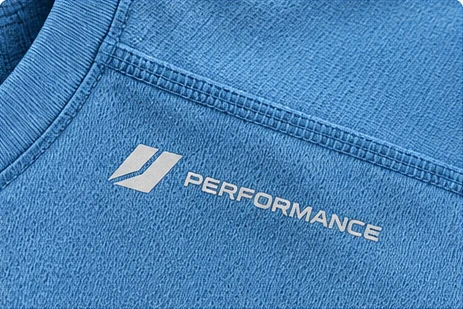
Close-up of shoulder seam positioning on a cut-and-sew athletic T-shirt

Shoulder Seam Placement

Shoulder seam position depends on the approved silhouette, sleeve pattern and expected movement. A conventional shoulder seam and a displaced or raglan construction may distribute fabric differently during activity. Pattern selection should follow the intended fit and actual garment evaluation.

Applicable Areas: Shoulder intersections, sleeve attachment points and upper-body pattern transitions requiring controlled assembly alignment.

Fit / Durability Consideration: Inspect movement clearance, seam bulk and visible distortion after intended extension and care.
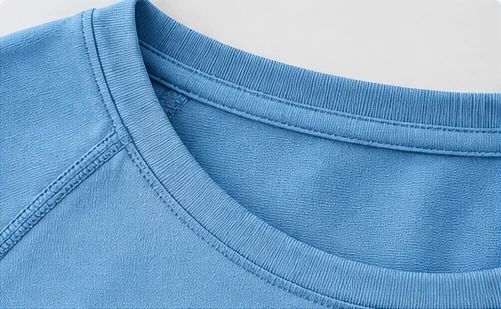
Close-up of neck rib attachment and binding on a knit sports T-shirt

Neck Rib Attachment

The neckline may require a compatible rib, self-fabric binding or another approved finish. Opening dimensions, binding length, material recovery and sewing tension affect the finished shape. The construction should be evaluated with the actual fabric rather than copied from an unrelated T-shirt style.

Applicable Areas: Crew neck openings, neckline seams and any approved binding or rib attachment positions.

Fit / Durability Consideration: Check neckline shape, seam smoothness and dimensional behavior after the required care procedure.
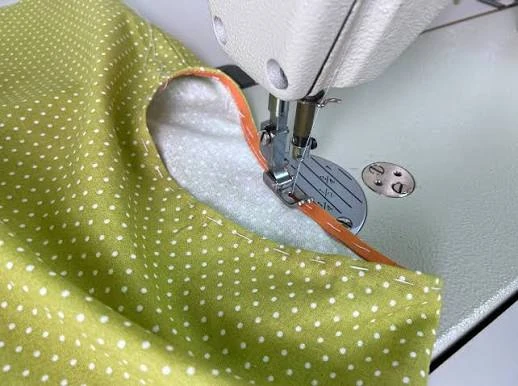
Detailed overlock seam construction joining two knitted T-shirt fabric panels

Overlock Assembly

Overlock stitching can join suitable knit panels while controlling raw edges. The appropriate stitch configuration depends on fabric weight, extensibility and the joining operation. A clean seam appearance does not by itself confirm sufficient seam extension or suitable workmanship for the intended garment.

Applicable Areas: Side seams, sleeve joins and other compatible cut-and-sew panel assembly locations in knitwear.

Fit / Durability Consideration: Examine seam extension, thread tension, skipped stitches and potential irritation at contact points.
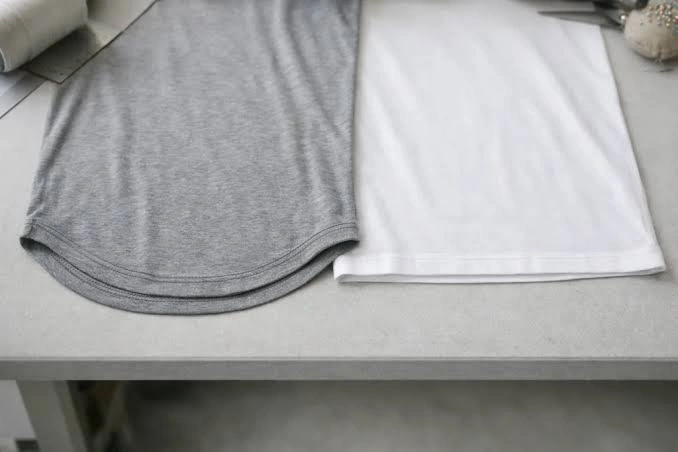
Close-up of coverstitch hem finishing on stretch sports T-shirt fabric

Coverstitch Hem

Coverstitch is commonly considered for knit T-shirt hems where controlled stretch and a clean finished appearance are required. Hem allowance, stitch setting, needle selection and fabric characteristics influence the result. Approval should cover visible stitching and behavior during garment movement.

Applicable Areas: Lower body hems and sleeve openings using approved knit-fabric finishing specifications and seam allowances.

Fit / Durability Consideration: Review hem waviness, stitch elasticity and dimensional stability after laundering or specified extension.
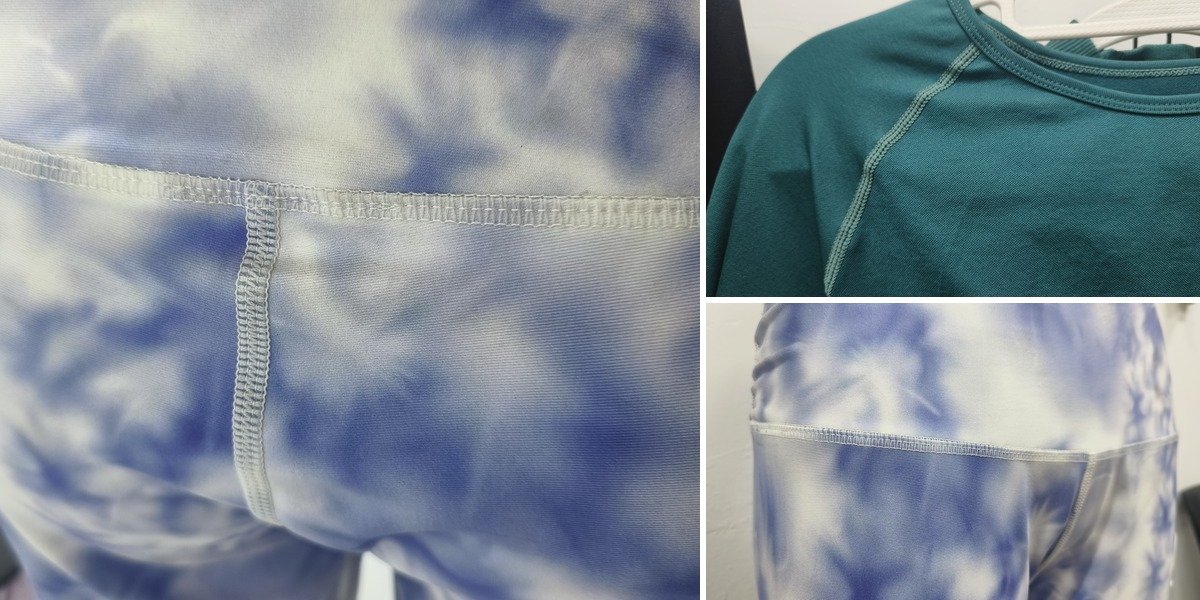
Close-up of flatlock seam profile on technical knitted sportswear

Flatlock Construction

Flatlock construction may be considered where a relatively flat seam profile is desirable. Its suitability depends on fabric characteristics, seam location, equipment and actual construction requirements. It should not automatically be selected for every sports T-shirt or presented as the strongest available seam.

Applicable Areas: Selected performance panel joins and areas requiring low-profile contact, subject to manufacturing feasibility.

Fit / Durability Consideration: Assess seam profile, extension, appearance and strength under the buyer's relevant product requirements.
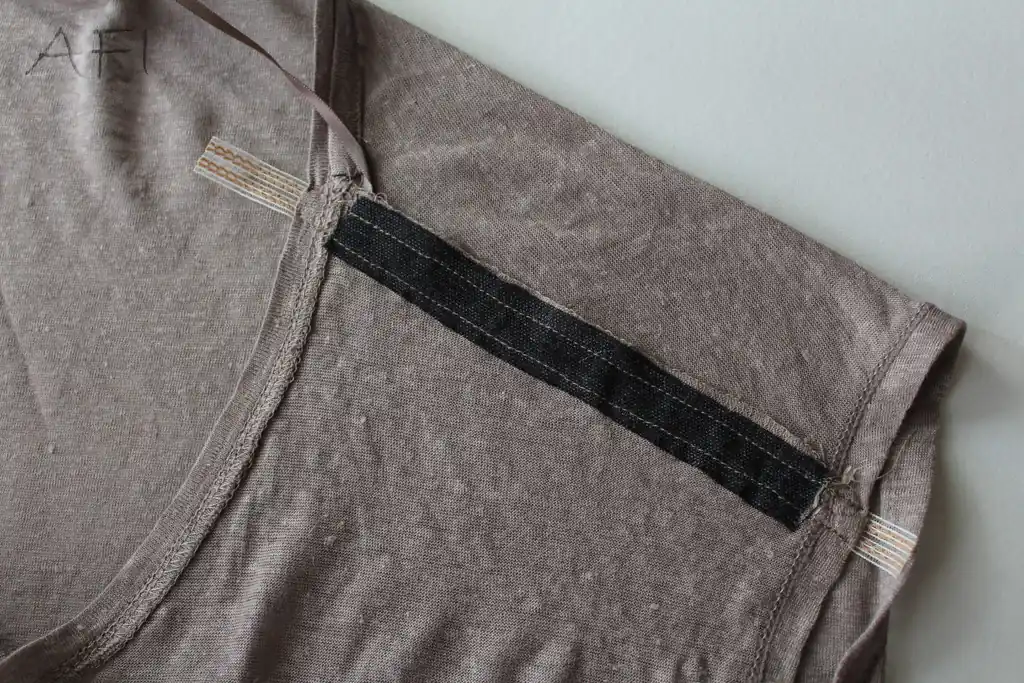
Detailed view of reinforced stitching at a knitted garment stress point

Reinforced Stress Points

Selected high-stress areas may require reinforcement, but reinforcement should follow actual loading conditions rather than a universal placement rule. Extra stitching can also change local stiffness or appearance. The supplier should agree on reinforcement type and location during construction approval.

Applicable Areas: Selected sleeve joins, openings and identified load-bearing points where additional reinforcement has been specified.

Fit / Durability Consideration: Check localized bulk, stitch security and compatibility with the adjacent fabric during movement.

DECORATION ENGINEERING

Choose Decoration Methods That Match Sports T-Shirt Fabrics

Decoration selection should begin with fabric structure, surface, extension, artwork and care requirements. MOVEVOX's documented customization options include screen printing, heat transfer, silicone decoration and embroidery. Additional processes should be discussed only after their material compatibility, supplier availability and project feasibility have been established.
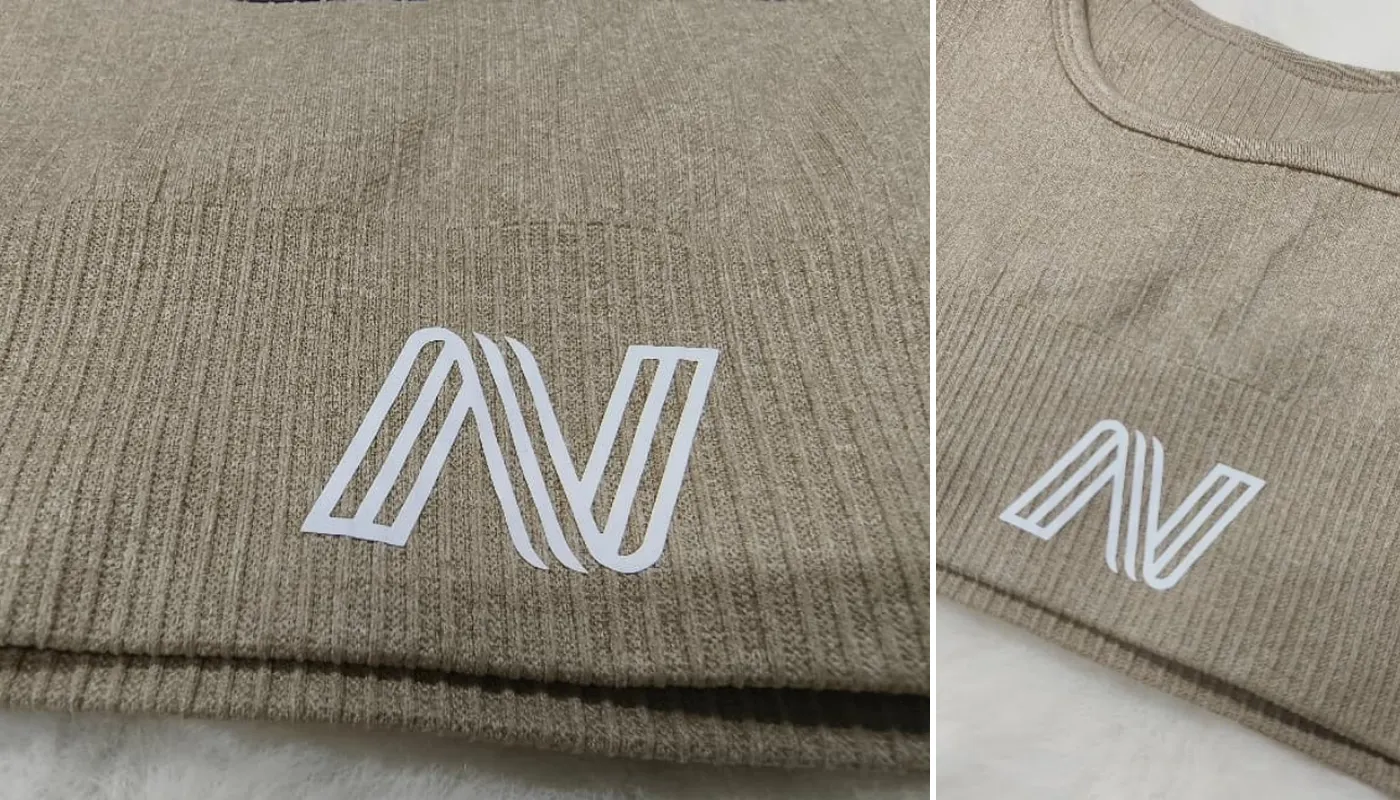
Detailed heat transfer logo applied to a compatible knitted sports T-shirt fabric

Heat Transfer

Heat-transfer graphics can reproduce selected artwork through a transfer material and controlled application process. Suitability depends on the film or transfer system, fabric surface, heat sensitivity, extension and laundering requirements. Brands should approve a representative physical sample rather than relying only on digital artwork.

Durability: Requires suitable adhesion, stretch and wash evaluation.

MOQ: Depends on transfer supplier, artwork and quantity.

Color Effect: Based on approved physical graphics and fabric.

Best For: Compatible logos and detailed brand graphics.
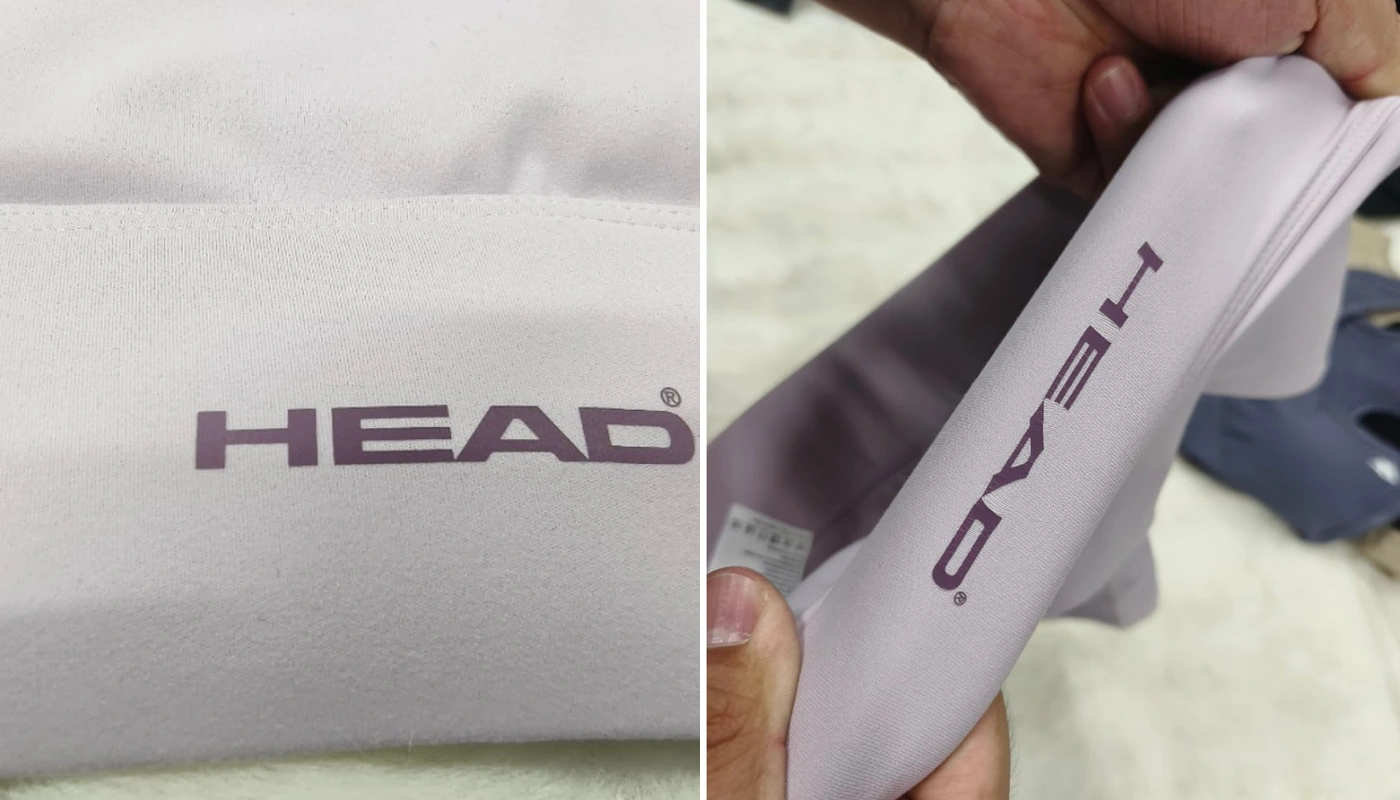
Close-up of screen printed branding on a knitted athletic T-shirt

Screen Printing

Screen printing may suit selected graphics where the chosen ink system can perform on the proposed fabric. Artwork complexity, print size, color count and ink deposit affect production decisions. The sample review should consider hand feel, extension, surface appearance and expected laundering conditions.

Durability: Evaluate cracking, abrasion and wash appearance.

MOQ: May involve screen preparation and setup costs.

Color Effect: Physical print approval required for accurate comparison.

Best For: Repeat graphics on compatible textile surfaces.
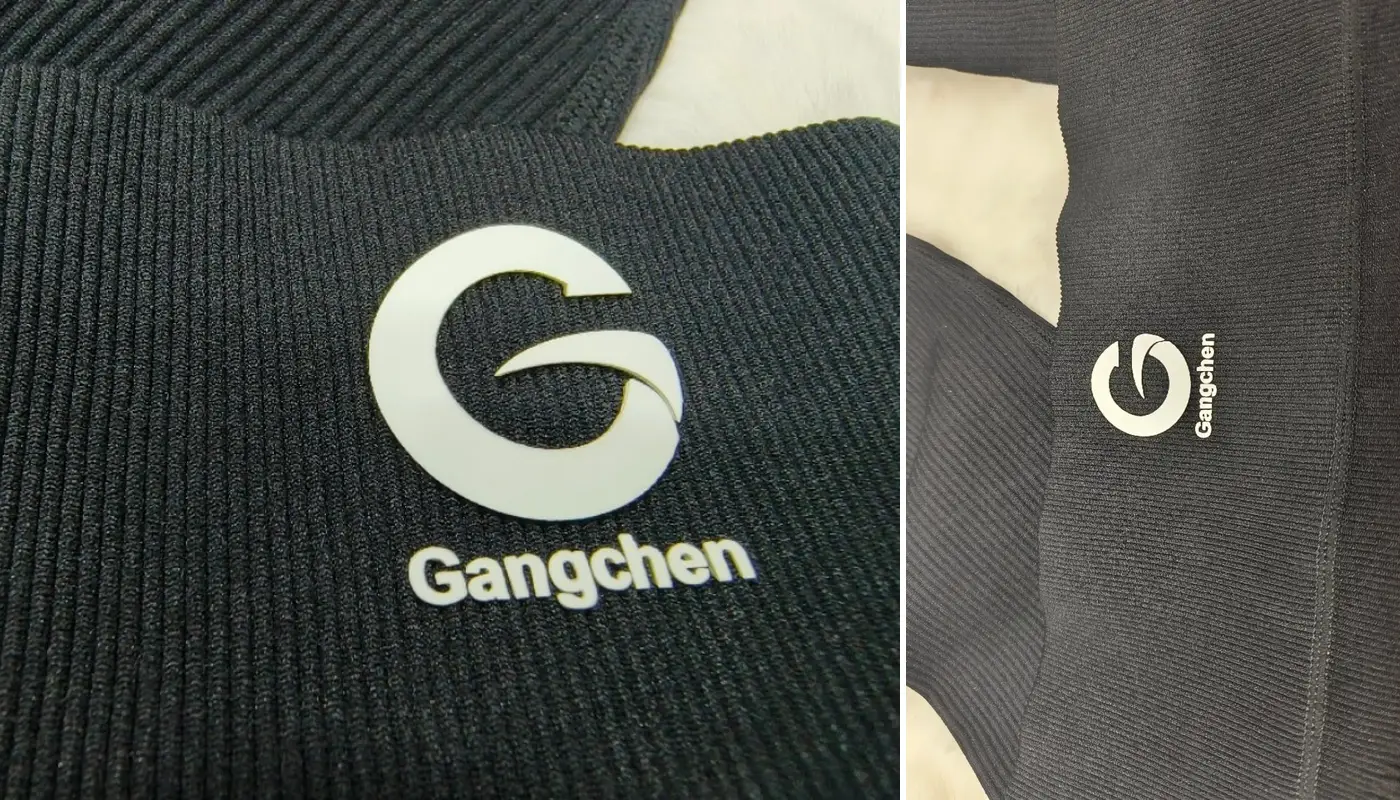
Raised silicone logo detail on compatible stretch sportswear fabric

Silicone Decoration

Silicone-based decoration may offer a distinctive raised surface or branded detail where the material system and garment construction are compatible. Thickness, application method, stretch and wash conditions should be evaluated before selecting the process. A three-dimensional appearance does not independently demonstrate durability.

Durability: Verify adhesion, flexibility and wash behavior.

MOQ: Custom molds may create separate purchasing commitments.

Color Effect: Approve actual silicone color and surface finish.

Best For: Selected raised branding and technical details.
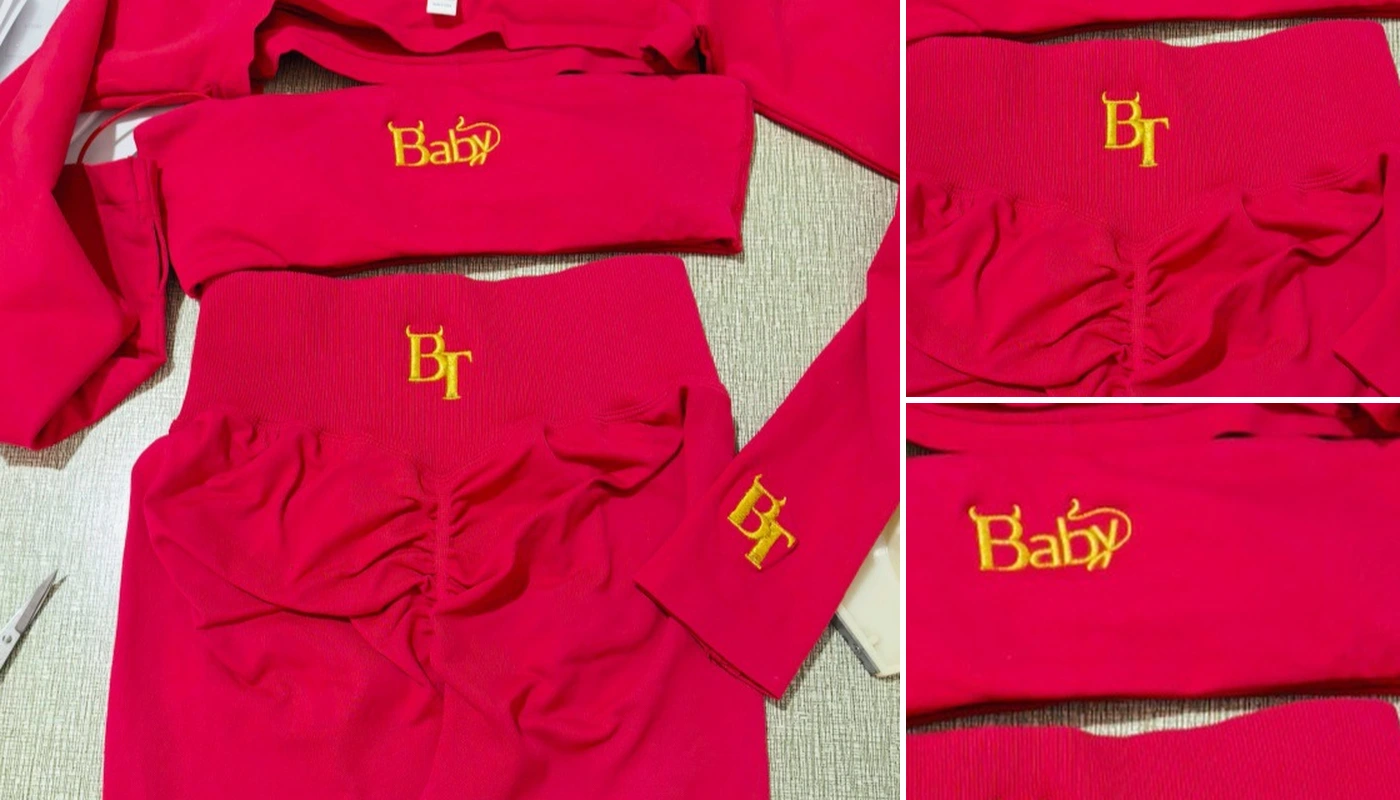
Close-up of embroidered sportswear branding showing thread texture and fabric support

Embroidery

Embroidery can create a textured brand mark, but the stitch density, design size, support material and fabric weight need to be coordinated. Lightweight or highly extensible knits may distort if the embroidery construction is unsuitable. Finished samples should be evaluated for appearance and wearer contact.

Durability: Inspect thread security, distortion and washing effects.

MOQ: Influenced by setup, stitch count and artwork.

Color Effect: Based on approved thread and substrate.

Best For: Compatible structured logos and brand details.
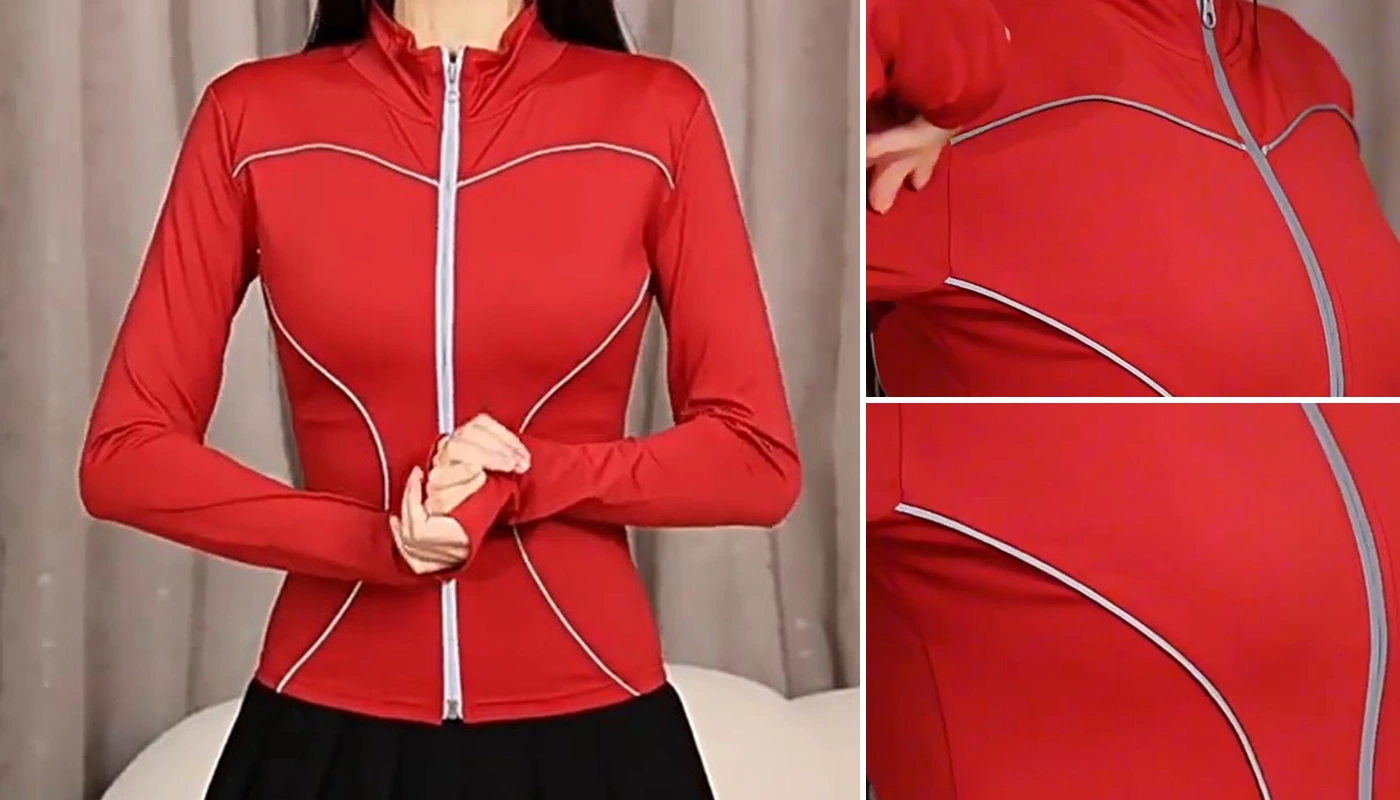
Reflective decoration material sample shown on technical sportswear fabric

Reflective Decoration

Reflective graphics may be considered where a brand requires a specified visual effect, but reflective appearance and retroreflective performance are separate matters. Material selection, placement, durability and any intended safety-related claim require suitable verification. This is a project-level option, not a blanket MOVEVOX certification claim.

Durability: Needs product-specific material and washing evidence.

MOQ: Subject to specialist material supplier confirmation.

Color Effect: Appearance changes with viewing and lighting conditions.

Best For: Buyer-approved visibility-oriented decorative concepts.
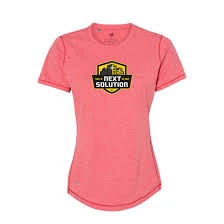
Sublimation graphic sample on a compatible synthetic sports T-shirt fabric

Sublimation Printing

Dye sublimation may suit compatible synthetic materials and selected graphic applications. The required temperature, fabric composition and garment structure should be examined before use. It is not a universal substitute for screen printing or heat transfer, particularly when products contain incompatible fibers or temperature-sensitive components.

Durability: Verify shade, appearance and finished material behavior.

MOQ: Depends on printing route and production allocation.

Color Effect: Strongly influenced by substrate and process conditions.

Best For: Compatible polyester-based graphic development projects.

SIZE-SPECIFIC ARTWORK PLACEMENT

Define Logo Dimensions and Placement Across T-Shirt Sizes

Artwork placement requires measurable references rather than visual judgment alone. A brand should approve physical logo dimensions, anchor points and placement tolerances for the selected T-shirt pattern. Rules may need adjustment across size groups, fabric constructions and decoration methods before the production artwork is released.
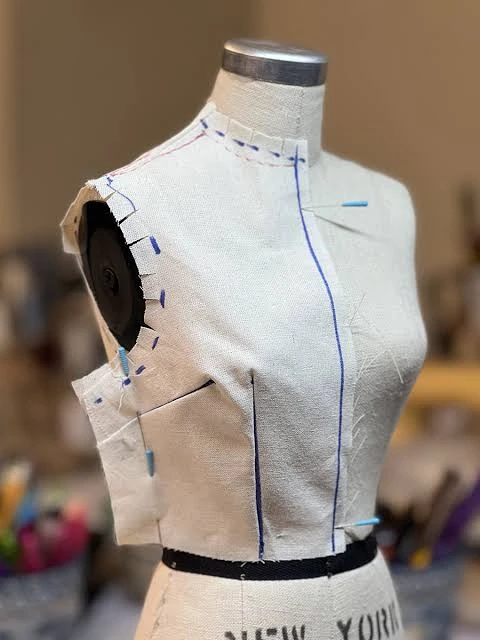
Front and back athletic T-shirt technical reference showing possible logo placement areas

Left Chest

Define the logo's physical width and height, horizontal location and vertical reference. Measurements should follow the agreed garment condition and reference points, not an arbitrary photograph.

Center Front

Front graphics require alignment with the garment centerline and consideration of neckline, chest shaping and fabric extension. Large artwork may require additional printing and movement evaluation.

Upper Back

Back decoration should be positioned relative to the approved neckline or center-back reference. Review whether the position remains visually consistent across sizes and wearer postures.

Sleeve Graphic

Sleeve artwork may distort over a curved or tapered panel. Evaluate print area, sleeve dimensions, stitching proximity and placement consistency on actual graded garments.

Lower Hem

Lower-body branding should account for approved hem allowance, garment length and printing clearance. Confirm whether location rules use the finished hem or another defined measurement point.

Size-Dependent Scaling

A constant logo size does not always maintain the same visual proportion across garments. Buyers should specify fixed dimensions or approved size-dependent scaling rules before bulk decoration begins.

Overall Design Logic

The final placement standard should combine approved artwork, actual decoration dimensions, measurable garment reference points and accepted tolerances. A digital mockup can establish design intent, but a representative physical T-shirt is needed to confirm fit-related positioning and production feasibility. Any approved variation across sizes must be recorded before release.

TECHNICAL RFQ INPUTS

Prepare the Technical Inputs for Your Sports T-Shirt

A meaningful manufacturing quotation depends on clear product requirements, not garment quantity alone. The following checklist helps sourcing teams separate essential information from items that may be finalized during development. MOVEVOX can review a complete Tech Pack, legally usable reference sample or sufficiently defined product concept.

Required

Product Type

Identify whether the style is a running, training, gym or general fitness T-shirt. Specify intended wearer, silhouette, sleeve type and any special construction. List related styles separately instead of assuming one description covers every SKU.

Required

Technical Sketch

Provide front and back views showing neckline, sleeves, hem construction, seams and decoration positions. Drawings should distinguish fixed design requirements from features open to technical alternatives. All supplied reference materials must be legally usable.

Required

Measurement Chart

Include base size, size range, points of measure, grading increments and tolerances where available. Specify garment measurement conditions. If a measurement method or tolerance remains unresolved, identify it before requesting final sample approval.

Required

Fabric Specification

Identify fiber composition, fabric structure, weight, color and relevant performance or care requirements. If the material remains undecided, provide target hand feel, drape, extension and cost expectations so candidate fabrics can be evaluated.

Required

Decoration Artwork

Supply vector artwork or another suitable production file with dimensions, colors and intended placement. Include preferred printing or embroidery methods if known. Confirm that brand graphics and design references may legally be used.

Required

Fit Reference

Provide an approved garment or sufficiently detailed fit description. Relevant comments may address shoulder mobility, chest ease, sleeve movement, neckline shape and hem coverage. Separate appearance preferences from requirements needing physical wearer evaluation.

Required

Testing Requirements

Identify applicable buyer test methods, regulatory requirements and intended product claims. Where acceptance criteria are not yet finalized, list the missing decisions. Laboratory test results must correspond to the specified material, sample and test conditions.

Required

Color Standards

Provide Pantone references, approved swatches or other suitable physical color standards. Clarify which standards apply to fabric, print, transfer material or embroidery thread. Different substrates may require individual approval.

Optional

Label and Packaging

Provide available main labels, care labels, size labels, hangtags, barcode and packing specifications. Distinguish standard packaging from custom accessories or materials that could introduce additional minimum orders or development requirements.

Required

Commercial Plan

State anticipated quantities by style, color and size, destination markets and target delivery conditions. Explain whether the project is a trial order, established repeat program or collection launch. Special materials may create separate sourcing requirements.

Incomplete-File Guidance

A complete Tech Pack is preferred for detailed manufacturing review, but a clear concept or authorized reference can support an initial discussion. MOVEVOX's product development resources can help identify missing specifications, material decisions and sample requirements. Final costs, lead times and production arrangements should remain conditional until critical details are confirmed.

MEASUREMENT & GRADING

Review Sports T-Shirt Measurements Before Pattern Grading Approval

Sports T-shirt specifications should connect garment dimensions with the intended athletic silhouette and material behavior. Before sampling, buyers should confirm measurement locations, grading increments, tolerances and measurement conditions. An incomplete chart should be treated as a technical input requiring clarification rather than an approved production specification.

Proposed T-Shirt Measurement Matrix
Size Chest Width Body Length Shoulder Sleeve Length Approval
XSBuyer inputBuyer inputBuyer inputBuyer inputPending
SBuyer inputBuyer inputBuyer inputBuyer inputPending
MBuyer inputBuyer inputBuyer inputBuyer inputPending
LBuyer inputBuyer inputBuyer inputBuyer inputPending
XLBuyer inputBuyer inputBuyer inputBuyer inputPending
XXLBuyer inputBuyer inputBuyer inputBuyer inputPending

Unit selection: cm / in. This matrix is a blank review template, not a MOVEVOX-approved size chart. No measurements or tolerances are being asserted.

Grading and Tolerance Review

Size progression should reflect the approved base pattern, intended fit and actual fabric behavior. Chest width, shoulder construction, garment length and sleeve measurements may require different grading rules. Buyers should define whether dimensions are measured flat, relaxed or under another specified condition. If a tolerance is missing or a size increment appears inconsistent, the issue should be resolved before sample approval.

Points to Check
  • Confirm the same measurement landmarks are used across every sample and production size.
  • Review grade increments against the selected silhouette and actual fabric extension characteristics.
  • Record revised dimensions and buyer approval before releasing the next technical specification version.
ATHLETIC KNIT MATERIAL SELECTION

Compare Fabric Structures for Custom Athletic T-Shirt Development

Fabric selection should begin with the proposed activity, silhouette and decoration requirements. Fiber composition alone does not determine comfort or performance. The comparison below identifies engineering considerations for candidate knit structures; actual material properties, test results, costs and availability must be established using identifiable fabrics.

Candidate Fabric Comparison
Technical Parameter Single Jersey Interlock Piqué Knit Engineered Mesh
Common StructureSingle-knit loopsDouble-knit structureTextured knit structureOpen or engineered knit
CompositionDepends on yarnDepends on yarnDepends on yarnDepends on yarn
GSMSpecify actual valueSpecify actual valueSpecify actual valueSpecify actual value
StretchTest by directionTest by directionTest by directionTest by direction
RecoveryRequires measurementRequires measurementRequires measurementRequires measurement
Surface FeelFinish-dependentFinish-dependentTexture-dependentStructure-dependent
DrapeWeight-dependentWeight-dependentConstruction-dependentStructure-dependent
Air PermeabilityRequires testingRequires testingRequires testingRequires testing
Decoration CompatibilityTrial on actual fabricTrial on actual fabricSurface trial neededPlacement trial needed
Dimensional StabilityRequires care evaluationRequires care evaluationRequires care evaluationRequires care evaluation
Best Use ConsiderationGeneral knit silhouettesStructured knit developmentTextured athletic stylesSelected ventilation concepts

How to Select a Candidate

A buyer should first define whether garment weight, visual drape, extension, surface texture or another characteristic is most important. Candidate fabrics can then be compared using approved specifications and relevant testing. Decoration compatibility deserves particular attention: a smooth surface may interact differently with a transfer film than an open mesh or heavily textured knit. Final selection requires physical material review, garment sampling and commercial confirmation.

PERFORMANCE TRADE-OFFS

Understand Performance Trade-Offs Before Selecting Sports T-Shirt Materials

Athletic T-shirt performance depends on interacting design choices rather than isolated marketing terms. Material composition, fabric structure, finishing, fit and decoration can affect each other. Buyers should evaluate the characteristics relevant to their target activity and avoid assuming that a single specification automatically proves overall garment performance.

Lightweight Means Breathable

Myth: A lower GSM automatically creates a more breathable T-shirt.

Fact: Fabric weight and air permeability describe different characteristics. Two materials with similar weight may have different loop structures, finishing treatments or airflow behavior. A lightweight fabric may also create coverage, durability or decoration challenges that need evaluation against the actual product specification.

Evidence / Exception: Compare measured GSM and relevant air-permeability results from identified candidate materials.

Polyester Always Wicks Moisture

Myth: Polyester composition alone proves moisture-wicking and quick-drying performance.

Fact: Moisture transport and drying behavior can depend on yarn construction, knitting structure, surface treatment and test conditions. Polyester may be selected for certain performance properties, but composition alone does not establish a defined wicking distance, drying time or wearer experience.

Evidence / Exception: Request the relevant test method, actual material result and applicable acceptance criteria.

More Elastane Improves Fit

Myth: Higher elastane content automatically delivers better athletic fit.

Fact: Fiber percentage does not establish the correct garment ease, extension force or recovery behavior. Pattern shape, knit structure, yarn configuration and finishing also influence the result. Adding elasticity without revisiting the garment pattern may create an unsuitable silhouette or unexpected pressure.

Evidence / Exception: Evaluate extension, recovery and actual garment fit using the intended material and sizes.

Soft Fabric Guarantees Comfort

Myth: A soft fabric swatch guarantees comfortable finished garments.

Fact: Perceived comfort depends on more than hand feel. Neckline finishes, underarm seams, decoration surfaces, fabric movement, temperature and individual wearer responses can affect the finished product. The same textile may perform differently when constructed into garments with different fits.

Evidence / Exception: Combine material specifications with finished-garment observations under agreed wearing conditions.

Bigger Prints Are Equivalent

Myth: Enlarging a logo does not change garment performance.

Fact: Larger decorated areas may change local fabric extension, bending behavior, surface contact and drying characteristics. The significance depends on the decoration system, material, location and intended movement. Enlarged artwork should not automatically inherit the approval of a smaller sample.

Evidence / Exception: Reassess representative print dimensions, placement and relevant durability conditions before approval.

Seamless Means No Assembly

Myth: Seamless knitting eliminates every sewing or finishing operation.

Fact: Seamless technology may produce a compatible knitted garment body, but neckline finishing, openings, attachment details or additional components can still require subsequent operations. Manufacturing feasibility depends on yarn, machine configuration, program design, size range and final garment requirements.

Evidence / Exception: Review the proposed knit structure, finishing plan and actual sample before confirming the route.

HEAT TRANSFER ENGINEERING

Evaluate Heat Transfer Compatibility With Stretch Sports Fabrics

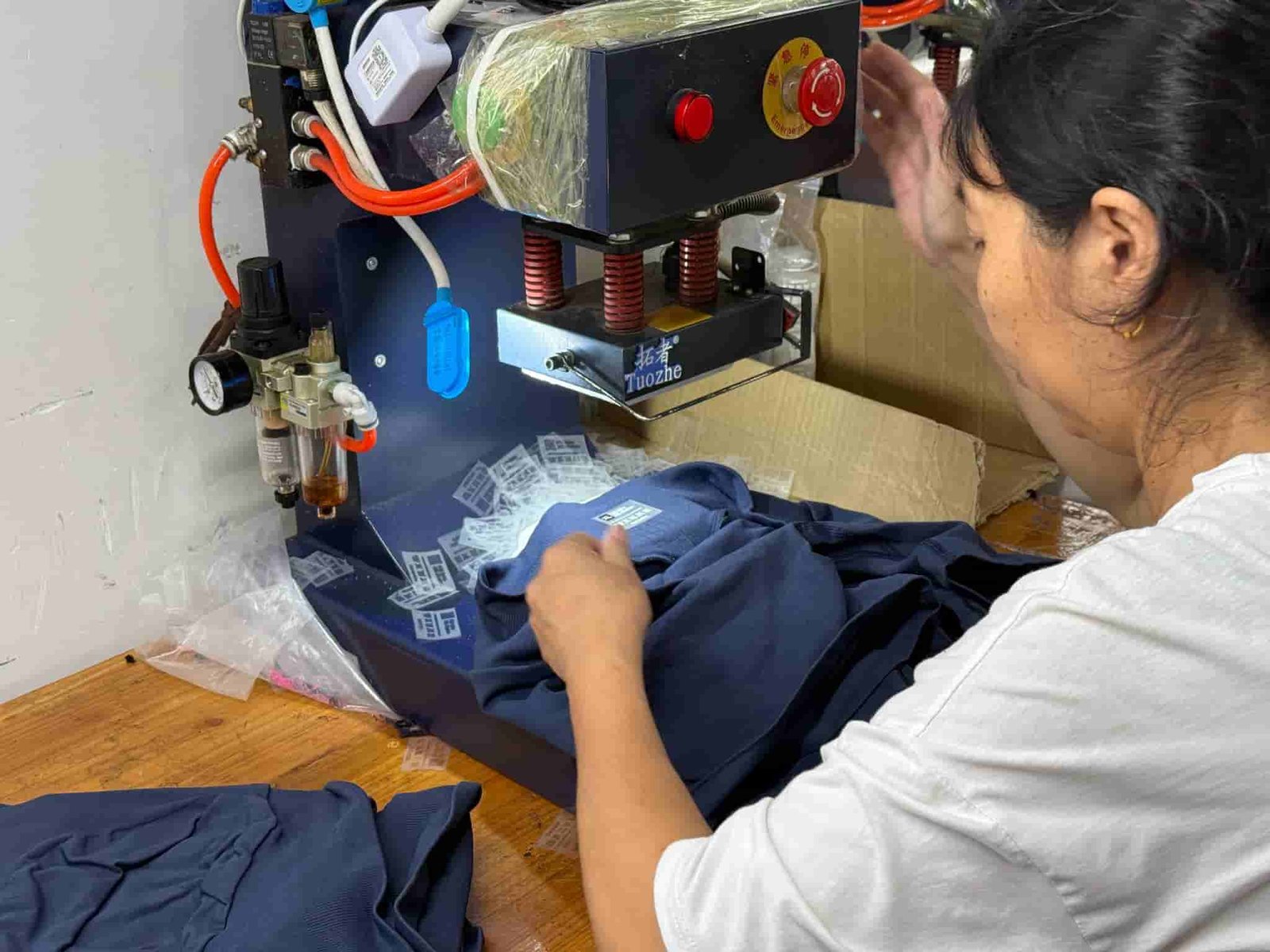
Heat-transfer decoration combines artwork, transfer materials, the garment substrate and application conditions. Suitability cannot be established from artwork appearance alone. Buyers should consider adhesion, fabric extension, surface texture, temperature sensitivity and laundering requirements before approving a transfer system for bulk sports T-shirt production.

Layered technical cross-section of heat transfer material applied to knitted sports T-shirt fabric

Artwork Layer

The artwork should define the actual image, physical dimensions, color references and intended placement. Fine details and large graphics may need different transfer construction or application conditions.

Transfer Film

The selected transfer material should be assessed for compatibility with the target fabric and relevant movement. Flexibility, adhesive behavior and the finished surface may influence acceptance.

Fabric Surface

Smooth, brushed, ribbed and open-knit surfaces can interact differently with transfer materials. Approval should use the actual production candidate rather than an unrelated demonstration fabric.

Adhesive Interface

Bonding performance depends on the selected transfer system, substrate and application process. Visible adhesion immediately after pressing does not establish satisfactory washing or extension durability.

Heat Exposure

Temperature, pressure and dwell time can affect both the applied decoration and underlying fabric. Processing conditions must follow the selected materials and validated supplier instructions.

Garment Movement

A graphic positioned over a high-extension area may experience different stresses from one on a relatively stable panel. Location and artwork size should inform sample evaluation.

Care and Laundering

Specified washing, drying and handling conditions should be considered during development. The test approach must match the product and the buyer's durability expectations, without assuming universal results.

Batch Application

Production consistency depends on controlled materials, artwork versions, equipment settings and visual inspection. Any relevant change should be reviewed before continued use of an existing approval.

Overall Performance Explanation

Heat-transfer feasibility requires the complete garment system to be considered. Artwork, transfer film, adhesive, fabric surface, operating conditions and intended wear should be evaluated together. MOVEVOX's documented heat-transfer customization capability supports technical discussion and sample development, but a particular combination should not be described as validated until representative samples and agreed evidence are available.

PHYSICAL COLOR APPROVAL

Approve Fabric and Logo Colors Using Physical References

A digital brand color does not automatically produce the same visual result across dyed fabrics, printed graphics, transfer materials and embroidery threads. Color development should identify the intended substrate, decoration method and applicable reference. The following approval sequence is a proposed project workflow, not a record of completed MOVEVOX laboratory testing.

Physical brand color reference swatches prepared for garment color review

Brand Color Input

The buyer supplies the approved brand reference, which may include Pantone information or a physical standard. The reference should identify the intended use and distinguish garment fabric from decoration colors, because different materials may require separate evaluation.

Image Requirement: Brand reference card or approved physical color swatch.
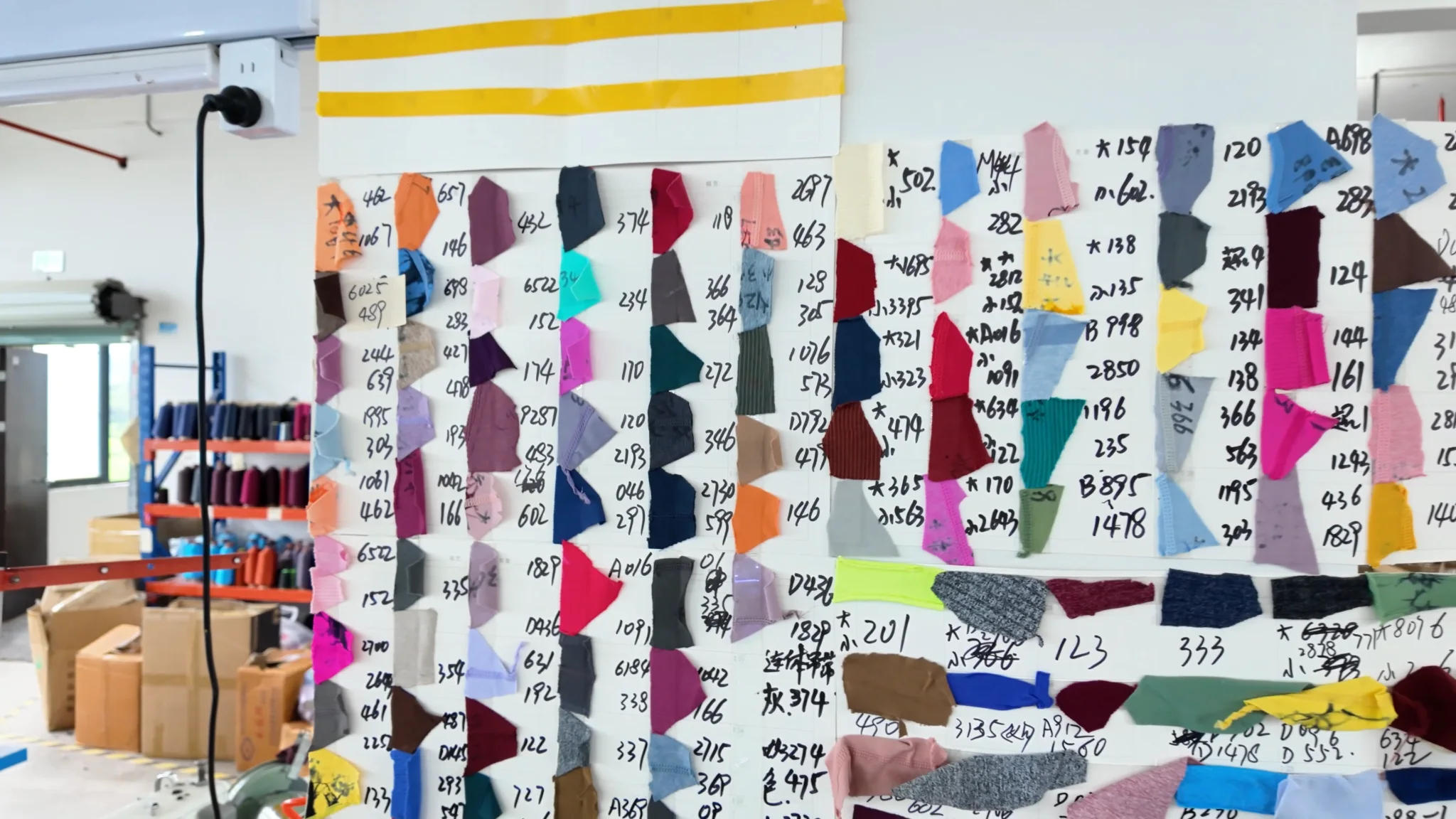
Identifiable sportswear fabric swatches with associated material specifications

Material Color Review

The supplier identifies the actual candidate fabric and relevant color-development constraints. Fiber content, dyeing route, surface finish and minimum material quantities can influence feasibility. Any proposed alternative should be presented for buyer review before detailed sampling.

Image Requirement: Identifiable fabric swatch and material specification.
Physical lab dip textile swatches arranged for color approval review

Lab Dip Evaluation

Where custom-dyed fabric is required, a suitable physical lab dip may be reviewed against the agreed reference. The buyer should confirm evaluation conditions, permissible differences and whether further submissions are needed before material approval.

Image Requirement: Actual lab dip or clearly labelled process illustration.
Printed or heat transfer logo color trial positioned on knitted sports T-shirt fabric

Decoration Color Trial

Logo colors should be assessed using the selected printing, transfer or embroidery materials on the actual fabric candidate. A color approved on paper or another substrate may not match the finished garment under relevant conditions.

Image Requirement: Representative print, transfer or embroidery color sample.
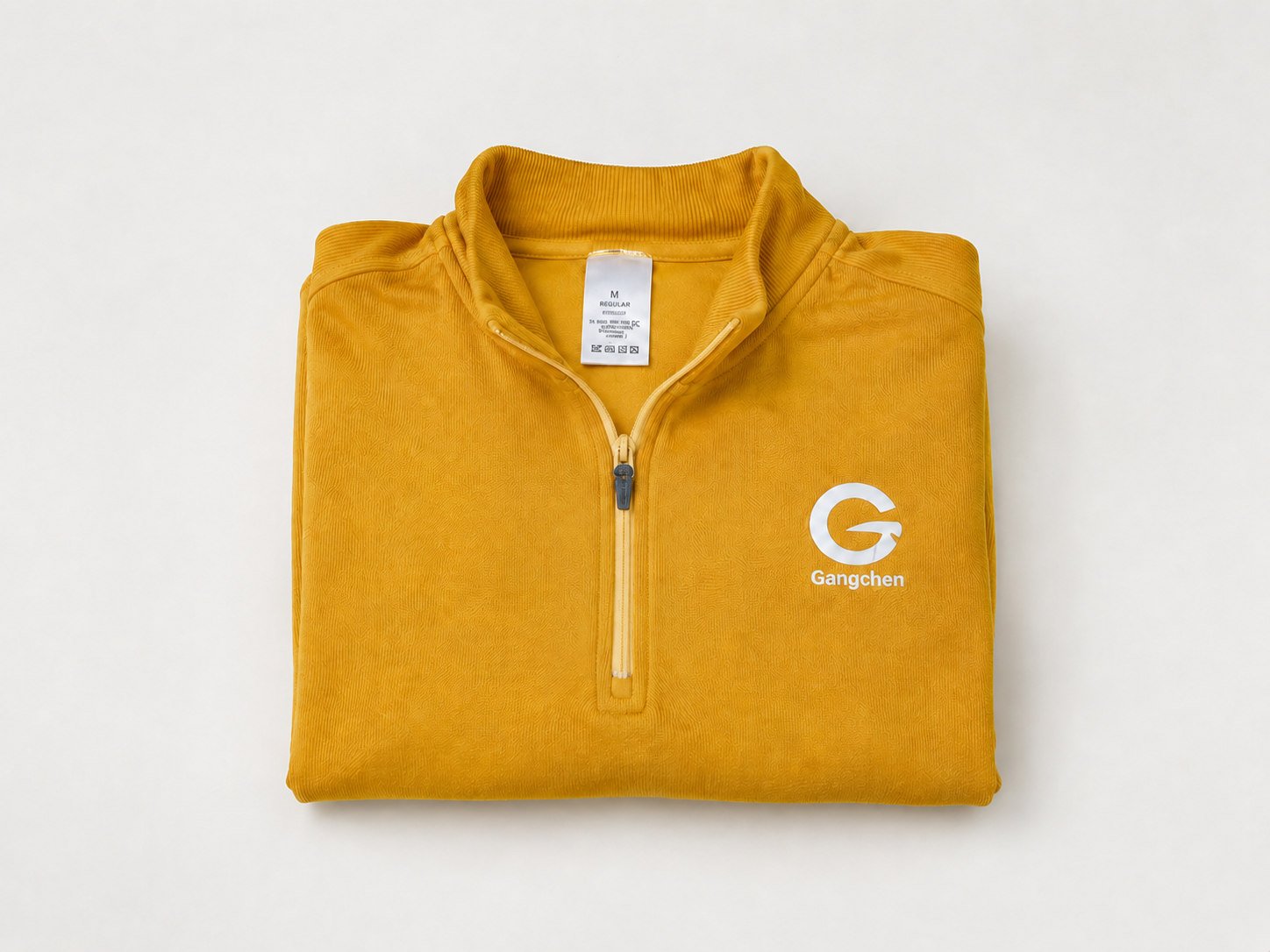
Sports T-shirt physical sample with color and artwork approval references

Physical Sample Approval

The buyer reviews the garment and decoration together, including appearance under agreed lighting conditions. The approval record should identify material, color, artwork and version. Any unresolved difference must remain open rather than silently accepted.

Image Requirement: Approved physical sample or blank approval-record template.
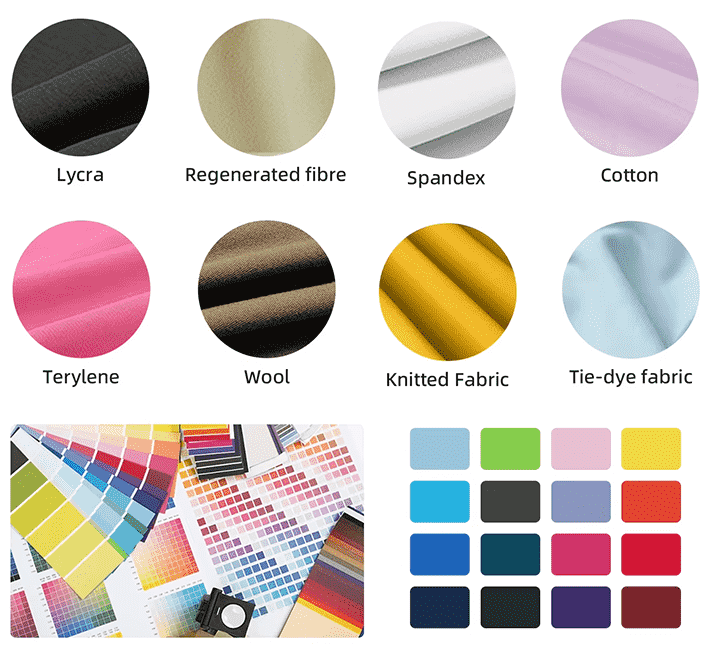
Fabric production color swatches organized for comparison against an approved reference

Bulk Shade Reference

Production should reference the currently approved material and decoration colors. Subsequent lots may require defined shade comparisons and inspection depending on the buyer's requirements. A new material supplier or process may trigger additional approval.

Image Requirement: Traceable lot swatches and relevant inspection references.

Color Assessment Note

Color judgments depend on the selected reference, light conditions, substrate and evaluation method. A single digital preview cannot substitute for physical approval. The commercial agreement should identify acceptable differences, approval responsibility and conditions requiring renewed submission, particularly when garments combine dyed fabric with separately produced branding components.

DECORATION DEFECT PREVENTION

Prevent Common Decoration Defects in Bulk Sports T-Shirts

Decoration quality depends on design, material compatibility, manufacturing conditions and inspection. The matrix below identifies potential causes and proposed controls for common defects. It should guide technical discussions and sampling requirements, not be interpreted as evidence that a particular MOVEVOX order experienced or eliminated these defects.

Decoration Defect Prevention Matrix
Defect Likely Cause Prevention Inspection Point Corrective Action
Transfer Peeling Incompatible adhesive, substrate contamination or unsuitable application conditions may prevent a reliable bond between the transfer and fabric. Verify material compatibility through representative trials and establish approved application conditions before releasing bulk decoration work. Inspect edges and surface after application; assess adhesion and laundering behavior when specified by the buyer. Isolate affected garments, identify material or processing deviations and determine whether rework and renewed approval are appropriate.
Print Cracking Ink or transfer layers may not tolerate the extension, bending or washing conditions imposed on the decorated garment. Select compatible decoration materials and review graphic dimensions, placement and anticipated movement during the sample development stage. Examine representative samples after the agreed extension or laundering procedure for visible cracking or surface changes. Investigate the ink or transfer system, adjust the proposed process and resubmit affected materials for appropriate approval.
Color Migration Dyes or components within the substrate may interact with decoration materials under heat, storage or other conditions. Review substrate chemistry, transfer-material selection and processing conditions; evaluate migration risk before finalizing colors and decoration methods. Compare approved reference colors with representative finished samples following relevant processing and evaluation conditions agreed by the buyer. Hold affected output, identify the likely interaction and review suitable alternative materials or application conditions before restarting.
Embroidery Puckering Stitch density, backing selection, hoop tension or insufficient fabric stability may cause the decorated panel to distort. Adjust stitch design, support materials and embroidery preparation to match actual fabric weight, extension and garment construction. Check surrounding fabric for puckering, distortion, excessive stiffness and unacceptable appearance on the approved garment sample. Review embroidery programming and support materials; test revised construction before releasing affected production for further work.
Logo Position Drift Unclear measurement anchors, size grading or inconsistent garment positioning may cause variation between samples and production pieces. Define artwork dimensions and measurable placement references for the relevant sizes, with approved tolerances and production instructions. Measure representative garments from identified sizes against the currently approved artwork position and actual finished garment references. Segregate deviations, verify whether repositioning is feasible and obtain required buyer approval for any proposed exception.
Wash Appearance Change Printing, transfer or embroidery materials may respond differently from the surrounding textile during specified washing and drying conditions. Review the complete care requirement and assess finished-garment samples using methods appropriate to the actual decoration system. Evaluate relevant color, surface, edge, distortion and attachment changes after the agreed care or durability assessment. Review the failed characteristic, modify materials or processes where appropriate and repeat the relevant approval evaluation before release.
TEST METHODS & CLAIM SCOPE

Define Colorfastness Tests for Custom Sports T-Shirt Materials

Colorfastness is not one universal performance measurement. Laundering, rubbing and perspiration expose textile coloration to different conditions. Buyers should specify the relevant method, sample identity, result format and acceptance criteria. Testing of a fabric does not automatically establish the durability of a separately applied logo or the performance of every future production lot.

Colorfastness to Laundering

ISO 105-C06:2010 provides methods for assessing resistance of textile coloration to specified laundering conditions. The buyer should identify the appropriate test variation, relevant adjacent materials and acceptance criteria. A result relates to the tested specimen and conditions; it does not establish that every possible washing process will produce the same outcome. Printed or decorated garments may require additional examination of their applied graphics.

Applicable Scope: Identified textile specimens under specified laundering conditions, using the test variation and evaluation criteria selected for the project.

Proposed MOVEVOX Response: Confirm buyer requirements, identify the relevant fabric or garment sample and request suitable evidence before making specific laundering colorfastness claims.

Colorfastness to Rubbing

ISO 105-X12:2016 addresses color transfer during specified rubbing procedures, including dry and wet assessments. This can be relevant when dyed or printed materials contact lighter garments or other surfaces. The result should be interpreted using the actual specimen and agreed grading requirements. Rubbing colorfastness is not equivalent to heat-transfer adhesion strength or print cracking resistance.

Applicable Scope: Dyed or printed textiles requiring assessment of color transfer under identified dry or wet rubbing conditions.

Proposed MOVEVOX Response: Define the relevant rubbing conditions and acceptance limits with the buyer, then match any reported result to the approved material.

Colorfastness to Perspiration

ISO 105-E04:2013 specifies a method for evaluating the resistance of textile coloration to the action of perspiration. It can be relevant for sportswear exposed to sweat, particularly when different garment colors or textile surfaces contact each other. Buyers must evaluate the reported outcome in relation to their specified requirements, rather than treating any available report as universal proof.

Applicable Scope: Identified textile specimens and relevant perspiration conditions within the stated test method and approved evaluation scope.

Proposed MOVEVOX Response: Confirm whether perspiration colorfastness is required, identify the relevant product samples and retain only evidence applicable to the specified material.

AATCC Colorfastness Methods

For buyers using AATCC methods, TM8 addresses crocking, TM15 addresses perspiration and TM61 addresses accelerated laundering colorfastness. These methods support different evaluations and should not be substituted without buyer agreement. The specific method revision, conditions and result interpretation require confirmation. A test standard identifies a procedure; it does not constitute a passed result or a certification of MOVEVOX's entire production.

Applicable Scope: Buyer-specified textile testing programs using the relevant AATCC method, revision, test conditions and acceptance requirements.

Proposed MOVEVOX Response: Review the customer's testing manual, confirm the selected method and identify whether existing material evidence is sufficient or additional testing is required.

Decoration Durability Beyond Colorfastness

Heat-transfer peeling, print cracking, embroidery distortion and garment appearance after washing are not all answered by standard fabric colorfastness results. The buyer may need additional material-specific or finished-garment evaluations. The selected assessment should correspond to the decoration technology and the actual claim. No universal pass level or washing-cycle guarantee should be assumed without verified test evidence.

Applicable Scope: Representative decorated materials or finished garments under buyer-approved conditions, with performance claims matched to actual evaluation results.

Proposed MOVEVOX Response: Distinguish fabric colorfastness from decoration durability and agree on any additional sample trials, test methods and approval records.

Standards and Source References

  • ISO 105-C06:2010 — Colorfastness to laundering; ISO confirmation reviewed in 2026.
  • ISO 105-X12:2016 — Colorfastness to rubbing; current ISO listing checked in October 2026.
  • ISO 105-E04:2013 — Colorfastness to perspiration; ISO status checked in October 2026.
  • AATCC TM8, TM15 and TM61 — Colorfastness methods; verify the purchaser's required revisions.
CLAIM SUBSTANTIATION

Match Sports T-Shirt Performance Claims With Valid Evidence

Brands should distinguish an intended product characteristic from a property demonstrated by appropriate evidence. A material specification, garment sample or laboratory test may support different kinds of statements. Each claim should be tied to an identifiable product, applicable evaluation method and agreed acceptance criteria before it is communicated as proven.

Moisture-Wicking

Functional Claim: The material satisfies a defined moisture-transport requirement.

Evidence Explanation: Polyester content or a supplier description cannot establish a specific wicking result. Yarn structure, knit geometry and finishing may affect liquid movement. The buyer should define the relevant performance characteristic and acceptance limits, then request results applicable to the selected fabric or finished garment.

Evidence Basis: Identifiable sample, suitable moisture-management method, reported result and buyer-approved acceptance criteria.

Quick-Drying

Functional Claim: The selected material meets an agreed drying-performance target.

Evidence Explanation: Fast drying and moisture transport are related but different characteristics. Drying results depend on test conditions, fabric mass, structure and liquid loading. A lightweight construction does not automatically prove compliance with a specific drying-time requirement or guarantee identical wearer perception.

Evidence Basis: Applicable drying method, identified specimen, measured outcome and agreed test conditions.

Stretch Recovery

Functional Claim: The material demonstrates defined recovery after extension.

Evidence Explanation: Recovery is influenced by fiber composition, yarn, knit structure, finishing and the extension-recovery procedure. Elastane percentage alone does not establish a specific result. Claims about garment shape retention may also require evaluation of seams, neck binding and other finished-garment components.

Evidence Basis: Approved material, relevant extension-recovery procedure, actual results and acceptance limits.

Breathability

Functional Claim: The textile meets the specified air-permeability requirement.

Evidence Explanation: Breathability can refer to different measured or perceived characteristics. Fabric openness, thickness, finishing and test conditions may affect measured air permeability. A visual mesh structure or low GSM alone should not be described as proof that a finished garment meets a defined target.

Evidence Basis: Identified fabric, suitable air-permeability assessment, reported value and relevant specification.

Durable Decoration

Functional Claim: The approved decoration meets defined durability requirements.

Evidence Explanation: An attractive transfer, print or embroidered logo does not establish long-term resistance to laundering, extension or abrasion. Durability evaluation should correspond to the actual decoration material, placement, garment fabric and agreed care conditions. Unsupported washing-cycle or adhesion claims should be avoided.

Evidence Basis: Representative decorated garment, applicable evaluation conditions, inspection record and approved outcome.

Athletic Comfort

Functional Claim: The garment is suitable for the buyer's defined wearing application.

Evidence Explanation: Perceived comfort involves fit, surface contact, thermal conditions, movement, individual preferences and construction details. Fabric laboratory results can support material decisions, but they cannot establish universal wearer comfort. Relevant physical-garment and wearer evaluation may be needed for specific claims.

Evidence Basis: Approved garment configuration, defined wearing conditions and identifiable product evaluation.

TECHNICAL SOURCING REVIEW

Move Your Sports T-Shirt Project Into Technical Review

If your brand already has a Tech Pack, reference sample or defined athletic T-shirt concept, the next step is to review its manufacturing requirements. Share your intended fit, materials, decoration artwork, quantities and approval priorities. MOVEVOX can discuss development requirements and outstanding feasibility questions before production terms are confirmed.

A complete specification is preferred, but a clear concept or legally usable reference may support an initial review.
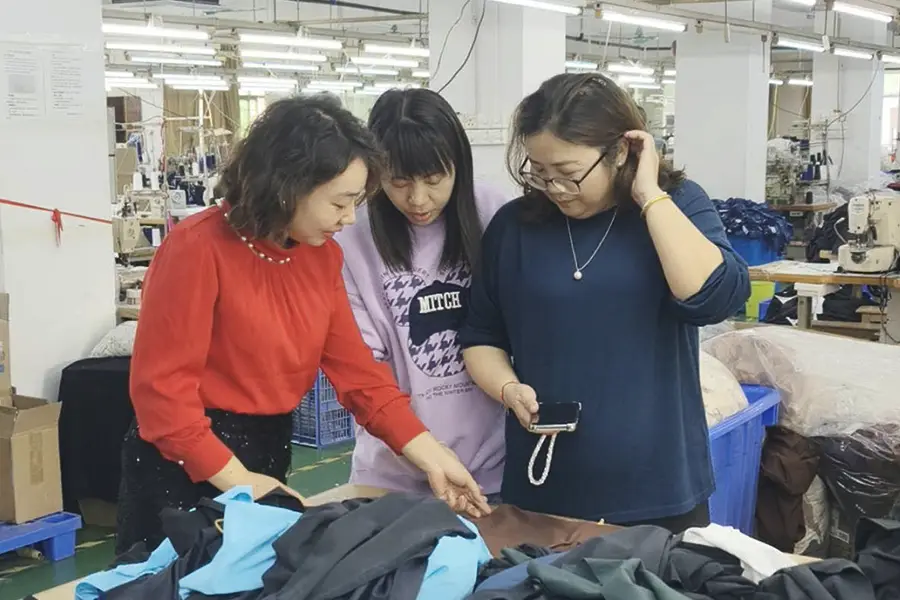
Technical development review of sports T-shirt garment specifications and fabric samples
DEVELOPMENT & APPROVAL ROUTE

Develop Sports T-Shirt Samples Through Defined Approval Stages

Custom sports T-shirt development should move through identifiable technical decisions rather than one informal sample request. The proposed sequence below connects design inputs, materials, decoration trials and garment approval. Each stage should have a defined deliverable, and the timing depends on project complexity and buyer response.

01

Technical Brief

Collect the intended product specifications, garment drawings, size range, use conditions, artwork and commercial requirements. Identify missing inputs and distinguish fixed buyer requirements from design features that can be reviewed or developed further.

Deliverable: Development Brief

Timing: Project dependent

02

Technical Feasibility

Review pattern requirements, material availability, decoration methods and proposed manufacturing operations. Identify technical conflicts, sourcing dependencies or unresolved approval requirements before treating the proposed style as ready for physical sample development.

Deliverable: Feasibility Review

Timing: Project dependent

03

Material Selection

Compare candidate fabrics, physical colors and supporting materials against the intended garment specification. Confirm which properties require testing and whether material availability or minimum purchasing quantities could affect the proposed development route.

Deliverable: Material Reference

Timing: Supply dependent

04

Decoration Trial

Prepare or request representative printing, heat-transfer or embroidery samples using the selected artwork and appropriate substrate. Evaluate visual appearance, placement, material interaction and any required performance conditions before finalizing the decoration specification.

Deliverable: Decoration Sample

Timing: Process dependent

05

Pattern and Sample

Translate the confirmed garment requirements into appropriate pattern, size and construction inputs. Produce a physical development sample for assessment of dimensions, appearance, movement clearance, workmanship and compatibility with the selected materials.

Deliverable: Fit Sample

Timing: Scope dependent

06

Fit Revision

Collect buyer comments using measurable locations, photographs or suitable garment observations. Separate pattern changes from material and construction changes, then document which revisions require another sample or additional approval.

Deliverable: Revision Record

Timing: Feedback dependent

07

Pre-Production Approval

Review the proposed final sample against current measurements, material references, artwork, decoration position, labeling and other agreed specifications. Close critical open questions and establish the approved manufacturing reference before authorizing production.

Deliverable: Approval Package

Timing: Approval dependent

08

Production Handover

Transfer the approved garment standard, current technical documents and relevant inspection instructions to the responsible manufacturing team. Confirm materials, operations, production responsibilities and any outstanding buyer conditions before full-scale execution.

Deliverable: Production Standard

Timing: Order dependent

Development Timing Note

MOVEVOX's recorded standard sample-development reference is approximately 5–10 working days after the necessary development details have been confirmed. This is not a guaranteed duration for every stage or complex T-shirt project. Custom materials, new decoration processes, revision rounds, customer approvals and international shipping can extend the overall schedule.

FIT REVISION CONTROL

Translate Athletic Fit Feedback Into Controlled Pattern Revisions

Fit comments must become measurable technical instructions before a revised sports T-shirt is produced. The proposed review method separates garment dimensions, pattern proportions, fabric behavior and construction. Each revision should identify the affected reference and require buyer evaluation before its approval status changes.

Initial Fit Observation

Assess the garment against its current measurements and intended movement conditions. Record shoulder mobility, chest ease, sleeve behavior, neckline appearance and hem position. Observations should distinguish visible pattern issues from material-related behavior.

Buyer Inputs
  • Provide representative wearer or fit-model observations under agreed garment conditions.
  • Identify unacceptable fit behavior and relevant movement or coverage requirements.
MOVEVOX Development Outputs
  • Technical review of affected measurements, pattern geometry and construction details.
  • Proposed revision list identifying unresolved fit causes and required decisions.

Acceptance Criterion: Each fit concern must have an identifiable location, agreed assessment method and a documented proposed resolution.

Measurement and Pattern Revision

Translate approved comments into specific changes to pattern pieces or measurement specifications. A wider chest measurement may not solve shoulder restriction, and changing sleeve geometry may influence armhole proportions. Effects should be reviewed together.

Buyer Inputs
  • Confirm the preferred silhouette and which existing dimensions must remain unchanged.
  • Approve or clarify the proposed measurable correction for each fit concern.
MOVEVOX Development Outputs
  • Revised pattern or measurement instructions linked to the appropriate document version.
  • Updated technical queries identifying changes requiring additional buyer confirmation.

Acceptance Criterion: The revision must be measurable, compatible with the selected material and traceable to the buyer's approved direction.

Revised Sample Assessment

Develop the revised sample using appropriate materials and updated instructions. Compare the result with the previous version to determine whether the intended corrections were achieved without introducing new problems in appearance or movement.

Buyer Inputs
  • Evaluate the revised garment against the original fit comments and criteria.
  • Identify remaining concerns using measurements, photographs or relevant wearer observations.
MOVEVOX Development Outputs
  • Revised sample identified by a clear development version and relevant specifications.
  • Updated review notes showing addressed issues and any remaining open points.

Acceptance Criterion: The buyer must identify which revisions are accepted and which still require technical investigation or further sampling.

Size Range Confirmation

Where required, evaluate whether the approved base-size pattern and proposed grading rules remain suitable across the intended size range. Adjacent sizes should not be assumed correct solely because one sample fits.

Buyer Inputs
  • Confirm required sizes, base-size approval and the intended grading principles.
  • Specify any additional fit-size evaluations required by the brand's standards.
MOVEVOX Development Outputs
  • Current measurement and grading references for the proposed production size range.
  • Identification of sizes or pattern relationships requiring separate physical verification.

Acceptance Criterion: Size-range release requires agreement on current measurements, grading rules and any additional fit approval requirements.

Final Fit Approval

A final fit decision should identify the accepted sample, technical version, size scope and any remaining conditions. If material, decoration or construction changes occur afterward, the buyer should determine whether the existing fit approval remains applicable.

Buyer Inputs
  • Confirm the accepted fit sample and the scope of its approval.
  • Approve any deviations or specify unresolved conditions before production release.
MOVEVOX Development Outputs
  • Updated technical reference connecting the accepted sample with current specifications.
  • Handover information identifying approved changes and remaining manufacturing dependencies.

Acceptance Criterion: A sample should be treated as fit-approved only within its explicitly documented garment, size and technical scope.

PRE-PRODUCTION APPROVAL GATES

Define Approval Milestones Before Releasing Sports T-Shirt Production

Sample approval should be treated as a sequence of defined decisions, not simply confirmation that a garment looks acceptable. The following milestones organize the required records without assigning unsupported calendar deadlines. Their actual timing should be established after the style, material, decoration and buyer requirements are reviewed.

MILESTONE 01

Sample Identity

Confirm style code, sample version, size and current technical document reference. The physical garment must be identifiable so later production teams do not rely on an outdated or unapproved development sample.

MILESTONE 02

Fit and Measurements

Review approved measurement points, tolerances, silhouette and necessary movement observations. Resolve critical discrepancies or record any conditional approval before considering the garment's fit specification ready for production.

MILESTONE 03

Fabric and Color

Confirm the selected fabric specification, color reference, relevant material tests and accepted substitutions. Material approval should distinguish the actual fabric identity from general supplier descriptions or unverified marketing claims.

MILESTONE 04

Decoration Approval

Verify final artwork, physical dimensions, logo position, decoration method and accepted appearance. Any required washing, extension or adhesion evidence should relate to the representative material and decoration combination.

MILESTONE 05

Construction Standard

Confirm neckline finishing, sleeve assembly, side seams, hems, labels and other agreed construction details. The relevant specifications should be sufficiently clear for the responsible production team to reproduce the approved garment.

MILESTONE 06

Production Release

Review the final approval package, open issues, material readiness and manufacturing responsibilities. Production authorization should follow the agreed buyer and supplier release conditions, rather than being inferred from sample delivery alone.

Approval Timing Note

MOVEVOX's general sampling reference should not be converted into fixed dates for these individual milestones. Standard fabrics, existing artwork and prompt buyer feedback may reduce development dependencies, while custom materials, complex decoration, testing and additional revisions may extend the schedule. An actual project plan should define timing after technical review.

SAMPLE-TO-BULK CONTROL

Transfer Approved Sports T-Shirt Standards Into Bulk Production

A finished sample becomes a useful production reference only when its relevant specifications and approval status are clearly identified. The proposed comparison below focuses on the attributes that should remain controlled between the approved sports T-shirt and bulk production. Actual consistency must be verified using the specific order's production evidence.
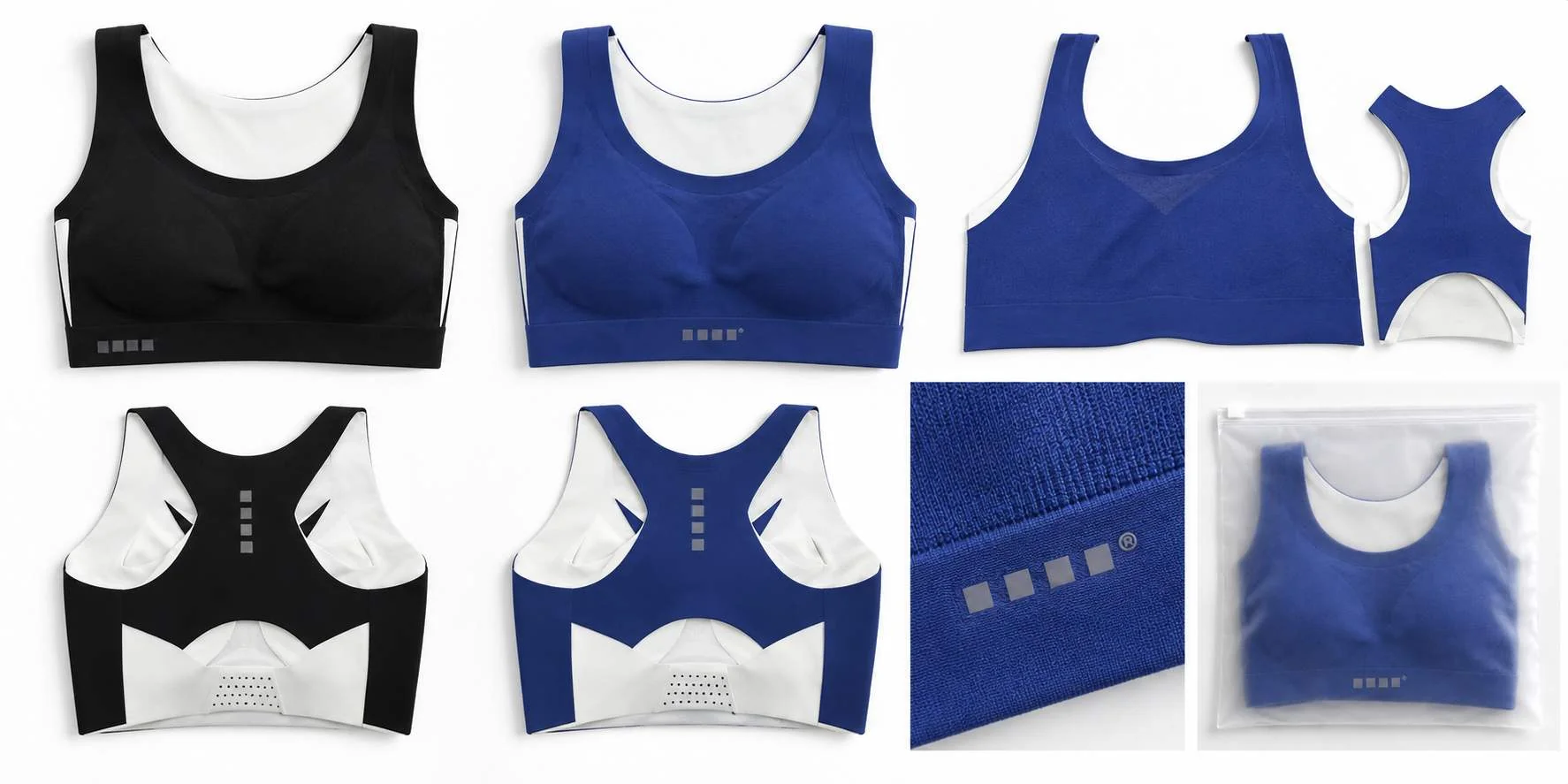
Identifiable approved sports T-shirt sample prepared as a manufacturing reference

Approved Sample Reference

Evidence Image: Approved sports T-shirt sample.

Required Identification: Style, version, size, fabric, color, decoration method and approval scope.

Evidence Status: Real evidence required before publication.
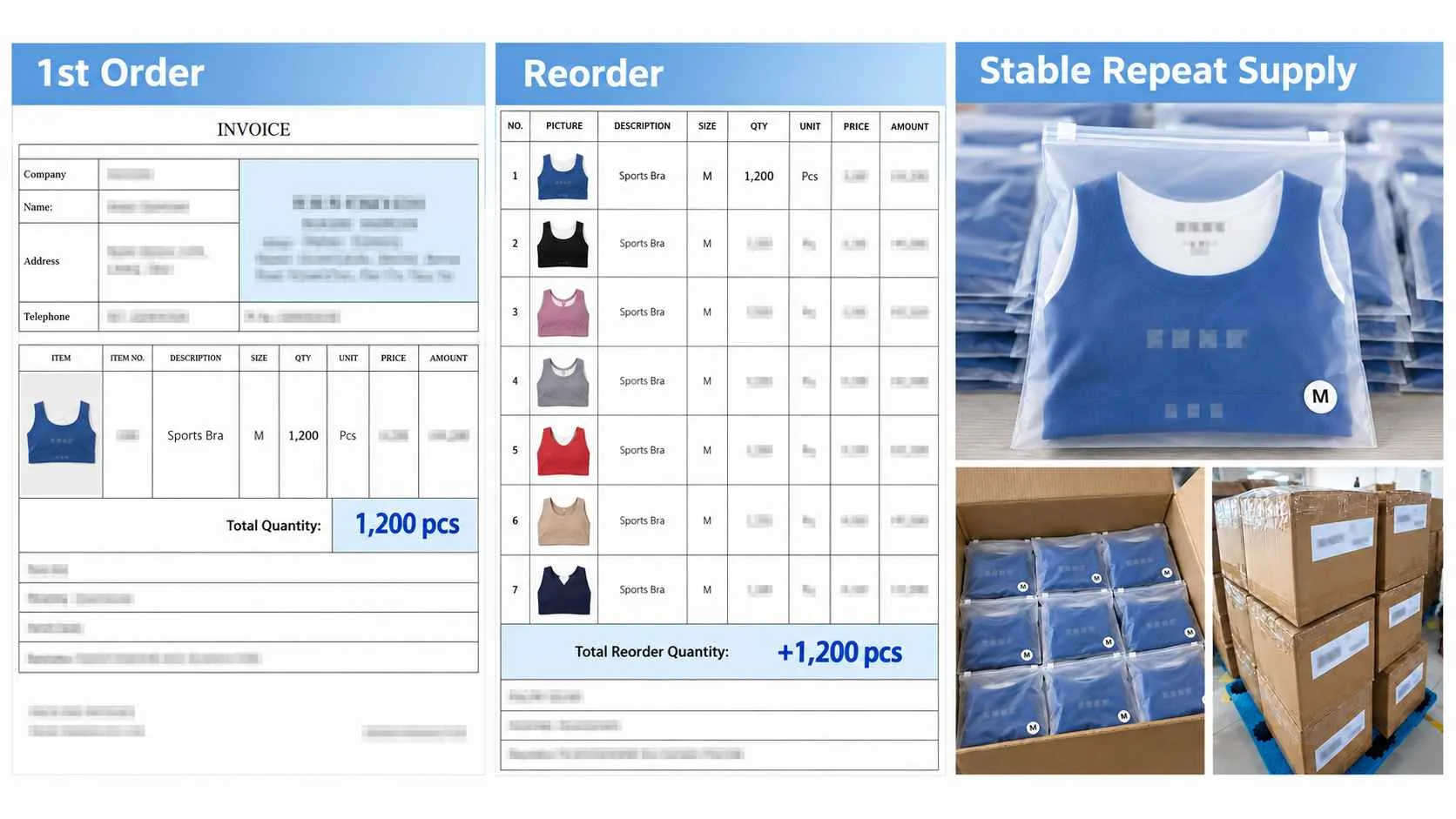
Production sports T-shirt matching the approved style with identifiable inspection references

Bulk Production Reference

Evidence Image: Actual production garment from the corresponding approved style.

Required Identification: Production order, applicable specification version, manufacturing responsibility and inspection reference.

Evidence Status: Real evidence required before publication.

Consistency Checkpoints

Fabric Identity

Confirm the production fabric matches the approved material specification or an explicitly authorized substitution with appropriate supporting evidence.

Garment Measurements

Compare actual production measurements with the current approved POM chart, grading requirements and applicable tolerances for each sampled size.

Fabric Color

Assess the production shade against the approved physical color reference using agreed lighting, evaluation and lot acceptance conditions.

Logo Dimensions

Confirm decoration width, height, orientation and measurable placement against the current artwork and relevant size-specific approval reference.

Decoration Appearance

Compare print, transfer or embroidery appearance with the accepted sample and any defined workmanship or durability criteria.

Stitching and Construction

Review neckline, sleeves, side seams and hems against the approved construction specification, required workmanship and relevant seam conditions.

Labels and Packaging

Verify main labels, care information, size labels, hangtags, packaging and carton markings against the current customer-approved instructions.

Consistency Control Explanation

A proposed production handover should connect the approved garment with the final Tech Pack, material references, artwork, manufacturing instructions and inspection criteria. The first production article and subsequent inspections can then be assessed against the same controlled information. Where a material lot, decoration process or manufacturing arrangement changes, the impact on existing approval should be reviewed. No actual bulk consistency result is claimed without corresponding order records.

DECORATION & GARMENT INSPECTION

Define Inspection Points for Decorated Sports T-Shirt Production

A buyer-approved decoration standard should be translated into measurable checks during production. MOVEVOX's recorded quality organization includes incoming, pre-production, first-article, in-line and finished-garment inspection activities. The checkpoints below adapt that quality framework to sports T-shirts; actual order results require separate inspection records.

Artwork Version

Confirm that the production file corresponds to the approved artwork and relevant garment style. A visually similar old file may contain different dimensions, colors or placement information.

Inspection Criteria
  • Match artwork identification against the current authorized production reference.
  • Confirm decoration method and applicable artwork version before application.

Status: Project verification required

Fabric Identity

Review the garment substrate before decoration or assembly. Material substitutions can affect appearance, adhesion, dimensional behavior and relevant quality requirements even when the color appears similar.

Inspection Criteria
  • Verify fabric specification, approved color and identifiable material reference.
  • Check whether material changes require further technical or customer approval.

Status: Project verification required

Logo Size

Decoration dimensions should be assessed against the approved artwork, including any defined visible border or measurement convention. Consistent appearance alone does not establish dimensional conformity.

Inspection Criteria
  • Measure applicable width and height using the agreed reference method.
  • Check physical dimensions against the relevant style and size specification.

Status: Project verification required

Logo Position

Placement should follow identifiable garment points, centerlines or other approved anchors. The measurement condition and expected size-related differences should be defined before routine inspection.

Inspection Criteria
  • Measure placement from agreed garment landmarks under defined conditions.
  • Confirm relevant grading or placement rules across sampled garment sizes.

Status: Project verification required

Color and Appearance

Evaluate logo color, orientation, surface appearance and visible defects against the approved physical reference. The inspection method should reflect the actual decoration process and material.

Inspection Criteria
  • Compare printed or embroidered color with the accepted physical reference.
  • Inspect visible edges, alignment, distortion and other defined appearance defects.

Status: Project verification required

Application Integrity

Inspect for relevant attachment, printing or embroidery defects after the decoration process. Specific durability requirements should be evaluated using the appropriate agreed method rather than visual inspection alone.

Inspection Criteria
  • Examine transfer edges, print surfaces or embroidery attachment as applicable.
  • Identify additional stretch, washing or adhesion checks required by specification.

Status: Project verification required

Garment Measurements

Confirm relevant finished-garment dimensions using the accepted method and tolerance requirements. Decoration work or pressing may affect garment appearance or dimensions and should be considered where applicable.

Inspection Criteria
  • Check designated POM dimensions and correct size identification.
  • Review visible distortion associated with relevant decoration or finishing operations.

Status: Project verification required

Final Packing

The completed garment should be checked against the buyer's approved labeling, size assortment, packaging and shipping requirements. Correct product quality does not compensate for incorrect identification or packing information.

Inspection Criteria
  • Verify labels, size identification, packing configuration and relevant carton information.
  • Confirm shipment-release requirements and any unresolved nonconformities before dispatch.

Status: Project verification required

Nonconformity and Corrective Action

When a product does not meet approved requirements, affected items should be identified and controlled according to the applicable order procedure. The responsible team should evaluate the cause, determine permitted rework or replacement actions and check the result before release. Deviations requiring customer consent should remain pending until authorization is received. Inspection examples must not be presented as actual completed order results.

MOQ & SKU ECONOMICS

Evaluate MOQ by T-Shirt Design and Decoration Requirements

Custom sports T-shirt MOQ depends on more than the garment style. Fabric availability, colors, artwork, decoration materials and supplier purchasing conditions may create different minimums. MOVEVOX's documented cut-and-sew baseline is approximately 150 pieces per style under regular conditions, but actual feasibility and quantity splits require project review.

STANDARD MATERIAL ROUTE

Initial Development Program

An initial T-shirt program may use an available fabric, standard color and compatible decoration method to reduce sourcing complexity. MOVEVOX's regular cut-and-sew MOQ starts around 150 pieces per style under qualifying conditions. This does not guarantee unlimited color or size splits, custom printing setup or dedicated fabric development at the same minimum.

Quantity Range: Starting reference approximately 150 pieces per style; subject to confirmation.

Color / Size Split: Must support feasible cutting, manufacturing and material allocation.

Price Factors: Fabric availability, sampling, decoration setup, quantity structure and packing.

CUSTOM FABRIC COLOR ROUTE

Custom Color Program

A brand-specific garment color may require a separate fabric dyeing commitment. MOVEVOX's documented custom-color conditions commonly involve an equivalent minimum dyeing quantity of approximately 400–600 pieces, depending on material and sourcing arrangements. The buyer should distinguish garment quantity from the fabric supplier's minimum and confirm whether related styles can share the same approved material.

Quantity Range: Custom-color feasibility commonly evaluated around a 400–600-piece equivalent.

Color / Size Split: Depends on the approved fabric and actual dyeing requirements.

Price Factors: Dyeing quantity, color approval, material consumption and development work.

SHARED-MATERIAL SKU PROGRAM

Multi-SKU Production Program

A mature brand may combine multiple T-shirt styles, sizes and approved colors into a coordinated purchasing program. Shared materials or decoration standards may simplify procurement, but different patterns and logo applications still require individual approvals. Commercial feasibility depends on the actual SKU matrix, sourcing commitments, manufacturing allocation and delivery requirements rather than the program's total quantity alone.

Quantity Range: Determined by actual SKU structure, material supply and production review.

Color / Size Split: Confirmed separately for each style and shared material group.

Price Factors: Shared purchasing, manufacturing efficiency, artwork variants and inspection needs.

PRE-ORDER FEASIBILITY

Check Production Feasibility Before Confirming T-Shirt Delivery Commitments

A manufacturing commitment must correspond to the exact style, materials, decoration method and delivery requirement. MOVEVOX combines its Yiwu core factory with cooperating production resources, but general company equipment or managed capacity figures cannot automatically establish availability for a particular sports T-shirt order.

Unapproved Materials

Business Consequence: A planned production start may be delayed when selected fabrics, colors or decoration materials have not been approved or secured. This can affect the intended launch date even if garment sewing capacity is available.

Proposed MOVEVOX Response: Review material specifications, supplier availability and any custom sourcing commitments before confirming the production schedule. Identify buyer approvals and supply dependencies that must be resolved before order release.

Material Readiness

Decoration Process Bottlenecks

Business Consequence: Complex printing or embroidery may require separate preparation, specialized suppliers or additional inspections. A production plan based only on sewing capacity can overlook decoration-related constraints and introduce avoidable scheduling risks.

Proposed MOVEVOX Response: Assess the approved logo method, material requirements, processing route and responsible operation. Confirm any externally coordinated work and its timing before the proposed delivery plan is accepted.

Process Feasibility

Unconfirmed Production Allocation

Business Consequence: A factory's equipment count does not show whether the appropriate machines, operators or production windows are available for a specific T-shirt program. Other orders and construction requirements can influence scheduling.

Proposed MOVEVOX Response: Evaluate the actual garment construction, responsible manufacturing location, available resources and proposed production period. Clarify whether cooperating facilities are required and which responsibilities remain under MOVEVOX coordination.

Capacity Review

Undefined Release Conditions

Business Consequence: A purchase order may remain commercially incomplete when fit approval, testing, packaging or customer documentation is unresolved. Manufacturing against unapproved information may create avoidable rework, dispute or shipment delays.

Proposed MOVEVOX Response: Confirm the approved specifications, outstanding decisions, inspection requirements and buyer release authority. Establish a feasible order schedule only after essential technical and commercial dependencies are understood.

Order Readiness
SPECIFICATION TRACEABILITY

Link Approved T-Shirt Samples to Production and Repeat Orders

An approved sample is useful only when its identity and related specifications can be retrieved. A proposed traceability system should connect product development, materials, artwork, manufacturing instructions and inspection references. The nodes below describe information to establish or verify for the actual order, not evidence of an implemented digital tracking platform.

Style Identity

Record the garment style code, intended product category, approved silhouette and relevant customer reference. This information provides the primary link between development documents, purchase orders and physical samples.

Style Record

Sample Version

Identify the current physical sample, revision number, size, date and approval status. An earlier version must not become the production reference merely because it remains available in the sample room.

Approval Record

Measurement Reference

Connect the approved sample to the current points of measure, size chart, grading instructions and applicable tolerances. Revised dimensions should have an identifiable authorization rather than an undocumented replacement.

Size Specification

Material Identification

Record the relevant fabric or yarn specification, approved color and material source. Where required, connect material batches and applicable test documents to the actual product or production order.

Material Reference

Decoration Version

Identify final artwork, logo dimensions, placement rules, process selection and approved physical appearance. A new transfer material or artwork version may require technical review before existing approvals remain applicable.

Artwork Approval

Manufacturing Allocation

Identify the responsible production facility and applicable externally coordinated operations. Relevant changes should follow the buyer's approval and disclosure requirements rather than remaining undocumented within the manufacturing network.

Production Allocation

Inspection Reference

Connect the approved product requirements to actual inspection records, identified samples and relevant nonconformity decisions. Inspection conclusions should remain traceable to the product version and order being assessed.

QC Record

Repeat Order Review

Before a repeat order, compare the current specification with previous approvals, material availability and proposed manufacturing arrangements. Relevant changes should be identified for renewed evaluation rather than assumed acceptable automatically.

Repeat Order Review
SUPPLIER MODEL COMPARISON

Compare Sports T-Shirt Supplier Models by Manufacturing Responsibility

Different supplier models can serve legitimate procurement needs. The appropriate choice depends on whether a brand requires blank-garment decoration, product development, specialized manufacturing or large-scale international production. The comparison focuses on structural differences; individual suppliers should still be evaluated using their actual capabilities, evidence and commercial conditions.

Supplier Model Comparison
Buyer Evaluation MOVEVOX Blank-Garment Decorator Single-Process Factory Large Manufacturing Group
Primary Service Private-label development and coordinated manufacturing Decorating sourced blank garments Manufacturing within its defined specialization Multi-facility production and sourcing
Pattern Development Documented development and pattern resources Depends on provider Depends on specialization Depends on relevant business division
Fabric Selection Fabric sourcing and customization support Often tied to available blanks Based on sourcing scope May include specialized material development
Decoration Multiple documented customization methods Often core service Internal or outsourced depending on facility Varies by operating group and location
Manufacturing Control Core factory with coordinated satellite resources Depends on garment and decoration sources Direct control over owned operations Multi-facility governance varies by group
Order Flexibility Conditional MOQ based on product requirements Can suit some small decoration orders Depends on setup and utilization Requires project-specific commercial review
Quality Accountability Centralized standards and documented QC resources Depends on supplier agreement Factory-specific control Often formal systems requiring qualification
Audit and Disclosure Core factory and cooperating resources require clear disclosure Manufacturer identity may require separate review Direct factory scope may be narrower Factory-level evidence must be verified

Choosing the Appropriate Model

A blank-garment decorator may be suitable when the buyer needs an existing T-shirt with approved artwork. A specialized factory may be effective for a well-defined product, while a larger group may suit substantial international programs. MOVEVOX's proposed advantage is combining development, garment manufacturing and coordinated customization under one supplier interface, subject to verification of each project's actual requirements.

B2B SUPPLIER EVALUATION

Evaluate Sports T-Shirt Manufacturers Against Your Sourcing Requirements

A useful supplier comparison should record evidence, outstanding questions and the buyer's actual requirements. A manufacturer's marketing claims are not a substitute for product-specific review. The checklist below is designed for RFI and Shortlist decisions; it does not assign verified scores to MOVEVOX or competing suppliers.

Product Development

Quality and Testing

Manufacturing and Capacity

Commercial and Compliance

Supplier Evaluation Outcome

A supplier should progress only when the buyer's critical requirements have sufficient supporting information. A positive initial impression may justify further RFI discussion, but it should not be recorded as verified technical or compliance approval. Open questions should be assigned to responsible parties, with evidence requirements and decision status documented. An unresolved critical issue may justify additional sampling, factory review or conditional shortlisting.

SOURCING QUESTIONS

Resolve Key Sourcing Questions Before Starting Your T-Shirt RFQ

Sportswear buyers often need clarification before comparing quotations or approving sample development. The following answers address manufacturing scope, material and decoration requirements, MOQ, quality evidence and production responsibility. Final commercial terms remain subject to the actual design, approved materials, quantity structure and project-level feasibility review.

Do you manufacture complete custom sports T-shirts?

MOVEVOX is a private-label activewear manufacturing and supply-chain partner with documented cut-and-sew and seamless capabilities. Its supported product range includes sports T-shirts and related activewear tops.

The manufacturing route depends on the garment structure, materials and design requirements. Cut-and-sew may be appropriate for conventional T-shirt patterns, while compatible seamless structures require separate technical assessment. Buyers can submit a Tech Pack, legally usable reference garment or sufficiently clear product concept for initial discussion.

Can we customize the pattern instead of using blank T-shirts?

Yes. MOVEVOX's product development resources include design, pattern-making and sample-development functions. The company can support development based on customer specifications or an authorized reference.

The buyer should provide intended fit, silhouette, measurement requirements and relevant product details. Pattern changes may affect garment dimensions, fabric consumption, construction and decoration placement, so physical sample approval remains important. A supplied reference must be legally usable; the manufacturer should not reproduce protected third-party designs without appropriate authorization.

Which printing and embroidery options are available?

MOVEVOX's documented customization options include screen printing, heat transfer, silicone decoration and embroidery, alongside labels and other branding components.

The appropriate method depends on the garment fabric, artwork size, location, extension and care requirements. A particular decoration system should be evaluated using representative materials before the buyer approves production. Processes requiring specialized materials, molds or suppliers may introduce separate costs, quantities and lead times. Not every technique is suitable for every sports T-shirt design.

What is the MOQ for custom sports T-shirts?

MOVEVOX's documented regular cut-and-sew MOQ begins around 150 pieces per style under qualifying material and process conditions. This is a general commercial starting point, not a confirmed MOQ for every custom sports T-shirt.

Specific colors, fabrics, print materials, specialized decoration or packaging may have separate purchasing requirements. Custom-dyed fabric can involve higher dyeing minimums, commonly evaluated around a 400–600-piece equivalent under the company's documented conditions. The final quantity arrangement should be confirmed after reviewing the actual SKU and material plan.

Can you guarantee colorfastness and print durability?

A general guarantee should not be inferred from the availability of printing equipment or a material description. The required colorfastness and decoration durability criteria must first be defined.

Fabric laundering, rubbing and perspiration resistance involve different evaluations. Heat-transfer adhesion, cracking and embroidery behavior may require additional assessments. Actual evidence must identify the relevant material or finished garment, method, conditions and results. MOVEVOX's unrelated yoga leggings testing documents cannot establish colorfastness or decoration performance for a new sports T-shirt.

How long does sports T-shirt sampling take?

MOVEVOX's documented standard sample-development reference is approximately 5–10 working days after the necessary technical details have been confirmed.

That reference does not include a guaranteed schedule for every material-development process, printing trial, customer revision or international shipment. Complex designs, custom fabrics, special decoration materials and additional test requirements may introduce further dependencies. A project-specific sample schedule should be agreed after reviewing the development input and outstanding approval requirements.

Can MOVEVOX support larger repeat orders?

MOVEVOX operates a core manufacturing base in Yiwu and coordinates additional production resources through cooperating satellite factories. Its manufacturing organization includes product development, production coordination and QC responsibilities.

However, general managed production capacity does not establish available capacity for a particular T-shirt program. Repeat-order feasibility requires confirmation of materials, specifications, decoration methods, manufacturing allocation and delivery conditions. Changes from a previous approved order may require additional technical or customer approval.

What information should we send for an RFQ?

Provide the intended T-shirt style, target activity, drawings or legal reference samples, available measurement chart, size range, fabric requirements, decoration artwork, colors and estimated quantity by SKU.

Include the destination market, target delivery conditions and any mandatory testing or compliance requirements. Where information remains incomplete, explain which decisions are still open. MOVEVOX can begin a preliminary review using sufficiently clear project information, while detailed quotation and production commitments remain conditional on technical and commercial feasibility.

Send Us an Inquiry

Tell us your needs, and our team will get back to you within 24 hours.

START YOUR PROJECT

Ready to Develop Your Private Label Activewear Line?

Tell us what you want to develop, your estimated quantity and customization needs. We will review the details and suggest the next practical step for sampling, quotation or production.

Helpful details to include:

Request MOQ & Sample Details