Activewear ODM Manufacturer
Manufacturing-led activewear development for established brands, connecting product concepts, fabric selection, garment engineering, sampling, and buyer-approved bulk production.
- Development From Your Product Direction: Start with a concept brief, sketch, reference sample, or incomplete technical specification. MOVEVOX supports the transition toward defined materials, construction, measurements, and development samples.
- Two Manufacturing Routes: Seamless knitting and cut-and-sew capabilities allow product structures to be evaluated against their manufacturing requirements rather than forcing every design into one production method.
- Controlled Development Approvals: Fabric choices, fit, measurements, branding details, and sample revisions require clear buyer confirmation before they become production references.
- Manufacturing Continuity: An established development team, production resources, and quality-control processes support the transition from approved development samples to managed bulk manufacturing.

Buyer Fit
Who Benefits From Manufacturing-Led ODM Development?
ODM collaboration is most useful when a buyer has a defined commercial product direction but needs additional garment engineering, material selection, sampling, or manufacturing expertise before the design can be approved for production.
Established Activewear Brands
Established brands often manage their own merchandising calendars, design direction, customer positioning, and product approval standards. However, internal teams may not complete every construction detail, fabric specification, or manufacturing decision before approaching suppliers. A development-capable manufacturing partner can help translate a product direction into technical options that the brand can evaluate. This is especially relevant when introducing new silhouettes, modifying existing fits, or extending a collection across different garment categories. MOVEVOX can participate in technical development and sampling while the brand retains responsibility for its product direction and final approvals. The intended outcome is a better-defined manufacturing specification, not the replacement of the buyer’s internal product team.
- Preserve established brand direction throughout supplier-led engineering development.
- Evaluate construction feasibility before committing to full production quantities.
- Maintain clear ownership of approval decisions and technical revisions.
Multi-SKU Product Teams
Product development teams managing several activewear categories must coordinate fit, material selection, color consistency, product construction, sample revisions, and development priorities across multiple styles. A leggings sample and a sports bra sample may share a fabric direction while requiring different patterns, structural support, measurements, and validation methods. Treating them as identical development tasks introduces avoidable production risks. MOVEVOX combines seamless and cut-and-sew manufacturing capabilities with product development and project coordination. This provides a basis for evaluating several product categories within one manufacturing relationship while maintaining separate technical approval requirements for each style. A collection-level ODM approach should identify which decisions can be shared and which must remain specific to individual products.
- Coordinate product development without losing individual style specifications.
- Identify shared material platforms and category-specific engineering requirements.
- Establish sample priorities before committing to collection-wide production.

Growing Activewear Companies
Growing brands may have clear sales feedback and product improvement goals without maintaining a large technical design department. Their development needs can include correcting fit issues, changing materials, refining construction, or extending successful silhouettes into new categories. The challenge is to distinguish commercially valuable improvements from changes that unnecessarily increase tooling, material, testing, or production complexity. MOVEVOX can review garment requirements, develop samples, and assess available seamless or cut-and-sew production routes. Development decisions should still be based on the buyer’s intended use, target customer, quantity, and approval standards. This approach is particularly relevant when a growing brand requires manufacturing support but does not want to transfer control of its brand identity or product positioning.
- Convert customer feedback into measurable product development requirements.
- Validate changes before committing to repeat or expanded orders.
- Balance initial development investment with realistic production quantities.
Sourcing-Led Brand Programs
Sourcing organizations sometimes receive product directions from merchandising or design departments before complete manufacturing specifications are available. Their responsibility is to identify suppliers who can resolve technical uncertainties without creating uncontrolled commercial commitments. For these buyers, ODM capability means more than attractive samples. The supplier must clarify development responsibilities, material dependencies, approval gates, tooling requirements, manufacturing locations, and the transition from development expenditure to production pricing. MOVEVOX’s development, manufacturing, and supply-chain coordination capabilities can be evaluated against these requirements. Formal project review should establish which information is available, which decisions remain open, and when reliable pricing and production scheduling become possible.
- Separate development assumptions from approved commercial and technical commitments.
- Confirm actual manufacturing resources and subcontracting approval requirements.
- Establish accountable communication across development, sourcing, quality, and production.
Development Model Comparison
Understanding OEM, ODM and Private Label Manufacturing
The distinction between these sourcing models depends on the starting information, development responsibility, approval process, and commercial agreement. A buyer should choose the model that matches its technical readiness rather than relying on supplier terminology alone.
| Evaluation Factor | OEM Manufacturing | ODM Development | Private Label |
|---|---|---|---|
| Starting Input | Buyer provides a substantially defined design, specifications, and production requirements. | Buyer provides product direction, references, sketches, or incomplete specifications requiring development. | Buyer selects an agreed product platform or design for branded execution. |
| Development Work | Supplier reviews manufacturability and prepares samples against buyer-controlled requirements. | Supplier contributes material, pattern, construction, and sampling decisions for buyer approval. | Development concentrates on approved product options and required branding modifications. |
| Design Direction | Buyer normally defines and controls the intended product design. | Buyer defines commercial direction; technical development responsibilities are agreed jointly. | Product structure may already exist before brand-specific changes are made. |
| Technical Documentation | Existing Tech Pack requires review, confirmation, and controlled production execution. | Specifications develop through technical reviews, samples, revisions, and formal approval. | Documentation focuses on the chosen product specification and approved customization details. |
| Intellectual Property | Buyer-owned designs are handled according to applicable ownership and confidentiality terms. | Existing rights, newly developed work, exclusivity, and permitted reuse require explicit agreement. | Product platform rights and buyer-owned brand assets must be distinguished. |
| Sample Objective | Verify whether production output matches the supplied technical requirements. | Establish and validate a manufacturable design before production specifications are frozen. | Confirm selected product quality, branding execution, fit, and packaging requirements. |
| Cost Considerations | Cost reflects materials, manufacturing, testing, order structure, and necessary adjustments. | Additional development work, revisions, specialized materials, or tooling may affect cost. | Costs depend on selected products and the complexity of branding or customization. |
| Best-Fit Buyer | Brands with completed product engineering and defined acceptance standards. | Brands requiring supplier-supported technical development before full production approval. | Brands adopting or adapting product platforms under their own identity. |
Choose OEM when your team has already defined the product and primarily requires reliable execution. Choose ODM when the concept is commercially clear but important manufacturing specifications still need to be developed. Choose Private Label when an existing product platform meets the intended offer and branding execution is the main task. A collection can involve more than one model, but every style still needs documented responsibilities, approved specifications, and an agreed intellectual-property position.
ODM Value
From Product Direction to Repeatable Manufacturing Standards
An effective ODM relationship connects commercial product intent with technical decisions and controlled production execution. Each layer depends on the one beneath it, creating a practical route from initial concept to buyer-approved manufacturing requirements.
Manufacturing Foundation
Seamless and cut-and-sew production routes establish the practical manufacturing options available during design evaluation. MOVEVOX operates with 28 Santoni seamless knitting machines and approximately 24 principal sewing and garment-production machines. These resources support technical routing decisions; they do not eliminate the need for material, fit, and process validation.
- Existing seamless knitting resources support evaluation of suitable knitted garment structures.
- Cut-and-sew capability provides an alternative route for panel-based construction.
Engineering Development
A development team translates buyer requirements into decisions about fabric, pattern, knitting structure, measurements, construction, and sample revisions. MOVEVOX’s regular development organization includes design, patternmaking, and sampling functions. The buyer’s technical comments and approval decisions remain essential inputs throughout the process.
- Development work can begin from sketches, concepts, samples, or Tech Packs.
- Approved measurements and materials provide references for subsequent production preparation.
Production Readiness
A sample becomes commercially useful when the approved design can be documented, released, and inspected during manufacturing. A controlled handover should connect the approved sample with the final specification, materials, production instructions, and quality requirements, allowing deviations to be identified before uncontrolled bulk production develops.
- Approved samples and specifications establish measurable production reference points.
- Incoming inspection, first-article checks, and subsequent QC support execution control.
Long-Term Collection Value
For brands planning recurring collections, development value continues after the first approval. Reusable technical knowledge, consistent specifications, and controlled changes can support future colors, sizes, or related styles. Each extension still requires appropriate validation; the objective is continuity and manageable sourcing complexity rather than a guarantee of identical results.
- Coordinated seamless and cut-and-sew resources support varied collection requirements.
- Documented approvals help preserve technical decisions across future production planning.
Concept Development
How Does an Activewear Concept Become a Manufacturing Specification?
A commercially defined product concept becomes manufacturable when its intended user experience is translated into measurable material, fit, construction, and quality requirements. MOVEVOX can support this translation through its existing development and sampling capabilities. Final decisions should be reviewed and approved by the buyer before they become production standards.
Define the Intended Use
Identify whether the garment is intended for yoga, Pilates, gym training, or everyday athleisure. This determines which movement, coverage, fit, and durability requirements need attention during development.
Translate Descriptive Language
Expressions such as soft, supportive, lightweight, or second-skin require technical interpretation. Fabric weight, stretch recovery, knitting structure, and garment dimensions must be considered before selecting a manufacturing solution.
Establish Engineering Requirements
Convert the concept into fabric specifications, construction drawings, measurement points, size information, and sample objectives. Unresolved questions should remain visible rather than becoming undocumented production assumptions.
Validate Through Physical Samples
Development samples allow the buyer to assess fit, appearance, movement, and construction. Revisions should be recorded, and the resulting approved version should become the reference for subsequent production preparation.
Why It Matters: Early engineering clarification helps a brand distinguish feasible product improvements from unresolved design assumptions before committing to materials, tooling, or bulk quantities.
Sketch-to-Engineering
Turning Activewear Sketches Into Production-Ready Engineering Decisions
A sketch defines intended appearance but rarely specifies every manufacturing decision. ODM development must interpret that appearance through material behavior, garment structure, measurement, production feasibility, and customer-approved technical documentation.
Translate Visual Features Into Defined Garment Construction Requirements
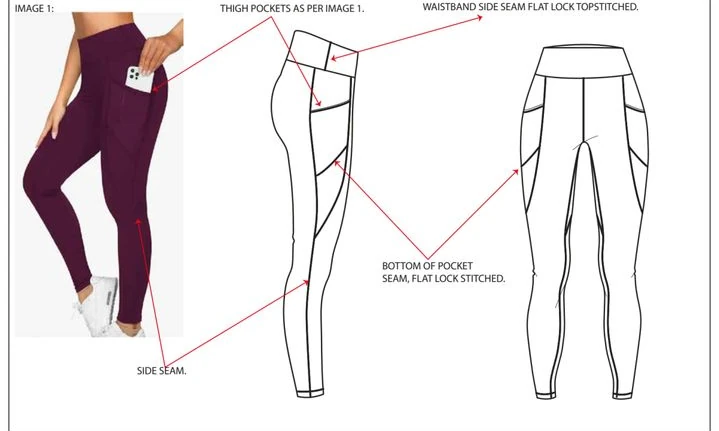
Visual Interpretation: The first task is to identify which visible lines represent actual seams, panel boundaries, knitting transitions, folds, or purely decorative elements. A line in a drawing does not necessarily require a physical stitched seam.
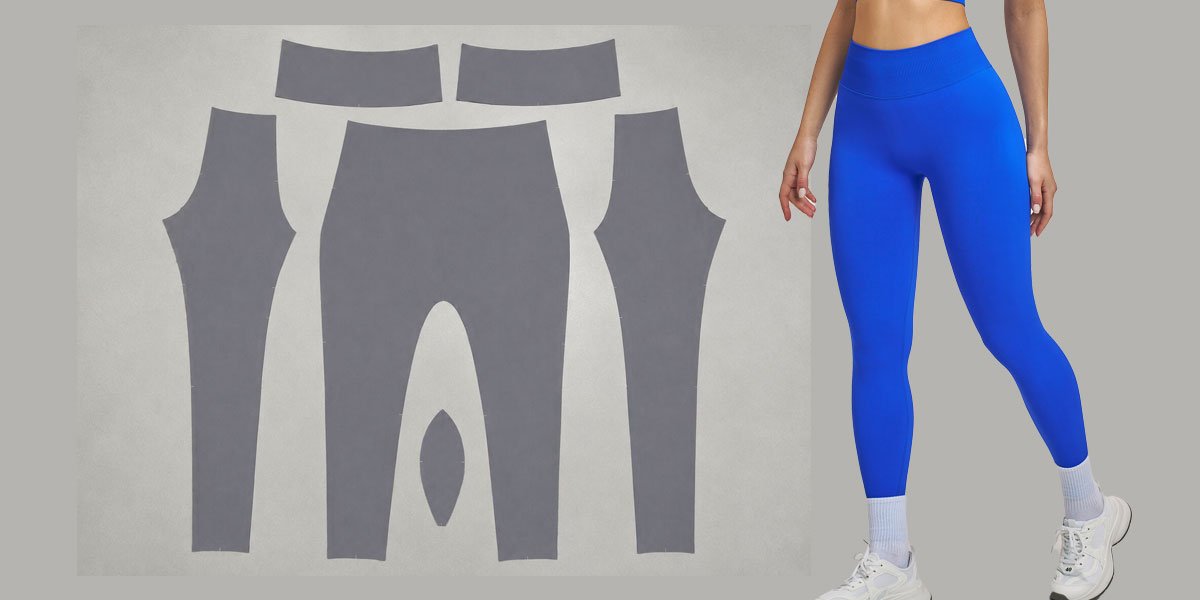
Structure Definition: A high waistband needs more information than finished height. The development team must consider circumference, stretch recovery, fabric layers, elastic or knitted structure, seam placement, and its interaction with the garment body.
Movement Considerations: Rise, gusset geometry, crotch-seam placement, and fabric extension affect how leggings behave during squatting, stretching, and repeated movement. These variables should be evaluated in relation to the target wearer’s body proportions and intended activity.
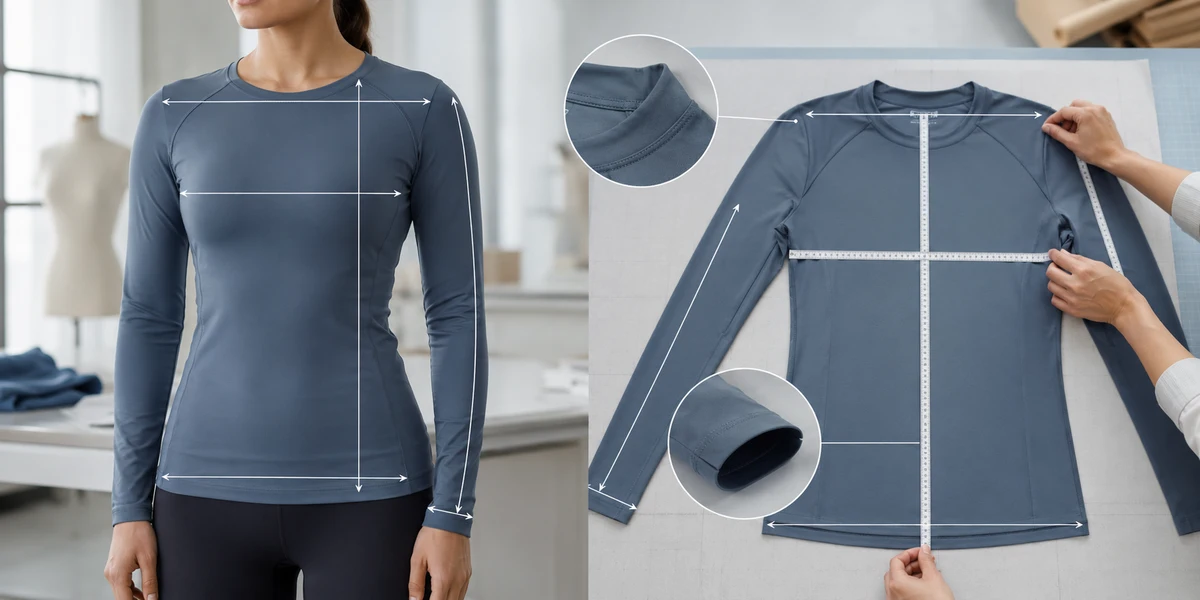
Measurement Translation: The silhouette must be converted into defined points of measurement, a reference size, grading logic, and acceptable variation. Flat measurements alone cannot establish whether the garment will behave as intended during wear.
Development Confirmation: A technical flat, construction notes, material specification, and initial pattern or knitting structure create a starting point for the physical sample. They remain proposed development information until reviewed and approved by the buyer.
MOVEVOX Development Basis: MOVEVOX’s design, patternmaking, sampling, and manufacturing capabilities provide the organizational basis for participating in this process. The final engineering decisions must still reflect the actual product, fabric, target cost, and customer feedback.
Select a Manufacturing Route That Supports the Design Intent
Seamless Interpretation: A design emphasizing integrated rib structures, textured areas, or reduced panel seams may warrant evaluation through seamless knitting. The development review must establish whether the desired knit zones, yarn choices, machine configuration, garment dimensions, and finishing operations can achieve the intended result.
Cut-and-Sew Interpretation: A product requiring shaped fabric panels, multiple materials, detailed pockets, conventional gussets, or complex seam positioning may be better suited to cut-and-sew production. Pattern geometry, fabric width, cutting efficiency, stitch construction, and assembly sequence become important.
Design Trade-Offs: Choosing a manufacturing route may require modifying visible seam placement, material choices, support areas, or individual design details. An attractive prototype does not establish that every feature is appropriate for efficient and repeatable bulk manufacturing.
Commercial Feasibility: Route selection also influences fabric sourcing, material consumption, production preparation, MOQ, sampling cost, and the types of quality variation that must be controlled.
Validation Before Commitment: The appropriate decision is reached through technical review, material assessment, sample construction, fit feedback, and confirmation of acceptable production conditions. If neither route satisfies critical requirements, the design should be revised rather than automatically approved.
MOVEVOX Manufacturing Basis: MOVEVOX’s existing seamless and cut-and-sew resources allow both manufacturing approaches to be considered where relevant. This capability supports options analysis; it should not be interpreted as a guarantee that every proposed construction is feasible.
Product Differentiation
Building Distinctive Products Without Uncontrolled Manufacturing Complexity
Not every new visual feature improves a product or justifies additional sourcing complexity. ODM development should prioritize changes that serve the target wearer’s needs while remaining practical in materials, construction, sample validation, and production economics.
Define Target Wear Experience
Start with the intended activity, wearer, and product position. Desired support, comfort, coverage, silhouette, and freedom of movement should be ranked before discussing specific construction details. This establishes why a feature is needed.
Execution Evidence: A buyer-approved product brief identifies primary and secondary functional objectives.
Establish Fit Priorities
Identify the fit elements that create the intended garment experience. For leggings, these may include waistband stability, rise, hip shaping, and inseam behavior. For sports bras, support distribution and strap construction may dominate.
Execution Evidence: Critical measurement points and physical fit feedback guide sample revisions.
Select Material Characteristics
Compare handfeel, fabric weight, stretch recovery, surface finish, and coverage against the development objectives. Material selection should also consider sourcing availability, production compatibility, and expected changes after washing or repeated extension.
Execution Evidence: Approved material swatches and documented performance requirements support selection decisions.
Evaluate Construction Differences
Consider whether differentiated features require new panels, knitting structures, pockets, straps, hems, or finishing processes. Each additional feature should have a defined customer benefit and a practical validation route before entering production specifications.
Execution Evidence: Technical drawings and development samples reveal construction feasibility and limitations.
Balance Cost and Production
Review the combined effect of materials, development revisions, specialized accessories, custom colors, MOQ, and manufacturing methods. Product differentiation should support the commercial objective rather than create complexity without demonstrable buyer value.
Execution Evidence: Cost-driver comparisons and feasibility reviews inform buyer-approved trade-off decisions.
MOVEVOX can participate through material review, pattern and sample development, technical coordination, and evaluation of seamless or cut-and-sew manufacturing routes. The buyer should determine which differentiating features justify additional cost or development time. Final decisions require approved samples, defined specifications, and commercially acceptable manufacturing conditions.
Product Scope
Activewear Product Categories for Manufacturing-Led ODM Development
Different activewear categories require different engineering decisions. MOVEVOX supports established core categories through its existing development and manufacturing capabilities. Every ODM style should have a defined use case, construction route, sample objective, and approval standard.

Yoga Leggings
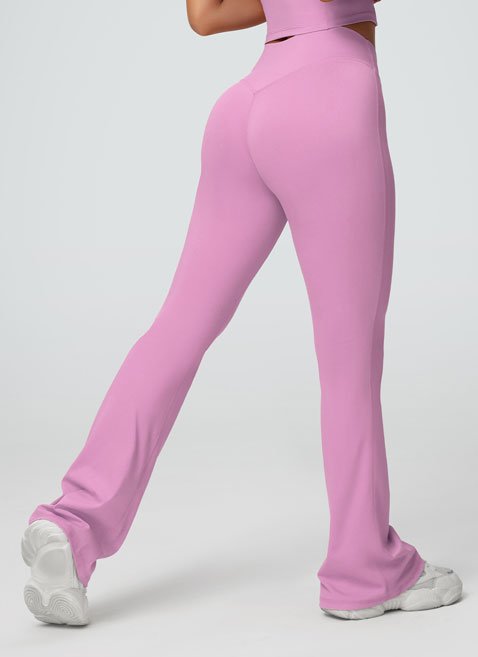
Yoga leggings development involves more than silhouette selection. Critical decisions include waistband construction, front and back rise, gusset geometry, fabric extension, stretch recovery, and opacity under movement. A concept may be evaluated for seamless or cut-and-sew production depending on structural requirements. The approved sample must establish fit and measurement standards before bulk manufacturing preparation.
Sports Bras
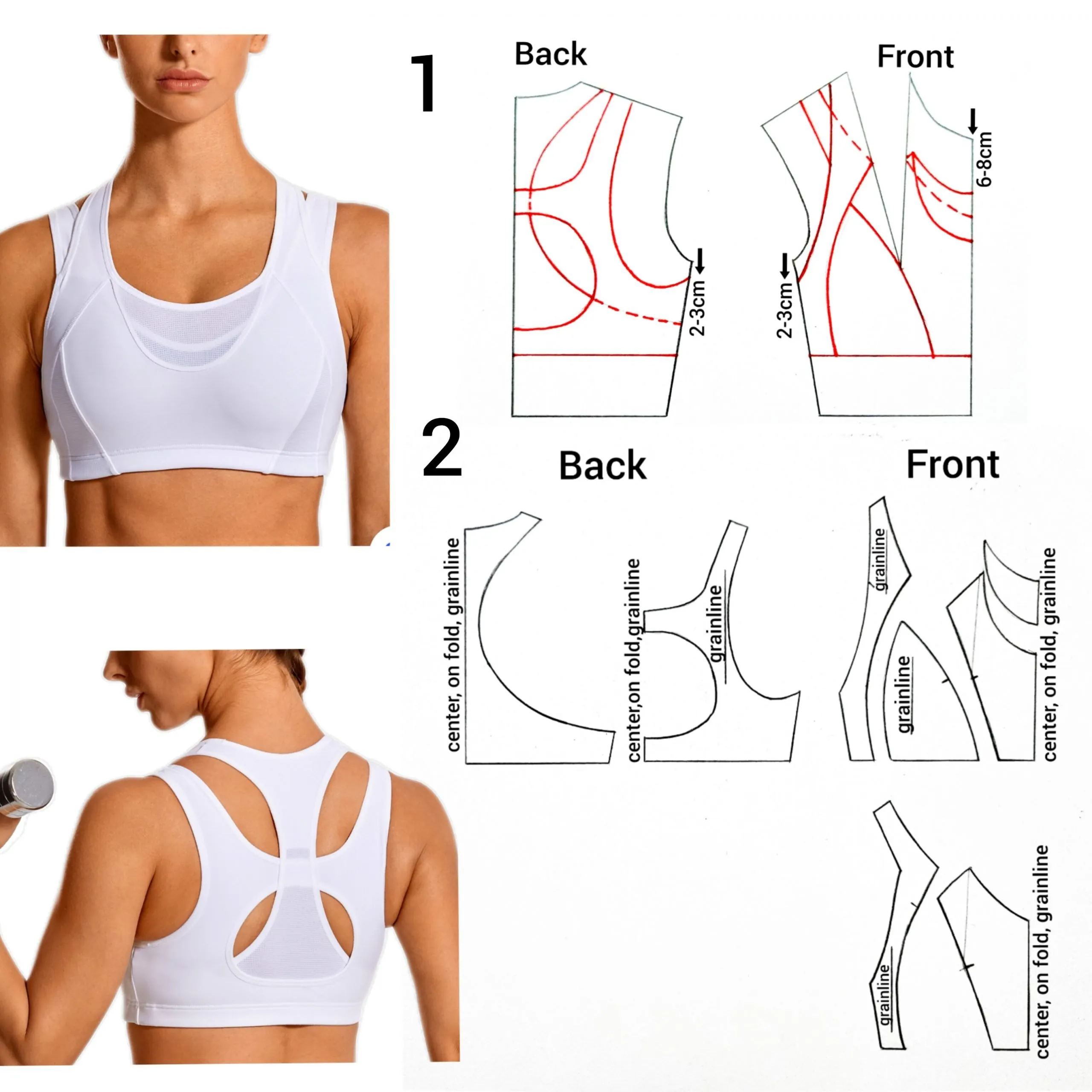
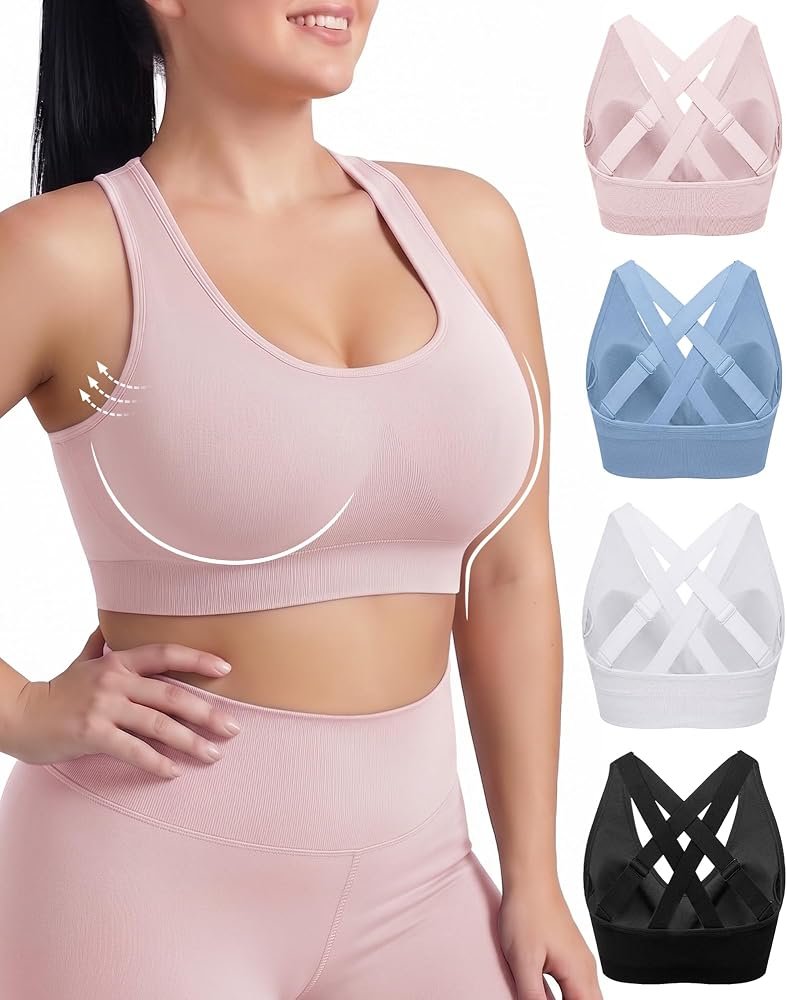
Sports bra development requires specific attention to the relationship between underband tension, body coverage, strap construction, fabric behavior, and intended support. Cup or pad positioning and different body sizes can significantly influence fit. An ODM review should distinguish the desired support experience from verified performance and determine which wear or fit tests are needed before approval.
Yoga Shorts
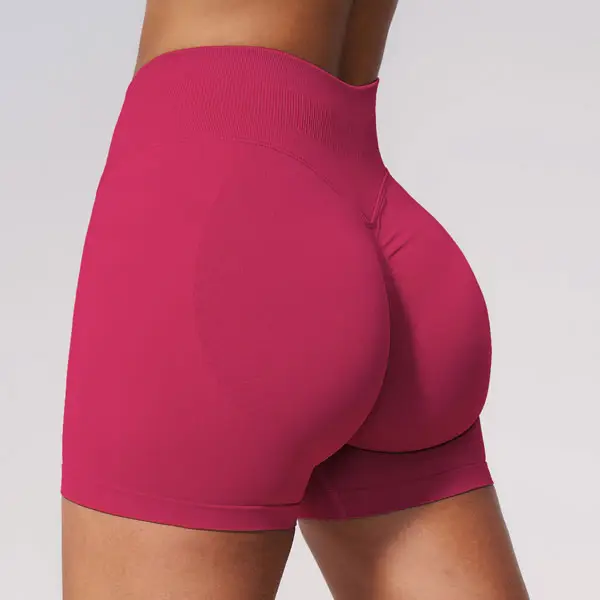
Yoga shorts require evaluation of rise, waistband stability, gusset construction, leg-opening tension, and fabric coverage. The risk of riding upward during movement can vary with inseam length, material recovery, and fit. Seamless and cut-and-sew options should be assessed against the intended product structure rather than treated as interchangeable manufacturing solutions.
Biker Shorts
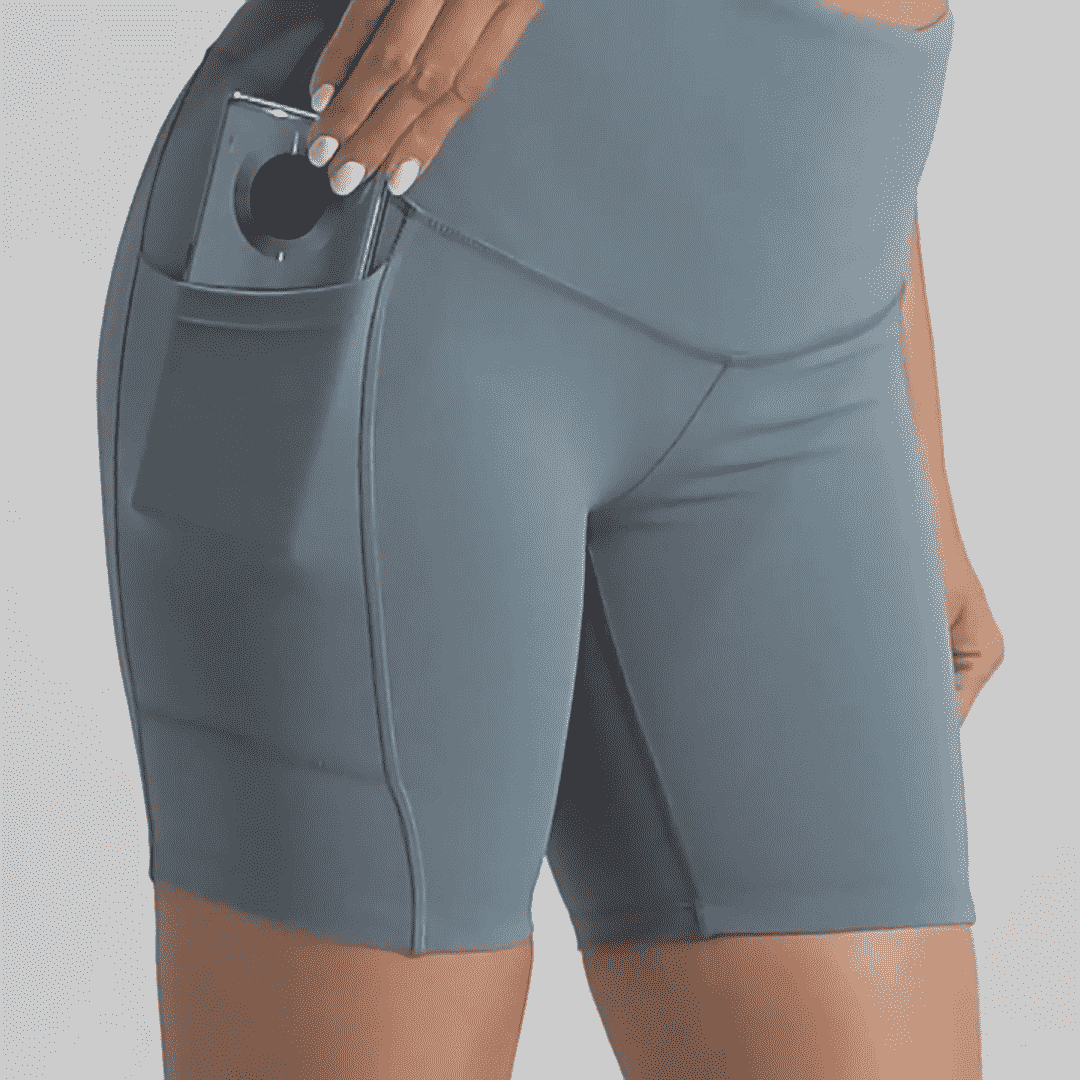
Biker shorts introduce additional decisions about inseam length, lower-thigh compression feel, hem stability, and optional pocket construction. A style intended for training may require different fit validation from one intended primarily for athleisure. Pocket placement, fabric thickness, and seam construction should be reviewed for practical movement and repeatable assembly.

Activewear Tops and Tanks
Tops and tanks can be developed around fitted, relaxed, or supportive silhouettes. Armhole shape, neckline stability, body length, fabric selection, and hem construction all influence finished fit. Internal support structures, removable pads, thumbholes, or multiple material panels increase development complexity and should be treated as distinct engineering requirements rather than routine styling changes.
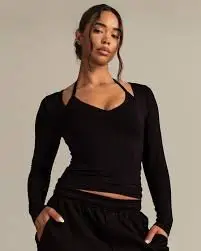
Coordinated Activewear Sets
A coordinated set is not simply two garments made in the same color. Leggings, bras, shorts, and tops may require separate material constructions or finishing processes even when they share a visual direction. Collection development should establish compatible fabric choices, approved color references, consistent branding, and individual garment fit standards before bulk production.
Material Engineering
Choose Fabric Based on Product Engineering Requirements
Fabric selection during ODM development must reconcile the intended wearing experience with measurable material behavior, sourcing availability, and manufacturing requirements. No single fabric composition or weight automatically provides the correct solution for every activewear style.
What is the primary activity?
What support level is intended?
Which handfeel is preferred?
How important is extended coverage?
What sourcing condition applies?
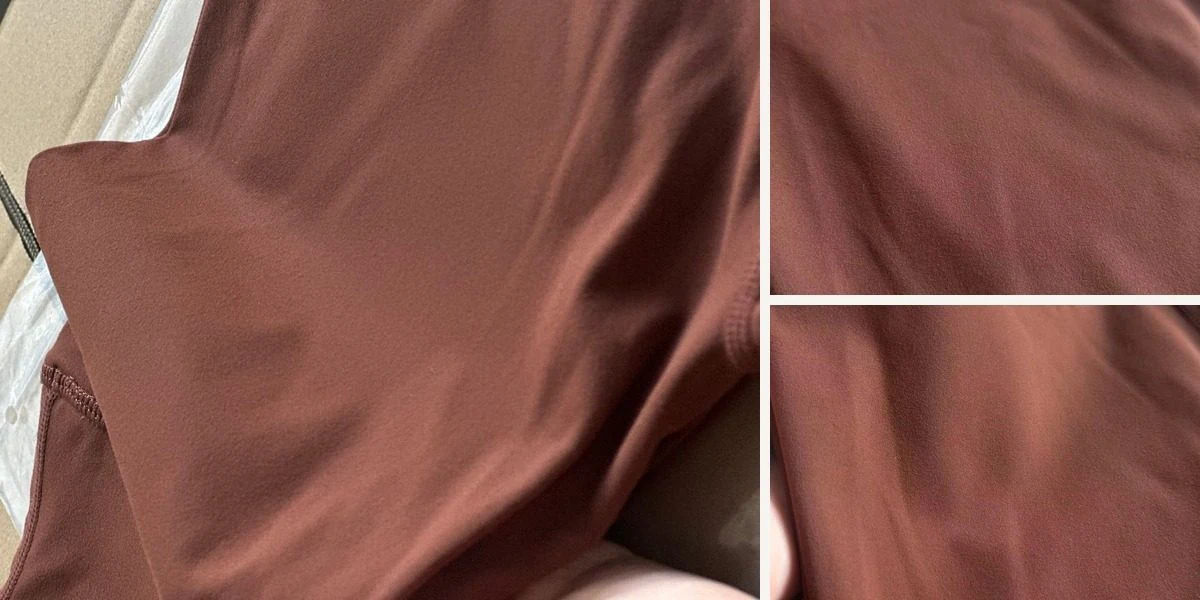
Soft-Stretch Knit Options
A soft-stretch knit may suit yoga or Pilates styles where comfort and unrestricted movement are primary requirements. Development should evaluate surface handfeel, stretch direction, recovery, opacity, and dimensional stability. Softness alone is not evidence of squat-proof performance or durable recovery. Material approval should follow actual swatch evaluation and physical sample review.
- Handfeel: Soft
- Recovery: Verify
- Opacity: Test

Support-Oriented Knit Options
Products intended to deliver a firmer wearing sensation may require materials or knitting structures that provide greater resistance to extension. Support perception depends on garment dimensions and construction as well as fabric properties. The objective should be defined in a buyer-approved fit brief, not expressed as an unverified numerical compression claim.
- Support: Targeted
- Extension: Verify
- Fit: Required

Coverage-Focused Fabric Options
Light-colored leggings and shorts may require particular attention to fabric weight, knit density, color, and opacity under extension. Testing only an unstretched swatch can misrepresent real use. Development should evaluate coverage on the intended garment, at appropriate fit conditions, while considering the trade-off between weight, comfort, and appearance.
- Coverage: Priority
- Color: Relevant
- Extension: Test
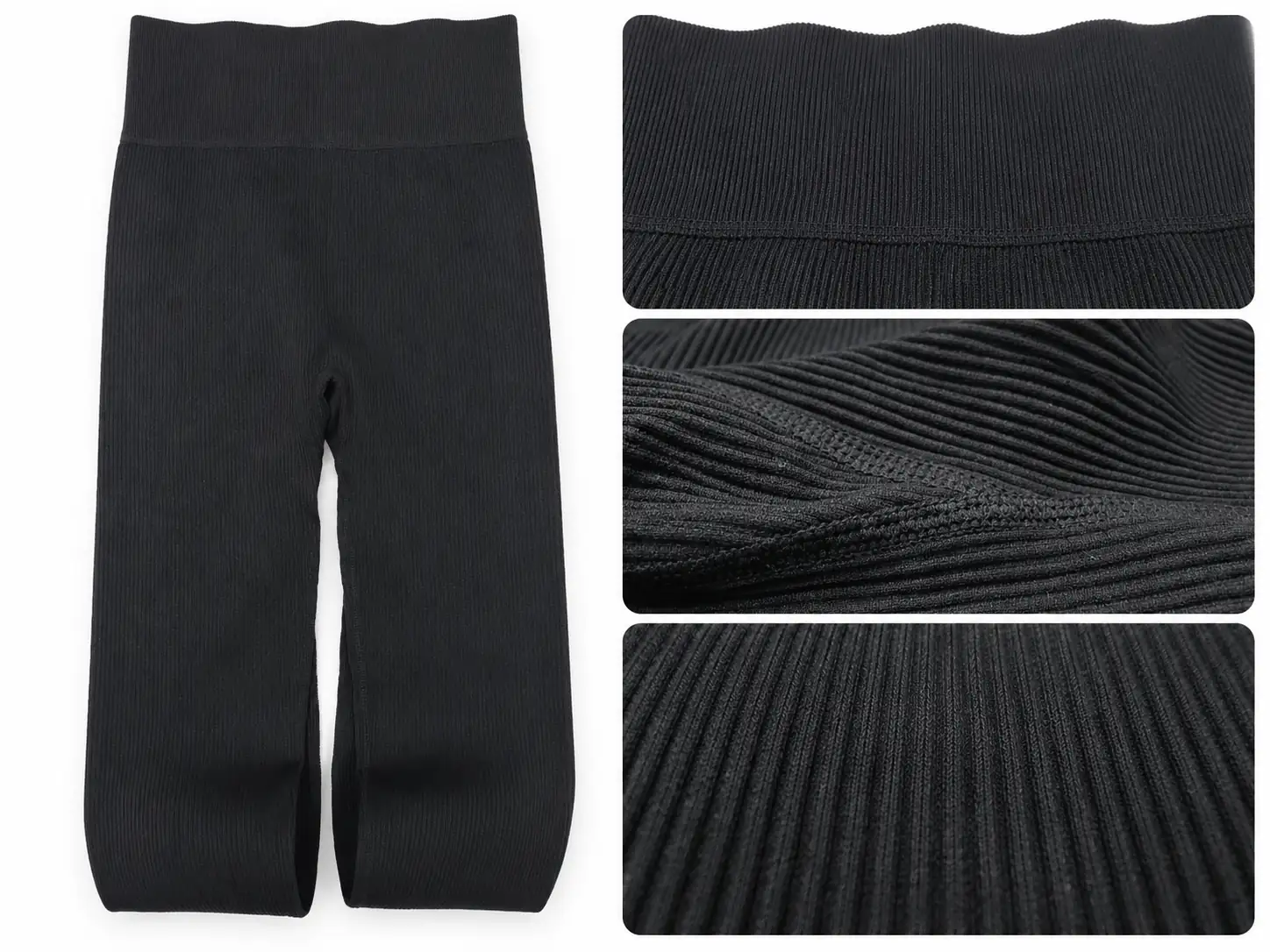
Textured Seamless Knit Options
Textured seamless garments may use changes in knit structure to produce visual details, ventilation areas, or differentiated stretch behavior. The development review should confirm yarn suitability, knitting feasibility, zone placement, fit, and finishing effects. A visually attractive texture does not independently demonstrate quantified moisture-management or compression performance.
- Structure: Knitted
- Yarn: Confirm
- Fit: Validate
MOVEVOX can participate in fabric selection and material confirmation using its existing development and sourcing capabilities. The selected fabric must be approved against the actual garment requirements, available supplier documentation, and any project-specific testing obligations.
Construction Engineering
Engineer Garment Construction Around Fit and Manufacturing Performance
Construction decisions shape how activewear stretches, supports, moves, and withstands repeated use. A development review should therefore examine the mechanical consequences of visible design features before approving materials, patterns, knitting structures, and assembly instructions.
Cut-and-Sew Construction Requires Controlled Pattern and Seam Decisions
Pattern Geometry: Technical drawings should be translated into appropriate pattern pieces with defined seam allowances, grain or stretch orientation, critical measurements, and assembly relationships. The fit of the finished garment depends on the interaction between pattern dimensions and material extension.
Seam Placement: Seams should be reviewed in relation to movement, body contact, stress concentration, and appearance. A line that improves visual shaping may produce undesirable bulk or friction if its placement and stitch construction are not evaluated.
Waistband Assembly: A waistband can involve folded fabric, separate panels, elastic components, or other reinforcement. Each configuration affects stretch resistance, finished height, production consistency, and the garment’s behavior during wear.
Functional Features: Pockets, bra straps, removable pads, thumbholes, and other components introduce additional manufacturing operations. Their appearance and function must remain consistent across approved sizes.
Bulk Reproducibility: The development sample should establish construction details that production personnel can repeat. Stitch type, seam position, component dimensions, and material compatibility must be sufficiently defined for first-article and subsequent quality inspection.
MOVEVOX Capability: MOVEVOX’s cut-and-sew capabilities and sample-development resources provide a basis for evaluating these requirements. The appropriate construction must be confirmed through project-specific review rather than assumed from category alone.
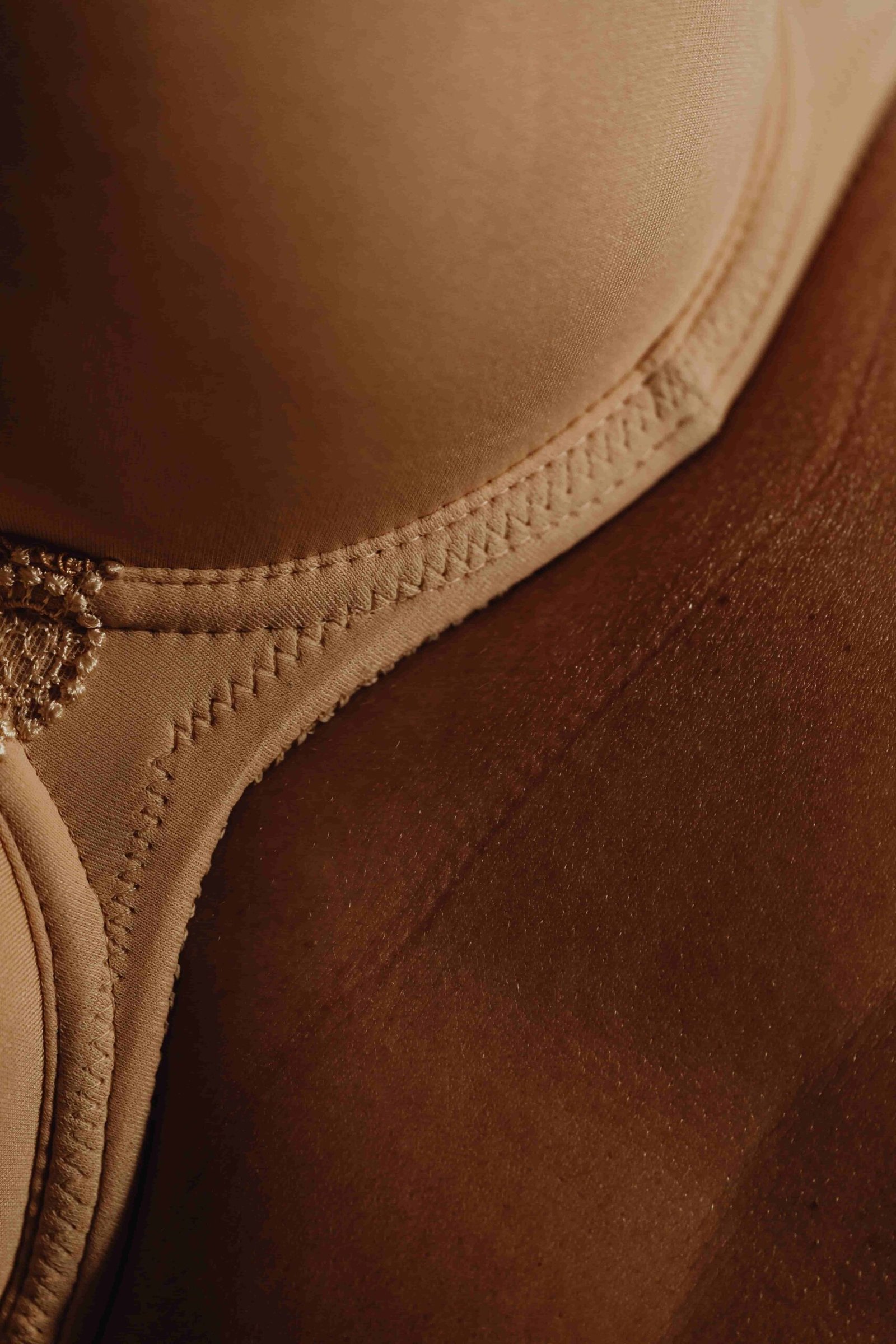
Seamless Engineering Requires Yarn, Structure, and Zone Validation
Knitting Structure: Areas of ribbing, texture, mesh, or differentiated stretch must be translated into feasible machine instructions. The intended location and dimensions of each knitted feature should be checked against the garment’s actual shape and expected extension.
Yarn Selection: Yarn characteristics influence handfeel, extensibility, recovery, surface appearance, and finishing behavior. Different yarns can also affect the achievable definition of a textured structure.
Garment Dimensions: Seamless garments are influenced by knitting parameters, material relaxation, finishing, and subsequent handling. Technical confirmation should consider the measurement state and the way the garment changes under extension.
Localized Tension: A tighter knitted zone may feel supportive, but compression perception is affected by wearer size, garment circumference, knit properties, and placement. It should not be described as a verified pressure value without suitable testing.
Production Repeatability: The development sample must establish the approved knitting structure, size information, finishing requirements, and appearance standards. Changes in material or production settings can require further validation before bulk release.
MOVEVOX Capability: MOVEVOX operates 28 Santoni seamless knitting machines as part of its manufacturing base. That equipment provides real seamless production resources, while the feasibility of an individual ODM concept remains subject to yarn, structure, machine, fit, and production review.

Fit and Sizing
Establish Buyer-Approved Fit and Grading Requirements Before Production
Activewear sizing depends on the relationship between garment dimensions, fabric extension, construction, and intended wearer. ODM development should identify a reference size, critical measurement points, grading rules, and approval conditions before the full size range becomes a production specification.
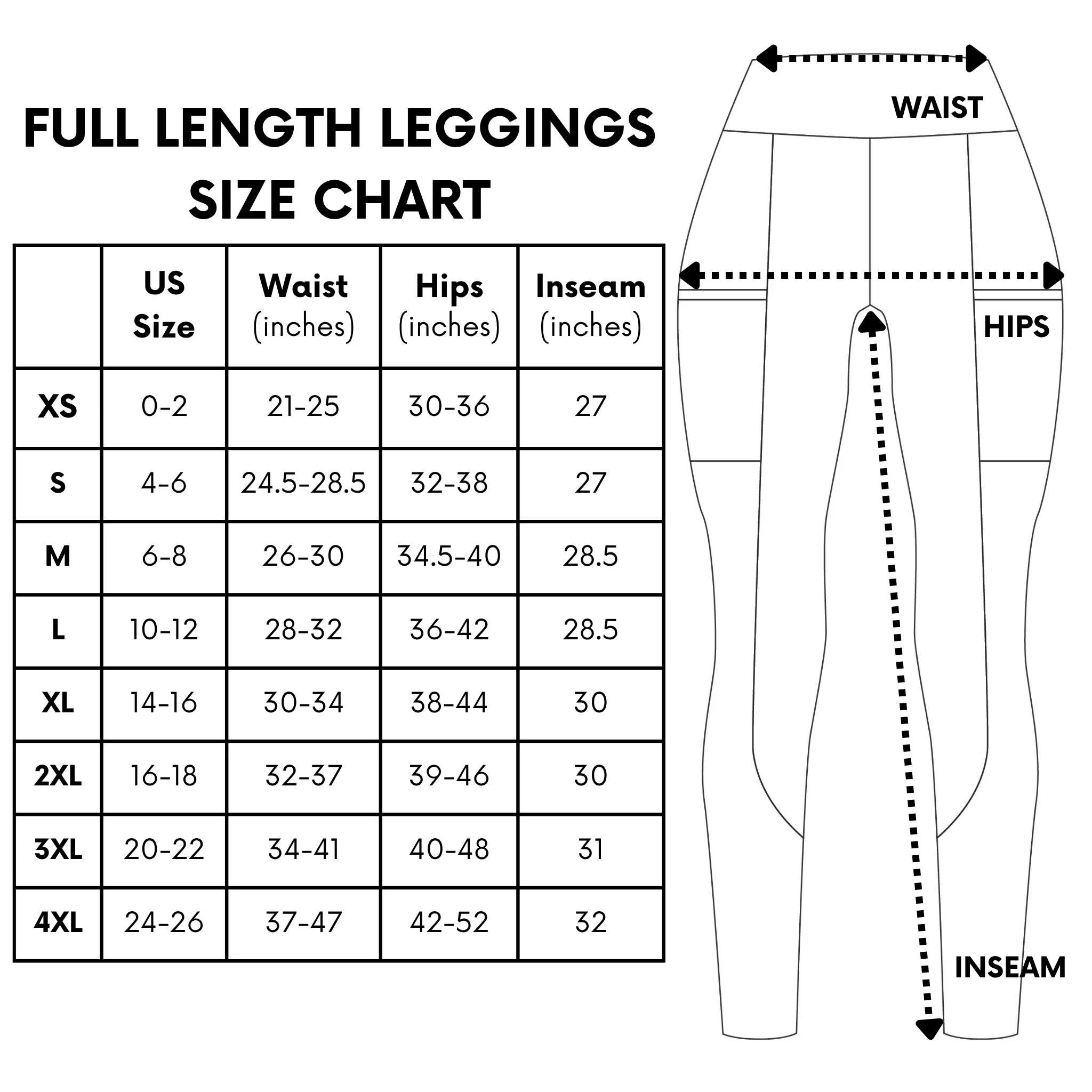
| Size | Bust | Waist | Hip | Inseam | Fit Review |
|---|---|---|---|---|---|
| XS | Buyer specification | Buyer specification | Buyer specification | Buyer specification | Check lower-range fit |
| S | Buyer specification | Buyer specification | Buyer specification | Buyer specification | Confirm grade transition |
| M | Buyer specification | Buyer specification | Buyer specification | Buyer specification | Base-size review if selected |
| L | Buyer specification | Buyer specification | Buyer specification | Buyer specification | Check extension and coverage |
| XL | Buyer specification | Buyer specification | Buyer specification | Buyer specification | Check upper-range fit |
| XXL | Buyer specification | Buyer specification | Buyer specification | Buyer specification | Evaluate extended-size structure |
This is an illustrative document structure, not a MOVEVOX production size chart. Actual numerical measurements must come from approved project specifications.
Collection Architecture
Develop Coordinated Collections Through Shared Engineering Foundations
Collection development can become more manageable when related products share approved materials, color directions, branding standards, or technical references. However, common visual identity should not obscure differences in fit, structural requirements, or production specifications between individual styles.
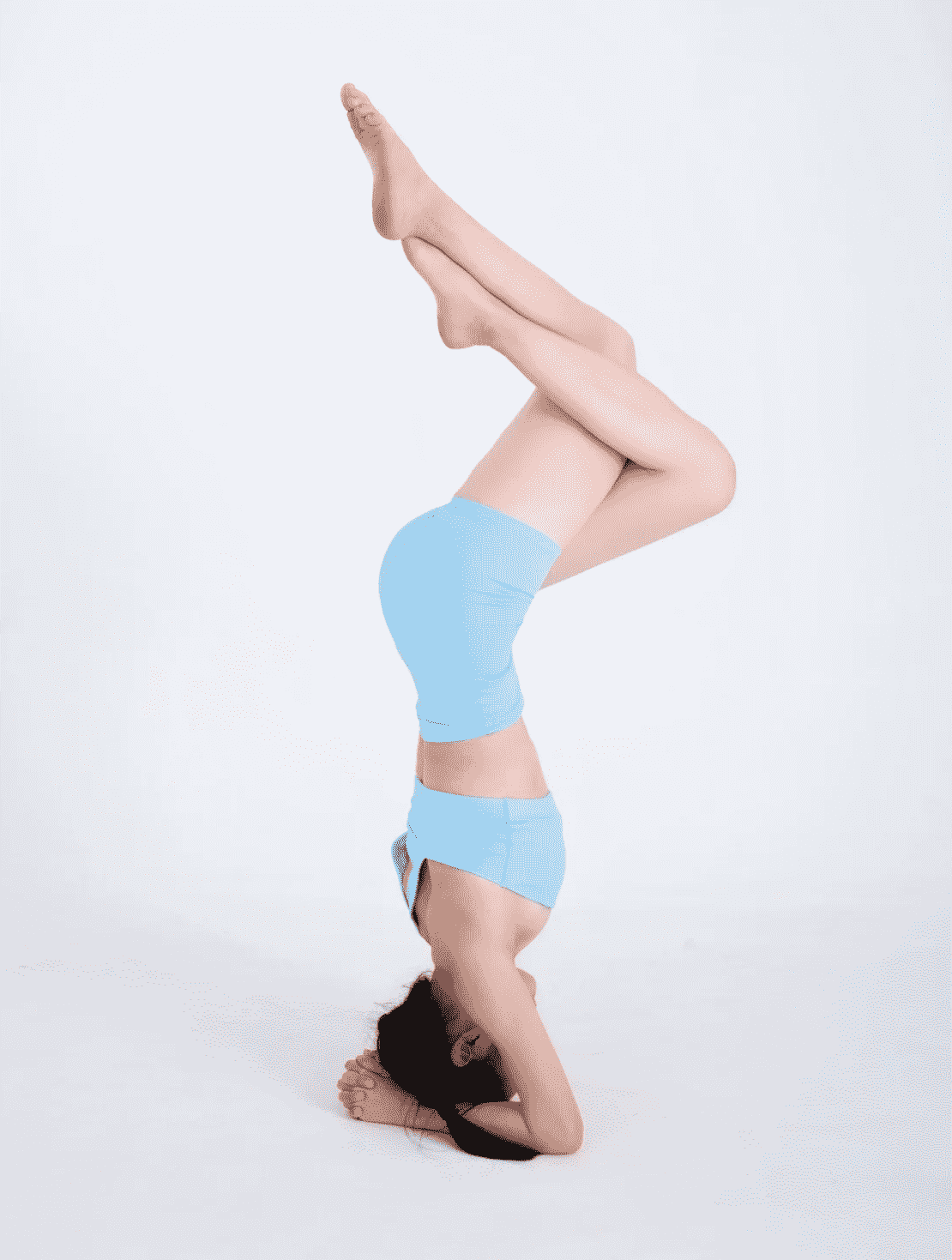
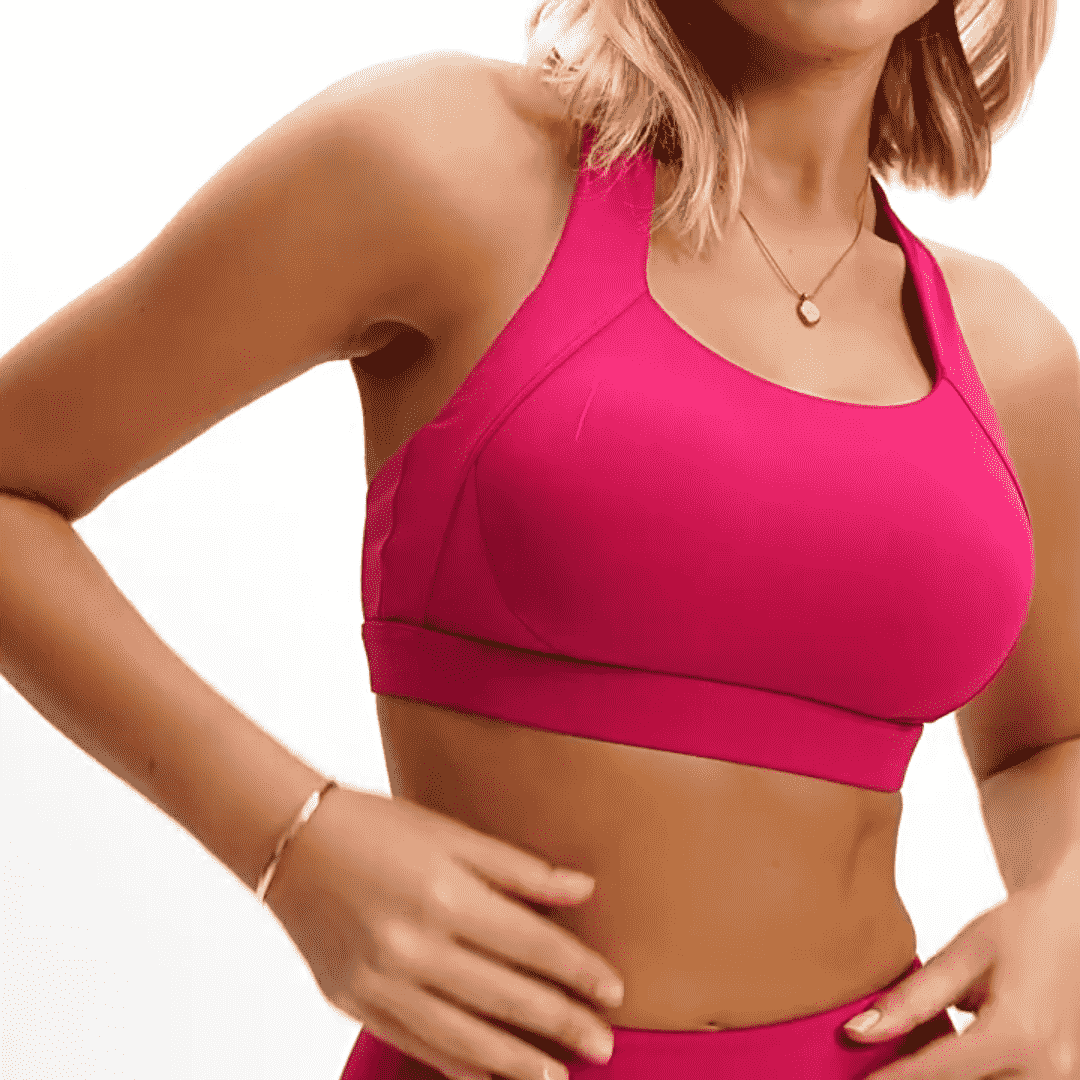
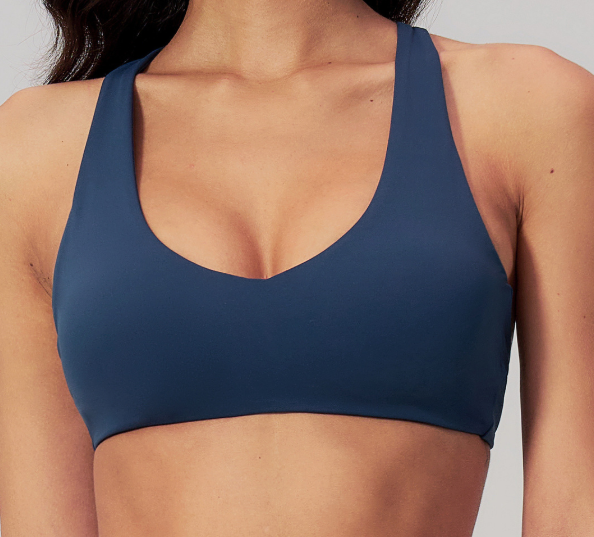
Pilates Movement Collection
A proposed Pilates-focused collection could combine soft-stretch leggings, a compatible sports bra, and a fitted tank. Development would emphasize movement comfort, appropriate coverage, consistent handfeel, and category-specific fit. Shared fabric and color directions could be evaluated, but underband structure and legging waistband behavior would still require separate technical approval.
- High-Waist Leggings
- Soft-Support Bra
- Fitted Training Tank
- Coordinated Color Options

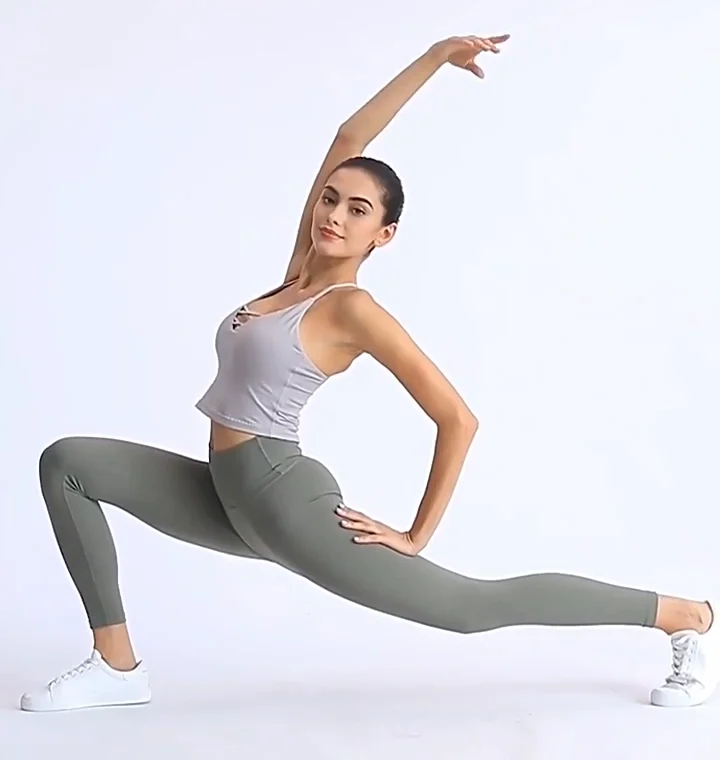
Gym Training Collection
A training-oriented collection may prioritize a firmer fit direction, fabric recovery, pocket functionality, and movement security. Leggings, biker shorts, and sports bras could share brand colors while requiring different construction and performance validation. The manufacturing route for each style should reflect its approved engineering requirements rather than a forced collection-wide production method.
- Training Leggings
- Biker Shorts
- Support-Oriented Bra
- Functional Training Top


Everyday Athleisure Collection
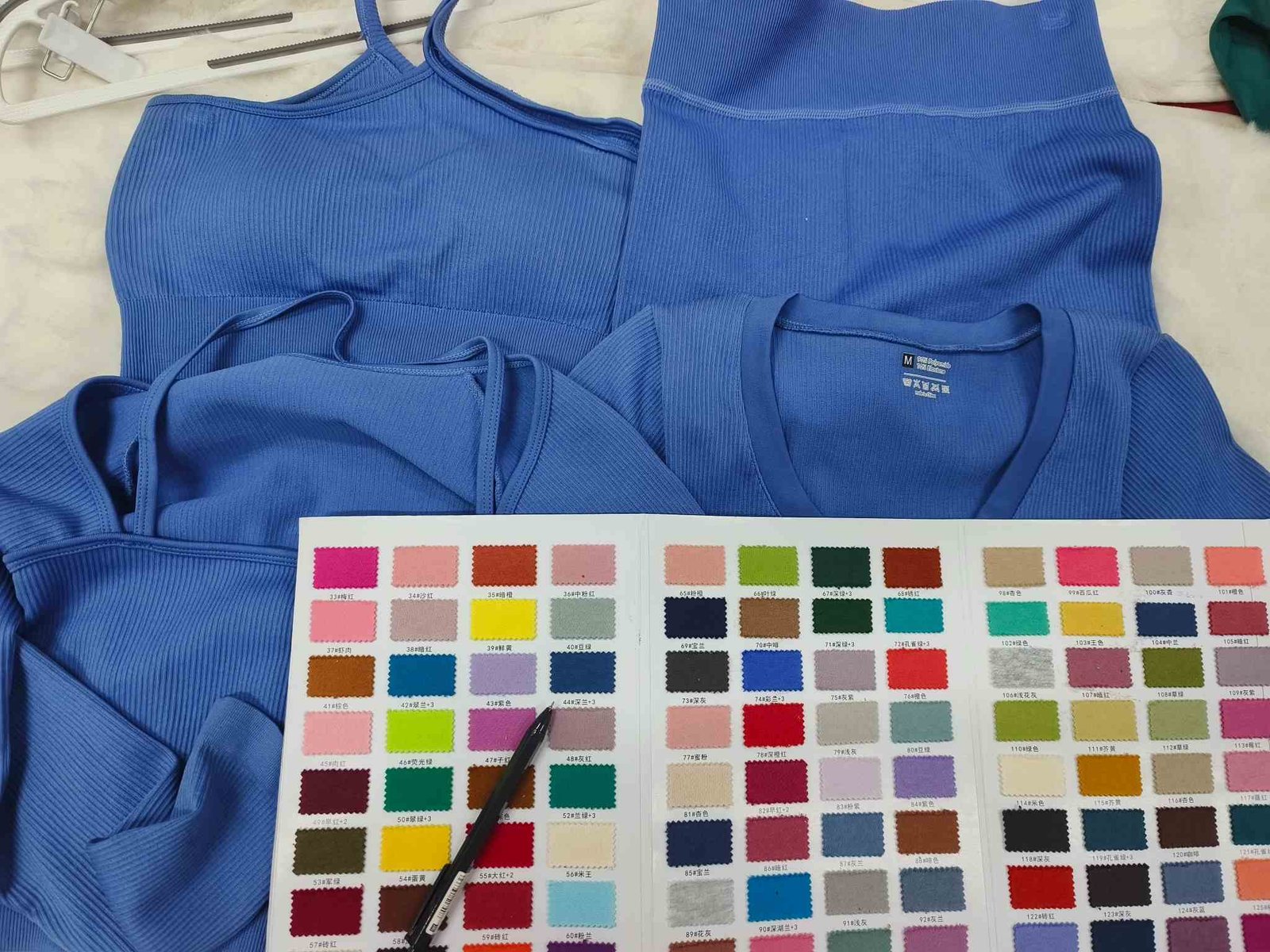
An athleisure collection might combine comfortable leggings, relaxed tops, and coordinated tanks with a consistent visual and material direction. Development should balance appearance, comfort, laundering expectations, and production practicality. Similar colors across different fabrics must be evaluated against physical approved standards rather than assumed identical from a shared digital color reference.
- Everyday Leggings
- Relaxed Activewear Top
- Matching Tank
- Seasonal Color Options
Seamless Texture Collection
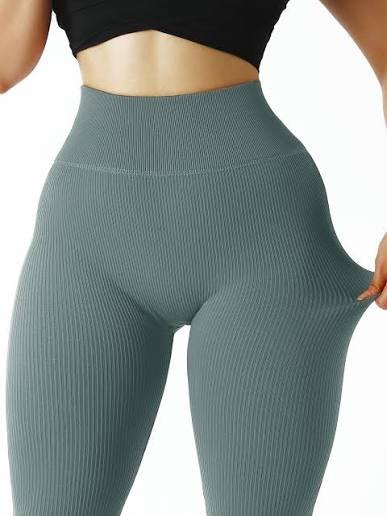
A seamless-led collection could explore coordinated knitted textures across compatible leggings, shorts, bras, and tops. Product development would evaluate yarn selection, knitting zones, pattern placement, fit, and finishing. The same texture direction may require different engineering solutions for each garment because body coverage, support requirements, and dimensions are not identical.
- Textured Seamless Leggings
- Seamless Shorts
- Coordinated Seamless Bra
- Seamless Active Tank
These four arrangements are illustrative development proposals, not claims that MOVEVOX has completed or owns the pictured collections.
Design to Cost
Balance ODM Design Decisions With Total Sourcing Cost
Target cost should influence design development before samples and materials become fixed. Comparing only garment unit prices can conceal expenditure arising from additional revisions, special materials, tooling, inspection, inventory exposure, and delayed production approval.
| Cost Driver | Option A: Existing Material Platform | Option B: Custom Material Development | Option C: Complex Construction |
|---|---|---|---|
| Material Sourcing | Existing available material may reduce initial sourcing uncertainty if it meets the buyer’s actual product requirements. | Custom composition, color, or finish may require minimum purchase quantities and additional development confirmation. | Multiple materials or specialty components can create separate procurement requirements and approval dependencies. |
| Sample Development | A known construction may simplify initial feasibility assessment but still requires fit and specification approval. | Material changes may require additional sample comparisons, fit review, and performance validation before approval. | Multiple panels or specialized structures can increase sampling operations and correction effort. |
| Pattern / Programming | Existing engineering references may support development when legally reusable and suitable for the new design. | Material changes can require modifications to pattern dimensions or seamless knitting settings. | More complex construction may require additional patterns, assembly instructions, or knitting-program development. |
| MOQ Exposure | Available materials may offer greater quantity flexibility, subject to their actual sourcing and production conditions. | Custom yarn, fabric, or color requirements may exceed the garment’s ordinary manufacturing minimum. | Specialized trims, molds, and accessories can introduce additional supplier minimum quantities. |
| Quality Validation | Standard checks still apply, with additional tests based on the intended product and destination market. | Material changes may require renewed assessment of recovery, coverage, color, and dimensional stability. | Complex features can introduce additional construction and inspection points requiring documented approval. |
| Production Preparation | Confirmed materials and established methods may make planning more predictable, depending on capacity availability. | Lead time is influenced by custom material sourcing and the completion of associated approvals. | Additional operations may increase scheduling and production coordination complexity. |
| Inventory Risk | Commercial exposure depends on ordered quantities, color splits, and the reliability of demand forecasts. | Material minimums can generate excess fabric or yarn if the garment order is comparatively small. | Specialized components can become unusable inventory if the design changes or sales expectations shift. |
| Change Cost | Revisions remain possible but should be evaluated before approved specifications are released. | Changing custom materials after approval can affect sample validity and supply commitments. | Late structural changes may affect patterns, assembly instructions, accessories, and already committed production resources. |
Total Cost Interpretation
These are qualitative sourcing scenarios, not calculated MOVEVOX customer results. Without a defined product, material quotation, order quantity, and approved specifications, no credible percentage saving or final unit-cost comparison can be established.
A sensible ODM cost review begins with the buyer’s target purchase cost and identifies the features essential to product acceptance. Development alternatives can then be evaluated against performance, availability, production complexity, tooling, inspection requirements, and quantity assumptions. The preferred option should not merely offer the lowest quoted garment price; it should provide a commercially acceptable route to the approved product with manageable development and production risks.
ODM Development Timeline
An Eight-Stage ODM Development and Production Approval Process
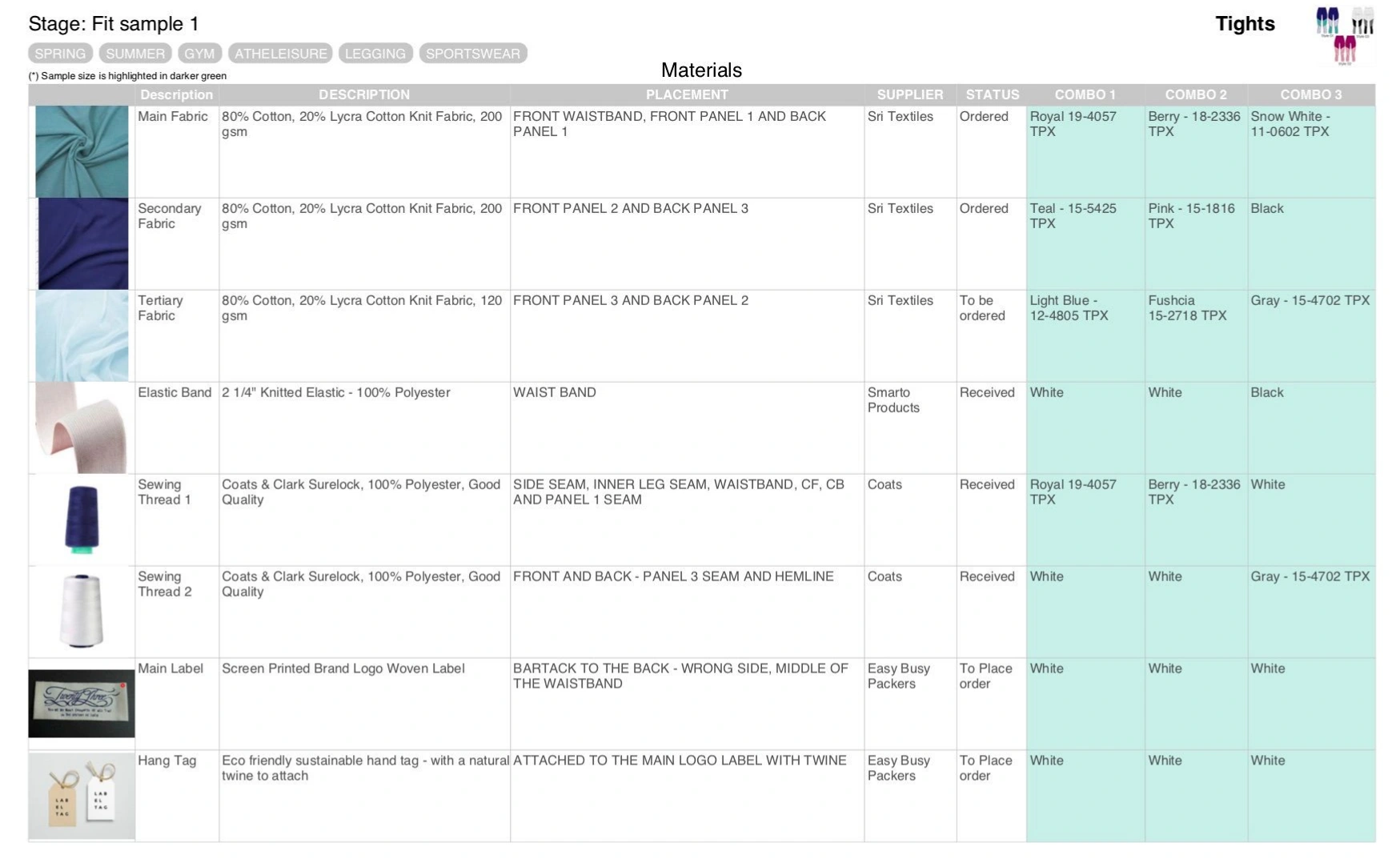
An ODM project should progress through clear technical decisions rather than treating sampling as an isolated activity. The following sequence connects buyer input, engineering review, sample validation, and manufacturing release. Actual scheduling depends on complexity, materials, and approval speed.
Product Brief
The buyer defines intended product categories, target wearers, design direction, available references, approximate quantity, and launch objectives. The initial review identifies information gaps and distinguishes established requirements from proposed development decisions. Confidential materials should be handled according to agreed project restrictions.
Technical Review
MOVEVOX’s relevant development functions assess structure, materials, size information, manufacturing options, and commercial uncertainties. Open technical questions are identified for buyer decisions. This stage should not be confused with final approval of materials, sample specifications, or production quotations.
Material Selection
Available materials and proposed sourcing routes are assessed against handfeel, stretch recovery, coverage, construction compatibility, color, quantity, and cost. Physical swatches or material specifications are submitted for review. Special materials may require separate supplier confirmation and additional time.
Engineering Preparation
Patternmaking, technical drawings, or seamless structure development translates the agreed product direction into a workable sample specification. Relevant measurements, construction details, and unresolved feasibility questions are recorded. Any material or structural alternatives should remain subject to buyer approval.
Development Sample
The initial garment is produced against the current development specification. MOVEVOX’s usual sampling reference is approximately 5–10 working days after required development details have been confirmed for suitable standard projects. Complex programs or unapproved materials require separate scheduling.
Fit and Revision
The buyer evaluates fit, fabric, construction, appearance, and relevant functional requirements. Consolidated comments become a controlled revision list. Additional sample rounds, representative sizes, or wear evaluations may be needed before the design is technically and commercially acceptable.
Production Approval
Approved sample details are translated into released measurements, materials, artwork, construction instructions, and applicable QC requirements. A pre-production review should confirm that the intended bulk manufacturing route reflects the approved product and that outstanding changes have been resolved.
Bulk Execution
Production planning, material confirmation, first-article checks, in-line inspection, finishing, packaging, and shipment preparation follow the released project requirements. The standard bulk-production time frame is dependent on finalized order conditions, material readiness, production scheduling, and commercial confirmation.
*The stated sample reference is conditional, not a guaranteed duration for every ODM project.
Technical Version Control
Maintain One Approved Technical Reference Across ODM Development
Multiple sample rounds can create conflicting patterns, fabric choices, measurements, and production instructions. A controlled version register enables buyer and supplier teams to establish which development information is current and which approvals remain outstanding.
| Control Field | Development Record | Production Approval Requirement |
|---|---|---|
| Style / SKU Identification | Identify the specific garment and development project. | Match the approved purchase order and SKU reference. |
| Sample Version | Record initial, revised, and subsequent samples separately. | Use only the applicable buyer-approved version. |
| Pattern / Knit Structure | Record pattern or knitting-program version changes. | Confirm release of the correct manufacturing reference. |
| Fabric Specification | Identify composition, approved material, color, and relevant finishing details. | Match purchased materials to the approved specification. |
| Measurement Standard | Record current POM, sample measurements, grading, and tolerance information. | Use the final approved measurement method and requirements. |
| Branding Information | Track logo artwork, placement, labels, and any special application requirements. | Verify current authorized artwork and approved application details. |
| Open Technical Issues | Record unresolved fit, construction, material, or commercial questions. | Close required items before production authorization. |
| Buyer Approval | Identify approval date, authority, and supporting documents. | Confirm approval applies to the actual released version. |
| Production Release | Identify the current manufacturing reference. | Prevent superseded documents from being used as active instructions. |
Informal messages can support communication but should not override the current approved specification. Any change after production release should be evaluated for its effect on materials, costs, timing, fit, and quality before implementation.
Bulk Quality Control
Connect ODM Development Standards With Manufacturing Quality Control
Quality control for an ODM project begins before finished garments are inspected. The agreed design, approved materials, construction, measurements, and branding details should become practical checkpoints throughout sourcing, production, and final shipment preparation.
Technical Specification Review
Before bulk preparation, the responsible teams should confirm that the approved product version, measurements, materials, construction, and branding requirements are internally consistent. Unresolved development choices should not be converted into informal production assumptions.
- Current approved sample and technical specification are identified.
- Open engineering changes are reviewed before production authorization.
Incoming Material Inspection
Fabric, yarn, and accessories should be examined against applicable approved material references. Relevant checks may include composition documentation, color, weight, appearance, stretch characteristics, and other project-specific requirements before materials enter production.
- Received material matches the applicable approved sourcing specification.
- Questionable lots are identified for review before uncontrolled use.
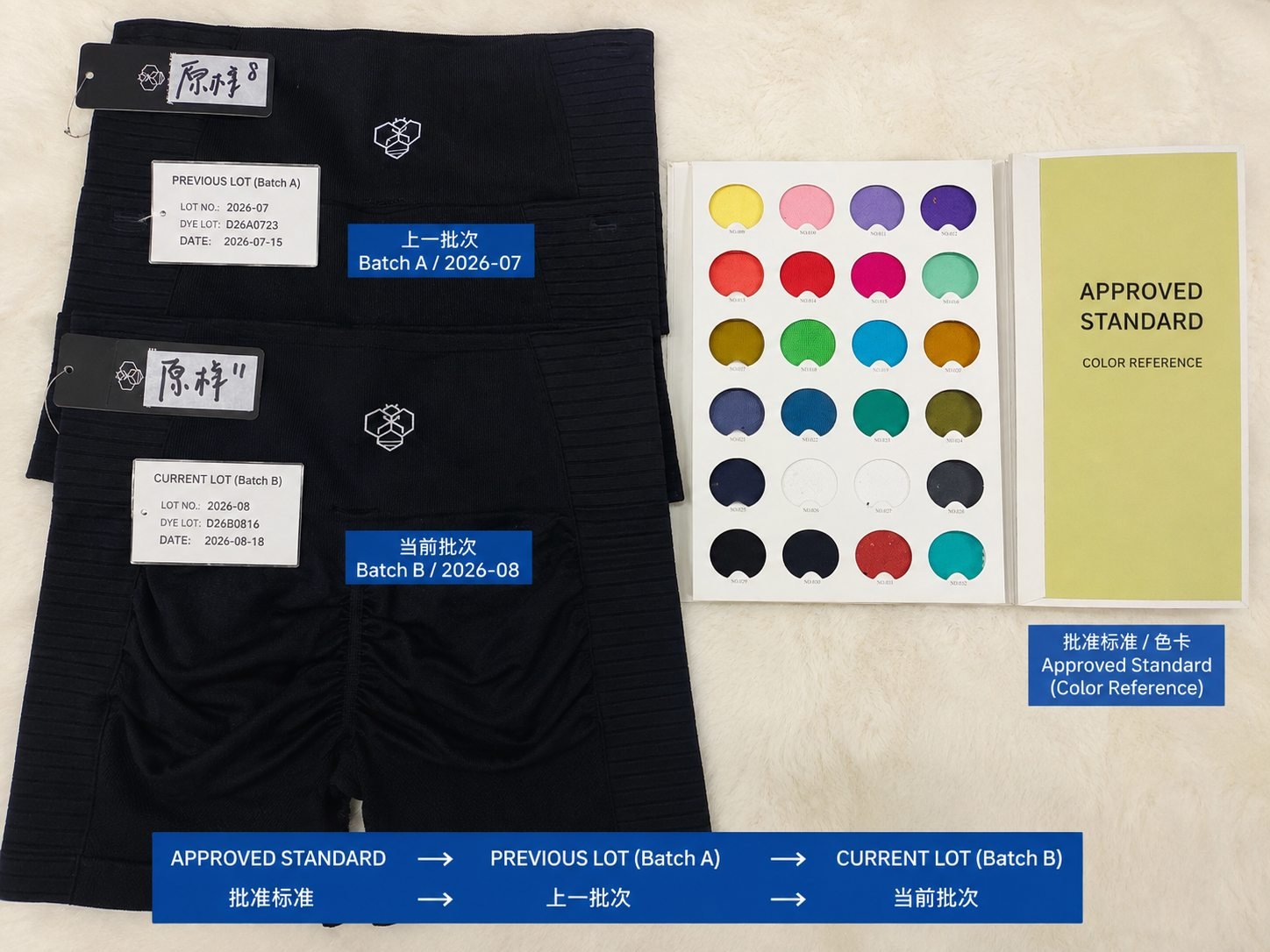
Color Standard Confirmation
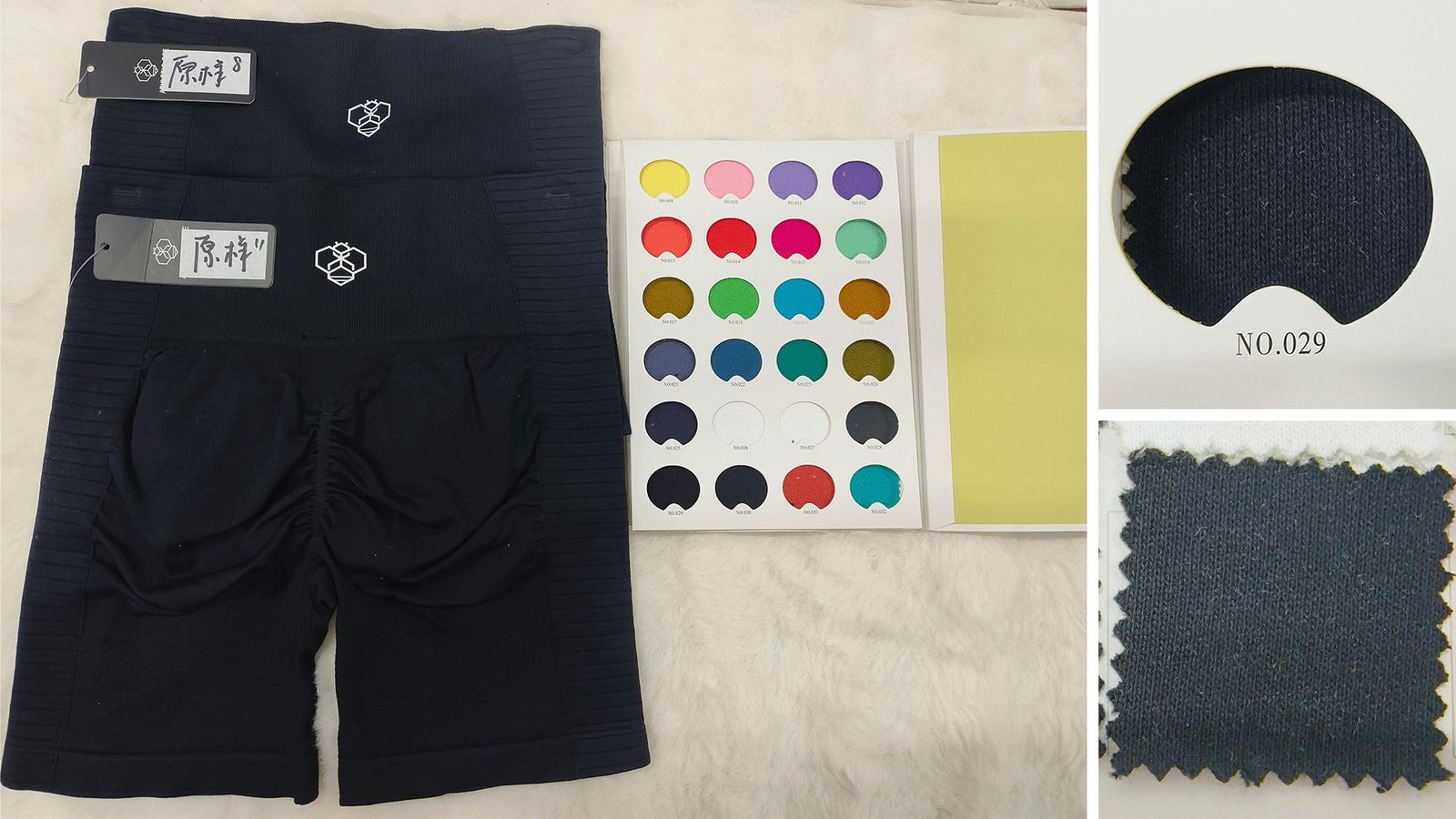
Physical color references provide a more reliable basis for approval than screen appearance alone. Color evaluation should consider material surfaces, dye or yarn differences, and agreed viewing conditions, especially when coordinating multiple garments.
- Actual material is compared with the approved color reference.
- Cross-material variation receives buyer review where contractually required.
Measurement and Fit Control
Critical measurement points should be defined consistently across sample and production inspection. Highly extensible products require attention to garment relaxation, measuring method, pattern or knitting variation, and the approved tolerance for the specific style.
- Measurement method and tolerance follow current approved specifications.
- Relevant sizes are checked using consistent reference conditions.
First-Article Inspection
Initial production garments should be compared with the approved sample before manufacturing continues at normal scale. Material, construction, dimensional, appearance, and branding differences should be identified and addressed at this early stage.
- Initial output matches relevant approved construction and materials.
- Significant deviations trigger review before further production release.
In-Line Process Inspection
Production inspection should monitor workmanship, seam or knitting integrity, structural positioning, measurement variation, and other risk points established during development. Identifying problems during execution can reduce the amount of affected production requiring correction.
- Inspections target the risks identified in the approved plan.
- Findings are recorded and escalated according to their significance.
Finished Garment Inspection
Completed products should be checked for appearance, measurements, construction quality, branding accuracy, and agreed functional or material requirements. The applicable customer QC standard takes priority where it has been formally approved for the order.
- Garments are evaluated against approved product acceptance requirements.
- Defect classifications follow the buyer’s applicable inspection standard.
Packaging and Final Release
Labels, size identification, SKU information, packaging, and carton markings should match the confirmed order. Final release should depend on the applicable inspection results and resolution of significant discrepancies, not merely the production completion date.
- Packed products match the approved SKU and labeling information.
- Shipment release follows the documented inspection and approval requirements.
Nonconforming Product Management
MOVEVOX’s stated quality framework includes incoming checks, first-article confirmation, in-process inspection, finished-garment inspection, and pre-shipment inspection. When a batch does not meet the applicable standard, appropriate containment, correction, and reinspection should occur before release. The actual inspection scope depends on the product risk, approved customer requirements, and agreed quality plan.
Supplier Ecosystem
How MOVEVOX Coordinates ODM Manufacturing and Sourcing Resources
An ODM supplier may need several specialized resources to convert an approved product into finished garments. The important procurement question is not whether every activity occurs in one building, but who manages specifications, production allocation, material approval, quality, and delivery.
Product Development
MOVEVOX’s development organization provides a coordination point for technical inputs, material direction, pattern or knitting requirements, and sample revisions. Buyer-approved requirements should remain identifiable when work passes from development into sourcing and production.
Yarn and Fabric
Yarn and fabric suppliers provide materials subject to project requirements and actual purchasing conditions. Material availability, composition, color, performance evidence, and supplier minimums should be reviewed before the product specification is released for bulk sourcing.
Seamless Manufacturing
MOVEVOX’s owned manufacturing resources include 28 Santoni seamless knitting machines. Suitable seamless products can be evaluated against yarn, knitting structure, machine suitability, garment dimensions, and finishing requirements before production allocation.
Cut-and-Sew Manufacturing
MOVEVOX also operates principal sewing and garment-production equipment. Cut-and-sew work requires coordinated fabric sourcing, pattern information, cutting, sewing, finishing, and inspection against the approved garment construction.
Specialist Production Partners
The company’s supply-chain model combines its own manufacturing base with cooperating satellite factories and specialist resources. Where a project requires external capacity or processes, actual production allocation and required customer approvals must be addressed transparently.
Branding and Packaging
Logo processing, labels, packaging materials, and specialized components can involve distinct production processes and supplier minimums. Their specifications, positions, quantities, and approved versions should be managed consistently with the finished garment requirements.
Quality and Logistics
Inspection and shipment coordination connect the approved product specification with material and manufacturing output. Quality findings, packaging requirements, packing lists, and shipment documentation should follow the relevant order and responsible project-management process.
MOVEVOX’s value is the combination of product development, its own core manufacturing resources, and coordinated production partners under a managed supplier relationship. This does not mean every supplier or operation is wholly owned by MOVEVOX. For large-brand projects, buyers should confirm approved manufacturing locations, material sources, subcontracting conditions, critical quality responsibilities, and the process for escalating deviations. Transparency regarding actual execution is preferable to implying that all activities occur within a single factory.

Factory Verification
Verify Development and Manufacturing Capabilities Behind ODM Claims
Supplier qualification should connect claimed development capabilities with identifiable facilities, personnel, equipment, and working processes. MOVEVOX supports arranged factory visits and remote video reviews, subject to production conditions and the confidentiality of other customers’ projects.
Product Development and Technical Review
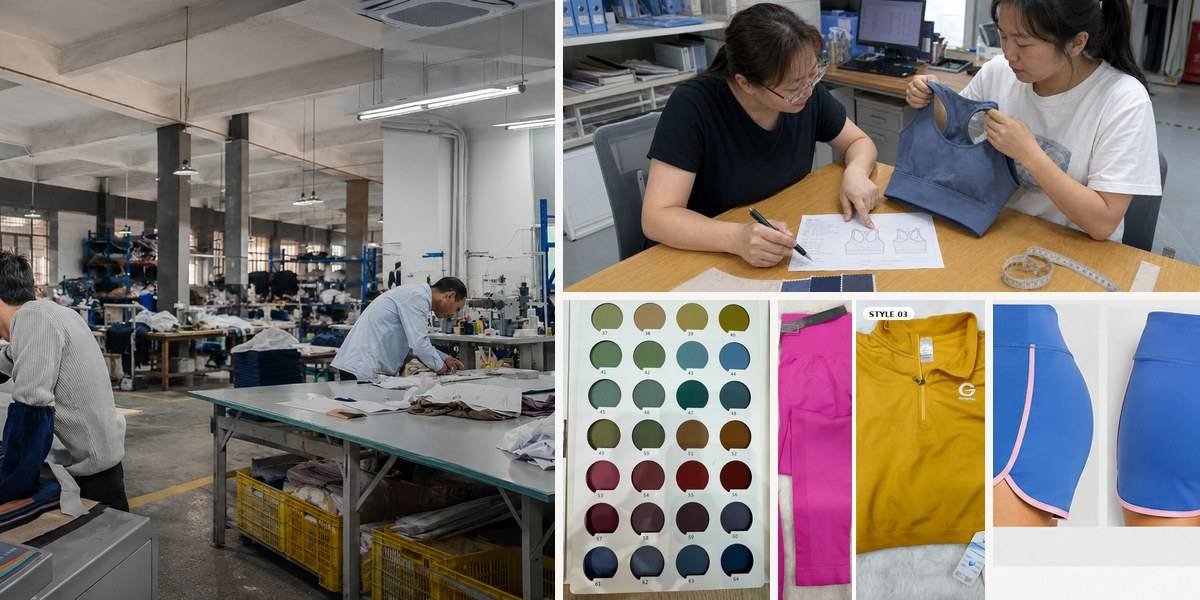
Development capability should be demonstrated through actual product specifications, sketches, technical review activity, and the staff responsible for converting design inputs into sample instructions. MOVEVOX’s regular product development structure includes design, patternmaking, and sample-development functions. Buyers should examine how technical questions are recorded and how decisions are transferred into the subsequent sample process.
Photo Caption: Actual development workstations and authorized project materials used for technical product reviews.
Patternmaking and Sample Preparation
Pattern and sample preparation connects the intended product silhouette with measurable garment construction. A technical visit should review how fabric behavior, measurements, grading, construction requirements, and sample revisions are reflected in current development work. Sample-room evidence is particularly relevant when the buyer’s project begins without a complete technical specification.
Photo Caption: Real patternmaking and sample preparation activities, with confidential buyer details removed.

Santoni Seamless Knitting Area
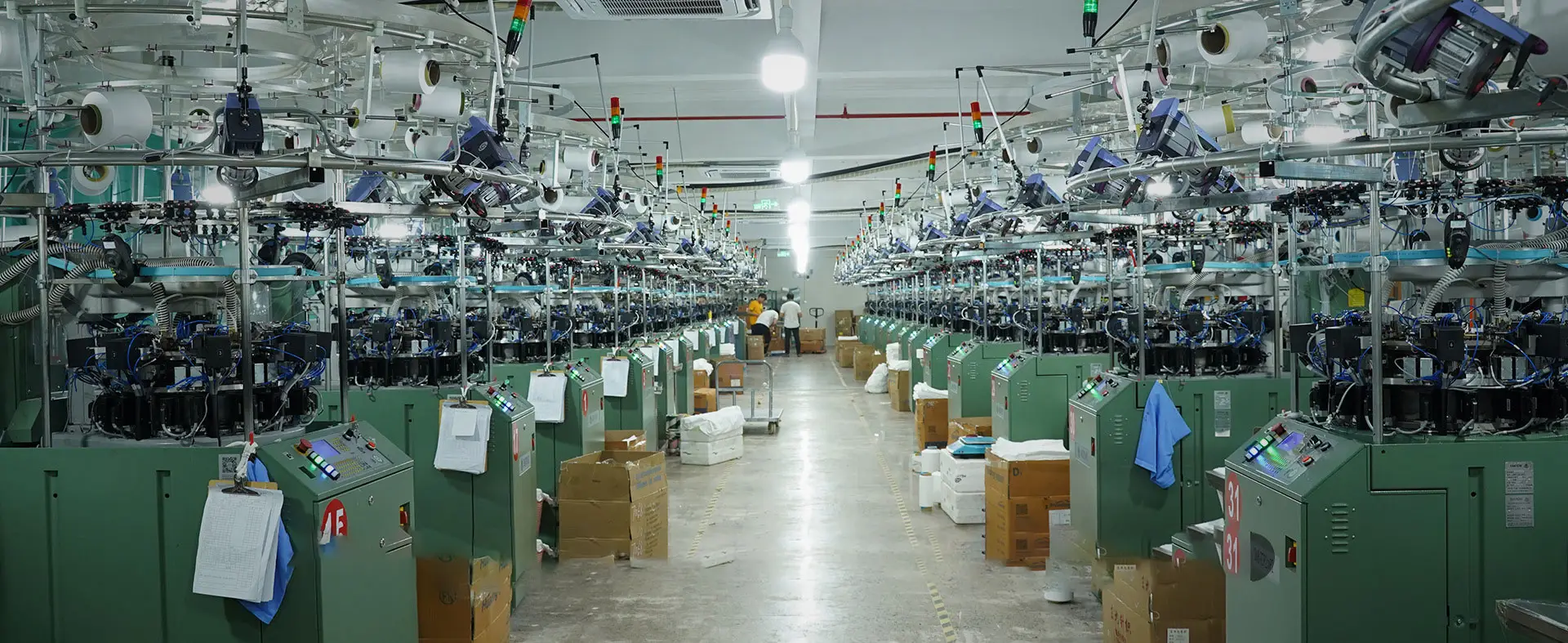
MOVEVOX’s manufacturing base includes 28 Santoni seamless knitting machines. A buyer evaluating seamless ODM should review the actual knitting environment and understand which garment structures and technical requirements are suitable for the available equipment. Device availability alone should not be used to guarantee that every proposed texture, size, or knit zone can be produced.
Photo Caption: Verified Santoni equipment and seamless production activity at the MOVEVOX manufacturing base.
Cut-and-Sew Production Area
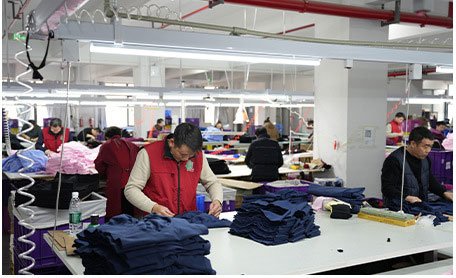
MOVEVOX’s production organization includes approximately 24 principal sewing and garment-production machines. During a review, buyers should examine how approved patterns, fabric, components, and construction instructions reach production. The relevance of this area is its ability to execute suitable cut-and-sew structures under defined technical and quality requirements.
Photo Caption: Actual cut-and-sew production showing garment assembly against applicable approved instructions.
Quality Inspection Activities
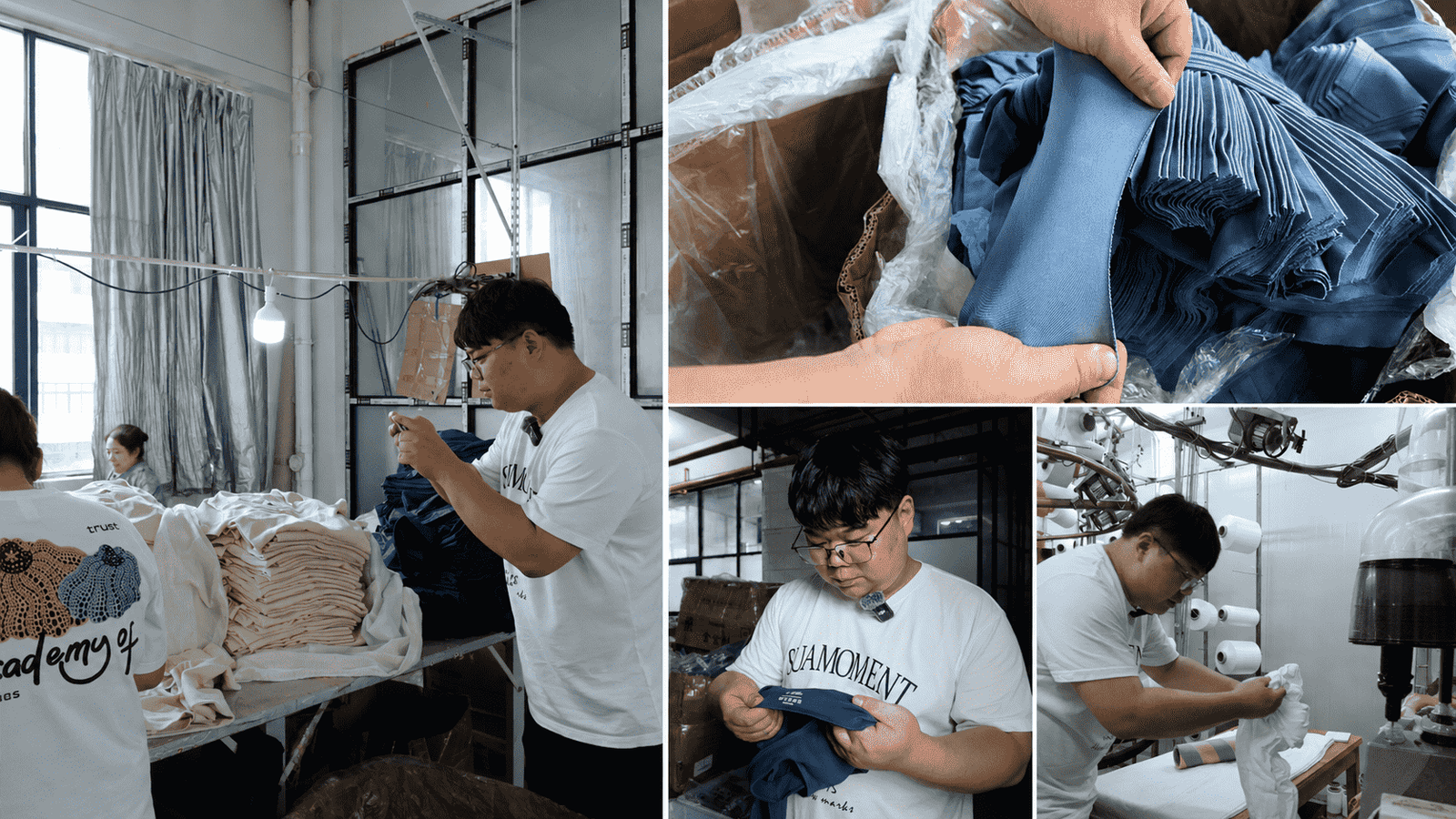
The company’s quality organization includes five QC personnel and stated inspection activities covering incoming materials, first articles, production processes, finished garments, and pre-shipment checks. A useful buyer audit should examine how inspection criteria relate to the approved sample, how deviations are handled, and whether records are available for the applicable order.
Photo Caption: Genuine garment measurement, appearance inspection, or quality-record review in the production environment.
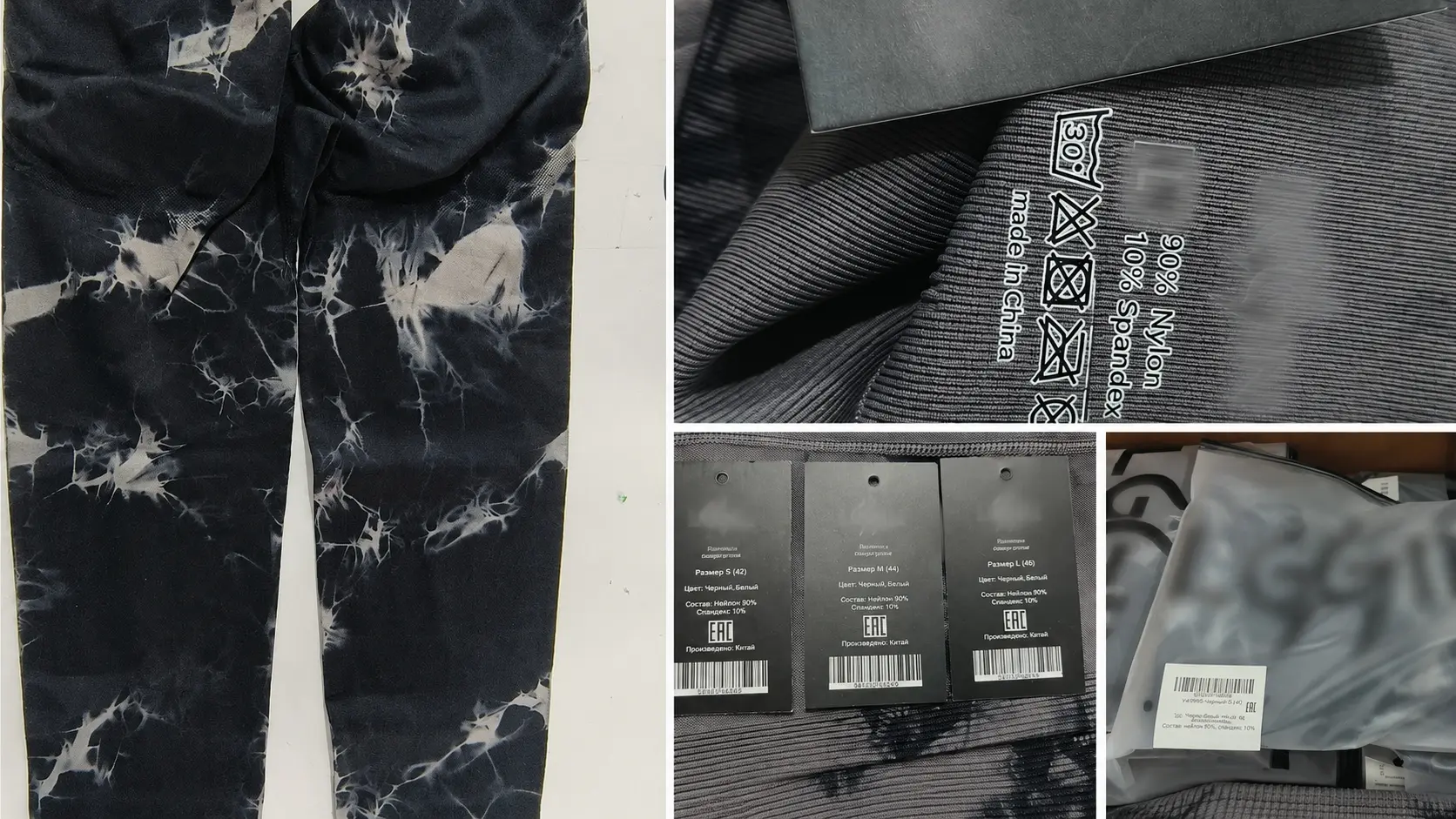
Packaging and Shipment Preparation
Packaging execution affects SKU accuracy, labeling, product presentation, and shipment readiness. Brand buyers should examine how garment identification, label placement, packing requirements, and carton information are checked before release. The objective is to verify that the approved product specification continues through the final operational stages, not just through garment manufacturing.
Photo Caption: Real packaging and shipment preparation with authorized SKU and carton information visible.
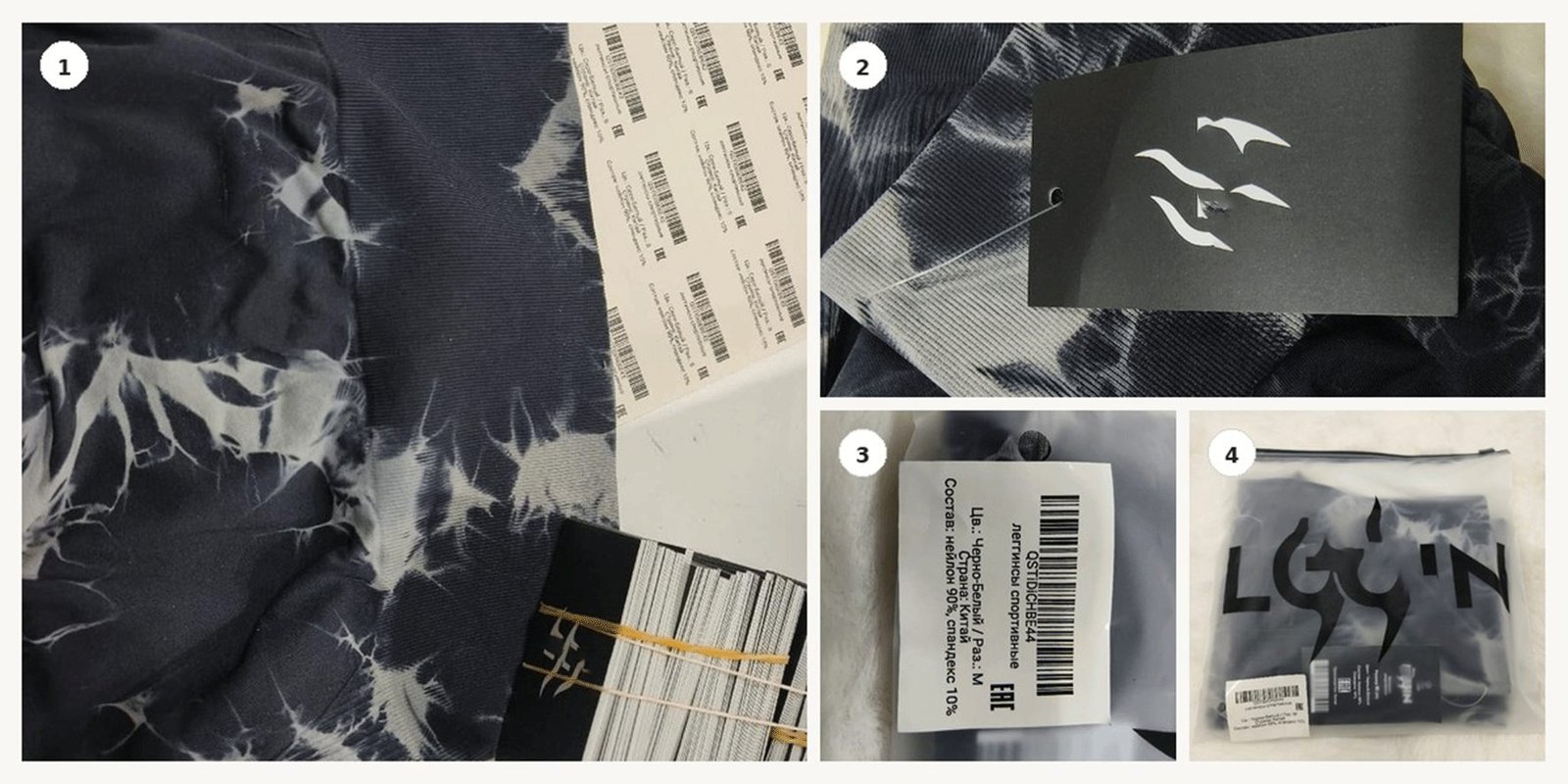
Documented Client Work
A Real Activewear Development and Sample Revision Case
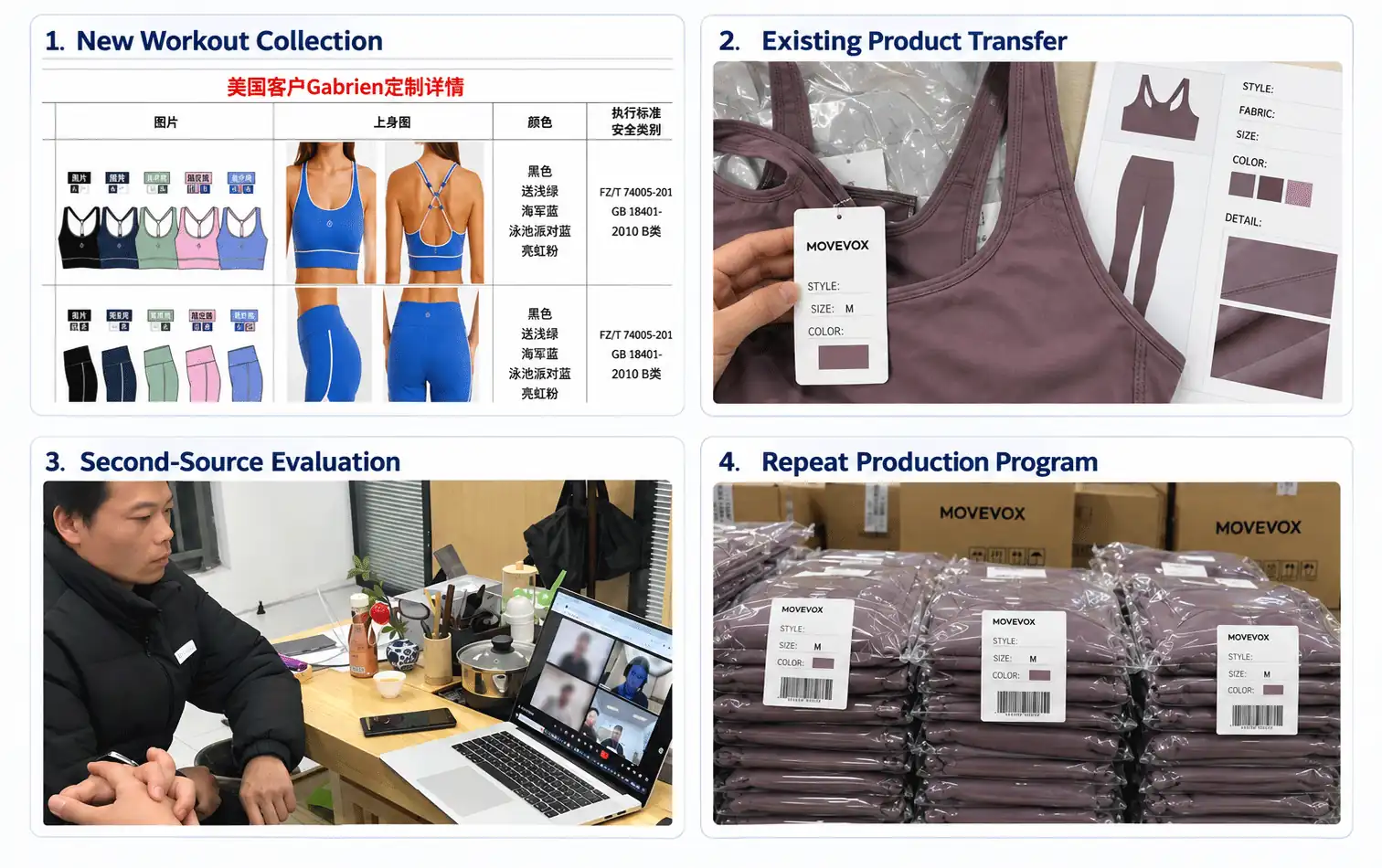
An existing United States activewear customer worked with MOVEVOX on a multi-product fitness and yoga apparel program. The documented cooperation included buyer-provided technical specifications, sample development, revisions based on practical use requirements, additional sample validation, and subsequent production coordination.
Customer Background
The customer is a United States-based fitness content creator with an activewear business. The documented assortment includes leggings, sports bras, shorts, tops, sets, and bodysuits. The business requires regular product updates, fit suitability for its audience, and coordinated product labeling and packaging. The customer provided its own technical specifications and had a defined product direction before the relevant sample-development work began. This distinction is important when evaluating the case as evidence of supplier-assisted engineering rather than original concept ownership.
Development Challenge
The initial challenge was to convert the supplied product requirements into samples that were suitable for the customer’s intended use. The first sample did not fully satisfy certain design and wearing requirements. The customer therefore requested changes, and further sample development was necessary before moving toward bulk production. The project also involved several garment categories with different fit and construction needs. Later production required customized branding, care labels, packaging, printed information, and individual product identification. A particular operational concern was maintaining correct barcode or QR-code association across styles, colors, and sizes. Packaging and garment identification needed to remain consistent with the actual product combination.
MOVEVOX Development and Execution Contribution
MOVEVOX reviewed the customer’s provided Tech Pack and assessed the related production requirements. The company produced an initial development sample and received customer feedback identifying details that did not fully meet the intended application. A revised sample was then developed to address the customer’s comments. Following further review, the customer requested additional sample units for user-oriented evaluation before proceeding with a production order. The production program also required coordinated garment customization and packaging execution. Branding, care labels, packaging information, and individual garment identification had to correspond to the correct product combinations. The documented workflow indicates attention to sample revisions, customer approval, SKU identification, and packaging verification. It supports MOVEVOX’s experience with development-led manufacturing execution, but it does not establish that MOVEVOX originated the customer’s product concept or owns the resulting design.
Development and Execution Stages
Technical Input Review
The customer provided technical requirements for the planned fitness and yoga garments. MOVEVOX evaluated the input and prepared an initial sample for buyer review rather than presenting an independently originated design concept.
Initial Sample Feedback
The first sample was sent for evaluation. The customer identified elements that did not fully match the intended use or design requirements, providing feedback that required a further development round.
Revised Sample Development
MOVEVOX prepared a revised version in response to the customer’s feedback. The revised sample moved the project closer to the customer’s expectations and established a basis for additional sample confirmation.
Extended Sample Evaluation
The customer requested a further set of samples for evaluation with intended users before proceeding. This added a practical feedback stage beyond visual inspection of the garment alone.
Production and Identification
After sample confirmation, bulk requirements included branding, labels, individual packaging, and identification codes. Correct association between garment style, color, size, and package information became a significant execution requirement.
Documented Results and Operating Facts
- Two development versions described: An initial sample and a revised sample are documented in the project narrative.
- Additional sample evaluation: The customer subsequently requested approximately 5–10 samples for user-oriented evaluation.
- Approximate order scale: The narrative describes orders of around 2,000 garments.
- Purchase frequency: The documented cooperation describes approximately two purchasing cycles per month during the referenced period.
- Relationship duration: The supplied case narrative states that cooperation had continued for approximately three years at the time it was written.
Customer Testimonial
A verified verbatim customer quotation suitable for publication has not been supplied. No direct testimonial should be invented or attributed to the customer without authorization.
Case Qualification
This is a real documented sample-revision and production-execution case. It is relevant to MOVEVOX’s activewear development capability but is not presented as a verified from-scratch ODM design creation case. Project dates, current trading status, publishable product photographs, and original supporting records require confirmation before public release.
Sample-Specific Test Evidence
Understand What Existing Product Test Reports Actually Prove
A professional ODM supplier evaluation should distinguish sample-specific test evidence from company-wide claims. MOVEVOX has supplied third-party reports for a specified black fitness yoga leggings sample. Their results must be understood within the methods, materials, and sample scope stated in the documents.
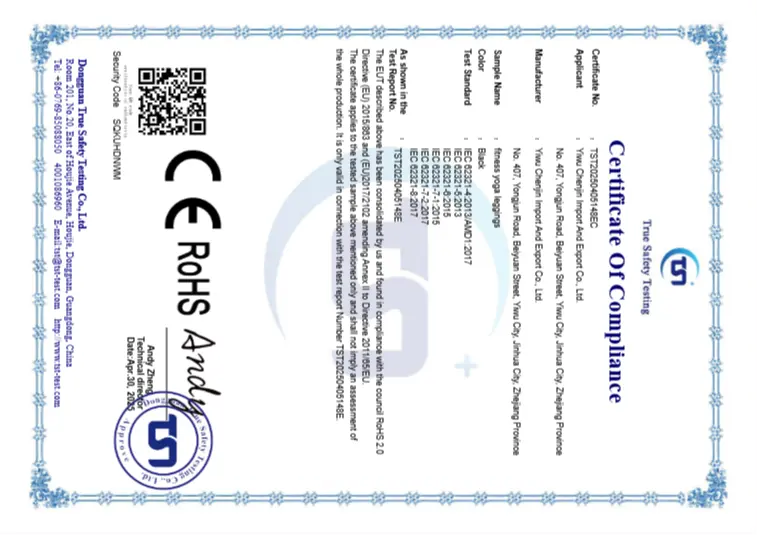
Tested Product Identity
The submitted reports identify a black fitness yoga leggings sample associated with Yiwu Chenjin Import And Export Co., Ltd. This does not automatically extend their findings to different activewear styles, compositions, colors, or future production batches.
Report Issuer and Date
The reports were issued by Dongguan True Safety Testing Co., Ltd., dated April 30, 2025. Buyers should confirm the report identity, issuing body, relevant documentation, and whether the test remains appropriate for the intended product.
RoHS Test Scope
Report TST20250405148E addresses specified substances against the cited RoHS 2.0 limits for the submitted sample. This sample-specific result must not be described as comprehensive regulatory approval for all textile products or the entire manufacturing organization.
Phthalate Test Scope
Report TST20250405150E addresses specified phthalates under the cited REACH Annex XVII requirements for the tested material. The recorded result applies to that submitted sample and the substances and methods covered by the report.
Test Result Interpretation
A reported pass or nondetection result should be interpreted using the listed test methods, detection limits, applicable thresholds, and sample description. It does not independently establish durability, support, opacity, moisture management, or another unrelated performance characteristic.
Sampling and Coverage
Laboratory sample results and bulk quality inspection reports serve different purposes. These documents do not provide an AQL inspection record, production-lot acceptance decision, or proof that every subsequent order uses identical materials.
ODM Product Verification
A new ODM project may require additional material or finished-garment tests based on the product, destination market, customer RSL, and claimed properties. The buyer and manufacturer should agree which evidence applies before making a compliance statement.
How Buyers Should Use These Reports
These documents can be reviewed as evidence that specific submitted samples underwent specified third-party testing. They should not replace project-specific restricted-substances requirements, actual material traceability, customer quality specifications, or applicable market compliance assessment.
Where the product composition, material source, color, or intended claim differs from the tested sample, additional verification may be appropriate. The certificate associated with the RoHS report explicitly limits its application to the tested sample, not the entire production output.
Supplier Shortlisting
Evaluate ODM Suppliers Against Defined Development and Manufacturing Criteria
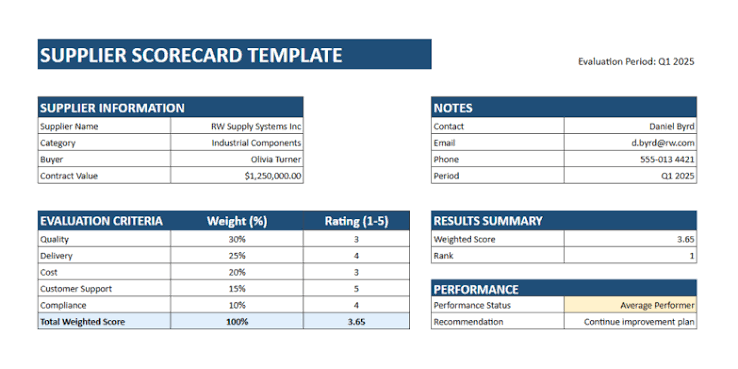
An ODM supplier should be evaluated on development contribution, technical feasibility, commercial transparency, and production execution. This checklist helps brand teams identify evidence that should be requested before adding a manufacturer to an approved supplier list.
Product Development Capability
- Can the supplier review concepts, sketches, reference samples, and incomplete product specifications before formal development begins?
- Does the supplier have identifiable personnel responsible for technical design, patternmaking, sample development, and revision coordination?
- Are fit, fabric, construction, and manufacturing assumptions documented before sample approval?
- Can the supplier explain the difference between an approved development sample and a production-ready specification?
Manufacturing Feasibility
- Can the supplier explain when seamless or cut-and-sew manufacturing is appropriate for the proposed style?
- Are material sourcing requirements, specialized components, and manufacturing limitations assessed before commercial commitment?
- Can the supplier demonstrate actual owned production resources and disclose the role of cooperating manufacturing partners?
- Are technical changes evaluated for their effects on construction, cost, quality, and production scheduling?
Quality and Production Control
- Are approved samples, released specifications, material references, and production versions consistently identifiable?
- Does the supplier have defined incoming inspection, first-article, in-process, and finished-garment quality-control activities?
- Are critical fit, measurement, branding, and packaging requirements linked to the applicable customer approval standard?
- Can the supplier explain how deviations are contained, corrected, rechecked, and communicated to the buyer?
Commercial and IP Control
- Are sample charges, revision conditions, material minimums, garment MOQ, and additional tooling requirements explained clearly?
- Can the supplier distinguish buyer-owned intellectual property from its own pre-existing designs and technical knowledge?
- Are confidentiality, permitted use of design files, subcontracting approval, and development responsibilities addressed before project execution?
- Are quotation validity, production lead time, quantity assumptions, and material dependencies confirmed in writing?
Evaluation Method
Each item may be marked: 1 — Not Demonstrated | 2 — Limited Evidence | 3 — Partially Verified | 4 — Verified | 5 — Verified With Supporting Records.
Interpreting the Score
A numerical score should guide further supplier investigation rather than replace it. Certain issues, such as unauthorized design use, undisclosed manufacturing locations, material substitution, or missing technical approvals, may require resolution regardless of the total score.
MOVEVOX should be assessed using the same criteria applied to competing suppliers. Existing development resources, manufacturing equipment, quality-control functions, and documented procedures provide starting evidence, but buyers should still request project-relevant records, confirm actual production arrangements, and verify any contractual commitments before supplier approval.