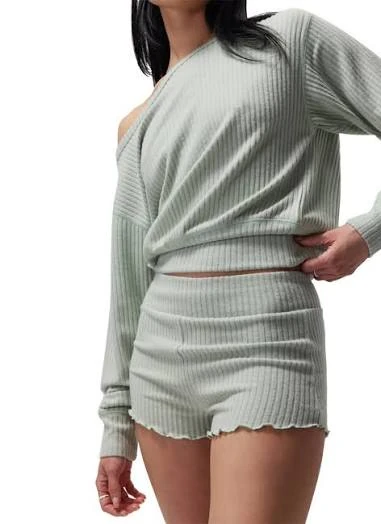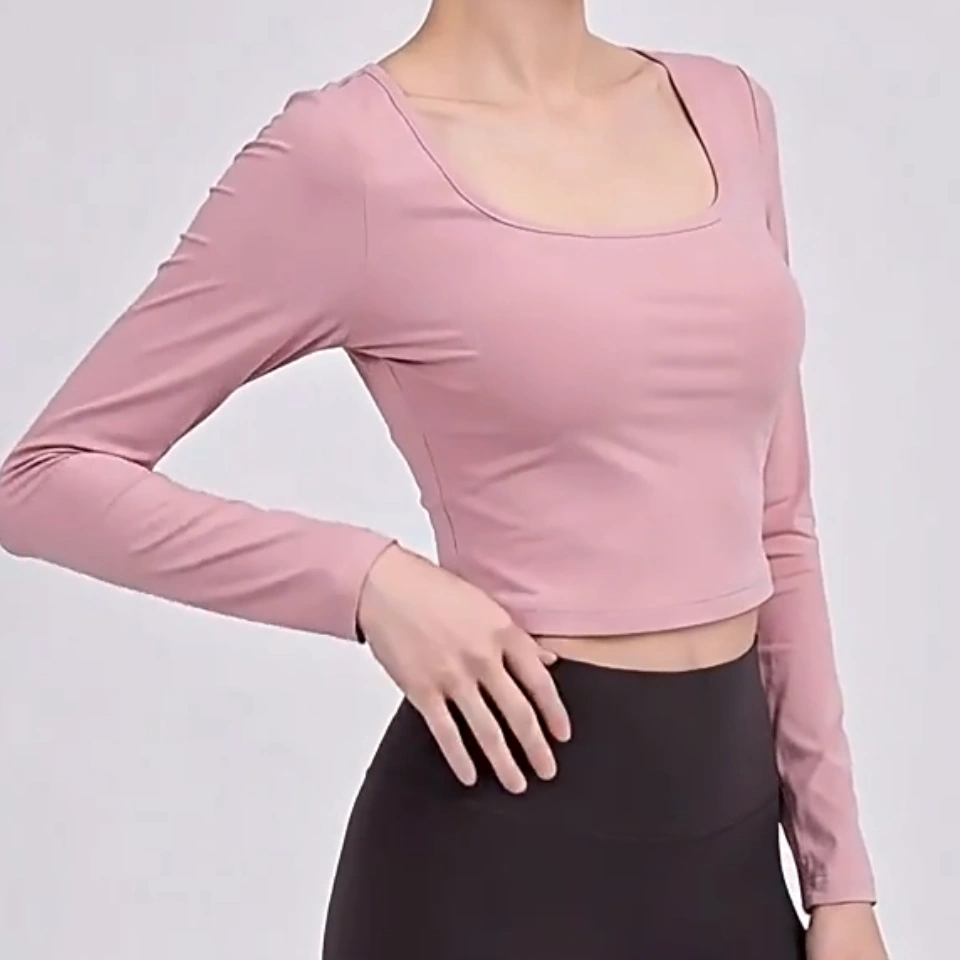
CUSTOM CROPPED LONG SLEEVE DEVELOPMENT

Cropped Long Sleeve Workout Top Manufacturer for Performance Apparel Brands

MOVEVOX supports custom cropped long sleeve workout top development for established activewear brands. We review shoulder-to-bust balance, sleeve construction, crop-length proportions and movement-related coverage alongside fabric and manufacturing feasibility. With cut-and-sew and seamless production resources, our team can assess suitable development routes based on your actual design. Product-specific fit performance and production terms remain subject to sampling and approval.

Connected Fit Engineering

Evaluate shoulder, bust, sleeve and hem relationships together.

Movement-Based Coverage

Define observable fit requirements for selected arm movements.

Production-Ready Standards

Connect approved patterns, measurements and materials before manufacturing release.
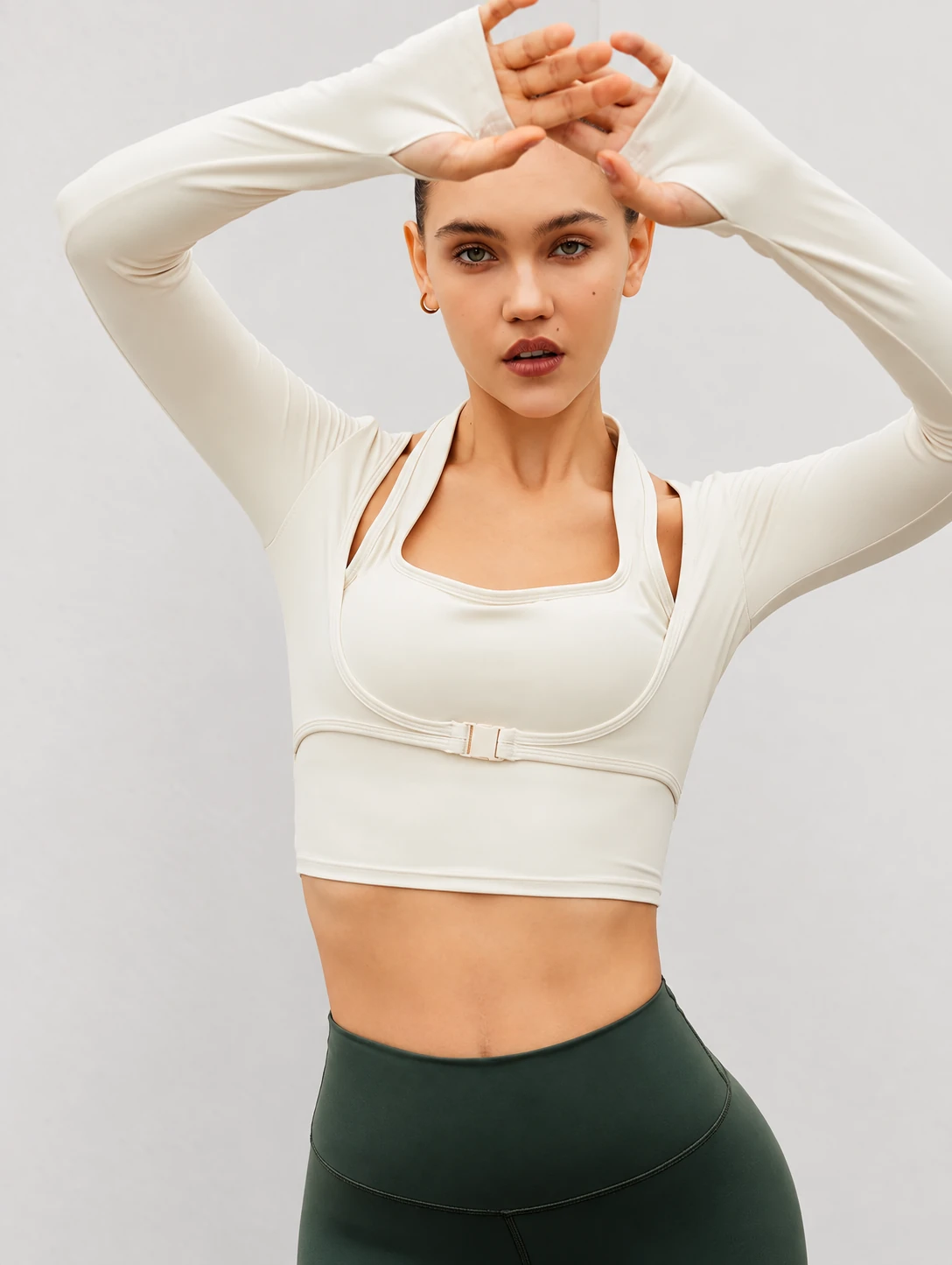
CONNECTED GARMENT ANATOMY

Understand the Connected Fit Areas of Cropped Long Sleeves

A cropped long sleeve top is a connected pattern system. Shoulder position, bust ease, sleeve orientation and shortened body length can influence one another during movement. Each component should be evaluated against the intended silhouette and fabric.

Front and back technical diagram of a cropped long sleeve top with shoulder, bust, armhole, sleeve and hem reference points

Shoulder Point

The shoulder reference helps locate the sleeve junction and upper-body balance. Changes to shoulder width or slope may affect sleeve alignment, neckline appearance and the way fabric moves during reaching.

Bust Ease

Bust dimensions must be interpreted alongside fabric stretch and intended compression or wearing ease. Increasing circumference alone may not resolve shoulder restriction or the upward movement of a cropped hem.

Armhole Geometry

Armhole depth, width and shape influence the connection between sleeve and body. A different armhole may alter movement clearance, underarm contact and the position of the garment during elevation.

Sleeve Pitch

Sleeve pitch describes how the sleeve is oriented relative to the body. Its suitability depends on the intended arm position, pattern construction and fabric, rather than a universal ideal angle.

Underarm Junction

The underarm junction connects sleeve movement with body-panel tension. Local seam allowance, shaping and stretch may affect comfort and garment displacement, making this area important during physical sample evaluation.

Front Body Length

Center-front and shoulder-to-hem measurements describe different dimensions. The chosen reference must be documented consistently, especially when a fitted crop changes its apparent position across body shapes and sizes.

Back Body Length

Center-back length and back-panel balance may influence how a cropped top sits around the shoulder blades. The back should be evaluated independently instead of assuming symmetrical front and back behavior.

Crop Hem

Hem circumference, finishing and local recovery can influence the lower edge's appearance and stability. A tighter hem is not automatically more secure and may increase upward displacement under certain conditions.

Overall Design Logic

These eight areas should be assessed as a system. A fit issue observed at the hem may originate in sleeve orientation, armhole geometry, garment ease or fabric behavior. Technical review should begin with an identifiable sample and measurement references, then establish which relationships require modification. Actual causes must be confirmed through sample comparison rather than inferred from appearance alone.

FIT FAILURE DIAGNOSIS

Diagnose Fit Problems Before Revising the Entire Pattern

When a cropped long sleeve changes position during movement, the visible symptom may not identify its cause. A useful development review separates garment observations, commercial consequences and technical investigation before approving pattern revisions.

Risk 01 — Shoulder Pulling

Problem: Tension may appear across the shoulder when the wearer reaches forward or overhead. Possible contributors include sleeve orientation, armhole geometry, shoulder dimensions and limited fabric extension.

Buyer Impact: Restricted movement may weaken the intended wearing experience and lead to repeated sample revisions. An unverified adjustment could also change the approved silhouette or introduce new fit problems.

Proposed Technical Response: Compare the actual pattern and finished measurements with the intended movement conditions. Review shoulder shape, sleeve pitch and fabric characteristics together. Record the suspected cause, make controlled sample changes and repeat the relevant fit observation.

Risk 02 — Cropped Hem Ride-Up

Problem: The lower edge rises during arm elevation beyond what the brand expects. This may result from upper-body garment tension, sleeve-to-body interaction, hem construction or the intended fit itself.

Buyer Impact: Unexpected exposure can change product positioning and customer acceptance. Simply extending the garment may alter the desired cropped proportion without resolving the underlying interaction between the sleeve and body.

Proposed Technical Response: Define the starting hem position and relevant arm movements. Record the garment's observed displacement under comparable conditions. Assess related pattern dimensions and material behavior before proposing changes to length, shaping or construction.

Risk 03 — Underarm Restriction

Problem: The underarm may feel restrictive even when chest width meets the technical chart. Armhole shape, sleeve geometry, seam construction and local fabric extension may contribute to the problem.

Buyer Impact: A static fitting can overlook the issue, creating additional development rounds or problems discovered after production. Changing one dimension without review may compromise appearance and mobility elsewhere.

Proposed Technical Response: Compare the specified armhole and sleeve dimensions with the physical sample. Observe selected movements, inspect local seam behavior and determine whether a pattern or material revision requires renewed fit approval.

Risk 04 — Front–Back Imbalance

Problem: The front and back hems may sit at visibly different positions, beyond the approved design intent. Body shaping, panel length, posture and material response should all be considered.

Buyer Impact: Uncontrolled balance can affect styling with coordinated leggings and create size-dependent visual inconsistency. A photograph taken from one angle may be insufficient to establish the actual garment condition.

Proposed Technical Response: Confirm approved front and back reference measurements and fitting posture. Compare garment behavior on the intended wearer profile, then revise the relevant pattern or material specification only after identifying a supported cause.

Risk 05 — Sleeve Rotation

Problem: A sleeve may twist or rotate during wear, potentially affecting cuff position and local tension. Sleeve cutting orientation, joining alignment, fabric structure or finishing can influence the result.

Buyer Impact: Visible rotation may undermine product appearance and require renewed approval of sleeve construction. Incorrect assumptions can lead to unnecessary changes in cuff length or overall garment dimensions.

Proposed Technical Response: Inspect the approved sleeve pattern, grain or knit orientation, assembly references and finished sample. Separate cutting or sewing variation from inherent design behavior before deciding which technical correction to trial.

CROP LENGTH & GRADING

Define Cropped Body Length Across the Full Size Range

Crop length must be specified through agreed garment measurement points, not visual terms such as short or above-waist alone. Buyers should define the intended silhouette, base size, grading rules and measurement conditions before approving a complete size range.

Proposed Cropped Long Sleeve Measurement Matrix
Size Chest Width Shoulder-to-Hem Center Front Center Back Sleeve Length Approval
XSBuyer inputBuyer inputBuyer inputBuyer inputBuyer inputPending
SBuyer inputBuyer inputBuyer inputBuyer inputBuyer inputPending
MBuyer inputBuyer inputBuyer inputBuyer inputBuyer inputPending
LBuyer inputBuyer inputBuyer inputBuyer inputBuyer inputPending
XLBuyer inputBuyer inputBuyer inputBuyer inputBuyer inputPending
XXLBuyer inputBuyer inputBuyer inputBuyer inputBuyer inputPending

Measurement Unit: cm / in — confirm before approval.

Grading and Tolerance Review

A cropped silhouette should be graded from the approved pattern and wearer specifications rather than by applying one uniform increment to every dimension. Front length, back length, chest ease and sleeve measurements may require different rules. Measurements must identify the garment condition, reference landmarks and agreed tolerances. Where movement-related coverage is important, physical review may be needed at more than one size. This matrix contains no MOVEVOX-approved product dimensions.

Three Points to Confirm
  • Use identical measurement landmarks and garment conditions across all submitted size samples.
  • Check whether sleeve, shoulder and body grading preserve the intended proportions together.
  • Record buyer-approved tolerances separately from movement observations and appearance preferences.
SHOULDER & SLEEVE ENGINEERING

Review Shoulder and Sleeve Construction for Cropped Tops

A cropped long sleeve requires construction choices that support its approved silhouette and movement requirements. The following details should be assessed on actual fabrics and patterns; no individual seam or sleeve configuration guarantees superior fit in every garment.

Close-up of shoulder seam alignment on a cropped long sleeve athletic top

Shoulder Alignment

Shoulder seam position should reflect the intended garment balance and the relationship between front, back and sleeve patterns. A visually straight seam may still behave differently during reaching. Review actual shoulder measurements, seam bulk and fabric extension before approving its final location.

Applicable Areas: Upper-body panel joins, conventional shoulder seams and planned sleeve attachment positions.

Fit / Durability Consideration: Assess movement clearance, seam appearance and localized tension after relevant wear or care evaluation.

Close-up of set-in sleeve seam joining a shaped sleeve to the armhole of a cropped workout top

Set-In Sleeve Junction

A set-in sleeve joins a shaped sleeve to an armhole and may be appropriate for several fitted athletic silhouettes. Sleeve cap geometry, armhole shape and assembly alignment should be developed together. The pattern requires physical assessment under the buyer's intended movement conditions.

Applicable Areas: Fitted cropped training tops with separate shaped sleeves and defined armholes.

Fit / Durability Consideration: Examine underarm clearance, seam extension and how the garment body responds during reaching.

Raglan sleeve seam construction extending from the underarm towards the neckline on an athletic crop top

Raglan Sleeve Alternative

Raglan construction relocates the sleeve-to-body joining line and can create a different upper-body silhouette. Whether it improves a specific fit concern depends on pattern shaping, fabric extension and the intended activity. It should be evaluated as an alternative, not a universal correction.

Applicable Areas: Proposed raglan athletic crops, selected shoulder-panel designs and compatible knit constructions.

Fit / Durability Consideration: Compare shoulder movement, neckline relationship and garment displacement with the approved design objective.

Underarm joining seam connecting the sleeve and body panels of a stretch long sleeve workout top

Underarm Joining

The underarm is a high-interest contact area where sleeve and body operations intersect. Stitch type, seam allowances, component alignment and fabric behavior influence the finished result. An apparently clean join does not independently establish sufficient movement clearance or seam durability.

Applicable Areas: Sleeve-to-body intersections, side seam continuations and compatible underarm panel joins.

Fit / Durability Consideration: Check contact comfort, stitch extension and seam integrity under specified movements and inspection conditions.

Sleeve cuff finishing detail on a cropped long sleeve workout top

Sleeve Cuff Finish

A narrow cuff, self-fabric finish or extended sleeve opening can influence local tension and the position of the sleeve during wear. Optional thumb-hole construction introduces further hand-to-sleeve interaction and must be reviewed separately from the main cropped fit.

Applicable Areas: Standard cuffs, extended sleeve hems and optional buyer-defined thumb-hole variants.

Fit / Durability Consideration: Review cuff circumference, sleeve length, contact pressure and finishing stability after care.

Close-up of finished cropped hem showing knit fabric edge construction on a long sleeve athletic top

Crop Hem Assembly

A cropped hem should be compatible with fabric recovery, body shaping and the intended finished position. Coverstitch, folded hems or selected ribbed finishes may behave differently. Increasing hem tension may create additional upward movement rather than reliably preventing it.

Applicable Areas: Cropped lower-body openings, compatible knit hems and planned ribbed finishing structures.

Fit / Durability Consideration: Evaluate hem curling, local extension, visible distortion and movement-related displacement against agreed criteria.

MOVEMENT-BASED COVERAGE

Establish an Arm-Raise Fit Review Before Sample Approval

An arm-raise assessment should use defined garments, wearer conditions and observations. It can identify coverage concerns during development, but the result should not be presented as a validated performance claim until the agreed evaluation has been completed.

Same cropped long sleeve top shown in neutral standing posture and arms-raised fit comparison

Arm-Raise Review Sequence

A consistent evaluation links the starting garment position with defined arm movements and documented fit observations. Comparisons should use the same garment and agreed conditions so that subsequent pattern or material revisions can be assessed appropriately.

Step 01 — Define Wearing Conditions

Objective: Confirm the intended fit, target wearer, sample size, underlayers and relevant workout movements. Establish whether coverage will be assessed visually or by measurable garment displacement. Brand-specific acceptance requirements should be documented before comparing development samples.

Buyer Inputs

  • Provide the intended wearer profile and reference garment size.
  • Identify relevant movements and expected torso coverage conditions.

Proposed MOVEVOX Outputs

  • Review available fit references and measurement requirements.
  • Identify observations needing sample or wearer confirmation.

Acceptance Criterion: The parties agree on the garment, wearer conditions, movement sequence and observations required for meaningful comparison.

Step 02 — Record Static Position

Objective: Observe the garment in the agreed starting posture. Record relevant shoulder, front-hem and back-hem landmarks using a consistent method. Distinguish physical measurements from visual styling preferences before using the starting position as a comparison reference.

Buyer Inputs

  • Confirm acceptable static appearance and starting posture.
  • Identify critical front and back coverage landmarks.

Proposed MOVEVOX Outputs

  • Prepare a sample-specific static fit review framework.
  • Identify the relevant reference points for comparison.

Acceptance Criterion: The starting condition and measurement landmarks are defined clearly enough to reproduce the observation.

Step 03 — Assess Arm Movements

Objective: Evaluate the selected arm-raise or forward-reaching movements using the same sample and agreed conditions. Observe changes around the shoulders, underarms and cropped hem. Avoid interpreting one isolated photograph as a complete movement or comfort assessment.

Buyer Inputs

  • Specify the movements relevant to intended product use.
  • Describe unacceptable restriction, exposure or garment distortion.

Proposed MOVEVOX Outputs

  • Propose observations associated with shoulder and sleeve movement.
  • Record which potential fit causes require further assessment.

Acceptance Criterion: The selected movements are repeatable and directly related to the buyer's stated product requirements.

Step 04 — Compare Hem Displacement

Objective: Compare the garment's position before, during and after the defined movement. Review whether observed changes arise from pattern geometry, sleeve interaction, fabric behavior or intended garment ease. Avoid imposing an unapproved universal displacement limit.

Buyer Inputs

  • Define acceptable visual coverage or quantitative tolerance.
  • Confirm whether garment repositioning is part of evaluation.

Proposed MOVEVOX Outputs

  • Document the proposed static-to-dynamic comparison method.
  • Identify potential pattern and material variables for review.

Acceptance Criterion: Observations are recorded against buyer-approved criteria without claiming unperformed or unmeasured results.

Step 05 — Document Fit Revision

Objective: Translate remaining fit concerns into controlled development questions. Revise pattern, fabric or construction specifications only where justified by the sample findings. A subsequent sample should be compared using the same relevant conditions before fit approval changes.

Buyer Inputs

  • Approve the direction of proposed technical revisions.
  • Evaluate the revised sample against original fit concerns.

Proposed MOVEVOX Outputs

  • Prepare a version-controlled revision and sample review plan.
  • Identify outstanding conditions before final fit authorization.

Acceptance Criterion: The buyer confirms which revisions are accepted and which movement-related issues remain open.

MANUFACTURING ROUTE SELECTION

Select the Appropriate Manufacturing Route for Your Design

Seamless and cut-and-sew construction offer different design possibilities. MOVEVOX has both manufacturing resource types, but the appropriate route depends on yarn or fabric availability, pattern requirements, finishing operations and specific equipment feasibility.

Manufacturing Decision Questions

Use the following technical inputs to identify possible construction routes. Questions that remain unresolved should lead to further engineering review rather than an automatic manufacturing commitment.

Reference of circular seamless knitting machinery and cut-and-sew garment assembly processes

Question 01

Does the sleeve require shaped panels?

Options: Yes / No / Review

Question 02

Are engineered knit zones essential?

Options: Yes / No / Undecided

Question 03

Are the target yarns and sizes defined?

Options: Approved / Pending / Alternatives

Question 04

Are complex neckline or hem finishes required?

Options: Yes / No / Review

Question 05

Can the garment structure be knitted feasibly?

Options: Confirmed / Further Review

Question 06

Are finishing and order constraints acceptable?

Options: Confirmed / Revise / Pending

Cut-and-Sew Candidate

Cut-and-sew may suit cropped long sleeve designs requiring shaped panels, selected shoulder seams, deliberate sleeve geometry or specialized neckline and hem construction. The appropriate pattern depends on the actual fabric, stretch direction and proposed silhouette. Sampling should confirm that movement and coverage requirements remain acceptable in the complete garment.

Key Parameters: Pattern Shape · Fabric Extension · Assembly

Seamless Knit Candidate

A seamless route may be considered where the body and sleeve structures are compatible with available circular-knitting equipment, yarns, programming and finishing requirements. MOVEVOX's 28 Santoni machines provide an established seamless manufacturing resource, but machine count does not confirm feasibility for an arbitrary long sleeve design or size range.

Key Parameters: Yarn · Knit Program · Equipment

Mixed Construction Candidate

A suitable knitted body may require separately attached sleeves, finishing or other components, depending on technical feasibility. This route introduces additional joining, alignment and approval requirements. Buyers should evaluate the complete construction rather than assuming that combining methods automatically improves comfort, cost or production efficiency.

Key Parameters: Knit Structure · Joining · Approval

Further Engineering Review

Where yarn availability, sleeve construction, desired size range or finishing requirements remain unresolved, the manufacturer should identify technical assumptions before selecting a route. A physical development sample or specific feasibility trial may be necessary. Production should not be committed merely because equipment of a relevant category exists.

Key Parameters: Missing Inputs · Feasibility · Trial

TECHNICAL RFQ INPUTS

Prepare the Technical Inputs for Your Fit Review

Meaningful development begins with a clear description of the proposed cropped long sleeve, not only a reference image or target price. The following inputs help establish which fit, material and manufacturing decisions are already defined and which require review.

Required

01 — Front and Back Sketches

Provide the intended garment silhouette, neckline, sleeves, seams, openings and cropped hem from front and back views. Mark details that must remain unchanged, together with construction alternatives that the manufacturer may review. References must be legally usable.

Required

02 — Intended Fit Profile

Describe whether the style should be body-hugging, moderately fitted or relaxed. Identify the intended wearer, relevant activity and visual proportion. Specify whether the garment is expected to provide support or will be worn over a separate sports bra.

Required

03 — Shoulder and Bust Measurements

Supply available shoulder, bust or chest, upper-body and related points of measure. Define how each dimension is taken and identify relevant tolerances. An approved visual silhouette alone does not provide a sufficient measurement standard for production.

Required

04 — Cropped Body Length

Define shoulder-to-hem, center-front or center-back length as applicable. Identify the preferred hem position and any required relationship to coordinated bottoms. Clarify whether length is fixed by a flat garment dimension or evaluated on the intended wearer.

Required

05 — Sleeve and Armhole Details

Provide sleeve length, sleeve opening, shoulder construction, armhole dimensions and preferred finishing details. Specify any optional thumb-hole or cuff features. Explain which elements are critical to the approved design and which may be technically adjusted.

Required

06 — Movement and Coverage Requirements

Describe the exercises or arm positions that matter for product approval. Provide known fit complaints or desired coverage conditions. If no tolerance is established, explain how the buyer intends to evaluate sample behavior instead of requesting a universal movement guarantee.

Required

07 — Fabric and Yarn Specifications

Provide available fiber composition, knit structure, weight, color, extension and recovery requirements. If materials are undecided, identify the desired touch, appearance and movement characteristics. Seamless and cut-and-sew material requirements may need separate technical evaluation.

Required

08 — Hem and Cuff Construction

Describe intended hem tension, folded or ribbed finishes, sleeve opening and seam appearance. Supply reference images or construction drawings where available. Clarify whether the visual detail is a strict requirement or a candidate for manufacturing review.

Optional

09 — Branding and Packaging

Provide logo artwork, placement, label and packaging information where available. Confirm whether decoration lies in high-extension areas or directly contacts the wearer. Additional material compatibility or durability evaluation may be needed before approving the finished appearance.

Required

10 — Commercial and Market Plan

State estimated quantities by style, color and size, along with target selling regions and delivery conditions. Distinguish initial sampling from expected production. Custom yarns, dyeing, decoration and packaging may introduce purchasing minimums beyond the garment quantity.

Incomplete-File Guidance

MOVEVOX can begin an initial development discussion from a Tech Pack, legally usable reference garment or sufficiently clear design concept. Available pattern-making and sampling resources can support identification of unresolved technical inputs. Final sample requirements, manufacturing feasibility, costs and timing should remain conditional until the necessary information and approvals are confirmed.

DIRECTIONAL STRETCH & RECOVERY

Compare Stretch and Recovery for Cropped Long Sleeve Fabrics

A cropped long sleeve should be evaluated using identifiable fabrics, not composition percentages alone. Horizontal and vertical extension, recovery, fabric weight and finishing can influence how the sleeves and shortened body respond during movement.

Candidate Fabric Engineering Comparison
Technical Parameter Single Jersey Interlock Rib Knit Engineered Seamless Knit
StructureSingle-knit constructionDouble-knit constructionRibbed loop structureProgrammed knit structure
Fiber CompositionConfirm actual yarnConfirm actual yarnConfirm actual yarnConfirm actual yarn
GSMMeasure actual fabricMeasure actual fabricMeasure actual fabricConfirm knit-zone specification
Widthwise StretchTest candidateTest candidateTest candidateAssess relevant zones
Lengthwise StretchTest candidateTest candidateTest candidateAssess relevant zones
RecoveryDefine evaluation conditionsDefine evaluation conditionsDefine evaluation conditionsReview yarn and structure
Surface FeelFinish-dependentFinish-dependentTexture-dependentProgram and yarn-dependent
Hem BehaviorRequires garment trialRequires garment trialRib tension requires reviewFinishing-dependent
Dimensional StabilityRequires care evaluationRequires care evaluationRequires care evaluationRequires care evaluation
Production RouteCommon cut-and-sew candidateCut-and-sew candidateConstruction-dependentEquipment feasibility required

Material Selection Guidance

The fabric decision should begin with the approved silhouette and intended activity. A material that extends easily across the width may behave differently along the garment length, affecting sleeve movement and crop proportions. Recovery, extension force and finishing should therefore be considered alongside pattern geometry. Compare actual material samples under defined conditions and confirm decoration compatibility before freezing the specification. A material result cannot independently establish the dynamic fit of the finished garment.

FIT ENGINEERING MISCONCEPTIONS

Challenge Common Assumptions About Cropped Long Sleeve Fit

Fit problems arise when isolated material or measurement characteristics are treated as complete solutions. The following distinctions help buyers evaluate development decisions without assuming that one fabric property, pattern adjustment or sample automatically proves garment performance.

More Stretch Always Improves Fit

Myth: Higher fabric stretch always provides better movement and comfort.

Fact: Fabric extension must be considered alongside recovery, pattern ease and extension direction. A highly extensible fabric can still create an unsuitable silhouette, localized pressure or unwanted hem movement. The correct material is the one that meets the garment's defined construction and wearing requirements.

Evidence / Exception: Compare identified fabrics and finished samples under the same relevant fitting conditions.

Longer Bodies Always Prevent Ride-Up

Myth: Adding body length automatically eliminates cropped hem movement.

Fact: Increasing length may alter the intended proportions without resolving tension generated by the sleeve, armhole or upper-body fit. The visible result may improve in one posture but remain unsuitable in another. A revision should target supported causes rather than assume all displacement originates from insufficient length.

Evidence / Exception: Review hem position alongside shoulder movement, sleeve construction and garment balance.

Seamless Eliminates All Pulling

Myth: Seamless knitting automatically prevents shoulder restriction and body displacement.

Fact: Seamless construction can reduce or relocate certain joining operations, but knitted structure, yarn selection, programmed shaping and finishing still influence garment behavior. A seamless long sleeve requires its own feasibility and fit assessment. The absence of a conventional side seam does not prove unrestricted movement.

Evidence / Exception: Verify actual knitting structure, finishing operations and the approved physical garment.

One Sample Proves Every Size

Myth: Approving the medium-size crop confirms the fit of the complete range.

Fact: Grading changes garment proportions, and different sizes may interact differently with the intended body shape and sleeve geometry. A base-size approval does not independently verify end-size coverage, sleeve movement or visual balance. The buyer should establish which additional sizes require physical evaluation.

Evidence / Exception: Use current grading rules, identified size samples and buyer-approved fit requirements.

Soft Fabric Guarantees Comfort

Myth: A soft swatch ensures a comfortable finished long sleeve top.

Fact: Comfort depends on garment fit, skin contact, seam construction, local pressure, activity and wearer preference. A fabric may feel soft by hand yet become uncomfortable around the underarm, cuff or hem. Material selection and physical garment evaluation answer different technical questions.

Evidence / Exception: Combine material references with relevant garment construction and wearer observations.

Static Fit Confirms Coverage

Myth: A garment that fits well when standing will maintain acceptable coverage during exercise.

Fact: Arm movement and body posture can change sleeve tension, shoulder position and the location of the cropped hem. Static appearance alone cannot establish acceptable dynamic coverage. Relevant movements and observation criteria should be agreed before the sample is treated as approved for the intended use.

Evidence / Exception: Compare the same garment under repeatable static and movement-related review conditions.

SLEEVE-TO-BODY CONSTRUCTION

Review the Construction System Behind Cropped Long Sleeve Fit

Pattern geometry establishes the intended shape, while yarn, fabric and assembly determine how that shape is expressed in the finished garment. Construction review should identify the interfaces that can influence movement, contact and garment stability.

Structural Diagram 01 — Upper-Body Assembly

Pattern geometry, seam location and material characteristics should be considered together when reviewing the relationship between the sleeve and the upper body.

Technical construction diagram of shoulder, sleeve junction and underarm connections on a cropped long sleeve top

Shoulder Interface

Shoulder construction connects the front and back panels with the intended sleeve system. Review the seam location, panel shaping and material behavior before deciding whether this area requires an additional development trial.

Sleeve Junction

The sleeve junction should be evaluated as part of the complete pattern. Cap shape, armhole geometry and joining operations may influence movement clearance and localized tension in the finished garment.

Underarm Connection

The underarm region combines fabric movement, joining methods and direct wearer contact. Examine seam allowance, stitch configuration and garment tension under relevant conditions rather than relying solely on visual workmanship.

Technical detail diagram of knit body, neckline, cuffs and cropped hem finishing

Structural Diagram 02 — Body and Finishing

Body knit construction and finishing operations should be evaluated together, especially where sleeve movement or local hem tension may influence the finished garment.

Body Knit Structure

The selected fabric or programmed knit zones influence extension, recovery, surface feel and drape. These properties should be reviewed using actual material specifications and physical garment samples.

Neckline Finish

Ribbing, self-fabric binding and other compatible finishes can affect neckline dimensions and appearance. The chosen method should be evaluated with the garment's actual material and pattern.

Sleeve Cuff

Cuff construction may influence sleeve position, local contact and finishing durability. Extended cuffs or thumb-hole variants introduce separate technical requirements that should be approved before production.

Crop Hem

The lower edge combines body dimensions, local tension and finishing behavior. Its appearance during movement should be assessed against the intended silhouette rather than assuming a tighter finish prevents displacement.

Overall Construction Explanation

The finished cropped long sleeve is an interacting system, not a set of independent trims and seams. Changes to sleeve joining, material extension or hem finishing can affect the appearance and movement of other garment areas. MOVEVOX's cut-and-sew and seamless resources provide different potential construction options; the appropriate configuration should be selected through feasibility review and representative sampling before approval.

FIT CLAIM EVIDENCE

Match Cropped Long Sleeve Claims With Appropriate Evidence

A product claim should identify the characteristic being evaluated, the applicable garment or material, and the evidence required. Fit observations, textile tests and customer preferences provide different forms of information and should not be treated as interchangeable proof.

Directional Recovery

Functional Claim: The selected fabric meets the agreed recovery requirement.

Evidence Explanation: Recovery should be evaluated under defined extension, relaxation and measurement conditions. A fiber percentage cannot establish the behavior of the complete fabric. The buyer should consider whether material recovery remains relevant after the garment is cut, joined and finished into its intended shape.

Evidence Basis: Identifiable fabric, appropriate recovery assessment, measured outcome and approved limits.

Controlled Hem Position

Functional Claim: The cropped hem maintains acceptable positioning under defined conditions.

Evidence Explanation: Hem position depends on the intended garment proportions, wearer's posture, material behavior and sleeve-to-body interaction. A single static photograph does not establish movement performance. Buyers should define the comparison method and applicable acceptance criteria before describing this characteristic as verified.

Evidence Basis: Approved garment, consistent fit conditions, relevant observations and buyer acceptance criteria.

Shoulder Movement

Functional Claim: The garment satisfies the specified shoulder movement requirement.

Evidence Explanation: Shoulder clearance should be evaluated using relevant arm movements and the intended wearer or fit model. Pattern dimensions and fabric extension provide useful inputs but do not independently prove acceptable movement. Remaining restrictions should be connected to specific garment observations before a revision is approved.

Evidence Basis: Current pattern, approved movement protocol, identified sample and fit observations.

Sleeve Stability

Functional Claim: Sleeve position remains acceptable during the intended activity.

Evidence Explanation: Sleeve rotation, cuff movement and localized tension may result from several interacting construction and material characteristics. A visually symmetrical finished garment can behave differently during wear. Approval should consider the selected movement conditions and the wearer's actual experience rather than appearance alone.

Evidence Basis: Representative garment, sleeve construction reference and documented movement review.

Post-Care Dimensions

Functional Claim: The finished garment meets agreed dimensional-change requirements after care.

Evidence Explanation: Fabrics and finished garments may change dimensions when subjected to laundering and drying. The relevant conditions, measurement locations and acceptance limits need to be defined. A fabric-only result may not represent changes involving sleeve seams, binding, cuffs or other garment components.

Evidence Basis: Identified specimen, suitable care procedure, dimensional results and agreed tolerances.

Movement Coverage

Functional Claim: The garment meets the buyer's defined movement-related coverage criteria.

Evidence Explanation: The acceptable amount of exposure depends on the brand's intended design, target wearer, coordinated bottoms and selected movements. No single universal displacement value applies to every cropped long sleeve. Buyer approval should identify the actual evaluation conditions and any accepted exceptions.

Evidence Basis: Defined poses, identified garment, comparable observations and recorded buyer decision.

CONTROLLED PATTERN REVISION

Convert Cropped Long Sleeve Fit Findings Into Pattern Revisions

An effective revision sequence should connect the observed fit problem with the technical change being proposed. Each development version must remain identifiable, and a revised sample should be assessed against the requirements that prompted the change.

01

Record Fit Findings

Document the observed issue using a specific garment version, size, posture and relevant measurements. Separate shoulder restriction, sleeve rotation, hem movement and appearance concerns. Avoid treating a photograph without known fitting conditions as conclusive evidence of the cause.

Deliverable: Fit Review Record

Timing: Review dependent

02

Identify Critical Measurements

Compare the observed concern with approved points of measure and actual garment dimensions. Review shoulder, chest, sleeve, armhole and crop length as a connected group. Determine which missing or inconsistent measurements should be clarified before altering the pattern.

Deliverable: Measurement Review

Timing: Scope dependent

03

Review Pattern Geometry

Examine relevant front, back and sleeve pattern relationships. A hem problem may not originate solely in the body-length dimension. Evaluate the proposed construction and material conditions before identifying a pattern modification for sample development.

Deliverable: Pattern Assessment

Timing: Design dependent

04

Define Controlled Revision

Document the exact technical changes, the affected pattern pieces and the features that must remain unchanged. The buyer should confirm the intended correction before further sample development. Important changes to fabric or construction should be assessed separately.

Deliverable: Revision Instruction

Timing: Approval dependent

05

Produce Revised Sample

Prepare a development sample using the currently selected materials and approved revision instructions, subject to technical feasibility. Identify its version, size and relevant construction details. Do not replace an earlier approved reference without recording the new sample's status.

Deliverable: Revised Fit Sample

Timing: Project dependent

06

Recheck Movement Fit

Compare the revised garment with the original issue under relevant, repeatable wearing conditions. Record whether the intended correction appears satisfactory and identify any new concerns. Final approval should depend on the buyer's documented decision, not sample completion alone.

Deliverable: Fit Decision Record

Timing: Feedback dependent

Development Timing Note

MOVEVOX's general reference for standard sample development is approximately 5–10 working days after essential details have been confirmed. This is not a guaranteed duration for each revision or for a technically complex cropped long sleeve program. Material changes, additional samples and buyer approval cycles may extend the total development schedule.

SIZE-SET APPROVAL GATES

Approve Cropped Long Sleeve Fit Across Multiple Sizes

A base-size approval establishes an important development reference but does not automatically validate the complete size range. The proposed approval ladder identifies the critical decisions needed to control silhouette, sleeve geometry and cropped proportions before production release.

LEVEL 01

Base-Size Fit

Confirm the intended silhouette, approved pattern and relevant static measurements on the selected base size. Record any movement conditions that influence the brand's fit decision. The approved version must be clearly identifiable before grading progresses.

Approval Evidence: Identified base-size sample, current technical chart and documented fit decision.

LEVEL 02

Grading Rule Confirmation

Review the proposed increments for chest, shoulder, sleeve, armhole and cropped body length. Determine whether different dimensions need different grading logic. The purpose is to preserve the intended design relationship, not to create identical proportional changes everywhere.

Approval Evidence: Current grading instructions, defined measurement points and buyer-confirmed size requirements.

LEVEL 03

End-Size Review

Examine selected smaller and larger sizes where grading creates the greatest concern. Compare sleeve movement, shoulder balance and apparent garment length. Additional physical evaluations may be necessary when wearer proportions or fabric behavior differ meaningfully.

Approval Evidence: Identified size samples, relevant measurements and documented exceptions or further review.

LEVEL 04

Movement Coverage Review

Evaluate required arm movements on the sizes included in the agreed fitting protocol. The same observation method should be used where comparisons are intended. Differences must be assessed against buyer-defined criteria, not an assumed universal coverage requirement.

Approval Evidence: Relevant garment versions, repeatable movement conditions and recorded buyer observations.

LEVEL 05

Size-Set Approval

Confirm which sizes, measurements and movement conditions are accepted. Identify open issues, approved deviations and further samples required before production. Approval should specify the exact garment and technical scope instead of implying all future material variations are covered.

Approval Evidence: Current size-set record, accepted specifications and authorized release decision.

Balancing the Approval Requirements

MOVEVOX's pattern-making and sample-development resources can support review of grading specifications and physical size samples. The appropriate size-set program depends on garment complexity, material behavior and the buyer's requirements. A practical approval process should prioritize the sizes and movements most likely to expose critical differences, while keeping unresolved technical conditions visible until customer authorization.

COORDINATED ACTIVEWEAR FIT

Coordinate Cropped Long Sleeve Proportions With Activewear Bottoms

A cropped workout top is often developed within a broader collection. Coordinated colors and fabrics can establish visual consistency, but the effective coverage depends on both the top and the selected lower garment. Each style still requires its own technical approval.

Fitted cropped long sleeve workout top intended for a coordinated studio activewear set
High-rise activewear leggings intended to coordinate with a fitted cropped long sleeve top

Fitted Crop and High-Rise Legging

A fitted long sleeve crop can be coordinated with a high-rise legging to establish the brand's intended waistline proportion. The top's hem position and the legging's waistband height should be reviewed in the same agreed wearing conditions. Visual overlap at rest does not automatically establish acceptable coverage during arm movement.

Proposed Components: Fitted Long Sleeve Crop · High-Rise Legging · Studio Bra

Shared Direction: Color · Silhouette · Waist Proportion

Relaxed cropped long sleeve training top with visible garment ease and shortened hem
Gym training shorts intended for coordinated styling with a relaxed long sleeve crop top

Relaxed Training Crop and Shorts

A relaxed cropped long sleeve may create a different visual balance when paired with training shorts. Its body ease, sleeve shape and hem movement should be assessed independently of the shorts' waistband. The collection standard can coordinate appearance without assuming both garments require the same fabric or construction.

Proposed Components: Relaxed Training Crop · Gym Short · Training Bra

Shared Direction: Movement · Color · Layering

Ribbed cropped long sleeve studio top showing knit texture and fitted silhouette
Ribbed or coordinated studio leggings shown as part of a proposed activewear collection

Ribbed Crop and Studio Legging

A ribbed crop and coordinated studio legging may share a visual surface direction while requiring distinct extension, recovery and garment measurements. Material selection should consider the intended drape and fit of each product. The rib structure alone does not establish satisfactory movement coverage or waistband stability.

Proposed Components: Ribbed Long Sleeve Crop · Studio Legging · Base Tank

Shared Direction: Surface Texture · Color Family · Fit

Cropped long sleeve layering top with visible neckline and sleeve construction
Separate sports bra intended as a base layer for a cropped long sleeve workout top

Layered Crop and Base Bra

A cropped long sleeve can also serve as an outer layer worn over a separately developed sports bra. The brand should confirm neckline, underarm contact, sleeve movement and crop coverage under the intended layering conditions. The bra's support requirements must not be transferred automatically to the outer garment.

Proposed Components: Cropped Long Sleeve · Sports Bra · Coordinated Legging

Shared Direction: Layering · Branding · Coverage

TECHNICAL TESTING SCOPE

Select Appropriate Tests for Cropped Long Sleeve Development

Testing should correspond to the actual textile, finished garment, intended sales markets and buyer requirements. Laboratory methods establish specific properties under defined conditions; they do not replace garment fit assessment or provide universal performance guarantees.

Dimensional Change After Care

Purpose: Determine whether relevant fabric or finished-garment dimensions change after the specified washing and drying conditions, especially where crop length and sleeve dimensions are critical.

Method: ISO 5077 may be considered for dimensional-change determination with appropriately selected laundering and drying procedures, such as those defined in ISO 6330. The buyer must confirm the applicable method revisions and care conditions.

Report Requirement: Identified garment or fabric, procedures, measured dimensional changes and approved limits.

Stretch and Recovery

Purpose: Evaluate material extension and recovery in the directions that matter for the approved sleeve and body construction.

Method: Select a suitable textile extension-recovery procedure based on the actual knit structure and buyer requirements. Establish conditioning, loading, relaxation and measurement conditions before comparing candidate materials or stating numerical results.

Report Requirement: Identified fabric, test direction, method, measured result and acceptance criteria.

Colorfastness to Laundering

Purpose: Assess relevant textile coloration changes and staining under specified laundering conditions, without assuming the result also establishes decoration adhesion or full-garment durability.

Method: ISO 105-C06:2010 is a recognized laundering colorfastness method. Select the appropriate test variation, specimen and acceptance criteria according to the buyer's specification and intended product requirements.

Report Requirement: Specimen identity, applicable test variation, grade and stated acceptance requirement.

Seam Performance

Purpose: Assess whether relevant sewn joins meet the buyer's construction requirements, particularly where sleeve and body seams experience movement-related extension.

Method: Choose a seam evaluation appropriate to the fabric, seam type and performance question. ISO 13935-2:2026 covers maximum seam force by the grab method within its stated scope; it must not be treated as universally applicable to every curved or knitted garment seam.

Report Requirement: Seam type, specimen, method suitability, observed result and agreed criterion.

Surface Pilling

Purpose: Evaluate the selected textile's tendency to develop surface pilling, fuzzing or matting under a specified evaluation procedure.

Method: ISO 12945-2:2020 provides the modified Martindale method for relevant fabric assessments. The buyer should confirm specimen preparation, assessment stage and required result before applying the method to a product claim.

Report Requirement: Tested material, method, evaluation result and applicable buyer standard.

Appearance After Laundering

Purpose: Review the finished crop's neckline, cuffs, seams, hem appearance and decoration after the agreed care exposure.

Method: Assess identified garments before and after the specified laundering conditions. Record relevant visible changes using approved inspection criteria. This assessment should not be presented as a numerical durability result unless that result was actually obtained.

Report Requirement: Sample version, care conditions, photographs or inspection findings and approval status.

Material Compliance Requirements

Purpose: Determine which material restrictions, chemical requirements and supporting documents apply to the actual product and destination market.

Method: Review the buyer's compliance manual, fiber composition, material sources and applicable legal requirements. Determine whether suitable supplier declarations or laboratory testing are necessary for the selected garment components.

Report Requirement: Applicable requirement, identified material, evidence source, report validity and scope.

Movement Fit Evaluation

Purpose: Determine whether the finished garment meets the buyer's agreed shoulder mobility, sleeve behavior and crop coverage expectations.

Method: Use a defined wearer or fit model, identified garment version, selected poses and repeatable observations. Movement fitting is a product-development evaluation, not automatically an ISO laboratory certification.

Report Requirement: Sample identity, fitting conditions, observations, outstanding issues and buyer decision.

TECHNICAL FIT REVIEW

Move Your Cropped Long Sleeve Project Into Technical Review

Share your existing Tech Pack, legally usable reference garment or defined product concept with MOVEVOX. Include the intended shoulder-to-bust fit, sleeve construction, cropped body length and any movement-related coverage requirements. Our development resources can support a preliminary review of technical inputs, material choices and possible manufacturing routes before commercial commitments are established.

Existing approved specifications are preferred; unresolved fit and material requirements can be identified during the initial discussion.

Technical development review of cropped long sleeve garment patterns, size specifications and fabric samples
APPROVED FIT STANDARD

Define an Approved Fit Standard for Production

An attractive sample is not a complete manufacturing standard. A cropped long sleeve should have an identifiable approval reference connecting garment dimensions, pattern version, materials and the buyer's agreed movement-related criteria. The fields below describe a proposed approval record, not a completed inspection report.

Blank cropped long sleeve fit approval document template with fields for dimensions, sample version, movement observations and approval status

Product Identity

Record the style code, garment description, sample version, size and approval status. The production reference must distinguish the current accepted garment from earlier development samples or unresolved alternatives.

Sample and Pattern Version

Identify the approved physical sample and the matching pattern revision. Any subsequent sleeve, body length or material change should be reviewed against the stated approval scope before production instructions are updated.

Shoulder and Bust Measurements

List the critical shoulder, chest and related points of measure with measurement conditions and tolerances. The accepted values should correspond to the actual sample and current technical specification.

Sleeve Geometry

Record sleeve length, opening, armhole configuration and essential construction details. Where sleeve orientation is critical to the design, the approved pattern and fitting comments should establish the relevant reference.

Cropped Body Length

Define shoulder-to-hem, center-front and center-back dimensions where applicable. Distinguish flat-garment measurements from worn appearance, and ensure all approved sizes refer to the correct measurement conditions.

Movement Coverage Criteria

Identify the agreed movements, garment version and evaluation conditions. Record actual observations and buyer decisions where available, without inventing a universal allowed hem displacement or unsupported performance result.

Approval and Deviations

Identify who is authorized to approve the garment and whether conditions remain open. A proposed exception, pending fit concern or untested characteristic must not be recorded as passed.

How to Use the Approval Record

A suitable approval package can connect the accepted garment, current pattern, measurement chart, material identity, relevant fit comments and any required test or inspection information. The record should identify which sizes and construction conditions are covered. A blank illustration cannot contain fabricated inspection quantities, signatures, AQL outcomes or test passes. Actual implementation evidence must come from the relevant order and approved records.

FIRST ARTICLE RELEASE

Check the First Production Article Against Approved Standards

The first production article should demonstrate that the approved cropped long sleeve specification can be reproduced under actual manufacturing conditions. Its completion alone does not authorize unrestricted bulk production. Relevant inspection findings and the customer's release requirements must be resolved first.

Material Identity

Confirm that the initial production garment uses the accepted fabric or yarn and any authorized substitutions. Differences in extension, recovery or finishing may affect the fit reference even when material color appears similar.

Inspection Criteria
  • Match material code to the currently approved specification.
  • Review unapproved substitutions and relevant lot identification.

Status: Project verification required.

Pattern and Version

Verify that the relevant manufacturing instructions and pattern version match the buyer-approved technical package. Earlier paper patterns or program files must not be used as the current standard without authorization.

Inspection Criteria
  • Match pattern and style version to approved documentation.
  • Confirm outstanding changes are controlled before production release.

Status: Project verification required.

Shoulder and Bust

Inspect the defined shoulder and bust measurements using the same landmarks and garment condition stated in the approved specifications. The results should be assessed against size-specific tolerances where applicable.

Inspection Criteria
  • Measure approved shoulder and chest points consistently.
  • Record values and compare against authorized tolerances.

Status: Project verification required.

Armhole Construction

Review the actual armhole shape, joining operations and local workmanship. Appearance defects or dimensional differences at the sleeve junction may affect fit and should be evaluated against the accepted construction reference.

Inspection Criteria
  • Compare joining details with the approved sample.
  • Inspect seam alignment and any specified workmanship requirements.

Status: Project verification required.

Sleeve Length

Measure the sleeve using the agreed reference points, including any specified cuffs or extensions. Confirm that sleeve length and construction correspond to the relevant size and approved pattern.

Inspection Criteria
  • Follow the defined sleeve measurement procedure.
  • Check cuff dimensions and required construction details.

Status: Project verification required.

Cropped Body Length

Measure front and back garment lengths as specified. The approved crop proportions should be reproduced under defined flat-garment conditions; movement-related coverage requires separate evidence when included in the buyer's acceptance scope.

Inspection Criteria
  • Record front and back measurements against current POM.
  • Review finished hem position and approved workmanship.

Status: Project verification required.

Hem Appearance

Inspect hem stitching, binding or ribbed finishing against the approved physical sample. Local tension, visible waviness, curling or distortion should be reviewed according to the relevant workmanship requirements.

Inspection Criteria
  • Confirm hem finish and relevant seam allowances.
  • Evaluate visible defects against the approved standard.

Status: Project verification required.

Branding and Labels

Verify that logo placement, decoration materials, main labels, care information and size identification correspond to the current production instructions. Additional durability requirements must be supported by the appropriate agreed evaluation.

Inspection Criteria
  • Match artwork dimensions and placement to approved references.
  • Confirm labels and decoration meet applicable instructions.

Status: Project verification required.

First Article Release Guidance

Nonconforming first articles should be identified and reviewed before unrestricted production continues. The responsible team should determine whether correction, renewed sampling or customer authorization is required. Evidence of approval should identify the actual article, current technical reference, relevant inspection findings and release authority. The framework above does not represent a completed MOVEVOX cropped long sleeve inspection or a verified product pass rate.

PRODUCTION DEFECT PREVENTION

Prevent Critical Cropped Long Sleeve Production Deviations

Production control should focus on the characteristics that define the approved fit. The matrix below identifies possible defects, likely contributing factors and proposed prevention measures; it is not evidence that any particular MOVEVOX order experienced these problems.

Cropped Long Sleeve Defect Prevention Matrix
Defect Likely Cause Prevention Inspection Point Corrective Action
Crop Length Drift Incorrect pattern version, cutting variation or finishing-related dimensional change may alter the body length relative to the approved garment. Verify current patterns, approved fabric conditions and relevant production measurements before releasing the order for continued manufacturing. Measure defined front and back garment lengths using specified landmarks, garment conditions and tolerances across relevant sampled sizes. Identify affected production, investigate the source of variation and reassess corrected garments against current customer-approved requirements.
Sleeve Length Variation Cutting alignment, sleeve pattern differences or inconsistent finishing may create dimensions that differ from the approved size-specific requirements. Confirm sleeve patterns, cuff construction and measurement instructions during preparation and first-article review before production expands. Measure sleeves at the agreed reference points and inspect cuff dimensions against the relevant size and technical version. Segregate relevant deviations, review the affected operations and obtain authorization for any proposed exception or permitted rework.
Armhole Distortion Pattern inaccuracies, fabric extension or assembly tension may alter the intended sleeve junction and garment appearance. Review armhole dimensions, panel alignment, joining procedures and material compatibility during sampling and production preparation. Inspect the actual armhole shape, sleeve attachment and specified workmanship on representative garments using the approved reference. Identify pattern or assembly causes, implement a controlled correction and reassess the affected article before release.
Shoulder Seam Misalignment Incorrect panel matching, cutting or sewing alignment may change the intended shoulder appearance and upper-body construction. Confirm approved pattern markers, sewing references and relevant seam allowances before operators proceed with continued assembly. Compare shoulder joins and garment measurements against the accepted construction reference and applicable visual requirements. Hold affected garments, review assembly instructions and verify correction before continuing the relevant production operations.
Hem Curling or Waviness Knit structure, hem tension, stitch settings or finishing may influence lower-edge appearance and stability. Evaluate compatible hem methods on the selected fabric and confirm approved settings during sample and first-article preparation. Inspect hem appearance, edge behavior and specified dimensions against the accepted physical garment and applicable quality criteria. Review fabric and sewing conditions, assess feasible correction and repeat the relevant inspection before releasing affected goods.
Post-Care Dimensional Change Fabric properties, finishing conditions or mixed garment components may respond differently to the specified laundering and drying exposure. Review candidate materials and relevant care requirements before approval; identify necessary finished-garment dimensional evaluation conditions. Compare identified garments before and after the agreed care procedure using specified measurement points and acceptance limits. Investigate the affected material or construction, determine whether resampling is required and seek buyer approval for changes.
FIT VERSION TRACEABILITY

Trace Cropped Long Sleeve Specifications Through Production

A repeatable cropped long sleeve requires identifiable technical references across development, manufacturing and inspection. The proposed information chain links approved garment details with material, production and change records without implying that every project uses an automated traceability platform.

DEVELOPMENT & APPROVED REFERENCES

Style Identity

Record the customer style code, product description and intended fit category. The same identity should connect sample submissions, technical documents and purchase orders so different cropped long sleeve variations are not confused.

Style Reference

Sample Version

Identify the approved physical garment, size, revision and authorization status. Superseded samples may remain useful for development history, but they should not silently replace the accepted production reference.

Sample Approval

Pattern Reference

Link current front, back and sleeve patterns to the approved sample. Document changes affecting shoulder balance, armhole construction, sleeve length or body dimensions before they are released for manufacturing.

Pattern Revision

Grading Rules

Maintain the current points of measure and size-specific grading instructions. Critical sleeve and crop-length relationships should correspond to the approved size-range scope rather than an outdated base pattern.

Size Specification
PRODUCTION & REPEAT ORDER REFERENCES

Material Reference

Identify the accepted fabric or yarn, color and relevant sourcing information. Material changes that may affect extension, recovery or garment appearance should be reviewed against the original approval requirements.

Material Specification

Manufacturing Allocation

Record the responsible production facility and relevant externally coordinated processes. Any change in manufacturing location or operation should follow the agreed disclosure, technical review and customer approval requirements.

Production Allocation

First Article

Connect the first production article to the approved specifications, identified materials and inspection findings. Record whether required corrections or further approvals remain open before authorizing subsequent production activity.

First Article Record

Repeat Order Review

Compare the proposed repeat order with the latest accepted patterns, materials, sizes and construction. Where the original approval does not cover a new condition, identify the necessary reassessment before manufacturing release.

Change Review
MATERIAL CHANGE CONTROL

Control Material Changes That May Invalidate Fit Approval

Material substitutions may influence dimensions, sleeve movement and the finished crop silhouette. Approved appearance alone does not establish technical equivalence. The following scenarios describe risks and proposed review responses before changed materials enter production.

Fabric Stretch Variation

Business Consequence: A replacement fabric may have similar composition or weight but different extension characteristics. The original cropped long sleeve pattern could produce altered shoulder movement, hem position or fit, creating renewed approval needs and possible delays.

Proposed MOVEVOX Response: Compare identified material specifications and relevant extension properties before accepting substitutions. Where the differences may affect approved fit, propose suitable sample or material evaluation and obtain the buyer's authorization before manufacturing release.

Material Comparison

Yarn or Knit Structure Change

Business Consequence: Changes in yarn count, knitting structure or programmed areas may alter recovery, surface appearance and garment dimensions. Previous approvals may no longer represent the new construction, particularly for close-fitting or engineered seamless styles.

Proposed MOVEVOX Response: Review the proposed yarn or knit construction against the approved product requirements. Identify possible equipment, program, finishing and dimensional effects, then determine whether additional feasibility work or revised sampling is required.

Knit Specification

Dyeing and Finishing Variation

Business Consequence: Different material lots or finishing operations can influence shade, dimensions and fabric hand feel. A visually acceptable color does not guarantee that the garment retains its intended technical behavior after relevant finishing and care.

Proposed MOVEVOX Response: Confirm material identification, approved color and relevant finishing requirements. Where a changed process may affect fit or performance, assess appropriate physical samples and identify any customer approval conditions before continued use.

Material Approval

Unapproved Production Substitution

Business Consequence: A change of fabric supplier, manufacturing facility or relevant processing operation can affect consistency and responsibility. Undisclosed substitutions may create disputes if finished garments differ from approved references or sourcing requirements.

Proposed MOVEVOX Response: Identify the proposed change, responsible facility or supplier and its potential effect on the technical standard. Seek appropriate buyer authorization, update relevant documentation and define any necessary first-article or follow-up inspections.

Change Control
PRE-PO MANUFACTURING READINESS

Verify Production Readiness Before Confirming the Purchase Order

A reliable schedule depends on the exact garment design, approved materials, manufacturing route and required customer decisions. MOVEVOX operates a Yiwu core factory with cooperating production resources, but company-wide equipment capacity is not a confirmed allocation for a specific cropped long sleeve order.

Proposed Production Readiness Timeline
Stage Timing Prerequisite Buyer Confirmation
Approved Specifications To confirm Current Tech Pack and accepted sample Technical release
Material Readiness Supply dependent Fabric or yarn availability and approvals Material authorization
Manufacturing Preparation Project dependent Patterns, knit programs and processing feasibility Final construction review
Capacity Allocation Schedule dependent Responsible factory and production window Commercial agreement
First Article Approval Approval dependent Initial production article and relevant checks Release authorization
Bulk Production Order dependent Materials, capacity and approved standards Agreed order conditions
Inspection and Shipment Plan dependent Finished goods and release requirements Shipping authorization

Factors That Can Change Lead Time

Custom fabrics or yarns, dyeing quantities, additional fit revisions, new knitting programs, decoration trials and buyer-specific testing may affect readiness. Coordinating satellite production resources can also introduce allocation and quality-control dependencies. A project timeline should therefore identify the relevant technical approvals and manufacturing responsibility before a firm commercial delivery commitment is made. The table above is a proposed planning framework, not an existing order schedule.

MOQ & SKU FEASIBILITY

Evaluate Order Quantities Against Your Manufacturing Requirements

Cropped long sleeve MOQ depends on construction, selected materials, colors and additional customization. MOVEVOX's documented general minimums provide an initial discussion reference, but actual quantities and SKU splits must be confirmed for the selected manufacturing route and material supply conditions.

CUT-AND-SEW ROUTE

Standard Cut-and-Sew Program

A cut-and-sew cropped long sleeve using an available fabric, compatible decoration and feasible construction may fall within MOVEVOX's regular cut-and-sew order conditions. The documented starting reference is approximately 150 pieces per style under qualifying circumstances. This does not guarantee that unlimited colors, sizes or special features can be included at the same quantity. Pattern complexity, available material and production allocation should be reviewed before a project-specific MOQ or quotation is confirmed.

Quantity Reference: Approximately 150 pieces per style, subject to project conditions.

Color / Size Split: Confirm against material allocation and manufacturing feasibility.

Price Factors: Fabric, pattern complexity, quantity, decoration and packaging.

ENGINEERED SEAMLESS ROUTE

Engineered Seamless Program

A seamless cropped long sleeve may be considered where the yarn, programmed construction, size range and finishing operations are compatible with available equipment. MOVEVOX's documented regular seamless MOQ can begin around the 100-piece level under suitable conditions, but this is not a confirmed minimum for a newly developed long sleeve program. Custom yarns, special knit zones, machine preparation or size limitations may create different requirements that must be assessed before quoting.

Quantity Reference: Around 100-piece starting level under qualifying conditions; project confirmation required.

Color / Size Split: Depends on yarn sourcing, program and equipment feasibility.

Price Factors: Yarn, programming, manufacturing setup, finishing and quantity.

MULTI-SKU SOURCING

Coordinated Multi-SKU Program

A mature brand may develop cropped long sleeve tops alongside leggings, sports bras or other collection styles. Shared materials and colors may support purchasing efficiency, but separate garment structures still require individual patterns, approval references and production review. Total collection volume cannot automatically satisfy every material, color or process minimum. MOVEVOX can assess the proposed SKU plan using its core manufacturing resources and coordinated supply network, subject to actual production availability.

Quantity Reference: Defined by approved SKU structure and sourcing conditions.

Color / Size Split: Review separately by style, color and material group.

Price Factors: Shared sourcing, development work, production allocation and inspection requirements.

MANUFACTURING RESPONSIBILITY

Understand Who Manages Your Cropped Long Sleeve Production

MOVEVOX operates as an integrated activewear manufacturing and supply-chain business. Its Yiwu core factory supports development and manufacturing, while cooperating production resources provide additional flexibility. Actual project responsibilities and approved production locations should be confirmed before order release.

MOVEVOX Project Management

MOVEVOX operates under Yiwu Chenjin Import And Export Co., Ltd. The company coordinates buyer communication, product development, sourcing decisions, order management and quality requirements across its own and cooperating manufacturing resources.

Responsibility: Project Coordination

Pattern and Sample Team

MOVEVOX's documented development organization includes design, professional pattern-making and sampling functions. These resources can support review of approved measurements, sample revisions and development requirements before a cropped long sleeve is released for production.

Responsibility: Technical Development

Seamless Manufacturing

MOVEVOX's core manufacturing resources include 28 Santoni seamless knitting machines. Suitable designs require feasibility review of yarn selection, programmed structure, equipment capability, size range and finishing before a specific seamless route is confirmed.

Responsibility: Seamless Feasibility

Cut-and-Sew Manufacturing

The core operation also includes approximately 24 sewing and garment-production machines. Cut-and-sew construction can support appropriate patterned garment designs, with final feasibility determined by actual fabric, complexity, production allocation and approved specifications.

Responsibility: Garment Construction

Material and Trim Sourcing

Materials, yarns, decoration components and packaging may involve specialist supply partners. Their commercial minimums and technical suitability should be reviewed against the buyer's requirements before sourcing commitments are made.

Responsibility: Material Coordination

Cooperating Production Network

MOVEVOX's documented supply model includes eight principal long-term cooperating satellite factories, six in Yiwu and two in Guangzhou. These facilities should not be described as wholly owned. Actual project allocation remains subject to suitability and authorization.

Responsibility: Coordinated Capacity

Quality Organization

MOVEVOX has documented QA and QC functions, including two QA personnel and five QC personnel in its regular organization. Their company-level responsibilities support quality standards and inspection coordination; product-specific outcomes still require actual order evidence.

Responsibility: Quality Control

Manufacturing Responsibility Explanation

The proposed sourcing approach is to establish the customer's approved technical standard before confirming the responsible manufacturing route. MOVEVOX's own factory, development team and cooperating resources can then be evaluated against the actual garment structure, production quantity and delivery needs. The buyer should know which location performs the relevant operations, how quality requirements apply and whether any proposed changes require additional authorization. General company resources do not guarantee capacity for a particular order.

VENDOR QUALIFICATION SCORECARD

Evaluate Cropped Long Sleeve Manufacturers Using Product-Specific Evidence

A supplier shortlist should distinguish verified information from marketing claims and unresolved questions. The following checklist focuses on cropped long sleeve engineering, technical approval, manufacturing responsibility and commercial feasibility. It does not assign automatic approval to MOVEVOX or competing manufacturers.

Product Fit Engineering

Sample Approval Evidence

Production and Quality Control

Commercial and Supplier Responsibility

Supplier Evaluation Outcome

A favorable initial response may justify technical discussion, sample development or further factory qualification. It should not automatically establish approved supplier status. Items should be assessed as Verified, Pending or Requires Clarification, with material evidence and responsible contacts identified. Critical unresolved questions about manufacturing identity, fit feasibility, quality requirements or production responsibility may require additional review before the brand proceeds to a purchase order.

B2B MANUFACTURING FAQ

Resolve Key Cropped Long Sleeve Manufacturing Questions Before Sourcing

A successful sourcing decision depends on the actual design, fit expectations, material specifications and production responsibilities. These answers clarify MOVEVOX's documented capabilities and the technical conditions requiring review before sampling or bulk manufacturing.

Can MOVEVOX develop a custom cropped long sleeve pattern?

Yes. MOVEVOX's documented product development resources include professional pattern-making and sampling functions. Buyers may begin with a Tech Pack, legally usable reference garment, technical drawing or sufficiently clear design concept.

The development review should identify the intended silhouette, shoulder and bust dimensions, sleeve construction, body length and fabric requirements. A pattern is not considered production-approved merely because it has been drafted. Physical samples, relevant corrections and customer authorization may be necessary before manufacturing conditions can be finalized.

How do you evaluate cropped hem coverage during arm movement?

Coverage requirements should first be defined by the buyer, including the intended wearer, garment size, relevant activities and desired exposure or positioning criteria.

A proposed fit review can compare the same garment under agreed static and movement-related conditions, then examine whether shoulder geometry, sleeve construction, fabric behavior or body dimensions contribute to the observed result. MOVEVOX should not promise a universal amount of hem movement or claim validated results for this product without an actual documented evaluation.

Should our cropped long sleeve use seamless or cut-and-sew manufacturing?

The appropriate route depends on the garment's required structure, materials, size range, sleeves, finishing and commercial conditions.

MOVEVOX has both Santoni seamless knitting resources and cut-and-sew production equipment. Cut-and-sew may suit patterns requiring shaped components or particular seam constructions. Seamless may suit compatible engineered knit structures, subject to machine and program feasibility. Some concepts may require additional joining or finishing. The route should be selected after technical review, not solely because a manufacturing capability is available.

What is the MOQ for a custom cropped long sleeve?

MOVEVOX's documented general MOQ reference begins around 150 pieces per style for suitable cut-and-sew projects and around the 100-piece level for qualifying seamless projects.

These figures are not confirmed minimums for every cropped long sleeve. Custom yarns, dyed fabrics, specific colors, decoration materials or special construction may introduce separate purchasing requirements. Size and color splits must also be commercially feasible. The actual MOQ should be confirmed after reviewing the design, approved manufacturing route and material sourcing conditions.

How long does sample development normally take?

MOVEVOX's documented standard sample-development reference is approximately 5–10 working days after the necessary development details have been confirmed.

That reference does not guarantee completion of a technically complex cropped long sleeve, multiple fit rounds, custom yarn development or additional testing within the same period. Buyers should distinguish initial sample preparation from revision, size-set approval and production readiness. The schedule should identify unresolved material requirements, technical questions and the time needed for customer feedback.

Can the supplier control crop length across different sizes?

A suitable production standard should define the base-size pattern, measurement landmarks, grading rules and tolerances across the required size range.

MOVEVOX's pattern-making resources can support a review of those requirements. However, physical validation of the full size range depends on the buyer's approval plan and relevant samples. A successful base-size fitting does not independently establish acceptable shoulder movement or crop coverage for every other size. The approved size scope should be documented before production release.

What quality evidence should our brand request?

Relevant evidence can include the approved physical sample, current Tech Pack, material identification, defined points of measure, applicable test results, first-article records and finished-garment inspection documents.

The selected evidence should correspond to the actual garment and product specification. A general factory photo or laboratory report for another sportswear item cannot prove this cropped long sleeve meets its requirements. MOVEVOX has documented quality personnel and inspection functions, but product-specific compliance or performance claims require supporting order or material records.

Can MOVEVOX support repeat orders and larger production programs?

MOVEVOX operates a core manufacturing base in Yiwu and coordinates additional resources through cooperating satellite factories. Its business model supports discussion of continued sourcing and larger purchasing programs.

However, manufacturing availability must be confirmed against the actual garment design, materials, required production period and responsible facilities. Repeat orders should refer to the current approved sample, pattern, measurements and material specifications. A change in yarn, fabric, factory or manufacturing process may require further review rather than automatic acceptance under the earlier approval.

Send Us an Inquiry

Tell us your needs, and our team will get back to you within 24 hours.

START YOUR PROJECT

Ready to Develop Your Private Label Activewear Line?

Tell us what you want to develop, your estimated quantity and customization needs. We will review the details and suggest the next practical step for sampling, quotation or production.

Helpful details to include:

Request MOQ & Sample Details