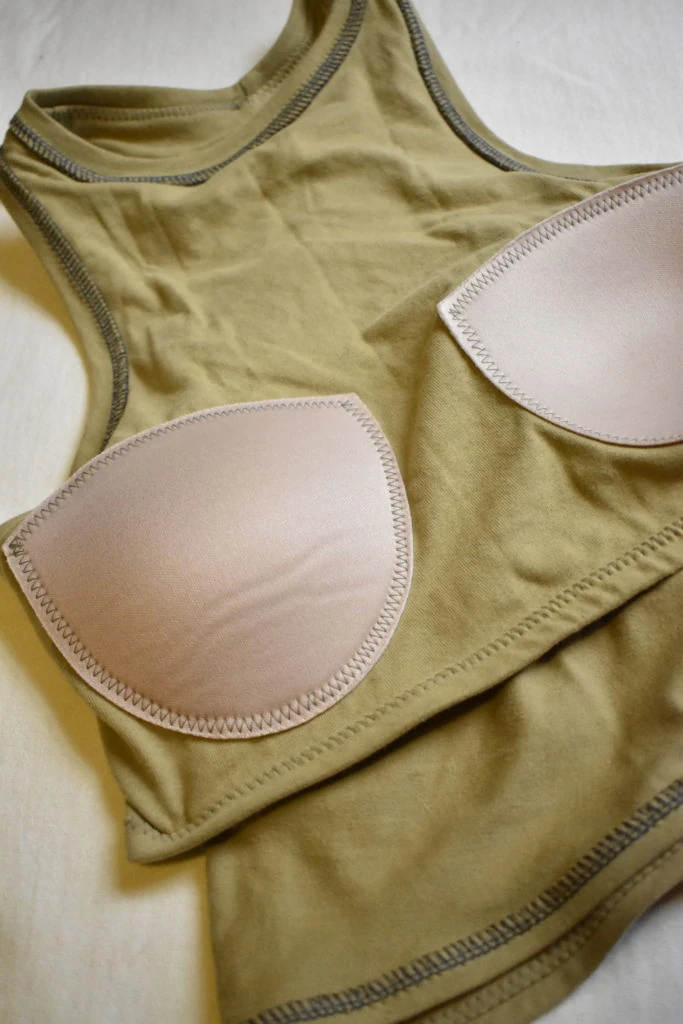
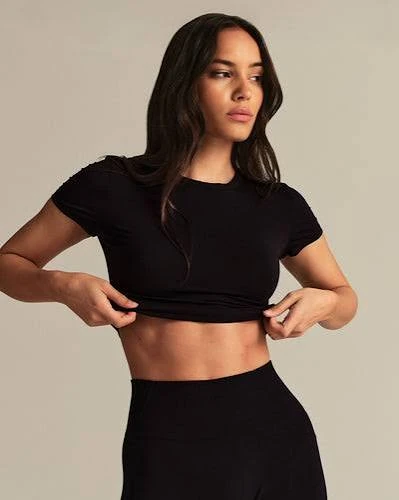
CUSTOM YOGA TANK DEVELOPMENT

Yoga Tank Top Manufacturer for Movement-Focused Activewear Brand Collections

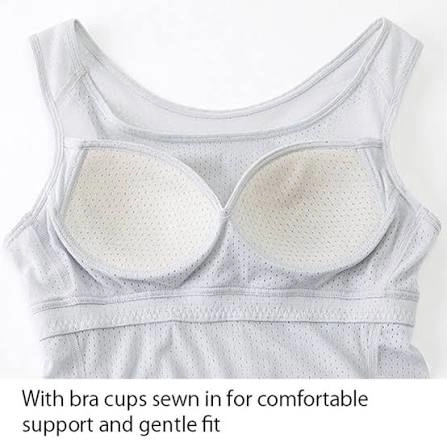
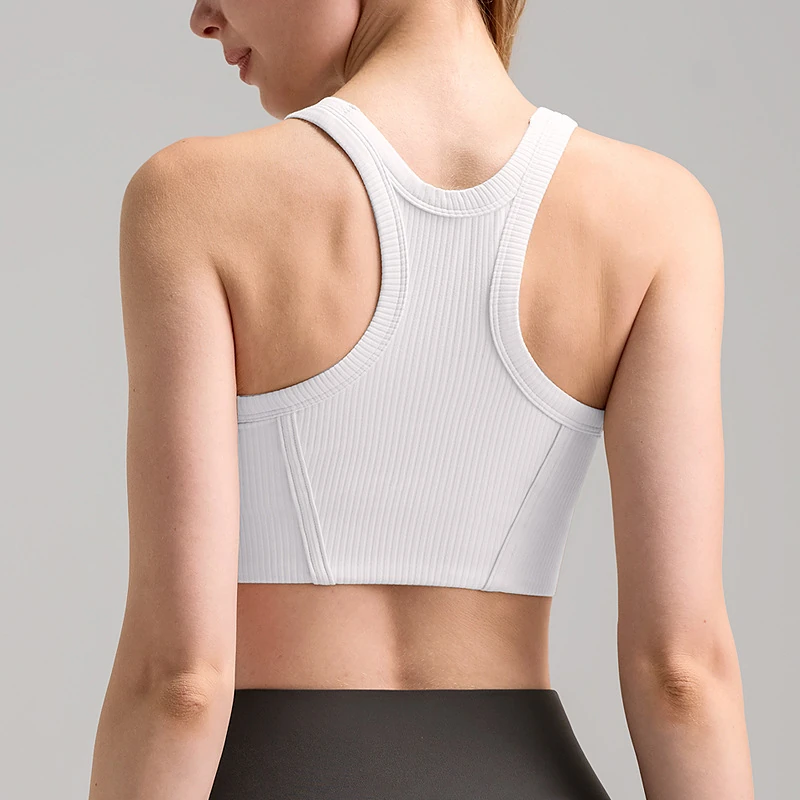
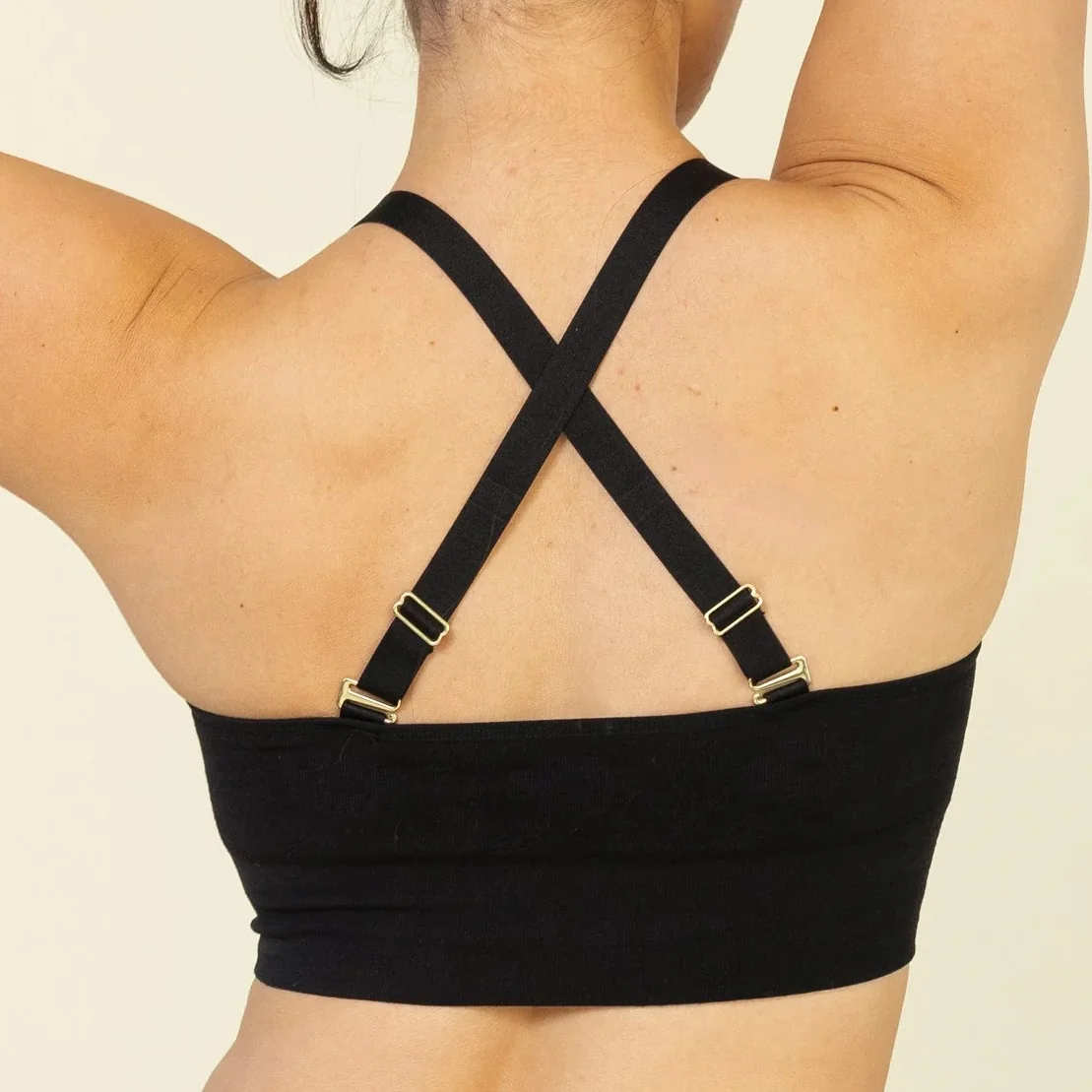
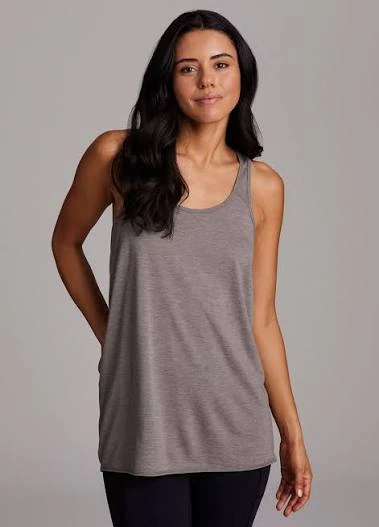
MOVEVOX supports custom yoga tank top development for activewear brands through its garment development team, cut-and-sew manufacturing resources and compatible Santoni seamless knitting capabilities. From forward-fold coverage and shoulder-strap stability to optional built-in support, each design requires a clear technical standard. Share your product requirements to begin reviewing construction feasibility, material choices, sampling scope and production conditions before commercial commitments are confirmed.

  • Evaluate neckline coverage, strap stability and fit during relevant yoga movements.
  • Compare single-layer, built-in bra and compatible seamless tank construction options.
  • Connect approved garment specifications with manufacturing and repeat-order requirements.
TECHNICAL PROJECT INQUIRY

Start Your Yoga Tank Top Project

Share your current specifications, authorized reference garments or design concept. Include target quantities and intended wearing requirements so the appropriate technical questions can be identified.

Contact Details

Name · Work Email · Company

Project Details

Estimated Quantity · Message · Upload File

Only submit files your company is authorized to share. Document handling, confidentiality arrangements and technical review timing should be confirmed for your project.

MOVEMENT-BASED FIT

Evaluate Yoga Tank Fit Across Real Movement Positions

Different yoga positions place different demands on neckline coverage, shoulder placement, armholes and garment length. A standing fit check cannot demonstrate acceptable performance throughout a class. These proposed movement reviews help brands define observations and approval criteria for their intended consumers.

Yoga tank worn during a forward fold to evaluate neckline and front chest coverage

Forward Fold Coverage

Forward bending changes the relationship between the neckline, chest and garment body. A tank that appears sufficiently covered while standing may create a larger front opening when the torso moves toward the legs. The result depends on neckline depth, front-body ease, fabric weight, recovery and whether an independent support layer is present. Brands should define acceptable coverage using representative fit models and the intended wearing conditions. Any identified gap should lead to a construction review rather than an unsupported promise of universal coverage.

  • Define acceptable neckline opening and chest visibility during the selected forward-fold position.
  • Evaluate outer-layer movement separately from any integrated shelf bra or cup assembly.
  • Record garment dimensions and fit observations against the approved design reference.
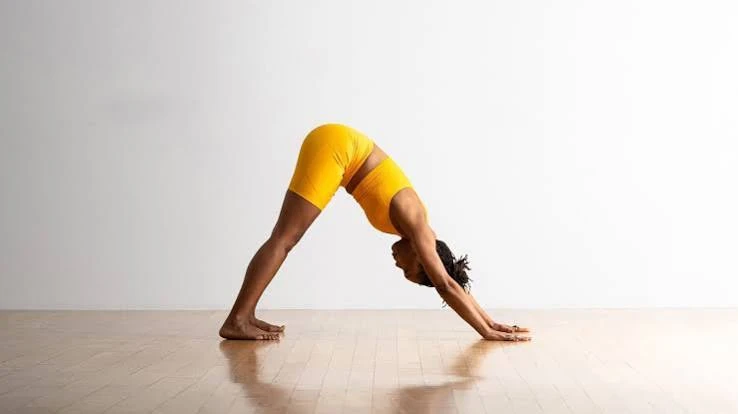
Yoga Tank Fit Review
Yoga tank shoulder straps and chest coverage during a downward dog posture

Downward Dog Stability

Downward Dog changes torso orientation while loading the shoulders and extending the arms. This can expose poor coordination between shoulder straps, neckline dimensions and the garment body. A racerback or cross-back shape does not automatically prevent strap migration or guarantee adequate chest coverage. Fit evaluation should consider the complete construction, including any inner shelf layer and its connection to the outer tank. Observations should be made under agreed conditions and across representative sizes before the design is approved.

  • Check whether shoulder straps maintain their intended placement throughout the selected posture.
  • Evaluate chest coverage and inner-layer stability without assuming any tested support rating.
  • Assess back-opening geometry together with armhole dimensions and garment body extension.
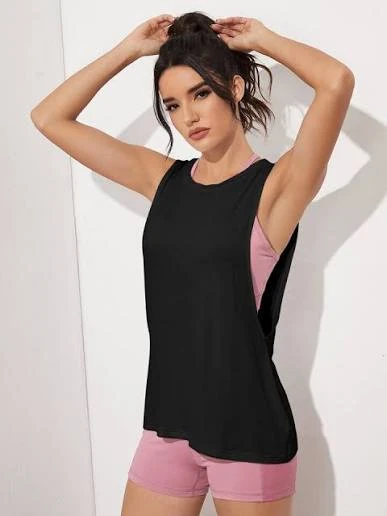
Strap and Back Construction
Fitted yoga tank showing hem position and armhole clearance during overhead arm extension

Overhead Reach and Extension

When the arms rise overhead, the relationship between the armholes, shoulders and lower hem changes. A cropped tank may move upward, while a fitted full-length tank may transfer tension toward the shoulder or underarm. The appropriate result depends on the design brief rather than one universal ride-up limit. Buyers should examine whether movement creates unacceptable pulling, unwanted exposure, edge discomfort or distortion. The evaluation should include the proposed fabric and finishing method because their extension and recovery influence how the garment returns after movement.

  • Define acceptable hem movement during overhead reach using the approved body-length target.
  • Check armhole clearance and shoulder tension under the intended extension conditions.
  • Assess whether the garment returns toward its accepted position after the movement ends.
Garment Length Options
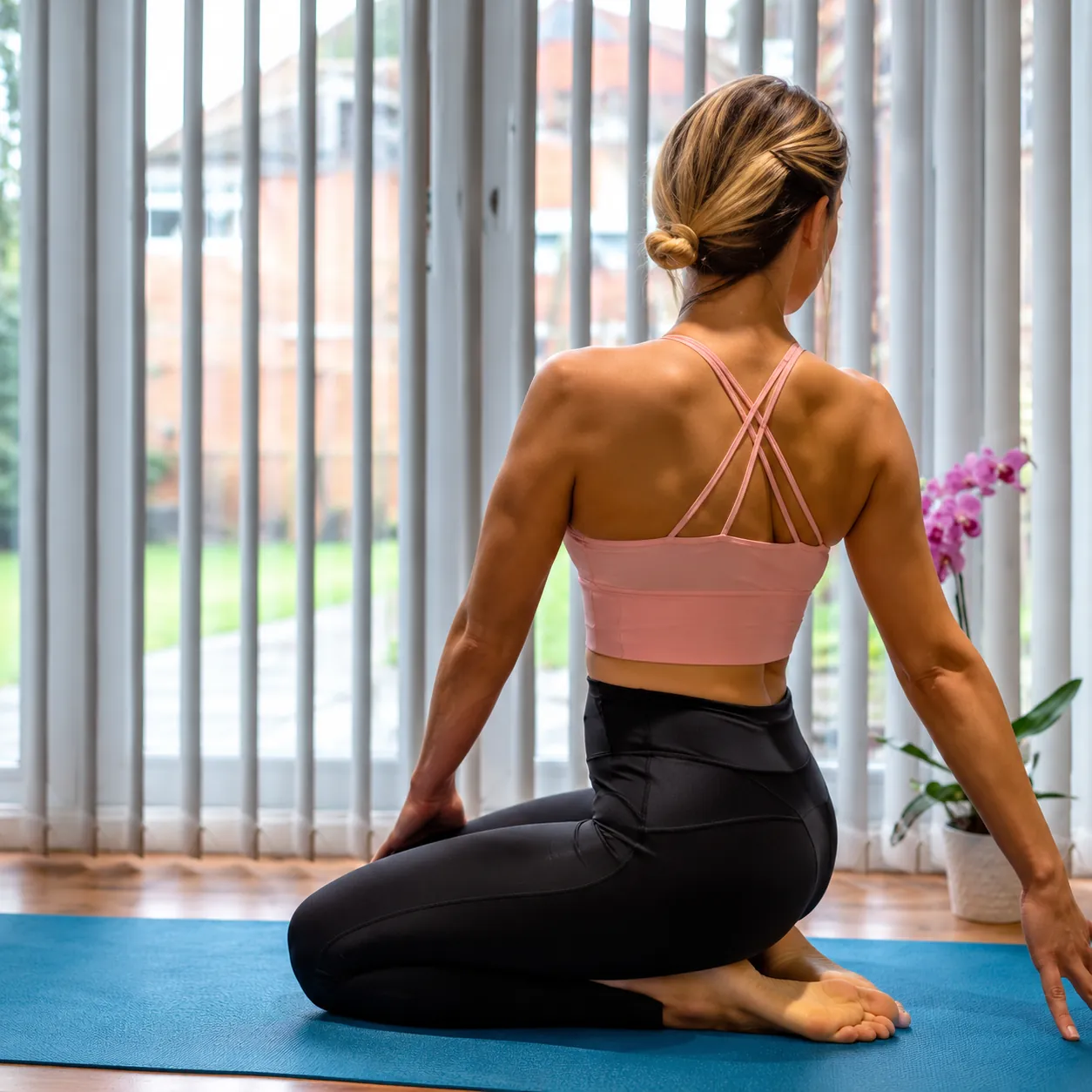
Yoga tank side body and cross-back straps viewed during seated torso rotation

Torso Rotation and Recovery

Twisting changes tension across the front, back and side body. A cross-back design may respond differently from a wide-strap or racerback tank, especially when an internal support layer is attached. The garment should be observed for strap displacement, side-body twisting, unwanted folds and changes in underarm coverage. A satisfactory initial position does not automatically establish recovery after repeated movement. Brands should approve observation conditions, sample identity and acceptable garment behavior before interpreting results or changing the technical specification.

  • Review cross-back and side-body behavior through the brand's selected rotation movements.
  • Identify unwanted fabric displacement, underarm exposure or localized pressure at attachment points.
  • Compare the relaxed garment position before and after the agreed movement sequence.
Movement Risk Review
YOGA TANK CONSTRUCTION OPTIONS

Choose Yoga Tank Construction for Your Collection

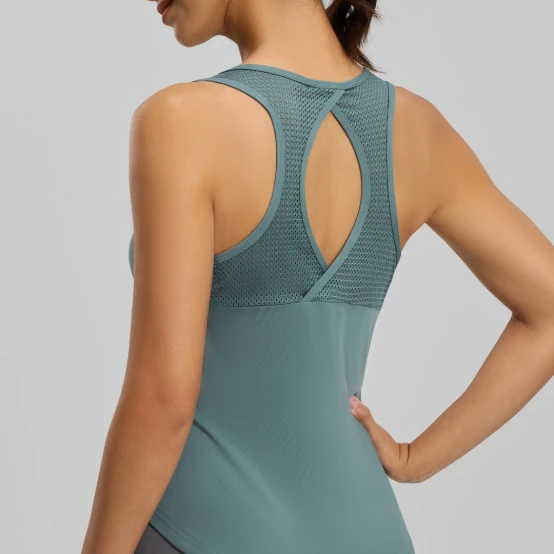
Yoga tanks differ in more than neckline and length. Inner support, strap geometry, material extension and the intended wearing activity influence manufacturing feasibility. These five proposed product directions help brands select a development brief before confirming yarn, fabric, sampling and commercial conditions.
1 / 5
STRAP & BACK ENGINEERING

Understand Yoga Tank Strap and Back Construction

Strap design should be reviewed as an interconnected system rather than as a decorative detail. Shoulder width, attachment position, back geometry, material extension and optional inner support can influence how a yoga tank fits during movement and returns to position.
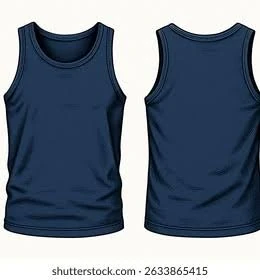
Front and back technical yoga tank illustration showing strap, armhole and back construction for hotspot review
STRUCTURAL HOTSPOT

Shoulder Strap Width

Strap width affects the surface area contacting the shoulder and the visual proportions of the garment. Acceptable comfort and placement depend on material, tension and the complete construction.

Overall Design Logic

A successful strap construction is not defined by width or back shape alone. The buyer should approve strap location, dimensions, materials, contact surfaces and integration with any internal support. A design that looks balanced on a flat drawing may behave differently when worn. Physical samples and agreed movement observations are necessary before final manufacturing approval.

COVERAGE VS SUPPORT

Does a Yoga Tank Need a Built-In Bra?

Direct Answer

Not every yoga tank requires a built-in bra. A single-layer tank may provide the desired outer coverage when paired with a separate sports bra or worn according to the brand's intended use. An integrated shelf bra introduces additional components, fit requirements and manufacturing operations. The decision should depend on the desired support function, wearer, movement conditions and approved product specification.

Coverage Is Not Support

A fitted tank may cover the chest without providing a separate support structure. Buyers should distinguish fabric coverage, garment shaping and actual bust stabilization when defining the product.

Shelf Bra Requirements

An internal shelf may require additional material, an underbust structure and defined attachment points. These elements should be evaluated as one system rather than as unrelated components.

Removable Pad Considerations

Removable pads can add coverage or shaping options but also introduce pocket construction, access openings, positioning and care considerations. Pads alone do not establish a support rating.

Appropriate Support Claims

Any claimed support level should be related to the actual product construction and supported by suitable evidence. A ribbed texture or elastane content cannot establish that claim independently.

Why It Matters

Selecting the wrong support architecture can increase development complexity or create unmet wearer expectations. Define the intended function before approving material, construction and cost.

RANGE-OF-MOTION ENGINEERING

Resolve Movement-Related Yoga Tank Design Risks Early

A yoga tank's neckline, straps, armholes, inner layers and hem respond to movement as a connected garment system. These technical scenarios identify risks that should be reviewed in physical samples before the buyer approves construction, fit and production requirements.

Design Problem Buyer Impact Proposed Technical Response
Neckline Gaping

A deep neckline combined with unsuitable front-body ease or poor edge recovery may create an unintended opening during forward bending.

Unacceptable coverage can lead to additional sample revisions, delayed product approval and customer dissatisfaction after launch if the design is not corrected. Define the required coverage for selected movement positions. Review neckline width, depth, material behavior and relevant inner-layer construction. Approve any dimensional changes using actual garment samples and representative fit models.
Underarm Exposure

Excessive armhole depth or an unsuitable relationship between shoulder position and chest circumference may expose more than the design intends.

The finished product may appear appropriate when standing but fail the brand's coverage requirements during reaching, twisting or changes in torso position. Review armhole dimensions and side-bust coverage together. Compare standing and movement observations, and determine whether pattern shape, body ease or edge construction requires a controlled revision.
Strap Migration

Shoulder or back straps may shift when their length, placement, extension or connection differs from the intended movement and fit requirements.

Strap displacement may cause discomfort, inconsistent coverage or repeated adjustments during use, weakening confidence in the product's fit and construction. Evaluate front and rear strap anchor points, selected material and wearing conditions. Check relevant movements across representative sizes and approve corrections to length, positioning or attachment before release.
Hem Ride-Up

A close-fitting or cropped tank may move upward when torso length, hem circumference and fabric extension are not appropriately coordinated.

Unwanted movement can change the intended silhouette, create unexpected exposure and trigger repeated requests for garment length or waist-fit corrections. Define an acceptable hem position for the intended activities. Review finished length, hem construction, body ease and material recovery using representative physical samples before confirming the production specification.
Inner-Layer Displacement

The outer shell and integrated shelf bra may extend differently, affecting internal positioning or the relationship between support components and the tank body.

Misalignment may cause discomfort, visible distortion or inconsistent fit, particularly when different sizes or body proportions change tension between the layers. Establish separate specifications for the outer and inner layers. Evaluate attachment points, underbust structure, pad placement and movement behavior together, documenting any design changes requiring buyer approval.
Post-Movement Distortion

Yarn or fabric behavior, construction tension and finishing may prevent the garment from returning toward the intended shape after repeated movement.

The tank may not meet approved fit or appearance expectations over use, even if the initial sample dimensions and static visual presentation are satisfactory. Define the required recovery and appearance criteria. Review material behavior and finished-garment observations under appropriate conditions, distinguishing actual performance evidence from a subjective first-wear impression.
YOGA TANK LENGTH OPTIONS

Compare Yoga Tank Lengths for Movement and Coverage

Garment length influences visual proportion, layering and the position of the hem during movement. These four proposed silhouette directions help brands define the intended wearing experience. Length alone cannot determine stability; circumference, materials, fit and finishing must also be considered.
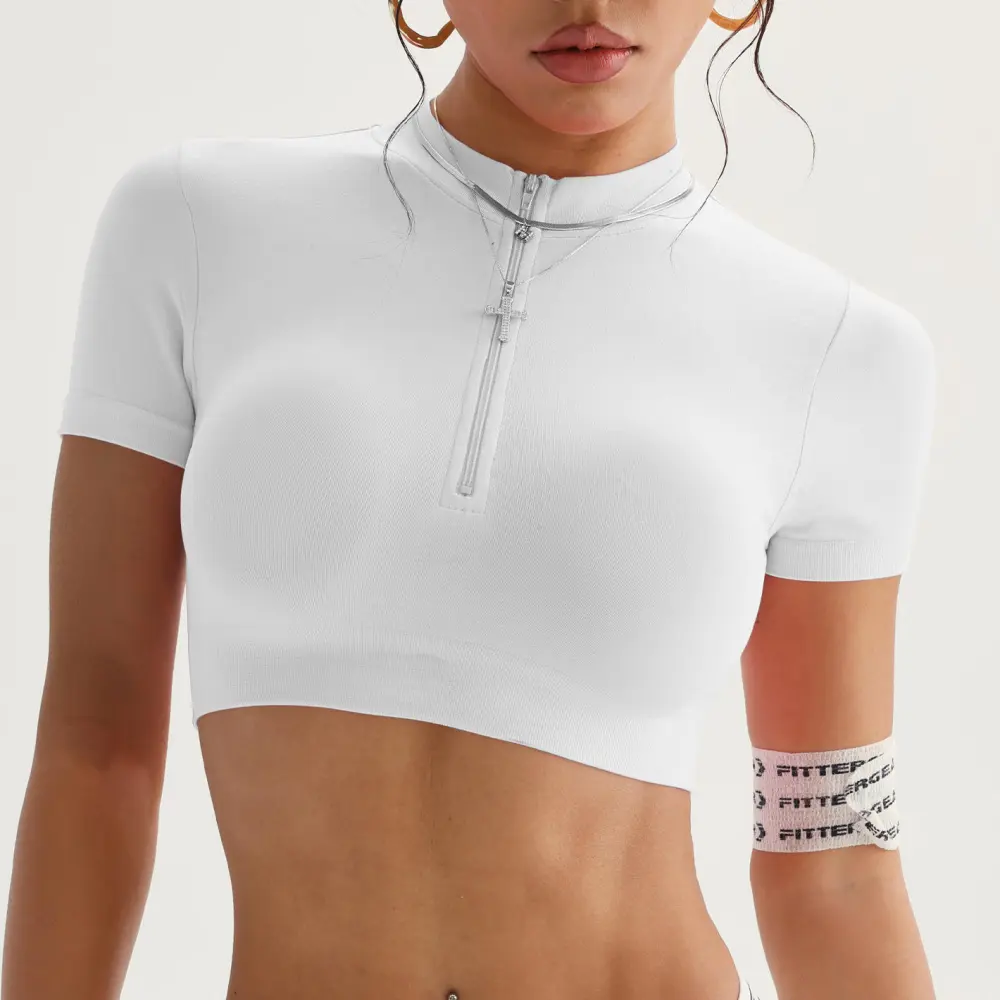
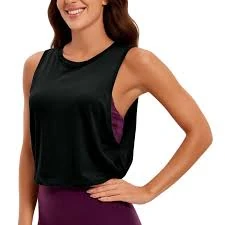
Short cropped yoga tank showing neckline, torso length and lower hem
SERIES 01 / SHORT CROP

Short Crop Tank

A short cropped tank creates a deliberately compact silhouette and may be intended for pairing with high-waisted leggings. The brand should define its target lower edge relative to the body and the companion garment. During reaching or bending, the hem may move, so its accepted position and coverage require physical evaluation.
Longline cropped yoga tank showing its extended torso and hem position
SERIES 02 / LONGLINE

Longline Crop Tank

A longline cropped tank extends below a short crop while retaining a shorter appearance than a regular-length top. This design may allow greater torso coverage in selected positions, but actual movement depends on body dimensions and construction. The lower hem should be evaluated for tension, rolling and displacement during the intended activities.
Hip-length yoga tank showing the lower opening in relation to the wearer's hips
SERIES 03 / HIP LENGTH

Hip-Length Yoga Tank

A hip-length silhouette offers a different balance between torso coverage and body movement. The garment may be fitted or designed with additional ease, depending on its intended position in the collection. Brands should review lower-body circumference, drape and the relationship between the hem and the wearer's hip during bending.

Full-length studio yoga tank showing overall torso coverage and lower hem finish
SERIES 04 / FULL LENGTH

Full-Length Studio Tank

A full-length studio tank can be designed for layering or greater lower-torso coverage. A longer garment is not automatically more stable: close-fitting fabric may pull upward, while a relaxed construction may shift differently. The intended silhouette should be evaluated through the approved size range and movement conditions.

How the Length Options Fit Together

Brands can build a coordinated collection around different lengths without changing every garment's design language. Neckline treatment, shoulder geometry, material appearance and color can provide continuity. However, each length should retain its own body measurements, hem requirements and fit approval. A successful longline sample does not automatically validate the cropped or full-length alternative.

SAMPLE APPROVAL RED FLAGS

Recognize Yoga Tank Fit Warning Signs Before Approval

A sample can look commercially attractive while important construction or performance questions remain unresolved. These six warning signs help brand development and procurement teams identify evidence gaps. They are hypothetical product risks, not documented failures in MOVEVOX customer orders.

RISK 01 / MOVEMENT

No Forward-Fold Coverage Review

A supplier may approve the neckline based only on a standing model photograph or flat garment measurements. Those observations can be useful but do not show how the opening behaves when the torso bends. This becomes a risk where coverage is an explicit feature of the approved product.

Verification: Request movement-position observations, identifiable sample references and buyer-defined coverage criteria before accepting the design.

RISK 02 / STRAPS

Unexplained Strap Construction

A cross-back or racerback may be marketed as secure without adequate explanation of strap width, material, attachment and fit. Different wearer proportions can affect strap behavior. A supplier should be able to explain the proposed construction and how relevant design changes would be reviewed.

Verification: Examine genuine strap attachment details, technical specifications and representative wearing observations across agreed sizes.

RISK 03 / SUPPORT

Unsupported Built-In Bra Claims

A garment may be described as supportive because it contains a second fabric layer or removable pads. Neither feature independently establishes measurable support. Without a defined architecture or relevant evaluation, the buyer cannot determine whether the design meets its intended use or product positioning.

Verification: Identify the actual inner support components, required fit criteria and any evidence supporting a stated performance level.

RISK 04 / INNER LAYER

No Inner-Layer Fit Review

An outer tank and its internal shelf can appear aligned in a flat photograph while behaving differently during wearing. If the supplier cannot describe their separate dimensions, attachment and fit objectives, the finished product may require unexpected revisions after the first sample review.

Verification: Request construction drawings or actual inner-layer samples and confirm how their fit will be evaluated together.

RISK 05 / SIZING

Universal Size Approval

A supplier may treat one good base-size sample as evidence that the complete size range is ready. However, strap length, opening position, torso proportions and optional support construction can behave differently across sizes. A size chart alone does not resolve every fit question.

Verification: Request an appropriate size-set plan, current garment measurements and approval responsibilities for critical sizes.

RISK 06 / VERSION

Missing Production Reference

A supplier may make sample corrections without clearly linking them to revised patterns, materials or specifications. The next manufacturing run can then use an earlier technical version. Even a successful physical sample offers limited control if its approved construction cannot be identified consistently.

Verification: Confirm the approved sample identity, current technical revision and authorization process for later changes.

INTEGRATED SUPPORT ANATOMY

Examine Integrated Bra Layers Inside Yoga Tank Construction

A yoga tank with internal support requires coordinated material, fit and assembly decisions. The outer body, inner shelf, underbust components and optional pads perform different functions. This proposed construction map identifies technical questions without implying that a particular support system has already been tested.
Technical cross-section of yoga tank outer shell, inner shelf bra, underbust elastic and removable pad pocket

Diagram A — Outer Tank and Internal Shelf

Outer Tank Shell

The outer shell establishes the visible silhouette, neckline and body length. Its extension and ease must be evaluated against the internal structure to avoid distortion, excessive tension or unintended exposure.

Inner Shelf Layer

The internal shelf may provide a separate layer for coverage or support-oriented construction. Its dimensions, elasticity and attachment must correspond to the intended wearer and product brief.

Underbust Elastic

Where an underbust elastic is included, its circumference, width, extension and attachment method influence wearing behavior. These specifications require evaluation rather than assuming a universal support result.

Pad Pocket

A pad pocket must accommodate the approved pad geometry and location. Pocket entry, coverage, construction and movement should be reviewed, particularly if the brand intends removable components.
Technical cross-section showing yoga tank shoulder strap, neckline, armhole and inner-to-outer layer connections

Diagram B — Straps and Opening Connections

Strap Connection

Where inner and outer layers share shoulder connections, their tension and dimensions may interact. The attachment method must remain compatible with the approved strap geometry and garment fit.

Neckline Finishing

The neckline may incorporate overlapping materials, binding or alternative finishes. Its construction should maintain the agreed opening shape without creating unnecessary localized tension or visible distortion.

Armhole Finishing

Armhole construction may involve the outer shell alone or more than one fabric layer. Relevant workmanship and coverage requirements should be clarified before confirming the manufacturing route.

Layer Alignment

Internal and external layers should be reviewed in relaxed and worn conditions. Unwanted twisting, folding or displacement may indicate a need to adjust material, dimensions or assembly.

Overall Performance Interpretation

An integrated shelf bra should be evaluated as an assembled product rather than a collection of individual components. A change in outer fabric may influence how the inner layer moves, while a different elastic or strap connection can alter wearing behavior. Support, comfort and coverage claims require clearly defined requirements and suitable product evidence. No specific support rating is implied by this diagram.

CUSTOM PAD CONSTRUCTION

Select Pad Construction for Custom Yoga Tank Designs

Pad requirements should be specified before the tank's inner-layer pattern and assembly route are finalized. These five development options help brands clarify coverage, access, shaping, care and manufacturing considerations. Their availability remains subject to material sourcing and construction feasibility.

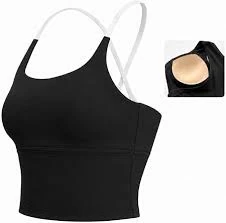
Technical construction diagram comparing single-layer yoga tank and optional internal lining without removable pads

No Pad Construction

A yoga tank without pads may rely on its chosen fabric, neckline geometry and optional inner lining to provide the desired appearance. This construction can reduce component complexity, but it should not be assumed to deliver a particular level of opacity or support. Buyers need to define whether the garment is intended for use over a separate sports bra or independently. The final material and fit requirements should reflect that intended use. Where a lining is included, its dimensions and attachment still require approval.

  • Single-layer tank with separately defined chest coverage and fabric requirements.
  • Optional internal lining without a dedicated removable pad assembly.
  • Designed for layering over a separately selected sports bra.
WORKMANSHIP CLOSE-UPS

Examine Critical Strap and Opening Workmanship Details

Yoga tank construction depends on localized workmanship as well as fabric selection. Shoulder straps, armhole edges, internal layers and pad pockets can experience different extension or contact conditions. The following details should be evaluated using the actual material and approved construction.
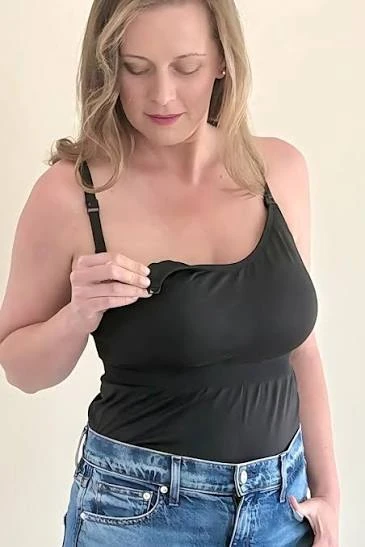
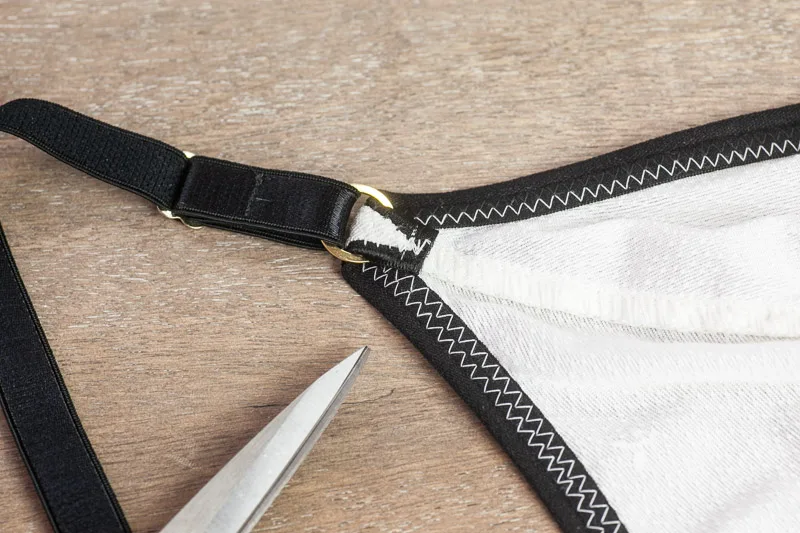
Close-up of front shoulder strap attachment stitching and neckline edge on a yoga tank
WORKMANSHIP DETAIL 01

Front Strap Attachment

The front strap connection should follow the approved dimensions and alignment. Where load passes through an attached or joined area, construction must accommodate the intended extension without unacceptable distortion or visible inconsistency. The correct method depends on the material and design.

Applicable Area: Front shoulder junction near the neckline and upper chest of the finished yoga tank.

Comfort / Strength Consideration: Review localized tension, stitching consistency and wearer contact under the selected movement conditions.

Close-up of cross-back yoga tank strap intersection and joining construction
WORKMANSHIP DETAIL 02

Cross-Back Intersection

A cross-back intersection may include overlapping, sewn or otherwise joined strap components. The selected method should control the intended shape without adding unnecessary thickness or restricting required movement. Symmetry and strap orientation must correspond to the accepted technical reference.

Applicable Area: Rear strap crossing point or approved attachment location in a cross-back tank design.

Comfort / Strength Consideration: Evaluate extension, local thickness, movement and whether the intersection maintains the accepted position.

Close-up of racerback yoga tank rear shoulder junction and seam finish
WORKMANSHIP DETAIL 03

Racerback Joining

Racerback construction should maintain the selected back silhouette while connecting the garment's shoulder and upper-body regions. Depending on the architecture, relevant operations may include sewing, binding or edge finishing. The joining method requires appropriate evaluation before confirming production feasibility.

Applicable Area: Rear shoulder convergence and the upper-back junction of the proposed racerback design.

Comfort / Strength Consideration: Check the contact surface, local extension and appearance during reaching and shoulder movement.
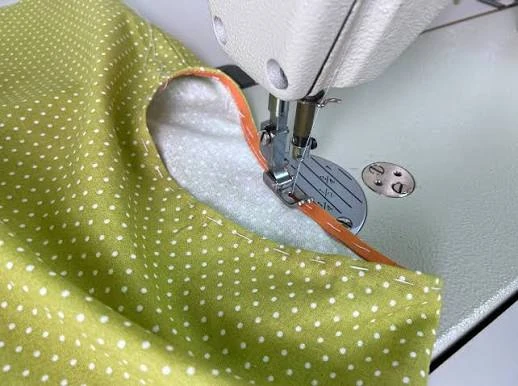
Close-up of yoga tank armhole binding showing edge stitches and finished fabric
WORKMANSHIP DETAIL 04

Armhole Binding

Armhole binding or alternative edge finishing helps define the completed opening. An unsuitable relationship between binding tension and the main fabric can create waviness, gathering or restricted movement. The accepted sample should demonstrate the required appearance and extension.

Applicable Area: Complete armhole perimeter, with particular attention to the lower opening and chest-side region.

Comfort / Strength Consideration: Assess edge contact, consistent extension and the absence of unacceptable pulling during movement.
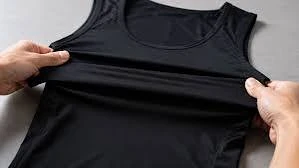
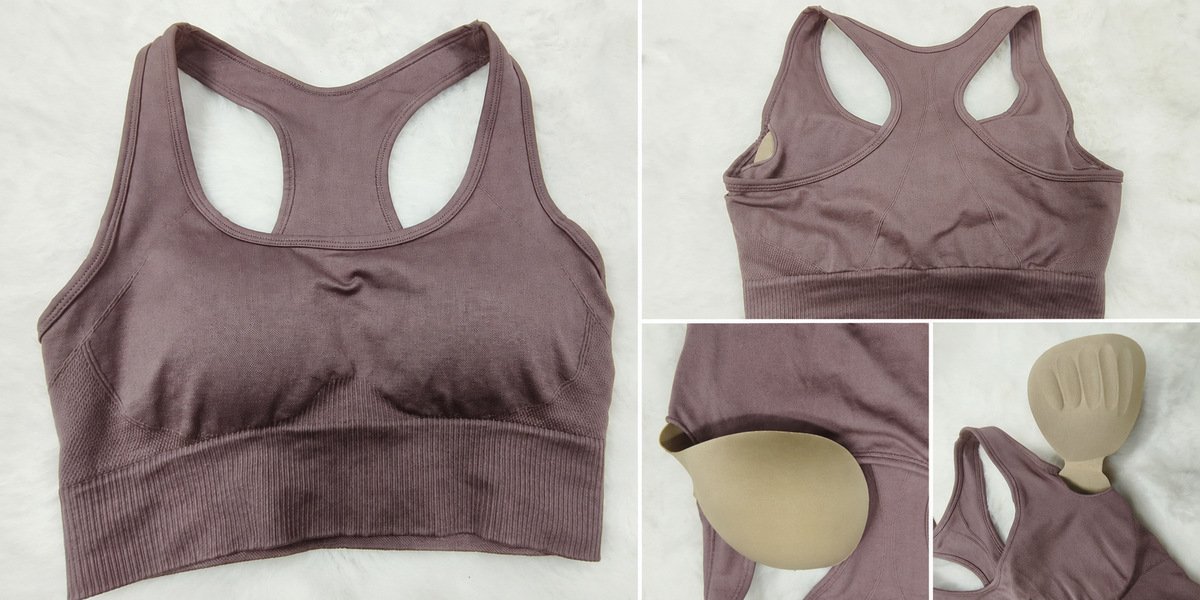
Close-up of built-in yoga tank shelf bra underbust elastic and seam attachment
WORKMANSHIP DETAIL 05

Underbust Elastic Join

Where an internal shelf bra contains underbust elastic, the joining operation should follow the intended circumference and attachment specification. Material selection and assembly tension can influence the completed fit. The presence of elastic does not establish a particular support level.

Applicable Area: Inner shelf bra lower edge and its connection to relevant garment components.

Comfort / Strength Consideration: Check extension, local pressure, consistency and the approved finish along the underbust area.
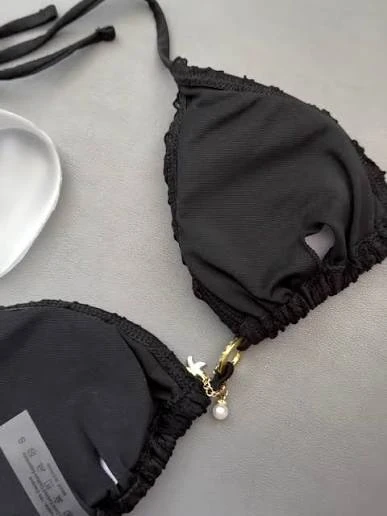
Close-up of removable bra pad pocket entry and finished stitches inside a yoga tank
WORKMANSHIP DETAIL 06

Pad Pocket Opening

The pad pocket opening should permit the intended pad access without creating unacceptable deformation or rough edges. Its shape and finishing should remain compatible with the inner-layer material. Where the pocket is stretched during use, it may need additional review.

Applicable Area: Inner cup pocket access point, including finished entry edge and adjacent attachment details.

Comfort / Strength Consideration: Review opening integrity, pad retention and local surface contact under relevant wearing conditions.
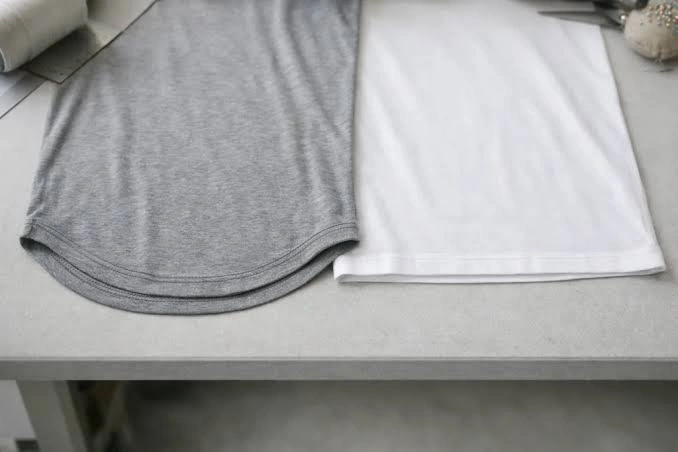
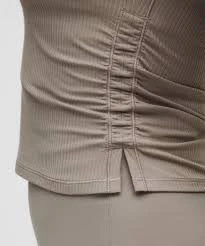
Close-up of cropped yoga tank lower hem finish and stitch construction
WORKMANSHIP DETAIL 07

Lower Hem Finish

A lower hem may use a folded, covered, bonded or another approved finish according to the fabric and design. The selected construction should support the intended circumference and visible profile without unacceptable rolling or distortion.

Applicable Area: Lower edge of cropped, longline or full-length yoga tank styles after finishing.

Comfort / Strength Consideration: Assess hem extension, skin contact, visible waviness and garment position during selected movements.

SUPPORT AND FIT COMPARISON

Compare Yoga Tank Fit With and Without Support

The outer appearance of two yoga tanks may be similar even when their internal architecture is different. Separate fit standards are needed to assess garments intended for layering, ordinary coverage or integrated bust support.

Single-layer yoga tank showing its front neckline, armholes and back without an integrated bra

Single-Layer Yoga Tank

A single-layer yoga tank should be evaluated according to its intended wearing configuration. Where the brand expects it to be worn over a separate sports bra, the outer tank does not need to duplicate that bra's structural role. Its product standard should instead clarify neckline coverage, shoulder placement, armhole fit, body ease and material behavior.

A close-fitting single layer can still affect the wearer's comfort and appearance. However, the approval process should not treat visual tightness as evidence of measurable compression or support. Fit observations should use the correct underlying garments and target wearer information.
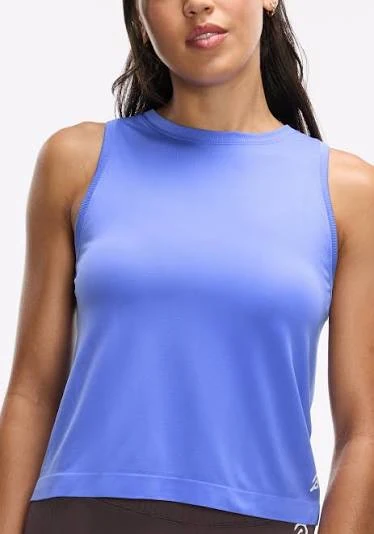
Built-in shelf bra yoga tank showing its outer shell, underbust structure and internal lining

Integrated Shelf-Bra Yoga Tank

A yoga tank with an integrated shelf bra requires evaluation of the outer body and inner structure together. The shelf's circumference, material, elastic components, pad pockets and connection to the straps may affect the finished fit. The outer layer can appear correct while an inner component still needs modification.

The brand should establish whether the objective is coverage, shaping or a defined support function. Representative wear testing should consider the position of the internal layer during intended movements, as well as the visible tank silhouette. Any support claims require suitable evidence beyond fit photographs.

TECHNICAL CONTACT OPTIONS

Discuss Yoga Tank Feasibility With the MOVEVOX Team

A useful technical discussion should begin with the product information already available. MOVEVOX has established international business and product development functions. Select the communication purpose that matches your current project stage; specific contact arrangements should use verified business channels.

01 / TECHNICAL INQUIRY

Technical Inquiry

Use the official inquiry route to share garment drawings, intended activity, neckline, strap construction and required support features. The first discussion should identify missing inputs and potential feasibility questions before detailed sampling or quotation is agreed.

Response Timing: Timing should be confirmed through the actual inquiry channel; no universal response guarantee is stated.

02 / DOCUMENTS

Email and Files

For a more detailed technical brief, use the verified MOVEVOX business email channel to exchange authorized Tech Packs, measurement charts and reference information. Do not transmit confidential customer files through an unverified personal address.

Response Timing: File review and reply timing depend on technical scope and confirmed communication arrangements.

03 / DIRECT COMMUNICATION

WhatsApp Discussion

Where the official MOVEVOX WhatsApp channel is available, buyers can use it for initial questions about styles, development scope and suitable next steps. Formal quotations, critical specification approvals and contract terms should remain documented through agreed business channels.

Response Timing: Availability and response expectations must be confirmed; no fixed instant-reply commitment is implied.

04 / BUYER QUALIFICATION

Supplier Qualification

Procurement teams may begin with legal-company information, facility resources and relevant manufacturing responsibilities before disclosing sensitive product specifications. Evidence access, confidentiality and any remote factory discussion should be agreed for the actual supplier review.

Response Timing: Document availability and review scheduling depend on scope, authorization and responsible personnel.

MATERIAL SELECTION LOGIC

Choose Yoga Tank Fabrics Around Actual Wearing Requirements

Material selection should consider the completed garment rather than fiber composition alone. Yoga tank requirements may involve close skin contact, coverage during extension, care, drape and compatibility with an optional shelf bra. The following decision path identifies candidate material directions for technical review.

DECISION 01

What Is the Primary Wearing Environment?

Studio Yoga · Heated Classes · Everyday Layering

DECISION 02

Which Surface Feel Is Preferred?

Smooth Touch · Brushed Hand · Visible Rib

DECISION 03

Which Fit Behavior Is Required?

Close Fitting · Relaxed Drape · Structured Feel

DECISION 04

Where Is Coverage Most Critical?

Front Chest · Side Bust · Full Torso

DECISION 05

Are Special Sourcing Requirements Defined?

Standard Fabric · Custom Color · Documented Recycled Content

Fabric Direction A — Smooth Polyamide/Elastane Jersey

A smooth polyamide-and-elastane fabric may be considered for a fitted tank where the brand wants a relatively clean surface and controlled extension. The composition alone does not define opacity, recovery or hand feel. Fabric construction, weight, finishing and garment fit influence the final result. Any version with an internal support layer should be assessed for compatibility between the outer and inner materials.

Parameter Tags: Composition · Recovery · Opacity

Fabric Direction B — Soft Brushed Stretch Knit

A brushed stretch knit may provide a selected hand feel suitable for studio-oriented product concepts. Surface finishing can influence appearance and care behavior, so softness alone should not be interpreted as evidence of low pilling or durability. The brand should consider the intended washing procedure, garment contact areas and whether brushing affects extension, visible texture or the compatibility of decoration.

Parameter Tags: Hand Feel · Surface Durability · Care

Fabric Direction C — Structured Rib Stretch Fabric

A structured rib fabric can create a distinctive surface and fitted visual appearance. Rib direction and knit geometry may influence local extension, relaxed dimensions and how the fabric behaves around necklines and armholes. Buyers should approve the actual finished garment rather than relying on a small swatch. The material should not be marketed as providing a particular compression rating without appropriate evidence.

Parameter Tags: Rib Direction · Fit · Extension

Fabric Direction D — Light Stretch Jersey

A relatively light stretch jersey may be considered where a softer drape or less structured outer layer is preferred. The buyer should evaluate whether its weight, color and extension deliver the intended coverage, especially across the chest. Lower fabric weight should not automatically be described as more breathable or more comfortable. Material behavior, garment length and construction remain important.

Parameter Tags: Weight · Drape · Coverage

Fabric Direction E — Support-Layer Material

An integrated shelf bra may require a material specification different from the outer yoga tank. The inner layer's extension, recovery, surface feel and dimensional behavior should be evaluated alongside any elastic or pad assembly. Materials chosen for appearance alone may not satisfy the intended inner-layer role. The complete construction, rather than an isolated fabric swatch, should determine final approval.

Parameter Tags: Inner Layer · Elasticity · Compatibility

CONSTRUCTION ROUTE COMPARISON

Compare Manufacturing Routes for Different Custom Yoga Tank Designs

Yoga tanks may require cut-and-sew, seamless knitting or a compatible combination of construction methods. The right choice depends on the approved silhouette, support components, materials, fit requirements and manufacturing feasibility.
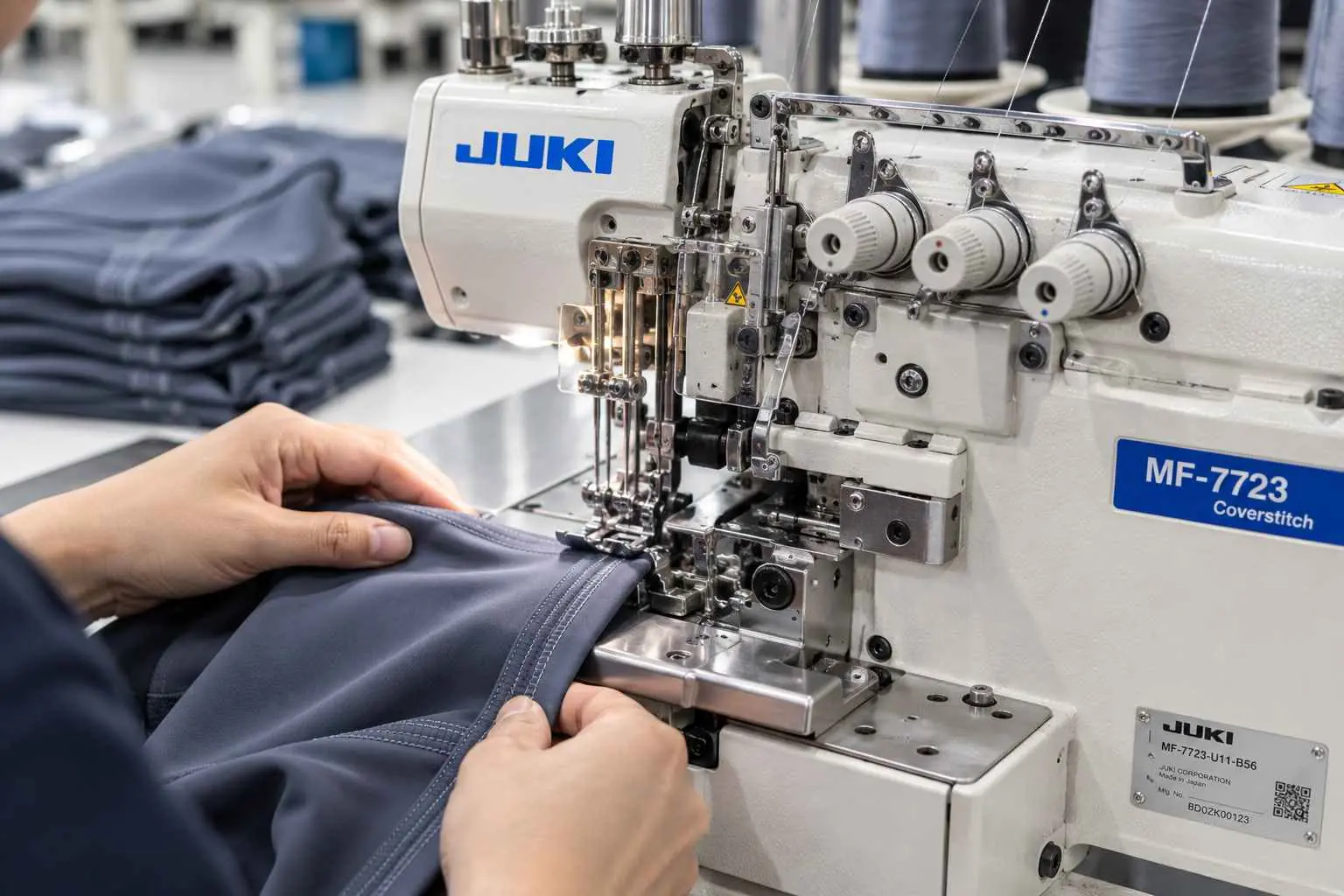
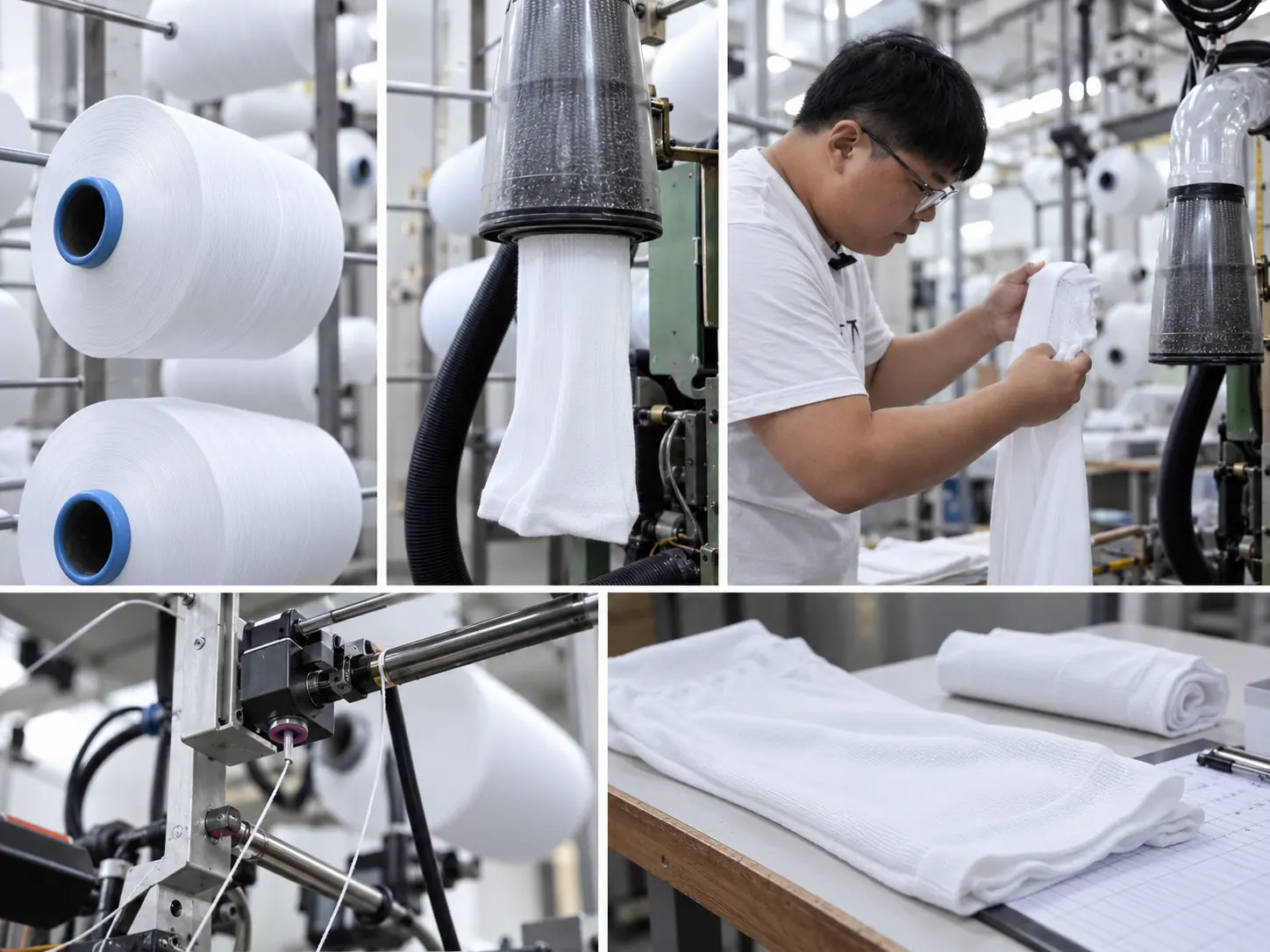
Actual garment cutting and sewing operations suitable for custom activewear top assembly
Actual Santoni circular seamless knitting equipment and knitted tubular activewear fabric
Decision Factor Cut-and-Sew Route Seamless Circular Knit Route Conditional Hybrid Route
Main BodyIndividual fabric panels allow pattern-based shaping and fabric selection.Compatible tubular knitting forms an integrated body with programmed structures.A knitted body may receive selected additional components or finishing.
Neckline GeometryPattern cutting and finishing can accommodate varied opening designs.Opening geometry depends on machine compatibility and post-knitting operations.Additional opening construction must remain compatible with the knitted body.
Shoulder StrapsSeparate straps, panels and attachments can offer design flexibility.Strap geometry may require particular knitting and finishing approaches.Added straps or joins require evaluation of the final assembly.
Built-In Shelf BraCan accommodate separately developed lining, elastic and pad structures.A tubular body does not automatically provide a complete built-in bra.A seamless outer body may require an added support assembly.
Fabric / YarnSuitable finished fabric must meet cutting, joining and product requirements.Yarn must be compatible with the machine, program and knitted structure.Inner and outer materials need compatible extension and finishing behavior.
Size DevelopmentPattern grading and physical size-set approval remain necessary.Tubular dimensions, programs and machine compatibility constrain grading.Additional attention may be needed where separate layers scale differently.
Fit RevisionsPattern, material and assembly changes may require revised samples.Yarn, program or finishing changes can affect multiple knitted regions.Changes must account for interaction between knitted and added components.
Quality FocusPanel dimensions, joins, openings, stitching and finishing.Knit structure, dimensions, defects, program identity and finishing.Both knitted and added components, plus their attachment interfaces.
Commercial FactorsFabric minimums, cutting efficiency, operations and order quantity.Yarn minimums, program preparation, knitting compatibility and quantity.Additional components, trial work, assembly and approval requirements.

MOVEVOX Manufacturing Context

MOVEVOX's core production system includes 28 Italian Santoni seamless knitting machines and approximately 24 principal garment sewing machines. These are established company-level resources, not proof that every proposed hybrid construction is technically executable.

Decision Rule: Select the construction route after reviewing the actual technical brief, not merely because a machine or fabric is available.

TEST REQUIREMENT DEFINITION

Define Relevant Fabric Performance Tests Before Product Approval

Yoga tank performance claims should correspond to identifiable materials, garment constructions and evaluation conditions. A general supplier fabric report may not prove that a finished tank meets the same requirement. These six proposed test categories help brands establish applicable acceptance criteria.

TEST 01 / EXTENSION

Stretch Behavior

Purpose: Determine how the selected fabric extends under specified conditions and whether its directional extension is compatible with the proposed yoga tank fit and construction.

Method: Identify the fabric, extension direction and applicable evaluation procedure. Record the extension conditions and resulting behavior, then consider whether the observed response remains appropriate in the finished garment.

Acceptance / Report: Buyer-approved extension requirements and a report identifying material, direction, conditions and results.

TEST 02 / RECOVERY

Stretch Recovery

Purpose: Evaluate the material's ability to return toward its original dimensions after controlled extension, distinguishing recovery performance from the maximum stretch the material can accommodate.

Method: Select an appropriate recognized or agreed test procedure. Record applied extension, recovery conditions and observed dimensional change. Consider whether finished-garment construction introduces additional factors affecting worn fit.

Acceptance / Report: Agreed recovery criteria with clearly identified procedure, material sample and measurement conditions.

TEST 03 / COVERAGE

Opacity Under Extension

Purpose: Assess whether fabric provides the required visual coverage when extended toward representative wearing conditions, particularly across the front chest and other coverage-sensitive garment regions.

Method: Define a relevant extension level, lighting conditions and background. Compare an identifiable material or garment with an approved visual reference, including the applicable color and finished fabric structure.

Acceptance / Report: Brand-defined coverage criteria with documented extension, lighting and garment reference conditions.

TEST 04 / DIMENSIONS

Post-Care Dimensions

Purpose: Determine how laundering and drying may alter the finished tank's body dimensions, neckline, armhole, shoulder position and relevant inner-layer fit characteristics after the selected care procedure.

Method: Record the approved measurement points before care. Apply the specified washing, drying and conditioning method, then repeat measurements consistently and examine any relevant change in finished appearance.

Acceptance / Report: Agreed dimensional tolerances, care procedure and documented garment measurement results.

TEST 05 / COLOR

Colorfastness

Purpose: Evaluate whether selected dyed materials meet the brand's applicable color-retention and staining requirements under defined care, rubbing or perspiration-related conditions where relevant to the product.

Method: Identify the specific colorfastness procedure and applicable textile material. Test using the prescribed conditions, then compare the findings with the buyer's accepted grade or criterion.

Acceptance / Report: Applicable method, tested material and color, result grade and buyer-approved acceptance level.

TEST 06 / SURFACE

Surface Durability

Purpose: Assess the selected knitted surface's response to relevant abrasion or pilling conditions, especially where brushed textures and repeated garment contact may influence product appearance.

Method: Choose an appropriate procedure for the material and intended claim. Evaluate identifiable samples under defined conditions and report the applicable appearance grade or other recognized outcome.

Acceptance / Report: Identified testing procedure, sample specification, actual results and agreed appearance or durability criteria.

MOVEMENT-BASED FIT APPROVAL

Develop Yoga Tank Fit Samples Through Defined Approval Gates

A first sample should establish what the proposed yoga tank can achieve and which requirements remain unresolved. This recommended development sequence links garment construction, movement observations, size review and approved specifications without presenting the steps as a completed customer development record.

STEP 01 / INITIAL SAMPLE

Review the Base Sample

The first sample should establish the proposed design's actual silhouette, garment dimensions, material behavior and construction details. The team should compare these observations with the current product brief, noting differences requiring buyer decisions. A visually acceptable sample is not sufficient to confirm all wearing or production requirements.

Customer Inputs

  • Current Tech Pack, authorized reference garment and intended target wearer information.
  • Defined neckline, shoulder, armhole, garment length and material requirements.

Proposed MOVEVOX Outputs

  • Identified sample observations and initial construction feasibility questions for buyer review.
  • List of unresolved fit, material and component requirements needing clarification.

Approval Standard: The buyer confirms the technical starting point and identifies all critical differences before authorizing the next sample stage.

STEP 02 / ACTIVITY FIT

Review Yoga Movements

The sample should be examined in the selected movement positions relevant to the brand's intended use. Observations may include neckline coverage, shoulder-strap placement, armhole behavior, hem movement and any internal-layer displacement. The results should distinguish acceptable garment movement from changes requiring a revised specification.

Customer Inputs

  • Intended activity positions and acceptable coverage criteria for the garment.
  • Fit model selection, relevant sizes and current wear-testing instructions.

Proposed MOVEVOX Outputs

  • Structured summary of observed movement-related fit issues requiring technical review.
  • Proposed construction, material or dimension changes subject to buyer approval.

Approval Standard: Critical movement concerns are documented, and the buyer agrees which proposed modifications should enter the next development version.

STEP 03 / REVISION

Review Construction Revisions

Changes should be assigned to identifiable construction or material requirements. A neckline adjustment may affect front-body dimensions, while revised straps can change the relationship between outer and inner layers. Each proposal should be evaluated for effects on adjacent components and the current approved design.

Customer Inputs

  • Consolidated revision comments with priorities and relevant supporting reference images.
  • Confirmation of unchanged requirements and approved limits for proposed construction changes.

Proposed MOVEVOX Outputs

  • Revised technical reference identifying the components or measurements under review.
  • Proposed additional sampling scope where the changes affect critical garment properties.

Approval Standard: The revised version has an identifiable specification, and the customer confirms the changes requiring further physical evaluation.

STEP 04 / SIZING

Evaluate the Size Set

Representative sizes should be evaluated using the current garment measurement chart and the intended wearer range. Strap proportions, chest coverage, body length and any internal support layer can behave differently across sizes. Approval of one reference size should not automatically release the full range.

Customer Inputs

  • Current size chart, measurement tolerances and target fit specifications for each size.
  • Size-specific fit feedback, selected wearers and relevant movement assessment requirements.

Proposed MOVEVOX Outputs

  • Size-set findings linked to the current garment and construction specification version.
  • Identification of dimensions or components requiring size-specific revision or clarification.

Approval Standard: The buyer authorizes the applicable size specifications after critical fit and manufacturing questions have been resolved.

STEP 05 / RELEASE REFERENCE

Confirm Approved References

The final development review should identify the current accepted garment, materials, components, dimensions, artwork and construction methods. Where the buyer requires a pre-production sample, it should reflect the agreed manufacturing standard. Later changes should be evaluated before being accepted into bulk production.

Customer Inputs

  • Formal approval comments and confirmation of the accepted physical garment sample.
  • Final material, branding, packaging and purchase-order details required for production assessment.

Proposed MOVEVOX Outputs

  • Identified production-reference package linked to the applicable accepted garment version.
  • List of remaining technical, commercial or quality conditions before manufacturing release.

Approval Standard: No unresolved critical difference remains between the approved product reference and the proposed production requirements.

Sampling Qualification

MOVEVOX's normal sampling reference is approximately 5–10 working days once necessary technical details have been confirmed. This does not guarantee that an entire multi-stage Yoga Tank development program, special materials or multiple revisions can be completed within that period.

CONTROLLED FIT REVISION

Convert Yoga Tank Fit Feedback Into Controlled Revisions

Fit feedback becomes useful when the observation, probable cause and proposed change are clearly separated. These five review stages help a brand organize technical decisions without assuming that every garment issue can be corrected through pattern changes alone.

Fit Observation

Record what is visible or experienced during the agreed fit position rather than immediately prescribing a solution. For example, a neckline opening during forward bending should be described by location, severity and wearing conditions. The observation should identify the current sample, selected wearer and applicable garment size. Comments such as “too loose” or “not comfortable” may be useful starting points but need further context before the supplier can determine whether the issue involves dimensions, material behavior or construction. No change should be treated as approved merely because a possible cause has been suggested.

Customer Inputs

  • Clearly identified sample version, garment size and fit model information.
  • Relevant movement photographs with permission and selected observation conditions recorded.
  • Prioritized comments describing visible effects rather than assuming their technical causes.

Proposed MOVEVOX Outputs

  • Organized fit observations linked to the current technical product reference.
  • Clarification questions for observations lacking dimensions, locations or context.
  • Initial identification of components potentially requiring engineering review or resampling.
FIT APPROVAL SUMMARY

Yoga Tank Fit Approval: Key Takeaways

  1. Neckline Coverage: Define acceptable opening shape and coverage under relevant wearing positions. Flat garment measurements alone do not establish how the neckline behaves during yoga movement.
  2. Side-Bust Coverage: Approve armhole geometry together with chest circumference and shoulder placement. A larger opening must not automatically be interpreted as providing greater comfort or movement freedom.
  3. Strap Stability: Confirm strap width, length, connection, material and back geometry. A racerback or cross-back shape does not independently demonstrate a stay-put performance claim.
  4. Inner Support: Where a shelf bra is included, approve the inner structure, underbust components and pad arrangements separately from the visible tank shell.
  5. Hem Position: Establish garment length and acceptable movement under the intended activities. A cropped design should not rely solely on standing photographs for approval.
  6. Size and Version Control: Link approved dimensions, materials, workmanship and physical samples to the correct technical version before accepting a production specification or subsequent reorder.
YOGA TANK WORKMANSHIP CONTROL

Control Critical Workmanship Risks in Yoga Tank Production

Construction errors can affect wearing behavior even when the chosen material and basic garment measurements are appropriate. These proposed controls focus on areas where shoulder, armhole, inner support and hem components meet the finished product's fit requirements.

Strap Attachment

Problem / Impact: Uncontrolled strap placement, joining tension or workmanship may produce uneven alignment or changes in the intended strap path. These differences can affect garment appearance, wearer contact and fit evaluation across sizes.

Proposed Response: Define attachment locations and the accepted construction method. Review real garment samples for symmetry, stitching or joining quality, relevant extension and conformity with the approved strap geometry before manufacturing release.

Evidence Tag: Construction Reference

Binding Tension

Problem / Impact: Binding that behaves differently from the main fabric can distort the neckline or armhole. Excessive gathering, waviness or restricted extension may compromise the approved opening shape and intended movement fit.

Proposed Response: Evaluate binding width, material, attachment and application tension using the actual garment fabric. Compare completed openings with the approved sample, dimensions and wearing observations under defined conditions before accepting the finish.

Evidence Tag: Edge Inspection

Pad Pocket Alignment

Problem / Impact: Inconsistent pad pocket size, orientation or placement may create visible asymmetry or make pads difficult to position. The issue can remain hidden when only the outer garment appearance is inspected.

Proposed Response: Establish approved pocket dimensions, access points and applicable pad components. Evaluate left-right consistency and position on the assembled tank rather than checking isolated pocket pieces without the final garment.

Evidence Tag: Component Review

Inner Layer Attachment

Problem / Impact: An internal shelf attached at unsuitable points or tension may move differently from the outer tank. This can affect wearer comfort, visible fit and the positioning of any support-oriented components.

Proposed Response: Identify inner and outer layer dimensions, material behavior and approved connection methods. Review the complete garment under relevant movement conditions, documenting any change to the agreed structure before implementation.

Evidence Tag: Layer Alignment

Underarm Seam Comfort

Problem / Impact: Incompatible stitching, poorly positioned seam allowances or bulky joins may create localized discomfort near the underarm. The effect may become more noticeable when the arms rise or move repeatedly.

Proposed Response: Review seam position, selected stitch construction and contact surfaces using the approved fabric. Confirm workmanship quality and acceptable wearing behavior rather than assuming a particular stitch type is universally comfortable.

Evidence Tag: Seam Evaluation

Hem Finish Stability

Problem / Impact: An unsuitable lower-edge finish may roll, wave, stretch unevenly or change the tank's intended position. These outcomes can alter appearance and coverage, particularly in cropped or close-fitting designs.

Proposed Response: Define the applicable hem circumference, finish and garment measurements. Evaluate relaxed appearance, extension and selected wearing positions, then compare the completed garment with the approved physical and technical reference.

Evidence Tag: Hem Review

CLAIM AND EVIDENCE REVIEW

Match Yoga Tank Performance Claims With Appropriate Evidence

Product descriptions should distinguish intended design characteristics from properties already demonstrated by testing or wearing evaluations. The following examples identify what evidence a brand should request before communicating performance claims for a particular material or finished yoga tank.

Stay-Put Straps

Functional Claim: Straps maintain the brand's approved position during selected yoga movements.

Evidence Explanation: A racerback or cross-back design does not independently prove strap stability. Evaluation should use the actual garment, intended wearer range and agreed movement positions. Records should identify any observed displacement and compare it with approved criteria. If suitable evidence is unavailable, describe the construction rather than claiming tested stability.

Secure Bust Coverage

Functional Claim: The tank provides the intended chest and side coverage during relevant movements.

Evidence Explanation: Bust coverage is influenced by neckline depth, armhole dimensions, body ease, material behavior and any internal layer. An attractive standing photograph is insufficient to support a broad functional claim. Buyers should define the relevant wearing positions, acceptable visibility and sample conditions before treating the claim as substantiated.

Good Stretch Recovery

Functional Claim: The selected material returns toward its original shape after defined extension.

Evidence Explanation: A high elastane percentage or four-way-stretch description does not establish a specific recovery value. Test conditions, fabric construction, finishing and recovery interval can influence the result. Claims about a finished garment also require consideration of construction components that may respond differently from the main fabric.

Lightweight Comfort

Functional Claim: The garment is light and comfortable for its specified studio application.

Evidence Explanation: Fabric weight can be measured, but perceived comfort depends on fit, contact surfaces, temperature, activity and wearer preference. A lightweight textile does not automatically offer adequate opacity or eliminate friction. When communicating comfort claims, distinguish measurable product characteristics from subjective evaluations and avoid unsupported universal language.

Moisture Management

Functional Claim: The selected fabric meets the brand's defined moisture-handling requirement.

Evidence Explanation: Polyester or polyamide composition alone does not establish a moisture-wicking or quick-drying performance result. Yarn, knit structure, finishes and test conditions can influence behavior. A claim should be supported by a method that measures the relevant characteristic, with evidence applicable to the specified material or finished product.

Built-In Support

Functional Claim: An integrated shelf provides the support defined for the intended product.

Evidence Explanation: A second layer, removable pads or ribbed fabric cannot independently establish a support category. The product's actual architecture, fit, wearer range and relevant evaluation conditions need to be considered. Any quantitative or performance-level representation should be supported by appropriate evidence; ordinary activewear construction should not be presented as therapeutic support.

MULTI-SKU COLLECTION PLANNING

Coordinate Yoga Tank Development With Wider Activewear Collections

Mature activewear brands often develop tanks alongside bras, leggings and layering pieces. Sharing suitable colors, materials or design details may simplify collection planning, but different garments should retain appropriate construction and fit approval standards. The following combinations are proposed collection directions, not documented MOVEVOX customer projects.

Coordinated studio yoga collection showing a single-layer tank, sports bra and yoga leggings

Collection 01 — Studio Yoga Essentials

A coordinated Studio Yoga collection may combine a single-layer yoga tank, a separately engineered sports bra and matching leggings. The buyer can consider shared color standards, compatible material appearances and consistent branding, while approving each product's fit independently. The tank should be evaluated for the intended layering conditions rather than assuming that the accompanying bra resolves all neckline or armhole requirements.

Collection Components: Single-Layer Tank · Sports Bra · Yoga Leggings · Optional Layering Top

Collection Tags: Coordinated Colors · Individual Fit Approval · Studio Use

Pilates apparel collection showing a longline tank, coordinated leggings and layering garments

Collection 02 — Pilates Layering Range

A Pilates-oriented range may use a fitted longline tank, coordinated leggings and a compatible outer layer. The product team should define how the garments interact during bending, reaching and floor-based movement. Matching colors do not necessarily mean identical fabric requirements, because the tank, leggings and layering piece may need different extension, coverage and construction. Shared material purchasing should be evaluated without compromising each item's approved function.

Collection Components: Longline Yoga Tank · Pilates Leggings · Lightweight Layer · Optional Bra

Collection Tags: Layering Compatibility · Coordinated Color · Movement Fit
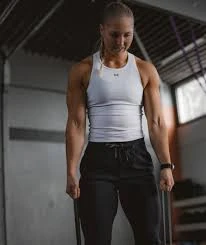
Yoga-to-athleisure collection including an everyday yoga tank, leggings and studio shorts

Collection 03 — Yoga-to-Athleisure Collection

A Yoga-to-Athleisure range may combine a more versatile tank silhouette with relaxed or fitted lower-body pieces. The design can emphasize styling flexibility, care practicality and coordinated branding. However, a product intended for everyday layering should not automatically claim specialized support or performance. Buyers should define the target wearing context for each item and ensure the appropriate construction, materials and purchasing requirements remain clearly identified.

Collection Components: Everyday Yoga Tank · Matching Leggings · Studio Shorts · Casual Layer

Collection Tags: Lifestyle Fit · Brand Identity · Separate Specifications

DESIGN-TO-COST COMPARISON

Compare Total Purchasing Costs Across Yoga Tank Designs

Two yoga tanks with similar visible silhouettes may involve different materials, inner components, joining operations and development requirements. The following comparison uses qualitative design scenarios, not historical MOVEVOX quotations. Actual cost must be confirmed against approved specifications and current sourcing conditions.

SCENARIO A

Single-Layer Tank

A relatively straightforward tank construction using one principal fabric and the selected approved finishing method. Pricing depends on the material, pattern, quantities and decoration.

SCENARIO B

Integrated Shelf-Bra Tank

A tank with additional lining, underbust or pad components. The assembly, fit review and component purchasing requirements may increase development and production complexity.

SCENARIO C

Cross-Back Support Tank

A tank with special strap intersections and optional internal support. Additional fit revisions, joining work and size-specific approvals may influence the total purchasing commitment.

Cost FactorProcurement Impact
Principal FabricFiber composition, construction, weight, color and supplier minimums affect all three scenarios, but total material consumption and suitable sourcing options may differ.
Inner ComponentsShelf-bra linings, pads, elastics and additional labels may introduce separate costs, material minimums and inventory exposure beyond the outer tank fabric.
Pattern DevelopmentDifferent neckline, strap and inner-layer designs may need separate patterns, construction trials or coordinated technical revisions before approval.
Assembly OperationsA more complex garment can require additional joining, finishing and inspection operations. Actual execution depends on machinery, materials and approved workmanship.
Fit SamplingMultiple revisions, representative size samples and movement-related evaluations can affect development costs, especially where the inner and outer layers interact.
Quality RequirementsExtra components and critical attachment points may expand inspection scope. Specific performance claims can also require separately priced testing.
Color and SKU MixA large number of colors or style variants can divide production quantities and increase material sourcing, product identification and stock commitments.
Repeat-Order ChangesMaterial substitutions, altered pad suppliers or revised strap construction may require new approval work even when the visible product appears similar.

Why the Lowest Unit Price May Cost More

A lower quoted piece price should be evaluated together with the approved product requirements. Sampling revisions, special components, third-party testing, excess material purchases, delayed approval and unusable inventory may affect the total sourcing cost. Buyers should request comparable quotations that identify the included materials, garment construction, quantities, colors, packing and commercial terms. The most suitable option is the one that meets the required product standard with acceptable total risk and cost. The scenarios above are illustrative; no actual supplier savings, customer price or tested production result is implied.

PRE-PO SUPPLIER READINESS

Check Yoga Tank Production Readiness Before Purchase Order Approval

A supplier should not promise delivery solely because it operates garment equipment. Production commitments require alignment between the approved yoga tank design, material availability, actual manufacturing resources, quality requirements and requested delivery window. This proposed readiness ladder helps buyers identify decisions before issuing a purchase order.

LEVEL 01

Approved Product Definition

The current tank specification should identify the intended fit, materials, construction, size range and any integrated support components. Unresolved technical details may affect production requirements and should be clarified before the order is treated as executable.

Verification Requirement: Confirm the current approved garment, technical revision, component list and open issues.

LEVEL 02

Material Readiness

Fabric, elastic, pad and decoration requirements should correspond to available and approved supplier sources. Custom colors or components may introduce purchasing commitments and lead times that differ from the garment's general manufacturing reference.

Verification Requirement: Review material specifications, purchasing conditions, supplier availability and approved substitutions where applicable.

LEVEL 03

Construction Resource Fit

The selected manufacturing route should suit the accepted garment. MOVEVOX's core resources include approximately 24 principal garment sewing machines and 28 Italian Santoni seamless knitting machines, but specific machine allocation requires project-level assessment.

Verification Requirement: Identify the responsible operations, compatible equipment and any approved external manufacturing dependencies.

LEVEL 04

Quality and Compliance

The buyer's critical fit, workmanship, material and documentation requirements should be translated into applicable inspection and approval conditions. Any required external test or supplier qualification must be confirmed before making unsupported compliance commitments.

Verification Requirement: Agree on inspection scope, acceptance criteria and evidence needed for order release.

LEVEL 05

Delivery Commitment

The final schedule should account for approved materials, production resources, construction complexity, inspection and shipping requirements. The actual commitment depends on the specific order, not a generalized company-wide monthly production estimate.

Verification Requirement: Confirm a feasible order schedule, buyer approvals, production responsibilities and delivery terms.

Balance Capability With Product Requirements

MOVEVOX operates a core factory in Yiwu and coordinates with cooperating satellite factories. The production location, any partner involvement and applicable responsibilities should be clarified for the proposed order. A mature brand should compare capacity commitments against the exact garment structure, approved material supply and current production plan. General company equipment and production figures must not be interpreted as guaranteed Yoga Tank capacity.

CONTROLLED PRODUCT DOCUMENTS

Connect Approved Yoga Tank Specifications With Production Documents

Document control should connect the original product requirements with the actual garment accepted for production. A clear technical hierarchy helps buyers prevent outdated fit comments, materials or construction details from being confused with the currently approved reference. This is a proposed project framework.

PYRAMID LEVEL 04 / RELEASE

Production Release Reference

The highest level identifies the accepted garment, its current specifications and the authorization required for production. It should distinguish complete approval from conditional acceptance, keeping critical unresolved requirements visible until the appropriate party confirms release.

  • Identified approved physical sample and current authorized technical specification version.
  • Clearly documented buyer approval and remaining critical release conditions, if applicable.
PYRAMID LEVEL 03 / MANUFACTURING

Manufacturing Specification

This level defines the pattern, material references, component details, measurements, tolerances, applicable construction and labeling needed to manufacture the garment. Where a shelf bra is included, relevant inner-layer and pad specifications should remain associated with the correct outer tank version.

  • Current materials, construction details and approved measurement references by garment size.
  • Technical instructions identifying critical strap, armhole, inner-layer and hem requirements.
PYRAMID LEVEL 02 / DEVELOPMENT

Development Approval Records

Development records connect proposed changes with sample observations and buyer decisions. Relevant information may include movement-fit comments, size-set findings, fabric evaluations and revised construction drawings. These records should explain why the current garment differs from earlier development versions.

  • Identified sample versions with approved comments and outstanding technical revision decisions.
  • Documented relationships between construction changes and required further fit evaluations.
PYRAMID LEVEL 01 / INPUTS

Original Design Inputs

The foundation is the buyer's authorized Tech Pack, sketches, reference garments and target product requirements. These inputs establish the intended use, wearing conditions, design identity and initial manufacturing questions before any unconfirmed detail is treated as a production standard.

  • Legally authorized design references, target wearer information and initial product objectives.
  • Defined source documents, required materials and available preliminary garment dimensions.
TECHNICAL SUPPLIER QUALIFICATION

Verify Manufacturing Evidence Before Qualifying a Yoga Tank Supplier

A mature brand should distinguish verified company identity from product-specific manufacturing and quality evidence. MOVEVOX has an established operating entity, manufacturing resources and development personnel. Other documents, including particular certifications or finished-product test reports, must be reviewed individually before they are accepted as supplier-qualification evidence.

EVIDENCE 01 / LEGAL ENTITY

Legal Manufacturing Identity

MOVEVOX is the outward-facing brand operated by Yiwu Chenjin Import And Export Co., Ltd. in Yiwu, Zhejiang, China. The contracting entity should be checked against the relevant business documents, commercial quotation and agreed payment arrangements. A brand name and website alone are not substitutes for legal supplier identification.

EVIDENCE 02 / FACTORY

Core Factory Resources

MOVEVOX's owned core manufacturing base is located in Yiwu, with approximately 6,000 square meters of usable space. Its core production resources include 28 Italian Santoni seamless knitting machines and approximately 24 principal garment sewing machines. These figures describe company resources, not guaranteed production allocation to a particular yoga tank.

EVIDENCE 03 / PERSONNEL

Development and Quality Organization

MOVEVOX's documented core organization includes approximately eight product development personnel and five QC personnel. These roles provide an organizational foundation for product review and garment quality activities. Qualification for a specific order should still examine relevant samples, assigned responsibilities, inspection requirements and any available records matching the proposed product.

EVIDENCE 04 / PRODUCTION RESPONSIBILITY

Production Partner Responsibility

MOVEVOX coordinates with eight principal cooperating satellite factories in addition to its core manufacturing base. These partners are not all owned factories. If the proposed yoga tank requires partner operations, the applicable manufacturing location, production responsibility and buyer approval requirements should be clarified before affected work begins.

EVIDENCE 05 / DOCUMENT SCOPE

Certifications and Material Documents

Any requested certification or test report must be checked for its holder, issuing body, validity, relevant facility, material and product scope. Upstream material certificates do not automatically certify MOVEVOX's own factory or every finished yoga tank. Where required evidence is unavailable, that requirement should remain pending rather than being described as satisfied.

REORDER T&A PLANNING

Plan Yoga Tank Reorders Around Approved Technical References

A repeat order should begin with the correct approved garment specification, not simply the same product name. Changes in materials, colors, strap components or internal support can affect production requirements. This proposed T&A structure shows the decisions needed before replenishment commitments are confirmed.

Review Stage
01
02
03
04
05
06
07
08
Forecast
Review
Reference Review
Review
Material Check
Review
Technical Approval
Review
Order Confirmation
Confirm
Production
Plan
Inspection & Shipment
Check
Stage Estimated Timing Prerequisite Buyer Confirmation
01 — ForecastProject-dependentStyle/SKU and estimated demandIntended colors, sizes and quantities
02 — Reference ReviewProject-dependentPrevious approved sample and specificationCurrent version and any requested changes
03 — Material CheckSupplier-dependentFabric, elastic, pad and color referencesAcceptance of available materials or proposed changes
04 — Technical ApprovalRevision-dependentResolved construction and fit questionsApproval of any required new sample
05 — Order ConfirmationTo be agreedCommercial terms and resource assessmentAuthorized PO, quantities and delivery conditions
06 — ProductionOrder-dependentMaterials, capacity and release approvalApplicable production and quality requirements
07 — Inspection & ShipmentPlan-dependentFinished garments and agreed checksRelease conditions, packing and shipping documents

What Can Change a Repeat-Order Timeline?

Yarn or fabric availability, special colors, pad sourcing, revised strap construction, additional sampling and buyer approval time can all affect an order schedule. A previous production run does not guarantee that identical materials or capacity remain available. MOVEVOX's general manufacturing lead-time references should therefore be confirmed against the current garment and purchase order. The completed schedule must identify real dependencies instead of inventing fixed delivery milestones.

TECHNICAL PROCUREMENT FAQ

Answer Important Questions Before Starting Yoga Tank Manufacturing

Mature brands need clear answers about construction, fit approval, commercial terms and supply responsibility before committing to a manufacturer. These answers distinguish MOVEVOX's documented resources from project-specific requirements that remain subject to review.

Can MOVEVOX Manufacture Custom Yoga Tank Tops?

MOVEVOX has documented cut-and-sew production resources, Santoni seamless knitting equipment and a product development organization. These provide a foundation for reviewing custom yoga tank requirements. The feasibility of a particular neckline, back structure, built-in bra, material or size range must still be assessed against the proposed manufacturing route. Buyers may submit an authorized Tech Pack, reference garment or sufficiently defined concept for an initial discussion. No specific unreviewed construction is guaranteed solely because related machinery is available.

Do Yoga Tanks Need a Built-In Bra?

No. A yoga tank may be a single-layer top, a layering garment or a design with an integrated shelf bra. The appropriate choice depends on the intended wearer, activity, coverage and support objectives. A ribbed or fitted body does not independently provide a quantified support level. Where integrated support is required, the inner layer, elastic, pads, straps and assembly need to be considered as one product system. Buyers should identify their intended function before selecting a construction.

How Can We Evaluate Yoga Tank Coverage?

Coverage should be reviewed using the approved garment and relevant wearing positions. Neckline depth, armhole geometry, fabric extension, body ease and optional inner support all influence the result. Standing fit photographs and flat measurements are useful but may not reveal concerns during forward bending or reaching. A brand should select appropriate fit models, define acceptable visibility and record observations before approving changes. MOVEVOX's development resources support technical discussion, but no universal Yoga Tank coverage pass result is claimed.

Can We Customize Cross-Back and Racerback Straps?

Custom shoulder and back constructions can be discussed using MOVEVOX's established garment development and sewing resources. The actual design should define strap width, material, orientation, attachment and interaction with any internal shelf bra. Some proposed geometries may require pattern changes, additional assembly or construction trials. A design that appears feasible in a drawing still needs physical evaluation for the intended garment and sizes. Pricing and production acceptance depend on the confirmed technical requirements rather than the name of the back style.

What Is the MOQ for Custom Yoga Tanks?

MOVEVOX's general MOQ reference is approximately 150 pieces per style for compatible cut-and-sew customization and 100 pieces per style for compatible seamless customization. These are conditional starting points, not universal guarantees for every yoga tank. Custom dyeing, special fabrics, pads, elastics, color quantities and complex construction may introduce different purchasing minimums. The final executable MOQ should be confirmed after reviewing the actual design, sourcing conditions and order breakdown. Buyers should provide expected quantities per style, color and size for a relevant quotation.

How Long Does Yoga Tank Sampling Take?

MOVEVOX's ordinary sampling reference is approximately five to ten working days after necessary technical details have been confirmed. This does not guarantee the completion of a complex built-in bra, special fabric program or multiple fit-revision rounds within the same period. Material sourcing, construction trials, size-set samples, customer feedback and international shipping can affect the overall schedule. Buyers should agree on the actual sample scope and approval requirements before treating the reference as a project commitment. The appropriate timeline is determined by technical complexity and confirmed inputs.

Can You Make Both Seamless and Cut-and-Sew Tanks?

MOVEVOX's core manufacturing resources include 28 Italian Santoni seamless knitting machines and approximately 24 principal garment sewing machines. This supports the evaluation of both seamless and cut-and-sew manufacturing directions. However, particular necklines, shoulder straps, internal support components or extended sizes may impose construction limitations. Some designs could require additional assembly or a technically reviewed combination of processes. The appropriate route should be selected based on yarn or fabric, garment architecture, finishing and approved fit—not on machine availability alone.

What Quality Checks Matter for Yoga Tanks?

Relevant garment checks may include approved measurements, neckline shape, armhole coverage, strap attachment, inner-layer alignment, pad positioning, seam workmanship and correct product identity. Material performance requirements may need separate testing according to the brand's specification. MOVEVOX has an established core QC organization of five personnel, but that fact does not demonstrate that a particular yoga tank has already passed a product-specific test. A buyer should approve the applicable inspection requirements and request actual evidence where required.

Can MOVEVOX Support Repeat Yoga Tank Orders?

MOVEVOX operates a core manufacturing base and coordinates with cooperating production partners, providing resources relevant to ongoing activewear manufacturing programs. A repeat yoga tank order should reference the current approved sample, materials, size specification, construction and branding. Availability of matching fabrics, pads, colors and production resources must be reconfirmed for the new order. Any critical change may require an additional technical review or sample approval. Repeat-order timing and volume should be agreed against the current requirements rather than assumed from a previous shipment.

Send Us an Inquiry

Tell us your needs, and our team will get back to you within 24 hours.

START YOUR PROJECT

Ready to Develop Your Private Label Activewear Line?

Tell us what you want to develop, your estimated quantity and customization needs. We will review the details and suggest the next practical step for sampling, quotation or production.

Helpful details to include:

Request MOQ & Sample Details