
Technical Activewear Manufacturing
Half Zip Workout Top Manufacturer for Engineered Closure and Fit
MOVEVOX supports custom half-zip workout top development through its Cut & Sew manufacturing, product development and quality management resources. For fitted training tops, running layers and other performance styles, we help brands review zipper specifications, placket construction, stretch-fabric compatibility, collar contact and garment fit before confirming production requirements. Each design is evaluated against its intended materials, construction details and approved sample rather than treated as a standard zipper application.
Key Buyer Benefits
- Evaluate zipper and stretch-fabric compatibility before confirming the construction approach.
- Define placket, collar and contact requirements for meaningful sample approval.
- Connect approved closure specifications with practical bulk quality expectations.
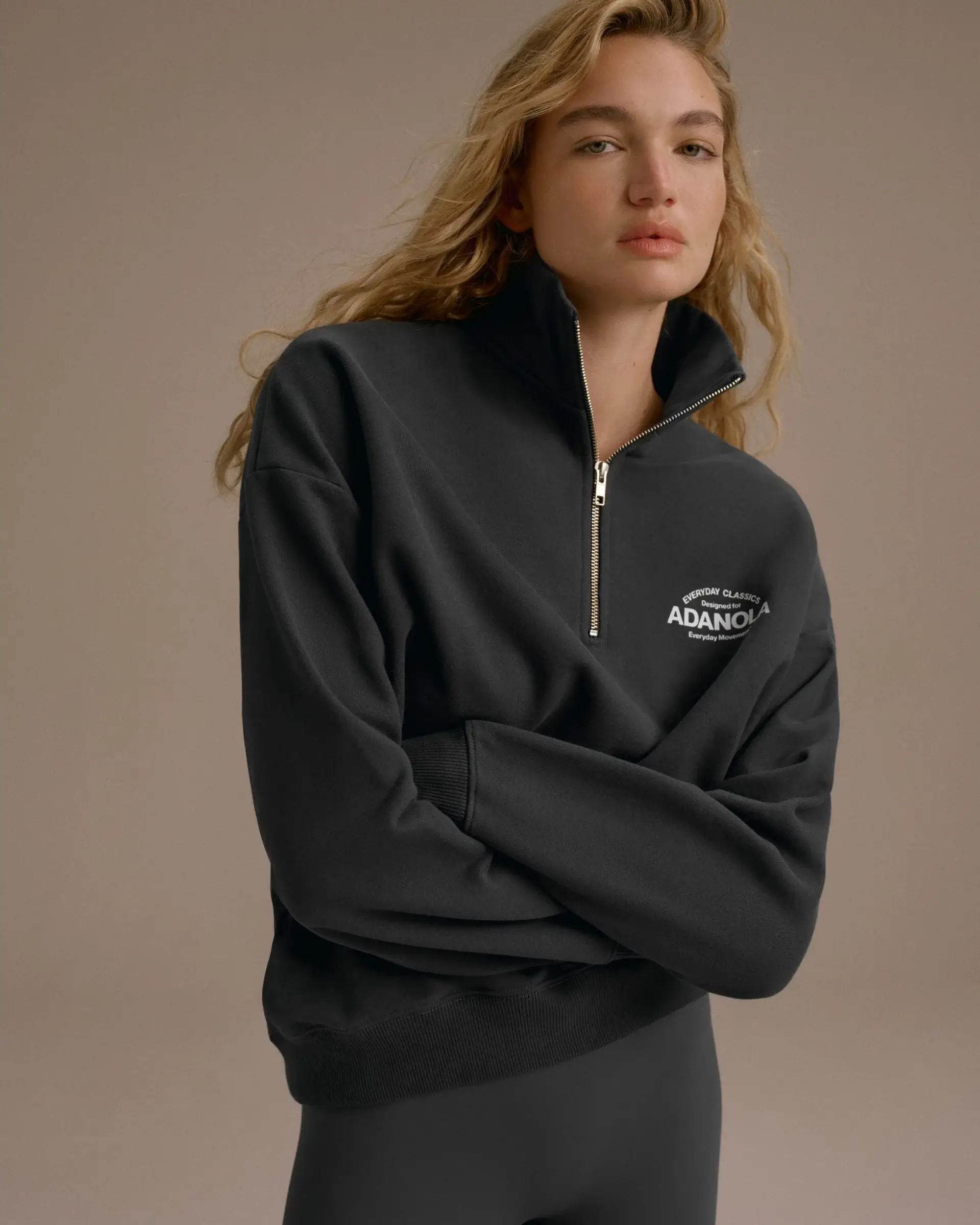
Actual closure construction and production suitability depend on the approved garment specification.
What Qualifies a Half-Zip Workout Top Manufacturing Partner?
A qualified half-zip workout top manufacturer must evaluate more than garment appearance. Zipper components, stretch fabric, front-opening construction, collar geometry and approved fit influence whether a design is manufacturable and suitable for its intended use. Buyers should verify actual sewing capabilities, development resources, sample approval methods and production quality responsibilities.
Actual Cut & Sew Capability
Half-zip construction normally requires controlled assembly around a front opening. Buyers should establish where cutting, sewing, zipper installation and finishing take place, including any externally coordinated operations.
Closure Construction Review
Zipper length, tape, slider, stops, seam allowances and adjacent fabric must be considered together. A suitable component specification alone cannot establish that the completed garment will perform as intended.
Functional Sample Approval
A technical sample should be assessed in relevant open and closed zipper conditions. Collar contact, placket appearance and movement fit may require different observations from ordinary flat garment measurements.
Bulk Workmanship Control
Production references should identify the approved zipper, material, construction and critical inspection requirements. Supplier and buyer must agree on acceptance criteria before treating a sample as the commercial production standard.
Why It Matters
MOVEVOX has Cut & Sew, product development and QC resources. Project-specific closure feasibility and performance still require confirmation.
Understanding the Components Behind a Half-Zip Closure
A half-zip closure includes several parts that interact with the garment. Buyers should identify each component, its construction and its relationship with the surrounding stretch fabric before confirming the design, sample approval criteria and bulk material specification.
Zipper Tape
The tape carries the fastening elements and connects the zipper to the garment. Its material, flexibility and dimensional behavior should be reviewed against the selected fabric and sewing construction.
Zipper Elements
Coil or molded fastening elements determine part of the zipper's physical construction. The selected type must suit the intended opening, garment appearance and applicable component performance requirements.
Slider and Puller
The slider operates the fastening elements, while the puller provides the user's grip. Buyers should consider handling, puller dimensions, potential fabric interference and any branding requirement.
Top Stop
The upper stop limits slider travel. Its location relative to the collar, protective facing and skin-contact area should be reviewed when the garment is fully closed.
Bottom Stop
The bottom stop terminates the usable opening. Its connection with the surrounding placket and fabric needs appropriate construction and inspection, particularly where local movement creates loading.
Placket Edge
The placket defines the finished opening around the zipper. Seam allowance, edge treatment and assembly quality influence symmetry, appearance and interaction with the garment's stretch.
Chin Guard
A chin guard or protective facing may separate selected zipper components from the wearer. Its coverage, thickness, edge finish and position require evaluation on the actual garment.
Stand Collar
The collar shapes the upper neckline and interacts with the zipper opening. Height, curvature, material and finished fit should be reviewed in both opened and closed conditions.
Overall Closure Design Logic
The zipper should not be approved independently from the surrounding garment. Tape construction, fabric extension, opening geometry, seam allowances, reinforcement and collar finish collectively influence the final appearance and use experience. For a fitted workout top, these relationships may become more noticeable during movement. MOVEVOX can review proposed construction requirements through its Cut & Sew development resources, while final suitability must be established using relevant samples and buyer-approved criteria.
Why Stretch Fabrics Can Complicate Zipper Installation
A zipper and stretch fabric may respond differently to handling, sewing, movement and laundering. Before approving a half-zip workout top, brands should identify the causes of possible distortion and agree on garment-specific construction and appearance requirements.
Fabric and Closure Risk Matrix
| Technical Problem | Procurement Impact | Proposed Technical Review |
|---|---|---|
| Different Extension Behavior. The main fabric and zipper tape may extend differently. Their relationship depends on material construction, zipper specification, garment fit and the direction of applied movement. | An unsuitable combination may create localized tension or affect the intended fit and appearance. Additional sampling, component changes or pattern revisions can increase development time and cost. | Compare the proposed zipper tape and fabric under relevant garment conditions. Review physical assembly samples and identify whether construction changes or alternative components require buyer approval before production. |
| Zipper Waviness. A fitted placket may develop an undulating appearance because of material behavior, feeding differences, tape handling, stitching or the relationship between the assembled component lengths. | Visible waviness may be unacceptable on a smooth, fitted training top. It can result in sample rejection, repeated sewing trials or disagreements over bulk workmanship acceptance. | Examine both component specifications and sewing conditions. Compare trial samples against the buyer's approved appearance rather than assuming a single reinforcement or stitching adjustment will resolve every cause. |
| Seam Puckering. Local fabric compression, differential feeding, thread tension or material instability may produce unwanted wrinkling around the zipper and nearby seam lines. | Puckering can affect a premium garment's visual consistency and create uncertainty during inspection. Repeated corrections may also disturb previously accepted dimensions or other nearby construction details. | Review material behavior, stitching, seam allowance and finished appearance using actual samples. Agree on the acceptable inspection state and determine whether further construction evaluation is necessary. |
| Placket Distortion. The opening may twist, shift or pull away from its intended position when the garment is worn, stretched or handled after assembly. | Distortion may change collar alignment, visible symmetry and wearer perception. Corrective work can affect the approved pattern, opening measurements and related production instructions. | Evaluate the closure on the complete garment in relevant open, closed and movement conditions. Confirm the intended opening geometry and obtain approval for any proposed structural change. |
| Excessive Local Stiffness. Reinforcement, facing or several material layers can create a region with a different bending or stretch response from the surrounding garment. | A placket that looks stable when flat may feel bulky or restrict intended movement. An added protective layer may also alter garment fit or local contact conditions. | Review whether the selected reinforcement is necessary and compatible with the design. Compare appearance, handling and wearer contact before adopting any material or structural change. |
| Post-Wash Appearance Change. Fabric, tape, thread and reinforcement may react differently to the specified washing and drying conditions, potentially changing appearance or the operation of the opening. | The accepted sample may no longer represent the garment's appearance after care. Disagreements can arise if test conditions and post-treatment acceptance criteria were not defined before production. | Establish appropriate care-related assessment conditions for the finished garment. Compare measurements, placket appearance and zipper operation using the agreed method and approved product requirements. |
Engineering the Half-Zip Placket and Opening End
A half-zip placket combines fabric, fastening components and sewing details around a relatively short opening. Its stability, appearance and wearer contact depend on how these elements are assembled. The following construction views are educational references rather than confirmed MOVEVOX standard sewing specifications.
Diagram A — Placket Side Construction
Main Fabric
The garment fabric supplies the primary stretch, recovery, weight and surface characteristics. Its behavior should be assessed beside the zipper tape, particularly in fitted styles where local extension is relevant.
Zipper Tape
The tape connects the fastening element to the garment. Its construction and flexibility affect how the closure interfaces with the fabric during installation and subsequent use.
Seam Allowance
The allowance provides the material needed for the selected assembly method. Its required width depends on the zipper, construction, edge finish and approved manufacturing instructions.
Stitching Line
The stitching secures the assembled components. Needle, thread, stitch formation and sewing conditions should be selected for the actual material combination rather than copied from an unrelated garment.
Edge Finish
The inside edge may require appropriate covering or finishing. The approved method should consider appearance, loose edges, local thickness and potential contact with the wearer's body.
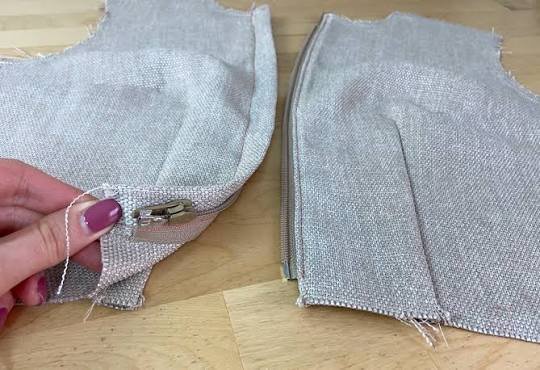
Diagram B — Opening-End Construction
Bottom Stop
The zipper's lower stop terminates slider travel. Its specification and placement should be compatible with the intended opening length and nearby garment construction.
Opening Junction
The lower end connects the zipper opening with the continuous front panel. Construction details should be examined for localized distortion and suitability under expected garment movement.
Local Reinforcement
Additional stabilization may be considered where the material and opening geometry make it appropriate. A reinforcement choice can also affect local stiffness and appearance.
Inside Facing
An inside facing or finishing layer can cover selected construction details. Its shape, edges and bulk should be evaluated against the desired comfort and garment fit.

Diagram C — Collar-to-Placket Connection
Collar Fabric
The stand collar contributes to neckline shape and fit. Its fabric properties and construction should be considered in relation to the zipper tape and the upper opening.
Top Stop
The zipper stop marks the upper limit of operation. Its final location should be reviewed with the closed collar and any adjacent protective component.
Guard Layer
A guard or facing may be used to separate hardware from the wearer. Its usefulness depends on actual coverage, contact position, construction and garment size.
Collar Seam
The connection between collar and body creates a local assembly area. Seam thickness, direction and finishing may influence comfort and the way the zipper lies.

Combined Construction Behavior
The assembled closure operates as a local system rather than a single component. A change to the zipper tape can influence sewing behavior; added reinforcement can influence hand feel; and collar geometry can alter how the top end contacts the wearer. These effects should be considered together when developing a fitted workout top. No universal seam allowance, reinforcement thickness or construction method should be claimed suitable for every fabric and zipper combination.
Evaluating Collar and Zipper Contact During Workout Use
Collar construction affects more than the garment's appearance. A zipper stop, puller, protective facing or inside seam may approach the neck and upper chest. Appropriate comfort evaluation must consider the actual product, wearer, garment fit and intended activity.
Collar Height
Functional Objective: Establish suitable collar coverage without assuming taller means more comfortable.
Evidence Explanation: Stand-collar height affects how the garment approaches the neck when zipped. Its suitability depends on neckline shape, fabric, garment size and intended movement. A design should be reviewed in relevant open and closed conditions rather than evaluated only from a flat sketch or a static product photograph.
Evidence Basis: Approved collar POM, neckline construction and size-specific fitting observations.
Top Stop Position
Functional Objective: Keep zipper termination consistent with the approved neckline construction.
Evidence Explanation: The zipper's upper stop determines the practical closure endpoint. Its relationship with the collar, slider and any protective facing can change local contact. Buyers should identify the specified position and evaluate the complete garment, including the effect of ordinary movement and differences between sizes.
Evidence Basis: Zipper specification, approved sample and closed-collar inspection reference.
Slider and Puller
Functional Objective: Maintain usable operation with acceptable local hardware contact.
Evidence Explanation: Slider and puller geometry can influence handling, appearance and contact with nearby fabric. A large decorative puller may have different behavior from a low-profile design. Review whether the selected component operates appropriately and interferes with surrounding fabric or the intended wearer position.
Evidence Basis: Actual hardware sample, opening operation and garment fitting review.
Chin Guard Coverage
Functional Objective: Evaluate protective coverage without promising universal chafe prevention.
Evidence Explanation: A chin guard may separate selected zipper components from the wearer, but its dimensions and edges also affect contact. A thicker guard is not automatically better. The intended shape should be assessed with the collar closed, during head movement and in the relevant garment size.
Evidence Basis: Authentic guard construction, inside view and documented fit observations.
Inside Seam Contact
Functional Objective: Limit unnecessary bulk or exposed construction at relevant contact areas.
Evidence Explanation: Seam allowances, facing edges and reinforcement near the neck or upper chest can influence the way a fitted garment feels. Buyers should review the actual inside construction rather than relying on outer appearance. Comfort conclusions require appropriately defined wearer and movement assessments.
Evidence Basis: Inside-construction photograph, seam specification and garment contact review.
Perspiration-Related Comfort
Functional Objective: Assess defined wet-wear conditions without claiming zero irritation.
Evidence Explanation: Perspiration may change perceived fabric contact, moisture conditions and local movement at the skin. The relevant concern is the complete garment assembly under specified wearing circumstances. Sweat colorfastness, fabric abrasion and wearer comfort assess different properties and cannot substitute for one another.
Evidence Basis: Defined wear evaluation, relevant textile tests and actual wearer feedback where available.
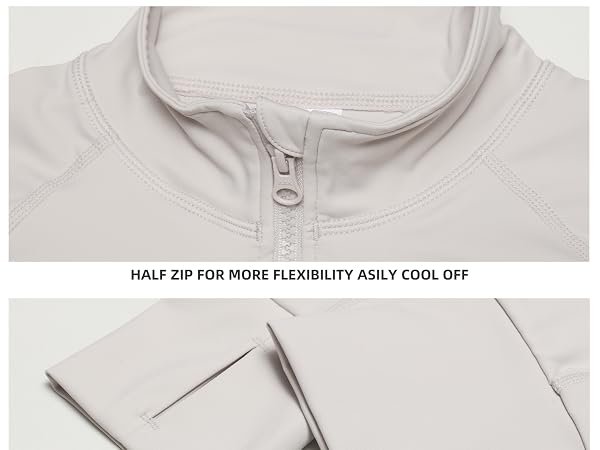
Evaluating Half-Zip Fit Across Different Wearing Conditions
A half-zip workout top changes configuration as the opening is adjusted. Collar shape, front-body tension and surrounding fabric behavior may also change during movement. Buyers should identify the conditions relevant to their product before approving its fit.
Tab 01 — Fully Closed
With the zipper fully closed, the collar and front opening form their intended closed configuration. Review neckline contact, collar alignment and whether the placket lies acceptably on the body. A zipper may operate smoothly while the surrounding garment still shows unwanted distortion or discomfort. The evaluation should distinguish component operation from the appearance and fit of the complete top. It should also consider different garment sizes and any approved close-fitting silhouette. No universal comfort or pressure outcome is implied.
Buyer Inputs
- Approved collar height and relevant neckline measurement references.
- Intended body fit and closure appearance acceptance criteria.
- Sample sizes and applicable wearer or fitting-form requirements.
Proposed MOVEVOX Review Outputs
- Clarify closed-state construction and fit observations for buyer review.
- Identify relevant collar, zipper and placket specification differences.
- Discuss whether further sample revision or assessment is appropriate.
Tab 02 — Partly Open
A partly opened zipper changes the visible neckline and the position of the slider within the placket. The buyer may want the opening to sit naturally during warm-up or active training without excessive folding, pulling or interference with nearby fabric. Assessment should consider the selected zipper, opening length, garment material and intended fit. Results can vary with wearer dimensions and the degree of opening, so one posed photograph should not be treated as complete evidence. The approved product should define which open positions are functionally important.
Buyer Inputs
- Desired partly open appearance and practical opening range.
- Existing garment references showing the intended neckline presentation.
- Details of any relevant slider, puller or protective facing.
Proposed MOVEVOX Review Outputs
- Review the requested opening position against the garment construction.
- Identify potential alignment or contact observations requiring sample checks.
- Discuss revisions only where the actual garment supports them.
Tab 03 — Fully Open
Fully open means the slider reaches the lower limit of the garment's designed short opening, not that the front of the top separates completely. At this position, the upper fabric and collar may move differently from their closed configuration. Review how the exposed opening edges appear, whether the slider rests in an appropriate location and whether the lower opening junction remains comfortable. The assessment should also consider whether the garment is intended to be worn in this condition during active movement. A design should not be judged solely by a static flat measurement.
Buyer Inputs
- Confirmed zipper opening length and lower stop reference.
- Expected visual appearance at the designed open limit.
- Garment-specific requirements for collar drape and local comfort.
Proposed MOVEVOX Review Outputs
- Review opening geometry and the approved lower-end construction.
- Discuss visible edge behavior and potential contact-related concerns.
- Clarify whether additional fitting or structural changes need approval.
Tab 04 — Arm Raise
Raising the arms can change the position of a fitted top and the relationship between the shoulder, sleeve, torso and front opening. The zipper placket may respond differently from the adjacent stretch fabric, particularly in close-fitting styles. Evaluation should examine garment displacement, neckline behavior and any local pulling that conflicts with the intended design. Raglan sleeves, set-in sleeves and thumbholes can alter the overall fit relationship. The brand should specify the movements and fit outcomes it considers important rather than expecting one generic activewear assessment to represent all activities.
Buyer Inputs
- Intended training movements and required arm-raise positions.
- Relevant sleeve, shoulder and garment length specifications.
- Target fitting sizes and approved garment silhouette references.
Proposed MOVEVOX Review Outputs
- Identify visible fit and placket observations in the selected movements.
- Review whether sleeve and front-opening requirements remain compatible.
- Discuss necessary pattern or construction revisions for buyer consideration.
Tab 05 — Torso Rotation
Torso rotation can introduce different directions of movement and fabric extension around the front opening. The buyer may need to evaluate whether the fitted garment twists, pulls or changes collar contact under the activity conditions that matter to the product. The visible result may depend on fabric recovery, pattern construction, zipper tape and garment size. A meaningful review compares the actual sample with agreed criteria and recognizes that wearer comfort is not established by one mechanical measurement. Findings should remain project-specific until the appropriate sample or test evidence exists.
Buyer Inputs
- Relevant rotation movements and intended garment use conditions.
- Approved fit, front-opening and neckline acceptance requirements.
- Sample sizes and any important layering or contact conditions.
Proposed MOVEVOX Review Outputs
- Review torso-movement observations against the proposed closure construction.
- Identify differences between zipper operation and garment fit behavior.
- Discuss whether another sample or defined evaluation is appropriate.
Half-Zip Engineering Key Takeaways
- Define the complete zipper specification. A suitable closure requires more than an opening length; tape, fastening elements, slider, stops and adjacent construction must be considered together.
- Review fabric and zipper compatibility. A stretch fabric and zipper tape may behave differently during sewing, wearing and care, making actual assembly trials more informative than material descriptions alone.
- Treat the placket end as a construction decision. Opening geometry, local stitching, reinforcement and inside finishing should follow the product design and an appropriate physical approval reference.
- Evaluate the collar as worn. Stand-collar height, top stop, chin guard and inside seams should be reviewed under relevant contact and movement conditions without unsupported comfort guarantees.
- Check open and closed garment fit. A smooth zipper operation does not establish acceptable front-body tension, neckline shape or movement behavior in every intended wearing position.
- Connect sample approval with bulk specifications. The approved zipper, material, pattern, construction and relevant quality criteria should be identifiable before commercial manufacturing decisions are finalized.
Selecting Zipper Components for Functional Workout Tops
A zipper specification should match the garment's materials, appearance and intended use. The following options illustrate different selection questions rather than a catalogue of components that MOVEVOX guarantees to stock or manufacture for every proposed project.
Conventional Coil Zipper
Coil constructions can offer a practical option for many apparel openings, depending on the product and component specifications. The selected chain size, tape and slider should be evaluated alongside the stretch fabric and desired appearance. The use of a coil zipper does not independently demonstrate garment comfort or strength.
- Durability: Confirm through applicable supplier data and project requirements.
- MOQ: Depends on available size, tape, length and color.
- Color Effect: Visible elements and tape influence opening appearance.
- Best For: Projects requiring a suitable conventional coil construction.
Reverse-Coil Construction
A reverse-coil arrangement can change the visible appearance of fastening elements and their relationship to the garment surface. This may suit a cleaner visual concept, but the choice should also consider operation, tape properties, manufacturing compatibility and the approved front-opening construction.
- Durability: Validate the specified component and application.
- MOQ: Check the selected size, finish and availability.
- Color Effect: Can change how visible the fastening elements appear.
- Best For: Cleanly styled technical training tops.
Molded-Element Zipper
Molded-element constructions provide a different component geometry and visual effect from a conventional coil. Their suitability depends on garment weight, flexibility, intended appearance and manufacturer recommendations. A more pronounced fastening element is not automatically stronger or more suitable for every fitted activewear design.
- Durability: Refer to applicable product and component testing.
- MOQ: Verify model, length, color and supply conditions.
- Color Effect: Elements may create a more visible closure detail.
- Best For: Designs suited to the selected element profile.
Flexible Zipper Tape
Flexible or stretch-oriented tape constructions may be considered when ordinary tape behavior is unsuitable for a particular garment. Tape stretch direction and strength characteristics vary by product. Increased flexibility should not be treated as proof that the complete closure will withstand every load or prevent puckering in every sewing arrangement.
- Durability: Component performance must match intended garment use.
- MOQ: Confirm supplier-specific availability and trim conditions.
- Color Effect: Tape visibility still requires color approval.
- Best For: Suitable stretch or curved garment applications.
Slider and Puller
Slider and puller selection affects operation, handling, appearance and possible interaction with the collar or nearby fabric. A branded puller may also introduce development requirements. The buyer should confirm attachment compatibility and assess the completed garment rather than approving the decorative puller independently.
- Durability: Confirm attachment and relevant strength requirements.
- MOQ: Custom pullers may have separate purchasing minimums.
- Color Effect: Surface finish and branded details affect appearance.
- Best For: Brand-specific functional and visual requirements.
Top and Bottom Stops
Stops establish the operational limits of the zipper. The top stop should be reviewed against the neckline and guard position; the bottom stop should suit the intended opening-end structure. Stop performance and finished-garment construction are separate but related acceptance considerations.
- Durability: Use appropriate component and assembly evidence.
- MOQ: Usually linked to the selected zipper configuration.
- Color Effect: Exposure depends on garment and facing design.
- Best For: Defining reliable opening limits and component placement.
Chin Guard Integration
A protective guard or facing can be part of the garment rather than the zipper component itself. It should be designed in relation to the upper stop, collar geometry and actual contact area. Its presence alone does not establish reduced chafing without appropriate wearer evaluation.
- Durability: Assess construction and intended care conditions.
- MOQ: Depends on garment assembly and material requirements.
- Color Effect: Can be hidden or visually integrated.
- Best For: Designs requiring an evaluated protective facing.
Custom Tape and Trim
Custom tape color, puller finish or branded detailing can support a distinctive half-zip appearance. These choices may also influence purchasing minimums, development costs and material approvals. Buyers should confirm which modifications affect the zipper itself and which are applied during garment construction.
- Durability: Verify the selected finish and complete component.
- MOQ: Custom colors or hardware may require separate minimums.
- Color Effect: Coordinate tape, elements, slider and garment fabric.
- Best For: Private-label differentiation under confirmed technical conditions.
Sewing Details Behind Consistent Half-Zip Garment Construction
Half-zip workmanship is determined at several closely related assembly locations. The following construction details should be reviewed on physical samples with appropriate material and stitch specifications rather than judged only from the outside appearance of a finished top.
Zipper Tape Stitching
The seam joining zipper tape and main fabric influences the finished opening's appearance and local behavior. Stitch formation, material handling and construction compatibility should be assessed together. A neat stitch line alone does not prove that the zipper assembly has suitable function or strength.
Application Area: Both sides of the front opening where zipper tape joins the garment fabric.
Comfort / Strength: Review assembly integrity, local flexibility and visible puckering against approved garment requirements.
Placket Alignment
The two sides of a half-zip opening should be evaluated against the intended pattern and approved reference. Differences in seam position or material behavior may create asymmetry, particularly on fitted garments where local distortion becomes visible when worn.
Application Area: Front-center opening, including upper alignment and the zipper's bottom termination.
Comfort / Strength: Assess finished symmetry and intended opening geometry under relevant garment conditions.
Inside Facing
A facing can cover selected construction details and alter the inside appearance of the placket. Material thickness, edge treatment and attachment method should be considered to avoid introducing unnecessary bulk or undesired restriction around the opening.
Application Area: Inside front opening and adjacent sections of the neckline or collar.
Comfort / Strength: Review local contact, finished thickness and attachment suitability on the actual sample.
Opening-End Reinforcement
The zipper's lower termination brings together the closure and uninterrupted front fabric. Appropriate reinforcement, where required, depends on garment materials, intended use and the actual construction. A universal reinforcement shape cannot be assumed suitable for all designs.
Application Area: Lower end of the designed half-zip opening and nearby garment junction.
Comfort / Strength: Evaluate local appearance and integrity without applying unsupported universal strength claims.
Collar Junction
The collar-to-placket junction can contain multiple layers, seams and zipper components. A change in seam allowance or finishing may affect collar shape and the position of upper fastening elements. The assembly should be reviewed when the collar is closed and open.
Application Area: Upper front neckline where collar construction meets the zipper installation.
Comfort / Strength: Check the actual neckline appearance, local bulk and contact with the wearer.
Guard Edge Finish
The shape and finish of the protective facing can influence whether it separates hardware from a relevant contact area. A guard that is too bulky or poorly positioned may create its own contact concern despite covering the zipper stop.
Application Area: Chin guard or protective facing adjacent to the zipper's upper end.
Comfort / Strength: Review coverage, edge softness and fitted contact rather than assuming guaranteed comfort.
Seam Allowance Finish
Finishing methods may cover raw edges or secure local layers around the placket. The selection should reflect the fabric and approved assembly method. Unnecessary thickness or exposed construction can influence the look and wearing experience of a close-fitting top.
Application Area: Reverse side of zipper seams, nearby facing and placket edge construction.
Comfort / Strength: Assess appropriate edge security, thickness and workmanship against the approved sample.
Top Stop Surrounding Area
The upper zipper stop, collar seam and protective layer form a small but important junction. Their relationship should allow the slider to reach its intended position while keeping the finished garment consistent with the agreed neckline design.
Application Area: Upper zipper termination, adjoining collar and inside protective construction.
Comfort / Strength: Verify slider operation, local placement and garment contact under defined conditions.
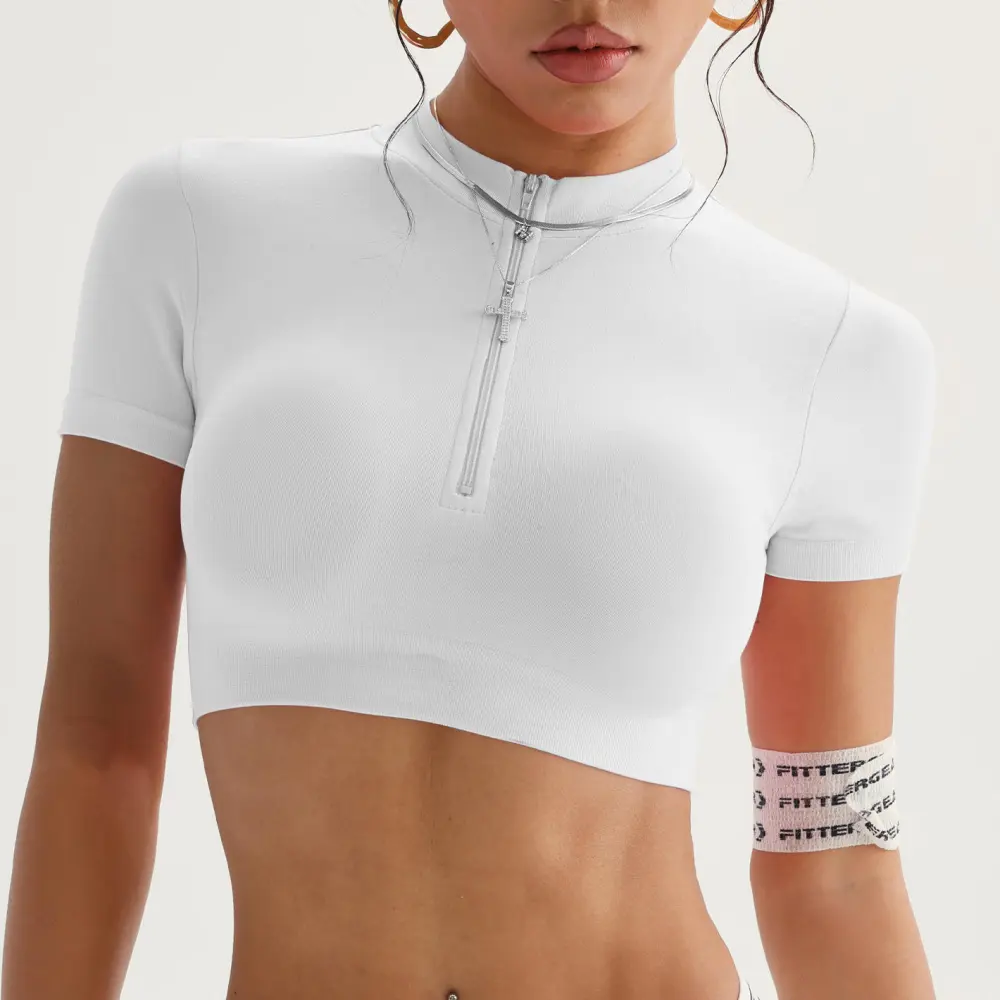
Comparing Stretch Fabrics for Half-Zip Training Tops
A suitable half-zip fabric must satisfy garment fit and use requirements while remaining compatible with the selected closure construction. This comparison describes potential material considerations, not tested performance rankings or confirmed specifications for existing MOVEVOX styles.
Fabric Engineering Comparison
| Parameter | Stretch Jersey | Interlock | Rib Knit | Brushed Stretch Knit | Lightweight Performance Knit | Midweight Layering Knit |
|---|---|---|---|---|---|---|
| Structure | Single-knit family | Double-knit construction | Raised rib geometry | Knit with brushed finish | Product-specific lightweight knit | Midweight knit family |
| Composition | Supplier-specific | Supplier-specific | Supplier-specific | Supplier-specific | Supplier-specific | Supplier-specific |
| GSM | To be specified | To be specified | To be specified | To be specified | To be specified | To be specified |
| Stretch | Depends on construction | Verify both directions | Rib-dependent extension | Test actual finished fabric | Verify relevant direction | Construction-dependent |
| Recovery | Needs assessment | Needs assessment | Depends on elastic yarn | Verify after treatment | Needs assessment | Needs assessment |
| Thickness | Usually style-dependent | Can offer more body | Relief creates variable profile | Finish changes surface bulk | Selected for weight target | Suited to layer design |
| Curling / Edge | Review cut-edge behavior | Review cut-edge behavior | Review rib orientation | Review cutting stability | Review cut-edge behavior | Review cutting stability |
| Zipper Compatibility | Trial installation required | Trial installation required | Check uneven rib surface | Check bulk and tape fit | Check tape/fabric behavior | Check thickness and stiffness |
| Post-Wash | Confirm dimensions | Confirm dimensions | Confirm rib behavior | Review brushed finish | Confirm specified care | Confirm dimensions |
| Hand Feel | Depends on yarn and finish | Depends on construction | Textured surface | Raised inner or outer feel | Depends on finish | Depends on material |
| Best Use | Fitted training styles | Structured training tops | Selected panels or designs | Cooler-weather styles | Lightweight running tops | Layering-oriented garments |
Material Selection Guidance
No fabric family should be selected solely because it is described as soft, breathable or four-way stretch. The actual construction, yarn, weight, recovery, finish and care requirements determine whether it suits the proposed half-zip design. A lightweight knit may need a different zipper and assembly approach from a brushed midlayer. Rib structures can create additional surface and extension considerations near the opening. Buyers should therefore compare fabric and zipper samples together, define relevant garment performance criteria and approve the finished appearance before confirming bulk materials.
Matching Half-Zip Construction to Different Workout Applications
Half-zip tops can serve different activities, but those uses do not require identical fabric, fit or closure specifications. Brands should define the expected movement, coverage and layering needs before choosing an appropriate front opening, collar and garment construction.
Fitted Gym Training
A fitted gym training top may emphasize body-contoured appearance and movement during strength or functional exercise. Its close fit can make the relationship between zipper tape and stretch fabric more noticeable. The buyer should evaluate whether the placket retains the intended appearance during arm and torso movement, and whether the collar, sleeve and opening remain suitable in relevant positions. The actual material, support construction and garment size influence these observations. No universal fit or performance outcome should be assumed.
Product Requirements
- Review placket alignment and front-body tension during selected training movements.
- Confirm collar contact and zipper operation under the intended close fit.
- Approve sleeve, shoulder and torso dimensions using relevant fitting samples.
Related Product Reference: MOVEVOX Activewear Tops — /products/tops/

Cropped Studio Half-Zip
A cropped half-zip can combine a shortened body length with an opening that occupies a relatively large proportion of the front panel. This makes the relationship between zipper length, collar height and garment length important. The buyer should establish whether the opening length is fixed across sizes or requires a grading decision. Arm-raise evaluation may also matter, particularly where the top is intended for studio or training activities. The design should be approved using actual garment proportions rather than generic crop-top rules.
Product Requirements
- Define opening length relative to the intended cropped garment proportions.
- Evaluate arm-raise movement and relevant hem-position requirements during fitting.
- Approve neckline, collar and front-opening appearance across the selected sizes.
Related Product Reference: MOVEVOX Activewear Crop Tops — /activewear-crop-top-manufacturer/
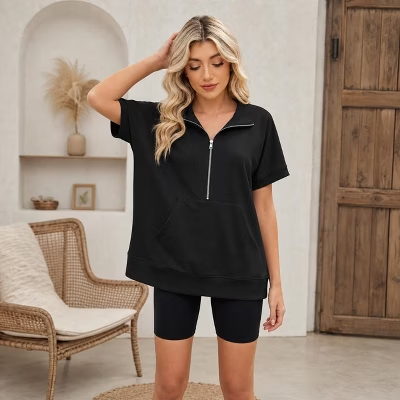
Lightweight Running Quarter-Zip
A lightweight running quarter-zip may prioritize movement, adjustable front opening and appropriate layering over a highly structured appearance. The garment's fabric, collar and zipper components should be selected to suit the expected running conditions. The buyer may wish to assess zipper operation during movement, local contact and the behavior of the opened collar. A lightweight garment is not automatically more breathable or comfortable without suitable material evidence and wearer evaluation. The approved product brief should establish these priorities.
Product Requirements
- Specify the intended opening function and slider position during activity.
- Review shoulder, chest and collar behavior during representative running movements.
- Select fabric and component specifications appropriate to the intended garment weight.
Related Product Reference: MOVEVOX Activewear Tops — /products/tops/
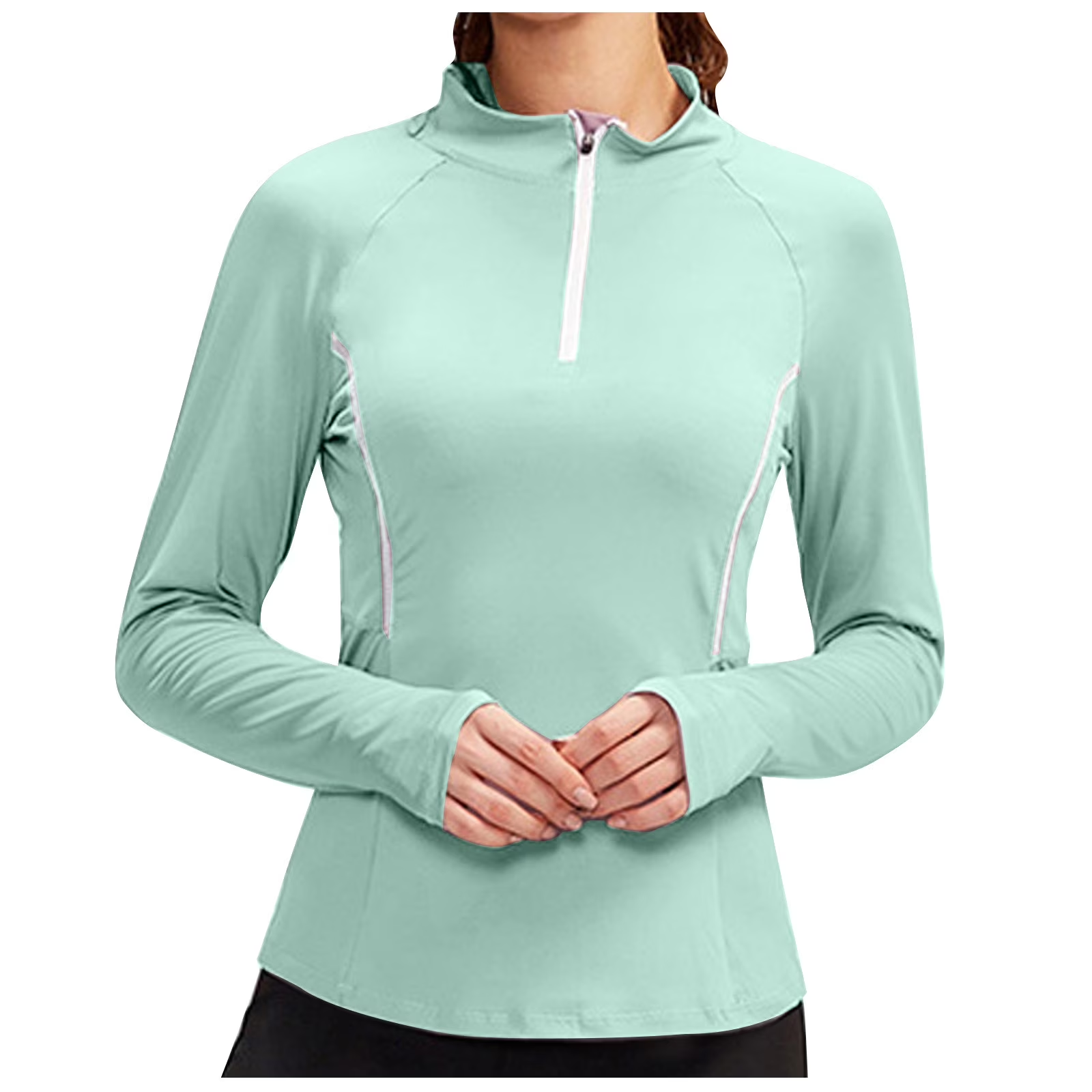
Brushed Training Midlayer
A brushed training midlayer may use a thicker fabric and different layering assumptions from a fitted training top. The additional material bulk can affect zipper installation, collar construction and protective facing requirements. Buyers should verify whether the zipper, seam allowances and inside finishing are suitable for the actual fabric. The garment may be intended for warm-up, travel or cooler conditions, but any specific insulation or thermal performance claim requires appropriate evidence. Fit approval should account for expected underlayers.
Product Requirements
- Evaluate zipper installation and placket thickness with the selected brushed fabric.
- Confirm collar and protective facing comfort under intended layering conditions.
- Define fit allowances and construction requirements for the expected product use.
Related Product Reference: MOVEVOX Activewear Tops — /products/tops/
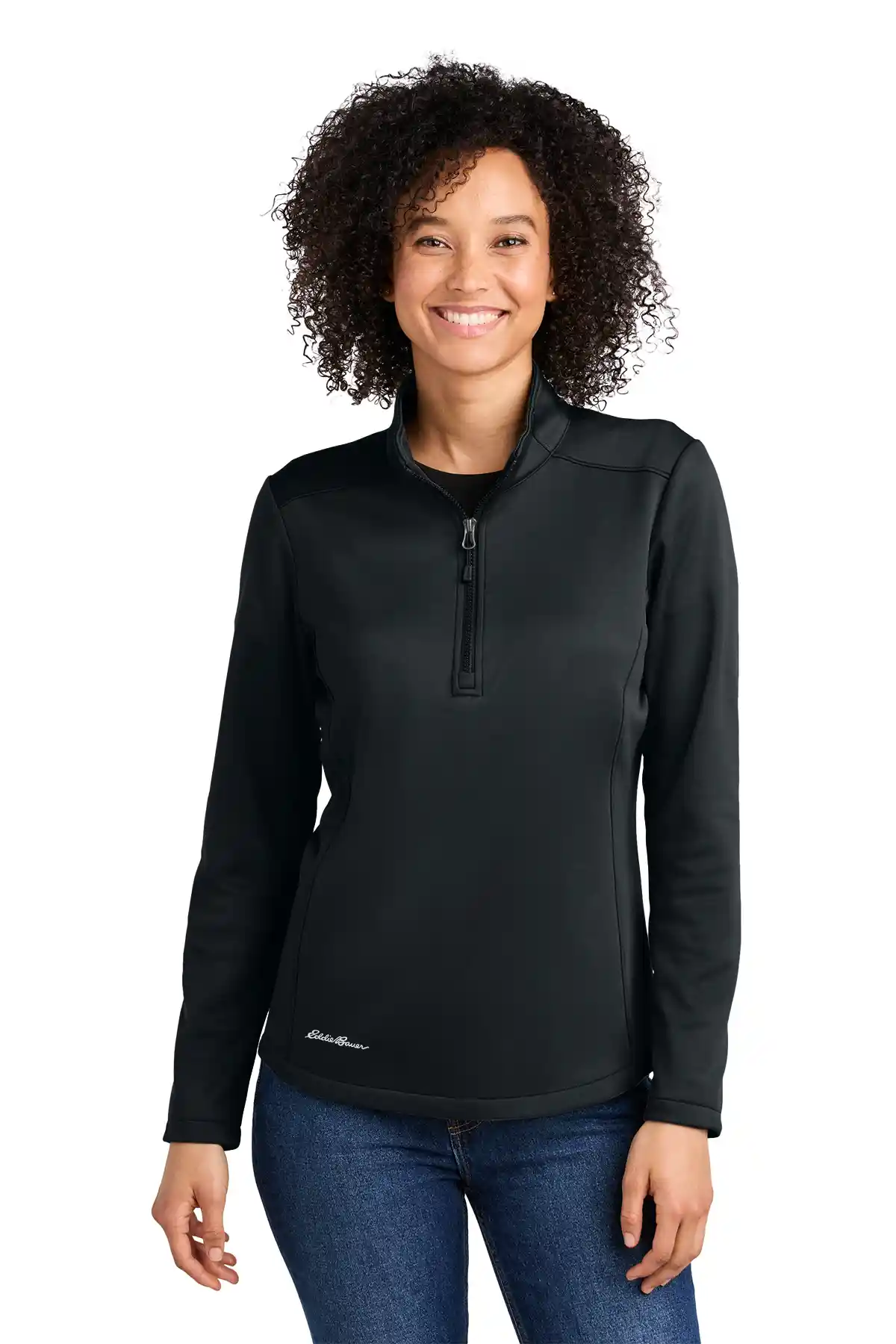
Coordinating Zipper Length and Collar Geometry Across Sizes
Half-zip grading requires decisions about the relationship between body dimensions and closure geometry. An increase in garment size does not automatically mean the zipper opening, collar height or protective guard must increase by an identical percentage.
Proposed Size-Specification Matrix
| Size | Chest Width | Body Length | Neck Opening | Collar Height | Zipper Opening | Fit Review |
|---|---|---|---|---|---|---|
| XS | Buyer-approved | Buyer-approved | Buyer-approved | To confirm | To confirm | Required as agreed |
| S | Buyer-approved | Buyer-approved | Buyer-approved | To confirm | To confirm | Required as agreed |
| M | Buyer-approved | Buyer-approved | Buyer-approved | To confirm | To confirm; Reference if approved | Required as agreed |
| L | Buyer-approved | Buyer-approved | Buyer-approved | To confirm | To confirm | Required as agreed |
| XL | Buyer-approved | Buyer-approved | Buyer-approved | To confirm | To confirm | Required as agreed |
| XXL | Buyer-approved | Buyer-approved | Buyer-approved | To confirm | To confirm | Required as agreed |
Units: cm / in — choose one approved system.
Grading and Tolerance Considerations
Closure dimensions should reflect the intended neckline and finished garment proportions, not a mechanical enlargement rule applied without evaluation. A constant zipper length may be appropriate for some designs, while others require different lengths or collar details. The buyer should define the measurement reference points, garment state and acceptable tolerance for each relevant dimension. Physical review of selected sizes may be important where the neckline, protective guard or front-opening position changes the wearing experience. No numerical MOVEVOX half-zip grading standard has been provided for this page.
Three Important Considerations
- Confirm whether zipper opening length is fixed or size-dependent before approving grading.
- Review collar and guard position in relation to the actual wearer and garment size.
- Separate garment measurements from hardware dimensions and agreed manufacturing tolerances.
Review Your Half-Zip Construction Before Sample Approval
Share your design sketches, fabric information, zipper requirements, collar details and intended fit. MOVEVOX can discuss an appropriate development route using its Cut & Sew and product development resources. Technical feasibility, component availability, sample requirements and commercial terms must be confirmed for the specific design.
Supporting Note: Existing samples and specification documents may help clarify the project; evaluation requirements depend on actual construction and materials.
Verifying Zipper Components and Complete Half-Zip Garment Performance
Component tests, assembly inspection and garment fit evaluation provide different kinds of evidence. Brands should define which properties matter, choose appropriate methods and establish acceptance requirements for the actual zipper, fabric, construction and intended use before making performance claims.
Zipper Component Strength
Purpose: Evaluate relevant strength properties of the specified zipper or its individual parts. A component result helps assess the selected hardware but does not establish the complete garment's suitability.
Method: Where applicable, consider ASTM D2061 methods appropriate to the actual zipper and component. Select relevant properties and confirm specimen identification, loading conditions, report scope and test applicability with the responsible laboratory.
Acceptance / Report: Buyer-approved component requirements, exact zipper identity and a traceable test result.
Slider Operation
Purpose: Assess whether the selected zipper operates as intended without unacceptable catching, jamming or interference. The assembled garment may behave differently from an isolated zipper specimen.
Method: Define the garment state and operating conditions. Review slider movement, puller handling and possible interference from adjacent fabric using an agreed physical inspection or suitably specified functional assessment.
Acceptance / Report: Approved zipper function and no unacceptable operation-related defects under stated conditions.
Placket Appearance
Purpose: Determine whether the completed front opening meets the approved standards for flatness, alignment, symmetry and local appearance. The relevant observations may differ between relaxed and worn conditions.
Method: Examine the garment with the zipper closed and at other agreed positions. Use consistent presentation and reference samples, noting visible waviness, puckering or twisting against defined buyer criteria.
Acceptance / Report: Buyer-approved appearance reference, garment state and documented inspection decision.
Open / Closed Fit
Purpose: Assess the effect of zipper position on collar shape, front-body tension and intended movement. Correct zipper operation does not independently establish acceptable garment fit.
Method: Review relevant garment sizes in closed and selected open conditions, including defined movements where required. Record observable changes and appropriate wearer or fit-team feedback without assuming universal comfort.
Acceptance / Report: Garment-specific fit criteria and recorded approved sample observations.
Post-Wash Function
Purpose: Evaluate whether the zipper and assembled opening remain suitable after the specified garment care procedure. Fabric, tape, stitching and finishing may respond differently to treatment.
Method: Apply a buyer-approved washing and drying procedure. Reassess closure operation, placket appearance and relevant garment measurements against documented pre-treatment and post-treatment requirements.
Acceptance / Report: Actual care procedure, specimen identity, reported observations and approved limits.
Seam Assembly Integrity
Purpose: Assess whether the seams connecting zipper tape, placket, collar and surrounding fabric remain suitable for the intended construction. Component strength cannot replace assembly assessment.
Method: Use appropriate visual or physical evaluation and select any relevant testing method for the actual fabric and seam construction. Do not automatically apply a woven-fabric seam method to stretch knits.
Acceptance / Report: Defined assembly acceptance requirements and suitable construction-specific evidence.
Perspiration Colorfastness
Purpose: Assess relevant color behavior under a specified perspiration-related textile test. This property is distinct from skin friction, garment comfort or the mechanical durability of the zipper.
Method: Consider an applicable procedure such as ISO 105-E04 when appropriate for the tested textile material. Identify the specimen, artificial perspiration conditions and report criteria.
Acceptance / Report: Buyer-required color-change or staining results for the specified material and method.
Wear Contact Comfort
Purpose: Examine whether the collar, guard, zipper and inside seams create unacceptable contact during relevant garment use. Comfort depends on the wearer, size, activity and material conditions.
Method: Define representative movements, zipper positions and relevant dry or perspiration-related conditions. Record structured observations or wearer feedback without substituting fabric abrasion or colorfastness tests for human comfort assessment.
Acceptance / Report: Buyer-defined wearer evaluation and documented findings; no universal zero-chafing claim.
Moving Half-Zip Designs Toward an Approved Production Reference
A half-zip sample should be reviewed for its garment fit and closure system together. The following is a proposed technical development sequence built around MOVEVOX's actual sampling capabilities, not a claim of a previously validated proprietary procedure.
Step 01 — Technical Input
Define the garment's fit, main fabric, zipper specifications, collar geometry and key performance expectations. Identify which requirements have already been approved by the buyer and which remain exploratory. An incomplete component specification should be clarified before a commercial quote is treated as final.
Buyer Inputs
- Provide sketches, Tech Pack and lawful physical reference samples.
- Identify desired zipper, collar, fit and activity requirements.
Proposed MOVEVOX Outputs
- Review development scope using available Cut & Sew resources.
- Clarify missing component and garment specification information.
Pass Criterion: The buyer confirms the proposed development inputs and identifies unresolved requirements before an initial construction trial proceeds.
Step 02 — Closure Trial
Evaluate the intended zipper and fabric combination using an appropriate sample. The review may focus on opening geometry, material compatibility, seam construction and local appearance. Alternative components or structural changes should be discussed rather than assumed equivalent to the original brief.
Buyer Inputs
- Confirm preferred zipper or suitable alternative review permissions.
- Approve material direction and critical visual construction requirements.
Proposed MOVEVOX Outputs
- Discuss feasible trial construction for the selected material combination.
- Identify observed issues and possible development adjustments.
Pass Criterion: The buyer can assess a physical closure construction against the agreed specifications and determine whether a revision is necessary.
Step 03 — Fit and Contact
Review the garment in relevant open and closed zipper conditions. Consider collar position, local contact, front-body tension and defined wearer movements. The goal is to identify whether the design meets the buyer's intended fit, not to claim proven comfort for all wearers.
Buyer Inputs
- Supply size specifications and relevant fit feedback.
- Identify movement and contact conditions important to the product.
Proposed MOVEVOX Outputs
- Discuss fitting observations and required structural revisions.
- Review how garment changes may affect the closure.
Pass Criterion: Important fit and contact observations are accepted or documented for further development according to buyer requirements.
Step 04 — Revision Review
A zipper, tape, reinforcement or garment pattern change can affect neighboring construction and previously evaluated features. Record the intended revision and determine whether another physical comparison or relevant test is needed before it is accepted.
Buyer Inputs
- Confirm requested revision details and priorities.
- Authorize changes affecting critical material or zipper specifications.
Proposed MOVEVOX Outputs
- Discuss revised sample instructions and component references.
- Clarify related fit, appearance or production implications.
Pass Criterion: The revised sample or specification is identifiable and has been evaluated against the relevant previous approval requirements.
Step 05 — PP Confirmation
Confirm the accepted garment reference, including the zipper, fabric, dimensions, collar, workmanship and any applicable testing requirements. Production quantities, material availability and inspection criteria should be addressed before commercial manufacturing is authorized.
Buyer Inputs
- Approve final sample and relevant technical specifications.
- Confirm quantities, colors, sizes and purchase order requirements.
Proposed MOVEVOX Outputs
- Review approved references and applicable production requirements.
- Discuss readiness, inspection conditions and proposed manufacturing schedule.
Pass Criterion: Production may proceed under confirmed commercial and technical requirements, with unresolved exceptions appropriately addressed before release.
Identifying Critical Half-Zip Workmanship Defects Before Bulk Release
Half-zip defects may originate from hardware, fabric, assembly or finishing. A useful quality assessment distinguishes the observed condition from its possible cause and connects inspection findings to buyer-approved acceptance criteria rather than unsupported universal defect limits.
Half-Zip Defect Prevention and Inspection Matrix
| Defect | Likely Cause | Prevention | Inspection Point | Corrective Action |
|---|---|---|---|---|
| Zipper Waviness | Differential behavior between the zipper tape and main fabric, inaccurate component alignment or unsuitable sewing conditions may produce an unwanted undulating front opening. | Evaluate a sample using the intended fabric and zipper. Confirm the construction reference before production and review recurring patterns during early manufacturing. | Examine the finished placket in the agreed garment state, including any relevant fitted or closed-zip appearance reference. | Investigate component length, material compatibility and sewing conditions. Segregate affected garments where necessary and obtain the appropriate disposition before release. |
| Seam Puckering | Thread, feeding, fabric stability or local assembly differences may create unwanted wrinkling around the closure. The precise cause should not be assumed without examination. | Review material and sewing compatibility during development. Confirm the approved seam appearance and identify process variables that require attention during initial production. | Observe the stitching lines around the zipper and adjacent fabric using consistent lighting and garment presentation conditions. | Evaluate the affected sewing process and material condition. Determine whether correction or replacement is appropriate, then recheck against the approved sample. |
| Placket Misalignment | Pattern preparation, component positioning, feeding differences or assembly variation may create inconsistent front-opening alignment or an unintended off-center zipper. | Establish the intended placket geometry and key POM references. Compare initial production against the approved sample before continuing affected operations. | Check the zipper center, opening edges, collar junction and visible symmetry under the defined inspection conditions. | Reconfirm the reference measurements and assembly requirements. Investigate systematic differences, correct affected work where authorized and review any production implications. |
| Slider Interference | Fabric edges, nearby seams, facing materials or component mismatches can interfere with slider movement in the assembled garment. | Evaluate zipper operation on the complete development sample. Confirm sufficient functional clearance and suitable component compatibility before production approval. | Operate the zipper through its intended range and observe whether nearby fabric or seams are caught or obstruct movement. | Identify the interference source. Assess whether component, sewing or pattern revisions are required, and obtain approval before applying changes commercially. |
| Collar Distortion | Misaligned collar sections, different material behavior or unsuitable assembly conditions can change the neckline shape when the zipper is open or closed. | Approve the intended collar and closure relationship on a physical sample. Review the corresponding technical reference during early production. | Compare collar height, neckline shape, left-right alignment and the location of the upper zipper termination against approved requirements. | Review the affected pattern or sewing operation. Segregate nonconforming products where required and repeat relevant fit or appearance evaluation. |
| Guard Edge Irregularity | A protective facing can become mispositioned, too bulky or poorly finished through construction or assembly variation. Its presence alone cannot guarantee comfort. | Establish the approved guard shape, local attachment and relevant contact requirements. Review the inside construction before confirming the final sample. | Inspect guard coverage, thickness, exposed edges and relationship to the zipper top stop on the finished garment. | Evaluate construction changes needed to meet the approved reference. Reassess local contact if material, shape or position has changed. |
| Opening-End Damage | Localized loading, insufficiently suitable construction or handling may contribute to visible damage or instability around the zipper's lower termination. | Confirm the specified bottom-stop and opening-end construction during development. Monitor early production for recurring local defects. | Examine the zipper lower junction, surrounding stitching, fabric condition and operation in the required inspection state. | Assess the severity and potential cause. Segregate affected goods when appropriate and review the relevant construction before further release. |
| Post-Wash Change | Different dimensional or finishing responses among fabric, zipper tape, stitching and reinforcement may alter the placket's appearance or zipper function after care. | Select compatible materials and establish relevant care-related sample assessment requirements before commercial approval. | Compare garment measurements, closure operation and placket appearance after the agreed laundering procedure and conditioning. | Investigate the affected material or assembly. Determine whether additional testing, revision or buyer authorization is required for the affected product. |
First Article Checks Before Half-Zip Bulk Production Continues
An approved development sample establishes the intended garment reference, but initial commercial production should still be compared against the agreed specifications. These proposed checkpoints focus on half-zip components, assembly, appearance and operation within MOVEVOX's existing general quality management capabilities.
01 — Zipper BOM
Confirm that the actual zipper, tape, slider, puller and specified stops correspond to the approved component requirements. A visually similar substitute should not automatically be accepted as equivalent where relevant performance or construction differences may exist.
Check Standards
- Match approved zipper description, length and component specification.
- Confirm documented authorization for any proposed hardware substitution.
Status: Confirm / Review
02 — Fabric Reference
Identify the actual main fabric and relevant reinforcement or facing materials used in first production. These components influence the way the zipper assembly behaves and should correspond to the accepted development requirements.
Check Standards
- Compare current fabric and supporting material references with specifications.
- Identify material changes requiring renewed construction or sample review.
Status: Confirm / Review
03 — Opening Length
Review the zipper opening against the approved garment measurement definition. The relevant length should be clearly distinguished from unspecified component lengths and checked with the actual collar and placket construction.
Check Standards
- Use the buyer-approved opening POM and measurement state.
- Evaluate the observed result against agreed size-specific requirements.
Status: Confirm / Review
04 — Placket Alignment
Compare zipper position, opening symmetry and the finished fabric adjacent to the closure. A first article may expose systematic assembly differences that are less obvious in a single development sample.
Check Standards
- Review alignment and appearance against approved physical references.
- Identify unacceptable waviness, puckering or local twisting.
Status: Confirm / Review
05 — Opening-End Construction
Examine the lower termination of the zipper and the adjacent garment material. Verify that the specified construction is represented and that no visible damage or inappropriate deformation conflicts with the accepted reference.
Check Standards
- Confirm approved bottom-stop and opening-end assembly requirements.
- Inspect adjacent stitching and material condition for relevant defects.
Status: Confirm / Review
06 — Collar and Guard
Evaluate the upper zipper end, stand collar and protective facing as a connected construction. Their final position should match the approved sample in the relevant garment configuration.
Check Standards
- Compare collar height, guard placement and top-stop location.
- Inspect inside edges and relevant wearer-contact areas.
Status: Confirm / Review
07 — Zipper Operation
Check slider travel and completed zipper function on the first article. The actual garment should be evaluated because an acceptable isolated zipper may still interfere with adjacent fabric after assembly.
Check Standards
- Verify intended slider travel without unacceptable obstruction.
- Assess operation in specified open and closed garment conditions.
Status: Confirm / Review
08 — Garment Measurements
Review important POMs for the selected product and size. The measurement procedure should identify garment state and relevant start and end points so elastic fabric handling does not distort the assessment.
Check Standards
- Use approved product POMs, tolerances and preparation conditions.
- Check relevant neckline, chest, length and sleeve dimensions.
Status: Confirm / Review
09 — Overall Appearance
Inspect the first production garment for the accepted finish and intended fit. Zipper quality should be considered with garment symmetry, seam appearance, labeling and other applicable workmanship requirements.
Check Standards
- Compare finished construction with the approved physical sample.
- Identify unresolved appearance or assembly deviations before release.
Status: Confirm / Review
10 — Release Decision
Review the first-article findings and determine whether production can proceed under the approved technical and commercial conditions. Required buyer approval should not be bypassed when a significant deviation remains unresolved.
Check Standards
- Record applicable inspection outcomes and open technical exceptions.
- Confirm authorization according to the agreed project release process.
Status: Confirm / Review
Nonconforming First-Article Handling
If a first article does not meet approved requirements, the affected operation should be evaluated before additional production is released. Suitable actions may include segregation, repeated measurement, material checks, sewing adjustment, further sampling or escalation to the buyer. The appropriate response depends on severity, recurrence and agreed decision authority. This proposed ten-point checklist should not be represented as a previously deployed MOVEVOX-specific zipper SOP without internal supporting records.
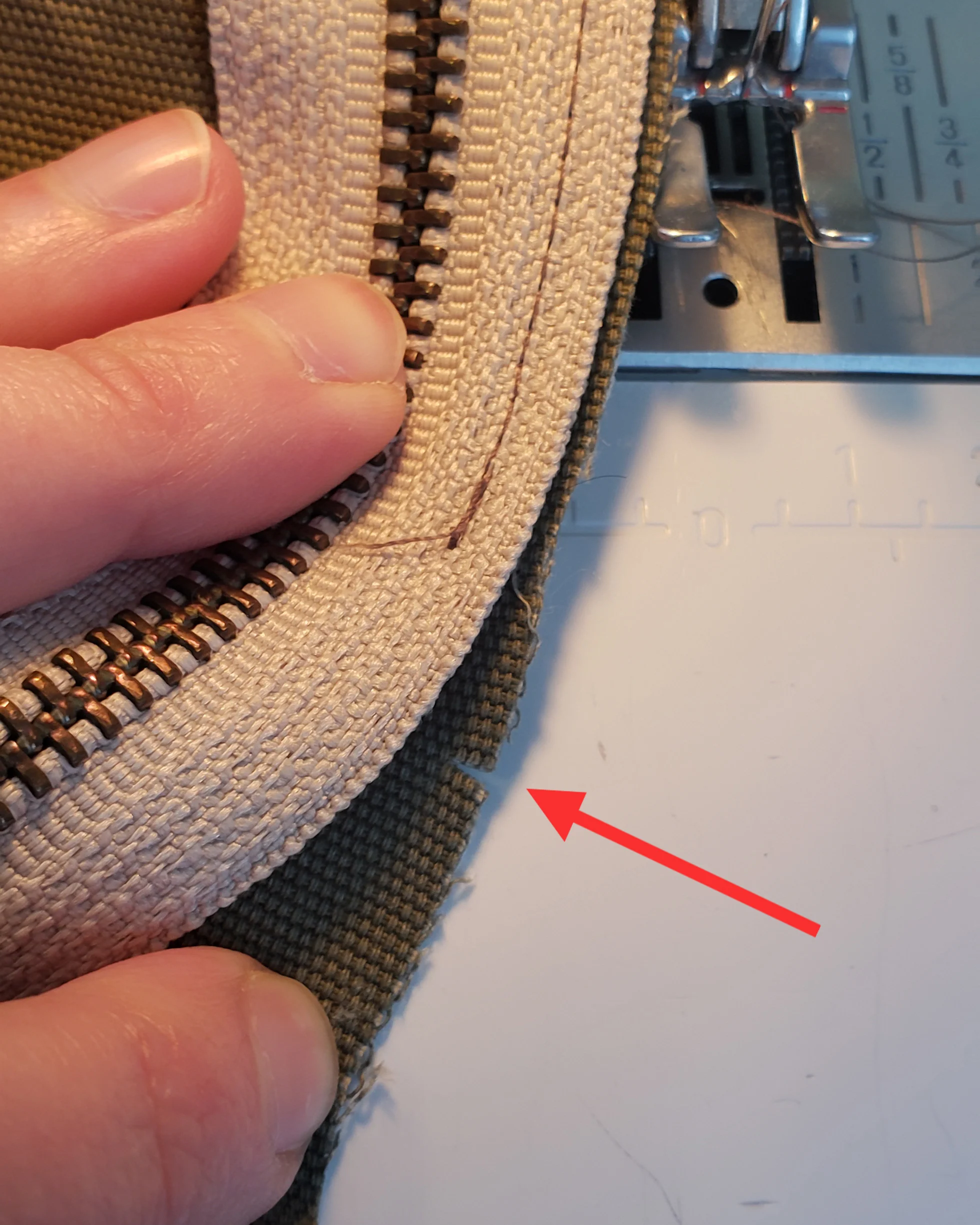
Investigating Recurring Quality Problems in Half-Zip Garments
An observed defect should be linked to evidence before a supplier selects corrective action. The following problems illustrate where material, component and sewing conditions may interact. These are technical investigation examples, not recorded MOVEVOX customer complaints.
Repeated Zipper Waviness
Business Impact: Repeated waviness can make fitted garment fronts look inconsistent across sizes or production lots. If the cause remains unknown, additional sewing adjustments may not prevent recurrence and could create further variation.
Proposed MOVEVOX Response: Compare the zipper, fabric, assembly reference and affected samples. Investigate relevant material and sewing conditions before proposing changes, then evaluate the result against the buyer's approved appearance criteria.
Evidence Tag: Assembly Comparison
Uneven Front Opening
Business Impact: An off-center or visibly asymmetric opening may affect premium presentation and collar alignment. The buyer may reject garments even when the zipper operates correctly, especially if the approved design requires precise symmetry.
Proposed MOVEVOX Response: Reconfirm pattern references, opening measurements and component positioning. Compare early production with the approved sample, identify whether the difference is isolated or repeated, and discuss appropriate corrective work.
Evidence Tag: Placket Reference
Slider Catching Fabric
Business Impact: Slider interference can undermine the intended closure function and lead to user complaints or product rejection. Repeated forcing of the slider may also damage adjacent material or complicate inspection decisions.
Proposed MOVEVOX Response: Examine the assembled garment to identify where interference occurs. Review nearby edges, clearances, facing, stitching and the specified slider before determining whether component or construction changes are needed.
Evidence Tag: Function Check
Excessive Guard Thickness
Business Impact: A guard intended to separate zipper hardware from the wearer may introduce unwanted bulk or contact. The accepted external appearance may not reveal a problem that becomes noticeable during use.
Proposed MOVEVOX Response: Compare the inside construction, material layers and fitting observations against the intended guard requirements. Discuss whether a construction change is appropriate, with physical sample evaluation before approval.
Evidence Tag: Contact Review
Opening-End Distortion
Business Impact: Distortion around the zipper's lower termination can change the garment's visible front appearance and raise concerns about local assembly integrity. Unclear causes may result in repeated revisions and delayed acceptance.
Proposed MOVEVOX Response: Inspect the stop, stitching, nearby fabric and actual loading or handling conditions. Confirm which variables require further investigation and assess corrective options against the approved physical reference.
Evidence Tag: Junction Inspection
Post-Wash Appearance Change
Business Impact: If washing changes the placket or collar appearance, the buyer may question whether the approved sample represents the product after normal care. Undefined care conditions make disputes harder to resolve.
Proposed MOVEVOX Response: Confirm the applicable care procedure and compare pre-treatment and post-treatment garment observations. Review fabric, tape and assembly changes, then identify any necessary material or sample reapproval.
Evidence Tag: Care Assessment
Controlling Zipper and Fabric Changes Before Bulk Production
A material or component substitution can change how the completed half-zip fits, operates and appears. The following proposed review categories connect the approved Bill of Materials with decisions about further testing, sampling and buyer authorization.
Zipper Construction
Functional Objective: Identify the approved zipper type and relevant component configuration.
Evidence Explanation: Similar-looking zippers may have different fastening elements, tape, strength characteristics or use recommendations. A proposed replacement should be compared with the actual approved zipper specification rather than accepted solely because its general appearance or nominal length matches. Any material difference affecting intended garment use may require additional evaluation.
Evidence Basis: Original and proposed supplier specifications, actual components and approval reference.
Tape Specification
Functional Objective: Confirm tape behavior remains suitable for the selected fabric.
Evidence Explanation: Tape material and construction can affect local stretch and sewing compatibility. If a supplier changes the tape, the completed front opening may require renewed physical assessment for appearance, handling and relevant garment movement. An identical nominal color or zipper chain does not prove the assembly remains equivalent.
Evidence Basis: Tape construction references, fabric sample and revised assembly trial.
Opening Length
Functional Objective: Keep closure geometry consistent with the accepted product design.
Evidence Explanation: Changing zipper length or stop positions may alter the relationship between the front opening, collar and garment proportions. A size change or component sourcing constraint should not automatically authorize a different opening length without reviewing the intended fit and technical drawing.
Evidence Basis: Approved zipper POM, size chart and physical sample comparison.
Slider and Puller
Functional Objective: Confirm acceptable operation and intended local hardware contact.
Evidence Explanation: A revised slider or custom puller can change handling, appearance and the way hardware occupies the area near the collar. Fit and operation should be reviewed where relevant. Branded components may also create separate purchasing minimums or development conditions that require commercial confirmation.
Evidence Basis: Supplier data, component sample and garment operation check.
Fabric and Reinforcement
Functional Objective: Review the compatibility of revised material layers with the closure.
Evidence Explanation: New fabric or reinforcement may change extension, thickness, recovery and sewing response near the placket. A change considered minor in the general garment specification could affect closure behavior. Buyers should determine whether physical construction comparison or suitable testing is necessary before approving the revised material.
Evidence Basis: Approved fabric and reinforcement references, proposed samples and evaluation plan.
Assembly Reference
Functional Objective: Connect the current construction with the approved garment version.
Evidence Explanation: A revision to seam allowance, facing, stitching or opening-end construction may affect previously accepted dimensions and appearance. The responsible parties should identify what changed and which acceptance criteria remain valid. A revised sample should not silently replace earlier approved manufacturing instructions.
Evidence Basis: Current Tech Pack, BOM version, approved sample and change authorization.
Understanding MOQ for Custom Half-Zip Workout Top Programs
Half-zip MOQ depends on the entire garment and its component requirements. MOVEVOX's normal Cut & Sew customization reference begins around 150 pieces under suitable conditions, but custom zippers, materials, colors and order structure can introduce separate minimums.
Standard Zipper Program
This scenario covers a garment using a suitable available zipper specification and commercially manageable fabric and construction requirements. An existing component can simplify selected sourcing discussions, but it does not eliminate the need for technical approval. The brand should provide the style, material direction, estimated order volume and color-size allocation before expecting confirmed production terms. MOVEVOX's approximate 150-piece Cut & Sew entry reference remains conditional on the actual project.
Quantity Basis: Approximately 150 garment pieces as a conditional starting reference.
Color / Size Split: Subject to confirmed style, material and production requirements.
Cost Considerations: Fabric availability, standard zipper sourcing, sewing complexity and branding.
Customized Closure Program
A project requiring a special tape, custom puller, nonstandard zipper color or revised hardware may have purchasing conditions different from the finished garment MOQ. Additional sampling, material approval or supplier coordination could also be necessary. The buyer should distinguish garment production quantities from the minimum quantity of a customized component. A small garment order does not automatically qualify for an equally small custom hardware order, even when other details remain unchanged.
Quantity Basis: Project-specific garment and component minimums requiring confirmation.
Color / Size Split: Evaluated alongside special zipper and material specifications.
Cost Considerations: Custom hardware, development, supplier minimums and assembly review.
Multi-Color Bulk Program
A half-zip collection containing several colors or different material combinations may require separate fabric and zipper sourcing decisions. The buyer should identify quantities by style, color and size rather than relying solely on an overall total. Multiple zipper colors or special finishes may affect commercial feasibility, even where the garment construction remains similar. The appropriate MOQ and pricing must reflect actual supply conditions, approved materials and production allocation.
Quantity Basis: Confirmed per-style and relevant material or trim conditions.
Color / Size Split: Specify every colorway and planned garment-size allocation.
Cost Considerations: Color sourcing, inventory fragmentation, setup and packing requirements.
Coordinating Zipper Sourcing and Half-Zip Production Timing
Half-zip production depends on both garment materials and the selected closure components. A workable schedule should distinguish material readiness, sample approval, sewing preparation and final inspection, particularly when a custom zipper or revised placket construction affects the critical path.
Proposed Production Timeline
| Phase | Estimated Timing Basis | Prerequisite | Buyer Confirmation |
|---|---|---|---|
| Fabric Readiness | Project-specific | Approved or proposed fabric references | Confirm material requirements |
| Zipper Readiness | Supplier-dependent | Approved zipper and trim specifications | Confirm closure components |
| Sample Development | Normally 5–10 working days after standard development details are confirmed, subject to complexity | Sufficient specifications and material availability | Review technical sample |
| PP Approval | Buyer-dependent | Relevant sample, fit and component evaluations | Approve production references |
| Cutting & Assembly | Order- and schedule-specific | Released materials and production requirements | Confirm applicable instructions |
| First Article | Project-dependent | Initial production garment available | Resolve critical findings |
| Bulk Inspection | Order-dependent | Finished garments and agreed inspection plan | Review applicable release |
| Packing & Shipment | Order-specific | Accepted goods and packing information | Confirm delivery documents |
Factors That May Change the Schedule
Custom pullers, special zipper tapes, unavailable colors, complex materials, fit revisions and additional testing can change the development and purchasing timeline. Standard bulk production is commonly discussed around 20–35 days under confirmed project conditions, but those figures are not guaranteed for every half-zip program. Production allocation must consider current resources, material readiness and the agreed approval sequence. A schedule should not be treated as confirmed before the relevant order assumptions have been reviewed.
Actual MOVEVOX Resources for Custom Half-Zip Manufacturing
MOVEVOX operates a Yiwu manufacturing base with Cut & Sew, product development and QC resources. These figures support initial supplier qualification; actual zipper construction, machine suitability and production allocation still require confirmation for the proposed style.
Garment Production Equipment
MOVEVOX's core system has approximately 24 principal sewing and garment-making devices. This figure does not establish a dedicated automatic zipper installation line.
Product Development Personnel
The development organization includes design, patternmaking and sampling roles. It supports product development discussions but does not mean eight dedicated zipper engineers.
QC Personnel
The existing QC organization supports garment quality management. Specific half-zip inspection methods and test evidence require product and project confirmation.
Operating Space
This is the approximate overall operating area of MOVEVOX's manufacturing organization, not exclusively the area allocated to half-zip production.
Data Scope: Operational figures describe MOVEVOX resources; available half-zip capacity depends on confirmed orders, equipment suitability and production arrangements.

A Technical Audit Checklist for Half-Zip Manufacturers
A mature sourcing team should examine factory responsibility, component specifications, construction capability and relevant quality evidence together. This checklist is a proposed buyer evaluation resource, not a certificate, completed audit or preassigned MOVEVOX qualification score.
A — Manufacturing Responsibility
- Confirm the actual Cut & Sew factory and the responsible production entity.
- Identify where zipper installation, collar assembly and finished inspection occur.
- Distinguish in-house operations from externally coordinated manufacturing or finishing.
- Request suitable production evidence for the proposed half-zip construction.
B — Zipper and Construction
- Verify the zipper type, tape, slider, stops and approved component references.
- Confirm construction specifications for the placket, opening end and collar junction.
- Review zipper-to-fabric compatibility using the actual intended materials.
- Check protective facing and relevant wearer-contact requirements in physical samples.
C — Sample and Quality
- Review open and closed garment fit against approved sample conditions.
- Confirm critical garment measurements and size-specific zipper opening requirements.
- Establish acceptable zipper operation, placket appearance and defect classifications.
- Review which tests, inspection records and approvals are genuinely available.
D — Commercial and Change Control
- Clarify garment MOQ separately from customized zipper and material minimums.
- Verify trim sourcing assumptions, sample timing and proposed bulk schedules.
- Identify how component or construction substitutions require buyer authorization.
- Review which released specifications guide initial production and repeat orders.
Interpreting the Audit
Suggested Evaluation: Yes / No / Further Evidence Required
This checklist should help the brand identify missing information and technical risks rather than create a misleading supplier score. Evidence of actual production capability, appropriate samples and clearly assigned responsibilities may carry greater importance than a high total of routine Yes answers. Requirements should be weighted according to the proposed product and purchasing risk. Certificates, where requested, need verification of holder, validity, site and relevant scope. Unverified outcomes must remain open until suitable evidence has been supplied.
Preparing Technical Information for Your Custom Half-Zip RFQ
An accurate half-zip quotation should reflect garment construction and zipper-specific requirements rather than a reference photograph alone. The following information helps identify approved specifications, development assumptions, component sourcing conditions and the technical questions that remain open.
Product and Activity
Required
Describe the intended garment, such as a fitted training top, cropped workout top, running quarter-zip or lightweight midlayer. Identify the principal activity and the expected fit. These details help establish which structural and comfort requirements are relevant to the project.
Technical Sketches
Required Where Available
Provide front, back and important detail views. Identify the intended zipper opening, collar, sleeves, hem and relevant panel construction. Where drawings are preliminary, mark the unconfirmed features so development assumptions are not mistaken for approved instructions.
Main Fabric Specification
Recommended
Supply the intended composition, weight, stretch, recovery, hand feel and relevant supplier reference. If the final fabric is not selected, indicate the required performance and appearance priorities. Sample approval may depend on how the material behaves beside the zipper.
Zipper and Tape
Recommended
Identify zipper type, chain or element construction, tape requirements and any mandatory supplier reference. If the buyer expects stretch-oriented tape or another specialized component, provide that requirement explicitly. Comparable-looking components may not be functionally interchangeable.
Slider and Puller
Project-Dependent
Specify the desired slider and puller, including finish, size or branding requirements where relevant. Clarify whether the component is an existing product or requires custom development. These decisions may influence contact assessment, material availability and purchasing minimums.
Opening and Placket
Required
Define intended zipper opening length, front-center position and relevant placket construction details. Include any reference for the lower opening end, seam allowance or facing. A technical drawing is particularly useful where the opening proportion affects a fitted or cropped design.
Collar and Guard
Recommended
Provide collar height, neckline reference, upper zipper position and any protective facing or chin-guard design. If wearer-contact comfort is a critical feature, specify the intended conditions for review rather than relying on a generic anti-chafe claim.
Sewing and Reinforcement
Project-Dependent
Describe mandatory seam constructions, edge finishing and any intended reinforcement. If no method has been approved, identify the desired appearance and function so suitable construction options can be discussed without presenting untested methods as guaranteed solutions.
Size and Grading
Recommended
Submit size charts, critical POMs and intended grading rules. Include zipper opening length and collar dimensions where they are important to fit. Specify whether the same zipper length should be used across the size range or requires further evaluation.
Functional Requirements
Project-Dependent
Identify important closure, appearance, movement, wash or contact requirements. Include actual test methods and acceptance limits if they have been defined. If a requested performance claim has no verified test basis, mark it for clarification before approval.
Quantity and Branding
Required for Pricing
Provide estimated garments by style, color and size, together with logo, labeling and packaging requirements. Indicate whether special zipper colors or branded pullers are mandatory. Garment quantities may not satisfy separate material or trim purchasing minimums.
Target Schedule
Recommended
State the intended sample review date, bulk delivery target and relevant launch milestones. Identify whether third-party testing, special hardware development or vendor qualification is expected. Production timing can only be confirmed after the technical and commercial conditions are understood.
When Information Is Incomplete
MOVEVOX can begin development discussions using a Tech Pack, clear garment brief or lawful physical reference sample. Missing details should be identified before firm material, sampling or production commitments are made. Actual zipper availability, specialized manufacturing feasibility, garment MOQ, testing and schedule depend on the project. A preliminary technical review can help clarify which specifications need further definition before the buyer requests a final quotation.
Frequently Asked Questions About Half-Zip Workout Top Manufacturing
These answers address closure construction, stretch-fabric compatibility, wearer contact, sample approval and commercial requirements. Final technical decisions depend on the proposed garment and confirmed manufacturing conditions.
1. Are half-zip and quarter-zip workout tops the same?
The names are frequently used for related short-front-opening garments, but they do not establish one fixed zipper length. The actual design should define the opening dimension, collar construction, finished proportions and intended product use. A cropped fitted top may require different geometry from a longer training layer. MOVEVOX can discuss the proposed design through its Cut & Sew development capabilities. Buyers should provide an approved sketch, sample or measurement reference rather than relying only on either commercial term.
2. Can MOVEVOX develop a custom half-zip from a Tech Pack?
MOVEVOX has Cut & Sew manufacturing and product development resources and can discuss custom garment development from a Tech Pack, clear design requirements or a lawful reference sample. A half-zip brief should identify the main fabric, front opening, collar, fit and component needs. Not every specialized zipper or construction can be confirmed without feasibility review. Sampling, pricing and production timing depend on the actual details, material availability and development requirements.
3. How can zipper tape be matched with stretch fabric?
The relevant question is whether the selected tape, garment fabric and sewing construction are compatible with the intended opening and fit. Different tapes have different flexibility and strength characteristics. A suitable review may compare material specifications, assembly trials, placket appearance and garment behavior under defined conditions. There is no universal zipper tape that guarantees a smooth result with every stretch knit. Component and garment approval should remain linked to the actual product.
4. What can cause zipper waviness or placket puckering?
Potential factors include different material extension, zipper tape behavior, feeding conditions, stitching, component length relationships, reinforcement and garment construction. The observed appearance should be compared with the approved sample before assigning a cause. A change intended to reduce waviness can introduce other effects, such as local stiffness. MOVEVOX can discuss relevant development and inspection requirements, but an exact solution must be validated on the actual material and zipper assembly.
5. How should chin-guard comfort be evaluated?
The evaluation should consider the zipper top stop, slider, guard shape, collar height and nearby inside seams as a connected system. A protective facing is not a universal guarantee against chafing. Buyers may review the garment in relevant zipped positions and movements, using consistent fitting and contact criteria. Perspiration-related comfort may require additional wearer observations. Without specific evidence, MOVEVOX should not claim the design prevents all friction or skin irritation.
6. Why should fit be checked with the zipper open and closed?
A half-zip changes its front-opening and collar configuration during use. The garment may look acceptable when fully zipped but behave differently when partly open or during arm movement. Fit evaluation should consider the intended wearer, size, fabric, opening length and activity conditions. Slider operation should also be reviewed separately from garment fit. A technical sample provides the basis for approval; a static photograph does not establish comfort or movement performance under all conditions.
7. Which zipper and garment tests may be needed?
The required evidence depends on the zipper specification, garment use and buyer quality requirements. ASTM D2061 provides methods for selected zipper and component strength properties, but it does not establish every aspect of garment suitability. Brands may also consider operation, placket appearance, dimensional change, washing behavior and relevant fit or wearer-contact evaluation. Specific procedures and acceptance limits should be agreed for the product. MOVEVOX has not supplied verified half-zip-specific test results for this page.
8. Must the zipper length change across garment sizes?
Not necessarily. Some designs may use the same opening length in several sizes, while others require different dimensions to maintain the intended proportions or neckline fit. The decision should consider collar height, front-body geometry, garment length and the approved size range. Buyers should confirm relevant zipper and garment POMs in the Tech Pack and assess physical samples where necessary. No universal MOVEVOX zipper grading rule should be assumed.
9. How do custom zippers affect MOQ and sampling time?
Custom zipper tape, colors, pullers or other components may have purchasing minimums and development conditions separate from finished garments. MOVEVOX's ordinary Cut & Sew customization entry point can begin around 150 garment pieces under suitable circumstances, while standard sampling is generally discussed around 5–10 working days after relevant details are confirmed. Those references are conditional. Special hardware, material availability or additional technical review may change the actual MOQ, sampling requirements and schedule.
10. What should our team submit for a half-zip quotation?
Provide the product type, design sketches or Tech Pack, selected fabric, zipper requirements, opening length, collar and guard details, size range and intended quantities. If available, include approved sample references and relevant testing or workmanship criteria. Specify any custom puller, color or branding requirements because these can affect sourcing. MOVEVOX can review incomplete specifications as an initial development discussion, but a firm commercial quotation requires sufficient project detail.
Send Us an Inquiry
Tell us your needs, and our team will get back to you within 24 hours.