
Seamless Activewear Manufacturer in China for Established Brands
Review real circular-knitting resources, technical development controls, manufacturing responsibility and qualification evidence before committing to a new China sourcing partnership.
MOVEVOX supports custom seamless activewear through its Yiwu manufacturing operation equipped with Santoni circular-knitting machines. Our teams can review technical packages, yarn references, knitted structures and approved samples with established brands. For a sourcing decision, distinguish verified factory resources from style-specific performance, delivery and capacity commitments. Start with the manufacturing evidence, then request a technical and commercial assessment of your proposed products.
Four manufacturing facts for initial screening
Italian Santoni seamless knitting machines form the documented equipment base at the Yiwu core manufacturing facility; suitability depends on each style's requirements.
Operational space in MOVEVOX's six-floor Yiwu facility includes manufacturing and supporting functions, not the area of partner factories.
Product development personnel support technical clarification and sample review; individual project workloads and specialized machine configurations require confirmation.
Quality personnel support documented inspection stages; these headcount figures do not imply every product or performance claim is certified.
What Makes a China Seamless Supplier Qualifiable?
Direct answer: A China-based seamless supplier is suitable for a brand's shortlist when the buyer can establish its legal and manufacturing identity, relevant circular-knitting resources, responsibility for technical development, approved production locations and quality evidence. A product catalogue alone cannot verify that the supplier operates the machines or controls the production standards behind a proposed order.
Contracting and factory identity
MOVEVOX operates as an international B2B brand through Yiwu Chenjin Import And Export Co., Ltd. Its Yiwu core manufacturing site must be distinguished from the legal seller and cooperative facilities.
Technical knitting evidence
Review actual equipment, yarn references, relevant knit structures, sample identity and program versions. A machine image does not prove compatibility with every requested garment size or feature.
Site and change authorization
Ask which facility will knit, finish and inspect the products. Buyer restrictions on subcontracting, site substitution and technical change require explicit approval conditions rather than assumptions.
Project-specific quality evidence
Match each inspection record, certificate or test report to the relevant sample, material, location and date. Missing records remain open evidence items; they are not implicit approvals.
Why it matters: Initial supplier screening establishes whether further technical evaluation is justified. Formal RFQ and purchase-order approval require the brand to evaluate the actual proposed style and production route.
Identify Who Controls Each Manufacturing Operation in China
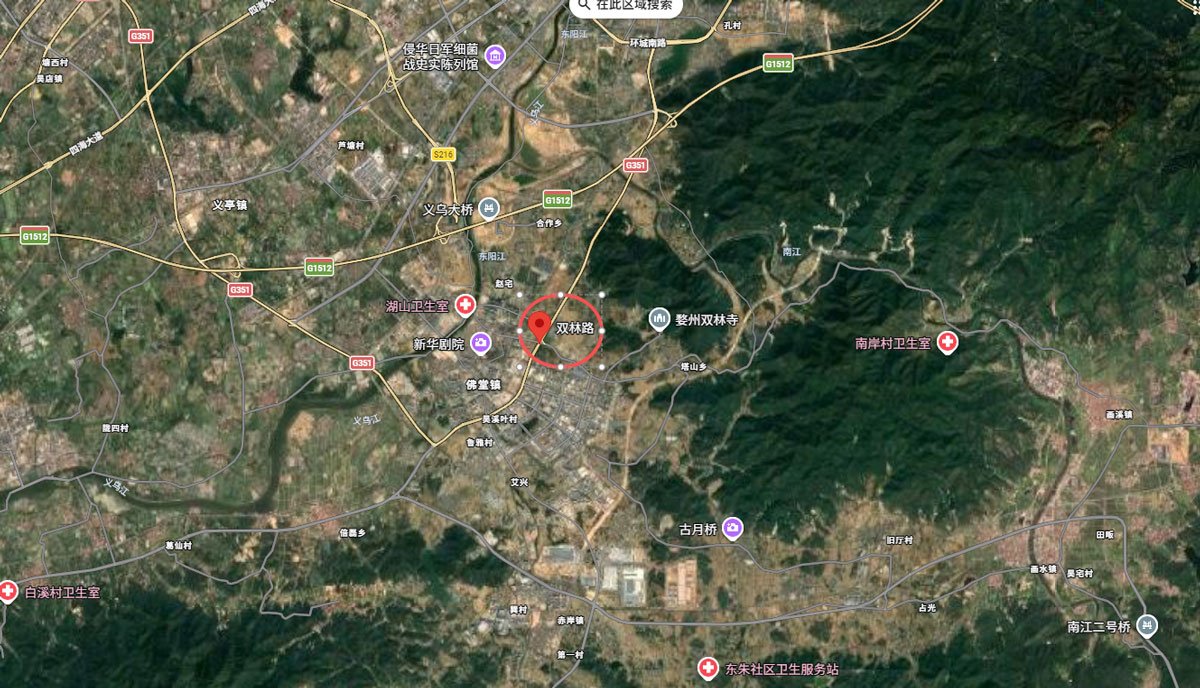
MOVEVOX uses a Yiwu core manufacturing base and separately identified cooperative resources. Buyers should distinguish the entity signing commercial documents from the facility carrying out production, and should verify which party owns each technical, quality and delivery decision.
Contracting Entity
MOVEVOX is the international brand. Yiwu Chenjin Import And Export Co., Ltd. is the named legal business behind commercial contracting. Seller identity, approved payment information and vendor registration require matching documents.
Yiwu Core Base
The core operation contains the documented Santoni machinery and production-support functions. Its approximately 6,000 m² operating footprint must not include the premises or equipment belonging to cooperative partners.
Yarn Suppliers
Yarn composition, color, supply source and lot references influence knitted output. Material suppliers provide inputs; their declarations must be checked against the approved yarn and actual order-specific information.
Cooperative Facilities
The factual record identifies eight separate cooperative factories in Yiwu and Guangzhou. They are not all MOVEVOX-owned sites. Buyer approval and contractual restrictions determine if an external facility may operate on an order.
Project and QC
Development and quality teams coordinate sample references, technical revisions, first articles, inspections and discrepancy handling. Buyers should confirm decision owners and access to applicable records rather than assuming every process is automated.
Logistics Partners
Packaging, freight and specialist services may involve different parties. A supplier's coordination role is not proof that each service happens inside the Yiwu base or that every trade term is available.
Unified management explanation: For a proposed project, an effective supplier review assigns the operating site, document owner and approval point to each manufacturing stage. MOVEVOX's own site and cooperative model provide the factual starting structure for this review. The buyer should request a site-responsibility matrix covering authorized operations, external processes, change notifications, QC release and escalation contacts. Such a matrix is a recommended procurement instrument, not evidence that a specific customer order has already passed an audit.
Verify the Circular-Knit Process Behind Each Seamless Garment
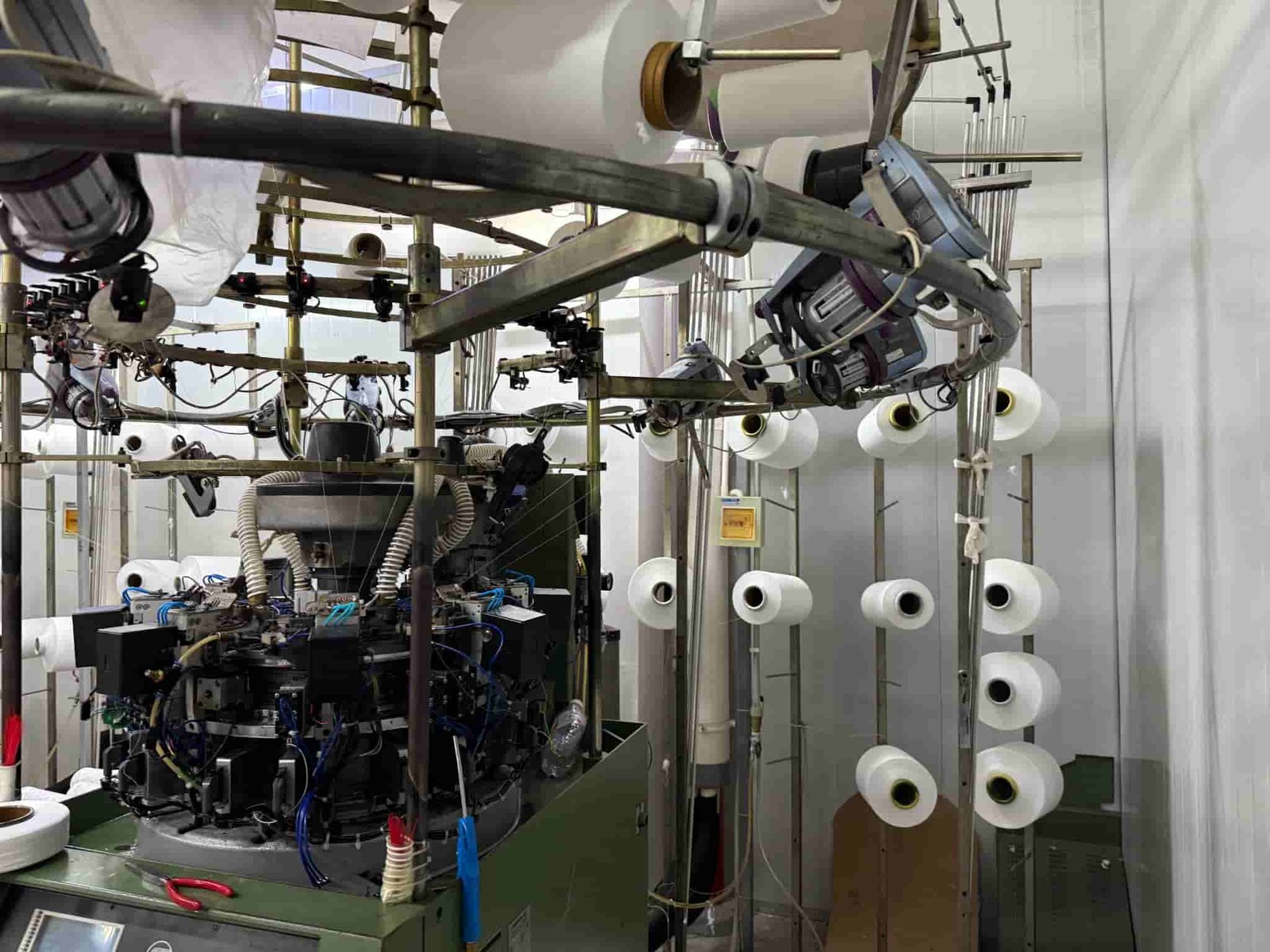
A factory audit should follow one proposed product through the actual manufacturing sequence, not stop at a showroom sample. The sequence below is a technical review framework; exact routing and outside processes depend on the approved garment, materials and site allocation.
01. Specification Review
Responsible: Development. QC gate: Input check. The buyer's Tech Pack, reference garment, sizes, knitted zones and planned quantity establish the initial review. Missing information is logged before machinery or a supplier is assumed compatible. Clarify product ownership and which reference is authoritative.
02. Yarn Readiness
Responsible: Materials. QC gate: Lot reference. Review composition, count, elastic components, shade availability and material origin. A quoted yarn is not an approved production input until its commercial availability and relevant specifications have been checked against the particular style and requested colors.
03. Program Setup
Responsible: Knit technician. QC gate: Revision ID. A circular-knit program translates structure locations, rib or mesh regions and size conditions into machine instructions. The program identity should remain linked to the sample revision; a change must not silently replace an approved technical basis.
04. Trial Knitting
Responsible: Knitting. QC gate: Trial review. A first trial permits observation of stitch formation, zone placement, initial dimensions, holes and yarn behavior. A usable trial is development evidence, not authorization to release all colors, sizes or production lots without further review.
05. Fit Confirmation
Responsible: Development. QC gate: Sample approval. Once relevant finishing and garment operations are complete, assess measurements, stretch behavior, visual structure and intended fit. Buyer feedback should identify which technical variables must change and whether another sample is needed.
06. Bulk Knitting
Responsible: Production. QC gate: First article. Approved program and material references inform the planned knitting run. At start-up, an approved first article and process checks can detect zone displacement, knitting faults or dimensions drifting from the agreed specification.
07. Garment Finishing
Responsible: Production. QC gate: Condition check. Dyeing, relaxation, heat treatment, connecting operations and other applicable finishing steps may change measurements or surface appearance. Record the actual sequence and revisit the sample if a major input or treatment condition is substituted.
08. Finished Inspection
Responsible: QC. QC gate: Release decision. Check product identity, sizes, knitted appearance, workmanship, branding, accessories and packaging against the agreed inspection plan. Nonconforming goods should be segregated for a disposition decision and rechecked before acceptable goods are released.
Link Engineered Knit Zones to Approved Program Versions
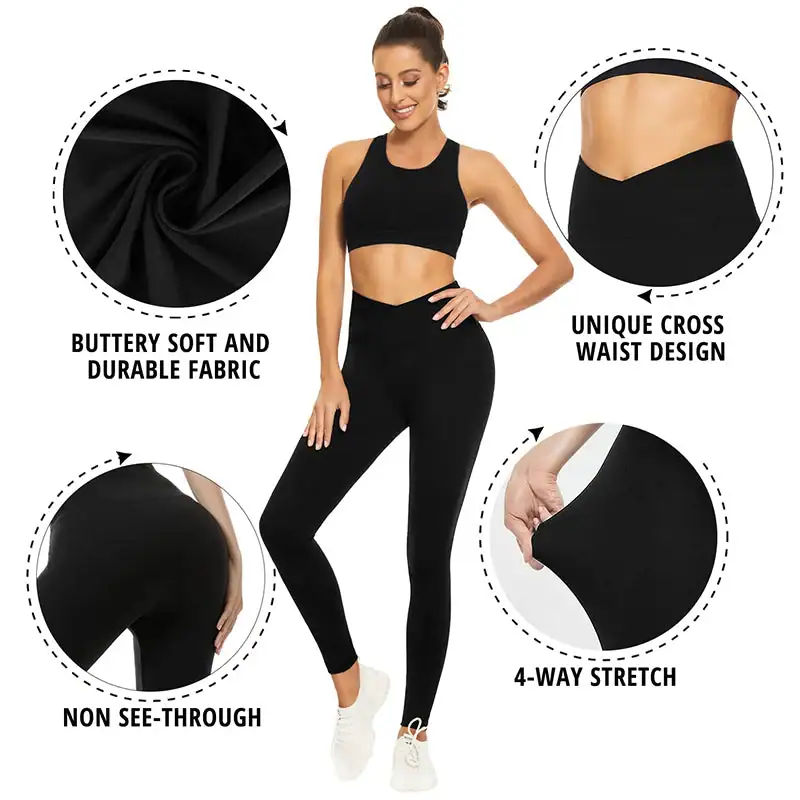
A seamless garment may combine multiple structures within one knitted body. For sourcing purposes, the critical question is whether each visible region is linked to a feasible yarn, machine setup, technical revision and accepted sample—not whether a garment photograph contains fashionable texture.
Waistband Rib
A structured waistband may use rib formation and yarn tension choices to influence fit and visual definition. Its performance should be considered together with finished circumference, relaxation, wearer measurements and actual approved stretching behavior.
Front Body
The front panel may need a specified plain-knit or textured appearance and dimensional stability. Buyers should verify that its location and boundaries remain acceptable across relevant sizes, rather than assuming a single image represents the entire production size range.
Side Texture
Jacquard or rib areas may establish a distinctive surface or visual line. The technical brief should define position, repeat and acceptable variation. Texture by itself does not demonstrate a measured compression, slimming or performance result.
Ventilation Mesh
Open-knit regions may be proposed where a product requires greater local openness. Air permeability, stability and coverage depend on actual yarns and construction; any quantitative cooling or moisture-performance claim requires appropriate testing and declared conditions.
Hip Transition
Changes between knit structures may create differences in stiffness and stretch. Review the transition area for puckering, visual discontinuity, stability and acceptable distortion when worn, and do not assume one tension setting fits every yarn and size.
Leg Opening
The lower opening of a short or legging needs an approved construction, finished measurement and stretch behavior. A comfortable edge in a sample may require further review after dyeing, finishing or changing the size distribution.
Rear Body
Back-panel shaping and texture position can affect the appearance and fit of the garment. Confirm garment orientation, zone repeat, accepted measurements and the buyer's intended visual outcome instead of representing knitting structure as verified anatomical support.
Engineering explanation: Yarn elasticity, machine capability, stitch formation, knitting-zone placement and finishing conditions interact. A program change can alter the same garment's length, circumference, visual repeat or local stretch. A responsible review therefore links the proposed structure map to a named sample and approved technical revision. MOVEVOX's documented programming and sample-review capability provides a basis for this discussion; a finished structure, pressure distribution or performance result must still be demonstrated with the actual product and specified evidence. Sensitive machine files need not be published to confirm that revision control exists.
Assess Machine Compatibility Before Starting Seamless Development
A knitted sample is only valuable when its manufacturing route can be repeated under agreed production conditions. The following buyer-oriented matrix connects project inputs with the consequences of unsupported assumptions and the questions a technical review should resolve.
| Technical issue | Potential procurement impact | Proposed review response |
|---|---|---|
| Machine and size range. A desired tubular width or grade range may not fit every available machine configuration. | An attractive prototype may require another machine family or revised dimensions, affecting sample comparability and commercial assumptions. | Confirm the actual machine model, supported configuration and planned size architecture before promising a fully graded product or estimating production output. |
| Yarn compatibility. The original composition may use an unavailable count, finish or elastane arrangement. | Substitution can alter gauge behavior, handfeel, fabric relaxation, finished dimensions and cost; an unchanged product photograph cannot prove equivalence. | Identify proposed yarn references, supply terms and trial-knit needs, then obtain buyer approval where a material specification changes. |
| Zone complexity. Knit structures can compete for stitch density, garment space and stability. | Overly complex zoning may distort the intended product, raise setup effort or create avoidable repeated sample revisions. | Divide required zones into essential and optional features, then assess their feasibility on an identified machine using a controlled trial. |
| Finishing dependency. Dyeing, relaxation and other treatments can change the knitted dimensions. | A machine-off sample may match visual expectations while the completed garment exceeds dimensional tolerances or differs in shade. | Define finished-product measurement points, review the complete manufacturing route and evaluate the sample after the intended finishing sequence. |
| Approval and scale. Trial settings and commercial production may not share identical setup conditions. | Buyer approval could become ambiguous if later program adjustments or site changes are undocumented, delaying release and increasing rework. | Record sample, yarn and program references; establish technical release criteria and disclose any proposed material, program or production-site changes. |
Feasibility classification: Green means the proposed route can proceed to an agreed development stage; Yellow means trial or evidence is required; Red means the current proposal needs a technical redesign or alternative route. None of these labels represents a completed MOVEVOX project certification.
Eight Red Flags During China Seamless Supplier Screening
A strong sourcing process distinguishes an evidence gap from a proven violation. The following warning signs are prompts for questions and document requests, not allegations about particular factories or competitors in China.
Unclear Manufacturing Address
A supplier may show products and machinery while avoiding a precise, reviewable manufacturing location. Sales-office details alone do not prove where the approved PO will be knitted, finished or inspected. Treat this as an unresolved qualification item until locations and activities have been identified.
Buyer check: Request facility names, addresses, proposed operations and any buyer approval conditions for each location before sample-to-bulk release.
Mixed Legal Identities
The marketing brand, commercial company, owner of the facility and export documentation may show different names. This can be legitimate, but unexplained relationships complicate contracting, factory approval and escalation when a production dispute occurs.
Buyer check: Map the brand, contracting entity, production site and invoicing entity using authorized registration and commercial documentation.
Unverifiable Machine Claims
A Santoni photograph does not establish how many machines are operational, which belong to the facility or whether they fit the buyer's product. Undated counts or contradictory totals should trigger further technical inquiry, not an automatic rejection.
Buyer check: Review dated equipment information, relevant operating areas and machine suitability for the specific product without requesting proprietary program disclosure.
Unknown Knitting Responsibility
The named supplier may handle sampling, sales or finishing while knitting is performed elsewhere. Such an arrangement can be workable if it is disclosed and contractually approved, but it requires a different audit and quality-control plan.
Buyer check: Ask who creates programs, who operates the knitting equipment, where output is produced and who approves technical changes.
Unapproved Site Substitution
A production site may change after samples are approved because of capacity or scheduling pressure. If the buyer's contract restricts factory changes, a substitute facility needs explicit authorization even when the supplier claims equivalent quality.
Buyer check: Include production-site identification, escalation obligations and prior-approval requirements in the purchase order or applicable supplier agreement.
Untraceable Material Changes
A new yarn lot, shade or elastane arrangement can affect knitting behavior and finished dimensions. Buyers face greater comparison risk when a supplier cannot link samples and bulk material references through relevant records.
Buyer check: Obtain appropriate yarn references and lot records, and require approval of substitutions that affect the defined product specification.
Unclear Capacity Basis
High monthly output figures may combine owned and partner facilities, multiple categories or an optimistic machine utilization scenario. Such totals cannot reveal the capacity available for a specific program on a particular date.
Buyer check: Request a style-specific review showing the production stages, current load, materials and approved manufacturing locations used in the estimate.
Missing Release Records
If a supplier cannot identify the approved sample, first-article check or final disposition of nonconforming garments, the buyer may struggle to resolve later differences between samples and bulk deliveries.
Buyer check: Review redacted sample approval, inspection, hold-and-release and corrective-action examples, with their scope and limitations stated.
Find the Right Route for Your Seamless Sourcing Project
The appropriate first step depends on whether you are developing a new knitted concept, introducing a second supplier, expanding production or conducting formal supplier qualification. Each route requires different technical inputs and carries different approval risks.
New Seamless Collection
A brand adding seamless styles should first define product categories, target users and the intended knitted zones. Before discussing prices, distinguish standard structures from proposed new patterns, and decide whether the intended material, color and fit requirements can be evaluated with available machinery. A successful review produces a realistic next step, not a guarantee that every design is manufacturable.
Buyer provides: Product brief; target size range; material or image references.
Proposed MOVEVOX outputs: Preliminary feasibility notes; sample-input list; agreed development questions.
Existing Style Transfer
Brands moving a current product should identify which specifications are owned and transferable, including physical references, measurements, yarn information and performance criteria. The original knitting program or equipment may be unavailable. A new supplier should therefore assess reconstruction needs rather than claiming exact replication from one image. Sample comparison and technical sign-off remain separate gates.
Buyer provides: Authorized reference garment; available specifications; acceptance priorities.
Proposed MOVEVOX outputs: Transfer risk register; missing-data review; trial-sample proposal.
Additional Production Capacity
An established seamless program may need a second manufacturing source or greater planned output. Capacity screening must consider yarn availability, program transfer, site approval, production mix and inspection responsibilities. Overall factory machine totals cannot establish immediate availability for the requested launch date. Brands should request a scoped loading assessment against defined SKU quantities and dates.
Buyer provides: Style quantities; color-size matrix; requested delivery window.
Proposed MOVEVOX outputs: Capacity-input checklist; process bottleneck review; conditional scheduling discussion.
Vendor Qualification
Large buyers may need identity evidence, manufacturing-site declarations, technical capability descriptions and document scope before purchasing. These materials should identify what is available for review, what is commercially confidential and what depends on the buyer's audit protocol. Qualified for discussion is not the same as approved for all products or production locations.
Buyer provides: Audit requirements; approved-site policy; compliance document list.
Proposed MOVEVOX outputs: Relevant factual profile; evidence gap list; review meeting agenda.
Review Seamless Product Categories Against Manufacturing Requirements
A genuine seamless manufacturing shortlist starts with the buyer's garment architecture. Leggings, bras, shorts and tops may share circular-knit technology but have different yarn, dimension, support and finishing requirements. Select a category to understand what should be checked before development or RFQ.
Seamless Leggings
The brief should identify rise, waistband structure, crotch construction, intended surface and required size range. Knit-zone position and finished dimensions matter at least as much as how the product appears in a catalogue. Specialized support or opacity claims should be assessed with the actual material and garment rather than inferred from the word seamless.
Technical inputs: Waist/hip measurements; knit-zone references; yarn and finish.
Primary approval: Finished fit and structure placement.
Seamless Sports Bras
A bra may need distinct underband, cup-area, strap and back constructions, with additional finishing or component operations. Compression and support are not equivalent to a tested impact rating. The buyer should provide wear-use expectations, intended cup coverage, sizes, materials and any required support assessment methods.
Technical inputs: Underband fit; strap/back layout; component specification.
Primary approval: Fit and buyer-defined support evaluation.
Seamless Shorts
Seamless shorts require attention to leg-opening stability, waistband fit, crotch construction, fabric recovery and coverage. A shorter product is not automatically easier to manufacture: the usable knit geometry, size progression and finishing may differ substantially from a leggings style built around the same fabric appearance.
Technical inputs: Inseam/rise; leg-opening data; contact-area priorities.
Primary approval: Fit, measurements and finish.
Seamless Tanks and Tops
Upper-body garments require an appropriate balance between chest circumference, hem stability, neckline and armhole finishing. An engineered mesh region may help create a distinctive surface but does not guarantee a specified ventilation performance. Final approval should distinguish the knitted main body from any subsequent joining or trimming operations.
Technical inputs: Body dimensions; neckline/armhole; knit-zone layout.
Primary approval: Finished silhouette and workmanship.
Coordinated Seamless Sets
Matching color and texture across bras, leggings and tops is a collection decision, while fit and program approval remain garment-specific. Do not combine several styles into one technical approval simply because they use a shared yarn or branding palette. Material and color lot coordination needs a separate commercial and quality review.
Technical inputs: SKU matrix; shared material; individual size charts.
Primary approval: Each SKU plus collection-level appearance.
Ribbed Seamless Leggings
An engineered rib appearance can create recognizable texture, but the relevant yarn, machine setup, stretch behavior and placement must be evaluated as a product specification. Texture does not automatically establish compression or body-shaping performance.
Tags: Leggings / Rib / Structure.
Primary approval: Rib repeat and finished-size consistency.
Seamless Biker Shorts
A longer seamless short variation may require separate decisions for inseam, leg opening, waistband stability, knitted-zone placement and finished garment measurements. Its production route must be reviewed against the specific machine and yarn requirements.
Tags: Shorts / Biker / Fit.
Primary approval: Hem behavior and finished dimensions.
Specialized Structures
Textured, ribbed or locally open-knit designs may require additional programming, trial knitting and material assessment. The technical feasibility of a particular jacquard repeat, compression zone, complex shape or size range cannot be guaranteed from a standard product photograph or a generic machine count.
Technical inputs: Structure map; target effect; acceptance conditions.
Primary approval: Trial-knit feasibility and reference garment.
Compare Knitting Structures by Risk and Product Purpose
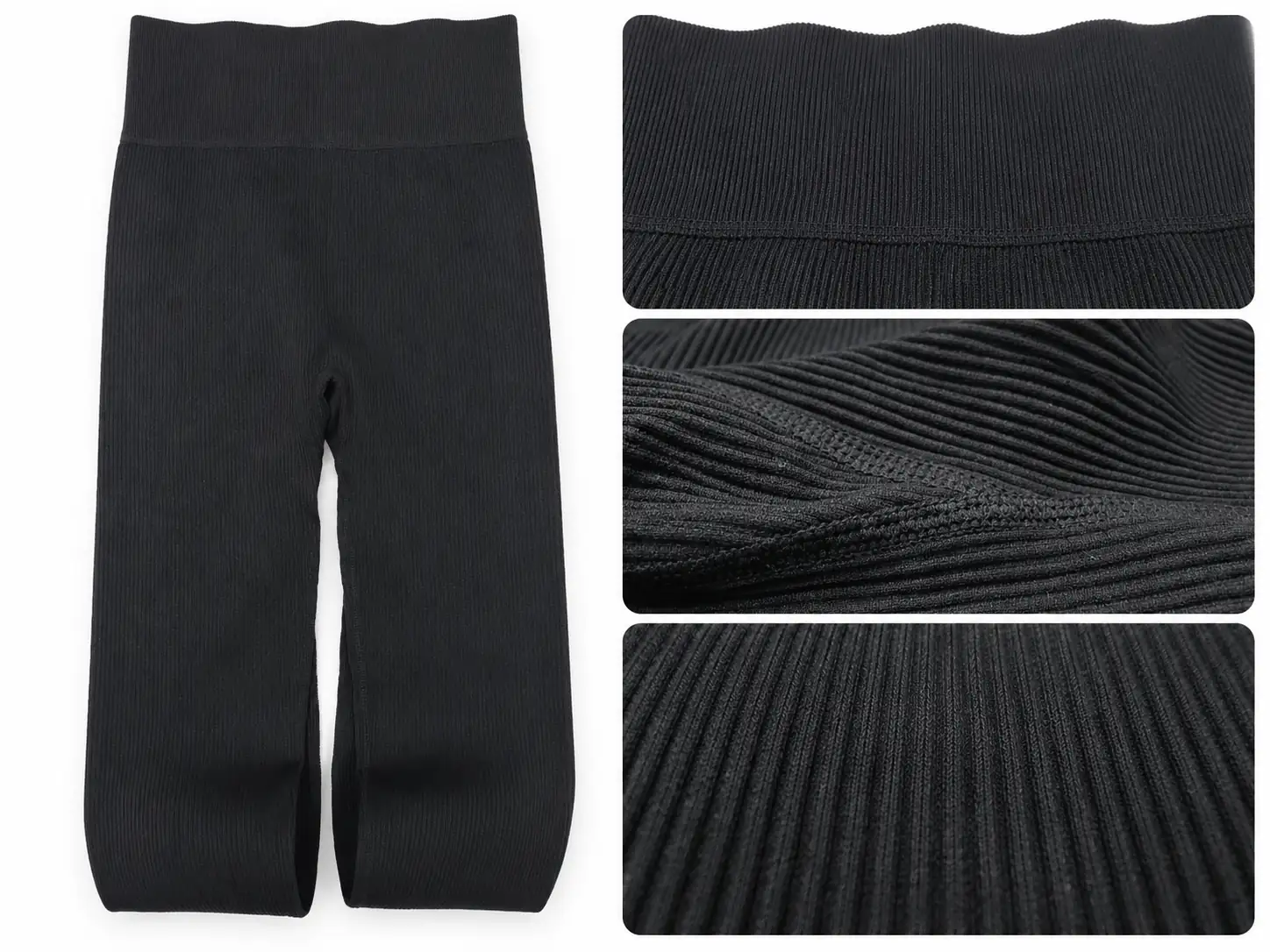
A rib, mesh or jacquard request is a specification question rather than a guarantee of stretch, support or breathability. Use the following structure matrix to identify relevant design trade-offs and the evidence needed before a buyer approves the proposed garment.
| Specification | Plain Knit | Rib Structure | Engineered Mesh | Jacquard Texture | Mixed-Zone Knit |
|---|---|---|---|---|---|
| Visual purpose | Uniform base surface | Raised linear relief | Local open appearance | Repeating design motifs | Multiple mapped surfaces |
| Typical application | Main body panels | Bands or textured areas | Selected open-knit regions | Visible pattern sections | Zones within one garment |
| Yarn dependence | Count and elasticity | Elastic feed and recovery | Strength and yarn stability | Contrast and stitch definition | Compatible yarn system |
| Stretch consideration | Evaluate in final orientation | Direction-dependent effect | Openness may alter stability | Repeat may affect extension | Transitions require assessment |
| Dimensions | Finished POM required | Rib width and position | Aperture and region size | Motif size and placement | Zone alignment by size |
| Machine review | Configuration-specific | Program and structure feasible? | Open-knit capability? | Program repeat feasible? | Combined program feasible? |
| Finishing risk | Relaxation or shrinkage | Rib recovery changes | Open area distortion | Motif distortion or contrast | Differential dimensional change |
| QC emphasis | Holes and uniformity | Rib alignment and waviness | Open-knit consistency | Repeat and stitch definition | Transition and zone placement |
| Evidence requested | Real swatch or sample | Macro knit reference | Verified close-up | Trial-knit jacquard | Annotated approved garment |
Selection guidance: The table compares engineering questions, not test results for MOVEVOX materials. Plain, ribbed and patterned constructions may require different machine settings, trial knitting, finishing and visual approval. A buyer should provide the desired structure area, size range, yarn preferences and acceptance priorities. A design with several engineered zones may benefit from simplifying a nonessential pattern before a commercial trial. Confirm the proposed structure on an actual sample and assess stretch, dimensions or breathability only with suitable methods where these properties are claimed.
How Yarn Choices Affect a Finished Seamless Garment

Yarn selection is not only a composition question. Count, elasticity, surface, feed behavior and availability can affect machine setup and finished garment dimensions. A proposed yarn substitution should therefore be evaluated through the actual knitting and finishing route.
Fiber Composition
A fiber label states the constituent materials, but it does not identify every parameter needed to recreate a knit. Buyers should compare the proposed fiber combination with the intended touch, appearance, care requirements and downstream product declarations.
Yarn Count
Yarn size influences fabric density and appearance, depending on gauge and stitch formation. Switching to a commercially available substitute may alter weight, opacity or drape, so matching fiber percentages alone cannot establish equivalence between approved and proposed yarns.
Elastic Component
Elastane or other elastic components contribute to stretch and recovery when integrated into a suitable structure. Their actual feed and interaction with companion yarns matter. A material change should trigger fit and finished-dimension review rather than reliance on generic recovery claims.
Knit Tension
Machine settings and yarn response interact. Differences in tension can affect loop formation, knitted dimensions and defects. Relevant settings should be reviewed through the technical sample process; proprietary program values need not be made public to explain control responsibilities.
Dyeing and Finish
Coloration and finishing can influence relaxation, surface texture and measurement. Approving an undyed trial is not the same as approving a finished production garment. The brand should confirm which material and finishing references govern production and any subsequent substitutions.
Finished Measurements
The commercial specification should address the completed garment after the intended production route. Critical points of measure and stretch behavior must be aligned with the actual size range, not inferred from the machine-off tube or an isolated test swatch.
Overall engineering interpretation: A fabric that looks similar may still behave differently when knitted, dyed, relaxed or worn. Supplier evaluation should therefore move from nominal composition to an approved yarn reference, a trial-knit structure, finishing conditions and a finished sample. MOVEVOX's seamless development foundation supports project review, but any assertion that a replacement yarn is equivalent requires product-specific evidence and customer acceptance.
Control Seamless Sizes Beyond the Machine-Off Tube
Circular-knitted dimensions, relaxed garment measurements and the fit of a finished style are connected but not identical. An international brand should define its own garment points of measure and approval method before comparing production from different machines, lots or suppliers.
Buyer-approved size matrix — no invented dimensions
| Size | Intended fit | Chest / waist POM | Hip / hem POM | Finished length | Knit-zone position |
|---|---|---|---|---|---|
| XS | Buyer-defined | Await buyer chart | Await buyer chart | Await buyer chart | Approve by style |
| S | Buyer-defined | Await buyer chart | Await buyer chart | Await buyer chart | Approve by style |
| M | Buyer-defined | Await buyer chart | Await buyer chart | Await buyer chart | Approve by style |
| L | Buyer-defined | Await buyer chart | Await buyer chart | Await buyer chart | Approve by style |
| XL | Buyer-defined | Await buyer chart | Await buyer chart | Await buyer chart | Approve by style |
Measurement-unit label: cm / in — use only the buyer's approved unit and measurement method. The table deliberately contains no factory-standard body dimensions. Leggings, bras, shorts and tops require separate size charts and relevant POMs.
Approve dimensions after relevant finishing
A size set should be judged against the buyer's defined garment dimensions after its intended manufacturing and finishing steps. The actual tube size can differ from the final relaxed garment measurement. Define garment orientation, resting conditions, measurement points and tolerances, then identify the reference sample for inspection. Changes to yarn, program, machine configuration or finishing can justify renewed review. MOVEVOX's technical and sample-management base can support discussion of these requirements, but no universal US/EU conversion or cross-style size equivalence is promised.
Three points for sourcing teams
- Separate size architecture: A bra's underband and a legging's waistband are not controlled by identical grading assumptions.
- Retain sample identity: Record the exact size, program revision, yarn and approval status used for production comparison.
- Audit changes: A new machine or yarn can require renewed sampling even when the retail size label remains unchanged.
Match Every Yarn Claim to Suitable Production Evidence
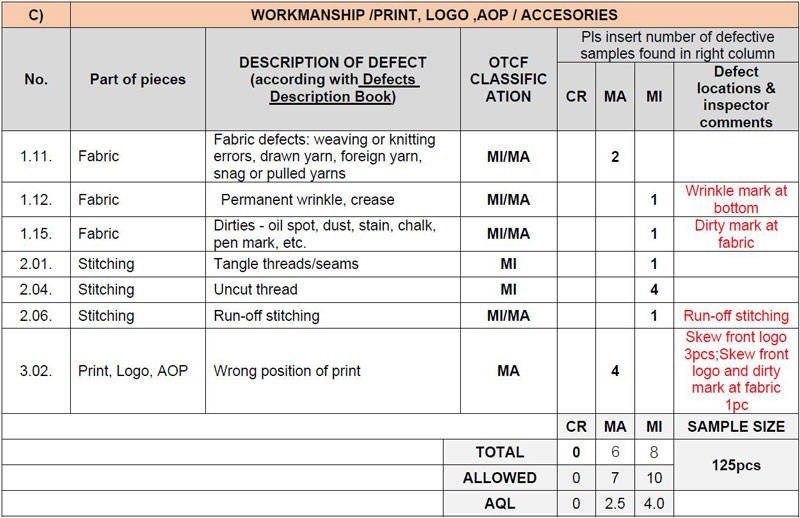
Material traceability is meaningful when a declared yarn or material reference can be related to a defined product and order. A certificate, supplier declaration and incoming inspection record prove different things; no single document automatically covers the entire finished-garment supply chain.
Yarn Identity
Claim: The approved yarn is identifiable for this style.
Evidence: A buyer can request a reference tying intended composition, count, supplier designation and approved swatch to the proposed product. Commercial details may be redacted, but documentation should be sufficiently specific for technical comparison.
Basis: Yarn reference and supplier declaration; scope-specific verification.
Material Lot
Claim: Production inputs can be linked to relevant lots.
Evidence: A lot or delivery record can help establish which input was supplied for a production run. Lot information alone is not proof of performance; it becomes useful when associated with inspected garments, production dates and documented changes.
Basis: Incoming material record and purchase or delivery documentation.
Shade Reference
Claim: Bulk shades can be compared with an approved standard.
Evidence: An approved color reference should identify the material and intended appearance. Different lots or finishing conditions may produce perceptible differences that require an agreed inspection method and customer tolerance before acceptance.
Basis: Approved shade or swatch; actual lot comparison.
Fiber Composition
Claim: Fiber information must match the proposed finished product.
Evidence: A material declaration can support a preliminary specification, while market labeling may require additional confirmation of actual fiber composition. Buyers should check the document applicant, relevant product, test method and current revision.
Basis: Applicable composition documentation and destination-market requirements.
Substitution Approval
Claim: Material changes require clear disposition.
Evidence: If a proposed yarn is unavailable, the buyer should understand the replacement's differences, commercial impact and necessary re-sampling. An alternative with similar composition may still change handfeel, sizing and knit structure.
Basis: Technical change proposal and buyer approval record.
Inspection Link
Claim: Material references should support a traceable inspection decision.
Evidence: Linking an input reference to a first article or finished inspection allows the brand to investigate variation without assuming that every part of the product shares the same yarn source. The link should use actual records rather than invented sample IDs.
Basis: Sample and inspection documents with matching references.
Evaluate Existing Seamless Styles Before Supplier Transfer
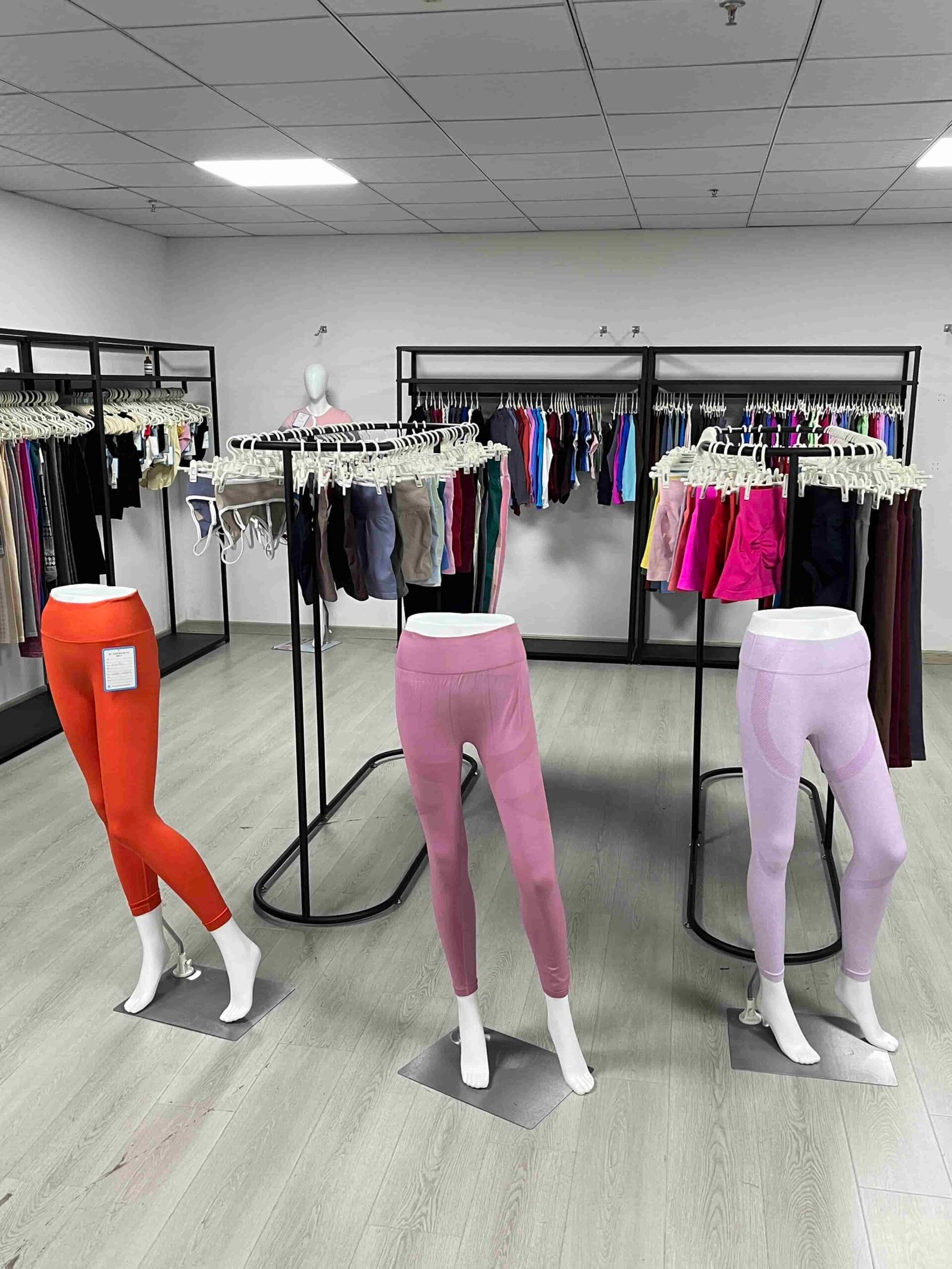
A second-source project is rarely a simple matter of sending a finished garment to a new factory. Knitted structure, yarn behavior, garment dimensions and finishing may depend on details unavailable from the original supplier. The following sequence is a suggested transfer evaluation, not a claim of a completed MOVEVOX customer migration.
Step 1 — Confirm Authorization
Establish that the brand owns or is legally authorized to share the reference garment, patterns, source files and other development information. Identify any contractual limits before technical reconstruction begins. A supplier change must respect third-party IP and confidentiality obligations.
Step 2 — Collect Technical References
Gather the original garment, approved POMs, target sizes, yarn specifications, color standards, knitted-zone layouts and available performance criteria. Mark missing information explicitly. A photo and retail-size label alone cannot define the original machine program or garment acceptance conditions.
Step 3 — Check Machine Feasibility
Review whether the proposed machine and yarn system can achieve the required tube dimensions, organization and texture. If the reference uses an unknown structure or unsupported yarn, separate feasible elements from those requiring a new technical solution before quoting equivalence.
Step 4 — Develop a Trial Sample
Create an authorized trial reflecting the proposed production method. Assess knitted-zone placement, appearance, sizing and important finishing effects. Development feedback should identify what differs from the approved reference and whether the proposed changes are acceptable to the brand.
Step 5 — Compare Objective Criteria
Use a buyer-approved comparison sheet rather than visual impression alone. Depending on the product, compare relaxed measurements, stretch response, fit, yarn appearance, labeling needs and requested tests. Do not claim identical compression or performance without measured evidence.
Step 6 — Revise and Reapprove
Where a difference is material, revise the program, yarn or specification and generate a clearly identified new sample. Record acceptance conditions. Changes to the original design should be distinguished from failure to meet the reference standard.
Step 7 — Set Bulk Entry Gates
Before a commercial PO, confirm approved sample identity, program and yarn references, production location, QC criteria, MOQ and timeline. Actual capacity and order allocation remain subject to current schedule and buyer-defined site approvals.
Six Risks to Address Before Recreating Seamless Styles
Yarn Substitution
A replacement yarn can match the headline composition yet differ in count, elastic response, surface or availability. That difference may affect knitting, finishing and fit. Compare material references and trial output before agreeing that the new source is equivalent to the approved garment.
Validation action: Request a yarn comparison and finished trial; require buyer approval of any specification changes.
Missing Program Information
A physical sample rarely reveals the exact machine program or stitch settings used to make it. Reconstructing visual regions may be possible, but identical machine execution cannot be assumed. Identify the output that matters most to the brand and define new acceptance criteria where original programming remains unavailable.
Validation action: Review available IP rights and sample data; document reconstruction limits before confirming development cost and scope.
Incompatible Machine Setup
Different machine configurations may restrict garment tube dimensions, program repeat or size architecture. A supplier with many circular-knit machines can still lack the correct setup for a particular product. The proposed manufacturing route must be validated against the style, not the equipment count alone.
Validation action: Review actual machine specifications and relevant sample evidence for every materially different garment architecture.
Finished Size Variation
Variations in yarn relaxation and finishing can produce different completed measurements, even where the initial knit looks similar. Buyers should compare the same points of measure and conditioning method, then inspect the intended size range rather than a single showroom size.
Validation action: Define the finished POM list and acceptable tolerances before collecting revised or graded samples.
Texture and Shade Differences
A reconstructed rib or jacquard motif may differ in repeat size, relief, opacity or hue under real light. Brand appearance standards should be defined separately from functional claims. A successful trial should make these differences visible and record which ones are acceptable.
Validation action: Use a reference garment and approved color/light conditions; retain documented visual approval criteria.
Unclear Performance Evidence
A previous supplier's compression, moisture or durability claim cannot be inherited by an untested replacement garment. Even structurally similar products may behave differently because of materials and finishing. Retesting needs depend on destination market, product specification and the brand's permitted claim language.
Validation action: Map each claim to an applicable product, test method, sample identity and evidence owner.
Prepare a Technical RFQ for China Seamless Production
A request for a reliable seamless quote should make product architecture and verification requirements visible before pricing. A well-prepared buyer brief also reveals which variables still require development, avoiding the appearance of a final price based on unresolved yarn, machine or design conditions.
Seamless RFQ input checklist
- Product family: Identify leggings, bras, shorts, tops or each coordinated SKU separately, with intended use and size architecture.
- Reference ownership: Provide a lawful Tech Pack, approved sample or design reference and identify any restrictions on technical reconstruction.
- Measurement standard: State target sizes, relevant finished POMs, measurement method, tolerances and fit-approval expectations.
- Knitting zones: Mark rib, mesh, jacquard or other requested regions and their placement on the finished garment.
- Yarn specification: Provide preferred composition, yarn construction, finish and any approved material reference or substitution limitations.
- Colors and branding: Identify shade standards, quantity by color, knitted logos, labels or other decoration, with file and artwork ownership.
- Quality expectations: Define required inspections, appearance criteria, tests and performance claims, including acceptable evidence and report scope.
- Quantity structure: Specify projected units by style, color and size, noting pilot quantities and anticipated repeat-order patterns.
- Facility requirements: State audit rights, restrictions on subcontracting, required manufacturing locations and prior-approval conditions.
- Destination and packing: Identify target market, labeling inputs, pack type, carton or barcode needs and preferred commercial terms.
- Delivery objectives: Provide requested sample milestones, target PO timing and realistic ex-factory or shipping windows.
- Approval contacts: Identify the people who can approve material, fit, knit program changes, quality criteria and commercial terms.
What happens next: The proposed review separates complete inputs from missing or conditional information, then identifies development work, a trial-knit route and commercial assumptions. MOVEVOX can review available materials and its own capabilities, but a preliminary questionnaire cannot guarantee a final unit price, production site or delivery date. Request an updated quotation once approved specifications and manufacturing conditions are sufficiently defined.
Review Your China Seamless Manufacturing Requirements
Share your seamless product categories, available technical references and planned buying quantities for an initial project review. MOVEVOX can discuss new knit development, assessment of an existing authorized product and the manufacturing evidence needed for supplier qualification. A technical review identifies what can be evaluated next; it is not automatic approval of every structure, performance claim, production location or delivery window.
Trust / scope line: Tech Packs and authorized reference samples may be discussed under agreed confidentiality and project conditions.
Keep Seamless Sample Versions and Program References Aligned
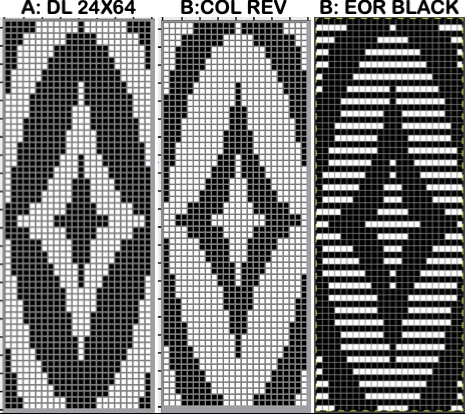
Sample identity matters when a knitted garment changes through trial knitting, yarn substitution, fitting and finishing. Buyers should be able to identify which proposal was tested, which changes were approved and which version is intended for production. The following is a blank model record; values are not MOVEVOX historical transactions.
| Required field | Example entry type | Why sourcing needs it | Approval question |
|---|---|---|---|
| Style identifier | Buyer-defined style code | Distinguishes garments in a collection | Which style is under review? |
| Sample identifier | Unique physical sample reference | Prevents confusion between iterations | Which garment is the master? |
| Program revision | Controlled file/version label | Links knitting changes to the sample | Did the knit definition change? |
| Yarn reference | Approved yarn designation and lot | Identifies material used for comparison | Has a substitute been approved? |
| Size and fit | Size label plus finished POM | Enables like-for-like comparison | Are measurements acceptable? |
| Structure map | Rib, mesh, jacquard area reference | Defines location and visual pattern | Are engineered zones correct? |
| Finishing condition | Approved finishing/conditioning description | Connects knit output to final garment | Were samples finished comparably? |
| Approval status | Proposed / revised / accepted / superseded | Separates usable references from drafts | Who may release the next step? |
| Change reason | Buyer request or technical finding | Explains revisions across samples | Is renewed testing necessary? |
Change-control principle
An approved sample can only serve as a reference when its material, program and finishing identity are clear enough for the intended comparison. An internal technical revision may be needed if dimensions or structure change; where buyer specifications are affected, the buyer must agree to the modification under the project's approval procedure. Do not apply historical test results to a materially different product without checking applicability. Where sensitive program files cannot be disclosed, a controlled version reference and appropriate sample evidence may still help the buyer complete qualification.
Identify Knitting Defects Before Seamless Bulk Release

A seamless inspection plan must consider knit formation as well as conventional finishing and packaging defects. The matrix below describes potential issues and proposed checkpoints; it does not represent a historical MOVEVOX defect rate or a set of failures found in its factory.
| Defect | Likely cause | Prevention | Inspection point | Corrective action |
|---|---|---|---|---|
| Dropped stitches | Yarn feed or stitch formation may create an incomplete loop. | Confirm setup and yarn suitability, monitor trial output and relevant machine conditions. | Review trial knitting, first article and representative bulk garment areas. | Segregate affected goods, investigate settings and evaluate a verified correction before restart. |
| Knitted holes | Yarn breakage, abrasion or inconsistent operation can create openings. | Check material handling, machine condition and stitch integrity around identified high-risk zones. | Inspect sensitive knit areas before completing and releasing the garment. | Identify affected lots, prevent further processing and determine disposition or suitable rework. |
| Zone misplacement | Program mapping or size setup differs from the approved structure. | Connect each program revision to an approved size-specific structure reference. | Compare first-article landmarks and finished positions with the approved garment. | Hold relevant output, review program settings and seek required buyer approval for deviations. |
| Pattern distortion | Yarn response, gauge or finishing alters the intended motif geometry. | Approve a completed trial with the selected material and finishing conditions. | Assess jacquard or rib repeats after finishing and against the master sample. | Review yarn, program and treatment; resample when appearance acceptance could change. |
| Dimensional drift | Knitted relaxation or process variation affects critical garment measurements. | Define conditioning, measurement methods, process controls and approved tolerances. | Inspect first articles and selected bulk sizes after the applicable finishing steps. | Quarantine questionable sizes and determine corrective measures before any release. |
| Shade inconsistency | Material lots or finishing conditions differ from the approved shade reference. | Maintain the relevant color standard and lot identification through purchasing and processing. | Compare received material and completed goods under the agreed inspection approach. | Investigate batch boundaries, separate affected stock and obtain buyer disposition as required. |
| Uneven texture | Variation in yarn behavior or knitting settings creates visible surface changes. | Use suitable machine setup and reference swatches for defined fabric zones. | Review relevant front, back and transition areas on finished representative garments. | Hold the affected section or lot, identify root causes and verify corrected output. |
| Finish damage | Handling or thermal treatment changes handfeel, elastic response or appearance. | Agree applicable finishing parameters and check material sensitivity during sampling. | Examine completed garments after treatment and prior to packing approval. | Trace process conditions, determine affected scope and retest or replace where necessary. |
Inspection interpretation: Technical inspection cannot rely on one universal numeric tolerance across all seamless garments. The approved product, buyer quality standard, sample condition and method of measurement govern the actual disposition. MOVEVOX's existing inspection and abnormality-handling basis can support product-specific discussion; named defect photos and quantitative QC outcomes still require genuine records.
Link Approved Seamless Samples to Bulk Production Records
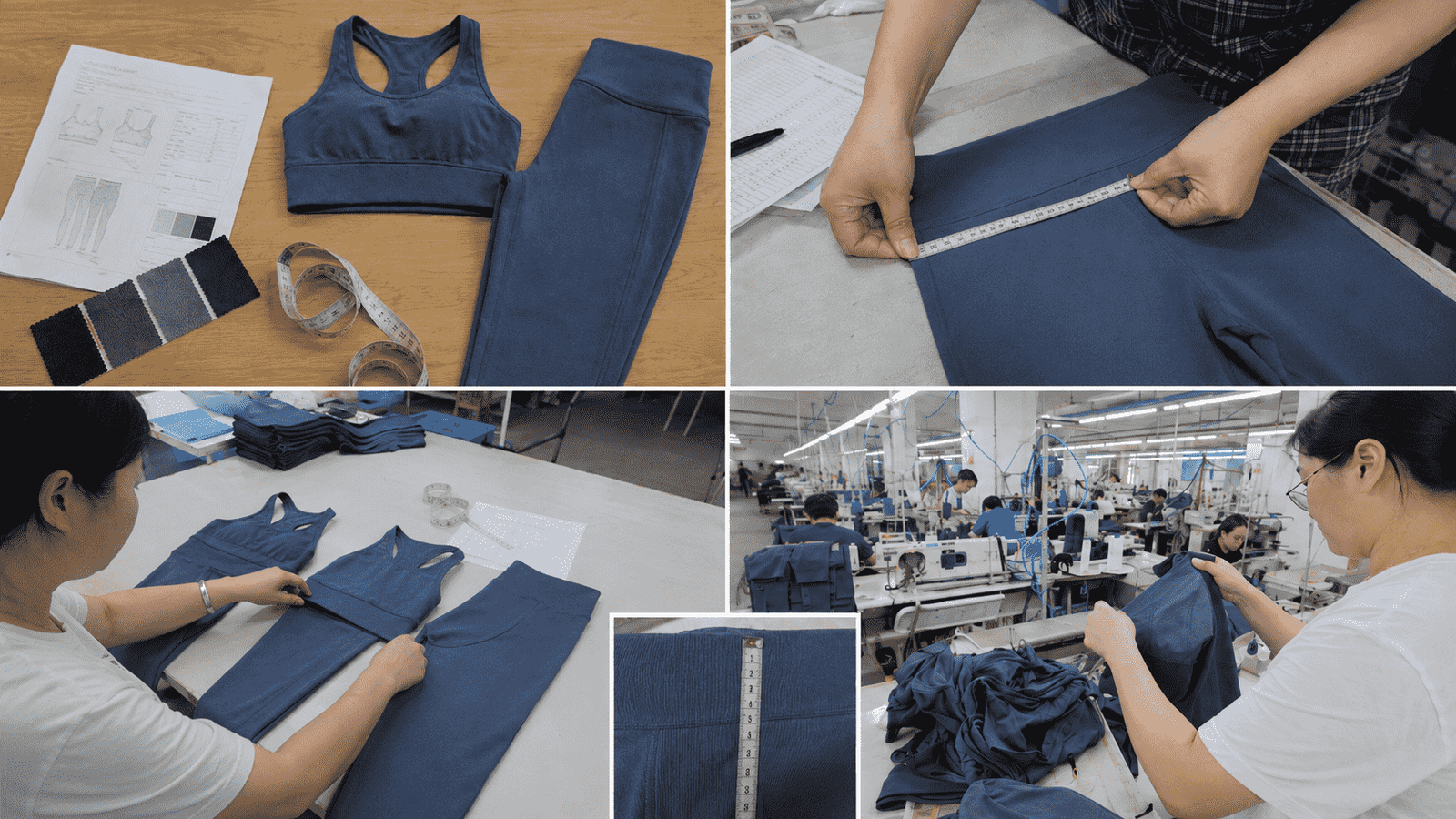
For established buyers, production repeatability depends on more than the first accepted garment. The order needs reference points connecting what was approved to yarn, program revision, manufacturing instructions, inspection and shipment. The following describes records that can be considered during a product-specific qualification review.
Approved Garment
Document: Master Sample. Define the current authorized finished reference for appearance, dimensions and relevant structure. Record size, material and version identity; do not allow an older development sample to silently replace the buyer-approved reference.
Yarn and Shade
Document: Material Reference. Identify the proposed production material and color standard. Changes to composition, yarn construction or finishing may require technical review because they can alter knit behavior and garment dimensions.
Program Revision
Document: Version Register. Link the intended circular-knitting settings to a controlled technical reference. Buyers may receive a permissible program identifier and evidence without being given proprietary source-code files.
Production Instruction
Document: Work Instruction. Translate approved product conditions into an appropriate manufacturing specification, including relevant size, color, zone and completing-operation requirements. Identify the designated production site and release responsibilities.
First Article
Document: First-Article Check. Compare initial production output with the applicable approved sample and defined measurements after relevant operations. Deviations that affect accepted specifications need documented disposition before volume release.
In-Process Review
Document: Inspection Record. Check defined structure areas, knitted appearance, dimensional stability and finishing as the order progresses. Recording a deviation is not itself proof of correction; the actual disposition and follow-up matter.
Final Garment
Document: Final Inspection. Verify the finished garment, size/label identity, workmanship and packing against the current order requirements. Testing or independent inspection obligations should be confirmed in the PO or quality agreement.
Order and Shipment
Document: PO / Packing List. Link released quantities, colors, sizes, cartons and approved shipping instructions to the commercial order. The degree of material-lot and garment-level traceability must be evaluated against the actual system and available records.
Understand Factory Approval and Subcontracting Responsibilities
A sourcing arrangement should be judged against the specific buyer's site policy. Use the following myth-and-fact pairs to separate manufacturing flexibility from contractual authorization; the examples are not a statement about any competitor's behavior.
Myth 1: One supplier means one owned factory.
Fact: A supplier may operate a core facility while coordinating approved partner operations. MOVEVOX's factual profile explicitly separates the Yiwu core facility from eight cooperative factories. The buyer should verify which site performs each approved task instead of inferring ownership from one point of contact.
Condition: Facilities must be documented separately; core-site area does not include satellite floor space.
Myth 2: Any partner site can receive an order.
Fact: The existence of production partners does not override contractual restrictions. If a buyer specifies factory-only production or requires prior approval of outsourcing, a proposed partner or new site must be considered under those conditions before work is allocated.
Condition: Approval scope depends on the buyer agreement and particular manufacturing operation.
Myth 3: A sample proves its bulk factory.
Fact: A development sample can demonstrate structure and initial workmanship without establishing where a later order will be manufactured. The designated production site, materials, first-article reference and QA obligations should be verified separately before bulk release.
Condition: Sampling and commercial production may involve different records and formal approvals.
Myth 4: A factory audit covers every site.
Fact: An audit conclusion generally relates to the audited entity, address, time and scope. It should not be extended to satellite locations, suppliers or unrelated product groups without explicit supporting evidence.
Condition: Review the actual report and audit scope before making qualification claims.
Myth 5: Equal equipment guarantees equal output.
Fact: Similar equipment does not remove differences in program versions, yarns, technician choices, finishing or inspection. A site change should trigger a technical impact review and, when necessary, a new approved sample or production validation.
Condition: Equivalent capability requires product-level evidence, not similar machine photographs.
Myth 6: Capacity pressure justifies silent substitution.
Fact: A schedule difficulty does not eliminate buyer consent obligations. Alternative production routes should be discussed, with the impact on delivery, quality, materials and site authorization made clear. An unapproved change risks undermining both the order and supplier qualification.
Condition: Apply the escalation process agreed in the buyer contract and PO.
Understand MOQ Conditions Beyond a Standard Seamless Figure
MOVEVOX's general seamless starting reference is approximately 100 pieces per style, subject to the material, design, color and order structure. A mature buyer should treat this as an initial screening condition, not a promise that every custom yarn or complex knitted program can be ordered in that quantity.
Existing Structure / Standard Yarn
A familiar knit structure using an available yarn and established technical references may offer the most straightforward route to discuss a pilot. The quantity still depends on each style, color and size distribution, finishing and planned production setup. Buyers should identify which variables are genuinely standardized and which require new development.
Quantity basis: Approx. 100 pieces/style is a conditional general starting reference, not a guaranteed accepted PO.
Color / size logic: Review actual available yarn shades and proposed pack ratio.
Cost drivers: Program changes, setup, finishing, small-run handling and packaging.
New Custom Color
A buyer-defined shade can require yarn coloration, dye-lot availability or a separate material batch. The final commercial minimum may be higher than the finished-garment starting MOQ. MOVEVOX's dossier discusses custom-color material conditions often around a 400–600-piece dye-lot level, but the applicable MOQ must be confirmed for the yarn and supplier involved.
Quantity basis: Confirm material minimum and garment quantities for the actual color proposal.
Color / size logic: Review whether multiple sizes share the same yarn lot.
Cost drivers: Lab dips, coloring, materials, minimum batch and residual yarn.
New Program / Complex Structure
An unfamiliar jacquard pattern, special zone map or revised size architecture may require knitting-program work and several technical trials. Low unit quantity does not remove these fixed development and setup efforts. A project may be feasible for sampling but commercially inappropriate at the proposed production scale until inputs are simplified or the quantity changes.
Quantity basis: Determine after technical feasibility and material review; no universal numerical promise.
Color / size logic: Align each size/program group and yarn availability with the planned order.
Cost drivers: Engineering, trials, machine use, waste and reapproval.
Review Actual Seamless Capacity Before Confirming an Order
Capacity for a specific Seamless PO depends on program readiness, material availability, approved facilities, machine compatibility and work already scheduled. A group-level or managed monthly delivery figure should not be treated as reserved seamless output for an individual style.
Planning sequence — timings to be confirmed per project
What changes the lead time?
A new structure, additional samples, a delayed custom yarn, complex shade requirements, machine reassignment or buyer approval changes may alter the critical path. The documented normal managed delivery reference of approximately 150,000–200,000 pieces per month spans multiple manufacturing capabilities and cooperative resources; it is not a dedicated seamless-machine throughput commitment. MOVEVOX's commonly referenced 20–35-day bulk window also depends on approved details and actual production conditions. A current PMC assessment should precede any confirmed shipping promise.
Verify Seamless Manufacturing Remotely Before a Factory Visit
Remote visual review can support a sourcing team's initial assessment of physical resources, but photographs alone cannot replace legal, technical or third-party audit evidence. The review should concentrate on operations related to the actual seamless product and identify which site is being shown.
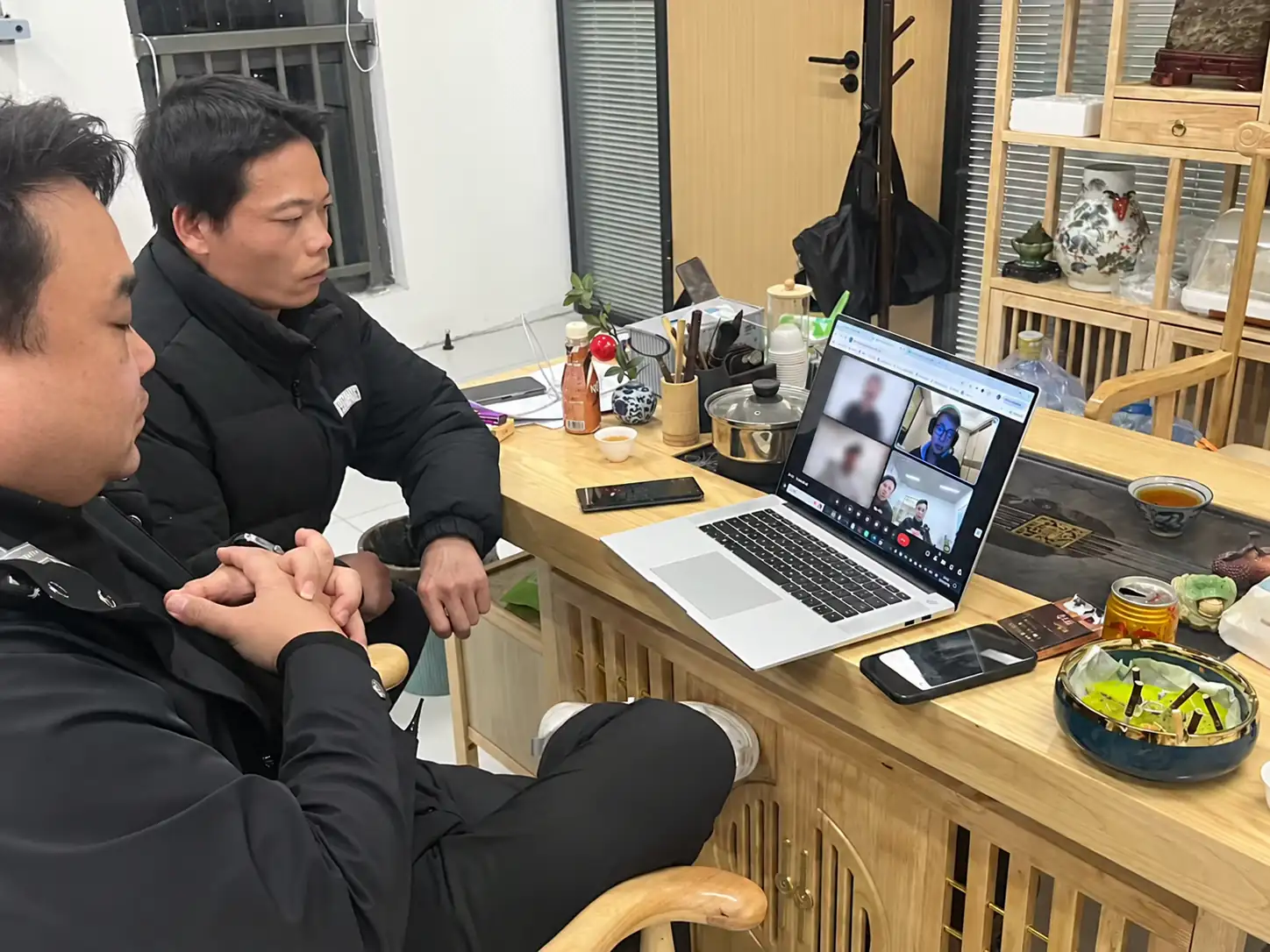
Factory Identification
Show the verified Yiwu core facility, with the correct operational identification and a date or context where appropriate. A building photograph supports site identification; it does not prove current utilization, registered ownership or the status of an external audit.
Santoni Production Area
Show authentic circular-knitting machines and enough workplace context for buyers to connect equipment with the declared facility. Do not place a machine model, gauge, total or operational status on the photograph unless the supporting information has been verified.
Technical Trial Area
Where authentic material exists, illustrate trial knitting, sample checks and the relationship between knitted structure and approved product. A video of an operator is supporting process evidence, not proof of any claimed compression or performance outcome.
Yarn and Material Area
Use real yarn storage or handling images that belong to the production facility. Review traceability by matching any material references to project documents, rather than assuming storage pictures establish composition or chain-of-custody certification.
Garment Completion
Show relevant finishing, sewing, labeling or related operations actually performed for seamless products. The presence of a sewing station does not make the knitted body cut-and-sew, but garment completion steps should be accurately described.
In-Process Inspection
Where evidence exists, show genuine checks performed during or after knitting. Explain which features are inspected and which dimensions are part of the approved garment specification, without presenting one staged photo as a complete quality-system audit.
Final QC and Packing
Use genuine inspection and packing images from the appropriate production area. The buyer should still request report scope, disposition procedures and order-specific release criteria. Photos cannot prove a given inspection pass rate or a product's tested performance.
Separate Partner Facilities
If buyers are shown cooperative-factory resources, identify those facilities separately and clarify whether they are proposed or approved for the order. No partner photo should be merged into the Yiwu core facility's owned equipment or area figures.
Audit the Technical Controls Behind Seamless Production
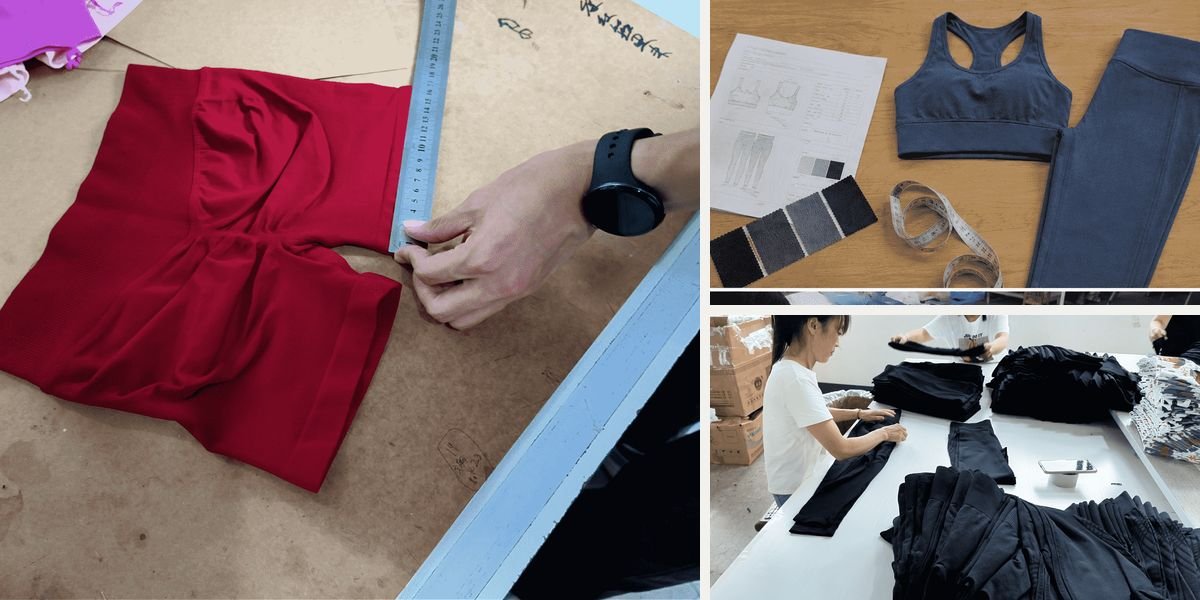
A meaningful technical audit follows selected product evidence from machine suitability to finished-garment release. The following checkpoints are questions to apply during a supplier review. They are not findings from a completed external audit of MOVEVOX.
01. Facility Identity
Confirm the actual manufacturing location, its role and the entity responsible for the planned operations. Distinguish the Yiwu core manufacturing base from any cooperative facility proposed for the order. Ask whether contractual restrictions on outsourcing or facility changes apply.
Checks: Facility/address matches documents; operation assigned to site; buyer approval conditions recorded.
02. Machine Compatibility
Review authentic machine resources and whether a suitable configuration is available for the intended garment sizes, structure and yarn. Equipment count alone should not be used as evidence that all proposed technical features or required launch quantities are supported.
Checks: Relevant machine details; product-to-equipment fit; setup limitations documented.
03. Yarn Approval
Compare the proposed yarn reference with the buyer's material brief and finished-product requirements. Inspect available material identification and change-control expectations. A general fiber composition is not sufficient evidence that a replacement yarn will reproduce the approved garment.
Checks: Yarn reference identified; substitution rules agreed; incoming records available.
04. Program Revision
Review how knitting structure maps, sizes, sample identity and program revisions are related. The audit need not require public disclosure of proprietary code, but it should establish whether production instructions and technical revisions can be distinguished and controlled.
Checks: Revision identifier; sample association; change authorization responsibilities.
05. Trial-Knit Evidence
Ask to see product-relevant trial output or an approved equivalent reference, with knitting-zone placement and obvious faults reviewed. The technical evaluation should occur at a relevant stage of finishing rather than relying solely on machine-off fabric appearance.
Checks: Trial material recorded; zone placement reviewed; sample disposition identifiable.
06. Seamless Size Control
Inspect whether finished product measurement methods and relevant tolerances are defined for the intended category. Compare size-set samples where appropriate and identify finishing conditions before treating nominal size labels as equivalent across machines or suppliers.
Checks: Finished POM list; size reference; tolerance method; grading review.
07. First-Article Release
Determine which conditions must be met before a trial or first article becomes an authorized production reference. Review who can identify and resolve deviations, and whether the procedure requires renewed customer acceptance when specifications materially change.
Checks: Release criteria; deviation handling; approval authority; relevant version.
08. In-Process Quality
Review records supporting knit appearance, zone placement, dimensions and any applicable finishing quality. A factory should explain what happens when nonconforming output is held, reworked or rejected and which evidence closes the identified issue.
Checks: Inspection stages; nonconforming goods hold; corrective action and recheck.
09. Finished and Packing Review
Check that style, size, color, label, quantity and final packaging correspond with the purchase-order and approved product. If a third-party inspection is contractually required, clarify timing, scope, disposition authority and communication of results.
Checks: Finished acceptance; SKU/carton identification; order-specific release records.
Audit interpretation: Buyer qualification should record both satisfactory evidence and unresolved gaps. A site may have an authentic manufacturing base but still need additional trials for a specialized yarn or a particular engineered structure. MOVEVOX's existing technical and quality functions can be reviewed on their actual scope; no completion of a named international-brand technical audit is implied here.
Organize Supplier Documents by Buying Decision and Approval
A vendor file should separate identity, product engineering, quality and commercial records. Each document needs an owner, applicable product or site, revision status and access rules. The categories below are proposed buyer review lanes rather than a claim that MOVEVOX operates a particular software system.
Company and Facility
For the first qualification stage, obtain the relevant legal and facility information and identify proposed manufacturing operations at each site. Use the commercial entity for contractual questions and facility-specific evidence for production questions. Avoid using a general corporate profile to imply that every cooperating factory has passed the same audit.
Buyer provides: Vendor form; facility policy; authorized auditor contacts.
Proposed outputs: Entity/site mapping; factual facility information; missing-evidence list.
Product and Material
This category includes each product's specification, intended structure, applicable yarn and color references, and necessary label or performance requirements. Changes should be tied to the affected SKU, rather than propagated across the collection without review. Supplier declarations should identify their actual product and material scope.
Buyer provides: Tech Pack; material standards; relevant RSL requirements.
Proposed outputs: Technical input review; material reference list; clarification log.
Sample and Program
Separate trial-knitting documents, revision references, size-set records and approved samples. The program identification should connect the technical work to the correct sample without requiring public access to protected machine code. An old revision should not remain the operative reference after authorized product changes.
Buyer provides: Sample criteria; revision rules; authorized master references.
Proposed outputs: Sample-version index; change discussion; approval status overview.
Quality and Inspection
Quality evidence should show what was inspected, the reference used, the relevant production stage and any identified nonconformity disposition. Test reports need method and sample scope; photos without an associated record are supporting context rather than conclusive quality evidence.
Buyer provides: Inspection standard; target tests; third-party audit or AQL requirements.
Proposed outputs: Available process evidence; proposed inspection review; gap register.
Commercial Documents
The commercial file should connect PO terms, approved factory locations, price assumptions, quantity/size distribution, packaging, shipping responsibilities and material approval conditions. Sensitive payment and contract information should only be shared through authorized channels. Final delivery commitments require project-level review, not a generic website timetable.
Buyer provides: PO format; planned quantities; delivery terms and shipping instructions.
Proposed outputs: RFQ clarification; commercial scope discussion; order document checklist.
Clarify Export Documents for China Seamless Apparel Orders
A qualified manufacturer must also understand how product, packing and commercial data will reach the buyer's logistics team. Requirements vary with destination, importer, product, shipping route and contracted trade terms. The following checklist is a transaction-planning aid rather than a promise that every service or Incoterm is available on identical conditions.
| Document or information | Typical purpose | Buyer should confirm |
|---|---|---|
| Commercial invoice | Commercial description, value, entities and shipment terms | Legal seller, currency, item detail and contractual terms |
| Packing list | Cartons, quantities, net/gross weight and size/color contents | Match to approved PO and carton data |
| Shipping marks | Warehouse and carton identification | Approved style/SKU, carton sequence and receiver needs |
| Country-of-origin information | Product origin declarations and labeling support | Actual processing history and target-country rules |
| Material composition | Basis for label and commercial product description | Evidence for finished product, not only a yarn quotation |
| Care and retail labels | Consumer information where required | Buyer-approved text, language and placement |
| Freight instruction | Handover party, mode, shipping details and booking | Named forwarder, shipping term and responsibilities |
| Customs classification | Supports import declaration preparation | Importer/broker confirms the appropriate classification |
| Inspection release | Documents agreed QC or third-party acceptance | Actual PO requirements and approved disposition |
| Extra destination documents | Market-, product- or buyer-specific supporting records | Which party provides each record and by what deadline |
Commercial handover notes
EXW, FOB and DDP allocate different responsibilities under their agreed versions and conditions. None should be used as shorthand for an unconditional guarantee of customs clearance, taxes or freight timing. Buyer-selected forwarders, shipping marks, labels, origin evidence and carton configurations should be clarified before production packaging is frozen. MOVEVOX's international B2B and shipment-document experience provides a basis for coordinating this discussion, while the actual export and import responsibilities must follow the signed quotation, PO and relevant laws.
Address Knit Program Ownership and Design Confidentiality
Product transfer and knit development create legitimate questions about program access, buyer designs and technical files. The correct answer depends on ownership, disclosure rights and agreed confidentiality terms; a manufacturer's technical capability does not cancel another party's intellectual property rights.
Who owns a newly developed knitting program?
Ownership is not determined by a garment image or equipment used to create the file. It depends on applicable law and the development contract, including whether the buyer commissioned and paid for specific work and what rights were assigned. An RFI can clarify existing program ownership principles, but any actual assignment or licence should be documented in the relevant agreement before confidential source files are exchanged.
Can we submit our current supplier's garment?
A brand may provide an authorized physical sample for technical review when it has the right to do so. Possession of a garment is not proof of ownership of original knitting software, proprietary designs or restricted technical data. The buyer should distinguish lawful reference-product analysis from copying protected files and obtain appropriate permissions before requesting reconstruction or use of source code.
Must we disclose a full proprietary program?
Not necessarily. An early feasibility review can often start with a product structure map, measurements, acceptable yarn properties and an authorized finished sample. Where a specific machine file is required for transfer, the buyer and supplier should agree confidentiality, ownership, permitted use and secure exchange conditions. Neither party should claim full compatibility without enough engineering information to evaluate the product.
How should access to our Tech Pack be controlled?
Confidentiality arrangements should define who may access the Tech Pack, for what purpose and under which subcontracting restrictions. Changes in development staff, external production sites or material suppliers can create additional access questions. A controlled project should record authorized revisions and recipients rather than assuming an email attachment provides lasting protection by itself.
Can a second supplier reproduce every specification?
A replacement supplier may be able to meet defined customer acceptance criteria, but identical output cannot be promised before the proposed yarn, program and finishing route have been tested. If the original source code is unavailable or protected, the buyer may need to approve an alternative structure with equivalent functional objectives instead of demanding an identical manufacturing recipe.
What happens if the development relationship ends?
Contract terms should address possession, permitted retention and use of reference samples, programs, artwork and other project files. A handover plan may also define which deliverables the buyer is entitled to receive and under what conditions. Business continuity and IP obligations need deliberate agreement; they should not be invented as blanket, already executed commitments.
Compare Chinese Seamless Manufacturing and Sourcing Partner Models
China sourcing teams should compare suppliers according to the operations they control, the documentation they can produce and the responsibility they accept. The following framework describes possible supplier models; it does not rank actual competitors or suggest that one model always offers the lowest risk or price.
| Buyer evaluation | MOVEVOX integrated model | Direct knitting factory | Trading-led supplier | Single-process specialist |
|---|---|---|---|---|
| Contracting and ownership | Defined MOVEVOX brand and legal contracting company | Confirm factory and legal seller identity | Confirm seller and actual producer separately | Confirm processor, contracting scope and customer relationship |
| Circular-knitting control | Santoni equipment at documented Yiwu core base | Requires direct machine and site verification | Often depends on identified manufacturing partners | May perform only its designated knit or finishing stage |
| Technical-development route | Development team and defined knit-program review basis | Depends on available engineers and program controls | Clarify who performs technical work and approves revisions | Strongest within the process actually operated |
| Yarn and material decisions | Coordinated material references and buyer approvals | Factory control varies with purchasing and dyeing setup | Depends on supplier disclosures and mill access | Material control may be outside processing scope |
| Additional apparel processes | Seamless and cut-and-sew capabilities with disclosed site responsibilities | External completion work may need separate approval | May coordinate several subcontractors | Buyer may integrate remaining garment operations |
| Production-site accountability | Core and cooperative sites must be identified separately | Confirm exact site and subcontractor arrangements | Verify each proposed manufacturing facility | Verify which operations are performed at each site |
| Sample-to-bulk evidence | Approved sample, production and QC review foundations | Require matching actual references and QC records | Require access to producer's operative records | Evidence normally covers its controlled operation |
| Commercial and scaling fit | Style, material, site and capacity review before commitment | Project loading and setup require validation | Multiple supplier interfaces may add flexibility or uncertainty | May be efficient for a technically defined operation |
| Best buying scenario | Coordinated, qualification-led seamless programs | Brand seeks direct control of a specific knitting factory | Brand needs an external sourcing-management service | Brand already manages other operations and integrations |
Buyer interpretation: A manufacturer with equipment is not necessarily appropriate for an unfamiliar knitting structure or restricted production site. A sourcing intermediary may be helpful when the buyer wants consolidated services, but the actual producer still needs to be disclosed where required. MOVEVOX's documented strength is a Yiwu core operation coupled with a coordinated supply structure; each RFI must still establish style compatibility, site approval, material readiness and commercial terms before qualification.
Check Seamless Supplier Readiness Before Adding a China Factory
Use this checklist as a preliminary RFI scorecard, not an independent certification of MOVEVOX. For each requirement, mark Verified, Needs Evidence, or Not Applicable. Buyer teams should define mandatory conditions and decide whether incomplete evidence can be resolved before sampling or must block supplier approval.
Company and Facility Identity
- Contracting entity: Confirm the legal seller matches the signed commercial documentation and vendor registration details.
- Core facility: Match the declared Yiwu factory location to current, authorized facility evidence.
- Production sites: Identify every proposed manufacturing and completion site subject to buyer approval or restrictions.
- Subcontracting consent: Confirm written rules for external processing, site changes and responsibility for resulting quality issues.
Machine and Knitting Engineering
- Actual knitting resources: Review authentic Santoni equipment and identify models relevant to the target styles.
- Style compatibility: Assess garment dimensions, machine configuration, yarn and knitted structures before accepting the proposed route.
- Program control: Confirm that knit-program revisions are distinguishable and linked to the applicable sample references.
- Trial-knit evidence: Request product-relevant knitted samples and record technical limitations or unresolved structure questions.
Materials, Samples and Quality
- Yarn references: Identify approved yarn specifications, color lots, available supplier records and substitution approval requirements.
- Sample identity: Match each approved garment to its size, materials, revision and responsible authorization.
- Quality checkpoints: Check incoming materials, first articles, knit defects, measurements, finished garments and release records.
- Testing scope: Match each report to actual sample identity, tested method, date and applicable destination requirement.
Capacity and Commercial Readiness
- MOQ feasibility: Confirm style, color, size, yarn and program-development assumptions before relying on starting quantities.
- Available capacity: Ask for a project-specific loading assessment, not a conversion from the company-wide monthly figure.
- Order milestones: Confirm responsibilities and approvals for yarn readiness, trial knitting, bulk production and shipment.
Compliance, Contracts and Export
- Buyer approval rights: Document facility authorization, confidentiality, intellectual-property and change-control requirements.
- Export readiness: Align labels, invoice, packing data, shipping terms and destination-specific document responsibilities.
- Unresolved evidence: Maintain a dated open-item log, named owners and conditions for supplier approval or rejection.
How to interpret results: Completion of this template means that the procurement team has organized its due-diligence questions, not that MOVEVOX or any other supplier has passed a third-party audit. A single mandatory failure—such as an unacceptable production location or missing product-specific evidence—may outweigh many favorable informational answers. Use an agreed RFI evidence package, technical sampling where applicable and buyer-authorized factory review before awarding business.
China Seamless Manufacturing Frequently Asked Questions
Buyers can use these answers to identify the next document or technical decision needed for supplier screening. They summarize the page's China manufacturing scope and do not replace style-specific machine approval, certification checks or contractual discussions.
1. Is MOVEVOX a direct seamless activewear manufacturer in China?
MOVEVOX's factual dossier identifies a self-operated Yiwu core manufacturing base containing 28 Italian Santoni seamless knitting machines. The international B2B brand operates through Yiwu Chenjin Import And Export Co., Ltd. The company also coordinates separate cooperative facilities. A buyer should verify which operations and approved sites will execute the proposed order instead of treating every facility within the network as wholly owned.
2. What proof of Santoni equipment can our sourcing team request?
Relevant evidence can include authentic factory footage, machine identification, photographs tied to the Yiwu location and production demonstrations appropriate to the buyer's product. Equipment count establishes an initial manufacturing resource, not suitability for every knitting structure, machine diameter or garment size. Confirm specific machine configurations and technical feasibility through an authorized review rather than relying on general machinery images.
3. Which company signs the manufacturing contract?
The MOVEVOX brand is operated internationally by Yiwu Chenjin Import And Export Co., Ltd., according to the confirmed company profile. Official contracts, commercial invoices, seller identification and payment details should be reviewed against actual approved company documents. The brand identity and the self-operated production facility should not be presented as two separate invented legal companies.
4. Can MOVEVOX develop a custom knitting program?
The factual dossier describes seamless technical personnel translating structures into Santoni-executable knitting programs and evaluating trial-knit output. The exact feasibility of rib, mesh, jacquard, zone placement and size ranges depends on yarns, machine configuration, product requirements and sample evaluation. A project review should confirm these conditions before treating an unusual programmed structure as a currently proven production result.
5. Can an existing seamless style be transferred from another factory?
A brand may submit an authorized reference garment, Tech Pack, measurements, yarn information and agreed acceptance criteria for evaluation. When original knitting source files or settings are unavailable, exact program replication cannot be promised. A proposed transfer would require machine assessment, yarn comparison, trial samples and buyer approval of the finished output before bulk production decisions.
6. What is the minimum order quantity for custom seamless apparel?
The confirmed conventional starting point is approximately 100 pieces per style for standard seamless customization. Yarn requirements, custom dyeing, colors, size distribution, unique knit programming and available production arrangements may increase practical minimums. Do not interpret the starting figure as a guarantee for every new structure or custom yarn. A meaningful MOQ is confirmed only after technical and material review.
7. How should we evaluate actual available seamless production capacity?
The MOVEVOX dossier provides an overall managed monthly delivery reference and describes both the core base and cooperative resources. That composite figure is not an available production guarantee for a particular Seamless SKU. Ask for project-specific capacity analysis based on applicable machines, yarn lead time, finishing, QC, approved production sites, existing commitments and requested delivery dates.
8. Can production be restricted to an approved factory?
The MOVEVOX fact record distinguishes its self-operated core base from eight cooperative factories. If a buyer requires core-factory production, prohibits subcontracting or requires prior approval of outside processing, the order must follow the approved production-site boundaries. This should be specified in the sourcing terms and confirmed before the purchase order and production plan are released.
9. Are all seamless products certified for European or North American markets?
No blanket certification should be assumed. A factory assessment, yarn or material certificate, restricted-substances report and finished-garment performance test serve different purposes. Buyers should check the actual applicant, tested sample, report date, method and market scope for each document, and determine additional requirements for the target country and product. Missing specific evidence requires review, not an implied pass.
10. Can we arrange a factory review before issuing an RFQ?
A preliminary supplier profile and authorized factory footage can help screening, while a formal audit may require further arrangements and document access. Buyers should explain the scope—legal identity, Santoni machines, production locations, yarn control, sample records or QC—so the information request is relevant. A factory visit or remote review must not be described as already completed without a corresponding record.
Send Us an Inquiry
Tell us your needs, and our team will get back to you within 24 hours.