
Custom Athleisure Manufacturing
Athleisure Manufacturer for Lifestyle Collections and Custom Activewear Brands
MOVEVOX supports athleisure development through an established activewear product base and both seamless knitting and cut-and-sew manufacturing. For lifestyle-oriented collections, the product brief should address more than stretch: fabric handfeel, surface appearance, garment drape, silhouette, all-day fit and wash-and-wear expectations. We can review the brand's technical package, material references and proposed style range, distinguishing familiar activewear constructions from designs that require additional development and approval.
- Material-led development: Compare target handfeel, finish and drape against actual approved fabric references.
- Lifestyle silhouette review: Evaluate proportions and wearing ease before selecting a construction route.
- Collection-level control: Connect individual styles to material, color and bulk-production approval requirements.
Lifestyle Collection Review
Product appearance and construction are assessed against the brand's references.
What Should an Athleisure Manufacturing Partner Actually Control?
Athleisure manufacturing translates a lifestyle brand's design intent into producible and repeatable garment specifications. Besides comfort and stretch, buyers should evaluate fabric appearance, drape, silhouette, everyday wearing ease, cleaning effects and visual consistency across product lines. The manufacturer must distinguish existing construction capability from designs or performance claims requiring development, laboratory work or customer approval.
Definition boundaries:
- Product scope: Fitted leggings, tops and coordinated activewear sets may use established manufacturing routes; flared pants, hoodies and more elaborate layers can require separate fabric and construction assessment.
- Material definition: Fiber composition alone does not define soft handfeel, matte appearance or drape. Approved physical swatches, weight, structure and finish establish a meaningful material reference.
- Fit definition: An everyday lifestyle fit may prioritize seated comfort, garment proportions and layering rather than the compression and dynamic stability expected in higher-intensity training.
- Quality definition: Retail appearance includes pilling, dimensional change, seam twisting, surface marking and shade variation, with project-specific methods and agreed acceptance limits.
- Supplier definition: A qualified partner should identify which styles fit its actual manufacturing scope and which requirements need technical review, samples, external tests or different sourcing arrangements.
Clear design and quality references help a sourcing team compare suppliers without mistaking attractive photographs or general manufacturing claims for verified product competence.
Plan a Coherent Athleisure Range Across Daily Uses
A lifestyle collection requires recognizable design continuity without imposing identical construction on every SKU. This range pathway separates established activewear building blocks from conditional developments and connects each group with fit, material and visual approval decisions.
Core Lifestyle Leggings
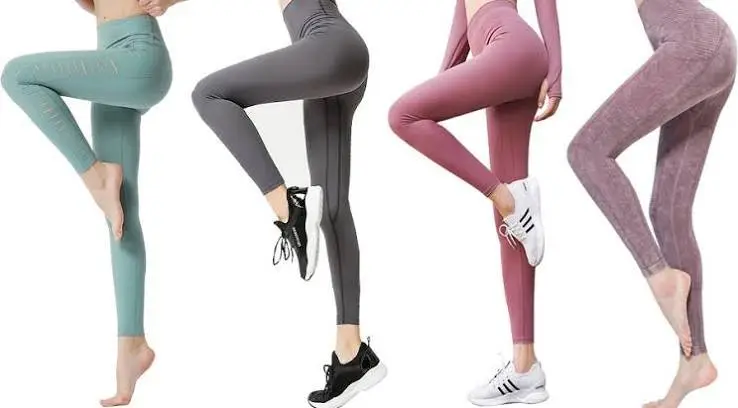
Established Core
Leggings can anchor an active-lifestyle range when the brand specifies the intended compression feel, rise, surface appearance and use conditions. Material selection should consider how the approved garment looks both stretched on the body and relaxed on a hanger. Colors and waist treatments can be coordinated with tops, but their own measurement and wash requirements must remain style-specific.
Fitted Tops and Tanks
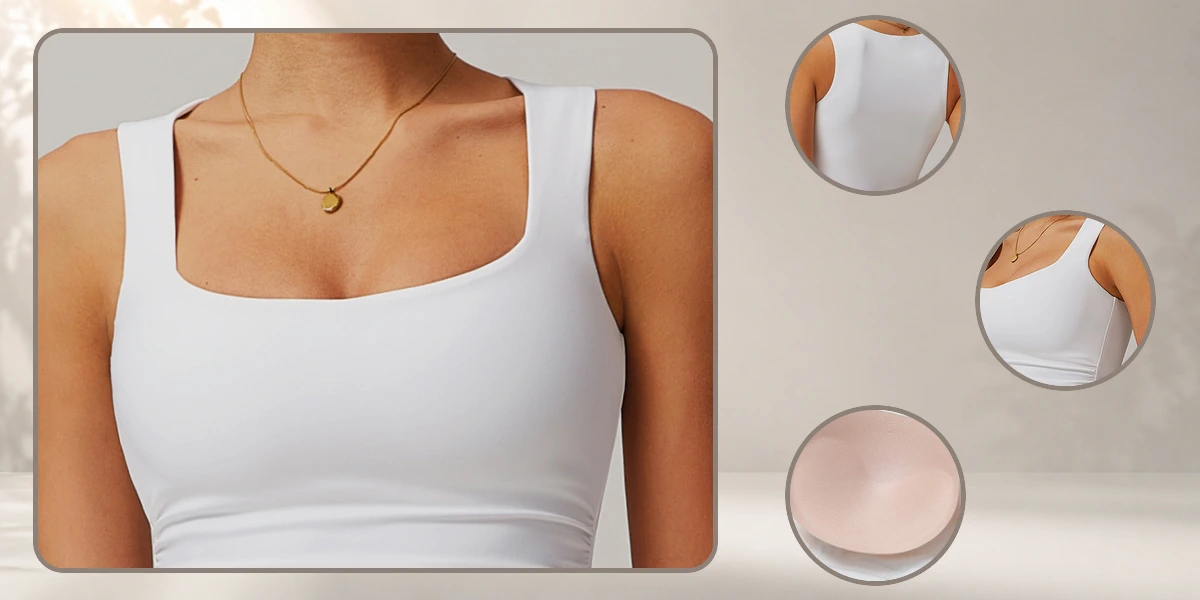
Wardrobe Foundations
Tanks, T-shirts and selected long-sleeve tops give a brand practical layering options around core bottoms. Review neckline, shoulder, armhole, length and fabric weight as visible design features rather than relying on a generic yoga-top pattern. A shared color palette may work across multiple materials only after separate physical shade assessment and approval.
Flared Active Pants
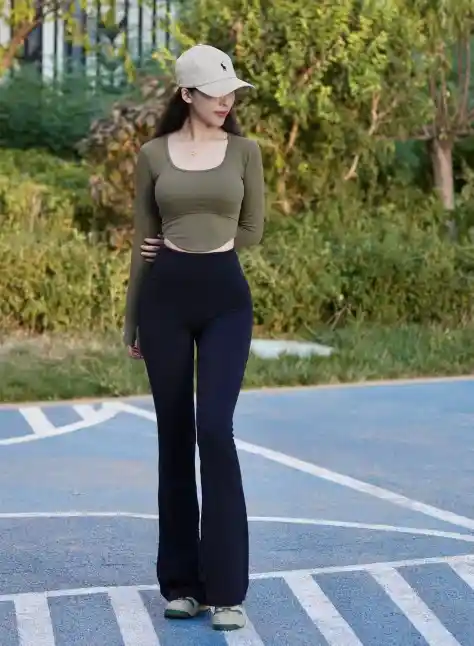
Development Review
Flared and bootcut active pants introduce pattern and drape questions beyond standard leggings. Knee transition, hem sweep, inseam, hip ease and fabric mass determine the intended outline across sizes. MOVEVOX can assess such proposals by technical package and sample review; this collection direction should not imply that every flare design is already a validated repeat-production style.
Soft Layering Pieces
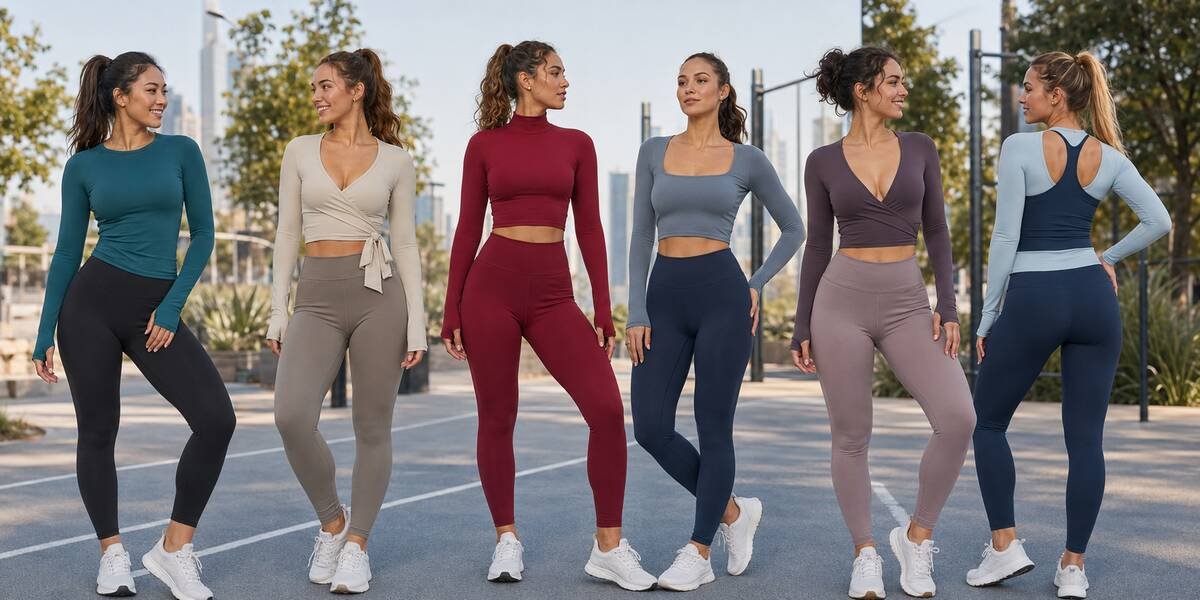
Conditional Extension
Long sleeves and appropriate light layers can broaden seasonal wearability, but zip structures, bodysuit engineering and jacket complexity differ from core knits. Brands should identify fabric, silhouette, closures and minimum order assumptions before treating those concepts as standard products. Heavy streetwear and complex fashion outerwear are outside the default claim of this page.
Coordinated Lifestyle Sets
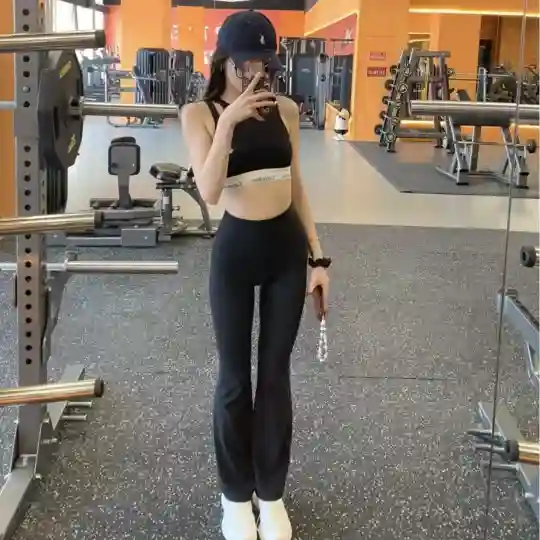
Visual Coordination
A coordinated set is more than two products in similar colors. The top and bottom may differ in elasticity, opacity, surface texture or recovery while still needing a consistent visual language. Develop each fit independently, compare swatches in agreed lighting, approve branding scale and record which material and color versions belong to each retail SKU.
A brand can extend an approved core platform through fit refinements, coordinated tops and seasonal colorways, but every change should be screened for new material, finish or construction risks. Carryover styles and seasonal capsules can share design language while retaining their own samples, BOM revisions and commercial approval. Products listed here represent a capability-led assortment proposal, not in-stock merchandise or a documented historical collection.
Which Athleisure Products Fit the Actual Manufacturing Scope?
Mature buyers should distinguish established product families from styles that need fresh engineering. The following capability categories protect sourcing decisions from the assumption that all products described as athleisure can follow one approved production route.
| Product or construction | Capability position | Main technical review | Evidence expected before RFQ |
|---|---|---|---|
| Active-lifestyle leggings | Established activewear foundation | Stretch, rise, coverage, surface and recovery | Verified garments, measurements and material references |
| Tanks, T-shirts and selected long sleeves | Established / conventional product base | Neckline, length, armhole, knit behavior and finishing | Corresponding real products and workmanship images |
| Coordinated activewear sets | Established combination of individual products | Cross-style color and branding; separate fit approvals | Approved top/bottom combinations or accurate development references |
| Flared or bootcut active pants | Conditional product development | Knee transition, hem sweep, drape, grading and washing | Actual sample, pattern and reviewed Tech Pack |
| Ribbed, brushed or peach-finish styles | Material-dependent option | Touch, finish variation, pilling, marking and logo heat | Physical swatch, finish parameters and appropriate test plan |
| Lightweight lifestyle layer | Project-by-project | Fabric, closure, paneling, tolerances and MOQ | Technical package and production-route confirmation |
| Complex bodysuits or multi-component jackets | Non-core / technical review | Coverage, seam placement, fasteners and specialized fit | Style-specific sample and feasibility confirmation |
| French-terry joggers / hoodies | Conditional, not blanket core claim | Fabric supplier, pattern, equipment, weight and finishing | Verified sample and actual supply-route assessment |
| Denim, suits, formal dresses, heavyweight outerwear | Outside current core positioning | Not represented as routine athleisure capacity | Refer to a suitable specialist rather than invent capability |
Approve Handfeel and Surface Appearance with Material References
Descriptors such as soft, cool, smooth and premium do not define a repeatable textile standard. For athleisure development, buyers should connect their tactile reference to identifiable yarn, fabric structure, finishing, weight, visual gloss and sample comparison conditions.
Fiber and Yarn
Fineness, filament or staple construction and blend selection can alter perceived softness, surface hairiness and durability. A composition label alone does not specify the final handfeel experienced in the garment.
Knit Architecture
Rib, interlock, smooth jersey and engineered knitting create different surface relief, stretch distribution and hanging behavior. The buyer should compare both flat fabric and the intended worn silhouette.
Weight and Density
GSM, yarn count and construction density influence coverage, drape and visual opacity, but heavier material does not automatically produce a more refined silhouette or better shape retention after washing.
Finishing Route
Brushing, peach-touch treatment, softeners and heat setting affect initial touch and visual appearance. Their compatibility with color, logo application, friction and care instructions requires a specific sample review.
Gloss and Texture
Matte, smooth, subtly shiny and raised-surface fabrics can express different brand positions. Shade approval should be conducted on each real substrate because identical color targets may not look identical.
Approved Master Swatch
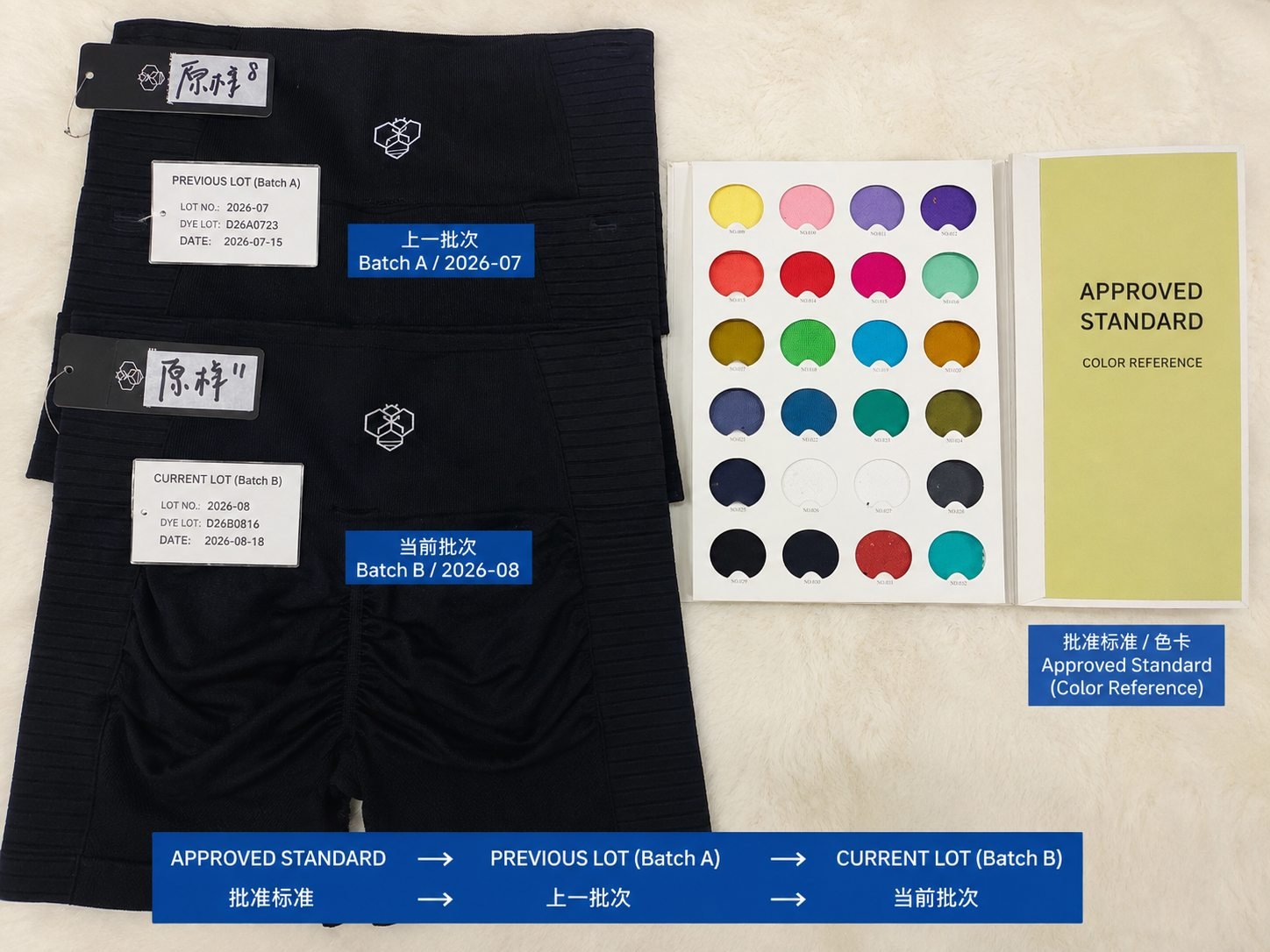
A physically approved reference should identify material, color, finish, date and revision. Future lots can then be compared under agreed viewing and touch conditions rather than relying on an informal adjective.
These properties interact rather than operate independently. A finely finished textile may feel soft initially yet show greater sensitivity to rubbing or heat pressing. A dense knit can improve coverage while changing drape and thermal feel. Approval should therefore address the garment as well as the fabric: touch, surface, stretch on body, wash behavior and any branding process. A physical master swatch is a purchasing reference, not proof of an untested performance claim.
Review Athleisure Fit for Everyday Wearing Conditions
Athleisure garments may be worn through commuting, sitting, walking and light activity. Their approval should therefore consider posture, layering and long-duration comfort, rather than applying gym or Pilates criteria without modification.
Sitting, Standing and Walking Change the Fit Requirements
The same garment can behave differently when a consumer moves between standing, sitting and ordinary walking. A comfortable standing waist may fold or apply localized pressure after prolonged sitting. A crop top may appear balanced with high-rise leggings but leave a different amount of coverage when the wearer reaches, bends or layers an outer garment. These issues depend on the intended product, body dimensions, construction and actual material response; they cannot be solved by announcing a universal soft-fit standard.
- Waist and lower torso: Review rise, waistband shape, elastic tension and folding behavior against the brand's intended wearing position. A comfort-oriented garment need not use the negative ease appropriate to firm training support.
- Shoulder, armhole and upper body: Evaluate how neckline, armhole depth and sleeve placement affect light movement and daily use, particularly when a fitted top sits beneath a layer.
- Hem, inseam and contact areas: Consider seated length, leg opening, rise and seam placement. Small deviations may change the visual line of fitted pants or the way a top sits over the waistband.
- Practical sample decision: Agree target user, base size, observation positions and feedback format. Static measurement, short movement checks and extended wear observations answer different questions and should not be represented as interchangeable tests.
The buyer's design and technical teams should decide which wearing conditions matter most. The aim is a reviewable acceptance process for their own collection, not a claim that a sample is universally comfortable for every wearer. Any statement about long-duration comfort should be supported by the relevant actual wear trial if used as a performance claim.
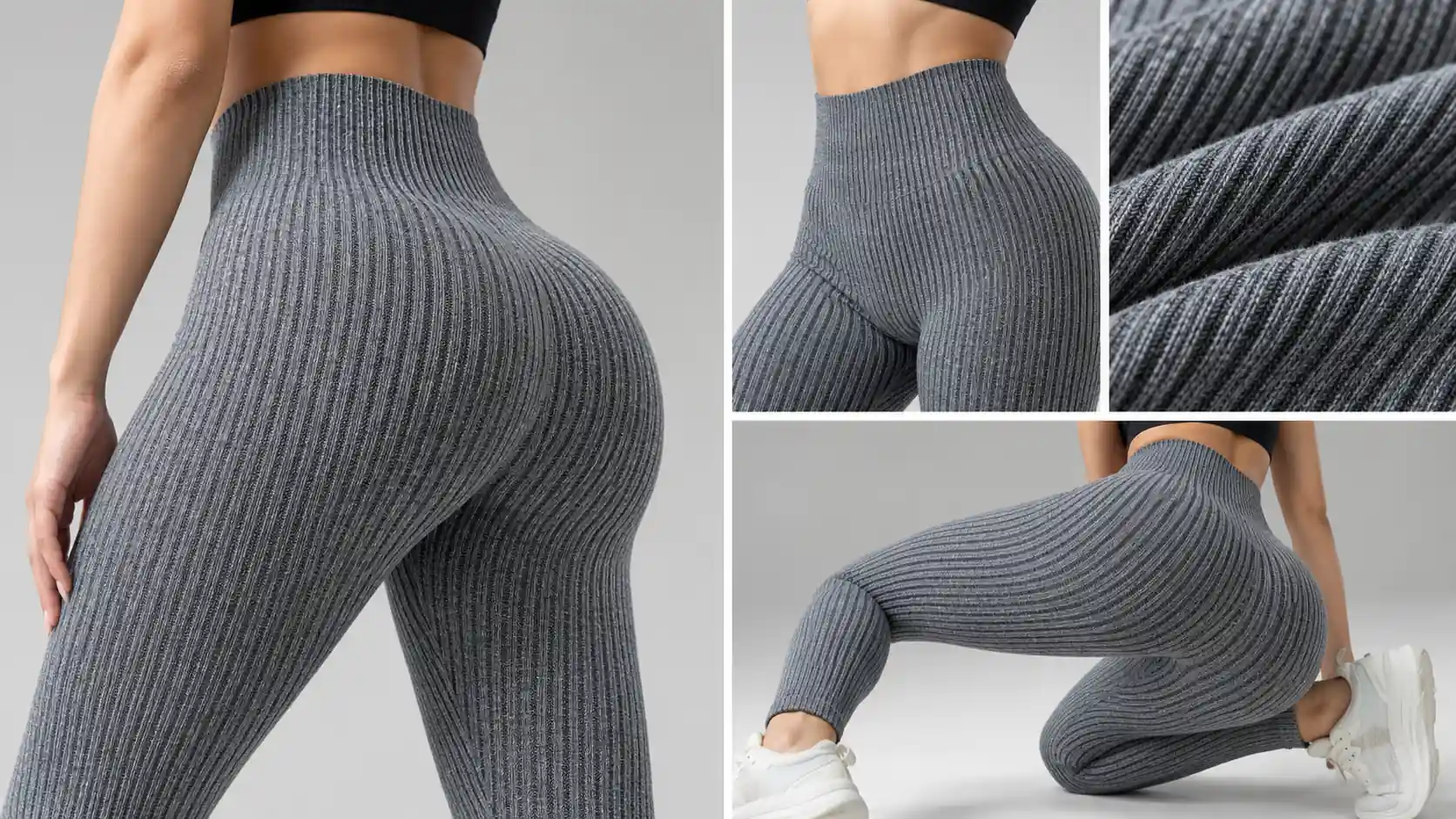
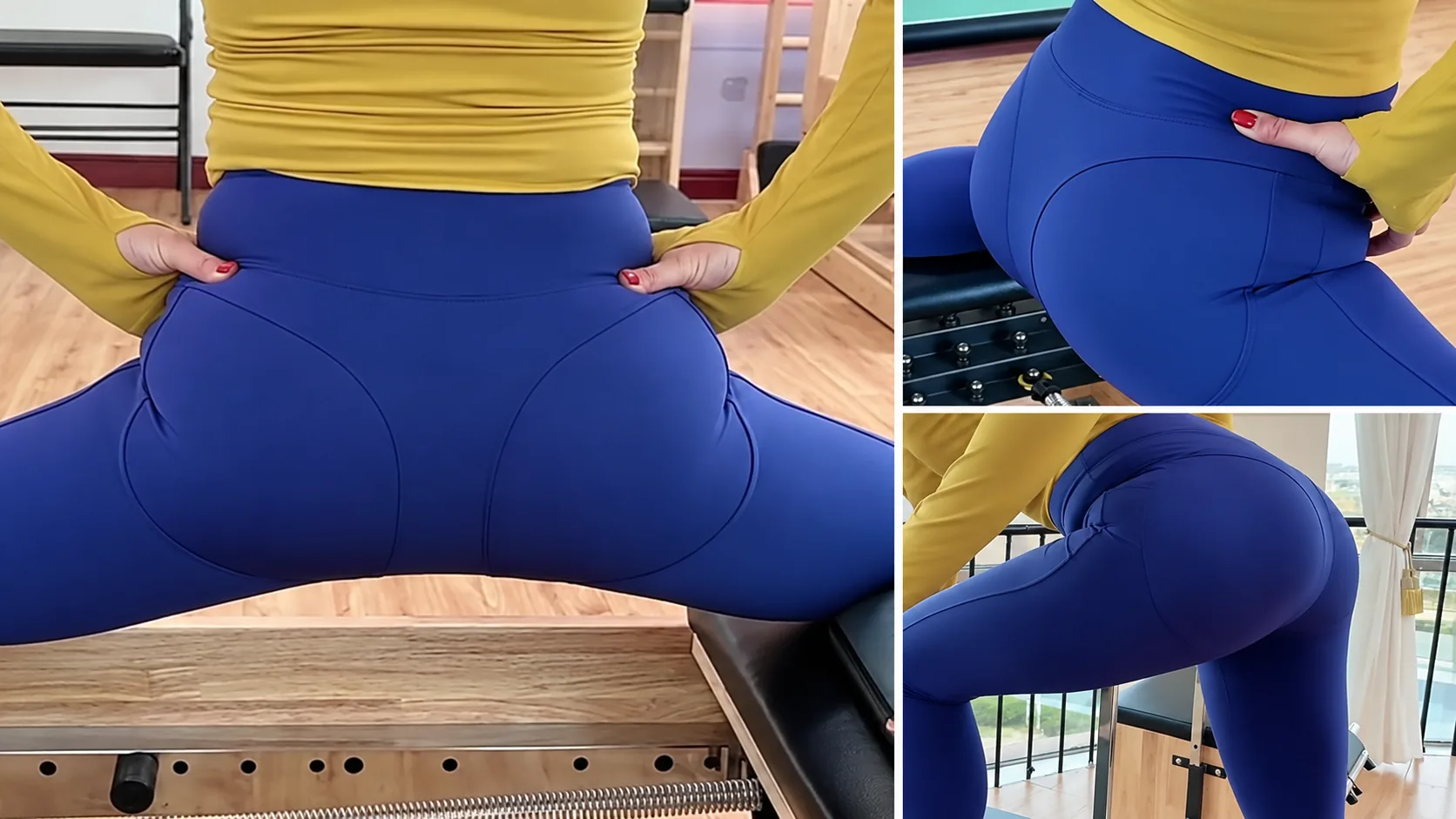
Layering and Silhouette Must Work as One Outfit
Athleisure is often purchased and merchandised as a coordinated wardrobe rather than a single performance item. A fitted tank, wide-hem pant and light long-sleeve layer can each look appropriate alone yet fail when combined: hem lengths compete, a bulky seam shows through, waist compression changes the top's drape, or different fabrics alter perceived color. These are assortment and fit-development questions, not reasons to force the same fabric into every style.
- Length proportion: Set a visible length relationship between top, waistband, layer and pant hem. Evaluate it on a consistent size and styling reference.
- Material interaction: Check how rib texture, brushing, surface sheen and weight behave where garments overlap. Friction and pilling risks can increase in contact zones, but require real product evaluation.
- Retail presentation: Approve representative pairings under agreed lighting and fit conditions. A lifestyle lookbook may illustrate the design objective, while actual specification approval must still come from style-level technical documents.
- Controlled change: Record when a pattern, fabric, or finish revision in one style requires the buyer to recheck another style's styling or color relationship.
MOVEVOX's established activewear foundation provides a starting point for the review. A proposed coordinated pairing is not a historical client collection or proof that all styles have completed production. The commercial question is whether the brand can set clear approval criteria before scaling a multi-style program.
Balance Soft Fabric Surfaces with Wear Resistance
Athleisure buyers may favor brushed, peach-touch or textured surfaces for their appearance and handfeel. Surface development should also consider contact friction, laundering effects and actual pilling acceptance limits rather than promise permanent softness or zero pilling.
| Problem | Business or product impact | Engineering / procurement response |
|---|---|---|
| Brushed surface fuzzing: Raised fiber ends may change texture after repeated contact with bags, seating or another garment. | An attractive first sample may acquire visible fuzz or a less uniform shade in use, creating customer complaints even when measurements stay acceptable. | Compare the approved brushed reference after agreed rubbing and wash conditions. Define the test method, cycle conditions, visual rating and acceptable change with the buyer before bulk. |
| Peach-touch marking: Certain delicate finishes can show pressure, oil or heat-contact marks under handling. | Surface inconsistencies may become visible across folded goods, heat-pressed logo positions or display samples and create uneven retail presentation. | Assess finishing, packaging folds and intended branding location on real material. Use an approved garment and handling observations rather than treating softness as independent of processing. |
| Rib surface irregularity: Raised knit ribs can distort in stretch or appear inconsistent across color and size. | Visual texture may change at seams or on-body extension, leaving apparently mismatched components within a collection. | Compare relaxed and worn-state ribs, review pattern alignment and account for structural repeat during cut or knit development. Approve actual material and garment appearance. |
| Smooth finish shine: Smooth synthetic surfaces can reveal gloss differences caused by friction or heat contact. | A premium matte design may look patchy under store lighting or after logo application, affecting perceived garment quality. | Check gloss under agreed light and evaluate heat sensitivity with the chosen logo and finishing process. Use the real finished sample as the approval reference. |
| Cross-fabric color variation: Different textures can reflect light differently despite sharing a target color reference. | Tops and bottoms promoted as one outfit may look inconsistent even when suppliers report similar color values. | Approve separate physical color references for each material in the intended viewing conditions. Do not assume one lab dip proves every fabric will visually match. |
Approve Wash Dimensions Before Confirming Lifestyle Fit
In athleisure products, a small change in leg length or hem shape may noticeably alter the design. This proposed approval sequence ties washing conditions and measurement changes to pattern, material and retail-appearance decisions.
Define Reference Dimensions
Objective: Confirm the approved garment and points of measurement before washing, including waistband, hip, inseam, flare-opening sweep and top length where applicable. Measurements require clear placement and relaxation conditions. An ambiguous baseline cannot support a meaningful comparison after care exposure.
Buyer inputs: Approved POM chart and tolerance; target size and garment condition.
MOVEVOX project outputs: Baseline measurement sheet; marked measurement photographs.
Pass gate: All reference dimensions and measuring methods must be accepted before the test garment enters a wash sequence.
Agree Care Protocol
Objective: Select the washing and drying conditions appropriate to the material, garment and destination market. Any reference to ISO or AATCC methods should identify the actual applicable version and program. One test protocol must not be silently applied to every athleisure material.
Buyer inputs: Intended consumer care; required test method or retailer manual.
MOVEVOX project outputs: Proposed sample identification; test or laboratory request scope.
Pass gate: The agreed program, sample identity and evaluation criteria must be documented before testing starts.
Record Post-Wash Changes
Objective: Compare all agreed POM values after washing and conditioning, recording direction and magnitude of change. For flared pants and layered styles, visually review side-seam alignment, hem waviness, twisting and differential behavior between fabrics or elastic components.
Buyer inputs: Accepted dimensional limits; appearance priority and comparison references.
MOVEVOX project outputs: Post-wash size comparison; photographed shape observations where available.
Pass gate: Result interpretation must follow the buyer's documented limits and apply only to the tested configuration.
Revise and Reconfirm
Objective: Where results fall outside approved limits, review fabric preparation, pattern allowance, stitch assembly, elastic behavior or care requirements. A revised sample may need repeat measurement or test work. Correction options should not be described as a guaranteed zero-shrinkage outcome.
Buyer inputs: Change approval decision; priority among fit, shape and material alternatives.
MOVEVOX project outputs: Revised specification proposal; identified retest or sample actions.
Pass gate: Only an agreed revised garment and its supporting evidence can become the new approval reference.
Release Approved Standard
Objective: Link the accepted result with material references, garment version and approved product documentation. Changes in finish, supplier, shade or construction may require new evaluation if they affect the tested characteristics. Reorders should not inherit results without a scope check.
Buyer inputs: Signed-off approval conditions; target production and reorder requirements.
MOVEVOX project outputs: Version-controlled approval references; production handover information.
Pass gate: The approved standard must be clearly applicable to the actual intended production configuration.
Choose Fabrics According to Silhouette and Daily Use
A strong athleisure material brief starts with the intended garment rather than a single favorite fiber blend. The questions below lead to preliminary material platforms; physical swatches and fit samples are still necessary before specifying a particular product.
Decision question 1: What silhouette is intended?
Options: Fitted Leggings | Flared Pants | Relaxed Top | Light Layer
Decision question 2: Which surface should dominate?
Options: Smooth Matte | Soft Brushed | Fine Rib | Subtle Texture
Decision question 3: How much stretch is required?
Options: High Recovery | Moderate Stretch | Structure First
Decision question 4: Which visual constraint matters most?
Options: Opaque Coverage | Flowing Drape | Defined Outline | Layering Ease
Decision question 5: Which care risk is most critical?
Options: Surface Pilling | Shape Change | Color Stability | Heat Marking
Smooth Fitted Knit
A compact smooth knit may be considered for fitted lifestyle leggings where stable opacity, surface uniformity and appropriate recovery matter. Buyers should specify expected compression feel, handfeel and wash behavior rather than rely on fiber content alone. The same textile may not create a satisfactory flare or loose top. Review a physical swatch and fit sample in the intended shade and size before approving the fabric platform.
Parameter tags: Knit Structure | Recovery | Opacity
Soft Finished Knit
A brushed or peach-touch surface can support a softer sensory direction, but the finishing route and fiber structure may influence rubbing, pilling and heat sensitivity. Evaluate both its fresh handfeel and its appearance after relevant care or abrasion conditions. Logo application should be checked on the actual substrate, especially where pressing might flatten or shine the surface.
Parameter tags: Surface Finish | Pilling | Heat Sensitivity
Drape-Oriented Knit
For flared pants or relaxed athleisure pieces, choose candidate fabrics by the outline they form in a finished sample. GSM is useful but insufficient; bending behavior, stretch direction, recovery and pattern geometry interact. Compare garment length, knee-to-hem fall and size grading on body. A material may feel soft yet be too clingy or too stiff for the desired silhouette.
Parameter tags: GSM | Hanging Drape | Pattern Ease
Defined Rib Platform
Rib structures may offer recognizable texture and elastic form for tanks, fitted tops and selected bottoms. Rib scale, repeat, recovery, stretching appearance and seam placement should be matched to the product design. Separate color references and shrinkage checks may be needed because ribs can look different when stretched or washed. Avoid assuming all rib constructions share the same fit behavior.
Parameter tags: Rib Scale | Surface Relief | Grade Review
Recognize Surface Finish Risks Before Material Approval
A finish that expresses the right lifestyle mood may also introduce production or retail risks. These cards connect typical material behaviors with buyer-facing consequences and project-specific checks; they are not records of actual MOVEVOX defects.
Brushed Texture Change
Problem / impact: Raising fiber ends can create initial softness but may increase sensitivity to friction and wash agitation. If the finished garment develops uneven fuzzing or pilling, the product may drift from the approved visual reference before its useful service life is over.
Possible response: Compare actual brushed swatches and garment samples under agreed care and pilling procedures, note the finishing route and record the visual acceptance limit. A material substitution or re-brushing decision should trigger renewed approval rather than automatic use.
Finish Reference
Peach Finish Pressure Marks
Problem / impact: Delicate soft-touch finishes may show fold lines, local polishing or heat pressure marks, especially around heat-transferred branding and packaging creases. Such variation affects retail presentation even without a measurable pattern-size defect.
Possible response: Trial the intended logo, pressing conditions and folding plan on the genuine substrate. Compare the visible surface under agreed lighting and evaluate whether packaging contact may cause unacceptable marks before approving the process.
Process Sample
Rib Distortion Under Stretch
Problem / impact: Ribbing may look even on a flat swatch yet change its repeat, apparent shade or symmetry when worn. Different style dimensions can stretch the same structure differently, making coordinated garments look less consistent.
Possible response: Examine the rib in relaxed, stretched and post-care states; identify pattern orientation and seam-placement requirements. Approved images or physical garments should represent the actual intended extension, not only a loose swatch.
Stretch Reference
Heat-Sensitive Smooth Surfaces
Problem / impact: Smooth or matte synthetics can develop shine, imprinting or bonding marks during decoration, pressing or finishing. An apparently small process change can create visible differences between production lots or logo positions.
Possible response: Check time, pressure and temperature against the selected material and artwork, then review stretch and wash compatibility if required. Freeze only the verified parameters for the approved style; do not promise universal heat resistance.
Logo Trial
Multi-Material Shade Shift
Problem / impact: When different knit structures and surface finishes are dyed toward one target color, their visual appearance can diverge under store or daylight conditions. A color-matched garment set may therefore appear inconsistent at launch.
Possible response: Approve each real fabric and finished garment independently in agreed lighting. Record dye lots, finish references and allowable visual or instrumental variance with the buyer before treating the palette as production-ready.
Shade Approval
Drape After Laundering
Problem / impact: Differential dimensional change, fabric relaxation or altered recovery may change how flared pants hang or how relaxed tops sit. This can affect style intent even if basic workmanship remains acceptable.
Possible response: Define pre- and post-wash POMs plus silhouette observations on the garment, then confirm an agreed tolerance. Revise material, pattern or care instruction only on a reviewed sample, retaining the prior version for comparison.
Wash Comparison
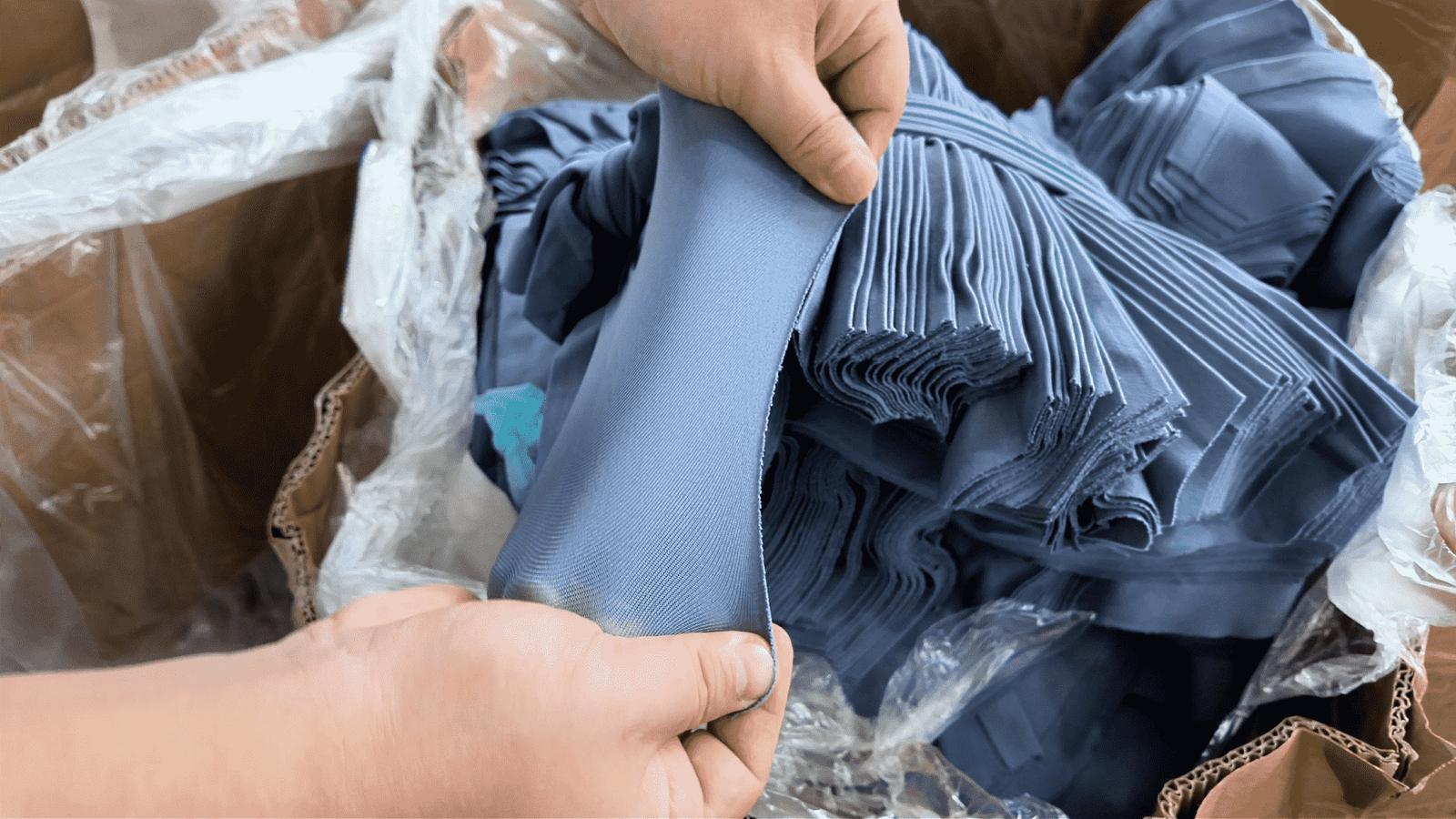
Build Shape Retention from Material Through Production
Garment shape is created by interacting design and material decisions, not by one elastic fiber percentage. The layered framework below helps buyers decide what evidence is needed before presenting shape retention as an approved product characteristic.
Material and Yarn
Fiber type, yarn structure, fabric density and finishing influence extension, recovery and residual deformation. For an everyday trouser or fitted top, the supplier should compare the actual material reference with its intended handling and care conditions rather than assume an identical blend has identical performance.
Approved swatch identifies composition, construction, shade, weight and finishing route.
Actual stretch and dimensional test method matches intended fabric type.
Garment Pattern Balance
A stable-looking fabric can still produce an unintended outline if rise, knee, hem or seam geometry is poorly balanced. Flared silhouettes particularly depend on length and sweep, while fitted tops require consistent neckline and hem tension. Pattern and grading approval should be judged on the garment.
Base-size fit reference includes photographed silhouette and key points.
Size-set observations capture proportion changes beyond simple POM dimensions.
Wear and Wash Control
Repeated extension, seating, laundering and finishing may alter waistband tension, knee shape or seam straightness. The brand should state whether the important characteristic is dimensional stability, visual shape, stretch recovery or all three. Each needs suitable acceptance conditions and an applicable evidence source.
Post-care inspection is tied to sample version and prescribed conditions.
Reported outcomes refer only to tested colors, fabrics and configurations.
Repeatable Retail Appearance
For ongoing athleisure programs, the objective is consistency against an approved silhouette and material reference across production and repeat orders. Changing a mill, surface treatment or process can alter drape even when nominal composition and GSM remain the same, so changes should require review.
Approved product and material samples remain accessible for batch comparison.
Any substitution is evaluated before the released production specification changes.
Coordinate Colors Across Athleisure Fabrics and Finishes
Color continuity in an athleisure collection is a visual as well as a laboratory question. Brushed, ribbed and smooth fabrics may reflect the same target shade differently, so each material needs an identifiable approval reference.
Define Color Intent
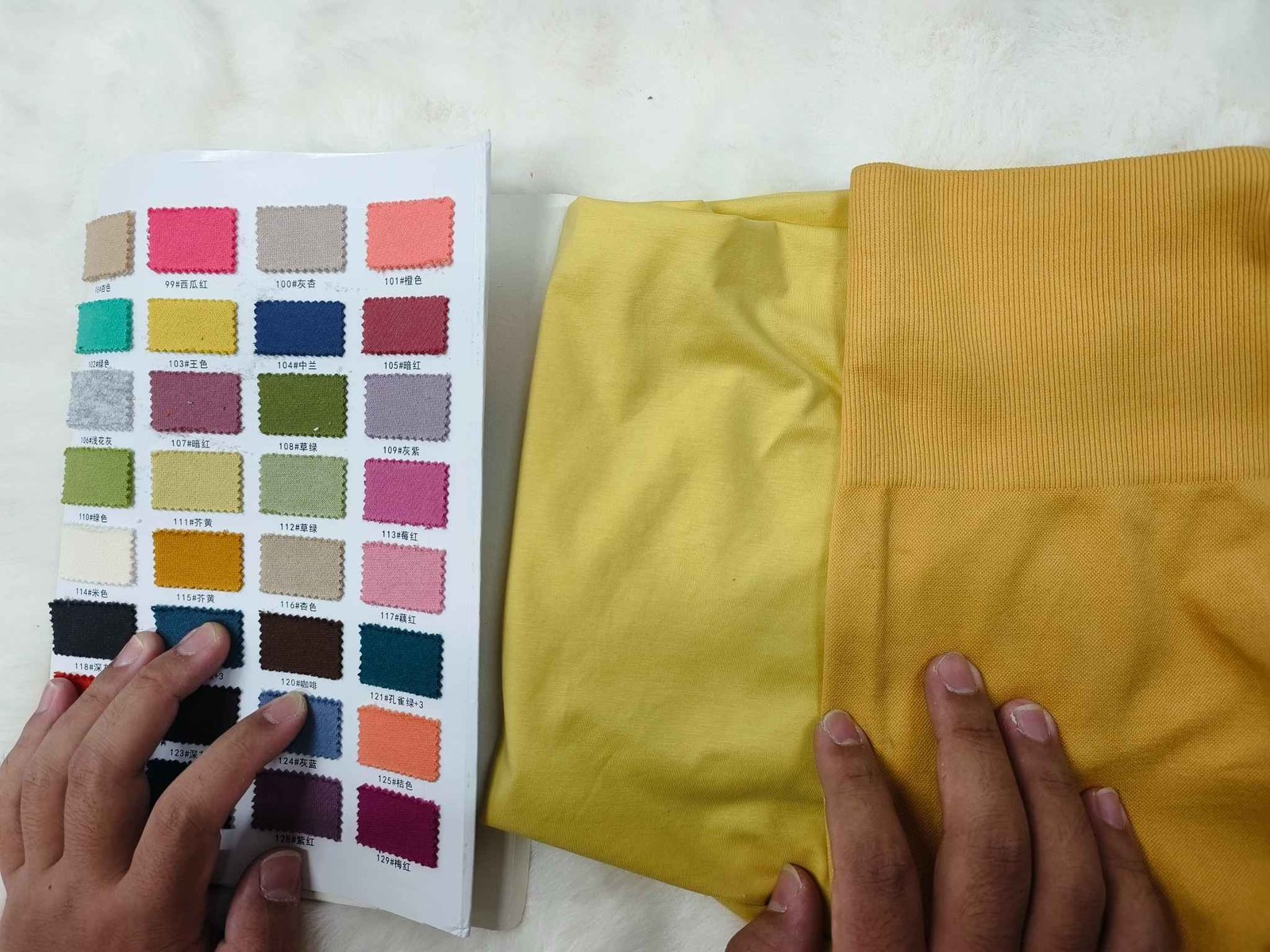
The buyer supplies a target shade, color standard and intended product combinations. Review which fabrics and finishes will display that color, including whether the design requires an exact perceived match or deliberately related tonal variations.
Confirm Substrates

Identify the distinct yarn systems, knit structures, fabric suppliers and surface finishes in the proposed range. The same recipe cannot be assumed to yield an identical appearance on different fibers and finishing routes.
Review Lab Dips

Where custom dyeing is involved, compare properly identified lab dips with the agreed color reference. Record candidate material, finish and lot so that later approval does not become detached from its manufacturing configuration.
Check Lighting

Observe each swatch under the buyer's selected viewing conditions, including relevant artificial and daylight-equivalent light where specified. Differences in gloss or texture can produce a perceptual mismatch even before instrumental color differences are considered.
Approve Product Pairings
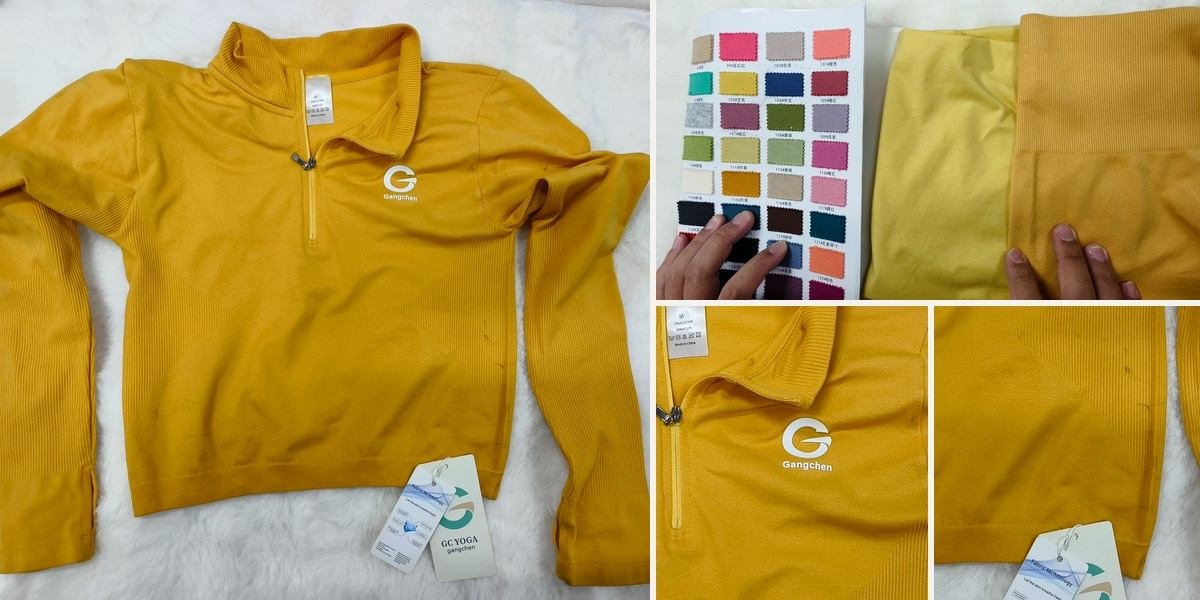
Inspect candidate top and bottom garments together, taking into account stretched zones, layered fabric and adjacent surface finishes. The brand should approve visual continuity as a finished-outfit requirement as well as independent color swatches.
Control Bulk Shades
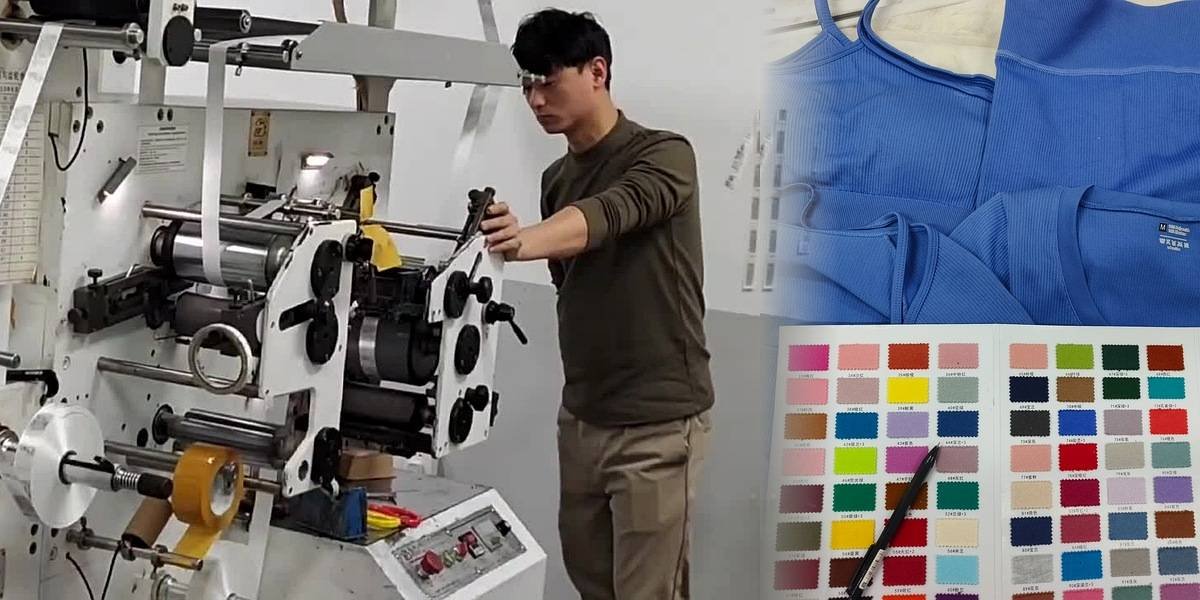
Tie approved color references to purchase records and production lots. If a later batch, supplier or finish changes, agree how the new lot will be checked against the approved standard before use in coordinated styles.
Closing note: A Pantone reference alone does not guarantee identical visual results on different textile structures. Color tolerances, illumination conditions, tested substrates and supplier lot boundaries should be agreed for the project. No universal zero-difference promise is made; the objective is an intelligible and auditable approval standard.
Preserve Lifestyle Silhouettes Across the Intended Size Range
Scaling athleisure requires control of design proportion, not merely larger numbers on a size chart. Flared sweep, rise, top length and hip ease can change the silhouette as sizes progress, requiring buyer-approved rules and size-set review.
Size-set review matrix (no production measurements implied):
| Measurement / control point | XS | S | M | L | XL | Review logic |
|---|---|---|---|---|---|---|
| Waist and hip | Buyer spec | Buyer spec | Buyer spec | Buyer spec | Buyer spec | Confirm fit ease and chosen wear position |
| Rise and seat balance | Review | Review | Review | Review | Review | Seated fit and garment pitch |
| Knee transition | Review | Review | Review | Review | Review | Position relative to leg length |
| Flared hem sweep | Review | Review | Review | Review | Review | Visual silhouette and proportion |
| Inseam / finished length | Buyer spec | Buyer spec | Buyer spec | Buyer spec | Buyer spec | Footwear and hem allowance |
| Top and sleeve length | Buyer spec | Buyer spec | Buyer spec | Buyer spec | Buyer spec | Layering and coverage relationship |
| Visual drape check | Sample | Sample | Sample | Sample | Sample | Photograph against approved styling reference |
Unit labels: cm | in
This is a technical review matrix, not an authorized MOVEVOX production size chart. Brand measurement data and target bodies determine the actual values. Grade rules should consider the position of the flare break, garment length and curve balance rather than apply one scaling ratio to every dimension. The same product family may use different specifications when fabric recovery, fit category or target market changes. An approved base size should therefore lead to a documented size set and tolerances.
Three cautions:
- Never use a legging chart as the final dimensional specification for flared pants.
- Do not infer correct proportions from numerical increments without physical fitting.
- Never publish illustrative measurements as customer-approved factory size standards.
Make Wash Care Part of Athleisure Development
Care instructions are a product-engineering decision, not simply label copy. Finishes, elastic components, logos and garment construction can respond differently to heat, rubbing, washing and storage, affecting retail appearance and repeat purchasing.
Assess Surface and Silhouette Before Finalizing Care Instructions
For a consumer-facing athleisure brand, the approved appearance can be as commercially important as the approved size. A brushed top might feel pleasant at first touch yet require a different care approach from a smooth, compact knit. A flared pant may remain close to its original waist measurement while showing a visual change in hem drape or side-seam position. A heat-applied logo may have material limits not evident from the fabric's normal washing advice. These issues must be evaluated according to the exact product and its actual combination of materials, trims and finishes.
- Material exposure: Review the supplier's care recommendations, finishing characteristics, tested colorfastness and dimensional behavior. A single consumer instruction cannot be assumed safe for every knit structure and shade.
- Construction exposure: Consider elastics, bonded components, labels, sewn seams and any mixed material that could shrink or recover differently during laundering or drying.
- Surface appearance: Define whether the brand will evaluate fuzzing, pilling, local shine, creasing, garment twisting or print changes. The required observations should follow the target retail claim.
- Documentation: Capture the accepted washing and drying conditions together with the approved fabric and garment version. If later changes affect the material, review the care assumptions again.
Industry care and performance methods help specify what is evaluated, but merely naming a standard is not an independent test result. In the absence of an actual report, the page can explain the relevant review and evidence need without claiming that a product passed. The buyer's final acceptance may differ between a long-life core style and a seasonal fashion capsule.
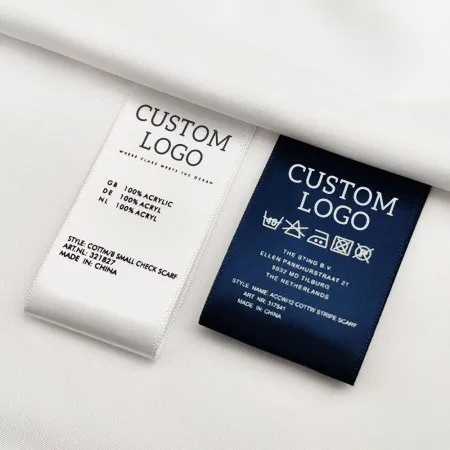
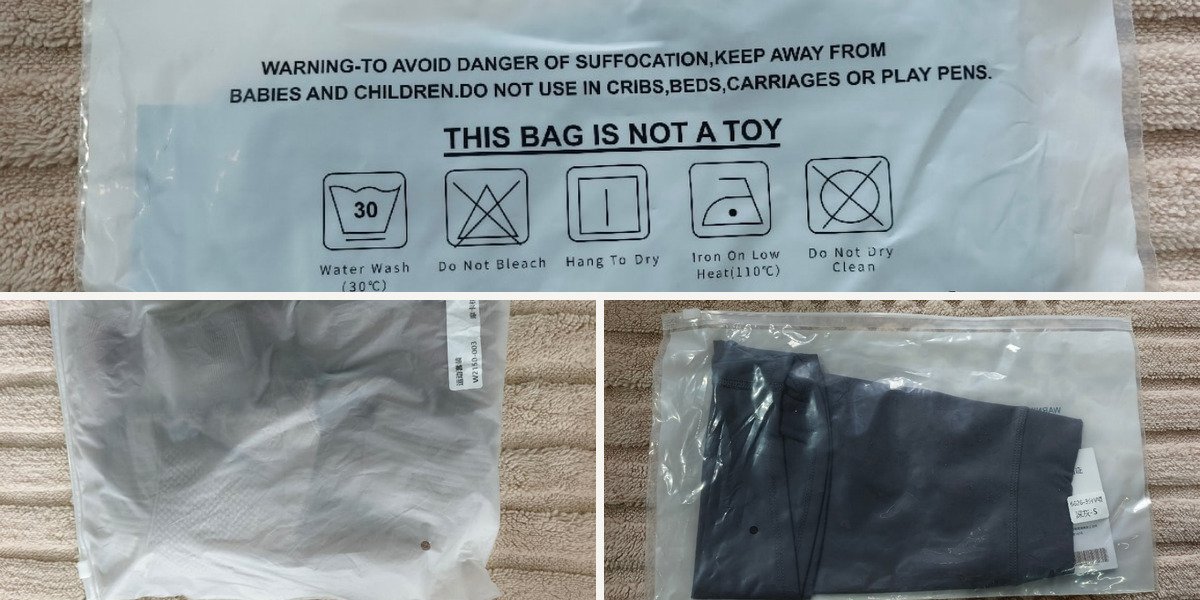
Keep Consumer Information Consistent with the Approved Product
Care labels and retail product claims should describe a garment that the buyer has actually approved. If a brand changes from a smooth knit to a brushed finish, or switches the heat-transfer supplier, prior care assumptions may no longer cover the new configuration. An accurate label depends on material information, intended care practices, relevant testing and market-specific regulatory requirements. The same reasoning applies to printed packaging copy, hangtags and online descriptions.
- Brand responsibility: The brand or importer confirms target-market labeling rules, desired consumer care guidance and claim language. The manufacturing partner should request these inputs rather than assume one international label format.
- Process compatibility: Review the actual transfer, embroidery, sewing or finishing process where it could influence wash resistance, appearance or comfort.
- Sample approval: Compare the finished garment, label information and any required performance or care evidence before the final approval gate. Record the exact style and version.
- Change control: When a material or process substitution is accepted, confirm whether the care label, packaging or test plan should also change. Do not retain unverified claims by default.
This approach connects lifestyle product durability to the buyer's commercial launch and post-sale expectations without promising a particular number of washes. MOVEVOX has relevant activewear labeling and QC foundations, but the project-specific test outcomes need genuine documentation. A concise, reliable care statement is more useful than a dramatic claim unsupported by sample evidence.
Develop Core Styles into Repeatable Lifestyle Collections
A product platform can keep a brand's silhouette and color identity recognizable while leaving room for seasonal development. These are suggested coordination stages, not a statement that MOVEVOX has already completed a particular client's annual product program.
01 Brand Brief
Clarify the target lifestyle position, consumer, price architecture and intended wearing conditions. Identify core products to carry forward and styles needing new construction. A clear commercial brief prevents fabric or silhouette choices from being driven by appearance alone.
Deliverable: Approved Brief · Timing: Project dependent
02 Core Materials
Identify candidate fabrics and surface references for core leggings, fitted tops and conditional flare products. Note where different structures may share shade direction but cannot share the same fit or finishing standard. Seek physical swatches before aesthetic sign-off.
Deliverable: Material References · Timing: Project dependent
03 Silhouette Blocks
Define the key base patterns, fit measurements and visible proportion rules for each product family. A fitted tank and flared pant should not be collapsed into one generic size procedure; preserve the design features that distinguish their retail appearance.
Deliverable: Fit Specifications · Timing: Project dependent
04 Initial Samples
Develop approved sample objectives for material touch, pattern silhouette, stretch, artwork and proposed care use. Set review responsibilities among buyer, developer and relevant material or manufacturing partners before assuming a style is ready for production.
Deliverable: Review Samples · Timing: Project dependent
05 Fit Approval
Capture buyer observations about on-body appearance, everyday movement, ease and relevant size measurements. Record the accepted version rather than relying on a photograph alone; subsequent grading and production need a stable specification reference.
Deliverable: Fit Reference · Timing: Project dependent
06 Quality Gates
Agree where pilling, washing changes, surface marking, shade and dimension checks are relevant, including which claims require external or supplier testing. The test plan must be linked to actual material and garment identifiers, not implied by the collection name.
Deliverable: Quality Criteria · Timing: Project dependent
07 Seasonal Extension
Decide which new colors, lengths or styling details can reuse existing approved materials and patterns and which create meaningful design changes. Check new surface finishes or substitutions before calling them simple carryovers.
Deliverable: Capsule Matrix · Timing: Project dependent
08 Repeat Review
Before reorder, confirm material availability, accepted surface reference, approved sample version and changed customer requirements. When there is a supplier or finish substitution, define renewed checks so the core style remains visually coherent.
Deliverable: Reorder Checklist · Timing: Project dependent
Create Distinction Without Excessive Development Complexity
Brand differentiation should appear in decisions that can be specified and manufactured. These five review tracks let the buyer choose a product identity while understanding its cost, material, fit and approval implications.
Fabric Identity
A recognizable collection might use a dense matte base, a distinctive rib or a soft brushed texture. Each choice carries different risks in drape, heat marking, surface variation and pilling. Product teams should shortlist physical swatches and check finished garments rather than approve adjectives on a mood board. The objective is to translate a sensory and visual direction into identifiable materials that can be purchased again. Any request for a graded performance claim must be linked to relevant evidence, not inferred from fabric names.
Buyer inputs: Target touch and appearance; physical material reference; expected care environment.
Proposed MOVEVOX outputs: Comparable swatch options; manufacturing risk notes; candidate material approval record.
Next action: Review Fabric
Silhouette Identity
The signature of a lifestyle brand may come from a particular waistline, flare break, top length or relaxed body proportion. These design decisions require actual pattern balance and grading rules. Reference images can communicate intent, but they do not describe every POM or sewing requirement. Teams should approve the representative sample, then check the silhouette over target sizes and intended fabric variants. This approach may reduce avoidable revision disputes without claiming that any exact visual result is guaranteed before sampling.
Buyer inputs: Fit target and wearer profile; size range; reference silhouette photographs.
Proposed MOVEVOX outputs: Pattern review points; preliminary fit sample plan; key grading questions.
Next action: Review Fit
Color Identity
A muted wardrobe palette can still be technically complex when ribbed, brushed and smooth garments share a color story. Fabric texture and gloss influence perceived shade, while custom dyeing can change raw-material requirements and production timing. Establish a physical color standard for each substrate, specify acceptable visual or instrumental comparison conditions and record the approved lot. The brand may approve related tones rather than demand an unrealistic identical visual result across all surfaces.
Buyer inputs: Brand color references; material assignment by style; seasonal pairing objectives.
Proposed MOVEVOX outputs: Color-approval route; swatch review matrix; identified procurement dependencies.
Next action: Approve Colors
Branding Restraint
Minimal branding requires precision rather than absence of technical detail. A small heat transfer on a brushed or highly elastic fabric may present more surface or adhesion risk than a larger mark on a stable jersey. Brand teams should review placement, contrast, finish compatibility and wash needs for each garment. Any embroidery or badge used on a stretch zone must also be assessed for feel and distortion. Approved artwork and actual decoration samples should govern bulk execution.
Buyer inputs: Artwork vectors and placements; target brand look; care and feel priorities.
Proposed MOVEVOX outputs: Process compatibility review; artwork-sample request; production-approval checkpoints.
Next action: Review Branding
Seasonal Updates
Seasonal capsules can extend an approved core range through changes in shade, length or styling details, but not every change is commercially minor. A new finish may require fresh pilling review; an altered flare may need a new size set; a different logo process may change care conditions. Buyers can classify revisions as carryover, controlled update or fresh development. That distinction helps prioritize approval and forecast purchasing requirements without relying on a misleading universal lead time.
Buyer inputs: Carryover style list; proposed seasonal change map; target order timing.
Proposed MOVEVOX outputs: Change classification; sampling priorities; MOQ and material review inputs.
Next action: Plan Updates
Review Your Athleisure Brief Before Sampling Begins
Share your proposed styles, target silhouette, material swatches, reference garments or current Tech Packs. MOVEVOX can review the request against its established activewear capabilities and identify construction questions, sample requirements and order assumptions. Complex flare designs, special finishes and broader casualwear categories remain subject to technical and sourcing evaluation rather than automatic production approval.
Reference photos, measurement charts and material swatches help clarify development scope; commercially sensitive materials can be handled under agreed confidentiality terms.
Translate Fabric References into Manufacturable Lifestyle Garments
A material swatch communicates only part of a brand's target. Effective development also requires information about surface finish, drape, garment geometry, intended wearing ease, care exposure and the feasibility of future material orders.
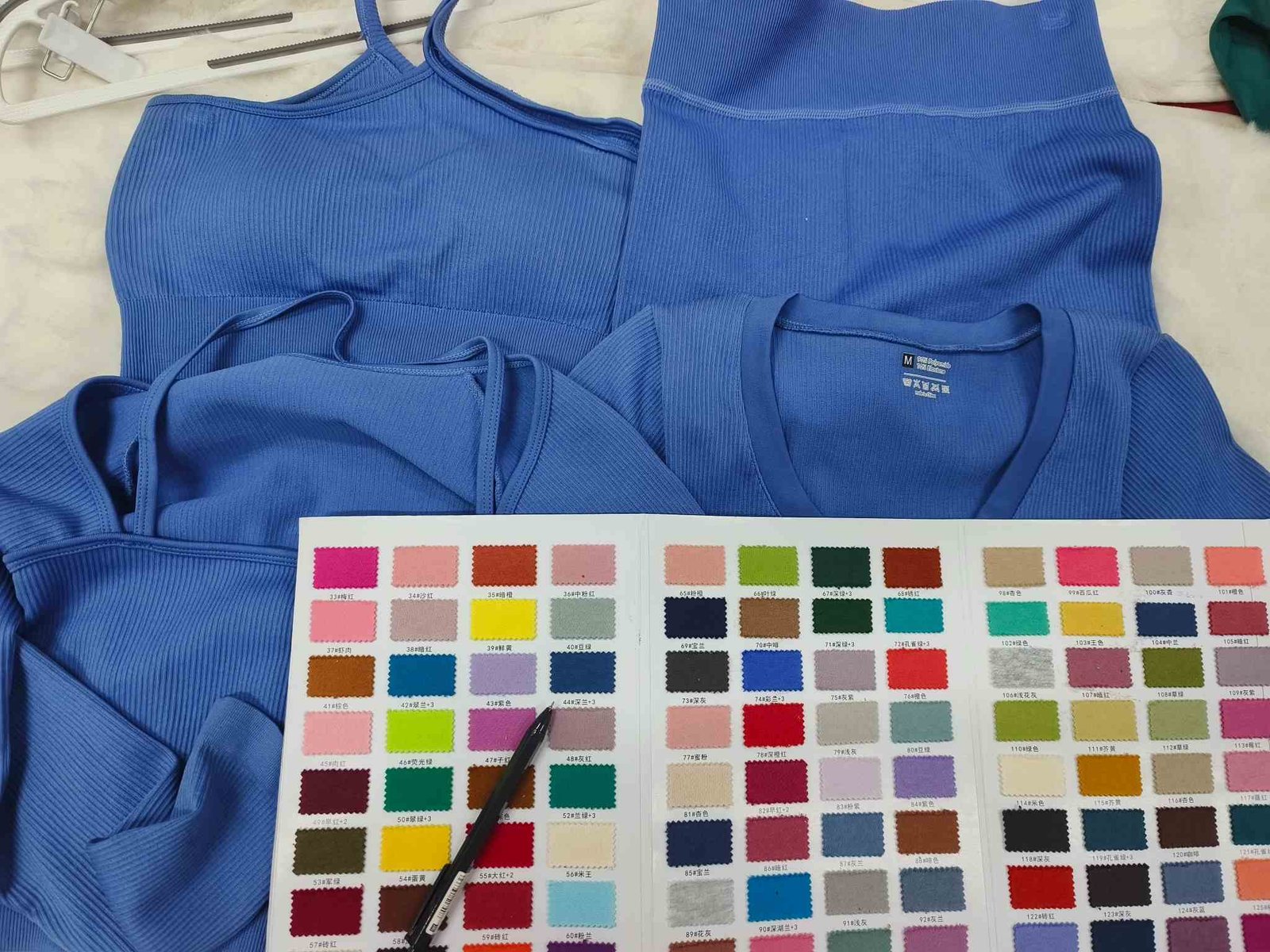
Start with a Physical Reference, Not a Descriptive Adjective
A reference swatch may be the most useful piece of information in an athleisure inquiry, but it does not automatically define the finished garment. Two knits with similar color, composition and nominal weight can have different surface finishes, elastic response, thickness, drape and washing behavior. Similarly, a swatch from a retail garment may include finishing or proprietary yarn details that cannot be inferred by touch or a simple visual examination. A responsible development review distinguishes what can be measured directly from what requires supplier clarification or substitute-material evaluation.
- Identify the reference: Record the source, material type, shade, available construction information and specific features the buyer wants to reproduce. Avoid promising an exact copy of an unidentified or protected material.
- Prioritize attributes: Separate must-have characteristics such as matte appearance or a particular drape from secondary preferences such as a softer initial touch or an alternative blend.
- Match garment use: Consider how a fabric behaves in a fitted legging, flared pant or relaxed top. The same material may be appropriate for one silhouette and unsatisfactory for another.
- Identify sourcing limits: Ask about custom color, yarn type, finishing availability, mill MOQ and lead-time dependencies. The garment MOQ cannot resolve the procurement limits of a custom textile.
- Plan approval: Compare candidate physical swatches and finished samples under the buyer's agreed conditions, then retain the selected reference with its actual supplier and revision details.
Where a substitution is needed, the buyer should understand whether it matches only the appearance, the touch or a specified measurable property. The proposed work may produce a feasible alternative without yielding a molecular or process-identical reproduction of the original. MOVEVOX's activewear material and sample-development resources can support a defined review, but do not guarantee that every third-party textile can be duplicated.
Verify the Fabric Inside the Intended Silhouette
A swatch approval should lead to garment-level checks before production. On the body, a textile undergoes different extension in the waist, hip, thigh, chest and armhole; the apparent shade and texture may change accordingly. A heavier fabric can give a structured outline but may also increase the hang weight of a wide hem. A very soft surface can create a desirable feel while introducing concerns about pilling or handling marks. The correct development question is therefore not simply whether the fabric matches the reference but whether it supports the approved design and manufacturing method.
- Construct the sample: Select a pattern and sewing or knitting route compatible with the material and target silhouette, documenting uncertain areas such as hem sweep, grain orientation and seam stretch.
- Fit on an agreed basis: Compare base-size dimensions and visible proportions with the brand's approved references; record where the garment behaves differently from the design expectation.
- Review consumer use: If required by the product positioning, check seated comfort, layering, cleaning-related appearance and material recovery under agreed conditions.
- Establish a release reference: Tie final garment and fabric approval to the correct style, size, color, material lot and construction revision.
- Control future change: A mill substitution or altered finish may require further comparison even when the component composition is nominally unchanged.
This buyer-directed sequence transforms a material inspiration into a series of documented decisions without describing future options as previously completed customer projects. It is also useful for identifying when a Flared Pants or heavier Lounge Wear proposal falls outside existing stable capability and needs additional sourcing or prototyping before an RFQ can be responsibly confirmed.
Check Common Construction Assumptions Before Lifestyle Sampling
Athleisure styles often look simple even when material and pattern decisions are complex. These myth-and-fact reviews help procurement teams identify technical questions before committing to sampling, cost targets or promised consumer claims.
Seamless Is Always Softer
Myth: A seamless process always produces the softest and most comfortable athleisure garment.
Fact: Seamless knitting can reduce selected assembled seams and create engineered zones, but final touch depends on yarn, knit structure, finishing, fit and the presence of local attachments. Cut-and-sew may be preferable for a particular flare, pocket or layered silhouette. The buyer should compare actual finished products rather than infer a superior feel from the process name alone.
Boundary: Santoni capability proves a manufacturing route, not universal comfort superiority.
Flare Means Wider Hem
Myth: Any legging becomes a professional flare style by adding hem width.
Fact: A coherent flare requires coordination among hip ease, thigh shaping, knee transition, inseam and fabric drape. A wide hem with unsuitable material or grading can lose the desired line when worn, seated or washed. Flared active pants should enter an agreed pattern and sample review rather than inherit all standard leggings dimensions.
Boundary: MOVEVOX treats many flare or bootcut styles as project-specific developments.
Heavier Fabric Drapes Better
Myth: A higher GSM alone guarantees a more premium and flowing lifestyle silhouette.
Fact: Fabric mass influences hanging behavior, but bending stiffness, knit architecture, recovery and pattern geometry also matter. A heavier knit can make a flare feel more structured rather than fluid. Material choice should be made from the finished garment's intended outline, not one specification number used as a proxy for drape.
Boundary: Actual drape suitability requires physical garment review, not an invented rating.
Brushing Prevents Pilling
Myth: A brushed fabric is automatically more durable because it feels denser or warmer.
Fact: Brushing modifies the surface and can increase softness, but may also introduce fibers exposed to friction. Pilling behavior depends on fiber, yarn, structure, finish and use conditions. A buyer must request relevant test or wear evidence before publishing an anti-pilling or abrasion claim for a specific garment.
Boundary: The page offers no universal pilling-grade promise.
One Color Means Match
Myth: One shared color code ensures every top and bottom looks exactly identical.
Fact: Surface gloss, raised fibers and knit structure change how light interacts with cloth. Separate fabrics may need their own lab dips, swatch approvals and finished-outfit comparison. Instrumental color readings and visual acceptance also serve different roles, especially where related tones are acceptable by brand design.
Boundary: Color tolerance and light conditions require buyer agreement and real samples.
Washing Is Packaging Detail
Myth: Wash instructions can be decided at the end without affecting development.
Fact: Laundering can change size, touch, surface and the outline of a garment, with different components responding differently. Where wash-and-wear appearance is central to the product promise, appropriate checks should occur before final technical approval. Labels must reflect the actual material and approved retail requirements rather than a copied universal template.
Boundary: A proposed wash review is not evidence of a completed project test.
Every Casual Style Fits
Myth: Any hoodie, jogger or fashion layer is standard for an activewear factory.
Fact: Heavier fleece, french terry, specialized trims, structured woven fabric and complex outerwear can require distinct machinery, suppliers and construction controls. MOVEVOX's established activewear foundation supports appropriate lifestyle development, but non-core categories must receive an honest technical and sourcing assessment before being quoted as routine work.
Boundary: No blanket heavyweight-streetwear manufacturing claim is made.
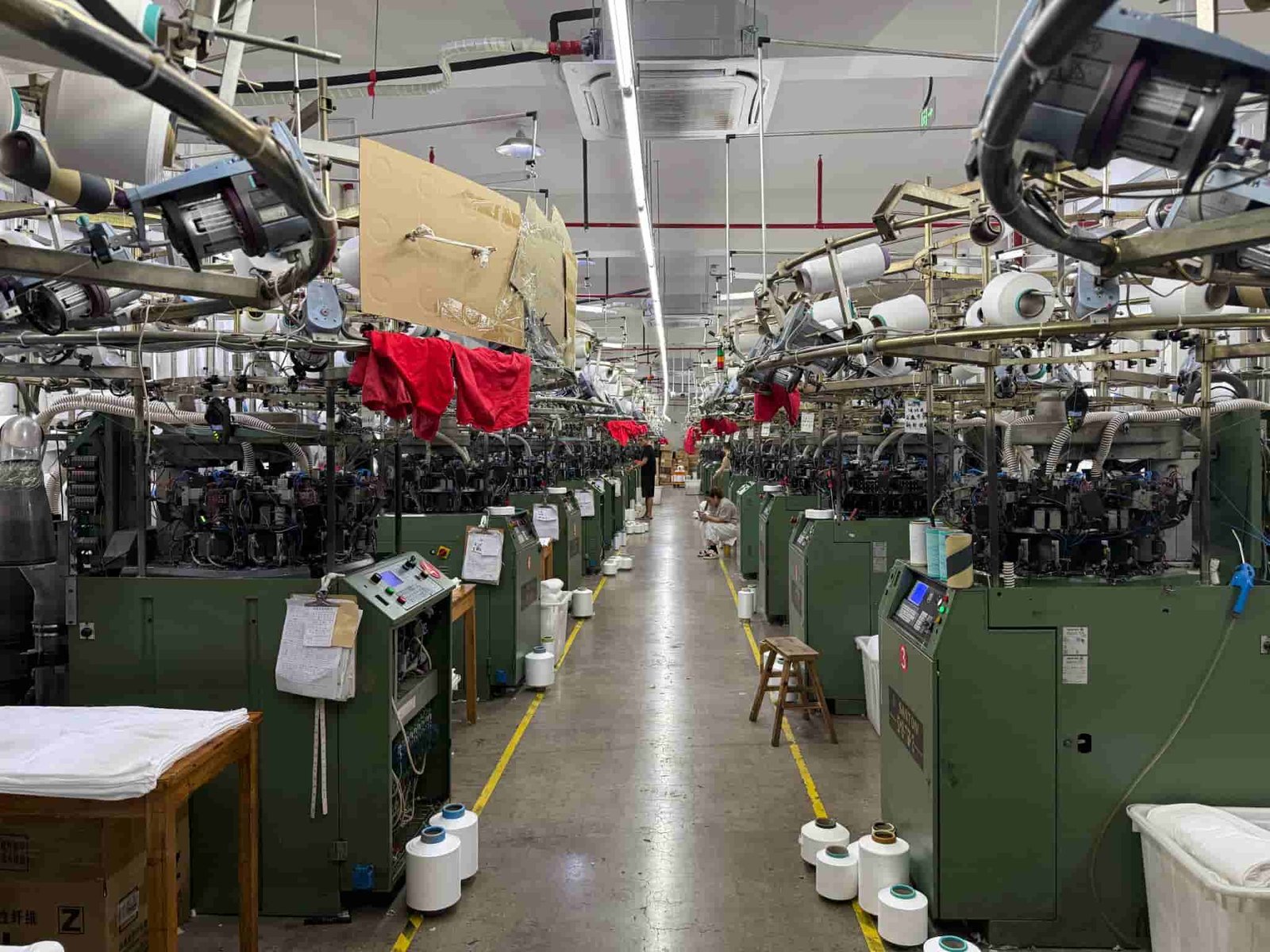
Control Each Style Within a Coordinated Athleisure Range
Coordinated retail products need shared brand references without erasing different engineering requirements. These six areas identify where styles can share information and where independent approval is essential before a collection can enter bulk production.
Fabric Reference Control
A shared wardrobe can use different fabrics, and each fabric should retain its own approved identity. Record composition, yarn or fabric description, weight, surface finish, dye reference and approved master swatch. If the supplier proposes a substitution, confirm which properties might change and which style samples require renewed review. This helps the buyer preserve recognizable handfeel and surface appearance without incorrectly assuming two nominally similar knits are equivalent.
Review prompts: Approved swatch identity; lot and finish changes; garment-level effect.
Fit Block Separation
A lifestyle legging, tank and flared pant should not share one fit rule merely because they appear in a matched set. Establish relevant POMs, target ease, size grade, intended length and visible silhouette independently. Maintain common styling references where useful, but approve the actual product geometry of each style. Where a change in fit affects layering proportion, the buyer may need an additional cross-style appearance review.
Review prompts: Base size and target wearer; style-specific grade; outfit proportions.
Color Approval Mapping
A collection colorway can span smooth, ribbed and brushed materials, each reflecting light differently. Create a color map that identifies the substrate, approved shade reference and expected visual match for every style. Specify if tonal relationships are acceptable or if tighter matching is essential. Bulk shades must be linked to actual material lots rather than a generic global color code with no finish reference.
Review prompts: Standard and lighting; substrate-specific approvals; lot-to-lot shade change.
Technical Version Tracking
Each SKU needs an identifiable pattern, construction, material and artwork version. When a neckline, flare width or fabric surface changes, confirm whether that creates a revised sample or a new technical approval. A shared seasonal range does not eliminate the obligation to document style-specific changes. Use final approved specifications as the basis for quotation, production instruction and future reorder comparison.
Review prompts: Style/version identity; change authorization; sample-to-bulk handover.
Branding by Substrate
The same logo may require different processes on a smooth T-shirt, brushed leggings or ribbed top. Review transfer heat, stretch, visual scale, placement and wash compatibility on the actual garment. Minimalist branding should still have approved artwork, position, color and durability conditions. Where a decoration method changes, the brand should confirm the new appearance rather than assume it matches an existing style.
Review prompts: Artwork file and size; substrate compatibility; approved application sample.
Retail Packaging Mapping
Coordinated collections generate multiple sizes, colors and style combinations that must map accurately to labels, barcodes and carton information. The brand's packaging requirements should be reviewed with the approved garment and consumer care information. A mistake in one SKU label or pack ratio may create retail and warehouse costs even when the garment itself is correctly produced. Final mapping belongs to the actual purchase order.
Review prompts: SKU barcode mapping; label content; pack and carton approval.
Approve Athleisure Samples with Objective Product References
A lifestyle garment may satisfy basic dimensions while missing its intended touch, flare or retail appearance. This sample checklist separates required approval inputs from optional project-specific checks before bulk production can responsibly begin.
Material Identity
Required. Record the exact approved fabric or yarn source, composition, construction, weight, finish and reference ID. A visually similar substitute is not automatically approved when the original textile or supplier changes.
Fabric Handfeel
Required. Compare the physical sample with an agreed master swatch, describing important characteristics such as smoothness, softness, texture or stiffness. Subjective evaluation needs reference conditions rather than vague praise.
Surface Appearance
Required. Approve gloss, rib scale, brushing level, visible markings and color presentation under agreed viewing conditions. The accepted surface should be reviewed on an actual finished garment as well as a flat swatch.
Silhouette Reference
Required. Photograph and measure the target garment, including hip-to-knee contour, flare sweep, neckline or hem length where relevant. A flat measurement chart alone may not reproduce the intended visual line.
Fit and Ease
Required. Confirm body reference, base size, wearing ease, seated comfort and other relevant fit conditions. A high-support training specification should not be substituted for the selected lifestyle wearing intent.
Size Set Review
Required for graded programs. Verify that POMs and visual proportions progress appropriately across the buyer's size range. Differences between a fitted top and a flared bottom should receive independent grading review.
Wash Appearance
Conditional / buyer-defined. Establish if laundering checks are required for dimensional change, seam twisting, pilling, finish variation or shape retention. Only actual test results may support stated acceptance performance.
Shade and Color
Required. Identify the accepted color standard for each material and style. Review finished-outfit consistency where different surfaces share a collection palette, including intentional tonal variations.
Logo and Labels
Required where used. Approve artwork, placement, application method, label content and compatibility with the product's stretch, surface and care conditions. Customer marketing claims require the appropriate evidence.
Construction Workmanship
Required. Review seams, hems, elastics, panel alignment and finishing against the actual sample. Note any style-specific risks created by lightweight fabrics, wide hems or sensitive brushed surfaces.
Retail Packaging
Required by order. Confirm folding, hangtags, care label, SKU and barcode mapping, packaging materials and carton data according to the buyer's market and distribution requirements.
Final Approval Record
Required. Tie approved sample, measurements, material, colors, logo and test evidence to a traceable style/revision. Subsequent production changes should trigger the relevant reapproval decision.
Incomplete-data note: A buyer does not need to arrive with every field finalized. MOVEVOX can discuss missing sketches, swatches, body measurements and packaging inputs during development review. However, missing data cannot silently become assumed specifications; unresolved items must be identified and agreed before sample or production release.
Carry Approved Athleisure References into Bulk Production
Sample-to-bulk control requires connecting visible design features with the exact material, pattern and production references used to approve them. The suggested record chain below identifies what a buyer should request rather than claim an unverified digital system.
Purchase Brief
Identify the buyer, style, target quantities, authorized changes and approved commercial conditions. The purchase instruction should distinguish carryover styles from new surface finishes or silhouettes needing further review.
Material Reference
Connect the agreed composition, structure, weight, finish, approved swatch and supplier reference with each style. Similar-looking material lots must not be treated as equivalent without checking relevant characteristics.
Handfeel Approval
Retain an approved physical touch and appearance standard where required. Identify how a fresh lot or finish can be compared with that reference, including who is responsible for deciding a material substitution.
Fit and Silhouette
Record POMs, grade rules, construction details, approved sample identity and visual references. For flared products, specify proportion-critical points beyond waist and hip numbers alone.
Color and Branding
Tie shade approvals, decoration placement, logo method and relevant surface compatibility to the actual garments. Separate fabrics may need distinct standards even within one coordinated color story.
First Article
Compare an initial production garment against the approved material, measurements, appearance and workmanship references. Discrepancies should be documented and resolved before expanded production of the affected configuration.
Inline Review
Inspect production-specific risk points such as seam waving, finish marking, POM drift or label mapping while correction remains possible. The check scope should follow the buyer's agreed quality plan.
Final Inspection
Verify the finished order against approved style versions, applicable evidence, packaging and order quantities. Final release should reflect the actual inspection outcome, not a general marketing promise of zero defects.
Reorder Archive
Maintain the available approved version and relevant lot/inspection records for future reorder review. If material or finish changes, define whether a fresh swatch, sample or testing approval is needed.
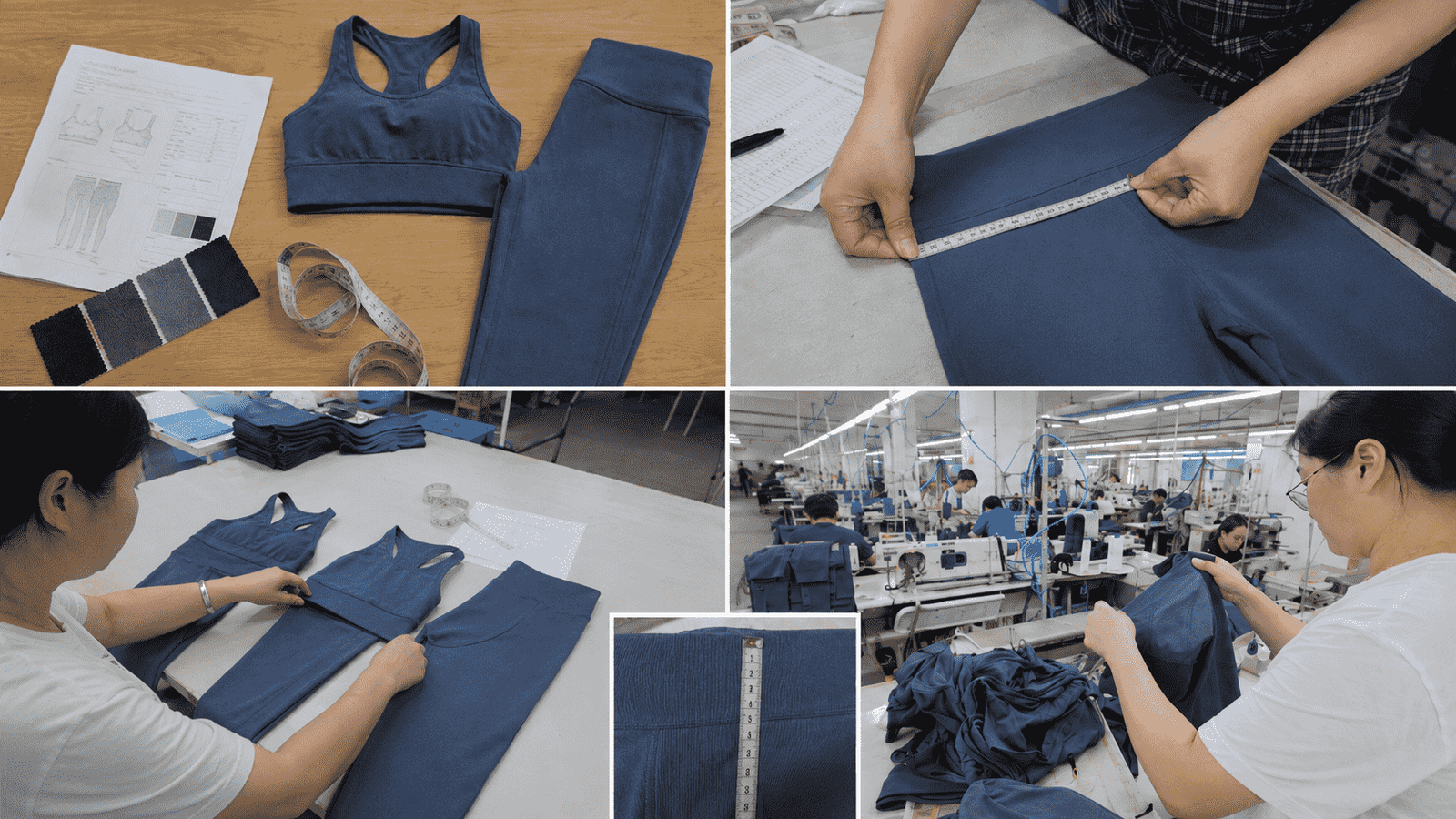
Match Retail Appearance Defects to Real Inspection Records
Athleisure acceptance involves visible texture, drape, shade, dimensions and finishing—not simply seam integrity. This prevention matrix distinguishes proposed review points from documented defect history and links each risk to appropriate evidence.
| Defect or deviation | Likely cause | Prevention | Inspection point | Corrective action |
|---|---|---|---|---|
| Surface pilling or fuzzing | Fiber, yarn, raising finish and rubbing conditions may change the approved surface over time. | Review real material swatches and agree relevant pilling conditions, ratings and scope before bulk approval. | Supplier fabric approval and subsequent material or buyer-specified tests on identified samples. | Hold affected material where necessary; review source or finish and obtain buyer approval of any substitution. |
| Handfeel variation | Alternative finishing, fabric lots or suppliers can alter perceived softness despite nominally similar fiber content. | Retain an approved physical swatch and identify the material and finishing process for lot comparison. | Incoming fabric, approved sample and any controlled material-change review. | Segregate the suspect lot, compare with reference and agree adjustment or replacement before cutting. |
| Uneven shade | Different substrates, dyeing conditions or finish gloss create visual shade differences within one palette. | Approve material-specific shade standards and clarify viewing illumination and acceptable variation with the customer. | Lab dip approval, incoming fabric shade and finished-outfit comparison where required. | Isolate affected shades; obtain revised approval or replace material according to agreed criteria. |
| Dimensional shrinkage | Fabric relaxation, washing protocol and heat treatment can change garment dimensions after care. | Choose appropriate wash/dry methods and set pre- and post-wash POM and tolerance expectations. | Material checks, sample qualification and agreed post-care dimensional evaluation. | Review material preparation or pattern compensation, resample and retest when required. |
| Twisting or skew | Knit construction, finishing tension and asymmetrical panel behavior can distort seam or silhouette. | Review structure orientation, cutting direction and garment balance before releasing the approved sample. | Pattern/sample review, first article and relevant post-wash appearance check. | Diagnose material or sewing origin; revise cutting/construction and obtain approved comparison. |
| Flare shape inconsistency | Hem sweep, knee transition, grade rules or material drape may vary across sizes and production. | Specify proportion-critical points and approve size-set silhouettes with true production material. | Size-set approval, first article and finished-garment measurement/appearance review. | Hold affected style or size; revise graded pattern or material decision with buyer authorization. |
| Seam waviness | Needle/thread selection, elastic tension or fabric feed may distort highly elastic or lightweight edges. | Validate actual stitch, thread and feeding settings on the chosen garment and material. | First article, in-line workmanship check and finished-garment visual comparison. | Adjust construction parameters and repair or replace affected pieces subject to inspection policy. |
| Heat or pressure marking | Sensitive surface finish can polish, compress or discolor during decoration and finishing. | Check pressing, branding and packaging processes on the actual material before production release. | Logo/process sample, in-line decoration check and finished-garment surface inspection. | Stop or revise the process; separate marked garments and reassess acceptability with the buyer. |
| Logo or trim failure | Adhesive, transfer conditions or attachment method may be incompatible with material or care exposure. | Approve decoration on the true substrate and set relevant stretch, rub or wash verification conditions. | Artwork sample, first article, chosen durability checks and final logo inspection. | Correct the material or application procedure, resample and reinspect the affected lot. |
| Wrong label / retail SKU | Multiple styles and colorways can be misidentified during labeling, packing or carton preparation. | Use approved SKU-to-size-color mapping, packaging artwork and final purchase-order references. | Label verification, first packed piece and final carton/document consistency check. | Isolate affected cartons, relabel against approved data and record reinspection before release. |

Compare Athleisure Cost Decisions Beyond Unit Price
The lowest garment quote may omit risks linked to special finishes, materials, fit correction and color consistency. This qualitative comparison identifies cost drivers rather than presenting imaginary supplier quotations or historical savings results.
Illustrative sourcing alternatives:
A — Smooth Core Knit: Standardized material direction, relatively simple finish and established activewear construction; still requires actual style approval.
B — Soft-Surface Collection: Specialized handfeel and surface finishing with increased emphasis on pilling, marking, color and wash checks.
C — Flared Lifestyle Capsule: A material-and-pattern-specific silhouette with additional fit/grading and possible multi-style color coordination.
| Cost / risk factor | A — Smooth Core | B — Soft Surface | C — Flared Capsule |
|---|---|---|---|
| Material purchase | Standard availability may be easier, but supplier, composition and color MOQ still need confirmation. | Finish requirements may constrain approved mills or create additional minimums and material comparison work. | Selection must support garment drape and potentially different lengths, cutting yield and grading requirements. |
| Sampling and revision | Review physical handfeel, fit, color and basic manufacturing route before assuming a fast sample cycle. | More surface or decoration trials may be required where brushing or finish sensitivity affects appearance. | Pattern revisions and size-set appearance checks may increase development effort over conventional leggings. |
| Surface quality risk | Smooth appearance still needs shade and finish checks, particularly around heat or friction contact. | Pilling, fuzzing, shine and pressure marking can require extra pre-production qualification and handling controls. | Material drape and hem appearance may vary if the selected textile or process changes. |
| Color coordination | One material platform can simplify some comparisons if colors and lots are actually approved. | Different finished surfaces may need separate lab dips and finished-outfit visual approval. | A capsule may share shades with tops but still require independent substrate-specific references. |
| Production complexity | The reviewed style structure determines operations, not the product's marketing category or name. | Finishing or decoration requirements can add handling, quality checks and material rejection risk. | Panel shapes, inseams and hem sweep may affect fabric yield, cutting and workmanship checks. |
| Order quantity | Garment and fabric minimums must be checked separately for each color and construction. | Special colors or finishes can materially change supplier minimums and availability. | Multiple flare lengths, sizes and coordinated top styles can increase SKU complexity. |
| Inspection needs | Standard approved-sample and process checks remain relevant and cannot be skipped by default. | Visual surface standards may require additional approved references or testing depending on claims. | Dimensional, grade and shape references should cover the intended size range. |
| Replenishment | Retaining material/version references may reduce unnecessary development but not remove change control. | Finish consistency and batch comparison can be more important for maintaining recognizable handfeel. | Fit proportions and fabric hang may need renewed comparison after a material change. |
These are qualitative examples, not actual MOVEVOX unit prices or verified comparative savings. A low quote can become expensive if repeated sampling, a material change or packaging rework prevents a seasonal launch. Conversely, a complex finish may be justified for a brand whose customers value that distinctive surface and who can validate its retail performance. Buyers should request a transparent breakdown of material, finishing, cutting, sewing/knitting, artwork, testing, packaging and applicable logistics. Compare like-for-like approved specifications, not only garment names. Costs and evidence requirements should be confirmed before the purchase order, with changes documented as they arise.
Organize Athleisure Minimums Around Materials and Styles
A mixed athleisure collection can include existing materials, specially dyed fabrics and different production routes. Buyers should distinguish finished-garment minimums from textile, color, trim and packaging supplier minimums before defining launch quantities.
Core Style Trial
A brand testing familiar leggings or tops may begin with a limited style and a clearly defined material. MOVEVOX's documented indicative garment minimums are approximately 100 pieces per seamless style and 150 pieces per cut-and-sew style, subject to suitability and order conditions. However, special yarn, fabric or custom color requirements can exceed those baselines. Confirm sizes, shade, labels, packaging and exact structure before the quotation becomes reliable.
Quantity basis: Conditional per-style starting point, not a fixed offer.
Color/size logic: Confirm actual material availability and buyer size distribution.
Cost sensitivity: Fabric minimums, customized trims, grading and sample work.
Coordinated Core Program
A core athleisure range may combine multiple tops and bottoms that share colors but not necessarily the same materials. The buyer can evaluate whether some styles can use an existing approved fabric platform and whether others require independent custom textile procurement. Consolidating colors may improve material planning, but it does not erase different garment MOQ or fit standards. The sourcing team should map each style, fabric, finish, color and quantity before requesting unit prices.
Quantity basis: Individual styles and actual material routes to be confirmed.
Color/size logic: Per-substrate color approvals and a combined SKU matrix.
Cost sensitivity: Multiple garment routes, fabric lots and retail packaging.
Seasonal Capsule Mix
A capsule that introduces new flare shapes, special surface finishes or seasonal colors can create fresh development and textile minimums. Separate true carryover components from new materials, and check whether planned quantities can consume the relevant dye lot or supplier minimum. The brand may choose fewer colors, alternate materials or revised launch phasing if economics are unsuitable. Such options are proposals to be priced and approved, not guaranteed MOQ reductions.
Quantity basis: Product-specific RFQ and supplier material minimums required.
Color/size logic: Seasonal palette, finish and reorder forecast considered together.
Cost sensitivity: New dyeing, finish trials, samples and batch variation risk.
Athleisure Repeat-Order Key Takeaways
- Retain the real reference: Approved fabric handfeel and surface appearance should be connected to identifiable swatches and material versions, not remembered through adjectives alone.
- Protect silhouette intent: Reorders should follow the approved pattern, measurements and visual proportions; new material drape or finish may require sample reapproval.
- Check color by substrate: A coordinated palette does not remove the need to compare new lots of smooth, brushed or ribbed material against their own standards.
- Reconfirm care-sensitive changes: A change of mill, treatment, elastic or logo process may affect wash appearance or consumer instructions and should trigger a scope review.
- Separate carryover from redesign: Repeating an approved style may reuse valid references, while a new flare width, finish or fit represents a controlled technical change.
- Connect records with actual orders: Purchase orders, material identities, first articles, inspection outcomes and packaging requirements should support each replenishment decision.
Check Seasonal Capacity Against the Actual Style Mix
Production capacity becomes meaningful only after material, sample and order constraints are known. Athleisure capsules may combine established core styles with new finishes or patterns, creating different approval and supply dependencies within one launch.
| Stage | Planning window | Prerequisite | Buyer confirmation |
|---|---|---|---|
| Range Brief | Project-defined range | Planned styles, target sizes and season | Confirm product scope and launch objectives |
| Material Check | Supplier-dependent range | Swatch, finish, color and textile availability | Approve material direction and custom-dye requirements |
| Sampling | Indicatively 5–10 workdays for eligible standard samples after all details are confirmed | Complete approved development inputs | Review samples and submit feedback; special work may take longer |
| Style Approval | Revision-dependent range | Fit, color, surface and appropriate test outcomes | Authorize final specifications and PP requirements |
| Capacity Allocation | Order-dependent range | Quantity, actual route, material readiness and approved sample | Confirm order and feasible production allocation |
| Bulk Production | Often around 20–35 days for applicable conventional orders after conditions are met; confirm per project | PO, material readiness, approval and line scheduling | Approve applicable checkpoints and outstanding decisions |
| Final QC & Dispatch | Order/shipping-dependent range | Inspected goods, labels, packaging and transport arrangements | Confirm final shipment data and forwarder instructions |
The indicative 5–10 working-day sample and 20–35 day bulk ranges are documented baseline figures, not an athleisure-specific delivery promise. Custom finishing, dyeing, new silhouettes, large size sets, testing, customer revision cycles and peak-season capacity can materially change a schedule. The actual time-and-action plan should be issued only after order review and material confirmation. Company-wide delivery capacity is not a quantity reserved for this page or for a particular buyer.

Compare Supplier Models for Lifestyle Collection Development
Not every apparel supplier is built for the same product architecture. A buyer should compare actual process ownership, material access, technical support, quality evidence and minimum-order fit rather than treat any supplier type as inherently superior.
| Evaluation | MOVEVOX activewear-led model | Fashion full-package manufacturer | Single-process specialist | Trading-led supplier |
|---|---|---|---|---|
| Typical fit | Activewear-based athleisure and appropriate lifestyle knits | Wider fashion categories if documented | Specific knits, sewing or finish focus | Varies with real partner factories |
| Collection scope | Leggings, tops, sets; conditional flared and layers | Depends on actual design/product portfolio | Often limited to specialty production | Depends on disclosed sourcing network |
| Material expertise | Activewear yarn, fabric and finish coordination | May support fashion-oriented textile sourcing | Strong within the specific process | Dependent on supplier and controls |
| Technical ownership | MOVEVOX documents development and manufacturing coordination | Verify team and factory authority by project | Often deep in own manufacturing route | Confirm who approves and owns specs |
| Manufacturing route | Seamless and cut-and-sew within documented scope | May include wider woven and knit categories | Single dominant process | Supplier allocation may vary by order |
| Quality evidence | Request genuine samples, inspection and scoped reports | Request factory and product-specific records | Request process-specific inspection records | Request actual factory-level evidence |
| MOQ / flexibility | Conditional style minimums and fabric dependencies | Commercial terms vary by program size | Process/material minimums may dominate | Terms must be tied to real producers |
| Repeat planning | Verify material/style references and production allocation | Verify cross-category lot and style control | Verify capacity and supplier changes | Verify factory continuity and traceability |
| Fashion boundaries | Not a blanket denim or tailored fashion specialist | Potentially broader if evidence supports it | Outside specialist focus often limited | Capability must not be inferred from catalogue |
How to use the comparison: This is a qualitative buyer framework, not an independently audited ranking. A large fashion manufacturer may be better for structured woven styles; a technical seamless mill may be better for a particular knitted bodywear concept; an activewear-led dual-route supplier can be suitable for leggings-and-tops collections. The buyer should request responsible manufacturing sites, reference products, available capacity, current certificates, test evidence and commercial conditions for the actual SKU list. One partner may cover the collection, or a qualified brand may deliberately manage more than one specialized source.
Verify Evidence Before Shortlisting an Athleisure Manufacturing Partner
Mature brands need documentation that ties desirable design attributes to actual manufacturing responsibility. This checklist separates observable supplier suitability from unverified performance claims, allowing the buyer to request missing evidence before vendor approval.
Response states for each item: Verified | Needs Evidence | Not Applicable
Product and Design
Confirm actual athleisure product families, distinguishing established garments from styles requiring new development.
Check a genuine fabric handfeel and finish reference for each important material platform.
Review approved lifestyle silhouettes, including actual flared proportions where that product is requested.
Verify style-specific fit, measurement and grading evidence for the intended buyer size range.
Materials and Retail Quality
Identify fabric composition, supplier, knit structure, surface finish and material lot references.
Request relevant pilling, colorfastness or wash evidence for the correct tested substrate.
Check care recommendations and agreed dimensional or appearance tolerances for the actual garment.
Compare shades and surface appearance of paired products under agreed viewing conditions.
Development and Production
Confirm that technical responsibilities for pattern, sampling, material sourcing and factory allocation are identified.
Inspect real approved-sample, first-article and workmanship records where available and authorized.
Determine whether each style follows seamless, cut-and-sew or a separately approved external process.
Review how material, finish and silhouette changes trigger renewed sample or technical approval.
Commercial and Supply
Confirm style and fabric minimums separately, including color, trim, packaging and order-mix implications.
Obtain project-specific capacity availability rather than rely on broad monthly corporate capacity claims.
Check the repeat-order process for retaining approved touch, shade, fit and packaging references.
Verify the named responsible factory, collaborating facilities and permitted subcontracting arrangements.
Qualification and Evidence
Check current certification holder, validity and activities before relying on a supplier's audit statement.
Match every performance or regulatory test report to sample identity, method, result and intended scope.
Evidence status: 0 verified; 18 need evidence; 0 not applicable.
Athleisure Manufacturing Frequently Asked Questions
These answers distinguish established MOVEVOX manufacturing capabilities from broader lifestyle designs needing project review. All MOQ, sampling and test questions should ultimately be confirmed against the buyer's real garments and requirements.
1. How does athleisure differ from performance activewear?
Athleisure places additional purchasing weight on everyday fit, garment appearance, drape, color coordination and wash-and-wear quality. Performance requirements remain relevant but differ by product and consumer use. Buyers should specify whether a garment prioritizes a lifestyle silhouette, active support or both; one universal fit or textile construction will rarely serve all styles.
2. Which athleisure products are within MOVEVOX's manufacturing range?
MOVEVOX has an established activewear foundation including leggings, sports bras, tanks, T-shirts, long sleeves and sets. Flared/bootcut developments, bodysuits and selected lightweight layers may require technical review. Complex tailored fashion, denim and heavy outerwear are not presented as routine strengths. A proposed style should be evaluated against actual materials, pattern and production conditions.
3. Can MOVEVOX develop flared or bootcut active pants?
Flared active pants are a relevant development direction, but individual designs must be evaluated. The knee transition, sweep, inseam, grade rules and fabric drape may differ from familiar leggings. Technical drawings, a physical reference and a target size range will help determine sample requirements. The page does not claim all specialist flare structures have been commercially validated.
4. How can a brand approve fabric softness and appearance?
Use an identifiable physical fabric reference together with composition, knit structure, weight, finish and viewing conditions. Compare touch, appearance and final-garment behavior before approval. A fabric's ingredient list does not establish the same handfeel across suppliers or finishing lots. Where wash appearance or pilling matters, define relevant evidence needs rather than accept descriptive marketing claims.
5. Can you make hoodies, joggers and broader loungewear?
These categories must be reviewed individually. Some appropriate knit and cut-and-sew lifestyle projects may be feasible, but heavier fleece, french terry or complex woven pieces can involve different suppliers, equipment and minimums. MOVEVOX should not be treated as a general full-range fashion factory without actual reviewed project evidence. Send a detailed style specification for a feasibility assessment.
6. What quality factors matter for wash-and-wear appearance?
Important factors may include dimensional stability, fabric pilling, seam twisting, surface shine, colorfastness and elastic recovery. The appropriate standard depends on the actual garment, textile and buyer's market. A documented test on one fabric does not cover every color or later production lot, and zero-shrinkage or never-pill claims should not be assumed.
7. Do you offer private-label athleisure development?
MOVEVOX supports product development and private-label activewear manufacturing, with brand artwork, labeling and packaging handled against approved project requirements. The buyer should provide design files, label content, sizes, packaging and any relevant compliance instructions. Decoration technique may change according to fabric stretch and finish; artwork approval on one material is not automatic approval on another.
8. What minimum order quantities should we plan for?
Usual indicative starting figures are approximately 100 pieces per seamless style and 150 pieces per cut-and-sew style. These are not guarantees for every athleisure product, finish, color or supplier material. Yarn, fabric, custom dyeing, trims, style complexity and packing can require different minimums. Submit the style and material breakdown for an accurate RFQ review.
9. How long does sampling take for an athleisure collection?
For eligible standard styles, MOVEVOX commonly references approximately 5–10 working days once development details are confirmed. Complex flared patterns, special surface finishes, custom materials, multiple fit revisions or buyer testing can change the schedule. An actual sampling plan should follow review of reference garments, Tech Packs, materials and customer response requirements.
10. Which certificates or tests can support supplier qualification?
Review actual documents by tested product, material, factory, method, date, result and validity. A chemical test on a particular sample cannot be presented as proof of an entire athleisure range's wash appearance, pilling resistance or sustainability. Buyers should identify their required standards and target markets, and MOVEVOX should provide only applicable verified evidence or clearly identify what requires further testing.
Start Your Athleisure Collection Development and Supplier Review
An athleisure collection should be judged by how well the intended material appearance, drape, silhouette and everyday fit can be translated into approved production specifications. MOVEVOX's established activewear manufacturing foundation offers a starting point for leggings, tops, sets and selected conditional lifestyle designs. Share your product information so the appropriate construction, material references, sample approvals, quality evidence and commercial assumptions can be discussed. Where a special finish, wider fashion category or performance claim goes beyond the available evidence, the project should receive a separate technical review before any bulk commitment is made.
Send Us an Inquiry
Tell us your needs, and our team will get back to you within 24 hours.