
Compression Shorts Manufacturer
Develop compression shorts around defined fit, movement and material requirements—not appearance alone. MOVEVOX supports private-label and OEM/ODM activewear projects through seamless knitting, cut-and-sew manufacturing, product development, sampling and coordinated production. For established brands, the starting point is a clear technical specification and an approval process that can guide subsequent bulk manufacturing.
What Buyers Face
- Compression feel varies when fabric construction, size grading and garment measurements are insufficiently aligned.
- Leg openings can migrate during movement even when the static fit appears acceptable.
- Approved samples may lose relevance when bulk materials, specifications or production settings change.
How We Respond
- Review fabric behavior, negative ease, construction and fit requirements before selecting a production approach.
- Develop samples against specified movements, measurement points and buyer-defined acceptance criteria.
- Use approved specifications, production controls and QC checkpoints to manage bulk execution.
MOVEVOX combines seamless and cut-and-sew capabilities within a manufacturing-led supply system. The appropriate construction, material and production route are evaluated against each project's specifications before commercial commitments are finalized.
What Defines a Compression Shorts Manufacturing Partner?
A compression shorts manufacturer develops and produces close-fitting performance garments around defined material, pattern, construction and movement requirements. Unlike ordinary fitted shorts, these products may require particular attention to fabric resistance, recovery, negative ease, thigh coverage and pressure-related comfort. Buyers should evaluate how those requirements are specified, sampled, tested where appropriate and transferred into production.
Performance Product Scope
Compression shorts can serve strength training, running or next-to-skin base-layer applications. The intended activity influences coverage, seam placement, fabric behavior and fit evaluation. A shared product name does not establish identical technical requirements.
Compression Is Not Automatically Medical
A supportive or compressive wearing sensation is not equivalent to a measured garment-pressure specification. Medical or physiological claims require separate evidence appropriate to the intended product and market.
Manufacturing Route Matters
Seamless knitting and cut-and-sew production provide different options for shaping, fabric selection and construction. MOVEVOX can evaluate both routes using its established manufacturing capabilities and the buyer's technical requirements.
Approval Requires Defined Standards
A finished prototype becomes a meaningful production reference only after relevant dimensions, materials, construction details and acceptance criteria have been agreed. An attractive appearance alone is insufficient for technical approval.
Why It Matters
For established brands, clear product definitions reduce sourcing ambiguity, support meaningful quotations and establish a common technical basis for development and bulk evaluation.
Six Compression Assumptions Buyers Should Challenge
Compression shorts specifications often begin with fabric percentages or descriptions such as firm support. Neither provides a complete engineering target. The following distinctions help technical and sourcing teams define requirements that can be evaluated during development.
More Spandex Guarantees More Compression
Fact: Spandex content contributes to extensibility, but garment resistance also depends on yarn characteristics, fabric construction, finishing, pattern dimensions and extension during wear. Two fabrics with identical fiber percentages may create different sensations when incorporated into the same garment. Buyers should assess the finished combination rather than selecting a material by composition alone.
Evidence / Condition: Compare fabric specifications and sample fit under agreed extension and wearing conditions.
Higher GSM Always Means Stronger Support
Fact: GSM describes fabric mass per unit area, not garment pressure or recovery performance. Greater mass can influence coverage, thermal comfort and handling, but it does not independently establish compression. Construction and elastic response must be considered alongside weight and the final garment's relationship to body measurements.
Evidence / Condition: Record GSM alongside stretch, recovery, structure and approved garment measurements.
A Smaller Pattern Automatically Improves Fit
Fact: Reducing garment dimensions increases negative ease, but the resulting tension may concentrate around the waistband, crotch or thigh openings. Excessive reduction can compromise movement, comfort and size consistency. Pattern adjustments should consider actual fabric behavior and body geometry rather than applying a uniform reduction across every measurement point.
Evidence / Condition: Evaluate graded samples with relevant body measurements and movement-based fit reviews.
Seamless Construction Eliminates Friction
Fact: Seamless knitting can reduce selected panel seams and enable structural variation, but finishing seams, fabric texture, tension and fit still affect skin contact. A seamless garment is not automatically friction-free. A well-engineered cut-and-sew product may provide a suitable alternative depending on the application and construction requirements.
Evidence / Condition: Review garment contact points and conduct appropriate wearer evaluation for each construction.
Static Fitting Proves Athletic Performance
Fact: A garment can appear stable while standing yet migrate, fold or create localized discomfort during squats, running or repeated hip flexion. Dynamic fit assessment should reflect the intended activity. Wearer observations may guide development, but they should not be described as standardized laboratory results without a documented method.
Evidence / Condition: Agree movement tasks, participant feedback criteria and sample revision records before approval.
Compression Feel Proves Recovery Benefits
Fact: A product may be designed to feel supportive without demonstrating physiological benefits. Claims involving circulation, recovery, injury prevention or medical pressure levels require evidence appropriate to the specific claim. MOVEVOX's standard activewear development capabilities should not be represented as a medical compression system.
Evidence / Condition: Distinguish design intentions, measured physical properties and substantiated physiological claims.
Match Compression Shorts to Their Intended Movement
Compression shorts for different sports may share materials and manufacturing methods, but their functional priorities are not identical. Establishing the intended activity before development helps determine which garment characteristics require the closest evaluation.
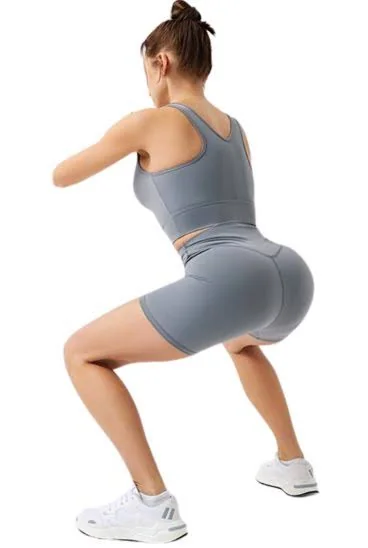
Strength Training
Strength-training compression shorts should be evaluated through movements involving substantial hip and knee flexion. The waistband, crotch geometry and thigh openings need sufficient stability without obstructing movement. Fabric coverage under extension also matters, particularly for exercises such as squats. Development should consider both standing measurements and the behavior of the assembled garment during repeated movement. A stable static appearance is only one part of the approval decision.
- Evaluate waistband movement during repeated deep squats and loaded hip flexion.
- Check fabric coverage and recovery at the intended stretch conditions.
- Assess crotch and inner-thigh construction against the planned movement range.
Related Product: Compression Training Shorts
Running
Running applications place particular emphasis on repeated leg motion, friction and garment migration. The preferred inseam, opening tension and inner-leg construction should reflect the intended duration and layering arrangement. Shorts worn beneath another garment may have different surface and bulk requirements from a standalone training style. Buyer approval should include an agreed running or repeated-stride assessment rather than relying solely on static fitting.
- Check leg-opening position after repeated forward and backward stride movement.
- Evaluate inner-thigh contact, seam location and potential friction zones.
- Consider breathability and drying requirements for the specified running environment.
Related Product: Running Compression Base Layers
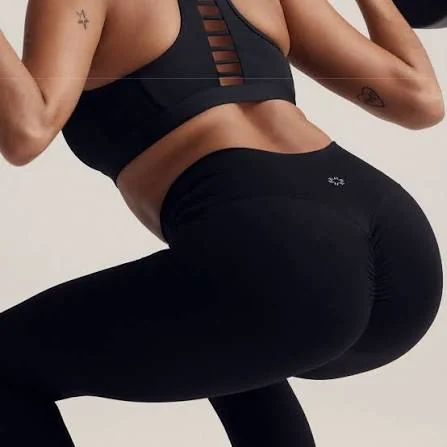
General Fitness Training
General training programs may combine strength work, stretching, functional exercises and machine-based activities. The product therefore needs a balanced relationship between containment, mobility and comfort across varied movements. Buyers should avoid assuming that maximum fabric resistance is always beneficial. A practical development target defines acceptable fit, waistband retention, thigh opening behavior and movement comfort for the intended use rather than promising universal performance.
- Set fit requirements for combined standing, bending and rotational movements.
- Review waistband security without introducing unnecessary localized restriction or folding.
- Validate movement comfort against the approved fabric and size specifications.
Related Product: General Training Compression Shorts

Performance Base Layers
Base-layer compression shorts are normally assessed in relation to the outer garment and the expected activity. Seam bulk, fabric surface, thigh coverage and garment length may influence how the layers interact. Supportive fit should not create excessive bunching or localized discomfort. Buyers should define whether the product will be worn independently or beneath another garment, since the answer affects material and construction decisions.
- Assess inner and outer garment interaction under the intended activity.
- Minimize unnecessary seam bulk at areas of repeated skin contact.
- Select coverage and fabric characteristics suited to the layering system.
Related Product: Performance Base-Layer Shorts
Identify Compression Shorts Risks Before Production Approval
Many fit and quality problems originate before bulk production begins. Technical teams should examine how materials, pattern measurements, garment construction and production controls interact, particularly when a design is expected to perform consistently across multiple sizes and orders.
Inconsistent Compression Feel
Two garments may share the same measurements yet feel different because the fabric construction, recovery or finishing has changed. The issue becomes more difficult when bulk fabric is sourced against composition alone, without comparison to the approved development material.
Verification: Confirm material reference, stretch and recovery requirements, approved sample identification and any relevant batch-change procedure.
Leg-Opening Migration
Thigh openings can move upward during repeated activity when opening dimensions, fabric tension, inseam length and leg geometry are not aligned. Adding tighter elastic is not automatically the correct solution and may increase localized discomfort instead of improving stability.
Verification: Check opening dimensions, construction details and movement feedback for representative sample sizes.
Waistband Folding or Movement
Waistband behavior depends on height, fabric recovery, construction, body shape and movement. A waistband that feels secure during a short fitting may fold or shift during exercise, especially when the garment is worn under different loading conditions.
Verification: Compare approved waistband dimensions, construction and movement observations against the buyer's acceptance criteria.
Seam and Crotch Discomfort
Fabric seams, crotch geometry and construction thickness can create unwanted contact during repeated leg movement. A decorative seam may also occupy a position that is unsuitable for prolonged skin contact or high-extension activity.
Verification: Inspect stitch construction and seam placement, then assess the assembled sample during relevant movements.
Size-Set Fit Variation
Scaling measurements without considering stretch behavior and body proportions can result in different perceived support across the size range. Approval of a single middle size does not establish suitable fit for every size.
Verification: Establish representative size-set checks, approved measurement rules and documented fit feedback before production release.
Sample-to-Bulk Drift
An approved prototype may differ from production garments if materials, cutting, knitting programs, stitch settings or finishing conditions change. Without controlled specifications, final inspection alone may be too late to prevent repeated problems.
Verification: Link the approved sample to frozen technical files, production approvals, first-article checks and change-control records.
Examine the Construction Points That Control Fit
Compression performance cannot be evaluated from fabric composition alone. The interaction between waistband construction, crotch geometry, body measurements, fabric extension and leg openings determines how a garment behaves during wear and movement.
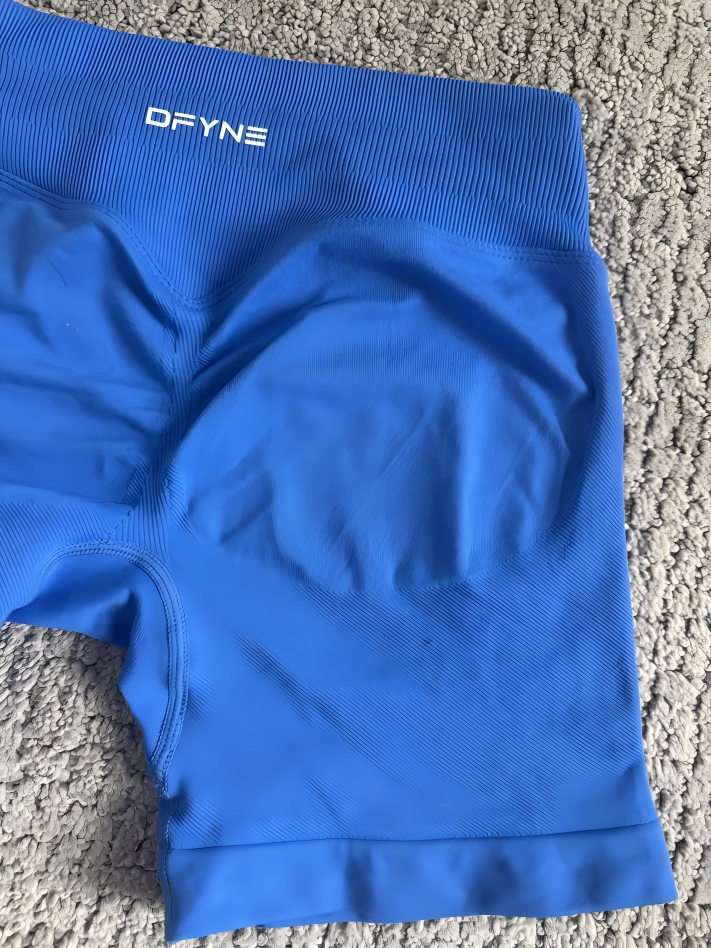
Waistband Structure
Review waistband height, elasticity, folding resistance and its connection to the main body. The preferred construction depends on the target support sensation and approved fit.
Front Rise
Front rise influences the crotch position and the relationship between waist and hip coverage. It should be evaluated alongside fabric extension and body proportions.
Back Rise
Back rise contributes to rear coverage and garment balance during bending. Insufficient allowance or inappropriate shaping can affect waistband position under movement.
Crotch Construction
Assess crotch seam placement, gusset options, stretch direction and contact points. Adding a gusset is not automatically necessary or sufficient to reduce friction.
Thigh Circumference
The relationship between garment opening, body measurement and fabric tension affects perceived pressure and movement. Each graded size requires an appropriate dimensional review.
Leg Opening
Opening width, finishing method, inseam location and material recovery work together to influence migration and localized comfort. The opening should not be evaluated independently.
Overall Design Logic
These construction points should be assessed as an integrated fit system. Changing one dimension may affect several others. MOVEVOX can participate through technical specification review, pattern or seamless-structure evaluation and sampling. Final construction decisions should follow the customer's product requirements and approved sample, rather than a universal compression shorts formula.
Understand How Fabric Recovery Supports Consistent Fit
Elastic recovery influences how a compression garment returns toward its original dimensions after extension. Fabric composition, yarn behavior, knitted structure, finishing and garment geometry all contribute. These factors should be evaluated together before material approval.
Diagram: Fabric Structure and Recovery
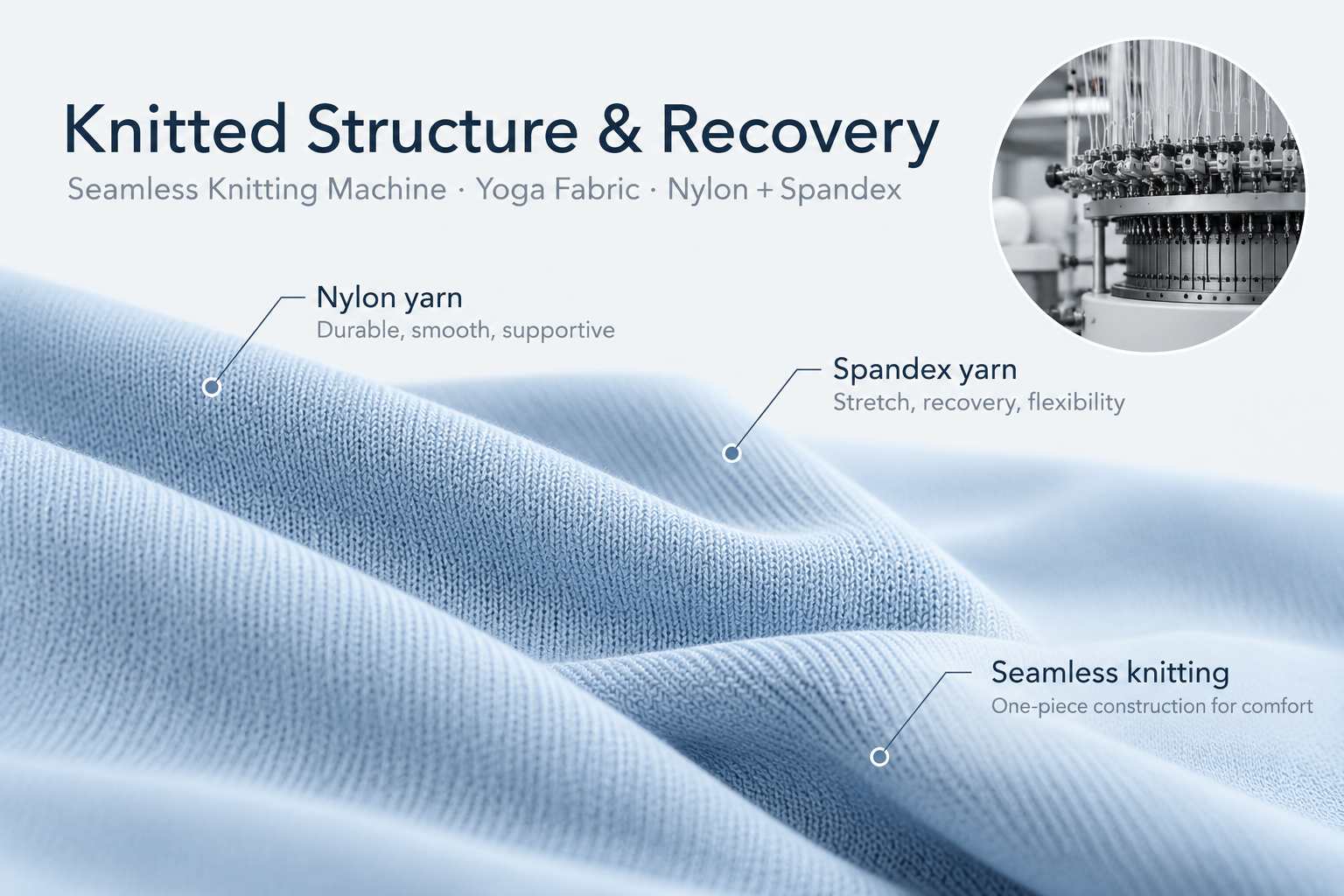
Elastane Contribution
Elastane provides extensibility and influences recovery, but its percentage alone does not define garment compression. Yarn configuration and fabric construction remain important.
Base Fiber Characteristics
Nylon or polyester contributes to surface characteristics, durability and moisture-related behavior. Material choice must reflect the intended activity and garment performance requirements.
Knit Structure
Loop arrangement, density and direction influence stretch and resistance. Similar compositions can behave differently when developed using different fabric or seamless knitting structures.
Directional Stretch
Widthwise and lengthwise extension may differ. Pattern orientation and construction should account for the actual directional properties of the selected material.
Repeated Extension
Recovery after a single stretch is not equivalent to performance during repeated wear. Buyer specifications should define the evaluation method and relevant conditions.
Finishing Effects
Heat setting, dyeing and other finishing conditions may influence dimensions and hand feel. Material approval should consider the finished fabric rather than fiber composition alone.
Overall Performance Explanation
A fabric that stretches readily is not necessarily suitable for the intended compression feel. Development should compare resistance, recovery, pattern negative ease and comfort in the assembled garment. MOVEVOX's fabric development and manufacturing capabilities can support sample evaluation against agreed specifications. Any numerical recovery claim requires an appropriate method, documented results and clearly identified tested material.
Compare Fabric Specifications Before Confirming Compression Shorts
Fabric selection should begin with the required compression feel, movement conditions and manufacturing route. The following matrix identifies candidate material systems for technical evaluation, not approved MOVEVOX stock fabrics or independently verified performance results.
Candidate Fabric Comparison
| Evaluation Parameter | Nylon / Elastane Knit | Polyester / Elastane Knit | Seamless Knit System | Buyer-Specified Material |
|---|---|---|---|---|
| Construction | Cut-and-sew stretch knit | Cut-and-sew stretch knit | Programmed circular knitting | Subject to technical review |
| Fiber Composition | Confirm supplier specification | Confirm supplier specification | Confirm yarn specification | Buyer-defined |
| GSM | Measured finished fabric | Measured finished fabric | Structure-dependent | Buyer-defined target |
| Stretch Direction | Verify both directions | Verify both directions | Verify each knitted region | Test against specification |
| Elastic Recovery | Test relevant extension | Test relevant extension | Evaluate structure and yarn | Confirm acceptance criteria |
| Opacity | Check under extension | Check under extension | Check each relevant zone | Confirm intended coverage |
| Surface Feel | Compare actual samples | Compare actual samples | Structure-dependent texture | Compare approved reference |
| Pilling Resistance | Test if required | Test if required | Test if required | Use buyer-approved method |
| Moisture Performance | Verify if claimed | Verify if claimed | Verify if claimed | Confirm claim requirements |
| Best Use | Defined fitted constructions | Selected performance applications | Suitable seamless structures | Project-specific development |
Material Selection Recommendation
Begin with the intended activity and fit requirements rather than an assumed ideal fiber ratio. For each candidate, request construction details, finished GSM, stretch and recovery information, and any relevant testing evidence. Compare actual samples using consistent evaluation conditions. Seamless yarn and structure choices should be assessed separately from conventional cut-and-sew fabric specifications. MOVEVOX can participate in sourcing and development review, but final material approval must be linked to the buyer's project requirements.
Coordinate Negative Ease With Rise and Inseam
Compression shorts pattern development requires alignment between garment measurements, intended body dimensions and actual material behavior. A grading rule suitable for conventional fitted shorts may require further evaluation when perceived compression and movement comfort are critical.
Size Specification Review Matrix
| Size | Waist POM | Hip POM | Thigh POM | Rise | Inseam |
|---|---|---|---|---|---|
| XS | Buyer-defined | Buyer-defined | Buyer-defined | Buyer-defined | Buyer-defined |
| S | Buyer-defined | Buyer-defined | Buyer-defined | Buyer-defined | Buyer-defined |
| M | Buyer-defined | Buyer-defined | Buyer-defined | Buyer-defined | Buyer-defined |
| L | Buyer-defined | Buyer-defined | Buyer-defined | Buyer-defined | Buyer-defined |
| XL | Buyer-defined | Buyer-defined | Buyer-defined | Buyer-defined | Buyer-defined |
Measurement Unit: cm / in
Pattern and Grading Notes
This matrix is a specification framework, not an approved size chart. Each measurement must be established from the customer's target body dimensions, selected fabric and intended fit. Negative ease should be evaluated by body region rather than applied as a single percentage across all measurements. Rise and inseam changes can influence crotch position, waistband stability and leg-opening behavior. Relevant samples should be reviewed before grading rules and tolerances are released for production.
Key Cautions
- Do not calculate every size using an identical negative-ease adjustment.
- Confirm measurement methods and tolerances before evaluating production samples.
- Reassess grading when changing fabric construction, recovery or target compression.
Evaluate Seam Construction Where Movement Creates Friction
For compression shorts, seam placement and construction influence stretch, surface bulk and skin contact. Stitch type should be selected with the intended fabric, garment geometry and movement conditions in mind, rather than treated as a universal comfort solution.
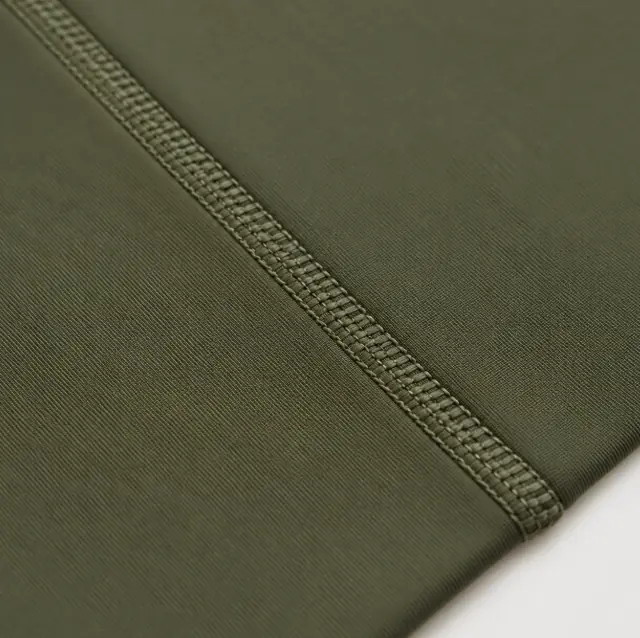
Flatlock Seam
Flatlock construction can create a relatively low-profile joining structure where suitable equipment, fabric and stitch settings are available. Its performance still depends on seam placement, stitch quality and garment fit. It should not be described as eliminating friction without product-specific evaluation.
Application: Consider for selected inner-leg or panel connections on close-fitting performance garments.
Comfort / Strength Consideration: Assess seam extension, surface profile and resistance to repeated movement-related loading.
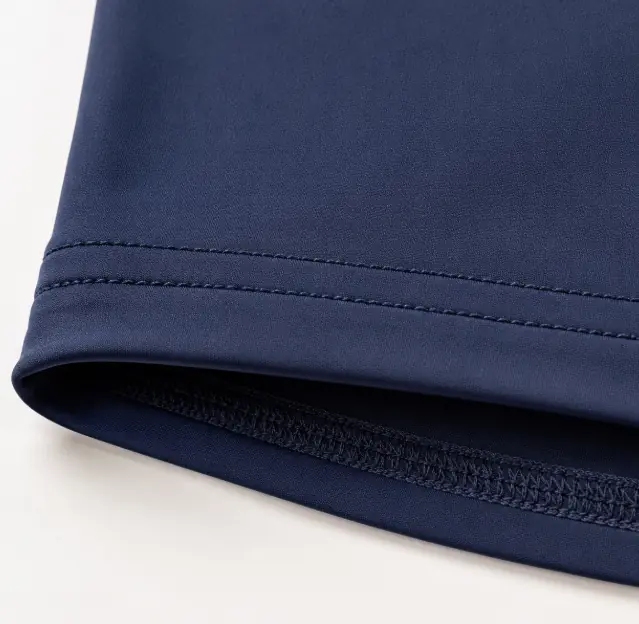
Overlock Seam
Overlock stitching provides a common joining and edge-control method for stretch-knit garments. Thread selection, stitch density, seam allowance and material recovery influence performance. The completed seam must allow sufficient movement without excessive bulk at relevant contact points.
Application: Suitable for selected assembly joints where required extension and seam profile are acceptable.
Comfort / Strength Consideration: Check seam elasticity, edge security and the position of bulk against skin.
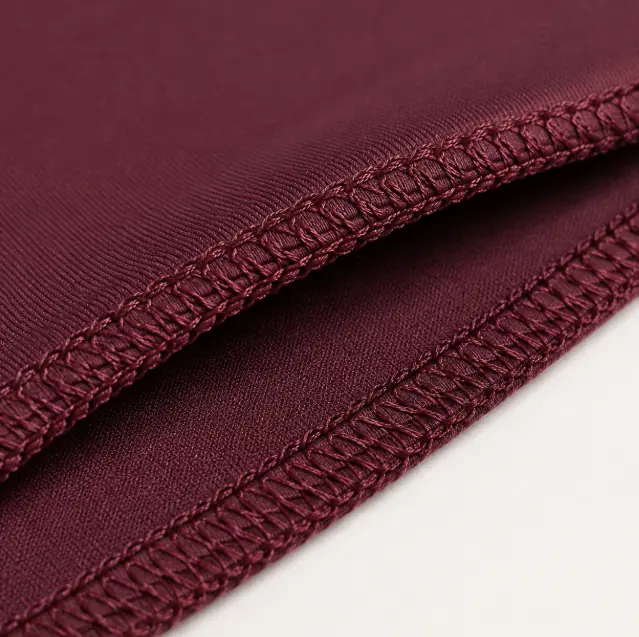
Coverstitch Hem
Coverstitch construction can be used for selected stretch-fabric hem finishes. The stitch setting must work with the fabric's recovery and intended extension. A correctly constructed hem should be reviewed for appearance, seam behavior and compatibility with the approved leg-opening dimensions.
Application: Evaluate at suitable leg openings or waistband finishing areas, depending on design.
Comfort / Strength Consideration: Examine hem stretch, stitch recovery, edge curling and potential skin contact.
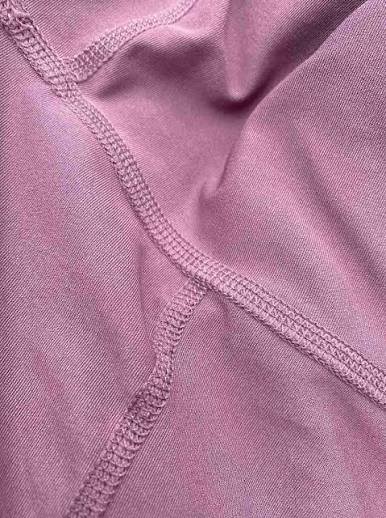
Crotch Joining Seam
Crotch construction affects the intersection of garment panels and movement-related stress. The combination of seam position, pattern shape, fabric extension and any gusset design should be considered together. A suitable structural choice must be established through sample review.
Application: Focus on the crotch intersection and inner-leg connection in fitted short constructions.
Comfort / Strength Consideration: Inspect seam junction bulk, elongation, durability and possible friction during activity.
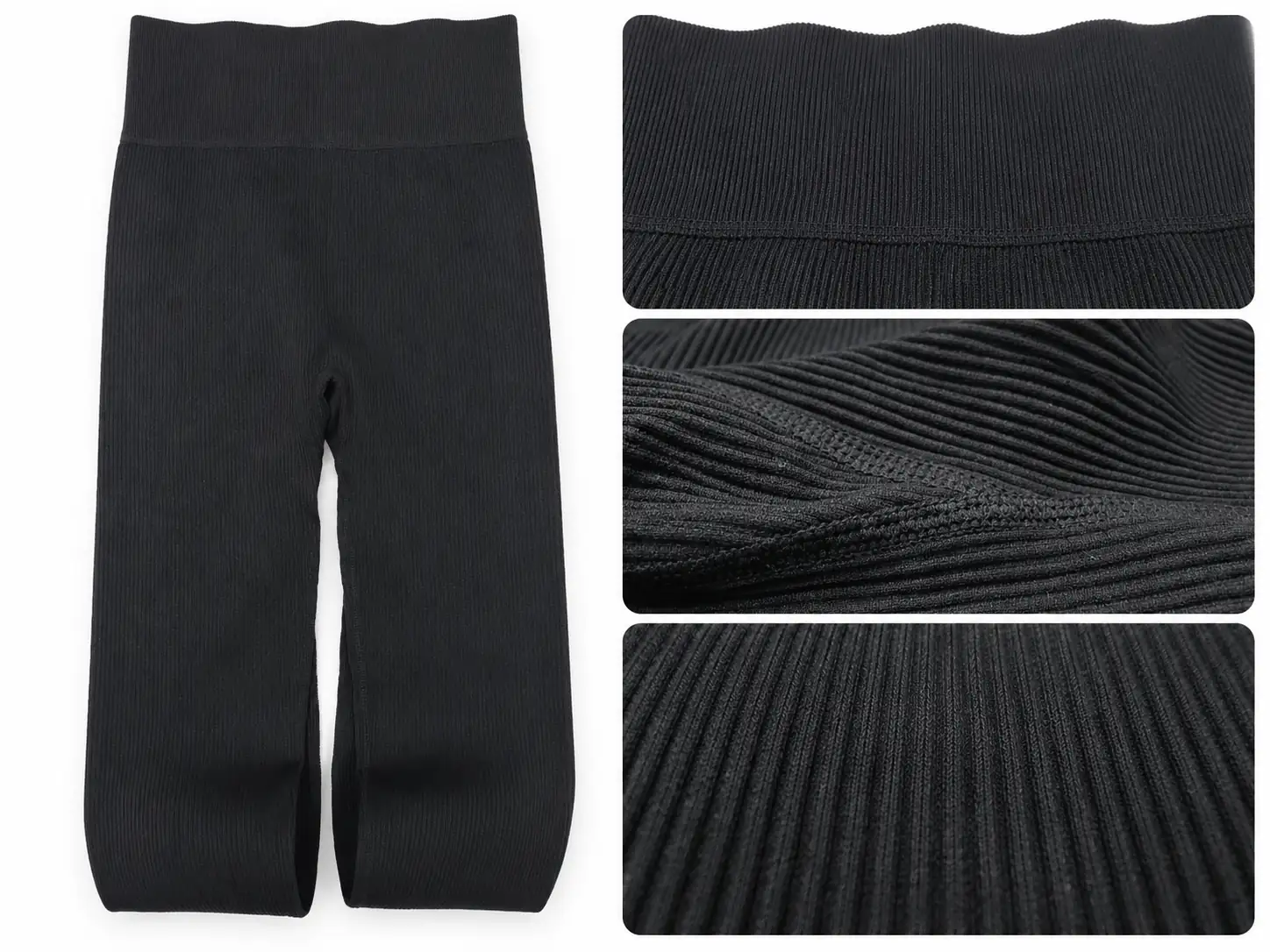
Waistband Attachment
The waistband-to-body connection can experience repeated extension and recovery. The joining method must accommodate the selected waistband structure while maintaining acceptable seam appearance and retention. Construction decisions should reflect the garment's intended support and fitting requirements.
Application: Evaluate the upper body connection on compression shorts with attached waistband structures.
Comfort / Strength Consideration: Check seam extension, localized bulk, waistband movement and dimensional consistency after fitting.
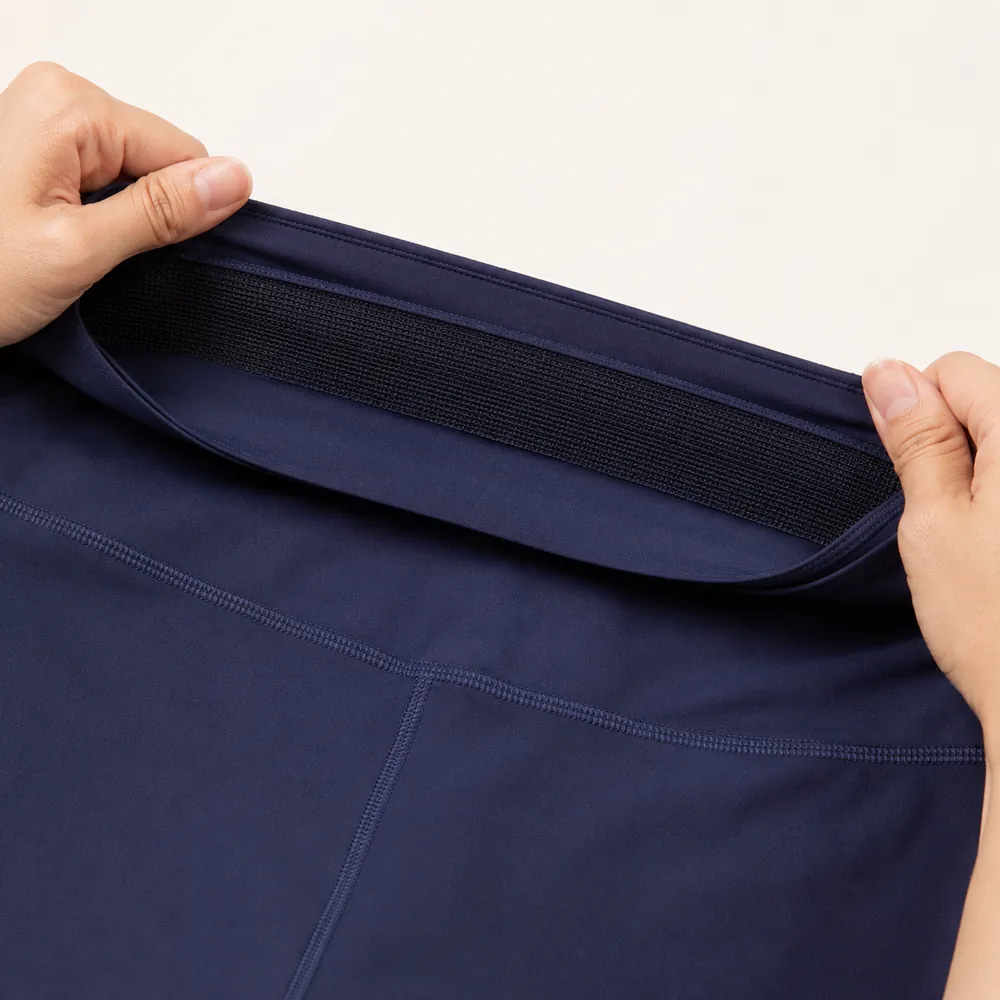
Reinforcement Stitching
Selected stress points may require reinforcement according to the approved construction. Reinforcement should address a defined loading or durability concern rather than be applied indiscriminately. Its location must avoid unnecessary bulk or stiffness in sensitive movement areas.
Application: Review suitable seam ends, joins and other verified high-stress construction points.
Comfort / Strength Consideration: Balance seam security with garment extension and comfort at the reinforcement location.
Choose the Appropriate Compression Shorts Manufacturing Route
Seamless knitting and cut-and-sew construction support different design and production decisions. MOVEVOX operates both manufacturing systems, allowing technical discussions to consider garment structure, fit, material selection and order requirements before selecting a route.
Manufacturing Decision Matrix
| Decision Factor | Seamless Knitting | Cut & Sew |
|---|---|---|
| Structural development | Knitted organization and zone design influence structure and fit. | Fabric selection, pattern shaping and panel design determine construction. |
| Compression design | Zoned resistance may be developed through suitable yarn and knit structures. | Compression feel depends on fabric behavior, negative ease and garment shaping. |
| Seam locations | Fewer selected assembly seams may be required, depending on design. | Seam placement and joining methods can be deliberately engineered. |
| Material selection | Limited by compatible yarns, machines and knitting specifications. | Uses suitable pre-produced stretch fabrics and approved cutting specifications. |
| Crotch and panel design | Construction options depend on knitting and finishing requirements. | Panel and gusset choices offer different structural possibilities. |
| Leg-opening design | Knitted structure and finishing influence opening behavior. | Pattern dimensions, fabric recovery and hem construction influence stability. |
| Branding | Placement and techniques depend on knitted surface and finishing. | Branding can be planned around fabric, panel location and decoration methods. |
| Size consistency | Requires suitable machine/program specifications and sample validation. | Requires controlled patterns, cutting and sewing against approved measurements. |
| Commercial fit | Assess yarn supply, knitting setup, sizes and development quantities. | Assess fabric minimums, cutting efficiency, colors and production quantities. |
| Approval evidence | Approved knitting structure, sample, dimensions and finishing specifications. | Approved fabric, pattern, sample, seams and production specifications. |
Selection Recommendation
Neither route should be selected solely because one appears more advanced or more economical. Buyers should first define product performance, construction features, sizing and expected quantities. MOVEVOX can review the requirements against its seamless and cut-and-sew capabilities. A route should be confirmed only after technical feasibility, material availability, sampling needs and commercial conditions have been assessed. Mixed collections may require different routes for different styles.
Match Your Compression Shorts Project to the Right Route
Buyers enter compression shorts development with different levels of technical readiness. The cooperation model should clarify which specifications already exist, which decisions require development and which approvals remain the customer's responsibility before bulk production.
OEM, ODM and Private Label Comparison
| Evaluation Dimension | OEM | ODM | Private Label |
|---|---|---|---|
| Design Input | Buyer supplies defined product design, specifications and technical requirements. | Buyer supplies a concept, intended function, reference or partial specifications. | Buyer selects an existing suitable style or configurable product starting point. |
| Development Work | Translate buyer-controlled specifications into feasible materials, samples and production instructions. | Develop and refine product details within the mutually agreed project scope. | Evaluate approved customization changes while retaining relevant product structure. |
| Compression Target | Buyer defines fit, material expectations and applicable performance acceptance criteria. | Both parties clarify compression-related design targets before technical development. | Existing product fit must be reviewed against the buyer's intended positioning. |
| Pattern and Sizing | Follow customer measurement instructions, subject to technical review and approval. | Establish or adapt sizing requirements through the agreed development process. | Confirm available or modified sizes and any resulting fit implications. |
| Branding | Implement approved artwork, placement, labeling and packaging requirements. | Coordinate branding with ongoing design and sample development activities. | Apply approved brand elements to a suitable product foundation. |
| Ownership | Design and intellectual-property conditions are defined by the project agreement. | Design development rights and deliverables require explicit contractual agreement. | Existing design and customization ownership require clear commercial terms. |
| MOQ | Determined by product structure, materials, color and manufacturing feasibility. | Additional development or material requirements may affect minimum quantities. | Existing material or product availability may influence commercial starting conditions. |
| Lead Time | Depends on specification readiness, sourcing, sample changes and approval stages. | Depends on concept maturity, development iterations and material decisions. | Depends on customization scope, material availability and final approval needs. |
| Best Fit | Brands with a developed Tech Pack and established technical specifications. | Brands requiring substantial development support or design refinement. | Brands adapting a suitable product to their own identity and market. |
How to Select
Start by identifying which elements have already been approved. A complete Tech Pack supports technical review, but a legally usable reference sample or clear product brief can also provide a starting point. Custom compression targets may require material and fitting development even when an existing garment is available. MOVEVOX should confirm feasibility, scope, approvals, sampling requirements and commercial terms before treating any route as ready for production.
Prepare the Specifications Needed for Technical Review
A useful compression shorts Tech Pack should communicate both garment construction and the intended wearing result. Complete information reduces avoidable sampling assumptions, while missing requirements should be identified and clarified before critical production decisions are approved.
01 — Product Application
Specify the target activity, intended wearer, market and whether the garment is a standalone short or performance base layer. These details inform coverage, comfort, material and fit assessment.
02 — Compression Requirement
Describe the intended support sensation and relevant body areas. State whether requirements concern subjective fit or measured physical properties. If numerical pressure is requested, identify the required test approach.
03 — Technical Sketch
Provide front and back sketches or a legally usable reference garment showing the intended silhouette, waistband, leg openings, seams and key features. Identify areas where construction is flexible.
04 — Measurement Chart
Supply target sizes, points of measure, measurement units, grading rules and tolerances where available. Identify fitting models or body dimensions used to establish the original specifications.
05 — Fabric Specification
List fiber composition, construction, target weight, stretch and recovery requirements, color and finish. Include an approved reference swatch or existing test information if available for technical comparison.
06 — Construction Details
Define seam placement, intended joining methods, crotch construction, leg hems and waistband design. If a particular sewing or knitting method is mandatory, identify it clearly.
07 — Brand Artwork
Provide approved vector artwork, color references, placement dimensions and decoration preferences. Any method used on a stretch area should be reviewed for compatibility with the selected material.
08 — Testing Requirements
Identify the target market, applicable performance claims, requested tests and acceptance criteria. Separate existing evidence from tests that still need to be arranged or approved.
09 — Packaging and Labels
Provide fiber labels, care information, size labels, packing requirements and any destination-market information. Confirm artwork versions and carton requirements before finalizing production documentation.
10 — Order and Timing
Indicate estimated order quantities, style and color breakdowns, target launch date and delivery destination. These inputs support material feasibility, production-route evaluation and preliminary scheduling.
When Your Documentation Is Incomplete
MOVEVOX can begin an initial technical discussion using a clear concept, suitable reference or partially developed Tech Pack. Missing specifications should be identified before sampling or quotation commitments are finalized. Development assumptions, measurement decisions, materials and approval responsibilities must be confirmed with the buyer. Project acceptance depends on technical feasibility and agreed commercial conditions.
Review Your Compression Shorts Requirements With MOVEVOX
If your brand has a Tech Pack, reference sample or defined compression-fit concept, MOVEVOX can review the available information to discuss construction feasibility, material options and sampling needs. Share the intended application, size range, target quantities and available specifications so the next development steps can be evaluated against your actual project.
Technical information can be reviewed before a formal quotation. Customer-owned designs and confidential specifications should be handled under agreed confidentiality arrangements.
Develop Compression Shorts Through Defined Fit Approval
Fit sampling should verify the interaction between material behavior, garment dimensions and movement requirements. Each revision needs a clear purpose and documented approval criteria. The following sequence is a recommended development framework, adjusted according to project complexity.
Technical Baseline
Establish the starting specification before pattern work or seamless-program development. Review target application, fabric properties, points of measure, compression requirements and permitted construction changes. Unresolved assumptions should be recorded instead of silently incorporated into the prototype.
Buyer Inputs
- Provide target product application and intended wearer information.
- Share available garment measurements and material reference specifications.
- Identify mandatory construction and brand design requirements.
MOVEVOX Outputs
- Initial technical feasibility comments and clarification questions.
- Recommended development route based on available specifications.
- Documented requirements requiring buyer confirmation before sampling.
First Fit Sample
Develop the initial sample using the agreed materials and construction approach. The purpose is to identify major issues in overall fit, rise, inseam, thigh opening and waistband behavior, rather than to treat the first physical garment as production-ready.
Buyer Inputs
- Confirm the first evaluation size and relevant body measurements.
- Specify movement scenarios for sample fitting and observation.
- Share feedback on intended compression and comfort perception.
MOVEVOX Outputs
- First sample developed against the reviewed technical specification.
- Available sample measurements and construction details for comparison.
- Proposed corrections where sample requirements remain unmet.
Fit Revision
Use recorded fitting observations to distinguish pattern problems from fabric or construction issues. Changes to thigh width, waistband tension, rise or material should be evaluated for their effect on the complete garment, not just one isolated dimension.
Buyer Inputs
- Provide consolidated fitting comments and priority-ranked requested changes.
- Approve proposed material or construction substitutions before implementation.
- Identify unresolved comfort or movement issues requiring another review.
MOVEVOX Outputs
- Updated technical specifications reflecting approved revision decisions.
- Revised sample when changes require physical fit verification.
- Clear comparison between the previous and updated design versions.
Size-Set Review
Extend the approved fit direction to representative sizes using the agreed grading strategy. Review how body proportions, pattern dimensions and material stretch interact across the size range. Additional revisions may be necessary before approving all planned sizes.
Buyer Inputs
- Confirm the required size range and representative review sizes.
- Provide fit feedback across selected wearer measurements or models.
- Approve grading changes and size-specific construction requirements.
MOVEVOX Outputs
- Updated measurement references and relevant size-set sample information.
- Technical comments on observed fit or grading inconsistencies.
- Revised size specifications for buyer review and approval.
Production Approval
Confirm the approved sample, material reference, measurement specification, construction details, artwork and packaging instructions before production release. Any subsequent change should be assessed for its impact on fit, manufacturing feasibility and quality acceptance.
Buyer Inputs
- Approve final garment appearance and technical specifications.
- Confirm permitted tolerances and required performance evidence.
- Sign off material, artwork, labeling and packaging requirements.
MOVEVOX Outputs
- Consolidated approved technical documentation for production preparation.
- Production-reference sample and associated approval information.
- Defined items requiring verification during subsequent production checks.
Control Compression Fit Across the Full Size Range
An acceptable middle-size prototype does not establish consistent fit across every size. Grading, fabric resistance, body proportions and opening dimensions should be considered together before the final measurement specification is approved for production.
Size Consistency Risk Matrix
| Problem | Buyer Impact | Development and Control Response |
|---|---|---|
| Uniform Negative Ease — Applying one reduction rule across every size or body location may create different tension and movement responses despite apparently consistent mathematical grading. | Some sizes may feel unnecessarily restrictive while others fail to provide the intended containment. The result can complicate product approval and increase returns or complaints. | Define measurement and grading rules using the intended fit, actual fabric behavior and representative body measurements. Evaluate critical sizes before freezing the graded specification. |
| Variable Thigh Fit — Thigh circumference and opening tension may change disproportionately when the pattern is graded without reviewing lower-body proportions and the finished material's extension. | Smaller or larger sizes may show differing leg-opening migration, localized discomfort or visual fit. The problem may remain undetected during a single-size approval. | Review thigh POM, inseam, hem construction and movement observations across representative sizes. Record approved corrections and ensure final specifications reference the confirmed material. |
| Waistband Balance — The waistband may use a different elastic structure or recovery behavior from the main garment, requiring distinct grading and construction decisions. | A waistband can roll, shift or feel overly restrictive in selected sizes, affecting perceived support and customer confidence even when the body dimensions are acceptable. | Evaluate waistband dimensions and behavior alongside garment rise, fabric resistance and actual movement. Confirm size-specific changes through sample review before releasing production documentation. |
| Rise and Crotch Geometry — Changes in body proportion across the size range may alter how rise, crotch length and inner-leg construction interact during bending and extension. | The garment may pull, migrate or create unwanted contact in certain sizes. Static measurement inspection alone may not identify these movement-related effects. | Validate rise and crotch construction in relevant fit sizes. Compare wearer observations with the approved technical specification, and update grading rules where justified. |
| Material Changes After Approval — A new fabric lot or substitute material may match composition and nominal weight without reproducing the same stretch and recovery characteristics. | Approved garment measurements may produce a different wearing experience. Multi-size discrepancies can become more visible when material resistance differs from the original sample. | Identify approved material references, establish relevant replacement criteria and assess changes before acceptance. Use documented comparisons and production controls rather than composition alone. |
Define Performance Checks Before Approving Compression Shorts
Testing should follow the intended application, selected materials, customer specifications and applicable market requirements. The categories below provide a technical review framework. They do not indicate that MOVEVOX has already completed every test for compression shorts.
Fabric Stretch
Purpose: Understand extension behavior in relevant fabric directions and assess whether the material supports the intended fit and pattern geometry.
Method: Use a buyer-approved or laboratory-appropriate stretch method with documented direction, applied force or extension, conditioning and specimen preparation. Record the selected method and material identity before interpreting results.
Acceptance / Report Information: Compare results against agreed stretch requirements; do not substitute a universal minimum.
Elastic Recovery
Purpose: Evaluate how closely the fabric returns toward its initial dimensions after extension, including any relevant residual deformation under specified test conditions.
Method: Select a documented recovery method appropriate to the fabric and intended use. Specify extension level, holding or cycling conditions, recovery period and calculation method so different materials can be compared meaningfully.
Acceptance / Report Information: State the measured recovery and customer-approved limits, where available, with the test conditions.
Dimensional Stability
Purpose: Determine whether laundering or other specified care conditions may change critical garment dimensions and affect the approved compression-fit relationship.
Method: Use the applicable buyer or laboratory wash-and-measure procedure. Record care conditions, measurement points, initial dimensions, final dimensions and any observed twisting or distortion after conditioning.
Acceptance / Report Information: Report dimensional change by measurement direction against the approved product tolerance.
Seam Strength and Extension
Purpose: Assess whether joining seams tolerate the extension and loads expected from the selected compression shorts construction without unacceptable damage or restriction.
Method: Choose an appropriate seam-strength or seam-extensibility method based on construction and material. Record the seam type, specimen orientation, test conditions and observed failure mode.
Acceptance / Report Information: Compare applicable results against buyer-defined performance criteria for the relevant seam.
Opacity Under Extension
Purpose: Identify possible changes in visual coverage when fabric is stretched over the body, particularly during squatting or other high-flexion activities.
Method: Establish consistent extension, lighting, background and observation conditions. Where objective testing is required, agree the relevant measurement method instead of relying on an undefined visual claim.
Acceptance / Report Information: Record the sample, evaluation conditions and agreed acceptance decision for coverage.
Colorfastness
Purpose: Evaluate color retention or staining under the exposure conditions relevant to product use, care and destination-market requirements.
Method: Select applicable laboratory procedures for laundering, rubbing or perspiration as required by the buyer. Identify the material, test standard, rating scale and report scope.
Acceptance / Report Information: Document the applicable grade and acceptance threshold specified for the project.
Dynamic Fit Evaluation
Purpose: Observe waistband behavior, thigh-opening position, seam contact and general wearing comfort during the movements expected from the intended athletic application.
Method: Agree relevant movements, sample sizes, participant information and observation criteria before evaluation. Document qualitative feedback separately from laboratory measurements and avoid generalizing beyond the evaluated conditions.
Acceptance / Report Information: Record wearer observations, required revisions and the customer's sample-approval decision.
Garment Pressure Measurement
Purpose: Quantify pressure at identified body locations when the buyer requires a measurable compression specification rather than a subjective supportive-fit target.
Method: Establish a suitable measurement protocol, equipment, garment size, body geometry and measurement positions through a qualified technical or laboratory provider before conducting the assessment.
Acceptance / Report Information: Use numerical pressure claims only when supported by valid, product-specific measurements and defined conditions.
Support Compression Product Claims With Appropriate Evidence
Performance language should reflect what the actual garment, material or test report establishes. Buyers should distinguish design intentions, measured physical properties and physiological claims before approving technical descriptions, packaging statements or marketing materials.
Supportive Fit
Claim: Designed to provide a close, supportive athletic fit.
Evidence Explanation: This can describe a design intention when the garment has been developed around defined fit requirements. Supporting documentation may include approved samples, construction details and recorded fitting evaluations. It must not be presented as proof of a particular physiological outcome or numerical pressure level.
Basis / Condition: Customer-approved specifications, actual sample construction and relevant fit evaluation records.
Stretch Performance
Claim: Uses fabric selected for the intended stretch requirements.
Evidence Explanation: Composition alone does not establish how far or how consistently a fabric stretches. Any measurable stretch claim should use an identified material, direction, evaluation method and result. Product descriptions should distinguish documented fabric specifications from performance targets awaiting confirmation.
Basis / Condition: Traceable fabric specifications and relevant test information for the selected material.
Elastic Recovery
Claim: Designed around defined elastic recovery requirements.
Evidence Explanation: Recovery claims should reference the relevant material and agreed evaluation method. A percentage stated without extension conditions or a recovery period may be misleading. Product performance must also be assessed after pattern development and construction, since material measurements alone do not establish finished-garment fit.
Basis / Condition: Valid recovery method, actual results and an approved material reference.
Movement Comfort
Claim: Developed with movement-related fit requirements in mind.
Evidence Explanation: Movement comfort can be an appropriate product development objective, but broad promises such as friction-free performance require substantiation. Evaluation should address the intended activity, sample sizes, seam contact and garment migration. Subjective wearer feedback must be identified as such.
Basis / Condition: Documented activity-based fit review and clearly defined evaluation conditions.
Measured Compression
Claim: Garment pressure meets a specified measured target.
Evidence Explanation: This statement must not be used unless a suitable pressure measurement has been completed for the relevant garment under defined conditions. The test must identify measurement sites, sizing, equipment or method and actual results. Supportive fit alone does not substantiate a pressure rating.
Basis / Condition: Product-specific pressure measurement report and verified acceptance criteria; otherwise not claimable.
Physiological Benefit
Claim: Improves circulation, recovery or reduces injury risk.
Evidence Explanation: These claims concern physiological effects rather than ordinary garment construction. They require specific substantiation appropriate to the claimed effect and applicable market rules. MOVEVOX's documented standard activewear manufacturing capabilities do not independently support medical or therapeutic performance statements.
Basis / Condition: Do not publish without suitable claim-specific evidence and applicable regulatory review.
Transfer Approved Compression Specifications Into Bulk Production
Bulk production should follow a controlled technical reference rather than the memory of the sampling team. Material identity, measurements, knitting or sewing instructions, workmanship requirements and relevant approvals must remain aligned through production preparation and quality checks.
Sample Approval
Confirm the final product against the required appearance, dimensions, construction and available performance evidence. Record approved deviations and outstanding conditions. The buyer's decision should identify which physical sample and technical version will be used as the production reference.
Approved SampleEstimated Time: Approval-dependent
Specification Freeze
Consolidate approved measurements, grading rules, material references, construction, artwork and packaging into controlled production documents. Any unresolved technical issue should remain visible. Revisions after approval require a defined review process rather than informal production-floor instructions.
Frozen SpecificationEstimated Time: Project-dependent
Material Confirmation
Review the intended production material against the approved sample reference. Identify relevant fabric or yarn lots, color standards and required material tests. Differences affecting stretch, recovery, surface feel or garment fit should be evaluated before production use.
Material ApprovalEstimated Time: Supply-dependent
Production Preparation
Confirm the suitable production route, technical settings, pattern or knitting specifications, inspection requirements and production allocation. The project team should establish how approved information will be communicated to the relevant manufacturing and quality personnel.
Production PlanEstimated Time: Capacity-dependent
First Article
Produce and review representative first articles under actual bulk manufacturing conditions. Compare the resulting garments with approved measurements, material requirements and workmanship standards. Deviations should be resolved before the relevant production stage receives authorization to proceed.
First Article ReviewEstimated Time: Inspection-dependent
Inline Verification
During production, inspect defined product characteristics at appropriate control points. Compression shorts may require particular attention to garment dimensions, leg hems, waistband construction, seam quality and changes associated with the approved materials or settings.
Inline QC RecordEstimated Time: Production-dependent
Shipment Release
Review required inspection outcomes, corrective actions, packaging information and shipment documentation before the order is released. Open issues should receive a documented decision. Final release must be linked to the approved customer requirements and applicable commercial arrangements.
Release RecordEstimated Time: Order-dependent
Verify Critical Characteristics Before Full Bulk Production
First-article review checks whether approved specifications can be reproduced under actual manufacturing conditions. For compression shorts, measurements and workmanship should be examined alongside the construction features that influence fit. The following checkpoints require project-specific acceptance criteria.
01 — Approved Material Identity
Confirm that the production fabric or yarn corresponds to the approved reference and applicable material specification. Changes in supply, finishing or structure may influence garment fit even when nominal composition remains unchanged.
Inspection Criteria
- Match production material reference against approved supplier and specification records.
- Review relevant lot identification and required supporting material documents.
02 — Fabric Appearance
Review color, fabric surface, visible defects and the relevant appearance requirements under agreed observation conditions. Where material performance is critical, appearance alone should not replace verification of the applicable technical specification.
Inspection Criteria
- Compare garment material appearance with the approved sample reference.
- Identify visible flaws, finish differences and unacceptable shade variation.
03 — Critical Garment Dimensions
Measure the first article at the approved points of measure, including relevant waistband, hip, rise, inseam and thigh-opening dimensions. Record actual results and compare them with the size-specific tolerance requirements.
Inspection Criteria
- Follow the approved measurement method and designated sample size.
- Record measured values against the frozen specification and permitted tolerances.
04 — Waistband Construction
Examine waistband height, attachment, shape and recovery-related construction. Confirm that the first article matches approved design details. Additional movement evaluation should be arranged where static inspection cannot establish the required wearing behavior.
Inspection Criteria
- Verify waistband dimensions, joining method and visible construction quality.
- Compare relevant fit behavior with the customer-approved reference sample.
05 — Leg-Opening Construction
Check opening dimensions, hem construction, stitch quality and alignment. For compression shorts, a visually acceptable hem may still require relevant fit evaluation to confirm that opening tension and movement behavior are appropriate.
Inspection Criteria
- Inspect both leg openings against approved dimensions and finishing details.
- Check visible distortion, uneven construction and unacceptable seam irregularities.
06 — Crotch and Seams
Review crotch shape, panel alignment, seam construction and any specified reinforcement. Check for skipped stitches, damaged material or joining defects. Relevant seam performance requirements must be defined rather than assumed from appearance.
Inspection Criteria
- Compare seam locations, stitch construction and junctions with approved workmanship.
- Identify visible seam damage or deviations requiring further functional inspection.
07 — Branding and Labels
Confirm artwork version, logo placement, label content and attachment or decoration quality. Decoration applied to stretch areas should follow approved sample requirements, including any necessary performance or durability criteria.
Inspection Criteria
- Match artwork, placement and labeling details to approved documentation.
- Review application appearance and required attachment or durability conditions.
08 — Reference and Release
Record the first-article results against the approved sample and production specification. If findings affect fit, construction or acceptance, relevant corrections and authorization should be documented before unrestricted manufacturing continues.
Inspection Criteria
- Record inspection findings, outstanding issues and required corrective actions.
- Obtain the designated release decision under the approved project controls.
Handling Nonconforming First Articles
A failed checkpoint should trigger documented review rather than informal acceptance. The affected items or production conditions should be identified, the cause investigated and corrective action evaluated before further release. Where the issue may alter compression fit, material behavior or product dimensions, buyer approval may be required. MOVEVOX's existing QC framework provides a basis for such controls, but actual project records must demonstrate what was inspected and approved.
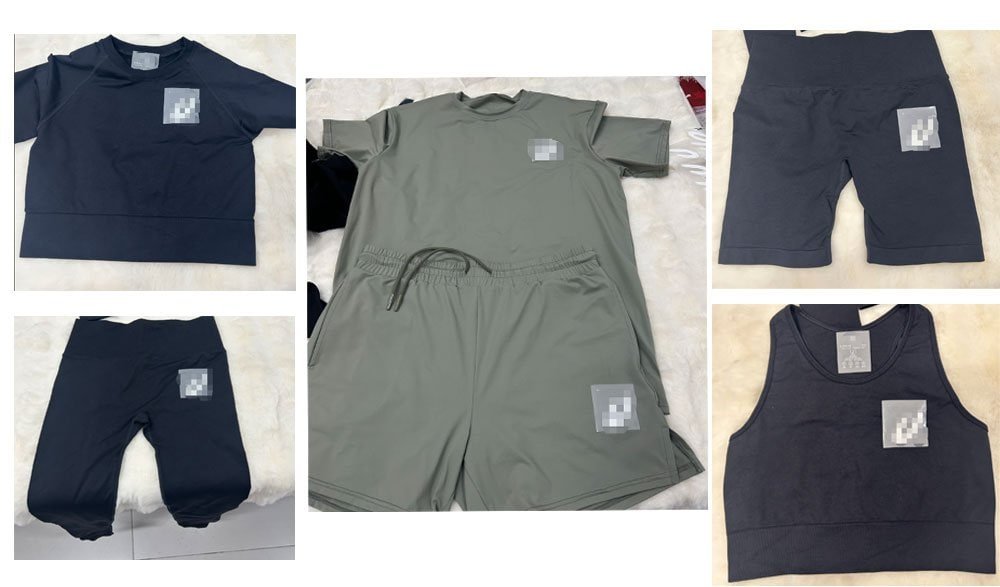
Prevent Compression Shorts Defects Before Final Inspection
Defect control should begin with the relevant technical risks and continue through material approval, manufacturing and inspection. The following matrix identifies potential issues and suitable control considerations; it does not describe specific defects from undisclosed MOVEVOX customer orders.
Defect Prevention Matrix
| Defect | Likely Cause | Prevention | Inspection Point | Corrective Action |
|---|---|---|---|---|
| Incorrect Garment Dimensions | Pattern or grading errors, material relaxation, cutting variation or inconsistent knitting and finishing conditions may change critical measurements. | Freeze the approved size specifications, verify relevant manufacturing settings and review first articles before continuing production. | Measure selected points of measure against the approved size-specific tolerances during first-article and inline inspection. | Identify affected sizes and production lots, determine the cause and correct the process before releasing further affected garments. |
| Uneven Leg Openings | Differences in hemming, seam tension, material recovery or garment handling may produce inconsistent opening dimensions or appearance. | Confirm hem construction and opening dimensions during development, then establish appropriate production settings and inspection references. | Inspect opening measurements, left-right alignment, seam appearance and relevant material behavior against the approved garment. | Review setup and material behavior, isolate affected items and determine whether rework or replacement is technically appropriate. |
| Waistband Distortion | Inconsistent attachment, material recovery differences or unsuitable construction settings may cause rolling, twisting or an uneven waistband. | Confirm waistband structure, attachment and fit during sampling, then verify first-article construction against the approved reference. | Check waistband height, alignment, join quality and appearance, with functional evaluation when required by the specification. | Identify the relevant construction or material cause and reassess affected production before approving corrective work. |
| Seam Damage | Stitch selection, thread tension, needle condition, seam configuration or excessive local extension may contribute to seam damage. | Establish construction specifications appropriate to the selected material, supported by relevant sample evaluation and production settings. | Check seam appearance, joining security and any specified strength or extension requirements at designated production stages. | Correct the identified manufacturing condition, evaluate affected seams and conduct reinspection before release where applicable. |
| Material Lot Variation | Changes in yarn, fabric construction, dyeing or finishing may alter feel, stretch, recovery or shade despite similar nominal specifications. | Approve material references and define relevant substitution, lot verification and change-control requirements before production use. | Compare material identification, appearance and required test information with approved records at incoming and production checkpoints. | Hold affected material or garments when necessary, assess differences and obtain applicable approvals before further use. |
| Artwork or Label Errors | Outdated artwork, mixed size information, inconsistent placement instructions or packing references can produce incorrect finished products. | Freeze approved artwork and label versions, confirm size-color mapping and communicate controlled instructions to production and packing. | Check branding, labels, care information, product identification and packing details against the current approved order documents. | Segregate incorrectly identified items, correct the relevant information and verify accuracy before repacking or shipment approval. |
Trace Critical Materials Through Compression Shorts Production
Traceability allows buyers and manufacturing teams to investigate where materials came from, which specifications were approved and which production records relate to finished garments. The level of detail should be agreed according to order requirements and actual recording capabilities.
Approved Material
Record the selected fabric or yarn identity and the applicable technical reference. Where available, link composition, construction, color and required performance specifications to the material approved during development and sourcing.
Material SpecificationSupplier Purchase
Connect the approved material reference to the purchasing record and supplier information. This establishes the basis for checking whether the intended material was ordered and helps identify any approved alternatives or substitutions.
Purchase OrderMaterial Lot
Record the relevant material batch or lot identifier when required by the project's traceability system. Incoming checks should identify discrepancies against the approved material, applicable color requirements and available supporting documentation.
Lot RecordProduction Allocation
Link the order's technical version to the assigned manufacturing route and production instructions. If approved collaborative capacity is involved, responsibilities for specifications, production monitoring and quality decisions should remain clear.
Production RecordQuality Verification
Associate the appropriate inspection records with the affected order, style, size, production stage or material lot, according to the established recording system. Open deviations and corrective decisions should remain identifiable.
QC RecordFinished Goods
Confirm that finished garments are identified and packed according to approved style, color, size and labeling instructions. Relevant quality holds or release restrictions should be resolved before affected goods proceed.
Packing RecordShipment Reference
Connect the released finished goods with the commercial shipment documents. If a later issue arises, the available records should support investigation into the associated order, materials, inspections and production conditions.
Shipping Record
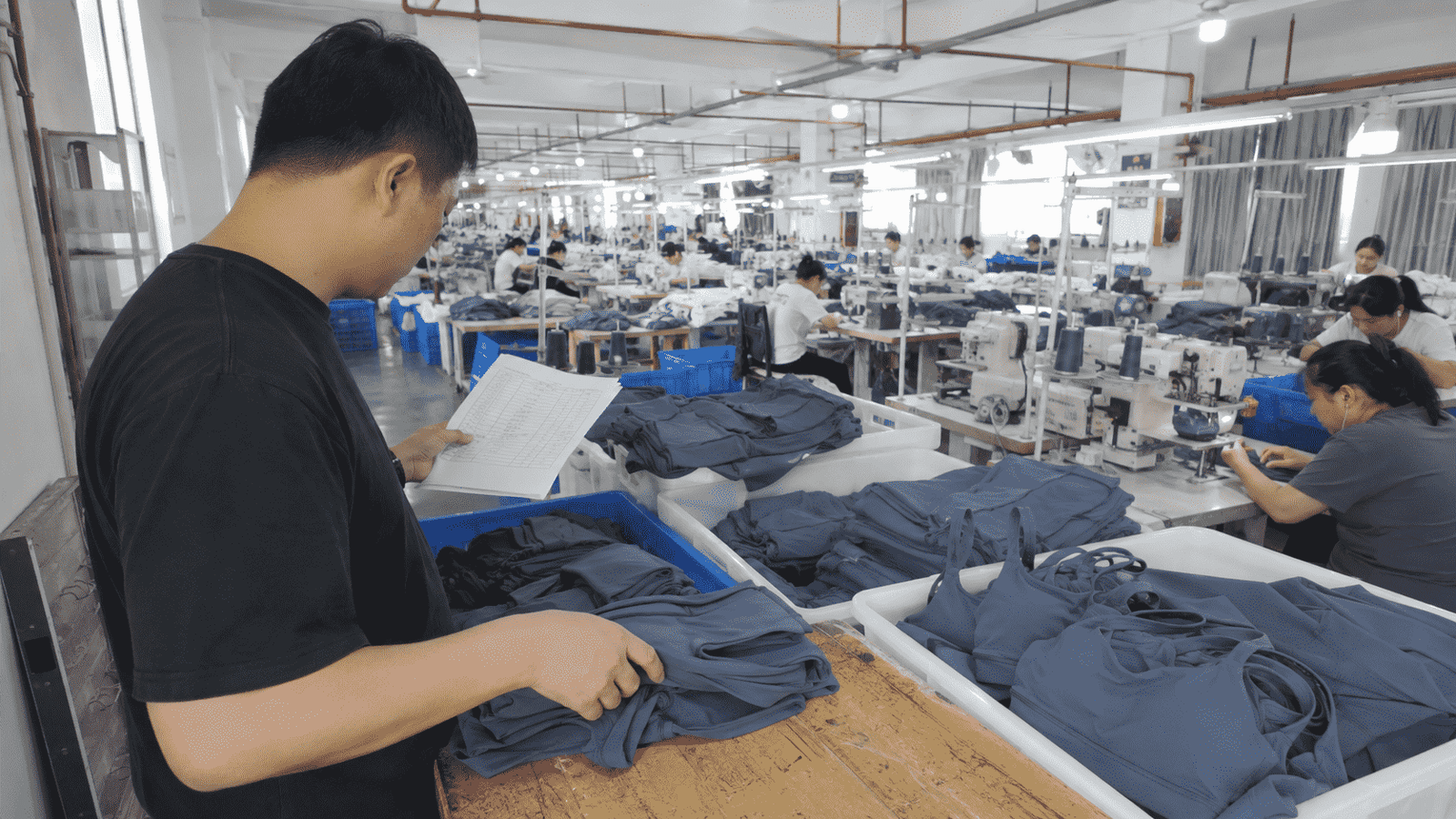
Confirm Production Capacity Before Committing to Delivery
A responsible production commitment requires more than a factory-wide output figure. Compression shorts scheduling should consider manufacturing route, material readiness, development approvals, available equipment or lines, QC resources and concurrent orders.
Indicative Project Scheduling Framework
| Stage | Timing Window | Prerequisite | Buyer Approval |
|---|---|---|---|
| Technical Review | Start–finish to confirm | Sufficient project specifications | Confirm unresolved technical requirements |
| Material Sourcing | Start–finish to confirm | Approved material direction | Approve materials and relevant alternatives |
| Sample Development | Start–finish to confirm | Technical input and materials | Approve fit and construction |
| Bulk Preparation | Start–finish to confirm | Frozen specifications | Confirm final order details |
| Bulk Production | Start–finish to confirm | Approved production release | Review agreed progress checkpoints |
| Inspection | Start–finish to confirm | Produced goods and criteria | Resolve applicable quality holds |
| Shipment Preparation | Start–finish to confirm | Release and packing approval | Confirm documents and shipping arrangement |
Factors Affecting the Schedule
The timing windows remain uncommitted until project details have been reviewed. Custom material production, new seamless structures, sampling revisions, multiple colors, decoration processes, production allocation and buyer approval speed may alter the critical path. MOVEVOX's manufacturing and coordinated-capacity model supports project planning discussions, but a published company-wide capacity figure cannot establish availability for a particular compression shorts order. Confirmed dates require an approved production plan.
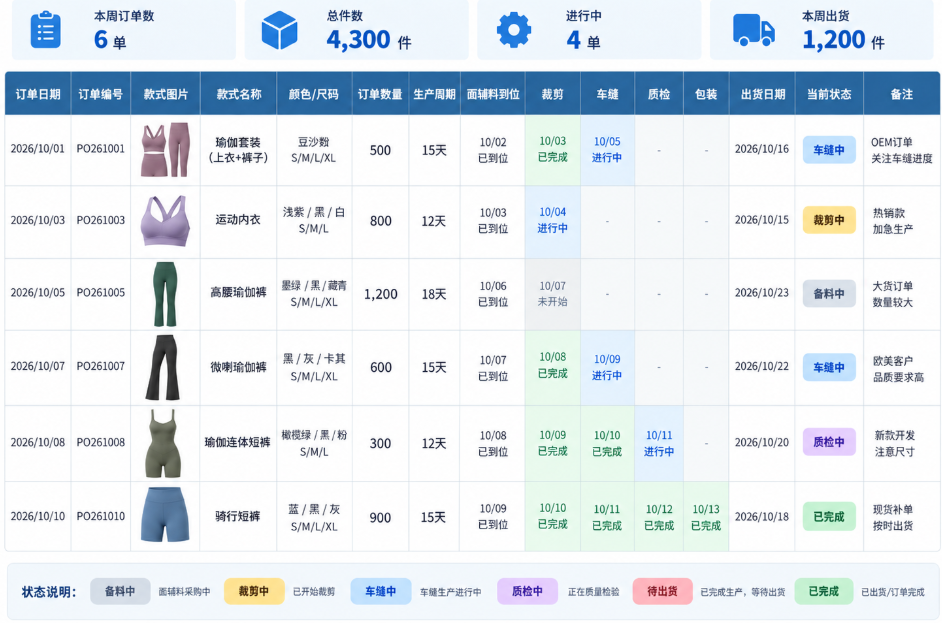
Structure Compression Shorts Orders Around Manufacturing Requirements
MOQ should be evaluated by manufacturing route, material supply, color, construction and SKU complexity. MOVEVOX's documented standard starting quantities provide an initial reference, but compression shorts projects require confirmation of the effective minimum for their actual specifications.
Development and Pilot Program
A pilot program is appropriate when the product concept requires technical validation or a brand is introducing a new fit. The objective is to control initial development risk rather than assume every custom material can be produced in very small quantities. Sampling and bulk manufacturing requirements should be evaluated separately. MOVEVOX's standard starting references are approximately 100 pieces for seamless products and 150 pieces for cut-and-sew products, subject to actual project conditions.
Quantity Reference: Applicable manufacturing baseline; project confirmation required.
Color / Size Logic: Review material availability, each color requirement and a practical graded-size distribution.
Cost Drivers: Sample development, material minimums, construction, decoration and order fragmentation.
Core Bulk Program
A core bulk program follows approved material, fit, sizing and construction requirements. Commercial planning should establish the intended quantities per style, color and size before comparing quotations. Material purchasing, production preparation, quality requirements and packing complexity influence the effective cost and execution plan. Existing company starting MOQs should not be confused with minimums for independent custom dye lots or special material developments. The buyer should evaluate repeatability as well as the initial unit quotation.
Quantity Reference: Confirmed production MOQ and approved SKU allocation.
Color / Size Logic: Align color quantities with supply conditions and the approved size curve.
Cost Drivers: Material volume, process complexity, inspection requirements and production efficiency.
Repeat and Scale Program
A repeat program should use controlled specifications and actual prior approval records, while reviewing any changes in material supply, color, sizing or volume. Larger orders may require additional capacity planning, approved production allocation and more detailed reporting arrangements. MOVEVOX's core manufacturing and coordinated satellite capacity provide a basis for discussing growth, but future availability and lead time must be reviewed against the live production schedule. A repeat order is not automatically identical when underlying inputs have changed.
Quantity Reference: Forecast-based volume; allocation and availability subject to confirmation.
Color / Size Logic: Review sales forecasts, repeat materials and the updated size-color distribution.
Cost Drivers: Forecast stability, material reservation, production allocation and delivery requirements.
Understand the Evidence Behind a QC Release
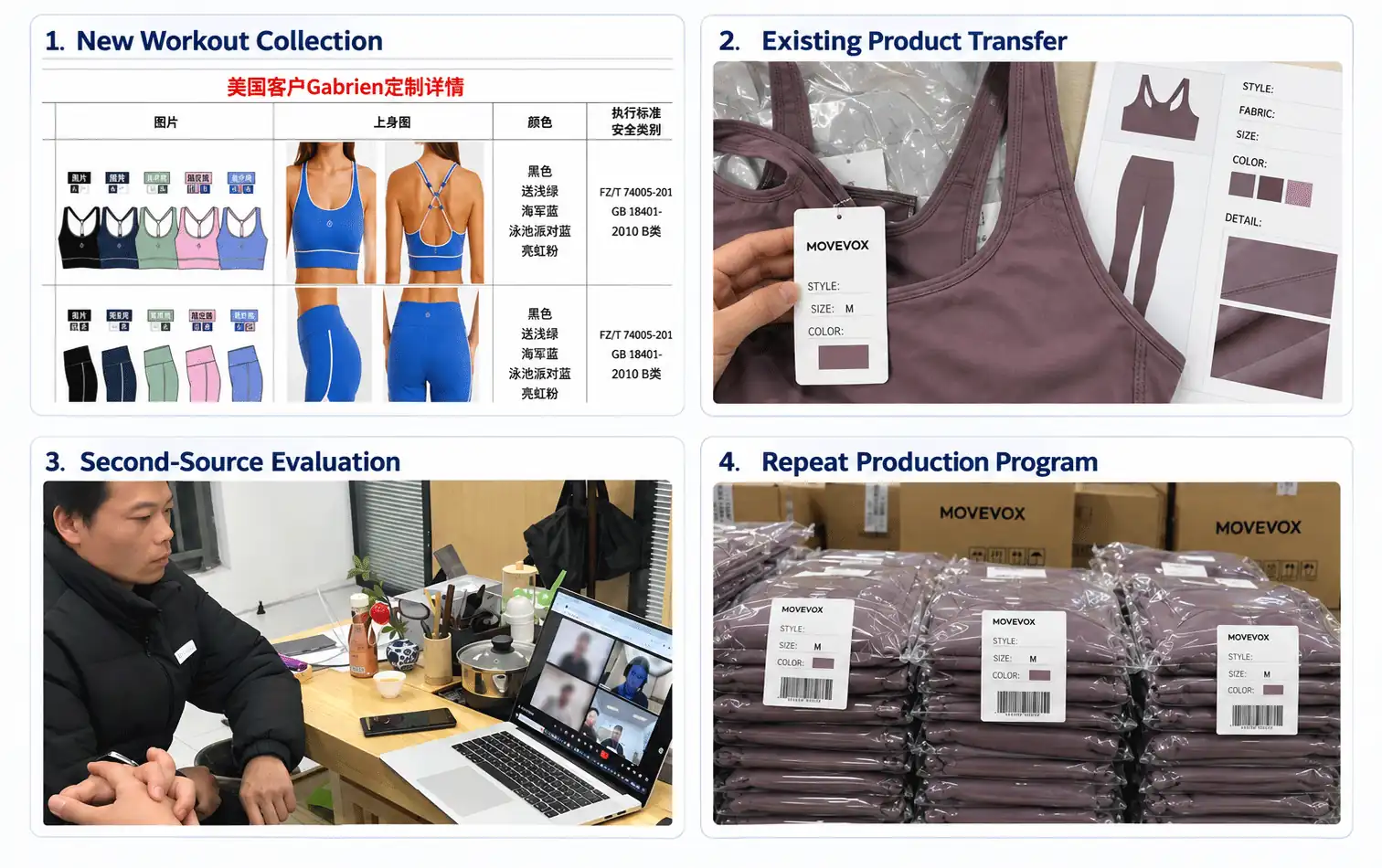
Quality reports should allow buyers to identify what was inspected, which specification applied and how deviations were resolved. The following annotations describe information a suitable compression shorts inspection record may need; they are not invented inspection results.
Report Interpretation — Key Annotations
01 — Product Identification
A report should identify the relevant order, product, style, size or batch using traceable references. Without sufficient identification, inspection findings may be difficult to associate with the correct garments.
02 — Inspection Scope
State whether the record concerns incoming materials, first articles, inline production, finished garments or pre-shipment inspection. Each stage supports a different quality decision and should not be confused.
03 — Sampling Information
If statistical sampling is used, identify the applied plan, lot definition, inspected quantity and acceptance rules. Do not describe a sample inspection as complete individual inspection of every garment.
04 — Measurement Results
Record the relevant garment measurements, approved tolerances and observed findings. Dimensions should be linked to the frozen specification and the particular sizes inspected, not to an unrelated generic size chart.
05 — Defect Classification
Explain how observed defects are classified according to applicable buyer requirements. Critical, major and minor categories should reflect agreed severity definitions and their impact on acceptance.
06 — Corrective Actions
Identify any findings requiring containment, rework, replacement or technical review. A report should distinguish proposed actions from actions actually completed and verified before release.
07 — Release Decision
Document whether the relevant inspection stage was accepted, rejected or held pending resolution. The decision must refer to applicable acceptance criteria and authorized responsibility rather than an unexplained pass statement.
Using Reports for Procurement Decisions
A report becomes more useful when it is linked to the approved sample, relevant product specifications and actual production stage. For compression shorts, buyers may need additional evidence beyond routine visual and dimensional inspection, particularly for recovery, movement-related fit or measured pressure claims. These tests should be documented separately when required. MOVEVOX's established QC operations provide the underlying capability for controlled inspection, but the evidence presented must come from authentic, appropriately redacted records.
Evaluate Compression Shorts Suppliers Against Defined Procurement Criteria
Supplier qualification should examine technical readiness, manufacturing accountability, product verification and commercial suitability. Use this checklist to identify available evidence and unresolved questions before shortlisting a compression shorts manufacturer. Do not assign a passing score without actual supporting records.
Category 01 — Product Engineering
Category 02 — Manufacturing Feasibility
Category 03 — Quality and Evidence
Category 04 — Commercial and Supply Control
Scoring Method: Yes = 1; No / Not Yet Verified = 0.
Interpreting the Supplier Review
A high checklist score indicates stronger documented readiness for further evaluation, not automatic supplier approval. Critical gaps involving manufacturing identity, product safety, material evidence or production responsibility require resolution regardless of the total score. Buyers should review actual documents and sample results before making purchasing commitments. MOVEVOX should be assessed using the same evidence-based criteria as other candidate manufacturers, with unavailable information clearly identified rather than assumed.
Compression Shorts Manufacturing Frequently Asked Questions
These questions address common technical and commercial decisions for established brands sourcing compression shorts. Product requirements, manufacturing routes and commercial conditions should be confirmed against the buyer's specifications before formal production commitments are made.
01 — How Are Compression Shorts Different From Biker Shorts?
Biker shorts are commonly identified by their close-fitting appearance, length and coverage. Compression shorts place greater emphasis on defined supportive fit and the material, pattern and construction decisions that create it. The categories can overlap, but their procurement specifications should not be assumed identical. A brand should identify the intended application, garment dimensions, material requirements and necessary performance evidence before choosing a development route.
02 — Can MOVEVOX Develop Different Compression Fit Targets?
MOVEVOX's activewear development capabilities can support discussions involving fabric selection, pattern negative ease and suitable seamless structures. The buyer should describe the intended supportive feel and relevant body regions. Any numerical compression or pressure requirement needs an appropriate measurement method and valid results. A requested target is not automatically an achieved or independently verified product performance level.
03 — Does MOVEVOX Support Seamless and Cut-and-Sew Compression Shorts?
MOVEVOX operates seamless knitting and cut-and-sew manufacturing systems. These capabilities provide a basis for evaluating different compression shorts structures. Final feasibility depends on the garment design, available yarn or fabric, size range, production requirements and technical approval. Not every design can be produced using either route without structural changes.
04 — How Should Fabric Recovery Be Evaluated?
Fabric recovery should be assessed using a clearly identified material and a suitable testing method. Relevant variables include extension conditions, fabric direction, recovery time and residual deformation. Fiber composition or GSM alone cannot establish recovery performance. The finished garment's fit must also be reviewed because pattern dimensions and construction influence the wearing result.
05 — How Can Compression Fit Remain Consistent Across Sizes?
Size consistency requires suitable grading, stable materials, approved garment measurements and relevant fit evaluation. The same negative-ease adjustment may not create an equivalent wearing sensation across all body sizes. Representative size-set sampling can help identify problems before production release. Finished garment dimensions should then be checked against the approved specifications.
06 — How Can Leg Openings Be Evaluated for Ride-Up?
Leg-opening behavior depends on garment length, thigh dimensions, material resistance, recovery and finishing construction. A tighter hem is not automatically better. Brands should establish suitable fitting and movement conditions, document observations and approve any necessary revisions. Anti-ride-up claims should not be treated as guaranteed unless appropriately supported.
07 — Which Compression Performance Claims Require Testing?
Numerical pressure levels, quantified material recovery and specific functional performance claims require evidence appropriate to the stated result. Physiological or medical claims require additional substantiation and regulatory consideration. Ordinary supportive-fit language should be tied to actual design and fitting evidence without implying demonstrated medical effects.
08 — What Is the Difference Between OEM, ODM and Private Label?
OEM generally begins with buyer-defined specifications. ODM involves an agreed level of design or development support. Private Label may involve branding an existing suitable product or adapting an available design. The precise scope varies by project. MOVEVOX can review technical inputs and customization needs, while design ownership, approvals, pricing and production conditions must be agreed separately.
09 — What MOQ and Lead Time Should Buyers Expect?
MOVEVOX's documented baseline MOQ references are approximately 100 pieces for standard seamless products and 150 pieces for standard cut-and-sew products. Custom materials, colors and construction can require higher quantities. Sampling and production timing depend on technical readiness, sourcing, approval speed and available capacity. Final commitments must be confirmed for the specific compression shorts project.
10 — How Are Approved Samples Transferred Into Bulk Production?
The approved sample should be connected to frozen technical specifications, material references, measurements, construction requirements and relevant quality checkpoints. First-article and subsequent production inspections help check execution against those references. If materials or production conditions change, the impact should be reviewed and documented. A sample approval alone does not guarantee that every future batch will be identical.
Start Your Compression Shorts Development or Bulk Manufacturing Project
A suitable manufacturing proposal begins with a clear understanding of the product you intend to produce. MOVEVOX can review your available technical files, reference samples, material preferences and order requirements to discuss manufacturing feasibility and the next development steps. Whether your brand is refining a compression-fit concept, evaluating samples or sourcing an approved bulk program, the relevant specifications should guide the discussion. Provide your intended application, size range, estimated quantities and target schedule so technical, quality and commercial requirements can be evaluated together.
Technical Specification Review
Share an existing Tech Pack, approved reference sample or measurement specification. The technical discussion can focus on compression requirements, fabric behavior, construction feasibility and outstanding approval decisions before commercial planning proceeds.
Sample Development Discussion
For products requiring further development, provide the intended activity, fit direction and available design information. The first step is to clarify missing specifications, possible manufacturing routes and the scope of sample evaluation.
Bulk Manufacturing RFQ
If your product specifications and samples are already approved, provide the current technical version, material requirements, size-color allocation, quantities and expected delivery schedule for a project-specific manufacturing and quotation review.
Send Us an Inquiry
Tell us your needs, and our team will get back to you within 24 hours.