
Custom Biker Shorts Manufacturer for Activewear Brands and B2B Buyers
MOVEVOX develops and manufactures custom biker shorts for activewear, yoga, gym, training and athleisure programs. Projects can follow Seamless or Cut & Sew routes according to product construction, fit, material and customization requirements.
- Seamless and Cut & Sew manufacturing under one managed supply system.
- Biker-short development covering fit, fabric, construction and private labeling.
- Structured sample-to-bulk control for repeatable commercial production.
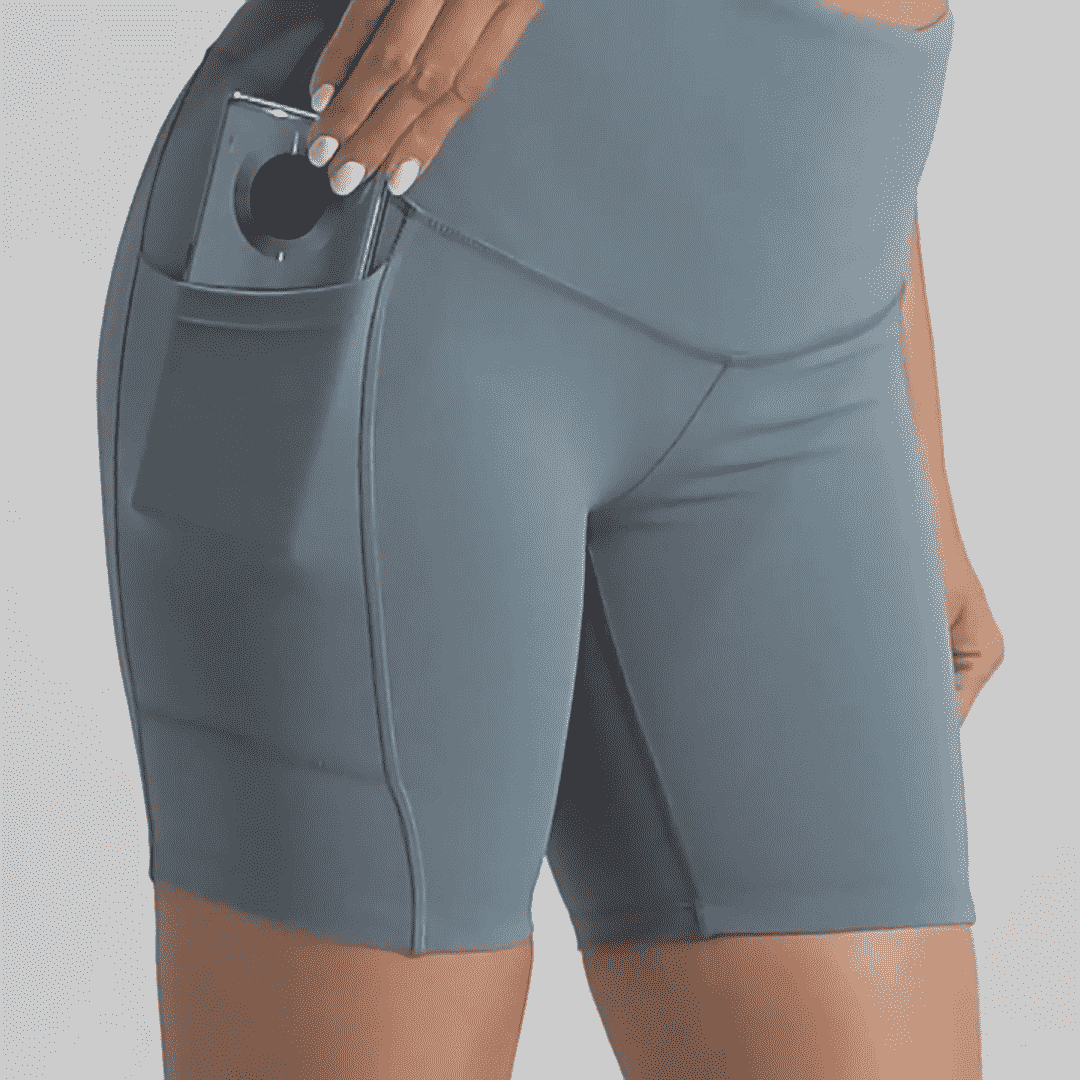
What Makes a Custom Biker Shorts Manufacturing Partner?
A custom biker shorts manufacturing partner should do more than reproduce a visual reference. The supplier must translate the buyer’s fit, measurement, material, construction, branding and commercial requirements into an approved production standard that can remain controlled through sampling, bulk production, inspection and repeat orders.
Product Engineering
Biker shorts require decisions around waist height, rise, hip proportion, inseam, leg opening, crotch construction, pockets and surface structure. These variables need to be reviewed together rather than treated as independent styling details.
Manufacturing Route
MOVEVOX can evaluate both Seamless and Cut & Sew routes. Seamless is suitable for engineered knit structures, while Cut & Sew provides greater freedom for complex panels, pockets, multi-material combinations and conventional pattern construction.
Brand Execution
A commercial biker-short program can include logo application, garment labels, hangtags, SKU or barcode information, individual packaging and carton requirements, with approved artwork and specifications connected to the correct product version.
Production Continuity
Development only creates value when the approved product can be transferred into bulk production. Current specifications, approved references, material information, QC checkpoints and packaging requirements should remain aligned throughout production.
Built for Ongoing Activewear Sourcing Programs
MOVEVOX is positioned for buyers that need structured development, formal sample approval and repeatable manufacturing rather than a one-time stock purchase.
Formal Supplier Execution
For an established activewear brand, the sourcing requirement normally extends beyond producing one biker-short sample. The supplier needs to receive technical information, review manufacturing feasibility, manage materials and customization, execute sample revisions and maintain the approved specification during bulk production.
- Existing Tech Packs require controlled supplier execution.
- New styles need formal sampling before commercial production.
- Repeat products require version and material continuity.
Coordinate the Collection
Brands managing biker shorts together with leggings, sports bras, tanks or other activewear products need every SKU to retain its own measurement, sample, manufacturing and QC requirements while still sharing common brand direction. MOVEVOX can coordinate materials, colors, logos, labels and packaging.
- Multiple products developed inside one commercial collection.
- Shared branding with product-specific technical requirements.
- Color and packaging information coordinated across SKUs.
Validate Before Transfer
A second-supplier project requires more than receiving an existing garment and quoting a lower price. The new supplier needs to understand the current approved product, measurement method, materials, branding and quality basis before commercial transfer.
- Existing bestseller requires an additional manufacturing source.
- Current specifications must transfer without uncontrolled changes.
- Factory and quality capability require verification before approval.
Prepare for Scale
Brands moving from trial quantities into repeat orders require a supplier that can recheck current materials, capacity, specifications, labels and packaging instead of assuming nothing has changed. Higher volumes still require capacity and material confirmation before commitment.
- Trial products can move into regular commercial production.
- Repeat orders require current material and specification confirmation.
- Higher volumes require capacity review before delivery commitment.
Control the Risks Behind Custom Biker Shorts
A commercially successful sample does not automatically create stable bulk production. Biker-short sourcing requires control over fit, measurements, materials, versions and manufacturing allocation.
Sample-to-Bulk Drift
Problem / ImpactA sample may be acceptable while bulk garments gradually differ in measurement, material appearance, workmanship or branding because the approved reference was not fully transferred into production.
MOVEVOX ResponseApproved samples, current specifications, measurement versions and production requirements are used as formal references, supported by First Article and in-line checks.
Approval RecordsFit Measurement Drift
Problem / ImpactSmall changes in waist, hip, rise, crotch, inseam or leg opening can alter how biker shorts fit, ride up, roll or cover the body across sizes.
MOVEVOX ResponseFit development connects measurement points, approved sample, material stretch and product structure. Bulk inspection then checks production against the released measurement basis.
Measurement SheetUncontrolled Capacity Shift
Problem / ImpactScaling volume without controlling the actual production site can create differences in workmanship, material handling, interpretation and inspection responsibility.
MOVEVOX ResponseMOVEVOX separates the owned core factory from managed satellite capacity and keeps technical files, PMC, QC requirements and final accountability connected to the order.
Facility ControlVersion and QC Gaps
Problem / ImpactOld Tech Packs, outdated measurements, superseded labels or unapproved packaging files can create commercial errors even when garment manufacturing itself is acceptable.
MOVEVOX ResponseCurrent production versions are separated from obsolete references, and relevant product, measurement, branding and packaging changes require controlled release.
Version ControlIs Your Biker Shorts Project a MOVEVOX Fit?
Review these six project dimensions before entering detailed costing, sampling or supplier qualification.
Product Scope
MOVEVOX has stable manufacturing capability for biker shorts used in yoga, gym, running, athleisure and everyday training programs. Development can include high-rise structures, no-front-seam directions, pockets, panels, compression-feel construction, contouring and different inseam lengths. Specialist professional cycling-pad systems require separate project evaluation.
Manufacturing Route
A project can be evaluated for Seamless or Cut & Sew production. Seamless can engineer rib, texture, mesh and local density into the knitted body. Cut & Sew is more appropriate when conventional pattern pieces, complex pockets, panels or multiple materials are required.
Development Input
A complete Tech Pack is the clearest route for an established brand, but MOVEVOX can also review a legally usable physical sample, sketch, product image or sufficiently defined concept. Less complete technical input requires more product-development translation before sampling and costing.
Order Quantity
Typical base references are approximately 100 pieces per style for Seamless and approximately 150 pieces per style for Cut & Sew. Typical individual orders can range approximately from 300 to 50,000 pieces. Materials, colors, branding and packaging may create separate commercial minimums.
Customization Scope
Projects can cover fabric or yarn direction, color, fit, construction, logo, labels, hangtags, SKU or barcode information, individual packaging and cartons. Each element should be reviewed for technical compatibility, MOQ, tooling, timing and version control.
Scale and Repeat
MOVEVOX is better suited to buyers that intend to validate a product and then move into commercial production or repeat orders. Managed normal monthly delivery capacity is approximately 150,000–200,000 pieces under normal conditions, subject to product mix and planning.
Manufacturing Facts for Supplier Evaluation
These figures provide a concise view of MOVEVOX’s current manufacturing resources, development timing and quality organization.
Approximately six floors of about 1,000 m² each.
Italian seamless knitting machines for applicable programs.
Core sewing and garment-production equipment.
Supporting production, measurement and packing controls.
After required development details are confirmed.
Approximate normal monthly managed delivery capacity.
Custom Biker Shorts Development Directions
Biker shorts can serve different yoga, gym, training, running and athleisure programs. The correct configuration should be defined through fit, inseam, waistband, pocket, material and manufacturing route.
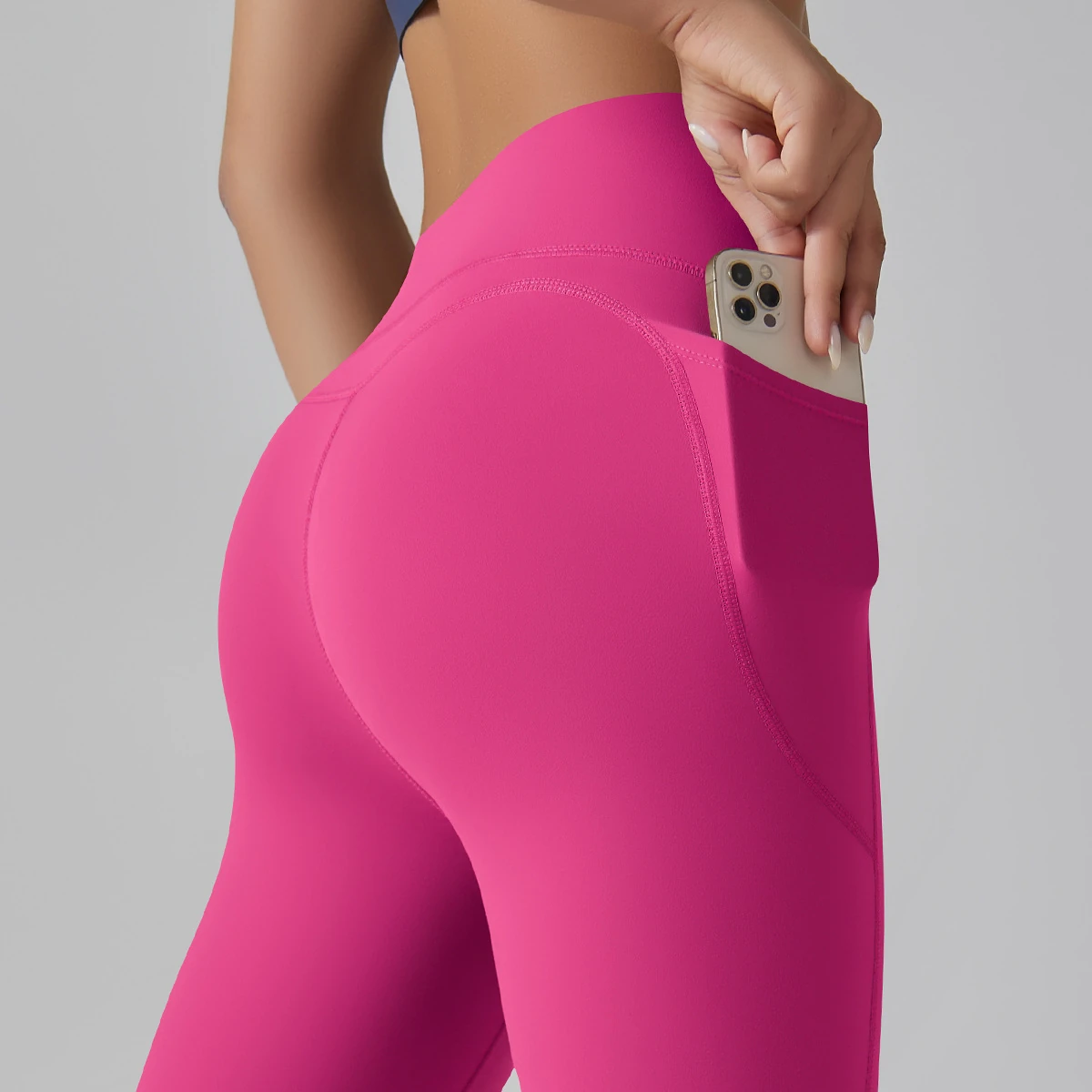
Studio Biker Short
A yoga or studio-oriented biker short may prioritize a stable high-rise waist, smooth body coverage, flexible movement and a softer material direction. Naked-feel, brushed or other soft high-stretch fabrics can be evaluated according to handfeel, opacity, recovery and approved fit.
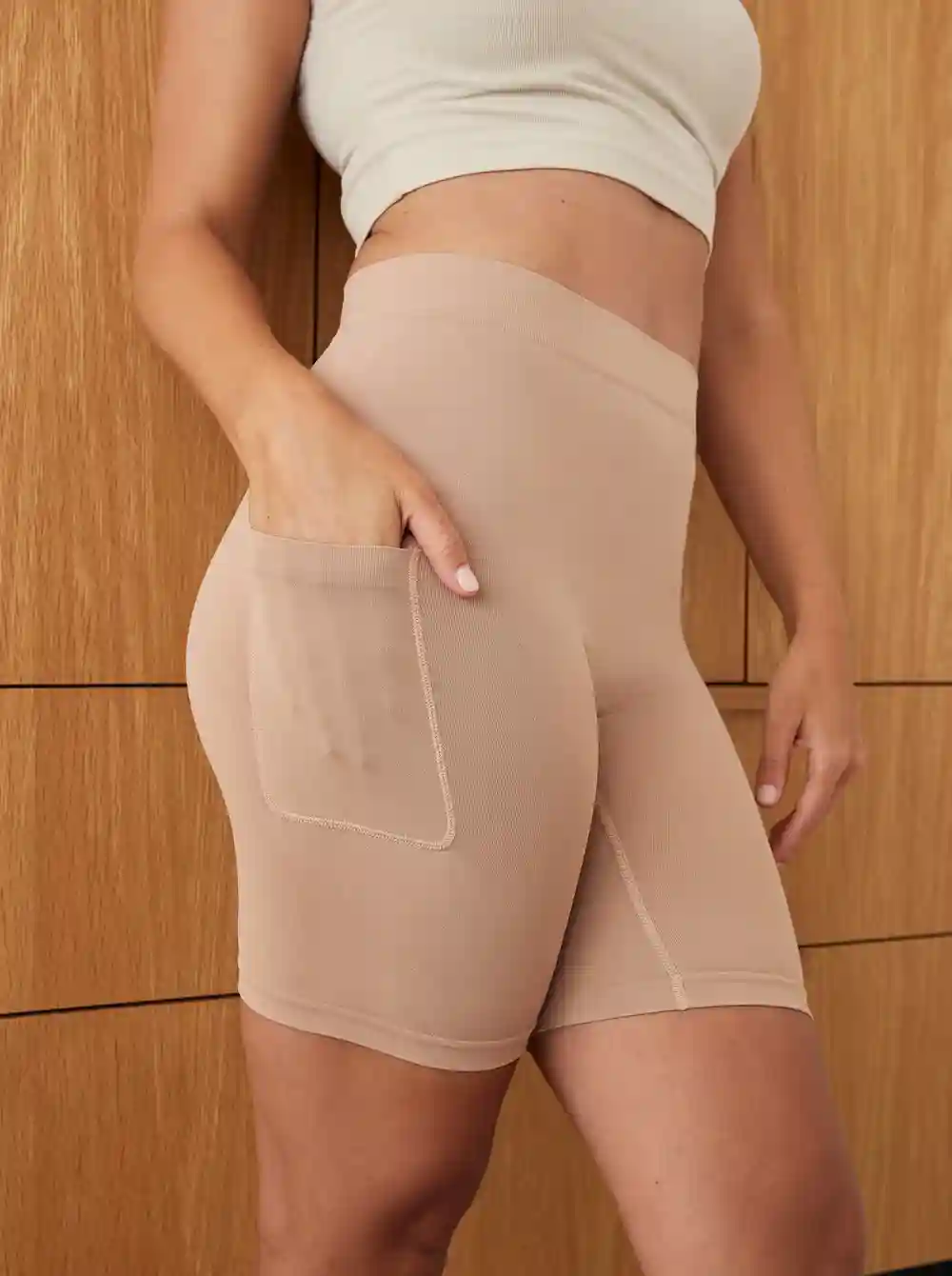
Training Pocket Short
A training-oriented Cut & Sew version can integrate functional side pockets while retaining the required waist, hip, crotch and leg-opening fit. Pocket size, placement, seam construction and loaded-garment stability should be confirmed on the physical sample.
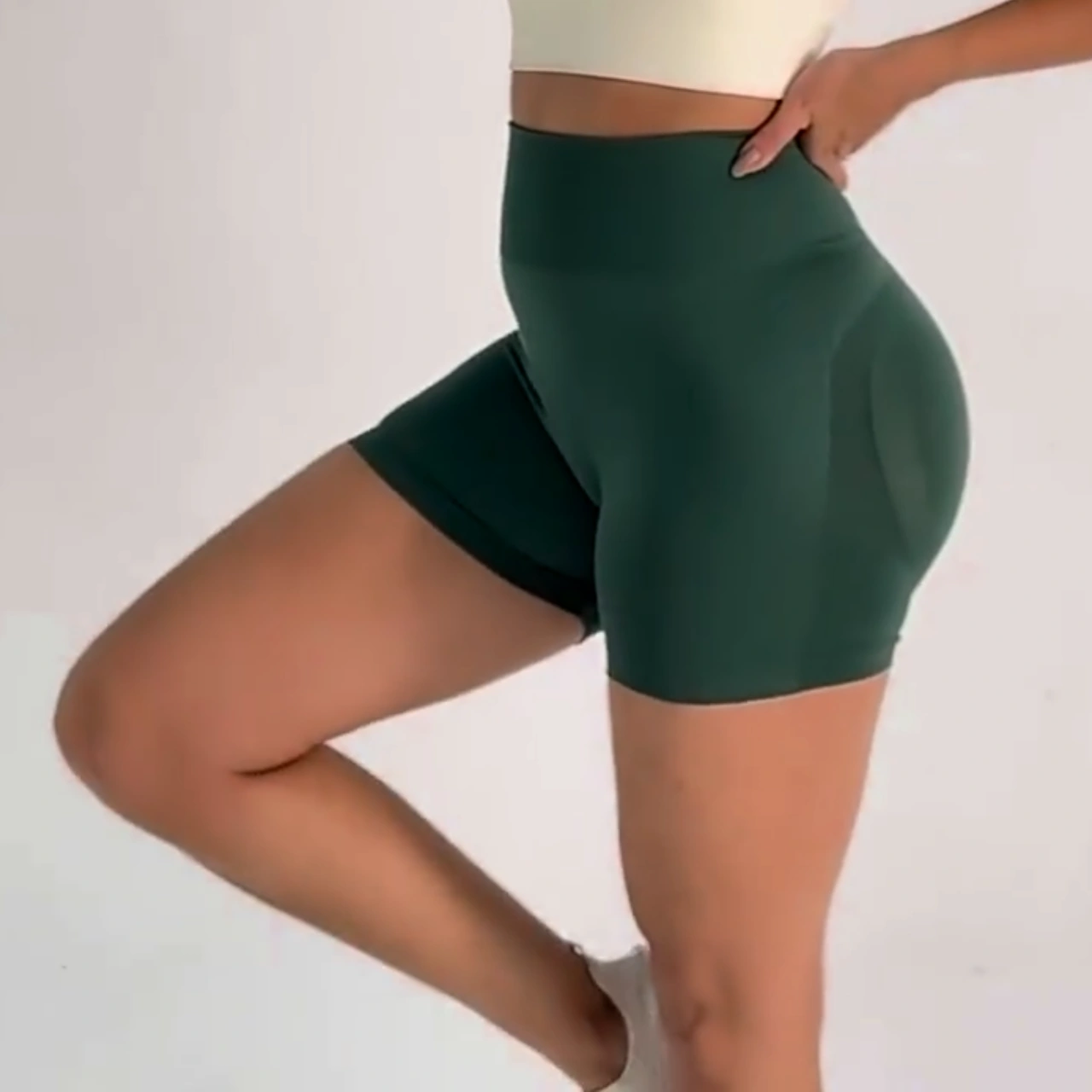
Seamless Contour Short
A Seamless biker short can use engineered knit structures, rib, texture, local density and contouring effects within the knitted body. Program version, yarn, machine specification, size and finishing conditions need to remain connected to the approved sample.
Compression-Feel Short
For brands targeting a firmer training sensation, material, spandex level, GSM, negative ease or Seamless structure can be evaluated together. A compression feel should not be presented as a measured-pressure claim without corresponding test evidence.
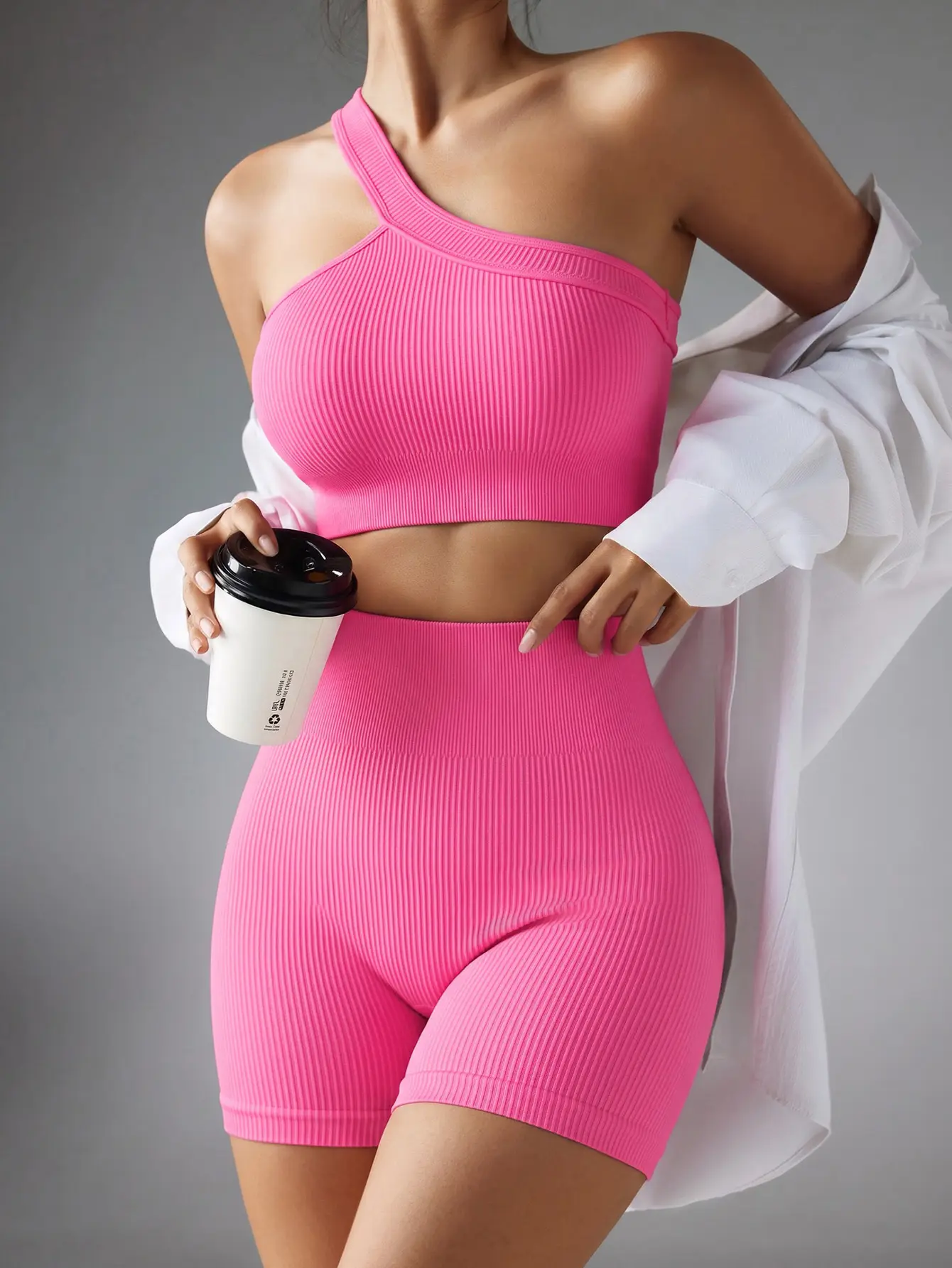
Athleisure Biker Short
An athleisure version may combine a softer surface, restrained compression, coordinated colors and simplified branding for crossover between studio, daily training and casual use.
Control Fit Before It Becomes a Bulk Problem
Biker shorts are sensitive to waist, hip, rise, crotch, inseam and leg-opening relationships. Fit approval and bulk measurement control need to remain connected.
Waist Slippage or Rolling
Waist height, circumference, rise, material recovery or waistband construction may not work together under movement.
A sample can look acceptable when standing but become unstable during training, creating fit complaints and inconsistent sizing.
Review waistband construction, waist/hip relationship, rise, recovery and physical fit together before locking dimensions.
Leg Opening Ride-Up
Inseam length, leg opening, negative ease, material recovery and body movement can combine to pull the hem upward.
Excessive ride-up changes coverage and user experience and may create different perceptions between sizes.
Evaluate inseam, leg opening and stretch behavior during sampling, then retain the approved basis for grading and bulk inspection.
Crotch Pulling
Front rise, back rise, hip volume, inseam and crotch construction can create pulling, bunching or restricted movement.
An incorrect crotch relationship can affect comfort, appearance and movement and create repeated sample revisions.
Review crotch shape, rise, hip and movement together and validate any gusset structure on the physical sample.
Grade Distortion
Scaling nominal garment dimensions without considering proportion can cause larger or smaller sizes to lose the approved fit relationship.
A successful base-size sample does not guarantee consistent fit across a broader commercial size range.
Use measurement charts, grading rules and Size Set review where required before bulk release.
Bulk Measurement Drift
Process variation can move key measurements away from the released standard during production.
Measurement drift can become a systematic lot issue when it is identified only during final inspection.
Apply measurement checks during appropriate First Article, in-line, finished and final stages.
Choose Fabric Around the Biker Short
Fabric selection should begin with the intended fit, handfeel, opacity, recovery, compression direction, activity and manufacturing route.
| Parameter | Nylon + Spandex | Polyester + Spandex | Seamless Knit | Naked-Feel Direction | Brushed Direction |
|---|---|---|---|---|---|
| Typical Use | Yoga, gym, fitted shorts | Training, running, functional shorts | Seamless biker shorts | Soft yoga or Pilates direction | Soft seasonal activewear |
| Handfeel Target | Soft to supportive | Smooth to functional | Depends on yarn and knit | Low-friction soft surface | Soft brushed surface |
| Stretch | High-stretch direction | High-stretch options | Engineered through knit | High stretch normally required | Depends on base fabric |
| Recovery | Sample validated | Sample validated | Yarn and structure dependent | Important for fit stability | Check after finishing |
| Opacity Risk | Color and stretch dependent | Color and stretch dependent | Structure and color dependent | Light colors require validation | Color and stretch dependent |
| Surface | Smooth, matte or finished | Smooth or performance-oriented | Rib, texture, mesh possible | Soft refined surface | Single or double brushed |
| Bulk Approval | Fabric + lot control | Fabric + lot control | Yarn + program + sample | Handfeel + sample | Brush level + sample |
Choose the Manufacturing Route Around the Design
MOVEVOX supports both Seamless and Cut & Sew. The correct route depends on product architecture, fit, material, pockets, panels, knit structure and branding.
| Decision Area | Seamless | Cut & Sew |
|---|---|---|
| Product Body | Knitted body can reduce conventional panel construction. | Product formed from cut fabric pattern pieces. |
| Waist Structure | Rib, density and engineered knit structures. | Double-layer, elastic or panelled waistband options. |
| Surface Design | Rib, mesh, texture and local density can be knitted in. | Surface follows selected fabric and finishing. |
| Pockets | Simpler integrated directions require project review. | Side, back-waist and structured pockets are more flexible. |
| Panel Design | Limited by machine and knitting architecture. | Greater freedom for shaped multi-panel construction. |
| Material System | Yarn composition and knitting program are central. | Fabric and pattern engineering are central. |
| Size Control | Yarn, machine, program and finishing affect dimensions. | Pattern, cutting, seam allowance and sewing affect dimensions. |
| Best Fit | Engineered knit or reduced-seam products. | Complex pockets, panels and pattern-driven styles. |
| Bulk Control | Program, yarn lot, size and approved sample remain aligned. | Pattern, fabric lot, BOM and approved sample remain aligned. |
From Product Input to a Bulk-Ready Standard
Custom development should convert buyer intent into controlled manufacturing information through technical review, physical samples, approval and production release.
Project Brief
Receive the available Tech Pack, legal reference sample, sketch, image or defined concept together with quantity, market, customization and timing requirements.
Development BriefTechnical Review
Review measurement, fit, garment architecture, manufacturing route, material direction, pockets, branding and open technical points.
Open PointsMaterial and Route
Evaluate Seamless or Cut & Sew and identify realistic material, yarn, color, stretch, surface and opacity directions.
Material DirectionPattern or Program
Cut & Sew products move into pattern work while Seamless products require knitting-program and structural development.
Technical BaseDevelopment Sample
Produce a physical garment to evaluate structure, proportion, material, workmanship and fit.
5–10 Working DaysFit and Revision
Review measurements, physical fit and buyer comments, then document changes in the current product version.
Revision ListFormal Approval
Confirm the applicable approved product reference, measurements, material, branding and other required project standards.
Approved StandardBulk Release
Transfer the current approved information into production preparation, material booking, First Article and bulk quality control.
Bulk ReleaseHow MOVEVOX Works From Your Full Tech Pack
A mature Tech Pack should remain the buyer’s technical starting point. MOVEVOX reviews manufacturability and open items before translating the specification into samples and bulk execution.
What the Buyer Provides
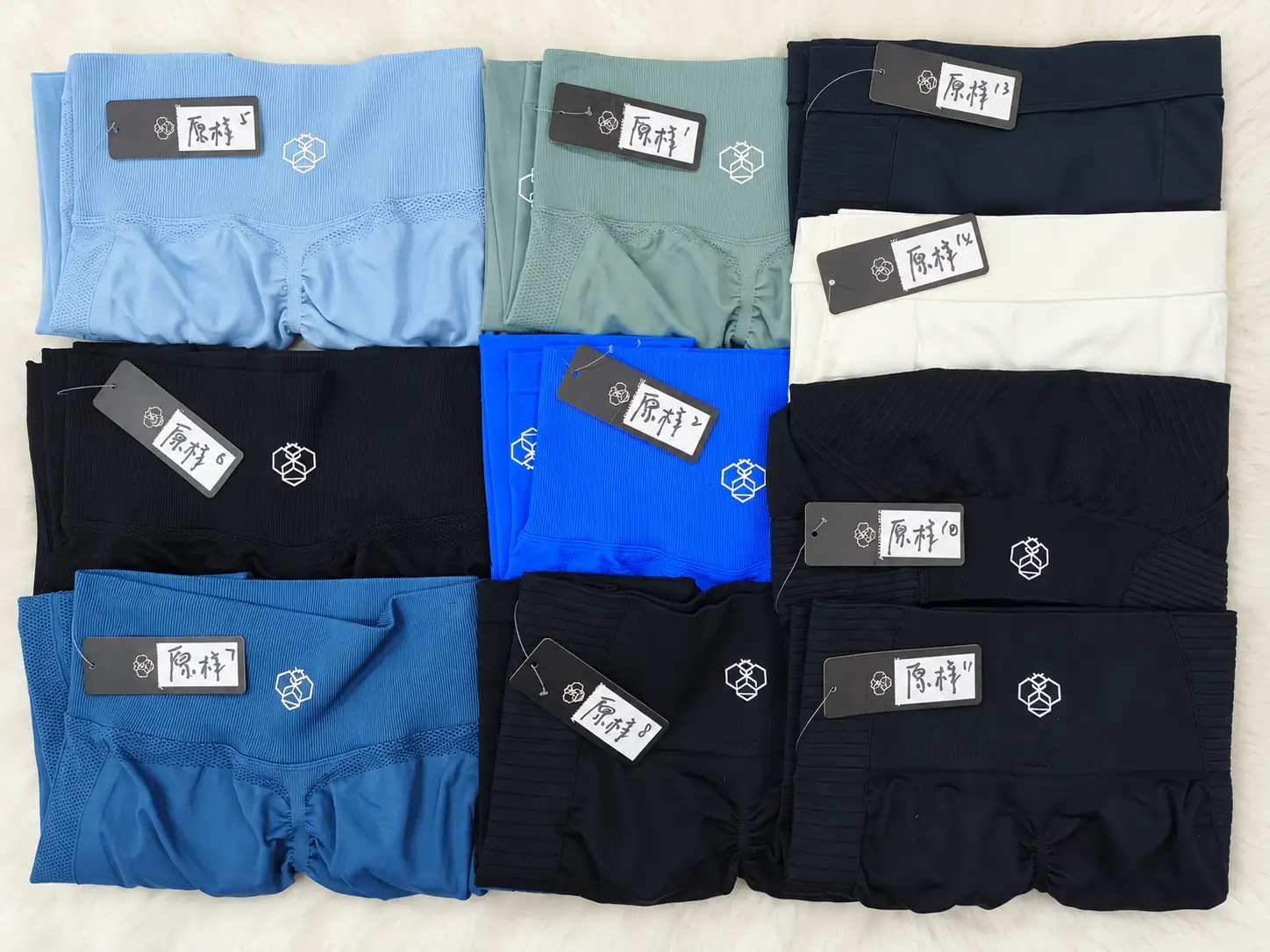
A production-ready or development-ready Tech Pack can contain technical drawings, BOM information, target fabric or yarn, measurement charts, tolerances, construction details, color references, logo placement, labels, packaging and applicable testing or quality requirements.
For biker shorts, the package should ideally identify waist height, waist circumference, hip, front and back rise, inseam, leg opening, crotch structure, pocket placement and any contouring or panel detail.
- Technical drawing and BOM
- Measurement chart and tolerance
- Fabric or yarn requirements
- Construction and pocket specification
- Logo, label and packaging artwork
- Testing or buyer QC requirements
How MOVEVOX Reviews It
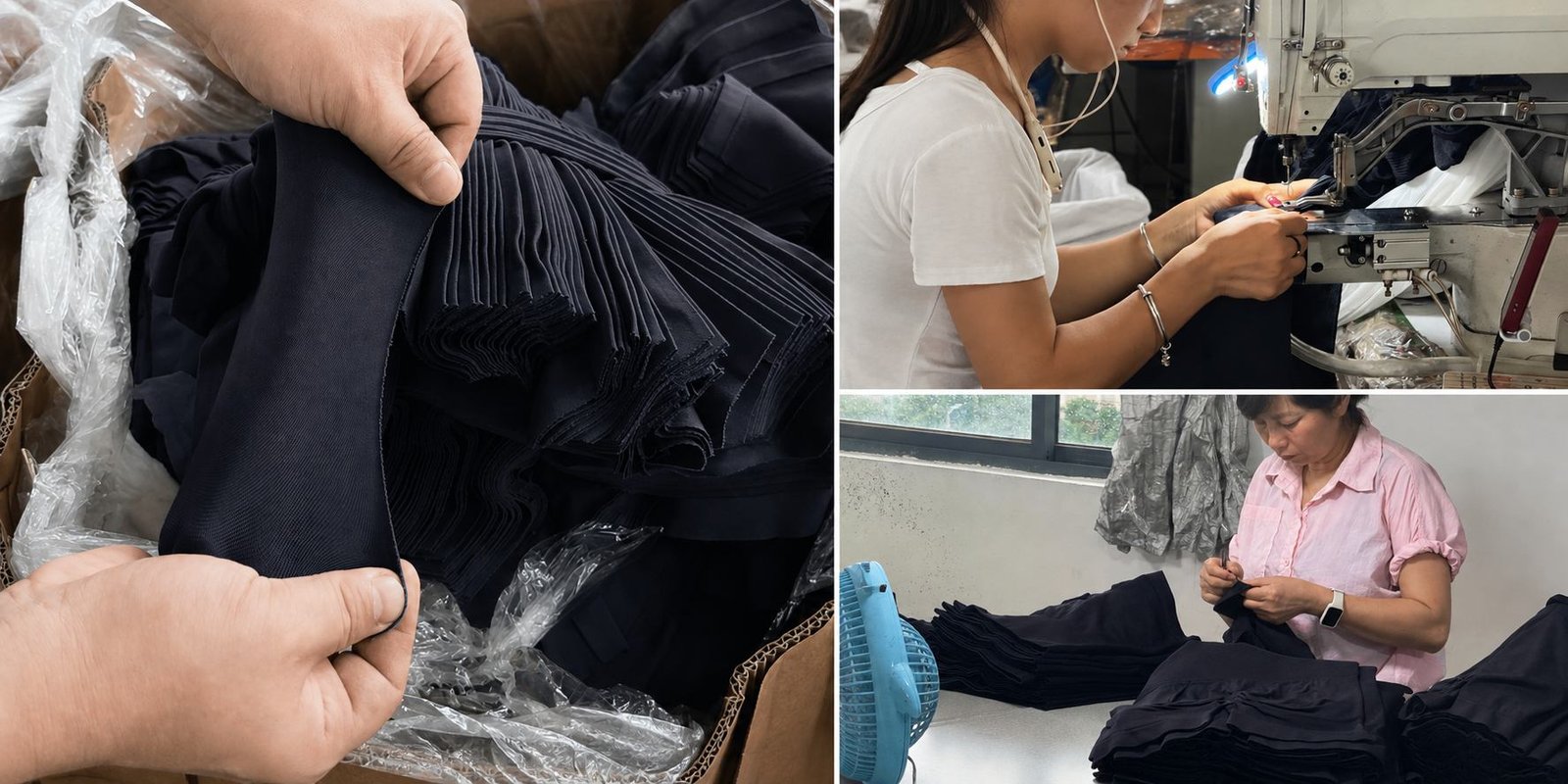
MOVEVOX first reviews whether the requested product can be translated into the intended manufacturing route without changing key design intent. Seamless review includes yarn, structure, machine and program considerations. Cut & Sew review includes pattern logic, fabric behavior, panels, seams, pockets and sewing requirements.
Commercial dependencies are also identified. Custom colors, specially developed materials, molded logos, specialized packaging or unusual trims can create independent supplier MOQs and lead-time effects.
- Manufacturability and route selection
- Material and fit compatibility
- Open technical information
- MOQ and supply-chain dependencies
- Sample and approval requirements
- Bulk-production risk points
What Becomes the Production Standard
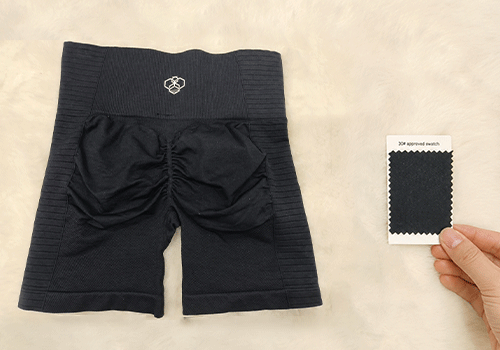
The working project must eventually connect the final technical version with approved measurements, material or yarn, color, construction, branding, packaging and the appropriate approved physical reference.
During development, changes should be captured in the current specification rather than remaining only in emails or informal conversations. Superseded documents should not remain active production references.
- Final Tech Pack version
- Final measurement version
- Approved fabric or yarn
- Approved branding and packaging
- Approved or PP Sample
- Current QC requirements
Use Each Sample for a Defined Approval
Sampling should be managed as an approval architecture, not as repeated sample making without a defined purpose, current version or approval scope.
Details Confirmed
Product structure, measurements, material direction, color, branding and key open points should be sufficiently aligned before the standard development timing begins.
Development Sample
The first physical garment translates confirmed inputs into a reviewable product for structure, proportion, material and early fit evaluation.
5–10 Working Days
Standard sample development is typically approximately five to ten working days after the required development details are confirmed.
Consolidate Comments
The buyer reviews measurements, fit, material, construction, branding and other agreed points and consolidates revision comments.
Revision Cycle
Required pattern, knitting-program, measurement, material or construction changes are transferred into a clearly identified new sample version.
Formal Approval
Fit, Size Set, PP or other required approval stages are completed before applicable bulk-production release.
Approve Biker Shorts Fit Before Bulk Production
The Fit Sample verifies how measurement, material stretch, recovery and garment structure work together on the selected base size.
Define Base Size
Confirm the base size, key POMs, target proportions and material direction before physical fit evaluation begins.
MOVEVOX Output: Reviewed measurement basis and open-point list.
Review Physical Fit
Evaluate waist position, hip relationship, front and back rise, crotch behavior, inseam, leg opening, coverage and movement.
MOVEVOX Output: Physical-fit observations and revision points.
Check Measurement
Compare the sample against the agreed measurement chart using defined POMs and consistent measurement methods.
MOVEVOX Output: Measurement results and out-of-tolerance points.
Execute Revision
Transfer approved fit comments into the relevant pattern, Seamless program, measurement or construction change.
MOVEVOX Output: Revised technical version and updated sample.
Confirm Fit Approval
Formally confirm the approved fit and current base-size reference. Fit approval does not automatically approve unrelated color, packaging or branding elements.
MOVEVOX Output: Approved fit reference and next-stage release.
Biker Shorts MOQ Is More Than One Number
Color, material, size allocation, logo, labels, packaging and supplier requirements can change the effective starting quantity for a custom program.
Every custom biker short uses one fixed MOQ.
Fact: The normal reference is approximately 100 pieces per style for Seamless and approximately 150 pieces per style for Cut & Sew, subject to material, color, process and order structure.
Base references assume commercially workable standard materials and processes.
Custom Pantone color follows the base garment MOQ.
Fact: Custom colors are commonly evaluated around an equivalent garment quantity of approximately 400–600 pieces because material or yarn dyeing minimums may control the project.
Actual conversion depends on material, dye lot and garment consumption.
Custom fabric behaves like available stock fabric.
Fact: A specially developed composition, weight, finish or material can create separate supplier minimums, sampling requirements and procurement timing.
Final quantity is confirmed against the selected material specification.
More colors and sizes never affect MOQ.
Fact: A total quantity can appear sufficient while the quantity allocated to each color or size becomes impractical for the manufacturing route.
Color and size allocation should be reviewed before final quotation.
Every logo follows the garment MOQ.
Fact: Custom molded patches, special hardware or supplier-produced branding can introduce separate tooling and component minimums.
Logo method, artwork, size, color and supplier route determine the requirement.
The lowest MOQ is always the best trial.
Fact: Mature brands often use lower quantities to validate new products, colors, markets or fit before moving into repeat commercial production.
Trial economics should be evaluated together with future scale potential.
How Material Decisions Change Your Project Timeline
Standard materials, custom colors, special yarns and new fabric specifications should not be treated as having the same sourcing path.
| Stage | Timing Reference | Key Condition | Buyer Confirmation |
|---|---|---|---|
| Material Direction | Project-specific | Handfeel, stretch, opacity and price direction | Material target |
| Supplier Availability | Supplier-dependent | Stock, yarn, base fabric and supplier capacity | Candidate route |
| Custom Color | Project-specific | Dye-lot minimum and color approval | Color reference |
| Sample Development | Approx. 5–10 working days | Required development details confirmed | Sample review |
| Revision / Approval | Buyer-dependent | Comments, material changes and fit revisions | Formal approval |
| Material Booking | Project-specific | Final material, quantity and commercial order | Release |
| Bulk Production | Typically approx. 20–35 days | Production inputs and approvals ready | Cargo-ready plan |
Build a Controlled Private Label Biker Short
Private label execution should connect the garment, artwork, labels, SKU data, packaging and carton requirements to the correct style, color, size and current approved version.
Logo
Evaluate screen print, heat transfer, silicone, embroidery, jacquard, woven-label and project-specific reflective directions according to fabric surface, stretch zone, artwork and MOQ.
Explore Custom Logo →Garment Labels
Main labels, care labels and size labels can be coordinated according to approved artwork, content, placement and applicable market requirements.
Explore Custom Labels →Hangtags and SKU
Hangtags, size stickers, SKU information and barcodes should remain mapped to the correct commercial style, color and size.
Individual Packaging
Packaging can include standard or custom polybags, SKU identification and buyer-defined information according to approved specifications.
Explore Packaging →Carton Requirements
Outer-carton requirements can include style, PO, SKU, color, size, quantity, carton number, shipping mark and packing information.
Version Control
Logo artwork, labels, barcode data, polybag print and carton marks should have a current valid version before production or packing.
Have a Biker Short Ready for Supplier Review?
Send the technical and commercial information already available. MOVEVOX can review product structure, manufacturing route, material direction, sampling requirements, MOQ conditions and missing production inputs before development or bulk production.
Tech Packs, reference information and unreleased product details can be handled within agreed confidentiality requirements.See the Manufacturing System Behind Your Product
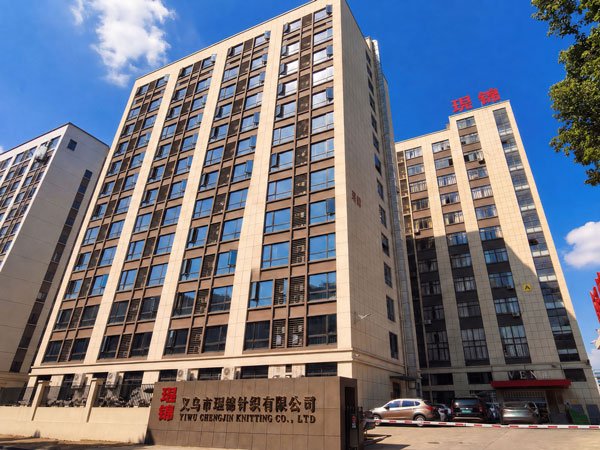
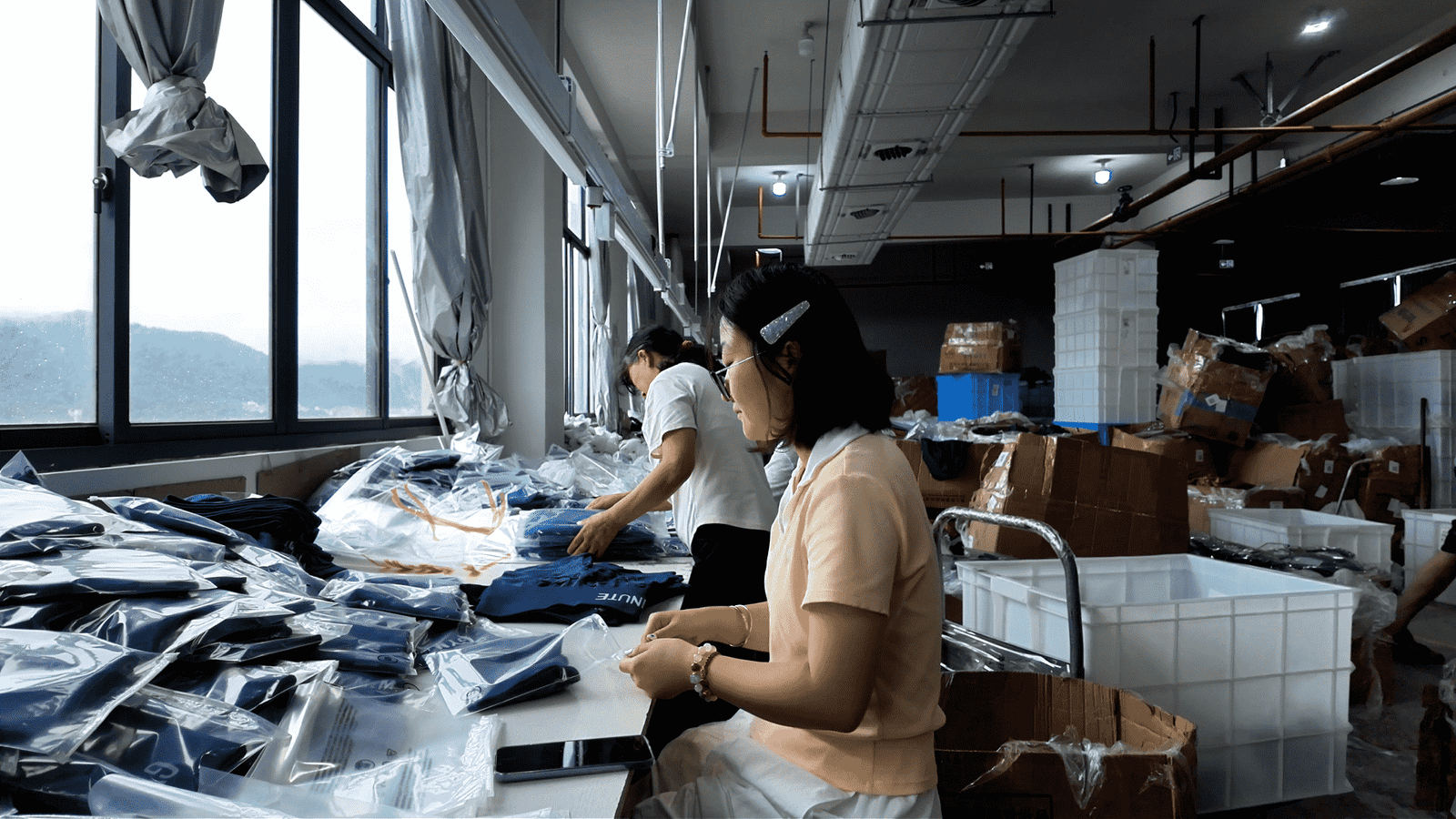
MOVEVOX’s owned Yiwu production base uses approximately 6,000 m² across six floors and supports development, relevant manufacturing, QC and packing activities.
Yiwu Production Base
The core production base in Yiwu, Zhejiang, China uses approximately six floors of about 1,000 m² each. Additional managed capacity is identified separately rather than presented as owned production.
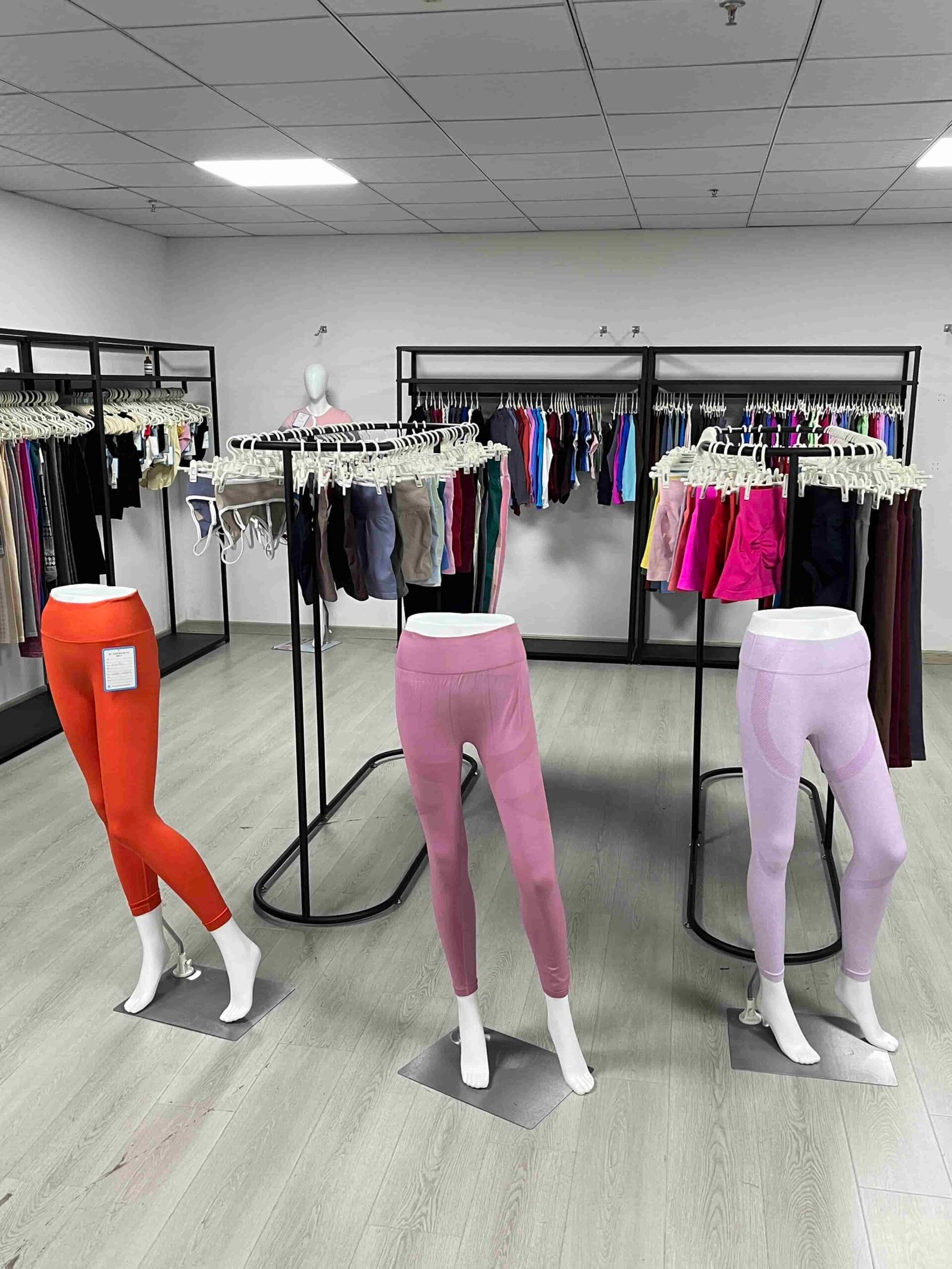
Product Development Area
Technical input is converted into physical samples and controlled product information through review, pattern or program development, measurements, revisions and approval preparation.
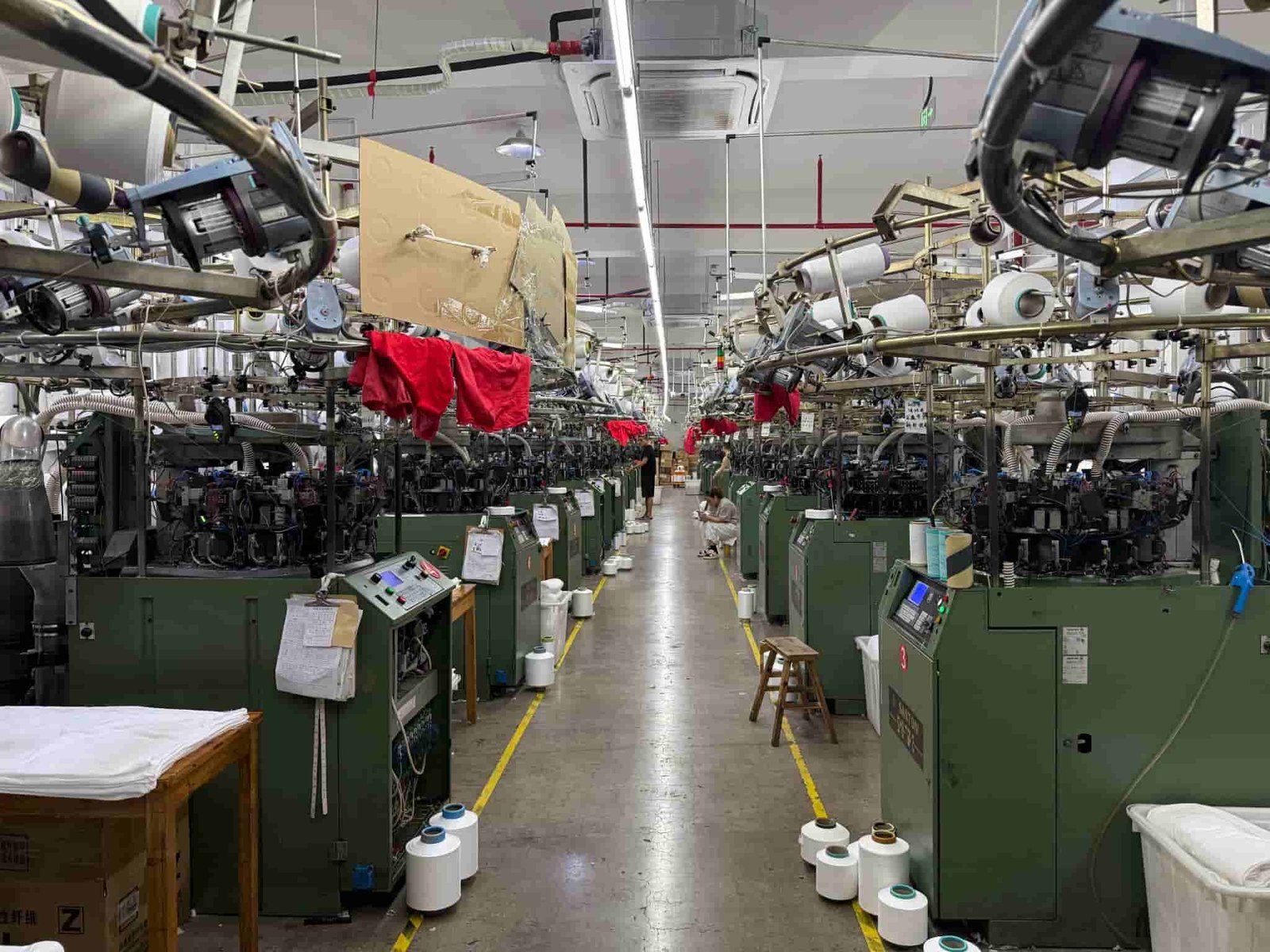
Santoni Seamless Area
MOVEVOX operates 28 Italian Santoni seamless knitting machines for applicable activewear programs.
Cut and Sew Area
Approximately 24 core sewing and garment-production machines support applicable pattern-driven activewear manufacturing.
Quality Control
Five QC personnel support applicable production, measurement, finished-garment, packing and related quality activities.
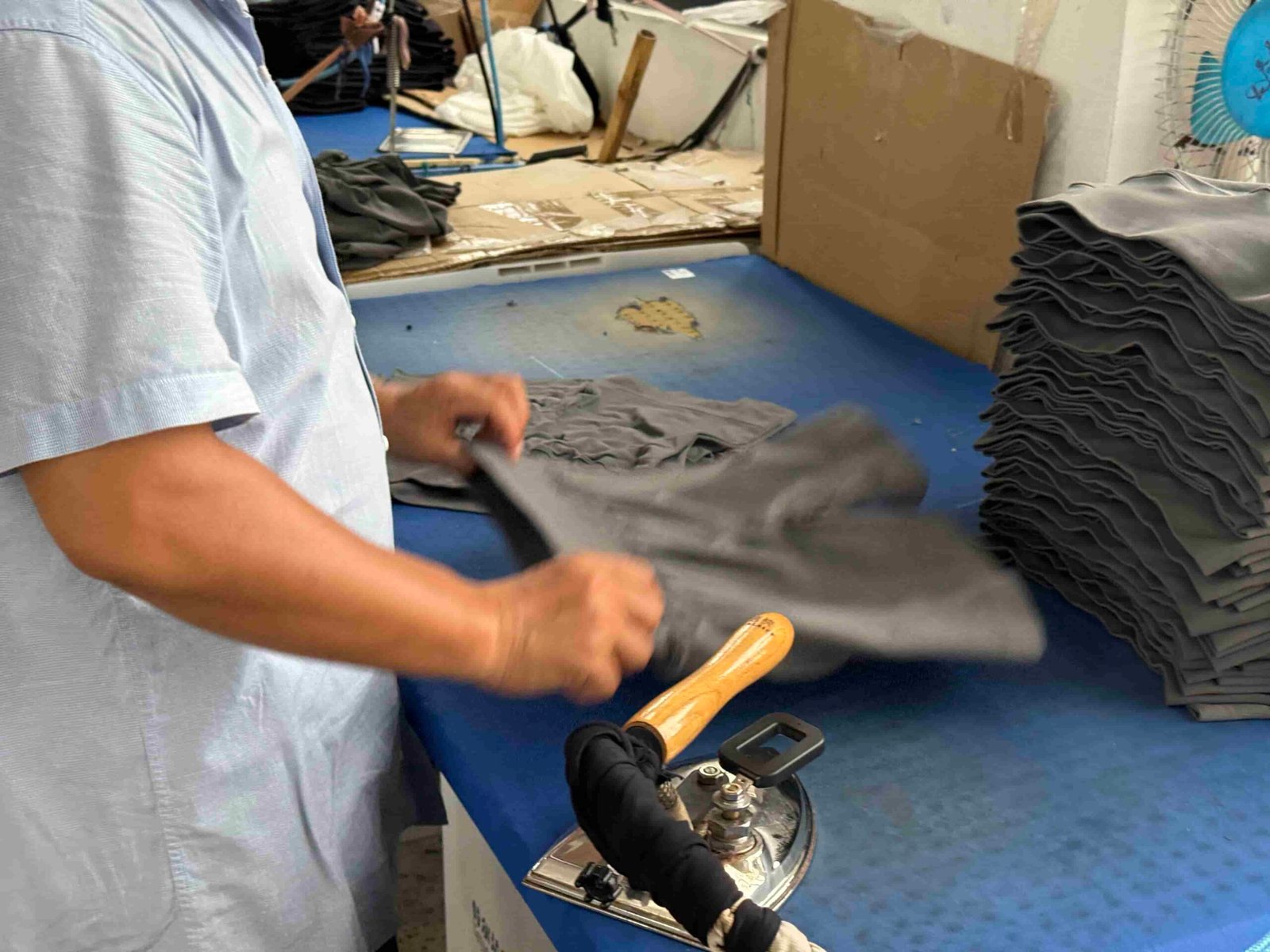
Packing and Handover
Packing connects the approved garment to the correct label, size, SKU, barcode, individual package and carton information before shipment.
Capacity Means Quality-Released Garments, Not Machine Output
Formal production commitments require a style-specific capacity check based on product complexity, SKU mix, materials, quality requirements and delivery window.
Managed Normal Delivery
Approximate managed normal monthly delivery capacity under normal conditions, subject to product mix, materials, route, QC and planning.
Typical Single Order
Typical individual order range under current operating conditions.
Seamless Core
Italian Santoni machines supporting applicable Seamless production.
Cut & Sew Resources
Core sewing and garment-production equipment.
Managed Satellites
Eight major factories within the managed satellite production network.
Core Production Base
Owned Yiwu manufacturing and operating base.
How an Approved Biker Short Moves Through Bulk
Bulk production should begin only after the required product, material, commercial and approval conditions are ready.
Order Review
Confirm style, quantity, colors, sizes, documents and approval status.
Readiness ReviewMaterial Readiness
Confirm fabric, yarn, elastic, branding and packaging components.
Incoming CheckPre-Production Review
Align current product, material, measurement and workmanship requirements.
Spec ReviewFirst Article
Compare early production against the current approved standard.
First ArticleBulk Production
Proceed using the released Seamless or Cut & Sew production route.
Controlled OutputIn-Line Control
Review measurement, workmanship, structure, color and branding trends.
In-Line QCFinal Inspection
Review the finished lot against applicable product and quality requirements.
Final ReleasePacking and Shipment
Match garments to labels, SKU data, packaging, cartons and shipping information.
Shipment ReleaseKeep the Approved Product Connected to Bulk Production
Product approval should be written back into current manufacturing information before normal bulk production is released.
Formal Approval
Confirm which product, fit, material, color and branding items are approved.
Approval StatusFinal Tech Pack
Release the current technical version for production use.
Current VersionMeasurement Release
Identify the current base size, POM, grade and tolerance requirements.
Measurement FileApproved Sample
Retain and identify the correct approved physical reference.
Approved SampleMaterial Lot
Connect released fabric or yarn and color to the production order.
Material LotFirst Article
Compare early production against the current approved standard.
First ArticleQC and Shipment
Use released standards through production, final inspection and packing.
Inspection RecordQuality Control Starts Before the Final Inspection
MOVEVOX’s quality process is designed to prevent an incorrect material, specification or production trend from continuing unchecked.
Customer Standard
Buyer Tech Pack, Measurement Chart, Approved Sample, QC Manual and written requirements define the primary quality basis where supplied.
Incoming Material
Applicable fabric, yarn, elastic, branding components and packaging materials are reviewed against released project information.
Pre-Production Review
Production and quality teams review current product, measurement, material, branding, packing and identified risk points.
First Article
An early production garment is compared against the approved basis before production moves into broader output.
In-Line Inspection
Measurement, workmanship, color, structure or branding trends are reviewed while corrective action remains practical.
Measurement Inspection
Relevant garments are measured using released POM and tolerance requirements.
Finished Garment
Finished products are reviewed for measurement, workmanship, appearance, branding and pre-packing readiness.
Final and Packing
Final inspection and packing checks evaluate garment condition, SKU data, packaging and carton requirements before release.
Non-Conformity
Significant issues can enter Hold, segregation, rework, expanded inspection, reinspection, root-cause review or CAPA before release.
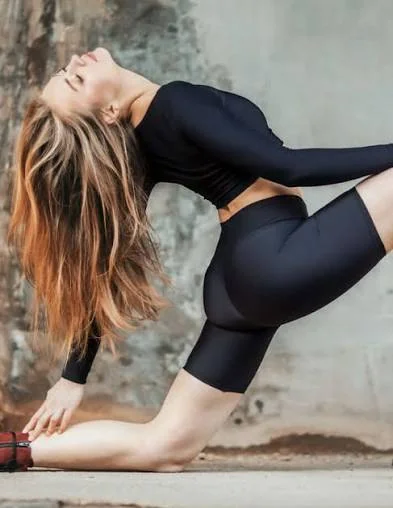
Read a Biker Shorts Measurement Record Correctly
A measurement record should identify what was measured, which current specification was used and what happened when a result fell outside tolerance.
Style and Version
Identify product, style, size and the measurement specification version so results are not compared against an obsolete chart.
Defined POM
Waist, hip, front rise, back rise, inseam and leg opening should use consistent measurement locations and methods.
Target Measurement
The record should show the released target rather than relying on visual judgment or past production memory.
Applicable Tolerance
Buyer tolerances should apply where provided. Internal defaults should not override an approved customer specification.
Actual Result
Measured values should remain reviewable as data so repeated deviations can reveal production trends.
Decision and Follow-Up
Out-of-tolerance findings can require review, hold, correction, additional screening or reinspection rather than automatic acceptance.
Prevent Common Biker Shorts Failures Before Shipment
Biker-short defects should be managed through root cause, prevention and defined inspection points. Final inspection alone cannot efficiently correct systematic problems already repeated across a production lot.
| Defect | Likely Cause | Prevention | Inspection Point | Corrective Action |
|---|---|---|---|---|
| Waist Rolling | Waist height, circumference, recovery or construction conflict. | Validate physical fit and waistband recovery during sampling. | Fit Sample / First Article | Hold, review cause and verify correction. |
| Waist Slippage | Waist-to-hip relationship, rise, negative ease or recovery. | Review measurements, material recovery and movement. | Fit / Measurement / First Article | Controlled technical revision and reinspection. |
| Leg Ride-Up | Inseam, leg opening, recovery and negative ease interaction. | Confirm coverage and movement on the physical sample. | Fit Sample / Finished Garment | Review inseam, opening or fit relationship. |
| Crotch Pulling | Rise, hip volume, crotch curve or gusset construction. | Develop crotch, rise and hip as one fit system. | Fit / Measurement / Workmanship | Correct pattern or program before scale-up. |
| Seam Failure | Seam type, tension, allowance, needle or reinforcement problem. | Match seam construction to fabric stretch and stress points. | First Article / In-Line / Finished | Stop operation, correct process and reinspect. |
| Opacity Failure | Material, color, stretch, fit and construction interaction. | Validate the actual material, color and fit configuration. | Material / Sample Review | Review material, color, fit or construction. |
| Pocket Distortion | Pocket opening, placement, fabric tension or sewing. | Confirm pocket dimensions and loaded behavior on sample. | Sample / First Article | Correct construction or placement. |
| Measurement Drift | Process variation, finishing or inconsistent measurement method. | Use current POM and trend monitoring. | First Article / In-Line / Final | Hold, investigate, screen or rework. |
Match Testing to the Actual Biker Short
MOVEVOX can support project-specific testing through buyer-nominated or project-qualified third-party laboratories. Test scope should follow the actual market, material, color, construction and buyer requirement.
Colorfastness
Evaluate the selected material and color against the relevant buyer or target-market colorfastness requirement.
Sample-SpecificPilling
Evaluate surface durability where pilling performance is relevant to the selected fabric, finish and intended product use.
Method DefinedShrinkage
Confirm dimensional change where shrinkage can affect measurement, fit or production approval.
Lot RelevantStretch Recovery
Evaluate material recovery where it affects waistband stability, fit and repeated high-stretch use.
Project StandardSeam Strength
Review actual material and construction combinations where stretch places repeated load on crotch, inseam or panel connections.
Construction-SpecificOpacity
Evaluate transparency where the buyer defines an opacity or squat-related requirement for the actual material, color and fit.
Configuration-SpecificDimensional Stability
Review whether approved dimensions remain stable after agreed conditioning or care procedures.
Test ScopePrepare the Supplier for Buyer Verification
MOVEVOX supports scheduled factory visits, remote review, technical review and agreed third-party inspection. Audit readiness should be demonstrated through accessible facts and records.
Factory Identity
Review actual company and production-site information so buyer teams can distinguish the legal entity, owned production resources and additional managed capacity.
Factory ReviewManufacturing Capability
Technical review can cover Seamless equipment, Cut & Sew resources, product development, material handling, sample control and production areas.
Technical AuditQuality Process
Review current specifications, Approved Sample control, First Article, measurement, in-line inspection, finished product and final release.
QC EvidenceTraceability
Project information can connect PO, style, SKU, material lot, current technical versions, inspection and shipment records.
Traceability ReviewFindings and CAPA
Audit gaps should be recorded, assigned, corrected and closed with appropriate evidence rather than hidden behind a no-issue claim.
CAPA RecordScale Production Without Hiding the Manufacturing Site
MOVEVOX combines an owned Yiwu core with a managed satellite production network and selected specialized resources. Large buyers should understand how capacity is allocated and who remains accountable.
MOVEVOX Core Factory
Owned Yiwu production base supporting relevant development, Seamless, Cut & Sew, QC and packing resources.
Satellite Network
Eight major factories within a managed production network. These sites must not be presented as MOVEVOX-owned factories.
Fabric and Yarn
Material suppliers provide fabric, yarn, dyeing and other inputs according to the selected product route.
Branding Partners
Specialized suppliers may support logo, label, trim and packaging components under approved project information.
Quality Interface
MOVEVOX coordinates applicable quality requirements and final accountability across relevant production resources.
Logistics Support
Packing, shipping marks, cartons, documents and forwarder handover remain connected to the commercial order.
From Tech Pack Development to Repeat Activewear Orders
This real U.S. activewear project demonstrates how MOVEVOX has used Tech Pack review, sample revisions, wear-test samples, private-label packaging and repeat production in practice. The client identity remains confidential.
The project involved a U.S. fitness creator-led activewear business with a multi-category product range including bodysuits, workout and yoga sets, leggings, shorts, sports bras and tank tops.
CHALLENGEThe customer supplied its own Tech Packs and required products with high stretch, supportive construction, soft handfeel, opacity considerations, inclusive sizing and seasonal material directions. Multiple colors and sizes also created QR-code and packaging accuracy requirements.
SOLUTIONMOVEVOX reviewed manufacturability before producing the first sample. The customer tested the garment in actual fitness use and returned adjustment comments. A second sample version was produced, followed by approximately 5–10 additional samples for further wear testing before commercial bulk customization.
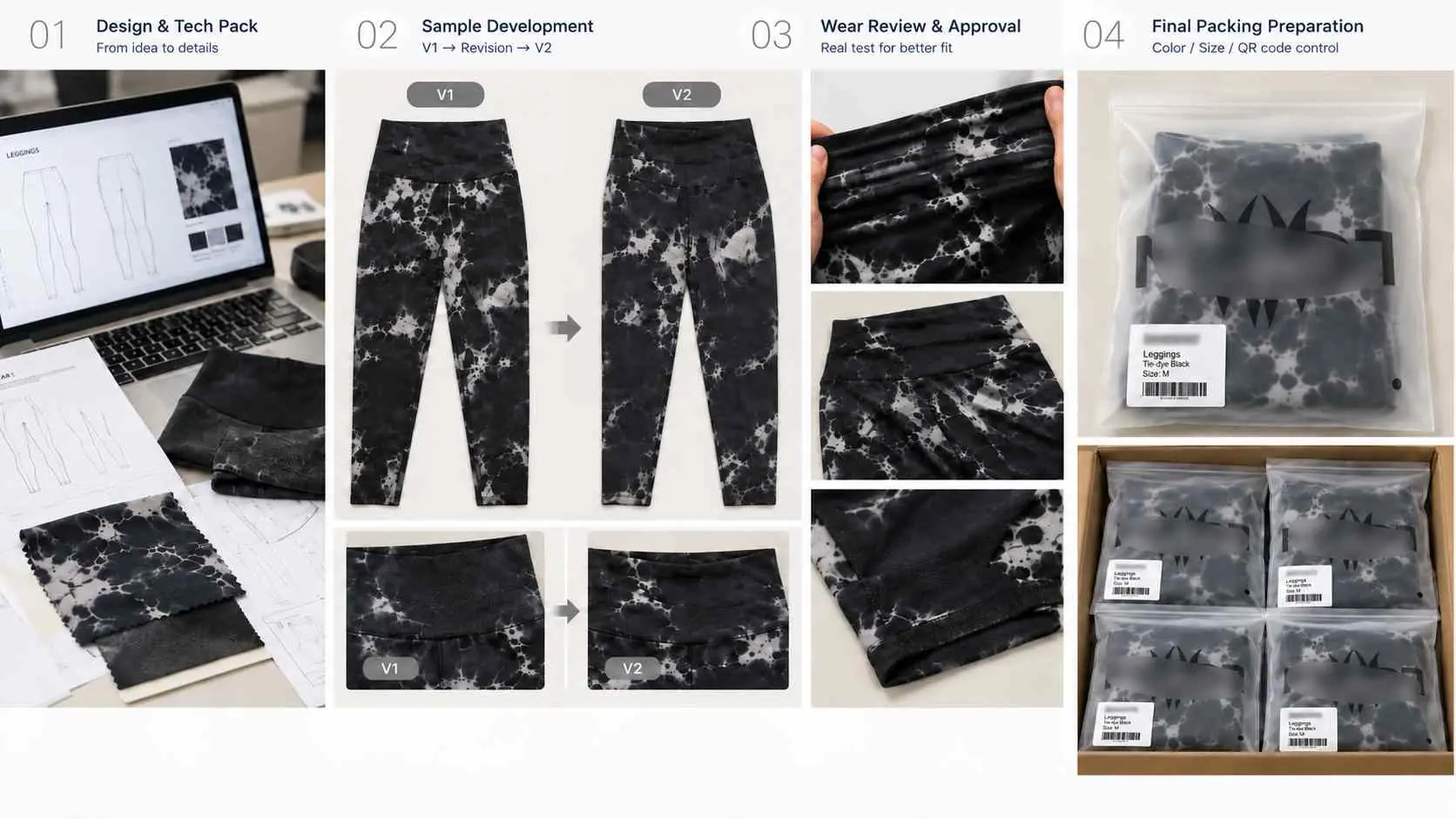
Tech Pack Review
Review the customer’s technical specification and identify product, material and fit factors requiring physical validation.
V1 Sample
Produce the first development version for fit, handfeel, stretch and fitness-use evaluation.
V2 Revision
Translate customer comments into a revised product before moving into commercial production.
Wear-Test Samples
Approximately 5–10 additional samples were produced for broader wear testing after the second version.
Bulk and Packaging
Move the accepted product into private-label bulk execution, including QR, color and size accuracy control.
Documented sample revision before bulk production.
Additional samples used for customer and audience wear testing.
Internal case records document ongoing repeat purchasing.
Why MOVEVOX Fits a Biker Shorts Program
Supplier value builds from manufacturing reality to development, quality control, scalable execution and long-term brand supply.
Manufacturing Foundation
Seamless and Cut & Sew resources allow the manufacturing route to follow the actual product architecture rather than forcing every biker short into one process.
28 Italian Santoni machines · Approx. 24 garment-production machinesDevelopment Control
Projects can start from Tech Packs, legal samples, sketches, images or concepts and move through technical review, sampling, revision and formal approval.
Standard sampling approx. 5–10 working days · Version-controlled developmentQuality and Scale
Quality is managed through relevant incoming, First Article, in-line, measurement, finished and final control stages.
5 QC personnel · Approx. 150K–200K pcs/month managed normal deliveryLong-Term Brand Supply
Product manufacturing can remain connected to private labeling, SKU data, packaging, repeat orders and controlled additional capacity.
Typical single orders approx. 300–50,000 pcs · Managed satellite networkActivewear Supplier Evaluation Checklist for Biker Shorts
Use this checklist to compare any potential manufacturer, not only MOVEVOX, across development discipline, manufacturing reality, quality control, commercial fit and available evidence.
Factory and Manufacturing
Product Development
Quality and Capacity
Compliance and Commercial Control
Define the Biker Short Before Requesting a Quote
A clear RFQ should identify the fit, measurements, material, construction, branding and commercial structure that materially affect sampling and costing.
Waist
Confirm rise, waistband height, shape, circumference and compression direction.
Hip Fit
Define hip measurement, ease or compression direction and contouring details.
Front Structure
Specify conventional front seam, no-front-seam or alternative construction.
Crotch
Identify rise, crotch or gusset construction and movement requirements.
Inseam
State intended inseam and any separate length requirement by size or market.
Leg Opening
Define opening dimension and concerns around pressure, rolling or ride-up.
Specify pocket location, opening, size, capacity and construction.
Material and Branding
Provide material, color, logo, labels, packaging, quantity and timing.
Continue Your Biker Shorts Supplier Evaluation
These resources answer common next questions around shorts manufacturing, Seamless construction, fabrics, MOQ, quality control and private labeling.
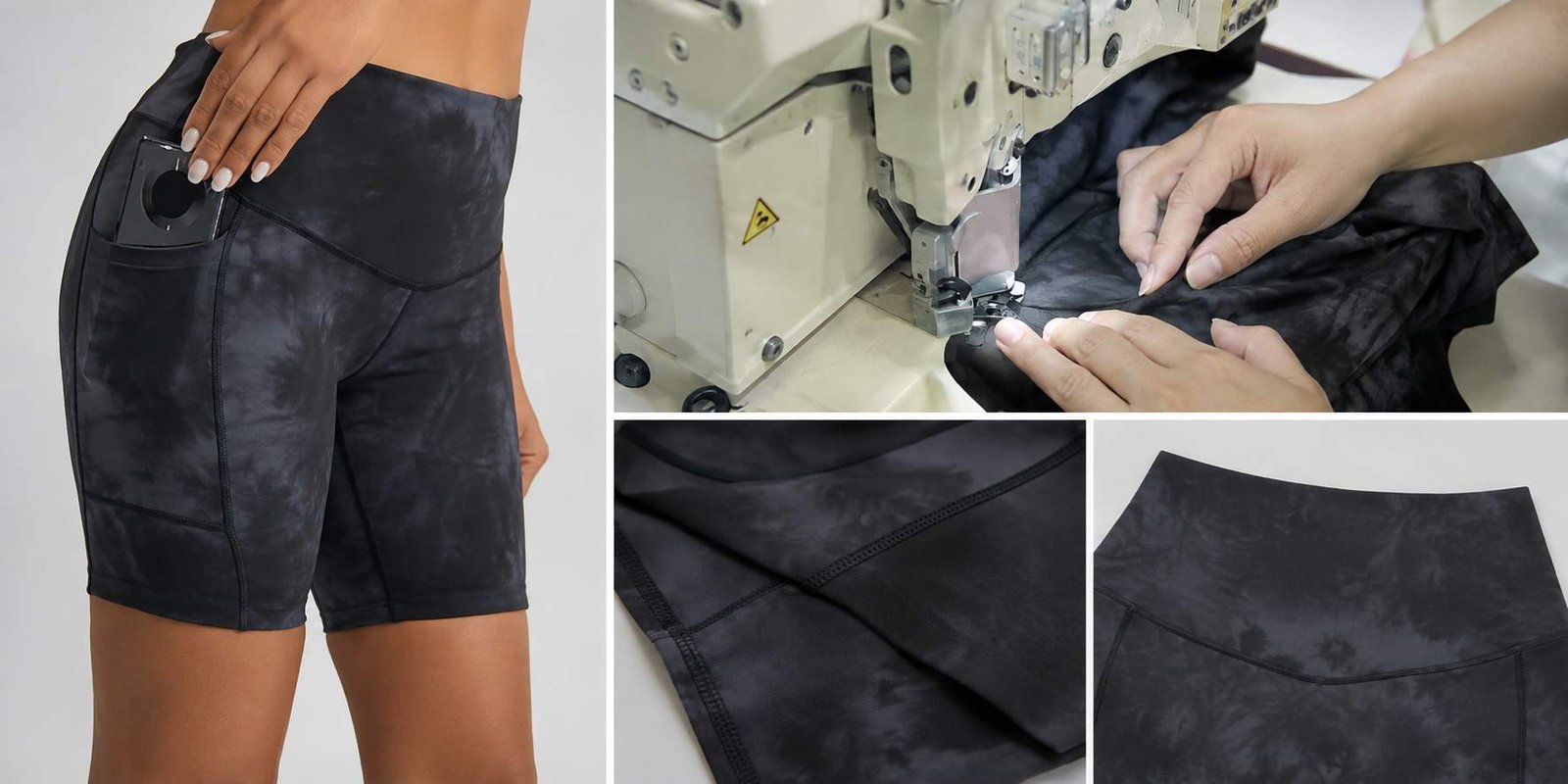
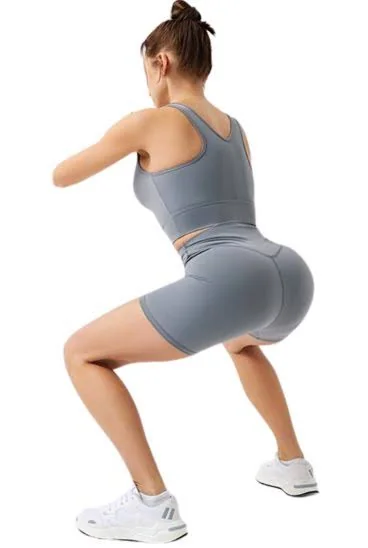
Shorts Product Range
Explore broader yoga, training and custom activewear shorts manufacturing directions and product structures.
Explore Shorts →
Seamless Manufacturing
Review how yarn, knitting program, engineered structures and approved samples affect Seamless activewear production.
Explore Seamless →
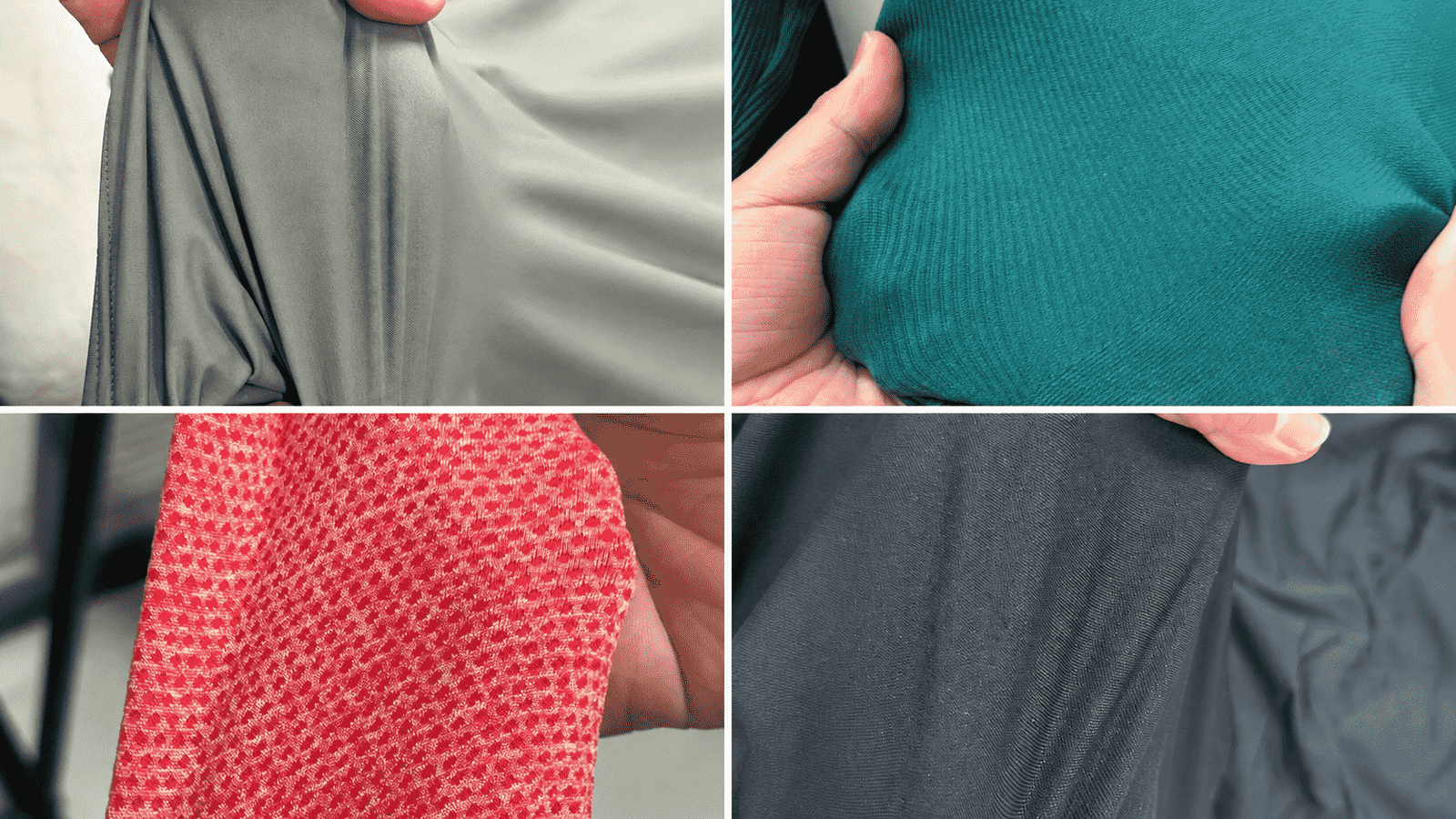
Fabric Selection
Compare activewear material direction, handfeel, stretch, recovery, surface and sourcing conditions.
Fabric Guides →
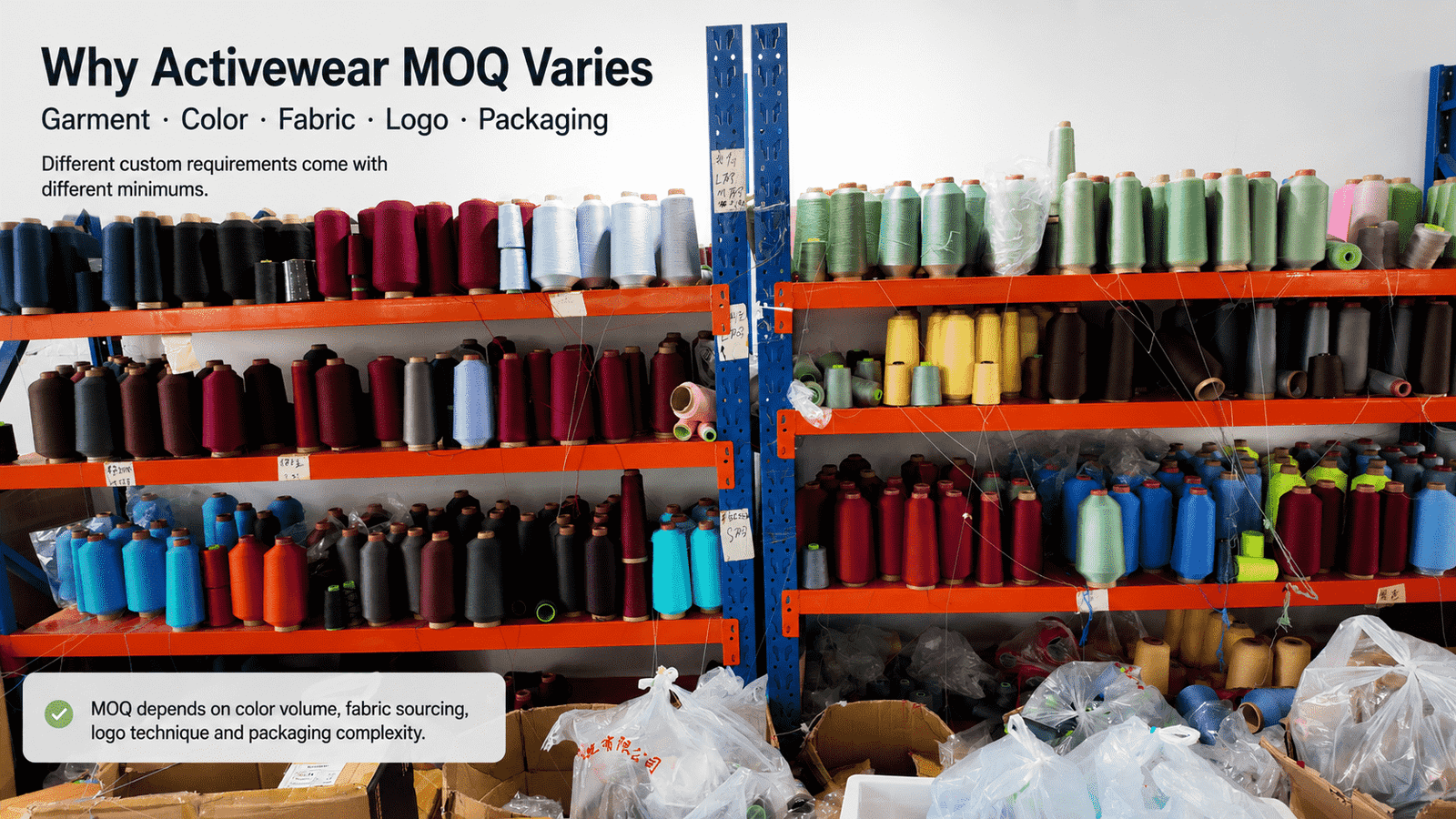
MOQ and Cost
Understand garment MOQ, material minimums, custom color, branding and packaging dependencies.
MOQ Guides →
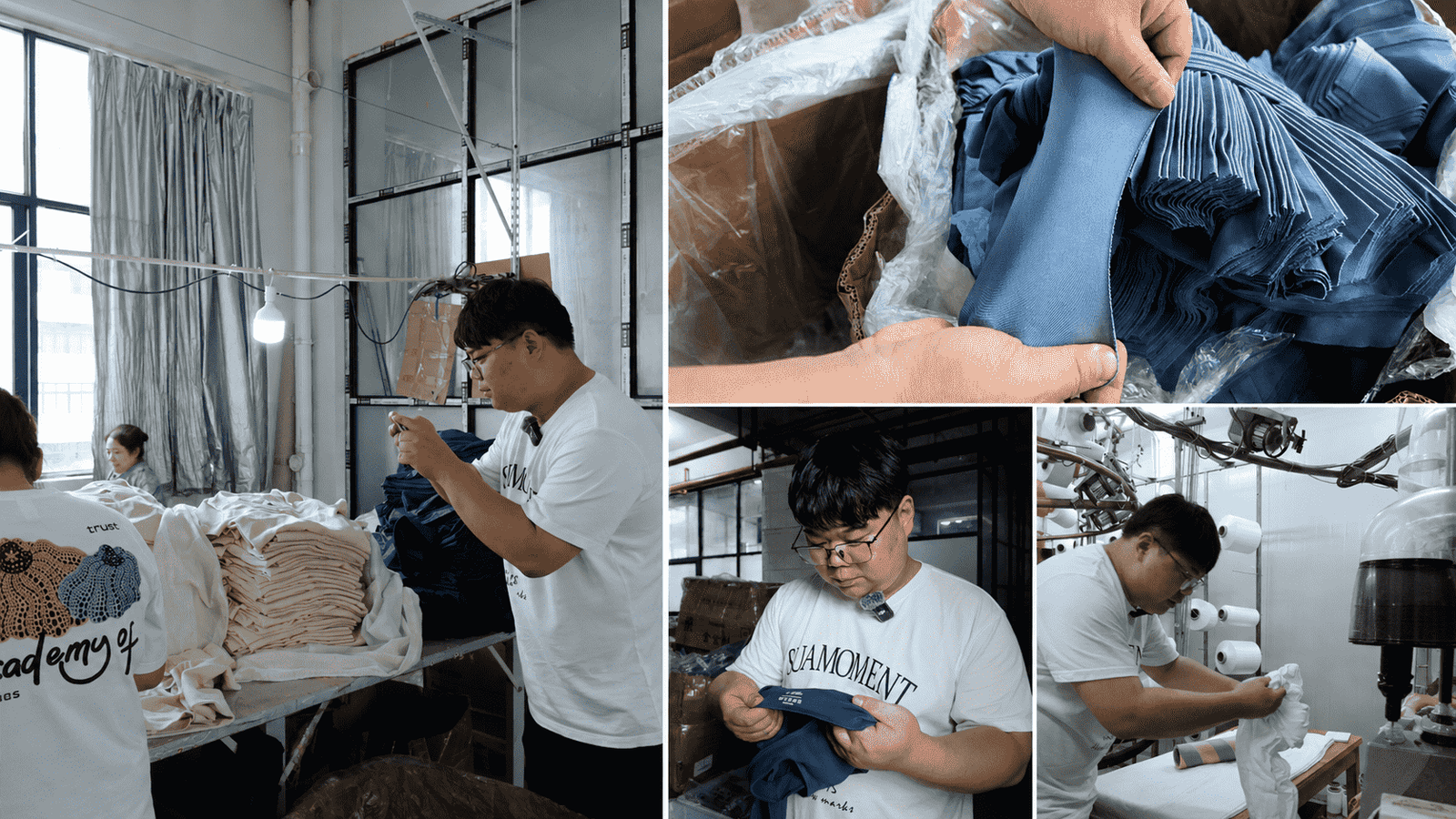
Quality Control
Review how Approved Samples, First Article, measurements, in-line inspection and final release connect.
Quality Guides →
Private Label
Explore product development, logos, labels, SKU information, packaging and branded commercial execution.
Private Label →Custom Biker Shorts Manufacturing Frequently Asked Questions
These answers cover the technical, commercial, manufacturing and supplier-review questions that sourcing teams commonly need to resolve before RFQ, sampling or vendor qualification.
Product & Development
Can MOVEVOX develop custom biker shorts from a Tech Pack?
Yes. A full Tech Pack can define technical drawings, BOM, fabric, measurements, construction, logos, labels, packaging and other project requirements. MOVEVOX reviews manufacturability and open points before sampling. Key changes should be documented, and the current technical version, approved measurements and physical sample should remain connected to the bulk-production standard.
Can development start without a complete Tech Pack?
Yes. MOVEVOX can also review a legally usable physical sample, sketch, image or sufficiently defined product concept. Projects without a production-ready Tech Pack require more technical translation before accurate sampling and costing. The available input should progressively be converted into controlled specifications and physical samples.
Can biker shorts use Seamless and Cut & Sew production?
Yes. Seamless can use engineered knit structures, rib, mesh, texture and local density. Cut & Sew provides greater flexibility for conventional patterns, complex panels, pockets and multiple materials. The correct route depends on the actual garment architecture, fit, material, branding and commercial requirements.
What fit points should be defined for biker shorts?
Important variables can include waist height and circumference, hip, front and back rise, crotch construction, inseam, leg opening, pocket placement and the relationship between material stretch and garment dimensions. Sampling should also review rolling, slippage, ride-up, crotch pulling and movement stability.
MOQ & Customization
What is the typical MOQ for custom biker shorts?
The normal MOVEVOX reference is approximately 100 pieces per style for applicable Seamless products and approximately 150 pieces per style for applicable Cut & Sew products. Actual MOQ can change because of material, color, size allocation, logo method, packaging and overall order structure.
What is the typical MOQ for a custom color?
Custom colors are commonly evaluated around an equivalent garment quantity of approximately 400–600 pieces, subject to material, yarn, dye-lot requirement and garment consumption. This is not a fixed MOQ for every fabric or color system.
Can MOVEVOX provide private-label biker shorts?
Yes. Private-label scope can include logo application, main labels, care labels, size labels, hangtags, SKU or barcode information, individual packaging and carton requirements. Certain supplier-produced elements may have separate MOQ or tooling requirements.
How long does standard sample development take?
The normal reference is approximately 5–10 working days after the required development details are confirmed. Custom materials, special colors, complex structures, additional logo development, incomplete technical input or multiple revision cycles can extend the schedule.
Production & Quality
What is the typical bulk production lead time?
Regular bulk production is typically approximately 20–35 days after the relevant production inputs and approvals are ready. Actual timing depends on materials, approved sample status, technical information, branding, packaging, quantity, SKU complexity, inspection requirements and production planning.
What order sizes can MOVEVOX support?
Typical individual orders are approximately 300–50,000 pieces, subject to product construction and order structure. Managed normal monthly delivery capacity is approximately 150,000–200,000 pieces under normal conditions. Formal capacity still requires project-specific review.
How does MOVEVOX control biker shorts quality?
Quality activities can include incoming material review, pre-production review, First Article, in-line inspection, measurement inspection, finished-garment checks, final inspection and packing review. MOVEVOX has five QC personnel supporting relevant production and packing quality activities.
Can our team arrange factory or third-party inspection?
Yes. MOVEVOX supports scheduled factory visits, remote or video review, factory or technical audit cooperation and agreed third-party inspection. Inspection organization, timing, scope and release requirements should be agreed for the specific program.
Compliance & Supplier Review
Is MOVEVOX certified under every common textile scheme?
No blanket claim should be made without verified documents. Certificate holder, factory or supplier address, validity period, product or material scope and relevance to the current project need to be checked. Supplier or material certificates should not be presented as factory-wide certification without the correct legal scope.
Can MOVEVOX support RSL, REACH or project testing?
MOVEVOX can support customer RSL, REACH and other project-specific test requirements through buyer-nominated or qualified third-party laboratories. A test report applies to its actual sample, test method and report scope and should not be treated as universal certification.
Does MOVEVOX use satellite factories?
Yes. MOVEVOX’s supply structure includes an owned Yiwu core production base and eight major factories within a managed satellite production network. These satellite factories must not be described as eight MOVEVOX-owned factories. Production-location requirements should follow the buyer’s contract and approval conditions.
What should we send for an accurate RFQ?
Provide company and target market, product or style, estimated quantity, size and color breakdown, available technical input, material direction, fit requirements, construction details, logo, labels, packaging, testing requirements and target timing where available. A complete Tech Pack improves review accuracy but is not mandatory for first contact.
Send Us an Inquiry
Tell us your needs, and our team will get back to you within 24 hours.
START YOUR PROJECT
Ready to Develop Your Private Label Activewear Line?
Tell us what you want to develop, your estimated quantity and customization needs. We will review the details and suggest the next practical step for sampling, quotation or production.
Helpful details to include:
- Product type or reference image
- Estimated quantity
- Logo, label or packaging needs
- Target market or size range
- Expected timeline