Gym Sports Bra Manufacturer for Scalable Private Label Programs
MOVEVOX supports activewear brands developing gym and training sports bras through both seamless knitting and cut-and-sew manufacturing. Projects can begin from a Tech Pack, legal reference sample, sketch, image, or defined product requirement, then progress through material selection, fit development, sampling, approval, controlled bulk production, quality inspection, branding, packaging, and shipment execution.
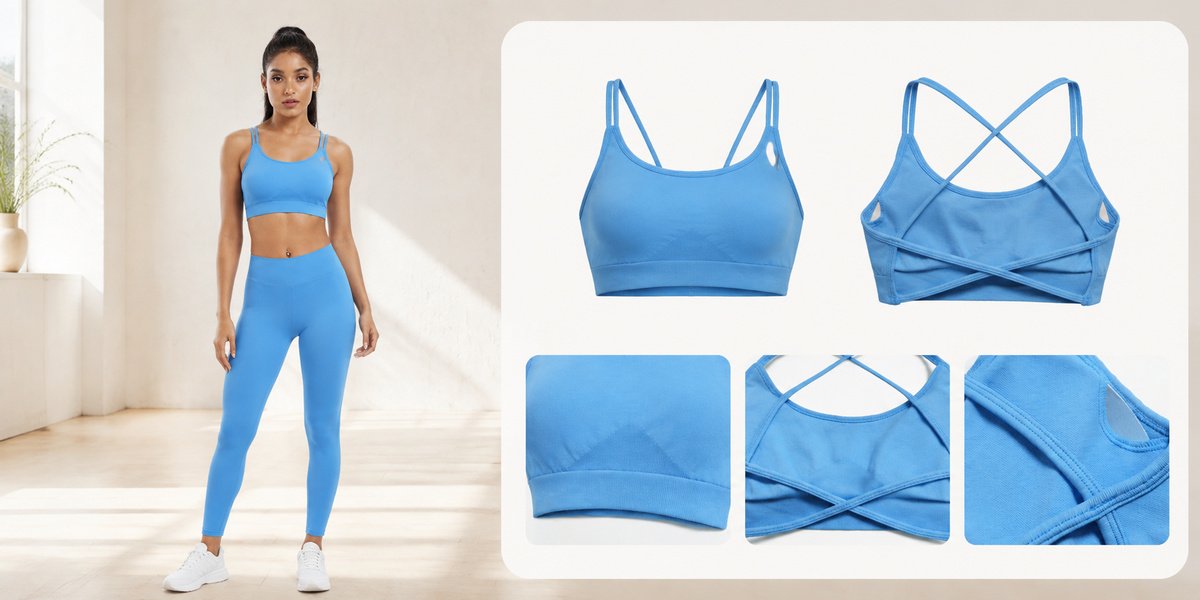
Seamless Sports Bra Route
For sports bras designed around knitted structure, rib, mesh, texture, body-mapped zones, or reduced cut-panel construction, MOVEVOX can develop the product through its Santoni-based seamless manufacturing system.
- 28 Santoni seamless knitting machines in the core system
- Rib, mesh, texture and zoned structures can be developed
- Program, yarn, size and approved structure are controlled

Cut-and-Sew Sports Bra Route
For products requiring shaped panels, lining, elastic application, removable or positioned pads, adjustable structures, binding, or more flexible pattern engineering, MOVEVOX supports a complete cut-and-sew development and production route.
- Pattern-led development for structured sports bra designs
- Approximately 24 primary sewing and garment machines
- Material, construction and fit reviewed before bulk release
Build the Sports Bra Around Its Function
A gym sports bra is defined by interacting choices around support direction, underband, straps, back structure, coverage, pad system, material and manufacturing route. Each choice should be reviewed as part of one product system.
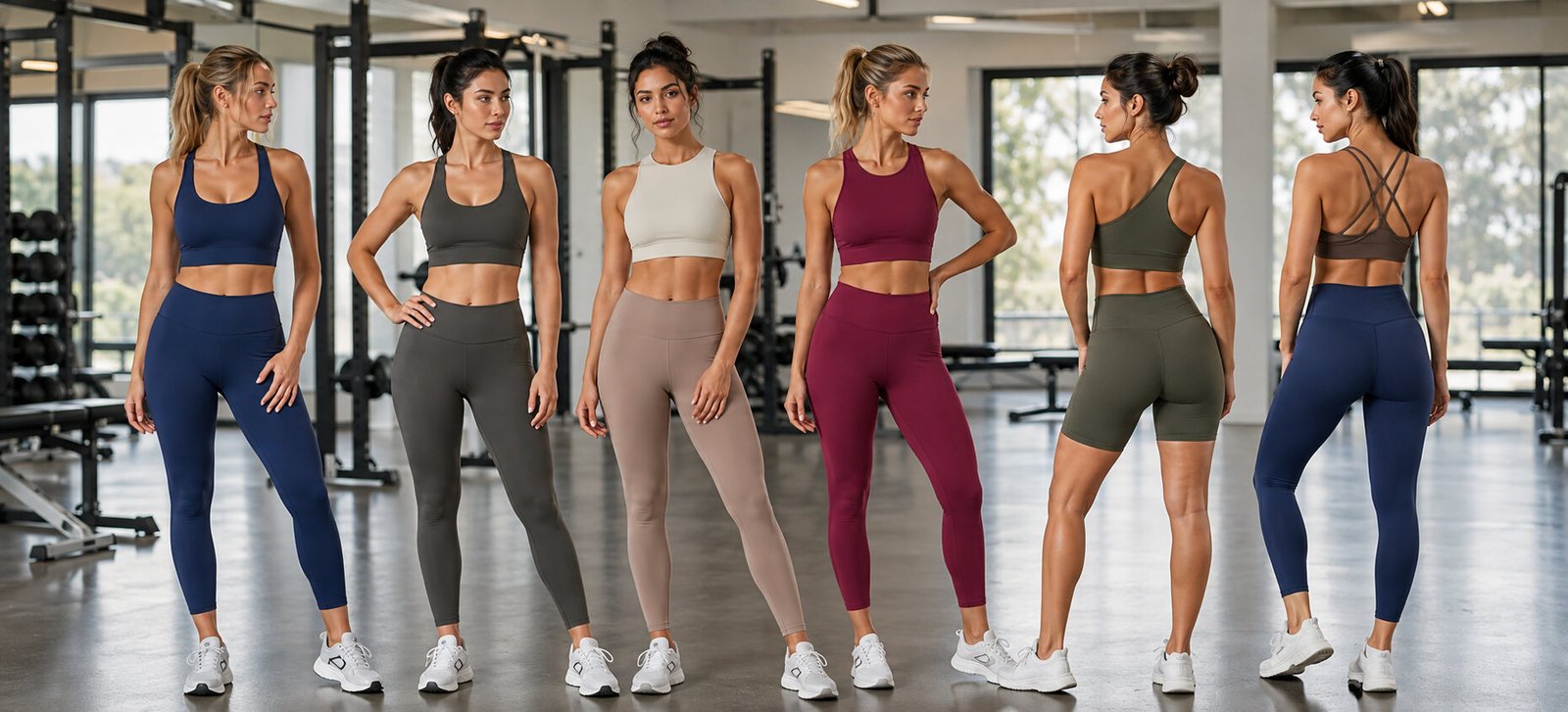
Underband
The underband contributes to garment position and stability. Its width, elasticity, construction and fit must be reviewed together with underbust measurement, material recovery and the intended activity.
Strap System
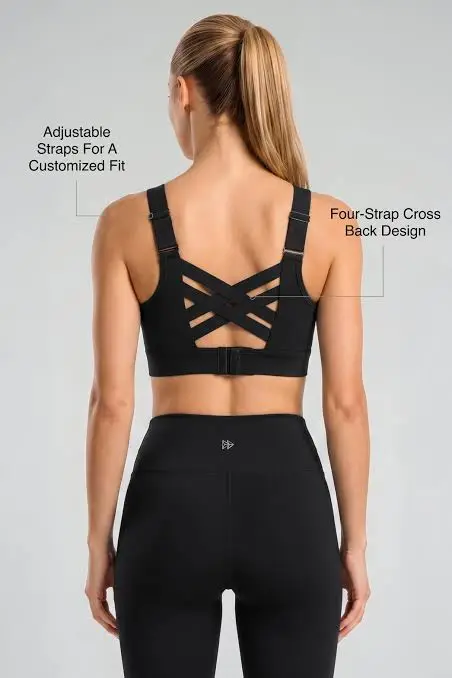
Fixed, adjustable, wide, narrow or crossed straps create different fit and construction requirements. Strap length, position, symmetry and pressure must be reviewed during sample fitting and movement checks.
Back Structure
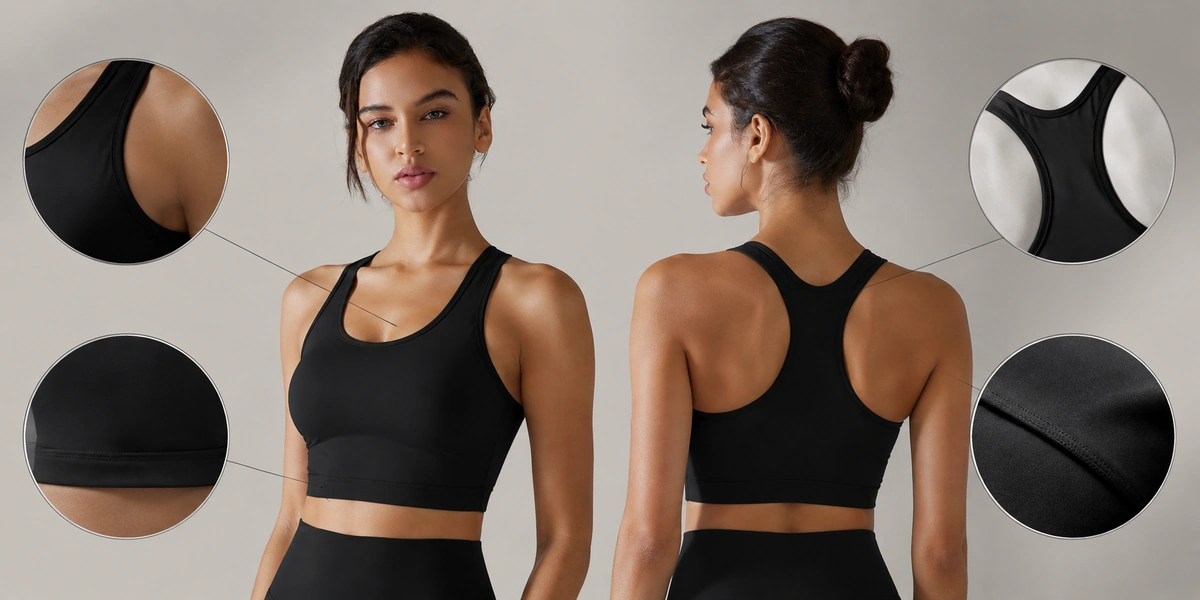
Racerback, cross-back and more open structures change visual direction, shoulder movement, coverage and strap geometry. Back design should not be treated as an automatic indicator of final support level.
Coverage
Neckline, side coverage and cup-area coverage influence fit and wearing stability. The target should be defined by the brand and validated on an appropriate Fit Model.
Pad System
MOVEVOX can develop removable pad pockets and fixed or positioned pad constructions. Pad dimensions, orientation, pocket opening and visibility require sample and QC confirmation.
Material Structure
Stretch, recovery, GSM, surface, opacity and construction interact with fit. A material should be approved for the actual sports bra design rather than selected from composition alone.
Manufacturing Route
Seamless structures can integrate rib, mesh, texture and zoned knitting. Cut-and-sew construction offers greater freedom for shaped panels, lining, elastic, binding and more complex pad structures.
Sports Bra Back Structures and Strap Options
MOVEVOX can develop multiple sports bra back and strap structures. Each option should be evaluated for fit, movement, coverage, manufacturing route and the approved product direction.

Racerback
Centralized straps create a training-focused profile while shoulder position, movement and underband stability still require fit review.

Cross Back
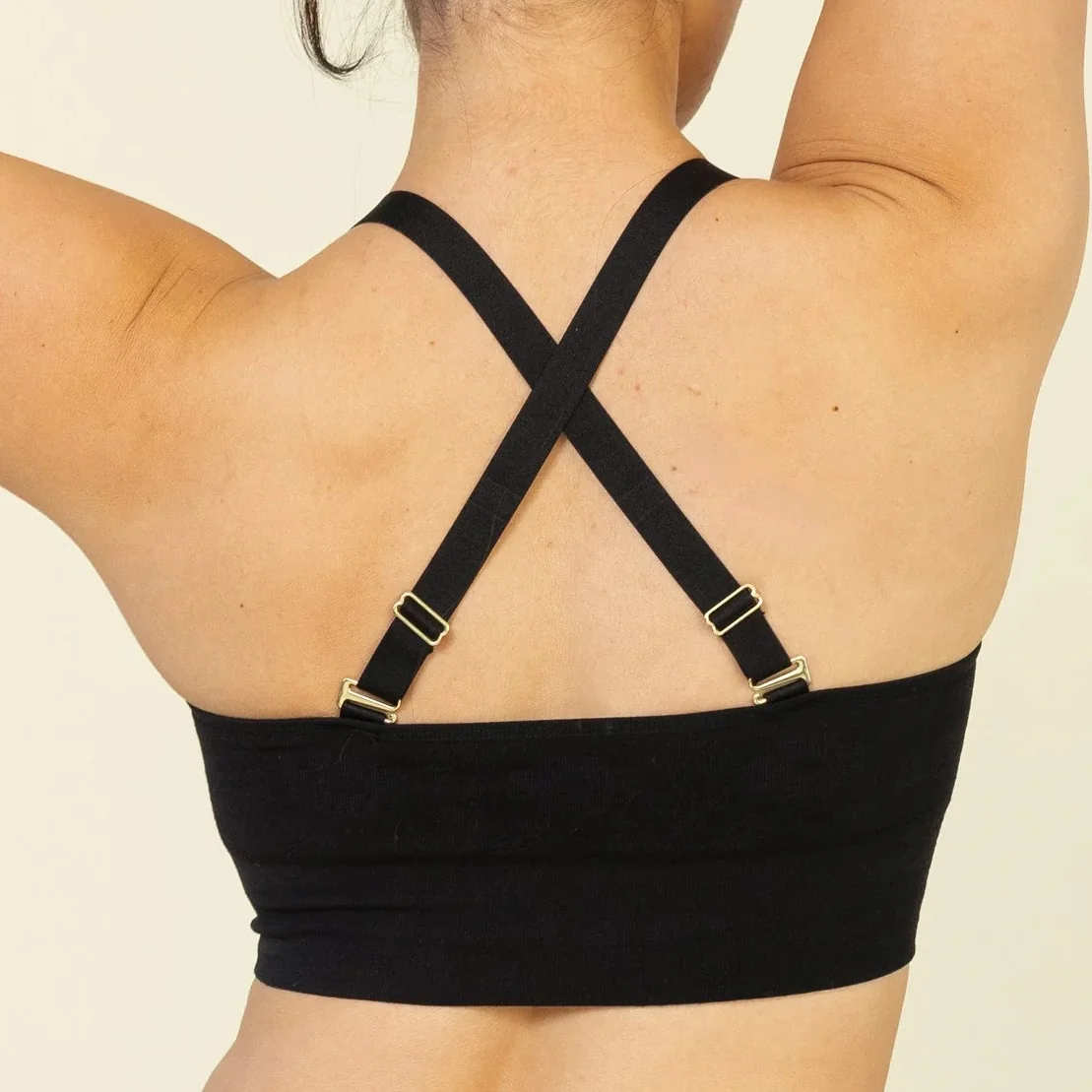
Crossed straps add visual structure while symmetry, intersection tension and dressing comfort still require sample validation.
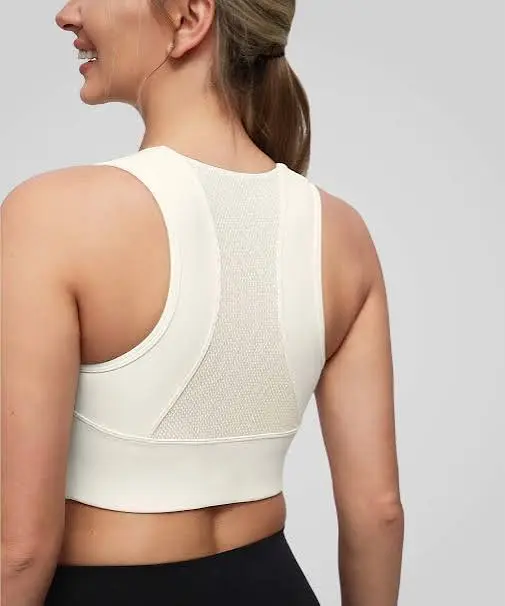
Wide Straps
Wider straps increase contact area, but fit still depends on length, placement, material and overall coverage.

Slim Straps
Slim straps support a lighter visual direction while attachment strength, pressure and stability require careful fit review.

Adjustable Straps
Adjustable straps add fit flexibility while introducing hardware, assembly, symmetry and bulk-production control points.

Open Back
Open-back structures increase design differentiation while coverage, strap placement, stability and movement require project-specific validation.
Choose Pad Construction for the Product Strategy
Removable, fixed and non-padded sports bras create different requirements for appearance, maintenance, production and quality control. MOVEVOX evaluates the pad system together with material elasticity, cup area, lining construction, support direction and customer expectations.
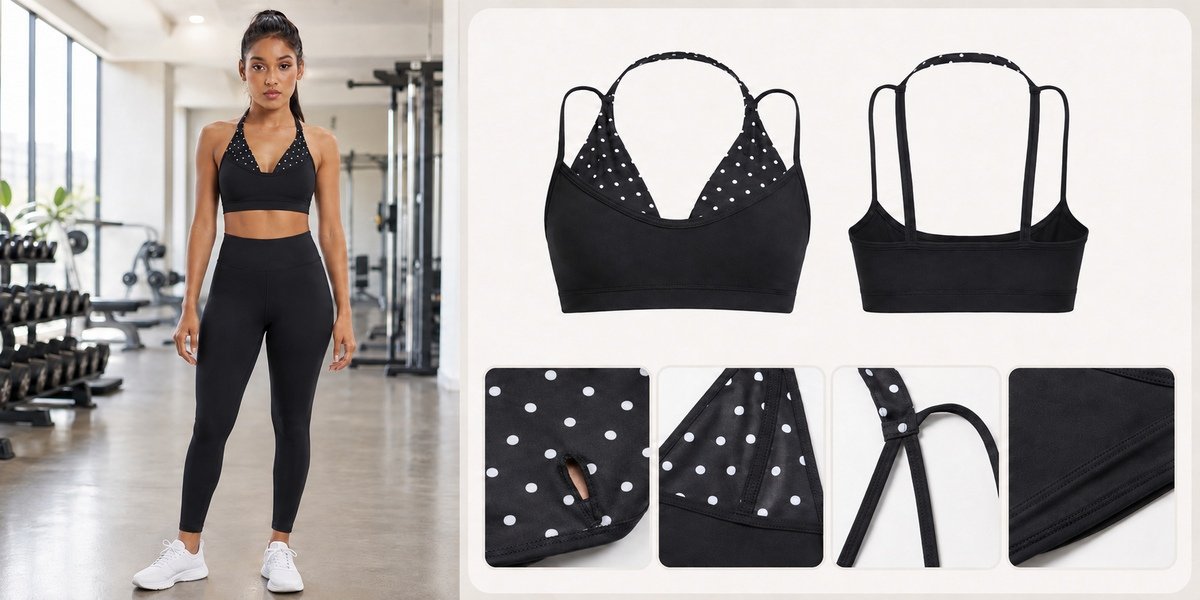
Outer Fabric
The outer material defines the visible surface and interacts with the internal pad or lining. Stretch, recovery, thickness and surface appearance affect whether pad edges or internal structures become visible.
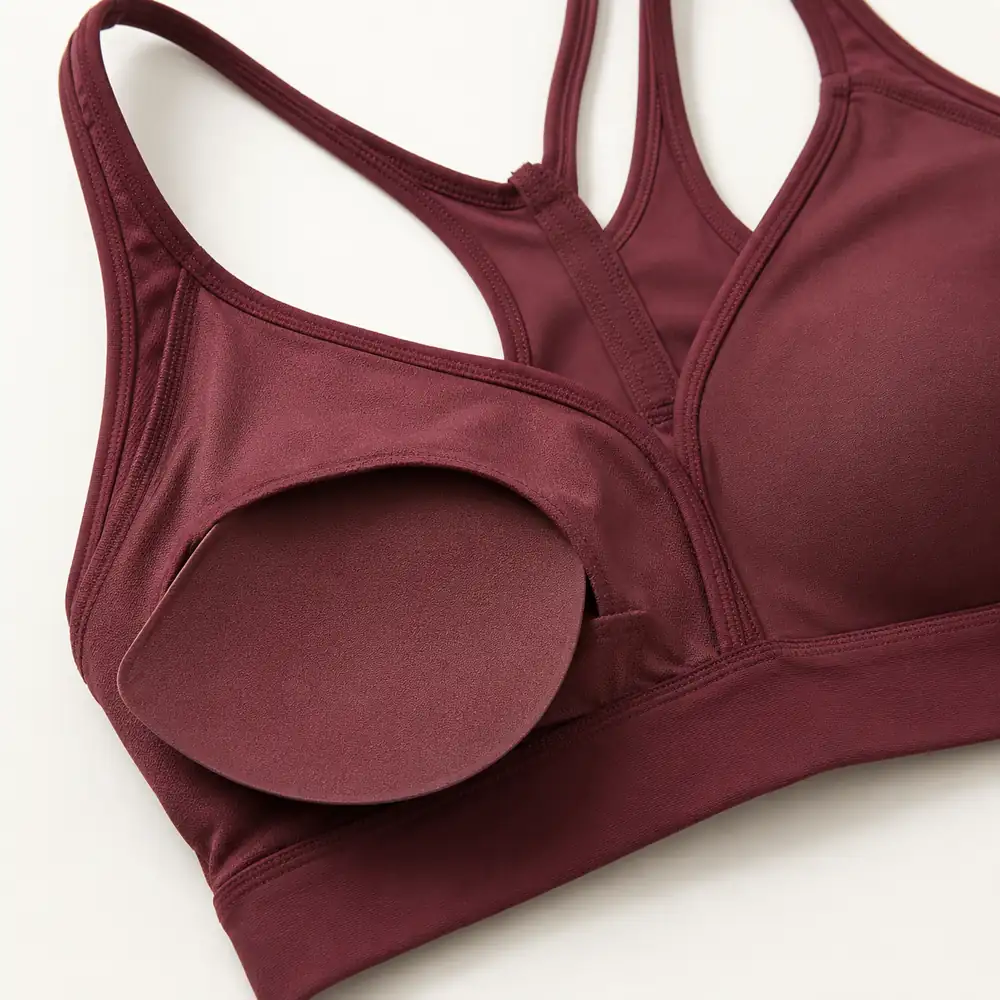
Inner Layer
An internal layer can create separation between the outer surface and the pad system. Its stretch and recovery need to work with the main material rather than distort the garment.
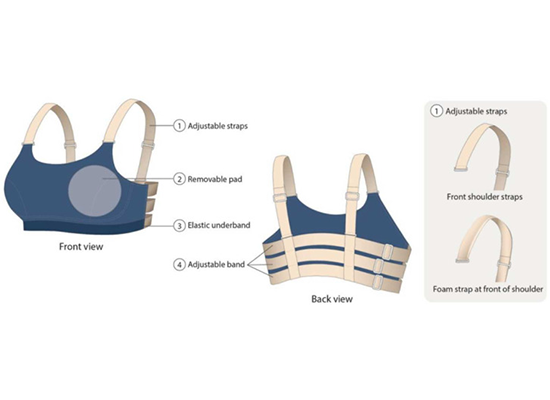
Pad Pocket
For removable pads, pocket dimensions and opening position need to allow practical insertion and removal while reducing unintended pad migration during use and washing.

Removable Pad
Pad dimensions, thickness and orientation must correspond to the approved pocket and garment size. Left/right orientation and placement become specific inspection points during production and packing.

Fixed Position
Where a project uses fixed or positioned pads, the attachment method and alignment must be validated through sampling. “Fixed” should not be marketed as permanently immovable without evidence.

Edge Visibility
Pad edge show-through depends on pad geometry, outer material, stretch state and construction. The sample should be reviewed in the garment’s actual worn condition, not only when laid flat.
Use Zoned Support Instead of Uniform Tightness
For gym sports bras, MOVEVOX can develop localized structure through seamless knitting density, rib, yarn tension and zoned organization, or through cut-and-sew materials, double layers and structural panels. Higher compression is not automatically a better product.
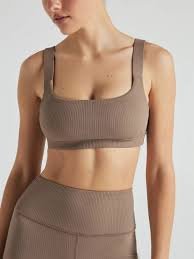
Underband Zone
A firmer-feeling underband area can be created through appropriate seamless structure or cut-and-sew construction. Final tension still needs to be assessed against underbust measurement, comfort and movement.
Side Support
Side areas can be engineered for coverage and localized stability. The target should be balanced with arm movement, material stretch and the approved side-height dimensions.
Back Zone
Back structure may combine more stable areas with more open or flexible areas depending on the design. The effect needs to be reviewed together with strap geometry.
Cup Area
The cup area should not simply be made uniformly tighter. Coverage, pad system, material behavior and breast-shape accommodation need to remain part of the development review.
Ventilation Zone
Where knitted mesh or more open structures are introduced, MOVEVOX must balance ventilation direction with coverage, structural integrity and the visual standard approved for the product.
Engineering Note
In seamless manufacturing, perceived compression or support can change with yarn, structure density, knitting parameters, garment size, finishing and the stretched wearing state. MOVEVOX treats these as non-medical sportswear structures and does not claim therapeutic compression or medical pressure values without specific evidence.
Place Ventilation Where the Product Actually Needs It
MOVEVOX can develop seamless mesh organization, open knitted texture or cut-and-sew mesh panels for gym sports bras. Placement must balance ventilation direction with coverage, stretch, strength, fit and the approved visual standard.
Upper Back Ventilation
The upper back is a common location for brands to explore more open structures because it can combine a visible technical detail with a high-movement area. In seamless products, the effect can be created through knitted mesh or open organization. In cut-and-sew products, a mesh panel may be assessed. Placement, symmetry and strength still require sample validation.
- Maintain stable structure around strap attachment locations
- Check mesh appearance in the stretched wearing state
- Inspect symmetry, holes, snagging and finished edges
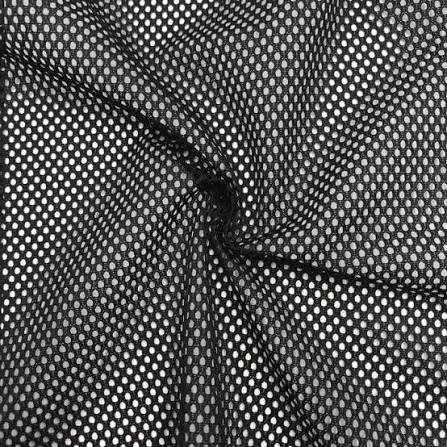
Center Back Structure
A center-back mesh direction can be integrated into racerback or other training-oriented silhouettes. The surrounding structure must still carry the intended garment fit, so the mesh should not be treated as an isolated decorative feature. MOVEVOX reviews the design together with back shape, straps, underband, material stretch and the manufacturing route.
- Match mesh scale to the garment size range
- Maintain consistent left-right placement during bulk production
- Validate structure under normal training movement
Side Body Ventilation
Side mesh or more open organization can create a technical visual while reducing material density in selected areas. The design needs sufficient coverage and structural integrity, especially near high-stretch transitions, arm movement or side seams. Seamless and cut-and-sew routes require different control points.
- Avoid weakening critical high-tension transition areas
- Check coverage under actual garment stretch
- Control side height and placement against specifications

Integrated Seamless Mesh
Santoni-based seamless products can use knitted mesh as part of the garment structure rather than attaching a separate mesh fabric. The mesh position, scale and density are controlled through yarn, program and structure settings. Bulk consistency therefore depends on approved program versions, yarn lots, sizing and in-process inspection.
- Lock the approved knitting program before production
- Check hole structure and local density during knitting
- Compare bulk structure against the approved sample
Reduce Friction Through Construction and Fit Control
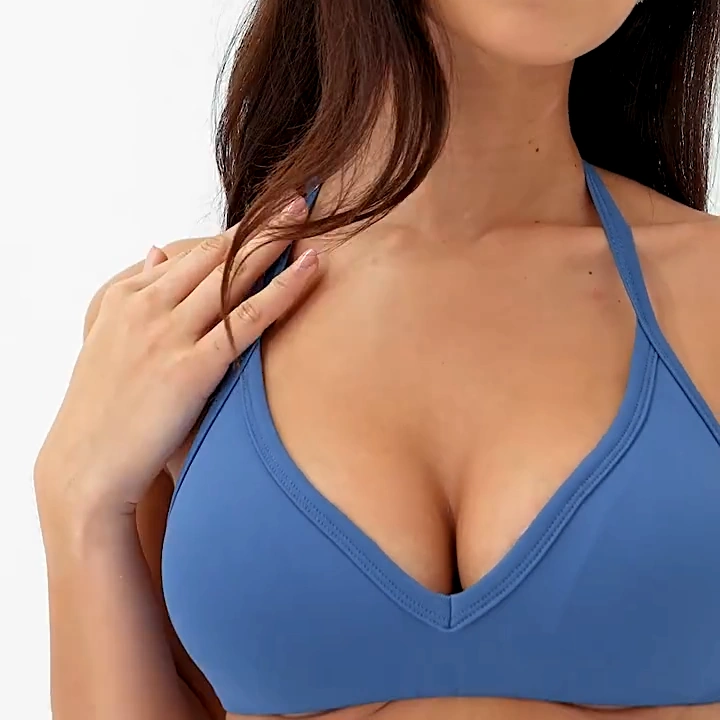
MOVEVOX treats friction as a product-development risk influenced by seam placement, edge finishing, binding, fabric surface, garment dimensions and movement. The appropriate controls depend on the sports bra construction and target use.
Underarm Contact
An underarm seam, binding edge or side structure can create concentrated contact when the arm repeatedly moves.
Discomfort complaints, poor wear-test feedback and extra sample revisions.
Review side height, seam or binding placement, material, edge construction and movement during Fit Sample testing.
Underband Edge
Incorrect width, tension, elastic application or garment dimension can create excessive pressure, rolling, ride-up or concentrated friction.
A poorly resolved underband can undermine the product’s core fit and support direction.
Assess underbust measurement, material or elastic recovery, band construction and motion together.
Strap Contact
Strap width, length, edge finish, attachment position and angle influence how the strap sits on the shoulder.
Unresolved strap pressure, slipping or twisting may create repeated fit comments across sizes.
Check strap symmetry, width, length, attachment, shoulder position and movement during sample review.
Concentrated Seams
Multiple seam, binding or reinforcement points meeting in one high-movement area can create unnecessary bulk.
Excessive bulk can reduce perceived product quality, complicate fitting and delay sample approval.
Review construction feasibility and optimize seam location, finishing or reinforcement while preserving the approved design intent.

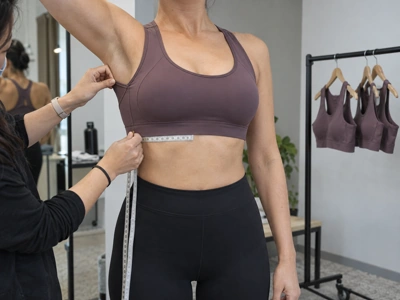
Fit the Sports Bra in Motion, Not Flat
MOVEVOX can use movement checks during sports bra sample evaluation to identify issues that a flat measurement or static fitting may not reveal. Findings are translated into measurable product revisions before approval.
Validate Fit Through Relevant Training Movements
A sports bra may meet a static Measurement Chart and still require revision once the wearer moves. MOVEVOX therefore treats movement as part of product development rather than assuming that material stretch alone guarantees unrestricted use.
For a gym or training project, the movement review can include actions appropriate to the intended product, such as arm raises, torso rotation, bending, controlled training positions or other movements defined by the buyer. The purpose is not to create a universal fitness test for every sports bra. It is to identify whether the approved design direction remains stable when the garment is used in conditions closer to its intended application.
- Underband position during movement
- Strap length, width and geometry
- Side and neckline coverage
- Pad position
- Binding, seams and pressure points
- Back structure twisting or pulling
- Material and pattern interaction

Turn Movement Findings Into Controlled Revisions
Movement testing has purchasing value only when the finding can be converted into a controlled revision and later verified. MOVEVOX therefore links sample review to version management rather than making undocumented adjustments directly on the production floor.
- Identify the movement-related issue.
- Record the affected area and product version.
- Determine whether the cause relates to measurement, pattern, material, strap, underband, pad, seam or another variable.
- Prepare the revision.
- Produce or modify the relevant sample.
- Repeat the necessary fit and movement review.
- Obtain customer approval.
- Transfer the accepted specification into the final Tech Pack, Measurement Chart, Approved Sample and production instructions.
The objective is not to promise that one sample test predicts every consumer experience. The objective is to establish a documented product standard that has been reviewed against the brand’s intended use and can then be reproduced with the same approved measurements, materials and construction controls.
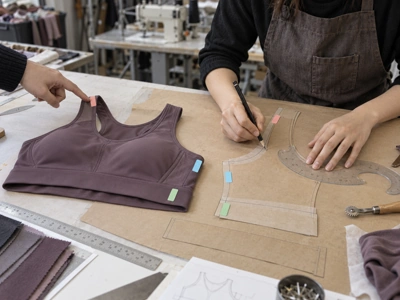
Select Sports Bra Fabric From the End Use
MOVEVOX approaches fabric selection as a decision process linking activity, target handfeel, support direction, GSM, stretch and recovery, surface, color, branding, MOQ and validation. Composition alone does not define final garment performance.
Gym Training Yoga Pilates Running
Soft Smooth Structured Brushed Textured
Light Direction Moderate Direction Firmer Direction Project Defined
Seamless Cut and Sew To Be Reviewed
Stock Color Pantone Color Physical Swatch

Nylon + Spandex
Nylon or polyamide combined with spandex is one of MOVEVOX’s core high-stretch activewear material systems and can be developed for sports bras. Actual selection depends on GSM, surface, stretch, recovery, target handfeel, color and the approved garment construction rather than composition percentage alone.
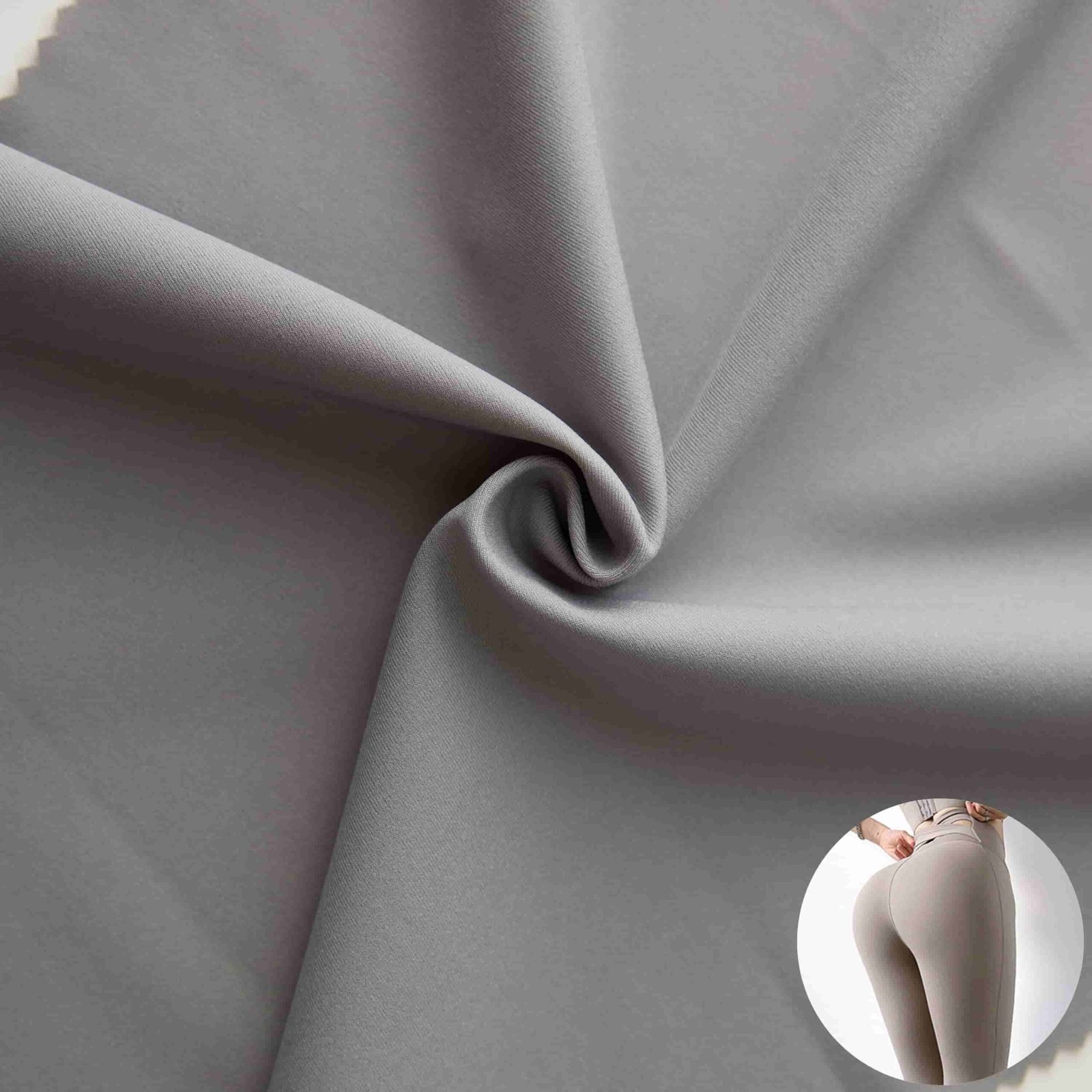
Polyester + Spandex
Polyester and spandex can support training-oriented activewear where durability, drying behavior, print compatibility or commercial stability are relevant. Handfeel, appearance and thermal comfort still depend on yarn, fabric structure and finishing, so the material must be evaluated in the actual sample.

Seamless Yarn Route
For seamless sports bras, MOVEVOX uses yarn systems compatible with Santoni circular knitting, primarily based on polyamide/nylon or polyester with elastane/spandex. Final behavior depends on yarn specification, knitting structure, machine program, size and finishing rather than a conventional cut-fabric GSM alone.
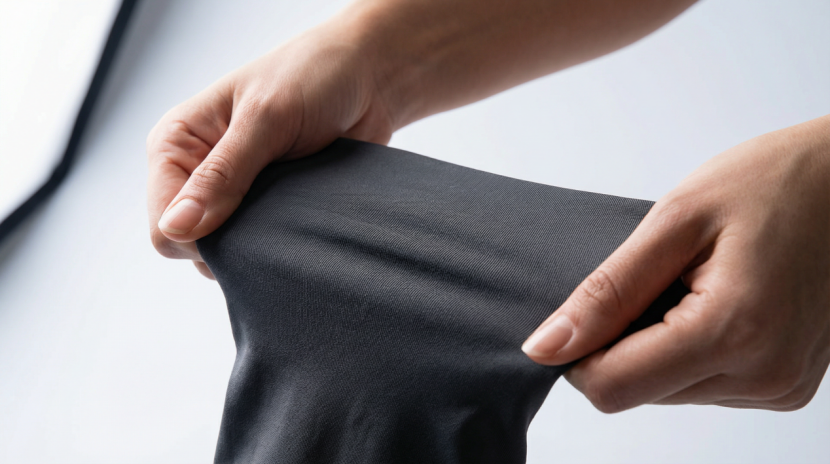
Higher-Recovery Route
Where a project requires a firmer wearing direction, MOVEVOX can evaluate materials or structures with higher recovery, increased spandex content, stronger knitted organization or relevant layering. This remains a development route, not an automatic claim of high support or quantified compression.
Validate Performance Before Turning It Into a Claim
MOVEVOX distinguishes development targets from verified performance claims. Testing can be arranged according to buyer standards, target-market requirements or project risk. Test method, sample identity, acceptance criteria and report scope must be defined for the actual project.
Stretch Recovery
Purpose: Assess whether the selected material or garment structure recovers appropriately after extension and remains suitable for the intended sports bra fit direction.
Method: Use the buyer’s defined test method, internal approved procedure or a qualified third-party laboratory method where formal reporting is required.
Acceptance: Against the buyer-approved specification or project test requirement; no universal MOVEVOX pass number is claimed.
Dimensional Stability
Purpose: Check whether relevant garment or material dimensions remain within the project’s accepted range after the specified conditioning or wash procedure.
Method: Test the actual approved material or garment using the customer-required condition and compare measurements before and after the defined procedure.
Acceptance: Buyer tolerance, approved specification or the test standard specified for the project.
Colorfastness
Purpose: Evaluate whether the approved color maintains the required performance under the test conditions specified by the customer or relevant project requirement.
Method: The precise method depends on destination market, buyer manual and material. Formal claims require the actual report and tested-sample identity.
Acceptance: According to the buyer’s standard or the applicable report requirement for that material and color.
Pilling Resistance
Purpose: Evaluate surface change under the relevant test condition, especially where soft, brushed or other surface treatments may create different wear behavior.
Method: Use the buyer-defined or laboratory method appropriate to the material and product. Different surfaces should not be assumed to perform identically.
Acceptance: Project-specific buyer requirement or laboratory report criterion.
Bursting Strength
Purpose: Where required, assess the material’s resistance under multidirectional pressure and help determine whether it is suitable for the intended activewear application.
Method: Arrange the applicable laboratory method through a customer-nominated or project-qualified laboratory when formal evidence is required.
Acceptance: Against buyer or test-standard requirements defined before testing.
Restricted Substances
Purpose: Support product or material chemical testing where required by the destination market, buyer RSL, material change or other project compliance trigger.
Method: Define the test request, actual submitted sample, laboratory, test items and report scope before submission. Reports apply only to the tested object.
Acceptance: Applicable regulatory limit, buyer RSL or project standard stated in the actual laboratory report.
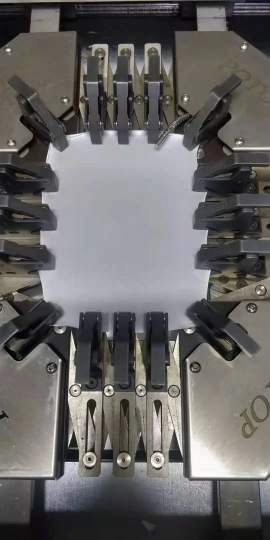
Santoni Equipment Behind Seamless Sports Bra Development
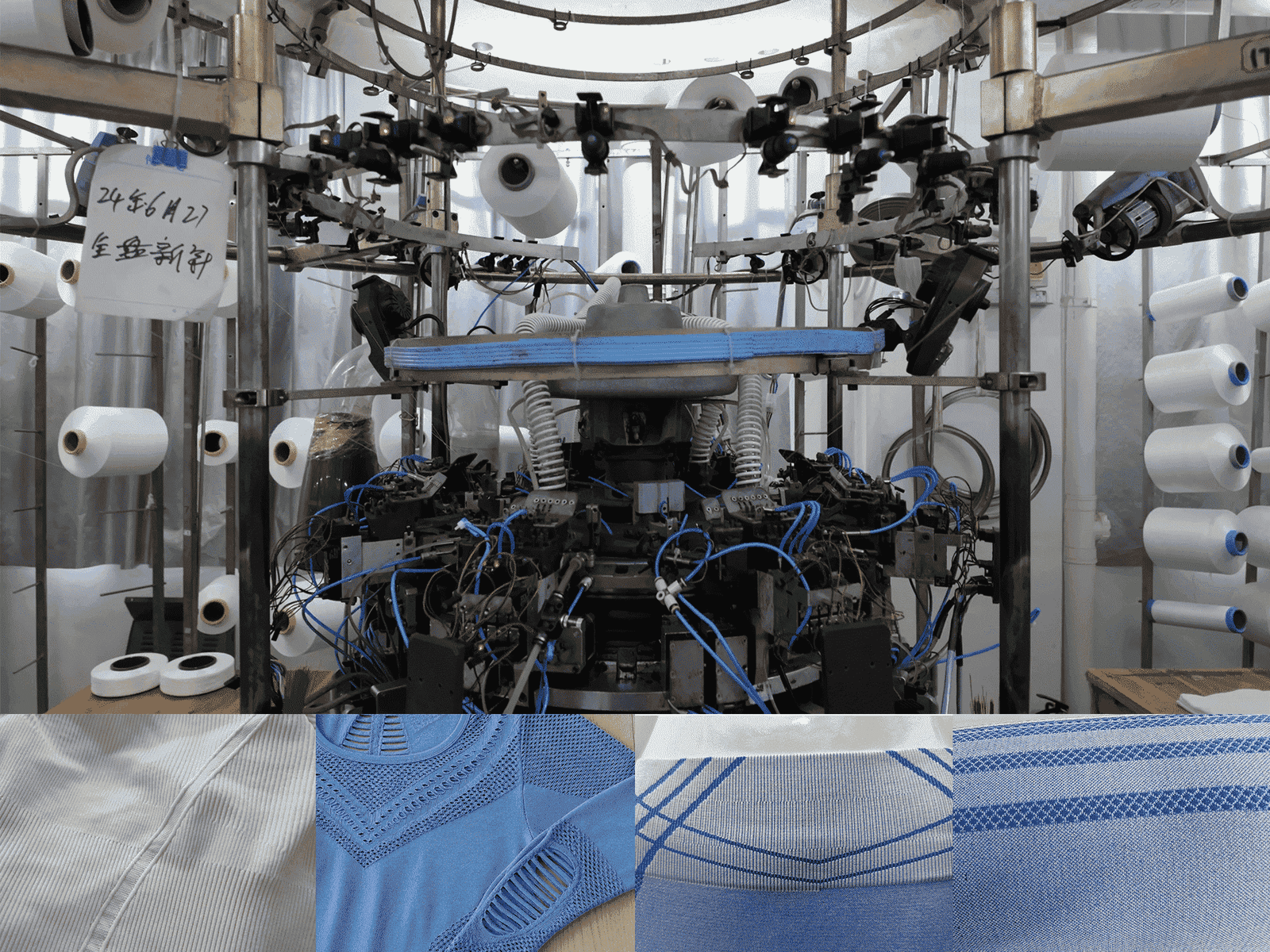
MOVEVOX’s seamless capability is built around 28 Italian Santoni knitting machines, supported by yarn coordination, knitting programs, trial development, finishing, necessary sewing and QC. Equipment is valuable only when translated into controlled product execution.
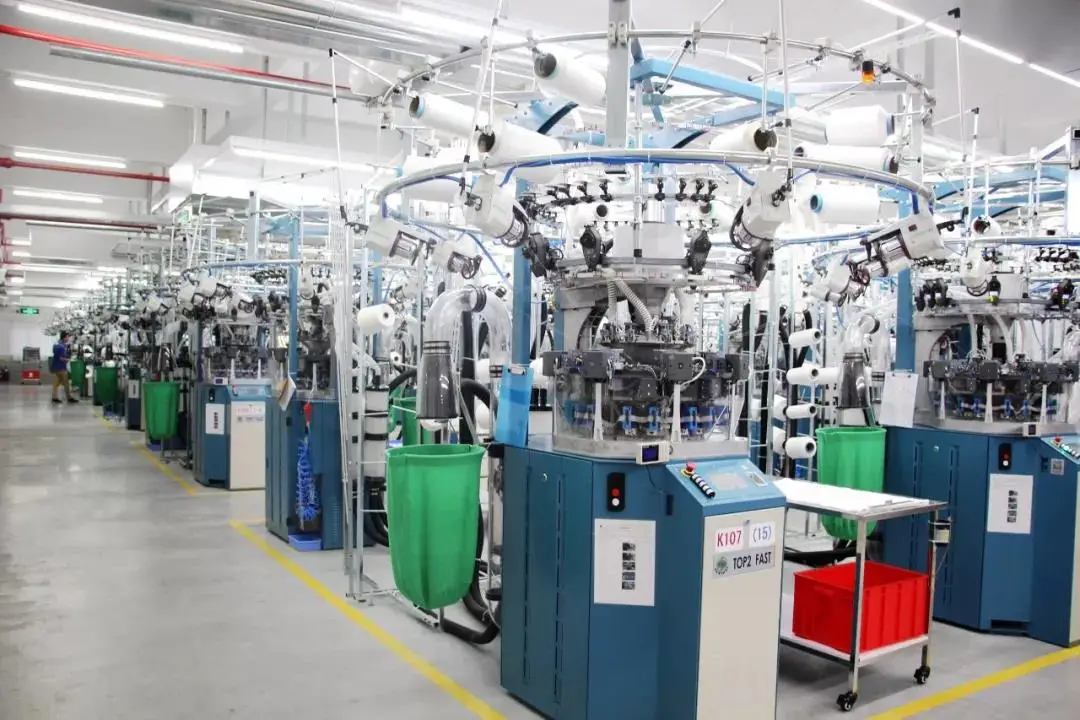
Santoni Knitting Machines
28 machines. The core seamless system uses Italian Santoni machines for seamless activewear production. Programs can form rib, mesh, jacquard, texture and zoned structures according to product feasibility, size and yarn requirements.
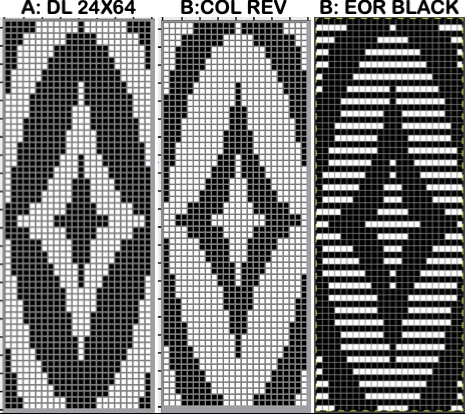
Seamless Programming
Program development converts the approved structure into machine-executable knitting logic. Program version, garment size, yarn and structure must remain controlled because changes can affect dimensions and visual organization.
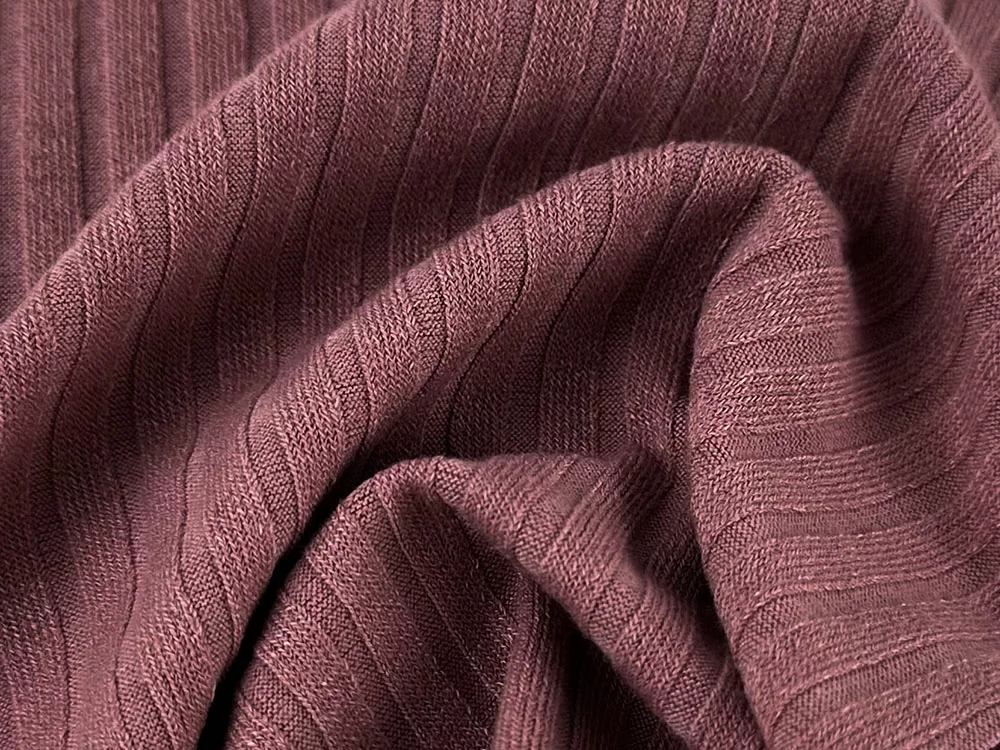
Trial Knitting
Trial knitting allows the development team to evaluate the actual knitted result before bulk production. Structure, measurement, yarn behavior and finishing are reviewed against the development target.
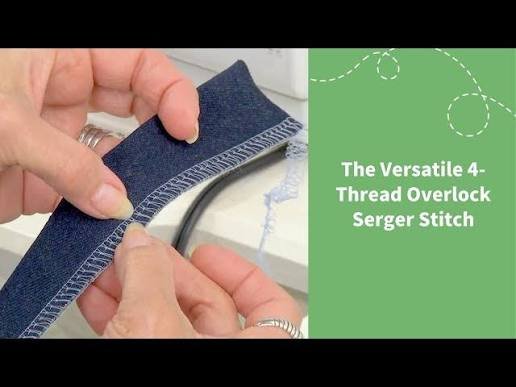
Finishing Equipment
A seamless product is not complete when it leaves the knitting machine. Finishing, necessary sewing, pad-related operations, labeling and garment preparation must still follow the approved product specification.
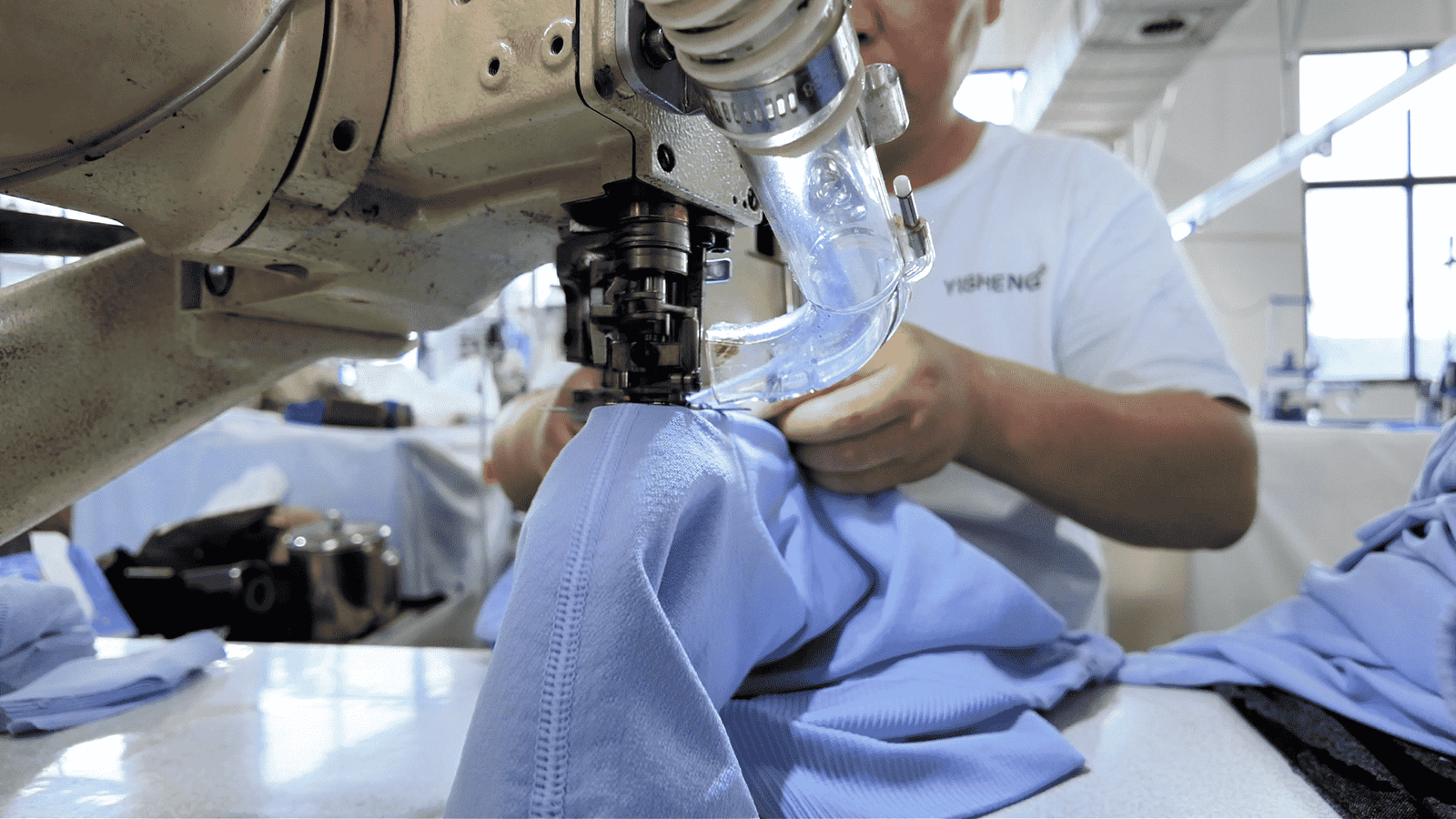
Sewing Support
Seamless does not mean every garment contains no sewing. Sports bras may still require sewing for selected openings, pad structures, labels, finishing or other details depending on the design.
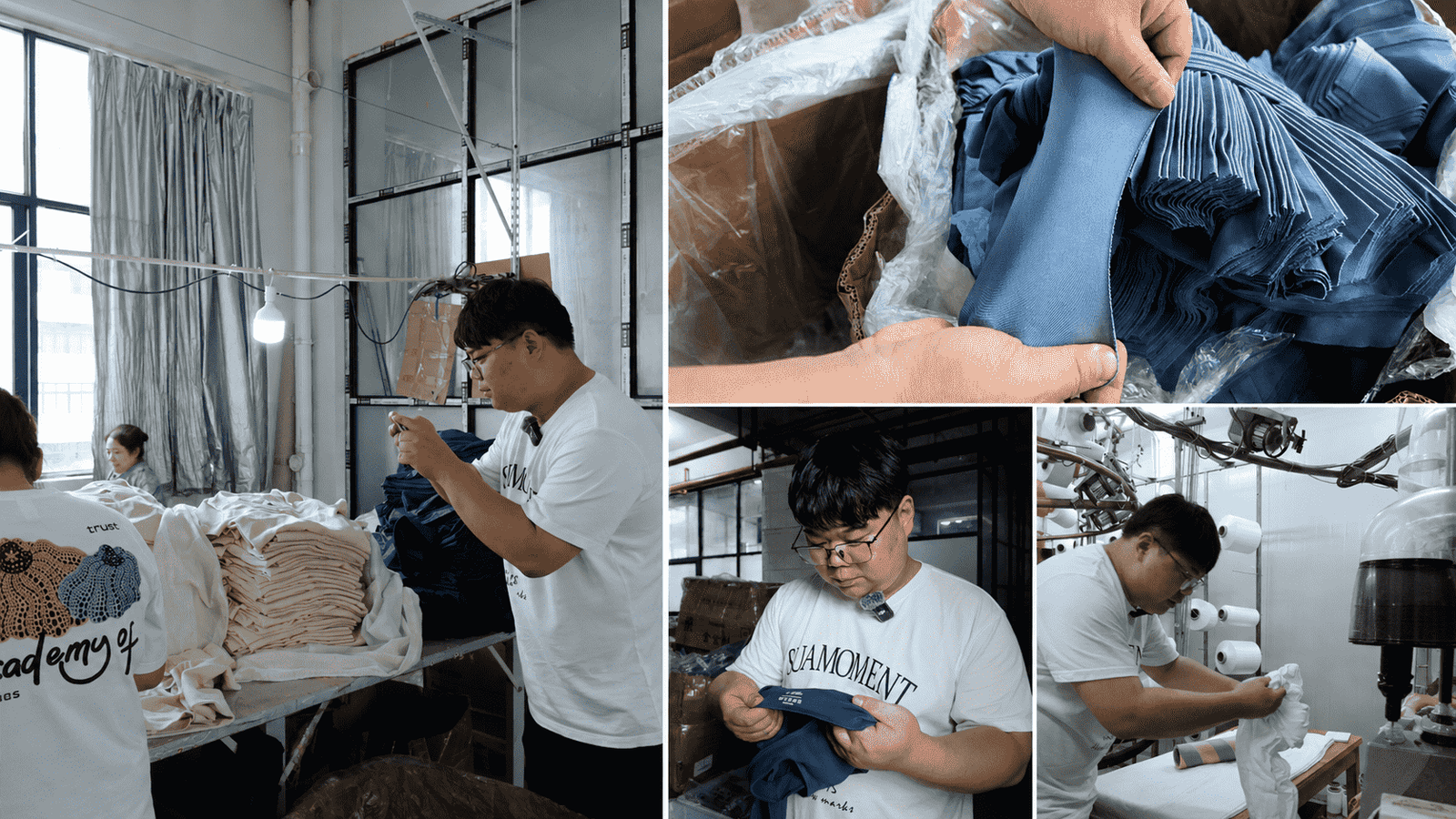
QC Measurement
QC uses product and measurement checks during development and production. For seamless styles, inspection also considers structure position, symmetry, holes, yarn-related defects and batch measurement stability.
From Approved Pattern to Finished Sports Bra
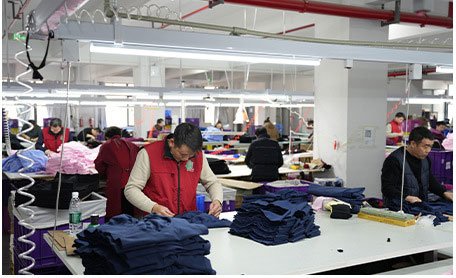
MOVEVOX’s cut-and-sew route combines material control, pattern engineering, cutting, sewing, trim and pad assembly, first-article verification, inline inspection, finishing and final quality review. Each stage remains tied to the approved project specification.
Specification Release
The final Tech Pack, Measurement Chart, material, color, artwork, pad or trim requirements and Approved Sample are reviewed before the production version is released.
Owner: Project Team
QC Gate: Spec Approved
Material Control
Fabric, elastic, pads and relevant trims are checked against the approved BOM, color and project requirements. A material change that affects the approved product requires evaluation and customer re-approval.
Owner: Purchasing
QC Gate: Material Check
Pattern Release
The production pattern is aligned with the approved measurements and sample. Pattern or grading information should not be altered informally after product approval without controlled evaluation.
Owner: Technical
QC Gate: Pattern Approved
Cutting
Approved fabric lots are prepared and cut according to the production pattern and planned quantities. Cut components need identification so different styles, colors and sizes do not become mixed during sewing.
Owner: Production
QC Gate: Cut Check
Sewing Assembly
Sports bra panels, lining, elastic, bindings, straps, pad pockets and other approved components are assembled according to the defined construction.
Owner: Production
QC Gate: Process Check
First Article
The first completed production unit is checked before normal bulk continuation. Measurements, construction, appearance, branding, pad position and other critical requirements are compared with the approved standard.
Owner: QC
QC Gate: First Article
Inline Control
QC performs in-process checks during production rather than waiting until all garments are complete. Issues can be held, corrected and rechecked before they spread across a larger quantity.
Owner: QC
QC Gate: Inline Inspection
Finishing
Completed garments move through thread cleaning, appearance preparation and relevant finishing steps before finished-product inspection.
Owner: Production
QC Gate: Finish Check
Final Inspection
Finished sports bras are reviewed for measurements, workmanship, construction, logo, labels, pads, packaging and other PO-specific criteria.
Owner: QC
QC Gate: Final Release
Packing Release
Only released products proceed into final packing and shipment preparation. SKU, labels, quantities, packaging instructions, carton information and Packing List must correspond to the approved PO requirements.
Owner: Order Team
QC Gate: Pack Verified



Three Practical Routes for Sports Bra Pads
MOVEVOX can develop removable and fixed or positioned pad structures, while non-padded products can also be assessed. Each route changes internal construction, sample validation, consumer maintenance and bulk inspection requirements.

Removable Pad Pocket
A removable-pad construction uses an internal pocket or layered structure that allows the pad to be inserted and removed. Development needs to confirm the pocket dimensions, opening position, pad orientation, garment size relationship and finished appearance. During bulk inspection, the team can check that the correct pads are included, left/right orientation is consistent, the opening is accessible, and the pad does not create unacceptable edge visibility in the approved garment.
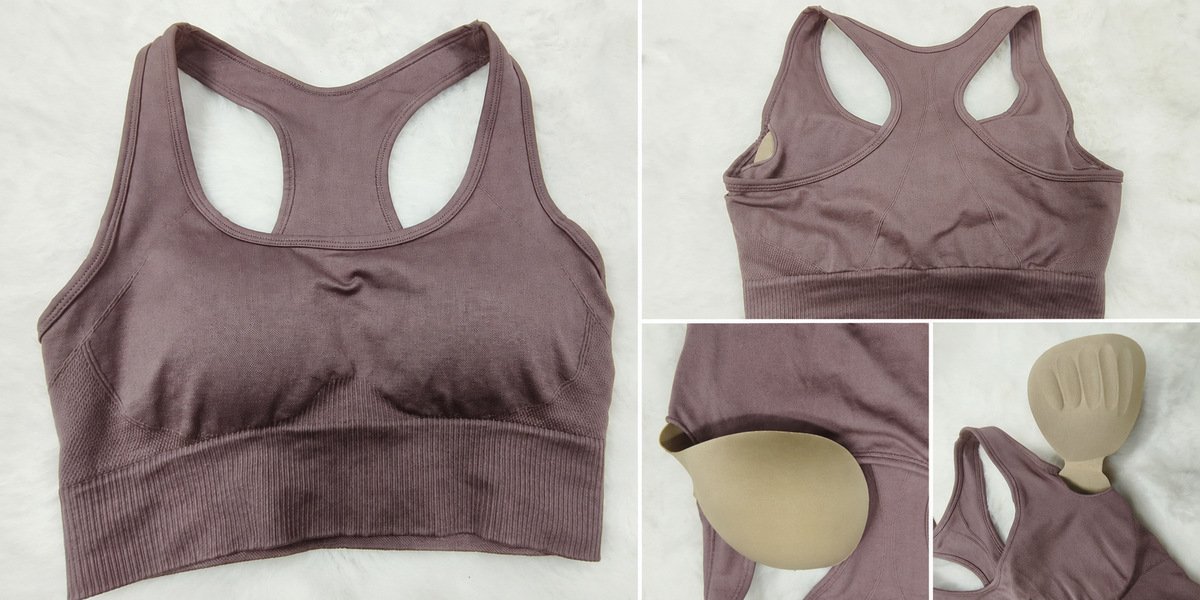
Positioned Fixed Pad
A fixed or positioned-pad route keeps the pad in a defined location through the approved construction method. The sample must establish position, symmetry, layer relationship and garment appearance before production. MOVEVOX does not describe “fixed” as permanently immovable without evidence; the appropriate claim is that the approved structure is designed to maintain the intended pad position and is then checked during production.

Layered Cup Structure
Some sports bra designs use internal layers around the cup area to manage coverage, pad placement or overall construction. The layers need to stretch and recover together with the outer material. The sample should be reviewed for bulk, edge visibility, symmetry and movement. Complex molded-cup projects are subject to separate feasibility assessment rather than assumed to be standard production.
Turn a Sports Bra Brief Into Bulk Standards
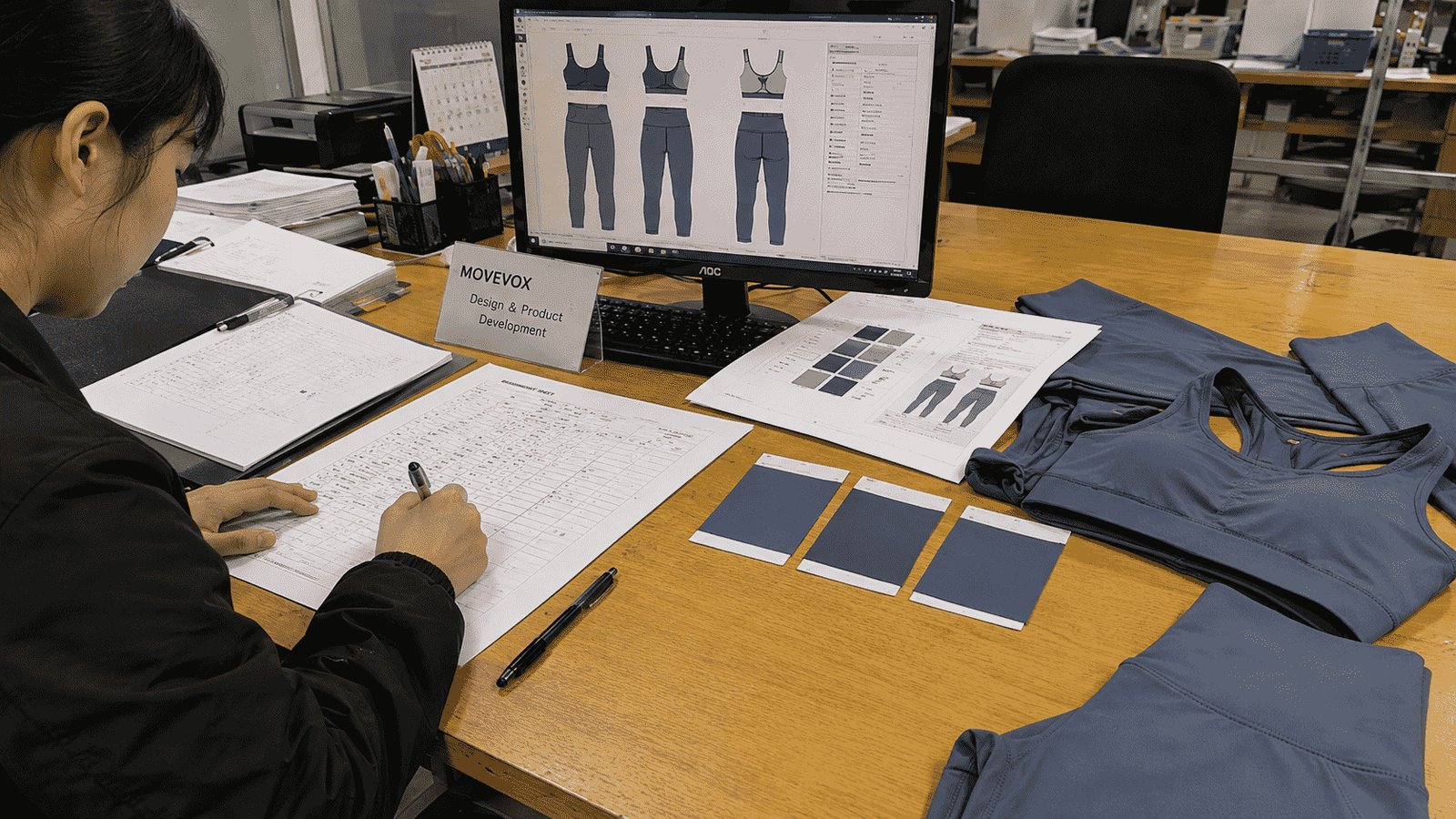
MOVEVOX develops from a Tech Pack, legal reference sample, sketch, image or defined concept. The goal is not simply to make one sample, but to establish an approved specification that can be transferred into controlled bulk production.
Project Input
The team collects the Tech Pack, Measurement Chart, reference materials, artwork, target material, color, pad, packaging and commercial requirements available for the project. Missing points are identified before sampling begins.
Deliverable: Development Brief
Timing: Project-dependent
Technical Review
Product development, pattern or seamless technical staff review structure, dimensions, manufacturing route, materials, fit risks, special components and unclear instructions. Open points are returned for confirmation rather than guessed during production.
Deliverable: Open Point List
Timing: Before sampling
Material Direction
Candidate fabric, yarn, elastic, pad and other materials are coordinated according to the product target and available supply chain. Custom colors or special materials may introduce separate MOQ and lead-time requirements.
Deliverable: Material Direction
Timing: Project-dependent
Pattern / Program
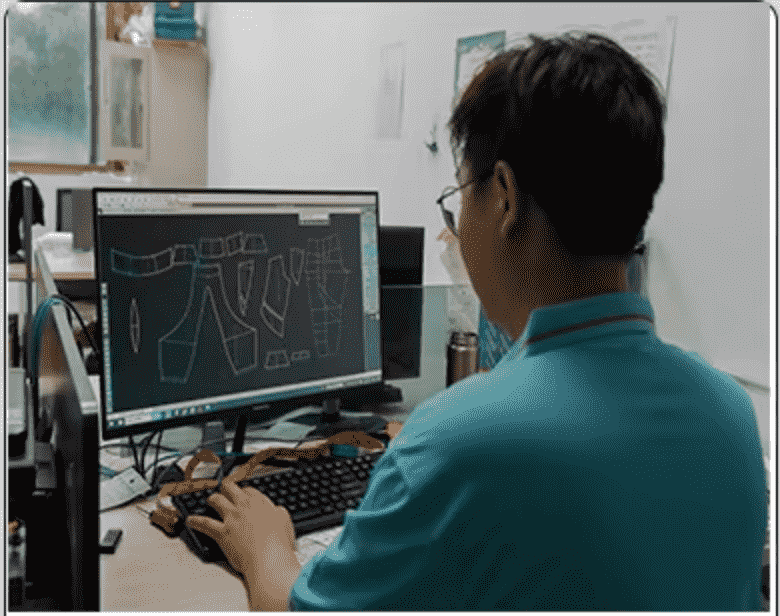
Cut-and-sew projects move into pattern engineering while seamless projects move into knitting-program and structure development. Both routes convert customer design intent into manufacturing instructions that can be sampled.
Deliverable: Development Version
Timing: Project-dependent
Sample Build
After development details are confirmed, MOVEVOX’s standard sample development cycle is normally approximately 5–10 working days. Complex materials, custom colors or unusual structures may require additional time.
Deliverable: Development Sample
Timing: 5–10 workdays
Fit Review
The sample is checked internally and then reviewed by the customer for dimensions, fit, construction, material, color, pad, workmanship and other required approval points. Feedback is converted into a controlled revision.
Deliverable: Review Comments
Timing: Feedback-dependent
Sample Approval
Revised, Size Set or PP samples are used when required by the customer’s approval process. The approved state must be clear before bulk production is released.
Deliverable: Approved Sample
Timing: Project-dependent
Bulk Standard
Final Tech Pack, measurements, material, color, artwork, Approved Sample, packaging and QC checkpoints are consolidated into the bulk execution standard used by production, PMC and QC.
Deliverable: Bulk-Ready Standard
Timing: Before bulk
What We Review Before Sports Bra Sampling
A complete technical review reduces avoidable sample loops and production ambiguity. MOVEVOX checks the information needed to translate the sports bra design into material, pattern or knitting, construction, fit and approval requirements.
Flat Sketch
RequiredThe front, back and relevant internal or detail views should identify the intended silhouette and construction. If the drawing does not show a critical detail clearly, it becomes an Open Point before execution.
Measurement Chart
RequiredThe measurement chart should define the relevant POMs, sizes and tolerances. MOVEVOX uses the approved chart rather than applying one universal sports bra size system across different brands.
Material Specification
RequiredComposition, GSM, handfeel direction, stretch, recovery, surface or customer-nominated material information should be supplied where available. Alternative materials require review and approval before production use.
Support Direction
RequiredThe buyer should define the intended activity and support direction without relying only on a marketing label. MOVEVOX then reviews the structural variables and sample-validation route required by the project.
Pad Requirements
RequiredThe technical review should clarify removable, fixed, positioned or no-pad construction; pad dimensions; pocket or layer requirements; and any customer expectations that affect appearance or maintenance.
Strap and Back
RequiredStrap type, width, length, adjustability, back structure and attachment points should be clear because these features influence pattern or knitting structure, fit and assembly.
Color Standard
RequiredPantone references or physical color standards should be defined where relevant. Color approval remains tied to the actual fabric or yarn because different materials can display the same target color differently.
Branding Artwork
RequiredLogo artwork, process, size, position and color should be confirmed. High-stretch areas may require additional application and durability review before the branding process is approved.
Label Details
RequiredMain label, care label, size label or other buyer-required retail information should be supplied in final approved form before bulk packing and shipment.
Packaging Standard
Buyer DefinedPolybag, barcode, sticker, hangtag, carton and packing instructions are collected according to the customer’s retail system. Packaging versions must correspond to the correct SKU and PO.
If the Technical Pack Is Incomplete
MOVEVOX can start from a legal reference sample, sketch, image or defined concept when a full Tech Pack is unavailable. The development team can help convert the information into executable product inputs, but incomplete projects normally require more clarification, revision and customer approvals than a complete Tech Pack.
Build the Product and the Brand Together
Private label at MOVEVOX is not limited to adding a logo to stock clothing. A sports bra project can include product structure, material and color, branding, labels and trims, packaging and the related approval standards.
Product
MOVEVOX can begin from the buyer’s Tech Pack, legal reference sample, sketch, image or defined product concept. Product development may include seamless or cut-and-sew construction, fit, straps, back design, pad system, lining, material and approved measurements. The customer remains responsible for the brand direction and final approval, while MOVEVOX translates the requirements into executable sampling and production standards.
- Seamless or cut-and-sew manufacturing route
- Removable, positioned or no-pad product direction
- Racerback, cross-back or other approved structures
- Project-specific fit and measurement development
Material & Color
Material selection considers product use, handfeel, GSM, stretch, recovery, surface, support direction, color and supply-chain MOQ. MOVEVOX works with nylon/polyamide + spandex, polyester + spandex, seamless yarn systems and other documented activewear materials. Stock colors can reduce development complexity, while custom Pantone or physical-swatch colors normally introduce separate material or yarn dyeing conditions.
- Nylon / polyamide and spandex activewear materials
- Polyester and spandex training-material route
- Seamless yarn and knitted-structure development
- Stock or project-specific custom color development

Branding
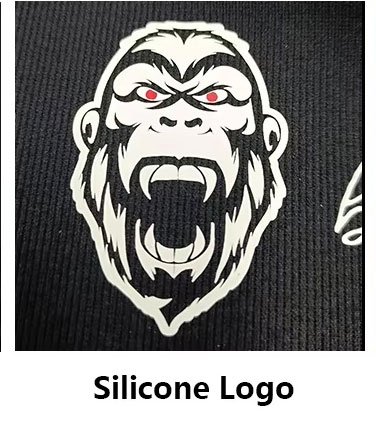
MOVEVOX can support screen print, heat transfer, silicone logo, embroidery, jacquard and woven-label solutions according to the product. The correct process depends on material surface, garment stretch, logo size, placement, color, required handfeel and project MOQ. Special molds, patches or components may carry separate sample cost, MOQ or development time.
- Heat transfer or screen print where technically suitable
- Silicone logo subject to process and tooling requirements
- Embroidery or jacquard for appropriate constructions
- Woven branding and other approved label applications
Labels & Trims
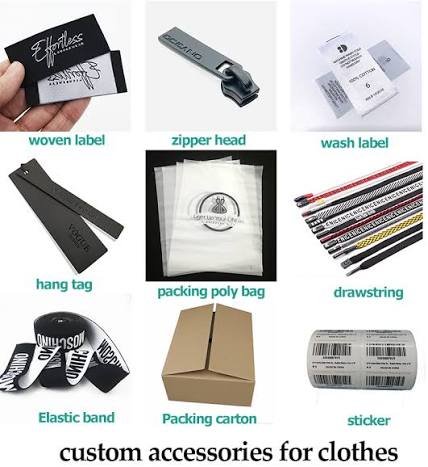
Private label execution can include main labels, care labels, size labels, woven labels, hangtags and project-specific trims. Buyer artwork and content should be approved before production. The garment MOQ and the MOQ of a custom label, elastic, pad, molded item or other trim may differ, so effective MOQ is evaluated from the complete BOM.
- Main, care and size label systems
- Hangtags and retail brand materials
- Elastic, pads and project-specific trims
- Buyer-defined barcode or SKU identification
Packaging
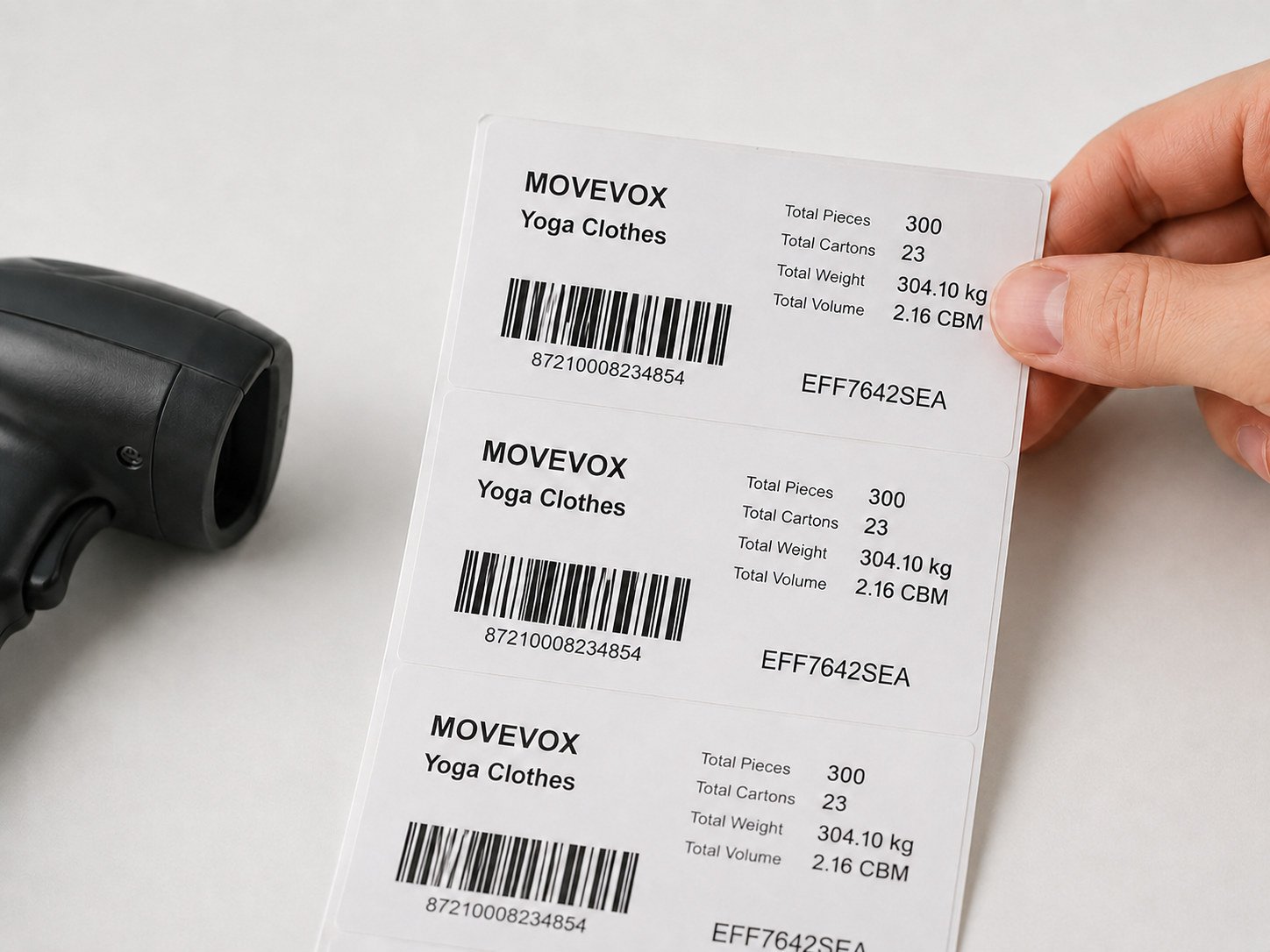
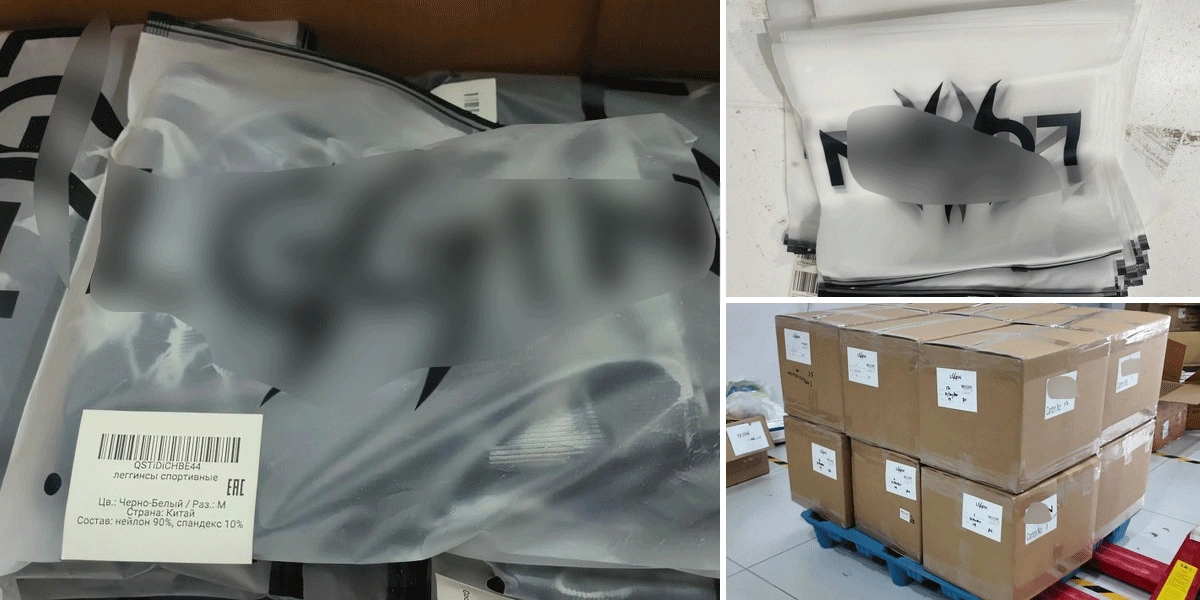
MOVEVOX can support individual polybags, stickers, barcode labels, hangtags, cartons and customized packaging according to customer requirements. Packaging is managed by SKU and PO rather than treated as a final decorative step. Complex barcode or retail packing programs require correct version control and additional QC before shipment.
- Standard individual garment polybags
- Custom polybag, sticker or retail presentation
- Barcode and SKU identification requirements
- Customer carton and packing-manual execution
Use Sampling as a Controlled Approval System
MOVEVOX treats each sample stage as a defined approval task. Development, fit, revision, size validation and PP approval should not be merged into one vague “sample approved” status.
Development Sample
The first physical version converts the confirmed development inputs into a product that can be reviewed for basic structure, proportion, material route, construction and design feasibility. It is not automatically the final production standard.
Customer inputs: Confirmed brief and technical references; material and color direction; branding and structural requirements.
MOVEVOX outputs: First executable physical sample; initial measurement and construction review; open issues requiring customer decision.
Pass standard: The product direction is technically viable and ready to move into detailed fit or revision review.
Fit Sample
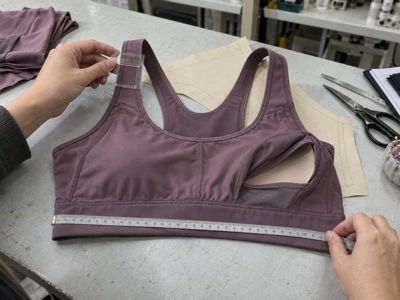
The Fit Sample focuses on measurements, garment position, coverage, underband, straps, pad position, material behavior and relevant movement. Findings are documented as specific revision items rather than general comments.
Customer inputs: Fit Model or target consumer direction; measurement and tolerance requirements; consolidated fit comments.
MOVEVOX outputs: Fit-focused sample version; measurement and issue record; recommended technical adjustments where required.
Pass standard: Key fit dimensions and wearing behavior meet the buyer’s agreed direction or have clearly defined revisions.
Revised Sample
A revised sample addresses the approved comment list from the previous review. Only confirmed changes should be introduced, helping prevent one adjustment from unintentionally altering already accepted product areas.
Customer inputs: Consolidated revision list; priority or acceptance comments; newly approved specification changes.
MOVEVOX outputs: Updated controlled sample version; revised measurements or construction; record of implemented changes.
Pass standard: Required revisions are completed and no unresolved issue prevents progression.
Size Set
Where required, representative or full size-set samples verify the grading and product relationship across sizes. Sports bra proportions such as underband, strap, coverage and pad position should remain aligned with the approved size logic.
Customer inputs: Approved grade rules or Measurement Chart; required size-set scope; size-specific comments if applicable.
MOVEVOX outputs: Required size samples; cross-size measurement check; identified grading issues, if any.
Pass standard: Required sizes meet approved measurement and grading requirements within customer-defined tolerance.
PP Sample
The PP Sample represents the pre-production reference using the approved product information available for bulk release. It should reflect the final materials, construction, branding and relevant production details defined by the customer.
Customer inputs: Final specification confirmation; final artwork and packaging requirements; formal PP approval criteria.
MOVEVOX outputs: Pre-production reference sample; final technical confirmation; production-ready reference package.
Pass standard: Customer approval is documented and no unresolved critical requirement prevents bulk production release.
Bulk Handover
Once the required approvals are complete, the final Tech Pack, measurements, material, color, artwork, Approved Sample, packaging and QC points are transferred into the production and quality-control system.
Customer inputs: Final written approvals; confirmed PO and SKU requirements; final buyer quality requirements.
MOVEVOX outputs: Controlled production specification; production and QC reference; formal bulk release package.
Pass standard: Production, PMC and QC are working from one final approved version with clear hold points and release requirements.
Protect the Approved Sample Through Bulk Production
The approved sample has value only when its critical standards are transferred into production. MOVEVOX connects the final specification, approved material, first article, inline inspection and final release to reduce uncontrolled sample-to-bulk drift.
Approved Standard
- Approved Measurements: Final customer Measurement Chart, agreed tolerance and Approved Sample.
- Approved Material: Approved source, specification, color and project requirement.
- Approved Construction: Pattern, seamless program, sewing structure, pad system, elastic, binding and critical details.
- Branding Position: Logo process, size, position and visual standard.
- Pad & Trim Details: Pad count, orientation, trim type and label version.
- Packaging Execution: Polybag, label, barcode, hangtag, SKU, carton and packing instructions.
Bulk Transfer & Verification
Before production, MOVEVOX consolidates the final Tech Pack, measurements, material, color, logo, Approved Sample, labels, packaging and delivery requirements. First Article verification checks whether production has reproduced the approved standard before normal bulk continuation. Inline inspection identifies deviations during production, while finished and final inspections review released goods before shipment. Where a buyer requires third-party inspection, the report becomes part of the shipment-release decision.
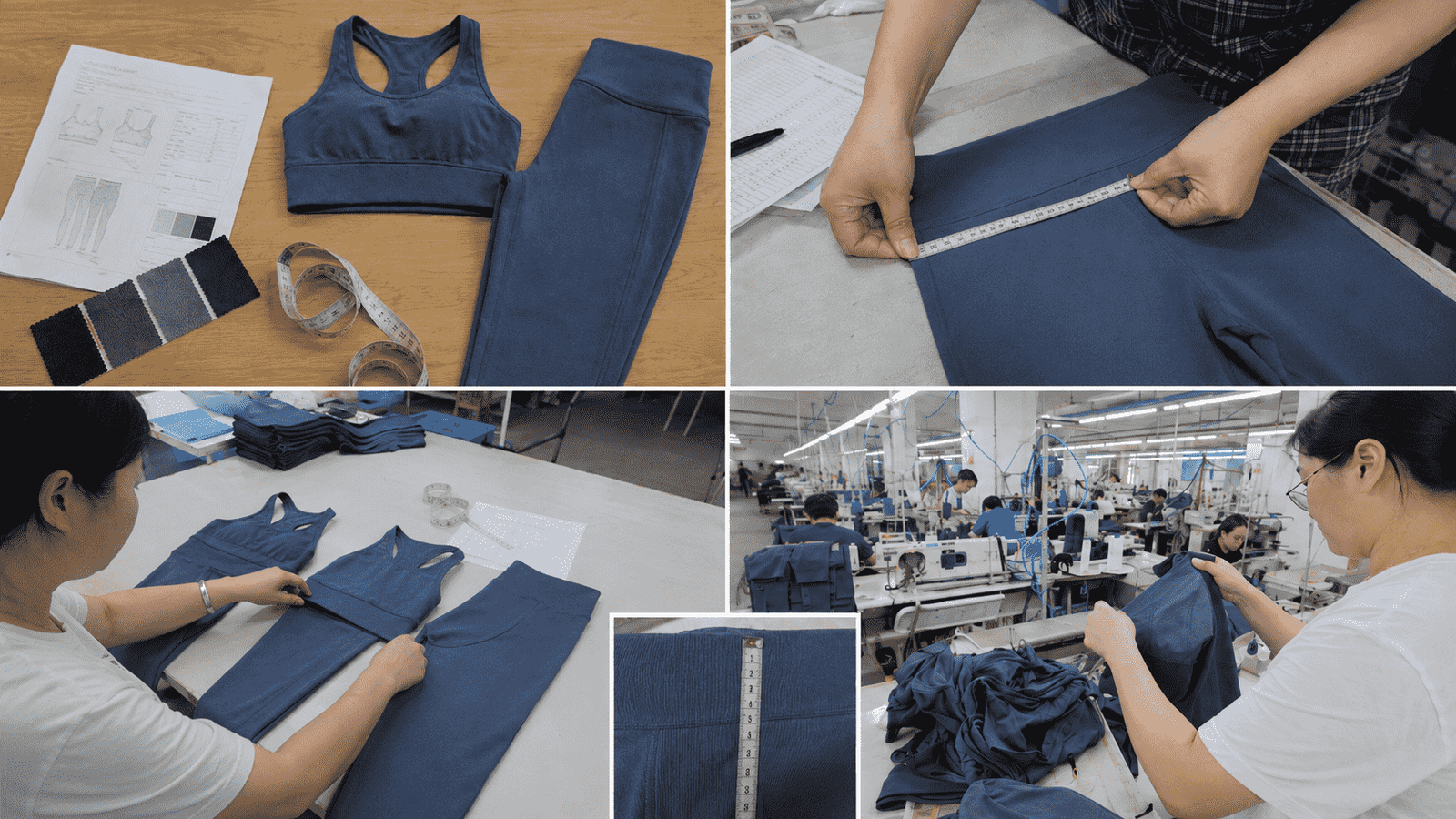
Quality Control Starts Before the Final Inspection
MOVEVOX’s quality logic is based on approved standards, prevention, in-process control, finished-garment inspection and corrective action. Five QC personnel support the current system, while project requirements can incorporate buyer standards and third-party inspection.
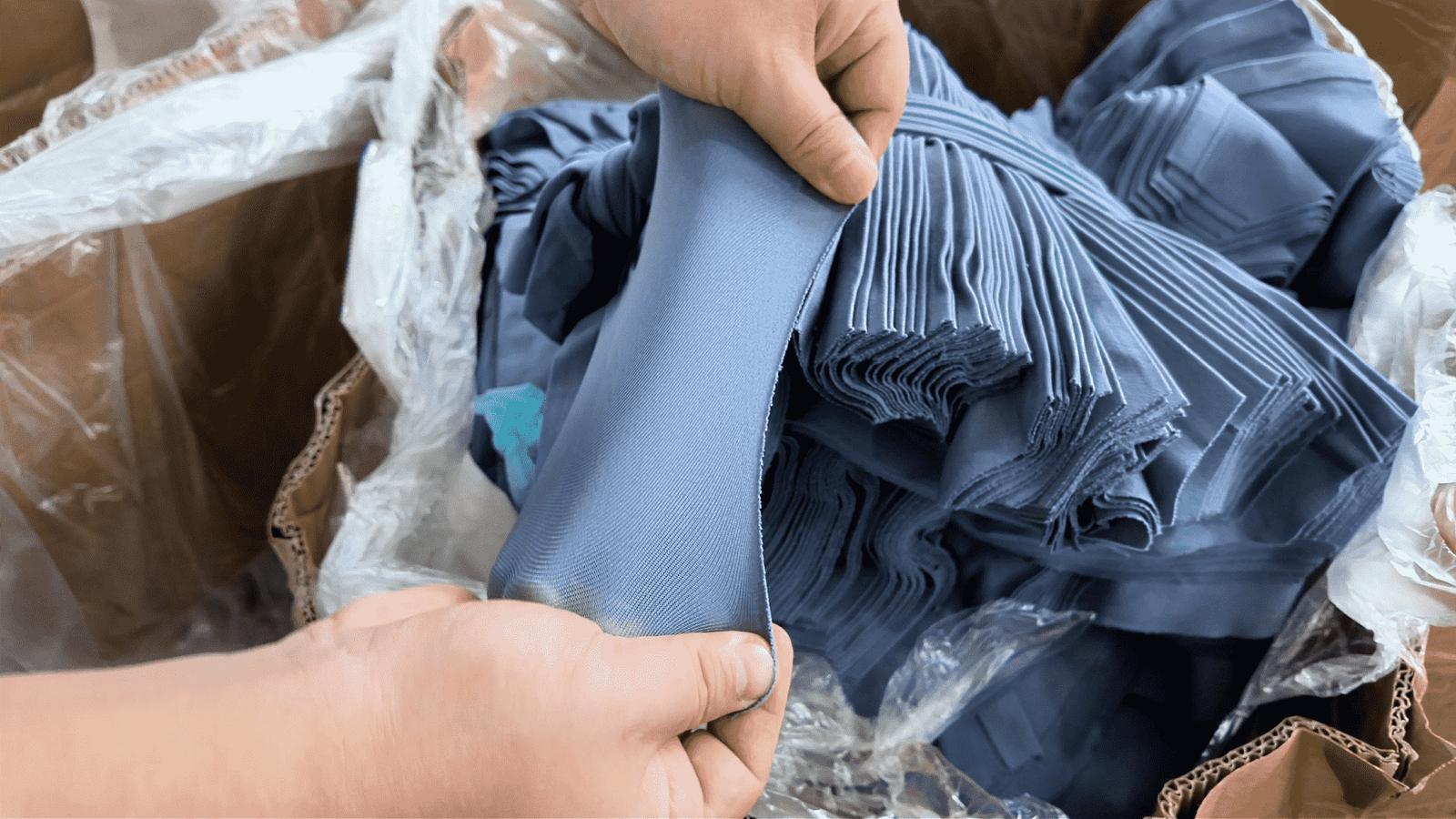
Incoming Materials
Fabric, yarn and critical materials are reviewed against project information before normal production use. Relevant checks can include composition information, color, GSM, shrinkage, elasticity and other buyer-required material criteria.
- Match approved material or yarn reference
- Confirm color against approved project standard
- Hold abnormal material for review
Pre-Production Review
Before bulk release, the team confirms the Approved Sample, final Tech Pack, measurements, materials, colors, logo, labels, packaging and production requirements so outdated versions do not enter normal manufacturing.
- Final specification version confirmed
- Open critical approvals closed
- Required production references available
First Article
The first production unit is compared against the approved standard before normal production proceeds. Measurements, workmanship, seamless structure or sewing construction, branding and product-specific details are reviewed.
- Measurements within agreed tolerance
- Construction matches approved version
- Critical appearance points accepted
Inline Inspection
QC reviews production while goods are still being made. The purpose is to identify issues early enough to contain, correct and recheck them before they become a full-order problem.
- Inspect actual WIP during production
- Record and communicate identified defects
- Recheck corrective action where required
Measurement Check
Sports bra POMs are inspected against the approved Measurement Chart and tolerance. Underbust, strap, length, side-height or other project-specific dimensions are controlled according to the actual style.
- Approved chart used as reference
- Measurement method remains consistent
- Out-of-tolerance results require action
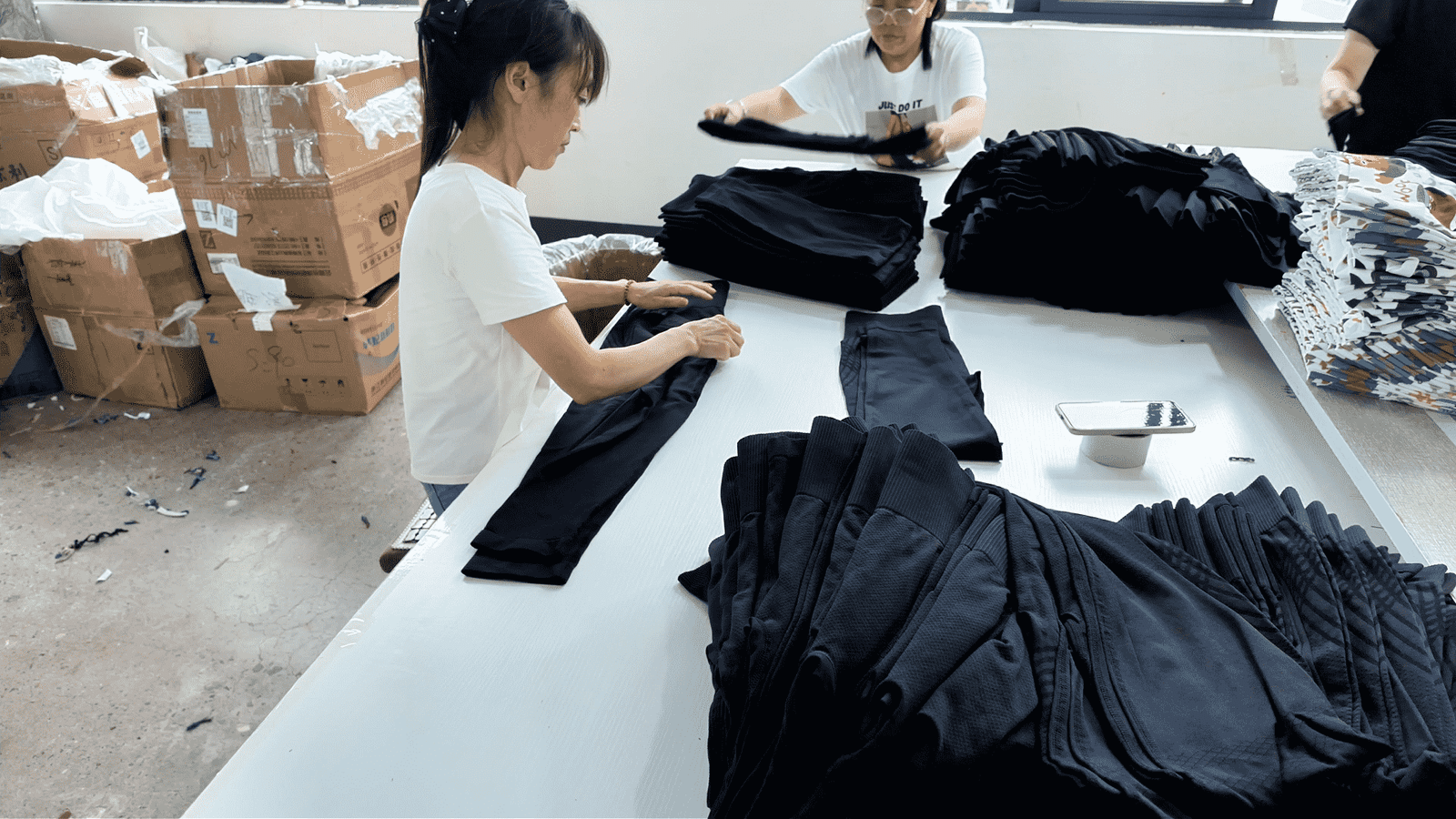
Finished Garment
Completed garments are reviewed for workmanship, measurements, material appearance, logo, labels, pads and overall presentation before packing is treated as complete.
- Workmanship matches approved standard
- Components and branding are correct
- Visible defects are classified and controlled
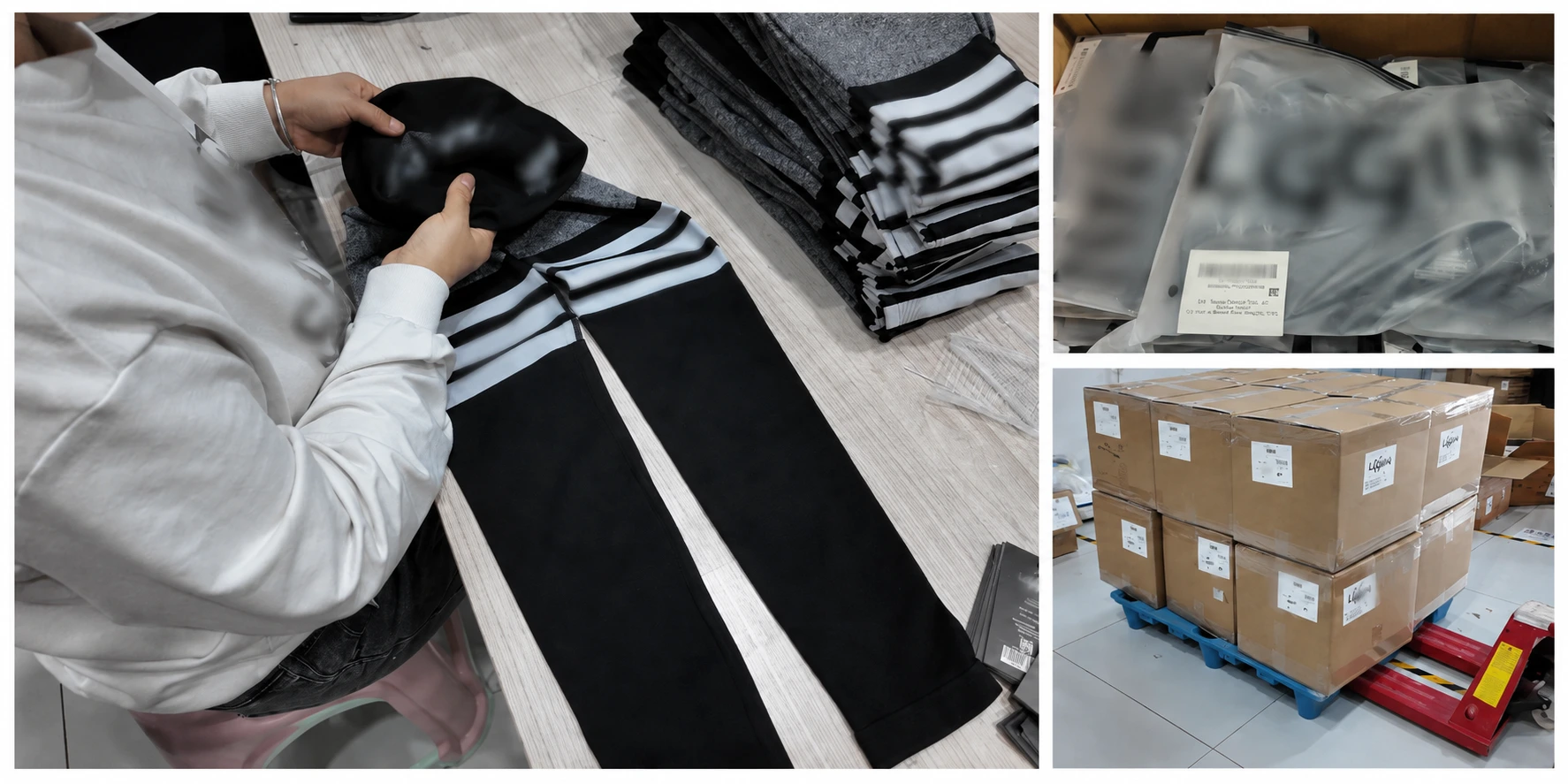
Packaging Check
Packing inspection verifies SKU, size, color, labels, barcode, hangtag, polybag and carton information against the PO and approved packaging instructions.
- Correct SKU and size identification
- Approved packaging version used
- Carton and quantity information verified
Final Release
Final inspection is used with previous quality results to determine whether the order is suitable for shipment. Buyer-defined AQL or other inspection standards can be incorporated where required.
- Final inspection result documented
- Required rework and reinspection complete
- Shipment release conditions satisfied

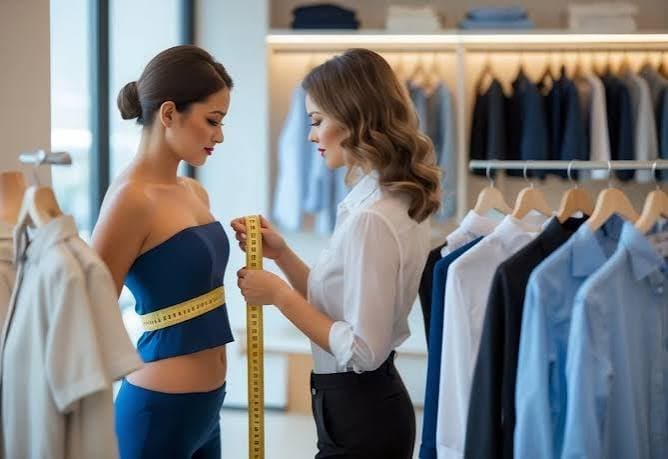
Make Sports Bra Measurements Visible and Reviewable
MOVEVOX measures bulk garments against the customer-approved Measurement Chart, tolerance and sample standard. For sports bras, the exact POM list varies by design, so inspection records must remain style-specific rather than use a universal chart.
Sample Identity
A measurement report should identify the PO or project, style, color, size and inspection stage so results can be linked to the correct production batch.
Approved POMs
The report should use the buyer-approved measurement points rather than creating a separate factory-only definition after sample approval.
Tolerance
Each controlled POM should be judged against the customer’s approved tolerance. MOVEVOX does not publish a universal sports bra tolerance that overrides buyer requirements.
Measured Quantity
The inspected quantity or sample scope should be visible in the report so the buyer can understand what the measurement result represents.
Deviation Record
Out-of-tolerance findings should be recorded rather than averaged away. The relevant production batch can then be held, corrected or reviewed according to severity.
Release Decision
Measurement results form part of the broader quality-release decision together with workmanship, construction, material, branding, labels, packaging and buyer-specific requirements.
How the Report Is Used
For a sports bra program, a measurement report may include underbust, body length, strap dimensions, side height or other customer-defined POMs. The record should correspond to the approved chart and actual inspected garments. Where a measurement issue is found, the result should feed into containment, correction and reinspection rather than remain a passive report. Customer names, commercial quantities and style-sensitive information should be anonymized before public website use.
Control Seamless Defects Before Final Garment Release
Seamless sports bras require different quality controls from conventional cut-and-sew products. Program version, yarn, knitted structure, symmetry, measurement and post-knitting operations all need control before finished-garment release.
| Defect | Likely Cause | Prevention | Inspection Point | Corrective Action |
|---|---|---|---|---|
| Structure Misalignment | Approved rib, mesh or contour organization may shift when program, size or knitting parameters are not correctly controlled. | Lock the approved program, size and yarn information before bulk knitting and verify the first knitted units against the reference structure. | Review structure position during First Article and in-line seamless inspection. | Hold the affected quantity, confirm program and machine setup, correct the cause and recheck newly produced units. |
| Left-Right Asymmetry | Knitted visual features, straps or later sewing operations can create unequal appearance when alignment and finishing are inconsistent. | Establish clear approved symmetry references and include left-right comparison in first-piece and production-stage checks. | Inspect front, back and critical knitted or sewn features in a consistent laid-flat condition. | Segregate affected units, determine whether the cause is knitting, finishing or sewing, and rework or reproduce according to feasibility. |
| Hole / Yarn Defect | Yarn interruption, machine condition or abnormal knitting may create unintended holes, broken yarn or localized structure defects. | Monitor yarn condition and knitting operation, and inspect the knitted body before downstream work. | Check knitted bodies during production and again during finished-garment review. | Stop or contain the relevant batch, identify machine or yarn cause, repair only where approved, and reinspect. |
| Density Variation | Different yarn behavior, machine setting or process inconsistency can change the visual density or wearing feel of selected zones. | Use approved yarn and controlled program settings, with first-piece comparison before full production. | Compare rib, mesh, texture and other critical zones against the approved reference during knitting and after finishing. | Hold affected output, confirm yarn lot and program/machine parameters, then verify corrected production. |
| Measurement Drift | Seamless dimensions can be influenced by yarn recovery, knitting structure, finishing, conditioning state and measurement tension. | Standardize measurement condition and use the final approved size specification with consistent measuring method. | Measure defined POMs during first article, in-line checks and finished-garment inspection. | Identify the affected size or batch, review program and finishing conditions, correct where possible and reinspect. |
| Post-Knit Variation | Sewing, pad insertion, labeling or finishing after knitting can alter appearance, measurements or symmetry. | Treat post-knit operations as controlled production stages with approved construction and first-piece confirmation. | Inspect the complete garment after necessary sewing and finishing. | Contain affected garments, correct the downstream operation and recheck against the Approved Sample. |


Close the Cause, Not Only the Defect
For significant, repeated or buyer-escalated quality problems, MOVEVOX uses corrective-action logic that moves beyond repairing one garment. The objective is to contain the issue, identify cause, verify action and prevent recurrence.
Trigger and Contain
A CAPA may be triggered by a repeated defect, customer complaint, failed inspection, recurring material problem, critical quality event or another issue requiring systematic correction. The first step is to identify the affected scope and prevent questionable material or garments from moving forward while investigation begins.
Find Root Cause
The team investigates whether the issue came from material, specification interpretation, pattern or program, production method, machine setting, workmanship, inspection, packaging or another process. Root cause should be supported by evidence rather than assuming that the operator who discovered the defect created it.
Define Correction
Immediate correction addresses the current affected order. Depending on the issue, the action may involve rework, replacement, production adjustment, renewed material confirmation, program or pattern correction, retraining or another controlled intervention that can be checked objectively.
Prevent Recurrence
A corrective action is stronger when the control system changes so the same cause is less likely to reappear. This may require updating a work instruction, quality checkpoint, First Article requirement, supplier control, technical record or production standard.
Verify Effectiveness
MOVEVOX does not treat “action completed” as equivalent to “CAPA closed.” The corrected process or subsequent production needs verification through First Article, in-line inspection, reinspection, later batches or another appropriate evidence source to confirm that the problem has not repeated.
Record and Close
The final CAPA record should identify the issue, affected scope, root cause, actions, responsible owner, timing and effectiveness evidence. Significant findings can then become part of supplier or internal process improvement rather than disappear after the current shipment is completed.
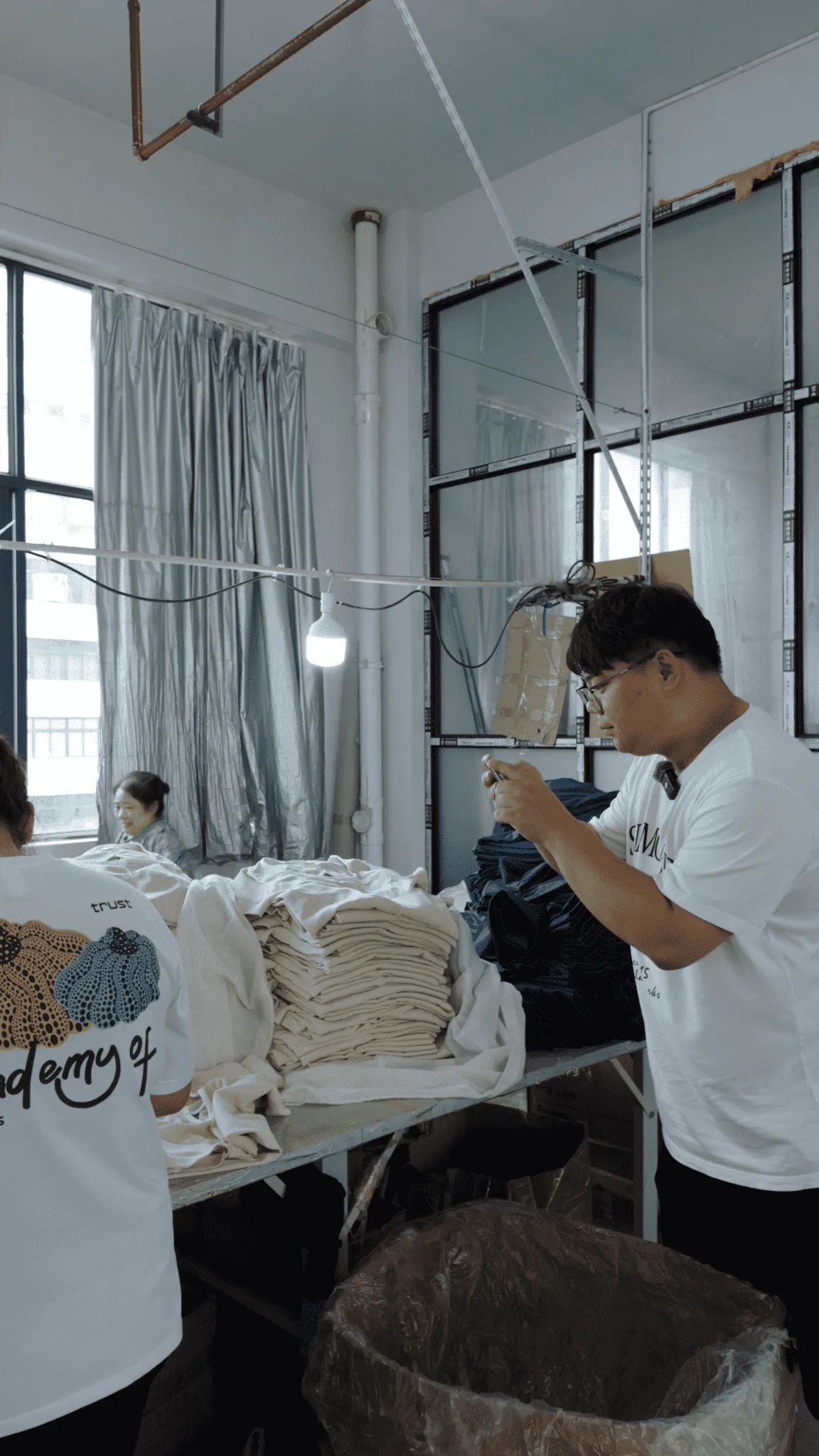
Capacity Means Quality-Released Garments, Not Machine Output
MOVEVOX separates stable managed delivery capacity from equipment theory. Real capacity changes with product structure, material availability, SKU and color complexity, factory allocation, quality requirements, finishing and packing. Project capacity is reviewed before commitment.
Managed Capacity
Current normal comprehensive managed delivery capacity across the self-operated manufacturing system and controlled satellite capacity.
Santoni Capacity
Twenty-eight Italian Santoni seamless knitting machines form the core seamless equipment base. Actual output depends on style, size, yarn, program complexity, color changes and downstream finishing.
Cut-Sew Equipment
Approximately 24 primary sewing and garment-production machines support the self-operated cut-and-sew system, supplemented by controlled satellite capacity where project requirements allow.
Satellite Network
MOVEVOX works with eight long-term collaborative satellite factories—six in Yiwu and two in Guangzhou—to expand controlled capacity for suitable production programs.
Bulk Production
Normal bulk production is generally approximately 20–35 days after project conditions are ready, while complex materials, large projects and peak periods require project-specific planning.
Quality Resources
Five QC personnel support the current quality-control organization. Capacity planning therefore considers not only production equipment but also the ability to inspect and release conforming goods.
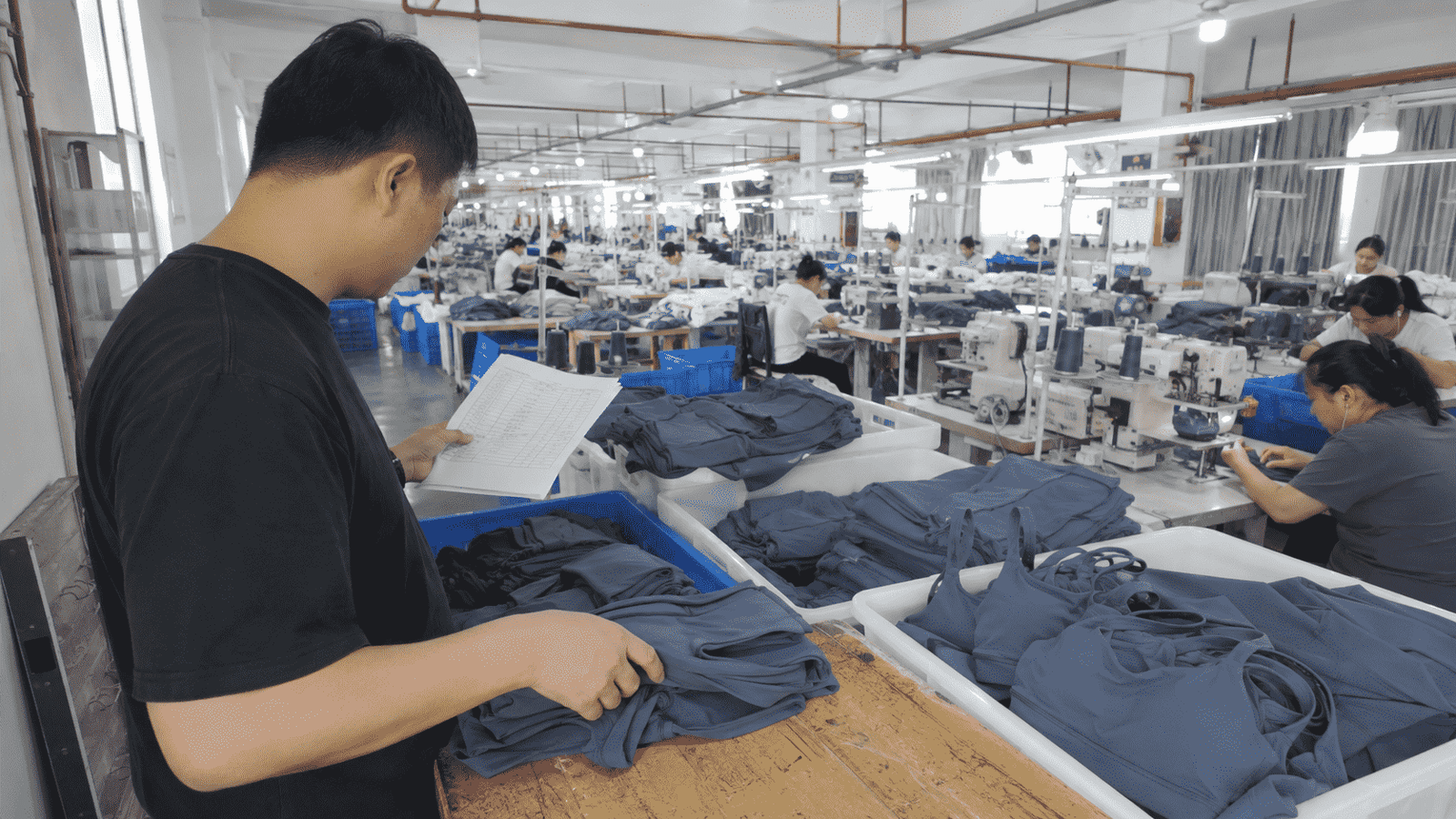
One Responsibility System Across Controlled Production Capacity
MOVEVOX combines an owned Yiwu manufacturing core with long-term satellite factories and approved specialist partners. The model is designed to add capacity without separating technical standards, material control, PMC, QC and final customer responsibility.
Own Factory
The Yiwu self-operated factory acts as the manufacturing, development, core-production and quality-control center. New, complex or higher-risk projects can be established here before repeatable work is distributed where appropriate.
Satellite Capacity
Eight long-term satellite factories provide controlled additional capacity for approved, repeatable production tasks. These facilities do not independently redefine the customer’s material, technical or quality standards.
Yarn & Fabric
MOVEVOX coordinates yarn, fabric, color and key material sourcing through the supply-chain team. Approved materials are tied to the project, and substitutions require evaluation and customer re-approval.
Specialist Processes
Selected external specialists may be used for specific printing, embroidery, logo, finishing or other project-dependent processes when required. These processes remain subject to MOVEVOX instructions and quality acceptance.
Branding Suppliers
Labels, hangtags, logo materials and other private-label components are coordinated against the approved artwork, BOM, MOQ and delivery schedule rather than sourced independently by each production facility.
Packaging
Packaging materials and instructions are managed by PO and SKU. Barcode, labels, individual packing and carton requirements remain part of the controlled order standard.
Logistics
Shipment execution is coordinated after product release and packing verification. Export documentation, Packing List and transport arrangements are aligned with the agreed order and trade requirements.
Unified Management
Regardless of whether a specific operation is performed in the owned factory, a long-term satellite factory or an approved specialist partner, MOVEVOX remains the customer-facing management and accountability interface. Tech Pack versions, Approved Samples, material requirements, production allocation, PMC, QC, packaging and release are centrally coordinated. For customers requiring approved production sites or disclosure of subcontracting, actual production allocation is managed according to the buyer’s vendor policy.

See the Manufacturing System Behind the Website
MOVEVOX supports onsite factory visits, live video factory tours, Technical Audits, Pre-production Visits, Inline Inspection and Pre-shipment Inspection. Audit readiness means allowing relevant facts to be verified, not claiming certifications that are not supported.
Legal & Factory Identity
A buyer should first be able to verify who it is contracting with and where production takes place. MOVEVOX is the commercial brand operated by Yiwu Chenjin Import And Export Co., Ltd. The current legal entity was established in 2020, while MOVEVOX defines manufacturing and supply-chain operations as beginning in 2019. The production base is located in Yiwu, Zhejiang, China.

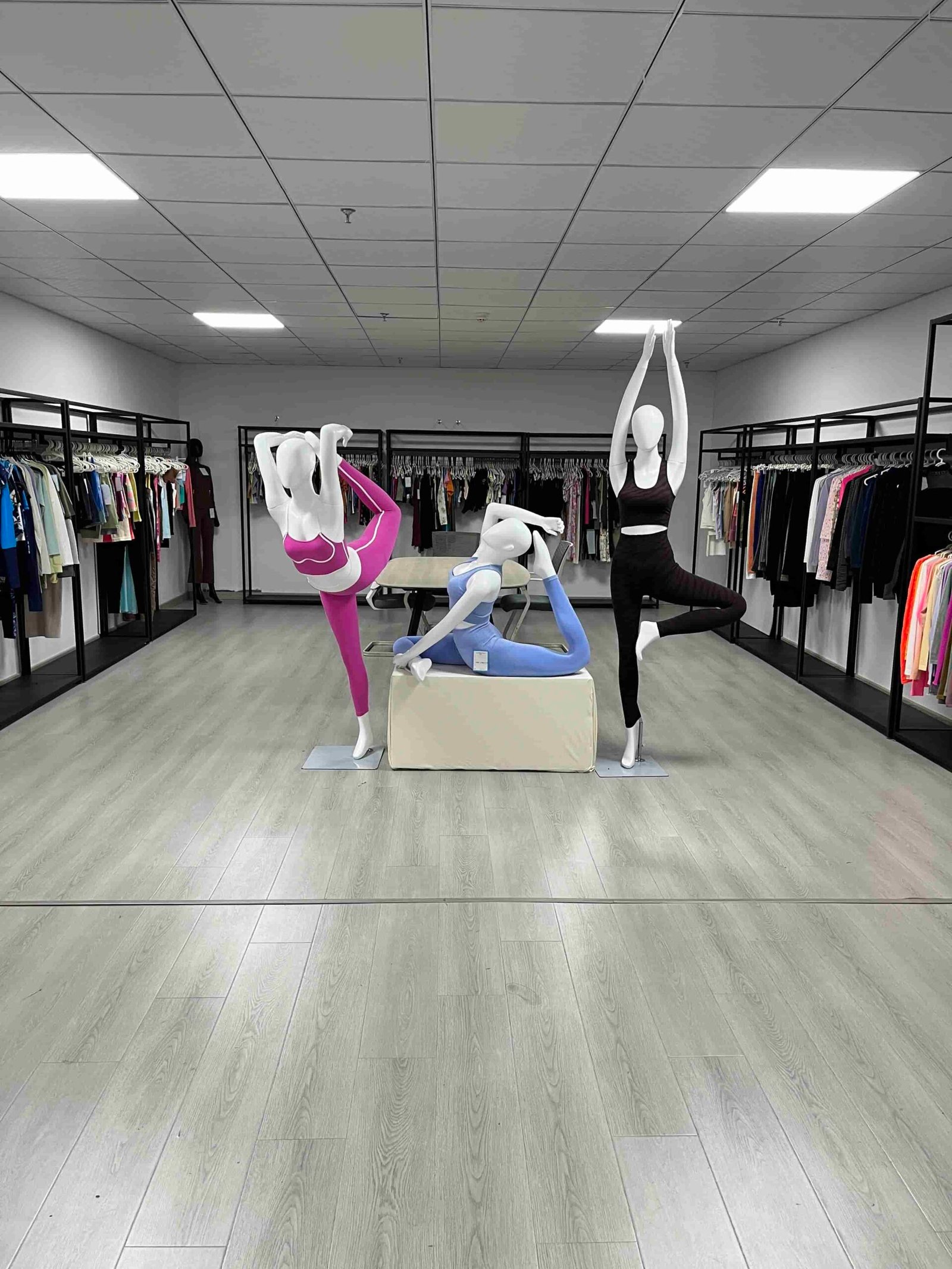
Product Development Area
The product-development function converts Tech Packs, legal reference samples, images, sketches or product concepts into patterns or seamless programs, material directions and physical samples. The current development structure is approximately eight people across design, pattern and sample-related work. An audit or technical review should be able to verify that development exists as an operating function rather than only a sales claim.
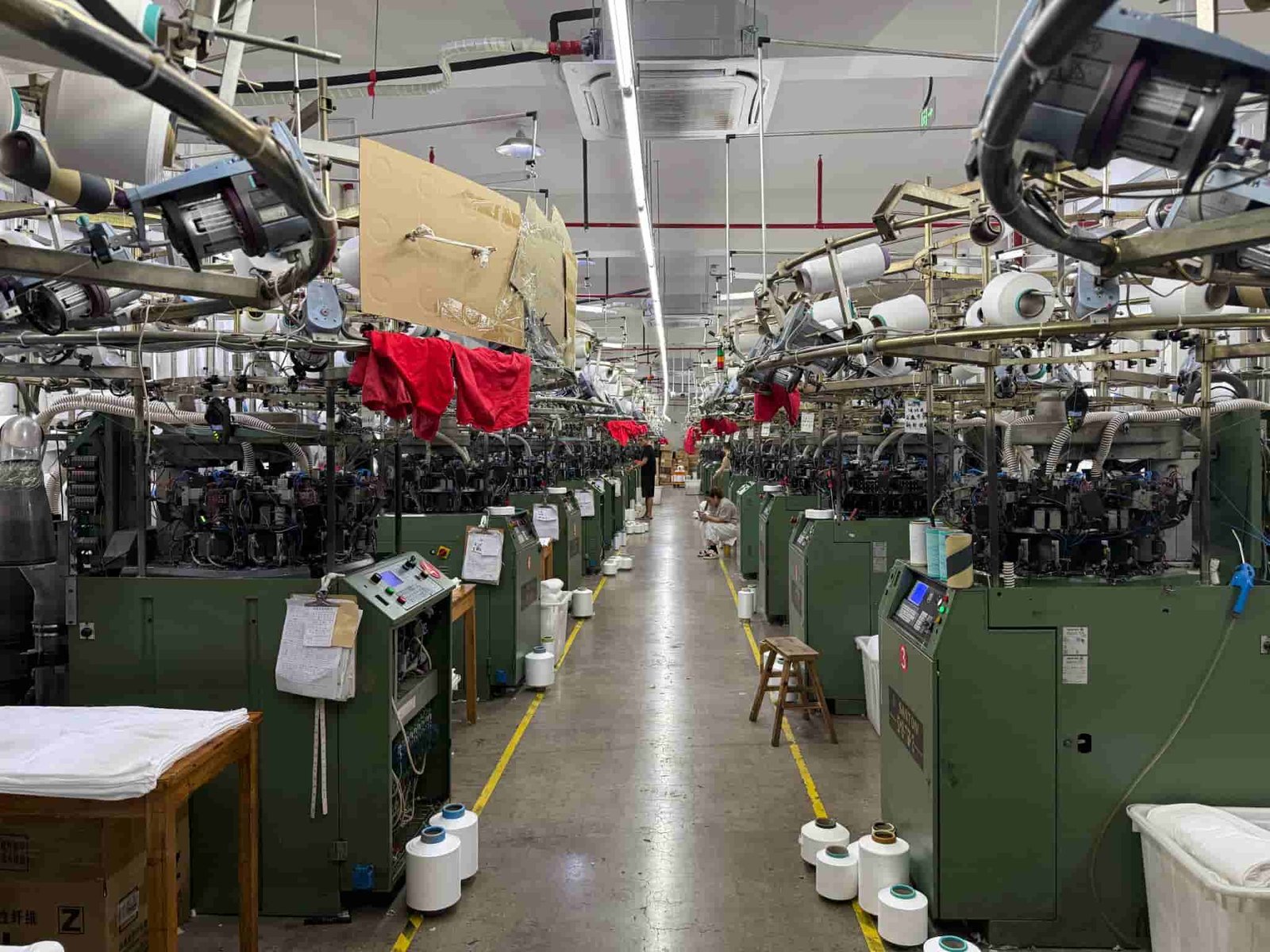
Seamless Production
The core manufacturing system includes 28 Italian Santoni seamless knitting machines. Buyers can review the actual production area, equipment, knitting workflow and relevant in-process controls. For a technical audit, machine count alone is not sufficient; program control, yarn, sample approval, structure inspection and production records provide stronger evidence of how seamless orders are managed.
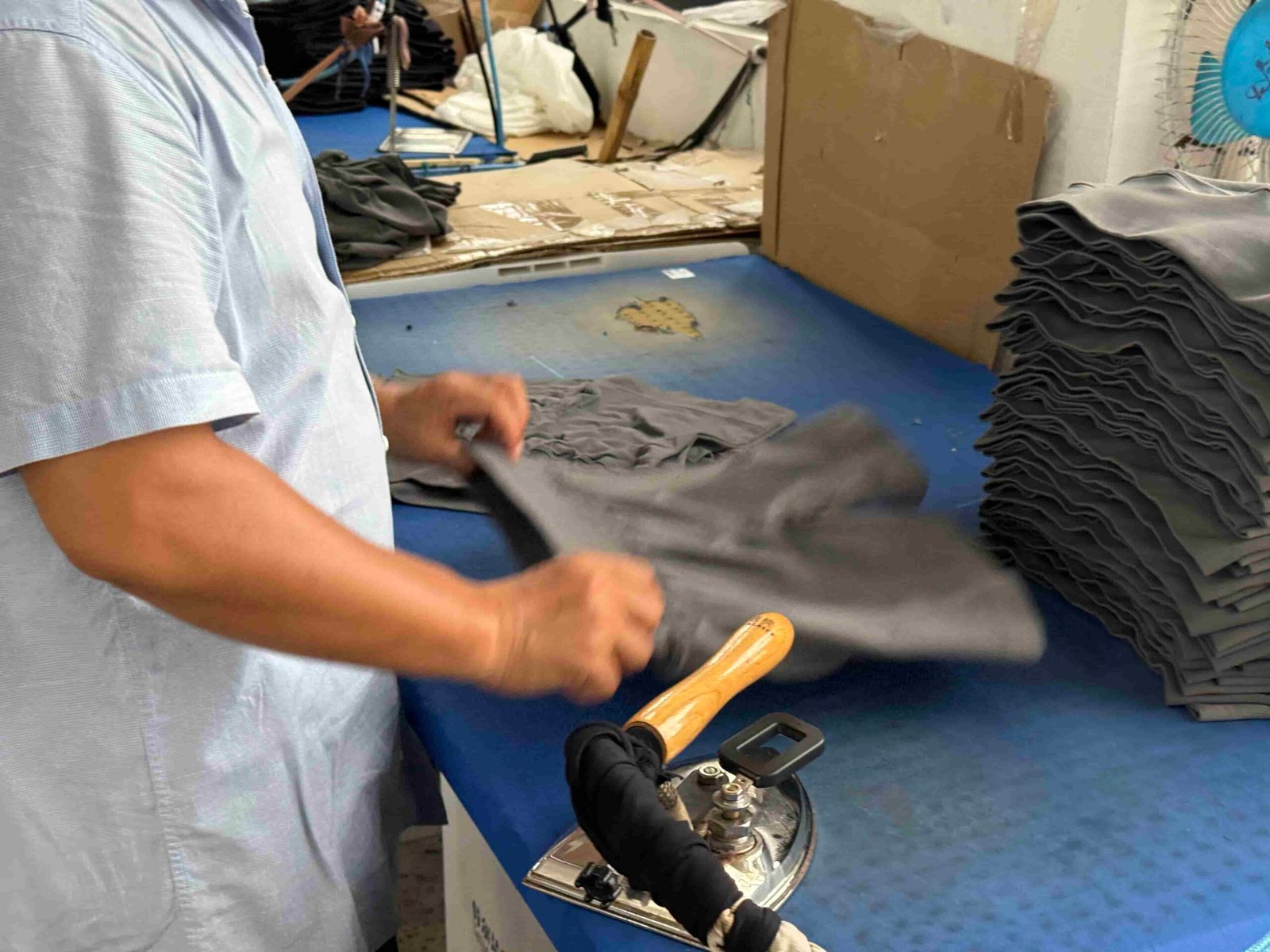
Cut-and-Sew Production
MOVEVOX’s self-operated cut-and-sew system includes approximately 24 primary sewing and garment machines, with controlled satellite capacity supplementing production where appropriate. A buyer visit can review cutting, sewing, garment assembly and how production instructions correspond to the approved project specification.

Quality Inspection
MOVEVOX currently has five QC personnel, with Quality Manager Nacy Wu having approximately eight years of garment inspection and quality-management experience. The quality area should demonstrate actual measurement, workmanship, product, label, packaging and final-release activities, together with records where confidentiality allows.
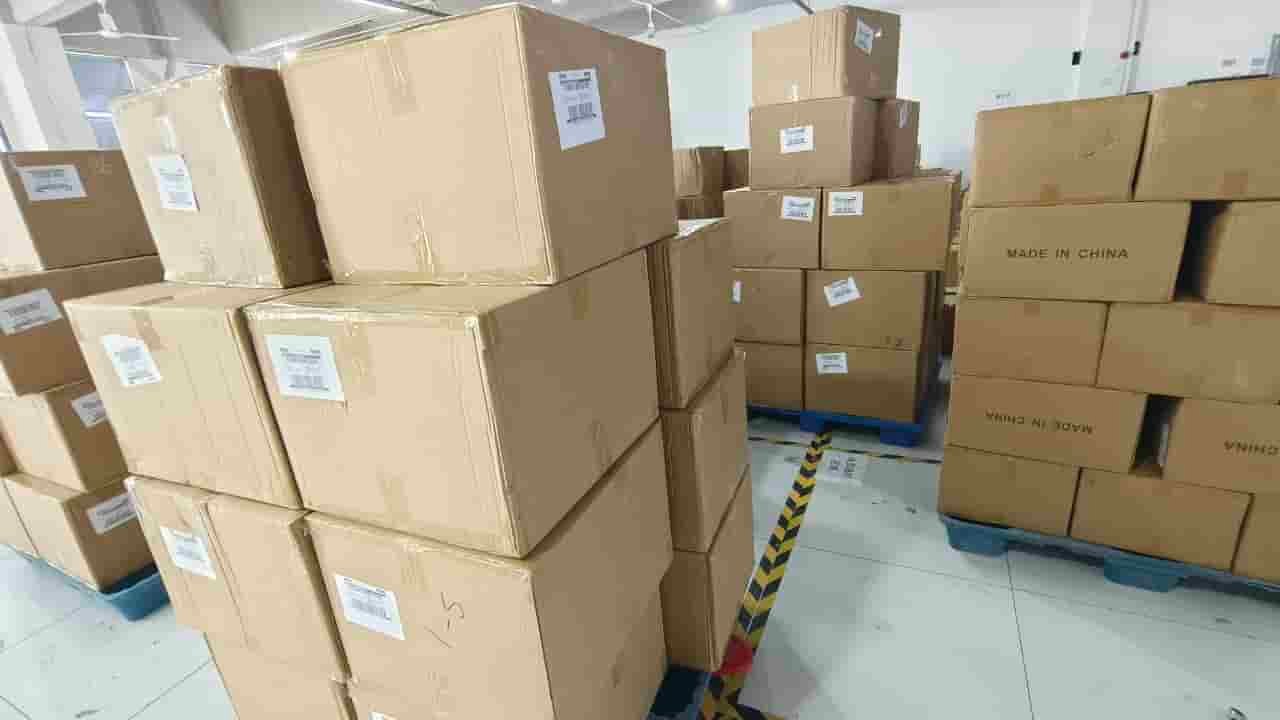
Packing & Warehouse
Packing is controlled against the final PO, SKU, labels, barcode, polybag, carton and customer packaging instructions. A factory visit can review finished goods, packing workflow and warehouse or shipment-preparation areas without exposing confidential products belonging to other customers.
Document Control
Mature supplier audits also review records, not only machines. MOVEVOX’s brand-level management direction links PO, SKU, material, Approved Sample, Tech Pack, QC and shipment information so project decisions can be traced beyond individual chat messages or employee memory. Confidential buyer data remains protected during any audit or public presentation.
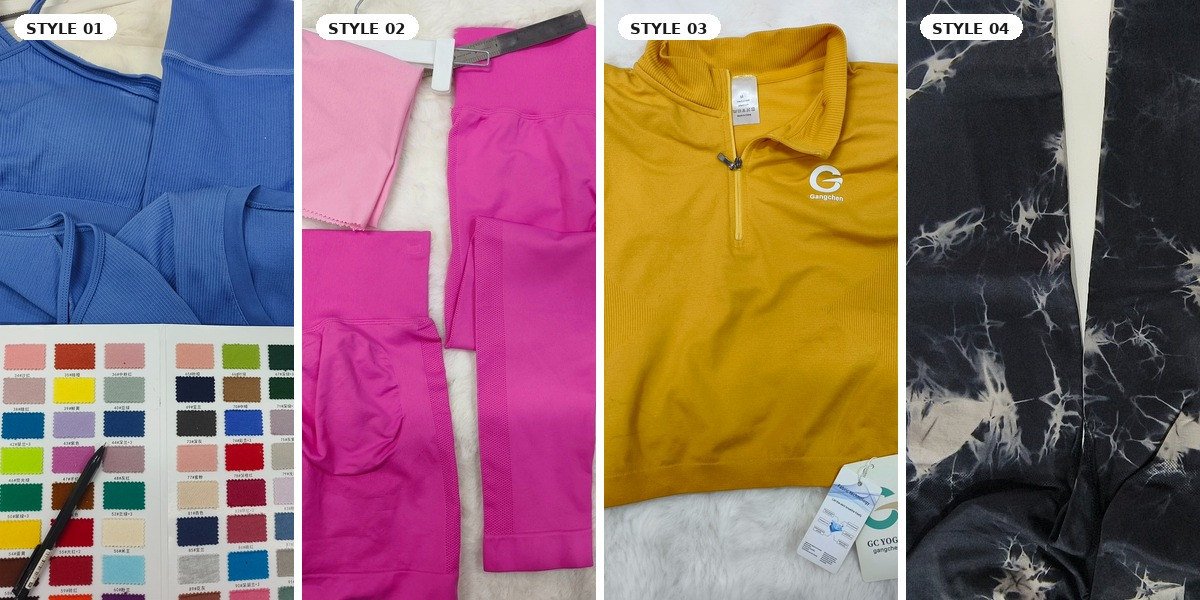
Testing Evidence Must Match the Actual Product Scope
MOVEVOX can arrange or cooperate with third-party laboratory testing according to buyer requirements, target-market rules, RSL requirements or project risks. A laboratory report is treated as evidence for the tested sample and stated scope—not as a blanket certification of every MOVEVOX product.
Buyer RSL Requirements
A mature brand may maintain a Restricted Substances List that is stricter or more specific than general market requirements. The project team therefore needs to understand which materials, components, colors, prints or coatings fall within the buyer’s testing scope before sample submission.
Applicable scope: Buyer-specific sports bra materials, trims, logos or finished products when the customer requires RSL testing.
MOVEVOX response: Confirm the buyer requirement, identify the relevant sample and arrange testing through the customer-nominated or project-qualified laboratory.
Sample Identity
The usefulness of a test report depends on knowing exactly what was tested. The submitted sample should be connected to the relevant product, material, color, component or batch. When the material, supplier, color, finish, logo or another risk-relevant condition changes, the previous report may no longer be sufficient evidence.
Applicable scope: Every laboratory report used to support a material or product compliance statement.
MOVEVOX response: Maintain test-request, sample-description and material information so the report can be mapped to the actual project scope.
Third-Party Laboratory
MOVEVOX can work with customer-nominated or project-qualified third-party laboratories. The appropriate laboratory and test method depend on the buyer, target market and test item. The purpose is to create independent evidence tied to the project, not to claim that MOVEVOX operates an internal accredited testing laboratory where no such factual evidence exists.
Applicable scope: Chemical, material or performance tests requiring independent laboratory evidence.
MOVEVOX response: Coordinate sample preparation, BOM or material information, test item confirmation, submission and report collection according to project requirements.
Report Review
Receiving a laboratory PDF is not the end of the process. The report must be reviewed for sample description, tested items, standard or method, date, result and scope. A pass result for one black fabric, for example, should not be presented as proof that every color, style and future bulk lot automatically passes the same requirement.
Applicable scope: All reports used in customer approval, product claims or compliance documentation.
MOVEVOX response: Review the report against the actual project and avoid expanding the conclusion beyond the tested sample or stated scope.
Failure and Retesting
If a test fails, the project should identify whether the cause is linked to material, finish, logo, supplier, color, process or another factor. Corrective action may require changing or correcting the relevant input, producing a new representative sample and retesting.
Applicable scope: Failed tests, material changes, new colors, new suppliers, RSL updates or buyer-triggered retesting.
MOVEVOX response: Hold the affected decision, investigate the source, implement corrective action and obtain updated evidence before making a compliance claim.
Existing Evidence — Scope Note
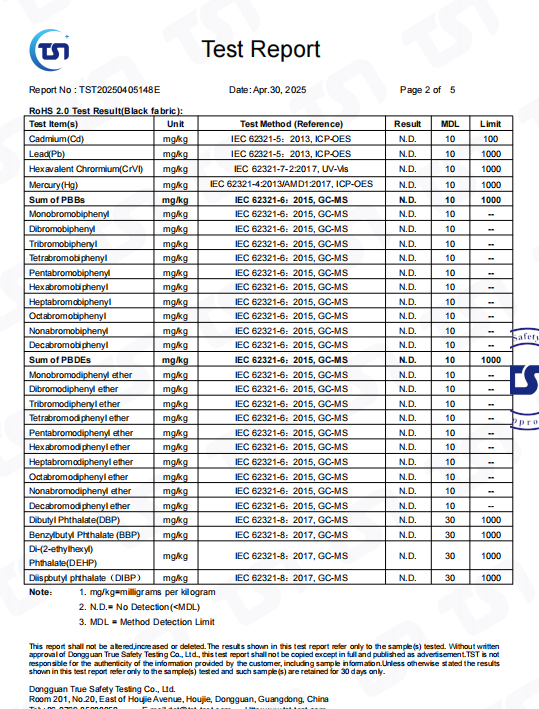
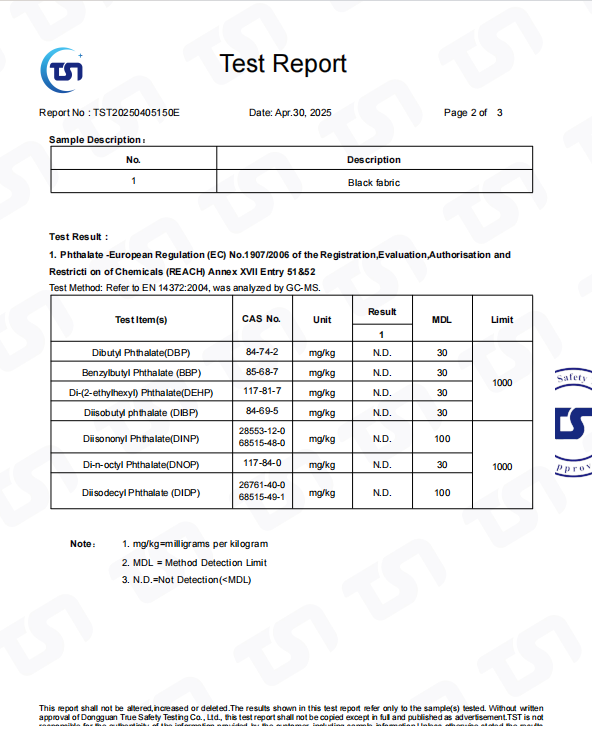
MOVEVOX currently has third-party test evidence for a black fitness yoga leggings sample, including RoHS 2.0 testing under report TST20250405148E and phthalates testing related to REACH Annex XVII under report TST20250405150E, both dated April 30, 2025. These documents demonstrate actual third-party testing experience, but they do not prove that gym sports bras have passed those tests.
Sources: TST20250405148E; TST20250405150E; TST20250405148EC.

A U.S. Activewear Project From Sample to Repeat Orders
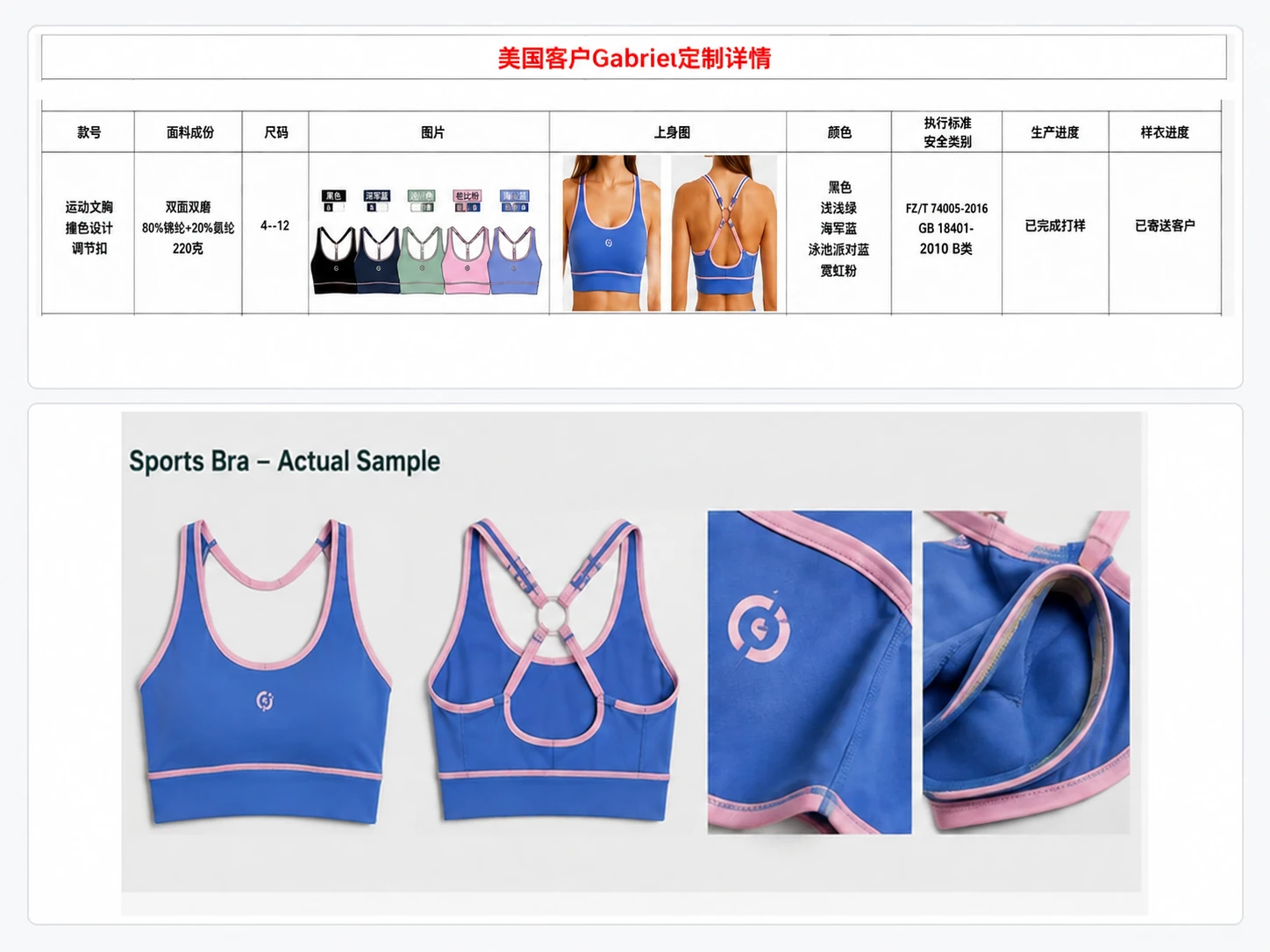
An anonymized U.S. fitness-focused customer developed a multi-product activewear range with MOVEVOX, including sports bras, leggings, shorts, tops, sets and one-piece styles. The cooperation began from the customer’s own technical package and developed through multiple sample versions, wearer testing, private-label packaging requirements and recurring bulk orders.
Client Background
The customer operated a fitness-led sales channel in the United States and required activewear suitable for a broader body profile and real training use. Product requirements included strong stretch, supportive wearing direction, opacity for relevant products, soft handfeel, extended sizing and regular introduction of new styles. The project developed into a long-term relationship covering multiple activewear categories.
The Challenge
The project was not limited to selecting an existing sports bra and adding a logo. The customer supplied a technical package, reviewed the first sample and requested adjustments based on actual use. After a second sample version, additional pieces were produced for real wearer testing. The final commercial program also required custom packaging, instruction materials, labels, logo, care-label execution and individual QR-code identification, creating significant SKU-control risk during quality inspection and packing.
MOVEVOX Solution
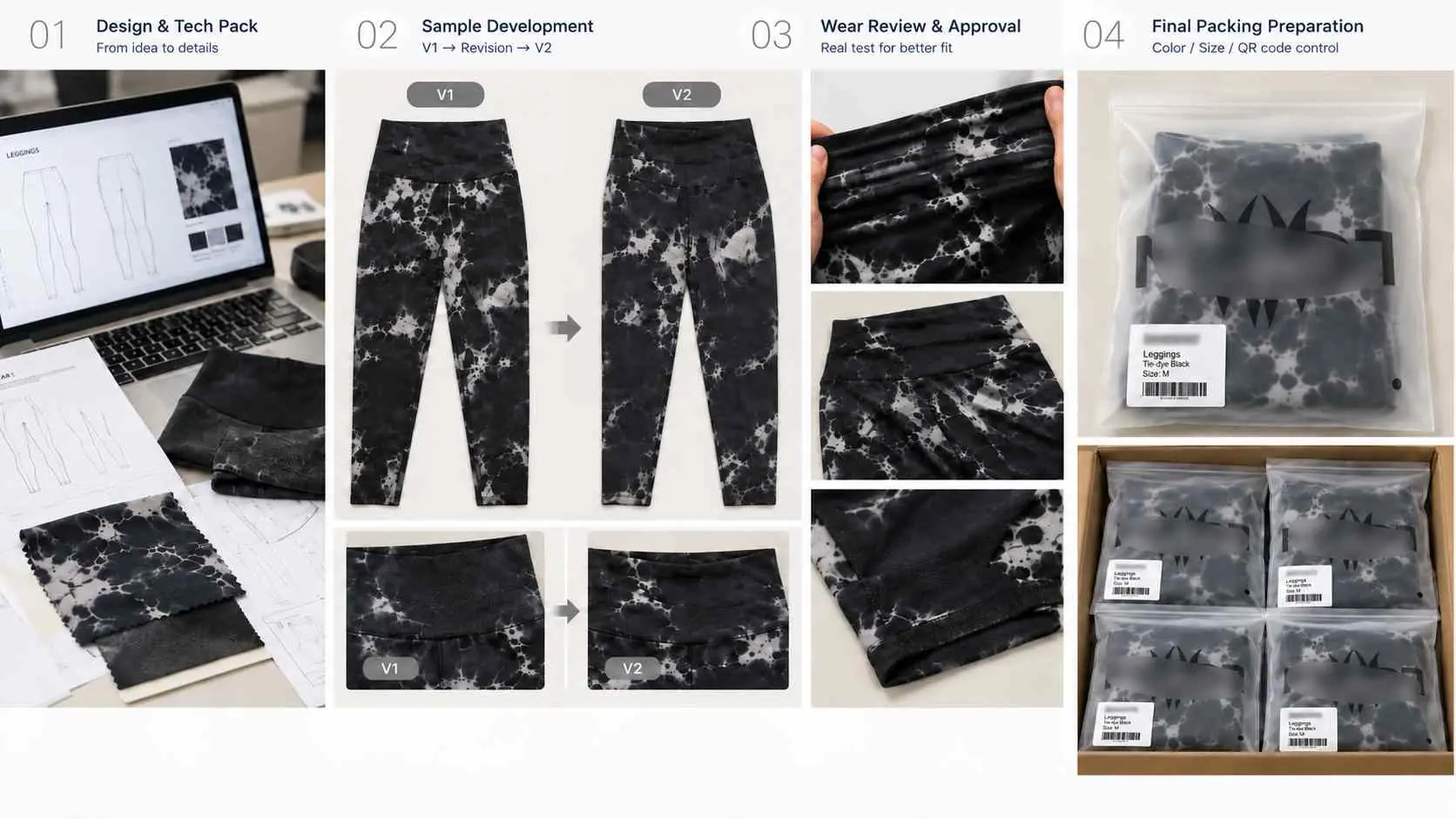
MOVEVOX reviewed the customer’s technical package and produced the first development version. After customer feedback identified design areas that did not fully match the intended use, a second sample was developed. Once the revised direction was substantially accepted, approximately 5–10 additional samples were prepared for practical user testing. Following positive validation, the project moved to bulk customization. Packaging required careful control because different colors and sizes used different QR-code identifiers. QC and packing therefore used repeated confirmation by style, color and size to reduce the risk of mismatching the garment and external identification.
Technical Review
The customer provided its technical package. MOVEVOX reviewed the product requirements and translated them into the first development sample rather than proceeding directly to bulk manufacturing.
First Fit Feedback
The first sample was shipped for customer review. The customer identified areas that did not fully suit the actual intended use, creating a defined revision requirement.
Revised Sample
MOVEVOX developed a second sample version based on the consolidated feedback. The revised version was substantially accepted and became the basis for broader wearer validation.
Wear-Test Samples
Approximately 5–10 additional samples were prepared for real testing. Feedback from that stage supported the customer’s decision to proceed with bulk customization.
Bulk & Packaging
The commercial order included custom packaging, instructional material, labels, logos, care labels and QR identification. Packaging and QC required additional time because each color and size needed correct matching.
Repeat Cooperation
The customer continued placing activewear orders after the initial development and bulk-production process, while MOVEVOX continued to support new-style sampling and ongoing product supply.
Results
- Approximately 2,000 pieces per order were described as a typical order scale in the source case.
- Approximately two orders per month were described during the established cooperation.
- Three years of cooperation were reported in the source case.
- 5–10 wearer-test samples were produced after the second development version.
- The project expanded across multiple activewear categories, including sports bras.
Customer Quote
Verified verbatim English customer quotation required. No verified English quotation is available in the supplied source, so this section intentionally contains no fabricated testimonial.