
Buttery Soft Leggings Manufacturer for Established Activewear and Yoga Brands
Developing a buttery-soft legging is not simply a matter of choosing a fabric described as “soft.” The target handfeel must work together with stretch, recovery, opacity, fit and waistband stability, then remain controlled when an approved sample moves into bulk production. MOVEVOX supports this process through material development, cut-and-sew manufacturing, sample approval, production control and quality management.
What Buyers Face
- A soft sample can change when bulk fabric varies in GSM, finish, stretch or recovery.
- Light, smooth fabrics can lose opacity when color, sizing and garment stretch conditions change.
- A successful first sample has limited value if repeat orders cannot reproduce the approved handfeel.
How MOVEVOX Controls It
- Define the target through approved fabric, composition, GSM, handfeel, stretch, recovery, opacity and fit.
- Use approved samples and locked specifications as references for material purchasing and bulk garment execution.
- Manage cut-and-sew production, quality checks and controlled capacity through one accountable order-management system.
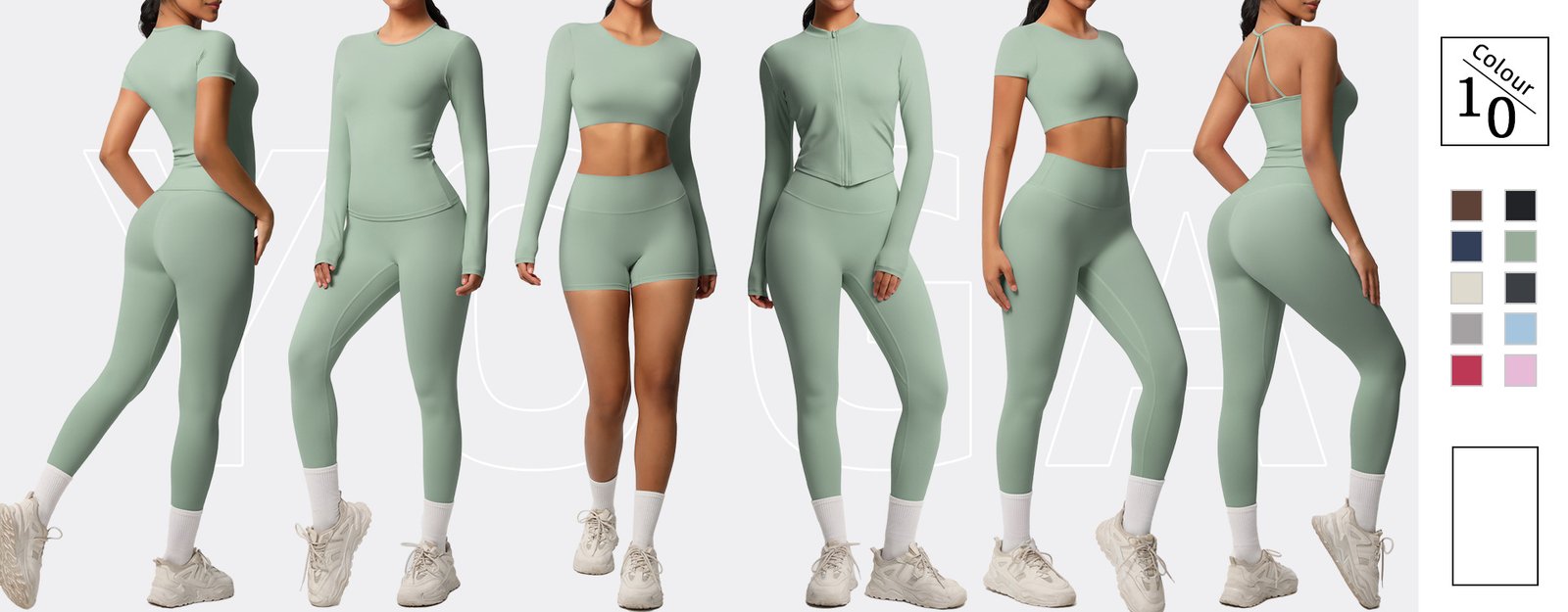
What Does Buttery Soft Mean in Leggings Manufacturing?
For professional product development, “buttery soft” is a target wearing and handfeel experience rather than a single fixed fabric composition.
For a professional leggings development project, “buttery soft” should be treated as a target wearing and handfeel experience rather than a single fixed fabric composition. The final result depends on fiber selection, fabric weight, knitting structure, surface finishing, stretch and recovery, opacity, garment fit and the production consistency achieved after sample approval.
Target Experience
A brand may describe its target as soft, smooth, low-friction, matte, lightly compressive or second-skin. Those descriptions must be converted into physical material and garment specifications before bulk production.
Technical Translation
MOVEVOX can evaluate nylon/spandex, brushed, peach-finish, naked-feel and other stretch activewear material directions according to the required handfeel, support, opacity, fit and intended use.
Approval Standard
The approved material and approved garment sample become practical references for later comparison. Composition alone is not sufficient because fabrics with similar fiber percentages can still differ in weight, finishing and handfeel.
Production Repeatability
Bulk execution must control the material lot, color, GSM, stretch, recovery, garment measurements, sewing construction and surface condition against the approved standard rather than relying only on a fabric name.
This approach gives product developers and sourcing teams a more objective way to evaluate softness while still protecting the performance, fit and repeatability expected from commercial leggings.
Built for Different Activewear Sourcing Programs
MOVEVOX is most relevant when a buyer needs more than a stock legging with a logo. Different organizations enter development with different levels of technical definition, volume planning and supplier-control requirements.
Established Activewear Brands
Established activewear brands usually enter a buttery-soft leggings project with an existing fit language, technical specifications, benchmark garments or an established fabric expectation. Their priority is not simply making one acceptable sample. They need the approved product to move into controlled production without unapproved material, fit or workmanship changes. MOVEVOX can work from Tech Packs, measurement charts and legitimate reference samples while coordinating material, sample development, production standards and QC through one project-management structure.
- Existing fit standards must remain consistent across new product development.
- Material approval requires more than confirming fiber composition alone.
- Production-site, quality and specification changes require controlled communication.
Growing Brand Programs
Growing brands often know the consumer experience they want but still need manufacturing support to define the technical route. They may have a target handfeel, benchmark garment, preferred compression level and launch price without having every fabric specification finalized. MOVEVOX can help translate those inputs into material options, pattern or fit development, sample revisions and an approved production standard while keeping the project commercially realistic for a first custom order.
- Development may begin from a Tech Pack, sample or defined concept.
- Cut-and-sew custom MOQ commonly starts around 150 pieces.
- Successful trial programs can move into repeat and larger production.
Sourcing and Vendor Teams
Sourcing, procurement and vendor-management teams evaluate more than product appearance. They need to understand factory reality, production responsibility, capacity, quality checkpoints, outside processing, test scope and the evidence behind supplier claims. MOVEVOX operates from a Yiwu manufacturing base while also managing controlled satellite capacity. Production allocation, specifications, materials, order follow-up and quality requirements remain under MOVEVOX project management rather than being independently redefined by partner factories.
- Factory and technical audits can be supported by appointment.
- Production responsibility remains with the MOVEVOX order-management system.
- Evidence scope is separated from broad marketing claims.
What Mature Buyers Need From This Supplier
A buttery-soft leggings supplier must satisfy several procurement priorities at the same time. Product feel alone is not enough if development, bulk consistency, production scale or evidence management cannot support an ongoing commercial program.
Product Definition
The supplier must convert subjective language such as soft, smooth, matte or second-skin into material, fit and garment specifications that can actually be reviewed and approved.
Execution proof: Approved fabric, sample, measurements and technical requirements establish a shared production reference.
Development Control
Material choice, pattern, fit, waistband construction and sample revisions need controlled versions so that an improvement in one area does not unintentionally change another approved characteristic.
Execution proof: MOVEVOX manages technical review, sampling, revision and final approval before production release.
Bulk Consistency
The buyer needs confidence that bulk fabric, measurements, workmanship, color and handfeel remain aligned with the approved standard after the sample room hands the project to production.
Execution proof: Material intake, first-piece, inline, finished-garment and pre-shipment checks support bulk control.
Scalable Supply
A commercially successful legging may move from trial quantities into repeat orders, more colors or additional SKUs. Capacity planning must support growth without losing the approved product standard.
Execution proof: Own production and controlled satellite capacity are coordinated through unified order and QC requirements.
Evidence Discipline
Professional buyers need to know which claims are supported by factory facts, project records, test reports or third-party documents, and which requirements must still be verified for a specific order.
Execution proof: MOVEVOX distinguishes tested samples, supplier documents and company-level manufacturing facts by their actual scope.
MOVEVOX does not position one purchasing objective above all others. The working model is to balance product development, acceptable commercial terms, quality execution, production flexibility and evidence transparency so the buyer can evaluate the full supplier relationship rather than only an initial unit price.
Five Warning Signs Before Approving a Supplier
A buttery-soft product can change at several points between development and bulk production. These warning signs identify where material, version or production controls may be missing.
Vague Handfeel Definition
If a supplier accepts “buttery soft” as the complete specification, there is no objective reference for later fabric purchasing. Similar compositions can still produce different softness, surface feel, thickness, stretch and recovery after different knitting or finishing processes.
Verify: Ask how approved handfeel, GSM, composition, stretch and the physical fabric reference are recorded.
Uncontrolled Fabric Changes
A substituted fabric may have a similar color and fiber percentage but behave differently in cutting, sewing, stretch, recovery or wearing. Changes made after sample approval can therefore alter both the handfeel and finished garment performance.
Verify: Ask whether material-source, lot or specification changes require comparison and approval before bulk release.
Fit Changes Opacity
Opacity is not determined by fabric alone. A material that appears adequately covered when relaxed may become more transparent when stretched by an undersized hip, incorrect rise or different size grading.
Verify: Evaluate opacity on the approved garment fit, especially in light colors and high-stretch zones.
Sample-Bulk Separation
A development sample may be produced carefully by a small sample team while the bulk order follows a different material source, production method or uncontrolled specification. The problem is not scale itself but the absence of a formal handover standard.
Verify: Request the approved-sample, specification and first-piece control path used before full production.
Hidden Production Shifts
If a supplier cannot explain where an order will be produced or how outside capacity is controlled, scaling may introduce different operators, materials or QC practices without the buyer understanding the change.
Verify: Confirm production-site responsibility, material control, QC ownership and any customer approval requirements before scaling.
From Target Handfeel to Repeatable Bulk Production
The value of a buttery-soft leggings manufacturer is not only the ability to produce a soft sample. The supplier must build controls that make the approved product repeatable.
Repeatable Brand Supply
Once a project is approved, MOVEVOX coordinates material readiness, production allocation, process inspection and final release. Controlled satellite capacity can extend output when order volume increases without allowing individual production sites to redefine customer specifications independently.
Evidence: Managed normal combined delivery capacity is approximately 150,000–200,000 pieces monthly; eight long-term satellite factories provide controlled additional capacity.
Controlled Development
The target product is developed through technical review, material selection, pattern and fit work, sample making, revision and approval. Handfeel is considered together with composition, GSM, stretch, recovery, opacity and garment fit rather than approved as an isolated adjective.
Evidence: Standard samples normally require about 5–10 working days after details are confirmed; approved samples and specifications become production references.
Manufacturing Foundation
MOVEVOX combines cut-and-sew activewear manufacturing with seamless capability, product development, material sourcing and internal quality control. For fabric-based buttery-soft leggings, cut-and-sew development provides the primary route for translating an approved material and pattern into commercial garments.
Evidence: Approximately 24 main sewing and garment-production machines plus 28 Italian Santoni seamless machines.
Where Your Leggings Project Fits With MOVEVOX
Brands can enter a buttery-soft leggings project at different stages. Required information and deliverables change depending on whether the buyer is defining the product, validating a pilot or managing repeat production.
Concept
At the concept stage, the buyer may know the desired wearing experience, target customer, appearance and commercial positioning without having a finalized fabric or complete Tech Pack. MOVEVOX can review legitimate reference garments, sketches, product images or defined requirements and help translate them into a manufacturable material, construction and sample direction. Final design direction and approval remain with the customer.
- Target handfeel and intended use
- References, sketches or preliminary construction
- Quantity, colors, sizes and positioning
- Manufacturability and material-direction review
- Suggested development path
- Sample-development requirements
Sampling
Once key requirements are defined, the project enters material, pattern and sample development. The purpose is not simply to make a visually similar legging. The sample must allow both parties to evaluate handfeel, fit, measurements, stretch, opacity, waistband behavior, workmanship and branding before the product becomes a bulk-production standard.
- Confirmed measurements or target fit
- Fabric expectation, colors and branding
- Consolidated comments
- Material and construction development
- Physical sample with recorded specification
- Revision support to approval
Pilot Order
A pilot order is appropriate when the product has passed sample approval but the brand wants to validate commercial production before committing to larger repeat quantities. For regular cut-and-sew customization, MOVEVOX's standard MOQ can begin around 150 pieces, subject to fabric, color, construction, branding and order structure.
- Final quantities, colors and size breakdown
- Approved sample and written confirmation
- Packaging, labeling and delivery requirements
- Production planning to approved standard
- In-process quality checks and progress coordination
- Finished-garment and packing control
Bulk Production
For established programs, the main sourcing question becomes repeatability across larger quantities, colors and SKUs. MOVEVOX coordinates material procurement, production allocation, technical requirements and quality controls under one order-management system while using own production and controlled satellite capacity according to project needs.
- Confirmed PO and production specification
- Delivery window and destination
- Buyer-specific QC or documentation standards
- Material readiness and allocation planning
- Unified follow-up and quality requirements
- Final inspection and shipment coordination
Reorder
Repeat orders should not restart product development without reason. MOVEVOX uses retained specifications, approved references and order records to support repeat execution while checking any new material lot, color, quantity or requested modification. Changes are reviewed separately rather than silently absorbed into an old production standard.
- Reorder PO and schedule
- New colors, quantities or changes
- Previous-order feedback
- Comparison with prior approved standards
- Capacity and material planning
- Updated QC controls where required
Key Facts for Initial Supplier Qualification
These figures provide a defined snapshot of MOVEVOX's current manufacturing, sampling and quality-management structure. They are sourcing reference points rather than unsupported maximum-capacity claims.
Standard sample cycle after development details are confirmed.
Regular cut-and-sew custom MOQ, subject to project structure.
Italian seamless knitting equipment in the own-factory system.
Main sewing and garment-production equipment in the core cut-and-sew area.
Quality personnel supporting material, production and finished-garment control.
Normal combined managed delivery capacity across production resources.
Data scope: Capacity figures include managed production resources and should not be described as theoretical maximum output.
Six Myths About Buttery Soft Leggings
“Buttery soft” is useful as a product-development target, but it becomes misleading when treated as a complete technical specification.
Myth: Buttery soft is one fabric.
Fact: It is better understood as a handfeel and wearing-experience direction. MOVEVOX's material system can reach softer or naked-feel directions through fine-denier nylon/spandex, brushed, peach-finish and other stretch constructions, depending on the target product.
Condition: Final handfeel must be approved on a specific material or garment sample.
Myth: More spandex always feels better.
Fact: Spandex percentage affects stretch and recovery, but it does not independently determine softness. Fiber fineness, knitting structure, GSM, finishing and surface treatment also influence friction, compression, drape and skin feel.
Condition: Composition must be assessed together with the finished fabric construction.
Myth: Soft fabric is automatically squat-proof.
Fact: Opacity depends on fabric density, color, GSM, stretch ratio, garment measurements and the amount of extension when worn. A soft fabric may require different construction or fit decisions to achieve the buyer's required coverage.
Condition: Light colors and high-stretch areas require specific validation on the finished garment.
Myth: Same composition means same handfeel.
Fact: Two fabrics can use similar nylon and spandex ratios yet feel different because yarn fineness, knit density, dyeing, finishing and surface processing are not identical. MOVEVOX therefore treats handfeel as part of physical approval.
Condition: Bulk material should be compared with the approved material or approved garment reference.
Myth: A good sample guarantees bulk.
Fact: Sample approval establishes a target; it does not remove the need for production control. Bulk material lots, first-piece execution, garment measurements and process conditions still need to be checked against the approved reference.
Condition: Repeatability depends on controlled handover from development into production.
Myth: Every color performs identically.
Fact: Color can affect visual opacity and may influence how surface finish is perceived. Dark colors normally provide easier visual coverage than light colors, while lighter shades require greater attention to stretch, density and garment fit.
Condition: Coverage should be validated for the actual approved color and size range.
What Creates a Naked-Feel Fabric Experience
MOVEVOX defines naked-feel fabric as a low-friction, soft, fine, close-to-skin and generally matte product-experience category rather than one fixed composition.
Fine Fiber Route
Fine-denier nylon combined with spandex is a common technical direction. MOVEVOX's typical naked-feel development range is approximately 75–82% nylon with 18–25% spandex.
Fabric Weight
A common MOVEVOX management range for naked-feel cut-and-sew fabric is approximately 200–240 GSM. Final weight depends on required support, opacity and product application.
Knit Density
Fabric density contributes to smoothness, coverage and stability under stretch. It must be evaluated together with weight, color and the amount of extension created by the garment fit.

Surface Finish
Dyeing and finishing affect surface friction, softness, visual matte effect and handfeel consistency. Excess heat or pressure can also mark sensitive soft-surface fabrics.
Elastic Balance
Spandex and fabric construction influence stretch, recovery and compression. The target is not maximum elasticity but a balance suitable for the approved fit and intended use.
Overall performance logic: Naked-feel fabric is particularly suitable for yoga leggings, shorts, bras and lower-to-medium compression activewear, but it is not the default answer for every performance requirement. Light-color opacity, snagging, surface marks, wash-after handfeel and recovery require validation before bulk approval. The final production reference is the approved material and approved garment, not the generic fabric category alone.
Choose the Right Soft-Fabric Development Route
The correct material depends on what “soft” must mean for the finished product. Studio, winter-yoga and low-compression athleisure leggings can require different surface, weight and recovery characteristics.
1. What handfeel is required?
2. How much support is needed?
3. Is seasonal warmth important?
4. What is the main risk?
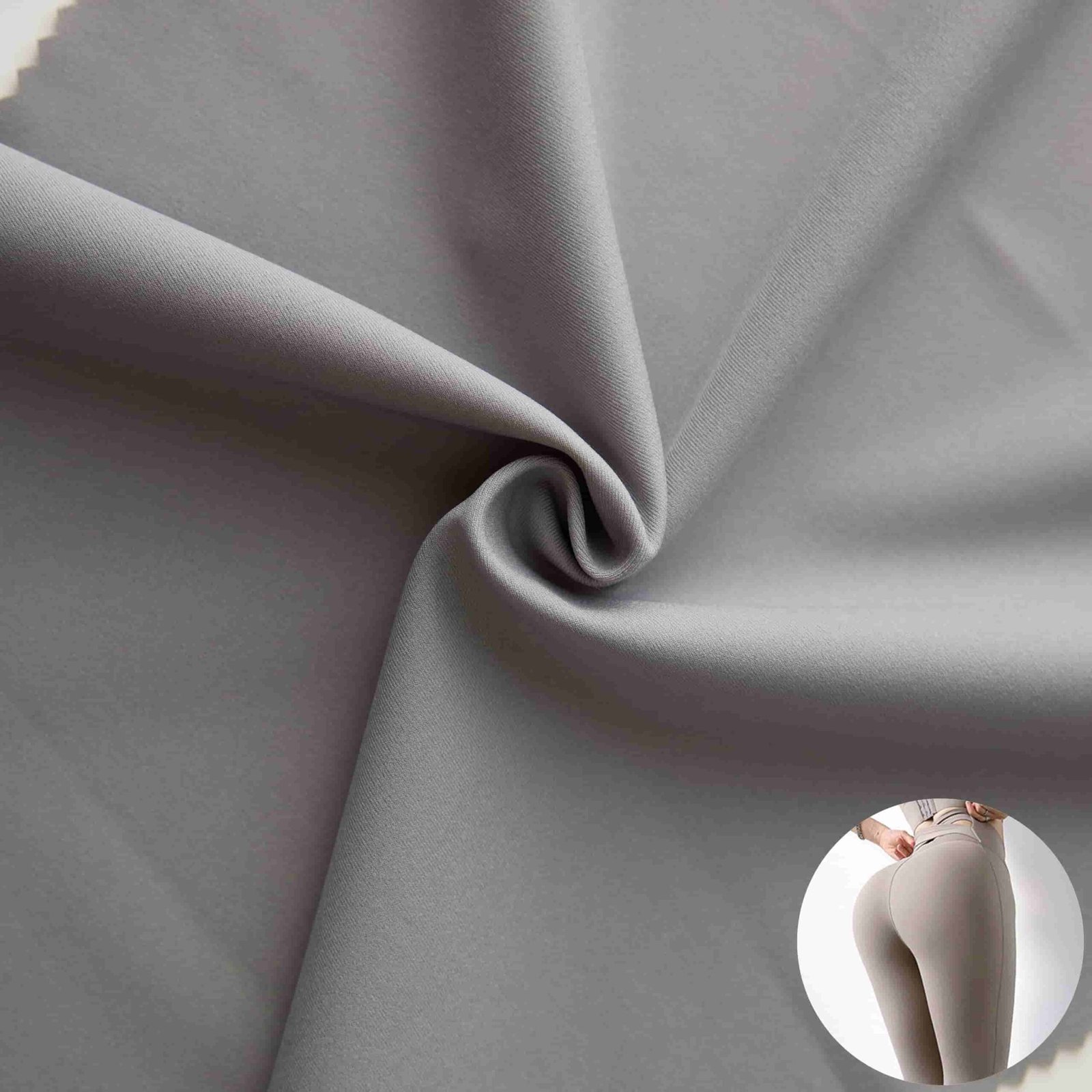
Naked Feel
Choose this route when the target is smooth, fine, low-friction and close to the skin with a generally matte appearance. MOVEVOX commonly manages naked-feel fabrics around 75–82% nylon and 18–25% spandex at approximately 200–240 GSM. Light-color opacity, snagging, recovery and wash-after handfeel should be confirmed before bulk.
200–240 GSM Smooth-Matte High Stretch
Brushed Stretch
Brushed stretch fabric is appropriate when the brand wants a softer and warmer surface, especially for autumn or winter yoga leggings and training garments. MOVEVOX's typical range is approximately 210–270 GSM using nylon or polyester with spandex. Pilling, shedding, brushing direction, batch handfeel and surface durability require control.
210–270 GSM Brushed Soft Seasonal Warmth

Peach Finish
Peach-finish fabric provides a fine micro-raised surface and soft touch that can suit yoga, Pilates and athleisure products. MOVEVOX commonly manages this category around 190–240 GSM. Surface pressure marks, oil contamination, finishing variation and compatibility with heat-applied logos need to be checked during development.
190–240 GSM Fine Surface Low-Medium Support

Compare Soft-Legging Fabric Development Directions
Composition is useful, but it should be read together with weight, stretch, recovery, surface finish and intended use. These are MOVEVOX development references rather than fixed formulas for every order.
| Parameter | Naked Feel | Brushed | Peach Finish | Compression |
|---|---|---|---|---|
| Composition | 75–82% Nylon / 18–25% Spandex | 75–82% Nylon/Poly / 18–25% Spandex | 75–85% Nylon/Poly / 15–25% Spandex | 65–78% Nylon/Poly / 22–35% Spandex |
| GSM | 200–240 | 210–270 | 190–240 | 230–320 |
| Handfeel | Fine, smooth, low friction | Soft, warmer surface | Fine micro-raised surface | Dense, firmer support |
| Stretch | Four-way, high | Four-way, medium-high | Four-way, medium-high | Four-way, strong recovery |
| Recovery Reference | 92–96%+ | 90–95%+ | 90–95%+ | 92–97%+ |
| Main Opacity Risk | Light colors under stretch | Fit and stretch dependent | Fit and stretch dependent | Lower, but still verify |
| Surface Risk | Snagging, pressure marks | Pilling, shedding, direction | Press marks, finish variation | Whitening, excessive tightness |
| Typical Use | Yoga leggings, shorts | Yoga leggings, seasonal styles | Yoga, Pilates, athleisure | Training and support styles |
The table should not be used to select a fabric by composition alone. For buttery-soft leggings, the approved route should reflect the brand's intended softness, support, opacity, fit and retail use. MOVEVOX evaluates handfeel together with GSM, stretch, recovery, surface condition and color. Final specifications remain project-specific, and the approved material sample or approved garment becomes the practical standard for subsequent bulk comparison.
Softness Must Work With Stretch and Recovery
A soft surface alone does not determine whether leggings will maintain fit through movement and repeat wear. Stretch and recovery must be evaluated together with fabric weight, construction and approved fit.
Four-Way Stretch
Claim: Stretch should support movement without defining the entire product.
High-stretch nylon/spandex and other activewear fabrics can provide four-way extension, but actual wearing performance depends on fabric structure, garment measurements and the level of extension created on the body.
Evidence Basis
Material stretch check plus finished-garment fit and sample evaluation.
Recovery Control
Claim: A soft legging should return toward its intended shape.
MOVEVOX evaluates fabric recovery as part of material selection and project testing. Poor recovery may contribute to looseness or changing fit, while excessive tightness can undermine the target low-friction or naked-feel experience.
Evidence Basis
Material recovery reference, sample wear evaluation and project-specific testing.
Handfeel Approval
Claim: Softness must be approved physically, not by fabric name.
The buyer-approved fabric or garment handfeel is retained as a reference for later material comparison. If a new lot becomes clearly harder, thinner, thicker or rougher, it should not be treated as an unchanged material automatically.
Evidence Basis
Approved material or sample retained as the physical comparison reference.
Fit Interaction
Claim: Stretch performance must be evaluated on the finished legging.
Waist, hip, rise and leg measurements determine how much the fabric stretches when worn. This influences compression, surface appearance and opacity, so material performance cannot be evaluated independently from the approved fit.
Evidence Basis
Measurement chart, fit sample and finished-garment evaluation.
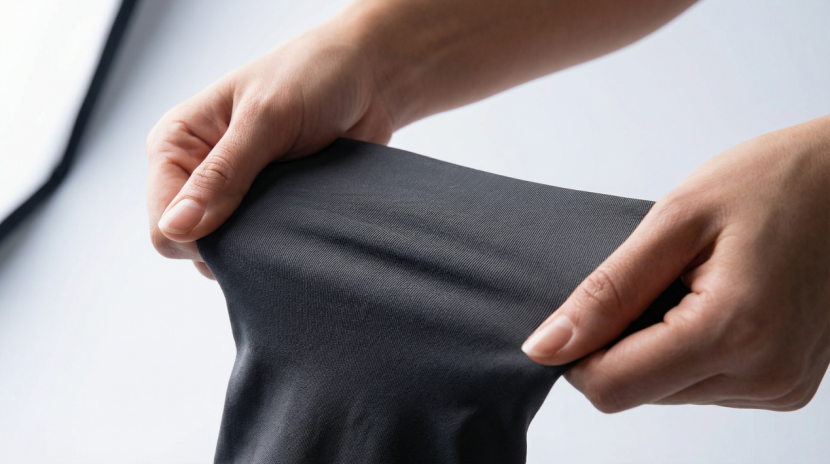
Opacity Problems Require More Than One Fix
MOVEVOX treats “squat-proof” as a product-performance target affected by several variables. It should not be presented as a universal claim across every fabric, color, size and level of garment stretch.
Light-Color Showthrough
Pale colors reveal more background contrast when stretched, especially if the material is lightweight or the garment is undersized.
Coverage concerns can require late fabric, fit or color changes after development costs have already been incurred.
Validate the actual color, GSM, density and finished-garment stretch. Adjust fabric selection or fit before approval where required.
Excessive Garment Stretch
Incorrect waist, hip or rise dimensions may force a fabric beyond the extension anticipated during fabric selection.
The buyer may diagnose a material problem when the root cause is the relationship between fabric and garment sizing.
Review measurement chart, intended negative ease, fit sample and opacity at actual wearing extension.
Bulk Fabric Variation
A different material lot, GSM or finishing condition can change coverage even when nominal fiber composition remains similar.
The approved sample may perform differently from bulk, creating sample-to-production disputes.
Compare incoming bulk material against approved composition, GSM, color, handfeel and opacity requirements before release.
Unsupported Absolute Claims
Labeling every legging “100% squat-proof” ignores differences in color, size, fit, stretch condition and testing method.
An absolute statement can exceed the evidence available for a particular material or order.
Define the buyer's coverage requirement and evaluate the specific approved garment under agreed conditions.
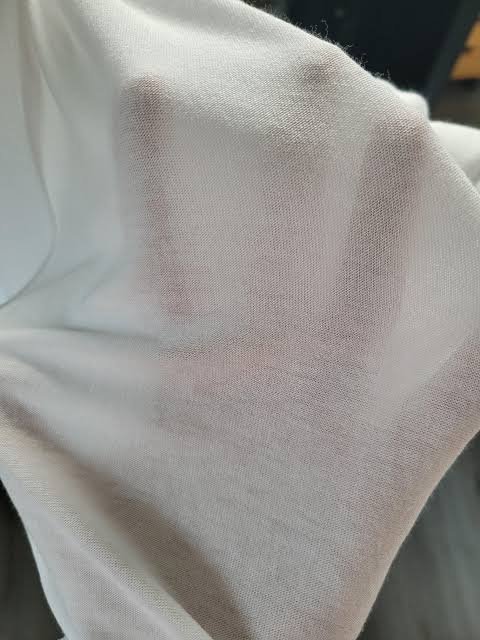
Key Takeaways for Buttery Soft Development
The strongest product decisions come from balancing softness with the technical conditions required for fit, coverage, recovery and repeatability.
- Softness is not the only performance criterion. Recovery, opacity, surface durability and the intended support level still need to be evaluated.
- Composition does not define the whole fabric. Similar nylon and spandex percentages can produce different results because yarn, knit density, GSM, dyeing and finishing also affect performance.
- Light colors need more opacity validation. This is especially important when the product uses lightweight material or a highly extended fit.
- More spandex is not automatically better. The correct level depends on construction, recovery, compression and the target wearing experience.
- The approved material and garment form the practical bulk standard. Generic descriptions such as “buttery soft,” “naked feel” or “premium stretch” are not enough by themselves.
- Meaningful changes require review. Material source, finish, GSM, fit or production-method changes can affect the finished result and should not be assumed equivalent.
Fit Specifications Must Follow the Brand Standard
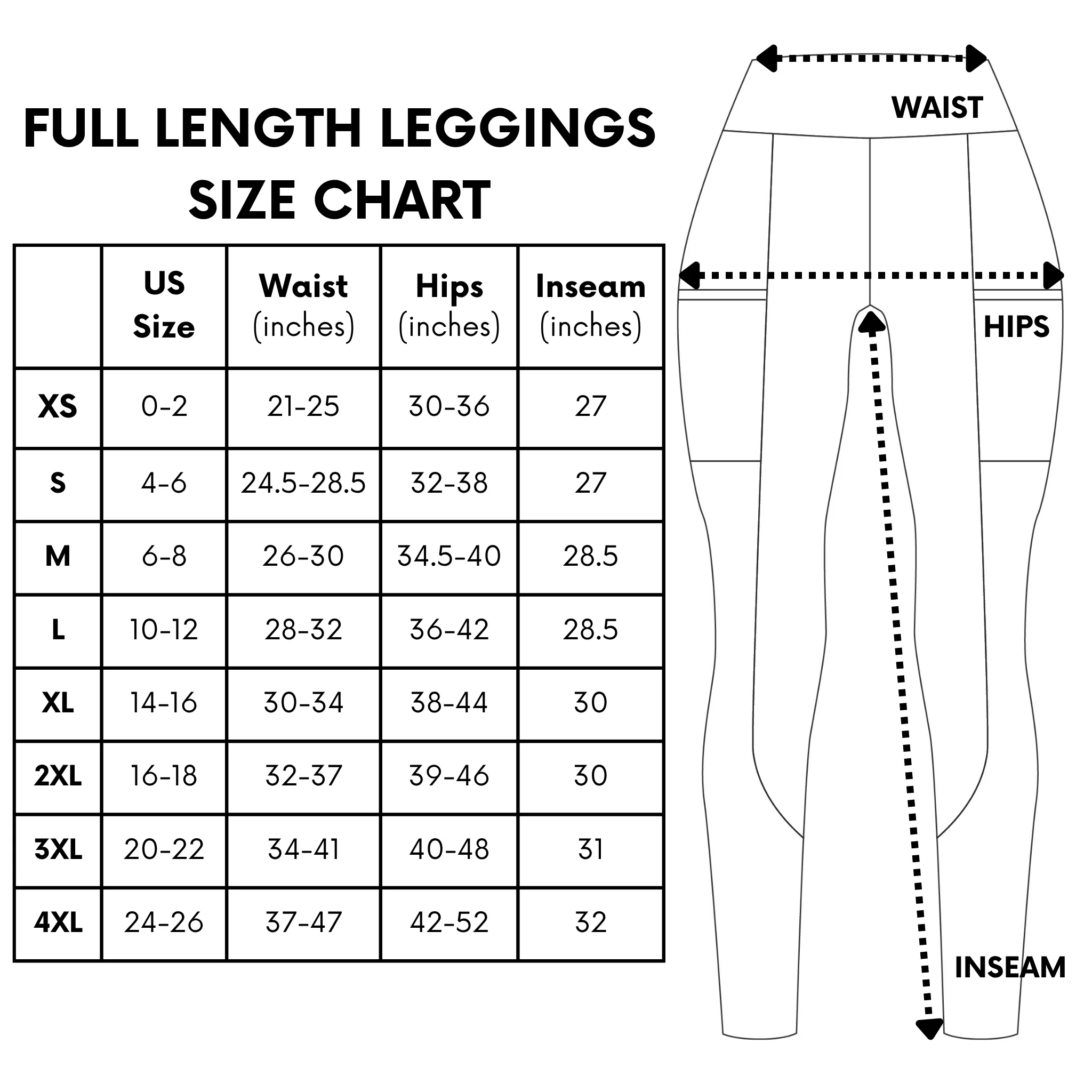
MOVEVOX does not apply one universal size chart to every leggings program. Waist, hip, rise, inseam and finished measurements should come from the brand's approved specification or a project-specific fit-development process.
| Size | Waist | Hip | Inseam | Fit Type |
|---|---|---|---|---|
| XS | Project-specific | Project-specific | Project-specific | Brand-defined |
| S | Project-specific | Project-specific | Project-specific | Brand-defined |
| M | Project-specific | Project-specific | Project-specific | Brand-defined |
| L | Project-specific | Project-specific | Project-specific | Brand-defined |
| XL | Project-specific | Project-specific | Project-specific | Brand-defined |
| XXL | Project-specific | Project-specific | Project-specific | Brand-defined |
From Product Brief to Approved Production Standard
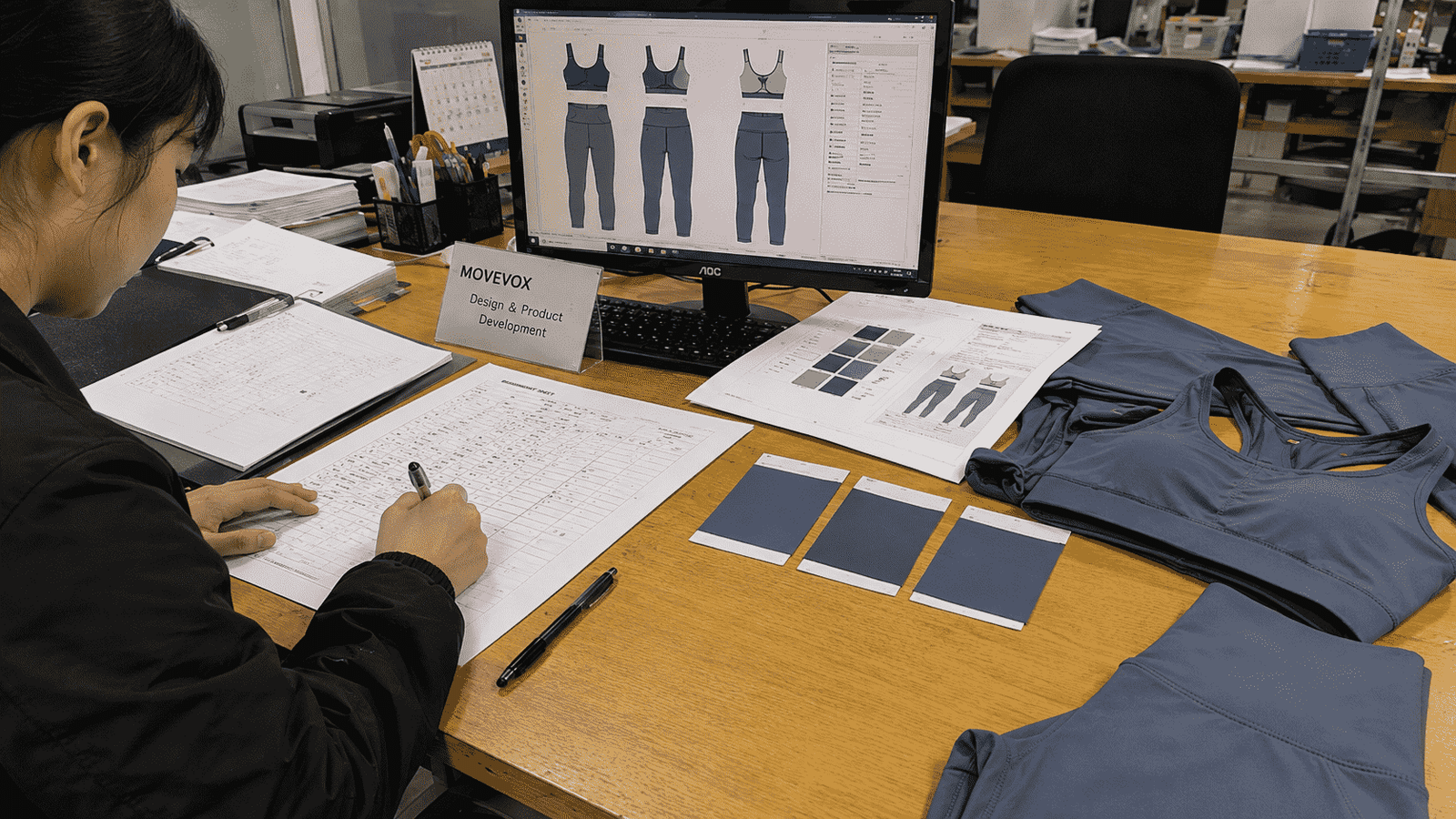
A buttery-soft leggings project moves through defined technical and approval stages. The purpose is to turn a subjective product target into specifications and physical references that production and quality teams can repeat.
Product Brief
Clarify target customer, intended activity, handfeel, support, silhouette, color plan, branding and commercial expectations. Existing Tech Packs or legitimate reference garments can shorten clarification when they already contain reliable technical information.
Deliverable: Development Brief
Timing: Project-specific
Technical Review
MOVEVOX reviews product structure, measurements, fabric direction, sewing construction, branding method and known performance risks before starting the physical sample. Missing or conflicting details are identified for customer confirmation.
Deliverable: Review Notes
Timing: Project-specific
Fabric Approval
Candidate materials are compared for composition, GSM, handfeel, stretch, recovery, surface appearance and opacity according to intended application. Final material direction remains subject to customer approval.
Deliverable: Fabric Standard
Timing: Project-specific
Pattern and Fit
The pattern is developed or adjusted against approved measurements and target fit. Waist-to-hip balance, rise, inseam, garment extension and construction are evaluated together with fabric behavior.
Deliverable: Fit Specification
Timing: Project-specific
Sample Making
The development team produces the physical garment so the customer can evaluate appearance, measurements, handfeel, fit, workmanship, color and branding.
Deliverable: Physical Sample
Timing: 5–10 working days after details are confirmed
Revision Approval
Customer comments are consolidated and translated into controlled material, measurement or construction revisions. A changed area should be reassessed for any effect on other approved characteristics.
Deliverable: Approved Sample
Timing: Customer-dependent
Bulk Handover
Approved sample, specifications, material requirements, color, branding, labels and packing information are converted into the production reference used for material release, first-piece confirmation, inline control and final inspection.
Deliverable: Production Standard
Timing: Before bulk
MOVEVOX Activewear Fabric Directions for Leggings Development
The material library should be filtered by product objective rather than fashion wording alone. Exact composition, GSM, color, finish and certification scope remain project-specific.

Naked Feel
Composition: 75–82% Nylon / 18–25% Spandex
GSM: 200–240
A smooth, fine, low-friction direction for yoga leggings and related products. Important development risks include light-color transparency, snagging, surface pressure marks, batch-to-batch handfeel changes and wash-after surface stability.
Soft Matte High Stretch
Brushed Stretch
Composition: 75–82% Nylon/Poly / 18–25% Spandex
GSM: 210–270
Appropriate for yoga leggings, training garments and seasonal products where the buyer wants a visibly or physically softer surface with more warmth. Brushing direction, pilling, shedding and surface durability require control.
Soft Brushed Warmer

Peach Finish
Composition: 75–85% Nylon/Poly / 15–25% Spandex
GSM: 190–240
Suitable for yoga, Pilates and athleisure styles requiring a fine micro-raised surface and refined soft touch. Surface pressure marks, oil contamination, finishing variation and excessive heat exposure should be controlled.
Fine Surface Matte Soft

Nylon Stretch
Composition: 70–82% Nylon / 18–30% Spandex
GSM: 190–280
A broad activewear material family that allows the development team to adjust support, weight and handfeel across a wider specification range than a single named soft-fabric category.
Four-Way Smooth Versatile

Recycled Nylon
Composition: 70–82% rNylon / 18–30% Spandex
GSM: 190–270
A possible route for brands requiring recycled nylon while maintaining an activewear stretch profile. Documentation must match the actual supplier, material and order scope.
Recycled Stretch Project-Specific
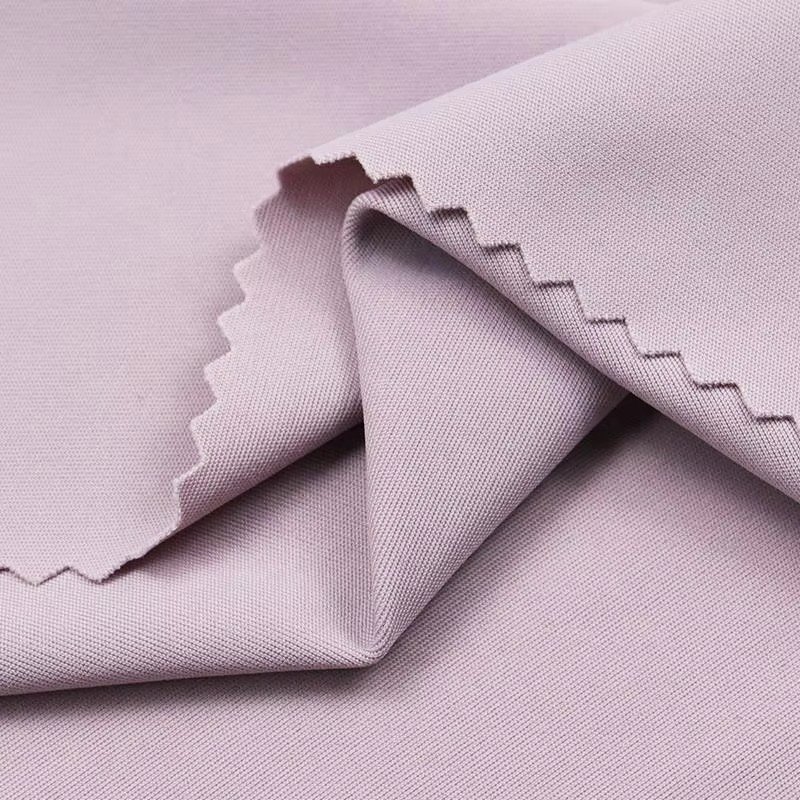
High Stretch
Composition: 70–85% Nylon/Poly / 15–30% Spandex
GSM: 180–280
Useful where the product needs greater stretch range while maintaining commercial activewear structure. Recovery, GSM, fit and color must be reviewed as connected variables.
High Stretch Four-Way Flexible

Compression
Composition: 65–78% Nylon/Poly / 22–35% Spandex
GSM: 230–320
A firmer material direction where stronger recovery and coverage are more important than the lightest naked-feel sensation. MOVEVOX does not present these fabrics as medical compression products.
Dense Supportive Recovery

Ribbed Stretch
Composition: 75–90% Nylon/Poly / 10–25% Spandex
GSM: 220–320
A more visibly structured option where the brand wants tactile surface character rather than a completely smooth buttery finish. Rib direction, recovery, shrinkage and coverage require control.
Ribbed Structured Stretch
What to Define Before Leggings Sample Development
A complete Tech Pack is the most efficient starting point, but MOVEVOX can also work from legitimate samples or clearly defined product requirements. These inputs reduce ambiguous interpretation during development.
Flat Sketch Required or Equivalent
Provide front, back and relevant detail views so the product team can identify waistband shape, seam placement, gusset, pockets, hems and other construction features before pattern development.
Measurement Chart Required
Define key finished-garment dimensions by size, including waist, hip, rise, inseam and product-specific points. Tolerances should be confirmed before bulk production.
Fabric Target Required
Specify known composition, GSM or supplier information where available. If the exact material is not fixed, describe intended handfeel, support, surface finish, opacity and use.
Color Standard Required
Provide Pantone references, physical color standards or another agreed method for color confirmation. Special custom dyeing may introduce separate MOQ and lead-time requirements.
Artwork If Branded
Provide logo artwork, dimensions, placement, color and intended process. Printing, silicone, embroidery, jacquard or other methods require process-specific sample confirmation.
Label Details If Customized
Confirm main label, care label, size label, woven label and regulatory or brand information required for the final garment before production approval.
Packaging Before Bulk
Define polybag, sticker, barcode, hangtag, folding, carton marks and retail-ready packing requirements that need to be checked during final packing.
Testing Requirements Project-Specific
Provide the buyer's market, test protocol, restricted-substance requirements or nominated laboratory where applicable. Testing scope must correspond to the actual material, color, product and order.
When Information Is Incomplete
MOVEVOX can help identify missing manufacturing information and propose material, construction or sample-development options, but the customer remains responsible for brand direction and final approval. Projects with unresolved measurements, fabric, colors or branding may require additional clarification before the standard 5–10 working-day sample cycle begins.
How Sample Revisions Become an Approved Legging
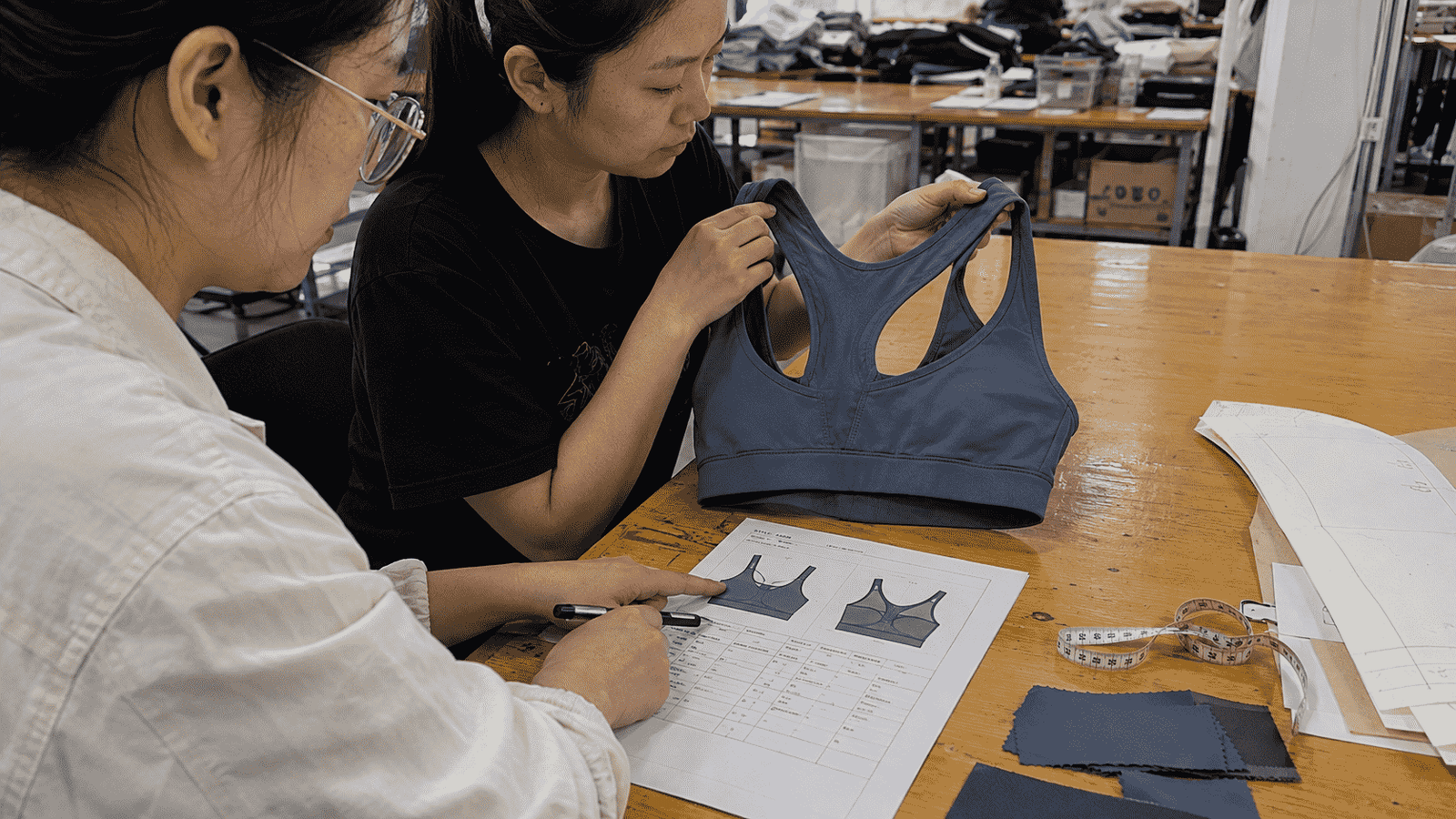
The first physical sample is a decision tool, not an automatic production approval. Each round should resolve defined material, fit, measurement or workmanship issues before the next version is made.
First Sample
The first sample tests whether the technical interpretation matches the intended product. Buyers should evaluate fabric handfeel, general silhouette, waist and hip balance, measurements, rise, inseam, construction, branding and the way opacity behaves under the intended fit.
- Consolidated fit and appearance comments
- Required measurement or fabric changes
- Physical first-development sample
- Recorded technical issues and revision points
Pass standard: The sample provides a valid base for controlled revision rather than requiring a complete development restart.
Fit Revision
Comments from the first sample are translated into specific measurement, pattern, material or construction changes. The team should also check whether one adjustment changes compression, opacity, waistband stability or another previously acceptable feature.
- Prioritized revision comments
- Confirmation of changed measurements or feel
- Updated pattern or technical specification
- Revised sample for physical comparison
Pass standard: Requested changes are visibly and measurably reflected without introducing unacceptable new fit or construction issues.
Confirmation Sample
The confirmation sample brings together the accepted material, measurements, workmanship, color and branding direction. Final approval should be based on the physical result and written specifications rather than informal verbal acceptance.
- Final consolidated approval comments
- Remaining branding or packing confirmation
- Updated physical confirmation sample
- Locked material and garment information
Pass standard: The customer accepts the defined product as the reference for production-standard preparation.
Production Standard
After approval, the product information is transferred into the bulk-production reference. Future changes to material, measurements, colors, logo or construction are treated as changes requiring review rather than silently incorporated.
- Formal sample or production approval
- Final PO and order details
- Approved production reference
- Handover information for material and QC
Pass standard: Production can proceed against one controlled, mutually understood product standard.
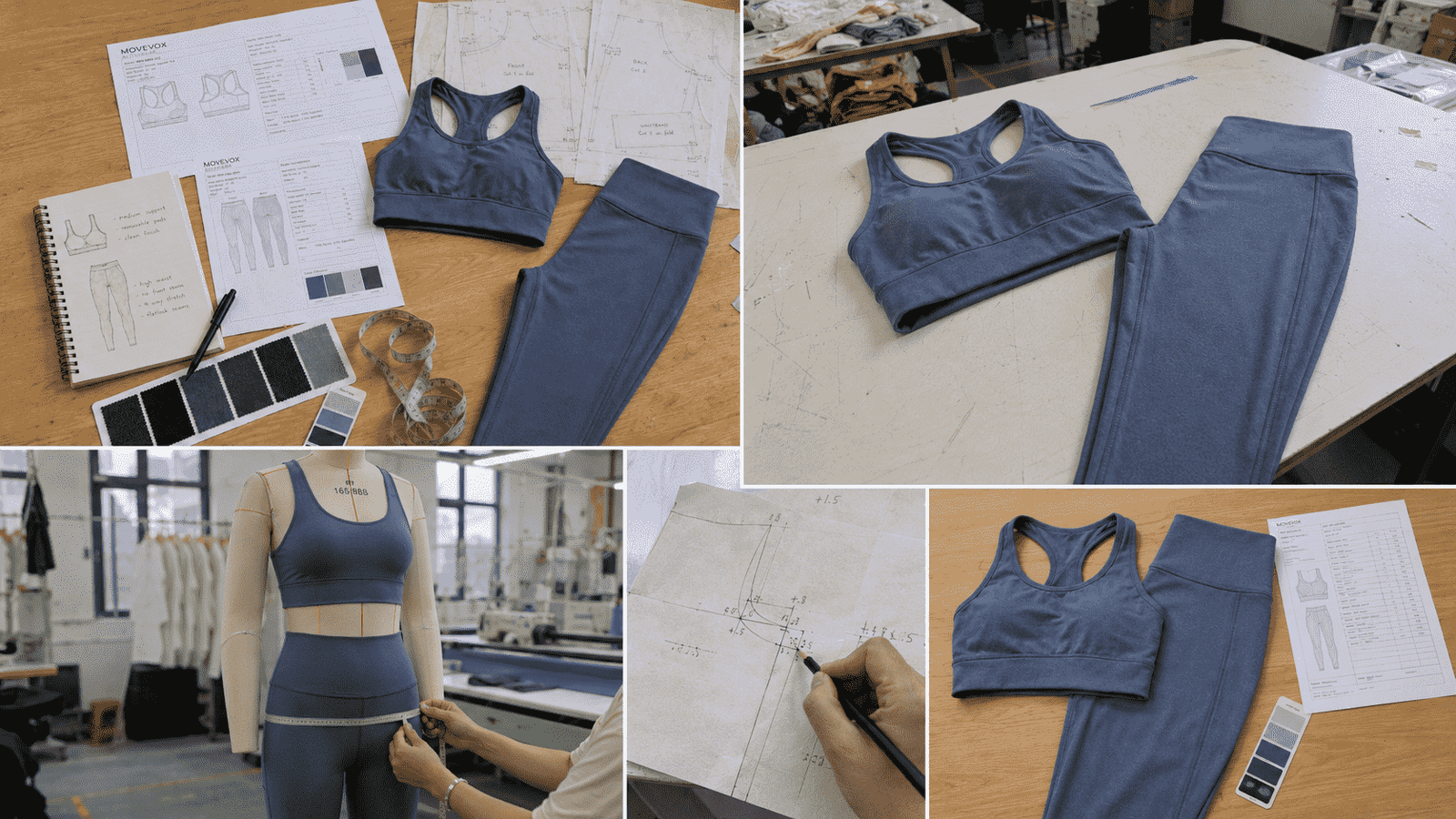
Standard Sample Cycle After Details Are Confirmed
MOVEVOX's normal sample-development cycle is approximately 5–10 working days after all essential development information is confirmed. The internal sequence varies by fabric, construction, branding and the amount of new development required.
Details Confirmed
The cycle begins after key measurements, material direction, color, construction, branding and other required information are sufficiently clear to avoid preventable rework.
Technical Review
Product-development staff translate the brief or Tech Pack into pattern, material, sewing and sample requirements. Buyer questions are resolved before they affect physical development.
Material Prepared
The approved or selected sample material, trims and branding components are prepared. New custom materials or colors may require a different timeline from readily available materials.
Sample Built
Pattern, cutting, sewing, branding and garment finishing are completed according to the current development specification before the sample enters internal checking.
Release Review
The sample is reviewed for measurements, appearance, workmanship and consistency with the development brief before it is released for customer evaluation.
Timing conditions: MOVEVOX does not publish a fixed internal day allocation for each milestone because complexity differs by project. Custom fabric, special colors, complex branding, new construction, unresolved customer comments and international courier time may extend the overall timeline. The 5–10 working-day reference starts after required development details are confirmed.
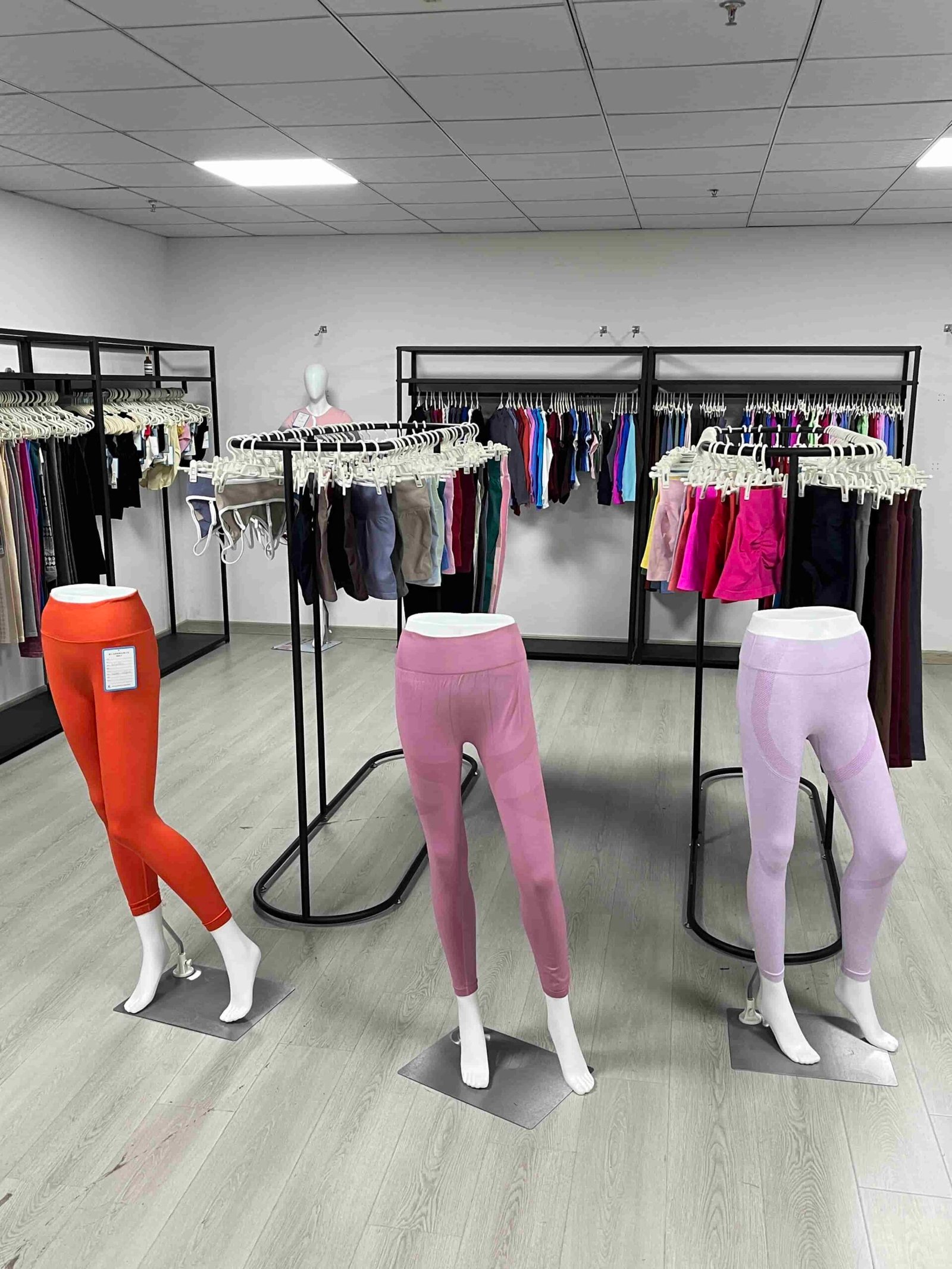
What Must Match the Approved Sample in Bulk
Sample approval only becomes commercially useful when the approved characteristics are converted into controls that material, production and QC teams can follow in bulk.
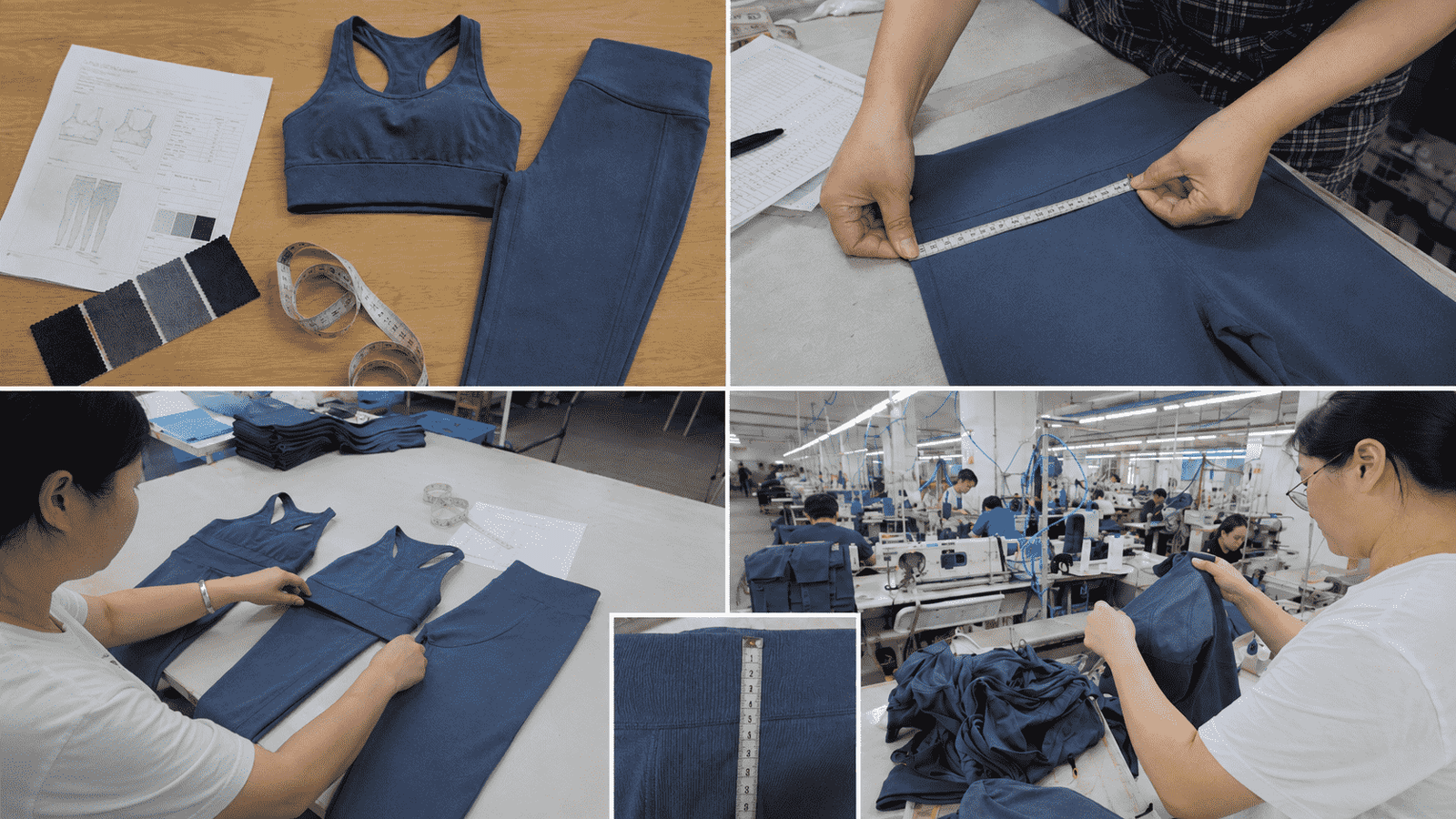
Approved Sample
Physical confirmation of the accepted material, fit, measurements, workmanship, color, branding and overall product result.
Bulk Production
Commercial production is reviewed against the approved sample and written standard rather than a generic product name.
Handfeel
Bulk fabric should be compared with the approved physical handfeel, especially where finishing differences can create a harder, thinner, thicker or rougher result.
GSM and Material
Composition direction, fabric weight and material-source requirements should remain aligned with the approved standard or be formally reviewed when changed.
Color
Production color should be compared against the approved standard while recognizing reasonable process tolerances and buyer-specific acceptance requirements.
Measurements
Key waist, hip, rise, inseam and other measurements must follow the approved specification and agreed tolerance rather than the appearance of a single sample.
Construction and Fit
Waistband, seams, gusset, stitching and product balance should reproduce approved construction so garment stretch and wearing behavior remain consistent.
Branding and Packing
Logo, labels, hangtags, packaging, barcodes and carton information should follow the final approved brand and packing requirements.
MOVEVOX converts the approved sample, measurements, fabric, color, branding and packaging information into production references before bulk release. Incoming material, first-piece, inline and finished-garment checks then compare execution against those references. If a material or specification changes, the new condition should be reviewed rather than assumed equivalent to the original sample.
How Buttery Soft Leggings Move Through Production
For fabric-based buttery-soft leggings, bulk execution follows a controlled cut-and-sew route. Each stage has a defined responsibility and quality checkpoint rather than functioning as an isolated manufacturing operation.
Order Review
PO quantities, sizes, colors, approved sample, measurements, material, branding and packing requirements are reviewed before production planning.
Owner: Project Team
QC point: Specification lock
Material Release
Fabric and core trims are checked against approved order requirements before normal cutting. Controls can include composition consistency, color, GSM, shrinkage, elasticity and opacity.
Owner: Material Team
QC point: Incoming check
Cutting Control
Pattern version, fabric lot, color, width, shrinkage information and material direction are confirmed before cutting. Directional soft surfaces require additional attention to orientation.
Owner: Production
QC point: Cut accuracy
Sewing Setup
Machine, thread, seam type and construction are set according to the approved sample and technical requirements. Stretch materials require appropriate tension and seam elasticity.
Owner: Sewing Team
QC point: Setup review
First Article
An initial finished or near-finished piece is checked before unrestricted production continues. Measurements, construction, appearance and branding are compared with the production standard.
Owner: Production/QC
QC point: First-piece approval
Inline Control
QC and production personnel monitor measurements, seam quality, workmanship, fabric appearance and approved construction while the order is being produced.
Owner: QC Team
QC point: Inline inspection
Final Inspection
Finished garments are checked for measurements, appearance, sewing, branding, labels and other order-specific requirements before packing or shipment release.
Owner: QC Team
QC point: Finished check
Packing Release
Approved folding, individual packing, labels, barcodes, carton marks and quantities are checked before goods are cleared for shipment coordination.
Owner: Packing/QC
QC point: Final release
Sewing Details That Matter on Soft Stretch Leggings
Soft and elastic materials can expose poor tension, seam distortion and broken stitching more visibly than stable fabrics. Construction needs to follow the fabric, garment location and approved appearance.
Single-Needle Sewing
Used where the pattern or construction requires controlled joining, topstitching or attachment. The stitch must remain visually clean without creating unnecessary puckering on soft stretch material.
Typical area: Selected structural seams and attachments
Control focus: Straight stitching, tension and fabric appearance
Overlock Construction
Overlock supports stretch-fabric seam joining and edge control. Differential feed, seam allowance and thread tension must be adjusted to reduce waviness or seam distortion.
Typical area: Internal leggings construction seams
Control focus: Elastic seam, clean edge and controlled waviness
Coverstitch Finish
Coverstitch is used on elastic garment edges where a stretchable finished line is required. MOVEVOX checks straightness, stitch spacing, wrinkling and whether the stitch remains intact after stretching.
Typical area: Hems and selected elastic edges
Control focus: Stretch retention and flat appearance
Flatlock Seam
Flatlock or flatseam can reduce seam bulk on close-to-skin activewear. Stitch density and thread tension need adjustment according to fabric thickness, elasticity and seam stress.
Typical area: Leggings and close-fitting activewear panels
Control focus: Flat profile and seam strength under stretch
Elastic Assembly
Waistband or elastic-related construction must follow approved dimensions and stretch relationship. Incorrect assembly can change waist compression, cause twisting or create uneven tension.
Typical area: Waistbands and support zones
Control focus: Even tension and approved waist fit
Gusset Construction
A gusset changes stress distribution and crotch geometry but must match the approved pattern and seam placement. Incorrect dimensions can affect movement, fit and local fabric stretch.
Typical area: Crotch and inner-leg junction
Control focus: Alignment, stretch and seam consistency
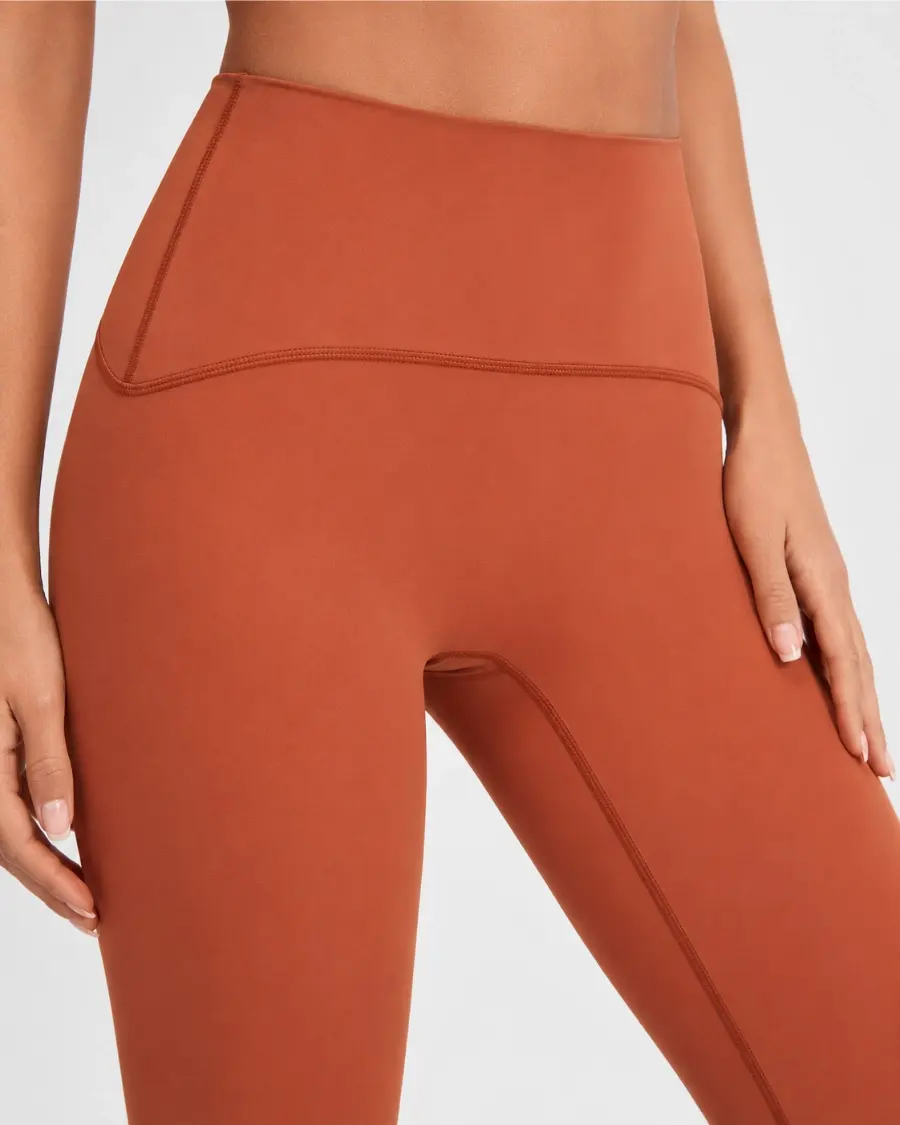
Prevent Common Defects Before Final Inspection
Defect prevention should begin with material and production setup rather than rely on final inspection to discover completed problems. These examples are especially relevant to soft, elastic leggings.
| Defect | Likely Cause | Prevention | Inspection Point | Corrective Action |
|---|---|---|---|---|
| Handfeel Drift | Different material lot, finishing condition, GSM or unreviewed substitution changes the surface from the approved reference. | Compare incoming material with approved composition, GSM and physical handfeel before release. | Material intake and pre-production review. | Hold affected material, compare with approved standard and confirm replacement or acceptance. |
| Shade Variation | Dye-lot differences or mixed batches create visible color inconsistency. | Manage approved color standards and prevent unreviewed mixing of materially different dye lots. | Incoming material, cutting allocation and finished-garment review. | Separate affected lots, evaluate range and determine rework, replacement or review. |
| Wavy Seams | Incorrect differential feed, thread tension or handling stretches soft fabric during sewing. | Set machines for the actual fabric and confirm seam appearance during first-piece preparation. | First article and inline sewing inspection. | Adjust settings and repair or remake affected garments where acceptable. |
| Broken Stitching | Seam construction or thread setting does not provide sufficient extension. | Match seam type, thread and tension to approved material and expected movement. | Stretch check during first-piece and inline production. | Stop the operation, correct settings and reinspect produced quantity. |
| Waistband Twist | Uneven assembly, incorrect pattern alignment or inconsistent tension changes waistband balance. | Confirm waistband dimensions, alignment points and even assembly against the approved sample. | First-piece measurement and finished-garment inspection. | Isolate affected garments and repair where construction allows. |
| Packing Mismatch | Size, color, barcode or label information is mixed during final packing. | Use confirmed packing specifications and verify garment-to-label information before carton closure. | Packing and pre-shipment quantity verification. | Hold the affected carton or lot, resort and recheck related packing information. |
Choose the Right Development Model for Your Brand
OEM, development-led ODM and Private Label represent different starting points. The correct model depends on how much product definition the brand already owns and how much manufacturing translation is still required.
| Dimension | OEM | Development-Led ODM | Private Label |
|---|---|---|---|
| Design Input | Customer Tech Pack and specifications | Customer concept, sketch or reference direction | Existing or mature base product |
| Development Work | Technical review and manufacturing execution | Material, pattern, sample and manufacturing translation | Branding and selected product adjustments |
| Customer Ownership | Brand controls design and final approval | Brand controls direction and final approval | Brand controls identity and approved customization |
| Fabric Work | Follow customer specification or approved alternative | Evaluate suitable material directions | Usually based on available product/material options |
| Fit Work | Follow or refine supplied measurements | Develop toward agreed fit target | Limited unless product is redeveloped |
| MOQ | Project-dependent | Project-dependent | Product and customization dependent |
| Lead Time | Depends on specification and approvals | More development may increase cycle | Usually fewer development variables |
| Best For | Technically defined product programs | Brands with clear product intent but incomplete specs | Faster brand execution on mature products |
Established brands with finalized technical packages normally fit an OEM workflow. Buyers who can define the desired handfeel, fit and consumer experience but need material and manufacturing support may use a development-led route. Private Label is more suitable where the underlying product is already mature and customization centers on colors, logos, labels or packaging. In every model, customer approval remains necessary before bulk production.
MOQ Depends on How the Order Is Built
MOVEVOX does not treat MOQ as one permanent number for every legging. Fabric, custom dyeing, colors, branding, construction and size distribution can each create separate production or supplier minimums.
Pilot Order
Regular cut-and-sew custom projects can start at approximately 150 pieces. This is a general entry point rather than a guarantee for every material or color combination. A pilot order works best when the material is commercially available and the number of colors, custom trims and special processes remains manageable.
Quantity basis: Approx. 150 pieces from standard cut-and-sew customization
Color/size logic: Project-specific split
Price factors: Material, quantity, branding, construction, colors
Core Program
For repeat or multi-SKU brand programs, MOQ should be reviewed at the material, style, color and trim level rather than only as a total PO quantity. Shared fabrics, coordinated color plans and standardized branding can simplify purchasing, while special dyeing, molded silicone, jacquard or unique trims may introduce separate supplier minimums.
Quantity basis: Evaluated by SKU and material structure
Color/size logic: Based on approved assortment
Price factors: Volume, shared materials, complexity, packing
Scale Program
Larger repeat programs require capacity and material planning rather than simply removing MOQ restrictions. MOVEVOX combines own production with controlled satellite capacity and manages normal combined delivery capacity of approximately 150,000–200,000 pieces per month across seamless and cut-and-sew operations.
Quantity basis: Planned against available capacity
Color/size logic: Buyer assortment and material availability
Price factors: Forecast, fabric commitment, process and delivery schedule
A Typical Timeline From Approval to Shipment
Production timing is controlled by dependencies rather than one headline lead-time number. This Gantt separates material, sampling, approval, bulk production, inspection and shipping responsibilities.
Project-specific
5–10 working days
Customer-dependent
Typical 20–35 days
Before release
Route-dependent
Material
Precondition: Approved material direction and PO requirements.
Customer checkpoint: Custom material, color or supplier approval where required.
Sampling
Precondition: Development details confirmed.
Customer checkpoint: Physical sample and revision feedback.
Approval
Precondition: Sample completed and reviewed.
Customer checkpoint: Final material, fit and product approval.
Bulk
Precondition: Production standard, PO and material readiness.
Customer checkpoint: Any agreed production or WIP review.
Inspection
Precondition: Finished goods and packing status.
Customer checkpoint: Internal or buyer-required inspection outcome.
Shipping
Precondition: Goods released and shipping information confirmed.
Customer checkpoint: Freight method, destination and required documents.
Timing note: The normal 20–35 day bulk reference is not a promise independent of project conditions. Custom fabric, special dyeing, complex branding, buyer approval delays, order size, peak capacity, third-party inspection and shipping arrangements can change the final schedule. Timeline should be confirmed against the specific PO before production release.
Trace Material Decisions Before Production Starts
For buttery-soft leggings, material traceability should connect the customer specification with the actual fabric lot, production allocation, inspection evidence and finished shipment rather than stop at a supplier fabric name.
Customer Order
PO, style, quantity, colors, sizes and approved requirements establish which material and production standard applies.
Record: PO
Technical Version
The current Tech Pack, measurements, approved sample and material information define the version production should follow.
Record: Version Log
Material Lot
Incoming fabric is associated with source or batch information and checked against relevant composition, color, GSM, shrinkage, elasticity and opacity requirements.
Record: Batch Record
Production Allocation
The approved order is assigned to intended production resources. Production location and responsibility remain managed within the MOVEVOX order system.
Record: Production Plan
Inspection Record
Material, first-piece, inline, finished-garment and packing checks create quality evidence associated with the relevant order and production status.
Record: Inspection
Packing and Shipment
Final quantities, labels, packaging and carton information are tied back to the order before goods are released for shipment coordination.
Record: Packing List
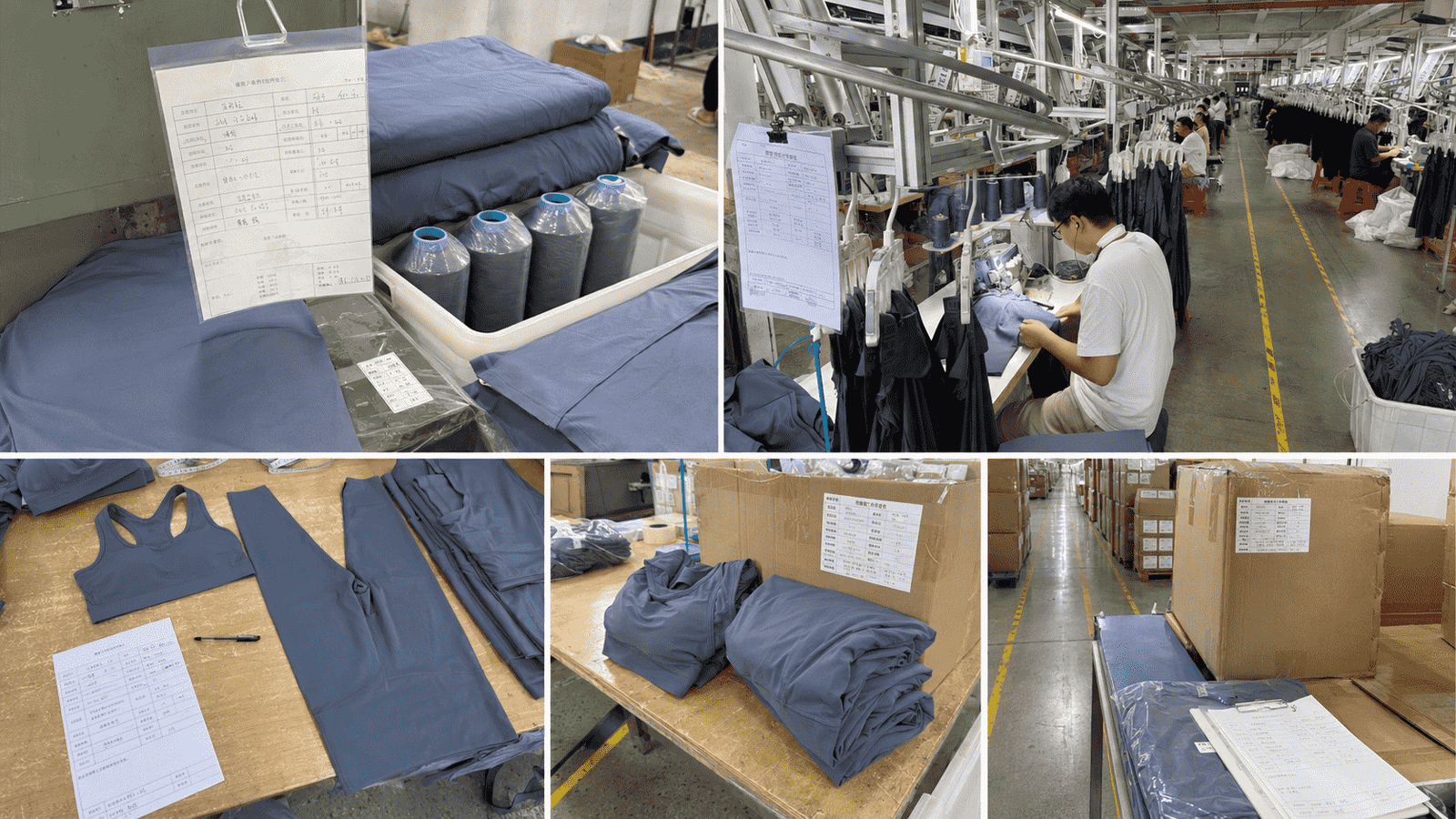
Capacity for Trial Orders and Repeat Growth
MOVEVOX's production model combines a core Yiwu manufacturing base with managed external capacity. These numbers describe current operational resources and should be read with their defined scope.
Production Space
The Yiwu production base uses approximately 6,000 square meters of actual operating space across manufacturing and related production functions.
Santoni Machines
The own-factory seamless system includes 28 Italian Santoni seamless knitting machines supporting activewear production and technical development.
Sewing Machines
The core cut-and-sew area includes approximately 24 main sewing and garment-production machines covering key activewear sewing processes.
Satellite Factories
MOVEVOX works with eight main long-term satellite factories, including six in Yiwu and two in Guangzhou, to extend controlled production capability.
Managed Monthly Delivery
Normal combined managed delivery capacity is approximately 150,000–200,000 pieces per month across seamless and cut-and-sew production resources.
Data Scope
These figures describe MOVEVOX's current managed operating structure. The monthly capacity figure includes coordinated production resources and is not presented as a theoretical maximum for one single product, style or factory.
One Controlled Interface Across Multiple Production Resources
MOVEVOX does not present every external production resource as an owned factory. The operating model uses the Yiwu core factory for development and control while managed satellite capacity supports suitable standardized production tasks.
Yarn and Fabric
Material suppliers provide yarn, stretch fabric, dyeing and specialized material capabilities. MOVEVOX coordinates required material specifications, purchasing or approved source according to the project.
MOVEVOX Core Factory
The Yiwu core factory supports technical development, sampling, key seamless and cut-and-sew manufacturing, first-piece confirmation, quality control and production-standard establishment.
Satellite Capacity
Eight long-term satellite factories can support defined bulk-production or process requirements after the product and manufacturing standard have been established and assigned by MOVEVOX.
Branding Partners
Specialized suppliers can support printing, embroidery, silicone logos and other approved branding processes where dedicated equipment or specialist processing is required.
Packaging Supply
Labels, hangtags, polybags, stickers, cartons and other approved packaging components can be sourced and coordinated through the project supply chain.
Logistics Coordination
After production and release, shipment arrangements can be coordinated according to agreed trade terms, destination, shipment method and customer instructions.
Unified Management
MOVEVOX remains the buyer's primary commercial and order-management interface. Customer requirements, technical versions, approved samples, material standards, production allocation, progress, QC and shipment release are managed through one project structure. Satellite or specialist partners do not independently redefine customer material, construction or quality requirements. Production-site disclosure follows the customer's vendor and project requirements.
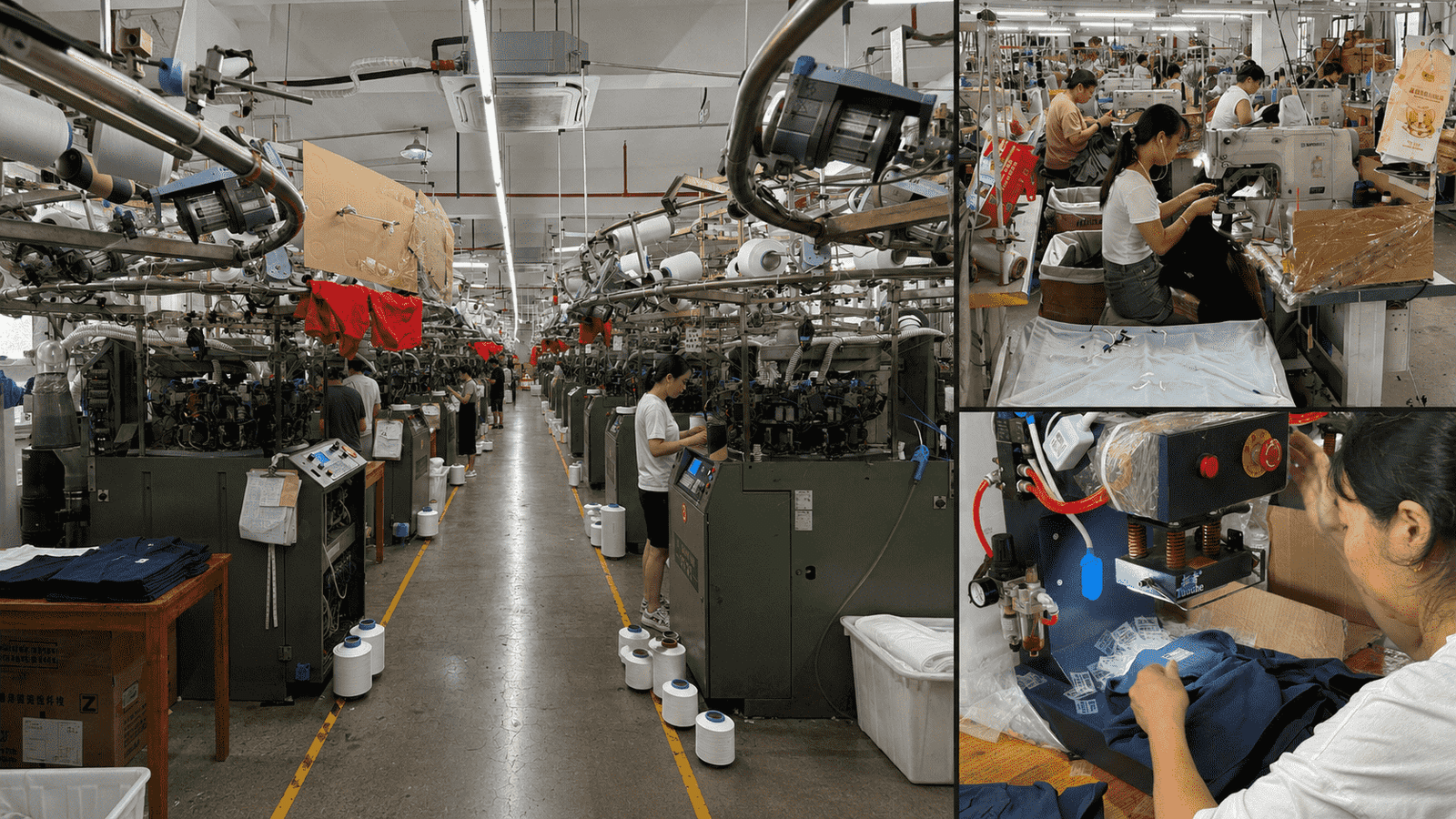
Quality Control From Material Intake to Release
MOVEVOX uses multiple quality checkpoints because a finished inspection alone cannot prevent every material or production problem. The approved sample and project specification provide the reference for these controls.
Material Intake
Incoming material is reviewed against applicable order requirements before unrestricted use.
- Approved material and source comparison
- Color and GSM verification
- Stretch, shrinkage and opacity checks
Pre-Production Lock
Production personnel confirm the current technical version, approved sample, measurements, material, color, branding and packing requirements.
- Current specification version
- Approved sample reference
- Material and branding confirmation
First-Piece Check
The first finished or near-finished garment is reviewed before normal-scale production continues.
- Critical garment measurements
- Sewing and construction appearance
- Logo and trim placement
Inline Inspection
Production is monitored while sewing and assembly are in progress so corrective action can be taken before defects spread.
- Stitch and seam quality
- Measurements and workmanship
- Fabric and surface condition
Finished Garment
Completed garments are checked for measurements, appearance, workmanship, branding, labels and project-specific requirements.
- Finished measurements
- Workmanship and appearance
- Branding and label execution
Packing Check
Packing is reviewed against approved folding, polybag, label, barcode, size, color, quantity and carton requirements.
- Garment-to-label match
- Packing and barcode accuracy
- Carton quantity and marks
Final Release
Shipment release follows the applicable final inspection and order review. Buyer-nominated third-party inspection can also be supported when included in the project.
- Final inspection status
- Order and packing conformity
- Release documentation
Nonconformance Handling
When an issue is identified, affected goods or materials can be held, isolated, reworked, replaced or reinspected according to the problem and the agreed customer requirement. Corrective action should address the actual cause rather than hide the defect at final packing. Major changes affecting the approved standard require review before normal release.
What a Useful Fabric Inspection Record Should Show
A fabric inspection record becomes valuable when it links an actual material lot to measurable or observable approval criteria. It should not be a generic quality certificate disconnected from the production order.

Material Identity
The record should identify the material or order reference clearly enough to connect the inspection with the fabric actually intended for the approved leggings project.
Color and GSM
Color and fabric weight should be compared with the approved standard or project tolerance before unrestricted cutting, especially where weight affects support or opacity.
Shrinkage
Where applicable, shrinkage information helps determine whether the material remains compatible with approved measurements and subsequent cutting or garment-finishing processes.
Stretch and Opacity
Stretch behavior and visual coverage should be assessed against the relevant product requirement, particularly for light colors and garments with significant negative ease.
Release Status
The record should state whether material is accepted, held for review or requires corrective action rather than simply documenting observations without a production decision.
Report use: MOVEVOX's material-control facts support checks for composition, color, GSM, shrinkage, fading or colorfastness, elasticity and opacity. A published example on this page should therefore be a real anonymized MOVEVOX inspection record rather than a fabricated model. Customer name, style number and commercially sensitive information can be removed, but inspection content should remain authentic.
Testing Should Follow the Actual Product Requirement
MOVEVOX separates routine material and production checks from formal third-party laboratory testing. Test items, methods and acceptance criteria should match the actual material, finished product, target market and buyer protocol.
Composition and GSM
Purpose: Confirm that material direction and fabric weight remain consistent with the approved project specification before normal production use.
Method: Material information is checked against the approved specification, while GSM is measured or verified using the applicable internal or customer-defined method.
Decision basis: Approved project specification and agreed tolerance.
Shrinkage Check
Purpose: Identify material dimensional change that may influence pattern, finished measurements or consistency after processing or washing.
Method: The relevant material or garment is measured before and after the agreed conditioning or wash procedure, using the customer's method where specified.
Decision basis: Buyer requirement or approved project standard.
Stretch and Recovery
Purpose: Evaluate whether the fabric provides required extension while recovering sufficiently for the approved fit and intended use.
Method: Stretch and recovery are assessed using project testing or the buyer's nominated method, with physical sample performance considered alongside numerical data.
Decision basis: Approved fabric and project-specific performance requirement.
Opacity Check
Purpose: Determine whether the actual color, weight, fit and garment stretch provide acceptable coverage for the intended leggings application.
Method: Fabric or finished garments are evaluated under agreed stretch and viewing conditions, with attention to light colors and highly extended areas.
Decision basis: Buyer-defined acceptance on the actual approved product.
Colorfastness and Fading
Purpose: Evaluate whether color remains acceptable under project conditions and identify risks before a larger order is released.
Method: Internal project checks or third-party methods can be used depending on buyer protocol, market requirement and material risk.
Decision basis: Applicable buyer specification or laboratory report.
Chemical Compliance Testing
Purpose: Verify specified restricted substances when required by the buyer or target market rather than using one historical test as universal product evidence.
Method: Samples can be prepared and submitted to a customer-nominated or qualified third-party laboratory according to the defined test request.
Decision basis: The laboratory report applies only to the tested sample, material, color and specified scope.
Existing evidence scope: MOVEVOX has real TST reports for a specific black fitness yoga leggings sample / black fabric from April 2025. Those documents can be shown as sample-specific evidence, but they must not be generalized to all materials, colors, products or the entire factory.
A Practical Tour of the MOVEVOX Manufacturing Base
MOVEVOX supports customer factory visits, technical audits and live video verification by appointment. The purpose is to let sourcing and technical teams verify actual production functions rather than rely only on marketing photographs.
Development and Samples
The development area converts customer Tech Packs, legitimate samples, sketches or defined concepts into manufacturable products. The broader product-development function includes design, pattern work and sample making. This is where material, construction, measurements and initial sample versions are coordinated before a style reaches production.

Cut-and-Sew Area
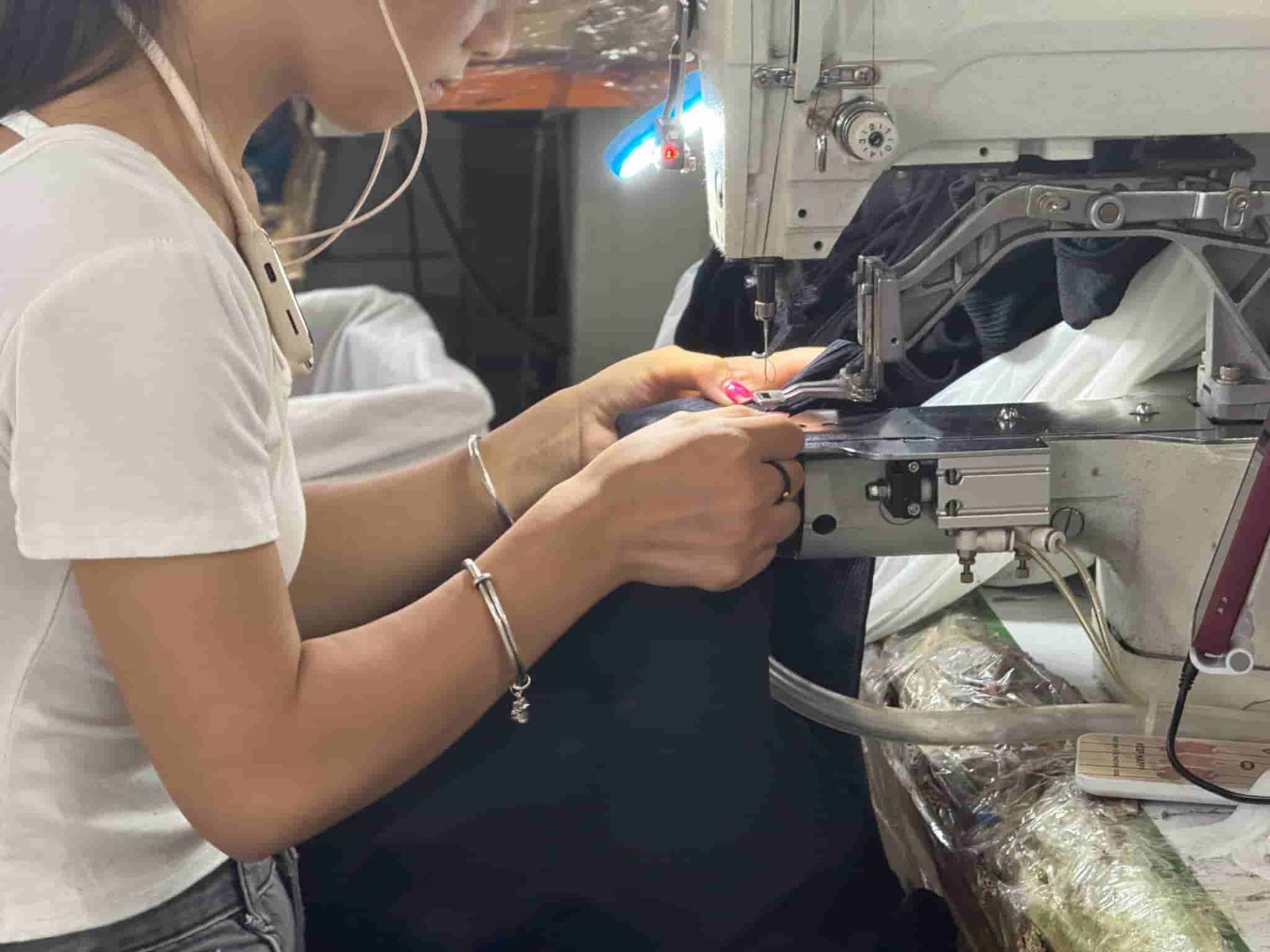
The core cut-and-sew area contains approximately 24 main sewing and garment-production machines, including single-needle, overlock, coverstitch, flatlock and related auxiliary equipment. The area supports activewear sampling, key production, small-to-medium orders, difficult styles and first-piece confirmation.
Santoni Area
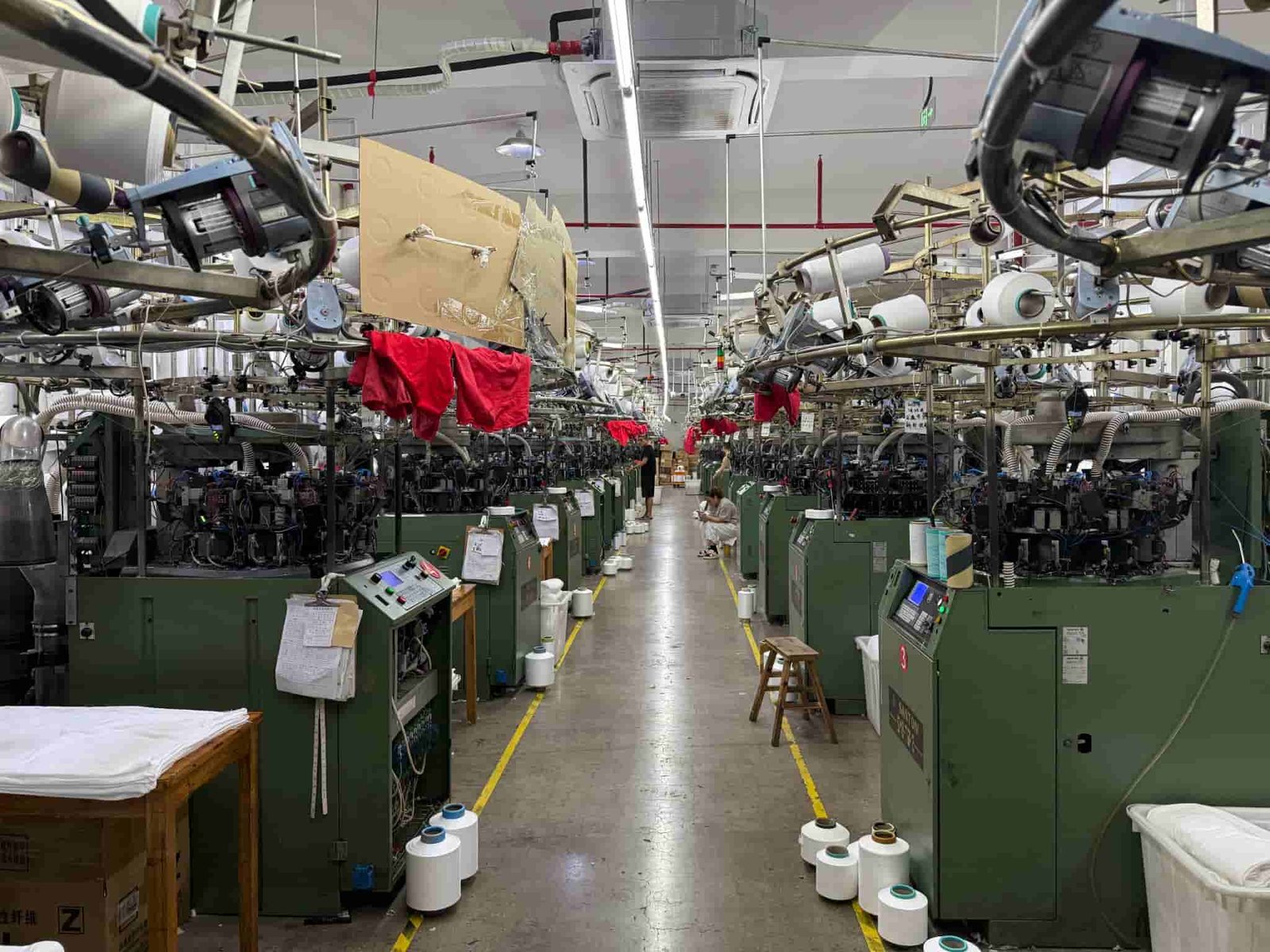
MOVEVOX's own seamless system includes 28 Italian Santoni seamless knitting machines. Although typical buttery-soft fabric leggings are primarily a cut-and-sew product, the equipment demonstrates MOVEVOX's ability to support brands that also operate seamless leggings, bras, shorts and related collections.
Quality Inspection
MOVEVOX currently has five QC personnel supporting quality activities across incoming material, first-piece, inline, finished-garment and shipment-related inspection stages. Quality responsibility follows the approved sample, technical requirements and customer-specific standards rather than a generic visual check alone.
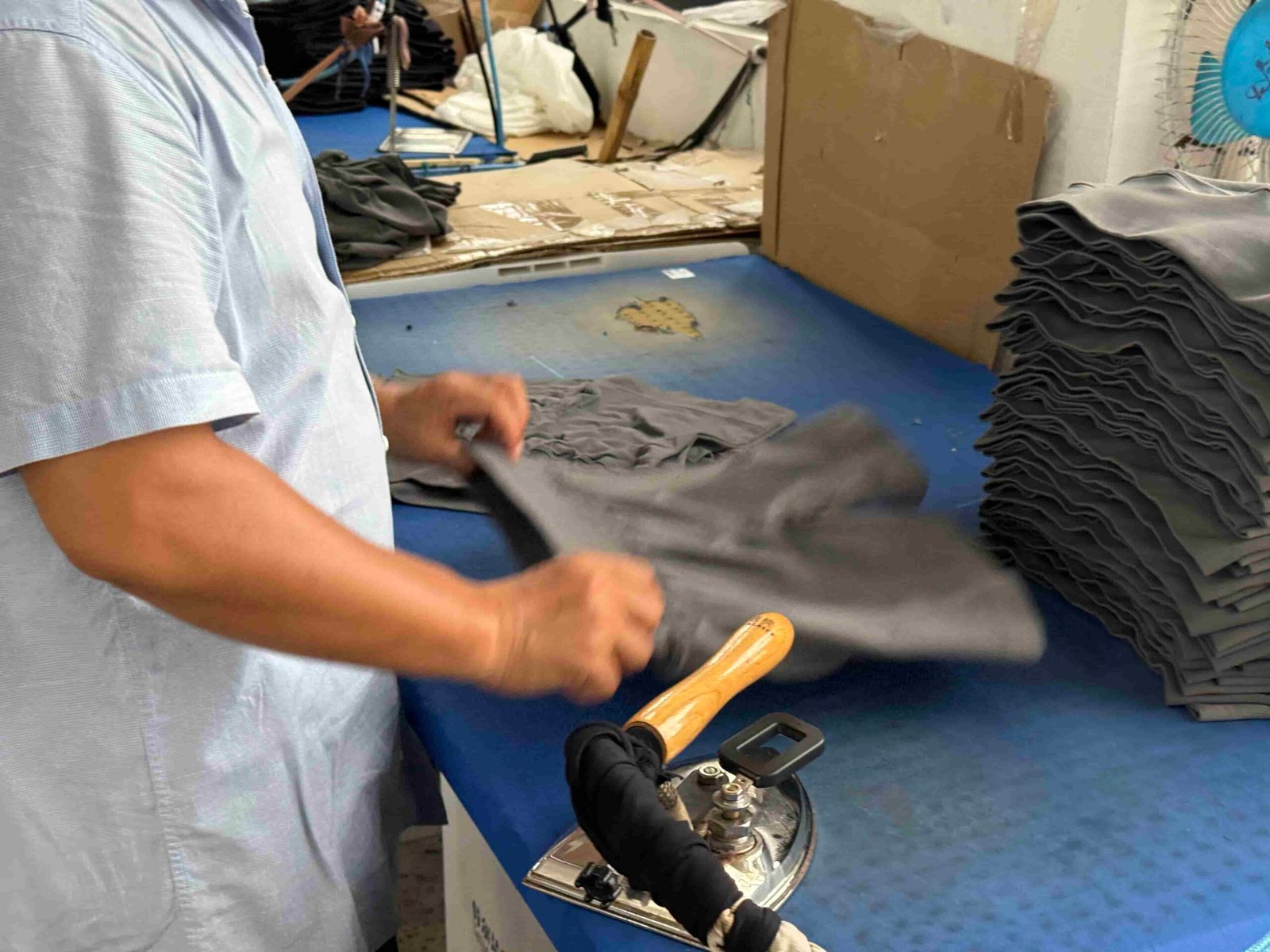
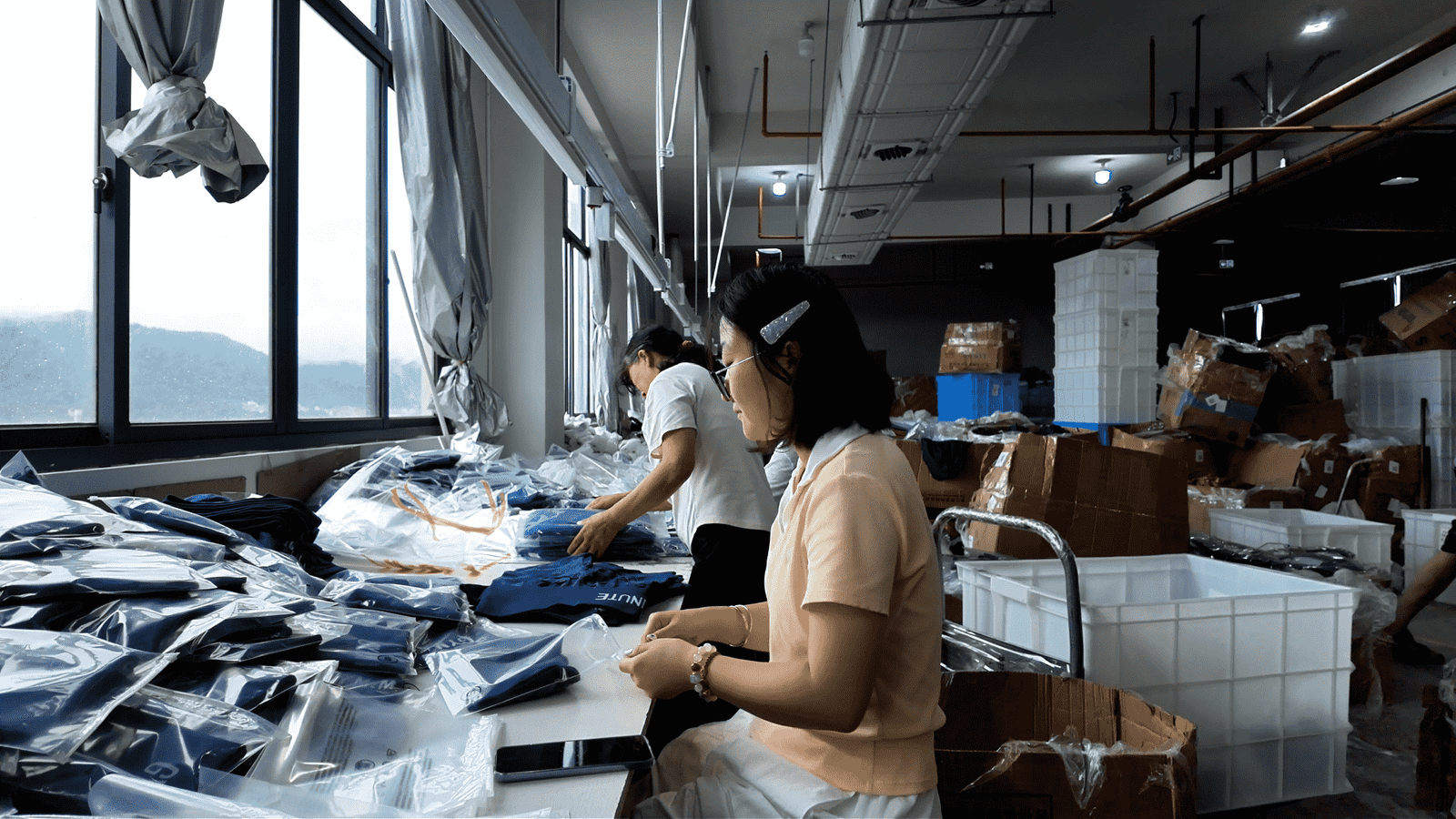
Packing and Storage
After finished-garment inspection, orders move through approved labeling, folding, individual packing, carton packing and shipment preparation. Project-specific barcodes, labels, packing instructions and carton marks are checked against confirmed order information before release.
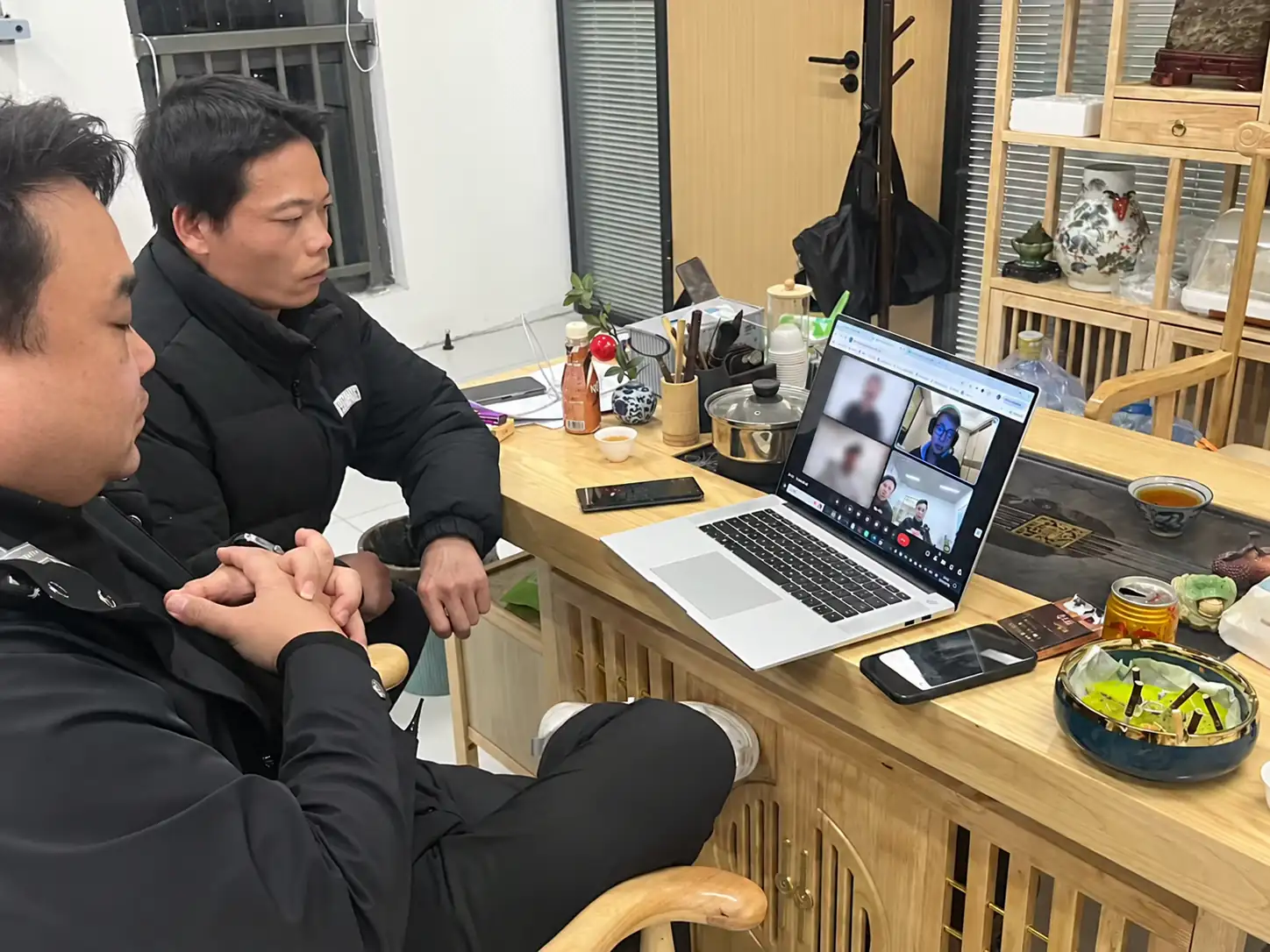
Live Audit Access
International buyers can arrange on-site visits or live video audits covering production, seamless equipment, sewing, sample development, QC, packing and warehouse functions. Areas containing another customer's confidential products or technical information may be restricted to protect confidentiality.
How to Read Product Tests and Certificate Scope Correctly
Compliance evidence is only useful when the buyer knows what entity, material, product, color and test scope it actually covers. MOVEVOX does not use a single sample report as proof for unrelated products or the entire factory.
RoHS 2.0 Test Scope
A TST report dated April 30, 2025 covers one submitted black fitness yoga leggings sample. The selected tested parts complied with the specified limits of RoHS 2.0 Directive (EU) 2015/863 and related amendment language listed in the report. The report expressly states that results refer only to the tested sample.
Applicable scope: Black fitness yoga leggings sample identified in report TST20250405148E.
MOVEVOX response: Use the report only as evidence for its tested scope; new materials or projects may require separate testing.
RoHS Certificate Scope
The related Certificate of Compliance, TST20250405148EC, references the same tested black fitness yoga leggings and associated test report. The certificate explicitly states that it applies to the tested sample only and does not imply an assessment of the whole production.
Applicable scope: Tested sample identified by the certificate and linked report.
MOVEVOX response: Do not present this document as a whole-factory or all-product RoHS certification.
REACH Phthalate Scope
A separate TST report dated April 30, 2025 covers phthalate testing on black fabric from a fitness yoga leggings sample against the referenced REACH Annex XVII Entry 51 and 52 requirements. The result applies to that submitted sample and test scope rather than every future fabric.
Applicable scope: Tested black fabric in report TST20250405150E.
MOVEVOX response: New materials, colors or buyer protocols should be evaluated and tested when updated evidence is required.
Supplier Material Documents
Material suppliers may hold certificates or test documents relating to specific yarns, fabrics, recycled content or manufacturing scopes. Such evidence does not automatically become a MOVEVOX finished-product or factory certificate. Holder, site, product scope, issuer and validity must be reviewed before use.
Applicable scope: Only the supplier, material and process stated on the valid document.
MOVEVOX response: Publish or submit supplier documents only when their scope is relevant to the actual customer project.
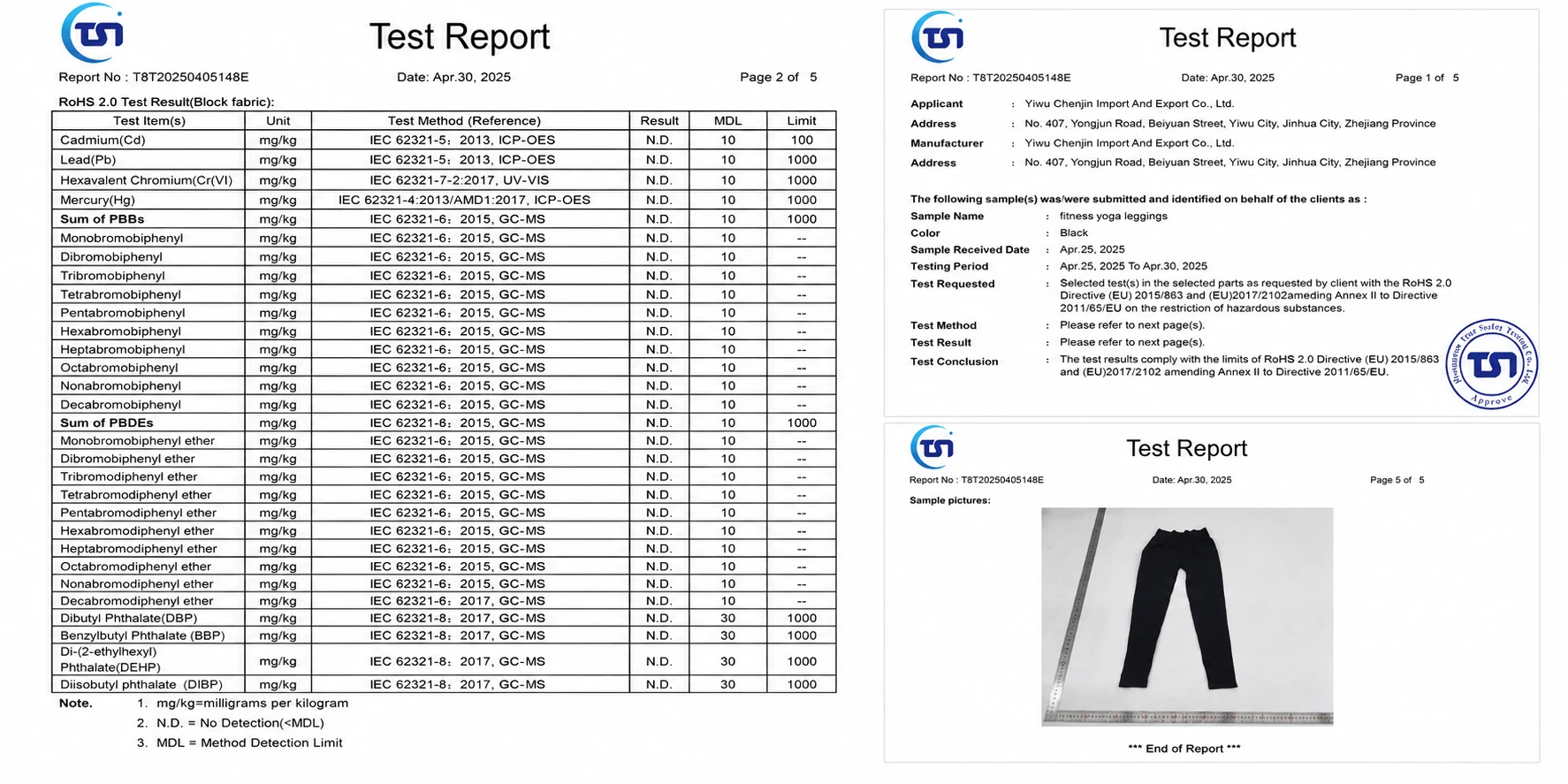
Source Documents
- TST20250405148E — RoHS 2.0 Test Report, April 30, 2025.
- TST20250405148EC — Certificate of Compliance, April 30, 2025.
- TST20250405150E — REACH Phthalate Test Report, April 30, 2025.
A Leggings Development Case With Repeat Orders
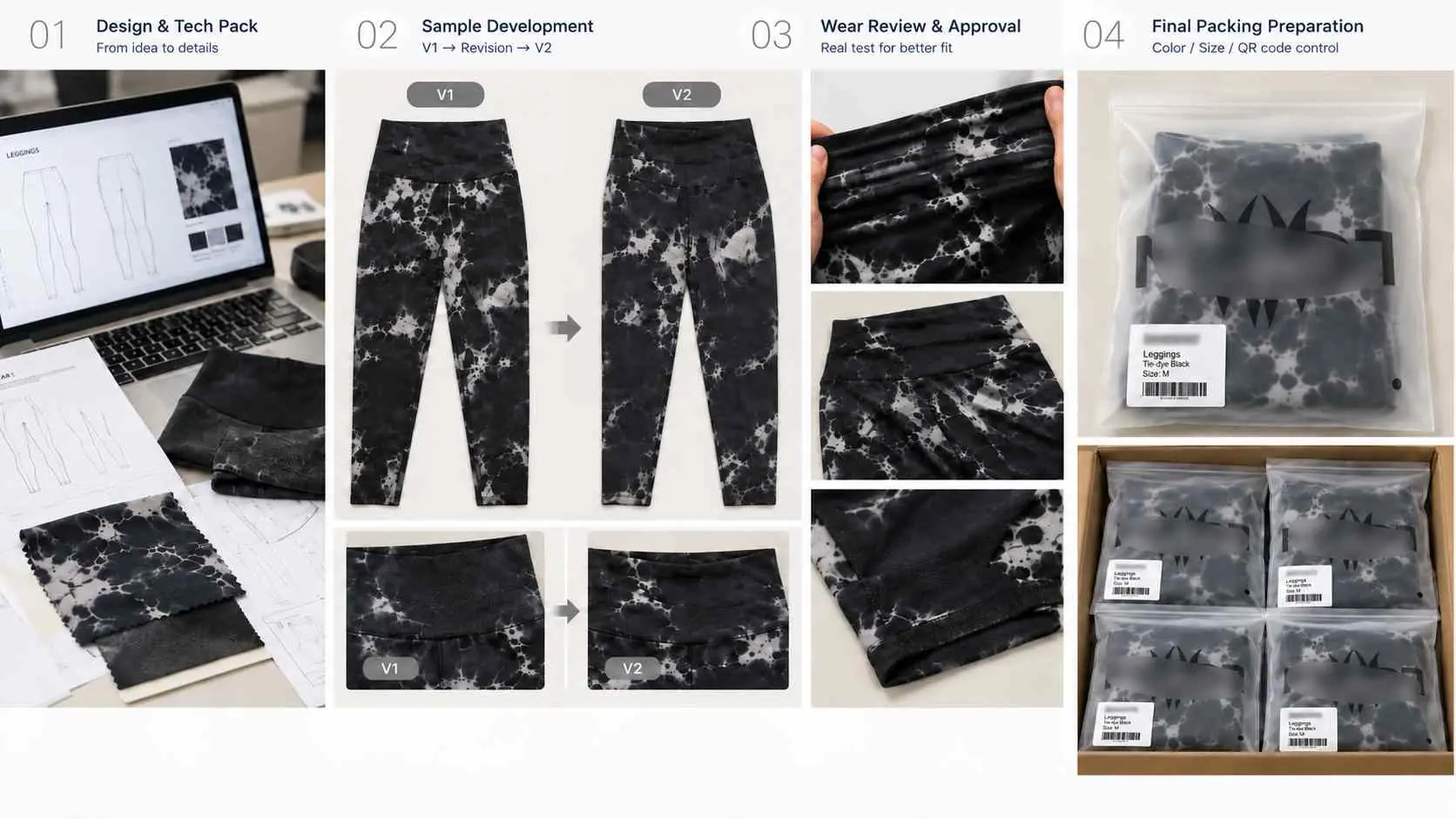
An existing U.S. client case demonstrates MOVEVOX's ability to work from a Tech Pack, revise leggings samples, support physical wear testing and manage complex branding and packing. The original project is not documented as a “buttery-soft” project.
Project Execution
The client entered with its own product Tech Pack. MOVEVOX produced a first sample, received feedback that some design details did not meet the intended use, and developed a revised second version. After further approval, a small sample quantity was prepared for practical testing before bulk production.
The later order required custom packaging, instructional material, labels, logos, care labels and unique QR-code control by color and size. Packing and QC therefore required additional verification to prevent garment-to-code mismatches. The source case records continuing repeat business after successful project execution.
Data scope: Figures are taken from the existing MOVEVOX client-case record and describe that specific historical cooperation. Client identity remains confidential, and the case should not be described as proof that all projects follow the same order size, frequency or timeline.
Buttery Soft Leggings Supplier Evaluation Checklist
Use this checklist to compare manufacturers on evidence, development discipline and repeatability rather than relying only on a soft sample or quoted unit price. Score each item from 1 to 5.
Product Development
Sample-to-Bulk Control
Manufacturing and Quality
Evidence and Compliance
Current Score: 0 / 60
A strong score does not automatically make a supplier suitable for every project. The checklist is designed to reveal where additional due diligence is required. Buyers should request physical samples, factory evidence, current production information, relevant quality records and project-specific compliance documents before vendor approval. Supplier selection should ultimately reflect the buyer's product, risk, volume, commercial and compliance requirements.
Buttery Soft Leggings Manufacturing Frequently Asked Questions
These answers address common material, sampling, MOQ, production, quality and supplier-verification questions relevant to professional buttery-soft leggings sourcing. Project-specific requirements should still be confirmed against the actual product.
Fabric & Handfeel
Is buttery-soft a fixed fabric composition?
No. MOVEVOX treats buttery-soft, naked-feel and similar descriptions as target handfeel or wearing-experience directions rather than one fixed fiber formula. Softness can be influenced by fiber fineness, nylon or polyester content, spandex level, knitting structure, GSM, dyeing, finishing and surface treatment. Final approval should therefore be based on an actual fabric or garment sample together with the relevant material specification, not on the marketing name alone.
Which MOVEVOX fabrics can create a softer handfeel?
MOVEVOX's existing activewear material system includes nylon/spandex, brushed, peach-finish and soft naked-feel directions. A naked-feel route commonly falls around 75–82% nylon with 18–25% spandex at approximately 200–240 GSM, while brushed and peach-finish fabrics use different weight and surface ranges. These are development references, not fixed formulas. The correct option depends on required softness, support, opacity, seasonal use, fit and surface durability.
Can every color be guaranteed squat-proof?
No universal guarantee should be made across every material, color, size and wearing condition. MOVEVOX treats opacity as the result of fabric density, color, GSM, stretch ratio, garment sizing and finished construction. Darker colors are generally easier to cover than light shades, while highly extended or undersized garments can reduce visual coverage. The correct approach is to validate opacity on the actual approved color, material and finished fit.
How is handfeel approved for bulk production?
Handfeel is confirmed on a physical approved material or garment rather than only through terms such as “soft” or “smooth.” MOVEVOX's material approval considers surface fineness, softness, slip, dry feel, brushed effect, thickness, compression and overall skin contact. The approved sample can then be retained as a reference when bulk fabric arrives. A materially harder, thinner, thicker or rougher lot should be reviewed instead of being released automatically.
Development & Sampling
Can MOVEVOX develop leggings from a Tech Pack?
Yes. MOVEVOX can start from a customer Tech Pack containing style drawings, measurements, fabric requirements, colors, branding and other technical information. The development team reviews manufacturability, material direction, pattern or fit, sewing construction and missing information before physical sampling. A Tech Pack does not eliminate the need for sample approval; the physical garment is still used to confirm fit, handfeel, workmanship and other characteristics before bulk production.
Can MOVEVOX develop from a reference sample?
Yes, provided the reference is legally usable by the customer and the project respects third-party intellectual-property rights. MOVEVOX can use a physical reference to understand structure, fit direction, material handfeel and manufacturing intent. Where the original material source is unavailable, an alternative may approach the required appearance and performance without being physically identical. The resulting sample should be approved as the actual MOVEVOX production reference before bulk.
How long does a standard sample take?
The normal MOVEVOX sample-development reference is approximately 5–10 working days after all essential development information and details have been confirmed. This timing should not be counted from the first inquiry if measurements, material, colors, construction or branding remain unresolved. Custom fabrics, new colors, complex processes, additional sample revisions and buyer-response time can extend the project. International courier transit is also separate from the physical sample-making cycle.
Can fabric or fit change during sample revisions?
Yes. Sampling exists to identify where material, pattern, measurements, construction or branding need adjustment before the product becomes a production standard. However, changes should be controlled rather than made informally. A softer fabric may alter fit or support; a tighter pattern may affect opacity; a waistband change may affect compression. MOVEVOX therefore reviews sample comments as connected technical changes and prepares the next version for customer confirmation before bulk approval.
Production & Quality
How does MOVEVOX control sample-to-bulk consistency?
MOVEVOX uses the approved sample, measurements, material requirements, color, branding and packing information as production references. Bulk material is checked against applicable composition, color, GSM, shrinkage, elasticity and opacity requirements. Production then includes first-piece, inline, finished-garment and packing controls. This does not mean every physical variable is mathematically identical; it means material and garment execution are managed against the approved standard, with meaningful changes reviewed before normal release.
What is the cut-and-sew MOQ for leggings?
MOVEVOX's regular cut-and-sew custom MOQ can begin around 150 pieces. The actual order structure depends on fabric, colors, sizes, custom dyeing, branding, packaging and garment construction. Material suppliers, special logos, labels or packaging can have minimums different from the garment MOQ. For this reason, a 150-piece starting point should be treated as the normal custom baseline rather than a permanent guarantee for every possible buttery-soft leggings configuration.
What is the normal bulk production lead time?
The current MOVEVOX reference for regular bulk production is approximately 20–35 days after the necessary order, material and production conditions are ready. The final schedule depends on order quantity, material availability, custom dyeing, branding, complexity, customer approvals, factory loading, third-party inspection and shipping arrangements. A professional production plan should therefore confirm the actual PO timeline rather than treating 20–35 days as an unconditional delivery promise.
Can MOVEVOX support larger repeat orders?
Yes. MOVEVOX combines its own Yiwu production base with eight long-term satellite factories and currently manages normal combined delivery capacity of approximately 150,000–200,000 pieces per month across seamless and cut-and-sew operations. This figure is a managed system capacity, not the maximum output of one buttery-soft leggings style. Repeat-order capacity is allocated according to product, material, SKU mix, confirmed timing and existing production load.
Evidence & Vendor Qualification
Can an international brand audit MOVEVOX?
Yes. MOVEVOX supports scheduled customer factory visits, Factory Audits, Technical Audits, Pre-production Visits, Inline Inspections and Pre-shipment Inspections. Live video verification can also be arranged through platforms such as Google Meet, Zoom, Microsoft Teams or WhatsApp Video. Factory access may exclude areas containing another customer's confidential products or technical information. Audit scope and timing should be agreed in advance so the relevant production, quality and documentation personnel are available.
Does MOVEVOX support third-party inspection and testing?
Yes. Customers can nominate third-party inspection organizations or laboratories according to their project requirements. MOVEVOX can provide relevant Tech Packs, approved samples, measurements, material information and packing requirements for inspection and can support sample preparation and report collection for testing. A failed result should lead to hold, corrective action, reinspection or another agreed disposition rather than being bypassed. Exact protocols and acceptance standards remain customer or project specific.
Are all MOVEVOX leggings RoHS or REACH certified?
No. MOVEVOX currently holds real third-party reports for a specific black fitness yoga leggings sample tested in April 2025. The RoHS report and related certificate expressly apply only to the tested sample, and the separate REACH Annex XVII phthalate report applies to the tested black fabric and specified test items. These documents must not be represented as certification of every MOVEVOX product, fabric, color or the entire factory. New projects may require separate testing.
Do satellite factories produce without buyer control?
MOVEVOX's long-term satellite factories are used as managed capacity, not as independent suppliers that redefine customer requirements. MOVEVOX controls the approved sample, technical documents, material requirements, production allocation, progress and quality standards. Where a customer requires approved production sites, factory disclosure or prior authorization for subcontracting, those project requirements should be followed. MOVEVOX's operating principle is controlled production responsibility and transparency rather than hiding where commercial production occurs.
Send Us an Inquiry
Tell us your needs, and our team will get back to you within 24 hours.