
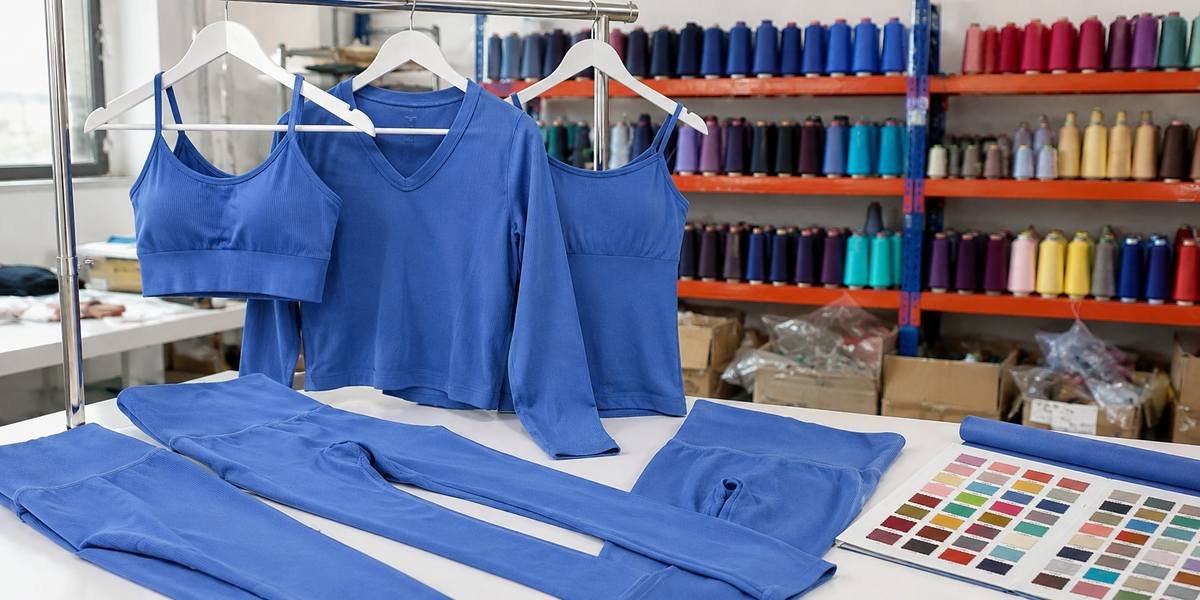
Custom Yoga Leggings Manufacturer for Brand-Led Programs
MOVEVOX develops custom yoga leggings for activewear brands that need the product standard—not only the appearance—to remain controlled from development into bulk production.
Projects can follow Seamless or Cut & Sew manufacturing according to waistband structure, fit, material or yarn direction, panel construction, pocket requirements and the intended commercial program. MOVEVOX connects technical review, sampling, material and color approval, private-label execution, production release, QC and repeat supply through one accountable manufacturing interface.
The objective is to establish an approved leggings standard that can be identified, manufactured, inspected and repeated as the program scales.
Where Custom Yoga Leggings Programs Usually Break
A custom leggings program becomes difficult when fit, material, color, branding and production version are approved separately but are not controlled as one manufacturing standard.
Fit Drifts From the Approved Sample
A legging can meet one nominal waist measurement and still fit differently if rise, hip capacity, waistband construction or material recovery changes. For a close-fitting product, these variables need to remain connected.
Buyer impact: rolling, sliding, rear-waist gaps, crotch tension or unintended material extension.
Material Changes the Product
Changing fabric, yarn, knit structure or finish can alter handfeel, stretch, recovery, support direction, appearance and opacity under extension.
Control direction: keep the approved material or yarn information connected to the actual product version.
Color and Brand Data Become Disconnected
A technically correct garment can still become a commercial failure if the wrong logo, care label, barcode, SKU or packaging is attached to the style, color or size.
Control direction: connect style → color → size → SKU → brand components.
Bulk Production Uses an Outdated Version
Sample revisions lose value if production uses an earlier measurement chart, material reference, artwork file or technical version.
Control direction: supersede old versions and release one current production reference.
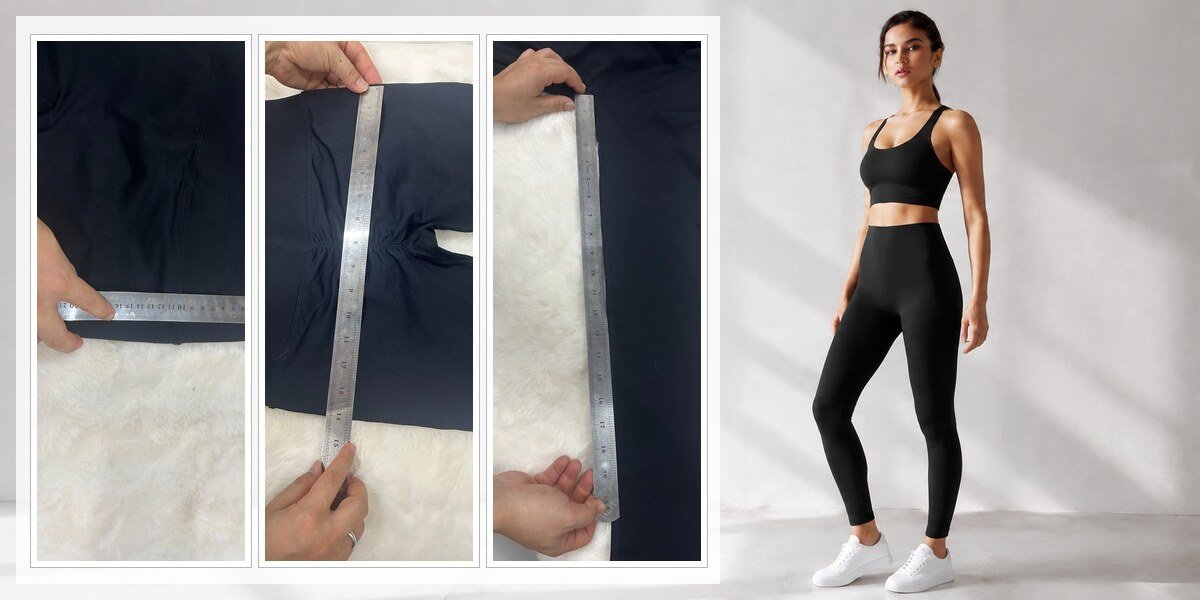
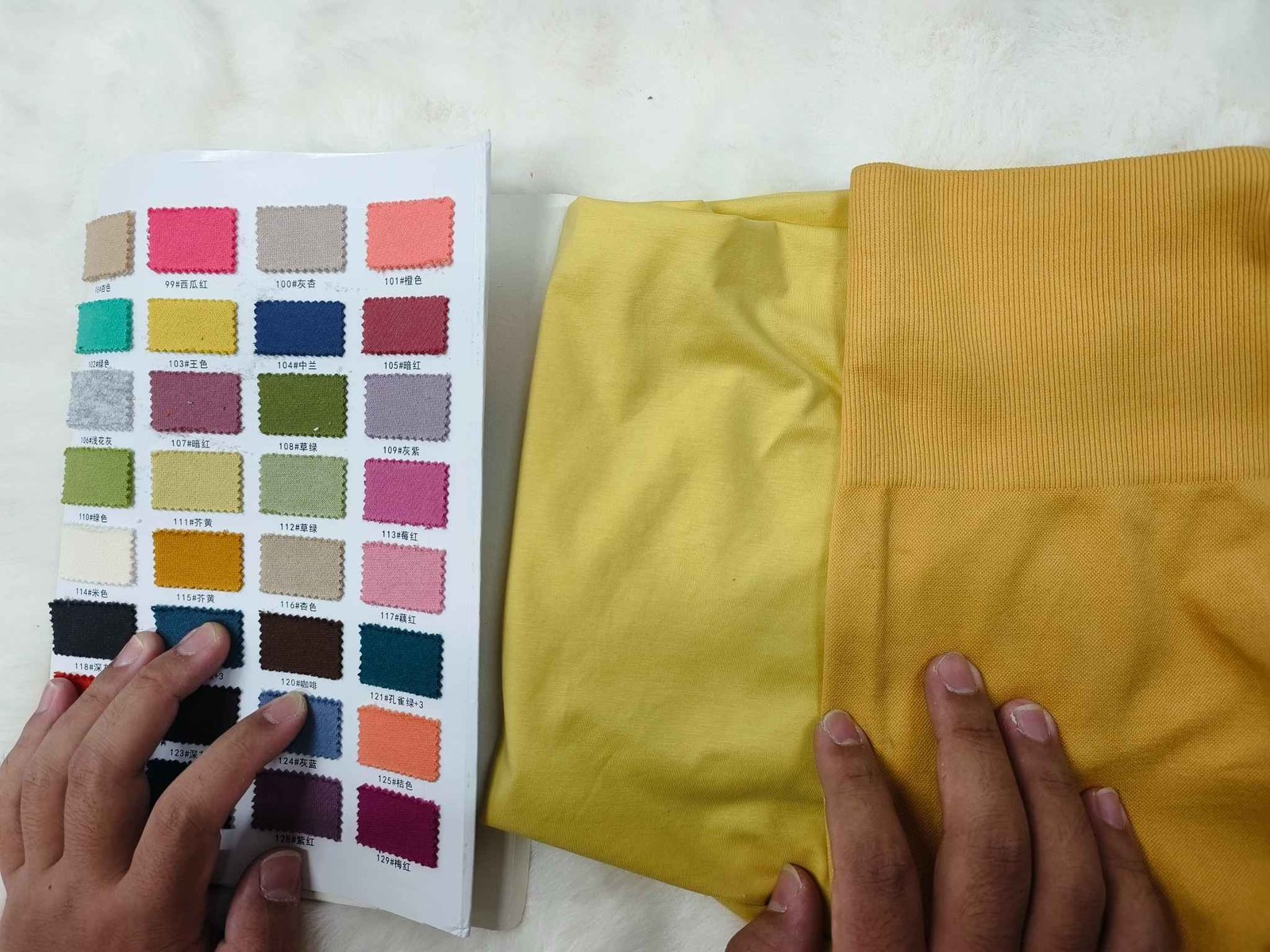
The purpose of development control is not to add paperwork. It is to keep the buyer-approved product standard identifiable when the program moves from sample decisions into commercial production.
Structure the Leggings Program Before Production Starts
The buyer and manufacturer need to define the layers that control the finished product before those decisions are released into sampling and bulk production.
Product Structure
Define manufacturing route, waistband form, front construction, panel or pocket requirements, crotch structure and other product-specific details that influence execution.
Fit System
Waist, hip, front rise, back rise, inseam and intended fit need to be considered together. One isolated dimension cannot define the complete leggings fit.
Material or Yarn
The approved material direction should relate to stretch, recovery, handfeel, surface, opacity and the selected Seamless or Cut & Sew route.
Color Standard
Pantone or digital direction can begin a custom-color process, but the applicable physical material or garment reference should define the production standard where required.
Branding
Logo method, artwork, dimensions, placement and garment-label information should correspond to the correct product version.
Commercial SKU
Style, color and size need to connect to the correct barcode, SKU, label and packaging configuration before finished-product packing begins.
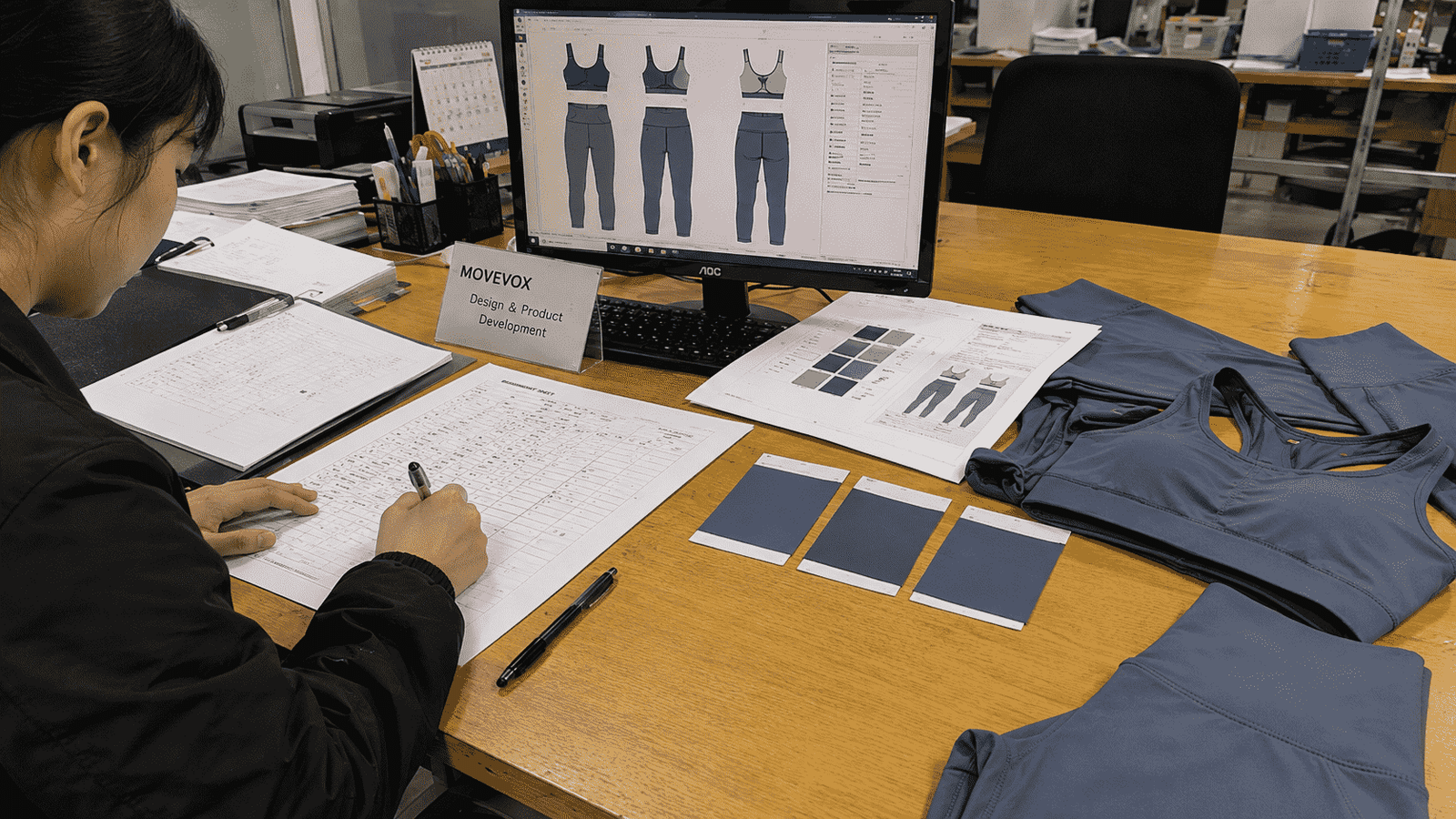
Develop Different Leggings Architectures Around the Brand Program
MOVEVOX does not require every yoga leggings program to follow one stock construction. Waist geometry, front construction, pockets, shaping details and material direction can lead to different technical solutions.
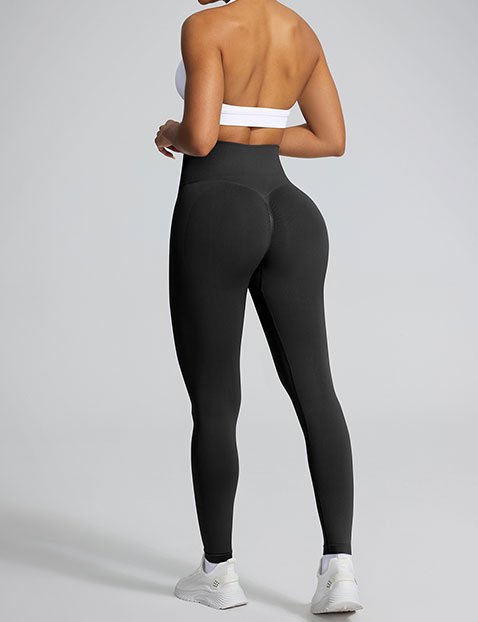
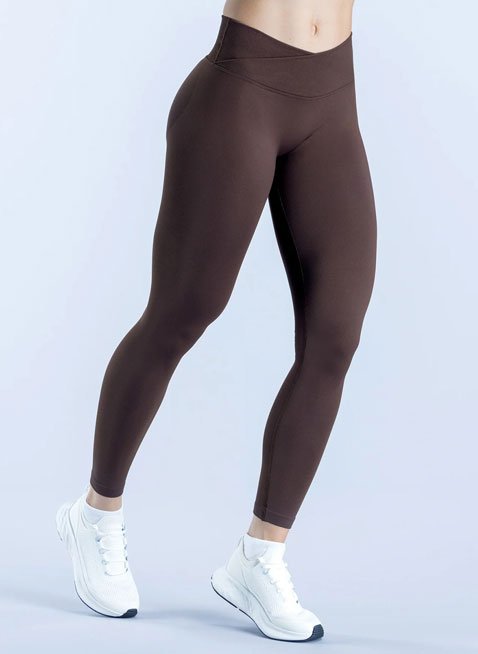
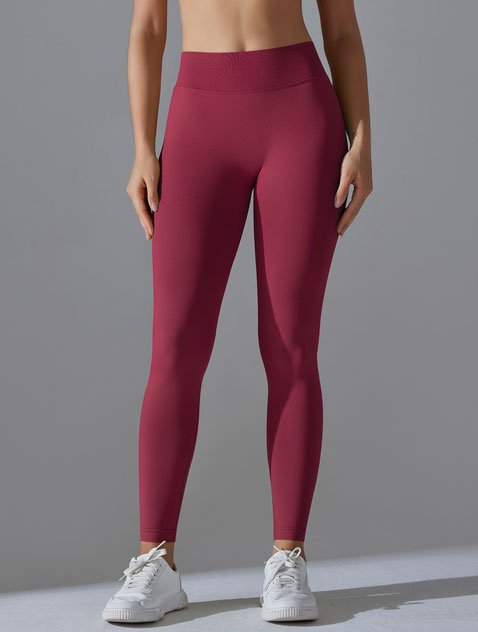
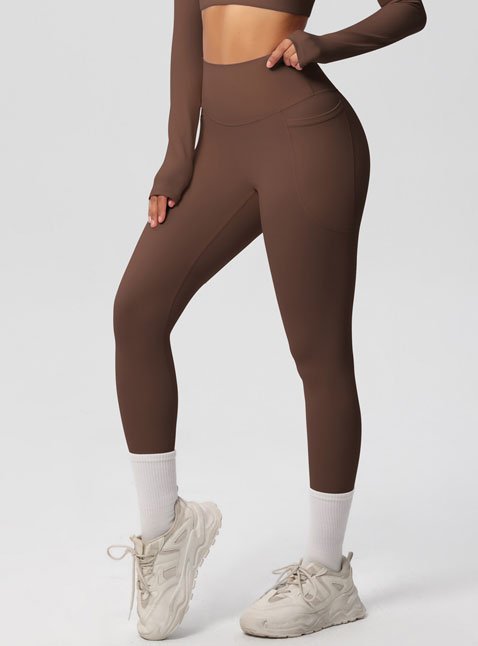
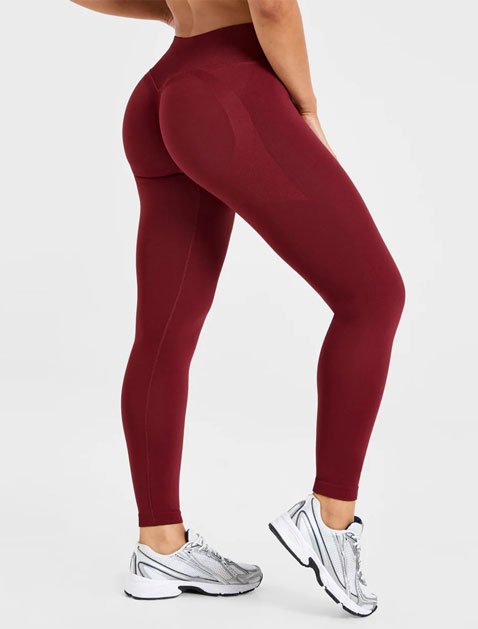

Choose Seamless or Cut & Sew by Leggings Structure
Seamless and Cut & Sew are not competing labels. The correct route depends on what physically defines the leggings product.

Different leggings in the same collection can use different manufacturing routes while remaining under one development, quality and commercial interface.
Manufacturing Resources Behind the Leggings Program
MOVEVOX operates a manufacturing-led development and supply-chain system from Yiwu, Zhejiang, with its own manufacturing core supporting technical development, production control and QC.
Santoni Machines
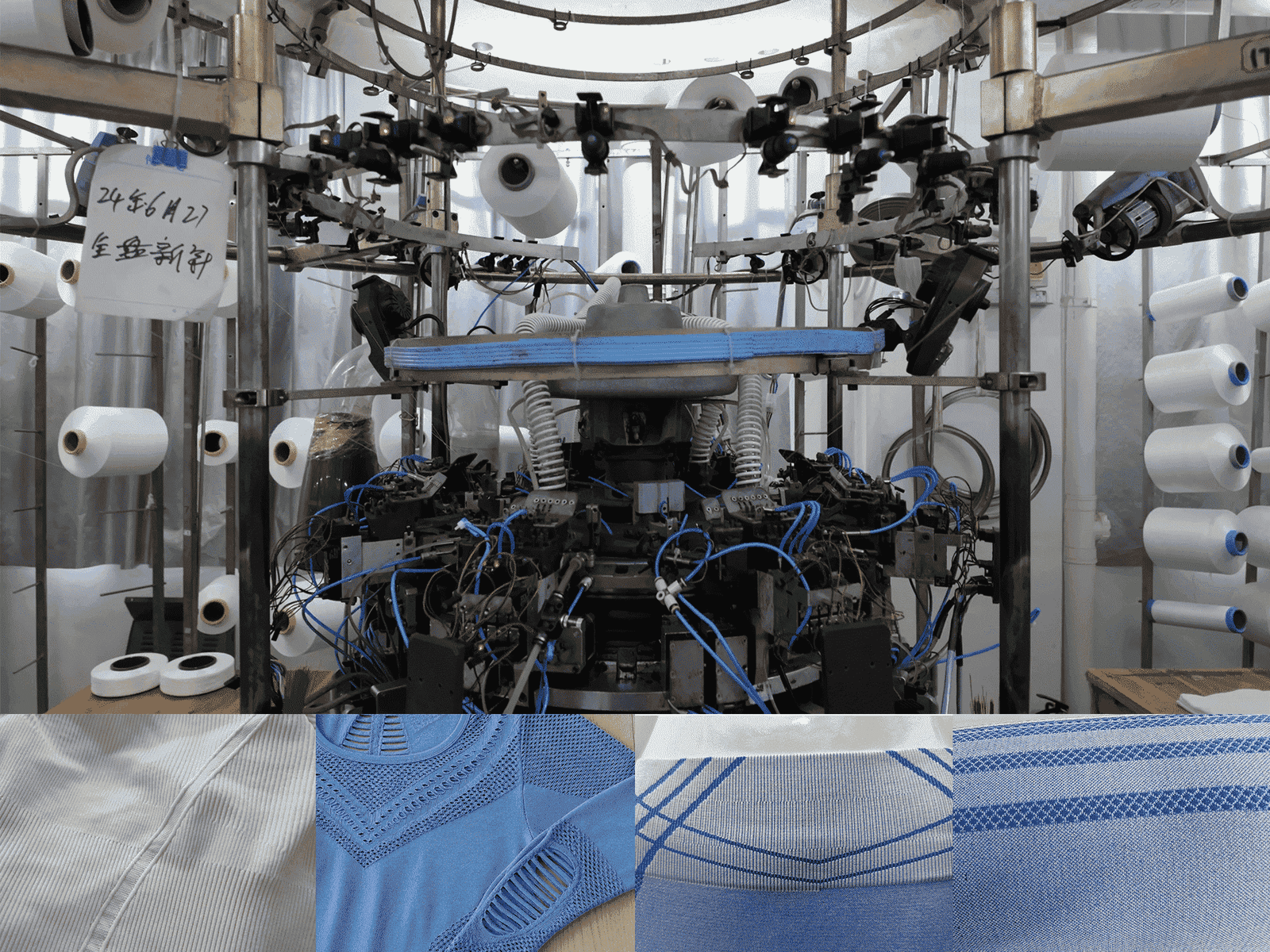
Italian Santoni Seamless manufacturing equipment.
Principal Garment Machines
Core sewing and garment-production resources.
Development Team
Design, pattern and sample-making roles.
QC Team
Quality-control support across applicable production stages.
Used Production Space
Manufacturing and production space in Yiwu.
Manufacturing Routes
Seamless and Cut & Sew selected according to the actual product.
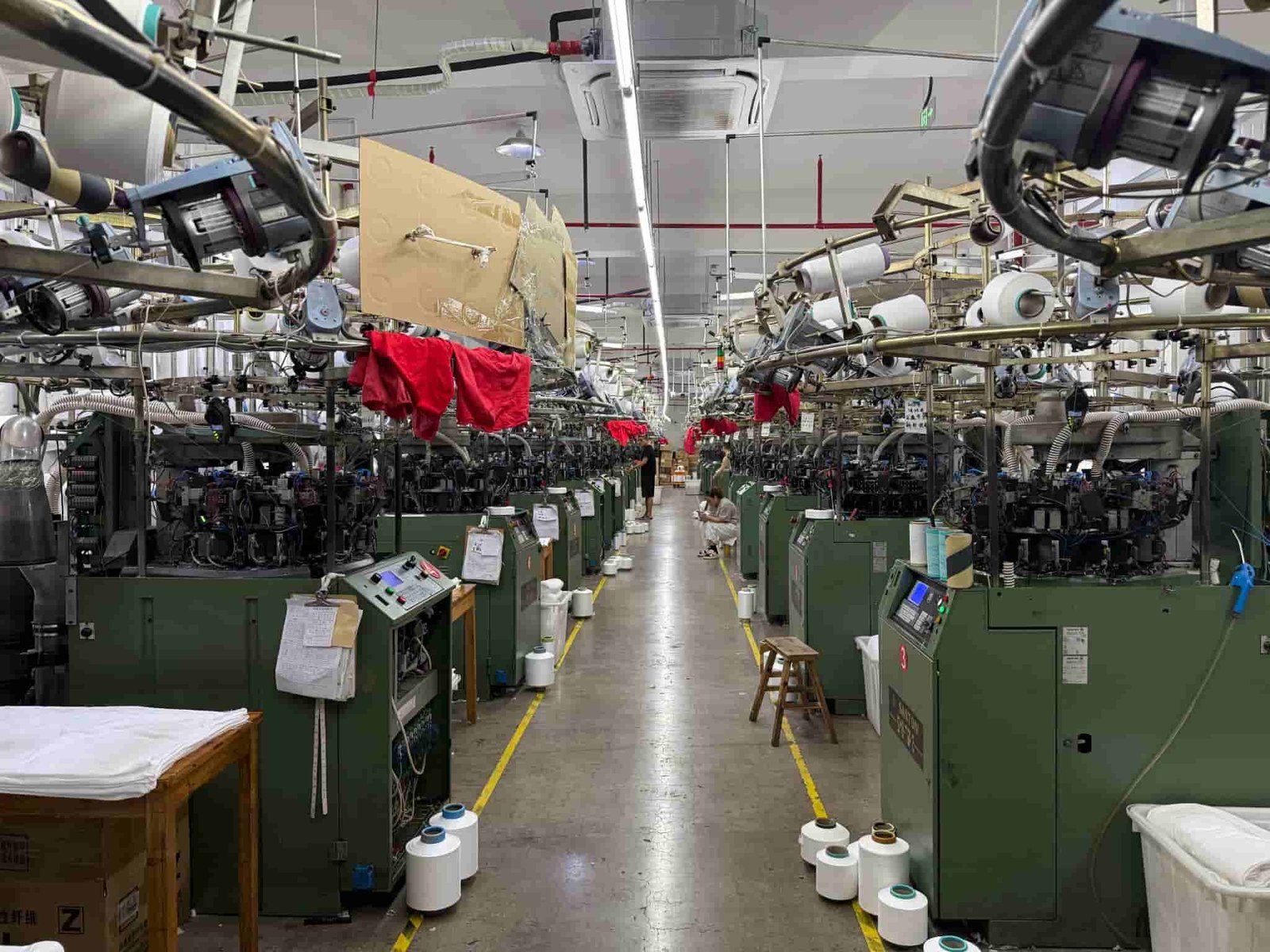

These resources matter because development and production decisions can remain physically connected to the manufacturing environment. Seamless styles can move from yarn and program review into Santoni sampling, while Cut & Sew styles can move from material and pattern review into garment construction. Development and QC teams work against the same released product information rather than operating as separate supplier interfaces.
What MOVEVOX Needs Before Yoga Leggings Development Starts
The clearer the starting information, the easier it is to identify technical and commercial open points before sampling.
| Development Input | What to Provide | Why It Matters |
|---|---|---|
| Product Reference | Tech Pack, existing garment, drawing, product image or available specification | Establishes the product starting point |
| Measurements | Intended size chart or measurement requirements | Supports fit and grading review |
| Material Direction | Handfeel, stretch, support or existing material reference | Guides fabric or yarn selection |
| Branding | Logo, labels and packaging requirements where available | Connects product development with private-label execution |
| Quantity Structure | Styles, colors, sizes and approximate quantities | Supports MOQ and production-route review |
| Commercial Timing | Sampling, launch or purchasing schedule | Allows feasibility and critical-path review |
A complete Tech Pack makes technical review more efficient, but development can also begin from a lawful physical reference sample, product image, sketch or sufficiently defined product direction. The purpose of the first review is to separate confirmed information from missing decisions that can affect fit, manufacturing route, MOQ, material availability, branding or timing.
Develop Multiple Leggings SKUs Without Losing Control
A multi-SKU leggings program needs an identifiable relationship between the physical product and its commercial information.
Style
Keep each product connected to its own current specification and approved construction.
Color
Maintain the correct material, yarn or color reference for the released style.
Size
Keep the released size structure connected to the correct garment construction.
Sample Version
Record revisions against the correct product rather than transferring changes informally across the collection.
Approval Status
Make the final released version clear before commercial manufacturing continues.
SKU Identity
Connect product, color and size to the right barcode, labels and packaging information.
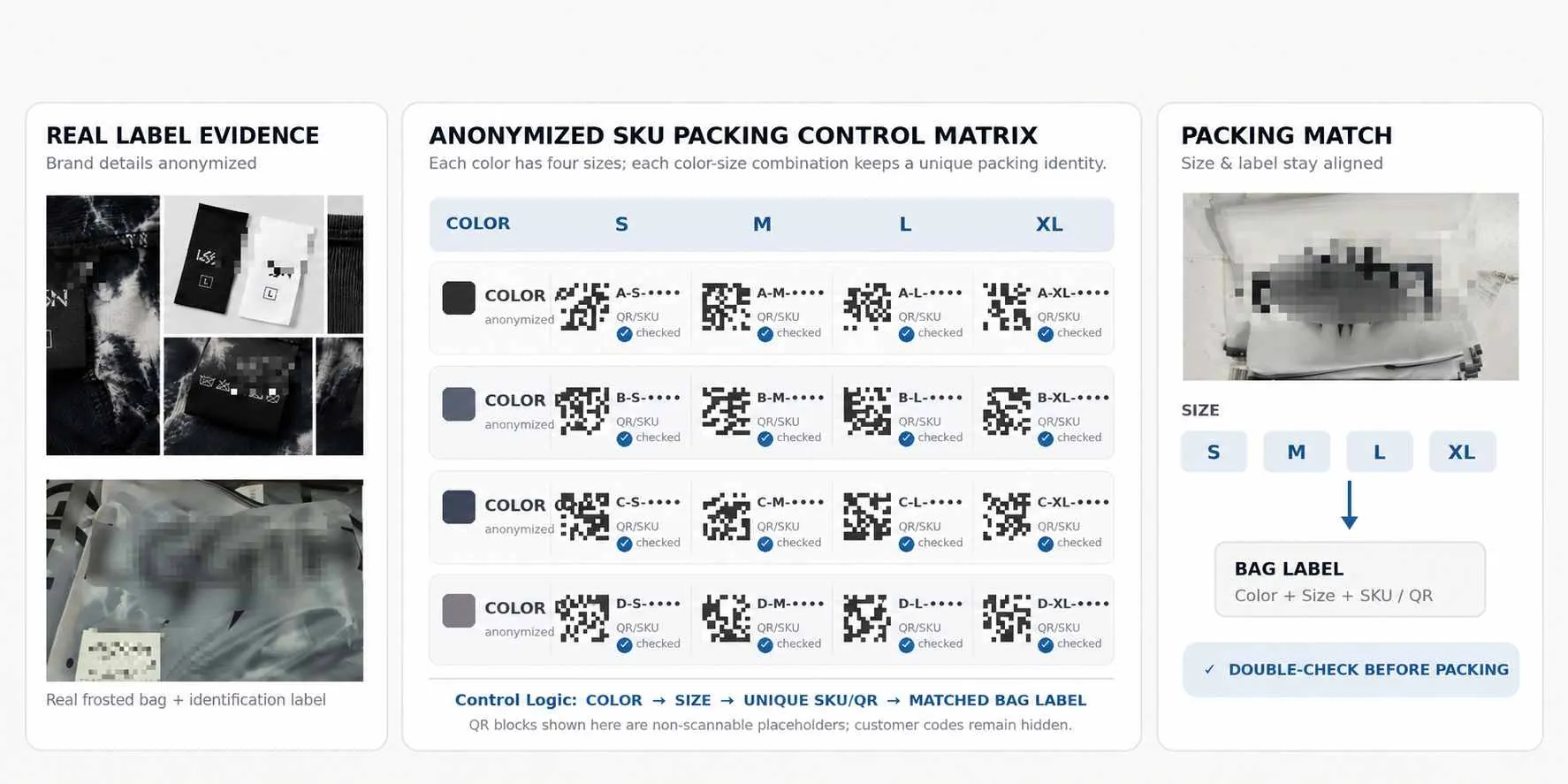
A single legging in three colors and five sizes already creates 15 sellable SKU combinations before branding or packaging variations are considered. SKU control prevents one approved product from accidentally inheriting the measurements, logo, barcode, packaging or material reference of another combination.
Engineer Waistband, Rise and Hip Fit as One System
Waist and hip cannot be optimized independently in a close-fitting legging. Waist tension, hip capacity, rise and material recovery affect how the garment distributes load across the body.
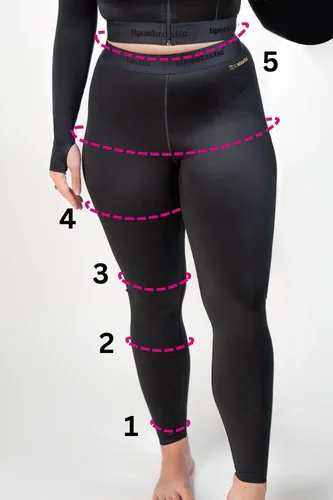
Waistband
Confirm waistband height, construction and required holding behavior together with the material used in the approved product.
Rise
Front and back rise affect waistband position, crotch space and how the garment carries tension between waist and hip.
Hip Capacity
Insufficient hip capacity can pull the waistband downward, increase crotch tension or create unintended material extension.
Material Recovery
The same garment dimensions can behave differently when stretch and recovery change, so fit cannot be separated from material approval.
Physical Fit Review
Measurement review should combine waist, hip, rise and actual physical garment behavior rather than accepting one isolated dimension as proof of fit.
Keep the Approved Fit Logic Across the Released Size Range
Base-size approval should not automatically be interpreted as approval of every size in the commercial range.
| Control Point | Purpose |
|---|---|
| Approved POM | Define exactly where garment dimensions should be taken. |
| Base-Size Approval | Establish the accepted fit and measurement reference for development. |
| Size Progression | Apply released grade rules rather than operator assumptions. |
| Size-Set Review | Where required, confirm that the base-size logic translates into representative or full sizes. |
| Bulk Measurement | Compare applicable finished-garment dimensions against the released requirement. |
For leggings, key measurement points commonly include waist, hip, front rise, back rise, inseam and applicable garment length. A grading change in one area can affect waistband position, seat capacity, crotch fit or material extension elsewhere in the garment.
Select Fabric or Yarn Against the Finished Leggings Requirement
Material selection should start with the behavior required from the actual finished garment rather than fiber composition alone.
Handfeel
Define the intended physical feel against the actual product requirement rather than a generic “soft” description.
Stretch
Review stretch direction and extension in relation to waistband, hip and leg fit.
Recovery
Consider how the material returns after extension and whether that behavior supports the approved garment fit.
Support
Relate support requirements to the actual material, garment dimensions and intended use.
Opacity
Evaluate opacity against the actual material, color, size and finished garment under relevant extension.
Manufacturing Route
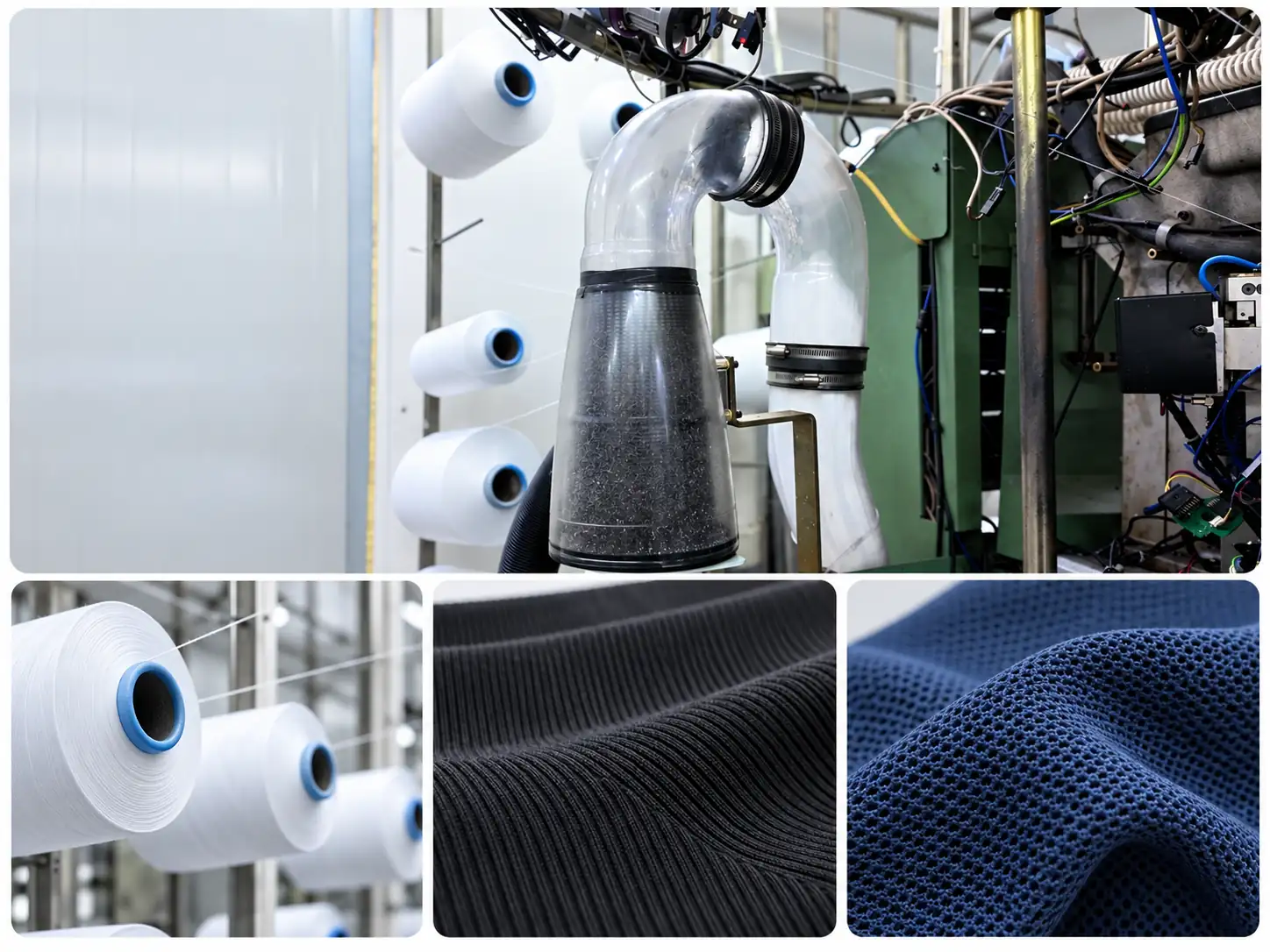
Connect fabric selection to Cut & Sew or yarn and knit specification to Seamless production.
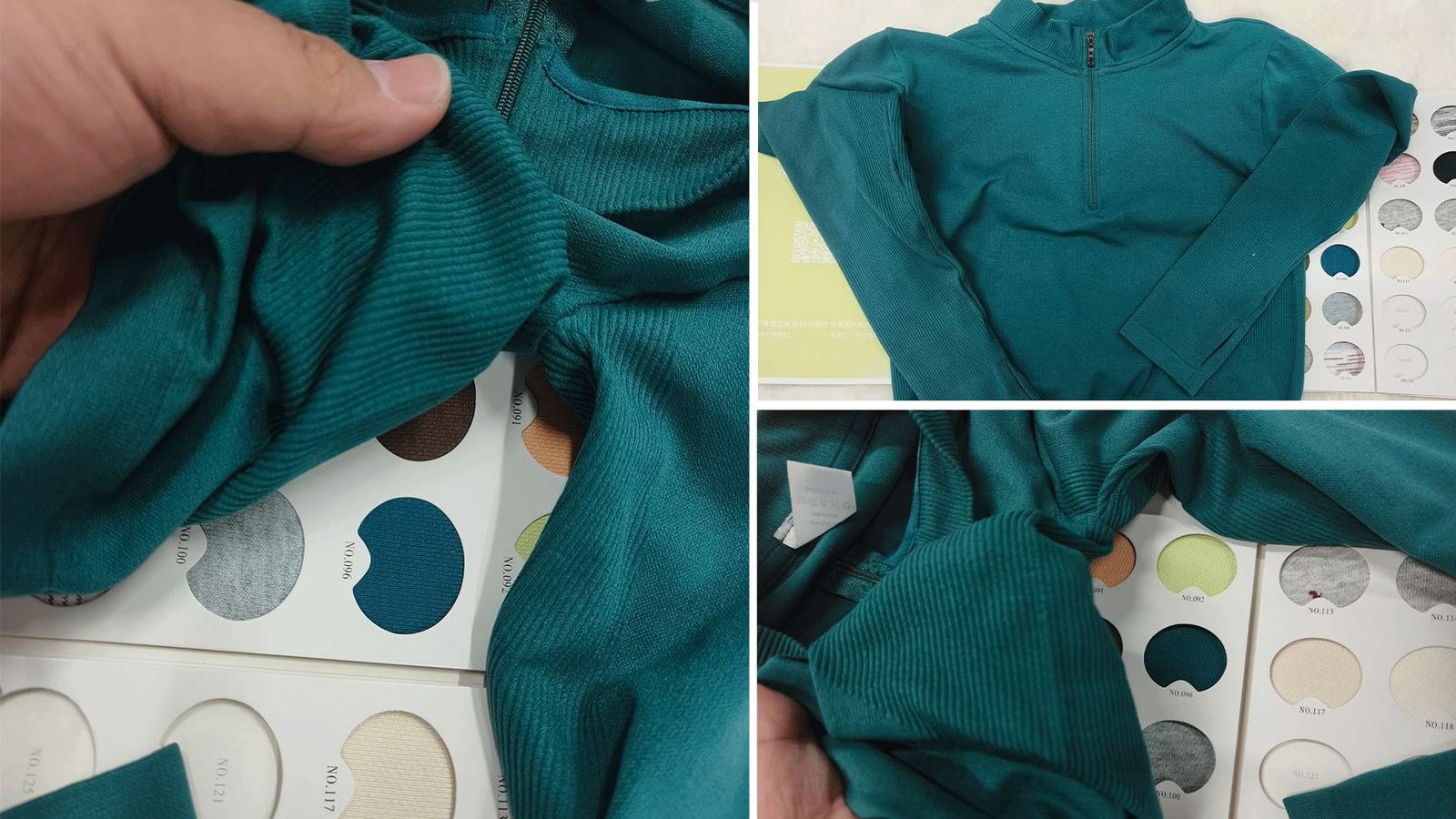
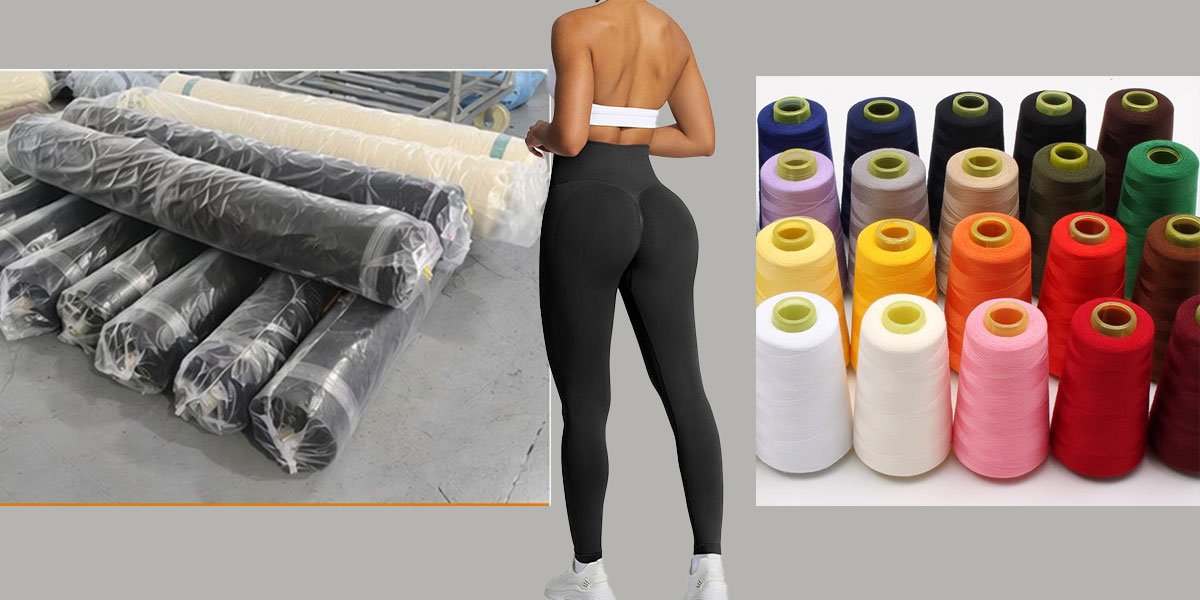
Two nylon-spandex materials with similar composition can still differ in knit structure, GSM, surface finish, stretch direction, recovery, handfeel and opacity under extension. For Seamless leggings, yarn specification, knitting program, density and engineered zones work together to create the final garment structure.
Carry the Approved Material Standard Into Bulk
A Lab Dip, swatch or approved sample can define a development standard, but the bulk material still needs to correspond to the applicable product requirement.
Approved Material
Identify the fabric, yarn or physical material reference associated with the accepted sample.
Bulk Material Identity
Prepared or incoming material should correspond to the applicable supplier, specification, color or project requirement.
Lot Review
Where color or material lots require checking, compare the relevant lot before affected production is fully released.
Production Release
Manufacturing should use the current material information linked to the approved garment version.
If a relevant material condition changes, the previous approval should not automatically be transferred. This is particularly important where color, surface finish, yarn structure or material recovery can change the finished garment.
Evaluate Opacity on the Actual Material, Color and Garment
Opacity is the result of a product system rather than one material number, one composition or one marketing claim.
Material Structure
GSM can influence coverage, but it cannot independently prove how a finished legging behaves under extension. Knit structure, yarn or fabric construction and surface also matter.
Color
Light and dark colors based on the same nominal material can show different visual behavior when extended.
Fit & Size
A garment that is too tight through the hip or thigh can extend the material further than the approved sample and change opacity behavior.
Movement
Where opacity is a buyer requirement, review should relate to the actual garment, relevant size and appropriate movement or wear condition.
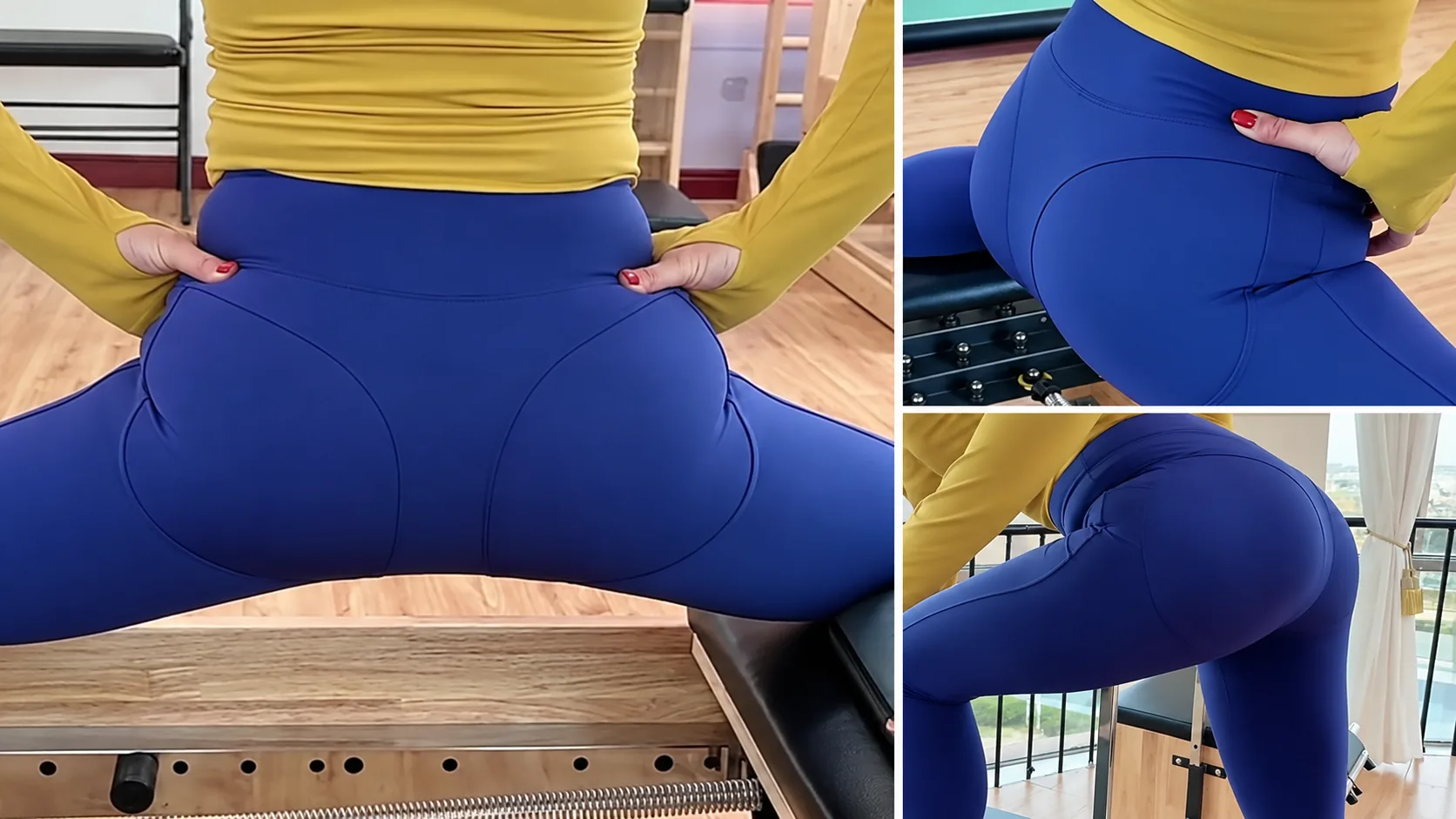
MOVEVOX does not use a blanket “squat-proof” statement across every fabric, color, size and garment. Final acceptance should be agreed against the actual product and buyer requirement.
Control Custom Color From Target Reference Into Bulk Material
A Pantone number defines a target direction, but the physical material determines how that target appears in the actual leggings program.
Target Reference
Begin with an applicable Pantone, physical sample or other buyer-approved reference.
Material Application
The same target can appear different on nylon, polyester, brushed fabric, rib, mesh or engineered knit structures.
Physical Approval
Where required, approve the color on the actual material or yarn base rather than relying on a screen representation.
Bulk Reference
Keep the approved color information connected to the correct style, material and production lot through bulk manufacturing.
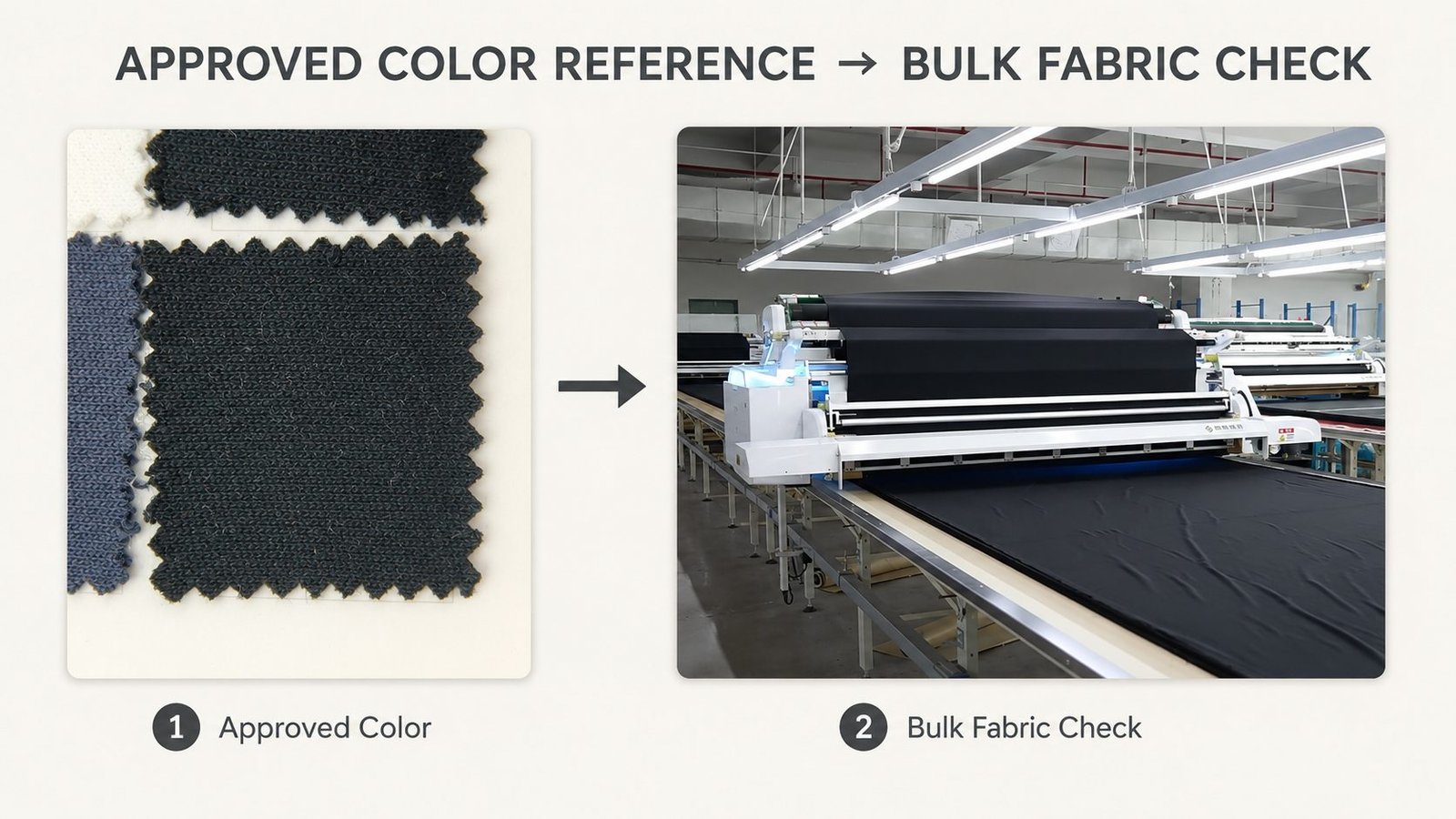
Dedicated custom dye or material programs can also increase the effective MOQ because material suppliers may apply their own production minimums.
Connect the Leggings, Branding, Variable Data and Packaging
Private-label execution should remain connected to the correct commercial SKU rather than being treated as a separate decoration task at the end of manufacturing.
Logo
Confirm method, artwork version, dimensions and placement against the correct leggings style and approved material.
Garment Labels
Main label, care label and size information should correspond to the applicable product, size and market requirement.
Variable Data
Barcode, SKU sticker, QR information and other variable identification must map to the correct style-color-size combination.
Packaging
Individual bag, hangtag, carton and other approved packing requirements should remain connected to the correct finished product.
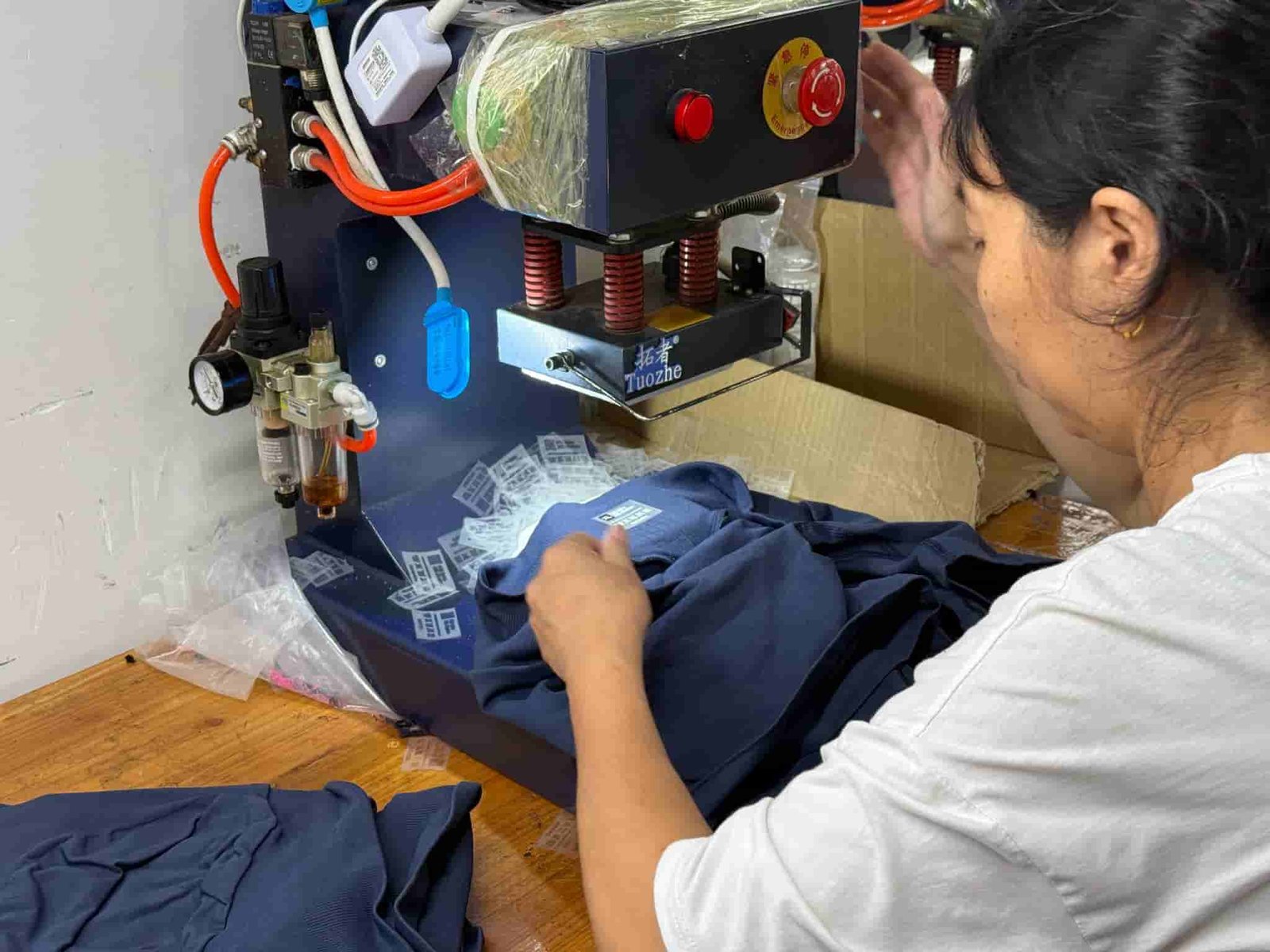
A product can be technically correct and still fail commercially if the wrong variable data is attached. Branding and packing information therefore need SKU and version control just like garment specifications.
Turn Sampling Into One Identifiable Production Reference
Sampling is not only the creation of a prototype. Each review should reduce open technical decisions until the buyer and manufacturing team can identify the version approved for production.
Development Sample
Tests whether the current design, fit, material and construction decisions can be translated into a physical legging.
Fit Review
Reviews measurements together with waistband position, hip fit, crotch behavior, leg length and relevant physical movement.
Revised Sample
Confirms that documented corrections have been applied without introducing uncontrolled changes elsewhere in the garment.
Size Set
Where required, representative or full sizes can be reviewed to confirm whether the approved base-size logic translates correctly.
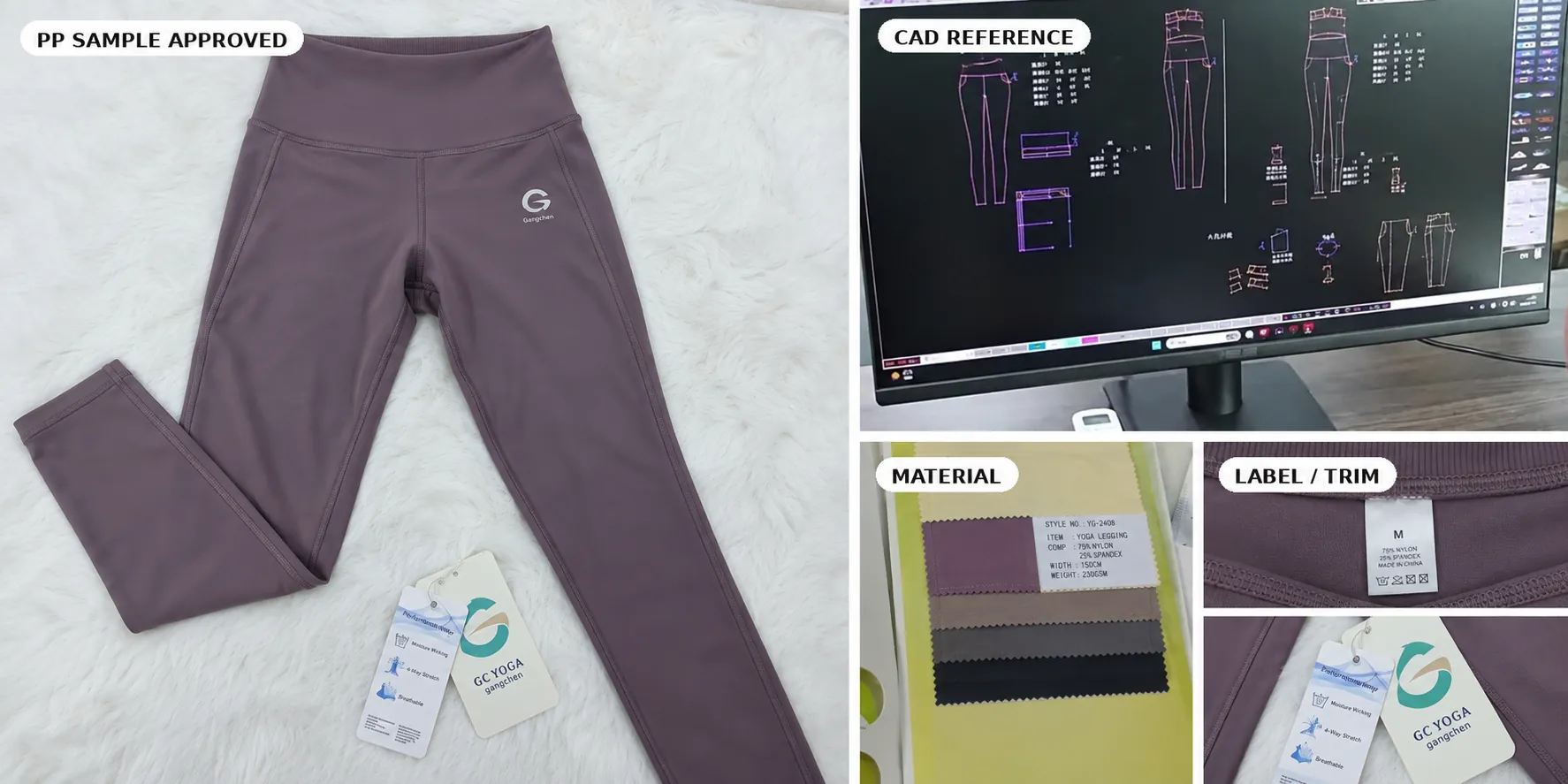
PP / Approved Sample
Creates the identifiable physical reference used together with current released specifications for bulk preparation.
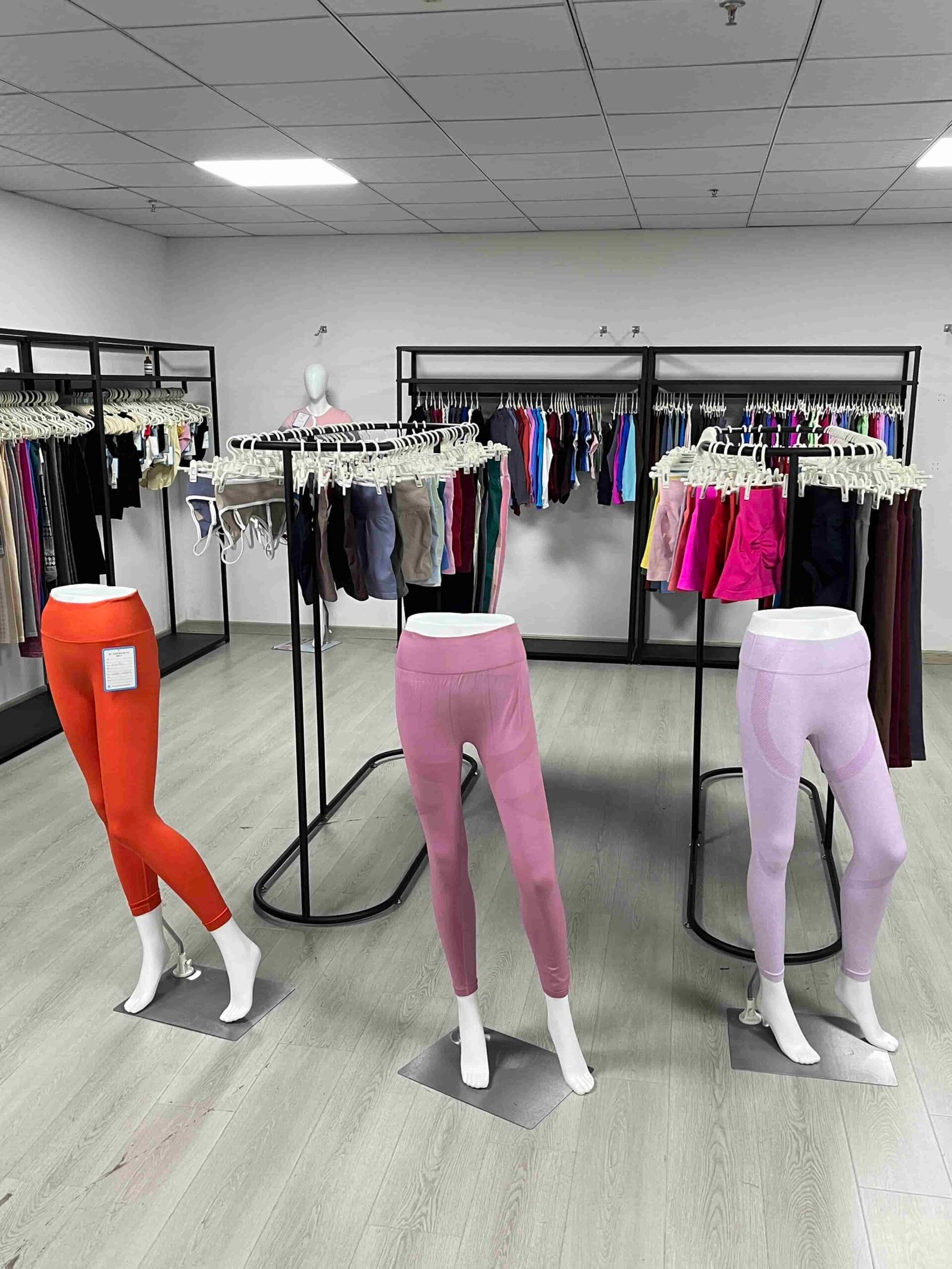
Typical sample development is approximately 5–10 working days after sufficient details are confirmed. The actual calendar can extend when product complexity, material preparation or revision rounds require additional work.
Move the Approved Leggings Standard Into Bulk Production
Buyer approval needs to be converted into a production-release system. Otherwise, an accepted sample can remain disconnected from the files and controls used by bulk teams.
Approval & File Write-Back
Identify the accepted sample version and update current measurements, material, color, artwork or packaging records where applicable.
Specification Freeze
The released technical version becomes the governing manufacturing reference and superseded versions should no longer remain active instructions.
Pre-Production Review
Review PO, approved product, materials, branding, packaging, QC requirements and unresolved risks before production expands.
First Article
Check an initial representative bulk unit using actual production conditions against the frozen product reference.
Bulk Release
Wider production proceeds after the applicable technical, material and quality release points are ready.
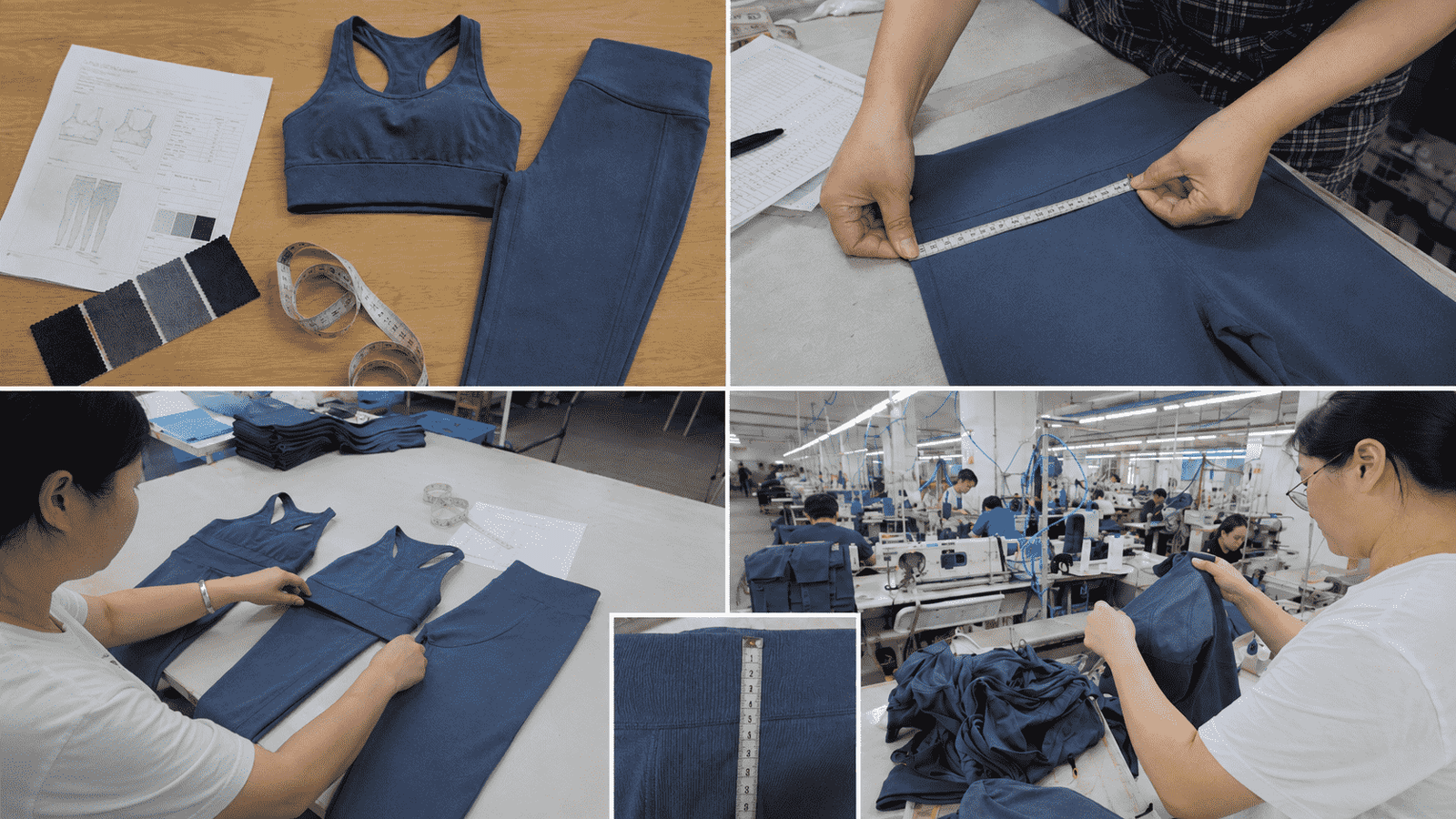
The image above represents the relationship between the released product reference, measurement control and production-stage verification. Module 20 can therefore focus specifically on the actual pre-production review without repeating the same visual evidence.
Align the Leggings Program Before Production Resources Are Committed
Pre-production release should confirm exactly what is approved and which current information each manufacturing and QC team is expected to follow.
Approved Product Version
Confirm the current sample or physical reference and make sure superseded versions are not used as bulk instructions.
Material & Color Readiness
Confirm applicable yarn, fabric, color and supporting components against the released product.
Manufacturing Route
Confirm the released Seamless or Cut & Sew path together with the technical information required by that route.
Brand, Packaging & QC
Confirm current artwork, labels, variable data, packaging and applicable inspection requirements before production expands.
Critical unresolved information should remain visible as an open point rather than being converted into an operator assumption.
Build Quality Into Every Leggings Production Gate
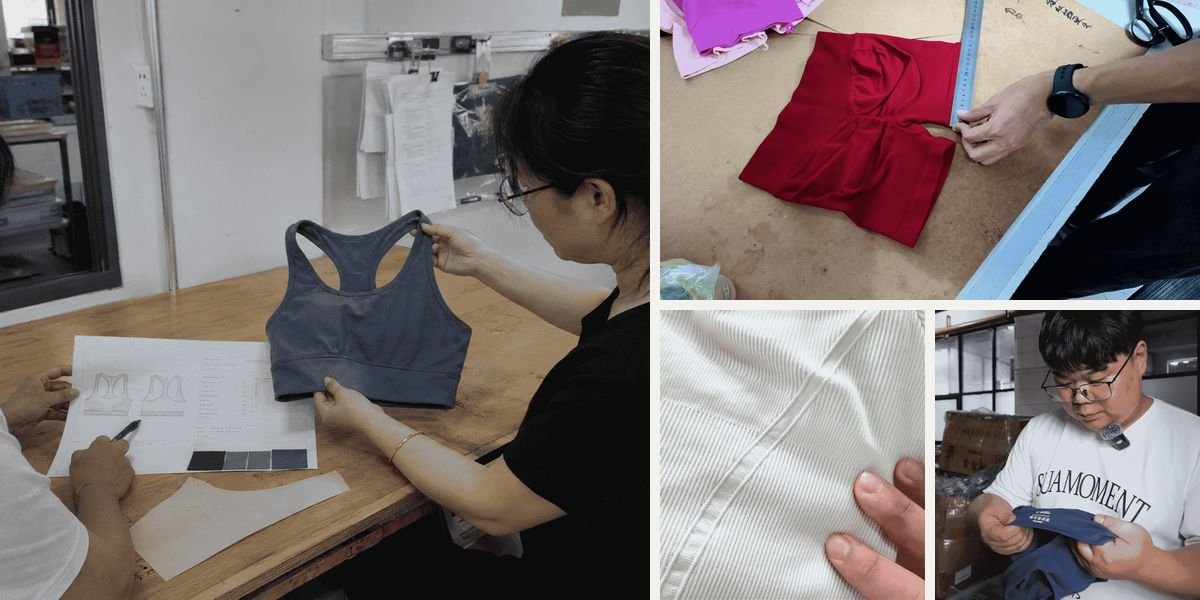
MOVEVOX treats quality as a sequence of review and release points rather than one final inspection after the order is already complete.
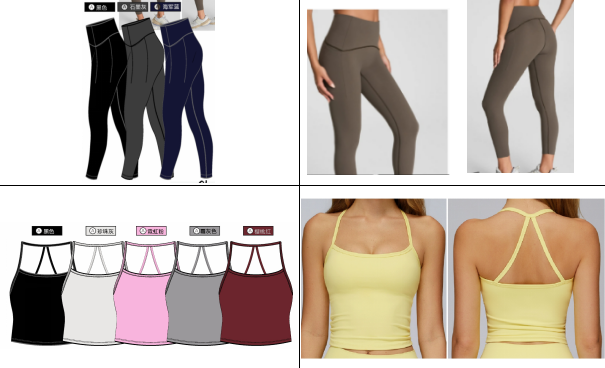
 GATE 01
Material Check
Confirm applicable incoming or prepared materials. Decision: release, hold or clarify before affected production proceeds.
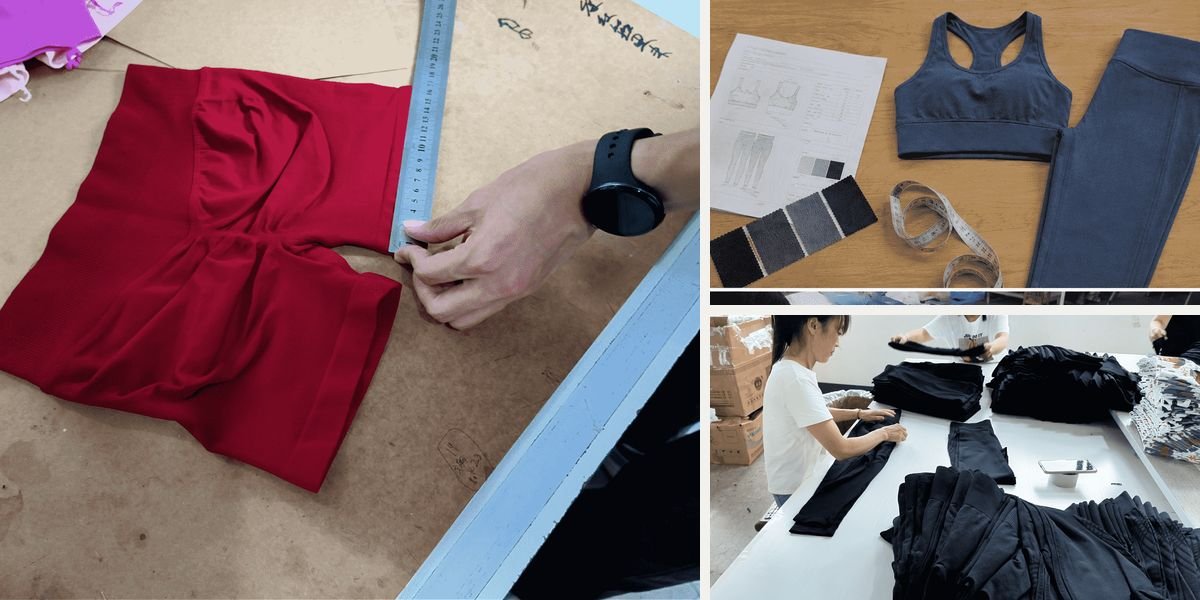
 GATE 02
Pre-Production Review
Align product, materials, branding and quality requirements. Decision: close critical open points before bulk expansion.
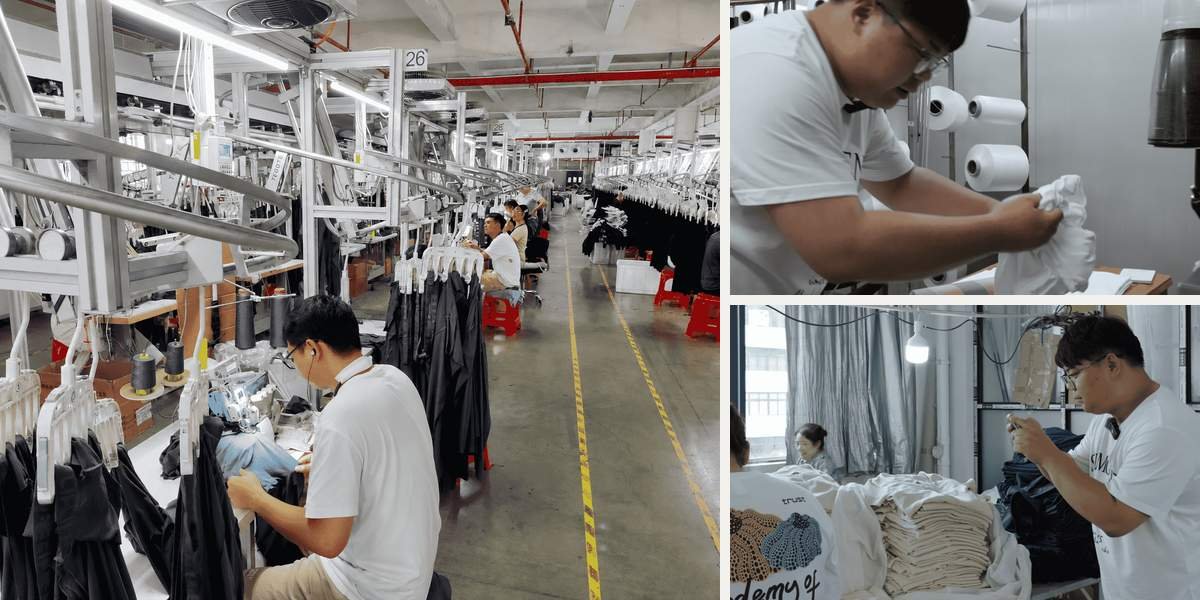
 GATE 03
First Article
Check an initial production unit against the frozen reference. Decision: verify actual bulk conditions before wider output continues.
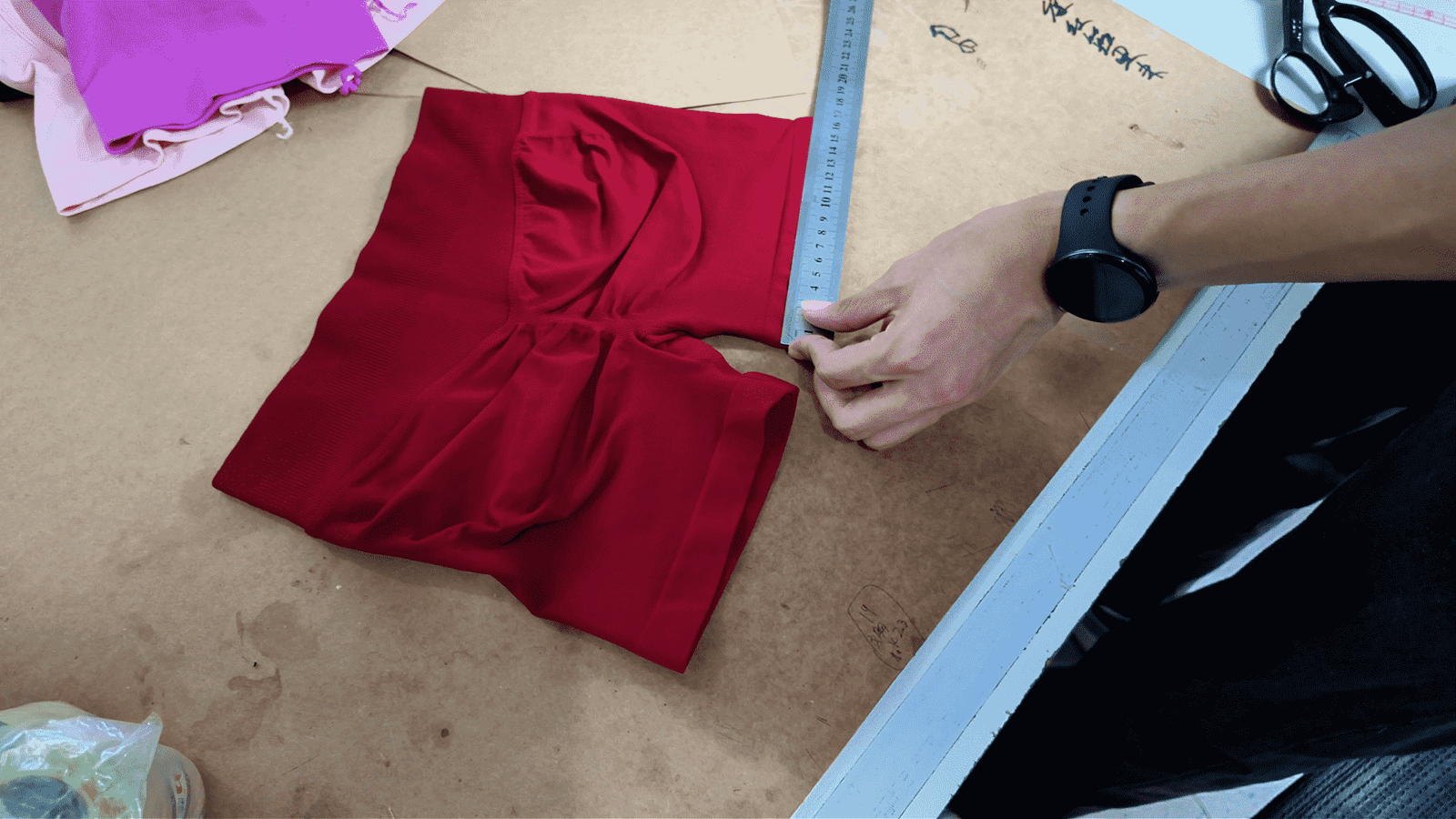
 GATE 04
Inline Inspection
Review workmanship while production is still running. Decision: detect recurring trends before they spread across larger quantities.
 GATE 05
Measurement Check
Compare applicable dimensions against the current POM and released tolerances.
 GATE 06
Finished Inspection
Reconfirm finished product condition, appearance, branding and applicable product requirements.
Packing Release
Confirm that garment identity, size, barcode, SKU and required packaging remain connected before shipment release. This final gate protects the commercial accuracy of a technically approved product.
Reconfirm the Complete Leggings Standard Before Shipment Release
Finished inspection brings together requirements that were controlled separately during development and production.
Measurements
Check applicable dimensions against the current approved measurement reference and tolerances.
Workmanship
Review relevant seams, finishing, construction and visible workmanship against the product requirement.
Appearance
Assess finished-product condition, surface and visual execution against the applicable standard.
Branding
Confirm the correct logo execution and garment-label information for the SKU.
Product Identity
Connect style, color and size to the correct commercial identification.
Packaging
Confirm the approved individual and shipment-packing requirements before release.
If the physical approved reference and written specification conflict, the issue should be held and clarified rather than allowing an inspector or operator to decide independently which version is probably correct.
Understand Third-Party Testing Within Its Actual Scope
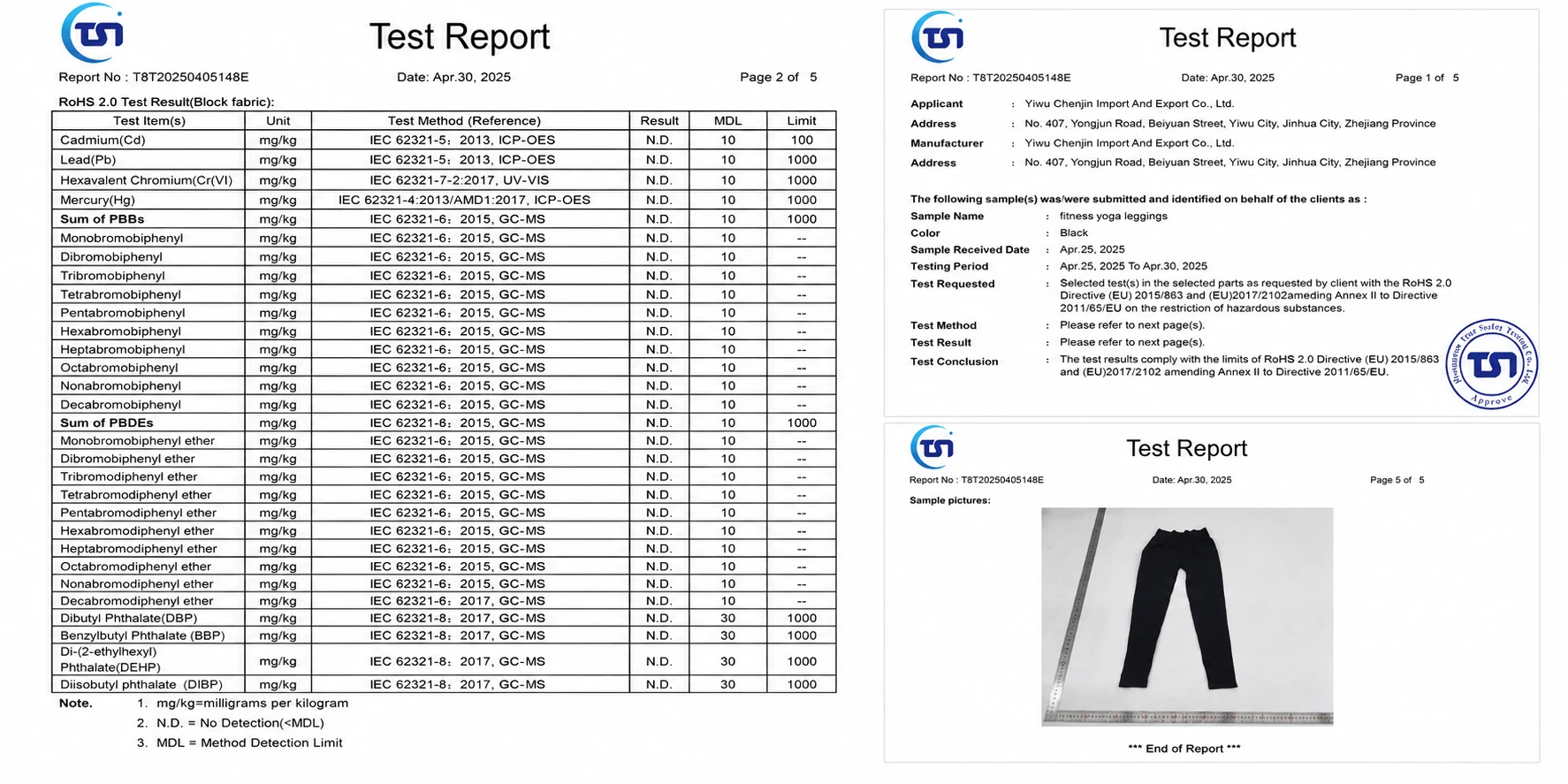
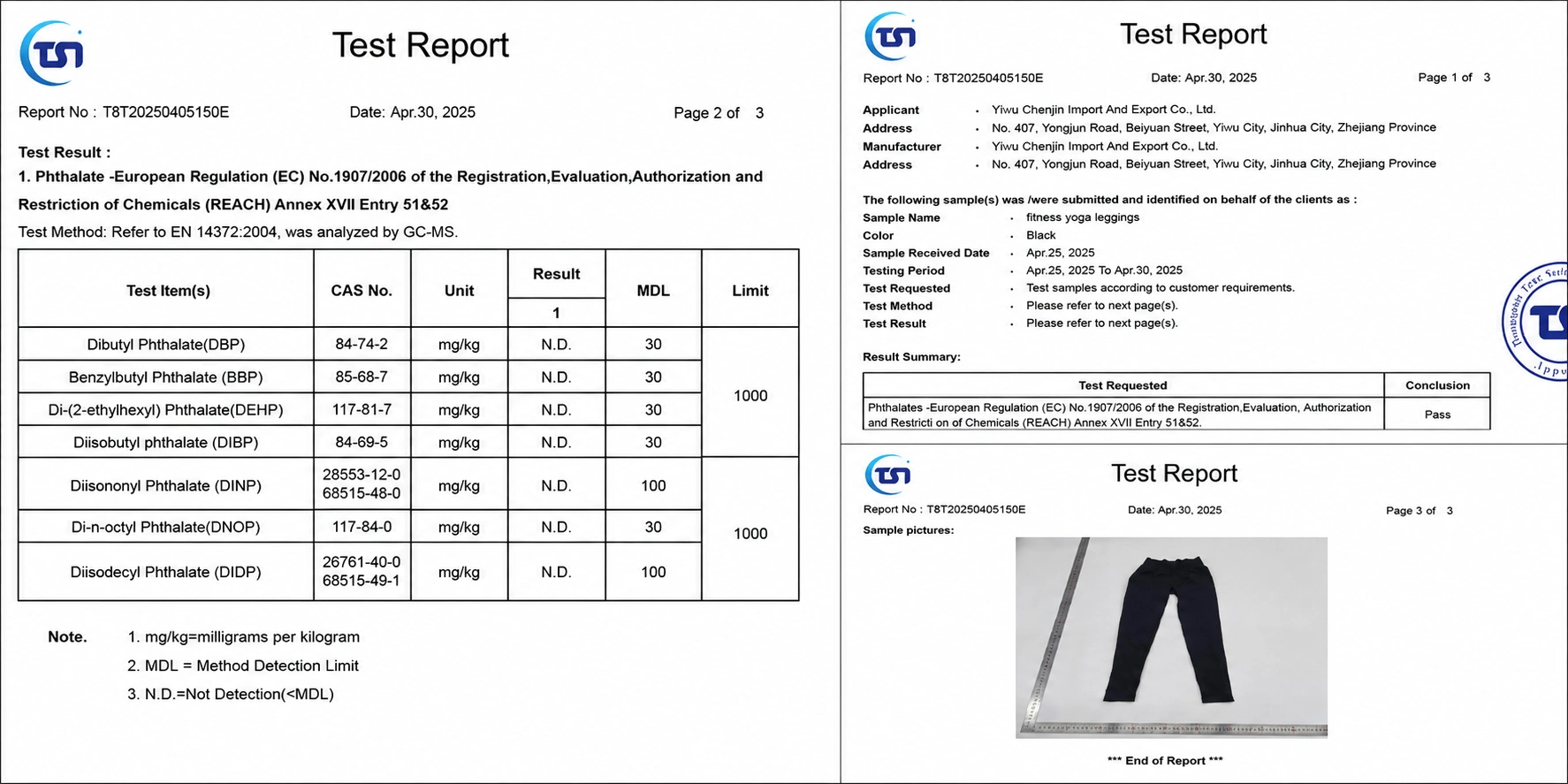
Useful testing evidence should answer four questions: what sample was tested, what method or regulation was applied, what result was reported, and what scope that result actually covers.
Sample-Specific Test Evidence
A black fitness yoga leggings sample was tested under Report TST20250405148E, dated April 30, 2025. The report concluded compliance with the stated RoHS 2.0 requirements covered by that test.
Phthalates Test Evidence
The same project included Report TST20250405150E, covering the specified REACH Annex XVII Entry 51 & 52 phthalates requirements, with a Pass result.
What the Evidence Does Not Mean
A certificate or report should be read together with the tested sample, test method and stated scope. It does not automatically certify every future MOVEVOX product, every material, every color or the entire manufacturing facility.
Understand Capacity as Controlled Output, Not Theoretical Machine Speed
Capacity becomes commercially useful only when product standards, materials, production resources, QC and packing can be coordinated into quality-released garments.
Own Manufacturing Base
MOVEVOX's Yiwu facility remains the core for development, technical-standard control, manufacturing and quality management.
Controlled Satellite Resources
The managed network includes eight long-term satellite factories, with two in Guangzhou and six in Yiwu. These are partner resources and are not represented as MOVEVOX-owned factories.
Managed Monthly Delivery
Approximate normal monthly quality-released delivery capability across the combined controlled production system.
Large Program Review
Programs above approximately 50,000 pieces require specific capacity and production-allocation review before timing is confirmed.
The 150,000–200,000 figure is a combined managed delivery-capability reference. It is not Seamless-only capacity and not a guaranteed allocation to one buyer.
Verify the Physical Environment Behind the Leggings Program
Each image below represents a different part of the development and manufacturing system so buyers can evaluate more than repeated factory-floor photography.
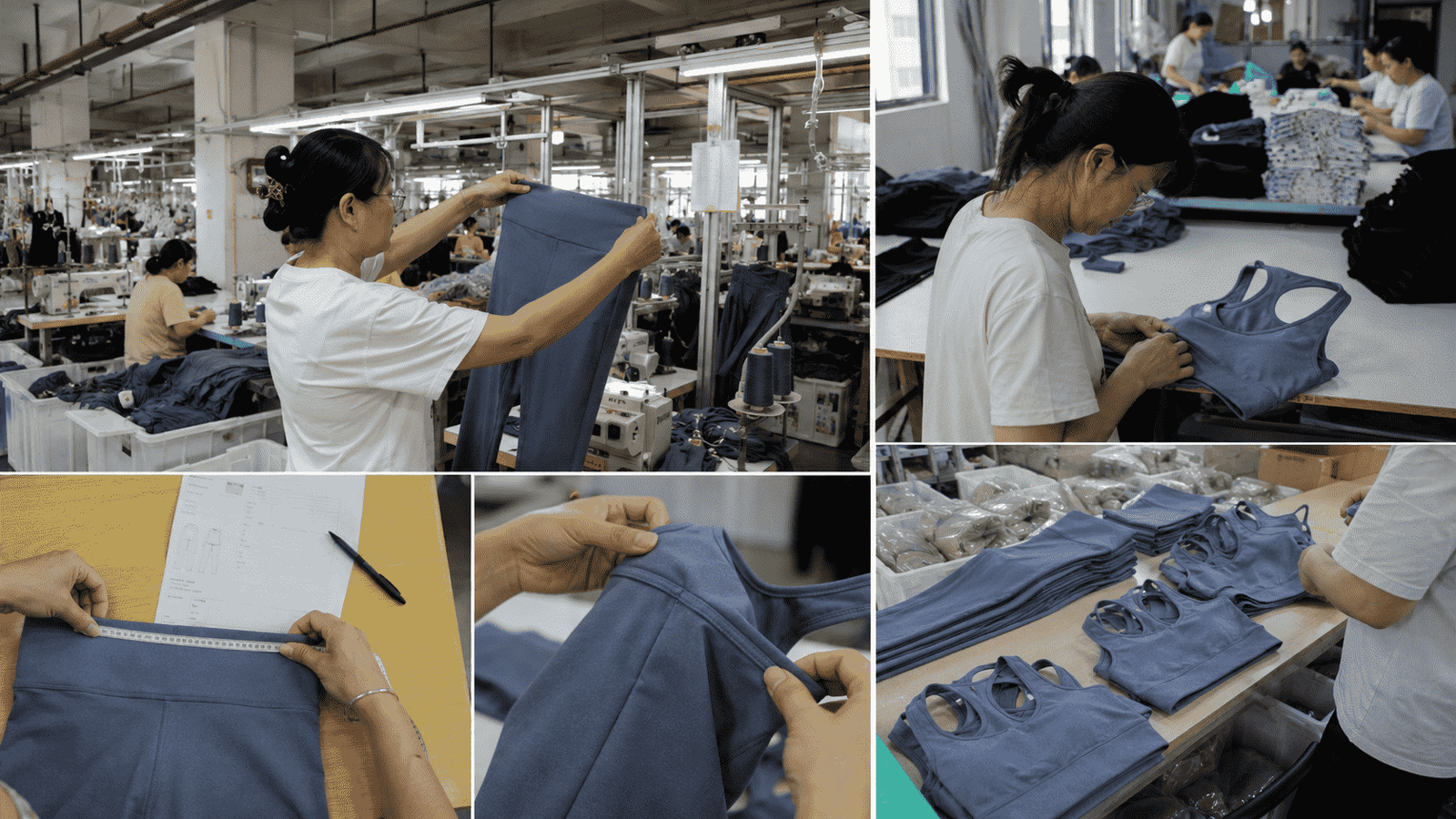
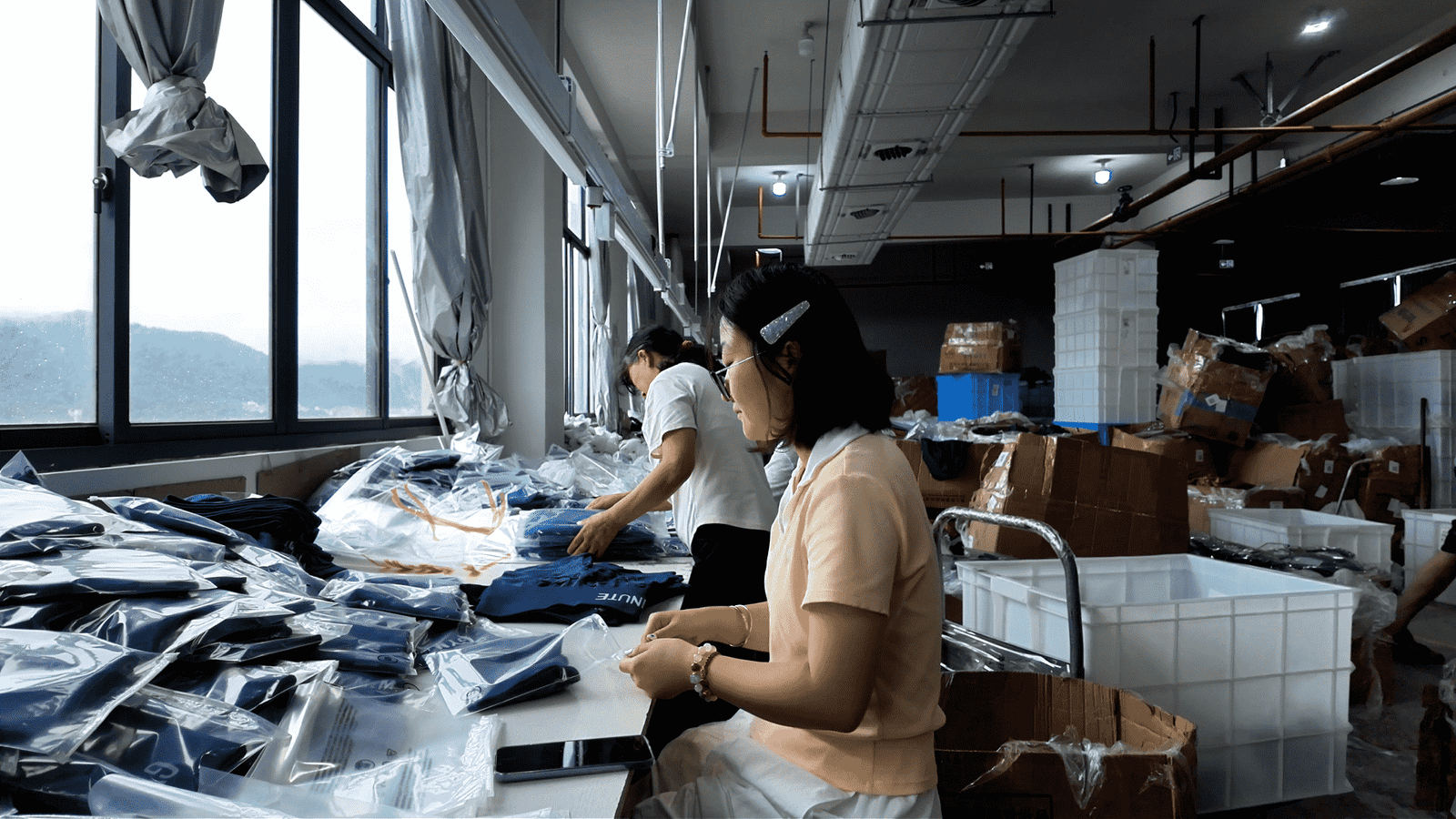
MOVEVOX uses approximately 6,000 m² of production space across its own Yiwu manufacturing environment. The figure provides physical manufacturing context; the individual images above show the different operating functions carried out within the broader production system.
Review the Records Behind the Quality-Control Claim
A QC photo demonstrates that an activity occurred. A useful QC record shows what was checked, which product or production stage it relates to and what result was recorded.
Incoming Inspection
Evidence should identify the applicable material or incoming control point rather than showing an unrelated warehouse image.
First Article
The record should connect the first representative production result to the current released standard.
Inline Inspection
Useful evidence shows which production-stage conditions or workmanship items were actually reviewed.
Measurement Record
Measurement evidence should connect the finished garment to the applicable POM and released tolerances.
Finished Inspection
Finished-product evidence should reflect the applicable appearance, workmanship and product requirements.
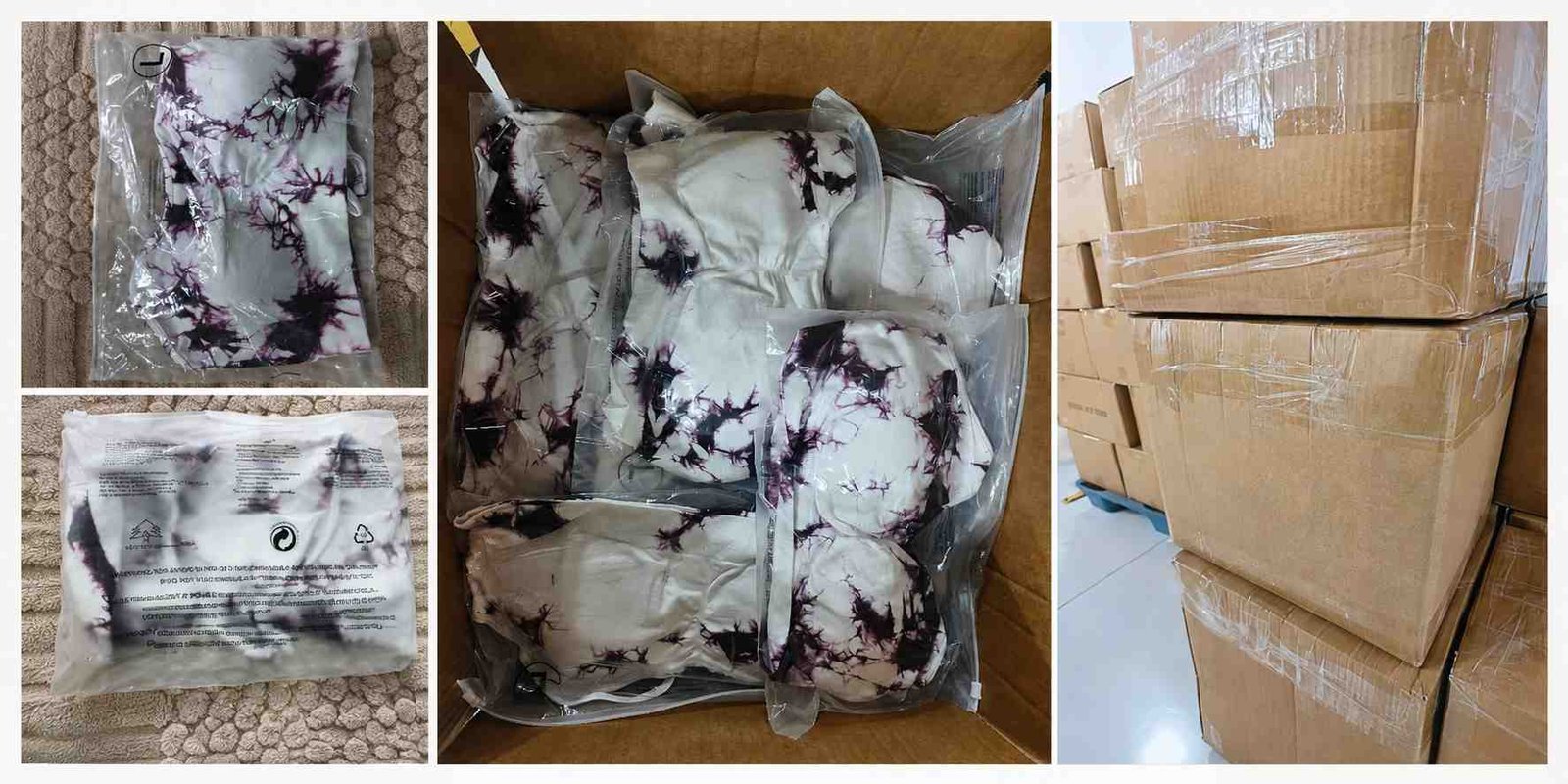
Packing Control
Packing evidence should show how product identity, size and commercial data are checked before shipment release.
Customer-sensitive information can be anonymized before public use, but supplier evidence should remain based on genuine production records rather than recreated marketing documents.
U.S. Activewear Program: Fit, Wear Evaluation and Repeat Supply
This case shows how product-development requirements can become an ongoing supply program when fit, material, SKU and packing decisions remain controlled.
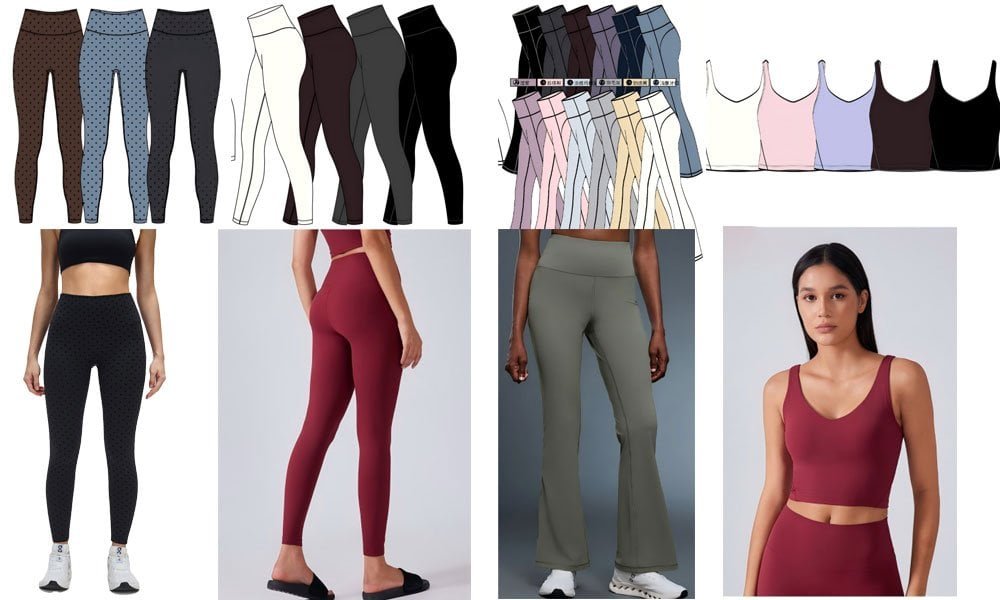
Buyer Context
A U.S. female fitness creator with an Instagram audience above 30,000 developed an activewear program for customers that included curvier and plus-size users.
Product Scope
The relationship covered leggings together with shorts, sports bras, tanks, sets and bodysuits rather than one fixed product.
Wear Priorities
Development priorities included high elasticity, support, non-sheer performance, plus-size fit, softness and selected fleece requirements.
Material Decisions
Nylon-spandex compositions used across the program included 88/12, 75/25 and 78/22 depending on the actual product rather than one universal fabric specification.
Order Structure
Typical overall orders were approximately 2,000 pieces, with some combinations around 200 pieces per size/color.
Packing Complexity
QR information required strict matching to the correct product, color and size, increasing the QC and packing workload compared with a simpler program.
Creator audience
Typical pieces/order
Orders/month
Cooperation period
This case reflects one customer program and should not be treated as a universal material, volume, fit or performance specification for other buyers.
Repeat the Approved Standard Without Assuming Nothing Has Changed
A repeat PO should begin by identifying what remains approved and what has changed since the previous production cycle.
Preserve the Approved Standard
Keep relevant product, measurement, material, color, branding and packaging references available for comparison.
Reconfirm Changes
Identify any new color, size, logo, label, packaging, material or product revision before the repeat order is released.
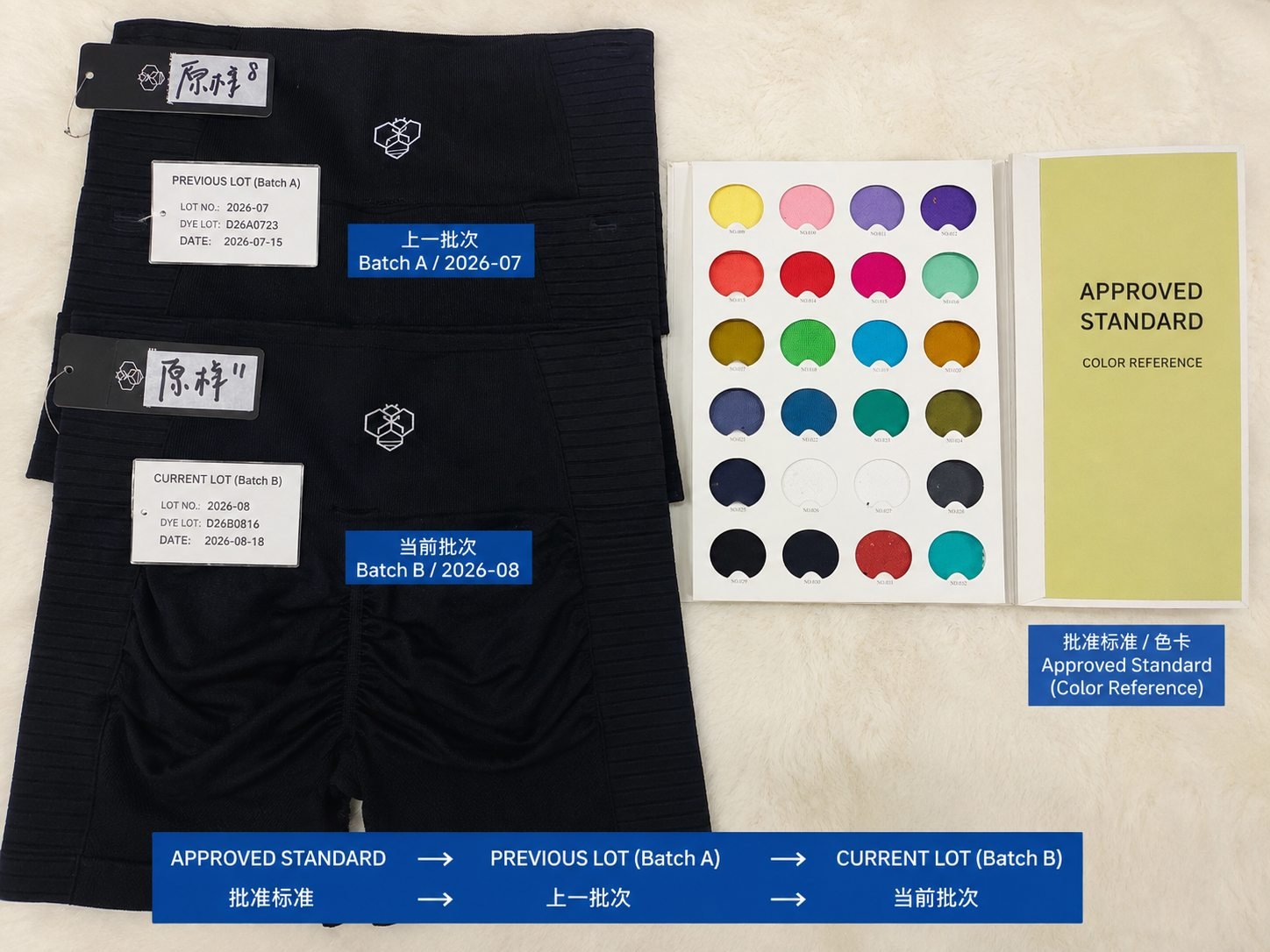
Review the New Material Lot
A new dye or production lot should not automatically be assumed physically identical to a previous order when color or material behavior matters.
Reconfirm Capacity & Timing
Check the new quantity, manufacturing route and current production conditions rather than reusing an old delivery assumption.
Release the Repeat Order
Use the current approved information as the production reference. Repeat supply means controlled reuse of approved standards—not blind duplication of historical instructions.
Qualify MOVEVOX as a Supplier, Not Only the Sample
Established buyers normally need evidence about legal identity, manufacturing origin, production resources, quality controls and communication access in addition to an acceptable product sample.
Legal & Commercial Identity
Formal contracts and legal acts are carried out through Yiwu Chenjin Import And Export Co., Ltd., while MOVEVOX operates as the outward-facing international B2B brand and manufacturing system.
Physical Manufacturing Verification
Buyers can review the Yiwu manufacturing environment and the actual Seamless, Cut & Sew, development, QC and packing resources used in the operating system.
Production-Origin Transparency
MOVEVOX distinguishes its own Yiwu manufacturing core from controlled external partner resources instead of presenting partner factories as MOVEVOX-owned facilities.
Quality & Evidence
Applicable QC records, inspection processes and sample-specific third-party testing evidence can support buyer qualification where relevant.
Communication & Audit Access
English is the primary working language. MOVEVOX supports scheduled video meetings, customer visits and factory review subject to confidentiality, production conditions and scheduling.