A Verifiable Manufacturing Base for Long-Term Gym Leggings Programs
A professional sourcing decision should be based on real manufacturing capability, development resources and quality responsibility—not only finished-product images or general OEM claims.
Yiwu Manufacturing Base
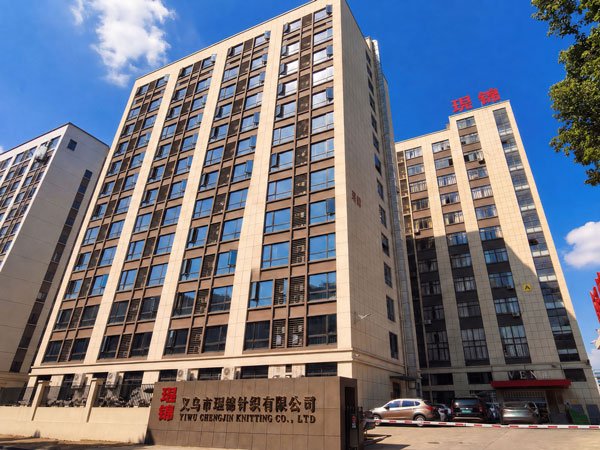
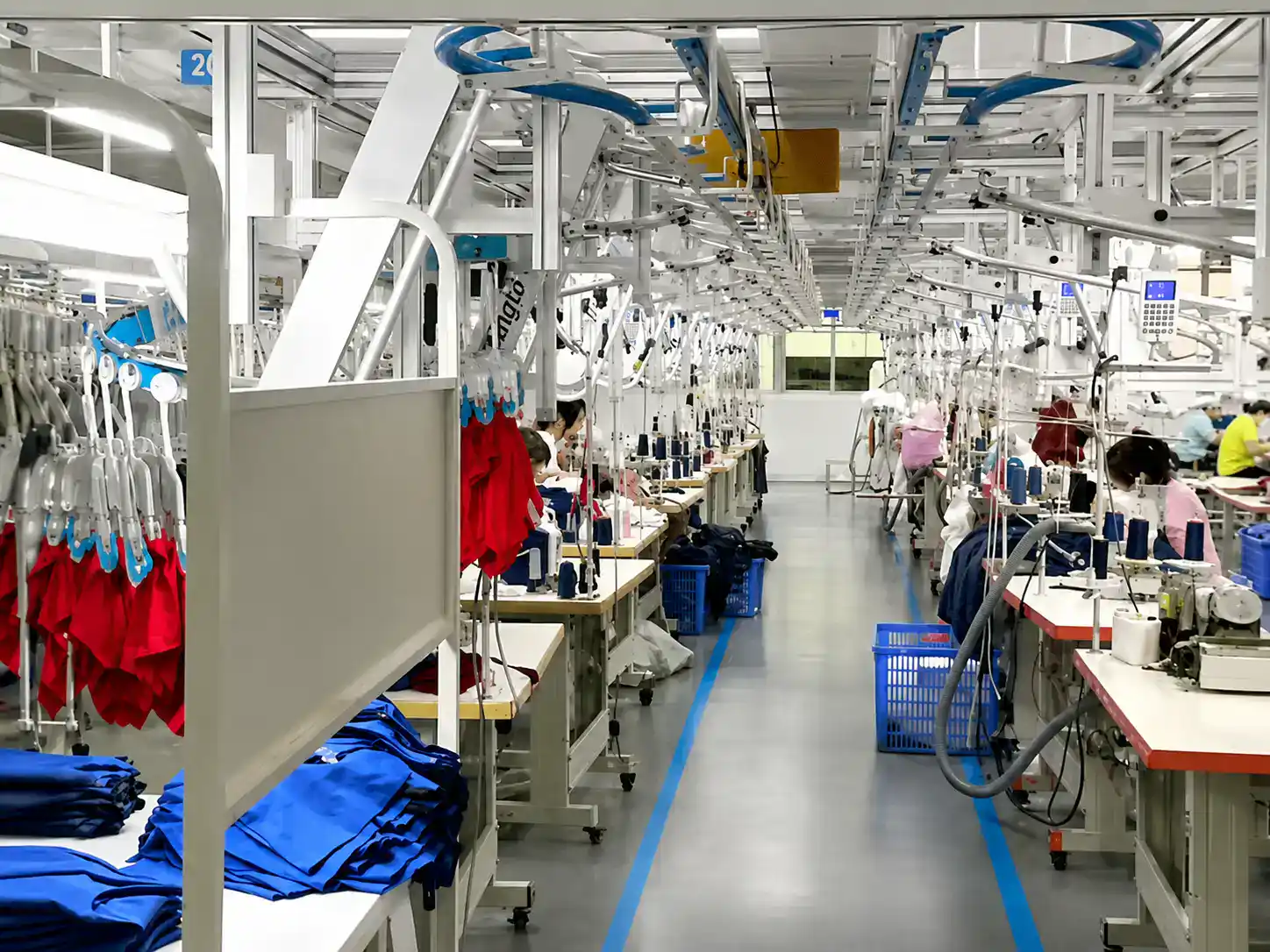
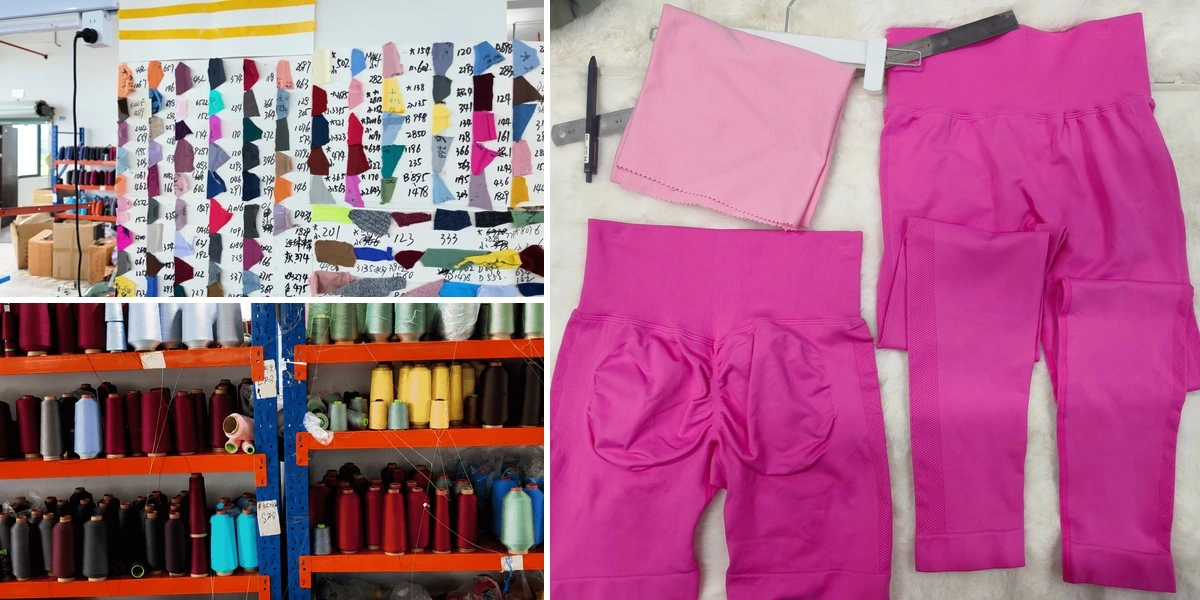
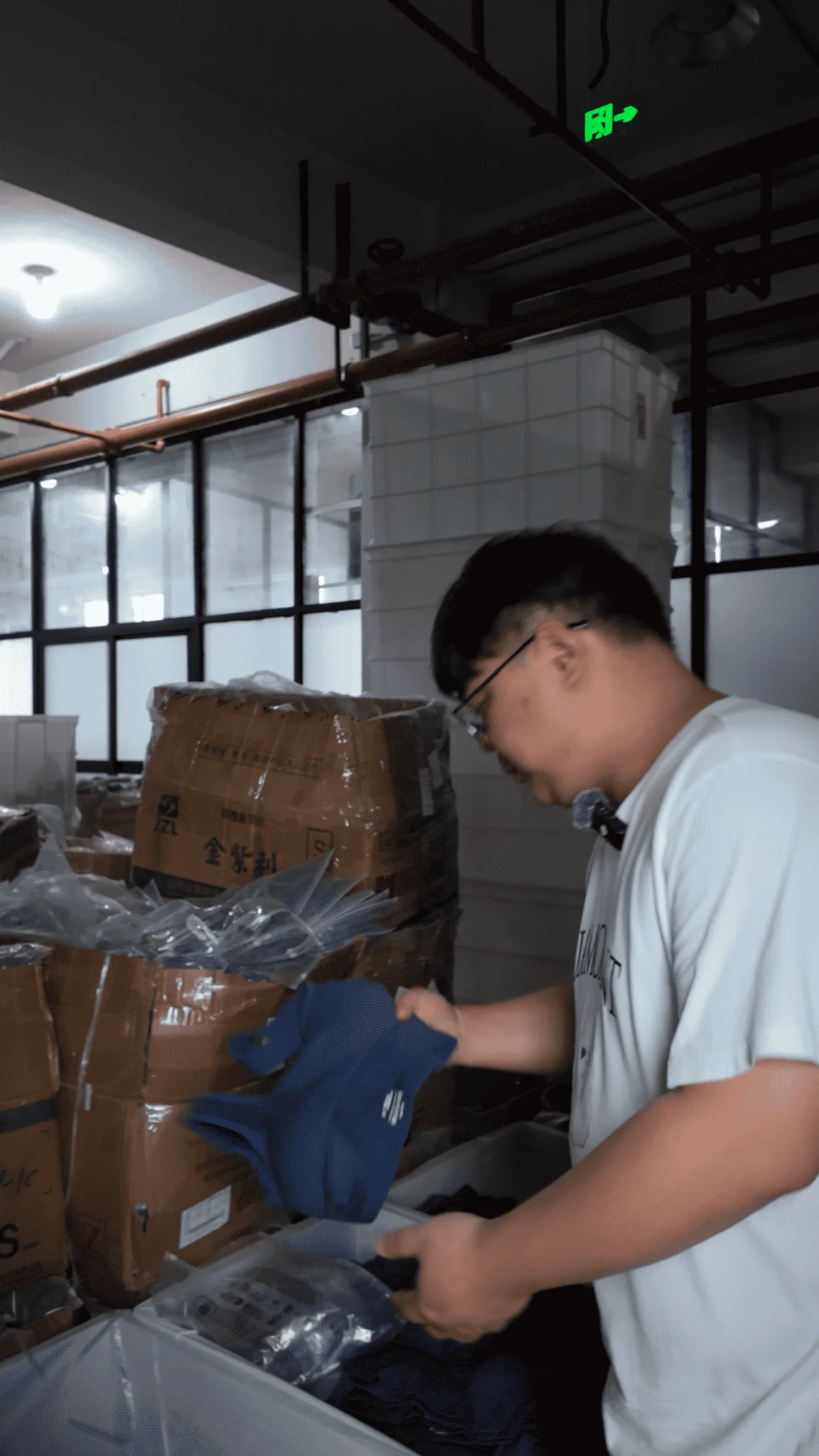
MOVEVOX operates its core manufacturing system in Yiwu, Zhejiang, China. The current production base includes approximately 6,000 square meters of actual operating production space supporting product development, Seamless manufacturing, Cut & Sew production, quality control, packing and related activewear operations.
Seamless Manufacturing
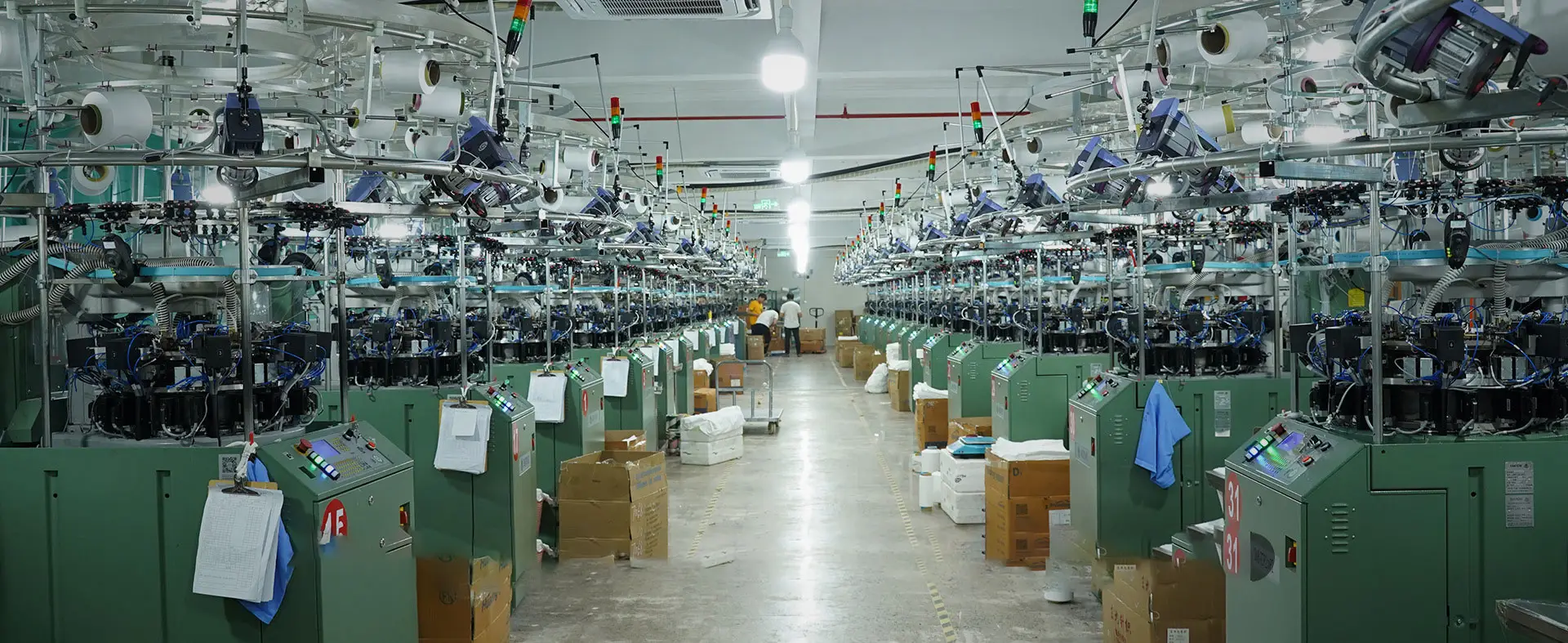
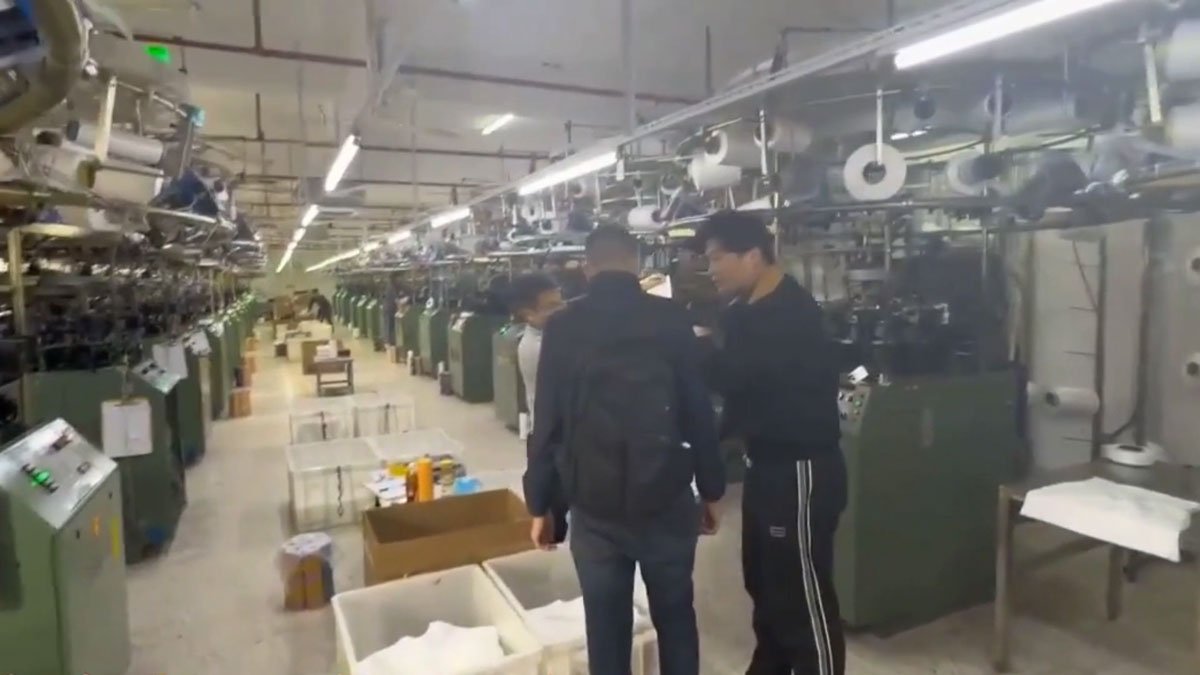
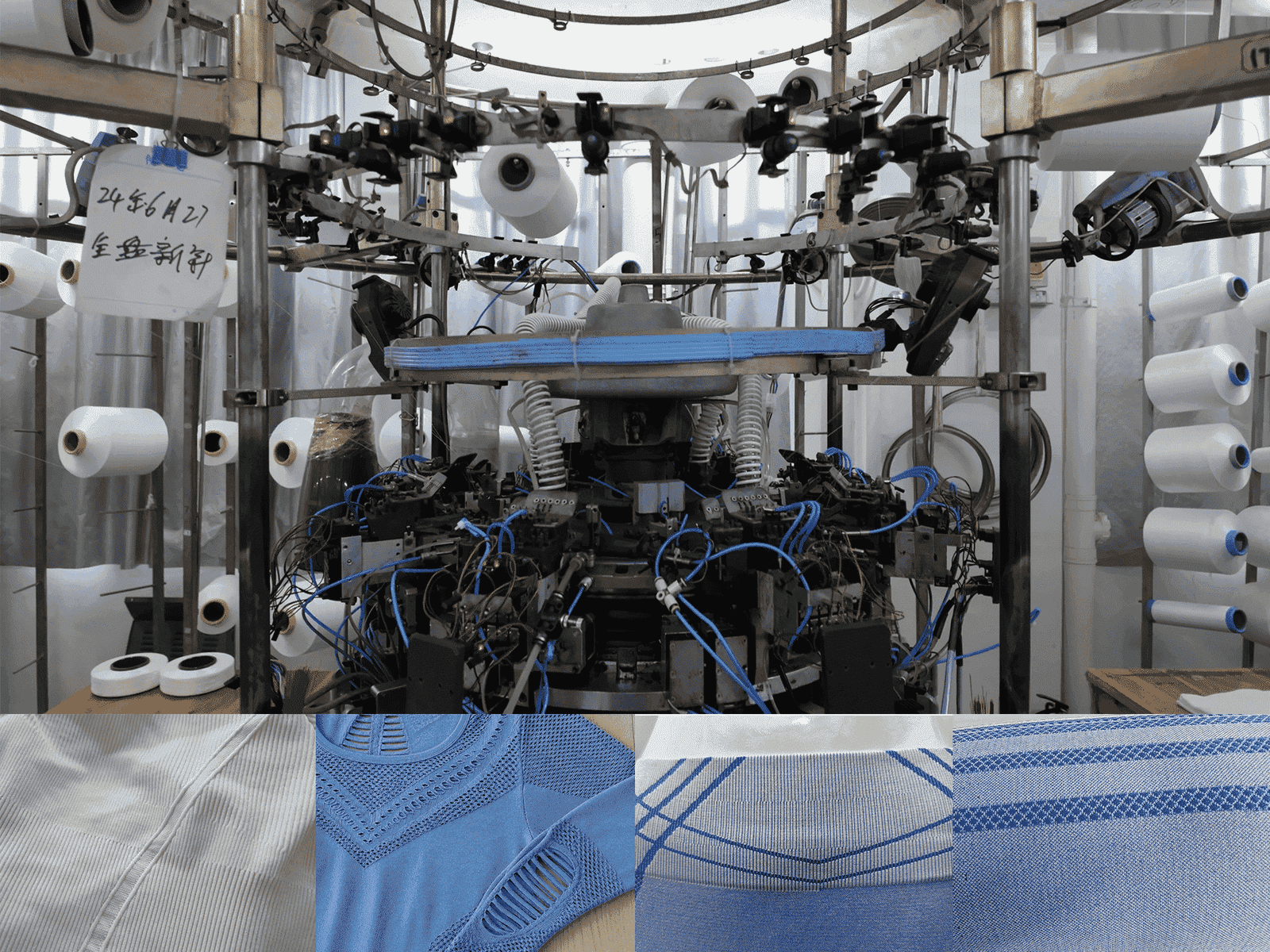
The current Seamless system includes 28 Italian Santoni seamless knitting machines supporting project-specific yarn, knitting programs, rib, mesh, texture, integrated waistband structures and localized density or support directions, subject to technical review.
Cut & Sew Manufacturing
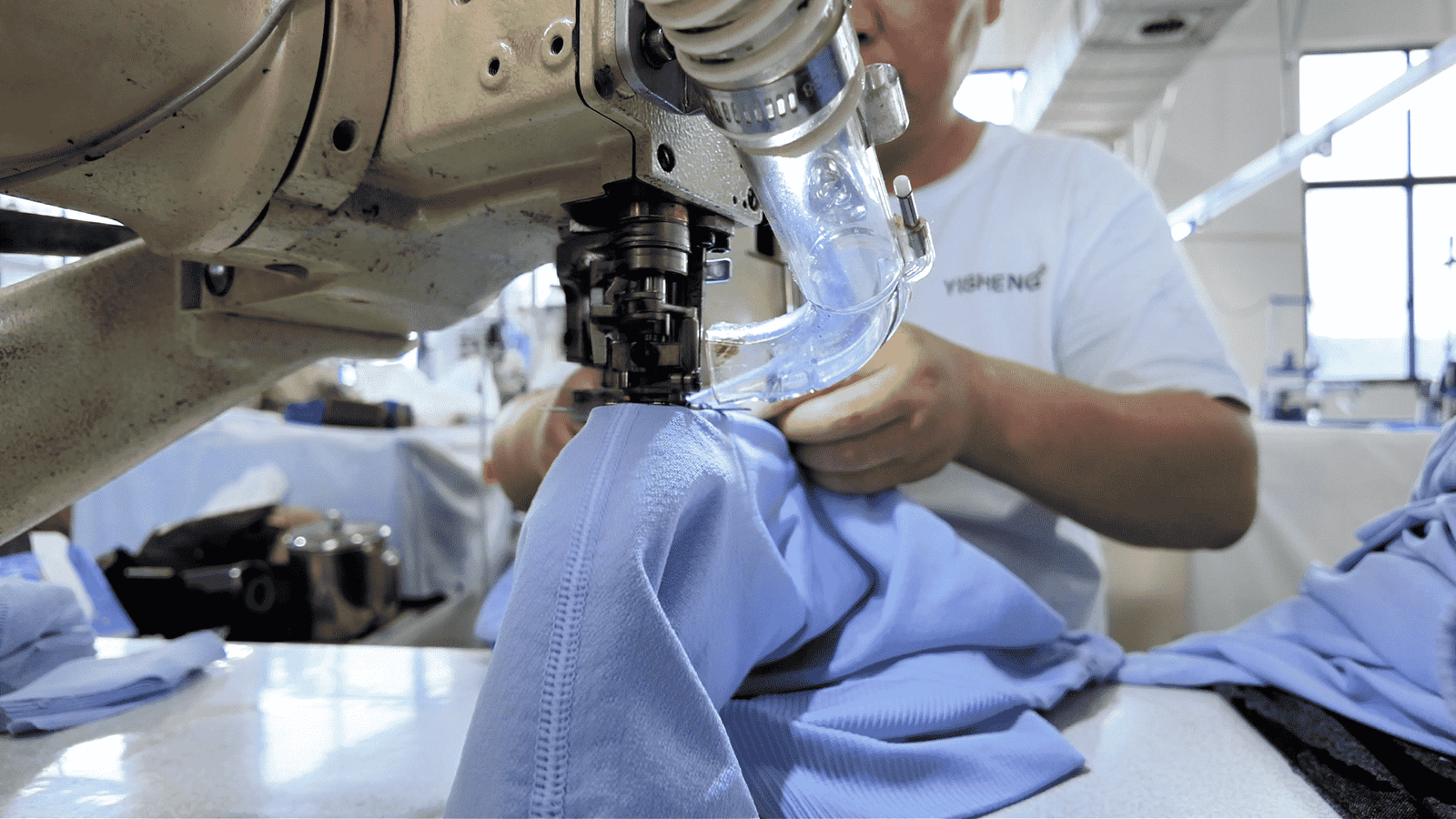
MOVEVOX also operates a Cut & Sew route with approximately 24 main sewing and garment-production machines for performance leggings requiring fabric panels, pattern engineering, gussets, pockets, contour seams and other pattern-based structures.
Product Development
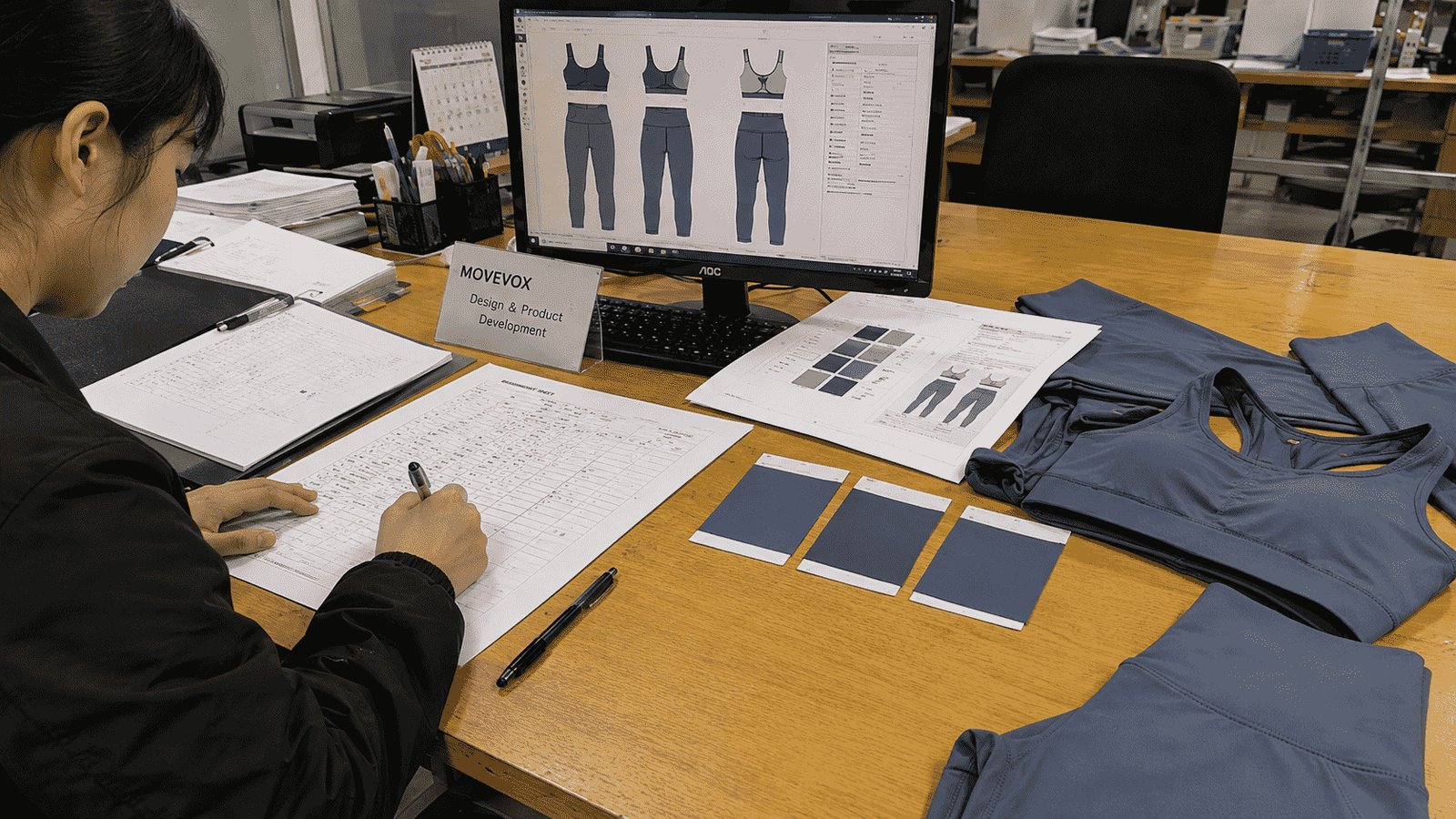
Depending on the project, MOVEVOX can review technical inputs, select materials and manufacturing routes, develop patterns or Seamless structures, prepare samples and implement revisions before bulk release.
Quality Control
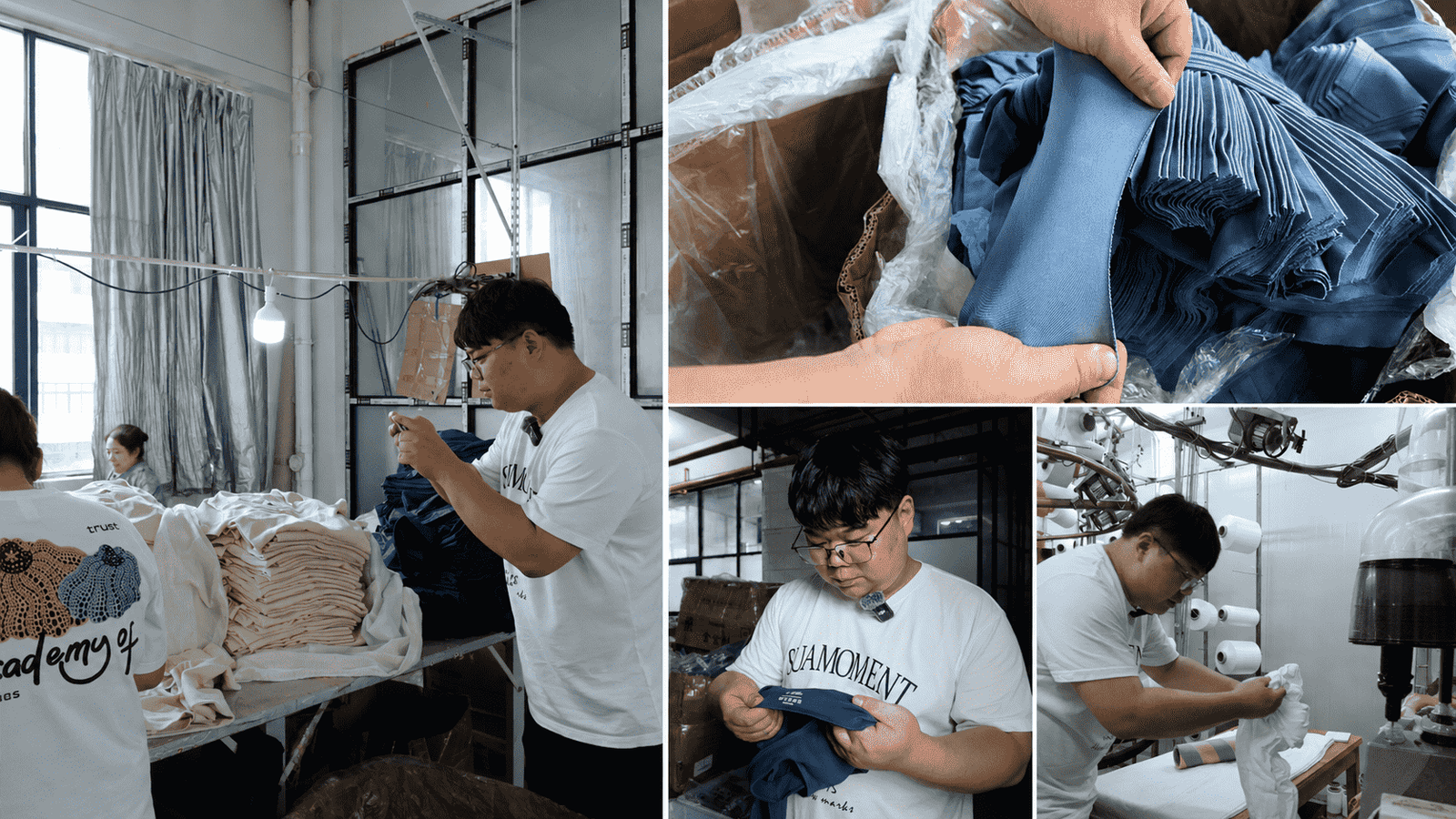
MOVEVOX currently has 5 dedicated QC personnel supporting production and order execution. Quality responsibility is combined with production and order-management checks rather than relying only on final inspection.
Buyer Verification
Appropriate factory visits, live video review, technical evaluation or buyer inspection can be supported according to the project. Customer confidentiality and production-site rules must be respected.
Where Gym Leggings Commonly Fail — and What Should Be Controlled
A supplier should understand where performance leggings are most likely to fail before bulk production. Identifying risk early is more useful than claiming that defects never occur.
Waistband Rolls or Slips
Possible causes include insufficient recovery, waist-to-hip imbalance, rise mismatch or unsuitable waistband structure. Development control should review material behavior, waistband geometry, rise and movement in Fit Samples; bulk control should maintain released measurements, material and construction.
See-Through Under Squat
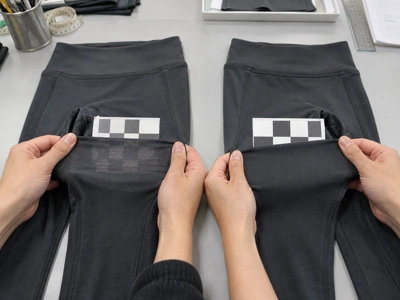
Possible causes include fabric structure, color, excessive extension, overly tight Fit or inadequate opacity for the intended movement. Development control should evaluate the actual garment under an agreed stretch or movement condition.
Knee Bagging
Material may stretch easily but fail to recover sufficiently after repeated bending. Recovery should be reviewed together with Fit and fabric selection rather than using stretch percentage alone.
Crotch Migration or Discomfort
Rise balance, crotch shape, gusset construction, negative ease and material behavior can all contribute. The product should be evaluated on-body and through training movement, not only against flat measurements.
Seam Cracking or Skipped Stitches
Potential causes include incompatible stitch type, insufficient seam extensibility, incorrect machine or thread settings and local construction stress. Construction should be selected according to actual material stretch and intended movement.
Contour Zones Move Out of Position
A contour or Seamless zone may align well in one size but shift in another if grading or garment proportions are not properly controlled.
Pocket Sagging
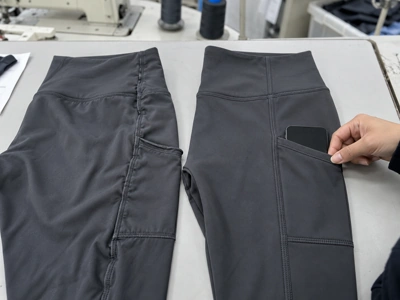
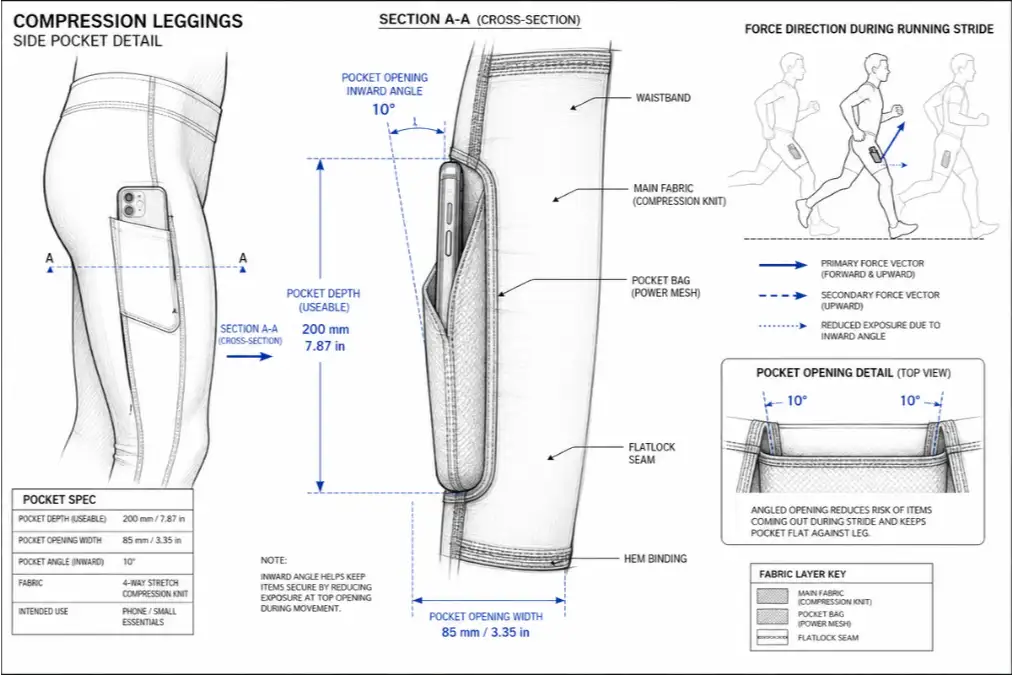
Possible causes include insufficient recovery, unsuitable pocket dimensions, panel construction or excessive loading. Pocket structure should be validated on the actual garment.
Design Support Zones Around the Training Requirement
A tight-fitting garment is not automatically a zoned-compression product. Support direction can come from material, garment Fit, Seamless knitting structure or Cut & Sew construction.
Waist / Abdominal Support Direction
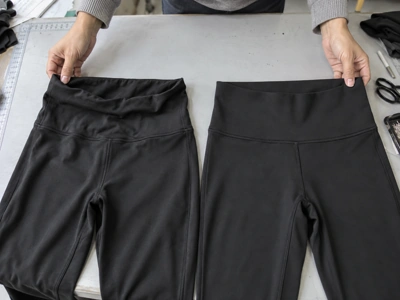
A firmer waist area can be developed through higher-recovery material, layered Cut & Sew construction, elastic-assisted structure, Seamless knitting density or appropriate negative ease. The final choice depends on Fit, comfort and intended product experience.
Side-Waist Structure
Side-waist areas can influence overall waistband stability and how pressure is distributed around the body. In Seamless products, localized knitting structures may be used where technically suitable.
Under-Glute / Contour Direction
Visual or supportive contour directions can be developed through Seamless structural zones, pattern seams, panel construction, gathering or other approved techniques. Placement and production repeatability require validation.
Thigh Support Direction
A firmer thigh area can be influenced through material modulus, knitting density or garment Fit. Support should be defined as a product target rather than assumed from a higher Spandex percentage.
Seamless Zoned Structures
Santoni program development can create local differences in density, rib, mesh, texture or structural direction where design and manufacturability support them.
Cut & Sew Support Structures
Cut & Sew may use double-layer structures, higher-recovery panels, seam placement or waistband construction to create a firmer product direction.
Support Feeling ≠ Medical Compression Pressure. MOVEVOX should not claim medical or therapeutic compression without relevant testing and evidence.

Engineer Gym Leggings Waistbands for Training Stability
Waistband stability depends on more than height. Material recovery, circumference, rise, waist-to-hip relationship and construction all affect whether a waistband remains controlled during training.
High Waist
A high-waist structure can provide additional coverage and support direction. Fit review should evaluate whether it remains positioned during squats, lunges, bending and repeated movement.
Extra-High Waist
Increasing height changes how the waistband interacts with the torso. If circumference, recovery or rise is not balanced, the top edge may fold or create excessive pressure.
V Waist
A V-shaped waistband changes front-waist geometry. The V angle and depth need to remain compatible with rise, hip position and material tension.
Cross Waist
Cross-waist structures require careful overlap and pattern control in Cut & Sew development. A Seamless interpretation requires different knitting-program engineering.
Structured Waist
Where stronger hold is required, structure can involve elastic, multiple layers, firmer material, Seamless density or approved reinforcement depending on the project.
Seamless Integrated Waist
A Seamless waistband can be knitted into the garment body. Yarn, density, structure and program transition influence stretch, recovery, waist hold and transition into the hip.
What Actually Controls Gym Leggings Opacity Under Squat?
“Squat proof” should not be treated as an automatic property of one composition or GSM. Opacity is influenced by the complete relationship between material, color, Fit and garment extension.
Claim: Higher GSM Guarantees Opacity
Evidence required: Actual material and garment evaluation
Higher GSM may improve coverage, but fabric construction and extension still influence opacity.
Claim: One Color Represents Every Color
Evidence required: Color-specific validation
Different colors can behave differently visually under stretch.
Claim: More Spandex Means Better Coverage
Evidence required: Structure + extension state
Spandex percentage does not independently define how open the fabric structure becomes during squat or stretch.
Claim: Standing Inspection Is Enough
Evidence required: Movement-based assessment
A garment can appear opaque while standing but behave differently under deep flexion or squat.
Claim: One Size Result Applies to All Sizes
Evidence required: Size and Fit consideration
Different levels of garment extension can change opacity.
Claim: Fabric Alone Determines the Result
Evidence required: Garment-level validation
Pattern or Seamless dimensions and negative ease influence how much the material is stretched on the body.
MOVEVOX can develop toward an agreed opacity target, but absolute statements such as “100% squat proof in every color and size” should not be used without evidence supporting that exact scope.
Select Fabric for the Target Support and Training Experience
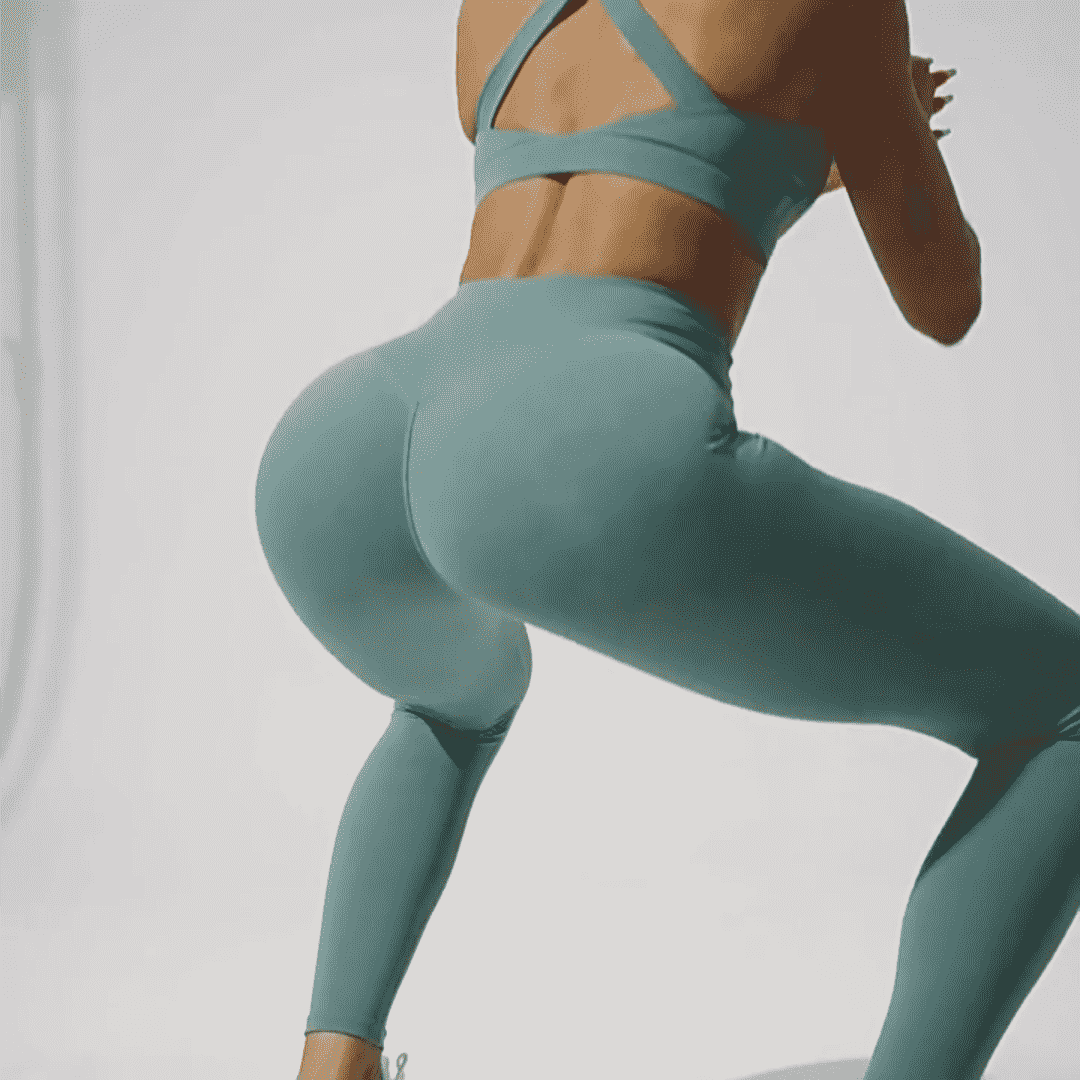
A more supportive gym leggings product requires more than a high Spandex percentage. Material structure, GSM, stretch, recovery and garment Fit need to be evaluated together.
| Decision Factor | Buyer / Development Consideration |
|---|---|
| Target Support Feel | Define whether the intended product direction is soft support, balanced training support or firmer support rather than beginning from a generic “compression fabric” label. |
| Composition | Nylon/spandex and polyester/spandex blends can both be used for activewear. Composition does not independently define compression, opacity, recovery, durability or handfeel. |
| GSM | GSM contributes to material weight and can influence handfeel and coverage, but higher GSM does not automatically equal better performance. |
| Stretch | The fabric needs sufficient extension for intended Fit and movement. High stretch without recovery can create waist loosening, knee bagging and shape drift. |
| Recovery | Recovery is especially important because gym leggings repeatedly move through large extension cycles. |
| Negative Ease | Garment dimensions relative to the body influence how much the material is stretched during wear. The same fabric can feel very different with different Fit standards. |
| Seam Compatibility | For Cut & Sew products, material also needs to work with the intended stitching and seam construction. |
| Sample Validation | Final support direction should be evaluated through the actual fabric and garment sample rather than predicted only from specifications. |
Stretch Is Only Half the Requirement — Recovery Protects the Fit
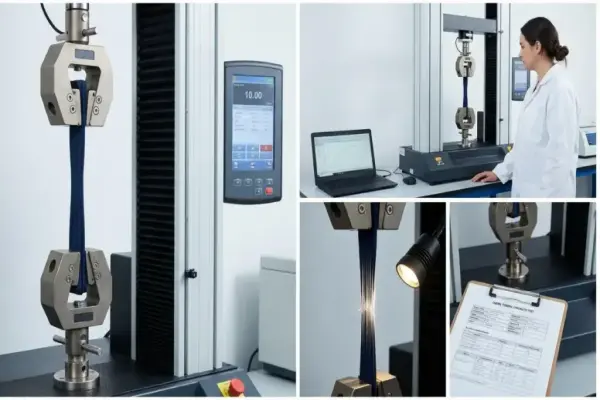
Gym leggings repeatedly move through flexion and extension. Material that stretches easily but does not recover sufficiently can change garment Fit during or after training.
Original Dimension
Begin with a defined material or garment measurement before extension.
Controlled Stretch
Extend the material according to the selected direction or agreed evaluation method. Different material directions may behave differently depending on the structure.
Hold
Where relevant, the material can remain under extension for an agreed period to observe its response.
Release
Release the material from the controlled extension.
Recovery
Observe or measure the remaining dimensional change according to the agreed method.
Repeat Cycle
Repeated extension can be more informative than a single pull because the garment experiences repeated movement during use.
Garment Impact
Poor recovery can contribute to knee bagging, waist loosening, seat deformation, Fit drift and inconsistent product feel.
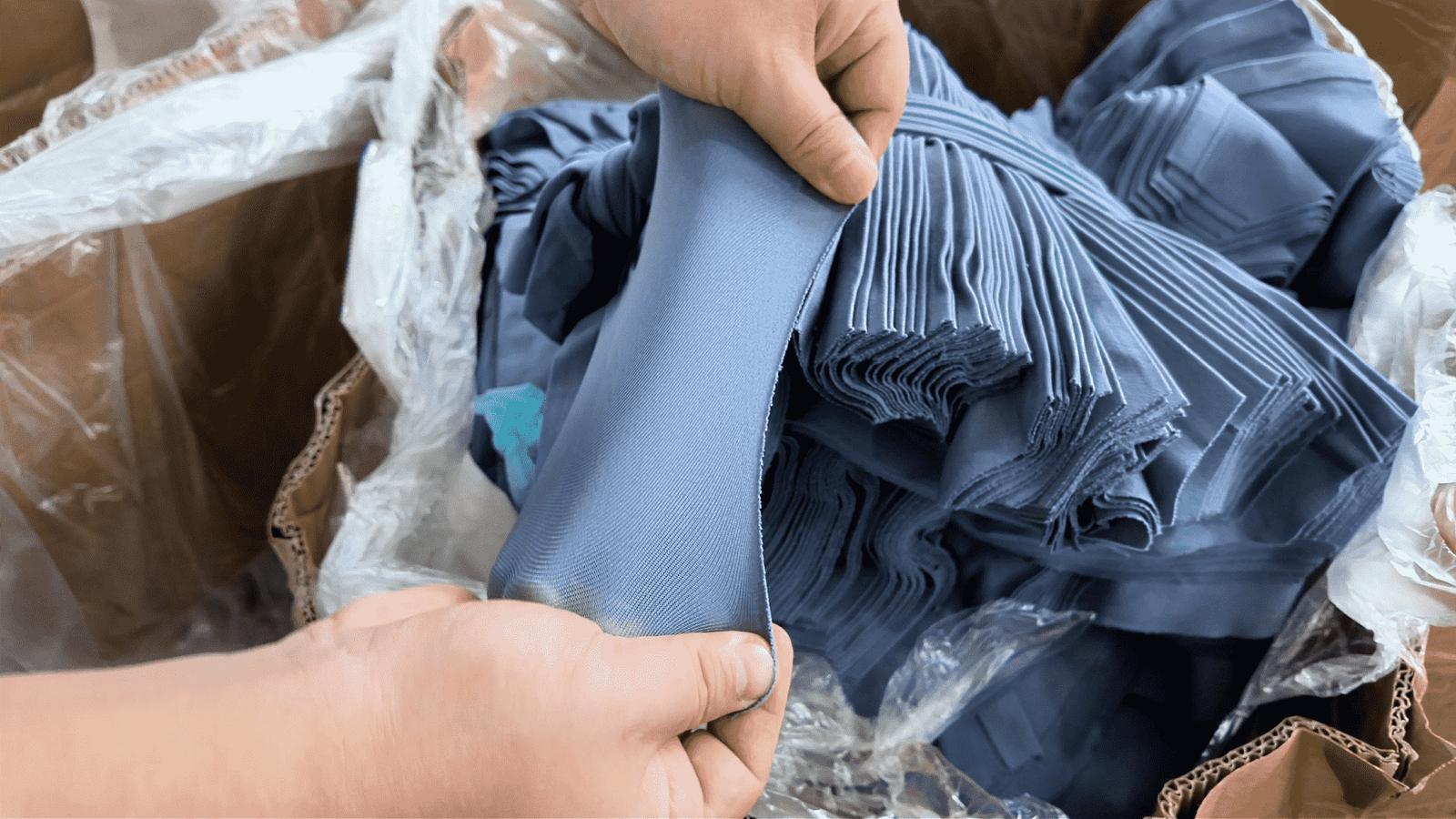
Material recovery should be evaluated together with Fabric + Pattern / Seamless Structure + Negative Ease + Fit Sample rather than treated as an isolated number.
Turn Your Gym Leggings Measurement Chart Into a Production Standard
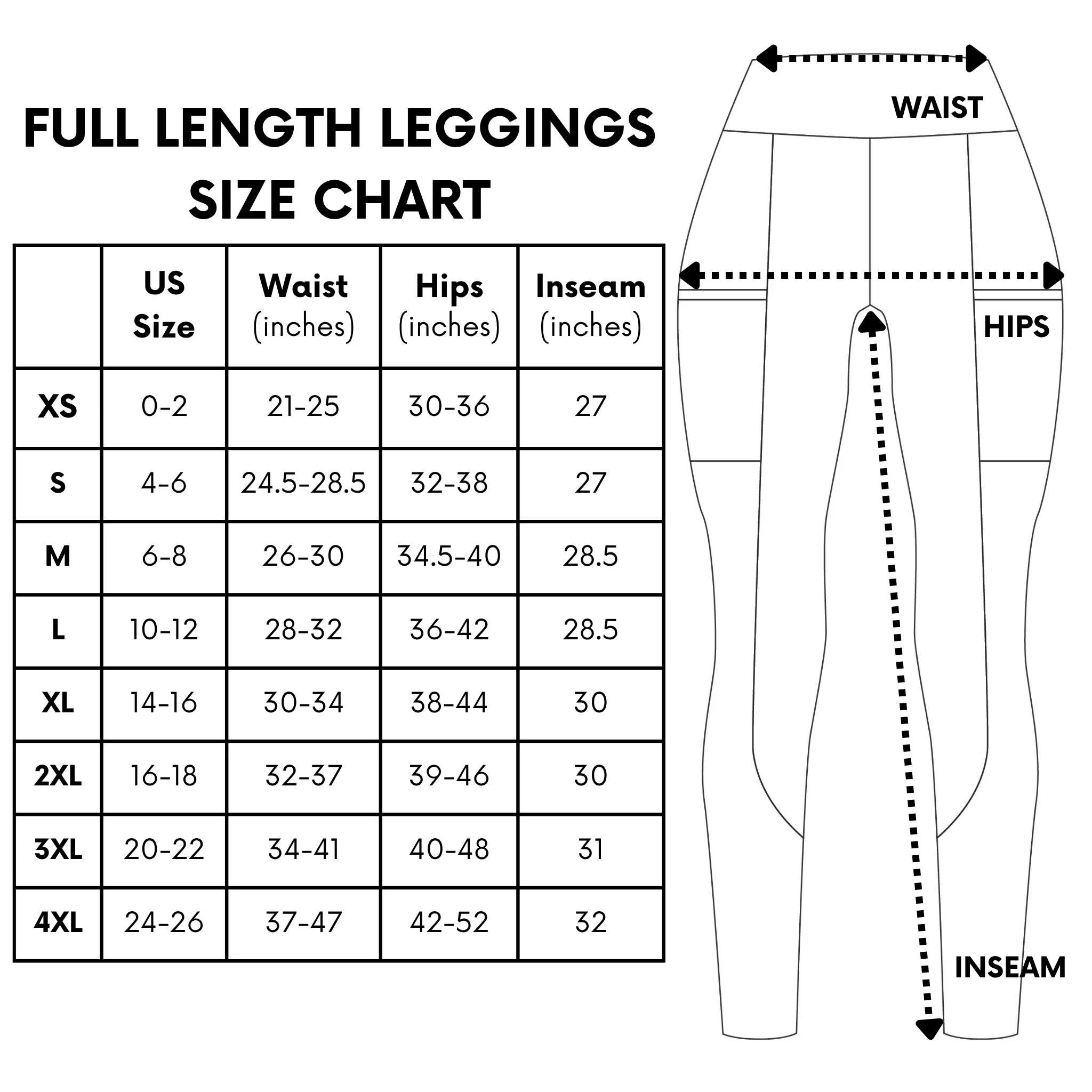
A measurement chart must be technically clear enough for sampling, Fit review, grading and later bulk inspection.
Waist
Confirm measuring position and garment condition.
Hip
Define the vertical measurement location so the same POM can be repeated consistently.
Front Rise
Front rise affects waist placement, crotch shape and overall front Fit.
Back Rise
Back rise influences coverage, waist position and body balance.
Crotch
Crotch-related dimensions need to work together with rise, gusset and material elasticity.
Inseam
Length should be tied to a defined measurement method and intended product direction.
Thigh & Leg Opening
These POMs influence support, silhouette and local material extension.
Measurement Method
A nominal number without a defined measuring method can produce inconsistent inspection results.
Grade Rules
Adjacent sizes should maintain logical proportional changes rather than applying one universal increment to every POM.
Tolerance
Bulk-production measurement standards require acceptable tolerances.
Material Compatibility
The same garment measurement can feel different when material stretch and recovery change.
Technical Query
Missing or contradictory information should be raised for customer confirmation instead of silently modified.
Validate Gym Leggings Through Training Movement, Not Only Flat Measurements
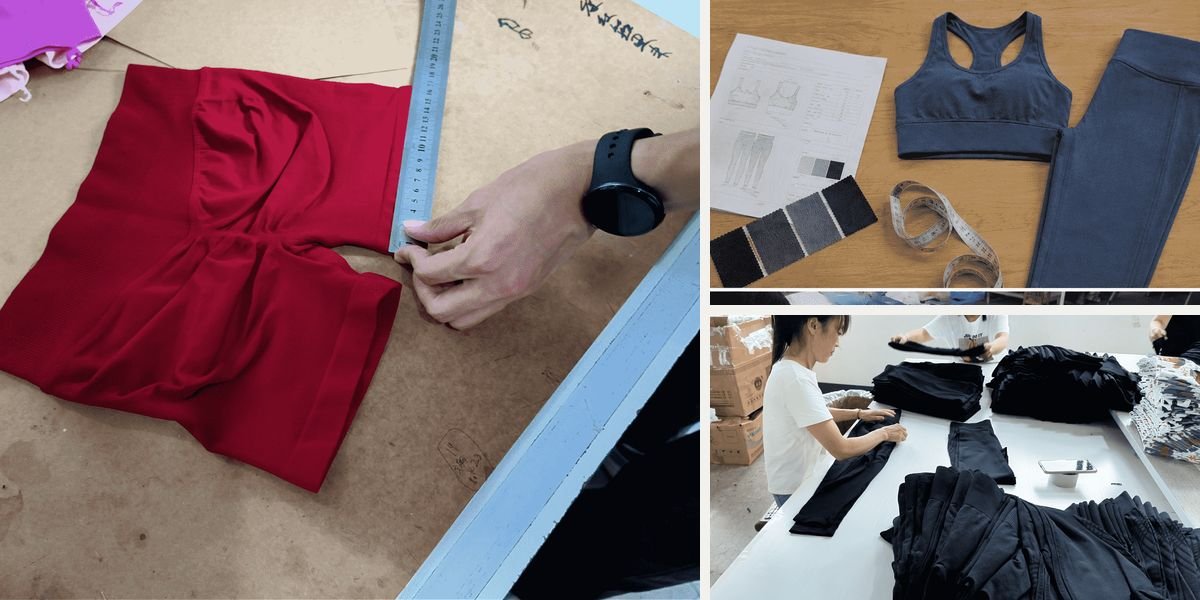
Measurement compliance does not automatically mean that the garment has achieved the intended training Fit. Fit Samples should confirm how the approved material and garment structure work on the body.
Waist Placement
Review whether the waistband sits at the intended height and remains appropriately positioned.
Waistband Hold
Observe whether the waist rolls, slips, gaps or creates excessive pressure during intended movement.
Hip Balance
Check how the garment sits around the hip and seat without uncontrolled pulling or looseness.
Rise & Crotch
Front rise, back rise, gusset or no-front-seam structure should be evaluated together during movement.
Inseam & Leg Fit
Review thigh, knee, calf and leg opening for twisting, excessive tension, looseness or unwanted shape change.
Squat
Squat movement can reveal issues involving waistband, rise, opacity, crotch and recovery.
Lunge
Lunges create asymmetric extension and can expose Fit or construction imbalance.
Leg Raise / Dynamic Movement
The sample may also be reviewed under other defined training movements where relevant.
Revision
Observations should become technical change instructions—not only subjective comments.
Approval
Final Fit approval remains the buyer’s decision against the brand’s own consumer and Fit standard.
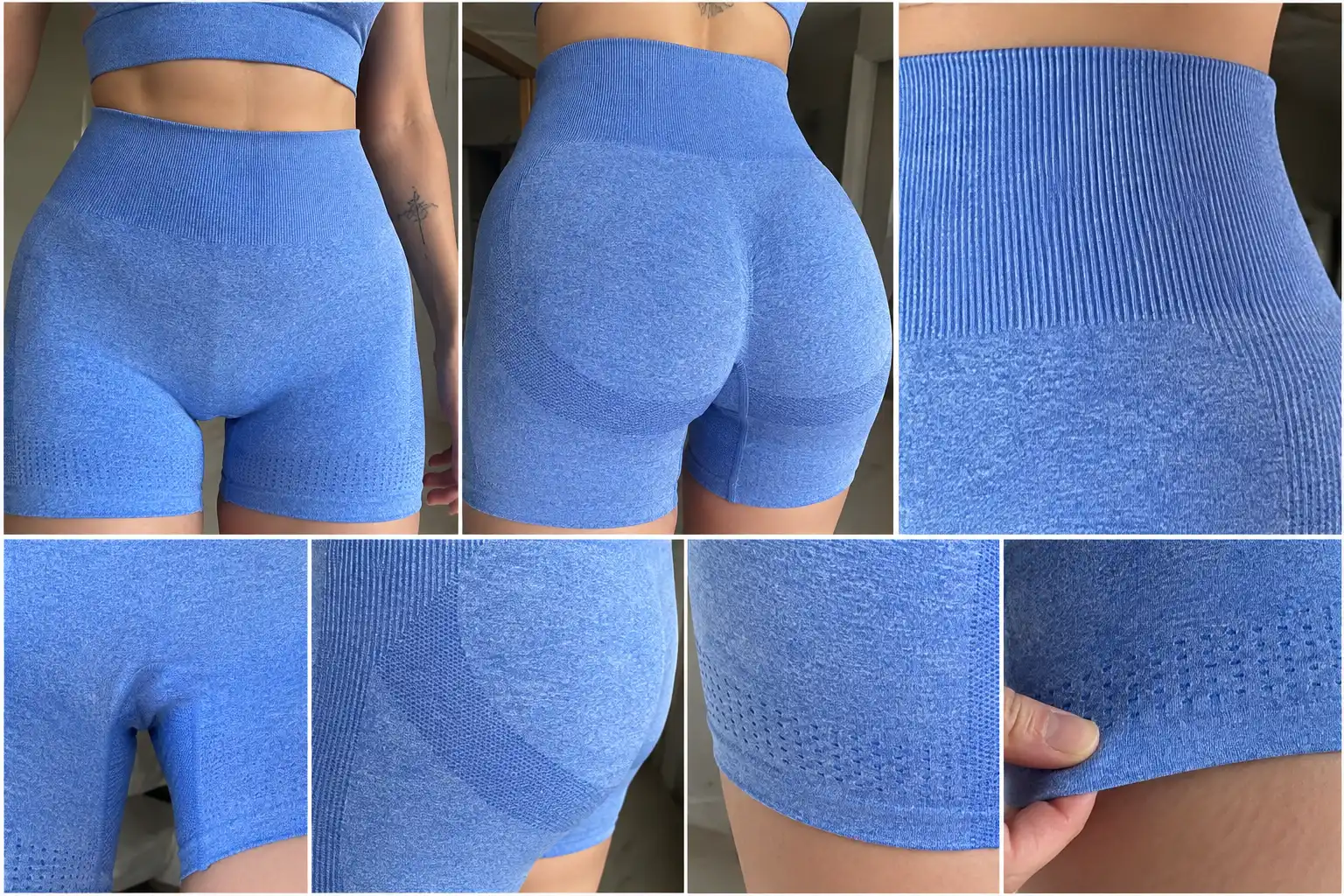
Seamless Gym Leggings Engineered Through Yarn, Program and Structure
Owning Seamless machines does not by itself prove Seamless product-development capability. Gym leggings require controlled interaction among yarn, program, structural zones, dimensions and Fit.
Santoni Manufacturing Base
MOVEVOX currently operates 28 Italian Santoni seamless knitting machines.
Yarn
Yarn influences handfeel, stretch, recovery, surface and garment behavior after knitting and finishing.
Knitting Program
The program translates the design into machine-executable structures. Program versions should remain connected with corresponding sample versions.
Rib & Texture
Rib and texture can create visual or structural differentiation but can also affect stretch, recovery, thickness and Fit.
Mesh
Mesh or lower-density zones can be engineered where technically suitable. Any functional performance claim should still require evidence.
Support Zones
Localized knitting-density or structural changes may be used for different support or contour directions depending on the product.
Integrated Waist
The waistband can be knitted as part of the garment body and engineered through density, yarn and program decisions.
Fit & Recovery Validation
The final structure should be checked through actual sample dimensions, Fit and movement.
Bulk Control
Once approved, yarn, program, dimensions and approved sample become key production references.

Cut & Sew Gym Leggings for Pattern-Led Performance Construction
Cut & Sew provides a different engineering route for gym leggings requiring fabric panels, pockets, gussets, complex seams or multi-material construction.
Performance Fabric
Fabric direction, recovery, thickness and surface need to be reviewed before pattern and cutting decisions are finalized.
Pattern Engineering
The pattern converts measurements and Fit intent into waist, hip, rise, crotch, leg shape, gusset, pockets and panel geometry.
Cutting
Bulk cutting should maintain approved pattern, material orientation, Style identification, Color and Size.
Gusset Construction
Gusset design can influence mobility, crotch balance and seam positioning and must be matched to the product.
Pocket Construction
Pocket structure should consider item size, material recovery, opening stability and garment movement.
Contour / Panel Seams
Contour lines and panels can create visual or Fit effects but should remain aligned across Size grading.
Stretch-Compatible Stitching
Stitch and seam selection must remain compatible with the actual material and intended movement.
Finished QC
Finished garments are checked for measurements, seams, symmetry, pockets, waistband, Logo and appearance against the released standard.


A Controlled Sampling Process for Performance Brand Approval
A development sample should answer a defined question. Each sample version should be linked to a clear review scope, revision status and next decision.
Development Input
Confirm Tech Pack, measurement chart, reference information, fabric/yarn target, performance requirements, colors and branding.
Open Points
Record and clarify missing or conflicting information before unnecessary sample iterations begin.
Pattern / Program
Move the current technical version into Cut & Sew pattern or Seamless-program development.
Development Sample
Produce the first physical sample for the current technical interpretation.
Internal Review
Check relevant measurements, structure, workmanship and obvious deviation before submission.
Buyer Fit / Movement Review
The buyer reviews the product according to intended training and Fit requirements.
Comments
Consolidate buyer feedback into an identifiable revision list.
Revision
Implement required changes into the current development version.
Re-Sample
Confirm whether requested changes have been implemented correctly.
Further Validation
Additional Fit, wear testing, Size Set or PP sample may be required depending on the project.
Approval
The approved version becomes part of the bulk-handover system.
Standard sample development is typically around 5–10 working days after key details are confirmed, depending on actual material and project complexity.
Transfer the Approved Gym Leggings Standard Into Bulk Production
The manufacturing challenge does not end when the sample is approved. The approved product needs to be converted into controlled production references before bulk release.
Approved Sample
The physical approved sample establishes the accepted product within the defined approval scope.
Final Measurements
Approved POM, measuring method and tolerances become production and inspection references.
Fabric / Yarn
Bulk material should remain linked to the approved material specification or physical standard.
Stretch / Recovery Standard
Where formal requirements have been defined, the released project standard should identify the applicable reference or checking method.
Color
Production color should remain connected to the approved color reference.
Pattern / Program
Only the current approved Cut & Sew pattern or Seamless program should remain active.
Branding
Logo, label and placement information are released under the current approved version.
Packaging
SKU, barcode, bag, hangtag and carton requirements are aligned before final packing.
First Article
Actual first production output is checked under bulk material and production conditions.
Bulk QC
Production inspection continues against released standards and approved references.
Correct objective: Controlled against approved standards and tolerances — not “every garment is 100% identical to one sample.”


Private-Label Execution for Multi-SKU Gym Leggings Programs
For established brands, private label is not only Logo application. Garment, branding, SKU and packaging information need to remain connected to the correct product version.
Product
The approved gym leggings Style remains the foundation for Fit, material, construction and Color.
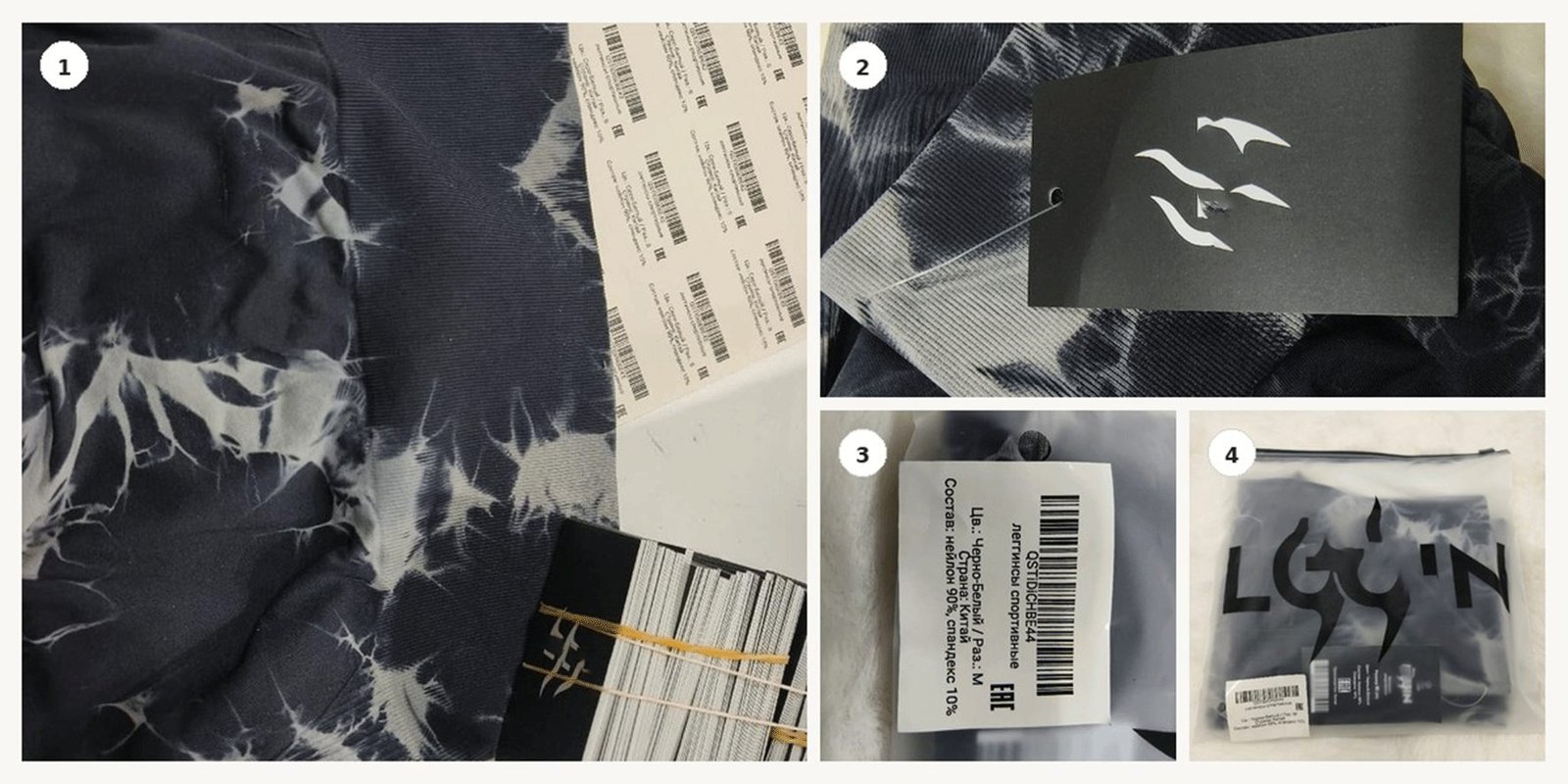
Logo
Depending on the actual project, methods can include heat transfer, screen printing, silicone applications, embroidery, woven branding or jacquard-related execution where technically suitable.
Main Label
Main-label artwork should remain controlled by approved version.
Size Label
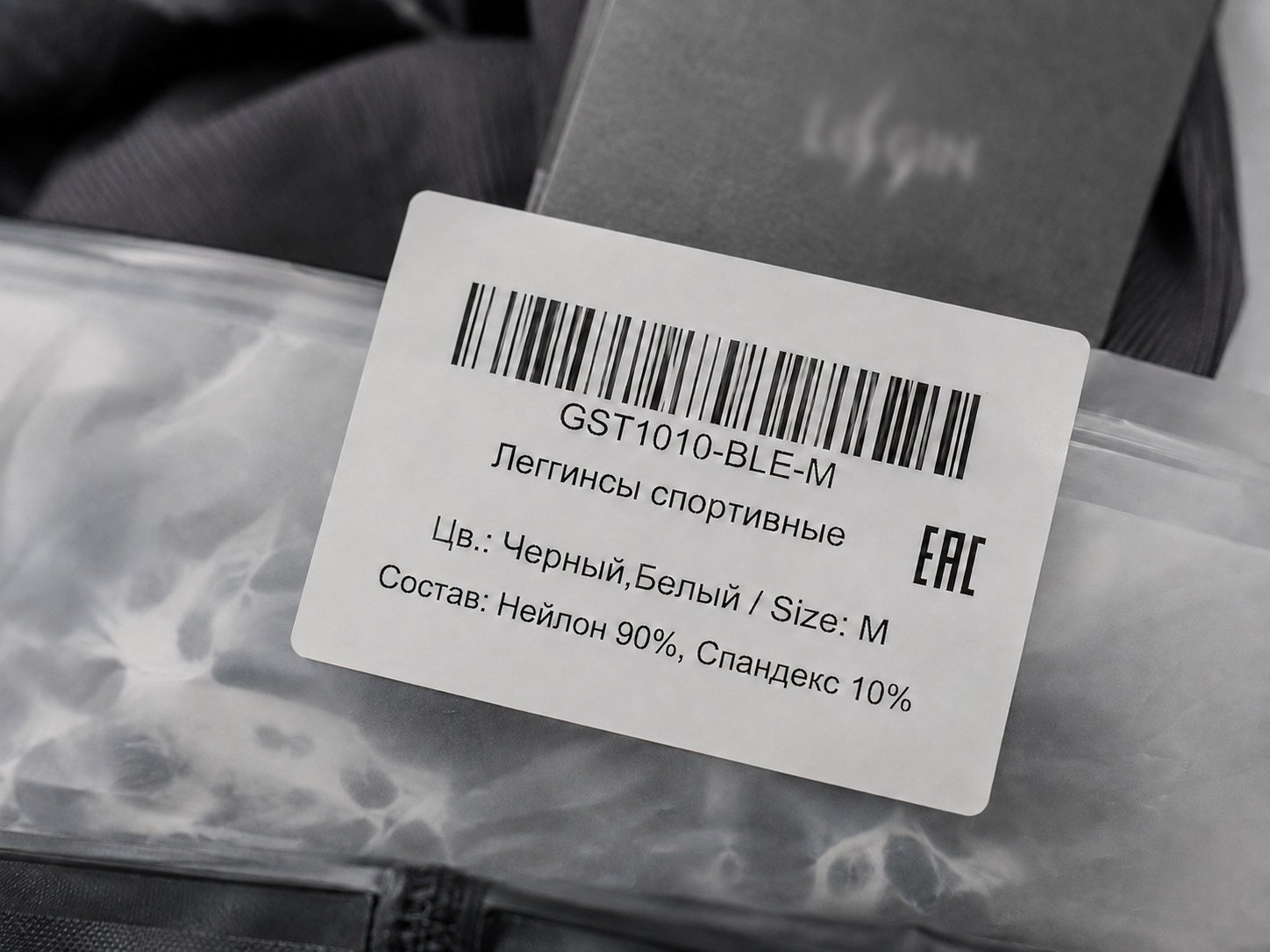
The size label must correspond to the actual garment Size and SKU.
Care Label
Care information should follow the approved customer and market requirement.
Hangtag
Hangtags should remain aligned with the correct Style and commercial product.
SKU / Barcode
Barcode or SKU mapping needs to connect Style × Color × Size accurately.
Individual Packaging
Bag, sticker, folding and custom packaging requirements should follow the approved packaging specification.
Carton Mark
Outer-carton information should match packing and shipment records.
Control principle: Product → Logo → Labels → Hangtag → SKU/Barcode → Packaging → Carton under one controlled version system.
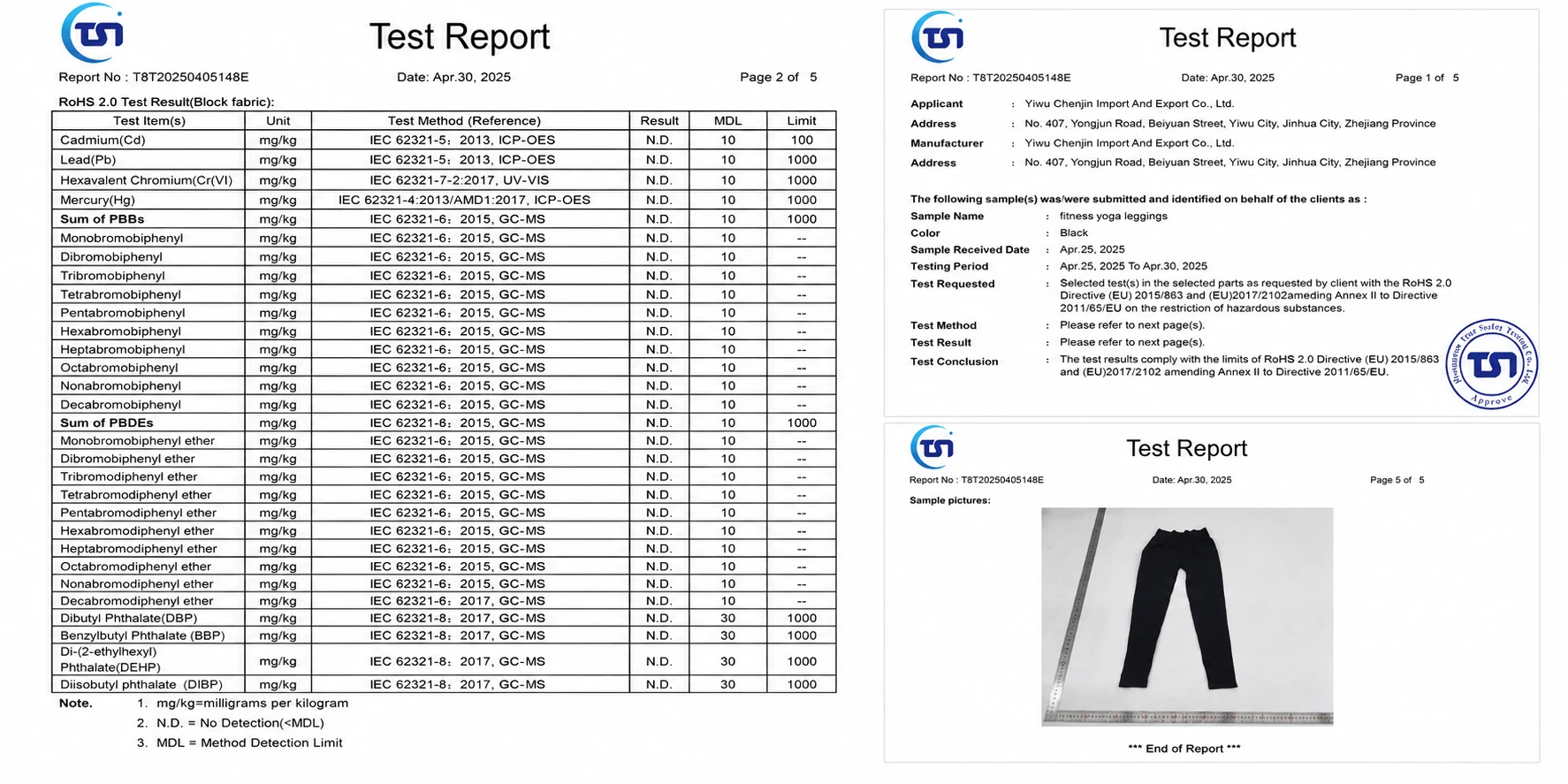
Testing Evidence Should Match the Actual Product and Claim
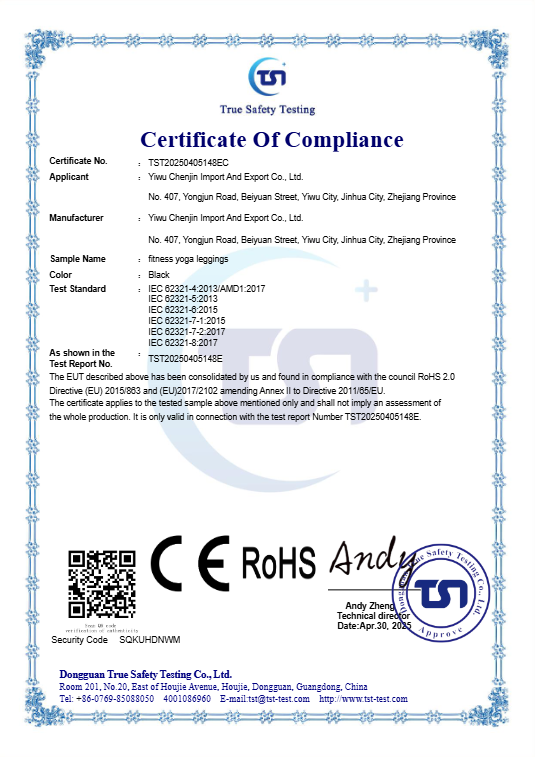
A test report supports the tested sample, material, method and stated scope. It should not be expanded into a blanket certification claim for all MOVEVOX gym leggings.
Existing Activewear Leggings Test Evidence
MOVEVOX currently has third-party evidence for a black sample identified as “fitness yoga leggings.” The relevant report identifies Yiwu Chenjin Import And Export Co., Ltd. as applicant and manufacturer.
RoHS-Related Evidence
The existing 2025 report records the applicable result for the submitted fitness yoga leggings sample under the stated test scope. The evidence applies to that submitted sample only.
Phthalates / REACH-Related Evidence
A separate report for the black fabric from the fitness yoga leggings evaluated specified phthalates against the referenced European REACH Annex XVII Entry 51 & 52 requirements and recorded a Pass result for the submitted material.
Scope Limitation
Correct: “This submitted leggings sample/material was tested under the stated report and scope.” Incorrect: “All MOVEVOX Gym Leggings are REACH/RoHS certified.”
Project-Specific Testing
Where the buyer requires chemical, material, performance, buyer-specific protocol or other third-party testing, MOVEVOX can discuss project-specific coordination according to the actual requirement.
Performance Claims
Terms such as squat proof, quick dry, compression, abrasion resistance, colorfastness or recycled percentage should only be presented as verified performance claims when suitable evidence exists for the specific product and scope.
Case Study: From Tech Pack to Repeat Performance Activewear Production
Customer identity is withheld. The following case uses documented internal project facts without disclosing the customer’s brand name or confidential commercial information.
Confidentiality note: Customer identity is withheld.
Customer Profile
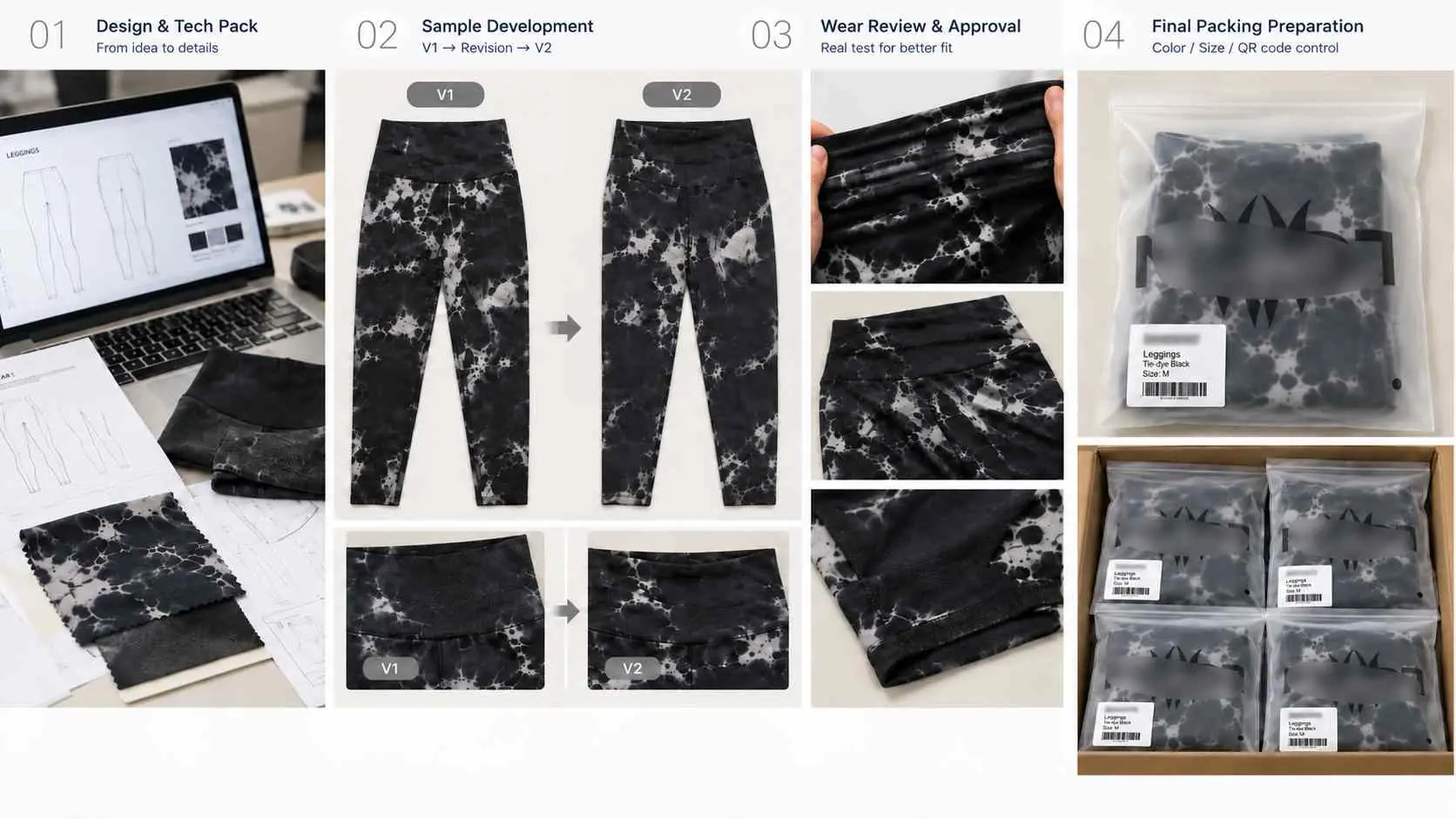
A U.S. activewear customer worked with MOVEVOX on leggings, shorts, sports bras, tanks, sets and other close-to-body activewear. The project began from the customer’s own technical specifications and Tech Packs.
Product Requirements
The project included customer-defined requirements around high stretch, supportive wearing direction, opacity, soft handfeel and extended sizing. These needed evaluation through actual material, Fit and sample development.
Sample V1
MOVEVOX reviewed the technical information and prepared a first sample version. The customer evaluated the product and provided development feedback.
Sample V2
MOVEVOX revised the product and produced a second version incorporating the customer’s requested changes.
Real Wear Testing Before Bulk
After the second sample had substantially reached the target direction, approximately 5–10 additional samples were prepared for real wearing evaluation before bulk confirmation.
Private-Label Execution
The commercial project included Logo, labels, care labels, individual packaging, customized packaging and fitness-related printed material.
Multi-Color / Multi-Size SKU Control
The project included multiple colors and four sizes. Each individual package required the correct QR-code label corresponding to the product.
Double Confirmation
MOVEVOX organized packing by Style and Color and added double confirmation during the relevant QC and packing process to reduce QR-code mismatch risk.
Repeat Development
The internal case record documents continuing activewear orders and further product development after the initial project.