MOVEVOX Workout Manufacturing at a Glance
01 — Core Manufacturing Base
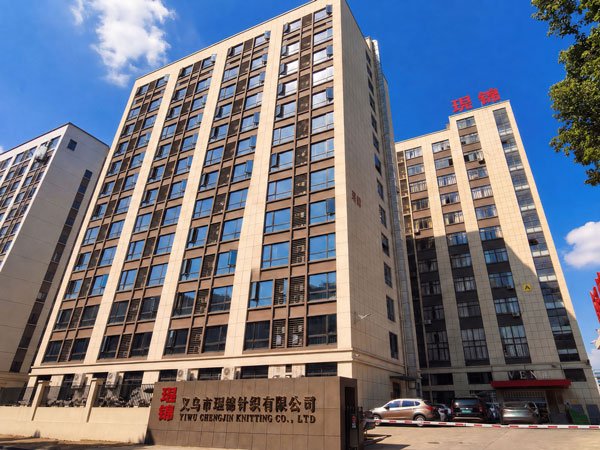
MOVEVOX operates an approximately 6,000 m² core manufacturing base in Yiwu, Zhejiang, China, supporting product development, technical work, core production, quality activities, and supply-chain coordination.
02 — Seamless + Cut & Sew
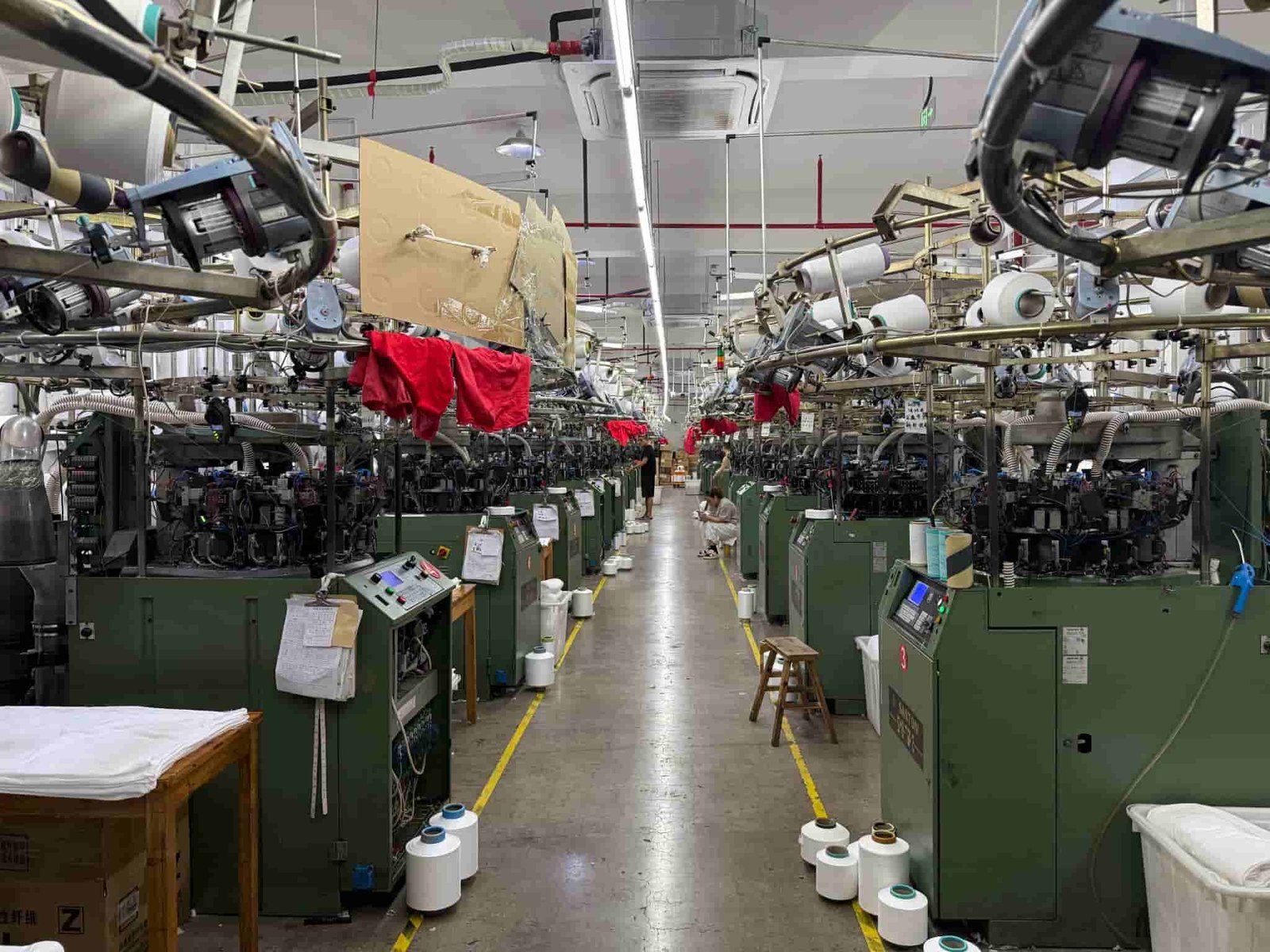
The core manufacturing system includes 28 Italian Santoni seamless knitting machines and approximately 24 primary sewing and garment-production machines.
03 — Product Development
Projects can begin from a Tech Pack, physical sample, product image, sketch, or clear product concept. Standard sample development normally takes approximately 5–10 working days after the required information has been confirmed.
04 — Commercial Entry
Current base MOQ references are approximately 100 pieces per Seamless style and 150 pieces per Cut & Sew style under normal material and production conditions.
05 — Managed Delivery Capacity
Current normal combined managed delivery capacity is approximately 150,000–200,000 quality-released pieces per month, subject to actual product mix, material readiness, production allocation, quality requirements, and delivery timing.

Develop a Complete Workout Clothing Range
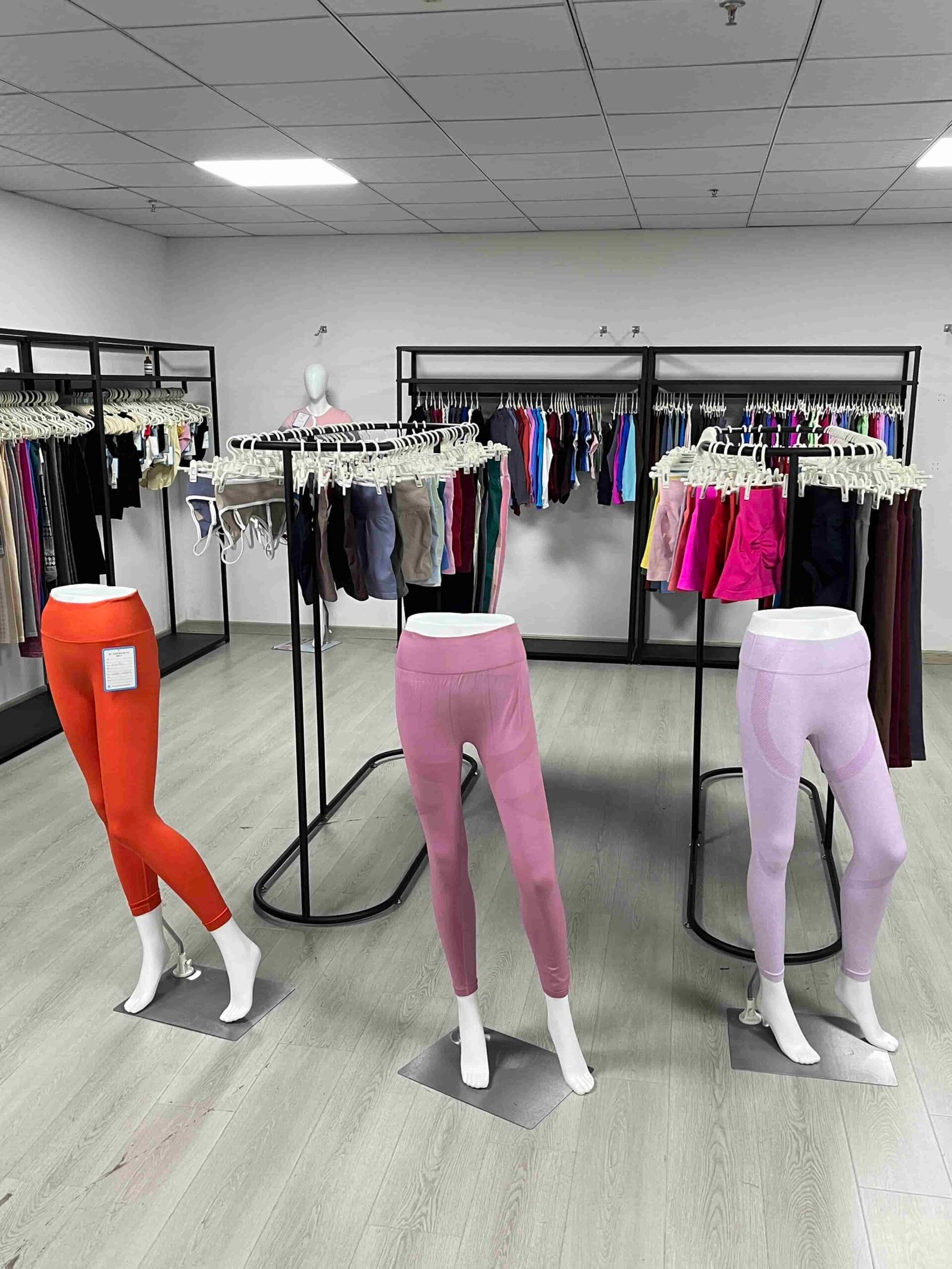
MOVEVOX supports the core garment categories used across workout, gym, fitness, yoga, training, and related activewear programs. Manufacturing route, materials, fit, construction, and branding are reviewed according to the actual product rather than applying one production method to every SKU.
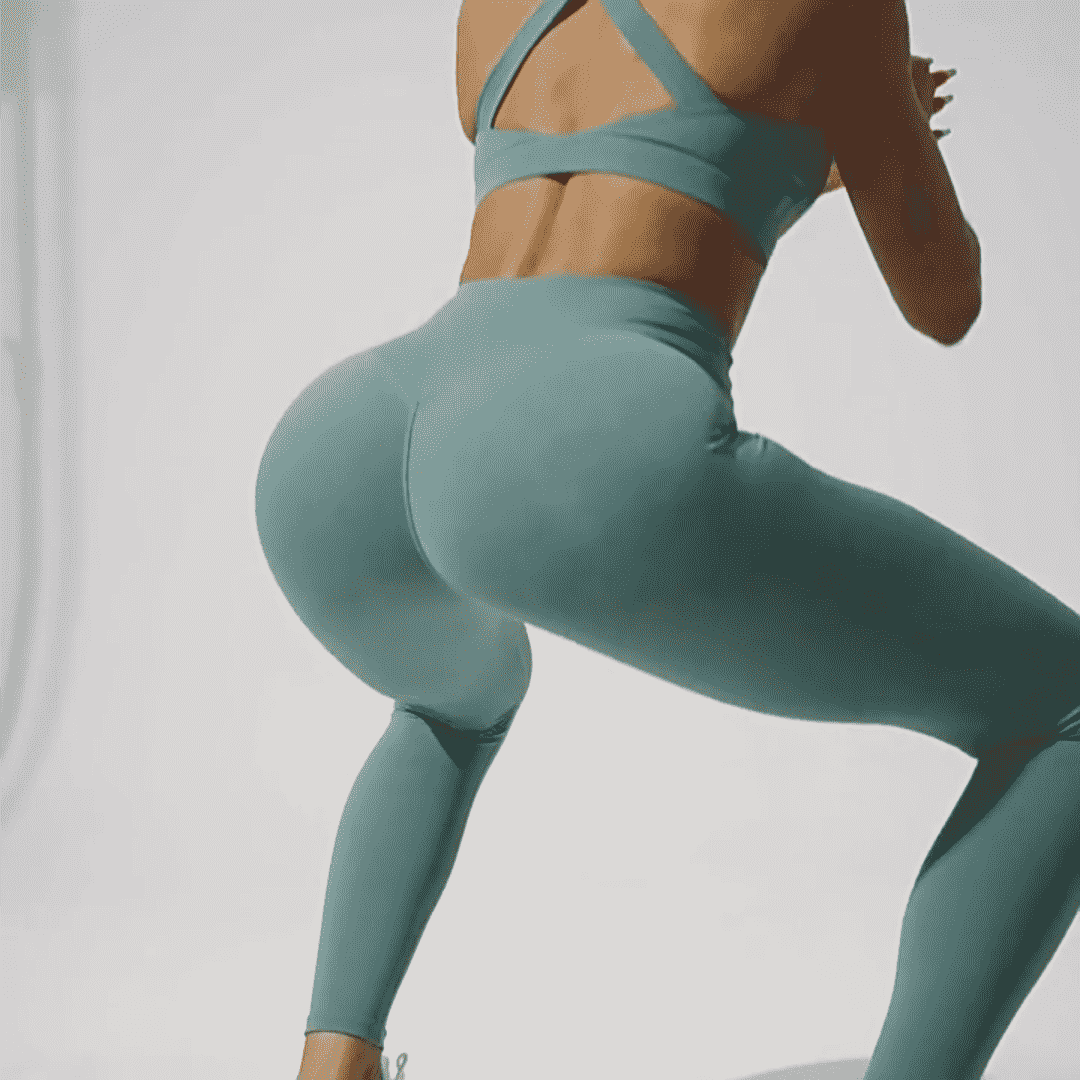
Workout Leggings
Develop fitted workout leggings across Seamless or Cut & Sew routes according to the required design, material, waistband, construction, and branding direction.
View Leggings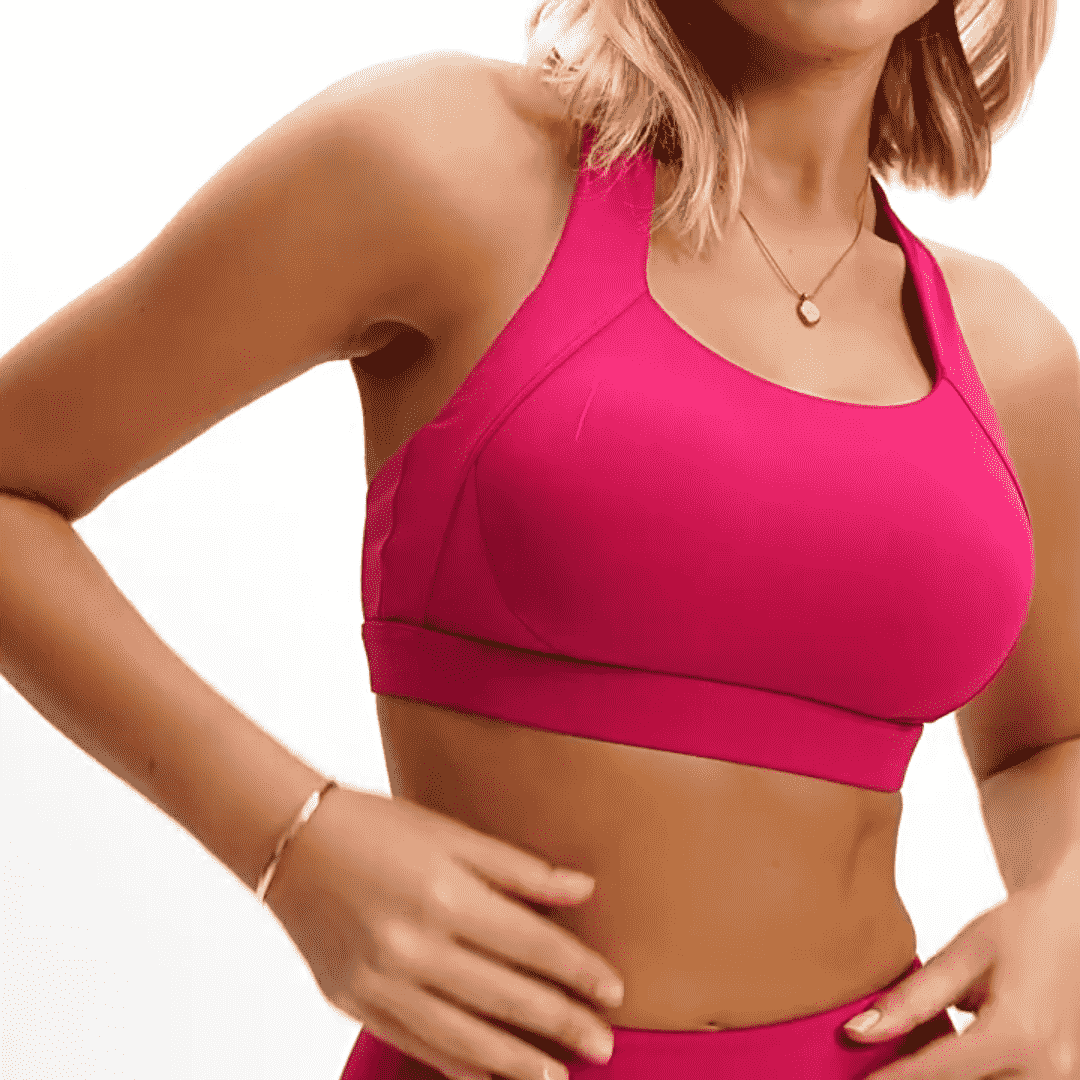
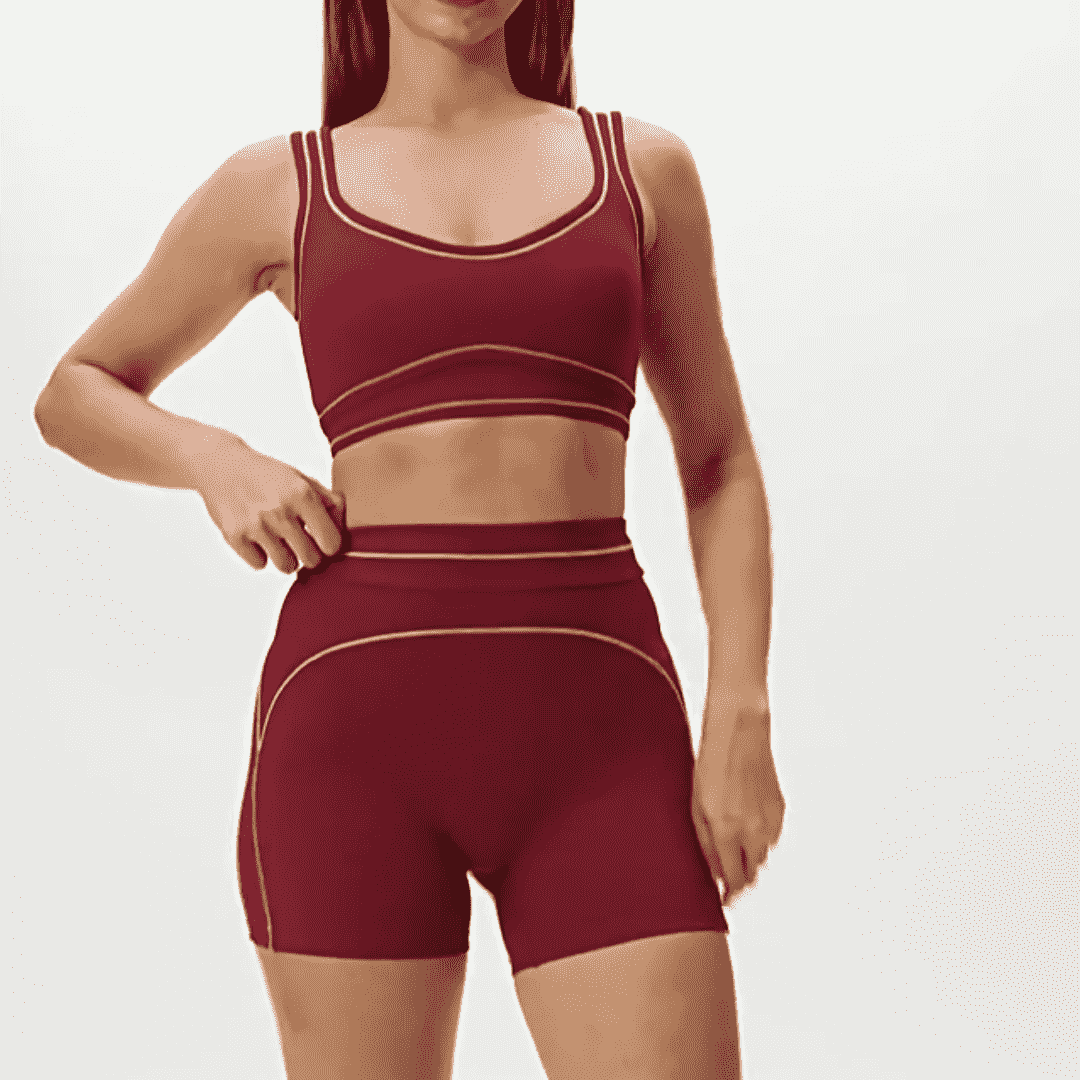
Sports Bras
Develop sports bras with different product structures, lengths, straps, backs, materials, and branding requirements according to the approved product direction.
View Sports Bras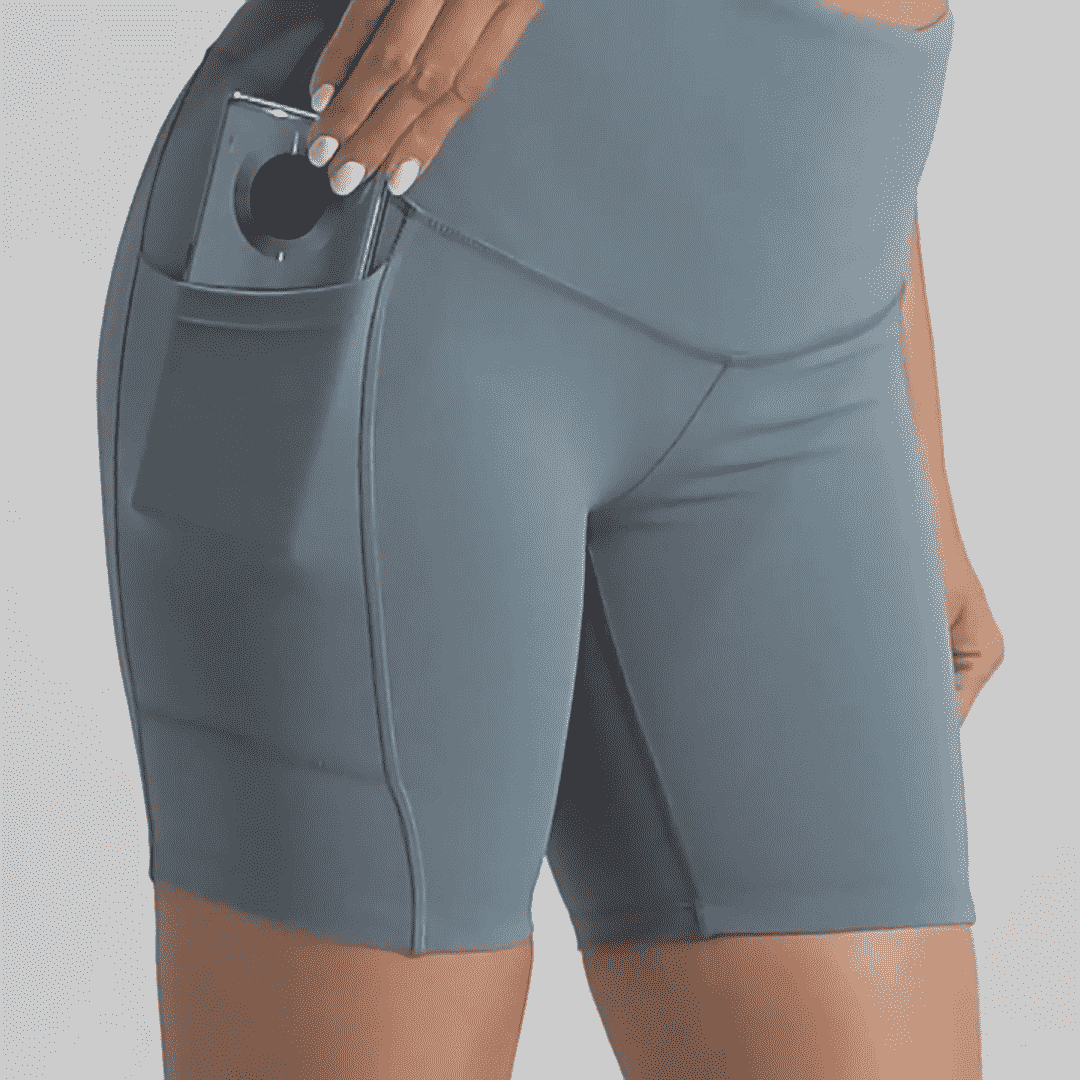
Workout Shorts
Support fitted workout shorts, biker-style shorts, yoga shorts, and related training bottoms with project-specific length, waist, material, and construction requirements.
View Workout Shorts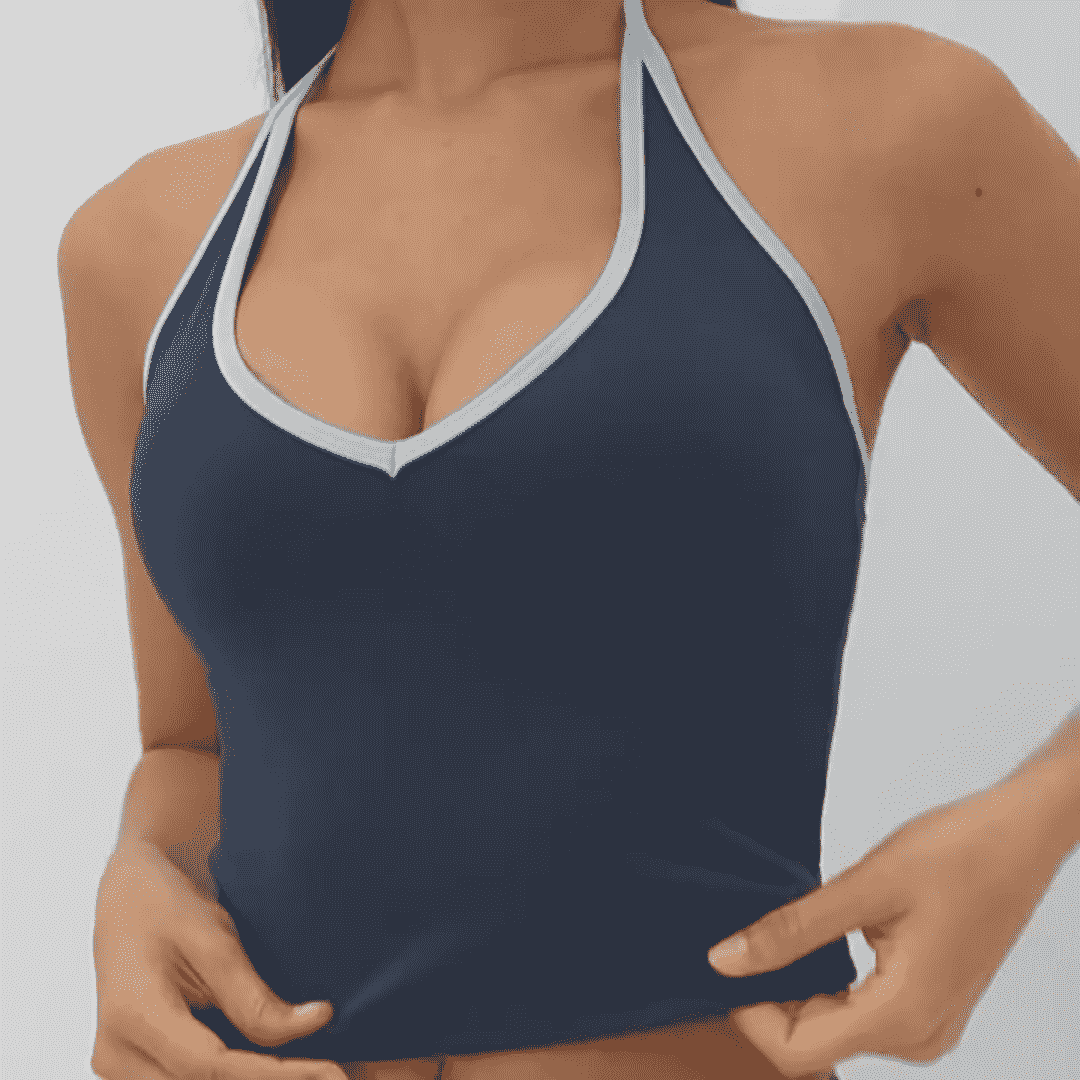
Tank Tops
Develop fitted, cropped, or training-oriented tank tops that can coordinate with leggings, shorts, bras, and related workout collections.
View Tops & Tanks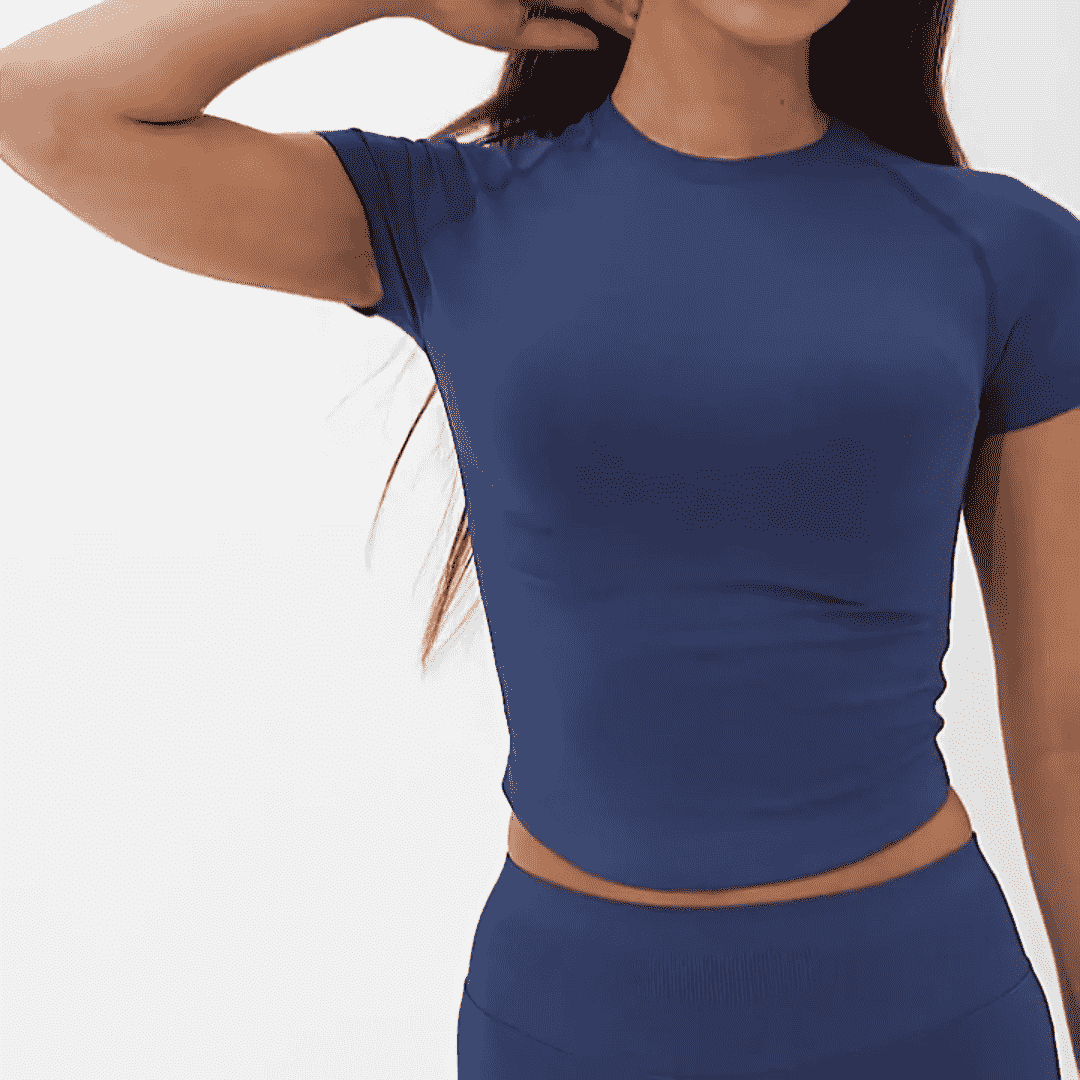
Training Tops
Support T-shirts and workout tops developed around the required fit, stretch material, construction, color, and brand standards.
View Training Tops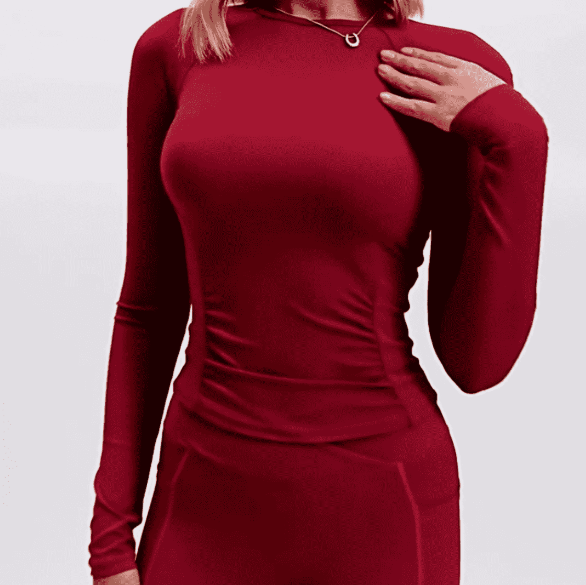
Long Sleeves
Extend workout programs with fitted or training-oriented long-sleeve products using coordinated materials, colors, sizing, and branding.
Workout Sets
Coordinate related tops and bottoms through shared product direction, material strategy, color standards, branding, and packing requirements.
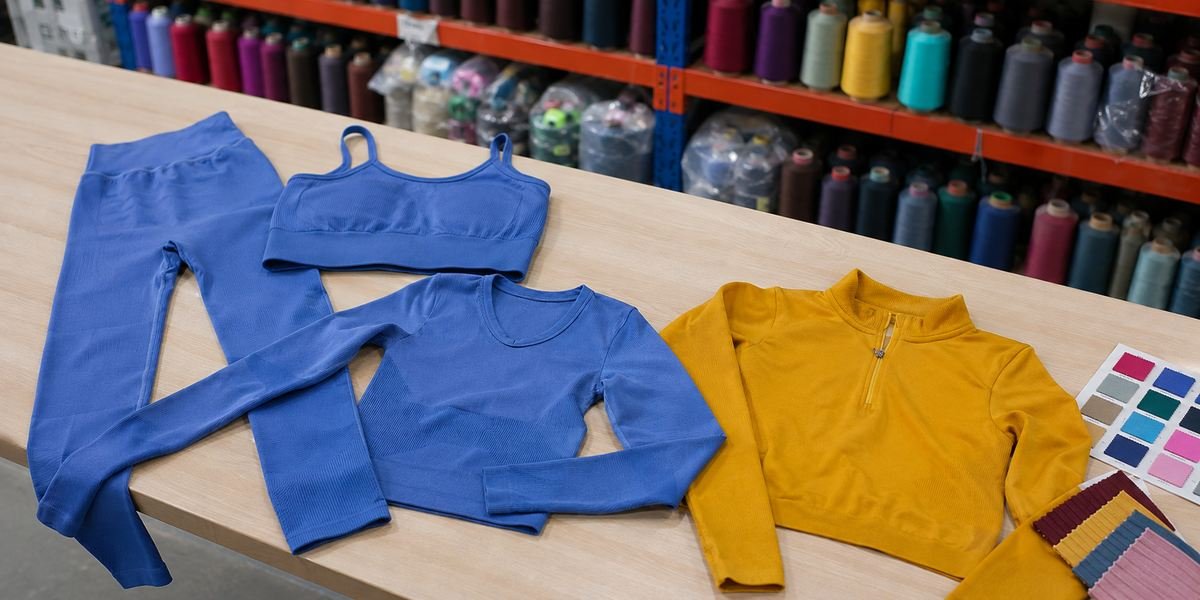
Seamless Workout Apparel
Develop Seamless leggings, bras, shorts, tops, and related products using MOVEVOX’s Santoni manufacturing capability where the product is suitable for this route.
View Seamless ActivewearDevelop Workout Apparel With Santoni Seamless Manufacturing
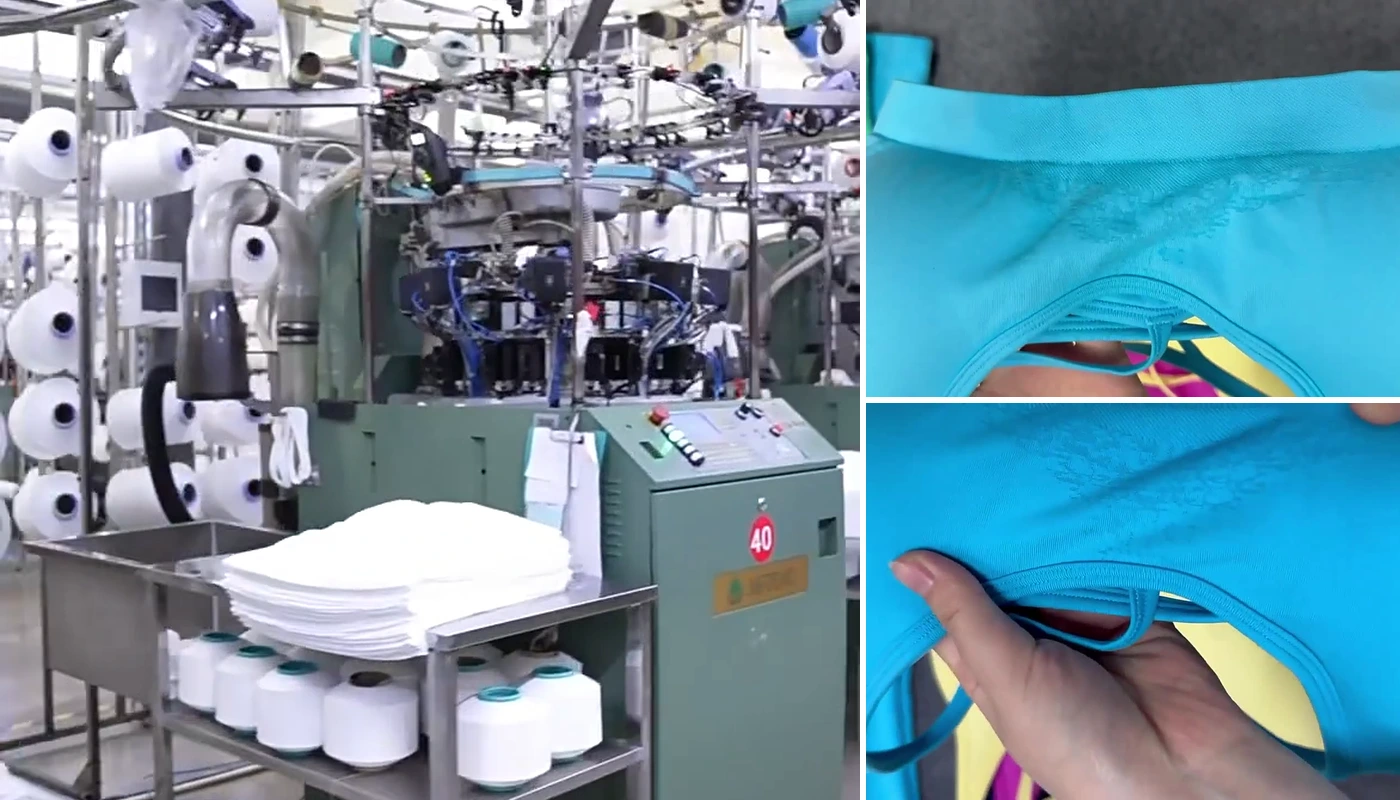
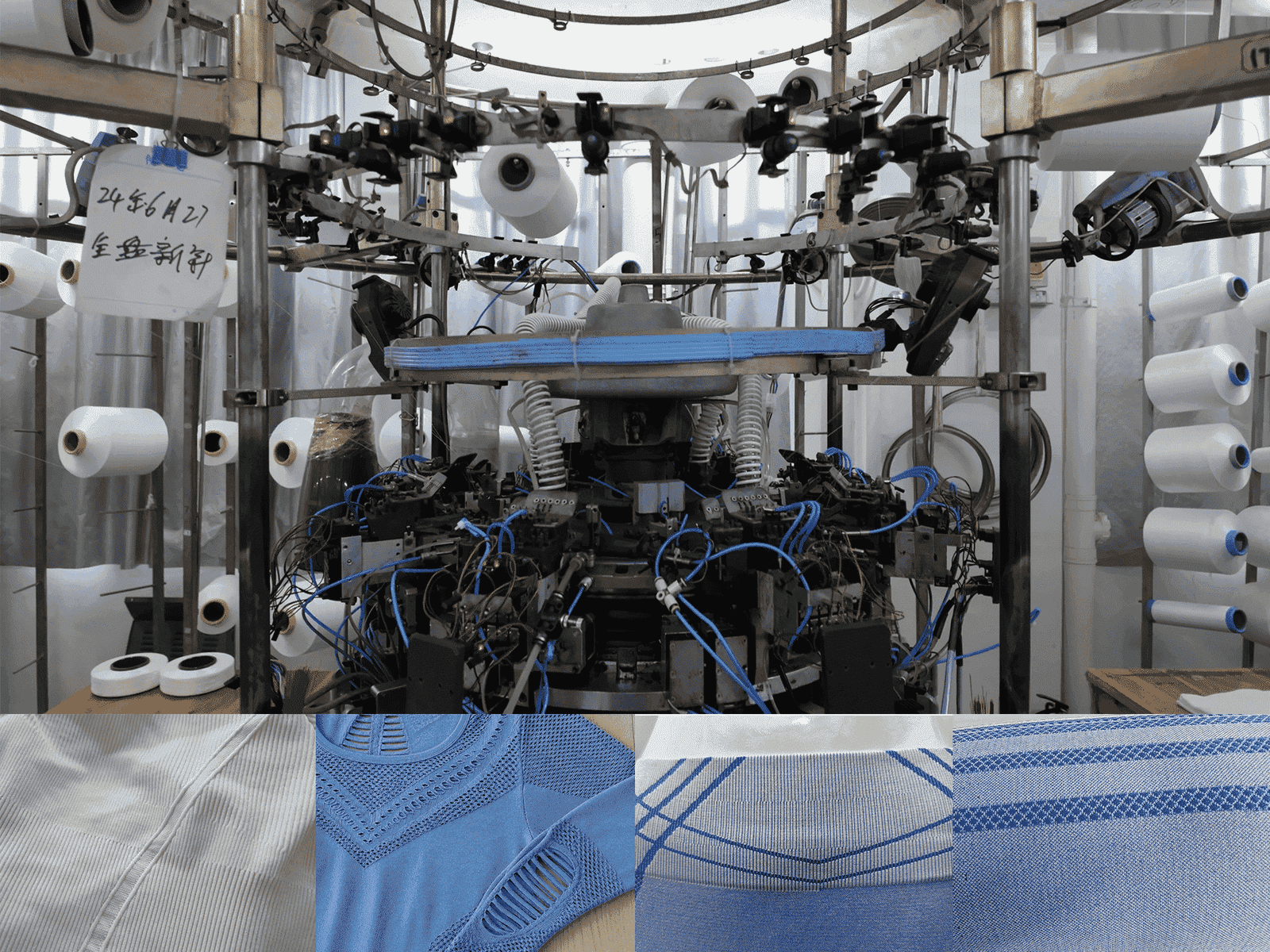
MOVEVOX operates 28 Italian Santoni seamless knitting machines at its core manufacturing base. Seamless development combines yarn selection, knitting programs, garment sizing, structure, finishing, and the approved physical product rather than relying only on a conventional cut-panel construction method.
Product Structure
A Seamless product can integrate different knitted structures into the garment according to the approved design and technical feasibility.
Waist Construction
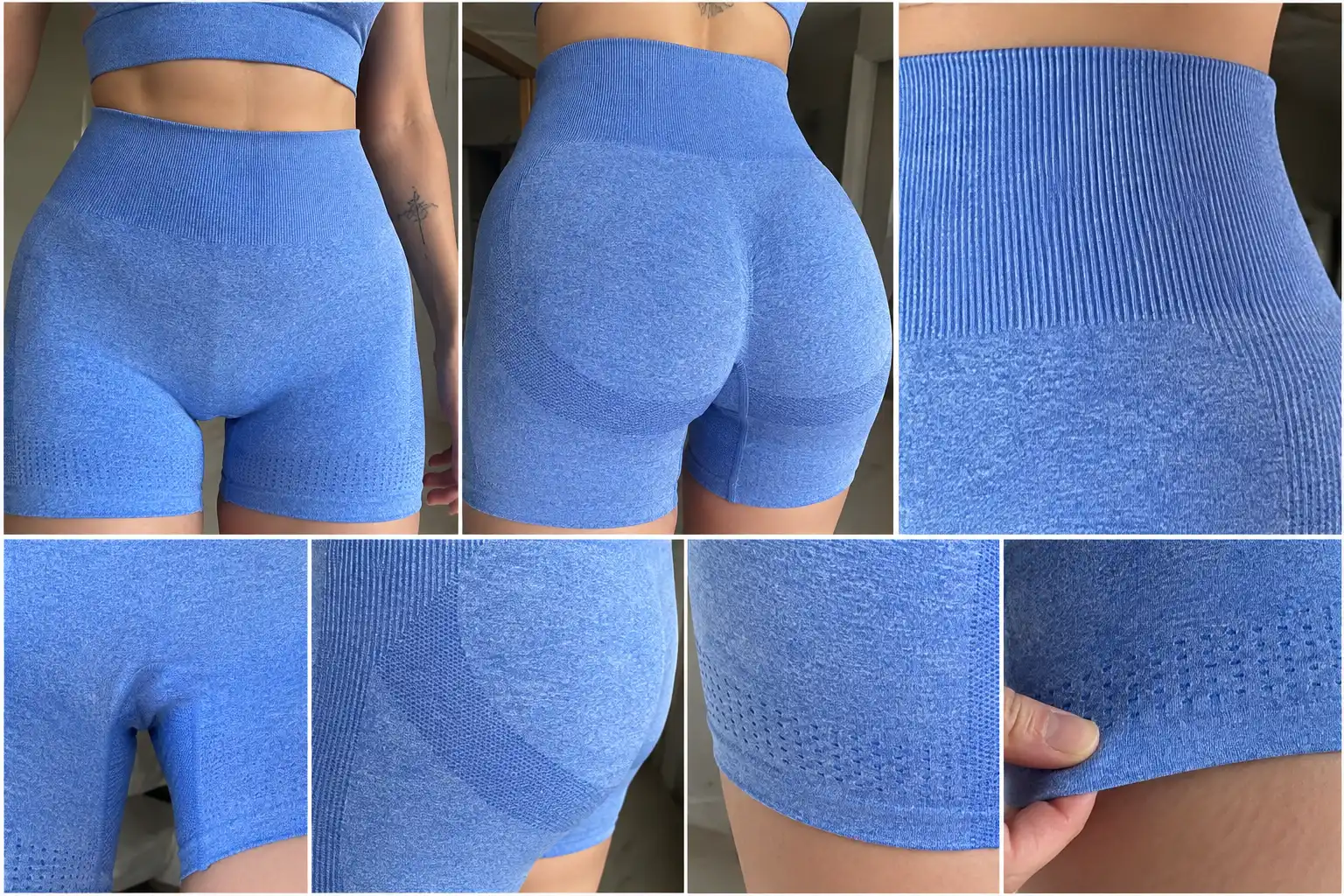
Workout leggings and shorts often require careful development of the waist area because garment dimensions, elasticity, yarn, knitting structure, and finishing influence the final fit and feel.
Surface Texture
Knitted structure can contribute to the visual and tactile surface of a Seamless workout product without requiring every effect to come from printing or separate cut panels.
Localized Knit Areas
Where technically suitable, a Seamless program can use different knitting structures in selected areas of the garment. Final results need to be validated through the actual sample.
Size Programming
Seamless sizing is linked to the knitting program, yarn behavior, garment structure, and finishing. Changes should therefore remain connected to the current approved sample and program version.
Repeat Production Control
Repeat Seamless production should remain linked to approved yarn requirements, current technical information, the applicable knitting program, and the approved physical product.
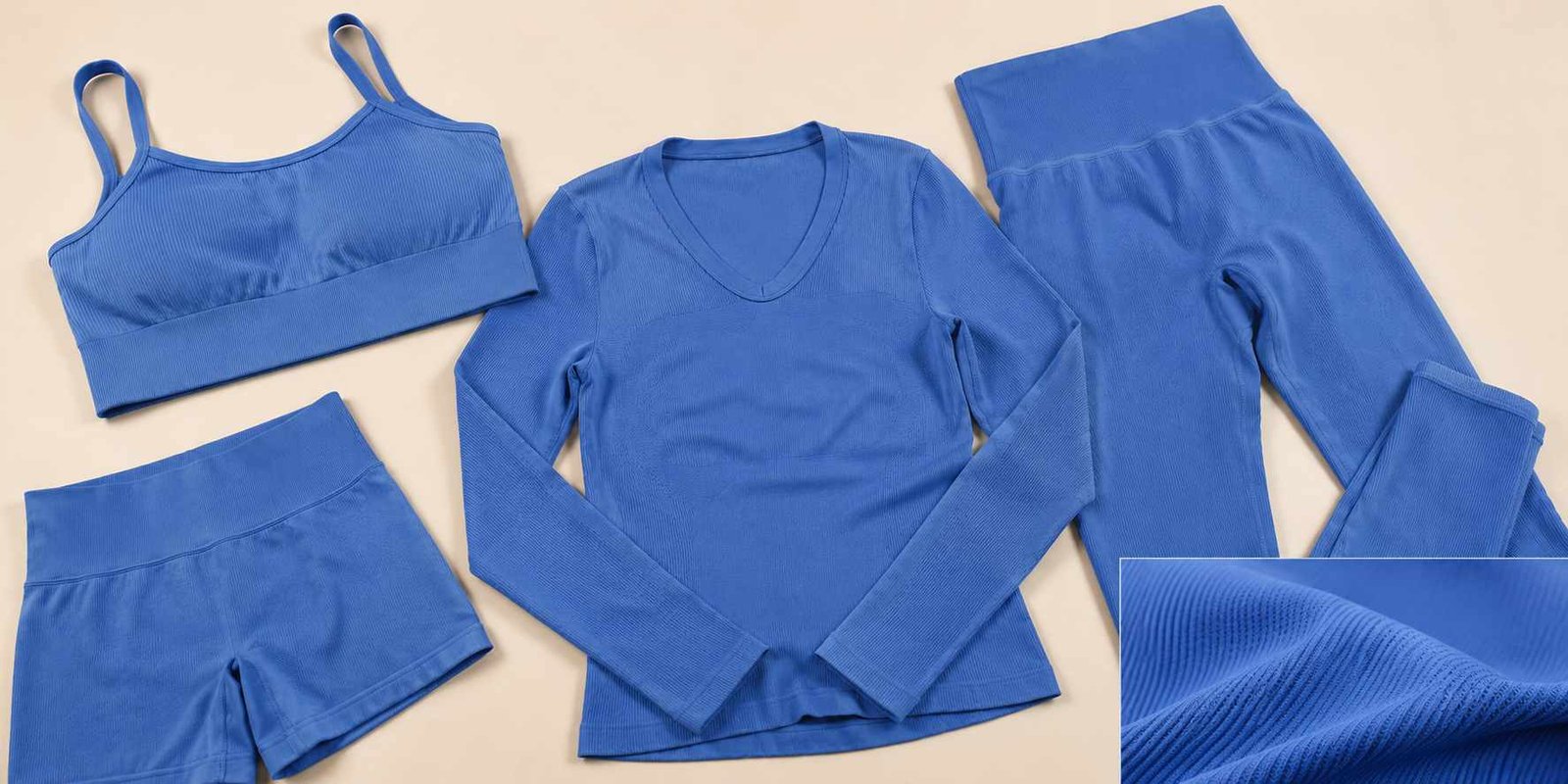
Build Workout Products Through Cut & Sew Construction
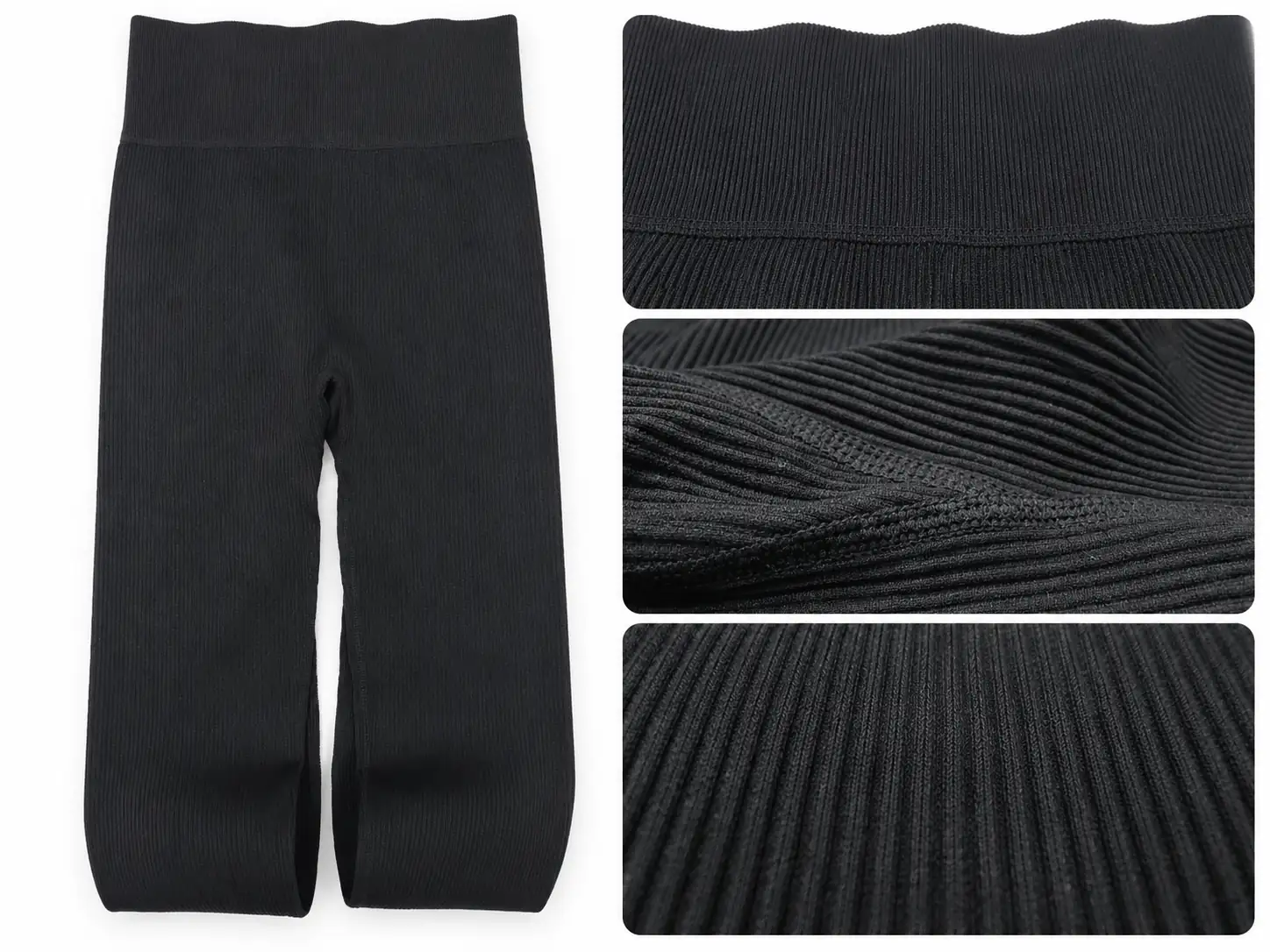
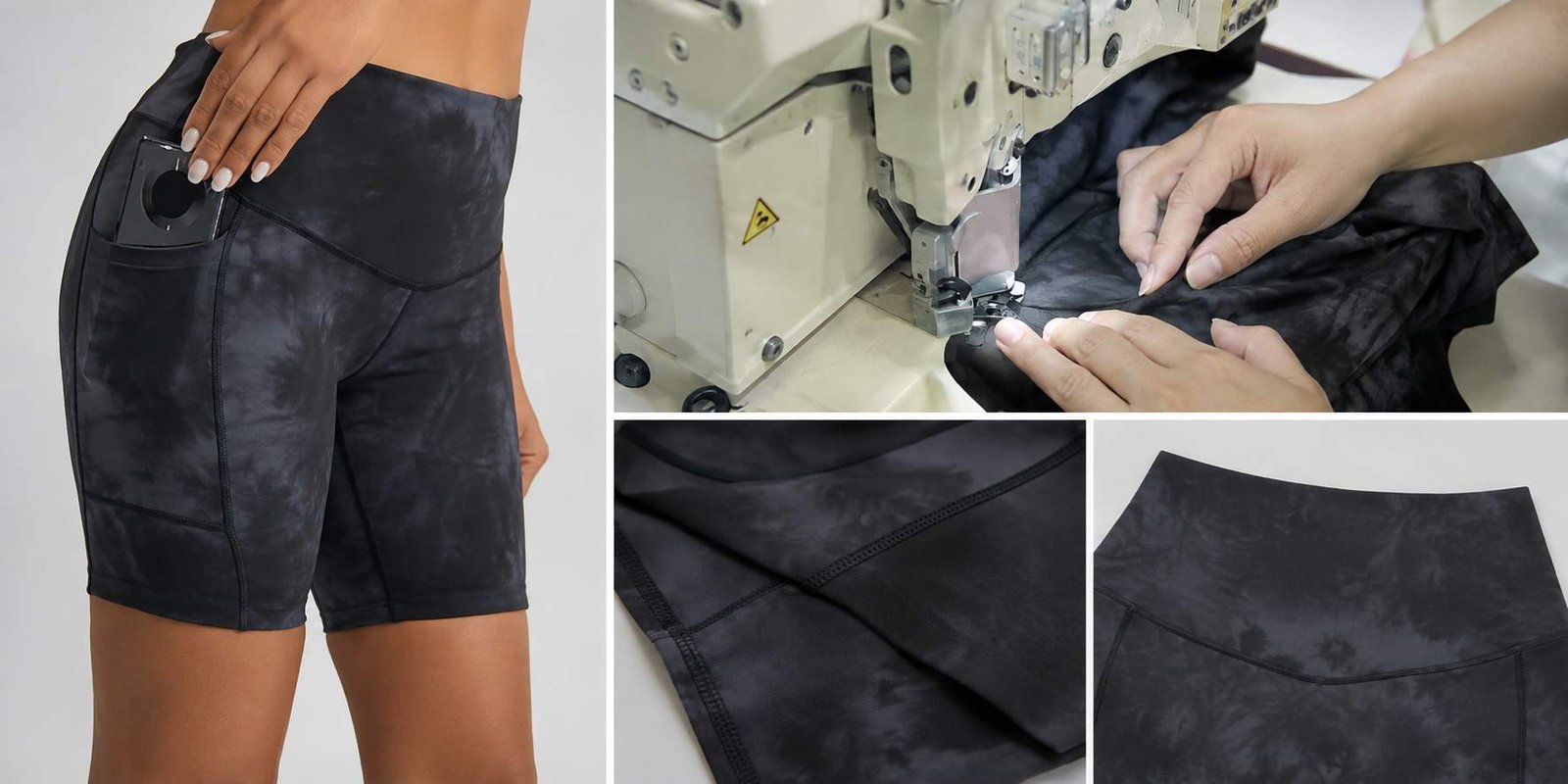
Cut & Sew manufacturing provides flexibility for workout products that depend on defined pattern pieces, panels, pockets, gussets, elastic components, multiple materials, or controlled seam placement. MOVEVOX’s core factory includes approximately 24 primary sewing and garment-production machines supporting this manufacturing route.
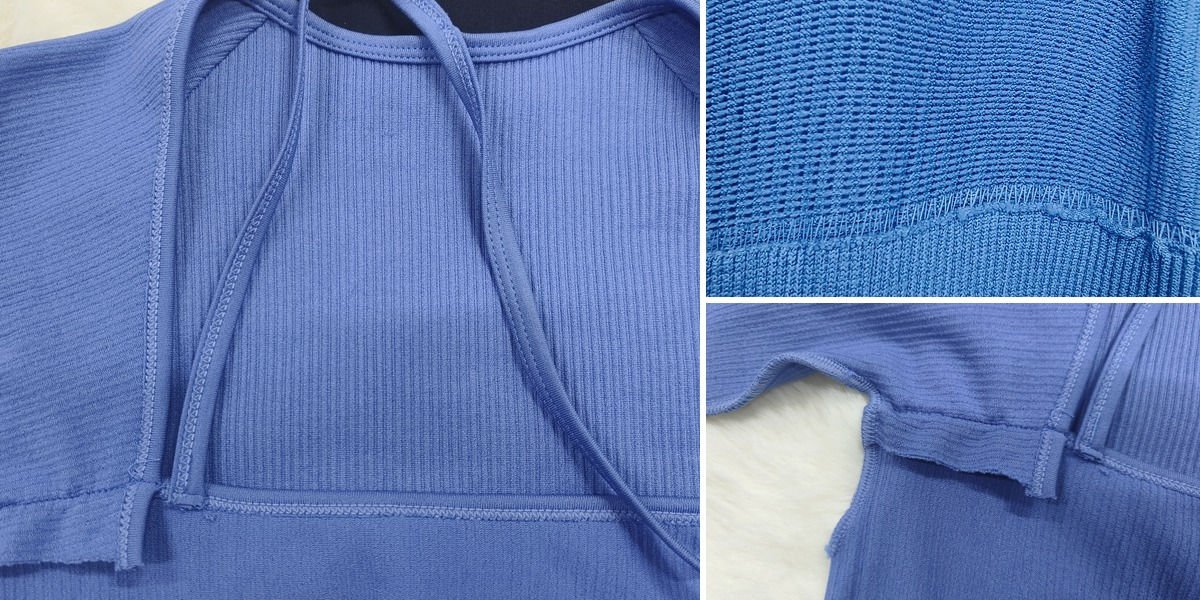
Panel Construction
Separate pattern pieces can be shaped and combined to create the required garment silhouette, fit, color blocking, or construction detail.
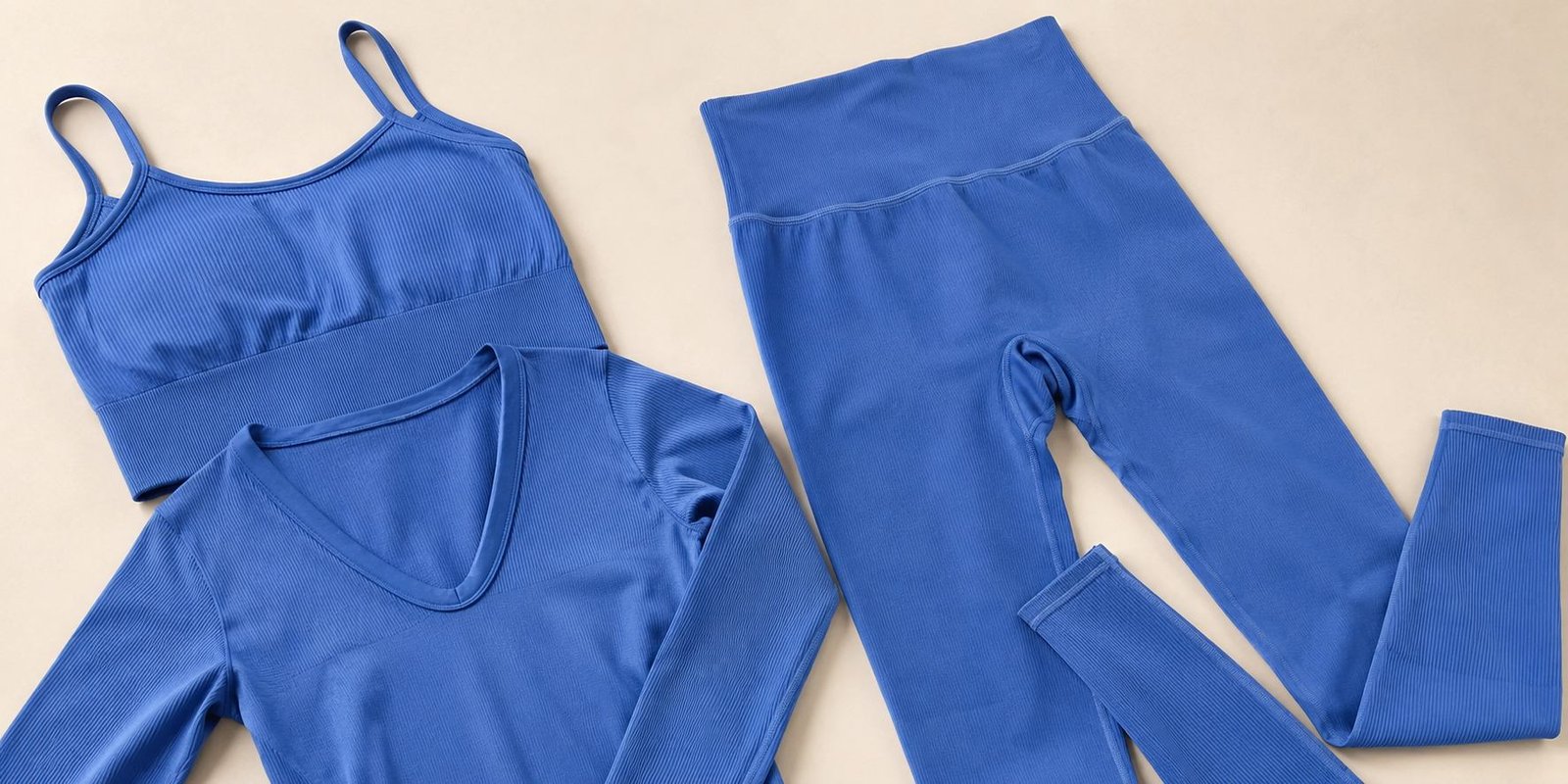
Pocket Construction
Side, waistband, or other functional pockets require controlled placement, dimensions, reinforcement, and assembly so they remain consistent with the approved product.
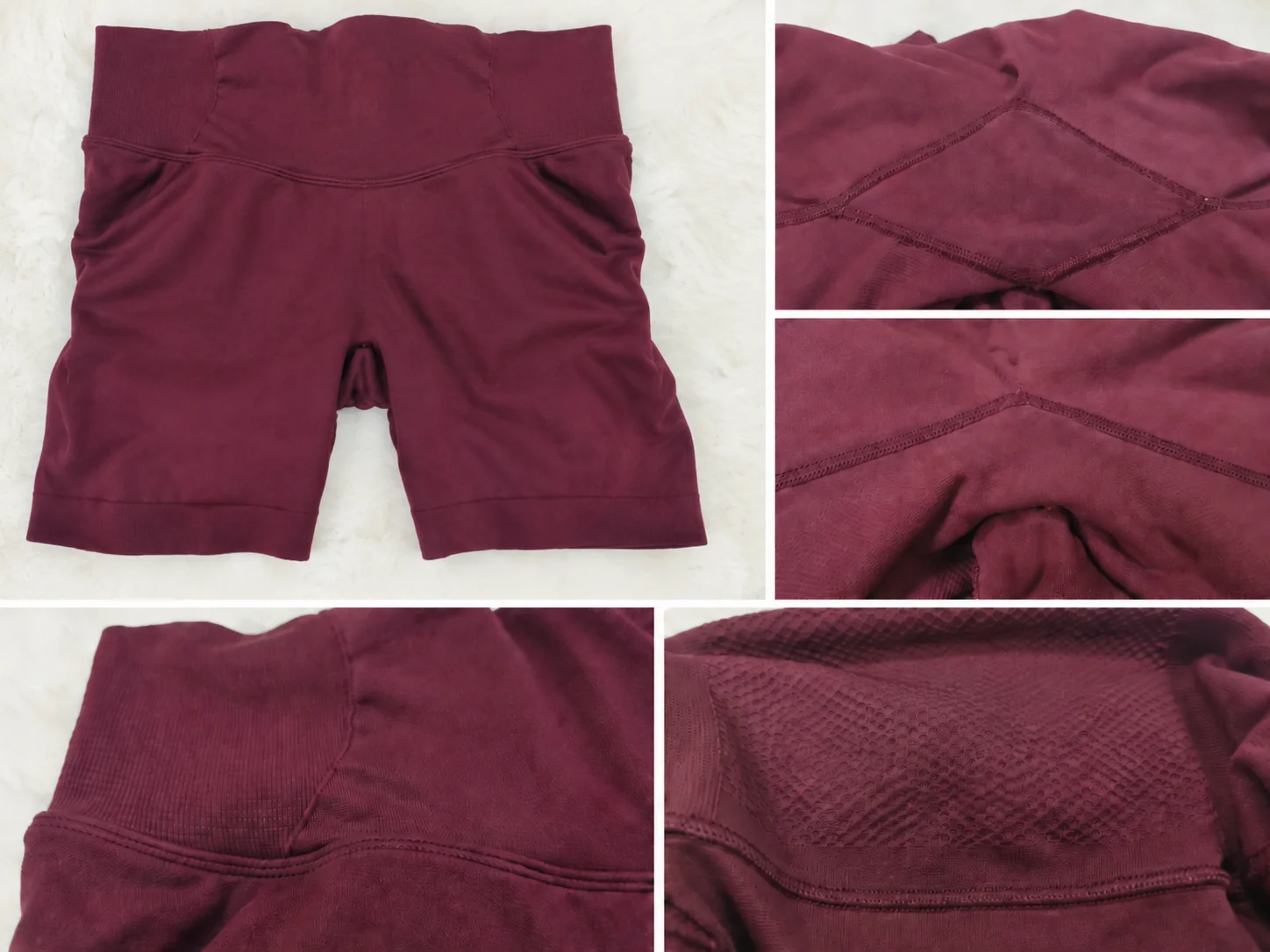
Gusset Construction
Where included in the product design, gusset construction needs to remain aligned with fit, movement, seam placement, and the buyer-approved sample.
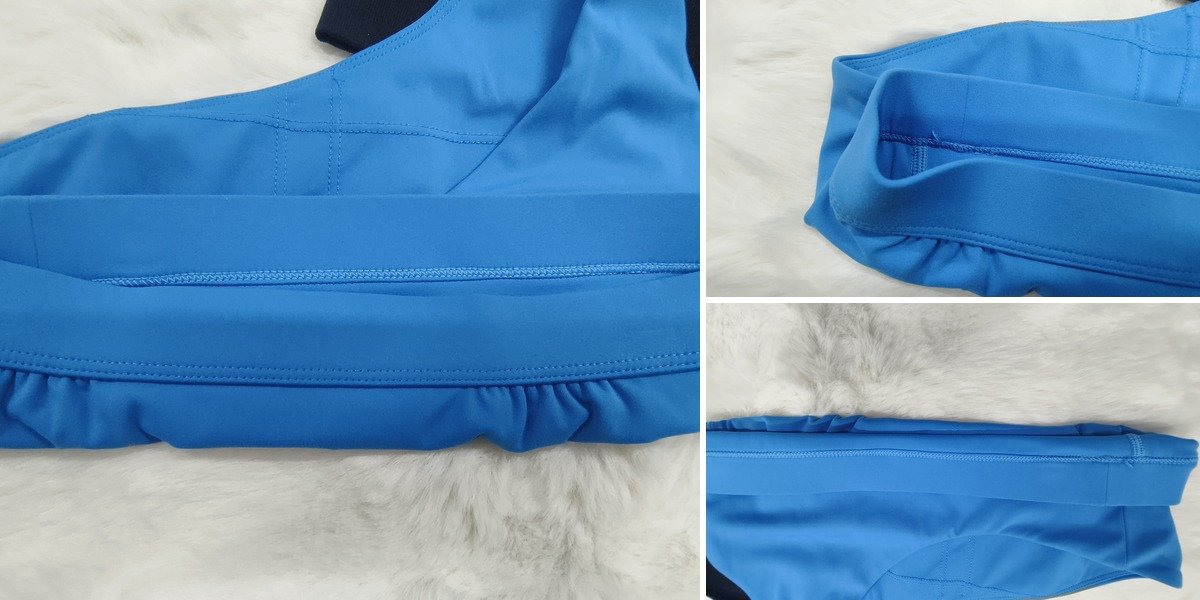
Elastic Components
Waistbands, underbands, straps, and other elastic components require consistent placement, dimensions, and attachment to maintain the intended garment result.
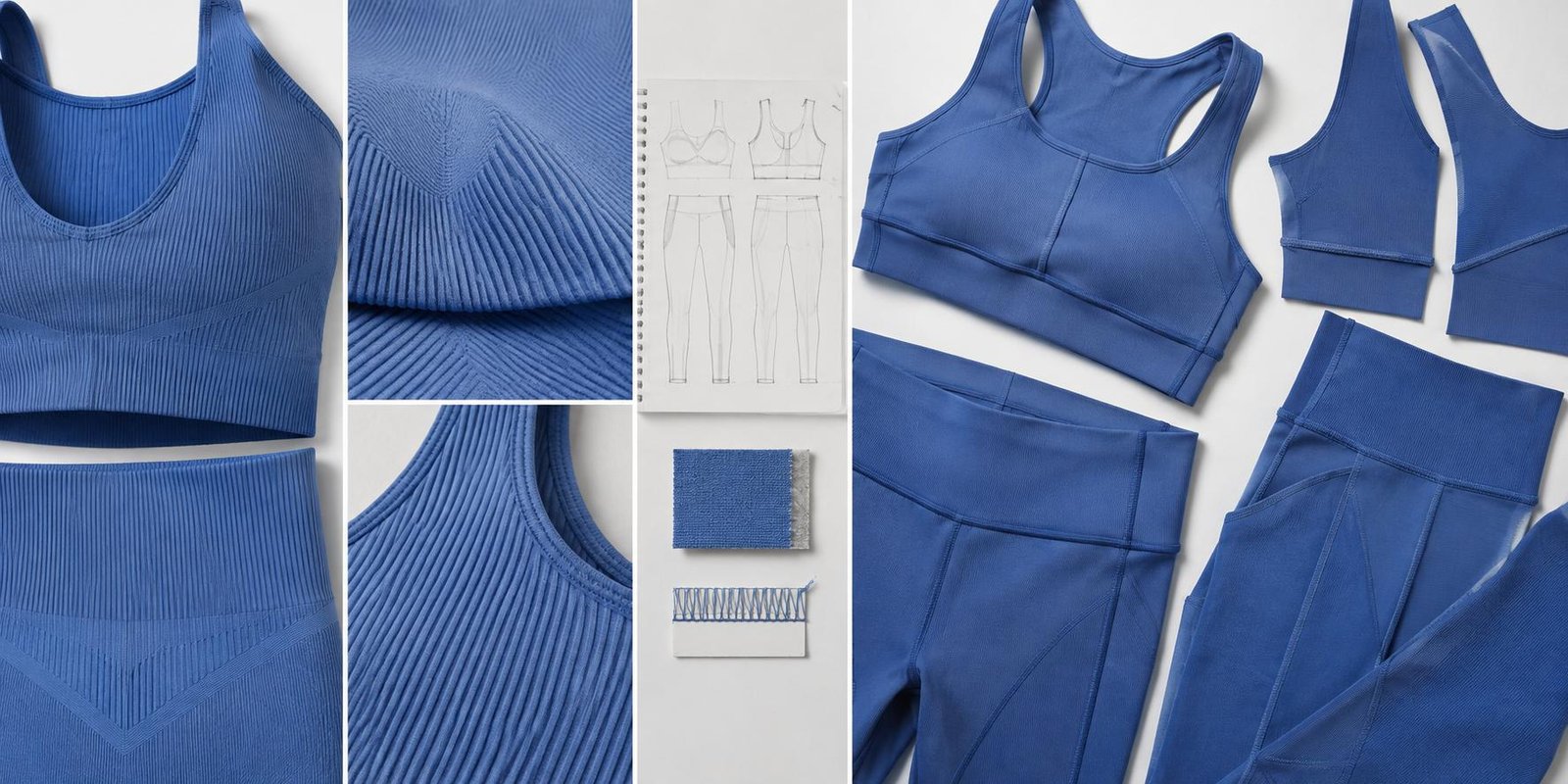
Multi-Material Products
Cut & Sew can support products that combine different approved materials or garment components, subject to technical compatibility and production feasibility.
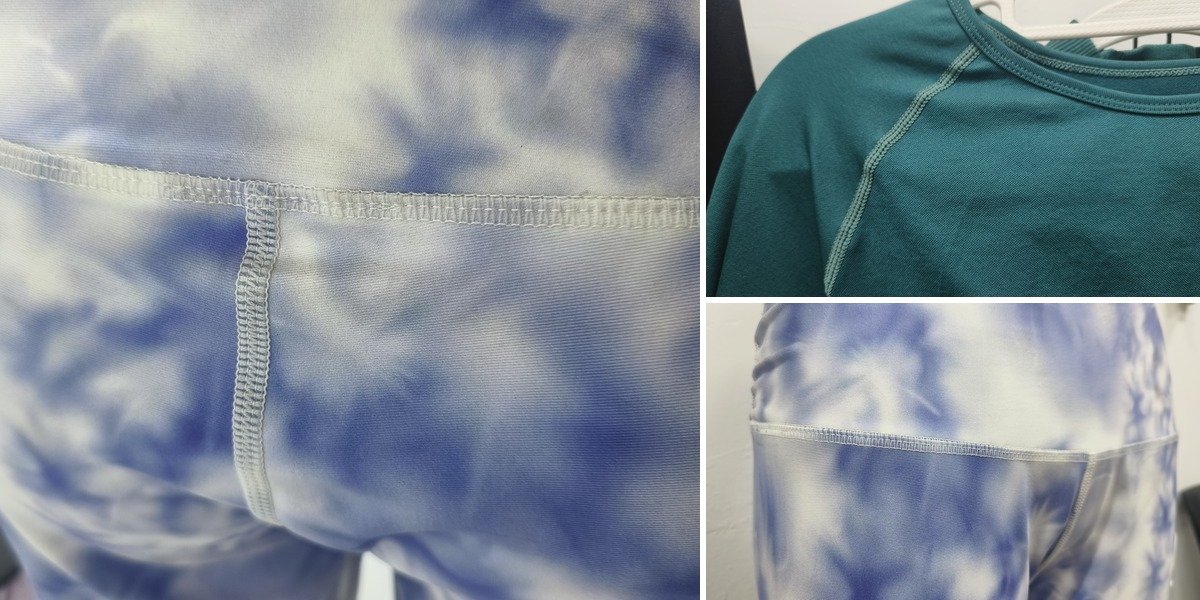
Defined Seam Architecture
The location and construction of seams are part of the product specification and should remain consistent between approved sampling and commercial production.
Seamless or Cut & Sew: Which Route Fits Your Workout Product?
Seamless and Cut & Sew are different manufacturing systems rather than competing quality levels. The appropriate route depends on the actual garment structure, materials, visual direction, construction details, and commercial requirements.
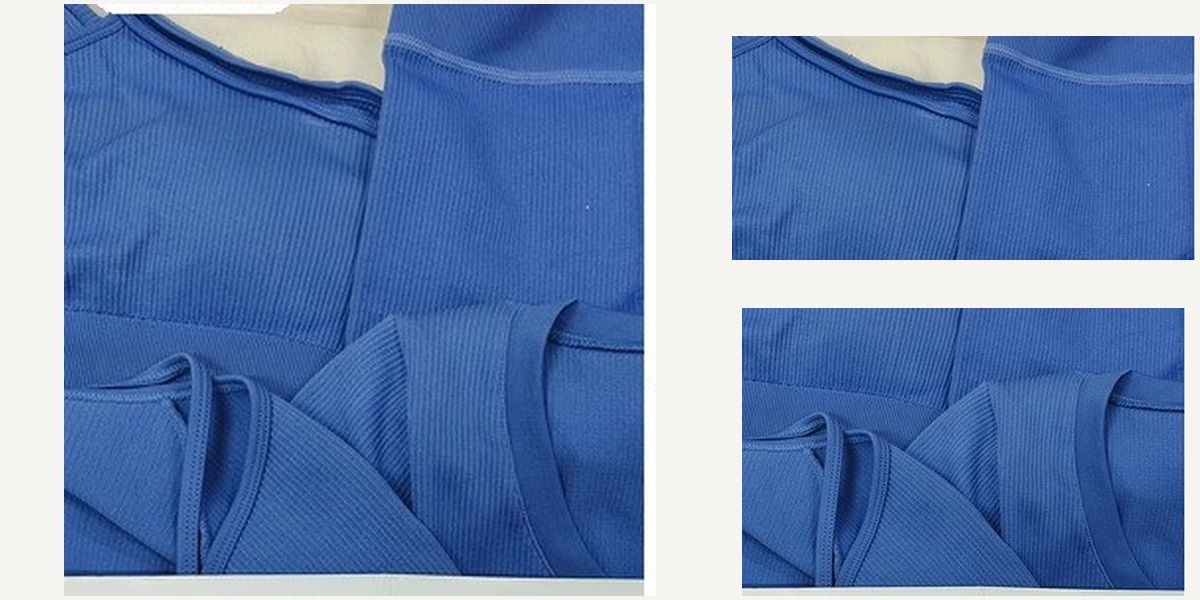
Seamless Is Relevant When
A product is designed around knitted garment structure, integrated knit effects, reduced dependence on primary cut panels, and a Seamless development route that can be validated through programming and physical sampling.
Typical MOVEVOX categories: Seamless leggings, bras, shorts, tops, and related workout products.
Cut & Sew Is Relevant When
The design relies on shaped pattern pieces, pockets, gussets, multiple materials, defined seams, elastic assemblies, or other details that are better controlled through conventional garment construction.
Typical MOVEVOX categories: Leggings, bras, shorts, tops, training products, and coordinated sets.
One Collection Can Use Both
A workout collection does not need to choose one route for every SKU. Different products can use Seamless or Cut & Sew according to their individual structure while remaining part of the same brand program.
Technical Review Comes First
A reference image alone does not always determine the correct manufacturing route. Product information, materials, construction, sizing, and intended result should be reviewed before development begins.
Manage Multiple Workout SKUs Under One Development Program
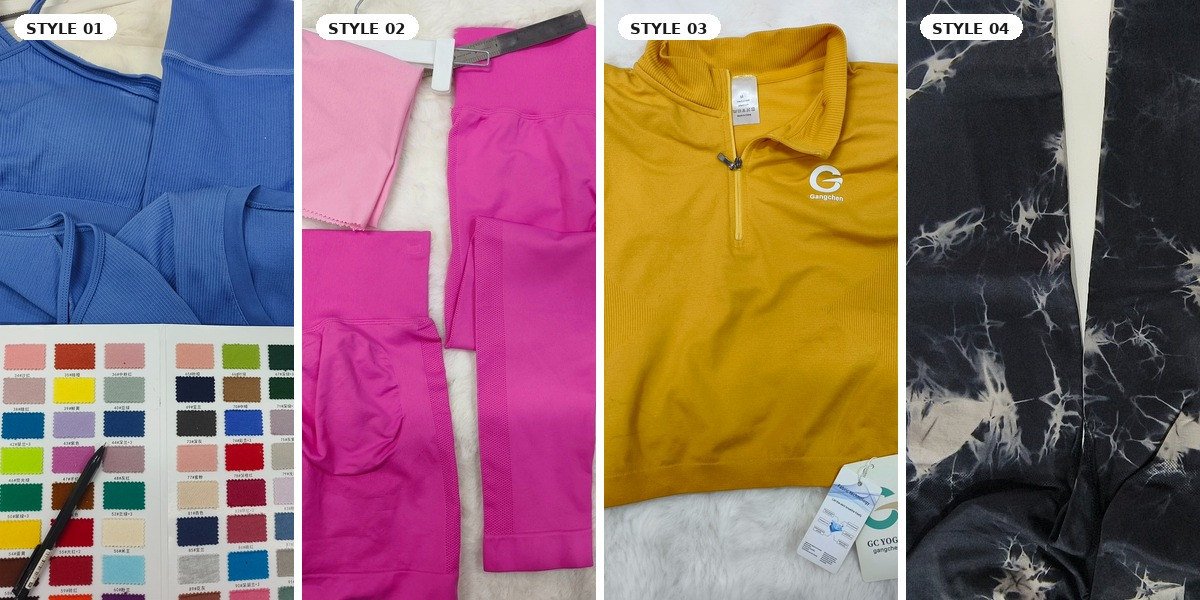
A workout collection may include different products, materials, colors, manufacturing routes, sample versions, and private-label requirements. MOVEVOX can coordinate these items under one commercial program while retaining separate technical approval for each SKU.
| Stage | Program Control | Output |
|---|---|---|
| 01 — Program Brief | Define collection scope, product categories, target market, expected quantities, timing, and available technical information. | Program overview |
| 02 — SKU Structure | Organize products by style, manufacturing route, material direction, color, size range, branding requirements, and development priority. | SKU structure |
| 03 — Shared Standards | Identify where products can reasonably share materials, colors, logos, labels, packaging, or other program requirements. | Shared standards |
| 04 — Sample Control | Retain the current sample, revision status, measurements, technical requirements, and buyer approval for each SKU. | SKU approval status |
| 05 — Bulk Preparation | Move approved products into material preparation, production allocation, QC, packing, and delivery planning. | Production plan |
Four Ways to Start a Workout Clothing Project With MOVEVOX
Not every buyer starts at the same development stage. MOVEVOX can review a project from a complete technical specification, an existing physical product, visual development references, or an established product that needs to be transferred into a new supplier relationship.
Start From a Tech Pack
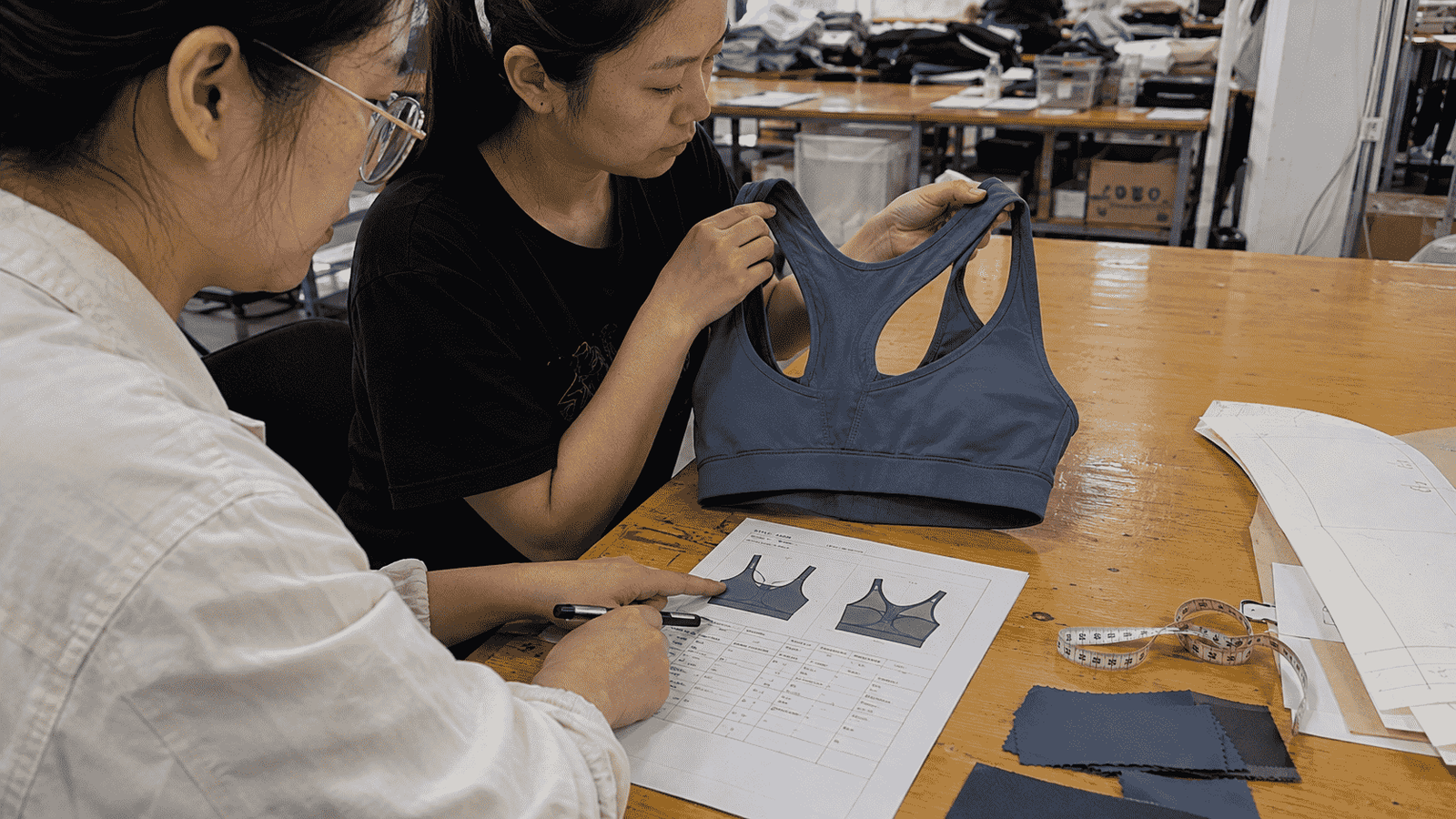
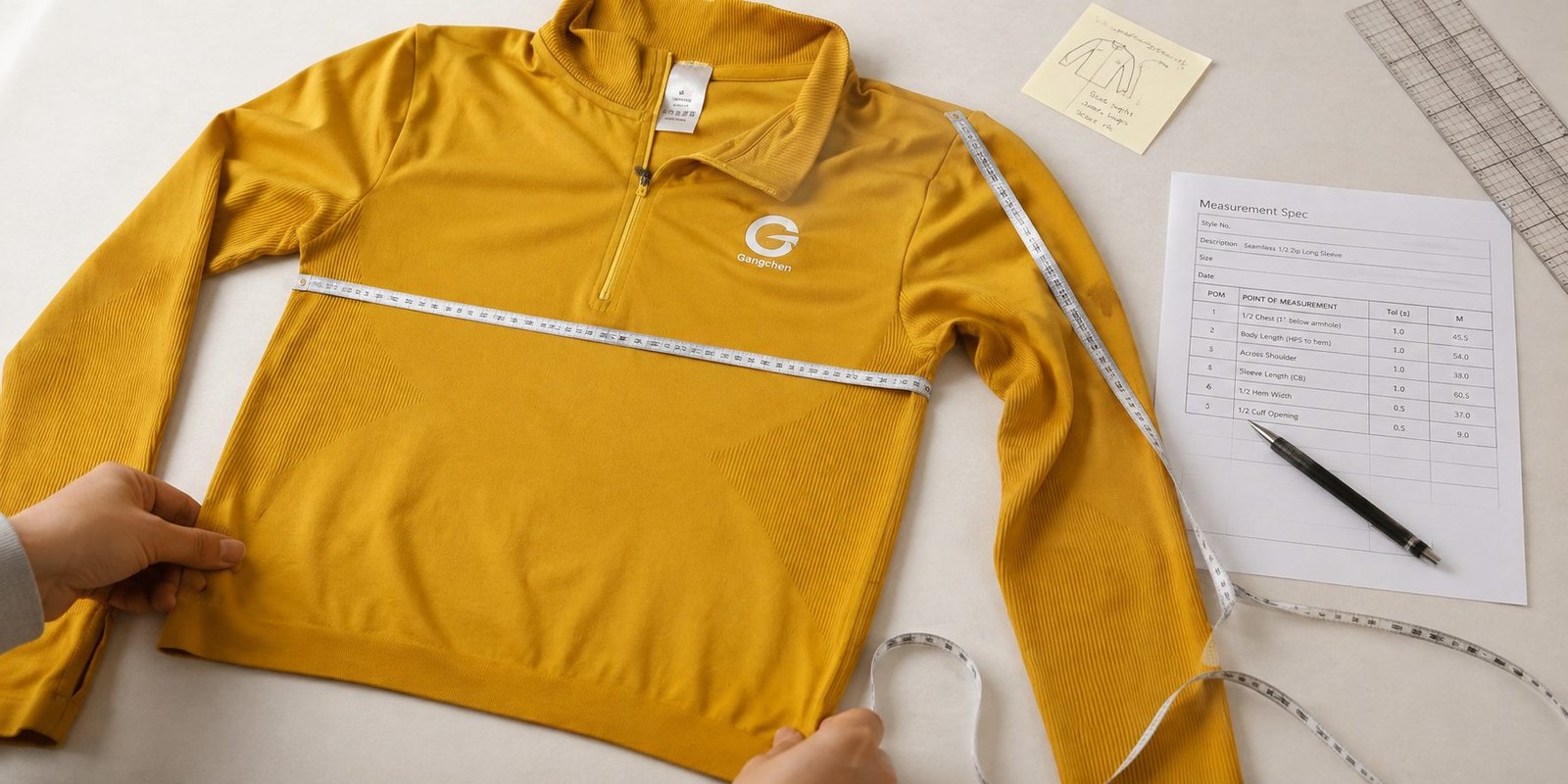
Suitable for brands that already control the product specification. Provide available drawings, measurements, construction information, materials, colors, artwork, and other technical requirements so MOVEVOX can review the product before sampling.
Best suited to: OEM-style execution.
Start From a Physical Sample
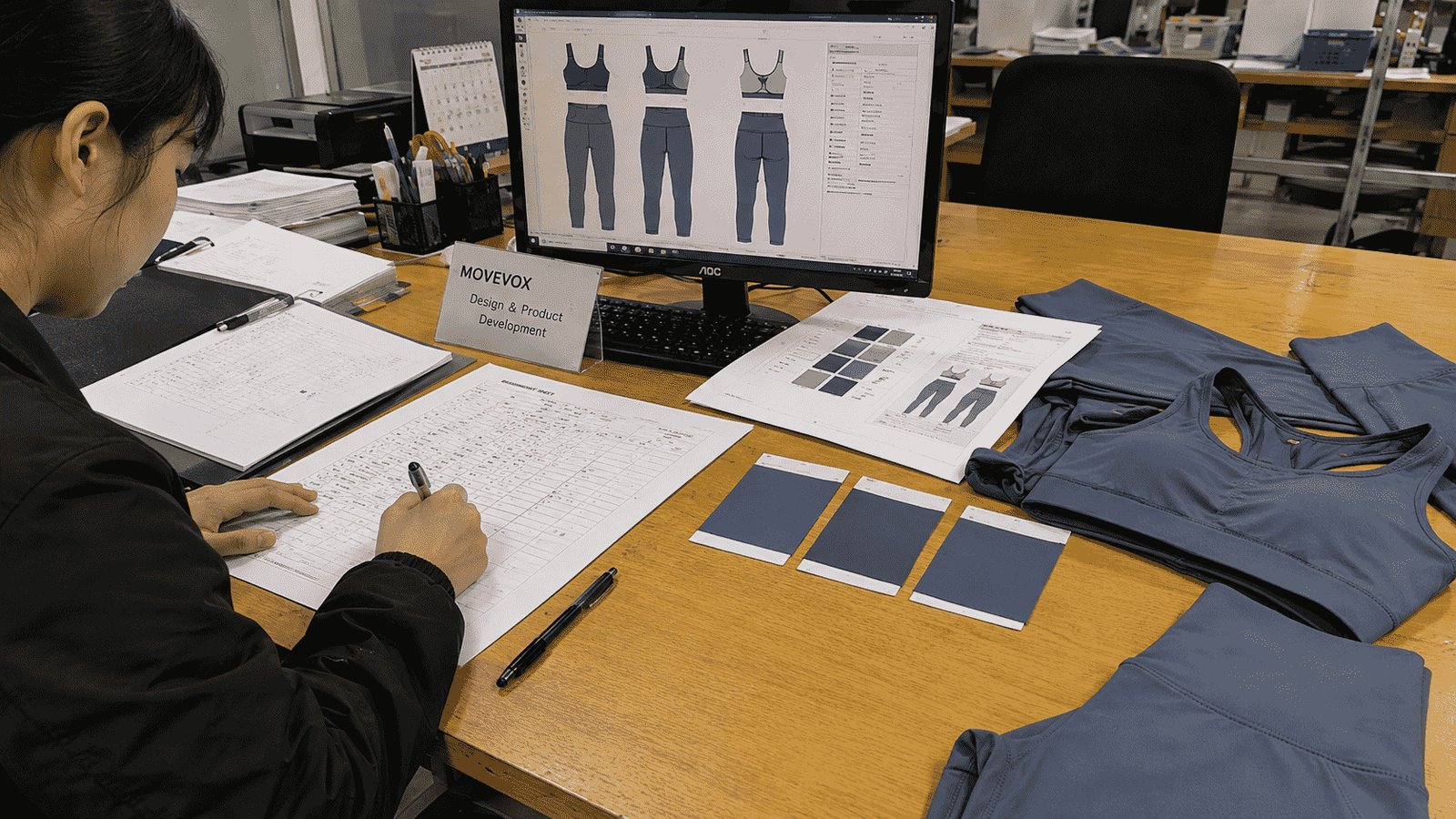
An authorized physical sample can communicate fit, dimensions, construction, workmanship, material direction, and product details. The sample still needs to be translated into controlled requirements before bulk production.
Best suited to: Existing or reference-based product development.
Start From a Sketch, Image, or Product Concept
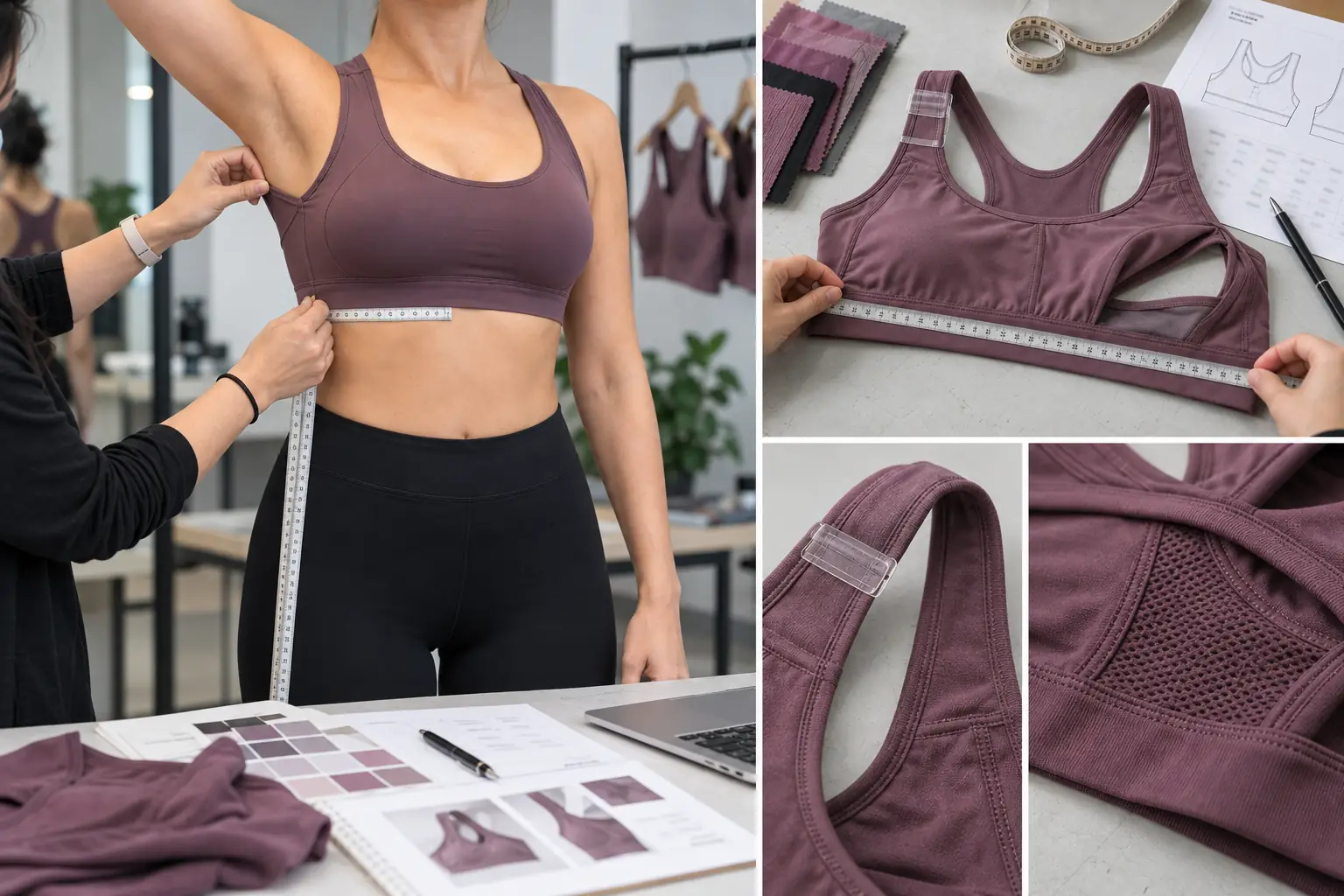
Brands without a complete Tech Pack can provide a clear visual or conceptual direction. MOVEVOX can identify the technical information that still needs to be defined during development.
Best suited to: Projects requiring additional development support.
Start From an Existing Supplier Product
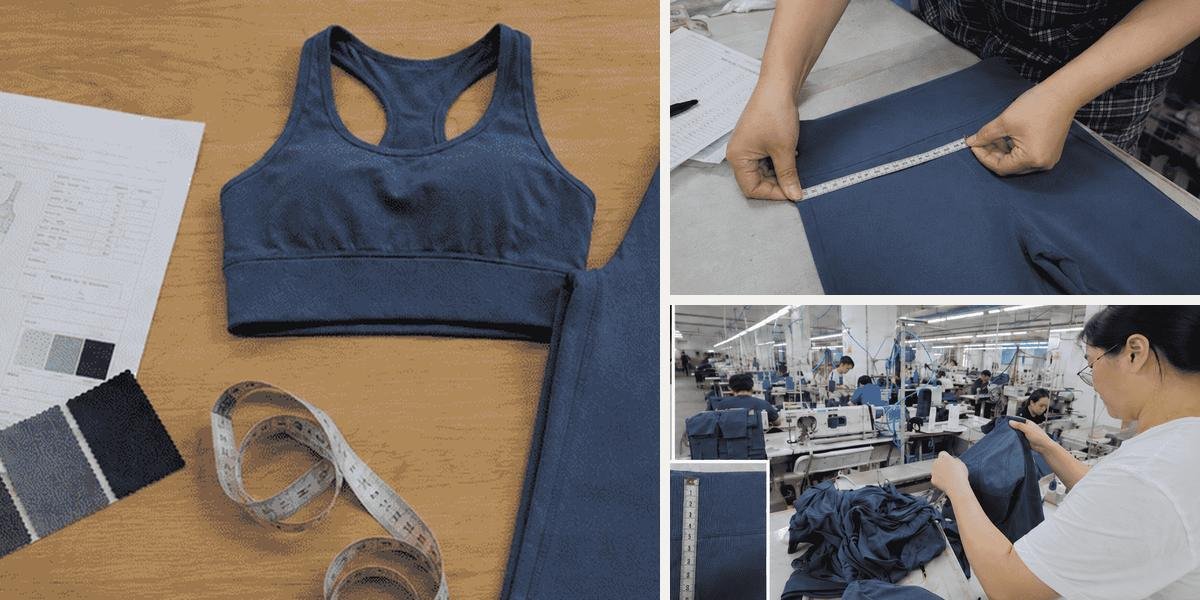
A brand may want to qualify a second supplier or transfer an established product. Existing specifications, approved samples, materials, dimensions, branding, and packing standards should be reviewed before equivalence is assumed.
Best suited to: Second-source or supplier-transfer projects.
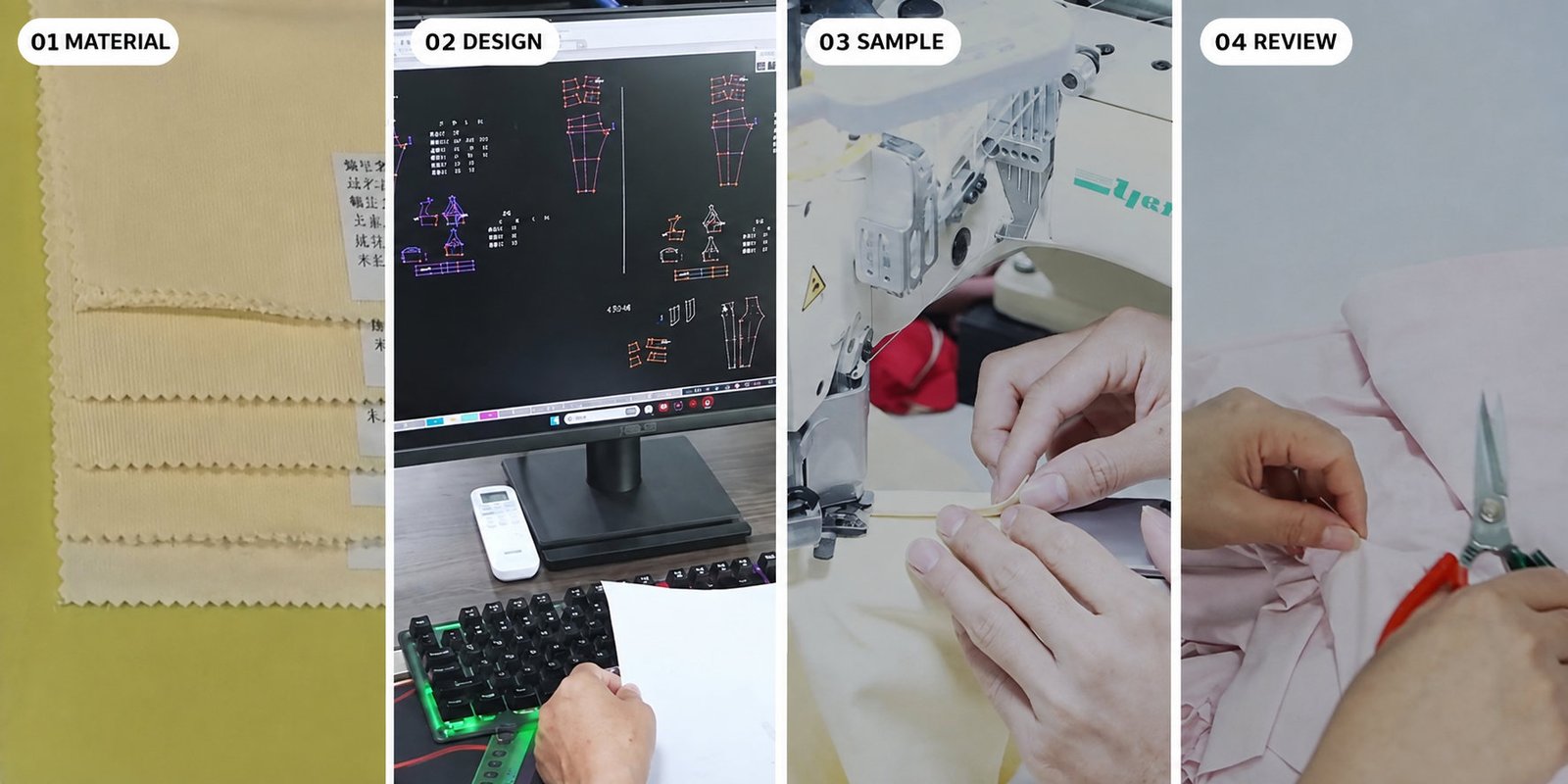
Move From Workout Product Input to Approved Sample
MOVEVOX uses the available buyer information to move a workout product from initial technical review into physical sample validation. Standard sample development normally takes approximately 5–10 working days after the required development information has been confirmed.
01 — Project Input
Available Tech Packs, physical samples, drawings, images, measurements, material direction, branding requirements, and commercial information are collected.
02 — Technical Review
The available information is reviewed for open questions that may affect product development, materials, construction, sampling, or commercial feasibility.
03 — Development Preparation
The required pattern, Seamless program, materials, product details, and other applicable development inputs are prepared according to the selected manufacturing route.
04 — Sample Development
A physical sample is made from the current development information.
05 — Buyer Review
The buyer evaluates the applicable fit, measurement, material, construction, color, branding, and overall product result.
06 — Revision
Where changes are required, the current revision comments are incorporated into the next development version.
07 — Approval
The applicable product requirements and physical sample are approved before they are treated as commercial production references.
08 — Production Preparation
Approved requirements can then move into material preparation, production planning, first-article control, quality inspection, packing, and later shipment release.

What to Send for Workout Clothing Development
A complete Tech Pack can make development more efficient, but it is not the only way to begin. MOVEVOX can also review physical samples, product images, sketches, and clear product concepts. The important point is to identify which product decisions are already defined and which still need buyer approval.
Product Drawing or Reference
Provide front, back, and relevant detail views, or an authorized physical product that clearly communicates the intended structure.
Measurement Information
Include available dimensions, points of measure, size information, grading requirements, or the approved physical fit reference.
Material Direction
Provide available composition, physical swatch, fabric reference, handfeel direction, color, or other material requirements.
Construction Requirements
Identify important garment details such as waist structure, pockets, gussets, panels, openings, assembly, or Seamless design requirements where applicable.
Color Requirements
Provide Pantone references, physical standards, approved materials, or existing colors where available.
Branding Information
Provide approved artwork, dimensions, position, color, labels, hangtags, or other private-label requirements.
Packaging Information
Include applicable individual packaging, size/color identification, barcode or QR information, packing ratios, and carton requirements where already defined.
Testing or Quality Requirements
Large brands can provide applicable testing, RSL, inspection, quality, or vendor requirements where they affect development or production.
Technical Questions to Resolve Before Workout Sampling
Workout products often combine stretch materials, close fit, branding, sizing, and functional construction. A project can appear visually clear while still containing technical questions that affect sample accuracy, MOQ, materials, or production feasibility.
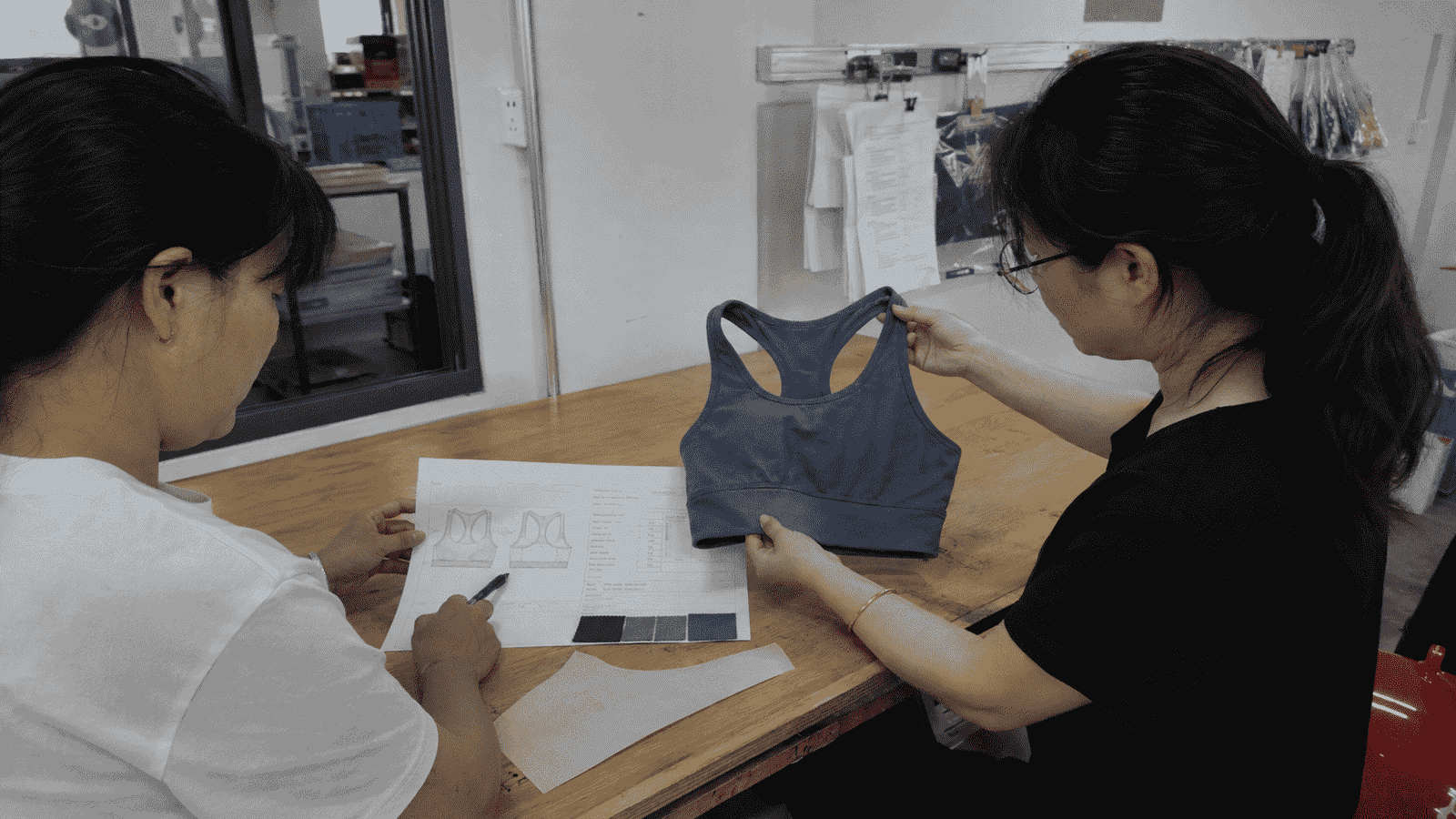
Measurement Conflict
A drawing, measurement chart, grading direction, and physical reference may not always describe the same final garment.
Review point: Confirm which current measurement or physical reference controls development.
Undefined Material
Terms such as “soft,” “high stretch,” or “premium” do not by themselves define the actual material.
Review point: Confirm an approved fabric, swatch, specification, or sufficiently clear material direction.
Manufacturing Route
Some design requirements may be better suited to Seamless, while others depend on Cut & Sew construction.
Review point: Confirm manufacturing suitability before development begins.
Branding Compatibility
A logo or label needs to work with the actual garment material, surface, stretch, and placement.
Review point: Validate the required branding execution on the intended product where necessary.
MOQ Conflict
The garment may meet the base production MOQ while custom fabric, color, labels, packaging, or other components create a higher effective minimum.
Review point: Review commercial minimums across the whole project.
Testing Ambiguity
Performance or compliance requirements need a defined test scope and supporting evidence.
Review point: Agree what evidence is required rather than converting product descriptions into unsupported claims.
Select Workout Fabrics From the Product Requirement
Fabric selection should begin with the actual garment and intended commercial result rather than a generic material name. Composition is only one part of the decision; physical approval remains important because fabrics with similar descriptions can behave differently in finished workout apparel.
| Decision Area | What to Review |
|---|---|
| Product Type | Leggings, sports bras, shorts, tops, and workout sets can place different requirements on the material. |
| Fit & Support Direction | A softer yoga-oriented product and a firmer training-oriented product may require different material behavior. |
| Handfeel | The buyer can define directions such as smooth, soft, brushed, firm, or textured and compare physical swatches or samples. |
| Coverage | Color, fabric construction, garment stretch, and product use can influence visual coverage. |
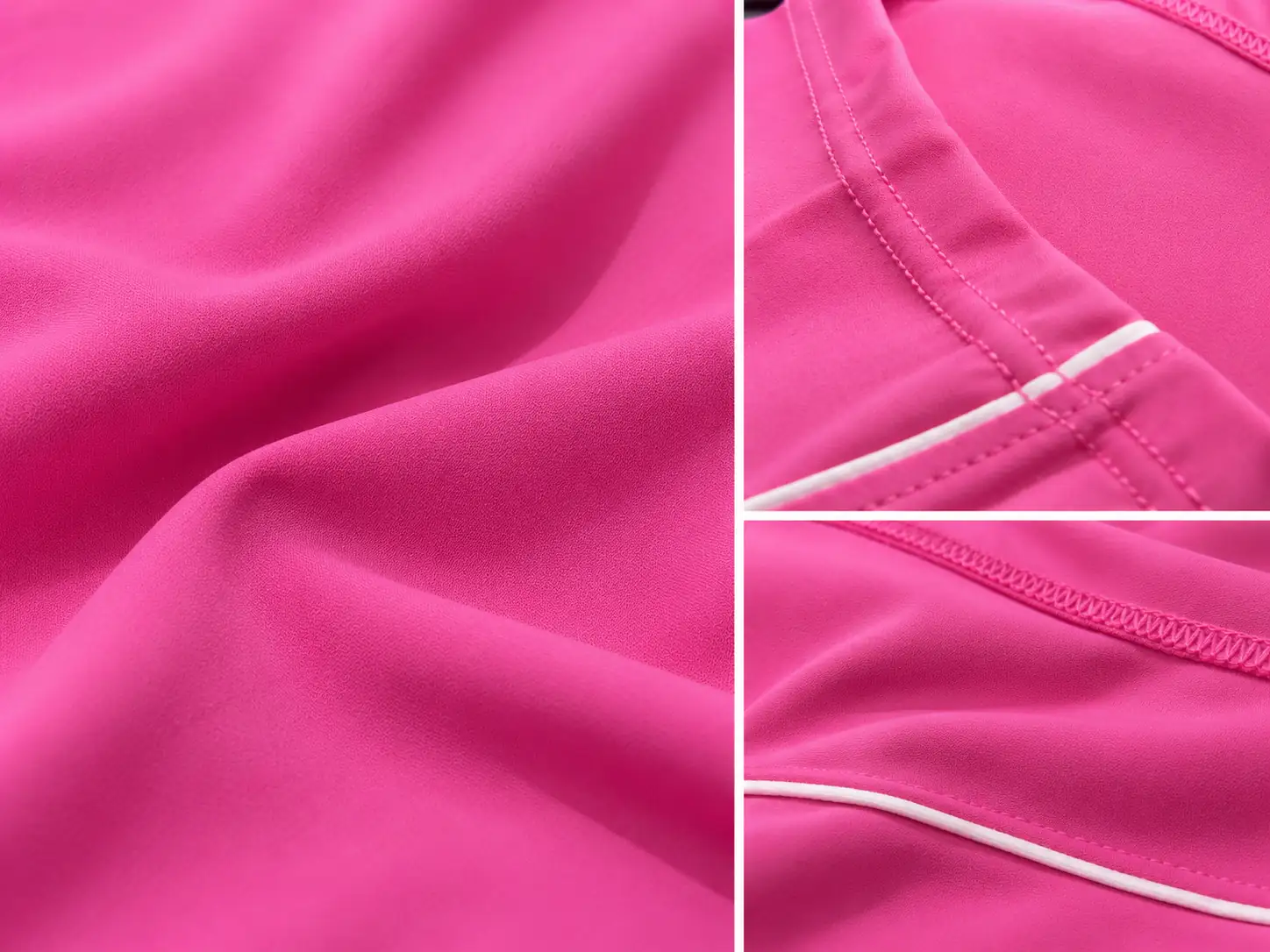
| Surface | Matte, smooth, brushed, ribbed, or other surface directions can influence appearance, branding compatibility, and final product feel. |
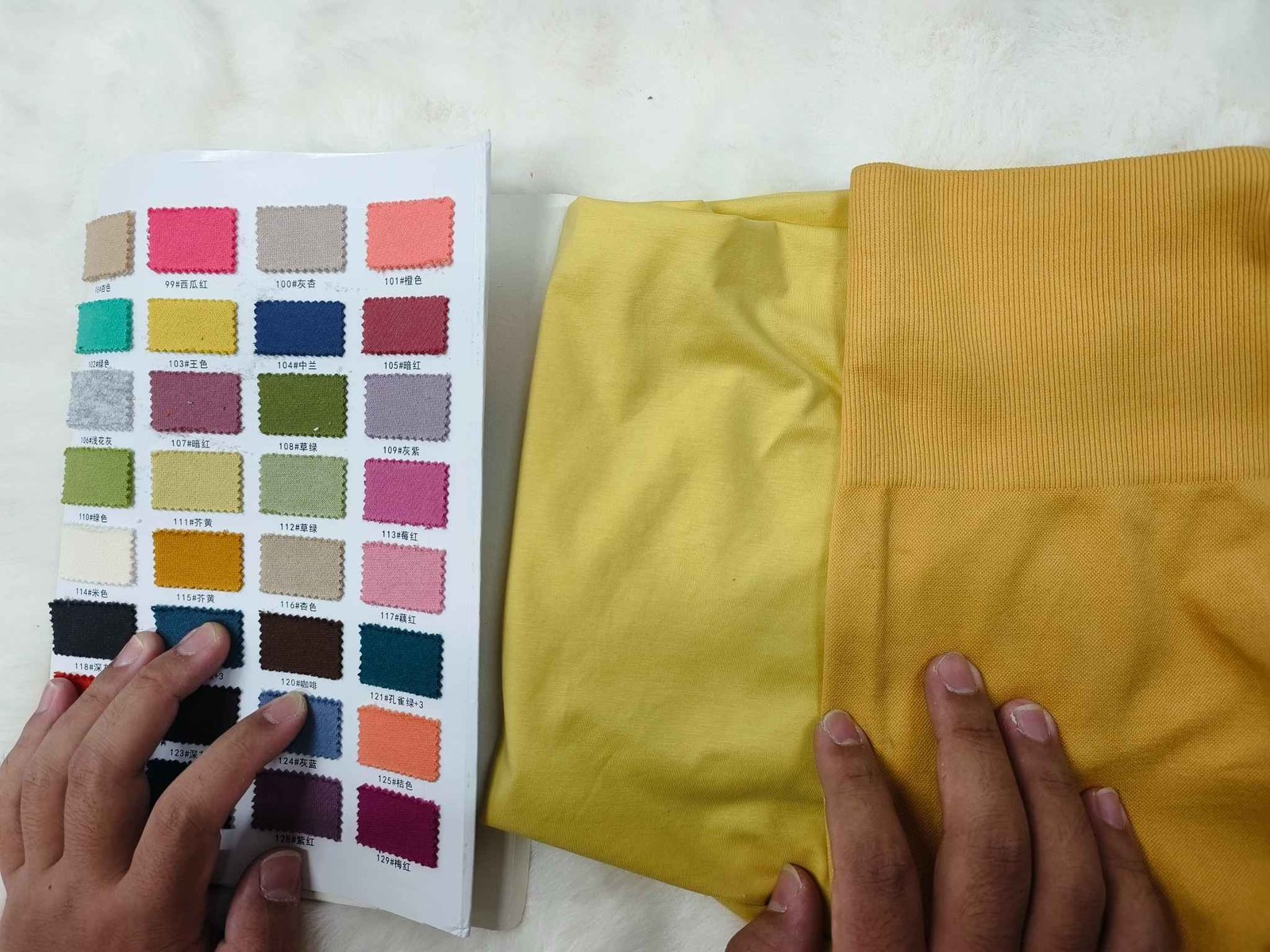
| Custom Color | Existing colors can simplify sourcing. Custom color can introduce dyeing minimums, approval stages, and additional material timing. |
| Commercial Constraints | MOQ, material availability, delivery timing, and required testing should be reviewed together. |
| Evidence | Performance, chemical, recycled-content, or other claims should remain connected to relevant evidence for the actual project. |
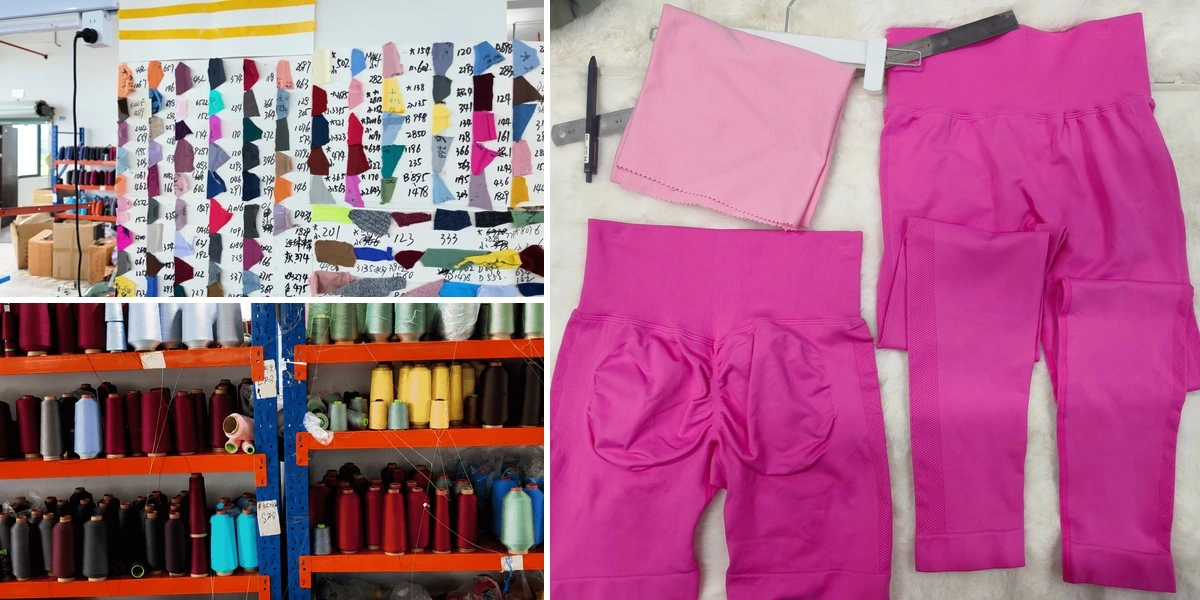
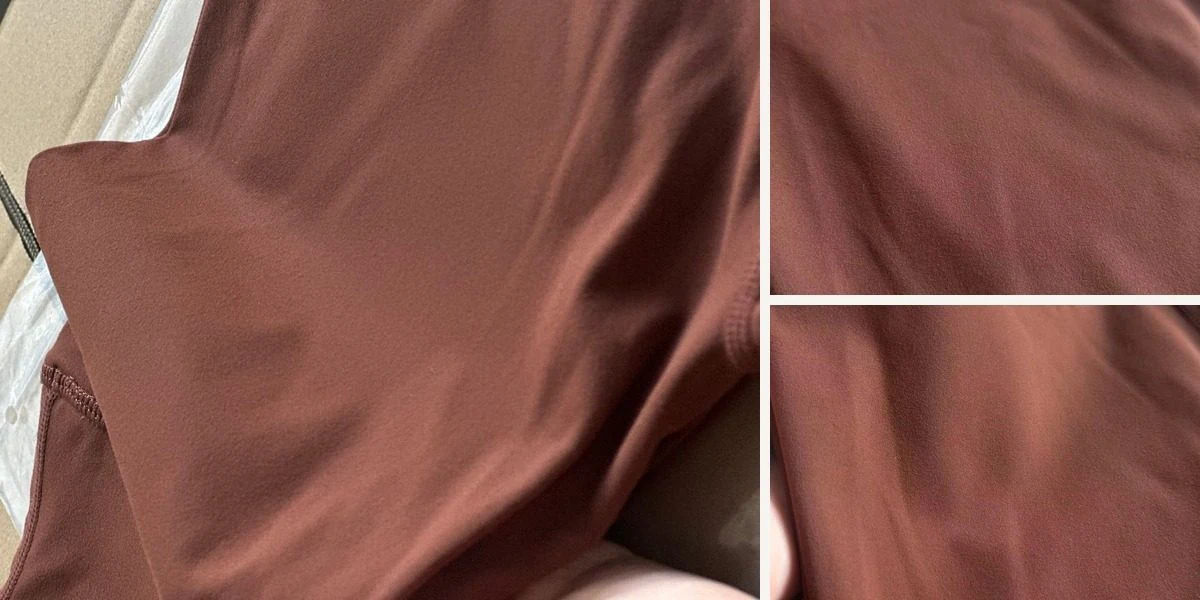
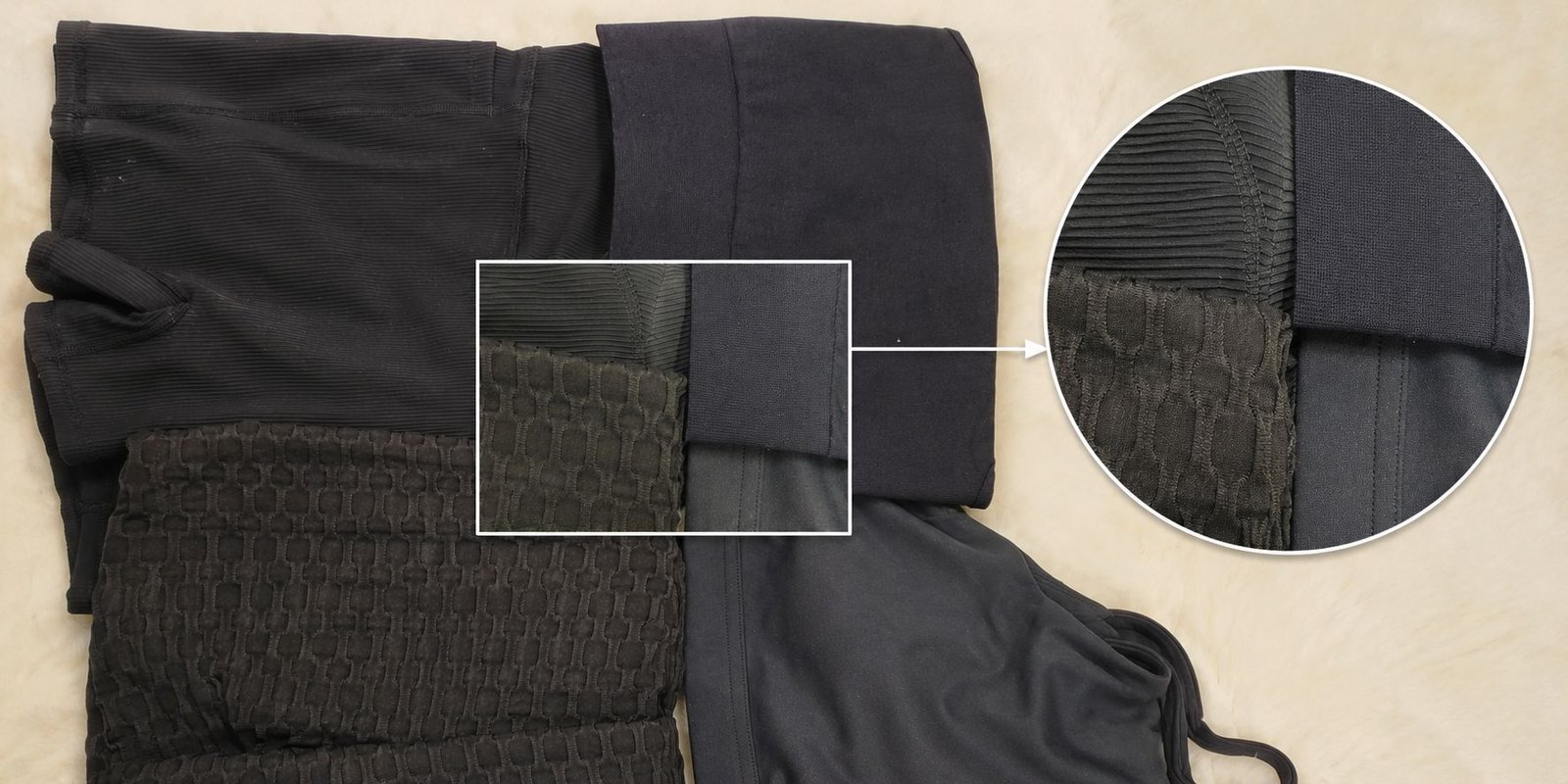
Plan Custom Color and Material Timing Before Bulk Production
The garment MOQ and the effective project MOQ are not always the same. Material availability, custom dyeing, yarn, color approval, and supplier minimums can affect both quantity and schedule before garment production begins.
01 — Material Route
Confirm whether the project can use an available material and color or requires a dedicated material direction.
Timing: Supplier and project dependent
02 — Custom Color & Physical Approval
Where a custom color is required, the selected material and color reference need to be defined. Where applicable, a lab dip or physical material standard should be reviewed before the relevant bulk color is approved.
Timing: Project and buyer approval dependent
03 — Material Supply
Material timing depends on actual availability, custom dyeing, quantity, yarn or fabric requirements, and supplier conditions.
Timing: Supplier dependent
| Stage | Normal Reference |
|---|---|
| Sampling | Approximately 5–10 working days after required development information is confirmed |
| Regular Bulk Production | Approximately 20–35 days under standard conditions, depending on the actual project |
Turn Approved Workout Products Into Brand-Ready Programs
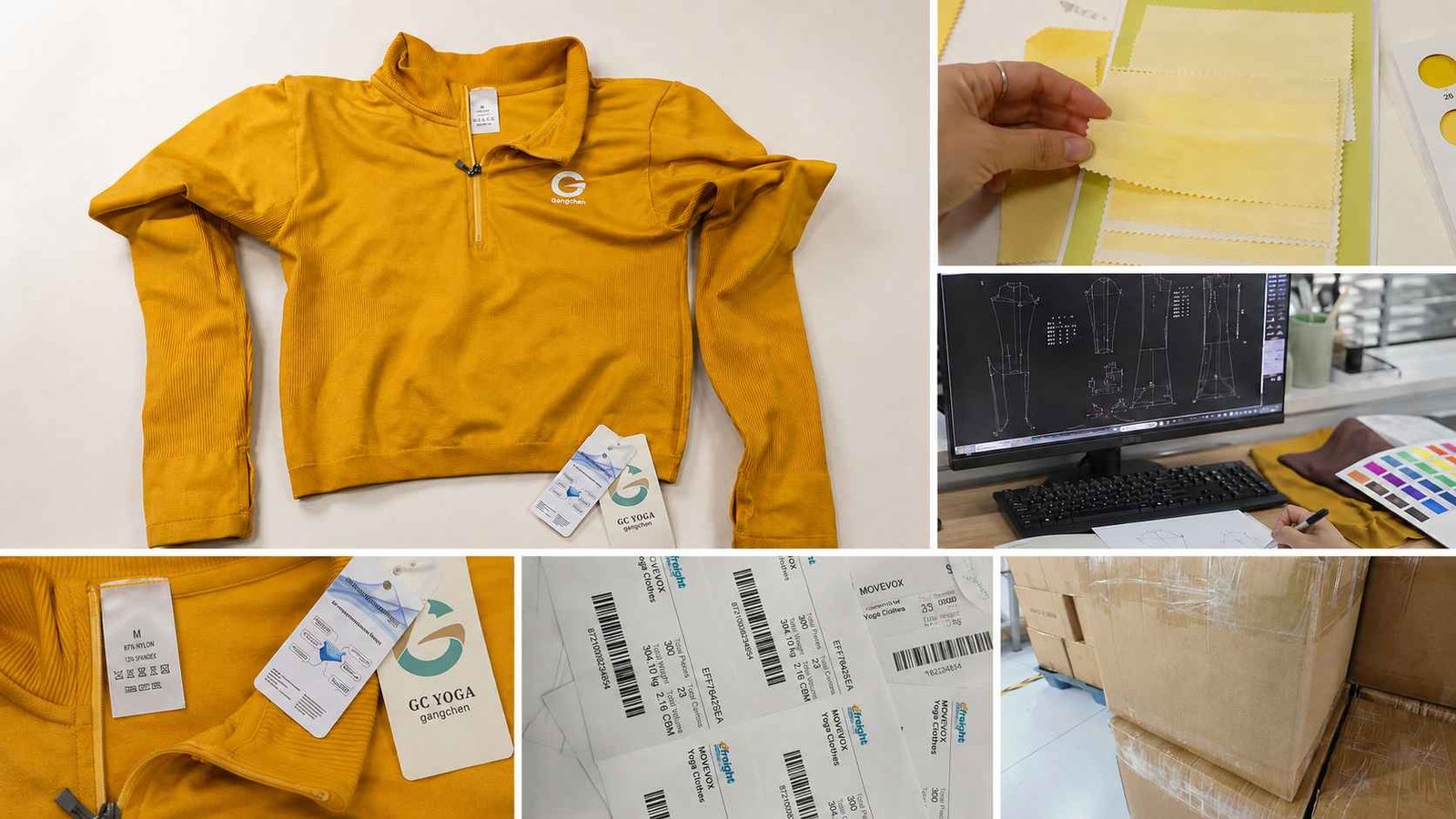
Private Label execution connects the approved garment with the buyer’s branding, identification, packing, and commercial requirements. The objective is not simply to place a logo on a garment, but to keep the correct brand information connected to the correct product, color, size, and order.
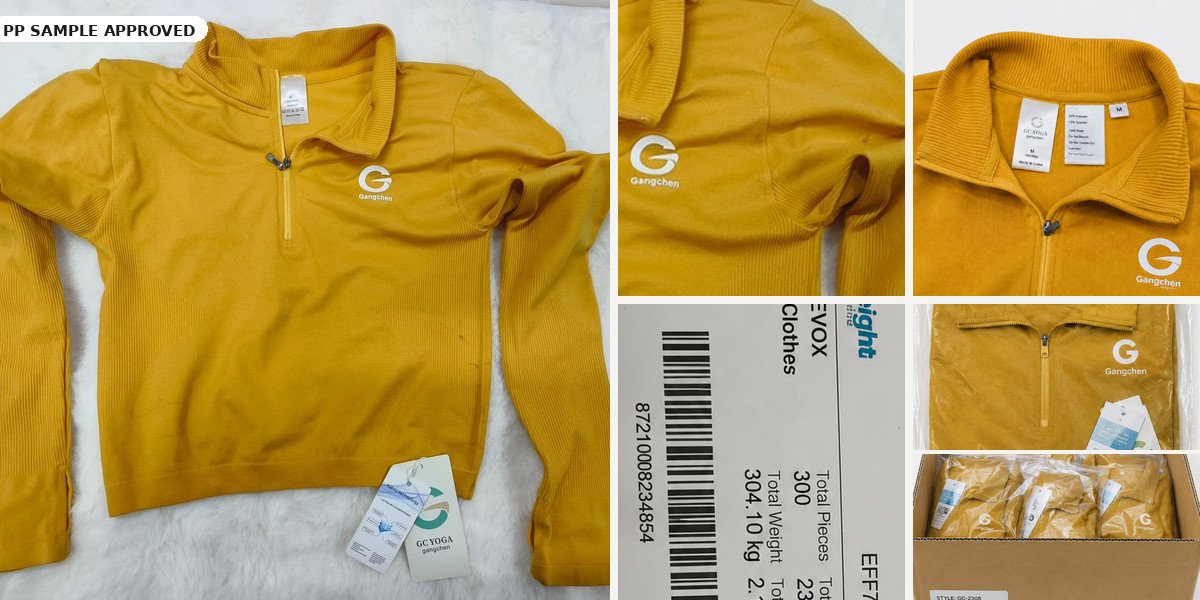
Logo Execution
The approved logo artwork, dimensions, position, color, and required execution should remain linked to the current garment and material.
Care and Product Labels
Care, wash, size, and other buyer-approved label information should correspond with the correct product and target-market requirements supplied by the buyer.
Hangtags
Hangtags can be coordinated according to buyer-approved artwork, product information, and attachment requirements.
Size / Color Identification
Multi-SKU programs need accurate identification across product, color, and size combinations.
Barcode or QR Information
Where the buyer supplies barcode or QR requirements, the identification applied to the packaging needs to correspond with the correct garment.
Individual Packaging
Packaging should follow the buyer-approved product, size, color, branding, and packing requirements.
Carton and Shipment Packing
Commercial packing requirements should remain consistent with the confirmed purchase order and agreed shipment instructions.
Plan Capacity Around the Actual Workout Program
MOVEVOX does not treat theoretical machine output as an automatic delivery commitment. Current capacity references need to be reviewed against the actual product mix, material requirements, SKU complexity, production allocation, quality workload, packing, and requested timing.
150,000–200,000 pcs/month
Current normal combined managed delivery capacity across the MOVEVOX production system, measured as quality-released garments under normal operating conditions.
50,000+ pcs
Individual projects above approximately 50,000 pieces require a separate capacity review before production allocation is confirmed.
8 Satellite Factories
Long-term controlled external production resources are available for appropriate programs where additional production allocation is required.
28 Santoni Machines
Italian Santoni seamless knitting equipment at the MOVEVOX Yiwu core manufacturing base supports Seamless product development and production.
Approx. 24 Garment-Production Machines
Primary sewing and garment-production equipment at the core manufacturing base supports Cut & Sew workout apparel operations.
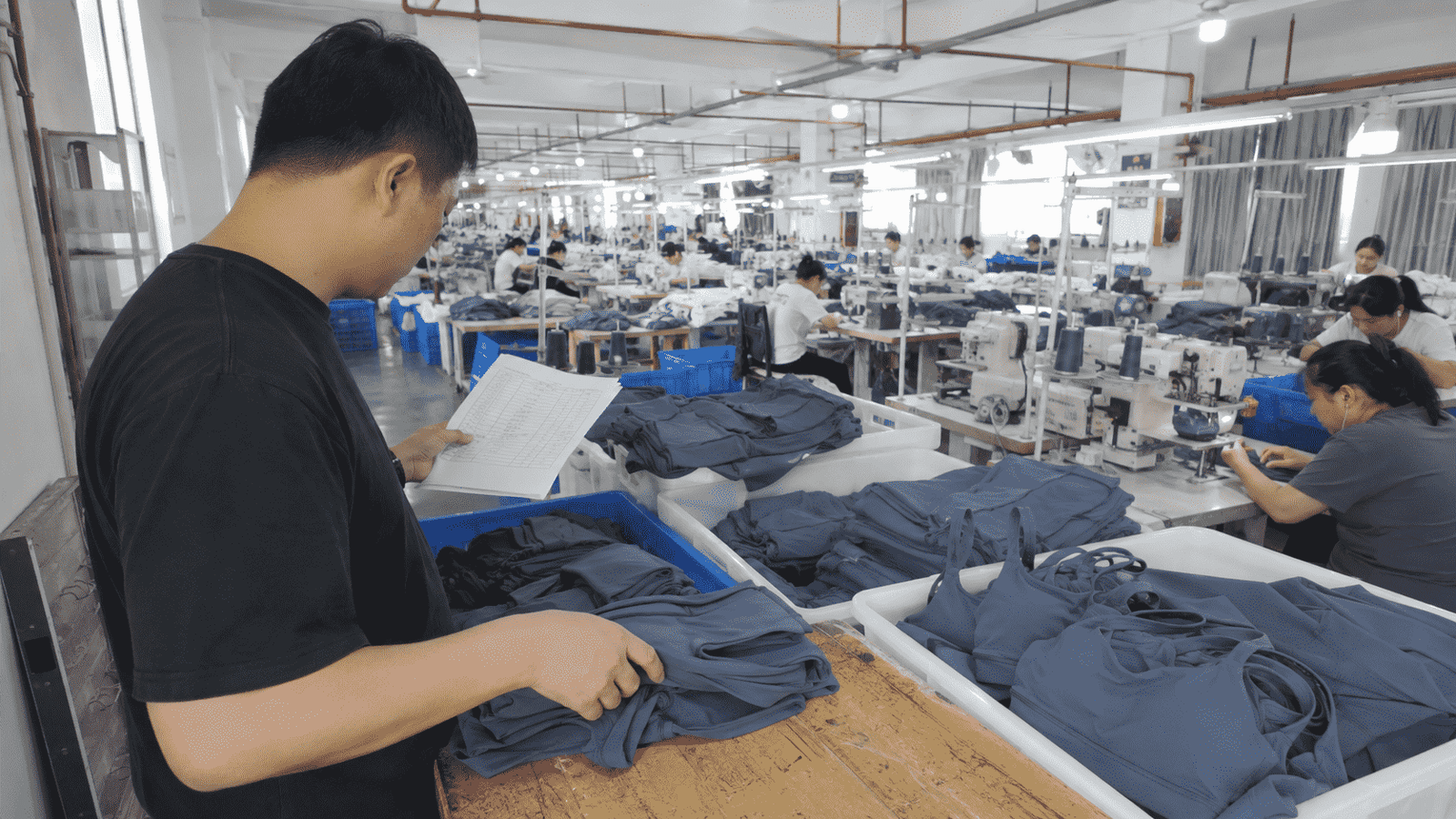
What Capacity Review Considers
Capacity planning is reviewed against the actual requirements of the commercial program rather than one headline production number.
- Seamless or Cut & Sew manufacturing route
- Product complexity
- Number and mix of SKUs
- Material readiness
- Custom color requirements
- Production-site allocation
- QC workload
- Packaging requirements
- Requested delivery schedule
See the Manufacturing Base Behind MOVEVOX Workout Clothing
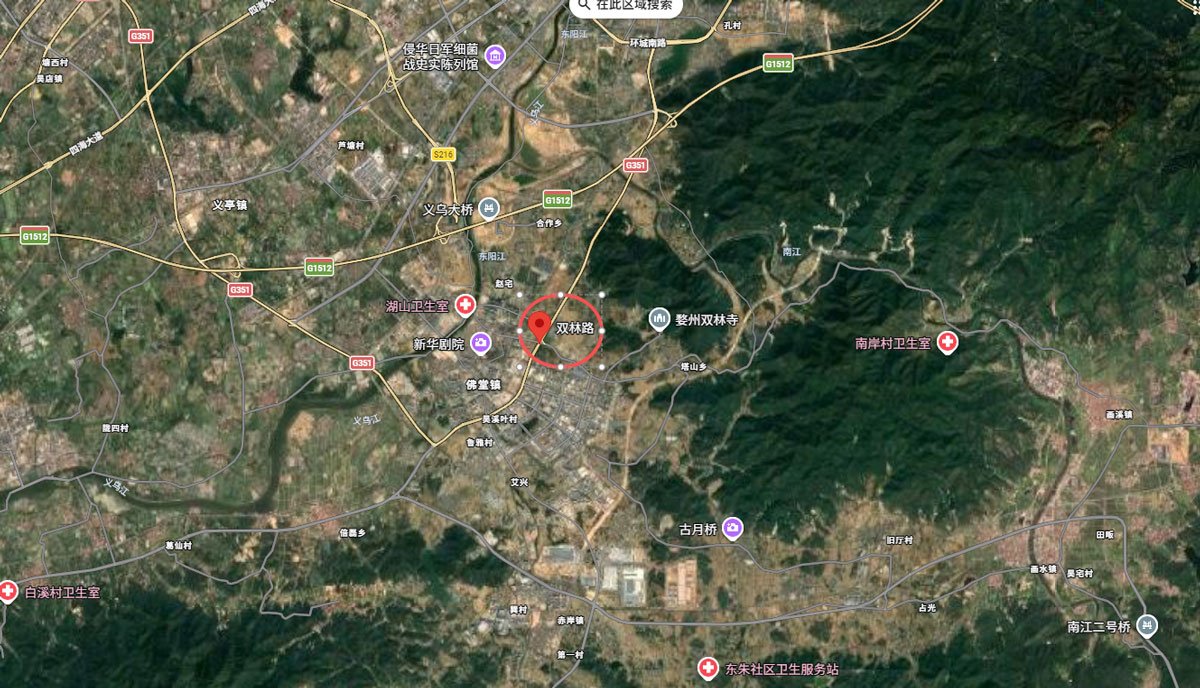
MOVEVOX operates an approximately 6,000 m² core manufacturing base in Yiwu, Zhejiang, supporting product development, Seamless and Cut & Sew manufacturing, technical work, quality control, and production coordination.
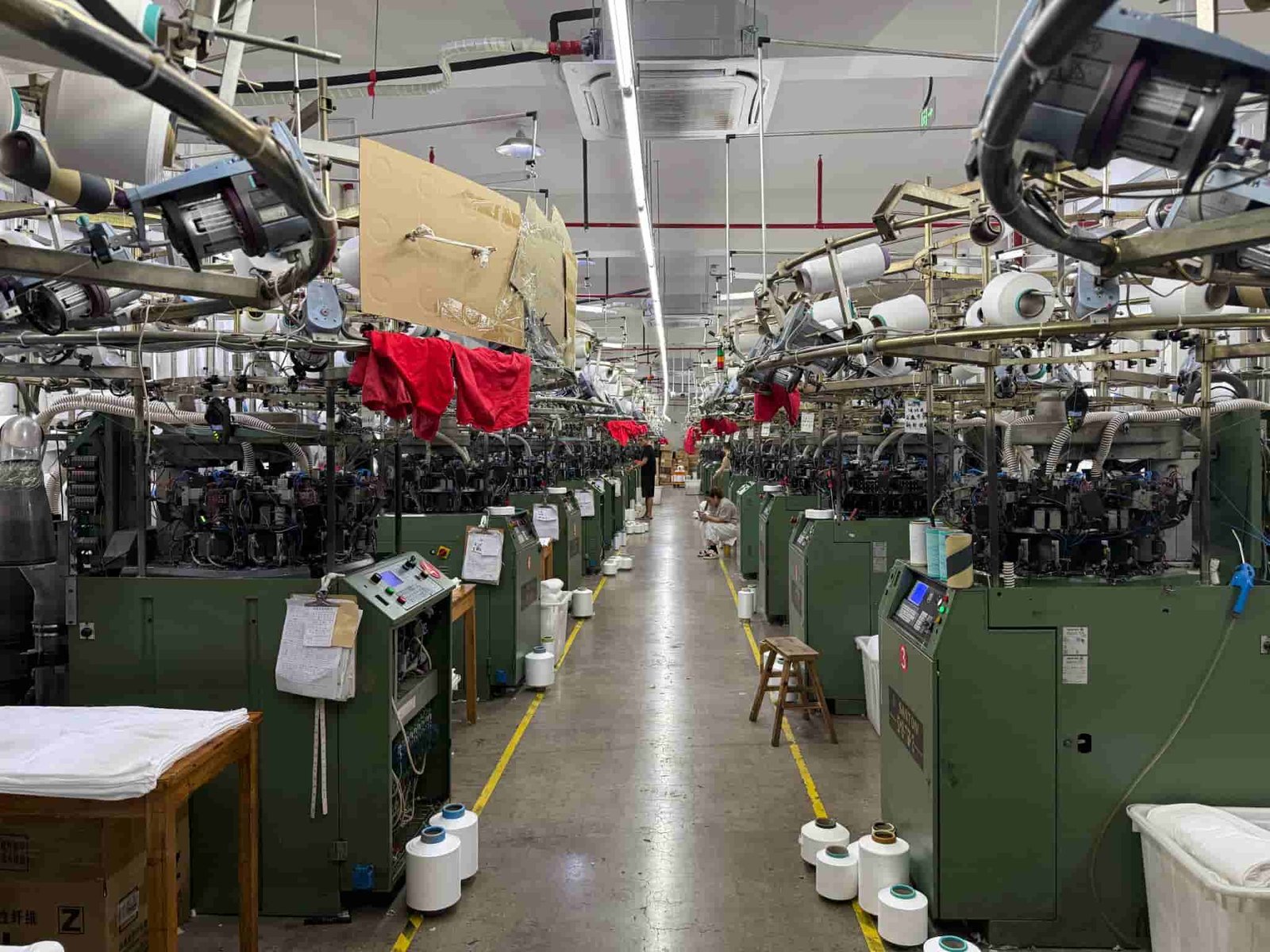
Santoni Seamless Equipment
MOVEVOX operates 28 Italian Santoni seamless knitting machines supporting its Seamless product-development and manufacturing capability.
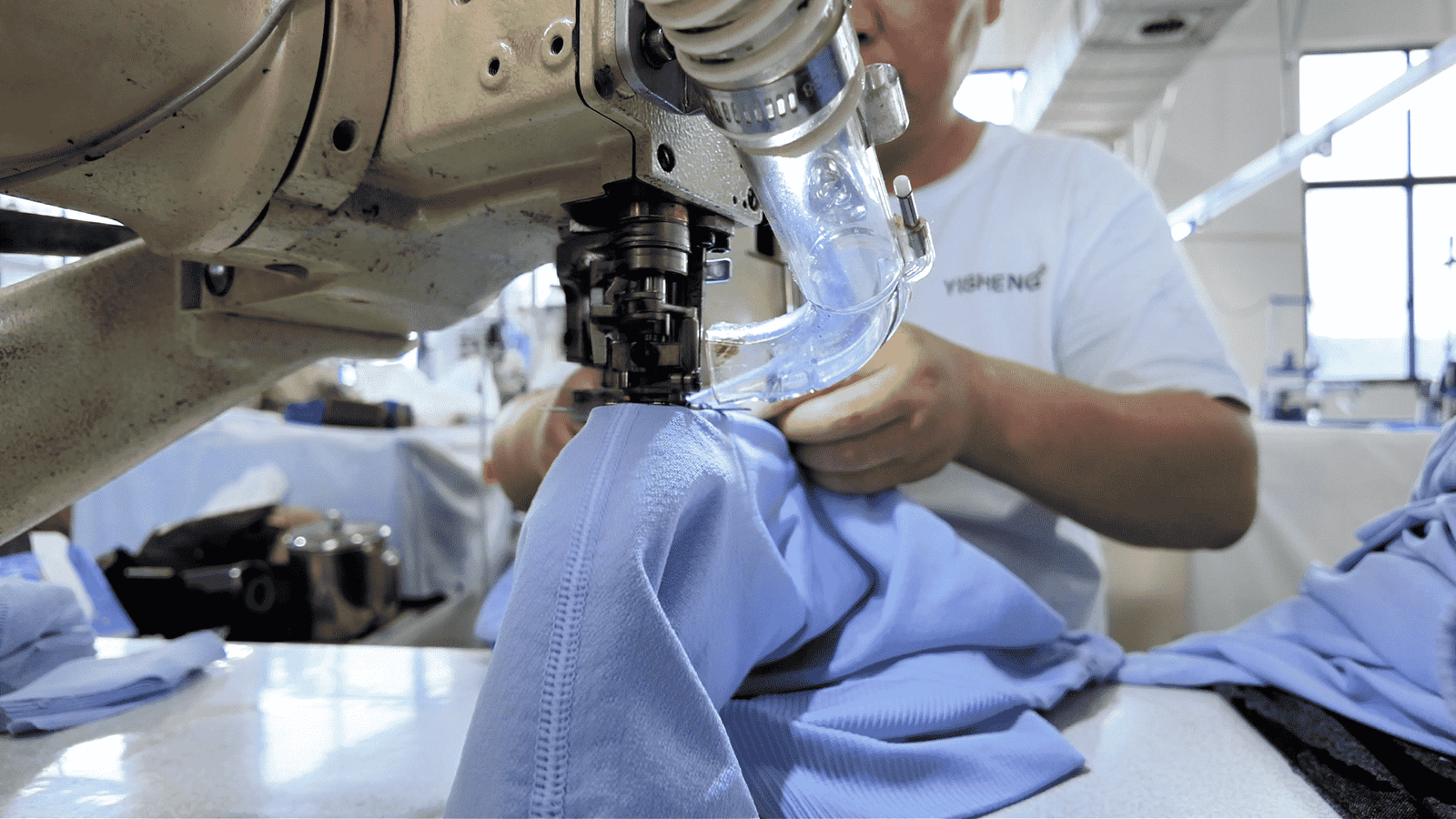
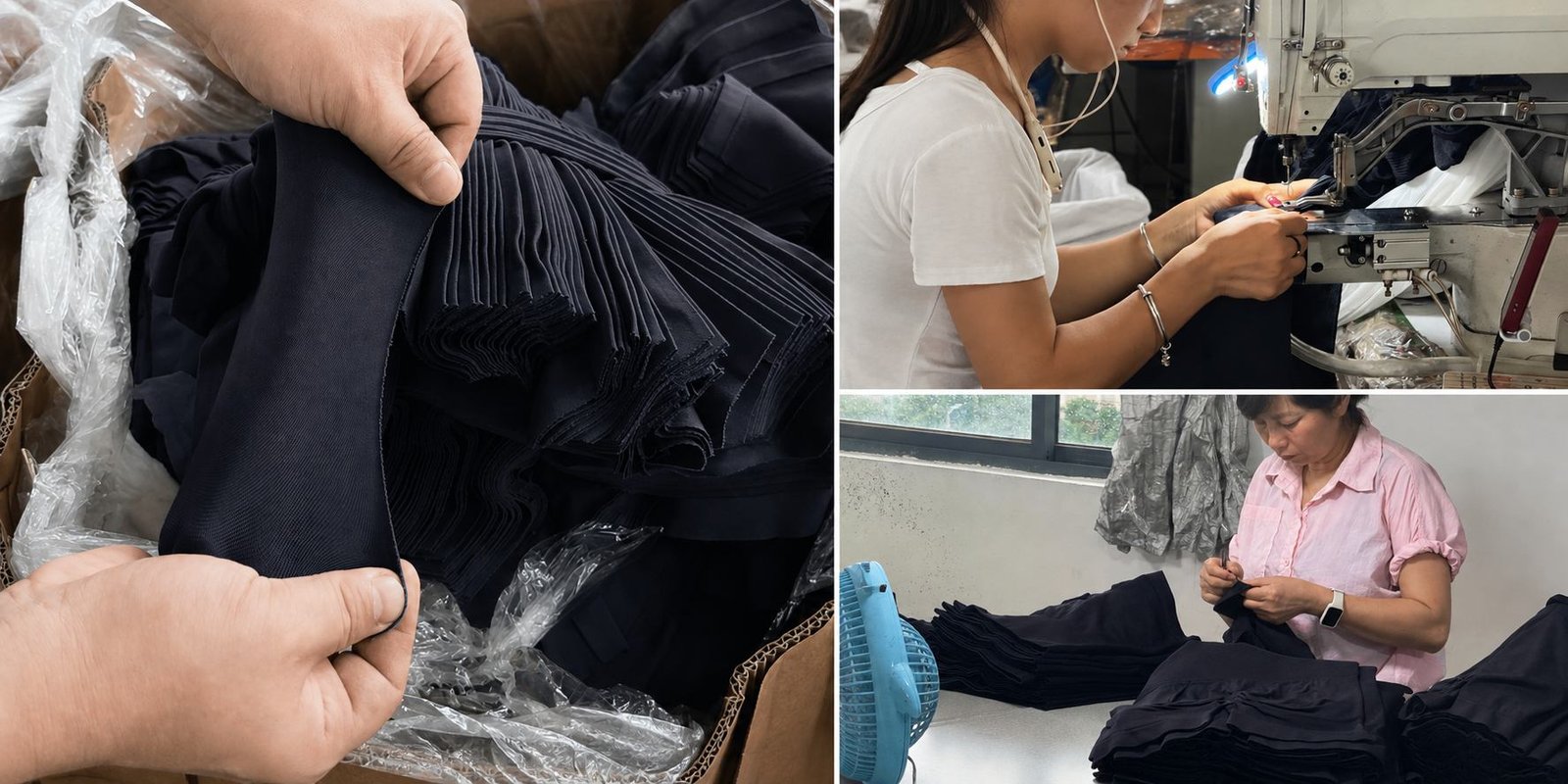
Cut & Sew Production Equipment
The core manufacturing base includes approximately 24 primary sewing and garment-production machines supporting Cut & Sew apparel operations.
Product Development
The core operation supports sample and product-development activity before approved products move into commercial production.
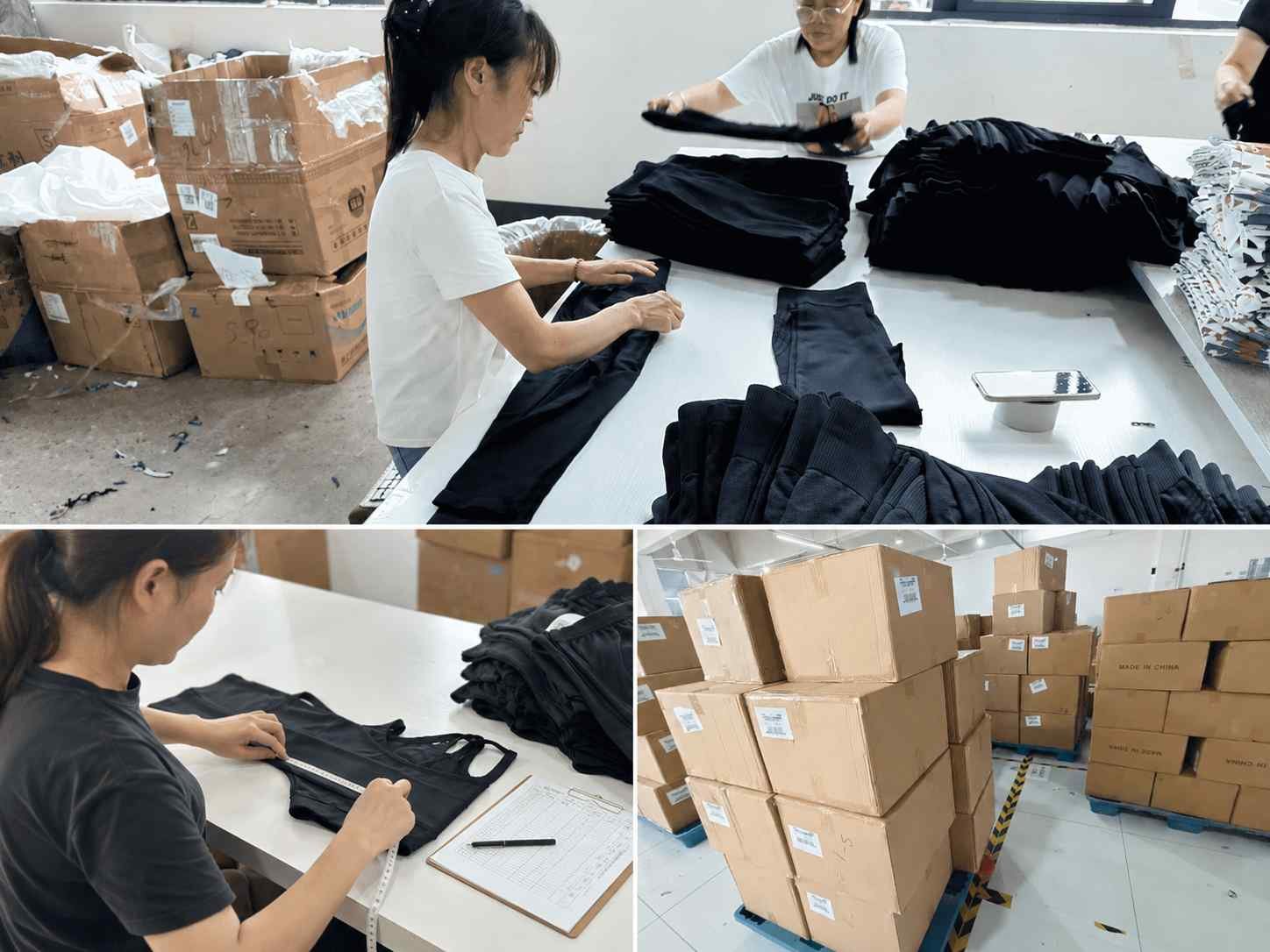
Quality Control
MOVEVOX currently has five QC personnel supporting quality activities across material, production, finished garments, branding, packing, and release.
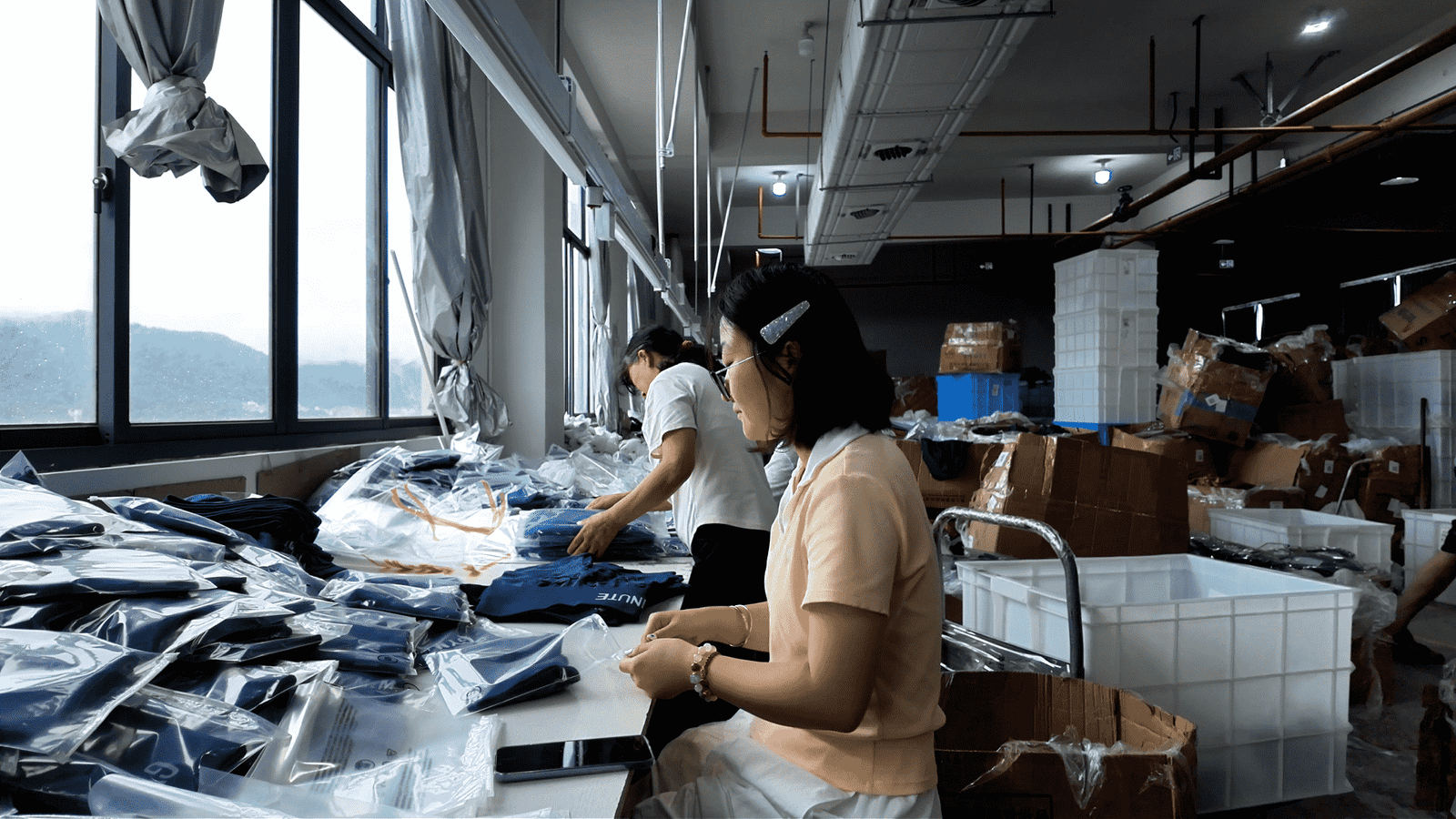
Packing and Production Coordination
The core base also supports order coordination and applicable packing and shipment-preparation activities.
Combine Core Manufacturing With Controlled Production Capacity
MOVEVOX combines an owned core manufacturing base with eight long-term satellite factories. The purpose is to retain a central point for development, technical standards, core production, quality control, and buyer communication while having access to controlled additional capacity for appropriate programs.
Owned Yiwu Core Base
The approximately 6,000 m² Yiwu core base supports:
- Product development
- Technical control
- Santoni Seamless production
- Core Cut & Sew production
- Quality activities
- Production coordination
Eight Long-Term Satellite Factories
MOVEVOX works with:
- 6 long-term satellite factories in Yiwu
- 2 long-term satellite factories in Guangzhou
These are controlled external production resources and should not be presented as MOVEVOX-owned factories.
What Remains Controlled
Where satellite production is used, the program should remain connected to the applicable:
- Approved sample
- Technical requirements
- Materials
- Branding
- Quality requirements
- Packing instructions
- Production schedule
One Buyer-Facing Responsibility Point
MOVEVOX remains the primary coordination point for relevant product, production, quality, packing, and delivery communication across the managed program.
Production-Site Transparency
Where a buyer requires approved-factory production, subcontractor disclosure, factory audits, or written approval before site changes, production allocation should follow those sourcing requirements.
Control Workout Clothing From Material to Shipment Release
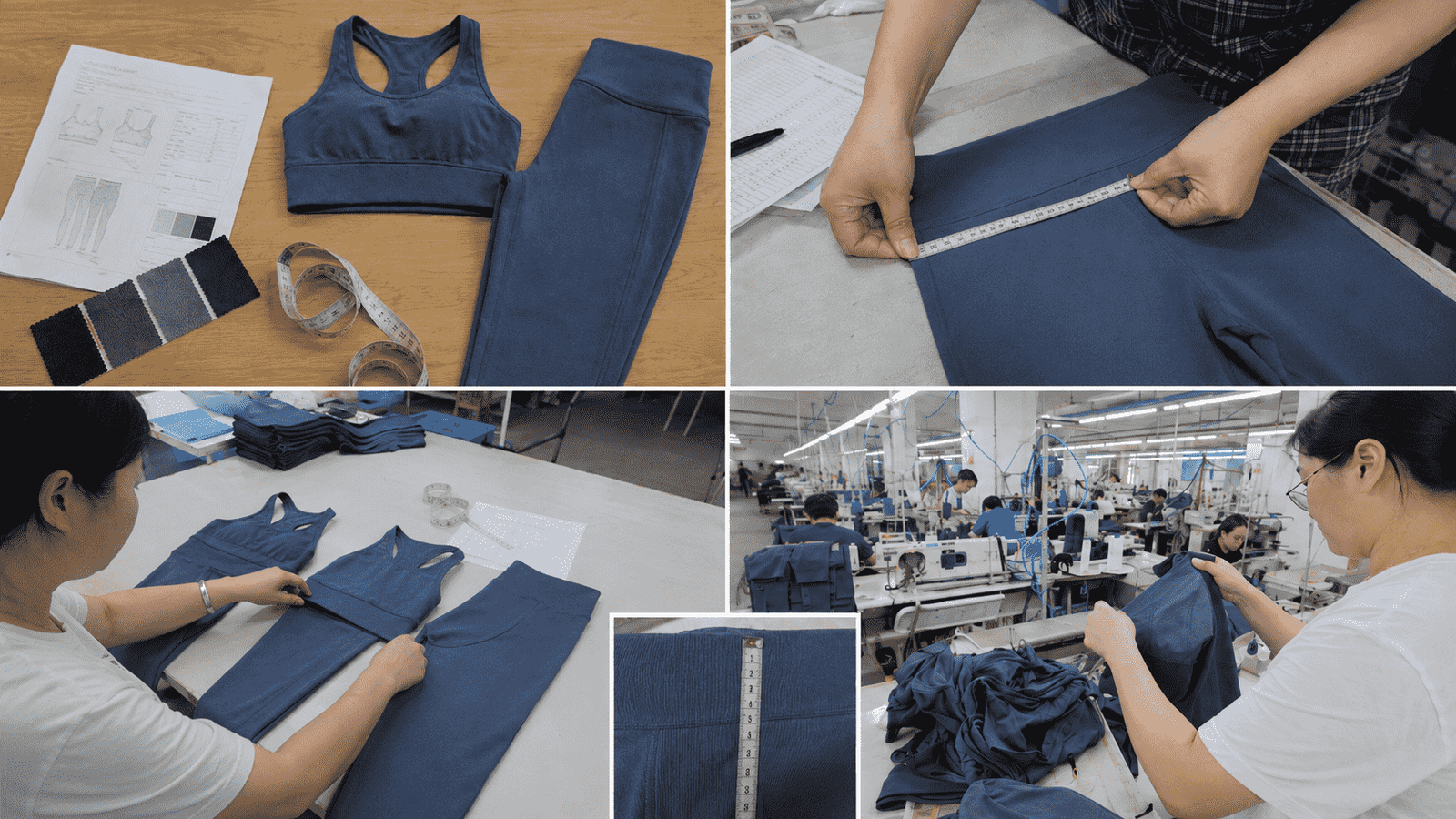
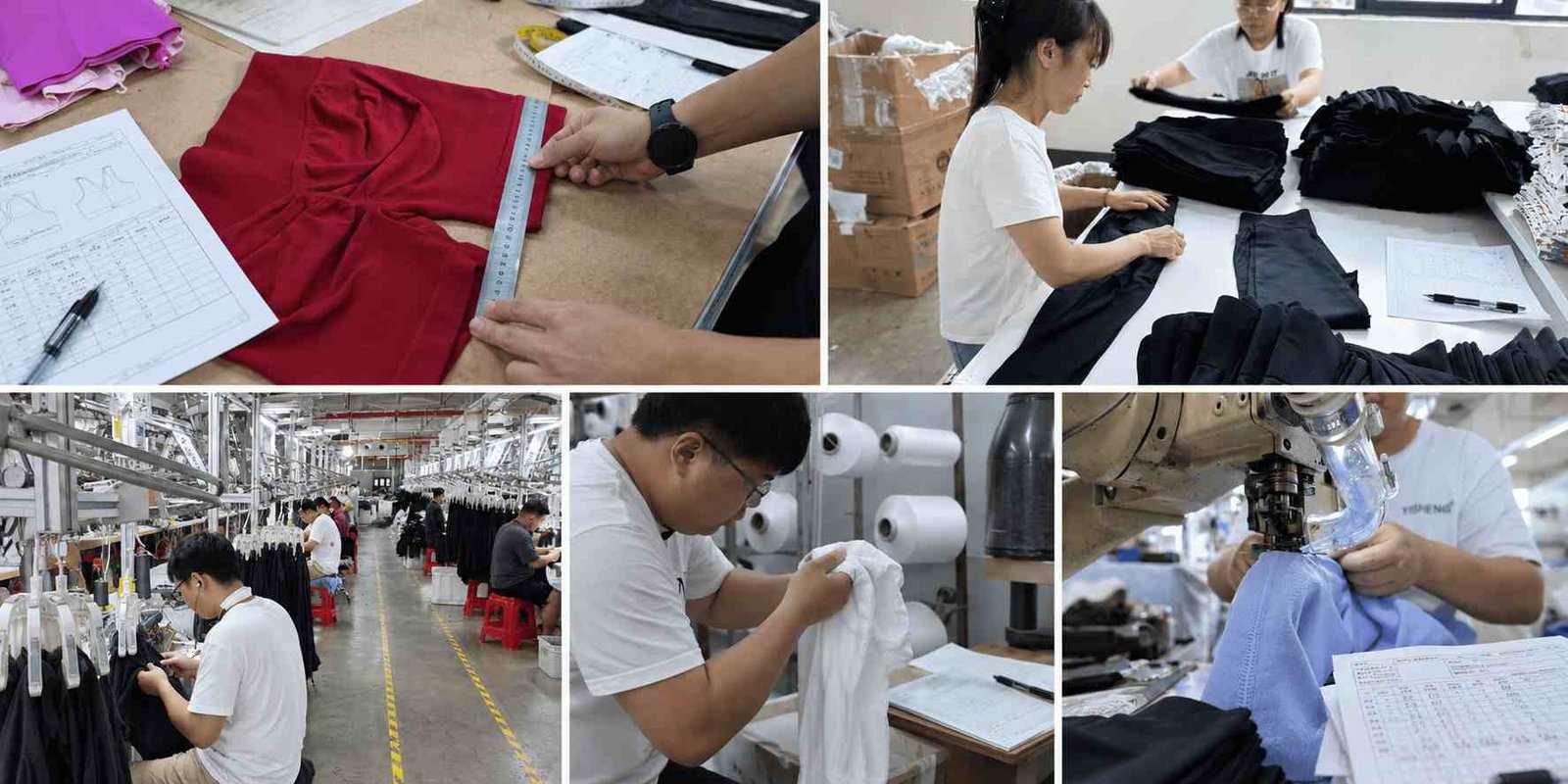
MOVEVOX currently has five QC personnel and uses several quality-control points across material, production, finished garments, branding, packing, and pre-shipment release. The objective is to identify nonconforming products before they are treated as ready for shipment.
Incoming Material
Relevant incoming materials are checked before unrestricted production use according to the applicable project requirements.
Pre-Production
The current product, material, measurement, branding, and packing requirements are reviewed before production begins.
First Article
Initial production output is checked so significant differences can be identified before a larger quantity is produced.
Inline Inspection
Quality checks continue during production rather than relying only on the final finished garment.
Finished Garment
Finished products are inspected against applicable workmanship, product, and approved requirements.
Measurement
Garment dimensions can be checked against the current measurement requirements and approved product reference.
Branding
Applicable logo, labels, and other approved brand elements are checked as part of the commercial product.
Packing
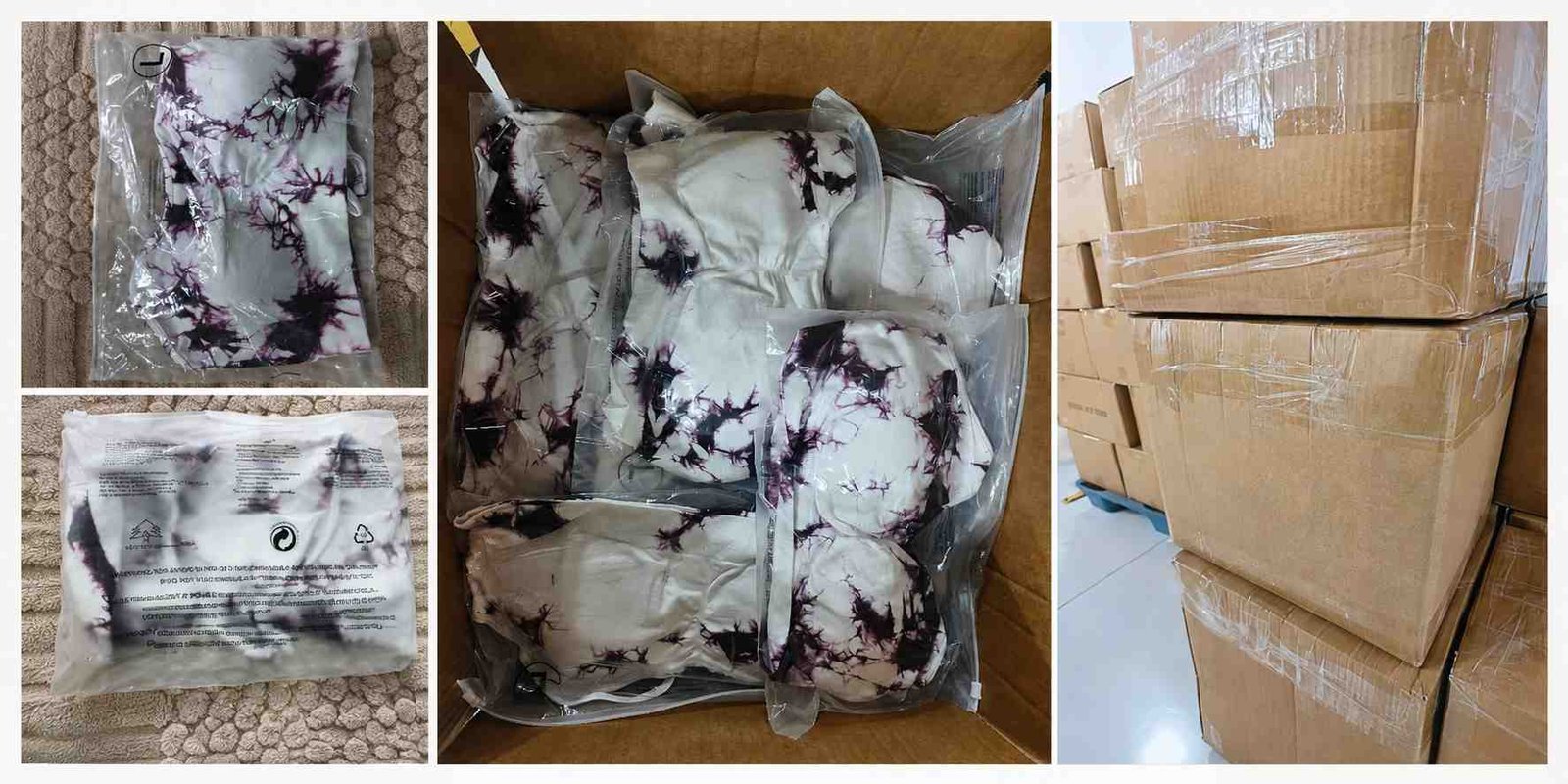
Size, color, product identification, packaging, quantities, and purchase-order requirements are checked where applicable before release.
Nonconforming Goods
Products that fail the applicable requirement can be held, reworked or otherwise corrected, and re-inspected before release. Where necessary, corrective-action follow-up can be applied.
Use Compliance Evidence Within Its Actual Test Scope
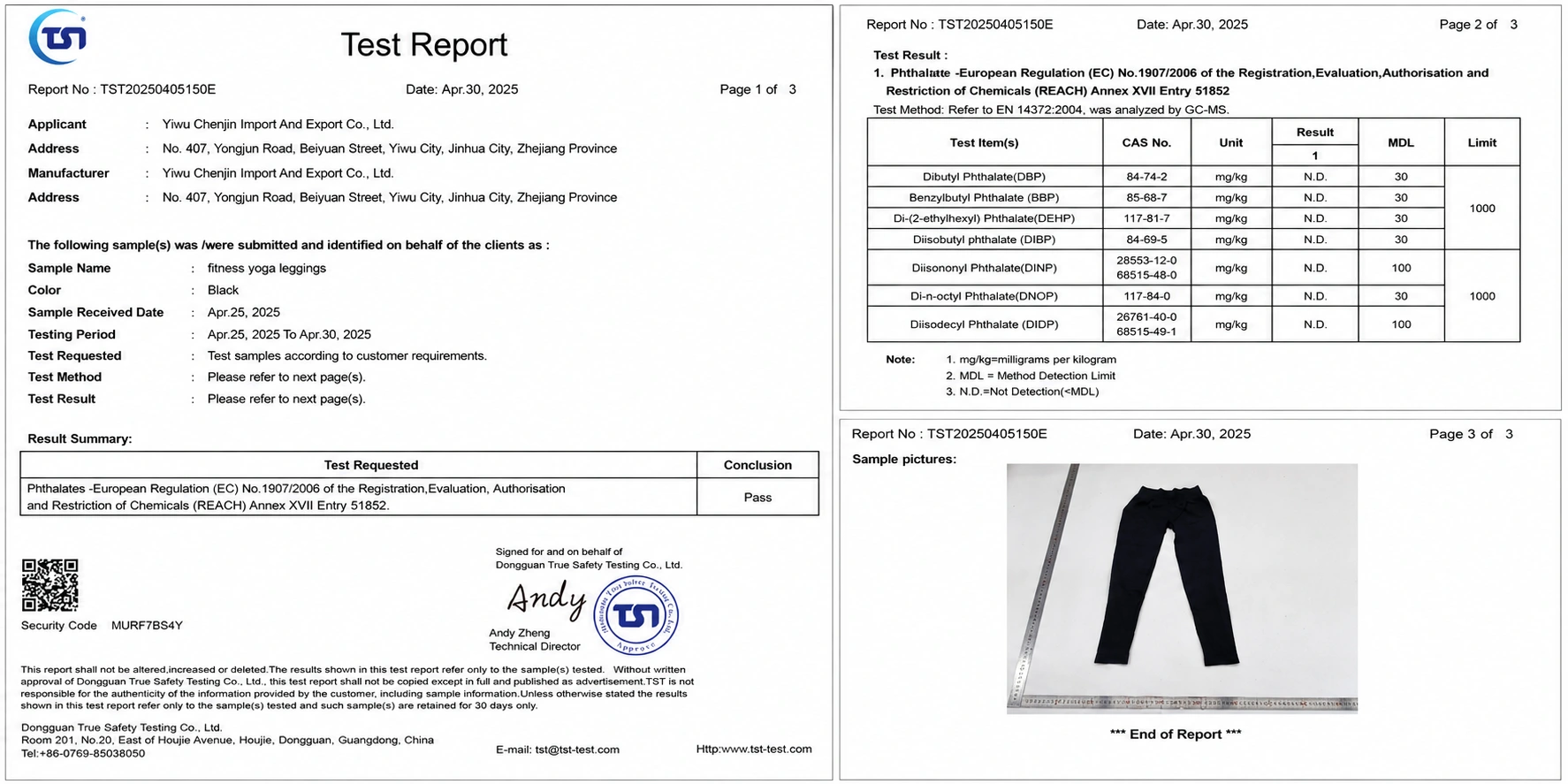
MOVEVOX follows a scope-specific approach to testing evidence. A test report supports the submitted sample and test items described in that document; it should not be expanded into a blanket claim covering every garment, material, color, supplier, or future order.
RoHS Evidence
MOVEVOX has 2025 RoHS documentation relating to a submitted sample described as black fitness yoga leggings.
The certificate and report support only the tested sample and stated test scope.
RoHS Certificate of Compliance:
TST20250405148EC — April 30, 2025
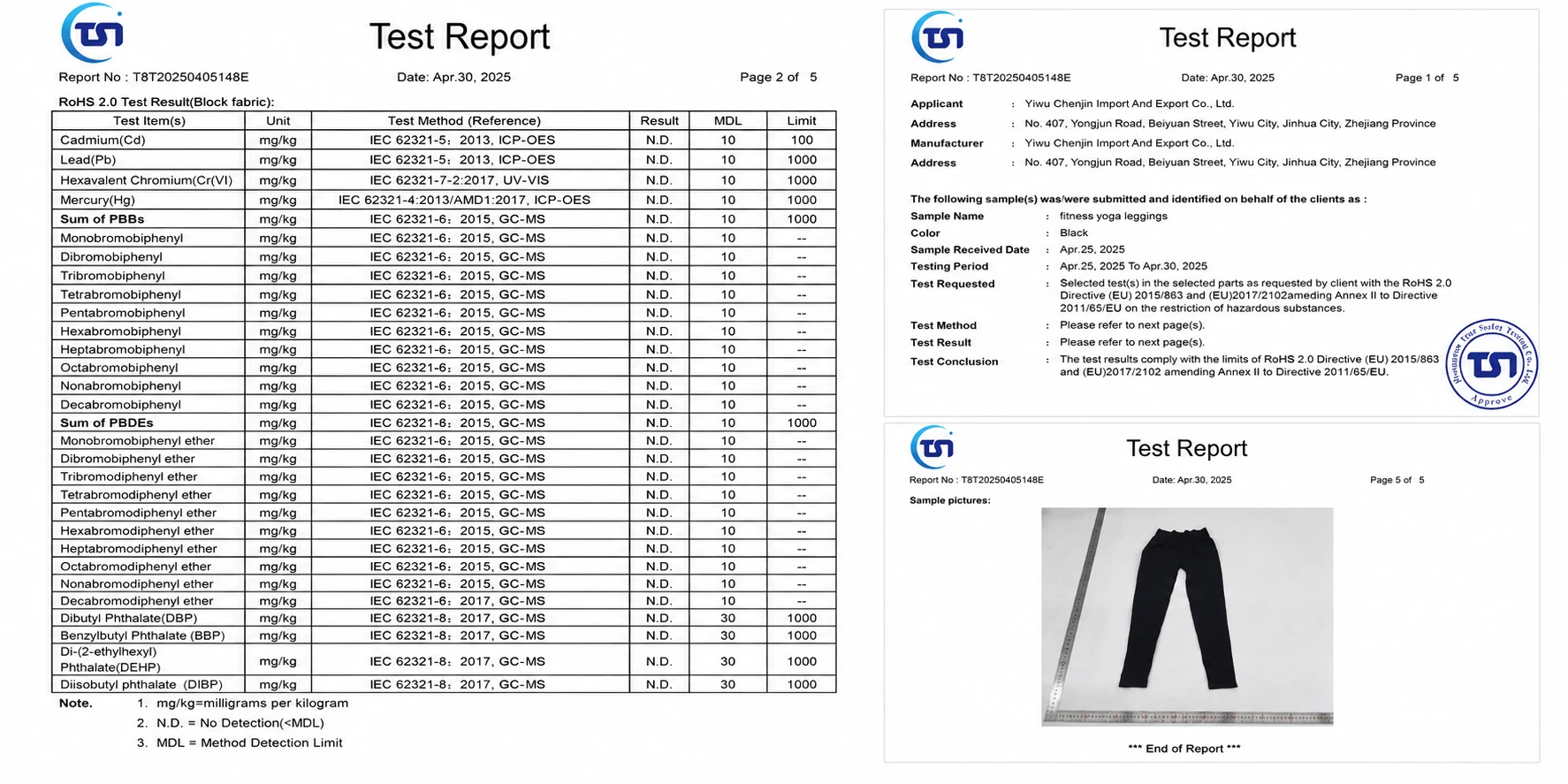
RoHS Test Report
The available test report relates to the submitted sample and test items stated in that document.
RoHS Test Report:
TST20250405148E — April 30, 2025
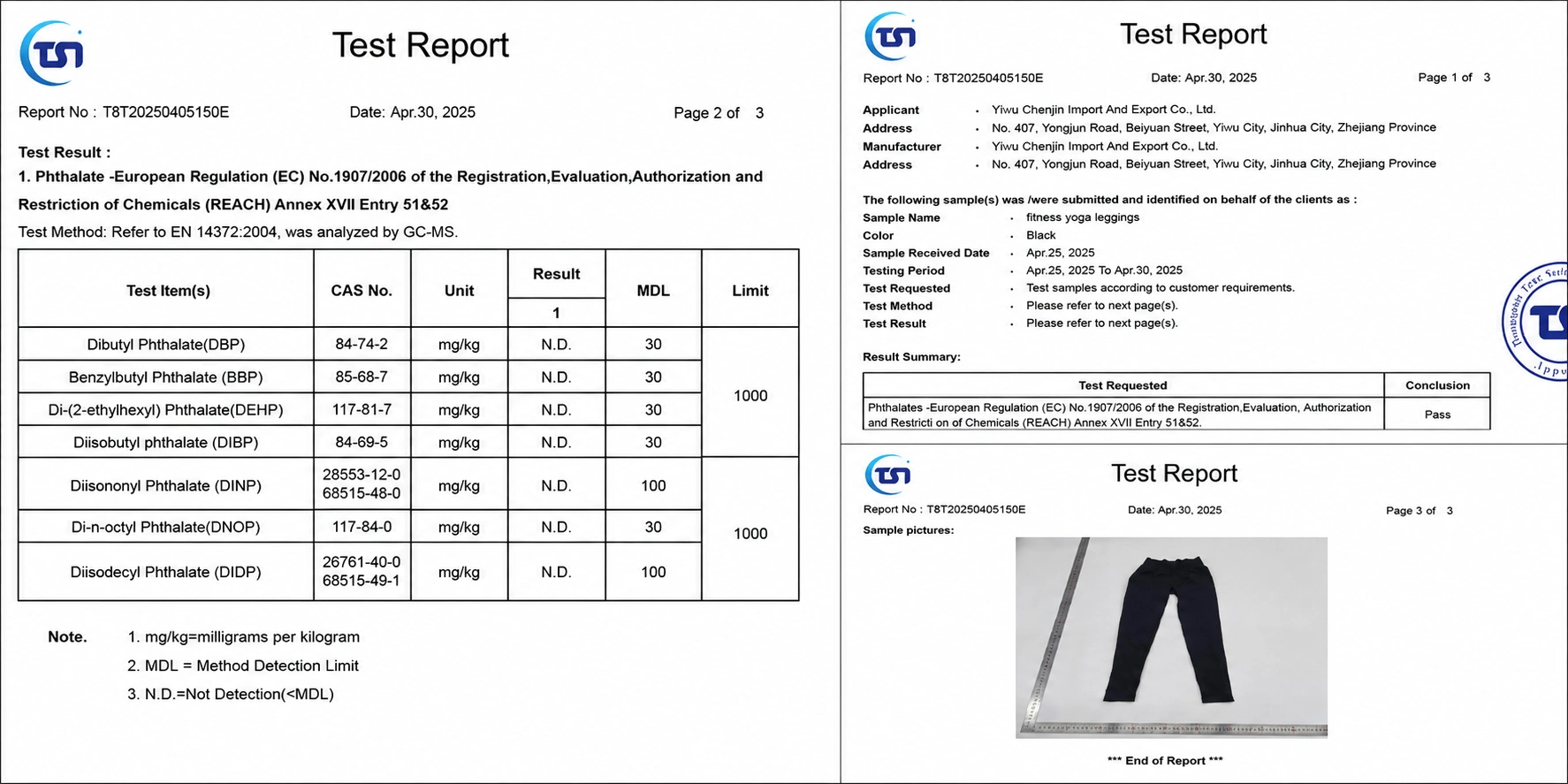
REACH Phthalates Evidence
The available 2025 REACH report relates to a submitted black fabric sample tested against the stated Annex XVII Entry 51 and Entry 52 phthalates requirements.
It should not be described as blanket REACH certification for all MOVEVOX materials or products.
REACH Phthalates Report:
TST20250405150E — April 30, 2025
Buyer-Specific Testing
Large brands may have their own RSL, testing, inspection, or destination-market requirements. These should be reviewed against the actual material, product, and project rather than assumed to be covered by an unrelated test report.
Material Documentation
Supplier certificates or material documents should remain attributed to their actual holder, material, and scope. They should not be presented as MOVEVOX factory certifications where that is not what the document states.
Verify MOVEVOX Through Your Vendor Qualification Process
MOVEVOX supports customer factory visits, technical audits, live video factory tours, pre-production visits, inline inspections, and pre-shipment inspections. These options allow buyers to verify relevant manufacturing and quality operations rather than relying only on website claims.
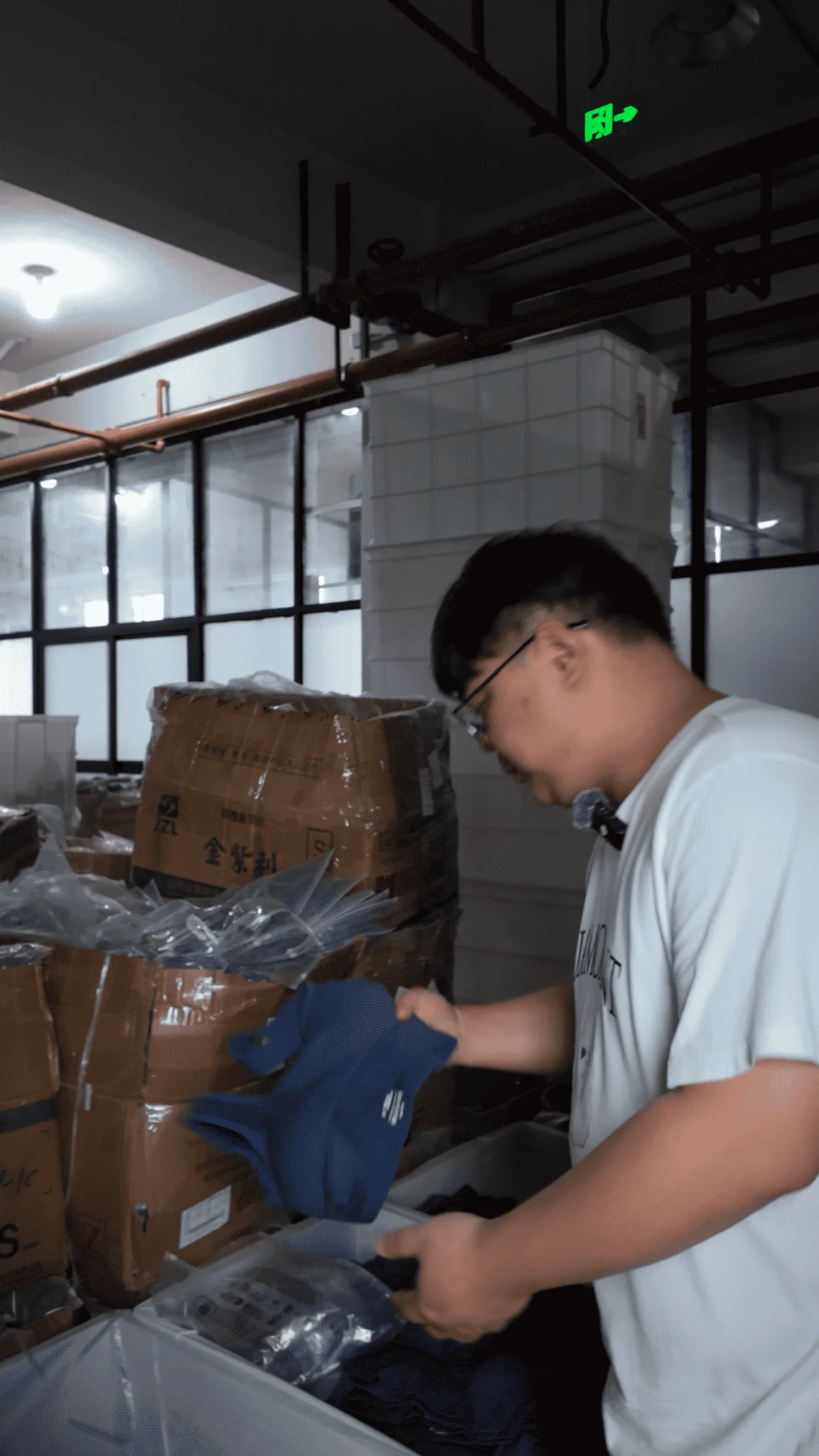
Customer Factory Visit
Buyer sourcing, product, technical, or quality teams can schedule factory visits to review relevant production equipment and operating areas.
Technical Audit
Customer technical teams can review relevant production, quality, manufacturing, and project requirements within an agreed scope.
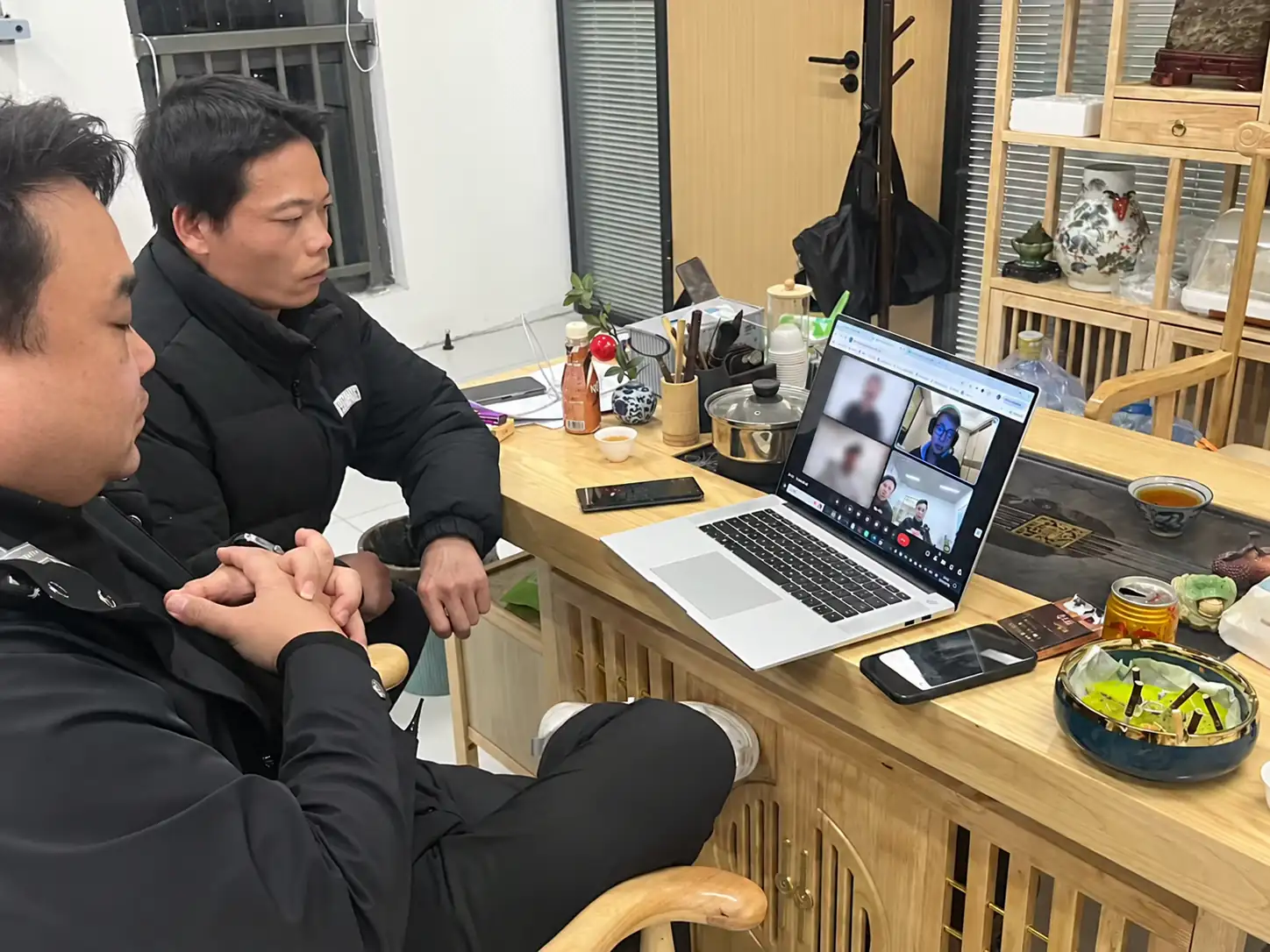
Live Video Factory Tour
Where an immediate visit is impractical, MOVEVOX can support live video review of appropriate factory areas subject to scheduling and confidentiality considerations.
Pre-Production Visit
Buyers can review relevant production preparation before commercial manufacturing begins where required.
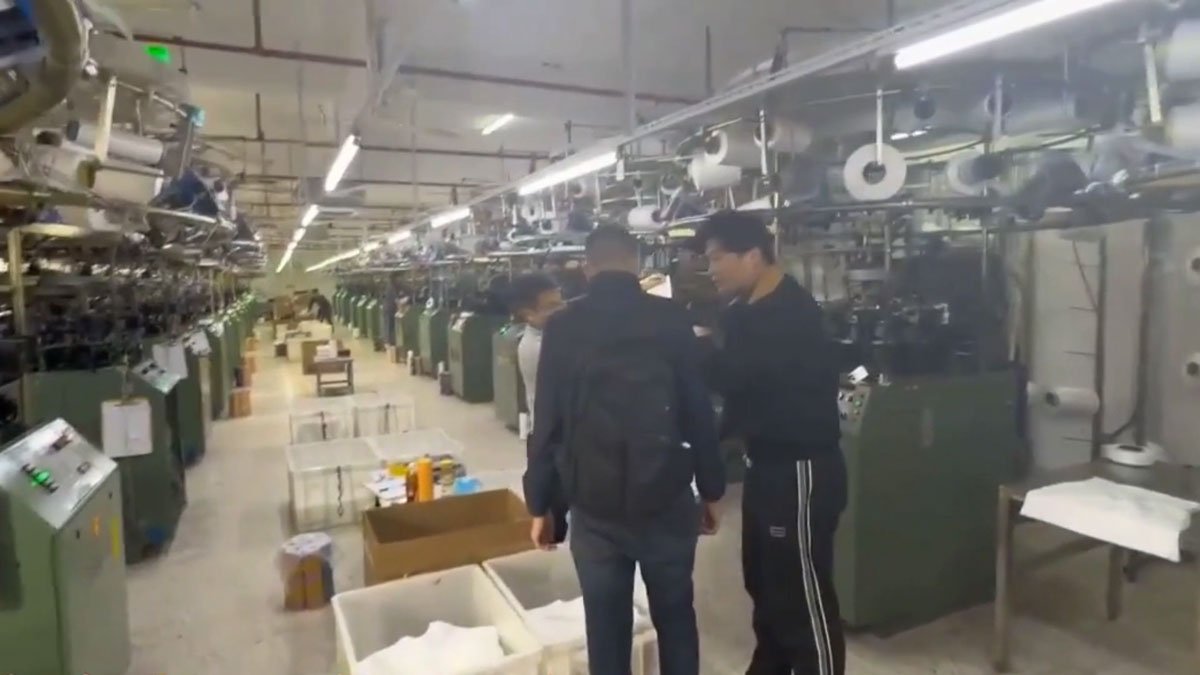
Inline & Pre-Shipment Inspection
Customer or appointed inspection resources can conduct relevant production-stage or pre-shipment inspection according to the agreed project requirements.
Third-Party Inspection
MOVEVOX can cooperate with customer-appointed third-party inspection providers.
From Workout Product Revision to Validated Bulk Production
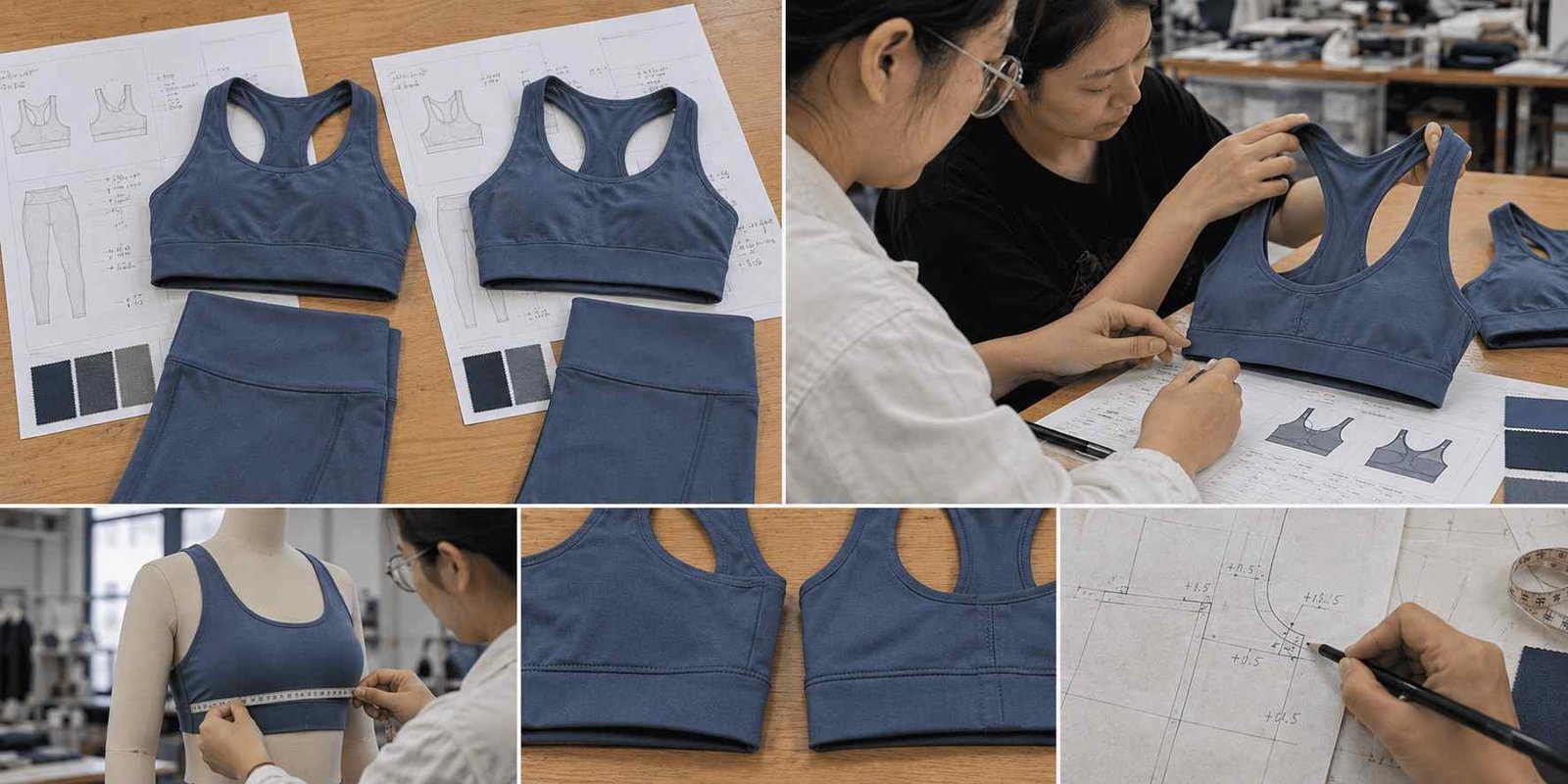
An anonymized U.S. female fitness customer began with its own Tech Pack and used physical sample development to validate the product before moving into a customized bulk program.
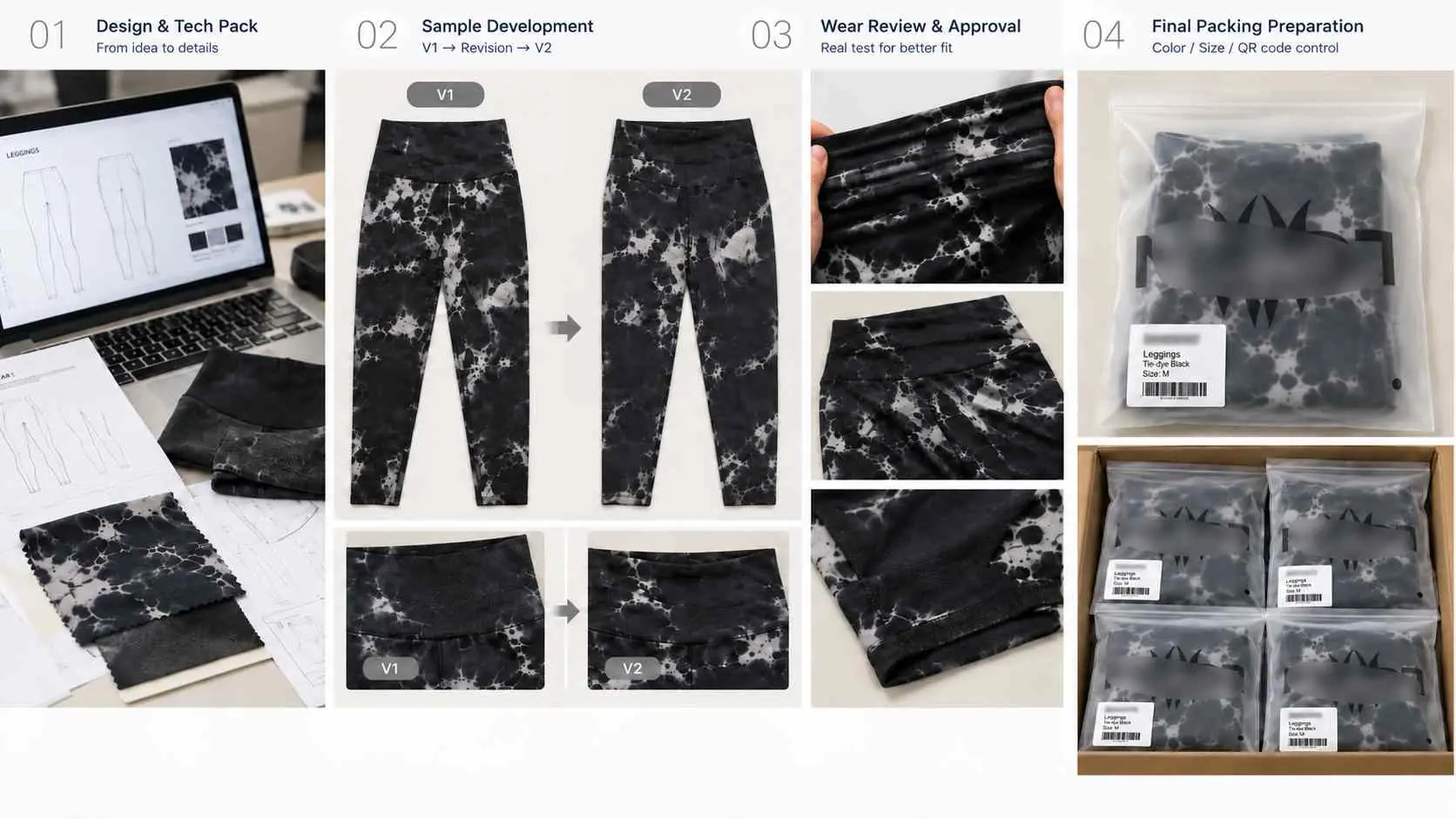
Tech Pack to V1
The project began from the customer’s Tech Pack. MOVEVOX produced the first development sample for review.
V1 to Revision
The customer reviewed the first version and requested product changes rather than moving directly into commercial production.
V2 Development
MOVEVOX produced a second development version incorporating the required revision direction.
Additional User-Testing Samples
Approximately 5–10 additional samples were produced so the customer could conduct its own follower or user testing before bulk commitment.
Bulk Program
The customer later moved into bulk orders of approximately 2,000 pieces per order and recurring cooperation.
Private Label & Packing Control
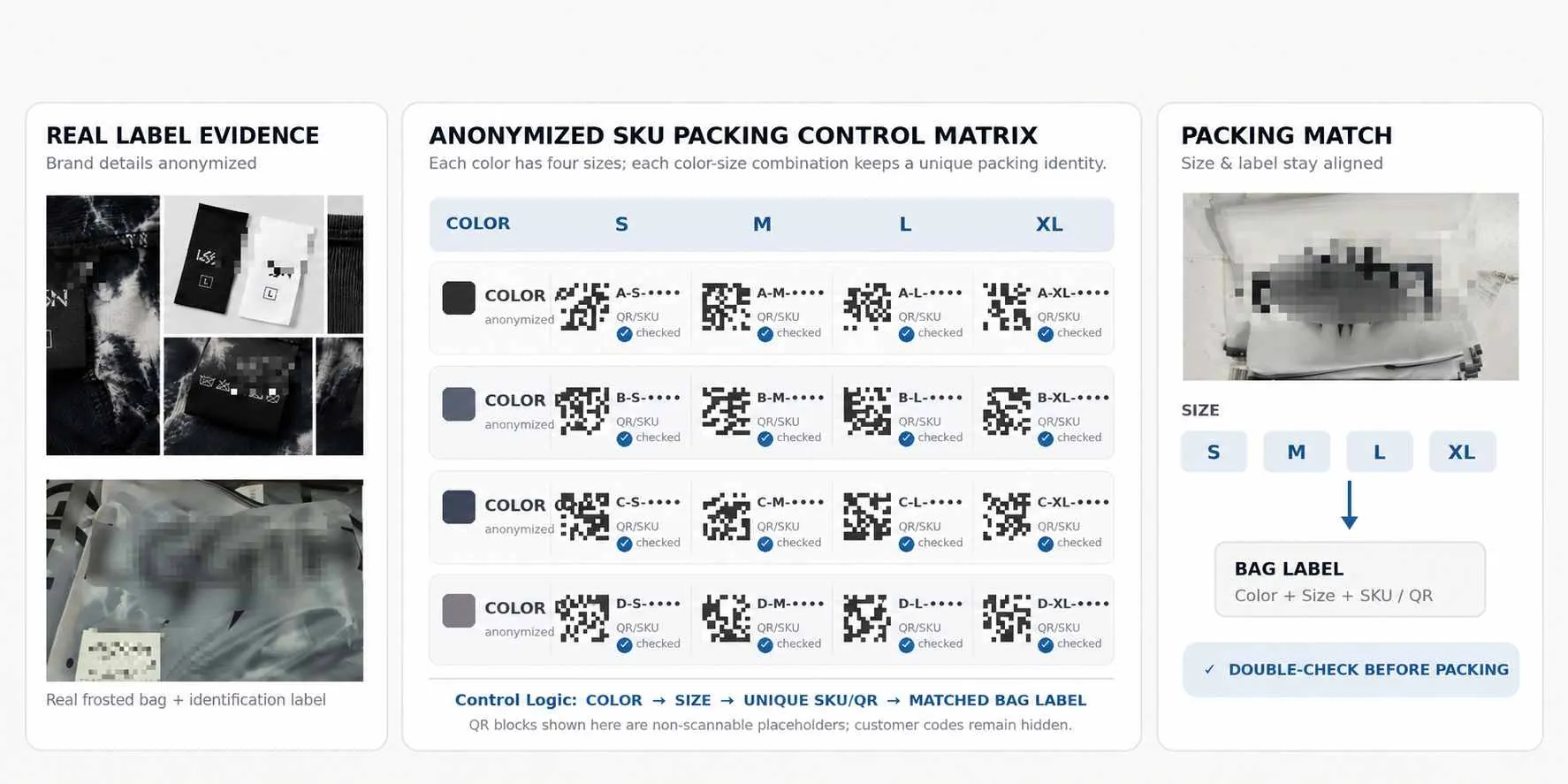
The commercial program included customized packaging, instructions, labels, logo, and wash-label requirements. Each color used four sizes, with QR identification requiring correct matching between color, size, garment, and external identification.
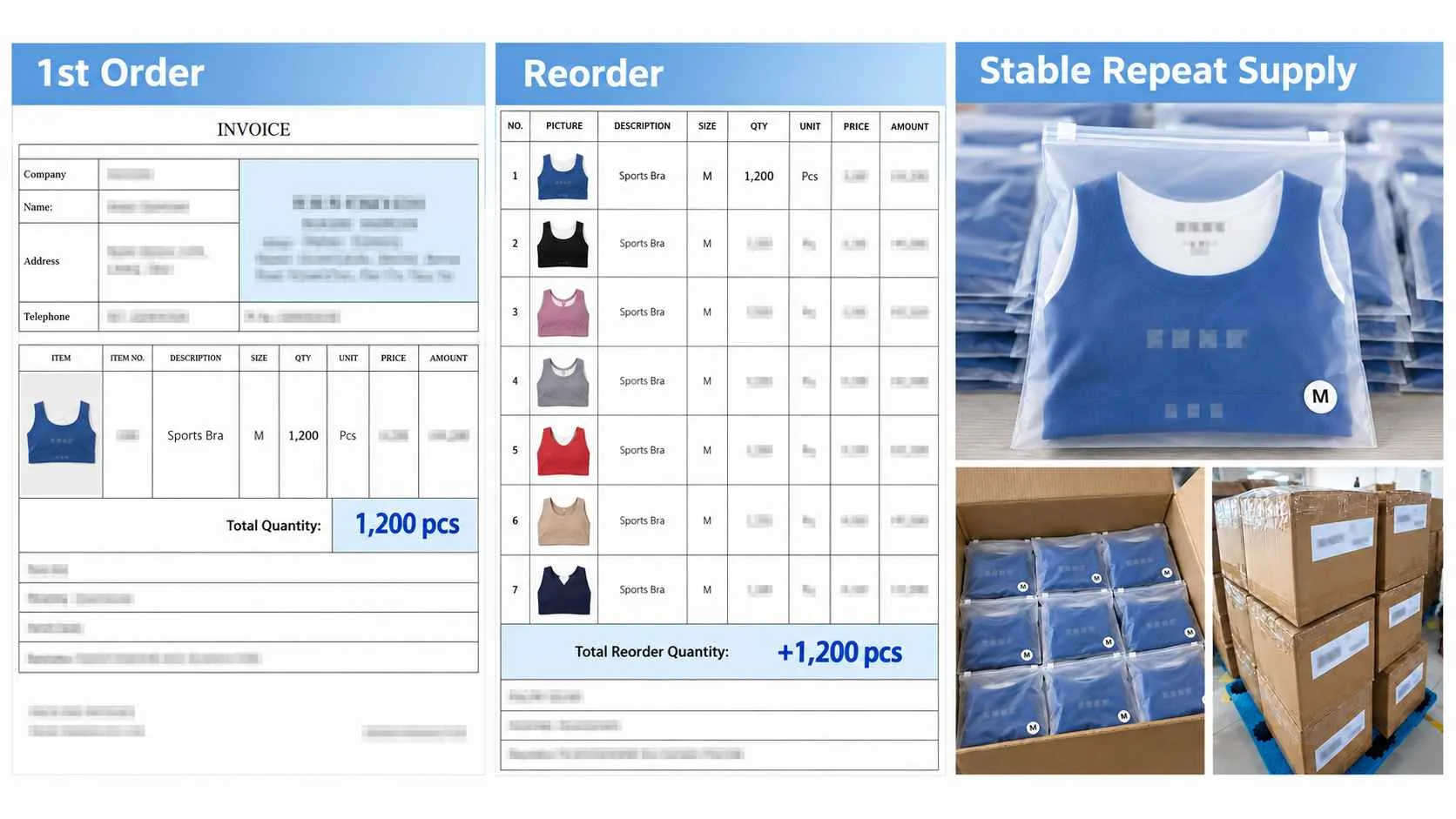
From First Workout Order to Repeat and Scale-Up Supply
An anonymized Spanish customer began by evaluating stock samples, then moved into customized production and later developed a repeat-order relationship with MOVEVOX.
1,200 Pieces
First bulk order after sample evaluation and customization requirements were confirmed.
15 Days
Recorded completion time for the first 1,200-piece bulk order.
+1,200 Pieces
Another 1,200-piece order was placed during the following week, before the customer received the first bulk shipment.
Approx. 2 Orders / Month
The recorded relationship later developed into approximately two orders per month.
Approx. 3× Normal Volume
One recorded May order increased to approximately three times the customer’s normal volume.
Approx. 1,500 Pieces / Color
Selected styles were later held at approximately 1,500 pieces per color as buffer inventory.
Private Label Development
The project included customization of the wash label, hangtag, packaging, and logo. MOVEVOX recommended a silicone logo and matte zipper bag for this customer’s program.
Delivery Structure
The first bulk order used a combination of air and sea shipment according to the customer’s needs.
Scale-Up Response
When the later demand spike occurred, MOVEVOX added production-line allocation and completed the required order within the project schedule.