Yoga Leggings Manufacturing for Established Activewear Brands
MOVEVOX is a Yiwu-based private-label activewear manufacturing and supply-chain partner supporting established brands with Yoga Leggings development through both Seamless and Cut & Sew production routes.
The strongest fit is with buyers that already manage formal product requirements, Fit standards, multiple colors or sizes, private-label execution and repeat-order potential.
Product
Yoga Leggings are a core MOVEVOX product direction covering both Seamless and Cut & Sew construction. Development can include waistband, crotch, pocket, contour, rib, texture, soft-handfeel and other brand-specific design requirements, subject to technical feasibility.
Buyer
Established Yoga and activewear brands that need structured development, sample approval, measurable product standards and reliable commercial execution—not only a ready-made garment with a Logo added.
Manufacturing Model
MOVEVOX connects product-development input with material sourcing, sampling, bulk production, quality control, private-label elements, packing and supplier coordination under one project-management interface.
Long-Term Fit
The strongest cooperation model is a brand that can begin with a qualified development or commercial order and later expand through repeat orders, additional SKUs, colors or product lines.

The Manufacturing Base Behind Your Yoga Leggings
A professional sourcing decision should begin with the actual production base, equipment, manufacturing routes and verification options—not only finished-product photographs.
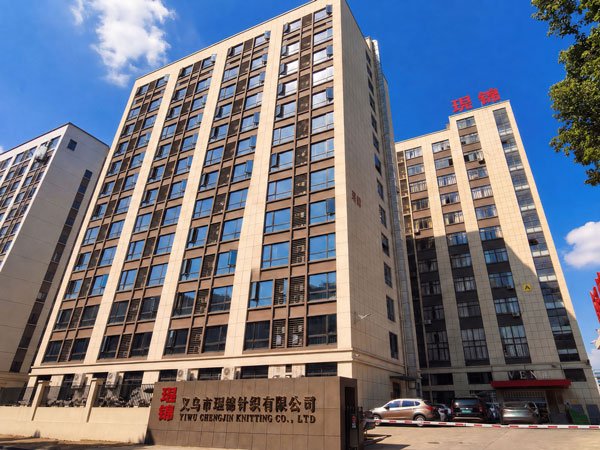
Yiwu Manufacturing Base
MOVEVOX operates its core manufacturing system in Yiwu, Zhejiang, China, with approximately 6,000 square meters of actual operating space supporting manufacturing, product development, QC, packing and related activewear activities.
Seamless Production
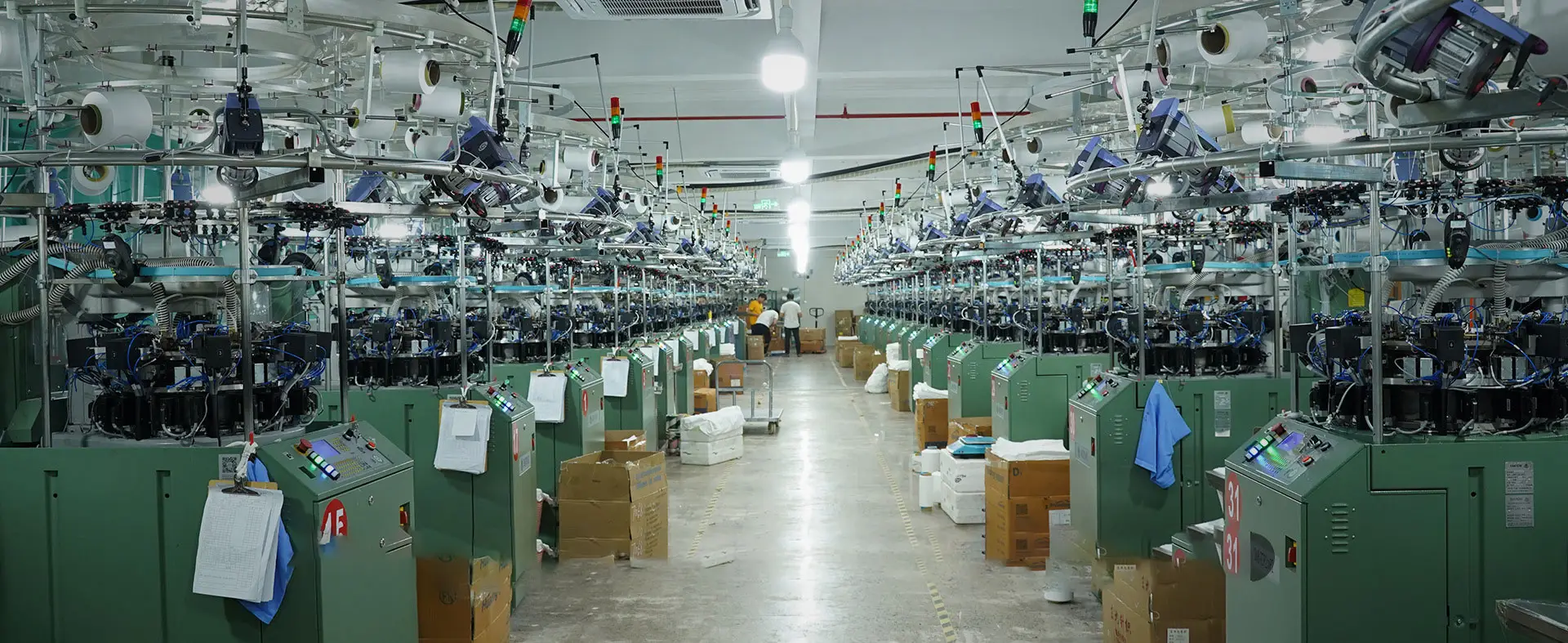
The current manufacturing system includes 28 Italian Santoni seamless knitting machines. These machines support Seamless Yoga Leggings development requiring controlled knitting structures, waistbands, rib, texture, mesh or other engineered zones according to the approved project.
Cut & Sew Production
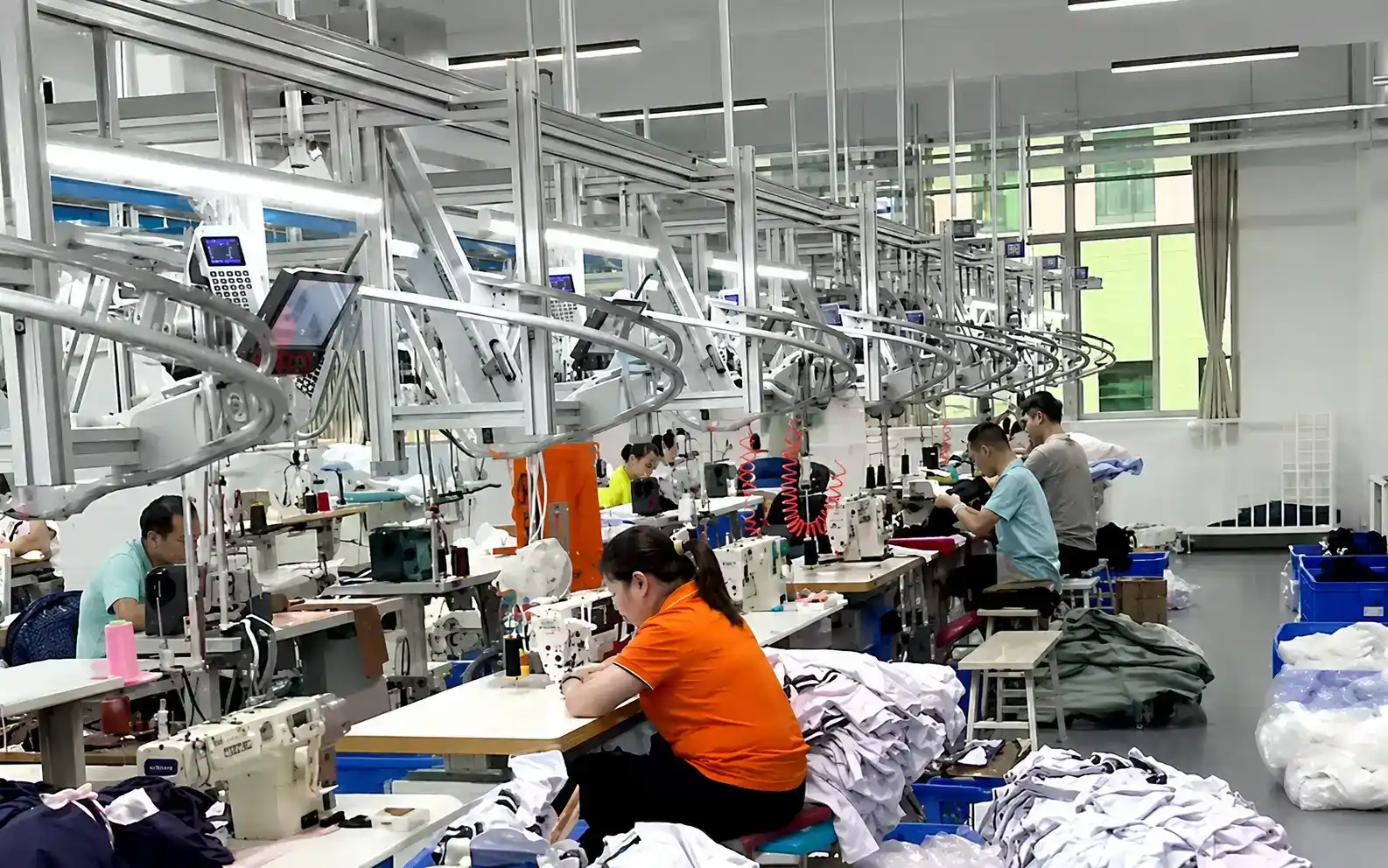
MOVEVOX also operates a Cut & Sew route with approximately 24 main sewing and garment-production machines. This route supports pattern-based Yoga Leggings with conventional fabric panels, seams, pockets, gussets and other Cut & Sew structures.
Product Development
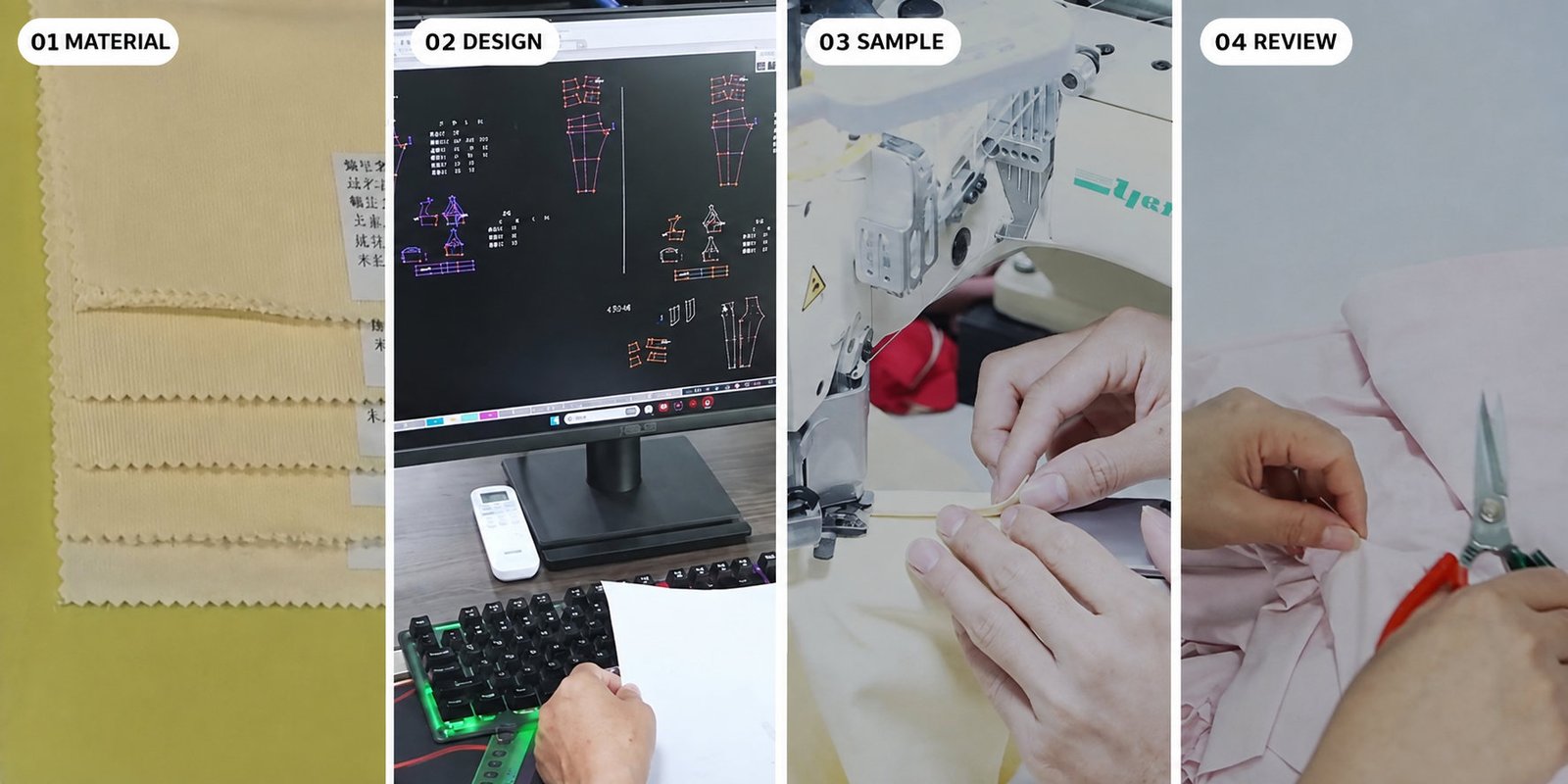
Product development is connected to manufacturing. Projects can move from technical input through material and structure review, sample development, Fit comments, revision and approval before the production standard is released.
Quality Control
MOVEVOX currently has 5 dedicated QC personnel supporting the production system. Quality responsibility is combined with production and order-management checks rather than relying only on a final inspection.

Buyer Verification
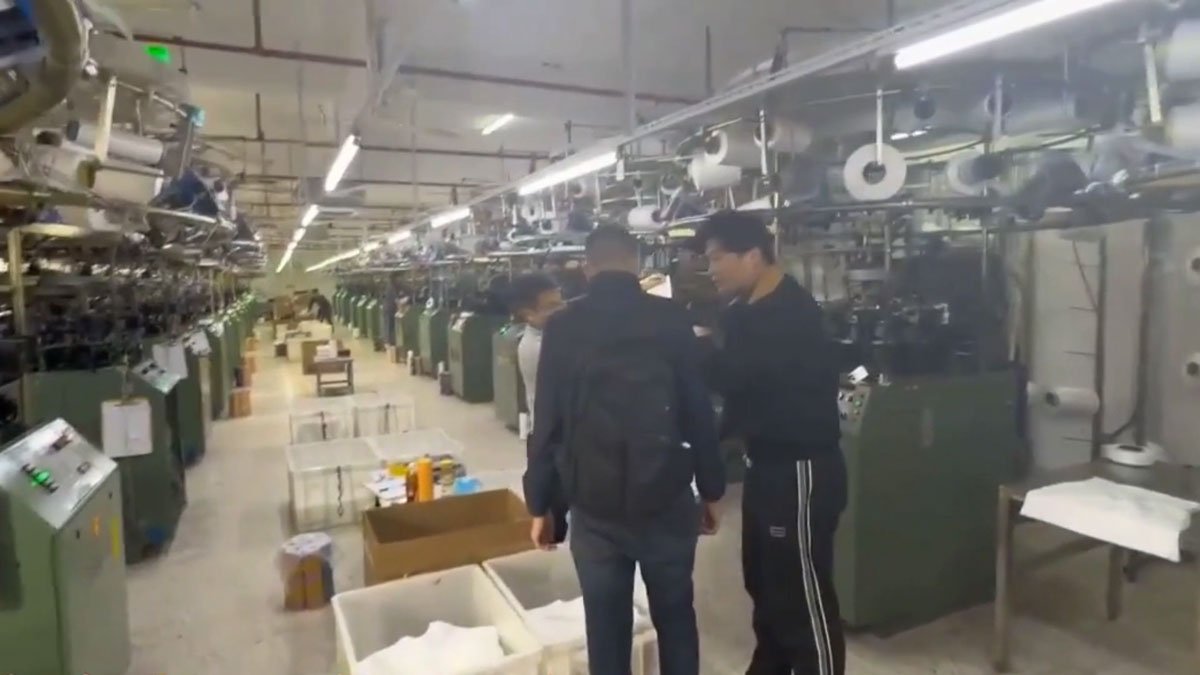
Customers can arrange appropriate factory visits or live video verification to review real production areas, machinery, sample development, quality activities and packing, subject to confidentiality restrictions for other customers.
Develop Yoga Leggings Around Structure, Fit and Brand Positioning
These are product-development directions, not claims of ready inventory. Final construction and manufacturing route depend on the Tech Pack, selected material and manufacturability review.
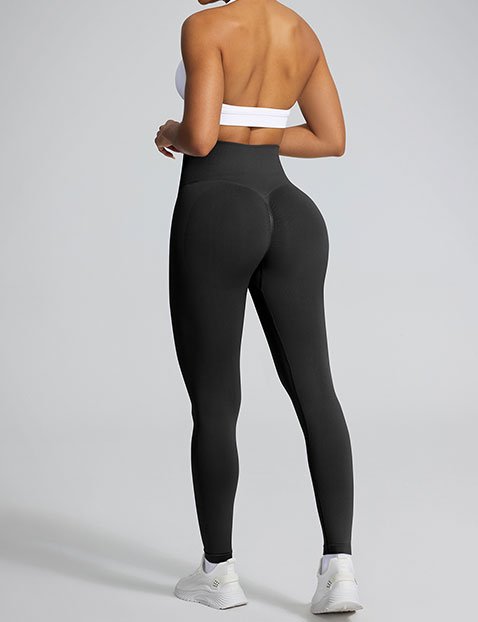
High-Waist Leggings
High-waist and extra-high-waist structures can be developed through Seamless and Cut & Sew routes. Key decisions include waistband height, waist-to-hip relationship, elasticity, recovery, rise and intended hold. A higher waistband alone does not guarantee stability; complete structure and actual Fit need sample validation.
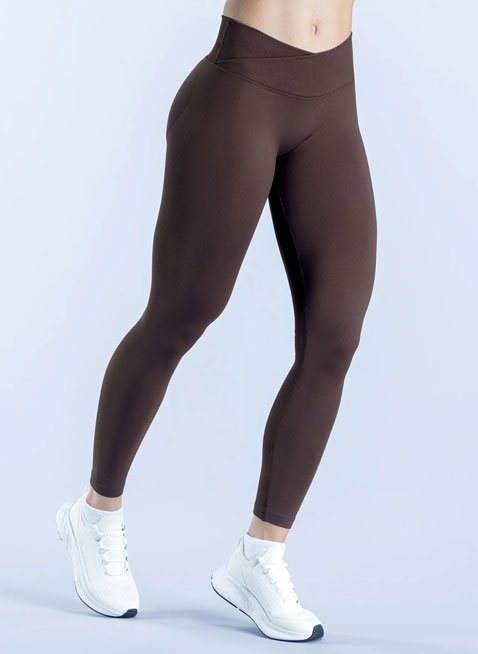
V / Cross-Waist Leggings
V-shaped or crossover waistbands change waistband geometry and pressure distribution. Cut & Sew versions require accurate pattern and overlap control, while Seamless interpretations require suitable knitting-program development. Sample review should confirm appearance and waist stability.
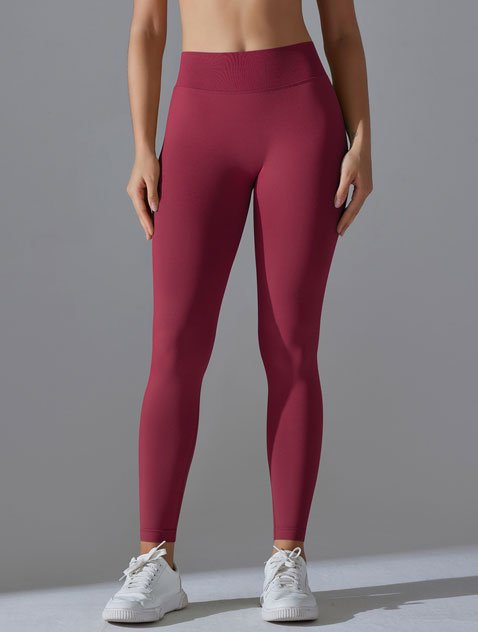
No-Front-Seam Leggings
Removing the conventional front seam changes crotch shaping, gusset construction, fabric elasticity and Fit. Seamless and Cut & Sew versions therefore use different engineering solutions and should be evaluated with the actual product structure.
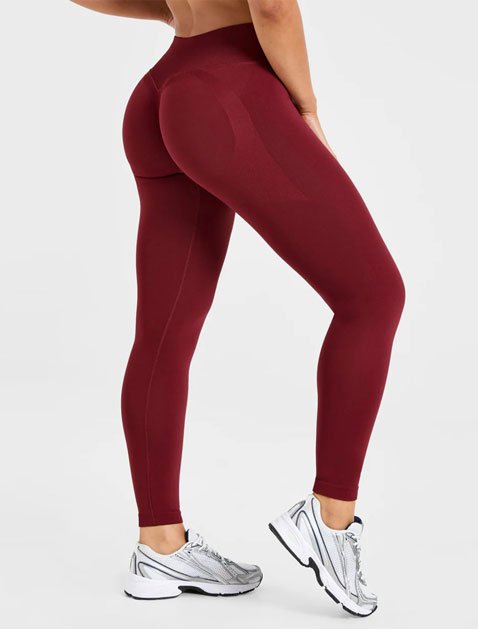
Contour / Scrunch Leggings
Contour and glute-shaping directions can involve Seamless structural zones, Cut & Sew seam design or other approved construction methods. The visual effect needs to be balanced with comfort, stretch and production repeatability.
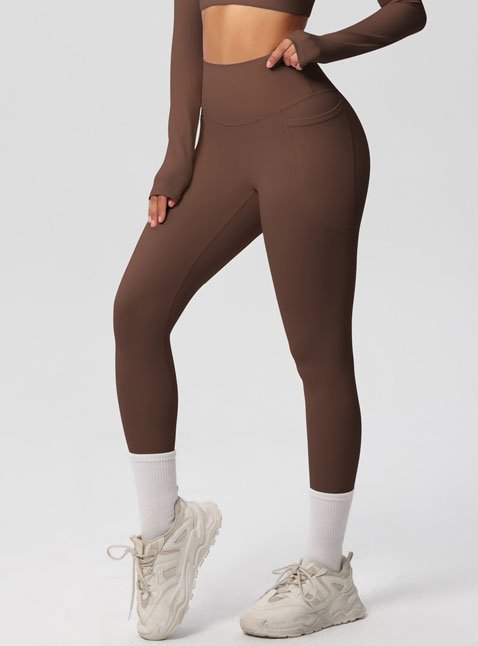
Pocket Leggings
Side pockets and back-waist pockets affect panel construction, seam placement, thickness and Fit. Complex pocket designs are generally better suited to Cut & Sew development and should be confirmed with the intended use and actual sample.
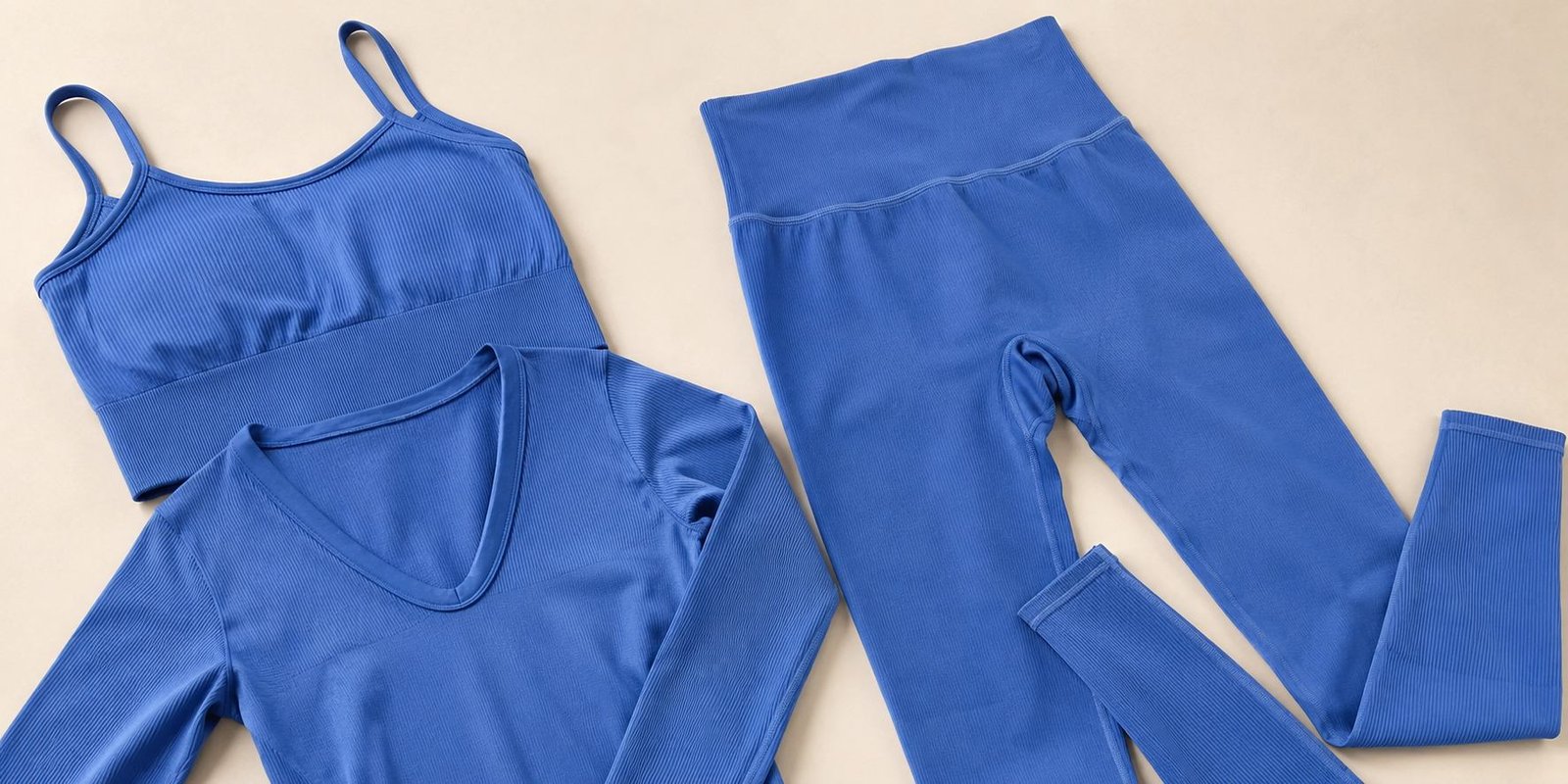
Rib / Texture Leggings
Rib, mesh, geometric textures and different knit densities can be engineered into Seamless Yoga Leggings. These structures can affect stretch, recovery, thickness and appearance consistency and therefore require sample validation.
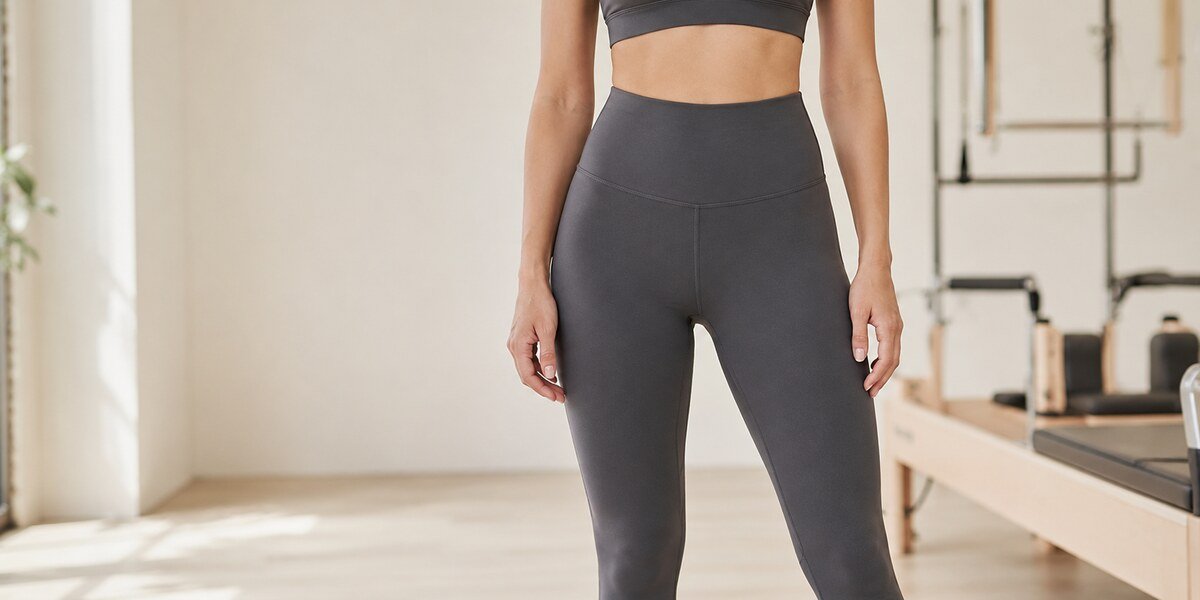
Brushed / Soft-Handfeel Leggings
Soft, brushed or naked-feel directions begin with a target experience rather than one universal composition. Candidate materials should be evaluated for surface, weight, stretch, recovery, opacity, Fit and availability.
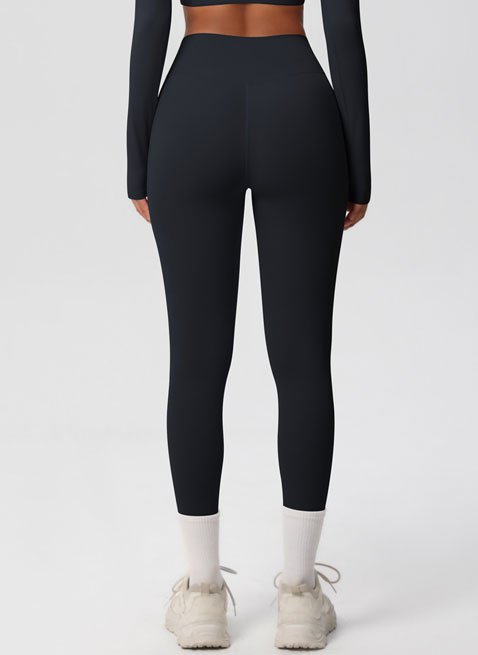
Compression-Oriented Leggings
A firmer wearing direction can be developed by coordinating material behavior, negative ease, Seamless structure or Cut & Sew pattern construction. Numerical pressure or medical-style compression claims require specific testing.
Engineer the Waistband Around Fit, Movement and Product Positioning
The waistband is one of the most important Yoga Leggings structures. Its behavior depends on height, circumference, material recovery, rise and the transition into the hip—not simply the visual shape.
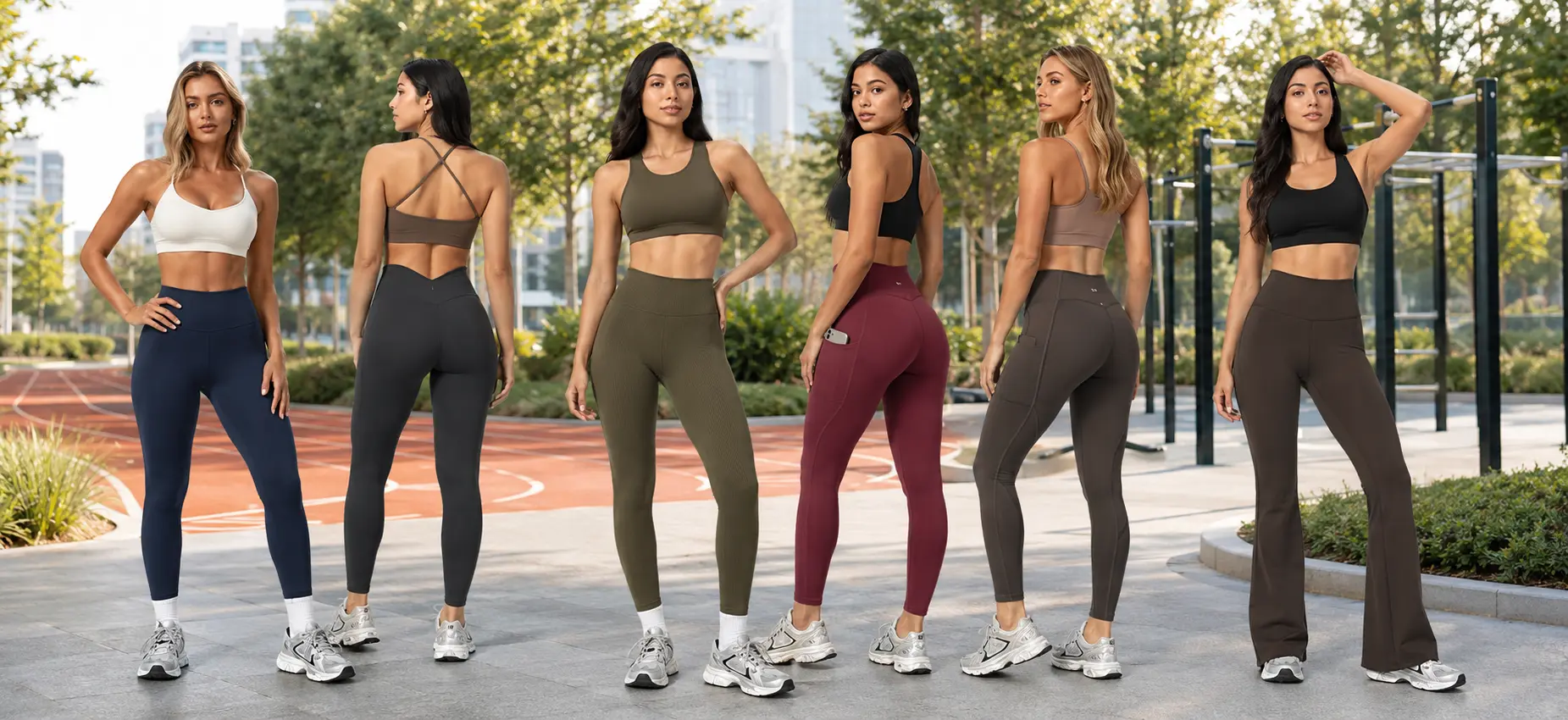
High Waist
A conventional high-waist construction provides more abdominal coverage. Stability depends on the complete waist-to-hip relationship, waistband elasticity, material recovery and rise; Fit review should include movement.
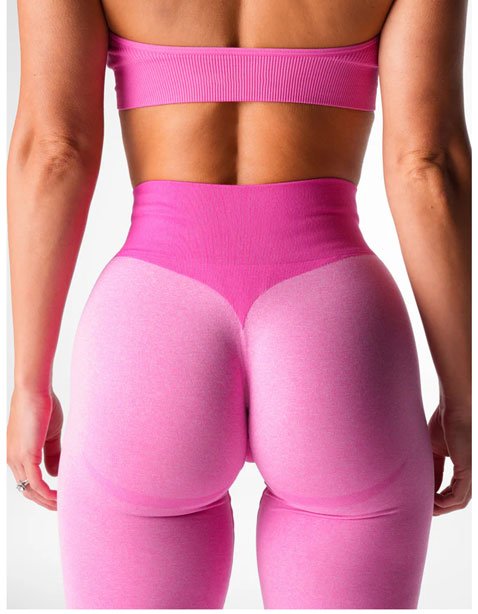
Extra-High Waist
Increasing waistband height changes how the fabric interacts with the torso. If circumference, rise or recovery is not balanced, the upper edge can fold or feel excessive.
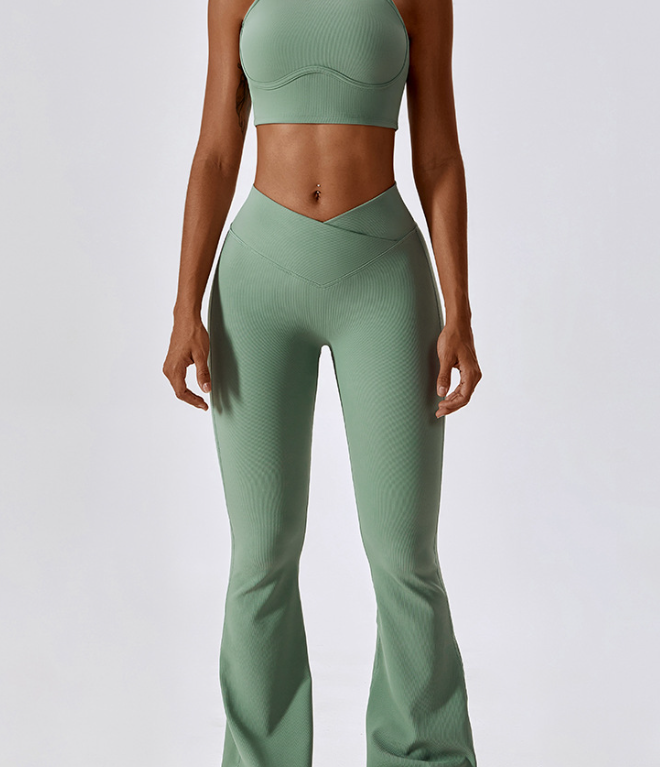
V Waist
The depth and angle of the V need to remain balanced with front rise, hip position and material tension. A strong visual V can change Fit and should be approved on the actual body or Fit form.
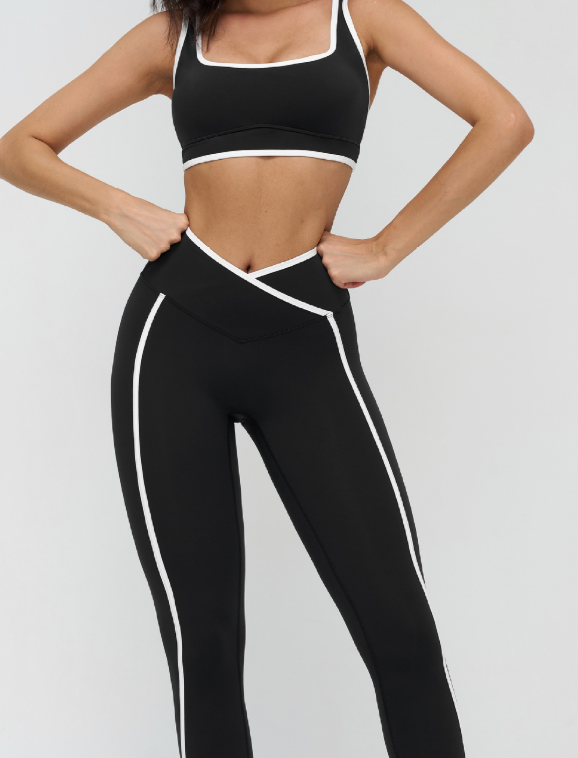
Cross Waist
Cross-waist designs use overlapping or visually crossing structures at the front. In Cut & Sew development, pattern geometry, overlap and seam stability are particularly important.
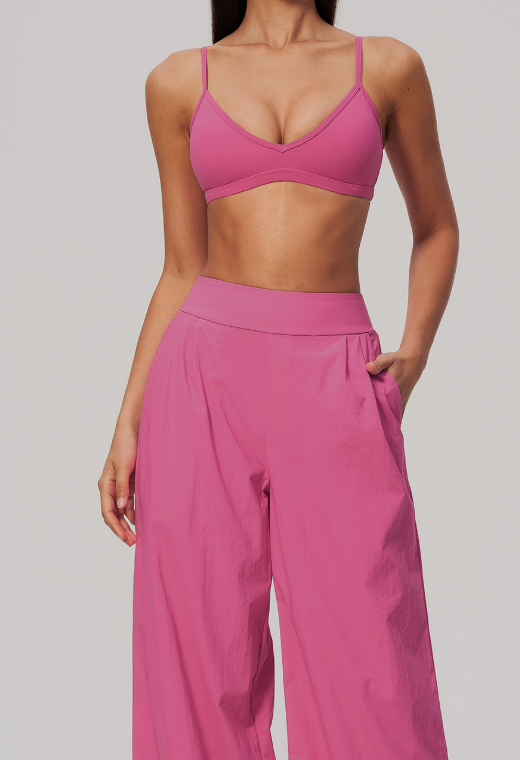
Structured / Supported Waist
A firmer waist direction can be influenced by material, elastic, multiple layers, knitting density or another approved construction. Actual performance needs confirmation through the final construction and sample.
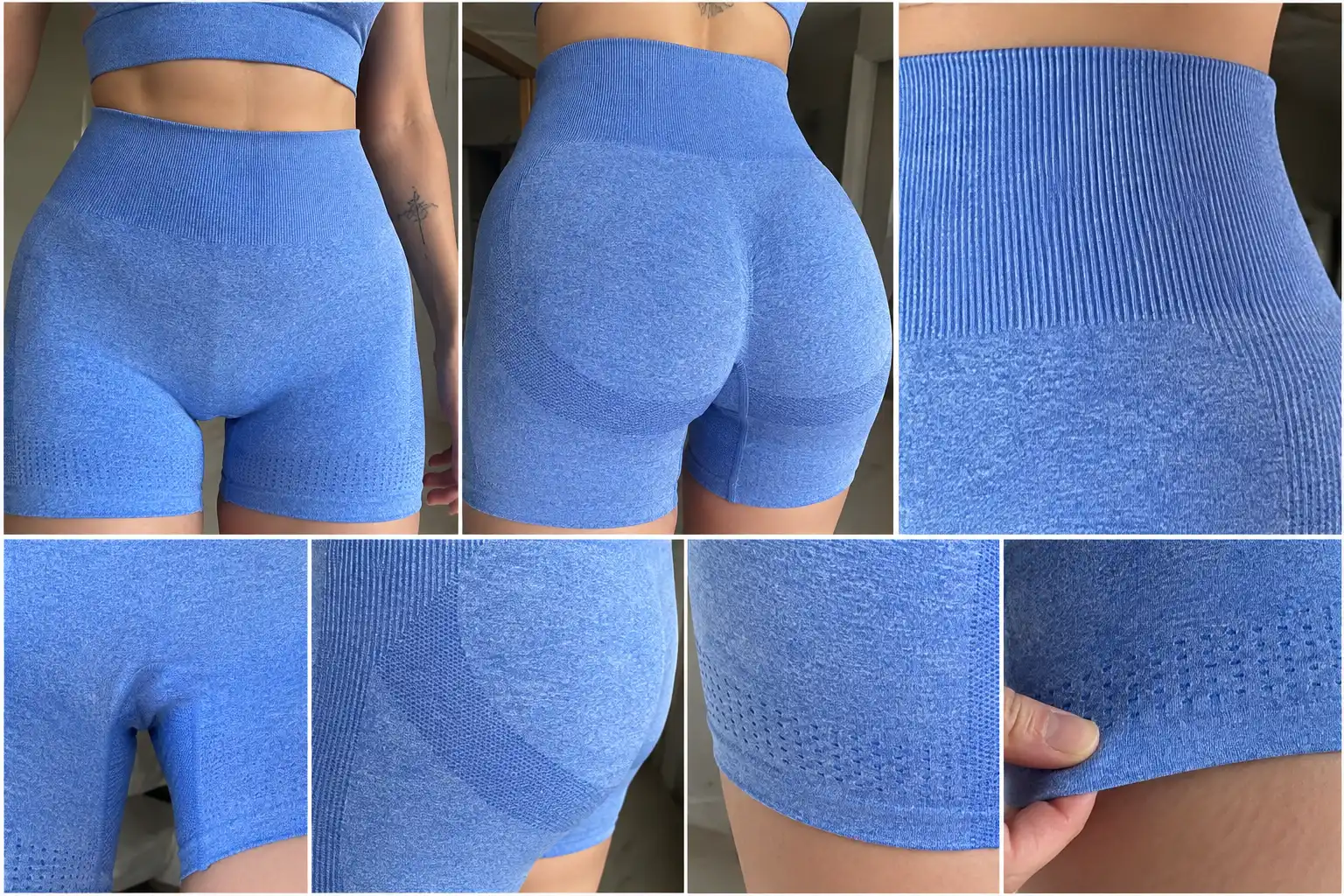
Seamless Integrated Waist
In Seamless Yoga Leggings, the waistband can be engineered as part of the knitted body. Yarn, knitting density, structure and program transitions influence stretch, recovery and stability.
What Actually Controls Yoga Leggings Opacity?
“Squat proof” should not be treated as a universal marketing label. Opacity under stretch depends on the actual material, color, Fit, construction and degree of extension.
Higher GSM Means Squat Proof
EVIDENCEActual fabric and garment test
Higher GSM may improve coverage in some materials, but GSM alone does not determine how the structure behaves when stretched.
One Fabric Performs the Same in Every Color
EVIDENCEColor-specific review
Light and dark colors can present different visual results. Important opacity requirements should be reviewed in the approved production color.
More Spandex Guarantees Better Coverage
EVIDENCEFabric structure + stretch state
Spandex percentage does not by itself define opacity. Fabric structure, yarn, knitting density and actual extension also affect visual coverage.
A Standing Test Is Enough
EVIDENCEIntended movement condition
A sample may look opaque while standing but behave differently through bending, deep flexion or squat-style movement.
One Size Result Applies to Every Size
EVIDENCESize / Fit validation
Material extension changes with Fit. A product that is over-stretched because of sizing or negative ease can behave differently from the same fabric at intended Fit.
MOVEVOX can develop Yoga Leggings toward an opacity target, but statements such as “100% squat proof in every color and size” should only be used if appropriate evidence supports the exact product scope.
Fit Yoga Leggings Around the Intended Movement
Different activewear uses create different movement, stability and comfort requirements. Yoga Leggings should therefore be validated against their intended activity instead of applying one generic Fit standard across every sport.
| Activity | Movement Consideration | Product Focus | Fit Validation Focus |
|---|---|---|---|
| Yoga | Flexion, extension, twisting, floor movement | Mobility, coverage, waist stability | Waist position, rise, crotch, movement comfort |
| Pilates / Studio | Controlled repeated movements, bending | Smooth movement, stable waist, close-body Fit | Waist hold, hip balance, inseam, comfort |
| Gym / Training | Squat, lunge, dynamic movement | Support, stability, durability | Waistband, opacity, stretch/recovery |
| Running | Repeated forward movement | Secure Fit, movement control | Waist security, crotch balance, leg movement |
Yoga Fit Review
For Yoga-focused products, Fit evaluation should consider standing position together with forward bending, deep flexion, squat-style motion and twisting. Important areas include waistband position, front and back rise, crotch balance and movement comfort.
Product-Specific Approval
MOVEVOX does not define Yoga, Gym and Running leggings using one universal Fit profile. Intended use should inform material, measurements and construction during sampling, and the buyer should approve the target Fit before bulk.

Select Fabric Around the Target Yoga Experience
A strong material decision begins with the intended wearing experience and then moves into measurable specifications, commercial feasibility and physical approval.

Nylon / Spandex Direction
Common in Yoga and activewear, but composition alone does not define softness, opacity, recovery or support. Different yarns, structures, weights and finishes can produce very different garments.

Polyester / Spandex Direction
Can be relevant for different cost, surface or product objectives. Technical review should include weight, stretch, recovery, handfeel, color, construction compatibility and intended Fit.

Soft / Naked-Feel Direction
Best defined through target physical experience and approved fabric swatches. Surface treatment, yarn, GSM and stretch can all contribute; the approved physical reference is more useful than the marketing term alone.

Brushed Direction
Can provide a softer and warmer surface direction. Candidate fabrics should be assessed as actual swatches and garments, with bulk material later connected to the approved reference.

Rib / Texture Direction
Provides visual and tactile differentiation. Buyers should also consider how the structure changes stretch, thickness, recovery and surface consistency.

Firmer / Support Direction
Can be developed through material modulus, fabric structure, negative ease or Seamless construction. A firmer fabric should not automatically be labeled “compression” without evidence.

Commercial Feasibility
Stock fabric and existing color availability may provide a different commercial starting point from custom dyeing, proprietary yarn or independently developed fabric.
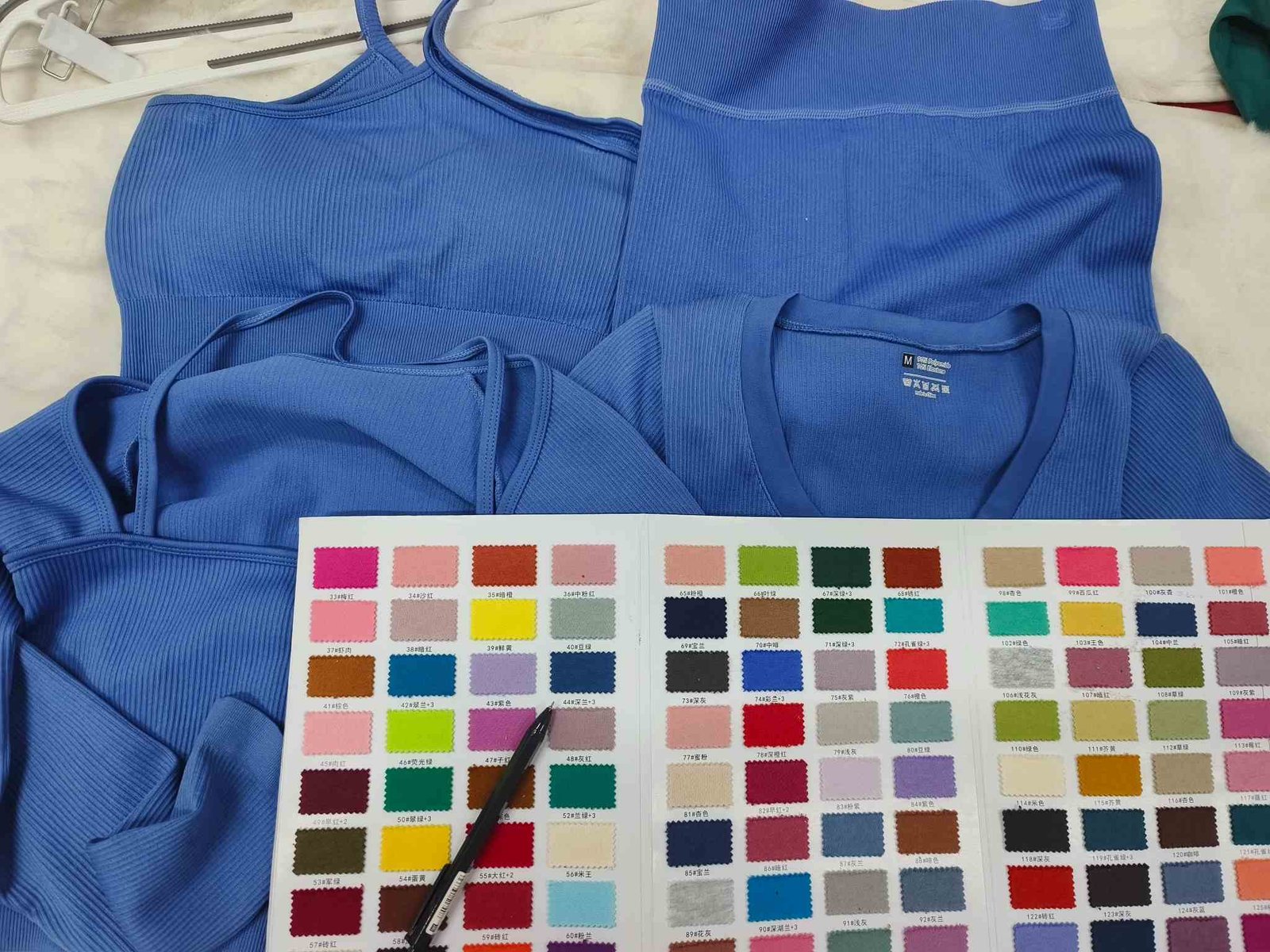
Final Approval
Once a fabric or yarn direction has been validated, the production material should be tied to an approved physical standard or specification.
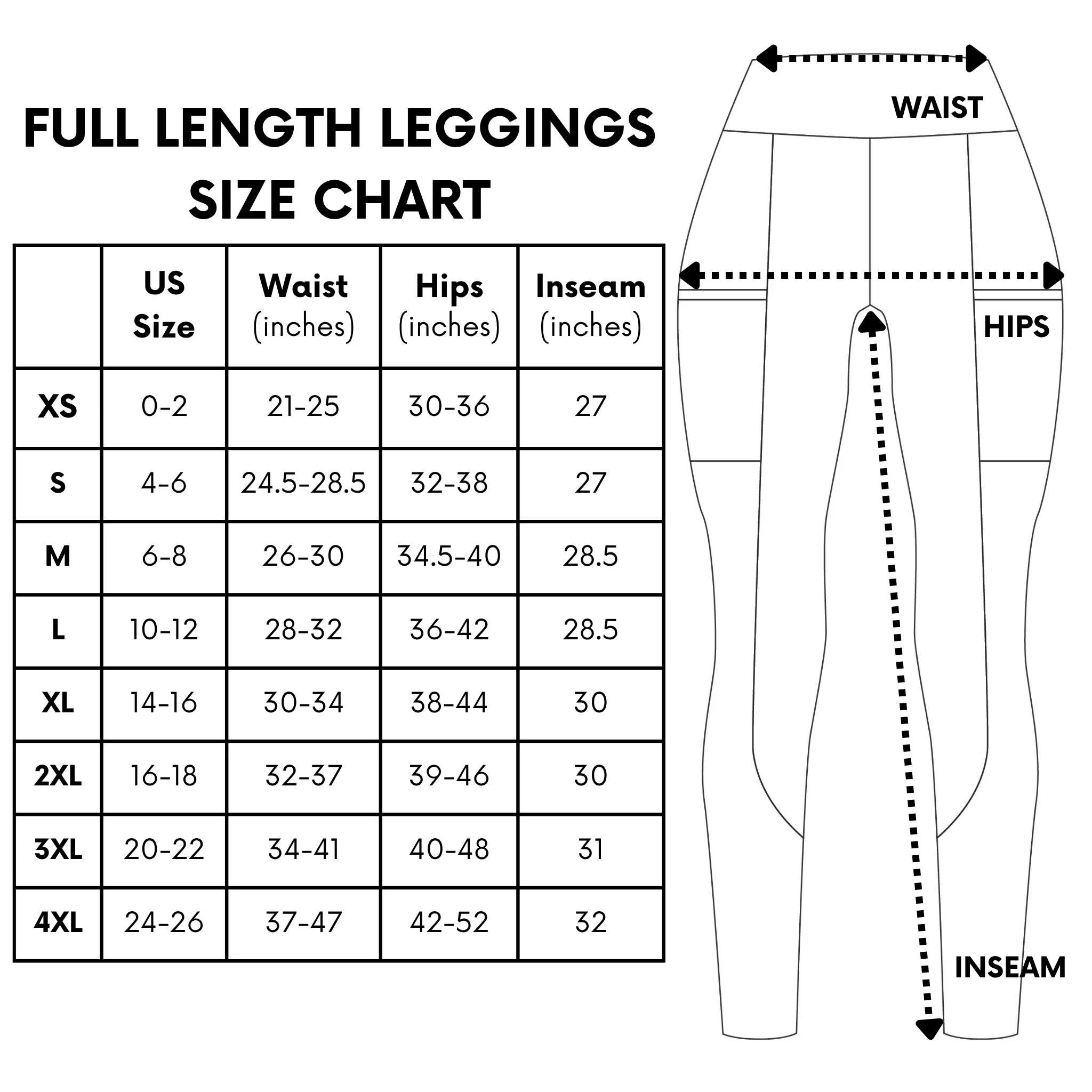
Turn Your Size Chart Into a Manufacturing Standard
A measurement chart becomes useful only when POM definitions, methods, tolerances and the relationship with the selected material are sufficiently clear for development and production.
Waist
Confirm where the waist is measured, garment condition and whether the value relates to the top edge, relaxed waistband or another defined POM.
Hip
Hip measurement needs a clearly defined vertical location because small changes in measuring position can produce different garment values.
Front Rise
Front rise influences waist placement and crotch shape and should be evaluated together with intended waistband structure and Fit.
Back Rise
Back rise affects rear coverage, waist position and body balance. It should not be adjusted independently without considering the full pattern or Seamless structure.
Inseam
Inseam affects garment length and leg proportion. Different 7/8, full-length or other product directions require a clear measurement method.
POM Definitions
Each critical Point of Measure should have an unambiguous description. The same term can be interpreted differently if start and end points are not stated.
Grade Rules
Size grading should maintain logical relationships across sizes rather than simply adding the same number to every measurement.
Tolerance
Bulk inspection needs agreed tolerances. A nominal measurement without an acceptable range is not a complete production-control standard.
Material Compatibility
The same flat garment measurement can Fit differently in materials with different stretch and recovery.
Technical Query
If important information is missing or contradictory, MOVEVOX should raise the issue for buyer confirmation instead of silently assuming the intended value.
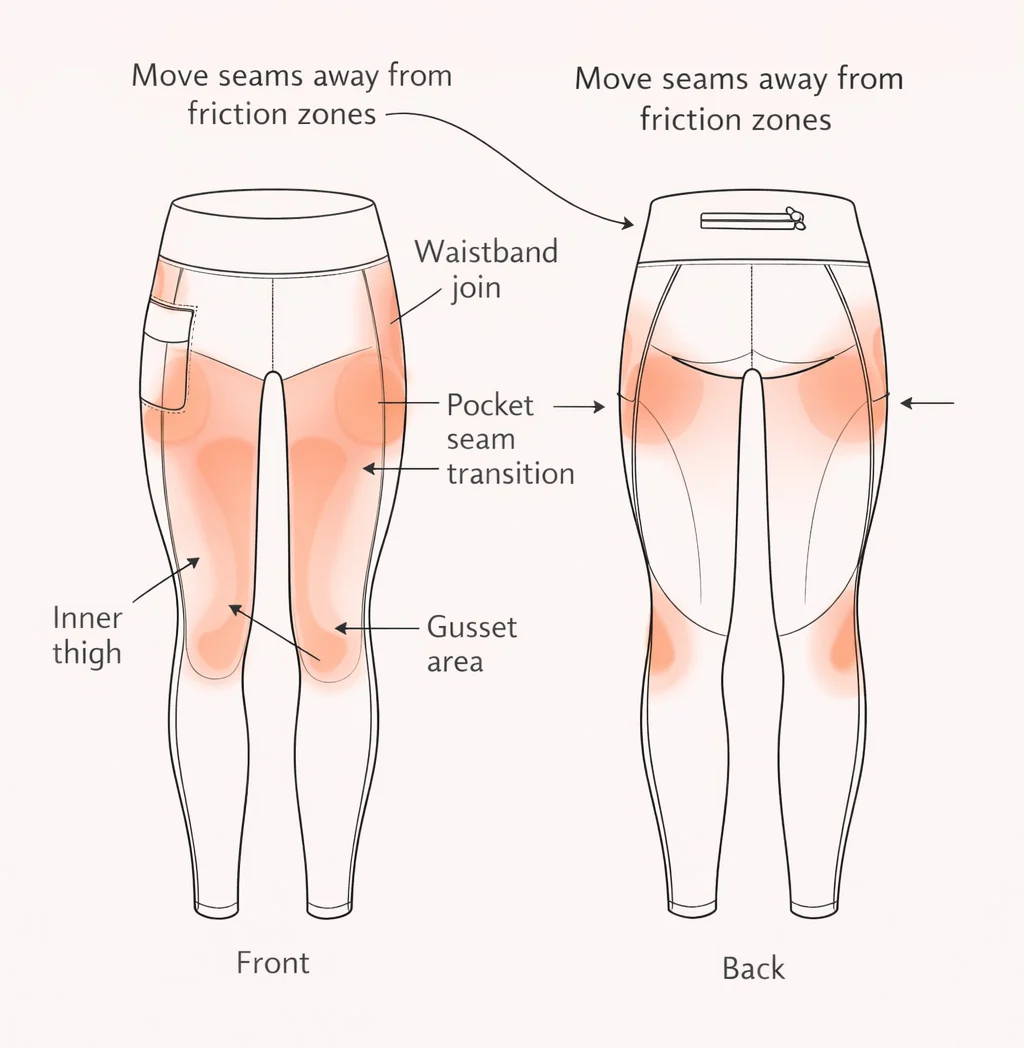
Validate Yoga Leggings on the Body, Not Only the Table
Measurement compliance and Fit approval are related but different decisions. A Yoga Leggings Fit Sample should be reviewed through both defined measurements and the intended body or movement experience.
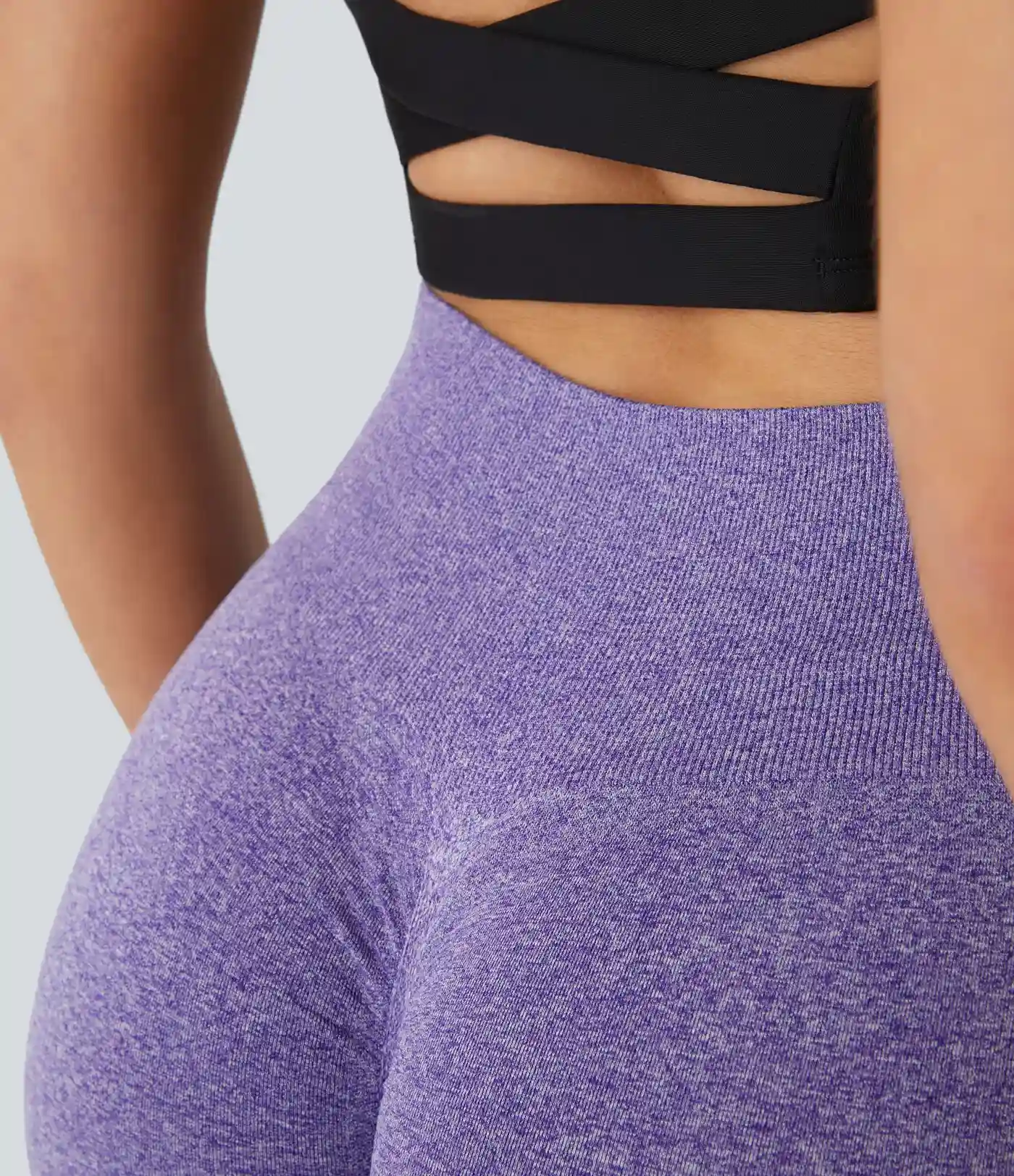
Waistband Placement
Confirm where the waistband sits and whether the agreed high-rise, extra-high-rise, V-waist or other structure appears as designed. Review should include normal standing posture and movement.
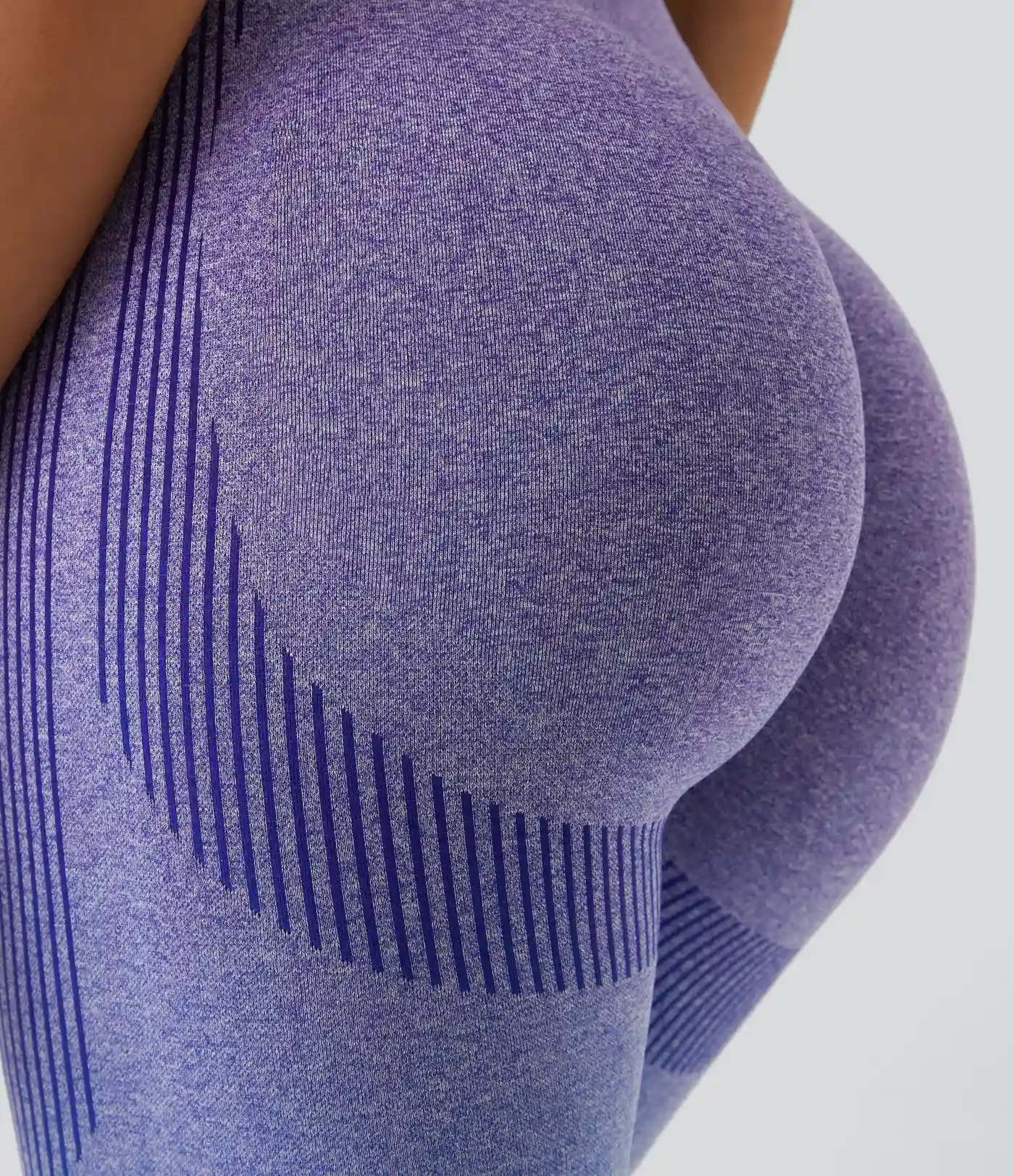
Waist-to-Hip Balance
Excess waist looseness can contribute to slipping, while excessive tension can affect comfort or appearance. The correct result depends on material, structure and brand Fit target.
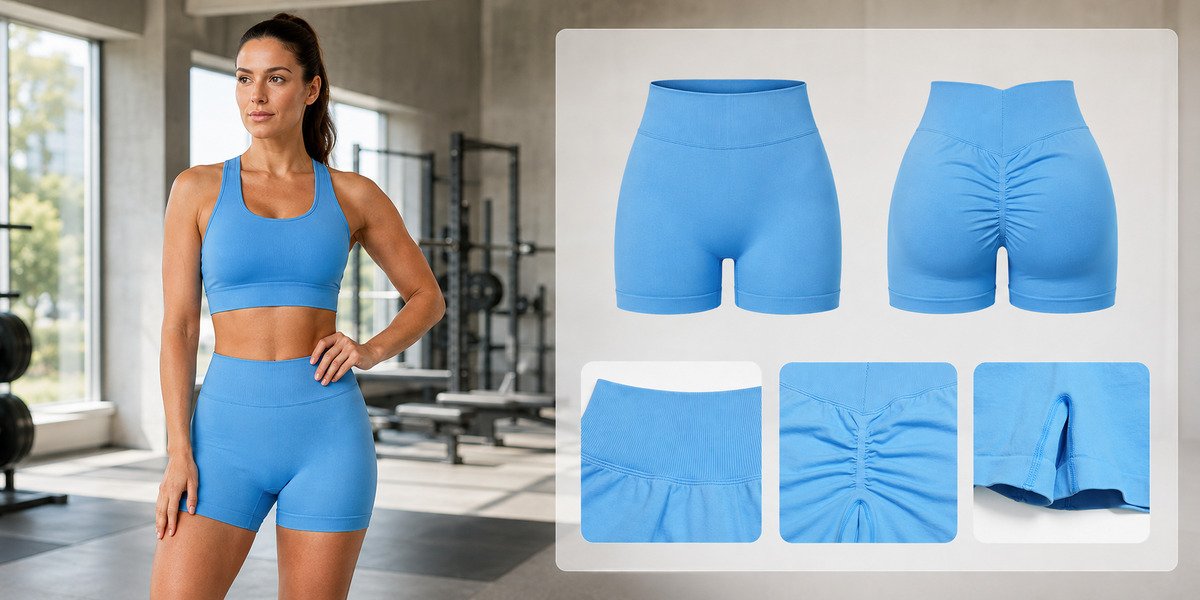
Rise and Crotch
Front rise, back rise, crotch length and gusset or no-front-seam structure influence comfort, coverage and movement. Areas should be evaluated together on the intended body.
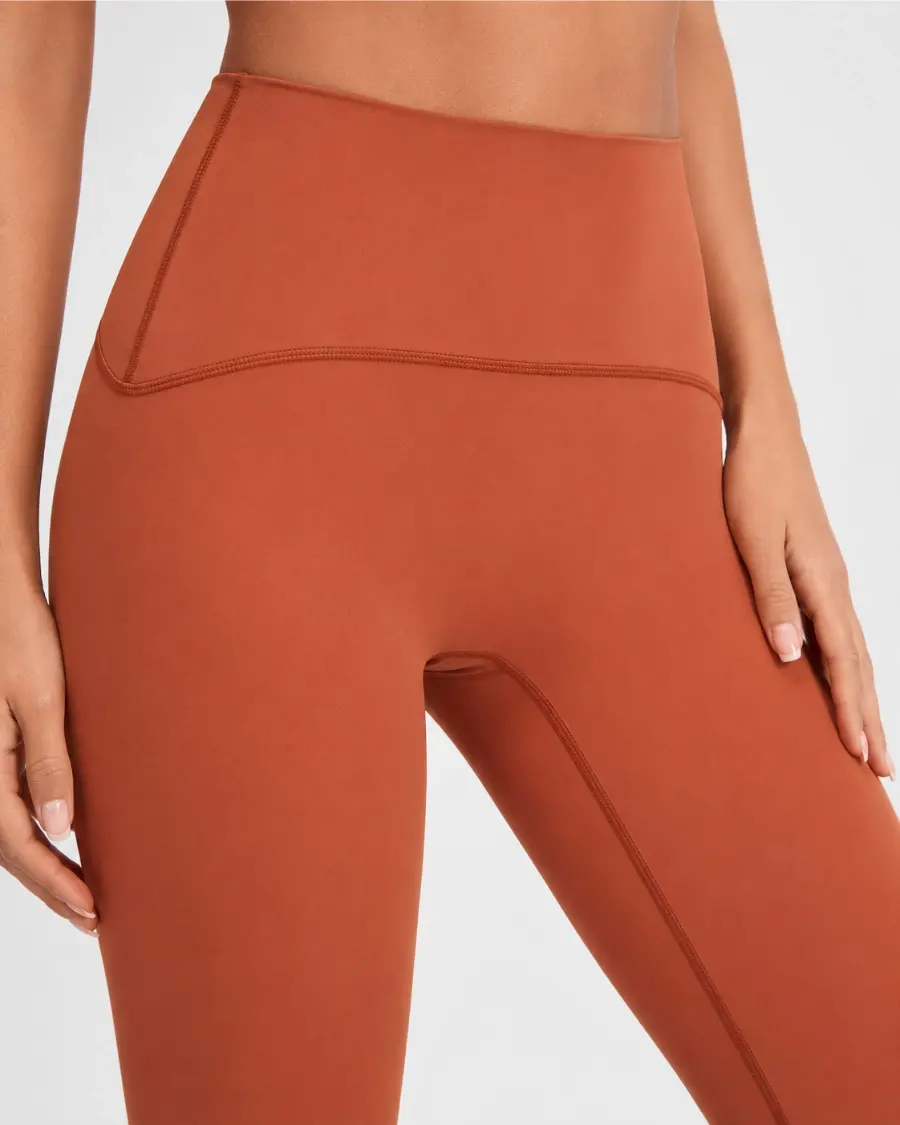
Inseam and Leg Fit
The inseam, thigh, knee, calf and opening create the lower-body silhouette. Fit review should consider twisting, excessive tension or looseness.
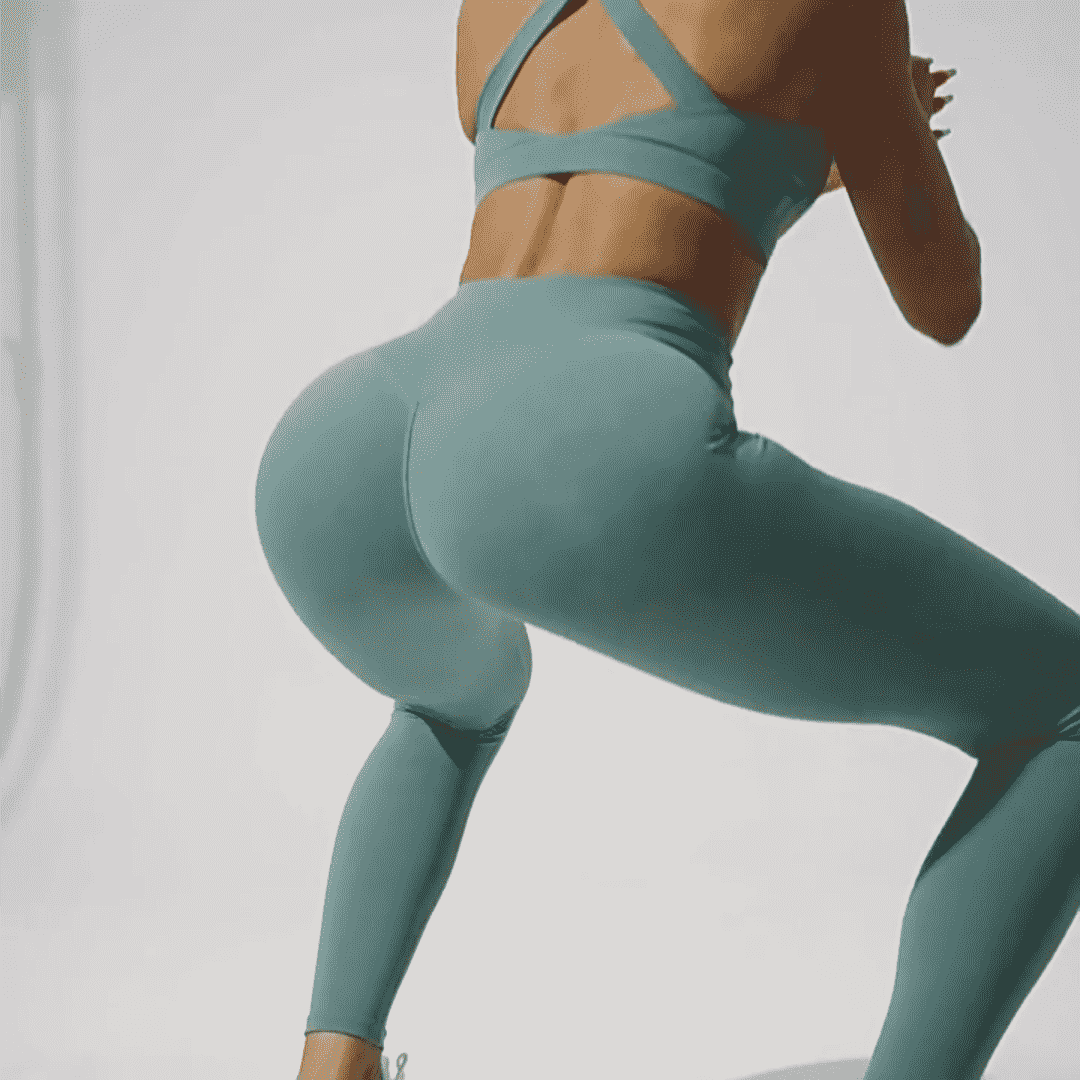
Movement Validation
Yoga-focused Fit should be reviewed during realistic bending, stretching and floor or studio movement where appropriate.
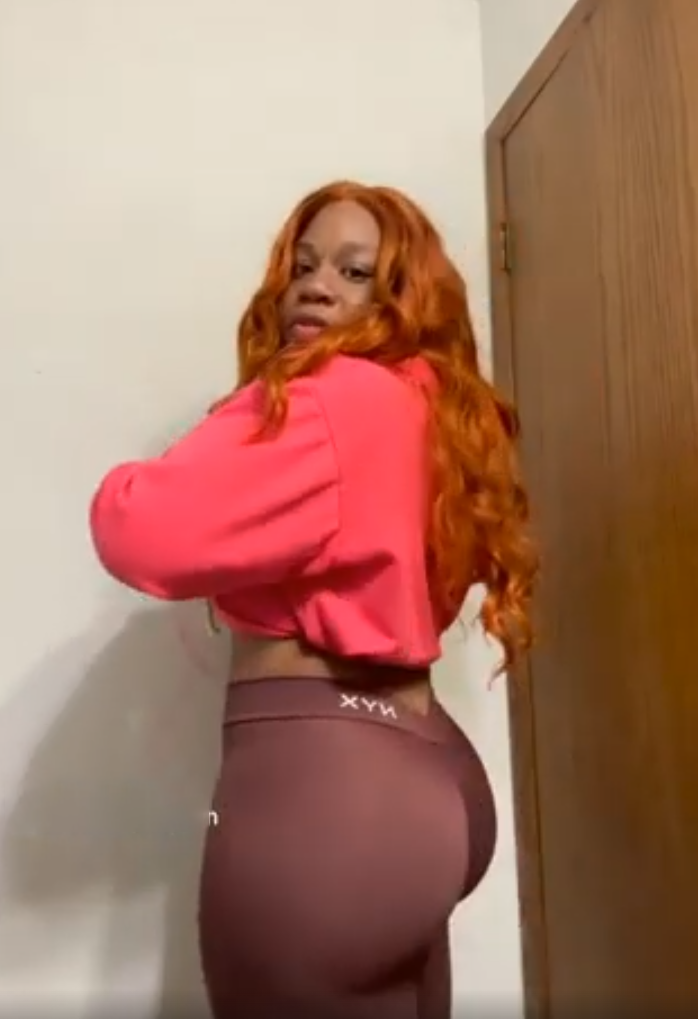
Buyer Approval
MOVEVOX can prepare and revise Fit Samples, but final Fit approval remains a buyer decision against the brand’s intended consumer and Fit standard.
Seamless Yoga Leggings Require More Than a Knitting Machine
Seamless product development combines yarn, machine, program, structural zones, dimensions and Fit. The quality of the result depends on how those elements are engineered together.
Santoni Equipment
MOVEVOX’s current Seamless manufacturing system includes 28 Italian Santoni knitting machines, providing the physical base for Seamless Yoga Leggings and other core activewear products.
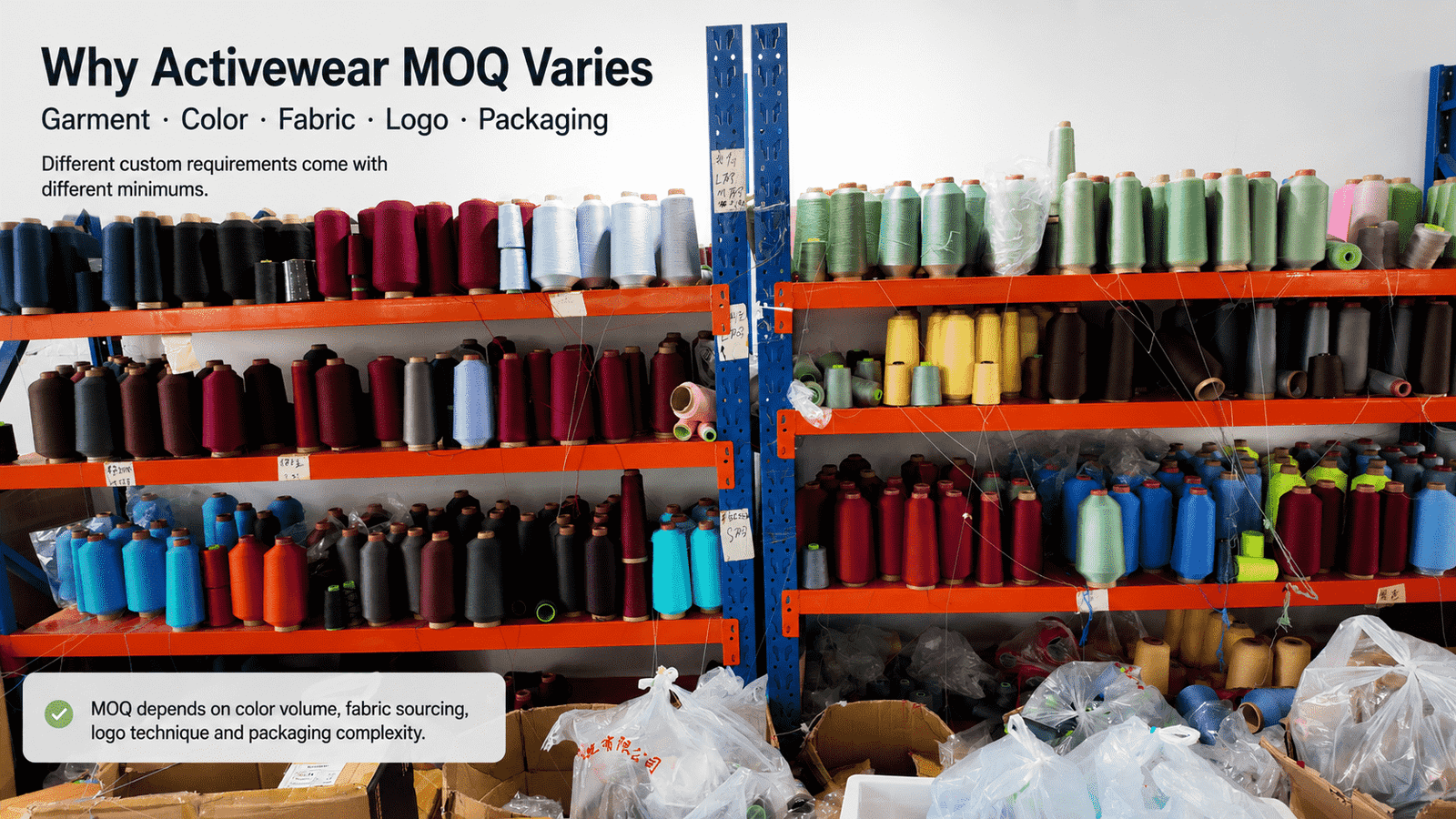
Yarn Selection
Yarn influences handfeel, stretch, recovery, appearance and how the garment responds after knitting and finishing. It should be selected against the target product.
Knitting Program
The program translates the approved product design into machine-executable structure. Program versions need to remain linked to sample revisions.
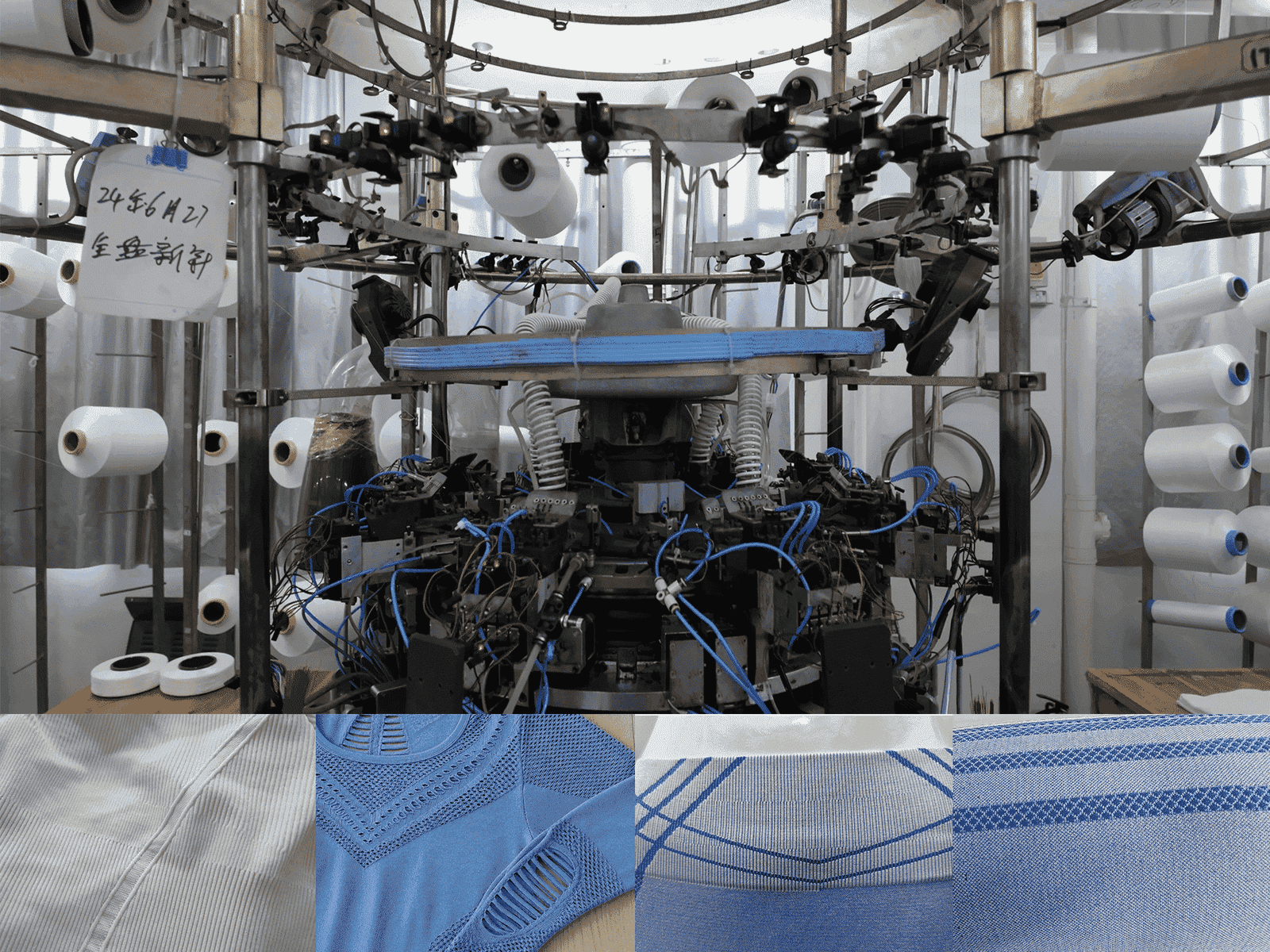
Rib / Texture / Mesh
Different knitting densities and structures can create rib, mesh, texture and visual zones. These can also change stretch, opacity and dimensions and therefore require sample validation.
Integrated Waistband
A Seamless waistband can be engineered into the garment body. Height, density, elasticity and transition zones affect Fit and stability.

Bulk Consistency
Once the product is approved, yarn, program, dimensions and approved sample become part of the bulk reference and production QC.
Cut-and-Sew Yoga Leggings Through Pattern and Construction Control
Cut & Sew Yoga Leggings follow a different engineering system from Seamless products. Fabric behavior, pattern, cutting and seam construction become the primary technical controls.

Fabric Direction
The pattern must work with the actual fabric’s stretch direction, recovery, thickness and surface. Material orientation should remain consistent during sampling and cutting.
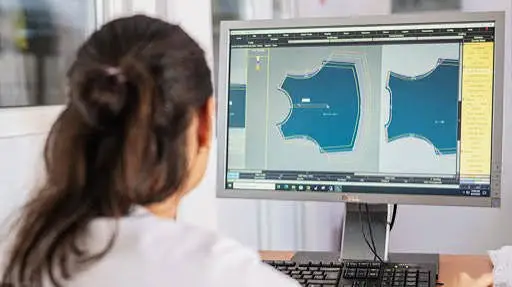
Pattern Engineering
Waist, hip, rise, crotch, leg shape, gusset and pocket requirements are translated into pattern geometry using the buyer’s specification and Fit target.
Cutting
Bulk cutting should use the released pattern and approved material while maintaining identification across Style, Color and Size.

Seam Construction
Seam type, stitch choice and seam allowance must remain compatible with the selected stretch material and intended garment movement.

Pocket / Panel Details
Side pockets, contrast panels, gussets and more complex constructions are especially relevant to Cut & Sew because the pattern can distribute garment components intentionally.
Finished QC
Measurements, symmetry, seams, pockets, waistband, Logo and general workmanship are checked against the applicable released standard before packing.
Sampling as a Controlled Product Approval Process
Sampling should answer a specific development question at each stage. A good process makes the purpose, version and decision status of each sample visible.
Development Input
Confirm Tech Pack, measurement chart, reference information, target material, colors, branding and initial commercial constraints.
Open-Point Review
Identify missing, contradictory or technically uncertain requirements before they become physical sampling errors.
Pattern / Program
Develop the applicable Cut & Sew pattern or Seamless knitting structure using the current technical version.
Development Sample
Produce the first physical sample for evaluation against the agreed development objective.
Internal Check
Review relevant measurements, structure, workmanship and obvious deviations before submission to the buyer.
Buyer Fit Review
The buyer evaluates the sample using intended Fit, appearance, measurements and real-use requirements.
Revision
Comments are consolidated and implemented in a controlled revision.
Re-Sample
A revised sample confirms whether approved changes have been implemented successfully.
Further Validation
Depending on the project, additional Fit, Size Set or PP validation may be required before bulk.
Approval
The approved sample and released specifications move into the sample-to-bulk handover process.
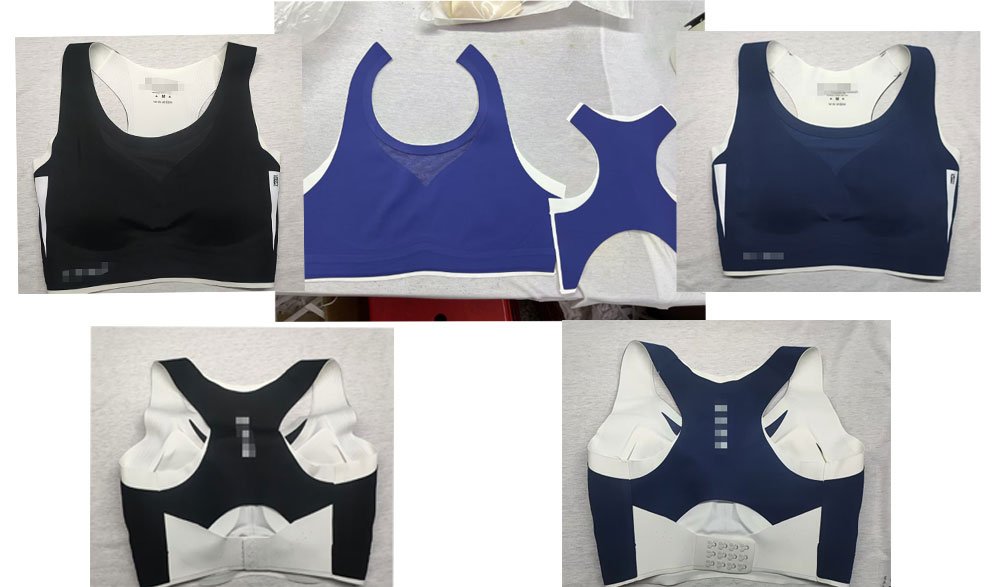
Make the Approved Yoga Leggings the Bulk Reference
The key manufacturing challenge begins after a good sample is approved. Bulk production needs the same approved decisions transferred into released technical files, materials and QC references.
Approved Sample
The final sample establishes the approved physical reference for Fit, measurements, construction and appearance within the defined approval scope.
Final Measurements
Released POM targets, measurement methods and tolerances become part of the production and QC standard.
Material / Yarn
The bulk material is connected to the approved specification or physical reference rather than selected independently after sample approval.
Pattern / Program
The approved Cut & Sew pattern or Seamless program version is released for production. Superseded development versions should no longer remain active.
Color
The applicable approved color reference is transferred into material preparation and later checks.
Branding & Packaging
Logo, labels, SKU information and packaging details are aligned with current Style / Color / Size information.
First Article
Initial production output under real bulk conditions is checked before wider scale-up.
Bulk QC
Inline and finished-product inspection continue against the applicable released specification and approved references.
The objective is controlled repeatability within approved standards and tolerances, not the unrealistic claim that every bulk garment is mathematically identical to one physical sample.
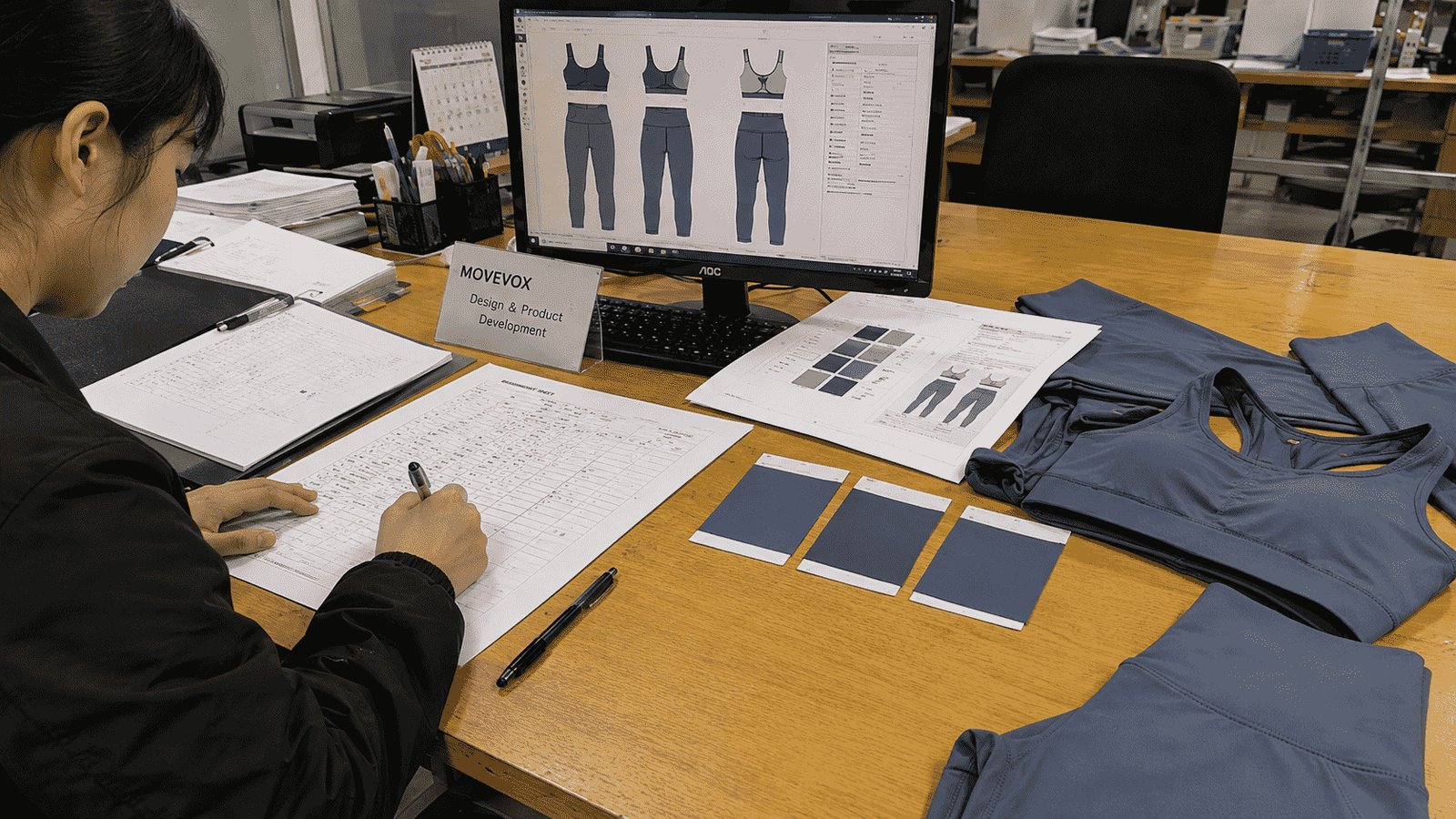

Build a Complete Private-Label Yoga Leggings Program
Private label should connect the garment with every branding and retail-execution component under the correct Style, Color, Size and version.
Product
The approved Yoga Leggings garment remains the base reference for Fit, material, construction and color.
Logo
Project-specific options can include heat transfer, screen printing, silicone applications, embroidery, jacquard-related execution or woven branding where technically suitable.
Main / Size / Care Labels
Labels should follow approved artwork and remain connected to the correct garment Size and market requirement.
Hangtag
Hangtags can be developed according to the customer’s approved brand and product information.
SKU & Barcode
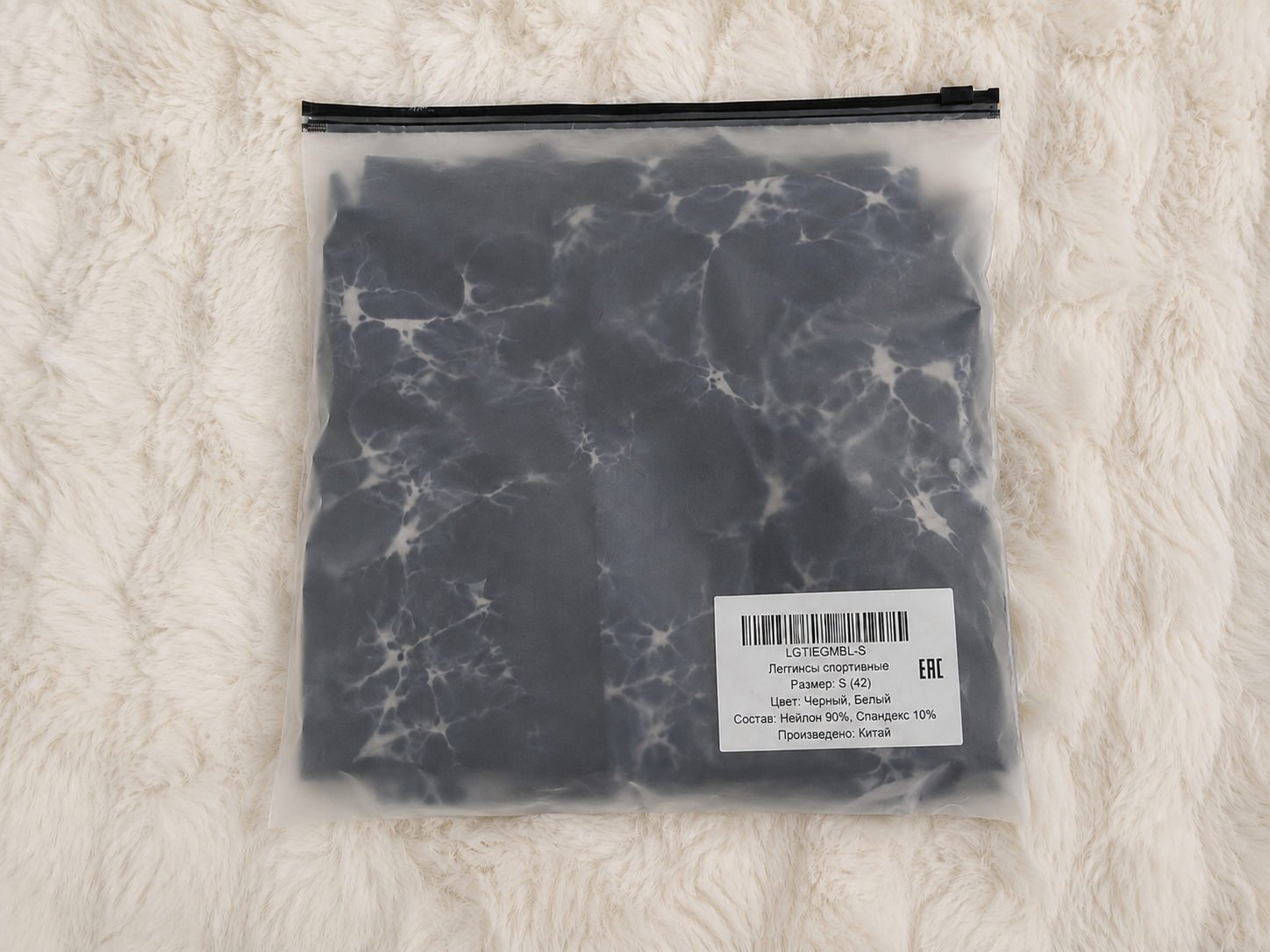
Each SKU or barcode must correspond with the correct Style, Color and Size to prevent packing and fulfillment errors.
Individual Packaging
Polybag, sticker, folding or custom-packaging requirements are developed according to the approved packaging specification.
Carton Mark
Outer-carton identification should correspond with the actual packed order and shipping information.
Control logic: Garment → Logo → Labels → Hangtag → SKU/Barcode → Packaging → Carton. A new approved version should replace obsolete artwork or packaging instructions.

Have a Yoga Leggings Tech Pack Ready?
Send your Tech Pack, measurement chart, target fabric, planned quantity and launch timing. MOVEVOX can review the product structure, recommended manufacturing route, key technical questions and commercial starting point before your team commits to full sampling or supplier qualification.
A reference garment or clearly defined product concept can also be reviewed when a complete Tech Pack is not yet available.
Capacity Planning for Multi-SKU and Repeat Orders
For large B2B and scaling brand programs, capacity should be confirmed against the real Style/SKU mix, quantity, material ETA, manufacturing route, QC workload, packing complexity and required delivery window.
Style / SKU Complexity
Program MixReview the number of Styles, colors, sizes and manufacturing routes planned for the same production window.
Quantity
PO-Level ReviewEvaluate order quantity at Style and program level rather than treating every piece as identical factory workload.
Material ETA
Readiness CheckConfirm when fabric, yarn, custom color, labels and other required components will actually be available.
Manufacturing Route
Seamless / Cut & SewSeamless knitting and Cut & Sew production require different equipment, production cycles and allocation logic.
Facility Window
Production SlotConfirm which production resources are suitable and available during the requested timing.
QC Workload
Inspection CapacityLarge or complex orders also need sufficient inspection capacity, not only machine capacity.
Packing Requirement
SKU ControlMultiple SKUs, barcodes or custom packaging can add substantial work after garment production.
Delivery Result
Decision OutputThe appropriate answer may be Confirmed, Confirmed With Conditions, or Alternative Window Required.
See Where Your Yoga Leggings Are Developed and Made
These images should function as direct manufacturing evidence rather than generic factory decoration.
Yiwu Manufacturing Base
Show the actual MOVEVOX manufacturing environment in Yiwu with real production activity. Do not imply that every upstream material or specialized supplier process takes place inside this one Facility.
Santoni Seamless Area
Use a real image of MOVEVOX’s Italian Santoni machines operating within the Seamless production area, ideally showing yarn, operators or work in progress.
Cut & Sew Production
Show actual Cut & Sew production activity: fabric panels, sewing stations, garment assembly or related in-process work.
Sample Development
Show pattern making, sample sewing, Seamless sample work, garment review or another real development activity. Confidential customer information must be removed or covered.
Quality Inspection
Use an actual inspection scene such as garment measurement or workmanship review demonstrating a specific QC action.
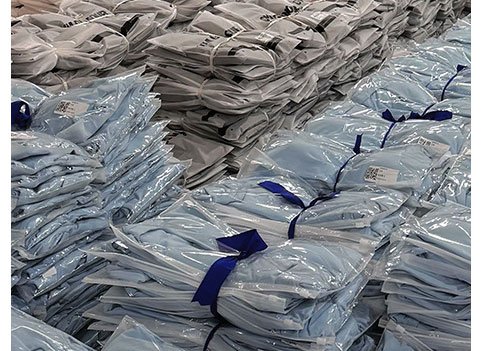
Packing & Order Preparation
Show finished-garment checking, folding, individual packaging, carton preparation or warehouse activity. Anonymize customer and shipment data.
Testing Support Based on the Actual Yoga Leggings Project
Testing should answer a defined product, material or market requirement. A report for one submitted sample does not automatically qualify every MOVEVOX product or future production lot.
Existing Yoga Leggings Evidence
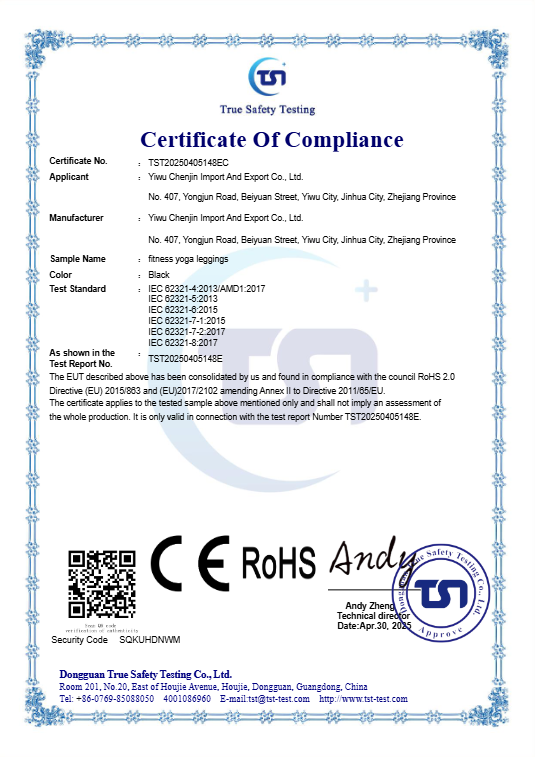
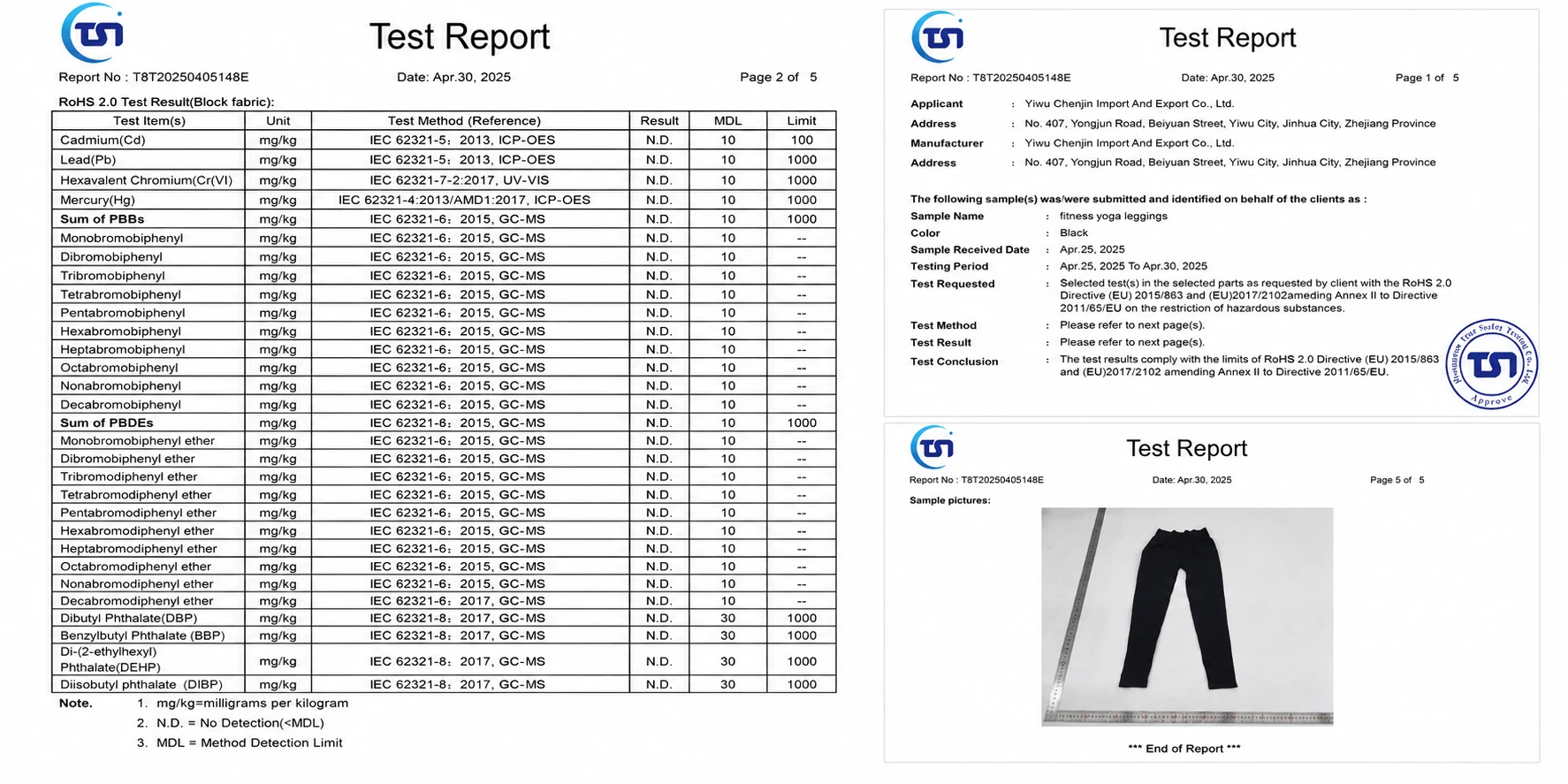
MOVEVOX currently has third-party testing evidence for a black sample identified in the report as “fitness yoga leggings.” A 2025 report issued by Dongguan True Safety Testing Co., Ltd. identifies Yiwu Chenjin Import And Export Co., Ltd. as the applicant and manufacturer and records the applicable RoHS-related result for that submitted sample.
Phthalates / REACH-Related Evidence
A separate report for the black fabric from the fitness yoga leggings project tested specified phthalates against European REACH Annex XVII Entry 51 & 52 requirements and recorded a Pass result for the submitted sample.
Scope Matters
Both types of evidence must remain limited to the actual tested sample/material. Correct: “This submitted Yoga Leggings / black-fabric sample was tested under the stated report.” Incorrect: “All MOVEVOX Yoga Leggings are REACH and RoHS certified.”
Buyer-Specified Testing
Where a customer requires additional chemical, material or performance tests, MOVEVOX can coordinate project-specific testing according to the actual product, market, material and buyer requirement.
Performance Claims
Claims such as squat proof, quick dry, compression level, colorfastness, recycled percentage, UV protection or durability level must not be stated as verified performance unless suitable evidence exists for that specific claim and scope.
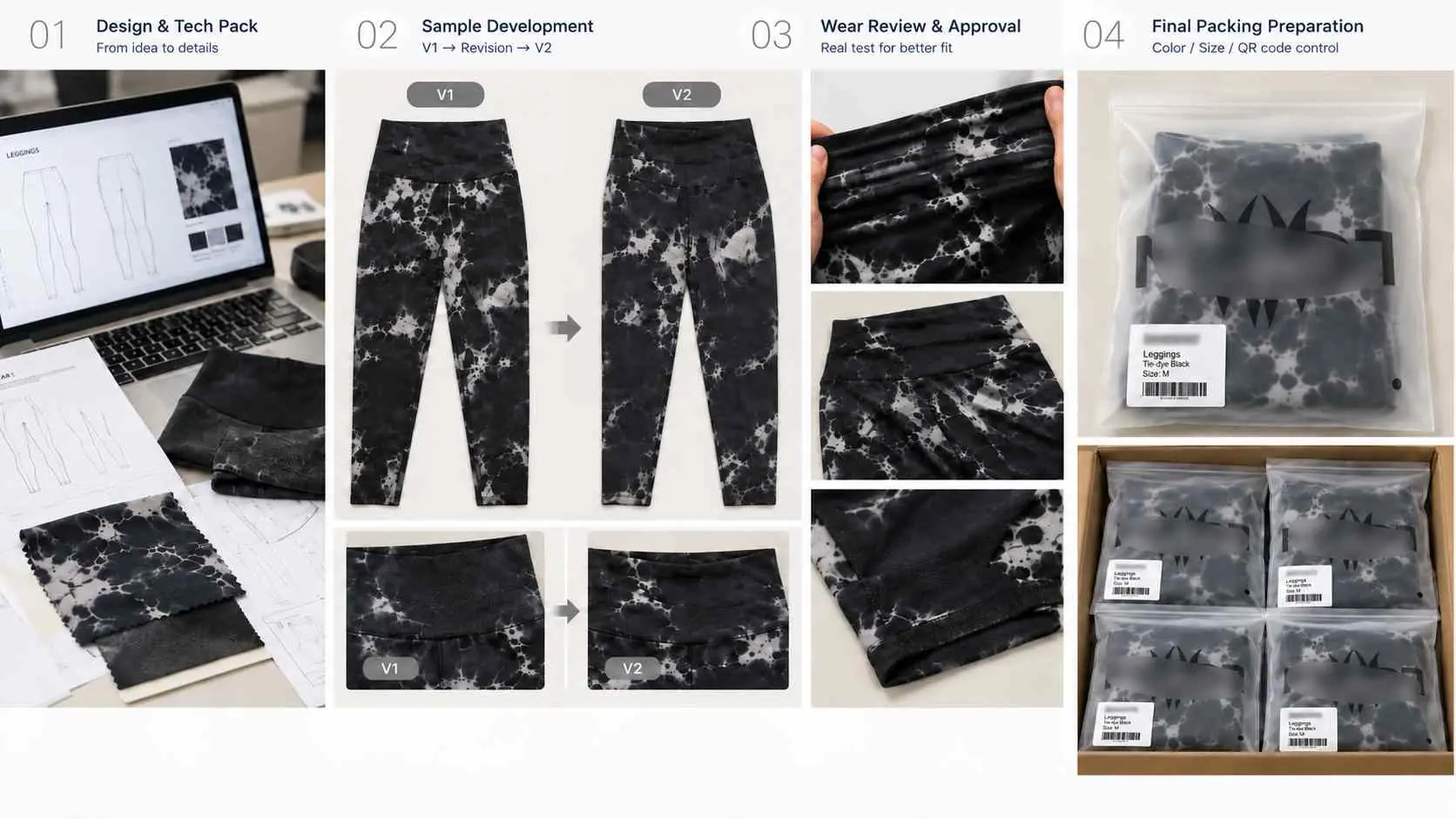
Case Study: From Yoga-Wear Tech Pack to Repeat Production
Customer identity is withheld. This case uses documented internal project facts and does not disclose the customer’s brand name.
Confidentiality note: Customer identity is withheld.
Client Profile
A U.S. activewear customer worked with MOVEVOX on fitness and Yoga apparel including leggings, shorts, sports bras, tanks, sets and other close-to-body products. The customer already had its own specifications and Tech Packs.
Product Requirements
Requirements included high stretch, supportive wearing direction, opacity considerations, soft handfeel and extended sizing. These were customer-defined objectives requiring validation through actual materials, Fit and samples.
First Development Sample
MOVEVOX reviewed the technical information and produced a first sample version. The customer evaluated the sample and identified elements that did not fully meet the intended use scenario.
Second Version
MOVEVOX revised the product and produced a second sample version incorporating the customer’s development feedback.
Wear-Test Samples
After the second version was substantially accepted, approximately 5–10 additional samples were produced for practical wear testing before commercial bulk production.
Private-Label Execution
The commercial order included customer-specific packaging, fitness instruction material, labels, Logo, care labels and individual packaging.
QR-Code / SKU Control
Different colors and four sizes required different QR-code labels. MOVEVOX organized checking by Style and Color and used double confirmation during relevant QC and packing steps.
Repeat Cooperation
The internal case record documents continuing activewear orders and new-product development after the initial project.